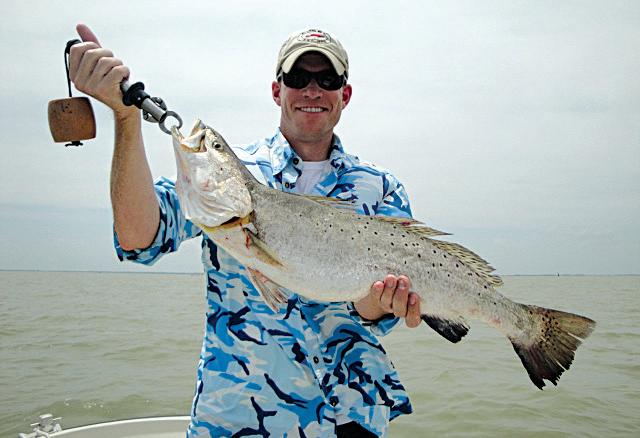
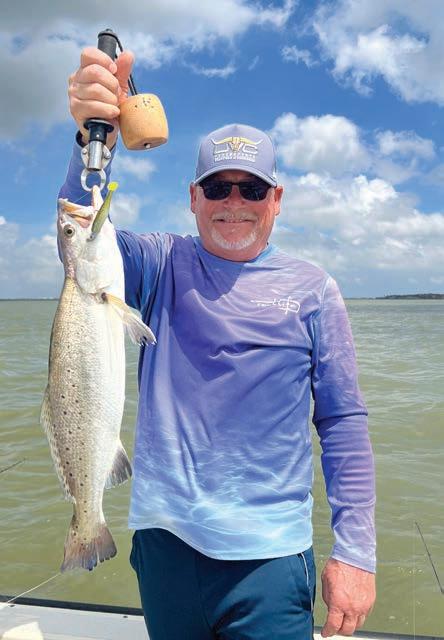
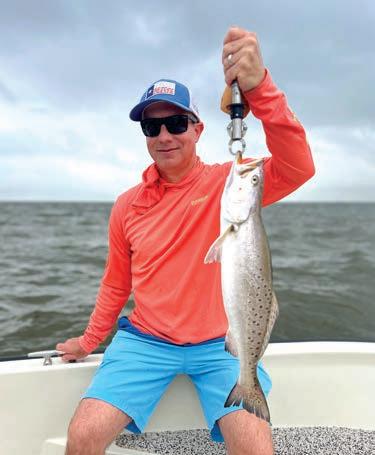
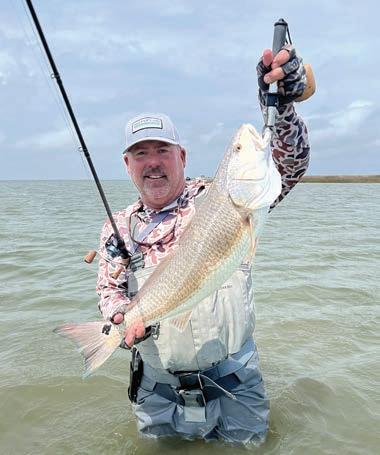
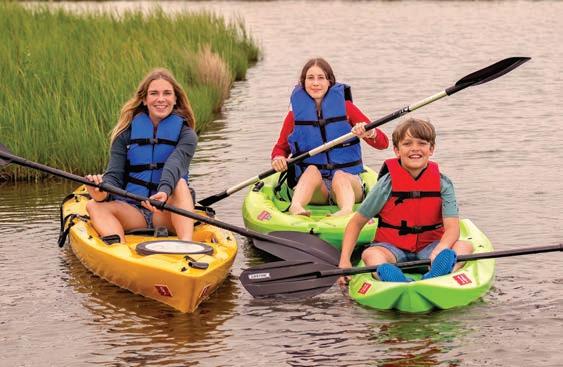
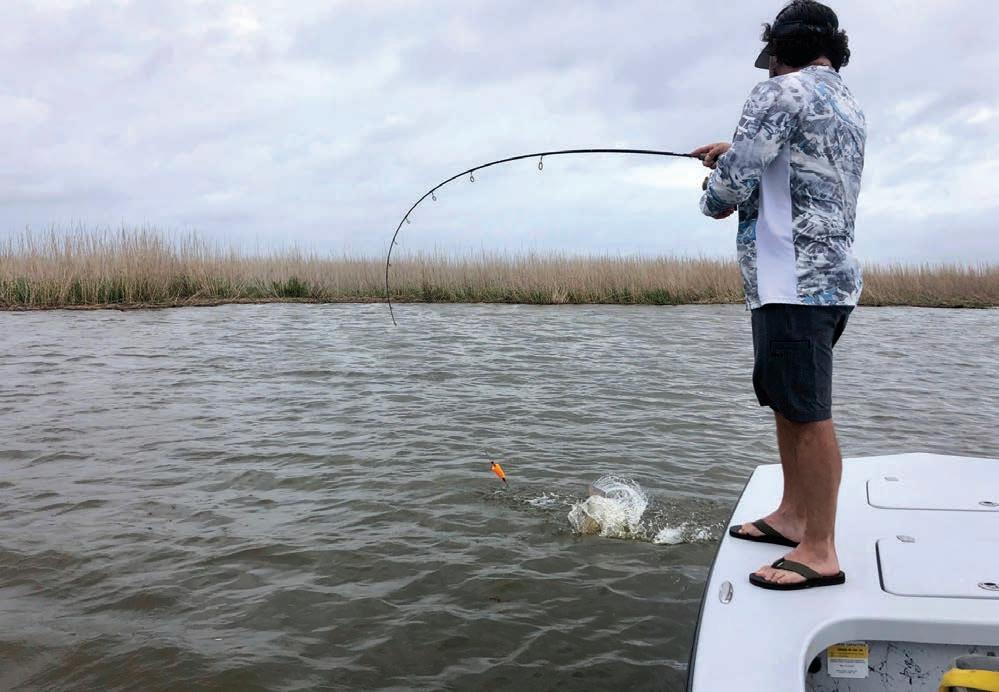
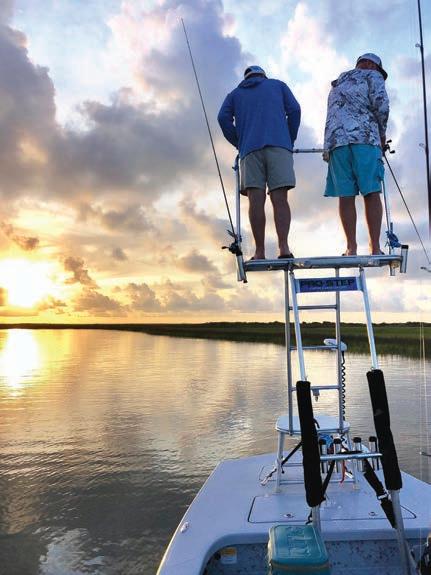
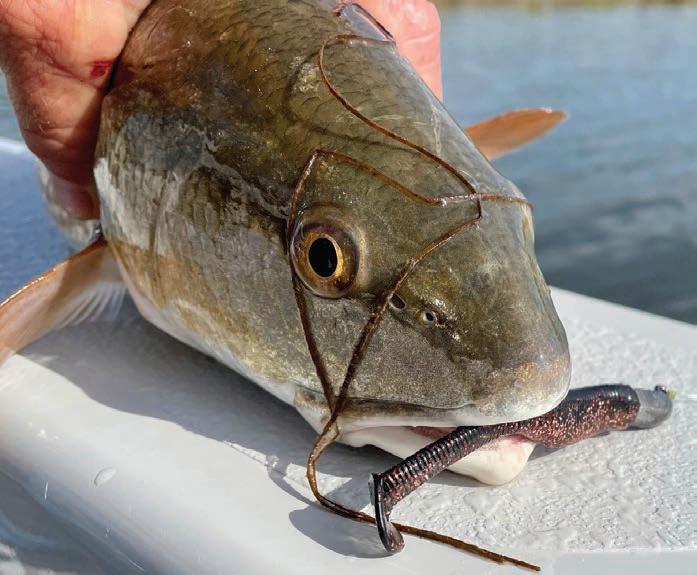
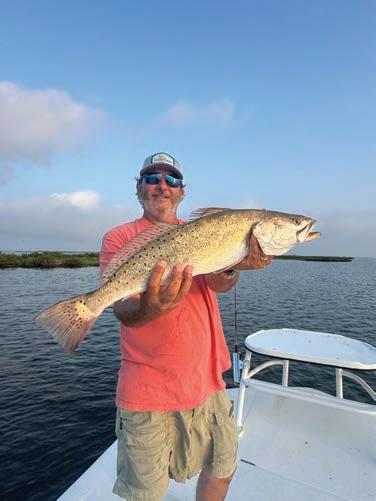
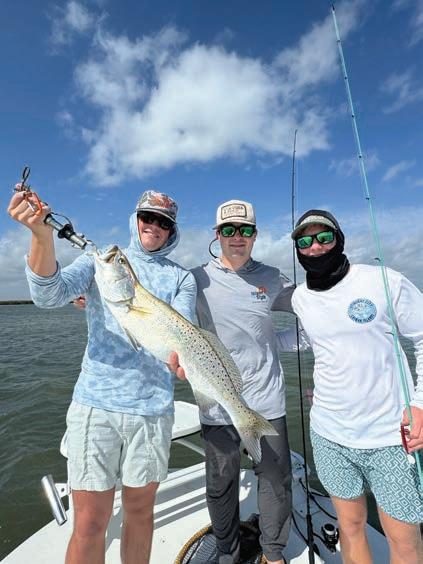
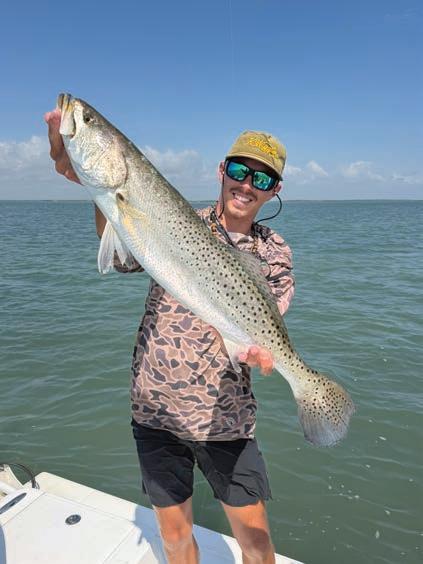
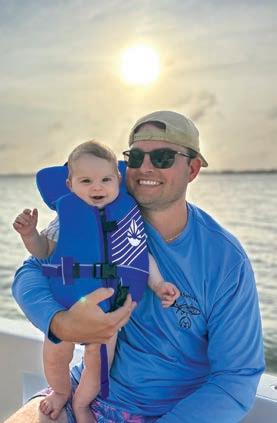
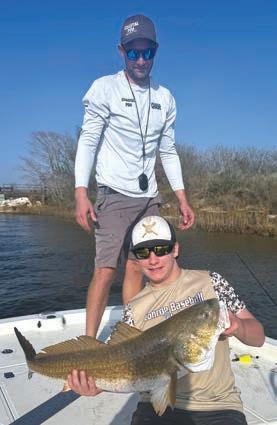
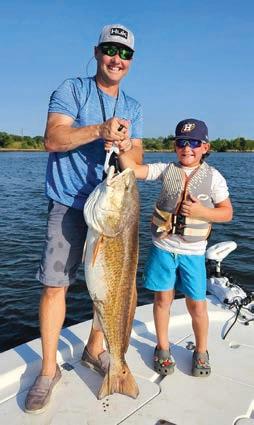
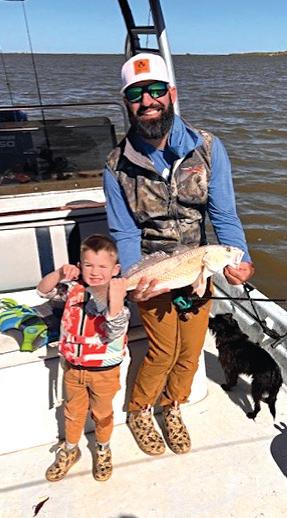
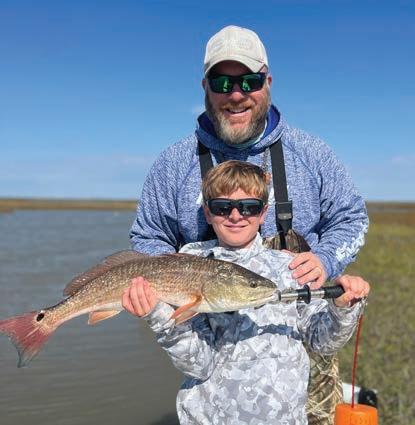
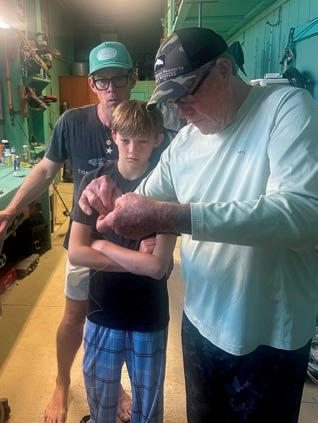
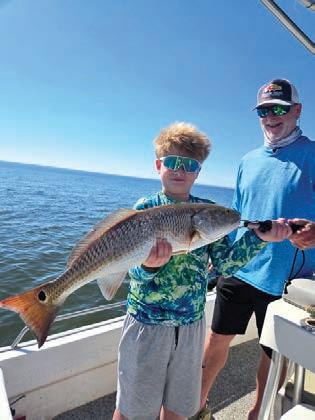
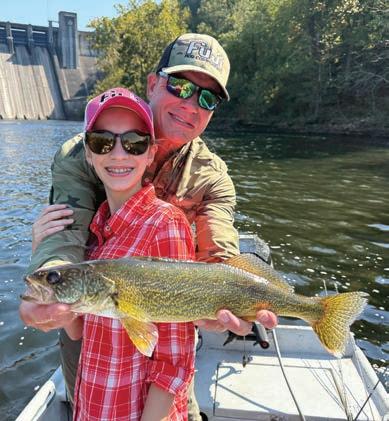
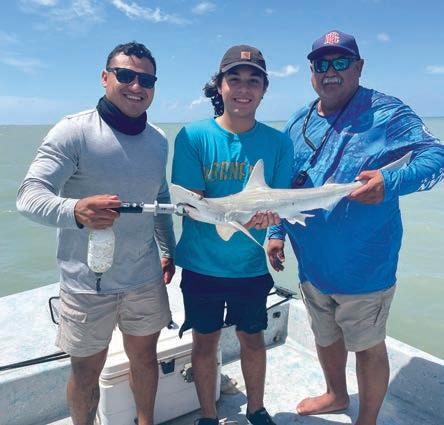
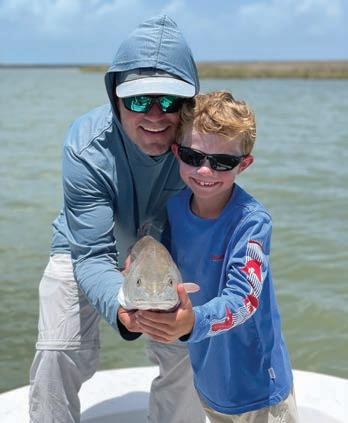
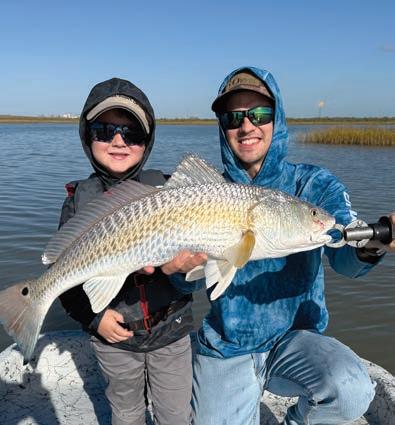
Sharpen your skills with a free online training and get the gear you need to give every fish a fighting chance at surviving release.
Scan the QR code or visit ReturnEmRight.org to get started and earn low-cost release gear.
Already have the gear? Check out our virtual summer tournament for opportunities to win prizes. GOT 15 MINUTES?
ABOUT THE COVER
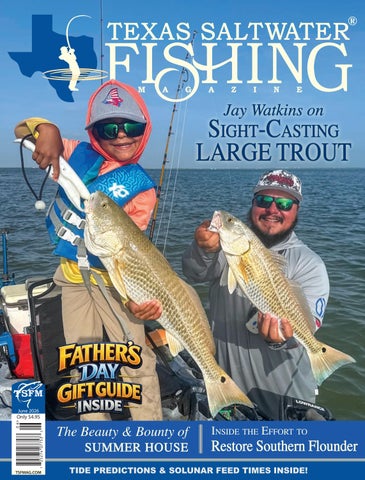
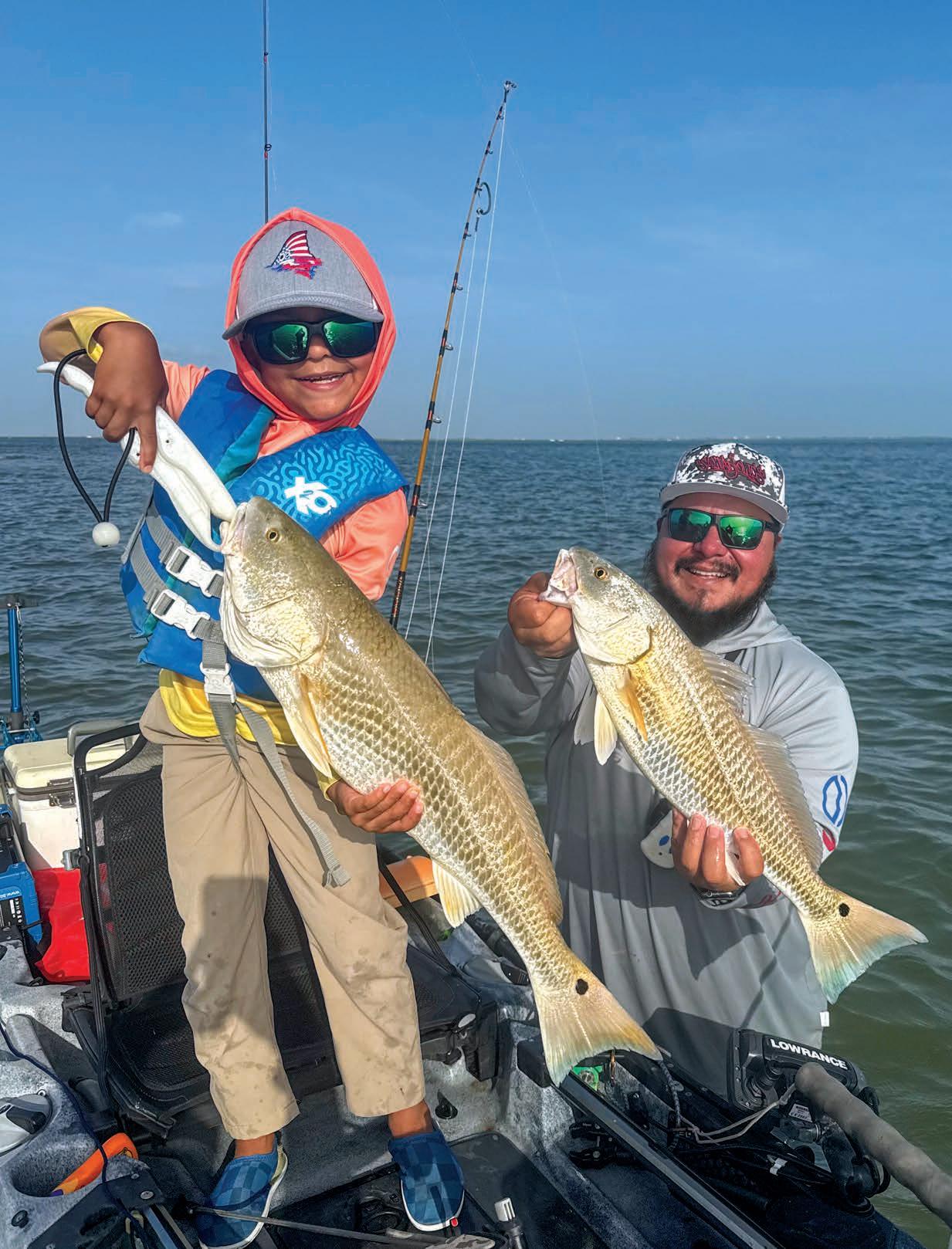
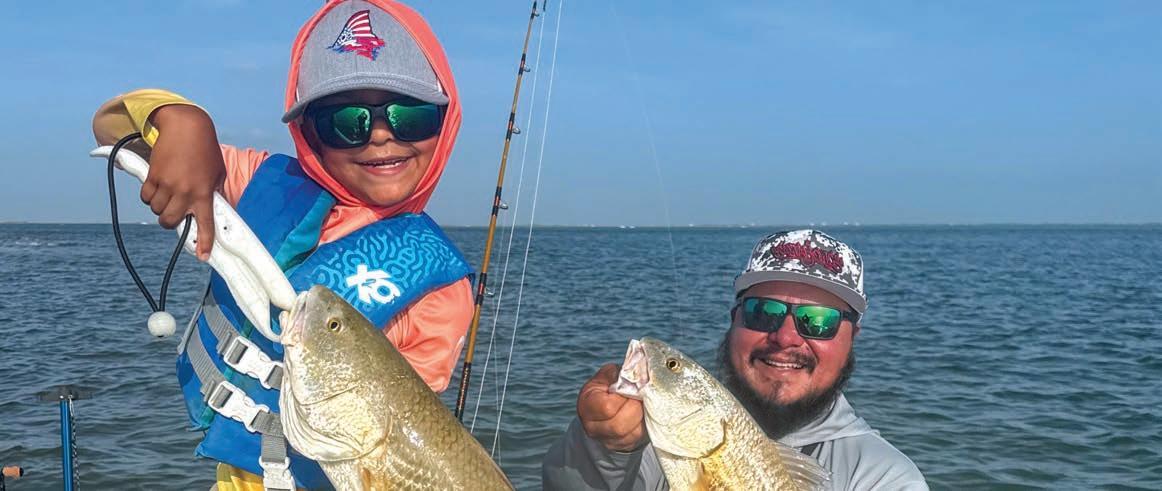
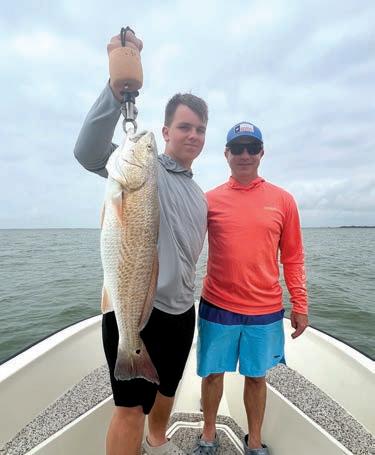
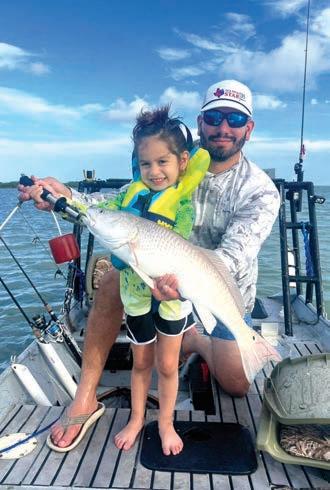
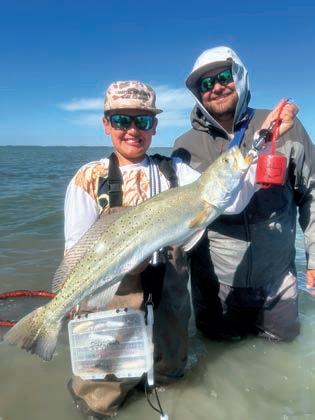
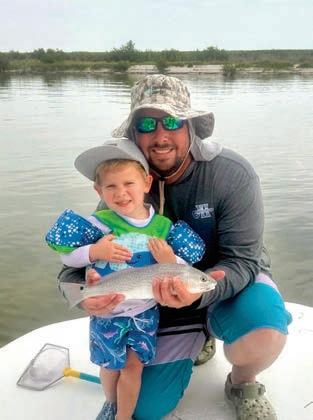
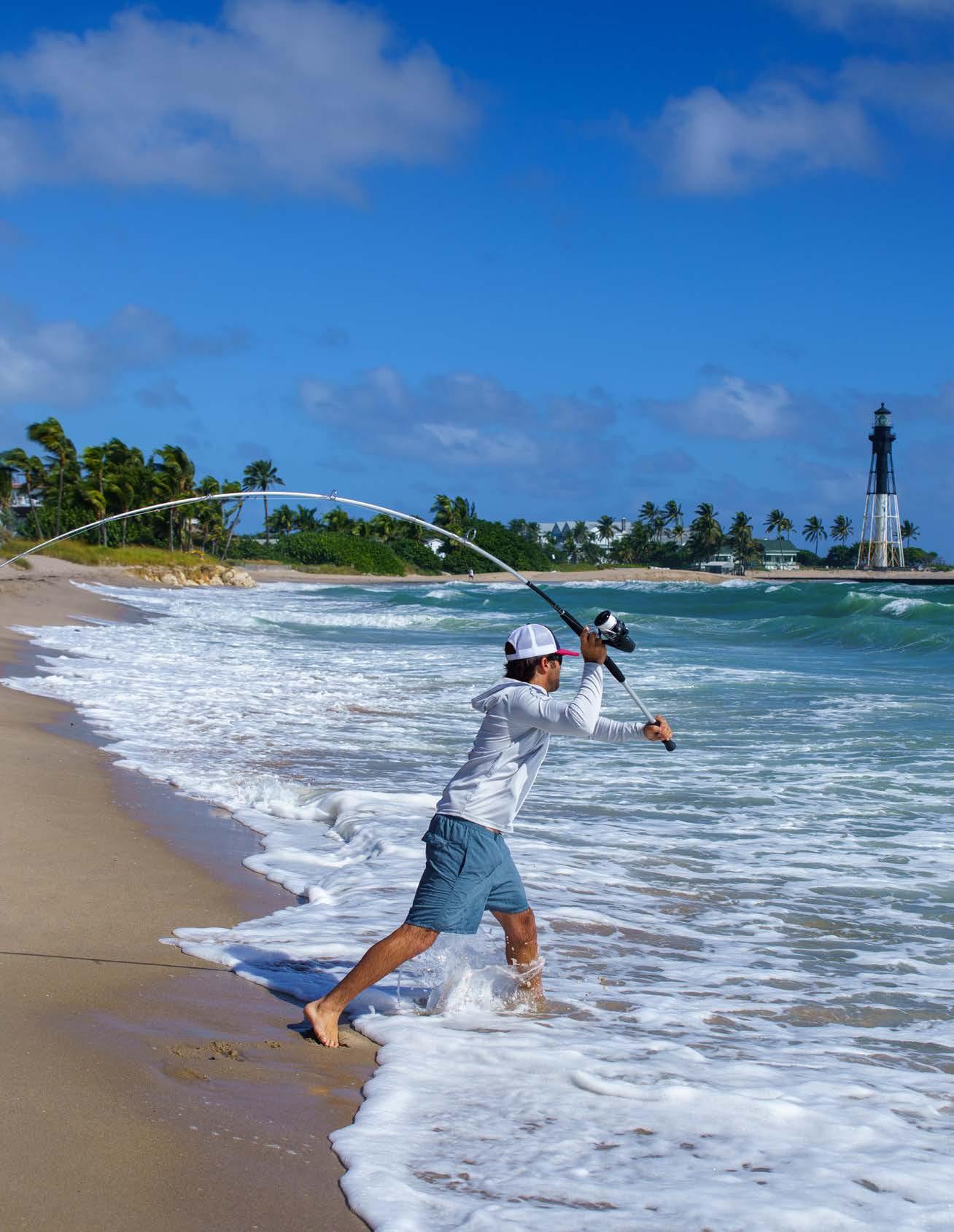
We’re proud to feature Luis and son, Martin Hernandez, as our Father’s Day Cover Contest winners! Raised by a single mother, Luis grew a passion for fishing from the times his mom took him fishing. Now as a father, he gets to create those same memories with his son. Martin has been learning to cast and fish since the age of three and it definitely shows. Check their QR code, you’ll likely be amazed.
EDITOR AND PUBLISHER
Everett Johnson | Everett@tsfmag.com Office 361-785-3420 Cell 361-550-3637
VICE PRESIDENT
PRODUCTION & ADVERTISING DIRECTOR
Pam Johnson | Pam@tsfmag.com Office: 361-785-3420 Cell: 361-550-9918
PRODUCTION / SOCIAL MEDIA DIRECTOR
Jennifer Shive | Jen@tsfmag.com
ADVERTISER REPRESENTATIVES
Bart Manganiello | bartalm@optonline.net
Pam Johnson | pam@tsfmag.com Office 361-785-3420 Cell 361-550-9918
Everett Johnson | everett@tsfmag.com Office 361-785-3420 Cell 361-550-3637
Texas Saltwater Fishing Magazine is published monthly.
Subscription Rates: One Year (Free Emag with Hard Copy)
Subscription $32.00
E-MAG (electronic version) is available for $15.00 per year. Order on-line: WWW.TSFMAG.COM
MAKE CHECKS PAYABLE TO: Texas Saltwater Fishing Magazine Attn: Subscriptions P.O. Box 429, Seadrift, Texas 77983
* Subscribers are responsible for submitting all address changes and renewals by the 10th of the prior month’s issue. Email store@tsfmag.com for all address changes or please call 361-785-3420 from 8am - 4:30pm. The U.S. Postal Service does not guarantee magazines will be forwarded.
Periodical class permit (USPS# 024353) paid at Victoria, TX 77901 and additional offices.
POSTMASTER: Send address changes to Texas Saltwater Fishing Magazine, Inc., P. O. Box 429, Seadrift, TX 77983.
BIG WILD WONDERFUL JUNE!
Well, if you don’t learn anything else from reading this editorial you have already learned that I love June. And if you are a coastal fisherman, what’s not to love about it? Many days we get more bites than we can shake a high-modulus graphite rod at, and that’s no exaggeration. As you read through this issue you will find that many of our fishing professionals are in full agreement.
“The month of many bites,” is how an oldtimer once described it to me.
Why is June’s fishing so good? Actually, it’s kind of a perfect storm that happens every year at this time. Powerful tides have been building since the Equinox; that’s the day the hours of daylight and darkness became equal in the northern hemisphere and it happened on March 20 this year. You may have noticed the tides have been running higher than normal and the currents have been stronger. That’s all part of it. Water temperature, too, has been on the rise, and forage species that sustain our game fish have been migrating into our bays from the gulf – menhaden, glass
minnows, and mullet. Which is an important part of their life cycles. Describing the backstory that sets the stage for June’s fishing as a perfect storm is, again, no exaggeration.
Another hugely important element that lends to June’s magic is that the kids are out of school for the summer. Think back to your own school years, was there anything on earth as important as your parents taking the whole family fishing for a weekend; better yet heading to the coast for a full week? Wholesome family time spent outdoors is absolutely invaluable. Get them registered for the CCA STAR Tournament. They could end up winning a valuable college scholarship on top all the great fun they’re having.
What about in your own fishing career? June was always a standout month for me. Unlike springtime when the wind is either howling from the north or screaming from the south, whenever it’s not raining in horizontal sheets. June weather is tailor made for fishing. Not too hot, not to cold, and mostly calm, or at least fishable wind.
My best advice for you this month is to study all the tips and tactics our writers have presented in this issue and then get your gear prepped and have your boat rigged and ready. And take those kids fishin’!
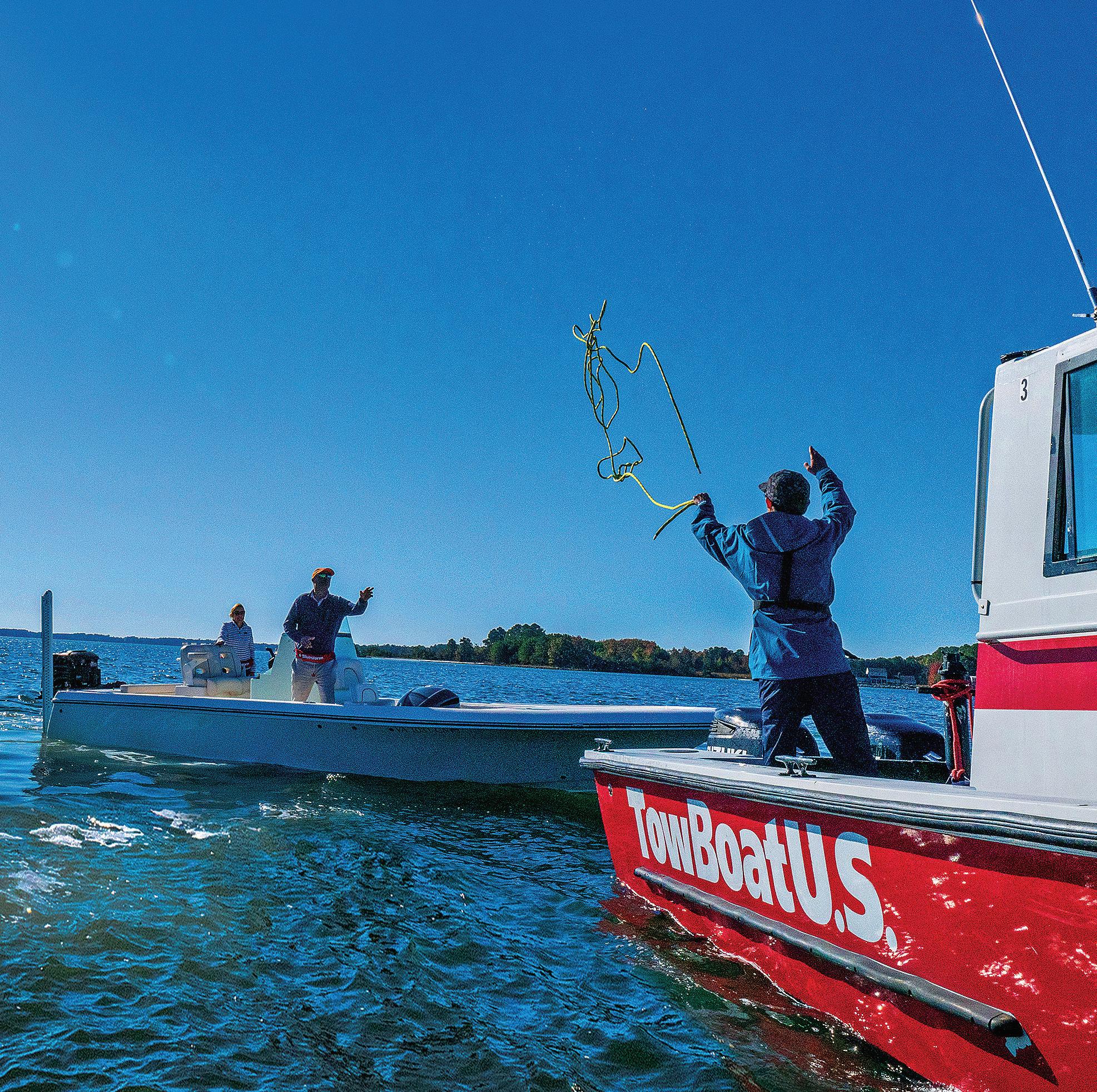
Boating can be unpredictable. Our team of experienced, local captains know the waterways inside and out, so you can trust that you’re in capable hands. For a year of worry-free boating, you can count on a towing membership from BoatU.S. 24/7 Towing by Local Captains You Can Trust
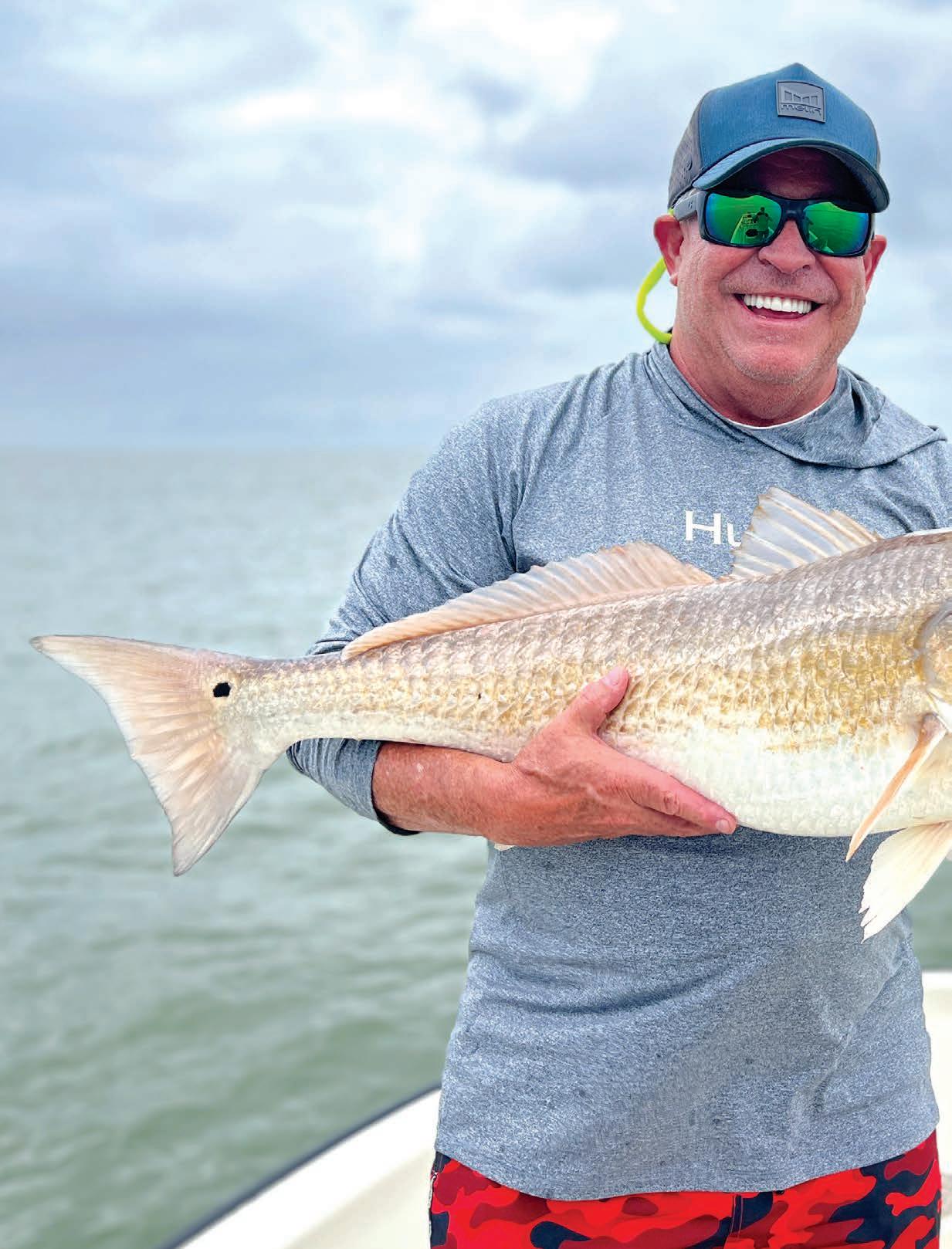
John LeGrand capped off a great morning of trout fishing with this beautiful red he caught on a shoreline oyster reef.
FROM THE PLAYBOOK
STORY BY STEVE HILLMAN
We eased out of the ramp on the Texas City Dike in the dark. It was a picture perfect morning with light winds and good tide predictions leading up to a full moon. What more could we ask for on tournament day? The mid-bay oyster reefs in East Galveston Bay were teaming with solid trout. Salinities were above average and giant pods of small shad were everywhere. The game plan was simple. Find the slicks and shad concentrations over live reefs and get after it. It was “Field of Dreams” type stuff.
The tournament that my clients had booked me for was for largest fish in each species. In other words, there was no creel weigh-in. We just needed one big fish and trout was our focus. We started on a south shore reef that I had nicknamed “The Mailbox” because a buddy of mine seemed to go there every time he fished. I finally told him one day, “Damn Robby, you ought to just put a mailbox on that reef because you go there every day.” There was a reef just east of “The Mailbox” that I actually used to basically live on that he nicknamed for me but I can’t say the name in this article because I’m trying to keep it as G-Rated as possible.
Chuck Walsh, David “Woody” Woods, Marcus Schnur and Marcus’ son, Nick, were the guys I had on my boat that day. They had been fishing with me for a long time and they were all good fishermen. All I had to do was put them on the right fish and let them go to work. There were literally dozens of small slicks popping up on the western edge of the reef. The wind was blowing about 10 mph out of the east-southeast, and all of the trout were of course facing into the current. This enabled me to position the boat with the wind at our backs, making it very easy for us to cast up-current while presenting our soft plastics in a natural fashion as the tide brought our baits into the trout’s face. We caught lots of solid specks ranging from 2 to 3 pounds but nothing that would even think about being worthy of bringing to the weigh-in.
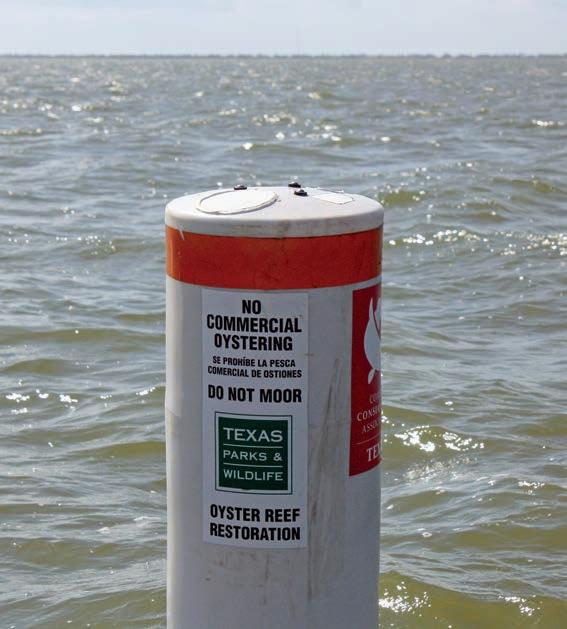
Every reef in East Bay was at our disposal given the ice cream conditions so we took full advantage, hopscotching all of the ones I’d had success on leading up to tourney day. We caught plenty of fish and it was lots of fun. There was only one problem. Time was running out and we didn’t have a trout that weighed more than four pounds and that certainly wasn’t going to cut it. Especially with some of the live bait guys I knew who had been catching some monster trout at the jetties. When conditions are as perfect as they were on that June day virtually no water is eliminated. We only had enough time for one more stop. There was an area on the south end of Deep Reef that was part of an oyster reef restoration site where river rock had been planted for substrate. This particular site had been planted about 2 years prior so it had a substantial amount of new live oyster growth. As with almost every “spot” I fish there is usually a sweet spot within the spot and this area was no different. There was a significant hump near the edge of the site where I’m guessing more rocks were dumped compared to the rest of the area. The tide had slowed considerably and by now there was almost zero wind. As I trolled us into position I noticed a dark shadow on the surface in about 7 feet of water. It was about the size of my boat and it was slowly moving in a circular fashion over this hump. As I got closer I realized it was a giant pod of button (small) shad. Then, all of the sudden, what appeared to be a pretty big trout blew a hole right in the middle of the pod, scattering tiny shad everywhere into the air. Woody fired off a cast where the blow-up had taken place and immediately hooked up! When this trout went airborne shaking its giant bucket mouth, I think all of our knees started buckling. I know
mine did. I told him that if he landed that fish then he would probably win the tourney. This fish took him all around the boat then as he was getting her closer to the landing net she decided to make a deep dive straight under the boat. Woody did a phenomenal job controlling the fight without letting this trout have her way with him. It was such a beautiful sight as he finally guided her into the net. After a few quick high fives we headed towards the weigh-in. You had to be in line by 2PM and it was 1:40. I estimated our distance at around 15 minutes and I was dead on. We made it to weigh-in with 5 minutes to spare and Woody’s seven-and-a-half pounder took first place. I still remember the lure he caught it on – a Sabine Machine Texas Trout Killer II made by Texas Tackle Factory.
That story is basically a microcosm of what fishing in Galveston Bay in June was back then. June is definitely one of the most consistent months for fishing here in Galveston Bay, quite typically the first month of the year when everything comes together after months of back and forth weather and mixed results. Winds usually settle, which works out great because this allows us to get out to the fish as many of our trout will begin to frequent mid-bay oyster reefs and other types of structure. They will also begin to form legitimate schools making them easier to target. As if that wasn’t enough they will usually show us where they are by slicking and offering many other signs such as bait concentrations. If there was ever a month where we could follow a set of proven strategies June is it. Let’s go over a few of them.
Obviously, open-bay oyster reefs will be holding fish. We don’t have as many to choose from as in years past but there are still quite a few. I typically focus more on reefs closer to the shorelines early in the
David Woods with his buzzer-beater tourney trout from June 2010 he caught over mid-bay live oyster.
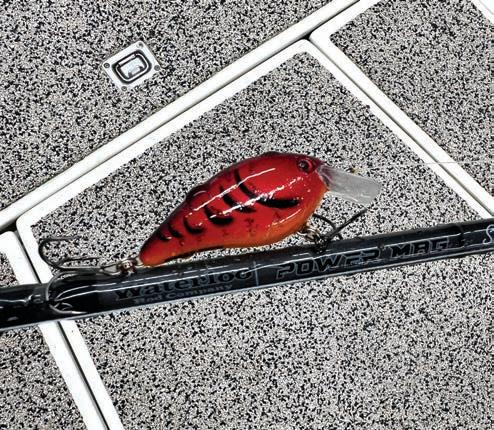
My Waterloo Power Mag rod and a Chili Craw Strike King KVD crank bait are a deadly redfish combo!
Jack Cibulski had the hot hand on this particular day!
Shad Saltwater Assassin straight-retrieved over a shallow finger reef tricked this one.
month then drift the ones out in the middle a little later in the month as water temperatures climb. Finding high spots and ledges while focusing on slicks is my main modus operandi, but I don’t necessarily shy away from terns and gulls working over shrimp either. Reef edges where they transition from shell to mud are good areas to target as well. Saltwater Assassins are usually my first choice and I typically rig them on 1/8 ounce lead heads for this time of year.
We are still wading quite a bit this time of year especially around sandbars and guts. We typically experience early morning bites up shallow then work our way out deep by midday. Rafting mullet, shad and glass minnow concentrations are our focal points. Don’t be afraid to cast in the skinny water on top of the sandbar very early in the morning. We’ve caught some very large trout on topwaters through the years doing this. As a general rule I’ll throw a high-pitched surface plug like a MirrOlure She Dog when it’s choppy and downsize to a smaller profile softer-pitched topwater like a She Pup or Baby Skitter Walk when it’s calm. Texas Custom Lure Double Ds along with Borboleta Hot Rods and Leles are smart choices when we’re getting more blow-ups than hook-ups.
When we’re not wading shorelines or drifting reefs I’ll spend time trolling along the edge of the many man-made revetment walls we have here in our bay system. Most of them are constructed of crushed concrete or some form of rock such as granite or limestone. Algae, barnacles and oysters grow on the rocks which attracts all kinds of marine life, which in turn pulls in trout, reds and flounder. I like to troll along rock edges looking for bait and slicks. Corners, bends and openings tend to produce the best. Soft plastics such as MirrOlure Lil Johns and Saltwater Assassin Litl P&V’s are deadly when casting along rock ledges for trout and flounder. One of my favorite things to do is
reel crankbaits along the edges for redfish. My favorite one right now is the Strike King KVD square bill 1.5. It runs at a 3 – 5’ depth. Its sideto-side wobble and rattle induce some of the most violent strikes I’ve ever had on a lure. It’s not uncommon to pop an above average-sized trout on a crankbait either. I recently caught a 24 ½ trout on one while we were fishing for reds.
On a side note, make sure you’re using a rod that can winch those strong-shouldered reds away from the rocks. My rod of choice is my Waterloo 7’ Power Mag. It’s ultra-sensitive and lightweight but has a helluva backbone.
I have to say this has definitely been one of my better starts to the year here in Galveston Bay since the floods from Hurricane Harvey in 2017. In addition, it’s now been 5 years since our last fish-killing freeze. There are many similarities of what I’m currently seeing in our bay compared to what I experienced years ago. I’m not saying that it’s the same but I am seeing improvements in our fishery and more specifically with our speckled trout fishery.
June is not complicated. As a matter of fact it’s pretty straight forward. Our eyes don’t lie. Don’t be afraid to try new spots. If it looks “fishy” then more often than not, it is. We’re catching fish in places that we haven’t in years, mainly due to higher bay-wide salinities. The tiderunner trout are filling our bays. Every style of lure we own will catch fish in June. Each day we assess the conditions then develop a plan of action based upon what has been successful for us through the years. We’re basically just working from the playbook. I’m looking forward to a great summer! Good luck my friends!
STEVE HILLMAN
Steve Hillman is a full-time fishing guide on his home waters of Galveston Bay. Steve fishes the entire Galveston Bay Complex, wading and drifting for trout, redfish, and flounder using artificial lures.
Brian Endris with one of several solid G-Bay trout on a recent trip.
William Endris (pictured with his dad, Brian) with his first-ever redfish and what a chunky one it was! Caught on a crankbait while casting along rock groins.
I tricked this healthy red on a Slammin’ Chicken Saltwater Assassin casting to live oyster beds along a spartina grass-lined shoreline.
The Beauty of Summer
& Bounty House
STORY BY KEVIN COCHRAN
In some ways, the area known as Summer House resembles the woman whose dwelling gave the place its name. Sarita Kenedy East maintained a cabin at the edge of the lagoon in this location; historians say she generally visited it during the summer months, most likely so she could use the cooling effects of the breezes which persistently blow in this part of the world to cope with the region’s notorious, searing heat. The granddaughter of legendary cattle baron Mifflin Kenedy, who founded La Parra Ranch, Sarita was known as a generous philanthropist, a barona who consistently sought to ensure the health, education and well-being of the Mexican-Americans who worked her ranch. Sarita could stay in a saddle and hold her liquor better than most men; tough and shrewd, she also displayed a kind and sensitive side. The breadth of her influence on the culture of South Texas has staying power; she provided much to many during the days of her life and indeed beyond her death. Though little remains of the house she reportedly visited on the shoreline of what’s now known as the Kenedy Ranch, the waters adjacent to the home site retain the stark beauty they displayed a century ago, and the area still possesses the potential to produce a bounty for coastal anglers who make the long run to this remote part of our coastal waterways.
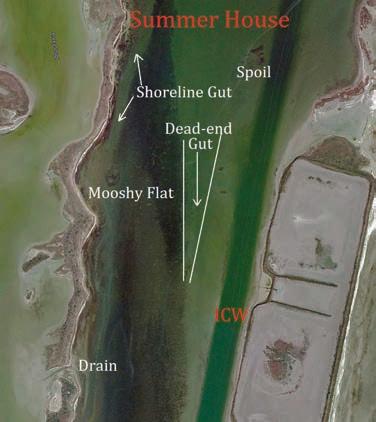
Summer House has several of the attributes which define most supremely productive fishing holes. Lying alongside the Intracoastal Waterway, at the intersection of the Upper Laguna Madre and the Land Cut, two of The Lone Star State’s premiere big trout fisheries, this famous place has water of highly variable depths, three constituents cover the bottom, and adjacent land masses offer its waters protection from strong onshore winds. The breezes in this part of the state regularly whistle with enough intensity to wreck the water clarity in many parts of Baffin Bay and the Laguna Madre, but the long spoil island on the east side of the Intracoastal insulates the water on these flats from their effects, provided the breezes have some easterly aspect.
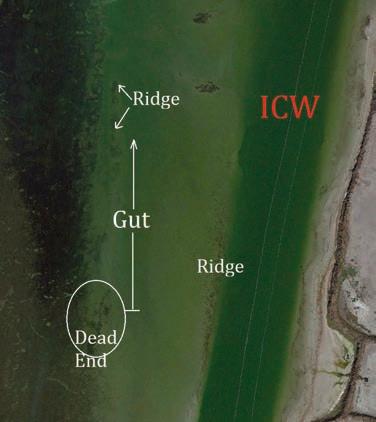
Basically, a broad, grassy flat serves as the foundation for Summer House. It measures about one-third of a mile wide, reaching eastward from the Kenedy Shoreline to the sand bar lying along the western edge of the Intracoastal Waterway, and it’s roughly a mile long from north to south, nestled into the northern entrance of the Land Cut. A wide, deep gut bisects the flat in the northern half of the area, and the flat becomes gradually shallower in its southern half. In its southernmost extremes, The Kenedy Ranch Shoreline and a sand bar fronting it bend closer to the edge of the Land Cut and provide a metaphorical boundary for the spot.
Several parts of Summer House have longstanding records of excellent productivity for me and many others, mostly as places where one can expect to catch big numbers of speckled trout, including a few reaching and exceeding twenty-eight inches in length and weighing seven pounds or more. The entire span of the sand bar lying next to the deepest water in the area, in the Intracoastal itself, has potential to produce plenty of fish, especially the isolated spoil in the northeast corner of Summer House. I and my customers have caught thousands of trout on this little patch of sand and grass, usually on hot summer days, with moderate to strong southeast winds whistling on our backs while we threw small topwaters and/or soft plastics rigged on eighth-ounce jigheads, either along the edges of the grass beds adorning the spoil or into the deeper water lying west and north of it. In this same kind of weather, the best action, including the highest potential for catching some of the biggest trout in the area, often occurs where the deep gut bisecting the flat in the northern half of Summer House becomes shallower and plays out, surrounded by grass beds on all sides. This small pocket sometimes holds numbers of big trout, most of which lie in wait to ambush their prey in shallow water covering bright, silty potholes. This part of Summer House has the potential to produce a few big trout during any month of the year. During spring and fall, as in the summer, the spot produces best during the early morning hours, when relatively quiet winds blow off the Gulf and onto land. Wading anglers standing to the east of the shallow potholes lying at the end of the big gut and casting topwaters and slow-sinking twitchbaits beyond and back through them sometimes find rich rewards. In the colder months, the area usually produces best from the time north winds fall quiet after the passage of one strong front all the way until onshore winds begin to ramp up with intensity in advance of the next front. Especially in the first half of winter, when trout often temporarily flee the shallows and retreat
into water of greater depths while temperatures rapidly plummet, these shallow, silty potholes lie in a prime location. Anglers tossing soft plastics and slow-sinking twitch baits into them during late-afternoon hours and into the gloaming could certainly catch the trout of a lifetime, as it prowls out of the depths looking for an easy meal without venturing too far from the relative safety of the warmer depths.
On the west side of the main gut bisecting the north half of Summer House, a slimmer, shallower secondary gut runs parallel to its bigger brother. A slender spine of sand covered by grass separates the two trenches. Certainly, the silty potholes comprising the secondary gut have the potential to hold plenty of trout, including some big ones, as does the spine, particularly its northern end. When the water runs clear here, anglers can see the spine well enough to wade along it from south to north, casting into both guts, along the edges of the spine, then concentrating on the northern tip when they reach it. This drill works best with wind speeds under fifteen knots in play.
Anglers also can and do catch some big trout around the rocks lying close to the bank on the Kenedy Shoreline. Numerous rocks jut out of the sandy bottom right along the shore and in the muddy, grassy shallows slightly farther from shore. When light winds with a westerly aspect linger in the wake of a passing cold front, this pattern proves particularly productive for waders walking close to the bank. Some of the biggest trout caught by my customers in this area bit in this location, during cold, relatively calm conditions.
In warmer weather, during spring, summer and fall, anglers standing well away from the bank and making long casts toward the shoreline can also expect to catch plenty of trout around these rocks, especially those framing the end of a subtle gut running adjacent to the bank in the northwest corner of Summer House. Topwaters work best for this drill, eliminating the risk of snagging sub-surface lures on the boulders. Wading this gut on medium-low and low tides works best, except for the tallest anglers.
Certainly, waders of all sizes can work the entire southern half of the area on foot. This mooshy flat has what I call boot-sucking mud on its bottom, so wading it takes strength and stamina, especially when one wants to move around without creating much commotion. Undoubtedly, some folks would benefit from making long drifts across this expansive flat, so they can save energy and fish more safely. Anyone running a boat on the big motor in all parts of this area, especially on the shallows of its southern half, should do so only by idling. Several small clusters of rocks protrude from the bottom
Rick Brill holding the thirty-inch trout referenced in the article, one the captain belaieves his friend Jason King had caught a few days earlier.
well away from shore in this place, posing serious risks to brave (a.k.a. stupid) anglers who choose to plane off and run around at full speed.
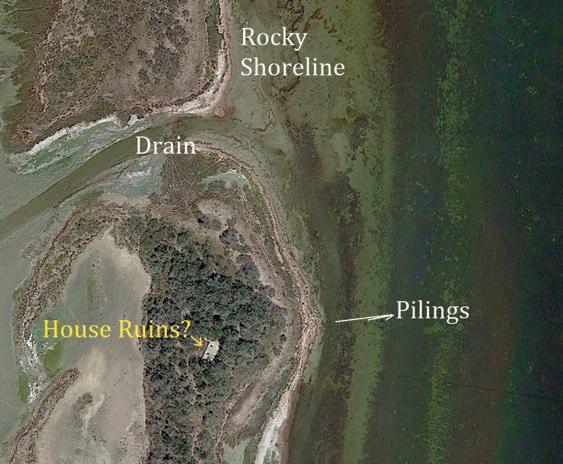
In southwestern parts of Summer House, a small drain funnels water in and out of a tidal lake known as Rocky Slough. Best I can tell from studying the Google Earth images and from walking briefly onshore to look around, Sarita Kenedy East’s house stood just to the south of this drain. A set of old pilings runs off the shoreline here, likely ones driven into the bottom by ranch hands constructing a pier for their boss. The sandy, rocky shelf fronting this drain and the soft potholes and grass beds around these pilings have produced several big trout for me and my customers over the years, including a thirty-inch specimen Rick Brill caught a few days after my friend Jason King told me he’d caught and released a fish of the exact same size there. To this day, I believe they caught the same fish, as we could see a fresh hand print on its back while we took pictures and released it again. That trout bit a Paul Brown Fat Boy, as did many of the others we’ve caught in this picturesque corner of the lagoon.
In places with such shallow water, floating versions of those lures often work better than sinking ones. Without rattles, and with an extremely slow sink-rate, floating Fat Boys allow anglers to work their lures through the water at appropriate speed and with stealth. These facts prove quite relevant in the southern extremes of Summer House, where the bottom is mostly bright sand, covered only sparsely with small grass patches, at least most of the time. Anglers who manage to wade without making much of a ruckus, and those who have boats capable of drifting in really shallow water catch a few giant trout by sight-casting in this part of the area.
Mostly, I think of Summer House as a prime place to target numbers of trout, including a few big ones, when winds howl off the Gulf and muck up the water in much of Baffin and the ULM. I have many fond memories of teaching customers to use Paul Brown Lures effectively in the spring and fall here. On some occasions, we caught more than one hundred trout a day in this little nook in South Texas, where a barona
once liked to try and beat the heat.
In 1962, La Parra’s Queen crossed the gap into that last pasture; the sands of time have since erased almost all evidence of her getaway cabin, but some things endure in this region where so many acres belong to so few people. These famous ranches, almost as vast as the largess of the legendary landowners, partially insulate the public waterways they surround from the relentless, destructive effects of human encroachment. To this day, Summer House retains much of its natural beauty and plenty of potential to generously bless Texas anglers.
Kevin Cochran is a long-time fishing guide at Corpus Christi (Padre Island), TX. Kevin is a speckled trout fanatic and has created several books and dvds on the subject. Kevin’s home waters stretch from Corpus Christi Bay to the Land Cut.
www.captainkevblogs.com T ROUT TRACKER GUIDE SERVICE
Chuck Holloway caught this beautiful trout close to the rocky shore in Summer House, in cold, post-front conditions.
The captain recalls helping many anglers, including Tim Zbylot, become more proficient using slow-sinking twitchbaits at Summer House.
Anglers have plenty of options to choose from as we head into the summer months.
What a GREAT PROBLEM to have!
STORY BY CHUCK UZZLE
If you were to pick a random person off the street and ask them the first thing that comes to their mind when somebody says they have a problem, their response is likely to be something negative. Seldom do we ever associate having a problem as a good thing, but that’s exactly what we are going to have during the month of June because we have so many different ways to fish. I guess you could say that deciding what to do and how to go about doing it is going to be do it that it’s a good problem to have.
Like the lyrics from the old 90s country song, Too Much Fun by Daryle Singletary. What exactly does that mean? Would that be like having too much money? I can’t even imagine what that’d be like. Well, we almost have too many options this month and that means there is a pattern or program for everybody, all the way from the shallowest marsh pond to the wide open gulf and everywhere in between.
During the early part of this year Sabine Lake was spared from what we’ve begun to view as typical springtime runoff from the big lakes to our north, which coincidentally meant we had an absolutely fantastic start to 2026. Solid trout that we once thought were gone forever have made a sizeable comeback – much to the delight of the Sabine faithful. Having such a promising start to the year leaves many anglers, including yours truly, with elevated expectations for this summer, provided we continue to get reasonable cooperation from both the weatherman and Mother Nature.
With so many quality choices to pick from it’s hard to make a mistake, so we’ll just start in shallow water and work our way out. The backwater redfish bite is about as good this time of year, right up until the air and water temperatures soar in late July and August. June typically provides that perfect combination of bait availability, water temperature, and clarity that makes for some epic fishing days. Small brown shrimp and crabs will be running for their lives as the redfish will be active and swimming around in numbers.
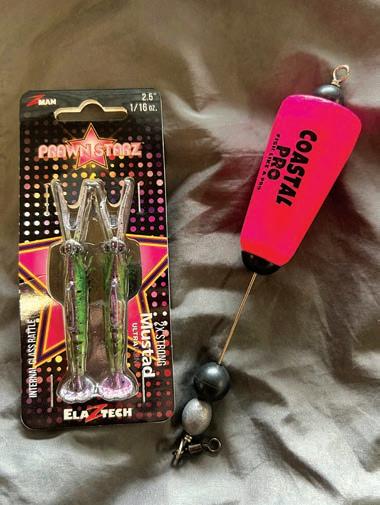
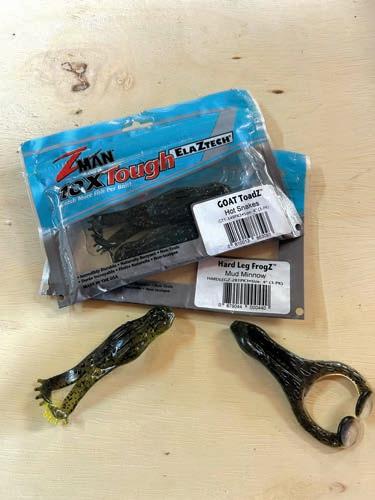
The redfish pattern for me falls into one of two categories – Can I see them or not? For the fish that I can see I almost always reach for a surface offering; something like a topwater or a ZMan frog rigged weedless. For the fish I can’t see it’s all about covering ground and that usually means a Coastal Pro rattling cork rigged with my choice of soft plastic on an1/8 ounce jighead.
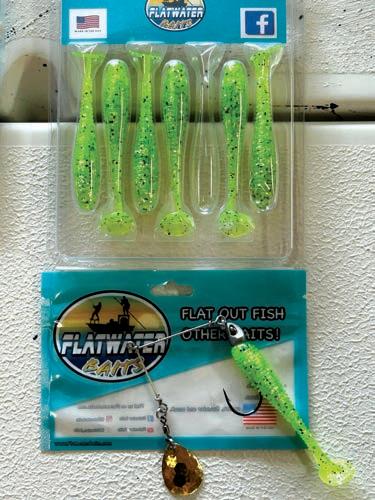
I will also add one more lure to my arsenal and that’s a spinnerbait. I opt for the spinnerbait over a spoon because I like the vibration it offers, especially in the off-colored water situations. I’ve been throwing the Flatwater Baits spinnerbait rigged with their Flats Shad and I really like it. The hardware is top notch and withstands those big redfish strikes that will ruin other versions. With just these few baits you can keep from overcomplicating things, spend less time changing lures, and more time fishing.
A few more options come into play as you leave the shallow water and head out into the open lake. Most folks that will be concentrating on speckled trout can do several things, from drifting live bait to
wade fishing at night, and have success just about any way they decide to go. Perhaps the most popular pattern will be patrolling the rocks along the jetties with a swimbait or shallow-running crankbait, looking for better quality fish.
Don’t sleep on the early morning topwater bite at the rocks either; it can be quite a show when you catch the tide conditions just right. Fish those rocks with a parallel retrieve to keep your bait at the right depth for longer periods to increase your odds of getting bit. One
The new spinnerbaits from Flatwater Baits coupled with their 4” Flats Shad are excellent choices to cover water when you can’t see the fish.
Never leave the dock without a rattling cork and soft plastic handy.
ZMan frogs allow anglers to cover lots water and navigate emerging vegetation, go-to lures for marsh fishing.
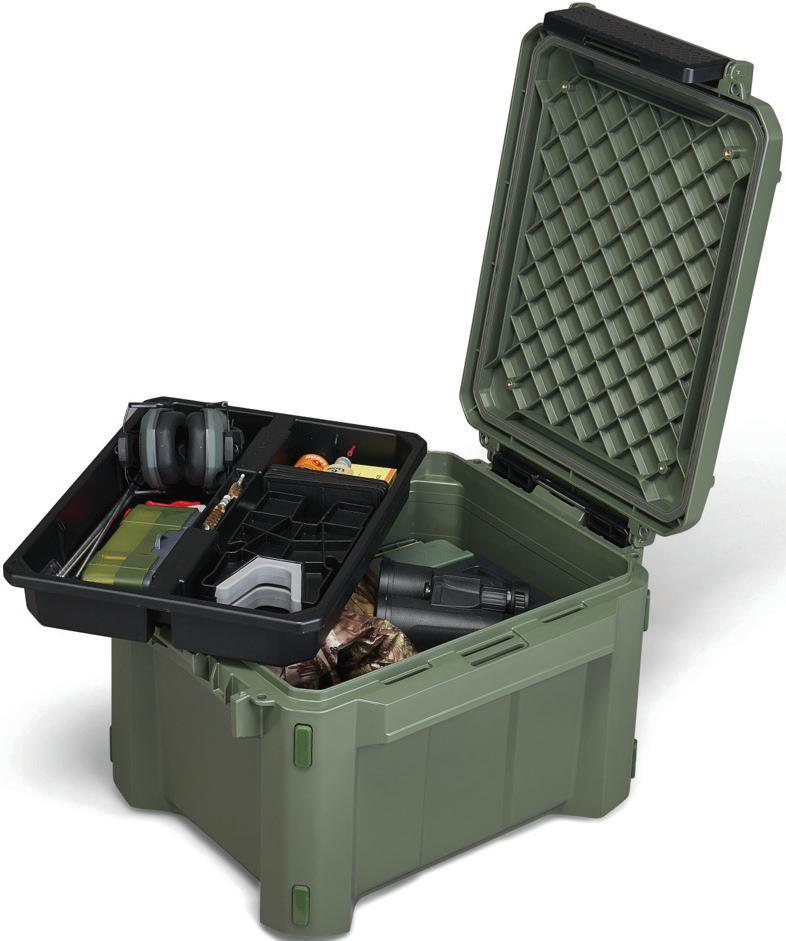
The new Plano GoBox is a perfect Father’s Day gift for any outdoor activity.
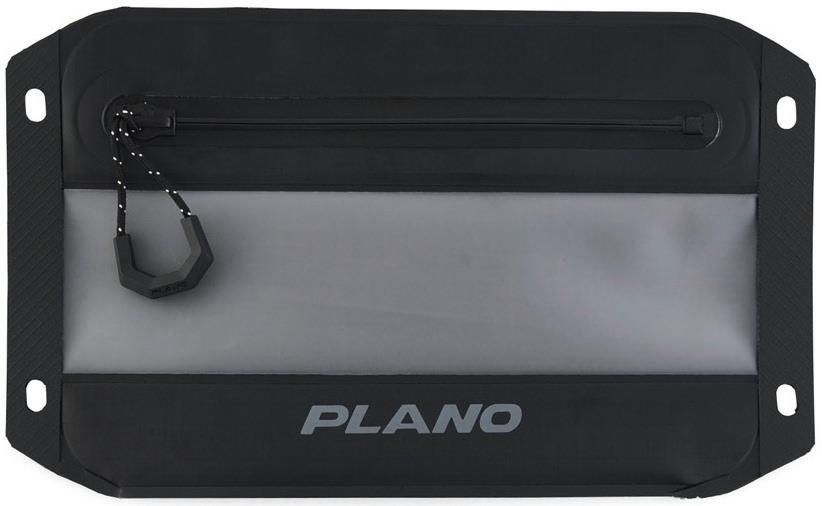
Plano Waterproof Pouches have plenty of applications for every fisherman and make great gifts for dad.
Farther away from the jetty, down the beachfront, there will be all kinds of opportunity to get your string stretched as the herds of gulf-class redfish will be shadowing the schools of pogies, along with more than enough sharks for anyone to stand. When these fish get in aggressive feeding behavior you can’t miss it because of all the surface action and bird activity. Bring a big rod and hang on because some of those sharks are absolutely full grown.
Another option along the beachfront will be chasing tripletail. These fish can be sight-casted as they sun along the surface, so lots of folks will cruise and look for them. Live shrimp under a cork is almost a certain bite and is rarely refused by the tripletail. Many anglers like to fool them with artificial while some opt for a more delicate approach with a fly rod. Once you get your first tripletail hookup and landing you’ll see why these fish have become so popular.
With all these options it’s really easy to see why June is such a highly-anticipated month, but there is still more to look forward to and that’s Father’s Day. Every year I try to include a few ideas for those who are looking to buy gifts for that special fishing dad and here are a few to share:
Plano has a new line of storage boxes called GoNow and they are perfect for the fisherman or hunter in your life. These boxes are weatherproof and customizable, which gives you plenty of flexibility. Plano has also come out with some new waterproof storage pouches that are really slick – perfect for organizing tackle or virtually anything. The Stow Zip Pouches come in several different sizes and are perfect for everything from boat and kayak storage to carrying along while wade fishing. These are just a couple of ideas that will certainly make dad smile.
June is definitely a month that has something for everyone and hopefully it’s the start of a fantastic summer season. It’s been a while since Sabine was in such good shape and held this much promise for anglers. No better way to get the summer started than to enjoy some time on the water, and be sure now that the kids are out of school to include them on every trip. Enjoy your time on the water and don’t leave the dock without a PFD.
CHUCK UZZLE
Chuck fishes Sabine and Calcasieu Lakes from his home in Orange, TX. His specialties are light tackle and fly fishing for trout, reds, and flounder.
Phone 409-697-6111
Email wakesndrakes@yahoo.com
Website wakesndrakes.com
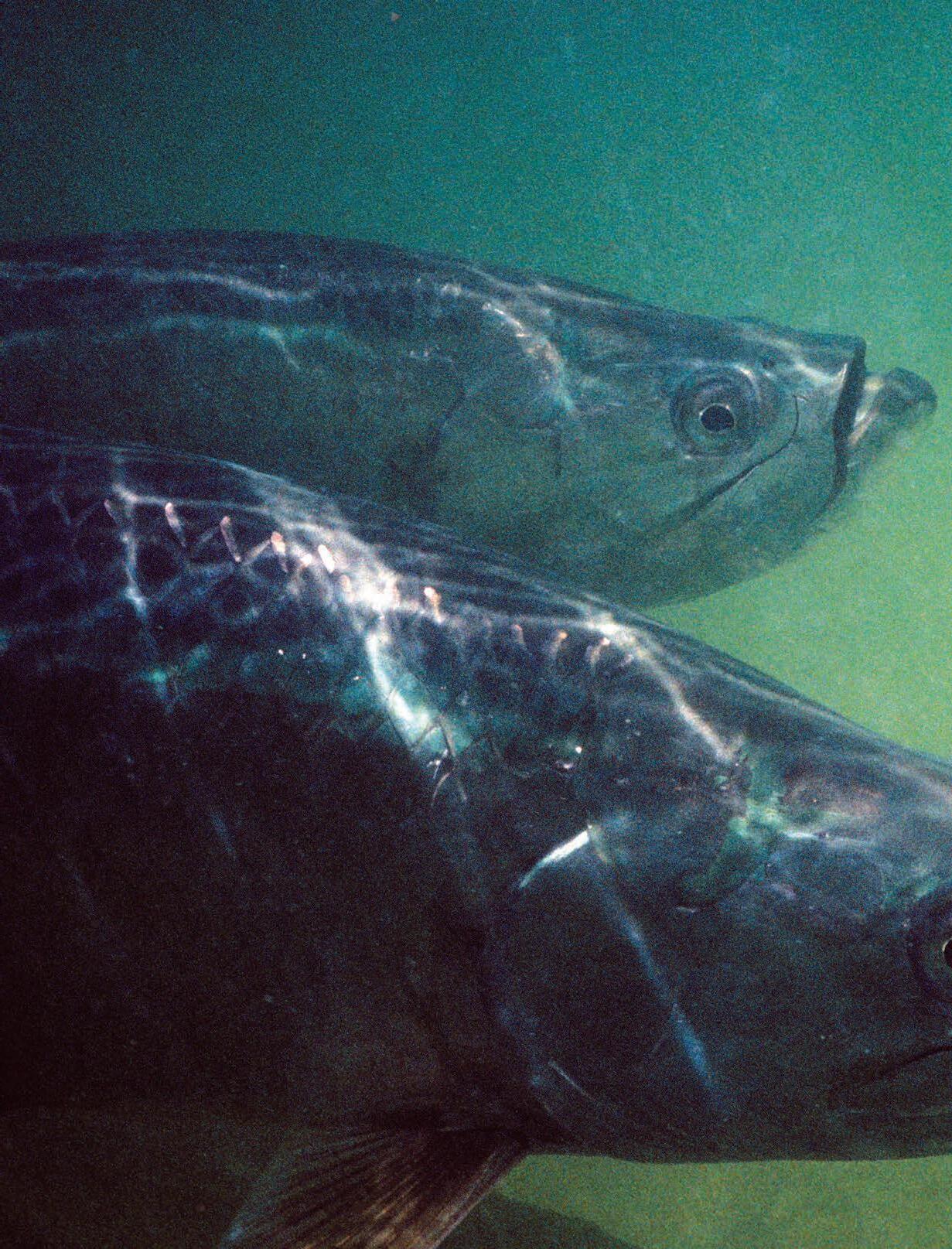
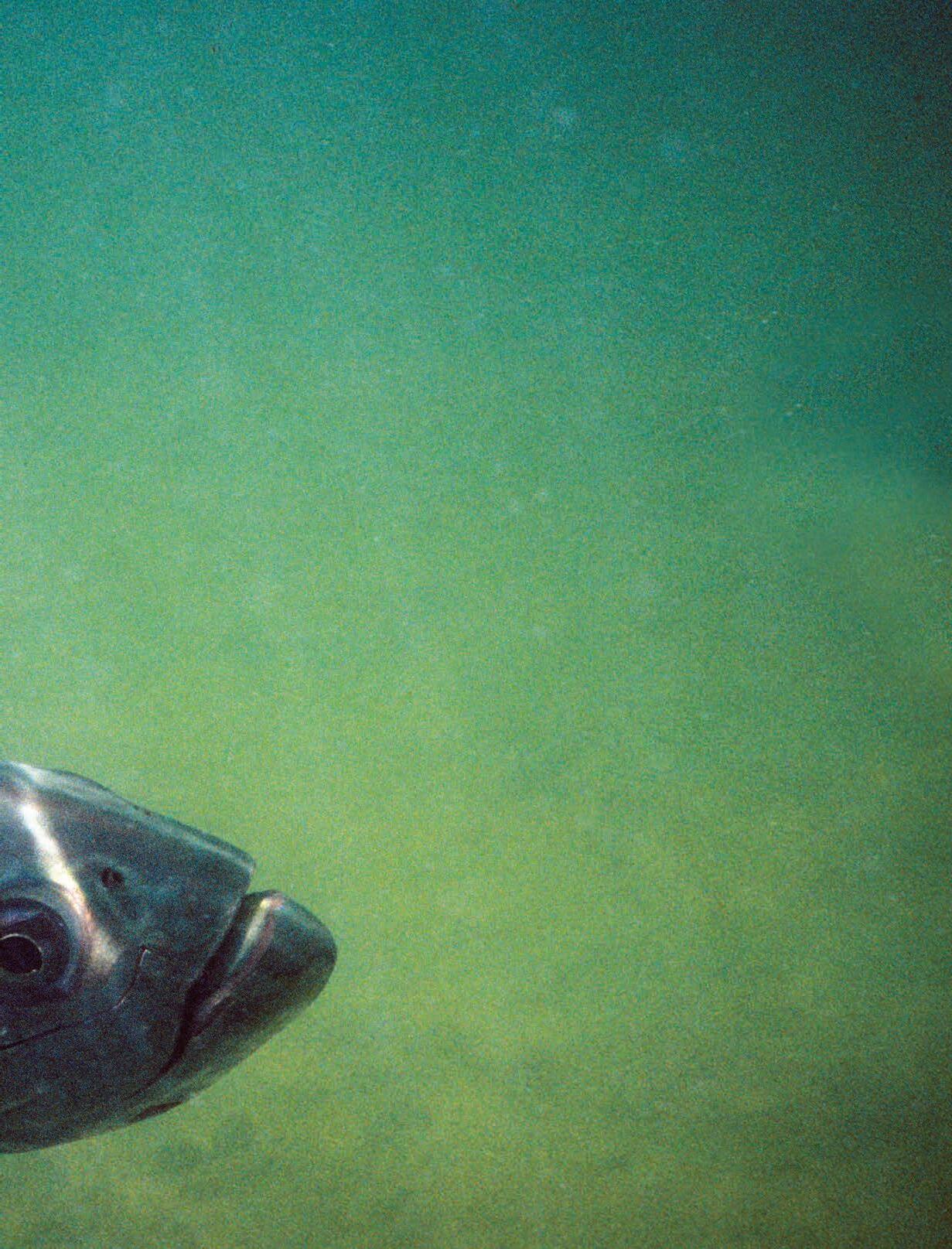
Tarpon like these around the fish cleaning dock have become greedy in Florida.
Musings FROM THE FishCleaningTable
STORY BY JOE RICHARD
Twenty years ago a game warden advised me that fish carcasses, which he called “biomass,” really belonged back out there in the water where it came from to feed the fish, crabs and critters; not in some dumpster or landfill. Ever since, I’ve tried to follow that by tossing scraps and fillet-less fish back, preferably in the ICW or deeper water with a slow current. I’ve also donated fish carcasses to neighbors from other countries, who utilize more of the fish. More on that later.
It’s true that countless fish are cleaned at coastal docks where the remains are returned to the water. However, some places without access to good water circulation or deep water have posted -No Fish Dumping- signs and for good reason. Sometimes there is a local ordinance banning fish disposal that tries to keep the water clean; no one wants to see floating redfish carcasses that can hang around for a week or more.
If you prefer to return your fish remains back to where they came from, here are a few tips: Anglers cleaning fish can help by puncturing the eyes and air bladders before tossing them. This makes it easier for them to sink where benthic critters make them disappear fairly quickly, especially POC’s “piranhas” (hardhead catfish). They even have a local alligator that favors fish scraps. With all that biomass going off the dock for decades the crabs, dolphins, bull sharks and even goliath grouper may show up for the dinner bell. Plenty of mangrove snappers, too. Back in the 1970s at Clarks shrimpboat dock (they opened the restaurant in 1994) Billy Ragusin caught a huge goliath grouper from under that dock. It had been seen inhaling buckets of shrimp heads dumped overboard. Today, it seems like someone with a sturdy handline might get some serious action around there, using a fish carcass for bait. Of course, this could be dangerous, getting wrapped in the line and yanked overboard by a powerful fish or gator. Around that cleaning table, it’s also “lions with the lambs,” so to speak, because even pinfish make a good living there, nibbling trout carcasses and getting some payback. One summer I kept a pinfish trap next to that cleaning table for a couple of weeks that provided many of those baitfish.
As for dry land, forget burying cleaned fish carcasses in the back yard. I stopped doing that years ago, after several sandy sheepshead carcasses were dug up. (We have woods and a serious raccoon problem, no matter how many I trap.) Sometimes I’ve hauled a few fish carcasses to a local lake, where people never swim because of the gators. Over in Florida, all of their lake marinas and boat ramps with fish cleaning tables post No Swimming and Don’t Feed the Gators, and for good reason, because they have thousands of big, hungry reptiles. The gators are predictable, but not people; you never know what the latter will do. Or if they can even read, for that matter. It didn’t stop one inebriated teenager on a Saturday night from cursing nearby gators before fearlessly jumping off the dock to impress his friends. The water churned and he didn’t last but a few moments. His girlfriend later told the sheriff, “It was the dang-dest thing I ever seen.”
Considerations when cleaning fish:
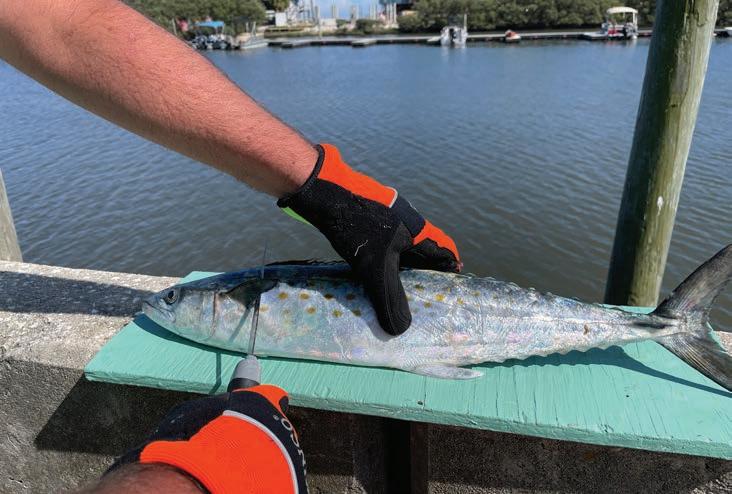
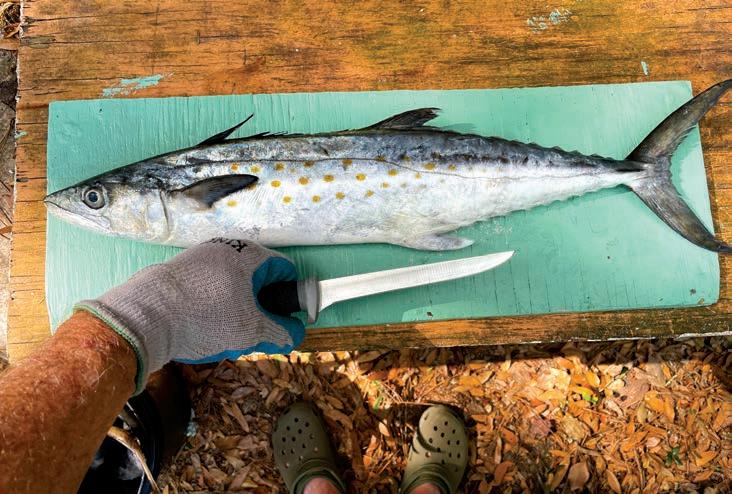
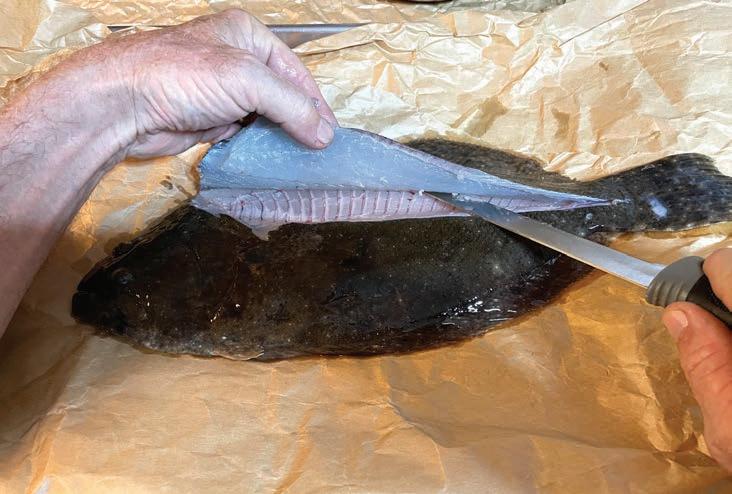
- Sharpen that knife to prevent wasting fillet meat. It’s depressing to see fish filleted with a thick layer of meat left on their skin and backbones. Watch how the guides clean fish and use the kind of knives they carry. I prefer the sturdy, white-handled Dexter blades after my wood-handled Rapala gave out years ago. Also, consider going electric. Each species is different to clean. That bony redfish is best cut from mid-section to head, while seatrout are the opposite, the usual head-to-tail cut works well. Spanish mackerel are the easiest of all, just one long boneless fillet on each side. Flounder and sheepshead are the more tedious to clean. Consider baking whole fish such as flounder, snapper and redfish, where every scrap of meat can be picked over with a hungry fork. - Donate carcasses to those who will use them. Most people from other countries utilize the entire fish because they don’t have the fish populations we do. I have friends from Hungary and also the Netherlands who make a spicy fish soup or chowder, using the whole carcass. Minus the fillets, which I kept. In America we toss tons of good fillet-less fish into marina waters. Even big, fine red snapper with lots of white meat. Most people don’t even save the tasty throats of snapper and redfish. We now save some of those carcasses for ourselves for a tasty fish chowder that Amy makes each winter. This idea first showed up on my radar decades ago when I was staying with a friend at Pirate’s Cove on Galveston Island. We’d
Cleaning mackerel at the harbor.
Cleaning fish in the backyard ideally means freezing the remains and later dropping them offshore.
Filleting flounder for a fish fry is tedious work with tasty results.
spent the night offshore, back when the bag limit was five fish and our catch added up to eight or nine sow snapper weighing 12-15 pounds. Next day I set to work with the knife. Just across the narrow canal, I’d caught the attention of a roofing crew. When I tossed that first fillet-less big snapper off the dock, there came a howl of protest across the water. One of those guys spoke English and pleaded with me to save the carcasses. Which I did, stacking them in the cooler with the remaining ice. When happy hour arrived, one of these dudes showed up with a big plastic bag and took the carcasses. I didn’t catch which recipe they had in mind for cooking all that saved meat.
- Current Texas law says you can’t use those carcasses in crab traps, which I did years ago in Saluria Bayou. Which is a shame, because a redfish head will last a few days in a trap full of hungry crabs.
- I’ve read that tossing fish carcasses to greedy pelicans at the dock is bad for them. It seems they’ve evolved by eating whole fish, not carcasses with lots of sharp bones exposed. There are stories of those big birds choking on discarded carcasses. And those puppies also bite, too; my uncle tried to hand a ladyfish to a pelican and the greedy bird grabbed half his arm. Even dolphins show up at fish cleaning docks. Not sure how they deal with the bones, but they’ve found a way. It’s nice to help Flipper with a fish, but sharp bones might cause them problems.
- Blue crabs can always use a handout; they’re harvested widely with commercial traps and their numbers are a joke from what I witnessed years ago in high school, when we could fill an old fashioned steel trash can with big male “Jimmys” in a single morning in June (Pleasure Island Marina, Port Arthur). Some mornings we had four big crabs clinging to a single chicken neck and also on a second line with a small red snapper head. Many more crabs were scooped up in the shallows with a six-foot crab net. We sold those crabs to Judice Grocery for a nickel each.
In Texas it’s the chore of tired guides to clean fish at day’s end. I remember being too tired to push a knife through another redfish, after taking out two trips each day for a drilling mud company in Port O’Connor. (With a nap at mid-day back at the house, sleeping in my shoes). Then cleaning fish after dark while the clients attended happy hour back at the lodge. We often had 8-9 redfish from the evening jetty trip and if one was still flopping and breathing in the cooler after sunset, you can bet it was dropped off the dock. The rest wound up filleted in Ziplocs.
In Florida, as it is a long-standing tradition to pay “professional” fish cleaners; the marina calls in someone to weigh and clean the fish, and the fishing party pays them by the pound, giving the tired guide a break. The fish cleaner charges something like 80 cents a pound for uncleaned fish, weighing them by the bucket. When watching this at the marina, I assumed they’d be expert cleaners with a set of knives, but the last guy I saw hacked away like he only had a few minutes, and there was noticeable meat still left on each carcass. In POC there was also a local teenager who could earn a few bucks by showing up at the right time with a fillet knife. That was years ago and it may be impossible today to pry kids loose from their I-phones for more than a few minutes.
Down in the Florida Keys at Islamorada, offshore boats return to dock each day and fillet their mahi-mahi. They aren’t allowed to dump carcasses; their marina water is kept clean for tourists and diners. Instead, the carcasses are hauled a few hundred yards out and
dumped in the channel, where they attract tarpon every evening that shamelessly gulp down the free groceries. Some guides take out evening tarpon trips and anchor there, bait up with a fillet-less mahi, and they’re soon hooked up to a fighting tarpon within sight of restaurant diners above the marina. Tarpon there have become a form of entertainment around the docks, especially across the island at Robbie’s (also called the Hungry Tarpon), where people there are now charged for viewing and even more for feeding the tarpon, which will jump four feet out of the water for a handout. In 1989 we stopped there, nobody was around, so I waved a silver gum wrapper in the air near dock’s end. Where I was promptly bitten by a jumping 50-pounder, along with many other people in the years ahead.
There is video of one sturdy guy on YouTube who had a 100-pounder clamp down on his forearm and wouldn’t let go. He dragged that writhing tarpon onto the dock, where they both hit the planks together. Ka-boom! With considerable screams from a nearby tourist. Once free, his forearm shredded, he quickly left the scene. Tarpon first gathered around Robbie’s dock back in the late 1980s because commercial guys were cleaning fish there; while wiping out the local amberjack population at a major spawning site 22 miles offshore called The Hump. It seems that Paul Prudhomme’s blackened fish recipe needed more product, soon after big redfish in the Gulf were finally protected in 1986.
It’s fair to say that all sorts of things happen around fish cleaning docks, both good and bad. If you do save that trout, redfish or snapper carcass, look up a good fish chowder recipe and give it a try.
Texas State Law
• No Public Dumping: It is illegal to discard dead fish, carcasses, or waste in public areas, including boat ramps, docks, and coastal parks.
• Fish Cleaning Stations: Utilize fish cleaning stations specifically designed for this purpose, where available.
• Distance Restriction: Carcasses cannot be discarded within 500 feet of any public shoreline or in public trash receptacles.
• Puncture Air Bladders: Before returning to the water, ensure you “pop” the air bladder (belly) of the fish so it sinks immediately.
• Return to Water: The preferred method is returning fish parts ideally to deeper water, to act as fish food and nutrients.
JOE RICHARD
CONTACT
Joe Richard has fished the Gulf since 1967, starting out of Port Arthur, but his adventures have taken him up and down the entire coast. He was the editor of Tide magazine for eight years, and later Florida Sportsman’s book and assistant magazine editor. He began guiding out of Port O’Connor in 1994. His specialty is big kingfish, and his latest book is The Kingfish Bible, New Revelations. Available at Seafavorites.com
SIGHT-CASTING FOR UPPER-SLOT TROUT
This month, I want to talk about some shallow-water tactics that I have confidence in using when it comes to catching the best fish that present themselves in the Rockport area. Rockport does not have the trophy trout reputation that some other areas in Texas own, but we do have some trophy-class fish here. Fewer, no doubt, than areas such as Baffin and the Upper and Lower Laguna Madre, but we still have a few.
May and June are great months to get up shallow and have some sight-casting opportunities with these larger fish. I know a handful of my fly-fishing buddies wait for this time of year to get a shot at some of the trout we get to see during this time of the year, and there is a growing part of me that believes that just maybe, chasing this class of fish in my area, one might be better suited to chasing them with a fly. Now—to get it straight right here in the beginning—I am not a good fly fisherman and I will absolutely not speak on anything fly fishing, as I could not possibly instruct anyone in this style of fishing. I can, however, tell you where they are and how to catch them on conventional tackle.
There is always the possibility that during the month of June we will begin to see the wind velocities backing down. I tell folks that our winds along the Middle Coast typically decrease dramatically after the Fourth of July. We do, however, experience periods in late May through the month of June when we will wake to nearly deadcalm conditions, and this presents the opportunity to work the mid-bay reef structures that lie north of Marker 25 in our ICW.
Now, as appealing as those reefs can be, I would actually prefer to concentrate my efforts on windward spoils and shorelines, when clients are capable and willing, searching for that very small percentage of upper-slot trout that will sometimes stage there.
Think about this. For at least three months straight, predominant SE winds have pounded these windward areas, stacking water and baitfish up close to the shoreline itself. That shoreline is a wall that prevents the bait from being able to escape the pursuit of game fish. These are facts that many understand and put into use during the spring months.
Windward fishing patterns are well published and well understood by many and have proven to be consistent fish-producers for a long time, no matter what bay system you are fishing. However, as simple and wellproven as these patterns are, when the winds subside this pattern seems to go unnoticed for the simple reason
that so many fishermen are of the mindset that when the wind subsides, bait will disperse and game fish will seek other areas to feed.
However, if some of the bait remains, so will a certain number of the predators. And herein lies the key to some of the best big trout fishing of the whole year and being able to sight-cast trophy trout. In this next paragraph, I will attempt to explain my mindset on this type of fishing, and I will also attempt to explain my approach and methods for getting these exceptional fish to eat for you.
During the period when the winds are pretty much sustained at 15 to 20-plus mph per day from virtually every point on the compass, waters along windward shorelines become sandy to downright dirty. This condition both protects baitfish and also leaves them more vulnerable to predation. Upper-slot trout take advantage of this and become residents of the area throughout these conditions. The above-mentioned
Austin Thomas getting in the groove with a good one.
conditions often result in reduced angling pressure due to poor water clarity. That is a mistake, just so you know.
Trout instinctively want to feed shallow, as it naturally reduces the size of the strike zone, significantly improving their success in getting fed. During this same time period, they also seek to spawn in shallow water, which makes a second reason for them being there. So, the way I see it, any time a calm wind period coincides with a favorable moon phase for spawning activity would have to be the best of the best circumstances if one is able to be on the water at such a time. Put that in your notebook.
Here is what I believe and what I try to take advantage of. When the winds subside, the water will often remain somewhat sandy for at least a day or two. This short window allows me to see the trout to some degree, maybe not too clearly, but they cannot see me clearly either. I get a limited number of days during which to put my clients in position to catch these fish before the water becomes too clear—provided they actually possess the angling skills to get the job done.
Sounds a bit harsh, perhaps, but it is just a fact that not all the anglers I am lucky to guide to these opportunities possess finely honed sight-casting skills. Anglers must approach these areas in stealth mode. Stomping around won’t allow you to get close enough to even see one, I assure you.
Cut the motor way out there and drift in. Be aware of everything in the water around you and be prepared to make short, quick underhanded casts if necessary. Small flips and pitches are an added skill set in this style of fishing.
Remember that the first objective of sight-casting is for the angler to be able to see the target. Please invest in quality sunglasses. You have lots of choices, so there’s no excuse for not owning a pair. I recommend WaterLand eyewear. After lens replacement surgery, I no longer need prescription glasses, so their Mineral Glass lenses are an ideal fit for me. Light, super clear, and extremely durable are what WaterLand Eyewear are all about. Suffice it to say that all the casting skill in the world is of no value until the target has been spotted…so, enough about eyewear.
Large trout can appear as darker gray or black silhouettes, slowly
cruising shallow grass edges and potholes. Stationary trout of upper-slot size can many times be especially stubborn to get to eat. Trout that are moving and fish that have companions are typically higher-percentage targets. It is true, from what I have seen over my years, that the smallest trout in the wolf pack are typically the most aggressive. Target the bigger ones if you are hoping for a trophy. Try to pay close attention to the body language of the trout as they cruise the shallow flat. You can learn a ton by just watching how they react to approaching changes in the bottom structure and even the water depths in the potholes as they maneuver throughout the area. Trout get “birdy” just like a good quail dog when prey is discovered. You will see their movements quicken and see the fins perk up as well. It is a sign of excitement and a precursor to a feeding event.
I tend to want to throw smaller lures when fishing this pattern. The MirrOlure Lil John is top of the list in productivity, castability, and durability. Over the past two years I have also become confident in the 6th Sense Party Paddle. Downsizing baits is not always a necessity; this is especially true during periods of higher tides and overcast skies. I know that these fish can be caught on just about all of one’s favorite lures under certain conditions.
Accurate casts are essential, and the quieter the lure’s entry the better. This is the reason I prefer 1/16-ounce 2/0 jigheads, or maybe even 1/32-ounce 1/0 jigs. Texas Customs makes the best jighead on the market today, in my opinion, and the 1/16-ounce 2/0 is my personal favorite.
I prefer boring colors for the most part. Molting is a favorite, as are Watermelon, Plum, Morning Glory, White, and Bone. I do like a lure color that allows me to track the lure throughout the cast. I also believe that when it comes to the action of the soft plastic baits, less can be more, if that makes sense to you. Slight, short but deliberate twitches that barely make the lure shimmer along the edges of grass and sandy potholes can be met with unusually aggressive strikes. Good things happen to those who wait patiently!
May Your Fishing Always Be Catching
-Guide Jay Watkins
Jay Watkins has been a full-time fishing guide at Rockport, TX, for more than 45 years. Jay specializes in wading yearround for trout and redfish with artificial lures. Jay covers the Texas coast from San Antonio Bay to Corpus Christi Bay.
As you head downriver on the Neches and enter the north end of Sabine Lake, if you are observant you will notice a small sign. It does not look like much but it is different from all the other ICW markers. This one is diamond shaped with four big black and white squares in a checkered pattern. We would always anchor about a casting distance away on the south side of it and this was always our go-to spot growing up. I am not sure where my old man learned about this particular place but over the years we spent countless days there. There was nothing special or visually appealing about it but it was always on the roster of places to stop and fish. We simply called it The Sign.
All these years later that sign is still there and I pass by it often. Nowadays, however, I just drive right past and smile as I think about all the good times we had there as a family. I believe that it is probably fair to say that we all have a go-to spot and usually, if you are in the area, you will make a stop at it. Confidence is key when it comes to fishing and why would an angler change from something that they know so well. The real question comes up and I believe that it is a reasonable question to ask, and that is
when do you go find another go-to spot?
I have fished nearly all my life but it wasn’t until about fifteen years ago that I really started to explore. I bought a kayak and this lead me to find some really incredible areas; spots that seemed to be untouched. Naturally, I would take full advantage of the places and go to them every weekend. I mean, why would you leave a marsh where you could sight-cast big redfish all day? Curiosity would eventually get the best of me and I would venture off to other areas, but I would always come back to that one spot in the marsh. Well, went back there one day and only found a few fish. I also noticed that the grass in the ponds was getting thinner. It didn’t take long and my goto spot was not even worth going to look at anymore. Confusion set in and I wasn’t sure what to think of the situation. I ran into Dickie Colburn one evening and this is one of the few conversations I ever had a chance to have with him. I told him about the area I was fishing and what had happened. He nodded and understood exactly what I was talking about. He told me don’t worry, give it a few years and them fish will be back. “Everything comes in cycles,” he explained. About three years ago, the grass
started to come back and the fish have moved back into those ponds. Dickie was right, it just took time.
With that story being told, there was a point where I was forced to go learn a new area and find something new. Looking back at it now, I am very thankful that spot had ran its course and essentially dried up – redfish wise. Because if it hadn’t, I would have never ventured out to learn anything else about our area.
A prime example that I can give is fishing the Sabine National Wildlife Refuge. I am not too sure of how many acres it is but there’s certainly more marsh than you can see in a day. According to the rules, the refuge is closed from October 15 until March 15 and no one is allowed to enter it. Once it is open, anglers can enter and fish all the way through summer and up to fall. Well six months is a long time not to fish an area with hopes to waltz right back into catching fish. I have only been fishing the refuge for a little over eight years now and I have not found fish in the same, consistent spot. My go-to ponds are usually good for about two years and then the fish just move. Sometimes it is to the next pond over and sometimes they just completely disappear. That being said, I have learned a lot about the refuge and have covered places that I had no business being, all out of necessity.
The point that I am trying to make is that fish patterns change and things are not always a guarantee. Between rainfall, droughts, hurricanes, and freezes, these things will change an area, and as the habitat changes, the numbers of fish that use them will also change. When you have a spot that is worth stopping at every time you are on the water, take advantage of it. Good things don’t always last. Don’t be afraid though to skip over your go-to spot and venture out to some place new. You never know what you might find!
Story by CCA Texas
CCA TEXAS –CERTIFICATE OF LOCATION PROGRAM –(OYSTER LEASES)
The Texas Parks and Wildlife Department (TPWD) recently reviewed applications for the newly revised Certificate of Location (CoL) program. A whopping 152 applications were received during the application period (September-November 2025), representing 9,245 acres. The overwhelming majority of applications were for commercial CoLs, while 3 applications were for restoration CoLs. After a thorough evaluation, TPWD accepted 50 applications as submitted, totaling 3,045 acres. Another 39 applications (2,491 acres) were conditionally accepted pending boundary adjustments because they conflicted with exclusion areas—zones unsuitable for a CoL or affected by other site constraints. The remaining 63 applications, totaling 3,709 acres, were denied due to significant conflicts with exclusion areas or other concerns. Two things are important to note at this early stage of the CoL permitting process: (1) These are areas that have been applied for and there is no guarantee that the applicants will move forward with all the acreage requested, and (2) Applicants whose requests were denied may request additional consultation and may reapply for the same acreage at a different location within the same bay system as their original submission.
CCA Texas, in partnership with the Matagorda Bay Foundation (MBF) and the Gulf Trust (GT), applied for
2 restoration CoLs totaling 25 acres, 15 acres in East Matagorda Bay and 10 acres in Mesquite Bay, and both applications were accepted. This is encouraging news for oyster restoration in two widely used recreational fishing areas. Drift and wade fishing should both remain viable for anglers, and we’re excited to enhance these popular locations. Partnering with MBF and GT lets us draw on each organization’s expertise and outreach networks to build a healthy reef and effectively inform local stakeholders.
Applicants with accepted submissions, including the CCA Texas/MBF/GT partnership, have been given guidance on next steps. The first step is a TPWDguided natural resources survey to guarantee that sensitive habitats (including productive oyster reefs) are avoided. After that survey, applications will proceed through multiple state and federal review and approval steps. Although timelines vary, final approval could take roughly 9–18 months, depending on the level of federal review and consultation with the U.S. Army Corps of Engineers and NOAA Fisheries.
As a refresher, the CoL program is jointly managed by TPWD and the Texas General Land Office (GLO). It provides leasing opportunities in Texas coastal waters for private onbottom oyster harvesting or restoration. Historically, the program focused on commercial harvest
Oyster reef restoration; river rock cultch material being planted in East Galveston Bay.
and was limited to roughly 43 locations (2,318 acres) in Galveston Bay. Legislative changes during the 88th session (Senate Bill 1032) and recent Texas Parks and Wildlife Commission rule revisions have expanded the program to support both commercial interests and oyster reef restoration projects—benefiting the fishery and conservation efforts across the coast. Commercial CoLs will be open to harvest by the applicant but off limits to all other commercial oyster harvest. Restoration CoLs will not be open to commercial harvest.
Paired with a strong oyster license buyback program—supported in part by a $1,000,000 donation from CCA Texas—the CoL expansion will help reduce reliance on public reefs, conserve and restore reef complexes, and provide a practical transition option for commercial oystermen dependent on the public-reef fishery. This approach supports Texas marine resources, anglers, and coastal communities. In late 2025, the CCA Texas Executive Board approved $500,000
for each of the CoL restoration projects in East Matagorda Bay and Mesquite Bay to kick-start restoration once final approvals are granted. The 15 acres in East Matagorda Bay will be just off Eidelbach Flats, Northeast of Long Reef—an already popular driftfishing spot that could benefit from a thin layer of cultch to improve oyster spat recruitment. The 10 acres in Mesquite Bay will be at the former Ranch House Reef, a location that experienced heavy harvest pressure before commercial harvest was restricted there through conservation efforts by CCA Texas members and partner organizations.
The approval of restoration CoLs is a significant win for conservation, anglers, and the future of our Texas bay systems.
We thank TPWD and GLO staff for their thoughtful work on these regulations and look forward to seeing areas restored through the CoL program, helping keep our coastal ecosystems healthy and resilient for generations to come.
*This information only reflects acreage upon initial review by TPWD and will certainly change as applicants progress through the process.
Table 1: Preliminary CoL acreage by bay system*
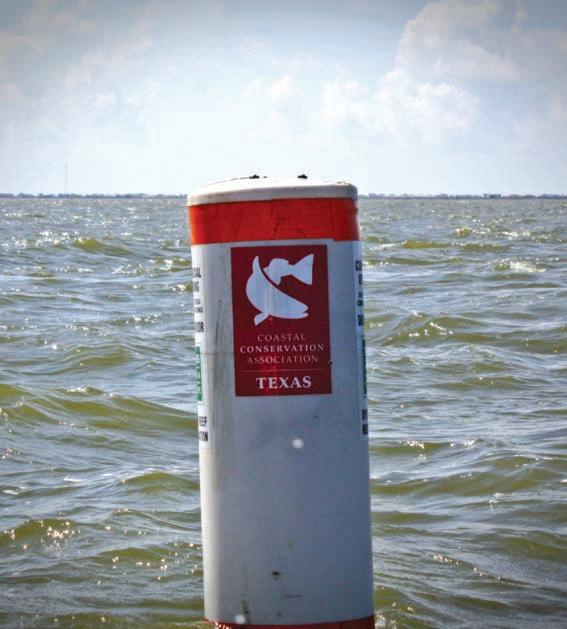
Buoy marking a conservation reef that will be maintained without commercial oyster harvest.
By Whitney McLain FIELD NOTES
PLANKTON TO PREDATOR: INSIDE THE HATCHERY EFFORT TO RESTORE SOUTHERN FLOUNDER
Southern flounder are a highly sought after sport fish on the Texas Coast, but in more recent years have experienced declines across their range in the Gulf and up along the Atlantic coast. With inconsistent and warming winters, this species is experiencing higher male sex ratios from spawning events in the wild. These environmental conditions mounted with the popularity among fishermen makes them a concern among conservationists and play a role in their range wide declines.
To help address these concerns and better manage the species’ natural population, the Texas Parks & Wildlife Commission implemented stricter fishing regulations in 2021. The current daily bag limit for southern flounder is five fish per day, but the most impactful change in recent regulation has been the annual fishing closure. This closure currently lasts from Nov. 1 to Dec. 14 and helps prevent the harvest of mature females during the spawning migration period.
Alongside progressive fishing regulations, stock enhancement has been a useful tool to help alleviate the decline of wild populations. TPWD’s Coastal Fisheries Division Stock Enhancement Program has been working towards replenishing this species since 2009, both at the Marine Development Center (MDC) in Corpus Christi and at Sea Center Texas (SCT) in Lake Jackson. These hatcheries have developed a method of spawning adult flounder to produce offspring which are then stocked into Texas bays to help supplement natural populations. To date, 1.4 million postmetamorphic juvenile southern flounder have been
released into the wild from these hatcheries!
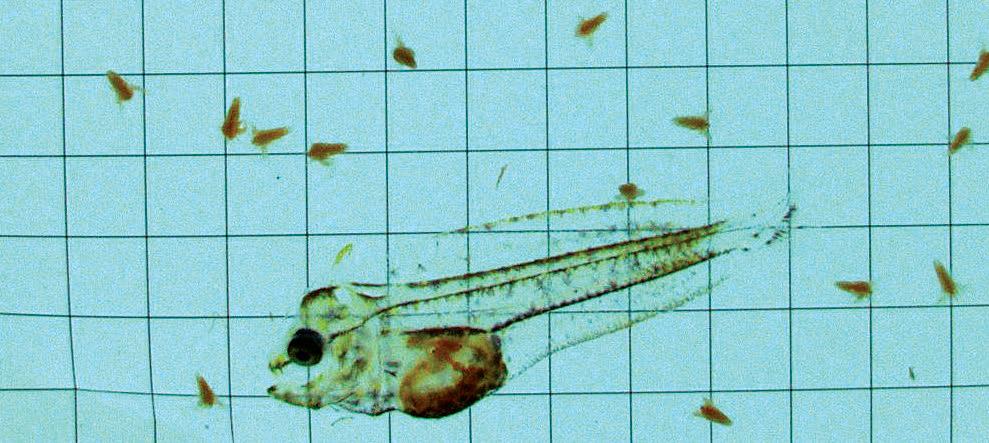
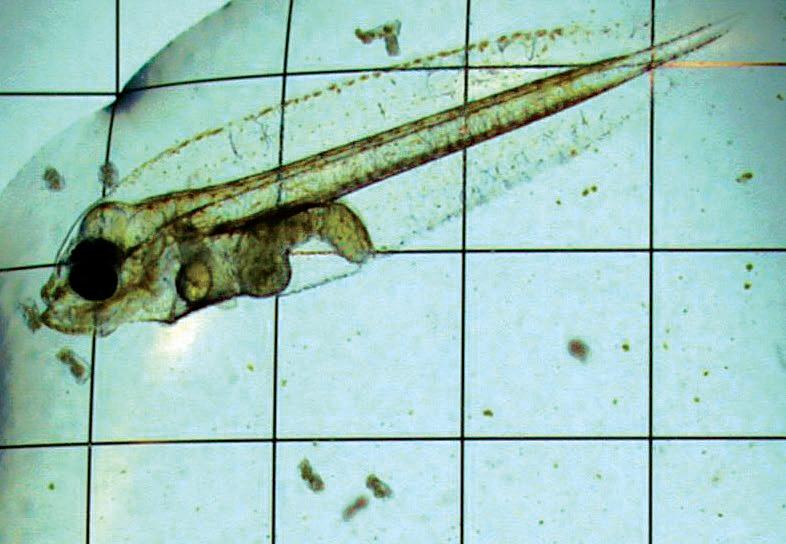
To ensure proper growth and development of southern flounder in a hatchery setting, water quality parameters must be monitored. Eggs are incubated in fiberglass tanks directly after fertilization and set with a proper saltwater flow rate that ensures correct temperature, oxygen levels, and pH for the development and hatch out. Since the eggs will not survive if water temperature is too warm or if there is not enough dissolved oxygen available, this water flowing through the incubator is vital to maintain stable water quality. Once the eggs hatch, a yolk sac from the egg provides nutrients to the growing fish for the first three to five days, depending on temperature. The warmer the temperature, the faster the absorption. Once the yolk sac is fully absorbed, the eyes, mouth, and digestive system are all developed and the fish is ready for live feed. Proper temperature, oxygen, and pH must be monitored and maintained throughout early life stages and continuously as live feed is offered.
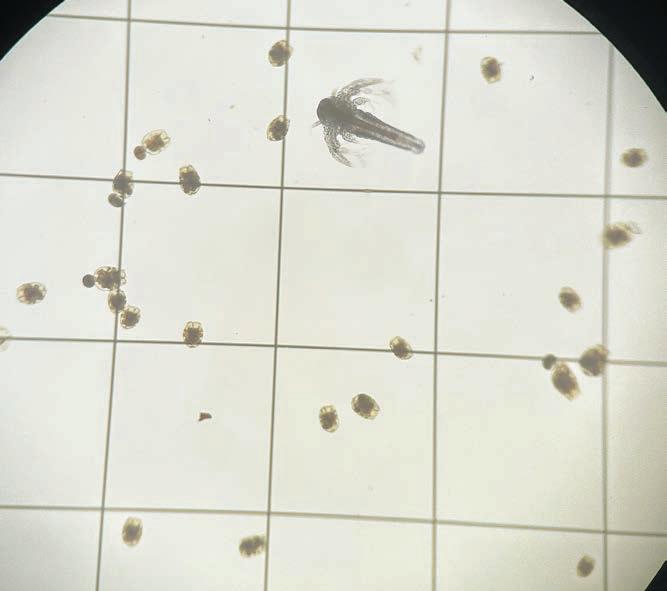
To grow southern flounder in the hatchery, a live food source of rotifers, Brachionus plicatilis, must be available to offer in high densities daily. Rotifers are a microscopic zooplankton found in abundance in warm brackish waters. Their small size makes them the perfect candidate for first feeding of many larval fish. Live rotifers are sustainably grown, or cultured, because females will clone themselves and continue populating even when large amounts are removed and used for feed. Culturing live rotifers in large volumes is a challenge and a bottleneck for the growth and survival
of southern flounder within their first 17-20 days post hatch. Southern flounder will spend their entire time at the hatchery in incubators, so providing the proper nutrition is critical to survival.
To maintain optimal growth, rotifer cultures are moved and rinsed every three days. This new water helps clear debris from the cultures and maintain a healthy pH which is important for rotifer growth. Ideally, a minimum of three tubs are cultured at any given time to prevent disturbing cultures as they replenish between moves. Every day, one tub is rotated out and used to prepare feed for the incubators, then reset for another threeday cycle.
Some challenges rotifers can face are unfavorable conditions, such as low pH or too much debris which can cause ciliates to take over the culture. Ciliates are a singlecelled microorganism that can develop with excess debris or food and will compete with rotifers for tub space and feed. This can create a mortality event in the rotifer culture leaving no viable food for the fish.
During their early life stages, southern flounder lack the ability to digest a commercial diet, a manufactured feed that provides balanced nutrition, which makes the live rotifer feeding critical to survival. Once the fish are three to five days post hatch, they are ready for that first offering of rotifers. Each incubator of fish requires a minimum of 13 million rotifers every day and MDC has 20 incubators, which can lead to an aggressive daily rotifer demand. Many incubators may also be stocked with heavier spawns which leads to a higher feed demand than the minimum. Biologists assess rotifers remaining in incubators every morning to determine how many should be fed each day.
Around the 17-day post hatch mark, the southern flounder are offered a larger food source that is much more reliable than rotifers, Artemia (brine shrimp or sea monkeys). What makes these more reliable are the abundance and ease of hatching. This species is not cultured for extended use. Cysts, or dormant Artemia eggs, are hatched overnight for feed the next day. The unhatched cysts and egg casings are separated from the live nauplii, or young Artemia, which are enriched with additional nutrients and fed to the incubators. The challenge with feeding live Artemia is the introduction of a new feed type to the fish. This process needs to be done slowly enough to not overwhelm the system, as they can outgrow the fish quickly, but also heavily enough to be a viable option for them to consume.
The Artemia will be visible in the guts of the fish as they continue to grow and undergo metamorphosis. During metamorphosis, southern flounder’s eyes will migrate to the left side of the body and the gut will elongate as the body begins to flatten. Once post-metamorphic, the juvenile fish will settle on the bottom or sides of the incubators. This process typically occurs about 30-45 days post hatch. At this point, the juveniles are 10-20mm and ready to be released into the wild.
Challenges among southern flounder larviculture are extensive, but lack of food in the early developmental stages has proven to be the most detrimental. If rotifer cultures crash, or have massive die off,
incubators are susceptible to high mortality events due to lack of food. Over the years, live feed growth and management continues to be the largest hurdle in flounder production, constricting the actual output of juveniles released. However, identifying the problem is beneficial moving forward, as increased effort and attention to the rotifer cultures can help overcome that bottleneck. Many improvements have already been implemented to increase rotifer culture stability, including temperature control, vessel type, extensive staff training, and more strict protocols. Overall, these hatcheries aim to continue their efforts and increase the number of flounder released each year!
THE EVOLUTION OF EXTREMECOAST
Some people are purists, content to experience their adventures on our coastal waters without taking any pictures or videos at all. Personally, I sometimes find pleasure in leaving my experiences in the purest form, content to soak in everything with my senses. Few things in life bring a more authentic kind of satisfaction than simply focusing fully on the beauty and grandeur of our surroundings.
All that said, most of us do take advantage of our opportunities to document our activities in the great outdoors. Over the last several decades, the technologies which aid us in this endeavor have become more and more sophisticated. Today’s optimized cameras and digital video recording devices have evolved in many of the same ways as our other equipment and tackle.
Some of the things we experience on the open ocean, along the beachfront or in the bays just beg to be recorded and shared with others. Of course, the reasons we have for wanting to record events permanently vary, depending on circumstances. At times, we want to do so for purely personal reasons, so we can later relive moments with better clarity. At other times, our egos come into play, and of course, some of us can use recordings of events for educational purposes and to make money.
Over the past twenty-five years or so, I’ve developed a deep appreciation for both photography and videography. In recent years, partially because of the onset of the monumental DSLR era, I’ve been focusing almost exclusively on photography. I started shooting digital photography three decades ago, during the dawn of true digital technology, and I’ve become proficient with these amazing devices.
During my long journey as a videographer and photographer, I’ve amassed
and stored over a quarter of a million photo and video files on multiple hard drives. Some of these clips and images have never been published for others to see.
The act of shooting and editing videos still occupies a special place in my heart. During the early 2000s, when I had my Extreme Coast website, I was about equally dedicated to shooting videos and taking photographs. But once the technology made transferring videos to a computer easy, so they can be edited and polished, I fell in love with the moving pictures. I enjoyed posting them on sites like YouTube, where I’ve had an active channel for many years.
At the beginning of this digital time-frame, editing and sharing video clips on my own site also became rewarding for me. One of my cherished editing tricks is syncing video clips with favorite music. I made three major videos for the website, one in 2002, one in 2005 and the big Evolution video, which I produced in 2010. All these thrill-injected videos were enhanced with some
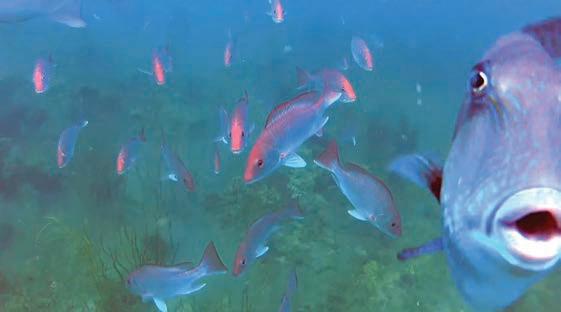
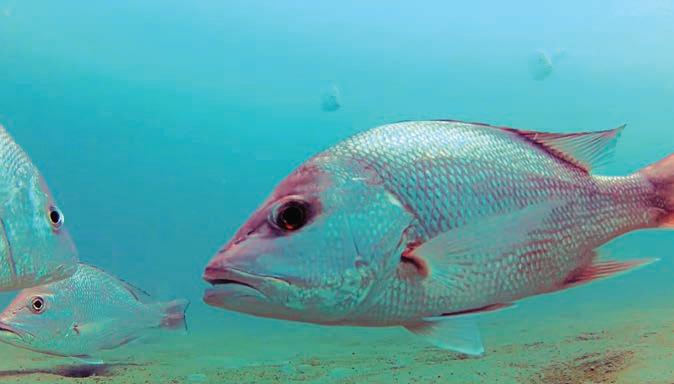
Underwater snapper – screenshot from video.
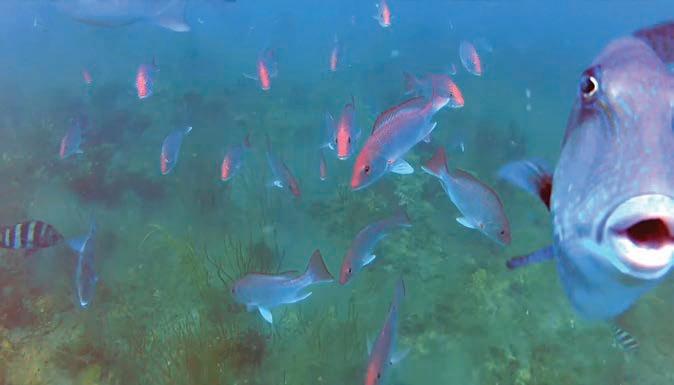
Texas nearshore underwater reef image – screenshot from video.
of my favorite music, mainly unique instrumental or electronic tunes I appreciated and integrated into my footage.
As years passed, the videos I archived on the YouTube platform came under scrutiny. I was informed of copyright violations related to the use of music in some of them. Consequently, I deleted most of the videos I’d stored there for years, mostly for purely private purposes. I also became more interested in delving into the professional aspects of taking digital photographs, and I’ve spent the last several years exploring those avenues.
More recently, I’ve discovered I can create my own original, inspirational soundtracks to sync with my video clips and post them with full rights for use. This idea has breathed new life into my interest in videography. I’ve started putting efforts into rebuilding my YouTube channel library. Lately, I’ve posted various kinds of videos which showcase gear like drones and reel accessories, or provide instructions about making surf weights and other useful gear.
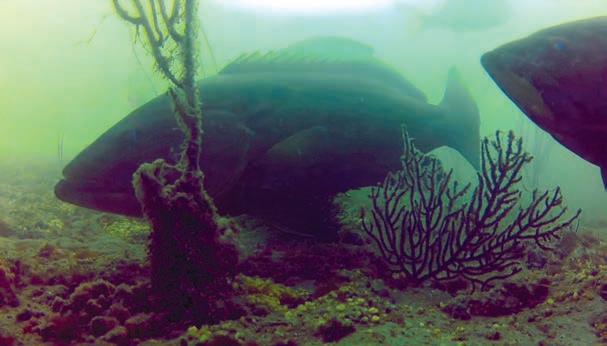
My latest video is a real gem; it includes a compilation of over twenty epic minutes of rarely seen underwater footage of nearshore snapper, amberjack and grouper, all obtained via kayak. I’ve had these clips in raw form for a number of years, and I really enjoyed compiling them into a finished movie. I have many new video projects in the works, including scouring my huge collection of clips and using some of them to make new, polished products.
My renewed fascination with video surely won’t drive me to wear a GoPro on my head all the time. But, in situations I feel are better suited for documentation in video, I’ll go back to taking more of the moving
pictures. In the near future, I’ll be posting some more interesting and useful finished videos on my YouTube channel – eXtremecoast. Those who like what they see there can sign up and subscribe to receive more content moving forward, as I rediscover my love for the medium.
For the past decade Eric ‘Oz’ Ozolins has been promoting shark catch and release and assisting various shark research programs. Eric offers guided shark fishing on Padre Island National Seashore. Also renowned for extreme kayak big game fishing, Eric is the owner of Catch Sharks Tackle Company.
Typically, when we think about sight-casting redfish we automatically think about perfect weather conditions. Partly cloudy to sunny skies with winds less than 10 mph. Days like that are very possible in the month of June, but what about the other 15-20 days of the month? What about the days when the wind is right but the skies are overcast, or when the wind picks up to fifteen plus by 9:00 am?
Sometimes these not-so-perfect days happen and when I have clients scheduled, I must be on my toes at the dock and prepared to call an audible. We have several areas in the Seadrift/POC area that will still allow us to be successful. Not only are there areas to be successful under these conditions, but timing could get you a few more hook-ups before the wind gets bad. I have clients ask all the time, why are we leaving the dock in the dark to sight-cast? I explain to them that there is always a predawn/sunrise bite, and it might just be the window we are looking for before the winds change.
Standing on the tower in the pre-dawn light shows us a ton of activity, and sometimes when the sun breaks the morning clouds, that activity ceases. Water clarity does not have to be perfect for this pre-dawn bite; what we see gets me excited even as I write about it.
What I’m talking about are stretches of shoreline with reds crawling down the bank, half out of water, to small coves or protected areas where the slick water extends 5 to10 yards out from the bank, and redfish tails wagging above the surface.
I believe the first fish to quit in the mornings are the crawlers. Too many times, in my experience these fish seem to be the most bashful, not in terms of eating a lure or spoon thrown in front of them, but as far as condition changes. Sun rising above the morning clouds or ripples starting to lap up on the bank and they seem to vanish from the few inches of water they were just in. We still see these fish cruising the dropoff farther away from the shoreline where the water is a foot or two deep, but many are not interested and quickly spook when we cast to them.
The smaller groups seem to last a little longer, but when that wind starts to find another gear and those slick areas begin to disappear under surface chop, I agree they are much harder to see. Shorelines tend to go quiet when this happens; bait activity typically fades to almost non-existent. Thankfully, we were there at the right time and have already had considerable success by keeping this kind of sight-casting schedule.
Now, what about cloud cover. Well, that same early morning activity can be there, and under the scenario we described the winds can stay calm to light for a few hours longer. Under conditions like this we still cruise much of our favorite sight-casting grounds, but with the overcast conditions we must move much slower, sometimes simply sitting on the Power Pole in the middle of the flats and creeks or certain stretches of shorelines. One of the main reasons we do this is to avoid spooking fish that might be coming up to feed. We simply make the set to see if these fish will show themselves, close enough to cast to, or to where we can set up a true spot and stalk situation. Yes, this approach can take more time, and each cast must be on the money. But, to be honest, I have never been about numbers. For my clients and me it’s the experience and being successful under as many conditions and situations as possible. Some of our most memorable trips have been under the tougher sight-casting conditions. And, on days like that I personally might learn a thing or two myself. Maybe it’s a new technique, or subtle area that I have overlooked on other days. But one thing is for sure, it always gets
noted in my log and stored into memory.
I am very blessed to make a living fishing, and because I get to spend countless days on the water under varying conditions, my confidence holds steady in many different scenarios. Our newest adventure this year is to do some night trips off the tower for reds, trout and flounder under the right conditions.
If you are looking to explore more areas like this or need help navigating or improving your fishing game. We offer navigational trips from Port O’Connor to Rockport. These trips are designed to help anglers of all levels, whether you are new to an area or an experienced angler in a certain body of water. We offer tips and tricks for each. We emphasize safety and boating etiquette as well as teaching you how to run new waters safely, marking your GPS for any hazards along the way. We help you to read the water from a navigation and fishing standpoint and have fishing discussions in each area we travel to on the day of your trip. Some of these discussions are weather, tides, time of year, and what to look for and how to approach these particular areas. Whether you are new to fishing or an experienced angler, we try to customize each trip to fit your needs.
Captain Nathan Beabout
USCG/TPWD Licensed – Full time guide since 2007
Seadrift, Port O’Connor, Port Mansfield, TX Facebook, Instagram, LinkedIn (N&M Sportsman’s Adventures) Cell (210)452-9680 Email www.nmsaguide@gmail.com Website www.nmsportsmansadventures.com
CONTACT
Captain Nathan Beabout
USCG/TPWD Licensed
Full time guide since 2007
Seadrift, Port O’Connor, & Port Mansfield, TX Facebook, Instagram, LinkedIn
Phone 210.452.9680
Email www.nmsportsmansadventures.com
EARNED IN THE ELEMENTS
April and May have a way of testing you on the Texas coast, but this year felt different. It wasn’t just a passing front or a few windy days scattered through the month. It was a full-on stretch of relentless conditions. Day after day, the wind howled at 25 to 30 miles per hour, and the skies stayed locked in with a dull, stubborn overcast. For some styles of fishing, that kind of weather can actually be a blessing. If you’re wade fishing or setting up long drifts across a flat, the wind can position bait and fire fish up. But for the way I like to fish, high in the tower, scanning for movement, picking the water apart one fish at a time, it might as well just shut the whole operation down.
Sightcasting depends on light. It depends on water clarity, on angles, on being able to read the smallest signs. A push of water, a tail, a subtle color change against the bottom. Take away the sun and add a constant chop, and the entire playing field changes. What used to be a clear window into the water becomes a broken mirror, reflecting nothing but frustration. So this spring, like it or not, we had to adapt.
Fishing became less about precision and more about persistence. The past couple of months turned into a grind, plain and simple. Some days rewarded us, those rare windows where things lined up just enough and the fish fed the way you hoped they would. More often than not, it was a matter of putting your head down and working for every bite. There were no easy fish, no guarantees, just long days, constant adjustments, and a willingness to try something different when what worked
yesterday suddenly didn’t work today.
With the tower seeing little use we shifted gears into wading and drifting almost full time. It’s a different rhythm and a different mindset. Instead of hunting individual fish, you’re reading broader patterns like current lines, bait movement, and subtle changes in bottom composition. You’re trusting your instincts and your experience, knowing that the next cast might be the one that connects.
Despite the conditions, the fish were there. Redfish showed up in solid numbers, healthy and aggressive when you could find them positioned right. The trout, though, were the real surprise. This stretch produced some truly impressive fish; thick, heavy trout that reminded you why you put up with the tough days in the first place. Most of them came the same way, drifting or wading, throwing a Bart’s Sand Ninja KWiggler tied onto my trusty Carbon Mag from Waterloo Rods. Simple, reliable, and effective. Sometimes that’s all you need when everything else feels unpredictable.
The biggest challenge wasn’t finding fish; it was staying with them. The wind and tides worked together to keep everything in motion. Water levels shifted more than usual, currents pushed harder, and areas that held fish one day could feel empty just a couple of days later. There was no settling in, no locking down a consistent pattern you could rely on for a week straight. Instead, it became a constant game of adjustment. You had to think ahead, stay mobile, and trust what the conditions were telling you in real time.
In a strange way, that’s what made it enjoyable. When things are easy, it’s easy to fall into a routine. But when conditions force you out of your comfort zone, you start to see things differently. You pay more attention. You experiment more. You learn more. Every fish feels earned, and every good day feels like you solved a puzzle that didn’t want to be solved.
The moment that defined the past couple of months came on a day that didn’t look all that promising. The wind was up, the clouds hadn’t moved, and expectations were tempered at best. We set up a drift, working a stretch that had shown some life the day before, not knowing if it would still hold. Cast after cast, just working through the water and staying patient. Then it happened.
A subtle thump. Not aggressive, not obvious, just enough to know something different had picked up the bait. The hook set, the weight, the slow, heavy pull that immediately told you this wasn’t an average fish. After a careful fight and a steady hand, a trout
came into view that made everything else fade out for a moment. Thick, powerful, and every bit of nine pounds or better. That fish didn’t just make the day; it summed up the entire stretch. Unpredictable, hard earned, and completely worth it.
Flying Fisherman Waypoint Sunglasses
Built for dads who never miss a tide change, Flying Fisherman’s Waypoint sunglasses are a reliable companion on the water. The lightweight Grilamid TR90 frame offers all-day comfort with the durability to handle heat, impact, and long days in the elements. Polarized RhinoLenses cut harsh glare and deliver crisp, clear vision while providing 100% UV protection, which is essential for spotting fish and structure below the surface. Designed to stay put when it matters most, Waypoint blends performance-driven features with clean, versatile styling. With multiple lens and frame options to match conditions, it’s a practical, high-value gift any angler will appreciate.
Humminbird XPLORE Fish Finders
The XPLORE Series delivers lightning-fast performance and precision, packed with the features anglers love. Locate fishing spots faster with builtin LakeMaster and CoastMaster charts. Manage up to 10,000 waypoints with custom colors and icons, seamlessly syncing them to your phone. Experience unmatched clarity below the surface with compatibility for top-tier sonar, including MEGA Live 2 forward-facing sonar. Stay in control with One-Boat Network integration, effortlessly connecting to Minn Kota products for advanced GPS navigation and shallow water anchor deployment. With cutting-edge technology and an intuitive interface, the XPLORE Series takes your fishing to the next level. | (MSRP $1299.99-$2699.99)
Livingston Lures
Give Dad the edge trusted by the pros with the Walking Boss—built on the same proven approach used in top-level tournament fishing, including stages like the Bassmaster Classic. This premium topwater lure features a time-tested body design that delivers a smooth, side-to-side “walk the dog” action—perfect for triggering aggressive strikes when fish are feeding near the surface. What sets it apart is EBS Technology™, which emits the sound of real baitfish to create a powerful calling effect underwater. The combination of natural sound and irresistible surface action gives anglers a clear advantage, helping draw fish from greater distances compared to traditional topwater lures.
UGLY STICK 50th Anniversary Limited Edition Combo
For half a century, Ugly Stik has been the trusted rod on countless fishing adventures. To celebrate the milestone, the brand is introducing the 50th Anniversary Limited Edition series, built to honor its reputation for strength and durability. These spinning combos feature Ugly Tech™ construction, Ugly Tuff™ guides, and the iconic Ugly Stik® Clear Tip® design anglers have relied on for generations. Designed to deliver the same toughness and performance that define the brand, this special release serves as a tribute to 50 years on the water. Available for a limited time in 2026 while supplies last, the 50th Anniversary series offers anglers a chance to own a piece of Ugly Stik history.
Turtlebox Ranger
Built for life on the go, Ranger delivers premium sound in a compact, rugged design. It’s waterproof, drop-proof, and ready for any adventure.
The PrawnStarZ™ Family Expands
New 2.5” and 3” models join the lineup alongside an unrigged 3.5” LB version! ZMan® is turning up the heat with the expanded PrawnStarZ™ lineup, now in stock with three new models ready for action: downsized 2.5” and 3” pre-rigged versions, plus a 3.5” LB (Loose Body) model for maximum rigging flexibility. Together, these additions give anglers more ways to match the hatch and the same proven profile and bulletproof durability that made the original an instant inshore legend.
Fishing Tackle Unlimited – XCel G2 Green Rods
If you’re an avid Texas inshore angler and haven’t had an FTU XCel G2 Green Rod in your hands, you really need to try one. Power and sensitivity are promised by many rodmakers but FTU delivers! The XCel G2 family of rods are available in three actions – Finesse (Light with Modern Fast Tip, rated for 6-12 pound line); Classic (Medium Light with Modern Fast Tip, rated for 8-14 pound line); and Corky (Medium with Modern Fast Tip, rated for 8-20 pound line.
All three models are 6’-6” length with lightweight Carbon Fiber Split Grips for added sensitivity. All three models have titanium frame guides with Torzite inserts for super smooth line flow and also for lightness and increased sensitivity. The Finesse is also available in 6’-6” spinning style. Visit fishingtackleunlimited.com or either of our two Houston area stores.
Minn Kota® All-New Riptide Kayak Terrova for Saltwater
Saltwater kayak anglers seeking precise control, reliable power, and the ability to hold their fishing spot; the Minn Kota® Riptide Kayak Terrova delivers. Engineered for saltwater, this trolling motor features a durable 36” composite shaft, weedless prop, and advanced corrosion protection. Anglers can control the motor from the Micro Remote, a connected Humminbird® fish finder, or the One-Boat Network® App, giving effortless navigation in any situation. The advanced GPS trolling system includes Spot-Lock®, Autopilot, Drift Mode, and Follow Mode, allowing kayakers to lock in their position instantly. Seamless integration with Humminbird electronics enhances navigation and system control.
St. Croix ROGUE V Nearshore Saltwater Rods
Fishing conditions can be challenging from time to time, and you may need a little help keeping your line from twisting, or simply just may need to attach your leader to your main line. In these cases, turn towards SPRO and tie on a Power Swivel to help you keep things straight. SPRO offers Power Swivels in sizes 10 - 5/0. SPRO Swivels come in individual packs or bulk packs to fit all your fishing and rigging needs. Please look for these SPRO Power Swivel Products at your favorite tackle shop.
Millennium Marine
Millennium Marine has the answer to those comfort problems with their line of PRO-M Series Saltwater seats for watercraft. The PRO-M series of ComfortMax seats has three distinct models available with anodized, heavyduty aluminum frames designed to stand up to the rigors of daily use in a saltwater environment. The top-of-the-line PRO-M 100 features a ComfortMAX contoured, tight sling seat that is adjustable and reclining.
Millennium’s unique, patented saltwater design provides unmatched comfort and durability, no matter the conditions’ severity. It features the breathable, cool fabric of Millennium Marine’s ComfortMax seat for mold and mildew resistance. Thanks to anodized aluminum construction, the PRO-M Series can withstand elements from saltwater to the blazing sun. Each seat in the series mounts to any standard boat seat pedestal and has a one-year warranty.
CCA Texas
Give Dad something he’ll never forget this Father’s Day: time on the water and a shot at something big. The Texas STAR Tournament isn’t just fishing, it’s adventure, competition, and memories that last a lifetime. Whether he’s chasing redfish at sunrise or enjoying a day on the coast with family, STAR turns every cast into an opportunity to win incredible prizes and scholarships. It’s the perfect way to say thank you to the man who taught you how to fish, or the one you’re teaching now. Sign up today and get on the water before the tournament ends on Sept 7th at 6pm. Remember - you need to be registered for the 2026 CCA Texas STAR and have a current CCA membership to be eligible.
Eichhorn, Gonzales & Miller Fine Jewelers
Victoria, Texas
More than three generations, Eichhorn, Gonzales & Miller has been the go-to custom jeweler for serious Texas saltwater anglers. Known for their exceptional creative design work, they craft stunning, highly detailed pieces featuring speckled trout, redfish, and flounder in gold, silver, and two-tone combinations. Each pendant, ring, or bracelet is hand-designed and meticulously finished by their in-house master jewelers — turning your favorite fish into wearable art that’s as unique as your fishing stories.
Hard-to-find quality for the discriminating fisherman. Whether you’re looking for a special gift or a personal reward after a great day on the water, Eichhorn, Gonzales & Miller delivers one-of-a-kind pieces that celebrate the Texas Gulf Coast lifestyle.
Matagorda
Bink Grimes is a full-time fishing and hunting guide, freelance writer and photographer, and owner of Sunrise Lodge on Matagorda Bay.
Summer is finally here; ardent incoming tides bring ocean recruits through the passes, and every piece of water in East Bay, West Bay, and the surf is a potential player.
Is there a better fishing month than June?
We have had some solid days for trout, though most of the spring has not afforded us much opportunity to work open-bay reefs. This spring has been a great one, and we like how our speckled trout fishery is responding to stricter limits and more catch and release.
We have been releasing many oversized trout. Those days have been refreshing, feel-good mornings indicating that our fishery sustained the freeze, and recovery is on the way.
West Bay fishing has been as solid as I have seen it in years. Every reef has held fish this spring, and there’s no reason this should change this summer. Best catches have come on Gulps and live shrimp under a popping cork while drifting; waders have been finding solid pulls on Bass Assassins, Gulps, Hogies, and Down South Lures.
Back bays with shell are churning out solid catches on live shrimp and small topwaters. Many days, the wind has made it the only game in town, and we are grateful we have so many “hiding” spots to save a good day of fishing.
Yes, it has been windier than normal; however, the past 7–8 years
have given us drought with calmer winds, so I’ll take some wind and a low barometer if it will bring more frequent showers.
I look forward to many days of wading this month and tossing a topwater along a mullet-laden flat. I look forward to hopefully many days in the surf this summer, tossing a topwater along a mullet-laden gut. I look forward to a morning on Half Moon and Three Beacon reefs, tossing a topwater on the edge of the shell. I look forward to wading the grass beds in West Bay with a Super Spook Jr. on the incoming tide. I look forward to making the 32-mile run to Port O’Connor and wading the grass beds near Pass Cavallo.
I just look forward to June.
Matagorda’s bays, beaches, and businesses are ready and waiting. Coastal Q Barbecue has opened back up for the summer. If you have never eaten their fine smoked meats, trust me when I tell you, it may be the best barbecue you have ever eaten.
Snappers have moved into a new location by the bridge. It is a great place to watch a game, enjoy live music, and have really good food. They shuck Buddy’s oysters for you in the winter, too.
Things are changing in Matagorda for the better. The meat-haul mentality is disappearing, and that’s a good thing. Few bays in Texas afford a more legitimate shot at a trophy trout any day of the week like Matagorda.
Please continue to release more than you take. Please respect our estuaries and our little town. We smile a lot around here and hope you give us a shot to put a smile on your face.
Port O'Connor Seadrift
Captain Gary Gray is a full time guide, born and raised in Seadrift. He has been guiding the Seadrift/Port O’Connor region since 1986. Gary specializes in year ‘round wade fishing for speckled trout and redfish with artificial lures.
Fishing during May on the MidCoast was a lot of highs with a few lows. Meaning that my clients and I experienced some very memorable days as regards quality and quantity of the fish we caught, but there were also a few that we stood there scratching our heads, wondering why we weren’t catching fish. I mean, we had the bait and good water clarity, we also had good water movement. For whatever reason though, it just seemed the fish had vacated the area they’d been holding in for several days. Looking back on the situation, I now believe it was subtle shifts in the weather pattern that changed the wind direction or maybe the barometric pressure. Like I said, we had everything for a great recipe of catching but the fish just said not today. Now that we are getting into a steadier summertime weather pattern, I look for things to be more on the normal side, especially since the majority of Texas got some much needed rain in late April and May. It is a blessing that there was a lot of rainwater that flowed down the Guadalupe River and made it to San Antonio Bay; this freshwater influx will help our bay’s ecosystem immeasurably.
San Antonio, Espiritu Santo, West Matagorda and the Matagorda Island surf are where I will be concentrating my efforts in June. When the wind is calm it’s really hard to beat the surf, whether you choose stay in the boat or get out and wade. For whatever reason the fish that we catch surfside are so much more aggressive than those we catch in the bays. The variety of species we catch in the surf is pretty cool as well. It is not uncommon to hook up with Spanish mackerel, Pompano, and Tarpon while chasing our favorite speckled and spotted friends.
West Matagorda’s Ranch House shoreline, along with the spoil banks along the ship channel, are two other areas that shouldn’t be overlooked during the summer months. These areas were mostly off limits when the wind was at its worst earlier in spring, but now that
our summer pattern is coming into full swing the wind won’t be an issue most days. When fishing the Ranch House shoreline, remember it is imperative to fish the deeper guts to catch trout. If redfish is more to your liking then hang up tight to the shoreline. Grass beds are thick right now so choosing a weedless lure setup or switching to a weightless jighead is about the only way you can fish the grassier areas.
Birds working out in the open bays will be more common now that the shrimp are on the move. I have many customers that get excited when they notice a flock of birds working. I wish I could share their excitement but I know that it’s more than likely small trout, skipjacks, or gafftop. I know many anglers have great success working the birds in East Matagorda and Galveston, but it just isn’t the case very often in our area. With that being said, there is one exception to this scenario. If you ever notice birds working close to the crown of a reef then you are in luck! The trout that are under the birds close to a reef are usually better quality with fewer of the less desirable species present. You may still catch mostly small trout but the probability of finding some good ones is much greater.
Now that we are getting into summer I can’t stress enough how important it is to get an early start to your day. I always strive to arrive at my first spot before sunrise. Now, I’m not saying that you will not catch nice fish at midday or during the afternoon, but I have much greater confidence and success when fishing the morning hours.
The use of a spot light comes in very helpful in avoiding pilings, channel markers, and other obstructions, so don’t hesitate in using one. Those nifty headlamps that fit on your hat come in handy too, when tying knots and preparing your wade gear as you exit the boat.
In closing – a word of caution – I would like to remind everyone that there seems to be uncommon numbers of stingrays and sharks this year. Sharks love to eat stingrays, so if the rays are thick, you should likewise expect some sharks. I highly recommend wearing ForEverlast Stingray Shields and a long stringer that’s loosely attached to your body, just in case a shark grabs your fish. You’ll thank me later for both tips if you happen to have an encounter with a stingray or a shark.
Fish hard, fish smart!
Double hookups like this were very common during May.
Doug had quite a day recently with the redfish.
Upper Laguna/ Baffin
David Rowsey has 30 years in Baffin and Upper Laguna Madre; trophy trout with artificial lures is his specialty. David has a great passion for conservation and encourages catch and release of trophy fish.
If you had any doubts two weeks ago, you should be convinced now that summer is actually here. It’s getting warm pretty quick. I guess that’s part of the aging thing, but summers feel hotter than normal; I get colder in the winter; and more reclusive by the minute. I was telling a good friend, who I met as a client many moons ago, that very thing the other day and he said, “Ahhh…MANopause is getting to you.” I ‘bout fell out of the boat laughing at his play on words. Obviously it made an impression, because here I am telling y’all about our laugh at my expense.
MANopause…HA!
For me, June is probably the most fun month of the warm weather season. Although the focus of my charters is always pursuing the largest trout available, it’s sometimes just fun to get a lot of bites. There is nothing more gratifying than chasing the giants and having a client catch one or three. But right next to that is the father who brings a youngster and we get them into a trout on every cast situation along a drop-off. The excitement, body language, and comic outbursts that only a kid can come up with makes for a fun day for this captain. This is what June has become for me and what I look forward to every year…getting a kid started on this lifelong sport versus a video game or having a phone in hand like another appendage.
June brings everything together in the sense that the bay is full of new baitfish that have now rode in on the equinox tides, with the gamefish in tow. Lots of action will fulfill anyone’s connection to the outdoors, but what if you can have both – action and trophy quality? Well, you can right now!
I remember eight or ten years back, I had my group on a little sand flat, burning big paddle tails across it and just getting blasted about every fifth cast. The fish were small to five pounders or so. You never knew which bite was going to be one or the other, so you set the hook like you were pulling the starter rope on a forty-year-old lawn mower, anticipating the fish that might double that five pounder in weight.
Well, about three hundred yards from us was another group wading on the same kind of structure. I was keeping an eye on them because the group was made up of some good buddies that were just out fun fishing. Saying that, their number included some really salty dudes that were no strangers to catching big trout, and throwing big hardware for such a bite.
Now, my group was having a blast and catching steadily, but I couldn’t help but notice my buddies were not getting the bites we were. I took an angle towards them to intersect with the guy closest to me. As we came together he acknowledged that we were blasting
the trout, and I wanted to let him know how we were doing it so they could get in on the aggressive bite. We played show and tell for a minute and I made a comment about the couple of small trout he had on his stringer for dinner. What I didn’t see, or couldn’t see, was the trout over nine pounds that was anchoring his float to the bottom. Whoa! It was a giant June fish that would eventually win the STAR Tourney for him that year. Turns out he got just what he was looking for. Opting for fewer bites for that one big one. Respect that!
Baffin Bay is a very unique place, as most coastal fisherman know. At just about any given moment or time of the year, a career-best trout can come seemingly out of nowhere. Certain times of year, water temps, and atmospheric considerations can concentrate the big ones, but June is the month where you can kind of have it all – a mixed bag of lots of bites, solid specimens, and occasional giants. If you are on the fence about getting a kid into wading, taking someone that’s been out of the game for a while and want to get them back into it, or just have a day for yourself of getting that Waterloo folded in half, now is the time to dust off that garage-kept Haynie or jump into mine.
Maybe you will rediscover why you fell in love with chasing speckled trout. Reach out to me and we can make it happen.
Remember the Buffalo, Capt David Rowsey
Josh Johnson has been fishing with me since almost day one of my guiding career. Catching or just casting, the days are always filled with laughter and lots of raised eyebrows, however, 5-7.5# trout on tops always manages to keep us hyper focused.
“We contracted the construction of the TSFMag office building with Farrell Jackson. Jackson also built my son’s bay house here in Seadrift. We were completely satisfied with both projects…a professional and trustworthy contractor.” ~ Everett Johnson | Editor/Publisher, TSF Mag
Port Mansfield
Captain Wayne Davis has been fishing the Lower Laguna-Port Mansfield for over 20 years. He specializes in wade fishing with lures.
Telephone
210-287-3877
Email captwayne@kwigglers.com
WAYNE’S Mansfield Report
Greetings from Port Mansfield! We have approached and are in the beginning stages of summer. As we slid out of late spring fishing, I was quite impressed with some of our trout maintaining solid weight, as water temperatures were already at 85° in late April. If I had to guess, about 30% of trout remained heavier than normal at the beginning of May. June is the official beginning of my annual transition into summer fishing tactics. This means I will be starting each fishing day early and shallow. Water temperatures will be cooling somewhat overnight, especially in the shallows. This means redfish and larger trout will be close to shorelines and will eagerly take topwaters and plastics rigged on light jig heads. Another benefit of June, as it relates to what I have just described, is lighter winds. With that in the equation, you can effectively and strategically work those shorelines and points associated with deep water. Springtime winds generally squash this play during March, April, and even May.
Another nugget to consider, especially since our daytime water temperatures are in the mid-80s, is that we might have a chance at some snook action. This occurs more commonly in July, but in the last two years I have found a few in late June. The cool thing about fishing the Lower Laguna Madre is that you never know when you might connect with one of these acrobatic trophies.
Water levels in June will remain elevated, but less so than last month’s spring tides, and typically generous enough to reach back lake areas for targeting podding redfish.
Our flounder population seems strong this year, as many folks are now picking them up consistently. Most are coming from small drains, and the rest are coming close to the ICW by anglers fishing plastics for trout and redfish. I have yet to see one over three pounds, but I bet there will be a few good ones showing up at the scales during local tournaments.
morning, you will have to exercise cast placement by casting between the floating grass lines that the wind will create. By applying this strategy, there is no doubt you will have a good opportunity to land some nice fish during your outing.
As I alluded to earlier about tournaments, there will be no shortage, and they are fun to participate in. That said, it does not hurt to exercise good tournament practices by considering a couple of things. One, if you can weigh your fish alive and release them alive, that is a good thing, and second, it may not be necessary to box every single fish just to weigh in one fish per species if that happens to be the format. I have seen incentives for anglers who weigh in fish alive and release them. This is impressive that some tournaments are doing this, and it just makes sense. If we are fishing in a tournament, we simply release any fish that is smaller than the one we currently have in the live well. We all know how many anglers there are on the water these days, plus an increase in tournaments, so it does not hurt to do our part.
Best baits and setups are still Mansfield Knockers paired with a Fishing Tackle Unlimited G2 Green Rod (Classic or Corky model) with a Shimano Metanium reel, spooled with Fins XL or Windtamer 20 lb braid. That combo right there will get it done without a doubt. For those who like to focus on the finer points and frequently use plastic baits, the FTU G2 Green Rod Finesse model is worth considering because it’s designed specifically for plastics. As of late, the KWigglers 4-inch paddle tail and Wig-A-Lo Juniors have been on point.
Until next time, remember fresh is better than frozen.
June is also generally considered a month to consistently catch lots of fish. It is usually calm in the mornings and becomes breezy in the afternoons. We start early along shorelines, and as the wind picks up, we simply get out to the thigh-deep stuff, working plastics and tops over potholes. Since we will have a bit of a breeze starting to blow late
Joel Hron from Louisiana landed his career-best trout recently.
Pat Halaszyn with Chamberlin Waterproofing landed this Lower Laguna beauty.
Arroyo Colorado to Port Isabel
A Brownsville-area native, Capt. Ernest Cisneros fishes the Lower Laguna Madre from Port Mansfield to Port Isabel.
Ernest specializes in wading and poled skiff adventures for snook, trout, and redfish.
It’s hard to believe summer is here already. It seems to arrive sooner every year. Just like the old-timers always say; the older you get the quicker time passes. With school out, our waters will soon fill with boaters and anglers. Fishing remains a very popular pastime and there will be tournaments every weekend. Now, let’s get to the conditions and events that might impact June fishing. I study the tides and moon phases as they occur and assign ratings to each date on the calendar – excellent, very good and good. No rating probably means a four tide day, which I consider slow or poor potential. I have found that prime tidal flow—which boosts feeding and fishing activity—often occurs 4 to 7 days before and/or after a new or full moon.
Simply put, stronger tidal flow stirs the small crustaceans and baitfish from the bottom and sweeps them along with the current. Game fish stage at strategic locations to intercept them and take advantage.
My June fishing calendar marks 20 days with good potential according to the moon and tides. Please remember, though, while this is based on science there are plenty of other factors—weather, boat traffic, fishing pressure, or the choice of unproductive locations—that can all affect results. My research isn’t always exact, but I’m about eighty to eighty-five percent accurate, and I stand by those odds.
I look at it this way; the more data you gather, the better your understanding becomes. I explain this to clients so they know why the bite isn’t always steady. I also share when I expect the fish will start biting—and I’m usually pretty accurate.
I encourage you to explore the data available. This will help you become a better angler or, at a minimum, increase your understanding of fish behavior. Start with a tide chart and build your knowledge from there. I would say that’s the start of a good foundation.
Redfish can surprise you by staying in deep water, water too deep to wade, when boat traffic is heavy. Not only can traffic cause them to retreat, but June is the first hot month; keep in mind that deeper water will be cooler. Also, this month, redfish will not stay long in certain areas due to increased pressure. They will be there one morning and gone the next, leaving you perplexed and wondering where they went. Trying to figure out fish patterns is part of the game. I have found many new honeyholes by thinking outside the box, scanning the bay for areas with bait, and exploring out-of-the-way spots off the beaten
path for outboards of all sizes.
Our trout fishery is also looking good. The number and size of trout caught under the birds this year has been phenomenal. Trout are a bit more finicky than redfish, so deeper water during the peak heat of the day will draw them. The edges of the ICW, the deeper potholes on the flats, and old oil field cuts will hold an abundance of trout.
Throwing plastics and bumping bottom will get them to bite. If the bite is off and they are barely nibbling at the bait, I suggest switching to a smaller plastic. If that is the case, I will throw ZMan’s four-inch Paddlerz, a four-inch Streakz, a KickerCrabZ, or even a four-inch Kickerz.
If my clients want to target bigger trout in the next couple of summer months, I’m going to focus efforts on potholes along the ICW spoil banks. Most of the females have been spawning since early April and have lost much of their weight. So, I wouldn’t consider June a trophy trout month, but they certainly don’t lose their length.
Last year’s snook fishing on the flats was off, but the year before was unbelievable. Generally speaking, the snook population has grown such that they can now be caught year-round, but their numbers still fluctuate from year to year. This year has started slowly but June has always been an excellent month to target them. Topwaters tend to attract their attention the best, but if they won’t go on top the 5-inch ZMan Paddlerz in Sexy Penny has fooled a lot of them for me.
Here’s a suggestion to help you catch more fish this summer. When fishing pressure is high and boat traffic seems almost insane, try fishing during late afternoon and early evening hours when things begin to calm down. You will find that the fish are not as wary and there will be no one around to crowd you.
Roy Armendariz fooled this beauty on a ZMan Trout Trick.
Gus Henggeler enjoyed a great topwater bite.
FISHING REPORTS AND FORECASTS from Big Lake to Boca Chica
Trinity Bay - East Bay - Galveston Bay | James Plaag Silver King Adventures - silverkingadventures.com - 409.935.7242
James was excited when he gave this report; “Fishing’s been really good in a lot of places,” he said. “Actually, compared with a couple of years ago, I’d say it’s been exceptional all through April…a month with a reputation for being tough on Galveston. Seventy and eighty trout days…and we’re not counting any fish less than fifteen inches. Three-pounders have become common and we’re pickin’ up a four here and there, just occasionally a five. We had a morning last week with 42 trout by 7:50 am, half on topwaters and half on tails. Apart from a trophy eight-pounder every once in a while, I’d say it’s about as good as I’ve ever seen.” James reports a consistent topwater bite many days; blue and chrome seems to be a favored color combination right now – She Pups and the junior-size Spooks have been good producers. Bass Assassin Sea Shads and the Li’l P&V have been good plastics. He’s also been doing very well some days on slow-sinking twitchbaits when they won’t go on top. With the numbers they’ve been catching and more stable weather in the weeks ahead, James believes June will be another good month.
Jimmy West | Bolivar Guide Service - 409.996.3054
“Man it’s been windy! Fishing’s been good, consistently good, but fishing out of the boat most days has been almost impossible due to the wind. If you want to get on ‘em and stay on ‘em in this kind of wind you’re gonna have to wade.” In general, Jimmy believes the whole Galveston bay system is making a big rebound. “Going back to Hurricane Harvey in 2017, this is the first spring season we haven’t had to deal with floods and freshwater inundation. The entire bay system has been salty for quite a while, and the fact that you can catch fish in so many locations is solid proof. Right now, when the wind will let you, you can catch fish from the surf to the mouth of the Trinity River. The fish aren’t real big, just solid trout running two to three pounds with a four or five every now and then. We caught a calm window and were able to get into the Bolivar Pocket and caught one over six pounds.” Jimmy is throwing tails mostly; he likes the KDN 365, no special color, on eighth-ounce jigheads. Topwater action has been mostly sporadic.
West Galveston - Bastrop - Christmas - Chocolate Bays
Randall Groves | Groves Guide Service
979.849.7019 - 979.864.9323
Randall says, “It’s exciting to see the benefits of the conservative three-fish trout limits that were enacted following that devastating freeze in 2021. Lots of folks griped when they were announced but I can only imagine what another year or two will bring. Just today we released five oversized fish. I really do believe we are on the right path. Right now, I’d say that June prospects are abundant. The surf is red hot with ribbon fish and white shrimp. I shouldn’t have to tell you how this will draw concentrations of trout, redfish and other species to the surf zone. Just be careful of the man in the grey suit; he likes to get his share, too. It’s that time of year. Good baits to throw right now are the pearl Skitter Walk and the bone Spook Junior. Evidently these two numbers do a pretty good job of imitating white shrimp popping at the surface. In the soft plastic department my all-time favorite is the Norton Sand Eel Junior in the glow with silver glitter. I rig on either quarter- or three-eighth-ounce heads depending on the strength of the current. Watch for royal terns!”
Matagorda Bays | Capt. Glenn Ging - Glenn’s Guide Service 979.479.1460 - www.glennsguideservice.com
When spring begins giving way to summer, the fishing is usually really good. As we head into the latter part of spring, I’ve been catching good numbers of redfish in the marshes and back lakes, mainly on white Gulp! shrimp dangled under corks. Cut mullet and live shrimp have been producing as well. Trout have been pretty easy to catch on soft plastics and on live shrimp under Coastal Corks. We’re targeting them while drifting deep shell on the west end of East Matagorda Bay. I’ve been catching well on four-inch Bass Assassin Sea Shads in plum/chartreuse tail and chicken on a chain, also on Down South Lures Southern Shad in al fresco shrimp and plum/chartreuse tail. Waders have been catching solid trout on topwaters and Coastal Brew Darts wading the shorelines in both East and West Matagorda bays. Some of the smaller oyster reefs in the shallows over in West Matagorda Bay have been producing trout consistently for me for the last few weeks too. As we roll into June, we’ll keep a close eye on the Gulf. With any luck, we’ll get some early windows to fish the surf and jetties this month.
Fishing has remained steady in the Tres Palacios Bay area for redfish, trout and flounder. Our redfish bite has improved quite a bit since last month. Redfish are showing up on area shorelines in small pods chasing grass shrimp and shad hatches. White egrets and gulls are sure-fire indicators along the shorelines that the reds are there. Norton Bull Minnows in pumpkinseed/chartreuse and pearl/chartreuse have been best for schooling reds. The topwater bite for redfish has been pretty steady over scattered shell pads in two to four feet of water. The best lure lately has been Yo-Zuri Pencil in green mackerel. Black drum numbers have been consistent. We’re finding them over shell since we have gotten our big spring tides, using fresh dead and live shrimp dangled under Coastal/Harvey popping corks to target them. Flounder have migrated back into the bays in big numbers, and we have been targeting them at the mouths of creeks and drains on falling tides for best results. Trout have been holding in numbers over shell pads in six to seven feet of water, biting live shrimp and Vudu lures in glow. June is one of the best months for fishing the Middle Coast.
Port O’Connor | Lynn Smith
Back Bay Guide Service - 361.935.6833
In June, Lynn usually finds his best results in the Port O’Connor area by working an old, familiar pattern. “This is a great month to target some of the bigger, aggressive trout as they venture through the pass and into the bay. We like to target them by wading shorelines with variable depths close to the bank, casting around the edges of guts and the grass beds growing alongside them. We tend to throw topwaters much of the time during June, working them slow and steady in the early-morning hours, then a bit more erratically as the sun climbs higher in the sky. Of course, on some days, we have better luck by switching over to soft plastics and rigging them on light jigheads. This seems to work best when the fish pull into the guts themselves and sit on the bottom, so we tend to work our lures low and slow in this scenario. The best conditions for this kind of fishing occur on days when we have incoming tides during the
morning hours and light-to-moderate onshore winds. If the winds become light enough to green up the surf, we won’t hesitate to head out that way.”
Rockport | Blake Muirhead
Gator Trout Guide Service - 361.790.5203 or 361.441.3894
In June, Blake expects to be fishing in and near the surf much of the time. He also likes to fish the shorelines with a hard sandy bottom and some scattered grass beds. “This time of year is great for fishing the shorelines close to both of the main channels leading into Aransas and Corpus Christi bays. We find plenty of trout lurking around the grass beds in some of the deeper parts of the flats, and plenty of reds up in the shallows, where the grass beds are thicker. On most days, I expect a good topwater bite early. I like to throw floating plugs with silver and either blue or black on them. If we see lots of bait milling around at the surface or, better yet, jumping around as if fleeing from predators, we will stick with the topwaters, working them with a steady walk-the-dog retrieve. Of course, we are always ready to switch over to soft plastics in both light and dark colors with chartreuse tails. And, we’re also anticipating a switch to using live croakers more and more as the hot summer weather settles in. We’ll be heading into the surf any time the water runs clear and green to the beach.”
Upper Laguna Madre - Baffin Bay
Captain James Sanchez Guide Service - 210.260.7454
As we head into June, our late-spring season has been going really well. With warmer water temperatures, fish patterns have become more consistent, resulting in plenty of catching during our trips. When targeting trout this month, productive areas include seagrass flats with scattered potholes. At sunrise, we like to start with topwaters like a Mansfield Knocker or Spook Junior. We’ll rig them with single hooks if floating grass is an issue. As it warms up, trout will stage in waist-deep potholes along drop-offs. While trout are our primary target, we’ve also caught a few flounder while fishing for them. Here, we’ll use a KWigglers Ball-tail Shad in colors like Texas melon, bone diamond and plum perfect rigged on eighth-ounce jigheads. Redfish continue to be caught wading spoil islands, shallow flats and area shorelines along the sand and seagrass transition. Based on their stomach contents, they’re heavily feeding on small blue crabs, brown shrimp and pinfish. With this knowledge, we’ve downsized our lures to match the hatch. A steadily retrieved Wig-A-Lo Junior or four-inch paddletail in Bart’s Sand Ninja or bone diamond continues to be effective. Also, the reliable quarter-ounce weedless gold spoons, which redfish can’t often resist the urge to strike.
Corpus Christi & Baffin Bay | Capt. Chris Elliott’s Guide Service captchriselliott@yahoo.com - 361.834.7262
By the beginning of summer, the fishing should be great. Our spring winds usually start to calm down a bit this month, and the water temperatures will continue to climb into the 80s and stay there. We will leave the dock early most days, starting to fish on most mornings a little before sunrise, looking for trout on the flats covered by less than three feet of water, also right next to the bank on area shorelines. This time of year is perfect for some topwater action, especially while the sunlight levels are low and the water is at its coolest point of the day. As long as we see some active bait either right at the surface or, better yet, jumping around as if fleeing from predators, we’ll work topwaters like Super Spooks, Top Dogs, Skitter Walks and One Knockers for at least a couple of hours on most outings. During the middle of the day and into the afternoons, we will be shifting our efforts to the deeper areas of the flats and along drop-offs. In these areas, we do best on soft plastics rigged on either eighth- or sixteenth-ounce jigheads. Most of the bites will come close to the bottom.
P.I.N.S. Fishing Forecast | Eric Ozolins
361.877.3583 - Oceanepics.com
June is my favorite “big fish” month in the Texas surf. Large speckled trout move into the surf zone. They’ll first be encountered near the passes and channels leading into the Gulf, and then work their way down the beaches. Throwing various MirrOlure topwaters has always been a favorite way for me to target them. Chartreuse and chrome with orange throats have always been a winner, along with black and chrome, which looks like a mullet. As the weather pattern begins to relax more, it will clear up the water, bringing the Spanish mackerel and skipjacks into the surf. They can be pesky when we’re targeting trout in deeper guts. In addition, if there is any bait around, there will be possibilities for jack crevalle and tarpon. It is not entirely unlikely to hook a cobia from the surf while tossing out mullet. Casting Fish-bites and shrimp will likely result in bites from whiting, pompano and small stingrays. The largest sharks of the year will be moving into the coastal waters. Giant bulls, lemons, hammerheads and tigers will all be coming in, and they’ll be hungry. With the exception of the tigers, the other large sharks roam extremely shallow, especially at night.
Port Mansfield | Michelle Frazier Mohawk Mafia Charters - 956.607.4681
June 2026 on the Lower Laguna Madre should bring a summer rhythm, with long, hot days and consistently warm water shaping fish behavior. Water temperatures will hover in the low to mid-80s, creating ideal conditions for aggressive feeding windows at sunrise and again just before dusk. Winds will generally start light out of the southeast around 5–8 mph, then build to 12–18 mph through the afternoon. These breezes will muck up some open flats, while leaving some backwater areas and leeward shorelines clearer. Water levels should remain slightly elevated overall due to prevailing onshore flow, pushing fish deeper into flooded grass and along shoreline edges, especially during sustained windy periods. Artificial lures will work well throughout the month. Topwaters like Mansfield Knockers, worked over shallow flats where bait activity is visible, produce lots of bites early in the mornings. A rhythmic retrieve tends to draw explosive strikes from both trout and redfish. As sunlight intensifies, switching to soft plastics such as KWigglers rigged on light jigheads can keep the bite going. Focusing on working them slowly through grass lanes, sand pockets, and along subtle drop-offs where fish retreat during brighter conditions is key to earning more strikes.
Lower Laguna Madre - South Padre - Port Isabel Aaron Cisneros | tightlinescharters.com - 956.639.1941
Fishing in the lower Laguna Madre has been great lately. Our trout have been biting best around spoil islands in three to four feet of water. The action has been good early in the mornings, before the spring wind picks up. Z-Man big BallerZ rigged on quarter-ounce Trout-Eye jigheads help us cull out most of the bites from the little fish. A slow jigging retrieve which keeps the lure close to the bottom works well. Later in the day, as winds pick up, the action has been great on grassy flats adjacent to deep water. Most of the fish in those places are holding in bright, sandy potholes. DieZel Minnows in the redbone color have been working well, jigged through the pockets with some speed. The redfish bite has been great. We’re fishing muddy shorelines on spoil islands close to the ICW during early morning. They’re striking topwaters well on most days. We’re rigging them with single hooks to cope with the floating grass. Later in the day, we find more redfish in protected coves and along leeward shorelines. On windy afternoons, we’re catching both trout and reds under birds working near spoil islands and in the back bays.
Travis & Hayes Ledger Port Mansfield - personal best trout!
Joseph “Boomer” & son, Easton Anderson first fish for Easton!
Chase Kubeczka & son, Gunner Galveston - 36.76” bull red
Cassidy Osina Rockport, after a long day of fishing
Del Walter redfish
Kevin Nectoux & son, Brayden Sabine Pass - 43.5 personal best bull red! CPR
First come – first published! Photos are judged on artistic merit and sporting ethic displayed. No stringer, cleaning table, or hanging board images allowed. Digital images only. Adjust camera to high or best quality. All images become property of TSFMag. Email to: Photos@TSFMag.com Include short description of your catch with name, date, bay system, etc.
Bill & Molly James Falconer walleye
Brad & Annie Mae Olinick Aransas Pass - 23” redfish
Christopher & Vivian Clark Matagorda - 60+ lb personal best black drum!
Matt & son, Walker Cox Bay - 28” 9 lb first red!
Trey Hardin & son, Ward redfish
Bill Falconer & son, Liam redfish
Romel Garcia & sons, RJ & DJO South Padre Causeway - 23.5” bonnethead shark CPR
Jonathan Dugi & kids POC - Chase’s first red!
Got ideas, hints or recipes you’d like to share?
Email them to pam@tsfmag.com or send by fax: 361 792-4530
• 1½ pounds large fresh shrimp, peeled and deveined
• 2 teaspoons kosher salt, divided
• 1 teaspoon ground black pepper, divided
• 1 teaspoon smoked paprika
• ½ teaspoon cayenne pepper
• 2 tablespoons chopped fresh parsley
• Garnish: chopped green onion
PREPARATION
In large Dutch oven, heat oil over medium high heat; add sausage and chicken, and cook about 5 minutes or until browned. Add onion, celery, and bell pepper, and cook, stirring frequently, about 3 minutes or until tender. Add garlic, stirring for about 30 seconds until fragrant. Add rice and stir for about 3 minutes until lightly toasted.
Add tomatoes and stir until juices are absorbed. Add broth, thyme, and bay leaves. Bring to a boil; reduce heat to medium-low. Cover and cook for 15 minutes or until rice is tender.
In a medium bowl, combine shrimp, 1 teaspoon salt, 1/2 teaspoon black pepper, paprika, cayenne, and parsley. Add shrimp to rice mixture and stir until combined. Cook for 2 minutes or until shrimp are pink and firm. Add remaining 1 teaspoon salt and 1/2 teaspoon black pepper. Garnish with green onion, if desired. Serve immediately.
Note: This dish always tastes better when we have Hank Williams Sr singing Jambalaya (On the Bayou) in the background.
Bulkhead & Seawall Repair
Science Sea
The Surprising Social Lives of Bull Sharks
Bull sharks have some of the highest levels of testosterone in the animal kingdom and a reputation for being among the most aggressive of all sharks. Until recently, scientists also thought they lived fairly solitary lives. In reality, though, bull sharks aren’t loners at all. They have surprisingly complex social networks, including “friends” they prefer and other sharks they avoid.
Researchers spent six years tracking 184 bull sharks in the Shark Reef Marine Reserve in Fiji, observing them for more than 136 hours during hundreds of dives. The sharks fell into three age groups: nearly-adults who were not yet sexually mature, sexually mature adults, and older adults who were past their reproductive age. The scientists considered sharks to be “associating” if they stayed within one body length of each other, and they identified several behaviors indicating different relationships. Some sharks swam side by side while others led or followed another shark or yielded to a passing shark. For example, two male sharks, named Big Poppa and Sharkbite, sometimes swam parallel to one another or engaged in a lead-follow behavior.
Middle-aged adult sharks were the most socially connected, and they spent more time with sharks around the same size as they were. Older sharks generally got less social as they aged. Male and female sharks both spent more time with other females, yet males had slightly more overall social connections than females did. Much like humans, some bull sharks were social butterflies, while others had far fewer associations. Also like humans, some bull sharks intentionally avoided certain individuals. Since Fiji’s shark reserve is an ecotourism site, it’s unclear how much this social networking reflects bull shark behavior elsewhere or why it occurs. What is clear is that bull sharks have far more elaborate social lives than scientists ever realized.
Recent evidence describes the social nature of bull sharks after an extensive study of their habits in the Shark Reef Reserve in Fiji. Credit: CC-BY-2.0
to you by
Brought
IF YOU HOOK THEM, THEY WILL COME.
The PENN® Pursuit® V spinning combo is great for inshore, boat, and surf fishing. This combo combines the Pursuit V spinning reel and a graphite composite rod for an affordable and durable fish-taming setup. The reel features our proven HT-100TM drag system and a 4-sealed stainless steel bearing system, making the Pursuit® V a great value for saltwater anglers.