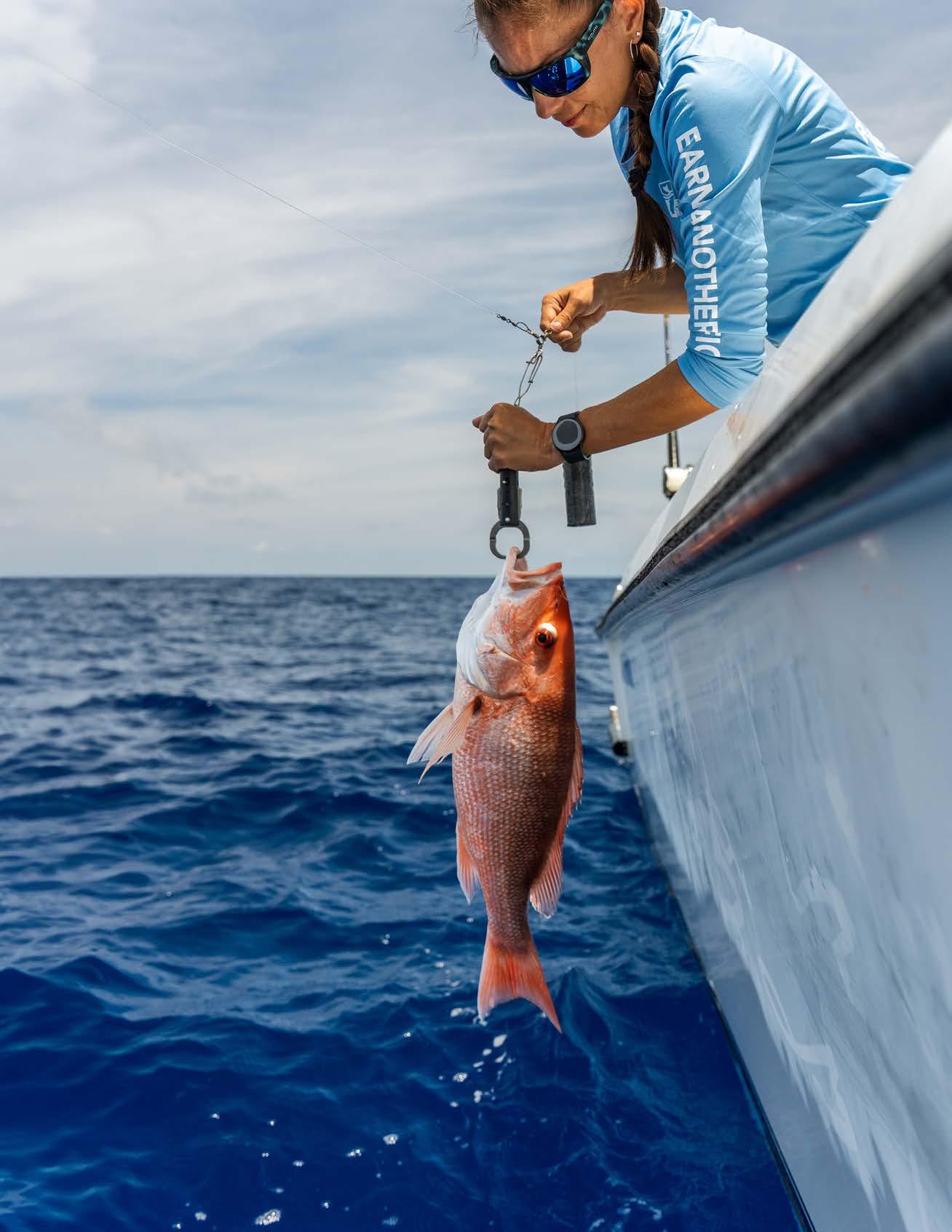
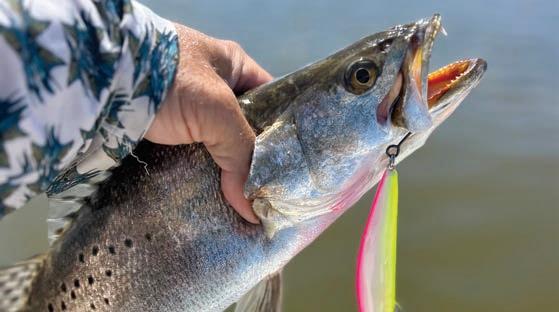
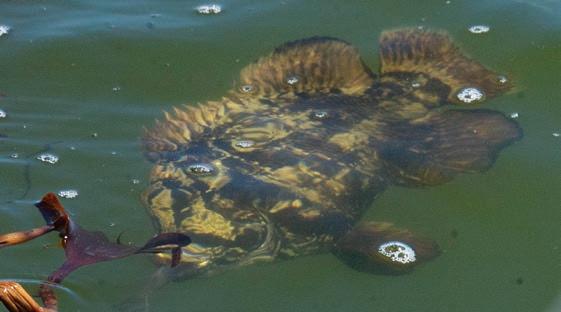
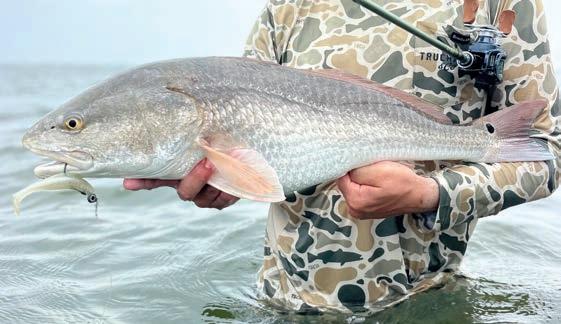
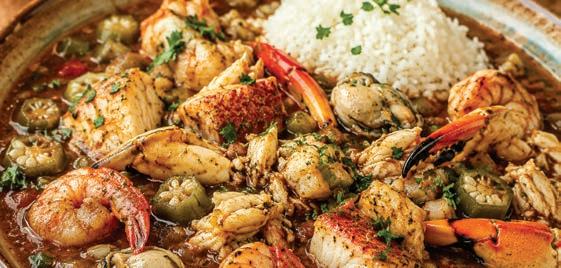
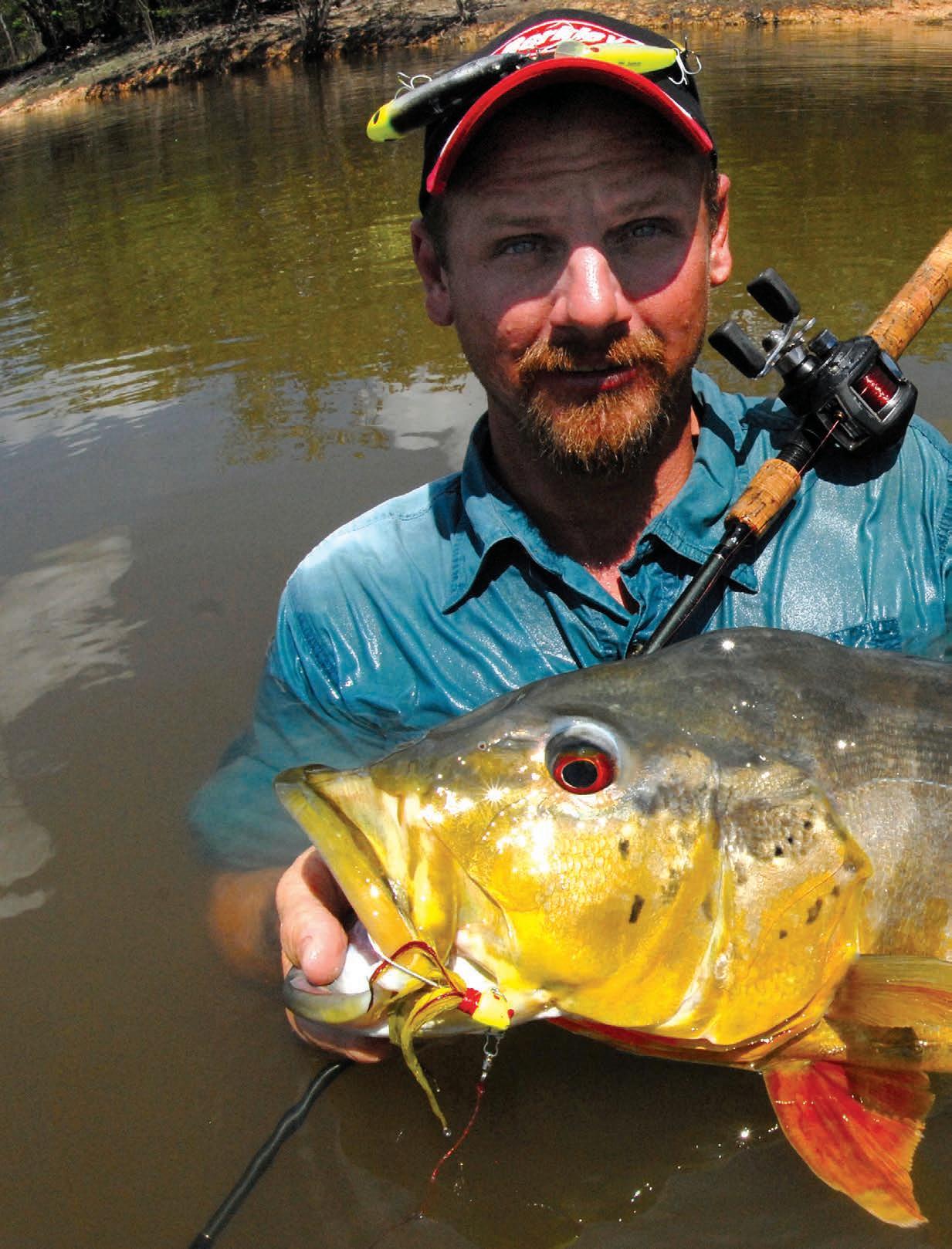
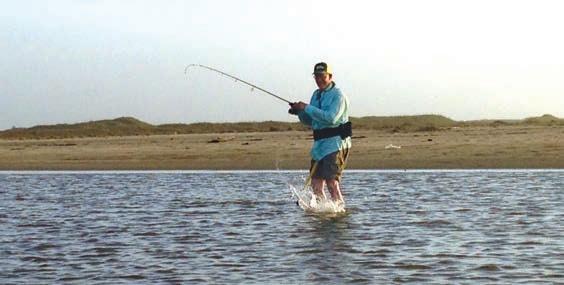
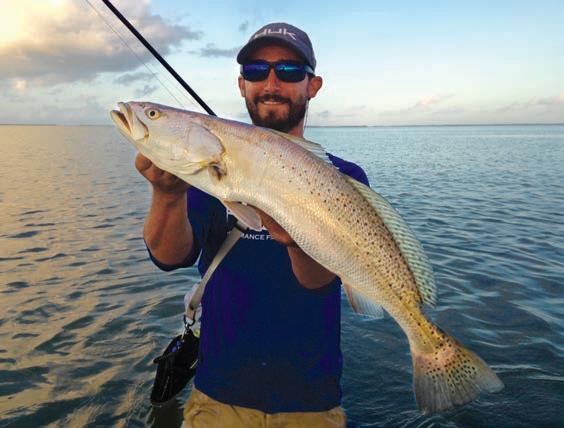
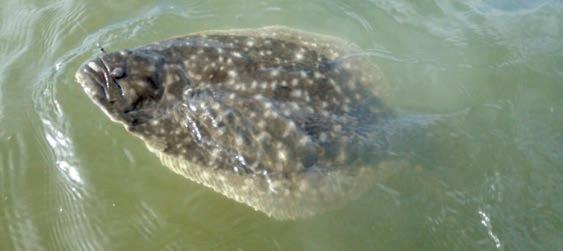
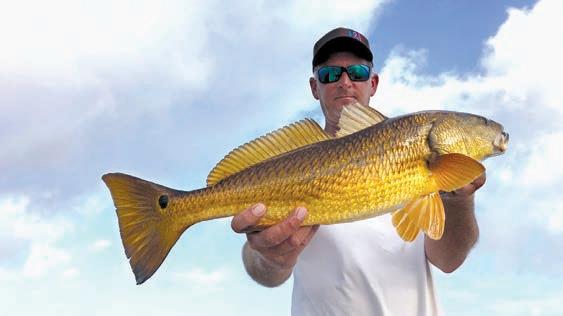
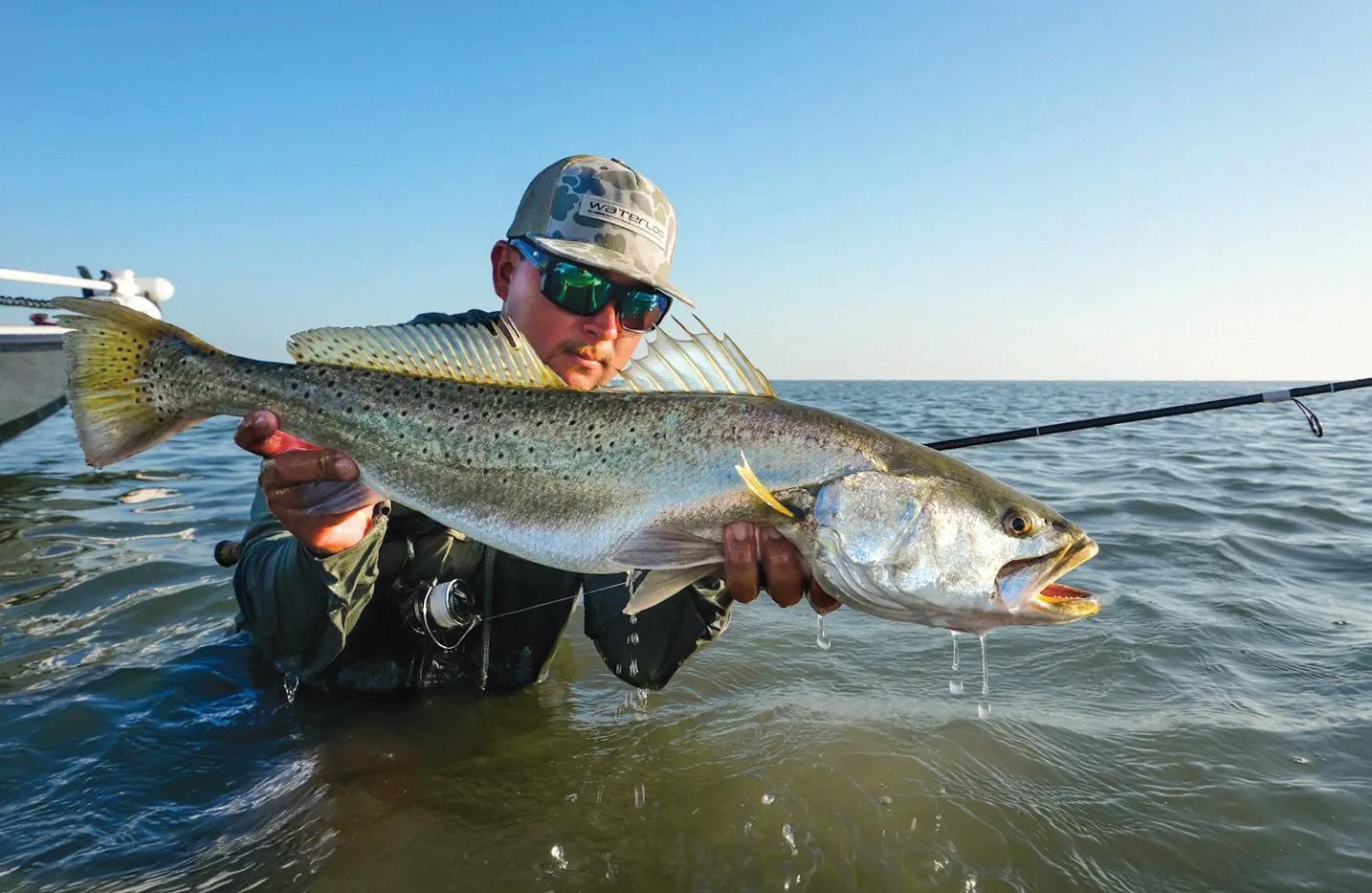
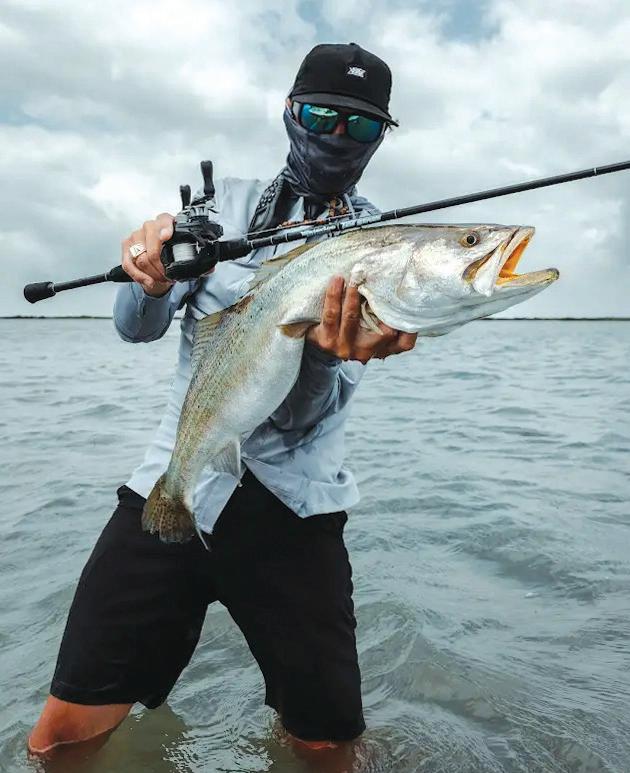
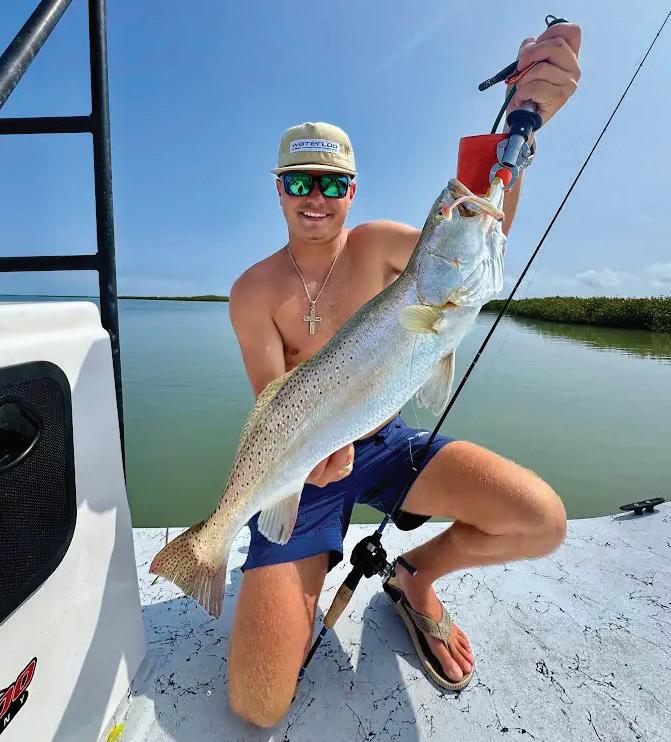
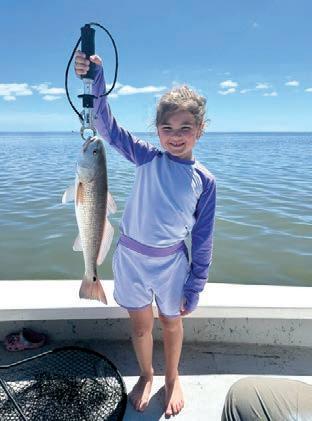
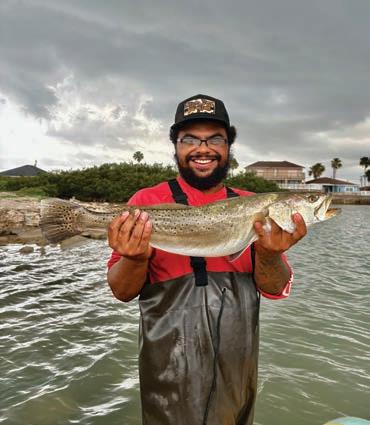
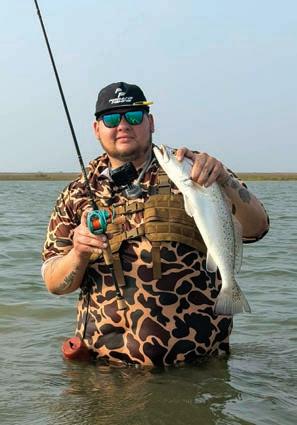
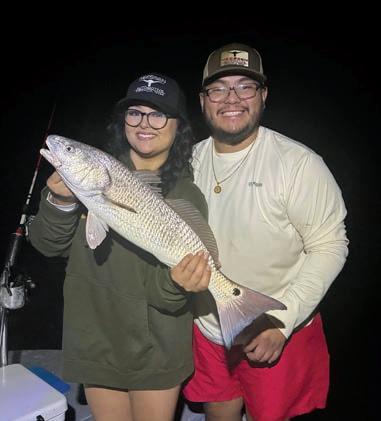
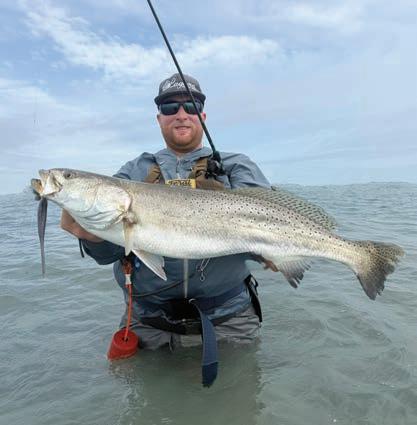
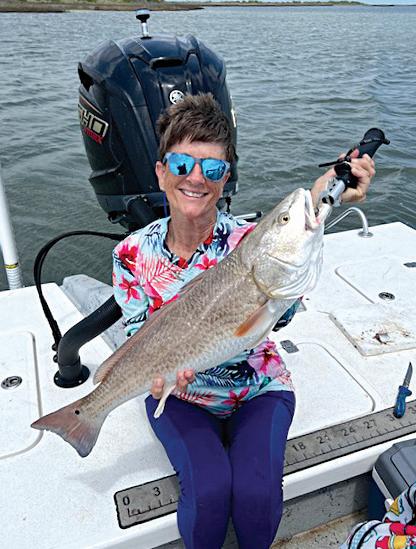
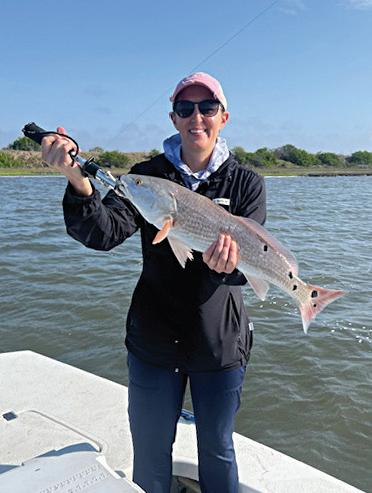
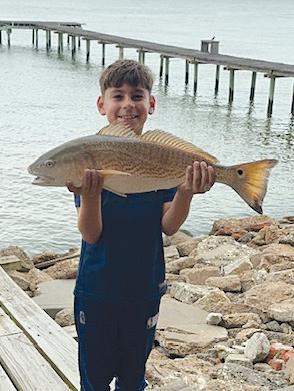
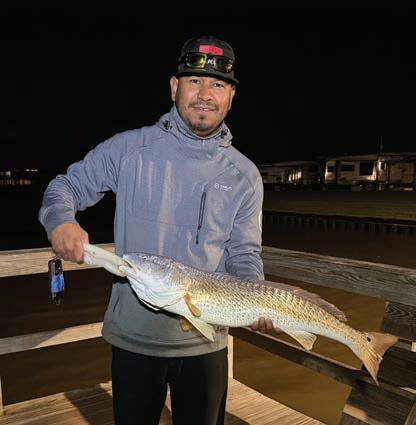
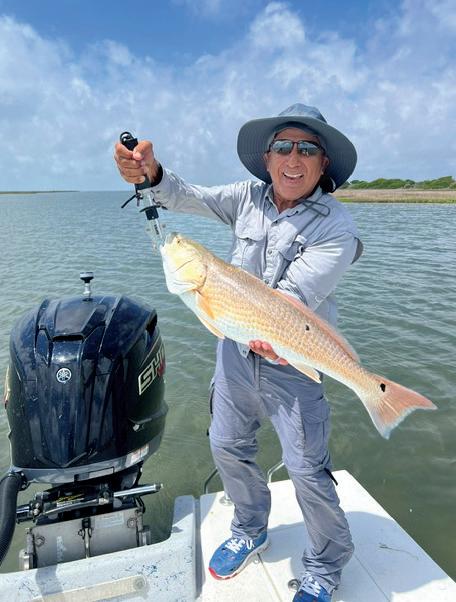
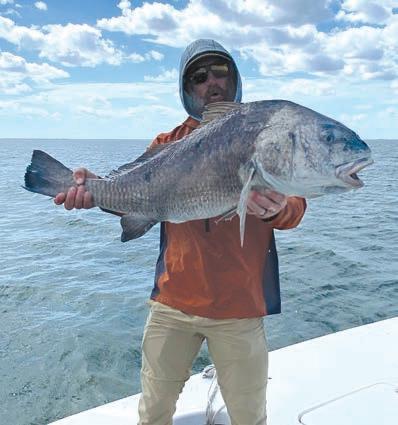
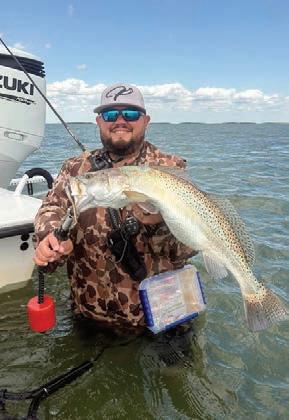
Sharpen your release skills with Return ‘Em Right’s free online training and get the gear you need to give every fish a fighting chance to survive after release.
EDITOR AND PUBLISHER
Everett Johnson | Everett@tsfmag.com Office 361-785-3420 Cell 361-550-3637
VICE PRESIDENT
PRODUCTION & ADVERTISING DIRECTOR
Pam Johnson | Pam@tsfmag.com Office: 361-785-3420 Cell: 361-550-9918
PRODUCTION / SOCIAL MEDIA DIRECTOR
Jennifer Shive | Jen@tsfmag.com
ADVERTISER REPRESENTATIVES
Bart Manganiello | bartalm@optonline.net
Pam Johnson | pam@tsfmag.com Office 361-785-3420 Cell 361-550-9918
Everett Johnson | everett@tsfmag.com Office 361-785-3420 Cell 361-550-3637
Texas Saltwater Fishing Magazine is published monthly.
Subscription Rates: One Year (Free Emag with Hard Copy)
Subscription $32.00
E-MAG (electronic version) is available for $15.00 per year. Order on-line: WWW.TSFMAG.COM
MAKE CHECKS PAYABLE TO: Texas Saltwater Fishing Magazine Attn: Subscriptions P.O. Box 429, Seadrift, Texas 77983
* Subscribers are responsible for submitting all address changes and renewals by the 10th of the prior month’s issue. Email store@tsfmag.com for all address changes or please call 361-785-3420 from 8am - 4:30pm. The U.S. Postal Service does not guarantee magazines will be forwarded.
Periodical class permit (USPS# 024353) paid at Victoria, TX 77901 and additional offices.
POSTMASTER: Send address changes to Texas Saltwater Fishing Magazine, Inc., P. O. Box 429, Seadrift, TX 77983.
GONNA BE HOTTER’N BLAZES
Yep, it’s August, and what you just read in the line above is a true statement. But you know what? August in Texas has been hot enough to fry an egg on your forehead since the beginning of time. And I’ll let you in on another little secret; all those great fish we were catching back in spring and early summer; they’re still out there. We just have to be a bit more creative how we go about going after them, and it may also be helpful if we can show a little grit while we’re at it.
My best advice is to be on your first fishing spot early enough to watch the sun come up. I like to leave the dock at 6:15, or earlier. You’re going to need a Q-Beam or a light bar to ensure the way ahead is clear. But for Heaven’s sake, be careful not to blind all the other folks already underway. It’s common courtesy, kind of like switching your headlights off when backing down to launch the boat.
Here’s a few more tidbits that you may want to heed. This is the season of big hats, long sleeves, sun masks, and gobs of sunscreen.
Back in the day we sported raccoon eyes and bronzed skin the way an Eagle Scout displays merit badges. The only good that comes from such foolishness nowadays is that my dermatologist is making a pretty good living. Thank the Lord Medicare pays for most of it.
Stay hydrated! I have a very good friend who suffered a heatstroke a couple years ago and it was no laughing matter. His tolerance to harsh sunlight is now greatly diminished. So, I’ll say it again – stay hydrated. At least a 16-ounce bottle of water per hour. No beer until you get off the water.
When the sun gets high overhead you should already be headed back to the dock. If you haven’t had enough fishing for the day, think about slipping back out there in the evening. I’ve experienced some wonderful fishing as the sun was sinking.
Now we’re getting down to the serious part of this little editor’s column; and that’s sportsmanship, being a good role model, and taking some youngsters fishing. They’ve only got a few weeks left and they’ll be back in school, so let’s make the most of it. If you’ve no kids of your own, what about nieces and nephews, or the neighbor’s kiddos? And don’t forget to get them registered for STAR before you go.
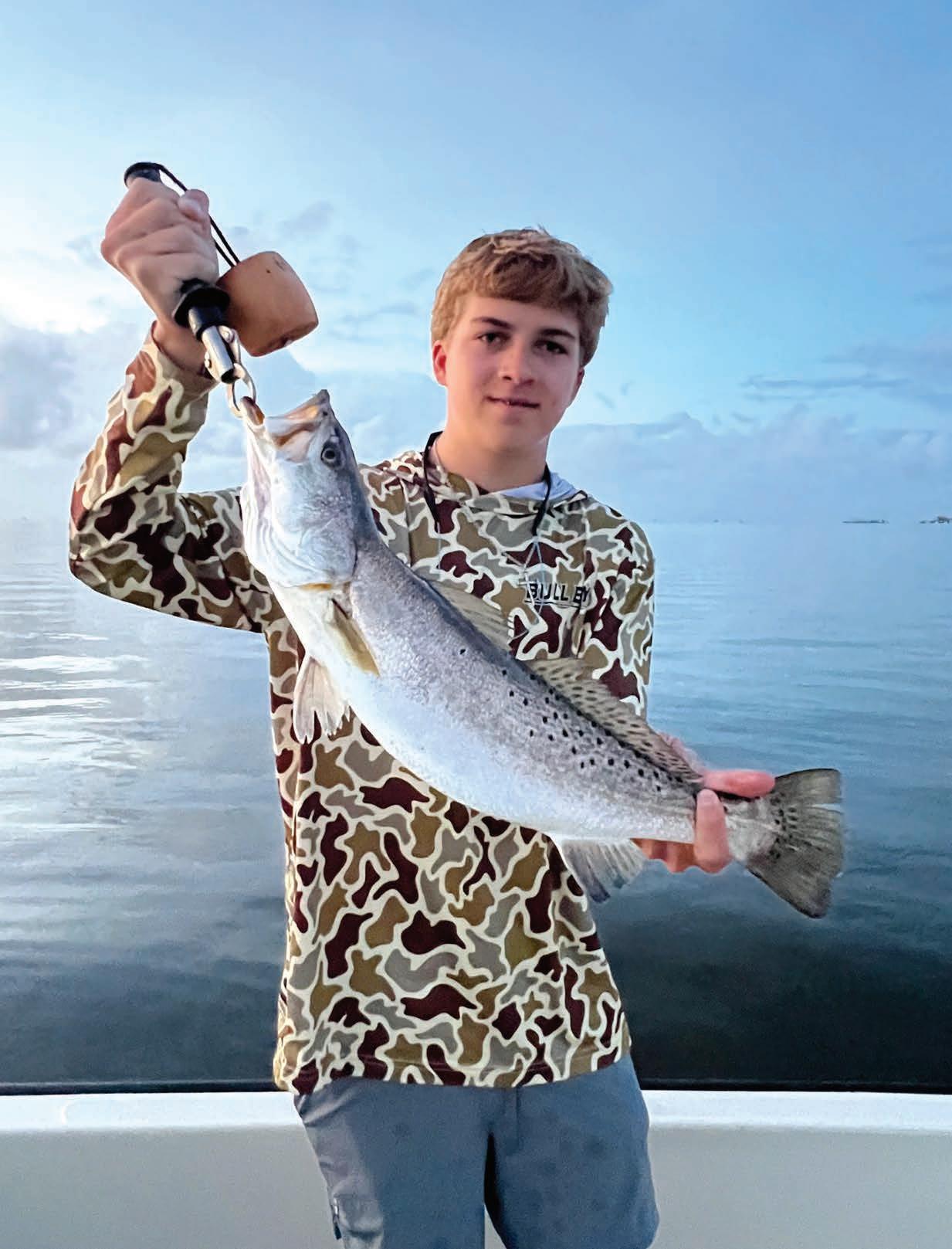
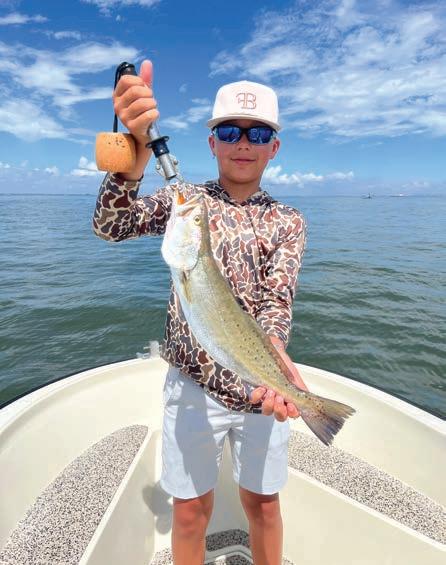
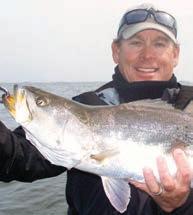
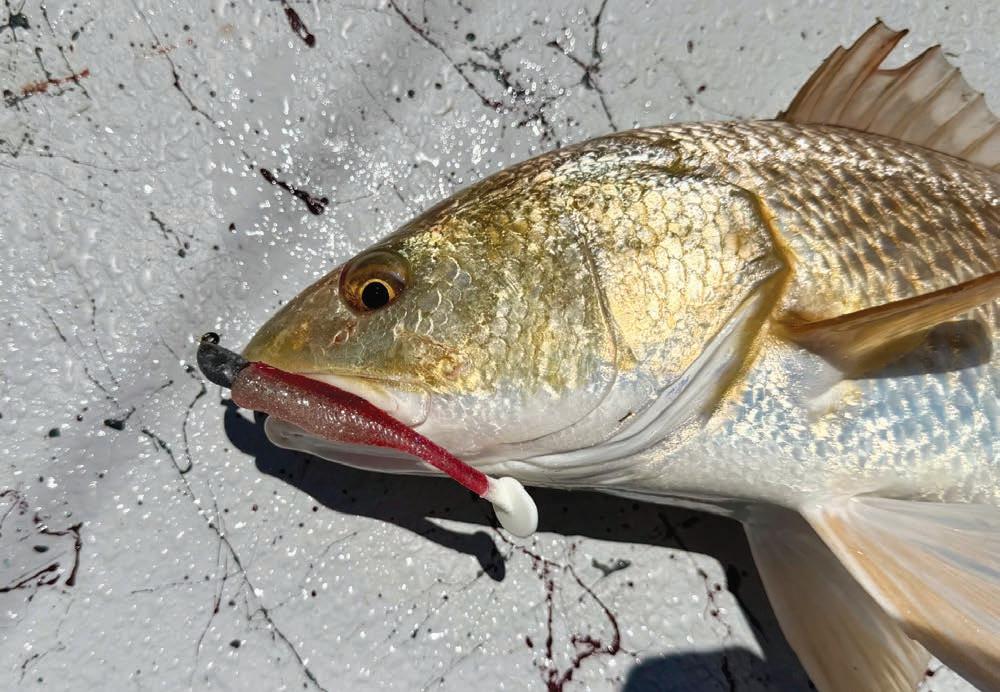
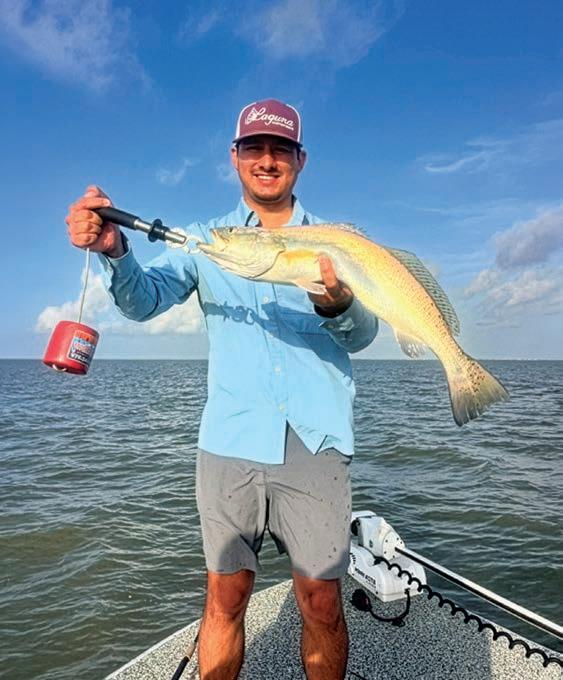
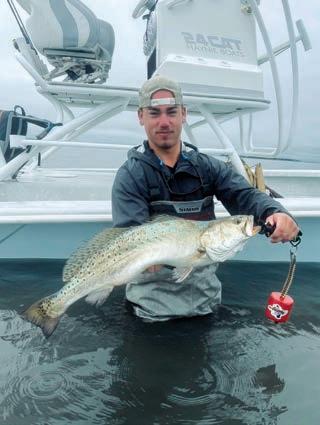
Cash LaCombe got the day started off right with this beauty that fell for his Laguna Shrimp Bass Assassin!
STORY BY STEVE HILLMAN
From the Crème Wiggle Worm to the Boone Tout Tail to the Bass Assassin - soft plastics have continued to pave the way to our success in salt and freshwater fishing for years. Just in my lifetime I’ve witnessed the introduction of literally hundreds of shapes and styles of soft plastics. Excluding worms, crawfish, lizards and frogs for the freshwater game, the saltwater ones I recall using throughout the years consisted of many styles and sizes and have definitely evolved over time.
In my early years of saltwater fishing, the Kelly Wiggler shrimptail was king. I remember my favorite color was root beer. We would dip the tips of the tails in white then chartreuse tail dip paint to take mimicking a real shrimp’s tail to the next level, not to mention it greatly increased my confidence level. If you only dipped the tail in chartreuse, then it wouldn’t have that vibrant fluorescent brightness of chartreuse. You had to dip it into the white first. Red with a white tail was also one of our favorites. There were several other shrimptail manufacturers but in my memory the Kelly Wigglers stand out as our go-to tails during those years.
There was a stretch of time following the shrimp tail craze when shad body and minnow shaped soft plastics came onto the scene. These days we typically just refer to them as swimbaits. My favorite was a 3” red and white paddletail shad made by Mister Twister, that was originally designed to target bass and walleye. It’s called a Sassy Shad. There was another paddletail soft plastic that I threw a lot, too. It was a slightly slenderer bodied lure, with more of a minnow profile. It’s called a Major Minnow and is made by Hogie’s Fishing Lures right here in El Campo, Texas. Two other similar body style baits we used during that time were the H&H Cocohoe Minnow and the Stanley Wedge Tail. All of these baits are still produced to this day.
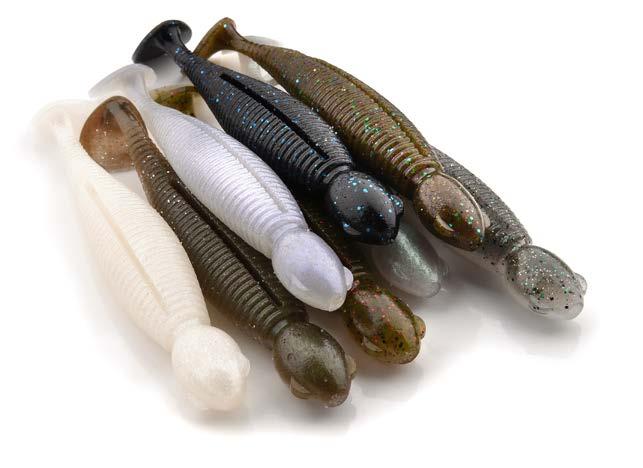
In the early to mid-90s I was introduced to a soft plastic that, little did I know, would become my go-to lure to this day. A good friend and I were wade fishing the north shoreline of West Galveston Bay and he was catching three trout to my one. I asked what he was throwing and he said, “it’s a Bass Assassin.” Upon closer examination and after looking at the package once we got back into the boat, it was more specifically a 5” Limetreuse Bass Assassin (straight tail). Straight tail (eel style) soft plastics became even more popular by the early 2000s and remain so to this day. I usually refer to the straight tail versions as rattails and the paddletail versions as simply paddletails. I employ both on a daily basis along with a variety of other styles that Bass Assassin offers, such as the Lit’l P&V and the Artemis Shad. The sheer variety offered by Bass Assassin allows me to always have something in my arsenal to entice fish under almost any scenario.
By the time this fine magazine hits your mailbox, store shelve or inbox, it will almost be August. When folks think of August here on the Texas Coast, they immediately think of the heat. As fishermen we tend to think in terms of how the fish will react to these hot bay waters. Most will automatically assume that more trout will be found in deeper water because that’s typically where the cooler water is. This is true most of the time, and this is where I’ll spend most of my time in the next couple of months. When I’m not drifting in the deep stuff (7- to 13-feet) I’ll be wading near the passes. Especially if there’s an early morning incoming tide, bringing in cooler water from the gulf. This is one of the only serios exceptions to the hot summer/ deeper water thinking.
Regardless of the areas we choose, we will primarily be chunking soft plastics this time of year; not because other lures won’t work, but because we can work more water at a faster pace with worms as opposed to most plugs. I also like the fact that I can pinch down the barb of a single hook jighead, which allows for quick releases and lower mortality of the specks we catch compared to lures that carry trebles. The fewer holes we poke in our trout and the less time we handle them the better – during August heat.
Water depth helps me determine which
style of soft plastic I should throw. If we’re fishing in deep water, I typically like a worm with a faster sink rate, such as a rattail Assassin, Lit’l P&V or MirrOlure Lil’ John. Which jighead I rig them on depends on just how deep the water is, the current velocity, and the wind. Salinity level should also be considered, as our lures tend to be more buoyant in high salinity water.
With little to no tide movement it’s not uncommon for me to rig our worms on 1/8-ounce Assassin Pro Elite jigheads, even in 10 feet of water. If there’s moderate flow and maybe a light breeze, then an 1/8-ounce conventional Assassin jighead also works well. If the tide is really ripping and I’m dealing with some wind, then a 1/4- to 3/8-ounce is not out of the question. This being said, if the tide is ripping that hard, I’m probably going to relocate because our trout in this bay usually shut down when there’s too much current.
When fishing shallower waters or when we need our worms to hover in the water column, I rely heavily upon baits with greater buoyancy. These are typically lures that contain more plastic and are of the paddletail persuasion. Bass Assassin Sea Shads and Artemis Shads fit this bill perfectly. I almost always rig these baits on either 1/16 or 1/8-ounce Pro Elite jigheads. These paddletail style
Jody Moses tricked this 22-incher on a 4” Slammin’ Chicken Sea Shad Assassin paddletail on a morning with very little tide movement. Fish were suspended about 5 feet off the bottom in 11 feet of water.
Justin Brown and his crew hit it just right with light winds and good tides leading up to a full moon!
Our trout absolutely lit up during the late morning tide change which happened to coincide with the major. Kellen Kiersh was right in the midst of the action! Flamingo Flash Assassin strikes again!
worms rigged on lighter jigheads not only sink much slower than their rattailed cousins but give off vibrations from their tail action. These can be deadly for tricking stubborn trout that are suspended in the water column.
The type of line we’re using can also affect sink rate. Folks using monofilament line will experience a faster sink rate than those of us using braid. I like to use a 6-foot leader of Seaguar Gold Label 20-pound fluorocarbon for added stretch, sink rate, and invisibility.
Seagrass is apparently making a comeback in some areas of Galveston Bay. I witnessed this on a recent trip, and I can’t tell you how happy this makes me. Split belly rigging with the point of the hook buried or just barely exposed (weedless style) all but eliminates the grass issue. Also, rigging a rattail Assassin where the hook comes out through the split instead of through the back (upside down) allows it to swim perfectly straight. A worm that spins during the retrieve is far less effective on average.
The styles and color choices of today’s soft plastics are endless, and it seems like there are new numbers popping up every week. Of all of the choices out there, the Bass Assassin family of plastics provides me with the most variety and well-thought-out options of baits anywhere. Their plastics are softer and provide more action than most other worms. They have scent-impregnated baits for those hard to trick fish in murky water. They make tails that stay suspended and ones that sink faster. Some are made for jigging (rattails) while others can be worked on a straight retrieve with great
success (paddletails). Their color choices are endless, and last but not least, the versatility and the many different styles of Bass Assassin’s line of jigheads takes it to a whole new level.
Regardless of what brand of worm, tail, tout or jig we choose to throw, we must first assess what’s going on beneath the fiberglass. Is the water salty or fresh, and how will that affect the sink rate? What kind of current are we seeing? I always try to look at the channel markers when I can because I trust my eyes more than a tide chart. Is there enough wind to affect my sink rate? What weight and style of jighead should I use? What’s the water clarity like? Do I need to switch to a darker color?
In murky water, I like colors like Red Shad, Texas Roach, and Morning Glory. In clear water, and when there’s a good amount of sunlight, I usually opt for Flamingo Flash, Laguna Shrimp, or Chartreuse. My two go-to best all-around colors in most conditions are Slammin’ Chicken and Chicken on a Chain. Apparently, they’re not just my favorites because they also happen to be two of Bass Assassin’s top sellers.
I hope this piece provides folks with a few extra tips and thoughts that will help trick more trout this summer. If you’re having trouble deciding what to throw, this just flip a coin. I promise you it’s going to be “tails” most of the time.
STEVE HILLMAN
Steve Hillman is a full-time fishing guide on his home waters of Galveston Bay. Steve fishes the entire Galveston Bay Complex, wading and drifting for trout, redfish, and flounder using artificial lures.
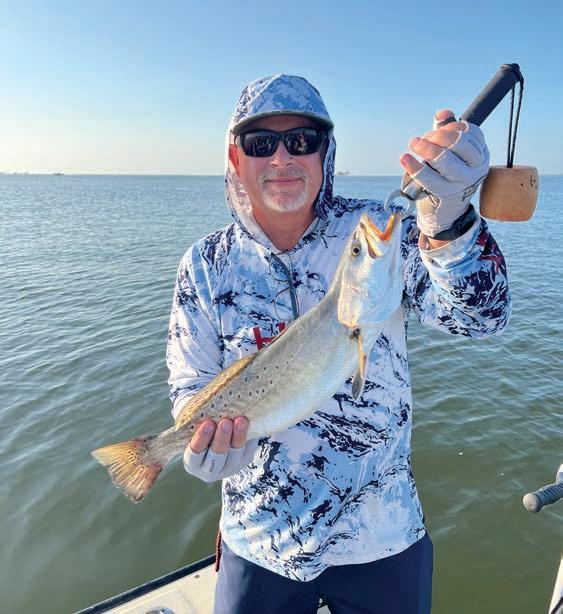
Ray Cibulski with one of many solid trout on a great morning with an aggressive trout bite!
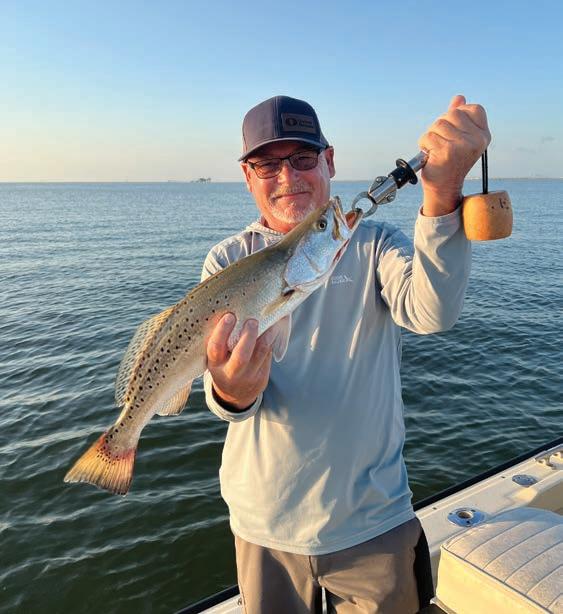
The 1/8-ounce Pro Elite jigheads made a huge difference on this particular morning as proven by Jack Cibulski.
STORY BY KEVIN COCHRAN
One can only catch fish on a lure one chooses to throw. Obviously, the opposite is also true. One cannot catch a fish on a lure one refuses to throw. So, anglers’ choices directly influence the lists of lures on which they catch fish. Someone who throws a particular lure half the time should catch at least half their targeted fish on it.
I’ve pondered statements like the ones above many times in my career, and I’ve attempted to honestly assess how my preferences for certain lures have affected the number of big trout I’ve caught. As a young man, I developed a stubborn commitment to throwing fullsized topwaters. When I emerged as a competitive angler and guide, I began throwing slow-sinking twitchbaits a larger percentage of the time. My latest evolution involves working soft plastics into the mix more often, when conditions appear to dictate their use. I also dangle the worms under corks a decent percentage of the time these days, something I did not do years ago. With more experience, I’ve gained greater awareness of the value of versatility.
In the end, eight lures stand out among all the others I’ve tried, because of the results they’ve generated. I’ve caught trout measuring at least thirty inches on all the lures on this list; I’ve caught trout weighing at least ten pounds on five of them. Below, I name all the lures in the group I’ve dubbed my Great Eight, along with some pertinent facts about each. I also name a lure I believe should have earned a spot on the list, acknowledging it likely has failed to do so because I’ve used it far less than most of the others.
In February of 1997, I caught my first 27-inch trout on a Super Spook, in the back corner of a cove in West Galveston Bay. Later that year, at Trout Bayou in Aransas Bay, I caught my first 8-pound trout on one. These incidents elevated the hefty, cigar-shaped plug to the top of the list as my favorite lure. I threw the Super Spook a big percentage of the time in those days and caught quite a few other big trout on it, including my first measuring 30 inches, which I landed in the Badlands in the winter of 2002.
Over the years, I’ve become less committed to this lure, mostly because it requires one to expend so much energy during presentation. I’ve always thought of this classic, rattling topwater as versatile. It works in water less than knee-deep at times, also in water too deep for wading. In winter, the Super Spook works best during warm spells, in water ranging from the upper-50s to about 70F. It also works well during spring and fall, with water temperatures ranging from the low-70s to the low-80s.
The Junior version of the Super Spook is another lure which predictably finds a place on this list. I became a huge fan of the little plug after I learned how well it produces in hot water, when trout will strike topwaters on a daily basis. On many summer outings, I’ve used the Spook Junior to coax trout to blow up by working it erratically, adding pauses and speed bursts during
presentation. Its diminutive size facilitates these movement patterns, allowing me to execute them without creating too much fatigue in my wrists and forearms. Most likely because I normally choose to use larger topwaters during early-morning hours, when the trout more readily strike lures moving slower and steadier, I’ve not caught lots of picture-worthy trout on the Junior, but I have landed trout measuring at least 30 inches on it.
Rapala’s Skitter Walk, shaped more like a football than a cigar, also works well when worked fast, with erratic action. In 2002, I caught my first 31-inch, 10-pound trout on one, casting it into deep water south of the Tide Gauge Bar, in Baffin Bay. Because it rattles with a higher pitch than some other popular topwaters, I like the idea of using it to try and call trout to the surface in water too deep for wading. Like other floating plugs, the Skitter Walk works well in relatively warm winter weather and throughout the warmer months, even when water temperatures reach their peak at nearly 90F.
Paul Brown’s Fat Boy, on the other hand, works best in cooler water, ranging from about 50 to about 80F. This shad-shaped, slow-sinking twitchbait will work in hot water too, though most folks disdain its use during the summer months. When worked with a rhythmic, dog walking action, much like a topwater, this lure generates strikes from big trout best in
Kev caught this splendid 10-pound trout on a green/ silver Fat Boy in clear water on the King Ranch Shoreline.
Beau Blackard poses here with a memorable trout he caught on a strawberry/black Fat Boy while fishing with the Captain.
Jeremy Rhodes caught this 30-inch trout on a Fat Boy during a cold snap while fishing with the captain.
Amazingly, Kenneth Havel’s first trout caught on a Fat Boy measured well over 30 inches and weighed 10 pounds.
water ranging from about two to four feet deep. I’ve caught more magnum trout on this famous lure than any other, partly because of how much I throw it, but also because its attributes make it supremely effective for wading anglers targeting trophies.
I caught my longest trout ever in the North Badlands during the month of May on a Fat Boy, and landed another 32-inch, 10-pound trout on one while a January full moon reflected off the surface of clear water on the King Ranch shoreline. Surely, no other lure has made a more significant contribution to my reputation as a competent trophy trout hunter than this one. I’ll never forget the day my late friend Jesse Arsola first placed one in my hand in East Matagorda Bay, nor the conversations I had with Paul Brown in his garage, when I went to his home to buy some of his lures, while I tried to master their use.
During the process of learning how best to use the Fat Boy, I also became aware of the Fat Boy Floater. In 2008, in water barely deep enough to cover my wading boots, on a shoreline in Alazan Bay, I caught the heaviest trout of my career on one of these. Over time, I came to understand something significant about the subtle differences between the floating versions of Paul Brown’s lures and their faster-sinking brethren.
Because they have no rattles in them, and because they sink so slowly, Fat Boy Floaters work better in super shallow water, less than knee-deep, especially in clear water with light winds in play. Stealth in presentations matters most of the time in situations like these, and floating versions of Paul Brown’s lures facilitate presentations which allow anglers to move the lures over bottom cover in shallow water at appropriate speeds, without creating too much commotion. I consider Fat Boy Floaters and Original Floaters interchangeable; I can’t think of a situation in which one would significantly outperform the other. My preference for a Fat Boy over an Original is purely personal.
I have caught monster trout on the sinking, rattling version of Paul Brown’s Original Lure, still called a Corky by many Texas anglers today. In Baffin Bay, Jim Wallace caught the then state-record trout on a silent version of the Corky in February of 1996; Paul made the lure without rattles back in those days. By around the turn of the century, Mr. Brown put rattles in all sinking Corkys and Fat Boys; only making the floaters without rattles.
Over time, I came to view the Corky as a specialty lure, and I’ve used it in a specific type of situation to catch good numbers of big trout, up to nearly 32 inches. By bending the tail of a Corky sharply down, to nearly a 90-degree angle, then retrieving the lure with sharp, short snaps of the rod tip, one can create a presentation which causes the lure to spin. This circling motion keeps the finger-mullet imitator down in the water when wind speeds ramp up over 20 knots. Trying to keep a Fat Boy under the tops of the tall waves generated by howling winds proves nearly impossible, but a bent Corky stays down in the strike-zone, even when winds scream loudly enough to make it hard for anglers to hear their own thoughts.
A MirrOlure Catch 5, on the other hand, works best in calmer conditions. I’ve caught quite a few memorable trout on these hard, noisy, flashy plugs, which I think of as the She Dogs of the sinking twitchbait family. I caught a 10-pound trout on a Catch 5 in February of 2014, while fishing the rocks at the west end of Cathead. That day, I chose it over a Fat Boy specifically because we fished in water stained by brown tide. The raspy pinging noises generated by a Catch 5 appeal to me in murky water. This lure works best in the same depths as a Fat Boy but becomes preferred when winds whisper over stained or turbid waters, especially when bright sunlight flashes and twinkles off its sides during vigorous presentations.
Anglers dangling soft plastics under small corks also coax strikes from huge trout in murky waters. The last lure on my list of eight great ones is a 5-inch MirrOlure Provoker, on which I caught a 10-pound trout measuring nearly 32 inches in 2015, in super shallow water severely tainted by brown algae. The long, slender tail of this soft plastic generally makes it most effective in clear water, when used without a cork. Rigged on a light jighead under a Comal Tackle Factory cork, it becomes capable of urging strikes in water with nearly zero visibility. I haven’t caught as many giant trout on this lure as I have on larger lures which better mimic pinfish, shad and finger mullet, but my preference for those lures does exert influence on this fact.
Again, one cannot catch a fish on a lure one does not throw. Predictably, I’ve caught fewer whopper trout on lures like the Provoker and Corky than on the lures I throw more often―the Fat Boy, Fat Boy Floater and Catch 5. The overall number of times I’ve thrown a One Knocker compared with my old favorite topwaters likely accounts for why I’ve never caught a 30-inch trout on it. If I’d thrown a One Knocker at some of the big fish I caught on the other lures on this list, I have little doubt I’d have caught some of them on it, but to this day, it remains the Nearly Ninth.
Anglers’ preferences definitely affect how many fish, including big ones, they catch on specific lures. Much of the time, when we catch trophy trout, we do so because we’re in the right place at a time when the fish feed with aggression. In some situations, we can catch them in a variety of ways, placing priorities on what we do best and what we want most. Other situations clearly dictate the use of specific kinds of lures. Generally, anglers who’ve managed to catch scores or hundreds of trout measuring at least 28 inches and weighing at least 7 pounds would likely agree with a general statement supported by my Great Eight―lures which mimic perch, shad and mullet best facilitate serious efforts to land the trout of a lifetime.
KEVIN COCHRAN
Kevin Cochran is a long-time fishing guide at Corpus Christi (Padre Island), TX. Kevin is a speckled trout fanatic and has created several books and dvds on the subject. Kevin’s home waters stretch from Corpus Christi Bay to the Land Cut.
T ROUT TRACKER GUIDE SERVICE
Phone 361-688-3714
Email kevincochran404@yahoo.com
Web www.captainkevblogs.com
Shallow running crankbaits have become a daily go-to for solid Sabine Lake trout.
TONE DEAF
Noise! It’s everywhere and all around us. The effects that noise and sound play on our everyday life are undeniable. Certain sounds are associated with certain events or certain actions, and they can illicit very real feelings and responses. The sound of drag screaming as line peels from your reel under the pressure of a good fish puts a smile on any fisherman’s face. The unmistakable snap of fishing line breaking under the same pressure from that same good fish has the exact opposite effect and can ruin a day in a hurry. The rhythmic sound of a topwater waltzing across the surface followed by the detonation of a strike from a predator fish is another welcome bit of noise that most anglers crave and very seldom, if ever, get enough of. All the aforementioned sounds have one thing in common and that is the way in which they affect the fisherman. Sounds and noise have certain effects on fish as well, and it’s a fisherman’s job to figure out just exactly what those effects are.
Let’s look at some obvious sounds we all take for granted when we hit the water. Perhaps the most common sound we look for is the one our lures produce. There are tons of different tackle options all geared towards making that special noise that will attract more bites. Tackle manufacturers spend astronomical amounts of time searching for sounds and noises in different tones or frequencies that will make their product more desirable to fish. There has been extensive research done on subjects such as the sounds that croaker and live shrimp make, or the sounds produced by predator fish when they’re feeding.
I can remember when the use of glass beads was all the rage because it supposedly made the same sound croaker make which, in turn, drew vicious strikes from angry speckled trout who were “thought” to be protecting their young. Yes, that whole scenario is a stretch, but at the time it seemed like a fantastic concept. I’m not a scientist or biologist and I haven’t even slept at a Holiday Inn Express lately, so all I can do is offer up my own opinion and that is, for whatever reason the use of rattles or beads probably can’t hurt…so go ahead and use them if it makes you happy. Sound can be an attractant if applied properly and can most definitely help you catch more fish. Applied properly are definitely key words here.
Proper use of sound comes in many forms, and it amazes me how so many anglers don’t pay enough attention to that concept. I have watched fishermen pick out their topwater plug, let’s say it has a single rattle or noisemaker inside and it makes a unique knocking noise. After a while the fisherman decides to make a lure swap and grabs another color of the same plug and continues fishing. So, all that happened with the lure swap was a color change, nothing else.
STORY BY CHUCK UZZLE
Rather than continuing to use the same plug in a different color, wouldn’t it be smarter to change the style of the plug; that might also have a completely different sound profile? If the one you’d been using had one large rattle, should you perhaps consider switching to one with multiple rattles of different sizes? If all that fails, maybe go to a plug with no rattles, one that has a concave face that produces only a gurgle or chug when pulled along the surface? Don’t let yourself become tone deaf, be aware of what you have tried and make changes accordingly to establish a pattern.
Topwater plugs are not the only lures you should pay attention to on the basis of sound; subsurface offerings all have their own set of noise making capabilities. Perhaps one of the most famous lures ever produced, the Rat-L-Trap, is a perfect example of how the use of noise helps attract and catch fish. There is probably not a number large enough to count the fish, both fresh and saltwater, caught on “the Trap.”
Spinnerbaits, paddletails, swimbaits, jerkbaits – take your pick –they all have ability to produce certain sounds and each one of those sounds has a particular advantage under certain conditions. Sound and vibration can be huge factors when fishing in murky or off-colored water because it helps fish locate the bait. In ultra-clear conditions or shallow water, too much sound can spook fish, so anglers must be aware of their circumstances and surroundings when it comes to sound.
Besides the obvious sound created by lures that is helpful, there is also plenty of sound (see also; noise) that hurts anglers. Dropping objects on the floor of the boat, slamming hatches, or any other type of banging around inside the boat can produce noise that is greatly magnified under water. Years ago, before all the go-fast boats with speakers blaring everything from gangster rap to Texas country became the norm, taking great care to slip into an area undetected
was a given. The godfathers of big trout fishing on the Lower Coast would never have dreamed of running into the area they wanted to fish on plane, bumping Little Wayne.
Instead of announcing your presence to every living creature on the flat, try sneaking into an area without being detected. Some old school big trout guys would even wrap burlap around their boats to negate hull slap and assist in a quiet approach because it could only help them in their quest to arrive undetected.
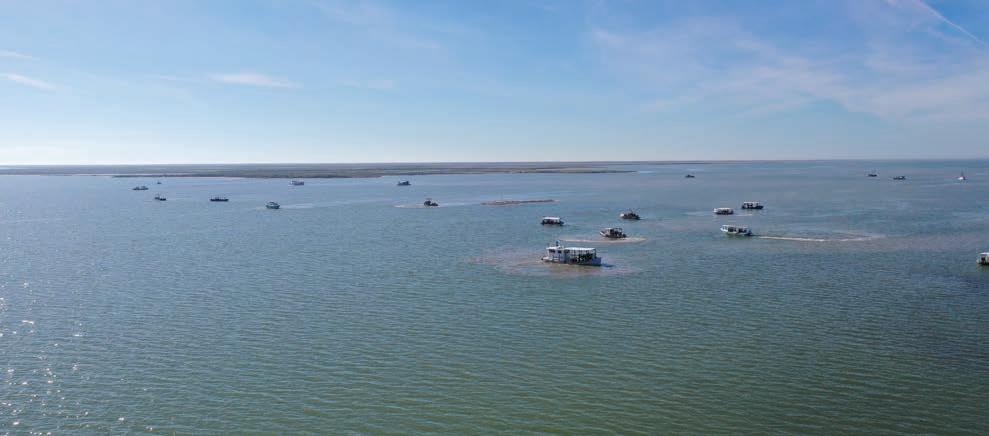
I have also used boat noises to help me catch fish, and it was comical how well it worked. The best example of that for me came one day over on Lake Calcasieu while fishing with Bink Grimes and his dad Danny. There was an absolute armada of boats on one large reef and they were bumper to bumper, it was incredible. People stomping around grabbing bait from livewells and pulling anchors; it was a madhouse. We moved away from the mass of fiberglass, a couple hundred yards or so, out to the next piece of structure and just absolutely wore the fish out. In fact, Danny caught a trout that measured 31-inches and weighed a pinch over 10 pounds.
All that noise had driven the fish off the spot the armada was fishing and they just settled into the next piece of comfortable structure. This phenomenon has been proven by anglers using the forwardfacing sonar where you can watch a boat idle by and actually see the fish swim away from the noise in real time. Again, anglers who pay attention to the noise and don’t go “tone deaf” to their surroundings will almost always catch more fish.
One last thing to consider on the basis of sound, and that’s the fact that it can also be a dinner bell for unwanted party crashers. The summer months are notorious for shark activity along the beach front, jetty, and also in Sabine Lake proper. Catching a fish and having it thrash
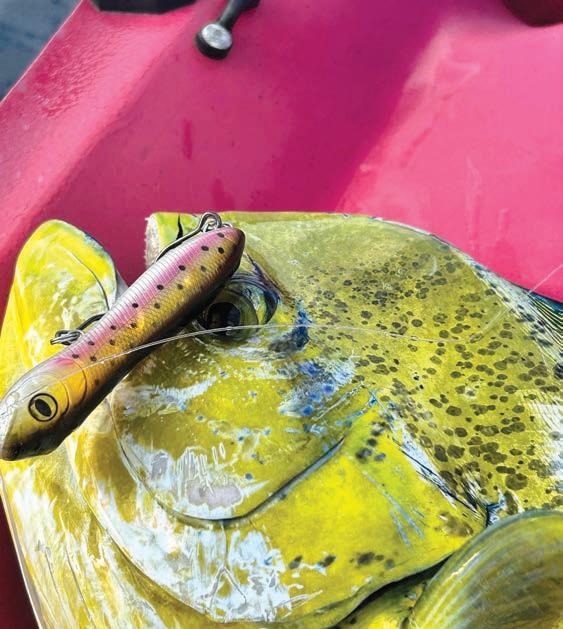
Swapping from a popper style plug to a higher-pitched version like this Nutty Knocker tricked this beautiful dorado.
Loud, obnoxious, oversized surface plugs will get destroyed when these party crashers make an appearance.
along the surface while you try to land it will draw plenty of attention from sharks so be very aware before you reach down to grab it from the water. You could land in the middle of a bad situation. Use a net or some other fish grabbing device and don’t take any unnecessary chances. If you wade, make sure you bring the extra-long stringer, and keep those fish away from you in case the “taxman” shows up to collect. Be cautious, stay hydrated, and bring a kid fishing!
CHUCK UZZLE
Chuck fishes Sabine and Calcasieu Lakes from his home in Orange, TX. His specialties are light tackle and fly fishing for trout, reds, and flounder.
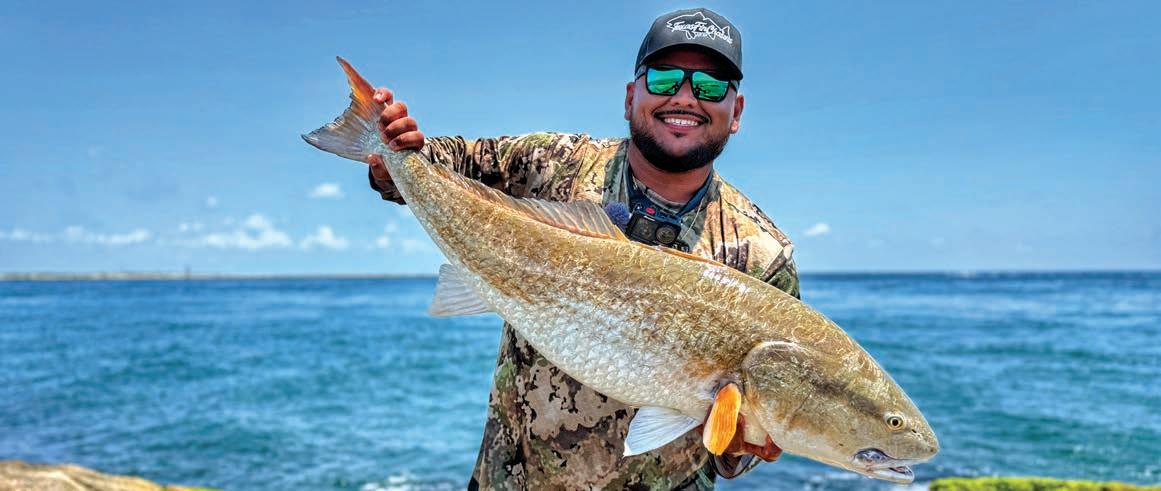
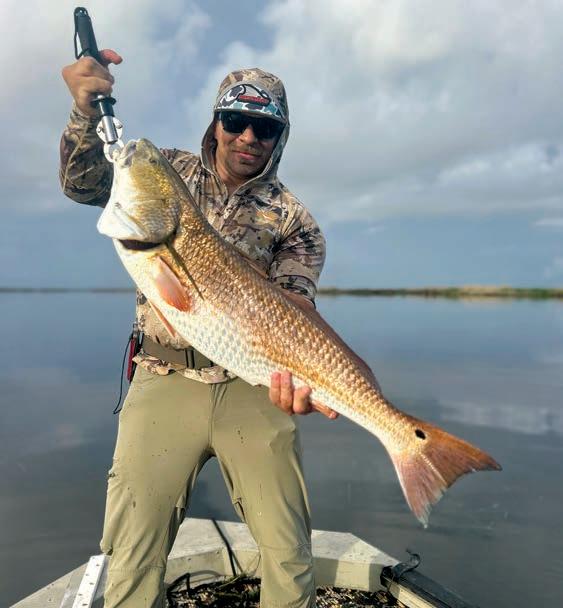
Antonio Gomez took this fantastic redfish in a foot of water under slick calm conditions.
Author
friends
and
wade-fished in Venezuela while barefoot, because they’d each only brought one pair of shoes. Somehow they never suffered a scratch.
THE RIGHT SHOES
STORY BY JOE RICHARD
Last weekend during a bay tournament, one of our club member’s sons (going into the 8th grade) hopped out of the boat to wade for redfish on an oyster reef. Unfortunately he was wearing a pair of rubber “slide shower sandals” with lots of exposed feet. He soon received an oyster cut and limped back to the boat.
Better to learn young. I have this thing about wearing proper shoes while fishing, except on warm spring days jigging for crappie on small ponds, which is pretty tame. With saltwater it’s a different ballgame and I learned it while young. In the 9th grade we’d just brought my 12-foot aluminum boat halfway down Sabine Lake, and it took awhile pushed along with that 5-horse Evinrude. It was a chilly boat ride, though sunny, and we were glad to reach Pleasure Island Marina. My friend kicked off his shoes and strolled happily across the marina’s un-mowed lawn, but then stumbled over a piece of old fashioned, Coke bottle glass. His big toe was in bad shape, part of it missing, and our day went downhill fast. They hauled him off to the hospital in Port Arthur. Remembering that day still makes me wince and ever since, I’ve worn shoes around saltwater. Or marinas, for that matter.
You really want a proven pair of shoes, while avoiding something borrowed. Twice I’ve put on loaner fishing shoes and paid the price, suffering my worst two boat injuries.
One incident happened at the Sabine jetties. My friend’s dad was a football coach and every May he was left with a half dozen pair of sport shoes left behind in the lockers. A last-minute summer trip to the rocks in 1978 was in order, so I grabbed a pair of low-sided track shoes popular back then and we headed out of Sabine Pass. Stepping out onto the jetties, my feet went out from under me and I landed almost face first on that oyster and barnacle-covered wall, sticking my hands out at the last moment. I sprawled half in the water, my hands chewed up. From there it was straight back to town and the hospital, where I’ll spare the details, except they probably heard me screech on the next floor when that oyster was yanked out of my palm. Nice work, but next time maybe they should numb it first.
The other injury was 15 years ago while visiting relatives on Florida’s Atlantic coast. We were going wade fishing in the bay, so I borrowed their son’s worn-out Croc rubber shoes that were smooth on the bottom. We were only wading the bay, right? However, at the gas station there was a change of plans: we would cruise along the Atlantic beach in their small boat, standing up to watch for surfacecruising ling. It was choppy, the boat got wet, up on the bow I finally slipped and cracked a rib on the gunnel. Which was a new experience. I gulped down an Aleve pain pill and we cruised back a dozen miles, where I finally spotted a single ling cruising the waves. An accurate cast nailed that fish and we actually released it. But the cracked rib left me gasping whenever we drove over neighborhood speed bumps.
Wearing the right stuff
Surf I wasn’t part of the serious surf-wading crowd from Galveston to Freeport years ago, but Joe Doggett certainly was. I recently asked him what kind of wading shoes did those salty regulars prefer? “High Top Keds, for sure!” he says. “The first booties I recall were carried by Orvis Houston to support the early (mid-80s) trips to Christmas Island they coordinated with Frontiers Travel (Japanese reef walkers, heavy nylon mesh split-toe pull-ons with hard rubber soles, very uncomfortable.
Then they offered the neoprene zip-ups.”
Those upper-coast surf waders, the heavy hitters earning stringers of magnificent trout, often had to swim out to the third sandbar and once there in armpit-deep water, fired plugs and spoons and hopefully reaching green water where the big trout bite. An early morning rising tide was often best, but it was a hazardous sport and over the years not everyone made it back to the beach. Those canvas High Top Keds could be swam with and felt protective against sharp object such as rocks or storm debris, or maybe a glancing hit from a stingray. Might have to kick a shark, too. Safely back home, those shoes could be hung up to dry without rotting, at least for several years.
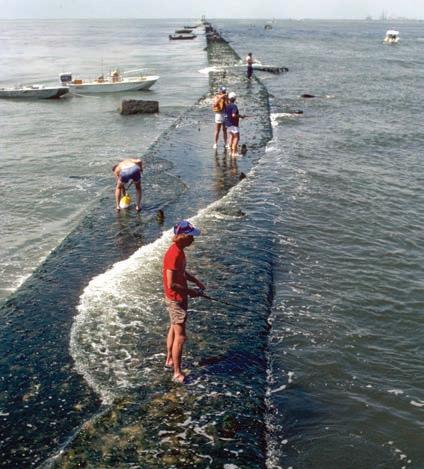
Jetties I know for a fact you can swim with those Keds, because that’s what we wore on the Sabine jetties, our home turf. We much preferred walking the rocks but sometimes the wind came straight down the jetties, so we couldn’t toss the anchor onto the jetty itself or the boat would quickly drift into rocks. So, we’d anchor from 10-20 yards out and clutching our red reels, would yell together and jump overboard, startling nearby boaters. We dog-paddled in 25 feet of water to the rocks, stuck our Keds out in front of us, foot-groping for submerged, flat rocks. Soon we were up and walking the wall that was covered with algae-covered oysters and barnacles, which offered good footing purchase. Firing casts both left and right into the ship channel or Gulf.
That jetty wall was high-energy and awash at high tide, very tricky when a passing crewboat or the Sabine pilot boat roared past, slamming us with 2-3 foot wakes that washed away all fish left unstringered. The trout floated, prompting a dog-paddling retrieve, but the mackerel always sank. It was big fun in our 20s, unless someone slipped and fell badly. (If only we’d had sturdy Fish Monkey gloves back then). We didn’t even have a Doc-in-the-Box back in Port Arthur, only a Jack-in-the-Box, but we did have St. Mary’s Hospital. Our jetty technique was deadly effective and we strung countless trout while boaters anchored nearby glumly watched. Redfish were more scarce back then and we released them, always in the 24-28 inch class, drawing verbal dismay, if not outrage, from others. For the locals, watching someone release prime gamefish was akin to watching a
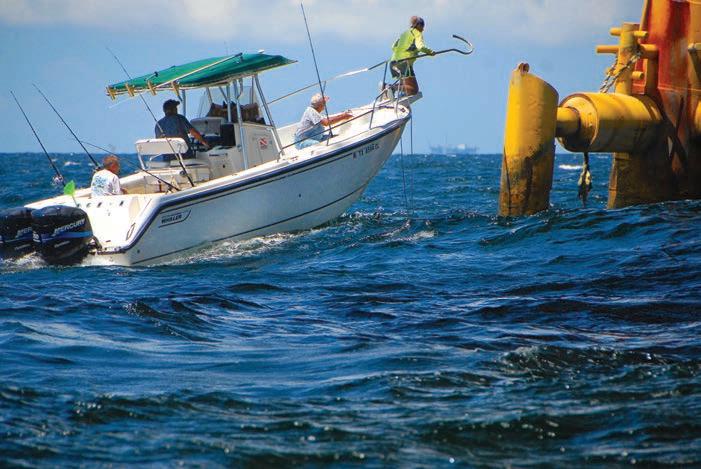
It’s best to wear dependable, padded shoes when fishing offshore.
Sabine Pass jetty back in the day. We walked it for 15 years, dragging fish onto that wall.
UFO land in their backyard. All those years walking the jetties, and our feet felt bullet-proof with those high-top Keds.
Even with cuts and scrapes we somehow never got a Vibrio infection out there; I suppose we were too young and healthy. In fact, we never heard of Vibrio. Today, you seldom see walkers on that jetty, much less guys swimming to the rocks. Boats now cruise silently up and down the jetty wall using electric motors, safe from falling and able to pummel the rocks with all manner of plugs, jigs and spoons without even getting wet. It’s certainly not the elemental experience we once had. Today that jetty has subsided and the cement wall stays underwater, offering no protection from Gulf waves.
Offshore Boating and fishing offshore requires a different kind of shoe. Back in the day, many wore salty leather Rockports that offered no padding from constant wave-shock. I wouldn’t doubt those shoes gave a few fishing guides sciatica, pain running down the side of their legs. Aboard billfish boats, Rockport shoes were standard and stylish and fine on those big boats that weren’t slamming down hard like the smaller boats. Except our local POC billfish tournament, where boat crews had to fish often in seriously bad seas. Aboard our 21-23 foot boats far offshore, we needed better footwear. In the early 1990s I scored a pair of New Balance shoes and I soon added additional padding with Dr. Scholls inserts. They worked great and we’d spend three days and two nights offshore during the big tournaments, standing up all day. There was little leg fatigue and no pain, though when 30 years old you can endure a lot.
I did get fasciitis once and I’m not sure where it came from, but it’s a painful deal where your foot tries to curl up. Walking is painful and the best cure is by rolling a frozen water bottle back and forth under the foot. I remember getting back to Nederland to a friend’s house after a long day offshore. I stepped out of his car at the curb and fell face-first onto his lawn; my foot would carry no weight. I hopped on the other foot into the house. Rolling a bottle under that foot brought soothing relief. Maybe it was caused by too many wave impacts that day but the condition lasted for weeks.
Bays Those South Texas whitecaps usually arriving after 10 a.m. are hard on the guides who stand all day, and it was worse back when their boats were smaller and slower than today’s. A favorite guide in
Port Mansfield told me he developed really painful sciatica (inflamed nerve down the leg) and had to retire from fishing, after too many miles and whitecaps in the Laguna Madre. Not sure what footwear he wore, but I doubt he was barefoot or wearing flip-flops.
Anything is better than going barefoot, out there. I’ve had hooks stuck in my shoes, and a hardhead catfish fall into the boat and vault over the top of my shoe after giving a little poke of its poisonous fin. Snapping kingfish (back when they were plentiful) on deck around my feet. Some carried a thrashing 7-inch Rapala trolling plug on their jaw with big rusty treble hooks flailing. Algae-covered concrete boat ramps that sent Amy and me sprawling in 1980; we were still wearing flip-flops while launching the boat. Whoops! But we were young enough to bounce off the concrete.
I still wear a newer pair of Crocs during warm weather trips along the coast when I’m in the jonboat, where I seldom have to stand up; I still use a tiller motor. We frequently land the boat and jump ashore to throw the castnet, answer Nature’s call, or to push the boat loose as the tide drops out, and the Crocs are great if the bottom is firm. I also have a pair of Huk short boots, and they’re good for that same job during winter, though they’re a little warm in summer. We often launch the jonboat at primitive boat ramps closer to the fish, sometimes even in the surf, where we have to wade to launch or retrieve the boat, and those rubber Crocs work best. They also drain and dry quickly.
JOE RICHARD
Joe Richard has fished the Gulf since 1967, starting out of Port Arthur, but his adventures have taken him up and down the entire coast. He was the editor of Tide magazine for eight years, and later Florida Sportsman’s book and assistant magazine editor. He began guiding out of Port O’Connor in 1994. His specialty is big kingfish, and his latest book is The Kingfish Bible, New Revelations. Available at Seafavorites.com
Author cracked a rib, but still landed this ling an hour later.
Author and son Ian wading the beach for trout on a described as “ice cream conditions.”
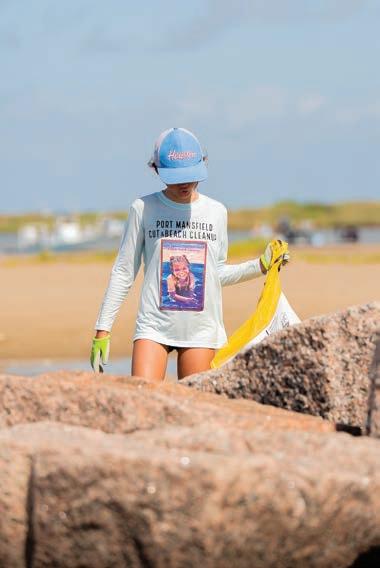
The Port Mansfield Beach & Cut Clean-Up
STORY BY ELISABETH PARKS | PHOTOS BY NUNEVIZION
It’s 6:15 on a Saturday morning, and my family is looking out over the Lower Laguna Madre from a Port Mansfield pier. Typically, our only company before sunrise on the docks would be a handful of other anglers and some prehistoric-looking pelicans, but on this particular Saturday, the human population of the sleepy fishing community has just about doubled. The old piers creak with the bustling of people, who sip coffee, carry trash bags, and load bottled water onto boats. It’s time for the Port Mansfield Beach & Cut Clean-Up.
For the last 17 years, volunteers have rolled into Port Mansfield every June to pick up thousands of pounds of trash that accumulate along the area’s jetties and coastline. Launched by Miller and Kathie Bassler, the clean-up started as small but focused action taken by the Bassler family to try and preserve a place they love. It’s since grown into a large-scale operation––still helmed by Miller and Kathie––that draws hundreds of volunteers. The event now has funding from sponsors, too, including BB’s Tex-Orleans––founded by the Bassler’s oldest son Brooks––Valley Telephone Cooperative, Inc., Prasek ’s Family Smokehouse, Y-Knot Rentals, and scores of other businesses, individuals, and families.
My husband Shawn, our two sons, and I headed to Port Mansfield from Houston for the fourth consecutive year this summer. What began as desire to support the admirable efforts of our friends evolved
into one of our family’s most beloved traditions and official kick-off to summer. Our boys––Gus (13) and Guy (7)––both eagerly await the clean-up each year. At home, Guy is always outside, handling chickens, chasing lizards, and digging in the dirt. Perhaps somewhat predictably, he’s also our fisherman, for whom Port Mansfield has become a refuge. Then, there’s Gus: a guitarist and songwriter who plays, writes, and records music constantly. He’s not outside a lot, opting instead for air conditioning and his instruments. But for several years now, Gus has told us, emphatically and repeatedly, “The beach clean-up is my favorite weekend of the year, in my favorite place in the world.”
What is it about picking up dirty plastic, crusty beer cans, and old tow ropes in a tiny coastal town that hooks young children, angsty teenagers, callused outdoorsmen, and tender-footed artists?
Veterans of the clean-up know its appeal lies in its purpose. The event’s volunteers don’t feel like tourists, passing through paradise. We don’t enjoy views from a distance, but instead, climb and crawl through the Laguna Madre’s gorgeous vistas, up close and personal, removing harmful objects as we go. Then, after our work is finished, we see a real difference. Kids and adults feel useful––and proud.
On June 13, 2026, about 275 people boarded 45 boats, driven by volunteer captains. Many of the captains are professional fishing guides who forgo a lucrative Saturday’s worth of bookings in order to
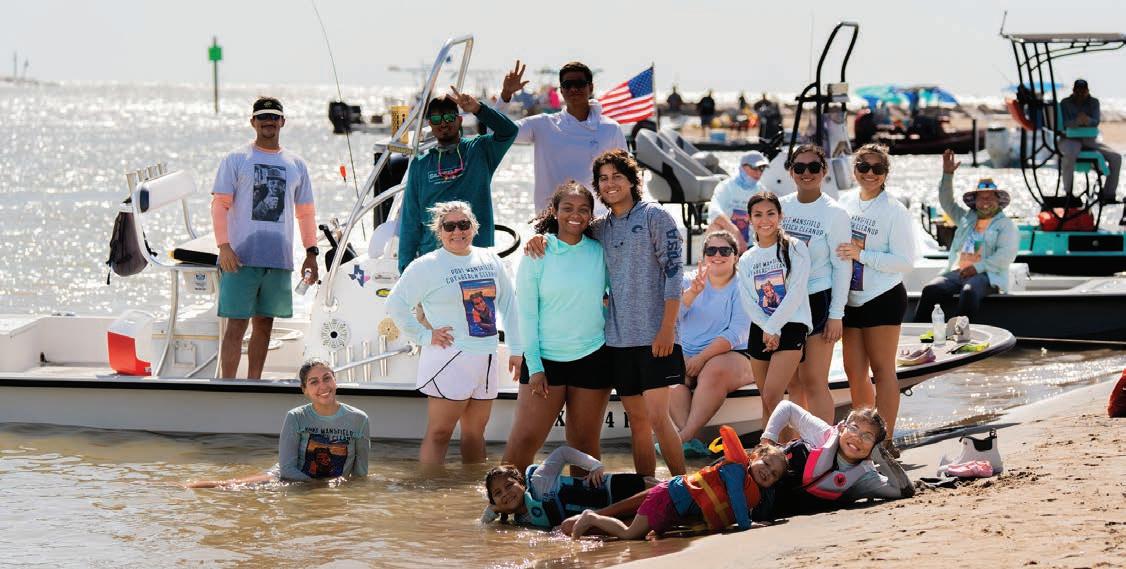
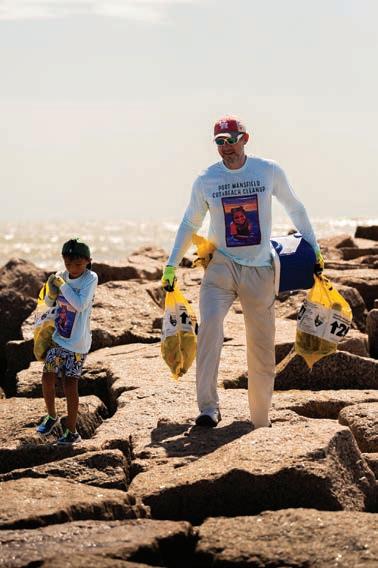
Volunteers of all ages participate in the Port Mansfield Beach & Cut Clean-Up every year.
taxi volunteers to and from the designated clean-up areas. It ’s an early morning, but each year, a devoted crew of kitchen volunteers rises even earlier to make breakfast tacos and brew coffee for everyone. While munching on bacon and eggs wrapped in warm tortillas, we listened to Miller and Kathie explain where we’ll go and how to stay safe. A crew of trained medical professionals arranged to set up a tent near the jetties to ensure any minor emergencies could be handled quickly. After breakfast, we picked up gloves then made our way out to the docks to stock up on water––in eco-conscious cartons––plus plenty of trash bags.
This year, we all headed to the Mansfield Cut, Padre Island National Seashore jetties, and South Padre jetties. It was the clean-up’s first year on the south jetties. The threat of thunderstorms that day made the south jetties’ proximity to the mainland appealing in case we needed to make a quick return trip, but the Basslers warned us it’d be tedious work. The south jetties had been neglected for quite some time, due in large part to their precarious cragginess.
Out on the dock, our family met Captain Mike McBride, a wellrespected fishing guide in the region, who agreed to take us to the south jetties. Captain McBride’s friends, Sam and Vizi Caldwell, joined us on his boat. A beloved painter of scenes from hunting, fishing, and the outdoors, Sam is a familiar face along the South Texas coast. His paintings crackle with life: A kingfish leaps amongst a sunrise’s thick brush strokes of auburn, blue, and cream waves; a tarpon surprises a wading fisherman, haloed by golden sky. Most of us left our phones behind, but Sam brought his, determined to capture images––and perhaps reference photos for upcoming masterpieces.
The ride out to the beaches and jetties always hums with anticipation. This year, the hums turned into excited shouts as Guy, our younger son, spotted dolphins swimming not far from the boat. The pod stayed with us for a few minutes before racing ahead.
When we anchored at the south jetties, we hopped into the shallows and got to work. Every year, hauls of huge old ropes, giant tires, and other heavy trash require plenty of teamwork. The south jetties were a different beast, however: Tiny pieces of plastic, rubber, glass, and
metal, all lodged into deep crevices in the imposing granite, called for volunteers willing to climb down into the cracks to retrieve the trash. Gus, Guy, and I all took turns cautiously lowering ourselves into the narrow spaces, like amateur spelunkers rushing to beat the tide.
We filled bag after bag with salty junk. We celebrated every time one of us dislodged a particularly stubborn piece of debris. Shawn and Guy trekked off to comb through the grass in search of scraps, swatting large horseflies as they walked. Gus and I marveled over the sheer volume of cans, nets, and brittle plastic, joking that some of the immovable trash wedged under the granite would haunt us for months to come.
After a few hours of work, it was time to head back to the mainland. Heaping plates of lasagna awaited volunteers for lunch, while a wrap party with complimentary tacos and margaritas from Blues Chill & Grill beckoned that evening.
Guy slid into the seat next to me, tired and happy. A fly fisherman who loves wading through the flats among the reds, Shawn chatted happily with Captain McBride, asking the captain questions about wade fishing in the Laguna Madre. Captain McBride asked Gus about his music––he’d heard Gus plays guitar. Gus discovered the captain plays the cross, or blues, harp. The two made plans to jam together later.
New friendships cemented, we started across the water. Suddenly, the dolphins leaped back into view. Captain McBride approached them slowly. Other boats slowed down, too, as everyone on board stood and tried to get a better look. This time, the dolphins loitered around the small vessels, seemingly in no hurry.
The volunteers collected almost four tons of trash this year. While the total weight may have been less than previous years, the overall impact was unprecedented: Thousands, if not millions, of bits of lightweight hazards, pulled from the south jetties, dramatically improved the ecosystems that thrive there.
That night at the party, the mood was festive, but also determined. Volunteers of all ages, from all walks of life, couldn’t wait to get back out on the water. There is more trash to be collected––more work to do. Now, we all know we can do it. – Elisabeth Carroll Parks
Rivi Bassler scans the jetties for more trash.
A young volunteer hauls trash to one of the boats.
Brooks and Rio Bassler climb through the jetties, full trash bags in hand.
TOUGH DOG DAY PATTERNS; AND THEN SOME!
Now that we are in the hottest weeks of summer, what should anglers do to find and catch the best trout a bay system has to offer? I get a surprising number of serious trout anglers that want to fish with me this time of year due to the difficulty in finding and catching quality trout. I had a pattern in mind that I was going to explain here, but as I was putting the final touches on it I must have hit the wrong button and – POOF – two full pages disappeared and it really pissed me off!
So, the upshot of all this is that I just experienced two really tough days of fishing recently that included nearly every element of the pattern article that disappeared, so why not just talk you through these two days of tough fishing here in Rockport while they’re still fresh in my mind and see if you can gain anything of value from it? I do better anyway when I speak of recent events versus trying to verbalize a pattern that I often see repeating itself during a collection of dog days experiences from years past. Conditions this week were all over the place. Everything from 8-inches of rain to add to May’s 13-inches, tropical storm development in the southern Gulf, extremely low atmospheric pressure that led to extremely high tides. Then, as if these weren’t enough, a high-pressure dome slid in, accompanied by west wind and mid-90s air temperatures.
Now, if that sounds challenging enough, hang on…there’s more. On top of everything listed above, we also experienced a huge tide dump that drained the backcountry and presented us with 87° water
temperatures in the shallows of the main bays. And that’s not all. To make matters just a tad worse, we also experienced a big increase in boat traffic as the summer season began to hit full stride. Oh, and before I forget, we also had the mixing of fresh and salt affecting the fishing in some areas.
I will go on record and say that NEVER will I use any of these conditions to pre-qualify the possibility of failure to my clients. If you are fishing with a guide or buddy that does this, just turn around and get off the boat. They are preparing you for their failure!
Now, to keep the record straight, in my opinion, I did in fact fail my clients on two days, catching very few slot fish of any species. Small trout and reds were not a problem, but those don’t ever count in my day’s totals. Here is what we found.
Both days we found little to no bait fish activity. No dolphin cruising the shorelines or the drop-off zone. Zero in the slicking department, limited at best pelican or gull activity, and strong winds to nearly 25 mph. Water conditions were good to decent with water temperatures 84° at daybreak and 87° by the end of the day. I fished a minimum of eight hours both days, making numerous wades along both windward and leeward shorelines, coves and pockets.
Bottom structure was visible, and we fished both submerged grass, submerged shoreline points, and along grass edges. We targeted areas where good trout and good numbers of trout had been located and caught recently. I used a variety of soft plastics, both straight and paddletail styles, on a range of jighead weights. I tried my Double D, both banging and slowstrolling presentations, and even some mid-strolling techniques that have been paying off for Chris Bush and Justin Furman.
This was not done out of desperation but more out of “let’s try everything and see if anything works” sort of deal. I pay attention to those I believe know things that I do not. I hit the pause button while writing this and reached out to Chris to confirm what I was thinking and was pleased to get his approval of my thoughts. My dad always told me that when my mouth is open, my ears don’t work,
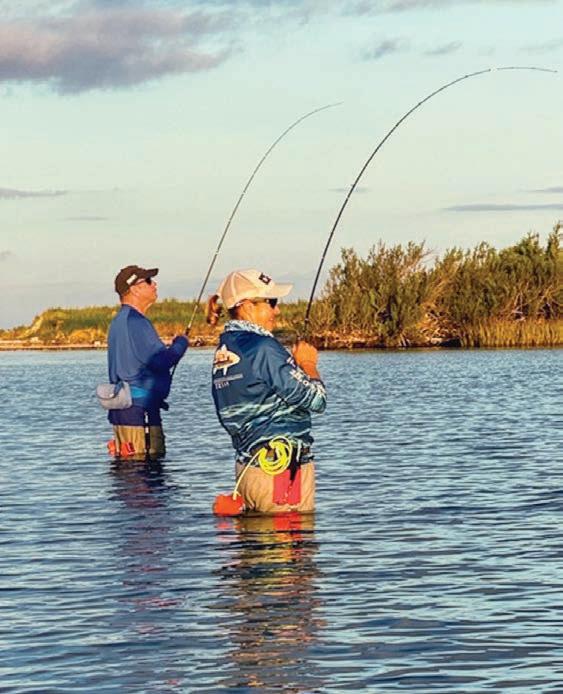
These two anglers demonstrate the proper line for receiving bites as the trout receded from the shallows in early morning toward the drop-off near midday.
Steve Henricksen with a really nice summertime trout. Drew and Alyson doubled-up.
not allowing me to hear what others are saying. “If you will listen to others, at the end of the day you will still know what you already knew, and you will also know what they know.” It is amazing how much smarter our parents get over the years.
So, with all these things being deployed each day, the only constant was the fact that the trout were holed up on the outermost areas of bottom structure in deeper water that was adjacent to a primary feeding area. This is a time-proven summer pattern that I have spoken to more times than I can remember. All the quality bites came on the bottom and up tight to the bottom structure.
We had numerous fish pick the lure up off the bottom while distracted by something else and did not connect. This is the fish trying to tell us that they want it on or close to the bottom, and that they will eat the lure if we present it to them in the exact manner they want it presented. I have always been of the opinion that the best anglers can catch fish when most cannot…so pay attention to what the fish are telling you.
Tough days should give us confidence instead of deflated egos and lack of confidence in our angling abilities. I honestly feel a tad defeated at this writing, but I will get over it. That’s a promise.
Here is something else I noticed. Two days running I had clients that were using quality spinning gear. On both days, they outfished
Where do trout go after nighttime feeding?
me. Same lures, same leader material, with the exception that one was using fluorocarbon leader material, which sinks faster than monofilament, and might have contributed to his lure getting down to the fish quicker and remaining there. Also, I was using an 8.1:1 gear ratio reel versus his 5.3:1 gear ratio, which might explain his lure staying lower and closer to the bottom. These are seemingly small things but when put all together, can make a decisive difference in the results department.
Those of us who will fish the next few hot months are going to experience some tough days. Try and remember some of the things I mentioned in this article and see if something helps you catch a few more trout
P.S. Back to my two tough days; my pattern was accurate, but my application was just a tad off the mark. I am having a BA Henri K2 spinning rod constructed as we speak and have already been to Tackle Town and purchased the best Shimano spinning reel they had. Serious money they get for this stuff these days, but there is nothing I won’t try to keep up with Joneses or the Bush/Furman contingent. Will report back to you on my findings.
May Your Fishing Always Be Catching! -Guide, Jay Watkins
Jay Watkins has been a full-time fishing guide at Rockport, TX, for more than 45 years. Jay specializes in wading yearround for trout and redfish with artificial lures. Jay covers the Texas coast from San Antonio Bay to Corpus Christi Bay.
During summer breaks back during my high school years, when my buddies and I were not doing part-time jobs to earn extra money, we were almost always on the water somewhere. We spent a lot of time up on Toledo Bend chasing bass, and often during evenings after work, fishing for trout in the ship channel around Sabine. A weekend finally came where we were gifted with light north winds, and I knew that we needed to be down in the surf at daylight. As we had planned, we were waistdeep throwing topwaters just before the sun came up. As the morning went on, we had several trout on the stringer when the bite started to slow a bit. My buddy decided to change lures and tied on a Norton Sand Eel. Not long after the lure swap he hung into a fish and it immediately began to pull drag.
My assumption was that he hooked a nice bull red, and I instructed him to just reel it up and I would grab it and unhook it. As he raised his fish, I reached down to grab it and was startled by the first glimpse. I told him that it’s dang sure not a red, but it might be a black drum. As he raised it up again, I jumped back and told him to drag it to the beach because I had no
idea what he had. It was large but taller than long, with a mottled brown and black appearance. We questioned what it was and not knowing; we did what kids would do and just threw it in the ice chest. On our way home we stopped at an older coworker’s residence in hope that he might be able to identify our mystery fish. All it took was a quick glance and he declared it to be a tripletail; a very good eating fish. He wasn’t wrong and that was my first experience with the species.
Since that day these odd fish have become an obsession to me and some of my friends. Conversations of tripletail fishing usually begin in early April with requests for a spot on the boat when the time comes. I always tell them that we are still a few weeks out but not to worry; I’ll keep them in mind when the tripletail show up.
There are several things that have to be right in order to be successful when chasing tripletail. Most important of these is the weather as the majority of the tripletail we find are in the gulf, just off the beachfront. We patiently wait around all summer and watch the forecast, praying for a few days with light north wind. This will bring the green water all the way
DAVE ROBERTS
in to the beach, making fish much easier to spot.
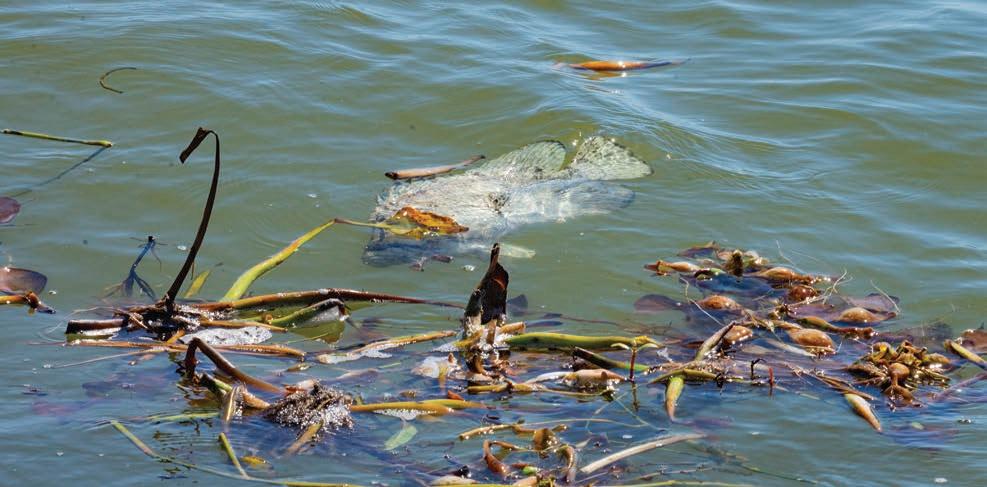
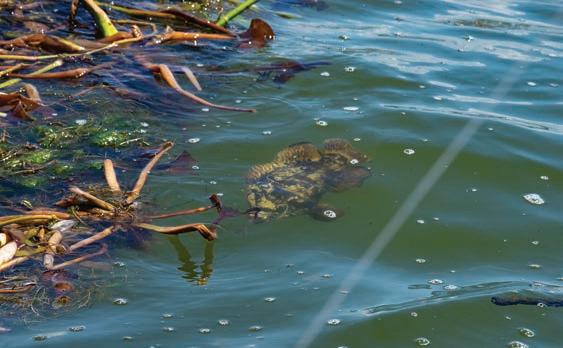
Once you have your weather window, the real tricky part begins. I strongly prefer sight-fishing for them, but I know they can also be caught by blind-casting. That being said, how do you find them? Well, you had better have a full tank of gas, a lot of patience, quality sunglasses, and as many eyes as you can get on your boat. These fish like to float on their side at the surface when they are not actively swimming, and also when they are feeding. It almost seems that their purpose in this is to trick bait fish into thinking they are merely another piece of floating debris.
The bait will hang around to seek refuge from predation, and that’s when the tripletail will collect an easy meal. They really are masters of camouflage; even to the human eye they look like floating debris or trash. The best way I can explain it is that it will look like a grocery sack or a clump of sargassum floating on the surface. No other fish I know of acts like this and it really is a wild sight to see!
So, the next question is where to start? Well, there is a lot of water in the gulf and plenty of places to start. My personal favorite thing to do is drive through the jetties and head straight out about half a mile or so. Once out there I will begin to zig and zag towards the beach and then back out. What I am looking for is the tide line coming in from offshore. What we’re looking for is the characteristic hard line that forms between clean and somewhat dirty water. Most importantly though, that line will be carrying many types of debris – sargassum and other types of vegetation, small chunks of wood, cardboard and paper, to name a few.
Tripletail love to hang around anything that is in the water. So, what my day looks like is driving around until I find a solid rip line. I will then slow down and just cruise the outside of it, looking to spot a fish. It can be boring at times but very rewarding when it all comes together.
Once you have spotted a fish and verified it is not just another piece of trash, it’s time to get busy. Chasing tripletail is the only time that I ever allow live bait on my boat. We will typically stop at a store or bait stand that sells live shrimp and buy a quart, and we will present them by the freeline method. Casting as accurately as possible to get them close to the target.
The trick here is to figure out which way they are facing, cast past them, and then reel the shrimp right up in front of them. Once they spot it, they can’t resist it!
The most fun part of this whole situation is the 30 seconds of rush and panic once you have spotted a fish. You yell at your buddy to get a shrimp rigged up as you turn the boat around, never taking your eyes off the fish. When a good cast is made you get to watch that poor shrimp pop out the water, trying to get away, but it never does. It is a really exciting and fun chain of events.
Tripletail fishing can be a lot of fun, but it is not for everybody. It can be long days, burning gas and riding around under the hot Texas sun. But it can also be a whole lot of fun. It begins with watching the weather forecast for that perfect window that will provide a calm day
or two and then being prepared to take advantage of it. Remember to bring plenty of water and provisions as it can be a long day. I promise you though, there’s nothing quite like hooking into a big tripletail, and the table fare they provide is an added bonus.
Fish The Nush -
Follow and Like us on YouTube!
CONTACT
Dave Roberts is an avid kayak-fishing enthusiast fishing primarily the inshore Upper Coast region with occasional adventures to surf and nearshore Gulf of Mexico.
Email: TexasKayakChronicles@yahoo.com
Website: www.TexasKayakChronicles.com
As Texas Parks and Wildlife Department, Texas Parks and Wildlife Commission, CCA Texas and private donors work to continue the retirement of Commercial Oyster Licenses, the reduction will help bring the industry to a more sustainable level and remove pressure from the public reefs along the Texas coast. To date, CCA Texas has contributed $1,000,000 to the S. Reed Morian Oyster Buyback Program, which has removed 30% of licenses to date.
NEARLY 30% OF TEXAS
OYSTER LICENSES REMOVED BY SUCCESSFUL BUYBACK PROGRAM IN A HISTORIC CONSERVATION WIN FOR TEXAS COAST
158 commercial oyster licenses retired after two successful rounds, significantly reducing potential pressure on public reef systems.
The S. Reed Morian Oyster Buyback Program has delivered unprecedented results for Texas coastal conservation, with two successful rounds removing nearly 30 percent of all commercial oyster licenses from the fishery. The Texas Parks and Wildlife Department (TPWD), in partnership with Texas Parks and Wildlife Foundation (TPWF) and Coastal Conservation Association Texas (CCA Texas), announced that the second buyback round, which closed May 15, 2026, successfully retired an additional 46 oyster licenses.
Combined with the groundbreaking first round in 2025 that removed 112 licenses, the program has now taken 158 commercial oyster boat licenses out of circulation – a significant milestone in efforts to restore balance to an overcapitalized fishery and conserve Texas’ public oyster reefs.
“By leveraging both public and private funding through the S. Reed Morian Oyster Buyback Program, we’ve demonstrated that the renewed oyster license buyback program delivers meaningful results for license holders and for the health of our public oyster reefs,” said TPWD Coastal Fisheries Deputy Director Dakus Geeslin. “Building on the legacy of coastal conservation championed by former TPW Commission Chairman Morian, the success of this program has positioned us to manage the oyster fishery more effectively moving forward.”
A Strategic Shift That Delivered Results
The program’s success stems from a strategic pivot in 2025. After years of limited participation in reverse-bid auctions,
TPWD implemented a simplified flat-rate offer of $30,000 per license. The first round under this new model attracted 115 interested offers, with 112 ultimately signing contracts – representing a 20% reduction in total licenses and the most consequential oyster license buyback in state history. CCA Texas delivered $1 million in anchor funding for the program. “This is conservation through collaboration,” said Shane Bonnot, CCA Texas Advocacy Director. “Our $1 million contribution, alongside state funding and generous private donors, shows what’s possible when partners come together to make a positive impact.”
The Power of Public-Private Partnership
The initiative leverages philanthropic investment with public funds to create compelling opportunities for license holders while delivering meaningful conservation outcomes. Key funders include:
• Laurie and S. Reed Morian Foundation ($1 million match funding)
• Coastal Conservation Association Texas ($1 million anchor funding)
• The Brown Foundation
• Earl C. Sams Foundation
• Jeffery and Mindy Hildebrand
• Beaver and Joanie Aplin
• John and Mary Eads
• Bobby and Sherri Patton
“We’re thrilled with the success of this effort,” said Robby Byers, Executive Director of CCA Texas. “It’s a testament to the vision of our leadership, and the dedication of our chapters and supporters, whose
grassroots fundraising made this possible.”
Beyond Oysters: Ecosystem-Wide Benefits
Reducing harvest pressure on public oyster reefs delivers benefits that extend far beyond the oyster fishery itself. Healthy oyster reefs serve as critical nursery and refuge habitats for other marine life, stabilize shorelines, enhance water quality, and reduce coastal erosion throughout Texas’ bay and estuarine systems.
Importantly, more than half of the licenses retired in the first round had reported landings in at least three of the last five seasons, ensuring the conservation benefits are meaningful and immediate.
Addressing an Overcapitalized Fishery
The need for buybacks stems from the unintended consequences of a legislative bill in 2005. While the Texas Legislature enacted a moratorium on new commercial oyster-boat licenses to reduce harvesting pressure, a one-year grace period triggered a rush of applications, increasing license numbers from approximately 350 to nearly 760 before full implementation. Though attrition brought that number down to just over 550 by 2016, the fishery remained overcapitalized.
Early buyback efforts authorized in 2017 faced significant challenges. From 2018 through 2024, eight buyback rounds received only 78 total bids, many exceeding the state’s financial capacity. The 2025 strategic shift changed everything.
Looking Ahead
The program is funded through a combination of commercial license surcharges, saltwater stamp revenues appropriated by the Texas
Legislature, and private philanthropic contributions. This diversified funding model ensures sustainable support for future buyback rounds.
CCA Texas and partner organizations expect future oyster license buyback rounds to follow this successful model, with continued support from TPWD and appropriations from the Texas Legislature essential to maintaining momentum.
“We remain firmly committed to advancing strategic initiatives that safeguard Texas’ coastal resources, strengthen our fisheries, and preserve healthy, productive ecosystems for future generations,” said Byers. “Together, we’re proving that conservation works, especially when we work together.”
About the Program
TPWD has successfully managed long-term buyback programs for shrimp (since 1995), crab (1997), and finfish (1997) licenses, demonstrating the state’s commitment to sustainable fisheries management through strategic effort reduction. The S. Reed Morian Oyster Buyback Program represents a collaborative effort between public agencies and private conservation partners to reduce harvesting pressure on Texas’ public oyster reefs. The program honors the legacy of former Texas Parks and Wildlife Commission Chairman S. Reed Morian, a champion of coastal conservation..
“Our investment in the S. Reed Morian Oyster Buyback Program reflects CCA Texas’ unwavering commitment to conserving and restoring our coast,” said John Carlson, Chairman of the CCA Texas Board. “We salute all of the wonderful contributors to this worthy cause, especially Lori Morian, and truly appreciate all of the efforts Texas Parks and Wildlife Department and Texas Parks and Wildlife Foundation.”
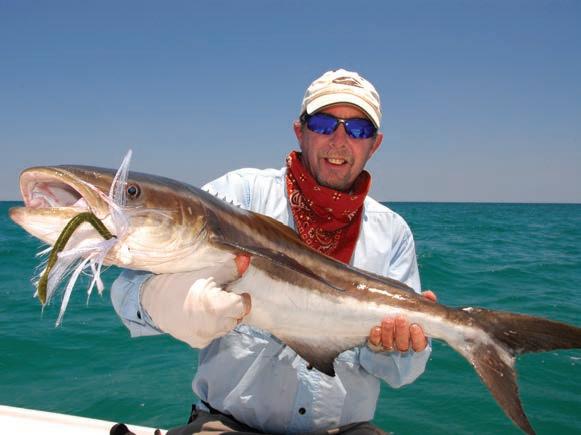
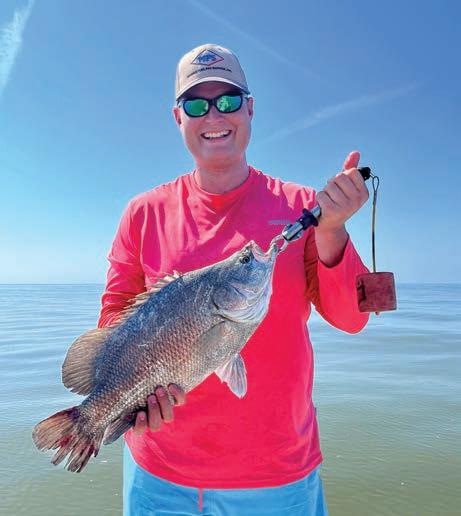
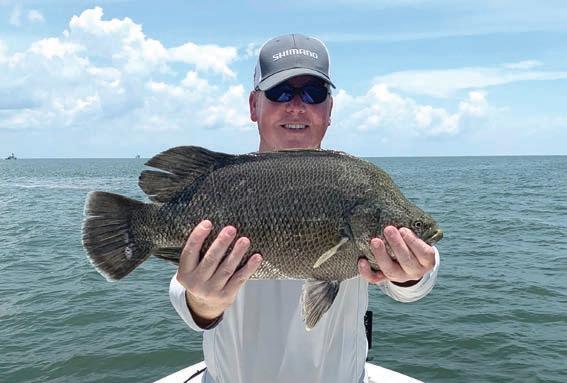
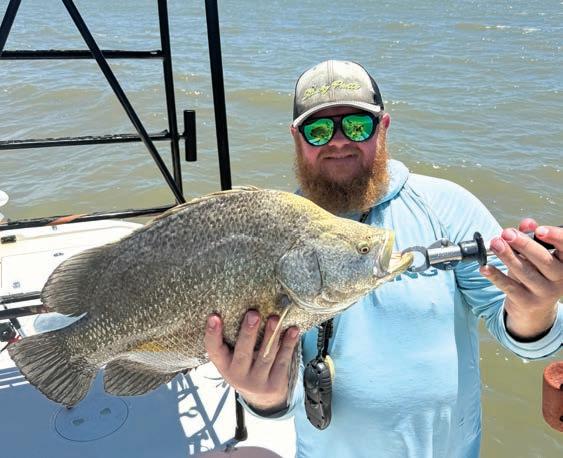
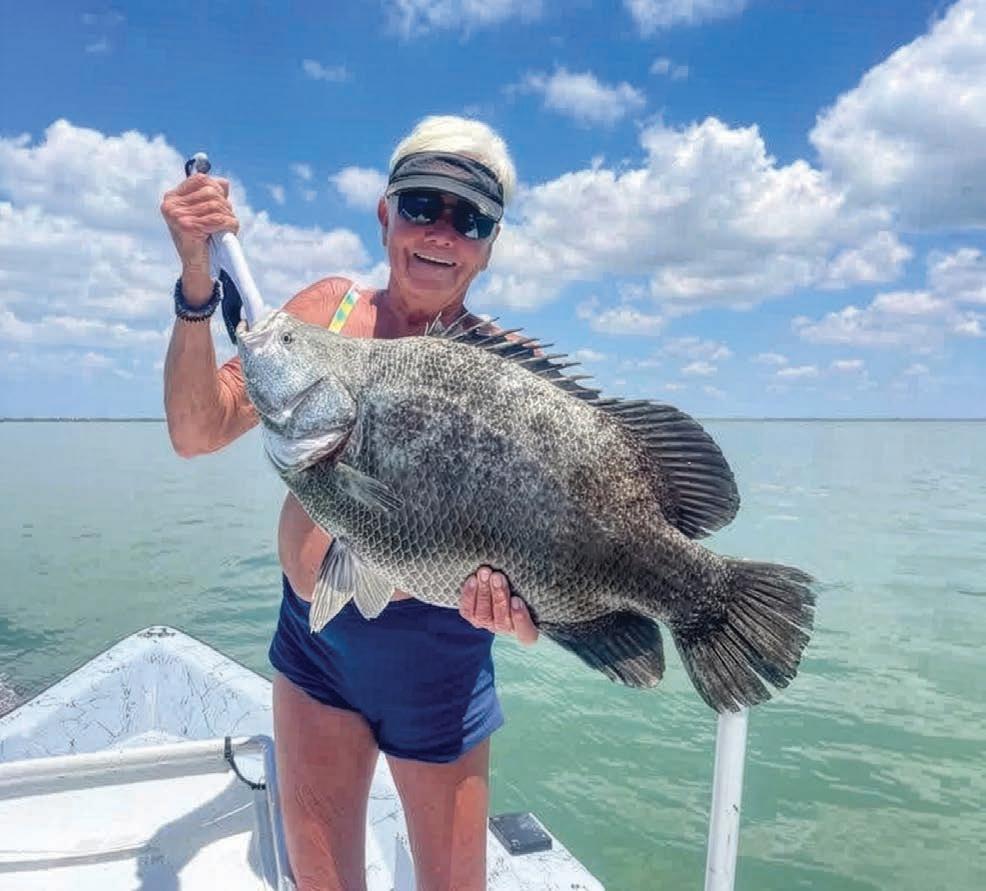
Weslene Gaetjen and her husband Ted are a master-class tripletail fishing team. Weslene will be quick to say that not only are tripletail a challenge to find and hook, they are also exceptional fighters and provide excellent table fare.
By Joshua Leleux | TPWD Sabine Lake Field Station
FIELD NOTES
ON THE HUNT: ACOUSTIC RESEARCH
OF GULF-WIDE MIGRATION PATTERNS OF TRIPLETAIL AND OTHER GAMEFISH SPECIES
It starts in the early summer, as spring winds begin to calm. Crossing the MLK bridge onto Pleasure Island, I look out at Sabine Lake to see the morning sun peeking over the horizon, revealing water as smooth as glass. Excitedly, I think to myself, ‘today is a perfect day.’ Arriving to work, the rest of the Texas Parks and Wildlife Department’s (TPWD) Sabine Lake field crew and I begin loading the tagging gear and filling ice chests, preparing for another hot summer day in Southeast Texas. After launching our boat, we pull up on a bank in the Sabine Lake to cast net our bait for the day. With our feet wet and hands salty, we head out of the jetties. With the end of spring behind us, the muddy outflow of the Neches and Sabine Rivers begin to slow. The prevailing gentle south winds typical of summer, allow the tides to bring in beautiful light blue water to the nearshore Gulf.
Cruising the beach line, all eyes are peeled. We are looking for Tripletail, Lobotes surinamensis, which at first glance, would appear to be debris floating near the surface of the water. After searching a few miles of coastline, our spotter calls for the captain of our boat to stop the outboard. As the fish floats lazily on the surface of the calm water, we inch closer and take our shot. The first cast flies wide; the approaching boat startles the fish out of its relaxed posture, and it dives out of sight. But after a few moments, patience pays off and our quarry reappears a few yards away. Undeterred, we try again and this time persistence wins the day—fish on! This fish puts up a good fight but is shortly pulled onboard the boat. Quickly we prepare to tag the fish, while first making it comfortable with a moist towel over its head and its gills submerged in water. A member of the crew
months when they appear nearshore, and ends with their emigration from shallow coastal habitats, as waters begin to cool. Although migratory patterns of tripletail have been observed along the Atlantic coast near North Carolina and Georgia, little is known about where Gulf populations of tripletail go when winter approaches.
records water temperature, salinity, dissolved oxygen concentration, and GPS coordinates, which is standard operating procedure for all TPWD sampling. Then the unique identification numbers for both internal acoustic and external spaghetti tags are recorded. After this brief preparation, the fish is measured. Next, using sterile surgical tools, a small incision is made in the gut cavity where the acoustic transmitter tag is inserted, which will send out a signal that is detected by stationary acoustic receivers. After ensuring the tag is properly in place, the wound is stitched closed with sterile surgical grade sutures. Finally, the external tag is inserted near the dorsal fin, and the fish is allowed to rest in an oxygenated holding tank until it is ready to be safely released.
The Fish and the Study:
Tripletail have many common names, often dependent on the region (e.g. Buoyfish, Black Perch, Flasher, Sleepfish, etc.), referencing their laid-back lifestyle and tendency to aggregate without much movement around structure or floating objects. These fish grow quickly, reaching sexual maturity within their first year with a lifespan of around seven to ten years. Records for some of the largest individuals reach 40 inches (one meter) and weigh nearly 45 pounds (20 kg). They are equipped with pronounced anal and dorsal fins, which, in addition to their caudal fin, form a tri-lobed shape that allows them to exhibit explosive movements, contributing to a robust fighting spirit. Although there is no commercial market for tripletail in the Gulf States, tripletail have become highly sought after by recreational anglers because they are an exciting fish to catch, and not to mention, delicious table fare.
Though tripletail can be found globally, many aspects about their life history remain uncertain. Tripletail have remained one of the lesser-known species of sport fish inhabiting Gulf waters and were not classified as a game fish by TPWD until 2006, when a 17-inch minimum size and three-fish bag limit were established to prevent commercial harvest.
Tripletail residency in coastal Gulf water begins during summer
Acoustic tagging is a way to track individuals of a species in the Gulf as well as within and between Gulf estuaries. Although TPWD’s tagging effort of Atlantic tripletail first began in 2025, TPWD, along with other state agencies and universities across the Gulf Coast, will be undertaking a new multi-state collaborative research project in 2026 funded through the National Marine Fisheries Service and the Gulf States Marine Fisheries Commission, that involves tagging tripletail and cobia, Rachycentron canadum. Cobia grow fast, reaching sexual maturity in around two or three years. They are a large pelagic species that can grow to up to six feet in total length and can live for up to 100 years. They are strong, aggressive predators making them exciting fish to catch for recreational anglers. It is known that cobia are a migratory species that move away from shallow coastal habitats in the cooler months. However, it is currently unknown where these fish go during their winter migratory period.
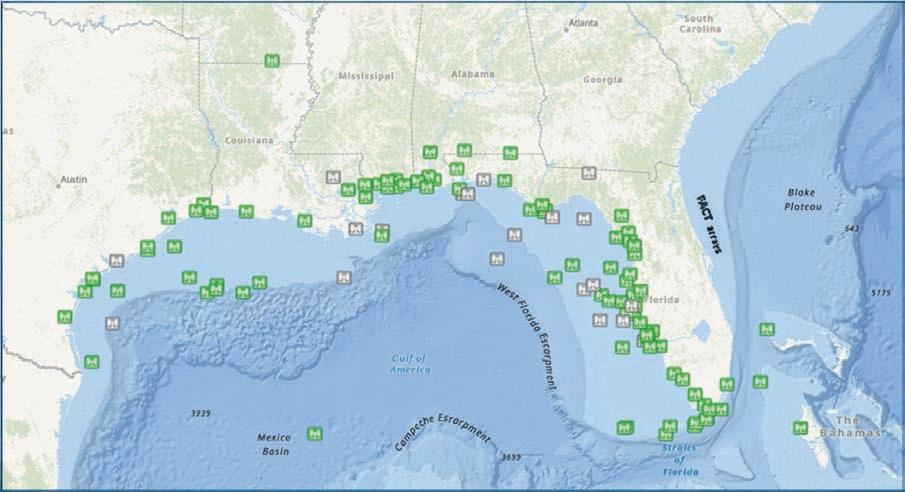
Both of these species will be tracked throughout the entire Gulf Coast of the United States through the research network called the Integrated Tracking of Aquatic Animals in the Gulf (iTAG). The iTAG receiver arrays are set up along coastal waters and estuaries of every state in the US Gulf Coast region, of which; TPWD’s existing receiver arrays are an integral component. Each array consists of several individual recording devices that will receive a tagged fish’s unique acoustic signal when it swims within ~0.5 miles of the device. A more complete understanding of both species migratory patterns and habitat preferences will emerge when detections are examined over multiple receivers and arrays. The unique cooperation of this study, including its large-scale geographic coverage, will provide valuable data to inform Gulf Coast conservation efforts and will facilitate cooperation between interstate agencies and the scientific community.
Locations of the Integrated Tracking of Aquatic Animals in the Gulf (iTAG) Network. Green symbols are active arrays and gray are inactive.
ERIC OZOLINS EXTREME
KAYAK FISHING & SHARKS FROM THE SAND
A BIG SWITCH
People who participate in an activity for a long period of time often go through phases, as their methods and interests evolve. Preferences for specific tools and other objects related to the favored endeavor predictably change. I definitely work through phases in my life as an angler dedicated to fishing mostly on the beachfront.
One of the primary forces placing pressure on me to evolve is the environment of the surf itself. The Texas coast is home to some of the harshest environments one might encounter. In the area of the Padre Island National Seashore, numerous hazards to our vehicles exist. Copious amounts of salt in the air lead to devastating corrosion, and brutal driving conditions also take their toll on our vehicles.
As of June 2026, I’ve acquired my fourth vehicle (3rd purchased new) in the past fifteen years. With each change in vehicles, I’ve taken what I learned from the previous and applied it to the next. My last two were Toyota Tundras. Overall, I’ve been exceptionally pleased with these simple, reliable, and desirable tucks. The 5.7L iForce V8 motors are among the best on the planet.
All that being said, I’ll surely miss them, because my new sled bears the logo of a different brand. I’m hopeful
the Ford F150 will perform well enough to justify the switch. Many factors caused me to make this change, including some issues I have with the new Tundra’s design. Some of the subtle changes have generated horror stories from the users of these vehicles.
I also wanted to give the F150 a try because it has an aluminum body. While the undercoating methods I used to apply protective material to my Tundras did work well, parts of the bodies of both those trucks did not fare well in the ultra-corrosive environment, over time. Within about five years, the beds practically rusted out, and the roofs had numerous rusty spots too.
Coastal corrosion is the ultimate menacing force for metal vehicles. I’ve learned it’s not really possible to go too far in the effort to protect them, also that no matter what we do, it will never be enough. The best and only strategy is to remain vigilant, stay on top of things, and keep the vehicle as dry as possible, free from salt.
I had an entirely new shark rack designed for my new truck. As with my two previous custom shark platforms I designed, I had the incredible team at Blue Streak Fabrication build the new rack. Like the previous platforms, the frame on this one is made entirely of
Newly redesigned shark rack built by Blue Streak Fabrications.
aluminum. It has a seven-rod holder setup on top as did the previous ones, with a minor tweak to the design. This time, I utilized Marine Grade Starboard material for decking. On my previous racks, I used plywood, which held up pretty well because I kept it coated in fresh paint, but I wanted to skip the whole painting and preserving process in favor of trying this textured material.
So far, I’ve been pleased with the starboard deck, and am also liking another minor innovation I added to this deck. I attached a 12 to 18-inch rubber reducer coupling to each rod holder. This prevents the large two-inch tubing from rubbing the spools on my largest reels.
In addition to the improvements I made to the rod holders, I’ve come up with a new method of undercoating the Ford. I used boiled linseed oil on the Tundra, and while it worked well, it didn’t hold up as well as I’d like over time. With this new truck, I decided to go a more conventional route, and had a Ziebart undercoating applied. After the company finished their work, I went back with multiple spray cans and meticulously touched up areas that were light or missed. I let the undercoating dry for a couple days, then applied an additional layer of protection, in the form of a product called Surface Shield, by Blaster. This seemingly magic stuff offers a creeping coverage that spreads out and adheres to surfaces, staying on even after many washes.
I also applied high-heat paint to certain parts of the truck for additional protection, primarily areas around the exhaust such as brackets and other stainless-steel parts would potentially get hot. The main area where I applied the heat-resistant paint was on the driveshaft. Both my Toyotas were notorious for having severely rusted drive-shafts. In fact, I had to replace both shafts on my first Tundra, after the 4WD one actually broke in half. Anything used on a driveshaft for protection has to be light, clean, and evenly distributed to avoid disrupting balance. Time will tell how well this new paint holds up, but after a few trips, the coating still looks clean and new.
I decided to add more protection to another normally exposed area―the brakes. Of all the mechanical parts on a vehicle, the brakes suffer the most in a salty world. The entire system, from the rotors to the calipers, takes relentless abuse from the corrosive effects of salty air. This is exacerbated by the way we sharkers use our trucks, parking them right next to the water, where they’re constantly blasted by saltinfused mists.
The water-facing wheels take a beating. To help mitigate these effects, I’ve started a new practice, something I’ve been wanting to do for a while. When I get down the beach to set up for the trip (usually 2 days), I take the time to spray some Salts Gone product on the caliper/ rotor region. After I lightly spray, I cover the two water-facing tires. This completely blocks the salt air from blowing onto the brakes and other fragile components. Before I began using this procedure, on a typical overnight trip, a visible rusted dust layer appeared on the rotors. Now, when I remove the wheel covers, the brakes shine.
The beach can be a cruel and relentless mistress. Despite the love we share for surf fishing and everything associated with it, we pay a high price in the form of our weathered gear. This thing called corrosion is a beast; we should all come up with every creative idea we can to fight against its effects. We should also share our ideas with others, especially when a new plan works out well. We all know how much we rely on our trucks on these long, sometimes treacherous missions, so we should do everything we can to take good care of them. Acknowledging that, a tweak on a famous adage makes perfect sense to me―happy truck/happy life.
For the past decade Eric ‘Oz’ Ozolins has been promoting shark catch and release and assisting various shark research programs. Eric offers guided shark fishing on Padre Island National Seashore. Also renowned for extreme kayak big game fishing, Eric is the owner of Catch Sharks Tackle Company.
Tire covers to protect brake components while camped on the beach.
Waiting for the full moon magic to happen!
This is what I call set up for success.
NATHAN BEABOUT
MOSTLY SIGHT-FISHING
OUR BAYS THRIVE ON FRESHWATER INFLOWS
The same as every year, over the next several months we will need to be on watch for tropical weather developments. Hopefully, August will be a quiet month as far as major storm systems are concerned, but with adequate rainfall across the Coastal Bend region to ensure that our bays will continue to flourish. The late spring and early summer rains received recently saved us from the horrible drought pattern that had begun to settle over the region, and for this we are very thankful.
Many folks get scared when they hear our rivers have crested and are dumping into the bay, and yes, the initial push of fresh water may dampen fishing in certain areas, but our bays need this continual influx of freshwater. The way our local bay system is set up, even when the Guadalupe River floods, it’s like a time-release more than a sudden wall of water. That is because the predominant
SSE winds keep most of it pushed to the northwest where it can mix gradually with the rest of the bay, thus preventing large scale freshwater inundation. Other contributors to the direction and flow of freshwater within the San Antonio and Mesquite Bay systems are Cedar Bayou, the Victoria Barge Canal, and the ICW. All three of these promote tidal flow in the general region. The Barge Canal and the ICW are the deepest waters in the vicinity of the Guadalupe and therefore have some of the largest water volumes moving through them.
When we have localized heavy rainfall, there are other smaller creeks and drainages that play a part in the volume of freshwater entering our bay. Several of these areas can be found up and down the banks of the ICW, which are small marsh habitats where tons of small grass shrimp get pushed out to the bays. I am not at all
worried about fishing in times like this, in fact I welcome this change. This freshwater helps to lower our salinity levels and reduces the summertime bay water temperatures. Because of this, our fish are less likely to leave in search of more suitable habitat. Also, the major food sources – shrimp, crabs, and a host of other baits – get flushed out of the river delta and other freshwater tributaries, bringing an abundant source of forage into our bay.
From my experience on the mid-bay reefs of San Antonio Bay, it seems that trout will stay about a half mile to a mile out in front of the freshwater line, if the structure that is holding them Is relatively shallow. With other mid-bay reefs that have 5–6-foot drop-offs directly adjacent, fish can still be found hunkered down on the bottom. Meaning that we simply need to adjust our jighead weight to get down to them. As for trout on the grass flats or along the various shorelines, some of the fish will leave the area entirely while in other places they will just move out deeper.
Take for instance what happened to us back in early June, during the height of the most recent freshwater influx. When the rainfall occurred, we had an abnormally high tide, then overnight with the passing of a Coastal Low; the tide fell over a foot. This allowed much of the freshwater held up in our marsh lakes to start pouring out of the creeks and drains on the south shoreline. We thought for sure this would push trout away and to new areas. But what we found instead was that the adjacent shorelines were still salty and green, primarily on the south sides of the drains. This stacked bait and some very solid trout right near the edge of the drain, lying in wait for the abundance of bait being flushed out.
On the flip side, we all know that redfish can withstand much more freshwater than trout. Being on the tower during times like this is a lot of fun. I am no scientist and cannot explain why it happens, but when redfish stay in that tea-stained water they turn orange like a pumpkin. When this occurs, they stand out like a neon sign, doubling the distance at which we can normally see them, and they also seem to be more aggressive.
Every time a significant freshwater inflow comes our way, we begin receiving phone calls from customers who are on our books, concerned about water conditions for their trip, and also from outof-town anglers planning to head our way soon. My reply is always the same – I am excited to see our bay receiving a good flushing for the present, and also for the longer-term benefits, such as how it will set us up for some phenomenal fall fishing. Sure, you might not be able to fish exactly where you had planned, or maybe not what you fished the last trip you made down, but our bay system is very unique in that under virtually any conditions there is always a place to fish and be successful. It pretty much boils down to how well do you know the bay?
If you are wanting to deepen your knowledge of the San Antonio Bay or Matagorda Bay complex, feel free to give me a call, as we offer a couple different ways to help you. One is with our navigational trips, or perhaps a 2-to 3-person classroom-style presentation where we dive into the unique characteristics of our bay system and what makes it thrive. In the classroom setting, we will spend the day going over Google Maps, looking at the changes that have occurred over the years in our bays, and the impact these changes have made in the fishing we enjoy today. Overall, I would say that both of these options provide exceptional knowledge that can be applied to your future fishing endeavors.
USCG/TPWD Licensed
Full time guide since 2007
Seadrift, Port O’Connor, & Port Mansfield, TX Facebook, Instagram, LinkedIn
Fishing in general has definitely been on the slower side lately, but one thing that’s really stood out this summer has been the numbers and size of the trout we’ve been catching. Even on days when the bite feels tough and you’re having to grind it out, there always seems to be trout around. Honestly, it feels like we’re seeing more trout throughout the system than we have in a long time, and that has been encouraging to say the least.
I think a lot of that is because of the changes in our trout regulations. At first, the reduced limits were a tough adjustment for lots of anglers, but I truly believe we’re starting to see the positive effects from those decisions. There seem to be more fish spread throughout the bay, more quality fish showing up, and an overall healthier trout population than we’ve seen in the Lower Laguna in recent years.
As guides, we’re on the water almost every day, and you begin to notice trends over time. While fishing this summer as a whole has been slower than what many of us expect during the summer months, the trout have remained a constant bright spot. There have been plenty of days where the redfish haven’t cooperated, but we’ve still managed to put together solid catches of trout and see good numbers of fish throughout the day.
Another thing that has really influenced fishing this summer has been the amount of rainfall we’ve
received. From what I can remember, this has been one of the wettest summers we’ve had in quite some time. Personally, I think that’s a really positive thing for the overall health of the bay system.
All this rain has definitely made things more challenging at times, though. Some of our back bays and shallow basins have essentially turned into freshwater lakes. Salinity levels have dropped significantly in certain areas, and fish respond to those changes pretty quickly.
Redfish are much heartier than trout and can tolerate a wider range of conditions, but they’re still accustomed to living in a highly saline bay system. When conditions become too fresh, they tend to relocate and search for those areas with more stable salinity levels. Sometimes that means fish push toward deeper water, passes, or areas where tidal movement keeps saltwater circulating through the system.
Because of that, fish have definitely been a bit more scattered than normal this summer. We’ve had to cover more water, stay patient, and really pay attention to changing conditions. It’s been one of those years where timing matters more than ever. You might fish through
a slow stretch for hours and then suddenly everything lines up and the fish decide to feed.
That’s just part of fishing in a dynamic system like the Lower Laguna Madre. Every year brings something different, and learning to adapt is what keeps this fishery interesting. Despite the slower overall fishing, it’s hard not to be optimistic about what we’re seeing with our trout population. Watching these fish rebound and seeing more quality trout spread throughout the bay gives me a lot of confidence that the conservation efforts are working. It may not always translate into easy fishing, but healthy fisheries rarely happen overnight.
For now, we’ll keep adapting to the conditions, following the fish, and appreciating the fact that we’re seeing signs that our trout fishery is moving in the right direction. Hopefully this is only the beginning, and the years ahead continue to show the benefits of the decisions made to protect one of Texas’ most valuable resources.
PRODUCT
Makaira SEa Gold 2-Speed Lever Drag Reel
Built on the latest evolution of Okuma’s trusted offshore platform, the new Makaira SEa Gold 2-Speed Lever Drag Reels combines proven big game performance with a finish rooted in offshore tradition. Refined through real-world use, the Makaira platform is engineered for the strength, consistency, and reliability demanded by serious offshore anglers. The SEa Gold series features rigid machined aluminum construction, a precision-engineered drivetrain, and updated internal performance enhancements for smooth operation, powerful cranking, and long-term durability under heavy drag loads. Okuma’s Dual Force Drag system delivers smooth, consistent pressure with excellent heat management, while interchangeable drag cams allow anglers to fine-tune performance. A powerful two-speed system provides both rapid line pickup and low-end torque. The Makaira SEa Gold blends offshore heritage with modern performance.
Suzuki Marine Ultimate 7 Year Limited Warranty Is Extended!
Suzuki Marine is extending its popular Ultimate 7-Year Limited Warranty offer through July 31, 2026, on qualifying new 150-350hp pleasure models with no participation fee. From offshore fishing trips and family sandbar days to sunset cruises and weekend escapes, there’s still plenty of summer left to enjoy the reliability and performance Suzuki Marine is known for. If you’ve been thinking about repowering or purchasing a new boat, now is the time to visit your authorized Suzuki Marine dealer or visit suzukimarine.com to learn more about this extended summer promotion.
C.A.T. Foam Seawall Repair
C.A.T. Foam uses advanced polymer resin injection technology to repair and strengthen marine seawalls. We fill voids and stabilize the structure by injecting resin into the soil behind damaged walls. The resin expands and hardens, restoring the seawall’s integrity and preventing further erosion. This costeffective, non-invasive method offers a durable alternative to full replacement, protecting valuable coastal infrastructure with minimal environmental impact. Trust C.A.T. Foam for reliable, long-lasting seawall repairs. www.CatFoam.com
HIGHLIGHTS
Z-MAN introduces Stuntman™
Enabled by industry-first Sinking ElaZtech®, the Stuntman™ is a soft jerkbait that sinks naturally while delivering legendary 10X Tough durability. Its streamlined baitfish profile produces an erratic darting action on the retrieve and a subtle dying-minnow shimmy on the fall, while molded eyes, gill plates, scales, and a broad forked tail enhance realism. Unlike traditional PVC jerkbaits that rely on salt and tear easily, Sinking ElaZtech® stays intact fish after fish. The Stuntman™ casts long distances thanks to its high body mass, and integrated hook slots simplify weedless rigging with ZWG™ Worm Hooks. Made in the USA, it’s available in 4- and 5-inch sizes (5 per pack) and ten pro-selected colors. MSRP $6.99
Turtlebox Cub
Built for the pursuit and ready for wherever you set up, the new Turtlebox Cub is a compact, cube-shaped Bluetooth speaker that delivers loud, premium outdoor sound in a footprint small enough to go anywhere. Whether you’re heading to the beach, grinding through a garage workout, running the rapids, or setting up camp — Cub was built for all of it. Power’s not in the size; it’s in the build. Cub is engineered to go where other speakers can’t. It’s tough when it counts, waterproof when it matters, and loud enough for wherever the day takes you.
MHX Carbon Fiber Push Pole
MORE POWER IN THE PUSH!
Engineered to be the lightest and best performing multi-piece push pole available, see why so many anglers hit the flats with the MHX Carbon Fiber Push Pole! At under 5 pounds and made from a combination of the highest quality unidirectional and off-axis carbon fibers, the MHX Carbon Fiber Push Pole gives you the greatest amount of power in the push while maintaining excellent hoop strength during load. Its lightweight, powerful, and durable construction is engineered to perform on the water while reducing fatigue. Simple to build, and a fraction of the cost of carbon fiber push poles of this caliber, MHX offers three popular lengths: 19’, 21’, and 23’.
So, hit the shallow water with the MHX Carbon Fiber Push Pole!
Matagorda
Bink Grimes is a full-time fishing and hunting guide, freelance writer and photographer, and owner of Sunrise Lodge on Matagorda Bay.
It’s an August day, flags are limp at the bait camp, you are already sweating as you launch the boat before sunrise. Bay or surf? Neither are a bad choice in August. The reefs in East Matagorda Bay are a good place to start. You need calm, green water to fish these pieces of shell during an arid August. I start at Drull’s Lump, Halfmoon or Long Reef and look for flipping mullet. If I see mullet, I begin wading on the far west end of the reef and work my way to the east. If there is a chop on the water, the She Dog is my bait. If calm, the subtle Super Spook Jr. gets the call. Barefoot, Red Cone, Three Beacon and Bird Island reefs are solid choices as well.
Say my first choice of the morning is the surf. I arrive and look for hopping shrimp, nervous shad and jumping mullet, and begin working the second bar with a topwater. If a get a blowup I get out and wade the first gut so I can fan-cast both the first gut and the top of the second bar. This is the scenario on a day with an ardent incoming tide. If the tide is falling, I have had better success using my Power Poles or spotlocking with my trolling motor, staging in five-foot depths and casting back to the beach from the boat.
The new trolling motor technology of spot-lock allows your boat to remain outside the big waves while not fighting an anchor to hold you in place.
Concerning the surf: waves, tides, moon and water clarity determine fishability. There is no shame in arriving on the beach and turning back around and heading to the bay. Sometimes conditions look prime for a tranquil Gulf of Mexico, but as you break the jetties, 2-3 footers are rolling on the sand; and there is nothing worse than a humid August day rocking and rolling. If it is too rough in the surf, work the jetty. We rig Gulps or live
shrimp with a 3–4-foot leader under a Mid Coast Cork and toss it tight to the granite. In August, if the channel is really green, there is a good chance of a snook as well.
If it’s still too rough for the jetty, we might make the long run to West Bay and Halfmoon Reef, about 20 miles away. It is an August hotspot on a moving tide and a trout haven since the restoration of the reef was completed almost 15 years ago.
August has the propensity to slick off to almost nothing and when that happens prepare for birds to work in East Bay. It might be a tern or laughing gull, but if you see just one bird hovering and diving on surface activity, give it a cast. I cannot count the number of times that finding so few as a pair of birds turned a slow morning into a hero morning.
It has been a consistent 2026 thus far. Our fishery has been noticeably more bountiful this year. Expect more of the same with changing weather patterns returning to a welcomed wet atmosphere.
Freshwater is life to everything, including our fishery.
Please continue taking care of our waters. Catch and release is cool. Please release more than you take and do what’s best for our bays.
This year’s abundance of fish is a result of sound conservation and a change in angler attitudes of returning more than we take.
Port O'Connor Seadrift
Captain Gary Gray is a full time guide, born and raised in Seadrift. He has been guiding the Seadrift/Port O’Connor region since 1986. Gary specializes in year ‘round wade fishing for speckled trout and redfish with artificial lures.
Telephone
361-785-6708
Email bayrats@tisd.net
Website www.bayrat.com
Facebook @captsgaryandshelliegray
MID-COAST BAYS With the Grays
A discussion of August’s fishing prospects would not be complete without mentioning the amount of rainfall we have received recently in the Port O’Connor-Seadrift region. This rain was a godsend to all the major bay systems along the coast, but especially to the San Antonio Bay system. While local rainfall usually has only minimal effect on salinity patterns, heavy rains further up the Guadalupe River basin can create almost total freshwater inundation, depending how long the river remains at or above flood stage. Don’t misunderstand, freshwater inflow is good. In fact, it’s the major source of nutrients for the ecosystem. Growing up here in Seadrift and a fishing guide for 40 years, I have noticed many changes in our ecosystem. Perhaps the most noticeable is a continuously diminishing Guadalupe River inflow to San Antonio Bay. This is no doubt a product of the rapidly growing human population further up the basin, increased agricultural needs, and industries taking water from the river. This is why I say the recent rains were truly a godsend for our local bays.
July’s calmer weather patterns were another blessing to fisherman. When the wind calms to a more tolerable 10 – 15 mph from the southeast it opens a whole lot of territory we haven’t been able to fish for quite a while. The north shorelines of Espiritu Santo and San Antonio bays in particular, and also mid-bay reefs that provide excellent habitat for trout and redfish, were almost unfishable through most of spring and early summer.
Normally, when I pull in to wade these shorelines, I ask my anglers who wants to fish for reds and who might prefer trout? While some dream of sight-casting tailing reds, others prefer chasing trout. Once we have sorted which species they wish to target, I check their gear and
make suggestions regarding lures. The redfish guys will head toward the shoreline shallows where they will often be happy to remain for hours, stalking their quarry. The trout guys are a little higher-strung and change lures more often when not getting strikes. They often need to be told to slow down. Almost like they’re in a competition. Racing forward; who will catch the first and most.
As far as the lure selections go, most of those targeting reds will favor a small paddletail such as the Saltwater Assassin 4” Sea Shad and will often rig them in weedless fashion. And then there’s the diehards that almost never deviate from the 1/4-ounce Johnson Weedless Gold Spoon, sometimes with a plastic curly-tail on the hook.
The trout guys are actually a little more chaotic in their lure choices. Like I said earlier, “They like to change lures.” They are also fond of smearing scented jelly on their soft plastics. Last but certainly not least are the topwater devotees (bless his heart) whose mantra is, “If I can’t catch them on topwater I don’t want to catch them.” Dumbest thing I’ve ever heard…but to each their own.
I also have to throw one more angler into this mix. This guy or gal is what I peg as the complete angler. They have fished enough to know what the fish’s habits are and continuously scan the water for baitfish, and how the water is flowing around the various types of structure, even before they begin casting. They will methodically probe the water column until they identify the depth at which the fish are staged. Rarely do they change lure colors as they’re already throwing a confidence color for the water conditions we are fishing.
This is not to say they will not switch from a paddletail to a rattail, or maybe even a Texas Customs Double D. When I see this, I know my trip for that day is already made because this angler knows his or her stuff. And just a little FYI - that Double D in the Crown Royal color was a total game changer for me on knee- to waist-deep sandbars, along edges of grass beds, and sand pockets amid grassy flats.
There’s no wrong way to work the Double D, but I prefer a jerky retrieve followed by a pause as the lure flutters upward toward the surface. This is when most strikes occur; which are quite often vicious, and a good reason to set the drag a bit looser than normal. If you haven’t tried the Double D, I highly recommend that you do...Soon!
August is going to be hot. Get an early start and stay hydrated.
Fish hard, fish smart!
Upper Laguna/ Baffin
David Rowsey has 30 years in Baffin and Upper Laguna Madre; trophy trout with artificial lures is his specialty. David has a great passion for conservation and encourages catch and release of trophy fish.
I guess I’m struggling with how to begin an article on August fishing while remaining entirely positive about what we have to look forward to this month. Truth is, August is a bit too hot for my liking and seems like the only time trout do what I hope they will is not often.
The trout and I are looking for some cooler areas to relax and taking a hiatus at this point. We’ve been stuck in the face by sharp objects for months now, our hair is short from pulling it out in frustration with other boaters, August’s near-windless weather pattern generates pathetically weak current and poor feeding conditions…and just a whole bunch of, “Damn, it’s hot!”
I don’t mean to come across as Debbie Downer, but South Texas coastal fishing during the hottest part of summer is not for the weak. If your plan is to go early and finish quick, you are ahead of the curve in “fish sense.” In fact, half day charters and night wades are now viable options and the most bang for the buck as an artificial lure fisherman. Casting under the stars is a very cool experience, but you need to be intimately familiar with where you are fishing, have complete faith in whoever you are fishing with, and prepared to expect the unexpected. If you have “pucker up” moments running around Baffin during daylight hours… forget I even brought it up.
Tides are typically low this time of year, outside of a tropical storm somewhere in the gulf. Much of the water on preferred flats has receded to almost unfishable levels. As that becomes the norm, I’m focusing on areas that would normally be considered a deeper drop. Trout adjust to conditions just like we do, and they seem to enjoy their safety and comforts even more so. Although I’ve been blessed to see them many times with their backs out of the water, the truth is, it’s rare and a very high percentage chance that your best shot for the day will just be a lifelong memory of even seeing her.
The drop-off you have always walked down to fish these early morning trout is now the primary water you should be fishing. Trout are masters at adjusting to the conditions, while we are typically trapped in some mindset that we have to catch them our way – and often coming up short when we insist on fishing right on top of a bar where we caught one a month ago, when the water level was 6” higher.
I start every day with a solid game plan on how and where we are going to fish; however, it rarely works to perfection. The ability to adjust on the fly by reading the conditions and what Mother Nature gives you for the day is really what separates the 90% crowd from the 10% that typically do most of the catching. Fish and people are all wanting the same things out of life – a place to live comfortably, a
dependable food supply, and the opportunity to procreate. When any of those things change dramatically, we have to make adjustments. August is full of these scenarios and many more, so trust your instincts and ask yourself where you would take up residence if the roof over your head blew away and you needed to make adjustments to remain comfortable and well fed.
Lower tides and warmer temperatures are also going to play a role on some structure fishing that we as wade fishermen do not get to take advantage of most of the year. As most of you know, Baffin is just littered with prehistoric rock fossils that can wreak havoc on the bold and inexperienced. I tend to use them more as a boundary to keep other boats away from my fishing efforts most of the year. But between the low tides, shade, current, and slightly cooler water they provide, they are trout magnets during these next couple months, and the fishing can be some of the most concentrated you will witness all year. Saying that, not all rocks are created equal when it comes to producing quality bites, or any bites for that matter.
Like most successful recipes, the protein has to be the star of the show, and finding the right rock formations with a bounty of mullet is the absolute key. It may take a few moves or you may get lucky on the first set of rocks you set up on, but when you find it, you can typically count on a very solid bite until you have sore-mouthed all that are present…and need to repeat the process somewhere else.
Remember the Buffalo! -Capt David Rowsey
Sam McNeill and his dad make the trip from Tennessee every year hoping for a big bite. These guys grind so hard and always seem to get the payoff. This skinny water 7.5-pounder fell for a Texas Customs Double D lure.
Science Sea and the
Octopuses Make Use of Other Creatures
Few creatures under the sea may be as intelligent, creative, and yet still mysterious as octopuses. For example, scientists have known for nearly two decades that octopuses can use tools, which can be an indicator of higher animal intelligence. In 2009, researchers discovered that the veined octopus off the coast of Indonesia would collect and transport coconut shells across the ocean floor to construct shelters to hide in.
Octopuses use other animals for their own benefit. Argonaut octopuses, for example, have been observed hitching a ride on varous creatures, but also other floating objects. Credit: Songda Cai, Wikimedia Commons, CC BY-SA 4.0.
Since then, biologists have found that octopuses — even baby ones — are not above using other organisms for their purposes as well. Researchers in Portugal once recorded an instance of a species known as the seven-armed octopus hitching a ride on a jellyfish near the surface of the ocean off the coast of Terceira Island in the mid-Atlantic Ocean. And the octopus wasn’t a passive passenger either. It appeared to be using the jellyfish as protection, steering the jellyfish like an armored tank and directing the tentacles toward perceived threats, including the scuba divers watching it.
Another species of octopus, has also been suspected of using jellyfish not only for defense, but even for offense. As far back as 1963, scientists observed a blanket octopus carrying around fragments of tentacles from the venomous Portuguese man-of-war. They hypothesized that the octopus used the tentacle pieces both to defend itself and as a weapon, and possibly even as a way to capture food.
But not all octopus exploitation of jellyfish is necessarily so sinister. Argonaut octopuses, appropriately named for the famous mythological voyagers who journeyed with the Greek hero Jason on his quest for the Golden Fleece, have frequently been seen riding jellyfish. But argonaut octopuses aren’t picky. They have also been seen cruising along on plastic trash, leaves and other plant debris, and hitching a ride with animals besides jellyfish, such as crustaceans, fish, mollusks, and even other argonaut octopuses!
Port Mansfield
Captain Wayne Davis has been fishing the Lower Laguna-Port Mansfield for over 20 years. He specializes in wade fishing with lures.
Telephone 210-287-3877
Email captwayne@kwigglers.com
WAYNE’S Mansfield Report
Greetings from Port Mansfield! Here we are in the hottest part of the year with the only difference being that it started in June this year. A little reflection on what has been going on down here and to be honest, the good fishing we saw during spring has tapered somewhat. Let’s look at the fact that we had abnormally high tide levels through June, coupled with wind most days in the upper 20s to 30s. Additionally, winds rarely fell below 15mph through the night. Water temperatures consistently hovered around 90° F on the flats, and boat traffic never really slowed down much. Another challenge for the wade fisherman was floating grass…and plenty of it. Fish were in isolated pockets during this time, and you really had to be patient to find the bite.
Prior to this writing this piece I pondered what I might touch on since fishing has not been on fire, for me anyway. A thought came to mind as I recalled other times in my career when I dealt with similar conditions. When times get tough, you must think about the survivors who make it through such times and fish are no exception. In the past I have been faced with super-hot water conditions in the shallows, as they are now, and when doing so I remember big, and sometimes really big fish being caught – even trout. Despite being extremely hot, fish can and will survive, even in 90° water. One day comes to mind, several years back; I was fishing with Will Acosta in extremely hot conditions, and he was inquiring about the best month to catch a trout of 30-inches, or greater. I chuckled a bit and pointed out that we should get back together in winter. We finished our chat about big wintertime trout as Mr. Acosta rigged up a Wig-A-Lo and slipped out of my SCB into hot, kneedeep water.
Before I could join him, he was doubled up on a good fish. He thought it was a redfish but seconds later I began to think such was not the case. Sure enough, after a few near fumbles, he landed a trout just a hair over 30-inches. I was quick to point out catching a thirty incher could happen anytime –slap me! And, for the record that fish just happened to make the cover of this fine magazine. I say all this simply to point out two things. First – it could happen anywhere and anytime. Second – big fish are tough and strong. Survival of the fittest truly does exist, so if you want one of these fish, you must be patient, focused, and willing to put in the work. Certainly, from a historical viewpoint, we know some seasons are
better than others, when specifically targeting big trout. But we also need to recognize that fish have dealt with extreme weather and habitat conditions all their lives and, just like us, they are adaptive creatures.
As we plug along through this hottest month, I will be looking for water levels to drop and fish that have not been within reach will now be in striking distance for the wade fisherman. Grass lines in waistdeep water are consistent for producing good numbers of trout with isolated kickers in the mix. Along with trout staging along those cool, deep edges will be schools of redfish. Being lucky to wade into a school could provide some of the best fishing you could ever hope to enjoy.
As far as lures go, a KWigglers Ball Tail Shad on a 1/8-ounce jighead will be best for this scenario. That combination is as consistent a fishcatcher as any you’ll find for the waist-deep stuff.
Aside from the deeper-water patterns, I will continue to work spoil island shallows during early morning hours with topwaters. I am naturally drawn to skinny water these days, and if a fish is there, I am going to try to find it. When I switch to plastics, I expect to pick up flounder in those same areas. We seem to have a decent flounder population right now, and that is encouraging to see.
Even though it is August and fall still feels far away, it will be here before we know it. Fall fishing is some of the best of the year, especially once that first hint of cooler; less humid weather arrives. Our friends at Fishing Tackle Unlimited have all the gear you need for fall fishing so stop by and stock up. I recommend a G2 Green Rod in either spinning or baitcasting; it is just one heck of a rod.
Until next time; Remember that fresh is better than frozen.
Jonathon Ambs with a great summertime speck.
Will Acosta, as he appeared on the cover of this fine magazine a few years ago.
“We contracted the construction of the TSFMag office building with Farrell Jackson. Jackson also built my son’s bay house here in Seadrift. We were completely satisfied with both projects…a professional and trustworthy contractor.” ~ Everett Johnson | Editor/Publisher, TSF Mag
Arroyo Colorado to Port Isabel
A Brownsville-area native, Capt. Ernest Cisneros fishes the Lower Laguna Madre from Port Mansfield to Port Isabel. Ernest specializes in wading and poled skiff adventures for snook, trout, and redfish.
Just recently, I was traveling through the countryside of Ecuador, up in the Andes Mountains. The slopes were steep, but you could see the trails of livestock where they used particular trails to go up and down the side of the mountain, and the grass was trampled after who knows how many years of use.
If you are a deer hunter, you have probably seen game trails that include well-worn places where animals crouch and scoot under fences. These are but two examples, there are many more that show wildlife can be quite predictable in their movements. The point I am trying to make is that fish behave similarly; and if you pay close attention to their movements, you will see that they frequently use the same pathways, both coming and going.
I am aware that fish will sometimes lie on bottom, appearing dormant. But when they’re on a tidal exchange or during a feeding period, I always try to discover which direction they’re traveling. Drifting multiple passes through an area; I also take note where we’re getting the most bites. I also try to take note of the direction mullet are moving. Knowing how the fish are moving can keep you in the strike zone for longer periods of time.
We all know that fish tend not to remain in the same area all day. There are factors that will cause them to move – boat traffic, bait movement, rising or falling of tides, etc. I often explain it to my clients via this analogy: If you were at the mall at noon, where would the most people be? Of course, they reply,
“The food court,” and they are absolutely right. Likewise, find the bait, and you will find the fish. This works best during the feeding periods, whether a major or minor feed. I hope this gives you some insight into the value of knowing the direction or pattern the fish are heading.
Many animals are prone to their usual habits and can be predictable with careful observation. The more you see and piece together, the more consistent you become in catching fish. But don’t make the mistake of thinking or being all confident that you’ve got them completely figured out; that will be your biggest mistake. Make every day a learning experience and grow in knowledge by observing as you fish, and in due time, all that experience will help you locate more fish on a consistent basis.
will catch plenty of slot reds during August but in my experience it is not a prime month for them. The reason for this is elevated water temperatures and anglers will do well to focus efforts early in the morning, and again in late afternoon and evening.
One of the most productive redfish lures for August will be the trusty 1/4-ounce Weedless Gold Spoon. Another solid choice will be the ZMan Scented Paddlerz in Sexy Penny, Pearl, or Bleeding Banana.
Our trout fishery continues to rebound nicely; not only in greater numbers but also with respect to larger size. During these hottest weeks of the year the best trout action can be found in and along the edges of the ICW. Fishing these deeper areas, I suggest you tie on at least a 1/4-ounce jighead as the fish are often staged deep in the cooler depths.
Lately, the upper-slot trout have been harder to find, but this is not unusual at this time of year. Keep an eye on bait and also slicks popping on the surface. Keep in mind that the smaller the slick the fresher, and also the better indicator of trout feeding in the immediate vicinity.
Here’s how I explain my choice of trout lures to clients. If the water is off-colored or stained, I will use a paddletail as the vibration they create will help attract the fish. A couple you might try are the ZMan Scented Paddlerz, or the DieZel Kickerz.
If the water is clear and visibility is good, I will likely choose either a ZMan Streakz, Big Ballerz, or Trout Trick, in natural colors. I like to rig these on a Texas Eye or Texas Eye Finesse weedless jighead.
Part of the fun is figuring them out. Make careful observations, do your homework, and try to keep a log throughout your outings. And last, try to think like a fish. It’s always the simplest and most commonsense things we tend to overlook.
Despite heavy fishing pressure our redfish continue to thrive. We see this daily in the number of undersize redfish we are releasing. We
Bryan Elder, a newcomer to our pastime, was excited to land this over-sized redfish.
Will Childress tricked this beautiful 7-pounder on a ZMan Scented Paddlerz lure.
FISHING REPORTS AND FORECASTS from Big Lake to Boca Chica
Trinity Bay - East Bay - Galveston Bay | James Plaag
Silver King Adventures - silverkingadventures.com - 409.935.7242
James reports the trout fishing in the Galveston region continues to be very steady and the normal summer patterns have definitely begun to dominate. “We had 30 on Monday, 22 on Tuesday, and 20 today. Fishing out of the boat all three days, mostly on tails. We waded last Wednesday and caught 50. All solid slot fish that probably averaged about 18 inches.” James went on to say that fishing out on the beachfront has also been good when the wind will allow. “There’s been a bunch of big white shrimp moving through the surf and the trout are just tearing ‘em up. Can’t hardly get a bite on tails but they’ve sure been eatin’ topwaters.” James has been leaving the dock in the dark and boxing limits before sunrise, if the clients want to keep them. “We have several spots where the trout have been pretty thick, we play with them for an hour or two and then go looking around. We spend some time along the ship channel, some well pads, and oyster leases. I think it’d be safe to say you can catch trout right now anywhere you want to fish.”
Jimmy West | Bolivar Guide Service - 409.996.3054
Jimmy reports excellent trout fishing continuing across the majority of the Galveston Bay System with the exception of somewhat isolated freshwater inundation at the head of Trinity Bay and in the back and upper end of East Bay. The normal summertime patterns have lots of trout holding out in the middle of all the bays, congregated on deep structure, reefs, and along the ship channels. “Just fish,” he says, “nothing really big, but lots of fat, slot-size trout. All you care to catch most days. Jimmy also reports the Bolivar surf has also been very good when the wind will allow it to calm down. “Standing less than knee-deep in the first gut, throwing a topwater, catching a dozen or more three to three-and-a-half pounders is pretty solid,” Jimmy reported. “Lots of sharks out there, though. I don’t think they’re after us but they sure like the trout we’re reeling in.” Jimmy says that barring any major disruption, such as exceptionally heavy rain from tropical storms that could create widespread freshwater inundation, the present patterns should continue right through August and into fall.
West Galveston - Bastrop - Christmas - Chocolate Bays
Randall Groves | Groves Guide Service
979.849.7019 - 979.864.9323
In August, Randall hopes to be in the surf most mornings, throwing topwaters at the trout. “This time of year, the surf is the best thing going, at least when winds are light and the water’s green to the beach. We like to throw Skitter Walks in the pearl color, also ones with chrome on them. The action is often really close to the beach when the sun first comes up. On mornings when the surf is too rough and off-color to fish, we like the flats behind San Luis Pass better. Incoming tides definitely enhance the bite, as long as the water isn’t moving too much. A super strong tide will roil up the sand and muck up the water. In those situations, we wind up fishing along main-bay shorelines farther from the pass, also in the back-bays at times. Topwaters are still the ticket during the morning hours in those places too. As the sun climbs, Norton Sand Eels produce more bites, and the fish generally move into a little deeper water. Lately, we’ve been dealing with some freshwater flowing into the bays from the swollen rivers. That should all be a distant memory by the time August arrives.”
Matagorda Bays | Capt. Glenn Ging - Glenn’s Guide Service 979.479.1460 - www.glennsguideservice.com
The full-on dog days of summer are here and the heat can sure make our fishing tough. This time of year, it pays off to fish very early, very late, and at night. I am concentrating on areas that have deeper water and good current flow, around jetties and passes. Trout like moving water and the slightly cooler water of the Gulf. I am still catching quite a few trout drifting deep shell in East Matagorda, but the windows when they feed are pretty short this time of year. In West Matagorda I’ve been catching trout on deep structures, mainly on soft plastics rigged on 3/8-ounce heads, banging my lures right on the bottom for best results. I’m throwing a lot of five-inch Bass Assassins in Chicken On A Chain, Roach and Plum/Chartreuse tails lately. The grass beds on the shorelines in West Bay have been productive for waders, especially for trout. Most folks are catching best throwing live bait, but I am hearing some good reports on paddletails and bone or chrome topwaters. The surf and jetties have been good when we get windows to fish them. We keep our eyes on the surf and pounce when the opportunities present themselves.
Summertime fishing is in full swing. Our trout fishery has made a remarkable recovery from the freeze of 2021 and we are catching fish all over the area, in a variety of ways. We’ve been drifting the deep shell pads out in West Matagorda with live shrimp, wading shorelines covered in scattered shell with croaker, and throwing topwaters over the grass flats at daybreak, catching plenty on each of these patterns. The size of our trout seems to be better as well; we’ve been catching lots of fish in the upper end of the slot, with quite a few closing in on the 25-inch mark. The redfish have scattered on the big tides, making their way back into the deep recesses of the marshes, as far back as boats can go. The 3.5” Vudu shrimp rigged under Harvey popping corks have worked best in the marshes. Out on the flats, cut baits have accounted for some good fish. Flounder gigging remains productive on bigger tides. Local giggers have been sticking solid keepers on a weekly basis. We are waiting on light southeast or north winds to allow us to get into the surf. We haven’t had any opportunities, but some should be coming soon.
Port O’Connor | Lynn Smith
Back Bay Guide Service - 361.935.6833
Like many others who gave reports this month, Lynn laments the windy weather which plagued the Texas coast for much of the start of the summer. “We are overdue to get into the surf. Normally, we’ve had several good chances to get out there and work topwaters in some green water by now. Maybe we’ll get a break from all this wind and August will be a prime month for targeting trout on the beachfront. If we do get some chances, we may feel like cattle who’ve been held out of a pasture for a while. There could be lots of fish. When we’re fishing the bays this time of year, we like to stay close to the passes and work flats with grass and sand on the bottom lying close to drop-offs with deeper, moving water. We find the best action for trout early in the mornings most days, and we have a good topwater bite most every day, at least for a while. We do better on soft plastics thrown into slightly deeper
water as the lunch hour draws closer, and we target the reds in some of the back-lakes and around the reefs to finish up the days, most of the time.”
Rockport | Blake Muirhead
Gator Trout Guide Service - 361.790.5203 or 361.441.3894
Blake reports steady trout action in the Coastal Bend throughout the month of June, though the fishing for redfish has been less consistent. “We’ve been catching plenty of trout lately. On some days, the topwater bite is great, and we catch all we want without using bait. On other days, the live croakers produce much better than lures. That’s my basic summer plan. I like to fish flats close to deep water, throwing lures early and using them as long as the fish are willing to strike at them consistently, but always knowing we have the croakers in the live well if we want and need them. August is a great month to target trout on some of the main reefs in open water in our bays. In order for this pattern to work well, we need some relatively calm winds for a few days, so the water out in the middle can clear up enough. Prolonged calm stretches also offer us the opportunity to head out into the surf. In a normal year, August is one of the best months to fish the beachfront, with plenty of calm weather and clear to green water making its way within reach of anglers in the breakers.”
Upper Laguna Madre - Baffin Bay
Captain James Sanchez Guide Service - 210.260.7454
In August, we can expect hot temperatures, light winds, and very low tides. At sunrise, water temperatures will range from the low to mid-80s. In the mornings, redfish have been found on shallow flats. However, as temperatures rise, they move into deeper water. A key strategy when hunting them is to locate large schools of mullet; redfish often hang on the outskirts of these schools. If floating seagrass isn’t too problematic, we can throw topwaters with single hooks or Wig-A-Lo Juniors in Bart’s Sand Ninja or Bone Diamond, rigged weedless. In the heat, we target concentrations of trout on drop-offs near deep water, where scattered grass beds grow on a sandy bottom. These areas typically offer slightly cooler water temperatures, particularly later in the day. I recommend wading the shallower edges of flats, spoil islands, and shoreline points this time of year. The bite is often kind of slow when it’s calm in the morning, but it can improve as the winds pick up later in the day. Our lure selection is straightforward―we start with a Mansfield Knocker, then switch to KWigglers Ball-tail Shads rigged on eighth-ounce jigheads. Productive colors include Texas Melon, Bone Diamond, Plum Perfect, and Flomingo.
Corpus Christi & Baffin Bay | Capt. Chris Elliott’s Guide Service captchriselliott@yahoo.com - 361.834.7262
After a windy start to the summer, we are looking forward to some calmer winds in August. Our spring high tides have retreated and we’re back to having a normal amount of water in our bays, which makes the Laguna Madre feel like a wade fishing paradise. We will be spending a lot of time fishing along drop-offs with soft plastics over the next few months when we’re looking for trout. The redfish will still be holding in good numbers in the shallows on the flats early in the mornings, but they’re pretty quick to pull off into deeper water as the sun climbs a bit in the sky, and the water begins to heat up. Lately, we’ve been finding some large schools of black drum on the tops of sand bars in shallow water early in the mornings. To target them, we’re throwing small Gulp! lures, or rigging pieces of dead shrimp on jigheads and flinging them into the herds. This sight-casting opportunity is fun and a great way to catch some eating fish while it’s cool. This time of year, it’s important to stay hydrated, apply plenty of sunscreen and set the clock early.
P.I.N.S. Fishing Forecast | Eric Ozolins 361.877.3583 - Oceanepics.com
What a roller coaster we have had in the surf as far as marine conditions go. We have had everything from thick seaweed to chocolate milk. The winds blew hard practically all of June. On days of clear water, the seatrout bite has been very good this summer on topwaters and soft plastics. With the water both clearing and warming back up hopefully for the remainder of the summer, we expect all sorts of crazy action for August. The dusky anchovies should start moving closer to the beach. Watching the birds will lead anglers to the chaos, where we could find anything from trout to tarpon to sharks. If the water is clear enough, we may even see small schools of slot reds swimming in the guts. At times, they can be caught of gold spoons. Spanish mackerel and skipjacks should be abundant, biting spoons as well. Jacks will be further offshore in general, but they may make their way in closer to feed on the baitballs. Shark fishing will remain fairly slow, with the exception of the occasional big shark biting overnight, primarily large tiger sharks. Now is also a great time to target tarpon with the fly rod, if the winds remain calm.
Port Mansfield | Mike & Michelle Frazier Mohawk Mafia Charters - 956.607.4681
August brings some of the hottest weather of the year, but the fishing can be outstanding for anglers who hit the water early. Water temperatures will generally range from about 84 to 88F, and southeast winds of moderate strength will be common during the heat of the days, with calmer conditions around sunrise offering the best fishing. Speckled trout should be feeding aggressively over grass beds and sandy potholes during the first few hours of daylight. Mansfield Knockers will draw explosive strikes early, but soft plastics in natural colors work better as the sun climbs. Redfish will be cruising shallow flats, along shorelines and through sand pockets, looking for mullet and shrimp. Both Mansfield Knockers and KWigglers worked slowly through the grass will produce fish, while live shrimp under a popping cork remains a dependable choice. Flounder should be holding along drains and channel edges, where live finger mullet or mud minnows are abundant. Anglers may also catch a few snook around the East Cut and on shorelines with mangroves growing in the shallows, especially during low-light periods, using topwaters. Getting started early and moving with the fish as the heat changes things during the days are big keys to success this month.
Summer fishing has been hot in the Lower Laguna Madre. In the intracoastal, we’ve experienced a consistent trout bite, catching fish of various sizes. A key tactic in the ditch has been rigging our Z-Man plastics on 3/16-ounce jigheads and working them with the current. This keeps our lures at depths of about five to eight feet, where the fish are lurking. When winds pick up in the afternoon, trout can be found by locating trout slicks on grass flats in three to five feet of water. Here, they’re often mixed with redfish, which have also been biting aggressively while tides fall and breezes howl in the heat of the day. During the morning hours, in the cool and calm, the reds can be found in shallow water, over a sandy bottom, and they bite topwaters well. As the day heats up and they retreat to deeper holes, spoons and soft plastics work better. Holes adjacent to spoil islands and the deepest grass beds at the edges of flats are great places to target them then. Overall, the action in deep water begins to pick up significantly as we hit the true dog days from now until the end of August.
Stella Smalley Dewberry Island - 24” redfish
Dylan Clark Laguna Madre - 28” 8 lb trout
Hannah Encinia & Aj Castro San Jose Island - 25” red
Albert Barrientes Galveston Bay - 22” trout
Jareh Martinez Port Isabel - 28” trout
Kelly Sockwell Shoalwater Bay - 24” redfish
Lisa Jenkins Dewberry Island - 27.25” red
Zac Hession Mansfield - 28” 7 lb trout
First come – first published! Photos are judged on artistic merit and sporting ethic displayed. No stringer, cleaning table, or hanging board images allowed. Digital images only. Adjust camera to high or best quality. All images become property of TSFMag. Email to: Photos@TSFMag.com Include short description of your catch with name, date, bay system, etc.
Sean Dominguez San Leon - 28” red
Sunny Torres Shoalwater Bay - 30” redfish
Luis Matagorda - 34” 11 lb first red drum!
Colt Wing Upper Laguna Madre - 36” black drum
William Dane Perkins Bastrop Bayou - black drum
Noel Cruz Lower Laguna Madre - 28” trout
Hunter Callis Lower Laguna Madre - 28” 5.5 lb trout
Corey Sumbera Port Mansfield - 30+” 8.55 lb personal best trout!
Got ideas, hints or recipes you’d like to share?
Email them to pam@tsfmag.com or send by fax: 361 792-4530
Gulf Coast
Seafood Gumbo
INGREDIENTS
1 cup vegetable oil
1 cup all-purpose flour
1 1/2 cups chopped onion
1 cup chopped green bell pepper
1 cup chopped red bell pepper
1 cup chopped celery
3 tablespoons minced garlic
3 cups chopped okra
1 1/2 cups of beer, such as Shiner Bock
6 cups seafood stock
2 Tbsp file powder
2 bay leaves
2 tsp Cajun seasoning
1 (8-oz) container crab claw meat, picked free of shells
8 stone crab claws
3 tsp Worcestershire sauce
2 Tbsp kosher salt
1 1/2 tsp cayenne pepper
1-pound medium fresh shrimp, peeled and deveined
1-pound red snapper or red drum fillets, chopped
2 (8-ounce) containers shucked oysters
1 (8-ounce) container jumbo lump crabmeat, picked free of shells
1/4 cup chopped fresh parsley
PREPARATION
1. In an 8-quart stockpot, heat oil over medium heat for about 5 minutes; add flour and stir together to form a roux. Cook, stirring often, until roux is the color of peanut butter – about 20 minutes.
2. Add onion, bell pepper, celery, garlic, and okra. Cook vegetables, stirring often, for 5 minutes. Add beer, seafood stock, file powder, bay leaves, Cajun seasoning, crab claw meat, Worcestershire, salt, and cayenne. Bring mixture to a boil; reduce heat to medium, and simmer for about 1 hour.
3. Add shrimp, fish, oysters, lump crabmeat, and crab claws to mixture. Cook for 8 to 10 minutes or until seafood is cooked through; add parsley.
4. Serve with rice, and garnish with green onion, if desired.
Yields – 8 Servings
Bulkhead & Seawall
Brought to you by
The Bates Salty Hundo—the next evolution in precision engineering for saltwater anglers.