
LIVED EXPERIENCE TO LASTING IMPACT
A Case Study of The Redirect Collective’s Technical Assistance Academy

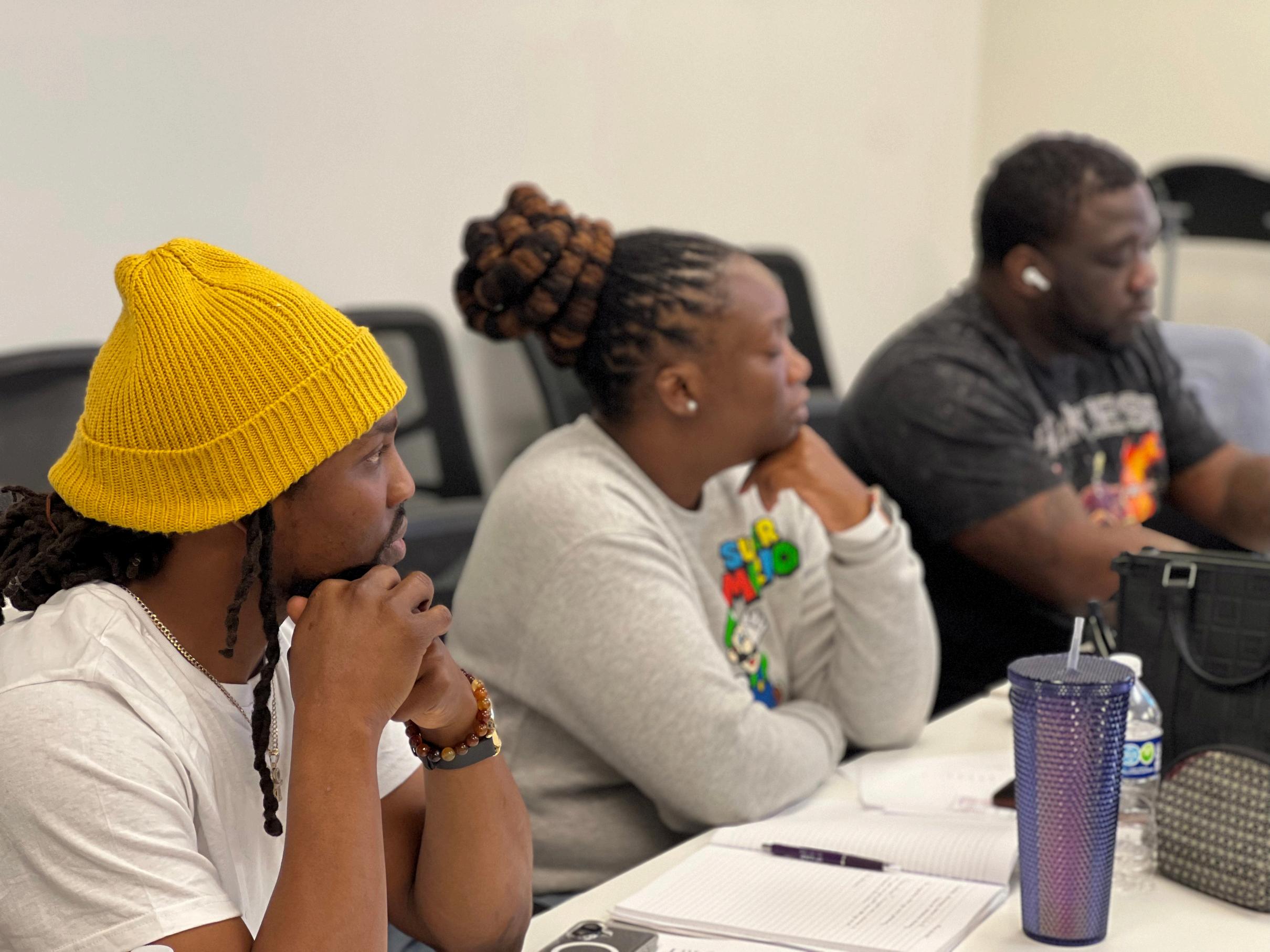
Cover photo: Carlos Deveaux
FROM LIVED EXPERIENCE TO LASTING IMPACT
A Case Study of The Redirect Collective’s
Technical Assistance Academy
TECHNICAL ASSISTANCE ACADEMY (TAA) | 2025
PROGRAM OPERATIONS
North Charleston, South Carolina
PERIOD COVERED BY THIS REPORT
March 2025 through July 2025
ACADEMY PARTICIPANTS
Carlos Deveaux
Chantelle Mitchell
LaToya Rivers
Brittany Singleton
Donnimechia Singleton
Keith Smalls
Ronald Smith
ACADEMY FACILITATORS
Aaron Polkey
Ashley Krejci-Shaw
Dennis Muhammad
TAA CURRICULUM DEVELOPMENT AND EVALUATION REPORTING
Ashley Krejci-Shaw I InterMediate, LLC
ADMINISTRATIVE COORDINATION
Jeffrey Fleming, Executive Vice-President of Palmetto Project
CONTACTS
The Redirect Collective (TRC): Aaron Polkey, President & CEO of Palmetto Project apolkey@palmettoproject.org
Dennis Muhammad, Contractual Program Director of TRC dennis@theredirectcollective.org
Curriculum & Evaluation Inquiries: InterMediate, LLC info@intermediateplanning.com
ADDITIONAL INFORMATION theredirectcollective.org palmettoproject.org
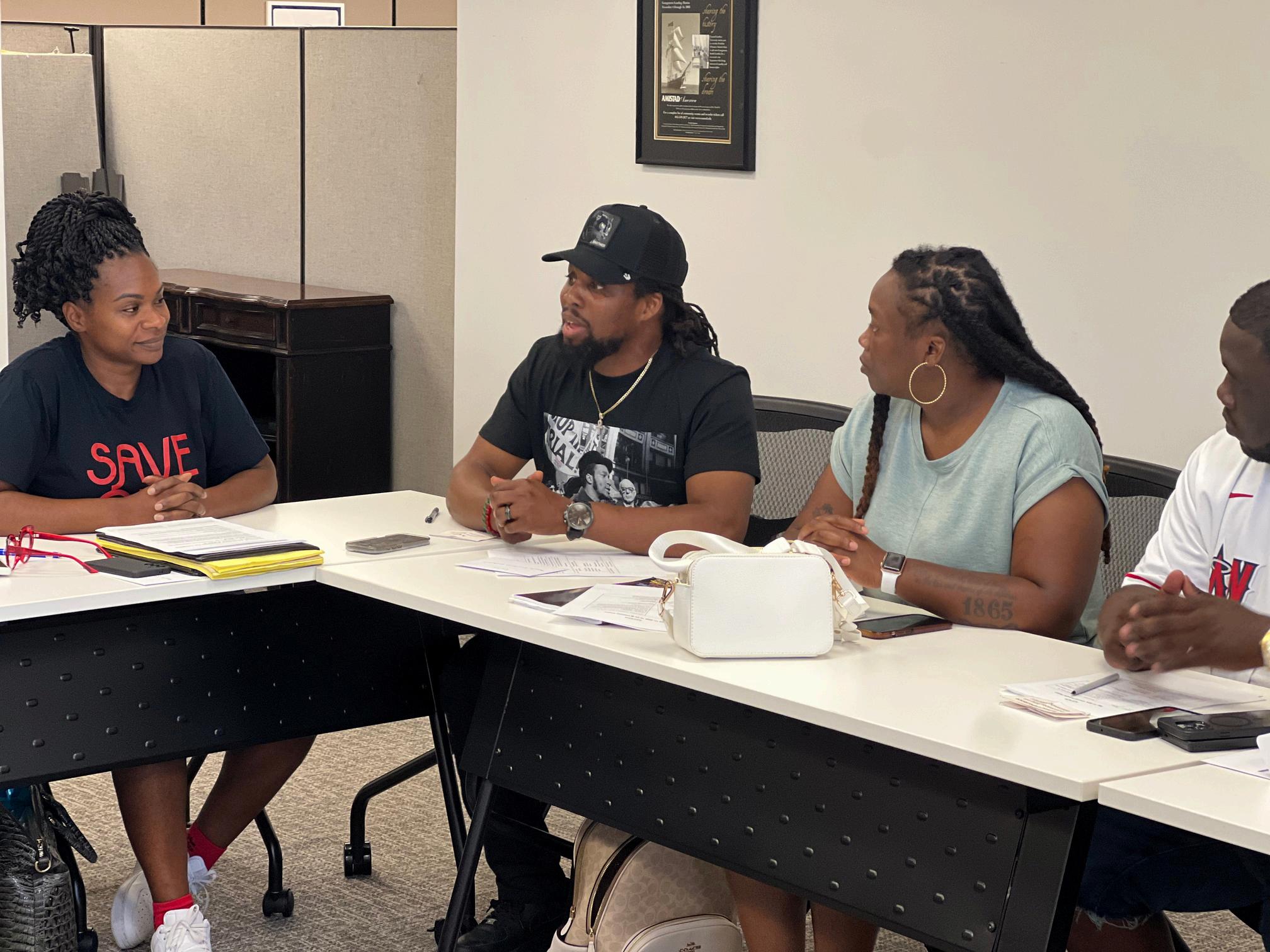
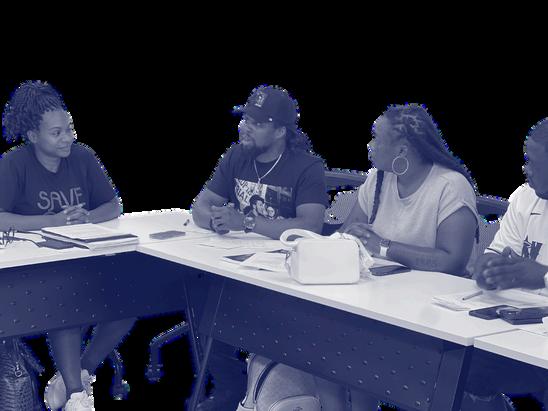
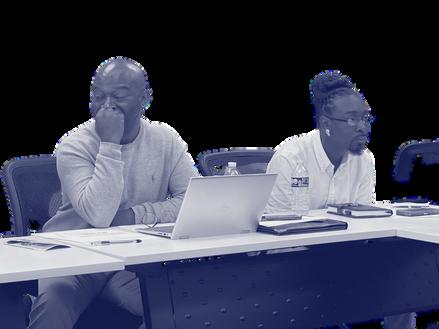
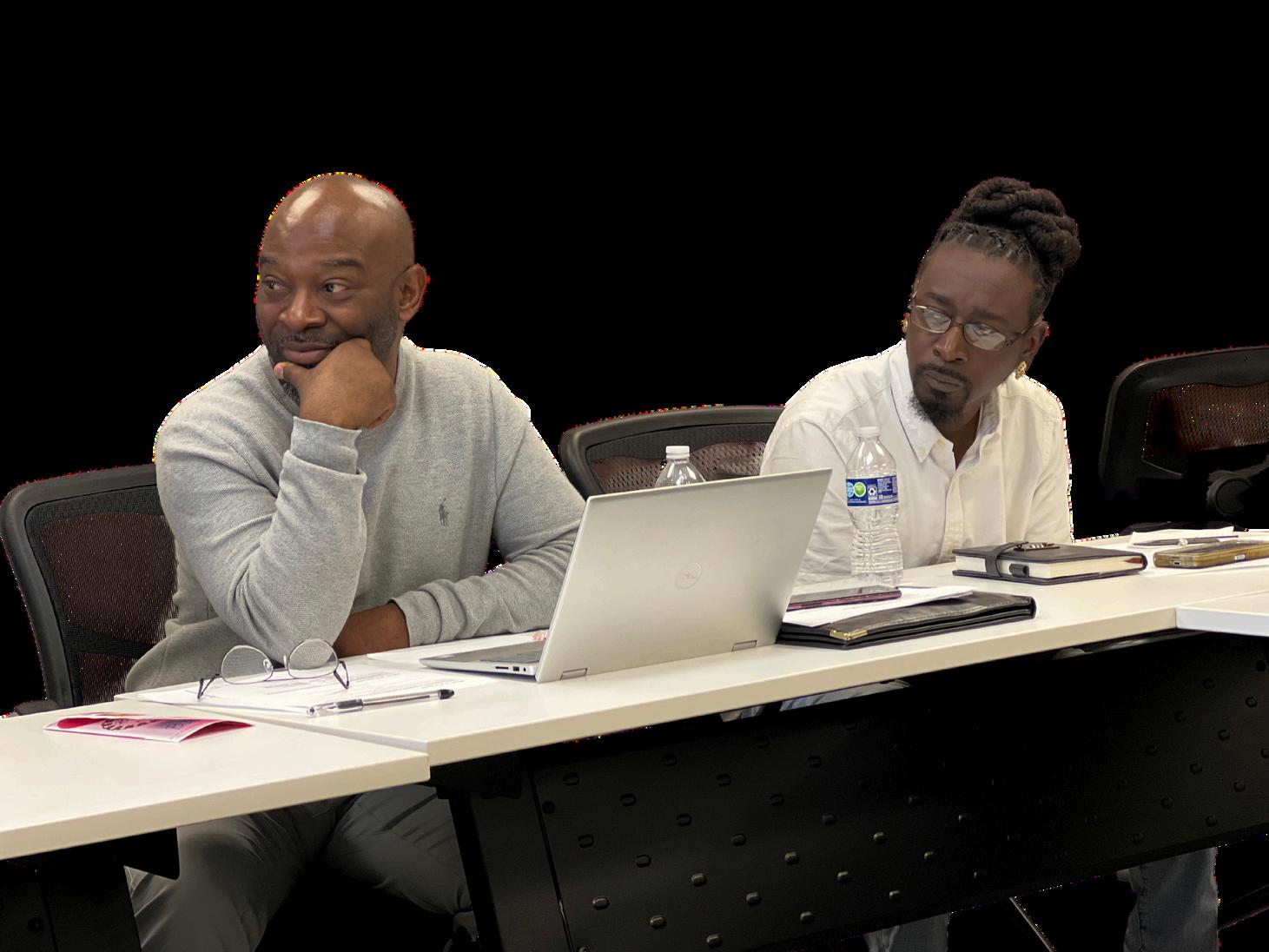
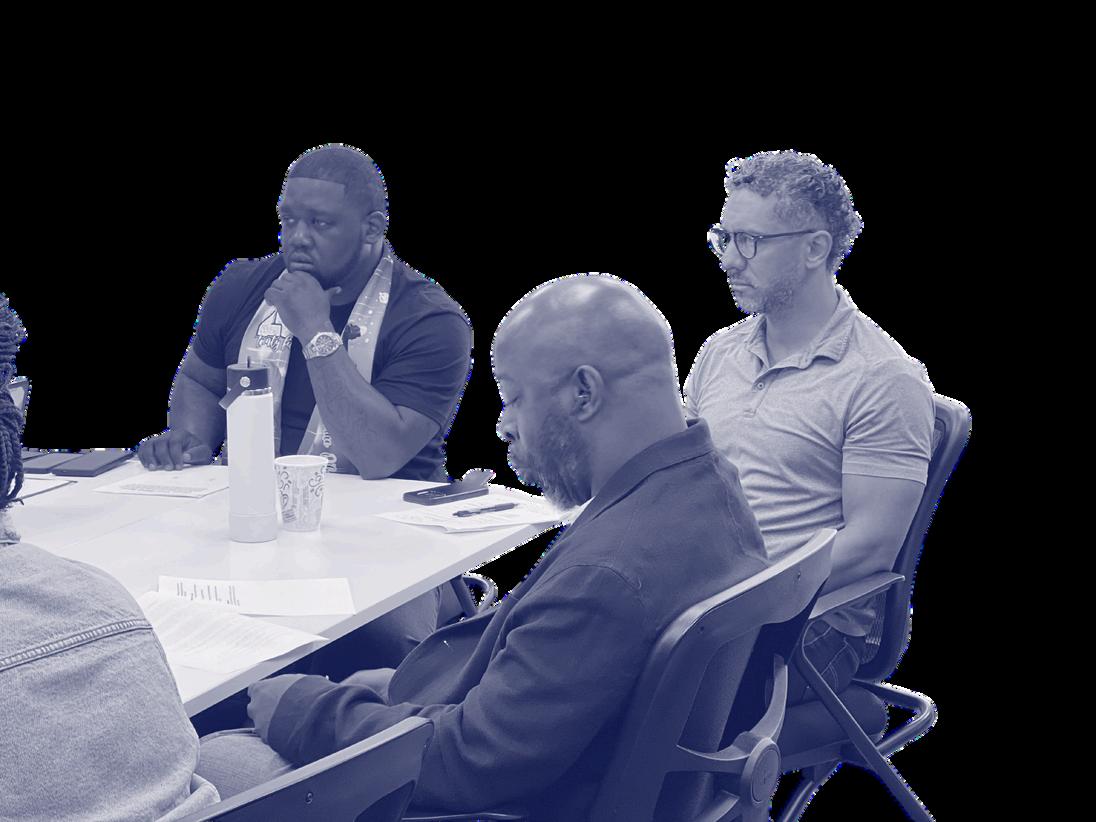
Pictured: Carlos Deveaux and Chantelle Mitchell
Part I: Practice-Based Findings — Emergent Themes
II: Proximal and Process Outcomes — The Overlooked Evidence
CAPSTONE ASSIGNMENT
Capstone Assignment Reflections
WHAT MADE THE ACADEMY WORK
Credible Pedagogy
Expert, Cohesive Co-Facilitation
Continuous Learning Through Feedback
Credible Messengers Observations
APPENDICES
Appendix 1: Abbreviations and Glossary
Appendix 2: Technical Assistance Academy Sessions
Appendix 3: Voices of the Cohort – At a Glance
Appendix 4: Footnote–Bibliography
BIBLIOGRAPHY
Published Sources
Primary Data Sources
ACKNOWLEDGEMENTS
The Technical Assistance Academy (TAA), launched in Spring 2025 under The Redirect Collective at Palmetto Project, equips Credible Messengers, community leaders of violence interruption and transformative mentorship, with the skills, networks, and support to drive transformational community change.
Over four months, seven stipend-supported participants engaged in seven structured sessions blending technical instruction, cultural fluency, and healing-centered leadership development.
KEY OUTCOMES
Messengers gained practical tools in analysis, management, and operational planning PROGRAM CAPACITY
CULTURAL
Ancestral and lived knowledge affirmed as valid sources of leadership
AUTHORITY SUSTAINABILITY INSIGHT
Cohort developed strategies for financial stability, systemic critique, and long-term community impact
W H O A R E CREDIBLE MESSENGERS?
Leaders shaped by lived experience:
Formerlyincarcerated entrepreneurs,violence interrupters,youthadvocates, andparentswhohave enduredpersonaltragedy
Trustedcommunityleaders operatinginyouthmentorship, reentrysupport,violence prevention,andhealingjustice
Theyembodywhattraditional credentialscannotreplicate: credibilityforgedthrough resilience,service,andsurvival
WHAT MADE THE ACADEMY WORK
Cohort Size
Credible Messengers (4 men, 3 women)
KEY NUMBERS
Direct Facilitation + Self-Guided Assignments
Months March through July 2025
NEXT STEPS:
Cohortexpansionandrecruitment
Longitudinalevaluation
Wraparoundsupportsandinstitutional partnershipsforeducation,justice,& healthservices
Impact doesn’t start with paperwork it starts with presence
The Academy is more than a training program it is a catalyst for transformation
The themes and outcomes captured here show Credible Messengers translating lived experience into strategy, building trust where systems cannot, and generating early signals of lasting change. Investing in these leaders ensures that overlooked outcomes mature into measurable, systemic impact.
THE WHY
BRittany Singleton, TAA Cohort Member
FOREWORD
This report begins with the leaders themselves.
The seven Credible Messengers who anchor this work embody the convergence of personal transformation, community struggle, and generational resilience. Their expertise is not granted by degrees or credentials but earned through survival, restoration, and purpose. Each carries a lived understanding of violence, neglect, and recovery—and each has returned to serve others with authenticity that cannot be replicated or institutionalized. Together, they mentor youth, restore trust where systems have failed, and redefine what it means to lead in community.
The Technical Assistance Academy (TAA) of The Redirect Collective (TRC) at Palmetto Project was designed around this truth: credible leadership is experiential, relational, and restorative. The Academy’s cofacilitation team embraced a dual role as both educators and learners. The participatory nature of the work meant the process itself was transformative; every session became a shared act of design, reflection, and growth.
Within this space, the Messengers brought not only their intellect but also emotional courage. They modeled leadership that is often unseen—rooted in consistency, service, and healing.
Their presence reaffirmed that true credibility is earned slowly, through action and accountability, not proclamation.
This foreword stands as a declaration rather than a disclaimer. The findings presented here are woven from individual narratives, family histories, organizational labor, and, at times, personal loss. Any ethical inquiry into Credible Messenger leadership must center dignity, reciprocity, and shared authorship. The facilitation team’s role— whether in coordination, evaluation, or design—remained secondary to the wisdom and agency of the participants themselves.
InterMediate, LLC’s approach to research and evaluation rests on a simple but radical premise: that meaningful evidence must be cocreated with those whose lives it represents. The Technical Assistance Academy embodies this principle, offering a living model of how local leadership, when honored and supported, becomes a pathway to collective transformation.
Prepared with gratitude and respect for the Credible Messengers of TRC’s Technical Assistance Academy and the communities they serve.
EXECUTIVE SUMMARY
The Technical Assistance Academy (TAA), launched in Spring 2025 under The Redirect Collective at Palmetto Project, represents a bold investment in grassroots leadership.
Over four months, seven Credible Messengers—community leaders shaped by lived experience—participated in a stipend-supported pilot program that combined workshops, virtual sessions, and self-guided assignments. Facilitated by a three-person team at Palmetto Project’s North Charleston office, the Academy blended formal instruction with culturally responsive, trust-centered learning.
Participants engaged in seven structured sessions between March and July 2025, exploring themes of leadership, legacy, trauma, healing, and sustainability. Sessions paired technical tools with dialogue and reflection, drawing on both theory and lived practice to surface new insights. This dialogical approach allowed participants to examine external demands of program design while grappling with the internal realities of emotional labor, burnout, and resilience.
The Academy’s impact is best captured in three outcomes:
1 1 2 2 3 3
Strengthened capacity to design, implement, and assess community-based programs, supported by practical tools for analysis, management, and operational advising.
Affirmation of cultural and ancestral knowledge as valid sources of leadership, alongside skills that bridge lived wisdom with structured program practice.
Collective insight into sustainability, including the tangible costs of service and the long-term value of investing in Credible Messenger leadership, reinforced by tools to plan, manage, and sustain their work.
This case study documents the Academy’s design, implementation, and outcomes.
It highlights the lived expertise of the cohort, details practice-based findings, and offers recommendations for future research, program expansion, and sustained investment. In doing so, it provides both a record of transformation already underway and a call to action for partners to invest in leaders whose credibility is rooted in lived wisdom.
Program Design and Approach
The Academy was deliberately designed as more than a training program. It was a skillbuilding, capacity-building model that treated lived experience as expertise. Between March and July 2025, participants convened for seven structured Saturday sessions, supplemented by weekly written dialoguing, and independent assignments.
The facilitation team included Aaron Polkey, civil rights attorney and President & CEO of Palmetto Project, who guided conversations on nonprofit governance, resource mapping, and program sustainability. Dennis Muhammad, of Education Dynamics Training & Consulting, anchored the program in cultural fluency, emotional readiness, and field credibility Ashley Krejci-Shaw, CEO of InterMediate, LLC, designed the curriculum, led evaluation, and ensured the sessions balanced technical rigor with trust-centered facilitation
The Academy’s pedagogy was intentionally dialogical and deeply participatory. Technical content such as mission and vision development, stakeholder mapping, and responsible program design—was seamlessly interwoven with reflections on nonprofit stewardship, community legacy, and personal growth. Each session underscored a core principle: leadership does not emerge from instruction alone, but from the fusion of structured learning, cultural wisdom, and emotional presence. Equally significant, participants were compensated for their time and labor. Stipends served as both recognition and investment, affirming that community expertise is invaluable and that credible leadership deserves to be honored and sustained.
We are credible because of how we ’ ve grown.
Latoya Rivers


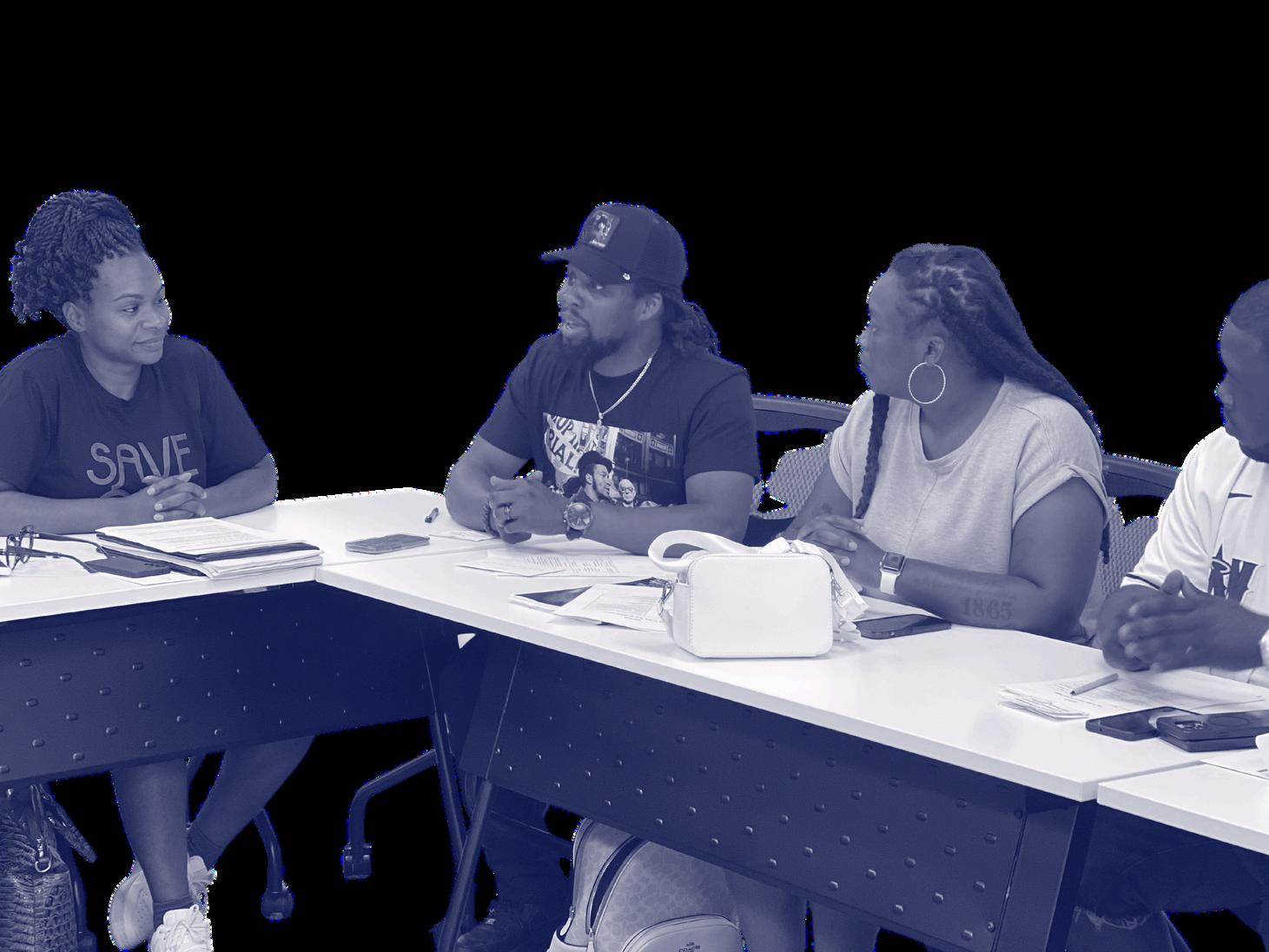
Pictured: Latoya Rivers

The inaugural cohort included seven Credible Messengers, four men and three women ranging in age from their thirties to their fifties. Each person’s work is rooted in the Charleston metro area, and each carries the weight of personal experiences with violence, incarceration, and loss. All seven participants were deeply engaged in youth mentorship and community safety through their professional work. Three were formerly incarcerated and now lead their own businesses or nonprofits Two had endured the devastating loss of children to gun violence; another had lost a co-parent Across the cohort, spirituality was described as a source of resilience, shaping not only their healing but also their leadership. Collectively, their efforts are estimated to reach between 2,000 and 4,000 people each year through mentoring, outreach, and community engagement. Their profiles illustrate the depth and diversity of this leadership Taken together, their experiences reveal why investment in Credible Messengers yields extraordinary impact These are leaders forged not through credentials, but through survival, accountability, and transformation.




Keith Smalls
Co-executive director of the Representation Matters Foundation and runs a landscaping business, anchoring his work in educational visibility and mentorship.
Spent nearly two decades incarcerated, he founded My Community’s Keeper after losing his son to violence, and now mentors students in North Charleston schools.
Chantelle Mitchell
Mother of six and survivor of domestic violence, she created I Got U, Friend to support families navigating housing instability and trauma.
Carlos Deveaux Ronald Smith
Founded Positive Vibes Ronjanae Smith, Inc. in honor of his daughter, and is working as a violence interrupter and mentor in Charleston-area neighborhoods.



An entrepreneur and community leader he balances multiple ventures while easing tensions by hosting events that bring neighborhood families together.
Brittany Singleton Donnimechia Singleton
An engineer currently pursuing her master’s degree, she brings the perspective of a parent leader Through her organization, Black Woman Empowerment (BWE), she grounds her advocacy in uplifting young women and creating spaces where they can thrive.
Latoya Rivers
A military veteran and youth advocate, she blends discipline and compassion in her mentorship of justice-involved youth. Drawing on her experience as an author, logistics specialist, and advocate, she brings both structure and empathy to her leadership.
The Cohort Profile
THE LEARNING JOURNEY
The Academy unfolded through a carefully sequenced arc of sessions; the curriculum created a foundation of trust by introducing multiple intelligences, self-discovery, and team norms Participants learned how to reframe both tangible and intangible assets, with deeper learning focused on systems thinking, stakeholder mapping, environmental justice, analysis of power dynamics and root causes, capital mapping, readiness, and documentation. As participants prepared for transition and graduation, they practiced investment storytelling and prepared for long-term sustainability Throughout, participants blended technical learning with storytelling, reflection, and professional development practices Check-ins, stress management exercises, and peer feedback were as central to the curriculum as nonprofit compliance or strategic planning. This balance created a program that was both practical and transformative.
KEY OUTCOMES
The Academy generated outcomes at the personal, organizational, and collective levels. On a personal level, participants reframed leadership as a process rooted in authenticity rather than perfection.
I used to think you had to fix everything before you could lead Now I know: you lead while you heal

You
can’t just say you serve the community you have to define who you ’ re fighting for
These boys need to see someone who gets it Not just [someone with college] degrees— they need relatable understanding
At the organizational level, Messengers sharpened their missions and clarified their accountability Many also confronted the hidden costs of their work funding meals for youth, providing transportation, and absorbing the emotional toll of caregiving naming sustainability as a prerequisite, not a luxury. At the collective level, participants affirmed the central role of mentorship and generational resilience. The Academy validated parenting, violence prevention, and meeting immediate community needs as essential strategies of prevention, resilience, and credibility
Participant feedback confirmed both the program’s relevance and its trust-building impact Words like community, teamwork, and networking surfaced most frequently in evaluation forms Several participants said the Academy restored their faith in partnerships after prior disappointments. One reflected, “This reinstated my trust after other programs let us down.” Another observed, “Capital isn’t always cash it’s what you carry and what you give.” These testimonies illustrate that the Academy offered more than tools—it offered renewal By blending technical skill-building with dignity and healing, the program enabled participants to integrate both structure and spirit into their leadership
Even with conservative estimates, the reach of the cohort is significant. Collectively, they mentor between 105 and 210 youth annually, engage 700 to 1,400 residents through outreach, and influence 1,250 to 2,500 people through organizational partnerships. In total, their work touches 2,000 to 4,000 lives each year. Equally important are the early signals of transformation: increased confidence, clarified missions, stronger peer accountability, and renewed commitment to sustainability. These proximal outcomes are often overlooked in conventional evaluations but are critical indicators of long-term systemic change
WHY IT MATTERS
The Academy responds to a persistent gap in leadership infrastructure. Credible Messengers are often asked to take on society’s hardest work violence prevention, youth mentorship, reentry support without compensation, training, or recognition. This model disrupts that inequity by affirming lived experience as expertise, by embedding healing in leadership development, and by ensuring financial investment through stipends and support. The Academy demonstrates that when community leaders are resourced with dignity, their reach expands, their organizations stabilize, and their communities benefit in lasting ways.
EVIDENCE OF IMPACT
The pilot confirmed proof of concept. With sustained investment, the model can grow into a durable, replicable movement. A 2026 cohort could expand to 15 participants with partnerships in tri-county school districts, reentry programs, and healthcare systems Longitudinal evaluation would track outcomes over 12 to 18 months, providing funders with stronger evidence of return on investment. Over time, the Academy can evolve into a certification framework that professionalizes Credible Messengers while preserving the cultural authenticity that makes their leadership powerful.
The path forward is clear. Supporting the Academy means resourcing trusted local leaders whose credibility is lived, not credentialed It means funding stipends and providing wraparound supports that they and others like them identify as essential to sustaining their outreach and impact.
To fund this work is to affirm that lived experience is expertise, and that healing, credibility, and community leadership must become the driving forces of lasting change across Charleston and beyond.

INTRODUCTION
The Technical Assistance Academy (TAA) was launched under The Redirect Collective - a program of Palmetto Project to address a critical gap in community leadership infrastructure: the absence of formalized, culturally grounded training for those already doing transformative work on the front lines.
Across Charleston and beyond, Credible Messengers—leaders with lived experience, street credibility, and deep community trust—are often asked to take on roles in violence prevention, youth intervention, and community stabilization without structured support, fair compensation, or technical guidance. The Academy responds to this inequity by offering a stipend-based, capacity-building experience that honors both the wisdom and the potential of grassroots leaders.
Over the course of five months, the Academy gathered a cohort of seven community leaders and three facilitators for a series of in-person sessions. These convenings were designed not as top-down instruction but as co-created learning environments rooted in mutual respect, critical dialogue, and experiential knowledge-sharing.
Alongside technical skills such as program documentation, strategic planning, and impact measurement, the Academy addressed deeper cultural dimensions of leadership: trust-building, navigating conflict, trauma stewardship, and cross-generational healing
This report examines the guiding question at the heart of the TAA:
What does it take to prepare, sustain, and support Credible Messengers in ways that preserve their authenticity while strengthening their infrastructure?
In answering this question, the report outlines the methods, themes, and transformative outcomes that emerged across the Academy’s sessions. It also provides funders and partners with a window into a replicable model one that bridges institutional systems with community wisdom and invests in the leadership of those closest to both the problem and the solution
For a full list of abbreviations used in this report, see Appendix 1.

They say we don’t have credentials, but we ’ ve survived things no college ever taught.
LIVING THE LITERATURE: Testimony as Theory
The Technical Assistance Academy demonstrates how lived experience produces knowledge on par with, and often expanding upon, canonical scholarship. bell hooks reminds us that “there can be no love without justice,” a framing that resonates with Chantelle’s observation that Credible Messenger work is a “hard kind of love” — one that requires resilience, accountability, and presence. Her reflection exposes a gap in dominant leadership frameworks, which too often erase the caregiving and emotional labor required to sustain organizational change.
1
Paulo Freire argued in Pedagogy of the Oppressed that education is always political. Carlos confirmed and deepened this point when he recalled, “Nobody ever asked me what I needed when I was younger. I had to survive it to now help others through it.”2 His testimony extends Freire’s concept of critical consciousness by positioning mentorship as both political and healing — an idea rarely named in mainstream educational discourse.
Patricia Hill Collins, in Black Feminist Thought, insists that knowledge is constructed through dialogue among the oppressed. Latoya expanded this claim when she reflected, “It’s not about having the ‘right’ answer. It’s about knowing how to hold space when the answer ain’t ready yet.” In her framing, truth-seeking is relational and temporal, emphasizing that truth emerges over time through collective presence rather than solitary authority.
3
Michelle Fine has long critiqued extractive forms of research that drain community stories without returning dignity. Brittany challenged this same logic in the field of mentorship, noting, “Sometimes the most powerful thing is to stand beside someone, not in front.”4
By insisting on equity in relational practice, she disrupts hierarchical models and redirects program design toward mutuality.
1 New Visions (NewYork:WilliamMorrow,2000),87;ChantelleMitchell, TAA Final Project (PalmettoProject, TechnicalAssistanceAcademy,July2025).
2 PauloFreire, Pedagogy of the Oppressed,trans.MyraBergmanRamos(NewYork:Continuum,1970),30;Carlos Deveaux, TAA Session 3 Transcript (PalmettoProject,TechnicalAssistanceAcademy,May17,2025).
3 PatriciaHillCollins, Black Feminist Thought: Knowledge, Consciousness, and the Politics of Empowerment(Boston: UnwinHyman,1990),221;LatoyaRivers, TAA Session 3 Recorded Transcription Summary (PalmettoProject, TechnicalAssistanceAcademy,May17,2025).
4 MichelleFine, Just Research in Contentious Times: Widening the Methodological Imagination (NewYork:Teachers CollegePress,2018),54;BrittanyM.Singleton, TAA Final Assignment (PalmettoProject,TechnicalAssistance Academy,July2025).
6
Mariame Kaba teaches that “everything worthwhile is done with other people.” Keith animated this principle when he observed, “Even when it’s messy, we’re doing this together. That’s the point. You don’t build trust by getting it perfect.”5
Trust here is repositioned not as a byproduct of success but as a deliverable in itself a radical reorientation rarely recognized in conventional outcome evaluations.
Na’im Akbar has written that healing and leadership are inseparable, grounded in psychological wholeness and cultural self-awareness. Ronald echoed this ethic: “I used to think you had to fix everything before you could lead. Now I know: you lead while you heal.” His perspective rejects linear models of readiness, offering instead a vision of leadership as emergent, fluid, and intimately tied to personal evolution.
6 James Baldwin once warned that “the most dangerous creation of any society is the man who has nothing to lose.” Donnimechia reframed this as prevention: “You give a brother purpose, you change his whole reality. And not just him. Everyone around him.” Purpose becomes here not an afterthought but a strategy of safety, exposing the structural conditions that create risk while highlighting the underutilized power of meaning as intervention.
7
Taken together, these reflections illustrate how the Academy is not merely training leaders but generating new theories. Cohort members are not students of scholarship; they are co-authors in the canon of justice, education, and leadership. Their testimony itself becomes theory—lived, tested, and carried forward into the collective future of Charleston.
Na’imAkbar, Know Thyself (Tallahassee:MindProductions,1998),44;RonaldSmith, TAA Final Assignment(PalmettoProject,TechnicalAssistanceAcademy,July2025).
7 JamesBaldwin, The Fire Next Time (NewYork:DialPress,1963),105;DonnimechiaSingleton, TAA Reflection (PalmettoProject,TechnicalAssistanceAcademy,July2025).
MariameKaba, We Do This ’Til We Free Us: Abolitionist Organizing and Transforming Justice (Chicago:Haymarket Books,2021),15;KeithSmalls, TAA Session 3 Transcript (PalmettoProject,TechnicalAssistanceAcademy,May17, 2025).
5

SETTING & CONTEXT
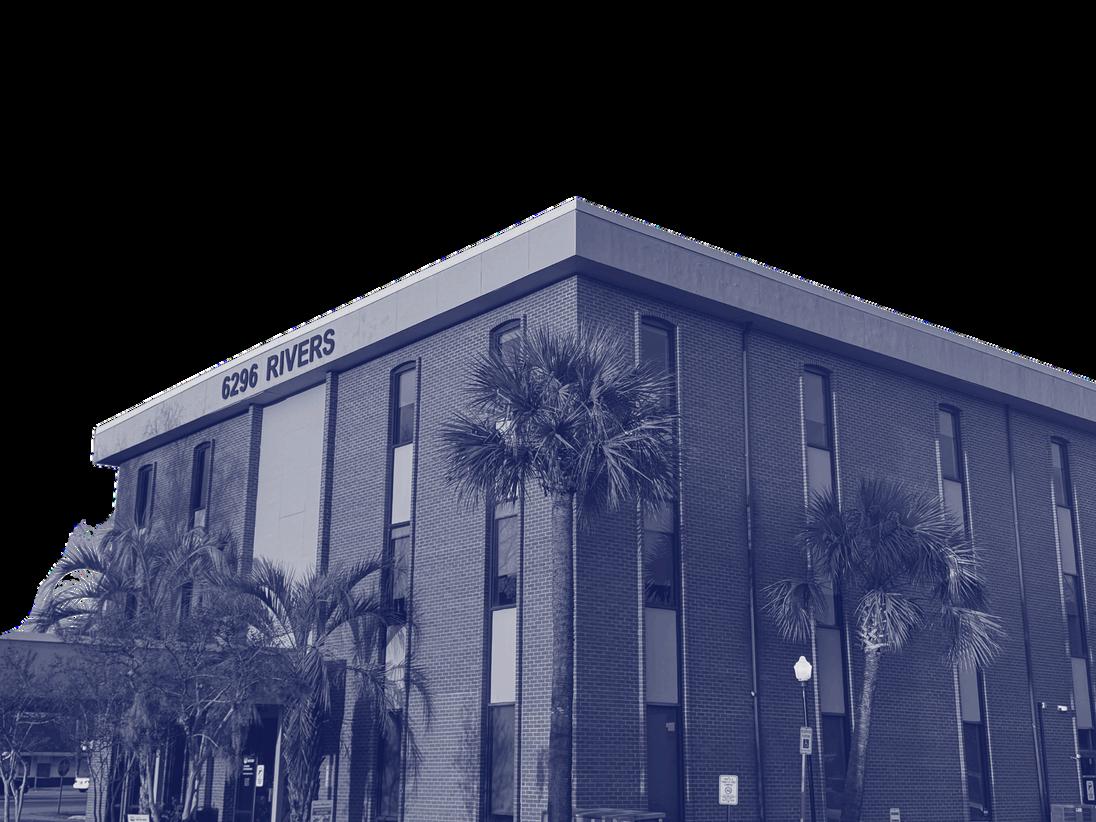
The Redirect Collective’s Technical Services Academy (TAA) unfolded within a deeply rooted, community-centered setting: the Palmetto Project headquarters at 6296 Rivers Avenue, Suite 100, North Charleston, South Carolina. This location functioned not only as the physical site of learning but also as a symbolic anchor of trust, program consistency, and neighborhood accessibility. North Charleston—a city historically shaped by racialized disinvestment and systemic inequities—provided the cultural backdrop for this grassroots leadership and capacity-building initiative.
Each Saturday session brought together an intergenerational cohort of seven Credible Messengers and three facilitators. Participants arrived from across the Charleston metro region, carrying with them lived expertise grounded in experiences of justice system involvement, generational poverty, and frontline community work. Sessions were not immune to real-life obstacles—childcare needs, transportation delays, and professional responsibilities—but these disruptions underscored the program’s realism and affirmed the importance of a human-centered design.
The Academy’s pedagogy intentionally blended formal instruction with informal storytelling, creating a flexible structure that allowed participants to move fluidly between technical learning, personal reflection, and collective dialogue. Grounding practices such as breathing exercises and personal check-ins, along with icebreakers and rotating guest-led modules, reinforced the cultural rhythms and ethical commitments of community work.
Unlike a sterile classroom or external training venue, the Academy operated in a nonprofit space already associated with social good and grassroots credibility. This setting granted participants permission to show up authentically—sometimes with children in tow, sometimes carrying emotional burdens, but always with the expectation that they would be recognized not only as learners, but as leaders-in-formation.

The social context extended beyond the four walls of the training room. Conversations reflected the layered realities of South Carolina’s racial politics, economic precarity, and enduring struggles for justice. Cohort discussions often grappled with real-time cultural events, local elections, generational trauma, and the invisible burdens of unpaid leadership labor.
By anchoring technical assistance in such a responsive and culturally relevant environment, the Academy reframed capacitybuilding as more than skills training: it became an avenue for transformation that was both personal and collective.
METHODOLOGY
The project utilized a qualitative case study design that documented program implementation while also surfacing participant wisdom, training needs, and leadership development. The evaluation was led by co-facilitator Ashley Krejci-Shaw, Principal of InterMediate, LLC, a sustainable development consultancy recognized for qualitative research expertise, ethical standards, and capacity-building with both corporate and grassroots leaders.
Research Design
The study was structured as a constructivist, community-based case study, blending participatory observation with narrative inquiry. This approach ensured the evaluation captured not only learning but also transformation. InterMediate’s method—combining design thinking, qualitative rigor, and story-based systems analysis—allowed research and learning to co-evolve. Each session served as both intervention and inquiry, producing real-time data on the intersection of technical teaching, cultural reflection, and emergent leadership.
Sampling and Context
Participant selection followed the Credible Messenger model, a framework rooted in justice reform that values authenticity, trust, and lived experience over formal credentials. In Charleston, Palmetto Project applied this model to recruit leaders with deep histories in community engagement and violence prevention. Nominations came through long-standing relationships, particularly from co-facilitator Dennis Muhammad, whose trust with participants grounded the cohort. Strategic leadership by Aaron Polkey, CEO of Palmetto Project, ensured resources were directed to those most capable of impact. No exclusion criteria were imposed; instead, the Academy honored adaptive participation, respecting the realities of community leadership.
Validity and Trustworthiness
The methodology reflected InterMediate, LLC’s commitment to culturally fluent, community-rooted evaluation. Rigor was upheld through credibility (cross-checking multiple data types), transferability (contextual depth for use in other settings), dependability (consistent tools and feedback loops), and confirmability (reflexive journaling and positionality statements).
Data Collection Methods
Live session observation: focus on relational dynamics, power shifts, and leadership development
Audio recording & verbatim transcription: over 20 hours of program data
Recorded transcription summaries: supported thematic indexing and timestamp verification
Post-session evaluations & reflection tools: captured selfreported transformation, challenges, and insights
Facilitator memos & reflexive journaling: integrated practitioner and evaluator perspectives
Content analysis: reviewed public-facing communications for themes and alignment
Data security: all files stored in accessrestricted digital folders managed by InterMediate, LLC
Note on Participant Attribution
Data Analysis Methods
Approach: adapted grounded thematic analysis layering inductive and deductive coding
Open Coding: identified emergent ideas across transcripts and notes
Cross-Referencing: compared codes against tone, context, and session dynamics
Triangulation: integrated multiple data sources (transcripts, reflections, facilitator notes)
Theme Synthesis: differentiated performative commentary from emotionally grounded insight
Validation: confirmed key themes through in-session discussion and follow-up member-checking to ensure alignment with participant intent and experience
Ethical Considerations
Informed Consent: participants briefed, transparent documentation, optout options
Confidentiality: recordings secured, themes emphasized over names, private reflection spaces offered
Minimizing Harm: trauma-aware design, safe activities, peer support for difficult topics
Respect for Lived Experience: participants’ voices elevated as central text
Reflexivity & CoConstruction: facilitators modeled vulnerability, adjusted agendas responsively
In this report, decisions about whether to name or anonymize speakers were made intentionally Some quotations are attributed to specific participants, while others are referenced more generally (e g , “Cohort member”) This approach ensures that readers have sufficient context to understand session content and learning themes, while protecting the personal and professional reflections of Messengers that were offered in sensitive or vulnerable moments The evaluator prioritized balancing transparency with respect for confidentiality, ensuring the emphasis remains on collective learning and program impact rather than individual disclosure
THE COHORT
The seven Credible Messenger cohort members in the pilot included four men and three women, ranging in age from their early 30s to late 50s.
All are based in South Carolina, but nearly all reside in the Charleston metro region. Their work spans youth mentorship, violence prevention, re-entry support, and juvenile justice with leadership roles in school-based programs, street outreach, and peacebuilding.
Four provide reentry services, and three formerly incarcerated own one or more trade businesses in behavioral health, education, or workforce development.
Two have lost children to gun violence, and another lost a co-parent, thereby anchoring their work in personal grief and advocacy.
Across the cohort, there is a shared commitment to spiritual grounding, community accountability, and systems change led by lived experience.
All seven have direct experience working with youth.
All seven engage in community safety and violence prevention.
All seven are organizational leaders or founders.
All seven actively provide mentorship or participate in formal mentoring structures.
Five of seven work within specific geographic communities.
All seven acknowledge a spiritual or energetic dimension to their work, explicitly or implicitly.
All seven identify parenting or guardianship responsibilities as significant barriers to either service delivery or youth progress.
Three of the formerly incarcerated now own and operate one or more private businesses
Two of seven have lost a child to gun violence.
One of seven has survived a lifethreatening injury due to gun violence.
System Involvement and Resilience
Personal and Spiritual Dimensions
Professional roles and contributions
CREDIBLE MESSENGER PROFILES
CARLOS DEVEAUX
CHAMPION FOR YOUTH, FAMILIES, AND LITERACY
Carlos Deveaux is a dedicated advocate for youth development and social justice, serving as the Co-Executive Director of the Representation Matters Foundation. His work is deeply rooted in empowering young people, particularly those affected by systemic inequities, through mentorship, leadership development, and community engagement.
He is also the business owner of a landscaping company. With years of experience working alongside at-risk youth, Carlos Deveaux is committed to reshaping narratives and ensuring that young people see themselves reflected in positions of power, leadership, and influence.
As Co-Executive Director of the Representation Matters Foundation, his work centers on expanding cultural representation within education and media.
Passionateaboutincreasingrepresentation andequityforBlackandmarginalizedyouth. Stronglybelievesinthepowerofmentorship asavehiclefortransformativechange. Committedtoconnectingyoungpeoplewith resources,networks,andopportunities.
Carlos is also a dedicated advocate for the Bayside community—now referred to as Bridgeview Village—championing access, equity, and opportunities for youth and families historically left out of decisionmaking spaces. As a Credible Messenger, Carlos prioritizes mentorship, advocacy, and structural change, ensuring that youth are not only supported in the present but also given the tools to navigate a sustainable future.
Limitedaccesstolong-term,sustainable fundingforprogramexpansion. Needsadditionalstructuralsupportto scalementorshipandcommunity engagementinitiatives.
Balancingprogrammaticresponsibilities withthebroadervisionofsystemic change.
Strengths:Experiencedleaderinyouth empowerment,strongadvocacyskills, well-connectedincommunitynetworks, anddeeplycommittedtorepresentation andjustice.
Constraints:Fundinglimitations, scalabilitychallenges,andresource allocationforexpandedprogramming.
Expandmentorshipprogramsand leadershipdevelopmentinitiatives. Supportoperationalinfrastructureand capacitybuildingforcommunity engagement.
Developresourcesandworkshopsto furtherthemissionofthe RepresentationMattersFoundation.


Motivations & Interests
Facilitators’ Analysis
Capital Need(s)
Hindrances & Barriers
KEITH SMALLS
MENTOR & VOICE AGAINST COMMUNITY VIOLENCE
He once served as a Violence Intervention Advocate for MUSC Health’s Turning the Tide program, and now works at R.B. Stall High School - a public high school in North Charleston, South Carolina.
Keith’s work is grounded in lived experience, emotional honesty, and a fierce commitment to community healing.
My Community’s and a key leader in violence prevention and youth development.
A returning citizen who spent 19 of 21 years incarcerated, Keith has transformed personal tragedy—including the loss of his teenage son to gun violence—into a lifelong mission to disrupt cycles of harm.
Dedicatedtoprofessionalizingcommunitybasedmentorshipthroughtrauma-informed, relationalapproaches.
Passionateaboutequippingyouthworkerswith education,certification,andsystemfluency Activelyseekssustainable,long-termfunding modelsforgrassrootsorganizationsledby thosedirectlyimpactedbyviolenceand incarceration.
Inspiredtointerveneearly,reachingyouth beforethejusticesystemdoes,andrestoring familiesaffectedbyloss
Strengths:Unparalleledcredibilitywith system-impactedyouth;extraordinarypublic speakingandadvocacyskills;abilityto convertpainintopurpose;strongmentormenteerelationalinstincts.
Constraints:Needssustainedfunding, administrativecapacity,andback-end operationstosupporthigh-touch,high-impact programming.Canhavetrouble communicatingwithcolleaguesattimes,but isseeminglywellrespectedbythegroup,and mostcommunitystakeholders
Facespersistentfundinginstabilitythat limitsprogramgrowthandlong-term planning
Lackstheadministrativeinfrastructure toscaleprogrammingdespitegrowing demand
Navigatesemotionalfatigueand personalgriefwhilemaintaining leadershipandfrontlineserviceroles
Buildasustainablefundingand developmentplanforMyCommunity’s KeeperMentorGroup.
Investinprofessionaldevelopmentand nonprofitleadershiptraining Strengthentheprogram’smentorship infrastructureandcapacitytoserve moreyouthconsistently.
Motivations & Interests
Facilitators’ Analysis
Capital Need(s)
Hindrances & Barriers
CHANT HEALING-CENTE
Chantelle Mitchell is the founder of Friend, a grassroots mentorship initiative supporting high-risk youth and families navigating community violence, housing instability, and justice system involvement.
A mother of six and a survivor of domestic violence, Chantelle brings lived experience, compassion, and fierce advocacy to everything she does.
In December 2023, she was formally welcomed as a Client Advocate with MUSC’s Turning the Tide Violence Intervention Program (TTVIP), which aims to reduce risk factors for violence, prevent re-injury, and improve outcomes for youth and young adults impacted by violence.
Motivatio Committedt rootedinlive practicalsup Passionatea familieswith cyclesofviolenceandpoverty.
Investedincreatingtrauma-informed, survivor-ledprogrammingthathonors dignityandstrengthensresilience.
Drivenbyadesiretogiveyouthandparents whatsheonceneeded:presence, consistency,andbelief.
Strengths:Trustedcommunityvoiceand effectivelycollaborateswithother Messengers.Highlyrelational,emotionally intelligent,andabletobuildtrustwithhardto-reachpopulations.Bringsdepthto violencepreventionworkthroughboth maternalandmentorshiplenses.
Constraints:Requiresadministrativesupport andstrategicplanningtoformalizeher organization.Lacksconsistentfundingfor operationalstabilityandprogramexpansion.
housingsupports.
Navigatestheemotionaltollof advocacywhilemanagingpersonal responsibilitiesandfrontline service
Supportthelegalandadministrative launchofIGotU,Friendasaformal nonprofit Strengthendirectservices(eg, transportation,clothing,housing stabilization)formentees. Participateinprofessional developmentandtrauma-informed leadershiptraining. ExpandherrolewithinTTVIPby deepeningcross-agency partnershipsandcommunityimpact.
Motivations & Interests
Facilitators’ Analysis
Capital Need(s)
Hindrances & Barriers
NNIMECHIA SINGLETON
COMMUNITY BUILDER & LOCAL CHANGE AGENT
company, DJing, running a party rental business, operating a lawn service, and even training to become a pilot. Despite these entrepreneurial pursuits, his heart remains in mentorship and community impact.
Additionally he’s credited with the following: Founding a free after-school tutoring program for children
Volunteering as a youth sports coach at Northwoods Park
Teaching teen parents how to prepare healthy meals
Donnimechia Singleton is a deeply committed community leader who has dedicated his life to fighting gun violence and supporting at-risk youth. Growing up in a neighborhood heavily impacted by crime and instability, he was named after his uncle, who was a victim of gun violence. His personal experiences shaped his mission to force change in his community. Donnimechia’s leadership extends across multiple ventures, including owning a trucking Believesthatchangebeginswithindividuals whoarewillingtoact.
Passionateaboutprovidingholisticsupport includingemployment,transportation,and housingresources.
Deeplyinvestedinshiftingmindsetsand helpingyouthseethemselvesbeyondtheir currentcircumstances.
Running for North Charleston District 3 City Council, demonstrating his deep commitment to civic leadership and local change.
Donnimechia engages directly with youth in high-risk environments, offering mentorship, material support, and crisis intervention He prioritizes both the youth and their families, recognizing that community healing requires a multigenerational approach
Lacksaphysicallocationtorun programseffectively.
Needsreliabletransportation,suchas avanorbus,tobetterservethe community.
Balancesmultiplecommitments, whichcanlimitavailabilityfor structuredprogramming.
Strengths:Strongleadershipskills,deep communityconnections,historyof volunteerism,andabilitytoengagehigh-risk youtheffectively.
Constraints:Limitedformalinfrastructure, relianceonpersonalfunds,andnumerous professionalresponsibilities.hegroup,and mostcommunitystakeholders.
Purchaseorleaseavanorbusfor youthtransportation.
Secureadedicatedphysicalspacefor mentorshipandinterventionefforts
Provideemergencyfinancial assistanceforyouthandfamiliesin crisis.
Motivations & Interests
Facilitators’ Analysis
Capital Need(s)
Hindrances & Barriers
BRITTANY SINGLETON
ENGINEER UPLIFTING
THE NEXT GENERATION
OF GIRLS
Brittany Singleton is professional engineer by trade, and a resilient parent leader with a rising voice in youth advocacy, and community-based support systems. Her journey into advocacy began through personal experiences navigating family systems, healthcare gaps, and educational inequities—especially those that disproportionately affect Black mothers and their children.
Known for her thoughtful, grounding presence and emotional clarity, Brittany brings a rare mix of lived wisdom, emerging leadership, and reflective insight to the Credible Messenger space. She consistently centers the wellbeing of youth—not only her own, but others in her community—through a quiet yet powerful

commitment to service, healing, and systems change. Brittany frequently speaks about the emotional toll of caregiving and the importance of having positive role models available for young people. Though she is early in her formal organizing journey, she brings a strong maternal lens, a grounded intuition, and a growing interest in structural change and equitable programming.
Motivations & Interests
Motivations & Interests Facilitators’
Deeplycommittedtosupportingyouth throughemotionallysafe,nurturing relationships.
Passionateaboutsisterhoodconnections, rolemodeling,trauma-awareparenting,and breakingcyclesofgenerationalharm.
Interestedindevelopingprogramsthat balancestructurewithhealing-centered flexibility.
Valuescommunitysupportnetworksforboth youthandtheircaregivers.
Strengths:Deepemotionalinsight,highly trustedinhercommunity,strongmaternal leadership,values-alignedwithhealingjustice movements.
Constraints:Early-stageinleadership development,lacksinfrastructureandpeer supportsystemforherwork,mayneed encouragementandscaffoldingtostepinto formalroles.
Balancesparenthood,caregiving,and communityengagementwithlimited externalsupport.
Newtoprogramdevelopmentand navigatingthenonprofitoradvocacy ecosystem.
Needshelptranslatingvisionand experienceintotangible,fundable programs.
Limitedbandwidthtonavigate administrativetasksorproposalwriting alone.
Investincoaching,training,ortechnical supporttostructurehervisionintoa replicablemodel
Providestipendsorflexiblecaresupport tosustainherparticipationinleadership programs
Co-developamaternaloryouth-focused healingcircle,withfacilitationand materialssupport
Capital Need(s)
Hindrances & Barriers
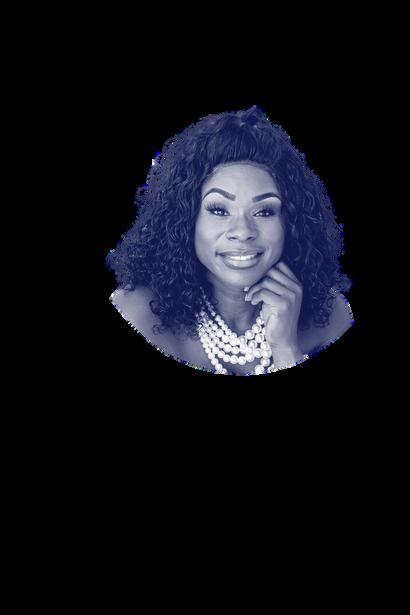
LATOYA RIVERS
VETERAN TURNED MENTAL HEALTH ADVOCATE
After transitioning from military service back into civilian life, Latoya redirected her leadership and resilience into youth mentorship She is known for her calm but firm demeanor and her ability to stabilize high-risk youth, especially girls and young women navigating trauma, instability, or system involvement.
Latoya Rivers is a dedicated youth advocate, mentor, and veteran living in Charleston, SC. She founded Saving Our Sons & Sisters, and works supporting justice-involved youth and families through intensive, community-based services. Her lived experiences, combined with a background in the United States military, shape her approach to discipline, structure, and personal accountability.
Driventosupportyouththroughdiscipline, care,andreal-worldplanning.
Passionateaboutcreatingspacesofhealing andempowermentforgirlsandyoung women.
Motivatedbyadeepdesiretopreventyoung peoplefromenteringsystemssheherself hasnavigated
As a Credible Messenger, Latoya blends practical structure with deep compassion She consistently goes above and beyond to support families and offers herself as a safe and consistent adult presence in the lives of the youth she serves.
Strengths:Veteranleadership,highreliability, respectedpresenceinschoolsandcourt systems,trauma-informedlens
Constraints:Limitedcapacityduetojob demands,lackofindependentinfrastructure, needsexposuretodevelopmentand strategicplanning
Carriesaheavycaseloadwithinher formaljob,limitingbandwidthforexternal projects.
Seeksguidanceindeveloping independentprogrammingbeyondher currentemployer’sscope. Needssupporttranslatingherexperience intofundable,scalableinitiatives.
Economicpowerofmessagingand aggregatingresources.
Receivecoachingortechnical assistancetobuildherowncurriculum orworkshopmodel.
Coverincidentalexpensesorstipends forcommunity-basedmentoringand transportation.
Motivations & Interests
Facilitators’ Analysis
Capital Need(s)
Hindrances & Barriers
RONALD SMITH
NEIGHBORHOOD LEADER FOR PEACE & SAFETY
Ronald Smith is the founder of Positive Vibes Ronjanae Smith, Inc., a grassroots mentorship and violence prevention initiative. As a longtime community presence and trusted mentor, Ronald serves as a violence interrupter and trauma responder for young people most affected by gun violence, poverty, and systemic neglect.
With deep credibility among street-involved youth, Ronald’s approach combines tough love, emotional honesty, and culturally-rooted wisdom.
His work centers on consistent presence— showing up in neighborhoods, hospitals, and crisis settings to de-escalate conflict and offer young people a way out.
Committedtointerruptingcyclesofstreet violencethroughmentorshipandconflict mediation.
Believesingrassrootshealing communitybased,notsystem-imposed.
Wantstocreatesafespacesforyoungmen totalk,reflect,andgrow.
Strengths:Unmatchedcredibilitywithyouth, highemotionalintelligence,deep commitmenttocommunitysafety,and effectiveatbringingcommunitiestogether.
Constraints:Limitedaccesstoformal support,emotionallytaxingwork,andno full-timestafforprograminfrastructure.
Long-term,steadyfundingfor growingoperations.
Doesnothaveaconsistentprogram spaceorinfrastructuretobuildfrom.
Burnoutriskduetohighemotional demandofviolenceinterruptionwork.
Securetransportation(eg,avan)to pickupanddropoffyouth
Rentorpartnerforaphysicallocation toholdgroupmentoringcircles.. Providestipendsoremergencyaidto helpde-escalatestreet-basedcrises
Motivations & Interests
Facilitators’ Analysis
Capital Need(s)
Hindrances & Barriers
FINDINGS
PARTI:PRACTICE-BASEDFINDINGS
EmergentThemes
PARTII:PROXIMALANDPROCESSOUTCOMES
TheOverlookedEvidence
In addition to formal evaluation metrics, this section presents practice-based insights and overlooked outcomes findings grounded in the lived experience, reflections, and adaptive strategies of participants engaged in real-time implementation. Key themes are illustrated with participant quotes, ensuring all sessions are represented
These findings highlight emergent themes and identify proximal and process outcomes often missed in conventional evaluations— demonstrating how Credible Messengers generate knowledge, build trust, and lay the groundwork for durable change long before traditional metrics appear.
PART I: PRACTICE-BASED FINDINGS Emergent Themes
1 1 Identity, Integrity, and Personal Growth
Participants emphasized authenticity as central to effective leadership. Growth was framed as an evolving journey of self-reflection and integrity.
“I used to think you had to fix everything before you could lead. Now I know: you lead while you heal.”8
“It’s not about who claps for you, it’s about who holds you accountable.”9
“What hit me the hardest was realizing I’m not the same person who entered this room. That’s growth, even if I didn’t plan it.”10
Leaders shared moments of apology, feedback, and realization across multiple sessions, illustrating leadership as ongoing transformation.
2 2 Community Engagement and Stakeholder Dynamics
Participants reflected on tensions between community-led efforts and institutional systems, calling for community-led solutions and relational accountability.
“Just because someone is a stakeholder doesn’t mean they’re trustworthy.”11
“We need to understand the root causes, not just the symptoms. That’s where real strategy starts.”12
One theme that surfaced early was how leadership often means earning respect without formal titles: “Some of us got status without titles. That doesn’t mean we don’t know how to lead.”13
Cohortmember,FinalAssignment,July2025.
comment,Session2–PartBTranscript,April26,2025.
3 3
Mission, Vision, and Values Clarification
Participants refined organizational missions, moving from broad statements to sharper declarations of purpose.
“You can’t just say you serve the community—you have to define who you’re fighting for.”14
“I realized my mission didn’t say anything about Black boys. That had to change.”15
Peer accountability and “peer editing” of mission language helped sharpen values and clarify focus.
4 4 The Cost of the Work: Sacrifice, Burnout, and Sustainability
Emotional labor and underfunded frontline work emerged as major themes.
“We feed kids every week out of our own pockets. Ain’t nobody reimbursing that.”16
“To be honest, I’ve sacrificed a lot. I don’t even know if people understand the weight.”17
Recognition, structure, and funding were emphasized not as luxuries but as prerequisites for community stability.
5 5 Cultural Knowledge and Structural Critique
Messengers challenged institutional definitions of “justice,” data, and engagement, offering systemic critique rooted in lived experience.
“We spend so much time changing ourselves to fit their grant language, we forget our own people can’t understand us anymore.”18
“What does it mean that someone wants to test our urine for violence? Is that science or surveillance?”19
Early insights revealed how even well-meaning systems fail to see the knowledge people bring: “They say we don’t have credentials, but we’ve survived things no college ever taught.”20
insight,Session1–PartATranscript,March8,2025.
critique,Session3–PartATranscript,May17,2025.
6 6
Mentorship, Parenting, and Generational Healing
Parenting and mentoring were framed as intergenerational tools for healing and social change.
“You don’t stop mentoring someone just because the program ends.”21
“These boys need to see someone who gets it. Not just degrees— understanding.”22
Stories of raising children, navigating discipline, and building supportive environments highlighted how leadership extends beyond programs into family life.
7 7 Accountability and Program Design
Cohort members explored how documentation, sustainability, and data collection could serve both storytelling and strategy.
“I never thought of keeping track of our wins. But now I know that’s the only way to get the next funder.”23
“You don’t need perfect numbers. You just need real ones.”24
CarlosDeveaux,Session3–PartATranscript,May17,2025.
Participantreflection,Session3–PartATranscript,May17,2025.
Cohortmember,FinalAssignment,July2025.
FacilitatorMemos(PalmettoProject,TechnicalAssistanceAcademy,2025).
PART II: PROXIMAL AND PROCESS OUTCOMES
The Overlooked Evidence
The most meaningful shifts in community-based work are often overlooked because they do not fit conventional metrics. Yet proximal outcomes, process outcomes, and observed effects are critical to understanding how transformation unfolds, especially in spaces led by lived experience.
Proximal Outcomes capture immediate shifts such as confidence, clarity of purpose, or boundary-setting—early signals of deeper impact.
Process Outcomes reflect subtle, relational changes during implementation, including evolving group dynamics, trust-building, and shared leadership.
Observed Effects are visible behavioral changes, informal but powerful, such as strategic reflection or early applications of new tools.
In the latter half of the Academy, these often-neglected forms of evidence emerged clearly. Carlos began reimagining his street outreach as a structured youth diversion program, initiating conversations about nonprofit infrastructure and sustainability. Brittany experimented with communitybased education models, informally polling peers and sketching a curriculum rooted in cultural identity and local relevance. Though neither initiative was completed during the program, both reflect critical thinking in motion and a shift toward systemic solutions.These are not “soft” outcomes—they are the early signs of durable change.
Participants left the Academy not only with greater clarity about their roles, but with an awareness of how their efforts could be documented and honored without losing the cultural and emotional weight of their work.
More so, findings like these confirm that the Academy is more than a training program— it is a catalyst for transformation. The themes and outcomes captured here show Credible Messengers translating lived experience into strategy, building trust where systems cannot, and generating early signals of lasting change. For funders, the takeaway is clear: investing in these leaders ensures that overlooked outcomes mature into measurable, systemic impact.
CAPSTONE ASSIGNMENT
As the Technical Assistance Academy came to a close, each participant was asked to complete a final assignment designed to capture their growth, reflections, and vision for the future. This was not a test of technical skills, but a structured tool for reflection—an opportunity to translate the Academy experience into personal statements of identity and impact.
Six of the seven participants submitted written assignments; one participant’s reflections are represented through documented session dialogue. Together, these reflections offer a powerful window into how Credible Messengers solidified their leadership identities, refined their voices, and envisioned the future of credible messaging in Charleston.
The assignment was framed in three parts:
Redefining what it means to be a Credible Messenger; drafting a job description for the role in Charleston, grounded in lived experience and local context; naming their “wildest dream” for the cohort’s future; and writing a short Noted reflection (a letter to themselves, a peer, or the community).
Identifying one technical concept or practice from the Academy that challenged them, and describing how they worked through it; rethinking what “technical assistance” means after engaging in a process rooted in culture, healing, and collaboration.
Crafting a personal “fan brand” that expresses who they are as a leader, including a name, tagline, “cape says” statement, and superpower.
This assignment allowed each participant to solidify their identity as a Credible Messenger while also creating a record of insight for future funders, partners, and community allies. The results were not academic papers but personal manifestos—powerful statements of transformation, commitment, and vision. Together, these concise reflections illustrate how the cohort grew as leaders, refined their voices, and envisioned the future of Credible Messaging in Charleston.
These final assignments are included here because they reveal more than technical growth— they capture the authentic voice of each leader at the close of the Academy. Funders will see how participants integrated training into identity, vision, and practice, offering direct evidence of transformation. Each one-page reflection is both a personal manifesto and a blueprint for what sustainable investment in Credible Messengers can achieve.
Evaluative thinking
Experiential Learning
belief & branding
Capstone Assignment Reflections
Brittany Singleton
Brittany’s final assignment challenges top-down models of mentorship. Her manifesto redefines technical assistance as solidarity, equity, and the courage to stand beside others rather than lead from the front.
Brittany reframed credible messaging as more than lived experience; it is presence, consistency, and accountability. She envisions a citywide network of messengers positioned as “lighthouses” in every neighborhood. Her “Noted” letter to herself reflects courage in leading with scars rather than ego
Chantelle Mitchell
She identified self-doubt as her biggest challenge, realizing impact begins with showing up, not with organizational status. She now sees technical assistance as humancentered guidance, not just compliance.
The Root Raiser Builder of bridges, breaker of boxes.
Superpower: radical presence.
Chantelle’s final assignment centers on resilience and accountability as forms of love. Her reflection highlights the emotional labor of leadership and the importance of holding peers—and herself—to higher standards.
Chantelle defines Credible Messengers as authentic leaders who transform personal growth into community healing. She advocates expanding the cohort through certification, sustainable compensation, and curriculum. Her “Noted” letters affirm peers and encourage rest and resilience.
She was pushed to strengthen her nonprofit foundation, revisiting mission and vision with clarity. Each session deepened her capacity to lead authentically.
Guardian of Hope — Fueled by faith and resilience.
Superpower: steadfast authenticity.
Evaluative thinking
Experiential Learning belief & branding
Evaluative thinking
Experiential Learning belief & branding
Ronald Smith
Ronald’s final assignment reframes leadership as an ongoing journey of healing. His reflection demonstrates that Credible Messengers do not wait for readiness— they lead while they grow.
Ronald’s understanding evolved from seeing Credible Messengers as storytellers to recognizing them as collaborators who carry healing and advocacy. He envisions the cohort as a compensated collective of changemakers. His “Noted” letter affirms his commitment to legacy through Positive Vibes Ronjanae Smith, Inc
He confronted the truth that not everyone works collectively, learning to balance passion with patience.
Legacy Keeper Healing through loss, guiding with truth.
Superpower: resilience born from tragedy.
Donnimechia Singleton
Donnimechia’s final assignment illustrates the power of purpose as prevention. His reflection shows how restoring direction and meaning can transform not only individuals but entire communities.
Donnimechia sees credible messaging as more than testimony it is advocacy rooted in presence, listening, and endurance. He dreams of a certification program that defines leadership by credibility, not titles, while sustaining peace as much as purpose
He wrestled with expanding “capital” to include emotional labor and trust, realizing their immeasurable value.
The Spiritual Force Messenger of truth, guardian of grace.
Superpower: moving with prayer and conviction
Latoya Rivers
Latoya’s final assignment emphasizes leadership as listening and presence. Her reflection illustrates the power of holding space, showing how Credible Messengers embody relational and temporal wisdom.
Latoya frames Credible Messengers as “movements,” not mentors, envisioning a healing house where youth thrive, not just survive. She dreams of a certified network of messengers influencing policy and breaking cycles. Her “Noted” letter calls peers into accountability with love
Carlos Deveaux
She embraced technical assistance as patient, flexible support, and learned to measure value in care and presence, not just money.
Community Healing Advocate
Turning pain into purpose.
Superpower: bridgebuilding through authenticity.
Carlos’s final assignment underscores how personal healing and systemic change are intertwined. His manifesto frames mentorship as both survival and strategy, offering a blueprint for reimagining youth diversion in Charleston.
Carlos deepened his view of credible messaging to include self-growth and initiative. He sees the cohort as a resource within itself, capable of sustaining without systems by pooling networks and skills His “Noted” letter affirms his growth from chaos to change
He embraced personal flaws as assets that connect him to youth, and learned to trust collective strength over individual struggle.
The Rebuilder From chaos to change, from streets to service.
Superpower: persistence and vision
Evaluative thinking
Experiential Learning belief & branding
Evaluative thinking
Experiential Learning belief & branding
WHAT MADE THE ACADEMY WORK
Credible Pedagogy
The cohort’s progress was anchored in a custom pedagogical approach—an approach that validated participant knowledge, honored lived experience, and restructured power in learning. Rather than replicating top-down technical assistance models, the Academy affirmed the transformative potential of capacity-building rooted in trust, cultural fluency, and equitable compensation.
Each participant engaged as a co-creator of knowledge, drawing on lived experience, collective memory, and community vision—sources too often excluded from leadership development. By centering these ways of knowing, the Academy made participant insight both the foundation and the fuel for success. Credible pedagogy was not an enhancement but the condition that made transformation possible, cultivating leaders with technical proficiency, relational wisdom, and strategic clarity.
This approach advanced a paradigm that challenged dominant notions of expertise, privileging embodied and emotionally resonant knowledge shaped by lived struggle and community survival. It echoed frameworks such as Shawn Ginwright’s healing-centered engagement and Adrienne Maree Brown’s emergent strategy, both of which affirm that transformation begins with internal shifts among those closest to systemic harm. The pedagogy also reflected the values of the facilitation team and the work of InterMediate, LLC, which emphasize ethical stewardship of leadership development in communities most in need of Credible Messengers. Their contribution underscored a central truth: community knowledge is not ancillary but authoritative, and sustainable systems change requires honoring it in both design and investment.
Expert, Cohesive Co-Facilitation
If credible pedagogy was the foundation of the Academy, the facilitation team was the engine that drove it. Together, three leaders with complementary expertise modeled collaboration, accountability, and values-driven leadership. Their partnership—grounded in InterMediate’s approach to team learning and a shared belief that lasting impact cannot be imposed from the top down—created an environment both rigorous and responsive. With Aaron and Dennis’s consistent input and constructive feedback, facilitation embodied shared leadership and mutual respect, an approach clearly valued by the Messengers. The following profiles highlight each facilitator’s contributions and show how their alignment made the Academy’s success possible.
AARON POLKEY
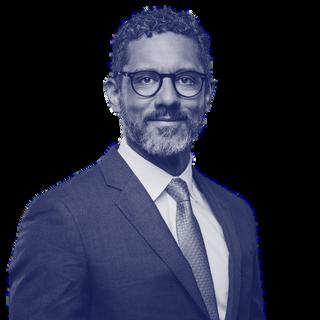
President & CEO
Palmetto Project
Civil Rights Attorney and Nonprofit Leader
Role: Financials and Budgeting, Co-Facilitator, Policy and Program Advocacy
Aaron brought critical expertise in nonprofit governance, resource mapping, and sustainable program development. He guided participants in understanding nonprofit models, legal frameworks, and the structures required to sustain grassroots work. His ability to link community engagement with broader civic, legislative, and funding contexts grounded the Academy in real-world feasibility. Aaron also led conversations on documentation, stewardship, and cross-sector accountability.
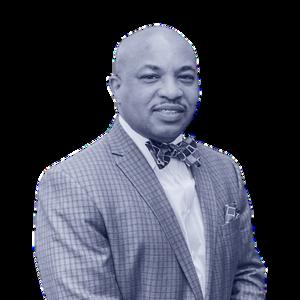
DENNIS MUHAMMAD
Education Dynamics Training and Consulting, LLC
Development Coach (J.D.)
Role: Groundwork Facilitator, Co-Facilitator, Community Outreach Specialist
Dennis anchored the curriculum in field credibility, cultural alignment, and spiritual framing. He modeled emotional check-in tools such as the 1–10 readiness scale and introduced frameworks for street outreach standards. His coaching elevated lived experience into formal leadership practice, emphasizing presence, personal transformation, and tactical discipline. Dennis created reflective space while reinforcing high expectations for impact
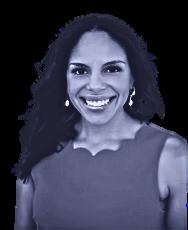
ASHLEY KREJCI-SHAW
CEO, InterMediate, LLC
Sustainable Development Practitioner and Research Consultant
Role: Curriculum Designer, Co-Facilitator, Research and Evaluation
Ashley served as the chief architect of the Academy, designing all seven core modules and the framework for applied learning. With expertise in ethical research, stakeholder analysis, and sustainable communitybuilding, she ensured sessions balanced rigor, relational trust, and reflection. Ashley coordinated the facilitation team and managed evaluation practices to center participant voice and growth. Her leadership ensured that learning outcomes were both measurable and meaningful.


Continuous Learning Through Feedback
Participant feedback across the first sessions demonstrates both the program’s immediate impact and areas for refinement. Cohort members consistently rated their experiences highly, with most evaluations scoring the sessions at the top of the scale. Words like “community,” “teamwork,” and “networking” were frequently used to describe the most valuable aspects. Several participants noted that the sessions reinstated trust and provided hope after prior disappointments with community partnerships.25
Regarding content and facilitation, the team was praised for balancing guidance with open dialogue. Participants emphasized that the blend of structured content—such as mission and vision development, financial transparency, and program design—with cultural reflection and group storytelling created a meaningful learning environment. The facilitation style was described as “very well balanced” across both surveys.26
Feedback also revealed which topics participants found most relevant: the role and definition of a Credible Messenger, leadership and self-awareness (Multiple Intelligences), coalition building and partnership strategies, mission/vision/values development, and funding or compliance frameworks.27
Suggestions for improvement were few but pointed: several participants requested longer sessions, noting that two hours was not sufficient to absorb the depth of information shared; a handful mentioned expanding lunch options to include vegetarian or vegan meals; and one participant encouraged facilitators to “read the room continuously,” ensuring quieter voices were brought into discussion.28
Taken together, the key takeaway is that participants are eager for deeper dives into both technical and systemic issues, while continuing to value the healing-centered, trustbuilding atmosphere. The strongest critique was not about quality, but about time: the sessions provided so much that participants left wanting more.
Most
Relevant Learning Topics Identified:
The role and definition of a Credible Messenger
Leadership and self-awareness (Multiple Intelligences)
Mission, vision, and values development
Coalition building and partnership strategies
Funding, compliance, and financial sustainability
These topics resonated deeply, underscoring the cohort’s dual need for personal development and practical tools to stabilize their organizations.
Suggestions for improvement
Session Length: Several participantsrequestedlongersessions,suggesting that twohourswas notsufficienttoabsorb the depthofinformationshared.
Lunch/Logistics: Afew comments suggestedaddingmore vegetarian/vegan options, thoughoverallsatisfactionwithhospitality was high.
ParticipationDynamics: One participanturgedfacilitators to“read the room continuously,” paying attentiontoquieter voicestoensure balanced participation.29
future topics requested
Policy advocacy and legislative strategy
Student loan forgiveness as it relates to nonprofit work
Competition versus partnership dynamics
Donor relations and funding compliance
Credible Messengers Observations
Cohort observations confirm that the success of the Academy was shaped not only by what was taught, but by how it was introduced, adapted, and embodied in real time. For participants, this meant that leadership development went beyond technical instruction. The relational environment—marked by trust, cultural fluency, and responsiveness— made complex frameworks usable in practice and relevant to lived experience. This alignment of strong tools with intentional facilitation created conditions where participants could absorb, apply, and sustain what they learned.
Participants consistently praised the facilitation style. One noted, “Dennis doesn’t just talk—he checks in, he shows up,” pointing to his presence in and between sessions. Another reflected, “Ashley asked real questions—she wasn’t scared of our answers,” capturing the evaluator’s balance of inquiry and empathy. A strong facilitation team modeled the same integrity, trust, and cultural fluency expected of participants—making leadership itself a determinant of program impact.
Flexibility
Cohort members valued the program’s flexible structure. Because participants were carefully vetted through interviews and relational conversations, they were trusted to complete assignments, engage meaningfully, and reinvest stipends responsibly. This trust deepened buy-in and reinforced accountability.
mutual trust
Stipends were more than financial support; they signaled shared power and respect. As one participant recalled, “I knew this Academy was different because [co-facilitator] wasn’t trying to control everything.. a lot up to us.” Autonomy reinforced the legitimacy of participants’ expertise and affirmed the facilitation team’s commitment to equity and trust.
Community leadership is too often treated as unpaid labor. The Academy refused to replicate that inequity. Participants were compensated for their time and emotional labor—not as an incentive, but as recognition of worth. The stipends created conditions for full participation, validating that their knowledge is professional, strategic, and essential. Compensation was not incidental to success; it was a core design principle enabling Credible Messengers to demonstrate their full leadership capacity.
Quality Team Process
Compensation as Credible Practice
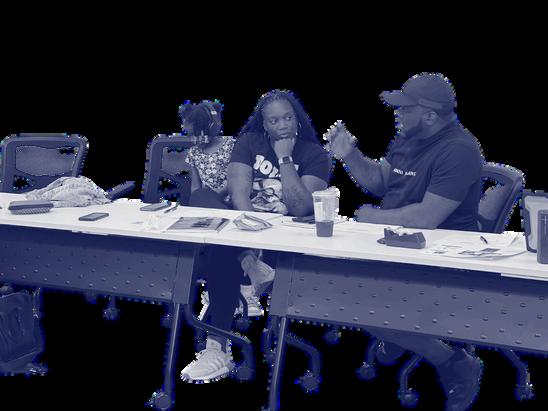
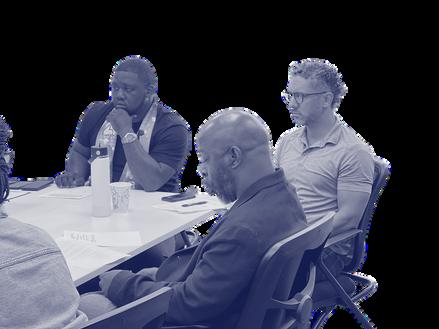
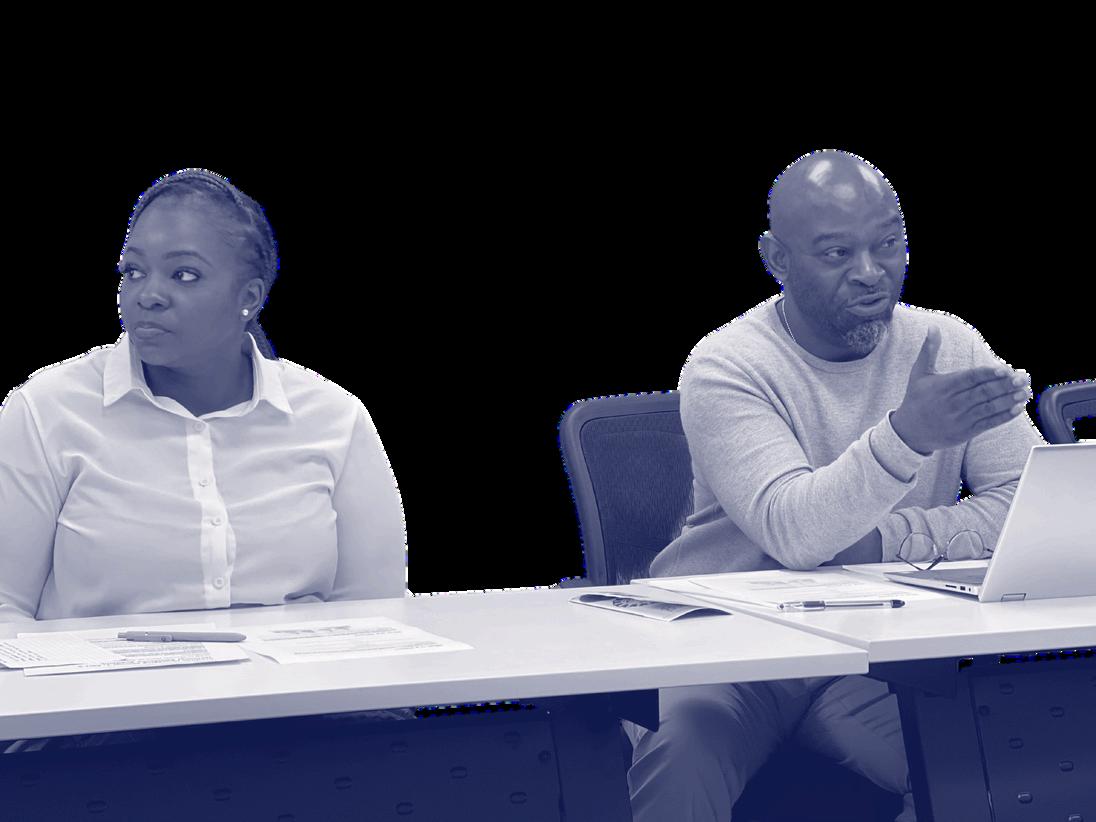
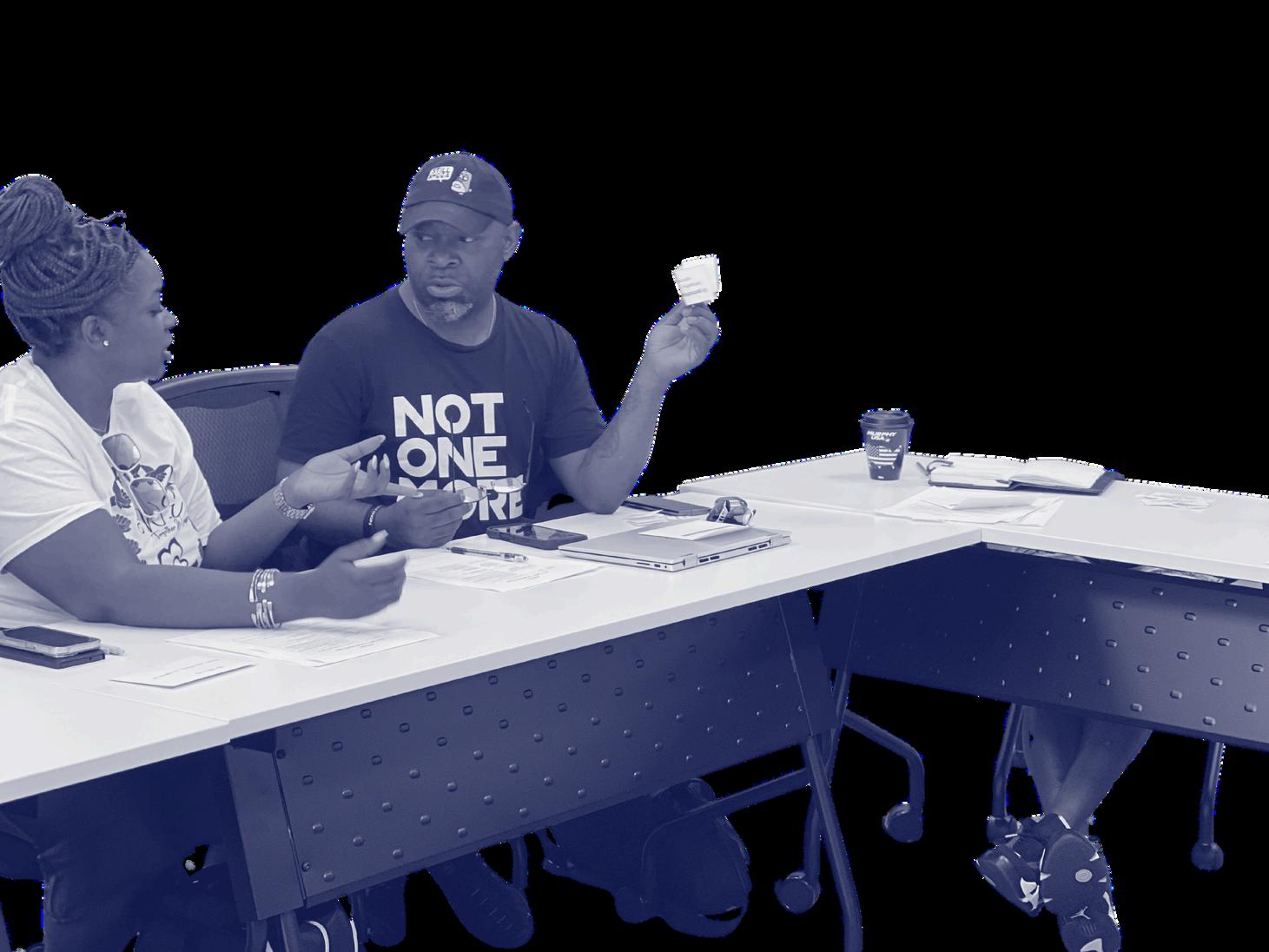
Pictured: Brittany Singleton and KeithSmalls
LIMITATIONS
As a pilot initiative, the Technical Assistance Academy generated powerful insights but within clear boundaries. The findings reflect the lived realities of a small, place-based cohort in Charleston, shaped by the program’s four-month design and relational pedagogy. They should be read as evidence of potential and early impact, not as universal claims. Confirming durability and broader applicability will require longer-term observation and replication across future cohorts.
pilot context
Implemented under a new initiative, the Academy’s findings are context-specific and not easily generalizable without adaptation. Its emphasis on emergent design and relational trust—rather than rigid standardization—meant some data was co-constructed, informal, or reflective. While this challenges conventional measurement norms, it strengthens cultural validity and participant relevance.
Systems-Level Impact
The Academy’s broader systems impact—particularly in stakeholder engagement and technical skill application—cannot be assessed within a pilot window. Future inquiry should explore scalability, long-term influence of this cohort’s leadership, and how geographically competent technical assistance can be embedded within public and philanthropic ecosystems.
Funding Continuum
The absence of a long-term funding continuum limited opportunities for sustained educational engagement and made longitudinal tracking difficult.
Future replication and scaling will require organizational stability, consistent financial support, and committed institutional backing.
Program Continuity and Stability
The Academy’s consistency depends on stable leadership, vested partners, and reliable funding. Organizational turnover, lapses in institutional support, or shifts in structure could weaken replication and limit expansion.
Time Sensitivities
The window to build on the first cohort’s momentum is finite. Without timely reinvestment, fragile conditions that enabled this pilot may erode, making it difficult to sustain or scale.
In sum, the Academy’s promise rests not only on its demonstrated impact but also on careful navigation of these risks and constraints—ensuring stability, continuity, and strategic investment to carry this model forward.
IMPACT PROJECTIONS
The work of Credible Messengers rarely appears in quarterly reports or dashboards. It lives in the quiet recalibration of a young person’s choices, the kitchen-table negotiations with parents on the brink, the anonymous ride to court or school that no one records but that changes everything. This labor is incalculable not because it cannot be counted, but because systemically it has not been. It is leadership too relational, too adaptive, too intimate to fit neatly in institutional frames.
This inaugural cohort alone touches thousands of individuals each year. Behind each number is a conversation, a chance encounter, a crisis averted. A 2024 analysis by the National Partnership for Women & Families valued unpaid caregiving in the U.S.—much of it invisible labor by women of color—at over $1 trillion annually. Messengers, both men and women, operate within this same parallel infrastructure of care and protection: a silent economy of compassion and community renewal, unregistered and underfunded, yet essential to collective well-being.
Their impact cannot be reduced to outputs. It must be felt, respected, and funded. What they offer is not just service delivery—it is the architecture of trust, the transmission of wisdom forged in struggle, and the blueprint for sustainable community safety.
This study is not a conclusion but a call:
To count what has not been counted.
To fund what has long been volunteered.
To follow the leaders we did not credential—but who have already been leading.
RECOMMENDATIONS FOR FUTURE STUDY
The Technical Assistance Academy has demonstrated proof of concept. To strengthen the evidence base and ensure continued growth, the next phase of study should:
Launch longitudinal studies to document how Academy graduates sustain leadership, grow organizations, and reduce community risks over time. Track long-term impact:
Conduct regional studies to identify universal strategies and highlight local adaptations that make the model transferable. compare across regions:
Measure Cost-Effectiveness:
Assess the return on investment of stipend-supported leadership compared to traditional training models.
Establish metrics that capture the annual reach, hours, and labor contributions of Credible Messengers across Charleston and beyond. Validate Community Impact:
PROGRAM EXPANSION
Scaling the Academy is not about “more of the same” — it is about building a stronger, replicable framework:
Deepen
Cohort Learning:
Invest in culturally aligned, trust-driven models that honor the lived experience of leaders.
Standardize Deliverables:
Develop templates for reflections, assignments, and reporting to ensure easy replication and funder transparency.
Co-Design with Leaders:
Involve Messengers in shaping future cohorts to reinforce ownership, sustainability, and system-level trust.
Investment in these next steps ensures that the Academy grows from a promising pilot into a sustainable, evidence-backed model for community leadership. As Brittany Singleton wrote in her final reflection: “Impact doesn’t start with paperwork—it starts with presence.” Chantelle Mitchell echoed this urgency, urging that sustainable funding is vital so that Credible Messengers can serve “with purpose and without hesitation.” Ronald Smith grounded the work in legacy, reminding us that “We are a collective of changemakers who understand the importance of healing, advocacy, and communitybuilding.”
30
31 32
Others called for expansion: Donnimechia Singleton envisioned a training and certification program to “change how leadership is defined in our communities, based on credibility rather than titles,” while Latoya Rivers pushed for a pipeline that multiplies messengers, insisting that “credibility shouldn’t stop with us. Our lived experiences were hard-earned—they shouldn’t die in silence.” 33 34
Supporting Credible Messengers means more than funding a program. It means investing in leaders whose presence interrupts violence, bridges communities, and builds trust in systems that too often fail the people they are meant to serve. The groundwork has been laid. The question now is whether funders will seize this moment to expand a proven model—scaling it into a sustainable movement where equity, lived experience, and community-rooted expertise are the engines of change.
APPENDICES
APPENDIX 1:
Abbreviations and Glossary
AECF
ATD
CEO
CJCC
CM
CMs
CM3
DJJ
DOJ
DSS
JDAI
MOU
MUSC
N. CHS
OJJDP
PP
RTS
SC
SOPs
TAA
TA
TRC
TTVIP
Annie E. Casey Foundation
Alternatives to Detention (Charleston ATD precursor to The Redirect Collective).
Chief Executive Officer – used for Aaron Polkey
Criminal Justice Coordinating Council – regional justice coordination body.
Credible Messenger (singular).
Credible Messengers (plural shorthand for the cohort).
Credible Messenger Mentoring Movement – national network and training initiative.
Department of Juvenile Justice – South Carolina state agency.
U.S. Department of Justice.
Department of Social Services – South Carolina state agency.
Juvenile Detention Alternatives Initiative – framework developed by AECF Memorandum of Understanding – formal agreement between partners.
Medical University of South Carolina.
North Charleston – abbreviation used in session tables.
Office of Juvenile Justice and Delinquency Prevention (U.S. DOJ).
Palmetto Project, a statewide nonprofit in South Carolina.
Recorded Transcription Summary (internal shorthand for Otter/transcript summaries).
South Carolina.
Standard Operating Procedures.
Technical Assistance Academy (sometimes referred to as “the Academy”), a project of The Redirect Collective program.
Technical Assistance – capacity-building or support services.
The Redirect Collective, a program of Palmetto Project (sometimes called "an initiative").
Turning the Tide Violence Intervention Program – MUSC’s violenceintervention initiative.
Date/Time Mar 8 11am Mar 22 11am Apr 12 10am Apr 26 10am May 17 10am
Topic
Introduction & Orientation
May 24 10am
Defining Credibility & Strategic Engagement
Stakeholder Mapping & Ladder of Inference Situational Analysis & Environmental Justice
Key Themes
Multiple Intelligences, Self-Discovery, Team Norms Trust, Community Validation, Organizational SOPs
Root Cause Analysis, Systems Thinking, Power Dynamics Harm Assessment, Cultural Literacy, Fundable vs Urgent Needs
Capital Mapping & Scarcity Mindsets
Community Capital, Nonprofit Partnership, Reframing Assets
Readiness, Reflection & Documentation
Jul 19 10am
Transition, Graduation & Investment Storytelling
Emotional Regulation, Parenting, Outreach
Notable Quotes
“You lead while you heal.” – Ronald Smith
Takeaways
Personal stories, song-based healing, reflection tools, understanding credibility
“We are credible because of how we’ve grown ” – Latoya Rivers
“We cannot fix what we refuse to name ” – Ashley Krejci-Shaw
“Just because it’s funded doesn’t mean it’s what we need ” – Keith Smalls
“Capital isn’t always cash it’s what you carry and what you give ” –Dennis Muhammad
“You can’t be in the field if you’re [functioning] at a 3 you’re not ready” – Ronald Smith
Mentorship Continuity, Program Sustainability, Strategic Messaging
“Quantify it not just for grants, but to remind ourselves what this is worth ” – Aaron Polkey
SOPs, flexible leadership, community-based competition
Leadership mapping, perceived vs real needs, rethinking problem ownership
Mental health and leadership, aligning resources, translating experience
Asset-building, emotional intelligence, collaborative sustainability
Readiness, participant checkins, beneficiary accountability, antiviolence rules of engagement
New phase prep, measuring impact, network-building, long-term vision
APPENDIX 3:
Voices of the Cohort (at a glance)
Participant
Brittany Singleton
Chantelle Mitchell
Ronald Smith Donnimechia Singleton
Tagline (Fan Brand)
The Root Raiser –Builder of bridges, breaker of boxes
Guardian of Hope –Fueled by faith and resilience
Superpower
Radical presence
Future Vision
Citywide network of “lighthouse” messengers
Steadfast authenticity
Latoya Rivers
Legacy Keeper –Healing through loss, guiding with truth
The Spiritual Force –Messenger of truth, guardian of grace
Community Healing Advocate –
Turning pain into purpose
Carlos Deveaux
The Rebuilder –
From chaos to change, from streets to service
Resilience born from tragedy
Certified trainings, sustainable compensation, curriculum for future messengers
Collective of compensated changemakers sustaining Positive Vibes legacy
Moving with prayer and conviction
Certification program redefining leadership by credibility
Bridge-building through authenticity
Persistence and vision
Healing house, certified network, pipeline for training future messengers
Cohort as a self-sustaining resource and support network
To ensure transparency and rigor in documentation, this appendix provides a crossreference between the numbered footnotes cited throughout the report and their corresponding entries in the Bibliography. The purpose is to demonstrate alignment between in-text references, participant reflections, and published scholarship.
By including this section, the Technical Assistance Academy affirms its commitment to ethical evaluation standards and clear attribution, offering funders and partners confidence in both process and product.
Corresponding Bibliography Entry
bell hooks, All About Love; Chantelle Mitchell, TAA Final Project
Paulo Freire, Pedagogy of the Oppressed; Carlos Deveaux, TAA Session 3 Transcript
Patricia Hill Collins, Black Feminist Thought; Latoya Rivers, TAA Session 3 Summary
Michelle Fine, Just Research in Contentious Times; Brittany Singleton, TAA Final Assignment
Mariame Kaba, We Do This ’Til We Free Us; Keith Smalls, TAA Session 3 Transcript
Na’im Akbar, Know Thyself; Ronald Smith, TAA Final Assignment
James Baldwin, The Fire Next Time; Donniemechia Singleton, TAA Reflection
Cohort member, Final Assignment
Participant comment, Session 2 – Part B
Transcript
Participant reflection, Session 3 – Part A
Transcript
Participant feedback, Session 1 – Part B
Transcript
Participant critique, Session 2 – Part B
Transcript
hooks, All About Love (2000); Mitchell, TAA Final Project (July 2025)
Freire, Pedagogy of the Oppressed (1970); Session 3 – Part A Transcript (May 17, 2025)
Collins, Black Feminist Thought (1990); Session 3 – Part A Transcript (May 17, 2025)
Fine, Just Research in Contentious Times (2018); Singleton, Brittany M., Credible Messengers: Final Assignment (July 2025)
Kaba, We Do This ’Til We Free Us (2021); Session 3 – Part A Transcript (May 17, 2025)
Akbar, Know Thyself (1998); Smith, Ronald, TAA Final Assignment (July 2025)
Baldwin, The Fire Next Time (1963); Singleton, Donniemechia, Final Assignment: TAA Reflection (July 2025)
Final Assignments (July 2025, unpublished)
Session 2 – Part B Transcript (April 26, 2025)
Session 3 – Part A Transcript (May 17, 2025)
Session 1 – Part B Transcript (March 22, 2025)
Session 2 – Part B Transcript (April 26, 2025)
In-Text Source (Short Form)
Participant comment, Session 3 – Part B
Transcript
Participant insight, Session 1 – Part A
Transcript
Participant critique, Session 3 – Part A
Transcript
Participant reflection, Session 2 – Part A
Transcript
Participant reflection, Session 3 – Part B
Transcript
Participant reflection, Session 4 – Final
Transcript
Participant critique, Session 3 – Part A
Transcript
Keith Smalls, Session 4 – Final Transcript
Carlos Deveaux, Session 3 – Part A
Transcript
Participant reflection, Session 3 – Part A
Transcript
Cohort member, Final Assignment
Facilitator Memos
Feedback Form (March 8, 2025)
Feedback Form (March 22, 2025)
Feedback Forms (March 8 + March 22)
Corresponding Bibliography Entry
Session 3 – Part B Transcript (May 24, 2025)
Session 1 – Part A Transcript (March 8, 2025)
Session 3 – Part A Transcript (May 17, 2025)
Session 2 – Part A Transcript (April 12, 2025)
Session 3 – Part B Transcript (May 24, 2025)
Session 4 – Final Transcript (July 19, 2025)
Session 3 – Part A Transcript (May 17, 2025)
Session 4 – Final Transcript (July 19, 2025)
Session 3 – Part A Transcript (May 17, 2025)
Session 3 – Part A Transcript (May 17, 2025)
Final Assignments (July 2025, unpublished)
InterMediate LLC & Palmetto Project, Facilitation Team Memos and Reflexive Journals (March–July 2025)
Palmetto Project, Technical Assistance Academy: Saturday Session Feedback Form (Responses) (March 8, 2025)
Palmetto Project, CM–TAA Feedback Form: Session 1, Part B (Responses) (March 22, 2025)
Palmetto Project, Technical Assistance Academy: Feedback Form (Responses) (March 8, 2025); CM–TAA Feedback Form (March 22, 2025)
(March 22, 2025) Ibid (same as 28)
Brittany Singleton, Final Assignment
Chantelle Mitchell, Final Project
Ronald Smith, Final Assignment
Donniemechia Singleton, Final Assignment: Reflection
Latoya Rivers, Final Assignment Sheet
Corresponding Bibliography Entry
Palmetto Project, CM–TAA Feedback Form: Session 1, Part B (Responses) (March 22, 2025)
Palmetto Project, CM–TAA Feedback Form: Session 1, Part B (Responses) (March 22, 2025)
Singleton, Brittany M., Credible Messengers: Final Assignment(July 2025)
Mitchell, Chantelle C , TAA Final Project (July 2025)
Smith, Ronald, TAA Final Assignment (July 2025)
Singleton, Donniemechia, Final Assignment: TAA Reflection (July 2025)
Rivers, Latoya, Credible Messengers Final Assignment Sheet( July 2025)
BIBLIOGRAPHY:
Published Sources
Akbar, Na’im. Know Thyself. Tallahassee: Mind Productions, 1998.
Baldwin, James The Fire Next Time New York: Dial Press, 1963
Collins, Patricia Hill Black Feminist Thought: Knowledge, Consciousness, and the Politics of Empowerment Boston: Unwin Hyman, 1990.
Fine, Michelle Just Research in Contentious Times: Widening the Methodological Imagination New York: Teachers College Press, 2018
Freire, Paulo Pedagogy of the Oppressed Translated by Myra Bergman Ramos New York: Continuum, 1970.
hooks, bell. All About Love: New Visions. New York: William Morrow, 2000.
Kaba, Mariame We Do This ’Til We Free Us: Abolitionist Organizing and Transforming Justice Chicago: Haymarket Books, 2021
Primary Data Sources
(Unpublished Materials, Palmetto Project – Technical Assistance Academy, 2025)
Final Assignments and Projects
Deveaux, Carlos. TAA Final Assignment. July 2025. Mitchell, Chantelle C. TAA Final Project. July 2025. Rivers, Latoya. Credible Messengers Final Assignment Sheet. July 2025. Singleton, Brittany M. Credible Messengers: Final Assignment. July 2025. Singleton, Donniemechia. Final Assignment: TAA Reflection. July 2025. Smith, Ronald. TAA Final Assignment. July 2025.
Final Assignments and Projects
Session 1 – Part A Transcript March 8, 2025
Session 1 – Part B Transcript March 22, 2025
Session 2 – Part A Transcript April 12, 2025
Session 2 – Part B Transcript April 26, 2025
Session 3 – Part A Transcript May 17, 2025
Session 3 – Part B Transcript May 24, 2025
Session 4 – Final Transcript July 19, 2025
BIBLIOGRAPHY:
(continued - pg 2 of 2)
Feedback Forms and Reflections
Palmetto Project. Technical Assistance Academy: Saturday Session Feedback Form (Responses). March 8, 2025.
Palmetto Project. CM–TAA Feedback Form: Saturday Session 1, Part B (Responses). March 22, 2025.
Palmetto Project. CM–TAA Feedback Form: Saturday Session 2, Part A (Responses). April 12, 2025.
Palmetto Project. CM–TAA Feedback Form: Saturday Session 2, Part B (Responses). April 26, 2025.
Palmetto Project. CM–TAA Feedback Form: Saturday Session 3, Part A (Responses). May 17, 2025.
Palmetto Project CM–TAA Feedback Form: Saturday Session 3, Part B (Responses) May 24, 2025
Palmetto Project CM–TAA Feedback Form: Final Session (Responses) July 19, 2025
Facilitation Notes and Memos
InterMediate LLC and Palmetto Project Facilitation Team Memos and Reflexive Journals March–July 2025
ACKNOWLEDGEMENTS
We gratefully acknowledge the contributions of:
Cohort members of Palmetto Project’s and The Redirect Collective’s “Technical Assistance Academy,” whose lived experience and leadership are the heart of this work.
Aaron Polkey | President & CEO, Palmetto Project
Jeffrey Elliot Fleming | Executive Vice President, Palmetto Project
Anne Marie Maertens | Vice President, Strategy, Engagement & Impact, Palmetto Project
Dennis Muhammad | Outreach, coordination, and facilitation support
InterMediate, LLC | Curriculum design, support, and program reporting
And all members of The Redirect Collective Steering Committee:
Andrea Lee-Zucker, Rev. Alverta Bowens, Rev. Alethia Meares, Radia Baxter, Tim Taylor, Maria Washington, and Keith Smalls.
The Redirect Collective extends deep appreciation to every Credible Messenger and their organizations who helped shape this project. The lessons, dialogue, and commitments captured here reflect a shared vision for safer, stronger, and more equitable communities across South Carolina.
This project was further informed by the collaboration and support of Palmetto Project and community partners, who contributed their time, wisdom, and encouragement throughout the process.
Content Governance
Palmetto Project retains final editing, formatting, and data approval responsibility.
© 2025 Palmetto Project, Inc. All Rights Reserved.
This report and its contents are the intellectual property of Palmetto Project and InterMediate, LLC. It is a product of Palmetto Project’s program, The Redirect Collective, and its pilot Technical Assistance Academy (TAA). Content reflects original research, facilitation design, and evaluation methodology developed by InterMediate, LLC. No part of this publication may be reproduced, distributed, or transmitted in any form or by any means, including photocopying, recording, or other electronic or mechanical methods, without prior written permission of the publisher, except in the case of brief quotations embodied in critical reviews and certain other noncommercial uses permitted by copyright law.
To request permission or inquire about licensing this framework for replication, contact: Aaron Polkey, Palmetto Project | apolkey@palmettoproject.org
Ashley Krejci-Shaw, InterMediate, LLC | info@intermediateplanning.com