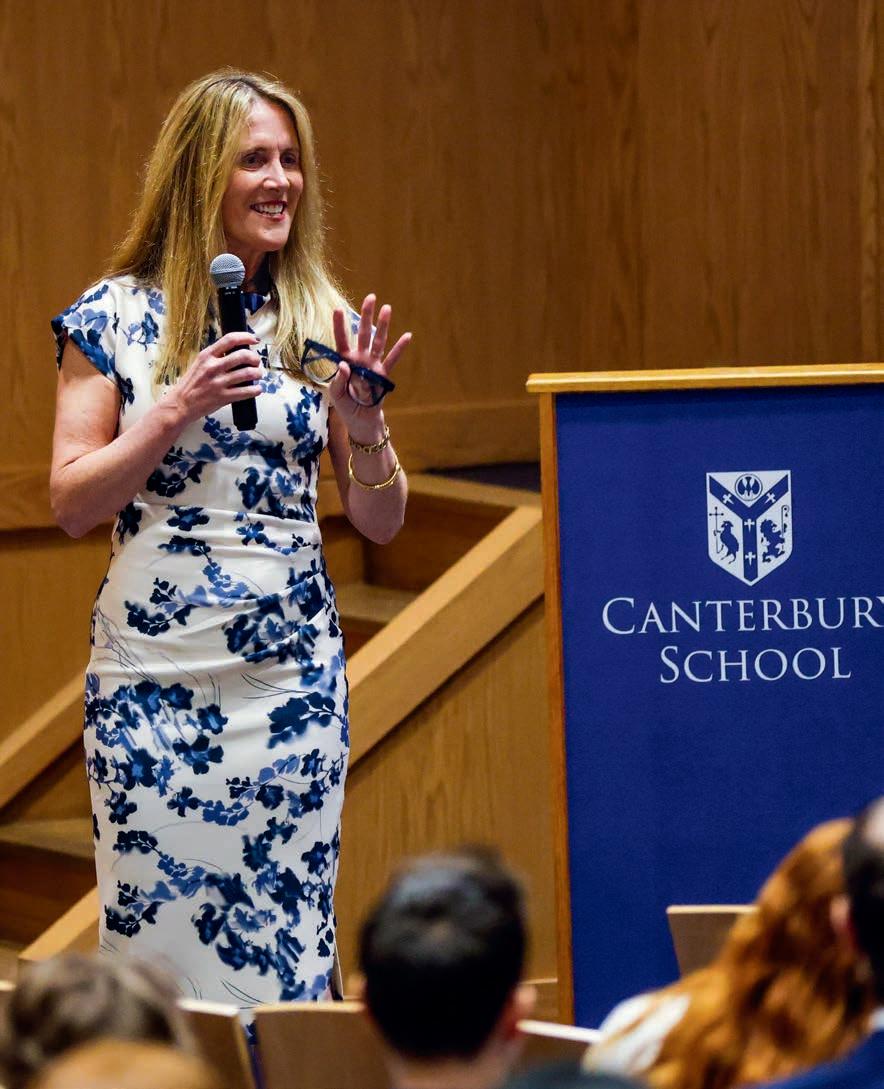
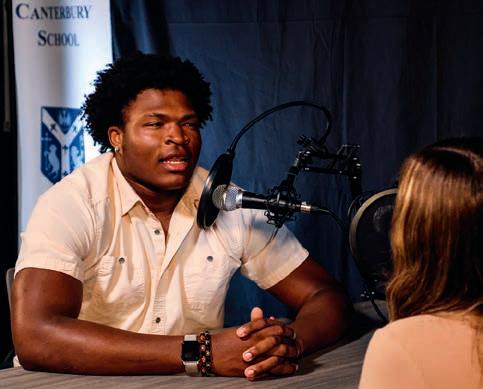
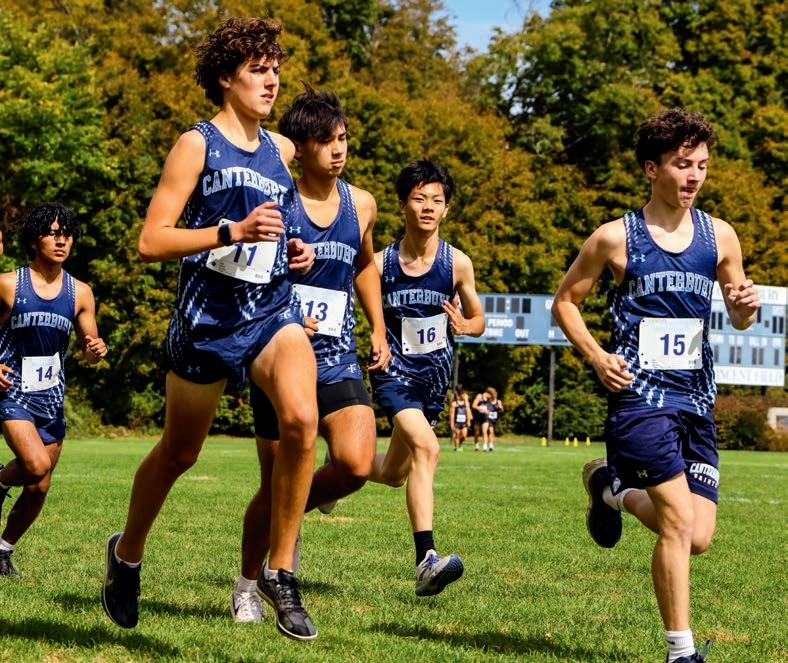
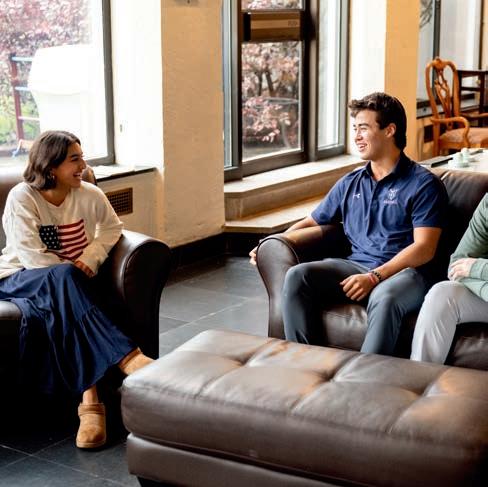
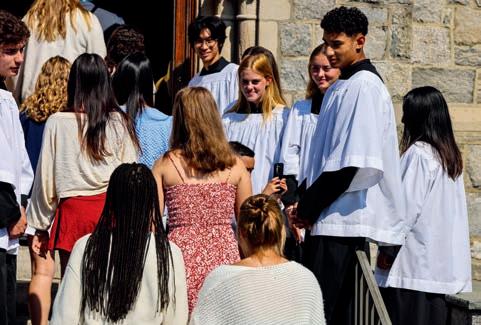
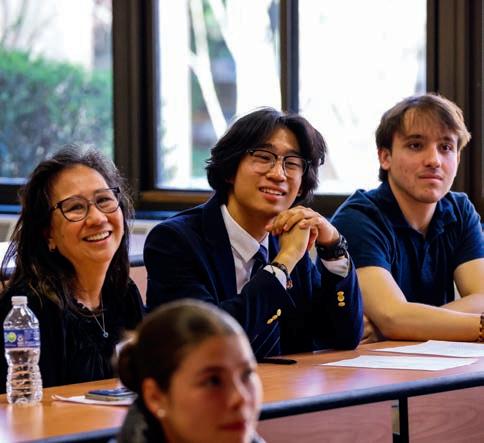
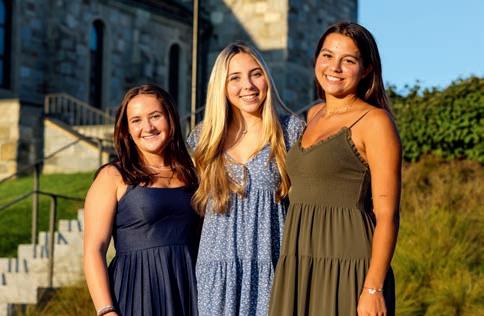
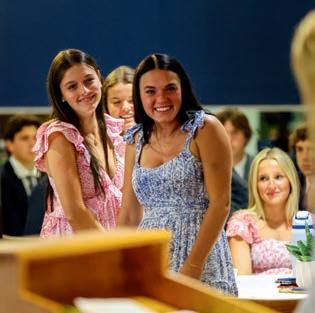
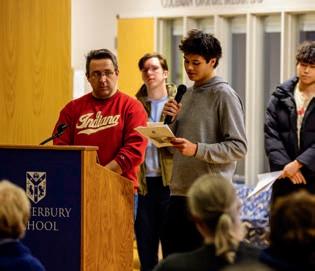
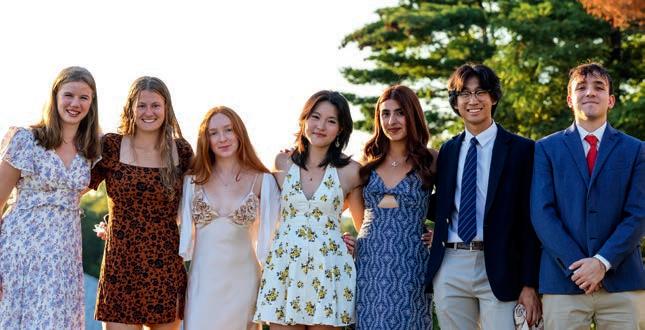
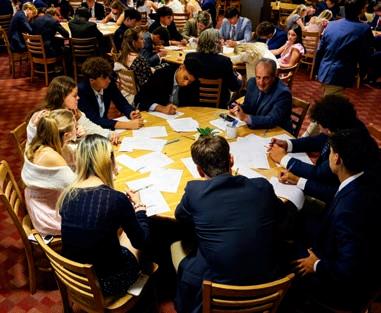
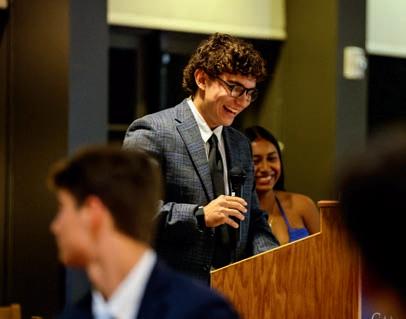
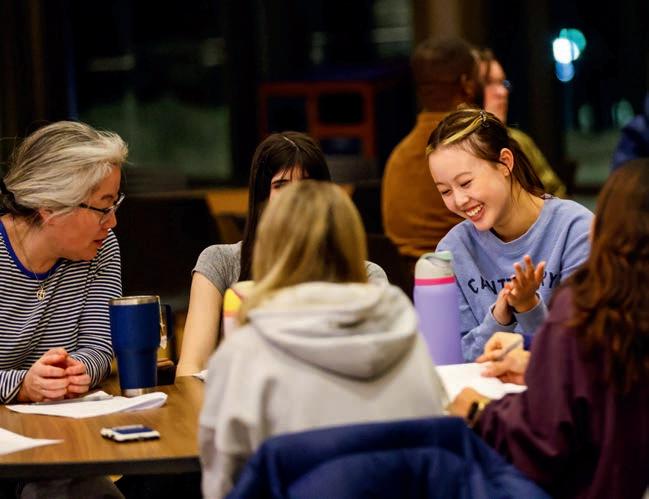
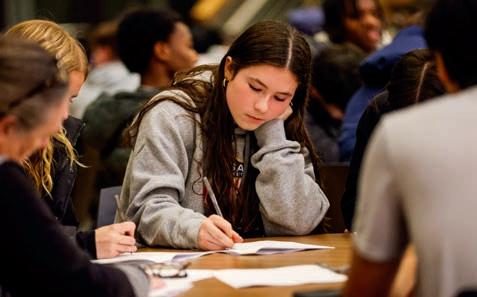
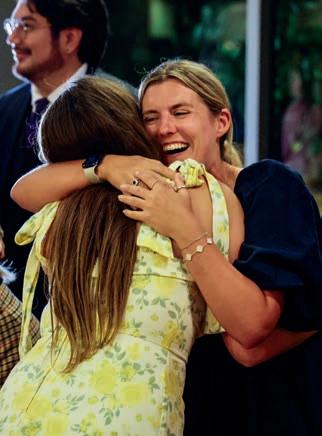
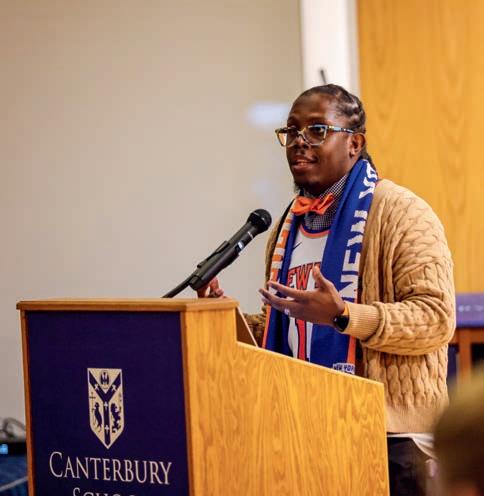
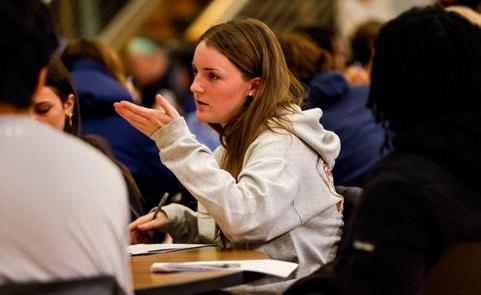
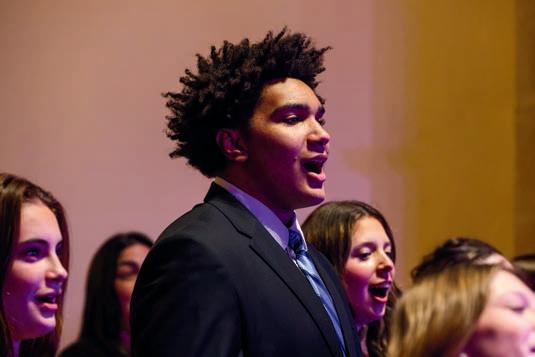
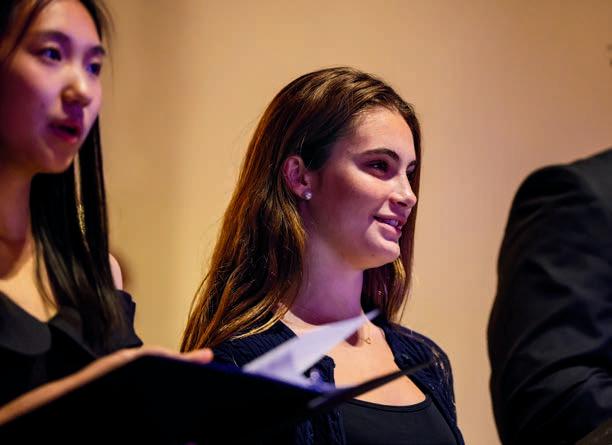
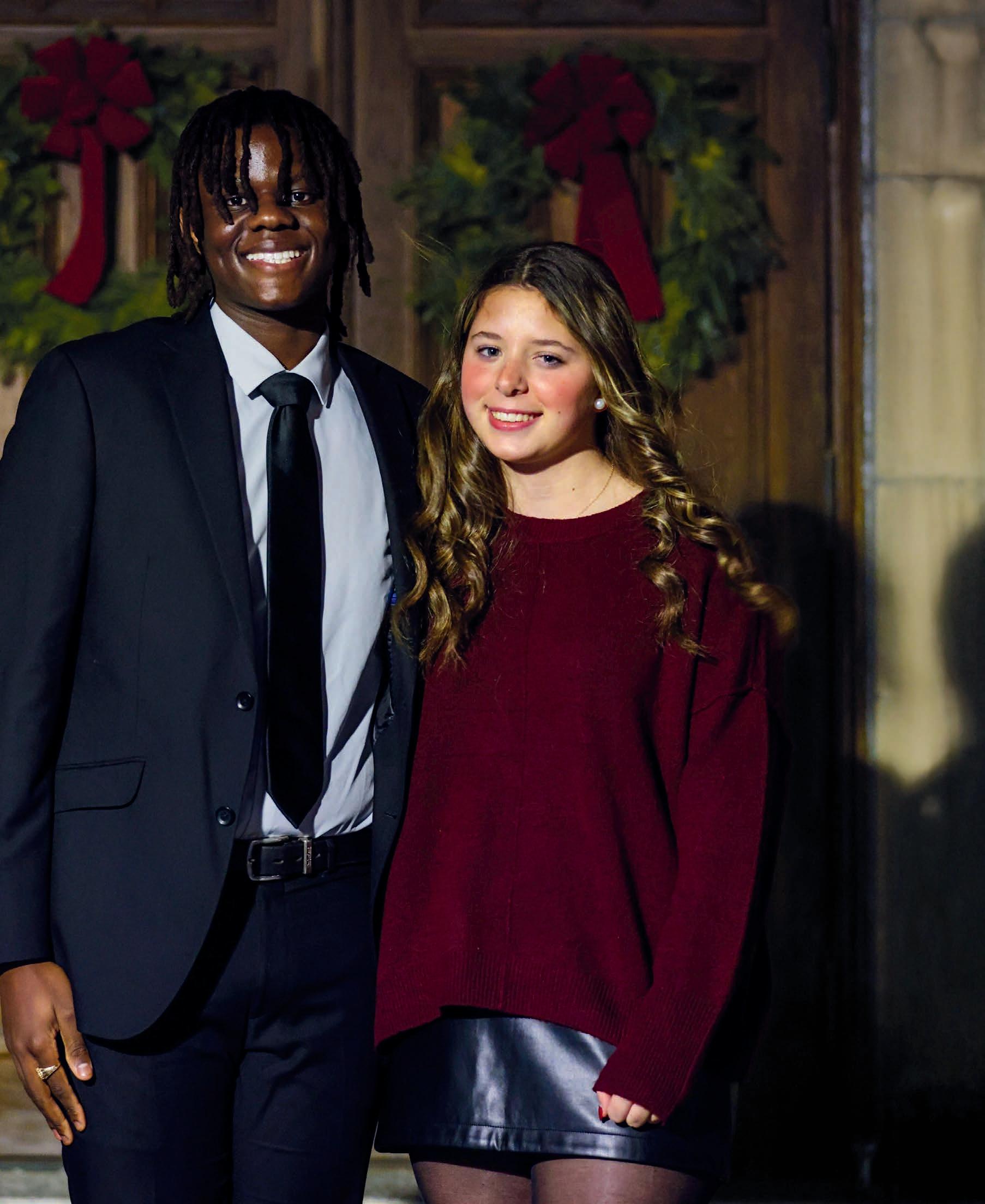
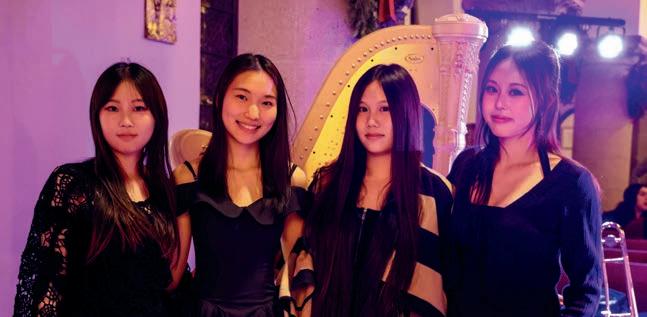
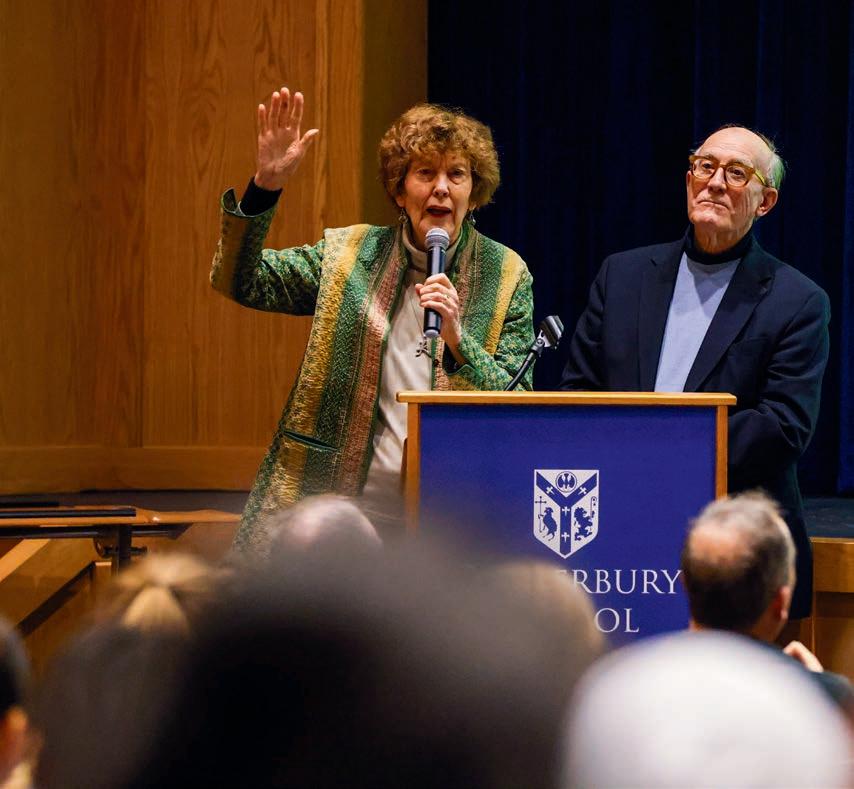
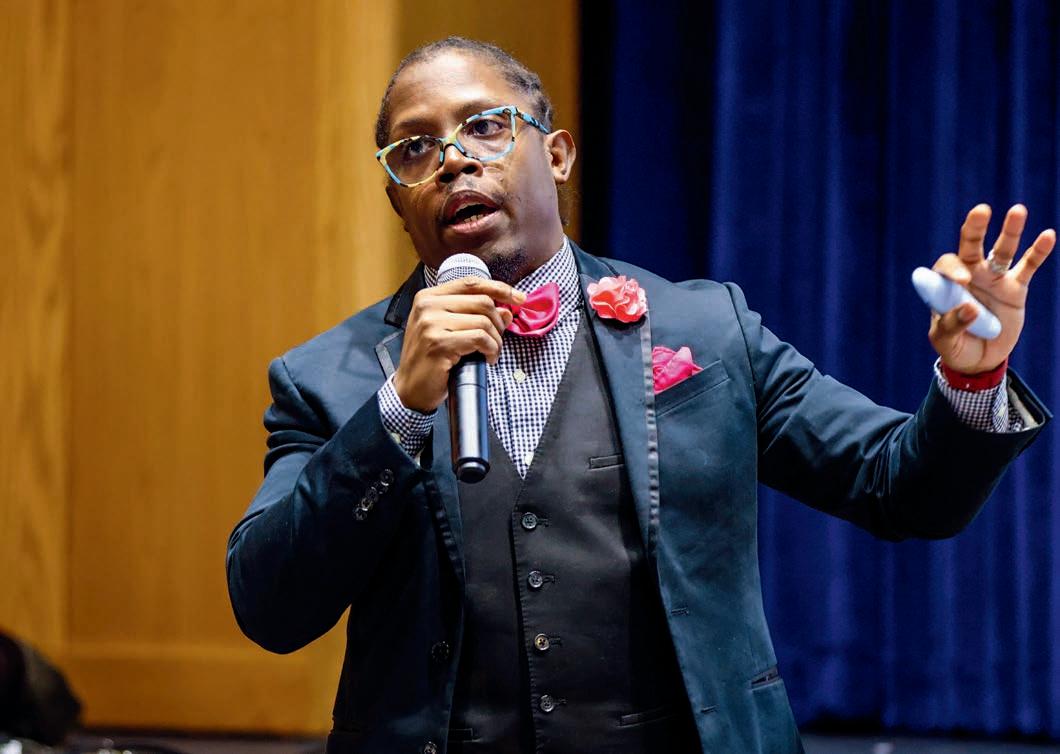
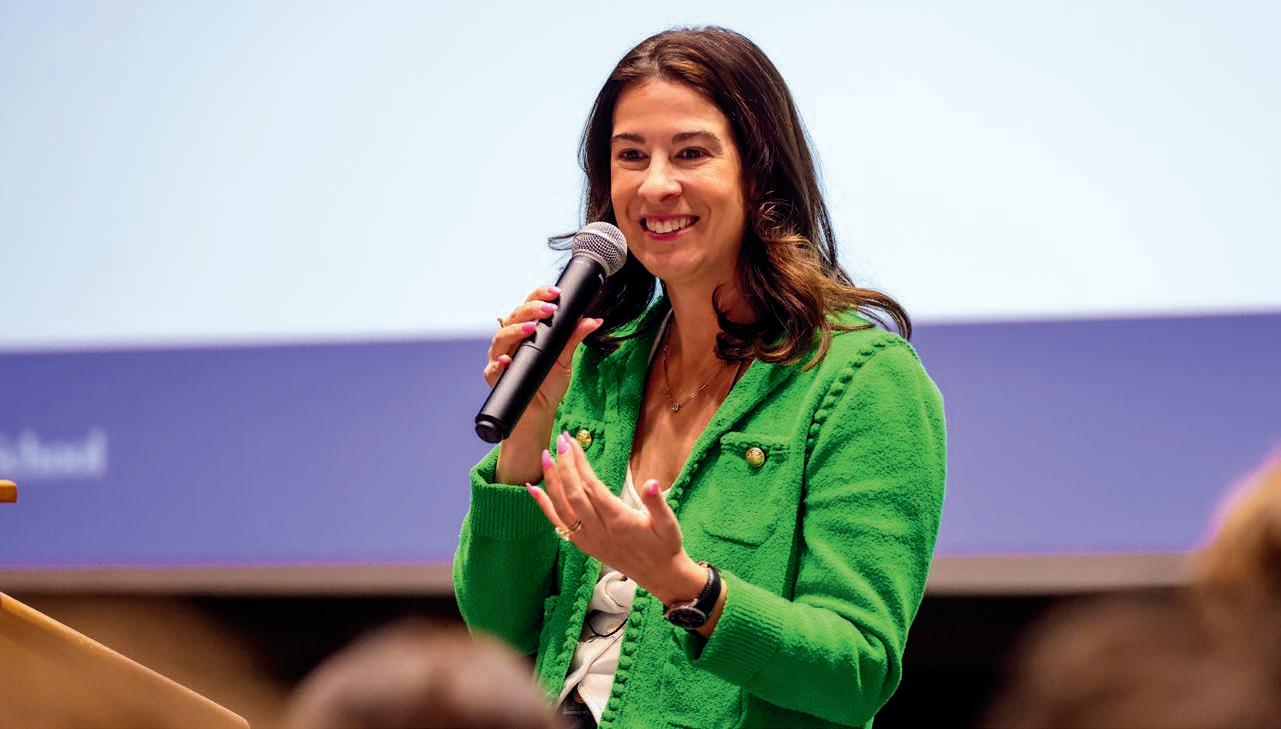
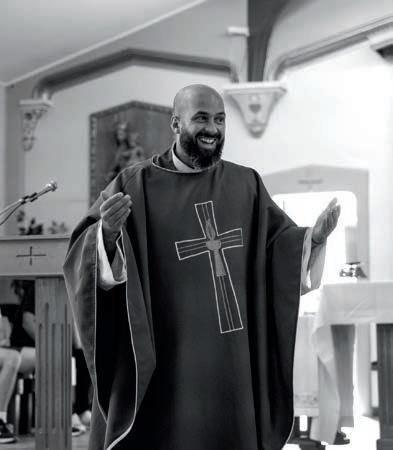
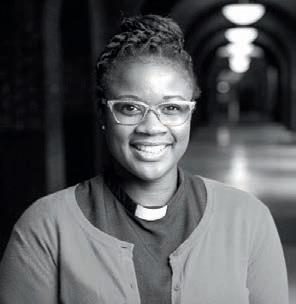
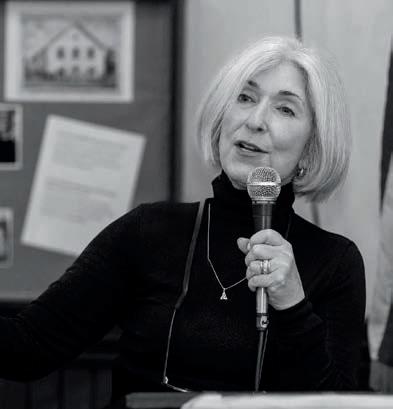
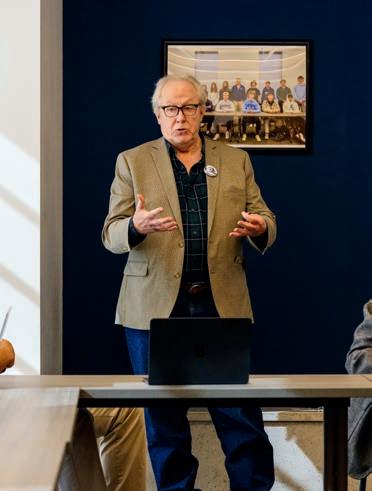
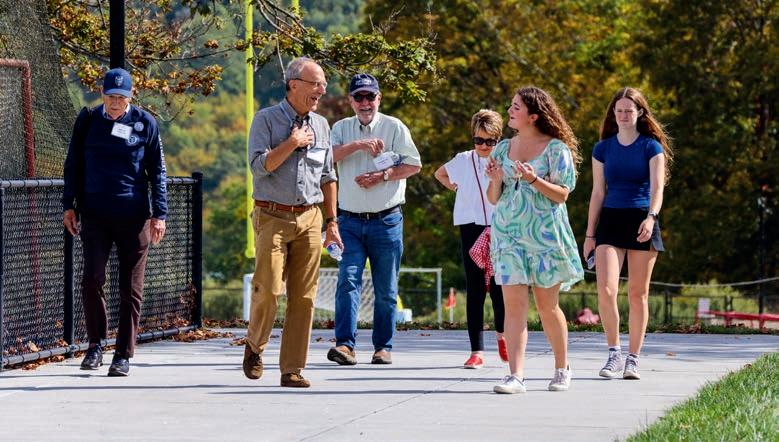
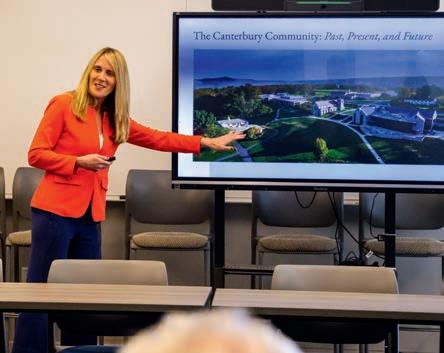
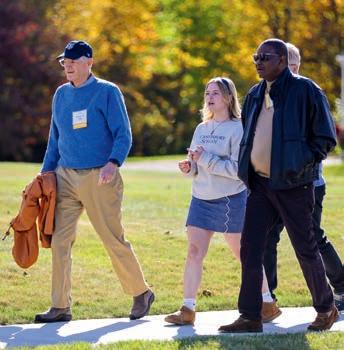
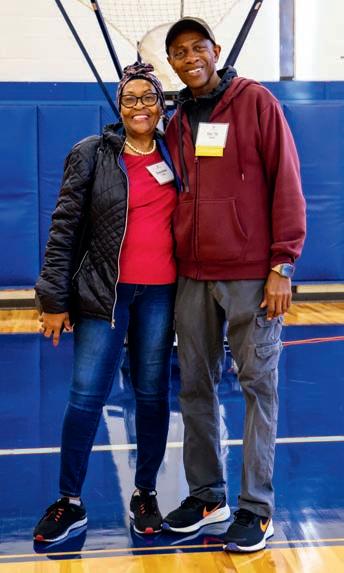
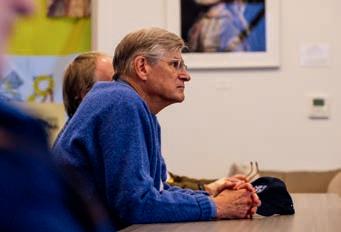
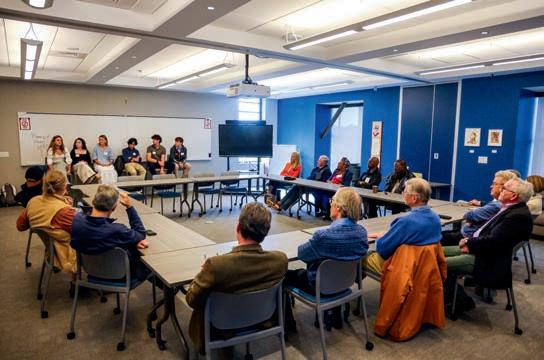
A panel of Canterbury leaders explores how the School’s Catholic heritage continues to shape a dynamic and inclusive spiritual life for students of all religious backgrounds in 2026 and beyond.
9
Ingleside
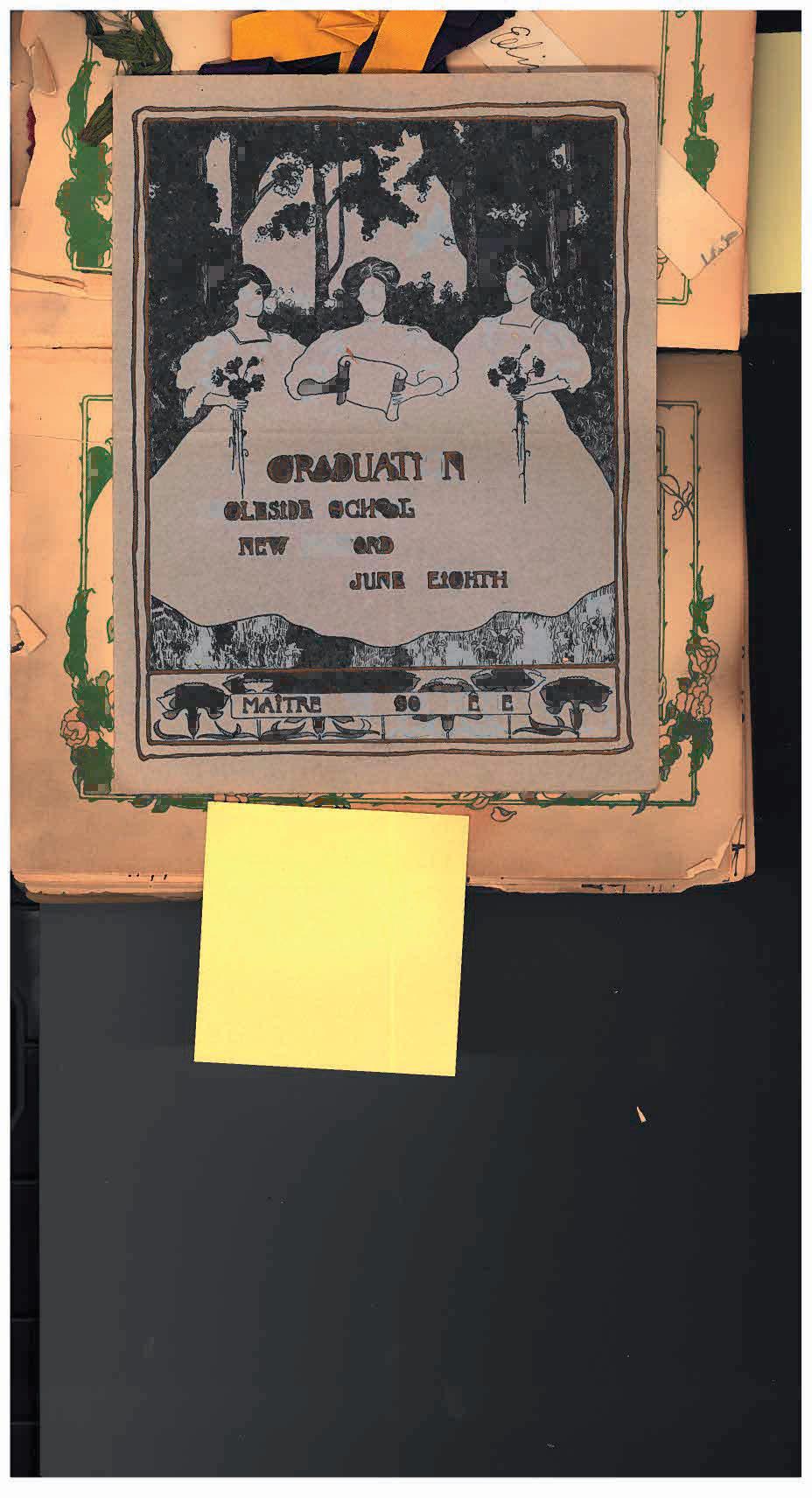
Before Canterbury made its home in New Milford, the hilltop was occupied by the Ingleside School for Girls, a finishing school for the daughters of prominent New York City families. Read how the ambition, energy, and vision of the eccentric Sarah Black would go on to pave the way for Nelson Hume to establish his own school here in 1915.
Building on Strength
Head of School Caroline Blatti reflects upon her first several months on the hilltop, the priorities of the School moving forward, and the meaningful action already taking place across campus.
DIFFERENT STARTING POINTS,
shared purpose
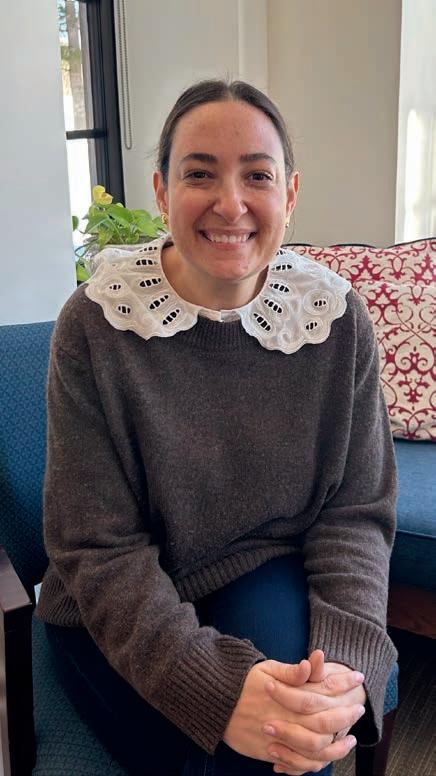
At Canterbury, we talk about the three “lanes” or “pathways” of faith available to students—students who arrive on the hilltop firm in their faith and want to grow, students with some religious background and who want to learn more about their faith, and students who are not religious or spiritual but who can better understand why faith plays an integral role in the lives of others. Why do you feel this is an important approach for Canterbury to take, both for students and the School’s mission?
Caroline: The first thing I would say is that it grounds us in our sense of who we’ve been as a school since 1915: a school founded by laypeople as a faith-based institution. I think it’s important that we honor who we’ve always been, while also reinforcing, growing, and evolving who we are today, so that we remain very relevant to teenagers and adolescents.
Now more than ever, it’s important for students to think deeply about their purpose in life—where they come from, who they are today, and who they’re becoming.
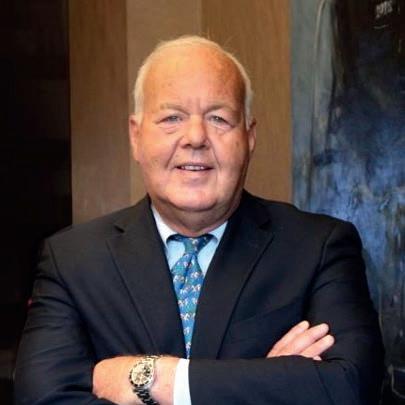
Nicole: From a board perspective—and from my many hats, having been involved in Canterbury over the years—I think Caroline is spot on. Additionally, Canterbury’s commitment to service, caring for each other, and approaching differences responsibly regardless of one's own views, all stem from the School’s Catholic heritage, which also helps create community.
Chris: One thing that’s been important to me as a theology teacher, Canterbury parent, and a pastor who wants his own children to develop their own faith is that students ask questions for themselves. In my daughter's case, I wanted her to take what she learned at home, compare it with other perspectives, and learn how others view or experience God. Then she could come to her own conclusions. From a parent’s perspective, Canterbury has done a good job creating an environment where we take faith seriously, but we are not trying to pigeonhole young people into a certain faith perspective. That approach has positive, long-term consequences.
ROOTED IN TRADITION,
open in practice
How does Canterbury balance honoring Catholic tradition while creating space for students from diverse religious backgrounds, and why is maintaining that balance so central to the School’s identity?
Fr. Brendan: Catholic schools are part of the apostolic mission of the Church in building the Kingdom of God—to help students to know God better and to respond to His promptings, in addition to inculcating a dedication to academic excellence. A Catholic school is faithful to the teachings of the Church, especially in moral and religious formation, while respecting the conscience and convictions of each student. We are committed to serving students of all religious and non-
religious backgrounds in their intellectual and spiritual formation and deepening interreligious dialogue, understanding, and respect. The aim of a Canterbury education is the formation of principled, value-oriented persons for others, in imitation of the example of Jesus.
Josh: There was a groundbreaking document from the Second Vatican Council in 1965 called Nostra aetate. It was the first time the Catholic Church recognized the validity of other religions and spoke openly about its relationship with the Jewish people, Muslims, and non-Abrahamic religions. In that document, the Church charged people of goodwill to engage with other faiths—don’t rely on stereotypes or assumptions, but engage in fruitful dialogue. I think Canterbury has done that with great enthusiasm.
Chris: Since I teach the entire Third Form, I try to give students a holistic view of the Christian tradition—not only Catholic, but also Protestant and Orthodox—so they understand the history of the religion. Of course, special attention is given to the Catholic tradition.
I also integrate references to Islam, Judaism, and other traditions into our readings and lectures. This discourse matters: we want to give students the academic, intellectual, and social tools to function in the world, and religion is an important part of that. If we can’t ask tough questions now or expose students to the traditions they’ll encounter later in life, then we would fail to prepare them adequately.
SEARCHING
FOR MEANING
in a complex world
What do you see as the unique spiritual needs of young people today, and how does that inform the way you approach your role at Canterbury?
Nicole: The world we live in is fast, complex, changing, evolving, and flawed. Students need a way to filter the noise—and to do so in a meaningful and grounded way—so they can learn to ask the right questions and develop a sense of direction and purpose. Spirituality, faith, service, and supporting one another are extremely important: families want environments like Canterbury where their children feel supported, connected, and safe.
Fr. Brendan: Students are open to and respectful of religious tradition, whether or not they personally participate in it. They are seeking a true experience of community and belonging. I believe Canterbury’s Catholic identity helps us provide our students with the fertile ground to begin finding meaning, purpose, and a vibrant and friendly community.
Josh: Young people today are desperately looking for meaning. They’re part of a generation defined by phones, social media, and AI. They long for something real—something that offers deeper meaning than likes or viral posts. I’ve been surprised by how often students want to discuss their faith journey or spirituality. It happens in class, in one-on-one conversations, in the dorm when I’m on duty, or when students stop by my
they’re learning and how those ideas are expressed in action. For example, when students attend retreats or come to make sandwiches for the Dorothy Day Hospitality House, we’re already using the same language to discuss what’s happening as they hear in class. When I ask them to write something down or reflect on a topic, it’s familiar to them because it connects with what they’re learning in theology.
WALKING THEIR
own path
In what ways have you seen Saints take ownership of their faith journey, either generally or specifically?
Nicole: I can think of many, but one example that comes to mind involves my oldest son. One of his closest friends at Canterbury came from a Catholic family but had never practiced the faith or received the sacraments. During his time at Canterbury, he began exploring his faith and decided he wanted to receive his First Communion and Confirmation. He completed that entire process during his last two years here, and my son and I actually became his godparents.
I’ll also mention the Emmaus retreats. We’ve heard many students speak about
their impact. Some come out feeling deeply connected to God, while others simply realize how much they matter to their peers. At a recent board meeting, one student said the retreat helped her realize how much she meant to other people. That kind of self-awareness and reflection is incredibly powerful.
Chris: I agree. Emmaus has been incredibly impactful. Students constantly tell me how transformative it is. What amazes me is hearing high school students encourage their friends to participate. That’s not something I remember happening when I was in high school. It speaks to the culture here. There’s a core group of students who truly value the pursuit of God and encourage others to explore it. It’s not aggressive peer pressure, but positive encouragement.
As a parent of four teenagers, I know how concerned parents are about peer pressure. Seeing students encourage one another to pursue meaning, belonging, and service is a beautiful thing.
Caroline: Coming into a new community like Canterbury, I’ve been curious about how that Catholic heritage shows up. One person who has had a tremendous impact on the community and me
is Father Brendan. His homilies are incredibly accessible to students at all stages of their journeys, and that accessibility is important. Teenagers shouldn’t feel intimidated if they don’t understand everything about theology.
I also agree that the Emmaus retreat also stood out to me during my first year here. Hearing students talk about the experience afterward was remarkable. That retreat allows students to engage with faith in ways that resonate with them personally and to understand that there isn’t just one way to live a life of faith, but rather different paths toward purpose and shared humanity. Many described it as transformative.
CONCLUSION
Canterbury’s approach to spirituality continues to evolve with intention. Through fostering both personal exploration and shared understanding, the School prepares students to engage thoughtfully with the world—and with one another—long after they leave the hilltop. In doing so, it meets students where they are and equips them with the clarity and purpose they seek, while remaining grounded in its founding and moving forward with confidence.
ONE SCHOOL, MANY PATHS: Student Faith at Canterbury
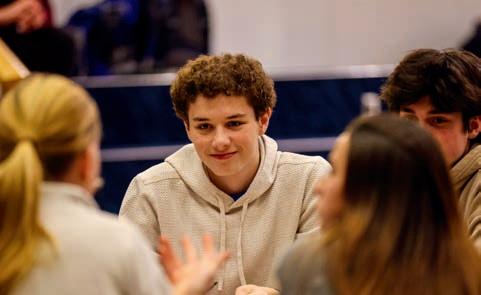
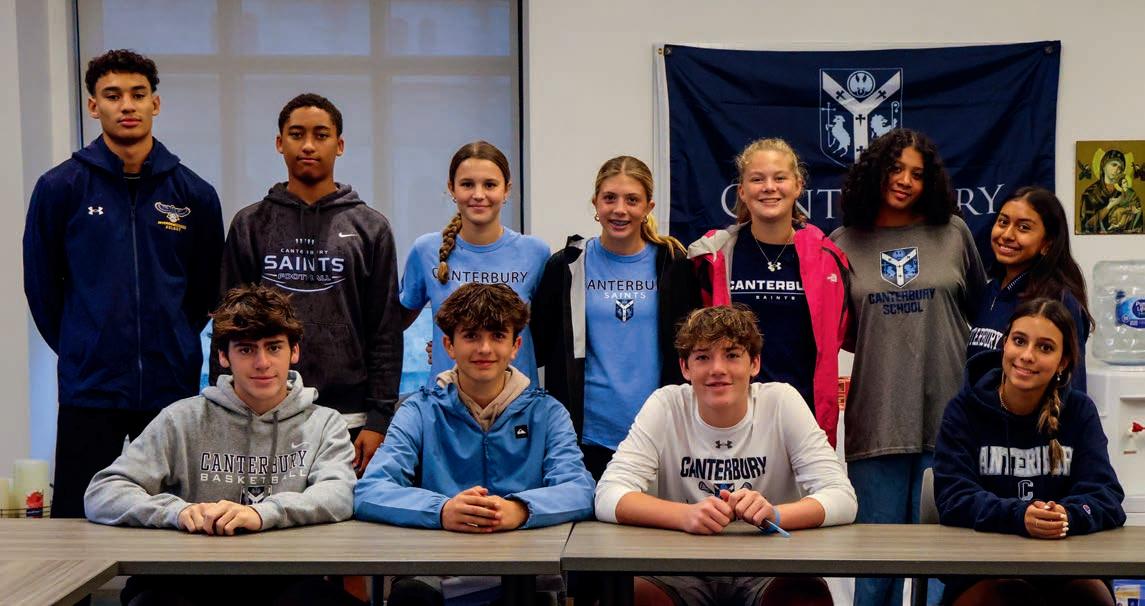
P ALLIUM held a second panel discussion about faith at Canterbury with four student leaders: Daniel McGuire ’26 and Yun “Angel” Lin ’26, both Sacristans, Hudson Soifersmith ’27 of the Jewish Student Association, and Zeba Ahmed ’26, a member of the Interfaith Council. Together, the students discussed the importance of faith in their lives and how Canterbury has helped them navigate their religious development. Their thoughtful answers highlight the specific ways spirituality is lived as a core value on the hilltop.
When you first chose to come to Canterbury, how important was spirituality in your life?
Daniel: I grew up Roman Catholic. My family went to Mass every Sunday, and sometimes more throughout the week. When we were looking at boarding schools, Canterbury’s Catholic heritage was one important factor among many.
Hudson: My answer is kind of the opposite of Dan’s. Religion and spirituality weren’t really a major part of my upbringing. Through Canterbury, I think I’ve become more devout in my faith.
Zeba: I’ve always felt spiritually connected growing up. I went to the mosque to pray as a child. So when I came to Canterbury, I wanted to learn about other religions while also strengthening my own faith.
Angel: My family is religious, but I come from China, which is an atheist state. One of the reasons I chose Canterbury is that it offers a unique opportunity for me to practice my faith in a way I am not able to do back home. Here, I feel happy and honored to have the opportunity to worship openly. I’m proud to say that I’m Catholic.
What inspired you to become faith leaders on campus?
Zeba: There aren’t many Muslims at the School, and I wanted to represent my faith. As part of the Interfaith Council, that’s exactly what we try to do, and it’s been a very positive experience. I feel more seen when I share my culture. It’s why the International AfFair is important to me. Culture and religion are connected. I share Bengali food and answer people’s questions about Islam. People really enjoy learning and trying something new. Seeing their reactions makes me feel proud of my culture.
Hudson: Older students encouraged me to embrace and represent my Jewish heritage. Seeing the example they set inspired me to do the same for younger Jewish students as well. The Passover Seder is especially meaningful to me. It’s a tradition I grew up celebrating with family. Being able to share my faith—especially with those who aren’t Jewish—is really special.
Daniel: My main influence was my mom. I told her I didn’t think I knew enough about theology to apply to be a Sacristan; she told me the role is about exploring faith and helping others do the same. She said questioning your faith is part of being Catholic. If you stop questioning, you stop growing. My trip to Lourdes also changed my perspective. It helped me realize that the sacristan role is fundamentally about service—just like many other leadership positions at the School.
Angel: I was inspired after the Emmaus retreat. I was assigned to a group with a lot of people I probably wouldn’t normally talk to, but we had deeply meaningful discussions. Faith united us in that space without judgment or stereotypes. I cried after it ended. I was so impressed by the power of the retreat and the Church that I decided I wanted to bring this experience to more people, which led me to apply for Sacristan. I feel really lucky to have been chosen.
How has Canterbury affected the way you approach your faith?
Daniel: I’m a very curious person. I started asking a lot of questions in my theology classes. Those conversations made me start to think about how I could apply the ideas we were learning in my life, not just talk about them.
Hudson: I agree that theology classes have had an important impact on me: they helped me see God in a different way, which made me more interested in my own faith, Judaism. Teachers even encouraged me to become a bar mitzvah, which I’m still working towards, and to attend temple more regularly.
Zeba: I’d say that connecting with other students of other faiths and cultures has allowed me to reflect on my own path in a new light. The more I learn from them, the more spiritually connected I feel overall.
Angel: Interactions with Father Horan have been very important to me. You can always go to him, and he shows unconditional support and love.
Why do you think developing spiritual awareness is important for people your age?
Daniel: Spiritual teachings often contain moral lessons, which can be especially useful for those of us who are still growing and learning. Even if you’re not religious, there are core truths and lessons from these teachings that help to build mutual respect.
Zeba: I agree. I’ve found that exposure to spirituality helps people treat others equally and respond to situations with stronger moral discernment.
Angel: Teen culture is often individualistic, but faith encourages us to love our neighbors: to understand others and create interconnected relationships.
Hudson: High school is a time of selfdiscovery. You’re figuring out who you are, and that includes spirituality. Sometimes people grow up with one religion but discover different beliefs or interpretations as they mature. That exploration is important.
FROM THE archives
Ladies First
How the Ingleside School for Girls cleared the way for Canterbury
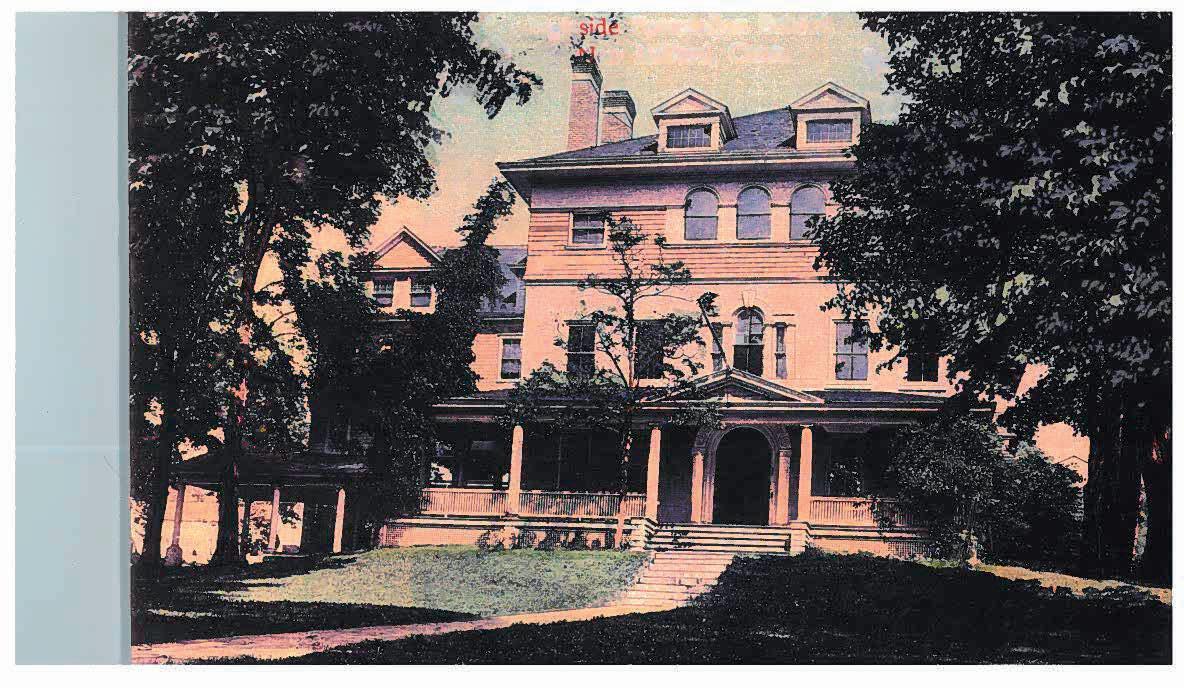
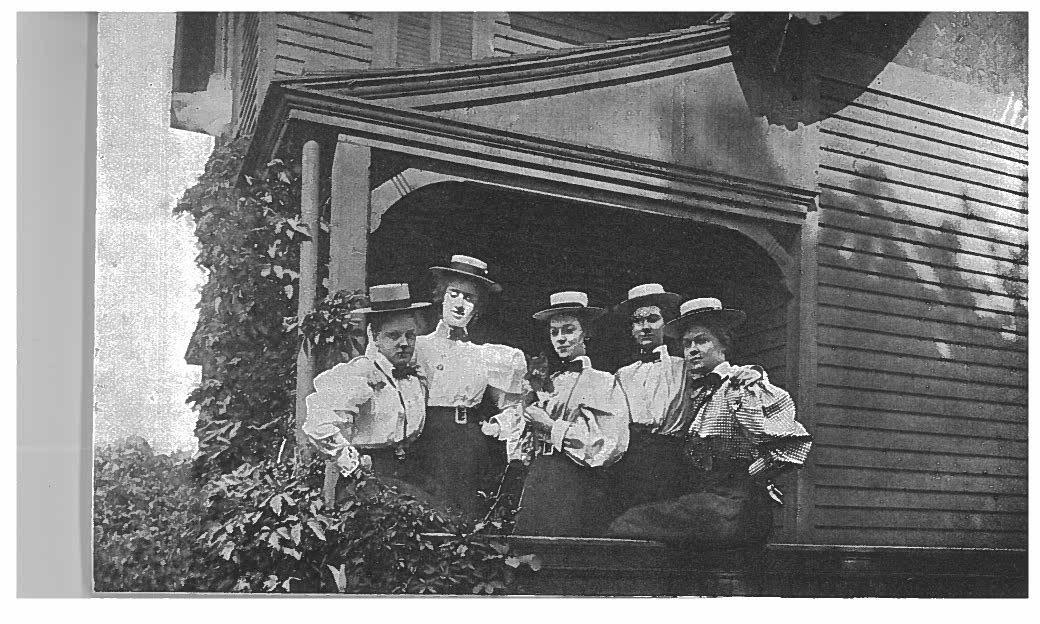
Long before Canterbury welcomed its first students to the hilltop, another school—ambitious, unconventional, and ahead of its time—had already taken root here. The Ingleside School for Girls, founded by the formidable Sarah Sanford Black, educated hundreds of young women on land that would later become Canterbury’s campus—and in doing so, quietly made Canterbury possible.
Little of Ingleside physically remains, but its story is woven into the earliest foundations of the School. Indeed, without Sarah’s bold—and at times financially ill-advised—vision, our beloved School may never have found its home on the hilltop.
Meet the Blacks
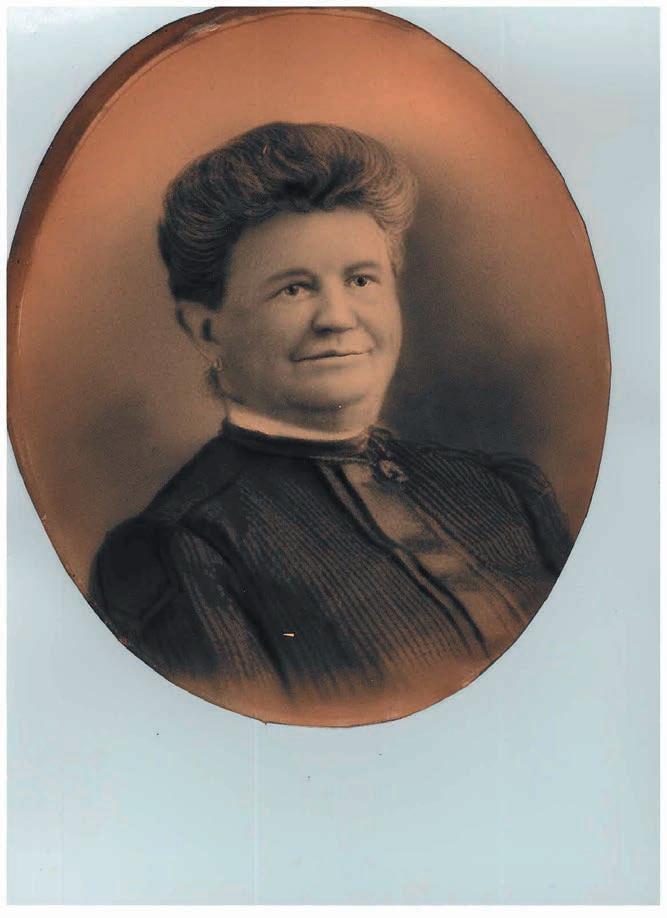
Sarah Sanford was born in New Milford in 1841 to a prominent and wealthy family. Her father was a local judge, and her mother maintained a beautiful home at the north end of the town green. While little is known about her early life, Sarah would emerge as a defining force in the town’s history in 1871, when she married William Black of New York City.
How the couple met in the first place remains a mystery, but William Black’s success as a businessman is not. Ball, Black & Company was among the nation’s premier jewelry houses—rivaled only perhaps by Tiffany & Co.—with a clientele that included the Vanderbilts, the Rockefellers, the British royal family, and Mary Todd Lincoln. Decades later, the business—then known as Black, Starr & Frost—would even earn a nod in Marilyn Monroe’s iconic “Diamonds Are a Girl’s Best Friend.”
So while Sarah (now Sarah Black), the only child of a prominent country family, would likely never have needed to marry to maintain a comfortable lifestyle, her
husband’s wealth allowed her to fund the full extent of her ambition, and she was happy to embrace the possibilities.
Building a Foundation
Shortly after marrying Sarah, William left his thriving business in New York City and settled in New Milford, where the couple lived with Sarah’s mother in Sarah’s family home for 10 years. The 1880 census lists William as a farmer, but this doesn’t quite capture all he accomplished.
“He was always trying to make money, but there does seem to be a civicmindedness to his actions,” says local New Milford historian Ted Hine. “When he came to New Milford, he invested in the town.”
William’s business interests were varied. He invested in New Milford Electrical Light Company, which included a power plant and dam and first brought electricity to the town. He converted a private home on the north end of the green into the posh Weantinaug Inn Hotel and marketed it to New Yorkers seeking fresh country air. Sarah’s love of European pottery inspired the establishment of the Wannopee Pottery Company. William and Sarah were also involved in the Town Improvement Society, which helped redesign the town green into the attractive public space it remains today.
But most crucially for the history of Canterbury, the couple also purchased large amounts of land, including farmland that would eventually become the School’s campus. During William’s lifetime, this property was billed as “the farm of the future,” employing the latest agricultural practices to raise Jersey cows. The Blacks built a house on the hill, the original Hickory Hearth, and a feature that would serendipitously prove
to be essential to the future of Canterbury: a windmill-powered water tower. This self-contained, elevated water supply system solved a problem that the public infrastructure had not been able to address, enabling running water on the hilltop for the first time.
In 1889, William died, leaving his vast fortune to Sarah. It wasn’t long before she put it to good use.
A Cottage Campus
Miss Blaine’s School had operated at 6 Terrace Place, just southwest of the current campus, since 1888. Now a private residence, Miss Blaine’s served to educate a handful of local girls, and by 1889, Sarah invested in the school with one chief demand: the name should be changed to “Ingleside,” a Scots word meaning “fireside.” By 1890, Sarah purchased the schoolhouse outright, renaming it “The Cottage” and establishing it as the cornerstone of the newly formed Ingleside School for Girls.
The school quickly became well known to New York high society. Wealthy, influential families were eager to send their daughters to be educated in Connecticut, and throughout the decade, Sarah purchased and built new facilities along Terrace Place and Aspetuck Avenue to keep up with growing enrollment. This “cottage campus” included student housing, an art studio, an infirmary, classrooms, dining facilities, and athletic fields.
In many ways, Ingleside was very much a traditional lateVictorian “finishing school.” Students were not expected to continue their education at college. Rather, marriages and engagements were listed in yearbooks at the end of each school year. But Hine describes Ingleside as “finishing school with a twist.”
“[Sarah] was a suffragette who believed in women’s rights,” he explains. “She was progressive for her day and believed a woman should be able to sit at the table with her husband and his peers and engage as an intellectual equal.”
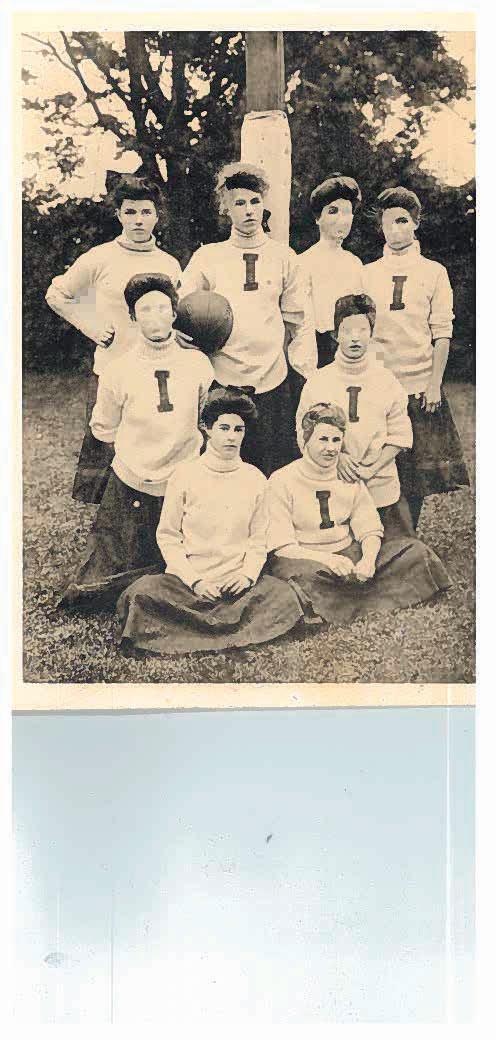
Just as Canterbury emphasizes the importance of a holistic education, girls at Ingleside could enjoy a well-rounded school experience. In addition to receiving a traditional core education, studying math, English, and languages, they studied the arts— including drawing, painting, music, and even photography— and athletics, including basketball and military drills. Students enjoyed regular excursions to Steep Rock and to Sarah’s Lake Waramaug home, “Lazy Lodge,” and attended Sunday services at All Saints Church on Aspetuck Avenue. Sarah also believed her students should experience the world beyond campus— often funding travel herself when families could not.
As time went on, hundreds of girls passed through Ingleside, and the ever-growing cottage campus—with buildings boasting charming names like Cuckoo, Robin, Bobolink, Wigwam, and Bindestrich—was still not enough to accommodate them all. Sarah turned her eyes to one of her husband’s investments in order to expand the school.
A New Foundation
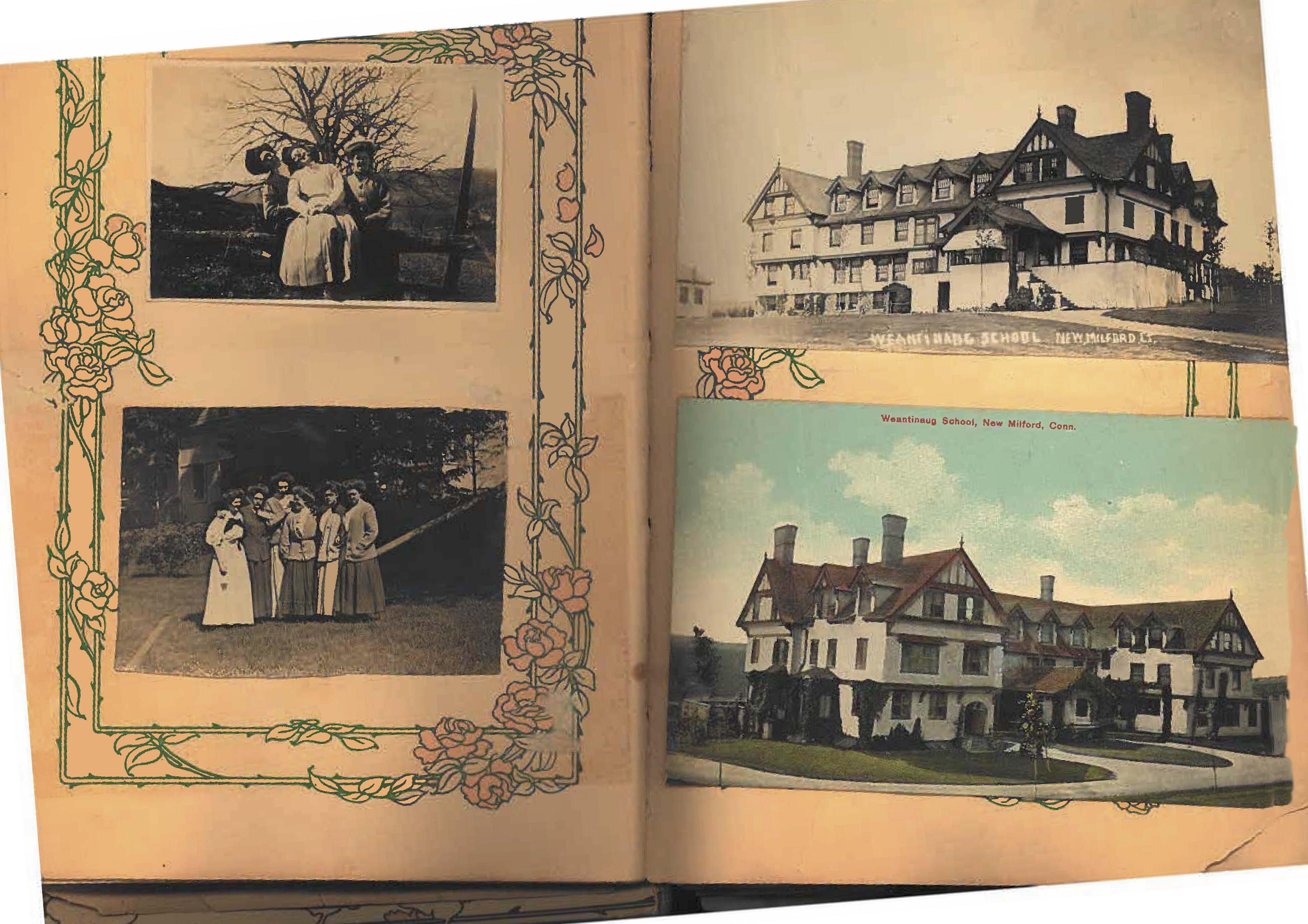
The Weantinaug Inn Hotel was still in operation when Sarah purchased it outright in 1897. That October, it reopened as Foundation House, consolidating much of Ingleside’s once scattered campus into a single building.
At this point, Ingleside School facilities were concentrated south of where Canterbury sits today. In 1901, Sarah pushed further up the hill with the construction of Weantinaug Hall—a grand Tudor-style building on the site of today’s Sheehan House parking lot—designed to house a new population of students: boys.
Sarah soon acquired the nearby Rectory School for boys, relocating its main building—now Canterbury’s Chaplain’s residence—beside Weantinaug Hall. In a 1901 yearbook, Ingleside girls present a drawing of the building with the caption “Where the naughty boys live,” though the experiment proved short-lived and the building was soon repurposed for postgraduate study for Ingleside alumnae.
might recognize.
Sarah didn’t live to see it for very long. In 1910, while vacationing on the Isle of Wight, Sarah died. Within a few years, Ingleside itself would follow suit.
Something New on the Hilltop
A straightforward accounting might attribute Ingleside’s demise to financial overreach. Even with the resources of the Black and Sanford fortunes and steady tuition, the school could not sustain Sarah’s pace of expansion. But another truth runs deeper: Sarah had been the singular force and vision behind the institution. Her hand was in every aspect of how Ingleside was run, down to housing new students in her own home. No one, it seemed, was capable of taking her place. Her shoes were simply too big to fill. By 1914, the Ingleside School for Girls had closed.
Sarah had always referred to her students as “pansies.” Not only did the pansy represent thoughtfulness, remembrance, and intellectual reflection in the Victorian language of flowers, but
the infrastructure that would make Canterbury School possible.
In 1914, Nelson Hume, Canterbury’s first Headmaster, was tasked with opening a Catholic boarding school for boys. He had nearly settled on nearby Litchfield— close enough to New York City but distant enough to ensure a separate identity and independent development of the institution. But when Ingleside School went up for sale—including the Weantinaug Hall, the Bungalow, what is now the Chaplain’s residence, athletic fields, and several other facilities—he was immediately enthusiastic about the possibilities the site presented. With an asking price of $25,000 (just under $820,000 in today’s money), Canterbury would already have dormitories, classrooms, athletic fields, and, crucially, a proven system of securing a steady water supply already in place on 12 acres. With little need to build from the ground up, Canterbury was able to open the following year, with room to grow. And, of course, grow it did.
The Chaplain’s residence is the only Ingleside building that remains on
a nondenominational school for girls, but since 1890, this hillside has been a place where young people learn, grow, and become themselves. Sarah’s ambition may have burned quickly, but it burned brightly and set the scene for Canterbury’s storied and ongoing history.
Many thanks to the New Milford Historical Society—especially Ted Hine, Anita Regan P ‘00, GP ‘29, and Robin Holick P ‘94— for their generosity of time and expertise. All photographs are courtesy of the New Milford Historical Society.
(Turn to the next page to learn more!) Trivia Time
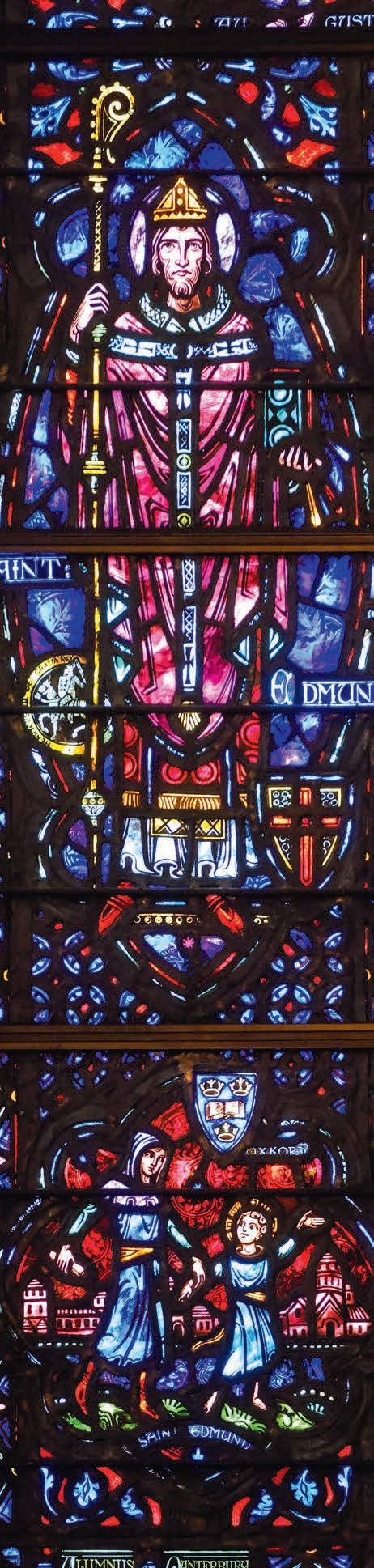
In 1915, Dr. Nelson E. Hume named Canterbury after the Canterbury Cathedral school—now The King’s School—in England, the oldest continuously operating school in the world. In honor of that connection, he designated four Archbishops of Canterbury as the School’s saints: St. Augustine, St. Anselm, St. Dunstan, and St. Edmund, his own baptismal saint.
Edmund of Canterbury: Scholar, Archbishop, Saint
In recent years, School Meeting’s opening prayer has ended with the same intercession: “St. Edmund of Canterbury: pray for us.” But who was he?
St. Edmund of Canterbury was a wellregarded academic, a gifted orator, and the Archbishop of Canterbury from 1233 until his death in 1240. His canonization just six years later reflects how deeply his faith, good works, and principled leadership left a mark on the Medieval world.
Born in Abingdon, England, around 1174, Edmund was the eldest of at least six children. His parents—Reynold, a successful merchant, and Mabel— were deeply pious. After studying at both Oxford and the University of Paris, Edmund went on to lecture in mathematics and dialectics, but later devoted himself to the study and teaching of theology. Sometime between 1205 and 1210, he was ordained a priest.
Given his lifelong devotion to simplicity and piety, it is widely agreed that Edmund might have opted for a monastic life if not for his reputation as an eloquent orator. In positions at
Calne parish and Salisbury Cathedral, he not only preached but also devoted his time, salary, and worldly possessions to serving the poor.
By 1233, his talents and efforts were recognized by Pope Gregory IX, who appointed him Archbishop of Canterbury. While Edmund was hesitant to accept the role, he ultimately agreed, though his staunch defense of the Church’s rights in England often put him at odds with the young King Henry III and the monarch’s many allies.
In 1240, discouraged by political infighting, Edmund set off to Rome, but would never reach the Vatican. While in France, he fell sick and died and was laid to rest at Pontigny Abbey. His grave became a popular pilgrimage site, and it wasn’t long before miracles were reported there. Despite powerful criticism among England’s elite, he was canonized just six years after his death.
St. Edmund embodies Canterbury’s Five Values—Honesty, Respect, Compassion, Spirituality, and Self-reliance—and stands as a powerful example of what it means to be a Saint.
ON THE hilltop
Faculty & Staff Support
Building on Strength: Listening, Learning, and Early Momentum at Canterbury
BY: CAROLINE BLATTI
As I approach my first anniversary as Canterbury’s seventh Head of School, I wanted to take a moment to share some early thoughts and reflections with you. As you will see in the pages that follow, these past months have been full, energizing, and deeply meaningful. Throughout that time, I have had the privilege of meeting with students, parents, alumni, faculty, staff, and trustees. Our conversations have been thoughtful, candid, and enlightening—reinforcing just how deeply this community cares about Canterbury and its future.
Most importantly, these discussions have helped shape the questions guiding our work and the priorities now taking shape. What follows reflects the early momentum already underway— conversations now translating into meaningful action. Some are in early stages of exploration, while others are actively in progress. Together, they reflect a shared commitment to strengthening the Canterbury experience, supporting the people who make it possible, and preparing thoughtfully for the future.
Academic Collaboration and Support
We have secured funding for a comprehensive faculty compensation and workload study, along with a broader review of benefits, policies, and procedures. Independent schools thrive because of strong relationships between students and educators, and this study will help us continue attracting and retaining outstanding faculty and staff who are deeply committed to our students and our mission.
Experiential Leadership
We are excited to launch the Canterbury Experiential Leadership Program beginning in summer 2026. The inaugural year will include more than 30 placements, with Fifth Form students (rising seniors) participating in mentorship and real-world career-exploration experiences. Through partnerships with alumni and parents, students will gain exposure to professional pathways, build confidence, and develop the skills and relationships that will support them long after graduation. Building on that momentum, a new Student Investing Program will launch in fall 2026, giving students the opportunity to develop financial literacy, leadership, and applied decision-making skills through hands-on investment experiences and portfolio management.
The Academic Hub continues to bring greater alignment and collaboration across several areas that support student learning, including the Donovan Center for Learning, College Counseling, faculty collaboration, and the David C. Copley ’70 Library. We are also continuing to evolve our approach to digital information literacy, ensuring students develop the research, critical thinking, and information skills they will rely on throughout their academic and professional careers.
New Academic and Creative Opportunities
In response to a strongly expressed interest in expanding academic and creative opportunities for students, we are exploring new and enhanced programming in digital media and film, STEM, finance and entrepreneurship, and the arts. Early planning is focused on how these areas can complement Canterbury’s existing strengths while creating new pathways for students to pursue emerging interests.
Student Health, Nutrition, and Athletic Performance
We have begun a new partnership between an external nutritionist and our athletic department and health and wellness team to support student wellbeing and performance. This initiative is part of a broader commitment to supporting the student experience and ensuring students have access to resources that help them thrive both on and off the field.
Assessment and Academic Readiness
This year, we have introduced the PSAT 8/9 to all Third Form students and will begin exploring how standardized test preparation can be thoughtfully incorporated into the student experience. This decision is part of a broader conversation about academic readiness and how best to support students as they prepare for college and beyond.
Student Life and the School Day
We are reviewing student life data and community feedback to strengthen the daily and residential experience at Canterbury, including evaluating the weekend program and residential life and continuing conversations about the academic schedule and how it shapes the pace of learning and student workload.
The Future of Campus
Work is moving forward on a new Campus Master Plan that will guide the future of our spaces and resources. This effort is helping us take a thoughtful, long-term view of how our campus can best support the evolving needs of teaching, learning, student life, and residential living. Thoughtful planning positions us to steward our physical environment responsibly and prepare for the needs of future generations of Saints.
Campus Safety and Security
A comprehensive campus safety and security assessment has been completed, marking an important step in our ongoing commitment to student wellbeing. All campus buildings now operate with key card access, and cameras are being installed at the exterior entrances to dormitories. These enhancements help ensure that our policies, practices, and systems continue to reflect best practices and support a safe residential and learning environment for our community.
Strategic Planning in Action
With new leadership in place, we are thoughtfully revising and refreshing Canterbury’s existing Strategic Plan to ensure it reflects both our current strengths and our aspirations for the future, building on the strong foundation already established while incorporating insights gathered through recent listening sessions and collaborative discussions with faculty, staff, and trustees.
We have only just begun, but I am thrilled by the early momentum we have built together and by the partnership and candor of this community. The goal is not to begin anew, but to clarify priorities, strengthen alignment, and ensure that our strategic framework continues to guide Canterbury with focus and purpose in the years ahead.
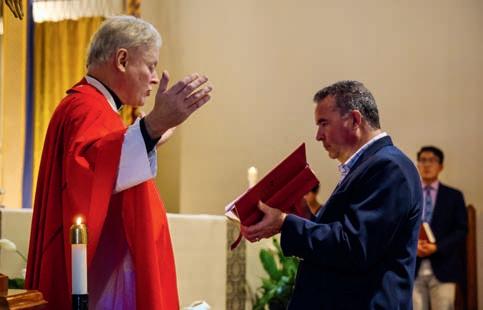
MASS OF THE HOLY SPIRIT
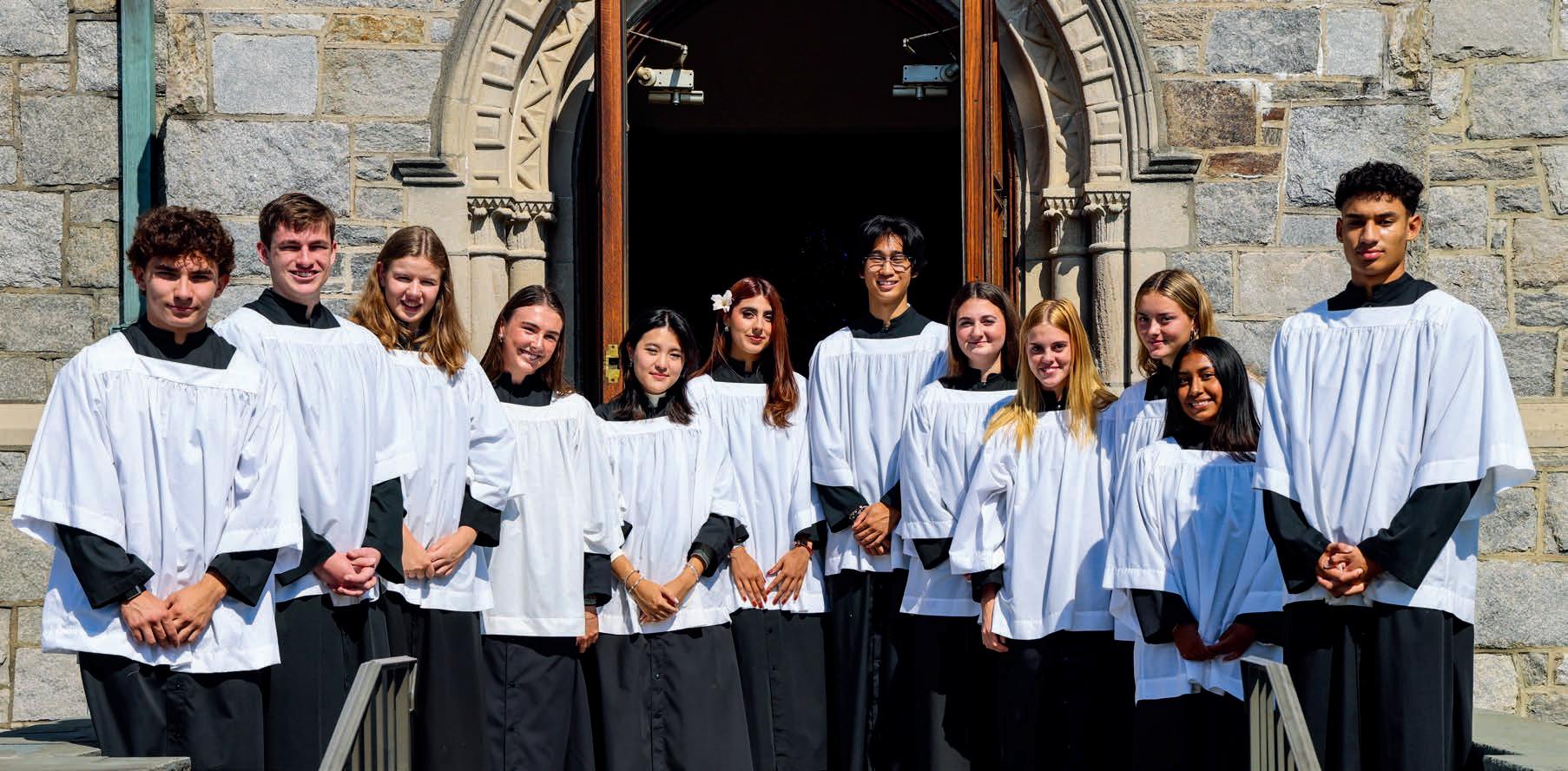
This first Mass of the academic year is a special tradition on the hilltop. Not only does it offer an opportunity to connect and reconnect with fellow Saints in prayer, but it also celebrates the installation of the School’s new Sacristans. Among Canterbury’s most prestigious leadership positions, Sacristans serve as spiritual role models to the Canterbury community and encourage all students to examine and honor their faith through acts of worship and service.
Sacristans
(From
Cody Hew
Daniel McGuire
Calista Bickers
Clare O’Meara
Yun "Angel" Lin
Virginia Guevara Figueroa
Miguel Garcia
Serena Bacetti
Victoria Ostrowski
Jaelyn Beauvais
Gianna Martinez
Devin Guilbe
left to right)
Family Weekend
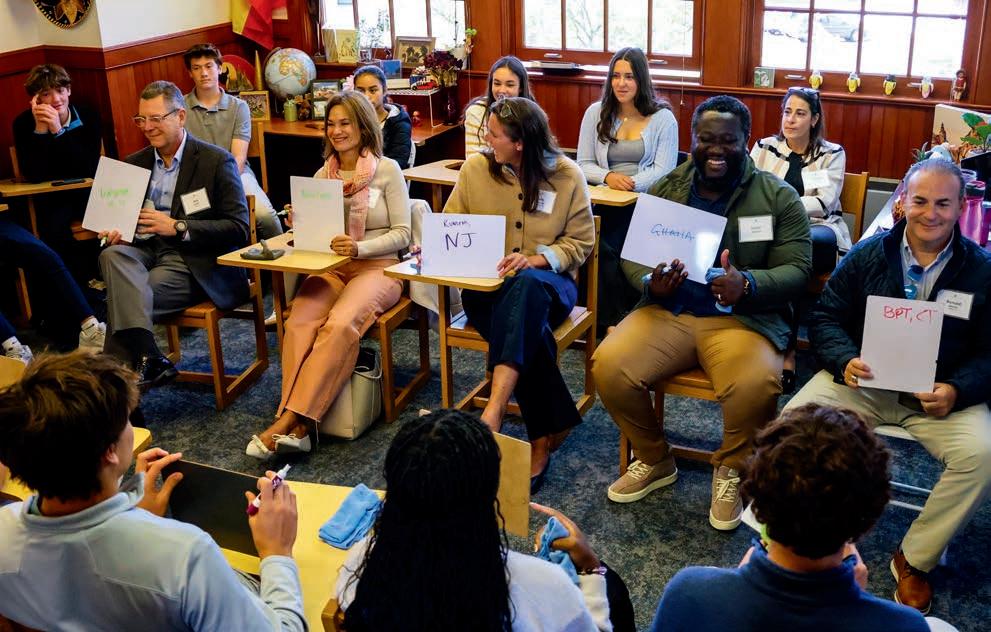
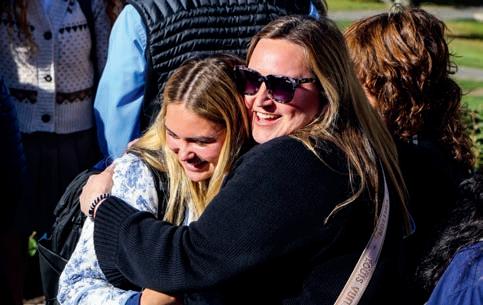
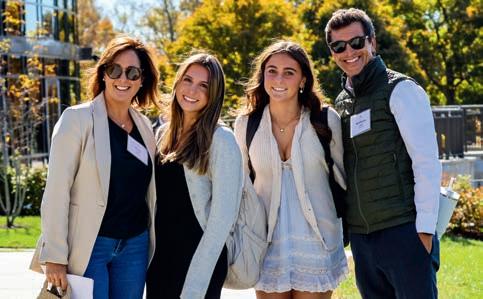
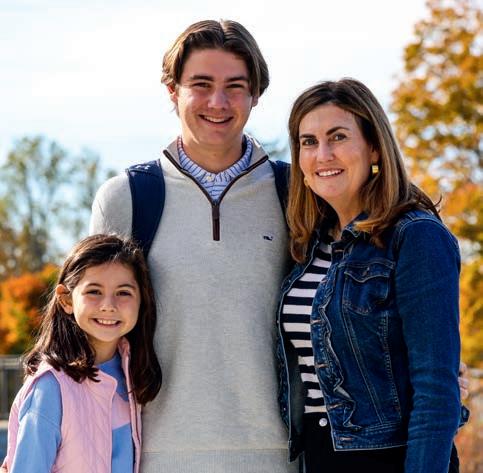
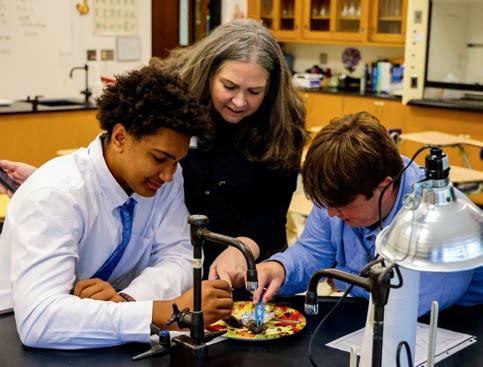
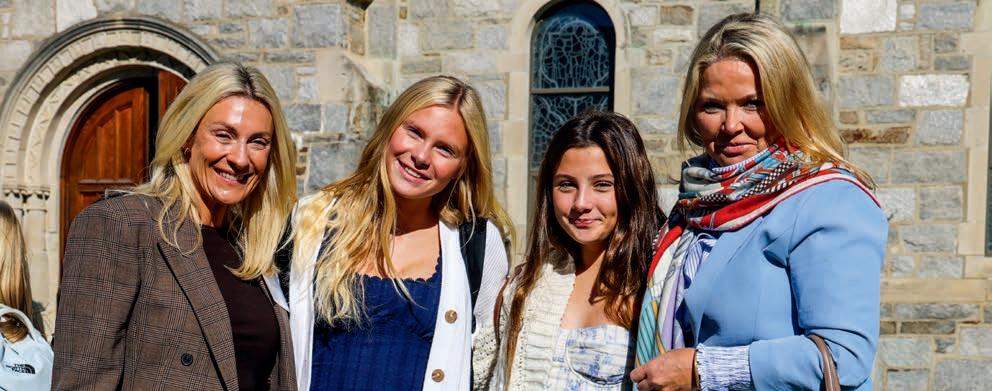
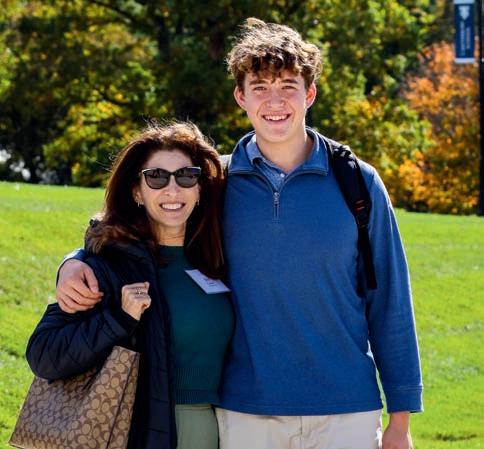
On October 17-18, hundreds of Canterbury parents, grandparents, siblings, and other loved ones arrived on campus for Family Weekend, an opportunity to experience the School through their child’s eyes. Students’ families are always a part of the Canterbury community, and it was a pleasure to have them experience a few days of life on our hilltop, including classroom visits, shared meals, athletic practices and competitions, and a celebratory concert in the Steers Center.
Every year, Form Retreats deepen Canterbury’s sense of community, encourage selfreflection, and cultivate leadership qualities, allowing students to connect with classmates and faculty on a more personal level. From meaningful discussions to acts of service, Form Retreats offer more than just a break from routine—they serve as stepping stones toward personal growth and collective understanding.
FORM RETREATS SIXTH FORM
FIFTH FORM
FOURTH FORM
THIRD FORM
Sports are an important part of life on the hilltop. But while being on a team can promote important leadership and executive skills, meaningful relationships, and physical wellness, student-athletes also face unique mental health challenges that can have ripple effects across campus… and students want to talk about it.
“As athletes, our self-worth can often get tied to our performance and how well we play,” says Zachary Mwanza ’27, a Varsity Soccer, Squash, and Tennis player. “But we’re not just machines designed to score points or stop shots. Thinking that way puts a lot of stress on athletes and limits how we can show up for one another as a community.”
Over the course of the first semester, students and faculty built on that sense of community, developing a plan to support Saints and enhance the School’s athletic programs by addressing mental health.
Fighting FOMU
The conversation began in October with Jeff Levin, the first guest of the year for the D’Amour Center for Faith, Service & Justice’s Speakers Series. Levin, a New Hampshire- and Bostonbased life coach and psychotherapist, took a down-to-earth, compassionate approach to a difficult topic, offering perspective on the pressures facing teenagers today and how stronger communities can help address them.
“You need to make this place an enclave of connection,” he told the audience. Everybody, he explained, is more than just one thing—a student, an athlete, a son or daughter—and we can’t let fear hold us back from exploring all of those roles fully, even if we stumble in that process. Indeed, it’s only through vulnerability that authenticity and community can be achieved.
“He talked about something called FOMU, which stands for ‘fear of messing up,’” says Hailey Farace ’27. “I connected that idea to sports and how that fear can affect how I perform on the ice, on the field, or even in my everyday life. Learning more about mental health and anxiety can positively impact everyone on campus, especially students balancing demanding schedules.”
More Than an Athlete
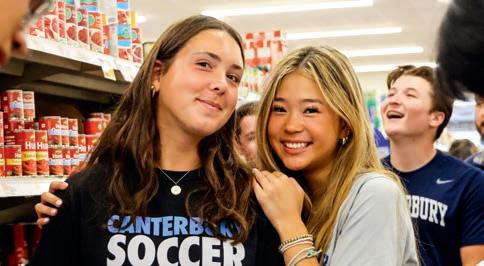
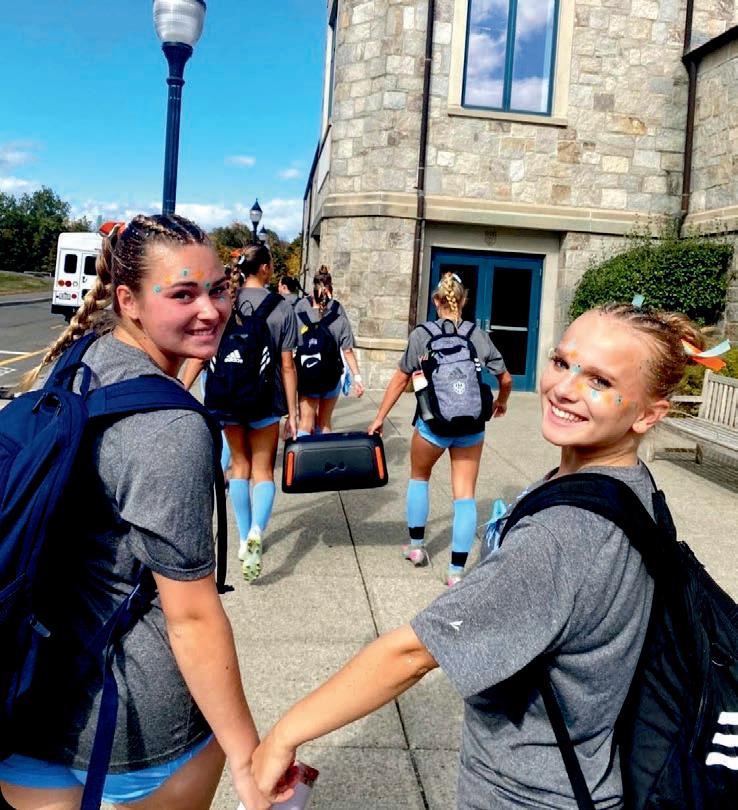
The Girls’ Varsity Soccer team wanted to do its part to spread this message across campus. And so during a home game in October, instead of Canterbury’s trademark navy and Columbia blue, the Saints wore turquoise and orange accessories to honor Morgan Rodgers in a moving dedication game.
A gifted lacrosse player at Duke, Morgan suffered a careerending injury that led to depression and anxiety. She died by suicide in 2019, and her family founded Morgan’s Message to combat stigma, normalize peer-to-peer conversations about mental health, and expand access to care for student-athletes.
During a School Meeting, Mia Beaudette ’28 shared Morgan’s story, which resonated with many of Canterbury’s athletes. Because even when being an athlete becomes an important part of someone’s identity, it’s important to remember that everyone is more than what they can accomplish in their sport.
“Finding balance between your work, your friendships, your relationships, and sports is so important,” Mia reflects. “When I make time for all the things I love—not just hockey, lacrosse, or soccer—it actually helps me play better.”
During the dedication game, Girls’ Varsity Soccer decorated the fence with streamers and handmade posters. They also provided information to players and fans to raise awareness about the importance of mental health in athletics. The game marked the team’s first victory of the season, but the meaning was far deeper than the numbers on the scoreboard. At a game like this, the players understood that they were playing for more than their team or victory: they were playing for all the people who didn’t get the chance to talk to someone.
Shining a Light & Improving the Culture
To truly support that balance, everyone needs to be involved. And so in December, Canterbury’s winter Varsity captains and coaches met with the Active Minds Club and the Community Culture and Empowerment (CCE) leadership council to build a stronger community through athletics by emphasizing the importance of players' mental health.
Through a series of roundtable talks in Ragland Commons, club facilitators encouraged captains and coaches to consider how they approach mental health on their teams, what might hold them back from broaching the topic, and how prioritizing mental wellness could positively impact the Canterbury community as a whole. Conversations were lively, thoughtful, and sincere; many participants found themselves wishing for more time to explore these topics.
“I am impressed with not only our facilitators' ability to lead these discussions, but our athletes’ willingness to open up and be vulnerable about team culture and mental health,” says Dr. Emily Allen, the CCE’s faculty advisor.
Organizers believe that these conversations are an important first step toward an ongoing dialogue at Canterbury.
“We opened a space for vulnerability,” says Sara Anderson ’27, a leader on the Wrestling team and the CCE. “I think doing that made people feel more comfortable with the topic and consider how they can create a similar space on teams. They recognize what a great community we already have, and they want to make it even better. That gives me a lot of hope.”
By naming the pressures they face, Canterbury’s student-athletes are redefining what strength looks like. Teams are tapping into the strength of this extraordinary hilltop community and building a culture where vulnerability is valued, balance is encouraged, and every Saint is seen. The work is ongoing, but the message is clear: when a community commits to caring for the whole person, not just the player, everyone rises together.
Jeff Levin challenges community members to move past “FOMU” and embrace vulnerability, balance, and authenticity.
Members of the Girls' Varsity Soccer team show support for Morgan’s Message—a reminder that no one is just an athlete.
WE CAN FLY!
Imagination Takes Center Stage for the Theater Department’s Fall Season
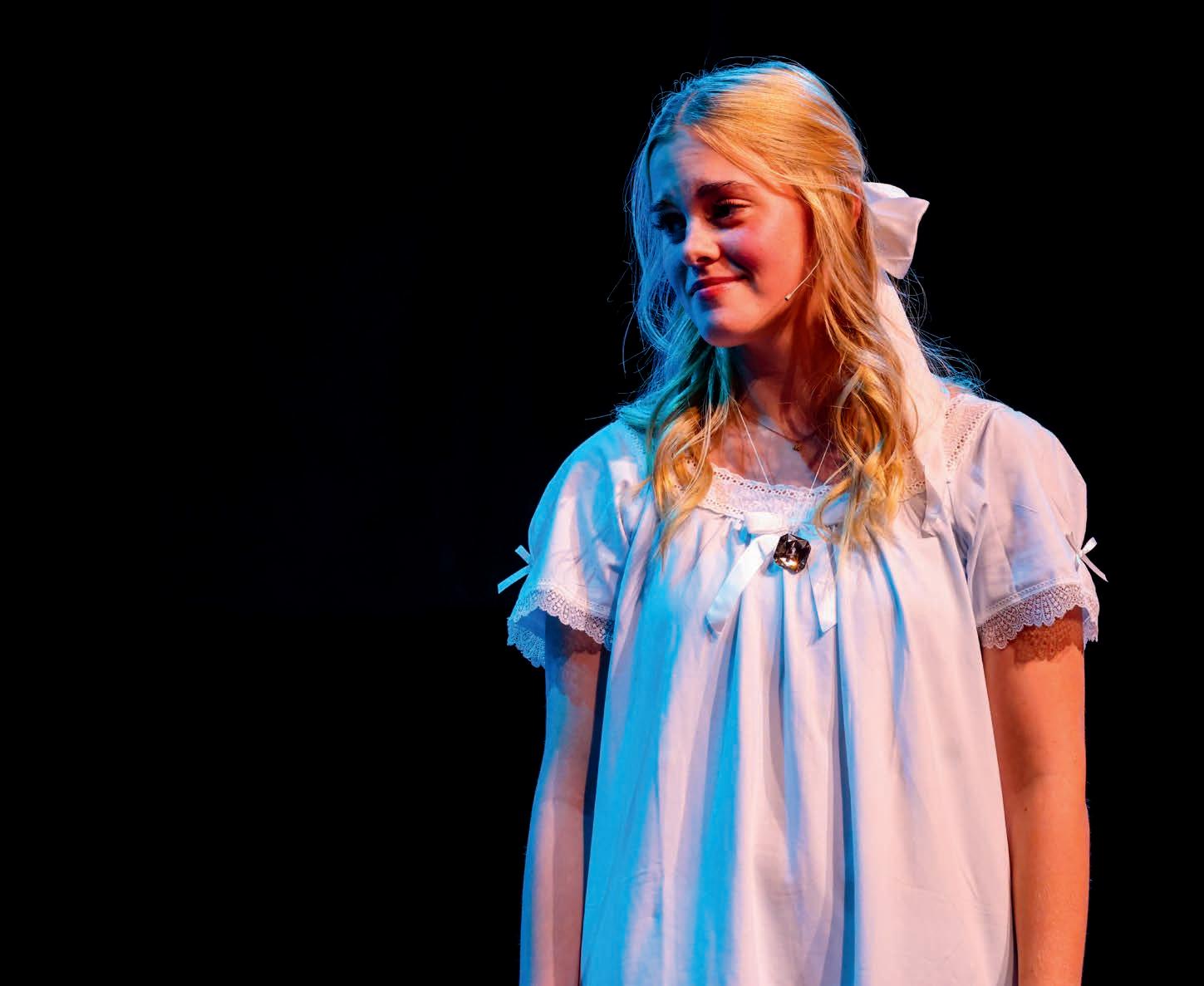
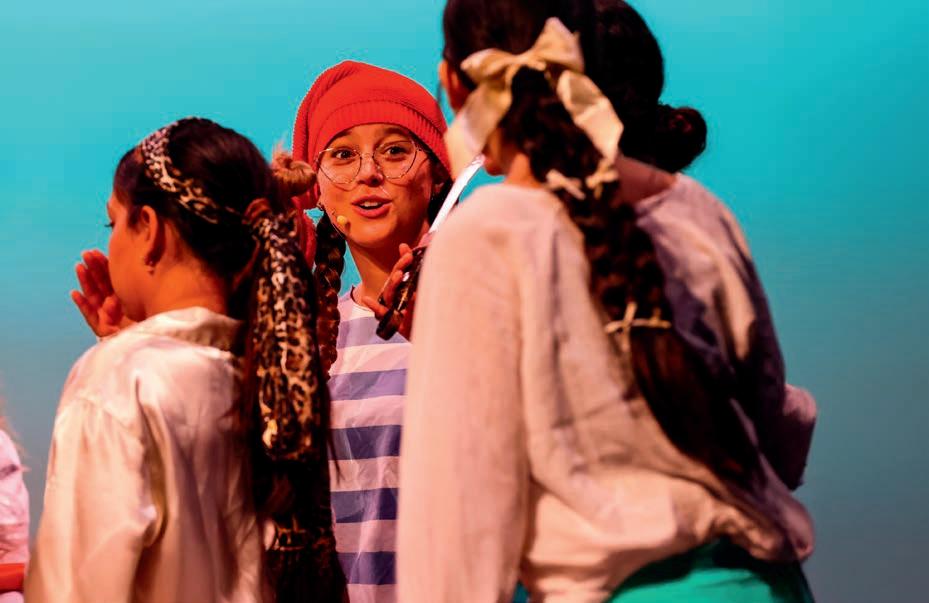
It’s no small feat to stage a show. Long rehearsals and late-night tech runs are enough to turn Maguire Auditorium into a hive of activity throughout the semester. But theater is more than the daily grind or even the performance. In preparing for this year’s fall play, Peter Pan: NonFlying Version, Canterbury’s theater department—co-directed by Keiko Mathewson and Christopher Rich offered a variety of opportunities for students to connect, create, and grow in their craft.
Broadway on the Hilltop
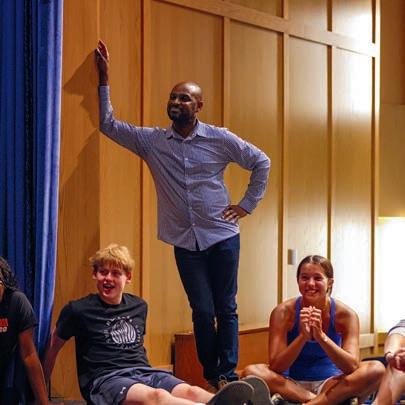
The season started strong in September, when more than 25 students participated in an improv and character development workshop led by performer Arbender Robinson. A Broadway veteran, he made his Broadway debut in the Tony Awardwinning production of Hairspray, and has since appeared in the original cast of Disney’s The Little Mermaid, Ragtime, Disney’s The Lion King, Beautiful: The Carole King Musical, The Book of Mormon, Shuffle Along, and In Transit. He also holds the distinction of being the first African American to play Marius (Les Misérables) on Broadway. His energy, excitement, and insight encouraged participants to let
down their inhibitions and explore their creativity through theatre games and character exercises.
Amelia Welsh ‘26, who has been performing in Canterbury shows since her Third Form year, says she appreciated Robinson’s ability to speak to a diverse audience. “I think it was a great way for people who hadn’t really known much about acting to get into the program. I also learned a lot: with acting, you can never stop learning. It was a great experience.”
“Mr. Robinson really got at the heart of what it means to bring a complete character to life,” Rich adds. “It was an amazing experience for our students, and Mrs. Mathewson and I were so thankful we could bring him to campus right before our auditions for this year’s Fall play."
Getting Crafty & Giving Back
Of course, theater isn’t just a co-curricular: it’s a community. More importantly, it’s a community that values creativity, teamwork, and belonging. And so when there was an opportunity to share those values with others through the nonprofit Only Make Believe (OMB), the cast and crew of Peter Pan were happy to participate.
A taste of Broadway, guided by Arbender Robinson.
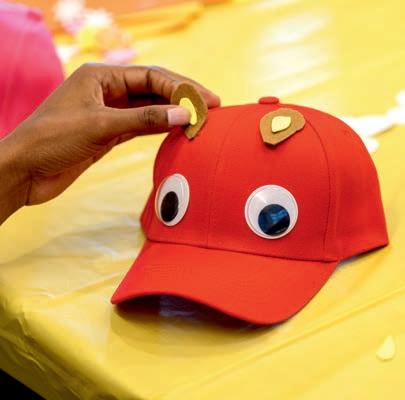
Students crafted hats for Only Make Believe to introduce children to the dramatic arts
Since 1999, OMB has introduced children living with chronic illnesses and disabilities to the magic of the dramatic arts. Founded by Dena Hammerstein, daughter-inlaw of the late Broadway legend Oscar Hammerstein, the organization sends professional actors to visit children in hospitals and care facilities throughout Washington, D.C., and New York. With the help of costumes and props made by volunteers, kids are invited to create their own character and join in an improv performance. This version of live theater provides opportunities for children facing extraordinary challenges to be included and have lots of fun.
And so on a sunny afternoon in October, the D’Amour Center for Faith, Service & Justice was a flurry of googly eyes, glittering plastic gems, and glue as students crafted for a cause. Holly Fedorcik P ’26, ’29, a member of Canterbury’s Board of Trustees who serves on the National Board of OMB, was on hand to offer students advice on how to make original, durable costumes to inspire young thespians.
“I think OMB was a great organization to work with,” says Liam Hamlet ’27, who created four different pieces. “It gives
kids who might not otherwise have the opportunity a chance not only to dress up and perform, but also to feel seen.”
“It was an incredible afternoon filled with creativity, energy, and smiles,” says Mathewson. “The best part was seeing our students discover creative talents they didn't believe they had, and make costumes that will mean so much to a child.”
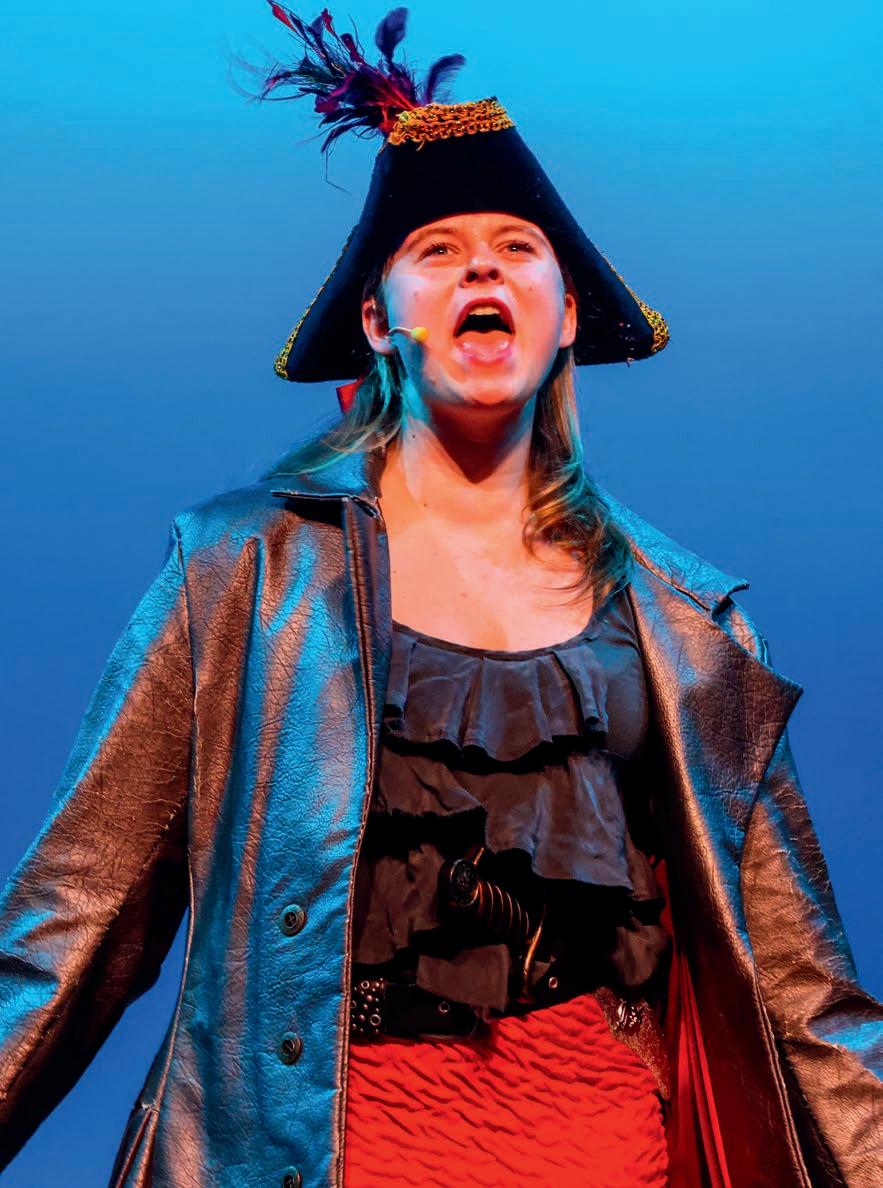
“Watching my fellow actors build up their own characters was so exciting. They truly found their own voices,” says Hannah Soifersmith ’27, who played the dastardly Captain Hook. “Developing this silly, over-the-top character has even helped me to become more confident offstage; I've begun channeling Hook’s ridiculous confidence in my everyday life.”
That same sense of childlike wonder carried into Peter Pan: Non-Flying Version, performed in November.
Finding Neverland
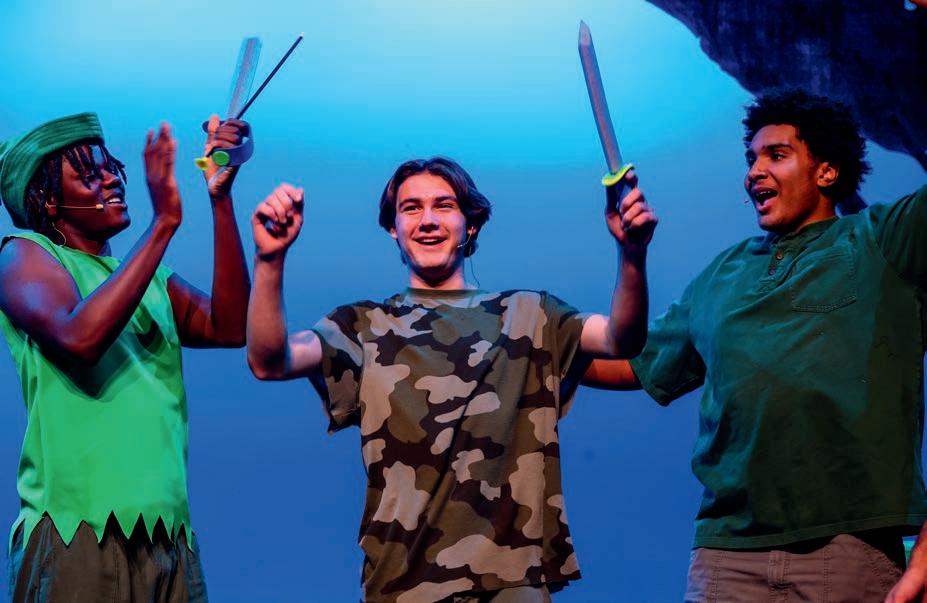
Co-directed by Mathewson and Rich, this innovative rendition of J.M. Barrie's beloved stage play allowed performers to reimagine the iconic elements of Peter Pan and make the staging, characters, and Neverland itself their own. What if Peter, Wendy, and Tinker Bell couldn’t fly across the stage? Could they still magically transport audiences to Neverland?
“Without flying, we are grounded—but not limited,” Mathewson wrote in the program. “In fact, it has allowed us to focus more deeply on the relationships, the humor, and the emotional stakes of the story.”
But even after weeks of rehearsals and hard work, there’s only one thing that really brings a show together: an engaged audience. For two nights, Maguire Auditorium was filled with laughter, smiles, and more than a little childhood whimsy.
“The audience and their reactions are what make a show,” says Mathewson. “From the energy to the audible ‘oohs’ and ‘ahhs,’ they really helped bring our story to life.”
From auditions to final bows, Canterbury’s fall theater season offered students far more than a chance to perform—it invited them to think outside of the box, give back, and find joy in creating something together. Theater is more than what happens on the stage, and the true success of the season was not measured only by applause but by the lasting impact of these experiences on our Saints.
JEWISH STUDENTS ASSOCIATION
Annual
Hanukkah Party
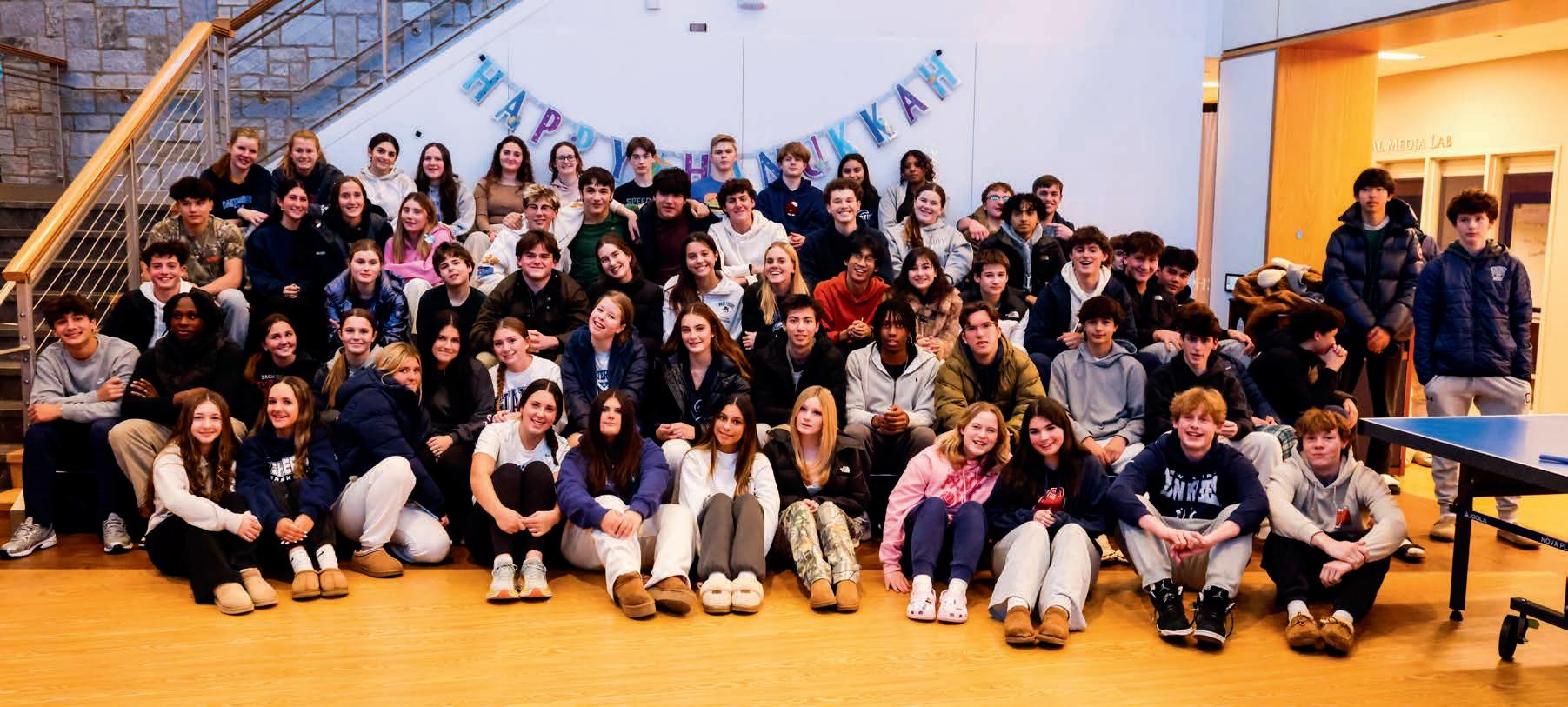
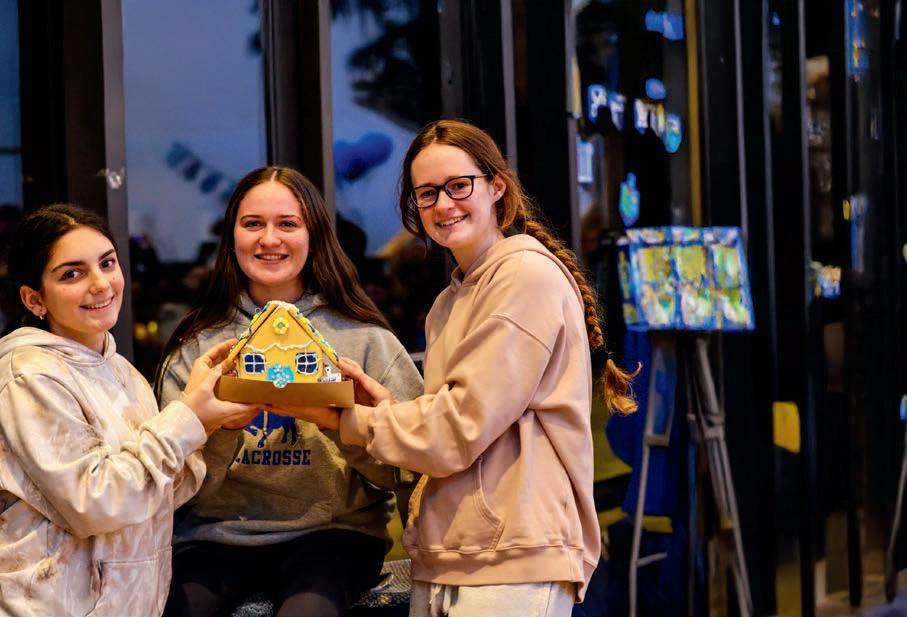
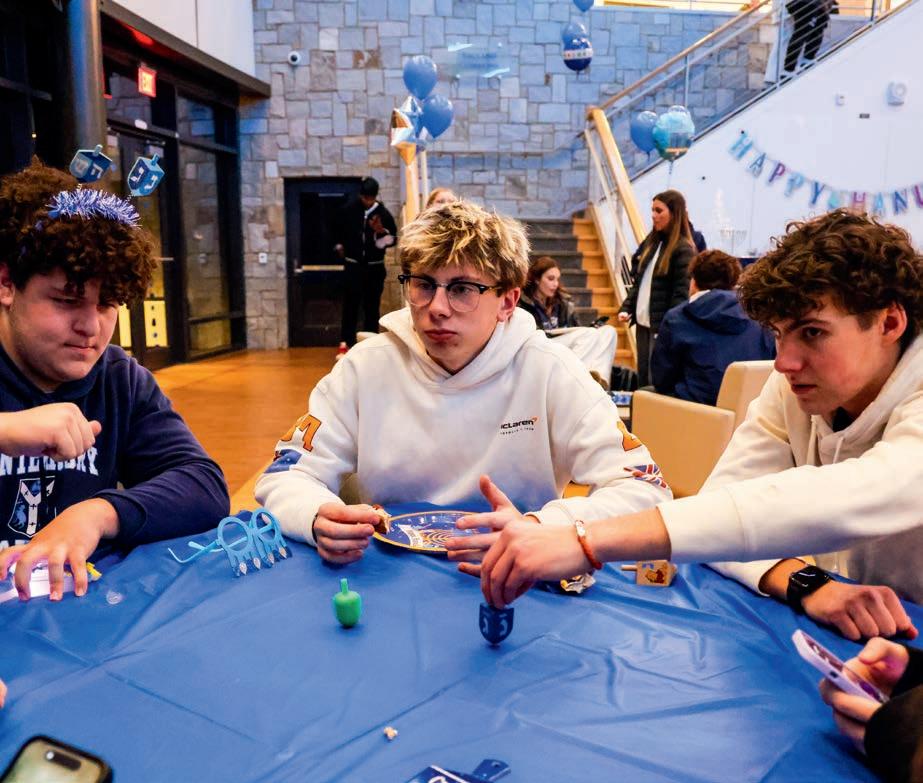
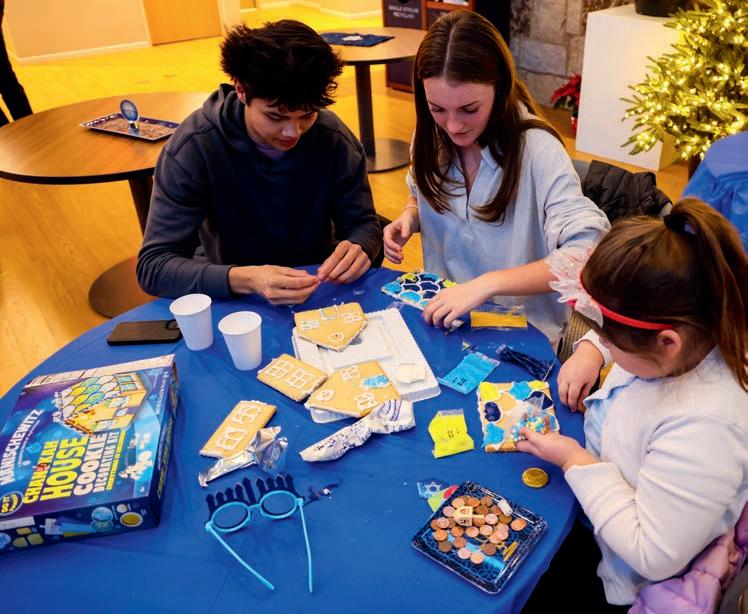
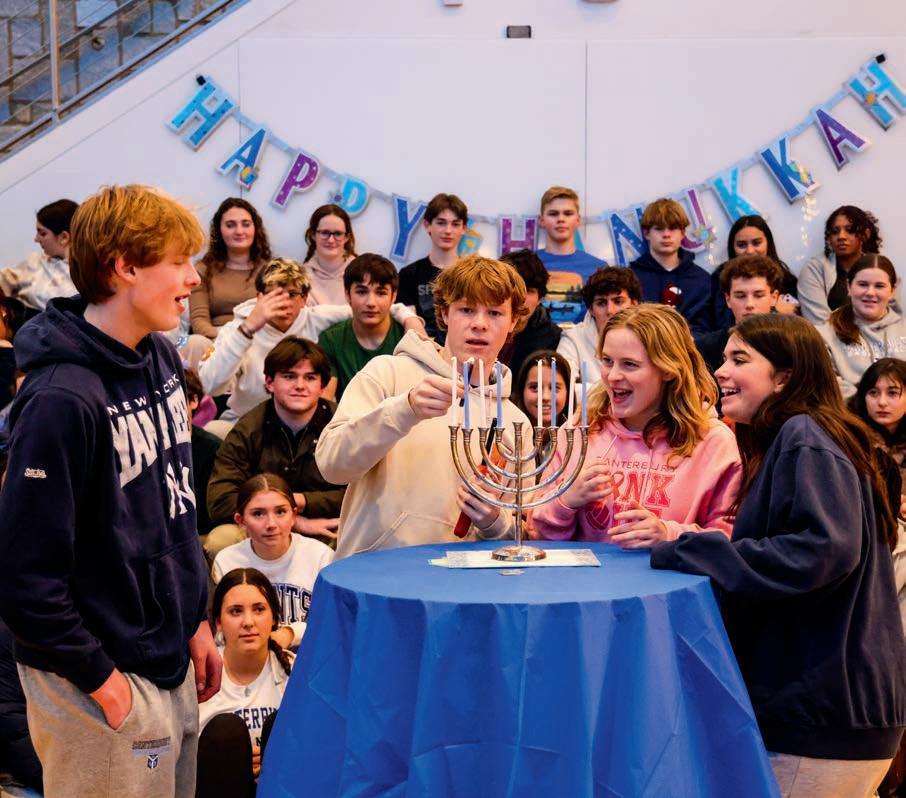
On December 8, the JSA welcomed their fellow Saints, faculty, and peers from Trinity-Pawling School, Kent School, and Rumsey Hall School to observe Hanukkah in the Steers Center Ragland Commons.
The event has become a beloved tradition on campus, offering students of all faiths the opportunity to light the menorah, learn more about Jewish heritage, and celebrate with friends.
Lessons Carols&
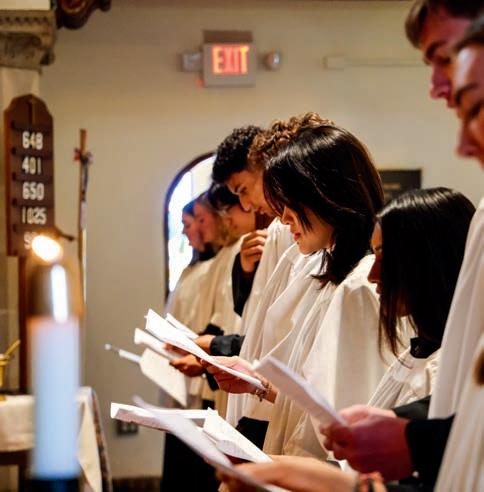
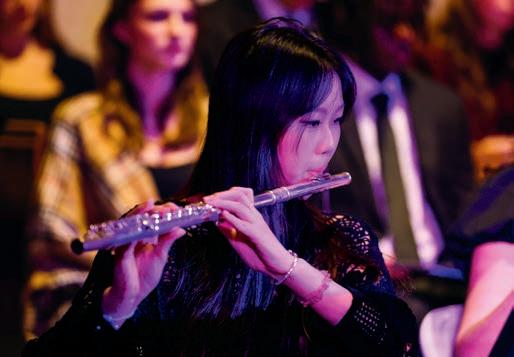
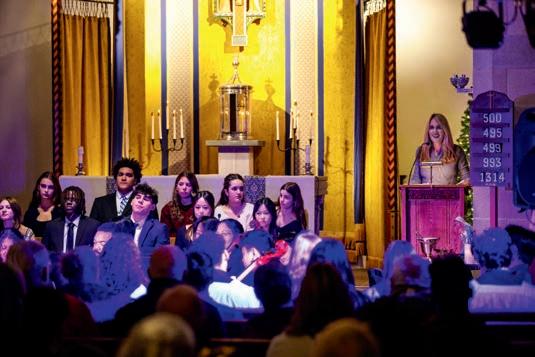
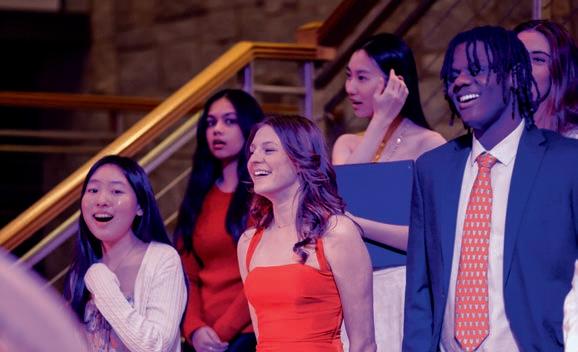
The Chapel of Our Lady was full of holiday spirit on Friday, December 12, for an Advent Festival of Seven Lessons and Carols. This longstanding Canterbury tradition brings the community together in song, scripture, and Christmas cheer ahead of Winter Break.
Over the course of the school year, the D’Amour Center for Faith, Service & Justice’s Speakers’ Series has offered thoughtful conversations with experts, encouraging students to connect what they learn at Canterbury to the world beyond our hilltop. The first guest speaker, psychotherapist and life coach Jeff Levin, urged students to prioritize mental health, both individually and as a community of peers (see page 20). Throughout the fall and winter, scholars and experts met with students to explore topics ranging from environmental justice to community advocacy, and how the School’s Five Values— Honesty, Respect, Compassion, Spirituality, and Self-reliance—can guide this work.
Green Faith: Religion’s Obligation to the Environment
At Canterbury, students’ faith journeys inform not only their religious practice, but also their studies and approach to service. Mary Evelyn Tucker and John Grim of the Yale Center for Environmental Justice invited students to explore the intersection of spirituality and environmentalism.
The couple directs the Yale Forum on Religion and Ecology at the Yale School of the Environment, and their work explores how faith-based action can help address climate change, ecological conservation, and the social conditions that contribute to environmental crises.
Mr. Grim and Ms. Tucker—the sister of alumni Paul Tucker '68, Carlton Tucker '73, and Peter Tucker '79—primarily explored these ideas through a Catholic lens The pair highlighted the teachings of clergy who have used their roles in the Church and deep faith to work toward a more sustainable, equitable world, including the late Pope Francis, who, throughthe highest level of papal teaching, drew attention to the importance of the natural world in his encyclical, Laudato si
Their message to Canterbury was clear: “It is an obligation of faith to care for the environment. We have the science, policy, law, economics, and technology to make the transition to a viable future."
Building Connection: Faith, Service, & Social Justice
DaVaughn Montgomery ‘03 currently works as an education policy advocate in Washington, D.C. He recalls his time at Canterbury, and especially his world religions class, as being crucial to his understanding of the interconnectedness of community, which he says guides his work.
Mary Evelyn Tucker & John Grim
DaVaughn Montgomery '03
Caroline Nobo
D’Amour Center for Faith, Service & Justice Leading with Compassion & Community
Throughout his Martin Luther King Jr. Day presentation to students, DaVaughn emphasized the importance of tailoring service to the needs of different communities rather than assuming the same approach works for everyone. One way to better understand those needs, he explained, is to engage directly with the communities you hope to serve.
That approach, he said, requires a shift in how we think about service.
“We often think of service in terms of what we can provide to a group that needs something, but this is a deficit-based model,” he said. “I want us to shift our thinking. How can we leverage a community’s strengths to solve problems? How can we focus on what’s strong rather than what’s wrong?”
DaVaughn believes that Saints are uniquely positioned to step up. “Canterbury has a strong sense of community, and that doesn’t happen by accident. Students here learn how to build relations and make connections with people, which is important because the connections are what guide this work.”
The Power of Procedural Justice: Restoring Trust in the Legal System
At the Justice Collaboratory at Yale Law School, Caroline Nobo leads a unique, interdisciplinary network of scholars and staff to promote transparency and trust in the criminal legal system. During an insightful School Meeting, she invited students to broaden their understanding of what that system is and can achieve.
“In the United States, we have about 3,000 counties with 19,000 police departments,” she observed. “Everyone talks about America's criminal justice system, but it’s more than 3,000 systems.”
Bridging these gaps, she explained, can begin with a theory called “procedural justice.”
Procedural justice centers on fair processes. People’s perception of fairness, Caroline explained, is rooted not just in the outcome of a police interaction or court hearing, but in the quality of the experience itself.
“Letting people feel heard and seen by the system increases their trust,” she said. “Even if a trial or arrest doesn’t go their way, they can feel that they received justice.”
But perhaps above all, meaningful change in this area depends on communities truly coming together to face these challenges.
“We are so grateful to all of our speakers for sharing their expertise with our community," says Joshua Leeuw, Director of the D’Amour Center. "The work they do aligns closely with that of the D’Amour Center and the values we hope to instill in our students.”
This year’s Speakers’ Series made clear that Saints' call to faith, service, and justice is not abstract: it is urgently relevant. From caring for our planet to reimagining service and restoring trust in institutions, students were reminded that the School’s Five Values are meant to be lived boldly in the wider world, and that the most pressing challenges require not only knowledge and skill, but character.
London Calling!
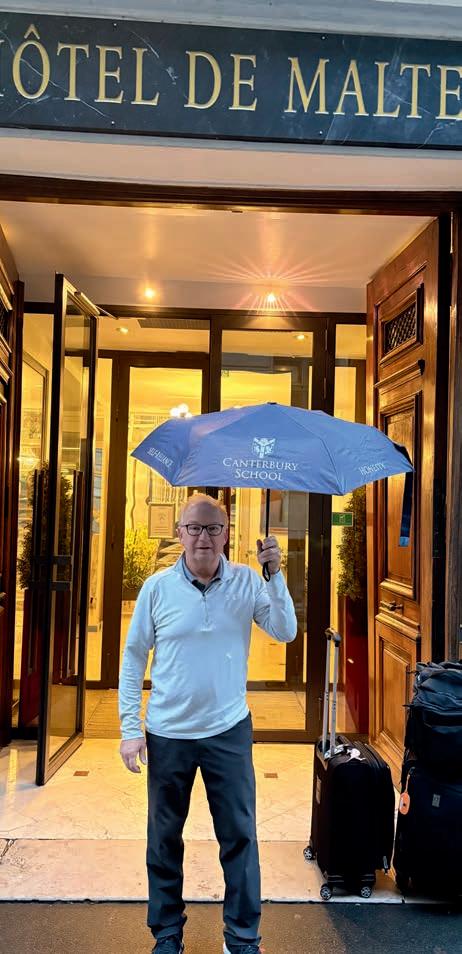
Grayson Mengold '26 receives Commendation
from the John Locke Institute
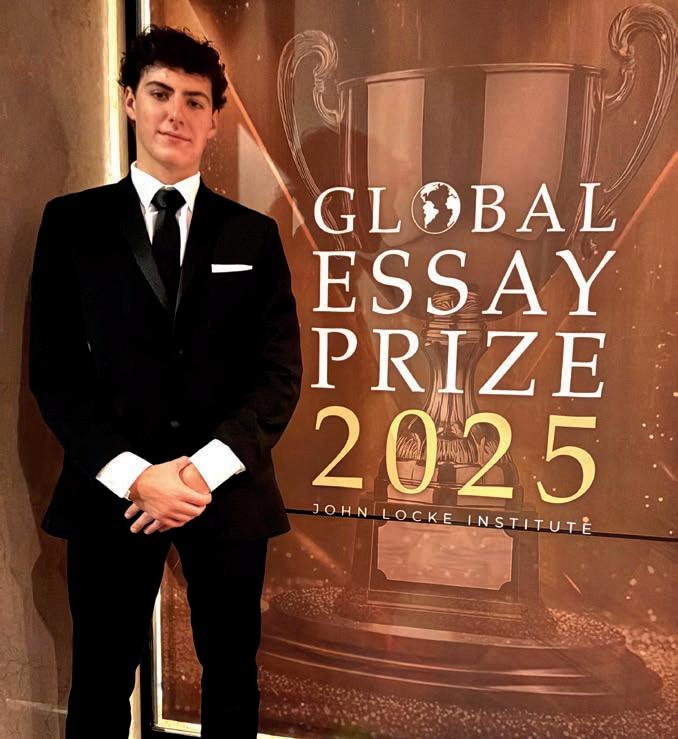
When Grayson Mengold ’26 traveled to London in October, it wasn’t just to see Parliament or Big Ben—it was to be recognized at one of the world’s most prestigious academic competition ceremonies: the John Locke Institute’s 2025 Global Essay Prize Awards Dinner.
Hosted annually by the Oxford-based John Locke Institute, the Global Essay Prize invites high school students worldwide to explore complex questions across seven disciplines—philosophy, politics, economics, history, psychology, theology, and law. Encouraged by friends in the class of 2025 who had participated last year, Grayson decided to take on the Psychology prompt: “What is self-deceit?”
“It sounded interesting. Psychology is not what I want to study in college, but it’s something I’m interested in. So when I saw the question, I thought, ‘That's so cool! I want to try it.' And so I spent about a month working on it over the summer. When it was done, I didn’t stress too much because I knew I had tried my best.”
Grayson knew the odds of moving forward in the competition were statistically slim. More than 63,000 students from around the world submitted their work. Nevertheless, his diligent efforts paid off: in August, he learned that he had made the coveted shortlist.
“It was exciting to learn that my essay ranked in the top 10%,” he recalls. “It didn’t fully sink in until later, when I thought, ‘Wow! I get to go to London!’”
At the Institute’s black-tie gala at London’s historic Grosvenor House, students and scholars from around the world gathered to celebrate intellectual curiosity and achievement. Essays were awarded First, Second, and Third place in each subject, followed by a select number of commendations—one of which Grayson proudly received.
The experience, he says, was well worth the hard work, and he hopes other Canterbury students will consider applying in the future.
“It wasn’t easy, but it’s very doable if you’re intentional with your time and preparation,” he advises would-be contestants. “Even if you don’t win, it’s a good exercise to stretch those mental muscles.”
Grayson’s success on the global stage highlights not only his intellectual curiosity but also the value of challenging oneself beyond the classroom. Congratulations, Grayson!
“
It didn't sink in until later when I thought, 'Wow! I get to go to London!'
SAINTS in style
Anna Gagnon '27 and Isabella Mitchell '27
Experience the Fashion Industry at Vogue College
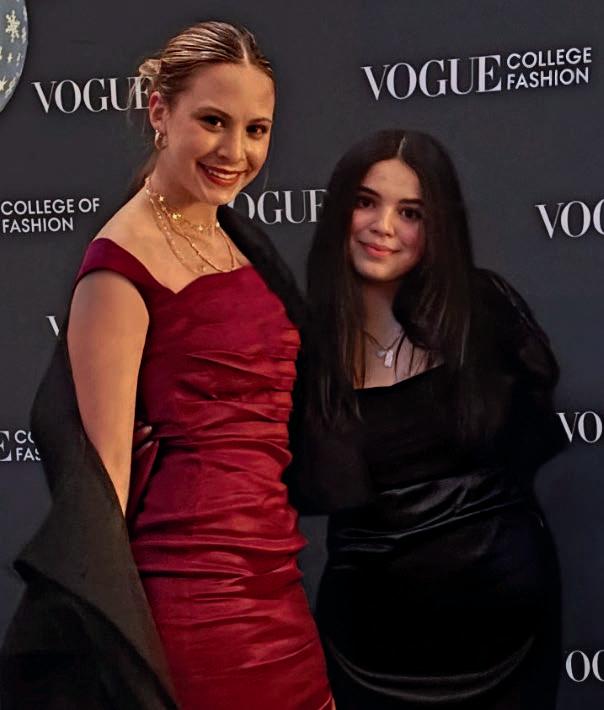
ACanterbury education isn’t just about the opportunities you have on the hilltop, but the ones you’re empowered to seize beyond it. Earlier this year, Isabella Mitchell ’27 and Anna Gagnon ‘27 headed to New York City to explore their passion for fashion at Vogue College of Fashion’s Winter Break program.
An extension of the iconic magazine, Vogue College of Fashion partners with top universities and professionals to offer students both academic rigor and real-world experience. Isabella had attended a different pre-college summer session there and enjoyed it so much she wanted to return over winter break. This time, however, she invited a fellow Saint (and shopping buddy), Anna, to join her.
Every morning, the girls attended lectures featuring guest speakers who offered insight on the business side of fashion. They provided guidance on several essential skills, including crafting a pitch, marketing a brand, identifying target demographics, and more. Their classroom visits were Isabella’s favorite part of the program.
“It was really interesting to hear them talk honestly about their jobs—what their daily lives are like, the challenges they face, and how they got into the industry,” she says.
Afternoons were dedicated to working on their project of creating a brand or service to present to a guest critic. Anna’s group drew inspiration from a classroom lecture.
“Something I learned in the program is that we already have enough clothing in the world for the next six generations,” she explains. “So our brand’s mission was to repurpose secondhand clothes and give people a personalized fashion identity.”
Both Anna and Isabella say they are interested in fashion careers, but in different ways. Isabella, inspired by famous houses like Vivienne Westwood and Prada, plans to attend a fashion school to study design. Anna is more interested in the business side of the fashion industry.
“I’m interested in the psychology of the industry: why do people buy what they buy? How do brands market their clothes?” she says. “Learning more about that—and thinking about how I could apply it—was exciting.”
“The experience of hearing from experts is something you can’t really get anywhere else,” Isabella agrees. “Hearing those real stories helped everyone understand the different paths people can take.”
Wherever the fashion industry takes them, we can’t wait to see what Anna and Isabella have in mind for our closets in the future.
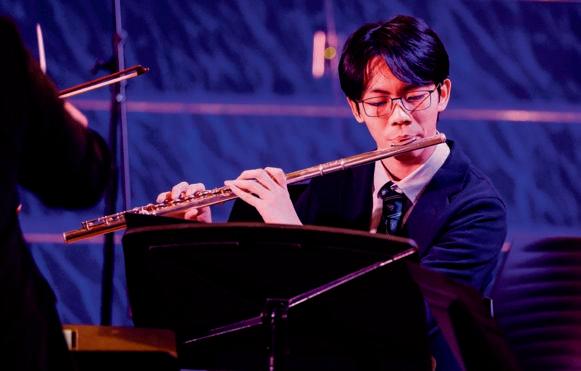
Love was in the air in February at the Affair of the Heart winter concert, a showcase of stirring performances that highlighted the hard work and talent of the Canterbury Orchestra, Chamber Orchestra, Canterbury Singers, Varsity Voices, and private vocal students.
AFFAIR OF THE HEART
&
PAST & PRESENT CONCERT
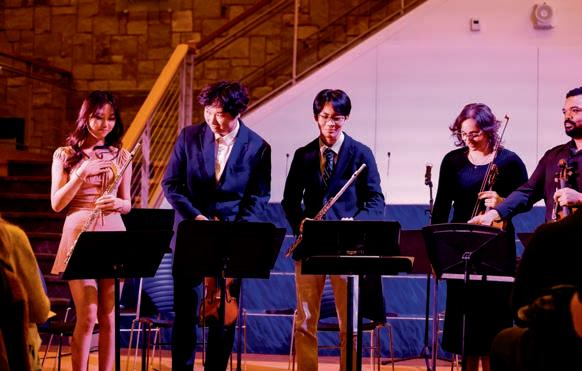
In March, we were delighted to welcome back Patrick Toon ’25, Ryan Oemcke ’24, Nick Cabrera ’09, Paul Deedon ’09, Jessica Garcia ’19, and William Tully ’06, who joined current student musicians for Echoes of Time: Past & Present, a celebration of Canterbury community and spirit.
SAINTS athletics
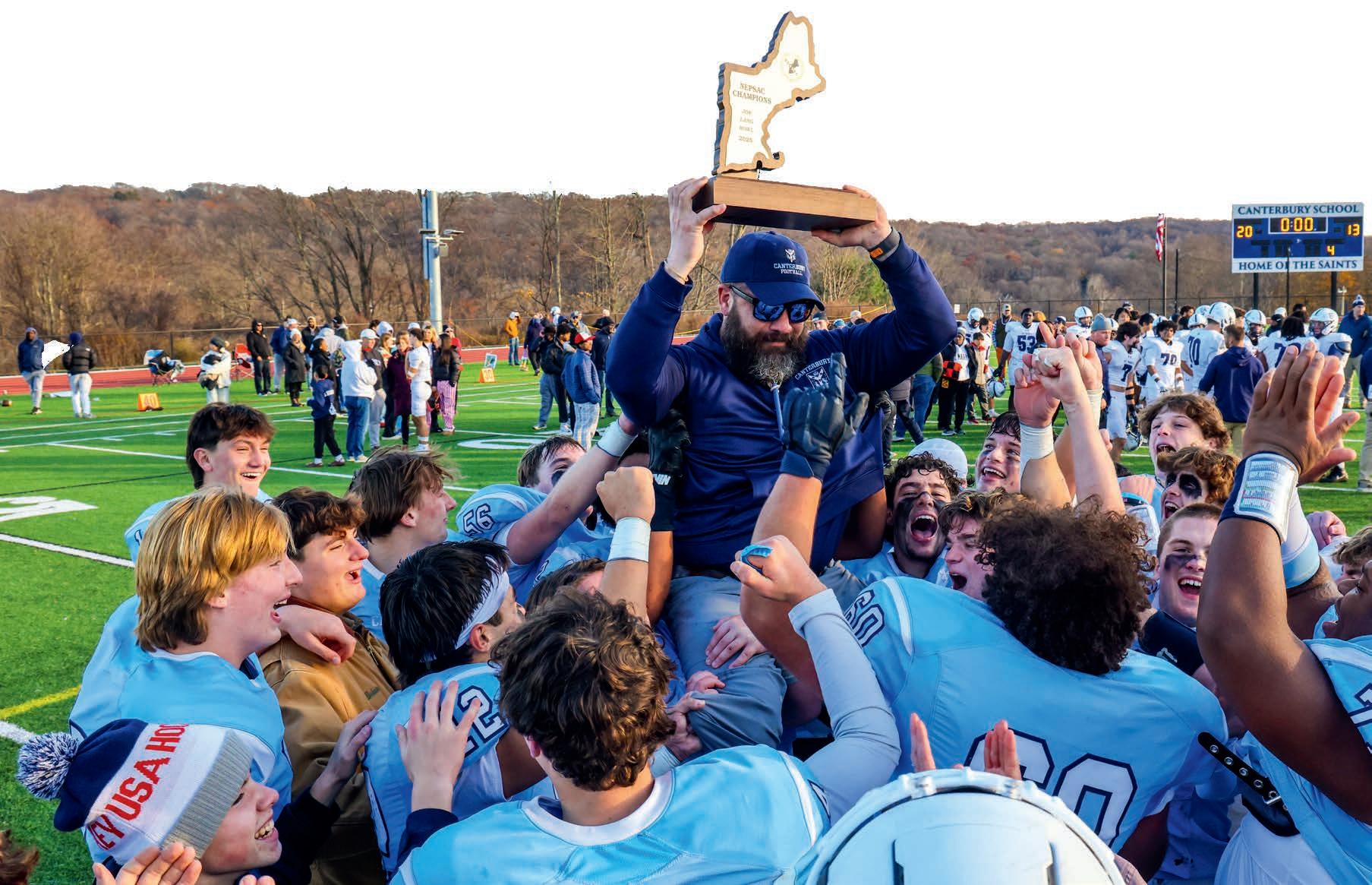
It was a season finale to remember on November 15, when Canterbury’s Varsity Football team faced off against St. Mark’s School at the NEPSAC Joe Lang Bowl. The Saints— led by Head Coach Larry Badaracco and captains Brendan Buda ‘26, Drew Fitzgerald ‘26, Carter Hegel ‘26, and Mychal Walker ‘26—clinched a 20–13 win at Hamilton Stadium, securing the NEPSAC Championship. But the road to victory was hard-earned.
“We came into the season one and seven,” says Buda. “We were the underdogs, and we had our sights set on bringing home a championship.”
The team knew that if they wanted to bring home the hardware, they needed to nurture a strong team culture on and off the field. They also knew that they couldn’t wait for their season to start. Over the summer, players kept in close contact, sharing workouts and making time to get together as a team whenever possible. By the time everyone arrived
“It was clear to me right away that they had a special chemistry,” says Director of Athletics and Co-Curriculars Robert Morris, who arrived on campus in July. He credits Coach Badaracco for the players’ work ethic and commitment to one another.
“When people come to Canterbury, they quickly understand how important the
Varsity Football wins NEPSAC Championship
community is, and that's really what we emphasize as a football program,” explains Badaracco. “Our players don’t focus on themselves, but on how they can support their teammates. That’s the mindset that carried them through the season, and that’s how we approached the bowl: make sure you’re playing
St. Mark's, playing in their first bowl game, scored first. But the Saints soon found their stride, scoring three unanswered touchdowns. Badaracco and Buda cite standout plays by Fitzgerald, Degan O’Keefe ’28, Jayden Williams ‘27, Malachi Gibson ‘26, Daniel Batstone ‘26, and Samuel Jawor ‘26, but emphasize that the game truly was a group effort. And though the team was confident going into the Joe Lang Bowl, that didn’t lessen the thrill of victory.
“We play in a very competitive league,” says Morris. “Our opponent that day played very well, and our Saints met every challenge. It was the way sports ought to be: two teams competing at their best. I just felt so proud of them and of this school.”
“All the hard work that we've put in over the past four years has paid off, and there’s no better feeling. I still can’t really describe it,” Buda adds. “It's like a perfect ending to a movie.”
SQUASHING THE
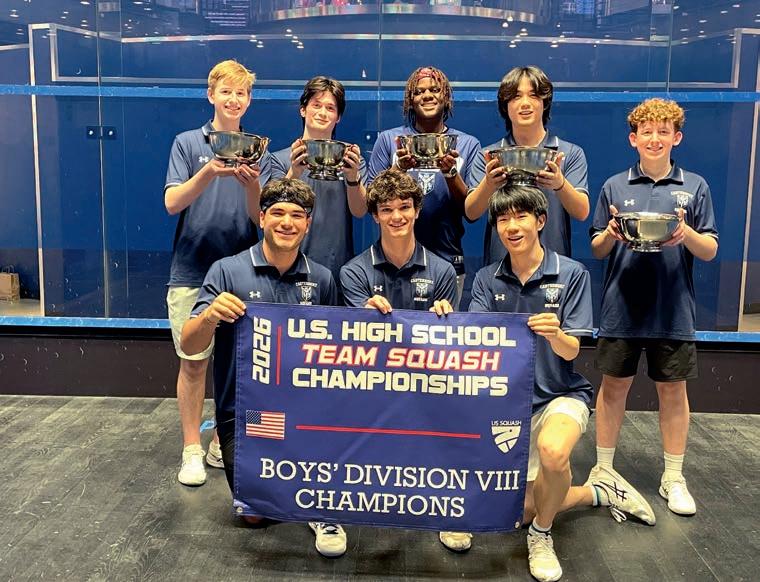
BOYS’ VARSITY SQUASH WINS NATIONAL DIVISION CHAMPIONSHIP
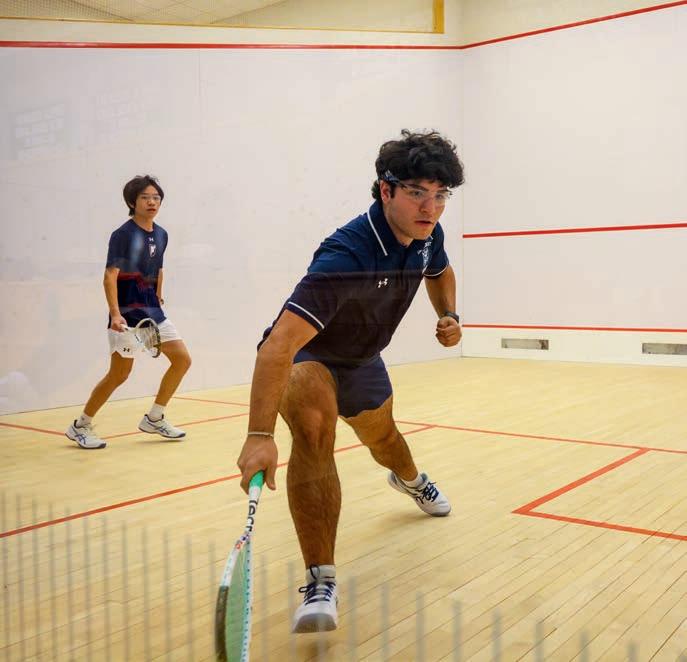
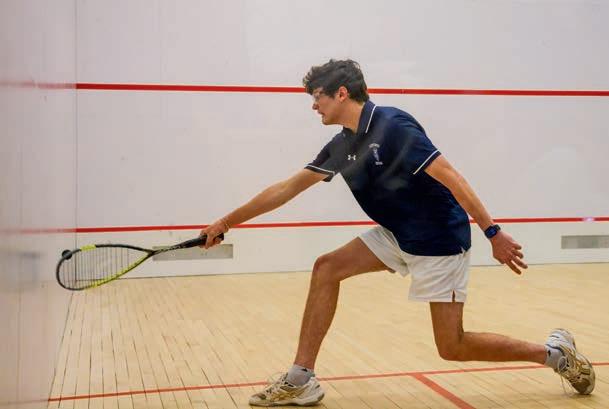
Acommon refrain among squash players, including at Canterbury, goes something like this: “Before I came here, I’d never even heard of squash. But as soon as I tried it, I fell in love with the sport.” And this year, the Saints’ newfound passion for the game has paid off. As a Nor’easter blanketed New England in snow, the Boys’ Varsity team was heating up Philadelphia at the U.S. High School Team Squash Championships. After three days of playing teams from across the country, the Saints squashed the competition, bringing a Division VIII title back to the hilltop.
Canterbury plays in the New England Preparatory School Athletic Council, a highly competitive league, and competition was similarly stiff at nationals. More than 1,700 players from 210 teams faced off across fourteen divisions. In the finals, the Saints were up against The Latin School of Chicago, and victory was never guaranteed.
“There was a moment where we were tied, and it was nerveracking,” recalls Coach Noah Gichan. Fortunately, captain Yichen “Justin” Bai ’27 was on the court. “He had an amazing match that went to the fifth set. He was down, but had an amazing comeback and won 12 to 10, which ultimately carried the team to victory.”
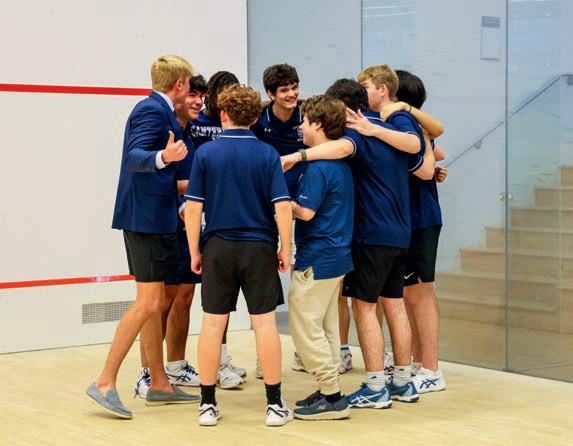
The final score was in—5 to 2—and the team rushed the court for a jubilant group hug before a trophy ceremony.
“It was an amazing experience!” agrees captain Lochlan Finnegan ’26. “I really appreciated the work my fellow captains, teammates, and Coach Gichan have put into this season.”
“We went from not winning a single match to winning our division because everyone worked hard together,” captain Julian Bonasera ’26 adds. “One person playing for themselves doesn't get us the win; each person working to win for one another is what gets us the win. And winning the championship felt like pure happiness.”
Congratulations, gentlemen!
all out for
Pink Out
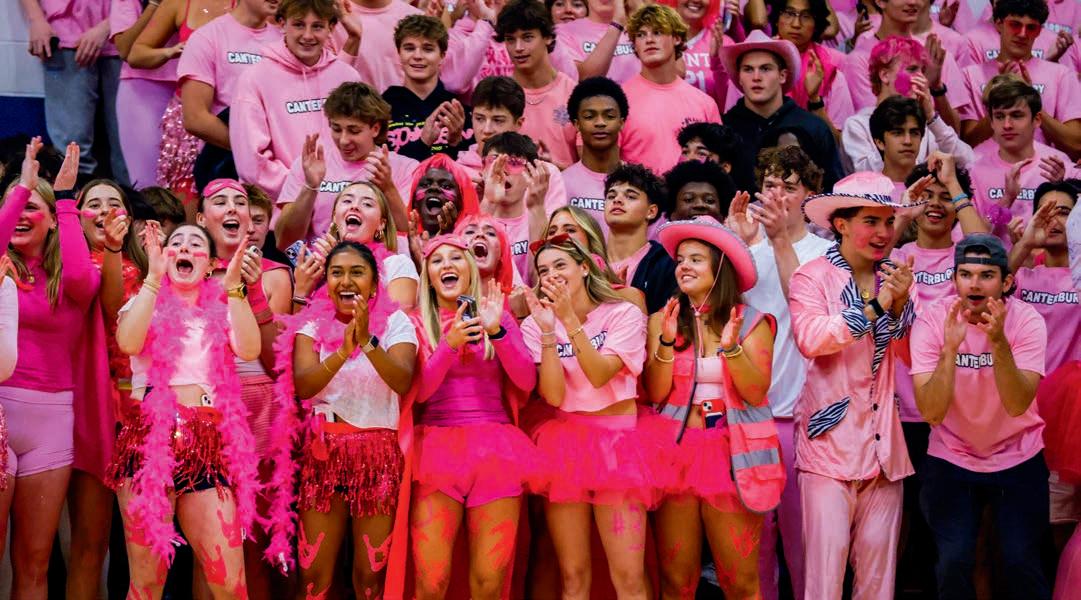
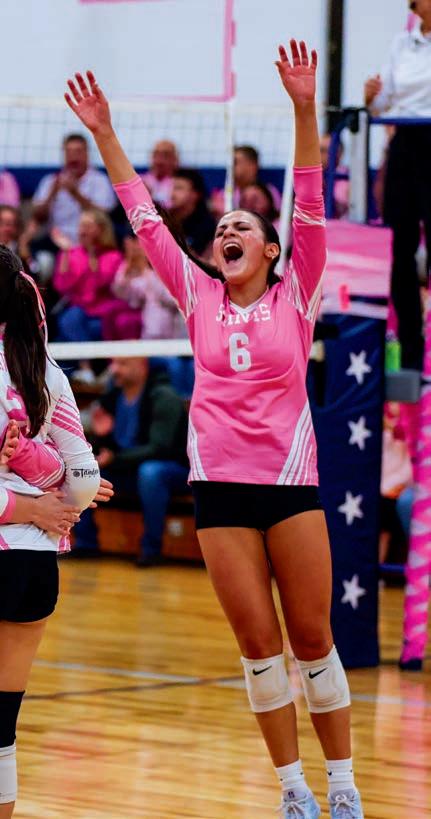
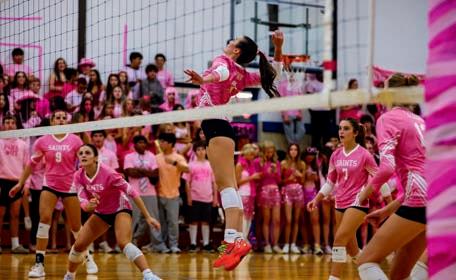
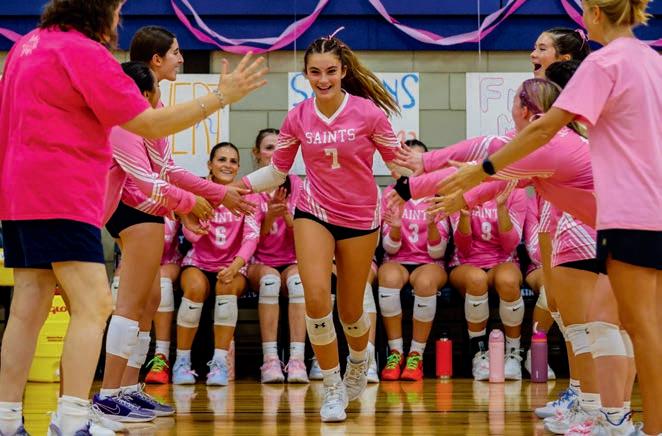
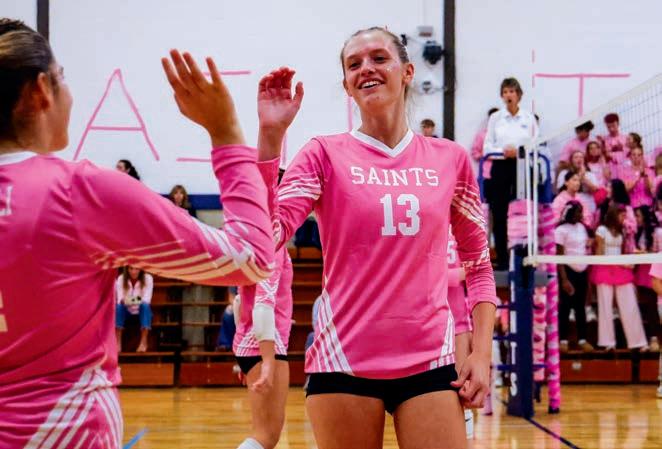
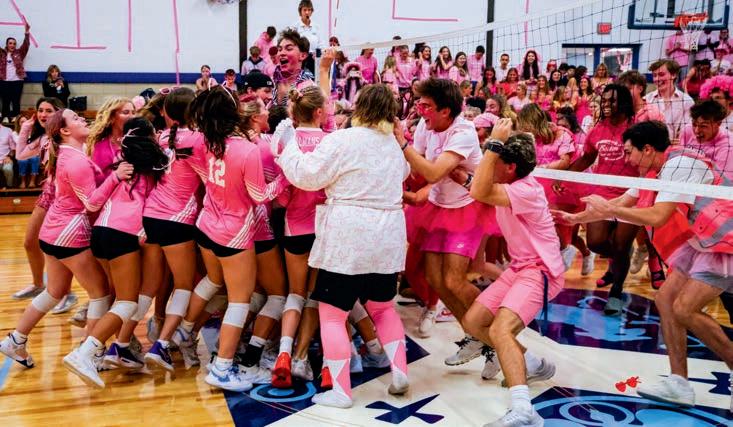
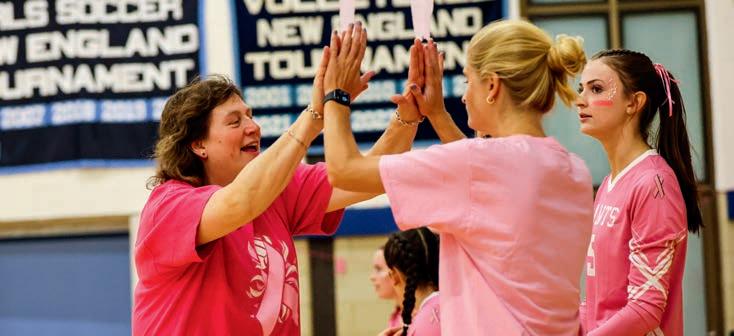
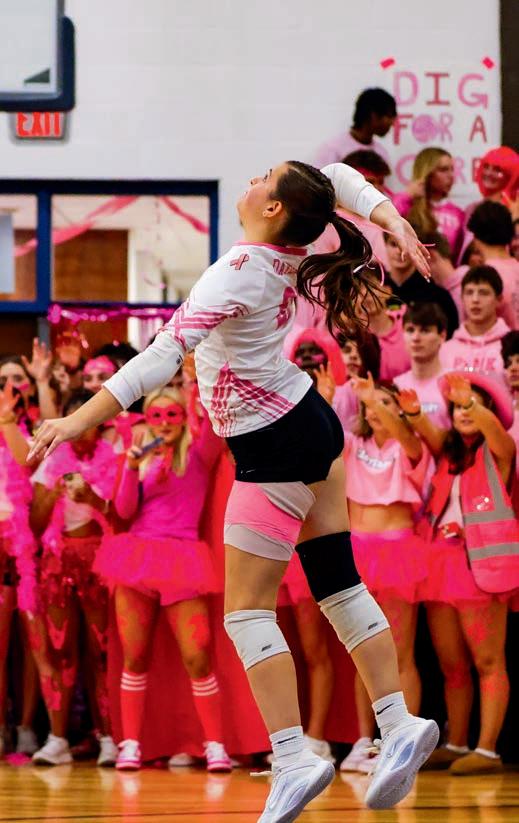
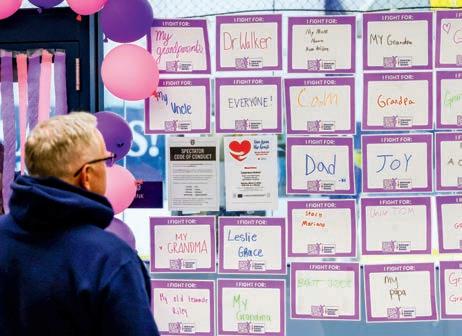
On October 10, the Varsity Volleyball team played its 16th annual Pink Out game to raise awareness for breast cancer and funds for Susan G. Komen Connecticut. Pigott Arena erupted into cheers as the Saints defeated Ethel Walker School in four sets and, in a burst of excitement, students in the bleachers rushed the court for a celebratory group hug. It’s a beloved tradition with an important message: Saints show up for Saints, and they always come together for a good cause.
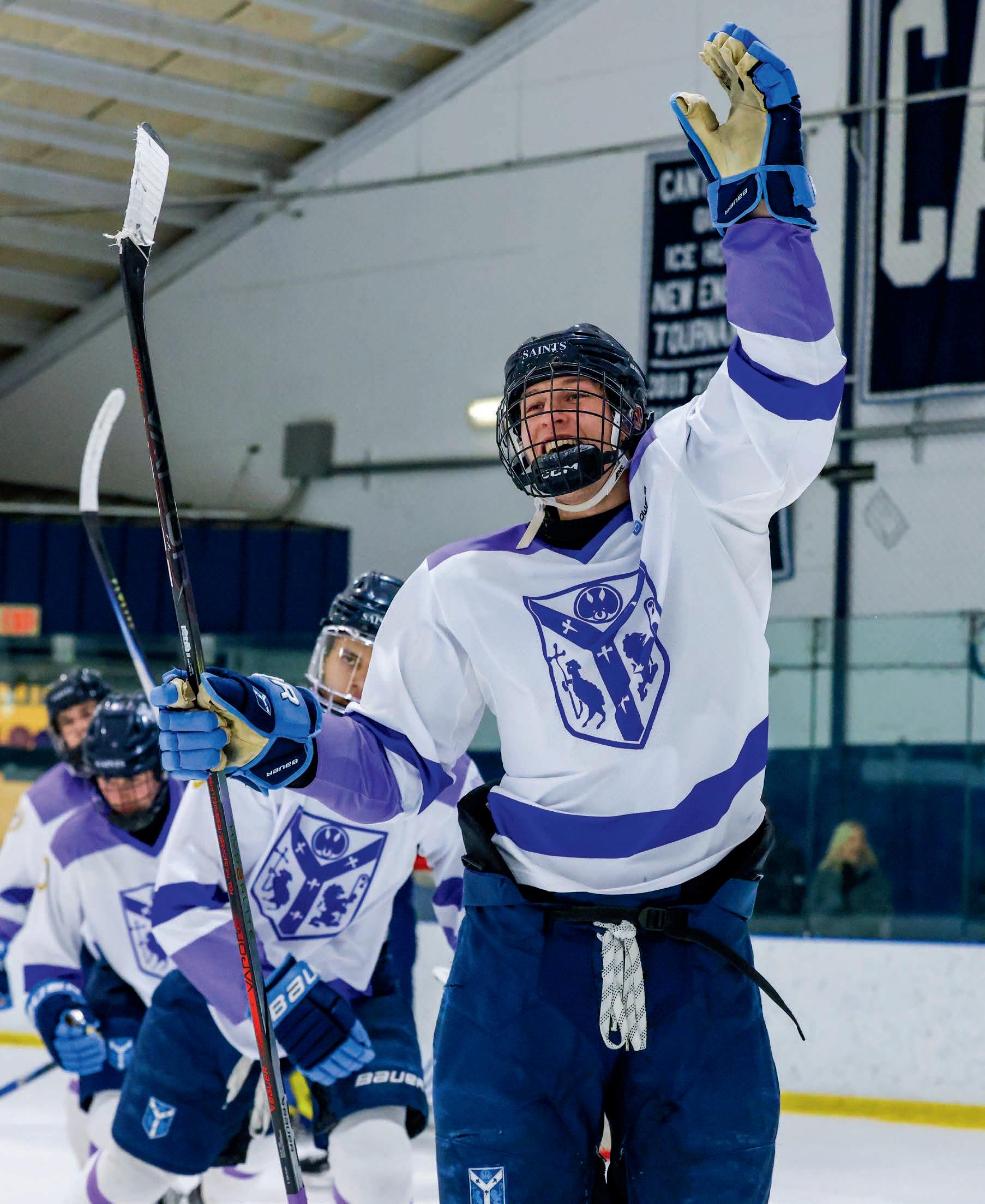
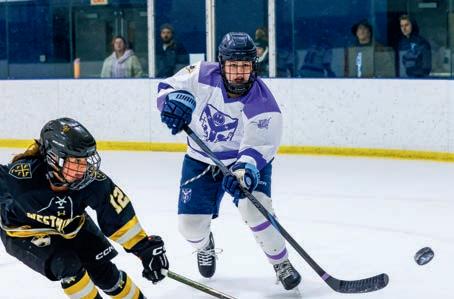
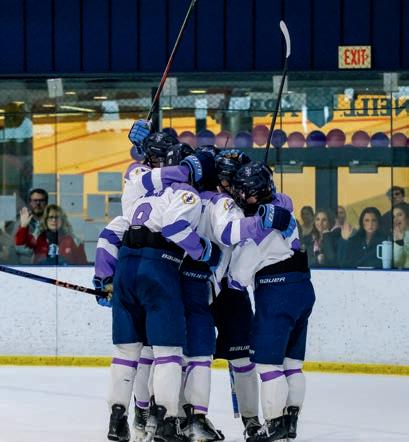
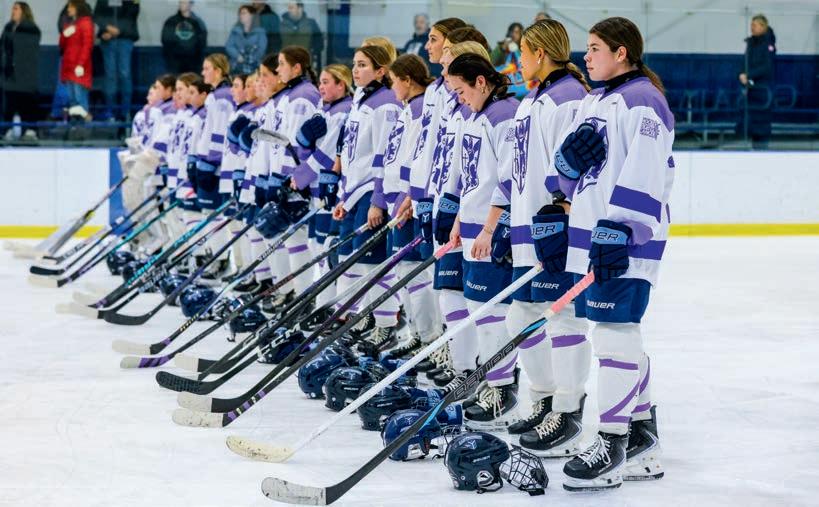
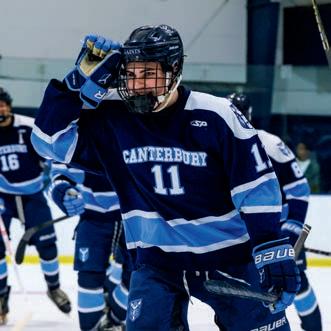
Boys’ and Girls’ Varsity Hockey teams played their annual “Hockey Fights Cancer” games on February 11 and 14 in a festively decorated O’Neill Arena. After a scoreless first period against Trinity-Pawling School, the boys scored four unanswered goals in the second, followed by three more in the third. In the end, the Saints earned a 7–1 victory. While the girls lost a close match against Westminster School, the game was still a success, proudly uniting the entire community and raising funds for Blood Cancer United and the American Cancer Society.
HOCKEY FIGHTS
MORE THAN THE SCORE
Canterbury’s winter season was defined by determination, passion, and resilience. From individual achievements to true team efforts, our athletes delivered thrilling performances deep into postseason play, showcasing the resolve that exemplifies Saints athletics. Indeed, the singular focus and remarkable sportsmanship of each competitor proved that success is measured in more than just final scores.
Boys’ Varsity Hockey faced off against Winchendon School in the semifinals, where they held their own in a fast-paced, backand-forth match. After a scoreless first period, the Saints took the lead midway through the second when Connor Emens ’26 sniped the first goal of the game. They carried that lead until the 17-minute mark of the third, when Winchendon evened up the score. While goaltender and captain Cody Hew ’26 stopped 50 of 52 shots in the semifinal game, Winchendon found the back of the net in overtime, ending the Saints’ season.
“It was a heartbreaking end to a remarkable season,” says Head Coach Padraic “Paddy” McCarthy ‘94, P ‘29. “Our captains, Gino LaRusso ‘26, Cody Hew, Logan Martel ‘26, and Tommy Browne ’26, were outstanding leaders, and the overall athletic maturity of the senior class contributed greatly to our success this season. This group took Saints Hockey on a memorable run, and I am very proud to be a part of their journey."
The same resilience carried over to the hardwood.
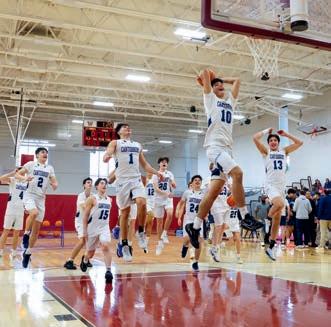
After a terrific season of their own, Boys’ Varsity Basketball earned the #2 seed in the Class B-Large playoffs. In their opening round, they were victorious against Westminster School, 63-58. The semifinal game against the #3 seed Rivers School ended in a 48-45 win, with Jared Strand ’26 making a three-pointer with 2.4 seconds remaining.
In the final, the boys faced #1 seed St. Mark’s School, but despite impressive scores from players like Jared (18 points) and Elijah Ashby ’27, St. Mark’s prevailed, 70-58.
"This team aligned at the right time and was one of the most resilient groups that I have ever worked with,” says Head Coach
Brian Fruscio P ‘25, ‘26. “They came together and made a remarkable run to the finals. I am really proud to be part of this winning group."
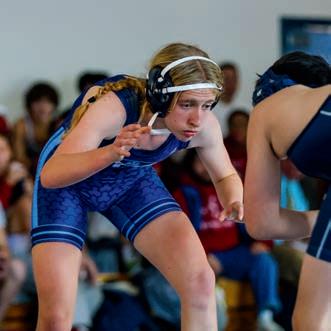
Individual athletes from Wrestling and Swimming & Diving also made Canterbury proud this season. Sara Anderson ’27, the School’s first female Wrestling Captain, attended the US National Prep High School Wrestling Championships at Lehigh University. In her first match, Sara held her own against the fifth-ranked competitor in the nation, avoiding getting pinned throughout the round. Her second match started strong, but in the last moments of the competition, she was pinned by her competitor in a coup no one saw coming.
“That's the sport of wrestling, and Sara knows that very well,” says Head Coach Alden Mahoney. “She's a natural competitor—one of the grittiest and most disciplined wrestlers we have. She's there every single day, first boots on the mat, and I think she found her voice this year.”
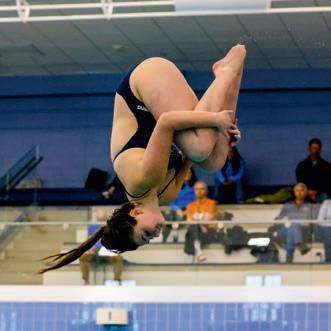
At the NEPSAC Division II &III Swimming & Diving Championships, Serena Bacetti ’26 represented Canterbury as a diver. Head Coach Ian Ferrara describes Serena as a tough competitor who is always striving to perfect her technique. This year, he says, she worked diligently on mastering the reverse dive.
“It’s a very scary dive,” says Coach Ferrara. “But this year, Serena broke through barriers, pushing fear to the side and making her least favorite dive her favorite.”
All that practice paid off: Serena scored a 258.5—a score based on 11 different dives rated 1 to 10 and then multiplied by a degree of difficulty—and took home 2nd place.
These athletes have set a high bar for all Saints moving forward, offering a clear example of what it looks like to lead, compete, and persevere when it matters most. Though the final results may not have always fallen in their favor, they all showed what it means to compete with passion and represent something greater than themselves.
Virginia Guevara Figueroa ’26 Completes Her First Half-Marathon
It was a formidable winter here on the hilltop, but throughout the freezing temperatures, snow, and ice, it was not uncommon to see Virginia Guevara Figueroa ’26 out for a run. That’s because the Sixth Form student was preparing for something truly special: a halfmarathon in New York City.
Virginia comes from a family of runners, but she’d never tried running herself until she came to Canterbury. “When I first joined cross country, I thought it would be easy because running felt familiar,” she explains. “But I realized quickly that it’s not easy at all—it’s a very tough sport and I fell in love with it.”
She first began thinking about running a half-marathon last year, but her commitment to the Swim team left her without time to properly train. This year, she knew she wanted to do everything she could to make it work.
After a successful cross country season, she spoke with Robert Morris, Director of Athletics and Co-Curriculars, to obtain special permission to use the winter sports season to train for a half-marathon in February. Her cross country coach, Tracy Garcia LaVigne P ’14, ’16, ’17, ’20, ’23, and Misi Babington, Director of Athletic Training, worked with Virginia to create a plan, and she was (literally) off to the races.
When race day arrived, Virginia was expecting a large crowd, but soon found that there weren’t too many people willing to run on a frigid day in New York. She observed that she was the only person her age in the competition.
“It was a very small race,” she explains. “All the halfmarathon runners went in the first wave—about ten people total. When I crossed the finish line, I felt really happy, especially because people I love were there—my parents and my boyfriend were cheering for me.”
Virginia finished her race, 13.1 miles, in under 2 hours. The experience has inspired her to keep going. She’s already planning another half-marathon this summer, this time with her father. But in some ways, she says, the race is secondary to the journey a runner takes to get there.
“They say that with long races, the race itself is just the final step—you’ve already run it in your training,” Virginia observes. “Every time I go out, it’s just me—my body, my mind, my spirit—and it started here at Canterbury. I’m so proud that I was able to do this, especially as a senior.”
Canterbury is proud of you, too, Virginia!
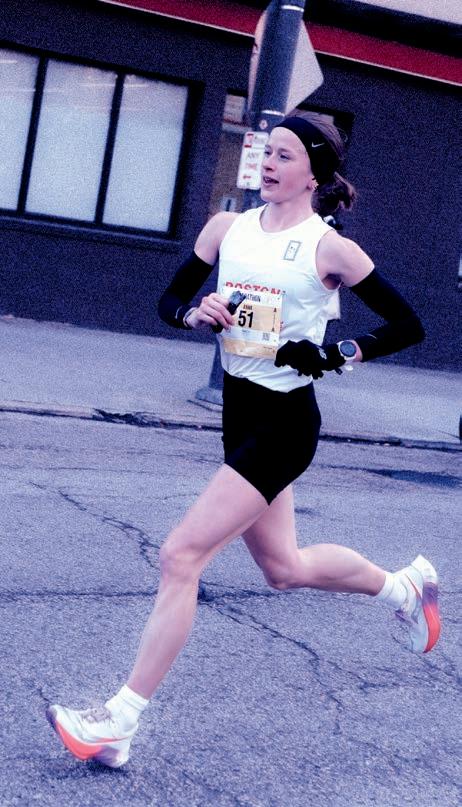
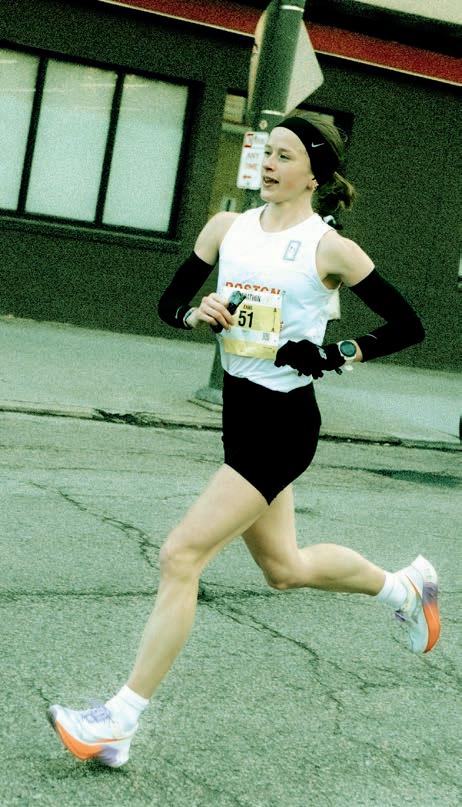
Anna Oeser ‘18 was already a talented basketball player when she came to Canterbury as a Third Form student. When the time came to choose a fall sport, her father suggested that cross country could help her become a better overall athlete, but it wasn’t long before she found a deep passion for running that continues to this day. In November, she was the first woman to cross the finish line at the Philadelphia Marathon, completing the 26.2-mile race in 2:34.
“Running is an important part of who I am,” she explains. “The lessons I’ve learned through running have helped me in all aspects of my life.”
Earlier this year, her curiosity and competitive spirit prompted her to sign up for her first marathon in Philadelphia.
Anna Oeser '18 Wins Philadelphia Marathon
ONE ONE ONE MILE AT A TIME
Even for a seasoned athlete, preparing for such a grueling distance is no small feat. Anna approached both training and the race with advice from Coach Tracy Garcia-LaVigne P '14, '16, '17, '20, '23, whom she describes as one of her biggest supporters to this day.
“Tracy always used to say to us: ‘Be in the mile that you're in,’” she explains. “It became my mantra. Her advice helped me not worry about what other people were doing or the 26 miles ahead of me. I could focus on my own plan and simply be present.”
Anna knew a lot had to go right for her to win the race, but she also knew that while her ambitions were lofty, they weren’t unrealistic. And as she neared the marathon’s finish line, she says, a familiar feeling began to rise inside of her.
“I won my first race at Canterbury,” she recalls. “I remember thinking then, with about a mile to go, ‘how crazy would it be if I won this?’ That was in the back of my mind when I was finishing Philly. I’d imagined it—I wanted to win—but actually breaking the tape was shocking and amazing.”
Anna’s time qualifies her for the 2028 Olympic trials, and she looks forward to competing. But as she prepares for her future, she still draws inspiration from her past.
“I literally started running because of Canterbury, and thank goodness I did!” she shares. “I hope students keep an open mind about joining something new; you really never know where it'll take you.”
USA Field Hockey Analyst Brings Insight to Canterbury BY THE NUMBERS COACHING
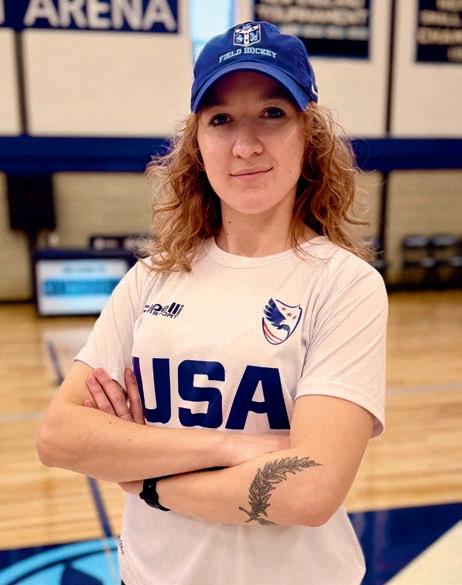
When Caroline Koziol joined the faculty of Canterbury School at the start of the 2025–26 academic year, she brought with her not only a passion for history but also a deep commitment to field hockey. An analyst for USA Field Hockey’s junior development program, she now serves as Canterbury’s Varsity Field Hockey coach—bringing a unique, multifaceted perspective to the program on the hilltop.
Caroline began playing field hockey in fourth grade and continued through all four years of college. While pursuing graduate studies at Dartmouth, she was disappointed to learn that Ivy League rules do not permit graduate students to compete in varsity athletics. But after meeting with head coach Mark Egner, she joined the team as the graduate student manager—a role that would ultimately grow into something even bigger.
At the time, Coach Egner was working with the U18 junior development team for USA Field Hockey. Knowing Caroline’s interest in the analytical side of the game, he connected her with an opening for a videographer and data analyst within the organization.
It was an exciting but challenging new role. Though she had a solid grasp on the fundamentals of analysis, learning the appropriate coding programs to deconstruct a play was a challenge.
“For example,” she says, “a coach might ask, ‘How many double turnovers happen in our defensive 25 versus our attacking 25?’ We would review film, code each instance in R or Python, count occurrences, and then map that data to a visual representation of the field. From there, we interpret the data and present those findings to coaches with recommendations.”
performance and collaborate on broad, long-term projects across USA Field Hockey. She’s excited to bring that ethos and expertise—and close connection to top coaches from across the country—to Canterbury. But it’s not a one-way exchange. Caroline says coaching on the hilltop has had a positive effect on her analytic style.
Coaching has changed how I communicate and deliver information, and has added a layer of perspective and empathy to my analysis
It’s a complicated process, but it’s one Caroline has come to value, particularly in her ongoing work with USA Field Hockey’s junior development program and its U18 athletes.
At training camps and weekly meetings, she and a team of field hockey experts carefully analyze their teams’
“Coaching has changed how I communicate and deliver information, and has added a layer of perspective and empathy to my analysis,” she explains. “I think there’s an opportunity to use these dual perspectives to further strengthen the field hockey program at Canterbury.”
A key element of Coach Koziol’s plan is emphasizing improvement year-round.
“If they’re not playing, they should still be learning—watching games, taking notes, building their field hockey IQ,” she says. “I treat it like an academic subject: you have to learn and practice the material. How do you take a mistake from a game and fix it for next time? My goal is to turn my players into analysts as well.”
Formed by Purpose: Lives shaped on the hilltop
At Canterbury, students are invited to build and continually deepen a foundation of meaning and purpose that will evolve over the course of their lives. Today, that journey unfolds within a community that is both rooted in its Catholic heritage and enriched by a wide range of beliefs, backgrounds, and perspectives—including students who do not identify with a particular faith tradition. Through theology classes, acts of service, reflection, prayer, and shared experience, students are encouraged to explore what they believe, what they value, and how they will live.
In doing so, they develop a strong sense of self—preparing them to lead as ethical, compassionate, and principled citizens, on the hilltop and beyond.
The School’s Catholic tradition and its enduring commitment to reflection, inquiry, and moral development remain guiding forces in an increasingly complex world. At the same time, that foundation invites an essential question: how do we meaningfully live these values in a 21st-century context? And how do we support young people—of all faiths and of none—in sustaining that sense of purpose and growth through graduation and beyond?
PALLIUM spoke with three alumni faith leaders—a Catholic priest, an Episcopal priest, and a Baptist pastor—about how they respond to the evolving spiritual and ethical questions young people face in their work today.
Be Good. Love God. Have Fun.
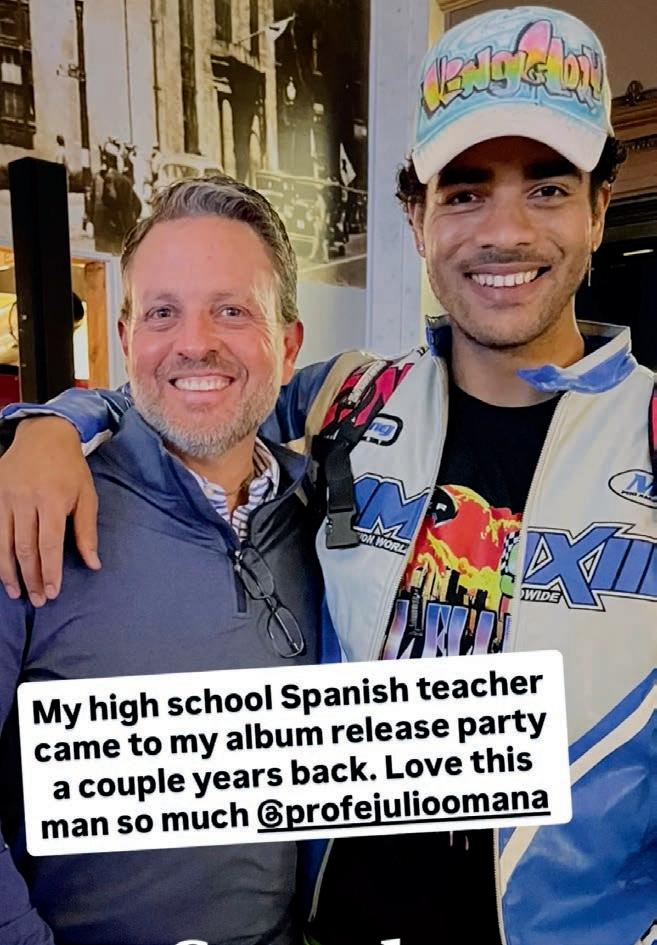
While Father Steven DeMaio ’03 fondly recalls theology classes and serving as a Sacristan on the hilltop, he notes that it was Julio Omaña P ’19, ’20 and his AP Spanish class that inadvertently set him on the path toward his vocation.
“I wanted to coast with Level 4, but he believed in me and encouraged me to take AP,” he explains. “When I got to college, I decided to minor in Spanish.”
That Spanish minor led him to a series of life-changing service trips, first to Costa Rica and then with an organization in Zambia, where he lived with Salesian sisters who invited him to Mass and to work with children in their care.
“Being in that environment rekindled something,” he says. “The foundation from my upbringing and education suddenly became real—it all applied. It was like everything that had been planted was opening up. When I came back to the United States, I prayed and discerned and entered formation with the Salesians of Don Bosco.”
Since his ordination in 2021, Steven has centered his priesthood on the accompaniment of young people, the chief mission of his order. And while he observes that most teenage problems are the same from generation to generation, young people today face many challenges unique to their own.
“Many young people are looking for grounding and peace amid a confusing, fragmented, and often violent world,” he observes. “With social media and constant access to information, they are bombarded with a lot of heavy issues all the time. They’re anxious. They’re depressed.”
Father Steven says that this whirlwind of emotions can require a lot of patience, but in spite of it all, he remains
heartened by the tenacity he sees in his young parishioners.
“They want something to hold onto, and I’m often surprised by their level of maturity when they talk about faith,” he reflects. “Even when they struggle, the key is that they have a desire to be good, to love rightly, and to live meaningfully.”
The Salesians’ approach to accompanying the young is rooted in building relationships and creating environments where faith can grow naturally rather than be imposed. Just as the interconnectedness of the world can cause young people to wrestle with their faith, Father Steven believes that an interconnected community of home, school, parish, and playground can bolster it.
“We have to meet the young where they are and love what they love, so that the young will come to love what we love,” he says. “So whether it’s using sports, music, or video games, if we can share that space and have friendship there, we can begin to answer some of the questions they have about life and faith.”
An antidote to the heaviness and cynicism of the world, he says, can be found in an adage inspired by his order’s founder, St. John Bosco. “We use a simple phrase: Be good, love God, and have fun.”
FATHER STEVEN DEMAIO ’03 Chaplain for Youth Ministry St. Benedict’s Catholic Church, Toronto
Serving in Faith
“Where’s the choir?”
It was the first thing Reverend Ebony Grisom ’93 noticed when she attended her first Mass in the Chapel of Our Lady. Growing up in the Baptist tradition, this absence was initially a culture shock. But as time went on, the rhythms of the service and liturgical calendar became familiar and comforting.
“Growing up, church felt like something adults did,” she says. “But at Canterbury, I saw that faith was something young people did, too."
As a student at Canterbury, and later an employee in the Admission Office, Ebony never dreamed of becoming a minister, though she says friends, colleagues, and former teachers suspected her vocation long before she did. In 2016, she was ordained as an American Baptist minister.
“Guy Simonelli P ’89, ’91, ’92, ’99, who was my New Testament teacher at Canterbury, came to my ordination in Rhode Island,” she says. “My male, Catholic teacher came to his Protestant, female student’s ordination. I don’t know if Nelson Hume had that possibility in mind in 1915, but it was a beautiful, full-circle moment for me.”
Ebony now serves as the Director of Protestant Life at Georgetown University, and jokes that there is no “typical day.”
“You learn to be interruptible,” she says. “If a student comes by my office unannounced, and they often do, I take the time to meet them
where they are, even if it’s only for five minutes before a meeting.” She understands that it is in these informal moments, when students want to discuss questions of identity, family, and relationships, that faith can deepen and take root. Increasingly, she has also observed that they come to her for advice on how to live faithfully in a complicated and often divided world.
“They also have a lot of big, spiritual questions about how to live as a Christian now,” she says. “They’re interested in navigating how to respond to hypocrisy and how to be a good example to other Christians,” she explains. “I love those conversations.”
In answering, she often draws from her Canterbury experiences. Not only does she believe in the power of a faithful community, but also in the inspiration that comes from observing others live their faith aloud.
“Not in a braggadocious way, but in the quiet, loving, and patient way they lived their daily lives and the ways they instilled service as a part of their faith,” she says. “I see that in my students at Georgetown. Many come because of Catholic social teaching and want to serve the world through their faith. I want to support them in that, whether they are going to become politicians, lawyers, advocates, or public servants. I am thrilled to accompany them as they learn how faith shapes that work.”
REVEREND EBONY GRISOM ’93 Director for Protestant Life Georgetown University
Learning in Community
The Very Reverend Judy Sullivan ’74 was raised Catholic, and so when she enrolled as one of Canterbury’s first female students, the School’s spiritual tradition was familiar to her. But she admits that at that time in her life, her faith was not strong. Looking back, particularly as an Episcopal priest, she can recognize it as a common phase for many teenagers.
“There is a lot written about religious development in young people, and it’s not unusual for there to be a time of stepping away and then stepping forward again—a kind of dance,” she observes.
While she retained gratitude for her Catholic upbringing, it wasn’t until her thirties that she began to long for the kind of liturgy she’d grown up with. Within five years of joining the Episcopal Church, she felt called to ordained ministry. In 2010, she was elected to the position of Dean of the Philadelphia Episcopal Cathedral, serving through October of 2023 before retiring. She now works as the Special Projects Consultant at Interfaith Philadelphia. Her current project, “Religious Freedom: Then and Now,” is a self-guided walking tour of historic congregations in Philadelphia, and a series of programs and events that explore what it means to be a person of faith—or no faith—in a religiously pluralistic democracy.
Among those seeking spiritual clarity in a complicated world are teenagers “dancing” with their faith as Judy once did. Like Ebony and Father Steve, Judy observes the same blend of “classic” teenage problems and the uniquely 21st-century struggles of social media and constant access to information. But she also says that among the chief questions young people seek her advice on include identity and justice.
“Sexuality has been a huge topic of conversation,” she says. “The role of women continues to be of deep interest and concern. I notice that young people, and really all people, have a great need to be welcomed, accepted,
and loved as they are, not with an agenda to change them, but to be welcomed into community and appreciated there.”
Indeed, she has noticed that it’s a longing for community that is bringing more and more young people into her church. And this relationship is not a one-way street; just as faithful adults are in a position to guide young people, so too are teenagers valuable members of a religious community. Community discernment is important to Anglican tradition: together, Judy believes there is a richer and more faithful way forward.
“They are often comfortable speaking truth to power and quick to call out the gap between what institutions say they believe and what they actually do,” she says. “That’s not always comfortable, but it’s important. A multigenerational community allows us to challenge one another, learn from one another, and grow. Young people are still discovering who they are and what their lives might become. Even at my age—almost seventy—we still don’t fully know the possibilities of our lives.”
The work of these graduates not only echoes the School’s mission but also offers insight into how to live it fully. In a community that now includes students of many faiths—as well as those still searching or not grounded in a religious tradition—this work is as much about fostering purpose and moral clarity as it is about nurturing spiritual life.
While our founders could not have imagined many of the challenges Saints would face in 2026, the tradition established on the hilltop in 1915 continues to offer a strong foundation: one that guides students of all backgrounds toward lives of meaning, service, and purpose.
THE VERY REVEREND JUDY SULLIVAN ’74 Retired Dean, Philadelphia Episcopal Cathedral Special Projects Consultant, Interfaith Philadelphia
to KyivCanterbury
On a bitterly cold, rainy day in Kyiv, Walter Burke P ’78, ’79, ’82, ’83 and his sons, Sean ’78 and Kevin ’79, stood watching members of Ukraine’s Territorial Defense Forces (TDF) carefully inspect more than a dozen ambulances. The reserve soldiers tested the vehicles’ heaters and radios. They examined the engines, control panels, and steering. The Burkes did not begrudge them this fastidious attention to detail: the integrity of the transports was a matter of life and death.
“Within an hour, they would be driving toward the Eastern Front,” Sean explains. “Within 48 hours, they would be carrying wounded soldiers. But it is also poignant for us: we’d driven these ambulances all the way from France. They almost feel like our children.”
The Burkes’ journey to Kyiv had begun a week earlier, but a fuller understanding of these extraordinary men begins at Canterbury School.
Fond Memories of the Hilltop
The Burkes are a quintessential “Canterbury faculty family.” In 1964, Walter came to teach math on the hilltop with his wife Elizabeth P ’78, ’79, ’82, ’83, better known as Betty, who would serve as the School nurse for 20 years. Together, they raised their four children—Sean, Kevin, Kathleen King ’82, and Maureen O’Donnell ’83—in Carmody House.
“It’s where I worked, lived, and played. It was a wonderful life,” Walter says. “Sometimes I would go weeks without leaving the hill. I’d recommend it to anybody. It was absolutely terrific and a wonderful place to raise a family.”
The hilltop was just the beginning of distinguished careers for both Sean and Kevin.
Sean took a position at Ernest & Whinney (now Ernst & Young), first in Chicago and then in Paris, where he currently resides. He retired in 2018. Kevin served in the Marine Corps until 2008. He went on to join Booz Allen Hamilton, a management and technology consulting firm, and retired last year.
Walter taught math at Canterbury for more than 30 years and retired in 1995 when Betty was diagnosed with brain cancer. Following her death after 38 years of marriage, he lived with his children in Kansas and Massachusetts. While living with his daughter Kathleen, she introduced him to another Elizabeth—Liz Costello. The two have now been married for 27 years.
All three men could have enjoyed their retirement content in the knowledge that they’d built successful, meaningful careers and personal lives. But in 2024, Sean embarked on a journey that would indelibly change what retirement could look like for the Burke family.
A sea of blue and yellow honoring those who gave everything for their country.
In October 2025, former Canterbury faculty member Walter Burke P '78, '79, '82, '83 joined his sons Sean Burke '78 and Kevin Burke '79 on a humanitarian mission to deliver ambulances to Ukraine with the nonprofit Ukraine Focus. The 1,400-mile journey would deepen their bond and bring aid and hope to a people embroiled in war.
Ukraine Focus and the First Missions
Ukraine Focus coordinates with people from around the world and the TDF to provide humanitarian and medical aid to the country. Volunteers deliver medical supplies and equipment—such as 3D printers to create custom prosthetic limbs—to the country amid the ongoing conflict.
A keystone program of the organization is its Volunteer Ambulance Corps. Ambulances are in short supply, and because they are often targeted by Russian forces, they are rarely functional for more than a few months. The Corps, modeled after the American Field Service, relies on volunteers to source, procure, repair, and, crucially, deliver functional ambulances to reservists in Kyiv, who will bring the vehicles straight
to the front lines of the war. Ukraine Focus estimates that, in the few months it is in service, just one ambulance can save 500 lives.
After learning about the organization from a friend in Paris, Sean joined his first ambulance convoy in April 2024, transporting vehicles from eastern France to Kyiv. By March 2025, he was embarking on his fifth mission, this time with the help of his brother.
“When Sean first told me what he was doing with Ukraine Focus, I was incredibly proud of him,” Walter recalls. “And when Kevin decided to join him on his March mission, I considered joining, but got cold feet at the last minute. So when the opportunity came up again, I decided I couldn’t pass it up.”
Sean, Walter, and Kevin—proud to serve together in a country that needs hope.
1,400 Miles to Kyiv
On October 2, the three set out from Commercy, France, with more than 25 other drivers from 10 different countries. The first leg of the trip, starting within 24 hours of Walter and Kevin landing in Europe, was an 8-hour drive to Munich. From there, the team moved to Prague, Czech Republic; Katowice, Poland; and Rzeszów, Poland, the last stop before crossing the border into Ukraine.
“When you cross the border, you immediately feel that you are entering a country under strain,” Kevin observes. “The roads are full of potholes. The infrastructure, even before the war, was generally poorer than what we’d seen in other countries.”
After an early, somewhat arduous start crossing the border, the convoy still had 200 miles to reach the city of Lviv, their last stop before Kyiv. When they arrived at their hotel, the team gathered for a dinner where Ukraine Focus founder and CEO Brock Bierman acknowledged the unique efforts of the volunteers.
“It was emotional: my brother, father, and I were the largest family group ever to participate in a mission, and my father was by far the oldest driver Ukraine Focus has ever had,” Sean explains. “Even Brock choked up because he was moved that an 88-year-old man would volunteer a week of his life for the mission.”
“And let me tell you: Dad didn’t miss a beat,” Kevin adds. “These were long days, and he did everything with the team.” Walter nods.
“In March, when I’d first planned to go, I was scared. But now that I’ve done it, I’ve never regretted it. I made it. Sean and Kevin took good care of me.”
The Convoy (& the War) Reach Kyiv
After another grueling day on the road, the convoy arrived in Kyiv and settled in for the night. While the capital city is generally considered to be in one of the safest areas of the country, the Burkes were not entirely out of harm’s way. Around 9:30 p.m., airstrikes began not far from a nearby power plant.
“It was an intense experience. You could hear the public warning sirens from inside the hotel rooms,” says Sean. “As the night
wore on, explosions could be heard about three miles from our hotel.”
“Based on the reactions of the hotel and Ukraine Focus, who were accustomed to the war, we knew we were not in immediate danger,” Kevin recalls. “Still, nobody slept very much that night.”
The next day, still weary from days of driving and a night of shelling, the Burkes attended a ceremony to hand the ambulances over to the TDF. Reservists inspected their new vehicles and were shortly off to the front. Ukraine Focus volunteers spent the rest of their time in the city visiting with its people and sights, including the powerful “Wall of Memory” memorial featuring pictures of fallen soldiers—soldiers like the ones the newly delivered ambulances could go on to save.
Beyond the Journey
Each of the Burkes says the mission affected them profoundly, all the more so for having completed it as a family.
“This mission is simply about helping Ukraine and its people. We want them to know that people outside their country understand what they are going through and are willing to make a small sacrifice compared to theirs,” Kevin says. “But doing this together changed the feel of the whole trip. Watching Dad in action was impressive.”
“For me, the trip was a bonding experience,” Sean adds. “Emotional, meaningful, and challenging.”
Walter says that embarking on this mission with his sons was a moving experience. But what will stay with him the most, he says, were the people of Ukraine, and what he saw driving through a country enduring war.
“I’ll always remember the reaction from people on the roads,” he says. “Truck drivers would give us a thumbs-up when they saw the ambulance. People in small towns would clap as we passed. They knew exactly what we were doing, and they were grateful.”
From our quiet hilltop to the long road to Kyiv, the Burkes’ mission underscores the enduring impact of compassion in action. The ambulances they delivered will save lives in the months ahead, and the example they set—as a father and sons devoting themselves to selfless acts of service—remains an inspiration to the Canterbury community.
The Burkes and a member of Ukraine’s Territorial Defense Forces.
One more ambulance, one more lifeline entering Ukraine.
OLD GUARD REUNION
Celebrating the Past
INVESTING in the FUTURE
From September 26 to 28, Canterbury’s “Old Guard”—alumni who graduated more than 50 years ago—returned to campus to make new memories with old friends. Once on the hilltop, alumni sat in on classes, toured the campus, and met with current students and Head of School Caroline Blatti before enjoying a cocktail reception and dinner in O’Connor House. It’s always a pleasure to welcome alumni back home, and the Old Guard always knows how to have a good time!
When Canterbury’s Old Guard returned to campus in September, it was impossible for them not to notice the many changes that had occurred on the hilltop over the past five decades. And yet while the buildings had changed, the heart of their alma mater remained familiar. Patrick Foy '65 was impressed.
“I listened to our new Head of School, Caroline Blatti, speak about her vision for the future. She was enthusiastic and articulate,” he says. “Canterbury is doing good things. I am certainly grateful for the start it gave me and, moving forward, the School is in good hands.”
Upon returning home, Patrick was inspired to join the School in its mission. He made a contribution to the Annual Fund and joined the Carillon Society by making a bequest to benefit Canterbury in years to come. Support like Patrick’s is invaluable to the ongoing work of this community.
“Patrick’s generosity to Canterbury is emblematic of the thoughtful dedication that makes this community so extraordinary,” says Caroline. “Planned gifts like his are essential to the ongoing success of Canterbury and providing a meaningful foundation for future generations of Saints.”
"We live in strange and dynamic times,” he observes. “Perhaps Canterbury can serve as a North Star."
CLASS OF 1975
50 th Reunion
While much has changed on the hilltop since the Class of 1975 graduated, their friendships, fond memories, and school spirit have remained as strong as ever. The celebration of their Golden Reunion kicked off on October 17 with a private dinner at Lucia Ristorante in downtown New Milford. The next day, alumni were off to a full day of reminiscing and learning about the myriad improvements that have happened at the School in the past five decades from Caroline Blatti, who welcomed them for dinner at the Head of School’s residence. We can’t wait to welcome them back to Canterbury soon!
MAKE YOUR IMPACT BY JUNE 30
Your support of the Annual Fund is what brings Canterbury’s mission to life. As the School’s primary source of unrestricted support, it gives us the flexibility to invest where it matters most: recognizing and retaining exceptional faculty, responding nimbly to immediate needs and opportunities, and caring for the spaces where students learn, live, and grow.
A gift to the Canterbury Annual Fund by June 30 is one of the most powerful ways to make a meaningful difference in the lives of every Saint this year. Your generosity fuels what’s happening right now and helps ensure we move forward with strength and purpose into the year ahead. Give today: cbury.org/give
Christmas with Canterbury
Over the holiday season, more than 200 alumni, parents, and other members of the School community came together to share good times with old friends at Canterbury’s annual Christmas parties. At Hampshire House in Boston, Fiola Mare in Washington, D.C., and the Harvard Club in New York, spirits were merry and bright as generations of Saints gathered to celebrate and share in holiday cheer.
This holiday season, Canterbury alumni, families, and friends found a Christmas greeting from the School in their mailboxes featuring an oil painting of our hilltop in a soft winter light. It’s an evocative scene familiar to anyone with fond memories of Canterbury at Christmastime, and with good reason: the painting was created by alum Stephanie (Goos) Johnson ’97 P ’28
The School was delighted to share this piece with the Canterbury community: Stephanie captured our hilltop home as only a Saint could.
Alumna Art, Holiday Heart
saints Building the Canterbury Community through Entrepreneurship off the hill
Connecting with alumni is a hallmark of a Canterbury education: the School’s Saints Off the Hill series invites students to imagine how—and where—they can apply what they learn on the hilltop in the world beyond campus. This winter, three alumni visited current Saints in classrooms, club meetings, and School Meeting to discuss the many ways entrepreneurship can shape a career, a leadership ethos, and the lives of those around us for the better.
What began as a question became a responsibility.
Growing Where You’re Planted
“No matter what you know about Congo,” Dawn Hurley ‘95 told students, “you probably know more than I did when I decided to move there. But the minute I crossed into Congo, I fell in love.”
During a February School Meeting, Dawn talked about the three years she lived in Goma, a city in the eastern part of the country. But while its citizens lived in relative safety, the reality of the Second Congo War weighed heavily on the minds of all who lived there, including her friends Argentine, Mapendo, Riziki, and Solange, all of whom lived with disabilities that required crutches
“I kept thinking, ‘How do I live in this world where some people have the opportunities I’ve had, and others have had the challenges they’ve faced?’ It didn’t seem fair,” Dawn said, noting that it was difficult for the women to make a living given their circumstances.
She didn’t have an answer, but she continued to listen to her friends. She realized a way she might help them. All four women were skilled seamstresses. Shona Congo—a sewing collective featuring the friends’ work—was born. Dawn helped to sell their wares all over the world.
But within a year of Dawn returning to the United States, disaster struck. The rebels had descended upon the city. After years of living in refugee camps, Argentine and Mapendo relocated to Canada. Solange and Riziki returned to Goma. Nevertheless, they continue to endure and make the most of the opportunities they have. Dawn, Mapendo, and Argentine wrote a book together, The Place Between Our Fears. All four women continue to earn money through Shona Congo.
“I can see them asking that same question I used to ask: how do I live in this world?” Dawn said. “But I try to remember how I felt when I moved there: that instant love I felt. Congo, and its people, are more than the problems they face.”
“An entrepreneurial mindset turns ideas into impact.
Expanding Entrepreneurship
“I used to think that entrepreneurship was rolling up your sleeves and starting your own business. But that’s not always the case,” Chris Crucitti ’97 told Stephen Johnson’s Syracuse University Project Advance (SUPA) Entrepreneurship and Global Economy classes in December. “Entrepreneurship is a mindset: an approach to growing a business.”
After graduating from Canterbury, Chris earned a B.S. in Cardiac Rehabilitation and Exercise Science from Ithaca College and an M.S. in Health Management from American University before joining the pharmaceutical industry. He currently serves as the Chief Growth Officer at Model N, a software company that provides revenue management technology for pharmaceutical, life sciences, and technology companies. In this role, he takes an entrepreneurial approach in leading the company’s global growth strategy, overseeing sales, customer support, and marketing teams.
Chris encouraged students to look at entrepreneurship not as a specific business plan or outcome, but as a growth strategy rooted in curiosity. Following through with a plan can often be summed up with a single question. What problems do you observe in a given industry or company? Or what “white space” exists that might be explored and shaped into something that creates value?
“Ask yourself every day: what impact do you want to have?” he advises. “Write down your goals and track them over time. The earlier you can start to do that, the better edge you’ll have.”
Finding Opportunity in Problems
For 35 years, the Women of Canterbury (WoCbury) club has inspired young women to embrace their leadership potential on the hilltop and beyond. One such alumna, Samantha “Sam” Storch Malloy ’07, met with current WoC members in February for an insightful lunch chat.
After graduating from NYU, Sam began her career with magazine publisher Condé Nast, where she focused on editorial partnerships and executive projects. After serving in senior roles at Rent the Runway, she accepted a position at Peloton Interactive, a job offered to her by a former boss. Sam had one request for her new role: “Put me where things need to get solved.”
Sam was named the brand’s General Manager of Third Party Retail and is responsible for identifying and working with corporate partners to expand the company’s reach. But this growth inevitably raises logistical problems, and Sam—who will begin pursuing an M.B.A. from Yale this summer—wants aspiring leaders to understand these complications as opportunities. Every business, from finance to fitness brands, is full of myriad details that someone has to figure out, from profit margins to product placement within a store.
“These challenges sound really boring,” she explained, “but the things that seem the least interesting can actually be the most fun.”
While their careers have taken them in very different directions, Dawn, Chris, and Sam share a common thread: each approaches the world with an entrepreneurial mindset. Whether driving global growth at a technology company, solving complex business challenges, or building opportunities for others across continents, they demonstrate that entrepreneurship can flourish in any field. For Canterbury students, their stories serve as a reminder that meaningful impact often begins with curiosity, compassion, and the courage to turn challenges into possibilities.
“Put me where things need to get solved.
SOCIETY OF ALUMNI
2026 Alumni Award Recipients
Canterbury’s vibrant network of alumni is an invaluable part of our community. Saints go on to do great things in business, politics, and communities around the world. Every year, it is our honor to celebrate two accomplished graduates with the Thomas J. Sheehy III Distinguished Alumni Award, named for the School’s fifth headmaster, and the Outstanding Young Alumni Award, which recognizes a graduate from the past 25 years.
This year, we recognize Ambassador J. Cofer Black ’68 and Victoria Morini Bernstein ’10, who will be presented with their awards at the Sixth Form Awards Assembly on campus this spring.
“TO CELEBRATE OUR ALUMNI IS TO CELEBRATE THE VERY BEST OF OUR COMMUNITY— THEIR ACCOMPLISHMENTS, THEIR CHARACTER, AND THE MEANINGFUL CONTRIBUTIONS THEY MAKE. THEY REMIND US THAT A CANTERBURY EDUCATION LIVES ON THROUGH THEIR LEADERSHIP AND EXAMPLE.
–KATE HESLIN ’96, P ‘24, ’25, ’28
Director of Alumni Relations
THOMAS J. SHEEHY III
DISTINGUISHED ALUMNI AWARD
J. Cofer Black '68
Ambassador Black had a distinguished, 30year career in the U.S. government, serving 28 years in the Directorate of Operations at the Central Intelligence Agency and as Director of the CIA Counterterrorist Center over the 9/11 period.
During his CIA career, he served six foreign tours in field management positions, including as Station Chief in Sudan and Task Force Chief in the Near East and South Asia Division and Deputy Chief of the Latin America Division. He conceived, planned, and led the CIA projection into Afghanistan and the Presidentially mandated worldwide engagement against Al Qaeda. In this capacity, he also served as the Director’s Special Assistant for Counterterrorism and National Intelligence Officer. He was subsequently appointed to the Department of State as Coordinator for Counterterrorism.
While at Canterbury, Cofer was a house proctor, Managing Editor of the Canturian, News Editor of Tabard, sang with the Choral Club, and played Varsity Football and Wrestling. A native of Ridgefield, Connecticut, he completed his BA at the University of Southern California in 1973. The next year, he earned a master’s degree in international relations, also at USC.
In addition to numerous exceptional performance awards and meritorious citations, Ambassador Black received the Distinguished Intelligence Medal, Career Distinguished Intelligence Medal, the Donovan Award, the annual Exceptional Collector Award, and the George H. Bush Medal for Excellence.
OUTSTANDING YOUNG ALUMNI AWARD
Victoria Morini Bernstein '10
Victoria, better known as Tori, is a two-time Emmy Award-winning television producer and a seasoned leader in the media industry. Currently, she serves as the Vice President of Strategic Initiatives at Tory Johnson Productions, where she oversees live e-commerce segments across ABC’s premier programming, including Good Morning America, The View, The Tamron Hall Show, Live with Kelly and Mark, and ABC Secret Savings.
Prior to her current role, Tori spent nearly a decade as a producer for Good Morning America. Her tenure was marked by global assignments covering breaking news and marquee entertainment events like the Oscars Red Carpet. Most notably, she produced the fan-favorite Deals & Steals with Tory Johnson and managed diverse talent and content for the 8 o’clock hour.
A proud graduate of Syracuse University, she holds a B.S. in Communication and Rhetorical Studies and a Public Communications Studies minor from S.I. Newhouse School of Public Communications.
Tori says her leadership foundations were established at Canterbury. While on the hilltop, she was a multi-sport athlete in Field Hockey, Ice Hockey, and Lacrosse. She served as a dorm proctor for Hickory Hearth and South House, managed the Boys’ Varsity Baseball team, was a dedicated member of the Octet singing group, and received the Francis T. Carmody ’25 Senior Prose Award. She lives in New York with her husband, Chad, and their son, Skylar Robbie.
CLASS notes
Saints celebrate the wedding of classmate Mary Grace Cordtz '17. (page 63)
1956
J. Ward O’Neill
Ward O’Neill celebrated his 88th birthday on New Year’s Eve by wearing the tuxedo he has had since age 18 (no moth holes). Sue, whom he married right after graduating from Bowdoin, died a few years ago after 63 years of a fabulous journey together. He has four terrific children and eight wonderful grandchildren. His years at Canterbury were terrific and have left many positive memories. He was a Class Agent for many years and helped organize several Class reunions. Unfortunately, his rollator and an obnoxious Father Time have prevented any recent visits to the School.
1961
Harold Carroll
Harold reports he has lived in Boston for over 50 years and walked to work. He has been in touch with Glen Magnuson ’61, who is as smart as ever. We miss Web Wheelock ’56. He is fully and happily retired but still enjoys shoveling snow in Boston and Maine. He still appreciates his Canterbury education.
1963
Edward Kernan
Ed's wife, Cathy, left for Eternity on December 4, 2025, after 57 years of a very happy marriage. He notes, “Love your wives and love your husbands. It's very tough when the time comes for one of you to go it alone.”
1965
Charlie O’Neil
Charlie and his wife, Katherine, have been spending a lot of time at their second home in the Catskills and report that for the first time in recent years, they are having a real Catskills winter— snowy and cold!
1966
Terry Meehan
Terry is happy to inform us that his stepdaughter had twins on February 2. Everyone is healthy and happy.
1965
Dan LaChance
Dan is so proud of his brother, Joe, whose 57 years of dedication to his community were recognized with a “Lifetime of Service to Franklin County” award. Joe spent 25 years at the Greenfield Police Department, retiring as the Deputy Chief of Police, and another 32 years as a Deputy Sheriff.
In an extraordinary coincidence, Joe met and befriended Bob Wray, a faculty member and Assistant Headmaster during Dan's years at Canterbury, a fact that makes Dan smile with gratitude.
1970
Tom Murray
Tom’s memoir, Wickapogue: Genius, Madness & the Murrays of Southampton, will be published on March 1, 2027. The website for the book is themurraystory.com.
1969
Charlie Steers
Charlie and his brothers—Bob Steers ’71, P ’11 and Bill Steers ’75, P ’04, ’09, ’24, ’27—hosted their 2nd Annual Steers Thanksgiving Eve family party at the Apawamis Club. The three brothers each had immediate family members plus many other nieces, nephews, and cousins present, including a number of fellow Canterbury grads. All 48 family members raised a glass to Charlie’s parents, Peggy and Charlie Steers ’44, P ’69, ’71, ’75, GP ’04, ’09, ’11, ’24, ’27. There was plenty of food, beverages, and dancing as well. The Steers are expecting to exceed 50 family members for the 2027 Thanksgiving Eve family party.
Tom and his sons, Tommy and Leigh, in Southampton last summer
1971
David Crawford
David has recently rekindled his love of cycling. A year and a half into physical rehabilitation, he is completing daily rides of 20 miles, logging 100 miles per week. He is truly enjoying the bike again.
Gary Ricozzi
Gary is happily retired after having been in business for the last 36 years. He owned a catering/special events company for nine years, followed by coowning a national staffing firm for the hospitality industry for the last 26 years. Prior to that, Gary was in the hotel/ resort business for 12 years. He now resides in Orlando, Florida, with his wife, Cynthia, and their two pups, Pepper and Shaggy!
1972
Tom Brennan
Tom continues his work as Chairman of Orant Charities, helping to provide clean water, agricultural training, microloans, and education to the people of Malawi. In December, he attended a terrific holiday party with his old classmate Christopher Colvin ’72 in Austin.
Paul Gelinas
Paul and his wife vacationed in London recently, where, as everyone knows, it rains a lot. Fortunately, they brought their Canterbury umbrella.
and
Christopher Colvin
After retiring two years ago from 28 years of teaching History and Geometry at St. Stephan's Episcopal School in Austin, Christopher was asked to return to teach three sections of Geometry." At my age,” he says, “that seems like full-time." Meanwhile, he continues to teach a philosophy course at Bogazici University in Istanbul, with two classes planned for this coming summer.
1976
Miguel Rovira
Miguel loves his “home mountain,” Snowbird, Utah, as well as Salt Lake City.
1975
Bill Steers
Bill continues to coach women’s hockey at Manhattanville University, and recently took the ice with forward Erin Flaherty ’23
Christopher
a fellow Bogazici professor on a private tour of the Boukoleon in Constantinople
1976 (continued)
Jonathan Zilli
Jonathan is looking forward to seeing his classmates at their 50th Reunion from September 18 to 19. He wants everyone to know that members of the Class of 1976 can purchase commemorative merchandise at teambrandco.com/canterbury1976
1977
Frank Antonelli
In October, on their mutual birthday, Frank celebrated 25 years of being engaged to Caroline Zelder, his best friend, co-author, and producing partner. In December, they launched their book series Zoe & Ziggy Pet Adventures, perhaps the only children's illustrated book to teach kids about pet care. Frank also says it was great to see the gang— John Donovan ’59 and his wife, Dana, Kate Heslin ’96, P ’24, ’25, ’28, Jonathan Zilli ’76—and to meet Caroline Blatti in Santa Monica.
1981
Tim McDonough
After 30 years as a librarian, including 22 as a library director in Waterford, NY, Tim retired at the end of 2024. Since that time, he has used the additional free time to volunteer at local food banks, host and produce local radio programming, and travel extensively with his wife, Natalie. He stays in touch with fellow alumni Victoria Bundonis ’81, John Carl ’81, Amy Kiernan ’81, Tony Walters ’81, and others.
1982
Charles Frydenborg
Joe Kovacs
In January, Chuck retired (for now) and has thoroughly enjoyed the flexibility of spending more time cycling, hiking, and engaging in other fitness activities. He has also enjoyed having more time to travel, visiting his sons in London and New York, and taking a three-week family vacation with stops in Yosemite, San Francisco, Los Gatos, and Sedona, where his mother resides. Chuck lives in Richmond, Virginia, with his wife of 21 years, Lisa. They have a blended family of six adult children: Chuck's two sons, three stepsons, and a stepdaughter, all of whom have graduated from college and are happily pursuing their dreams.
Joe has been speaking to Christians across America about his latest book, Reaching God Speed, which explains how everything we experience is directly correlated with God's master plan for eternal life.
Matt Tormey
Matt and his brother Steve “Mike” Tormey ’81 recently completed an Olympic-distance aquabike race in Miami, Florida.
1983
Michelle Markulin French
Michelle remarried in 2021 and feels fortunate to live in two amazing places. From May to November, she and her husband, Steve, reside in Portland, Oregon, and from November to May, they call Prescott, Arizona, home. If you are ever in the area, they encourage you to look them up! They recently added a rescue mini-Aussiedoodle named Gus to their family.
Tinkerbell, Tinky Publishing’s mascot on “Take Your Goat to Work Day”
1984
Ashwani Dhar
After stepping away from Adlucent after more than 16 years, Ashwani was recently appointed CEO of the VIA Institute on Character, a global nonprofit dedicated to strengthening character strengths in individuals and institutions. This mission-driven role allows him to apply decades of corporate experience to work focused on human flourishing and positive psychology. Ash has lived in Austin, Texas, for the past 30 years with his wife and their three adult children.
1985
Paul Bauer and Garvin Hammer
In celebration of their 40th reunion last April, the class of 1985 gathered in Las Vegas for one of their favorite pastimes: to see live music. They were joined by some members of 1986 to enjoy Dead and Company at the Sphere.
Beth Castellini-Robinson
Beth P ’19, Mark Murphy ’86, and Tricia Castellini-Headley ’91 had fun attending a Reds game in Cincinnati together.
Marissa (Janazzo) Salsbury
Missy has sold her businesses and happily joined the retired community. She is enjoying traveling the country with her husband, Kevin, and their dog, Roxie, in their camper.
1986
Karl Clauss
In July of 2025, Karl succumbed to the lure of the Nickel City and returned to his Buffalo roots. He and his wife, Anne, purchased her childhood home in Orchard Park, New York, to be closer to their large families. The move also facilitated a job change for Karl, who traded in the small liberal arts for a large public R1 and is now enjoying his role as Senior Assistant Vice President for Advancement at the University at Buffalo.
John Flaherty
John competed in the USTA Masters Invitational Tournament for the Top 8 players in the country at the USTA headquarters in Orlando this past December, finishing third. In 2024, John achieved a USTA National ranking of 10 and became the Number 1-ranked player in New England for the Men’s 55–59 age division.
Andy Staib ’86, Garvin Hammer ’85, Tom Hammer ’92, Camden Clay ’85, and Tim Barney ’85 with Meg Hammer and Rachel Whitely
1989
James Casazza
James is a meat cutter at Publix supermarkets and a band lead and musician for East Side Rock, a rock variety cover band. James, along with his wife, Lee Ann, celebrated 25 years of marriage last year and still has two daughters at home who are attending Pensacola State College. James and Lee Ann moved to the panhandle of Florida from Orlando back in 2021 because they are proud grandparents of six grandchildren and wanted to be closer to family.
Alex Vetter
Trinity College Men’s Basketball had a fantastic season this year, thanks to Saints on the court and supporting the team in the stands. In addition to the team making it to the Final Four, Alex’s son, Henry Vetter ’22, eclipsed Trinity’s long-standing career school record as the all-time leading three-point shooter.
1992
Sergio Iranzo Sanchez, Vicencio Colmenares, Juan Nimo, and Paulino Suarez
From Amsterdam to Miami, Cádiz to Asturias, these four classmates met again, this time framed in little glowing rectangles on a screen. After catching up on careers built, families raised, detours taken, and storms weathered, the friends returned to 1991–1992, quickly discovering that time had not thinned the thread between them—it had simply stretched. “We may now live an ocean away from New Milford,” says Sergio, “but Canterbury remains a quiet compass point in each of us.” All four Saints encourage their classmates to have a virtual mini-reunion of their own.
1995
Patrick Zeller
Patrick is back on the East Coast and recently performed in the School House Theatre’s Les Liaisons Dangereuses and Hartford Stage’s Death of a Salesman. This spring, he will begin shooting an indie feature film, The Feeling Part
1996
Christoffer Mannix Schlarb
Christoffer is the CEO of DubShot Records, the premier distribution company for the best in reggae, dancehall, and other Caribbean music, and recently partnered the company Warner Music Group. He traveled to Jamaica in February to take part in the Island Music Conference hosted by international pop star Shaggy. Christoffer previously worked with Shaggy on 44/876, his Grammy-winning album with Sting. He lives in Lewisboro, New York, with his wife, Adriana, son, Dylan (11), and daughter, Bailey (9).
Scott Morgan ’89, Eric Diaz Jr. ’22, Alex Vetter ’89, Henry Vetter ’22, Sean Flanagan ’91, Trevor McDonald ’22, PJ O’Connor ’89
Four corners of the map, one shared past
1997
Vinny Clevenger and Ron Mongeau
The former teammates recently partnered with Jamie Fritsch ’04 to win the 2026 New England Pond Hockey Championship in Meredith, New Hampshire.
2001
Jessica Thornton
In February, Jessica celebrated the 15th anniversary of opening her shop, Green Room Boston. Located in Beacon Hill, the shop has won Best of Boston awards in consecutive years across multiple categories in Beauty and Style. She looks forward to continued growth and joy in her practice.
2006
Sally Izzo
Sally is a Senior Producer at Fox News Media and the President and founder of Safe and Sound Satos, a 501(c)(3) nonprofit dedicated to rescuing and rehoming dogs from Puerto Rico. Her Vice President is Macey (Melford) Tyll ’06, a fellow Canterbury alum and Sally’s former roommate. After getting married in 2025 in Palm Beach, Sally and her husband, Eric Morris, settled in West Palm Beach, Florida, where they are loving life with their daughter, Josephine Rhodes Morris, who turned one in February 2026.
2005
Mark Nailor II
Mark married Jillian Bungard on December 20, 2025, at Aldrich Mansion in Warwick, Rhode Island. Thomas Nailor ’08 served as Best Man, and Conor O’Rourke ’06, Kiely Nagle ’05, and Kasey Nagle ’06 were Groomsmen. Mark’s uncles, Sheffield Halsey Jr. ’68 and Michael Halsey ’74, were also in attendance.
Pictured with the Nailors, left to right: Daniel Dunphy ’07, Conor O’Rourke ’06, Kiely Nagle ’05, Kelsy Nagle ’09, Kasey Nagle ’06, and Thomas Nailor ’08
2008
Alasdair Forsyth
On October 18, Alasdair and his new wife, Stephanie, tied the knot.
2009
James Farrington
James and his wife, Meghan, welcomed their second child, a baby girl, in July 2025. Shea joins her big brother, Wesley.
Francesca Ginexi
Francesca and her husband, Jeff Betts, welcomed their son, William (“Liam”), on June 3, 2025. The family splits time between their home in San Francisco and Francesca’s home country of Italy.
2010
Keeshia (Laus) and Joseph Cimaglia
Keeshia and Joseph welcomed their baby, Monte, in July 2025.
Joseph Surace
Joseph and his wife, Jackie, welcomed their son, Steven Rocco Surace, into the world on November 24, 2025, and are grateful for his arrival. Joseph lives with his family in Bergen County, New Jersey, and is responsible for Global Markets and Credit Risk within the Treasury group at SeaCube, one of the largest lessors of containers in the world.
Sydney Putnam
Sydney was happy to celebrate the marriage of classmate Tannaz Sedghi ’10 in October. She is delighted that so many friends from the class of 2010 have remained connected through all of life’s milestones.
Pictured left to right: Holly Fraser ’10 and Church Pfiel; Keeshia Laus ’10 and Joey Cimaglia ’10; Barrett Torre and Tannaz Sedghi ’10; Lauren Granchelli ’10 and Matt Jackson; Sydney Putnam ’10 and Jack Sandora; Ariana Della Torre ’10 and Mike Cheico
2012
Sammy Maximin
Sammy is working as a model and music producer, and still loves getting together with his Canterbury family.
William Pfeiffer
William was married to Grace E. Kraemer on November 8, 2025, in San Antonio, Texas.
2013
Taylor Marie Jendras Taylor (Jendras) Sansevero and her husband, Joseph, recently welcomed a new addition, Vincent “Vinny.” She is proud to have him wearing a Canterbury onesie gifted to her by fellow classmate Sydney (Trezza) Knake ’13 Taylor is a pediatric primary care nurse practitioner in Essex and Old Saybrook, Connecticut, at Wildwood Pediatrics.
Sydney Trezza Sydney (Trezza) Knake and her husband, Brian, welcomed their daughter, Avery Lillian Trezza Knake, on November 19, 2025.
2014
Cole Cummings Cole was sworn into the Massachusetts State Police in October 2021. He began his career within the Division of Field Services (DFS) in Troop H at the H-9 Tunnels Barracks. In May of 2024, Cole was hired by the Troop H Community Action Team (CAT) and is currently stationed in South Boston.
Noah Rak
Noah and Skylar LaManna ’15 welcomed their second baby girl in spring 2025. Big sister is loving her new role, and their family is enjoying this sweet (and busy!) new chapter.
2015
Tyler Donaghy
Tyler currently works at STO Building Group, managing sustainability goals and initiatives for clients such as Google and JPMorgan Chase. He is passionate about ensuring the construction industry keeps the environment in mind at every stage of the process, especially since it has a major impact on climate change. You can find him attending Green Building conferences around the country, helping shape the future of the building industry. Tyler married in August 2025 and lives in Brooklyn with his wife, Taylor, and their two beloved cats, Tilly and Maple.
2016
Thomas Esposito and Tyrus Xanthos
Thomas and Tyrus joined the cheering squad at the Boys Varsity Hockey game on December 11, when the Saints beat Berkshire School 3-2.
Denny Chen
In November, Denny organized a reunion in Hong Kong and reports that it was lovely to see his fellow Saints.
2017
Julia DellaRusso
Julia recently received the Eastern Independent League Field Hockey Coach of the Year.
Mary Grace Cordtz
Mary Grace married John Gunar Robinson in Oxford, Mississippi, in August 2025. Classmates Sophie Menges ’17, Liz Longo ’17, Sara Bouwman ’17, Kate Gilsenen ’17, John Edward Dowler ’17, and Connor Dow ’17 attended.
2024
Chloe Herr
Chloe reports that she is attending IE University in Madrid, Spain, where she recently founded and led a new initiative, building a high-performing team while managing programming, events, and strategic partnerships. She partnered with the IE Alumni Department and the IE Entrepreneurship Club to host a speaker event featuring Camila Monguzzi, organized fitness events in collaboration with De Novo Pilates and a local café, and led an outdoor HIIT session with the IE Sports and Well-Being Centre. Chloe also directed social media and operations while supporting her team in managing partnerships. She shares that the experience strengthened her leadership and entrepreneurial skills, and she looks forward to continuing to grow the initiative in the coming semester.
Ryan Roberts
Ryan was excited to see Quinn Helmig ’17 and face off against him at the annual fall Union College Men's Lacrosse Alumni Game.
In Memoriam
ALVARO ARIAS '75 1955 - 2025
DION ARRIGONI '55 1936 - 2025
GREG BARD '95 1976 - 2025
KENNETH CORCORAN, JR. '64 1945 - 2025
ANDREW T. KOSTANECKI '51 1934 - 2025
EDWIN J. STEDEM JR. '54 1936 - 2025
ALEX WALLAU '62 1945 - 2025
JOHN M. YAROCHOWICZ JR. '57 1939 - 2026
ROBERT K. DORSEY '49 1931 - 2025
DANIEL EVERIST '47 1929 - 2026
PATRICK HEMINGWAY '46 1928 - 2025
NEIL IVEY '91 1972 - 2025
How many Saints can fit on a Volkswagen Beetle?
We see Victoria Doyle ‘83, John Vanneck ‘82, Alberto Brizzi ‘83, Phil Denney ‘82, Jecca Morrow ‘82 (or maybe her sister, Holly Morrow ’82 sorry we’re still doing this, you two!), Scott Hurley ‘82, Alfred Esposito ‘82, and Curt Cannata ‘82. But who’s under the hood? If you recognize these shadowy figures, let us know by emailing Director of Alumni Relations Kate Heslin ‘96, P ‘24, ‘25, ‘28 at kheslin@cbury.org.