A sustainable future with enough for everyone Join our challenge MAGAZINE | APRIL 2023
Euromel® Melamine





The state-of-the-art HP technology
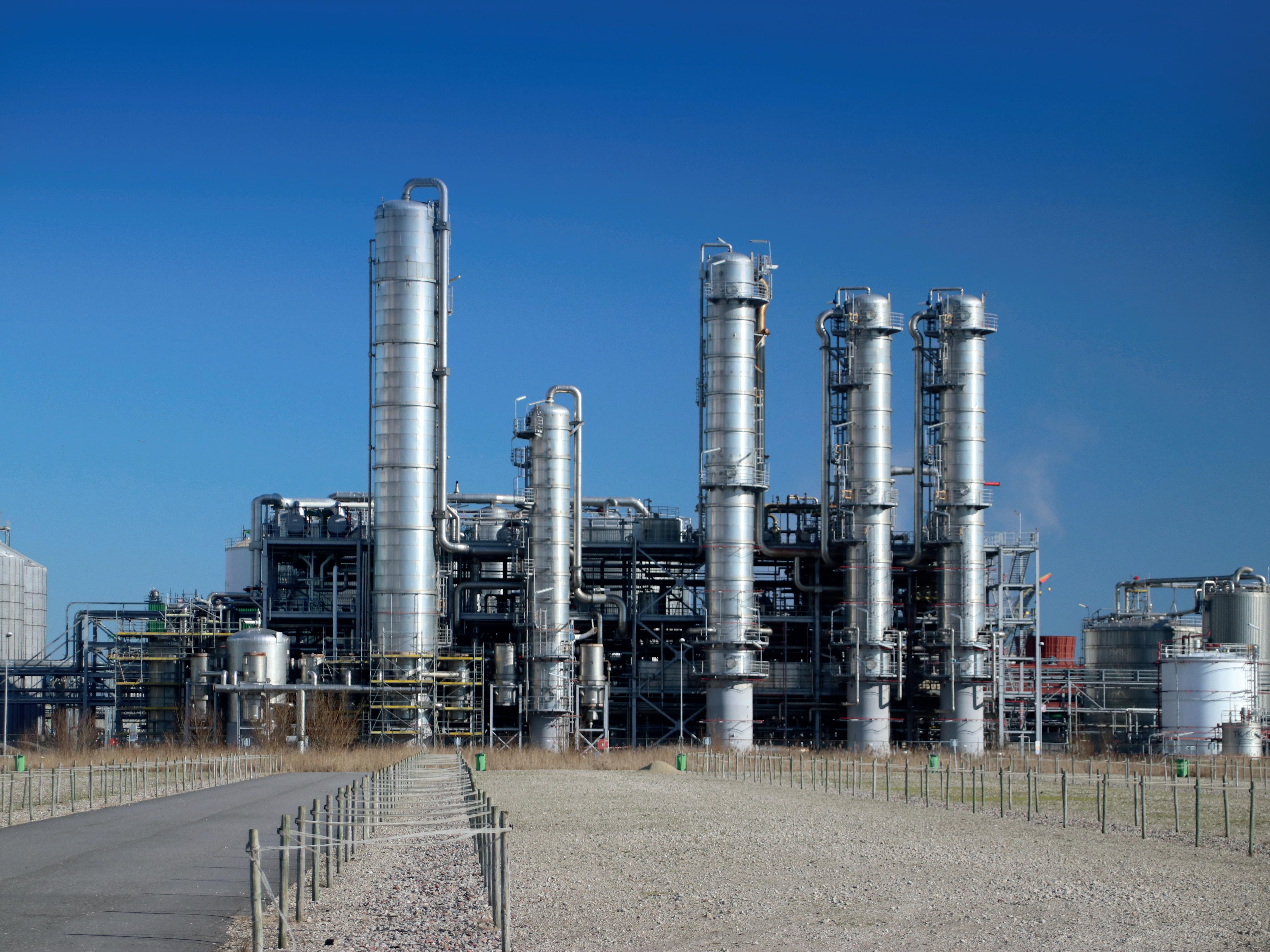
Euromel® Melamine - the leading and most advanced technology for the production of high-quality melamine used in wood-based products, laminates, moulding compounds and fire-extinguishing foams in the last 40 years.








Delivers high purity, high consistency melamine with total zero pollution (TZP) with extremely lower energy consumption using 30% lesser steam import and 20% lower fuel utilisation than the closest competitor.
Euromel® Melamine Process is now used in 28 plants worldwide, accounting for more than 8 million tonnes of melamine produced cumulatively, making it the most traded and widely used melamine worldwide.

CONTENTS
25 Prevention Is The Key To Preservation

Grace Morgan, METTLER TOLEDO, USA, explains the three keys to preventing corrosion at the truck scale and maximising the life of this important asset.
29
Bigger Is Better For Ammonia
Kevin Rouwenhorst, Ammonia Energy Association, The Netherlands, discusses how renewable ammonia production can be scaled up with electrolysis-based hydrogen feedstock.
33 A Catalyst For A Greener Future

Sergio Panza, Casale, Switzerland, explains how improving ammonia synthesis catalyst technologies could contribute towards a greener future, with more efficient and less energy-consuming plants.
37 Optimising High Frequency Screening Efficiencies
Charles Sonnenschein, Alex Edwards, and Stuart Spetseris, J&H Equipment, Inc., USA, outline the benefits of utilising an automated electronic wire mesh cleaning system to improve efficiencies and product yield.
41 Pick ‘N’ Mix
Kelvin Feist, Sackett Waconia, USA, considers some of the recent advances in blending technology that are shaping the fertilizer industry.
45 Solid Storage For Fertilizer Facilities
Paul Smith, Legacy Building Solutions, USA, discusses the innovations that can help provide enhanced protection for the steel framing in fabric fertilizer buildings and extend the life of storage facilities.
from more than 75 years of continuous innovation.

ON THE COVER 03 Comment 05 News 10 Navigating North America’s Fertilizer Sector Contributing Editor, Gordon Cope, evaluates the negative impacts from the Ukraine war that are expected to resonate throughout North America for the foreseeable future. 16 The Decarbonisation Toolkit Carmen Perez, Stamicarbon, The Netherlands, describes the nitric acid technologies and plant design considerations necessary to accelerate the decarbonisation of the fertilizer industry. 21 Learning Lessons From Failure
K. Patadia and Nathaniel G. Sutton, The Equity Engineering Group (E2G), USA, outline the process of failure analysis performed for a syngas compressor rotor wheel in an ammonia plant. follow @WorldFertilizer like World Fertilizer join World Fertilizer Copyright© Palladian Publications Ltd 2023. All rights reserved. No part of this publication may be reproduced, stored in a retrieval system, or transmitted in any form or by any means, electronic, mechanical, photocopying, recording or otherwise, without the prior permission of the copyright owner. All views expressed in this journal are those of the respective contributors and are not necessarily the opinions of the publisher, neither does the publisher endorse any of the claims made in the advertisements. Printed in the UK. CBP006075
Raj
It is Stamicarbon’s vision to enable the world to feed itself and improve the population’s quality of life. As a market leader in fertilizer technology, the company is dedicated to providing creative, technological solutions by exchanging knowledge acquired
A sustainable future with enough for everyone Join our challenge MAGAZINE APRIL 2023
Sector Contributing Editor, Gordon Cope, evaluates the negative impacts from the Ukraine war that are expected to resonate throughout North America for the foreseeable future. orth America major producer of fertilizer, with approximately 16 million tpy of nitrogen, 15 million tpy of potash and 7 million tpy of phosphate products manufactured. On the surface, business has been very profitable; in 2022, CF Industries reported net earnings of US$3.7 billion (compared to US$917 million in 2021), and Nutrien booked US$7.7 billion (US$3.18 billion in 2021). In normal times, North American fertilizer manufacturers worry about crop prices, drought, and competition from international suppliers. But these are not normal times. “Geopolitical events, most notably the war between Russia and Ukraine, contributed to significant supply disruptions across agriculture, energy and fertilizer markets,” noted Nutrien CEO, Ken Seitz, during 2022 financial results conference call. “The supply shocks were most pronounced for global fertilizer markets, leading to higher prices, increased volatility and major shifts in buying patterns throughout the year.” Potash The potash market is volatile due to variety of factors. In 2021, the market began showing a tightening of supply/demand as growth in usage began to bump against world capacity, and international sanctions were imposed against Belarus, a major exporter. But it was not until Russian hostilities against Ukraine commenced that the market was fully impacted. While Russian potash is not technically under sanctions, Carmen Perez, Stamicarbon, The Netherlands, describes the nitric acid technologies and plant design considerations necessary to accelerate the decarbonisation of the fertilizer industry. I 2017, more and more companies began taking up the challenge of decarbonising the fertilizer industry. It was at this point that Stamicarbon, the innovation and license company of the Maire Group, re-entered the nitric acid market, after its non-urea fertilizer business was put on hold in 1989, with the belief that optimising nitric acid technology by maximising the energy efficiency of the process could help boost the transition to green fertilizer production. Nitric acid technologies Stami Nitric Acid offers optimal energy recovery and reliable operation, and due to its tail gas treatment system, greenhouse gas emissions are minimal. It uses the Ostwald process of nitric acid production, in which ammonia is converted to nitric acid in two main steps, relying on either mono- or dual-pressure design: The oxidation of ammonia (NH to form nitric oxide (NO), which further oxidised to nitrogen dioxide (NO The absorption of the nitrogen dioxide (NO in water (H O) to form nitric acid (HNO ). In the mono-pressure process (Figure 1), oxidation and absorption sections operate at the same pressure level. Different pressure levels are used for the oxidation and absorption sections in the dual-pressure process (Figure 2). The oxidation section is operated at pressures between 4 and 6 bar(a), while the absorption section operates between 8 and 12 bar(a), combining the advantages of medium-pressure combustion with the efficiency of high-pressure absorption. Mono-pressure technology results in lower CAPEX but higher OPEX (higher ammonia consumption and higher catalyst losses), while dual-pressure technology has higher The main characteristic of both processes is specific heat exchanger network downstream of ammonia oxidation. The heat exchanging network has specific process conditions 17 16 10 16
Navigating North America's Fertilizer
Pop-A-Plug ® Tube Plugs





ASME PCC-2 Compliant Heat Exchanger Tube Plugging System

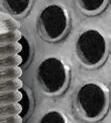
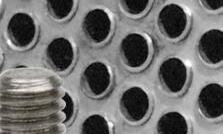
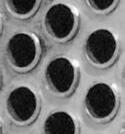
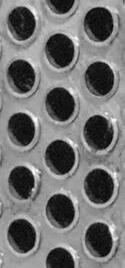
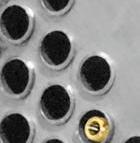
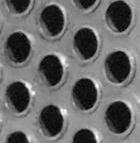
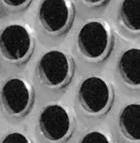
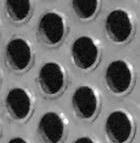
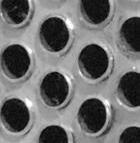
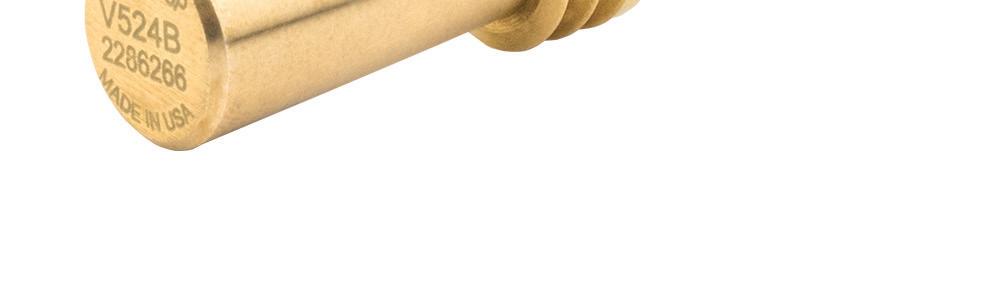
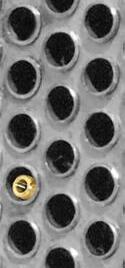
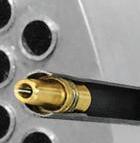
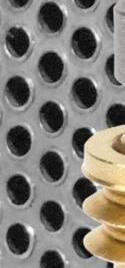
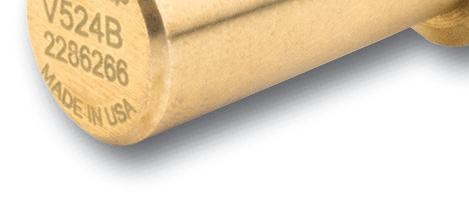
Trusted by fertilizer plants around the world as their go-to solution for heat exchanger tube leaks, Pop-A-Plug Tube Plugs from CurtissWright are engineered for optimal performance throughout the life cycle of equipment. Controlled hydraulic installation eliminates welding and time-consuming pre-/post-weld heat treatments that can cause damage to tubes, tube sheet ligaments, and joints.
• No Welding Required
• Pressure Ratings Up to 7000 PsiG (483 BarG)

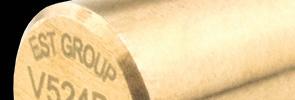






• Simple Hydraulic Installation



• Helium Leak Tight Seal to 1 x 10⁻¹⁰ cc/sec






• 100% Lot Tested to Ensure Unmatched Quality





• ASME PCC-2 Recommended Tube Plugging Repair Methods
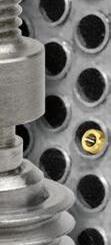
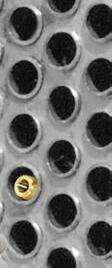
• Wide Range of Sizes& ASME/ASTM Certified Materials Available










































877.383.1029 l est-sales@curtisswright.com l cw-estgroup.com/wf-23

CONTACT US
MANAGING EDITOR
James Little james.little@palladianpublications.com
SENIOR EDITOR
Callum O’Reilly callum.oreilly@palladianpublications.com
DEPUTY EDITOR
Emily Thomas emily.thomas@palladianpublications.com
SALES DIRECTOR Rod Hardy rod.hardy@palladianpublications.com
SALES MANAGER
Ben Macleod ben.macleod@palladianpublications.com
PRODUCTION
Kate Wilkerson kate.wilkerson@palladianpublications.com
ADMINISTRATION MANAGER
Laura White laura.white@palladianpublications.com
DIGITAL ADMINISTRATOR
Leah Jones leah.jones@palladianpublications.com
EVENTS MANAGER
Louise Cameron louise.cameron@palladianpublications.com
EVENTS COORDINATOR
Stirling Viljoen stirling.viljoen@palladianpublications.com
DIGITAL CONTENT ASSISTANT Merili Jurivete merili.jurivete@palladianpublications.com
COMMENT
EMILY THOMAS, DEPUTY EDITOR

Phosphorous was an accidental discovery made back in 1669, by alchemist Hennig Brandt on his search for the ‘philosopher’s stone,’ a mythical alchemical substance that was thought able to transform base metals into gold or silver. It was believed that the stone could be used to create an ‘elixir of life,’ granting the drinker immortality.1
While not quite the elixir of life Brandt was searching for, phosphorous fertilizer is essential for life on earth and for global food security, with 50 million t sold globally each year. However, scientists have recently expressed growing levels of concern surrounding the misuse of phosphorous fertilizers, and have warned of significant shortages and a looming crisis dubbed ‘phosphogeddon’.2 The extensive use of phosphorous fertilizers is also causing environmental concern. A rise in algal blooms has been noted as a consequence of phosphorous deposits in streams, lakes, and seas, occurring after fertilizer is washed from fields. The blooms have the potential to be harmful to humans, and form ‘dead zones’ in bodies of water, threatening fish supplies and contaminating the habitats of marine creatures; it has been reported that one dead zone forms in the Gulf of Mexico each summer.2 Equally concerning is the methane emitted when algae decays, which will increase as a result of the blooms and contribute further to the climate crisis. Furthermore, traditional reserves of phosphate rock are limited, and steadily depleting; the US is reportedly down to 1% of previous levels. It is also estimated that ‘peak phosphorous’ will be reached within the next few years, and with the majority of reserves already concentrated in Morocco and Western Sahara, and a number of countries relying on imports, we could begin to see nations struggling to feed their populations.
Evidently, our focus must begin to shift towards using fertilizers in a smarter way. A report from ‘Our Phosphorous Future’ (OPF) identifies how this can become a reality, and outlines pathways towards proper phosphate management.3 One of these pathways is to reduce our reliance on mined phosphate rock, and attempt to move towards a circular phosphorous economy, by recycling and recovering the element from wastes and residues, resulting in high purity phosphorous products. Improving nutrient efficiency is also crucial. As the uptake of phosphorous is largely unpredictable, the overuse of phosphorous fertilizers and overestimates of required quantities can be a common issue. The OPF report however reiterates that crop management measures and soil fertility management can be utilised to help improve phosphorous uptake in soil, and minimise overuse of the element.
Palladian Publications Ltd, 15 South Street, Farnham, Surrey GU9 7QU, UK
Tel: +44 (0) 1252 718 999
Website: www.worldfertilizer.com
SUBSCRIPTIONS
World Fertilizer (ISSN No: 2398-4384) is published 8 times a year by Palladian Publications Ltd, UK.
World Fertilizer Subscription rates:
Annual subscription: £50 UK including postage
£60 overseas (postage airmail)
Two year discounted rate: £80 UK including postage
£96 (postage airmail).
Subscription
Of course, phosphorous fertilizers are not the only area of concern for the industry. Despite their significance in aiding crop production, nitrogen fertilizers have been seen to cause environmental hazards such as water and soil acidification, groundwater surface pollution, and accelerated ozone depletion, but these effects can be mitigated through proper management and handling solutions.4 However we go about it, the message is clear: protect essential reserves and minimise environmental costs, whilst maintaining food security. This is not an easy task by any means, but if the fertilizer industry can take the next steps towards a more sustainable future, we may not be doomed to a crisis like ‘phosphogeddon’ after all.
1. ROBERTS, T. L., ‘Phosphorus: Past History and Contributions to the Global Food Supply’ (2019), www.ipni.net/publication/ bettercrops.nsf/0/60B96CA325BF6CE5852583B7004D75A3/$FILE/BC-2019-1%20p6.pdf, (Accessed 31.03.23).
2. MCKIE, R., The Guardian, ‘Scientists warn of ‘phosphogeddon’ as critical fertiliser shortages loom’ (2023), www.theguardian.com/environment/2023/mar/12/scientists-warn-of-phosphogeddon-fertiliser-shortages-loom, (Accessed 31.03.23).
3. BROWNLIE, W. J., SUTTON, M.A., HEAL, K.V., REAY, D.S., SPEARS B.M., (eds.), ‘Our Phosphorus Future’ (2022), https:// static1.squarespace.com/static/60ab7d2902207048adc8c540/t/62fa5a370393cf7604a50879/1660574297780/2022_ The+OPF+Report_images+compressed.pdf, (Accessed 31.03.23).
4. BASHIR, M.T., et al. ‘Impact of excessive nitrogen fertilizers on the environment and associated mitigation strategies’ (2013), https://www.researchgate.net/publication/246964631_IMPACT_OF_EXCESSIVE_NITROGEN_FERTILIZERS_ON_THE_ ENVIRONMENT_AND_ASSOCIATED_MITIGATION_STRATEGIES, (Accessed 31.03.23).
APRIL 2023 | WORLD FERTILIZER | 3
issues
be made within 3 months of publication of the issue or they will not be honoured without charge.
claims: Claims for non receipt of
must
Protect Assets with Superior Service and Specialty Chemical Expertise
SOLUTIONS TO MAXIMIZE ASSET VALUE
Halliburton Multi-Chem provides specialty water and process treatment chemicals, customized engineering solutions, and services to the industrial sector, including the ammonia/ fertilizer, refining, petrochemical, chemical and power industries.
We successfully serve America’s largest refineries and ammonia plants. As your partner in asset integrity, we are committed to helping you achieve production reliability and preserve capital equipment. halliburton.com
Ensure ammonia/fertilizer production reliability and preserve capital equipment. Effective water and process treating is imperative to successful ammonia and fertilizer plant operations.
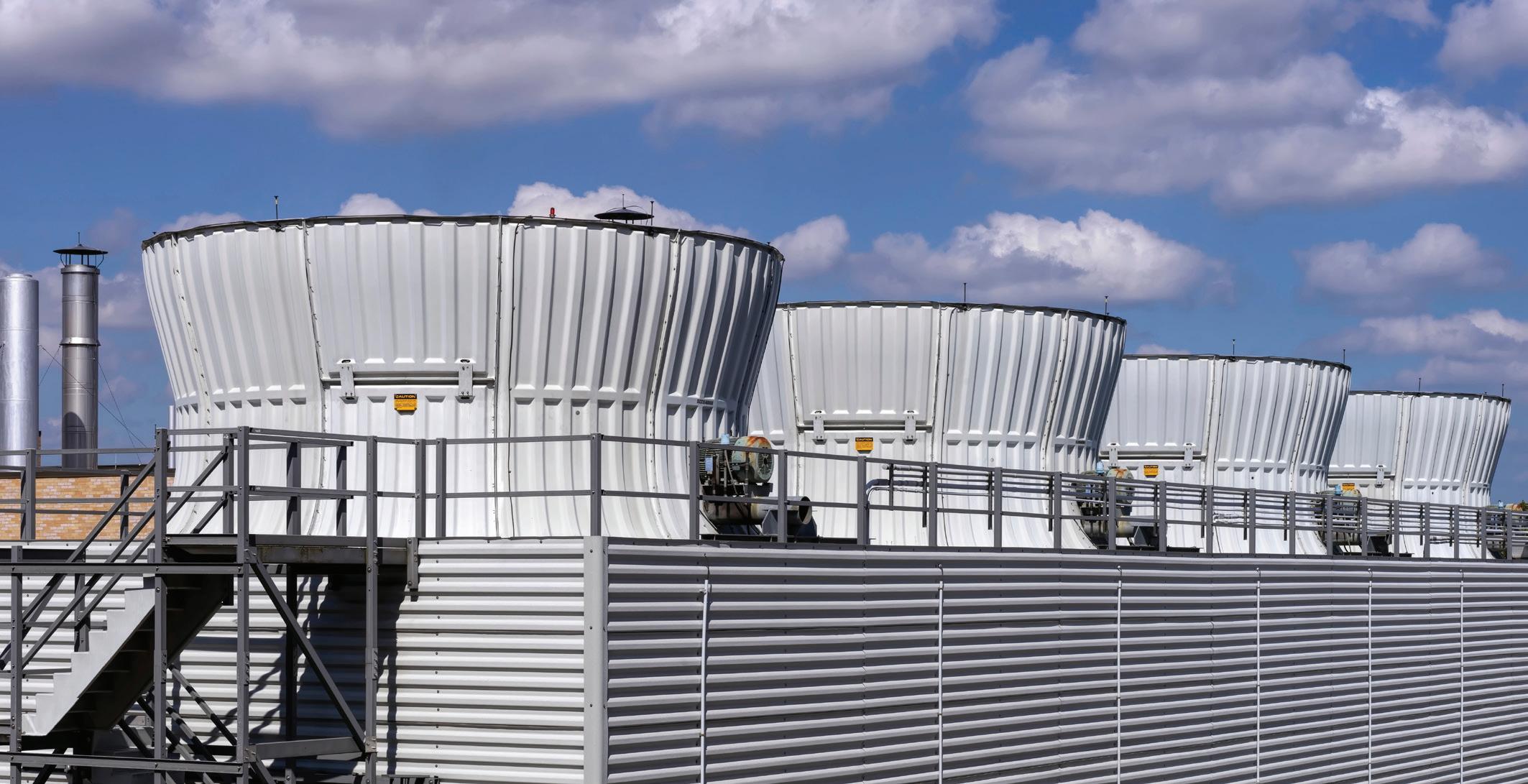
Large amounts of high pressure steam and high purity water are required in the production process. Halliburton Multi-Chem has a long and successful track record in the following areas:
» Raw water pretreatment
» Cooling water
» Boiling feedwater
» Steam
» Processor condensate
» CO2 removal
» UAN corrosion inhibition
» Value-add projects

©
Reserved.
2023 Halliburton. All Rights
Multi-Chem
WORLD NEWS
USA CF Industries Holdings to purchase Waggaman ammonia production facility
It has been announced that CF Industries Holdings, Inc. has signed a definitive purchase agreement with Incitec Pivot Limited for IPL’s ammonia production complex located in Waggaman, Louisiana. The facility has a nameplate capacity of 880 000 t of ammonia annually.
Under the terms of the agreement, CF Industries will purchase the Waggaman ammonia plant and related assets for US$1.675 billion. The companies will allocate approximately US$425 million of the purchase price to a long-term ammonia offtake agreement under which CF Industries will supply up to 200 000 tpy of ammonia to IPL’s Dyno Nobel subsidiary. CF Industries expects to fund the remaining US$1.25 billion of the purchase price with cash on hand.
“We are pleased to reach this agreement with Incitec Pivot Limited that benefits from our industry-leading ammonia production capabilities, deploys our capital efficiently and provides long-term value for both companies’ shareholders,” said Tony Will, President and Chief Executive Officer, CF Industries Holdings, Inc.
“We believe the Waggaman facility will fit seamlessly into our network, as well as our strategic focus on ammonia as a clean energy source, given its proximity and pipeline connection to our Donaldsonville, Louisiana, Complex, its distribution and logistics flexibility, and its favourable characteristics for the addition of carbon capture and sequestration (CCS) technologies to enable low-carbon ammonia production.”
Ammonia produced at the Waggaman facility today is distributed rateably to three customers, including Dyno Nobel, with approximately 75% used in industrial applications. Based on the nature of the medium- to long-term offtake agreements in place with these customers, CF Industries estimates that the plant will generate gross margin per ton commensurate with its existing ammonia segment prior to synergies, which the company expects to capture through greater capacity utilisation and operational and logistics optimisation. Over the last five years, CF Industries’ operational capabilities have resulted in ammonia asset utilisation that is approximately 10% higher than the average utilisation rate of the company’s North American peers.
Additionally, CF Industries anticipates implementing CCS at the site on an accelerated timeline, increasing its network’s low-carbon ammonia production capability, supporting Louisiana’s and the country’s climate goals, and earning 45Q tax credits for sequestered carbon dioxide.
The transaction has been unanimously approved by the boards of directors of both companies and is subject to receipt of certain regulatory approvals and other customary closing conditions. Goldman Sachs & Co. LLC is serving as the financial advisor to CF Industries on the transaction. Skadden, Arps, Slate, Meagher & Flom LLP is acting as its legal advisor.
AUSTRALIA CBH Group opens Kwinana fertilizer facility
The CBH Group has announced the opening of its new Kwinana fertilizer facility, which will deliver significant benefits to Western Australian grain growers.
The new facility was officially opened by the Minister for Agriculture and Food, the Hon. Jackie Jarvis MLC, the Member for Brand, the Hon. Madeleine King MP, and CBH Chair, Simon Stead. This project marks the start of CBH’s liquid fertilizer business and expands its granular fertilizer capacity by 15 000 t.
Located adjacent to CBH’s Kwinana grain terminal, the new facility has capacity to store 32 000 t of urea ammonium nitrate (UAN) and 55 000 t of bulk granular fertilizer. CBH Chair, Simon Stead, said this is an exciting milestone, which will deliver significant value to the grain growers of Western Australia.
“CBH’s new Kwinana fertilizer facility provides a new liquid offering, and bolsters our granular offering, across a wider catchment for the benefit of all growers,” said Simon Stead. “Ultimately, it enables us to reduce our handling and freight costs through efficiencies, which can be passed on to growers through competitive prices.”
CBH Chief Marketing and Trading Officer, Jason Craig, said the facility enables the growth of the co-operative’s fertilizer business in line with grower demand: “CBH Fertiliser continues to experience year-on-year growth and out turned a record 204 000 tons last year – our best result since entering the market in 2015.” He added, “Increasing the scale of our fertilizer business, and allowing for further expansion, reflects the ever-increasing demand for CBH fertilizer.”
CBH is expected to commence outloading UAN and granular fertilizer to WA growers next month. Construction of the new facility, which commenced early last year, was completed by Western Australian construction firm Kerman Contracting Pty Ltd.
APRIL 2023 | WORLD FERTILIZER | 5
GLOBAL Fitch Ratings cuts near-term ammonia, urea and potash fertilizer price assumptions
Fitch Ratings has cut its 2023 ammonia, 2023 – 2024 urea and 2023 – 2024 potash price assumptions, reflecting lower gas feedstock prices, surplus supply and a slower-than-expected recovery in demand. Other fertilizer price assumptions are unchanged.
The reduced ammonia price assumption reflects lower feedstock gas prices and the market surplus due to merchant capacity additions in 2022 and low seasonal demand in early 1Q23. Demand is likely to increase when the planting season starts in the northern hemisphere, while further extra capacity is scheduled to come on stream in 4Q23 and 2024 – 2025.
Fitch’s lower assumptions for urea also reflect reduced gas prices, as well as supply from sanctioned nations, including Russia, Iran and Venezuela, some of which continues to find its way to the market and weigh on prices. Fitch Ratings expects China to increase exports following 2023 spring application as it relaxes export restrictions enforced in October 2021. CRU expects exports to gradually return to 2019 levels by 2027. A faster return would increase downside to prices. There is further extra capacity in Egypt, Türkiye, Russia and Bangladesh expected in 2023 – 2024, after almost 8 million t was added in 2022, which will continue to weigh on prices in 2023. The start of the planting season in the US and Europe will support demand in the coming months, although high inventories in India have caused buyers globally to delay purchases in 1Q23 as prices fall.
The reduced potash price assumptions reflect a faster-than-expected fall in market prices in response to reactivation of idled Canadian capacity, and some Russian and Belarussian volumes still finding their way to the market, despite sanctions. Demand has been recovering in 2023, although CRU expects demand to remain below the 2021 levels until 2025. Despite softening prices in 2H22, affordability is still poor compared with the average level in 2010 – 2020.
The unchanged price assumptions for DAP continue to reflect Fitch Ratings’ expectations that surplus supply, as seen in 2H22 and 1Q23, will continue to weigh on prices, while increased exports from China and Morocco will offset an expected demand recovery. Fitch expects limited capacity additions in 2023 – 2025 (about a million tpy), mostly by OCP.

Fitch’s unchanged assumptions for phosphate rock reflect the expectation for demand to continue recovering in 2023, but remaining below 2021 levels until 2025 – 2026. China is still limiting phosphate fertilizer exports where phosphate rock is used as feedstock, while European downstream production of phosphates will remain low in the near term due to high input costs. CRU expects OCP to increase phosphate rock exports to 9.3 million t in 2023 from 6.7 million t in 2022, while Russian exports are unlikely to rise from their low levels in the near future.
NORT H AMERICA Koch Fertilizer plants achieve US and Canada ENERGY STAR Certification
Koch Fertilizer has announced that three of its plants – Beatrice, Nebraska; Enid, Oklahoma; and Brandon, Manitoba – have earned 2022 ENERGY STAR® certification for superior energy performance from the US Environmental Protection Agency and Natural Resources Canada. This is Beatrice’s fourth, Enid’s third and Brandon’s second time to earn certification, reflecting a legacy of continued energy savings. ENERGY STAR certification signifies these sites perform in the top 25% for energy efficiency compared to other nitrogenous fertilizer production plants in the US and Canada. This means the three Koch Fertilizer plants spend less on energy and have lower energy-related environmental impacts than similar plants. Additionally, all plants awarded ENERGY STAR certification must be energy performance verified and in good standing with federal environmental laws.
WORLD NEWS 6 | WORLD FERTILIZER | APRIL 2023 NEWS
Mammoet facilitates upgrade of Ma’aden’s sulfuric acid and power plant Nutrien shares 2023 Environment, Social and Governance Report Western Resources Corp. to extend the mine life of Potash Phase 1 Project to 40 years CF Industries and LOTTE CHEMICAL Corporation to explore joint clean ammonia production Visit our website for more news: www.worldfertilizer.com
HIGHLIGHTS
HOW TO SPOT ACTIVE & POTENTIAL NITRIC ACID DAMAGE
Unexpected condensation or evaporation of nitric acid can cause corrosion rates to soar while other damage mechanisms may result in pitting or cracking. Material and design changes can extend operating life, improve reliability, and impact profitability; however, corrosion can still occur.
E²G | The Equity Engineering Group, Inc. provides damage mechanism reviews to help fertilizer plants proactively address or mitigate corrosion risks. We use our experience and expertise to provide practical and actionable recommendations for materials of construction and control of damage mechanisms in your ammonia synthesis, urea, urea ammonia nitrate, and nitric acid units. Contact E²G and start building a solid foundation for your mechanical integrity program.
SERVICE AREAS
⊲ Damage Mechanism Review
⊲ CCDs & IOWs


⊲ Mechanical Integrity Programs
⊲ Risk-Based Inspection (RBI)
⊲ Equity Engineering Practices (EEPs)
IMPROVE SAFETY AND RELIABILITY
AVOID COSTLY EQUIPMENT DOWNTIME
IDENTIFY AREAS OF VULNERABILITY
DEVELOP MAINTENANCE AND INSPECTION STRATEGIES
ANSWERS FOR TODAY. INSIGHTS FOR TOMORROW. P: 216.283.9519 © 2023 E²G | The Equity Engineering Group, Inc. VISIT CONTACT OUR TEAM www.E2G.com Sales@E2G.com
WORLD NEWS
DIARY DATES
Nitrogen + Syngas USA
22 – 24 May 2023
Oklahoma, USA
events.crugroup.com/nitrogenusa/ home
AICHE 2023 Safety in Ammonia Plants & Related Facilities Symposium
20 – 24 August 2023
Munich, Germany
aiche.org/conferences/annualsafety-ammonia-plants-andrelated-facilities-symposium/2023
ANNA 2023
10 – 15 September 2023
Varna, Bulgaria anna-eu.com
Turbomachinery & Pump Symposium
26 – 28 September 2023
Houston, Texas tps.tamu.edu
Sulphur + Sulphuric Acid 2023 Conference & Exhibition
06 – 08 November 2023
New Orleans, USA
events.crugroup.com/sulphur/ home
USA USDA awards Ostara grant to increase fertilizer production in the US
The need for an alternative US produced high-efficiency phosphate fertilizer is critical for the future of agriculture. The USDA awarded Ostara US$7.6 million as part of a grant programme to increase US-based, innovative, sustainable, and farmer-focused fertilizer production.
“Phosphate is a finite resource and conventional phosphate fertilizers can be highly inefficient and harmful to the environment,” says Kerry Cebul, Chief Executive Officer of Ostara. “Our team is honoured to receive the USDA grant and will use the funds to increase US based production of the most efficient phosphate fertilizer on the market, Crystal Green.”
Ostara’s efficient and sustainable phosphate fertilizer, Crystal Green® (5-28-0 with 10% Mg), aligns with the goals of the USDA grant programme.
Ron Restum, Chief Commercial Officer of Ostara, said: “The unique organic acid solubility of Crystal Green keeps nutrients where they are needed and available for maximised crop performance without nutrient loss due to soil tie-up, runoff and leaching. Expanding production will be very welcomed by the ag community.”
Funding from the USDA grant programme will support Ostara’s construction of a new fertilizer production facility in St. Louis. The new facility has the capacity to produce over 200 000 t of Crystal Green fertilizer. Construction is scheduled to be completed in the summer of 2023, in time for growers to apply Crystal Green this fall.
“Access to multiple channels of distribution in the form of barge, rail and interstate as well as world-class manufacturing talent, in the heart of some of the most productive agricultural land, makes St. Louis an ideal location for Ostara’s next phase as we significantly increase production to meet grower demand,” Cebul added.
INDIA Kreber receives order for new prilling machine developed with Stamicarbon
Kreber has received the order for a new generation innovative prilling machine developed in cooperation with Stamicarbon. The prilling machine is designed for the nameplate capacity of 3850 tpd of prilled urea and will be manufactured at the facilities of Kreber in Vlaardingen, The Netherlands. The unit will be installed in a state-of-the-art large-scale grassroot plant for prilled urea in India, designed by Stamicarbon and scheduled to start up in 2024.
The new prilling machine is designed to apply a single prilling bucket for large-capacity urea plants, facilitating large-scale production with an efficient approach to prilling, suitable for urea and other fertilizer grades. The prilling machine will upgrade the original prilling tower design, embedding more than a century of prilling knowledge from both Kreber and Stamicarbon to enable efficient production of large-diameter urea prills with a uniform particle size distribution. It is suitable for natural and forced draft prilling towers and can be retrofitted in existing plants to improve product quality.
In addition, the prilling machine can be used in a wide operating range and helps reduce particulate matter emissions from prilling towers. Especially in combination with the Jet Venturi™ scrubbing technology, it provides the basis of the next-generation prilling tower design to produce high-quality large-diameter urea prills with a substantial reduction of particulate matter emissions, ammonia emissions and opacity.
8 | WORLD FERTILIZER | APRIL 2023
YOUR SPECIALIST & PARTNER FOR
fully automatic OPEN MOUTH bagging machines
high-performance FORM-FILL-SEAL bagging machines
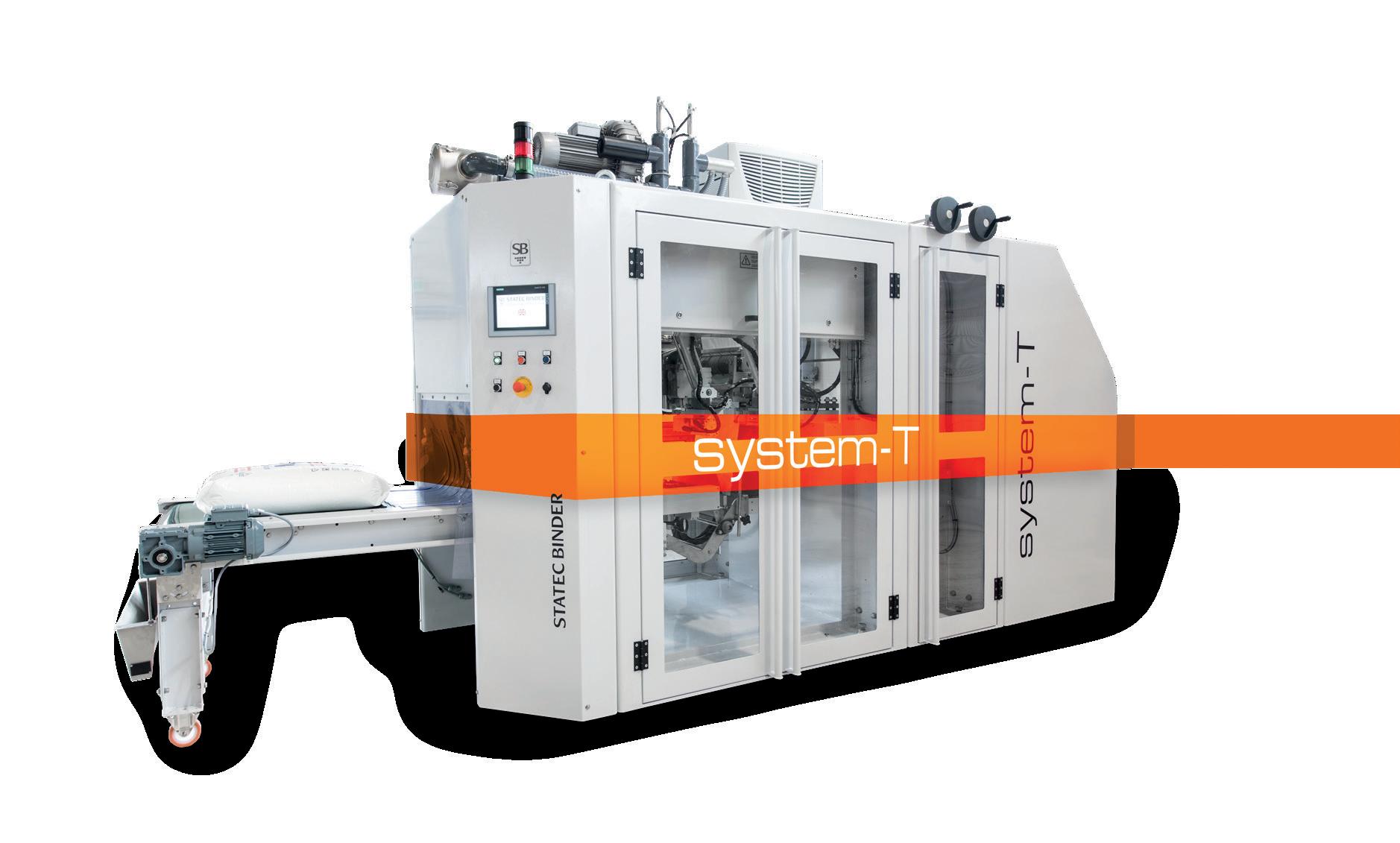
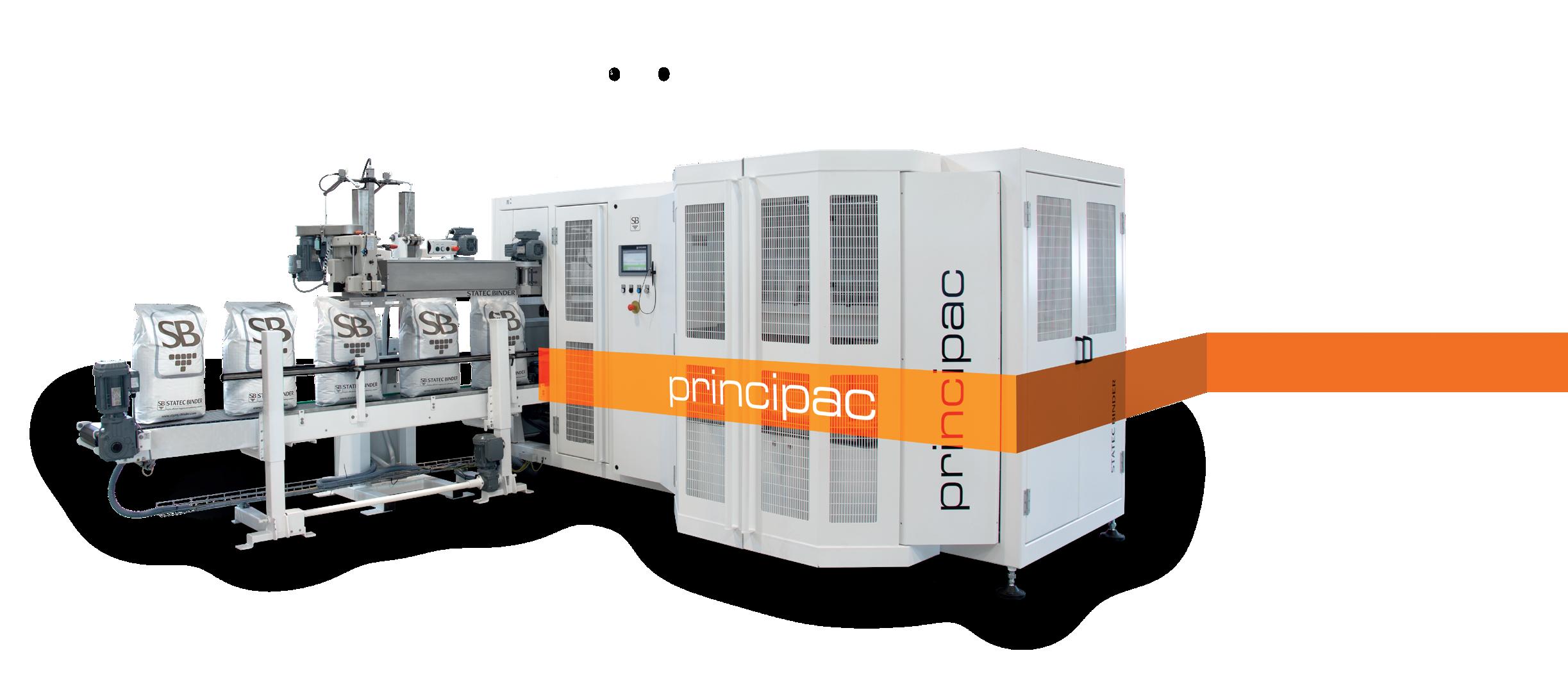
STATEC BINDER your strong and reliable partner stands for ... highest quality, high-performance and absolute reliability more than 40 years of experience in customized and flexible solutions over 1,700 machines successfully installed worldwide global customer service and everything from a single source
www. statec-binder.com
STATEC BINDER GmbH Industriestrasse 32, 8200 Gleisdorf, Austria Tel.: +43 3112 38580-0 E-Mail: office@statec-binder.com

10
Navigating North America's Fertilizer Sector
Contributing Editor, Gordon Cope, evaluates the negative impacts from the Ukraine war that are expected to resonate throughout North America for the foreseeable future.
orth America is a major producer of fertilizer, with approximately 16 million tpy of nitrogen, 15 million tpy of potash and 7 million tpy of phosphate products manufactured.

On the surface, business has been very profitable; in 2022, CF Industries reported net earnings of US$3.7 billion (compared to US$917 million in 2021), and Nutrien booked US$7.7 billion (US$3.18 billion in 2021). In normal times, North American fertilizer manufacturers worry about crop prices, drought, and competition from international suppliers.
But these are not normal times. “Geopolitical events, most notably the war between Russia and Ukraine, contributed to significant supply disruptions across agriculture, energy and fertilizer markets,” noted Nutrien CEO, Ken Seitz, during a 2022 financial results conference call. “The supply shocks were most pronounced for global fertilizer markets, leading to higher prices, increased volatility and major shifts in buying patterns throughout the year.”1
Potash
The potash market is volatile due to a variety of factors. In 2021, the market began showing a tightening of supply/demand as growth in usage began to bump against world capacity, and international sanctions were imposed against Belarus, a major exporter. But it was not until Russian hostilities against Ukraine commenced that the market was fully impacted. While Russian potash is not technically under sanctions,
11
restrictions on financing instruments crimped exports. Analysts estimate that Russia’s potash output dropped from 15 million tpy to 11 million tpy in 2022, and Belarus almost halved output from 13 million tpy to 7 million tpy. Faced with a significant shortage, potash prices quickly climbed from a benchmark level of US$200/t to above US$500/t.
North American producers responded to the market upheaval by increasing production. Nutrien, the world’s largest potash producer, upped 2022 production from an initial 14 million tpy to almost 15 million tpy by the end of 2022. Mosaic announced that it would add 1.5 million tpy of capacity to its Esterhazy K3 mine in Saskatchewan, Canada, by mid-2023. Both companies were caught flat-footed in the latter part of 2022, however, when farmers in North America and Brazil shied away from higher prices and cut back on fall and spring applications, respectively. Mosaic, facing mounds of unshipped potash, temporarily closed its 1.3 million tpy Colonsay mine, also in Saskatchewan.
Longer term plans for increased production are still going ahead, however. For several years, BHP’s CAN$7.5 billion Jansen mine, located in Saskatchewan, had languished in limbo, the victim of depressed potash prices. The Australian company recently announced a completion date of 2026, however. Approximately 2500 construction workers are now pouring concrete foundations for the mill, and BHP is actively hiring up to 600 permanent workers. Once completed, Jansen’s initial phase will produce 4.5 million tpy, with additional phases planned for the future.
Phosphates
Prior to the Ukraine invasion, phosphate was trading at under US$200/t, but has since risen to around US$300/t. Much of the increase can be attributed to Chinese export restrictions, which are expected to remain in place for much of 2023, as well as improved demand in North America, Brazil, and India.
Mosaic is the largest North American producer of phosphate. The Florida-based company reported its 2022 net income at US$6.2 billion, up 73% from one year ago. It sold 6.6 million t of phosphate products in 2022, over 1 million t lower than the previous year (mostly due to the impact of Hurricane Ian and other unplanned outages), but selling prices of up to US$913/t were almost 50% higher than the US$618/t average in 2021. The company announced plans to spend up to US$1.4 billion CAPEX in 2023, primarily to improve operational performance in the phosphates segment.
The search continues for new sources of phosphate in North America. In Quebec, First Phosphate recently reported that surface sampling at its Bégin-Lamarche project, located in the region of Saguenay-Lac-St-Jean, indicated positive results of up to 18.96% phosphorus peroxide (P2O5) and 6.81% titanium dioxide (TiO2). A strike zone of igneous anorthosite has been mapped as 2.5 km long and 400 m wide. The company also noted that trace element analysis for uranium, thorium and cadmium reveals very low concentrations of deleterious elements.
In February 2023, Fox River Resources announced that it had raised CAN$2.3 million in new capital to pursue the development of its Martison phosphate project in Ontario, Canada. The proposed integrated facility will have an opencast mine capable of producing 4 million tpy of phosphate ore, which will then be concentrated into 1.4 million tpy of 37% P2O5 and
transferred by slurry pipeline to a fertilizer complex near Hearst, Ontario. It will then be turned into 730 000 tpy mono-ammonium phosphate (MAP) and 250 000 tpy of nitrogen phosphate sulfur (NPS) mix, primarily for the western Canadian fertilizer market.
Nitrogen
The global nitrogen market was in a tight supply situation in 2022 due to lower Russian ammonia exports, shut-in European production (due to high natural gas prices), and Chinese urea export restrictions. US Gulf Coast urea futures price spiked above US$800/t in April 2022. Although the price has since dropped below US$350/t, market conditions are expected to remain tight through 2023.
The global ammonia market is currently approximately 167 million tpy, with about 60% consumed by agriculture. It is expected to grow at a rate exceeding 7% compound annual growth rate, reaching 310 million tpy by 2030. While agricultural and industrial demand is expected to remain strong, transportation and energy are emerging as major growth areas as these sectors seek to reduce their carbon footprints by adopting green ammonia.
Net zero regulations in Canada and the US are also incentivising companies; as a result, CAPEX is being directed towards environmentally-friendly projects. In February 2023, German-based RWE formed an alliance with LOTTE Chemical of Korea and Japan’s Mitsubishi to build a clean ammonia production and export facility in the Port of Corpus Christi, Texas. The plan is to build a series of units with a final capacity approaching 10 million tpy by 2030. Output will be in the form of both blue and green ammonia, and will be exported to Asia and Europe for use as both fuel and a source of renewable hydrogen.
In February 2023, EverWind, based in Nova Scotia, received approval from the provincial government to build a 300 MW hydrogen electrolysis and green ammonia plant in Port Hawkesbury, Nova Scotia. The CAN$6 billion project is intended to supply the German market by 2025.
Nutrien is working in collaboration with EXMAR to develop an ammonia-powered shipping vessel. In late 2022, the company announced that it has plans to build the world’s largest clean ammonia facility at its existing complex in Geismar, Louisiana, near tidewater ports in New Orleans. Currently undergoing FEED, the 1.2 million tpy plant would permanently remove up to 90% of carbon dioxide (CO2) emissions using carbon capture and sequestration (CCS) technology. A final investment decision (FID) is expected by 2023; full production could commence by 2027.
Agricultural market
Regardless of new opportunities, North America’s fertilizer industry is highly dependent on the fortunes of the continent’s agricultural sector. In early February 2023, the United States Department of Agriculture (USDA) published its 10-year projection. With respect to corn, they expect production to grow moderately over the next decade as yields increase, despite a gradual decline in acreage. Ethanol use will decline slightly, from 5.25 billion bushels to 5.175 billion by 2033, but exports will increase from 2.75 billion bushels to 3.15 billion bushels. Prices are expected to fall from US$4.80 per bushel in 2022/23 to US$4.00 by 2026, then remain stable.
Soybean prospects remain strong due to import demand from China and domestic biodiesel growth over the
12 | WORLD FERTILIZER | APRIL 2023
Invisible. Invaluable.
Black & Veatch has over 80 years of experience executing projects that maximize throughput and uptime on facilities’ operating assets. With minimal disruptions to operations, we work behind-the-scenes to complete projects safely, on time, and to the highest quality standards.
• From front-end project phases to full EPC, Brownfield to Greenfield.
• Plants completed in sizes ranging from 50 to 2,500 metric tons per day.

• Projects include studies, revamps, ammonia storage, and terminal facilities.

Let’s find ways to help you.
next decade. Biofuel usage is expected to almost double, from 8.8 billion lbs in 2021 to 15 billion lbs by 2032. Over the same period, exports will increase from 58.2 million t to 61.9 million t. Prices are expected to average US$10.50 per bushel in 2022/23, falling gradually to US$10.
While farmers delayed fertilizer applications in 2022 due to higher prices, prospects look brighter for 2023. Nutrien, which conducts extensive soil testing throughout North America, notes that 40% of soils are now in a potash-deficit situation in regards to optimising yield, and will need applications in order to take advantage of strong crop prices.
Legistlation
The 2018 Farm Bill, a federal omnibus legislation, is coming up for renewal by 30 September 2023. The package covers a wide range of initiatives, including farm energy assistance, crop insurance, environmental subsidies, lines-of-credit and nutrition assistance; total expenditures are likely to exceed US$500 billion over its mandate. The bill can be divided into two main areas, however; federal payments to farmers (generally referred to as the farm safety net), and federal payments to low-income households for the purchase of food under programmes such as the Supplemental Nutrition Assistance Program (SNAP). Research has shown that states represented by Republicans generally have more farms, and states represented by Democrats generally have larger total populations (and SNAP participants).2
This split complicates the resolution of the Farm Bill. Republicans tend to favour farm aid, while Democrats prioritise help to the poor. The Biden administration, in turn, sees the Farm Bill as a means to curb GHGs by nurturing programmes that entice farmers to adopt greener practices. “Climate change and nutrition programmes have seen dramatic increases in funding while farm safety net resources have dwindled,” said Senator John Boozman (R-AR), ranking member of the US Senate Committee on Agriculture, Nutrition, and Forestry. “The important thing is that we all – producers, consumers, Congress, and the administration – stand together in support of a strong and resilient safety net. The next farm bill must work for those that feed and clothe us.”3
Environment
Fertilizer production has a significant impact on the environment. Potash and phosphate mines produce extensive tailings that contain toxic trace elements. Ammonia producers emit over 500 million tpy of greenhouse gases, primarily from the use of coal and natural gas as both feedstock and energy.
Companies are taking both remedial and proactive steps. In mid-2022, PCS Nitrogen reached a US$84 million settlement with the EPA to clean up its phosphate facility in Geismar, Louisiana. The settlement requires PCS to treat more than 1 billion lbs of acidic process wastewater and to care for the on-site gypsum stacks for a period of 50 years.
ExxonMobil is advancing plans for a massive, low-carbon hydrogen and ammonia production facility, located in its Baytown complex, Texas. In January 2023, it contracted with Technip Energies to conduct FEED in order to make an FID by 2024. When construction is finished in 2028, the new facility will produce up to 1 billion ft3/d of blue hydrogen by capturing and sequestering up to 98% of CO2 emissions. “This project allows us to offer significant volumes of low-carbon hydrogen
and ammonia to third party customers in support of their decarbonisation efforts,” commented Dan Ammann, President of ExxonMobil Low Carbon Solutions.4
BHP is integrating the latest technologies at its new Jensen potash project in Saskatchewan in order to reduce the mine’s environmental footprint. Instead of using diesel underground mining trucks, at least 80% of the fleet will be battery-powered. The company will also incorporate new processing technology that will reduce water usage by 50%, as compared to similar potash mines.
The future
While the current adversarial climate in Congress makes bipartisan agreements difficult, both Republicans and Democrats tend to treat the Farm Bill less as a leverage to do political damage to their opponents, and more of an opportunity to gain adherents; stakeholders are cautiously optimistic that it will be approved.
The growth in agricultural demand for nitrogen fertilizer is expected to remain healthy, and green ammonia will increasingly offer manufacturers significant new opportunities in the transportation and energy sectors.
Logistics are expected to remain a challenge for the next several years as North American fertilizer companies grapple with volatile demand and supply within the continent, and abroad.
In the longer term, North American fertilizer companies are set to take advantage of delays in development of new capacity due to the Ukraine war. “If you look at the new production that was to come to the market over the next five years, 60% of that outside of our own increases was to be coming from Russia and Belarus,” said Nutrien CEO Ken Seitz. “We believe those projects are delayed.” Not only does Nutrien hope to help fill the delivery gap in 2023 by increasing its potash production by up to 2.3 million t, it also has its eye set on increasing capacity to 18 million t by 2026.5
In conclusion, North America’s fertilizer producers have adapted well to the challenges, both domestic and international, that have beset the sector. While many uncertainties remain, the strong food commodities market and the opportunities presented by new uses of ammonia present significant prospects over the coming decade.
References
1. ‘2022 Q4 Earnings Conference Call’, Nutrien, (16 February 2023), https:// nutrien-prod-asset.s3.us-east-2.amazonaws.com/s3fs-public/2023-02/ Nutrien_2022%20Q4%20Earnings%20Conference%20Call%20Feb.%20 16%202023.pdf
2. COPPESS, J., ‘A View of the 2023 Farm Bill at the Starting Line in the Senate’, Deparment of Agricultural and Consumer Economics: University of Illlinois, (9 February 2023), https://farmdocdaily.illinois.edu/2023/02/ a-view-of-the-2023-farm-bill-at-the-starting-line-in-the-senate.html
3. ‘Ranking Member Boozman’s Opening Statement at Hearing Entitled “Farm Bill 2023: Commodity Programs, Crop Insurance, and Credit”’, United States Senate Committee on Agriculture, Nutrition, & Forestry, (9 February 2023), www.agriculture.senate.gov/newsroom/rep/press/ release/ranking-member-boozmans-opening-statement-at-hearingentitled-farm-bill-2023-commodity-programs-crop-insurance-and-credit
4. ‘ExxonMobil Awards FEED For Low-Carbon Hydrogen Facility’, Daily Oil Bulletin, (30 January 2023), www.dailyoilbulletin.com/article/2023/1/30/ exxonmobil-awards-feed-for-low-carbon-hydrogen-fac/
5. ‘FRIEDMAN, G., ‘Nutrien ramping up production as Ukraine conflict creates ‘room in the market’: CEO’, Financial Post, (17 February 2023), https://financialpost.com/commodities/mining/nutrien-ceo-ukraineconflict-room-market
14 | WORLD FERTILIZER | APRIL 2023

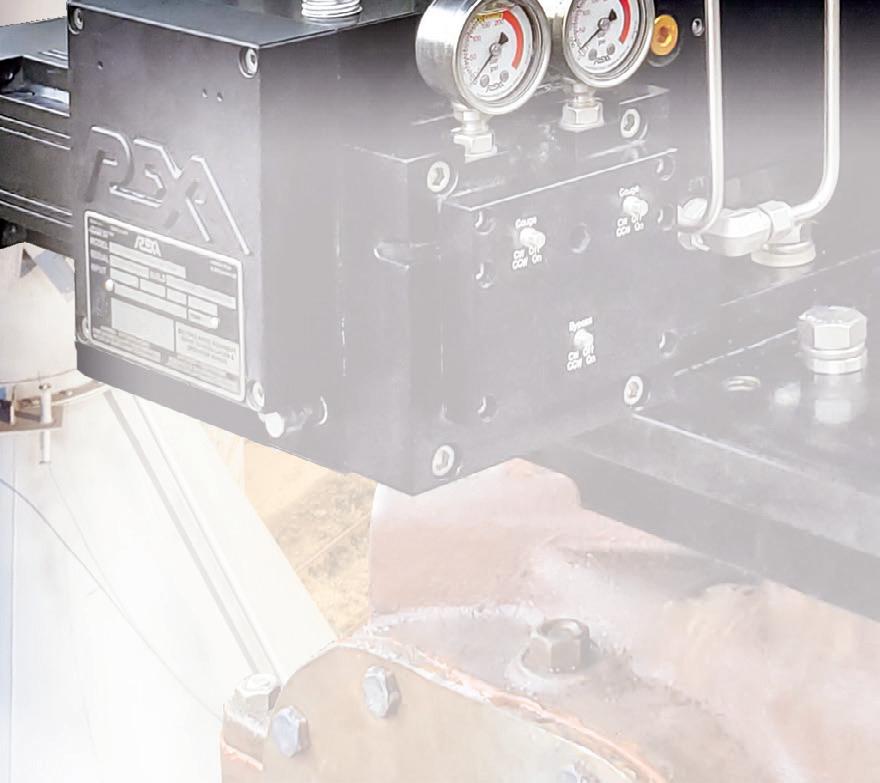
Hydraulic Control Performance Without Fluid Maintenance Steam Turbine Governor Control Compressor Antisurge Valve Control Inlet Guide Vane Control Global Service and Support Application-Specific Engineered Solutions Visit www.rexa.com for more information.
Carmen Perez, Stamicarbon, The Netherlands, describes the nitric acid technologies and plant design considerations necessary to accelerate the decarbonisation of the fertilizer industry.
16
In 2017, more and more companies began taking up the challenge of decarbonising the fertilizer industry. It was at this point that Stamicarbon, the innovation and license company of the Maire Group, re-entered the nitric acid market, after its non-urea fertilizer business was put on hold in 1989, with the belief that optimising nitric acid technology by maximising the energy efficiency of the process could help boost the transition to green fertilizer production.
Nitric acid technologies
Stami Nitric Acid offers optimal energy recovery and reliable operation, and due to its tail gas treatment system, greenhouse gas emissions are minimal. It uses the Ostwald process of nitric acid production, in which ammonia is converted to nitric acid in two main steps, relying on either mono- or dual-pressure design:
n The oxidation of ammonia (NH3) to form nitric oxide (NO), which is further oxidised to nitrogen dioxide (NO2).
n The absorption of the nitrogen dioxide (NO 2) in water (H2O) to form nitric acid (HNO3).
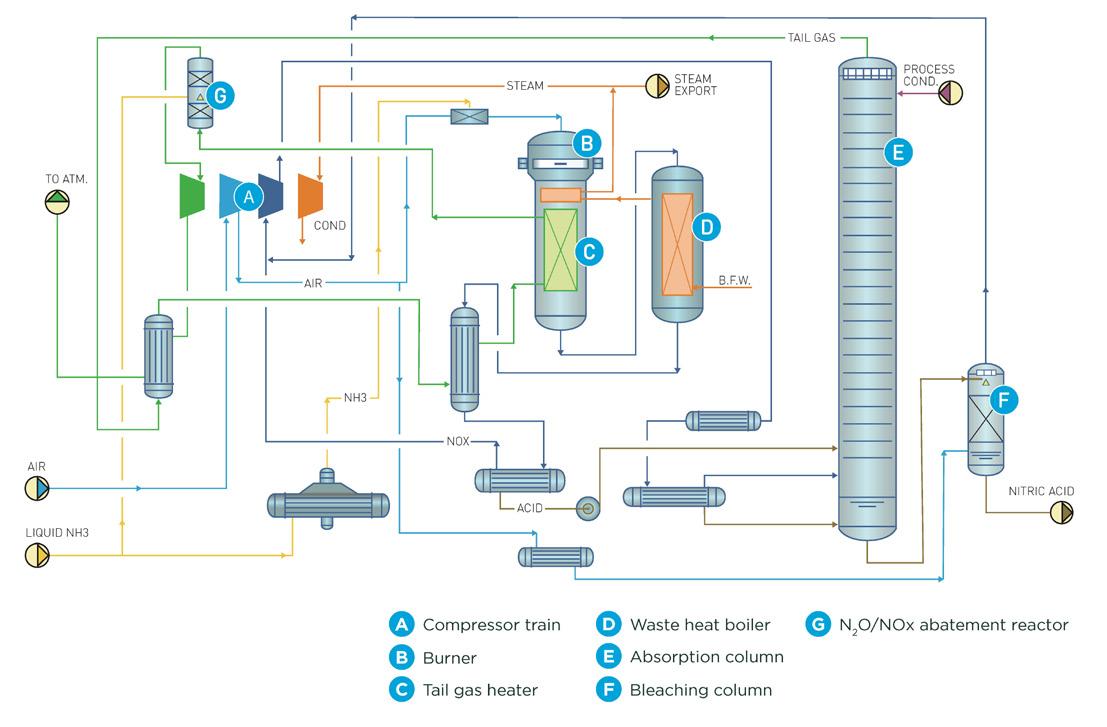
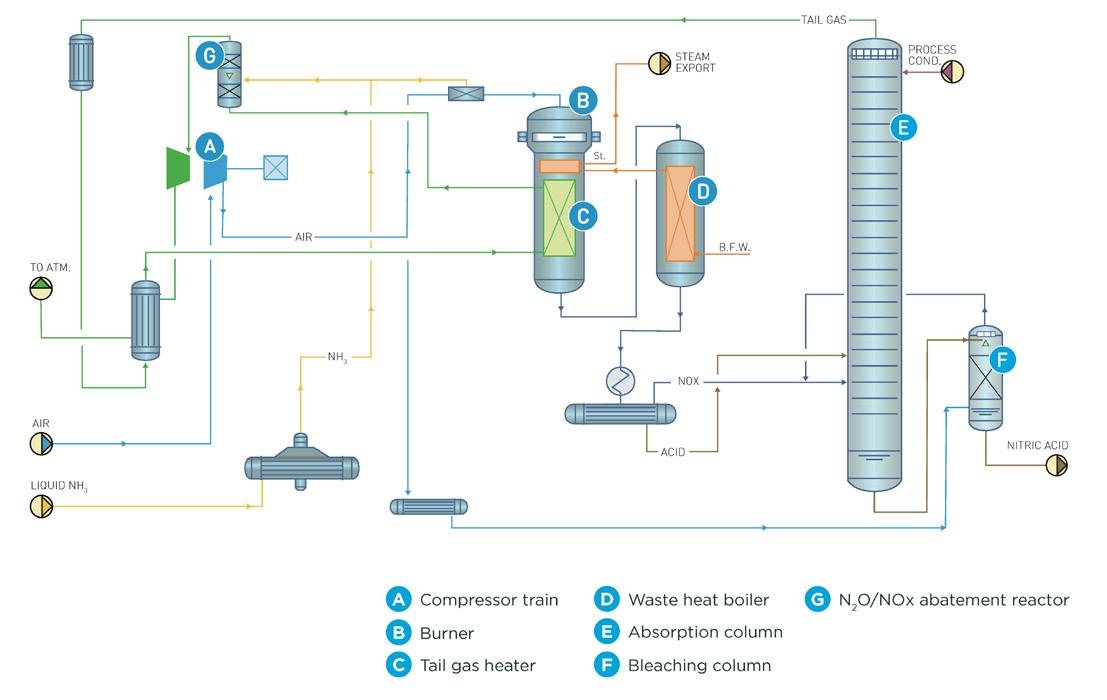
In the mono-pressure process (Figure 1), oxidation and absorption sections operate at the same pressure level. Different pressure levels are used for the oxidation and absorption sections in the dual-pressure process (Figure 2). The oxidation section is operated at pressures between 4 and 6 bar(a), while the absorption section operates between 8 and 12 bar(a), combining the advantages of medium-pressure combustion with the efficiency of high-pressure absorption.
Mono-pressure technology results in lower CAPEX but higher OPEX (higher ammonia consumption and higher catalyst losses), while dual-pressure technology has higher CAPEX but reduced OPEX.
The main characteristic of both processes is a specific heat exchanger network downstream of ammonia oxidation. The heat exchanging network has specific process conditions
17
selected to prevent corrosion, and ensures that no proprietary materials are required for equipment manufacturing.
The placement of the third tail gas heater in the ammonia burner vessel, very close to the gauzes, allows a tail gas temperature of 480°C to be achieved, which has several advantages:
n Reduced required heat exchanging area.
n The operation of the tertiary abatement system with no addition of reducing agent (like natural gas) for the nitrous oxide (N2O) decomposition.
n Higher power generation in the expansion turbine, leading to lower steam consumption of the compressor train and higher steam export.
n An extra heat recovery step before releasing the tail gas into the atmosphere.
Grassroots nitric acid plant for green fertilizer production
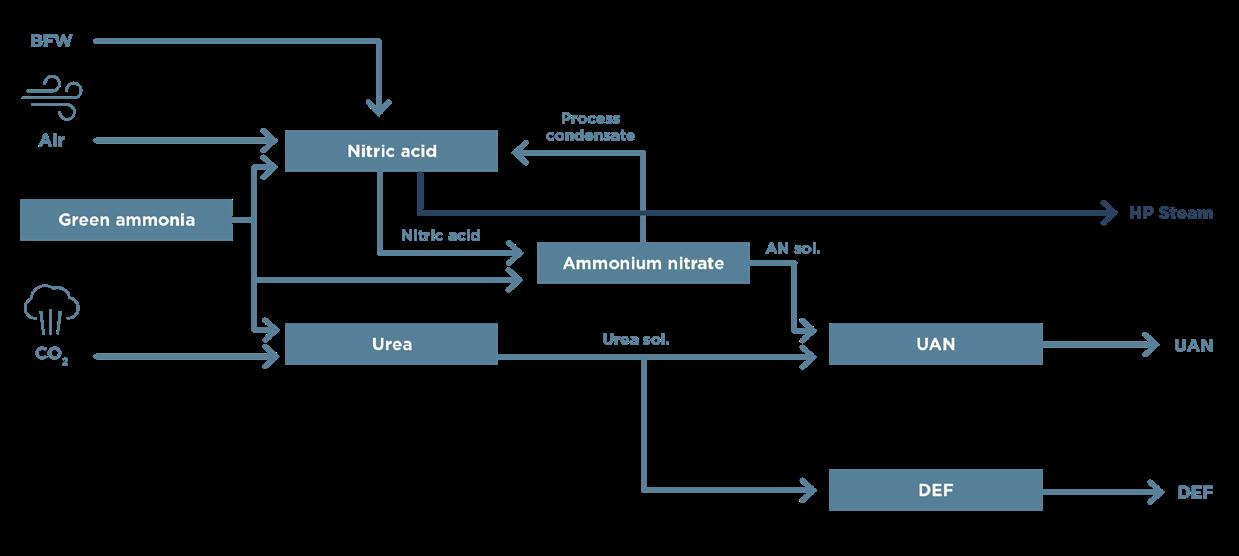
The first grassroots plant with a license of Stamicarbon’s nitric acid technology since its re-introduction is part of a green fertilizer complex, which aims to produce 905 tpd of UAN 32 and 135 tpd of DEF 50. The nitric acid plant will be fed with ammonia from a 450 tpd green ammonia production plant. The complex will integrate a urea melt plant, DEF unit, nitric acid plant and UAN solution plant downstream the green ammonia plant, using several Stamicarbon technologies. The block diagram of the complex is shown in Figure 3.
A mono-pressure nitric acid plant with a capacity of 330 tpd (100% HNO3) has been designed for this project. The plant will operate at a constant pressure of 8 bar(a), combining the absorption and bleaching operations in a single piece of equipment. In addition, due to the absence of a steam turbine, all high-pressure steam is exported and used in other sections of the fertilizer complex.
Since all the production units on the site are based on Stamicarbon technologies, this brings about the possibility of optimising the plants’ integration and the lowest emissions possible, with a high level of integration in the utilities network. The FEED phase has been completed by KT, an EPC sister company from Maire, and the construction work is expected to start in the coming months.
Revamp study to increase capacity
In 2021 Stamicarbon delivered a feasibility study for Monómeros Colombo Venezolanos' mono-pressure nitric acid plant in Barranquilla, Colombia, to increase the capacity of their existing plant. The current plant was designed by Stamicarbon and commissioned in 1968.
Over 50 years of operation, the chemical site produced NPK (nitrogen, phosphorous and potassium) fertilizers. The plant’s original nameplate capacity was 225 tpd of nitric acid at 55% wt. acid concentration, with an actual production capacity of 275 tpd at 50% wt. The objective of the study was to investigate options for a capacity increase to:
n 300 tpd of nitric acid with a concentration >50% wt.
n 350 tpd of nitric acid with a concentration >50% wt.
To meet the study’s objective, a detailed plant simulation was prepared based on a plant assessment. Once the plant operation was studied and understood, the revamp schemes were developed, including recommendations on the improvements to reach the desired capacities and increase steam export, minimising the changes, as requested by the customer. Each equipment item was analysed to meet the performance increase, and new equipment was designed for the items unsuitable for capacity increase.
The existing technology at the Monómeros site differed from the mono-pressure technology offered by Stamicarbon today. An as-is mass balance was prepared for the current concept, along with two deliverable packages, one for each
18 | WORLD FERTILIZER | APRIL 2023
Figure 2. Stamicarbon’s dual-pressure nitric acid process.
Figure 3. Diagram of the green nitrate fertilizer complex.
Figure 1. Stamicarbon’s mono-pressure nitric acid process.
PATHWAY BLUE
MAKE THE ENERGY TRANSITION YOUR BUSINESS.
Meet the fuel of the future today. Produce blue ammonia at the highest capacity with the lowest possible levelized cost. Decarbonize at mega scale while increasing the value of your ammonia product. Integrate blue ammonia solutions today to meet the demand of tomorrow.
Blue Ammonia. Tomorrow’s fuel. Ready today.

NH3
proposed capacity increase. A similar revamp concept is proposed for both plant capacities, with the main proposed improvements outlined below:
n Addition of a new auxiliary air compressor for the secondary air.
n Replacement of the rotor of the expander to cope with the extra tail gas flow.
n Upgrade of the heat exchanger network.
n Replacement of the NOx catalyst.
n Renewal of the packing for the absorbers and the bleacher.
n Expansion of the cooling water system to cope with the extra heat load.
Nitric acid technology for a greener future
Green fertilizers are nitrate-based fertilizers in which hydrogen for ammonia synthesis is produced with water electrolysis instead of natural resources. Apart from considerably reducing CO2 emissions, such production will reduce dependency on non-renewable energy resources, allowing fertilizer availability and price to be adapted to local demand.
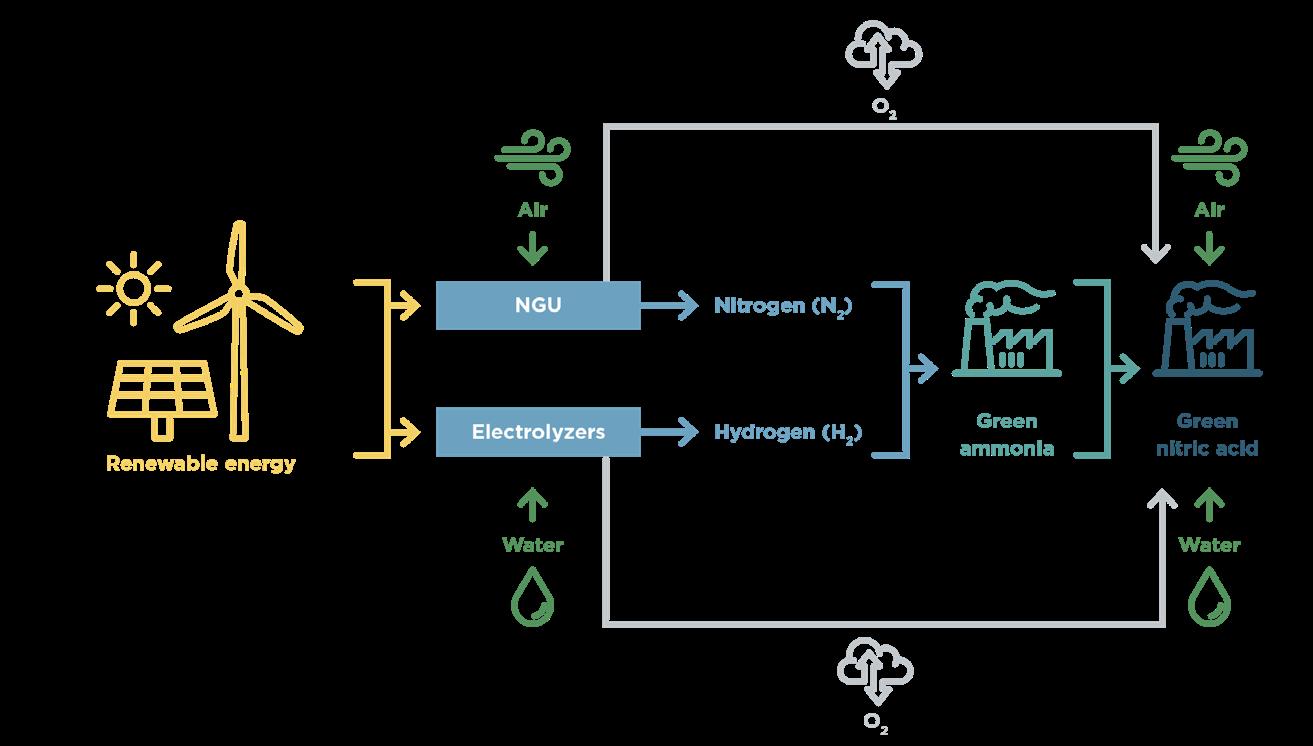
Stamicarbon is exploring the integration of Stami Nitric Acid with Stami Green Ammonia in a green fertilizer complex, as already designed for projects in South America and Africa (Figure 4).
The novel process integrating hydrogen production and nitric acid production reduces the air needed to oxidise ammonia in the first step of nitric acid production. This increases steam export and lowers the total amount of tail gas released to the atmosphere, in turn allowing the size
of the tail gas treatment section to be reduced, as well as, subsequently, the CAPEX of the plant.
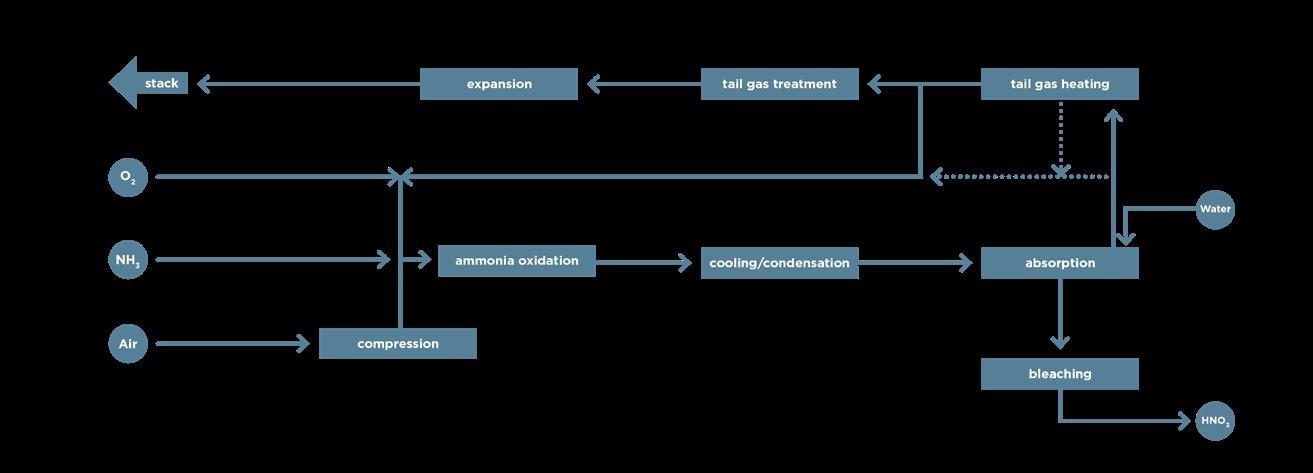
Stamicarbon continuously investigates the options for integrating green ammonia and nitric acid technologies. Integrating oxygen from water electrolysis and the nitrogen generation unit into the nitric acid plant can be done in several ways. When the ammonia used to feed the nitric acid plant comes from a green ammonia plant, part of the oxygen conventionally supplied as air could come from the electrolysers. To make sure that the mixture of ammonia and oxygen is below the explosive limit upstream the burner, some additional nitrogen is needed, and it can come from recirculating the tail gas, as shown in Figure 5.
This optimised process has several advantages over the conventional method:
n Reduced emissions by recirculating a portion of the tail gas. Even without the change in NOx concentration in the off-gas after treatment, the total amount of pollutants emitted will be lower, reducing the total flow of NOx and N2O sent to the environment by about 40%.
n Lower catalyst demand due to a lower flow rate through the abatement system. Even at a constant target concentration of NOx, the cross-section will be reduced, reducing the total volume of the catalyst by up to 40%.
n More positive power balance – compressor power is reduced, and therefore the steam increases by more than 30%.
n Reduction of CAPEX due to a smaller air compressor unit and reduced amount of catalyst in the tertiary abatement.
n Potential conversion increase by looping NOx gases back into the reaction (into the burner, bleacher, or both).
The road ahead
The continuous increase in the world’s population and a higher quality of life in developing countries have resulted in a rising global food demand. Furthermore, production processes need to be optimised to combat the effects of climate change, with the shift towards more productive agriculture and fossil-free feedstock alternatives.
Major players in the fertilizer industry worldwide are taking steps towards decarbonising fertilizer production. Using renewable energy to produce ammonia, as demonstrated through the Stami Green Ammonia technology, paves the way for green fertilizers, including nitric acid. Green fertilizer production is likely to become a more prominent theme in the industry, together with maximising the energy recovery of nitric acid plants, and Stamicarbon is keen to continue playing a role in facilitating this transition.
Notes
Patent applications have been filed for several innovations discussed in this article.
20 | WORLD FERTILIZER | APRIL 2023
Figure 4. Integration of green ammonia and nitric acid technologies.
Figure 5. Oxygen integration with the nitric acid technology: Recirculation of tail gas to the burner.
When a component fails, conducting a metallurgical failure analysis assessment is critical to determine the root cause of the damage and establish practical operational considerations to improve the safety of the equipment and facility. While failed components
can be easily replaced or repaired in many cases, the key to continuous improvement is to learn the materials and corrosion-related causes of these incidents and prevent future failures. After a failure, it is imperative to establish integrity operating windows (IOWs) for equipment to manage damage mechanisms. It is important
to engage with a failure analysis team that has a thorough understanding of mechanisms, fabrication practices, process chemistry, and equipment operation. The most valuable (and difficult) part of a failure analysis is often the engineering solutions which can be identified using the metallurgical lab results.
Learning lessons from failure

Raj
K. Patadia
and Nathaniel G. Sutton, The Equity Engineering Group (E2G), USA, outline the process of failure analysis performed for a syngas compressor rotor wheel in an ammonia plant.
21
This article discusses the workflow of failure analysis, including detailed laboratory assessment, damage mechanism identification, and determination of IOWs; this procedure was performed for a failed syngas compressor rotor wheel in an ammonia plant. The impeller in question experienced branched cracking at locations where the impeller vanes were
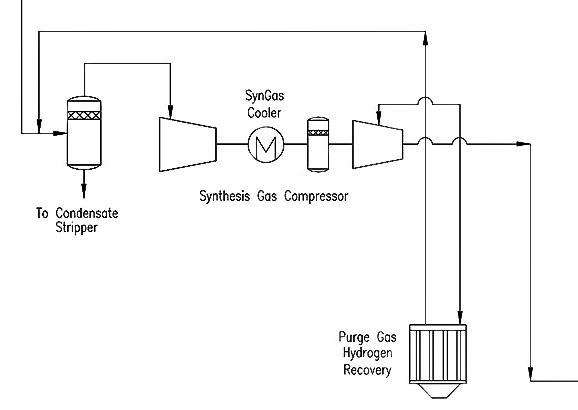
connected to the cover plate. Part of the ammonia synthesis loop downstream of the methanator is shown in Figure 1; this impeller is from of the second stage (the recycle stage) of the syngas compressor and contains blended makeup gas (fresh syngas from the methanator) and recycle gas (containing ammonia).
Laboratory analysis
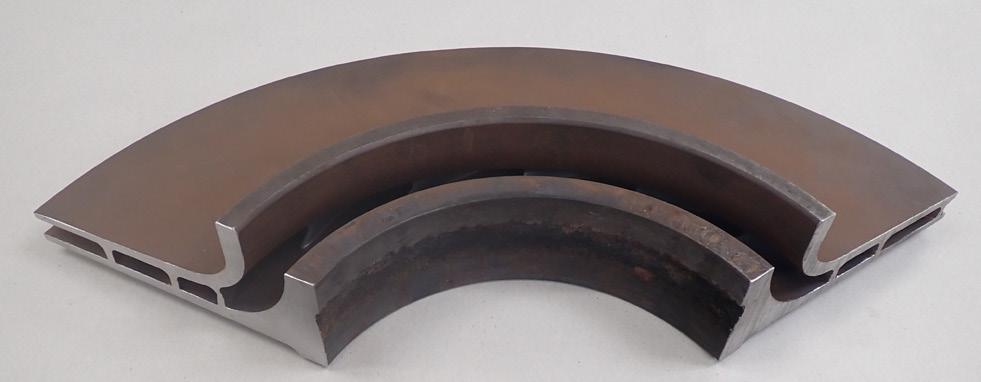
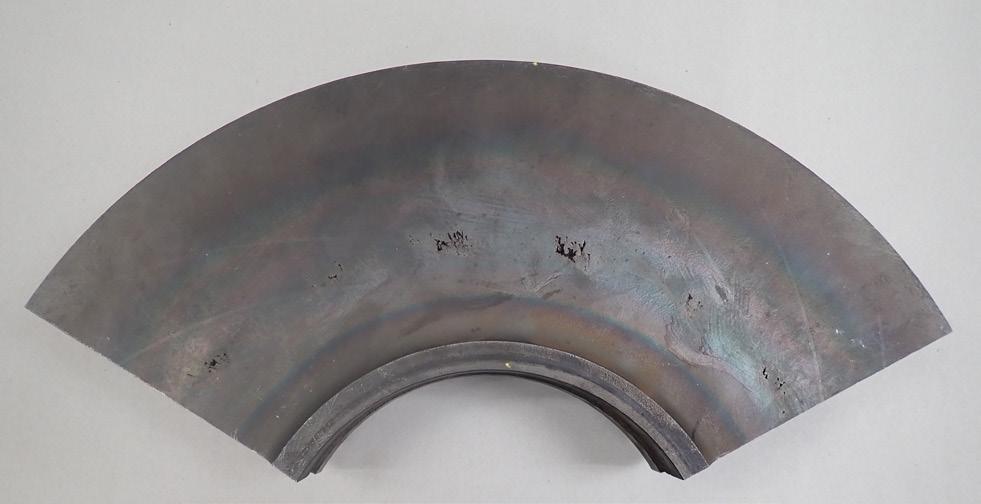
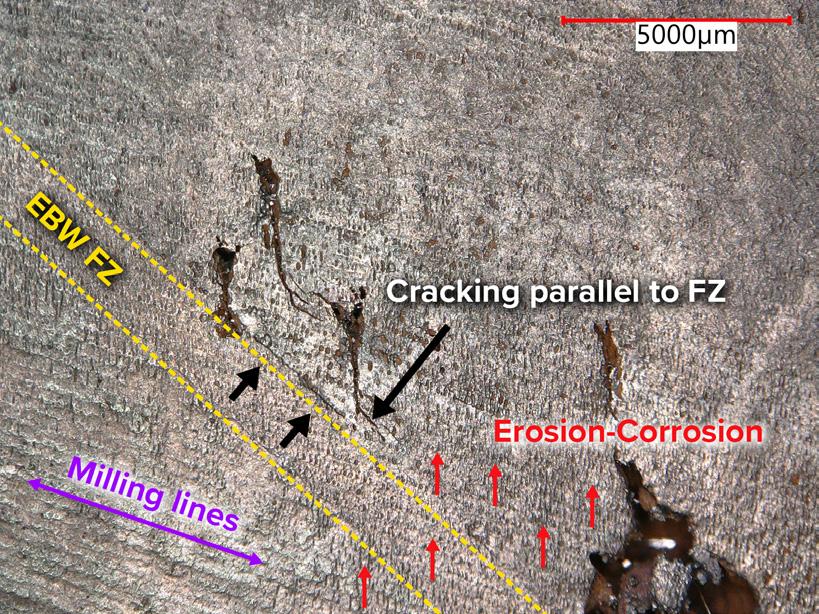
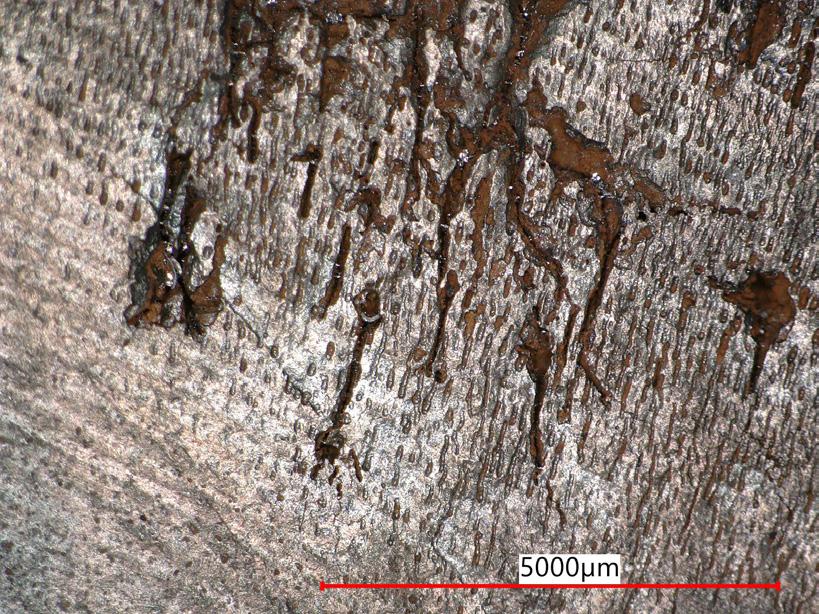
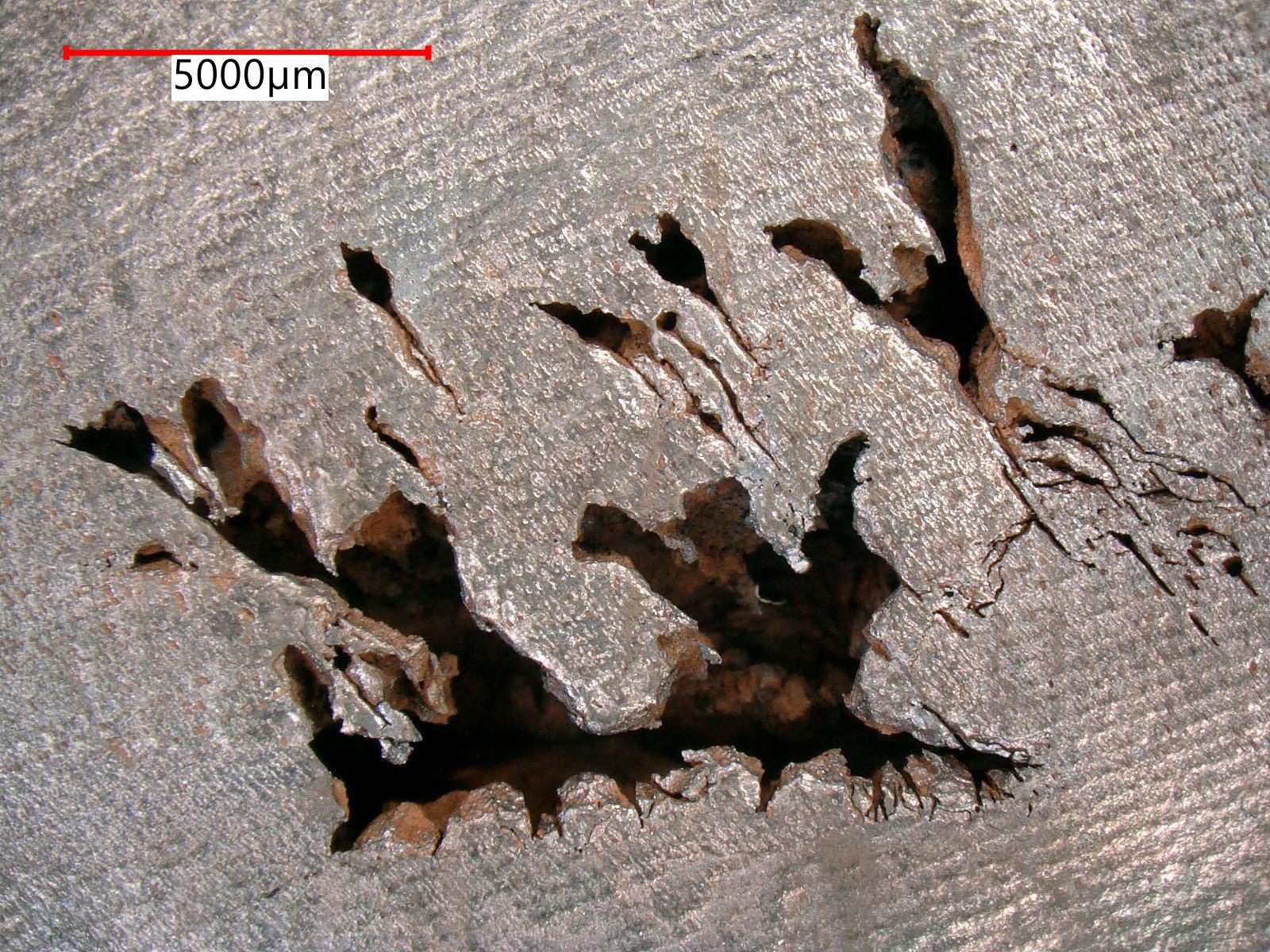
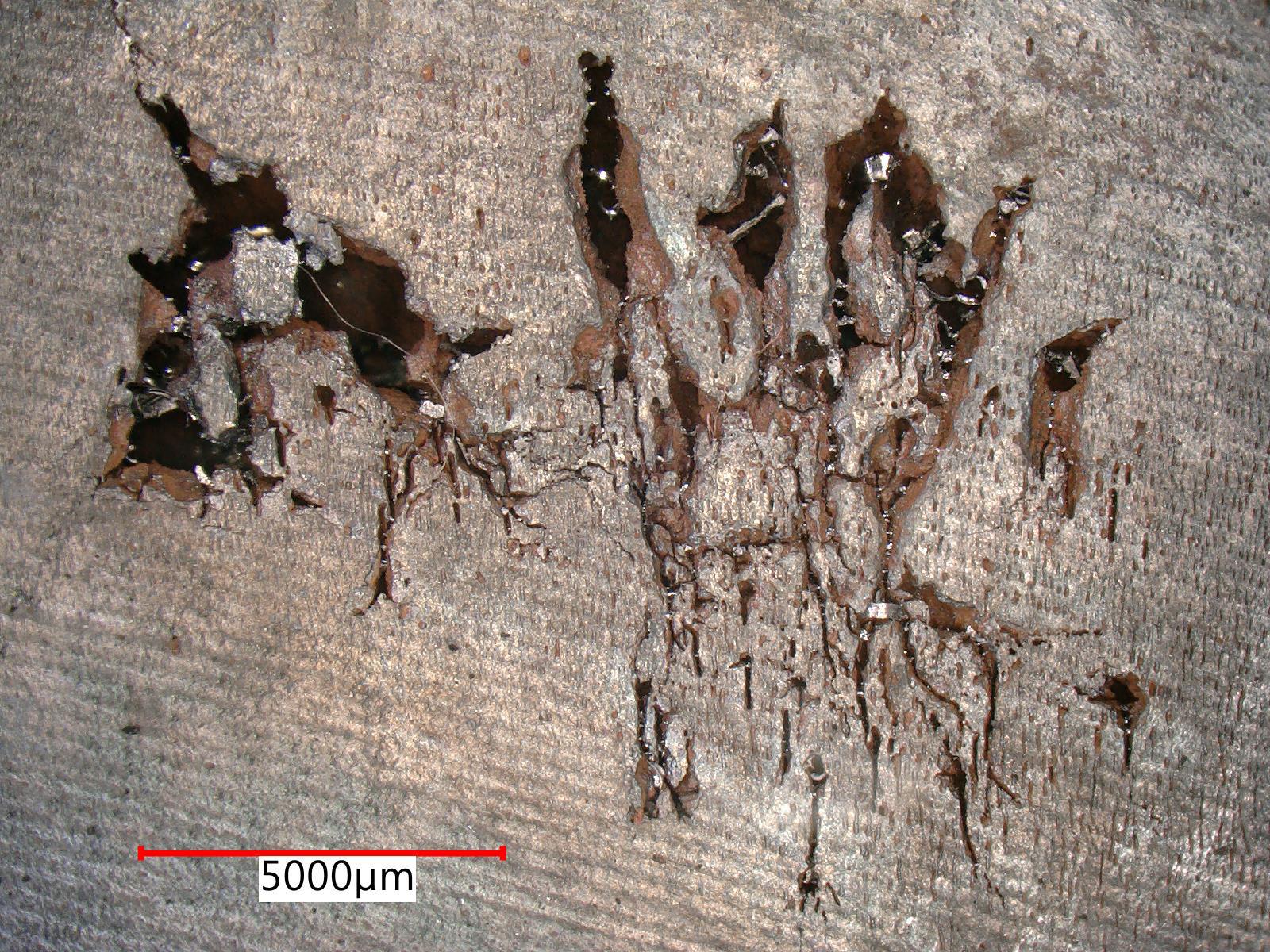
Upon examination in a laboratory setting, surface corrosion and cracking were evident on the cover plate of the impeller, shown in Figure 2, and corrosion was found on the eye of the impeller (surface in contact with the shaft), shown in Figure 3. All instances of damage on the cover plate were generally at the same radial location. The surface damage can be primarily characterised as erosion-corrosion, cracking, and pitting (shown in Figure 4). Damage locations are equidistant from each other and appear to generally coincide with the location of a vane attachment, as highlighted in Figure 5. Evidence of erosion-corrosion is present as small impingement grooves and pits on the cover plate in a different orientation to the milling lines. The cracking generally appears to follow erosion-corrosion grooves, except near the fusion line of the vane-attachment electron beam weld (EBW), where the cracking follows along, or is parallel to the fusion line. The sudden shift in cracking propagation may be indicative of a stress-driven cracking mechanism, where residual stress from a welding or brazing heat cycle will affect crack orientation.
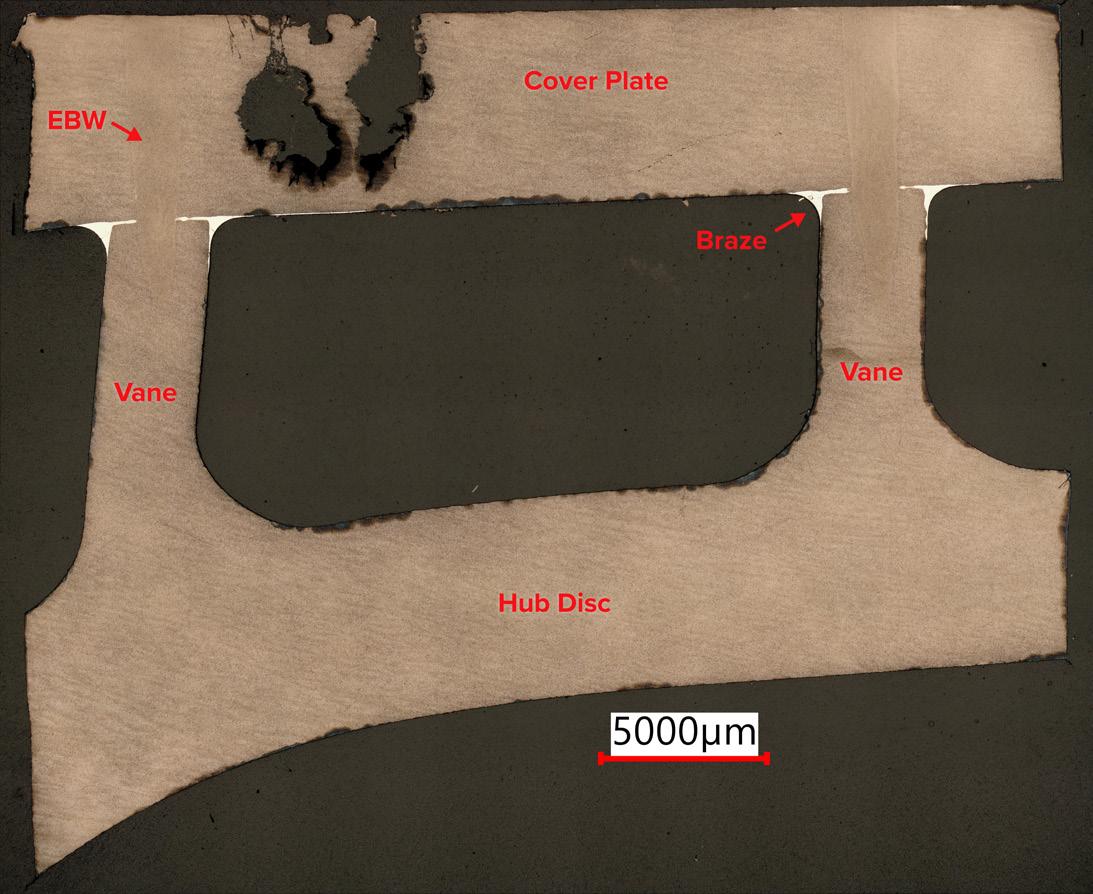
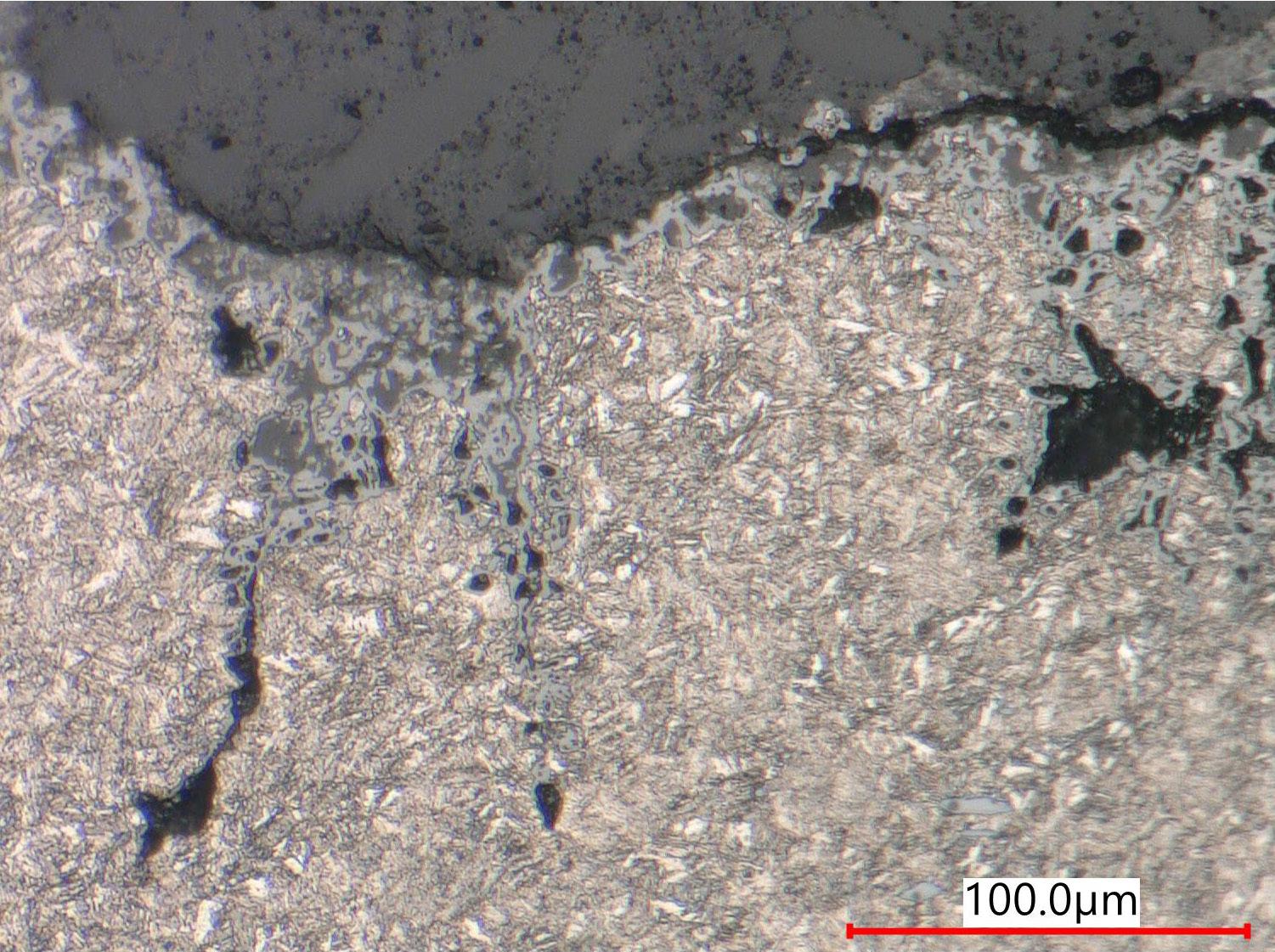
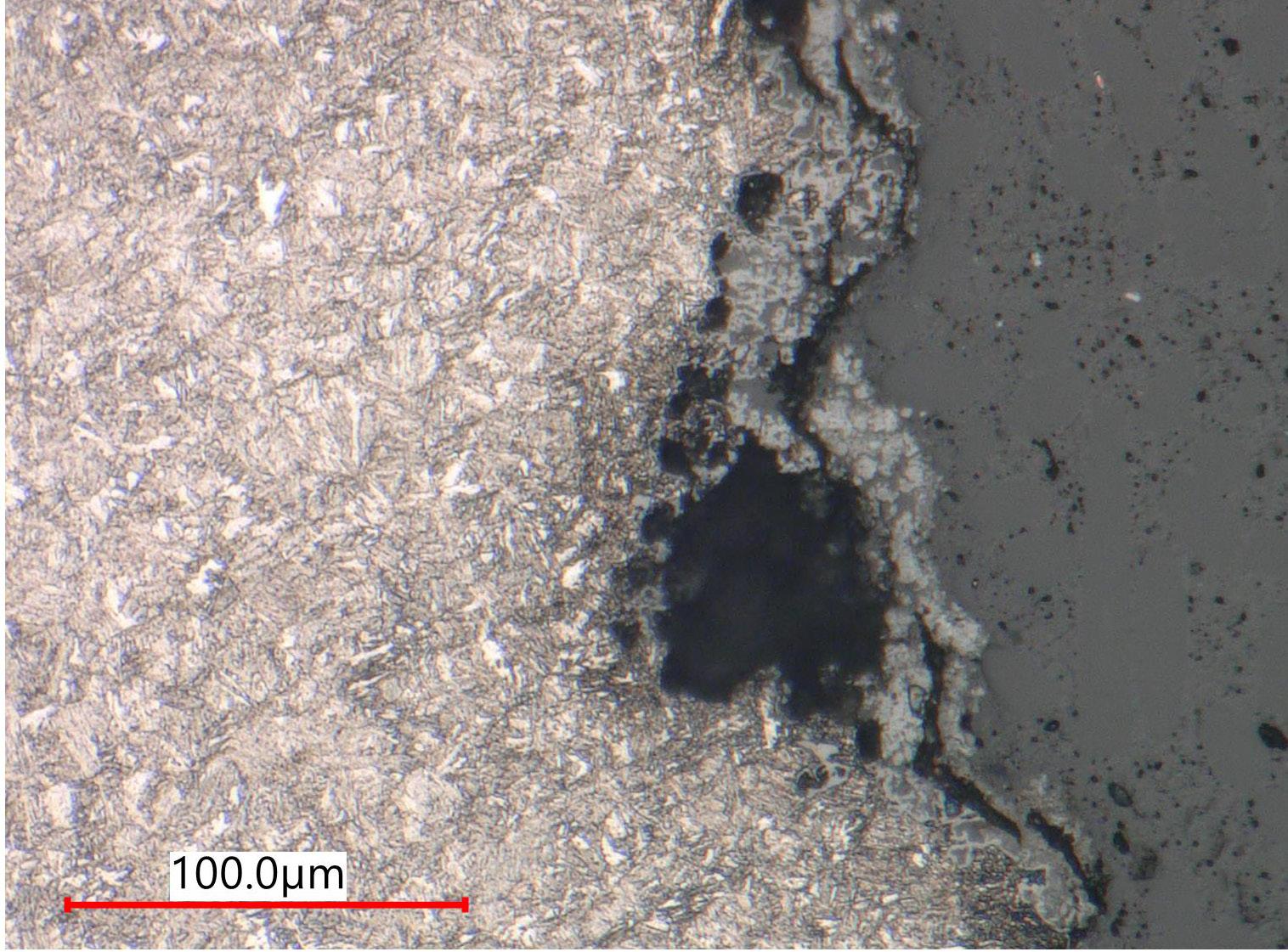
X-ray fluorescence (XRF) chemical analysis was performed and confirmed that the cover plate composition was generally consistent with the composition of AISI 4330 (UNS J24045) material. A through-wall section of a damaged location was chosen to be mounted for metallography, as shown in Figure 6. The fusion zone of the EBW used to attach the vanes is evident, along with the braze (SFA-5.8 BAu-4, per ASME BPVC Section II-C) used in the vane-to-cover plate joint. No solidification microstructures associated with fusion welding were seen in the EBW fusion zone, indicating a PWHT was performed as part of the fabrication process (e.g., as part of the heating cycle for brazing). No anomalies were observed in the cast hub disc or the wrought cover plate microstructures. Metallography of the corrosion pit was performed and shown in Figure 7 in the etched condition. The microstructure consists of bainite and ferrite, which was expected for this wrought low-alloy carbon steel (AISI 4340), and no evidence was seen of embrittlement from high-temperature operation or weld defects. Although a fine grain microstructure, the cracking appears to be intergranular.
Impeller fabrication practices
Since the damage on the sample was generally at or near the location of a vane, the fabrication procedures of the impeller were investigated to determine whether they contributed to the damage. While a basic drawing of the compressor was supplied to the failure analysis team, no fabrication details were provided by the facility or the manufacturer (in fact, the failure analysis team was not even aware of the manufacturer’s identity) and most of the fabrication details were assumed via metallurgical observation. The provided impeller is a closed or shrouded impeller, as it is comprised of a back and front wall around the vanes to increase strength. In this case, the hub disc,
22 | WORLD FERTILIZER | APRIL 2023
Figure 1. Portion of ammonia plant PFD with syngas compressor (PFD developed by E2G).
Figure 2. Impeller cover plate surface corrosion and cracking (as received).
Figure 3. Corrosion on impeller eye.
To Condensate Stripper
SynGas Cooler
Purge Gas Hydrogen Recovery
Synthesis Gas Compressor
which consists of the back wall and vanes, was likely fabricated via either investment casting or monobloc (i.e., single piece) core casting. The front wall (i.e., cover plate) was fabricated from a forged blank separate from the hub disc. A high-vacuum brazing process along with EBW was likely used to join the cover plate to the hub disc at the impeller vanes, before a PWHT. When brazing is used, the sequence of operations is chosen so that the brazing temperature and cooling after brazing coincide with heat treatment. While EBW provides static strength, it may not offer preferred fatigue strength in impeller manufacture due to the formation of inevitable sharp crevices between the blades and the cover. In this case, brazing provided dynamic strength by improving the joint geometry (smooth fillet contour) and eliminating the crevices.
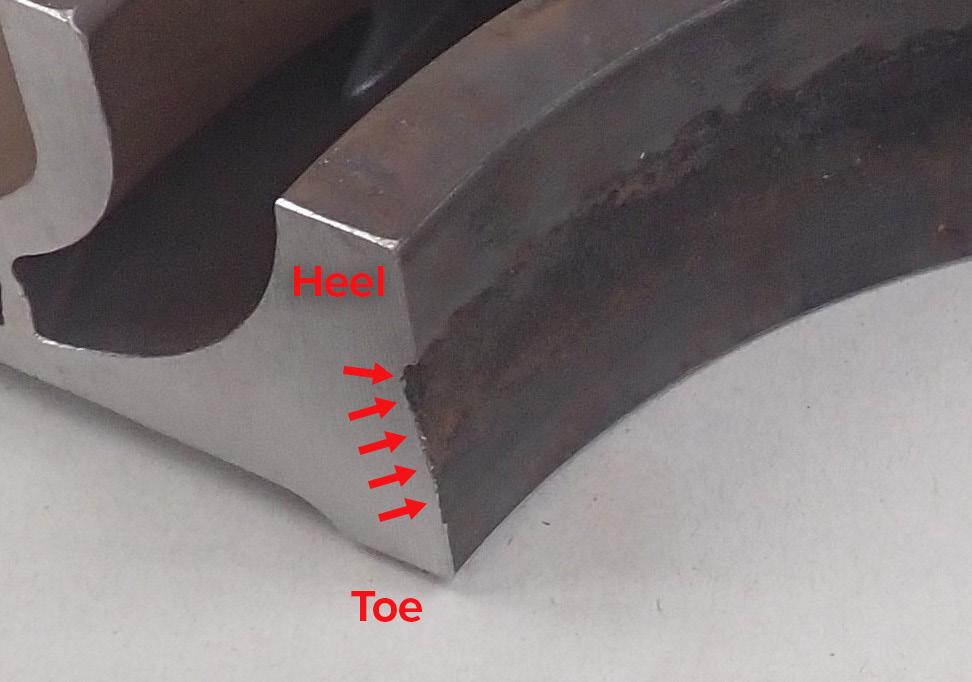
Once fabricated, the impeller is attached onto the rotor shaft. In this case, the attachment method was interference fitting at the heel and toe, evidenced by the corrosion pattern on the impeller eye and the heat tint on the cover plate. A tighter fit at the heel (towards suction) than the toe (towards discharge) is often employed to accommodate thermal expansion during operation. For the provided impeller, the relatively loose fit at the toe is believed to have allowed the process fluid to enter the crevice and initiate corrosion. Fretting corrosion is not believed to be responsible for the damage.
Damage mechanism discussion
The sample submitted for analysis exhibited a combination of localised corrosion, erosion-corrosion, and stress corrosion cracking (SCC). The process in the compressor consists of fresh feed or makeup gas (H2, N2, CH4, Ar) and recycle gas (H2, N2, CH4, NH3, Ar). Ammonia is present in the recycle stage from the synthesis loop recycle stream. If the synthesis gas (fresh make up to the first stage) contains traces of carbon oxides (i.e., CO and CO2), ammonium carbamate will form upon mixing with ammonia in the recycle gas from the synthesis loop. Ammonium carbamate is formed when ammonia and CO2 react, and is known to be highly corrosive to most metals. Unlike in a urea plant where it is a desired intermediate product, ammonium carbamate can clog and corrode equipment in an ammonia plant if not controlled. Normally, there should be essentially no carbon oxides (<5 ppm) in the fresh makeup gas. However, CO/CO2 slip through the methanator, or bypassing of the methanator feed/effluent exchanger will introduce a small quantity of CO and CO2 into the fresh feed. The analysis team’s investigation down this line confirmed exchanger bypassing and elevated COx levels. Based on this knowledge, the most probable species
responsible for the observed damage are ammonium carbamate and ammonium carbonate, with the potential that ammonia is also contributing to SCC.
Erosion-corrosion in this case describes the contribution of liquid droplets entrained in a vapour to corrosion by removing the protective surface films or scales and accelerating the corrosion rate. For the wheel in question, liquid droplets are suspected to have condensed on the surface of the cover plate near the ID of the wheel, where the temperature is lower than the OD (lower friction) and
APRIL 2023 | WORLD FERTILIZER | 23
Figure 4. Cover plate macro damage.
Figure 5. Erosion-corrosion and cracking on cover plate.
the steel may be colder than the fluid. Ammonia vapours in the vapour space may condense on equipment, along with water and ammonium carbamate or carbonate. Once in liquid form, droplets will lead to erosion-corrosion due to
high velocity impingement from centrifugal forces during operation. The erosion impingement grooves act as initiation sites for corrosion (pitting). Once initiated, the pit environment will not allow a new protective film to form and the corrosion reaction progresses further.
Operational recommendations (process monitoring and IOWs)
It was determined through laboratory analysis that the most probable species responsible for the observed damage were ammonium carbamate and ammonium carbonate. Therefore, the operator should monitor the operation and mechanical integrity of the shift converter, the methanator, and the methanator feed/effluent exchanger to directly limit the amount of carbon oxides allowed into the synthesis gas compressor loop to prevent formation of ammonium carbamate or ammonium carbonate.
n The amount of carbon oxides in the methanator feed should be limited to less than 1% and regularly monitored.
n The total carbon oxide content in the methanator outlet composition should be limited to less than 5 ppm and should be regularly monitored.
§ The inlet, outlet, and bed temperatures of the methanator should be frequently monitored. Movement of the temperature profile with time is indicative of the catalyst poisoning rate and should be monitored to assess catalyst life expectancy and allow for proactive catalyst renewal to avoid CO/CO2 slip.
§ It is important to check for bypassing in the methanator feed/effluent exchanger from a failure (i.e., tube pinhole or expansion bellows leak). Liquid penetrant testing (PT) of tube to tubesheet joints, eddy current (ECT), and hydrostatic testing can be used to detect leaks in the exchanger bundle.
n Checking for high water levels in the methanator inlet gas is also important. Water present in excess of about 3% (typically 2 – 3% during normal operation) can lead to high CO2 in the exit gas. Solvents from the scrubber (e.g., amines, carbonate solution, sulfolane, etc.) may also contribute to catalyst poisoning in the methanator.
Conclusions
The authors completed a thorough analysis of the second stage (recycle) syngas compressor rotor wheel. The damage on the impeller included erosion-corrosion, localised corrosion (pitting) and SCC. The primary species responsible for this damage was ammonium carbamate/carbonate, formed from NH3 recycle mixing with CO/CO2 makeup syngas (methanator bypassing).
To prevent future damage, the operator should establish operational limits on the amount of carbon oxides allowed into the synthesis gas compressor loop to avoid formation of ammonium carbamate and ammonium carbonate. The operator was able to obtain the most value from their failure analysis project by partnering with a team that had a thorough understanding of damage mechanisms, materials and fabrication practices, process chemistry, and equipment operation.
24 | WORLD FERTILIZER | APRIL 2023
Figure 6. Overview of metallographic mount, as etched.
Figure 7. Corrosion metallography as etched 1000x.
Truck scales are a significant capital investment and a critical part of fertilizer manufacturing operations, weighing anywhere from 50 – 300+ trucks per day. Unfortunately, truck scales can also be a source of daily headaches and excessive maintenance costs due to wear and tear that is incurred through their rough operating environments.
Heavy traffic, combined with the potentially corrosive nature of raw materials, can lead to the premature breakdown of truck-scale components. This article outlines three elements to consider when choosing or upgrading a truck scale in order to help prevent the unplanned downtime and maintenance expenses these failures incur. Making the right choice now can help to protect the truck scale and extend its operating life in the long run.
Smart load cell technology
Load cells – the sensors used to measure the weight of objects on a scale deck – are the heart of any truck scale. Most truck scales require 6 – 12 load cells working together to provide accurate weight readings. These sensors contain electronics that are often prone to failure when exposed to moisture or harsh chemicals. Choosing technology specifically designed for harsh environments can ensure longevity and accuracy while helping operations avoid scale failure.
The right material: Stainless steel
The most important feature is the material the load cell enclosure is made of, which in nearly every instance should be
25
Grace Morgan, METTLER TOLEDO, USA, explains the three keys to preventing corrosion at the truck scale and maximising the life of this important asset.
stainless steel. Believe it or not, not all scale companies utilise stainless steel enclosures on their load cells, leaving them vulnerable to premature failure. The strength and reliability of stainless steel is critical, especially when transporting and weighing potentially corrosive fertilizer components.
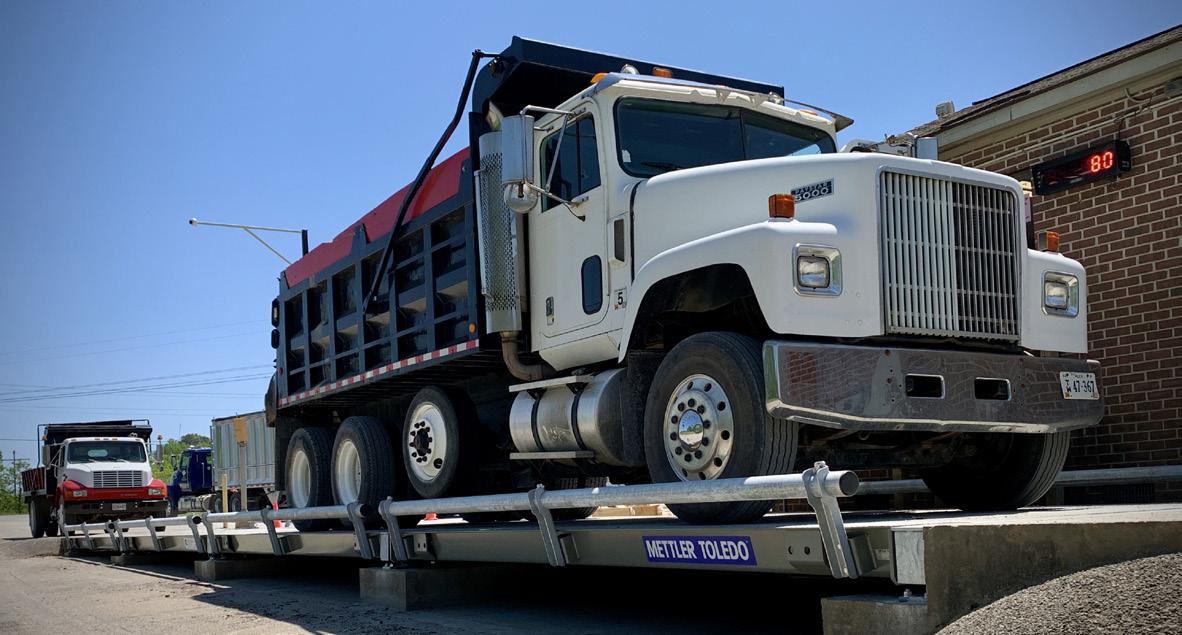
METTLER TOLEDO uses stainless-steel enclosures for all load cells in its truck scale designs to help ensure both reliability and accuracy.
The right enclosure: Hermetic sealing
In addition to stainless-steel enclosures, load-cell sealing is also important. Most scale providers use one of two methods to seal load cells: potting or hermetic sealing. Potting involves injecting sealant into load cell crevices to block out moisture. Hermetic sealing, on the other hand, involves laser welding and the creation of a vacuum inside the load cell. While both methods combat moisture, potting leaves more room for error, thus creating higher moisture-damage risk.
Hermetic seals – used for all METTLER TOLEDO truck scale load cells – can be certified as preventing moisture ingress, which provides added assurance that load cells will not fail before their time, adding to reliability and accuracy on an ongoing basis.
The right configuration: Daisy chain
When it comes to moisture ingress, an operation should also consider the load cell system as a whole. Many require a junction or summing box to ‘sum’ weight signals from all load cells before the signal is transferred to the scale terminal. Junction boxes, however, are notoriously difficult to seal against all moisture. Prioritising systems that avoid the use of junction boxes and instead using a daisy chain configuration to connect load cells can help. POWERCELL® PDX® employs this daisy chain configuration to keep critical electronics dry and the truck scale up and running.
The right cabling: Stainless-steel braided
The material and protection of cables should also be considered when investing in a new load cell system or upgrade. Traditional load cell cables encased in rubber are vulnerable to corrosion. If a load cell system cable erodes, the cable can wick moisture into sensitive electronics. Furthermore, if a cable becomes so damaged that it loses connection to the load cell system, a truck scale must shut down until a service repair technician can come to replace the cell. The company uses stainless-steel braided cabling to connect load cells used in vehicle scales to prevent these connectivity issues and help ensure truck scale uptime and productivity.
Continuous welding
A typical weighbridge is roughly 70 ft long. Regardless of its structural design, every weighbridge is assembled by welding various components together. Every truck-scale vendor has different design philosophies and procedures for these critical welds. The difference between two of the most common methods, stitch weld and continuous weld, can have a major impact on the longevity of a bridge.
Stitch welding
Stitch welds involve intermittent, or stop-start, welding of seams, working to ensure structural integrity and saving on manufacturing costs. Stitch-welded structures have spans of metal sandwiched together with gaps that are exposed to the elements. Over time, moisture of chemicals can seep into these crevices and erode from the inside out, ultimately leading to structural issues and scale failure.
Continuous welding
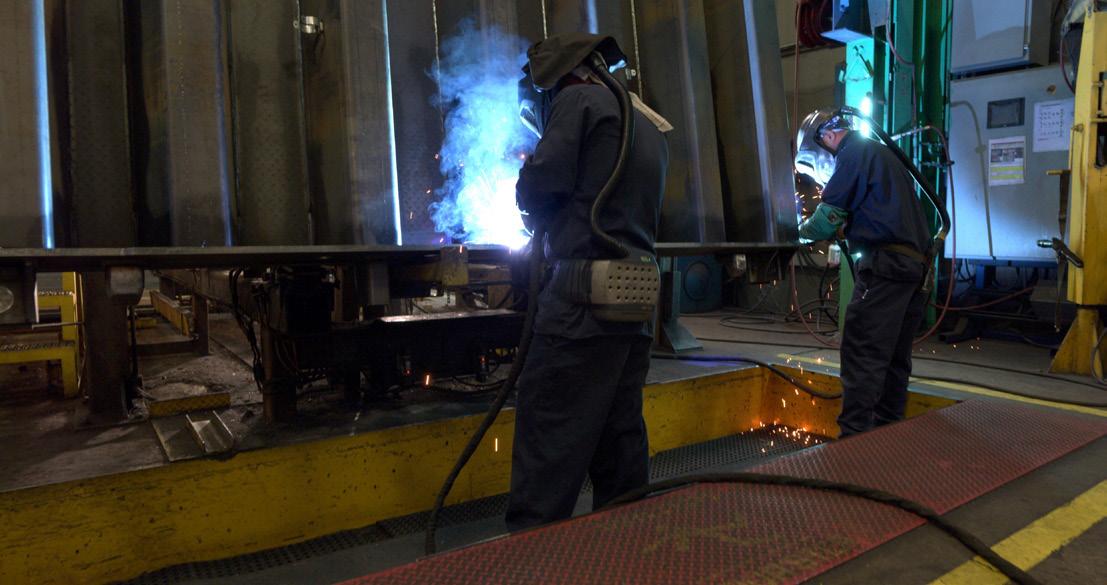
Continuous welds are more technically difficult and expensive to execute, but offer benefits that far outweigh the costs. Continuous welding works to combat moisture more effectively (particularly in sensitive corners) by helping to ensure that all joints are completely sealed from moisture ingress.
METTLER TOLEDO utilises continuous welding in all weighbridge manufacturing, producing decks that are consistently structurally sound and built-to-last.
26 | WORLD FERTILIZER | APRIL 2023
Figure 1. Continuous welding.
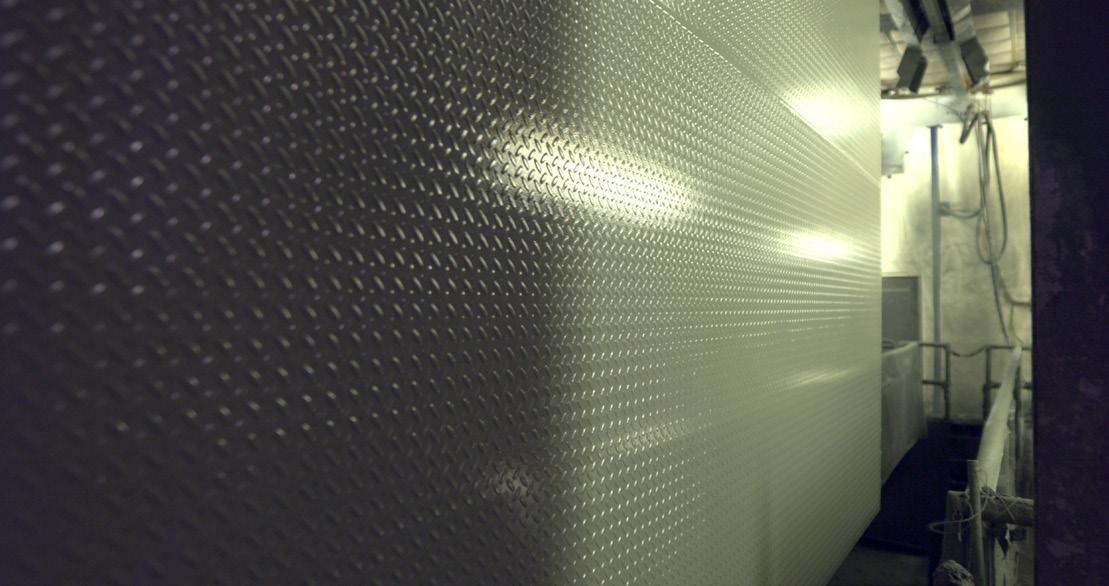
Figure 2. High-quality paint.
Figure 3. METTLER TOLEDO truck scale.
Scale finish
With hundreds of trucks driving on and off the scale every day, a finish that can withstand constant agitation is necessary. Scale finish is even more critical for facilities that manufacture or handle harsh raw materials that can spill onto the scale.
The right paint type: Formulated for harsh environments
The paint used for a truck scale should be formulated for harsh outdoor environments. Look for language such as ‘marine grade’, ‘epoxy’, and ‘polyurethane finish’ as a starting point. Mixtures with these properties should be well-suited for the fertilizer environment.
The right paint thickness: The Goldilocks method
Most scale manufacturers specify how thick the paint should be applied to their scale decks. In general, there is a sweet spot between too thin, which is susceptible to corrosion, and too thick, which is susceptible to cracking. A well-suited paint formula and thickness will help to ensure a long-lasting finish.
The right finish treatments: Metallisation or galvanisation

Metallisation and galvanisation (rail and I-beam only) are commonly used on highway guardrails for their ability to withstand the elements. However, metallising and galvanising
may not be the right solution for all fertilizer-related operations, as some fertilizer formulations are corrosive to these coatings. Operators should check with their scale manufacturer’s engineering team to determine which finish will provide the best and most long-lasting result for the relevant application.
METTLER TOLEDO utilises an eight-point inspection process to ensure coatings meet specification every time. This and other stringent manufacturing procedures have been time tested, with scales still in operation more than 30 years later.
Summary
Protecting a weighbridge and ensuring critical uptime for an operation can feel like a full-time job, but it does not have to. Choosing equipment that is designed to perform can help set an operation up for success from the start.
Years of field research and data collection comparing POWERCELL and POWERCELL PDX load cells to analogue technology have demonstrated that POWERCELL is ideal for harsh environments – even hazardous zones. This makes it a suitable choice for a new truck scale install or upgrade in harsh and/or potentially explosive fertilizer-manufacturing applications.
Pairing the right truck-scale technology with a preventive maintenance plan and consistent cleaning routine means operators can expect to get many useful years out of a truck scale.
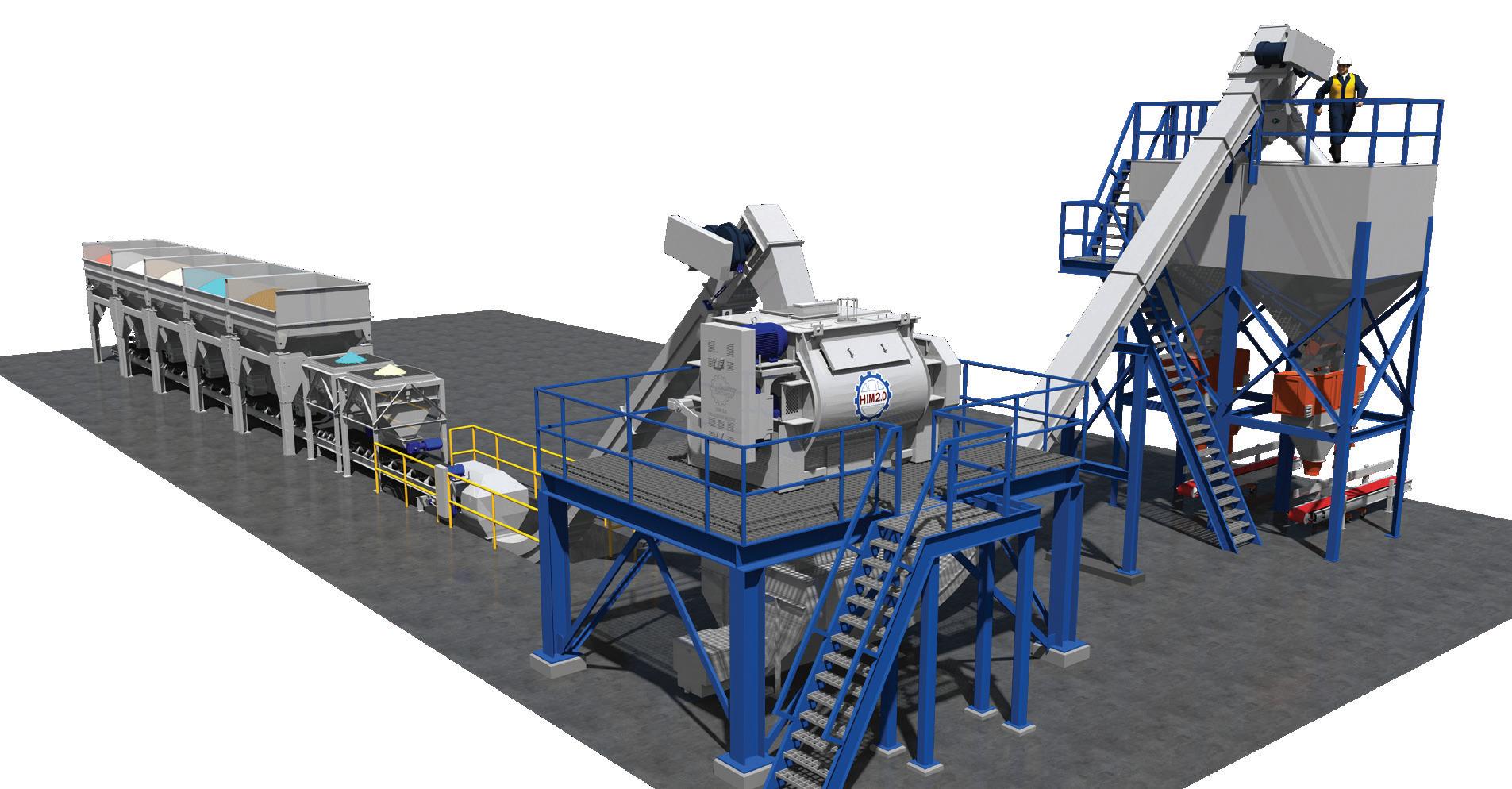
DESIGNED FOR THE REVOLUTION IN CROP INPUTS FERTILIZER BLENDING SYSTEMS
Certified weighing to ±.1% for accuracy and traceability
Rapid batch blending for efficiency, precision, and flexibility
Powered by Sackett-Waconia SmartBlending® technology
Supporting the 4R Nutrient Stewardship program AccuBlend®
•
•
•
•
Middle East Sulphur Conference 2023
The

15-18 May 2023
Sulphur Community is set to reconvene at an exciting new event

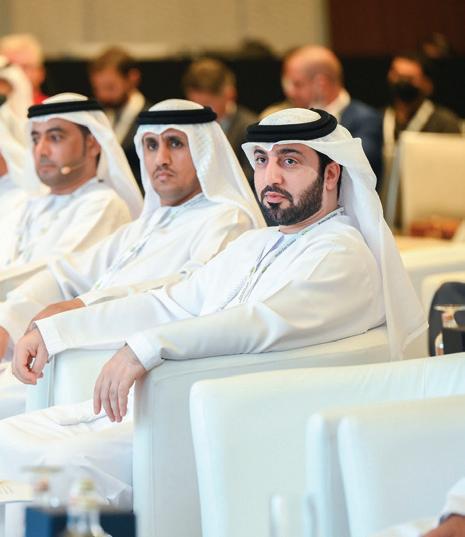
CRU and UniverSUL Consulting, with the support of event host, ADNOC, are delighted to announce dates for the Middle East Sulphur Conference (MEScon), taking place at The Conrad, Abu Dhabi Etihad Towers 15-18 May 2023.



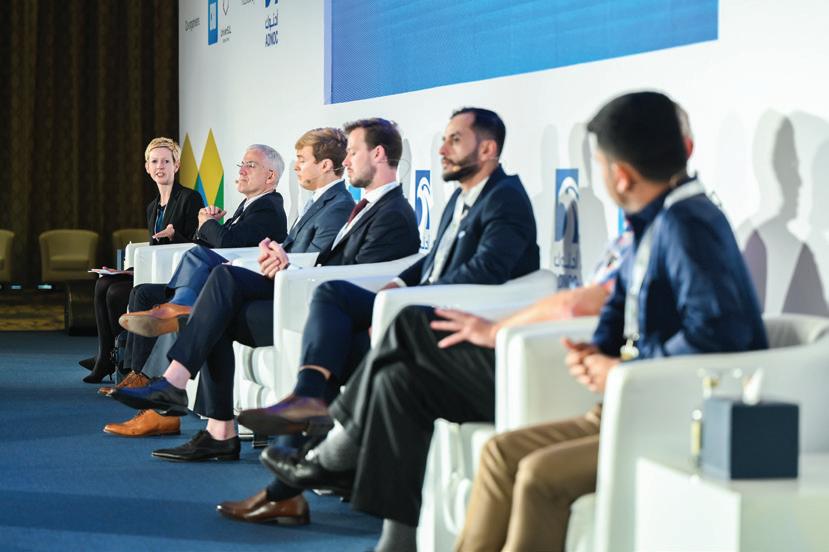
MEScon is devoted to networking, thought leadership, innovation and best practice operations across the entire sour gas and sulphur value chain. With the region’s prominence in the global sulphur industry, MEScon is where the sulphur and sour gas community meet to discuss and debate the key strategic themes driving the industry.

• Develop practical solutions to common operational problems
• Share know-how and best practice with industry peers
• Learn about new projects and technology developments
• Understand key drivers of supply and demand
• Meet with key industry contacts to negotiate new business



• Address your technology and engineering needs with a exhibitors



The Middle East, and in particular, Abu Dhabi, are at the epicentre of global sulphur and sour hydrocarbon production, making this the ideal location; Join us this May.
Sponsors

Co-organisers Hosted by
Discover why you should attend: www.middleeastsulphur.com
Media Partners BR&E
Conrad Abu Dhabi Etihad Towers
BIGGER is better for ammonia
Kevin Rouwenhorst, Ammonia Energy Association, The Netherlands, discusses how renewable ammonia production can be scaled up with electrolysis-based hydrogen feedstock.
Current fossil-based processes account for half a gigaton of carbon dioxide emitted each year worldwide – an amount that sits somewhere in between the annual emissions of Brazil and Canada. Adding to the challenge, ammonia (NH3) also needs to be adapted for new applications at a massive scale. As a result, the Ammonia Energy Association (AEA) is advocating for the responsible use of NH3 in a sustainable energy economy, encompassing the decarbonisation of global NH3 production.

A historical perspective on renewable ammonia production




Renewable ammonia production with electrolysis-based hydrogen feedstock is a key component for decarbonising the ammonia energy value chain. The first ammonia plant
with electrolysis-based hydrogen began operating in Terni, Italy, in 1921, based on Casale's technology. Numerous electrolysis-based ammonia plants were installed in the years to follow, making electrolysis-based ammonia production the second most used technology by 1930 (after coal gasification).
However, the installed capacity for electrolysis-based ammonia production started to decline after 1970, from a peak of about 0.7 million tpy. Improvements in Haber-Bosch technologies led to a dramatic scale-up of production capacities, which required more and more hydrogen feedstock. Coupled with the sudden, widespread availability of cheap gas, the economics of scale meant that gas-based, large scale ammonia production became the norm.
In 2010, three electrolysis-based ammonia plants were still operational with a combined production capacity
29
of 225 000 tpy: the KIMA plant in Aswan, Egypt; Sable Chemicals’ plant in Kwekwe, Zimbabwe; and the Industrias Cachimayo plant in Cuzco, Peru. These three plants operated based on hydroelectric power and had a combined installed electrolysis capacity of 275 MW.
Sable Chemicals shut down its electrolysis-based ammonia production in 2015. Among other things, this was due to an increased demand for electricity in other sectors and subsequent higher electricity prices, as well as sustained droughts in Zimbabwe. Electrolysis-based ammonia production in Aswan was decommissioned in 2019, with the gas-based KIMA 2 plant built in its place. This leaves the Industrias Cachimayo plant as the last ‘classical’ electrolysis-based ammonia production facility in operation. ENGIE and Enaex recently agreed to a new, long-term power purchase agreement (PPA), allowing Industrias Cachimayo to run on 100% renewable energy for the foreseeable future.
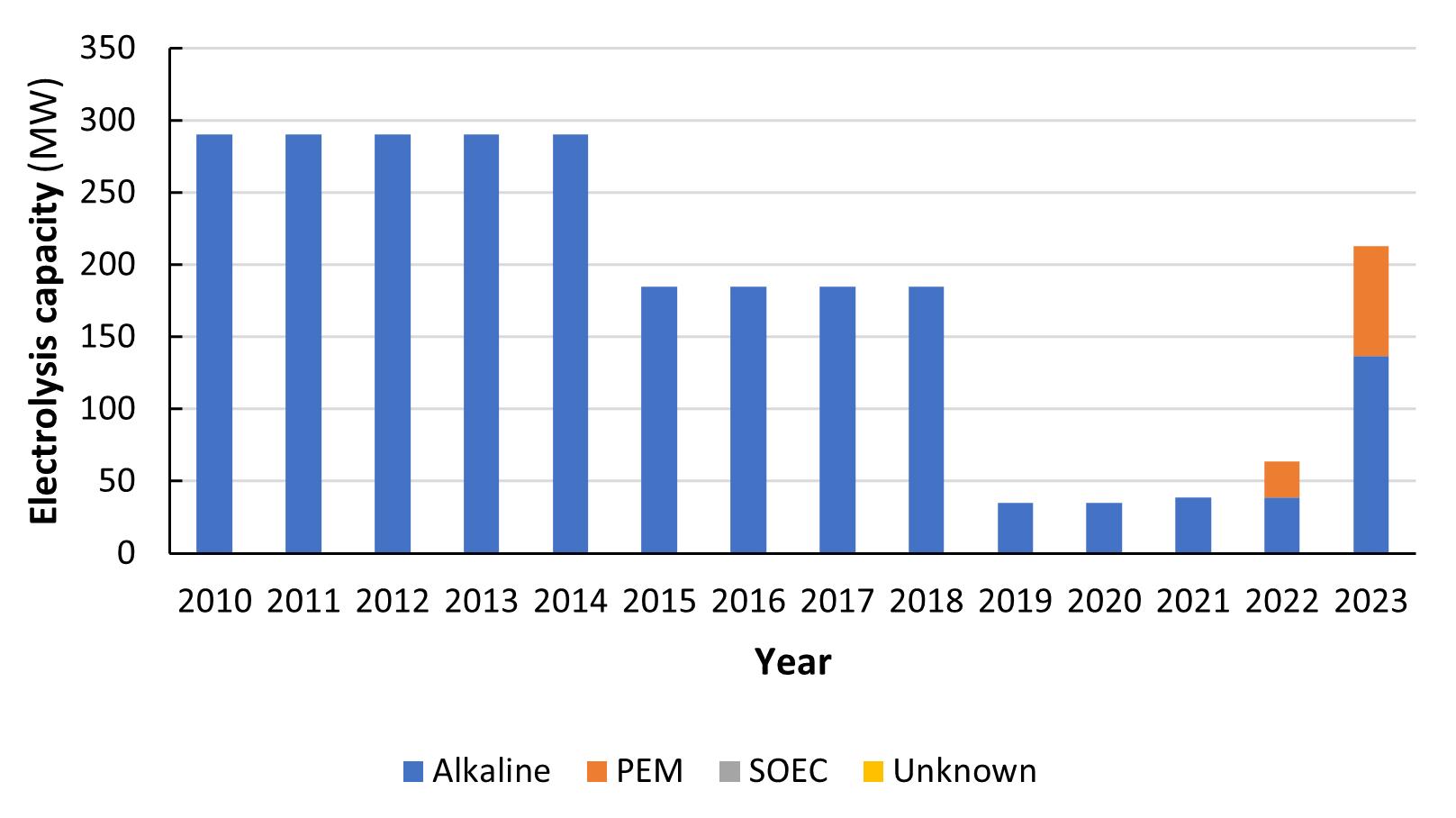
Scale up of electrolysis
With the rapid decline in the cost of renewable electricity from solar photovoltaics (PV) and wind, electrolysis-based ammonia production has re-emerged as an alternative to
fossil-based processes. To assess the effects of fluctuating renewable energy generation on ammonia production, various kW-scale demonstrators were introduced in the 2010s in Japan, the UK, and the US.
More recently, multi-MW electrolysis projects linked to ammonia production have been announced, with some already operational. ACME Group is de-risking large scale, renewable ammonia production via a 4 MW alkaline electrolysis pilot plant in Bikaner, India, estimated to produce approximately 1500 tpy of renewable ammonia. The Bikaner plant started operations in November 2021. In Puertollano, Spain, the H2F renewable hydrogen plant features 100 MW solar PV, 5 MW battery storage, 20 MW PEM electrolysis, and 11 high-pressure hydrogen storage tanks. Iberdrola started operating the plant in 2022, feeding the production of around 17 000 tpy of renewable ammonia at Fertiberia’s neighbouring ammonia and fertilizers complex.
Some of the world’s biggest ammonia producers have announced electrolysis projects to begin the decarbonisation process at existing plants. OCI subsidiary, Fertiglobe, has commissioned 5 MW of PEM electrolysis for the ‘Egypt Green’ hydrogen plant in Ain Sokhna. That hydrogen will be fed to a neighbouring ammonia plant operated by EBIC, producing approximately 4500 tpy of renewable ammonia.
In the US, both CF Industries and LSB Industries have commissioned electrolysis plants that will feed into large scale facilities. CF has ordered 20 MW of alkaline electrolysers from thyssenkrupp for a project at their Louisiana facility, while LSB are currently working with Bloom Energy and thyssenkrupp to develop a 30 MW total (10 MW solid oxide electrolysis, 20 MW alkaline electrolysis) renewable hydrogen plant at their Oklahoma facility. The electrolysis plants will result in the production of 20 000 tpy and 30 000 tpy of renewable ammonia, respectively.
Yara also has two relevant projects in the works. In far north Australia, Yara and ENGIE are leading the construction of a 10 MW electrolysis plant next to Yara’s existing Pilbara fertilizers facility, which is expected to be completed in 2024.
‘Project YURI’ (as the hydrogen plant is known) will supply approximately 0.5% of Yara Pilbara’s hydrogen requirements on start-up, with electrolysis capacity to be scaled up to at least 500 MW by 2030. Work is also well-advanced on a pilot electrolysis plant at Yara’s Porsgrunn ammonia production facility in Norway. Linde is constructing the 23 MW electrolysis plant that will
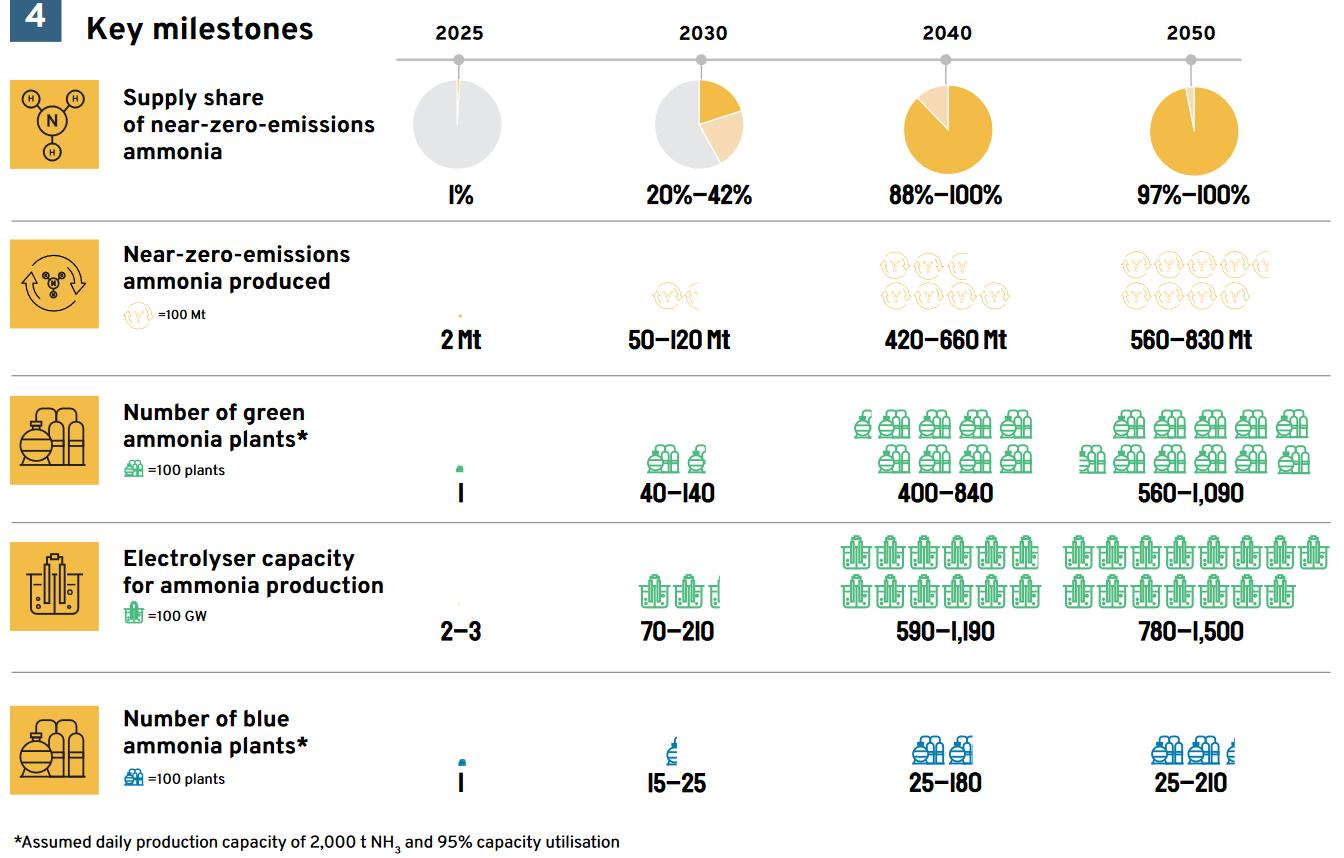
30 | WORLD FERTILIZER | APRIL 2023
Figure 1. Installed electrolysis capacity for ammonia production, 2010 – 2023.
Figure 2. Milestones for tech deployment and production for near-zero emissions ammonia to 2050.1
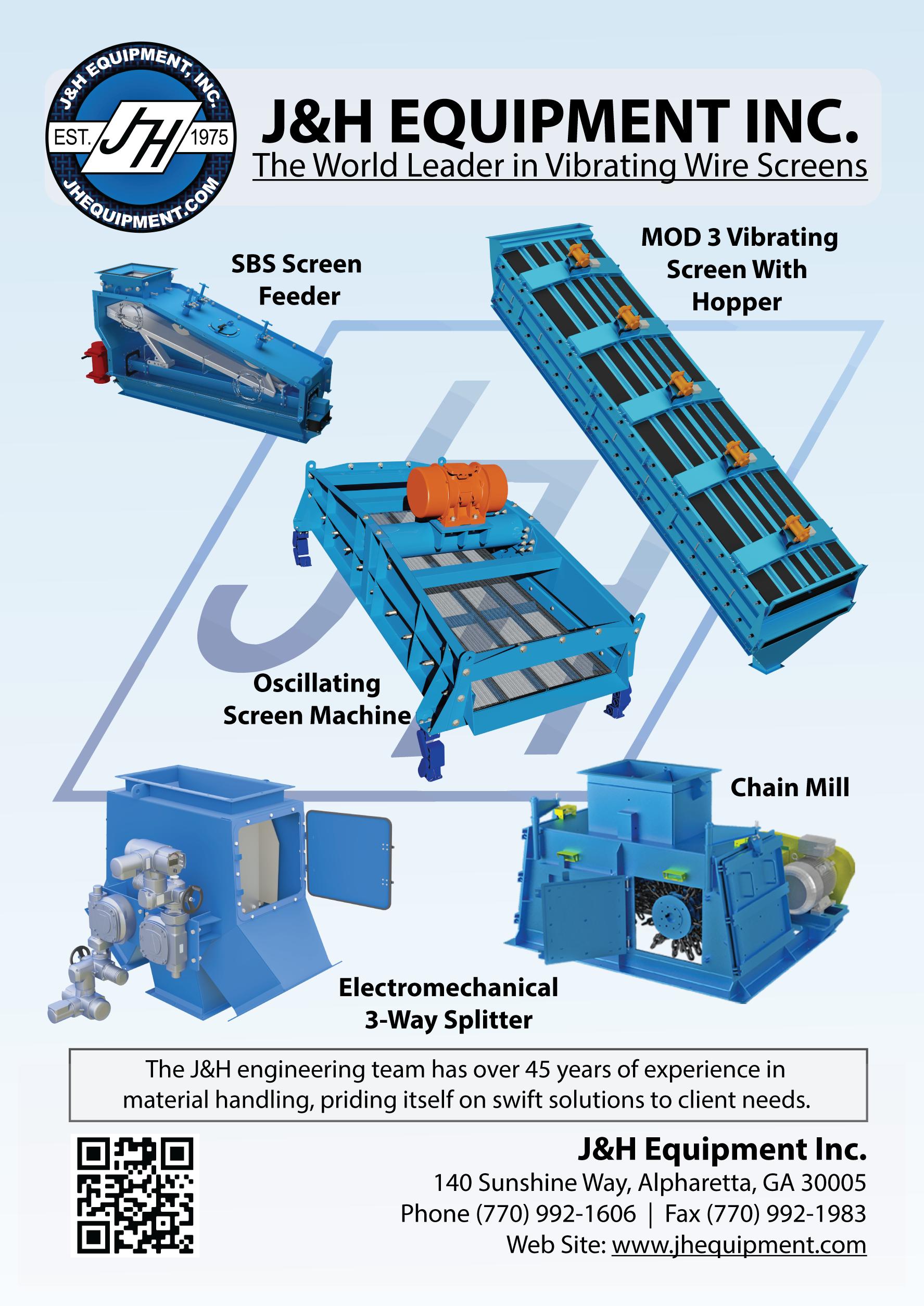
feature grid-powered ITM Power electrolysers (Norway’s grid is almost 100% hydroelectric), with operations and renewable hydrogen production expected to begin in 2023.
Beyond these multi-MW announcements, scale up of renewable ammonia to multi-gigawatt sized projects is expected. Multiple gigawatts of electrolysers would be needed to meet the feedstock requirements of large scale ammonia plants, which have a production capacity of between 2 – 10 000 tpd. Mission Possible Partnership forecasts that, for the global ammonia industry to almost totally decarbonise production by 2050, between 780 – 1500 GW of electrolysis capacity for dedicated ammonia production will need to be installed by that date. 1 This installed capacity will feed production at potentially more than 1000 large scale renewable ammonia plants spread out across the globe.
Diversification of electrolysis technologies
Both alkaline electrolysis and PEM electrolysis are used for multiple-MW scale projects. The cost gap between alkaline electrolysis and PEM electrolysis has reduced in recent years, especially for small scale projects sized in the tens of megawatts. It should be noted that Chinese-manufactured alkaline electrolysers that are starting to appear on the international market are typically cheaper than those manufactured in Europe or North America. The preferred technology depends on local requirements, such as plant footprint, grid connection, renewable energy profiles, etc.
Other electrolyser technologies will also be introduced beyond 2023. As previously noted, a 10 MW solid oxide electrolysis system will be installed by Bloom Energy at LSB Industries’ ammonia plant in Oklahoma,
Carbon capture and storage
Gasification/ reforming
Electrolysis
Thermochemical cycles
Electrolysis
Methane Pyrolysis
Ethane crackers, chlorine plants
Electrified steam methane reforming
Carbon capture and storage
Reforming
Gasification
the US, in 2024. Currently, no ammonia projects have been reported based on anion exchange membrane (AEM) electrolysis. However, AEM technology demonstrations at the MW scale may be expected in the coming years.
The low hanging fruit: Replacing imports
Today, various countries import vast quantities of ammonia for downstream applications. Examples include Chile and Morocco, two locations with some of the best renewable generating potential in the world. In Chile, ammonia is imported to produce nitrate explosives in the mining industry. A first step towards electrolysis-based ammonia production in Chile is the HyEx project in the north of the country, which will produce approximately 18 000 tpy of ammonia from solar PV and electrolysis-based hydrogen.
Another example is Morocco, which currently imports nearly 2 million tpy of ammonia for ammonia phosphate fertilizer production. Last year, global fertilizer giant, OCP Group, announced its intention to eventually replace these imports with domestic renewable ammonia production from solar PV and wind. A first step on this path is the Green Ammonia Pilot Plant (GAPP) in Jorf Lasfar, which will produce around 1500 tpy of ammonia from simulated renewable energy profiles, based on both alkaline and PEM electrolysis. Beyond serving domestic markets, countries such as Chile and Morocco have the potential to export via international markets for energy applications.
Looking ahead: Global production volumes
In 2020, global electrolysis-based ammonia production had an operational capacity of approximately 10 000 tpy. By the end of 2023, electrolysis-based ammonia production is estimated to account for 170 000 tpy. With new technologies emerging and a dramatic ramp-up in installed electrolyser capacity forecast, as much as 1 million tpy of electrolysis-based ammonia could be produced globally by the end of 2024 – a one-hundred-fold increase in just a few short years.
By 2026, this ramp-up could escalate again, as the first of many large scale, electrolysis-based ammonia plants begin operation. At the end of this decade, Mission Possible Partnership forecasts that as much as 100 million tpy of electrolysis-based ammonia will be produced globally, climbing to 800 million tpy in 2050 as the global fertilizer industry achieves near-total decarbonisation (and demand for ammonia maritime fuel grows). 1 From a humble ‘peak’ of 0.7 million tpy nearly 50 years ago, that is quite a renaissance for electrolysis-based ammonia production.
References
1. ‘Making net-zero ammonia possible: An industrybacked, 1.5˚C-aligned transition strategy’, Mission Possible Partnership, (September 2022), https:// missionpossiblepartnership.org/wp-content/ uploads/2022/09/Making-1.5-Aligned-Ammonia-possible.pdf
2. Figure 12 from ‘Innovation Outlook: Renewable Ammonia’, IRENA, (May 2022), www.irena.org/publications/2022/May/ Innovation-Outlook-Renewable-Ammonia
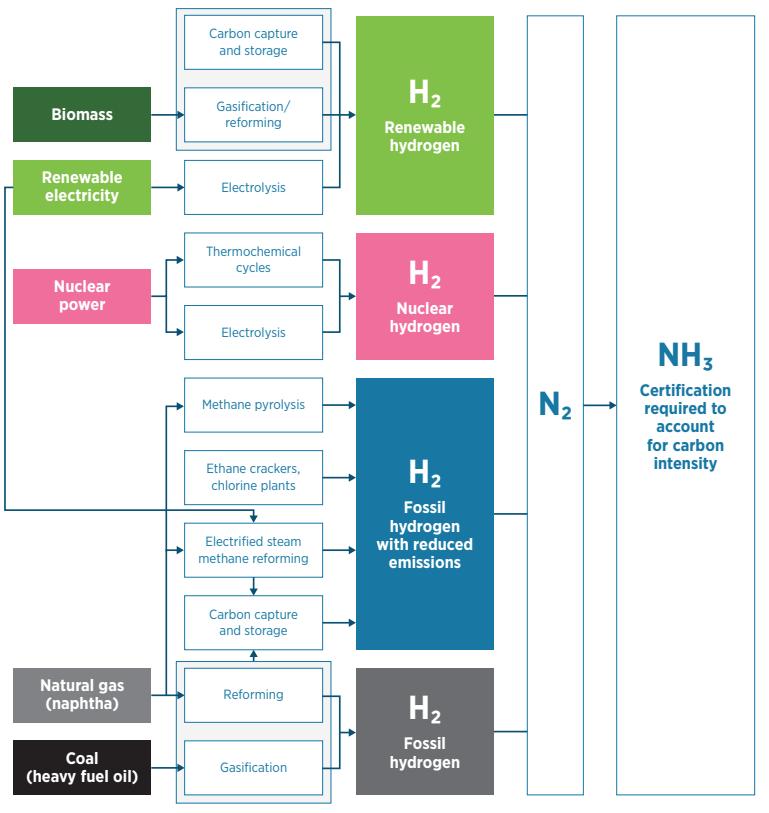
32 | WORLD FERTILIZER | APRIL 2023
Figure 3. Different ammonia production pathways.2
Sergio Panza, Casale, Switzerland, explains how improving ammonia synthesis catalyst technologies could contribute towards a greener future, with more efficient and less energy-consuming plants.
mmonia converter synthesis catalysts will play a crucial role in future ammonia production, offering lower plant consumption and consequently, lower CO2 emissions rates. These catalysts can also help ensure the flexible, reliable and safe operation of facilities under many different operating conditions, for the production of grey, blue or green ammonia.

33
In order to make ammonia production more efficient and sustainable with a reduced carbon footprint, Casale and Clariant have collaborated to develop an ammonia synthesis catalyst.
The AmoMax®-Casale catalyst is based on Clariant’s AmoMax 10 wüstite-based catalyst, and is customised specifically for Casale converters. The catalyst shows a 30% increase in activity over wüstite-based catalysts, and its synergic combination with Casale’s ammonia converter design offers good performance in terms of lower synloop operating pressure and higher ammonia conversion.
In the last few years, many operators have selected the catalyst to run their ammonia converters, leading to operational improvements.
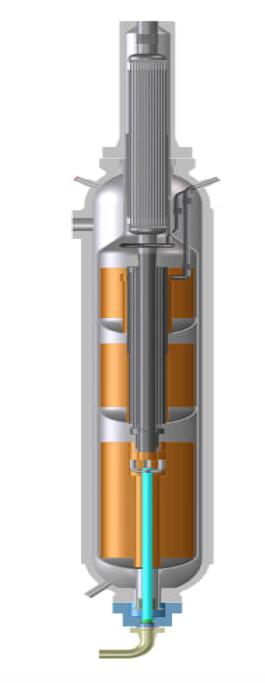
Case studies
Nutrien – Trinidad and Tobago
Nutrien operates four ammonia plants at its complex in Trinidad and Tobago. The first ammonia plant, designed by one licensor, was commissioned in 1981. In 2006 the plant was revamped to produce 1750 tpd. Among the modifications, the legacy bottle-shape converter was revamped to a two bed configuration by a second licensor. In 2019 an energy improvement project (EIP) was implemented with the goal of improving the efficiency and sustainability of the plant. Casale and Clariant were selected to further retrofit the existing converter to the latest design in combination with the use of the new catalyst.
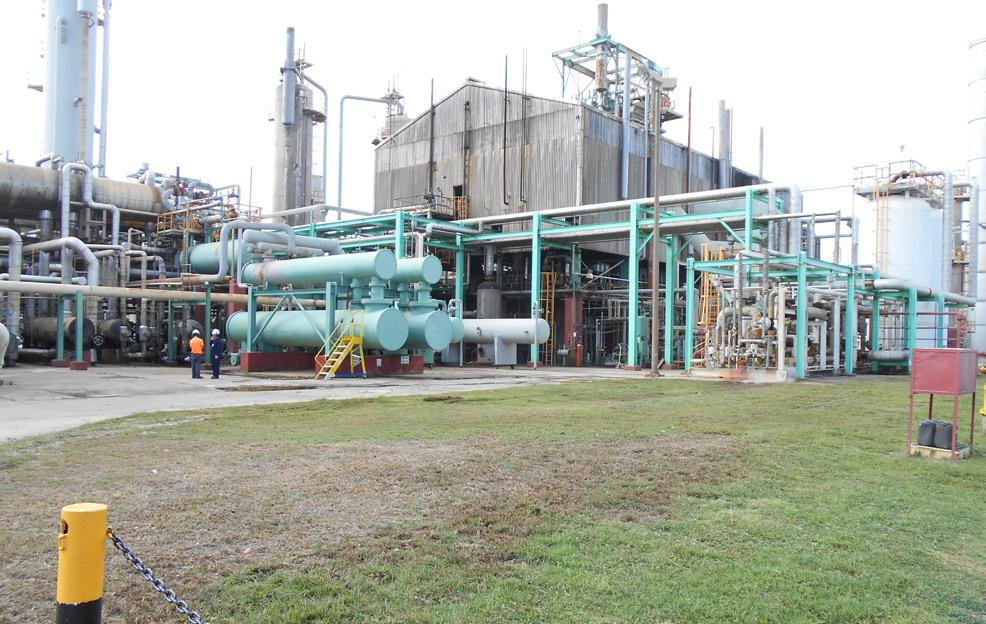
The old converter internals were completely replaced in favour of a more efficient configuration, with Casale’s internals featuring three axial-radial® beds, with quench cooling between the first and second bed, and an interchange after the second bed. The existing feed-effluent exchanger (122-C) was also replaced.
A whole revamp was devised and implemented to minimise downtime, while ensuring safety throughout the works. The installation was however more complex, as there was only a partial opening in the existing pressure vessel.
The AmoMax-Casale catalyst was activated with the assistance of Clariant’s portable ActiSafE™ analyser, which measures the water vapour and the ammonia concentration on a continuous basis during the reduction by utilising an NDIR (non-dispersive infrared) technology. This instrument enables the effective monitoring of the reduction with only occasional laboratory checks on samples.
During activation, three issues were quickly identified and fixed:
n A SUH fuel gas leak.
n Oil was found at the inlet sampling point of the converter (lubricant oil poses a poisoning risk to catalysts).
n Aqua/ammonia entrainment to the converter from high pressure separator 106-F.
The performance comparison before and after the revamp is summarised in Table 1.
At the same plant feed gas rate, the synloop operating loop pressure reduced by 167 psig, while the production was up 12 tpd, despite the 45% higher inert level in the loop due to limitations in the front end. The performance was even more significant considering the catalyst’s potential exposure to oil and liquid water during the reduction procedure.
After around three years, a test was performed to check the catalyst’s activity (Table 2). A comparison at the same capacity showed a continued level of high catalyst activity.
In addition to the benefits of higher production levels, the loop pressure reduction determined a significant energy saving
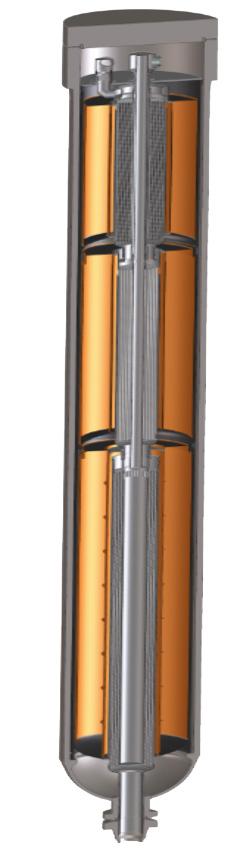
34 | WORLD FERTILIZER | APRIL 2023
Figure 1. Nutrien 01 and 02 units in Trinidad.
Figures 2 & 3. Three-beds revamp of bottle-shaped converter (left), and new pressure vessel internal design (right).
Parameter Before revamp After revamp Change Life MOR SOR Production (tpd) 1776 1788 +12 tpd Syngas compressor discharge pressure (psig) 2206 2039 7.5% lower Inerts (mol%) 11.5 16.7 45% higher Exit NH3 (mol%) 13.9 13.8 Same
Table 1. Performance comparison before and after revamp with AmoMax®-Casale.
of about 0.15 MMBtu/t in the steam turbines of the synthesis/refrigeration compression train (103 JT and 105 JT), corresponding to approximately US$500 000/year of cost savings, at an assumed natural gas price of US$5/MMBtu, in addition to a reduction in CO2 emissions of 4700 tpy.
USA Legacy plant
North America is home to one of the oldest ammonia plants still in operation, having originally been commissioned in the 1960s. Considering safety issues related to the plant’s considerable age, it was decided that the old existing critical (i.e. HP) items, and the ammonia converter in particular, would be replaced.
The prolonged effects of the hydrogen embrittlement, in fact, called for a thorough reliability assessment of the existing pressure vessel, however the plant’s original multilayer design, as well as its non-removable internal cartridge, prevented a full inspection from being carried out.
This was also an opportunity for the plant to adopt a more modern design, offering higher performances, increased reliability and improved operational safety, and opened the door to further plant upgrades, in particular, the synthesis loop.
In North America, Casale has supplied 15 complete ammonia converters and nine HP synloop heat exchangers.
For a vintage ammonia plant in the USA, Casale replaced the old bottle shaped ammonia converter with a new converter, offering the following features:
n Full bore top opening of the vessel to simplify the installation and maintenance, as well as to grant unrestricted access to the inside of the vessel for future inspections.
n A solid (mono-wall) construction of the pressure vessel, allowing for non-destructive tests to be conducted during the operating life.
n A removable internal cartridge as well as internal baskets and heat exchangers, to allow for maintenance activities to be carried out with ease.
n Better catalyst distribution among the beds, offering better performance due to the higher effectiveness of the ‘three beds and two inchangers’ design.
n Axial-radial beds to reduce converter pressure drop.
As the new converter was placed beside the old one, a new foundation was required. This allowed the size of the converter to be increased and hence an increased catalyst volume, overcoming one of the major bottlenecks of a future capacity increase for the synthesis loop, and allowing for higher energy savings.
The Doyle and EMT Alliance
Can provide you with all the Blending, Bagging and Transport equipment you need.
High Speed Bagging Line
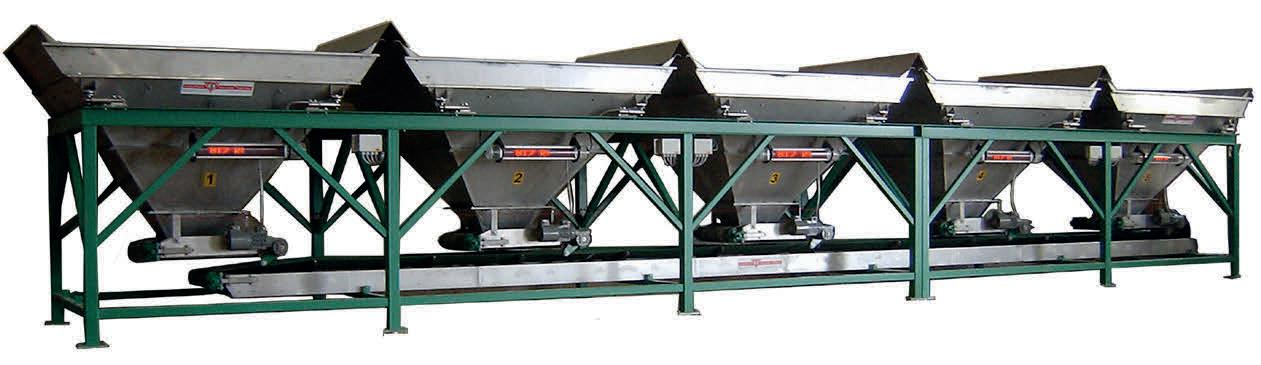
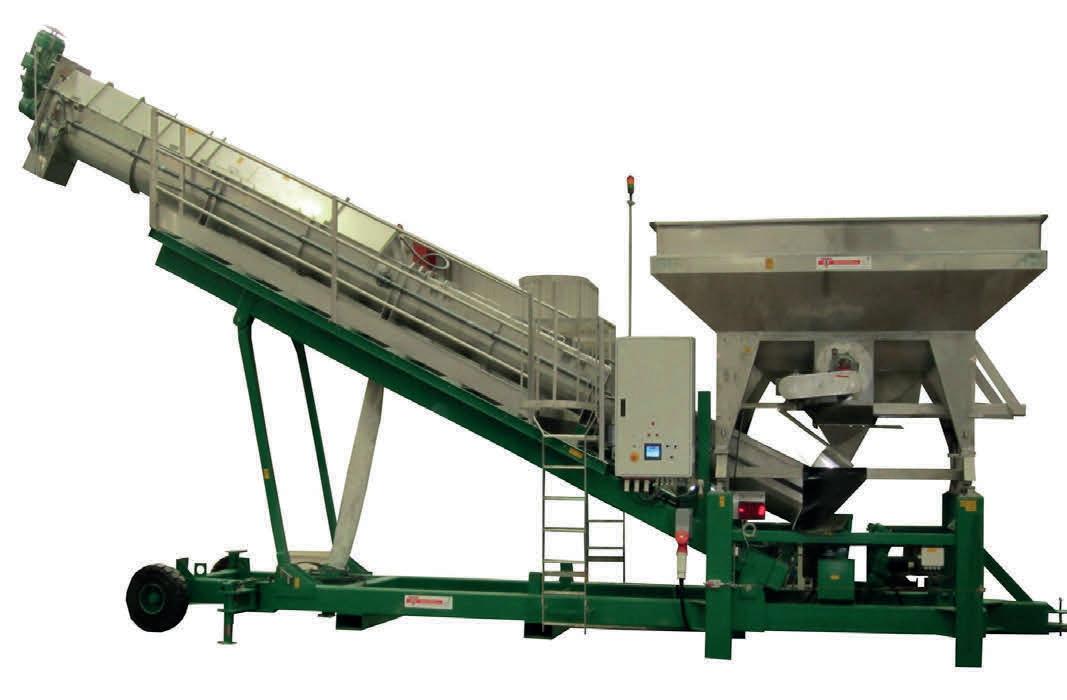
* For big bags - jumbo bags.
* Capacity 50 to 70 ton m³ per hour.
* 120 kg to 1250 kg bags.
* Suitable for granular and powder materials.
* Available with dust reducing system.
Weighcont Blender
* Capacity of 20 to 200 ton per hour.
* Unlimited number of hoppers.
* Computer controlled.
* Custom built.
Fertilizer Inhibitor Treating Unit
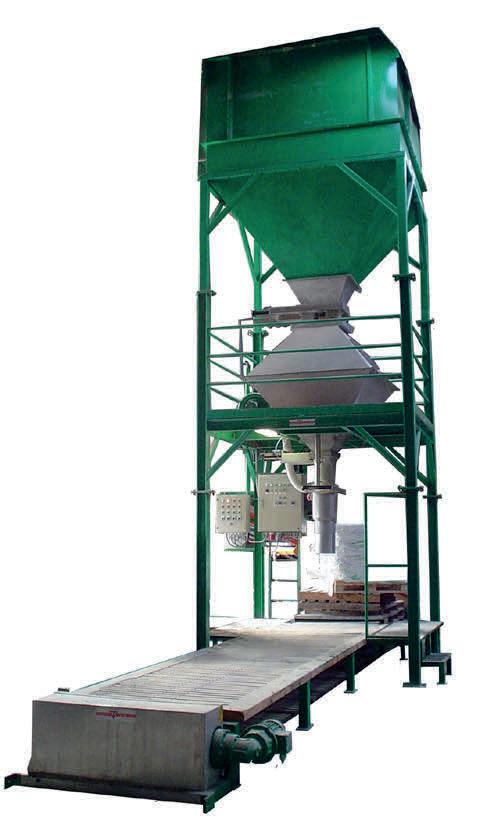
* Portable.
* Stainless steel.
* Computer controlled.
* High Capacity120 m³ per hour.
EMT
Molenpad 10, 1756 EE ‘t Zand
The Nederlands.
Tel.+31 (0) 224 591213
email: emt@emt.tech
www.emt.tech
Shamrock Blender
* Capacity of 25 to 70 ton/m³ per hour.
* Machine size 4,5-5,4-7-9-11,5-14 ton.
* Easy and gentle blending process.
* Blending and weighing are separated.
Parameter Before revamp After revamp Change Life Three years before re-vamp Three years after activation Production (tpd) 1754 1754 Syngas compressor dis-charge pressure (psig) 2215 1972 11% lower Inerts (mol%) 9.6 10.9 14% higher Exit NH3 (mol%) 12.9 14.3 11% higher
Table 2. Performance comparison after three years of operation.
Doyle Equipment Manufacturing 1 Jack Doyle Industrial Drive, Palmyra, MO. 63461 USA. Tel. +1(217) 222-1592 & +1(573) 300-4009
www.doylemfg.com
doyle@doylemfg.com,
92.5 m3 of the new catalyst was loaded, respectively pre-reduced in the first bed and oxidised in the remaining two.
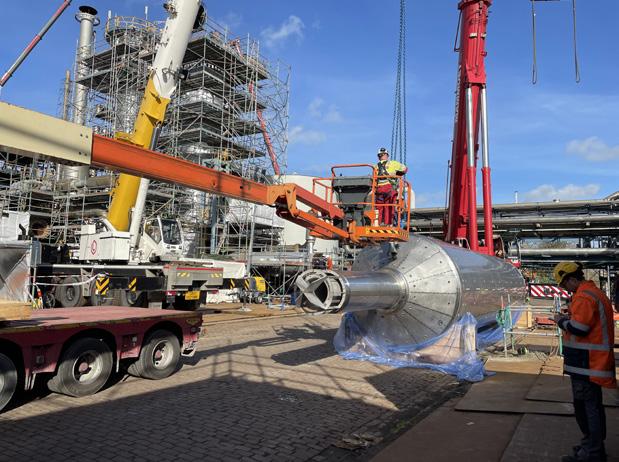
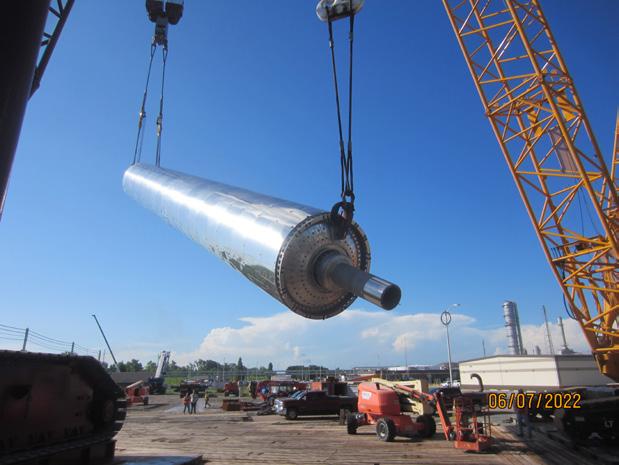
The catalyst activation started on 16 September 2022. During the first bed reduction, the start-up heater (SUH) went offline due to burner failure. Despite this incident, the converter was able to stay online for more than two days at about 10% of
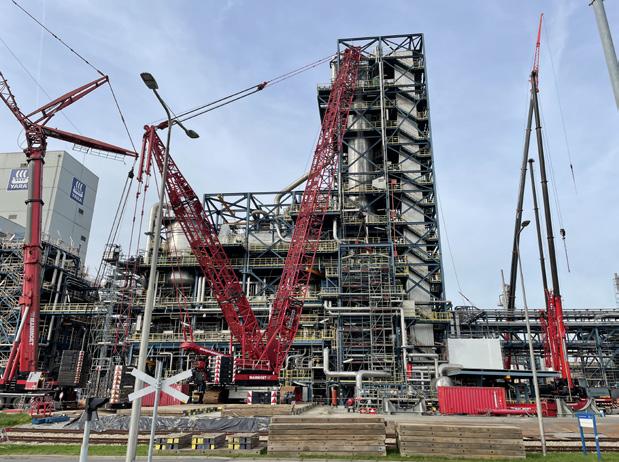
the rated capacity, allowing subsequent bed activation to be completed.
The converter is therefore able to operate steadily at very low plant loads without the help of an SUH, which is often the case in green ammonia applications.
An unexpected syngas compressor trip that lasted for two days forced the plant to shut-down completely. This increased the catalyst activation time span.
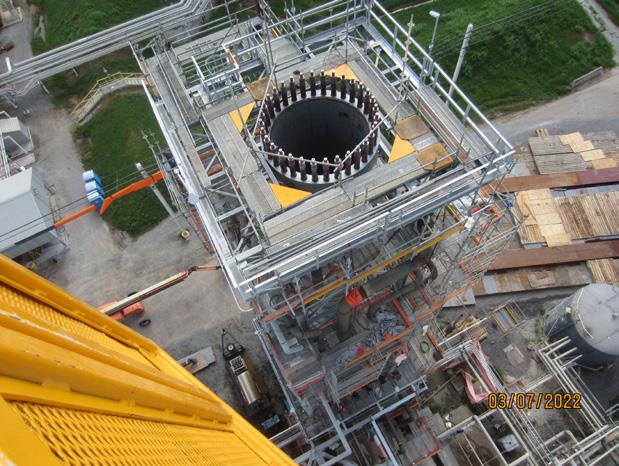
Under normal circumstances, the activation would have been completed in about five to six days.
Table 3 summarises the performances before and after the converter/catalyst replacement.
At the same plant capacity, the operating synloop pressure is lower than it was before the revamp, confirming the benefits of the new catalyst in combination with Casale’s new ammonia converter.
West European ammonia plant
A plant operated by a major European producer was commissioned in the 1970s based on the Purifier design. The original nameplate capacity was 900 tpd and a single multibed converter was installed.
In the late 1990s, the capacity was increased by 30% thanks in part to the installation of a ‘hot wall’ ammonia converter installed downstream of the first one, followed by a waste heat boiler (WHB) to increase energy savings. In 2019 the second converter was idled, following an inspection that revealed the presence of dangerous cracks in the vessel. From this moment, the plant operated with a single ammonia converter.
Casale was awarded a contract to replace the failed additional converter with a new one, offering the following features:
n ‘Cold wall’ design.
n Re-use of the existing loop waste heat boiler, to be directly connected to the bottom nozzle (exit) of the new converter.
n Pressure shell to be designed according to ASME Sec VIII div. 1 or ASME Sec VIII div. 2 with actual stress limited to 90% of allowable stress.
n Existing foundations to be re-used.
n Use of Amomax-Casale catalyst.
The new converter has one single, axial-radial bed without internal heat exchanger and is loaded with only 45 m3 of the new catalyst, compared to 53 m3 used in the previous converter. The reduction is testament to the higher efficiency of the new converter in combination with the new catalyst technology.
Plant production now exceeds 1200 tpd, out of which almost 70% is owed to the existing upstream converter, while the rest is owed to the new single bed converter.
Table 4 charts the performances of the additional converter, before and after its replacement.
Despite the significant reduction of the catalyst volume, the overall ammonia conversion increased. There is also scope for operating synloop pressure to be significantly reduced.
The performance improvement that can be achieved with enhanced catalyst technology could help contribute towards a greener future, with less energy-consuming ammonia plants.
36 | WORLD FERTILIZER | APRIL 2023
Conditions Before revamp After revamp (*) Change Catalyst volume [m3] 53 45 18% lower Plant production (tpd) 1258 1264 Ammonia converter inlet pressure (bara) 168.9 168.7 Inerts (mol%) 4.8 4.8 Inlet NH3 (mol%) 13.3 14.2 7% higher Exit NH3 (mol%) 20.2 21.6 7% higher NH3 increase across converter (mol%) 6.9 7.4 7% higher (*) The catalyst activation took overall 2.5 days.
Table 4. Performance comparison of single bed converter.
Figure 4. New pressure vessel and cartridge installation.
Parameter Old converter New converter + Amo-max®Casale catalyst Change Life Six years SOR Production (tpd) 1533 1511 Syngas compressor discharge pressure (psig) 2119 1862 13% lower Inerts (mol%) 12.0 14.6 22% higher Exit NH3 (mol%) 14.1 15.6 11% higher
Table 3. Performance comparison after catalyst activation.
Charles Sonnenschein, Alex Edwards, and Stuart Spetseris, J&H Equipment, Inc., USA, outline the benefits of utilising an automated electronic wire mesh cleaning system to improve efficiencies and product yield.
igh frequency screening machines are inclined static body machines which incorporate an isolated high-speed drive directly connected to the screen media. This type of screening system produces accelerated, low amplitude vibrations to the wire mesh, providing effective and efficient product separation.
Given the inclined arrangement, gravitational flow benefits, and the fact that vibrations are segregated from the screen media, there are minimal power requirements and consumption. There are also negligible load transmissions to the supports and auxiliary equipment, benefitting civil and structural conditions. Inclined high frequency screening machines are ideal for
scalping, oversize, product, and fines separation, and are widely used throughout the phosphate processing industry.
Process screening and throughput

Low amplitude, high frequency vibration is transmitted to the wire mesh to increase fluidity of granules on the screen media. This has

37
three important effects on the material: firstly, the movement reduces friction between the granules, improving flow characteristics for maximised sieving. Secondly, this vibration pattern reduces friction between the material and the wire mesh, which reduces blinding. Lastly, high frequency, low amplitude vibration results in stratification of particles. Smaller particles descend towards the wire mesh surface while larger particles ascend. This action forces near-size particles to maintain contact with wire mesh and screen efficiently (Figure 1).
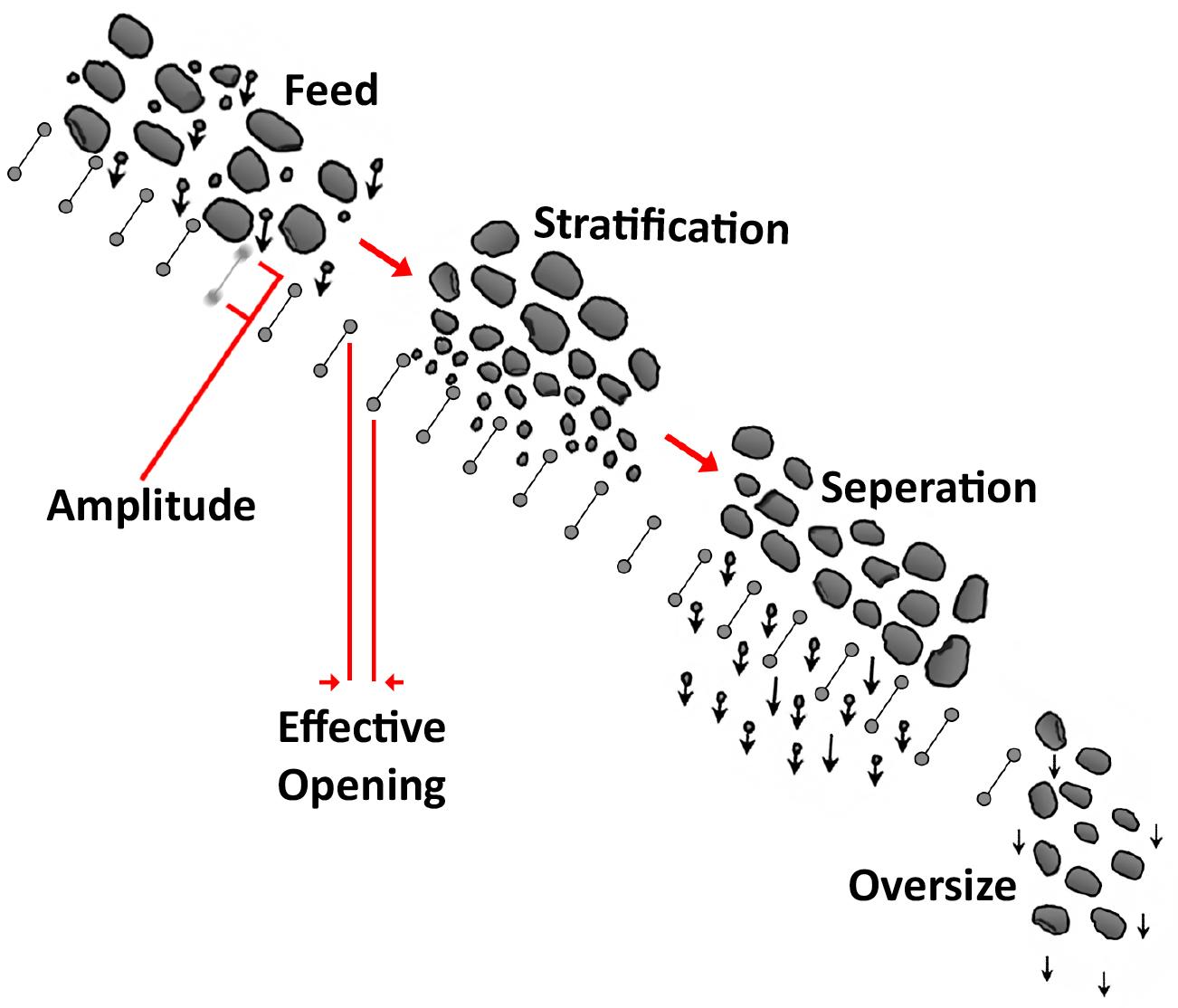
Selection of the wire mesh is critical to achieving maximum screening efficiency. Wire mesh opening, wire diameters, weave type, and materials of construction all play a vital role in screen performance. It is important to note that the effective wire mesh opening is smaller than the actual wire mesh opening due to the vibration amplitude and the wire mesh operating angle. Effective opening should be considered prior to wire mesh selection. Additional factors for maximising efficiency include uniform vibration amplitude, which is contingent on consistent tensioning of the wire mesh.
Mesh blinding: An inherent characteristic
Blinding occurs when individual, near-size material particles settle and become lodged in the wire mesh opening, preventing other particles from passing through (Figure 2). Although high frequency incline screens are designed to minimise mesh blinding, it is not completely avoidable given that blinding is a natural and inevitable result of screening product with a distributed size range. Several main factors attribute to blinding, such as:
n Type of material.
n Moisture content.
n Particle shape.
n Percent amount of near-size, on-size, fines, and over-size product.
Screens that experience wire mesh blinding suffer from reduced efficiency which impacts capacity, process control, and finished product quality. Periodic sieve analysis is recommended to monitor moisture, feed quality, size, and shape for reduction of blinding.

Managing blinding: Manual vs automated cleaning
Because blinding is a result of near-size material becoming trapped in mesh openings, it must be removed in order to optimise screening efficiency. Traditionally, lodged particles are removed manually which has several disadvantages including extended downtime and required cleaning personnel. Manual cleaning can also damage wire mesh by enlarging openings, stressing the wire which creates a concave zone where vibration is minimised, and deterioration of wire integrity (Figure 3).
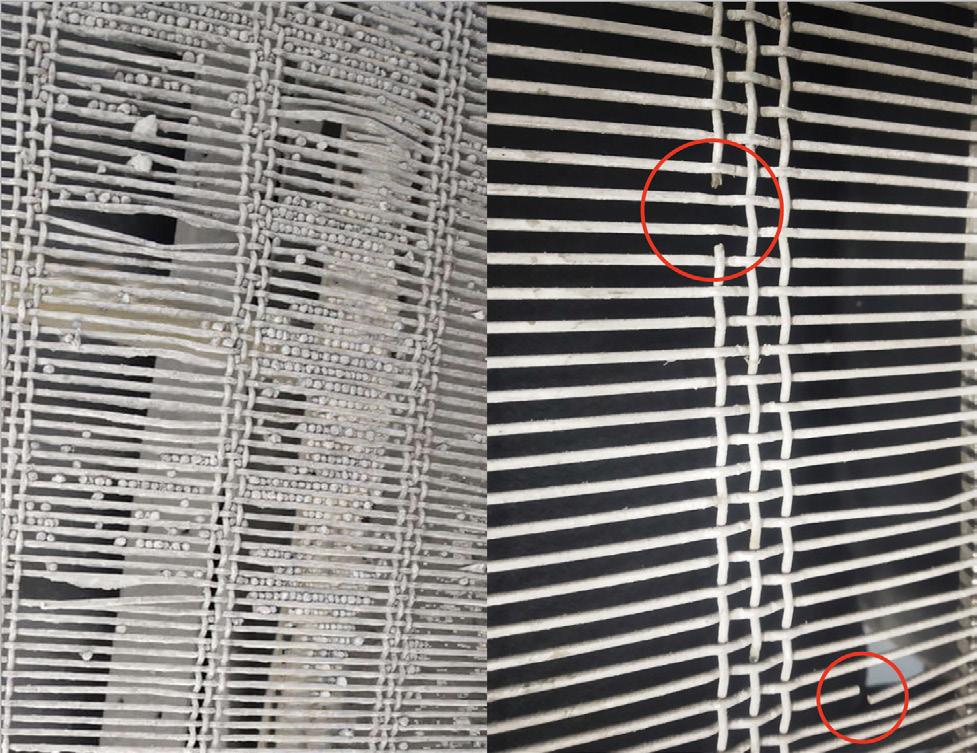
J&H Equipment screening machines utilise an automated electronic cleaning system to mitigate blinding effects. This noninvasive cleaning system allows for uninterrupted production and extended wire media life.
Understanding the basics of variable frequency drive
A variable frequency drive (VFD) is a type of motor controller that operates an electric motor by varying the supply frequency and voltage. The VFD has many programmable functions, including cycle interval and duration, ramp-up acceleration, and ramp-down deceleration during start/top. The frequency (or operating Hertz) is directly related to the RPM of a motor. As frequency is increased, RPM increases. Today’s VFD models offer broad control options, including integrated networking and diagnostics.
38 | WORLD FERTILIZER | APRIL 2023
Figure 1. High frequency screening through material stratification.
Figure 2. Blinded screen wire mesh.
Figure 3. Damaged screen mesh from manual cleaning.

Join us on our mission to enable the world to feed itself and improve the quality of life at www.stamicarbon.com The world’s population is growing. The global carbon challenge requires drastic action. We hear you. As pioneers in innovative fertilizer plant technology, we are determined to be part of the solution and play a vital role in turning our planet towards a sustainable future. Turning
the world towards a sustainable future
Generally, VFDs are used for control of equipment such as fans, compressors, and pumps.
Automated electronic cleaning and its benefits
A VFD can be used in sequence with the screen vibrator motors, and is programmed to briefly alter the operating frequency of the screening machine’s electric rotary vibrators, resulting in increased RPM and vibratory action observed in the wire mesh. The alteration of vibration amplitude dislodges trapped particles. Electronic wire mesh cleaners are programmable to activate at set intervals determined by the user (Figure 4). At a normal operating frequency, the wire mesh has a consistent amplitude from vibration. This consistent
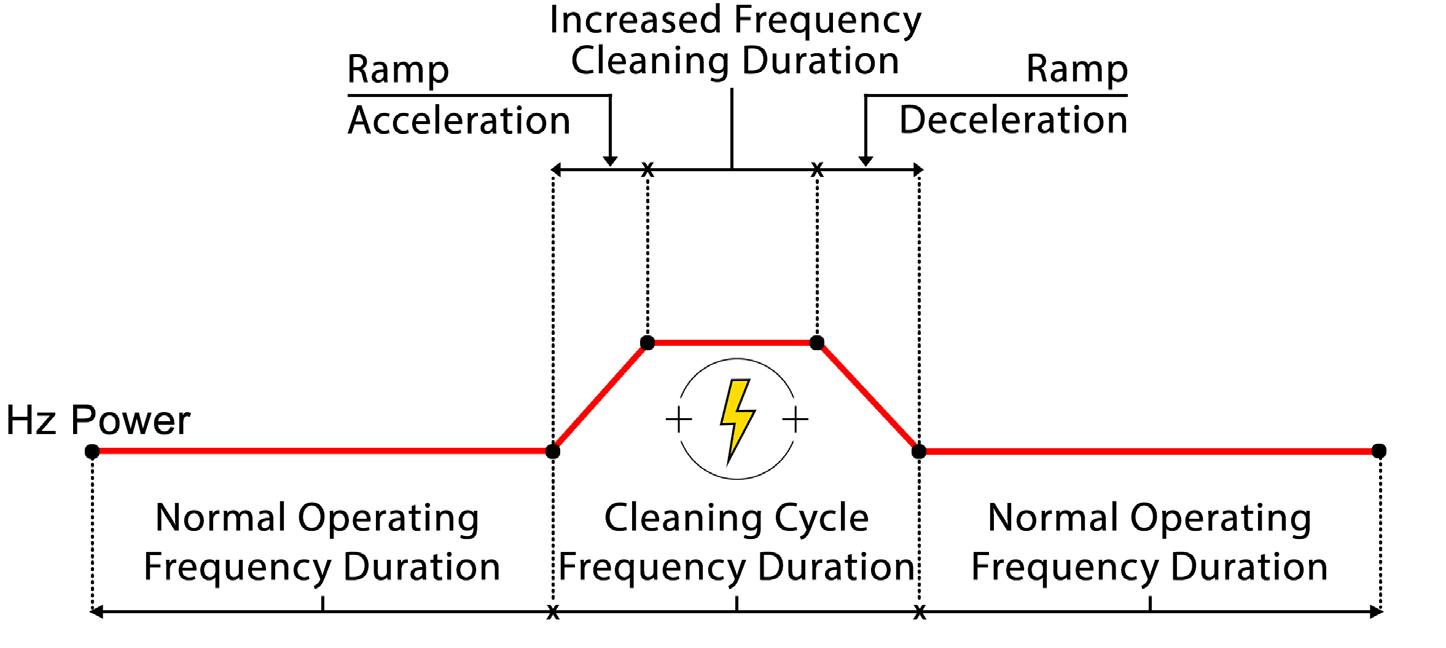
amplitude establishes an effective opening for passing material along with a constant wire tension. When the frequency is varied, it can increase amplitude, altering effective mesh opening along with wire tension and resulting in the dislodging of trapped material.
Implementation of an automated cleaning system can offer reduced production downtime, lower maintenance costs, improved process control, and improved product yield/efficiency, resulting in increased margins (Figure 5). There are several design details, constraints, and variables that should be considered depending upon application. It is important to have an expert in this field design a system optimal for your specific needs.
VFD types, sequence parameters, cycles, durations, frequencies, and harmonics, among others, are points of understanding necessary for success and desired performance.
Conclusion


The electronic cleaning system is an integrated control system utilising a VFD, designed to increase efficiency, optimise throughput, and reduce operating costs for fertilizer processing plants that use high frequency incline screening machines. The main function of the electronic cleaning system is to noninvasively reduce the amount of material lodged in wire cloth openings, which prevents material from being screened properly. Although there is an initial investment for the implementation of an electronic cleaning system, the benefits far outweigh the investment over time.
Implementing an ‘electronic cleaning system’ can reduce maintenance downtime and cost, reduce the intervals at which cleanings are required, increase the efficiency of the screening machine, and extend the life of the wire cloth.
Figure 5. Non-invasive dislodging of trapped material.
Figure 4. Automated electronic cleaning cycle representation.
Kelvin Feist, Sackett Waconia, USA, considers some of the recent advances in blending technology that are shaping the fertilizer industry.

rior to the 1960s, chemical granulation complexes producing NPK compound fertilizer were the best alternative to providing nutrients for crop production. Bulk blending gained popularity in the fertilizer industry through the 1960s, and in 1967, approximately 35% of the fertilizer in the United States was supplied as bulk blends. Bulk blended fertilizer now accounts for approximately 70% of the fertilizer sold in the US. The industry identified a need to offer specific blends without building expensive granulation complexes, and in far more specific formulas than are practical with granulation. Cost effectiveness was one of the major reasons for the transition to bulk blending. It allowed retailers the ability to create a ‘prescription mixture’ for the farmer. As an example, if a farmer is applying a 15-15-15, but the customer might not have a need for one of the ingredients, the nutrient is either wasted or not required for a long period of time. Soil testing began in the 1960s, and proved to be a game changer in identifying field deficiency. This was a major driver for creating ‘prescription mixtures’ to match the crop needs as well as any soil deficiencies. In many cases, bulk blending was the best process to produce these specific mixes.
When it comes to blending systems, Sackett Waconia provides many configurations, options, and custom designs to suit the needs of the customer and the geography it serves. These solutions may be in the form of a tower (vertical orientation with overhead hoppers and gravity flow) with several batch blender options, or floor systems (AccublendTM or loss in weight blending systems). These blending systems are all designed with a focus on accuracy, blend quality and flexibility, and most systems utilise ‘precision blenders.’
Tower systems rely on elevating fertilizer products into holding bins above the blender. Gravity is used to feed a certified scale/weigh hopper and accurately weigh a batch. From there, the batch is gravity fed to a mixer and then to the truck or bagging system. By using gravity, these systems tend to be faster, and the loader operator will typically feed a ground level hopper which improves efficiency. Speeds beyond 300 tph can be achieved in these systems. Floor or horizontal systems, such as Sackett Waconia’s Accublend, can offer the accuracy of weighed fertilizer ingredients and exceptional blend quality. A floor format relies on hoppers above a belt or drag systems to move products to either an Orbital or H.I.M. blender. These systems
41
utilise more floor space than a tower system but have other advantages including less structural steel. Sackett Waconia believes that success is rooted in listening to the customer and creating a custom designed system specific to each project.
In the past 60 years of blending, significant changes have been seen in both the speed and techniques of mixing fertilizers. Today, blending systems are capable of 10 times the volumes that were seen in the early days. Not only are the new systems faster, but the accuracy within blending systems has also advanced dramatically. As we learn more about crop
responses, blends have progressively become more complex, from rudimentary blends with two to four ingredients, to complex blends that could have as many as 10 or 12 ingredients with dry granular fertilizers, with multiple liquid and powder components. Older systems struggle to accommodate these levels of complexity.
Some trends in the distribution of fertilizer are changing the landscape. Consolidation continues to shrink the overall retail network, and relies on finding more efficient ways to deliver crop inputs to the farm gate. Larger hub and spoke fertilizer plants are part of this consolidation strategy and are becoming more popular as retailers and some wholesalers attempt to deliver fertilizer more efficiently. Some wholesalers are now providing the option to sell blended fertilizer to retailers which deliver directly to the farm. Growers are driving the changes in distribution by increasing their farmed acreage and covering more acres per day with larger equipment. This is putting a strain on older systems with slower blending capabilities. Labour is another area that is forcing changes to the distribution chain. New hub fertilizer systems, that increase efficiency and speed, have been an active trend in the industry. These new systems can provide significantly more blended product in a day, with fewer workers. Farmers have embraced technology and proper utilisation of fertilizers (i.e. the 4Rs). This drives the retail fertilizer chain to supply accurate blends of ingredients to meet the required crop growth. Some retailers have successfully differentiated themselves by supplying systems that offer fast, accurate blends and sound agronomic advice.
The ‘Precision Fertilizer Blending’ or ‘PFB’ platform from Sackett Waconia offers the benefits of accurate weighment of ingredients and fast blending rates. The platform identifies the blenders that provide the best mixing capabilities. Orbital or high intensity mixers (H.I.M.) are rated as ‘precision blenders’ and offer some of the most homogeneous fertilizer blends in the industry. Over the years, a decline in the demand for older blending technologies, such as vertical blenders or rotary blenders, has been seen. These systems tend to be slower and provide inferior mixing capabilities. H.I.M. technology from Sackett Waconia has served its users in the fertilizer industry for more than 20 years, and is a system that incorporates smaller batch sizes (1 – 4.5 t) and higher frequencies or faster cycle times. Systems such as these provide scaled or static weight accuracy with speeds up to 350 tph. The H.I.M. has integrated paddles that have all granular particles in motion during the mixing process. This eliminates any ‘dead spots’ or ‘pockets of unmixed materials.’ Not only are these PFB systems capable of mixing granular sized materials, but they can also be used for water soluble products that are in a crystalline or powder format.
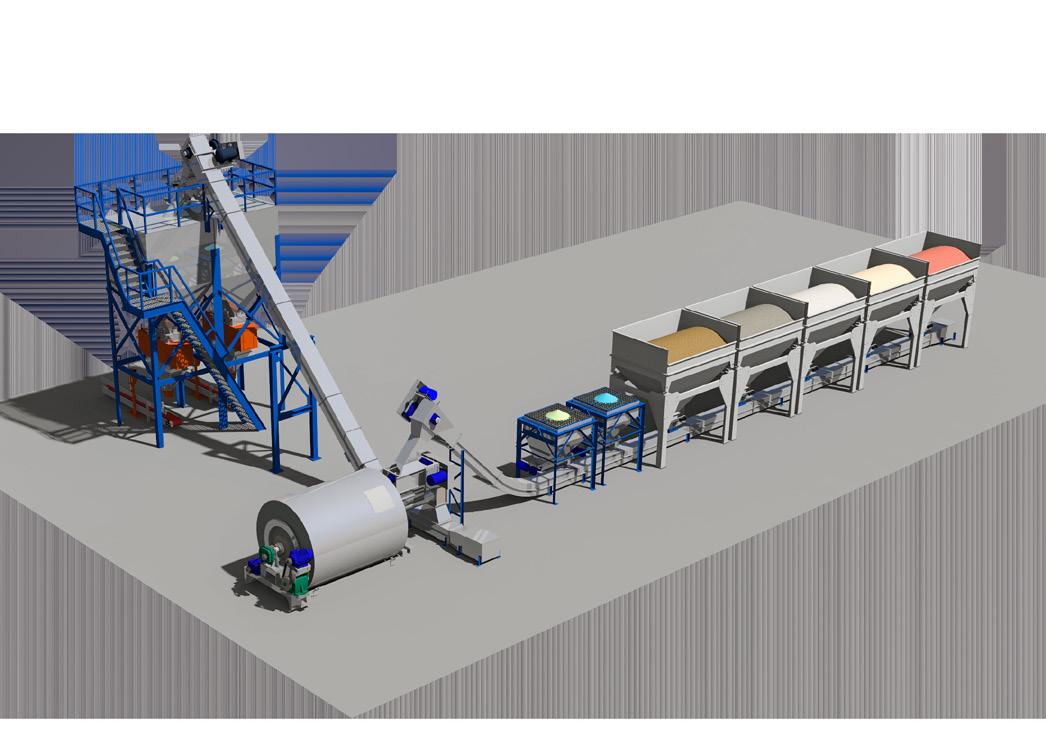
PFB technology is even more important when bagging is incorporated. Often, fertilizer is applied by hand from bags or in very small quantities, so it is vital that the mix is accurate and mixed equally in every bag. This consistency is a focus of Sackett Waconia for its blending systems; the first and last bag should be as accurate as the ones in middle of the batch.
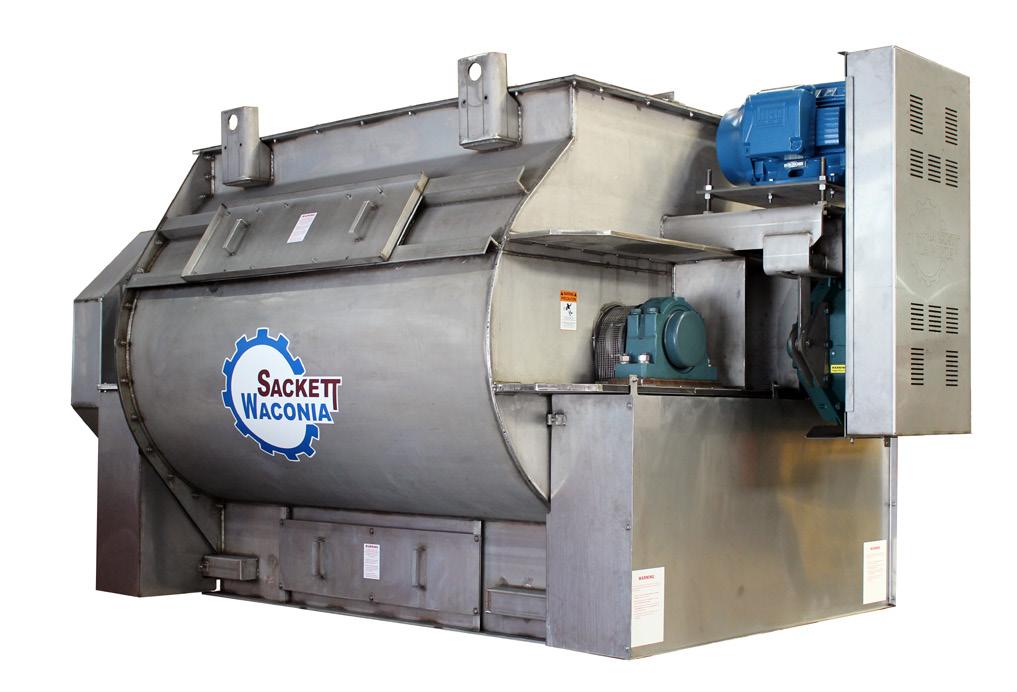
There have been significant advancements in technology and fertility within agriculture production. There are many new products, including new fertilizers, biologics, and other input to enhance plant growth. Many of these new enhancements are available in liquid or powder form and are required in a
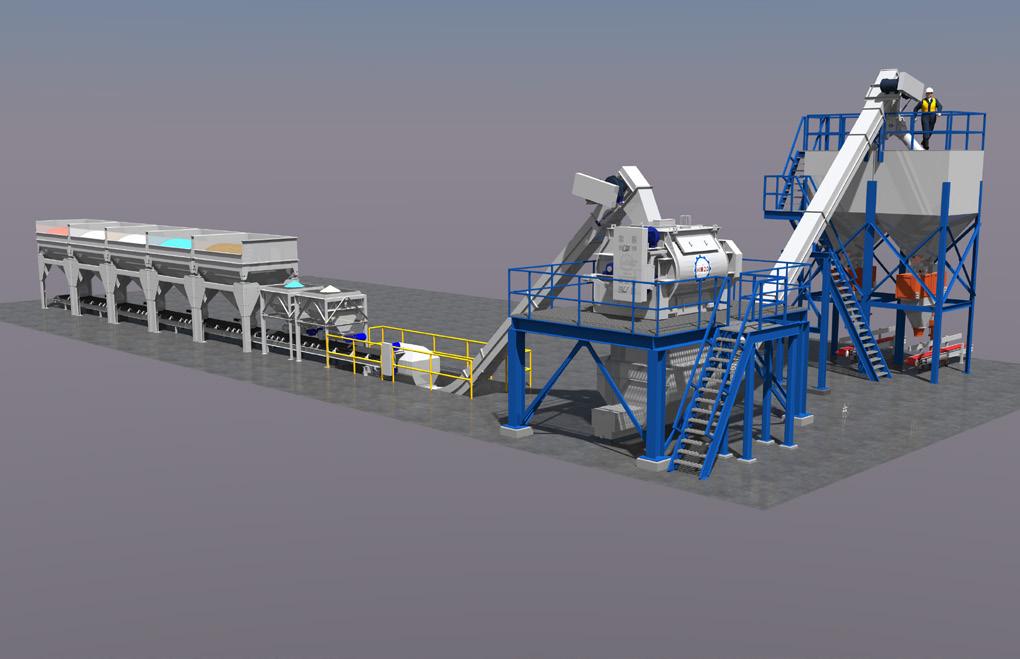
42 | WORLD FERTILIZER | APRIL 2023
bagging lines.
AccuBlend - HIM 2.0 System, with dual remote bagging lines By Sackett-Waconia
AccuBlend - Orbital System, with dual remote bagging lines By Sackett-Waconia Figure 2. AccuBlend – Orbital system, with dual remote bagging lines.
Figure 3. H.I.M. Mixer.
relatively small quantity. Precision blending allows the mixing of these ingredients into dry granular fertilizer. PFB provides mixes which can translate into more accurate field applications.
Sackett Waconia's smart blending technology is a concept which provides options including the automation of the equipment components, along with system support to improve reliability. The automation component is capable of data collection and real time inventory monitoring from a certified scale system. It can also monitor production runs, lot numbers, batch numbers, etc when integrated with bagging lines. Wireless management allows real time information for remote users, which can help reduce labour and improve plant efficiencies. Fill level indicators and speed sensors are now commonplace for assisting operators with managing product movement within their system. This leads to less human errors. Predictive and preventative maintenance are also components of smart blending technology to assist retailers in ensuring the reliability of their system. The addition of an interface for accounting and billing is also a popular option being added to state-of-the-art systems. This interface can assist the plant manager or operator with anticipated product needs and loadout management on an hourly basis.
The industry is advancing rapidly and new agronomic technologies are developing along with the need for higher nutrient use efficiency and sustainability on farms.
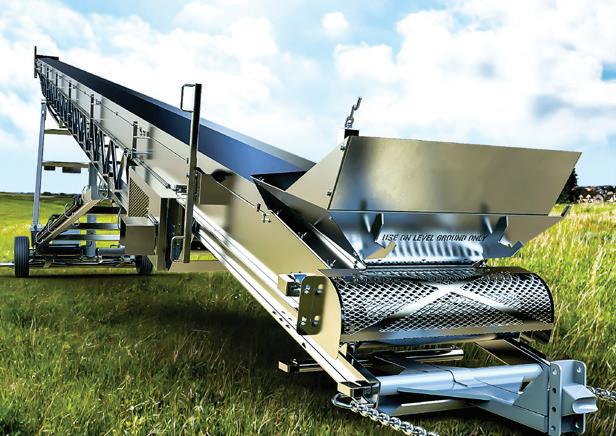
Sackett Waconia is excited about precision blending and how it allows almost any blend to be created, no matter how complex and with the quality to perform in the field.
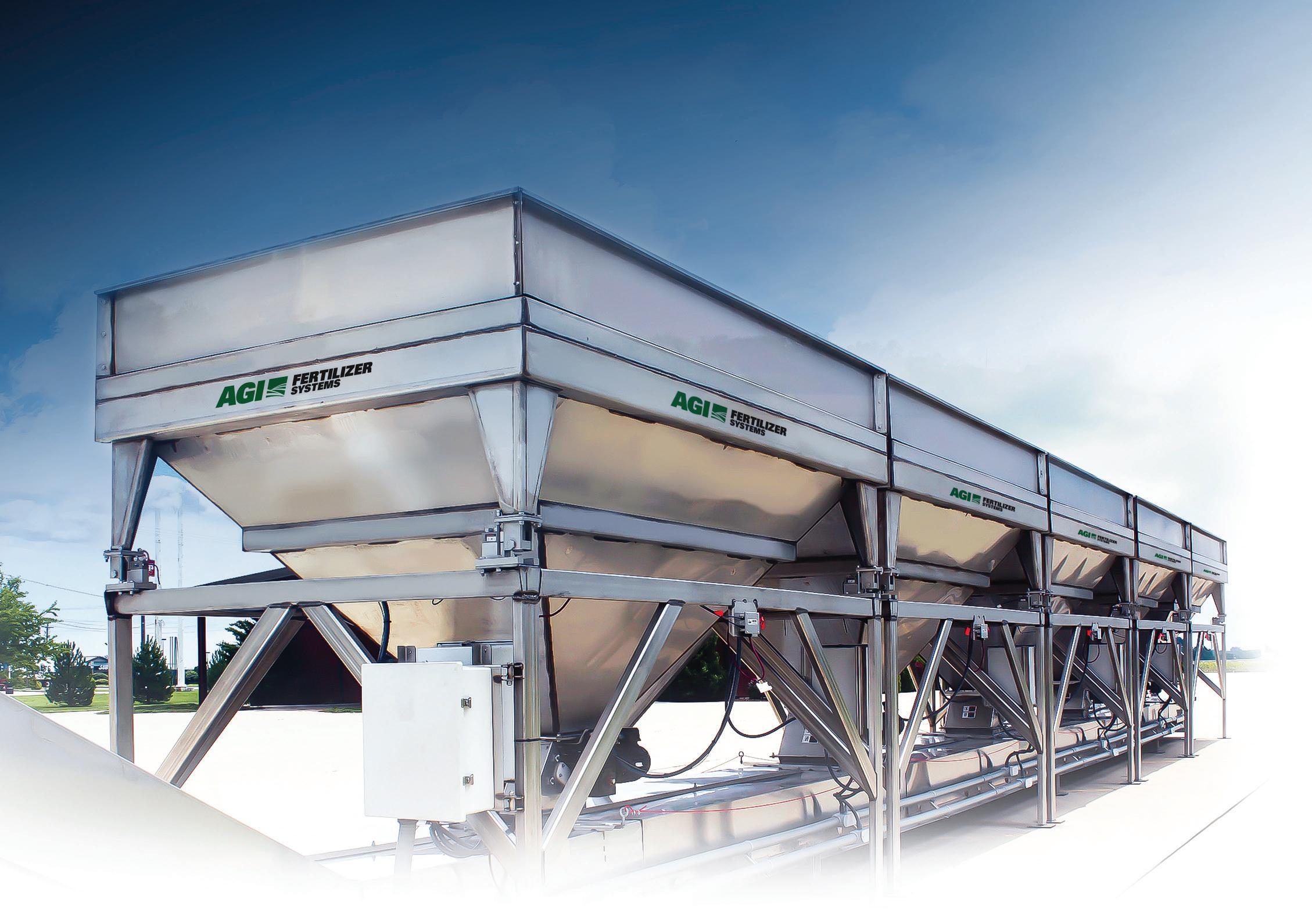
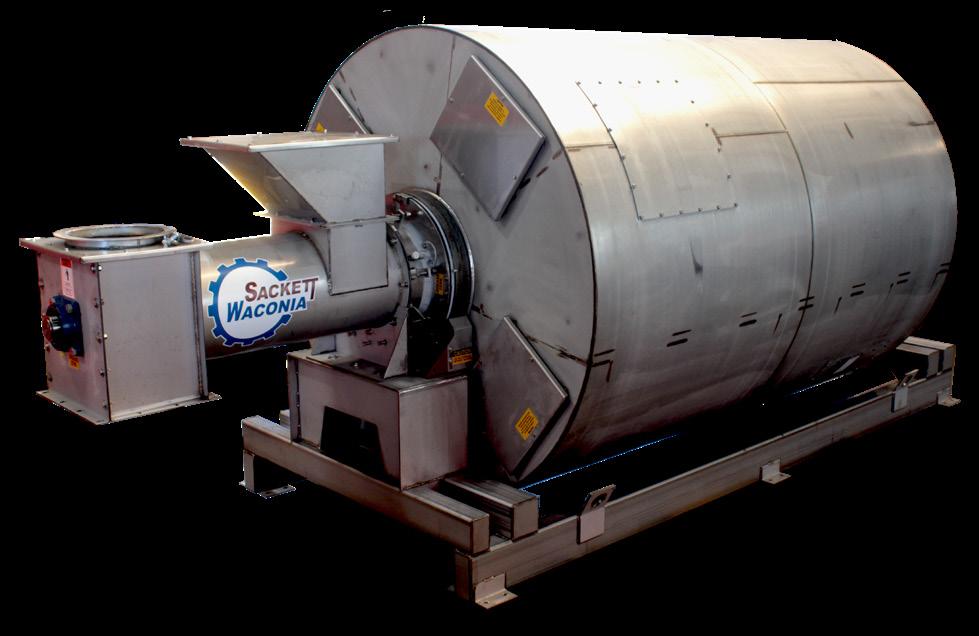
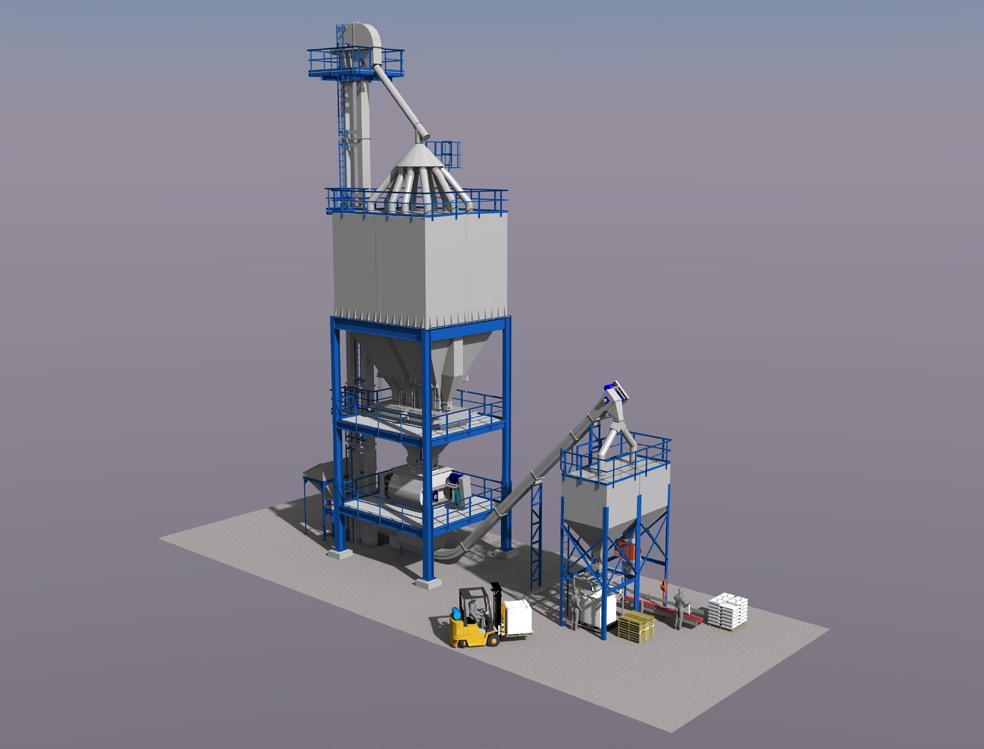
DELIVERING FERTILIZER SOLUTIONS FOR OVER 50 YEARS
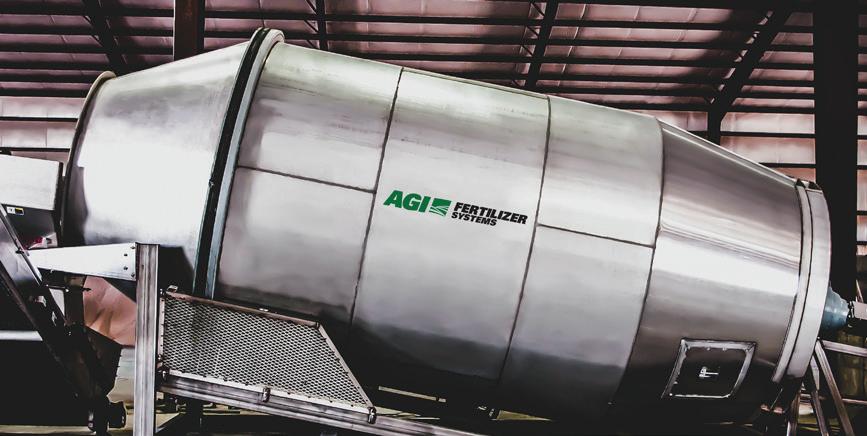 HIM Tower - HIM 2.0, with External Bagging Systems
By Sackett-Waconia Figure 4. H.I.M. Tower – H.I.M. 2.0, with external bagging systems.
Figure 5. Orbital.
BLENDING | MIXING | CONVEYING aggrowth.com
BELIEVING SEEING IS
Take a look at our ABC Certificate. It shows our circulation has been independently verified to industry agreed standards. So our advertisers know they’re getting what they paid for.
ABC. See it. Believe it. Trust it.

www.abc.org.uk
How a new fertilizer storage facility is built can vary significantly, depending on the amount of product that needs to be covered, the land footprint available, and the different operating factors taking place at transload, retails or wholesale locations.
Metal buildings have never been a good option for fertilizer, given the corrosive nature of the materials that are commonly stored. Tension fabric structures became a logical alternative, both because of their lower cost and the natural corrosion-resistance of a fabric membrane. However, traditional versions of fabric structures were supported by hollow-tube, web-truss framing that was vulnerable to corroding from the inside out. Conventional wood and shingle structures are what many commercial and industrial operators turned to, historically.
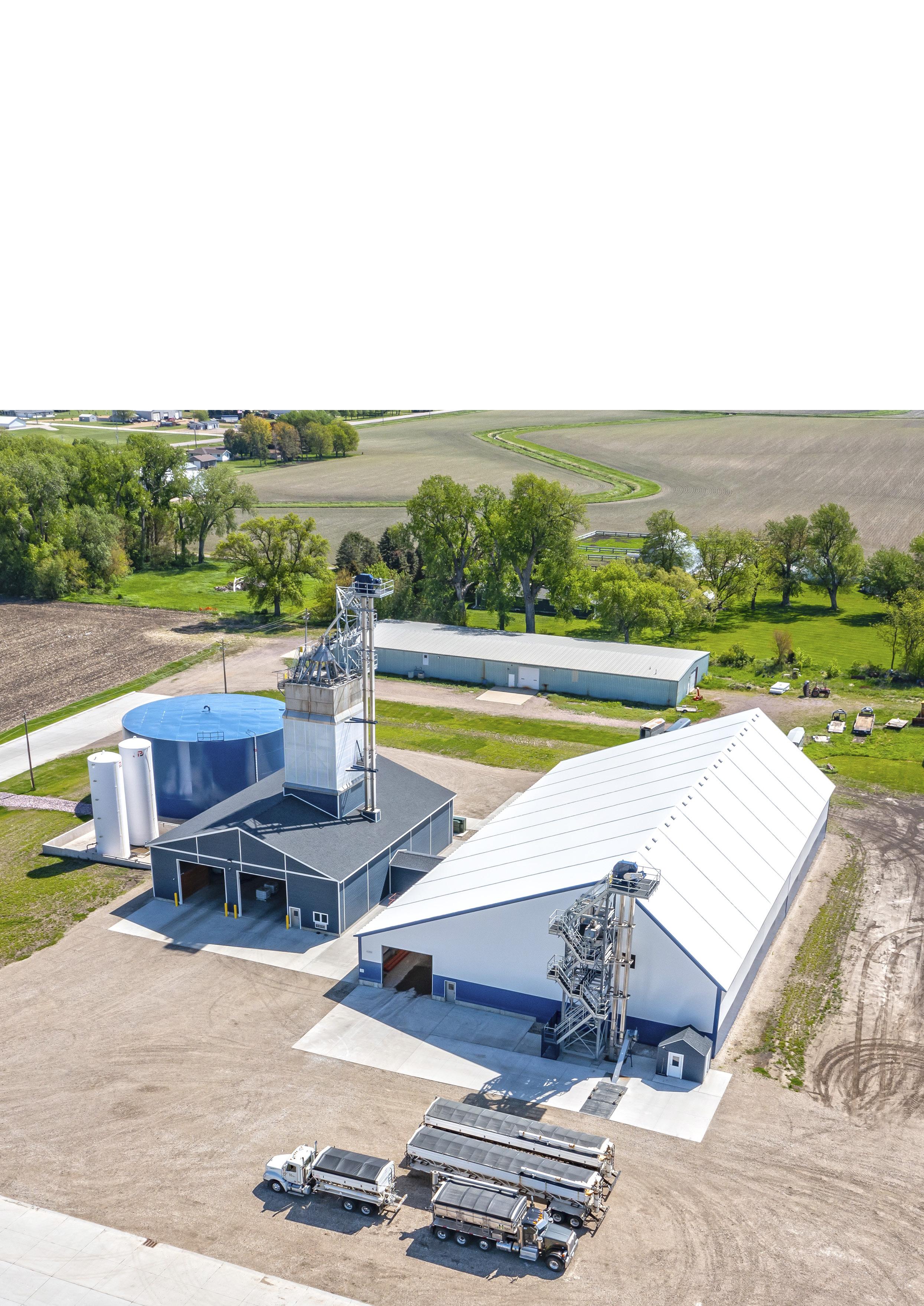
Paul Smith, Legacy Building Solutions, USA, discusses the innovations that can help provide enhanced protection for the steel framing in fabric fertilizer buildings and extend the life of storage facilities.
45
Figure 1. Beyond its natural resistance to the corrosive elements in fertilizer, an uninsulated fabric roof allows natural sunlight to provide ample illumination inside the building.
Fabric advancement
The options for fertilizer storage opened up over a decade ago when a new innovation was developed to combine fabric cladding with structural steel framing. By using hollow metal tubes in favour of solid steel I-beams, and then protecting those beams through hot-dip galvanising, fabric structures became a viable solution for full-time fertilizer storage.
But while a typical 3-mil galvanised zinc coating could offer enough protection for certain applications, it proved to be insufficient in the long run against the harsher corrosive elements found in fertilizer.
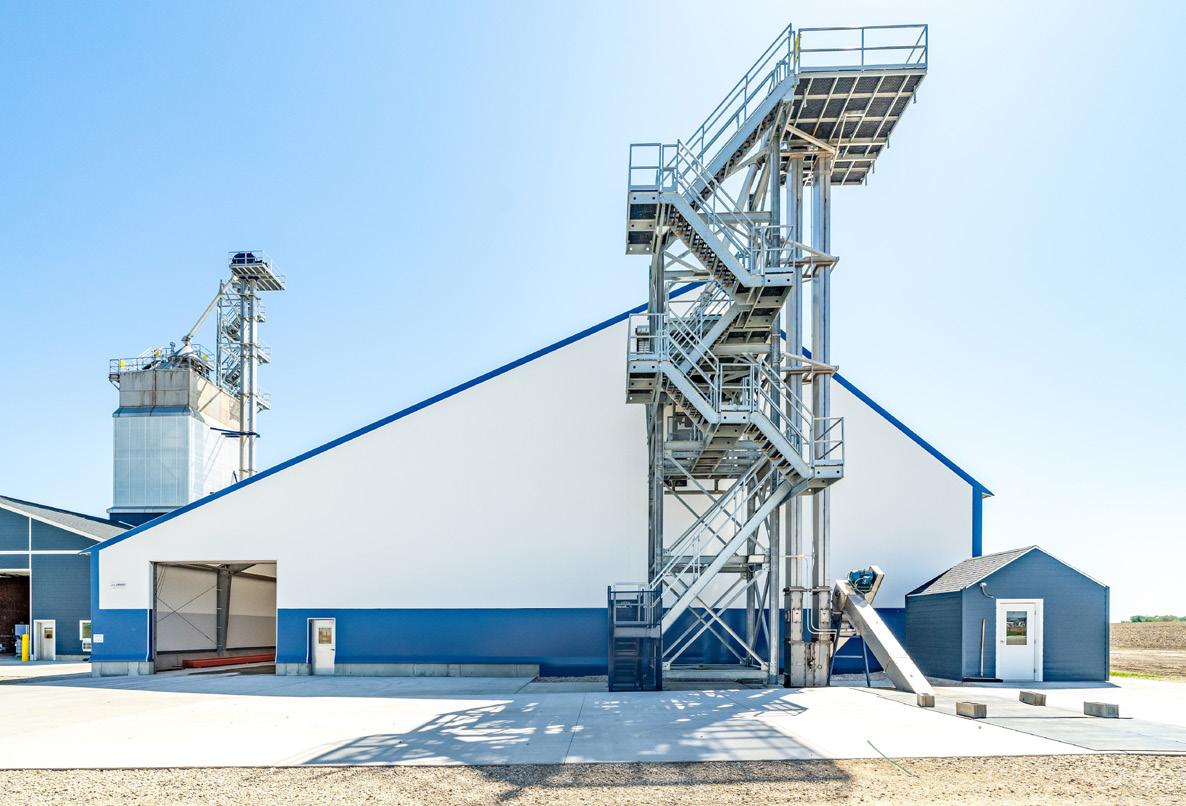
To provide enhanced protection for the steel framing in fabric fertilizer buildings, suppliers like Legacy Building Solutions have expanded their manufacturing lines to include cost-effective blasting and painting capabilities, and now offer an epoxy paint coating for their steel beams. This process involves sandblasting the steel, then applying a 3-mil bottom layer of zinc, followed by two 5-mil coats of epoxy paint. The result creates a protective barrier and extends the life of buildings in a corrosive environment.
Customised buildings
Improved corrosion resistance was just one advantage that came about with the introduction of structural steel beams. The primary benefit of using a rigid frame, I-beam design was to introduce a universally accepted engineering practice to fabric structures, which had experienced a lack of consistency and quality with web truss framing as the norm. Rigid frame design immediately brought credibility and confidence to the fabric building market.
From there, the technology was applied to deliver a multitude of benefits to different industries. For fertilizer storage, users were now able to build fabric-clad facilities with large square footages at far less cost than comparable wood buildings. This was due in large part to the strength of engineered steel I-beams, which allow for long clear span designs that provide more wide, open space for mixing, storing, loading, and driving inside.
Beyond square footage, rigid frame engineering provides the ability to completely customise a fabric building with the exact dimensions desired, and other unique features, exactly as would be expected from conventional construction.
The general procedure for older-style fabric structures was for the customer to select a standard building size from an existing pre-engineered stock. By contrast, the rigid frame design process starts with a clean sheet, so the manufacturer and customer can work together from the beginning to identify every aspect of the intended operation and meet all the necessary building codes for a given location. This flexibility allows every fertilizer building project to be optimised for the user’s specific needs.
Fertilizer facility design
If an operator requires an overhead conveyor or other collateral loads that must be supported by the structural frame, these loads can easily be factored into the I-beam design. Engineers simply account for the load in the design software to provide optimal I-beam depths and thicknesses precisely where required, rather than spending excess money to over-engineer the entire structure.
Having certain pieces of equipment suspended from above frees up floor space below, allowing for more flexibility with the interior floor layout, arrangement of material piles, and space for load-in and load-out equipment to operate.
Cast-in-place concrete retaining walls are common in some fertilizer distribution applications, but they do cost more and extend the timeline needed for construction. Many companies prefer to utilise precast wall systems, which go up faster and can later be re-arranged to accommodate changing product storage needs. The fabric structure manufacturer may offer a comprehensive package that includes the sourcing, hauling and setting of the precast walls.
To further improve operational efficiency, rigid frame fabric building manufacturers can provide sophisticated designs to maximise available space. Particularly useful in situations where the existing land parcel will not allow for a large rectangular
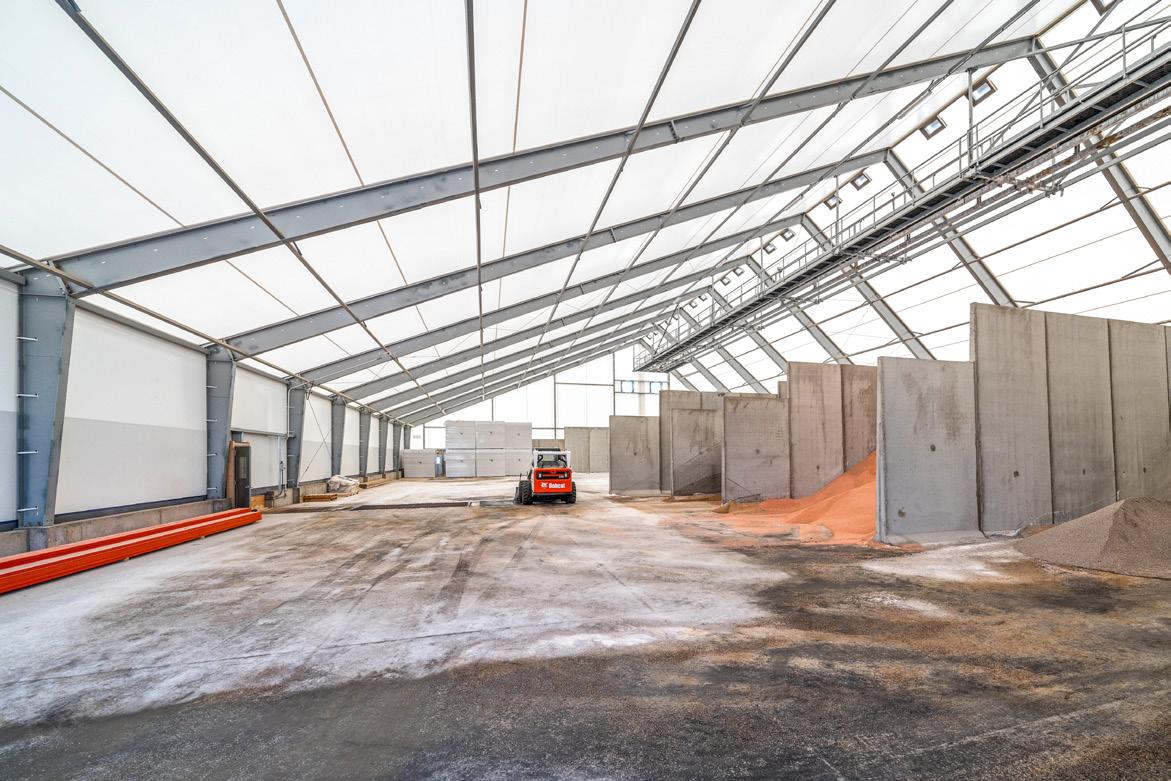
46 | WORLD FERTILIZER | APRIL 2023
Figure 2. Rigid-frame engineering allows a fabric building to be customised with the exact dimensions desired and other unique features, just like conventional construction.
Figure 3. Rigid-frame building designs typically do not require support posts. This provides more flexibility for the floor layout, arrangement of material piles, and equipment operation.
building footprint, this design concept consists of multiple distinct, but interconnected, building sections.

The floor plan as a whole remains free-flowing and wide open, with no posts, interior walls or other obstructions, but the amount of square footage dedicated to a given function can be more logical. For example, in a three-tiered building design, the largest section can hold fertilizer bins for storage; a narrow outer section can have overhead doors and become a drive-through lane for trucks; and finally, a centre section can house hoppers and loading equipment to efficiently move between the other two areas.
Another advantage of a rigid frame fabric building for fertilizer storage is how easily it can be ventilated to stay dry. Standard building designs can incorporate low-cost passive systems utilising ridge and soffit vents that rely on the natural movement of warm air, and this is often all that is needed to handle moisture and humidity. If fans or other supplemental ventilation is necessary, those mechanical items can be implemented to hang from the steel frame.
The fabric fit
The fabric membrane itself is a great fit for fertilizer storage applications. Beyond its natural resistance to corrosive elements, an uninsulated fabric roof offers a high degree of translucency, allowing natural sunlight to permeate the
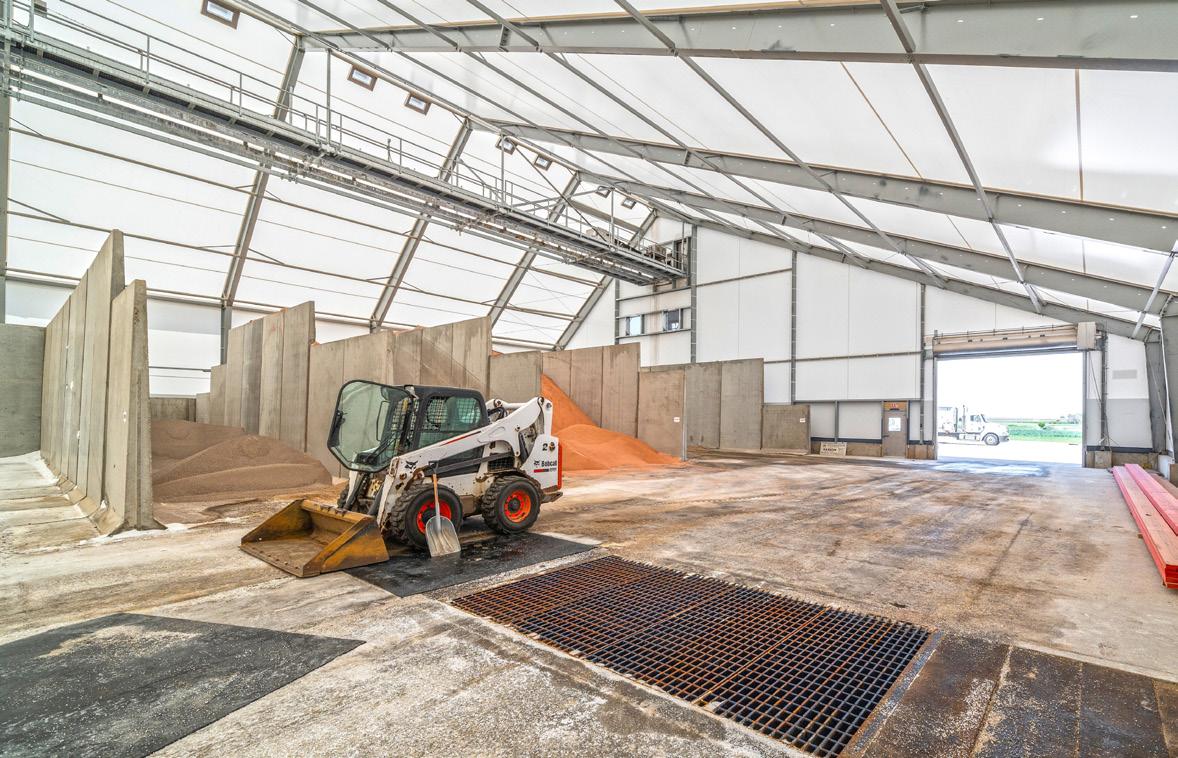
interior of a building and provide ample illumination for typical daytime operations. Fabric’s thermal characteristics also result in an interior environment that typically stays cooler in the summer and warmer in the winter.
For many years, polyethylene (PE) was the most widely used fabric material, while polyvinyl chloride (PVC) fabric was reserved for higher end projects. However, a high-quality PVC was introduced to the market a few years ago to provide more long-term durability and value. Featuring a high-strength woven fabric with additional primer and lacquer layers, this
Figure 4. Using epoxy coating on structural steel I-beams creates a protective barrier, extending the life of a building in a corrosive environment.
PVC is designed to retain more than twice the tensile strength of standard PE fabric for years.
Best of all worlds
For decades, the alternatives to traditional wood buildings carried too many flaws to become serious choices for the fertilizer industry. Today, rigid frame design has elevated fabric buildings and allowed users to optimise their structures to fit their precise demands.
The availability of epoxy paint for these buildings' steel beams has minimised any concerns with corrosion. Additionally, these fabric buildings deliver a premium solution at a lesser cost than their wood counterparts. Users can now get the best of all worlds with one building that delivers good value, a customised design and exceptional longevity.
Case study: Hull Cooperative Association
The Hull Cooperative Association (Hull Coop) was established in 1908 in Hull, Iowa, USA, by a group of local farmers who saw a need for a grain merchandising facility within their rural community. 100-plus years of expansion and business growth later, the association set out to add a new bulk fertilizer storage facility in 2022.
Hull Coop hoped that longevity would be one of the features of its new building, along with ample capacity for its current and future storage requirements. The association had previously worked with fabric building manufacturers, but not on the scale needed for the new structure.
According to Evan Wielenga, Agronomy Manager for Hull Coop, the option to build a wood structure would have been too expensive. Instead, Legacy Building Solutions was chosen to build a tension fabric building for the project. Legacy’s rigid-frame engineering approach offered the longevity Hull Coop was looking for, and the facility could be constructed at less cost per square foot.
When finished, the building measured 105 ft wide by 180 ft long for a total area of 18 900 sq ft. The structural I-beam building frames were engineered to support a 550 lbs/ft conveyor load, and the building as a whole offered a 5938 t capacity.
The asymmetrical structure has an offset peak, allowing for the conveyor to be positioned directly above the storage stockpiles located along one sidewall. The stockpiles are separated by precast walls that can be re-arranged as necessary. The rigid-frame design of the building does not require any support posts, giving equipment operators ample space to drive around inside.
Since the facility was required to house fertilizer, corrosion protection was an absolute must. Legacy coated the steel I-beams with epoxy, creating a protective barrier between the corrosive fertilizer and the building frames, minimising any long-term concerns about rust.
Since the building did not require insulation, Hull Coop has been able to take advantage of the translucent white fabric roof. With natural daylight allowing a brighter interior working environment during the day, lighting and energy costs are reduced.
48 | WORLD FERTILIZER | APRIL 2023
43 | AGI Fertilizer Systems 47 | Bagtech 13 | Black & Veatch OBC | Casale SA 28 | CRU Group 02 | Curtiss-Wright EST Group 35 | EMT/Doyle Equipment Manufacturing 07 | E²G | The Equity Engineering Group, Inc. 04 | Halliburton Multi-Chem 31 | J&H Equipment Inc. IBC | Neelam Aqua and Specialty Chem (P) Ltd. 15 | REXA, Inc. 27 | Sackett Waconia 40 | Sohar Sulphur Fertilizers OFC, 39 | Stamicarbon 09 | STATEC BINDER 19 | Topsoe AD INDEX