

21 A practical response to HTHA
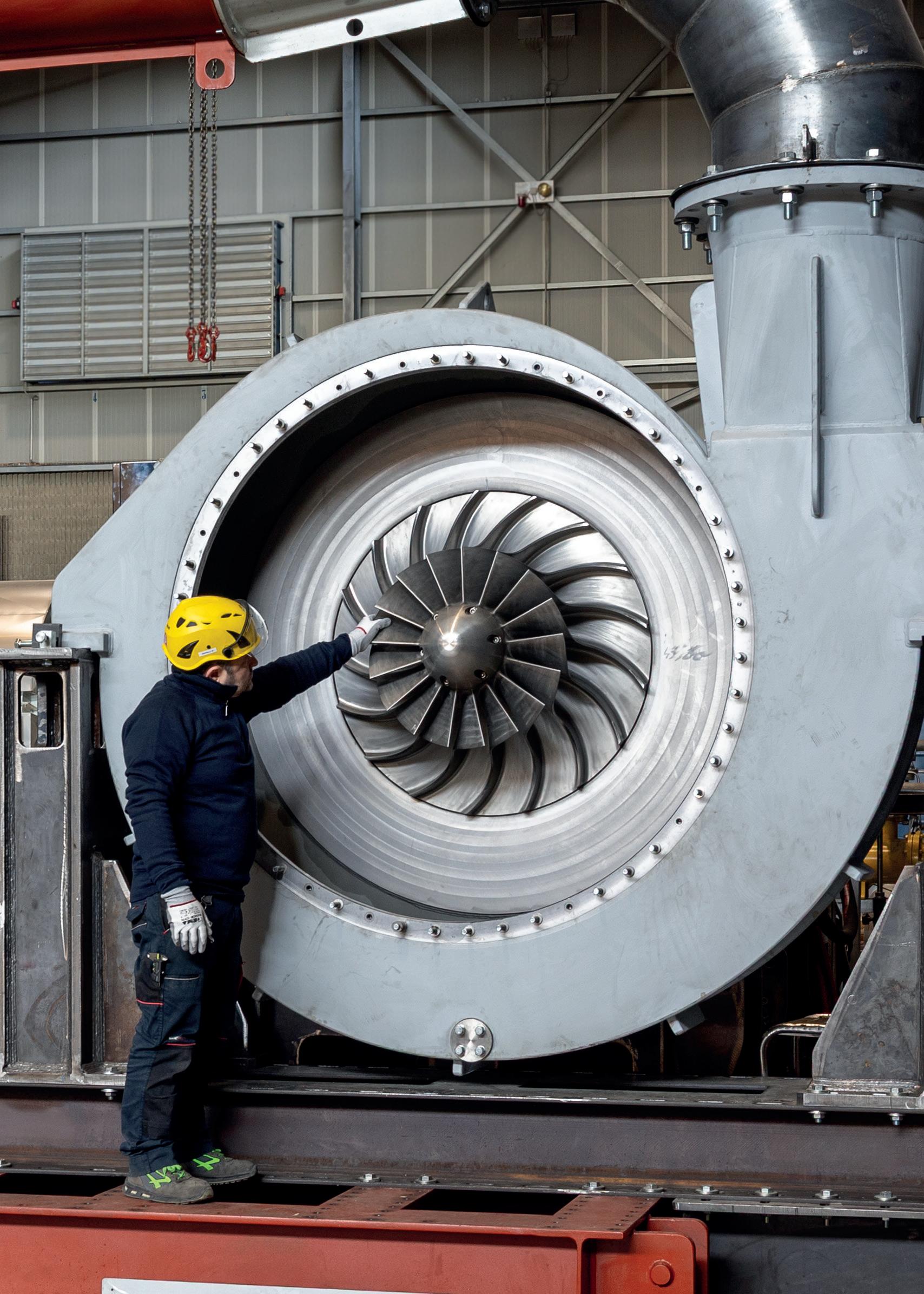
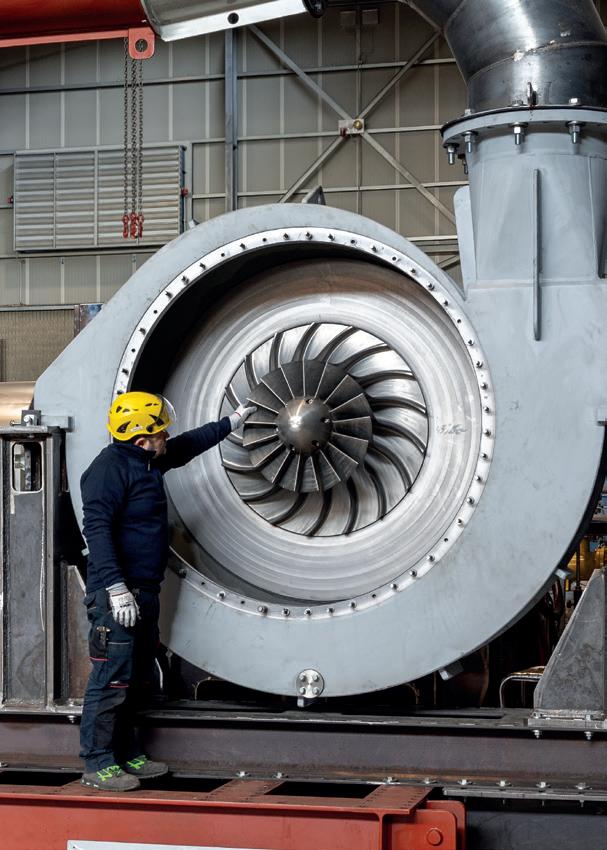
Sergio Di Vincenzo, Boldrocchi, Italy, explores how to boost fertilizer plant performance with advanced fans and centrifugal compressors.

14 Cracking under pressure
Tim Armitt, David Miller, and Kane Wingrove, Lavender International, UK, provide a guide to understanding and managing high temperature hydrogen attack (HTHA).

Daniel Drabble, Brian Olson, Mark Carte, Zach Cater-Cyker, and David Keen, Becht, USA, explore how the ammonia industry can respond to and mitigate high temperature hydrogen attack (HTHA).
27 Catalyst recovery technology
Juregen Neumann and Brad Cook, Sabin Metal Corp., USA, provide a comprehensive overview of the critical role of platinum-rhodium catalyst gauzes in enabling the industrial synthesis of nitric acid in fertilizer production.
31 Sustainability of PGM use
Margery Ryan and Iain Hepplewhite, Johnson Matthey, UK, examine how the recyclability of PGMs supports industrial use, and why the reliance on significant quantities of platinum group metals (PGMs) in nitric acid production is not a bottleneck to fertilizer production.
35 Enhancing safety and operational continuity
Kjeld Boersma, Istec, the Netherlands, highlights the positive impacts of safety and operational continuity in fertilizer plants with speed and vibration monitoring.
38 Helping you grow: fertilizing the future
Dr Jan Lampke, Haver & Boecker Niagara, Germany, takes a detailed look at each stage of the fertilizer production process from mine to market – from screening, pelletising, and packing to loading.

43 Driving performance through digitalisation
Dr Johannes Franz, Vinushanan Srimurugan, and Dr Sascha Wenzel, thyssenkrupp Uhde, Germany, discuss the improvement of fertilizer plants through the digitalisation of technology.
Boldrocchi is an international engineering and manufacturing firm with over 100 years’ experience, products in over 140 countries and offices worldwide. Boldrocchi specialises in fans, blowers and compressors, heat exchangers, environmental solutions, and noise protection. The company’s integrated approach allows it to be a single point responsibility for several processes. With hundreds of fertilizer projects around the globe, the company’s teams of forward-thinking experts tailor-make each solution for every client, ensuring performance and reliability.



Haver & Boecker is your trusted partner for complete fertilizer production - from mine to market. Our expertise in organic mineral , and chemical fertilizer ensures maximum effici ency, consistent quality, and sustainable performance. From material characterization to scre ening, mixing, filling, pelletizing, packing, palletizing, loading and automation - we pro vide fully integrated systems tailored to your needs. Partner with us to increase yield and meet the food demands of a growing world.


Explore Our Fertilizer Solutions
From One Single Source


From Mine To Market Your Benefits Are Ensured
Q::: Rely on decades of experience in fertilizer processing technology
� Simplify your process th rough our tailored end-to-end solutions from raw material to packing and dispatch
<;) Profit from our sustainable one-stop-shop solutions that boost yield and reduce your CO 2 emissions
� Improve your effi ciency through innovation, automation and digitaliz ation
fertilizer@haverboecker.com I https:/ /haverniagara.de/fertilizer-industry/
MANAGING EDITOR
James Little james.little@palladianpublications.com
SENIOR EDITOR
Callum O’Reilly callum.oreilly@palladianpublications.com
DEPUTY EDITOR
Oliver Kleinschmidt oliver.kleinschmidt@palladianpublications.com
EDITORIAL ASSISTANT
Willow Munz willow.munz@palladianpublications.com
EDITORIAL ASSISTANT
Ellie Brosnan ellie.brosnan@palladianpublications.com
SALES DIRECTOR
Rod Hardy rod.hardy@palladianpublications.com
SALES MANAGER
Ryan Freeman ryan.freeman@palladianpublications.com
PRODUCTION
Iona MacLeod iona.macleod@palladianpublications.com
ADMINISTRATION MANAGER
Laura White laura.white@palladianpublications.com
HEAD OF EVENTS
Louise Cameron louise.cameron@palladianpublications.com
DIGITAL EVENTS COORDINATOR
Merili Jurivete merili.jurivete@palladianpublications.com
EVENTS COORDINATOR
Chloe Lelliott chloe.lelliott@palladianpublications.com
DIGITAL CONTENT ASSISTANT
Kristian Ilasko kristian.ilasko@palladianpublications.com
DIGITAL ADMINISTRATION
Nicole Harman-Smith nicole.harman-smith@palladianpublications.com
JUNIOR VIDEO ASSISTANT
Amelie Meury-Cashman amelie.meury-cashman@palladianpublications.com
Palladian Publications Ltd, 15 South Street, Farnham, Surrey GU9 7QU, UK Tel: +44 (0) 1252 718 999 Website: www.worldfertilizer.com
World Fertilizer
Subscription claims: Claims for non receipt of issues must be made within 3 months of publication of the issue or they will not be honoured without charge.
Applicable only to the USA & Canada: World Fertilizer (ISSN No: 2398-4384, USPS No: PENDING) is published 8 times a year by Palladian Publications Ltd GBR and distributed in the USA by Asendia USA, 701 Ashland Ave, Folcroft PA. Application to Mail at Periodicals Postage Prices is pending at Philadelphia, PA and additional mailing offices. POSTMASTER: send address changes to World Fertilizer, 701 Ashland Ave, Folcroft, PA. 19032.

When I was a child and I thought about the future, I envisaged flying cars, meals in the form of tiny tablets, and robot pet dogs – the classic ‘Back to the Future’ style ideations. I gave very little thought to a sustainable future; a sustainable way of living. However, in a world where the global population is exponentially increasing, the climate is rapidly changing, and food security is a growing problem (excuse the double-entendre), it seems only prudent that, as a society, we direct more consideration towards the future of fertilizer.
Anglo American’s recently published ‘Future of Fertilizer’ report showcases the opinions of a varied range of experts from around the globe, when asked to express how they thought life would have changed by 2050, and what would be required of the fertilizer industry in order to successfully and sustainably feed the world. 1 Three key take-aways from this include an increased focus on soil health and the need for fertilizers that support this, scalable and innovative infrastructure and production, and aligning global pressure with sustainability goals.
Low-carbon initiatives have become an increasing part of both business and government campaigns in recent years. Fertilizer production and application is responsible for 2.6 Gt/yr of CO 2 e, equating to more than aviation and shipping industries combined. 2 Not only this, but the knock-on effect of this is increased soil acidity, leading to depleted crop yields – exacerbating the issue of food security through inadequate soil quality. This only emphasises the need to reduce CO 2 emissions.
Scalable infrastructure is imperative to economic growth. Low-carbon fertilizers could be the golden ticket when it comes to fast and scalable opportunities to decarbonise the industry, and uptake in this requires collaborative investment across the value chain. The production of low carbon fertilizers, utilising renewable ammonia for example, can reduce greenhouse gas (GHG) emissions created by fertilizer production by up to 95%. 3
Aligning governmental and sustainability goals is a sure-fire way of overcoming challenges related to the longevity of the fertilizer industry. COP29 emphasised the need for sustainable fertilizer practices to be adopted worldwide. With the COP30 summit taking place in November of this year, it will be interesting to see what developments have been discussed and implemented a year on, and if there are any further plans for increased action.
The future is an exciting yet daunting concept to grasp in a world where change is occurring daily, and is often out of our control. I no longer look to the future with child-like wonder and naivety. Instead I feel it is important to think pragmatically about what the future holds. The concept of ‘living sustainably’ should be seen as an exciting challenge to undertake. One that both individuals and groups should take on with open minds.
The July/August issue of World Fertilizer magazine features a cover story from Boldrocchi detailing how to boost fertilizer plant performance with advanced fans and centrifugal compressors. As well as this, there are key features on the topics of plant safety and inspection, HTHA, automation and process control, turbomachinery, catalyst recovery, and much more!
1. https://uk.angloamerican.com/futureoffertiliser
2. https://www.carbonchain.com/blog/understand-your-synthetic-fertilizer-emissions
3. https://www.euractiv.com/section/agriculture-food/opinion/scaling-low-carbon-fertilizers-agri-food-sectorcalls-for-eu-support/

• No fossil fuels required
• 98% lower emissions
• 60% less plot space
• 55% fewer contruction materials
• 50% decrease in CAPEX
Chemetics has announced its continued contribution to India’s industrial growth with the award of a new contract from Greenstar Fertilizers Ltd.
This marks the fourth greenfield sulfur-burning sulfuric acid plant the company has supported in India over the past five years.
Under the contract, Worley Chemetics will deliver basic and detailed engineering, critical plant equipment, and a low-pressure heat recovery system for a new 2500 tpd sulfur-burning sulfuric acid facility. The commercial-grade sulfuric acid produced at this site will support fertilizer production.
“We are proud to partner with Greenstar Fertilizers to bring our advanced technology and expertise to this significant project. Worley Chemetics proven solutions are designed to deliver operational efficiency, safety, and long-term value.”
The project will incorporate Worley Chemetics’ proprietary ALPHA® heat recovery system, along with advanced process equipment including:
n Radial flow gas exchangers.
n Anodically protected strong acid circuit coolers.
n Radial flow converter.
n ISO FLOW SWIFT-LOCKTM trough distributors.
n Anodically protected strong acid piping.
n SARAMET® HT alloy materials are used in the ALPHA® system’s equipment, piping, and ducting.
This milestone reflects Worley Chemetics’ ongoing commitment to supporting sustainable industrial development through innovative, high-performance technologies.
The Canadian Commercial Corp. (CCC) has announced that it signed a new government-to-government (G2G) contract with the Bangladesh Agricultural Development Corp. (BADC) for Canadian potash supplied by Canpotex.
This was the 11th G2G contract CCC has signed with BADC for potash from Canpotex since 2014. To date, Canpotex has supplied over 4 million t of Canadian potash to Bangladesh.
Canadian potash plays a crucial role in supporting agricultural activities in Bangladesh. Farmers rely on this high-quality nutrient to enhance soil fertility, improve crop yields, and ensure sustainable food production. With its ability to replenish essential potassium in the soil, potash significantly contributes to the cultivation of staple crops like rice and vegetables, which are vital to the country’s food security.
CCC operates at the crossroads of commerce and international relations to successfully enable commercial relationships between Canadian businesses and foreign governments at all levels through G2G contracts. Every G2G contract signed by CCC has the legal effect of being signed in the name of the Government of Canada and comes with an assurance of contract performance.
“Canada’s relationship with Bangladesh is rooted in cooperation and shared progress. As one of the world’s leading suppliers of potash, Canada is proud to support Bangladesh’s growing agricultural sector. Our collaboration with Canpotex and BADC plays a vital role in strengthening food security, boosting crop yields, and empowering farmers across the country,” said Kim Douglas, VP of Business Development and Marketing.

69th Annual Safety in Ammonia Plants and Related Facilities Symposium
07 - 11 September 2025 Atlanta, Georgia, USA www.aiche.org/conferences/ annual-safety-ammonia-plants-andrelated-facilities-symposium/2025
World Fertilizer Conference
15 - 17 September 2025 Chicago, Illinois, USA
https://www.tfi.org/event/worldfertilizer-conference/
Turbomachinery and Pump Symposia 2025
16 - 18 September 2025 Houston, Texas, USA https://tps.tamu.edu
SOLIDS Rotterdam
01 - 02 October 2025
Rotterdam Ahoy, Rotterdam, the Netherlands https://www.solidsrotterdam.nl/ en/
ANNA 2025
12 - 17 October 2025 Omaha, Nebraska, USA www.annawebsite.squarespace. com/2025-conference
Argus Fertilizer Europe
21 - 23 October Lisbon, Portugal https://www.argusmedia.com/en/ events/conferences/
Wood Mackenzie Hydrogen Conference
12 - 13 November London, UK
https://www.woodmac.com/ events/hydrogen-conference/
Mosaic opens new blending, storage, and distribution plant
The Mosaic Co. has continued to execute its strategy to leverage market access and has announced that its new blending, storage, and distribution plant in Palmeirante, Tocantins, Brazil, began operations in July. An inauguration ceremony, hosted by Mosaic Executive Vice President, Commercial Jenny Wang, was held with state and local officials.
The plant increases blending capacity and expands Mosaic’s presence in the fast-growing northern region of Brazil. With a capacity to process 1 million tpy of fertilizer, and approximately 500 000 t in 2025, the Palmeirante facility will be a key contributor to Mosaic’s ambitious growth plans in Brazil. Distribution sales are expected to grow from less than 8 million t in 2024 to 13 - 14 million t by the end of the decade.
The US$84 million investment in the Palmeirante facility has been completed on time and within budget. The facility is expected to earn a margin of US$30 - US$40/t, generating an anticipated internal rate of return in excess of 20% and demonstrating the company’s commitment to capital allocation execution and reallocation in pursuit of strong shareholder returns.
Pivot Bio, one of the world’s leading innovative agtech companies, has announced a new distribution partnership with Aurora Cooperative, a farmer-owned cooperative serving farmers in Nebraska and Northern Kansas in the US.
This partnership will provide farmers access to Pivot Bio PROVEN® 40 and PROVEN® G3, Pivot Bio’s second and third-generation nitrogen-fixing solution for corn, powered by patented gene-edited technology.
Pivot Bio’s proprietary technology represents the first new mode of nitrogen action in nitrogen delivery available this century. The microbes attach at the root to provide a steady, in-season nitrogen supply, when and where corn crops need it most. PROVEN 40 and PROVEN G3 serve as a complementary nitrogen source alongside synthetic fertilizers and insulate against the risks of nitrogen loss events to protect yield potential while improving overall production consistency.
Eurotecnica, one of the world’s leading licensors and technology providers for high-pressure melamine production, has announced that Zhongneng Chemical Co. Ltd, a major player in China’s nitrogen-based fertiliser sector, has selected its proprietary Euromel® Melamine Technology for a new world scale facility with a nameplate capacity of 120 000 tpy.
The new plant will reinforce Zhongneng’s position as a key industrial player in China and strengthens Eurotecnica’s position as a provider of melamine technology and reflects continued global confidence in its ability to deliver sustainable and high-efficiency chemical production solutions.
Zhongneng selected the Euromel technology for its performance, operational reliability, and hallmark total zero pollution feature. The multi-patented process, which uses ammonia in the purification section, ensures that the ammonia, supplied by the upstream nitrogen fertilizer complex, is recycled without being consumed. This results in zero solid waste and liquid effluents and reduced operating costs.


Between disruptive global challenges and rapidly evolving technologies, the stakes are higher than ever when it comes to partnering with the best EPC company for your needs. Built on a foundation of collaboration, Black & Veatch operates as a technology-neutral EPC provider—offering a crucial advantage when it comes to navigating carbon footprint impacts and investment resiliency.
Learn more at bv.com
Canadian fertilizer technology company Upcycle Minerals has begun the development phase for its potassium sulfate (SOP) production facility in Saskatchewan, Canada.
The Tuxford project, located north of Moose Jaw, will be in the development stage for approximately two years before construction begins, which should take another two years, the company told Argus Media. This timeline is for the first phase of the facility.
The first phase of the project is anticipated to produce 50 000 tpy of SOP, followed by a second phase expansion to 150 000 - 250 000 tpy. The facility will also produce 40 000 - 45 000 tpy of ammonium sulfate (amsul) as a by-product during the first phase. The SOP form will initially be granular, but the producer has the option to not process the crystal into granular and could have a soluble grade product as well.
The producer will source feedstock from the Tuxford potash mineral permit and the Whiteshore and Lydden Lake Alkali leases. The permit borders K+S’s Bethune and Mosaic’s Belle Plaine solution mining properties.
The Tuxford permit also lies on the edge of the Canadian Pacific Railway and is bisected by a local natural gas pipeline, with an ammonia production plant roughly 19 miles away.
Kellogg Brown & Root LLC. (KBR) has announced that it has been awarded a front-end engineering design (FEED) contract for the development of an ammonia and urea production plant by KAR Electrical Power Production Trading FZE (KEPPT) in Basra, Iraq.
Under the terms of the contract, KBR will provide FEED for the 2300 tpd ammonia production facility and a 3850 tpd urea production unit. The FEED will be executed utilising KBR’s proprietary ammonia technology, designed to enable high efficiency, low emissions, and operational reliability to assist KEPPT with its goal to achieve the lowest overall capex with an optimised project schedule.
“We are honoured to support this pivotal project, which monetises gas feedstock to boost the agricultural industry in Iraq,” said Jay Ibrahim, President, KBR Sustainable Technology Solutions. “Underlined by KBR’s expertise in market-leading ammonia solutions and proven FEED capability, this initiative should generate employment and reduce the dependency of fertilizer imports, while repositioning Iraq as a global ammonia producer.”
KBR plays a key role in delivering reliable and affordable energy solutions to meet the world’s growing demands. KBR has been involved in the licensing, design, engineering and/or construction of more than 260 ammonia plants worldwide.
Casale has announced the launch of a new project in partnership with Anhui Haoyuan Chemical Group, China. This initiative marks another key milestone in a relationship built on trust, innovation, and long-term collaboration.
The new melamine production plant will feature Casale’s uLEM-N technology, with a design capacity of 60 000 tpy, and will be fully integrated into a urea plant operated by Anhui Haoyuan.
This is the third project developed together, following the implementation of two 1500 tpd ammonia synthesis loop plants based on Casale’s N-LOOPTM technology. These repeated collaborations demonstrate the strength and continuity of our partnership – one that keeps evolving toward higher efficiency and lower environmental impact.
At the heart of this new plant is uLEM-N, Casale’s advanced melamine process, which introduces a shift in sustainable design by:
n Eliminating caustic soda usage entirely thanks to the ammonia-based purification.
n Featuring a highly efficient and proven high-pressure synthesis section.
n Using proven urea-based off-gas scrubbing.
n Operating with a zero liquid discharge (ZLD) approach.
n Ensuring simplest integration with urea plants.
n Reducing CAPEX and optimising operations.
Thanks to these features, uLEM-N sets a new benchmark in melamine production, reducing environmental impact while maximising plant performance.
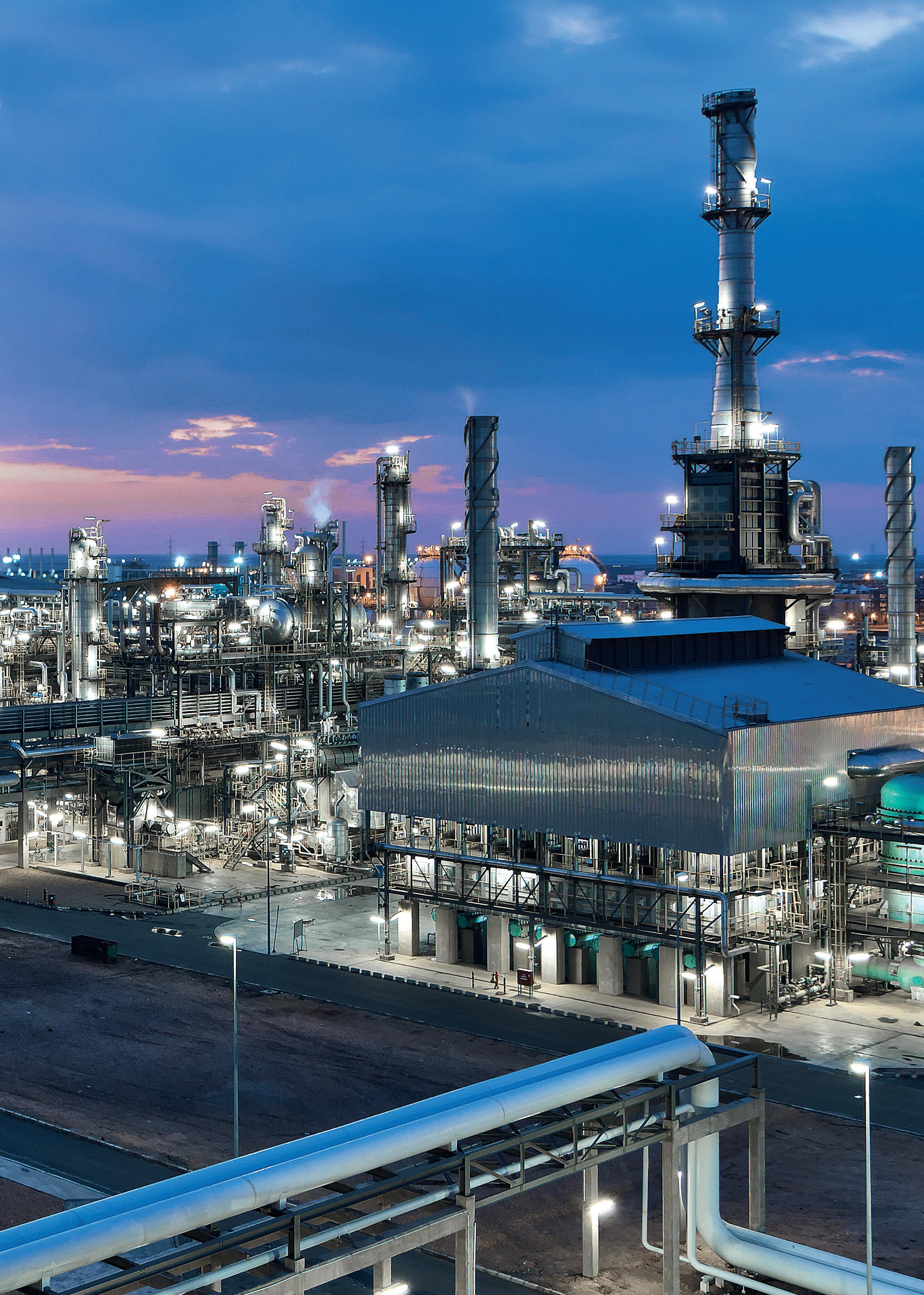

Sergio Di Vincenzo, Boldrocchi, Italy, explores how to boost fertilizer plant performance with advanced fans and centrifugal compressors.
Global demand for ammonia exceeded 190 million t in 2023, driven by normalised gas prices and increased fertilizer use due to population growth in Asia and Africa.
The fertilizer industry has responded by building larger, more efficient plants – new ammonia units produce over 3300 tpd, while single-train urea plants now reach capacities of around 4000 tpd.
Simultaneously, sustainability initiatives push for upgrades and new projects that reduce emissions.
It is expected that ammonia will play a significant role in navigating the energy transition from fossil fuels to decarbonised solutions as an energy carrier of hydrogen.
Demand for hydrogen is constantly growing as it can be used as a climate-neutral energy product and that demand is expected to be several times higher than actual market demand as a substitute to conventional fossil fuels.
While transport of pure hydrogen is complex, hazardous, and expensive, ammonia can be manageable from logistic and transportation and then converted back to hydrogen and nitrogen through crackers.
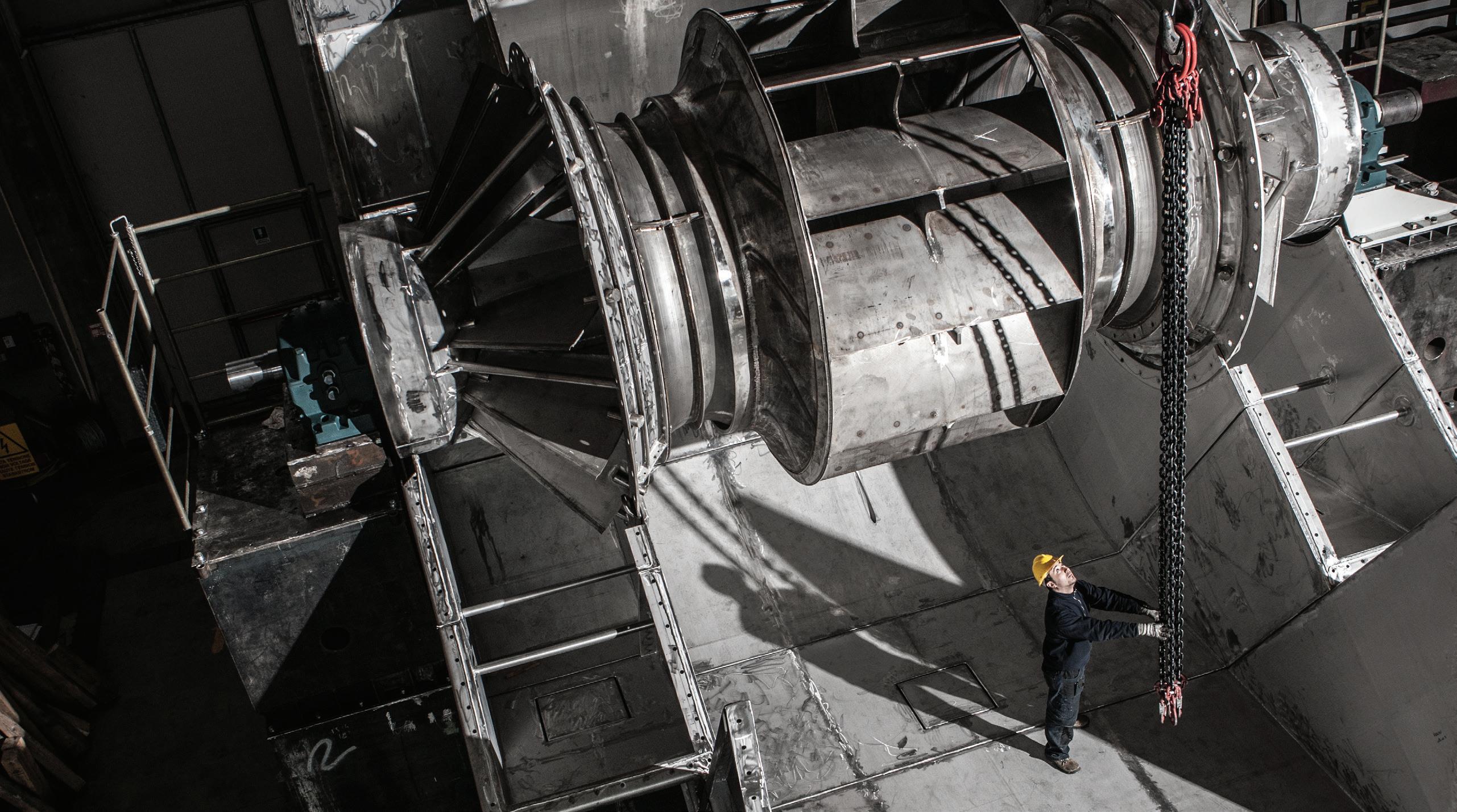
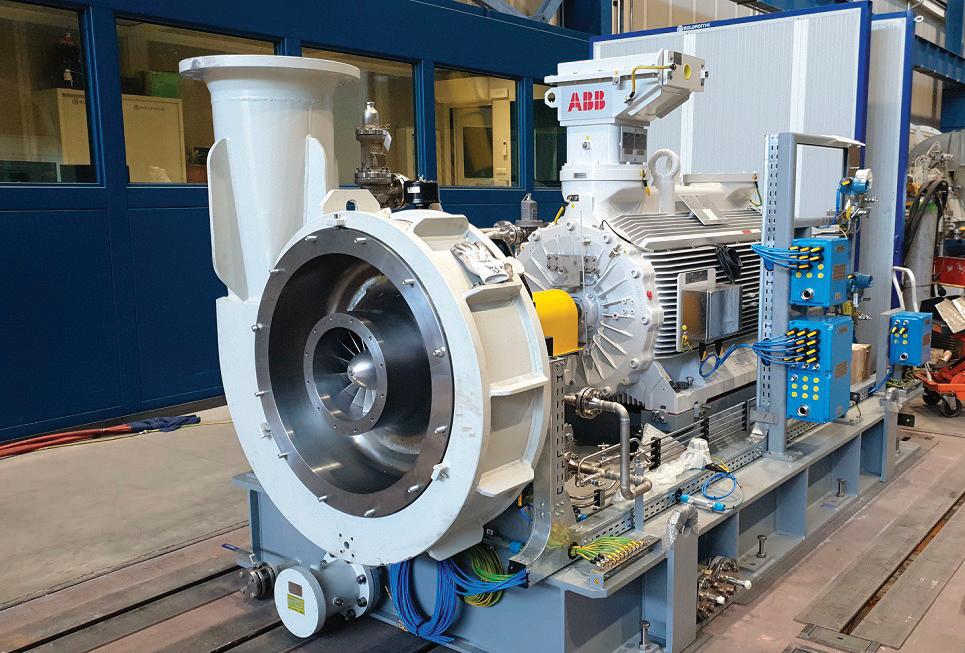
In this challenging context, fans and compressors have become more and more critical determinants of plant reliability and efficiency. Older companies, like Boldrocchi, should be able to rely on years of expertise in delivering specialised, state-of-the-art centrifugal compressors, fans, and blowers crucial to ammonia and urea plants worldwide. These companies should aim to deliver fully integrated solutions that are designed to meet stringent process and reliability standards.
Ammonia production via the Haber-Bosch process relies significantly on robust turbomachinery to circulate and compress gases.
Manufacturers could consider providing
API 617-standard centrifugal compressors specifically tailored to critical applications within ammonia plants:
Each ammonia plant utilises centrifugal compressors dedicated to gas circulation during start up or operational loops, ensuring stable operations. Boldrocchi’s centrifugal compressors guarantee reliability, maintaining essential gas flow through catalyst beds from start up to full operational rates.
Integrated ammonia-urea plants utilise carbon dioxide (CO2) captured during ammonia production, requiring compression to pressures between 140 - 160 bar. Boldrocchi’s API 617 CO2 booster compressors elevate low-pressure CO2 gas streams for subsequent urea synthesis. Employing advanced dry gas seal technology, these compressors minimise CO2 leakage, supporting environmental compliance and sustainability targets.
Centrifugal fans play a crucial role in primary reformer furnaces, providing forced draft (FD) and induced draft (ID) services:
n FD fans supply combustion air to burners.
n ID fans remove hot flue gases, maintaining optimal negative pressure.
API 673-standard fans should be engineered to handle enormous volumetric flows to cover the needs of the large scale plants now available on the market. They are typically provided in dual-drive configurations, combining steam

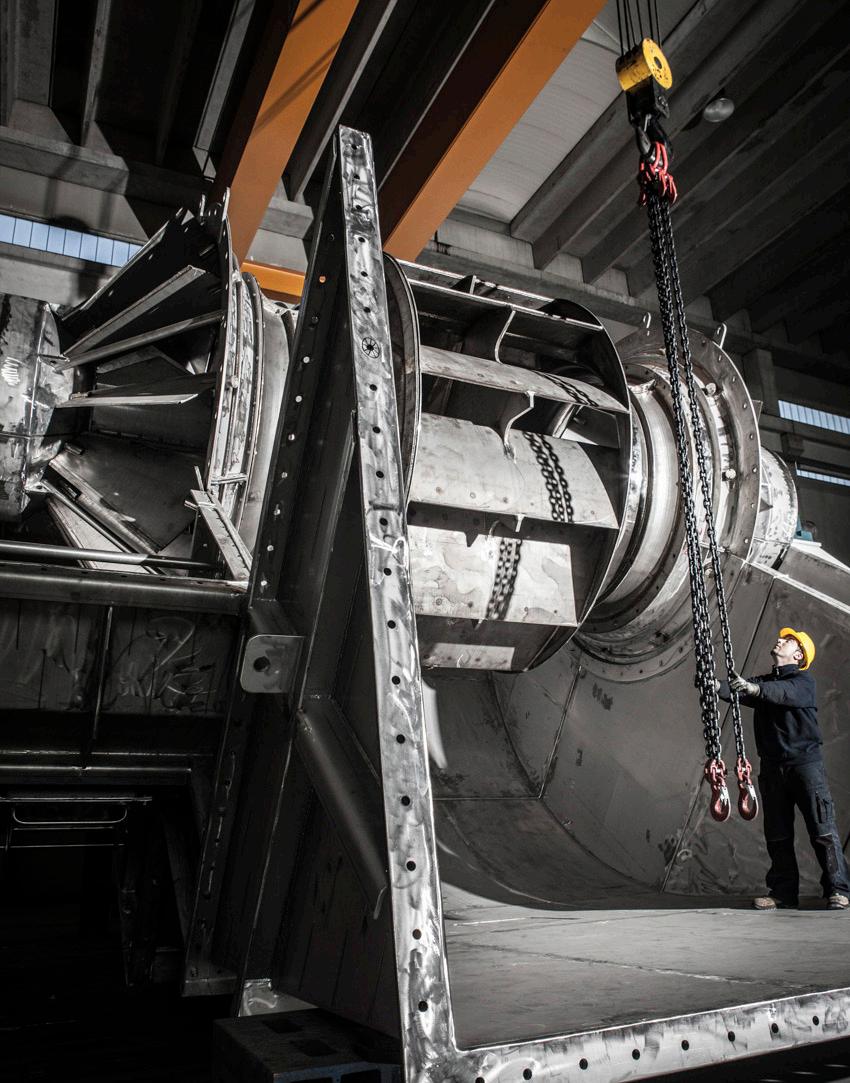
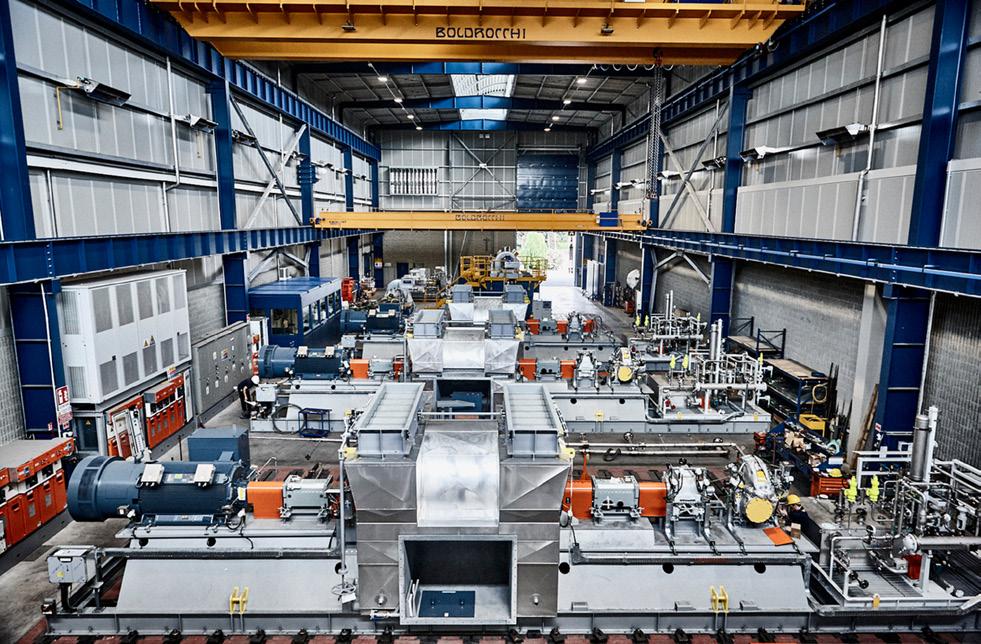
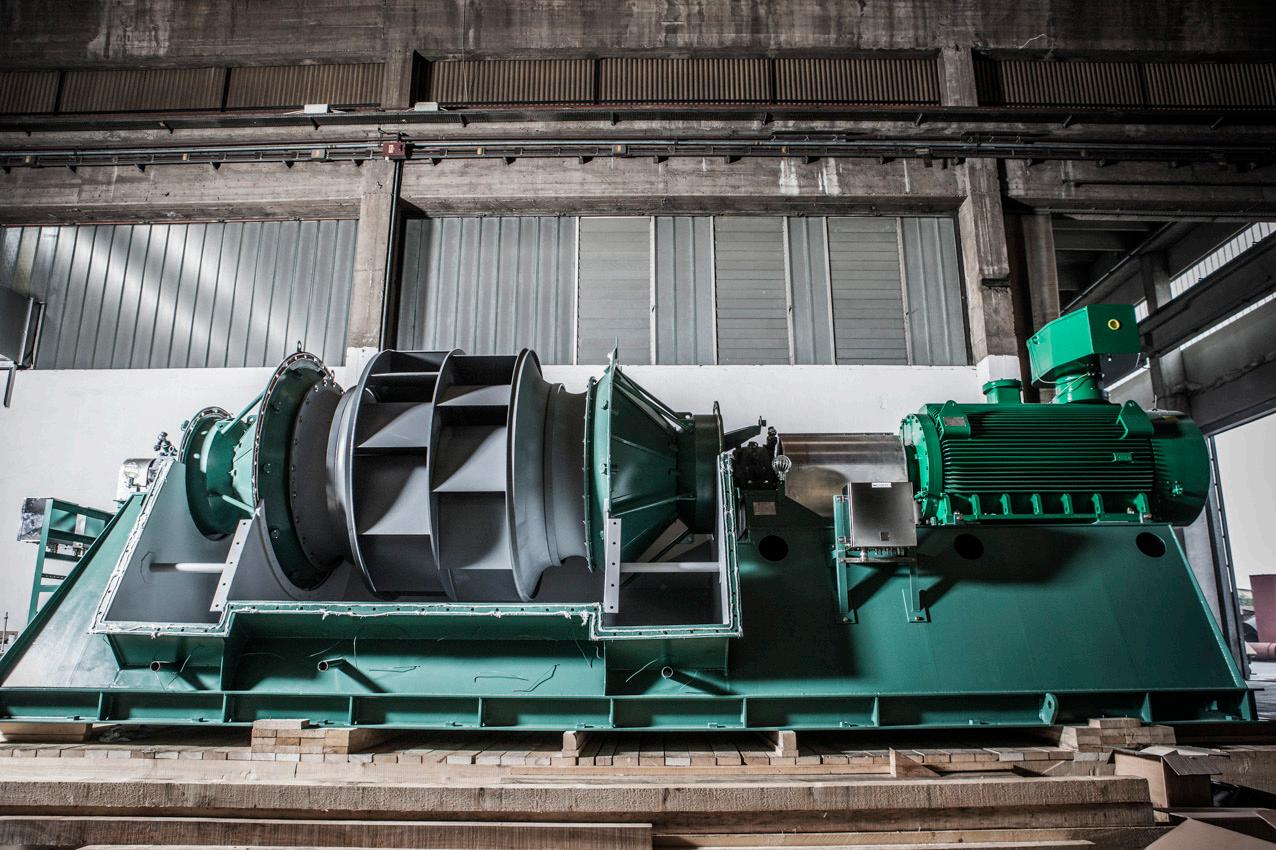
turbine primary drivers in order to recover and reuse otherwise wasted steam and electric motor backups. Automatic clutches ensure seamless power transitions, preventing costly unplanned shutdowns and maximising plant availability.
The urea granulation process heavily depends on engineered fan systems:
Atomising air blowers are essential for converting liquid urea into droplets, these high-pressure centrifugal blowers deliver precise airflow (0.5 - 1.5 barg) critical to controlling granule size and product quality. Equipped with anti-surge systems, they reliably operate even under challenging process conditions.
API 673-standard heavy-duty fluidisation air fans deliver large volumes of conditioned air to fluidise and cool urea granules. Engineered with robust corrosion-resistant materials and inlet filtration systems, these fans optimise granulation efficiency while ensuring long-term reliability.
Handling corrosive urea dust and ammonia emissions, scrubber exhaust fans are induced-draft fans, they maintain negative pressure within granulators and coolers. Boldrocchi designs these types of units from specialised corrosion-resistant alloys, ensuring compliance with stringent environmental and health standards while assuring corrosion protection over time. Dedicated spraying systems on rotating parts allow smooth operation with low vibration levels over time.
Auxiliary ventilation
Smaller dedusting fans, though less prominent, play a significant role in maintaining plant hygiene by capturing fugitive dust at conveyor points.
Advanced fans and centrifugal compressors should be meticulously custom-engineered for each specific plant condition, ensuring optimised aerodynamic efficiency, mechanical reliability, and energy-saving operation. Advanced design tools like computational fluid dynamics (CFD), rotor dynamics studies, and torsional vibration analyses guarantee that machinery operates smoothly and reliably throughout its lifecycle at different plant loads.
Boldrocchi emphasises integrated packaged solutions, supplying complete skids with centrifugal compressors or fans, drivers, lubrication systems, anti-surge controls, instrumentation, and auxiliary equipment pre-installed and factory-tested. This turnkey approach significantly reduces site integration effort, accelerates commissioning, and ensures clear accountability for equipment performance.
Conclusion
While often operating unseen, centrifugal compressors and fans serve as the heartbeat of ammonia and urea fertilizer plants, directly impacting production efficiency, environmental compliance, and operational reliability.


Tim Armitt, David Miller, and Kane Wingrove, Lavender International, UK, provide a guide to understanding and managing high temperature hydrogen attack (HTHA).

High temperature hydrogen attack (HTHA) is a damage mechanism responsible for some of the worst petrochemical disasters in modern history. Heat exchangers and pipework systems have catastrophically failed, resulting in fireballs that engulfed surrounding process plants, and in some cases, resulted in several fatalities or at the very least life changing injuries. This damage mechanism can quietly spread through the body undetected until late stages manifest, resulting in extremely compromised service life expectancy, with massively marginalised fitness for purpose predictions. Detection of this damage at the earliest stage is of paramount importance.
How does this damage occur? Pressurised systems, vessels, exchangers, and pipework manufactured from carbon manganese and low alloy steels when operated at elevated temperatures exceeding 205°C and are subject to prolonged exposure to hydrogen develop HTHA. This may be extremely localised and relatively minor damage, or it could be damage that is quite advanced and is progressively increasing towards through-thickness failure. HTHA occurs when hydrogen joins with the carbon in steel to form methane (CH4). As operating temperatures increase, carbon precipitates more easily toward grain boundaries attracted by hydrogen to form CH4. This chemical change results in larger atoms which accumulate pressure along the grain boundaries.
When methane pressure exceeds a material’s yield point it forms microscopic gas bubbles along grain boundaries in solid metal. The surrounding grain structure is depleted of carbon, which along with the methane bubble/voids, marginalises the material mechanical properties. This is known as decarburisation.
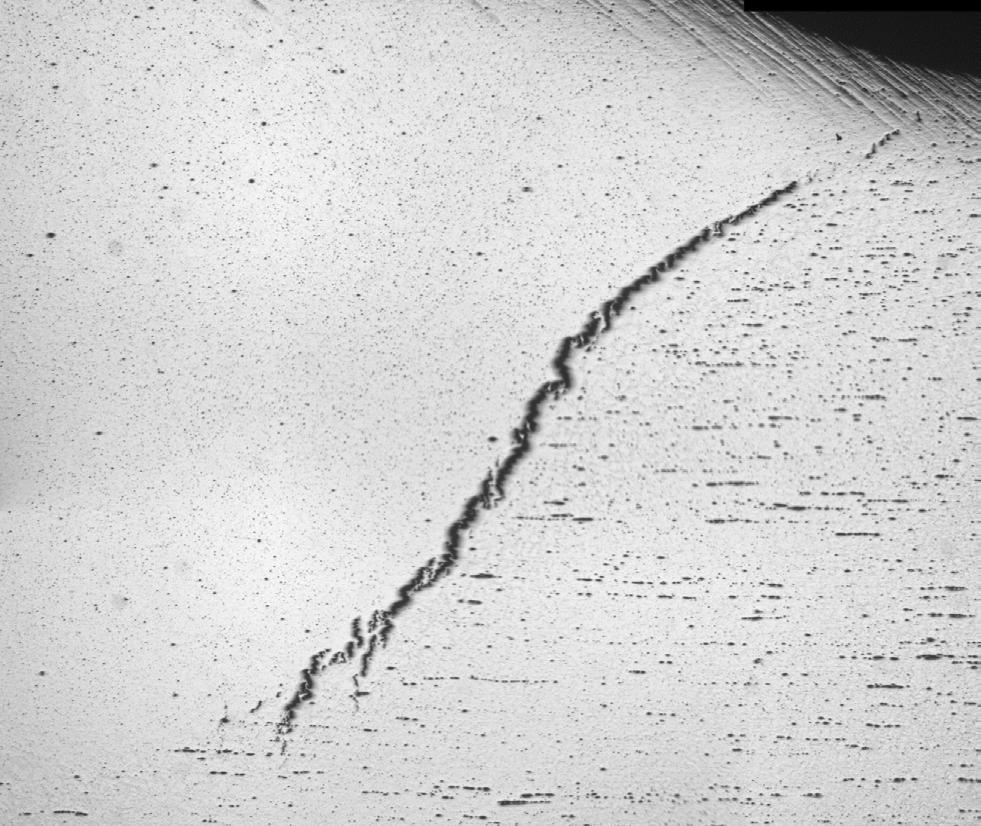
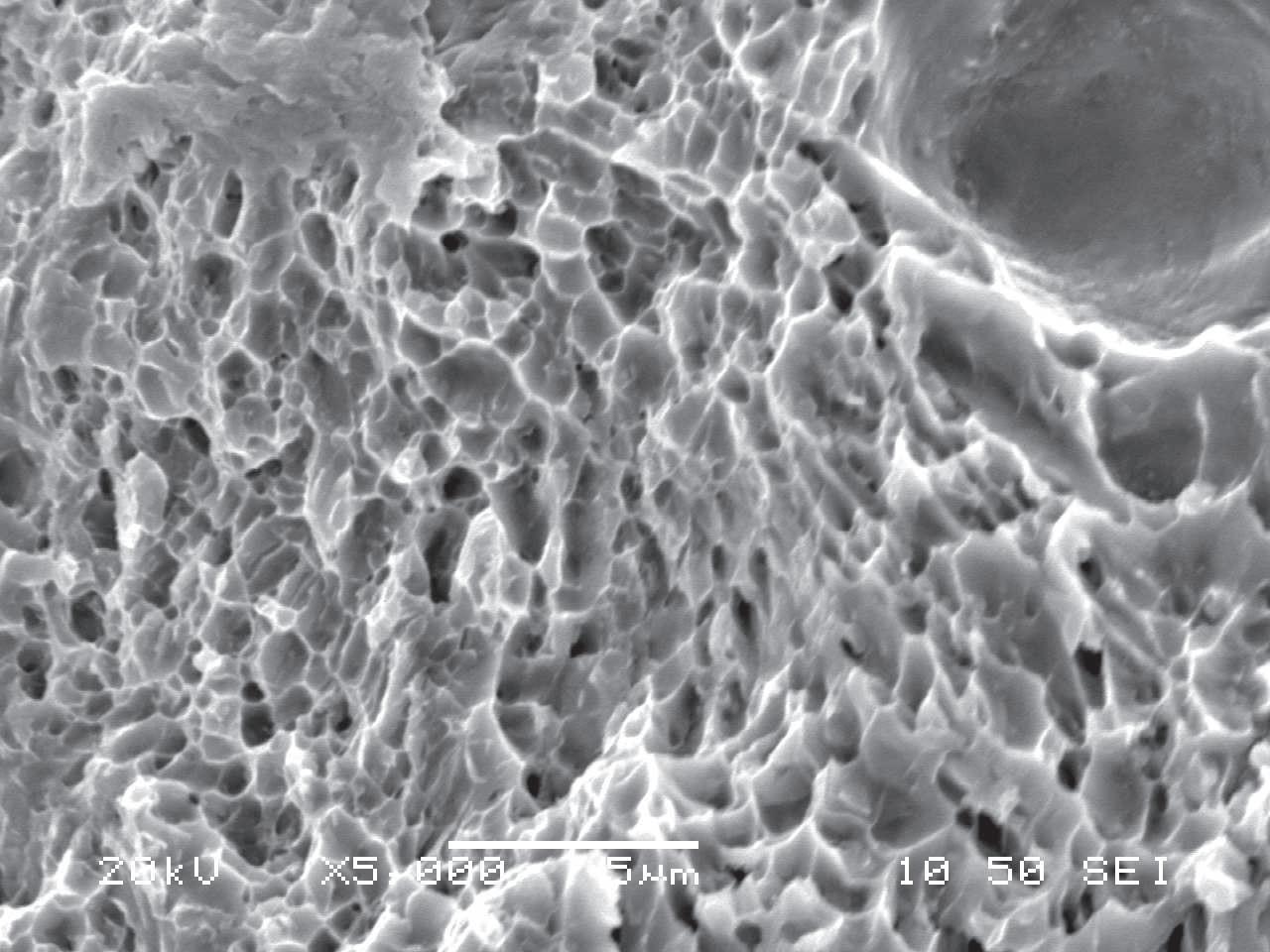
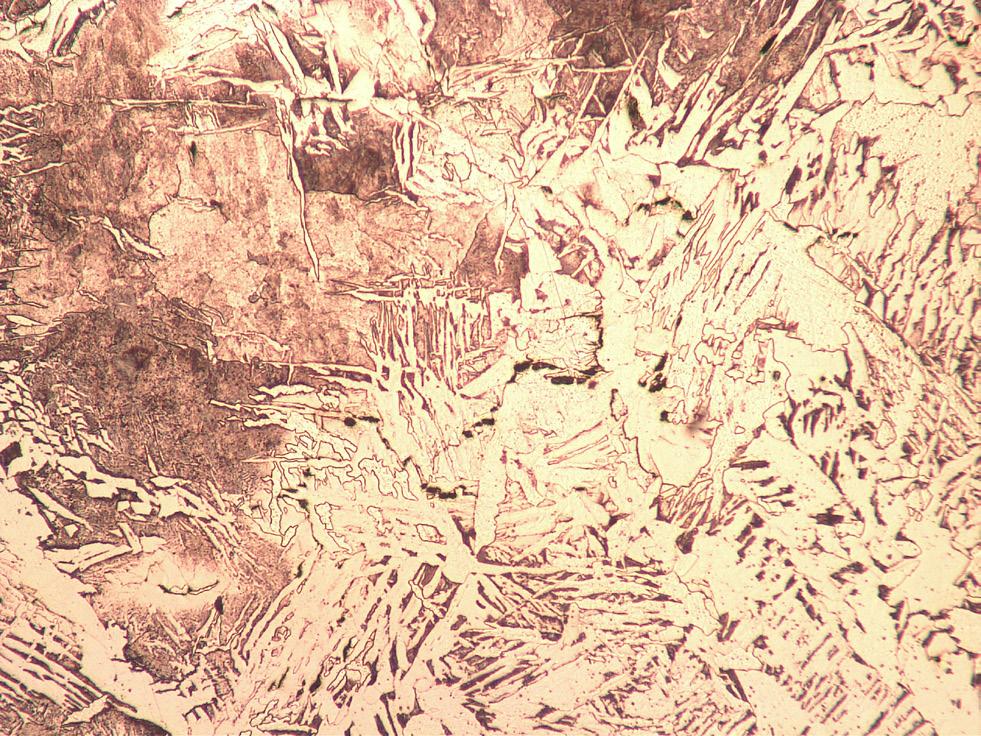
As time progresses, methane void density increases to such a point that micro fissures form, joining voids together. Progressively these accumulate, eventually coalescing to form macro cracks and subsequently larger cracks. The crack mechanism is ductile, very similar to the progression of creep damage. Cracks that propagate extend through the colony of dense methane voids arresting at the edge of the void colony where mechanical strength remains uncompromised. In turn, higher stress concentrations form at the new crack tips, each time stresses being more concentrated, resulting in accelerated methane formation, each time progressively less methane pressure is needed to exceed the material’s yield point. The cycle becomes exponentially accelerated until such a point that the remaining ligament of sound material terminally fails through ductile fracture.
The timeline of this chain of HTHA progression is proportional to material susceptibility, static and dynamic loading and operational stresses, heightened hydrogen partial pressures, and is increased with heightened operational temperatures. Cumulative operational time that an asset runs at high temperature is key in the assessment and likelihood that damage will occur. Straight carbon steel being the most susceptible steel, ranging through progressive alloys to those containing increased levels of chromium. Higher chromium levels make steels far less susceptible to HTHA damage formation. Historically, the use of Nelson curves, contained within API 941, were referenced to assess the susceptibility to HTHA. API 941 section on HTHA has more recently been moved to a new section in API 586. Nelson curves were originally produced by G.A. Nelson in the 1940s and later included in API 941. Data points used to produce the curves were few, based on a limited number of failures analysed at that time. Since then, Nelson curves have been redrawn several times. Each time lowering the curve, effectively bringing previously thought insusceptible material and operating conditions, reclassifying them as highly susceptible. The Washington State refinery disaster as investigated by the US Chemical Safety and Hazard Investigation Board (CSB) found materials and operating condition plotted beneath the curve, meaning low risk to HTHA. Since that time several more points have been plotted lowering the curve, resulting in a huge increase in assets that now need to be considered as at moderate to high risk of HTHA.
In severe cases – materials of plain carbon steel or very low alloy, exposed to operational temperatures above 350 - 400°C (600 - 700°F) and high hydrogen partial pressures – terminal damage can result within a ten-year window or less. Laboratory work under strictly controlled conditions, using extremely high temperature and pure hydrogen in an autoclave, produced through wall HTHA cracks in 25 mm thick carbon steel in 24 hrs. This was exceptional and nowhere close to being representative of real work operating conditions. More common are operating conditions close to the Nelson curve where HTHA has been detected in moderate levels when the asset is 30 - 40 years old. Time, temperature, hydrogen partial pressure, and stress levels are the key ingredients. When all exist in sufficient quantities, HTHA should be expected.
Time dependant curves have now been produced assisting in damage prediction. Specialist software platforms have been made with input fields for all essential material and operating parameters, including detected and sized damage, for the prediction of remaining service life. This recent work has formed part of the
-Training for the detection of HTHA
-Third Party Data Review
-Research and development into various damage mechanisms
Courses in methods such as MT, PT, VT, RT, ET, UT, Phased Array, TFM, ACFM,TOFD and our world-leading HTHA Detection course.
Level 1, Level 2 and Level 3 qualifications for PCN, EN4179, NAS410 and SNT-TC-1A.
Our Level 3 consultants are qualified to ASNT, PCN and NAS410/EN4179 requirements.



crack growth studies in the Equity Engineering joint industry project (JIP).
HTHA forms where stress points are highest, particularly at regions of the highest temperature within an asset. Damage forms closer to the inside diameter of the heat affected zone of circumferential welds, whereas HTHA damage can be expected towards the
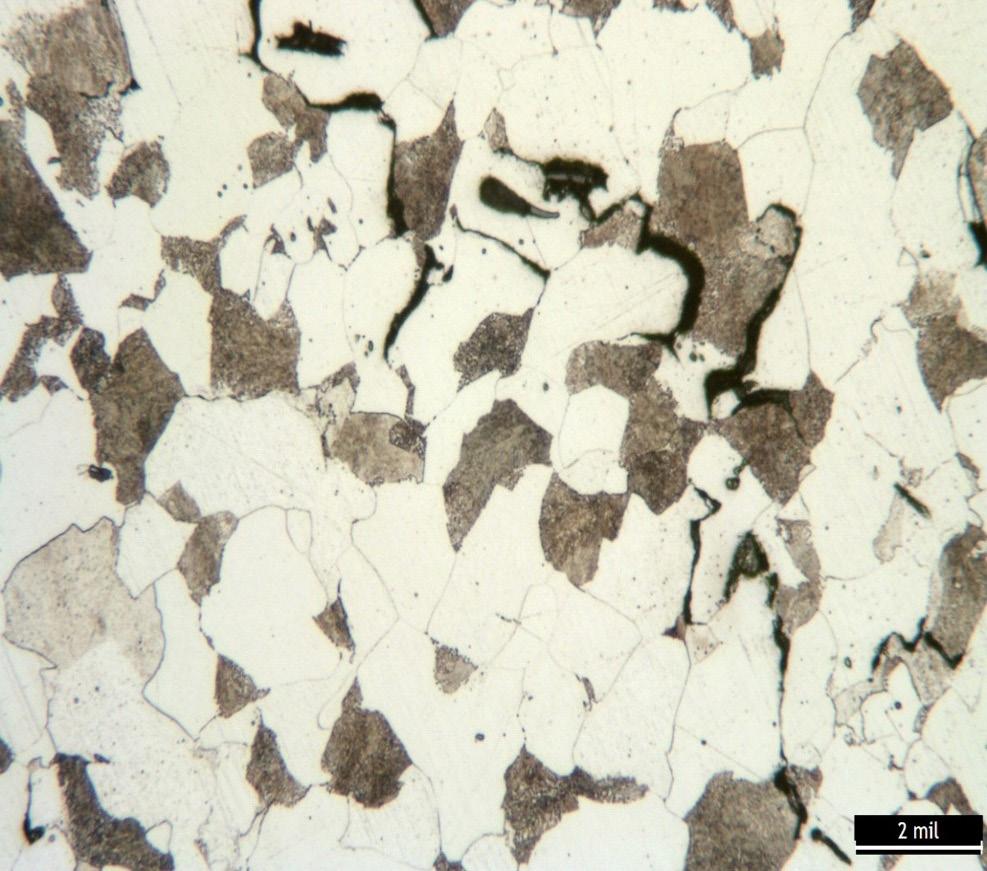
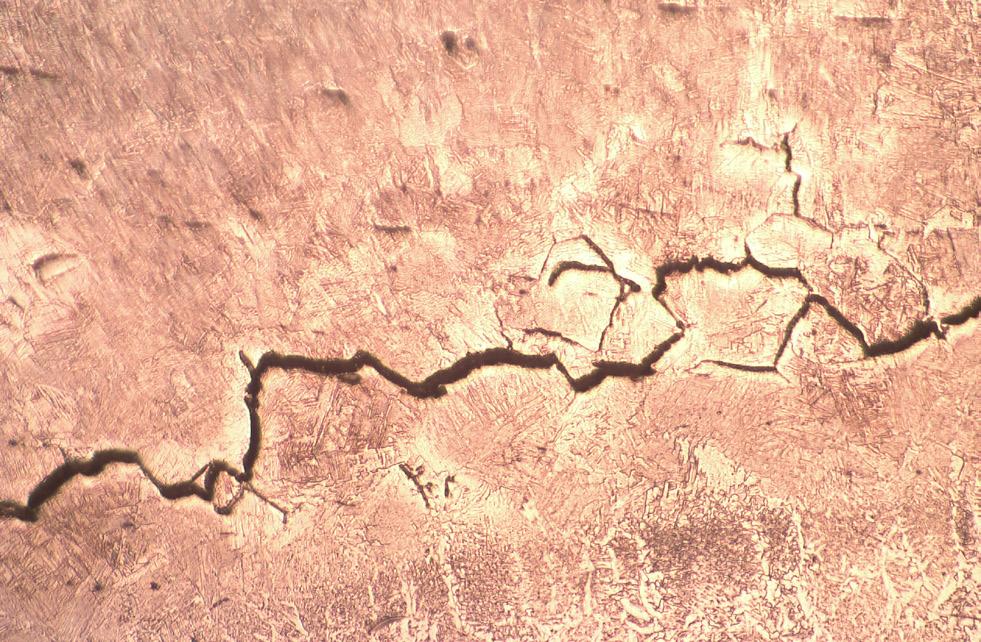
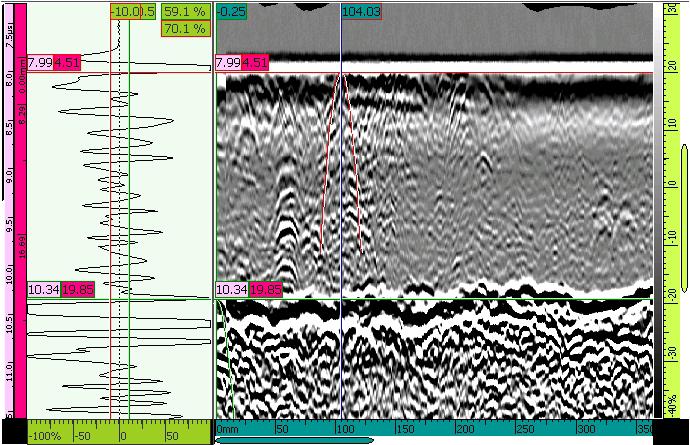
outside diameter of longitudinal weld seams. Weld deposits are generally overmatched, meaning chemically richer than adjoining parent materials. The welding engineer cannot control finitely how much of each trace element is burnt off and consumed in the welding arc. Consequently, overmatching by adding slightly more trace elements guarantees the weldment to be at least as strong and usually measurably mechanically stronger than adjoining materials. This added strength means the weld resists being stretched under pressure and consequentially results in bending moments causing enhanced stresses in the heat affected zone (HAZ) adjacent to the weld.
Formation of methane only occurs when hydrogen diffuses into and throughout a material. The greater the operational time, and the higher the hydrogen partial pressure, the more diffusion takes place. Hydrogen is not entrapped at or very close to material surfaces, this means subsurface damage occurs making it undetectable by surface non-destructive testing (NDT) methods. HTHA eventually becomes surface connecting toward the final stages of through wall failure. Inspection strategies should therefore target deep seated initial damage and not rely on near surface, avoiding any reliance on surface breaking detection techniques. The authors have experienced this in many assets when conducting forensic analysis in the form of extensive NDT and, where possible, destructive testing and metallography. Fittings, tray supports, repads, ladder attachments, and regions of historical weld repair are classic sites for elevated stress and breeding sites for HTHA. Historically sampling inspections have concentrated solely on the intersection of circumferential welds (CW) and longitudinal welds (LW). It therefore of utmost importance that inspection regimes are developed targeting the locations along with ridged pipe to fitting joints and nozzles in pressure vessels and heat exchangers.
HTHA damage can be described by four progressive stages.
Stage 1
HTHA damage essentially describes the formation of dense accumulations of methane voids surrounding multiple grains. This stage of damage is the most difficult to reliably detect with NDT.
Associated with methane voids having formed micro fissures. These can be imaged when groups of tiny micro fissures form a colony, each micro fissure measuring around 50 - 150 µm in length.
Describes the progression to form macro fissures, small cracks that would be in the region of 150 µm and greater. This stage of damage is relatively easy to detect and is commonly associated with poor fitness-for-service (FFS) predictions associated with close to terminal failure.
Stage 4
The latter stage where larger cracks form, each surrounded by stages 1, 2, and 3 damage. Detection of stage 4 cracking is critical for the prevention of a potentially catastrophic failure.
Due to the minute size of early stages of HTHA, and the fact that it should be considered within the material volume and not
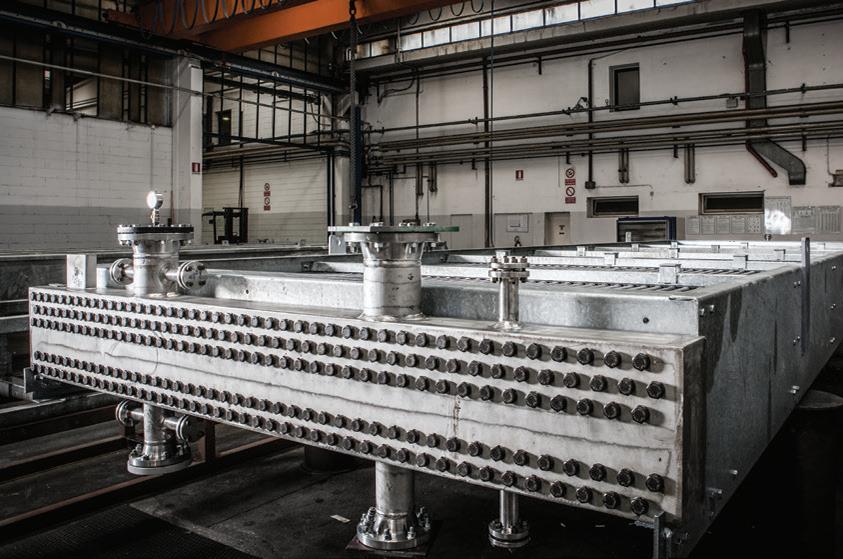

surface breaking, it leaves only specialist mediums of ultrasonic testing. Early work on HTHA, pioneered techniques that had limited effectiveness in HTHA detection. The early techniques formed much of API 941 approach to detection of HTHA.
Time passed and following a catastrophic heat exchanger failure in Washington State, a JIP was formed. Sponsored by many large petrochemical organisations this was run by Equity Engineering, who engaged Lavender International to perform forensic NDT work which resulted in new inroads to the detection of HTHA.
The authors have pioneered newer and more effectual ways of reliably detecting HTHA using modern computerised equipment and developing novel probe arrangements. This work included inspecting donated samples from across the globe, several pressure vessel samples, heat exchangers, and pipework. The work also concentrated on historic vessels that had catastrophically failed, including sister vessels operated under the same conditions. Lessons learned were documented and reported the Equity Engineering JIP sponsors. Fingerprint reports were formed for the benefit of the wider NDT community.
The following screening process has been found to be effectual in detection of HTHA at all stages of material deterioration. Initially screen using conventional time of flight diffraction (TOFD), ideally with 10 MHz transducers where practicable. TOFD uses two angled transducers, one either side of a welded joint
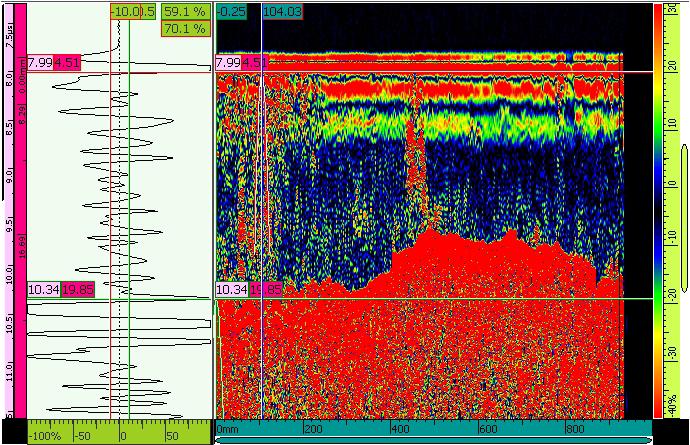
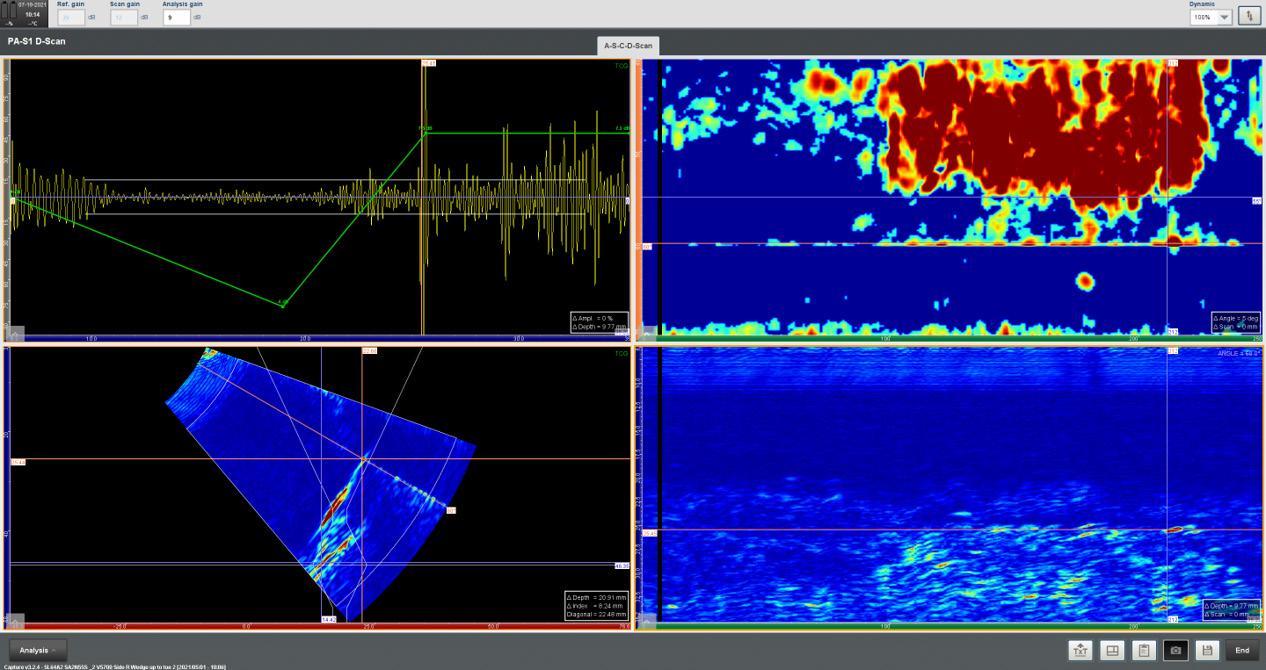
facing each other. TOFD is renowned to be so sensitive it images grain structure changes when weld repairs have been performed, even when flaws do not exist. For this reason, TOFD was trialled and found to be highly effectual at detecting early stages of HTHA.
Restricted access can be common, particularly around fittings. Special probes were developed to achieve TOFD sensitivity without needing access from both sides of the weld. These were named TOFD ultra low angle (TULA) probes. TULA probes were found to be highly effectual in many cases. The author engaged a probe manufacturer, GB Inspection Systems, to build TULA probes making them accessible for the global NDT community.
Following data acquisition, data is then analysed. If no evidence of HTHA is found, no further scans are required at a given location. If evidence of HTHA is detected, follow up scans with highly focused phased array ultrasonic testing (PAUT) and total focusing method and phase coherence imaging (TFM/PCI) will be necessary. It is recommended that at least three different ultrasonic medium/techniques are used in order to verify with as much certainty as possible the nature and likelihood of the existence of HTHA.
In cases where non-destructive testing reveals indications symptomatic of HTHA, a full and comprehensive report shall be made. Recommendations contained within the report should alert the asset owner of the need to engage an appropriately qualified fitness for service (FFS) engineer with a view to considering operational structural integrity. The FFS engineer may consider the extraction of boat samples, material scooped from the asset with a view to conducting destructive testing. This may include metallography, impact, and tensile measurements. The decision should always be taken by asset owners appointed by a qualified FFS engineer.
Asset owners should consider the presence of HTHA to be highly likely when assets have been operating over significant timeframes at elevated temperatures and hydrogen partial pressures close to the Nelson curve. It is safer to assume HTHA is present than risk neglecting attention to this potentially catastrophic damage mechanism. Great inroads have been made improving HTHA detection reliability. Nevertheless, is should be highlighted that effectual inspection is only possible with experienced trained skilled NDT technicians who have undergone dedicated training on HTHA.
The authors recommend that asset owners engage specialised FFS engineers to not only assess any potential damage detected, but also assess where the highest stress locations exist, with a view to more accurately directing the application of appropriate NDT. In an ideal world, finite element analysis (FEA) stress modelling could be applied to visualise regions of highest stress. Trials conducted by the authors have verified FEA models were extremely helpful at predicting stress lines where damage was subsequently proven to propagate.

Daniel Drabble, Brian Olson, Mark Carte, Zach Cater-Cyker, and David Keen, Becht, USA, explore how the ammonia industry can respond to and mitigate high temperature hydrogen attack (HTHA).
High temperature hydrogen attack (HTHA) is a damage mechanism which has been known of since before the start of the Second World War, 1 but nearly 90 years later remains a subject of debate among metallurgists, inspectors, engineers, and scientists.
Historically, the approach to design and risk mitigation has revolved around the ‘Nelson curves’, a set of empirically derived guidelines first published in the 1940s 2 that defined operating limits for steels exposed to high-temperature hydrogen. Later incorporated into API RP 941, 3 these curves have evolved,
including removal of the C-0.5Mo line in the Fourth Edition (1990) and the introduction of a lower carbon steel curve for non-post-weld heat-treated (non-PWHT) welds in the Eighth Edition (2016). Mechanistic models of HTHA have been proposed and developed since the 1970s/80s, 4 - 9 however, it is only in the past decade or so that such models have been integrated into the assessment process for industrial equipment – an effort aimed at capturing the nuances of HTHA that the Nelson curves were never intended to explain.
So how should integrity and reliability engineers in the ammonia industry respond to the challenge of HTHA? Given all that has been learned in the last 10 - 15 years through incidents (including a particularly tragic one in 2010 10 ), through intensive studies and lessons shared across multiple industries, how should the approach be evolve?
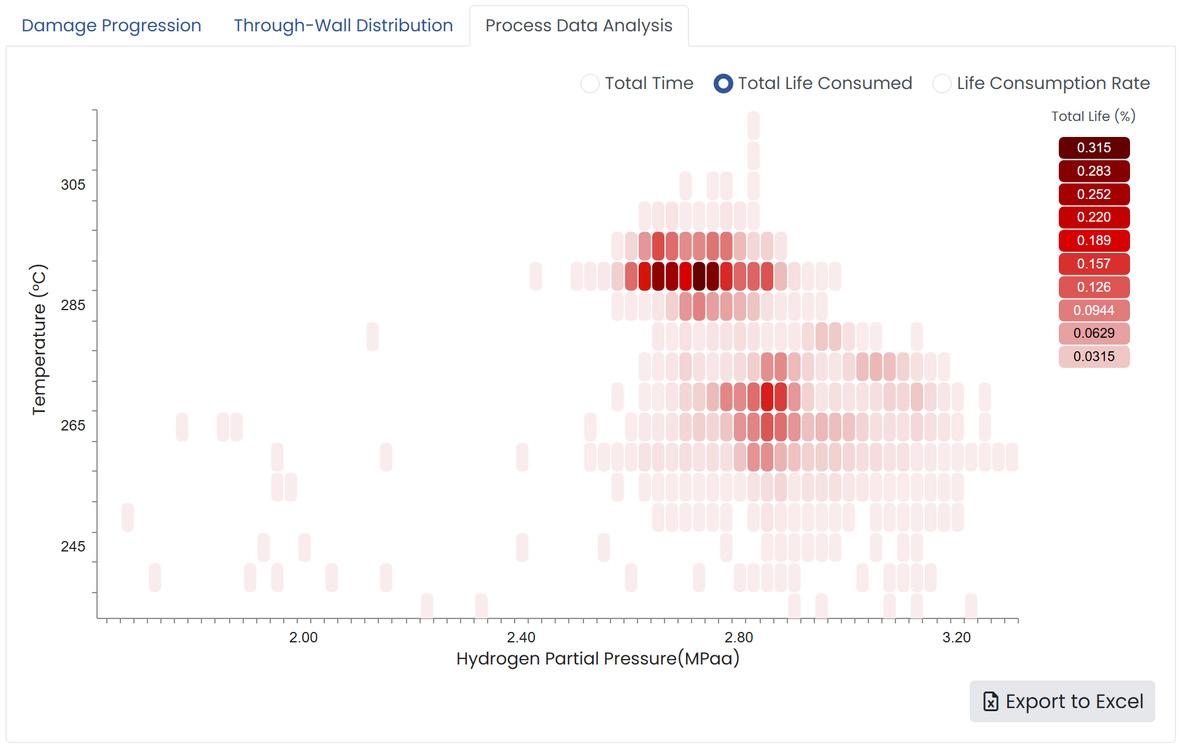
2. Example of process data ‘heat map’ from Becht HTHA, which demonstrates life consumption for various operating modes.
Let us briefly mention the design phase, which is relatively straightforward and primarily hinges on materials selection. The Nelson curves are specifically intended for the purposes of design, and with the upcoming Ninth Edition of API RP 941, will provide more guidance with the introduction of time-based design curves. Design is by far the most effective control, and getting it right at this stage dramatically reduces the risk throughout the equipment lifecycle.
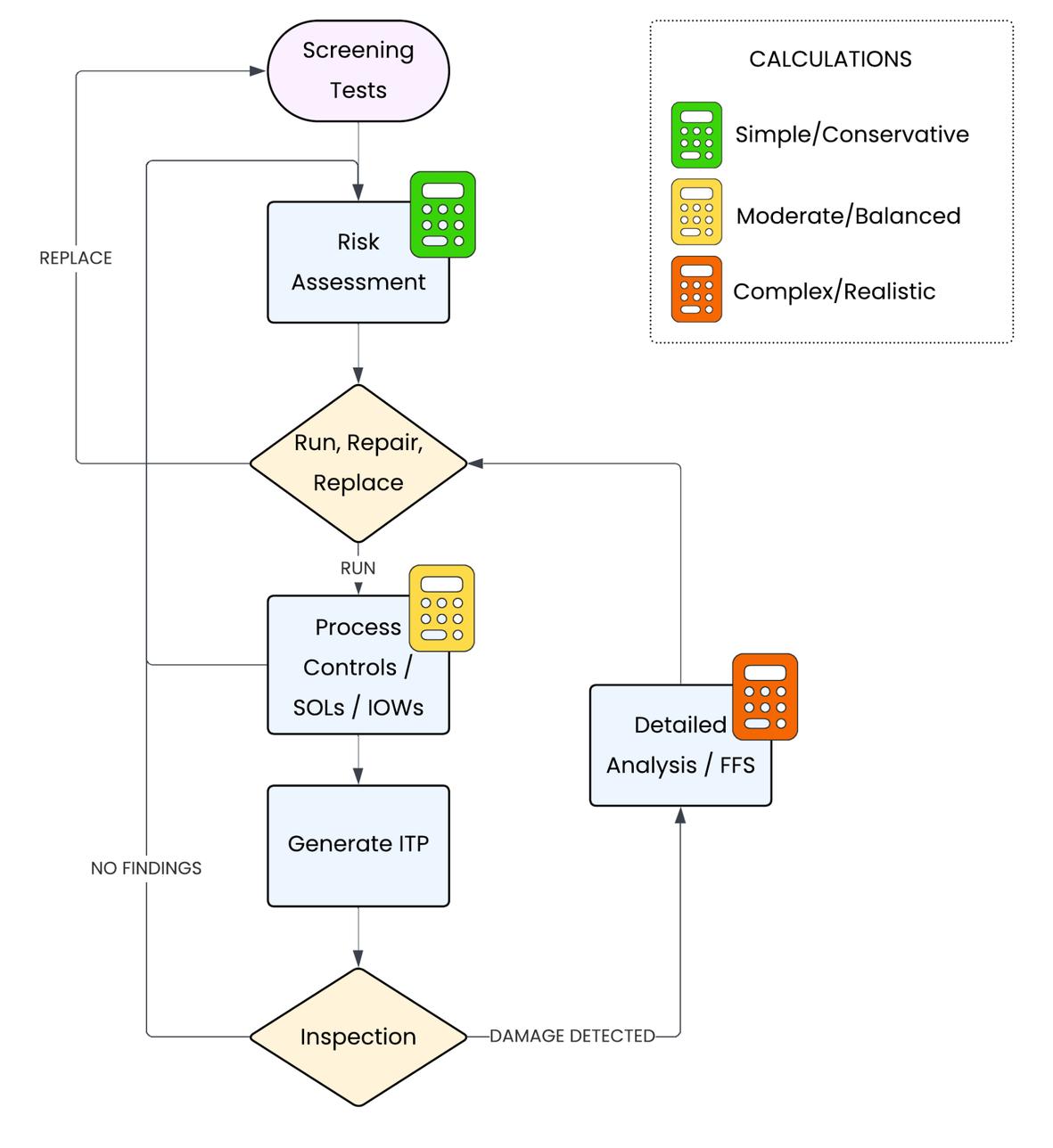
But most of us are not in that situation. For those of us tasked with managing existing equipment, let us examine a thought process; a general approach to managing HTHA in industrial plant. This is shown in Figure 1. Each process and decision is then discussed in the following paragraphs.
The logical first question is: is my equipment at risk of HTHA? The ammonia producers which are most actively managing HTHA tend to be the older plants (circa 1960s/70s), often due to C-0.5Mo or non-PWHT carbon steel equipment. However, those are not the only ones. Current discussions about low-alloy steels, particularly 1Cr-0.5Mo and 1.25Cr-0.5Mo, closely mirror earlier concerns about C-0.5Mo. There have been cases of significant HTHA damage below the Nelson curve for low-alloy steels, not just in the catalytic reforming area of the refining industry but also in the ammonia industry. There have also been questions regarding the unusual shape of the Nelson curve for 1.0Cr-0.5Mo and 1.25Cr-0.5Mo at moderate hydrogen partial pressures, which ammonia producers should be interested in, as their synthesis loops operate in precisely this area of the curve.
For ammonia plants, the equipment most susceptible to HTHA typically includes:
n High-temperature (HT) shift converters.
n Ammonia converters.
n Methanators and exchangers.
n Synthesis loop piping.
n Refractory lined equipment (e.g. primary reformer transfer line or secondary reformer).
n Waste heat boilers (tubesheets and bypass lines).
Most producers have, by now, conducted some form of HTHA screening. These range from simple temperature flags (e.g., hydrogen service > 350 - 400°F) to comparisons with conservatively adjusted Nelson curves. The intent here is speed and simplicity. One warning though: do not exclude equipment from the screening analysis based solely on material grade unless that grade has been positively verified at all critical locations. In one such case, a carbon steel filler metal was found to contain HTHA fissuring in a nominally P11 piping line, illustrating the masking effect of incorrect material assumptions.
Now that we have a shortlist of equipment, the next step is normally to conduct a risk assessment. Some studies evaluate time spent near or above the Nelson curves, potentially leveraging the time-based
September 7 - 11, 2025
Atlanta Marriott Marquis Atlanta, GA USA
Experts from around the world will discuss the latest advances related to the safe production and use of ammonia, case studies, and lessons learned.
6 REASONS TO JOIN US IN 2025
4 Collaborate with over 400 industry attendees from more than 40 countries
4 Learn from others how to promote safety, operability, and reliability at your company
4 Attend high quality technical presentations covering a range of safety and reliability topics
4 Hear a roundtable discussion about industry incidents and near misses
4 Receive an overview of what products are available to improve safety performance
4 Meet vendors, service providers, and exhibitors, offering access to the latest technical innovations
REGISTER BY SEPT. 5 & SAVE
Book your group rate for AIChE Ammonia 2025 and save 15%
Register and learn more about Ammonia aiche.org/ammonia
Interested in Sponsoring at this event? Contact johne@aiche.org
‘incubation curves’ in recent editions of API RP 941. Becht’s method, for example, often starts with simplified life calculations under design or conservative historical conditions, followed by sensitivity studies to refine the risk profile.
One potential outcome of a risk assessment is a decision to replace equipment even without confirmation of damage. The combination of high consequence of failure, uncertainty regarding risk controls, and high cost and complexity of inspecting and managing at-risk equipment has in some cases led straight to replacement without verifying whether HTHA was present. Few could argue: elimination of risk sits at the top of the hierarchy of controls.
More often, though, the goal is to right-size the mitigation strategy – to match inspection and maintenance efforts to the actual risk. This requires evaluating both likelihood and consequence, the latter rarely being less than severe given the potential for brittle fracture in hydrogen service.
Recognising and monitoring the parameters which contribute to HTHA damage is a step that is occasionally poorly implemented or even overlooked. While many of these parameters are beyond control, temperature – and to a lesser extent, hydrogen partial pressure – are the most practical for real-time monitoring. Additional controls, such as temperature ramp-rate limits and minimum pressurisation temperatures (MPTs), are also frequently applied to hydrogen systems and likely consider related mechanisms such as hydrogen-induced cracking (HIC).
The development of integrity operating windows (IOWs) is outlined in API RP 584, 11 and HTHA is cited multiple times in the Annex with specific reference to steam-methane reformers. Historically, these limits were calculated using the Nelson curves, and no doubt they still are, although the progress of damage modelling in recent years has allowed a more refined approach. The ability to analyse substantial amounts of process data can
lead to valuable insights as to which operational ‘modes’ are causing damage, as shown in Figure 2.
The ITP is informed by the risk assessment and revolves around two fundamental, but far from trivial, questions:
n Where, specifically, will we look?
n What surface preparation, equipment, techniques and inspectors will we use?
On the plus side, examination of assets for HTHA has evolved drastically in the past 10 years. Detecting HTHA is relatively common, and experience has shown that a pressure vessel can have HTHA and remain in operation. To date, one entity has reported detection and confirmation of HTHA damage in 32 out of 34 pressure vessels examined.
The American Petroleum Institute (API), jointly with industry experts’ contributions, has provided a detailed non-destructive testing (NDT) protocol for examination of assets for detection of HTHA. The current edition of API RP 941, 12 in Section 6 and Annex E, has valuable information detailing the various NDT techniques, including guidance on the detection limits, sizing, advantages, and limitations of each. Currently favoured is a combination of time of flight diffraction (TOFD), phased-array UT (PAUT) and full matrix capture/total focusing method (FMC/TFM). If we have internal access, high-sensitivity wet fluorescent magnetic particle testing (HSWFMT) is a highly worthwhile addition to specify up front, as well as a careful visual inspection. The reality is that no technique is perfect, so use of supporting and complementary methods are important for confidence in results. Note the information pertaining to HTHA examinations within API 941 has been expanded and now resides in API 586 which will be published mid-year 2025.
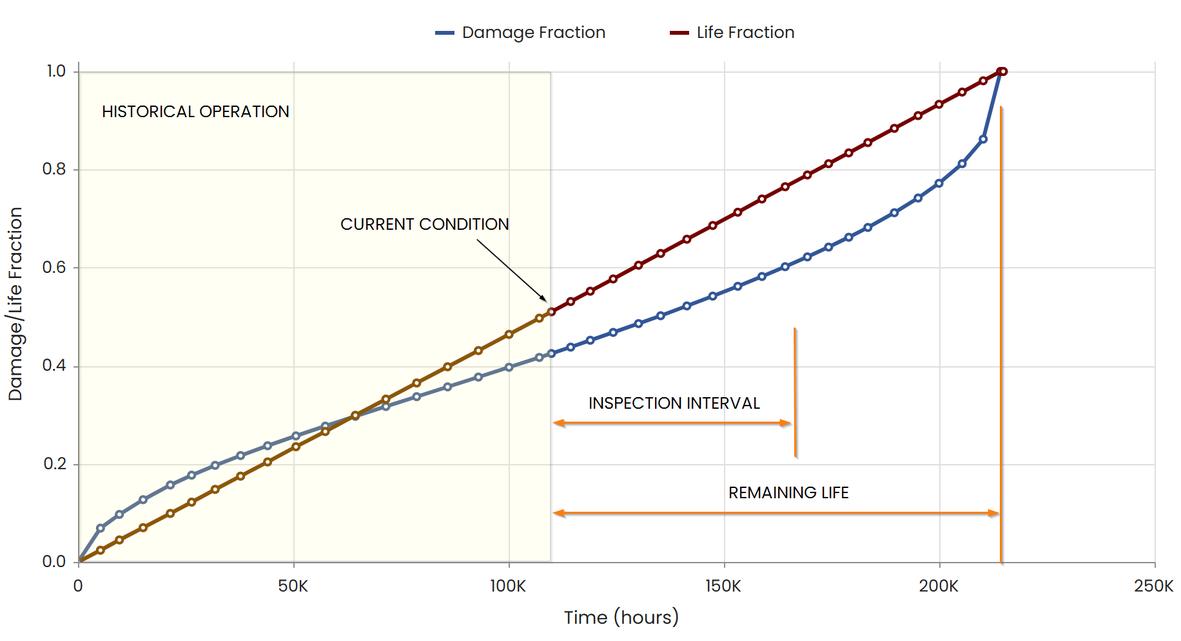
If there are no findings from the planned inspection, then we should update our risk assessment. However, do remember that ‘no findings’ does not necessarily mean ‘no damage’. It can be a useful exercise to assume the worst, i.e. that HTHA damage does exist at the limit of detection, and then to extrapolate that into the future. Becht performs this analysis regularly in order to justify future inspection intervals, as demonstrated in Figure 3. If ultrasonic inspection reveals possible indications, it is wise to follow up with other techniques. As mentioned, HSWFMT is very good at detecting HTHA damage on the internal surface. Similarly, replication can be useful and also provides information about the microstructure, although this can be biased by the presence or absence of decarburisation, which is no longer considered a definitive indicator of HTHA. Importantly however, these techniques are limited to only revealing

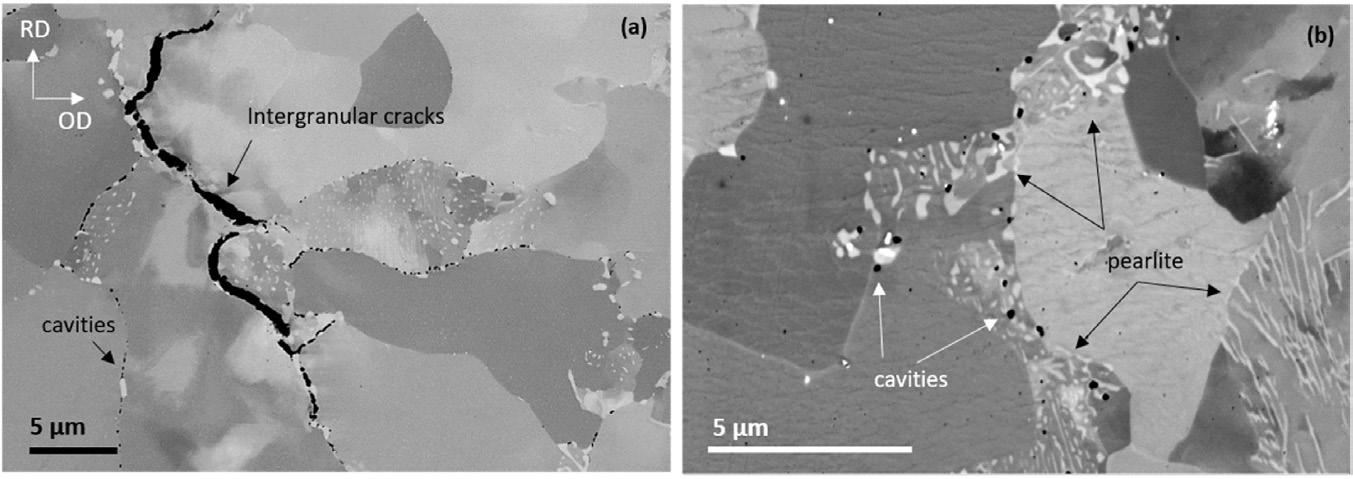
Figure 4. HTHA damage in a C-0.5Mo hydrofinishing reactor. Figure modified from ‘3D FIB-SEM and TEM Characterization of an Industrial 0.5-Mo Low Carbon Steel Affected by High-Temperature Hydrogen Attack’ by Flament et. al., 2024, International Journal of Hydrogen Energy (CC BY 4.0). Image has been cropped.
the condition of the surface. Much better is metal removal (scoop or boat samples), which in many cases can be performed without requiring repair by conducting (beforehand) a separate locally thin area (LTA) analysis. These samples offer us an important ability to understand not just the damage ‘stage’, but also allow us to validate UT sizing efforts and understand the variation as a function of depth which is sometimes lost in our damage classification systems.
Optical micrography is useful, but do heed the warnings given in API RP 941 regarding the potential for etching to obscure damage. In Becht’s experience, there really is no substitute for scanning electron microscope (SEM) analysis. SEM is able to consistently detect very early-stage damage which gives confidence that we are getting an accurate picture of the current material condition at various depths. For example, see the individual cavities which can be resolved in Figure 4, reproduced from recent work by Flament et al. 13
If the inspection findings are ambiguous, especially when there is no access to the internal surface, ask yourself whether HTHA is really the likely mechanism. UT alone often cannot definitively answer this question, but a combination of UT and damage modelling has in the past been able to show that HTHA is not particularly credible, and regardless would not be expected to propagate. Similarly, a repeat inspection with improved surface preparation has also resulted in significant reclassification of results.
If damage is confirmed and believed to be HTHA, there are options. 10 years ago, it would have been difficult to justify returning to service; the appearance of early-stage damage has been known to condemn equipment, prevent restart, or drastically limit subsequent run lengths. Today, in addition to improved inspection techniques, damage models are available to extrapolate from current condition out to end-of-life, effectively generating a remaining life in the same way that we are used to with, for example, an API-579 14 Part 10 creep calculation. We can incorporate process data directly, run sensitivity analysis on certain parameters, consider both ‘volumetric’ and ‘crack-like’ morphologies (HTHA manifests as both), and incorporate appropriate levels of conservatism in the same way we would with a creep analysis. Such analysis can be used to justify continued operation, to set future inspection intervals,
to calculate IOWs or for CAPEX planning.
In fact, as may have been apparent from the flowchart presented back in Figure 1, damage modelling plays a valuable role throughout the HTHA management process, from initial screening and risk assessment, to the definition of operational limits, through to the evaluation of the end of useful life. The real advancement in the last decade or so, however, has been the convergence of improved modelling and inspection methodology. Better inspections have informed better models, and better models have refined our inspection focus. The result is a more powerful, integrated approach; the whole is indeed greater than the sum of its parts.
As an industry, we must remain vigilant about HTHA. We cannot claim to have all the answers, and the risk of complacency remains real. But it is encouraging to see progress in our collective response.
1. NAUMANN, F., “Der Einfluss von Legierungszusaetzen auf die Be-staendigkeit von Stahl gegen Wasserstoff unter hohem Druck (Influence of Alloying Elements on Resistance of Steel to Attack of Hydrogen under High Pressure)”, Stahl Eisen, vol. 58, no. 44, pp. 1239 - 1249, (1938).
2. NELSON, G., “Critical Factors in the Design of Vessels for Operation in High-Temperature Hydrogen Service”, presented at AIChE Meeting, 1949.
3. American Petroleum Institute, “Steels for Hydrogen Service at Elevated Temperatures and Pressures in Petroleum Refineries and Petrochemical Plants, First Edition”, American Petroleum Institute, 1970.
4. SAGÜÉS, A. A. Hall, B.O., and Wiedersich, H., “On the Mechanisms of Hydrogen Attack”, Scripta Metallurgica, vol. 12, 1978.
5. MCKIMPSON, M., and SHEWMON, P.,“Initial Hydrogen Attack Kinetics in a Carbon Steel”, Metallurgical Transactions A, vol. 12a, 1981.
6. SUNDARARAJAN, G., and SHEWMON, P. G., “The Kinetics of Hydrogen Attack of Steels”, Metallurgical Transactions A, vol. Volume 12a, 1981.
7. VAGARALI, S. S., and ODETTE, G. R., “A Model for the Growth of Hydrogen Attack Cavities in Carbon Steels”, Metallurgical Transactions A, vol. 12a, 1981.
8. PANDA, B., “Kinetics of Hydrogen Attack in a 1020 Steel”, Ph.D Dissertation, The Ohio State University, Columbus, OH, 1982.
9. SHIH, H., and JOHNSON, H., “A Model Calculation of the Nelson Curves for Hydrogen Attack”, Acta Metallurgica, vol. 30, 1982.
10. US Chemical Safety and Hazard Investigation Board, “Catastrophic Rupture of Heat Exchanger”, 2014.
11. American Petroleum Institute, “API Recommended Practice 584: Integrity Operating Windows”, American Petroleum Institute, 2014.
12. American Petroleum Institute, “API Recommended Practice 941: Steels for Hydrogen Service at Elevated Temperatures and Pressures in Petroleum Refineries and Petrochemical Plants - Eighth Edition; ERTA 1: June 2016; ERTA 2: January 2018; ADDENDUM 1: AUGUST 2020”, American Petroleum Institute, 2020.
13. FLAMENT, C., GILLIA, O., CHEVREAUX, N., DAVID, T., SOULAS R., NEVÉ, C. L., GOTI, R., and ANDRIEU, E., “3D FIB-SEM and TEM characterisation of an industrial 0.5-Mo low carbon steel subjected to high temperature hydrogen attack”, International Journal of Hydrogen Energy, available https://doi.org/10.1016/j. ijhydene.2024.05.085 [CC BY 4.0], 2024.
14. American Petroleum Institute, “API 579-1/ASME FFS-1 Fitness-ForService”, American Petroleum Institute, 2021.

Juregen Neumann and Brad Cook, Sabin Metal Corp., USA, provide a comprehensive overview of the critical role of platinum-rhodium catalyst gauzes in enabling the industrial synthesis of nitric acid in fertilizer production.
latinum-rhodium catalyst gauzes are crucial for industrial processes such as nitric acid production by the Ostwald process and hydrogen cyanide production by the Andrussow process. The main application is the catalytic oxidation of ammonia to nitrogen oxide, an important step in the production of fertilizers.
The refining of the spent platinum-rhodium catalyst gauzes at the end of their service life is a critical process for maximising nitric acid production efficiency and minimising costs. This process recovers the valuable platinum group metals and contributes sustainably to minimising resource depletion.
In nitric acid production, platinum and rhodium form volatile oxides such as PtO2 and RhO2, which are carried out with the process gas stream from the gauze catalyst and lead to significant precious metal losses from the catalyst. The reclamation process is crucial as platinum and rhodium are expensive and their loss significantly impacts the overall economics of nitric acid manufacturing. Recovery is achieved by cleaning the downstream equipment, whereby the precious metals are recovered in the form of dust or sludge, or by destructive cleaning from end-of-life equipment.
Particularly in high-pressure plants, a so-called hot gas filter is used at the end of the heat train to filter out the precious metal particles, which are already present in elemental form at the prevailing process gas temperatures. This measure also contributes sustainably to minimising precious metal losses and optimising the economic efficiency of the process.
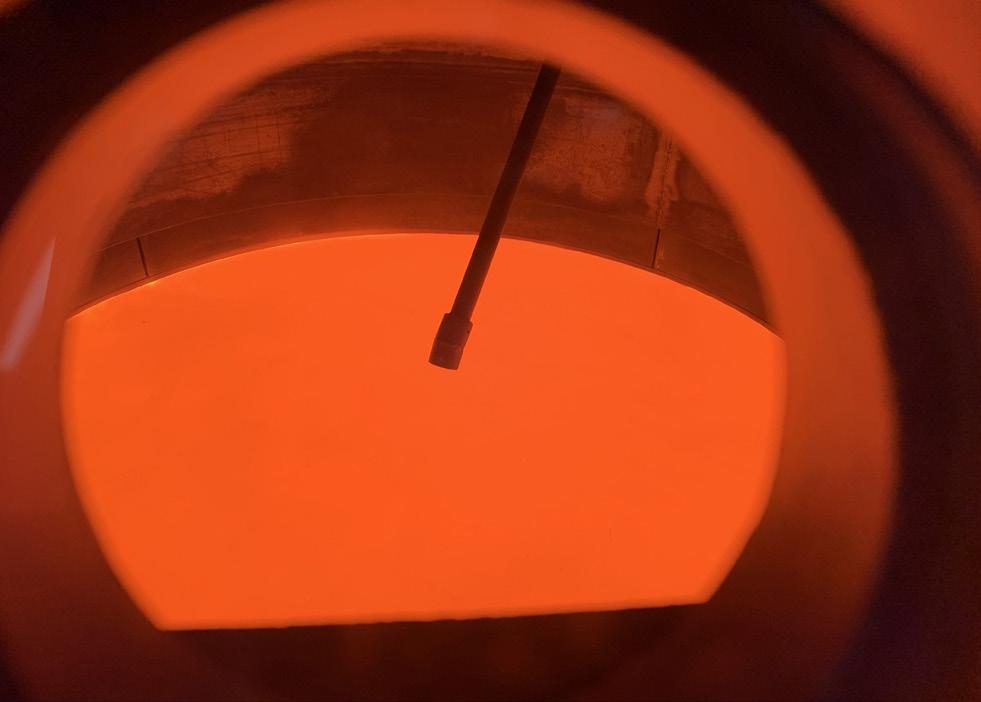
Platinum-rhodium catalyst gauzes are primarily used in the Ostwald process, which is a key step in the production of nitric acid. Specifically, they catalyse the oxidation of ammonia to form nitric oxide at temperatures typically ranging between 800 - 950°C (1472 - 1742°F). At these high temperatures, the catalyst gauzes glow, as shown in Figure 1. This nitric oxide is then further processed to produce nitric acid on a large industrial scale, a crucial chemical in the manufacturing of nitrogen fertilizers and other industrial products.
Additionally, platinum-rhodium gauzes are used in the Andrussow Process, the primary industrial method for producing hydrogen cyanide (HCN). It involves reacting methane, ammonia, and oxygen over a platinum-rhodium catalyst at high temperatures ranging from 1000 - 1200°C (1832 - 2192°F). Hydrogen cyanide is primarily used as an industrial chemical for fumigation, chemical synthesis, and producing synthetic fibres, transparent plastics, dyes, and pesticides.
Further application of platinum-rhodium catalyst gauzes can be found in the manufacture of other chemical intermediates such as caprolactam and hydroxylamine.
What all applications of platinum-rhodium gauzes have in common is that they involve high-temperature reactions of a process gas at high gas velocities.
The use of a gauze structure for the catalyst, made of woven or knitted thin platinum-rhodium wires, results from the requirements for the flowing through capability of the catalyst and the generation of the lowest possible resistance to the process gas.
In the platinum-rhodium gauze platinum is the main component, with a small amount of rhodium which is added to improve its durability and efficiency. The reason why this catalyst is not a platinum-rhodium coated catalyst, but a solid catalyst, is the high reaction temperature at which the catalyst is used. With a coated support, the high operating temperatures of the catalyst would inevitably lead to sintering of the platinum-rhodium coating and thus to the premature deactivation of the catalyst.
While the gauze catalyst is simply added to an acid solution to dissolve it, the precious metal-containing dust and adhering agglomerates must first be recovered from the downstream units through cleaning processes.
Nitric acid plant cleaning involves both destructive and non-destructive methods to recover platinum group metals (PGMs) from the plant’s components and equipment. Non-destructive cleaning of nitric acid plants focuses on maximising PGM recovery while minimising disruption to plant operations. Non-destructive methods use non-aggressive techniques like mechanical cleaning and chemical cleaning with mild agents, ensuring both efficient PGM recovery and safe plant operations.
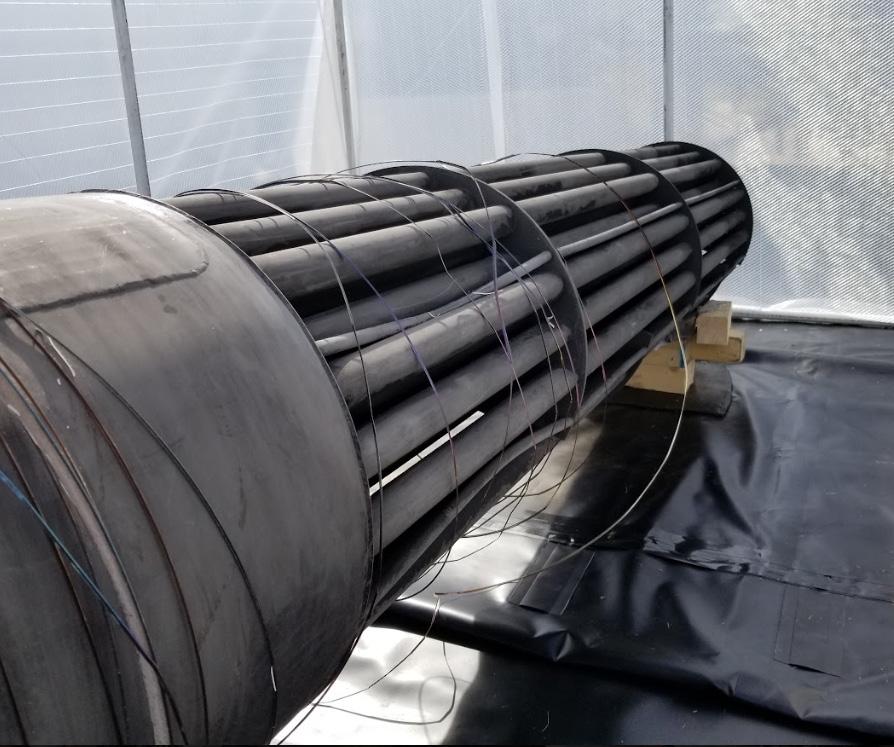
Hydroblasting, also known as high-pressure water jetting, is an industrial cleaning technique that uses highly pressurised water to effectively removes PGM oxide deposits without damaging plant equipment, unlike more aggressive methods. Chemical cleaning uses mild chemicals to dissolve the PGM oxides to enable their recovery while minimising the impact on plant infrastructure. Figure 2 shows a heat exchanger after such a non-destructive cleaning using hydroblasting and chemical cleaning.
Destructive cleaning of nitric acid plants is a process for recovering precious metals from plant components that have reached the end of their service life or are beyond repair.
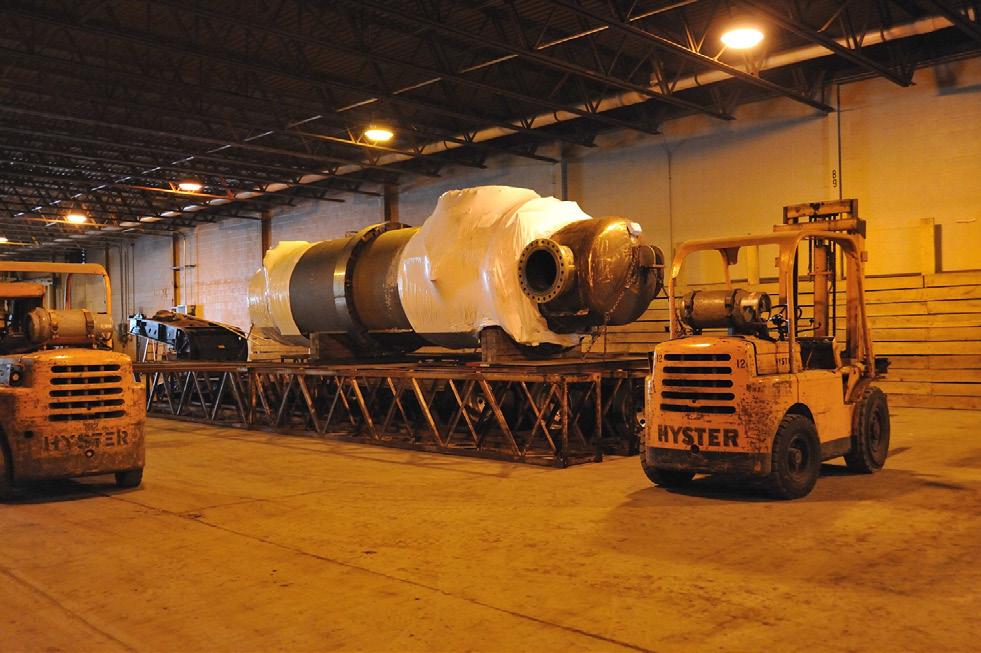
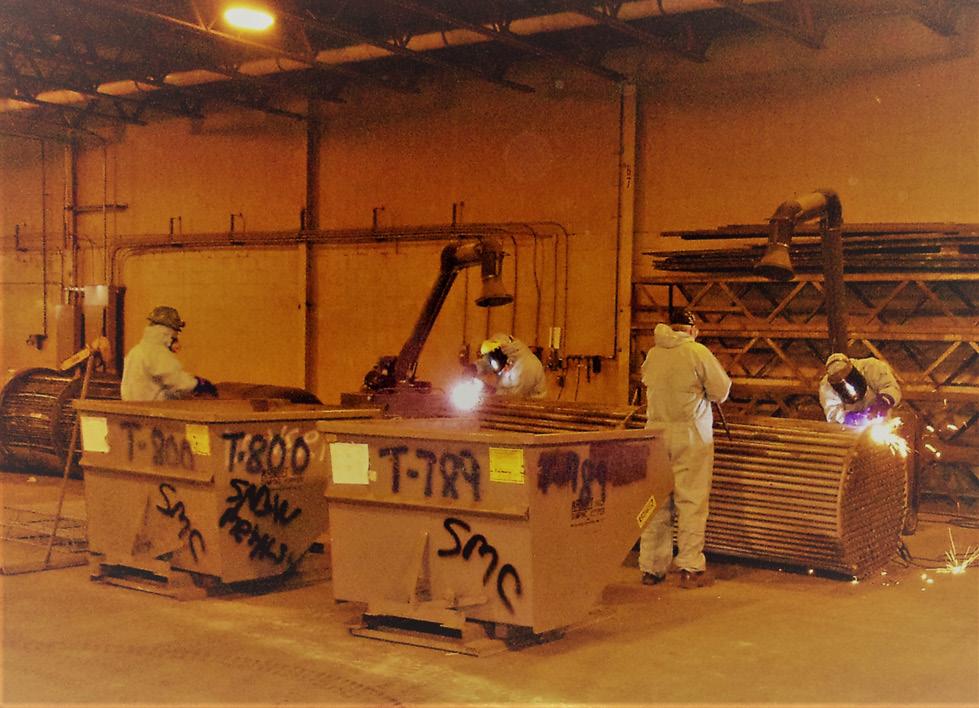
Destructive cleaning is much more comprehensive than non-destructive cleaning and involves disassembly and subsequent more aggressive chemical treatment of the components, ensuring 100% recovery of the PGMs. Figures 3 and 4 show the delivery of a heat exchanger for destructive cleaning at the Sabin plant in Scottsville, New York, US, and its subsequent disassembly.
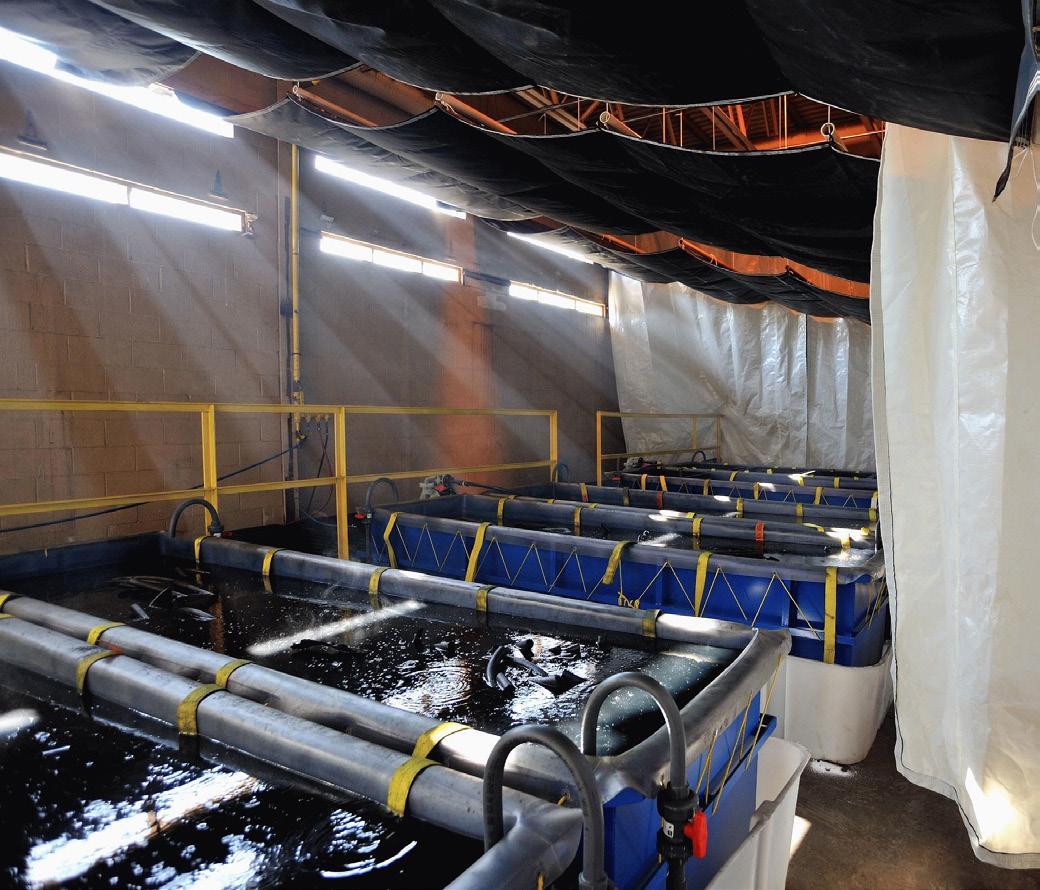
Following the disassembly of the shell and tube heat exchanger, the tube sections containing precious metals, as well as collected dust from the heat exchanger, are placed in the leaching baths (see Figure 5) in which the solids are dissolved from the tube surfaces.
The treatment of the refining material differs fundamentally according to the precious metal content in the processing batches. The spent catalyst gauzes are considered ‘high-value scrap’, which only contains impurities of non-precious metals. The catalyst gauzes can therefore be added directly to the hydrometallurgical
treatment, a metal recovery process that uses aqueous solutions to dissolve and recover the recycled precious metals. It involves several key steps: leaching (dissolving the metal), concentrating and purifying the solution, and finally, metal recovery.
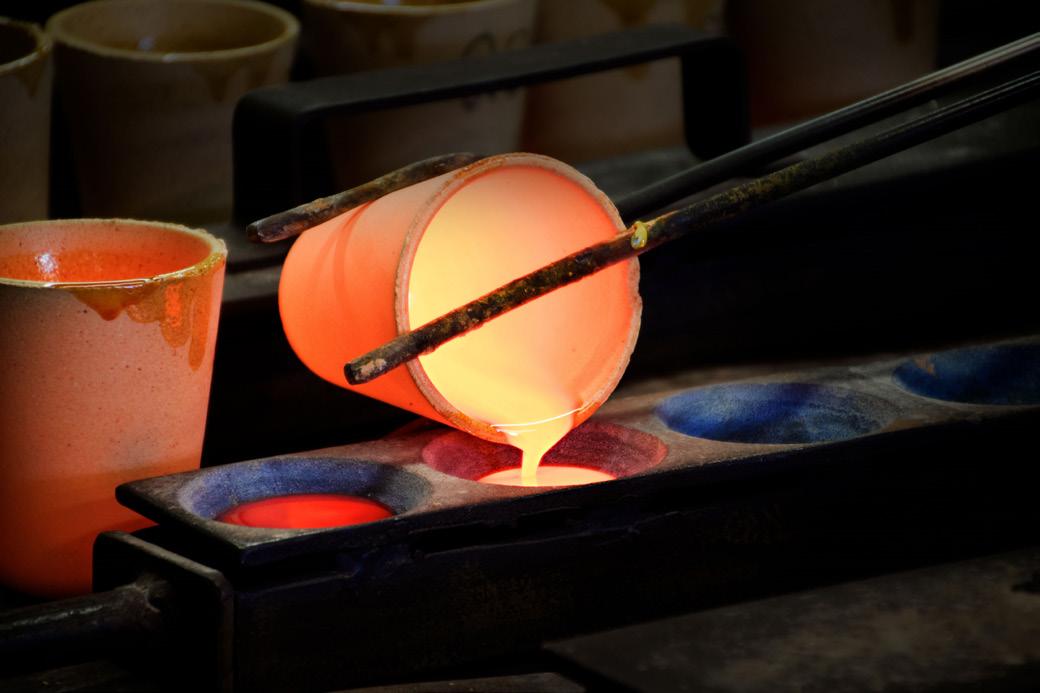
The situation is different with dust and sludge, the ‘low-grade scrap’ from plant cleaning or destructive cleaning with a relatively low precious metal content, which is first processed pyrometallurgically. Pyrometallurgical processing, particularly with copper smelting, is a method for recovering PGMs from PGM-containing dusts and sludges. This process involves high-temperature treatments like smelting, roasting, and refining to separate and recover the desired metals, often including copper. Copper can act as a metal collector, forming alloys with PGMs during the smelting process. This allows for the selective concentration of PGMs in copper-containing fractions. During the subsequent electrolytic copper refining, the enriched precious metals are released as ‘high-value scrap’ and can be separated hydrometallurgically.
The most important steps here are sampling and analysis (see Figure 6), which determine the PGM content of the batch to be refined, as well as the actual pyrometallurgical and hydrometallurgical treatment of the customer material in order to separate and purify its precious metals.
In order to scientifically determine the PM value within a given batch of precious metal-bearing materials there are three absolutes: precise weighing, proper sampling, and accurate analysis.
The fundamental principle of sampling involves reducing large quantities of precious metal-bearing materials into smaller, representative samples. Sampling therefore begins by homogenising the customer materials as much as possible so that the concentration of precious metals and other constituents is evenly distributed. A properly drawn sample of a homogeneous mass contains an accurate ratio of the precious metals content in the overall matrix. Samples are taken for the customer and the PM refiner, as well as for umpire and reserve.
In every case, pre-sampling processing and preparation methods must be specifically tailored to the customer’s material and the precious metal(s) it contains. The goals of processing and preparation include both constitutional uniformity, defined by the similarity of each particle, and distributional uniformity,
35 Years of manufacturing excellence
From stand-alone machines to automated full factory solutions EMT has proven for over 35 years to be the right partner for all your blending, bagging and handling machines in the fertilizer industry. Check our site today how we can assist you find the best solutions for your situation, scan the QR-code or go to www.emt.tech
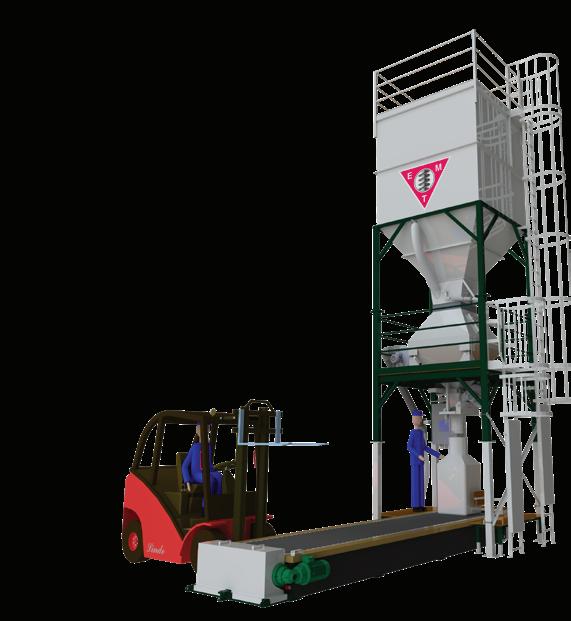
• For big bags/Jumbo bags of 500 to 1250 kg
• Capacity 50 to 70 tons per hour
• Systems can be combined to an output of 120/180 tons per hour.
• Options include stainless steel construction or containerized units.
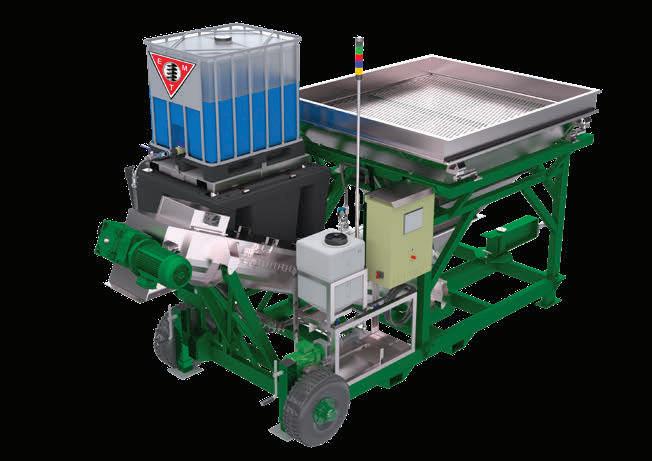
• Capacities from 20 to 250 tons per hour
• Stand-alone or portable system
• 50-250m3 per hour
• Automatic dosing process
• Options for built-in conditioner & liquid heating
• Continuous blending process
• Unlimited number of weighing hoppers
• Capacity from 20 to 300 tons per hour
• Fully automatic computer controlled mixing process
which is defined by how well mixed the particles are overall. The challenge of proper sampling is to process and prepare the material enough to create this uniformity. A sample can then be
drawn accurately and precisely to correctly represent the value of the client material.
In general conversation, the words accuracy and precision may be used interchangeably, but they have different meanings in the sampling and laboratory context.
High accuracy is getting close to the centre of the bull’s eye every time. In the lab setting this would translate to repeatedly getting the platinum assay close to correct. High precision is getting a very consistent ‘shot group’ on your archery target, or a set of assay results that are very close to one another. The high precision/low accuracy laboratory is in effect precisely wrong. In sampling and assay, both accuracy and precision are necessary.
In those cases where organic contamination has become excessive, thermal treatment can reduce the contaminants, organics, and moisture. Various particle size reduction techniques may be employed to remove foreign matter or more typically, to create a dry and free flowing material that easily flows to the sampling system.
Blending has been found to be of dubious value, and much greater success is achieved using a sampling system that utilises a multiple aliquot philosophy to achieve statistical precision. The crucial aspects of a top-notch sampling system:
n The consistent and constant flow of material. As the saying goes, ‘transform the material into a one-dimensional object: a straight line’.
n The entirety of the lot must go through the system. For true and complete accuracy, 100% of the customer lot must be sampled.
n Draw many small samples in equal amounts, at regular intervals.
n The smaller the device, the smaller the particle size.
n The entire sampling system must be thoroughly cleaned before to prevent cross-contamination, and thoroughly cleaned afterward to make sure the client receives every gram of weight back.
To accurately determine the precious metal content of customer material, companies, such as Sabin, use fire assays and other proven techniques. Fire assay, a 2000-year-old technique, has proven itself industry-leading as the most precise analytical method. Due to its complexity, many laboratories rely primarily on wet, instrumental, and gravimetric techniques for sample analysis.
However, scientists and laboratory staff are highly conversant with fire assay. This technique should be applied to every sample that passes through the laboratory, and results should be validated and confirmed using numerous additional methods to determine the true value of the client’s return.
What is easily overlooked is that base residues remain in the refining process. After refining customers’ precious metals, hazardous and non-hazardous waste can be converted into safe products that can be safely disposed of in accordance with local and federal environmental regulations.
After Sabin completes its refining, what is left of the material is transported to a zero-discharge facility in Cobalt, Ontario, Canada. There furnace slags are reprocessed and the last hazardous and non-hazardous waste is turned into harmless products that can be safely disposed of in accordance with Canada’s federal and provincial environmental regulations.

Margery Ryan and Iain Hepplewhite, Johnson Matthey, UK, examine how the recyclability of PGMs supports industrial use, and why the reliance on significant quantities of platinum group metals (PGMs) in nitric acid production is not a bottleneck to fertilizer production.
Often thought of as precious metals, the platinum group metals (PGMs) are in fact primarily industrial metals: due to the number of technologies enabled by their unique properties, they feature in numerous supply chains and sectors across the modern economy. One such example is in the production of fertilizers, where Johnson Matthey supply layers of catalyst gauzes (Figure 1) made from knitted PGM fine wire (Figure 2) as well as custom catchment or getter gauzes in the oxidation of ammonia to produce nitric acid.
The PGMs are geologically rare compared to more ‘earth abundant’ metals such as nickel. How then can they enable a wide variety of industrial applications? This article examines how the recyclability of PGMs supports industrial PGM use, and why the reliance on significant quantities of PGMs in nitric acid production is not a bottleneck to fertilizer production.
Mined in relatively small quantities, PGM availability for such large scale applications is boosted by routine recycling. Recovery and reuse are typical of most industrial uses of these metals, substantially lowering the demand that these applications place on newly mined supplies and allowing for much larger growth in PGM use than would otherwise have been the case. Circularity in PGMs has been ongoing for decades, driven by the value of the metals and aided by the fact that the properties of PGMs are unaffected by recycling, regardless of how many lifecycles they experience. PGMs are now among the most highly recycled materials in the world, and it is estimated that almost 60% of PGMs used on newly

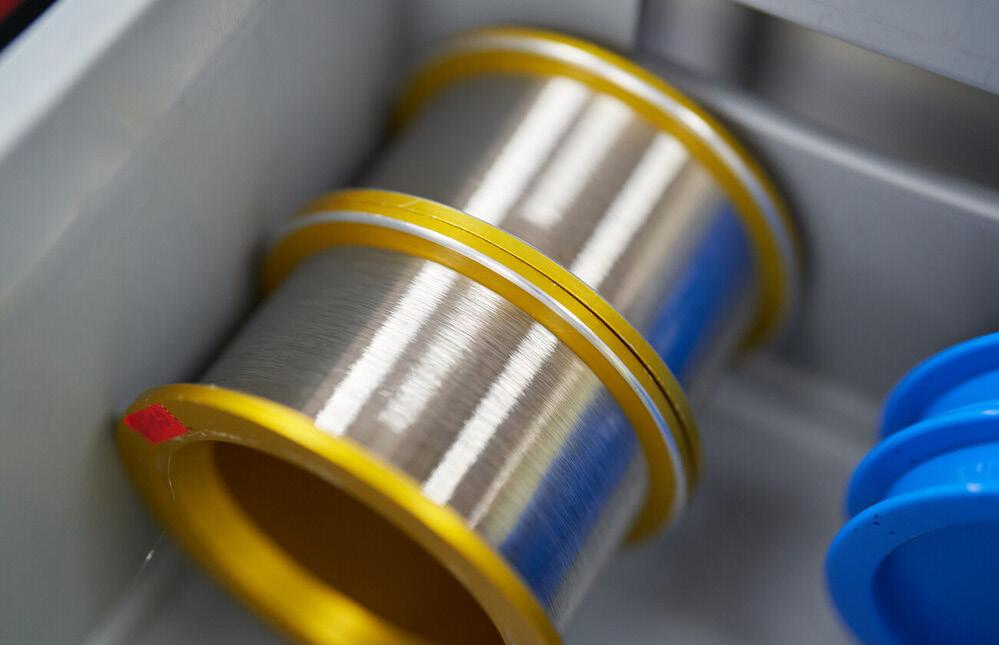
fabricated products and catalysts worldwide every year are sourced from recycling, rather than from mining.1
Some of this occurs in an ‘open loop’, where specialist collectors target PGM-containing scrap from end-of-life consumer equipment (such as electronics and vehicles) and resell the recovered metal for profit. However, it can be estimated that approximately three-quarters of PGM recycling takes place in ‘closed loop’, where the owner of the spent material seeks to recoup and retain their initial investment, typical of industrial PGM catalysts. By sending spent catalyst for recycling, the recovered PGM can be re-used for the replacement catalyst charge, reducing the need to purchase new metal and lowering operating costs, often dramatically. While some losses during use are typical, and no form of real-world processing is perfect, PGM recycling rates in many applications are very high.
Global PGM recycling is served by a mature network of specialist collectors, processors, and refiners, who may collaborate to provide the customer with an end-to-end recycling service. Alternatively, the provider of the PGM product to the customer can also act as the recycling service provider. This is the case for Johnson Matthey, which is the largest secondary refiner (recycler) of PGMs in the world, and a provider of PGM catalyst gauze.
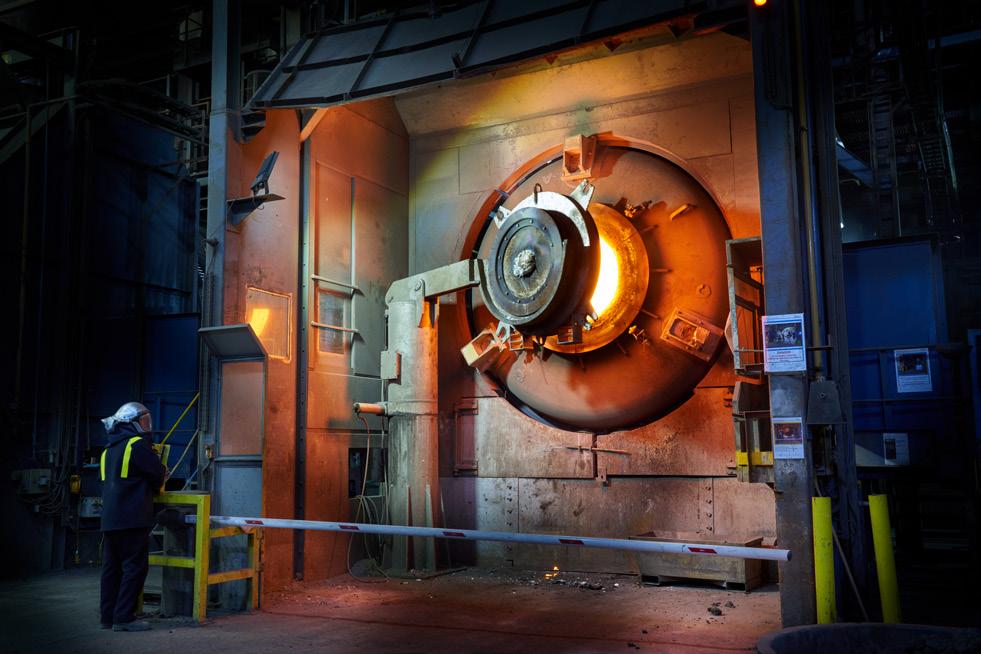
PGM processing and refining is technically complex, so tends to take place in large, centralised facilities that process spent material from all over the world, leveraging economies of scale to minimise costs (Figure 3). This global network is integrated and effective, meaning that customers can source recycling services no matter where they are located in the world.
This model of collaboration and centralisation is key to enabling cost-effective PGM recycling. By adopting a degree of specialism coupled to scale, the PGM industry has lowered overall processing costs, making recycling of a wide variety of end-of-life materials viable, even when the material is low grade (i.e. contains a small percentage of PGMs).
Nitric acid production is a prime example of a PGM application that benefits from the recyclability of PGMs. By the end of a campaign, while catalyst packs typically lose around half of their installed PGM content, much of the lost metal can be recovered using a catchment or ‘getter’ gauze. The catalyst remaining on both the original and catchment gauze at the end of the campaign is sent for recycling.
Metal that is not captured by the catchment gauze typically deposits on plant heat exchangers. This metal can be recovered during periodic clean downs, typically either when the deposited metal begins to impact heat recovery, or when the value of any recovered metal compensates for the cost of this cleaning operation.
As described previously in this article, closed-loop recycling of spent catalyst gauze, catchment gauze, and metal recovered from plant clean-downs ensures that most of the PGM that is originally purchased for nitric acid production is retained and reused. This means that ongoing metal costs are dramatically lower than they would be if recycling was absent or inefficient.
However, as some losses still occur, periodic purchases of ‘top-up’ metal are usually necessary. For new plants or plant expansions, new PGM must be purchased for the initial gauze


Omaha, Nebraska, USA
12-17 October 2025
installation. It is therefore relevant to examine the availability of PGM supply for top-up or capacity expansion purchases.
Here, too, recycling plays a key role. The largest single source of recycled (or ‘secondary’) PGMs to the market today is catalytic converters recovered from end-of-life vehicles, which are recycled in open loop. Once refined, this metal is then available for purchase, alongside refined PGMs supplied from mining, also referred to as ‘primary’ supplies (Figure 4).
All internal combustion engine vehicles, including hybrids, require catalytic converters, which rely on PGM catalysts to treat the pollutants in the vehicle exhaust. Recent years have seen record quantities of PGMs used on new vehicles as pollutant emission regulations have been tightened around the world.2
These stringent emissions limits mean that PGM use in the automotive industry will be robust for years to come, despite the increasing uptake of battery electric vehicles (BEVs) which do not need catalytic converters. Vehicles typically remain on the road for approximately 20 years – although lifetimes can be much shorter or much longer. As a result, catalytic converters contained with the global vehicle fleet constitute a large ‘urban mine’ of PGMs that will keep producing for decades, even as PGM use on catalytic
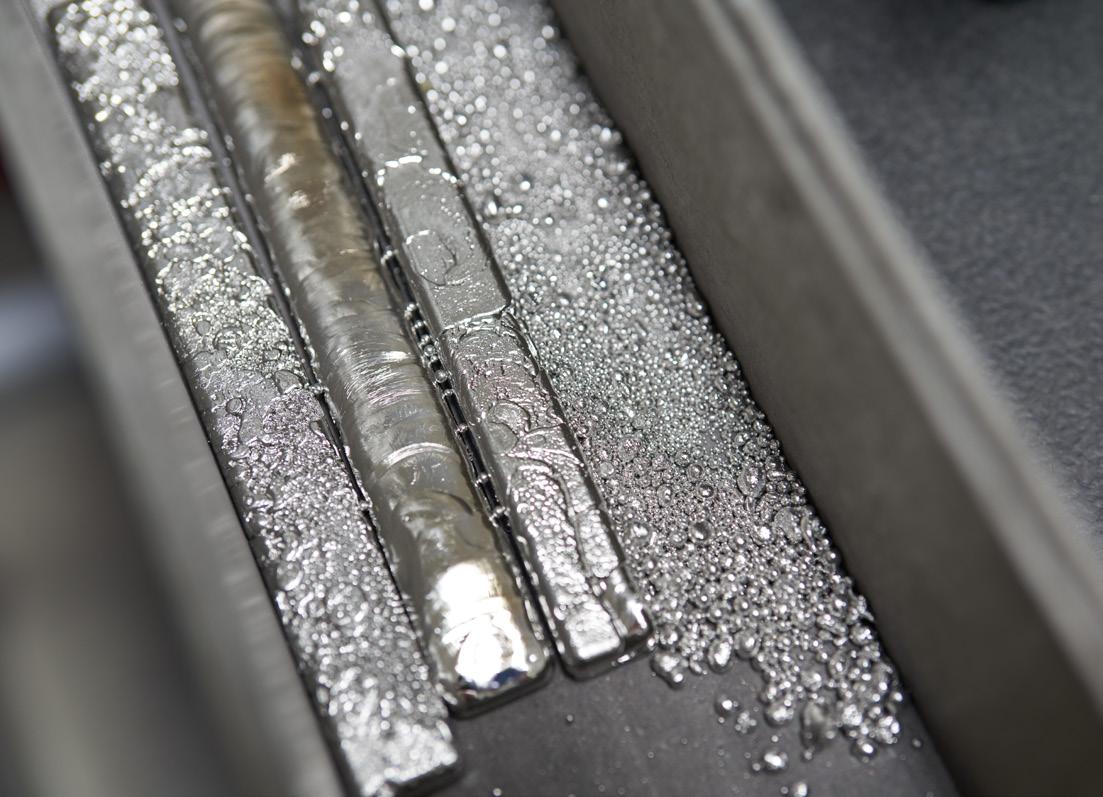
Figure 4. Refined PGM bar and grain to be processed further into products. Primary and secondary (recycled) PGMs are indistinguishable once refined.
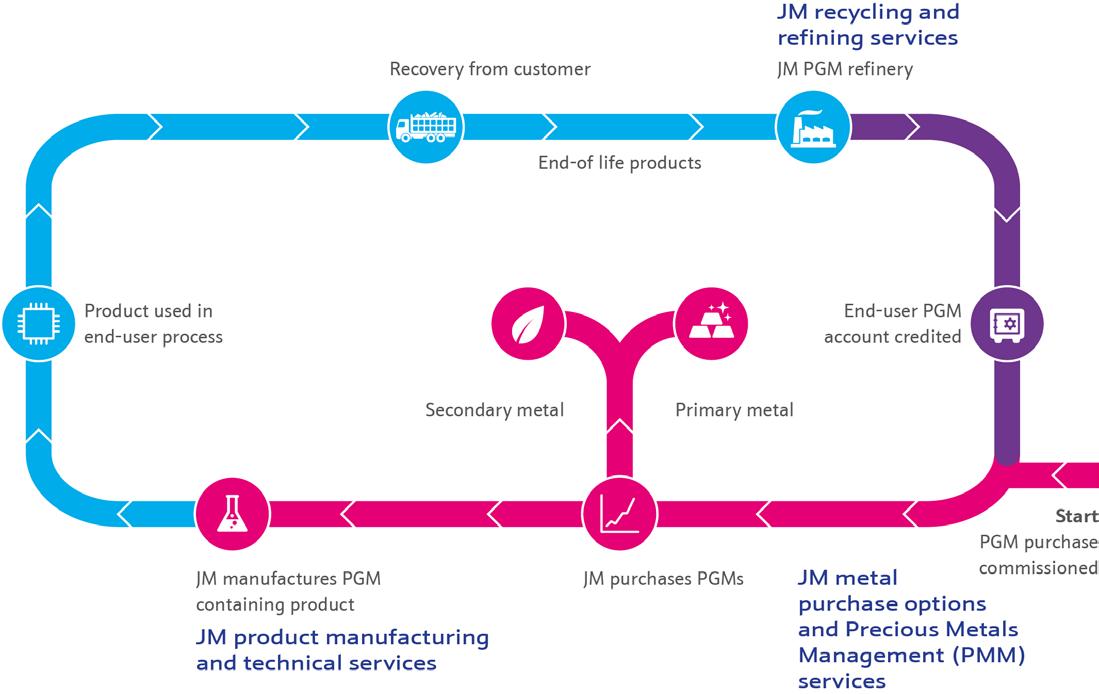
Figure 5. Johnson Matthey’s full service offer for platinum group metals (PGMs).
converters on new vehicles eventually declines through BEV uptake.
This bolsters PGM availability and locks it in for the future, alongside well-established mined supplies of PGMs: most PGM mining takes place in South Africa, which hosts a vast deposit of these metals – alone it is sufficient to support decades of ongoing mining. The PGMs used in catalytic converters are platinum, rhodium, and palladium, which are the same metals used in nitric acid catalyst and catchment gauzes.
The global warming impact of both primary (mined) and secondary (recycled) PGMs are assessed by the International Platinum Association (IPA).3 The data is collected directly from IPA member companies covering 95% and 60% of primary and secondary global supply respectively, and are therefore seen as authoritative. This assessment indicates that the carbon impact of recycled platinum, palladium, and rhodium is approximately 97% lower than newly mined metal. The widespread use of recycled PGMs – whether in open loop or closed loop –therefore significantly lowers their carbon footprint.
That said, even on the primary side the PGM industry is seeking to lower its impact. The carbon footprint of primary PGMs is predicted to decrease significantly (by between 30 - 60%) in the next five years due to the decarbonisation of electricity generation in South Africa, the world’s biggest supplier of primary PGMs.4 Many PGM mining companies themselves are making significant investments in renewable energy capacity.
Through effective recycling and management, driven by the value of these metals, purchase of PGMs in the form of catalyst gauze can be viewed as investment in an asset that will remain useful for many lifecycles.
The PGM industry has a long history of supporting industrial users of PGMs, from purchase of metal or product, through recycling and reuse, and management of metal accounts. Johnson Matthey combines all of this (Figure 5), to provide a ‘one stop shop’ for PGMs.
The large scale application of relatively rare precious metals in such a vital industry as fertilizer production may at first glance appear unwise. In fact, as discussed, it is the opposite: PGMs are irreplaceable as highly effective catalysts for nitric acid production and bring significant further advantages in their routine circularity of use, their beneficial availability profile, and their mature supply chains and recycling networks.
1. Johnson Matthey white paper 2025: Reclaiming the future: PGM insights for a circular economy: https://matthey.com/ documents/161599/3147297/JM_Circularity_Whitepaper.pdf/cb330e5c3473-f6ad-718f-a766b9287555?t=1747663922387.
2. Johnson Matthey PGM Market Data, May 2025: https://matthey.com/ products-and-markets/pgms-and-circularity/pgm-market-data.
3. IPA Study “LCA on the global production of Platinum Group Metals, Platinum, Palladium, Rhodium, Iridium, and Ruthenium”, reference year 2022, February 2025. Performed by Sphera. https://ipa-news.com/ index/sustainability/environmental/life-syslce-assessment.
4. IPA LCA 3 FactSheet, https://ipa-news.com/assets/contentimg/ sustainability/ipa-lca-3-fact-sheet-final-april-2025.pdf; [Accessed 15.05.2025].
Kjeld Boersma, Istec, the Netherlands, highlights the positive impacts of safety and operational continuity in fertilizer plants with speed and vibration monitoring.
In fertilizer production plants, rotating equipment is fundamental to nearly every process step.
Equipment such as steam turbines, ammonia and nitric acid compressors, rotary granulators, and gear-driven pumps are required to run continuously, often at high speeds and under heavy loads. These machines are subject to extreme mechanical, thermal, and chemical stress. If not monitored and maintained carefully, their failure can lead to unplanned shutdowns, disrupted chemical reactions, loss of product batches, and hazardous situations involving flammable or toxic substances such as ammonia, urea, or nitric acid.

To reduce these risks and ensure consistent plant performance, the integration of predictive maintenance solutions is essential. Speed monitoring, vibration analysis, and overspeed protection systems enable operators and maintenance teams to maintain control over machine health and behaviour. These systems form the foundation of predictive maintenance strategies, allowing teams to identify developing mechanical or operational issues before they evolve into critical failures.
Rather than relying solely on scheduled inspections or reactive maintenance, fertilizer plants benefit from a condition-based approach. Data gathered through speed and vibration monitoring
provides insights into system dynamics, load conditions, and early indicators of faults. Vibration monitoring, in particular, is used to determine the condition of the machine by analysing its dynamic behaviour, making it possible to detect if something is wrong before it escalates into serious damage. Speed monitoring ensures operational conditions remain within expected parameters and detects issues such as reverse rotation, standstill, or underspeed. Overspeed protection systems, in contrast, serve as safety-critical systems that automatically prevent machines from operating in unstable regimes. Together, these technologies improve equipment reliability, ensure safe operating conditions, and increase overall plant availability.
All rotating machines generate vibrations during normal operation. However, when vibration amplitude, frequency, or pattern changes over time, it can indicate the early stages of mechanical wear or structural imbalance. In fertilizer plants, such changes may result from misalignment between rotating and stationary components, loosened bolts or couplings, shaft imbalance, progressive bearing wear, gear tooth damage, or cracking in rotors or impellers. Left unaddressed, these conditions often lead to more severe damage, including mechanical seizure, excessive heat buildup, or component failure.
By continuously or periodically monitoring vibration signatures, maintenance personnel can detect these patterns and schedule corrective interventions in a planned manner. This approach avoids the risks associated with running machines to failure, such as emergency shutdowns, uncontrolled chemical releases, or pressure build-up in process lines. In environments with hazardous or regulated substances, predictive intervention is also an essential component of safety compliance.
In addition to real-time condition monitoring, historical vibration data plays a key role in asset management and reliability improvement. By storing and analysing vibration trends over extended periods, engineering teams can identify recurring fault signatures, evaluate the effectiveness of maintenance actions, and refine equipment maintenance intervals. Comparing long-term data across similar machines also supports standardisation of best practices and can inform purchasing and design decisions for future equipment upgrades or replacements. This structured use of vibration history transforms isolated sensor data into strategic insights that support continuous improvement and reduced lifecycle costs.
While vibration monitoring is often focused on critical machinery due to the high risk of failure and operational impact, there is a growing emphasis on sustainability and lifecycle management across all plant assets. As a result, fertilizer producers are increasingly seeking solutions that can extend the operational life of less critical machinery in a cost-effective way. Systems like Istec VibSys® offer cloud-enabled vibration monitoring capabilities that support both online and periodic measurement strategies. As a modular system, it is also well-suited for less critical machinery, offering flexible deployment and seamless integration with existing monitoring structures.
Rotational speed is a key operational variable in fertilizer plants. Speed monitoring systems are not intended to maintain optimal
operating speed, but to detect abnormal and potentially hazardous conditions that can affect rotating machinery. These systems identify issues such as reverse rotation, standstill, or underspeed conditions that may not be detected through vibration monitoring alone but can still lead to safety risks or process disruptions if left unaddressed.
Reverse rotation is one such abnormality. If a turbine or compressor starts rotating in the opposite direction, it can cause mechanical damage to couplings, seals, and gear systems, and may even reverse the flow of process chemicals. This is particularly critical in units such as feed pumps or centrifuges, where flow direction is tightly linked to system safety and functionality.
Standstill detection, also known as creep monitoring, is another important condition to identify. It occurs when a machine, typically in a standby or shutdown state, continues to rotate slowly due to process backflow or residual mechanical force.
Even minimal movement can pose a danger to personnel working nearby or preparing the machine for maintenance.
Speed monitoring allows operators to confirm that the machine is at a true standstill before issuing safety clearance.
Underspeed events, in which a machine runs below its minimum functional threshold, can cause pressure drops, insufficient mixing, or improper chemical reactions. For example, in an ammonium nitrate production line, an underspeed fan or pump may result in suboptimal cooling or flow rate changes, ultimately leading to off-spec product or process instability.
By continuously tracking rotation speed, speed monitoring systems help detect operational anomalies like reverse rotation, standstill, and underspeed that may otherwise go unnoticed. These systems are not intended for process optimisation but for identifying unsafe or abnormal conditions. Their role is relevant for both high-speed critical assets and lower-speed supporting machines, providing an added layer of safety oversight.
Overspeed conditions arise when rotating equipment exceeds its maximum rated speed. This may result from a sudden loss of load, malfunction in the speed control system, software errors, or unintended control logic execution. At excessive speeds, the kinetic energy of rotating parts increases rapidly, exerting extreme centrifugal forces on all internal components. This can lead to deformation, bearing destruction, coupling separation, or rotor fragmentation.
In fertilizer plants, these events pose severe risks. A failed steam turbine or high-speed compressor located near flammable or toxic chemicals can trigger secondary failures in nearby equipment or release hazardous gases into the atmosphere. The consequences of such events include asset damage, production losses, environmental harm, and safety regulation breaches.
Overspeed protection systems are specifically designed to detect and react to these high-risk events with extremely short response times. Upon detecting a breach of a critical speed threshold, the system initiates a shutdown sequence that includes actions such as isolating the fuel supply, disabling the electrical drive, actuating mechanical brakes, and opening bypass valves to relieve internal pressure. These shutdown actions are configured to function reliably, even in the event of a component failure.
A robust overspeed system operates independently of the machine’s main control system and is often built with dual or
triple redundancy. This ensures that detection and shutdown will occur even if the primary controller fails. Fail-safe logic, hardware diagnostics, and regular functional testing are vital for ensuring ongoing reliability. System designers must also account for environmental conditions such as temperature, vibration, and electromagnetic interference, especially when equipment is installed in classified or corrosive areas. Implementing such systems is not just a protective measure but an operational necessity for compliance and risk management in modern fertilizer facilities. The Istec SpeedSys® line includes both compact, SIL 2-certified overspeed detection systems for safety-critical applications and tachometers for speed monitoring. These systems integrate seamlessly into both new and retrofit applications, providing a comprehensive solution for both protection and monitoring of rotating equipment.
Implementing speed and vibration monitoring, along with overspeed protection, starts with a clear focus on the most critical assets in the plant. These are typically the machines where their failure could cause significant downtime, financial impact, or safety concerns. Over time, this monitoring can be expanded to other machinery to further enhance reliability and availability.
Beyond the technology itself, it is important that plant staff are trained to understand what the systems monitor and how to respond to alarms or abnormal readings. Clear procedures for follow-up and escalation help ensure the monitoring systems support safe and effective operations.
Monitoring systems must be selected for compatibility with existing plant infrastructure. For example, data outputs must

integrate with distributed control systems (DCS), safety instrumented systems (SIS), or centralised asset health platforms. The ability to configure alarms, automate trip responses, and export historical trend data should also be considered.
By combining strong technical implementation with organisational readiness, plants position themselves to extract maximum value from monitoring investments. The result is a more resilient operation with improved decision-making, higher uptime, and reduced maintenance-related uncertainty.
In fertilizer production environments, unplanned equipment failures are more than just operational setbacks. They can endanger workers, damage valuable assets, and interrupt supply chains that serve essential industries, such as agriculture. Rotating machinery, due to its complexity and central role in production, requires proactive monitoring to ensure both safety and performance.
By applying vibration monitoring, speed measurement, and overspeed protection, fertilizer plants gain the ability to detect emerging issues early, prevent dangerous scenarios, and extend the lifespan of critical equipment. These systems provide essential visibility into machine behaviour and process conditions, enabling informed decisions and more efficient maintenance.
Implementing these technologies supports continuous production, compliance with safety regulations, and better risk management. In an industry where reliability directly supports global food security, these investments represent a practical and strategic commitment to excellence.



CP offers more: Hermetically sealed centrifugal pumps for challenging applications that will boost your processes.
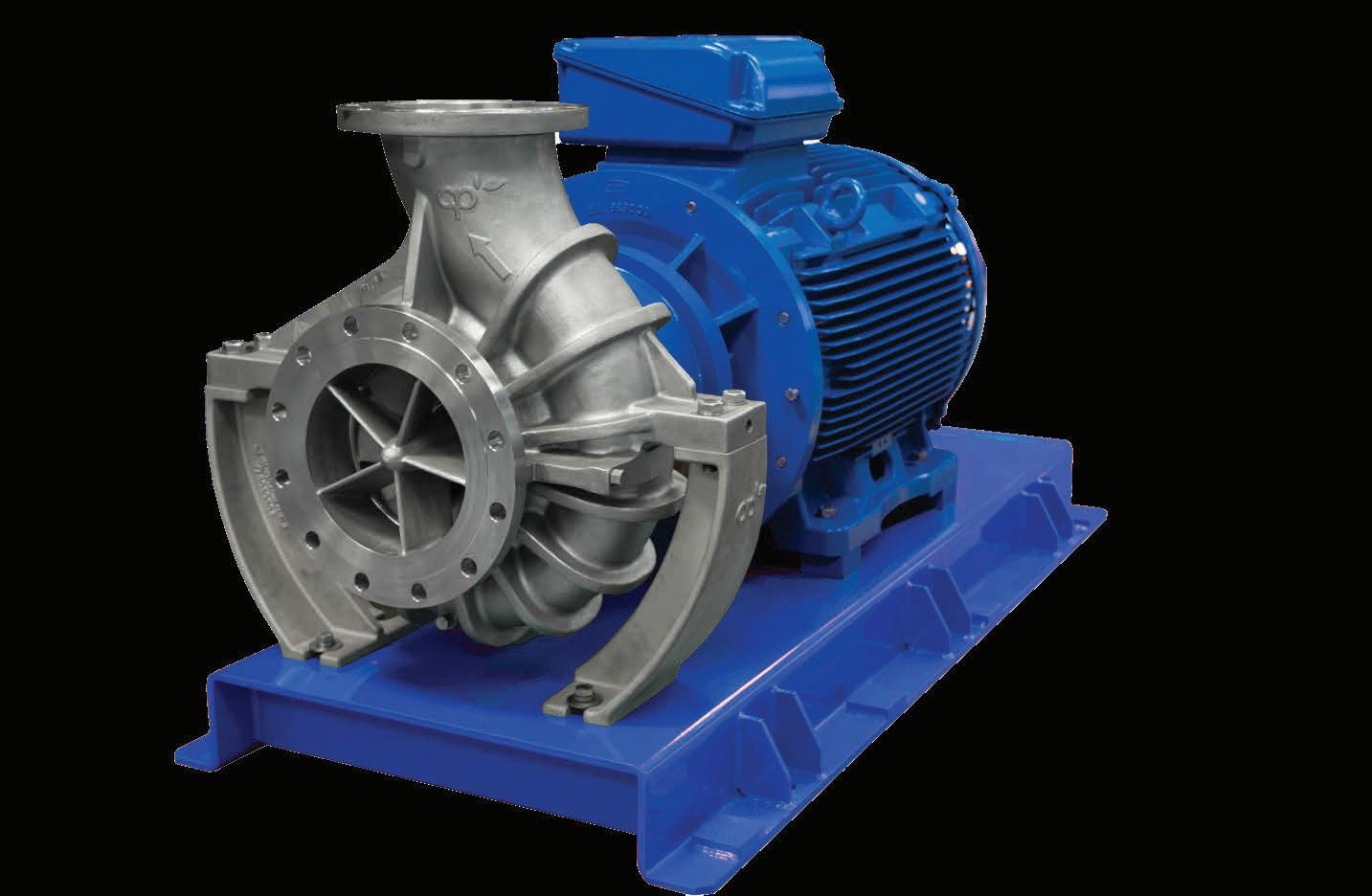


Dr Jan Lampke, Haver & Boecker Niagara, Germany, takes a detailed look at each stage of the fertilizer production process from mine to market – from screening, pelletising, and packing to loading.
iron silicates, as well as phosphorus, potassium, and calcium. In soils where calcium saturation falls below 60%, nutrient uptake can be limited – making amendments like dolomite or lime essential. These not only correct chemical imbalances but also improve soil respiration and reduce nutrient leaching.
Mineral fertilizers are especially effective when delivered as water-soluble granules. With a consistent particle size and narrow distribution, they support precision agriculture practices while reducing application errors and material waste. Applying water-soluble granules in accordance with national and international fertilizer standards enables precision farming, thus reducing the risks of over-fertilization or nutrient deficiency. The use of narrow particle size distributions of fertilizer granules in fertilizer blending plants supports state-of-the-art automation systems, online monitoring, and technical support, even in the application technology. This approach reduces costs in fertilizer handling. It uses and improves health and safety conditions in the application of fertilizer granules.
Fertilizer granules need to meet increasingly strict standards, particularly under regulations such as the EU Fertilizing Products Regulation (FPR). Uniformity in size, hardness, solubility, and nutrient composition directly impacts how well the product performs – both in the field and throughout transport and storage.
The most important physical property is the particle size distribution. While regional requirements for particle size can
vary slightly, a general guideline suggests a size range of 1 - 5 mm, with the primary range being 2 - 4 mm. In this context, the mean particle size should be 3.25 mm - ±0.25 mm. Maintaining proper particle size is essential to prevent flow and transport segregation, as well as spreading segregation.
For mineral fertilizer used in organic farming, certified binders are necessary. These binders should not only be water-soluble but also capable of forming a sufficient hardness of the dry granules. Ideally, they should also provide added value by serving as a nutrient source. The shape and the density of particles can influence the behaviour of the fertilizer during spreading. Proper sizing prevents segregation during handling and improves spreadability in the field. Certified water-soluble binders, often derived from natural materials, are used to bind granules while sometimes contributing nutritional value.
Engineering partners with experience in fertilizer production help ensure that granulation systems are designed and calibrated to meet these demanding requirements.
A mineral fertilizer production facility typically includes a series of interconnected operations – each designed to support product consistency, efficiency, and environmental compliance. Figure 1 shows an outline of a typical plant setup with a capacity ranging from 20 000 - 300 000 tpy.
Bunker and dosing station
Raw materials – ideally ground to <100 µm – are stored and carefully dosed using screw or belt conveyors. Binders like
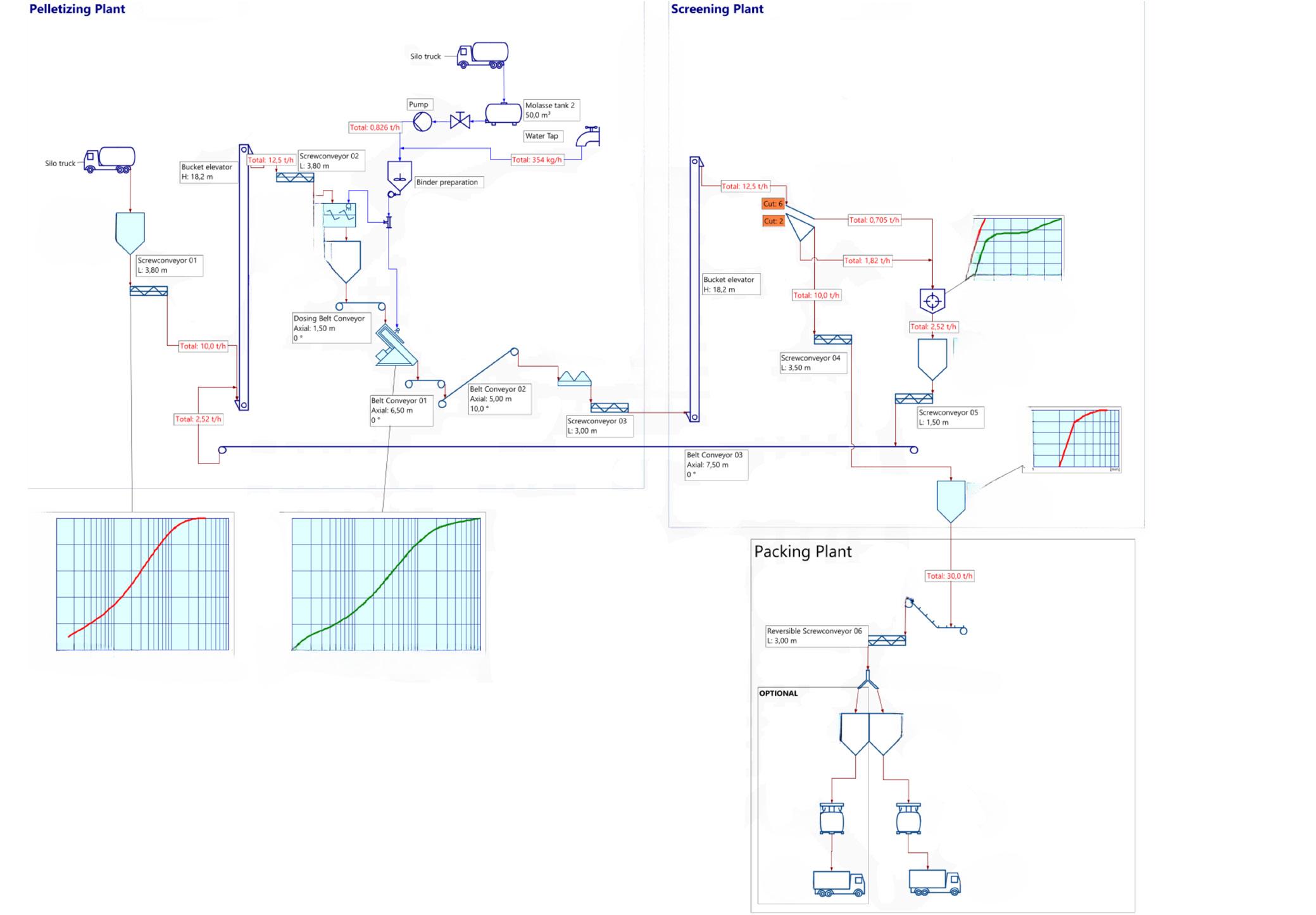
21 -23 October 2025 | Lisbon, Portugal
Europe’s largest commercial networking event for fertilizer trade

Enhanced on-site experience
New content
Upgraded networking opportunities Iconic evening receptions

700+ Attendees


300+ Companies 55+ Countries


20+ Hours of networking

Thank you to our conference sponsors








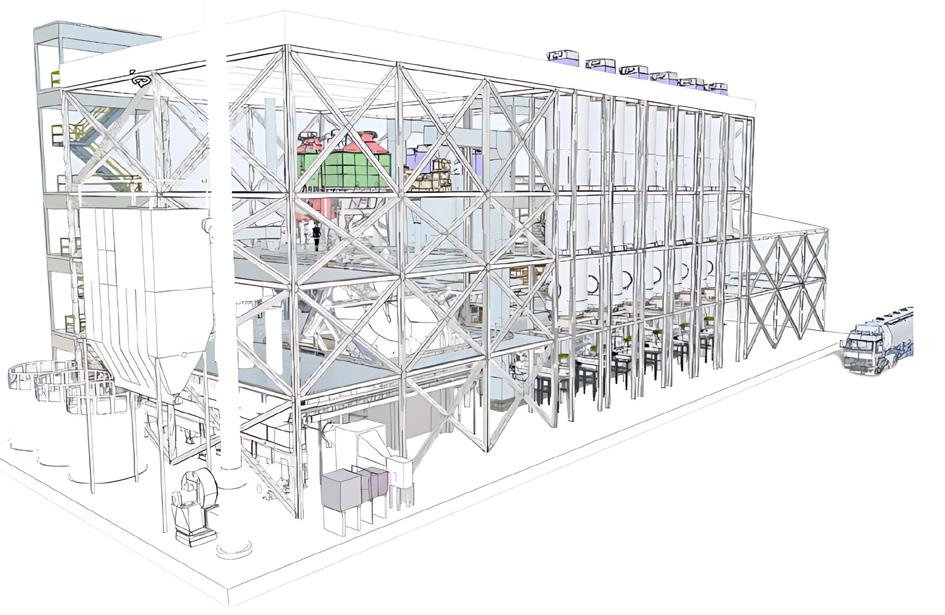
Automation and real-time monitoring are becoming standard in fertilizer production. These systems help manage variations in raw material quality and enable precise adjustments to maintain consistent output. When properly implemented, automation enhances product quality and operational efficiency while meeting technical and regulatory requirements.
Stable, high-quality fertilizer production depends on the alignment of equipment, processes, and controls. With a coordinated approach, producers can minimise material losses, adapt to changing inputs, and meet market expectations reliably.
lignosulfonates or starch are added at 2 - 3% by weight to assist granulation.
Mixing and granulating station
Agglomeration substantially increases the product properties of the raw materials, improving the handling properties and increasing the product value. In this part of the system, materials are homogenised in a mixer, conditioned with water, and then continuously fed into a pelletising disc. Continuous mixers are generally preferred, but intensive mixers may be used when high quality mixing is required. The feed material is granulated in the pelletising disc, achieving the desired particle size distribution. The flexibility of the system in processing different feed and product properties can be significantly influenced by the machine parameters of the pelletising disc. Materials are blended, moistened, and granulated in a pelletising disc. It is important to look for pelletisers that offer adjustability in disc angle, wall height, and speed, which can be key for fine-tuning output based on raw material properties. Advanced control systems, including AI-based options, are also increasingly being used to optimise granule formation.
Drying and screening unit
Granules are dried to less than 1% moisture content using drum or fluidised bed dryers, then screened to isolate the target size fraction. Oversized and undersized particles can be ground in a separate circuit and then recycled or sold for special applications, such as domestic gardening.
Packaging and palletising
Finished products are packed into bags or big bags to maintain quality and prevent contamination. Proper packaging also supports safe handling and consistent delivery in large scale agricultural operations.
Additional technologies can be integrated into the granulation plant, such as coating and colouring of the granules to improve storage, transport, spreading, and dissolving properties by protection them from humidity, light, and other environmental factors that can cause oxidation and/or corrosion. Benefits include minimising dust formation, such as through the addition of paraffin wax. Colouring the granules creates a homogeneous appearance, a brighter tone for better market acceptance, makes it easier to identify different products in bulk.
Companies that specialise in process integration bring practical experience to the development of fertilizer plants. Their services often extend from feasibility studies and lab analysis to system design, installation, and operator training.
With the right process configuration, a wide variety of fertilizers can be produced to suit different agricultural needs. Each stage of production – from particle sizing to packaging –contributes to the final product’s mechanical strength, solubility, and field performance.
Supporting capabilities include:
n Research & Development (raw material testing and feasibility studies).
n Material processing (crushing, screening, loading).
n Granulation (including pelletising discs).
n Mixing and blending.
n Packing and palletising (FFS systems, big bag fillers).
n Laboratory analysis (particle shape and size, digital tools).
n Digitalisation and automation (real-time monitoring, process control).
n Storage and shipping systems.
Soil, the silent hero, is the foundation of agricultural success. Its complex composition of important elements like nitrogen, phosphorus, potassium, and other various micronutrients is crucial for fertility, general health and plant growth. In the face of global population growth and increasing drought stress, optimising plant nutrition is becoming more and more important. This is where the well-known principle in fertilizer production, Liebig’s Law of the Minimum, comes into play. It states that plant growth and health are not determined by the total amount of nutrients available in the soil but by the nutrient that is in shortest supply.
Cultivable soil is increasingly disappearing due to building and paving. Soil improvement is essential for ensuring faster and healthier plant growth and meeting the needs of the growing population. This is where fertilizers, referred to as ‘the new gold’, come into play.
Success requires strong partnerships and efficient processes. Optimal production results from the seamless integration of process engineering, plant design, and product handling. From raw material preparation to the delivery of market-ready products, each stage contributes to the overall performance, quality, and sustainability of the operation.
A stable and sustainable food supply begins with healthy soil and smart fertilizer use. By combining sound agronomic principles with efficient production processes, the industry can help meet tomorrow’s food needs – starting from the ground up.
Dr Johannes Franz, Vinushanan Srimurugan, and Dr Sascha Wenzel, thyssenkrupp Uhde, Germany, discuss the improvement of fertilizer plants through the digitalisation of technology.
Digitalisation in combination with artificial intelligence (AI) is a large field of almost unlimited possibilities and already has a significant impact on daily life. Its application in chemical process technologies can lead to increased production, decreased consumption of raw materials and utilities, lower emissions, increase safety, and provide more transparency in operation and maintenance.
It is not surprising that digitalisation is often seen from different perspectives. Commercial experts look at accounting, order management, warehouse management, and other elements, mostly covered by modern enterprise resource planning (ERP) systems. Engineers are interested in operating data and their optimisation or are developing new ways for designing plants. Others may be looking from even more different perspectives. However, all areas of digitalisation have one thing in
common: new applications, more

powerful computers, and better network connections, even in remote locations, offer ever increasing possibilities of digitalisation.
McKinsey expects that chemical companies can improve their end-to-end earnings before interest, taxes, depreciation, and amortisation (EBITDA) by 8.5 - 16% by applying digital technologies.1
However, digitalisation can be disappointing for customers, especially when it comes without domain expertise. The simple application of algorithms does not solve customer problems in most cases. The availability of large language models like ChatGPT and general AI on the horizon might lead to the conclusion that it is possible to simply grant a computer access to a vast amount of unsorted data to do all further steps on its own, e.g. analyse the data and develop a prediction model for the most important output parameters. However, this is not possible, at least not in the near future.
Before data can be used, for example to train a
prediction model, data scientists need to spend a significant portion of their time to first prepare the data (so called ‘feature engineering’). Andrew Ng, professor at Stanford University, an expert in Deep-Learning, is of the opinion that, “coming up with features is difficult, time-consuming, and requires expert knowledge. ‘Applied Machine Learning’ is basically feature engineering.”2
Therefore, close cooperation between data scientists, process technology experts and other disciplines is essential for successful development of digital products in the process industry. It needs these domain experts to support the development of digital solutions, interpret data, and consult customers on how to optimise their operation. This is not surprising for a very complex environment like a process plant in which often several thousand signals are processed.
Expertise in process technologies and engineering paired with the IT infrastructure know-how, software development skills as well data analytics, machine learning, and AI methods ensure added values to fertilizer plants (Figure 1).
Of course, cybersecurity plays a very important role, as cybercrime meanwhile is considered as the biggest business risk globally by insurance companies like Allianz AG.3 Therefore, it is also important to note that the way data is transferred and handled must consider cybersecurity first. For this, a multi-layered approach has been developed by thyssenkrupp Uhde which is implemented in multiple projects, including so-called critical infrastructure.
Today, the company offers a wide range of digital products which help customers to maximise production, reduce raw
material and energy consumption, as well as effectively lower and monitor emissions. In addition, digitalisation can significantly improve plant availability and safety.
An edge device is used, which is a computer connected to the distributed control system (DCS) to collect and process plant data. Furthermore, the edge device is connected with a cloud server to enable real-time data processing.
The exchange of data via an edge device is also the foundation of offering access for process experts to assess plant behaviour. The assessment is part of the reporting service, which consists of the evaluation and derived recommendations to maximise and optimise production. Apart from the reporting service, access via the edge device can be utilised to enable remote assistance to support the plant operator from a remote location to ensure stable operation (Figure 2).
One key digital product also developed and constantly improved are digital twins. However, what is a digital twin and how can it help operate plants?
By definition, a digital twin is a virtual representation of a physical object that should describe this object in a precise manner. Meanwhile, one can find digital twins in the fields of science, medicine, engineering, pharmaceuticals, sports, architecture, and many others.
A digital twin of a chemical plant may cover the following elements (Figure 3):
A project digital twin in the EPC context is a data-driven virtual replica of the plant under development,4 encompassing not only the 3D geometry but also:
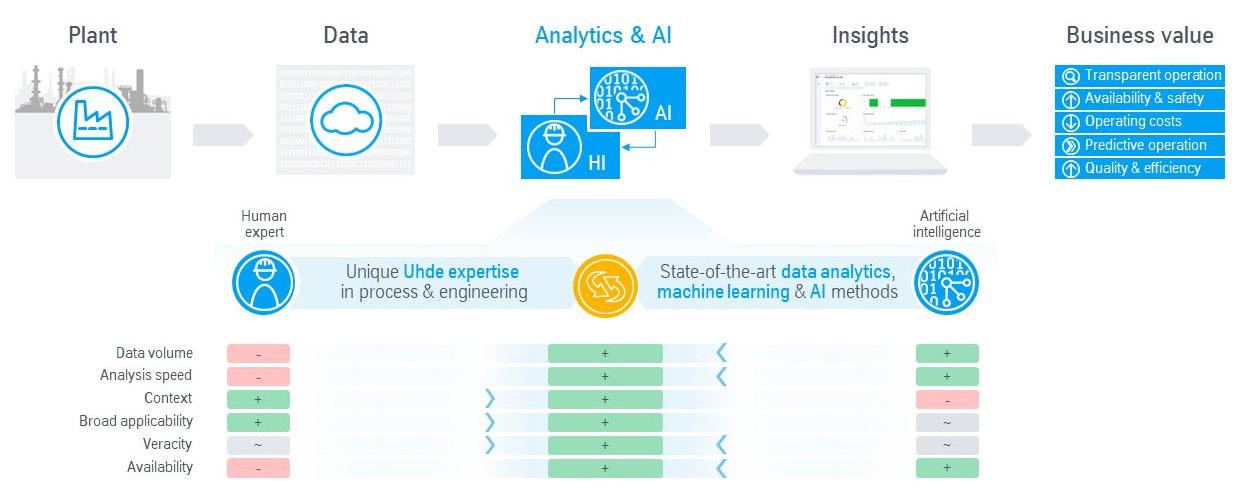
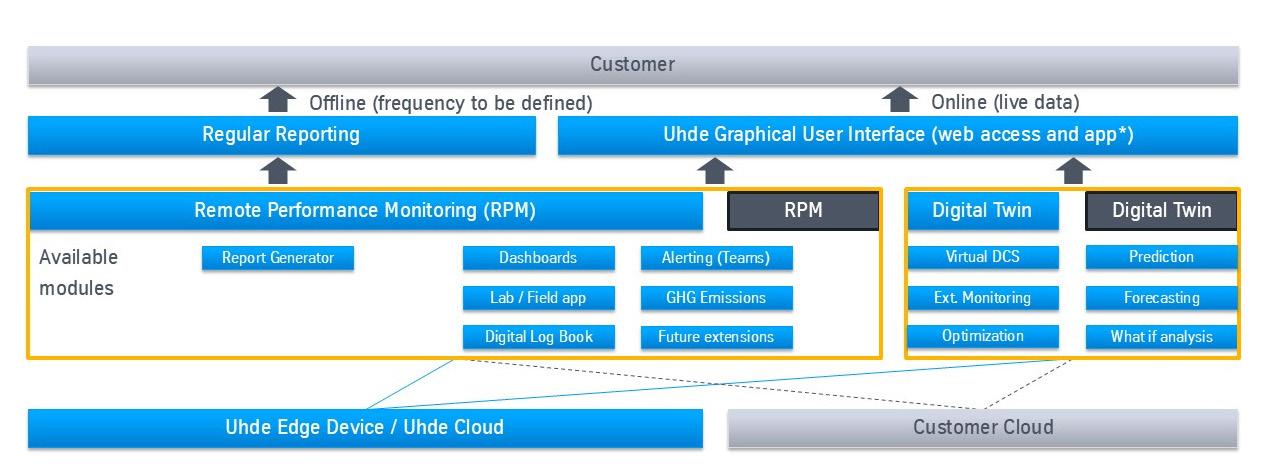
n Engineering data models (P&IDs, equipment specifications, material properties).
n Schedule and cost information (4D/5D integration).
n Real-time construction status (site progress, quality checks, logistics).
n Simulation and analytics (structural, process, safety scenarios).
This digital twin can describe the process behaviour of the commissioned plant and is typically either based on a process simulation (white box/first-principles model) or an empirical, mathematical (black box) model. By combining measured data and simulated/predicted data, such models can help to detect anomalies, monitor equipment performance, and optimise plant economics.
Other systems can be regarded as digital twins, such as computerised maintenance management systems (CMMS) which contain the plant
structure including equipment information like data sheets, spare parts, equipment history, planned maintenance tasks and related work order management, etc.
thyssenkrupp Uhde has developed several process digital twins for its customers applying either white box or black box models. The identification of the best approach requires in-depth knowledge and must be decided on a case-by-case basis. However, there are general guidelines:
Of course, a white box model (also called first principle model) which is typically based on a standard process simulation software may only be applied to systems for which the relationship between input and output parameters can be described and transferred into unit operation blocks describing elements as reactors, distillation columns, heat exchangers, etc. Once set up, such white box models can calculate all process parameters of plant sections covered.
Black box models, however, may also be applied to systems where the relationship between input and output parameters is hard to grasp by first-principle approaches.
The applicability of black-box models is especially favourable for systems that are highly dependent on small input changes (which might not be directly covered by sensor data) or with statistical aspects that cannot be derived from the output data rather than the analysis of the results. The reason why black-box models are especially suited for this kind of problem is that the relationship between the input variables and the output variables might be too complex to describe with first principle models but are still hidden in the data.
There is a multitude of different data-driven methods available and the field is expanding. It is the task of the team of domain experts and data scientists to identify the best methods. However, a common denominator for all these methods is the reliance on existing plant data for model development. The amount of required training data and development effort of the model depends on the desired prediction of output data. Often such black box models are therefore trained for special predictions only, e.g. the prediction of quality parameters.
In the following, some examples of digital products applied in customer projects will be described.
To support operation and maintenance of a new fertilizer complex recently started up in the MENA region, thyssenkrupp Uhde also provides various digital products, i.e. an operator training simulator, remote performance monitoring including online dashboards and regular reports (Figure 4)
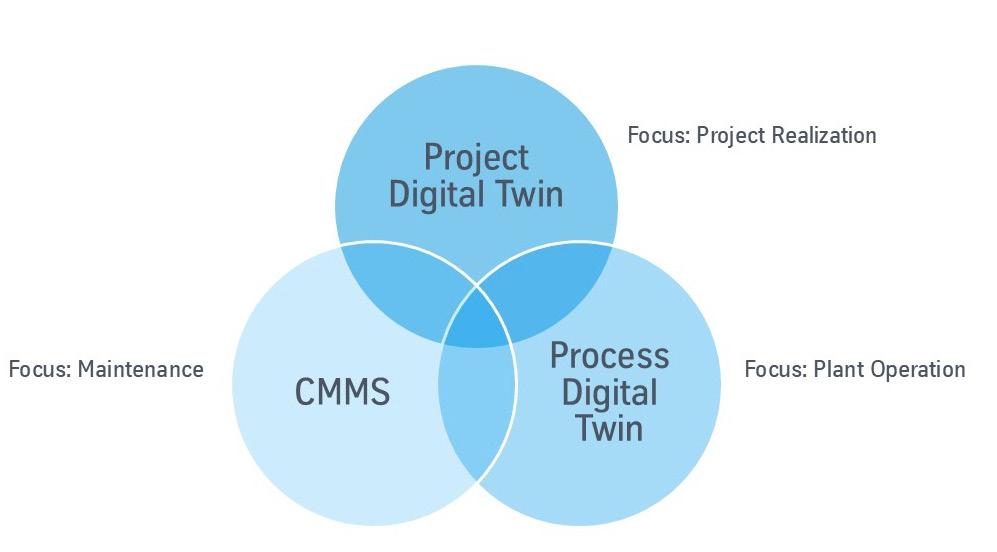
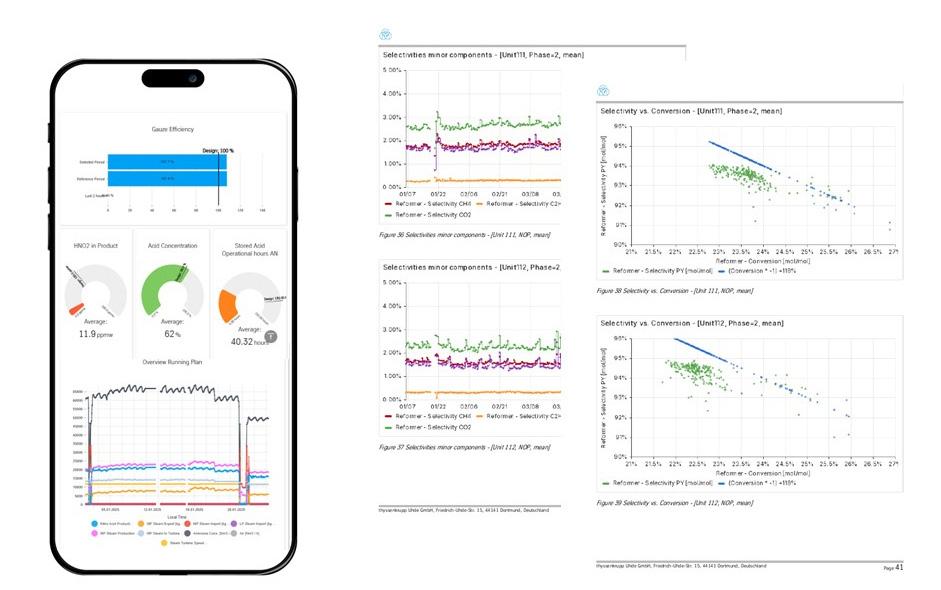
operation and maintenance.
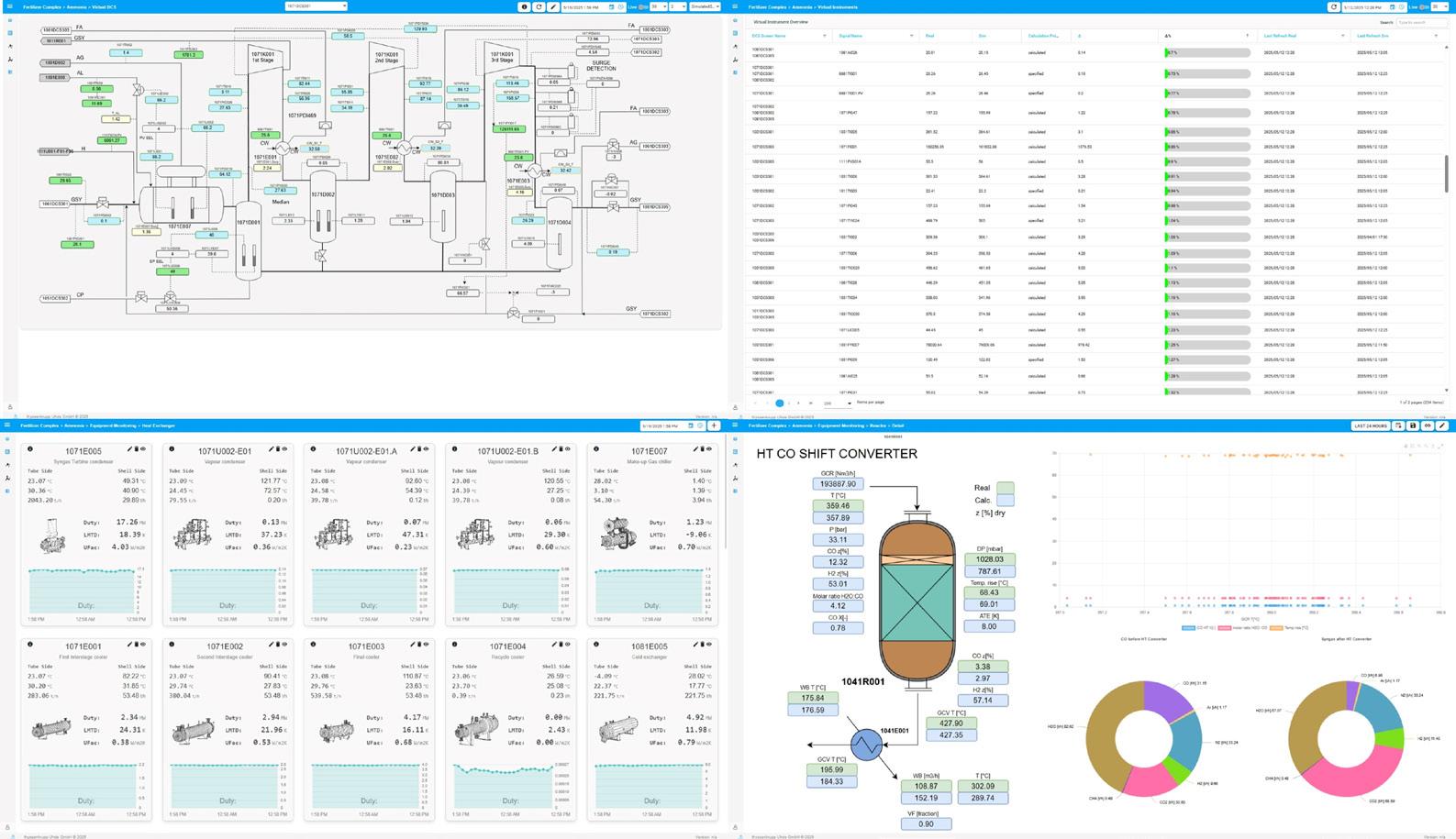
as well as digital twins for the various plants. The client in the MENA region is utilising the Uhde digital ecosystem in the day-to-day operation of the fertilizer complex. This comprises – in addition to products offered and described above – a web-based tool for recording laboratory data, a visualisation system in which the customer can create their own dashboards and analyse its plant data from everywhere, alerting functionalities which can be configured to send out alarms via different methods, and more.
One of the key parts of the digitalisation package deployed for the customer are digital twin-based products. The digital twins are established on models which are either derived from process model (white box digital twin), or from artificial neural networks (black box). These models are trained and verified using plant data.
The white box models are applied for the proprietary technologies, in this case an ammonia plant. Detailed process simulations are set-up, which include hold-ups, piping dimensions, valve curves, compressor curves, reactor models heat exchanger data, and more. These models are tuned to predict the plant behaviour with a minimal set of input data. The equation-oriented modeling approach ensures fast and reliable convergence, so that the delay is minimal, and the predictions can be viewed in parallel to the plant operation. Furthermore, the parameters used for error minimisation like fouling factors, reactor and turbo-machine efficiencies are periodically tuned to care for drift in the plant’s behaviour. As these parameters are also saved as time series data, the digital twin will gain knowledge about the plant equipment performance over time. Since confidence in the digital twin’s prediction accuracy is high, optimisation algorithms can be used to perform constrained based optimisations depending on client specific needs. The results of the digital twin are presented in a web-based interface and can be accessed securely from anywhere with an internet connection. The currently rolled out modules for the white box digital twin include (Figure 5):
This module presents the predictions and real plant data in an interface known to the plant operator from their day-to-day work environment, the DCS. For this, replicas of the customers DCS interface are created and the predicted values are shown as well as the real plant data. Colour scheming is used to highlight deviations between real and predicted data. On top of virtual sensors as a comparison to real data, virtual sensors for quantities not measured by installed instruments (either because no measurement is possible or not economically feasible) are displayed, leveraging the fact that the process model has a knowledge of the thermodynamic state at every point in the simulated plant.
This module gives an easy overview of all simulated sensors and the comparison to the real plant data if applicable. It is
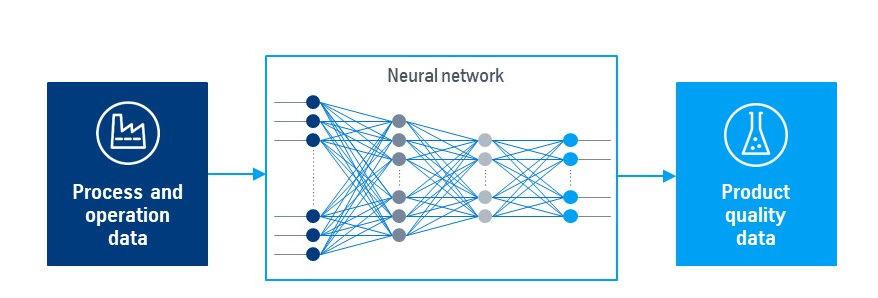
conveniently linked to the virtual DCS and is used to analyse miscalibrations among other things.
As described the plant model is tuned by adapting equipment performance in regular intervals via automated processes. These tuned parameters, like reactor efficiencies and fouling factors, are made available to the customer and allow for equipment monitoring over time. Extrapolations allow for equipment behaviour prediction.
Optimisation module
The underlying process models can be decoupled from the real plant data. After setting constraints like production targets, and economic factors such as feed and utility costs, the model is used in an optimisation algorithm to find better set-points to minimise production costs.
One example of a black box digital twin is the quality prediction in CAN granulation plants. Granulation plants are a good example for processes especially suitable for data driven approaches. The quality parameters are highly complex to make predictions which are based on engineering formulas, so that high frequency lab measurements are necessary to ensure that the plant is still producing the desired product.
Machine learning algorithms were used to develop the AI tool. In this case, a neural network was trained with historical data to predict the main quality parameters of the solid nitrate fertilizer: nitrogen content, humidity and hardness (Figure 6).
The development of this model required a close collaboration between domain experts and data scientists to come up with the best model architecture and hyperparameters such as the number of layers of a neural network for this specific task.
After initial training, the tool was rolled out and implemented together with a fertilizer producer in a pugmill granulation plant as a pilot project. It predicts almost instantaneously the main product quality parameters based on live process data coming from DCS and thus works as online AI soft sensor. If recent laboratory data is available, the AI tool is even capable of providing a forecast on the main product quality data for the upcoming two hours if process conditions do not change drastically.
Comparisons with laboratory test results show a high accuracy of the model in continuous operation of the plant. The insights offered regarding the expected product quality enable the operator to take measures to avoid off-spec material immediately without the delay of laboratory tests and thus maximising the yield of the production facilities.
All AI soft sensor data, as well as the process data, are visualised in web dashboards which are fully customisable and can be adapted to customer needs. They allow the operator/user to query and to analyse the process data and predictions at any point in time.
Further developments in plant digitalisation have meanwhile led to more advanced systems which are able to optimise plant performance in a closed-loop. Although it has been applied in aromatics extraction, an important petrochemical process, similar systems may also be used for fertilizer applications.

thyssenkrupp Uhde’s Morphylane technology can be used to produce high purity benzene and toluene from feedstocks like reformate, pyrolysis gasoline, or coke-oven light oil.
To further enhance its performance, the company, alongside German refinery Holborn, have jointly developed a digital twin which can be used to adjust relevant process parameters like the solvent flowrate and temperatures depending on the feed to this very complex system. The digital twin is based on an artificial neural network which has been trained and verified based on process data from the real production plant. Its machine learning algorithms will continuously improve the model with time.
In the first phase, the digital twin was operated in an open-loop arrangement for some time, offering guidance to the operators who still needed to adjust the set-points in the control system manually. Now, it is even possible to close the loop, i.e. the AI controller is automatically adjusting the mentioned process parameters in the control system to optimise production. Manual operation is only required under very special circumstances, making this digital product a very powerful tool to increase profitability and help operators in their daily work.
Plant digitalisation can contribute to increasing the profitability of chemical plants by optimising performance of operation as well as maintenance.
Available digital products range from visualisation of plant data for increased transparency to closed-loop AI controllers based on digital twins.
The level of digitalisation depends on the complexity of the process technology applied. Often, it is sufficient to focus on the most complex systems within a plant. However, due to the increased speed of modern computers and software, it is already possible to model complete plants as well.
Of course, cybersecurity should be considered right from the beginning to protect the assets.
Finally, the combination of simulation software and domain expertise, often supported by machine learning techniques, avoids frustration during the execution of digitalisation projects. With the help of process technology experts, the development and application of digital products will become much more efficient.
Customers who are willing to invest in digital products now have the unique opportunity to optimise their plant operations with minimal capital investment and no plant modifications. Embracing the opportunities of the digital age gives them a head start, laying the foundation for further AI-based modifications to enhance safety, efficiency, and quality.
1. McKinsey, ‘End-to-end digital transformations for chemical companies’, 2020.
2. Steinwendner, J., Schwaiger, R., ‘Neuronale Netze programmieren’, S. 294, Rheinwerk Computing, 2020.
3. Allianz Risk Barometer, Allianz AG, 2024.
4. Grieves, M., Vickers, J., ‘Digital Twin: Mitigating Unpredictable, Undesirable Emergent Behavior in Complex Systems’, DOI: 10.1007/978-3-319-38756-7_4, August 2017.
A podcast series for professionals in the downstream refining, petrochemical, and gas processing industries








Sponsored by

EPISODE 8
In this special episode, a panel of experts from Johnson Matthey, A.P. Moller - Maersk, Honeywell, HIF Global, and the Methanol Institute provide a clear analysis of the factors influencing e-fuel pricing, the economic challenges, and strategies for cost reduction.
EPISODE 9
Brandon Stambaugh, Owens Corning Director for Technical Services, discusses engineers’ demand for education and training to support three critical phases that affect the performance and longevity of insulating systems.
EPISODE 10
Lara Swett, Vice President of Technical & Safety Programs, American Fuel & Petrochemical Manufacturers (AFPM), explains how the downstream sector continues to improve its process safety record.
EPISODE 11
Graham Faiz, Head of Digital Energy, DNV, explores the current state of digitalisation in the energy sector and the key drivers behind digital transformation. Graham considers how companies can move from pilot projects to full-scale deployment of AI and digital tools.