May 2025
Co-Hosts
Driving the critical energy conversation
Attend the world’s largest event for natural gas, LNG, hydrogen, climate technologies, and AI.
50,000 Attendees
7,000 Delegates
1,000
160
Speakers
Sessions
13
Programmes
JOIN THE CONVERSATION
Gain actionable insights from energy sector leaders, policymakers, and innovators powering a sustainable energy future. Knowledge Partner
Strategic Insights Partner
Host Venue
gastechevent.com @gastechevent #Gastech
Organised by
ISSN 1747-1826
CONTENTS 03 Comment 05 LNG news
talk about how new partnerships can bring greater operational efficiencies to the LNG market and keep an in-demand product on the move.
37 Centrifugal pump cavitation in LNG
10 LNG Industry in Canada: 2025 outlook
Robert Froehlich and Robin Acworth, Norton Rose Fulbright, consider the progress, opportunities, and risks associated with Canada’s position in the global LNG market.
Robert Froehlich and Robin Acworth, Norton Rose Fulbright, consider the progress, opportunities, and risks associated with Canada’s position in the global LNG market.
MAY 2025
he global LNG market is continuing to experience significant growth, driven by rising demand for lower-carbon energy sources and concerns over energy security, with its value projected to reach US$255.2 billion by 2030, growing at an annual rate of 10.2% from 2024 to 2030.1 LNG is viewed by many as a critical energy source in the transition away from more carbon-intensive fuels. In 2023, the Canadian Gas Association estimated that historical use of natural gas for power generation instead of coal in Canada had reduced overall emissions by 51%, with further reductions to follow as more efficient technologies emerge.2 As countries have sought to phase out their dependence on coal-fired power generation, or increase their imports of LNG for other reasons such as energy security, major natural gas producers such as the US, Qatar, and Australia have expanded their liquefaction capacities to meet increasing demand for LNG, particularly from
Enver Karakas and Sinan Ozcan, Ebara Elliott Energy, USA, analyse cavitation at pump inducers, cavitation inception, and propagation in LNG pumping applications and consider safe pump operation in low suction pressure conditions.
42 Tugs and towage: Evolving LNG
KOTUG International B.V. appraises the role of tugs and towage in an evolving LNG landscape and advocates implementing advanced training initiatives to match technological innovations.
the Asia-Pacific region and Europe.1 Canada, with its abundant natural gas reserves and strategic location, is poised to become a key player in the LNG market, with new liquefaction capacity coming online in 2025.3 While regulatory challenges, environmental concerns, and political factors create significant uncertainty, there is reason to be optimistic about Canada’s position in the future of the global LNG market.
Current Canadian LNG projects
Canada is making meaningful strides in the LNG sector with three key projects now at various stages of construction and expected to collectively produce and export around 19 million tpy of LNG by 2028.3 After a decade of planning, construction, and navigation through a variety of challenges and opposition, Phase 1 of the LNG Canada joint venture among Shell, PETRONAS,
10
11
KOTUG International B.V. appraises the role of tugs and towage in an evolving LNG landscape and advocates implementing advanced training initiatives to match technological innovations.
10
15 Untapping cold energy potential
s the global demand for LNG continues to grow, the need for safe, efficient, and reliable towage services to support LNG transport and infrastructure is becoming increasingly critical. The maritime industry plays a central role in the logistics of LNG, from the transport of large LNG carriers to the docking and berthing processes at offshore terminals. In this complex environment, tugs provide essential support, enabling the safe and reliable movement of LNG carriers through challenging waters. Their adaptability in navigating congested ports, responding to changing weather conditions, and ensuring timely LNG delivery makes them indispensable to the entire LNG supply chain.
The role of tug services
The role of tug services in LNG operations has evolved significantly, particularly in response to increasing demand for sustainable and efficient solutions within the maritime and energy sectors. As LNG transportation grows, technological advancements have become key in ensuring the safe and efficient movement of LNG carriers. Innovations in tug design and towing technology now allow operators to meet both operational requirements and environmental goals, particularly in response to tightening regulations on emissions and sustainability within the LNG sector. One of the most notable trends in LNG towage is the shift towards energy-efficient solutions that integrate alternative fuel systems and hybrid propulsion technologies. These advances allow tugs to operate more sustainably while maintaining the performance needed in LNG operations, such as the safe manoeuvring of large LNG carriers into ports and terminals. The integration of such systems reduces the overall carbon footprint and ensures better compliance with international environmental standards.
42
These technologies, in combination with industry-wide efforts to reduce fuel consumption and minimise greenhouse gas emissions, are helping shape the future of LNG logistics, ensuring that towage services play a vital role in maintaining the safe, efficient, and sustainable transport of LNG.
Advancing towage solutions for LNG
Towage companies are increasingly playing a pivotal role in the LNG sector by embracing technical advancements that support the safe and efficient logistics of LNG transport. Operators are increasingly focusing on sustainability, safety, and operational efficiency, reflecting the growing need for adaptive solutions in the sector. One such example is the deployment of modern, energy-efficient tugs for LNG carrier berthing at key export hubs, including projects by leading towage providers. These advanced tugs, often equipped with hybrid propulsion and optimised designs, are helping to ensure the safe and efficient handling of large LNG carriers. SD Waalo and its three sister vessels, state-of-the-art RAstar 3200W twin Z-drive terminal support and escort class tugs with IMO Tier III by KOTUG, have been designed for maximum efficiency in ship handling and related terminal support duties. Under a long-term contract with bp Senegal and Mauritania, these vessels support LNG carrier berthing at the Greater Tortue Ahmeyim hub. Projects like this highlight how technical excellence in towage services is essential to ensuring safe and efficient logistics in critical LNG export zones. In addition to the SD Waalo project, KOTUG is supporting ENI’s Congo LNG project, providing advanced marine services for LNG transport from offshore fields to international markets, as well as
43
42
Exergy International explores how new developments can help the decarbonisation of LNG regasification.
19 Reclaiming heat
Alex Marshall, Cryonorm, UK, outlines the role of submerged combustion vaporisers in advancing LNG regasification towards net zero.
23 Addressing Australia's looming gas shortage
Domestic LNG infrastructure is crucial to preventing an Australian gas shortage and reducing reliance on fossil fuels throughout the renewable energy transition, explains Squadron Energy.
26 Enhancing LNG operations
Louie Fava, Chriss Ott, and Heng Yung, Honeywell LNG, and Yanling Wu, Honeywell HPS, look at innovative strategies for continued reliability and efficiency.
31 Securing LNG with surveillance
Darren Alder, Head of Oil and Gas, Synectics, details how developments in artificial intelligence, analytics, and systems integration mean surveillance technology is fast becoming the LNG industry’s new best friend.
34 Proactive procurement
With LNG remaining a hot commodity in Asia and Europe, LNG shipping players are making steps to reinforce their day-to-day operations and keep their vessels moving through advanced procurement strategies. Stefan Dahlström, Head of Procurement, BW LNG, and Carsten Schmidt, Vice President, Procureship,
CBP019982
45 Balancing safety and sustainability in LNG terminal towage services
As LNG continues to expand its global footprint, the marine services that support it must evolve in parallel. Towage providers now face growing pressure to deliver both safe and sustainable operations, often in increasingly complex and remote environments. Mattias Hellström, Chief Commercial Officer at Svitzer, explores the emerging challenges facing LNG terminal towage and the strategies being deployed to overcome them.
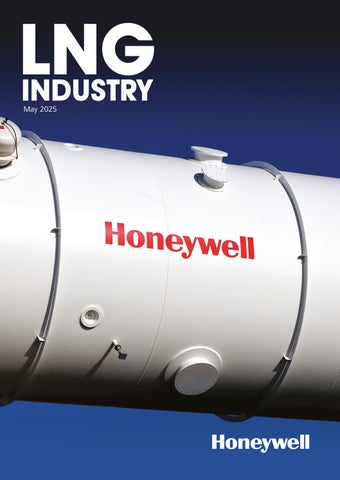
ON THIS MONTH’S COVER Honeywell’s complete, end-to-end LNG solution unites pretreatment, natural gas liquids (NGL) recovery, liquefaction, and advanced digital tools to fuel success from concept to operation. The company's integrated approach simplifies and optimises the entire value chain, delivering operational efficiency, reliability, and risk reduction to help customers confidently navigate the complexities of the LNG landscape. Learn more: www.honeywell.com
Copyright © Palladian Publications Ltd 2025. All rights reserved. No part of this publication may be reproduced, stored in a retrieval system, or transmitted in any form or by any means, electronic, mechanical, photocopying, recording or otherwise, without the prior permission of the copyright owner. All views expressed in this journal are those of the respective contributors and are not necessarily the opinions of the publisher, neither do the publishers endorse any of the claims made in the articles or the advertisements. Printed in the UK.
LNG Industry Website
The home for the latest LNG industry news, analysis and events Visit our website today: www.lngindustry.com
JESSICA CASEY EDITOR
COMMENT Managing Editor
James Little james.little@palladianpublications.com
Senior Editor
Elizabeth Corner elizabeth.corner@palladianpublications.com
Editor
Jessica Casey jessica.casey@palladianpublications.com
Editorial Assistant
Abby Butler abby.butler@palladianpublications.com
Sales Director
Rod Hardy rod.hardy@palladianpublications.com
Sales Manager
Will Powell will.powell@palladianpublications.com
Production Designer
Amy Babington amy.babington@palladianpublications.com
Head of Events
Louise Cameron louise.cameron@palladianpublications.com
Event Coordinator
Chloe Lelliott chloe.lelliott@palladianpublications.com
Digital Events Coordinator
Merili Jurivete merili.jurivete@palladianpublications.com
Digital Content Assistant
Kristian Ilasko kristian.ilasko@palladianpublications.com
Junior Video Assistant
Amélie Meury-Cashman amelie.meury-cashman@palladianpublications.com
Digital Administrator
Nicole Harman-Smith nicole.harman-smith@palladianpublications.com
Administration Manager
Laura White laura.white@palladianpublications.com
I
t’s nearly time for the 69th edition of Eurovision, which this year will take place in Basel, Switzerland, following Nemo’s victory at the 68th Eurovision Song Contest with their song ‘The Code’. As it happens, Switzerland is the birthplace of Eurovision – it staged the first-ever contest in 1956, which was launched to test new live-broadcasting technology and foster unity after World War II.1 Sweden has won the contest seven times, and is currently favourite to take the title again; achieving this would take the country past Ireland for the most victories. Austria, France, and the Netherlands are also highly ranked to do well.1 Spain hasn’t won the Eurovision Song Contest since the 1960s. However, in the LNG industry, Axpo continues to expand its small scale LNG operations in the country.2 The company has now completed its first LNG ship-to-ship delivery in the Port of Algeciras, marking the expansion of its LNG bunkering operations to a second Spanish Port. In Spain’s largest port, Axpo’s 7500 m3 small scale LNG vessel Avenir Aspiration delivered approximately 5000 m3 of LNG to MSC vessel Mariacristina. As Lloyd’s Register’s recent ‘Fuel for Thought’ report has outlined, LNG remains the dominant alternative fuel for the shipping indsutry,3 and thus it is no surprise that companies such as Axpo are expanding their operations to make LNG as fuel easier to access. This is reflected across the world in Asia, where the Maritime and Port Authority of Singapore (a global maritime hub and one of the world’s largest bunkering hubs) has received 14 proposals to scale up the supply of LNG as a marine fuel in the port, eight of which include biomethane and e-methane solutions.4 Despite not being included in the competition, Canada has been able to vote since 2023 and is no stranger to the competition – Québec singer, Céline Dion, won Eurovision in 1988 while representing Switzerland.5 In preparation for the third year of our North America supplement, the May issue of LNG Industry includes a regional report from Norton Rose Fulbright that considers the progress, opportunities, and risks associated with Canada’s position in the global LNG market. One of the projects discussed in the article, LNG Canada, has recently received an LNG carrier to the facility in Kitimat for the first time. This activity is critical to the safe start-up and commissioning process in advance of operations, and to achieving the project’s first LNG export cargoes by mid-2025.6 Just as Eurovision evolves with new entries and nations, the LNG industry is similarly progressing and reminding us that collaboration, innovation, and adaptation are key to shaping sustainable energy solutions.
References 1.
2. LNG Industry Subscription rates: Annual subscription: £50 UK including postage £60 overseas (postage airmail) Two year discounted rate: £80 UK including postage £96 overseas (postage airmail)
3. 4.
Subscription claims: Claims for non receipt of issues must be made within 3 months of publication of the issue or they will not be honoured without charge.
5. Applicable only to USA & Canada. LNG Industry (ISSN No: 1747-1826, USPS No: 006-760) is published monthly by Palladian Publications Ltd, GBR, and distributed in the USA by Asendia USA, 701C Ashland Avenue Folcroft, PA 19032. Periodicals postage paid at Philadelphia, PA, and additional mailing offices. POSTMASTER: send address changes to LNG Industry, 701C Ashland Ave, Folcroft PA 19032.
6.
LAWLESS, J., ‘Eurovision 2025: The entrants, favourites, where to watch and how to vote’, The Independent, (28 April 2025), www.independent.co.uk/arts-entertainment/eurovision/eurovision2025-host-switzerland-where-to-watch-voting-entrants-b2740838.html ‘Axpo expands small-scale LNG operations’, Axpo, (24 April 2025), www.axpo.com/es/en/newsroom/ media-releases/2025/axpo-expands-small-scale-lng-operations-.html ‘Fuel for thought: LNG report’, Lloyd’s Register, (27 March 2025), www.lr.org/en/knowledge/researchreports/2025/fuel-for-thought-lng-report/ ‘14 Proposals Received for LNG EOI to Scale Up LNG Bunkering Supply, 8 Included Bio- and E-Methane Solutions’, The Maritime and Port Authority of Singapore, (10 April 2025), www.mpa. gov.sg/media-centre/details/14-proposals-received-for-lng-eoi-to-scale-up-lng-bunker-supply--8included-bio--and-e-methane-solutions DUBÉ, J. and EDWARDS, S., ‘Eurovision 2024: How to watch in Canada, who are the favourites, and what to know about the boycott calls’, The Globe and Mail, (9 May 2024), www.theglobeandmail. com/arts/music/article-eurovision-song-contest-2024-canada ‘LNG Import Cargo Has Arrived’, LNG Canada, (2 April 2025), www.lngcanada.ca/news/lng-importcargo-has-arrived/
Editorial/Advertisement Offices, Palladian Publications Ltd 15 South Street, Farnham, Surrey, GU9 7QU, UK
Tel: +44 (0) 1252 718 999
Website: www.lngindustry.com
Scan the QR code to learn more!
UNIQUE
CHALLENGE?
NO PROBLEM. CONTACT US, AND WE’LL DESIGN THE SOLUTION TOGETHER. Delivering the most cost effective method of transfer and reliability with vacuum jacketed piping, including multiple layers of super-insulation for minimized heat leak. Available in a range of designs with adaptable control options, we are here to assist you in selecting the ideal solution for your specific project.
LNGNEWS Japan Oman
OQ Trading and Amigo LNG sign 15-year LNG supply agreement
JERA and Saibu Gas to collaborate in the strategic use of Hibiki LNG terminal
O
J
Q Trading (OQT) has signed a definitive 15-year LNG sales and purchase agreement (SPA) with Amigo LNG S.A. de C.V., the Mexican subsidiary of Singapore-based LNG Alliance. Under the agreement, OQT will purchase 0.6 million tpy of LNG FOB from Amigo LNG's export terminal in Guaymas, Sonora, Mexico. This long-term supply partnership represents a strategic move by OQT to diversify its LNG sourcing portfolio beyond the Middle East and Asia while marking a significant milestone in Amigo LNG's global commercialisation strategy. The first LNG deliveries under the agreement are expected to commence in 2Q28. With increasing global demand for cleaner fuels, especially across Asia and the Indian subcontinent, OQT gains a cost-effective, geopolitically neutral, and logistically efficient supply route from Amigo LNG. The West Coast of Mexico provides a direct maritime path to Asia, reducing shipping time and offering flexibility in supply chain operations.
ERA Co., Inc and Saibu Gas Co., Ltd have agreed to collaborate in the strategic use of Hibiki LNG terminal. In November 2024, to address domestic demand for natural gas and enhance supply stability, Saibu Gas decided to expand capacity at Hibiki LNG terminal, including the construction of the third LNG tank. This provided an opportunity for JERA and Saibu Gas to agree to take concrete steps to strengthen stable procurement of LNG. Based on the agreement, JERA becomes able to use the third LNG rank, which can be expected to improve its ability to address growing volatility in the electricity supply-demand balance caused by the large scale adoption of renewable energy and seasonal disparities in electricity demand. For Saibu Gas, the construction of the third LNG tank enables it to capture demand and ensure supply stability, and using the third LNG tank together with JERA also enables reciprocal LNG sharing between the two companies and ensures the terminal’s stable operation and profitability.
Japan
Osaka Gas launches shore-to-ship LNG bunkering service
O
saka Gas Co., Ltd has launched its shore-to-ship LNG bunkering service, becoming the first gas utility company in Japan to offer LNG at its terminal to vessels utilising this cleaner fuel. This new initiative aims to significantly reduce carbon dioxide emissions in the maritime industry. The first delivery took place at Osaka Gas’ Senboku LNG terminal in Takaishi City, Osaka Prefecture, where LNG was supplied to the VERDE HERALDO, an LNG-fuelled vessel operated by Mitsui O.S.K. Lines, Ltd. This vessel serves JFE Steel Corp. by transporting raw materials essential for steel production. With the launch of this shore-to-ship service, in addition to its existing truck-to-ship LNG
bunkering service, Osaka Gas enhances its LNG fuel delivery capabilities to address the current scarcity of facilities in Japan that can supply LNG to vessels. The company’s future plans include the introduction of a ship-to-ship LNG bunkering service utilising a dedicated LNG bunkering vessel, scheduled to commence in fiscal 2026. In addition to expanding LNG fuel supply to vessels, Osaka Gas is exploring the potential of replacing LNG with e-methane as marine fuel. This effort aligns with the Daigas Group Energy Transition 2050 initiative announced in February 2025, reflecting the group’s dedication to fostering a low-carbon and decarbonised maritime industry.
May 2025
5
LNGNEWS Greece
Europe
K
I
Capital Group invests in Kongsberg simulators for new training centre ongsberg Maritime has secured a contract with Capital Group to deliver advanced K-Sim Engine Room and Cargo simulators for their training centre on the Greek island of Chios. The investment underscores Capital Group’s commitment to high-quality training for its crew, enhancing both general STCW training and product familiarisation with on-board automation systems. Scheduled for completion by the end of June 2025, are K-Sim Engine Room and Cargo Handling Simulators. The simulators feature K-Chief automation systems installed onboard Capital Group-managed tankers and LNG gas carriers and will ensure the crew gains hands-on familiarisation with the automation systems found onboard the fleet.
USA
Honeywell and Argent LNG collaborate to support the development of facility in Louisiana
H
oneywell and Argent LNG have signed an agreement to assess the use of Honeywell’s pretreatment solutions at a new LNG export terminal to be constructed in Port Fourchon, Louisiana. The collaboration aims to enhance energy security around the globe and support the US’ position as a leader in the LNG industry. Honeywell’s LNG pretreatment solutions help remove contaminants from natural gas, enabling facility operators to enhance production and operational efficiency. When used together, Honeywell’s modular mercury removal unit (MRU), acid gas removal unit (AGRU), and SeparSIV® unit can remove mercury, carbon dioxide, sulfur, water, and heavy hydrocarbons to applicable LNG specifications. Additionally, Honeywell UOP SeparSIV can be used with varying feed compositions and can save operators up to 50% of lifecycle cost vs traditional removal processes.
6
May 2025
INEOS and Covestro LNG-linked gas supply agreement NEOS and Covestro have announced a long-term agreement for the supply of natural gas for up to eight years, starting in 2027. The agreement builds on INEOS' newly established LNG supply chain, and both companies' commitment to support European industrial competitiveness. Covestro uses natural gas as a feedstock, as well as an energy source. The partnership will enable the supply of natural gas sourced from INEOS’ global LNG portfolio, providing a stable and predictable feedstock and energy stream for Covestro’s European operations. This strategic collaboration addresses the critical need for secure and diversified energy sources in Europe. This agreement reinforces the shared goal of both companies to maintain a strong and competitive industrial base in Europe. By ensuring a reliable gas supply, INEOS and Covestro are taking real, tangible steps to secure the future of their European manufacturing assets.
THE LNG ROUNDUP X TGE Marine partners with RMK Marine X AD Ports Group completes first ship-to-ship LNG bunkering at Khalifa Port X Woodside approves Louisiana LNG development Follow us on LinkedIn to read more about the articles
www.linkedin.com/showcase/lngindustry
BRIGHTER
FUTURE CO O L E R BY D E S I G N ® Chart’s LNG power generation solutions provide natural gas to hundreds of thousands of homes. This is one way Chart facilitates LNG as a safe, clean-burning fuel for energy, transportation and industry.
Learn more at www.ChartLNG.com LNG@ChartIndustries.com
LNGNEWS USA 19 – 23 May 2025
Port Everglades welcomes first cargo ship powered by LNG to call port
Beijing, China
B
29th World Gas Conference (WGC2025) www.wgc2025.com
09 – 11 June 2025
ILTA 2025 Conference & Trade Show Texas, USA
roward County's Port Everglades has welcomed its first cargo ship fuelled by LNG. The Crowley ship, Quetzal, is one of four new-build vessels using cleaner fuel that the Florida-based global company plans for trade among the US, Central America, and the Caribbean Basin. Several cruise ships fuelled with LNG; however, this is the first LNG-powered cargo ship to call. The Quetzal, like the other three forthcoming Avance Class container ships, has a capacity for 1400 TEUs and 300 refrigerated unit plugs for transporting perishable cargo.
https://ilta2025.ilta.org
Spain 10 – 11 June 2025
Gas, LNG & The Future of Energy 2025
Axpo expands small scale LNG operations
A
10 – 12 June 2025
xpo has completed its first LNG ship-to-ship delivery in the Port of Algeciras, marking the expansion of its LNG bunkering operations to a second Spanish port. Axpo’s 7500 m3 small scale LNG vessel Avenir Aspiration delivered LNG to MSC, a leading global shipping company, reinforcing Axpo’s growing presence in key Mediterranean hubs. Approximately 5000 m3 of LNG was transferred to the MSC vessel Mariacristina in Algeciras, Spain’s largest port. This follows the ship-to-ship bunkering in March 2025 of around 5800 m3 of LNG to an MSC vessel in the Port of Málaga.
Alberta, Canada
Oman
London, UK www.woodmac.com/events/ gas-lng-future-energy
Global Energy Show Canada 2025 www.globalenergyshow.com
09 – 12 September 2025
Gastech Exhibition & Conference Milan, Italy www.gastechevent.com
16 – 18 September 2025
Turbomachinery and Pump Symposia 2025 Texas, USA https://tps.tamu.edu
02 – 05 February 2026
21st International Conference & Exhibition on Liquefied Natural Gas (LNG2026) Ar-Rayyan, Qatar https://lng2026.com
8
May 2025
TotalEnergies and OQEP break ground at Marsa LNG
T
otalEnergies and OQ Exploration and Production have celebrated the ground breaking of the Marsa LNG plant in Oman, one year after the final investment decision. The 1 million tpy liquefaction plant is being built by Marsa LNG LLC, a joint company between TotalEnergies (80%) and OQEP (20%). The LNG production, which is expected to start in 1Q28, is primarily intended to serve the marine fuel market (LNG bunkering) in the Gulf. The Marsa LNG plant is fully electrified and combined with a 300 MWp photovoltaic solar farm that will supply the equivalent of the plant’s annual energy needs. Marsa LNG will therefore be one of the lowest carbon intensity LNG plants in the world, with less than 3 kg CO2-e/boe of Scope 1 and 2 emissions. For reference, this is 90% lower than the average carbon intensity of LNG plants in the world, which stands around 35 kg CO2-e/boe. Ideally located at the entrance to the Gulf, the Marsa LNG site has been selected to establish the first LNG bunkering hub in the Middle East. A charter contract for a new LNG bunkering vessel has been signed by Marsa LNG LLC. This vessel, named Monte Shams in reference to the Jabal Shams or the ‘Mountain of the Sun’ in north-eastern Oman, is under construction and will be stationed in Sohar from 2028, where it will supply LNG to a wide range of vessels (container ships, tankers, large cruise ships).
Robert Froehlich and Robin Acworth, Norton Rose Fulbright, consider the progress, opportunities, and risks associated with Canada’s position in the global LNG market.
10
he global LNG market is continuing to experience significant growth, driven by rising demand for lower-carbon energy sources and concerns over energy security, with its value projected to reach US$255.2 billion by 2030, growing at an annual rate of 10.2% from 2024 to 2030.1 LNG is viewed by many as a critical energy source in the transition away from more carbon-intensive fuels. In 2023, the Canadian Gas Association estimated that historical use of natural gas for power generation instead of coal in Canada had reduced overall emissions by 51%, with further reductions to follow as more efficient technologies emerge.2 As countries have sought to phase out their dependence on coal-fired power generation, or increase their imports of LNG for other reasons such as energy security, major natural gas producers such as the US, Qatar, and Australia have expanded their liquefaction capacities to meet increasing demand for LNG, particularly from the Asia-Pacific region and Europe.1
Canada, with its abundant natural gas reserves and strategic location, is poised to become a key player in the LNG market, with new liquefaction capacity coming online in 2025.3 While regulatory challenges, environmental concerns, and political factors create significant uncertainty, there is reason to be optimistic about Canada’s position in the future of the global LNG market.
Current Canadian LNG projects
Canada is making meaningful strides in the LNG sector with three key projects now at various stages of construction and expected to collectively produce and export around 19 million tpy of LNG by 2028.3 After a decade of planning, construction, and navigation through a variety of challenges and opposition, Phase 1 of the LNG Canada joint venture among Shell, PETRONAS, PetroChina, Mitsubishi Corp., and KOGAS is set to commence
11
commercial operations this year, initially producing up to 14 million tpy of LNG with its first cargoes of LNG due to be exported from the project site in Kitimat, British Columbia, to Asia in mid-2025. A second phase of the project remains in the planning stage with some optimism that it may move forward in the coming years, which would be expected to double production. Woodfibre LNG, a proposed 2.1 million tpy liquefaction and export facility, has obtained regulatory approvals and is under construction near Squamish, British Columbia. Targeting completion in 2027, the facility will use electric compressors powered by renewable hydroelectricity supplied by BC Hydro. Woodfibre LNG is unique as it is the first industrial project in Canada to recognise a non-treaty Indigenous government as a full environmental regulator, and because it is only accessible by water. Cedar LNG is the world’s first Indigenous majority-owned LNG project, situated within the traditional territory of the Haisla Nation. The proposed 3 million tpy floating LNG liquefaction facility and marine export terminal near Kitimat, British Columbia, is targeting an in-service date in 2028. Akin to the Woodfibre project, it will use electric compressors powered by renewable hydroelectricity, supplied by BC Hydro. Other key projects potentially contributing to Canada’s growing LNG export capabilities in the coming years include Ksi Lisims LNG and Tilbury LNG. The proponents of the Ksi Lisims project recently secured additional funding and are targeting a final investment decision later in 2025. The proposed 12 million tpy floating liquefaction and export project is located on a site owned by the Nisga’a Nation near Gingolx, British Columbia, and is anticipated to be powered by
renewable hydroelectricity supplied by BC Hydro. The Tilbury facility has been operating since 1971 and is also powered by renewable hydroelectricity. The facility produces LNG for transportation, shipping, and export overseas and is planning two phases of expansion to increase its production.4 LNG Canada, Woodfibre LNG, and Ksi Lisims LNG hold 40-year LNG export licenses, while Cedar LNG and Tilbury LNG have secured 25-year export licenses.3 Several export projects have previously been proposed on Canada’s east coast and obtained export licences. While these projects are understood to have been shelved, there could potentially be renewed interest in them in the future in order to access LNG buyers in Europe and reduce dependence on the US as a trading partner.
2025 market dynamics
The current LNG market is characterised by a robust demand from Asia and Europe driven by geopolitical shifts and by increasing supply competition from the US. In Asia, economic growth, limited domestic natural gas reserves, and the transition from coal to lower-carbon energy sources continue to fuel a strong demand for imported LNG.5 Meanwhile, the ongoing energy crisis in Europe, precipitated by the Russia-Ukraine conflict in 2022, has significantly increased the region’s LNG demand over the last three years as European markets strive to reduce their reliance on Russian pipeline gas by turning to LNG imports from the US and elsewhere (along with other sources of energy). Canada’s abundant natural gas reserves and its proximity to Asian and European LNG markets relative to other LNG production, including in Qatar and the US Gulf Coast, position it well to capitalise on these market dynamics, contribute to global LNG supply, and enhance energy security where demand is high. The premium on LNG prices in international markets compared to domestic gas prices in Canada represents a significant economic opportunity for Canadian natural gas producers and other project proponents.3 The investments being made in the Canadian LNG value chain also have the potential to stimulate economic growth and job creation, as well as to strengthen relationships with Indigenous groups.
Challenges facing the Canadian LNG industry Figure 1. LNG tanker gas terminal.
Geopolitical, trade, environmental, and regulatory factors continue to present challenges for Canadian LNG export projects, all of which will continue to influence the strategic decisions of their proponents.
Environmental
Environmental concerns surrounding LNG projects persist in light of the continued desire by Canadian federal and provincial governments to achieve net zero by 2050 (if not sooner). Additionally, public feedback reports conducted in relation to LNG projects have cited a range of environmental concerns, including: z Threats to marine life due to increased marine traffic. z Habitat disruption.
Figure 2. Aerial view of oil tanker ships off the coast. 12
May 2025
z Noise pollution.
A podcast series for professionals in the downstream refining, petrochemical and gas processing industries
LISTEN NOW
EPISODE 1
Alan Gelder, Senior Vice President of Refining, Chemicals and Oil Markets at Wood Mackenzie, provides a review of downstream markets in 2024 and looks ahead to what 2025 may hold for the sector.
EPISODE 2
Dr Klaus Brun, Global Director of Research & Development, Ebara Elliott Energy, discusses the progress that is being made towards adapting centrifugal compressors for high-speed hydrogen compression.
EPISODE 3
Peter Davidson, CEO of the Tank Storage Association (TSA), outlines the essential role that the tank storage sector has to play in ensuring supply security and resilience, as well as in facilitating the energy transition.
Sponsored by
Listen and subscribe here
EPISODE 4
Rasmus Rubycz, Market Manager for New Energy at Atlas Copco Gas and Process, considers how heat pumps as an industrial technology are gaining greater attention as a result of the increased drive for sustainability and the challenges and opportunities of electrification of process heat.
COMING SOON
Mike Logue, Owens Corning Business Director – Specialty Insulation, delves into factors that can support the performance, safety and longevity of insulating systems installed in hydrocarbon processing environments, including cryogenic facilities.
z Impacts on carbon sinks due to clearing of forests. z Fugitive emissions and methane leaks over a project’s life. z Emissions from extraction, processing, and transportation. These concerns illustrate the broad range of environmental considerations which require mitigation by Canadian LNG project proponents. Importantly, Indigenous groups have raised concerns about balancing the economic benefits of LNG projects with environmental stewardship and the impacts of new pipelines, marine terminals, and increased shipping traffic on their traditional lands. While the Canadian LNG sector has a long history of engagement with Indigenous groups, with the intention of sharing the benefits of economic growth and prosperity offered by LNG projects, some projects have faced intense opposition from Indigenous communities.6 However, projects such as Cedar LNG, as the largest Indigenous majority-owned resource project in Canadian history, are seen by many as representing an important step towards reconciliation.6
Regulatory and logistical
Canada’s federal and provincial approval processes and governance structures are complex and often lengthy, requiring thorough environmental impact assessments and stakeholder consultations. Opposition to projects can also cause delays and influence strategic decisions. For example, the Coastal GasLink (CGL) and Prince Rupert Gas Transmission (PRGT) pipeline projects connecting (or intending to connect) natural gas production resources located in northeast British Columbia to LNG liquefaction facilities on the region’s coast, have highlighted the tension between industrial development and Indigenous rights. The related delays and cost overruns faced by CGL were widely reported and PRGT also recently received opposition after project proponents applied to extend its 10-year-old environmental approval certificate despite calls from Indigenous leaders for a refreshed environmental assessment.7,8 The opposition to these pipelines illustrates the often-contentious nature of infrastructure developments in Canada, which has materially impacted the development of its LNG industry. Despite considerable existing infrastructure, the growth of Canada’s LNG production and export capabilities has been, and continues to be, subject to significant logistical challenges, requiring the construction of new LNG export terminals, storage facilities, pipelines, power generation and transmission, and other infrastructure, often in remote locations. For example, a potential switch to hydroelectricity as part of Phase 2 of the LNG Canada project would require hundreds of kilometres of new transmission lines to reach the British Columbia coastline.9
Political
LNG projects in Canada face a degree of political uncertainty, both domestically and internationally, which can impact decision-making, project approvals, and investor confidence. US President Trump’s executive order, issued on 1 February 2025, imposed a 10% tariff on Canadian energy imports and a 25% tariff on all other Canadian goods.10
14
May 2025
While the US has agreed to delay the imposition of the tariffs at the time of writing, the situation is rapidly evolving and the threat of their introduction leaves LNG producers and importers evaluating their potential exposure to the impending levies and watching closely as Canada considers retaliatory measures. In addition, President Trump’s reversal of the freeze on LNG export permit applications paves the way for new US export projects.11 Coupled with President Trump’s plans for LNG export de-regulation, US exports are expected to accelerate under a new regime of fast-tracked permitting and infrastructure expansion.12 Not only could this increase competition for North American LNG exports, but also for the skilled workers and construction capacity required to develop and operate LNG liquefaction facilities. While projects on Canada’s west coast have a natural advantage in transit times to Asia, the relative benefits of Canadian LNG could be lessened should the US seek to reduce costs associated with transiting the Panama Canal, decreasing the cost of regulatory compliance and/or build projects in Alaska and on its Pacific coast. After declaring a national energy emergency, President Trump’s broader energy policy and ambition of US energy independence symbolises a boost to energy development and gas exploration in the US. However, the impact of these policies remains to be seen.13 Meanwhile, in Canada, Prime Minister Trudeau’s resignation announcement on 6 January 2025 represents a material change in the Canadian political discourse. Against the backdrop of the potential US tariffs and an impending general election in Canada, the approach to LNG is being re-examined by politicians across the political spectrum. A new government could seek to implement a substantially different regulatory framework for energy, including with respect to carbon tax, adding to the uncertainty prevailing over the LNG industry. Nevertheless, the changing political landscape in Canada, underpinned by the threat of a trade war with the US, has highlighted the importance of prioritising Canada’s energy-exporting strategy, reducing Canada’s dependence on the US as a trading partner, and exploring alternative export markets in Europe and Asia. Canadian LNG exports are therefore becoming an increasing priority to both industry and Canadian governments, as illustrated by the British Columbia government’s intent to fast-track the Cedar LNG project.14
Looking ahead
Canada’s LNG industry is poised for a promising future with major project developments securing its strategic position in global LNG markets. Despite environmental and regulatory restrictions, political and social uncertainties, and logistical hurdles, there is reason to be confident that the industry can thrive through strategic planning, meaningful stakeholder engagement, and advancements in infrastructure and technology. By proactively addressing these challenges, utilising Canada’s natural advantages, and capitalising on the opportunities presented by geopolitical changes, one can be optimistic that the Canadian LNG industry will emerge as a key player in the global LNG market.
References
A list of this article’s references can be found on the LNG Industry website at: www.lngindustry.com/special-reports
Exergy International explores how new developments can help the decarbonisation of LNG regasification.
A
s the deployment of renewables and new technologies advances towards a net-zero transition by 2050, fossil fuels continue – and will continue – to play a critical role in ensuring a stable, dispatchable baseload energy supply via existing grids. Among them, natural gas (as the most sustainable option) serves as a key transition fuel. In particular, LNG is set to play a pivotal role thanks to its exceptional transportability via sea routes, which allows LNG to be sourced from a wide range of producing countries, offering unparalleled geographical and market flexibility. According to the International Energy Agency (IEA)’s Global Gas Security Review 2024, the global gas demand is expected to rise by 2.3% (approximately 100 billion m3) in 2025, with Asia continuing to be the main driver, accounting for more than one-half of the increase in demand.1 At the same time, LNG supply growth is projected to accelerate
15
to nearly 6% (30 billion m3) in 2025, thanks to the launch of several large LNG projects. North America is forecast to contribute around 85% of the global increase in LNG supply in 2025.
Harnessing waste heat for sustainable LNG regasification
LNG is experiencing significant growth and holds substantial potential for power generation. However, the process of liquefying natural gas is highly energy-intensive, requiring substantial electricity consumption – about 500 kWh/t of LNG produced, which represents approximately 3.6% of natural gas’
Figure 1. Organic Rankine cycle diagram.
Figure 2. 3D image of an ORC waste heat recovery unit with its components.
lower heating value (LHV). After liquefaction, LNG is converted back to its gaseous state through vaporisation, a process that also consumes significant energy. In fact, up to 28% of the energy used during liquefaction is lost to the environment. The exhaust heat generated by gas turbines utilised in the regasification process can be captured and reused to improve overall system efficiency and sustainability. By implementing waste heat recovery systems, the thermal energy discharged by gas turbines can be harnessed to generate electricity to power additional processes, reducing overall fuel consumption and minimising the environmental impact of the operation. One effective way to capture and utilise this waste heat is through Organic Rankine cycle (ORC) technology. An ORC system is a closed thermodynamic cycle designed to generate power from low to medium-high temperature heat sources, ranging from 90˚C – 400˚C, and for small to medium scale applications at any temperature level. The ORC system works similarly to the widely used Clausius-Rankine cycle, but instead of water (steam), it uses organic substances like hydrocarbons or refrigerants as working fluid. ORC is particularly suitable for waste heat recovery, as it efficiently converts low-grade heat, such as the exhaust heat from gas turbines, into usable power. In the ORC system, the waste heat source is directed into a sequence of heat exchangers, where it vaporises an organic working fluid. The high-pressure vapour expands in the turbine, which drives an electric generator, before being discharged into the condenser. Here, the heat is released to the LNG, facilitating its vaporisation until it returns to a gaseous state. The cycle operates within a closed loop, with no additional fluid makeup required, and is sealed to ensure efficiency. The main components of an ORC system include a heat exchanger within the gas turbine’s exhaust system, a turbine powering an electric generator, a water-cooled or air-cooled condenser, and a feed pump. Air cooling is normally preferred to avoid water usage or potential water supply limitations. Occasionally, a recuperator is used to extract remaining heat from the turbine discharge stream before it enters the condenser, preheating the fluid between the pump and the primary heat exchanger. The selection of the working fluid is crucial and is determined through parametric analysis to optimise thermodynamic performance and minimise environmental impact. Cyclopentane, a hydrocarbon fluid, has been identified as one of the most suitable working fluids for large scale applications, due to its effective environmental properties, including zero ozone depletion potential (ODP) and zero global warming potential (GWP). By efficiently recovering waste heat, ORC systems can significantly enhance the sustainability of LNG operations, contributing to a more energy-efficient and environmentally-friendly energy production process.
Innovation in ORC systems
Figure 3. Radial outflow turbine rotor disk. 16
May 2025
Exergy International has been at the forefront of engineering ORC systems for energy efficiency in various sectors. While axial and radial inflow turbines have traditionally been the standard for ORC systems,
Exergy developed this approach by introducing the radial outflow turbine (ROT) to the ORC cycle in 2010. This technology, which remains exclusive to the company’s ORC systems, offers improved performance and efficiency due to its configuration and patented components. Employing the ROT technology in an ORC system offers several advantages. It provides up to a 6% higher efficiency over axial turbines, due to key design improvements. The ROT features up to nine stages on a single disk, reducing the size and length of the turbine compared to axial turbines. This design also results in less tip leakage and reduced disk friction losses. Additionally, the low blade height and minimal blade height variation lead to a significant reduction in 3D fluid-dynamic losses. The ROT operates at a low rotational speed (3000 – 1500 rpm), eliminating the need for a gearbox and allowing direct coupling with a two or four-pole generator. This direct coupling enhances the reliability of the overall system. Maintenance is also more straightforward and cost-effective. The mechanical group of the turbine, including bearings, oil lubrication systems, and seals, can be easily removed without the need to drain the organic fluid from the cycle. This design allows for reduced downtime, with maintenance typically taking less than one day, compared to the longer downtimes, a week or more, associated with other turbine technologies. With over 60 installations worldwide, including more than 20 in waste heat recovery applications,
SECURE YOUR ENERGY safety, sustainability, flexibility
oltoffshore.it
Exergy has implemented heat recovery projects to generate clean electricity.
Case study: Thailand
One notable application in the LNG sector can be found in Thailand, where Exergy’s technology was implemented to optimise energy efficiency in a LNG regasification terminal. In 2019, Exergy, in partnership with Baker Hughes, supplied Samsung Engineering as EPC contractor with its first ORC with ROT technology at an LNG regasification terminal in Rayong, Thailand, by PTT LNG. The company aimed to enhance the efficiency and sustainability of their operations and Exergy provided a solution that successfully met these goals. The plant recovers the exhaust heat produced by the two solar mars 100 gas turbines in the LNG plant. This heat is used to generate 5 MWe of electricity, helping offset the terminal’s energy demands. The ORC is water cooled, repurposing the water used in the regasification process to feed the ORC condenser, thus ensuring no additional water consumption. All components of the ORC system were designed in compliance with API technical standards, requiring Exergy to collaborate closely with the manufacturing team to meet market specifications. This project exemplifies how waste heat recovery can enhance the efficiency of LNG regasification, providing an eco-friendly solution generating valuable clean electricity that can be employed for on-site energy demand.
While improving the energy efficiency of the operation, this solution also helps mitigate Scope 2 carbon dioxide emission by reducing the fossil-fuel energy demand.
Advancing LNG applications
Starting from 2021, Exergy expanded its research to explore the ROT’s potential for application in LNG regasification processes. After years of R&D activities, Exergy launched its cold energy plant (CEP) in 2023 to leverage the cold energy potential in LNG regasification processes. The CEP system is an ORC which introduces a notable development, the patented multi-level condensation cycle designed specifically for cold energy recovery in LNG applications. This aims to maximise the utilisation of the LNG heat sink along the vaporisation curve, thereby enhancing cycle efficiency and maximising electrical power production at the required regasification rate. The patented design accommodates up to four levels of condensation, employing a single feed pump in the ORC circuit and the company’s ROT. Benefits of Exergy’s multi-level condensation with a single feed pump include: z Achieving higher cycle efficiency, increased specific power production (SPP), and a greater cold energy recovery factor compared to single-level systems.
z Enabling a single pump configuration using a throttling valve at the outlet of high-pressure condensers. Utilising a single, low suction pressure pump results in lower ORC plant complexity and CAPEX, fewer critical equipment exposed to cryogenic temperatures, anticipated fewer maintenance stops, and increased plant annual availability. z Integration with high-efficiency ROT, which naturally facilitates spillages between stages, allowing for both high-pressure and low-pressure expansion within a single turbomachine unit. Advantages of the ROT for cryogenic applications: z High efficiency: The ROT performs efficiently under both on-design and off-design conditions due to its optimised velocity triangles and multiple reaction stages. z Single disc turbine: Capable of handling multi-level condensation pressure levels in a single machine, eliminating the need for multiple turbines. z Spillage point clearance: The ROT’s shaft length does not require expansion for spillage point clearance, avoiding rotor dynamic issues common in axial turbines. z Direct drive: The ROT’s low rotational speed enables direct drive, eliminating the need for a gearbox. LNG’s cold energy potential remains largely untapped, with less than 1% of its overall potential currently being utilised. This vast reservoir of cold energy, along with the mechanical energy derived from the regasification process, represents a largely unexplored opportunity. By efficiently capturing and utilising both the waste heat and cold energy from LNG, ORC technology can significantly enhance the sustainability of LNG operations.
Conclusion Figure 4. The turbine for PTT LNG’s plant.
LNG plays a key role in the transition to a sustainable energy future, offering a cleaner alternative to fossil fuels. As global LNG demand grows, Exergy’s plant and the strategic implementation of ORC systems provides a critical solution for decarbonising LNG regasification, improving the sustainability of processes to support a low-carbon future. While regasification remains energy-intensive, technologies such as waste heat recovery and cold energy utilisation offer significant potential for improved efficiency and reduced environmental impact. Advanced regasification methods also ensure reliable energy distribution.
References Figure 5. PTT LNG regasification plant in Rayong, Thailand. 18
May 2025
1. ‘Global Gas Security Review 2024’, International Energy Agency, (3 October 2024), www.iea.org/reports/ global-gas-security-review-2024
L Alex Marshall, Cryonorm, UK, outlines the role of submerged combustion vaporisers in advancing LNG regasification towards net zero.
NG regasification is a critical process in global energy distribution, ensuring that LNG is efficiently converted back into a gaseous state for transport and consumption. Among the technologies facilitating this process, the submerged combustion vaporiser (SCV) plays a pivotal role, particularly in regions where alternative vaporisation methods, such as open rack vaporisers (ORVs), are impractical due to environmental constraints like low seawater temperatures. SCVs operate on a relatively straightforward yet highly efficient principle. Flue gases generated from combustion heat a water bath, which in turn transfers thermal energy to a tube coil heat exchanger containing LNG. This process ensures a seamless phase transition from liquid to gas, boasting thermal efficiencies as high as 99.9%. Given their effectiveness, SCVs remain indispensable in LNG regasification facilities worldwide. However, as industries across the energy sector intensify efforts to align with net-zero objectives and the United Nations Sustainable Development Goals (SDGs), there is increasing pressure to enhance efficiency and reduce environmental impact. One promising approach is the integration of cogenerative hot water systems, which harness waste heat from other industrial processes to supplement the thermal energy required for LNG vaporisation. This innovation reduces reliance on combustion-based heating, leading to significant improvements in energy efficiency and emission reductions.
19
Enhancing efficiency with hot water systems
Historically, hot water systems have not been a standard design feature in LNG regasification plants and are typically introduced as an upgrade to existing SCV infrastructure. These systems function by directing preheated water into the SCV’s water bath, delivering heat to a termination point beneath the tube bundle. This method enhances heat distribution within the bath, thereby reducing the amount of fuel required for LNG vaporisation. The principal advantage of this technology is its ability to decrease reliance on traditional fuel gas burners, which are a major source of operational costs and greenhouse gas (GHG) emissions. By utilising waste heat to supplement or replace combustion, hot water systems provide an
opportunity for substantial fuel savings while maintaining the efficiency of the regasification process. Furthermore, they can be seamlessly integrated into existing SCV setups with minimal structural modifications, making them a cost-effective and practical solution for LNG facilities seeking to optimise performance and sustainability.
Operational modes and control mechanisms
Cogenerative hot water systems offer flexible operational modes that allow for optimal heat management depending on facility requirements and hot water availability. These modes include: z Hot water only mode: In this configuration, the SCV operates exclusively using the heat provided by the hot water line. The combustion burner remains inactive, while the combustion air fan continues to function to maintain turbulence in the water bath and prevent freezing of the tube bundle. z Mixed mode: This mode prioritises hot water as the primary heat source while keeping the fuel gas burner in standby. If additional heating is required beyond the capacity of the hot water system, the burner activates to supplement heat input. As demand fluctuates, the burner modulates accordingly, optimising fuel use and energy efficiency.
Figure 1. Submerged combustion vaporisers installed at Hamina LNG, Finland.
z Burner only mode: This mode is employed when hot water is unavailable or insufficient to meet thermal demands. In this scenario, the fuel gas burner provides the total heat input required for LNG vaporisation.
Advantages of hot water system integration
The adoption of cogenerative hot water systems within SCV operations presents several key benefits: 1. Reduced fuel consumption: By supplementing thermal energy with waste heat, these systems significantly lower the need for combustion-based heating, decreasing operational costs and improving energy efficiency.
Figure 2. LNG import terminal utilising submerged combustion vaporisers.
2. Lower GHG emissions: Reduced fuel consumption directly correlates with a decrease in GHG emissions, aligning LNG operations with global sustainability targets and net-zero objectives.
Figure 3. Phase 2 submerged combustion vaporisers at Grain LNG, the UK. Source: National Grid. 20
May 2025
3. Increased reliability: Diversifying heat sources enhances system resilience. By enabling seamless transitions between heat inputs, hot water systems ensure uninterrupted regasification operations even in the event of fuel supply constraints.
Challenges and considerations in hot water system implementation While the integration of hot water systems into SCVs offers substantial benefits, several challenges must be addressed to ensure optimal performance and feasibility: z Retrofitting complexity: Many LNG regasification facilities were not originally designed with hot water integration in mind. Retrofitting existing SCVs can require extensive modifications, including additional piping, insulation, and control system upgrades, which may lead to increased CAPEX. z Variability in waste heat availability: The effectiveness of hot water systems depends on the consistent availability of waste heat from adjacent industrial processes. Seasonal fluctuations, operational downtimes, or inefficiencies in heat recovery systems may impact overall performance. z Thermal management and control: Ensuring precise control over heat input is crucial to maintaining stable LNG vaporisation. Excessive or insufficient heat transfer can lead to inefficiencies or operational disruptions, requiring advanced control systems to manage temperature differentials effectively. z Maintenance and reliability: Additional components, such pumps, introduce new maintenance requirements.
Figure 4. Typical arrangement of top-fired submerged combustion vaporiser. Ensuring long-term reliability requires proactive monitoring and preventive maintenance strategies. Despite these challenges, advancements in system design, control automation, and heat recovery technologies are continuously improving the feasibility and efficiency of integrating hot water systems into SCV operations.
Implementation in European LNG terminals
A practical demonstration of the benefits of cogenerative hot water systems can be observed in several major LNG import and regasification terminals across Europe. Traditionally reliant on natural gas burners for LNG vaporisation, the facilities sought to improve sustainability and reduce OPEX through the integration of a hot water system that repurposed waste heat from adjacent industrial processes. This upgrade significantly decreased the terminals’ dependence on combustion-based heating, reducing consumption of fuel gas by up to 75% in operation leading to measurable reductions in both fuel costs and carbon emissions. By primarily regulating LNG exit temperatures through the hot water system, the facilities enhance overall thermal efficiency while maintaining flexibility to revert to fuel gas burners when necessary. The success of cogenerative hot water systems prompted the incorporation of hot water-ready designs in subsequent SCV expansions at terminals across Europe, reinforcing the long-term economic and environmental viability of this approach.
Alternative approaches to hot water systems
Beyond hot water integration, alternative approaches are being explored to further improve the sustainability and decarbonisation of LNG regasification. One emerging possibility is the use of hydrogen as a fuel source for SCVs – either as a sole source of fuel, or using blended regimes
with natural gas mixes. Hydrogen combustion produces no carbon emissions, making it an additional option for reducing the environmental footprint of LNG regasification facilities. Additionally, advancements in renewable hydrogen production, such as electrolysis powered by wind or solar energy, could provide a sustainable and scalable heat source for vaporisation processes. However, challenges related to hydrogen infrastructure, storage, and cost must be addressed before widespread adoption can occur. As the energy sector continues to evolve, the integration of hydrogen and other renewable technologies may further transform LNG regasification into a more sustainable and climate-friendly process.
Conclusion
The integration of cogenerative hot water systems into submerged combustion vaporisers represents a transformative advancement in LNG regasification technology. By leveraging waste heat to reduce fuel consumption and emissions, these systems align with the global push for net zero and contribute to the broader decarbonisation of the energy sector. As industries strive towards more sustainable practices, such innovations will play a crucial role in enhancing operational efficiency while mitigating environmental impact. The continued adoption of hot water systems in LNG facilities underscores a commitment to responsible energy management and positions the sector for a more sustainable future.
Co-host
Co-Located with
June 10-12, 2025 | BMO Centre, Calgary, Canada
CANADA GAS & LNG: REDEFINED. READY FOR THE FUTURE
GAS & LNG
BUNKERING & STORAGE Scan to register
www.canadagaslng.com
n Australia, the Port Kembla Energy Terminal (PKET) is a crucial infrastructure project aimed at addressing the country’s looming domestic gas shortage. Located at Port Kembla’s inner harbour on the traditional lands of the Dharawal people, the terminal is poised to become a cornerstone of the nation’s energy transition, ensuring there is a dependable supply of gas to meet the increasing demands of Australia’s east coast, particularly New South Wales and Victoria. Squadron Energy, Australia’s leading renewable energy company, has 1.1 GW of renewable energy in operation and 900 MW under construction, with an extensive development pipeline of renewable generation and firming projects. PKET was developed to offer an interim solution supporting the expansion of renewable energy assets by providing access to gas as a transitional fuel to support firming. Unlike gas pipeline infrastructure and new gas fields that
Domestic LNG infrastructure is crucial to preventing an Australian gas shortage and reducing reliance on fossil fuels throughout the renewable energy transition, explains Squadron Energy.
23
involve commitments by markets for long-term investments, PKET employs an FSRU to provide a flexible solution that can be redeployed once the clean energy transition matures. Construction of PKET concluded in 2024, with land-based facilities fully commissioned. With global LNG liquefaction capacity expected to increase by approximately 50%, or 200 million t, from 2024 – 2028, PKET is positioned to capitalise on global LNG supplies, offering a cost-effective and sustainable energy solution for the region. The rise in production and supply to global markets is anticipated to lower LNG prices later in the decade, providing Australian consumers access to competitive gas sources. PKET utilises the Hoegh Galleon FSRU, equipped with three 250 million ft3/d regasification units, capable of meeting half of Victoria’s or nearly all of New South Wales’ gas demands during peak periods. Port Kembla’s sheltered inner harbour, an existing industrial port, offers an ideal location for the project. The chosen FSRU is a modern facility with advanced technology, including low boil-off rates, high-efficiency regasification units using intermediate fluids, and robust safety systems, ensuring smooth and secure operations. As Australia’s first LNG import terminal, PKET stands as a major solution to Australia’s looming gas shortage, guaranteeing a stable supply and unlocking access to global LNG supplies.
Enhancing energy security and market stability
PKET will provide access to global LNG supplies, addressing the seasonality of Australian gas markets. Demand peaks in the southern hemisphere winter, which is counter-cyclical to
the global LNG demand cycle. This enables New South Wales and Victoria to benefit from cheaper gas during northern hemisphere summers when prices typically trend lower. In recent years, southeastern Australia has experienced tightening gas supplies as the fields that have supported the market since the 1960s approach depletion. The Australian Energy Market Operator (AEMO) projects that the maximum daily production capacity from existing, committed, and anticipated southern fields will decline by 40% from 1260 TJ/d in 2024 to 740 TJ/d in 2028 – a reduction equivalent to over 2 million households’ peak gas demand. PKET’s additional supply will help stabilise prices and ensure reliable energy during Australia’s winter peaks, providing households and businesses with an affordable and dependable gas source.
The role of PKET in Australia’s energy transition
The east coast of Australia currently hosts three LNG export projects in Queensland, at the port of Gladstone. While gas from Queensland flows south during winter, pipeline capacity is already at its limit and planned expansions of the system would be insufficient to meet the forecast market shortfalls, would cost billions of dollars, and is unlikely to be available in time. Additionally, long-term pipeline investments risk locking Australia into reliance on fossil fuels beyond what is necessary to support the transition to renewables or for energy security. PKET provides a more flexible alternative, meeting forecast gas supply needs without necessitating the development of new domestic gas fields, which would contribute emissions for decades.
How PKET operates
Figure 1. Construction drone at Port Kembla.
PKET provides a direct link to the Hoegh Galleon FSRU, enabling the injection of natural gas into the pipeline system. The FSRU converts LNG stored at atmospheric pressure into high-pressure natural gas using seawater as a heat source in an energy-efficient ‘open loop’ mode. This process eliminates the need for secondary heating, further improving efficiency. The FSRU is refilled as required by LNG carriers, which dock in Port Kembla’s inner harbour with the assistance of up to four tugs. Cryogenic hoses transfer approximately 160 000 m3 of LNG to the FSRU’s tanks. Jemena, an Australian energy company, has constructed a 12 km gas transmission pipeline linking PKET to Kembla Grange, connecting it with the Eastern Gas Pipeline. This enhances energy security for New South Wales and Victoria by increasing access to imported gas and taking advantage of seasonal price drops.
Design and construction
PKET’s onshore and offshore infrastructure has been designed for high reliability and operational resilience, including: z Wharf systems designed to withstand extreme weather conditions, ensuring the FSRU remains at berth even during severe storms.
Figure 2. Port Kembla, Australia.
24
May 2025
z Redundant FSRU components, including a spare regasification train and key equipment spares throughout the process.
z An onshore facility equipped with two marine loading arms, allowing maintenance activities to be conducted without impacting gas send out capacity. Construction commenced in 2021 and was completed in 2024. The project supported approximately 700 000 hours of site work, created around 200 jobs, and injected over AUS$100 million into the local economy. The construction of the berth for the FSRU involved dredging a berthing pocket, constructing a seawall, installing a pipeline through Port Kembla to Kembla Grange, and adding critical topside equipment such as marine loading arms, a 20 m high gangway tower with a telescopic bridge, and comprehensive safety and security systems.
12 km gas transmission pipeline: A case study
In 2023, Jemena and Squadron Energy collaborated to enhance energy security for New South Wales and Victoria through the construction of a 12 km gas transmission pipeline linking PKET with Jemena’s existing Eastern Gas Pipeline. Jemena constructed a 500 million ft3/d pipeline, parts of the port facility for LNG offloading, and a new custody transfer gas metering station at Kembla Grange. Jemena is also progressing to make the Eastern Gas Pipeline bi-directional, allowing gas to both physically flow north to Sydney and south to Melbourne. This flexibility ensures New South Wales and Victoria remain well-supplied,
while allowing Victorian gas to stay within the state, further enhancing energy security.
Supporting renewable energy and future energy security
Looking ahead, PKET is set to play a crucial role in Australia’s energy transition. Its strategic location and capacity make it a key asset in meeting future energy demands while supporting the shift towards renewable energy sources. Squadron Energy offers flexible commercial arrangements, enabling the company to act as an aggregator supplying gas directly to customers, including for gas-powered firming of renewables, or allowing energy retailers to source their own LNG under a tolling-type model. This model resembles a shopping centre, where smaller businesses coexist with large anchor tenants under tailored agreements. By providing New South Wales and Victoria with access to a diverse range of gas sources, PKET increases supply options and ensures access to global markets at a time when international LNG supply is set for unprecedented growth. This will place downward pressure on prices, benefitting Australian consumers.
Conclusion
PKET has been classified as a Critical State Infrastructure project, underscoring its importance to Australia’s energy landscape. As the nation navigates its energy transition, PKET will remain a crucial asset, ensuring a reliable and affordable gas supply while avoiding long-term dependence on fossil fuels.
Louie Fava, Chris Ott, and Heng Yung, Honeywell LNG, and Yanling Wu, Honeywell HPS, look at innovative strategies for continued reliability and efficiency. 26
NG continues to play a significant role in the global energy transition. To meet rising energy demand, LNG producers must focus on the availability and reliability of their existing assets, while exploring innovative processes to optimise operations and reduce carbon footprint. The main cryogenic heat exchanger at the heart of an LNG plant liquefies natural gas and is critical for LNG production. Honeywell LNG LLC’s (formerly the LNG business of Air Products and Chemicals, Inc.) coil wound heat exchangers (CWHE) and process technology are responsible for producing a majority of the world’s LNG.1 With these CWHEs in operation in over 130 trains worldwide, some of which have been operating for over 50 years, Honeywell LNG has developed methods to maintain long-term efficiency, proactively identify potential reliability risks, and assess the life expectancy of these CWHEs to extend their useful life. This article will explore these methods which are aimed at enabling LNG train operators to meet production, reliability, and environmental goals.
Optimise efficiency and operation
As LNG facilities age, performing assessments and inspections to minimise potential risks to operation can extend the life of these assets. Key to this is proactively identifying and correcting these issues, before they impact the performance, reliability, or longevity of the CWHE. Honeywell LNG offers a life extension assessment programme to customers, helping ensure proper maintenance and operations are taking place and thus optimising the efficiency and reliability of their CWHEs throughout their operational life. CWHEs require no routine maintenance, so an assessment performed around the 20-year service mark to review the historical operating data and perform risk-based internal and external inspections will help mitigate potential risks which could
27
eventually impact overall LNG train performance. During the execution of a life extension assessment programme study, there is an opportunity to incorporate improvements or modifications to internal components, such as refrigerant distribution systems and vapour/liquid disengagement devices based on the continued research and design advancements since the facility’s commissioning. This type of assessment may be warranted earlier in the life of an exchanger if:
Additionally, operational guidelines are provided for any changes to the equipment and operational guidance for outage planning and preparation for field inspections. As part of the life extension assessment programme study, an RBI plan is developed to: z Identify criticality and recommended inspection frequency of components. z Establish a baseline for future inspections.
1. There is a desire on the part of the customer to push the operation of the CWHE beyond its original design basis. 2. There have been significant excursions outside of the defined loading limits in frequency and/or extent. 3. Operational observations cannot be explained by normal process evaluations or suggest the possibility of internal damage. 4. Local regulations or operator’s internal risk or reliability requirements call for inspections on a more frequent basis. When reviewing historical operating data to evaluate the impact on future exchanger reliability, dynamic transient data is equally as important as steady state operation data. In addition to the normal operating conditions, start-up, shutdown, and trip data is reviewed to identify excessive rates of temperature change and other undesirable operating conditions such as high differential pressures or hydraulic loads. During the life extension assessment programme study, a ‘risk-based inspection’ (RBI) approach is applied, developing a list of recommendations, classified by criticality. Criticalities are based on the safety, environmental, and economic impact of a failure. There are three criticality designations corresponding to the consequence of failure: high, medium, and low. Components designated high or medium criticality are those for which run-to-failure is not acceptable and regular inspection is required.
Figure 1. Example of a criticality table for life extension assessment programme risk-based inspection. 28
May 2025
z Perform internal and external inspections in co-operation with site maintenance and quality assurance personnel. z Perform modifications and repairs if required. z Provide a final report that will be a living document and updated after each inspection. Figure 1 is an abridged example of a life extension assessment programme RBI table.2 Some typical inspection techniques, and the abbreviations used in Figure 1, include: z VT: Visual inspection. z PT: Liquid penetrant examination. z RT: Radiographic examination. z UT: Ultrasonic thickness measurement. z PAUT: Phased-array ultrasonic examination.
Minimising environmental impact
Facilities being built today have the added design requirement of reducing environmental impact and carbon dioxide (CO2) footprint, and operating facilities are looking to accomplish this as well. One way to achieve this is through a simpler, single step process used to cool the CWHE or main cryogenic heat exchanger (MCHE) to cryogenic temperatures from a warm starting condition following a plant shutdown. This direct cooldown procedure, AP-Direct CooldownTM, when implemented at two ADNOC Gas plants located on Das Island off the coast of Abu Dhabi, resulted in significant reductions in carbon footprint and CO2 emissions generated by that LNG plant during cooldown as a consequence of the reduction in flared gas quantity and achieved significant reduction of cooldown times vs when using the traditional cooldown methodology.2 This allowed the LNG plant to begin producing LNG and, consequently, generating revenue faster with each restart.2 To illustrate this, ADNOC Gas LNG Plant Train 1 saved nearly two full shifts and reduced the flared gas quantity by several times when using AP-Direct Cooldown. Flaring was reduced from approximately 100 million ft3 to 23 million ft3 vs using the traditional cooldown methodology, as evaluated during train restart in May 2024.2 ADNOC Gas LNG Plant Train 2, using the AP-Direct Cooldown method, reduced the total time required to produce LNG starting from ambient temperature to LNG temperature to approximately 10 hours from the previous time of approximately 31 hours using the traditional procedure, as evaluated during train restart in December 2024.2
The Spring issue of Global Hydrogen Review is out now Read the issue here
Subscribe for free: www.globalhydrogenreview.com
The traditional cooldown method, which has been the industry standard for decades, uses a propane cooled feed stream mixed with defrost gas to precool the MCHE and other cryogenic equipment. To precool the MCHE, the blended precooling stream is introduced at the bottom and flows in the reverse direction up through the MCHE shell side to cool the exchanger and tube circuits evenly to approximately -30˚C. The cooling gas is vented from the MCHE shell-side vent at top of the exchanger and sent to flare. After the MCHE and other equipment are precooled, the defrost and cooling gases are isolated and normal cooldown proceeds by starting refrigeration flows through the mixed refrigerant (MR) control valves (JT Valves) in the forward direction. AP-Direct Cooldown eliminates this extra precooling step and utilises the normal flowing directions which simplifies operator actions. The key difference between AP-Direct Cooldown and the traditional method is that the propane kettles are inventoried sequentially, starting with the highest-pressure propane kettle down to the lowest pressure propane kettle as cooldown proceeds to manage differential temperature requirements and cooldown rates. This allows the MCHE, piping, and other equipment like the high-pressure MR Separator, scrub column, and reflux drum to cool smoothly at the same time. AP-Direct Cooldown was designed with the aim to be applicable to any Honeywell LNG liquefaction technology and any age of plant, as confirmed by the results of the ADNOC Gas plant case study.2 AP-Direct Cooldown is currently in use at plants operating for over 50 years, as well as plants that have only recently started.2 The ADNOC Gas LNG plant which has converted to using AP-Direct Cooldown has saved as much as 12 – 24 hours of cooldown time vs the traditional cooldown methodology.2 Additionally, CO2 emissions from the LNG plant operation in the form of reducing the flare gas quantity emitted from the LNG plant at start ups were reduced by thousands of tonnes vs using the traditional cooldown methodology.2
Leveraging technology for enhanced performance and longevity
As part the suite of services available for LNG facilities, digitalisation is further helping customers reach their productivity goals. Honeywell leverages advanced digital tools to enhance asset performance and operational efficiency. Key digital transformation initiatives include: z Advanced process control (APC): A multi-variable model-predictive control and optimisation solution aimed at increasing operational profit by optimising production trade-offs, improving process stability, reducing energy consumption, and pushing operating envelopes to constraints at LNG plants.3 z Operator training simulators (OTS): Powered by UniSim dynamic simulation engine, OTS provides an interactive training environment for operators to practice and develop their skills. The high-fidelity OTS is aimed to test out control strategies, develop procedures, and enable early development of APC model and artificial intelligence (AI)/machine learning (ML) applications. z AP-OptiPlusTM: AP-OptiPlus is a software package that collects plant data from the data historian and provides real-time analysis of the liquefaction unit operation.
30
May 2025
In addition to being equipped with functions aimed at highlighting suboptimal conditions in the LNG plant, it can provide recommendations on potential avenues to correct those conditions and return the LNG plant to peak operating conditions.4 z Process digital twin: By connecting process simulation models to live data, a process digital twin turns data into key performance indicators (KPIs) and aims to provide insights into process constraints, optimal operating points, and capabilities for performance monitoring, soft-sensing, and troubleshooting. It allows users to try out scenarios in a virtual environment before implementing the improvement in the actual plant. z Asset performance management (APM): By combining advanced pattern recognition AI/ML models with fault symptom model, emerging reliability issues can be predicted well in advance to enable corrective actions with the potential to increase asset reliability and reduce unplanned downtime. z Training and competency development: A well-trained workforce is essential to safe and efficient LNG operations. Honeywell LNG offers comprehensive training products, including operator training and competency development programmes. These programmes equip operators with the skills that support their ability to manage complex systems effectively and respond to operational challenges proactively.
Looking to the future
As the LNG industry continues to evolve, aftermarket services play a crucial role in ensuring efficiency and reliability of LNG plants. With its unique ability to deliver end-to-end lifecycle solutions, Honeywell LNG provides an option for LNG operators seeking to maximise asset performance and achieve long-term success. With digital technologies, process optimisation strategies, and customised training programmes, the company empowers LNG operators to push production limits while reducing energy consumption. With a vested interest in the success of its customers, Honeywell is committed to delivering solutions that drive operational excellence across the LNG value chain.
References 1.
See ‘2024 World LNG Report’, International Gas Union, (26 June 2024), p.52.
2.
For details, see EMERICK, J., FAVA, L., OTT, C., SABRAM, T., YUNG, H., HERYADI, W., ABDULKAREIM AL-AMEIRY, A., AGUNG, M. K., , MOHAMED ABDOULI, K., ‘Optimizing Coil Wound Heat Exchanger Performance: Longevity, Operational Efficiency, & Carbon Emissions Reduction’, Gastech 2024, Texas, Houston, (September 2024). This paper features Air Products’ engineering study review and analysis case study of the historical operating data furnished by ADNOC from ADNOC’s Gas LNG Plant, Trains 1, 2, and 3, started up in 1977 and located on Das Island off the coast of Abu Dhabi, to assess the impacts of ADNOC having used the AP-Direct CooldownTM at the said LNG trains from 2022 – 2024.
3.
See RAGHURAMAN, S. N., and DABAK, A., ‘ADGAS LNG Train-3 APC Implementation’, paper presented at the Abu Dhabi International Petroleum Exhibition and Conference held in Abu Dhabi, UAE, (9 – 12 November 2015), https://doi. org/10.2118/177429-MS
4.
See BARR, B., PEARSALL R., BRONFENBRENNER, J., HASSAN AL-MOHANNADI, M., ‘Maximising LNG Revenue by Operating at Peak Performance’, Gastech 2015, Singapore, (27 – 30 October).
Darren Alder, Head of Oil and Gas, Synectics, details how developments in artificial intelligence, analytics, and systems integration mean surveillance technology is fast becoming the LNG industry’s new best friend.
I
n 2024, the global LNG ecosystem included 20 exporting markets and 51 importing markets, all of which are growing steadily.1 Exporters are focused on upgrading and building facilities to meet rising demand while importers are improving transportation, storage, and distribution systems to serve their domestic needs. Protecting these critical facilities – such as processing plants, liquefaction, regasification facilities, storage tanks, marine terminals, and transport vessels –
is a global priority. Ensuring the safety of workers servicing these facilities is equally important, but how can this be achieved effectively? One solution is using an integrated software platform that allows teams to monitor and manage all security and safety systems in one place. This holistic approach makes detecting and responding to issues in these complex environments much easier and, by incorporating artificial intelligence (AI)-powered tools and leveraging advanced integration capabilities,
31
organisations can further enhance the efficiency and effectiveness of this approach.
Key safety considerations with LNG
LNG may be a ‘cleaner-burning’ fossil fuel, but that does not make it any less dangerous to those working in these facilities. LNG leaks can release highly flammable and explosive vapours which, if ignited, any subsequent fires are often particularly challenging to extinguish. Maintaining the low temperatures necessary to keep the gas in a liquefied state also presents potential problems in terms of storage and handling. Additionally, there are the usual hazards associated with traditional oil and gas facilities, such as the presence of dangerous machinery. Given that 25% of oil and gas industry deaths that occurred in 2023 involved machinery, this can never be overlooked.2 Therefore, robust safety protocol enforcement and early risk detection is crucial to keeping LNG workers safe – this is where AI-driven surveillance tools can help. Analytics can be useful in protecting workers in high-risk sectors. Personal protective equipment (PPE) detection, for example, can analyse real-time footage for protective helmets or high-visibility vests, automatically generating alerts when workers are visible on camera without the correct protective equipment. Fall detection is another good example of how AI can be used for safety purposes. In the US, a study by the CDC found that slips, trips, and falls account for about 20% of non-fatal injuries in the oil and gas industry.3 The global LNG industry is no exception to this problem. While a fall detection surveillance tool will not prevent incidents, it will ensure that events are immediately detected so that help can be dispatched quickly. This is especially useful for lone worker protection.
It is worth noting that LNG worker radios are often fitted with ‘man down’ sensors which also trigger alerts in real time. However, if the radio is dropped or falls, this can result in false positives and potentially false positive blindness among those monitoring for incidents. Using AI-based surveillance tools to detect incidents avoids such issues. To avoid some ‘man down’ scenarios altogether, LNG operators can also use AI to flag when people or vehicles enter zones designated as dangerous. This might include areas surrounding potentially hazardous equipment, storage zones, or processes. A useful application here may be to enforce ‘two-person team’ protocols in specific zones. Alternatively, if AI is combined with worker RFID badge tracking, it can ensure that those operating in specific zones have the correct qualifications to do so.
Remote monitoring made easy
While protecting workers on site is essential, it is also true that many new LNG facilities have fewer or no staff. Indeed, it is becoming increasingly common for sites, where possible, to operate skeleton teams as part of energy and resource-saving initiatives. Remote surveillance of such sites is therefore beneficial. Modern cloud technology and web-client solutions cover this particular requirement. Authorised users can securely access specific security and surveillance software features remotely via a browser from any device connected to the internet, including footage, analytics-driven alerts, and reports. This ensures that authorised field personnel on site can access information critical to their role. Central teams can also monitor and manage multiple sites (including onshore and offshore facilities) from a single location, such as a corporate HQ. Early detection of equipment faults to support preventative maintenance is another task ideally suited to the latest developments in surveillance technology. For instance, radiometric-enabled cameras are perfect for detecting slight thermal variations that may indicate potential issues with LNG processing equipment or cryogenic storage facilities. Command and control software, such as Synectics’ synergy solution, can analyse radiometric data to alert operators to any concerns and to automate response protocols using workflows to, for instance, dispatch maintenance teams to the affected locations.
Built-in camera analytics for increased flexibility
Figure 1. LNG processing equipment, aided by radio-metric cameras that can detect slight thermal variations.
Regarding useful camera capabilities, it is worth highlighting that, depending on the specific application, surveillance analytics can increasingly be carried out ‘at the edge’, i.e., within the camera itself rather than on a central surveillance server. With this in mind, Synectics’ safe-area, hazardous-area, and thermal COEX camera stations help to give LNG operators more flexibility regarding how they deploy AI. This is useful for operators who are upgrading or expanding sites that may be tied to legacy security and surveillance software yet want to introduce new AI capabilities.
Threats on land
Figure 2. Floating LNG vessel in operation. 32
May 2025
Another useful application of AI for LNG is monitoring the presence, movement, and behaviour of people and vehicles to assess potential security threats using server or edge-based analytics.
wider safety systems, radar, and AIS systems to detect and classify potential threats. This particular solution also integrated the vessel’s existing control and safety system. A special feature for this project also ensured that surveillance monitors were automatically ‘blanked out’ should unauthorised or hostile boarding occur, ensuring aggressors have no means of surveying the facility.
AI-based surveillance tools can, for example, identify and classify people and ground vehicles accessing restricted zones or spot loitering that could indicate malintent. This is especially useful for monitoring areas where regular people and vehicle comings and goings are common, including LNG logistics depots and transfer sites.
Danger at sea
Identifying and tracking threats at sea is just as important for the LNG industry, especially in Europe where around 75% of the new regasification capacity added since 2022 are FSRUs. With so-called ‘petro-piracy’ still a significant concern, detecting potentially hostile vessels is vital for protecting FSRUs, floating LNG (FLNG) carriers, and other offshore installations. In these cases, integrated surveillance systems can be established to receive and analyse data from the facility’s radar, cameras, AI tools, ECDIS, and automatic identification system (AIS). This technology combination creates a virtual perimeter that detects, classifies, and tracks vessels that cross it, triggering evasive manoeuvre instructions or distress notifications if necessary.
FLNG protection: A case study
Synectics’ technology currently protects the majority of FLNG vessels in operation and, recently, one end-user requested a tailored anti-piracy solution for a vessel. Consequently, over 50 COEX hazardous-area and safe-area cameras were deployed to monitor critical areas and processes during gas liquefaction. Cameras with built-in motion detection were also installed, covering the entire hull. To help locate hazards, synergy software integrates data from cameras, fire and gas detection,
Conclusion
LNG facilities are critical components of the global energy supply chain and their operational integrity is paramount. As the demand for cleaner energy sources grows, so does the need to protect these facilities from any safety and security-related threats which put operational integrity at risk. AI-based video analytics and the latest developments in camera technology and systems integration offer a highly efficient route forwards in the mission to protect vital assets. They dramatically enhance situational awareness and help to foster a culture of safety and operational excellence. Ultimately, these technologies can help to better protect the people and processes fundamental to LNG’s future success and a more sustainable energy future.
References: 1.
‘2024 World LNG Report’, International Gas Union, www.igu.org/resources/2024-world-lng-report/
2.
‘IOGP safety performance indicators - 2023 data’, IOGP Publications Library, https://www.iogp.org/bookstore/product/ iogp-safety-performance-indicators-2023-data/
3.
‘Severe Work-Related Injuries in the Oil and Gas Extraction Industry, 2015–2022’, CDC, www.cdc.gov/mmwr/volumes/73/wr/ mm7305a3.htm
Your Trusted Partner for Sustainable Towing Solutions and Experience Excellence in Maritime Services Count on SAAM Towage for all your towage needs. Together, we'll create a better future.
LARGEST
Towage operator in the Americas
Our services
12
+90
+200
2+1
countries
Harbour Towage
CONTACTS
Terminal Towage
Offshore
commercial@saamtowage.com
Emergency Assistance & Special Service
www.saamtowage.com
tugboats
SAAM Towage
ports
electrics tugs
saam_towage
ith demand for LNG around the world on the rise, shipping players are becoming more conscious of the need for greater operational efficiencies to ensure their vessels, alongside the sought-after cargo they hold, keep moving. According to a report by Shell, global demand for LNG is estimated to rise by around 60% by 2040, reaching up to 718 million tpy.1 This long-term growth is accelerating as the global energy markets continue to redraw themselves. Demand for LNG in Asia to support rapid industrialisation and urbanisation means China and India continue to dominate global LNG imports, while Europe has bolstered its reliance on LNG – particularly from the US – due to rising decarbonisation efforts and an increased need to reaffirm its own energy security in a complex geopolitical environment. All of these are combined with an LNG market that continues to face price volatility and a tightening supply and demand ratio.
34
As a result, major LNG shipping companies are starting to feel the squeeze and are taking steps to reaffirm their position in the market by looking for opportunities to become more streamlined and efficient, even in areas of their operations that are often forgotten about.
Conscious of costs
Fluctuations and developments in the global LNG market over the past few years has meant LNG shipping players are having to become more cost conscious in order to remain competitive. While this is primarily to keep day-to-day budgets for LNG ship owners as balanced as possible, there is also a focus on bringing those cost savings back to their suppliers and customers. One area where LNG players have found there are notable savings is in marine procurement. Procurement directly impacts the bottom line for every ship management company, and an efficient procurement process can
With LNG remaining a hot commodity in Asia and Europe, LNG shipping players are making steps to reinforce their day-to-day operations and keep their vessels moving through advanced procurement strategies. Stefan Dahlström, Head of Procurement, BW LNG, and Carsten Schmidt, Vice President, Procureship, talk about how new partnerships can bring greater operational efficiencies to the LNG market and keep an in-demand product on the move.
help save time and reduce costs when it comes to processing quotes and co-operating with a global supplier base. This, in turn, lowers operational costs, makes LNG players more competitive, and improves the satisfaction of everyone involved in the wider supply chain. A recent partnership between leading LNG developer, owner, and operator, BW LNG, and Greek e-procurement platform, Procureship, was designed to create a more efficient procurement process for one of the world’s biggest LNG shipping companies. The overall goal was clear: by creating a more efficient procurement process through Procureship’s advanced e-procurement platform, the more competitive and secure BW LNG would be in a volatile market. BW LNG is part of BW Group, a leading global maritime company involved in shipping, floating infrastructure, deepwater oil and gas production, and new sustainable technologies. BW Group also controls the largest gas fleet in the world, with over 200 LNG and LPG ships.
The collaboration, which began in August 2024 and now sees more than 85% of BW LNG’s global fleet use the platform, enables the ship owner to use a fully-integrated procurement platform that provides greater access to parts and service providers globally. By doing so, BW LNG’s vessels have more direct and quicker access to local and cost-effective partners that can more easily service their vessels, no matter where they are berthed. Crucially, the Procureship platform has provided BW LNG with access to more timely and relevant data points, helping them make more comprehensive and data-driven decisions. Procurement platforms like Procureship that increasingly utilise modern technological processes (such as machine learning, automation, and cloud-based processes), are enabling LNG ship owners, operators, and managers to significantly improve the efficiency of their purchasing power, facilitating vendor registration for new suppliers in near-record time. As a result, their popularity amongst fleet owners, both small and
35
large alike, has skyrocketed globally over the past few years as they seek practical and immediate cost savings to overcome increasingly squeezed margins.
A specialised approach
This type of advanced procurement process is crucial for the LNG industry owing to its specialised and more complicated vessels that are in high demand year-round. Spare parts, services, and equipment are much more complicated on an LNG vessel compared to a bulk carrier or container ship. The internal workings have more unique design characteristics and niche parts that are used to be able to accommodate its cargo safely and securely. This includes pumps, compressors, and heat exchangers to maintain the low temperatures required to carry LNG safely. In addition, the vessel’s tanks, propulsion systems, and cargo handling systems are also much more complex. All of this means that more specialised service partners and spare parts are needed to keep LNG vessels moving and running efficiently. This challenge is made more difficult by LNG players, such as BW LNG, having a greater emphasis on quality parts and timely delivery, which is critical to maintaining operational efficiency, reducing risks, and ensuring uninterrupted service. Data from Procureship over the past year has shown that players operating LNG vessels are increasingly sourcing higher quality products and services in the current market, with LNG vessels seeing a notable increase in spare parts being sourced on the platform compared to other vessel types. In addition, there is the high cost for those operating in the LNG carrier space due to the higher maintenance costs for LNG carriers. Other vessel types, such as bulk carriers, can afford minor delays and downtime here and there. However, with LNG vessels, there is almost no room for error when it comes to proactive maintenance. This is why proactive procurement in the LNG sector has become so vital in today’s volatile and squeezed market. The partnership between BW LNG and Procureship has enabled the fleet owner to plan their procurement needs more effectively, obtain shorter lead times, and access more critical equipment more easily. This is crucial for a vessel that comes with increasingly stringent design and safety requirements. Moreover, this more efficient process has resulted in a lower OPEX for BW LNG since its partnership with Procureship began in 2024.
Sustainability factors
Another aspect that has become crucial to ship owners, operators, and managers, particularly those based or operating in Europe, is the need to ensure their operations are much more sustainable. With a greater focus on regulatory compliance when it comes to vessels operating in EU waters, both fleet owners and marine part and services suppliers are becoming more conscious of their sustainability credentials and making moves to become as green as possible. This aspect of marine procurement is only expected to become more prevalent in the coming years as local and regional regulations ramp up. As a result, for LNG fleet owners, there is a greater need to find and collaborate with partners that commit to important environmental, social, and governance (ESG) requirements. Similarly, suppliers are becoming more conscious of their own green credentials to stay competitive. Many are making steps to
36
May 2025
ensure their products and supply chain are as environmentally friendly as possible, with many making very conscious efforts to tout their sustainability benefits to ship owners and operators. This is another reason why this partnership has become so important. By leveraging the platform to seek a wider range of suppliers, owners and operators are able to identify and be more selective about which suppliers they choose to partner with. They can choose suppliers that offer the most environmentally-friendly option or those that are to transport and install spare parts in the greenest way possible. This is particularly important when trying to identify parts and suppliers in new markets. With the LNG market continuously evolving and new routes opening up as demand increases, LNG carriers will find themselves docking in new ports and regions that their usual suppliers may not be able to access. In these situations, LNG carrier operators will find themselves with hundreds of decisions to make to ensure their vessels and cargo are back on the move as soon as possible. Knowing that the procurement aspect of their operations is handled is at least one problem they do not have to worry about.
Standardisation
Advancement in e-procurement services as a means of improving the operational effectiveness of LNG players has come a long way in recent years. However, and perhaps naturally, there remains room for improvement to make procurement within the LNG sector even more effective. Standardisation in the procurement market is one area that should not be ignored. Almost all shipping players have clear requirements for their parts and service suppliers, which can vary widely depending on their fleet size, industry, and market. This is especially true within the LNG market, which has more unique requirements, greater safety regulations, and evolving environmental standards for its modern LNG carriers. A lack of standardisation can lead to inefficiencies, increased costs for fleet owners and operators, and supply chain disruptions. Having a common standard within the LNG market can help to connect and align the industry further and improve procurement practices for the wider sector. Having a common standard can also lead to more efficient onboarding and monitoring of suppliers, particularly when it comes to upholding their credentials. This presents a great opportunity for the procurement market within the wider LNG industry to create a more collaborative and sustainable ecosystem. Procurement remains an often-overlooked part of most industries. It is an area where there are significant cost and time savings to be found for almost all players involved, particularly when using more advanced systems and software to bring buyers and suppliers together. With players in the LNG market having more stringent and unique procurement requirements when it comes to modern LNG carriers amid a volatile and uncertain market, making critical cost savings and accessing the necessary supplier base to keep vessels moving has never been more important.
References 1.
RASHAD, M. and CHOW, E., ‘Shell expects 60% rise in global LNG demand by 2040 as Asia leads growth’, Reuters, (25 February 2025), www.reuters.com/business/energy/shellexpects-60-rise-global-lng-demand-by-2040-2025-02-25
Enver Karakas and Sinan Ozcan, Ebara Elliott Energy, USA, analyse cavitation at pump inducers, cavitation inception, and propagation in LNG pumping applications and consider safe pump operation in low suction pressure conditions.
avitation is the formation of vapour bubbles or cavities in the low-pressure region within a liquid flow field. The formation of vapour bubbles starts when the static pressure in the liquid reaches the vapour pressure of the liquid for a given temperature. Cavitation causes damage to the material surfaces close to the area where the bubbles collapse when they enter higher pressure regions. Cavitation occurs in different forms and is highly detrimental to centrifugal pumps. Collapsing bubbles result in cavitation erosion, which is direct and can destroy inducer and impeller blades.
The cavitation behaviour of a centrifugal pump is an important performance characteristic for safe pump operation in the event of low suction pressure conditions. To better understand the destructive nature of vapour bubbles and how to minimise the damage they cause, Ebara Elliott Energy has conducted computational fluid dynamics (CFD) simulations, using LNG as the process fluid, to observe the performance characteristics of a variable pitch inducer (axial flow impeller) with various sweep back angles in both non-cavitating – meaning no vapour formation – and cavitating operating conditions.
37
Types of pump cavitation
There are four main types of cavitation that occur in inducers: tip vortex, backflow, bubble, and blade cavitation (Figure 1).
or sufficient suction pressure at the inlet, since it is often driven by the tip speed of the inducer. It can be delayed by the controlled transition of the leading edge from hub to inducer tip section.
Tip vortex cavitation
Backflow cavitation
Tip vortex cavitation inception almost always occurs with a decrease in inlet pressure at the leading edge section of the inducer tip due to high rotational fluid velocity. Rotational speed attains its highest magnitude with the increase in diameter. At high velocity regions, static pressure decreases below the saturation pressure of the fluid, causing the formation of vapour bubbles. Tip vortex cavitation can occur regardless of high enough
Backflow cavitation occurs at the inducer tip clearance due to back leakage and, in secondary flows and flow separation, at the suction side of the blades due to suction recirculation. While the inducer is increasing the fluid pressure, there will be leakage in the reverse direction of the pump flow between the inducer and the stationary housing. This backflow creates a vortex that results in relatively high fluid velocity and formation of bubbles at the tip section, travelling in the opposite direction of the pump inlet flow. This cavitation formation often occurs under low flow, off design conditions at which inducer and pump differential pressure is relatively high. With the increase in pressure across the pump, back leakage penetrates upstream at the inducer tip and generates a backflow towards the pump inlet. Precise control of the tip clearance and optimisation of the gap between rotating parts and the stationary housing often delays the occurrence of backflow cavitation.
Bubble cavitation Figure 1. Types of cavitation in pump inducers.
Bubble cavitation occurs under lower suction pressure conditions than tip vortex or backflow cavitation. It initiates at the suction side of the inducer blade at the size of a nucleus and gradually enlarges in diameter downstream until the large bubbles encounter the high-pressure region and collapse. This type of cavitation is unlikely to occur within pumps, but may occur in single hydrofoils such as ship propellers.
Blade cavitation
Figure 2. Inducer sweep angle (φ) suction side view. Table 1. Inducer design parameters and specifications
38
Rotational speed
3000 RPM
Rated volumetric flow
700 m3/h (3082 US GPM)
Rated head
25 m
Blade count
3
Tip diameter
228.6 mm
Hub diameter
Variable, 50.8 – 77 mm
Inducer radial tip clearance
0.53 mm
Blade angle at tip diameter
11° at inlet, 22° at outlet
Blade angle at hub diameter
41° at inlet, 46° at outlet
Pitch
Variable progressive pitch
Blade chord length at tip
739.4 mm
Blade tip solidity
3.1
Sweep back angle
Original 42°, 90°, 120°, 150°, 180°
May 2025
Blade cavitation occurs with a further reduction in suction pressure where the size of the bubbles at the suction side of the inducer increases, forming a large vapour cavity that attaches to the suction side of the inducer blade. This type of cavitation is the most detrimental to blade surfaces and leads to blade erosion. It can be present on either the suction side of the blade for positive incidence angle or on the pressure side for negative incidence. Blade cavitation can be categorised into two types, partial and super, based on the extent of the vapour cavity and its size relative to the blade chord. Sufficient suction head at the pump inlet is important, but leading edge geometry, flow transition, and pressure distribution (blade loading) across the inducer also play a crucial role in delaying cavitation. Uniform and gradual increase of static pressure across the inducer, while at the same time preventing any sudden changes in fluid velocity, is necessary to prevent vapour formation.
Inducer sweep angle
Inducers are installed upstream of the suction stage impeller – the first impeller – to gradually increase pressure along the flow direction. This provides enough margin to the saturation point at the impeller eye section (impeller inlet). Fundamentally, inducers are axial flow impellers similar to a fan, with much greater blade chord length and solidity. The inducer blade leading edge is the most critical geometric feature to delay cavitation since cavitation inception occurs at this particular region and grows in the direction of axial flow. Sweep is defined as the inclination of the leading edge of a blade to the incoming flow. Sweep is often backwards but, for most
pump applications, the leading edge is normal to incoming streamlines in meridional view (direction of main flow). The sweep angle at the inducer blade leading edge is shown in Figure 2. One way to delay cavitation is to sweep back the inducer blade leading edge by a certain amount. It should be noted that there is an optimum sweep angle – having too great of a sweep can have a negative effect to cavitation performance. To better understand the effect of sweep angle on a variable pitch inducer’s overall performance – in terms of non-cavitation and cavitation performance – Figure 3. Inducer head curves under non-cavitating condition. Ebara Elliott Energy has conducted liquid only and multi-phase CFD simulations to examine flow characteristics and determine the net positive suction head required (NPSHr) level. The design features, operating conditions, and critical geometric parameters of each inducer studied are summarised in Table 1.
CFD simulations
In this study, non-cavitation performance for a range of flow rates was simulated to establish a performance curve as a function of flow rate. Cavitation performance was simulated at rated flow rates with varying suction pressures. There are two fundamental dimensionless pump cavitation performance parameters used in performance comparison: z Suction specific speed is used to identify the cavitation performance of a pump and represents a non-dimensional version of the suction performance. The higher the suction specific speed, the better the cavitation performance.
World Pipelines
Global midstream news, contracts and project stories Register for free at: www.worldpipelines.com
Figure 4. Inducer blade static pressure distribution at the suction side at rate flow capacity – single blade is shown for clarity. z The cavitation number is used to determine cavitation characteristics. There are certain values of the cavitation number
depending on the pump differential head drop. The most important is the critical cavitation number which corresponds to a 3% pump differential head (pressure) drop. Below this suction head or corresponding liquid height, there is the possibility of significant damage to the pump. This critical NPSH level is also known as NPSH3.
CFD simulation results Non-cavitating conditions
In the study, the first step was to analyse inducer performance under non-cavitating conditions in order to identify the effect of the leading edge geometry. For each inducer configuration, researchers plotted the volumetric flow rate vs differential head curve. Figure 3 shows the differential head curve for each inducer without any vapour formation or cavitation. In addition to differential head curves, static pressure on the inducer suction side blades at rated flow was reviewed to identify any low-pressure regions prone to cavitation inception. Figure 4 illustrates the static pressure distribution for each inducer configuration. Low-pressure regions (blue areas) in Figure 5 are where the cavitation will first occur.
Cavitation performance
A 3% head drop was used to calculate the NPSHr (= NPSH3) of each inducer. The cavitation simulations were run with varying suction head and all inducer cavitation simulations were conducted at rated flow rate of 700 m3/h. Results showed improvement with each increase in sweep angle up to 150˚. Figure 5 depicts the head drop curve of each inducer configuration. Maximum improvement was attained at a sweep angle of 150˚. At the largest sweep angle of 180˚, NPSH3 increased to 1.59 m, with the extension of the low static pressure area identified in the non-cavitating simulations. For each sweep angle configuration, vapour formation at the inducer was reviewed to determine what type of cavitation occurred at the inducer flow region and how much vapour volume forms within the inducer (Figure 6). The largest volume of vapour occurred at a sweep angle of 42˚, with vapour formation at blade surfaces, blade tip, and tip clearance regions. This suggests that blade, vortex tip, and tip leakage cavitation occur at this configuration. z At a sweep angle of 90˚, there was a reduction in blade cavitation, but backflow cavitation increased, which could be due to a higher pressure differential produced with the elimination of the cavity at blade surfaces. At this configuration, vapour had not propagated to more than 30% of the chord length of the blade, suggesting minimal to no head loss. z At a sweep angle of 120˚, blade cavitation increased, but the cavity at the tip was considerably reduced. There was no propagation of vapour towards the trailing edge and blade cavitation mostly accumulated towards the mid-span area – it did not extend to the tip section of the blade.
Figure 5. Inducer drop curve at rated flow rate: 700 m3/h.
z At a sweep angle of 150˚, blade cavitation and tip vortex cavitation were both minimised with the help of good static pressure distribution. Tip vortex and backflow cavitation had the least vapour volume of all sweep angles, suggesting good control and the elimination of a vapour cavity. z At the largest sweep angle of 180˚, blade cavitation was nearly eliminated, with little blade cavity at the hub section towards the leading edge. However, tip vortex and backflow cavitation increased and propagated further in comparison to a sweep angle of 150˚. The results of NPSH3, suction specific speed, and critical cavitation number are listed in Table 2 for comparison purposes.
Figure 6. Vapour formation at suction pressure of 85 kPa
(NPSHa = 2.364 m).
Table 2. Cavitation performance results of each inducer configuration Sweep back angle
42° 90° (original)
120°
150°
180°
NPSH3 (m)
2.54
1.8
1.53
1.41
1.59
Suction specific speed (US units)
33 927
43 070 49 682
52 800 48 277
1.012
0.772
Critical cavitation 1.392 number
40
May 2025
0.837
0.870
Conclusions
Based on these CFD simulations for LNG pumping applications, static uniform pressure distribution at the suction side of the inducer blade is a critical influence in cavitation formation and NPSH performance. Uniform and consistent pressure increase across the inducer flow path can be obtained by increasing the sweep angle, which assists in delay of cavitation. However, there is an optimum sweep angle for each application as excess sweep angle can result in lower than desired pressure regions within the blade surface. There was minimal to no impact to non-cavitating performance regardless of the sweep back angle. Each inducer exhibited comparable head curves under normal operating conditions without cavitation.
Dedicated to the extreme
‘Where safety meets efficiency’
Practice pays off. All the time spent in simulators, all the safety drills, the expert training on board; it’s well worth the effort. Because the more we put in, the more we get out. Working with a highly skilled and seasoned crew, and relying on first-class, purpose-built support fleets, we provide safe and reliable marine services to LNG terminal operations anywhere in the world. When push comes to shove, we are ready to do the job. No matter how challenging the conditions or how remote the location, we rise to the occasion.
Discover the possibilities at smitlamnalco.com
KOTUG International B.V. appraises the role of tugs and towage in an evolving LNG landscape and advocates implementing advanced training initiatives to match technological innovations.
42
s the global demand for LNG continues to grow, the need for safe, efficient, and reliable towage services to support LNG transport and infrastructure is becoming increasingly critical. The maritime industry plays a central role in the logistics of LNG, from the transport of large LNG carriers to the docking and berthing processes at offshore terminals. In this complex environment, tugs provide essential support, enabling the safe and reliable movement of LNG carriers through challenging waters. Their adaptability in navigating congested ports, responding to changing weather conditions, and ensuring timely LNG delivery makes them indispensable to the entire LNG supply chain.
The role of tug services
The role of tug services in LNG operations has evolved significantly, particularly in response to increasing demand for sustainable and efficient solutions within the maritime and energy sectors. As LNG transportation grows, technological advancements have become key in ensuring the safe and efficient movement of LNG carriers. Innovations in tug design and towing technology now allow operators to meet both operational requirements and environmental goals, particularly in response to tightening regulations on emissions and sustainability within the LNG sector. One of the most notable trends in LNG towage is the shift towards energy-efficient solutions that integrate alternative fuel systems and hybrid propulsion technologies. These advances allow tugs to operate more sustainably while maintaining the performance needed in LNG operations, such as the safe manoeuvring of large LNG carriers into ports and terminals. The integration of such systems reduces the overall carbon footprint and ensures better compliance with international environmental standards.
These technologies, in combination with industry-wide efforts to reduce fuel consumption and minimise greenhouse gas emissions, are helping shape the future of LNG logistics, ensuring that towage services play a vital role in maintaining the safe, efficient, and sustainable transport of LNG.
Advancing towage solutions for LNG
Towage companies are increasingly playing a pivotal role in the LNG sector by embracing technical advancements that support the safe and efficient logistics of LNG transport. Operators are increasingly focusing on sustainability, safety, and operational efficiency, reflecting the growing need for adaptive solutions in the sector. One such example is the deployment of modern, energy-efficient tugs for LNG carrier berthing at key export hubs, including projects by leading towage providers. These advanced tugs, often equipped with hybrid propulsion and optimised designs, are helping to ensure the safe and efficient handling of large LNG carriers. SD Waalo and its three sister vessels, state-of-the-art RAstar 3200W twin Z-drive terminal support and escort class tugs with IMO Tier III by KOTUG, have been designed for maximum efficiency in ship handling and related terminal support duties. Under a long-term contract with bp Senegal and Mauritania, these vessels support LNG carrier berthing at the Greater Tortue Ahmeyim hub. Projects like this highlight how technical excellence in towage services is essential to ensuring safe and efficient logistics in critical LNG export zones. In addition to the SD Waalo project, KOTUG is supporting ENI’s Congo LNG project, providing advanced marine services for LNG transport from offshore fields to international markets, as well as
43
Shell in Brunei and SUMED in Egypt. These projects exemplify how modern towage services play an increasingly critical role in high-risk LNG environments. As the safe and efficient operation of LNG carriers becomes more complex, reliable tug services are integral to the continued success of the LNG supply chain.
Training and education: Enhancing safety and efficiency
Alongside its technical expertise in tug design and fleet management, KOTUG has recognised the importance of education and training in maintaining high standards of LNG towage operations. Providing specialised training programmes to
operators ensures that the demanding requirements of handling large LNG carriers safely and effectively can be met. One example of such a training initiative is KOTUG’s involvement in the Shell Prelude floating LNG project. A tailored tug master training programme where pilots and tug masters were trained together. Programmes such as this help ensure that crew operating the tugboats, which support floating LNG units, possess the necessary knowledge to manage the complex logistics of towing these immense and complicated structures. Tailored training programmes reveal the importance of continuous learning to address the dynamic nature of LNG logistics. Moreover, the collaboration between maritime service providers and LNG stakeholders is an essential element in achieving operational excellence. It is critical that tug companies engage proactively with clients and maintain regular communication to anticipate challenges and optimise logistics operations, ensuring that the LNG sector remains safe and efficient in an evolving industry landscape.
The future of LNG towage
Figure 1. The SD Waalo, a RAstar 3200 W twin Z-drive terminal support and escort tug.
Figure 2. LNG carrier, Symphonic Breeze, berthing at the Prelude facilities, Australia.
Looking ahead, the role of tug services in LNG operations will continue to grow in complexity and importance as the LNG industry adapts to market dynamics and environmental pressures. Future innovations in towage technology are likely to focus on further decarbonisation efforts, increased automation, and more adaptable vessels. One area poised for transformation is the integration of artificial intelligence (AI) and autonomous technology in towage operations. KOTUG, for example, has embraced AI to enhance predictive maintenance, optimise fuel consumption, and support route planning, driving efficiencies, and safety measures. In addition, drones are expected to take on a larger role in operations, such as transferring mooring lines and conducting inspections. These advancements will both improve safety by reducing human involvement in hazardous situations and streamline operations, ensuring that LNG logistics remain efficient and responsive to future needs. The expansion of LNG-related infrastructure, such as new terminals, offshore projects, and global LNG trade routes, will also place increasing demand on towage services to ensure that new facilities can be connected to the global supply chain. Tug operators that continue to prioritise flexible, sustainable solutions will play a pivotal role in maintaining the flow of LNG to international markets, while also supporting regional infrastructure development in emerging LNG hubs.
The path ahead
Figure 3. LNG carrier berthing at the Prelude facilities in Australia using two KOTUG ISV RotorTugs.
44
May 2025
As the LNG industry continues to expand, the role of tug and towage services is both critical and evolving. Innovations in technology, such as the use of modular energy solutions and sustainable vessel designs, are helping the maritime industry adapt to the changing demands of LNG logistics. Furthermore, companies that invest in robust training programmes and foster partnerships with industry stakeholders are positioning themselves for long-term success in an increasingly complex and regulated market. Towage services are fundamental to the safe and efficient transport of LNG and also to ensuring the industry can continue to grow sustainably. As the sector works to address global energy needs, the innovation, expertise, and commitment to excellence shown by modern tug operators will help shape the future of LNG transportation worldwide.
As LNG continues to expand its global footprint, the marine services that support it must evolve in parallel. Towage providers now face growing pressure to deliver both safe and sustainable operations, often in increasingly complex and remote environments. Mattias Hellström, Chief Commercial Officer at Svitzer, explores the emerging challenges facing LNG terminal towage and the strategies being deployed to overcome them.
he evolution of the global energy landscape has placed LNG in a pivotal role as both a flexible energy source and a lower-carbon alternative to traditional fossil fuels. As demand for LNG rises, so too does the scale of infrastructure required to store and distribute it. From fixed onshore terminals, to floating LNG (FLNG) facilities and FSRUs, the operational footprint of LNG infrastructure is expanding rapidly – and the demands on marine support services increase in tandem. Across the industry, towage providers play an often underappreciated but vital role in the LNG value chain. Their performance affects not only the efficiency of vessel movements, but also the safety and environmental integrity of terminal operations. As LNG infrastructure scales globally and scrutiny on emissions intensifies, it is worth examining the industry
challenges that towage services now face and the pathways operators are exploring to address them.
An industry at a crossroads
Towage services at LNG terminals are governed by two primary imperatives: safety and sustainability. The nature of LNG as a cryogenic, highly flammable substance, means that strict safety standards are paramount. From the berthing of large LNG carriers to emergency preparedness and response, the margin for error is slim. A single mishap can have consequences not just for the terminal but for the surrounding environment and communities. Simultaneously, the maritime sector is under increasing pressure to align with global decarbonisation targets. 45
For terminal operators, the challenge is not limited to their own emissions but extends to those of their service partners – Scope 3 emissions that are more difficult to control but equally essential to address. As a result, towage is now in the spotlight not just for how safely it can operate, but how cleanly. This dual focus presents a difficult balancing act. For towage operators globally, it is not enough to meet today’s performance benchmarks. Operators must also prepare for a future in which emissions tracking, fuel flexibility, and environmental resilience are central to service delivery. The towage sector must therefore innovate in both the technologies it uses and its operational practice, without compromising the core safety considerations that define LNG operations.
LNG carriers. The quality of the tug’s performance affects not only the turnaround time of vessels, but the safety of the entire operation. Moreover, in the case of floating terminals, towage providers may be responsible for station keeping, crew transfer, emergency readiness, and pollution control. These tasks require not only skilled personnel but an integrated, proactive approach. From a sustainability standpoint, towage can also be a key contributor to emissions reduction strategies. The adoption of low-carbon fuels, optimised routing, digital performance monitoring, and modern tug design all offer tangible pathways for reducing Scope 3 emissions. While no single solution fits every terminal, these tools offer real promise when applied in combination and tailored to local conditions.
Towage as an extension of terminal strategy
Global experience, local execution
Traditionally, towage has been viewed as a support function: reactive, transactional, and often evaluated on cost alone. However, as LNG terminals face increasingly complex conditions – such as larger vessel sizes, tighter berth configurations, variable sea states, and heightened environmental regulations – there is a shift underway in how marine services are approached. These complexities are further compounded by the growth of offshore and floating terminal infrastructure, which introduces challenges around accessibility, weather exposure, and safety co-ordination. As a result, terminals are now recognising that towage operations can either reinforce or undermine their broader strategic goals, to deliver low-cost, low-carbon, and safe operations, while maintaining their licence to operate in environmentally sensitive or high-traffic areas. At many facilities, especially those in remote or offshore locations, towage crews are the first and last point of contact for
Figure 1. Svitzer terminal towage in Australia.
Figure 2. Svitzer terminal towage in Darwin, Australia. 46
May 2025
One of the clearest lessons from LNG terminal operations is that local conditions matter. What works in a large, established terminal in Europe may not be appropriate for a smaller floating facility in Southeast Asia or a remote site in the Middle East. Marine conditions, infrastructure maturity, regulatory frameworks, and even the structure of commercial agreements can vary widely. Successful towage strategies tend to pair global best practices with strong local execution. This includes adapting vessel specifications to site conditions and ensuring that crews are trained to meet both international and local safety requirements. Crucially, towage companies need to build localised service models that are resilient to changing demand profiles. For example, in locations such as the South Hook LNG terminal in the UK, the Batangas Bay FSRU in the Philippines, and the Alexandroupolis FSRU in Greece, towage partnerships across the industry have evolved to reflect site-specific dynamics. These service models increasingly go beyond basic vessel movements to include integrated support functions such as firefighting, environmental protection, and personnel transfer. In many cases, the same vessels and crews remain in operation for a decade or more, providing continuity and building a strong safety culture tailored to the specific terminal. Across a global project portfolio, upwards of 4000 LNG vessel assistances have been completed by Svitzer in more than 30 terminals worldwide. This scale of experience is a valuable element in delivering consistent services regardless of the location or terminal operator and taking insights from one region and applying them effectively in another, all while respecting the nuances of each location.
Decarbonisation: From concept to execution
While not yet a universal priority, the environmental footprint of towage is gaining traction as a concern among forward-looking operators and terminal partners. The challenge for operators is not a lack of available technology, but rather knowing how and when to deploy it effectively. Modern tug designs are increasingly focused on versatility and fuel efficiency. For instance, Svitzer’s TRANsverse tug series – featuring omni-directional propulsion and patented towing staples – offers enhanced manoeuvrability, which is particularly valuable when working under LNG terminal flares or in confined berthing areas. The design not only improves control and reduces risk, but enables additional fuel and emissions savings. Equally important are the operational choices that influence emissions. Behavioural optimisation – such as reducing idling time, adjusting transit speeds, and using real-time data to
refine movements – can yield meaningful reductions at minimal cost. Digital platforms that monitor tug performance in real time are helping crews and managers make better-informed decisions that align with sustainability goals. There are also developments under way in the adoption of alternative fuels to lower towage-related emissions. Biofuels, as an example, are already in use in the Svitzer fleet in some ports as part of structured service offerings, allowing terminals in which Svitzer operates to quantify emissions from towage operations. As the landscape of sustainability in maritime operations evolves, marked by accelerating decarbonisation targets, growing regulatory scrutiny, and increasing demand for emissions transparency, the LNG sector is beginning to confront the complexities of measuring and reporting Scope 3 emissions. These indirect emissions associated with third-party services like towage, bunkering, and ancillary logistics are notoriously difficult to quantify due to fragmented methodologies and a lack of standardised metrics. In this context, the industry stands to benefit significantly from the development of clearer reporting frameworks and shared definitions of environmental performance. Collaboration between terminals, classification societies, and marine service providers will be crucial to ensuring that sustainability ambitions are supported by verifiable data. Not only will this support more consistent environmental reporting, but it will also enable better-informed decisions on procurement, investment, and operational improvements. As expectations around transparency and sustainable business performance
continue to rise, creating common ground on Scope 3 emissions is no longer optional, but foundational to sustainable growth.
Evolving together for a safer, cleaner future
The LNG supply chain stands at a critical juncture, with demand rising, infrastructure expanding, and environmental expectations intensifying. In this context, towage services, historically treated as peripheral, are becoming central to terminal success. No longer just about moving vessels, towage today is a strategic enabler of safety, efficiency, and sustainability. As LNG terminals become more complex and distributed, the importance of adaptable, forward-thinking marine services will only grow. Providers must now work closely with terminal operators to co-design services that align with shared goals, whether that means reducing Scope 3 emissions, integrating digital performance monitoring, or ensuring resilience in remote environments. This evolution requires a shift in mindset, from transactional contracts to collaborative partnerships. Across the industry, there are already examples of this in practice: emissions-linked service agreements, co-investment in low-emission tug technologies, and early-stage engagement during terminal design. While challenges remain – including fuel scalability, regulatory harmonisation, and data standardisation – the path forward is increasingly clear. With shared learning, mutual accountability, and long-term commitment, towage can serve as a catalyst for the LNG sector’s progress towards safer and more sustainable operations.
ADINDEX Advertiser
Page
Advertiser
Page
Canada Gas & LNG Exhibition & Conference
22
LNG Industry
02
Chart Industries
07
LNG Industry North America
IBC
Cryonorm
21
OLT Offshore LNG Toscana
17
EffecTech
25
OPW Clean Energy Solutions
04
Gastech Exhibition & Conference 2025
IFC
SAAM Towage
33
Global Hydrogen Review
29
Smit Lamnalco
41
OFC, 09
World Pipelines
39
Zwick Armaturen GmbH
OBC
Honeywell
Hydrocarbon Engineering Podcast
13
www.lngindustry.com
15FACTS Québec is the only remaining walled city in North America Canada’s national drink, the ‘Caeser’, contains Clamato (clam broth mixed with tomato juice), along with vodka, Tabasco hot sauce, Worcestershire sauce, and lime served over ice with a celery salt rim
LNG Canada’s first cargoes of LNG are due to be exported to Asia in mid-2025 Canada is home to around 60% of the world’s total number of lakes
...ON CANADA
Canada spans six different time zones
Cedar LNG is the world’s first Indigenous majority-owned LNG project
Woodfibre LNG is the first industrial project in Canada to recognise a non-treaty Indigenous government as a full environmental regulator
Canada has three key LNG projects at various stages of construction
Canada’s three LNG projects are expected to collectively produce and export 19 million tpy by 2028 The Canadian Gas Association estimated historical use of gas instead of coal for power generation in 2023 reduced overall emissions by 51%
13 US states share a border with Canada Canada has two of the world’s biggest lakes: Great Bear Lake and Great Slave Lake
Canada produces nearly 85% of the world’s maple syrup
Woodfibre LNG is only accessible by water
The beaver is Canada’s national animal 48
May 2025
NORTH AMERICA A supplement to LNG Industry
Distributed at
Our North American supplement is returning soon! This special issue will focus on LNG activity in the US, Canada, and Mexico, with keynote articles, case studies, and more.
www.ZwICK-aRmaTUREn.DE
3 L I S
TRI-BLOCK
DOUBLE BLOCK & BLEED VALVE
TRI-BLOCK
DOUBLE BLOCK & BLEED 100 % Zero Leakage