APRIL 2022 VOLUME 5 ISSUE 3
The heart of the mine. The lifeblood of your mine relies on the healthiest of hearts. GEHO pumps all day every day. Supported by Synertrex® real time performance data and unrivalled aftermarket service from the Weir Minerals global network, GEHO® positive displacement pumps have been trusted across the globe for over 100 years. With up to 98% availability and outstanding efficiency that could cut your energy usage & carbon emissions by up to 50% and reduce water consumption by up to 30%, GEHO® pumps are simply unbeatable.
info.global.weir/geho Copyright © 2021, Weir Minerals Australia Ltd. All rights reserved.
CONTENTS 03
Guest Comment
05
World News
10
Product News
12
Eastern Europe’s Green Transition
29
The Mining Sweet Spot
33
Sustainable Sourcing To Meet Demand
36
Smarter Slurry Pumps For Sustainable Mining
39
Maximising Motor Management In Mining
42
Torque-Limiters In Mining Applications
47
Safer Surface Mining
50
Adjusting And Adapting
54
Adopting Continuous Surface Miners In Africa
Aidan Chivers, Fitch Solutions, UK, discusses the outlook for Eastern Europe’s mining sector.
20
A Golden Opportunity In South America
26
X-Ray Enhanced Exploration
Minera IRL, Peru, provides an outline of the history and prospects of the Ollachea Gold Projects. Todd Houlahan, Olympus Scientific Solutions, reports on recent studies demonstrating innovation in portable X-ray analysis methods for exploration and mining of porphyry deposits.
Michael Starke, Altus Strategies, UK, highlights a unique royalty business model for investors. Nicole Galloway Warland, Thor Mining, Australia, considers how in-situ recovery can be used for the sustainable mining of copper and gold. Elias Aho, Weir Minerals, USA, demonstrates how harnessing the latest technology can make slurry pumps smarter, more efficient, and sustainable. Eric Delaunay, Schneider Electric, France, maps out five key steps to establishing a holistic motor management approach in mining operations. Christof K. Lautwein, M.A.T. Malmedie Antriebstechnik GmbH, Germany, overviews the role of couplings as safety devices in drive trains, and how the use of torque-limiters is improving their effectiveness in mining applications. Anton Lourens, Booyco Electronics, South Africa, explores the growing role of proximity detection systems in making surface mining safer. Joe Parsons, Trencor, USA, presents three ways a surface miner can help overcome modern mining challenges. Pim Nolting, Vermeer Corporation, the Netherlands, outlines how continuous surface mining is proving itself in Africa.
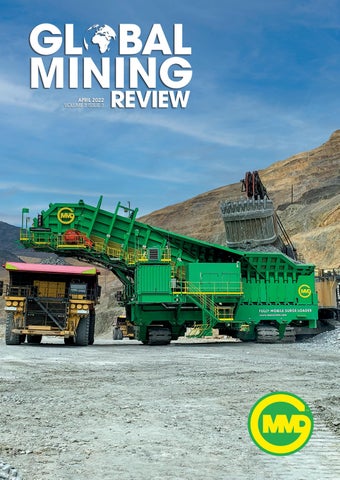
ON THE COVER For over 40 years, MMD has focused on solutions that help mines become safer, more efficient and more productive, whilst also reducing environmental impact. The Fully Mobile Surge Loader is a game-changer for truck and shovel operations. Through increasing shovel utilisation, and supplying a faster and more accurate material feed to the truck fleet, mines can achieve a 40% increase to production rates.
Global Mining Review is a fully-audited member of the Audit Bureau of Circulations (ABC). An audit certificate is available from our sales department on request.
follow
@Mining_review
like
MiningReview
join Global Mining Review
Copyright © Palladian Publications Ltd 2022. All rights reserved. No part of this publication may be reproduced, stored in a retrieval system, or transmitted in any form or by any means, electronic, mechanical, photocopying, recording or otherwise, without the prior permission of the copyright owner. All views expressed in this journal are those of the respective contributors and are not necessarily the opinions of the publisher, neither does the publisher endorse any of the claims made in the advertisements. Printed in the UK.
CBP006075
Challenge your material limits Nothing should stand in the way of your productivity – least of all the materials you move. With our compact Hägglunds direct drive systems, you can adapt easily to the job at hand, taking advantage of full torque at an infinite range of speeds. And should an overload try to stop you, the drives’ low moment of inertia and quick response will keep your machines protected. We’ll support you too, with an agile global network and smart connectivity to bring you peace of mind. Driven to the core.
Hägglunds is a brand of Rexroth. www.hagglunds.com
Guest Comment BERNHARD MAIER (COUNSEL), PIETRO GRASSI (ASSOCIATE) & GAVIN COLLINS (PARALEGAL) SIGNATURE LITIGATION
MANAGING EDITOR James Little james.little@globalminingreview.com SENIOR EDITOR Callum O’Reilly callum.oreilly@globalminingreview.com EDITOR Will Owen will.owen@globalminingreview.com ASSISTANT EDITOR Jessica Casey jessica.casey@globalminingreview.com SALES DIRECTOR Rod Hardy rod.hardy@globalminingreview.com SALES MANAGER Ryan Freeman ryan.freeman@globalminingreview.com PRODUCTION MANAGER Kyla Waller kyla.waller@globalminingreview.com ADMINISTRATION MANAGER Laura White laura.white@globalminingreview.com EVENTS MANAGER Louise Cameron louise.cameron@globalminingreview.com DIGITAL ADMINISTRATOR Leah Jones leah.jones@globalminingreview.com VIDEO CONTENT ASSISTANT Molly Bryant molly.bryant@globalminingreview.com
GLOBAL MINING REVIEW (ISSN No: 2515-2777) is published by Palladian Publications Ltd. Annual subscription (nine issues) £50 UK including postage, £60 overseas (airmail). Claims for non-receipt must be made within four months of publication of the issue or they will not honoured without charge.
I
n the first two months of 2022, the mining industry was faced with relatively linear macro trends, such as a push for supply chain transparency and accompanying threats of ESG-related litigation, exponentially growing global demand for strategic minerals across many industries, and the
government-mandated electrification of the automotive sector. Russia’s invasion of Ukraine on 24 February 2022 has since completely upended the legal and commercial landscape for the mining industry, and will have serious knock-on and long-term effects across the entire mining supply chain. The complexity of, and practical challenges inherent in, the disentangling of existing legal and commercial relationships cannot be overstated. While some of the short-term effects are becoming apparent, attempting to predict the medium and long-term legal implications would be akin to crystal ball gazing. However, some trends for the mining industry are becoming discernible. In addition to unprecedented geopolitical instability, the mining sector is now also faced with exponentially rising energy prices. This has already led to the suspension of the production of mission-critical chemicals; sodium cyanide, for example, such as in the case of Czech producer, Draslovka. The short and medium-term price volatility will almost certainly lead to the need or desire to reconsider or even breach (intentionally or unintentionally) contractual terms, including so as to recalibrate supply chains as a result of a fundamentally changed commercial landscape. The proper interpretation of force majeure, war, and insurance coverage clauses is almost guaranteed to take centre stage in commercial negotiations and legal disputes alike, whether before national courts or international tribunals. As a result of the wide-reaching sanctions regimes around the world, raising funds may become increasingly challenging or even impossible for investors in the mining sector – a significant number of IPOs and transactions have already been derailed. Following a wave of resignations in boardrooms around the world, shareholder disputes are also likely to ensue. Only recently, there was a risk that certain assets would be considered ‘stranded’ as a result of the concerted push for decarbonisation. Today, mining assets may quickly become physically ‘stranded’, leaving mining investors with little or no prospects of repatriating their assets, let alone recouping their sunk costs. To the extent that the actions of the Russian government have caused foreign investors in the mining sector financial losses, some of these losses may be recoverable by relying on the 60 or so bilateral investment treaties in force between Russia and the home State of the relevant investor. Foreign investors may be able to rely on substantive protection provisions, such as the prohibition of unlawful expropriation, a duty to accord fair and equitable treatment, the obligation to adhere to contractual undertakings, the requirement to offer full protection and security to local operations, and strict rules in relation to the repatriation of foreign capital. By the same token, existing claims pursued by Russian investors against other countries – such as the recently initiated UNCITRAL claim against France – will also likely be affected. Given the abrupt rupture of existing diplomatic channels, enforcement issues will also arise. Palladian Publications Ltd, 15 South Street, Farnham, Surrey, GU9 7QU, UK t: +44 (0)1252 718999 // w: www.globalminingreview.com
Forward together – Neles is now part of Valmet
Neles was merged into Valmet on April 1, 2022 and is now Valmet’s Flow Control business line. Valmet now offers an extensive flow control portfolio of industryleading valves, valve automation solutions and related services, including the renowned Neles, Neles Easyflow, Jamesbury, Stonel, Valvcon and Flowrox solutions. Valmet is now an even stronger, globally leading company with a unique and competitive offering of process technologies, services, automation systems and flow control solutions for process industries. Our global team of around 17,000 professionals is committed to moving your performance forward — every day. For more information, visit valmet.com
WORLD NEWS CHILE Great Southern Copper commences 2022 Especularita exploration campaign
G
reat Southern Copper plc, a company focused on copper-gold exploration in Chile, has commenced systematic on-ground exploration at its Especularita copper-gold (Cu-Au) project, located in the coastal metallogenic belt of northern Chile. The Especularita project comprises 19 076 ha. of exploration and mining concessions, both granted and in the process of being granted, and the company holds option rights to acquire a 100% interest in the project. The company’s exploration programmes at Especularita, targeting porphyry-epithermal style Cu-Au mineralisation, will comprise regional to prospect-scale mapping, sampling (rock, soil, stream) and geophysics work, designed to identify prospects for targeted drilling campaigns. Previous reconnaissance exploration by Great Southern Copper has identified porphyry to epithermal style Cu-Au mineralisation associated with an extensive advanced argillic litho-cap, centrally
located at the intersection of major structures and the contact of a large granodiorite intrusion with overlying volcanic rocks. Such litho-cap alteration is characteristic of the tops of porphyry copper systems, including Teck’s 50 000 tpy Carmen de Andacollo copper mine, located along trend from Especularita. Small scale artisanal workings and mines, targeting high-grade Cu-Au mineralised structures, are prominent around the base of the litho-cap alteration zone. Historical processing plants and tailings dumps provide further evidence in the district of a once active mining culture, which has not benefited from significant modern-style exploration. At the company’s San Lorenzo project, exploration continues on the Phase III trenching programme in conjunction with detailed mapping and sampling of monzonite intrusions. This work is progressing toward defining potential targets for drilling proposed to start in May/June 2022, subject to rig availability and permitting approvals.
EUROPE ABB and Savannah Resources to explore automation and electrification solutions
A
BB and Savannah Resources plc have signed a memorandum of understanding to explore industrial automation and smart electrification solutions for the development of Savannah’s Barroso Lithium Project in northern Portugal. Under the early-stage agreement, ABB will apply its technical expertise to outline production control and process solutions for lithium concentrate production and integrated spodumene mining operations, in line with Savannah’s target of zero emission operations by 2030. The Barroso Lithium Project is located 143 km north-east of Porto and is Europe’s largest known resource of hardrock spodumene lithium. Savannah’s objective is to develop an operation producing premium, carbon-neutral lithium concentrate as a strategic raw material in Europe’s EV battery supply chain. Local electricity, produced mainly from hydro, solar and wind energy with zero carbon emissions, would be used to provide power to the project. ABB’s technology solutions would maximise the use of the renewable energy and electrification to move the project towards carbon neutral production.
European lithium battery manufacturing is set for rapid growth and accelerating demand for lithium chemical production. This is driven by European Commission targets to make the EU carbon neutral and to reduce EU transport emissions by 90% by 2050. Savannah is focused on responsible development of the Barroso Lithium Project by using 238 individual measures to eliminate or mitigate environmental impacts. These measures will be included in the definitive feasibility study on the project, which Savannah is currently completing. This will also incorporate the actions from the current project decarbonisation study, which supports Savannah’s commitment to target a zero-emission operation by 2030 or earlier. Savannah also places great emphasis on its social responsibilities and a comprehensive set of programmes have been designed to share benefits and opportunities with local communities. ABB will also work towards binding agreements with Savannah in relation to the electrification, automation, and digital solutions in the future.
GLOBal mining review // April 2022
5
WORLD NEWS Diary Dates CIMBC22 – CIM Annual Convention 01 – 04 May 2022 Vancouver, Canada https://convention.cim.org Mines and Money Connect – May 2022 04 – 05 May 2022 London, UK https://minesandmoney.com/connect Investing in African Mining Indaba 2022 09 – 12 May 2022 Cape Town, South Africa https://miningindaba.com PDAC 2022 Convention 13 – 15 & 28 – 29 June 2022 Toronto, Canada & Online www.pdac.ca/convention Euro Mine Expo 2022 14 – 16 June 2022 Skellefteå, Sweden www.euromineexpo.com Electra Mining Africa 05 – 09 September 2022 Johannesburg, South Africa www.electramining.co.za CONEXPO-CON/AGG 2023 14 – 18 March 2023 Las Vegas, USA www.conexpoconagg.com/conexpo-conagg-construction-trade-show
To stay informed about the status of industry events and any potential cancellations of events due to COVID-19, visit Global Mining Review’s events page: www.globalminingreview.com/events
6
April 2022 // global mining review
AUSTRALIA BHP signs LOI for Australia-East Asia iron ore
‘green corridor’
A
consortium, led by the Global Maritime Forum and consisting of BHP, Rio Tinto, Oldendorff Carriers and Star Bulk Carriers Corp., have signed a letter of intent (LOI) to assess the development of an iron ore ‘green corridor’ between Australia and East Asia. To mobilise demand for green shipping and to scale zero or near-zero greenhouse gas emission shipping, governments and industry decision-makers are increasingly looking to enable and simplify the task of decarbonising the maritime sector by establishing green corridors: specific shipping routes where the economics, infrastructure, and logistics of zero or near-zero emission shipping are more feasible and rapid deployment can be supported by targeted policy and industry action. In 2021, the Getting to Zero Coalition report ‘The Next Wave’ demonstrated how green corridors can be conceived, prioritised, and designed with a pre-feasibility study for an iron ore route between Australia and East Asia. The study suggested that green ammonia is the likely fuel choice for this corridor based on favourable production conditions, an enabling regulatory environment and willing stakeholders. Taking the study further, the parties in the consortium intend to jointly assess green ammonia supply, bunkering and first mover support mechanisms, necessary for their participation in a viable Australia to East Asia iron ore green corridor. Through the work in the consortium and with inputs from the wider supply chain, the partners aim to develop a framework as a preparatory step towards real-world implementation of a green iron ore shipping value chain. The new consortium will facilitate a robust public-private dialogue to investigate conditions that need to be in place to mobilise demand and to feasibly scale zero or near-zero-greenhouse gas emission shipping on the corridor.
MEXICO Mexus Gold US pursues qualified mining company
for Santa Elena JV
M
exus Gold US is pursuing a qualified mining company to joint venture (JV) with at its Santa Elena mine in Caborca, Mexico. To assist with this endeavour, the company is seeking a CEO with the right experience to help manage and bring Mexus’ three properties into production. In addition, Mexus will look to bring on a five-person Board of Directors to assist with this process and general decision making going forward. Over the last six months, Mexus has completed an opencast test heap leach gold recovery process that produced 277.97 oz of gold from six test pits at the Santa Elena property. This test, along with the 100’s of assay samples, ground geophysics, mapping and geological evaluations, points to the property being a major gold target within the Mojave Mega Shear zone. Mexus believes that the property contains a 1 million + oz resource, which can be proven with a qualified JV partner. The company is also open to partnering with a company on the Ures gold, copper, and silver property. Across the company’s three properties, Mexus has over 16 000 acres and 26 different concessions all located in Northern Sonoran State, Mexico.
The Motion Metrics Ecosystem for Mines integrates several key data solutions at every stage of the mining process. Our systems work together to create a detailed view of mining productivity and efficiency, while increasing safety and decreasing operational downtime associated with crusher jams and equipment maintenance.
A complete bucket monitoring solution for all shovels and excavators.
Mitigate production loss caused by tooth breakage and improve safety.
Monitor each truck on its way to the crusher by analyzing volume and oversized material.
An AI-enabled 3D vision belt monitoring solution with no belt cuts, calibration, or scaling objects required.
Improve your blasting efficiency with handheld particle size analysis without scaling objects.
Monitor crusher input by accurately analyzing volume and particle size in every truck load.
Tel: +1 (604) 822-5842
Email: info@motionmetrics.com
MotionMetrics.com
WORLD NEWS AUSTRALIA BHP Nickel West secures wind power for Southern nickel operations
B
HP has secured enough renewable energy to cover 100% of the power requirements of three of its major nickel operations in Western Australia, following the signing of a new power purchase agreement (PPA) with Enel Green Power. The PPA between BHP and Enel Green Power will underpin construction of stage 1 of the Flat Rocks Wind Farm near the Great Southern town of Kojonup. Stage 1 is expected to create 120 jobs during construction and up to 10 locally based roles once operational. Construction is due to begin in July 2022, and first power is expected in October 2023.
The new wind farm will comprise the 18 tallest wind turbines in Western Australia and is expected to produce 315 GWh per year. Under the renewable PPA with Enel Green Power, the Flat Rocks Wind Farm will generate the equivalent of 100% of the current power requirements for Nickel West’s Kalgoorlie Nickel Smelter and Kambalda Nickel Concentrator from 2024. Renewable energy from the Flat Rocks Wind Farm is expected to reduce Nickel West’s market-based Scope 2 greenhouse gas emissions by just under one-third against FY2020 baseline levels from 2024, based on current forecast demand.
ARGENTINA Rio Tinto completes acquisition of Rincon lithium project
R
io Tinto has completed the acquisition of the Rincon lithium project in Argentina for AUS$825 million, following approval from Australia’s Foreign Investment Review Board. A binding agreement to purchase the project from Rincon Mining, a company owned by funds managed by the private equity group Sentient Equity Partners, was announced in December 2021. Rincon is a large undeveloped lithium brine project located in the heart of the lithium triangle in the Salta Province of Argentina, an emerging hub for greenfield projects. The project is a long life, scaleable resource capable of producing battery grade
lithium carbonate. It has the potential to have one of the lowest carbon footprints in the industry. The direct lithium extraction technology proposed for the project has the potential to significantly increase lithium recoveries as compared to solar evaporation ponds. A pilot plant is currently running at the site and further work will focus on continuing to optimise the process and recoveries. The market fundamentals for battery grade lithium carbonate are strong, with lithium demand forecast to grow 25 – 35% per year over the next 10 years, with a significant supply demand deficit expected from the second half of this decade.
USA Keras increases ownership of Diamond Creek Phosphate Mine to 100%
K
eras Resources plc now owns 100% of Falcon Isle Resources LLC and Falcon Isle Holdings LLC (collectively Falcon Isle), having acquired the outstanding 49% minority interests of Falcon Isle from the Helda Living Trust (HLT). Falcon Isle owns the high-grade Diamond Creek organic phosphate lease and mine, and the Spanish Fork processing facility in Utah, USA. Keras has now assumed full management of Falcon Isle and production has recommenced operations at the processing facility. Keras had been looking to resolve the funding shortfall at Falcon Isle and engaged local US legal representatives to enforce its rights of the terms of the transaction agreed in June 2020, under which Keras secured a 51% stake in Falcon Isle effective
8 April 2022 // global mining review
29 December 2020. Further to these discussions, agreement has been reached whereby Keras has purchased the outstanding 49% equity interest in Falcon Isle for a total consideration of US$3.2 million including loans repaid to the vendor of Falcon Isle of US$1 816 527. To preserve cashflow for developing the project, this will be paid in four annual instalments of US$800 000 commencing on 1 July 2022, with the final payment on 1 July 2025. Importantly, concluding this agreement has ensured that the company avoids a lengthy and costly litigation process in the US and allows Falcon Isle to recommence operations to meet demand in the key spring season. The losses in the financial year ended 31 December 2021 attributable to the 49% interest in Falcon Isle acquired were US$24 187.
Product NEWS TERELION Drilling tools for surface mining
T
erelion LLC is a leading manufacturer and global supplier of premium quality drilling tools and service solutions for surface mining and industrial applications, headquartered in Dallas, Texas, USA. The company specialises in challenges posed by blasthole drilling in surface mining, and is constantly exploring new designs, new materials, new manufacturing methods, and new engineering tools aimed at making the most hard-wearing, efficient, and cost-effective drilling products available. The drill bit series, RidgebackTM, introduced the first generation of advanced features to improve hole cleaning and extend bit life, especially in hard rock mining. It features longer life bearings, improved cutting structures, and a patented shirttail concept to assist in rapid cuttings evacuation. Vented cones (9 in. dia. and up) provide for additional bearing cleaning and heat reduction. The patented High Energy TumblingTM (HET) carbide treatment method produces a unique cutting structure and surface toughness that extends bit life and increases drilling rate. The Rotary Percussion System (RPS) combines the best advantages of rotary drilling and percussive drilling. RPS can drill efficiently in a wide variety of formations, which leads to higher rate of penetration, straighter holes, smoother drilling operation, and less tendency to bend drill steel. This means that customers get increased drilling efficiency and reduced operating costs compared to industry standards. RPS is also a sustainable choice thanks to increased drilling rates, reducing overall fuel consumption. AvengerTM drill bits, a sealed bearing drill bit series, delivers extended bit life and lower total drilling cost. The Avenger sealed bearing drill bits are designed for high-performance blasthole drilling and available in versions with roller (AVL) or journal (AV)
Figure 2. Warrior DTH hammer.
10 April 2022 // global mining review
Figure 1. Cut-open Avenger.
bearings to provide longer bearing life. The sealed AV is designed for moderate to ultra-high pull-down applications where extended bearing life is required, while the sealed AVL is designed for lower to medium pull-down applications where the ground conditions limit the bearing life of standard open bearing bits. With the help of its premium features, Avenger bits can live longer and require fewer bit changes, compared to industry standard bits, improving both customers’ safety and productivity in the process. In 2020, Terelion entered the down the hole (DTH) drilling tools market with the Warrior DTH product line. Warrior comprises both hammers and a full range of bits. Today, the offering has 4 in. through 8 in. hammers, built to be reliable workhorses – combining high performance and efficiency with a robust piston, easy to service design, and an optimised air cycle. A wide selection of bits including several face profiles and carbide shapes are offered.
Slurry Pumps Specialists CNSME is a company with more than 12 years of experience in the manufacture of slurry pumps accompanying and supporrng our mining customers all over the world.
APPLICATIONS - Quarries - Tailings management - Dredging - Mineral processing - Solids handling
PRODUCTS - Heavy duty slurry pumps - Rubber lined pumps - Verrcal pumps - Sand and gravel pumps - Foam pumps Spare parts 100% compaable with the best known brand on the market. Our spare parts are manufactured under the best standards and with materials in accordance to the requirements of our customers processes Shijiazhuang Minerals Equipment Co., Ltd Email: sales@cnsmepump.com
Web: www.smepump.com Tel: +86 311 66692398 Cell: +86 180 0041 5072
Aidan Chivers, Fitch Solutions, UK, discusses the outlook for Eastern Europe’s mining sector.
12 April 2022 // global mining review
F
itch Solutions’ analysis suggests that the green transition will have far-reaching impacts on the composition and dynamics of Eastern Europe’s mining sector over the coming decade. While the growing importance of strong environmental credentials will have implications for all mining in the region (including gold and iron ore), the greatest changes will affect those sectors most exposed to the shift towards decarbonisation: lithium and coal. Fitch Solutions highlights two divergent stories linked to the green transition. First, a new and globally significant lithium mining industry is set to develop in Eastern Europe, with companies looking increasingly to the region’s resources as global demand accelerates. Second, and by contrast, coal will continue its long-term decline in production across most of the region, impacted by a shift in power generation sources and heightened difficulties in financing new projects. The most notable exception will be Poland, which is likely to maintain modest coal production growth. The following analysis is limited to countries located between Russia’s European borders and those to the east of Germany, and draws on Fitch Solutions’ long-term production and consumption forecasts. Russia is excluded from this analysis, given its scale and geographical diversity relative to the rest of Eastern Europe.
Lithium: Eastern Europe to emerge as a key producing region
Czech Republic, and possibly in Serbia, over the next decade. Companies will look to capitalise on these countries’ substantial deposits, strong anticipated demand growth from nearby electric vehicle manufacturing, and a European policy framework which will support domestic and regional lithium production. The EU aims to boost its electric vehicle (EV) supply chain to reduce greenhouse gas emissions, and is seeking ways to reduce its battery supply chain vulnerabilities. Companies will increasingly seek to establish vertically integrated operations, including lithium mine development and downstream processing, with opportunities for strong ties with battery manufacturers as Europe emerges as a new regional hub for the entire battery value chain. A strong global price outlook will incentivise the development of upstream lithium projects. While lithium is not expected to maintain the highs of over US$50 000/t lithium carbonate (99.5%) which were reached in 1Q22, prices are likely to trend higher than the 2021 average of US$18 938/t, and remain well above the lows of 2H20. These sustained prices will be driven by a surge in demand from the upcoming boom in energy storage. Fitch Solutions’ Autos team forecasts that annual EV sales will grow from 5.5 million units to 26.7 million units over 2021 – 2030, which would imply at least a four-fold expansion of global lithium demand over the decade. There will be strong upward pressures on prices as more EV manufacturers tie in prices in opaque offtake agreements, leading to tighter supply on the
While Eastern Europe is not yet home to lithium extraction on a commercial scale, Fitch Solutions expects production to begin in the
global mining review // April 2022
13
open market. Battery manufacturing location will drive the geographical demand for lithium, and Fitch Solutions expects Eastern Europe to develop into a hub for investment in the EV supply chain. In particular, battery manufacturing capacity is likely to develop in Hungary, as well as in other new entrants such as Germany, Poland, Sweden, and the UK.
Czech Republic
The Czech Republic is home to the region’s most advanced major project, European Metals’ Cinovec asset. Cinovec is reportedly the world’s fourth largest non-brine lithium deposit and the largest hard-rock lithium project in Europe, with indicated and inferred resources of 7.2 million t of lithium carbonate equivalent (LCE) and potential for annual output of 22 500 t of LCE over 20 years (which represents 5.2% of global output in 2020). Cinovec aims to become Europe’s first vertically integrated battery metal producer by constructing a refining plant associated with the mine. With downstream chemical processing currently heavily concentrated in China, this combination of mining and refining will make it an attractive source of lithium for battery manufacturers concerned about potential geopolitical risks or supply chain issues. Fitch Solutions anticipates that commercial production will begin at the site in 2024. Government support for lithium extraction is likely to play an important role as policymakers become increasingly concerned about future lithium supply, especially given the importance to the Czech economy of car manufacturing, Lithium Production Forecasts, kt & % of global (2022-2030)
25
2.0 1.8 1.6
20
1.4 15
1.2 1.0
10
0.8 0.6 0.4
5
0.2 0
2022f
2023f
2024f
2025f
2026f
2027f
2028f
2029f
2030f
0.0
Lithium mine production, % of global (RHS) Lithium mine production, 1000 tonnes LCE (LHS)
Figure 1. Czech Republic to begin production in 2024. f = forecast. China Lithium Spot Prices (US$/tonne)
60,000 50,000 40,000 30,000 20,000
Lithium Carbonate 99.5%
2022
2021
2020
2019
2018
2017
2016
2015
2014
2013
0
2012
10,000
Lithium Hydroxide Monohydrate 56.5%
Figure 2. Sharp rise in lithium prices to incentivise investment. Source: Bloomberg, Fitch Solutions.
14 April 2022 // global mining review
which is worth approximately 9% of the country’s GDP. The Cinovec project has been supported with public funds, with Czech majority state-owned company, ČEZ, taking a 51% stake in March 2020. In July 2020, European Metals announced that it had entered into a financing agreement with EIT InnoEnergy, a company partly funded by the EU. While there are no other lithium projects in the country as advanced as Cinovec, Czech ministers have hinted at the potential for further public investments in the lithium and battery sector, and more proposals are expected to receive government support in the coming years. Beyond mining, in July 2021, the Czech government approved a state intervention package to help attract a factory for EV battery manufacturing, which may be the source of future offtake agreements and incentivise further lithium exploration and development upstream. In the short-to-medium term, the country will benefit from the suitability of its lithium reserves for extraction through hard-rock mining. This well-established process has a lower environmental impact than the evaporation ponds currently used to extract from lithium brine deposits in Latin America and China, which have been known to put stress on local water tables. Nevertheless, as the technology for extraction from brine deposits improves, the environmental, social, and governance credentials of hard-rock lithium mining may ultimately suffer, since carbon dioxide emissions tend to be around three times higher per tonne of product than for lithium extracted from brine.
Serbia
As with the Czech Republic, Serbia’s substantial lithium deposits give the country potential for the development of a lithium sector. Nevertheless, its prospects were severely hit in January 2022 when the Serbian government revoked exploration licences for the US$2.4 billion Jadar project, wholly owned by Australian miner, Rio Tinto. The project had been the country’s most important lithium development, set for production of 58 000 tpy LCE by 2029. The revocation followed significant disruption from protests in both nearby Loznica and the capital Belgrade, related to its potential environmental and social impact, as well as a perceived lack of benefit to Serbian citizens. The extent of the demonstrations has raised questions about the future of large scale projects in the country, and Rio Tinto’s sobering experience with the Jadar project will limit appetite for major investments from global mining companies. The revocation marks a striking shift in government policy in the face of mounting public criticism. Until now, the government had offered considerable support to the project, including the signing of a memorandum of understanding in 2017, the creation of a joint working group, and even the construction of some infrastructure which would have supported operations. As pressure mounted, ministers had at different points suggested a referendum on the development, or postponing a decision until after the April 2022 elections, before deciding in effect to pull the plug on the project. Serbia’s Jadar project is unusual in that it is owned by a large, diversified mining firm. Despite some recent consolidation in the sector, globally most lithium projects are owned by junior exploration miners. Rio Tinto’s financial strength may help it endure this setback, and and the company
is currently considering a legal challenge, amongst other options. According to a recent statement, Rio Tinto has not abandoned the project and it may seek to reduce community opposition through greater development spending in local areas. Nevertheless, public antipathy towards the company is substantial, and environmental activists are pushing for guarantees that the project will not be relaunched. Tensions around the proposed mine have also been compounded by recent political frictions between Serbia and Australia following the deportation of Serbian tennis player Novak Djokovic, who has himself publicly opposed the mine. In addition, Rio Tinto continues to be affected by reputational damage following the destruction in 2020 of sites in Western Australia which were sacred to indigenous communities. Despite the significant risks of community opposition in the country, Fitch Solutions does expect other mining companies to show interest in Serbia for lithium over the coming decade, given its substantial resources and the very strong demand outlook for the metal. Any new developments are, however, likely to be on a much smaller scale than Rio Tinto’s plans in the Jadar valley. The size of Rio Tinto's proposed site was a major factor in the protests, with areas at risk of subsidence stretching to over 850 ha. The sector may end up dominated by much smaller projects in more remote areas. For now, though, Serbia has been removed from Fitch Solutions’ lithium production forecasts, and such possible developments are left as upside risk.
Other major lithium players
Elsewhere in Europe, Germany is set to become a major lithium player. The country hosts the largest identified resources of lithium in Europe (14.4 million t LCE) and Fitch Solutions anticipates it will start production in 2024. Other smaller players include, or will include, Portugal, Spain, Finland, and Austria.
Coal mining: A sector in decline across most of Eastern Europe
Unlike the positive outlook for lithium production in the region, the coal mining sector is set for considerable decline as the pace of the green transition accelerates. Fitch Solutions expects production to fall in most countries across Eastern Europe, driven by a shift in power generation sources, growing difficulties financing fossil fuel projects, and an already thin pipeline of new projects. However, Poland will be the major outlier,
with consistent growth forecast for both thermal and metallurgical coal production over the decade. EU environmental targets will be a major factor in the decline of Eastern European coal mining. The European Emissions Trading Scheme (ETS) has helped to drive down regional coal consumption, with the price of carbon dioxide emissions for power stations in the bloc rising from approximately €6/t in 2016 to highs of over €90/t in February 2022. In support of its emissions goals, the European Commission (EC) introduced the Just Transition Mechanism in January 2020, which will provide financial support to help coal-producing regions move away from their dependency on the sector. The EU’s efforts to reduce the production of coal are not limited to member states. The EC has identified 17 regions for possible inclusion in its Initiative for Coal Regions in Transition in the Western Balkans and Ukraine, launched in December 2020 to support a ‘just transition’ for coal-dependent regions outside the bloc. Rapidly increasing problems in securing financing for new coal mining operations will also hinder the sector over the coming decade. Since the beginning of the COVID-19 pandemic, there has been a sharp acceleration in the move away from the financing of coal projects, both by governments and the private sector. In particular, the COP26 conference in November 2021 saw a wide range of pledges to end financing for the fossil fuel sector. As a result, coal mining in Eastern Europe is likely to be increasingly dominated by state-owned companies, such as Societatea Naţională a Lignitului Oltenia in Romania and Elektroprivreda Srbije in Serbia, as well as much smaller private companies. The consequent decline of the sector is likely to be substantial. Fitch Solutions expects coal production to fall significantly in Romania (24% reduction in thermal coal output in 2030 compared with 2020), the Czech Republic (10.5%), and Bulgaria (9.1%). This decline is set against Fitch Solutions’ expectations for a broad rise in global coal production (annual output is forecast to be 14.8% higher in 2030 than in 2020), with growth concentrated in major coal producers such as China, India, and Mongolia.
Poland
Poland is the major exception and is set to resist this overall trend, posting consistent growth over the decade. Fitch Solutions forecasts that Polish thermal coal production
Table 1. Classification of lithium sources and impact Use of land (m2/t of lithium hydroxide)
Production cost (US$/t of lithium hydroxide)
Stage of development
Example of countries where it is used (or will be used)
Emission of CO2 (kg/t of lithium hydroxide)
Use of water (m3/t of lithium hydroxide)
Hard rock mining
In use, with plenty of new projects in the pipeline
Australia, Brazil, China, Canada, Czech Republic
15 000
170
464
6855
Lithium brine deposits: continental (evaporation ponds)
Argentina, Chile, China In use, with some new/expansion projects in the pipeline
5000
469
3124
5872
Lithium brine deposits (geothermal)
In development
Germany, UK, US
0*
80 *
6*
3140
US, Serbia
n/a
n/a
n/a
n/a
Lithium sources/extraction technique
Sedimentary (clay) deposits In development
Note: Example countries are not exhaustive lists. Classification has been simplified to some extent for clarity. * Data is from assessment of Vulcan Zero Carbon litium project in Germany only. Source: Minviro Life Cycle Analysis 2020, Fitch Solutions.
16 April 2022 // global mining review
BROKK PEDESTAL BOOM Continuing the tradition of powerful solutions for confined spaces.
Read more at
www.brokk.com
will increase by 22% to 129 million tpy by 2030, and that metallurgical coal production will grow by 53% to 17 million tpy over the same period. This anticipated growth exceeds the global production forecasts, and Fitch Solutions thus expects Poland to increase its global share of the market slightly by 2030, from 1.6% to 1.7% for thermal and from 1% to 1.4% for metallurgical coal. A solid pipeline of new coal projects in Poland will support this growth. Fitch Solutions expects several new mines to begin operations in the coming years, including at two important assets of Australia-based Balamara Resources. Of the projects likely to progress to production in the next decade, indicated and inferred resources total over 1000 million t, giving Poland the potential for growth even in excess of these forecasts. In the short-to-medium term, high levels of coal consumption from Poland’s power generation will continue to support the mining industry. In Poland, coal represents the largest proportion of total power generation of any country in Europe, with over 70% of its electricity generation coming from coal in 2020. By 2030, however, Fitch Solutions’ Power team forecasts that this figure will have fallen to 54%, a downtrend which will push a greater share of Poland’s output into the export market. Destinations for Polish thermal coal are currently highly concentrated in Europe, but Fitch Solutions expects that thermal coal will follow its metallurgical counterpart in being shipped further afield as European Top European Countries - Lithum Reserves, mnt LCE 16 14 12 10
Conclusion
8 6 4 2 0
demand wanes. Thermal coal production is likely to be supported over the decade by exports to growing economies in Southeast Asia in particular, where electricity from coal-fired power is set to increase in the medium term. These higher growth forecasts for metallurgical than for thermal coal are largely based on expectations of greater output at a number of mines owned by Jastrzębska Spółka Węglowa (JSW), which is primarily a producer of metallurgical coal. In 2020, JSW began exports to China and in smaller quantities to Vietnam and Malaysia, driving seaborne exports of metallurgical coke from Poland to more than 2.8 million t, a 40% y/y increase. In addition, Fitch Solutions notes strategic pivots from companies such as Balamara, in order to prioritise higher-value metallurgical coal in mines which have a range of grades of coal. Metallurgical coal has a more positive long-term outlook than thermal, as a large share of steel’s global capacity will remain reliant on it as an input in the coming years, while European countries make efforts to reduce coal’s role in their energy mix. A key issue over the coming decade will be the extent to which Polish energy and mining policy puts it at odds with European regulations and targets. An early flashpoint highlighting the potential for tensions arose in May 2021 when Poland’s government defied a European Court of Justice injunction ordering the closure of a major brown coal mine in Turów, with Polish ministers citing concerns over jobs and energy security. The possibility of greater conflict between EU climate goals and Polish economic priorities poses a downside risk to Fitch Solutions’ production forecasts, especially if the EC takes more robust enforcement action in support of its environmental ambitions.
Germany
Czech Republic
Serbia
Spain
Portugal
Austria
Finland
Figure 3. Substantial lithium potential in Eastern Europe. Source: USGS, Fitch Solutions. Poland & Rest Of Eastern Europe - Coal Mine Production (2015-2030)
2030f
2029f
2028f
2027f
2026f
2025f
2024f
80 2023f
-10 2022f
100
2020
-5
2021e
120
2019
0
2018
140
2017
5
2016
160
2015
10
% chg y-o-y, Poland (LHS) % chg y-o-y, E.Europe ex-Poland (LHS) Absolute production - Poland,mnt (RHS) Absolute production - E.Europe ex-Poland,mnt (RHS)
Figure 4. Poland to resist trend of regional decline. Note: Includes Ukraine, Czech Republic, Bulgaria, Romania, and Slovakia. Source: EIA, Fitch Solutions.
18 April 2022 // global mining review
The green transition is set to have a profound effect on the Eastern European mining sector over the coming decade, as both supply and demand dynamics are disrupted by the shift towards decarbonisation. Companies will be forced to adapt as ESG criteria become more integrated into financing and purchasing decisions. The vastly different outlooks for lithium and coal mining give some indication of the wide range in opportunities and risks prompted by these changes, but the impact will be felt across all the region’s mining sectors. Close research of these trends will be integral to Fitch Solutions’ analysis of the mining industry in Eastern Europe and beyond.
Note
This article was written before the Russian invasion of Ukraine on 24 February and the start of the ongoing war. While most of the themes analysed in this article are long-term trends which Fitch Solutions still expects to play out, the region’s mining sector will be subject to considerable disruption in the coming months. This is most clearly the case in Ukraine, as part of the devastation of the country’s civilian and industrial infrastructure, but also across Eastern Europe, due to heightened geopolitical tensions along with elevated, and volatile, energy prices. Additionally, regional thermal coal production is likely to expand in the short term in response to these higher prices, as European power stations look to diversify from Russian natural gas.
REGISTER AT pdac.ca/convention
JUNE 13 -15 IN PERSON TORONTO, CANADA
JUNE 28 -29 ONLINE ANYWHERE
Access top-quality programming Reconnect with a diverse community of exhibitors Gain insight from industry experts Valuable networking opportunities
#PDAC2022
20 April 2022 // global mining review
Minera IRL, Peru, provides an outline of the history and prospects of the Ollachea Gold Project.
T
he Ollachea Gold Project is located in the Puno Region, Southern Peru, approximately 250 km north of Lake Titicaca in the Eastern Andes. Minera IRL’s interest in the project began in 2006, when the original Ollachea concessions were acquired from Rio Tinto. Since then, a number of exploration drilling programmes and technical and financial studies have been completed to advance Ollachea, including a definitive feasibility study produced by AMEC Peru and Coffey Mining Pty Ltd in 2012. Most recently, Australian engineering and mining consulting firm, Mining Plus, completed the preliminary economic assessment (PEA) for Ollachea, in accordance with National Instrument 43-101 (NI 43-101) Standards of Disclosure for Mineral Projects. The PEA was filed on 1 September 2021, and considers an underground mine, gravity concentration and carbon-in-leach (CIL) plant, designed to treat 1500 tpd over the first three years, before ramping up to 3000 tpd in year four. Ollachea consists of 18 mining concessions, covering approximately 9899 ha., and benefits from an accessible electricity source and consistent water supply. In addition, critical-path milestones have been accomplished in advance of development, including a 30-year surface rights agreement signed with the Ollachea community in 2012, an environmental and social impact assessment approved by Peruvian authorities, and a 1.2 km production tunnel and site access roads completed in 2013.
Mineral resource estimates
Mineral resources at Ollachea are considered as potentially mineable by a sub-level stoping underground method, and are estimated based on drilling conducted prior to 4Q16. The total mineral resource estimate includes an updated resource estimate for the Minapampa Zone and a maiden resource estimate for the Minapampa Far East (MFE) Zone. The mineral resource is reportedly found inside optimised underground stope shapes, which are based on a cut-off grade of 1.4 g/t gold (Au) and a gold price of US$1700.
global mining review // April 2022
21
and scheduling of high-grade material earlier in the proposed mine life, when compared to the mineral resource estimate that supported the 2012 definitive feasibility study. The high-grade domain has been modelled by conventional wireframing methods at a nominal grade threshold of ≥4 g/t Au. The ≥4 g/t Au high-grade domain has been modelled by Mining Plus in the central Minapampa Zone. Mining Plus considers that this area has sufficient continuity between drill hole sections at ≥4 g/t Au, and is the only portion of the deposit that could potentially support an elevated mining cut-off grade for a reasonable period of time (3 – 4 years) at the proposed initial mining rate of 1500 tpd. Additionally, Mining Plus has noted that the newer MFE Zone mineralisation interpretation overlaps part of the mineral resource estimate that supported the 2012 definitive feasibility study. As the MFE Zone has been interpreted from closer-spaced drilling and improved geological understanding, it has replaced the Minapampa Zone interpretation where the two overlapped. That overlapping part of the Minapampa Zone, comprising approximately 20 000 oz Au, has been effectively subtracted from the Minapampa Zone and now forms part of the MFE Zone, with no change in the mineral resource classification. Mining Plus has reported the mineral resource inside optimised stope shapes in order to satisfy the “reasonable prospects for eventual economic extraction” requirement, in accordance with NI 43-101 and the Mineral Resource and Mineral Reserves Best Practices Guidelines (CIM, 2019). These optimised shapes may include material <1.4 g/t Au; however, the average grade of the complete stope is ≥1.4 g/t Au cut-off grade. Similarly, outside of the optimised shapes, there are blocks with grades ≥1.4 g/t; however, by applying reasonable mining parameters, they have become diluted to the point that they do meet the
Summarised as of 30 June 2021, the mineral resource has been estimated in alignment with the Canadian Institute of Mining, Metallurgy, and Petroleum (CIM) Estimation of Mineral Resource and Mineral Reserves Best Practices Guidelines (CIM, 2019) and reported in accordance with NI 43-101. Mining Plus has estimated an indicated mineral resource of 1.13 million oz Au contained in 10.7 million t at 3.28 g/t Au. The inferred mineral resource comprises 0.6 million oz Au contained in 7.3 million t at 2.7 g/t Au within the Ollachea property limits. The details of the mineral resource estimate are shown in Table 1. The Minapampa Zone mineral resource has been estimated with a conventional estimation methodology, consisting of 3D wireframing of mineralisation domains and ordinary kriging of the grade within each domain. The updated interpretation has now incorporated a high-grade domain, in order to facilitate optimisation
Figure 1. Location – Ollachea Gold Project.
Table 1. Mineral resource estimate for the Minapampa and MFE zones within the Ollachea Project (June 2021) Indicated Zone
Inferred Tonnes (million t)
Au g/t
Au ounces (million oz)
Tonnes (million t)
Au g/t
Au ounces (million oz)
Minapampa
10.7
3.28
1.13
1.8
3.0
0.2
Minapampa Far East
-
-
-
5.5
2.6
0.5
Total
10.7
3.28
1.13
7.3
2.7
0.6
1. Mineral resources are not mineral reserves and do not have demonstrated economic viability. 2. All figures have been rounded to reflect the relative accuracy of the estimates. Totals may not sum due to rounding. 3. The mineral resource was estimated by Maria Muñoz and reviewed by Dr A. Fowler, MAusIMM, CP(Geo), Independent Qualified Person under NI 43-101, of Mining Plus Consultants who takes responsibility for it. 4. Composites were capped, where appropriate. 5. Mineral resources have been diluted and reported within optimised underground stope shapes. 6. The optimisation was based on a cut-off grade of 1.4 g/t Au, considering metal prices of US$1700/oz Au, assuming metal recovery of 87% for gold, and total operating costs of US$61.18/t. 7. Tonnages reported are metric tonnes and ounces of contained gold are troy ounces. 8. Mining Plus is not aware of any environmental, permitting, legal, title, taxation, sociopolitical, marketing, or other relevant issues that could materially affect the potential development of the mineral resource estimate.
22 April 2022 // global mining review
Fully Mobile Surge Loader Patent Pending; UK Patent Application No 1709467.3
MINE SMARTER LOAD QUICKER The Surge Loader™ will transform open pit mining – harnessing the full capabilities of the shovel to deliver continuous mining using your existing truck fleet. By stockpiling material and delivering a regulated flow on demand, the Surge Loader boosts productivity, reduces truck demand and eliminates trucks reversing in the loading area. So you benefit from a safer mine with improved truck and shovel efficiency – driving down your cost per tonne, slashing your operating expenses and taking your bottom line to the next level. Wherever you are, we have the local resources to boost your productivity, maintain your equipment and give you the edge. Up to 40% productivity increase
Safer Operation
LEARN MORE: www.mmdsizers.com/surge-loader
Up to 98% average target payload
Table 2. Overall recoveries Head grade
Recovery rate
3.3 g/t
86.2%
4.3 g/t
90.3%
Table 3. Main parameters of the PEA Key assumptions Base case gold price
per oz
US$1600
Life of mine (LOM)
years
11
Total mineralised material mined
million t
9.6
LOM gold production
oz
876 200
Average annual gold production, years 1 – 4
oz
66 000
Peak gold production in year 5
oz
111 000
Head grade, years 1 – 4
g/t Au
4.0
Head grade, over remaining LOM
g/t Au
3.0
Gold recovery, years 1 – 3
%
90.3
Gold recovery, over remaining LOM
%
86.2
LOM average operating cost1
per oz
US$688
LOM average cash cost2
per oz
US$792
LOM all-in sustaining cost (AISC)3
per oz
US$794
Start-up CAPEX4
US$ million
US$89
Expansion CAPEX5
US$ million
US$37
Mining and processing
Operating costs
Capital costs
1. Consists of mining and processing costs, tailings, and waste rock disposal and on-site G&A. 2. Consists of operating costs plus treatment and refining charges, government and NSR royalties, and community interest (5%). 3. Consists of cash costs plus sustaining capital (mining and processing). 4. Includes mine development and plant construction with a design capacity of 1500 tpd. 5. Includes tailings storage facility construction and process plant ramp-up to 3000 tpd.
reasonable prospects for eventual economic extraction criterion. The MFE drilling programme was completed in 4Q16 and was designed to test the extensions to the Minapampa mineral reserve. The programme successfully demonstrated that the mineralisation continues for >500 m to the east of the existing mineral resource estimate, and that the mineralisation is still open to the east and at depth. The drilling results have been used to estimate an inferred mineral resource for the MFE Zone of 0.5 million oz Au contained in 5.5 million t at 2.6 g/t Au. As noted above, the mineral resource has been reported inside optimised stope shapes, based on a cut-off grade of 1.4 g/t Au.
Mining and processing
Mining Plus identified high-grade areas within the deposit that can be mined preferentially in an efficient manner at 1500 tpd, without compromising the remaining mineralised material. This higher-grade section can be mined at an elevated cut-off grade without breaking it up into isolated stopes, making it an ideal area to target early in the mine life and deliver the highest possible grade to the processing plant during the first three years. The plant design includes a crushing and grinding circuit, followed by gravity concentration. The gravity concentrate is processed in a CIL circuit and gold is recovered from the loaded carbon in a conventional elution-electrowinning plant with smelting of the gold to a Dore bullion. The process also includes effluent treatment, tailings filtration, and preparation of cemented paste backfill required during mining operations. Overall gold recoveries are shown in Table 2 and are based on metallurgical test work completed between 2017 and 2021 by Sepro Laboratories (Met-Solve).
Ollachea PEA assumptions and economic results
The main parameters and economics of the Ollachea PEA are summarised in Table 3.
Conclusion
Figure 2. Ollachea Property – indicated and inferred resources.
24 April 2022 // global mining review
With the Ollachea PEA filed on 1 September 2021, Minera IRL has focused on engaging with parties that have shown an interest in enabling the development of Ollachea. This is a priority objective of Minera IRL.
Global Mining Review Online
The home for the latest mining and minerals processing news, analysis, comment and events
www.globalminingreview.com
P
orphyry copper deposits, a type of hydrothermal deposit, are an important resource for mining copper and other valuable metals or minerals, such as molybdenum and gold. Due to their large reserve, low grade, and shallow burial depth, these deposits are commonly mined using large scale, mechanised opencast methods. In the exploration and mining of porphyry deposits, portable X-ray analysis methods can provide accurate elemental and mineralogical information to guide decisions in the field. For instance, portable X-ray fluorescence (commonly known as pXRF) can detect common elements of interest in porphyry exploration and mining. It can also identify elements that help determine the porphyry systems’ fertility. Meanwhile, portable X-ray diffraction (pXRD) can accurately measure important minerals associated with porphyry systems, including the identification of important clay indicators.
Evaluating the performance of pXRF analysers on common porphyry constituent elements
Portable XRF analysers provide porphyry miners and explorers with rapid, on-site elemental analysis through a simple test process. First, the analyser emits X-rays. These X-rays hit the sample, causing elements in the sample to emit fluorescence X-rays back to the analyser. The detector inside the analyser measures the elemental composition (i.e. which elements are present and the amount of elements present). Lastly, these results display on the analyser’s user interface. Since accurate elemental results are paramount for efficient exploration and mining, studies have been conducted to compare the performance of pXRF analysers to conventional lab-based analysis methods. For example, Figure 1 shows the out-of-box performance of the Olympus® VantaTM pXRF analyser on a variety of certified reference materials (CRMs). These CRMs are from the porphyry copper and iron oxide copper gold (IOCG)
26 April 2022 // global mining review
pXRF commodity kit supplied by Ore Research and Exploration Pty Ltd (OREAS). Correlation between CRM data and the Vanta pXRF analyser shows the pXRF analyser can provide excellent data quality on fully prepared samples from these deposit types. Differing combinations of ratios of strontium (Sr), yttrium (Y), manganese(II) oxide (MnO), silicon dioxide (SiO2), and zirconium (Zr), as measured in the laboratory, have been identified as potentially effective discriminators between ore-forming and unprospective intrusions in the porphyry copper (Cu) setting. Both the University of Tasmania’s Centre for Ore Deposits and Earth Sciences (CODES) in Australia and the School of Geography, Geology, and Environment at the University of Leicester in the UK have performed research to study the potential of using pXRF analysers to help explorers assess porphyry fertility in the field on prepared and unprepared samples. In a paper published in 2019 in Geology Exploration, Environment, Analysis (GEEA), the team from CODES demonstrated that based on a global compilation of laboratory data, whole-rock values of Sr/Y and Sr/MnO can effectively discriminate between ore-forming and unprospective intrusions in the porphyry Cu environment. Furthermore, the team determined that pXRF data, calibrated to laboratory-derived conventional whole-rock data, can be used in place of conventional whole-rock analytical data to inform the Sr/Y vs Sr/MnO Cu prospectivity discrimination diagram. The CODES team compared conventional inductively coupled plasma mass spectrometry and emission spectrometry (ICP-MS/ICP-ES) and pXRF results from six mineralised districts: n Yerington porphyry Cu (±Mo-Au) district, USA. n Resolution porphyry Cu-Mo deposit, USA. n Las Bambas Cu-Fe skarn district, Peru. n Cadia Cu-Au district, Australia. n Northparkes Cu-Au district, Australia. n Cowal Cu-Au district, Australia.
Todd Houlahan, Olympus Scientific Solutions, reports on recent studies demonstrating innovation in portable X-ray analysis methods for exploration and mining of porphyry deposits.
heterogenous nature of these samples and its inherent impact on lighter elements measured with pXRF. However, the better accuracy of heavier trace elements, such as Zr, allows them to be used instead of silica, even on field samples, as an indicator of porphyry fertility.
By evaluating the accuracy and precision of pXRF data collected from both pulp material (120 mesh) and intact rock slabs (up to 0.5 cm grain size) and comparing the results of conventional ICP-MS/ICP-ES whole-rock data, the CODES paper demonstrated that pXRF data can be successfully acquired directly from unprocessed rocks in the field to assess the ore forming potential of intrusions. Moreover, work presented at the 43rd Annual Meeting of the Mineral Deposits Study Group in London by Marquis et al. assessed the performance of the Vanta pXRF analyser on a suite of samples showing a mixture of positive and neutral fertility signals (Sr/Y vs SiO2 and Sr/Y vs Zr) subjected to a range of sample preparation methods.1 The same samples were tested under the following conditions: n Point and shoot: no preparation; instrument nose in direct contact with media surface. n Field mill or mortar: fragmentation and milling of hard media to ~200 μm in the field. n Laboratory-type: milling and homogenisation of a dry material to 125 μm in a laboratory setting; compacted into a pellet with smooth surface. This study found that the pXRF analyser worked well on prepared samples, but could not accurately resolve SiO2 on crushed or intact rocks. This is to be expected due to the
Portable XRD analysis for porphyry mining and exploration
As demonstrated in the studies, pXRF is a powerful elemental analysis tool to explore and mine porphyry geological systems. Another complementary tool is the portable XRD analyser, which can measure the minerals associated with porphyry systems. Like pXRF, pXRD provides a faster, more practical alternative to laboratory methods. For instance, conventional goniometer-based XRD instruments are large systems, require a bigger sample size, and have many moving parts. In contrast, pXRD analysers are low maintenance and require a smaller sample, enabling portability, and faster testing.2
Assessing clay content using portable XRF and portable XRD
pXRD is often used in tandem with pXRF for porphyry exploration and mining. One example is in the assessment of clay content. As contemporaneous and post-period products of porphyry copper/gold ore formation, clay minerals play a significant role in the discovery, exploration, mining, and mineral processing of porphyry deposits. Engineers from a mining company in Myanmar provided three known samples from a porphyry copper mine. Samples contained low, medium, and high quantities of clay (Figure 2). To prep the clay minerals for analysis, the engineers crushed the samples to -2 mm and reduced them to about 100 g each.
global mining review // April 2022
27
The pXRD analyser validated the engineers’ assumptions, as increasingly higher amounts of illite and kaolinite were observed in the medium and high clay samples. The amounts of quartz, alunite, and pyrite decreased from low clay to high clay. These samples were then analysed with the Vanta pXRF analyser (Table 2). Increased amounts of Ca and Cl were observed in higher clay content samples. This XRF data, which includes Si, Al, Fe and other elements, corresponded to the mineralogical characteristics generally observed in the field and with the pXRD analyser. The discovery of pyrophyllite formed by special alteration is also important for exploring and processing porphyry copper ores.
The engineers analysed the crushed clay samples using pXRF and pXRD analysers to identify their chemical elements and obtain their mineralogical information, respectively. The XRD test was performed using the Olympus TERRATM II portable XRD analyser equipped with a cobalt (Co) target X-ray tube (Table 1).
Conclusion
Laboratory analysis of whole-rock elemental chemistry and clay mineralogy plays an important role in discovering, exploring, mining, and processing Table 1. XRD analysis data produced by the TERRA II analyser porphyry deposits. The examples outlined in Sample ID Quartz Kaolinite Pyrophyllite Illite Alunite Pyrite Total this article demonstrate that portable XRF and Low clay 62.9 30.3 6.8 100 XRD, outside the laboratory, can rapidly provide the porphyry explorer and miner with Moderate clay 49.6 8.3 9.7 18.8 10.3 3.2 100 excellent quality data to guide High clay 45.5 18.7 29.8 6.0 100 decision-making in a cost effective and The table shows the minerals present and amount of each mineral in the clay samples. timely manner.
Figure 2. Clay samples collected from the porphyry copper mine.
Table 2. Elemental analysis data from the Vanta analyser
References
Al
Si
P
S
Cl
Ca
Fe
Cu
Pn
%
%
ppm
%
ppm
ppm
%
ppm
ppm
Low clay
1.19
3.66
311
3.72
1087
3378
3.70
3.70
210
Moderate clay
0.83
3.94
341
0.90
2921
3771
2.34
1332
102
High clay
0.98
3.95
422
0.90
4324
4062
1.42
821
48
Sample
The table shows the elements present and the amount of each element in the sample. Elements include aluminum (AI), silicon (Si), phosphorus (P), sulfur (S), chlorine (Cl), calcium (Ca), iron (Fe), copper (Cu), and lead (Pb).
1. AHMED, A., et al., 'Assessing copper fertility of intrusive rocks using field portable X-ray fluorescence (pXRF) data', Geochemistry: Exploration, Environment, Analysis, Vol. 20, No. 1, (2020), pp.81 – 97, https://pubs.geoscienceworld.org/geea/articleabstract/20/1/81/569792/Assessing-copper-fertility-ofintrusive-rocks 2. 'Metals for a Green Future: Programme and Abstract Volume', Mineral Depostis Studies Group, (2020), http://mdsg.org.uk/wp-content/uploads/2020/01/ MDSG_2020_NHM_abstracts.pdf
Figure 1. Vanta pXRF performance of elements in porphyry copper and IOCG compared to assay values using various kits supplied by OREAS.
28 April 2022 // global mining review
I
Michael Starke, Altus Strategies, UK, highlights a unique royalty business model for investors.
nvestors are always looking to further diversify their portfolios by spreading risk across investment types and sizes, sectors, jurisdictions, and asset or product development stages. The logic to this approach is undeniable; a diverse portfolio offers blended exposure to multiple upside opportunities and hedges potential losses. In times of uncertainty, this investment approach becomes even more crucial. Altus Strategies Plc is a UK-headquartered mining royalty generator with a diversified, precious metal focused portfolio of assets. The company operates in what it sees as
the mining ‘sweet spot’, combining short-term discovery upside with long-term royalty income. The London Stock Exchange is awash with exploration and development plays and is only now slowly seeing the emergence of a streaming and royalty sector. Altus’ business model, however, combines both of these elements. Using a model established and now well versed in North America’s natural resources industry, the company brings a unique and proven strategy and business model to investors, with its portfolio of discovery upside and high-quality, long-life cashflows from royalties diversified
global mining review // April 2022
29
across multiple jurisdictions and commodities and managed by a team with extensive industry experience.
Growing a diverse royalty portfolio
Altus is focused on growing its royalty portfolio to provide a steady stream of long-term income from numerous assets while mitigating risk (whether geopolitical, operational, or financial) usually associated with the ownership of a project. To do so, the company either acquires mining
Figure 1. Establishment of drilling site at Altus’ Diba licence, Mali.
Figure 2. Logging of diamond core drilled from Altus’ Diba licence, Mali.
Figure 3. RC drilling at Altus’ Lakanfla licence, Mali.
30 April 2022 // global mining review
royalties which it considers undervalued – through direct purchase from existing owners or through the provision of finance to operating companies – or seeks to attach a royalty interest to the projects it generates and subsequently joint ventures. The result of this strategy is a continuously expanding portfolio of royalties, with increasingly reliable and foreseeable cashflows requiring minimal management. This income can then be reinvested by the company into new acquisitions or project developments, while minimising shareholder dilution. Furthermore, significant upside is embedded in each royalty, which can benefit from positive exploration and development results made by the operators of the projects, at zero cost to Altus. These can extend mine lives and therefore royalty cashflows to Altus. On 1 February 2022, the company announced the completion of the acquisition of a portfolio of 24 royalties and royalty interests from one of the world’s largest gold mining companies, Newcrest Mining, for a total consideration of US$37.5 million, with an aggregate amount of US$24 million paid by Altus and the remainder by its’ joint venture partner, AlphaStream Capital. The Australia-focused portfolio includes two producing gold mines, one near production gold mine, 15 development stage projects, and six exploration stage assets. It offers potential annual revenues to Altus of up to US$3.5 million (post-tax), based on a forecast 10-year average. Many of the royalties are on assets in known gold mining districts, including the Eastern Goldfields, the Pilbara, the Mt Isa Inlier, and the Lachlan Fold Belt. The operators of the projects include numerous high quality precious and base metal companies who are well known to the market. Prior to this, in September 2021, Altus closed an agreement to acquire an effective 0.418% net smelter return (NSR) royalty interest on the producing Caserones Copper Mine, located in the Atacama region of northern Chile, for US$34.1 million through a strategic 50:50 partnership with EMX Royalty Corp., listed on NYSE American and TSX Venture exchanges. Caserones has been operating since 2015 and has approximately 16 years of mine life remaining. The NSR interest is expected to generate cash flow of US$3.2 million/yr (post-tax) to Altus. The first payment from the royalty for US$950 000 was received by Altus one month later, transitioning the company into a revenue-generating business. As a result of strong copper prices during the period, the payment was the highest quarterly royalty payment since production commenced at Caserones in 2015, representing a timely investment. These recent acquisitions bring Altus’ portfolio of royalties to 33, of which four are on producing mines, 23 are located in Australia, nine are in Africa, and 31 are on gold assets. Altus has seen substantial growth of its royalty portfolio since its listing on AIM in 2017, and it is here that the Board sees long-term value for the company and its shareholders. The Board, led by Chief Executive, Steven Poulton, a mining geologist with over 20 years’ experience who co-founded the company, as well as African Aura, Stellar Diamonds and fellow AIM-listed Ariana Resources, is targeting approximately 50 royalties later in 2022, and more than 75 as early as 2023 – 2024.
To maintain the quality of its portfolio, when Altus acquires royalties over third party projects and mines, the Board ensures that the underlying asset meets its internal criteria of geological prospectivity and operational performance through a rigorous due diligence process. The key differentiator for Altus from its royalty peers, however, is the company’s ‘boots on the ground’ royalty generation operations.
Royalty generation
To date, the primary cash paying assets in the royalty portfolio were acquired from third parties; however, the Altus Board believes that generating outsized returns through exploration offers the greatest upside to shareholders. Further to simply acquiring royalties, the company is developing a project pipeline focused on two of Africa’s most prospective gold provinces, namely western Mali and eastern Egypt. The Altus Board and Management team are responsible for numerous economic discoveries globally and specifically in Africa, demonstrating the wealth of expertise in resource identification and development. Using this experience, Altus has grown a pipeline of early stage, high-value potential assets in Africa, which it considers ‘pre-royalty projects’. Having often made the discoveries itself, the company elects to partner or sell them, but retains a royalty on future production. As with other exploration and development businesses, by growing its project base across jurisdiction, commodity, and asset stage, the company can minimise risk exposure for investors.
In November 2021, the company announced its intention to divest its 100% owned subsidiary Aterian Resources Ltd, comprising a portfolio of 15 high-quality primarily copper and silver exploration projects in Morocco, to Eastinco Mining and Exploration plc, which has existing Tanatalum assets in Rwanda. The sale exemplifies Altus’ long-term objectives of making early discoveries and later selling the assets but retaining (in this case 15) royalties. Eastinco is currently executing plans to list on the LSE Standard List, and rename to Aterian plc. On admission, Altus will own up to 25% of Eastinco, with warrants for up to a further 10%. The organic royalty generation strategy closely complements the acquisition strategy by adding very low-cost ‘growth royalties’ to the company’s wider portfolio and the potential for significantly outsized returns that come from discovery success.
Diba & Lakanfla gold project
Within Altus’ portfolio of ‘pre-royalty projects’ is its flagship development asset, the Diba & Lakanfla gold project in western Mali. The project comprises two licences, the 81 km2 Diba licence and the 24 km2 Lakanfla licence, located 5 km to the east. The project is situated approximately 450 km northwest of Bamako, the capital city of Mali, and targets the Senegal-Mali Shear Zone, a world-famous gold belt that hosts numerous opencast mines. The 13 million oz Sadiola mining licence separates the Diba and Lakanfla licences, while the former 4.5 million oz Yatela mine is located 35 km northwest.
Altus secured the Diba and Lakanfla licences as part of its CAN$5.6 million all-share plan of arrangement with TSX-V listed Legend Gold Corp., which occurred in 2018. Following the transaction, Altus has undertaken drilling and generated a maiden mineral resource estimate (MRE) of 404 000 oz in July 2020. This formed the basis of a preliminary economic
Figure 4. Geological mapping of Altus’ Wadi Dubur project, Egypt.
assessment (PEA) announced the same month, which generated a post-tax NPV5 of US$128 million for the Diba Project at a US$1600/oz gold price. Altus has undertaken further drilling at Diba & Lakanfla and will be updating the MRE and PEA in 1H22. The company recently moved back to a 100% ownership of the Lakanfla licence following a period where the licence was under JV with ASX-listed Marvel Gold. Altus have rapidly completed a 3500 m RC drilling programme, with positive results including 127 m of gold mineralisation grading 1.23 g/t from close to surface. Altus has a long history of exploration in Africa, dating back to its founding in 2007, during which it has discovered, advanced, relinquished and monetised multiple mineral occurrences in Cameroon, Ivory Coast, Mali, Liberia, Ethiopia, Morocco, and, most recently, Egypt. Although operating from its headquarters in the UK, it has regional teams based out of its key countries of operation. The company’s in-country teams are supported with technical expertise from the UK, allowing Altus’ to advance multiple projects simultaneously and at pace. The company’s track record and discovery blueprint is currently being applied to its new portfolio of licences covering approximately 1500 km2 in the eastern desert of Egypt, which appears highly prospective following initial site visits.
Primed for growth
Figure 5. Assessing surface workings at Altus’ Wadi Dubur project, Egypt.
Figure 6. Traversing Altus’ Wadi Dubur project, Egypt.
32 April 2022 // global mining review
Altus’ proven strategy to grow its royalty portfolio, both through acquisition and generation, has attracted the support of global mining investor La Mancha as its largest shareholder. The La Mancha fund is majority owned by the Sawaris Family, a leading Egyptian business group. The partnership with La Mancha sets Altus apart from its peers and provides long-term support to the company through: nn The provision of capital to execute accretive transactions. nn The appointment of Karim Nasr (La Mancha’s CEO) and Gérard De Hert (Managing Director, Technical Services) to Altus’ Board. nn Altus’ introduction to an industry-leading network. nn A shared vision in executing Altus’ business model. nn The access to a pipeline of growth opportunities. Altus’ strategic objective is to build a leading mining royalty business. The Board believes its hybrid model positions the company in the mining ‘sweet spot’, providing shareholders with long-term royalty income as well as short term and outsized discovery upside. With La Mancha as a strategic 35% shareholder, Altus has a world-renowned investor who can provide the necessary balance sheet support and flexibility to deliver on its strategies. Having become a revenue-generating business in 2021, and with further advancements expected across its exploration and development portfolio, notably at the Diba & Lakanfla project and its new projects in Egypt, plus anticipated new additions to the growing royalty portfolio, Altus is well-positioned to maintain its current strong trajectory and continue to aggressively grow its royalty cashflows and value per share.
Figure 1. Alford East drill rig.
Nicole Galloway Warland, Thor Mining, Australia, considers how in-situ recovery can be used for the sustainable mining of copper and gold.
W
ith the world shifting to a cleaner future to meet low carbon emission ambitions, the demand for renewable technology and electrification is increasing. To support the development of its infrastructure, the production of copper is vital. The slowing rate of new significant copper discoveries, the increasing cost of such discoveries and the lowering of copper grade in producing mines, however, continues to drive the global demand for quicker and more economic processes to produce the metal.
global mining review // April 2022
33
Thor Mining, a diversified resource company listed on the AIM Market of the London Stock Exchange, the ASX in Australia and the OTCQB Market in the US, is at the forefront of the extractive industry through its assessment of the in-situ recovery (ISR) technique at its copper-gold project in Australia. The company believes this technique offers a more attractive method for extracting metals.
Alford East Project, Australia
The Alford East Project, located approximately 150 km north-west of Adelaide, is a copper-gold project covering the northern extension of the Alford Copper Belt on the Yorke Peninsula, South Australia. Thor is currently earning in to an 80% interest of the project, which benefits from significant local infrastructure, including mains electricity, sealed highways and local towns to provide a workforce. Historic drilling over several decades has unveiled copper oxide mineralisation, providing encouragement to the company’s management team for the recovery of copper as a primary target, but also for gold, which could significantly enhance the fundamentals of the project. In January 2021, Thor completed an inferred mineral resource estimate at Alford East which estimated 125.6 million t at 0.14% copper (Cu) containing 177 000 t of contained Cu and 71 500 oz of contained gold (Au). To further explore the project, during 3Q21, the company completed the first phase of its diamond drilling programme, consisting of nine diamond drillholes totalling 878 m, with results reporting significant intercepts, including drill hole 21AED005, which returned 73 m at 1% Cu and 0.19 g/t Au from 6.3 m, defining a new structurally controlled, broad zone of high copper and gold grades, from near surface. In September 2021, initial pump testing was completed at the project, with preliminary results showing favourable water parameters and permeability for potential ISR of copper and gold. Thor subsequently engaged Mining Processing Solutions (MPS), trialling its alkaline Glycine Leaching Technology (GLT), branded as its GlyCatTM and GlyLeachTM processes, that has the capability to selectively leach base and precious metals using glycine as the principal, eco-friendly, reagent. A preliminary 'discovery' metallurgical test programme determined the amenability of the Alford East mineralisation to metal recovery using GLT. This work is co-funded by the South Australian government Accelerated Discovery Grant (ADI) of AUS$300 000, demonstrating local governmental support for the project and highlighting a more environmentally friendly method of extracting copper and gold. Based on the results of the first phase of diamond drilling, a new robust 3D geological model was generated using a combination of weathering, lithology, assay and structural data from logging, and regional geology, structural and geophysics (magnetics and gravity) data. The second phase of the programme, designed for 2Q22, includes continuing hydrogeology and hydrometallurgical studies. The company’s
34 April 2022 // global mining review
objective is to investigate and optimise both copper and gold metal extraction using environmentally friendly lixiviants.
In-situ recovery
Notable projects around the world utilising the ISR-copper technique include Excelsior's Gunnison project, Copper Fox Metals’ Van Dyke project, and Taseko Mines’ Florence Project, all located in Arizona, USA. ISR has also been used commercially in South Australia for over 15 years in the uranium sector and, as such, Thor benefits from significant local expertise. This local expertise also includes the South Australian government regulators who are familiar with ISR and the required approval process. Rather than developing an expensive mining operation, the ISR process captures copper and gold in-solution and brings it to the surface where it can be easily processed with no ground disturbance. It seeks to extract the material from the ground in the most environmentally friendly way possible, making it a favourable alternative to traditional mining. With no large pits, crushing, grinding or waste dumps, which are commonly associated with traditional mining, the ISR procedure is sometimes known as the ‘invisible mine’. Furthermore, thanks to its minimal impact on the environment around the site, the land adjacent to projects can remain active and continue to provide alternative uses, such as farming. To confirm that an ore body has the correct geology for ISR, trials, comprising tracer and ‘push-pull’ tests, must be completed. The trials are undertaken in two stages. The first stage involves injecting and extracting a tracer solution (sodium bromide [NaBr]) from the same well to demonstrate hydraulic connectivity between wells and the environmental monitor well network. This is followed by injecting and extracting a ‘lixiviant’ from the same well to test copper and gold solubility from the mineralisation. The lixiviant is a 100% non-toxic, biodegradable solution with a pH suitable to the existing surrounding water conditions, developed through research by the CSIRO and Curtin University. At Alford East, the underground water is hypersaline and hence has no agricultural use. The key outcomes anticipated from lixiviant trials are establishing: n n Hydraulic connectivity between wells. n n Copper and gold solubility and recovery. n n Lixiviant and time parameters for design of the site environmental lixiviant trials (SELT). The lixiviants dissolve the copper-gold ore and recovery wells pump the solution that carries the copper and gold to the surface. These tests are the final hydrometallurgical assessments before the commencement of SELT, which form part of the project’s feasibility study required to progress the project. During each of these steps, monitoring wells are installed to ensure that no solution leaches away from the mining area. This guarantees that impact on the
surrounding environment is as minimal as possible. Following mining, the wells are removed and rehabilitated with minimal impact to the surface, leaving it almost unchanged. Subject to the success of the feasibility study, the well field pattern can be scaled up for copper production, with the addition of injection and extraction wells. With initial drilling and test work at Alford East appearing conducive to utilisation of the ISR technique, and with SELT anticipated at Alford East as early as 2022/2023, Thor has a clear pathway to copper and gold development, production, and commercialisation. The company recognises that social awareness and continued dialogue, to ensure the support of all necessary parties, is critical to any extractive operation. ISR assessment is no different. Stakeholder and community engagement commenced shortly after Thor signed the joint venture/earn-in agreement in November 2020. This covered the Alford East Project, with an initial focus on landholders and pertinent stakeholders, before shifting to the wider community. All of Thor’s stakeholder engagement focuses on developing lasting relationships with the local community and key regional and business partners that are built on respect, transparency, and shared goals.
At Kapunda, in December 2021, Thor announced that it had completed the installation of test well arrays and commenced ISR trials to assess the solubility of copper and gold mineralisation, and therefore recovery. The next step at Kapunda is the SELT, funded by the Australian government grant. It is the final technical feasibility demonstration of ISR technology at Kapunda for copper and gold recovery, prior to the completion of a commercial feasibility study.
Conclusion
With copper experiencing heightened demand for use in developing infrastructure associated with the renewable energy and electric vehicle sectors, countries worldwide are aggressively progressing means to source copper and play an essential role in the supply chain. In developing a more sustainable future, the world is also calling out for copper supply to more closely reflect global demand. The ISR technique offers a more attractive, safer, and more economic option of mineral extraction that could, over time, have a significant influence over how companies source commodities globally.
South Australia's other ISR copper-gold projects
While Thor’s Alford East project is poised to become a contributor to Thor’s growth and value creation for shareholders, the ISR technique is also being trialled across the company’s other copper projects in South Australia; Kapunda and Alford West, via Thor’s 30% equity interest in EnviroCopper Ltd. EnviroCopper is a private Australian company that, from 2018 to 2021, undertook extensive research into solving existing knowledge gaps in the ISR industry. The study was funded by a Cooperative Research Centres (CRC) Program Grant from the Commonwealth Department of Industry, Innovation, and Science to the total value of AUS$6 million and partnerships with CSIRO and the University of Adelaide. Thor and EnviroCopper are the first companies to focus on the potential extraction of oxide copper-gold mineralisation in the South Australia region. EnviroCopper is earning up to a 75% interest in Kapunda and Alford West, which lie adjacent to Alford East. Thor acquired Alford East believing that the project represents a continuation of the favourable geology at Alford West. Based on substantial historic drilling, a mineral resource estimate was completed in 2019 on several of the deposits at Alford West, totalling 66.1 million t grading 0.17% Cu, containing 114 000 t of contained Cu, using a cut-off grade of 0.05% Cu.
Figure 2. ISR well field design showing injection, extraction, and monitoring wells with lixivant in the mineralised zone.
Figure 3. Hydrogeologist carrying out pump test.
global mining review // April 2022
35
Elias Aho, Weir Minerals, USA, demonstrates how harnessing the latest technology can make slurry pumps smarter, more efficient, and sustainable.
36 April 2022 // global mining review
T
he transition to net zero has been a catalyst for innovation at many original equipment manufacturers (OEMs). As part of its quest to develop more sustainable slurry pumping solutions, Weir Minerals has designed and manufactured the Warman® WRT® impeller and throatbush combination that can be retrofitted into existing Warman AH® pumps – to improve wear life, reduce energy consumption, and lower carbon emissions.
Case study: Australia
Matilda Gold Operation, located around 750 km northeast of Perth, Australia, sought to increase its throughput – from 216 tph to a consistent 288 tph – and stop cavitation. One of the challenges it has long faced is the significant clay content in its slurry feed, which leads to high slurry viscosity. The slurry also contains sharp, coarse quartz particles that are abrasive and cause high impact wear on the pumps’ impeller vane leading edge. Initially, the pump was automatically jumping to higher speeds when the viscosity increased because of the slurry yield stress and high net positive suction head required (NPSHr), causing pump cavitation. Having already increased the discharge and suction pipe diameters while investigating the installation of more motor power, the Weir Minerals team recommended installing the Warman WRT (wear reduction technology) patented impeller and throatbush combination. It is made from Ultrachrome® A05 alloy, which improves wear life, particularly when pumping viscous slurries.
The Weir Minerals team retrofitted the Warman WRT impeller and throatbush into the incumbent Warman pump. Its higher efficiency and low NPSHr for the particular duty resulted in both enhanced hydraulic performance and extended wear life. The pump was inspected after 1200 hrs of operation and the Warman WRT impeller had practically no wear on the front shroud, while there was some minor wear on the impeller vane leading edges. The throatbush exhibited some overall wear, but that may have been due to the fact that no throatbush adjustments were undertaken during the period. Previously, the average wear life for the competitor’s impeller was 670 hrs. In comparison, the Warman pump with WRT technology achieved 1500 hrs, a wear life improvement of 2.25 times.
Retrofitting pumps
The popularity of the Warman AH pump meant that when Weir Minerals’ specialists analysed the hydraulic design and fluid mechanics to improve its efficiency, they had almost 40 years of data from installations all over the world to draw on. They examined wear life, component arrangement, material composition and slurry abrasiveness and, out of this process, the WRT impeller was born. The impeller design incorporates a vanelet on the back shroud, streamlining the flow through the impeller outlet that delivers improved hydraulic profiles, reduced turbulence, extended-wear performance, and lower power consumption. The WRT parts are retrofittable in the entire range of Warman AH pumps, regardless of size or duty (provided, of course, that the matching parts are genuine Warman original equipment as manufactured and supplied from one of the company’s manufacturing centres). It is a straightforward replacement that can be completed during a routine maintenance shutdown. All setups, fitment, and general maintenance remain the same; moreover, the replacement does not require any speed change or specialised tools.
global mining review // April 2022
37
Improved sustainability
The enhanced performance of the Warman WRT pump is, in part, a result of improved efficiency, which has significant sustainability benefits. In recent years, Weir Minerals has placed sustainability at the core of its operations and seeks to embed sustainable practices throughout the organisation as a means of fostering long-term value. This philosophy, coupled with its technical know-how, underpinned the evolution of the impeller and throatbush design that led to the development of the WRT impeller.
Case study: South Africa
An independent study from a mine in South Africa found that the Warman WRT pump showed lower deterioration rates and enhanced impeller wear resistance. Over the course of the trial, the WRT impeller lasted twice as long as a polyurethane impeller and four times as long as a steel impeller, reducing the consumption of wear parts. The study also examined power consumption: improvements in energy efficiency were quantified accurately by adopting a 24-hr baseline methodology. A multi-variable and single-variable baseline represented the power usage before WRT impeller installation. The findings proved that the pump with WRT impeller consumed 3.85% less power relative to the baseline. While this might not sound like a lot, on a large pump that
Figure 1. Replicator wet parts at end of life (3200 hrs).
operates 24/7, it adds up to a lot of kWh and, therefore, a significant reduction in carbon emissions.
Case study: North America
A diamond mine in North America that had installed non-genuine Warman parts in its AH pumps in an attempt to reduce costs was experiencing ongoing reliability issues. Weir Minerals proposed that it evaluate the Warman WRT throatbush and impeller combination in the AH pumps. Based on the trial results, wear life improved by 50%, while efficiency increased by 21%.
Digitally optimising pump performance
Typically, when operators talk about digitally optimising a pump’s performance, they are referring to the application of a condition monitoring system to add a degree of predictability. For example, sensors may monitor liner wear to ensure the component is replaced at the ideal time. Similarly, sensor data improves operational visibility and helps provide a better understanding of when a part requires maintenance adjustment. In addition to these sensors, condition monitoring technologies also typically include an Industrial Internet of Things (IIoT) gateway, which performs several critical functions; from translating protocols to encrypting, processing, managing and filtering data, as well as acting as a cloud-based analytics platform. These technologies are where the mining industry is headed and will soon be enabled on the Warman WRT pump via Weir Minerals’ Synertrex® Intelligence Platform. But these condition monitoring solutions are just the tip of the iceberg of what is achievable. As an original equipment manufacturer (OEM), Weir Minerals works closely with its customers to be a valued service partner; it has access to data that supports closing the loop between what is achievable with the data collected from sensors and the additional data it has access to as the pump OEM and service provider. By further expanding data sources – for example, by having a service technician on site to upload data related to physical observations, handheld measurements, and changes related to wear parts – Weir Minerals can offer its customers a level of sophistication and analytic detail well beyond what typical condition monitoring platforms may provide. The key to achieving the requisite detailed analysis will be Weir Minerals’ holistic intelligence platform, which will gather data from multiple sources – from sensors to enterprise and service management systems – and bring them into a single digital ecosystem, where events and data will be put into relevant context and the right actions will be performed to optimise equipment and process performance for the customer.
Conclusion
Figure 2. Weir Minerals Warman® WRT® parts at end of life (5562 hrs).
38 April 2022 // global mining review
Weir Minerals acknowledges the role it has to play as an OEM in addressing these urgent challenges and the Warman WRT impeller embodies the way it wants to help enable that transition. In the future, OEMs will need to continue harnessing the latest technologies and embracing innovative engineering, in order to enable the sustainable and efficient delivery of the natural resources essential to creating a better future for the world.
Eric Delaunay, Schneider Electric, France, maps out five key steps to establishing a holistic motor management approach in mining operations.
E
lectric motors are at the core of mining, present across almost every processing function in pumps, fans, hoists, conveyors, and mills. These motors consume more than 90% of the electrical energy and are key to electrical distribution systems and architecture design. Efficient motor management is essential in delivering optimised industrial process, electrical installation, and operation. Operators should consider a holistic motor management approach based on high-level expertise and proven solutions. When considering motor management for mining, this can be broken down into a five-step model, starting with a close analysis of process needs, the application, and the electrical distribution system.
Step 1 – Analyse the application
Motor management starts with understanding the relationship between speed and inertia of the application or load (pump, fan, conveyor belt, gas compressor, etc.) and the operational characteristics required within the mining process. For example, different applications require different forms of torque; quadratic, linear, constant and decreasing, while inertia also affects which specific motor controls might be required. Effectively, ‘the application’ defines the motor load, speed, acceleration, deceleration, and duty cycle of the motor.
Because every industrial process has different application requirements with regards to starting, stopping, speed control, and synchronising with other applications in the same process, the first step that will need to be taken will always be to carry out a full assessment, in order to make sure the application has been properly understood. This will help to avoid over-performance in the final design.
Step 2 – Select motor control
Once the application is thoroughly analysed and understood, it is time to consider which motor control solution will be suitable. Key factors here include process compliance, motor and load torque for starting, starting frequency, and voltage stability. Depending on the application requirements and motor characteristics, there may be a case for either low voltage (LV) or medium voltage (MV) solutions.
Exploring further: LV or MV for motor management in mining?
The question of LV or MV is often asked and is usually concerned with equipment cost. However, this approach does not always consider the indirect costs, such as: personnel training, availability of suitable voltage levels, and the impact on parallel loads and overall electrical system. There are
global mining review // April 2022
39
circumstances where both LV and MV connection levels are feasible, and established practices might be as important a consideration as some technical and economic arguments. Choosing between LV or MV requires several aspects to be considered: 1. Electrical distribution architecture and availability of adequate voltage levels. 2. Capital expenditure (CAPEX) related to the necessary investment in equipment and software. 3. Operation expenditure (OPEX) related to operational performance, maintenance costs, and energy efficiency. 4. Total cost of ownership (TCO) of the installation.
control, synchronisation to other processes or to enable energy savings. For the rest, the final decision will depend on several installation criteria, including cost, engineering simplicity, maintenance ease, footprint, sustainability, and flexibility. For example, frequent motor starts, critical motors, or weak networks will require a progressive start solution where oscillations will be reduced or eliminated, and the torque will be controlled and smoothly increased. Such solutions may be more expensive than a simple contactor or circuit breaker, but result in maintenance savings in the longer term.
Generally, the cost of MV equipment (switchgear, motors, and drives) is typically higher (except for monitoring and control), and this begs the question of: why consider MV at all? The answer often lies in cabling, which can be more expensive in LV than MV. It is estimated that LV cabling accounts for around and more than 50% of the total cost of the electrical installation, which significantly impacts the otherwise lower price of the rest of the equipment. This impact is becoming visible for motors in the 200 – 800 kW range with cable length above several hundreds of metres.
The electrification of mining operations and the transition from fuel to electricity-driven motors is a leap forward for sustainability and is the only path forward to reach net-zero targets. However, electricity usage costs have become an increasing fraction of the TCO for industrial pumping systems, representing 40% of the TCO of a typical pump. Sustainability must be balanced with cost. It is possible to reduce electrical consumption by 30% through appropriate energy management, and by employing variable speed drives to boost efficiency. Connected to a pump or a fan, a variable speed drive can control speed, pressure, and flow in conjunction with dynamic process and production requirements. Additionally, intelligent electronic devices (IEDs), such as variable speed drives tied into the monitoring system, play a major role in reporting data related to the operation, production and energy in real time, delivering crucial costsaving insights.
Motor starters for motor control
Consideration of motor starters is key in motor management, but can sometimes be overlooked. The power drawn from the system during the motor start can be five to seven times the motor-rated power. A failure in large motor starting design can take down an entire electrical installation, lead to motor overheating, excessive mechanical stress, disconnection of parallel loads, and even loss of the synchronism of generators. There are several options to choose from when it comes to motor starters: contactors or circuit-breakers, soft-starters and autotransformers, or variable speed drives. Variable speed drives are the usual choice, when it is necessary to have speed
Electrifying change for mining pumps
Step 3 – Ensure motor protection
Motor protection concerns safety, security, and process continuity across personnel (operators and maintenance staff), process, and the electrical network feeding the motor and the motor itself. When considering solutions for motor protection, a range of factors will impact the decision: the power supply, motor control type, motor operating mode, motor criticality, and communication requirements. The most common faults in motors are overload faults, accounting for over half the total motor failures worldwide. To counter this, dedicated overload relays, intelligent relays, or circuit-breaker integrated trip units for motor protection can be employed. For more critical, large scale motors, voltage transformers allow monitoring of power, frequency, and under and overvoltage. While this can appear a costlier solution, it allows for increased monitoring and more advanced diagnostics of the health status of the motor in operation.
Step 4 – Guarantee power quality Figure 1. Motor management.
40 April 2022 // global mining review
Power quality problems are one of the major causes of unscheduled downtime, equipment malfunction, and damage in
the mining industry. For any motor to operate seamlessly, there needs to be an efficient power supply. To ensure zero downtime or breakdowns in the machinery, mines rely on power factor correction units to smooth the power supply and improve the power factor, improving quality and cost-effectiveness. Do not underestimate the impact poor power quality issues have. They do not reveal themselves immediately, but they can cause problems across various applications when they do. Inadequate power quality may lead to overheating or vibration in the motors and accelerate their aging and replacement. It can also cause parallel load disconnection and production losses. Considerations when investigating solutions quality include the power factor, harmonics, and energy efficiency. A variety of solutions can help. Capacitor banks, harmonic mitigation systems, and transformers ensure the correct operation of motors with minimal impact on the power system. Active filters help flexibly manage harmonics from multiple LV speed drives in parallel. Passive filters have less efficiency, but cost much less. Low harmonic drives, especially for large motors can help solve the issue at the origin. The choice will depend on several factors, including working with LV or MV.
Step 5 – Manage motor assets
This is the last step toward efficient motor management, DRIVING whereby condition assessment and predictive technologies OPTIMIZATION, can help to avoid motor and application failures in the early stages with remote or local monitoring services. Such asset EFFICIENCY, AND SUSTAINABILITY
Helping to Maximize the Productivity and Profitability of Mining and Mineral Processing
Total Water Management
Flotation and Processing Aids
management services consist of the continuous monitoring of critical motors and their related loads. Experts use analytics to diagnose potential problems and provide event reports and notifications of any necessary action. Supervising the motor and load prevents failure and avoids emergency maintenance and production losses. There are various solutions for predictive maintenance, such as vibration monitoring, insulation condition monitoring, and motor and load monitoring through current and voltage measurements. The most important thing is to connect these sensors to the supervisory control and data acquisition (SCADA) system and be informed on time of developing faults, so that maintenance actions can be scheduled.
A holistic solution for a unique activity
Mining is a unique industrial activity, with sites typically located in remote areas, leading to particular challenges for designing and managing electrical systems and the motors reliant on them. The objective of mining project stakeholders is to reduce cost and risk with optimised design and simpler installation, and a holistic motor management approach is key to achieving these objectives. Proactive management prevents downtime, increases system continuity, ensures safety, and optimises asset lifetime. This can only be achieved by engaging the right expertise to plan and execute smart motor solutions for the unique requirements demanded by mining operations.
Tailings Management
Materials Handling
When you partner with Nalco Water, you can expect to receive an innovative solution that aims to deliver increased recovery, maximized yield and grade, optimized water use, and improved operational efficiency. With over 50 years of experience and a global of industry experts, Nalco tailor a program that fi Totalnetwork Water Flotation and TailingsWater can Materials Management Processing Aids Handling ts the complex needs of yourManagement mining operation.
DRIVING OPTIMIZATION, EFFICIENCY, AND SUSTAINABILITY To learn more about how Nalco Water takes on the
TOGETHER, WE ARE LEADING MINING FORWARD
toughest mining challenges, visit ecolab.com/nalco-water
bal fi
Copyright ©2020 Ecolab USA Inc. All Rights Reserved
Helping the TOGETHER,to WEMaximize ARE LEADING MINING FORWARD Productivity and Profitability of Mining and Mineral Processing
AD_global_mining_review.indd 1
ter ment
e
DRIVING OPTIMIZATION, Tailings Materials Materials Management EFFICIENCY, Handling Handling AND SUSTAINABILITY Total Water Management
DRIVING Total Water Flotation and Flotation and Tailings When you partner with Nalco Water, you can expect to receive OPTIMIZATION, Management Processing Aids Processing Aids Management an innovative solution that aims to deliver increased recovery, EFFICIENCY, AND maximized yield and grade, optimized water use, and improved operational efficiency. With over 50 years of experience and a global SUSTAINABILITY 10/13/2020 12:02:12 PM
Flotation and Processing Aids
Tailings Management
Materials Handling
network of industry experts, Nalco Water can tailor a program that fi
er Flotation andMaximize Tailings on and tsHelping Tailings Materials the complex needs of your mining operation. to the ent Aids Processing Aids Management sing Management Handling
Materials Handling
Productivity and Profitability Mining and Mineral Processing global Toof learn more about how Nalco Water takes on the
hat fi
10/13/2020 12:02:12 PM
toughest mining challenges, visit ecolab.com/nalco-water When you partner with Nalco Water, you can expect to receive an innovative solution that aims to deliver increased recovery,
Copyright ©2020 Ecolab USA Inc. All Rights Reserved
DRIVING OPTIMIZATION, EFFICIENCY, AND SUSTAINABILITY
Helping to Maximize the Productivity and Profitability of Mining and Mineral Processin
When you partner with Nalco Water, you can expect to re
an innovative solution that aims to deliver increased recove
maximized yield and grade, optimized water use, and impro
operational efficiency. With over 50 years of experience an
network of industry experts, Nalco Water can tailor a progra
Helping to Maximize the Productivity and Profitability TOGETHER, WE ARE of Mining and Mineral Processing
Total Water Management
Flotation and Processing Aids
Tailings Management
Materials Handling
LEADING MINING FORWARD
ts the complex needs of your mining operation.
To learn more about how Nalco Water takes on the
toughest mining challenges, visit ecolab.com/nalco-wate
Copyright ©2020 Ecolab USA Inc. All Rights Reserved
Total Water Management
AD_global_mining_review.indd 1
Flotation and Processing Aids
Tailing Managem
42 April 2022 // global mining review
Christof K. Lautwein, M.A.T. Malmedie Antriebstechnik GmbH, Germany, overviews the role of couplings as safety devices in drive trains, and how the use of torque-limiters is improving their effectiveness in mining applications.
T
orque-limiters are widely used in various mining applications around the globe – they protect drive trains from sudden overloads. During an overload, the source of the damage comes from the motor inertia. Drives can be shut down in the case of an overload, but there is still the rotating kinetic energy damage – e.g. in gearboxes when the motor inertia ‘bumps’ against a blocked crusher roll.
Figure 1. Typical conveyor belt layout.
global mining review // April 2022
43
So in the case of a sudden stop/overload, it is important to separate the motor from the rest of the drive train instantly. There are various torque-limiters (safety-couplings) with different technologies available that are able to accomplish this.
Overview
The oldest technology is the shear-pin (or shear-tube) coupling. Upon sudden overload, the shear-pins simply break. Effective? Yes, but replacing all shear-pins takes some time. Downtimes for equipment using this technology can be up to a full shift before the equipment is ready to operate again. Hydraulic torque limiters are also frequently used. They are compact and maintenance free, however, in this case a valve will be cut-off to release the hydraulic
pressure in an overload case. To recommission the torque limiter, a new valve needs to be installed and the coupling needs to be pressurised (with the correct pressure) by a manual pump. Downtime for the re-commissioning of this style of torque limiter can be significant as well. A different technical approach is the MALMEDIE torque-limiter (safety-coupling ‘SE series’). Two or more spring loaded balls are connecting the two coupling halves. Upon overload, the balls/pins are pushed back and are held in their backward position, so that there is an airgap between the two coupling halves – no wear and tear is caused to parts when the coupling is released and the motor idles down. All this happens within milliseconds, and, in terms of tripping torque, there is a high repeat accuracy. In order to reset, the coupling needs to be roughly aligned by turning the motor, then the pins/balls are pushed back with the help of a little plastic hammer. Downtime in this instance is only a couple of minutes, rather than hours.
Challenges and improvements
Figure 2. Sectional view of a typical encapsulated ball/pin torque-limiter.
For the mining industry and considering the dusty/dirty ambient conditions, the safety-elements are additionally encapsulated to make them dust proof. This design consists of special seals which are protecting the safety elements against dust penetration, one at the pin side and one at the front face side. In addition, there is a specific shaft seal in place, protecting the gap between the coupling flanges against dust penetration as well.
Torque-limiters on conveyor belts
Figure 3. Hydro-dynamic coupling in a conveyor belt drive.
44 April 2022 // global mining review
There are various applications in the mining industry for SE-series torque-limiters, for example: crushers, SAG-mills, ball-mills, bucket wheel drives, and conveyor belts. Conveyors need some special attention, because on older conveyor belts hydro dynamic couplings between motor and reducer are widely used. Hydro-dynamic couplings are used to enable a soft start of the conveyor belt, and, in addition, they are already limiting the transmissible torques, which means they also have a built in safety function. Depending on the oil level, transmission slip with hydro-dynamic couplings is up to 20%. The result is approximately a 20% energy waste.
In addition, the synchronisation of various belts is somewhat difficult due to the transmission slip. Energy is expensive; therefore, many old conveyor belt drives are modified with torsional rigid or elastic couplings in combination with frequency converted AC drives. Unfortunately, many times the safety function of the coupling is not considered any more on such modernisations/retrofits. As a consequence, belts can rip, gear shafts can break, etc. – leading to significant downtimes and costs. While modernising conveyor belts with frequency-controlled AC drives, safety couplings can be used to replace the torque limiting function of the replaced hydro-dynamic couplings. A combination of safety coupling with a highly flexible and torsionally elastic coupling is specifically suitable and available from MALMEDIE for those cases. The safety coupling will be calibrated and adjusted to a specific shut-off (tripping) torque, in order to protect the drive train from damage due to overloads, whereas the high-flex elastic coupling compensates very large axial and angular misalignments. Further reduction of downtimes can be achieved by the automatic reset capability (ARC) of MALMEDIE torque-limiters.
New technologies
Recently, MALMEDIE developed a new technology of an automatic self-reset of their torque-limiters (Patent DE10 2019 110 29 plus other patents pending).
MALMEDIE
SIMPLY THE ORIGINAL
GEAR-COUPLINGS DRUM-COUPLINGS TORQUE-LIMITERS
After disengagement, the safety-elements of the coupling are automatically reset by a simple and short change of the motor’s rotational direction. The unique design of the reset-levers guarantees a free rotation of the pushed-out pins of the safety-elements. As soon as the driven side of the coupling is at zero speed, the motor’s rotational direction is shortly reversed. By slowly running the motor ‘backwards’, the coupling halves (including the safety-elements) are automatically centred, and then the reset levers push the pins back into their ‘locked’ position. Now, the coupling is ready for full operation again – purely mechanical, without the need of an additional (hydraulic/pneumatic/electric) power source. With this development in place, the downtime after disengagement of the torque-limiter until full re-engagement is now only 30 – 60 secs. This new technology also prevents the requirement for someone to enter a hazardous or remote area to reset the torque-limiter manually.
Conclusion
Torque-limiters are essential for the reliable operation of various mining equipment. Different types/systems with varying pros/cons are available, but, from an operational point of view, short re-commisioning times and thus reduced downtimes of the equipment should be the primary focus while selecting a suitable technology.
MALMEDIE.COM
SEEING IS
BELIEVING
Take a look at our ABC Certificate. It shows our circulation has been independently verified to industry agreed standards. So our advertisers know they’re getting what they paid for.
ABC. See it. Believe it. Trust it.
www.abc.org.uk
T
Anton Lourens, Booyco Electronics, South Africa, explores the growing role of proximity detection systems in making surface mining safer.
he number of trackless mining machines (TMMs) in South African surface mines which are already fitted with a proximity detection system (PDS) – also known as collision prevention systems (CPS) – is an indication that the global adoption of this safety technology is likely to accelerate in the near future. There are over 12 000 TMMs equipped with PDS in the country’s surface mining operations; this high figure has been driven partly by local mine safety legislation, which has made South Africa a leader in applying PDS for over 15 years. It has been estimated that between 30 – 40% of mining industry deaths worldwide are attributable to failures of ‘vehicle interaction controls’, according to the Earth Moving Equipment Safety Round Table (EMESRT), and approximately half of these involve pedestrians.1 EMESRT is a global initiative of major mining companies to improve mine safety. While the surface application of this technology is today widespread and growing, the initial take-up of PDS was in underground mines. Today, there are over 4000 TMMs in underground South African operations fitted with CPS, where these solutions still hold great potential for global application.
Origins
The early advances in underground PDS came through different RFID technologies and very low frequency (VLF) technology, which allows for a magnetic field to be created around TMMs. VLF technology’s long wave-lengths can travel through rock, making it applicable underground,
and these systems allow vehicles and pedestrians to be detected even when they are hidden by tunnel walls. An alarm can then be triggered when a vehicle or pedestrian breaks the boundary of this magnetic field. In surface mining, the use of global positioning systems (GPS) was quickly harnessed as the most effective technology to develop a PDS. At the root of South African mining’s demand for PDS technology was the legal requirement for intensive risk assessments, which would highlight the safety risk that mines needed to mitigate. Having identified a safety risk, the local law required mines to find reasonable ways to address it. As PDS technology was rolled out to the industry, many South African mines were quick to take up this solution and apply it to their particular challenges. It quickly became clear that customers were looking for more functionality – and not just in terms of protection for pedestrians, but also ways of preventing collisions between vehicles.
From PDS to CAS
The rapid evolution of the sector meant an important step beyond PDS to the development of collision avoidance systems (CAS), such as Booyco’s CWS900 system in 2010. More than a warning system, suppliers were now starting to develop the ability to stop vehicles automatically in the event of danger. Evolving these capabilities raised various technical challenges for PDS suppliers, but also posed questions about compatibility between global mining review // April 2022
47
PDS technologies and TMM original equipment manufacturers (OEMs). This was where the EMESRT facilitation role from around 2013 became so important. Driven by the rapid development and marketing of CAS technology, EMESRT initiated an industry project to improve vehicle interaction controls – based on Design Philosophy 5 (DP-5) on Machine Operation and Control. This project first illustrated the operational scenarios that mines faced with ensuring safe TMM movement, and then set about building a set of performance requirements for evaluating commercial PDS technologies.
Interoperability
After a couple of years, there was an added focus on awareness, advisory, and intervention technologies to include mine design and operational controls. The industry was developing a systems level understanding that vehicle interaction controls are multi-level, interconnected, dynamic, and, in many cases, dependent on people’s decisions and actions. Being involved in the EMESRT facilitative approach helped technology developers, such as Booyco Electronics, contribute to an exciting industry-wide project representing mining companies, OEMs, PDS suppliers, and other stakeholders. An important achievement emerging from this was an interoperability communication protocol between third-party PDS providers and equipment supplied by OEMs. A platform was established for the implementation of PDS controls in mixed equipment fleets – according to the ISO 21815 standard.
Alongside these processes, South Africa continued to lead the way with its safety legislation, encouraging mines to apply PDS solutions across various commodities and increasingly in surface mining environments. The country’s PDS suppliers continued to put their equipment into the field and invest their experience in a continuous improvement cycle.
Verifying new technology
One of the pressure points was an expectation that the mine safety laws will specify that TMMs be capable of stopping automatically in a dangerous situation. This focused attention on achieving Level 9 capability in terms of the EMESRT ranking. In other words, that the installed system would intervene independently of the operator as an engineering control. Level 9 equipment has been developed and has made some early penetration into the South African market; however, it is estimated that over 90% of PDS-fitted TMMs are still limited to Level 7 or Level 8 capability for both surface and underground operations. EMESRT also helped confirm a methodology for validating proximity detection technology in an international project with Australian and South African researchers. Working with EMESRT and the Minerals Council South Africa, Booyco Electronics was the first supplier to validate its equipment through an agreed simulation model applied by Vehicle Dynamics Group at the University of Pretoria. This then created a quality benchmark against which all local players could be assessed. The involvement of the International Council on Mining and Metals (ICMM) from 2017 was another step forward for the global status of PDS in mining. This began with the ICMM’s engagement by EMESRT in the formation of the Innovation for Cleaner Safety Vehicles (ICSV) programme. This initiative promotes CAS technology, which can eliminate fatalities from vehicle interactions; the ICMM is working towards this technology being available to mining companies by 2025.
Selection and application
Figure 1. A PDS or CPS solution is a potentially game-changing safety device that will improve workers’ wellbeing in their daily working environment.
Figure 2. Booyco Electronics has solutions to meet EMESRT’s Level 7, Level 8, and Level 9 requirements.
48 April 2022 // global mining review
It is certainly the case – and there is growing recognition of this by mining companies – that scoping, implementing, integrating, and maintaining collision avoidance systems is complex. There is a growing understanding that success in this field requires understanding precisely what any particular technology does and does not do – and needs the supplier and customer to take a project approach to its selection and implementation. It is especially risky for a mine to rush into a PDS installation after a safety incident that has led to a partial or total mine shutdown – either for regulatory or operational reasons. In these cases, there is often an impatience to get a risk mitigation strategy in place so that production can resume, but haste can be counter-productive. Conducting a detailed risk assessment remains the key starting point, establishing up-front exactly what problems the PDS is expected to resolve. It is widely agreed that a successful PDS application is one in which the mine is proactive about defining its requirement and making sure the solution meets the specifications identified in the risk assessment.
Engagement
The next vital task is to involve all stakeholders, including: mining staff, management, trainers, OEMs, and other relevant suppliers. These stakeholders are more likely to accept PDS technology through early engagement in the process; they all need to understand why the PDS equipment is being considered, and what the implications and benefits are for each step in the value chain. The TMM operators are key participants in the process. For example, Booyco Electronics’ approach is to ensure that its equipment installation staff engage one-on-one with operators, so that all the necessary technical questions can be asked and answered. Operators should also receive extensive training to understand what the equipment will do and how to take care of it.
Figure 3. Booyco Electronics’ CXS solution is now software-driven, allowing even more flexibility and adaptability to customer’s specific needs.
Data and digital technology
In addition to its core function of detecting and avoiding collisions, PDS, CAS, and CPS technology can make extended use of the data it generates. An example of this is the Booyco Electronics Asset Management System (BEAMS) software suite, a central information hub giving mines greater insight into their operations’ interactions. By analysing large amounts of data from vehicles, unsafe patterns of behaviour can be identified, to which mines can respond through interventions that enhance safety. On the software side, progress is continuing apace, as PDS and CPS technology evolves to new levels of stability and maturity. The company’s latest solution – the Booyco CXS range – is now software-driven, allowing for more flexibility and adaptability to customers’ needs. With a new hardware architecture, modifications can be made in the software rather than the hardware, allowing the company to update functionality wirelessly on site. The technological progress in the field of collision avoidance and prevention is being accompanied by close monitoring and assessment. This focuses on the readiness and maturity of the PDS and CPS technologies, including challenges and
Figure 4. The Booyco CXS has leveraged technology to achieve new levels in safety.
opportunities in their implementation, operation, and maintenance. While the ICMM supports this at global level, countries such as South Africa have their own processes with organisations, such as the Minerals Council South Africa and the Mandela Mining Precinct. PDS technology has become a valuable contributor to mine safety, and the next few years will undoubtedly see considerable up-take on a global scale.
References 1.
‘Vehicle interaction’, Earth Moving Equipment Safety Round Table, https://emesrt.org/vehicle-interaction/
Making Sure Your Team Gets Home Safely Tonight
Figure 1. Centrally located semi-mobile crusher.
50 April 2022 // global mining review
Joe Parsons, Trencor, USA, presents three ways a surface miner can help overcome modern mining challenges.
G
lobal regulatory changes within the mining industry are forcing companies to re-evaluate how they can overcome growing challenges, such as stringent regulations, jobsite risk, productivity, and costs. In fact, EY’s latest survey of global mining and metals executives – ‘Top 10 business risks and opportunities for mining and metals in 2022’ – found that mining and metals companies rank environmental and social issues as their number one risk. A second factor, that has made the list for the third consecutive year in a row, is how to best manage jobsite productivity and rising costs.1 In addition to risks and opportunities that shift from year to year, workplace health and safety is constantly top of mind on any mining jobsite. These industry-specific improvements on standards and implementing best practices have made it increasingly difficult to continue extracting rock conventionally, which is compelling mining companies to seek alternative, less-intrusive methods. One solution that many companies are turning to
global mining review // April 2022
51
is the use of surface miners. As the use of surface miners in environmentally sensitive areas has grown in popularity, mining companies have increasingly discovered the practice’s operational, business, and environmental benefits.
Benefit 1: Improve environmental and social impact
Mining and metals companies are heightening their focus on environmental, social, and governance (ESG) measures with the goal of making a positive impact in the communities where they operate. While an abundance of factors plays into effective ESG strategies, a key part of this initiative is re-evaluating the traditional mining methods used on a jobsite. By auditing operations, companies can identify the most disruptive methods and begin looking at alternatives that may be less intrusive to the environment and community. A common mining method that has been an area of contention for decades is blasting, because it produces ground vibrations, airwaves, flyrock, fumes, dust and noise, which can cause adverse effects to the environment and surrounding community. To address these issues, a growing number of standards have been put in place to regulate blasting, making it increasingly difficult. One alternative to blasting, that will help companies achieve ESG goals and operate within regulations, is using a surface miner to extract minerals and ores at mining operations. Unlike traditional blasting practices, a surface miner cuts and crushes in-situ ore in a simultaneous operation. A typical machine is equipped with a mechanically driven cutting drum that rotates and, as the surface miner moves forward, cuts layers of rock and crushes the material in the process. The material can then be left in place, windrowed, loaded onto a truck or conveyed away, depending on the needs of the mine.
Since every step of the surface miner operation takes place in a highly controlled area, it greatly reduces noise levels and dust. This makes it easier for mining jobsites to comply with environmental regulations and ensure that operations are far less disruptive to nearby communities.
Benefit 2: Maximise productivity and revenue
Improving productivity and reducing costs go hand-in-hand. These two factors are crucial to getting a job done on time and within budget. To achieve these goals, it is important to implement operations that improve productivity in the short-term, but also provide a path to long-term cost benefits. For example, surface miners significantly decrease post-processing time and costs. Conventional mining methods – such as blasting, ripping, or using hydraulic hammers – produce large rock fragmentation that adds steps to the post-processing process and requires using expensive primary crushers. The location of these primary crushers at a safe distance from the mining area increases the hauling distance to the hoppers. In contrast, surface miners reduce crushing and screening needs by producing a more consistently sized crushed material, small enough to bypass a primary crusher. The crushed rock can be directly conveyed out of the mining area from a centrally located point for post-processing closer to the plant. The use of surface miners also presents companies with the ability to selectively mine ore consisting of different qualities. If equipped with a GPS system, surface miner operators can easily control how deep a cut is made, allowing for crews to selectively mine following the contours of ore bodies. This paves the way for new business and revenue opportunities by enabling companies to mine deposits that previously may not have been feasible or financially lucrative using traditional methods.
Benefit 3: Reduce jobsite risk
Figure 2. Trencor T14SM down cutting, leaving cut material in a winrow.
52 April 2022 // global mining review
To keep crews safe, mining companies need to evaluate high-risk activities and implement methods that mitigate them. One major risk factor on many mining jobsites is flyrock produced from blasting. Flyrock is rock that is propelled beyond the blast area due to the blasting process and can be extremely dangerous. According to the US Department of Labor Mine and Safety Health Administration (MSHA), “[flyrock] is responsible for a large portion of all blasting-related injuries and fatalities. Flyrock is a potential hazard anytime and anywhere there is blasting.” In one tragic instance shared by MSHA, a mining mechanic had just completed his shift and was in an equipment parking/service area approximately 1500 ft from the area being blasted. The victim was struck by flyrock from the blasting operations
and fatally injured. In another instance, flyrock left a mine site during a blast and struck the windshield of a pick-up truck traveling by on a public road near the mine site. Thankfully, the driver and passenger both received only minor injuries.2 As an alternative, because the cutting and crushing process keeps the cuttings on the ground, surface miners virtually eliminate the risk of flyrock. Beyond flyrock, mining companies that use surface miners are able to reduce risks inherent in the use of explosives and enable miners to work with fewer regulations and permits. For instance, the use of explosives on a jobsite rightfully requires that a certified blaster lead the operations, limiting the number of employees who can carry out this step. In comparison, because a surface miner eliminates the need for using or storing explosives, and therefore presents a low risk, it Figure 3. Trencor T14SM cutting an on grade slope. does not require a certification to operate. So, their limestone production, which operate only during whether a crew member has been on the site daylight to minimise the impact of mining on the for a day or in the industry for 20 years, both are able to local community. feel confident they can safely operate the machine.
Siam Cement Group transitions to surface mining
Siam Cement Group (SCG), a cement company from Thailand, first used surface miners in place of conventional drill and blast mining at a shale quarry adjacent to a road connecting neighbouring villages. SCG management had decided that blasting was an unsafe option because of the proximity of the village populace, and that surface miners would be a cost-competitive solution while meeting their corporate governance objectives. Successful implementation of a surface miner machine on the Thailand project resulted in SCG purchasing four surface miners for limestone exploration at a new cement plant in Indonesia. On the jobsite in Indonesia, the use of surface miners was required because the concession area was surrounded by villages. The mining project was carefully planned and designed to maximise use of the surface miners from the earliest stages of construction. First, the surface miners were used to create haul roads, level an area for a semi-mobile crushing plant and cut a conveyor landing area with a 10.5˚ slope. Then, they were employed to open up the mining areas at various locations on-site in order to blend the limestone to achieve the desired quality. Additionally, the mining areas were cut on grade by using GPS grade control for de-watering purposes. This is an ongoing requirement because the area has a lot of heavy annual rainfall, especially during the lengthy monsoon period. The mining operation has been in full operation since August 2015 and it is the first non-drill and blast operation for SCG. The plant, with a capacity of 1.8 million tpy, fully relies on the surface miners for
Build a surface miner fit for any jobsite
When considering the right surface miner for a job, companies will want to first identify jobsite ground conditions and what operations the surface miner will be utilised for. Next, they will want to select an experienced OEM partner who can help manage project operating expenses while providing beneficial features, such as mechanical drive systems and intelligent control systems. The right partner will work with a company to plan, design, and build a surface miner that can tackle any mining jobsite.
Adjusting and adapting to overcome today’s challenges
It is often difficult to move away from traditional practices, but modern challenges require modern solutions. As the mining industry evolves, companies will develop even more robust ESG strategies to minimise social and environmental impacts on the surrounding communities, and implement mining methods to maximise productivity and revenue while striving to keep their workers safe. Integrating a surface miner into mining operations may be the answer to help address today’s mining challenges and the key to overcoming future challenges.
References 1.
2.
MITCHELL, P., ‘Top 10 business risks and opportunities for mining and metals in 2022’, EY, (7 October 2021), https://www.ey.com/en_gl/mining-metals/top-10-businessrisks-and-opportunities-for-mining-and-metals-in-2022 ‘Flyrock Dangers & Best Practices’, US Department of Labor Mine Safety and Health Administration (MSHA), https://www.msha.gov/news-media/ announcements/2016/03/24/flyrock-dangers-best-practices
global mining review // April 2022
53
54 April 2022 // global mining review
Pim Nolting, Vermeer Corporation, the Netherlands, outlines how continuous surface mining is proving itself in Africa.
N
o longer a new mining method, continuous mining is being used by surface mining operations around the world. African mining regions have been a bit slower to adopt this method, but those who have used it for any period of time have set aside drill and blast almost completely. This is typically due to the inherent benefits of continuous surface mining.
How continuous surface mining works
Continuous surface mining follows an ore body in three dimensions to help increase ore quality over that from drill and blast techniques. This is possible because continuous surface mining keeps the ore separate from the waste. In addition to eliminating the need for a primary crusher, this mining technique allows for the production of uniform material with a tight particle size distribution. Top-down cutting allows variation in product size, with fewer fines being generated than that obtained in the same material using drill and blast techniques.
Continuous surface mining in Africa optimises operations All of this is true, but is it suitable for the African mining community? Continuous surface mining made its way to South Africa in 2008; meanwhile, West Africa did not see an operating continuous surface miner until several years later.
Case study: Democratic Republic of Congo
Freeport McMoran had a majority ownership stake in the copper deposits of Tenke-Fungurumi in the South-Eastern part of the Democratic Republic of Congo. Copper deposits generally were thin seams of high-grade ore. It seemed like a good opportunity to introduce the continuous mining method. This was done with the use of the Vermeer Terrain Leveler® surface excavation machine (SEM). Initially, the Terrain Leveler SEM was used to level the construction site of the future processing plant and the labour camp of the mine. Roads were constructed, and haul-road infrastructure to the opencast mine location were made. Then, the Terrain Leveler SEM was used to remove overburden from the ore bodies and provide access to the copper seams.
Once the initial ore processing plant was operational and there was open access to the ore bodies, Vermeer trenchers were used to doing a 60 cm (23.6 in.) deep sampling of the area. There was a clear visual difference in the colour of the ore, so high-grade and lower-grade areas could be mapped. The Tenke mine then used the surface mining machines to precision mine the copper ore and selectively load and stockpile the lower grade ore seams. Between 2009 and 2012, the mine invested in a total of five Vermeer T1255III Terrain Leveler SEMs.
Case study: Guinea
The first continuous mining customer, SMB-Winning, in Guinea, Africa, was committed to optimising all aspects of its operations. It holds some of the world’s highest-quality bauxite deposits. To efficiently extract, process, and transport the material from the mine, Societe Miniere de Boke (SMB) was formed in 2014. In addition to visiting with several other mining operations and contractors using SEMs for road construction, SMB invited the team from the Vermeer West Africa dealership to come out for a visit. While there, the group gathered rock samples to ship back to the Vermeer Rock Lab located at the manufacturer’s headquarters in Pella, Iowa, USA. The experts at the Vermeer Rock Lab conducted unconfined compressive strength, indirect tension, abrasivity, and energy index testing to help determine how the material would respond when being cut. Based on that information, the local dealer helped SMB estimate production and service expenses associated with using the Vermeer Terrain Leveler SEM. SMB invested in two Vermeer Terrain Leveler SEMs for the mine and made arrangements to run the machines in conjunction with its drilling and blasting methods. The mine was divided into two areas so the team could get a side-by-side comparison. Overall, the SMB consortium found using the Terrain Leveler SEMs more cost efficient than drilling and blasting. They saved on labour expenses and have been able to reduce the number of times material has to be handled. After these ‘early adopters’ began using continuous mining machines, other mining clients came on board.
global mining review // April 2022
55
Does the use of continuous surface mining really maximise production? In soft commodities, such as coal, Vermeer’s machines have achieved instantaneous production rates of up to 2000 tph. In certain medium hard materials and minerals with a high energy index, production rates can be up to 1000 tph depending on conditions. Some customers in West Africa are producing approximately 2.7 million – 3.2 million tpy per machine, using the Vermeer model T1255III single side direct drive. Figure 1. In the first year of operating two Vermeer Terrain Leveler SEMs at the Bloke Mine, SMB estimates that each unit produced approximately 2.75 million tpy of ore.
In sub-Saharan Africa, there are more than a dozen mines and quarries operating surface mining machines. The majority of these machines operate in coal and, to a lesser extent, limestone. In West Africa, there are currently 10 – 15 mines using surface miners.
Continuous surface mining delivers measurable results
Reasons for making the change are straightforward and simple. The mines may no longer need to drill and blast, and subtracting explosives from the equation not only makes the mine more secure, but also makes the mine a better neighbour to those living in the surrounding area and lessens environmental impact. Sometimes, security concerns related to the transport, storage, usage, and administration of explosives make the use of an SEM even more attractive. Also, there is no need to use or maintain primary crushers at many locations. The adoption of continuous surface mining results in the complete replacement of the drill and blast method at many mines.
The future of continuous surface mining in Africa is certain
Of course, the ultimate question is: Do continuous mining methods have a future here in Africa’s great mining regions? There will be growing potential as a consequence of increased restrictions imposed on the use of explosives. Secondarily, global environmental awareness will lead to the use of more sustainable mining methods on the African continent. Continuous surface mining may still be In its infancy. In countries such Guinea-Conakry (bauxite) and India (coal), it is the preferred method. In these countries, mining companies insist on using continuous mining. Most other mining companies still see it as a new technology, although it has been used all over the world for more than 20 years. In fact, Vermeer Equipment Suppliers has recently done a study regarding the possibility of using Vermeer Terrain Leveler SEMs to mine diamonds embedded in kimberlite deposits. They believe this could minimise diamond losses. However that experiment works out, one thing is certain: continuous surface mining is a methodology that is making African mines secure, environmentally sustainable, and productive.
Advert Index 46 ABC 15 Aramine 49 Booyco Electronics
45 M.A.T. Malmedie Antriebstechnik GmbH OFC & MMD 23
17 Brokk
07 Motion Metrics
11 CNSME Slurry Pump
41 Nalco Water
09 FAMUR
19 PDAC 2022
OBC Flender 25 Global Mining Review 02 Hägglunds IBC Jennmar
56 April 2022 // global mining review
31 Tsurumi Manufacturing Co. Ltd 04 Valmet IFC Weir Minerals
WE WILL BE AT
STOP BY BOOTH #507 MAY 1-4, 2022
CONVENTION + EXPO VANCOUVER, BC
DEMANDING CONDITIONS
DEMAND
JENNMAR SAFETY, SERVICE, AND INNOVATION G LO B A L H E A D Q UA R T E R S | P I T T S B U R G H , PA U S A | (41 2 ) - 9 6 3 - 9 07 1 For more information on our portfolio of diverse and complementary brands visit us at www.jennmar.com.
FLEX-A10065-00-7600
ORIGINAL SERVICES.
flender.com