
MAY
ISSUE
2024 VOLUME 7
4
dynonobel.com
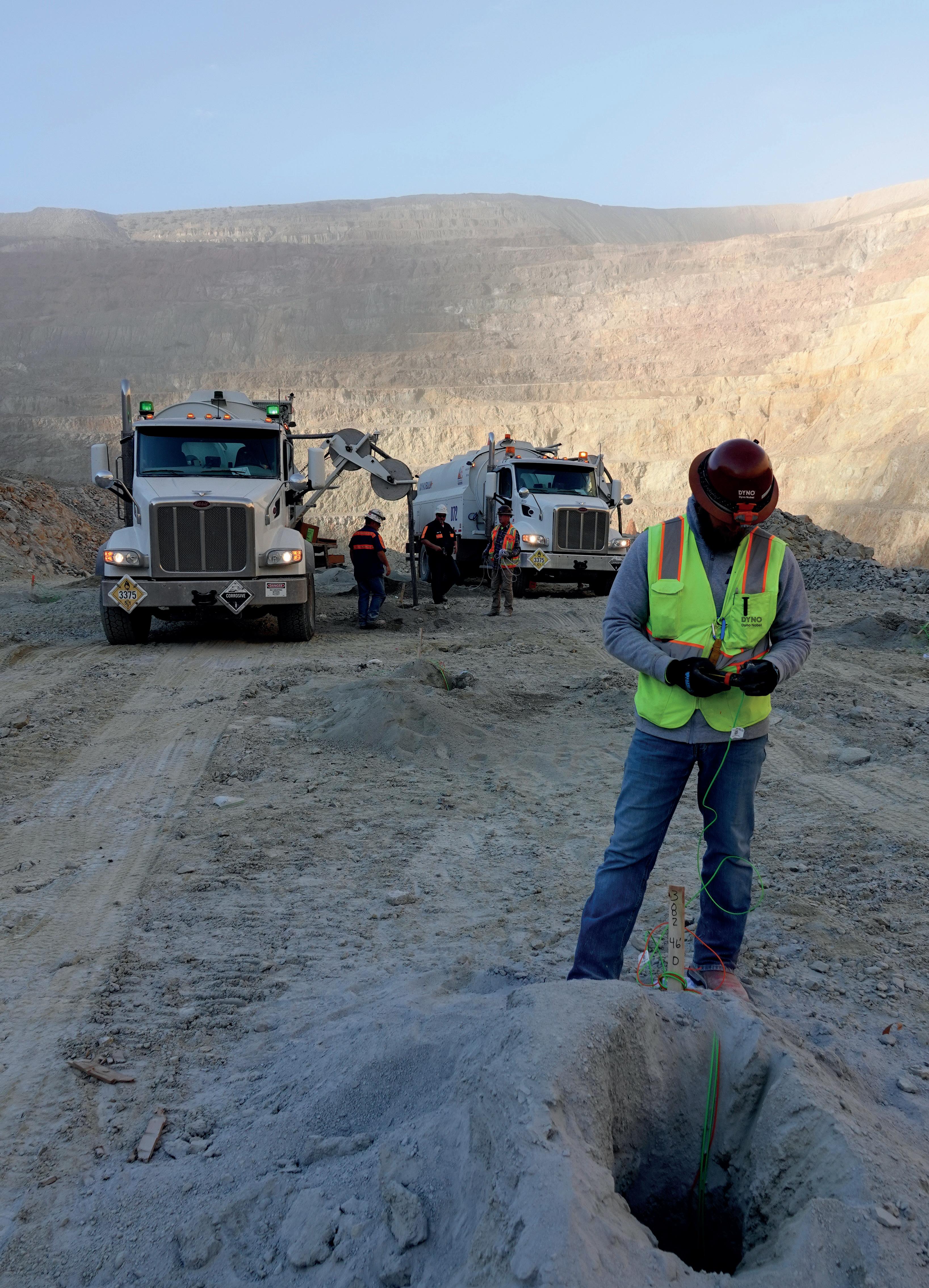
Our expertise goes beyond the bench with a mindset focused on outcome-based fragmentation. Together, we can help you maximize your return on investment through solutions that reduce your total cost of operations while increasing your productivity.
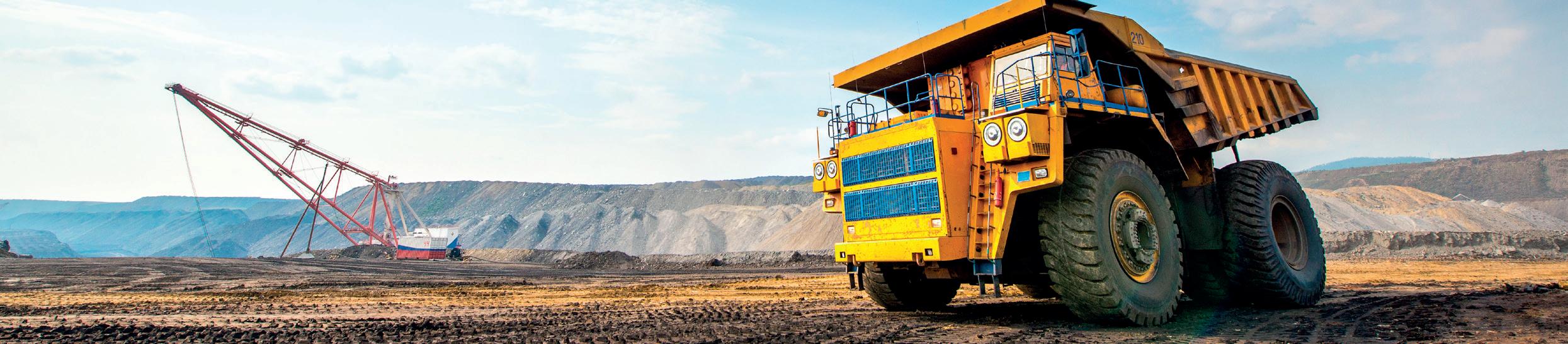
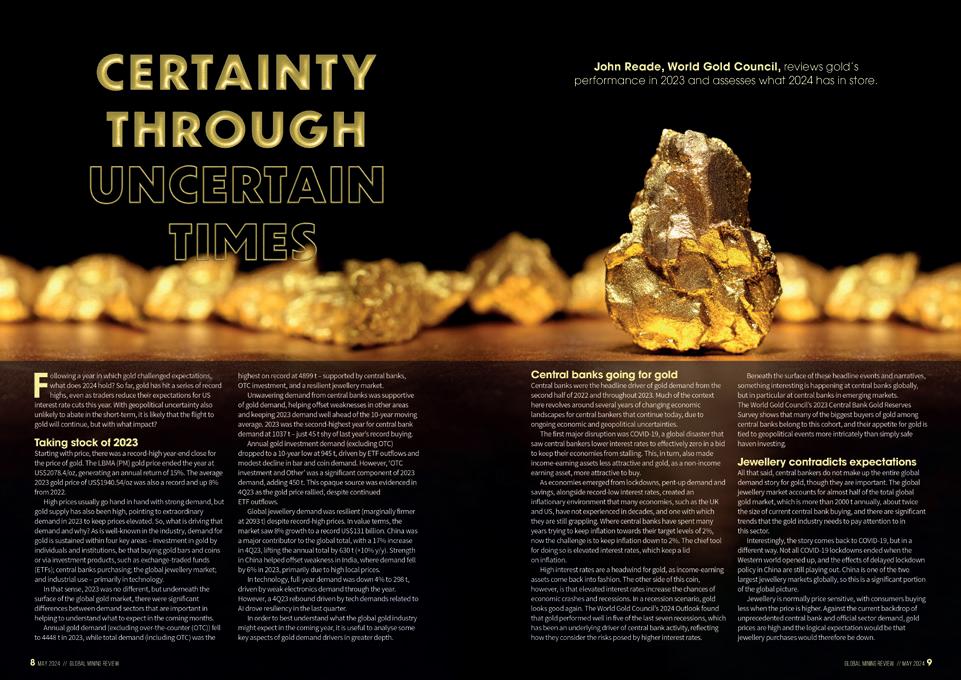
John Reade, World Gold Council, reviews gold’s performance in 2023 and assesses what 2024 has in store.
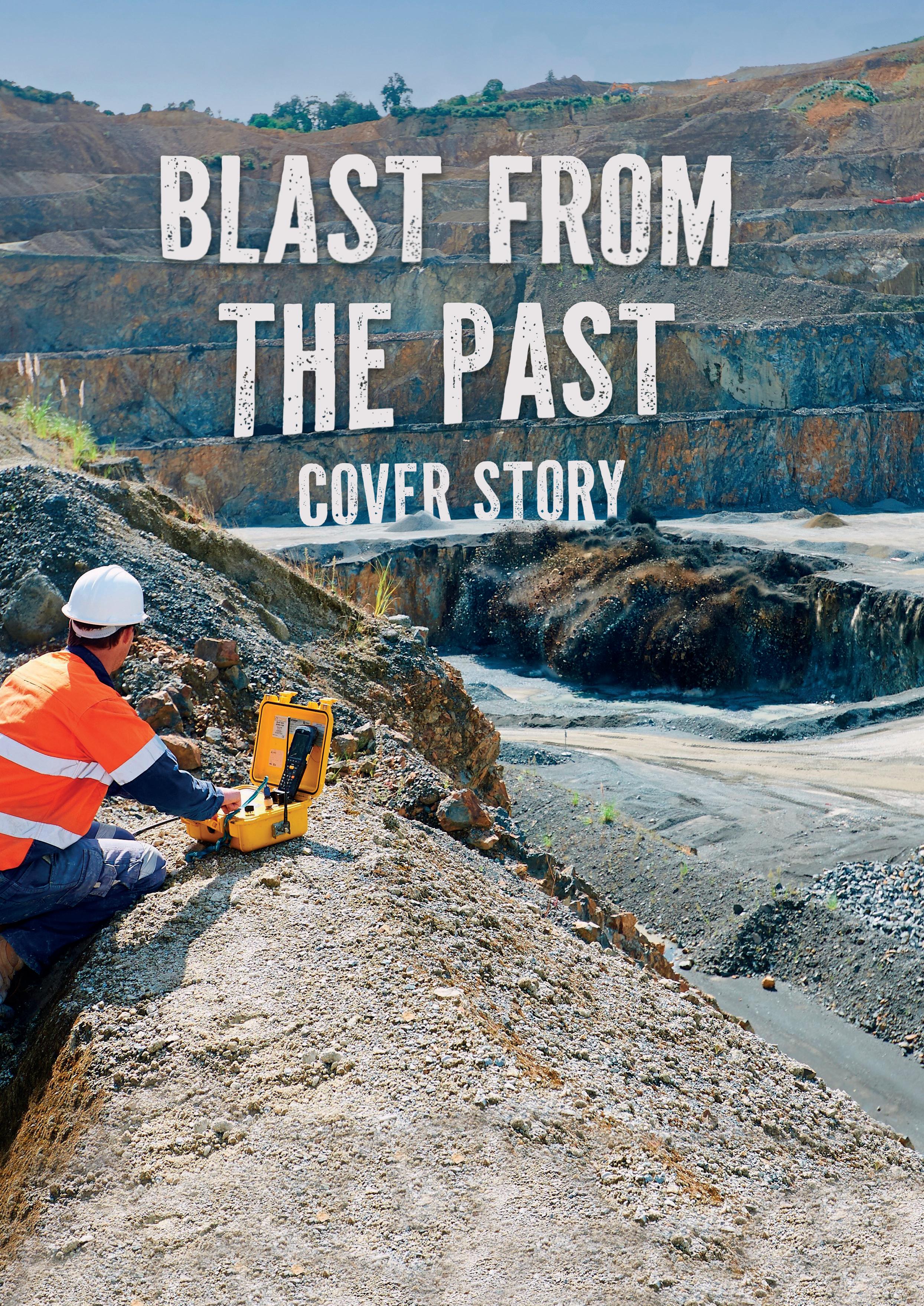
11 Blast From The Past
Sophie Clayton, Orica Digital Solutions, celebrates the 35th anniversary of Orica’s key blasting application, providing insight into innovative advancements in blasting technology. 15 Automatic For The People
Matt Shea, Epiroc, Sweden, reports on the company’s move into autonomous technologies and the multitude of benefits that these solutions can bring.



18 From Digital Drills To Real Results
Payal Gupta, Tecknotrove, India, outlines how simulation-based training can be adopted to boost the efficiency and safety of mining operations.
22 Mixing It Up
Zlatko Martic and Sébastien Dhers, Master Builders Solutions, discuss how innovations in backfill admixtures can lead to greener and more cost-effective mine backfill mix designs.
27 Bubbling Innovation
Michele Tuchscherer, Homie Thanasekaran, and Eric Wasmund, Eriez, evaluate how the properties of gas bubbles can impact the separation, leaching, and flotation processes.
31 Precision In Progress
Taylor McKertich, Endress+Hauser, Australia, explores the transformative role advanced instrumentation can play in the mines of the future.
35 Process Optimisation Made Easy
Pablo Santibanez, Thermo Fisher Scientific, explains how to leverage mining data with a lab information management system for simpler process optimisation.
39 The Explosion Of The Digital Thread
Glenn Kerkhoff, AVEVA, USA, addresses the importance of gathering data from across the mining value chain in order to optimise production.
42 The Changing Shape Of Dewatering
Chris O’Brien, Sykes Group, examines why innovations in pump technology are crucial to ensure safety and efficiency in deep mining operations.
45 Too Hot To Handle?
Tommy Carnebo, Dafo Vehicle Fire Protection, Sweden, assesses the ways to combat BEV battery fire risks in the mining industry.
ON THE COVER
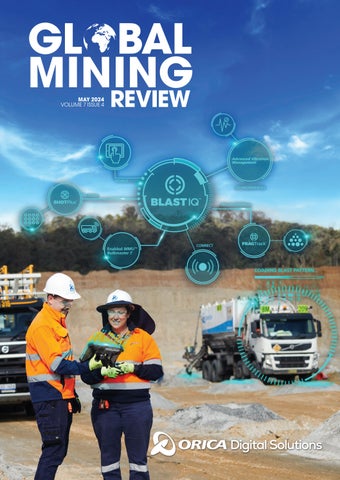
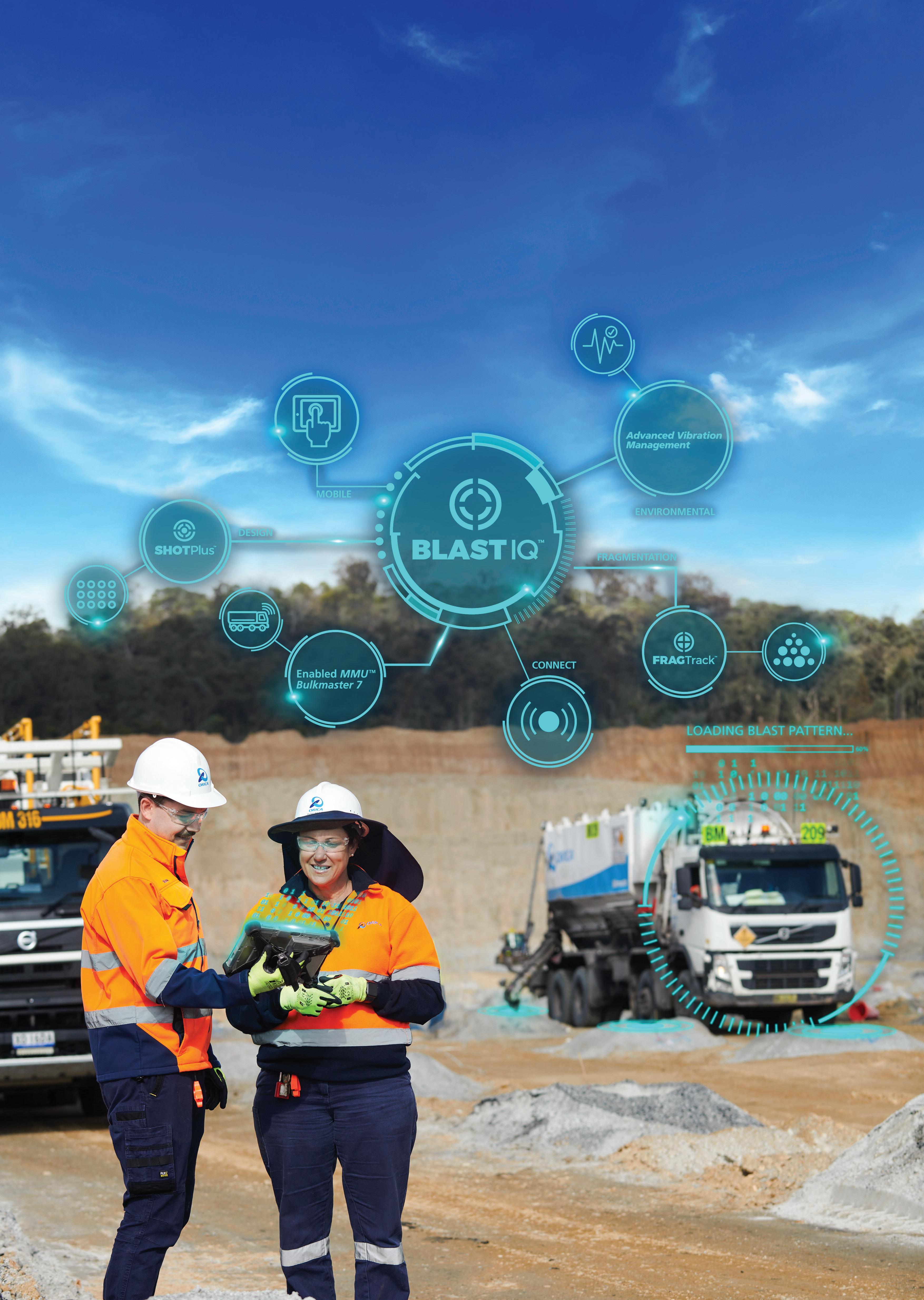
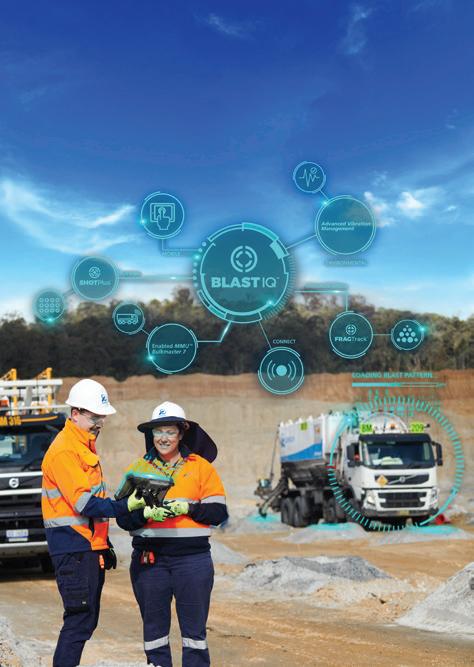
The Orica Digital Solutions BlastIQ™ platform is a cloud-based, digital platform design specifically to enable continuous improvements of blasting outcomes by integrating data and insights from digitally connected technologies across the drill and blast process. From pre-blast modelling to post-blast measurement and analysis, BlastIQ delivers the data, benchmarks and insights needed to ensure sustainable, cost-effective improvements in the blast performance of your options.
03 Guest Comment 05 Industry News 08 Certainty Through Uncertain Times
CONTENTS
Copyright © Palladian Publications Ltd 2024. All rights reserved. No part of this publication may be reproduced, stored in a retrieval system, or transmitted in any form or by any means, electronic, mechanical, photocopying, recording or otherwise, without the prior permission of the copyright owner. All views expressed in this journal are those of the respective contributors and are not necessarily the opinions of the publisher, neither does the publisher endorse any of the claims made in the advertisements. Printed in the UK. MiningReview like join Global Mining Review @Mining_review follow CBP019982 MAY 2024 VOLUME 7 ISSUE 4

Integrated Solutions for Sustainable Mining
carbon intensity
enterprise requires innovation
collaboration.
disruptive global challenges
evolving technologies,
improve project development
delivery
ever before.
Black
Learn
Lowering the
of your
and
And despite
and rapidly
solutions that continuously
and
are more versatile than
Redefine what’s possible by working with
& Veatch.
more at bv.com

Guest Comment

MANAGING EDITOR
James Little james.little@globalminingreview.com
SENIOR EDITOR
Callum O’Reilly callum.oreilly@globalminingreview.com
EDITOR
Will Owen will.owen@globalminingreview.com
EDITORIAL ASSISTANT
Jane Bentham jane.bentham@globalminingreview.com
SALES DIRECTOR Rod Hardy rod.hardy@globalminingreview.com
SALES MANAGER
Ryan Freeman ryan.freeman@globalminingreview.com
PRODUCTION MANAGER
Kyla Waller kyla.waller@globalminingreview.com
ADMINISTRATION MANAGER
Laura White laura.white@globalminingreview.com
DIGITAL ADMINISTRATOR
Nicole Harman-Smith nicole.harman-smith@globalminingreview.com
DIGITAL CONTENT ASSISTANT
Kristian Ilasko kristian.ilasko@globalminingreview.com
DIGITAL EVENTS COORDINATOR
Merili Jurivete merili.jurivete@globalminingreview.com
EVENTS MANAGER
Louise Cameron louise.cameron@globalminingreview.com
Global Mining Review (ISSN No: 2515-2777, USPS No: PENDING) is published 10 times per year by Palladian Publications Ltd., and distributed in the USA by Asendia USA, 701 Ashland Ave, Folcroft, PA. Application to Mail at Periodicals Postage Prices is pending at Philadelphia, PA, and additional mailing offices. POSTMASTER: send address changes to Global Mining Review, 701 Ashland Ave, Folcroft, PA. 19032.
Despite their importance in the green technology transition, junior miners and explorers can struggle to capture the attention of modern-day investor audiences like other sectors have, notably technology
In this generation alone, technology start-ups like Google (Alphabet), Amazon, Tesla, and Facebook (Meta) have become massive successes. Many have generated revenues and market capitalisations that dwarf some 20th century giants of the industrial age. Part of this excitement is attributable to high-profile tech entrepreneurs like Bezos, Musk, and Zuckerberg. They are celebrated for their accomplishments and hailed as innovators.
In contrast, junior mining executives have rarely garnered such enthusiasm. Both Robert Friedland and Rob McEwen have enviable track records in building numerous successful exploration and production ventures from scratch. Yet, they are not household names. If entrepreneurs built our industry, why shouldn’t today’s junior mining executives be viewed the same way?
Unfortunately, most retail investors are unaware of this heritage or the many disciplines that modern explorers must master to be successful. Assessing project geology, sourcing capital and financial reporting, regulatory compliance, ESG/corporate responsibility, indigenous relations, and mitigating potential jurisdiction and political risks are just some of our skill sets. Many junior mining executives travel worldwide to investigate resource opportunities, invest their time and money into grooming projects, and demonstrate long-term commitment to their ventures by serving as primary shareholders. If this is not entrepreneurial, then what is?
Then there are perceptions within our industry. Junior miners often act as the exploration arm for industry majors, saving them the time and costs involved in pinpointing economic deposits. Instead of lauding explorers as start-ups or incubators contributing to their successes, many within the industry view us as lesser miners or a tolerated necessity. For many, discussions revolve around juniors not being economically viable and how most should wind down operations or consolidate.
Yet good juniors have continued to persevere, raise funds, and drill. We have re-doubled efforts to remain nimble, decisive, cost-effective, and innovative to achieve results and create shareholder value. If the mining industry does not widely recognise the importance of explorers and our entrepreneurial spirit, who will?
Some progress has been made. I applaud recent initiatives like BHP Xplor’s accelerator programme to help early-stage explorers advance their technical, business, and operations readiness towards strengthening their respective investment cases. It is an important step, but more has to be done.
To present our worth, we need to change the industry mindset about juniors and develop strategies to reach a larger investor audience. Showcasing us as entrepreneurs addresses both.
In my view, celebrating junior miners as entrepreneurial ventures will help demonstrate the value of juniors inside and outside the industry; generate increased interest and excitement with the larger investing community; increase visibility and engagement with non-traditional audiences for resource sector investment (including technology, green transition, Millennials, and Gen. Z); attract the public mindshare needed to dispel misconceptions about modern mining operations; and communicate mined metals’ role in consumer technology, electric vehicles, and the transition from fossil fuels.
With that said, junior mining executives must do more to garner attention about our work and value. We need to follow the playbooks of Friedland and McEwen, alongside those of tech and bio start-up executives, to capture the public’s imagination. In parallel, we must actively communicate with more investor audiences and position ourselves as doers, discoverers, and game changers. We need to connect the dots between exploration and consumer technology and how the metals we seek are important in bettering the human condition.
Gone are the days of the ‘junior mining investor’ – the bulk of investors are generalists now, deploying capital in sectors that are moving. We need to focus on attracting them en masse, as opposed to simply marketing to the same group time and time again. Times have changed, as must we. By showcasing junior mining’s entrepreneurial character, we will connect more with the broader investment community.
Palladian Publications Ltd, 15 South Street, Farnham, Surrey, GU9 7QU, UK t: +44 (0)1252 718999 // w: www.globalminingreview.com
Annual subscription (10 issues) £50 UK including postage, £60 overseas (airmail). Claims for non-receipt must be made within four months of publication of the issue or they will not honoured without charge. WARWICK SMITH CO-FOUNDER, CEO, AND DIRECTOR, AMERICAN PACIFIC MINING CORP.



























For more information on our portfolio of diverse and complementary brands visit us at www.jennmar.com GLOBAL HEADQUARTERS PITTSBURGH, PA USA (412) 963-9071 www.jennmar.com SAFETY, SERVICE, AND INNOVATION JUNE 6-7, 2024 STOP BY BOOTH #582 THE 38TH ANNUAL ELKO MINING EXPO DEMANDING CONDITIONS DEMAND JENNMAR
World NEWS
GLOBAL Vale and Caterpillar sign agreement to test battery electric trucks
Vale and Caterpillar have signed an agreement to test battery electric large trucks and energy transfer systems, as well as conduct studies on ethanol-powered trucks.
The aim is to support Vale in achieving its goals of reducing scope 1 and 2 (direct and indirect) carbon emissions by 33% by 2030 and zeroing its net emissions by 2050.
Haul trucks powered by batteries are being developed by Caterpillar. A battery-powered truck with capacity of 240 t will be tested by Vale at its operations in Minas Gerais. Caterpillar is also developing energy transfer solutions for trucks, which will be tested at the mining company’s operations in Pará over the next few years.
The two companies will also begin a joint study on a dual fuel solution for haul trucks operating on ethanol and diesel fuel.
Diesel emissions from mine operations account for 15% of Vale’s direct CO2eq emissions. Among mine equipment, the haul truck is the biggest consumer of diesel and therefore the biggest contributor to emissions. For this reason, investing in initiatives to decarbonise mines and establishing strategic collaborations are fundamental to Vale’s goals.
“We are developing a portfolio of options to decarbonise Vale’s operations, including electrification and the use of alternative fuels in the mines. The most viable solutions will be adopted,” said Ludmila Nascimento, Vale’s Energy and Decarbonisation director. “We believe that ethanol has great potential to contribute to the 2030 target, because it is a fuel that has already been adopted on a large scale in Brazil, with an established supply network, and which requires an active partnership with manufacturers. We stand together to support them in this goal.”
CHILE Wood to develop expansion of Antofagasta copper mine project
Wood, a global leader in consulting and engineering, has been awarded a contract by Antofagasta Minerals S.A (AMSA) for its Nueva Centinela copper project.
Located in the Antofagasta region of Chile, the contract will see Wood support AMSA in expanding the Esperanza Sur pit.
Wood has been appointed as the strategic partner for project execution and will work together with AMSA to deliver all key aspects of the project. This will include managing the construction of a new concentrating plant, ore crushing facility, conveyor transportation systems, sea water pipeline, tailing disposal, and facility expansions, as well as other necessary infrastructure at the Centinela port. The project forms part of AMSA’s US$4.4 billion investment into the Minera Centinela facility and will support the world’s increased demand for copper – largely driven by the energy transition and the global move towards electrification.
The project will position Centinela to become one of the top 15 copper mines in the world by output, producing an additional 170 000 tpy copper equivalent – enough copper to build over 2 million electric cars. First production is expected in 2027, with work commencing in May 2024.
Jim Shaughnessy, Wood’s President of Minerals, Metals, and Life Sciences, said: “Copper has a pivotal role to play in our energy transition. As the world continues to build more sustainable energy systems, a safe and secure supply of energy transition materials is critical. We’re proud to build on our existing relationship with AMSA and support increased production to meet surging demand for copper.
“This award underlines the strength of our mineral processing capability and experience of delivering end-to-end EPCm services for complex, large-scale projects.”
5 global mining review // May 2024
World NEWS
Diary Dates
Discoveries Mining Conference
21 – 23 May 2024
Mazatlán, Mexico www.discoveriesconference.com
Euro Mine Expo
28 – 30 May 2024
Skellefteå, Sweden www.euromineexpo.com
Exponor Chile
03 – 06 June 2024
Antofagasta, Chile www.exponor.cl
Elko Mining Expo
06 – 07 June 2024
Elko, USA www.exploreelko.com/top-events/ elko-mining-expo
Tailings 2024
12 – 14 June 2024
Santiago, Chile www.gecamin.com/tailings
Hillhead 2024
25 – 27 June 2024
Buxton, UK www.hillhead.com
International Fairs EXPO KATOWICE 04 – 06 September 2024
Katowice, Poland www.expo-katowice.com
Mining Indonesia
11 – 14 September 2024
Jakarta, Indonesia www.mining-indonesia.com
MINExpo INTERNATIONAL®
24 – 26 September 2024
Las Vegas, USA www.minexpo.com
To stay informed about upcoming industry events, visit Global Mining Review’s events page: www.globalminingreview.com/events
AUSTRALIA
EnviroGold Global to build leaching demonstration plant
EnviroGold Global Ltd, a technology company enabling the global mining industry to monetise valuable metals contained in mine waste and tailings, reduce environmental liabilities, and improve social and environmental outcomes, has provided an update on the company’s plans to demonstrate and commercialise its proprietary leaching technology (NVRO Clean Leach Process).
EnviroGold has selected a manufacturer to construct the processing unit that will be used to demonstrate the NVRO Clean Leach Process to several potential customers, including major global mining companies. In addition, EnviroGold has received an indicative quote for the construction and containerisation of the unit, which is materially less than initially estimated. The company expects these developments will allow it to commence commercial demonstrations of the NVRO Clean Leach Process during 4Q24.
“This is a very exciting development that we expect will decrease the time and cost to begin showcasing the NVRO Clean Leac h Process and allow the company to demonstrate its technology to more customers in less time,” said EnviroGold CEO, David Cam.
CANADA Worley to provide construction services for BHP’s Jansen Potash Mine
Worley has been awarded a construction contract for BHP’s Jansen Potash Mine Stage 1 project in Saskatchewan, Canada.
At full capacity, the Jansen project is set to be one of the world’s largest potash mines, and is anticipated to help address the global growing demands for potash over the next decade.
The ore produced from the project is expected to start operations in late 2026, with a production capacity of 4.35 million t of p otash annually.
Worley’s scope for Stage 1 of the Jansen project involves the fabrication, modularisation and field construction programmes of the underground mine, potash processing facility, storage facility, and continuous automated rail loading system. This includes 486 p re-assembl ed units ranging from pipe rack modules, process modules, and stair towers.
This will be the first modular building approach for a potash mill building, with the final pre-assembled unit to be completed by December 2024. The field scope will begin in April 2024 and be completed in September 2025.
Worley will also be responsible for the concrete, structural steel, piping, equipment installation, electrical and instrumentation work, and commissioning of the dry mill and screening areas.
6 May 2024 // global mining review

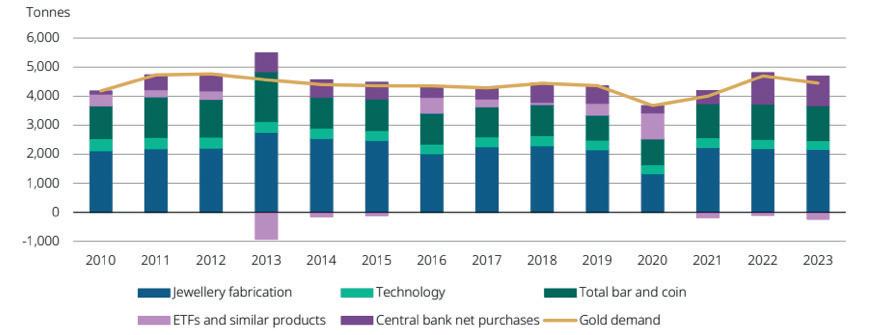
Following a year in which gold challenged expectations, what does 2024 hold? So far, gold has hit a series of record highs, even as traders reduce their expectations for US interest rate cuts this year. With geopolitical uncertainty also unlikely to abate in the short-term, it is likely that the flight to gold will continue, but with what impact?
Taking stock of 2023
Starting with price, there was a record-high year-end close for the price of gold. The LBMA (PM) gold price ended the year at US$2078.4/oz, generating an annual return of 15%. The average 2023 gold price of US$1940.54/oz was also a record and up 8% from 2022.
High prices usually go hand in hand with strong demand, but gold supply has also been high, pointing to extraordinary demand in 2023 to keep prices elevated. So, what is driving that demand and why? As is well-known in the industry, demand for gold is sustained within four key areas – investment in gold by individuals and institutions, be that buying gold bars and coins or via investment products, such as exchange-traded funds (ETFs); central banks purchasing; the global jewellery market; and industrial use – primarily in technology.
In that sense, 2023 was no different, but underneath the surface of the global gold market, there were significant differences between demand sectors that are important in helping to understand what to expect in the coming months.
Annual gold demand (excluding over-the-counter (OTC)) fell to 4448 t in 2023, while total demand (including OTC) was the

highest on record at 4899 t – supported by central banks, OTC investment, and a resilient jewellery market.
Unwavering demand from central banks was supportive of gold demand, helping offset weaknesses in other areas and keeping 2023 demand well ahead of the 10-year moving average. 2023 was the second-highest year for central bank demand at 1037 t – just 45 t shy of last year’s record buying.
Annual gold investment demand (excluding OTC) dropped to a 10-year low at 945 t, driven by ETF outflows and modest decline in bar and coin demand. However, ‘OTC investment and Other’ was a significant component of 2023 demand, adding 450 t. This opaque source was evidenced in 4Q23 as the gold price rallied, despite continued ETF outflows.
Global jewellery demand was resilient (marginally firmer at 2093 t) despite record-high prices. In value terms, the market saw 8% growth to a record US$131 billion. China was a major contributor to the global total, with a 17% increase in 4Q23, lifting the annual total by 630 t (+10% y/y). Strength in China helped offset weakness in India, where demand fell by 6% in 2023, primarily due to high local prices.
In technology, full-year demand was down 4% to 298 t, driven by weak electronics demand through the year. However, a 4Q23 rebound driven by tech demands related to AI drove resiliency in the last quarter.
In order to best understand what the global gold industry might expect in the coming year, it is useful to analyse some key aspects of gold demand drivers in greater depth.
8 may 2024 // global mining review
John Reade, World Gold Council, reviews gold’s performance in 2023 and assesses what 2024 has in store.

Central banks going for gold
Central banks were the headline driver of gold demand from the second half of 2022 and throughout 2023. Much of the context here revolves around several years of changing economic landscapes for central bankers that continue today, due to ongoing economic and geopolitical uncertainties.
The first major disruption was COVID-19, a global disaster that saw central bankers lower interest rates to effectively zero in a bid to keep their economies from stalling. This, in turn, also made income-earning assets less attractive and gold, as a non-income earning asset, more attractive to buy.
As economies emerged from lockdowns, pent-up demand and savings, alongside record-low interest rates, created an inflationary environment that many economies, such as the UK and US, have not experienced in decades, and one with which they are still grappling. Where central banks have spent many years trying to keep inflation towards their target levels of 2%, now the challenge is to keep inflation down to 2%. The chief tool for doing so is elevated interest rates, which keep a lid on inflation.
High interest rates are a headwind for gold, as income-earning assets come back into fashion. The other side of this coin, however, is that elevated interest rates increase the chances of economic crashes and recessions. In a recession scenario, gold looks good again. The World Gold Council’s 2024 Outlook found that gold performed well in five of the last seven recessions, which has been an underlying driver of central bank activity, reflecting how they consider the risks posed by higher interest rates.
Beneath the surface of these headline events and narratives, something interesting is happening at central banks globally, but in particular at central banks in emerging markets.
The World Gold Council’s 2023 Central Bank Gold Reserves Survey shows that many of the biggest buyers of gold among central banks belong to this cohort, and their appetite for gold is tied to geopolitical events more intricately than simply safe haven investing.
Jewellery contradicts expectations
All that said, central bankers do not make up the entire global demand story for gold, though they are important. The global jewellery market accounts for almost half of the total global gold market, which is more than 2000 t annually, about twice the size of current central bank buying, and there are significant trends that the gold industry needs to pay attention to in this sector.
Interestingly, the story comes back to COVID-19, but in a different way. Not all COVID-19 lockdowns ended when the Western world opened up, and the effects of delayed lockdown policy in China are still playing out. China is one of the two largest jewellery markets globally, so this is a significant portion of the global picture.
Jewellery is normally price sensitive, with consumers buying less when the price is higher. Against the current backdrop of unprecedented central bank and official sector demand, gold prices are high and the logical expectation would be that jewellery purchases would therefore be down.
9 global mining review // may 2024
China has, however, more recently emerged from COVID-19 lockdowns than much of the Western world and its economic bounce back has therefore come later. Consumers have pent-up savings and cash and they have shown they are willing to spend it and buy gold, despite the higher prices. This runs counter to usual behaviour, and has played a role in maintaining high demand and high prices in the gold market this past year.
Forward view: Gold in volatile times
For the gold mining community, high demand and high prices may sound like positive news, but analysis of the drivers is critical in assessing what 2024 has in store.
2024 is the year of political elections. Almost half of the global population is going to the polls this year, with seven of the world’s 10 most populous countries – Bangladesh, India, US, Indonesia, Pakistan, Russia, and Mexico – all facing elections. While political uncertainty as a result of national voting is confined largely to the host countries, the sheer scale of potential for political regime changes worldwide means the possibility of disruption can be viewed almost as a geopolitical phenomenon that should be accounted for.
Geopolitical tension and conflict will also be an ongoing theme this year. There are the obvious peaks of uncertainty, such as the Russia/Ukraine war and developments in Israel, Gaza, and the Middle East, and the price of gold spiked around the start of both of these conflicts.
However, the drumbeat of geopolitical risk, the background conflicts, and tensions that occur between the critical peaks, has heightened. International trade tensions, activity in the South China Sea, and the outlook for Taiwan have also contributed to the current high levels of interest in gold. These ongoing risk scenarios should continue to hold the floor on the gold price and could support further interest in gold as a safe haven from institutional retail and official sector investors.
The World Gold Council expects central banks to remain net buyers again this year, but believes it is unlikely that levels will remain the same as the last two years. Comparatively, ETF investment could see a reversal mid-year, aided by interest rate cuts which the markets seem to have priced in already. Bar and coin demand should hold steady. It is also likely that elevated gold prices and potential economic slowdown may put downward pressure on jewellery demand.
Supply strength
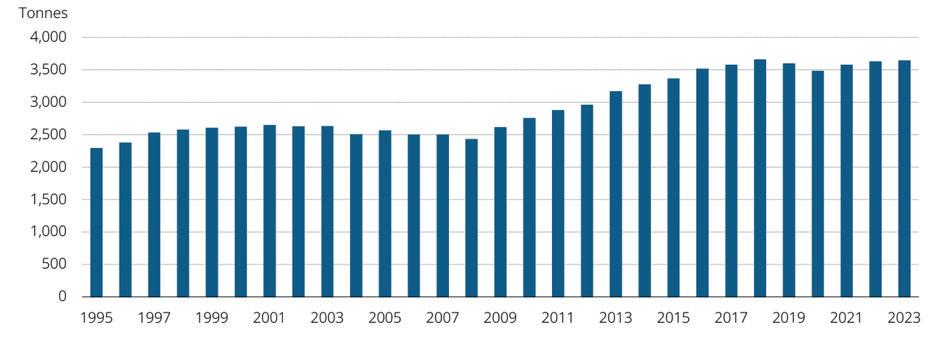
With demand therefore set to continue, how well primed is the industry to respond? According to the World Gold Council’s latest Gold Demand Trends Report, the gold mining industry produced 3644 t in 2023. This is 1% up on 2022 and fell just short of the 3656 t record set in 2018. Alongside strong mining production, recycling also rose to 1237 t (up 9%), meaning total gold supply was 3% higher y/y.
Looking forward, the supply uplift seems set to continue. There are new mine start-ups slated across North America, Asia, and Australia, which will add to production in 2024. Alongside this, higher ore grades are likely to drive growth and while the rising cost of production is a reality in a rising interest environment, rising prices are currently balancing to help keep output high.
A golden 2024
So, will 2024 be another year of gold highs? Moving into 2Q24, with the price continuing to climb, there is certainly upside potential. The World Gold Council analysis suggests the underlying market fundamentals will remain, and as such sustained demand is expected. Interest rates will probably be cut; geopolitical risks remain; ongoing conflicts are left unresolved; the year of elections is here. With all of this volatility at play, gold’s allure as a portfolio hedge remains.
Markets will, of course, play their unpredictable part. Recently, the consensus view is that the US –where interest rates are highly influential for gold – will achieve a soft landing (controlling inflation without crashing the economy). However, soft landings are extremely narrow events, and it is very possible that interest rates will need to be either hiked, in the event of a no-landing, or slashed, in the event of a hard landing.
So far, gold, along with other asset classes, has been able to shrug off stronger US economic data and accompanying hawkish Fed commentary, with traders expecting fewer rate cuts than at the start of the year. However, this can easily change and might affect the course of gold’s trajectory, as well as that of all asset classes. The landscape of risks is highly unpredictable, as ever.
Risks aside, history teaches us that gold has always found ready buyers. There are many known unknowns in 2024, and yet more unknown unknowns. However, through good times and bad times, one portion of the market always finds a purpose and a favourable price for gold. In this sense, the market self-insulates amidst uncertainty, suggesting that a positive outlook prevails.
10 may 2024 // global mining review
Figure 1. Annual gold demand by sector.
Figure 2. Annual gold mine production.
Sophie Clayton, Orica Digital Solutions, celebrates the 35th anniversary of Orica’s key blasting application, providing insight into innovative advancements in blasting technology.
Orica Digital Solutions develops technologies which seamlessly connect customers’ physical and digital worlds, so they can readily understand and optimise operations at every step of the value chain, from exploration to processing.
SHOTPlus™ is a core application embodying the Orica Digital Solutions vision, with operations around the world utilising the technology to optimise blast designs and streamline drill and blast processes. Featuring charging and initiation design tools, optimal visualisation, and blast
analysis functionality, the application also facilitates regulatory compliance, improves productivity, and reduces the overall cost of drill and blast operations.
Transformation of blasting practices
SHOTPlus has been at the forefront of revolutionising blasting practices in the mining and quarrying industry. Its story began in 1989, when Initiating Explosive Systems (IES) Australia Pty LTD released their range of EXEL™ signal
11 global mining review // may 2024
tube detonators. Most quarries and mines at the time were using electric delay detonators or detonating cord with dog bone delays. Signal tube systems therefore offered great improvements in terms of timing accuracy, blast control, and misfire prevention. The use of a standard down-the-hole delay, combined with a range of surface delays, now allowed engineers to design larger, more complex blasts.
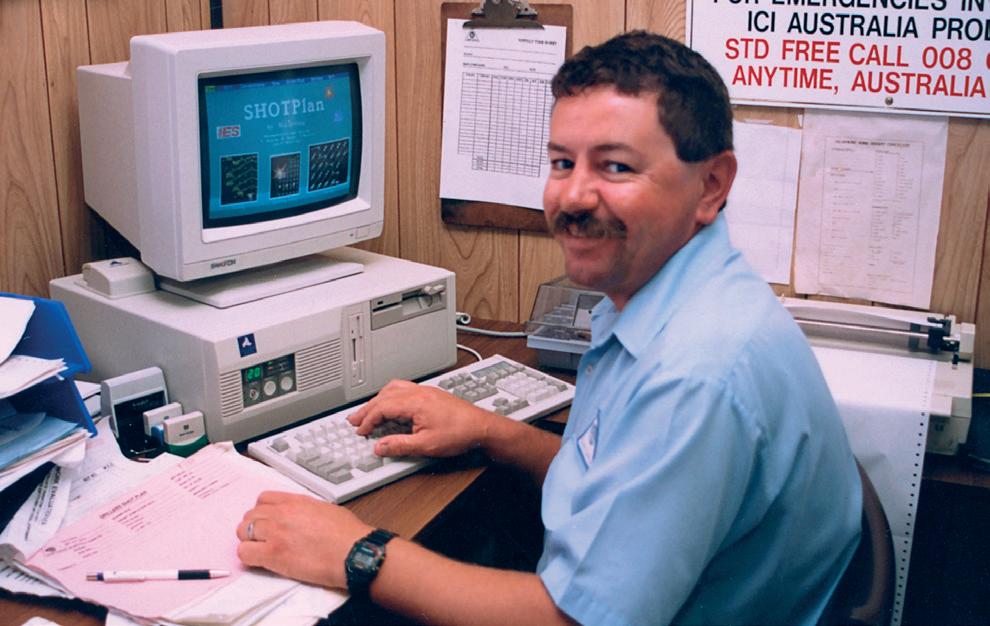
With the release of conventional initiating systems onto the market, there became a need for a program which allowed engineers to design and analyse their pyrotechnic initiation sequences. SHOTPlan™, an MS-DOS based application, was developed by Mark Irving, and allowed users to position up to 1000 blastholes, applying up to 12 different surface delays to their plan. Once the sequence was designed, users could implement six different calculations for analysis of their design.
Engineers could review the angle of initiation and burden relief of their design, adjusting the sequence as required. They were also able to view the time envelope to assess the number of holes firing in a time window (typically 8 msec.).
Timing contours were displayed based off a calculated surface, which allowed engineers to assess if they were achieving evenly spaced and smooth contours in their timing design.
Being able to complete iterations of a pyrotechnic timing design on a computer empowered shotfirers and engineers to quickly assess and evaluate complex designs and obtain solutions to drill and blast problems without the help of
domain specialists. SHOTPlan was successful in its initial objectives, and, by 1995, 400 copies of SHOTPlan had been distributed (by floppy disk) in Australia.
Empowering engineers: Impact on blasting design and analysis
Based off the success of SHOTPlan, Irving was soon leading a technical team to support the development of the Blast Management System (BMS) initiative by Imperial Chemical Industries (ICI), which aimed to consolidate the delivery of engineering services and explosive supply and distribution. In 1994, work started on SURVEYPlus™ and LOADPlus™, which would be a Windows-based program, and picked up from where SHOTPlan left off. SURVEYPlus was a program for the design of blast patterns and LOADPlus was built to design blasthole loading and initiation plans. Together, these products became SHOTPlus.
SURVEYPlus incorporated new data sources into the application, such as face data points from total stations and Boretrak hole deviation data, allowing blast engineers and shotfirers to measure the face of the blast, design the front row to optimise face burden, and control placement of the second row to optimise explosive distribution. SURVEYPlus was built over two years, with significant feedback and input from subject matter experts Robert Matusewicz, James Do, John Hutchings, Richard Leghissa, and John Xuereb. Another key developer, Tim Beattie, also joined the development efforts during this time.
While primarily focused on supporting business processes in ICI, SHOTPlus also supported advancements in surface mining methods. During this period, through-seam blasting was established as a blast technique and required different data sources to be imported so the method could be implemented correctly. Importing gamma logs to identify coal strata drove the addition of profile logging, intercepts, and strata loading in SHOTPlus.
In the late 1990s, Orica was born from ICI’s divestment of ICI Australia. SHOTPlus was still growing, and additional tools such as the BMS console, a product and licence database, were built to support the program.
In 2000, i-kon™ electronic detonators were released to the market and SHOTPlus evolved again to enable the design of initiation sequences using electronic detonators, accurate to a millisecond, instead of pre-defined delays with inherent scatter. SHOTPlus-i™ was developed to address the electronic market, with the addition of the timeline and opening point electronic blasting systems timing tools. Blast modelling functionality was also added to the SHOTPlus toolkit around this time. Vibration modelling using superposition of waveforms, fragmentation modelling utilising Swebrec© models, and heave modelling using Distinct Motion Code (DMC) were implemented in SHOTPlus, giving users access to blast modelling previously only accessible through domain specialists.
Underground loading and timing design
For the following 12 years, SHOTPlus was solely focused on surface mining applications and drill and blast challenges. This changed in 2001 with the first release of
12 may 2024 // global mining review
Figure 1. ICI Quarry Services, Les Pilkington, optimising blast plans in SHOTPlan.
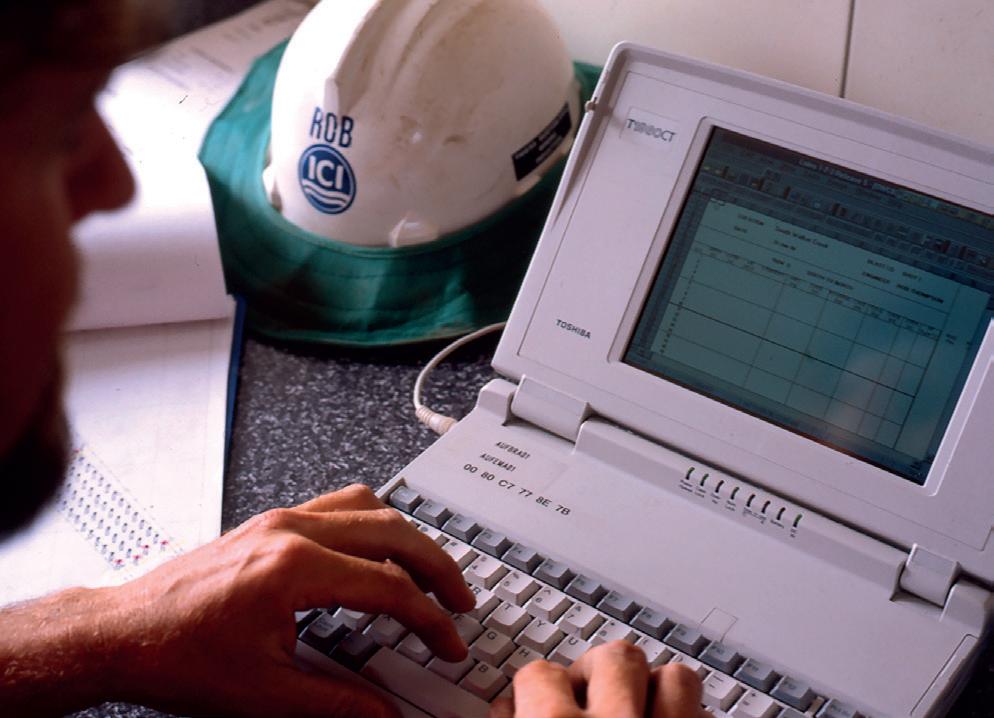
Figure 2. A blast designer creates customer reports in an early iteration of SHOTPlus.

Keep Updated
Follow us for the latest mining and minerals processing news
www.linkedin.com/showcase/globalmining
SHOTPlus Underground, which was Orica’s first foray into underground loading and timing design.
Significant upgrades to SHOTPlus in 2004, including a language upgrade and the establishment of a web-hosted licencing and product database, allowed the team to focus on improving the user experience and make program updates more readily available.
In response to demand for a similar tool for underground development blasting and civil tunnelling projects, SHOTPlus Tunnel was released in 2008. Initially handling pyrotechnic and electronic initiating systems, SHOTPlus Tunnel evolved to support the development and release of the eDev™ initiating system in 2008. In addition to enabling hole loading design and analysis, by 2014 SHOTPlus Tunnel was able to handle as-drilled holes as well as tunnel scans, making it a critical tool for overbreak management and high-precision development blasting projects.
In 2010, BlastIQ™, Orica’s first attempt at a blast management system, was released. This was a web-based interface where engineers and shotfirers could manage blast documentation,
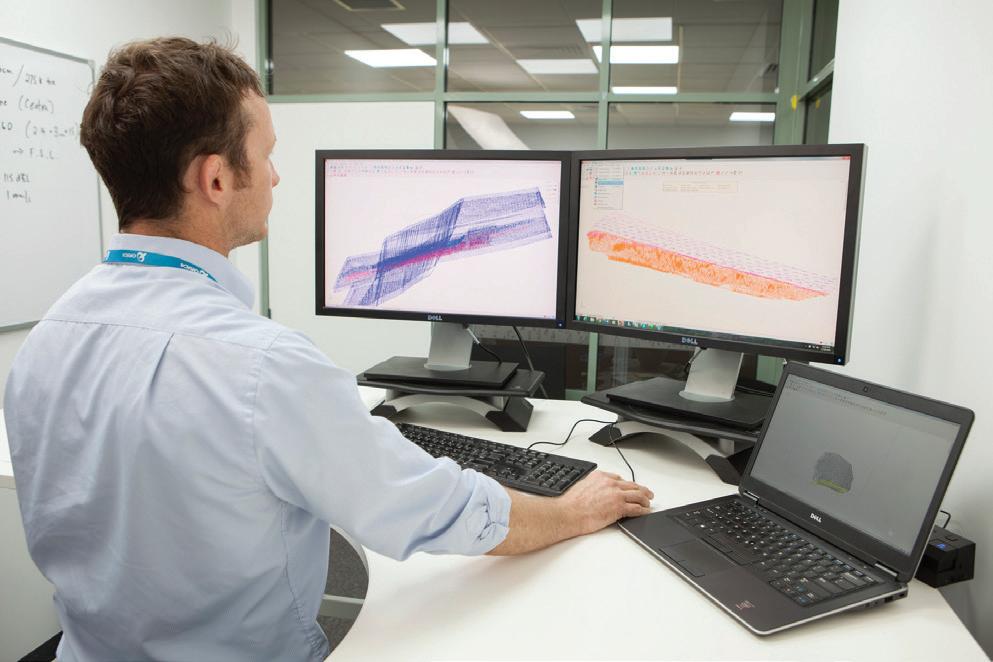
videos, and data, complete reporting, and establish controlled processes for completing blast designs.
Major investment by Orica in 2015 introduced a dedicated support desk team for SHOTPlus and BlastIQ users, allowing development resources to focus on improving infrastructure while implementing product management processes and practices. This was the first time the team was established as a software development house.
In 2017 SHOTPlus Underground received a significant upgrade to support the market release of WebGen™, the world’s first wireless initiating system which would revolutionise underground drill and blast design methodology, delivering millions of dollars of recovered value for customers.
The next major milestone was the integration between SHOTPlus and the next-generation BlastIQ platform infrastructure. BlastIQ is a platform that enables the accurate and efficient recording of data related to blastholes on the bench and the explosive delivery vehicles. Integration with SHOTPlus allows customers to communicate blast designs and dynamic loading rules directly to users on-bench and respond rapidly to the on-bench conditions. Dave Kay and Stuart Hawke were the driving forces for the direction of the integration and the identification of exciting features and opportunities for the SHOTPlus suite.
The blasting application today
Today, SHOTPlus continues to evolve to support Orica Digital Solutions’ new and existing products – such as the BlastIQ ecosystem, Design for Outcome, and 4D™ bulk systems – promoting best practice for shotfirers and engineers. The addition of the Blast Exclusion Tool allows engineers and shotfirers to model fly rock hazards using drill and blast parameters.
As of 2024, the SHOTPlus range includes SHOTPlus Standard, Premier, Underground, and Tunnel, with over 2000 users of the technology globally. SHOTPlus is approaching its next evolution as it becomes a highly performant and intelligent blast design product for surface and underground operations. The application will continue to be the centre point for drill and blast decision-making, while supporting Orica Digital’s move into adjacent and integrated workflows. Next-generation SHOTPlus has an optimal data management and modelling capability which will benefit Orica Digital Solutions customers greatly.
Conclusion
Drawing on Orica’s deep domain expertise in blasting across mining and infrastructure, the team at Orica Digital Solutions are continuously innovating and using data to deliver insights which optimise blasting processes. For the past 150 years, Orica has been investing in technology and innovation to deliver safe blasting products and solutions. The seamless integration of the fundamental core blasting operations with integrated end-to-end digital insights enables optimised safety, productivity, recovery, and sustainable outcomes for customers across the entire value chain. Working with customers to provide valuable insights into their needs and challenges allows Orica to deliver optimal outcomes, while inspiring the creation of new technologies and solutions that will assist the mining industry to mobilise the Earth’s resources more efficiently and responsibly.
14 may 2024 // global mining review
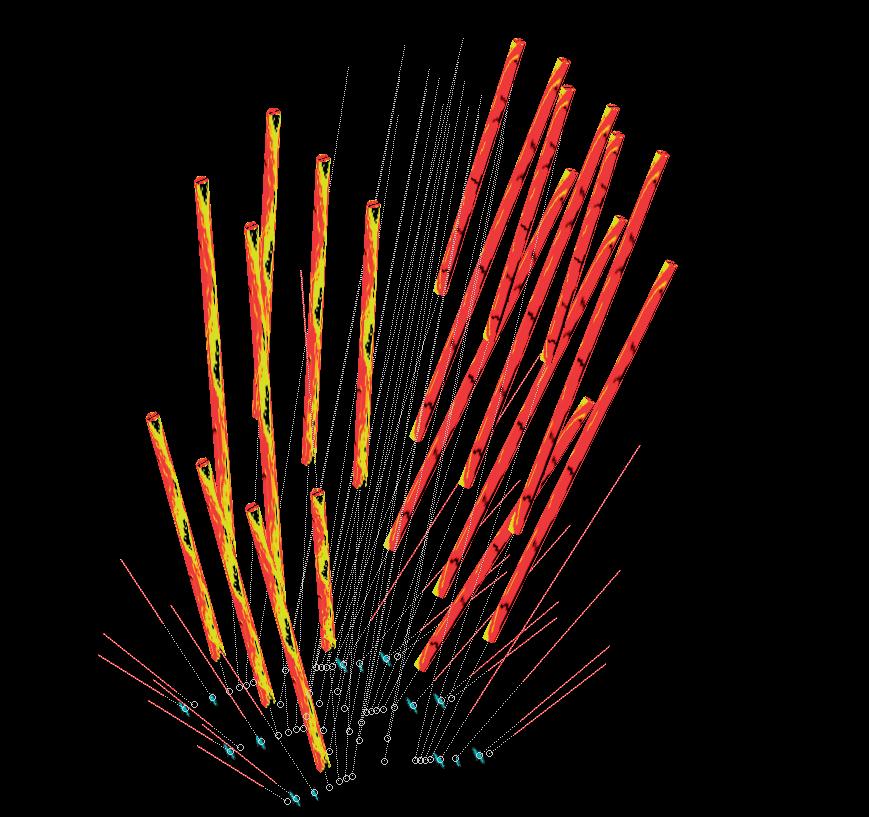
Figure 3. Blast design and timing stimulation tool available within SHOTPlus Underground.
Figure 4. Current generation SHOTPlus is used for surface managment and blast design, while also being connected to BlastIQ for digital blasting management.
Matt Shea, Epiroc, Sweden, reports on the company’s move into autonomous technologies and the multitude of benefits that these solutions can bring.
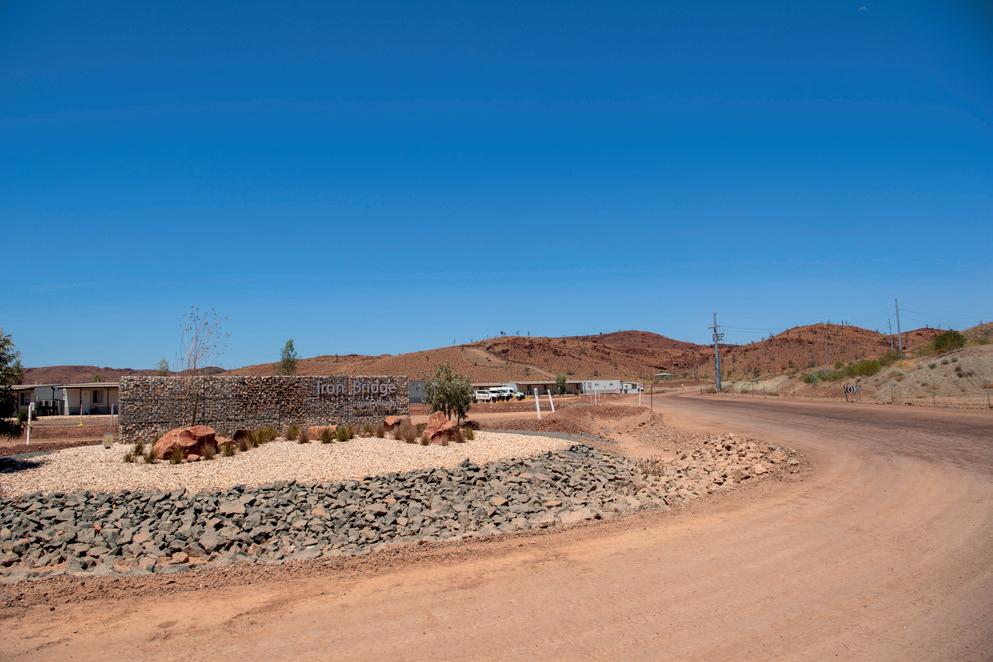
Australia has a long history of introducing autonomous mining solutions, given the country’s relatively early shift towards tighter workplace health and safety standards. It makes sense, then, that Iron Bridge, a joint venture mining project between Fortescue Metals Group subsidiary FMG Magnetite and Formosa Steel IB, is the testing ground for a new MKII autonomous version of Swedish company Epiroc’s SmartROC D65 surface drill rig.
15 global mining review // may 2024
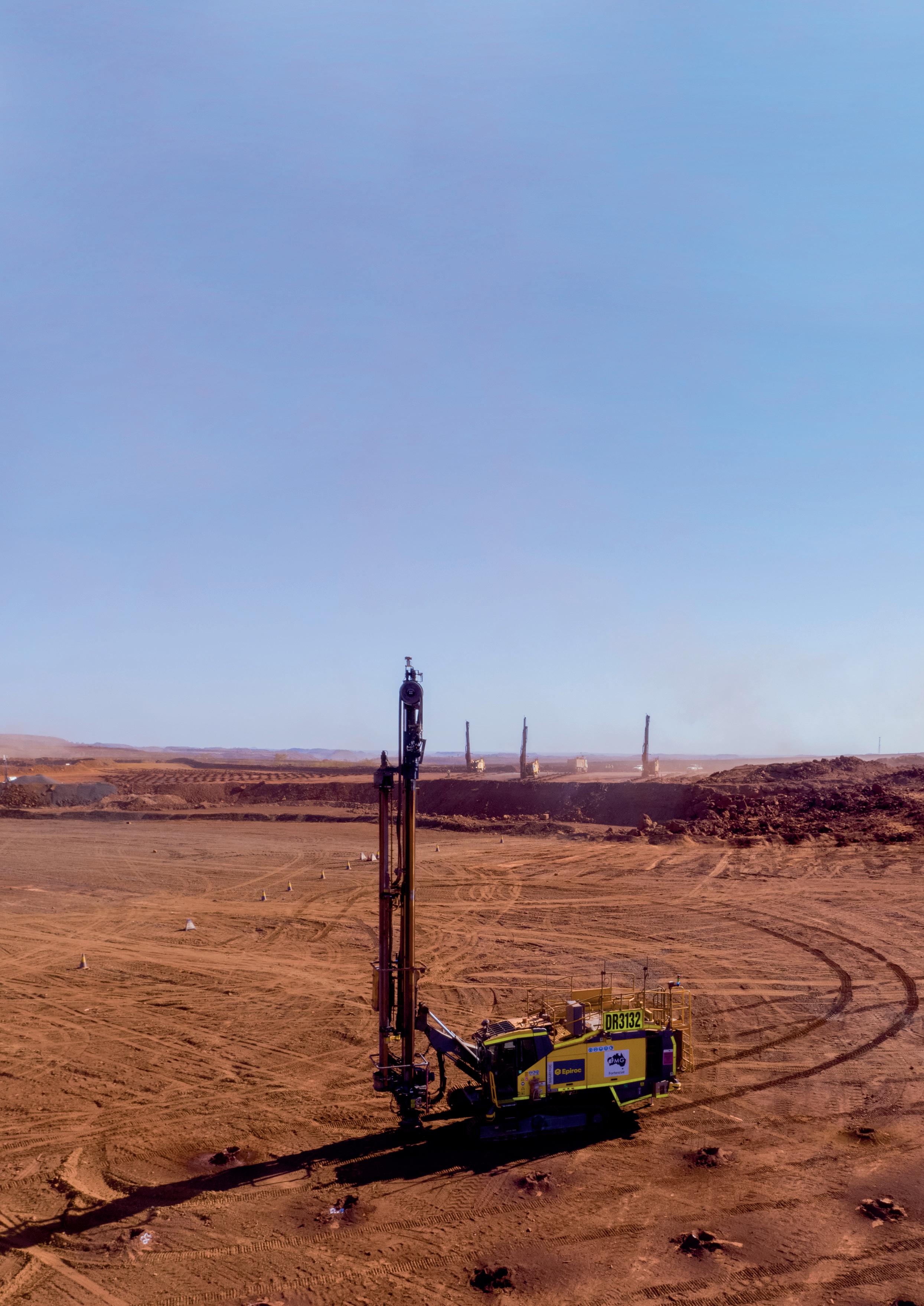
Figure 1. Iron Bridge in Western Australia, where Epiroc and Fortescue have tested a MKII version of Epiroc’s SmartROC D65 Autonomous drill rig (Credit: Bradley Kanaris).
The SmartROC D65 MKII Autonomous project is part of a broader Epiroc strategic vision to tackle autonomous mining just as demand for the technology begins to skyrocket. With little to no on-site human intervention, pit-to-port autonomous solutions will soon become more common.
Automation’s advantages are clear regarding productivity, efficiency, and safety. Market research platform, Markets and Markets, projects the global mining automation market will be worth US$5.1 billion by 2029, with a compound annual growth rate of 7.3% between 2024 and 2029.
Leaning into an autonomous future
Epiroc, and before it, Atlas Copco, produces drill rigs, loaders, and trucks for opencast and underground mines. It has also spent more than two decades developing and delivering different levels of automation technology for its products.
In 2014, the company made a significant leap forward when it unveiled an autonomous version of its Pit Viper 351 – the market’s first fully autonomous blast drill. By 2020, more than 50 autonomous Pit Vipers were in operation globally. Today, there are more than 100.
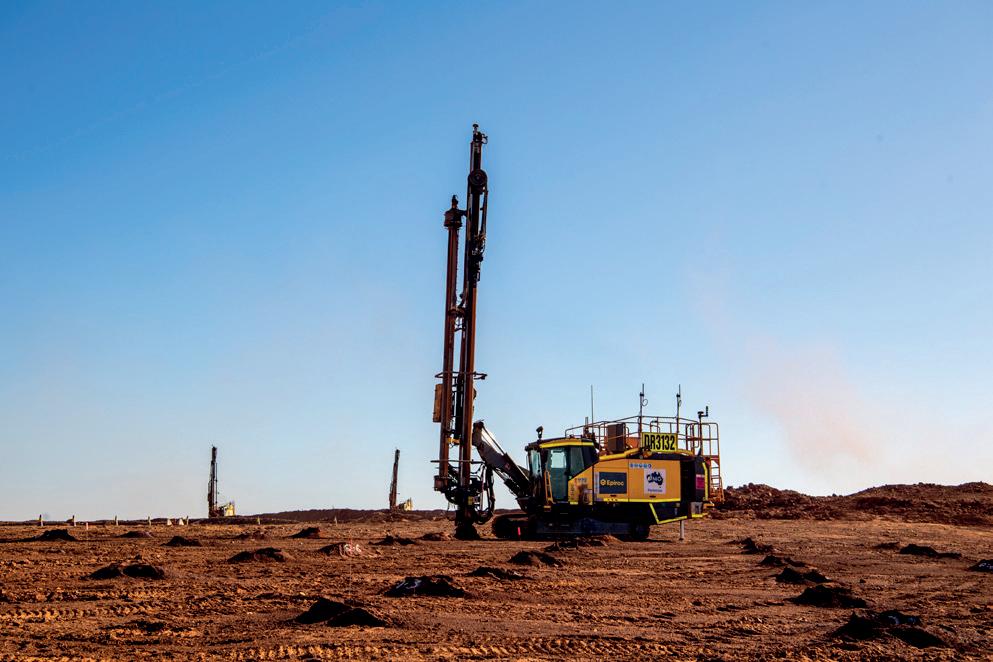
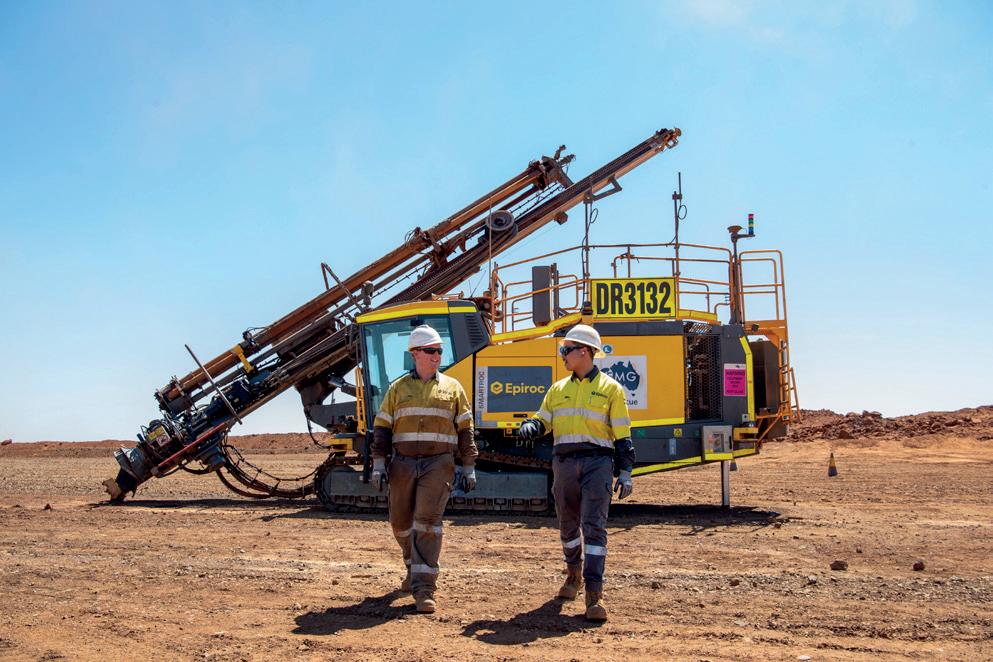
Figure 3. Epiroc Automation Specialist Nick Howlett (left) explains that SmartROC D65 MKII Autonomous rig’s advantages are not down to pure speed, but tend to accumulate over time via a clever use of autonomous subsystems and the consistency of the holes it produces (Credit: Bradley Kanaris).
Further developments followed, including the 2022 introduction of automatic bit changer technology for the Pit Viper platform and the 2022 introduction of Epiroc’s Mobius for Drills multi-drill command, control, and monitoring software.
Epiroc has also made recent advancements in developing autonomous versions of its surface crawler drills, the latest of which is its SmartROC D65 MKII Autonomous test rig at Iron Bridge. The programme follows a 2018 pilot project at the Hollinger gold mine in Timmins, Canada, during which Epiroc tested an MKI version of the rig.
Throughout 2020 and 2021, Epiroc worked closely with Fortescue to agree on a partnership to use the SmartROC D65 MKII Autonomous test rig on a Fortescue mine site for a trial period of at least 12 months. The trial’s objective was to provide Fortescue with an autonomous surface drill rig solution, developing and demonstrating its performance in line with agreed KPIs, while providing Epiroc with real-time test information under realistic mining conditions in a suitable site environment.
A special partnership
Iron Bridge is an ambitious new mining project west of the Pilbara, one of Australia’s richest mining regions, and two hours south of Port Hedland. The US$3.9 billion project is producing high-grade magnetite, a high-iron-content ore intended to assist steelmakers in reducing carbon emissions. The mine began producing above 67% iron in May 2023. Iron Bridge is part of a broader Fortescue strategy to raise the iron content of its product suite.
Fortescue has pursued autonomous solutions vigorously for over a decade, introducing its first autonomous haulage truck in 2012. It was the first company in the world to deploy autonomous haulage on a commercial scale. The company, therefore, is a natural partner on the SmartROC D65 MKII Autonomous test programme and was willing to contribute to the rig’s development to access its autonomous technology before a global release.
In the early stages, testing focused on production drilling applications. Together, Epiroc and Fortescue then progressed to testing autonomous pre-split drilling. In 2024, the project will tackle more complex scenarios, such as contour drilling.
The ultimate test
The Pilbara is the ideal environment to test any autonomous equipment. Temperatures regularly reach 47°C during the summer. Iron Bridge presents other opportunities for the Epiroc test team to put the SmartROC D65 MKII Autonomous through its paces, with the precious magnetite buried in hard rock beneath metres of looser clay-like soil and then transitional earth, meaning the rig is being tasked with drilling under a variety of conditions. The rig works in a dedicated autonomous area at the mine, north of the main pit. It looks much the same as a manually operated SmartROC D65 – a 403 kW down-the-hole drill with a maximum hole depth of 56 m –and still has its operator cabin, but features Lidar and
16 may 2024 // global mining review
Figure 2. The SmartROC D65 MKII Autonomous surface drill rig (Credit: Bradley Kanaris).
cameras on the front, back, and top of the machine. There are also automation mode – or ‘safe-to-board’ – lights, which aid in the safe transition from remote to local operations. The rig’s autonomous functionality is enabled by advanced Rig Control System (RCS) software, which includes geofencing, hole sequencing, and Autonomous Drill Plan Execution (ADPE). The rig is run autonomously from a tele remote desk 5 km away at the Iron Bridge operations centre.
An earlier successful SmartROC D65 MKI Autonomous test in Canada helped improve Epiroc’s understanding of autonomous technology for surface drills. The SmartROC D65 MKII Autonomous test has continued to build on the same values of increased productivity and efficiency and broadened the rig’s application with vertical and angled holes. The rig has increased utilisation – in autonomous mode, it has zero idling time when transitioning between tramming, positioning, and drilling – which can provide consistent efficiency in the hole cycle and reduce the total time spent completing a drill pattern.
When going about its test pattern under the Outback sun, SmartROC D65 MKII Autonomous seamlessly drills a series of holes with no input from the operator. The project team simply sets up a perimeter of autonomous operations, also known as a geofence, and lets the technology get to work.
Hole for hole, a SmartROC D65 MKII Autonomous rig’s advantages are not down to pure speed, explains Nick Howlett, Epiroc Automation Specialist, but tend to accumulate over time via a clever use of autonomous subsystems and the consistency of the holes it produces. An autonomous drill can continue to operate through worker breaks, and when there is blasting nearby, control centre shift changes are quicker than those conducted in the field. That consistency also positively impacts equipment life cycles, with the SmartROC D65 MKII Autonomous rig’s algorithms utilising components such as cylinders, feed chains, and rotation heads, along with rock drilling tools, in a more optimal way.
The advantages of hole consistency are also evident in pre-split drilling. At Iron Bridge, operators often drill up to 30 m at an angle, meaning it is relatively easy to see unintended deviations in the drill holes. Under these conditions, the autonomous drill has proven more consistent than its manual counterpart, making for better drilling predictions and easier-to-adjust drill plans.
The other challenge for autonomous drilling is operator skepticism. Fortescue, however, has begun advertising for autonomous drill operators, and there has been plenty of interest. Applicants are attracted by the prospect of working in the mine’s operations centre rather than out in the Australian heat, which presents occupational health and safety challenges.
In the air-conditioned Iron Bridge control centre, the Epiroc project team works from a tele remote desk that features two control sticks, a touch screen similar to that inside the rig, and three additional LCD computer screens that display hole and drill pattern information via Epiroc’s office software, and front, rear, side, and PTZ (pan, tilt, and zoom) cameras. However, in the long term, with an
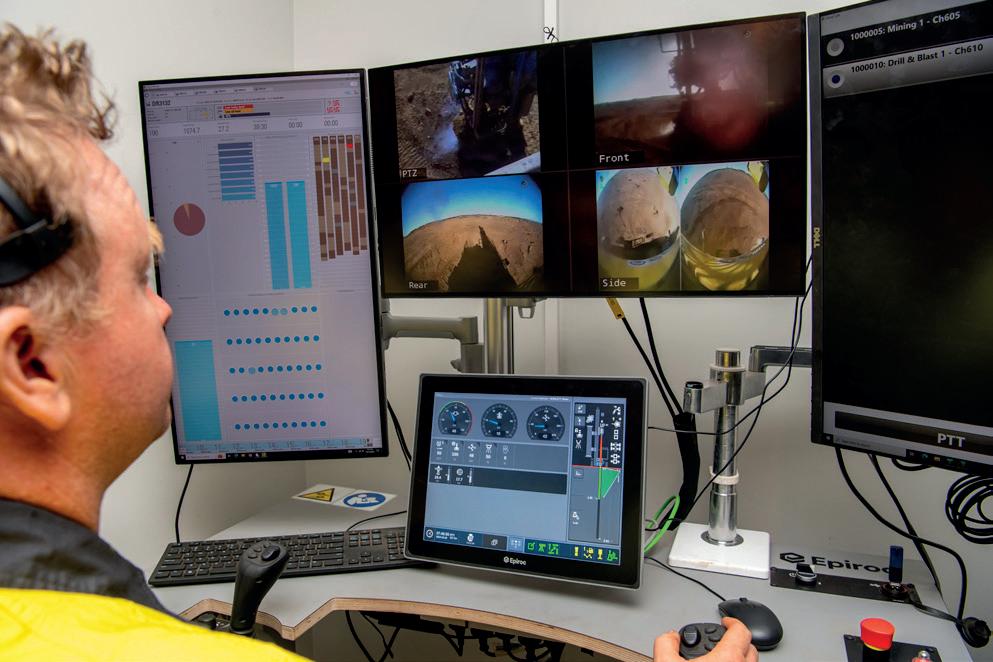
internet connection, this tele remote desk could be 1500 km away in Perth, the state capital where many Iron Bridge staff live, or anywhere in the world.
The future is now
Moving into 2024, Epiroc and Fortescue’s next task is to take on the unique demands of contour drilling, pitting the SmartROC D65 MKII Autonomous rig against sloped terrain at Solomon Hub iron ore mine, southwest of Iron Bridge. The Epiroc project team describes this as a “wicked challenge” they are looking forward to solving.
Looking further ahead to the future of autonomous versions of the SmartROC D65 and other Epiroc drills, Howlett reckons the technology is now at a point where one operator can work three or four autonomous drills simultaneously, depending on the circumstances.
Epiroc Regional General Manager and Managing Director, Wayne Sterley, adds that the company is excited about the SmartROC D65 MKII Autonomous project. Its success will pave the way for Epiroc to combine its surface crawler drills and larger Pit Viper platform blast drills under its Common Automation Panel (CAP) remote control centre technology.
The autonomous mining future is now.
17 global mining review // may 2024
Figure 4. In the air-conditioned Iron Bridge control centre, the Epiroc project team works from a tele remote desk (Credit: Bradley Kanaris).
Figure 5. Iron Bridge is an ambitious new mining project in the west of the Pilbara, one of Australia’s richest mining regions, and two hours south of Port Hedland (Credit: Bradley Kanaris).

Payal Gupta, Tecknotrove, India, outlines how simulation-based training can be adopted to boost the efficiency and safety of mining operations.
18 May 2024 // global mining review
Minerals constitute the backbone of any nation's economic growth, and India produces as many as 95 minerals – including fuel, metallic, non-metallic, atomic, and minor minerals. The Indian mining industry, which is primarily characterised by a large number of small operational mines, has the potential to create 6 million additional jobs by 2025, accounting for 12% of the new non-agricultural labour gap. At the same time, the mining industry could contribute US$47 billion to India’s GDP by 2025.
A motivated and trained workforce has been a core driver for achieving productivity, safety, and growth in mining. However, an unprecedented skills shortage is hampering this growth and worrying the Indian mining industry. According to a McKinsey report in 2023, 71% of mining leaders are finding the talent shortage is holding them back from delivering on production targets and strategic objectives.
While other industries like aviation and defence have been taking full advantage of AI and virtual reality simulation in learning, the mining industry in India has been slow to adopt simulation-based training. It has traditionally preferred on-job training, which has costed millions in machine

downtime and the repair and maintenance of mining equipment. However, for the past two years, the Indian mining industry has been making up for the lost time when it comes to developing skilled manpower, with the help of simulation-based training. It is now well and truly on the path to inducting advanced mining simulators to train workers.
Why are mining companies in India adopting simulation training?
Mining companies in India, such as Coal India, Tata Steel, Jindal Power, South West Mining, JSW, Komatsu, and Epiroc, are increasingly adopting simulation-based training. Though expensive to set up at first, simulation training is proving to be cost-effective in the long run and is helping mining companies reduce downtime due to accidents or errors.
Tecknotrove Systems, which specialises in providing advanced training simulators to the mining industry, is working closely with mining companies and helping them improve their training programmes. Tecknotrove sets up simulation labs with advanced mining simulators, which help mining companies like South West Mining provide a safe environment for their employees where they learn and
19 global mining review // May 2024
practise HEMM operations without real-world risks. Simulation training from Tecknotrove has proved to be cost-effective for mining companies in India, as it is helping them identify training gaps and enhance the skills of their workforce, preparing them for complex or dangerous situations they may encounter on actual mines.
With an aim to increase productivity and reduce accidents, India’s largest coal mining company, Coal India, invested in universal mining simulators from Tecknotrove for training HEMM operators. Simulator training ensures that their operators have the necessary skills to operate HEMM equipment efficiently and safely. Simulator training is also helping Coal India operators understand maintenance procedures, optimise fuel consumption, and ultimately improve the overall operational efficiency of the opencast mine.
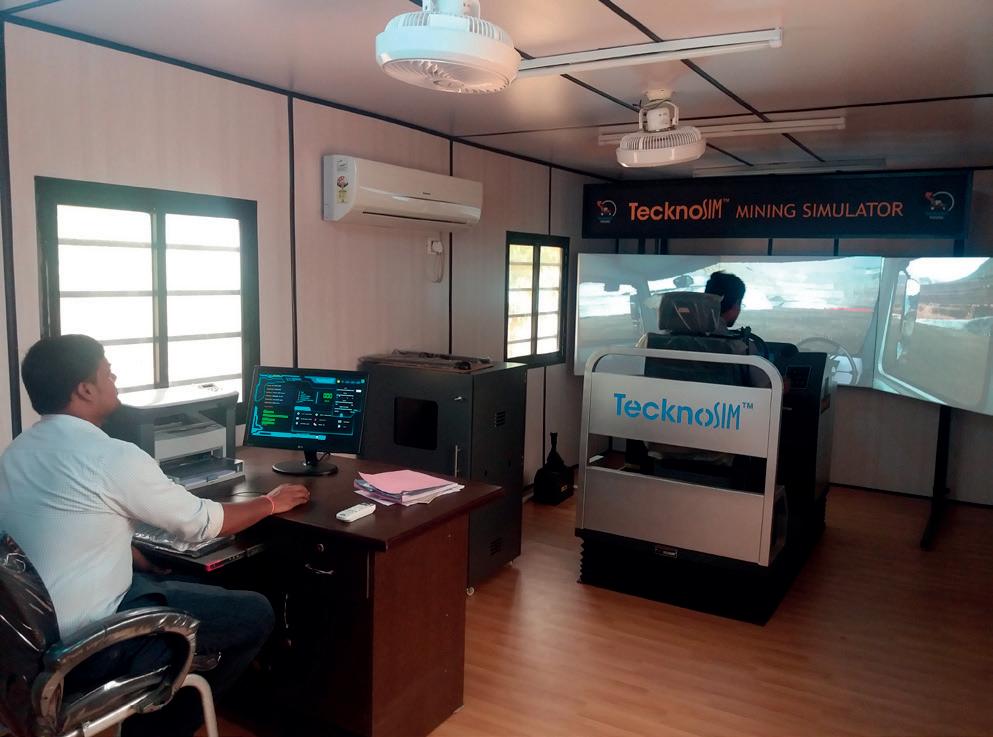
In addition, a leading power generation company from India invested in simulation training labs from Tecknotrove in November 2023, to boost the capability of their HEMM workforce. Tecknotrove’s simulation lab is a mobile training lab with fully air-conditioned training rooms and a simulation centre. The simulation lab for Jindal Power houses advanced mining simulators from Tecknotrove, with convertible kits for seven types of mining equipment – such as tipper trucks, dozers, excavators, and haul trucks.
These simulators are helping the company train four times faster, and with greater accuracy.
Mining OEMs like Komatsu, BEML, Daimler, and Epiroc are also finding simulation training extremely useful when it comes to familiarising operators with the latest technology in mining equipment. Among the Indian mining market space, the need for simulator-trained operators is on the rise, and with the help of multilingual training programmes in various regional languages, mining companies are getting the desired result in performance improvement.
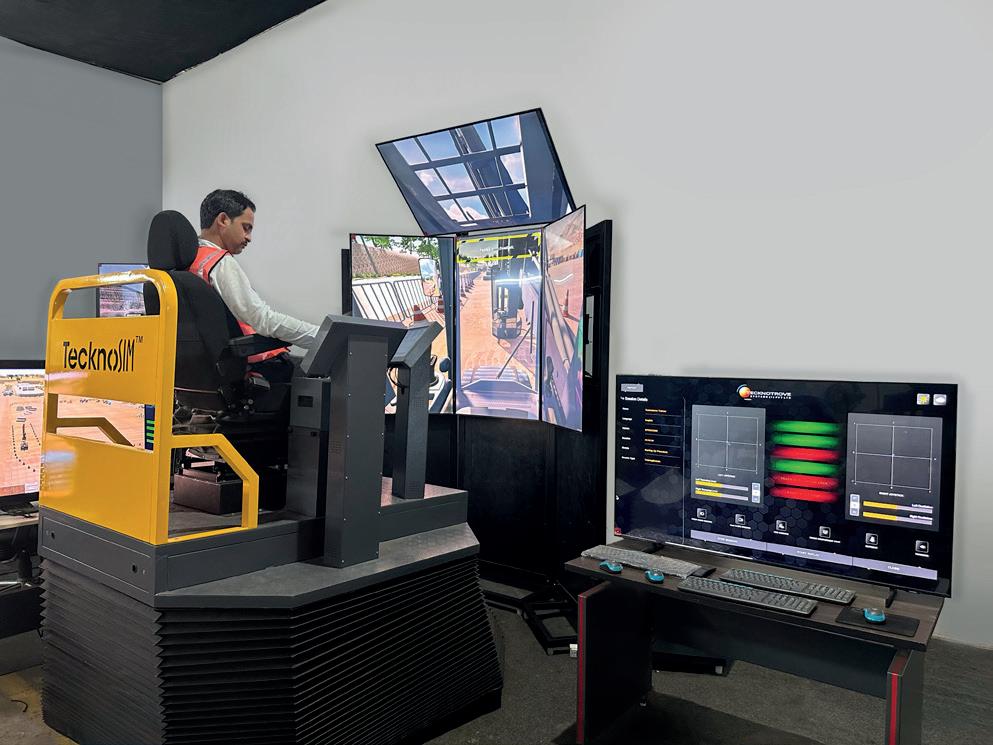
Tecknotrove’s latest Epiroc Surface Drill Simulator is designed with the latest in AI simulation to train surface drill rig operators on advanced blast hole drilling techniques with safety and precision. Based on Epiroc SmartROC D65 and Epiroc SmartROC T45, the simulator is controlled via an instructor station that allows the instructor to train operators in multiple realistic mining conditions and generate detailed reports for training reviews. The Epiroc Drill Simulator was installed at a leading iron ore mine in East India, and is helping them train operators in regional languages on blast hole drill rig operations in a realistic environment.
The key challenges when deploying training simulators within the mining industry
Some of the key challenges when deploying simulators for training within the mining industry include: the initial costs of acquiring and setting up the simulators; ensuring compatibility with existing systems and equipment; providing realistic scenarios that mimic real-world conditions accurately; training instructors to effectively use the simulators; and overcoming resistance to change from workers accustomed to traditional training methods. Additionally, mining companies and training institutes are also worried about maintaining and updating the simulators to keep pace with technological advancements.
Preparing mining companies to adopt simulation training and take the first steps
Tecknotrove works closely with mining companies and training institutes to analyse their training needs and help them integrate simulators into their existing training plan.
1. Assess training needs: Tecknotrove collaborates with experts to understand the challenges faced by the mining companies and identify their training needs. By conducting site visits, they understand the problem areas for mines and identify the skill gaps to develop solutions that help them train efficiently. To enable training on multiple types of mining equipment, Tecknotrove offers convertible kits which are interchangeable and fit on to the base platform of the simulator. These convertible kits help mining companies to train on multiple machines with just one simulator hardware.
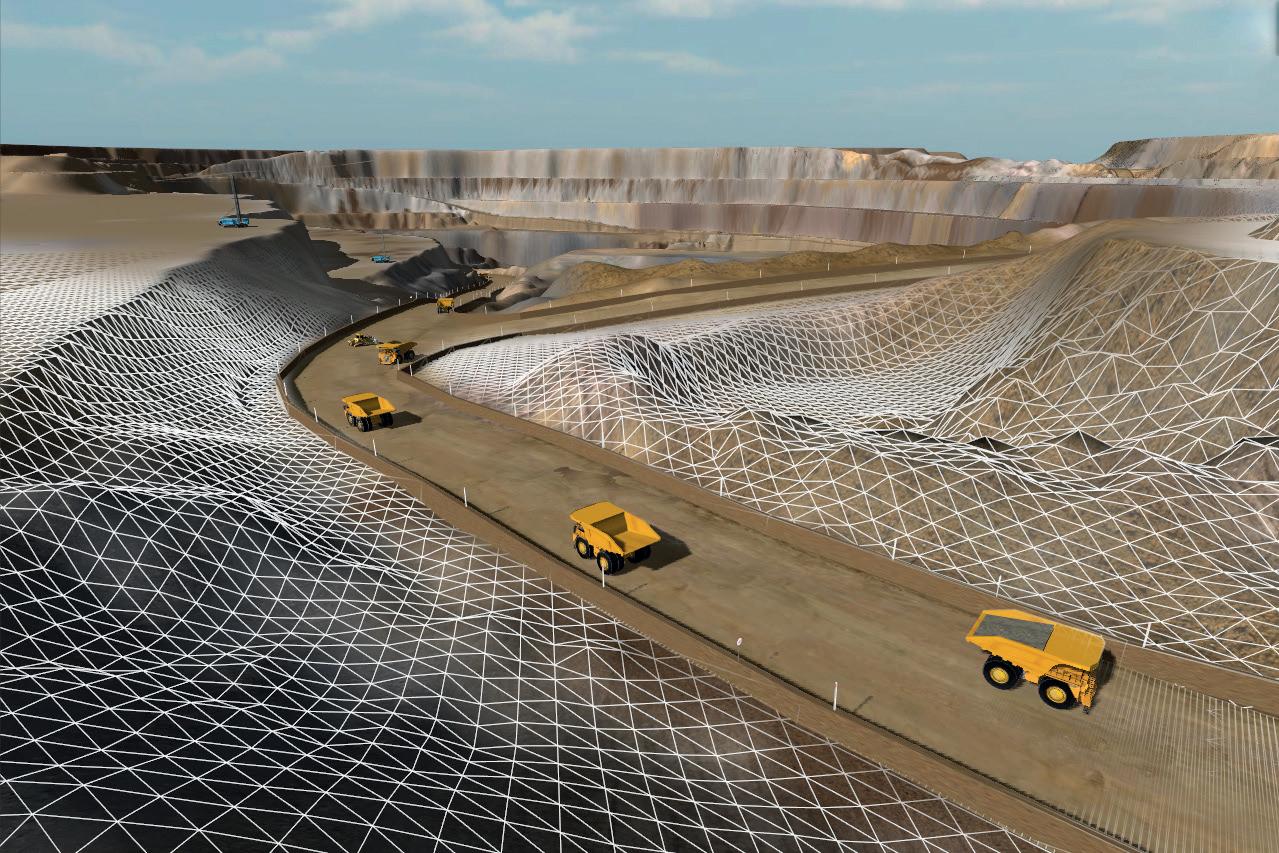
2. Develop customised training simulators: Realistic replicas of clients’ actual mine sites allow mining companies to train on their specific site in a completely safe and virtual environment, ensuring operators are
20 May 2024 // global mining review
Figure 1. Tecknotrove Epiroc Drill Simulator (Convertible kits for T-45 D-65).
Figure 2. Digital twin of mine site (Tecknotrove custom mine site).
confident and highly productive when they enter site operations. Tecknotrove’s technical team visits clients’ mine sites to study the area and recreate a digital twin of their pit in a virtual environment, including moving, loading, dumping, parking areas, hazard spots, marking, and signages specific to the site.
3. Progressive training curriculum: Developing tailored training programmes that incorporate simulation-based learning is at the core of Tecknotrove’s offerings. Its team designs a progressive training curriculum covering a range of scenarios and skills relevant to the mining operations and training needs. Training curriculums in the simulators are designed to train in multiple regional and foreign languages.
4. Train the trainers: To ensure that training is effective, Tecknotrove trains the instructors at the client site on how to effectively utilise the simulators and provide guidance to trainees. The company helps instructors conduct pilot tests with a small group of employees, in order to assess the effectiveness of the simulation training programme and make necessary adjustments. The programme is then eventually rolled out across the organisation gradually, ensuring proper integration with existing training processes.
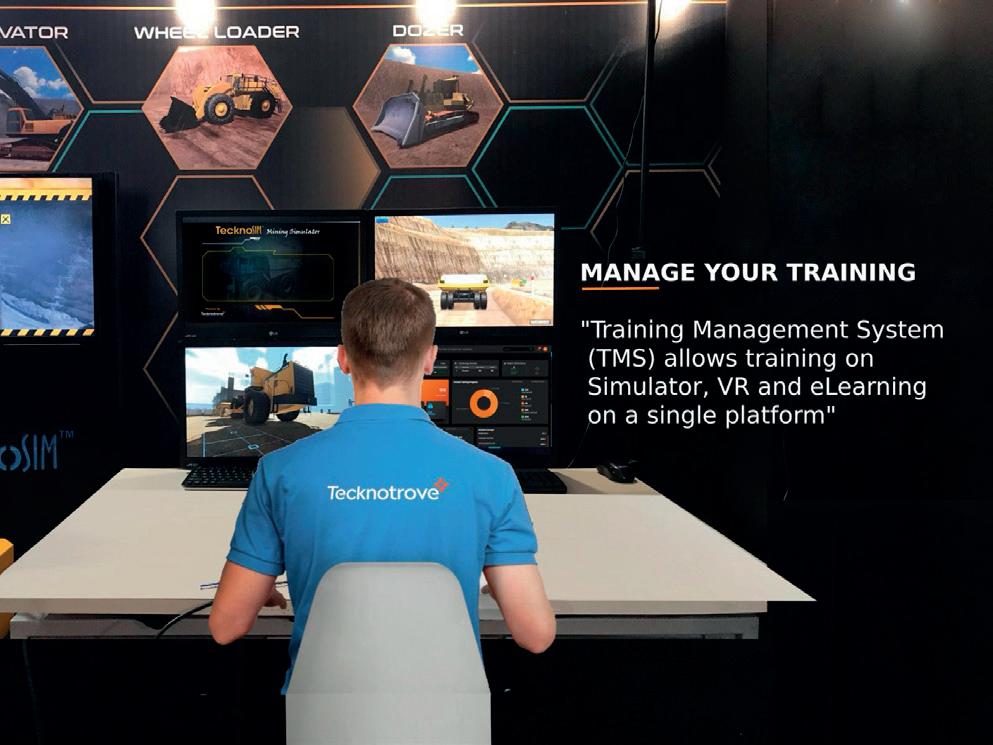
5. Training Management System (TMS): Tecknotrove’s TMS serves to intelligently link all training technologies, such as simulators, e-learning, and VR training together, and provide a centralised interface for mine users. A TMS gives mine instructors the ability to register trainees and design, control, and monitor each trainee’s training process. It also provides the management and other stakeholders with a detailed insight into the training performance and skill gaps hampering productivity targets and safety issues.
6. Continuous improvement: By regularly assessing the effectiveness of the simulation training programme and gathering feedback from its customers, Tecknotrove is able to make improvements to enhance the training experience from the simulators for its customers with the latest in simulation training.
Why simulator training and why now?
Mining is a hazardous working environment, where health and safety conditions for the frontline mine workers are always at risk. Where safety is critical, simulation training helps in reducing workers’ exposure to dangerous situations. Simulator training has proven itself as a green and sustainable training technology, which has helped to boost productivity and safety at mines and improve training standards in the mining industry. In addition, a cloud-based TMS is helping mining companies deliver simulated training at scale across borders and, at the same time, remotely monitor the training progress and return on investment on simulators.
Advanced mining simulators are being leveraged for several kinds of safety training in the mining sector, including:
n Mine site familiarisation.
n Equipment familiarisation and operations.
n Scenario-based training.
n Emergency preparedness.
n Machine inspection and maintenance.
n Fuel efficiency training.
Leveraging existing skillsets of the workforce is at the core of a simulator-based training programme, which continuously monitors operator behaviour and generates relevant performance data. Training data from advanced mining simulators is automatically analysed to identify behavioural patterns and skill gaps and eventually recommend highly focused remedial training in a safe virtual environment. Detailed reports from advanced simulators enable trainers to proactively respond to the skill gaps in operator capabilities, optimising training interventions to best match individual workers’ needs and ultimately raising the standard of operator performance across the entire workforce. In addition, Tecknotrove’s improved after sales service and the ready availability of its support team are helping to make simulator training affordable and dependable.
The Indian mining industry is therefore rapidly adopting simulation-based training to improve productivity, safety, and efficiency, which makes great business sense.
21 global mining review // May 2024
Figure 3. Tecknotrove simulation training lab – at South West Mining Ltd., India.
Figure 4. Tecknotrove Training Management System (TMS).
22 may 2024 // global mining review
Zlatko Martic and Sébastien Dhers, Master Builders Solutions, discuss how innovations in backfill admixtures can lead to greener and more cost-effective mine backfill mix designs.
Mine backfill is becoming a more widely spread operation within the mining industry. Conceptual mix designs have been, and still are, tailored to the operational requirements and end costs. After 35 years of involvement in various operations across the globe, the Master Builders Solutions (MBS) backfill team has a unique understanding of the needs and role of backfill in modern and future mining operations with underground backfilling activities.
MBS’ vast experience and knowledge indicate that there are fundamentally four different, but very strongly correlated and dependent, core groups relevant to mine backfill operations and their functions and properties, which are as follows:
n Environmental.
n Responsibility – social responsibility and operational safety.
n Operational.
n Sustainability.
Each group represents fundamental values for the company, industry, and society, but, in the end, only a holistic concept can be truly sustainable.
Environmental
Environmental properties have become highly positioned and desirable, recognised by society and highly ranked by responsible mining companies and their business partners. This group of properties is very relevant and can be only holistically approached for a clear understanding of backfill as an operation and its impact during the actual operational life of the mine but, most importantly, on mine closure, as well as the long-term benefit to the surrounding nature and society.
Mine backfill needs to be designed and operated so that mining operations leave minimal environmental impact during the operation and there are no risks of reduced quality land and water after mine closure that may affect the surrounding areas and communities. It is extremely challenging to have zero impact on the environment. However, risks can be minimised and maintained to scientifically achievable levels and comply with regulatory standards.
Properties of the tailings, particularly mineralogy and particle size distribution (PSD), influence the chemical activities of the backfill mix, and potential acid generation can cause decomposition and loss of strength over time, thereby increasing the risk of mechanical failure and a strong leaching process in the future, which can affect groundwater quality.
23 global mining review // may 2024
Standard backfill admixtures provide better packing and unconfined compressive strength (UCS) retention with sulfidic tailings; however, they cannot completely stop the process of strength degradation over time. The continued progress of formulating specific backfill admixtures for better UCS retention has already achieved several successes within MBS’ teams, and these are currently in a detailed study phase.
The binder type and quantity are very important in mine backfill mix design for achieving and retaining the required UCS. Still, they also heavily contribute to a significant portion of the mine’s carbon footprint. Selecting a suitable binder is a critical factor for the safety, sustainability, responsibility, and economy of any mine operation, so it cannot be avoided entirely. Backfill admixtures are a proven way of decreasing the amount of binder and reducing the carbon footprint of a backfill operation. Achieving 15 – 25% binder reduction with specifically designed admixtures for backfill is very cost-effective and can generate savings for the mine and a significant decrease in carbon footprint. Therefore, introducing backfill admixtures into a backfill operation will significantly change the mine’s environmental impact by improving the packing of the backfill, decreasing its carbon footprint, increasing the tailings UG, and reducing the water needed for the operation.
Water chemistry is one crucial factor that is often overlooked in many backfill operations. By analysing and studying combinations of various binders with different types of mine water used for backfill mix design, MBS identified that immediate effects were observed with changes to water chemistry and rheology of the fresh mine backfill mixes, but also during the consolidation and hardening process. Water chemistry may affect the flowability of the mix, acting as an accelerator to stiffen the paste and lower fluidity.
Some of MBS’ backfill admixtures are proven and effective in harsh operational conditions using brine water, as well as in some base metal operations using different chemical additives in mineral processing.
Responsibility
Responsibility in mining is an essential consideration for any mining company, and designing mine backfill properties is the key aspect of an underground mine, with mine backfill as a strategic support. Per definition, mine backfill needs to establish and retain safe working conditions economically. All backfill properties need to be tested and proven before actual operation is put in place. Still, they must also be closely monitored and measured during the operational life of the mine, with an increasing focus after the mine closure. From the operational point of view, the required UCS must be achieved in a targeted and planned time to meet production schedules and respect safety. This will depend on the properties of the tailings, type and amount of the binder, and the water chemistry and conditions.
Generally, backfill admixtures can assist and improve flowability and consolidation (measured by UCS), even if complex gradation of the tailings is used. Backfill admixtures may also be the only way to provide the required hardening in a planned time with the given type of binder. Admixtures are also crucial for rheology improvement, transporting backfill at higher solids contents with the same or lower friction losses and with a lower risk of blocking the lines. The overall safety and operational parameters of the mine backfill operation can therefore be significantly improved using backfill admixtures.
Mine backfill requires specific mechanical properties, such as UCS and flexural strength over time. In most parts of the operation, binders are used to achieve and sustain the required mechanical properties. Due to increased demand for metals, mine operations have become increasingly larger, so as a consequence, backfill operations have gained in size and capacity continuously years after. As mining operations increase in depth, safety requirements, and the need for UCS increase, so binder consumption rises significantly. A notable decrease in binder content is achievable using backfill admixtures and can be very cost-effective in the range of 15 – 25% (sometimes even higher). Increasing solids content with admixtures will also reduce the water content in the mix design, and the reduction in water needs may be significantly lower. From many operations where admixtures were implemented, the reported water reduction is 5 – 10%. Considering the size of the backfill plants, this is a significant volume of the water reduction. As the quantity of binder is reduced and solids increased, the corresponding volume/tonnage of tailings disposed underground is also increased by 2 – 3%. An example can be seen in Table 1 for 1 million tpy backfill production operating with 76% and 78% solids.
Operational
Operational performances for any backfill operation are critical attributes to achieve and sustain in any mining operation. Providing reliable backfill in the required time and with the required performance criteria is key for any mine using backfill as a strategic ground support.
The volume of backfill placed must match the planned volume to keep production plans on schedule. Placed backfill must also respect the designed and budgeted cost for the performances delivered.
The mine backfill team will need to keep up with permanent testing and quality control, along with continuous R&D projects of different types of mixes tested in the laboratory, which can be used as a guideline to the operator to be able to react to any changes in the process. The MBS team assists all of their customers by providing technical support, training, and workshops whenever required, which increases awareness of the mentioned changes and
million tpy backfill production operating with 76% and 78% solids. Solids Binder Mix design Mine backfill capacity Dry tailings Binder mass Binder reduction Water Water reduction Total solids mass Water savings (m3) More tailings UG tpy 76% 7% Control 1 000 000 706 800 53 200 27% 240 000 8% 760 000 20 000 34 200 78% 5% Admixtures 1 000 000 741 000 39 000 220 000 780 000 24 may 2024 // global mining review
Table
1. 1

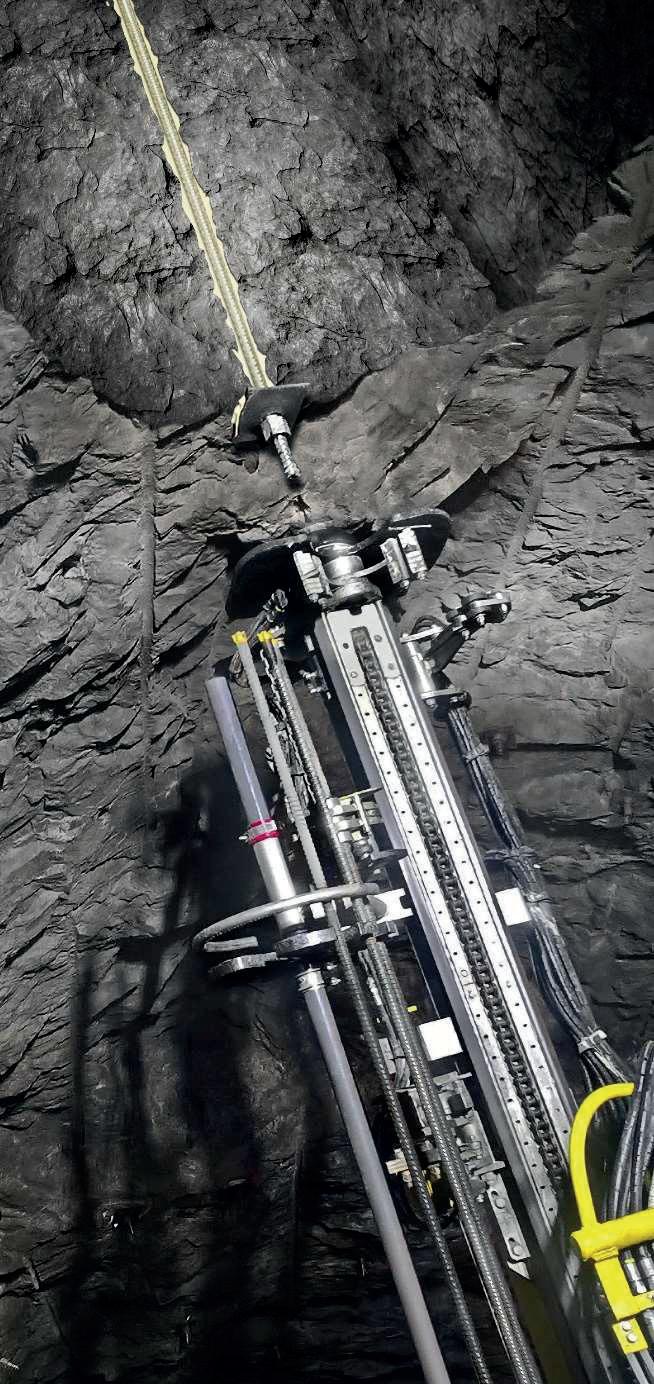
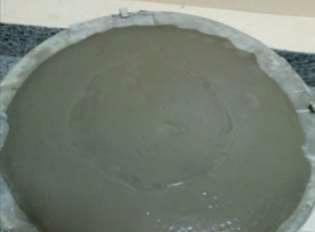
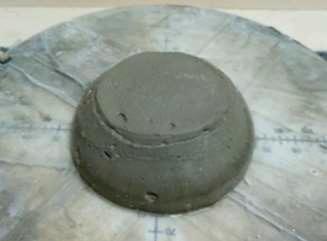

appropriate responses to challenges. If needed, even redesign or new formulations of the admixtures may take place to respond to such changes in the operation.
Flowability is used to control backfill transport from the surface to any point of underground operation requiring backfill. Achieving a required and designed strength within a specified time frame is a must for the backfill operation, so these requirements need to be matched to occur simultaneously for the lowest possible cost, keeping the highest benefits of the operation with maximum safety achieved. Therefore, in most cases, the existing system will require no mechanical changes using admixtures. This also considers some of the areas that are not even designed at the beginning. In this case, some combination of additional booster pumps and backfill admixture may greatly improve the performance of the existing backfill system.
Mine backfill admixtures have been proven tools in the hands of operators for decades. They are used for driving and controlling flowability, which improves flow retention. They are additionally increasing the safety, and optimising and enhancing the strength development, of the backfill, with significant cost savings and other benefits. Nowadays, backfill admixtures are designed technologies that can be formulated according to the material’s specific properties and the mine’s specific needs. Designing a backfill admixture is a process of comprehensive understanding. MBS’ approach is established, well-designed, and proven in its industry-based concept, known as 4S.
The process of admixture design is structured in four phases:
1. State it: Identify opportunities in mine backfill operation and mine cycle.
2. Structure it: Analyse the most important correlations and factors.
3. Synthesise it: Formulate the most cost-effective solution.
4. Succeed it: Implement and succeed it in the operation.
Sustainability
Sustainability is essential for mine backfill, and all of the elements in the aforementioned process can be put under the roof of sustainability. Mine backfill needs to provide structural performances, required flowability, and the highest degree of safety, as well as the necessary quantities placed for acceptable cost and overall economic gain throughout operational and post-closure time.
MBS has invested significant resources over 35 years to integrate all four key pillars into its internal and market philosophy, so all of its backfill admixtures nowadays are developed respecting these pillars and the overall ESG concept. The company brought backfill admixtures to the market in the 80s and scientifically documented their work from the laboratories and field testing, followed by testimonies of implementations in the largest mining companies worldwide.
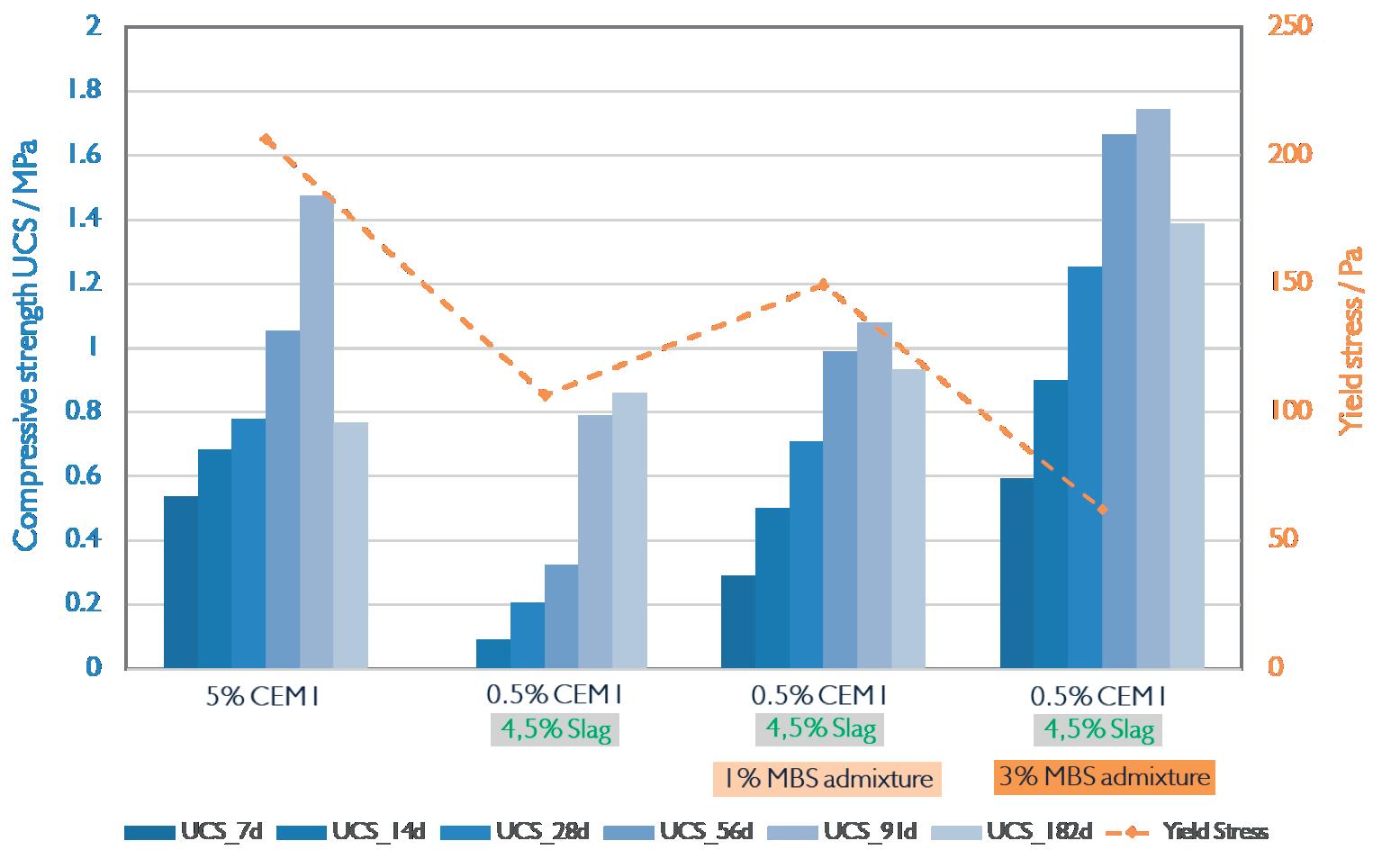
To illustrate the possibilities of carbon footprint reduction using admixtures, a selected example using tailings from a copper mine is shown in Figure 1. This example features a mixed design based on 78% solid content, using 5% binder. The reference binder taken here is 5% OPC, and in this example, it is a standard OPC (CEM I). The low CO2 binder is comprised of a metallurgical slag. This binder is comprised of 0.5% CEM I and 4.5% of slag, showing lower strength compared to the 5% CEM I reference. This makes it impossible to be used in an operation. Using the MBS admixture, a dosage of 1% is sufficient to match the performances of the 5% CEM I reference at 28 days. Using 3% of the MBS admixture, it is even possible to overcome the performance of the reference. This approach offered a lowered yield stress compared to the reference mix. Finally, using slag, with the MBS admixture, offers increased late strength, as high as 80%.
The low CO2 binder is comprised of a metallurgical slag, which is considered between a negative carbon value for waste material that presents environmental concerns to a value of 20 kgCO2/t for ground granulated blast-furnace slag (GGBS). This is a high-end product, requiring substantial post-treatment compared to a metallurgical slag. The carbon footprint of CEM I is around 800 kgCO2/t: the present study shows a minimum potential saving of 80% in carbon footprint, with a binder showing a CO2 footprint lower than 100 kgCO2/t.
Admixtures are crucial enablers for the carbon transition. MBS’ backfill team will continue to participate in the further development of mine backfill on a global level and will continue developing and designing the edge technologies for the mining industry.
26 may 2024 // global mining review
Figure 1. Copper mine tailings alternative binder and backfill optimisation results with MBS admixture.
Michele Tuchscherer, Homie Thanasekaran, and Eric Wasmund, Eriez, evaluate how the properties of gas bubbles can impact the separation, leaching, and flotation processes.
Liquid and gas systems have been exploited for many years across diverse fields of chemical engineering and process metallurgy. As summarised by F.D Richardson in his 1971 lecture of the American Institute of Mining Engineers (AIME), “Droplets and bubbles are of great importance to the extractive metallurgist in his attempts to speed up processes…” Gas injection and bubble-making are used to accelerate high temperature processes, such as decarburisation in steel-making, as well as smelting and converting in sulfide processing. Gas dispersion is also used

in more familiar processes, including a personal favourite of many engineers, beer making.
Spargers and the flotation process
In the area of extractive metallurgy mediated in aqueous environments, gas bubbles are also fundamental to separation processes and unit operations. The most important of these are froth flotation and hydrometallurgical leaching. As knowledge of the principles governing these separation processes has increased, more attention has been placed on the properties of
27 global mining review // may 2024
bubbles and their populations – such as bubble concentration, stability, and size distribution. It is now recognised that the efficiency and speed of these extractive processes can be greatly improved and optimised by using engineering principles to tailor bubble properties.
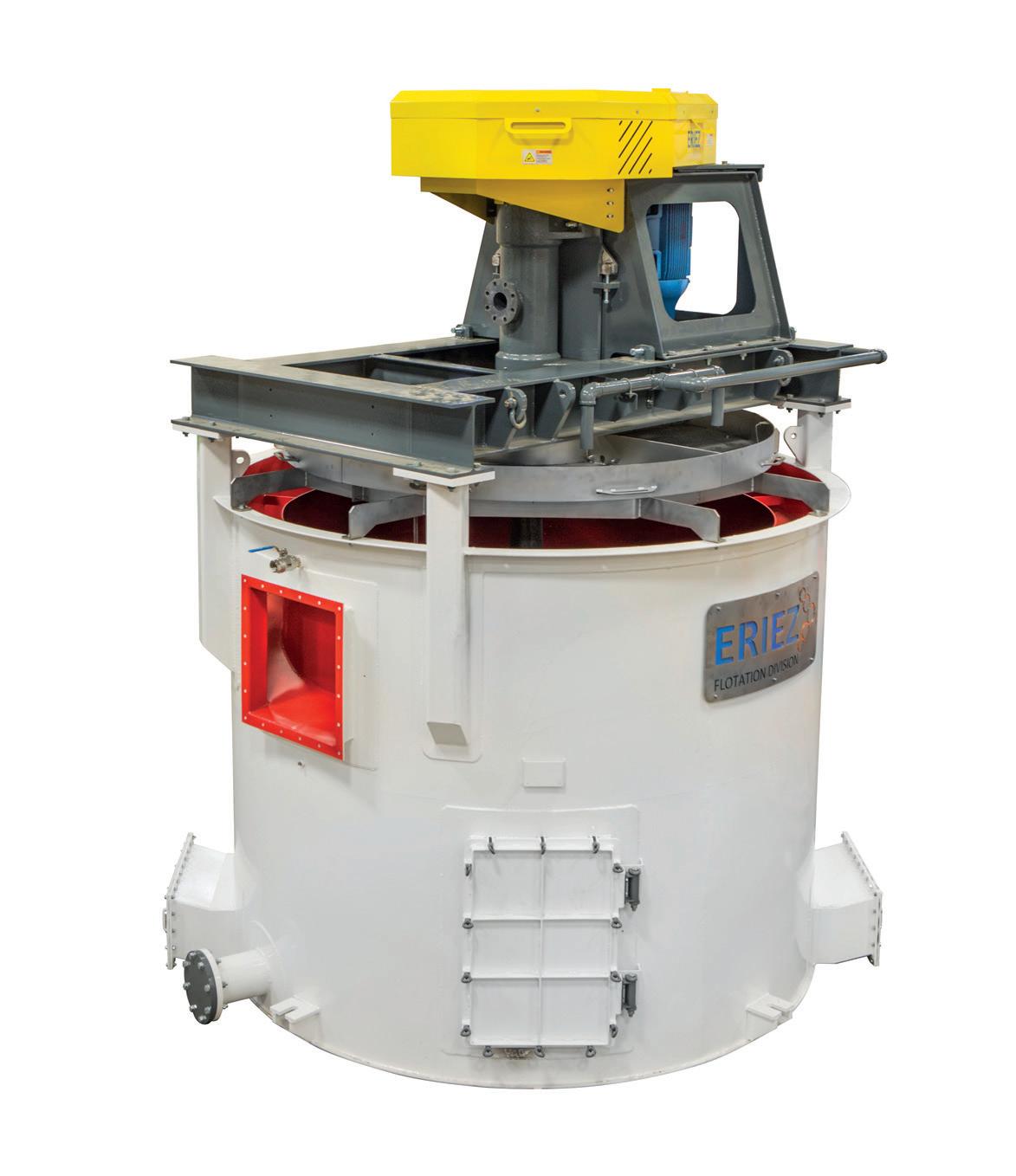
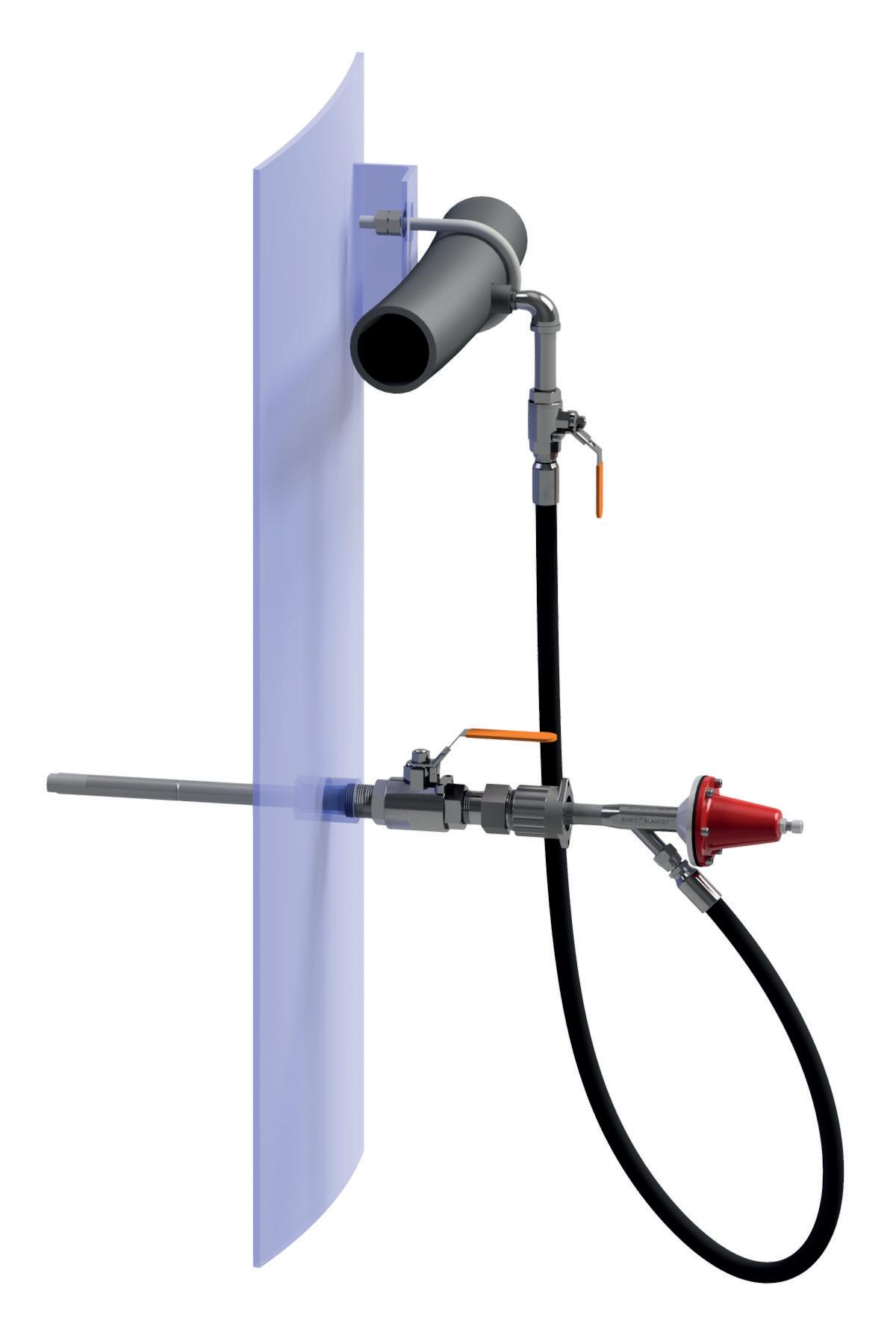
Gas bubbles in extractive metallurgy
The class of equipment that creates and delivers bubbles into liquids is known as sparging systems. In the case of flotation, an ore is introduced into water and ground into a finely divided state to form a slurry. The grinding endpoint has been selected so that that an optimal amount of the ore particles are liberated, meaning that a significant fraction of the surface has an exposed hydrophobic species. In many cases, the ore surfaces are naturally hydrophobic, such as graphite. In other cases, hydrophobicity is achieved through the use of ‘collectors’, which are surface-active chemicals. These attach to exposed mineral surfaces and provide an outward facing hydrophobic tail that confers hydrophobicity. Once the particle surface has a significant hydrophobic character, it is ready to be combined with air bubbles introduced through a sparging system.
When the sparged air bubbles approach ore particles, they may collide, and if a bubble successfully collides with a hydrophobic species on a particle, the bubble may attach. This is based on surface chemistry and the thermodynamic preference of a hydrophobic surface to be in contact with air rather than water. When a bubble or bubbles have successfully attached to a particle in water, there may be enough buoyancy created by the bubbles to counteract the gravity acting on the particle and the ‘bubble-particle aggregate’ has become floatable. In the absence of other countervailing forces, such as excessive convection and froth layer drop-back, the bubble-particle aggregates will rise to the top of the flotation vessel and be recovered in a froth layer.
Optimising bubble populations
In the flotation process described, the properties of the bubble population are key to producing an optimal flotation response. The production of bubble-particle aggregates is often described by the law of mass action and as a first-order rate process, so that the speed of the process depends on the concentration of reactants. Flotation is dependent on a number of successive steps: collision, attachment, and the successful transport and collection of bubble-particle aggregates in the froth phase, such that postulated rate constants often show a dependence on the product of the theoretical probabilities associated with each step. The probability of bubble-particle collision depends on the particle size, bubble size, and hydrodynamic conditions in the cell. Bubbles that are too large and bubbles that are too small will not collide efficiently with liberated particles. In the absence of surfactants, bubbles are unstable and will coalesce upon collision, so ‘frothers’ are employed by the industry to stabilise the bubbles and minimise coalescence. In addition to the size of the bubbles, the total volume and the total surface area of bubbles, normalised by the dimensions and working volume of the flotation cell, are typically optimised for each type of flotation system.
Sparging techniques and equipment
Introducing optimised bubble populations is a key component used by the experts to design the sparging system of every different type of flotation unit on the market.
28 may 2024 // global mining review
Figure 1. Eriez StackCell – a two-stage mechanical cell.
Figure 2. Eriez SlamJet insertion sparger.
CELEBRATING 35 YEARS OF SHOTPLUS™
SHOTPlus™ has been at the forefront of revolutionising blasting practices in the mining and quarrying industries, and this year is celebrating its 35 year anniversary.
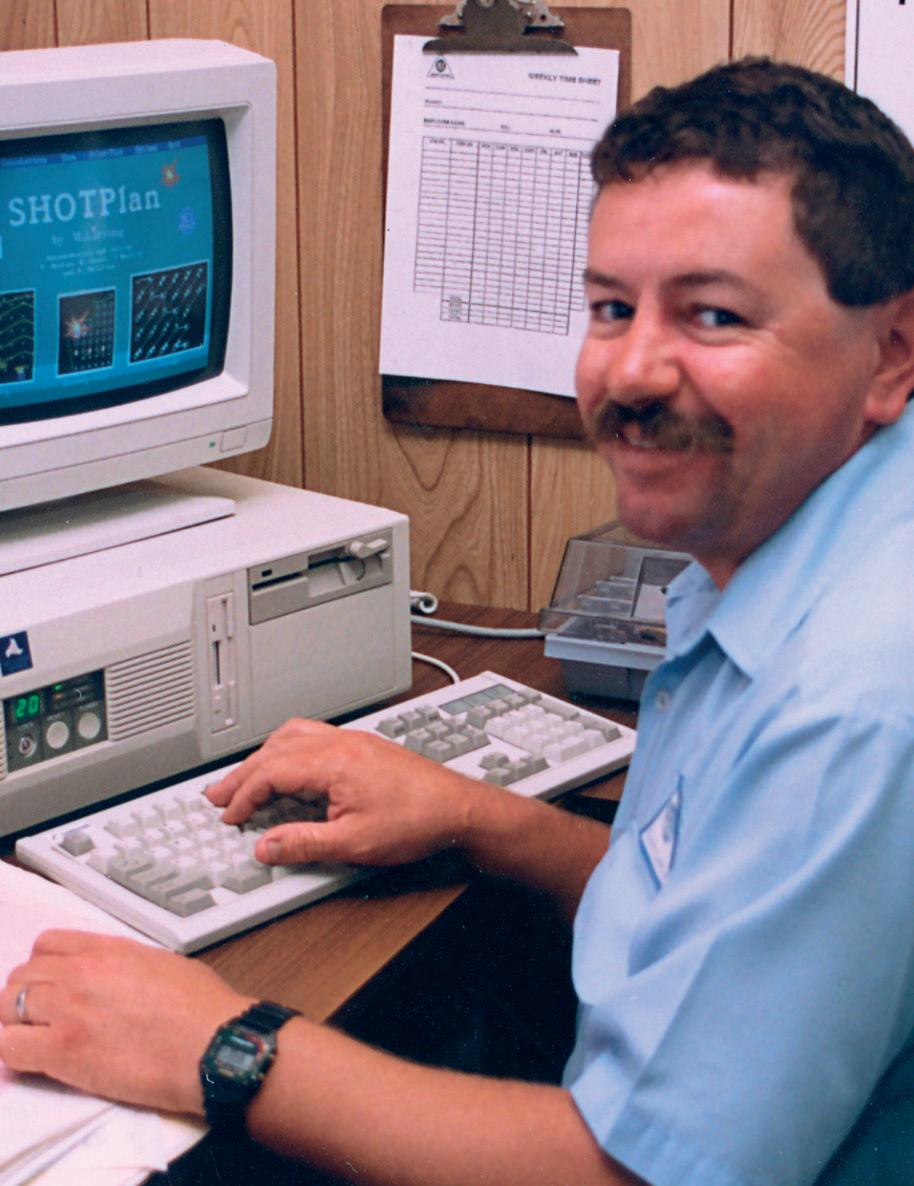
SHOTPlus™ embodies Orica Digital Solution’s vision of developing technologies which seamlessly connect customers’ physical and digital worlds, providing insight and enabling optimisation of operations across the mining value chain.
With over 2000 users around the world utilising the technology to optimise blast designs and streamline drill and blast processes, SHOTPlus™ features charging and initiation design tools, superior visualisation and blast analysis functionality. In addition, the application facilitates regulatory compliance, improves productivity, and reduces the overall cost of drill and blast operations.
SHOTPlus™ will continue to be the centre point for drill and blast decision making while supporting Orica Digital Solutions move into adjacent and integrated workflows.
To learn more about the history of SHOTPlus™ visit orica.com/shotplus
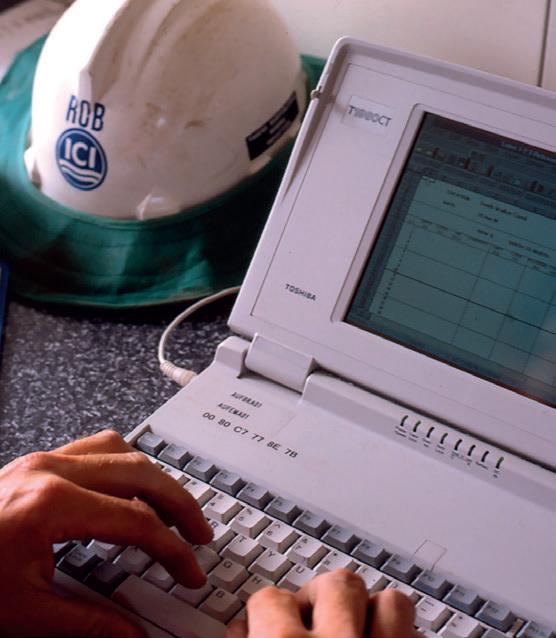
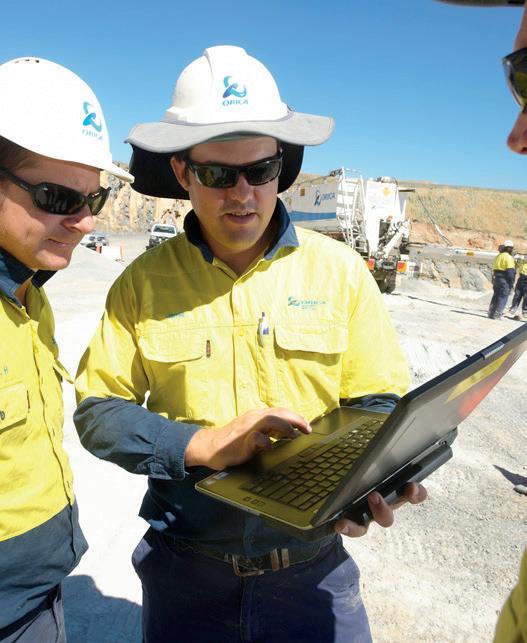
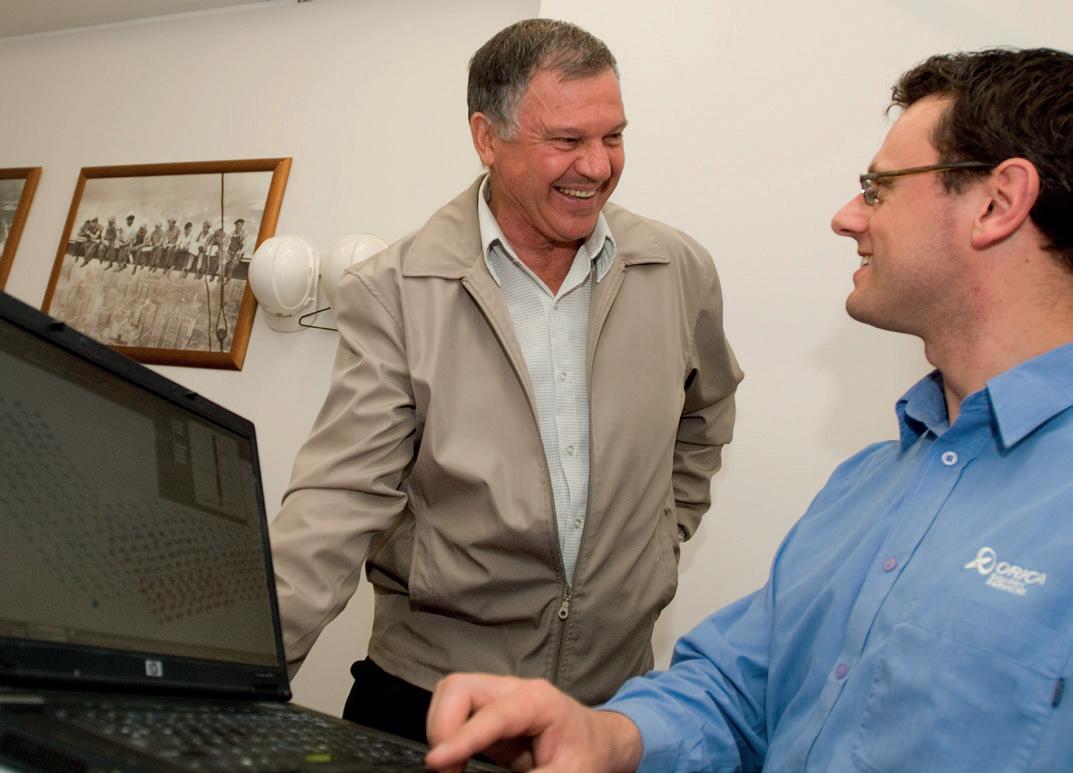
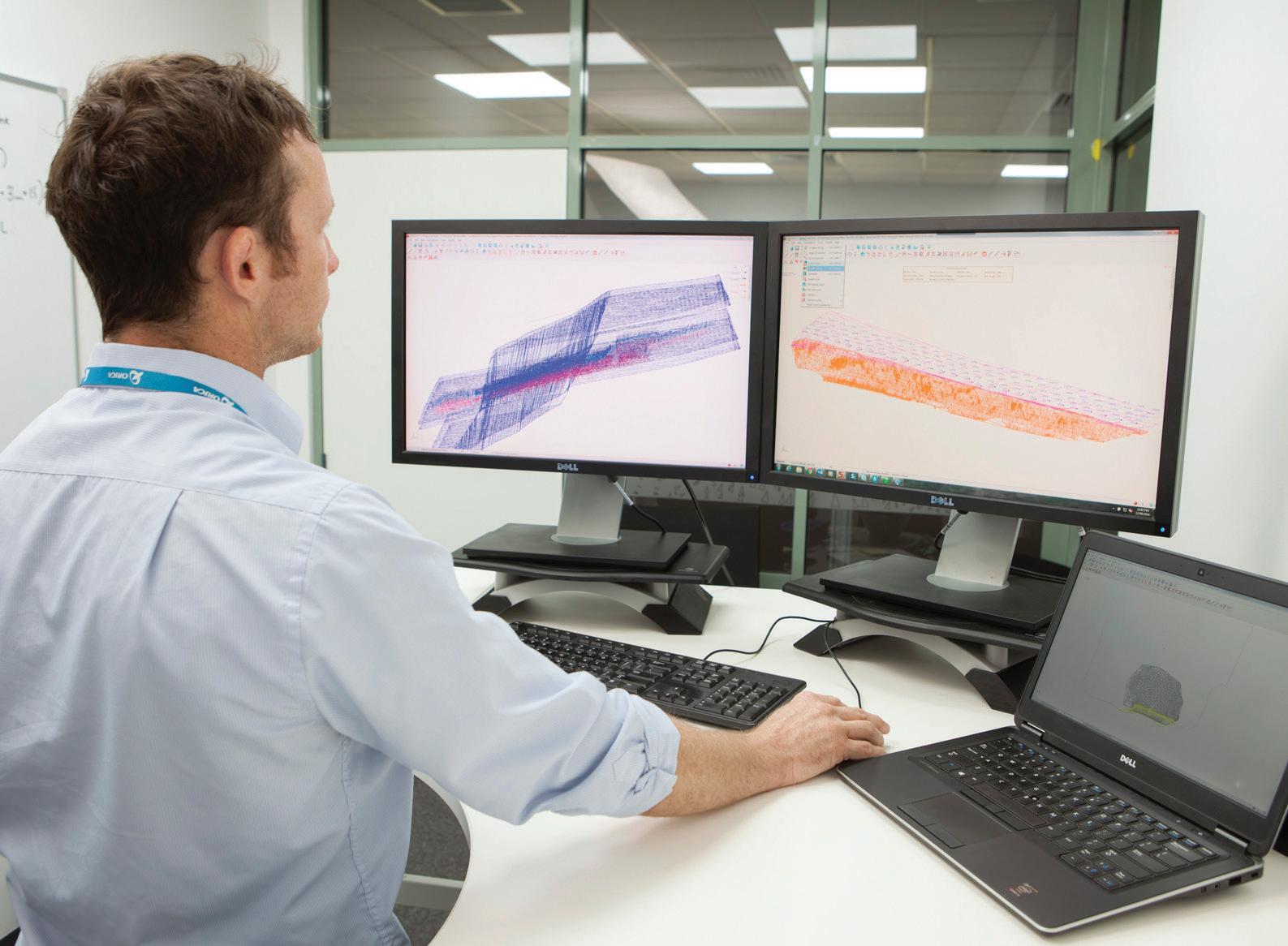
In the case of mechanical cells such as FLS’ Wemco, Metso’s TankCell or Eriez’ StackCell (Figure 1), air is fed into a central rotor inside the tank, and this acts as a sparger by shearing the air into fine bubbles. The volume of air, surfactant dosage, slurry rheology, and shear energy of the rotor create the bubble properties. In the case of a Jameson cell, the sparging system consists of downcomers that entrain and shear air into the feed pulp as the high-pressure slurry impinges against the liquid interface. Because each of these sparging approaches produces different bubble properties, each with their own advantages for different types of ore particles, there has been some discussion over the last decade about including different types of cells in series when the feed has a broad particle size distribution or multiple mineralogical characteristics. This can create the best of all worlds in complex applications.
Another approach to sparging is external insertion lances, such as the Eriez SlamJet® (Figure 2). In flotation, the SlamJet is used mainly in columns, although it has also been used to improve the performance of mechanical cells. The SlamJet injects air through a self-sealing orifice producing a median bubble size of approximately 0.8 mm, depending on water chemistry. The SlamJet has practical advantages, such as the ability to customise the flow of gas by adjusting it or turning units on and off. They can also be isolated and removed from the tank without draining it. The SlamJet has been the industry standard for more than 30 years and has inspired numerous imitators. Despite the advantages of the SlamJet, there are applications where even finer bubbles are required, such as fine particle or slimes flotation.
Fine particle flotation
For fine particle flotation, another approach to sparging is the contraction/expansion nozzle of the Eriez CavTube®. The CavTube is used for applications with ultrafine liberated ore, where conventional technology, such as stirred tanks or
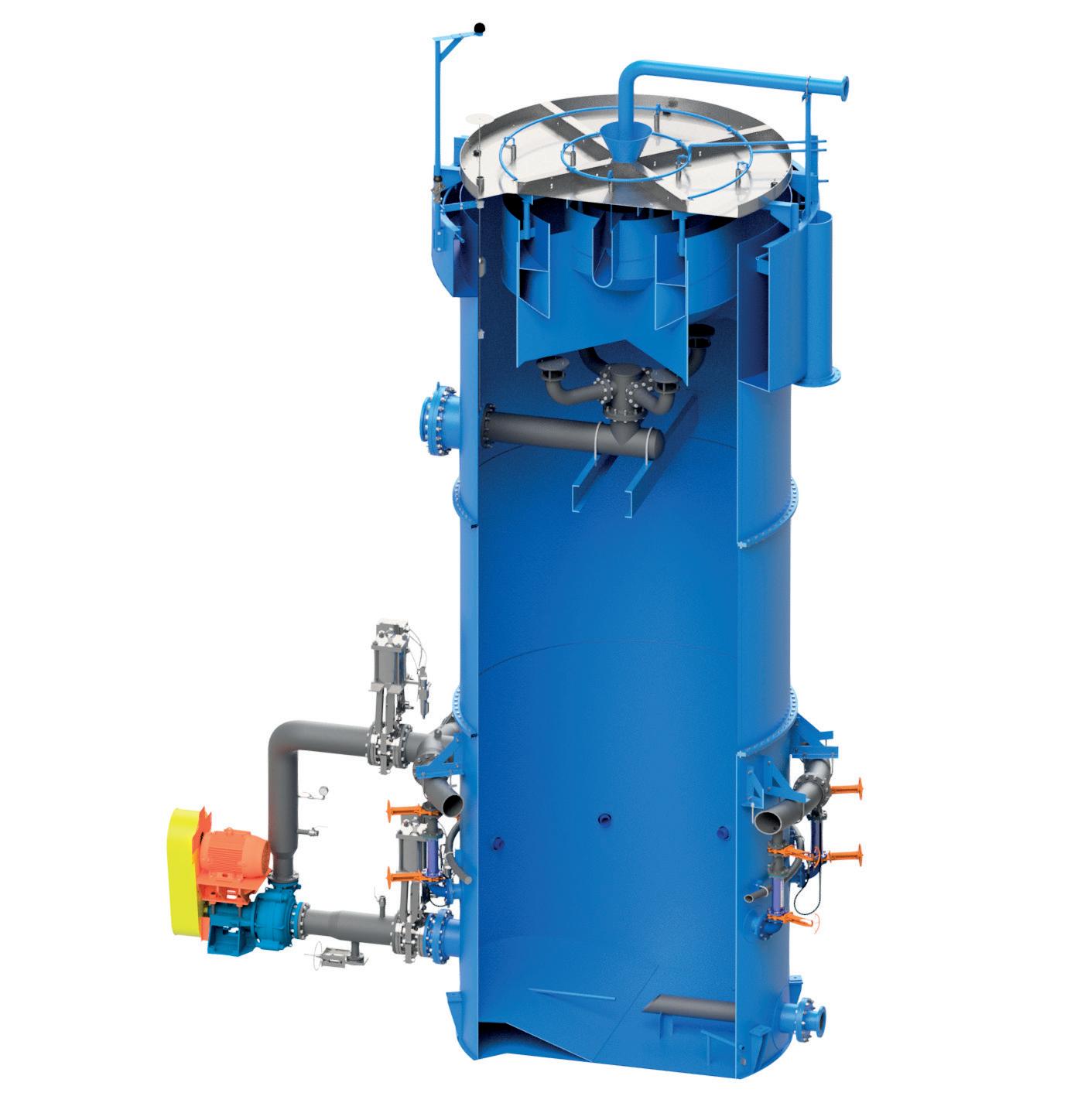
even SlamJets, is not optimal. Pulp from a flotation cell is extracted from the cell and mixed with air before being pumped through a parallel circuit of CavTubes and being recycled back into the cell (Figure 3). The high velocity and specific nozzle geometry of the CavTube result in a sudden pressure drop which shears the air into flotation-sized bubbles, on the order of 100 microns. At the same time, nucleation of vapour and gas by hydraulic cavitation and exolution respectively, produces fine bubbles on the order of microns. The fine bubbles often attach directly on hydrophobic surfaces, because adsorption is energetically favoured for nucleation of vapours and gases from supersaturated liquids. The combination of these two populations of bubbles creates an ideal environment for floating fine particles. It has been hypothesised that the adsorbed ultrafine bubbles act as tethers for the larger bubbles that attach and supply buoyancy, producing a better result than systems where bubbles are introduced separately.
Conclusion
In other areas of extractive metallurgy besides flotation, spargers are used in a variety of gas-liquid-solid reactions where bubbles are used to transport dissolved gases into the liquid phase, and occasionally out of the liquid phase. An example of the latter would be gas stripping, where an undesired volatile compound can be removed from a liquid by sparging the liquid with a gas. More typically, sparging can be used to supply a continuous stream of reactant into a liquid phase. Two popular examples are found in aqueous leaching processes: oxidation leaching and gold cyanidation. In both cases, sparging is used to introduce oxygen into water with bubbles. Leaching tanks are typically large, stirred tanks with two levels of agitators, with SlamJet spargers located around the periphery of the tank. Oxygen diffuses through the bubble to the liquid film interface, crosses the interface, and then diffuses into the aqueous phase. Although each of these three sequential mass transfer steps benefits from smaller bubbles, the rate-limiting step is usually the transport across the bubble liquid film, which increases greatly for smaller bubble sizes. This was shown experimentally by Motarjemi and Jameson in their classic 1978 paper: ‘Mass transfer from very small bubbles – the optimum bubble size for aeration.’ In a quiescent column of liquid, a rising bubble will efficiently transfer most of its available oxygen over the first few metres of height, if the bubble is less than approximately 1 mm. This mass transfer rate is enhanced by forced convection and turbulence in the industrial case where agitation is included, such as a typical gold cyanidation leaching operation. Introducing air as a continuous swarm of fine bubbles, rather than depending on agitator shear, has also been shown to reduce agitator maintenance and increase operability.
The use of spargers to control the size distribution and concentration of bubbles is a key factor in many industrial processes. In flotation and leaching, there is a variety of ingenious approaches to sparging. The suitability of each option is driven by the system characteristics that are being optimised, which include metallurgical performance, maintainability, and availability. However, the key is all about making the best bubbles for the job.
30 may 2024 // global mining review
Figure 3. Eriez CavTube sparged column for fine particle flotation.

Taylor McKertich, Endress+Hauser, Australia, explores the transformative role advanced instrumentation can play in the mines of the future.
When asking any major mine operator to name a crucial factor in ensuring the sustainability and profitability of mines in future, they may well say: sensors.
However, why is this the case? The trends the industry is exposed to – the increasing importance of sustainability, persisting labour and skills shortages, and continuous cost pressures – mean that technology in mining simply cannot afford to remain stagnant.
31 global mining review // may 2024
Specifically, when it comes to the processing of ores, the same drivers remain ever present – if not more so. Zero-entry mine trends now expand into processing plants, where even control is no longer executed from the site itself.
The processes of separation, leaching, and even flotation continue to be the most efficient methods of separating ores from gangue efficiently, cost-effectively, and sustainably. In the lab, where the flowsheets are refined by piloting processes and research organisations, measurement and instrumentation play an important role in accurately controlling these processes to maximise value.
In the field, the future of sensing technology is already here. Field instrumentation that can measure parameters previously only possible in a lab has already been deployed in mining processes. This now brings the level of optimisation and control from what was possible at the pilot stage into the larger-scale processing plant.
This article delves into the pivotal role of advanced data collection methods and instrumentation in enhancing mining processes, with a spotlight on separation, leaching, and flotation and their positive impact on product quality, energy efficiency, resource utilisation, safety, environmental compliance, data-driven decision-making, and fostering a deeper understanding of process mechanisms and innovation. By exploring the synergy between laboratory insights and field instrumentation, this article uncovers not only the challenges faced, but the groundbreaking solutions that industry leaders, including Endress+Hauser and Analytik Jena, bring to the table.
Two of these emerging technologies that are being implemented by the most innovative mining operators are machine learning (ML) and artificial intelligence (AI) for process optimisation. By leveraging AI and ML technologies, there can be considerable gains in process efficiency.
Machine learning in leaching
Leaching is a process used to extract valuable metals from ore by dissolving them in a suitable solvent. The effectiveness of leaching is highly dependent on factors such as ore composition, particle size, and the choice of leaching agent. Traditionally, accurate measurements in the laboratory facilitate the selection of optimal leaching conditions. However, with the improvements in measuring technology, these measurements can now be reliably taken in the field. Parameters such as pH, dissolved oxygen, redox potential, slurry density, chemical dosing concentration, and temperature gradients can now all be read. These parameters, if fed into the ML optimisation systems, can deliver greater insights and much faster returns than if the ML solution was reliant on slow, old laboratory data, or even with inaccurate field data.
Any information which can also be fed into a feedforward control philosophy solution will be able to reduce any variation during operation by minimising disturbances. Online measurements of brine composition
into lithium processing applications can help with this. For example, the use of ICP-OES can deliver online lithium composition every 30 seconds without any sample preparation.
Fine-tuning flotation for maximum efficiency
Flotation is a widely used process for separating minerals based on their hydrophobic or hydrophilic properties. The efficiency of flotation is influenced by factors like particle size, reagent dosage, and froth stability. In recent years, advancements in flotation technology have focused on improving selectivity, reducing environmental impact, and increasing energy efficiency. Accurate measurement of ore properties is the foundation upon which future efficiencies flourish. For instance, in separation processes, knowing the mineral composition helps in designing effective methods for isolating valuable minerals from gangue. In leaching, understanding the ore’s chemical composition aids in selecting the appropriate leaching agents and conditions.
In flotation, knowledge of particle size and mineralogy guides the selection of suitable reagents and flotation conditions. Real-time measurements of gas hold-up, pulp density, redox and pH, and pulp level and chemical enable operators to fine-tune the process for maximum recovery of valuable minerals. Additionally, integrating AI and ML algorithms with measurement data has opened new avenues for predictive control in flotation operations. Data-driven decision-making is particularly impactful in flotation processes, where the stability of froth and mineral concentration are critical for maximising recovery. With continuous data feedback, operators can fine-tune reagent dosages, airflow rates, and other parameters to achieve the desired outcomes, leading to improved efficiency and higher yields.
Improving environmental compliance, plant availability, and energy efficiency
AI and ML technologies are not restricted to just process optimisation. Some other ways that the technology can be applied in mining include predictive maintenance, energy management, and quality control. All of these benefits stem from the improved data that field devices can now bring, particularly with digital outputs and self-monitoring and verification software.
Self-monitoring software on field devices can unlock vast amounts of data, exceeding just the one or two directly measured variables that were possible in the past.
The concept of digital twins, mirroring the physical processes in a virtual environment, has gained traction in the mining industry. By combining real-time measurement data with advanced process simulation, operators can create digital replicas of their operations. This enables scenario analysis, predictive modelling, and optimisation strategies without impacting actual production.
Digital twins are particularly beneficial in scenarios where the consequences of process changes are complex
32 may 2024 // global mining review
and interconnected. In flotation processes, for instance, changes in reagent dosage may have cascading effects on froth stability and overall recovery. Digital twins provide a platform for testing different scenarios virtually before implementing changes in the actual operation. Digital twins are also useful for energy efficiency optimisation projects, simulating the throughput and quality parameters whilst monitoring virtual changes in the use of electricity, water, chemicals, and fuels.
Instrumentation not only contributes to operational efficiency, but also plays a crucial role in ensuring safety and environmental compliance. Continuous monitoring of process parameters helps identify potential hazards and deviations from safety thresholds in real time, enabling swift corrective actions. The quality of the final product is critical when it comes to marketing the mine product, especially at a time when ESG requirements on mining produce are at an all time high. Instrumentation serves as the guardian of product quality by providing real-time data on critical parameters throughout the processes.
From an environmental standpoint, instrumentation contributes to compliance with stringent regulations. Continuous monitoring of emissions, effluents, and other environmental indicators ensures that mining operations adhere to environmental standards. This proactive approach to environmental stewardship is facilitated by the precision and reliability of advanced instrumentation.
Technological revolution driven by advanced sensors
In conclusion, the mining industry stands at the cusp of a technological revolution driven by advanced measurement techniques. From the laboratory to in-situ sensors and digital twins, these technologies empower mining operators with unprecedented insights into their processes. The optimisation of separation, leaching, and flotation processes relies on a deep understanding of ore characteristics, and precise measurements from field instrumentation serve as the linchpin in this endeavour. This deeper understanding of process mechanisms fuels a culture of innovation within the mining industry. Armed with precise measurements and comprehensive data sets, researchers and operators can explore novel approaches, experiment with innovative technologies, and implement advancements that transcend traditional boundaries.
As mining operations continue to evolve, the integration of advanced measurement technologies will be pivotal in achieving greater efficiency, sustainability, and profitability. The synergy between laboratory analyses and real-time in-situ measurements, coupled with the power of digital twins, positions the mining industry to unlock new frontiers in process optimisation, ensuring a more sustainable and responsible approach to mineral extraction.

STEP INTO THE FUTURE OF MINING. Only MINExpo INTERNATIONAL 2024® connects you with the innovations that will transform the way your work gets done. With a focus on mining (and only mining), you’ll find the products, solutions and connections to future-proof your business at the world’s largest global mining event. Register Now at MINExpo.com

Pablo Santibanez, Thermo Fisher Scientific, explains how to leverage mining data with a lab information management system for simpler process optimisation.
Data, when leveraged effectively, is invaluable in the mining industry. Generated at every step of the process, from extraction to the final manufactured product, data can provide the insights needed to drive better-informed decisions across a company. The power of data is already being leveraged in certain functions across the industry. For example, quality assurance (QA) labs use it extensively to ensure that products meet stringent specifications.
35 global mining review // may 2024
However, the experimental data, and any associated metadata, can be used for so much more. For instance, organisations can use it to:
n Identify ways to save costs.
n Use resources more efficiently.
n Find strategies to increase throughput.
However, all too often, data is siloed and unstructured, making it disconnected and hard to use. As such, these companies are less competitive, owing to lost growth opportunities and potential earnings. Companies, therefore, must have access to data that is high-quality, comprehensive, and centralised, to provide the integrated view needed to fully optimise their workflows.
Digital transformation – the integration of digital technologies into all areas of a business to improve how they operate and deliver value to customers – involves mining companies centralising and structuring their data in a way that allows them to use it more effectively. A lab information management system (LIMS) is pivotal in achieving this. What is more, a LIMS also paves the way for greater efficiencies through automation and advanced analytical capabilities.
Ultimately, digital transformation allows the mining industry to unearth deeper insights from data and drive better decision-making. However, how do companies digitally transform?
The three steps of digital transformation
Digital transformation can appear daunting at first –where should organisations begin? To simplify the process, digital transformation can be broken down into
three main steps, with a LIMS playing a central role in each:
n Connect everything that will provide value.
n Automate end-to-end workflows.
n Ready data for advanced analytics.
1. Connect everything that will provide value
The first step in digital transformation is to connect people, equipment, consumables, systems, and data. This is crucial for the mining industry, as organisations use multiple systems across workflows, including manufacturing execution systems (MES), plant information management systems (PIMS), supervisory control and data acquisition (SCADA), and enterprise resource planning (ERP). If such systems are disconnected, the data within them is siloed –meaning key trends and insights could be missed.
A LIMS can act as the central point of all these systems, helping companies keep track of data associated with samples, experiments, lab workflows, and instruments. Figure 1 shows how a LIMS supports and connects many aspects across the mining industry.
With all data centralised by the LIMS, it can generate informative reports and display dashboards, giving operators and analysts an integrated view of their entire workflow and allowing them to make decisions more efficiently. For example, labs can instantly see their instrument usage and status, enabling them to adjust their workflows based on demand or arrange any necessary maintenance to avoid unexpected downtime.
Connecting everything with a LIMS offers multiple benefits:
n Efficiency: Data is where it is needed, when it is needed.
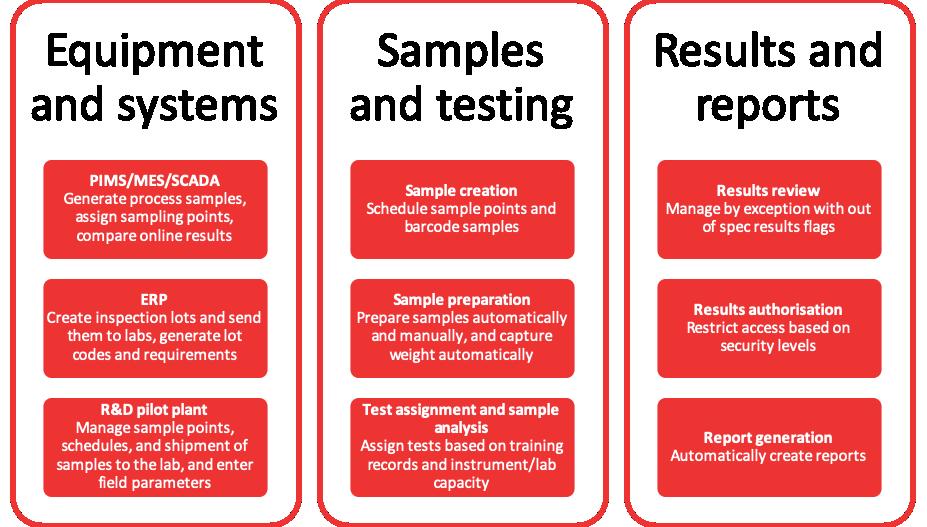
36 may 2024 // global mining review
Figure 1. How a LIMS can completely support processes across the mining industry.
n Simpler compliance: Data is easily traceable and ready for audits.
n Reliability: Data quality is improved, as automatic data gathering and transfer reduces errors.
Once the lab is connected and data is centralised with a LIMS, organisations have the foundation for automation and advanced analysis by artificial intelligence (AI) – the next two steps of digital transformation.
2. Automate end-to-end workflows
A key part of digital transformation is automation – that is, connecting instrumentation such as robotics and analytical systems to the digital lab, and using them to perform lab processes with minimal human input. To automate the lab, commands must be transferred from software to instruments, and data transferred from instruments to software. As a LIMS is bidirectional, it can automate the communication process between different process control systems, operational platforms such as ERP, and automation workflow software, thereby enabling automated control of instruments and robotics.
Automation using a LIMS:
n Drives lab productivity, freeing up time for personnel to perform more value-added tasks.
n Enables standardisation and reproducibility for consistently high-quality results.
n Streamlines processes and reduces manual work, facilitating workflow scale-up.
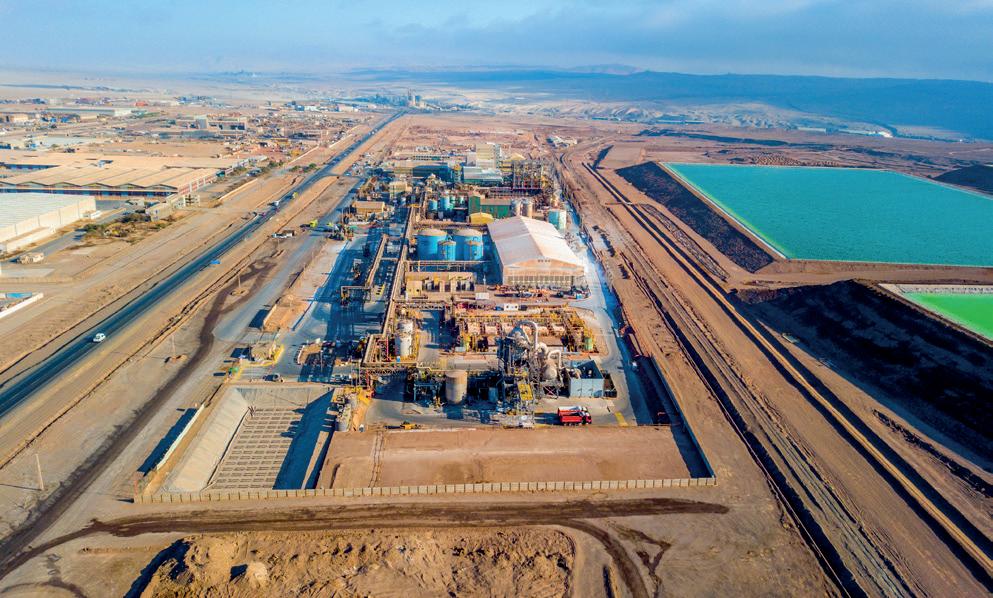
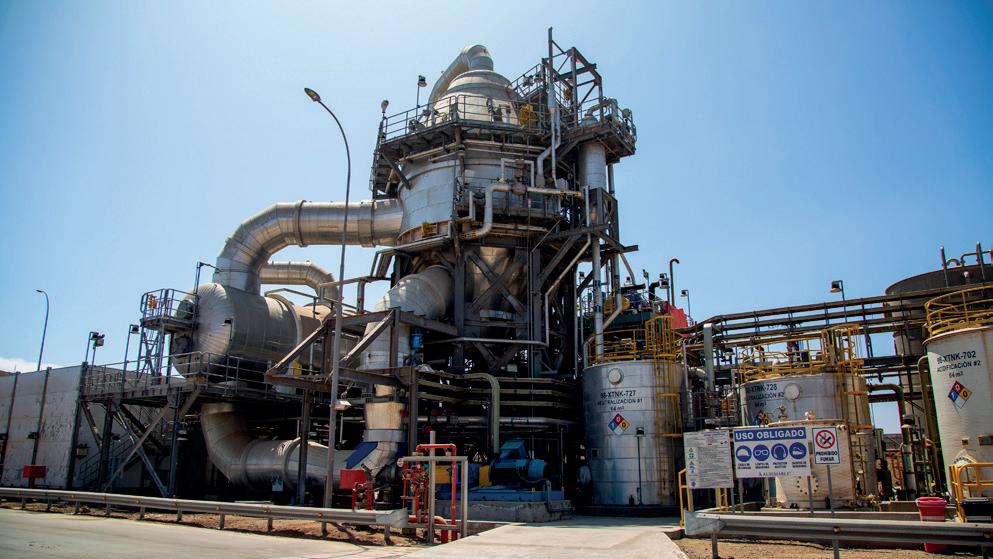



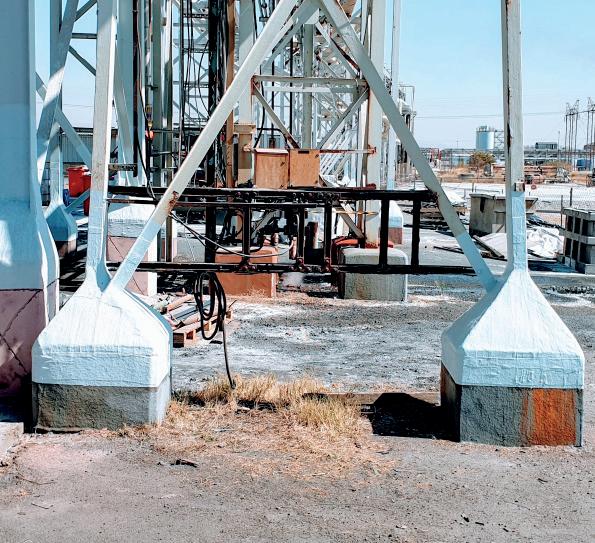


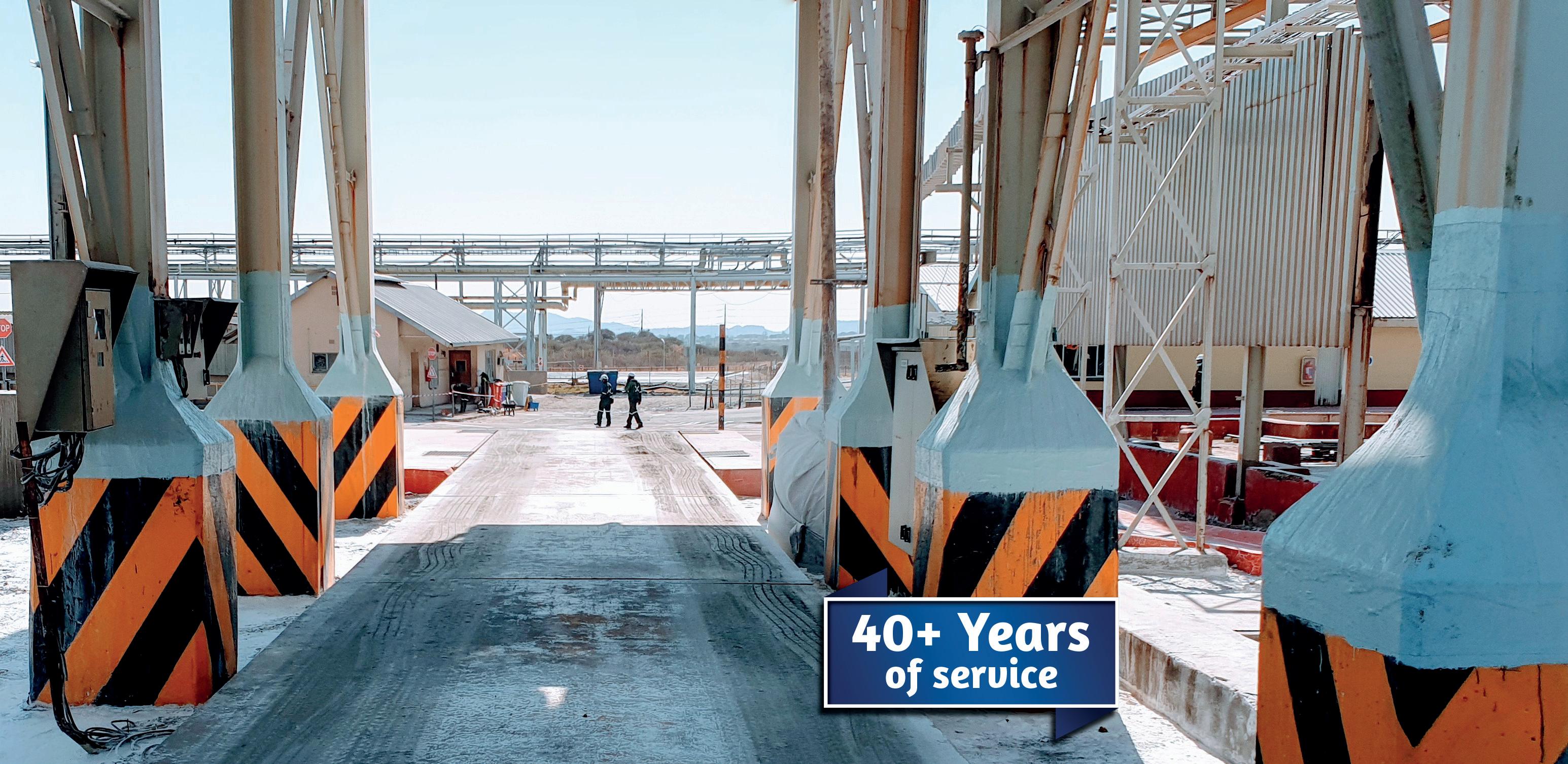



 Figure 2. Albemarle produces lithium carbonate at its conversion plant in Chile.
The Denso Covercoat™ System is designed to provide corrosion prevention for steel & concrete columns, support legs, structural steel and more. Covercoat offers a hard-wearing waterproong protective coating that is easy to apply with minimal surface preparation required for long-lasting corrosion protection. Call: 281-821-3355 E-mail: info@densona.com www.densona.com PROTECTIVE ENCASEMENT SYSTEM FOR COLUMN BASES & STEEL STRUCTURES Resistant to Acids, Alkalis, Salts, Etc. High Conformability & UV Resistant
Figure 3. LIMS connects data across the complete mining process.
As an example, a LIMS can help with automating data transfer to meet good laboratory practices (GLP), while increasing efficiency and productivity and freeing up personnel. GLP states that process control data should be traceable and auditable, but large sample sets and multiparameter analyses in the mining industry mean it is challenging and time-consuming for labs to transfer data manually. A LIMS can automate information capture from all instruments, making it traceable, auditable, and compliant – all with minimal effort and human input.
3. Ready data for advanced analytics
Advanced analytical techniques, such as AI and predictive data generation using machine learning, can unveil new insights by analysing data in ways that were not previously possible. Companies can use these insights by finding the most likely locations of mineral deposits, for instance. However, advanced analytical techniques like these require high-quality, centralised data to analyse. As discussed earlier, a LIMS can collect this data, while ensuring its quality and integrity, then perform advanced calculations using different modules.
For example, a company can use analytics modules with a LIMS to prepare metallurgical balance calculations, combining tonnes of raw material entering a plant with physical-chemical analysis of the processing plant’s intermediate and final products. The system can use this data, obtained daily, to deliver and train predictive models of plant performance and production of each sub-product.
However, to get the right information out, companies need to put the right data in. Using the well-structured, high-quality data centralised by LIMS means organisations are set up for success in their advanced analytical workflows.
One company, Albemarle, experienced significant benefits by digitally transforming its business.
Streamlined lithium production quality control processes
Albemarle is one of the largest lithium producers in the world, with a presence in Chile for more than 40 years. The US-based company produces tens of thousands of tonnes of battery-grade and technical-grade lithium carbonate each year. To meet GLP and ensure product quality, the company needs to maintain traceability and auditability of the raw material, the final product, and process control data. Albemarle must also ensure the quality of its products by performing quality control (QC) testing. However, QC requires extensive sampling and analysis – subsequently generating significant quantities of data.
Originally, Albemarle managed all of its QC data and calculated its results using spreadsheets, which was time-consuming, posed a risk of human error due to manual data input, and made maintaining traceability challenging. Therefore, Albemarle adopted digital transformation, which would not only help make its processes more efficient, but would help the company get deeper insights from its data.
Albemarle implemented the three key steps of digital transformation, using Thermo Scientific SampleManager LIMS as the central point:
Connect everything that will provide value
Using a LIMS, Albemarle connected all its instruments and software, such as System Analysis Program (SAP), digitising the communication between different areas of the organisation, including logistics and the lab. Consequently, staff could access information immediately, and trust the data was free of manual error. What is more, implementing an audit module helped ensure data traceability and simplified proving compliance.
Automate end-to-end-workflows
Albemarle automated processes such as sample receipt and analytical test entry. Additionally, the company automated report and certificate generation in SAP, reducing manual error risk and speeding up the process. Further improving its processes, Albemarle brought automation into its inventory and instrument scheduling service, allowing the company to generate alerts to minimise downtime.
Ready data for advanced analytics
As digital transformation granted Albemarle real-time access to plant process control data, it could perform statistical analysis and generate machine learning (ML) models to predict and improve its processes. Specifically, the company has been able to capture information from different data sources across the plant, enabling it to generate models that inform decision-making using both past and predictive data.
After digitally transforming, Albemarle noted several benefits:
n A 30% reduction in workflow time, due to more efficient processes.
n Quality improvement, as automatic data collection reduced the risk of manual input error.
n Simpler compliance with regulations such as ISO 17025, enabling Albemarle to prevent out-of-specification data delivery.
n More informed decision-making, as having all platforms integrated and online gave users access to real-time information.
Drive better-informed decisions with deeper insights
The vast quantity of data generated by the mining industry is exceptionally valuable and can be leveraged to improve operations in numerous ways – such as reducing exploration costs with advanced analytics. However, to make the most of data in this way, it must be accessible, high-quality, centralised, and comprehensive.
Achieving this requires greater connectivity and automation, for which a modern LIMS plays a crucial role. Subsequently, companies such as Albemarle have the data and capabilities they need to increase workflow efficiencies and drive down costs, ensuring they are providing value to customers and being competitive for years to come.
38 may 2024 // global mining review
Glenn Kerkhoff, AVEVA, USA, addresses the importance of gathering data from across the mining value chain in order to optimise production.
Mining companies are adopting new business models that focus on their entire value chains, which will allow them to start new projects, diversify their portfolios, and capitalise on demand for critical minerals for the energy transition. Business models that account for the entire value chain require technology that can track the impact of assets throughout that value chain.
A digital thread offers such a technology: a record of information about the devices, systems, and people that comprise mining value chains. Mining companies like Rio Tinto are using digital threads to design and build new projects, make operations more efficient, and optimise production.
What is a digital thread?
A digital thread tracks information throughout a mining value chain as it flows from one asset to the next. It tracks everything, from how a material

handling system is designed and built to how a sensor reacts to an overloaded conveyor – and on to how those pieces of information affect both upstream stockpiles and material movement, as well as downstream delivery of product shipments.
A digital thread tracks millions of pieces of data, so that stakeholders can visualise and optimise the way they all work together. It collates information on everything, from mine planning to extraction, processing, and production of ore concentrates. It also extends this data-sharing to extended stakeholders within the mining industrial ecosystem, including those that manage transport and logistics, port and shipping operations, metallurigical labs, environmental monitoring, and governmental compliance, along with EPCs, OEMs, and joint venture partners.
This technology uses many sophisticated components – such as digital twins, IoT devices, sensors, and data analytics – to gather and
39 global mining review // may 2024
analyse data from each link of the mining value chain. However, its goal is simple: get the right data to the right people at the right time.
Why is it useful?
This ability to track data throughout the mining value chain and share it amongst extended stakeholders makes digital threads the perfect technology for the mining industry’s current business needs. There is more pressure than ever to operate at full production capacity to return shareholder value. Optimising production requires optimising every step in the mining process – and this is just what a digital thread lets mines do.
Extending the digital thread into partner ecosystems lets mines squeeze even more value from their operations. For example, supply chains have become more complex, with demand and commodity prices changing constantly. By tracking data on these changes, a digital thread helps mines cope with such instability and anticipate how best to respond to future disruptions.
Digital threads also let mines share data securely, on-demand, and in real time, so they can exchange information much more efficiently with partners such as OEMs, laboratories, service providers, environmental agencies, and others. Easy data sharing also streamlines government reporting for carbon accounting and other regulations. Moreover, as the EV battery and alternative energy industries are starting to mandate product traceability, a digital thread gives mines a way to ensure product quality information matches production outputs.
How are digital threads being used?
Rio Tinto has been using a digital thread in both its iron ore and aluminium operations to streamline handover of greenfield projects, optimise operations, and track downtime to maximise production.
Design and build
The time-to-market is critical for greenfield mine sites, especially those with minerals required for the energy transition. A digital thread helps mining companies build a standardised, repeatable, and seamless process for transitioning from engineering and development to operational handover.
Rio Tinto Iron Ore had been taking three to six months to configure its digital tools for any single project. Such extreme delays were preventing it from completing greenfield capex projects quickly enough.
To fix the delays, the company gave its engineering service providers a preconfigured, standardised engineering system that they now use to create designs from the start, rather than designing in one system and then transferring the information to another. By connecting design and engineering tools, Rio Tinto streamlined project delivery, making operations more efficient and maximising the use of digital tools from project to project.
Operations
Rio Tinto also recently modernised its operations control layer, covering operations everywhere, from the mine to rail transport and port logistics. It moved site-based controllers to a centralised remote operations control centre that monitors numerous sites.
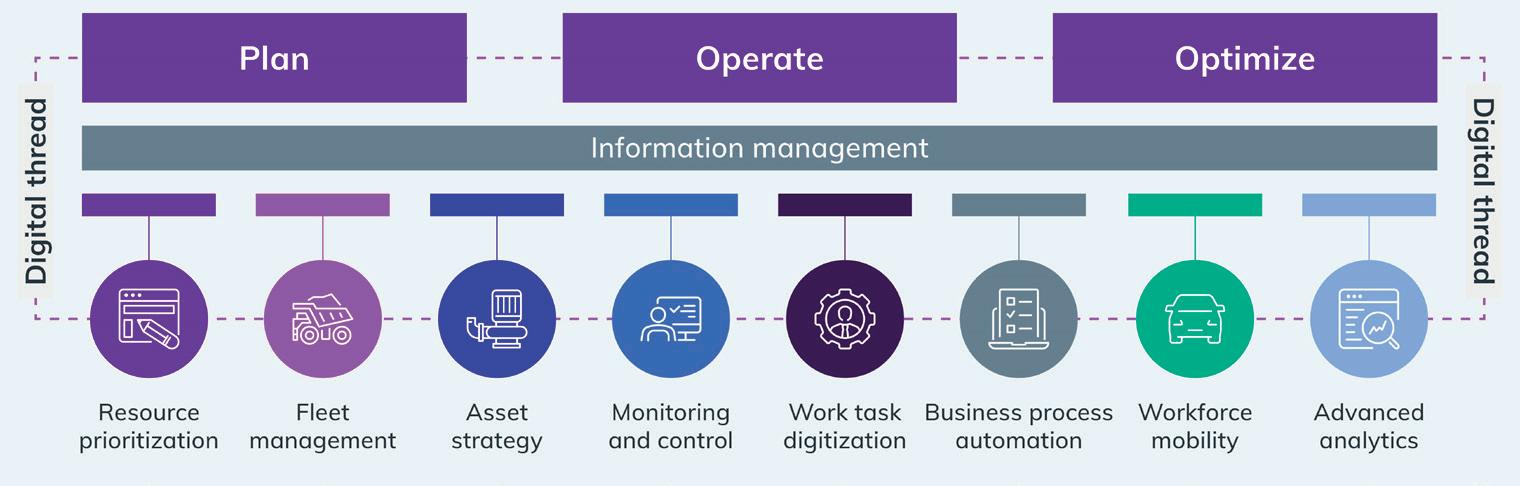
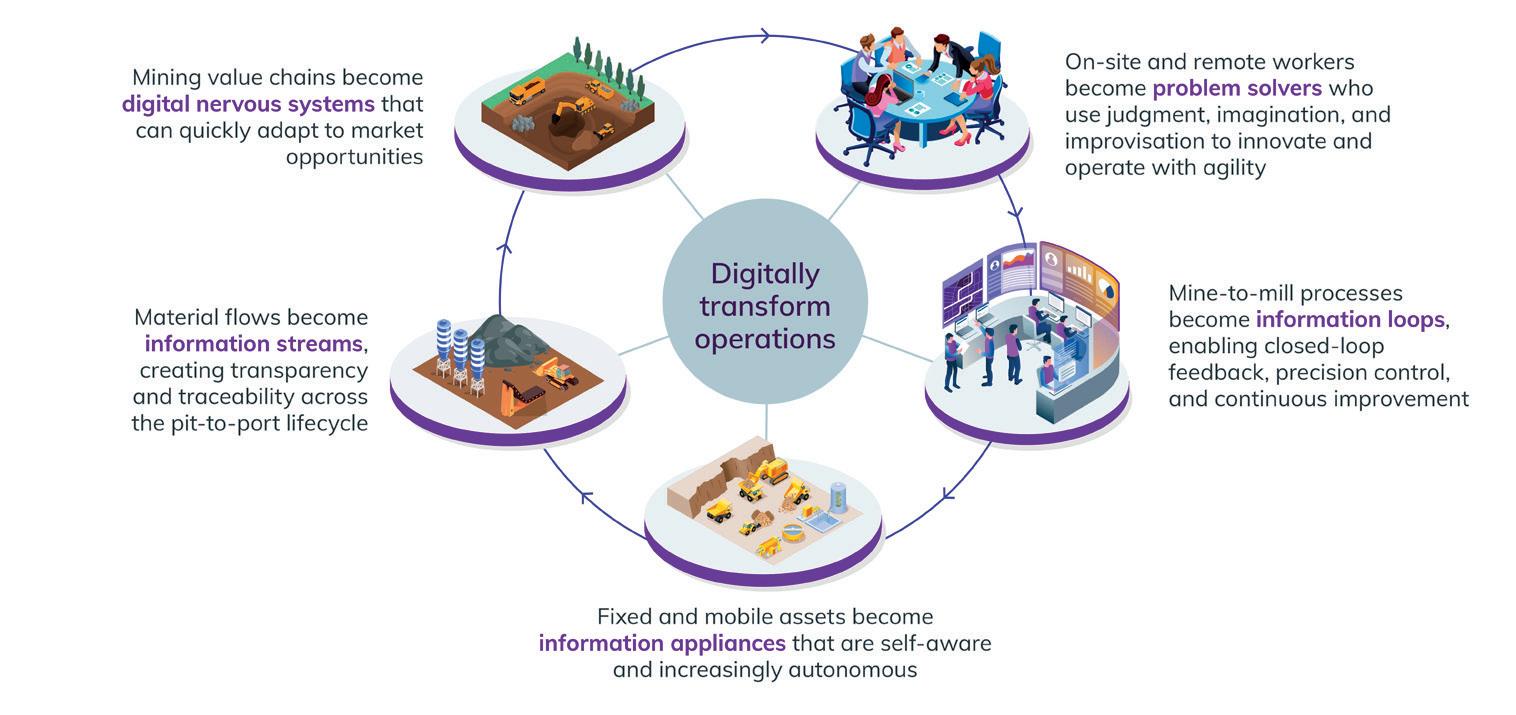
Since the sites had been using over eight different control standards, the company needed to standardise its SCADA system. It standardised its entire processing operation, including crushing, screening, grinding, stockyards, and truck load-out.
The result gives operators important insights, so they can make better decisions around mass balance flow through the value chain. It also gives operators instinctive control of operations. For example, they can perform repeatable interactions with equipment. Rio Tinto now has standard governance across all its mines that it can update 24/7 from its central operations centre. One of the fundamental benefits is that operators previously restricted to one specific site can now work across
Figure 1. Complete digital thread woven across a mine’s entire operations.
40 may 2024 // global mining review
Figure 2. The digitally transformed mine.
numerous sites with confidence, knowing that colours, shapes, and objects are consistent and have the same meaning and functionality.
Production
A digital thread can help optimise fleet and plant utilisation by tracking information across the value chain. It can provide the correct tonnage information across the mobile fleet, including loading rates, haulage tonnes, as well as information on traffic congestion, idle time, crushing and mill throughput, and ore processing. This advanced monitoring and optimisation helps to maximise overall productivity and product output.
For example, Rio Tinto used its digital thread to reduce downtime. Its aluminium business had been relying on an in-house system for tracking downtime that had not been meeting its needs. It therefore deployed a new system that recorded data about downtime and losses by shift so operators and managers could understand plant utilisation and the causes of delays. With this easy access to data, teams from different disciplines now extract analytics, investigate losses, and mitigate future production delays.
Starting a digital thread
Mining companies can start to construct a digital thread by laying both a technological and a cultural foundation. On the technical side, they can start integrating and contextualising both engineering and operations data. In particular, a mobile visualisation system will help break down work silos and get information to people who can act on it quickly. Getting the full
value out of a digital thread also requires fostering a data-first culture in which team members feel encouraged to share, collaborate, and act on information.
Historically, the mining industry has waited to adopt new industrial technologies until they have been tried and proven by other industries. However, with new levels of volatility in commodities markets, technologies that made sense five years ago may be obsolete five years from now. Rio Tinto’s experience shows that the technology that makes up a digital thread gives mining companies the foundational intelligence and flexibility they need to handle whatever the future holds.
Global network of technical consultants and labs to ensure continuous support with local knowledge of your operational and environmental needs
Performance-based insights that can help address challenges, optimize flotation productivity, and mitigate the impact of ore changes before
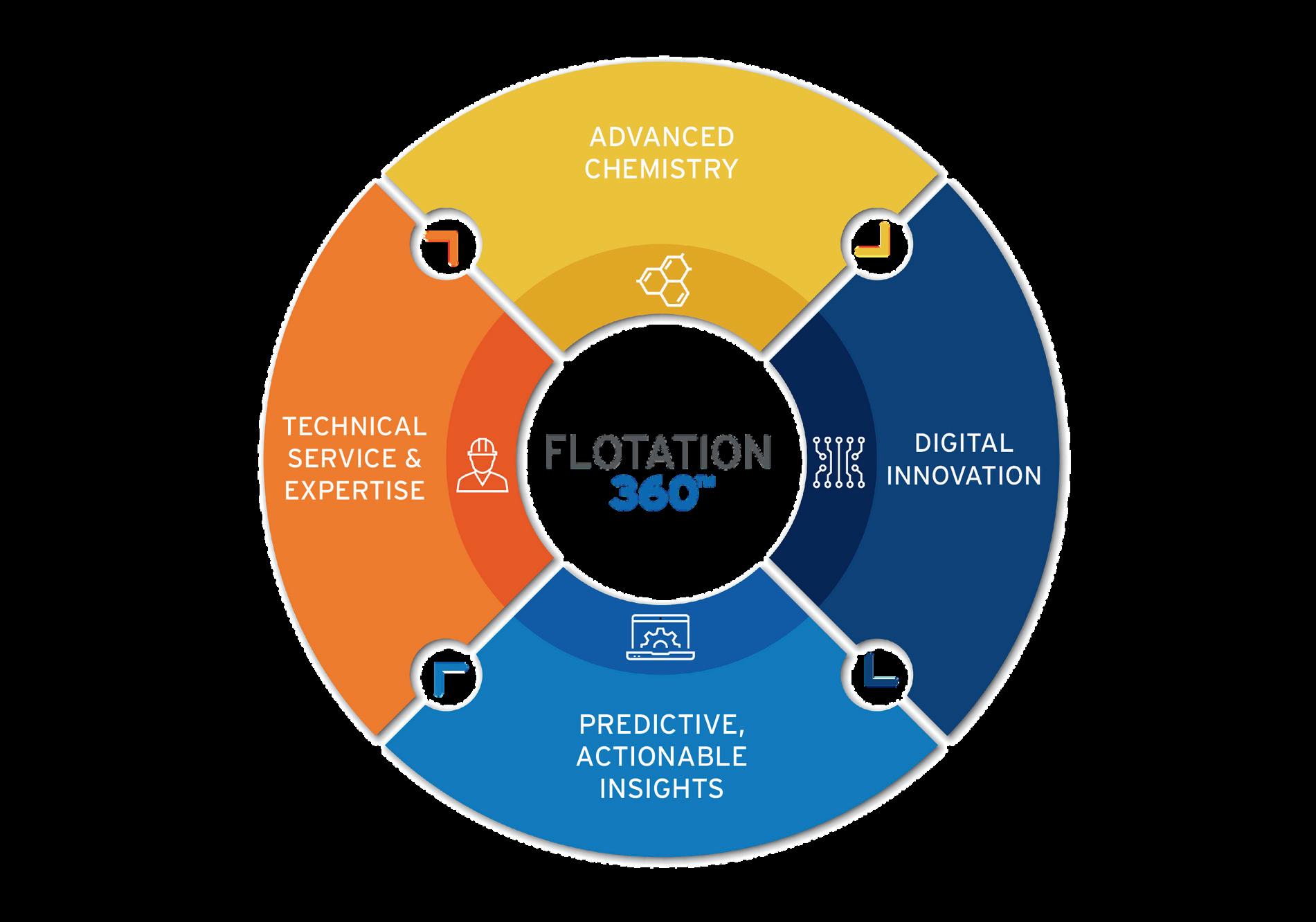
Superior, customized frothers and collectors that maximize recovery and grade to meet your specific plant objectives
Digital analytics and diagnostics to monitor chemical, operational, and mechanical performance across the flotation circuit


With Digital Expertise From COMBINING ADVANCED CHEMISTRY, TECHNICAL SERVICE, AND DIGITAL INSIGHTS TO HELP MAXIMIZE FLOTATION PERFORMANCE, RECOVERY, AND GRADE To learn more, visit https://www.ecolab.com/nalcowater/offerings/flotation-360 Copyright ©2023 Ecolab USA Inc. All Rights Reserved
Figure 3. Keeping mobile fleets moving to ensure plant utilisation.
END-TO-END FLOTATION OPTIMIZATION
42 may 2024 // global mining review
Dewatering solutions have long been an essential part of mining operations, helping mine sites remain efficient and safe. With the mining industry increasing its demand to dig deeper and unearth higher-quality materials, the need for more robust dewatering solutions has emerged. The Extra High Head (XH) pump is proving to be pivotal in meeting the demands of the evolving mining industry.
Challenges of deep mining operations
Deep mining can present significant geological and technical challenges. Mine pits and quarries are likely to encounter increased rainwater and groundwater ingress, making effective dewatering not just a matter of efficiency, but of safety and sustainability.
Effective dewatering in these conditions requires a comprehensive understanding of the geological structure, precise water management strategies, and robust dewatering systems. The role of dewatering has evolved from a routine task to a critical operation that demands constant attention and innovation.
For large mining operations, the sheer volume of water that needs to be managed can be overwhelming. Additionally, selecting and positioning pumps to handle these volumes efficiently and reliably is a complex task, compounded by the depth and layout of the mine.
Another significant challenge is managing the quality of the water being pumped out. Water at such depths can contain a range of minerals and contaminants that need to be treated before they are discharged. Ensuring that this process complies with environmental regulations adds another layer of complexity to deep mining dewatering operations.
Moreover, the deeper a mine goes, the more critical the role of reliable power supply and backup systems becomes. Any failure in these systems can lead to rapid accumulation of water, posing immediate risks to the mine’s structural integrity and the safety of its workers.
Pump technology and solutions
Advancements in pump technology have been instrumental in addressing the dewatering challenges of deep mining. Selection of appropriate pumps is critical, and those in charge must evaluate various factors including depth, water volume, and the mine’s layout.
Types of pumps for deep mining
n High-head and extra high-head pumps: These are essential for deep mining, where water needs to be moved over significant vertical and horizontal distances. They are designed to generate high discharge pressures, enabling them to lift water from great depths and away from the mining area.
n High-flow rate pumps: These pumps are capable of moving large volumes of water, essential in mines with substantial water ingress. They ensure a rapid response to water accumulation, maintaining safety and operational continuity.
n Submersible pumps: Often used in deep mining scenarios, submersible pumps are placed directly in the water, making them effective for continuous dewatering operations.
Pump configuration and deployment
The configuration of pumps in a mining operation significantly affects their efficiency and effectiveness.
n Transportable pumps: Pumps mounted on pontoons or barges offer flexibility and can be moved as the dewatering needs change within the mine. This mobility is advantageous in mines with fluctuating water levels or those that expand over time.
n Fixed station pumps: These are installed at strategic locations within the mine and are ideal for continuous, long-term dewatering needs. They are typically more powerful and can handle larger volumes of water compared to transportable pumps.
Both configurations have their benefits, and the choice largely depends on the mine’s specific requirements and the nature of the dewatering challenge.
43 global mining review // may 2024
Head and flow rates for different mining applications
The selection of a pump for a deep mining operation is largely dictated by the required head and flow rate.
n Head: Total dynamic head is a function of the highest vertical point of discharge, plus the friction losses of the desired flow rate through the selected discharge pipe. In deeper mines, a higher head is required to ensure effective water removal.
n Flow rate: The volume of water to be moved over a given period. Deep mines with significant water ingress require pumps with high flow rates.
Understanding the specific head and flow rate requirements is critical in choosing the right pump for a deep mining operation.
The pump proving to be a game changer
The introduction of the Sykes XH250 pump marks a significant advancement in dewatering technology. Positioned strategically between the XH200 and the XH300, the XH250 not only fills the crucial flow capacity gap, but also extends the head capabilities significantly, reaching up to 220 m. This enhancement is a game changer for mining operations that require extended reach and power.
The versatility of the XH250 is evident in its design and drive options, catering to diverse operational requirements. Available in both diesel and electric drive versions, it offers flexibility for varied power supply conditions. Moreover, the mounting options, including skid, trailer, and pontoon, ensure adaptability
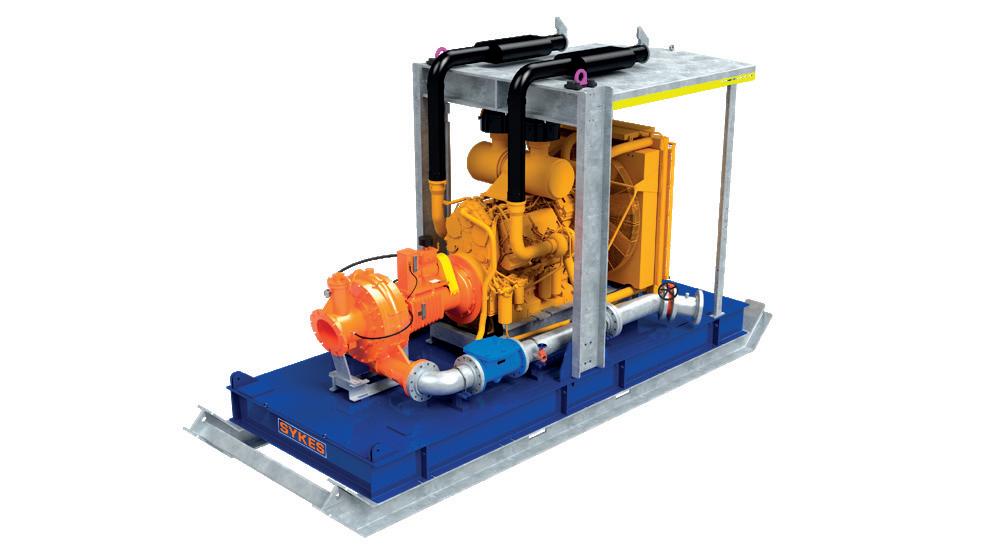
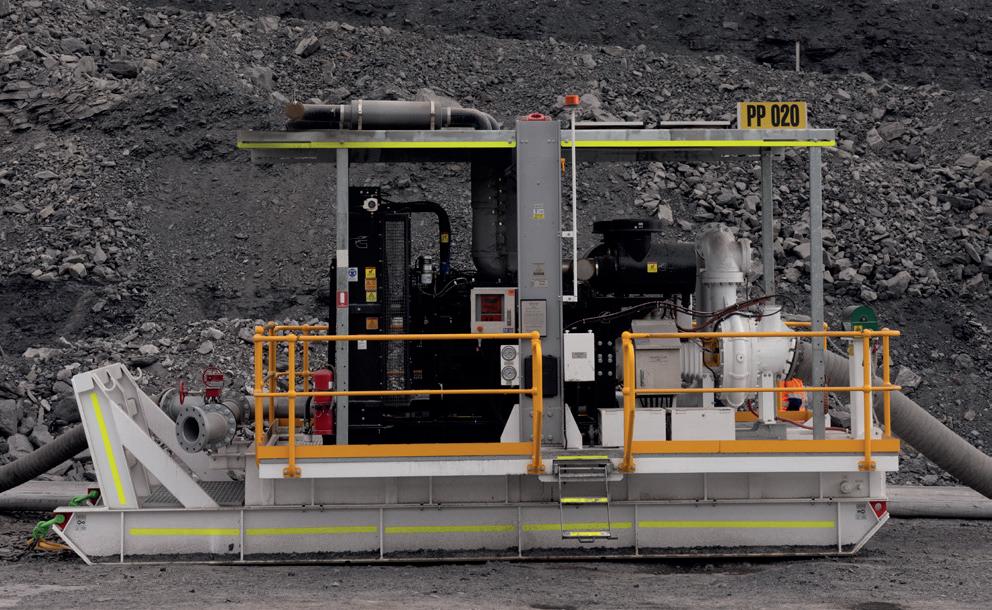
to different site conditions, enhancing its applicability across various mining and quarry scenarios.
A key of the XH250’s design is its shaft stiffness. With a stiffness ratio of 0.28, far surpassing the industry standard of 1.5 to 2.5, it ensures resilience against shaft deflection, even when operating outside designed parameters. This robustness is crucial, considering the varied and often demanding applications in mining environments. The ratio – calculated as L³/D⁴ (length from front bearing to impeller centre line over shaft diameter) – epitomises the pump’s engineering excellence, aligning with standards used in highly demanding applications.
The XH250 also boasts a range of priming options, including Compressor Prime, Diaphragm Prime, Anti Spit, and Vacuum Prime, offering adaptability to diverse site conditions. This versatility ensures reliable and efficient operation across a broad spectrum of dewatering tasks.
Bearing arrangement and sealing
At the heart of the XH250’s durability is its bearing arrangement. It features a roller bearing at the front to handle radial loads from impeller overhang and double taper roller bearings at the rear to manage both radial and axial loads. This arrangement, coupled with oil lubrication and Inpro labyrinth seals, significantly extends the life of the bearing assembly, enhancing reliability and reducing maintenance requirements.
The sealing system of the XH250 deserves special mention. The standard double hard-faced mechanical cartridge seal, complete with a pumping ring, ensures optimal lubrication during both priming and snore conditions. This system is further enhanced with options like Gland Packed or Gland Packed with Lantern Ring and automatic grease lubrication, which prevents air ingress during priming, thereby maintaining pump efficiency.
Dewatering efficiency and maintenance
Efficiency in dewatering pumps is paramount, and the XH250 excels in this regard. Its design incorporates front and rear wear plates capable of handling silt and large solids, which is crucial for mining operations where water is rarely clean. The unique feature of the pump is the shim system between the front adaptor plate and the casing. This allows for up to 5 mm of clearance adjustment between the impeller and front wear plate. Such adjustability negates the need for major overhauls, enabling quick and efficient maintenance to regain pump efficiency.
Material options and versatility
The XH250’s adaptability is further evidenced by its range of material options. The standard configuration includes 316 SS impeller, wear plates and SG Iron volute, priming tee, and NRV. Additional options like Full 316 SS, CS340, CS500, CD4MCU, H7A SS, CD4MCU, SAF2205, and SAF2507 cater to varied operational environments, ensuring durability and performance in diverse mining conditions.
Conclusion
The Extra High Head range of pumps, particularly the XH250, offers wide-ranging solutions for issues associated with deep mine dewatering. As the mining industry pushes for better quality resources, pump manufacturers must continue to innovate to ensure continued safety and efficiency.
44 may 2024 // global mining review
Figure 2. Bespoke mine-spec Sykes XH250 pump set with extra ground clearance and access walkways.
Figure 1. XH250 Premium Range.
Tommy Carnebo, Dafo Vehicle Fire Protection, Sweden, assesses the ways to combat BEV battery fire risks in the mining industry.
Safety is a core priority for the mining industry, with detailed protocols for personnel and machinery. However, implementing changes to safety processes can be extremely slow, which means that risks can inadvertently increase – particularly when it comes to new technology, such as battery electric vehicles (BEVs) in place of traditional diesel-powered vehicles.
With a growing global population, a push towards decarbonisation, and rapid technological development, the demand for minerals such as lithium for batteries used in BEVs has increased exponentially, placing pressure on mining

companies to generate a consistent supply. However, in the face of ever-decreasing reserves of raw materials, increased labour costs, and a decline in raw material quality, generating this supply is challenging.1
Changing the state of the industry through automation
One potential solution to this challenge is automation. Taking off in the 90s and 2000s, automation is now integral to operations across the industry, controlling processes and cameras to increase safety and methods of production.
45 global mining review // may 2024
Whilst automating these areas is a positive step towards safer conditions, there are always further steps to be taken. In the challenging environment of mining, danger is ever-present, and while automation has improved certain safety aspects, it is more vital than ever to engage a responsive safety partner.2
Mining operations often have a high number of rules and regulations to adhere to, though these may differ depending on the size of the company and its location. Global mining companies, such as BHP, operate using defined health and safety rules across their territories, and often insurance
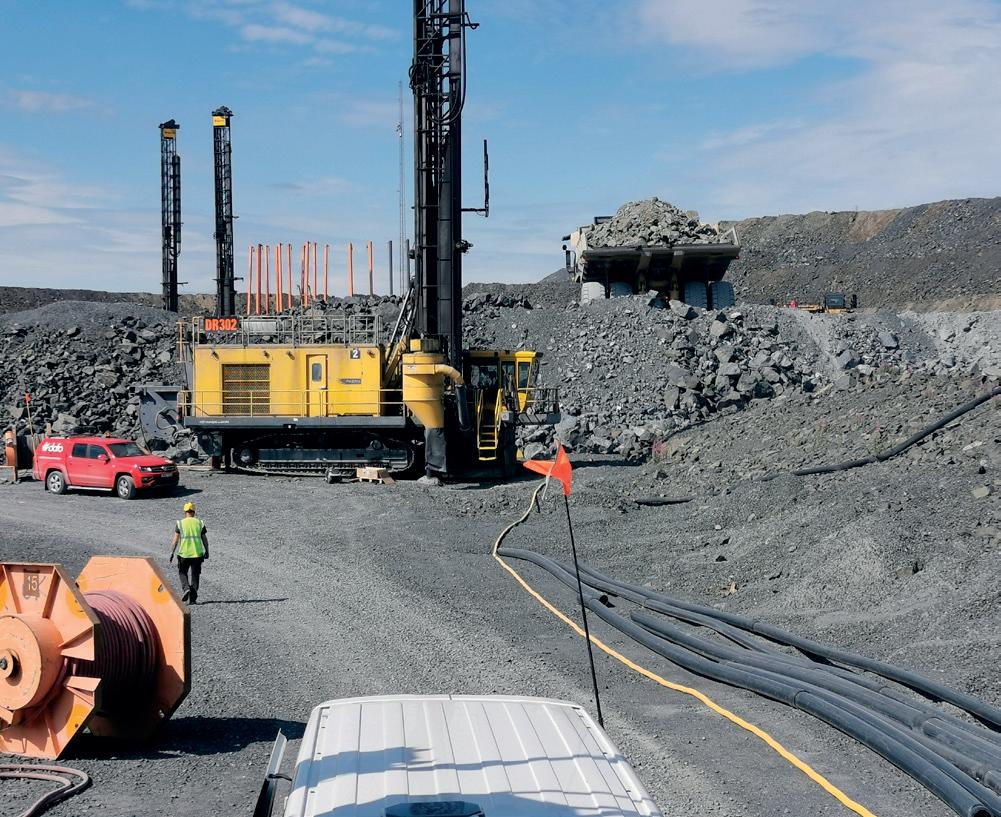
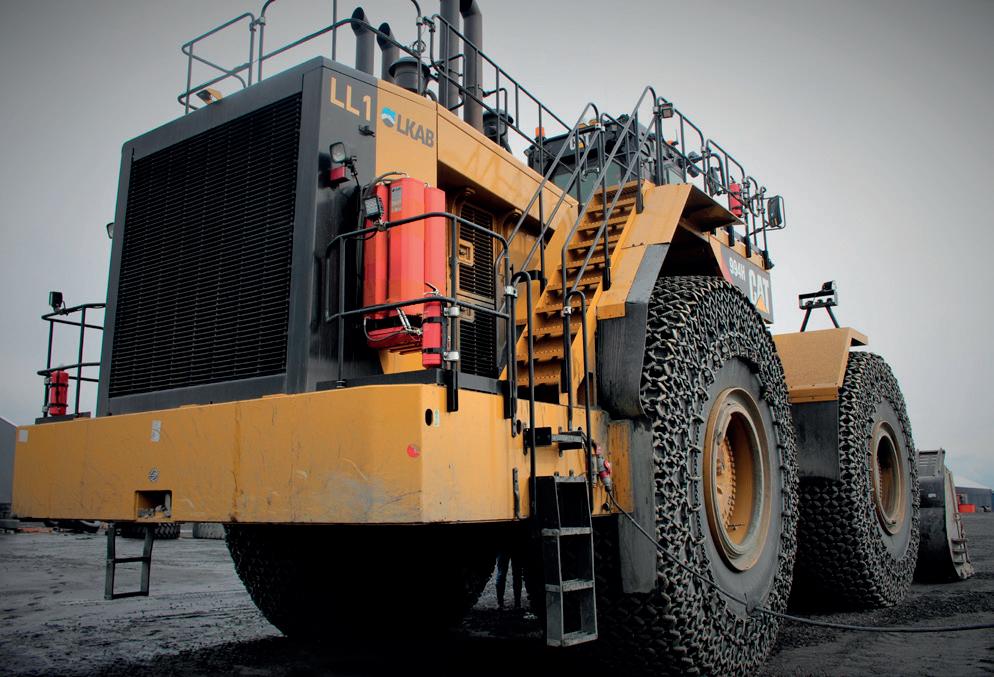
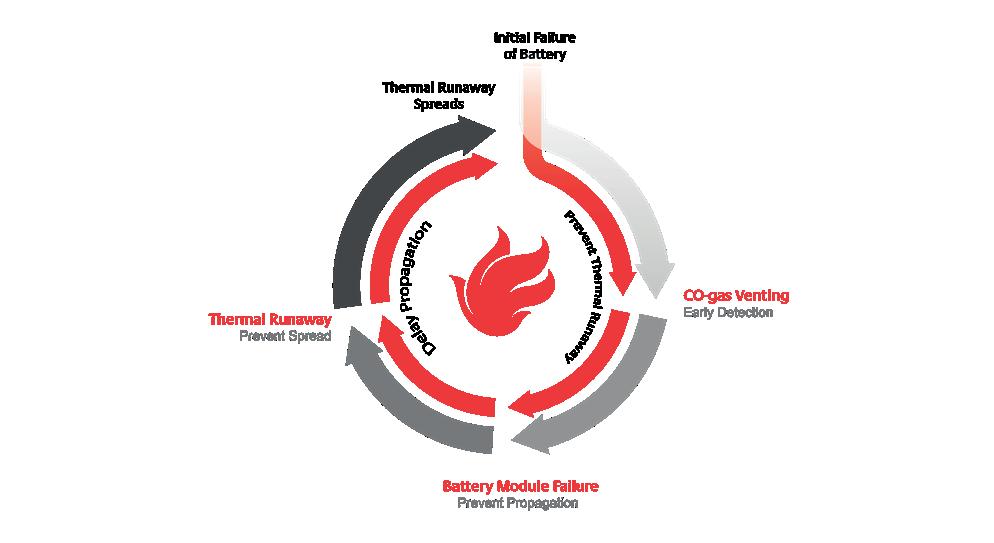
demands mean that mining companies are regulated at a higher level than many governments. However, the introduction of new legislation can be slow, as has been seen with the increasing number of BEVs within mining operations.
Accelerating sustainability with BEVs
BEVs are welcomed in the mining industry as part of a solution to the global push to make operations sustainable. BEVs support mining companies to achieve this goal, and the advances in this technology over the past decade often mean that companies can use BEVs to make cost savings. Not only this, but they improve air quality within mining operations, simultaneously reducing the requirement for ventilation and cooling, lowering costs for ventilation, and improving user safety.
With the introduction of the Cleaner, Safer Vehicles initiative from the International Council on Mining and Metals (ICMM), the push for BEVs within the mining industry is expected to accelerate.3 The initiative is designed to bring together members and global OEMs to usher in a new era of green mining equipment, as well as make improvements to existing vehicles. However, with lead times often taking five years, manufacturers may find that they are already falling behind market demand, and the goal to “minimise the impact of diesel particulate matter in underground mining operations by 2025” might not be realistic.
It is not only keeping up with demand that will present challenges. As natural resources, and the quality thereof, begin to dwindle, it is vital that the industry makes the move to a circular economy sooner rather than later. Implementing a circular economy will mean that raw materials, such as lithium, can be recycled and ultimately reused – however, the technology required to do this successfully is still in development.
Regular servicing is key to industry safety
Whilst the industry waits for technology to develop, regular servicing is key to preventing danger from escalating, and core to fire prevention. In BEVs, fires occur from either a temperature change, mechanical violence, or electrical violence – all of which can occur if vehicles are not maintained correctly.
Thermal runaway often occurs following a battery short-circuit, leading to rapid temperature increases that can cause fires as well as the release of dangerous gases, such as carbon monoxide. If left unsuppressed, thermal runaway can lead to a vapour cloud explosion, which is an explosion-like fire process that can cause major destruction, especially in confined areas.
Spotting thermal runaway lies in early detection. A battery short-circuit will release poisonous fumes before the temperature begins to climb. This signals the beginning of the ventilation stage, which can lead to critical thermal runaway. It is vital to spot thermal runaway at this stage, in order to reduce the risk of it taking hold. However, doing so calls for ventilation in confined spaces and a unique protective solution, as typically detection systems often do not react before the temperatures begin to rise.
Figure 2. ICE 994H Wheel Loader, equipped with Dafo fire suppression.
46 may 2024 // global mining review
Figure 3. A diagram demonstrating thermal runaway, which can take hold when a BEV malfunctions.
Figure 1. Mining site, facilities, and vehicles.
Understanding the causes of fire
Regular servicing is one of the key ways to prevent fires from occurring, but a greater understanding of potential causes and a change in mentality is required in order to maximise safety. For example, fires can be caused by slight bumps or grazes to equipment, and it is vital that any slight damage is taken seriously, with the machine serviced and monitored if an issue does not occur right away. So, what are the key influencers of fire risks?
Overheating can lead to an increased risk of fire, as equipment and machinery are regularly subject to the dust and debris that accumulate over time. Managing this is crucial to preventing fires, as when overheating combines with factors including loose cables or sparks, the risk is elevated. Operators should additionally factor in adequate downtime to prevent overheating from occurring.
BEVs provide a different set of challenges to internal combustion engine (ICE) vehicles, due to the lithium-ion batteries that commonly power them. Though these vehicles are less prone to overheating, operators should conduct regular maintenance to prevent the risk of a battery fire. The primary causes of a battery fire are over or under charging, mechanical influences or failures, heat exposure, and production issues, all of which can result in a battery short-circuit and potential thermal runaway.
Therefore, providing training to all mining personnel during the transition to BEVs is a key element of improving safety within mines. If individuals understand the new
MINE MORE UPTIME
From mechanic trucks and service cranes to tire trucks and manipulators, count on Stellar ® products to keep mining equipment running. Rugged TMAX™ Mechanic Trucks can be configured for your needs, and the available aluminum construction reduces weight for higher payload. Stellar’s Large OTR Tire Trucks and Manipulators deliver the strength and capacity to handle a wide range of tire sizes. The list of Stellar products that maximize uptime for mining operations goes on and on.
challenges BEVs present, how to prevent a fire from happening, and why it is important to do so, then the whole industry will be a safer place.
The future of mine safety
As automation continues to gain dominance within the mining industry, autonomous fire detection and suppression systems are becoming a vital part of the health and safety landscape. Systems that can respond almost instantly to suppress risk will not only provide better safety overall, but also reduce potential downtime as vehicles and equipment are removed for repairs. These modern early detection and suppression systems also limit the wider damage caused to other vehicles or the surrounding environment.
As automation continues to progress and BEV technology develops, the mining industry will need to reassess its processes when it comes to fire safety. Getting the right detection and suppression system in place can save on cost and potential downtime – preventing fire and thermal runaway before it takes hold.
References
1. ‘Reliable supply of minerals’, IEA, https://www.iea.org/reports/ the-role-of-critical-minerals-in-clean-energy-transitions/reliablesupply-of-minerals
2. ‘Comprehensive Guide to Mining Health and Safety’, HSE Network, (11 January 2024), https://www.hse-network.com/comprehensiveguide-to-mining-health-and-safety
3. ‘Cleaner and Safer Vehicles’, ICMM, https://www.icmm.com/en-gb/ our-work/cleaner-safer-vehicles
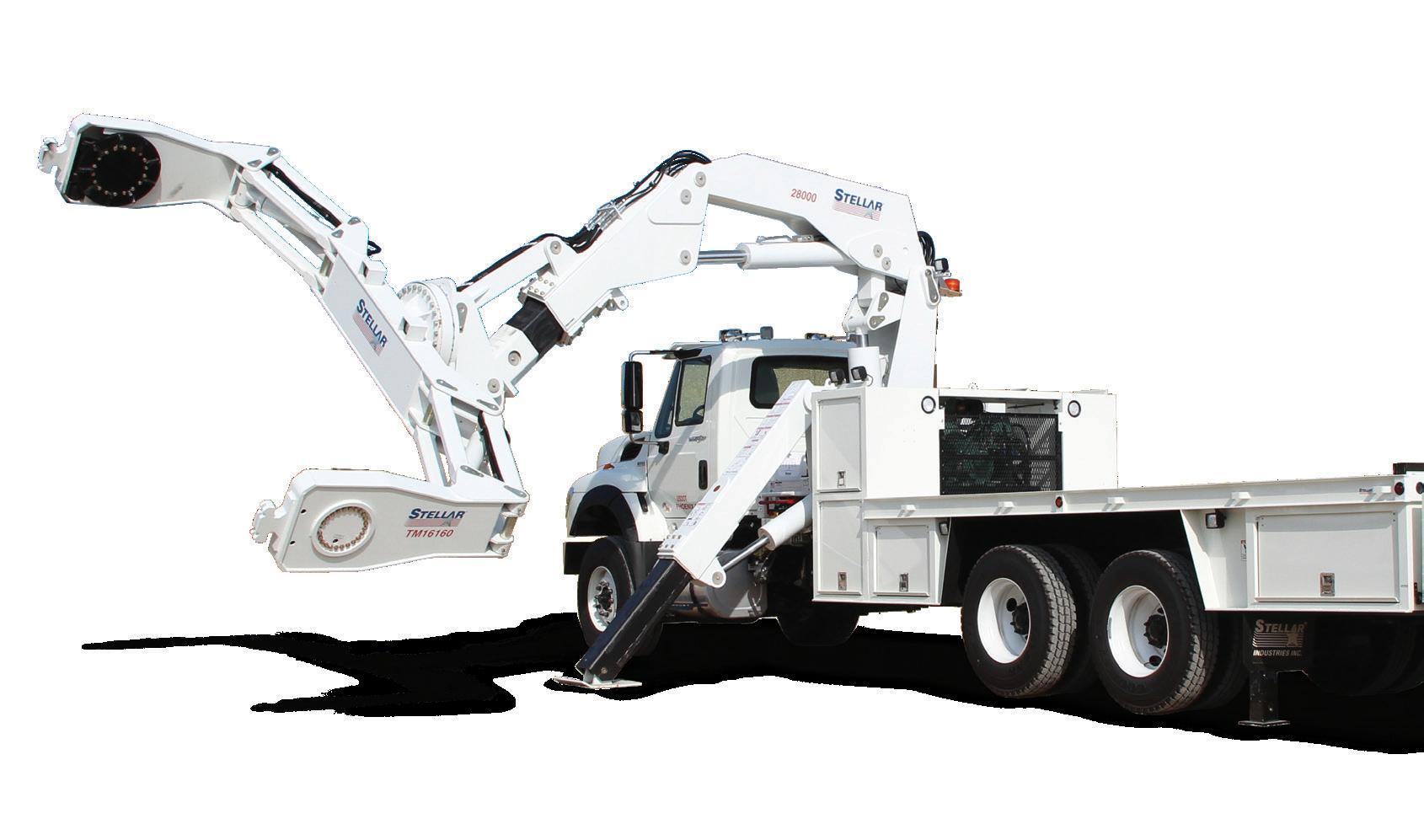

Learn more at stellarindustries.com







Global Publication Subscribe online at: www.worldcoal.com/subscribe A global industry requires a global publication ® WCL_Global_Publication.indd 1 24/09/2015 15:01 02 Black & Veatch 07 CR Powered By Epiroc OBC DELLNER BUBENZER 37 Denso Inc. IFC Dyno Nobel 13 Global Mining Review 04 Jennmar 25 Master Builders Solutions 34 MINExpo INTERNATIONAL® 2024 41 Nalco Water, An Ecolab Company OFC & 29 Orica 47 Stellar Industries IBC Tailings 2024 33 Weber Mining & Tunnelling 48 World Coal Advert Index 48 may 2024 // global mining review


TECHNICAL PROGRAM
Papers Received by Authors from 20 Countries
Technical Courses Given by the Co-Organizers Institutions

Geraldo Paes Tailing 2024 Chair Corporate Geotechnical Director, Vale, Brazil

Silvana Dal Pozzo Tailings Principal, BHP, Chile

Tamara Johndrow Director Tailings & Water, Freeport-McMoRan, USA

Jorge Macedo Georgia Tech, TAILENG, USA
JUNE 12 – 14
SHERATON HOTEL SANTIAGO, CHILE
Mining Operations Papers Received
Different Instances for Effective Networking
ORGANIZED BY MAIN SPONSOR

Edgar Quiroz Tailings and Water Manager, Minera Las Bambas, MMG, Peru

Jorge Troncoso Tailings Corporate Manager, Antofagasta Minerals, Chile

+130
+40
10th International Conference on Tailings Management
AND
More information at gecamin.com/tailings
PLENARY PRESENTATIONS
MORE TO BE CONFIRMED!
PRECISION ENGINEERED BRAKING SYSTEMS FOR THE TOUGHEST MINING OPERATIONS
KHD HIGH-DYNAMIC LOAD COUPLINGS
VSR-3 FOR SB BRAKES ELECTRONIC STATUS INDICATION SYSTEM
CYLINDERS
LEADING THE WORLD IN BRAKING SYSTEM DESIGN & MANUFACTURING
BUEL G® SUSTAINABLE, HIGH PERFORMANCE THRUSTERS
SF WITH BUEL G® CALIPERS / DISK BRAKES