ENERGY GL BAL
Summer 2026






















Summer 2026
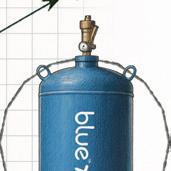




Fike delivers complete BESS protection – thermal management, explosion control, custom gas detection, system design, testing, and consultancy – all engineered to perform when it matters most. Our solutions meet UL 9540A requirements and safeguard people, first responders, and the environment from the risks of thermal runaway.
03. Guest comment
04. Renewables as a safeguard for energy security in Latin America and the Caribbean
Wilmar Suárez, Latin America Energy Analyst, Ember, highlights the benefits and challenges of renewable energy development in Latin America and the Caribbean.

10. At peak season: Stabilising power systems in Europe's summer heat
James Li, Vice President Sungrow Europe, Sungrow, emphasises how grid-forming battery systems actively help to define grid behaviour and power system stabilisation across Europe.
14. The EU regulatory wave hits BESS: Why contracts could be updated now
Claire Dietz-Polte and Wouter Vandorpe, Baker McKenzie, explore how new safety, sustainability, and due diligence requirements reshape supplier obligations, developer risk allocation, and long-term operational responsibilities.
20. Creating grid resilience in a majority renewable future
Ricardo Wigman, Chief Delivery Officer, Power Factors, examines the need for upgrades to the grid in order to support the global energy transition towards renewables.
24. Discovering a thermal management solution for BESS fires

Mike Kendall, Fike Director of the Fire Solutions Group UK & Europe, and Tom Farrell, Principal Engineer of Test and Validation Engineering, Fike Labs, explain the importance
of developing solutions to the risks associated with battery energy storage systems, and explore a new thermal management solution to mitigate fires at energy storage sites.
30. From capacity to controllability
Marie-Hélène Westholm-Knebel, Head of Sustainability, ABB's Energy Industries division, looks at the importance of controllability in the future of solar growth.
34. When minutes matter: How AI-driven weather intelligence is reshaping short-term power markets
Minxian Le, Product Manager Fundamentals, Volue Data and Forecasts, discusses why accurate weather intelligence is indispensable and highlights the transformative role artificial intelligence can play within short-term power markets.
38. Ports: Key enablers for wind energy deployment Europe is racing to expand offshore wind, but its ports are struggling to keep up. They face high investment needs and cumbersome permitting, which increasingly stands at odds with the pressure from growing offshore wind pipelines. WindEurope outlines how, without action from the EU and the European Investment Bank, Europe risks creating a bottleneck that could slow down its energy transition.
42. Managing the decision window: Stabilising wind turbine main bearings
Balasubramaniam Vengudusamy, Senior Expert Tribology –Global Product Innovation, and Daniel Narnhammer, Head of Global Business Team – Wind Energy, Klüber Lubrication, investigate the critical role lubrication plays as an operational control lever, stabilising wind turbine main bearings between detection and replacement.
47. Global news
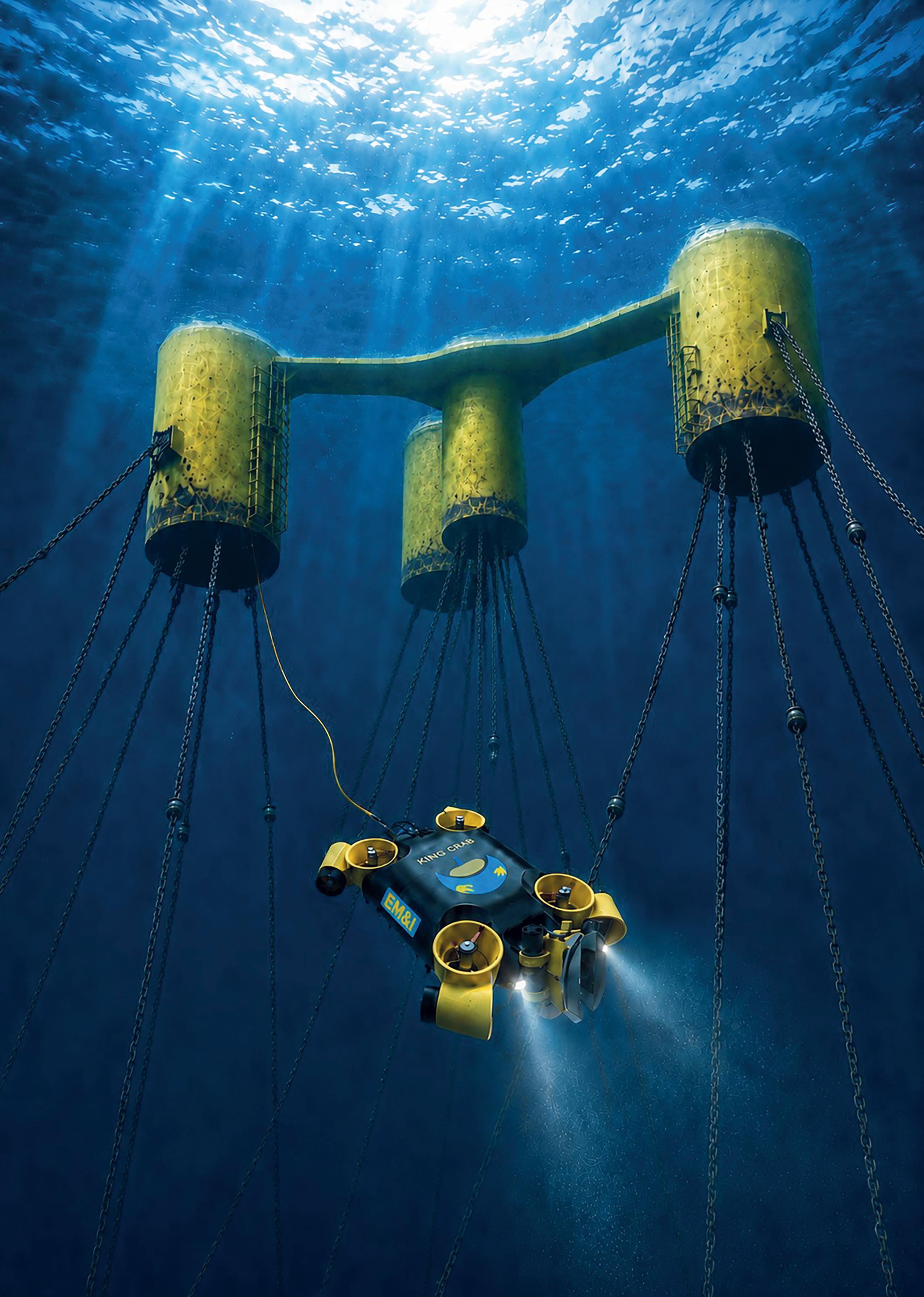
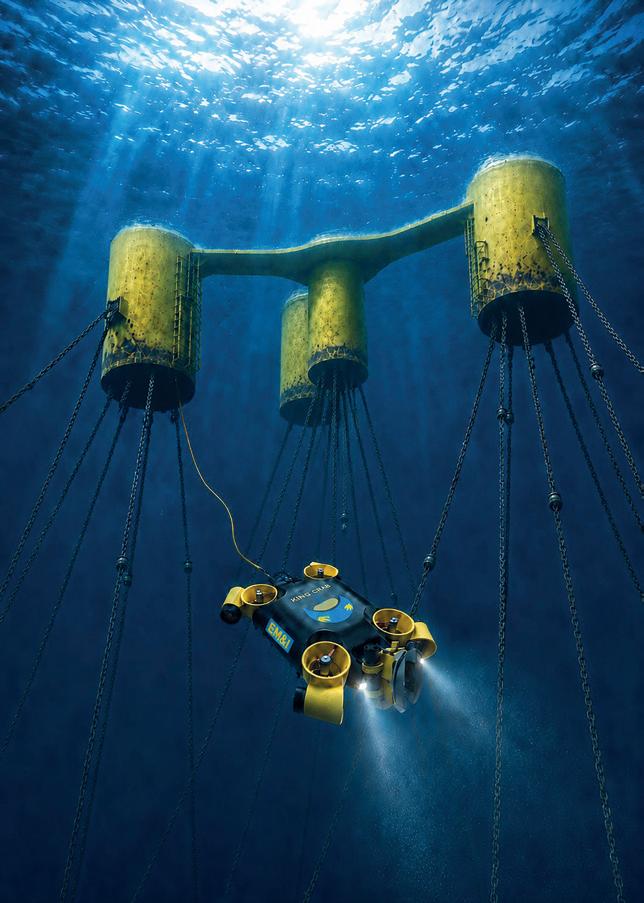
The offshore industry’s understanding of how to use asset integrity to support life extension, improve operational efficiency, and ensure compliance is evolving. Life extensions help the industry mitigate the costs, delays, and risks associated with acquiring new assets. Managing life extensions and maintaining compliance is aided by the increasing use of robotic techniques, which reduce safety risks, costs, and operational disruption. Diverless techniques, such as EM&I's revolutionary King CrabTM ROV and JAWSTM sacrificial anode replacement system achieve these objectives whilst delivering enhanced asset integrity insights to facilitate compliance and improve decision-making.





MANAGING EDITOR
James Little james.little@palladianpublications.com
SENIOR EDITOR
Elizabeth Corner elizabeth.corner@palladianpublications.com
EDITOR
Jessica Casey jessica.casey@palladianpublications.com
EDITORIAL ASSISTANT
Abby Butler abby.butler@palladianpublications.com
SALES DIRECTOR
Rod Hardy rod.hardy@palladianpublications.com
SALES MANAGER
Will Powell will.powell@palladianpublications.com
PRODUCTION DESIGNER
Siroun Dokmejian siroun.dokmejian@palladianpublications.com
HEAD OF EVENTS
Louise Cameron louise.cameron@palladianpublications.com
EVENT COORDINATOR
Chloe Lelliott chloe.lelliott@palladianpublications.com
DIGITAL EVENTS COORDINATOR
Merili Jurivete merili.jurivete@palladianpublications.com
VIDEO & MOTION GRAPHICS
Amélie Meury-Cashman amélie.meury-cashman@palladianpublications.com
DIGITAL ADMINISTRATOR
Nicole Harman-Smith nicole.harman-smith@palladianpublications.com
DIGITAL CONTENT COORDINATOR
Kristian Ilasko kristian.ilasko@palladianpublications.com
ADMINISTRATION MANAGER
Laura White laura.white@palladianpublications.com
Editorial/Advertisement Offices: Palladian Publications Ltd
15 South Street, Farnham, Surrey, GU9 7QU, UK +44 (0) 1252 718 999 www.energyglobal.com
It is good to see continued progress towards net zero. There has been increased adoption of low-carbon technologies, the electrification of transport and heating, and greater use of carbon capture and storage. Coupled with this, there has been enhanced corporate responsibility and transparency seen across industries.
Driven by both regulatory requirements and market demands, the energy industry has continued to transition the grid away from fossil fuels and towards a more sustainable future.
The need to move towards renewables has come, in part, due to the additional electricity consumption requirements of the new breed of super-powered data centres needed to run complex artificial intelligence (AI) calculations. Such data centres have sky-high energy demands, meaning the energy industry has been forced to adapt quickly.
It is not a problem that is going to go away. In 2024, data centres consumed around 415 TWh of energy globally.1 However, this is expected to reach 945 TWh by 2030. To put this into perspective, this is around the amount of energy used by Japan – a country of 125 million people. 2
To provide grid stability at a time of increased demand, the UK government has announced their intention to build multiple new nuclear power stations. The largest of these, Sizewell C, is hoped to provide decades of clean, reliable electricity for around 6 million homes and businesses.
The renewed interest in nuclear is something that goes somewhat against the recent tide. Nuclear power generation has fallen from 7.5 GW to 3.9 GW over the past decade. But, together with wind and solar, it will be instrumental in securing a greener energy system that can protect against rising gas prices in the future. Not least
of which because, unlike solar and wind, nuclear energy is not weather dependent.
Of course, whilst a growing percentage of energy now comes from renewables, much still comes from traditional fossil fuels. There is a strong national security argument to be made to ensure that this continues to reduce, though. After all, the more a country relies upon fossil fuels, the more it becomes exposed to volatile global market dynamics. Oil and gas prices can swing sharply in response to geopolitical tensions, supply disruptions, and fluctuations in demand.
Heavy dependence on imported fuels can also heighten strategic vulnerability, as the country is competing with other nations for supply during periods of scarcity. Scaling up domestic renewable energy reduces exposure to these external factors, helping to stabilise prices, strengthen energy security, and support resilient economic growth.
A multifaceted approach to net zero is required to not only support sustainability goals, but to ensure enhanced energy supply stability in the future. Wind and solar will continue to play their part, but we need to look towards more flexible power sources to supplement the energy supply.
Work still needs to be done. Unfortunately, electricity use remains a lot more inefficient than it should be. Thankfully, times are changing and the increased data available through initiatives such as the Market-Wide Half-Hourly Settlement, will lead to increased intelligence and a reduction in wastage.
1. ‘Energy demand from AI’, International Energy Agency, www.iea.org/reports/energy-and-ai/ energy-demand-from-ai
2. BARANIUK, C., ‘Electricity grids creak as AI demands soar’, BBC News, (21 May 2024), www.bbc.co.uk/news/articles/cj5ll89dy2mo


Wilmar Suárez, Latin America Energy Analyst, Ember, highlights the benefits and challenges of renewable energy development in Latin America and the Caribbean.
The region of Latin America and the Caribbean has historically been recognised as a world leader in renewable electricity generation, driven mainly by its vast hydroelectric potential.
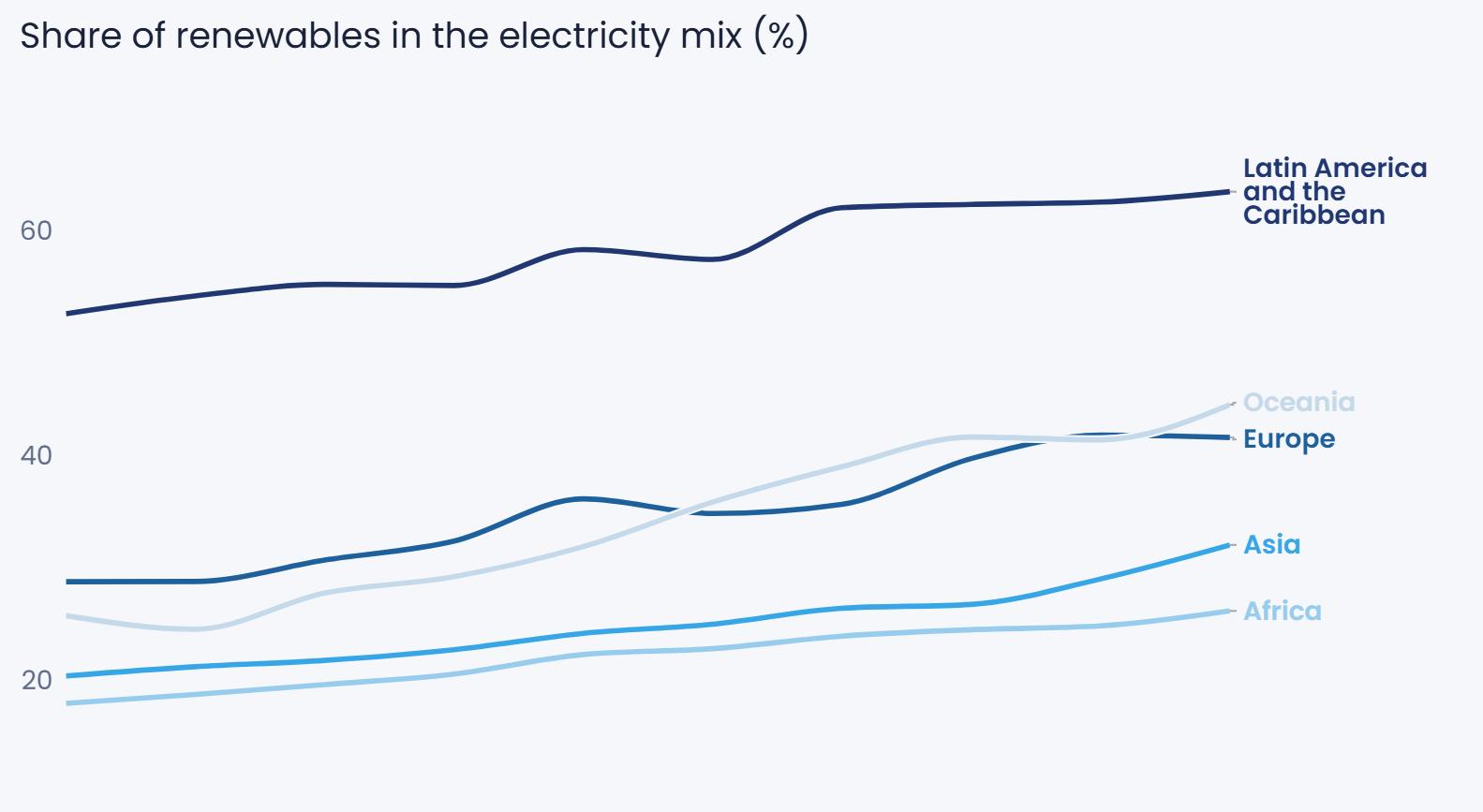
In 2025, hydropower plants produced 40% of all electricity generated in the region; in total, renewables accounted for 63%. Yet, this leadership is increasingly tested by drought cycles that constrain the region’s hydroelectric capacity – making the rise of other renewables not just complementary, but critical.
Over recent years, solar and wind have played a significant role in the Latin America and the Caribbean power sector, stepping in where hydropower generation falls short during periods of low rainfall. Between 2016 – 2025, solar generation increased thirtyfold, rising from 5.25 TWh to 158 TWh – an amount equivalent to Argentina’s total energy demand. This rapid expansion represents a doubling of capacity every 22 months. Over the same period, wind power generation tripled, reaching 185 TWh in 2025, representing an average annual growth rate of 14%. By 2025, combined solar and wind power generation accounted for 18% of the region’s electricity generation, reaching 342 TWh. In 2025, the share of solar and wind electricity was highest in countries like Uruguay (46%), Chile (38%), and Brazil (27%).
Although the share of fossil generation and per capita emissions in Latin America and the Caribbean (35%, 0.68 t of CO 2 -e) are lower than those in Europe (39%, 1.73 t CO 2 -e) or Asia (63%, 2.05 t of CO 2 -e), one of the most significant challenges facing the power sector in Latin America and the Caribbean is to reduce the use of gas and coal to strengthen its energy security, thereby avoiding the risks posed by exposure to international markets and geopolitical conflicts related to the supply of fossil fuels. Countries such as Bolivia and Mexico generate more than half of their electricity using gas, and almost all electricity generation in Trinidad and Tobago relies on this fuel produced domestically. Meanwhile, the Dominican Republic uses coal for almost 30% of its electricity generation, whilst, in Chile and Guatemala, coal accounts for 18% of all electricity produced.
Securing the electricity supply in a region whose gross domestic product grew by 10.2% over the last
decade is essential. Over the past 10 years, electricity consumption in Latin America and the Caribbean grew by an average of 1.5% annually and by an average of 2% over the last three years. In 2025, solar and wind generation grew by more than double the increase in regional electricity demand, demonstrating the importance of the deployment of these two technologies for economic growth, lowering marginal costs of power generation, and strengthening grid resilience through a more diverse energy mix.
The clean energy transition in Latin America and the Caribbean requires not only more solar and wind generation capacity, but also a system capable of integrating them efficiently. To achieve this, it is essential to promote operational flexibility by strengthening grids, utilising storage systems, and creating demand response mechanisms, thereby ensuring that the operation of power systems adapts to sudden variations in supply and demand, enabling a planned and efficient transition.
Brazil and Chile, which have already made significant progress in deploying solar and wind capacity, are now focusing efforts on reducing curtailment. The inability to feed renewable electricity into the grid, even though generation plants are available to run, is mainly due to the long distances between renewable generation plants and the main demand centres, as well as the time mismatch between peak generation and actual demand. In 2025, curtailment of solar and wind reached over 6 TWh in Chile,1 equivalent to 18% of all the electricity generated by these two technologies that year. In Brazil, nearly 35 TWh (20%) was curtailed, 2 an amount of electricity comparable to almost all of Ecuador’s electricity demand.
Battery energy storage systems (BESS) have become a key ally in providing flexibility to the electricity grid, shifting electricity generated during periods of low demand to times of high consumption. Some countries in the region have recognised the benefits of storage and have made significant progress in this area.
Chile is the leader in battery storage in Latin America and the Caribbean. Deployment in 2025 was so significant that it doubled the installed BESS capacity of the previous year, reaching 7.6 GWh. The Storage and Electromobility Act has allowed batteries to be remunerated not only for storing and feeding electricity into the grid, but also for providing backup capacity, which means keeping power in reserve to guarantee the system stays stable and reliable at all times. Meanwhile, Brazil has scheduled an upcoming Capacity Reserve Auction round that will include a dedicated battery storage product for the

first time, aiming to secure power capacity in the evenings. The auction will offer a premium for projects located in grid-constrained areas and must have grid-forming capabilities. Similarly, the regulatory framework in Mexico has evolved to enable batteries to play a fundamental role in the power sector. From the end of 2025, as a technical requirement to mitigate intermittency, new large scale solar and wind projects must include storage systems with a minimum capacity equivalent to 30% of the generation plant’s capacity in order to obtain their permits.
Likewise, progress on regional electricity interconnection and a common market is key to harnessing the full potential of renewables in Latin America and the Caribbean. A regional grid would allow a country’s surplus electricity generation to cover another’s shortfall, optimising the complementarity of electricity generation resources, which would strengthen regional energy security and independence. Whilst there are several binational interconnections, the only existing regional electricity interconnection is SIEPAC, a 1800 km grid connecting Panama, Costa Rica, Nicaragua, Honduras, El Salvador, and Guatemala, enabling the Regional Electricity Market (MER) to operate under a co-ordinated regional framework. In 2025, 4.1 TWh were traded on the SIEPAC, 3 a record high, making it an attractive market that allows countries to purchase electricity at low prices, mainly from surplus renewable generation in member countries.
The convergence of universal energy access, improved security, transport electrification, and the data centre boom is reshaping the economic future of Latin America and the Caribbean. By leveraging its world - class solar and wind resources, the region is turning its power sector into a competitive platform for global digital and industrial investment.
Despite Latin America and the Caribbean’s vast energy resources, around 16 million people still lack access to electricity, mainly in rural areas. Decentralised batteries and solar, which have rapidly fallen in price, can be more cost-effective than traditional grid extensions, offering a
unique opportunity for governments and businesses to reduce inequality and boost local economic growth.
Renewables can also help strengthen the region’s energy security and reduce demand for fossil fuels. In some regions of Chile and Colombia, photovoltaic projects can achieve capacity factors of around 30%, which is double the global average, and a country such as Mexico has the technical potential to supply 90% of its total electricity demand 4 with solar power and batteries. This opens the door to multiple possibilities for creating development around low-cost clean electricity.
The electrification of transport, necessary for regional decarbonisation and to reduce fossil fuel consumption, is showing significant progress, with electric vehicle sales reaching 27% of new cars sold in 2025 in Uruguay, ahead of the average in the US and EU. Furthermore, data centres are a new industry gaining ground, creating a new demand for electricity that could put pressure on the region’s power systems and dependence on imported gas for electricity generation in countries such as Mexico. In countries with renewable oversupply and grid congestion, such as Brazil and Chile, data centres can absorb excess power, creating local demand and maximising renewable use.
Latin America and the Caribbean have an enviable potential for renewable energy, but making the most of it requires investment not only in generation capacity but also in grid infrastructure and storage. The growing demand for electricity should be seen as an indicator of economic and social development and growth, which requires strategic management to ensure it becomes a driver of regional progress. In a volatile global context, energy security and energy independence should be established as government priorities, creating the necessary conditions for renewables to act as a shield to protect local and regional economies from the impacts caused by fluctuations in the prices and supply conditions of imported fuels.
1. ‘ACERA presents 2025 assessment of the electricity system: from renewable energy records to the challenge of implementation’, ACERA, (7 January 2026), www.acera.cl/acera-presenta-balance2025-del-sistema-electrico-de-los-recordsrenovables-al-desafio-de-la-ejecucion/
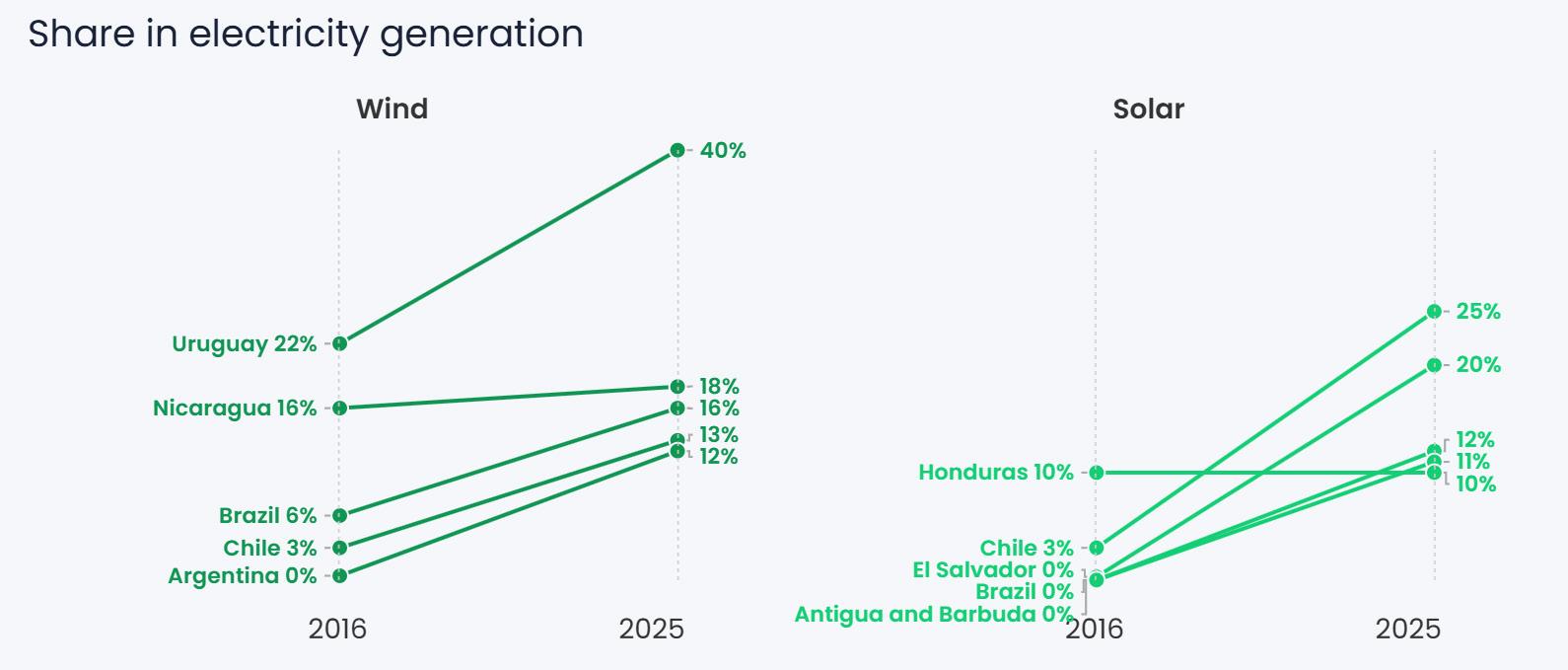
Figure 2 . Significant growth in solar and wind generation across Latin America and Caribbean countries. Source: Ember Electricity Data Explorer.
2. ‘Brazil curtails 20% of solar and wind output in 2025, with losses at US$1.2 billion’, Solar Now, (4 February 2026), https://now. solar/2026/02/04/brazil-curtails-20-of-solarand-wind-output-in-2025-with-losses-at-1-2billion-pv-magazine-india/
3. ‘The regional electricity market closed 2025 with a historic record of energy injections’, Centroamérica360, (8 January 2026), www.centroamerica360.com/economia/ el-mercado-electrico-regional-cerro-2025-conun-record-historico-de-inyecciones-de-energia/
4. RANGELOVA, K., JONES, D., and SUAREZ, W., ‘Falling battery costs can unleash Mexico’s full solar potential and boost energy security’, Ember Energy, (18 September 2025), https:// ember-energy.org/latest-insights/fallingbattery-costs-can-unleash-mexicos-full-solarpotential-and-boost-energy-security/

The meeting place of the global wind industry – onshore & offshore
• 1,600 exhibitors from 40 countries
• First-rate conference programme on six open stages
• Networking with 45,000 international participants
• Recruiting Days on 24 and 25 September
NEW An entire hall dedicated to energy storage

James Li, Vice President Sungrow Europe, Sungrow, emphasises how grid-forming battery systems actively help to define grid behaviour and power system stabilisation across Europe.
Imagine Europe’s power grid as a crowded beach on the hottest day of summer. For most of the year, conditions are predictable. People come and go gradually, demand is manageable, and basic systems cope. But when a heatwave hits, everything changes. Visitors arrive earlier, stay longer, and demand surges all at once, stretching facilities that were never designed for such sustained peaks.
This is now the reality facing Europe’s power systems as summers grow hotter and longer.
Rising air - conditioning demand is pushing electricity consumption to new highs just as the energy mix itself becomes more complex. System margins tighten, conventional sources provide less inherent stability, and large volumes of weather - dependent solar and wind generation place new demands on grid performance. So, what was once an occasional seasonal challenge is becoming a recurring summer stress test. And unlike a beach, Europe’s power grids cannot simply close the gates when things get too busy.
Across Southern Europe, summer heatwaves now regularly drive demand spikes of 10% – 15% above normal levels. Indeed, the energy demand for cooling in Southern Europe has surpassed traditional winter heating peaks for the first time in some specific regional clusters. In Spain and Italy, July and August increasingly see grid conditions that would have been considered emergencies a decade ago. Meanwhile, the electricity market is changing as midday solar generation floods the grid with cheap power, only to vanish within hours as the sun sets, just when air conditioning demand remains at its peak. The result is a brutal swing from oversupply and negative prices at noon to tightening margins and potential shortages by evening.
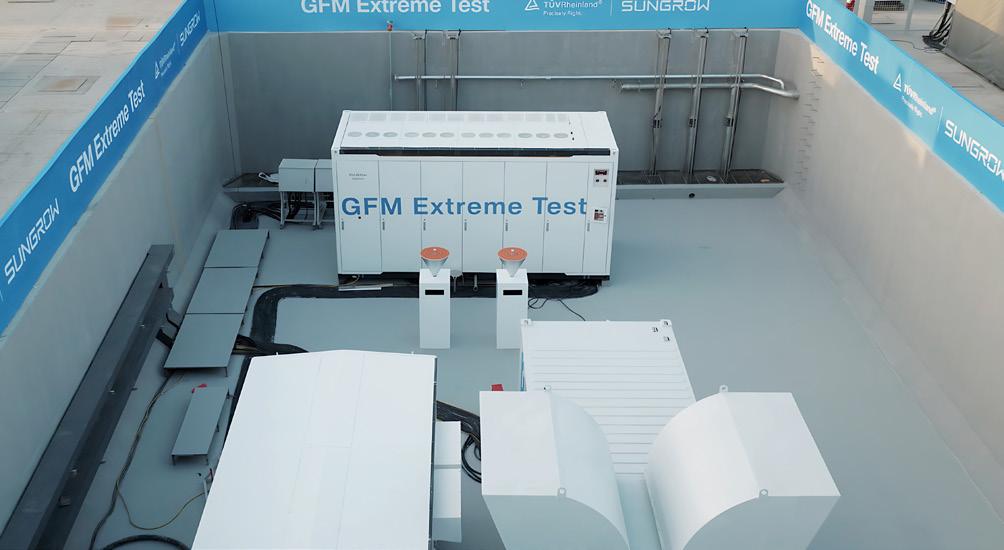
In April 2026, Sungrow completed the world’s first large scale grid forming validation, independently verified by TÜV Rheinland. The programme covered 14 extreme grid scenarios over 138 hours, confirming stable operation under complex and high stress conditions. Key results included black start in under 20 sec., millisecond level frequency response, and continuous fault ride through under short circuit conditions. Testing was conducted on a 30 MW grid simulation platform, replicating real world conditions across European type grids.
For grid operators, this is increasingly unmanageable using traditional fossil fuel plants, which cannot ramp up quickly or frequently enough to respond to the sharp transitions. Moreover, the conventional synchronous generators that have served as the backbone of grid stability for more than a century are being retired faster than they can be replaced. And while renewable energy sources are essential for decarbonisation, solar and wind plants do not inherently provide the same voltage and frequency support as traditional power stations. This is where grid-forming battery energy storage can take a leading role as a foundational capability for operating power systems under sustained summer stress.
Different from traditional grid-following systems, a grid-forming battery system actively helps define how the grid behaves, supporting the electrical backbone of the grid itself, maintaining stable voltage and frequency even during disturbances. Even a restart within seconds after a blackout is possible.
During a summer evening peak, when solar output collapses and millions of air conditioners switch on simultaneously, a grid-forming battery can respond in milliseconds. It stabilises voltage swings, damps frequency oscillations, and helps prevent the cascading blackouts that would otherwise spread rapidly across interconnected networks. It also provides fault ride-through: the ability to remain online and continue supporting the grid even when faults or disturbances occur, rather than tripping offline as would grid-following systems.
In weak grids – increasingly characteristic of Southern Europe as synchronous generation retires – this support becomes critical. Without it, the grid becomes fragile. One disturbance can trigger another, and that can even lead to a regional blackout.
The theory is sound, but does it work in practice? Evidence from across Europe suggests yes, but it will require systems designed and tested for sustained summer stress.
Greece offers a clear example. With high solar penetration and summer temperatures routinely exceeding 40˚C, Greek grid operators have increasingly used battery storage to manage the critical afternoon-to-evening transition. Grid-forming systems in particular have proven essential in preventing frequency instability during these peak stress periods. Similar dynamics have emerged in Portugal, where accelerated renewable deployment and summer heat have driven utilities to deploy grid-forming batteries alongside solar generation.
Even in Central Europe, traditionally seen as more stable, the grid is feeling the heat. In June 2025, record-breaking temperatures turned Germany’s grid into a bottleneck. As massive solar exports from the sunny south collided with surging industrial cooling demands in the north, the system hit a literal physical limit. To keep the grid from failing, operators were forced into
redispatch measures, rerouting power at a cost exceeding €1 billion in a single month. It was a stark reminder that when the heat is high enough, even the most stable grids can become victims of their own success. The response points towards the need for battery systems specifically engineered for continuous operation in extreme heat, with robust thermal management, proven control systems, and transparent performance data that operators can trust.
The case for grid-forming storage is clear, but adoption across Europe remains uneven. To change that, first, grid operators must move beyond viewing energy storage purely as a peak- shaving or arbitrage tool. Markets must recognise the value of voltage support, fast frequency response, and fault ride - through accordingly.
Second, procurement and testing standards must be tightened. Systems need to be specifically tested by recognised institutions and proven for sustained operation in the ambient conditions they will face. A battery designed for dry heat behaves differently in humid and high temperatures. Thermal design, control algorithms, and protection settings must all be validated against real European grid conditions, not just laboratory benchmarks.
Third, planning horizons must shift. Europe cannot retrofit grid stability after the fact. As renewable
penetration accelerates and synchronous generation continues to retire, grid-forming storage must be planned alongside new solar and wind projects, rather than added years later. And the good thing is that the technology is already here. It is now about adoption and deployment.
Climate projections point to longer, hotter, and more frequent summer heatwaves across Europe. That means Europe’s power system must be adapt to this new reality, and be set up to operate safely and reliably under increased and sustained thermal stress.
Grid-forming battery energy storage can be a cornerstone of that redesign. To be clear, it is not a silver bullet. Smarter grids, demand management, and network upgrades all matter. But without grid-forming capability, Europe’s grids will become increasingly fragile.
The utilities and grid operators that recognise this early will build more resilient, flexible systems. Those that delay will face higher costs, more conservative operations, and slower renewable integration.
As Europe enters an era of permanent ‘peak season’, grid-forming technology gives the system the structure it needs to manage the crowds – keeping everything stable, even on the hottest, busiest days.

At Bachmann electronic, we don’t merely supply hardware: we deliver solutions! These extend from power management and power generation controllers to visualization functions.

Whatever the type of park you’re operating – whether involving PV systems, wind turbines, CHP units or battery storage, and even for hybrid systems: the SPPC provides all the necessary features.
www.bachmann.info energy.industry.maritime.
Claire Dietz-Polte and Wouter Vandorpe, Baker McKenzie, explore how new safety, sustainability, and due diligence requirements reshape supplier obligations, developer risk allocation, and long - term operational responsibilities.

The battery energy storage systems (BESS) market in Europe is still evolving rapidly. First, with renewable energy deployment, as part of EU’s ambitious net-zero goals, there is a continuous need for storage to keep the grid stable and operate efficiently. The overall outlook for utility scale renewables in Europe remains positive, especially when combined with BESS. Secondly, in addition to the standalone battery opportunities, or the so-called ‘hybrid’ setups of BESS and renewable energy, artificial intelligence (AI) and data centres are rapidly emerging as key structural drivers for EU BESS market growth. Data centres currently consume substantial amounts of energy and are anticipated to consume significantly more in the near future. Therefore, a combination of renewables and BESS is often used as part of layered power supply strategies in the data centre market. Thirdly, declining battery costs and performance improvements continue to unlock new applications for BESS.
Is there a sufficient and complete regulatory framework in place, supporting energy storage deployment? Yes and no. For example, the Electricity Directive (EU) 2019/944 ensures fair treatment of storage, explaining the difference between electricity production and consumption on the one hand and storage on the other, which enables market participation and clarifies storage ownership rules. Furthermore, the Electricity Regulation (EU) 2019/943 defines market rules encouraging the use of energy storage for grid stability and flexibility. This enables BESS to participate in previously restricted markets (e.g. balancing, ancillary services) and supports investment certainty. Furthermore, several financial incentives are now in place on a country level to further boost the sector’s growth. These incentives include lowering tariffs, specific subsidy mechanisms (CAPEX or OPEX) in a member state, or facilitating other mechanisms when using BESS, for instance, an energy management system (EMS) and energy efficiency measures. Together, these elements provide the fundamental principles
and rights that allow developers to consider BESS projects in the first place. Yet this is only the beginning.
As the BESS market continues to evolve and mature, further significant regulatory changes are anticipated and they will be harder to understand. Changes are expected not only in terms of policy initiatives aimed at encouraging wider BESS deployment, but also through increased regulation within the sector. The main reason for all this is to keep the pace going and to eliminate barriers for BESS projects that are becoming increasingly complex. This article examines the latest developments of regulations affecting the BESS industry.
Regulation (EU) 2023/1542 – also known as the Batteries Regulation – adopted on 12 July 2023 sets out a comprehensive framework to ensure the sustainability and safety of batteries and waste batteries within the EU. The Batteries Regulation is gradually imposing mandatory requirements for different categories of batteries placed on the EU market. This first and foremost hits the small battery markets (e.g. for electric vehicles), but also includes “industrial batteries”, such as large BESS batteries. The industrial battery category expressly includes batteries intended to be used for “industrial activities” or “generation and distribution of electric energy” and therefore it can only be concluded that this also captures batteries used in BESS.
The Batteries Regulation covers a wide range of areas, including sustainability, safety, labelling, waste management, the implementation of battery passports, and battery supply chain due diligence. This article highlights some of the most relevant elements for BESS producers and suppliers importing into or selling on the European market, and for BESS developers seeking to maintain contractual protections for associated risks and obligations.
All batteries, including industrial batteries such as BESS, must bear the Conformité Européenne (CE) mark to confirm compliance with EU safety, health, and environmental protection requirements. This is key for non-EU BESS suppliers. The Batteries Regulation sets specific safety and testing requirements for stationary BESS.
Rechargeable industrial batteries with a capacity greater than 2 kWh, including industrial batteries such as BESS, must be accompanied by a document containing values for the electrochemical performance and durability parameters set out in the Batteries Regulation. These values will be further detailed in the near future via delegated acts.
The Batteries Regulation expressly provides that for stationary BESS using a battery management system, it should be possible for the end-user or any other third party (e.g. on-site aggregators/optimisers) to determine the state-of-health
and expected lifetime of the batteries at any time. For large BESS, this is already a fairly standard market practice, but the Batteries Regulation expressly adds an access right for these parties.
From 18 February 2027, all industrial batteries with a capacity above 2 kWh must be digitally registered and equipped with a battery passport. This passport, accessible via a QR code and accompanied by CE marking, will contain detailed technical and sustainability information. It will provide guidance on proper handling and include state-of-health data, ensuring that recycling facilities and repurposing initiatives have the necessary information to process and reuse these batteries responsibly.
From 18 August 2027, all entities (with EU group net turnover ≥€40 million) placing batteries on the EU market or putting them into service must implement certain due diligence procedures in relation to the batteries, including:
> Creating and maintaining a documented policy aligned with OECD guidelines for battery supply chain due diligence, verified by an independent auditor.
> Establishing internal systems and traceability mechanisms to monitor the entire supply chain and address any grievances.
> Identifying human rights and environmental risks in battery material supply chains and develop strategies to mitigate them.
> Providing annual reports that outline due diligence actions, findings, and corrective measures.
Many of these issues may already be addressed in the relevant contracts between the BESS developer and the BESS supplier and/or the long-term service/maintenance provider. For instance, “The supplier must comply with all legislation up till delivery and after end-of-life and provide a (SCADA and other) system that is compatible.” However, the Batteries Regulation requires developers and suppliers to go further and ensure that contractual language is updated and aligned accordingly.
For the BESS developer, it will be important to both contractually confirm the obligations of the BESS supplier arising from the Batteries Regulation in an explicit way, and to be able to pass through its own monitoring and reporting requirements as an operator or owner to the long-term service/maintenance provider or external operator.
For the producer or supplier of the BESS battery, it will be key to contractually push back or pass through these obligations towards other parties. The following obligations should be with the BESS supplier (and producer):
> Full extended producer responsibility (EPR).
> Registration as a producer or appointment of authorised representative(s) where necessary.
> Duty to financing and organisation of collection, treatment, and recycling of waste batteries.
> All reporting duties related to the supply of the BESS.



If a BESS supplier proposes transferring EPR costs to the BESS developer through contractual clauses contrary to the Batteries Regulation, such proposals should be firmly rejected. Any pricing should transparently reflect compliance costs and shall not purport to shift legal EPR liability to the BESS developer.
The BESS supplier shall provide a compliant battery passport and ensure data availability through interoperable interfaces (API/secure data exchange) compatible with the project’s SCADA/EMS and demonstrate cybersecurity and data governance measures related to this. Also, it shall respect the related safety requirements, with CE marking.
The BESS developer should consider, as conditions precedent to the delivery of and payment for the BESS, requiring the BESS supplier to provide:
> Producer registration/AR appointment certificates.
> Evidence of EPR scheme membership.
> Carbon footprint declaration(s) and methodology references.
> Safety/CE documentation and test reports.
> Battery Passport identifiers and API specs (when applicable).
> A grid-forming compliance roadmap (≥1 MW).
The following obligations should be with the long-term service/maintenance provider or external operator of the BESS:
> Maintain the BESS in conformity with the Batteries Regulation.
> Maintain, update, and make available on request all safety and conformity documentation (CE-marking, declarations of conformity, test reports, hazard mitigation, and emergency instructions) in the language(s) required by the member state.
> Maintain a complete dataset enabling future population of battery passports, including serial numbers, manufacturing plant identification, and composition/carbon data fields provided by the producer.
> Keep on file and provide on request the carbon footprint documentation for each battery model/plant used in the facility, including updated declarations when the producer changes the model or plant.
In addition to the Batteries Regulation, the European Grids Package is expected to have a significant impact on the EU BESS market.
The EU Grids Package (COM [2025] 1005), introduced on 10 December 2025, is a major initiative from the European Commission designed to modernise, expand, and digitalise Europe’s electricity grid infrastructure.
It contains legislative proposals and guidance designed to implement targeted permitting reforms for energy storage, such as BESS, with the goal of speeding up approvals for both standalone and hybrid installations (e.g. solar-plus-storage). Expedited permitting has been identified as a priority, with the objective of substantially reducing delays in environmental assessments and shortening grid connection timelines.
Digital permitting platforms and one-stop-shop procedures are to be introduced to streamline grid operators’ engagement, reducing fragmentation and administrative burden. Furthermore, the package moves away from first-come, first-served towards a first-ready, first-served approach to prioritise mature and viable projects, including BESS, in the grid connection queue. Queue management is enhanced with project maturity and milestone tracking, including penalties for delays. Finally, the proposals strengthen EU-level infrastructure planning, helping ensure that cross-border and long-term grid expansion considers major BESS projects.
The EU Grids Package legislative proposals are now entering the European Parliament and Council for final adoption; implementation is expected with national transposition around late 2026 to 2027.
In the light of the forgoing, BESS suppliers should design and configure BESS to comply with applicable EU network codes and evolving grid-forming capability requirements for installations of ≥1 MW, as finalised in NC RfG 2.0 and related ENTSO-E specifications. Furthermore, suppliers should implement software and hardware upgrades required during the warranty/defects liability period to meet binding EU and national rules adopted post-contract.
As Europe accelerates towards a decarbonised and increasingly electrified energy system, the regulatory landscape for BESS is becoming both more sophisticated and more demanding. The direction of travel is clear: storage is no longer a peripheral enabler of the energy transition but a core asset class subject to detailed, rapidly evolving EU-level rules on safety, sustainability, supply chain integrity, grid integration, and long-term circularity.
For suppliers, developers, investors, and operators, this means navigating a framework that expands in both scope and depth. The next several years will bring material compliance obligations – from CE-marking and battery passports to due diligence duties and ambitious recycling performance targets – alongside grid reforms that will reshape project timelines and connection strategies. While these developments ultimately strengthen market confidence and support the long-term bankability of BESS, they also introduce near -term complexity, cost considerations, and the need for early, strategic planning.
Against this backdrop, staying ahead of regulatory change is not optional. Whether you are structuring a new-build standalone system, pairing storage with renewables, or assessing the resilience of your portfolio to upcoming EU obligations, a clear understanding of the evolving rulebook is essential to successful project delivery and investment decision-making.
With regulations tightening and market dynamics shifting at speed, navigating the next phase of BESS deployment will require clear sight of the policy risk and commercial opportunity. The decisions investors and developers make today will determine their resilience and relevance in the rapidly maturing storage ecosystem.

Subscribe online at: www.energyglobal.com/magazine
Ricardo Wigman, Chief Delivery Officer, Power Factors, examines the need for upgrades to the grid in order to support the global energy transition towards renewables.
In its early stages, success for the energy transition was measured by the size and scale of projects. The industry goal was mainly defined by a race for volume, increasing the supply of renewable energy to become less reliant on the scarcity of fossil fuels. Over the years, developers have successfully met ambitious targets, scaled projects, and diversified portfolios to cover an array of generational assets across wind, solar, hydro, and hydrogen, to name a few.
As renewables get closer to becoming the primary source of energy in many regions, they are introducing added layers of complexity and challenges around grid resilience and stability. This race to scale in the pursuit of greater volume has led to the emergence of a new industry yardstick: grid resilience. While the industry has largely succeeded in meeting the growth agenda and proving what renewables can deliver, it is time to embrace a new level of maturity – and a strategic reform – to continue being successful.
The rapid adoption of renewables has created a problem of volatility in the sector, with the intermittent production of energy from wind and solar leading to market uncertainty, price fluctuation, and even curtailment. In Spain, for example,

uncompensated curtailment of solar could reach over 3 TWh (2.5% of overall generation) in 2026 and 2027. With high renewable penetration, supply variability can no longer be passively balanced by conventional generation. Energy Systems Operators (ESOs) are increasingly viewing Firm Dispatchable Renewable Energy (FDRE) as a crucial piece of the puzzle.
The notion of firm and dispatchable energy supply is an established industrial benchmark for conventional sources of energy, and is often used to highlight the intermittency problem of renewable energy supply. However, the introduction of battery energy storage systems (BESS)
has turned intermittency into dispatchability, enabling an evolution to grid stability – and a future supported by more renewable energy.
FDRE in action is the combination of multiple renewable generation assets, such as solar photovoltaics (PV) and wind, with BESS to maintain continuity of supply on cloudy or still days. At its core, FDRE leverages hybrid assets, or projects that co-locate generational assets alongside BESS, allowing operators to manage production and discharge to the grid more flexibly. New hybrid sites such as these provide instant stability for ESOs as they come online, managing supply and demand by absorbing excess energy during moments of oversupply, releasing it back to the grid during periods of peak demand.
The transformation from intermittent supply to FDRE has also ushered in new, smarter terms of contracting the supply of power. Power purchase agreements for hybrid sites now include greater certainty of supply within key parameters, such as ‘supply of X GWh between the hours of 9 am – 5 pm, daily’, and high penalties if they are not duly met. By adding a new layer of complexity to financial and performance modelling, it also brings in new, smarter terms for independent power producers to better manage the supply of power.
Co-locating solar or wind with BESS is only the first step. Incidents like the Iberian blackout of 2025 have highlighted the limitations of diversified portfolios that lack the firm capability to control, underscoring the need for synchronisation and unification of assets and operations across decentralised grids. With renewables set to deliver the majority of the energy mix moving forward, renewable operators need new operational standards that cater to the more complex challenges of maintaining grid stability, such as Synthetic Inertia (frequency balancing by rapidly injecting or absorbing stored power, mimicking the behaviour of traditional power sources).
Unlike standalone assets that operate independently, hybrid systems equipped with advanced control architectures can co-ordinate generation and storage in real time to respond to market signals and system conditions. Within hybrid configurations, BESS can perform rapid micro-cycling, providing fast frequency response to arrest deviations and support the system in maintaining nominal frequency (50 Hz or 60 Hz). By delivering fast and controllable responses, hybrid systems enhance grid stability, reduce the risk of system disturbances and blackouts, and prevent equipment damage.
Anomalies of weather can still pose stability challenges for the grid, limiting system performance. This is where advanced energy management systems (EMS) play a critical role in ensuring that energy supply is consistent with grid demand. Developers are prioritising grid stability and technical balance alongside their primary goal of yield maximisation.
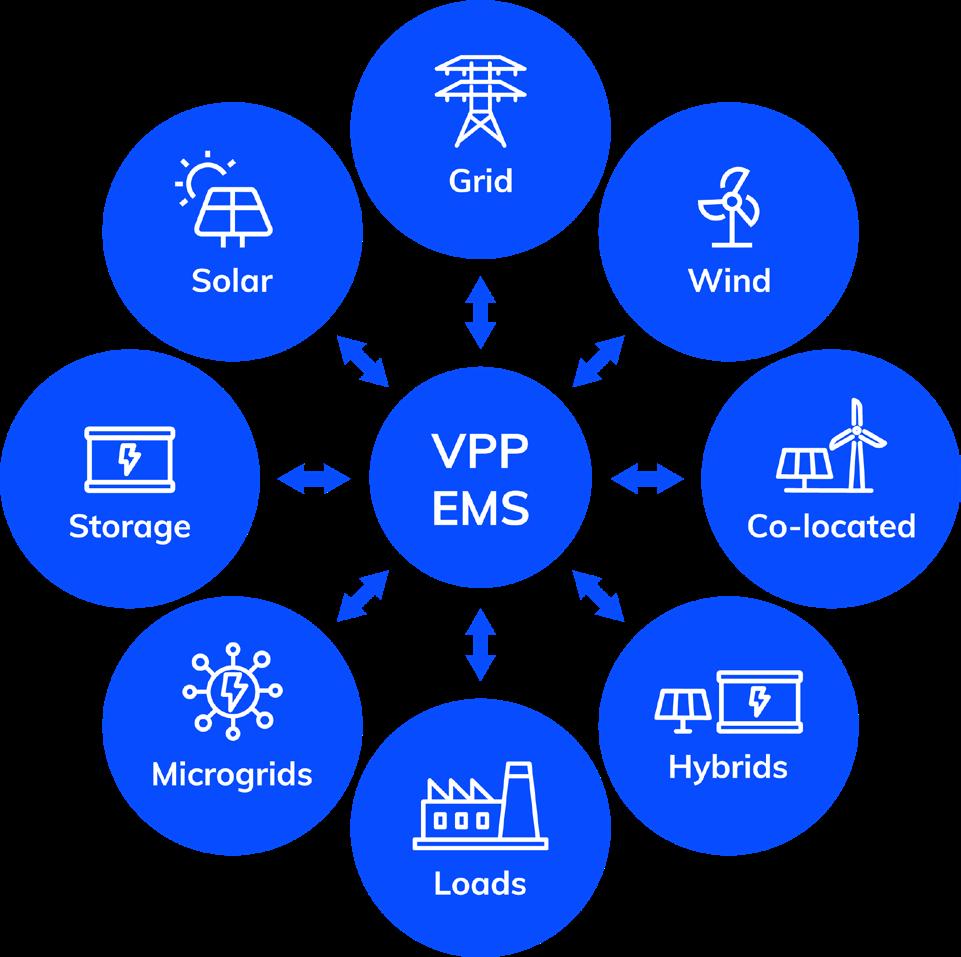
The rise of FDRE and advancements in monitoring and controls have enabled a new class of utility scale hybrid assets that operate as virtual power plants (VPPs) – taking inspiration from the distributed, residential, or community-based VPP models that have been adopted across markets.
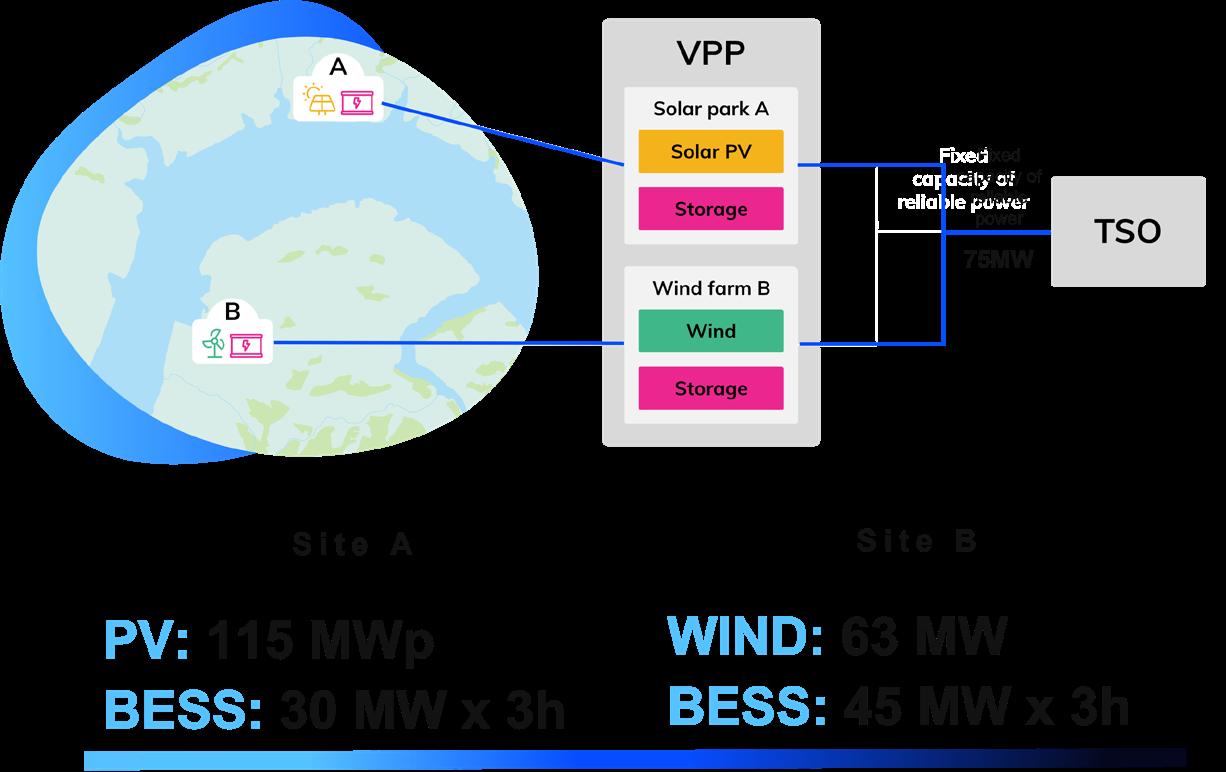
Like its distributed counterpart, utility scale VPP technology allows renewable solar, wind, and BESS sites operating independently to integrate into a single dispatchable entity, even though they might have different points of connection to the grid, helping renewable operators manage assets more efficiently. VPPs comprise three key features:
1. Aggregated energy assets: This is a network of utility scale decentralised hybrid assets (including solar, wind, BESS) integrated to form a single dispatchable unit.
2. Electricity market participant status: Like any major power producer, VPPs also need to comply with the necessary regulations and ensure that they are integrated with the relevant market and systems.
3. Energy management systems: The EMS synchronises or ‘orchestrates’ the VPP portfolio in real time and integrates to the grid as a unified entity.
A VPP solution offers renewables operators an innovative way to add new flexible capacity to the grid and enjoy greater autonomy over the control and profitability of its delivery strategy. In the inevitable event of underperformance, losses can be mitigated by punctual, real-time updates that offer a wider leeway to rectify discrepancies and get production back on track.
Power Factors offers VPP solutions, as well as advanced energy management systems and software within its Unity suite. The true power of advanced control systems like these lies in streamlining end-to-end operations to align with site and fleet-level key performance indicators. An example project from Power Factors coming in 2026 in South Africa for a leading global energy producer includes two hybrid sites operating as a single VPP – though they are located 900 km apart.
The mix of solar, wind, and storage technology will allow for almost round the clock availability, with wind turbines spinning when the sun is not shining, and solar panels generating when the air is still.
Power Factors’ advanced software and hardware have enabled the renewable operator to manage the two distant hybrid assets/sites as one FDRE asset, monitoring weather patterns and forecasts in order to optimise delivery and plan for operational maintenance without any disruption to the supply of energy. Additionally, according to the company’s simulated projected performance metrics, this project will prevent approximately 40 GWh/y of energy from being curtailed, saving approximately €750 000 annually in avoided TSO penalties due to accurate energy optimisation and scheduling. It will also generate around €230 000 additional revenue from real-time asset optimisation, based on the ever-changing plant conditions and forecast and performance deviation.
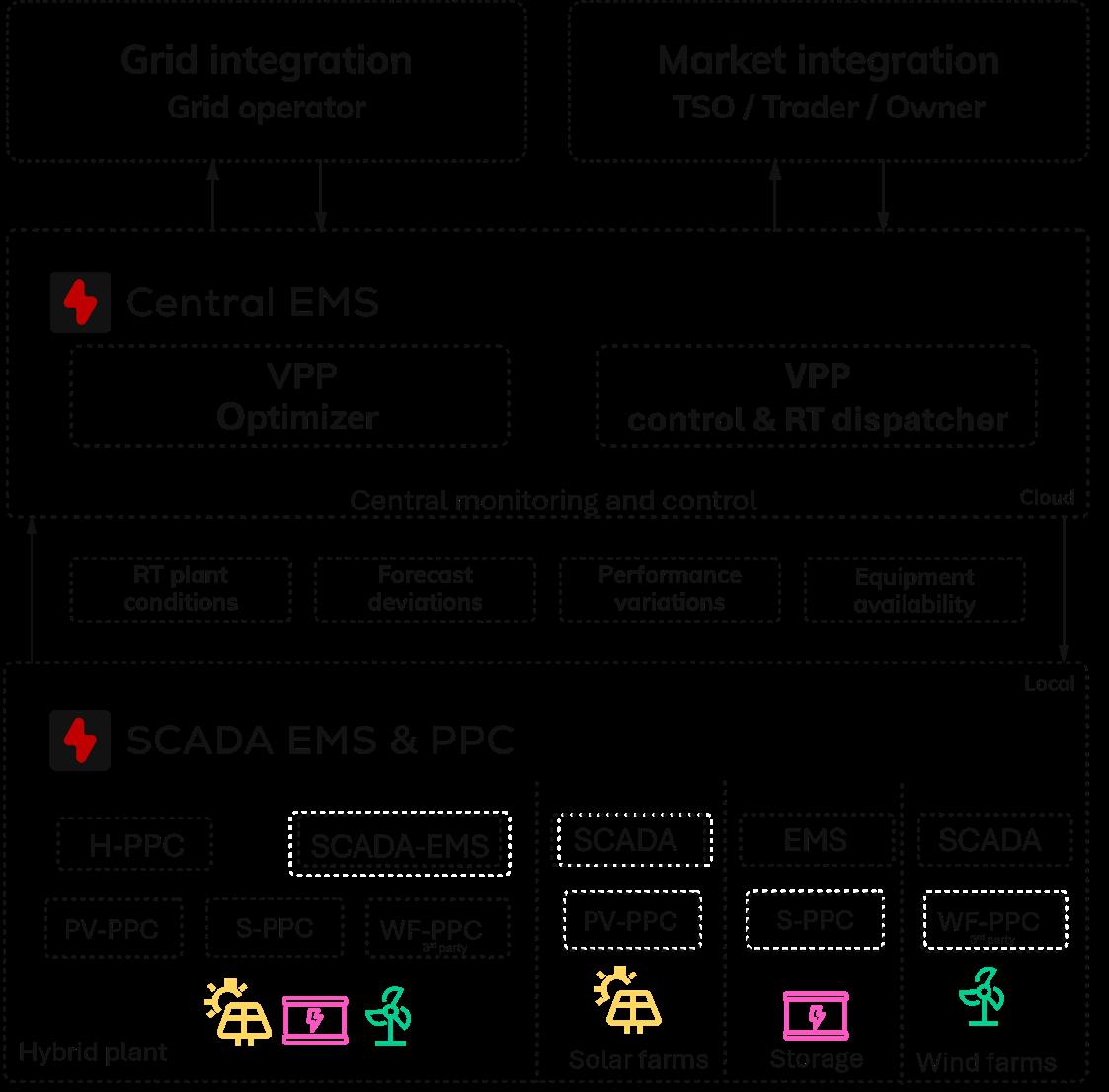
Figure 3 . High-level architecture of a VPP, representing multiple asset classes. At the local level, sites are represented with their local PPC (and master H-PPC when required), orchestrated by a local SCADA-EMS. At the central level, the VPP optimiser ingests real-time parameters and determines the best possible dispatch schedule, which it submits to the grid operator or TSO, depending on the case. The VPP real-time dispatcher executes the dispatch.
Grid stability is now the challenge facing all stakeholders across the renewable energy industry over the next decade – from ESOs, developers, and operators, as well as the innovators that have enabled this shift in management and control of assets. Looking ahead, more and more hybrid assets are being planned, and established renewable providers are investing in BESS to (virtually) connect with renewable sites already in operation. Renewables may finally shake its ‘intermittent’ label and become the robust FDRE solution ESOs need.
Becoming the majority energy source within energy networks is an important milestone and marker of the growing maturity of renewable energy. It is also the catalyst for better and more robust solutions to complex issues, such as balancing frequency fluctuations within scaling assets alongside the managed decommissioning of traditional energy generation sites. All of this is happening within context of growing energy demand globally, driven by artificial intelligence-enabled data centres and the electrification of transport and industry.
These changes will require more than just simple upgrades, but the renewable industry has set the groundwork to transform renewable energy networks into 24/7 flexible powerhouses, ushering in the majority-renewables era. Moving towards such flexible models will allow the industry to ensure that energy is stored and supplied precisely to meet the demands of the grid and can streamline operations throughout the project lifecycle. Power Factors remains committed to innovation, which will mean more renewable energy used and less energy curtailed to build stable and resilient grid networks.

Mike Kendall, Fike Director of the Fire Solutions Group UK & Europe, and Tom Farrell, Principal Engineer of Test and Validation Engineering, Fike Labs, explain the importance of developing solutions to the risks associated with battery energy storage systems, and explore a new thermal management solution to mitigate fires at energy storage sites.
Renewable energy production and capacity have continued to grow y/y for decades and show no signs of slowing down. One of the issues with renewable energy sources, however, is they are not consistent. Wind only generates electricity when the wind blows and solar only generates electricity when the sun shines. But that energy needs to be able to be used consistently. Battery energy storage systems (BESS) act as a buffer between renewable energy generation and the demand on the grid.
As BESS adoption continues and inevitably becomes even more ubiquitous in society, these systems will continue encroaching more on where people live, shop, and work. Therefore, the risk associated with battery

energy storage must continue to be understood, studied, and taken seriously.
In the event of certain battery conditions like overcharging, overheating, and puncturing, or other kinds of abuse factors, an internal short will occur.
The separator material breaks down, and the anode and the cathode short together within the battery. This exothermic chemical reaction, known as ‘thermal runaway’, suddenly generates a large amount of heat and off-gas such as hydrogen, hydrogen fluoride, and oxygen depending on the battery chemistry.
This creates a very dangerous combination of heat and combustible gases.
Once a battery cell goes into thermal runaway, the process is started and cannot be stopped. It will carry on until the cell is consumed. Then the heat generated in that first cell starts to warm up the second cell and so on, which is called ‘cascading thermal runaway’.
This process propagates through until all of the fuel within the battery rack or greater BESS has been consumed. As this domino effect continues into other cells,
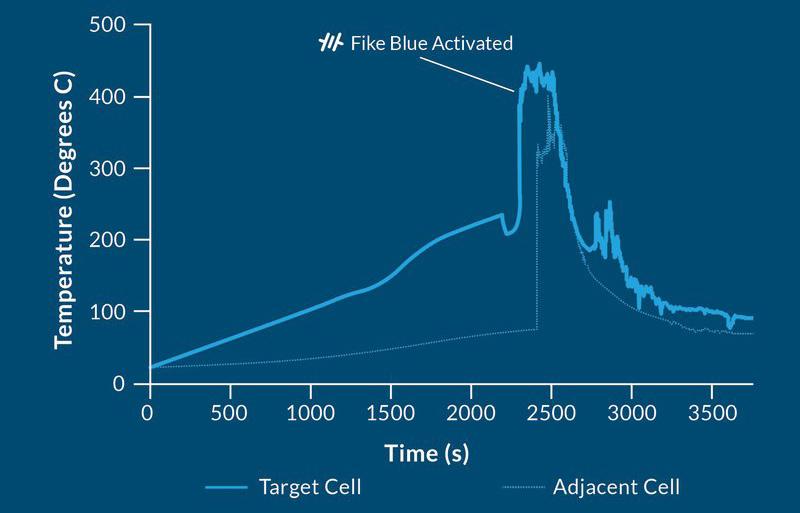
an overwhelming amount of gas is produced, resulting in a higher risk of fire and a more volatile environment. Finally, because these gases are extremely flammable, that is often the source of lithium-ion battery fires and even deflagrations.
Thermal runway is a complex, multifaceted problem that needed to be solved. Fike’s goal was to find a way to contain the event to one cell, or even just a few cells, which would greatly limit the amount of gas and flammable material that is produced, and ultimately make BESS adoption within or near populated areas much safer.
The transfer of heat from cell to cell is ultimately what the industry is trying to prevent, but what are the current methods that solve this problem? Up until now, there has not really been any available solution to this problem. Traditional fire suppression systems try to stop the fire. When a cell goes into thermal runaway, it will start off-gassing, catch fire, and consume any plastics and anything else around that cell. The problem with the traditional suppression systems is even if the fire is brought down, the initial thermal runaway event continues and those cells will still produce massive amounts of gas.
So, what is the industry currently working on to overcome the problem? For more than 80 years, Fike has faced these types of challenges head on and this issue was no different, investing as many resources as it needed to identify a solution to cascading thermal runaway.
The company tested all of the fire suppression agents available, including chemical agents, inert gases, water mist systems, and aerosols. Fire can be put out with many of these traditional means, but there is still a threat in the form of a challenging thermal management problem. Because these systems discharge and deplete, the next time a cell goes off and generates more toxic gases, it pushes the protective gases out of the system.
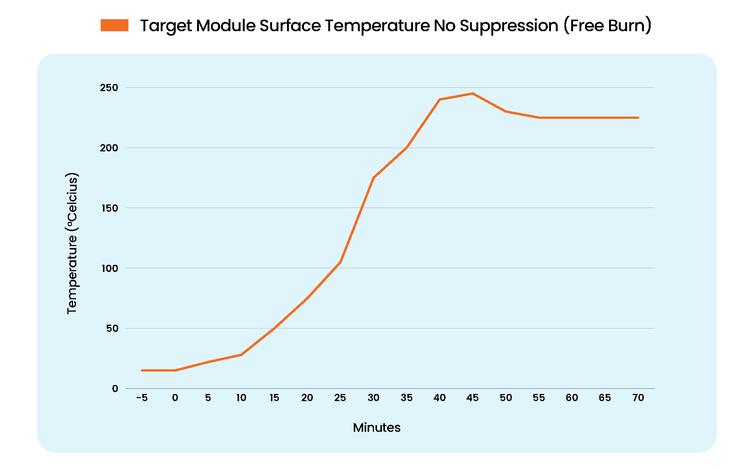
For these reasons, it was clear that the Fike team needed to solve the problem at its source. The company conducted an initial module test where a cell was allowed to burn and was set into thermal runaway. There was an extreme amount of smoke generated. The laboratory team had a ventilator running at approximately 20 000 ft 3 /min. to extract the smoke, and even still the test cells were completely filled with smoke and overwhelmed with gas generation. This gas, which is toxic, is another reason why BESS cannot be deployed near populated areas, especially since during thermal runaway, there is a lot of it.
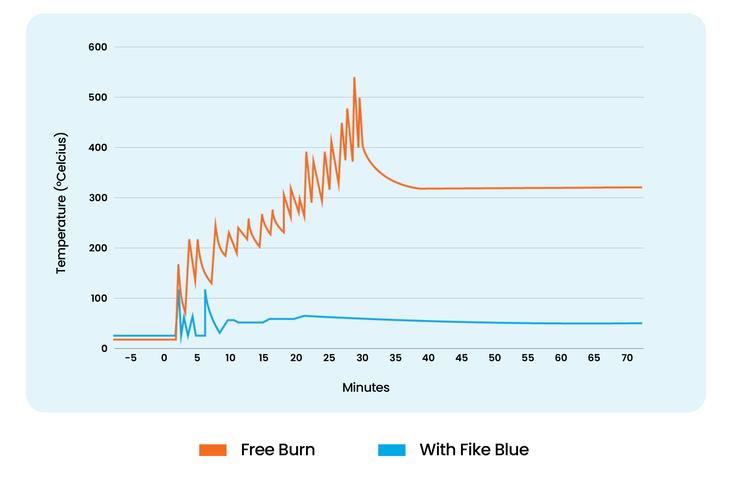
After months of experimenting, the Fike team discovered a fluid with a very high heat capacity that could be directly injected into the battery cells. In the initial test of the high-heat capacity fluid, only six of the 36 cells were lost. Those that were lost were two groupings of three cells: one with the heater applied and the one on the immediate other side. Everything else in the case was unharmed and the fluid drastically reduced the thermal output and off-gas that came off the system all the way down to about 60˚C – 70˚C,








a far cry from the 450˚C found in the ‘let it burn’ scenario at the very beginning.
These are extremely low temperatures for these kinds of fires. They are low enough that, immediately after an event, first responders and utility personnel are able to enter the site and extract the impacted module using typical PPE. Some off-gas was still generated but the solution reduced the gas generated by 36 cells to six cells, assisting in the ventilation system’s job to dilute and diffuse it.
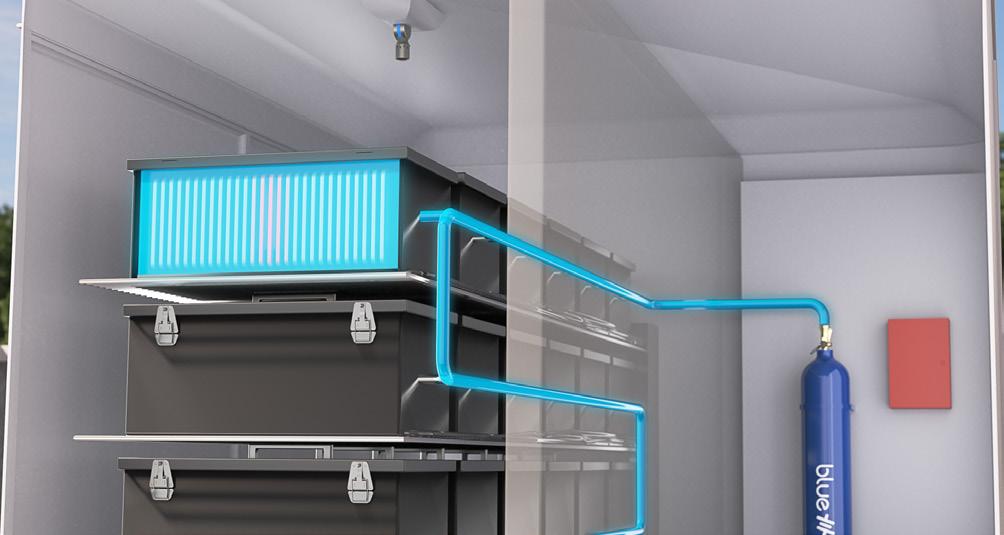

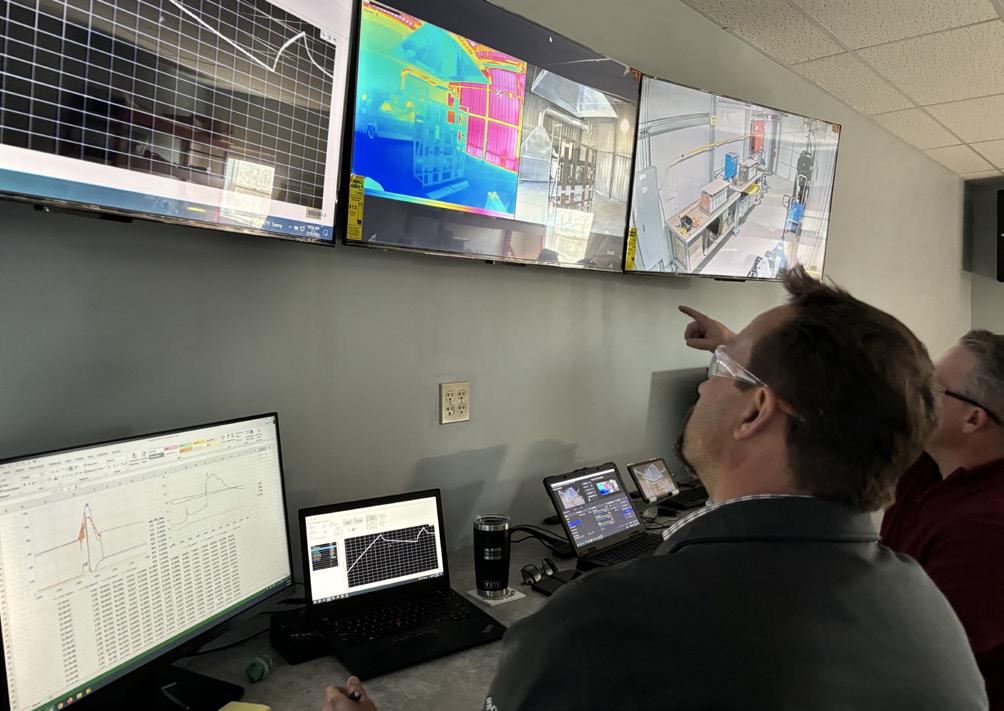
When the system detects that there is an indication of a thermal runaway problem, the fluid absorbs the heat from the first cell and dissipates it throughout the liquid in a way that prevents the temperatures of adjacent cells from increasing to a point where they also go into thermal runaway.
An advantage for tests such as these is Fike’s state-of-the-art test facility, Fike Labs. This facility allowed the testing team to run a number of iterative tests to fine-tune the fluid and make sure it was optimised as much as possible for this specific thermal management application.
Once the team had run numerous internal tests on the fluid – which had proven to suppress cascading thermal runaway – they looked to the Canadian Standards Authority (CSA) to validate the results from Fike Labs. CSA’s data reflected the Fike team’s observations as well.
Fike Blue allows large, grid scale BESS to be deployed more locally to where current and future demand is needed.
One of the key elements to remember about lithium-ion battery and BESS safety is that every scenario is different. Numerous variables play a part in how a battery enters and develops thermal runaway conditions and in the safety solutions required to stop it. Therefore, a Fike Blue system must be designed, tested, and validated by Fike Labs on a case-by-case basis.
The Fike team took a consultative approach with battery and BESS manufacturers to understand their batteries, understand the layouts of the BESS, and how best safety can be achieved, either through Fike Blue or with a number of different solutions depending on the goal. For example, the safety goals of a BESS within a hospital will likely be protected far differently than a BESS located in the middle of a field where the closest house is an hour away.
Due to the complex nature of BESS hazards, the company highly encourages operators to be as involved as possible to help increase the understanding of the problem for everyone involved and to help develop a solution that meets both safety and business goals.
The Fike Labs team take a lot of measurements on temperatures, heat flux, thermal load, and more, and have high-speed cameras and thermal imagery to visualise the data. This aims to replicate a third-party UL 9540A test, ensuring that solutions will pass the test. The lab can test a variety of battery types, and Fike Labs is where the vast majority of research and development at Fike has taken place to date.
Fike Blue opens up a very real possibility that BESS may be safely deployed into various urban environments. For Fike, this makes the ‘let it burn’ strategy adopted by various industry professionals and decision-makers one that is non-sustainable and ultimately unsafe, particularly when a more reliable solution exists and when BESS adoption will only continue to increase.



Visit our website today: www.lngindustry.com


Marie-Hélène Westholm-Knebel, Head of Sustainability, ABB’s Energy Industries division, looks at the importance of controllability in the future of solar growth.
Global solar capacity has expanded at an extraordinary pace over the past decade, with annual additions now measured in hundreds of gigawatts. In many major economies, solar is now on track to supply more than 10% of total electricity generation by 2030, according to the International Energy Agency (IEA).1 Photovoltaics (PV) have driven most of that growth, reshaping generation portfolios from Europe to the Middle East and Asia Pacific.
Yet as installed capacity rises, a more complex challenge is taking shape because scale alone does not guarantee

system performance. As solar projects expand, controllability, predictability, and alignment with grid requirements become the decisive factors to reinforce solar’s importance in the future energy mix.
The next phase of solar growth will be defined not by capacity alone, but by how plants are controlled and modernised across their life cycle.
This is where concentrated solar power (CSP) becomes particularly relevant. In an energy system under pressure to balance security of supply, affordability, and lower carbon intensity, controllability matters as much as capacity.
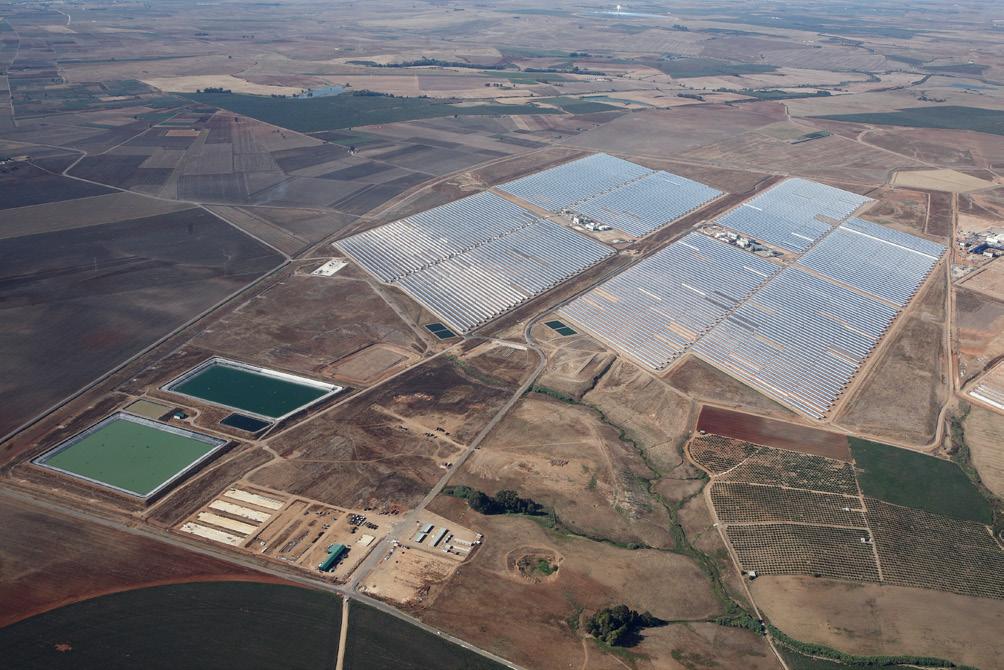
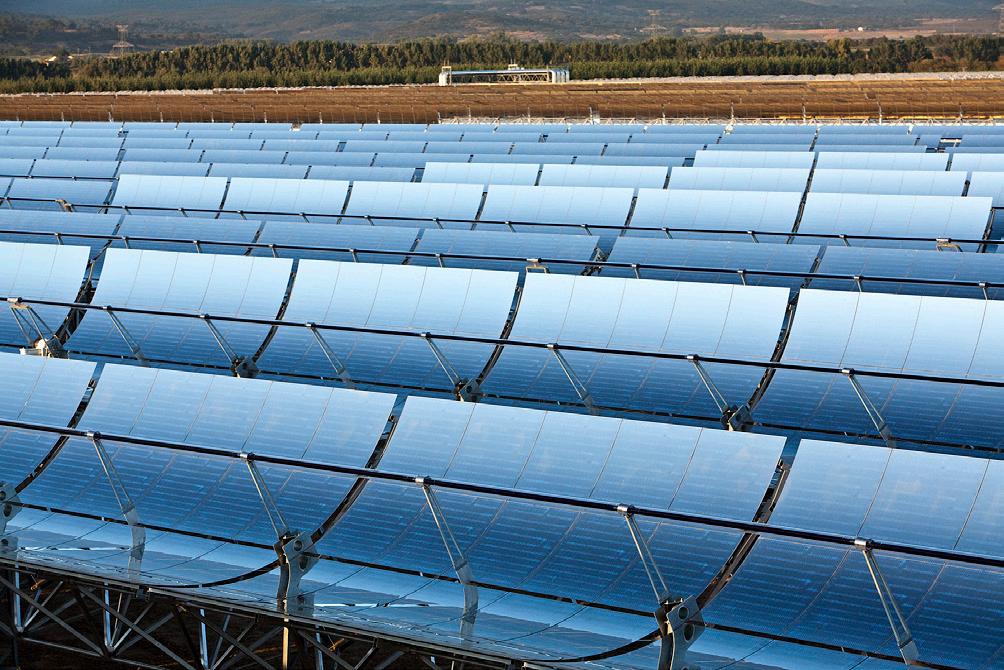
CSP occupies a distinctive position within the broader solar landscape. Where PV converts sunlight directly into electricity, CSP uses mirrors to concentrate solar energy onto a receiver point. The concentrated heat warms a fluid, which is then used to produce steam and drive a turbine. This process allows CSP plants to store energy and generate electricity when the sun is not shining – enabling dispatchable output that can be scheduled to meet demand.
In power systems with high levels of wind and PV, being able to adjust output to match demand is increasingly valuable. Grid operators need assets that can respond to fluctuations in power generation and maintain stability. CSP plants, built around synchronous generation, behave more like conventional thermal power stations, even though they run on solar input. They contribute to grid resilience in ways that PV and wind alone cannot.
With demand for energy only set to increase – as the artificial intelligence (AI) economy grows, populations increase, industry expands, and electrification accelerates – this aligns directly with the dual challenge of energy expansion and energy transformation. Referring to the known energy trilemma, security of supply requires predictable output, affordability depends on efficient use of infrastructure and avoiding costly balancing interventions,
and lowering carbon intensity comes not only from adding renewable capacity, but from ensuring that capacity performs reliably.
For countries investing heavily in large scale solar, CSP offers a means of achieving the above: delivering controllable renewable power that works in harmony with modern grids while complementing existing, conventional power generation.
Behind this, however, lies significant operational complexity. A modern CSP facility is not a simple solar array: it is a tightly integrated industrial plant combining thousands of tracking or U-shaped mirrors with heat transfer systems, thermal storage tanks, steam turbines, and extensive electrical infrastructure.
Conditions also change continuously. Sunlight fluctuates with cloud cover, ambient temperature affects efficiency, and wind and sand affect mirror alignment. Tracking systems recalculate the sun’s position several times per second, adjusting thousands of mirrors in near real time to keep energy focused on the receiver. These adjustments interact with heat transfer and turbine performance, so the plant must adapt constantly to remain stable.
Traditional control approaches, designed for more stable environments, can face challenges under these dynamic scenarios. As plants age, legacy systems may limit data visibility, constrain integration with newer digital tools or create lifecycle support challenges that reduce availability and increase maintenance cost.
Rather than replacing process infrastructure designed to run for decades, operators are modernising systems to enable performance improvements, while leaving proven infrastructure intact. Migration to open, modular environments like ABB’s automation solutions improves system availability, enhances engineering flexibility, and creates a digital foundation capable of supporting advanced diagnostics and performance optimisation without starting from scratch.
Enhanced visualisation, contextualised data analytics, and optimisation tools can be introduced without disturbing operations, and modernisation takes place without production interruption. Critically, the control architecture remains secure throughout – a requirement for assets operating within national grid infrastructure.
In Spain, a global leader in solar deployment – with solar PV accounting for 21% of national electricity generation in 2024 2 – modernisation is already demonstrating what this shift looks like in practice. Power producer, ContourGlobal, has contracted ABB to replace the original solar field control systems at four of its CSP plants – at Majadas, Orellana, and Palma del Rio – migrating to ABB’s Symphony Plus distributed control system.
These are among the early examples globally of migrating solar field control systems from one manufacturer’s technology to another, extending operational life while strengthening reliability and cyber resilience.
Spain’s CSP fleet illustrates a principle with broader relevance. For assets expected to run for 30 years or more, the ability to modernise progressively and without disruption is more than convenient – it is what makes long-term operational reliability achievable.
Advanced automation platforms – utilising AI modelling – transform solar facilities into co-ordinated, high-performance power assets. Modern distributed control systems unify process control, electrical automation, and safety functions within a single operational environment, reducing latency between measurement and action, and thus enabling faster response to disturbances and timely preventative action.
Improved control accuracy translates directly into higher thermal efficiency. Even if taken individually, each refinement to how the system manages energy flow and turbine performance may appear small, together they improve output predictability while reducing mechanical stress on equipment.
The architecture underpinning these systems matters as much as the functions they perform. Modern automation ecosystems are increasingly modular and open, built on standard communication protocols.
Where the Spanish modernisation projects are legacy upgrades, the same principles apply from the outset in new installations. The control environment remains predetermined and secure, while the digital layer above it – securely connected – enables analytics, condition monitoring, and AI-driven decision support without interfering with core logic. This allows operators to introduce advanced capabilities progressively – from anomaly detection algorithms and predictive maintenance to tools that reduce working effort in the control room.
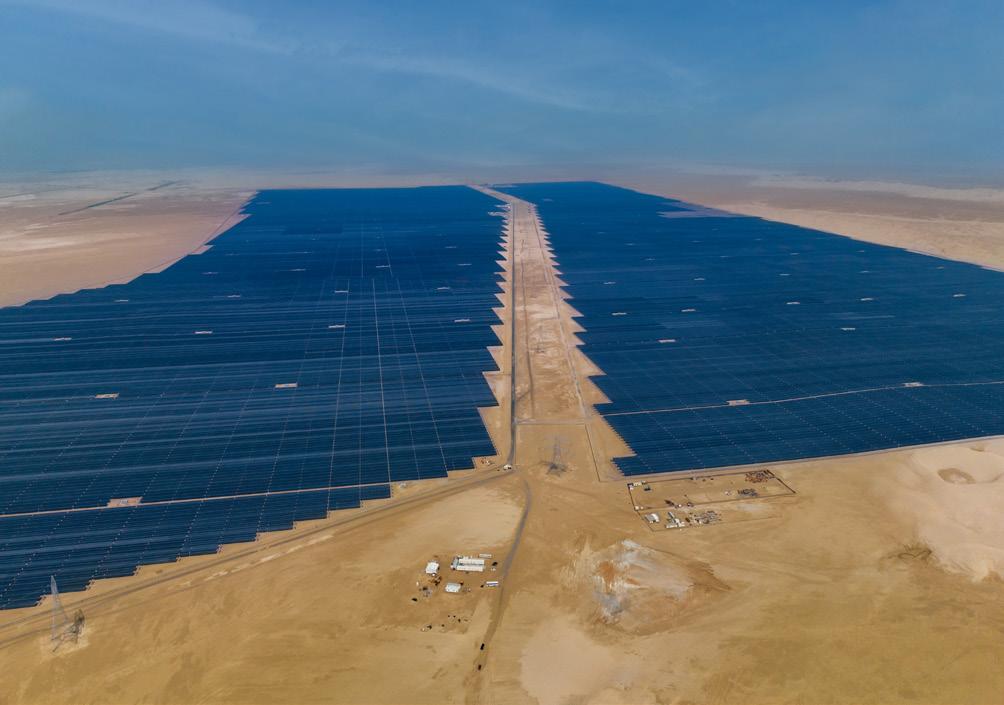
At scale, integration becomes even more critical. ABB is collaborating on the 2 GW Al Dhafra PV2 plant in Abu Dhabi – currently the world’s largest single-site solar PV facility – which covers 20 km 2 and incorporates around 4 million modules. It supports the UAE Energy Strategy, which aims to triple the share of renewables by 2030.
At such scale, stable and compliant output does not happen by default. ABB supplied the project’s automation and electrical infrastructure, deploying its Symphony Plus distributed control system alongside power management, protection, and digital solutions within a unified architecture – giving operators real-time visibility across the entire site from day one.
The numbers behind the plant give some sense of what consistent control performance means in practice. It generates enough electricity for approximately 200 000 homes annually and supports efforts to reduce carbon dioxide emissions in Abu Dhabi by more than 2.4 million metric tpy. Maintaining that output reliably is where control precision becomes an economic and system-level obligation.
A 1% improvement in thermal efficiency, a modest reduction in start-up time, a decrease in unplanned outages
– each looks incremental in isolation. Over a plant lifecycle measured in decades, these gains compound into significant lifecycle value in terms of operational efficiencies and return on investment.
This concept is well established in industrial automation. Robust engineering fundamentals provide the baseline; digital tools refine and enhance performance over time. For solar operators navigating evolving grid requirements and pressure on returns, marginal gains represent some of the fastest routes to improved economics and stronger grid contribution.
As solar capacity continues to grow, new installations and smarter operations of existing assets both have a role to play. Experience across energy industries shows that progress comes from disciplined modernisation and continuous improvement, each reinforcing the other.
The future of solar depends therefore as much on how intelligently assets are operated as on how many are installed. Modernising installed automation systems, integrating advanced analytics, and aligning process and electrical domains more closely are immediate levers that are available today, without waiting for breakthrough technologies.
CSP, with its combination of storage and synchronous generation, provides a working blueprint. Its controllability demonstrates how renewable assets can move beyond intermittency and become active contributors to grid stability. The same principles apply to hybrid plants combining solar PV, wind, storage, and conventional generation.
In the next phase of solar growth, controllability will be the defining metric. By strengthening the automation of renewable infrastructure, expanding capacity translates into dependable, grid-supportive sustainable power. Progress will come not from perfection, but from steady, deliberate steps towards greater operational precision.
References
1. ‘Electricity 2026’, International Energy Agency, www.iea.org/reports/electricity-2026
2. ‘Chapter 4: Global Electricity Source Trends’, Ember, https://ember-energy.org/latestinsights/global-electricity-review-2025/global-electricity-source-trends

Minxian Le, Product Manager Fundamentals, Volue Data and Forecasts, discusses why accurate weather intelligence is indispensable and highlights the transformative role artificial intelligence can play within short-term power markets.
For decades, weather forecasting sat on the periphery of fossil fuel-centric energy systems and power markets. Even within the context of renewables, it often held the place of an uncontrollable variable that operators and traders planned around, rather than a clear signal they could truly act upon. Today, that relationship has fundamentally changed. As electrification accelerates and renewable generation and adoption increases, not only across Europe but globally, weather forecasting has moved from a background consideration to a decisive force that influences prices, drives production, and shapes the success of commercial outcomes across global energy markets.
As if the rapid rollout of electrification was not enough, the shift is unfolding against a backdrop of rapid structural market change. Across Europe, the move from hourly to 15-minute intervals in day ahead trading has transformed how power markets operate. Introduced in late September 2025, the change did far more than simply compress trading windows.

It quadrupled the number of decision points, increased data volumes, and raised the stakes for every forecast-driven choice made by traders, asset owners, and system operators. In an environment where margins are increasingly defined by minutes rather than hours, the quality and timeliness of weather and data information have become mission critical to success and profitability.
Arguably, nowhere is this more evident than in wind generation and solar power systems. As renewable penetration grows across the continent, portfolios interact simultaneously with day ahead, intraday, continuous, and balancing markets, with many of them now operating on the quarter hourly time units noted previously. Simply put, this means that decision cycles have accelerated, uncertainty has increased, and the acceptance for forecast error has narrowed. In this landscape, weather is no longer simply a planning input. It is a live operational signal, directly influencing dispatch decisions, imbalance exposure, and revenue optimisation.
Intraday power trading has always required timely decision-making, but as technology has advanced, these decisions are now more critical than ever. Success in the market hinges on the availability of new and, most importantly, timely information, particularly updates that signal changes in wind and solar output. Yet for many market participants, the forecasts informing those decisions are built on weather data that is already several hours old by the time it reaches the trading desk.
Traditional numerical weather prediction models, including what are still widely used global systems, typically update four times per day. While these models remain foundational to medium-term forecasting, their update cadence and processing time means that the underlying weather inputs driving power production forecasts can be between 6 – 12 hours old. In a market where prices can shift sharply within minutes, this increasingly represents a significant disadvantage.
Of course, these consequences extend beyond trading performance. As renewable generation becomes more dominant, power systems will continue to grow more sensitive to sudden changes in intermittent weather conditions. Unexpected drops in wind or solar output can quickly create discrepancies between scheduled and actual generation, driving up imbalance volumes and increasing costs for transmission system operators. In this context, balancing operations are only as effective as the weather-driven forecasts

they rely on. Volue, a leader in electrification technology, introduced AI-weather Hourly Updates to help overcome these challenges.
The transformation is not simply about the speed and movement of new markets; it reflects a deeper change in how weather is understood within the energy system. What was once treated as an uncontrollable consideration is increasingly being viewed as a strategic asset, provided it can be observed, interpreted, and acted upon quickly enough.
Advances in artificial intelligence (AI), like Volue’s AI-weather Hourly Updates, are playing a central role in this shift. By learning directly from recent observations and error patterns, AI-driven weather models can adapt more rapidly to changing conditions, particularly in the critical 0 – 48-hour window where intraday trading decisions carry the greatest financial impact. Rather than waiting for the next scheduled model to run, market participants can continuously access refreshed signals that better reflect current atmospheric dynamics.
This evolution is changing the rhythm of decision-making. Instead of anchoring strategies to a small number of daily forecast updates, traders and operators can respond to weather developments as they emerge, refining positions, adjusting bids, and managing risk with greater precision. The result is not only faster reactions, but more informed ones, grounded in timely data and a clearer view of near-term uncertainty.
The practical implications of this shift are significant. Moving from four forecasts per day to an hourly update cadence fundamentally alters how weather information is used. Forecast availability within roughly 1.5 hours of each run reduces data latency, while relying on weather inputs that are only hours old provides a more accurate representation of current conditions.
In short-term power markets, where small deviations can trigger outsized price movements, this improvement can translate directly into commercial advantage. More precise, near-term forecasts improve the ability to anticipate ramps, drops, and volatility phases in renewable output.
For desks active across continuous intraday trading and auctions, this level of granularity provides a stronger foundation for execution. Strategies can be adjusted incrementally rather than reactively, based on a continuously updated understanding of how weather is likely to influence generation and prices in the hours ahead.
One of the defining characteristics of this new generation of weather intelligence is its integration into existing operational frameworks. Rather than replacing established forecasting and modelling tools, AI-driven weather updates are increasingly used as a complementary signal, enhancing, validating, and stress testing traditional approaches.
Forecasting teams can incorporate higher frequency weather data into standard planning models, improving short-term accuracy without disrupting established workflows. Control room tools can display AI-enhanced production curves alongside conventional forecasts, providing operators with a clearer picture of near-term risk.
As markets move faster, the cost of relying on older weather data becomes notable. Slower response times can mean missed liquidity, higher risk close to gate closures, and greater operational uncertainty. In contrast, those that adapt to this new reality are redefining how weather forecasting can support decision-making. By reducing the gap between observation and action, they are better positioned to manage volatility, optimise renewable output, and navigate increasingly complex market interactions.
What is increasingly clear is that uncertainty itself has become a core operational variable. Markets are not just responding to forecast levels, but to forecast confidence. Participants with a clearer, more up-to-date view of near-term conditions are better equipped to distinguish between noise and meaningful change, potentially avoiding misplaced decisions while remaining responsive.
In this new weather forecasting environment, success depends less on predicting a single outcome and more on maintaining alignment between market positions and the latest available data. The ability to continuously reassess that alignment, most notably with weather data, is becoming a defining capability in modern power markets.
The role of weather in energy markets has evolved considerably. As electrification continues and renewable generation expands, this trend will only accelerate. Intraday trading cycles measured in minutes, interconnected markets operating on ever shorter timeframes, and growing sensitivity to forecast error no longer point to the future but to the present moment when timely, accurate weather intelligence is indispensable.
The transformation that is underway is not about predicting the weather with perfect certainty. It is about understanding it better, sooner, and in a form that aligns with how modern power markets operate. By turning weather from an uncontrollable variable into a continuously updated strategic signal, market participants are reshaping how risk is managed and value is created in the short term.
In an energy system defined by speed, complexity, and volatility, this may prove to be one of the most important competitive differentiators of all.



Europe is racing to expand offshore wind, but its ports are struggling to keep up. They face high investment needs and cumbersome permitting, which increasingly stands at odds with the pressure from growing offshore wind pipelines. WindEurope outlines how, without action from the EU and the European Investment Bank, Europe risks creating a bottleneck that could slow down its energy transition.
Europe wants more offshore wind and governments across the continent are raising targets and launching new auctions.
The North Sea Summit in Hamburg confirmed a long-term vision: 300 GW of offshore wind in the North Seas by 2050, and 100 GW of those as cross-border offshore wind projects. Governments committed to 15 GW of new capacity each year from 2031 to 2040 –10 GW under so-called Contracts for Difference (CfD), with another 5 GW as power purchase agreements.

This long-term visibility creates market confidence, and points to a future where offshore wind becomes a major pillar of Europe’s energy system.
Wind energy already makes up 20% of all the electricity Europe consumes today, 4% of which comes from offshore wind. The share of wind in electricity is set to rise rapidly to more than 50% by 2050, with offshore wind expected to make up 20% of Europe’s electricity needs by then.
The European wind industry is stepping up to the task. In its Industry Declaration presented at the
Hamburg North Sea Summit, the industry committed to mobilise €1 trillion in offshore wind investments for Europe, create 91 000 new jobs, and reduce the cost of offshore wind by 30% by 2040 – as compared to 2025 costs.
These are ambitious commitments which face challenges around auction designs, supply chains, financing, and much more. But they also meet a particular physical limit on land: ports.
Ports are the heart of the wind energy supply chain – wind turbine components arrive there; foundations and cables are stored there; heavy lift vessels load components from reinforced quays; they are operation and maintenance hubs, serving operating offshore wind farms; and they are increasingly used as assembly locations for floating offshore wind turbines. Everything passes through them; even onshore wind components typically have to pass through ports before being transported to their construction sites. Without ports, there is no offshore wind.
Yet Europe’s port network was not designed for the scale now required, with the size of offshore turbines continuing to rise. In 2025, turbines connected to the grid averaged 10.7 MW and, in Germany, the average reached 12.3 MW. Orders placed in 2025 averaged 14.9 MW. Bigger turbines need more space, deeper berths,
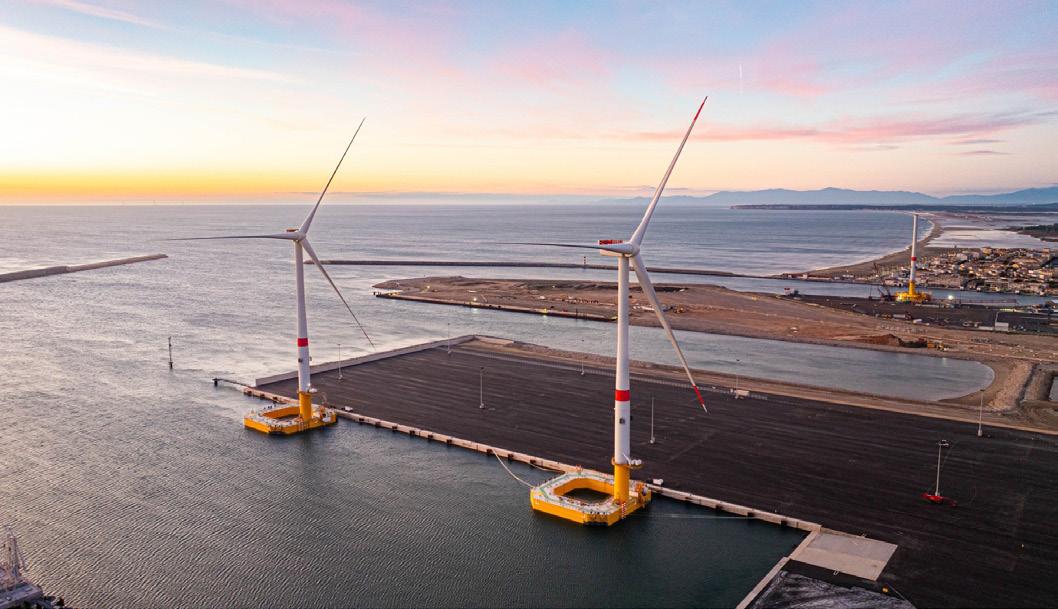
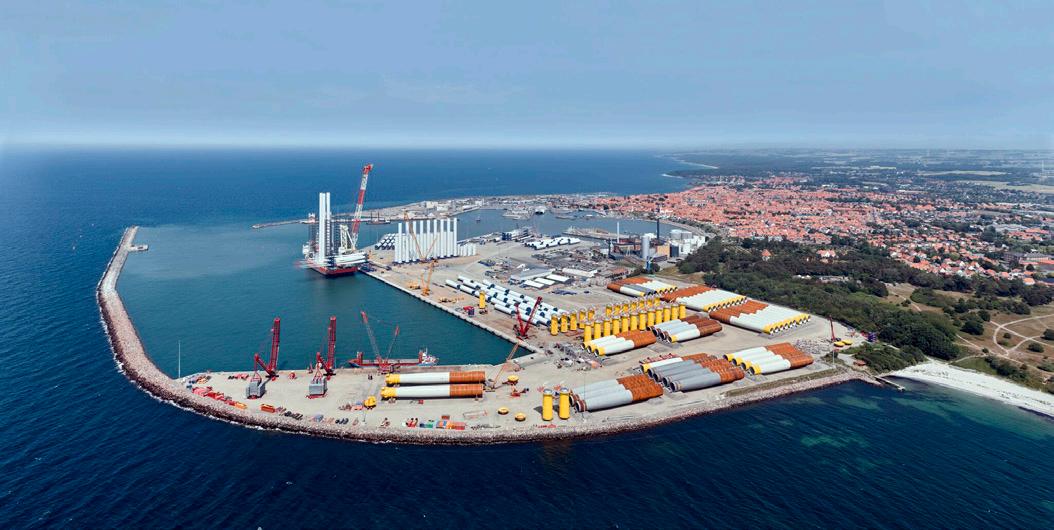
and stronger quays. Few European ports meet these specifications today.
The result: port capacity is already tight. Data shows that Europe can support about 6 – 9 GW/y of offshore wind deployment with its current port infrastructure. Investments made in recent years mean Europe can manage around 10 GW/y by 2030, but it will need 15 GW/y after 2030. Closing this gap requires heavy investment –an additional €2.1 billion on top of the €4.7 billion already committed in the last three years.
These expansions are not optional. Without them, ports will become the bottleneck for the entire energy transition. And if ports do not scale, Europe’s offshore wind targets will remain on paper. The issue here is speed: ports infrastructure investments have long planning horizons, which can take close to a decade.
But for years, Europe’s offshore wind auctions and offshore permitting procedures did not offer the predictability needed to make bold investments in port infrastructure. Over the past few years, offshore wind auctions in the UK, Germany, Denmark, and France failed to attract bidders. The reasons for these failures were market specific, but they had one thing in common: the resulting uncertainty made it difficult for ports to build solid business cases with reliable revenue forecasts. Ports must invest early, while returns may come much later. That gap is where projects get stuck. It is also where Europe most needs policy support.
That explains why the North Sea Summit in Hamburg and its commitments are so crucial. The long-term commitment and visibility on volumes and the de-risking of wind energy auctions with CfD is exactly what Europe’s offshore wind supply chain needed to kick-off the next phase of its expansion.
On 4 March 2026, the European Commission launched its EU Ports Strategy. The strategy recognises ports as strategic assets for offshore wind, marking a shift in how Europe views its maritime infrastructure. They are no longer just transport hubs; they are energy hubs and industrial ecosystems.
The strategy contains balanced and useful measures – it pushes for quicker permitting; supports port electrification, including the development of onshore power supply systems and charging infrastructure for heavy vehicles; stresses the need for updated grid hosting capacity maps; highlights barriers such as limited space, slow grid connections, and complex authorisations; calls for closer planning links between the Trans-European Networks for Energy and the Trans-European Transport Network; and recognises ports’ growing role in offshore grid connections, hybrid projects, and cross-border energy corridors.
These steps matter. They confirm that ports are central to Europe’s offshore wind expansion.
But the strategy has weaknesses. It does not embed offshore wind ports as a priority in EU funding policy and limits grants to projects that bring benefits “beyond what market conditions would finance.” This restricts funding for the most urgent needs: reinforcing quays, deepening berths, building large storage platforms, expanding marshalling areas, and preparing for the next generation of offshore wind vessels.
The Connecting Europe Facility for Transport remains the main EU fund for ports. Yet between 2021 – 2024, only €90 million went to upgrades supporting offshore wind. The next Connecting Europe Facility cycle will be larger, but ports are not clearly prioritised. The Commission acknowledges that public funding alone cannot cover ports’ needs, yet it stops short of committing targeted financial support.
Ports cannot wait for slow, indirect measures. They need tools that reduce risk today.
Therefore, the European Investment Bank (EIB) must play a decisive role. The EIB has supported port projects before. The draft strategy promises new programme loans and advisory support, but the offshore wind sector needs lending instruments tailored to ports’ unique challenges. Investments in port infrastructure for offshore wind are high CAPEX, long lead, and slow return. They require long-term loans with delayed repayment schedules, lower interest rates, and credit guarantees to give private lenders confidence.
The need is urgent. WindEurope projects that by the end of the decade, the growth of offshore wind will exceed the capacity of Europe’s ports. If that happens, port capacity – not manufacturing, nor grid connection – will be the limiting factor in offshore wind deployment.
The Hamburg Summit offered one sign of hope. It included a commitment to jointly assess port capacity needs by 2027. But assessments do not build quays, dredge harbours, or open new marshalling yards. Ports need investment well before those evaluations are complete.
If Europe wants offshore wind to scale, ports need faster permitting, targeted grants, and EIB-backed financial de-risking. Without this, even strong political commitments will not translate into turbines at sea.
Recent auctions underline what lies ahead for ports. In early 2026, the UK awarded 8.4 GW in Allocation Round 7 – the largest offshore wind auction Europe has ever seen. This sends a powerful message: offshore wind demand remains high despite inflation and supply chain pressure. These new UK projects will require major port capacity for construction, assembly, and maintenance.
Across the EU, countries like Poland, France, Ireland, and Germany have awarded significant volumes of offshore wind in recent auction rounds.
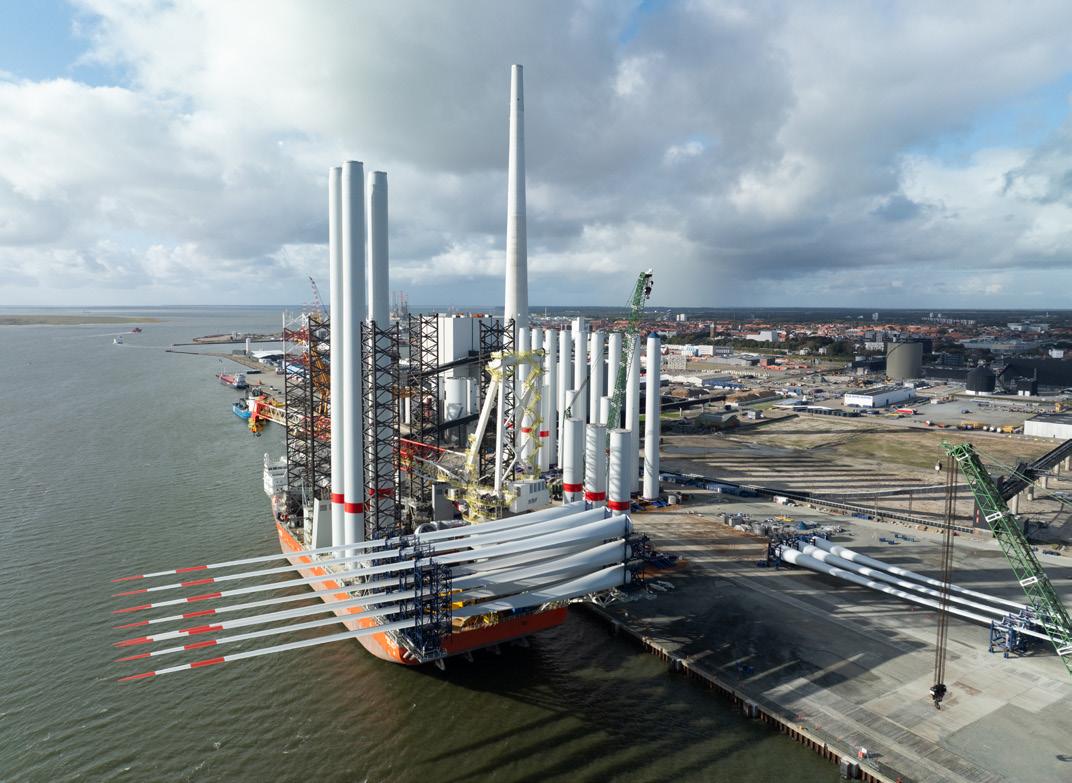
Some auctions failed, especially where negative bidding models discouraged developers, but the broader trend is clear. Offshore wind pipelines are large and expanding.
In 2025, 2 GW of offshore wind was connected. This was below expectations, partly due to construction delays and logistical constraints, including limited port readiness. Final investment decisions were also sensitive to infrastructure availability. Developers hesitate when they cannot rely on ports. WindEurope expects a strong catch-up effect in 2026, with many new offshore wind farms coming online.
By 2030, Europe expects 73 GW of offshore wind installed. The EU alone anticipates 40 GW. After 2030, volumes will rise even further due to regional commitments. The overall picture is clear: the offshore wind pipeline is expanding, while turbines are getting bigger and targets are rising. But unless ports expand, these installations might be delayed.
Turbine technology adds another challenge. As average turbine ratings rise, fewer ports can handle them. Heavy lift cranes, reinforced quays, and deepwater access are essential. Only major ports (typically in the North Sea region) currently meet these needs. But offshore wind is expanding across Europe, including the Baltic and Atlantic coasts. Ports in these regions need investment to take part in the supply chain.
Grid constraints add yet another layer. Offshore wind must connect to onshore networks. Ports are key nodes in these grid plans, hosting substations, cables, and hybrid projects. But grid development remains slow. Many Member States still use first-come, first-served approaches for grid connections. This delays the commissioning of new wind farms and complicates port investment decisions.
Europe’s leaders talk about competitiveness, energy security, and industrial resilience. Ports sit at the intersection of all three. Investing in additional port infrastructure should be a no-brainer.
Balasubramaniam Vengudusamy, Senior Expert Tribology – Global Product Innovation, and Daniel Narnhammer, Head of Global Business Team –Wind Energy, Klüber Lubrication, investigate the critical role lubrication plays as an operational control lever, stabilising wind turbine main bearings between detection and replacement.
Awind turbine technician enters the turbine tower following a condition monitoring alert. The machine remains in operation. There is no visible failure. Yet vibration levels have shown a steady upward trend over recent weeks, and bearing temperature has risen slightly above baseline values – not critical, but no longer negligible.
In modern wind operations, critical maintenance decisions often begin not with sudden breakdown, but with data trends. In situations like this, the challenge is not simply to diagnose a defect, but to determine how the turbine can be kept operational while managing the progression of damage.
As wind turbines continue to increase in size and output, this decision window becomes increasingly significant.
Wind turbines are typically designed for operational lifetimes of 20 – 25 years. Over that period, availability directly influences revenue generation and levelized cost of electricity (LCOE). Even short periods of downtime can translate into substantial financial impact, particularly for multi-megawatt turbines operating at high utilisation rates.
To illustrate the economic dimension: a 2.5 MW turbine operating at approximately 70% utilisation, based on average 2025 prices at the European Energy Exchange (EEX), can generate significant revenue within a three-day period.
Even limited downtime therefore represents a measurable financial impact, particularly when multiplied across large wind fleets.
The economic implications are even more pronounced offshore. Mobilising heavy lift vessels (HLVs) or service operation vessels (SOVs), securing weather windows, and co-ordinating specialised personnel represent complex logistical undertakings. Bearing replacement may involve extended planning and considerable CAPEX.
Under these conditions, unplanned shutdowns are not merely technical events, they are economic disruptions. For operators, this means that lubrication and maintenance strategies increasingly serve broader operational objectives: reducing unplanned downtime, extending operational life, strengthening condition-based maintenance strategies, and avoiding costly emergency logistics.
Main shaft bearings are among the most critical components in a wind turbine drivetrain. They support the rotor and transmit loads to the gearbox and generator. Modern turbines operate under complex and fluctuating load conditions, including axial and radial forces, bending moments, dynamic torque variations, frequent start-stop cycles, and extended standstill phases.

These dynamic operating conditions can contribute to surface degradation mechanisms such as micropitting under mixed lubrication conditions, standstill marks and false brinelling during idle phases, progressive surface fatigue, and contamination-induced wear.
While not every anomaly leads to immediate failure, early surface damage can progress if left unmanaged. At advanced stages, bearing replacement becomes unavoidable and costly.
Lubrication quality, film formation under low-speed conditions, and resistance to contamination are widely recognised as decisive factors in influencing bearing durability. However, even with optimised lubrication strategies and condition monitoring, early damage indicators may emerge over the lifetime of large turbines.
Modern wind farms are equipped with sophisticated condition monitoring systems (CMS) capable of detecting rising vibration levels, temperature deviations, and acoustic signals. These systems allow operators to identify anomalies before severe failure develops.
Not every deviation from baseline values triggers immediate intervention. Minor fluctuations are often monitored over time. However, when vibration levels or temperature trends indicate progressing surface damage, operators face a critical operational decision.
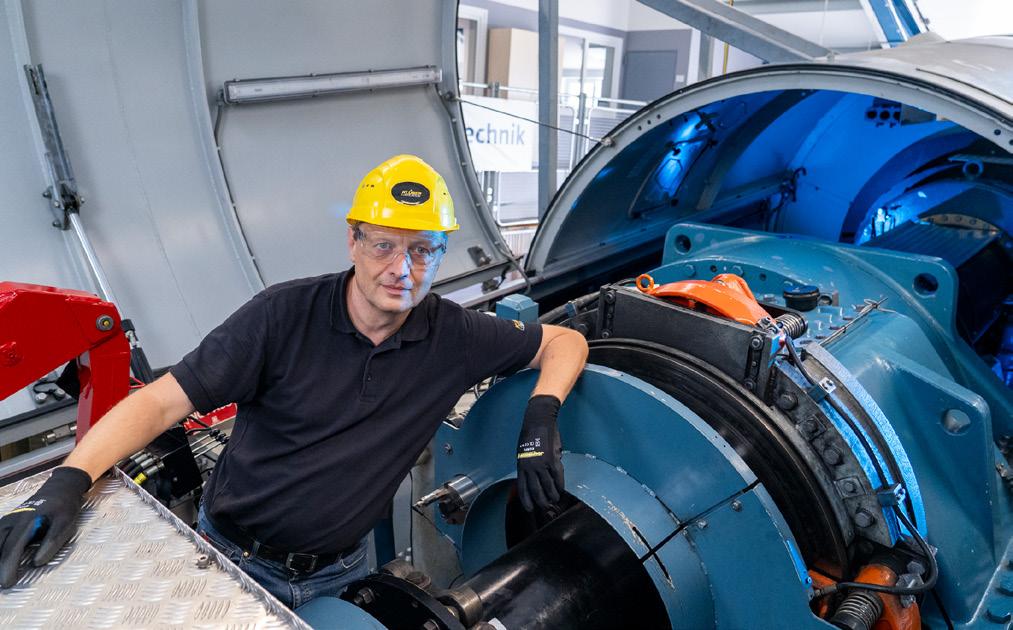
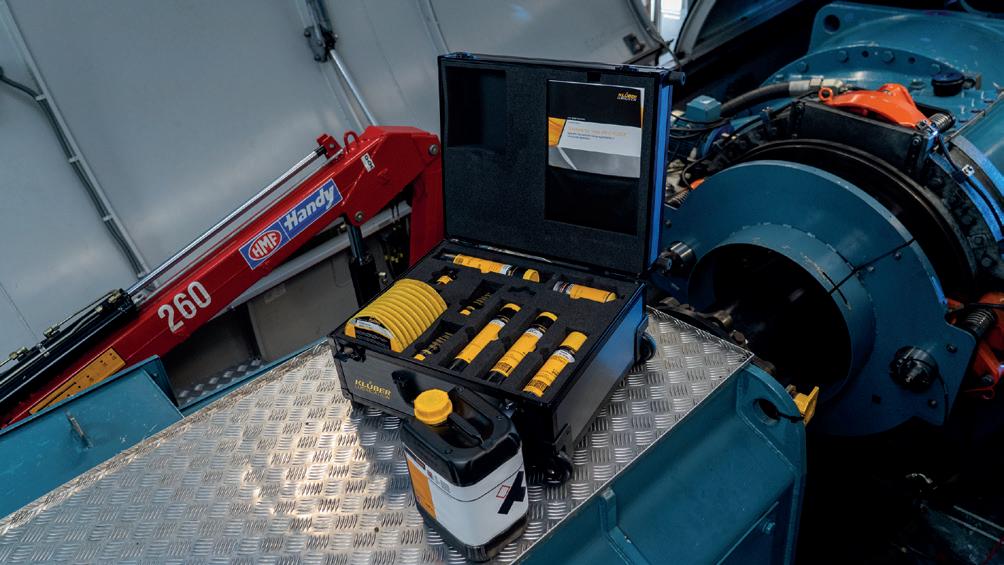
Yet, detection does not automatically translate into immediate replacement.
Operators must weigh several factors:
> Can the turbine continue operating under controlled conditions?
> Is a replacement campaign already scheduled or does repowering make sense?
> Are all necessary vessels, cranes, spare parts, and service resources available?
> What are the revenue implications of immediate shutdown?
In practice, a gap often exists between damage detection and feasible replacement. This interval may extend over a prolonged planning period, depending on logistics and maintenance scheduling.
Managing this interval without compromising safety or availability has become a key operational challenge. Although relubrication and grease changes are common maintenance measures, comprehensive, systematically-engineered stabilisation procedures for already damaged main shaft bearings are not part of standard maintenance practice.
In response to this operational need, Klüber Lubrication has developed a defined two-step stabilisation procedure aimed at slowing damage progression and supporting continued power generation under controlled monitoring conditions.
The approach combines a targeted cleaning phase with the introduction of a specially formulated Rescue Grease designed for bearings showing early surface degradation. Its purpose is not to reverse severe structural damage, but to slow progression and maintain stable operating conditions until scheduled replacement can be executed.
In the first phase, a compatible flushing grease is introduced while the turbine remains in operation. This process removes degraded lubricant, wear debris, and contaminants from the contact zone, reducing particle-induced stress and preparing the bearing surfaces for stabilisation. Depending on the available maintenance window, flushing may be performed over several hours or extended through multiple cycles to ensure thorough purging.
In the second phase, the Rescue Grease is introduced into the bearing system. The formulation is engineered to support film formation under low-speed and mixed lubrication conditions, enhance surface smoothing effects, and mitigate further micropitting progression. In practice, the Rescue Grease may be blended with the existing operational grease, with the concentration adapted to the severity of damage and operational objectives.
Throughout the procedure, vibration levels and temperature trends are continuously monitored via the

turbine’s CMS, providing operators with real-time feedback on the stabilisation effect and supporting informed decision-making regarding continued operation.
A field case from a wind farm in South America illustrates this operational approach. The operator observed a sustained temperature increase of approximately 5˚C – 10˚C above baseline values in the main shaft bearing. Simultaneously, vibration levels rose to alarm thresholds within the CMS.
Two options were considered: immediate bearing replacement, requiring turbine shutdown and mobilisation of lifting equipment, or application of Klüber Lubrication’s structured flushing and Rescue Grease procedure under controlled monitoring. The operator opted for the stabilisation strategy.
Following flushing and the introduction of the Rescue Grease, CMS data indicated a temperature reduction of approximately 6˚C – 10˚C and a measurable stabilisation of vibration levels. The turbine remained in service under supervision.
As a result, immediate shutdown was avoided, no lifting equipment was required, and bearing replacement (valued at approximately €30 000) was deferred. The intervention also prevented associated production losses and eliminated the need for additional manpower mobilisation.
While each case requires technical assessment, this example demonstrates how a structured stabilisation procedure can preserve operational continuity and provide tangible economic benefits.
Historically, lubrication has often been regarded as a routine maintenance parameter rather than a decisive operational factor. However, in high-performance industrial applications such as modern wind turbines, grease performance directly influences surface fatigue behaviour, film formation at low rotational speeds, contamination tolerance, and, ultimately, bearing life expectancy.
Main shaft bearings frequently operate under mixed or boundary lubrication conditions, particularly during
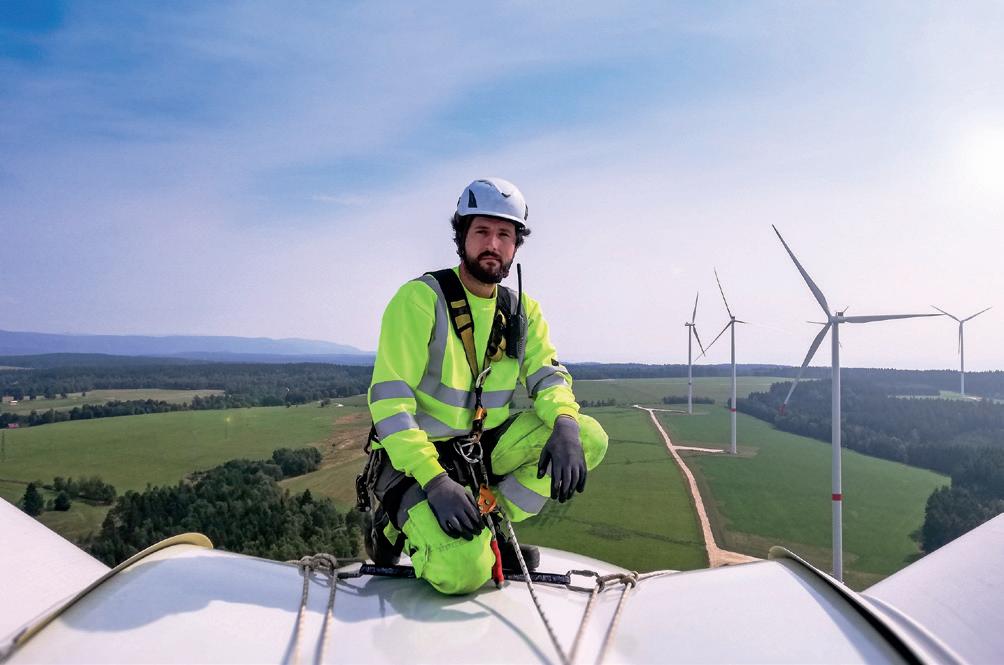
low speed operation following start-stop cycles. Under such dynamic rolling-sliding conditions, maintaining a stable lubricating film that ensures surface separation between rolling elements and raceways is critical to prevent metal-to-metal contact and subsequent surface-initiated rolling contact fatigue, such as micropitting. Prolonged standstill and start-stop cycles can lead to lubricant displacement, surface distress, or corrosion effects, which may increase the susceptibility to micropitting once normal bearing operation resumes.
Contamination represents an additional operational challenge. Solid particles, internally-generated wear debris, water ingress, and even unintended grease dilution – for example due to operational media – can disrupt the lubricant film and accelerate surface degradation. The ability of a grease to tolerate contamination without rapid loss of consistency or film-forming capacity therefore plays a significant role in bearing durability.
From a formulation perspective, base oil viscosity, thickener type and structure, rheological behaviour, and the design of the additive system collectively determine how effectively the grease can form and replenish the lubricating film under fluctuating loads and low entrainment speeds. Reflow characteristics and distribution within the bearing further influence whether sufficient lubricant reaches the contact zone over time.
When early surface damage is detected, lubricant selection can therefore influence whether degradation accelerates through surface distress and fatigue, or stabilises under improved lubrication conditions.
This does not eliminate the need for replacement once structural limits are reached. However, it can provide operators with valuable time, reducing exposure to unplanned downtime, and costly emergency logistics.
As wind turbines continue to increase in size and power output, the financial exposure associated with unplanned downtime grows accordingly. Operational focus is therefore shifting from reactive repair towards structured availability management.
CMS detect anomalies at an early stage. Maintenance planning determines the feasibility and timing of component replacement. Within this interval, lubrication strategy becomes a technical control lever capable of influencing operational stability.
By combining monitoring data with targeted lubrication intervention, operators can actively manage the progression of bearing damage rather than simply reacting to failure. This does not replace structural repair where required, but it can reduce exposure to operational disruptions and resource-intensive corrective actions.
In this context, stabilisation procedures such as scheduled flushing and Rescue Grease concepts are not emergency fixes, but elements of a broader availability management strategy – one that aligns technical integrity with economic performance in large wind fleets.

Siemens Energy and Neptun Smulders Offshore Renewables (NSORe) have been awarded a contract to deliver a new grid connection system for offshore wind farms in the North Sea for German transmission system operator, 50Hertz. The connection, known as North Sea Connector 2, will enable up to 2 GW of wind power to be transmitted from offshore to onshore in the future.
The offshore converter platform will be fabricated by NSORe, a joint venture between Neptun Werft – part of the German Meyer Werft Group – and the Belgian construction company Smulders, primarily at the Neptun Werft shipyard in Rostock-Warnemünde. Siemens Energy will equip the platform with electrical transmission technologies, which will largely be manufactured at the company’s German factories. Siemens Energy has also been awarded a long-term service contract to cover maintenance, IT services, and on-call support. The company expects to fully book the order in the next fiscal year, starting on 1 October 2026.
Around 95% of Siemens Energy’s project scope for North Sea Connector 2 will be delivered in Germany. Transformers and converters will come from Nuremberg, while SF6-free gas-insulated switchgear will be supplied from Berlin.
Net Zero Supply Chain Conference & Exhibition
10 September 2026
Billingham, UK
www.eventbrite.co.uk/e/nof-net-zero-supply-chain-conferenceexhibition-2026-tickets-1976581678007
Solar & Storage Live Zurich 2026
17 – 18 September 2026
Zürich, Switzerland
www.terrapinn.com/exhibition/solar-storage-live-zurich
Solar & Storage Live UK 2026
22 – 24 September 2026
Birmingham, UK
www.terrapinn.com/exhibition/solar-storage-live
Ocean Winds has installed the first wind turbine at the Dieppe Le Tréport offshore wind farm (EMDT).
Located off the coast of Le Tréport and Dieppe, EMDT will comprise a total of 62 wind turbines with a total installed capacity of 500 MW, capable of supplying renewable electricity equivalent to the annual consumption of approximately 850 000 people. As majority shareholder, Ocean Winds is leading the development and delivery of the project.
With the offshore substation already installed, the first turbine is expected to start generating electricity in the near future.
The installation also reflects the mobilisation of a robust European industrial value chain, strongly anchored in France. Siemens Gamesa is supplying the wind turbines, mainly produced in its facility in Le Havre (nacelles, blades), while tower sections are produced in Bilbao and pre-equipped in Brest. Foundations are manufactured in Fene, Spain, and stored in Cherbourg ahead of installation. The offshore substation has been built at Chantiers de l’Atlantique in Saint-Nazaire, and subsea cables are produced in Greece. Offshore installation works are carried out by leading contractors including Jan De Nul and DEME, with numerous ports along the Channel and North Sea coastline supporting the project’s logistics.
WindEnergy Hamburg 2026
22 – 25 September 2026
Hamburg, Germany
www.windenergyhamburg.com
Energy Storage Summit Central and Eastern Europe
06 – 07 October 2026
Warsaw, Poland
https://storagecee.solarenergyevents.com
Solar & Storage Live Italia 2026
07 – 08 October 2026
Verona, Italy
www.terrapinn.com/exhibition/solar-storage-live-italia

Companhia Paranaense de Energia (COPEL) has awarded ANDRITZ two turnkey contracts for the supply and commissioning of additional generating units at the Foz do Areia and Segredo hydropower plants on the Iguaçu River in Paraná, Brazil.
The combined order value is in the mid three-digit million-euro range and was included in ANDRITZ’s order intake for 1Q26.
The expansion will add more than 2.1 GW of new capacity to the two hydropower plants, which currently have a combined output of 2.9 GW. As a result, COPEL’s total installed capacity will grow from 6.2 GW to 8.3 GW – a 34% increase.
This investment is part of contracts awarded to COPEL through Brazil’s second Capacity Reserve Auction, a government programme aimed at ensuring reliable power supply. It represents COPEL’s largest investment in power generation in decades and marks a significant milestone for the country’s energy transition.
ANDRITZ’s contract scope covers the full execution and commissioning of the new generating units including turbines and generators and all related equipment. Construction is scheduled to begin in 2026, with nearly 2000 direct jobs expected at peak activity. The units are planned to begin operation in 2030.
International
British International Investment (BII) has committed US$20 million to Anzana Electric Group to support the construction of run-of-river hydropower projects across Africa.
Smaller projects under 10 MW often struggle to secure long-term debt financing; BII’s facility is designed to help address this challenge by reducing the high upfront costs and long timelines usually associated with arranging project-specific financing.
This will support Anzana to accelerate the development of small and medium scale hydropower projects in East, Central, and Southern Africa, with the first project expected to be in Zambia.
Through this facility, Anzana expects to deliver 10 MW of new distributed baseload generation capacity by 2030. This is expected to generate more than 50 GWh of clean electricity each year for national and regional power grids and high-demand centres. The portfolio is also expected to create more than 500 jobs during construction and operations, while expanding electricity access and supporting economic activity across the targeted regions.
ACCIONA Energía has reached an agreement for the sale of a 64 MW hydro portfolio in northern Spain to White Summit Capital, an infrastructure manager specialising in the energy transition. The transaction is valued at €66 million and is debt-free.
The portfolio comprises 17 small hydroelectric plants in Navarra and one in La Rioja with capacities ranging from 1 MW – 6.2 MW and long-term concession agreements. The transaction is expected to close in the coming weeks, generating an estimated capital gain of €55 million.
The sale represents a further step forward in ACCIONA Energía’s selective asset rotation strategy, aimed at maximising the value of its projects and optimising capital allocation, while strengthening the company’s financial position.
> Baseload Capital and Furusato Netsuden demonstrate scalable geothermal growth model in Japan
> Eco Wave Power U.S. joins NVIDIA Inception programme
> Ammongas to upgrade biomethane project in Spain
> clearvise AG starts construction of the Tezze solar project in Italy
> Baker Hughes and H&P collaborate to advance US geothermal development
> METLEN to deliver new UK solar projects through Elgin partnership
Follow our website and social media pages for more updates, industry news, and technical articles. www.energyglobal.com

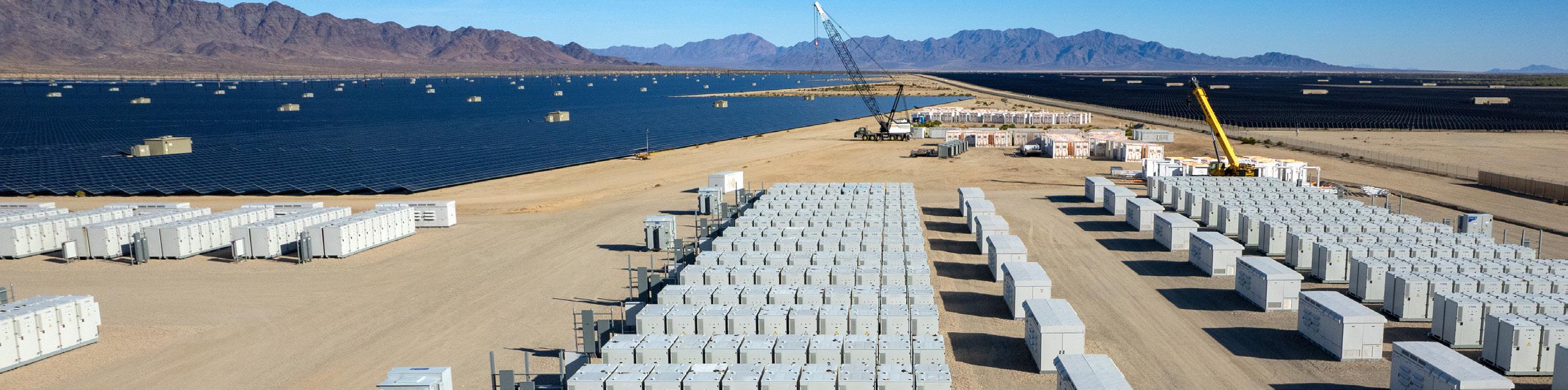
Mulilo has reached financial close on the Hartebeesfontein battery energy storage system (BESS) project, a 77 MW/308 MWh facility located near Klerksdorp in South Africa.
This is Mulilo’s second renewable energy project to be executed within the municipality, which is located near Eskom’s Hermes main transmission substation.
The Hartebeesfontein BESS project was awarded under Bid Window 2 of the Battery Energy Storage Independent Power Producer Procurement Programme, through which Mulilo secured five of the eight projects awarded.
The project is designed to provide system support through its 308 MWh storage capacity and will supply ancillary services to the National Transmission Company of South Africa (NTCSA) under a 15-year power purchase agreement.
The financial close of the Hartebeesfontein BESS project was supported by key partners, including the Department of Electricity and Energy, the Independent Power Producer Office, NTCSA, and Eskom, along with Mulilo’s shareholders, Copenhagen Infrastructure Partners and Norfund.
Revera Energy, a Carlyle-backed developer, owner, and operator of energy infrastructure assets, has reached a final investment decision (FID) for its 400 MW/800 MWh Hunterston battery storage project in North Ayrshire.
The announcement follows Revera’s recent financial close and notice to proceed for the 200 MW/400 MWh Windyhill battery storage project in Glasgow, where construction is currently underway. Revera expects construction of the Hunterston project to commence in 3Q26. Revera is also continuing to advance the 400 MW/800 MWh Kincardine battery storage project in Fife, with construction anticipated to begin in 1Q27.
Together, Windyhill, Hunterston, and Kincardine represent over £500 million of investment across Scotland and form one of the country’s largest battery storage portfolios, with a combined capacity of 1 GW/2 GWh. The projects are expected to support approximately 550 direct construction jobs and 45 long-term operational roles, bringing significant economic investment to North Ayrshire, Glasgow, and Fife.