T H E M AGA Z I N E F ROM PA L A I S DE S T H É S
Issue 98
Summer 2026
EDITORIAL
A moment for matcha Manuéla Leriche Head of Excellence Master Tea Sommelier
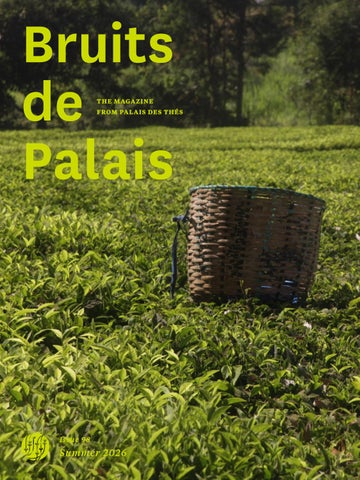
Cover
In Kenya, tea plays a major role in the country’s socio-economic development, with 5 percent of the workforce employed in the sector. Opposite
Preparing matcha the traditional Japanese way requires specific tools, including a chashaku (bamboo scoop), a chasen (whisk) and a chawan (bowl). 1. “Fashion fades, but style is eternal.” Coco Chanel
To paraphrase Coco Chanel, “Fashion fades, but matcha is eternal.”1 At the risk of offending haute-couture purists, the analogy is just too good to pass up on! This tea may be a social media darling that sparks intense enthusiasm, but it is much more than just an accessory. What makes matcha so fascinating is its ability to transcend time, passed down through generations, treasured as a rare ally, one that nourishes both body and mind. In the age of the samurai, it was already far more than a simple tea. At the heart of the Cha No Yu tea ceremony, it was revered for the steady release of energy it imparted and the clarity of mind it brought to the person preparing it. It also became a discreet yet formidable ally in negotiations: the silence of the ritual created the perfect space to truly listen. As my own tea master once taught me, “in the tea ceremony, no one speaks, yet everyone listens.” This art of dialogue is far removed from the way matcha is consumed today. Beyond its noticeable benefits, matcha holds a more mysterious, intimate dimension. In a world moving at dizzying speed, where appearances can take precedence and immediacy reigns, turning to a ritual as simple yet powerful as its preparation is a way of reconnecting with a form of ancient wisdom. By making it their drink of choice, samurai and Zen monks were already centuries ahead in anticipating the benefits we celebrate today. Yes, matcha is enjoying a surge in popularity, but it will never be reduced to a passing trend. This contemporary wave is simply a rightful return – and an invitation to rediscover it: its richness and depth transcend borders and time, offering each of us, wherever we are in the world, a sense of energy and serenity, one that has the power to bring calm not only to our lives, but perhaps even beyond.
Issue 98 – Summer 2026
CONTENTS T R AV E L J O U R N A L
PLANET TE A
PLANET TE A
B y L éo Dug ué -Per r in
B y Elena Di Benedetto
Tea maker without borders in Kenya
Why do people drink tea?
True or false?
6
14
T E A C U LT U R E
TA S T I N G A P R E M I U M TEA WITH A TEA SOMMELIER
B y Bénédicte Bor toli
Umami
B y Yani s Siadou s
Tasting Mrs. Dara’s white tea
20
18
T E A I N T H E K I TC H E N
Matcha in all its forms 28
26
T E L L M E A S TO RY
REMARK ABLE TE A
NEWS
B y E velyne E yber t
B y Elena Di Benedetto
The four principles of tea
Amiran: Georgia’s first smoked tea
The latest from Palais des Thés
30
32
34
CONTRIBUTORS
Yanis Siadous
Evelyne Eybert
Léo Dugué-Perrin
Yanis obtained his Master Tea Sommelier diploma in 2025 and is now in charge of training at the Paris Vieille-du-Temple store. He enjoys sharing the world of tea through its many terroirs.
Evelyne is Trainer and coordinator at the Tea School and earned her Master Tea Sommelier diploma in 2025. She is passionate about Chinese teas and enjoys practicing the different tea ceremonies.
Tea Explorer Léo scours tea farms in search of the finest teas. He delights in sharing his finds and talking about all the people he meets during his travels.
6
TR AVEL JOURNAL
7
Tea maker without borders in Kenya Kenya is the world’s leading exporter of tea. But behind this ranking lies a very different reality: tea largely reduced to dust, low-grade leaves destined for industrial tea bags. And yet, in the mountains, a handful of producers are crafting remarkable teas. By working side by side with curious and inventive tea makers, is it possible to reveal By Léo Dugué-Perrin the true character of Kenyan tea?
A
few months ago, François-Xavier Delmas, Palais des Thès founder and Tea Explorer, asked me a simple question: “Do you think it’s possible to make truly exceptional tea in Kenya?” I had no idea. And sometimes, the only way to answer a question is to pack your bags. Because being a Tea Explorer isn’t always about setting out in search of the finest teas with the aim of sourcing them. Another essential part of my work is meeting producers directly, to observe, exchange and share the one thing that brings us together: tea. These encounters often take the form of conversations free from any commercial agenda, driven simply by the desire to see firsthand what is being created and, often, by the pleasure of crafting teas together. Such moments are enriching for everyone involved. They elevate us – producers and myself alike – and ultimately help give rise to even better teas, made under the most favorable conditions for all.
A tea maker without borders
Opposite
In Murang’a county, Elizabeth produces specialty teas in a country largely dominated by CTC production.
Some months later, that question led to a new challenge. In the depths of winter, François-Xavier met in Paris with James Mwangi, a Kenyan entrepreneur and founder of Equity, one of East Africa’s largest banks. Moved by his personal story and his determination to make tea not just a raw material but a true asset for his country, François-Xavier began to consider how we might support him. For several years now, it just so happens that I had long been eager to develop a project called Tea Maker Without Borders, built on sharing knowledge between producers who are curious, open-minded and keen to explore alternative techniques, other tea colors and new flavors. At the end of January, I set off for Nairobi. I don’t linger in the capital, as I only have a few days to carry out my exploration. Leaving behind this city home to more than four million people, perched at 1,795 meters above sea level, one thing becomes immediately clear: tea is everywhere in this lush, green landscape. In this East African country, the soil, climate and altitude are ideally suited to Camellia sinensis. That is why the British introduced tea cultivation here at the start of the twentieth century. As I travel, I pass a patchwork of small plots, divided over generations through inheritance. Carefully tended, they sit alongside avocado trees, macadamia groves, mango trees, a variety of food crops and the famed rose
CARNET DE VOYAGE
8
9
CARNET DE VOYAGE
“Elizabeth and I share the same language: the language of tea leaves and their transformation.” Léo Dugué-Perrin, Tea Explorer
TR AVEL JOURNAL
10
fields that supply florists back in France.
Tea-loving Elizabeth The tea estate I had been advised to visit lies in Murang’a county, north of the capital. These highlands, like many others across the country, rise to over 1,600 meters, providing ideal conditions for tea cultivation. I am welcomed by Elizabeth Njeri, director of Gatanga. I had expected to find a CTC factory, producing broken leaves of modest quality using the crush, tear, curl method. Instead, I discover a remarkably well-equipped facility that, since 2018, has specialized in crafting specialty teas, the equivalent of our Grands Crus teas.* These small-batch teas are primarily destined for export. Elizabeth herself is the tea maker. It is still uncommon to encounter a woman at the helm of a tea factory – but Elizabeth is no ordinary figure! Born in Kenya and not from a family of producers, she chose tea out of passion and her work goes far beyond the CTC method. She leads her team with energy and warmth, and knows her terroir as intimately as she does her machinery. Before long, I ask to taste all of her specialty teas: mostly black teas, but also whites, greens and a few oolong teas too. Spontaneously, I tell her: “Elizabeth, I truly have nothing to teach you. I can only suggest that we create teas together, tailored to French tastes.” In truth, I have no new knowledge or practical advice to offer her. With Elizabeth, as with the producers I meet on my travels, I see myself more as a bridge, an opening onto the wider world and the perspectives I have gained elsewhere. It feels like the right moment to have her taste the teas I have brought with me from China, Japan and Bhutan.
The TRFK 306 cultivar is responsible for the renowned purple teas, particularly rich in anthocyanins. *Specialty teas are high-quality teas produced in limited quantities.
CARNET DE VOYAGE
TR AVEL JOURNAL
12
Creating tea together
“I’m not a missionary
We decide to explore new avenues beyond those arriving with fixed Elizabeth has already – very successfully – develformulas and oped. And our challenge, apart from crafting exceptional teas, is to create the tea that will be a tea manual in hand!” served at the next Africa-France Summit, bringLéo Dugué-Perrin, Tea Explorer ing together heads of state from across the continent in May 2026. Our shared endeavor suddenly takes on a diplomatic dimension. As we wait for the fresh leaves to arrive – slowly, as is often the case with tea – we begin to reflect on what defines the singularity of Kenyan tea. Is it the terroir? The plucking technique? A particular way of working the leaf? A distinctive flavor?
The purple cultivar: the signature of Kenyan tea It quickly becomes clear that the purple cultivar, recognizable in the fields by its purple-tinged shoots, which make harvesting easier, defines the character of Kenyan teas. Developed by Kenyan researchers, this variety, known by its technical name TRFK 306, is distinguished by its high concentration of anthocyanins, pigments from the flavonoid family with notable antioxidant properties. Depending on how it is crafted, it can produce teas of every color. The second defining feature of Kenya is its black tea production, which is almost exclusively synonymous with dust grade teas. This gives us the foundation of our work: to create a high-quality black tea (using the orthodox method, rather than the CTC process), one that a brand like Palais des Thés might select, made from the finest local cultivar, bringing together in the cup two defining features of Kenyan tea. I note that the most meticulous plucking standard (a bud and one leaf) is typically reserved for white teas. We decide to adopt it for black teas as well, in order to draw out the fullest range of aromas. We also opt for a lighter level of oxidation, preserving the tea’s subtle fruitiness.
A highly official tasting I barely have time to share a meal of boiled goat with Elizabeth’s team, or to cool off beneath a waterfall shaded by old tea trees, before we must present the fruits of our work. In truth, Elizabeth and I have had just twenty-four hours to finalize the handful of teas that will be discovered by James Mwangi, the French ambassador to Kenya and a number of political and media figures. In this moment of Franco-Kenyan camaraderie, the teas we present are served plain, as is customary in France, and at room temperature. The guests are as impressed by their quality as they are intrigued by this gastronomic approach. In Kenya, drinking tea without milk or sugar is often seen as a sign of modest means, the richness of the beverage traditionally lies in these additions. For our hosts, this tea tasting becomes an opportunity to see tea differently: to understand that the leaves in their cups are not merely a raw material, but part of a broader art of living. A moment of sharing and exchange, capturing the full beauty of the world of tea.
•
13 Slopes, sunlight, acidic soils… Kenya offers ideal conditions for producing high-quality teas. At Gatanga, as across the country, the leaves are harvested by hand.
PL ANET TE A
14
WHY DO PEOPLE DRINK TEA? Tea is the second most widely consumed beverage in the world, after water. However, not all tea drinkers enjoy it in the same way and nor for the same reasons. From England to Japan, China to India, via France and the United States, let’s take By Elena Di Benedetto a journey to explore what draws people to tea.
T
ea traces its origins back nearly 3,000 BCE. Over time, the reasons for drinking it have evolved considerably. Today, tea drinking responds to a wide range of desires and needs, shaped by uses that are at times simple and everyday, and at others deeply symbolic. Hygiene and boiled water
The Asian legends surrounding the origins of tea drinking make very little mention of its hygienic dimension. While the therapeutic properties of the tea leaf were quickly praised, they were understood more in a curative sense (as a remedy) rather than in a preventative one, as a way of making everyday drinking safer. And yet, water has always been a vector for bacteria and disease (especially when stagnant), making it far safer to boil before drinking. Infused beverages offered a reliable way to consume potentially contaminated water. This was particularly true during China’s Song dynasty (960–1279), a period of rapid urbanization, when growing population density created conditions conducive to the spread of disease. The same pattern can be observed several centuries later in the modern West. In England, mortality rates declined significantly as tea became an increasingly integral part of daily life. This effect was particularly pronounced in areas with poor water quality: between 1785 and 1834, mortality fell by more than 18 percent in these regions.1 Even today, the United Nations estimates that two billion people do not have access to safe drinking water – roughly one in four worldwide.2 Tea remains one of the simplest ways to make water safer to drink while reducing health risks.
A spiritual aspiration As early as the third century in China, then five centuries later in Japan, tea spread through monasteries and among monks. It answered a very simple need: to remain alert and focused during long hours of meditation. In truth, everything about tea is rooted in a spiritual, even religious, approach. This is reflected in the legend of Bodhidharma, a founding story of Zen Buddhism: determined to meditate for nine years, he is said to have fallen asleep and, in frustration, cut off his eyelids. Where they fell to the ground, the first tea plants are said to have grown. This monastic beverage is indeed closely tied to both physical and spiritual awakening. Even today, Cha No Yu (the Japanese matcha tea ceremony) is considered one of the paths of Buddhism. Highly codified, this
TEA: A TOOL OF PRODUCTIVITY? During the Industrial Revolution, tea enabled Britain’s most vulnerable workers to stave off hunger and sustain the energy required for demanding industrial labor.
PL ANÈTE THÉ
15
ritual where people gather around tea seeks to cultivate full awareness of the present moment, entirely oriented toward others and toward the tea itself, following the four principles established by Sen no Rikyū (see p.30). These principles resonate deeply with the values of Zen Buddhism: impermanence, simplicity and a deep attunement to the present.
Tea as a marker of social distinction
1. Antman, F. M For Want of a Cup: The Rise of Tea in England and the Impact of Water Quality on Mortality. Department of Economics, University of Colorado Boulder, 2002. 2. UN-Water. (s.d.). WASH (Water, Sanitation and Hygiene).
It was not until the rise of China’s Ming Dynasty (1368-1644) that tea became more secular, notably as a drink of the literati. A refined beverage, its popularity also spread among Japanese samurai, who valued matcha for sharpening concentration before heading into battle. When tea arrived in Europe in the seventeenth century, it was a rare commodity, an exotic product as prestigious as coffee, chocolate and sugar, whose expansion was closely intertwined with its own. Introduced to the English court under the influence of the Portuguese princess Catherine of Braganza upon her marriage to Charles II, it quickly became an emblem of a refined way of life and a marker of considerable wealth: the use of Chinese or European porcelain, the development of specialized teaware
PL ANET TE A
such as the teapot and the ready availability of sugar. Even today in Europe, the tea room remains a refined setting, and enjoying afternoon tea in a luxury hotel offers a more accessible indulgence than fine dining: pastries by renowned chefs, delicate tableware, attentive service. Admittedly, tea itself has become widely democratized, now lining supermarket shelves and no longer quite the focal point of afternoon tea. Yet the spaces devoted to it – tea rooms in particular – still carry a sense of social distinction and refinement associated with worldly rituals, increasingly attracting a younger and more curious audience.
A quest for well-being In the West, dietary choices are increasingly driven by a focus on health – and tea is no exception. In 2024, the beverage’s health benefits ranked as the second most commonly cited reason for purchasing premium tea among French consumers, just after taste and the pleasure of drinking it. In recent years, many young adults mindful of what they consume have made tea part of their daily routines, drawn by its widely celebrated benefits, particularly matcha, often regarded as a “superfood.”
DRINKING WHAT’S CLOSE AT HAND For a long time, certain teas were consumed only locally. This is the case with mao cha produced in the Golden Triangle (Laos, Myanmar, Thailand), loose, uncompressed teas similar to sheng pu erh. The principle remains the same: to make local water, not always entirely safe to drink, more palatable by infusing it with part of the harvest not intended for export. Yet mao cha reveals a remarkably rich aromatic profile, one that our Tea Explorers are keen to share with European tea drinkers.
3. Castellana F, De Nucci S, De Pergola G, Di Chito M, Lisco G, Triggiani V, Sardone R, Zupo R. “Trends in Coffee and Tea Consumption during the COVID-19 Pandemic.” Foods 2021, 10(10), 2458. Results from thirteen European cross-studies. 4 and 5. See Bruits de Palais No.84, p.14 sq and No.97, p.20 sq.
PL ANET TE A
17
More than
70% of people
report having increased their tea consumption during the pandemic, compared with
54% for coffee. 3
Others take a more curative approach, turning to tea (or rather herbal teas) only when they are unwell, enhancing each cup with honey or herbs like thyme, lavender or sage, all valued for their antiseptic properties. This trend has grown even stronger since the Covid 19 pandemic. Today, tea’s beauty benefits are also frequently highlighted, sometimes at the risk of encouraging more questionable claims. Certainly, hydration is always beneficial for the body; and the energy provided by tea tends to be more sustained and gradual than that of coffee; and the antioxidants naturally present in tea do play a role in cellular aging and therefore in the visible signs of aging. That said, achieving such effects would require levels of active compounds far exceeding what is found in a single bowl of matcha. Ultimately, the positive effects often attributed to tea are likely the result of a broader correlation with a healthy lifestyle, of which tea is a natural part.4 And perhaps its greatest benefit of all lies simply in the pleasure of a cup of tea!
Toward a gastronomic approach to tea These days, tea attracts a curious and cosmopolitan audience. Much like wine or spirits, specialty tea can be approached through a gastronomic lens, engaging all the senses and inviting an analytical perspective once largely reserved for fine alcoholic beverages.5 It can even be paired with food in an increasingly explored, alcohol- free approach embraced by fine dining: Japanese green teas with delicate white fish, smoky Indian or Chinese teas with roasted meats or slow-cooked vegetables, and jasmine teas with chocolate or fruit-based desserts. Here, boldness is key to expanding a flavor landscape that can sometimes feel predictable. Visiting a specialty tea shop can therefore feel much like stepping into a fine wine merchant’s, where a Tea Sommelier guides the connoisseur toward the tea that best suits their tastes and preferences. After all, each of us has – or should have – a good reason to drink tea. Perhaps because tea itself fosters a very particular relationship with time, with oneself and with others. Preparing and drinking tea may be a way of nurturing and preserving this connection to time, whether for a few minutes or for a lifetime.
•
DID YOU KNOW?
Bottled iced tea accounts for between 15-20 percent of total tea consumption worldwide, and up to 75 percent in the United States alone. However, iced tea consumers often identify more as soda drinkers than as tea drinkers, likely due to the high sugar content of these processed drinks, which can reach up to 20 g per 330 ml.
PL ANET TE A
True or false? Both highly accessible and shrouded in mystery, the world of tea often gives rise to claims of uncertain accuracy. Can you separate fact from fiction among the many you have likely heard?
its The Br ggest bi are therinkers tea d orld. in the w
rge s t orld’s la ith w is the w Turkey uming nation, d s n tea-con drinking arou ed people per year, follow K. ups 1,300 c land and the U by Ire
FALSE
Sources : ► Amouyel, P. Bruits de Palais No.84, “Tea and Health.” ► Antman, F. M. For Want of a Cup: The Rise of Tea in England and the Impact of Water Quality on Mortality. Department of Economics, University of Colorado Boulder, 2022. ► Khan, N. & Mukhtar, H. “Tea and Health: Studies in Humans,” Current Pharmaceutical Design (2013), 19(34), p.6141-6147. ► UN-Water. (s.d.). WASH (Water, Sanitation and Hygiene). ► Yamanishi, T. “Tea” in The Cambridge World History of Food, eds. Kiple K. F. & Ornelas K. C. (Cambridge University Press, 2000), vol. 1, 712-720. ► Zhang et al., 2015 (analysis of 22 studies reporting on 856,206 participants).
18
TRUE
While tea is traditio nally serve a lo n g si d d e countries, meals in Asian su practice is ch as Japan, this now gainin g ground in fine-d in where it m ing restaurants, ay be serv som ed e ti m e s e ven in win chilled, e glasses.
TRUE
tical le is iden e molecu The thein ine, but in tea it is to caffe ith L-theanine (a w ), combined ot found in coffee dn compoun ntributes to a more which co lease of energy. gradual re
ides Tea provelease rr a slowe gy than r of ene ee. coff
Tea can througho be drunk ut a mea l.
TRUE However, this is more a correlation than a causal relationship: people who drink tea often tend to lead healthier lifestyles, in which tea naturally plays a role.
FALSE Tea is primarily consumed in teaproducing countries themselves (led by China, India and Japan), which account for up to 70 percent of global production.
Tea is mainly drunk in European countries.
Tea drinkers live longer. FALSE
FALSE
Today’s te a-dri younger th nker is actually a generati n n in previous o States and s. In the United Europe, alm pe rc o st e n 8 t 0 o f m compared illennials drink tea , with ju st 6 baby boom 5 percent of ers.
duction lobal pro In 2024, g cord 7.05 million re 0 reached a ding around 6,00 tons (inclu atcha), while tea tons of m grew by 3.5 to 5 tion consump certain regions. percent in
ea Global t and ion product tion are p consum decline. on the
Young pe drink les ople s tea. PL ANET TE A
19
TE A CULTURE
Umami: a flavor and a new way of thinking about taste Recognized as the “fifth taste,” umami expands our sensory palette. But beyond that, it offers a new way of understanding flavor, prolonging the pleasure of tasting, whether in a bowl of matcha or a broth, and even shaping global gastronomy. By Bénédicte Bortoli
TE A CULTURE
22
U
ma mi (旨味) : This word, formed from umai, meaning “delicious,” and mi, meaning “taste,” “flavor” or “essence” in Japanese, quite literally refers to a delicious savory quality. You could say it is the taste of tastes: a flavor that feels instantly and universally recognizable, echoed in the soft resonance of its bilabial consonants (m), like a murmured “mmm.”
Identifying a taste Before it was scientifically identified and named “umami,” this flavor was known as another term: “osmazôme,” in reference to the savoriness of meat broth. The word was popularized by the gastronome Brillat-Savarin in Physiologie du goût (A Handbook of Gastronomy) in 1825, taken up by Alexandre Dumas and endorsed by the Académie française, before eventually falling into obscurity. In 1908, the chemist Kikunae Ikeda, a professor at Tokyo Imperial University, identified glutamic acid in dashi broth* as the source of a taste distinct from the four basic tastes (sweet, salty, sour and bitter) then recognized in the West. He named this fifth taste “umami” and soon developed a method for extracting monosodium glutamate, contributing to its wider use. International recognition of this taste came only much later, particularly after the discovery of specific glutamate receptors in the early 2000s. Yet this rich, lingering taste was recognized long before science was able to explain it.
Scientific and sensory mapping Umami is primarily associated with the presence of glutamic acid and certain nucleotides, such as inosinate (found notably in meat) and guanylate (present in certain mushrooms). The synergy between these compounds enhances the perception of this unique taste. From a sensory perspective, umami is characterized by a sense of roundness, depth, fullness and length on the palate. It is often described as savory, delicious, comforting and remarkably well-balanced. The sensation of pleasure and satisfaction it creates lingers, as salivation is stimulated more intensely and for longer than with, say, acidity. As a result, flavors linger on the palate for longer. Unlike saltiness or sweetness, umami is not perceived as an immediately identifiable taste; rather, it acts as a foundation, structuring the overall flavor experience. Our relationship with umami is often described as almost primal, perhaps because breast milk is our first encounter with this taste. Neuroscientists have also identified an innate attraction to its compounds, seemingly hardwired in the brain, which may help explain the deeply appealing, even addictive quality of umami-rich foods. In short, umami: – It is not localized to a specific part on the tongue, unlike other tastes. – It has specific receptors. – It activates neural pathways associated with food reward.
*A fundamental element of Japanese cuisine, made from kombu kelp and dried bonito.
23
Kikunae Ikeda (1864-1936) identified glutamic acid in 1908 as the compound responsible for what he called “umami.” The following year, he filed a patent to protect his manufacturing process, before founding a company called Ajinomoto (Japanese for “essence of flavor”).
A major influence on contemporary gastronomy Many foods are rich in umami compounds: seaweeds (kombu, nori); tomatoes and dried mushrooms (shiitake); mature cheeses (parmesan, Comté); fermented products (soy sauce, miso) and lacto-fermented foods (kimchi); certain aged meats, meat stocks, and more. Italian cuisine, for example, naturally pairs tomatoes with mature cheese, combining glutamates with nucleotides. This synergy creates a far greater intensity than that produced by a single isolated compound. Dashi is the very embodiment of this architecture of umami. While Japan is often considered the birthplace of umami, other traditional cuisines around the world have long harnessed its qualities, often intuitively: Asian broths, Mediterranean sauces, French stocks, Italian ragùs, as well as the simmering and smoking techniques found in African cuisines. The universality of umami lies in the widespread use of fermentation, slow cooking, drying, smoking and reduction – methods that concentrate flavor. The recognition of umami has encouraged a deeper exploration of broths, fermentation and aging techniques. Chefs have embraced this notion of length on the palate and fullness, seeking balance and depth rather than sheer intensity. For some, umami has become both a guiding principle and a signature of their cuisine, something to be carefully crafted and refined.
TE A CULTURE
Umami has also influenced the food industry and nutritional thinking. By enhancing flavor perception, it promotes a sense of satiety and makes it possible to reduce added salt while maintaining gustatory satisfaction. That said, it is sometimes used less judiciously in its synthetic form (E621), as a food additive to artificially enhance the appeal of certain dishes.
Tea and umami: the example of matcha In the world of tea, the technique of shading, formalized in the nineteenth century, has been harnessed to enhance umami. In the weeks leading up to harvest, tea leaves are partially or fully covered, reducing their exposure to sunlight. As a result, the plants draw more nutrients from the soil and increase their concentration of amino acids, such as L-theanine. This compound is responsible for the umami and naturally sweet flavors found once infused. Furthermore, in shaded tea plants, theanine is converted less readily into catechins, resulting in a less bitter tea. Matcha shares a pronounced umami flavor that is also found in other shaded teas, like gyokuro. The presence of umami partly explains the central role tea plays in Japanese culture: it is not merely a stimulating drink, but a complete sensory experience, where balance takes precedence and each sip reveals a soft, vegetal texture with a subtle hint of brininess. This umami, driven by two dominant compounds – L-theanine and glutamate (in moderate amounts) – is delicate, diffuse and airy, carried by free amino acids and the slightly creamy texture of the suspended powder. When preparing matcha, the frothy surface and density of the liquid contribute to a rich, enveloping sensory experience. The sense of satisfaction conveyed to the brain by our taste buds likely plays a part in the global success of matcha.
A flavor that connects Umami is neither a trend nor an additional taste. It reveals the structural dimension of flavor, its ability to unify the elements of a dish. It reflects a fertile dialogue between science and culture. In tea, as in broths and fermented foods, umami expresses a subtle depth: a flavor that does not dominate, but instead allows the nuances of other tastes to emerge. Beyond physiology – that is, the mechanisms by which our taste receptors bind to compounds and transmit sensory information to the brain, umami reflects a sensitivity to balance and nuance. In this sense, it invites attentiveness to transitions and subtleties. It does not impose itself; it connects. This approach echoes the Japanese aesthetic of restraint,
FOR UMAMI LOVERS To preserve the umami of a matcha or gyokuro, it is best to avoid using water that is too hot (around 70°C for matcha and 50-60°C for gyokuro). Water that is too hot will accentuate bitterness, which can mask the umami. Try slow-brewing a sencha by leaving the leaves in melting ice cubes (the kooridashi method), and you will find it develops even more umami than when prepared hot.
24
CULTURE THÉ
25
minimalism and understated depth. Taste becomes a relationship, a resonance of flavors that touches both palate and heart, rather than an act of sensory domination.
A relationship with time
DID YOU KNOW? Umami is also found in shu pu erh teas, due to their fermentation. Some of these teas even reveal notes reminiscent of typically umami-rich ingredients, such as mushrooms.
What umami-rich foods and preparations share is not only a certain flavor (savoriness), but above all the way that flavor endures. Umami is a taste that must be coaxed out and revealed, so that it can fully unfold during tasting. For it to be perceived by the brain, the proteins in food must break down, releasing amino acids. This requires processes of transformation and decomposition, whether through aging, fermentation, cooking or curing – all of which take time. And shaded teas are no exception, shaped by the cultivation methods used to grow them. The umami that contributes to their appeal is the result of a deliberate choice: the technique of shading. Time, then, is the key to unlocking umami. Outside Japan, where this taste is deeply rooted, time is also needed to learn to recognize and appreciate umami.
•
TASTING A PREMIUM TE A WITH A TE A SOMMELIER
26
Tasting Mrs. Dara’s white tea Back from a trip to Thailand, I would like to share a memorable encounter made in the mountains north of Chiang Mai. At one thousand meters above sea level near Mae Sai, Mrs. Dara cultivates rare teas from ancient tea plants, growing amidst jungle vegetation alongside coffee plants, chilies and pomelos. A place suspended between mist, By Yanis Siadous mountain peaks and wild, untamed nature.
C over e d i n mo s s , M r s . Dara’s ancient tea plants can reach up to two meters in height – a scale that requires climbing nimbly to reach the buds hidden among the large leaves. Har vesting means weaving your way through the branches, following the natural contours of the land. These plants yield little, yet their leaves offer a remarkable aromatic richness.
An exacting craft W h i le wh ite tea is simple to produce, it does require constant attention. Its processing involves very few steps, as the leaves are neither rolled nor roasted. Between harvesting and drying, everything depends on withering. During this stage, fresh, glossy leaves still full of moisture gradually lose water
Yanis Siadous Yanis is Head Trainer at the Paris Vieille-du-Temple store and earned his Master Tea Sommelier diploma in 2025. With a background in social geography and a passion for cartography, he enjoys exploring the world of tea one region at a time and by the way each tea is crafted.
1. Silvery buds catching the light against long, dark leaves.
27
2. Delicately measuring the tea.
wh i le c onc ent r at i n g t hei r aromas, shifting from a vibrant green to a softer, matte tone. This process takes a few days and the leaves must be closely observed, adjusting the humidity levels as necessary. The fragrance that fills the workshop is unlike any other: the floral notes found in the cup are only a faint echo of it.
brewing it directly in a glass. Simply place a generous pinch of leaves into a glass [2], “wake” them with a little cold water, then top up with boiling water [3]. I sip the tea liquor as the tea leaves “dance,” slowly drifting downward, adding more hot water as I go. Prepared this way, the tea reveals delicate floral and vanilla notes, like a bouquet of dried flowers. With each successive infusion, the tea liquor deepens in both color and aroma: hints of dried apricot and lightly zesty nuances become more pronounced. These can be enhanced further paired with something fruity. So I have chosen to serve mine with fruit jellies, to really bring out this tea’s natural sweetness and indulgent character.
W h i le t h is prepa rat ion method is less ceremonial, it is incredibly popular throughout China, adopted daily by millions of tea drinkers nationwide. Simple and accessible, it offers an easy way to enjoy tea, even on a hot summer’s day, and echoes the warmth and generosity of Mrs. Dara’s hospitality.
The leaf and the moon The contrast between the fuzzy, silvery buds and the long, dark leaves remind me of the moon against a night sky [1] . In the Yunnan province, these teas are known as “Moonlight” teas. I like the idea of a tea that invites us to lift our gaze to the stars. But it is also what makes this tea challenging to prepare at first. Its large leaves make precise measurement difficult, so I give them the time they need to fully express themselves.
Simplicity in brewing directly in a glass I have chosen to introduce this tea through a popular ritual:
3. The leaves dance as they unfurl in the glass.
•
Mrs. Dara’s white tea ORIGIN Mae Sai (Thailand) BREWING GUIDE
→ Directly in a glass
FOOD PAIRING
Pear fruit jellies
TE A IN THE KITCHEN
28
Matcha mania Matcha is on everyone’s lips – and for good reason! This green tea powder from Japan can be transformed into a multitude of colorful drinks, tailored to every taste. So go ahead, create the matcha of your dreams!
Serves one
1. Sift the matcha into a bowl.
1 tsp (or 2 chashaku*) matcha 500 ml filtered water
3. Whisk in a brisk “W” motion to create a smooth, frothy texture.
2.
Heat the water to 70°C and pour over.
*This bamboo scoop is one of the utensils used in the Japanese tea ceremony (Cha No Yu), where it used to measure matcha powder.
Do you fancy… — a matcha latte? Add 100 ml of your choice of milk, frothed. For the best foam, opt for whole milk or a barista-style plant-based alternative.
— a matcha frappe? Swap half the milk with ice cubes. The result? A refreshing frappe latte with the same frothy texture.
— a flavored matcha? Try one of our flavored matchas, available in vanilla, rose or mint!
— something more original? ORGANIC NEKO MATCHA → REF. 100031 – €55 per 30 g ORGANIC Kokoro Matcha → REF. 500045 – €36 per 30 g ORGANIC VANILLA Matcha → REF. 500043 – €35 per 30 g
Add a syrup, whisk with infused tea instead of plain water, try your hand at latte art, dust with a pinch of matcha powder, or experiment with different milks (coconut, toasted almond, split pea)… The possibilities are endless!
29
TELL ME A STORY
30
The four principles of tea The four principles of tea are the foundation of the Japanese tea ceremony (Cha No Yu), codified by the tea master Sen no Rikyū (1522-1591). Harmony, respect, purity and tranquility infuse every moment and gesture, creating a unique experience fully By Evelyne Eybert shared by the host and their guests alike.
Soshitsu Sen (1923-2025) is the fifteenth-generation tea master of Urasenke, one of the main schools of the Japanese tea ceremony in Kyoto, descended from Sen no Rikyū. He saw the four virtues as the foundation underlying every aspect of a tea gathering (temae). Wa: harmony Harmony (wa) is expressed in the way guests interact with one another and in the arrangement of the tea room. The host and guests adopt an attitude of humility and restraint, reflected in the choice of utensils: these must be in keeping with the theme of the gathering, whether it is held in honor of one or more of the guests or attuned to the season. The choice of calligraphy displayed on a hanging scroll (kakemono) as well as the plants used in a floral arrangement, contributes to this sense
of harmony and coherence. Yet it is not simply a matter of form or pure aesthetics. Harmony must unfold on several levels: first, within the mind of the host preparing the tea; then in the immediate setting of the tea room; and finally, among all participants. The alignment of these three dimensions evokes a sense of order and universal harmony, imbued with a quiet spiritual depth.
beings and their actions. This ethic extends to oneself, to the guests, to the tea artisans and to those who have crafted the utensils, objects shaped by long hours of labor and traditional craftsmanship. It also embraces nature itself, which provides the raw materials: the tea leaves and the water shared during the ceremony.
Kei: respect
Purity (sei) is expressed through the act – both practical and deeply symbolic – of cleaning the tea room and the objects within it. Once the utensils are clean, the gesture becomes one of purification. Performed before, during and after the tea is prepared, this practice reflects the host’s inner readiness: to bring clarity to the mind and be fully present for others. It is a fundamental Zen principle, as expressed in the Buddha’s words: “Purify your heart, remove all the dust of the world.”
Respect (kei) refers both to the precise rules of etiquette that govern a tea gathering and to the openness of heart and mind (kokoro in Japanese) they cultivate once fully embodied. Through codified gestures, such as bowing or the handling of utensils, these practices allow respect to be both felt and expressed, acknowledging the inherent dignity of all
A LIFE OF TEA You don’t need to be a tea master to bring these four virtues into everyday life, they can begin with the simple act of preparing a cup of tea. By thoughtfully choosing your teaware, whether for guests or for yourself, and attuning it to your mood or the season, you create a sense of harmony. You might also take a moment to reflect on the producers and the natural world that gave us these leaves. Even the act of boiling water can become an opportunity to listen to your surroundings, symbolically “clearing” the mind… for the time it takes to enjoy a cup of tea.
Sei: purity
Jaku: tranquility Tranquility (jaku), also translated as “serenity” or “emptiness,” arises from the practice of the first three virtues, both within the tea ceremony and in everyday life. Beneath an appearance
TELL ME A STORY
31
that may seem quiet or austere, the host shares with guests a moment of quiet lightness and understated pleasure. There is no aim beyond preparing and drinking a bowl of tea, alone or together. As Sōshitsu Sen once said: “Sitting alone, far from the world, in harmony with the rhythms of nature, […] one who prepares and drinks tea in a contemplative state attains a sublime level of serenity.” Yet this is where the full complexity of the philosophy behind the ceremony emerges,
revealing a seeming contradiction. For Sōshitsu Sen, these four principles, ex pressed with apparent simplicity, form not only the foundation of the ceremony but also “its highest ideals,” making them the most difficult to attain. They can be fully realized only through long, repeated practice, grounded in a form of detachment. This path, this discipline – the “Way of Tea” (sadō) – allows these virtues to be integrated into everyday life, far beyond the threshold of the tea room.
•
Wa, kei, sei, jaku: the four principles of tea were formalized by Sen no Rikyū in the sixteenth century and continue to shape the way tea is experienced today.
REMARK ABLE TE A
32
Amiran: Georgia’s first smoked tea This Georgian smoked tea challenges expectations and dispels any hesitation. Smooth and gently woody, it creates a sensory dialogue that can be enjoyed as much at breakfast as in the afternoon, one steeped in the myths and legends By Elena Di Benedetto of this remarkably creative tea-producing country. Georgia was once a major tea-producing count r y, supplying the USSR with black tea brewed in samovars. But after the fall of the Berlin Wall, it was not until 2016 that tea once again became a national priority. Since then, a number of visionary producers have cleared the brambles from Camellia sinensis bushes and set out to create bold, inventive and often unexpected teas of every color. But a smoked tea? That is something else entirely. Hornbeam-smoked tea It takes several hours of winding mountain roads in the Guria region to reach Nika and Baaka, producers of a range of distinctive teas, including Amiran. The idea for a Georgian smoked tea emerged over the course of visits by our Tea Explorers and Tea Sommeliers to La Manufacture,* located in Konchkati, in the Guria region. But could such a tea meet European standards for smoked teas (see “What is anthraquinone?”)? After numerous trials to master the fire and smoke,
and the construction of a twenty-meter-long tube designed to capture the anthraquinone before it settles on the leaves, the result is a black tea that may recall Chinese lapsang souchong, yet stands apart for its rounded character, likely due to the use of hornbeam wood in the smoking process. And so, Georgia’s first smoked tea was born. Its name: Amiran.
The Promethean myth To understand this tea’s melodious name, simply look to the myths and legends of fire. Amiran is the Caucasian counterpart to Prometheus, the defiant figure who, according to legend, stole fire from Zeus and gave it to humankind. In Georgia, a twelfth-century chivalric epic recounts the story of a hero who has since become a symbol of resistance and resilience: Amiran is said to have slain the dragon that had devoured the sun, restoring its light to his people. It is impossible to overlook the role of fire and incandescence both in these myths and this tea. It embodies the hope
WHAT IS ANTHRAQUINONE? Anthraquinone is an organic chemical compound that occurs naturally in certain plants and is also found in some plant protection products. It can also be found in many smoked teas, although it is only minimally soluble in water. In the European Union, anthraquinone levels are strictly limited to 0.02 mg/ kg, a very low threshold that ensures its safety.
and strength of the Georgian people, while reimagining the tradition of smoked tea, long confined to China.
Challenging preconceptions Smoked teas are often divisive, inspiring both devoted admirers and firm detractors. Yet here, there is none of the harshness that can result from excessive smoking. While the very dark, long, twisted leaves release those characteristic smoky notes on the nose, once infused the tea reveals a honeyed quality, with an unexpected softness. Subtle hints of jammy fruits emerge, gliding across the palate like a delicate veil, leaving a beautifully lingering finish. Paired with a traditional English breakfast, it echoes the smokey notes of bacon. Served alongside an afternoon treat, it softens the sweetness of certain cakes. And of course, it pairs beautifully with khachapuri, the melty, cheese-filled bread typical to Georgia. So let yourself be carried by the dragon’s breath and Amiran’s courage as you savor this rare tea, born of a tradition that now reaches far beyond its borders. *See Bruits de Palais No.94, p.6 sq.
Amiran → Ref. 100193 – €22 per 100 g
33
NEWS
34
Getting to know you Each year, we reach out to get to know you a little better and to understand what matters most in the way you choose and enjoy teas and herbal teas. This year, we wanted to share a few highlights from our survey.
58% That’s the percentage
of you who have already embraced cold brewing. For the remaining 42 percent, why not give it a try? Simply steep your tea or herbal tea in room-temperature water for about forty-five minutes, then enjoy it over ice.
94% Nearly all respondents
prefer loose leaf at Palais des Thés. So thank you for supporting more responsible consumption, particularly by helping to reduce unnecessary plastic waste.
61%
More than half of you consider us to be an innovative, forward-thinking company. Les Sources, Grain-Based Herbal Teas and even our limited-edition Holiday collections have all contributed to this perception, reflecting our commitment to creativity in the world of tea.
84%
Most customers who purchase our assorted tea and herbal tea gift sets do so to give them as gifts – a gesture that never fails to delight.
71% Many of you are aware
of Palais des Thés’ environmental commitments. We place great importance on our impact on the planet and its ecosystems, which drives us to uphold ever more demanding standards, particularly when it comes to organic sourcing, traceability and reducing plastic in our packaging. If you would like to learn more, please read our CSR Report, available online or in our stores.
35
NEWS
Our matcha bar at Taste of Paris For the very first time, Palais des Thés made its debut at the Taste of Paris food festival, placing tea at the heart of the gastronomic conversation. From May 21 to 24, under the glass dome of the Grand Palais, we offered a fully immersive matcha experience, serving some thirty thousand foodies who attended the event. Manuéla, our in-house Master Tea Sommelier, also led a masterclass for around one hundred participants, sharing exclusive tips on how to prepare the perfect matcha, whether in the traditional way, as a latte and many more.
Chefs at the Tea School! The Tea School has welcomed many passionate students over the years, but on February 9 and March 30, it was a rather special audience that took to their seats. Around ten pastry chefs gathered as part of the annual partnership between culinary guide La Liste and Palais des Thés for a session dedicated to tea and food pairings. It was a unique opportunity to discuss with the company’s founder and Tea Explorer, François-Xavier Delmas, and to explore the finest pairings with Christophe Louie’s panettone, Jordan Talbot’s citrus dessert (La Réserve), Julien Alvarez’s Eugénies cookies (Ladurée), Narae Kim’s cat tongue biscuits (Park Hyatt Paris) as well as the cakes of Elisabeth Hot (Plaza Athénée), Timothy Lam (Shangri-La), and Mélanie and Arnaud Mathiez (Le Jardin Sucré).
NEWS
36
Go green with matcha! More than just a powdered green tea, matcha is a daily ritual: sift, pour, whisk and watch the froth form. More than thirty years after introducing our very first matcha, discover our newly redesigned collection – 100 percent organic and entirely sourced in Japan. Ceremonial-grade matchas, plain or flavored, along with a range of dedicated accessories to meet all your matcha needs!
2.
3. 6.
5.
4.
7. 8. 1.
NOUVE AUTÉS
37
1. Glass and straw
4. ORGANIC Ichi Matcha
9. Chasen bamboo whisk
→ Ref. 500048 – €20
→ Ref. 500046 – €25 per 30 g
→ Ref. W721 – €26
2. Shino matcha bowl
5. ORGANIC Rose Matcha
→ Ref. 500033 – €35
→ Ref. 500044 – €35 per 30 g
10. Matcha tea introduction gift set
3. Ame matcha bowl
6. ORGANIC Kokoro Matcha
→ Ref. 500030 – €35
→ Ref. 500045 – €36 per 30 g
7. ORGANIC Vanilla Matcha → Ref. 500043 – €35 per 30 g
8. ORGANIC Mint Matcha → Ref. 500042 – €35 per 30 g
9.
→ Ref. 500057 – €55
11. Insulated travel mug → Ref. 500067 – €22
12. Sensai matcha bowl with spout → Ref. 500034 – €35
10.
11.
12.
Iced teas: a taste of sunshine Iced Teas gift set → Ref. 300124 – €29.90 for four mini tins of loose leaf tea
ORGANIC Golden Sun → Ref. D100148AM – €13.50 per 100 g
Oslo mug (35 cl)
→ Ref. DTG100148N – €6.90 for a Berlingot of four 8 g teabags
Bruits de Palais is a Palais des Thés publication Editorial team
Lucile Block de Friberg, Bénédicte Bortoli, Mathias Minet Translation and proofreading
Kate Maidens
→ Ref. 500065 (yellow) – €15 Also available in purple and green.
Photo credits
Palais des Thés
All translation, adaptation and reproduction rights in any form are reserved for all countries.
François-Xavier Delmas: front cover, p.8-9, 10, 13, 39 • Guillaume Czerw: p.2, 4, 15, 16, 26, 27, 29, 33, 34, 36-37, 38 • Paul Mathenge: p.6 • Agence Brainsonic: p.20-21 • Vincent Nageotte: p.35 (top). +33 (0)1 43 56 90 90 Cost of a local call (in France) Monday to Saturday 9am-6pm
Corporate gifts
+33 (0)1 73 72 51 47
Prototype.paris
Cost of a local call (in France) Monday to Friday 9am-6pm
Sarah Vasseghi Illustrations
Sabine Forget Imaging & retouching services
Key Graphic
palaisdesthes
Customer service
Art direction and layout Styling
Follow us at
Your digital loyalty card Simply scan the QR code to add it to your smartphone.
III
“The companionship of friends and the fragrance of fine tea are reason enough to remain awake through the night.” John Blofeld The Chinese Art of Tea
palaisdesthes.com