CONTENTS
11
20
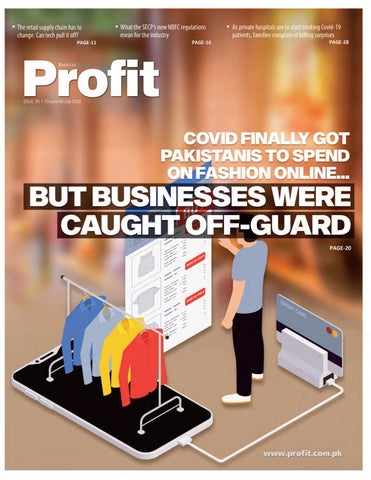
11 The retail supply chain has to change. Can tech pull it off? 16 What the SECP’s new NBFC regulations mean for the industry
20
20 Covid finally got Pakistanis to spend on fashion online‌ but businesses were caught off-guard 28 As private hospitals are to start treating Covid-19 patients, families complain of billing surprises
33 33 Textile exports down 37% in May, unlikely to pick up any time soon
24
34 Cement sector expected to rebound by 2021, thanks to tax cut and government incentives
36
38
36 The numbers are in, and large scale manufacturing nosedived 42% in April 2020 37 Locusts threaten our food supply, and also the fertiliser sector
WELCOME
Privatisation is not a revenue generator Here is how the federal finance ministry thinks about privatisation: the government will sell assets in absolute desperation when it needs to raise large sums of money and has absolutely no other sources left. This way of thinking, of course, leads one to the conclusion that privatisation is a bad thing. After all, any prudent person will tell you that selling assets to finance ongoing expenses is the dumbest possible thing one can do with one’s money. As a result, civil servants in Pakistan are almost unified in their opposition to privatisation. (For the moment, let us ignore the fact that they also oppose it on grounds that it will reduce their powers.) The problem with that thinking is that it gets the need for privatisation of state-owned companies exactly backwards: privatisation is not needed as a way to plug the hole in the budget; the hole in the budget exists because the government owns businesses it should absolutely not be owning and hence privatisation is a sustainable way out of the hole. Take, for instance, the most recent announcements about which companies are going to be privatised: two gas-fired power plants and a heavy industrial equipment manufacturing facility. We can see why the government will want to privatise them: they are large, profitable businesses with many ready
buyers who will bid up the price and ensure that the government receives a fair amount in the transaction. But this is the kind of asset you would sell first if you thought that the purpose of privatisation was to raise money. If you thought about privatisation in a more structural manner – that its real goal is to reorient the government’s functions away from running businesses and towards providing services to us as citizens that private businesses cannot provide – then one would start with the worst-performing assets: the Steel Mills, PIA, the gas utility companies, and the electricity distribution companies. More than anything else, we need the government of Pakistan to exit the business of running the country’s energy sector if we are ever to have an economy that can stop lurching from crisis to crisis and instead function to unleash the full potential of its people. But that will not happen until the Finance Ministry babus stop thinking like accountants and start thinking like real economic managers.
Farooq Tirmizi Managing Editor
Executive Editor: Babar Nizami l Managing Editor: Farooq Tirmizi l Joint Editor: Yousaf Nizami Reporters: Syeda Masooma l Taimoor Hassan l Abdullah Niazi l Meiryum Ali l Hassan Naqvi l Shahab Omer Director Marketing: Zahid Ali l Regional Heads of Marketing: Muddasir Alam (Khi) Zulfiqar Butt (Lhr) l Mudassir Iqbal (Isl) l Layout: Rizwan Ahmad l Photographers: Zubair Mehfooz & Imran Gillani l Publishing Editor: Arif Nizami l Business, Economic & Financial news by 'Pakistan Today' Contact: profit@pakistantoday.com.pk
FROM THE MANAGING EDITOR
8
Readers Say Hasnain and Bashir Sheikh are crooks and belong behind bars. There are a lot of former employees, including myself, who have never gotten their settlement amount, which was supposed to include 3 months worth of salary and provident fund. The few that did get their settlements got significantly deducted amounts. Currently, Inov8 enjoys a non filer status (you can check on FBR active taxpayer list) which means all the income tax they deducted from our salaries, they ate it up. And if you check any employees EOBI status as per CNIC (can be easily checked online via CNIC) there is no record of Inov8’s contribution, they ate that up too. They are criminals! Anonymous, Website
facebook.com/Profitpk twitter.com/Profitpk linkedin.com/showcase/13251020 profit.com.pk profit@pakistantoday.com
HOW TO CONTACT
9
The cousins did this first when Inov8 launched Mobilink Genie, they fired a lot of people instantly, and did not clear their dues, and brought cases against them when they demanded their money. When their company made a comeback, they flashed lollipops and made promises that this time it will be not like before, and I along with a lot of others were fool enough to trust them and joined under the flag of Wateen. This time, you managed to book horses under the Wateen, Askari and Zong. You callously looted them and started giving salaries. But once these investors realised that they are trapped, once they stopped investment, you started showing your real face by eating people’s salaries, stopping settlements and threatening to sue them in courts. You had a great opportunity in mobile payments but your greed made you villains instead of the heroes you always wanted to be. You would eventually lose everything and not even be left with your reputations. The funny thing is, you fooled Askari bank thousands of times, by giving them fake TPS. The real TPS was 5, but you photoshop it to 150, hurray your app rocks. Oracle, Jboss and XA data all were useless and clients in Pakistan should always hire third-party consultants to verify and test QA. Humayun Naveed, Website These CEOs have also done so much injustice to their employees. Many of them have not received salaries and Provident funds etc. They also reportedly ate up taxes from salaries by not recording in FBR systems. Mudassir Hanif, Twitter
Please stop the lame excuses over here. Inov8 was the best organization I have ever worked, the opportunities learning and financial were remarkable at that time. I know a lot of my friends, whose code was extremely poor in quality but were getting six-figure salaries, how can you justify this? Sheikh sb was generous enough to give tremendous opportunities to everyone, but honestly, I think we as a team failed to deliver a quality product, which upset everything. Tauqir Sarwar, Website Let us make the assumption that we write bad code and should be fired. Does this mean they will now not give our salaries for all the time we worked there? It was in our contract, no What about people who worked there for 4 or 5 years? If their code was bad, why were they not fired for their bad code for so long? And again, even if their code was bad, it does not mean you withhold rightful dues. Saad, Website If anyone has any grievances, they should come to my office? Please visit and meet me in-person and I will quickly sort things out on the spot. I have loved and cared for my employees like family, and this is really not a good place to bad mouth things. Hasnain Sheikh, Website Lahore Qalandars is by far the most relatable PSL brand. And that is not just because of the NTHP program & exciting new players such as Rauf, Dilbar, Shaheen etc. but rather due to the lengths they go to look after their own. Rehabilitation stories of Raza Hasan & Imran Nazir are heartwarming to say the least & speak of the compassion this think tank is driven by. 5th season into the PSL & thankfully for most of us fans, they have finally found winning ways too. This is a squad that thrives on momentum & becomes hard to pin down when on song. In the years to come, you’ll see this group go from strength to strength for the simple reason that the mechanism in place helps in churning out raw talent that can be refined at their own High Performance Centre. Plus the vision to have strategic partnerships with Big Bash teams in Australia is only likely to help these young guns get a well rounded experience. Jehangir Mirza, Website
COMMENTS
IN BRIEF The PSX has once again asked for the capital gains tax to be brought down to
10%
for short term investments, and be made nil for long term investments, claiming the current structure discriminates against Pakistan’s capital markets. The State Bank of Pakistan cut the interest rate by 100 basis points to
7%,
the fifth time the bank has reduced the interest rate in the last 100 days. The SBP expects inflation to fall below the predicted 7-9% range next year. K-Electric has come under scrutiny after prolonged power outages in Karachi for days, prompting NEPRA to take notice. According to reports, the outages have happened due to an oil shortage.
“The Americans came and killed Osama bin Laden in Abbottabad, made him a Shaheed” In a moment that shocked many observers, Prime Minister Imran Khan referred to Osama bin Laden as a ‘martyr’ in a speech at the National Assembly.
The International Monetary Fund revised the GDP growth rate target for Pakistan from 2% to 1% for the next fiscal year, in light of the expected impact Covid-19 pandemic will have on economic activity.
“There is absolutely no issue with an SAPM being on the board of a not-for-profit company. It’s important to remember that this is not a private limited company and the same sector would only be an issue when the company is a profit-making entity.”
Emirates has temporarily halted commercial flight operations from Pakistan, after 26 positive coronavirus cases were found on an Emirates flight from Dubai to Hong Kong.
Tania Aidrus, the Special Assistant to the PM on Digital Pakistan, recently came under fire on social media, for being on the board of directors of the Digital Pakistan Foundation, a not-for-profit company set up to compliment the government’s Digital Pakistan initiative. Speaking of Saudi Arabia: the classic 1987 Pakistani drama Dhoop Kinare will be shown in the Kingdom, which represents the first time Pakistani TV content has been dubbed for Saudi viewers.
Pakistan’s current account posted a surplus of $13 million in May, the first time a surplus had been recorded since October 2019.
10
By Meiryum Ali and Taimoor Hassan
E
very day at 8am, Islam Sahab rolls up the shutters to the store ‘Chinar’, named after the tree species found in Kashmir. He sits there, in shifts, till around 12:05am (pre-pandemic), and 7pm (during
36 E-COMMERCE
pandemic). He has been doing this for the last 16 years, and in the process Chinar has become a fixture of Saba Commercial, a market located in the upscale DHA neighbourhood of Karachi. Chinar is what you would call a mid-size store. Every day, there is a stream of customers from the adjoining residential areas. It is significantly larger than your average kiryana store, with two aisles, and it stocks limited foreign products. But it also retains aspects of
the mohalla store; one can, for instance, have a running tab at Chinar, to be paid back at an almost undecided date. Islam Sahab recognizes and greets returning customers, some of whom have been shopping at Chinar for years. Chinar exists in a particularly interesting location for retail options. Down the alley, is a paan store whose entire business model is predicated on staying open two hours later than Chinar, to serve the people who flock to
11
“He, or she, is a stellar entrepreneur, running their store, running their finances, buying from their guys, serving their communities. He’s an e-commerce player who attends the shaadis and funerals of their communities. Yeh jo mohallay ki dukaan hoti hain, they are a key part of the community. They do a huge amount of business” Hamza Jawaid, cofounder at Bazaar
the nearby dhaba. One kilometer away is Mustafa Store, which is somewhat bigger, cleaner and has three ailes. And in a two kilometer radius, exist the big three department stores, all taking up prime real estate along the seafront: Carrefour, Imtiaz, and Chase Up. Islam Sahab is acutely aware of the differences between his store and the big three. Every day, he has to keep a check on the various distributors, from which he buys his products. The larger department stores can buy in bulk, directly from the consumer goods manufacturers. Meanwhile, Islam Sahab has to negotiate prices with distributors and build personal relationships. Distributors who sell items that are frequently in demand are paid directly in cash; but sometimes he must also write eight-day cheques or 15-day cheques to distributors, with the expectation that customers will buy the products from the stores eventually. This complex supply chain system – which distributor, which wholesaler, and what prices – is a headache for retailers like him. And there around 700,000 traditional retailers in the country. What if someone made these retailers' lives easier? Around January 2019, two ambitious young ‘waapistanis’, Saad Jangda and Hamza Jawaid, were beginning to have this same conversation with each other. They decided to meet up with Mr. Waapistani himself, Aatif Awan, the founder of venture capital firm Indus Valley Capital. Ironically, or perhaps fittingly, the three met to bounce off ideas at Xanders, an upscale restaurant located in the very heart of that same two kilometre radius of Karachi that encompasses examples of all of the retail players that might be affected. The end result? On June 1, 2020, Jawaid and Jangda announced that they had raised $1.3 million dollars for their new startup, Bazaar. It definitely raised eyebrows: that is Pakistan’s largest pre-seed round amount. And they are not alone. A few days later, the startup Tajir – founded by brothers Ismail and Babar Khan in 2018 – announced raising
12
$1.8 million in their latest financing round led by Fatima Gobi Ventures. Tajir competes in the same space as Bazaar, though it has the advantage of having been part of the 2020 incubator class of YCombinator, arguably the world’s most famous incubator, which produced the likes of companies like Airbnb, Stripe, Instacart, Doordash, etc. And then of course, there is Jugnu, an app developed in August 2019 by retail technology company Salesflo. To Salesflo’s credit, it has bootstrapped Jugnu to over 10,000 retailers that it claims it has on its B2B platform. The founders of Salesflo did not disclose if they had raised any funds from outside, Crunchbase data shows that the company raised $500,000 on June 1, 2020 in a pre-seed round. Salesflo is little different, in that it focuses on automation of the supply chain, but we will get to that in a bit. These players have differing models, but all can agree on one thing: the current retail supply chain, as it exists, is inefficient.
The model
T
o understand Pakistan’s retail supply chain, all you need to be familiar with are four terms: manufacturer, distributor, wholesaler, retailer. At the top of this food chain are the manufacturers; think Unilever or Engro. They sell to two groups: large retailers, and distributors. Large retailers are basically the aforementioned department stores, like Carrefour and Imtiaz. They can afford to have direct relationships with FMCGs because of their scale and their size, and can buy products in bulk. Which is great, except these stores are not really indicative of Pakistan's retail sector. As Babar Khan, in his blog on Tajir points out, 91% of retail flows through independent ‘momand-pop’ stores. This is where the distributor comes in. Around 40 years ago, manufacturers in Pakistan would go to the trouble of setting up distribution channels themselves. Today, these distribution channels are separate, but no less
formidable. Distributors will have their own fleet of vans, their own delivery staff, and manage their own inventory coming in from the manufacturer. The distributor goes on to sell to two groups: retailers, and small wholesalers. The first group is pretty straightforward: these are store owners. The second group is basically a marketplace for very small retailers, or kiryana stores. This is a store that is not served by a distributor, for no real reason apart from it having very low volumes. It is possible as a retailer to have all three places to choose from. It could have a direct relationship with a manufacturer for some products (usually unlikely), and it could also maintain a vast network of distributors for some goods. It can also buy from the small wholesaler. Many kiryana stores also buy not just from small wholesalers, but from the large retailers themselves. This is how one oftens sees quasi-distributors, shopping in bulk at places like Carrefour, alongside other customers. This is an inefficient system for a retail industry worth $125 billion a year, of which $48 billion are just groceries, according to Profit’s analysis of data from the Pakistan Bureau of Statistics’ Household Integrated Economic Surveys. Also, the distributor is not just selling to the retailer. The retailer actually has to wait around for designated sales people to arrive to take orders, or an order booker. This is why so many kiryana stores have to go to small wholesalers to begin with; distributors simply do not have enough order bookers around, and so focus on the larger retailers. Pakistan has approximately 650,000 to 700,000 kiryana stores. No consumer goods company is able to distribute products to all of them. So they work through the distributors, sub-distributors and wholesalers to get the products across to those retailers. However, smaller manufacturers generally have difficulty in sustaining supply chains in rural areas as their cost to serve each retailer is high: each order booker, engaged to make a run at one shop
“The team is exceptional in both its high character and its competency. The founders bring a mix of product design and operations experience from some of the world’s best companies, with their colleagues at Careem and McKinsey exclaiming to us their belief that these guys are future founders of a tech unicorn company. At Alter, we back role-model founders that are on a mission not only to build their company but also to build their country, and Saad and Hamza are on a larger mission to transform their country for the better through entrepreneurship.” Jesse Sullivan, partner at Alter Global
incurs costs and time for orders that tends to be small, with thin margins to begin with. It simply does not make sense to carry out these transactions. And if you are a retailer, how do you know the price you are receiving is a fair one? There is no efficient way of comparing different suppliers' price points. Again, it is the small kiryana store which oftens suffers, as it is the last player in the chain, and therefore the one with the least amount of wiggle room. If you pick up a product from a kiryana store, it is likely to have passed through a couple of hands – that is, if it arrives at all. Inefficiencies means that sometimes retailers have their orders delayed or cancelled. And finally, a major point: someone has to physically go from the kiryana to the wholesale market to pick up goods. That person is often the store owner themselves, which means the store is shut for the time that they are gone, leading to a loss in revenue.
The wholesale market also reeks of counterfeit products. Being a small retailer is generally not a happy business to be in.
The disruptors
W
hat Tajir and Bazaar decided to do is focus on eliminating those inefficiencies. They did so by creating online marketplaces accessible through mobile apps to enable retailers to buy a variety of products from distributors and be able to compare prices in a transparent manner. Both companies sell it like it is a win-win situation for both parties. For instance, Tajir says that suppliers can enjoy greater sales at higher margins with zero additional investment. But to be clear, both apps are designed to empower the overburdened and overworked stressed retailer. They also minimise how much influence a distributor can exert, or more accurately how
annoying a distributor can be for a retailer. So, in the theoretical scheme of things, B2B players entering the market have great benefits in terms of taking out the middlemen in the value chain. That is what B2B solves and eliminates which has a clear value for the shopkeeper. It could give shopkeepers direct access, helping them save precious time, clearing any ambiguity regarding the authenticity of the products they are selling. For the manufacturer, the benefit of optimisation: theoretically, bringing down cost to serve seems quite promising. Tajir and Bazaar’s solution to end the problem is almost identical. One operates in Pakistan’s largest city, the other operates in Pakistan’s second largest city. Ismail and Babar Khan are brothers, Jangda and Jawaid might as well be brothers. The two went to middle school together at Foundation Public School in Karachi, often carpooling together. Both went abroad for their higher education, with Jawaid studying at London School of Economics and Jangda at the University of Michigan. Jawaid decided to work at McKinsey in Dubai for four years after graduation; Jangda worked in advertising at Snapchat in New York, before becoming a product manager at Careem in Dubai, becoming Jawaid’s roommate in the
E-COMMERCE
process. Jangda quit and moved home to Karachi in November 2019, with Jawaid’s work frequently flying him home as well. Both thought it was around the right time. “For any ecosystem you need three different things: You need the right talent, the right amount of funding, and a conducive environment to play in. The last one has been missing in Pakistan, and [that] has changed in the last two to three years,” said Jawaid. For Jawaid, the impetus for a startup like this has always been to create value for the retailer. As he explains: “He, or she, is a stellar entrepreneur, running their store, running their finances, buying from their guys, serving their communities. He’s an e-commerce player who attends the shaadis and funerals of their communities. Yeh jo mohallay ki dukaan hoti hain, they are a key part of the community. They do a huge amount of business.” After fleshing out ideas in January, the two talked to around 200 retailers in the city, asking them how they spent their day and how the supply side of the markets work. From there, the two ran a pilot program in mid-April, to test the waters. This was in the middle of the Covid-19 pandemic in Pakistan, which if anything, according to Jawaid, created a greater need for Bazaar, as stores’ timings were even further restricted. They then pitched to Aatif Awan, and San Francisco-based venture capital fund Alter Global, and commenced formal discussion. Profit mentioned the earlier career achievements of Jangda and Jawaid to drive home a point: as according to sources, Alter Global specialises in looking out for talent from emerging markets that a) have gone to schools in the developed world, and b) have worked at foreign companies, and therefore have picked up those skill sets. Both Jangda and Jawaid fit the bill. It is a view confirmed by Jesse Sullivan, the founder and CEO of Alter. He told Profit over email: “The team is exceptional in both its high character and its competency.
14
The founders bring a mix of product design and operations experience from some of the world's best companies, with their colleagues at Careem and McKinsey exclaiming to us their belief that these guys are future founders of a tech unicorn company. At Alter, we back role-model founders that are on a mission not only to build their company but also to build their country, and Saad and Hamza are on a larger mission to transform their country for the better through entrepreneurship.” He added the VC has been interested in the Pakistani market for two years, citing the huge population, the rapidly growing smartphone/data use, and the gap in consumer and enterprise needs. “There are so many inefficiencies in the market right now when it comes to small business owners. These shop owners have smartphones in their hands, and by bringing easy-to-use technology to their fingertips, Bazaar will make their lives simpler and save them money,” said Sullivan. Tajir (who declined to interview for this story), also has a very positive VC story: it's the first startup from Pakistan to be backed by the YCombinator, quite possibly the most famous startup accelerator in the world. Its latest round of financing includes Pioneer Fund, Golden Gate Ventures, Fatima Gobi Ventures, Karavan, and VentureSouq. Since 2018, the startup has amassed 15.000 retailers in the greater Lahore area. Bazaar declined to say how many retailers they had gotten on board, but did reveal that they now had 20 core team members, recruited from different consumer goods manufacturers, Swvl, and Careem.
The automation expert
I
f Bazaar and Tajir are looking to change the relationship between mostly distributors and retailers, then the company Salesflo was looking at a different part of the puzzle: how to smoothen the relationships
between manufacturers and distributors/ retailers. Salesflo, which was founded in 2015, is the brainchild of Yasir Memon and Sharoon Saleem. Memon graduated from LUMS and Saleem graduated from GIKI, and both joined Unilever as management trainees a few years apart. Memon stayed there for the next eight years, until deciding to venture out with Sharoon to form Salesflo. Salesflo is a SaaS, or Software as a Service, company, and sells software to manufacturers to help automate their processes. As Memon put it, when manufacturers would reach out to stores to book orders, they would typically use paper and a pen to note it down. “So our software basically allowed them to have a mobile app on the device and they would send their sales team to go and collect orders on that mobile app from these stores. And for the entire inventory management, the logistics management, the dispatch management cash collection, everything would be done on that software.” The process of automation was so successful that Salesflo was able to attract big fast-moving consumer goods manufacturers (FMCGs) like Nestle and FrieslandCampina Engro Foods in Pakistan. Smaller companies were switched over from paper and pen to automation, while larger companies were switched over from a previous legacy system to a more analytics focused system that supports augmented intelligence (AI). This approach also seeks to reduce inefficiencies as well, but is less disruptive than the other companies. In fact, Memon does not mince words when it comes to talking about Tajir and Bazaar, calling their models unsustainable in the long term. His experience working with manufacturers as ‘clients to please’ has given him some perspective about how to tackle the supply chain. “Fundamentally we've seen this in multiple markets that whenever Tajir and Bazar type of model comes in, manufacturers basically tend to blacklist the specific marketplace
that tries to disrupt their model. A number of manufacturers blacklisted Tajir, I don't think Tajir has any terms with any of the manufacturers right now,” he said. He is also wary of trying to eliminate distributors or curtail then, noting that these are full-fledged large organisations that are quite automated. And yet, in August 2019, Salesflo started Jugnu, an app that does pretty much exactly what Tajir and Bazaar do. Their justification? Well, they had already spent a significant amount of time maintaining good relations with manufacturers. “We'd already done the plumbing work for a lot of manufacturers. And if we can now give the capability to the retailer to be able to place an order to the manufacturer, the manufacturer can choose if they wanted to service it through a distributor, if so, which one they want to service through, and if they want to service it to some indirect wholesaler.” said Memon. The advantage that Jugnu claims to have over the others is the close link with manufacturers. And it seems to be working – the platform has roughly 12,000 retailers on it, and is present in Karachi, Lahore, Islamabad, Gujranwala, Sialkot, and Kasur.
Adoption
S
o which business model is likely to succeed? And are they likely to bring the disruption that they claim they want to in the industry? Some examples from other countries might help provide an answer to those questions. Let us take China for instance. There are at least five parties which make sure that the whole tech-enabled value chain works. There is a company that owns the B2B marketplace platform, then there is a company that owns the physical stock, then there is a company that owns brands and marketing spending, there are companies which do last mile deliveries and then to top it off and maybe the most crucial, are companies that take care of the financial payments. But, even in China, it involves a lot of handholding, handshakes in the middle to make it seamless. For successful adoption of the B2B model, you would have to integrate on many ends, in a holistic ecosystem. In Pakistan, and in this very space, credit sales are prevalent. A retailer would not make upfront payments to a distributor, rather a necessity that it is bought on credit. Critical questions arise as to how will that be catered through the tech? Who will extend the credit? Who will be responsible for the credit? Needless to say, the app owner, the manufacturer and distributor are varying parties, so who takes the risk?
Jugnu Team For anyone trying to digitise this space, it is pertinent to understand the reasons for doing so. Is it well and truly an attempt to make a difference; to increase efficiency in the supply chain; to facilitate competitive pricing and to harmonise the players or is it to rid the market of the middlemen i.e. distributors and wholesalers. If it is the latter, it shall be nothing short of a call to war. Disrupting the status quo in any field is a massive ask but taking on the distribution bigwigs, some of whom, bigger than basic manufacturers, with their pools of resources, government and political connections, army of labourers, fleets of transport, diverse channels of supply, and piles and piles of stock, would be a different challenge altogether. Most of these distributors have worked in this space for decades, know it like the back of their hand: its nooks and corners, its mentality. It is an issue that Memon is aware of: “The distributors, the retailers, the market has been working in a set way for not years but decades. So it will be a constant hampering, telling them again and again what they need to do, how they need to go about the process and the benefit they are going to reap out of it eventually.” Firstly, in order to stand up to the system these companies would require much more cash than they have raised or may raise in the not too distant future. It would require a long-term systematic plan to integrate the space and its players in order for it to be a nationwide change. As of now, it remains unclear the extent to which these companies will be able to scale their operations nationwide.
Another competitive pressure will come from prominent manufacturers and distributors themselves. While these young companies were launching their apps to rid the world of its tiring inefficiencies, the manufacturers and distributors too have started to digitise and technologically improve their businesses and the ecosystems they exist in. An example of which is the app launched by Unilever for direct procurement by retailers. Profit has learnt that this app improves the retailer experience through enhanced ordering, sales, marketing and payment systems. An app which simplifies and facilitates ordering for the retailers, deliveries by the distributors and payments for all parties: a glimmer of what a harmonised, holistic tech ecosystem for the retail supply chain might look like. Ultimately, whether it is about automating the supply chain, or disrupting the distributor model, for any app to be successful, the retailer will have to adopt the technology. Islam Sahab seemed a little cautious about using any app. “I have built relationships with distributors for over 16 years. They help out in circumstances, get things like paint, or signages,” he said. His colleague manning the cashier was more brutal. “Everyone these days is making an app. I get messages from these places: try this, try that.” Any tech or VC jargon of ‘disruption’ companies will fall flat, if retailers like Islam Sahab are not adequately convinced of the end product. The three startups have all amassed curious and frankly, brave, retailers. Let us see if they can retain them. n
E-COMMERCE TEXTILES
By Syeda Masooma
T
he financial sector in Pakistan is largely defined by the banks, with little consideration given to the space that non-banking financial services and companies occupy. Companies in the business of loans and advances, as well as acquisition of shares, stocks, bonds, debentures, and other government and local authority issued marketable securities remain largely ignored, with a regulatory structure that still has significant holes in it. Asset management companies, investment and securities advisors, insurance firms, investment banks, securities brokerage firms, venture capitalists, currency exchanges, some microloan organizations, and even pawn shops
16
are non-banking financial institutions. While a lot of the services that these institutions provide are not necessarily suited to the banks, they still serve – in one form or another – as competition to the banks, and as such as the stepchild of the financial services industry that is dominated by the banking lobby. The difficult charge of managing the country’s corporate sector and turning it into a modern and efficient capital market lies with the Securities and Exchange Commission of Pakistan (SECP). And while the regulatory body has been has defined a significant number of rules and regulations that govern the sector – coupled with laws passed by Parliament – there remain a number of glaring holes in the regulatory infrastructure of the country, specifically as it relates to enforcement mechanisms. The ‘Non-banking Finance Companies
and Collective Investment Vehicles Bill, 2020’ has been drafted with the stated purpose of protecting investors and tightening the supervision and monitoring of non-banking finance companies which, critics argue, has remained lax in the past. The stated rationale behind the draft bill has to strengthen the neglected non banking financial sector in Pakistan, and more importantly to protect investors.
What is the bill and what does it do
T
he first and foremost goal of the draft bill is to formulate the rules and regulations that will govern finance and investment companies that fall outside the gambit of the traditional banking
sector. The bill also has a comprehensive set of rules outlined to protect unsuspecting investors from fraud. In Pakistan, people shy away from investing in non-traditional financial institutions precisely because they are scared of being scammed or defrauded. It says a lot about the country that even run-of-the-mill mutual fund managers and asset management companies are considered ‘non-traditional’ – a label given to private equity and venture capital in more developed markets – but given how woefully unregulated these are in Pakistan, it is no surprise. Ask a regular citizen where they are most likely to invest their money, and the answers will all be variations of the same few things: real estate, gold, prize bonds, foreign currency and just maybe the stock market if someone is feeling particularly adventurous. Most people in the country, even those with a lot of money, are not even aware of all the investment possibilities available to them. But the core reason for this is the mistrust of people in trying out new and risky-sounding investment ventures. It is a once-bitten, twice shy situation, and people need assurances or a sense of security before they even dip their toes in these uncharted waters. This is where the SECP and their new bill comes in, which if approved, will go some way to at least begin trying to solve these problems. This means the bill is important not just for the corporate conglomerates, but also the smaller businesses. The first requirement proposed by the bill is that all of the businesses and activities that it has listed under its jurisdiction need to have a proper license. While the licensing requirements had existed before, this new bill formalises the penalties for operating a particular non-banking financial service without a licence, thus giving the existing set of regulations more teeth. Furthermore, even these activities must be carried out by a non-bank financial sector that has been specified in the given license, which does wonders towards formalising the non-banking financial sector. The tolls for violation of this clause are heavy, carrying a punishment of up to seven years of jail time, or fines up to Rs100 million. To protect investors, the bill also implements a fine of up to Rs100 million when contravention results in substantial loss to the other person, or results in pecuniary gain to the person who committed the offence. In such a scenario, a different kind of fine may also be charged, which would be twice the amount of loss caused or gain made. To get such a license, a company needs not only to be registered as per the Companies Act 2017, but also each of its promoters,
proposed directors, major shareholders, chief executive officer and chairman of the board of directors must fulfill the terms and conditions mentioned in the fit and proper criteria as may be specified and complies with the requirements of this Act. Additionally, those companies that are already involved in the provision of financial services as an ancillary activity for at least a year will still have to get a license. Non-banking financial corporations will not be able to appoint a director or chief executive without prior approval by the SECP either. The ‘fit and proper’ criterion for promoters, majority shareholders, directors, and chief executives will also be determined by the commission. The factors to be considered by the SECP were outlined in the bill as the financial status or solvency, educational or other qualifications, experience as well as the ability of the person in concern to carry on their activities honestly, competently, and fairly. Finally the reputation, character, reliability and financial integrity of the individual will also be on the table for SECP to evaluate if this bill comes into play. The bill thus gives the SECP a lot of power over non-banking financial institutions. The bill allows the SECP to not only control the operations of the NBFCs, but also stop any investment vehicle in its tracks. If SECP deems fit, it can also cancel the license of any corporation’s officials any time, and even has the final vetting rights on CEOs, directors and majority shareholders.
Why this bill matters
I
n plain words, the bill is important because these financial institutions are important. For a largely unbanked population, it is startling that non-banking financial services are not given more importance. The notable lack of financial exclusion, at the moment, is one of the major factors plaguing
the economy. No example is better than this exclusion has caused great delays in the distribution of relief aid in recent times. But first, a review of the current situation. Just how bad are market participation levels in Pakistan? Pretty bad, from even a cursory look at the data. There are just under 244,000 people in Pakistan who have a capital markets account of any kind, according to data from the Central Depository Company (CDC), which amounts to just about 0.11% of the total population. This compares to 0.81% even in comparable economies like Bangladesh. The number for India is 4.5%, and it is a significantly higher 62% in more sophisticated markets like the United States, according to data compiled by Elphinstone, a securities advisory company. The comparison with Bangladesh is made especially surprising by the fact that the Karachi Stock Exchange, the largest predecessor of the Pakistan Stock Exchange, was founded in 1949, a full five years before the Dhaka Stock Exchange, which was founded in 1954. Incidentally, one of the first listed companies on the exchange, the Karachi Electric Supply Company, is still listed on the PSX as K-Electric. So why exactly is the situation so bad in Pakistan? Why are Pakistanis so uniquely unwilling to invest in the capital markets? The reason has absolutely nothing to do with Pakistani stocks as an asset class. Stock market investing in Pakistan – over a longterm horizon – is actually a great investment. On January 1, 1999, if you had Rs10,000 in your pocket, and you invested that money in a variety of different investment options, here is where it would stand today. To purchase the same amount of goods and services as your could with Rs10,000 in 1999, you would need Rs43,176 today, meaning any investment that you made back then that did not result in you having at least that much money today lost you
FINANCIAL INSTITUTIONS
money. So here is how the investment options stack up: if you simply bought US dollars with that money, you would have Rs31,827 today. If you bought gold, you would have Rs157,254; if you had bought bonds, you would have Rs75,109. But if you had bought stocks, you would have had Rs355,956. There is, quite simply, no beating the stock market as a venue for investment for ordinary investors. (Of course, this assumes you had the discipline to stay invested and not try to cash out your money in a panic during the stock market crash of 2008 and the many mini-crashes in the middle. Investing of any kind requires self-discipline.) So, if it is such a great asset class, why do more people not invest? For that, there are multiple reasons, but at least one of them has been the lack of trust in the regulatory oversight of such institutions, a problem the SECP is actively seeking to remedy.
Improving consumer access to credit
B
ut it is not just the investment side of matters. The SECP and the government more broadly are also intent on seeking to improve access to credit for consumers. One significant such regulatory action took place in 2015 when the “Credit Information Bureau Act” was passed by Parliament to allow the establishment of private credit bureaus. This was touted as an effort to promote financial inclusion, as part of the government’s National Financial Inclusion Strategy (NFIS) and was directed towards enhancing formal financial access to 50% of the adult population by the end of 2020. According to estimates by the World Bank, Pakistan only had 21% financial inclusion up until 2017. Before the act, several credit bureaus operated in the country unlicensed, but after the passage of the Act the government’s control increased. The current bill is a continuation of that process.
18
One of the major problems contributing to slow growth of financial inclusion rate as well as the overall performance of such institutions are the challenges in collecting payment history of the customers of financial institutions. Other sources such as telecommunication firms, and utilities are also important for building a reliable repository of credit information data of both individuals and corporate entities This might be traceable to the fact that these credit bureaus were initially only given the primary authority to collect data from the financial institutions. However, with this act the financial institutions were mandated to share data with all private credit bureaus. The National Financial Inclusion Strategy (NFIS) acknowledges the role of these non-banking financial institutions in removing the constraints to formal lending to the micro, small and medium enterprise. These institutions are a major factor in providing business loans and other forms of credit to small and medium enterprises (SMEs). Business Recorder reported in November 2019 that, “Since fiscal year 2008, the number of SME borrowers have contracted from a peak of 230,000 to
184,000; as a proportion of private sector financing the SME portfolio now stands at 7.5% against 15% in fiscal 2008.” These non-banking financial institutions also allow for a wider range of products available for personal and SME loans, otherwise not possible through formal banking channels, thereby increasing the access of the financially excluded population to various lending options. To link it back to our main question, as to why this is important, the new rules and regulations laid down by the bill will not only be impacting the sectors mentioned above directly, but they will also have a trickle down impact on the small and medium industry as well as sole proprietors who wish to get involved with non-banking financial institutions.
The pain points
C
urrently, it is being reported that the cabinet is going to approve a notification under Section 11 of the Credit Bureaus Act 2015, making it obligatory for utility companies, including gas and electricity providers, to share data of consumers with credit bureaus. This is significant
for the development of any anti-fraud products that use data from applications and other data sources in addition to the credit account data. The clause about data provision by the utility companies is a key reform under the ease of doing business (EODB) goals of the government – tracked by the World Bank as a means of ranking which countries are most attractive to do business in from a regulatory perspective. If adopted, this regulation will help improve the country’s ranking on the World Bank’s EODB index. At the same time, a regulatory requirement for telecom companies to share data is being considered. The federal government will be issuing a new rule making it obligatory utility companies, including telecom firms, to share data with the licensed credit bureaus. The federal cabinet has already approved a new regulation mandating that all companies providing wireless telecommunication services to consumers will be members of credit bureaus and furnish information in accordance with the Act and regulations made there under. A number of challenges exist for non-banking financial institutions in how they are going to implement all of these policies and the collection of data from each sector. To begin with, these institutions are obligated to share their data with at least one private credit bureau as opposed to sharing data with every credit bureau. Mansoor Ahmed wrote a detailed piece on this topic, outlining that this has “resulted in partial reporting to each credit bureau and the lenders’ needs to carry out credit checks from each credit bureau to get a complete picture of a person’s credit profile or payment history. The Act also allows credit bureaus to share data among themselves, but the exact mechanism of this process still needs to be developed.” Furthermore, since the NBFCs, including microfinance institutions and retailers involved in hire purchase transactions, are regulated by the SECP, there is a need to raise awareness and involve the Commission in the NFIS.
The SECP will also need to play its part yet again in order to ensure that these companies comply with the credit bureau regulations and provide accurate data to the credit bureaus in a timely manner. Another unavoidable hiccup in data collection from utility companies will be posed by the disparity in the ownership of utility connections. Mansoor wrote, “Policy changes need to be introduced requiring the utility licensee to certify whether the connection is in his/her use or someone else’s so that payment behaviour of the actual user can be gathered.” Likewise, the fact that most telecom subscribers continue to remain unbanked means that the profiles of many customers, even those with mobile wallets would be incomplete. This is in addition to the fact that telecommunication companies are not as willing, or even able, to share their customer data as the utility companies or formal financial institutions might be. The regulations governing the telecom sector themselves go against this new regulation of data sharing with private NBFIs. Telecommunication regulations do not permit telecom companies to share data of their cus-
tomers with a third party.
In a nutshell
N
ow the bill that has been introduced by the SECP to increase control over non-banking financial institutions is a reasonable effort in ensuring that all these other steps about credit bureaus as well as other stakeholders through the data connection stay within the legal limits. However, in the absence of any clause in any of the bills being brought forward regarding better and smoother cooperation between different stakeholders can through the entire effort into mayhem. With the current economic turmoil already taking its toll, especially on small and medium businesses, it is necessary that the government takes into account all the extra powers that SECP will be enjoying. One ‘wrong’ action, such as data sharing, through any of the non-bank financial institutions will lead SECP to completely shut down the organization in concern, stopping the entire lending process in its tracks along with any data sharing accountability. n
FINANCIAL INSTITUTIONS
20 36
After the pandemicinduced lockdown, businesses that depended on brick and mortar locations as a footfall and revenue source had to make a decision: adapt or die? Profit spoke to six leaders – three from international brands and three from local brands – in the fashion and apparel space to understand what they chose
By Babar Khan Javed
W
ith lasting expected effects on consumption, business models and marketing expenditure, Covid-19 and the lockdowns that followed have impacted supply, demand, and media consumption for businesses across several industries. Profit spoke to several leaders across apparel, consumer packaged goods (CPG), food & beverages (F&B), and online marketplaces to understand how businesses decided to adapt to the ‘new normal’ that has interrupted value chains and ecosystems. Over the next few weeks, we will be examining what that ‘new normal’ looks like across each of these industries. This article concerns the six apparel companies in Pakistan, three of which design, manufacture, market, and sell local brands while the other three import, market, and sell international brands – with both types of companies operating a retail presence as well as an online presence. Our reporting here includes surveys and interviews we have conducted with key people at these companies, or people who are familiar with the operations of these
ADVERTISING
“The biggest challenge we faced was access to inventory for fulfilling our orders, as during lock-down different policies were followed for different cities, availability of a last-mile logistic partner, customer support became a big challenge, etc” Abid Umer, CEO of AK Marketing
companies. What we have found are three key trends across the sector as a whole that help illuminate the brave new world companies in this sector find themselves operating in.
Key Findings 1. Same-store sales at brickand-mortar outlets tanked
T
he attached bar chart shows that e-commerce revenue as a percentage of overall sales has either doubled or tripled for most of the companies surveyed. This does not necessarily mean that absolute revenue of these companies has also increased, only that shopping behavior has changed. All anonymous respondents shared that projected revenue targets for the first and second quarters of 2020 were missed by up to 75%. This means that same-store sales revenue have gone down overall, even in absolute numbers, according to all respondents.
2. Behavior shifted out of necessity, not due to the user experience
W
hen buyers have the option between shopping at a store and shopping online, while choosing the latter, historically, that has been
22
by choice. The lockdown and the fear of contracting the virus has meant that urban buyers have no other option except for e-commerce – be it with owned brand stores, marketplaces, or pure players. Profit’s survey data shows that shoppers substituted in-store purchases with online purchases. Based on the layoffs across the apparel and fashion industry and the austerity measures being taken in outsourcing key business units, it can be inferred the overall market has shrunk and that average basket size as a whole is less, thus making the share of e-commerce seem higher. For Albaraka Apparel, for instance, the decline in retail sales was almost exactly equaled by the growth in e-commerce sales.
3. Discounting everywhere
R
espondents shared that savings on store rentals allowed many companies to offer deep discounts, even across premium categories. From AK Galleria to Junaid Jamshed, every clothing retailer surveyed slashed prices to achieve a semblance of sustainability – with discounts of up to 50% – during the first three months of the Covid-19 lockdown and curfews. This decision, which commoditised various brands – seen by some observers as potentially depreciating brand equity and brand-building efforts – was also a factor
for organic e-commerce growth, not just a desire to use the alternative revenue source. Compounded with the challenges faced by retailers since the pandemic, year on year revenue has declined to date and thus overall profitability has been impacted.
CASE STUDIES
T
o analyse the impact of the pandemic on the industry, Profit examined six companies, three of which sell local brands, and three of which sell foreign brands. All of them have both an e-commerce presence and physical retail outlets as well. We selected a diverse sampling to get a better understanding of the trends shaping the industry.
Tudors Pakistan
O
perating out of 21 countries and 500 stores, in 2017 Tudors opened its first stores in Pakistan, starting with LuckyOne Mall in Karachi. Today, the Turkish-owned fast fashion men’s shirts and accessories retailer operates four
“With the benefit of the massive spike in the number of orders to e-commerce due to the Covid-19 lockdown, the real trouble was fulfilling orders while maintaining customer support. This created a real challenge due to the disruption in the supply chain and delays in deliveries. To respond to such a situation, we deputed most of our team from brick & mortar stores to e-commerce fulfillment operations” Salik Gadit, e-commerce Manager at Junaid Jamshed stores nationwide and an online store. Led by Haris Ahmed, CEO of Tudors Pakistan, the business has mostly relied on sales coming from its brick-and-mortar outlets. Speaking to Profit, Ahmed said that the online presence supports the overall sales ecosystem with an 8% to 10% contribution to the company’s revenue. He said that samestore sales is down by 74% while the online business is up by 142% for Tudors Pakistan. “With the Covid-19 lockdown, the offline business has taken a nosedive,” said Ahmed. “Within the first two weeks of the lockdown, we realised that this could be a good opportunity to expose all inventory present in stores onto the website to maximize product offering and deepen product availability. This worked well for us since online was a growing [source of revenue] for us and our existing customer base couldn’t access physical points-of-sale to buy products. We spent more on advertising and promotion, targeting a younger set of customers via accessories and fragrances, which clearly opened up a newer market segment with lower price points and reflected a higher order volume.” Tudors Pakistan ran an ad campaign
three weeks before Eid, which Ahmed claimed made a big difference to online sales. Using micro and nano influencers, he said that Tudors Pakistan offered dedicated offer codes from social media to push new products to a wider customer segment which meant that website browsing sessions were converted into transactions. This decision reportedly resulted in a 60% increase of organic traffic on the Tudors Pakistan website and a 70% higher conversion rate (meaning customers who actually bought something), demonstrating promising growth. “Through online sales, we almost surpassed revenue of one of our stores in Lahore, contributing to a good 23% of the total, in case all stores were operational as well,” he said. “With looming uncertainty in consumer-driven markets, it is difficult to predict any overall growth going into the third and fourth quarters of 2020. However, we see an opportunity for tremendous growth in online sales. We feel we can reach new customer segments in the next six months through our products.” Ahmed anticipates that in 2020, between 35% and 40% of all revenue for Tudors in Pakistan will come from e-commerce, with
major challenges being around scale, particularly related to real estate. Ahmed told Profit that rental overheads are a major portion of the cost of sales unlike many other industries present. And with commercial property prices in Pakistan as high as many US and European cities and consumer spending power as low as that of Bangladesh, Nigeria, and Indonesia, Ahmed sees a major imbalance problem. He said that scaling offline is a capital intensive, high-risk, and a slow responding move, but in a market like Pakistan, it might be the only way for fashion retailers for at least the next decade. “Our category offering isn’t as wide as some of the other menswear brands in the business so we see almost a flat-line when it comes to revenue contribution category-wise on a month-on-month basis,” he said. “Nevertheless, we have seen higher customer interest in the “FIT” rather than the print, pattern, texture or color. This is an extremely
ADVERTISING
promising indicator for us as we specialize in fits and offer more than 5 fits across all categories of men shirting. Recently we have seen a higher peak in sales for fragrances and accessories and we expect higher growth numbers in these categories as we go towards closing 2020. On the downside, Ahmed noted a drop in demand for value-added products such as stainless, wrinkle-resistant, and ply yarn shirts as they are pricier and might not be an easy purchase online, without understanding fabric qualities and dynamics. He is nevertheless certain that prices will again play a vital role in determining sales and contends that as Pakistan goes deeper into the lockdown he might see promotions and discounts as major catalysts towards meeting sales expectations.
Team A Ventures
J
ust last year, Team A Ventures – a company that owns Pakistani franchise rights to several foreign apparel brands – took a leap of faith with relatively large-scale investments in setting up e-commerce sites for virtually all the international brands it represents in Pakistan as the master franchisee. This includes Mothercare, NEXT, Early Learning Centre, Superfeet,
24
“Within the first two weeks of the lockdown, we realized that this could be a good opportunity to expose all inventory present in stores onto the website to maximize product offering and deepen product availability” Haris Ahmed, CEO of Tudors Pakistan Crocs, Timberland, Havaianas, Accessorize, Monsoon Children, and FitFlop. Synite Digital, a digital agency in Pakistan affiliated with Dentsu (a large, global advertising and public relations company headquartered in Tokyo), secured the digital remit based on a performance marketing plan
devised by Tariq Hameed Siddiqui, brand head for the digital business unit at Team A Ventures. In 2019, e-commerce generated 5.8% of the total revenue for Team A Ventures. Siddiqui told Profit that the Covid-19 lockdown led Team A Ventures to shutter two of its 13 stores, with resources being directed to route inventory across Karachi, Lahore, Islamabad, Rawalpindi, Multan, and Gujranwala to its online store. The near-overnight transition to e-commerce was marred with challenges. It all boiled down to analysis paralysis, the choking of courier infrastructure, hurdles in inventory movement, rising lead times to customer deliveries, and capacity issues. Siddiqui said that there were instances when the stock was packed and it would take up to four days for stores to handover the inventory to the courier partner. “Since the inventory was so scattered throughout, the biggest challenge was orders that had more than one store origin. According to our calculations, 47.5% of total orders received had two or more inventory origins,” he said. “Although we did train the store staff virtually on how to prepare orders, almost half (48%) of all ordered store stock had to be sent back to our central warehouse in Karachi to prepare. The entire courier infrastructure, although barely functional, was choked. Shipments meant for overnight delivery were taking five to six days. Some even took more than a week.” When stores were abruptly opened as the lockdown and curfew eased for Ramazan and Eid, resources fixated on packing orders had to be diverted to prepare for store openings. The packaged items were instead sent
TEXTILES
“In our case, almost all platforms have seen a surge in conversion rates,” he said. “What stood out were YouTube Preroll, Facebook Catalog Ads, Instagram Stories, Dynamic Search Ads, and SMS. Also, conversion from referral sources & sites this time around saw a huge jump - the highest I’ve seen in my career yet” Tariq Hameed Siddiqui, brand head for digital business unit at Team A Ventures
to a warehouse, which caused further delays. Siddiqui shared that shorter work timings during Ramazan meant that same city deliveries often took three to four days longer, impacting the customer experience against benchmarks in lead times. “As a result of all these challenges, irate customers created a bash galore across our touchpoints, especially on social media,” he said. “When you’re tasked to ship more orders in a single month compared to what you did the whole last year, capacity issues were bound to come and they did. Since a lot of stores after Eid had lower footfalls, we called in the store staff at the warehouse to help with the order delivery. Our May 2020 e-commerce sales alone saw us do 156% of total e-commerce revenue for 2019.” Quoting the latest insight report from Google, Siddiqui said that Pakistani netizens have soared during this lockdown, taking the tally to almost 78 million, with the forced behavior change bringing about positive boosts for e-commerce business nationwide. He foresees that 2020 e-commerce revenue for Team A Ventures will be between 25% and 30% of total revenue, up from 5.8% in 2019. The top product categories contributing to sales were newborn clothing, kids fashion, and hardware, which went from contributing to 11% to 17.6% of total sales. He added that shoes have seen a decline, resulting in the company having to spend more advertising rupees to achieve the same level of sales. The cost per customer acquisition has soared by almost 67%. “Stores may have opened but the Covid-19 scare still has people shopping safely at home. It is also evident from the low footfall in stores, excluding the four to five days before Eid, when it was a frenzy,” he said. “Plus, the economy isn’t looking very bright either, in fact, I foresee that a lot of market focus will be on promotional sales throughout 2020 in a bid to sustain revenue.” He rejoiced that omnichannel sales strategy – an approach to sales that allows
a company to to provide customers with the convenience of choosing the device or format through which they shop – has graduated from a buzzword to ground reality, with logistic accuracy and a robust tech stack being paramount more than ever. The highest levels of service, though at times challenging, will be key in a post-pandemic world, where even modern retail needs to evolve to cater to e-commerce paths to generate revenue. Moving forward, Siddiqui said that outlets will be required to be e-commerce ready to survive, so much so that they might even be built in a way to cut lead times for inventory movements and order processing. That said, he was also of the opinion that last-mile delivery operators will also see a boom. That surge in demand online has meant that the company has been able to see a dramatic uptick in the effectiveness of its online marketing efforts. “In our case, we have seen a surge in conversion rates across almost all platforms,” he said. “What stood out were YouTube Preroll, Facebook Catalog Ads, Instagram Stories, Dynamic Search Ads, and SMS. Also, conversion from referral sources and sites this time around saw a huge jump – the highest I’ve seen in my career yet.”
AK Marketing
S
imilar to Team A Ventures, AK Marketing is the Pakistan franchisee, retailer, and distributor for a range of international brands. Operating 30 stores nationwide for Mango, Splash, Babyshop, Women’s Secret, Aldo, and Meme, the company generated 90% of its total sales in 2019 from brick and mortar locations, while the remaining 10% came from AK Galleria, an online store that aggregates the brands it sells along with some of those of companies that are not direct competitors. Following the declaration in late January from the World Health Organization (WHO) that Covid-19 was a Public Health
Emergency of International Concern, AK Marketing took measures to upgrade its standard operating procedures (SOPs) for the safety of its staff and customers. By the time the WHO declared the outbreak a pandemic in March, AK Marketing was in talks with complementing brands to join the AK Galleria marketplace. “The biggest challenge we faced was access to inventory for fulfilling our orders, as during the lockdown, different policies were followed for different cities. The availability of a last-mile logistics partner and customer support became a big challenge,” said Abid Umer, CEO of AK Marketing. “We reacted quickly by allocating our retail team to ensure the smooth running of our e-commerce channel, but the number of orders was far greater than what we could handle at the time. We are now updating our whole infrastructure to harness the new levels of demand.” Umer shared his confidence that the shoppers in Pakistan trust e-commerce websites from a discovery and consideration standpoint, with growing evidence suggesting conversions are on the rise. He believes that – all else being equal – by the end of 2020, the e-commerce sources of revenue will have generated half of the total revenue for AK Marketing, which was only 10% the year prior. He credits this with the positioning of AK Galleria being targeted at a segmentation that values premium products from international markets. He added that same-store sales for retail outlets are down 50% while revenue is up 40% for e-commerce – with overall revenue down 35% year on year. Similar to the challenges listed above for Team A Ventures, Junaid Jamshed, and Tudors, AK Marketing struggled to adapt quickly, with the need to update the supply
ADVERTISING
chain, platform, and customer relationship management tools. He credits social media as being the primary advertising medium driving conversion to the online site, adding that a strong existing database of loyal buyers has contributed the most to targeting. “The formal wear category remains challenged as people stay at home,” he said. “The new term of stay-at-home and WFH (work from home) categories are now being measured where customers have updated their wardrobes with more casual clothing, and shoes/sandals. Another area of growth is personal care, including lifestyle improving and sports category.”
Junaid Jamshed
W
ith over 70 outlets all over Pakistan bringing in nearly 95% of its revenue, the closure of brick and mortar locations meant that Junaid Jamshed had a lot to lose. The lockdown meant that a digital transformation initiative, which would have taken a year to execute in normal circumstances, had to be accelerated to three months to avoid business failure. Based on the current trajectory, the company foresees that 30% of 2020 revenue will come from e-commerce, with most of the current quality customer acquisition attribut-
26
ed to organic traffic. Salik Gadit, e-commerce Manager at Junaid Jamshed, told Profit that, so far this year, revenue on e-commerce has grown by four times compared to the same period in 2019. “With the benefit of the massive spike in the number of orders to e-commerce due to the Covid-19 lockdown, the real trouble was fulfilling orders while maintaining customer support,” said Gadit. “This created a real challenge due to the disruption in the supply chain and delays in deliveries. To respond to such a situation, we deputed most of our team from brick and mortar stores to e-commerce fulfillment operations.” Salik Gadit told Profit that his team tested with a ship-from-store strategy to fulfill online orders, though this was troublesome due to the lack of knowledge at the store level and the absence of a highly integrated omni-channel system. The failure helped him build the case to implement an omnichannel strategy in the future and the desire to maintain social distancing has meant he operates with half his warehouse teams while attempting to fulfill orders from customers used to quick deliveries. “The biggest challenge right now is customer retention which mainly is being affected due to operational bottlenecks [such as] courier performance, customer support, the fulfillment of orders on time, etc along
with maintaining safety and health concerns of our team,” he said. “Our challenges change with the change of government policies and orders, yet again considering the increased tense situation due to Covid-19. The current situation has already made customer acquisition easy, now the real challenge is customer retention.”
Albaraka Apparel
H
olding the Pakistan franchise of brands such as French Emporio, Diners Milano, Sohaye, and Diners, Albaraka Apparel responded just like everyone did to the Covid-19 lockdown and curfews – with deep discounting and ramping up e-commerce. With 95 outlets in 31 cities closed, the apparel business went from selling 5% of sales volumes in 2019 from e-commerce to selling 25% of sales volumes in 2020 - based on existing numbers and projections – while year on year nominal revenue has declined due to discounting and an overall slump in volumes. “Since from 18th of March, Pakistan faced lockdowns during Pakistan Day sales, the consumer shift was seen toward e-commerce – we immediately moved our stocks from stores to e-commerce and increased the e-store inventory threefold,” said Humair
TEXTILES
Saleem, brand manager at Albaraka Apparel. “Also the resources of brick and mortar stores were moved to the e-commerce department.” With the business reacting similarly to its competitors, Albaraka Apparel sought to shift its organogram to focus around e-commerce. Cross-functional teams were created to house sales, operations, customer support, supply chain, and operations under one digital business unit. Similar to competitors, Albaraka Apparel struggled with order fulfillment, inventory management, shelving, and customer support. “Marketing budgets were shifted to e-commerce so the sales were increased enormously on digital,” said Haleem. “A team was also dedicated to ensuring SOP’s which were given by WHO, like regular disinfectant sprays on order, wearing gloves masks and ensuring usage of sanitizers in warehouses and in operations. It had become a war zone. e-commerce [contribution percentages] witnessed a growth of around ten times in April and May if we compare it with 2019. From the current scenario, we can see around 15 to 20% growth from last year”. He credits social media, entertainment websites, cable network partnerships, and SMS marketing for driving traffic that converts on the online store. Similar to other respondents, most of the revenue came from organic traffic as loyal shoppers were unable to access retail locations. “The women’s clothing category has seen a decline in our case because of non-availability of too much stock as we sold most of our designs and stock during our Pakistan Day sale,” said Haleem. “After that, [a] pause in production played its negative part. Growth had been seen based on needs and events, like in Ramazan shalwar kameez, kurta and waistcoats were [the] highlight along with kids category be it ethnic or western. Just after Ramazan and Eid when some of the offices started opening shirts and trousers are experiencing growth.”
Al Rahim Textiles Industries
A
year ago, Al Rahim Textiles Industries made the decision to cannibalise its cash cow and redirect resources towards its star product. May 2019 was the last time Kapray products were available nationwide, replaced entirely by a focus towards Zellbury. With 33 active stores across 20 cities, Al Rahim Textiles Industries sought to kill two birds with one stone by making the transition early on to use physical outlets as both a point of sale and being fulfillment centers for e-commerce customers. The
strategy, which also mimics the function of Daraz Stores, was a key challenge for nearly all respondents to this Profit survey. “Since the start of this fiscal year we have been increasing our resources for e-commerce growth,” said Hammad Illyas, head of marketing at Al Rahim Textiles Industries. “This included efforts in enhancing online shopping experience for the customers, increasing fulfilment capacity and automating our processes to cater to growing demand and faster deliveries for our e-commerce orders. With increased focus on the online revenue source we have seen an exponential growth in our share in sales of e-commerce. The share that was at 5.8% in 2019 is projected to jump over 25% by the end of 2020. Currently we’re already at 20%” Illyas told Profit that the top organic customer acquisition sources were search (primarily Google), Facebook, Instagram, and direct traffic, while the top paid customer acquisition sources were paid Search, Facebook, and Instagram. “Human resource training is the biggest challenge ahead,” said Illyas. “We’re looking at over 400 people [to be] all trained to fulfil e-commerce orders. Courier readiness interms of APIs and integration can be the next challenge in delivering the best optimized experience.” Syed Waqas Pervaiz, head of e-commerce at Al Rahim Textiles Industries, told Profit that the pandemic presented some positives in online growth, including a flourishing contribution margin and the validation of an omnichannel fulfillment strategy. “As per our estimation, e-commerce will be delivering 25% of our overall sales number while selling 99% of sales without
any discount,” said Pervaiz. “Kapray was a more conventional brand with the conventional business model based on discounts, while Zellbury has a, what we believe, a more forward looking approach. This is thanks to our ‘Real Fashion, Real Prices’ strategy with which we have reduced our pricing and let go of season sale events. “ Illyas told Profit that a sales strategy centered around discounts is unsustainable, because it leads to price skimming over time, thereby commoditising and undercutting brand building investments. He added that a men’s designer brand is currently at a flat 80% sale, so if Al Rahim Textiles Industries competes in the same rat race, there is no end to it. Unlike the other five respondents to this survey by the Profit, all of whom offered deep discounting in order to clear stocks and reach sustainability, both Pervaiz and Illyas of Al Rahim Textiles Industries insist that only 1% of the Zellbury products sold during 2020 were discounted with the remainder sold at full price. Both respondents said this is part of a new strategy to avoid discounts. While the absence of discounting to achieve sales targets is a testament to successful brand equity development, it should be noted that from a pricing standpoint Zellbury’s full price – without discounts – is between 30% to 50% lower than the discounted prices of its category competitors such as Bonanza, SanaSafinaz, Sapphire, and Gul Ahmed. In this way, the business is indirectly competing on pricing, which was part of its 2020 relaunch campaign, which communicated penetration pricing. n Additional data analysis: Ariba Shahi
ADVERTISING
28 36
By Shahb Omar and Abdullah Niazi
W
hen Abid Baig found his wife displaying serious symptoms of Covid-19, he rushed her to a private hospital in Lahore. There, they were quick to admit her, slow to test her, and late to tell her husband that there would be charges other than the room and doctors’ visits that they had not told him about earlier. After keeping his wife admitted in the hospital for three days, the hospital finally came back with her coronavirus test results, which were negative. She simply had the flu, for which the hospital ended up charging Rs350,000. The story is fast becoming a familiar one. Social media was in uproar recently, after singer Fakhre Alam came forward with the story of a relative who was charged Rs1.7 million for 10 days of treatment at the Agha Khan Hospital in Karachi. “It baffles me how 1,800 latex gloves and PPE suits are charged to a single patient for ten days and the price per unit is ridiculous. I understand the business, but this is unfair,” he said on Twitter. While the uproar is loud, if these patients had been taken to these private hospitals back in April, they would have been refused entry. When the global pandemic was first picking up steam in Pakistan, the private hospital industry was buckling under pressure. But this was neither because the hospitals were oversubscribed, nor because of government regulation of pricing during a pandemic situation. Rather, a lack of preparedness, the fear of diving into treating Covid-19, and the fear in people of visiting hospitals even for non-coronavirus health problems combined to mean that the private hospitals were one of the industries worst affected by the pandemic. At a time when most people would expect these hospitals to be raking it in, they were teetering on the edges of going bust, refusing to treat or set up facilities for patients battling Covid-19. But as time passed, and the owners of private hospitals realised this was a wave they could not hope to ride out, they decided to embrace their fears and start accepting patients with the virus. They are now, finally, raking it in. After making strides in securing
Personal Protective Equipment (PPE) for their doctors and health workers, these private hospitals have set up their own coronavirus wards, isolating patients in individual rooms and charging hefty sums for treatment. And while they have been able to lure patients with the promise of more attentive care, individual attention, and a significantly more comfortable stay than at government hospitals, allegations of extortionist pricing through hidden charges have run rife since private hospitals have joined the coronavirus fray. While these kinds of complaints are nothing new with private hospitals, in the middle of a public health emergency, they are now bringing up the question of government regulation, and whether or not it would be legal to implement.
Hesitant beginnings
I
n the initial days of the pandemic, private hospitals essentially pulled up the drawbridge, boarded up their windows and armed their guards with infrared thermometers to keep themselves safe and aloof from the health crisis. A number of hospitals, such as Lahore’s Ittefaq hospital, even closed the doors to their emergency departments, only allowing patients with normal temperature or conditions that clearly had nothing to do with the virus. In almost all major cities of Pakistan, patients were being kept in isolation wards of government hospitals. Part of the reason for this was the government’s surveillance of the disease, but also the reluctance of the private healthcare industry to be a part of the battle against the pandemic. This was the case in all major cities of the country until March. In the federal capital, Islamabad Deputy Commissioner Hamza Shafqat said that according to the policy of the federal government, Covid-19 patients were being treated at government-run hospitals such as the Pakistan Institute of Medical Sciences (PIMS), polyclinics, and the National Institute of Health (NIH) under the supervision of the Ministry of Health. In Punjab, Lahore Additional Deputy Commissioner Safdar Virk said that Covid-19 patients in Lahore were kept in Mayo Hospital, Services Hospital and other government hospitals so that they could be kept under government supervision. He said there was no law forcing private hospitals to treat coronavirus
HEALTHCARE
“If people complain that private hospitals charge high fees, then the government should take private hospitals into its custody and run them. When there is a free service in government hospitals, those who are spending Rs 1.5 million on their treatment should go there instead of objecting to private hospitals” Dr Muhammad Sarwar, President Private Healthcare Association patients, but the government had spoken to their association. Karachi was the only city in Pakistan where the private Aga Khan University (AKU) Hospital initially cared for coronavirus patients. However, some of AKU’s doctors were later diagnosed with the coronavirus, after which the hospital temporarily stopped taking more patients and testing them. This pattern continued until the middle of March, when it was becoming clear that public hospitals would not be able to keep up. With this growing situation of patients in mind, the Punjab government set up coronavirus wards in all major private hospitals in Lahore. Punjab Specialized Healthcare Secretary Nabil Ahmad Awan had also released a list of the said private hospitals in Lahore in which separate coronavirus wards had been set up. Eighteen beds in Hameed Latif Hospital, 15 in Fatima Memorial Hospital, 10 in Khidmat Teaching Hospital Mansura, 8 in Hayat Memorial Hospital, 6 in Ittefaq Hospital, 6 in National Hospital, 6 in Adil Hospital, 5 in Doctors Hospital, 5 beds at Surgimed Hospital, and one at Farooq Hospital were designated. Awan also said that Covid-19 can be treated in the said private hospitals for their requisite fees, while it will be treated in government hospitals completely free of cost. Now, directed by the government to treat the coronavirus, and with no way to stop the pandemic from entering their doors, the floodgates opened in private hospitals. According to the Punjab Healthcare Commission, as many as 52 private hospitals in eight cities across the province are treating Covid-19 patients back in May. From the initial 11 hospitals in Lahore where coronavirus beds were reserved by the government, there are now 21 private hospitals treating the virus in the city alone. In addition to this, 10 in Faisalabad, six in Rawalpindi, five each in Multan and Sargodha, three in Gujranwala while one each in Narowal and Lodhran are treating coronavirus patients where 228 Covid-19 patients are being treated. The isolation wards and high dependency units have
30
been developed separately where 1,222 beds have been allocated for the Covid-19 patients.
What’s the cost?
T
he rich want to be treated in style and in comfort, and would be willing to cough up the cash for a luxury quarantine or more individualised attention. After all, this is why private hospitals exist in the first place. While the properly wealthy can afford to spend heavy amounts, sometimes in the millions of rupees, for a couple of weeks stay at a private hospital, there is also a growing middle class that has gotten used to private hospitals, but are scraping together their savings in the hopes of better treatment. To this end, Profit acquired the rate list for the treatment of patients of Covid-19 in Lahore’s renowned Hameed Latif Hospital, which has recently inaugurated a grand new hospital building next to their old one. Private room charges with a medical officer (MO)/Nursing care are Rs27,000 at Hameed Latif Hospital, whereas the semi-private room charges with MO/Nursing care are Rs20,000 per day. Interestingly, the hospital also offers ‘executive’ rooms – presumably more luxurious – at the rate of Rs35,000 per day. The medical intensive care unit (ICU) charges of the hospital are Rs50,000 per day, postoperative ICU charges with MO/Nursing Care are Rs24,000 per day, Operation Theater Covid charges are Rs20,000, and Operation Theater equipment charges and disposables are Rs7,000. If a patient of Covid-19 is kept in the ICU of this hospital [Hameed Latif Hospital] for ten days only, which is four days fewer than the average recovery time required for a normal case of covid-19 that does not need hospitalisation, this bill becomes Rs500,000. Similarly, if he also takes the service of a semi-private room, the bill reaches up to Rs700,000, while the cost of medicines is in addition to that. For context, most basic commercial health insurance policies have a maximum coverage of Rs500,000 for a full year of healthcare expenses.
Officials of the Hameed Latif Hospital have declined to provide an exact figure for the revenue generated from their coronavirus ward, citing the fact that the hospital has not even been treating Covid-19 patients for an entire month yet, but it is clear that the business generates significant revenues. Up until last month, private hospitals had been complaining that their businesses were going down the drain and demanding the government bail them out like other industries affected by the pandemic. The complaints have slowly disappeared, only to be replaced by the hue and cry of patients over the exorbitant pricing, and hidden charges that make their final bills much higher than they initially suspected they would be. A Profit survey has shown that private hospitals are receiving daily charges ranging from Rs25,000 to Rs100,000 for room rents, not including the charges of medicines, tests, ventilators, examination by a doctor and nurse, while a patient stays in a room for 10 to 15 days for treatment. The hospitals also charge separately for PPE, expecting patients to provide it for their doctors and healthcare staff. However, the problem is that most families of patients have come forward to say that the hospital informs them of PPE and other expenses after their patient has been admitted. An official of Punjab health department said, on the condition of anonymity, that 21 private hospitals are treating coronavirus patients in Lahore. According to the list provided by the private hospitals to the health department and Punjab Healthcare Commission, the private hospital charges Rs10,000 to Rs30,000 per bed for one corona patient on a daily basis. But some private hospitals charge even higher, suggesting they are not accurately disclosing their rates to the government. “In addition to bed charges, patients are charged a separate fee for doctor’s examination, consultant’s examination, nursing care, PPE kits, medicines and tests and if a patient goes on a ventilator, [their] daily charges are Rs10,000 to Rs15,000 per day, thus the daily cost of a corona patient exceeds Rs50,000 to
“It is one of the most important problems faced by the public during Covid-19 crisis. It is inhumane how some private hospitals were extorting money during these times. We are going to form a committee to estimate the cost of treatment of a covid patient and then the prices of private hospitals will be regulated by the government so that they do not make more profit” Mussarat Jamshed Cheema, Spokesperson Punjab Government Rs150,000 in these hospitals,” said the official. “But it all depends on the patient’s condition, the history of the other diseases the patient is suffering from and the medications and equipment the patient needs with each passing time in the treatment.”
Can the government legally do anything?
A
s the complaints grow, particularly about a lack of transparency when it comes to hospital pricing, the families of patients are hoping the government can step in to help. And in this regard, it turns out that the government is legally empowered to do quite a lot. Health, being a provincial subject, has to be managed by the relevant administrations, but all of them have wide powers under different pandemic ordinances, as had become practice over the rest of the world going through the crisis. The government’s powers in this area can be applied through two routes. “The Punjab Emergency Pandemic Ordinance gives all kinds of emergency powers to the provincial government. Such ordinances have also been brought into play in other provinces, such as Sindh, and the federal government has also issued one in their own administrative territories,” says lawyer Usama Khawar. “Decreasing fees is a small thing, they can take over hospitals with these powers. You have seen how they gave relaxation in rents as well as decreased private school fees under the ordinance,” he went on to say. “The Punjab Healthcare Commission can also look at issues such as alleged extortion, but the government has simply seemed uninterested. Back in the day, former Chief Justice Saqib Nisar had also taken suo motu notice of private hospital fees when an issue had arisen over the price of stents. However, the matter has not progressed since.” Yet despite its overarching powers, the Punjab government has been little done. In La-
hore, for example, there are 22 private hospitals treating Covid-19 patients, but the government has yet to enforce laws even around price transparency for these hospitals. Permission is simply granted to those who have ventilators and other facilities including ICUs, high dependency unit (HDU) rooms, meet the Covid-19 standard operating procedures (SOPs), and have isolation areas in their hospitals. The closest the Punjab government has come to regulating private hospitals is when Dr. Suhaib Khan, CEO of the Punjab Healthcare Commission, on June 16 directed private hospitals in the province to display the hospital rates, including but not limited to per day charges of a bed room or isolation area, HDU/ ICU, ventilation services, and injections such as Actemra. However, no price caps were set. While speaking to Profit the spokesperson of Punjab Healthcare Commission said, “We do not have the authority to check the rates at private hospitals. However, there is no compromise on the quality of treatment provided by hospitals. Strict actions are also taken against the hospitals which are negligent in quality treatment and we also give them notices and in some cases fine them.” Private hospitals in Khyber-Pakhtunkhwa have also been ordered to post the cost of treatment of corona infected patients on their official websites. The Khyber-Pakhtunkhwa Healthcare Commission has also issued an official statement in this regard and directed the private hospitals to post the cost of treatment of every patient on their notice boards. Similarly, the Islamabad deputy commissioner (DC) has also issued a regulation for private hospitals in which the DC has directed private hospitals to upload their fee structure on their websites. The rule also states that private hospitals would be bound to disclose the amount charged for a patient if inquired, the orders are to make the charges easily accessible to the public. The spokesperson of the Punjab govern-
ment Musarrat Jamshed Cheema told Profit that she had brought the issue of high fees of hospitals to the notice of the Prime Minister of Pakistan and the Chief Minister of Punjab. “It is one of the most important problems faced by the public during the Covid-19 crisis. It is inhumane how some private hospitals were extorting money during these times. We are going to form a committee to estimate the cost of treatment of a Covid patient and then the prices of private hospitals will be regulated by the government so that they do not make more profit.” A senior advocate of the Supreme Court of Pakistan and former senator Dr Khalid Ranjha speaking to Profit said, “There is no law in our country regarding the fees of private hospitals. Private hospitals pay only taxes to the government. Then the government also allowed public doctors to practice privately, which is completely wrong.” “Private hospitals claim to be under the supervision of the Pakistan Medical and Dental Council (PMDC), while doctors working in the PMDC also have their own private hospitals. Fees are not regulated by the alliance of PMDC and private hospitals. Legislation should be enacted immediately to regulate hospital fees. Provincial governments should legislate directly instead of forming commissions. Forming commission means that the government wants to delay the matter. Just as the PMDC supervises private hospitals, so the PMDC should also have a supervisor to evaluate its performance.”
The hospitals’ perspective
A
ccording to the private hospitals, however, the problem is that every case is different, and some of the more complicated cases that require extra treatment are highlighted on social media and give the wrong impression. A representative of the earlier mentioned Hameed Latif Hospital told Profit that there
HEALTHCARE
“The Punjab Emergency Pandemic Ordinance gives all kinds of emergency powers to the provincial government. Decreasing fees is a small thing, they can take over hospitals with these powers. You have seen how they gave relaxation in rents as well as decreased private school fees under the ordinance” Usama Khawar, Lawyer was no truth to the claim that private hospitals were charging exorbitant fees from patients. “Every coronavirus patient has a different condition and treatment. The bed charges of our the best grade hospital range from Rs9,000 to Rs35,000 per day, while the doctor’s examination, nursing care, oxygen, ventilator, PPE kits used on a patient and other expenses are also borne by the patient,” he said. “If a patient has a complaint regarding their bill or staff, it is also resolved. If I only talk about Hameed Latif Hospital, we are treating the patients of Covid-19 under duress. The hospital’s deficit ranges from 50 to 70 percent. We have not only increased the number of beds for coronavirus patients, but also spent a considerable amount on ventilators. Treatment of coronavirus patients in private hospitals was not started earlier because there were few patients,” he explained. The hospital management said they also want the number of patients to get lower, and that the treatment results of private hospitals were far better than public hospitals, which could in some way justify the cost. “In these circumstances, we have doubled the salaries of our staff. Due to Covid-19, our businesses are in deficit but the expenses, electricity, gas bills, salaries of employees and other expenses are being incurred in the same way. We are the most affected,” they said. “We are borrowing from the bank every month for the salaries of our employees because of this pandemic. Like other sectors, we are
working in extreme difficulties because of Covid-19 but we are working closely with the government to fight with this pandemic.” Dr. Muhammad Sarwar, president of the Private Healthcare Association, says that the prices are justified, and actually on the lower end, and that government hospitals are not businesses so they can provide the treatment for free. “The government claims to have 100,000 beds in Punjab. Each bed costs Rs15,000 per day, whether the patient is treated or not. Now add another Rs15,000 to the cost of these beds for PPE kits, as a patient has to be seen by at least two doctors, three nurses, a nanny and one or two of the staff in the course of 24 hours. Two to fifteen liters of oxygen has to be used for a coronavirus patient, then there is the cost of tests and medicines and the government is spending on it.” Dr Sarwar claimed that the quarantine center set up by the government at the Expo Center Lahore has electricity bills alone of around Rs7.8 billion, which the government has yet to pay. The government has provided only beds in the expo center while there are no nurses, no central supply of oxygen and no central air conditioning. Dr. Sarwar believes that there are 1,800 beds in Mayo Hospital, 1,800 beds in Jinnah Hospital and 1,800 beds in Services Hospital while no operation is being carried out in these hospitals due to the pandemic. Only dialysis is being done or routine treatment is being given to non-coronavirus patients.
“We do not have the authority to check and balance the rates at private hospitals. However, there is no compromise on the quality of treatment provided by hospitals. Strict actions are also taken against the hospitals which are negligent in quality treatment and we also give them notices and in some cases fine them” Punjab Healthcare Commission
32
“There is a reason people come to us for treatment, it is because they trust us. We do not force anyone to seek treatment from a private hospital. All the hospitals across the world, whether Mayo Clinic or Harvard Medical School [in the United States], have become bankrupt. The earning of a private hospital was according to its normal business,” said Dr Sarwar. The statement is not true. While the Mayo Clinic, like other US hospitals, has undergone financial duress, it has not declared bankruptcy. Harvard Medical School does not run its own hospital, and instead works with other academic medical centers in the Boston metropolitan area, such as Massachusetts General Hospital, Brigham and Women’s Hospital, Beth Israel Deaconess Medical Center, Dana– Farber Cancer Institute, and Boston Children’s Hospital. None of those hospitals has declared bankruptcy. “Eighty percent of our regular non-corona patients are not coming to private hospitals due to the fear that they might contract the virus. Our patients have decreased but our expenses are still there. We also have to pay the salaries to our staff, utility bills and many other bills.” He also admitted that his association was not denying that Covid-19 patients in private hospitals will have to pay Rs1.5 million to Rs4 million depending on their condition. But he said this had to do with the fact that only the more serious cases actually needed to be admitted in a hospital, and the cost for caring for them was naturally higher. “The cost of treatment for a Covid-19 patient that is on a ventilator is from Rs100,000 to Rs125,000 per day. Such a patient has to be seen by at least ten consultants because his life is in danger. The bills are paid by people that can afford it,” he said. “If people complain that private hospitals charge high fees, then the government should take private hospitals into its custody and run them. When there is a free service in government hospitals, those who are spending Rs1.5 million on their treatment should go there instead of objecting to private hospitals.” n
HEALTHCARE TEXTILES
Textile exports down 37% in May, unlikely to pick up any time soon Cotton yarn sees the steepest decline, readymade garments and linens the least
I
f you run an export-oriented company, you have to prepare for shocks. Perhaps you have to be on the lookout for other countries’ import policies; your own country’s subsidies; which potential new markets could open up etc. But the key assumption in each case is that there will always be demand; that at no point will the global economy collapse to the point that people will want to randomly stop importing your goods. Well, tough luck: Covid-19 is one such unprecedented shock. And the Pakistani textile sector, which is so reliant on exports, has been very badly bruised. Textile exports stood at $751 million in May 2020, or a 37% decline when compared to the exports worth $1.19 billion in May of last year. In a note issued to clients on June
TEXTILES
17, analyst Ahmed Lakhani at JS Global pointed out that this was the second successive month of massive reduction in textile exports amid the global pandemic. In fact, all categories of textile exports witnessed double-digit declines. Exports of cotton yarn saw the steepest decline, from $107 million in May last year to $52 million in May this year, or a 51% decline. Highest value areas like garments (which stood at $252 million last May) and knitwear (which stood at $274 million last May), declined by 46% to $136 million, and 34% to $181 million this May respectively. The category of bedwear experienced the least amount of shock, but even that segment declined by 22% year-onyear from $188 million to $146 million. In fact, the only silver lining the textile industry has is that at least the month of
May was not as bad as April. That particular month, which saw exports decline by 65% year-on-year to $404 million, represented a historic, multi-decade low. Most of that was aggravated by an extremely strict lockdown in Pakistan, but also global lockdowns around the world, which had begun to kick in in March and April. As a June 17 report from Taurus Securities pointed out, there was also a delay in shipments to major markets, such as the US and Europe, which were severely affected due to Covid-19. One good thing that can be said is that the base level of April was so low, that May figures actually look like a solid rebound: exports in May shot up 86% when compared to April. Every single export segment showed a double-digit month-on-month increase, with segments like towels and garments increasing
33
127% MoM and 121% MoM respectively. It is important to note that the actual share of the composition of segments has remained unchanged. So in May, knitwear remained at 24%, bedwear at 19%, readymade garments at 18%, cotton cloth at 13% and others at 25%, respectively. On a monthly basis, the share of textiles in total exports in Pakistan declined to 42% in April, and 53.8% in May. However, if one looks at the period of the first eleven months of the fiscal year 2020, the share of textiles in total exports of Pakistan remained unchanged at around 59.5%, compared to 59% for the same period last year. However, during that same eleven month period, textile exports were down by 6% year-on-year to $11.6 billion, with double digit declines in yarn and cotton cloth (13% and 12% respectively), while categories like knitwear and garments also stayed firmly negative. According to Lakhani, textile exports are expected to recover gradually from the lows of April and May, but remain lower on a yearly basis over the next few months. “To tap weak (but recovering) global demand, it is crucial to develop new channels amid a dynamic scenario (such as export of masks and PPEs), while simultaneously ensuring adherence to safety SOPs on the domestic front to ensure the situation does not worsen,” notes Lakhani. Previously, on April 23, the Adviser to the Prime Minister on Commerce and Investment Abdul Razak Dawood had said that the federal government had allowed the export of textile masks, though it would not apply to surgical and N95 masks. However, there is a slight problem with this logic. While the textile industry has somewhat reoriented itself towards exporting masks and creating PPEs, with varying levels of success, the orders are simply not enough to make up for the loss in other segments. In reality, most of these ‘new channels’ are often one time, non-repetitive, and have low margins. Meanwhile, companies have to deal with other problems simultaneously, such as advance order books, which are usually booked for three to six months, have also been reduced to a few days. There is also quite a fair bit of backlog currently, as many clients cancelled unexpectedly due to a lack of demand. The triple whammy of unprecedented weak demand, plant underutilization, and lower prices are going to severely affect the textile industry and its ability to export in the coming months. No wonder then, that a few months
34
ago, the All Pakistan Textile Mills Association Executive Director Shahid Sattar grumbled that the future outlook for textile markets is ‘extremely bleak’, and that the cash flow crisis was even more acute for indirect exporters.
That same organization released a press release on June 23, in which it rejected the recently announced budget, and asked the government to competitively price energy, lower sales tax, and have the turnover tax reduced from 1.5% to 0.5%.
Cement sector expected to rebound by 2021,
thanks to tax cut and government incentives Analysts expect earnings for the sector be boosted by a resumption of construction activity in the latter half of the year
A
t first glance, the cement sector looks like it is struggling. The numbers came in for May, and they were not kind. Pakistan’s total cement sector registered a decline of 36% yearon-year (YoY), and 25% month-on-month (MoM), mostly due to a standstill in local construction activity due to Covid-19 pandemic (and the expected annual slowdown due to Ramazan). Domestic cement dispatches fell for the third consecutive month, declining 38% YoY to 2.27 million tonnes against 3.64 million tonnes in May of last year. Similarly, exports declined 25% YoY and 46% MoM mostly due a slowdown in trade through the border with Afghanistan. And yet, despite the gloomy numbers, most analysts are pretty upbeat about the sector picking up in the future. Even if fiscal year 2020 is expected to show losses, fiscal year 2021, barring any outright surprises, should show improved numbers and better earnings for cement companies. There are three reasons for this. The first is that the cement sector is helped significantly by lower energy costs, specifically declining reliquefied natural gas
(RLNG), coal and furnace oil prices. Second, the interest rate was cut significantly by 625 basis points to 7%. Third, and most importantly, the federal government announced some incentives for the cement industry in the new budget for fiscal year 2021. Some are a little broad in scope: for instance, Rs69 billion was allocated for dams, Rs30 billion was allocated for the Naya Pakistan Housing Scheme. Additionally, there was an increase in the limit on transactions that do not require recording the buyer’s computerised national identity card (CNIC) number from Rs50,000 to Rs100,000. Most cement traders who buy from cement manufacturers are informal businesses that are not registered with tax authorities and want to continue evading their taxes. As a result, the government’s effort to move such people into the tax net meant enacting measures like requiring the buyer’s CNIC number, though it appears the government is caving on that demand at least relaxing the limit above which the CNIC numbers need to be recorded by cement manufacturers. But the one change with the biggest bang was the reduction in the federal excise duty (FED) from Rs2,000 per tonne,
to Rs1,750 per tonne. This translates into a cut of Rs12.5 per 50kg cement bag. “The above measures will well promote a revitalization of construction activities… going forward, we expect demand to pick up once the pandemic is neutralize,” said Yasin Hanif, analyst at Darson Securities in a note issued to clients on June 18. He further added: “As far as reduction in FED is concerned, we expect North players to absorb completely while south players to partially compensate for the reduction in FED… players especially in the North will have the ability to raise price or reduce dealer discount.” It may be helpful to unpack these geographical distinctions. A cement company in Pakistan is defined not by its earnings or product variety, but by drawing a horizontal line across a map of the country. Everything above the Sindh-Punjab border is ‘the north’, everything below is ‘the south’. The north comprises 75% of the country’s operational capacity, and has around 14 players: think Dera Ghazi Khan Cement, Fauji, Cherat, Maple Leaf. These export to Afghanistan and India, but most of their earnings come from the local market. The south comprises 25% of the operational capacity, and has much fewer players: think Lucky, Attock and Thatta. By virtue of being that much closer to Karachi and Gwadar, the southern players’ earnings are driven
primarily by exports to places like Bangladesh, Sri Lanka, Oman and South Africa. Profit takes a look at two northern players, Pioneer Cement and Maple Leaf Cement, to better illustrate the effects of these changes to the cement industry. Pioneer Cement Limited makes ordinary Portland cement, which is a building material used for concrete. It also provides sulphate resistant cement for use in structures near the sea. The company was incorporated in 1986, and is headquartered in Lahore. Like the wider industry, Pioneer is not faring well in fiscal year 2020, according to Saad Nandia, an analyst at Akseer Research, in a note issued to clients on June 19. This year dispatches are estimated to decline 1% YoY to 1.44 million tons due to pretty stiff competition locally. Its market share is expected to decline to 4.1% this year, from an average of 4.3% in the last five years. The combination of a pileup of cement inventory, and and increase in fuel and power costs, mean that the company is estimated to report a loss of Rs3.45 per share this fiscal year. However, come fiscal year 2020, the company is expected to report earnings of Rs0.17 per share. How did Nandia reach this conclusion? First the cut in FED will help gross margins. Pioneer will also benefit from lower coal prices, which is trading around
$55 per tonne, vs the usual average of around $67 per tonne. The profitability would have been even higher in 2021 ifPioneer had not taken out a long term loan for its new production line, which has a capacity of 10,000 tonnes per day. The plant has started trial production, but will start commercial operations later. The costs is expected to creep up in next year’s income statement. Next up: Maple Leaf Cement. The company was founded in 1956 and is a subsidiary of Kohinoor Textile Mills. It primarily makes ordinary Portland cement and white cement. Like Pioneer, it too will report a loss of Rs3.72 this fiscal year, mostly due to higher input costs and financing costs.Gross margins are also expected to settles at 0.8%, down from 18.9% in the previous fiscal year. But unlike Pioneer, or really, unlike most other northern players, Maple’s dispatches actually gre this year by 37.4% due to its expanded production capacity. During the first nine months of fiscal year 2020, the company registered a growth of 72.8% YoY in its dispatches, against the northern industry growth rate of 10.9% YoY. The company’s market share jumped from 9.5% in last fiscal year, to 14.8% this year. Looking ahead, the company is expected to report an earnings of Rs1.7 per share in the next fiscal year, again due to lower coal prices and the cut in FED. n
CONSTRUCTION MATERIALS
The numbers are in, and large scale manufacturing
nosedived 42% in April 2020 Most observers expected the pandemic-related shutdowns to have an impact on industrial activity, but the scale of the decline has surprised many analysts
I
n news that surprised absolutely no one, large scale manufacturing declined in April 2020, according to the latest data released by the Pakistan Bureau of Statistics. However, what was surprising is that it fell by a whopping 41.9% compared to April 2019, and by 32.9% when compared to March 2020. Even March’s own numbers were not as bad – that month only saw a 23.0% reduction in large scale manufacturing when compared to March 2019. This, as a June 18 research report from JS Global puts it, is the “the largest decline in recent memory”. The report also dubs the
36
figures as a ‘given’, considering the near-complete lockdown that the country was subjected to due to the Covid-19 pandemic. Various segments of large scale manufacturing saw activity drop to near-zero levels in April. For instance, automobiles saw a drop of 97.0% YoY; leather products, 94.6% YoY; and wood products, 89.9% YoY. Still, one could be consoled by the fact that these three segments carry relatively little weight in the overall large scale manufacturing index (at 6.6%, 1.2% and 0.8% respectively). However, the largest segment by weight is textiles, at 29.7% and that fell drastically 64.2% YoY. And the second
largest segment, food beverages and tobacco, at which hold a 17.6% weight, fell by 23.2% YoY. Iron and steel products, which carry a 7.7.% weight, fell by 89.0% YoY; while coke and petroleum products, which carry a 7.8% weight, fell by 23.2%. When comparing the first ten months of fiscal year 2020 with the same period last year, large scale manufacturing fell by 9.0%. As expected, much of this decline was brought about by automobiles, which fell 41.9% when comparing both periods, followed by textiles, which fell 8.7% and coke and petroleum products, which fell 21.2%. Because of April’s dismal figures, large
scale manufacturing is actually expected to bounce back up on a monthly basis in the remaining two months of fiscal year 2020– which is only because the base month figures are so low. “Compared to last year, LSM will most likely remain significantly lower,” notes the research report, which one could have probably guessed. Now, why is this worrisome? To recap, according to the latest Pakistan Economic Survey, manufacturing as a sector contributes about 14% to GDP (gross domestic output), and provides employment to around 16.1% of the labour force. The sector has three sub-sectors: largescale manufacturing, small-scale manufacturing and slaughtering. Now, large-scale manufacturing is often used as shorthand for manufacturing in general, well, because it makes up 78%. Small-scale manufacturing only makes up 15.2%, while slaughtering makes up 6.9%. The current fiscal year has seen very erratic monthly growth rates for large-scale manufacturing, so the months of March and April are actually very much in keeping with general uncertainty that predates the Covid-19 crisis. The fiscal year started on a positive note, with large-scale manufacturing recording 2.11% growth in July 2019. This fell to negative growth of -2.42% MoM in August. It then picked up in the next two months, with the growth rate recorded at 2.76% MoM in September 2019, followed by 5.4% MoM in October 2019. Then again in November 2019 largescale manufacturing recorded negative growth of -3.81% MoM. But in December, thanks to some timely sugar production, large scale manufacturing shot up to 15.27% MoM. Monthly growth was recorded at 7.09% in January and 0.16% in February, before nose diving in March to -21.99% and as mentioned before, -32.85% in April. So, what happened? According to the survey, fiscal year 2020 required ‘fiscal and monetary adjustments’, such as flexible exchange rate and austerity drive. These ended up having short-term repercussions on the domestic industrial sector. For instance, the rupee depreciated by 3.9% during July to March 2020, which increased costs for industries, particularly for those relying on imported raw materials. A high interest rate of 13.25% while needed to contain inflation and attract hot money, ended up discouraging investment. There were also some sector specific issues. For instance, 2020 saw the practical death of the automobile sector, as people just
stopped buying cars because of unusually high prices (again due to the depreciation). Meanwhile, the steel sector saw high electricity prices dent its margins. Is there any hope looking forward? So, the government has announced a special package for the construction sector, including an amnesty scheme, tax exemptions and Rs30 billion subsidy for Naya Pakistan. Export-oriented industries have been given Rs100 billion worth of tax refunds as well as deferment of interest payments. The government is providing electricity subsidies–for instance,
the textile sector will be provided electricity at a rate of 7.5 cents per unit (kWh) and gas at $6.5 per unit until June 30 this year. The Economic Coordination Committee has also approved a Rs50.7 billion package to provide indirect cash flow support to small and medium enterprises through pre-paid electricity bills for May to July. Whether it pays off remains to be seen. But you can tell that everyone has noticed the sharp drop in numbers, and no one is interested in seeing this pattern repeat for May or June of this year, not if it can be helped. n
Locusts threaten our food supply, and also the fertiliser sector Threats to agricultural production levels from the pests are likely to devastate farmer earnings, and have a downstream impact on fertiliser manufacturers
S
o far, the mantra for the year 2020 has been: everything that can go wrong, will go wrong. Pakistan’s two biggest neighbours almost going to war? Check. The country being devastated by a historic pandemic? Check. Our food supply is being destroyed by a swarm of locusts… wait, what? Yes, Pakistan’s agriculture sector is under threat from the “Desert Locust” invasion. This special species of the locust is what is known as a transboundary pest, which by definition means that they cross national borders and are a headache for multiple governments at the same time. This summer, desert locusts are predicted to be found in a ‘locust belt’ stretching from Senegal on one end, to India on the other. Almost everything about the desert locust is designed to irritate. It can travel
150 kilometres (km) in a day, and can eat as much as its body weight. A female locust can produce up to 16 to 20 locusts, and it takes a baby locust between three to six months to mature. And now, which country is reporting desert locusts in 46 districts out of its total 131 districts? That would be us, according to the latest National Disaster Management Authority (NDMA) report. In a note issued to clients on June 18, analyst Suleman Ashraf at Ismail Iqbal Securities went into detail trying to explain the impact this would have on agriculture, and on the fertilizer industry. First the good news: so far the locusts are concentrated in Balochistan. The province only makes up 1% of total major crop output. Rice and wheat have a higher share of production in the province at 4% and 7%, but still, it is manageable. Now the bad news: locusts can fly. If there is a major outbreak of locusts in
INDUSTRIALS
the rest of the country, what will happen? To recap, the agricultural lands of Punjab and Sindh cumulatively account for 80% of the country’s total production. More than 70% of Pakistan’s total agriculture land is given to crop cultivation. Wheat has 44% of land utilization, followed by rice at 14%, cotton at 13%, and sugarcane at 7%. Their cumulative production contributes 4.1% to the GDP, within which wheat contribution stands highest at 1.6%. The agriculture sector as a whole contributes about 20% to GDP. Like it or not, we are a deeply agrarian economy. Now, the government has taken some steps to control this. The (NDMA) had conducted surveys and carried out aerial and ground sprays. It has also tried incentives to trap locusts for chicken feed at Rs20 per kg. It has also earmarked Rs26 billion to combat the outbreak. The key problem now is that locusts tend to breed and mature more in places where rainfall has happened. It is expected that locusts attacks will accelerate after the monsoon in Pakistan. This is expected to have huge ramifications for Pakistan’s crops, with the United Nations’ Food and Agriculture
38
Organization (FAO) estimating $2.5 billion worth of losses to winter crops and $2.8 billion to summer crops. If our crops collapse, what will happen to the fertilizer sector? As is, the fertilizer sector has been under pressure because of a delay in the subsidy announcement. Plus, as of May, the industry urea inventory stands at 1.12 million tonnes, and buildup is expected to increase with the resumption of LNG plants. “In this scenario, any negative impact on the farmer income from locust attacks could put industry under severe stress and price discounts might emerge in order to push volumes,” explains Ashraf in his note. The demand for fertilizers is directly linked to the impact, perceived and real, of locusts on crops. As per Ashraf’s sources, farmers are delaying fertilizer application of crops, particularly rice, which are currently in sowing phase, to divert possible immigration of locust in the cultivated region. This delay in fertilzier application will hamper sales. How does Ashraf calculate the damage to the fertilizer sector? First let us look at the actual land in question. According to the FAO report, an estimated 38% of the land is poten-
tial breeding ground for locusts, within which 60% of Balochistan is vulnerable, followed by 25% in Sindh and 15% in Punjab. Next, let us assume that 10% of the cultivated area is actually damaged. Based on provinces existing fertilizer consumption, this would translate into a loss of fertilizer sales amounting to 958,000 tonnes, of which 623,000 tonnes would be urea, and 203,000 tonnes would be DAP. In Ashraf’s model, this reduces the base case offtake for calendar year 2020 from 5.4 million tonnes, to 4.8 million tonnes. This in turn would fuel an inventory buildup of 1.2 million tonnes, and raise the possibility of price discounts. In this scenario, Engro Fertilizers is expected to suffer the most, since it has the highest outstanding inventory in the industry. “Any significant dip in demand may put pressure on pricing leading to excessive discounts by players and earnings erosion,” says Ashraf. The combined effect of decrease in sales and prices would have the highest impact of reduction on Fertilizers. However, Fauji Fertilizers remain in a better position to withstand the shock. n
AGRICULTURE