17 Shifa to open up a second hospital in Faisalabad
20 Attock Refinery to sell its hospital subsidiary to its own chairman
23 After nearly four years, Waves to resume air conditioner production in Pakistan
26 Citi Pharma to spin off real estate assets into a REIT
28 Why are the Packages and Lakson Groups teaming up to take on cheap Chinese imports?
31 The Illusion of Stability: Why a Timid Budget Cannot Fix a Fractured Economy Taimur Khan Jhagra
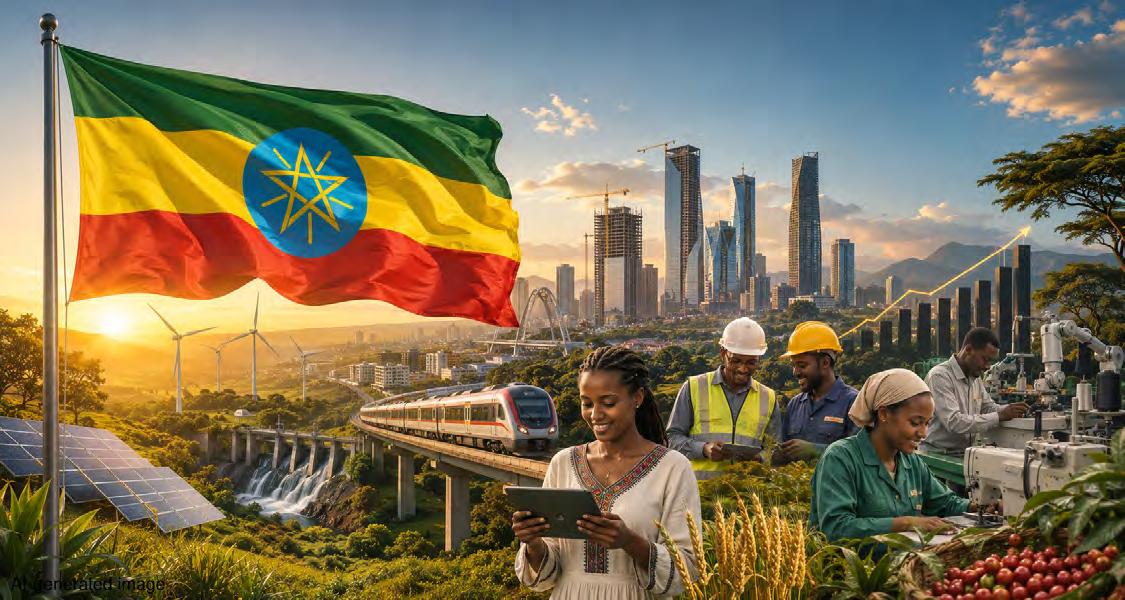
33 What Pakistan can learn from Ethiopia? Muhammad Azfar Ahsan
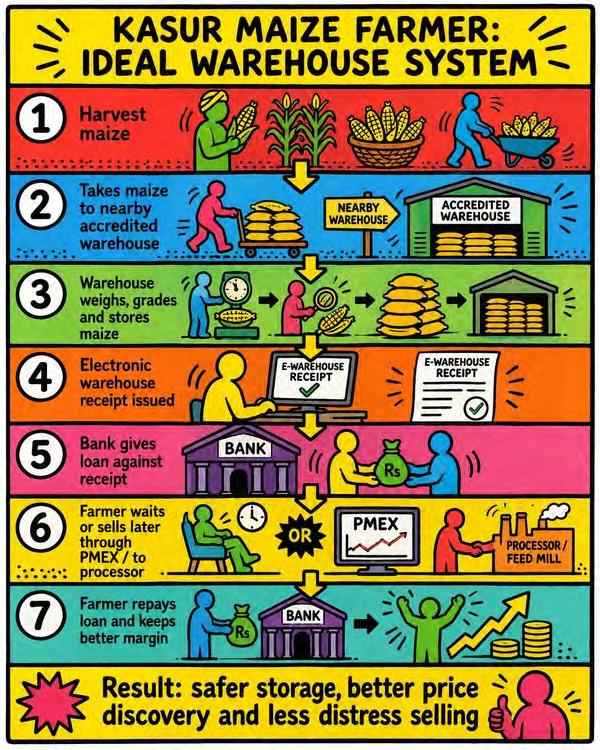
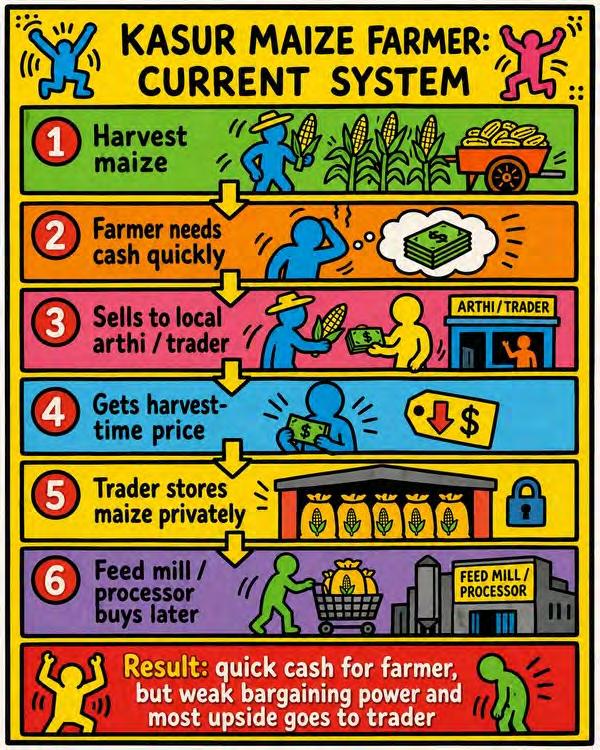
35 Can electronic warehouses change how Pakistani farmers sell their crops?
Publishing Editor: Babar Nizami - Senior Editor: Abdullah Niazi
Business Reporters: Taimoor Hassan | Usama Liaqat | Zain Naeem | Shahnawaz Ali | Ghulam Abbass
Ahmad Ahmadani | Aziz Buneri - Sub-Editors: Saddam Hussain | Abdul Hameed - Video Producer: Adnan Maqsood Director Marketing: Muddasir Alam - Regional Heads of Marketing: Agha Anwer (Khi) Kamal Rizvi (Lhe) | Malik Israr (Isb) GM Special Projects Zulfiqar Butt - Manager Subscriptions: Irfan Farooq
Pakistan’s #1 business magazine - your go-to source for business, economic and financial news. Contact us: profit@pakistantoday.com.pk
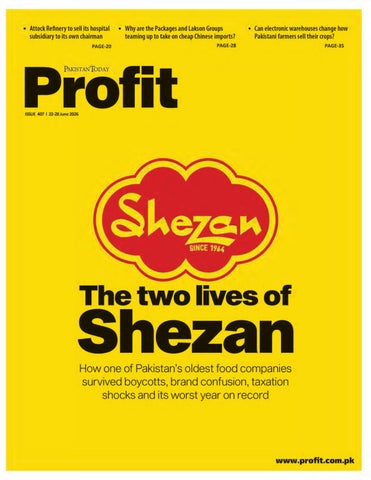
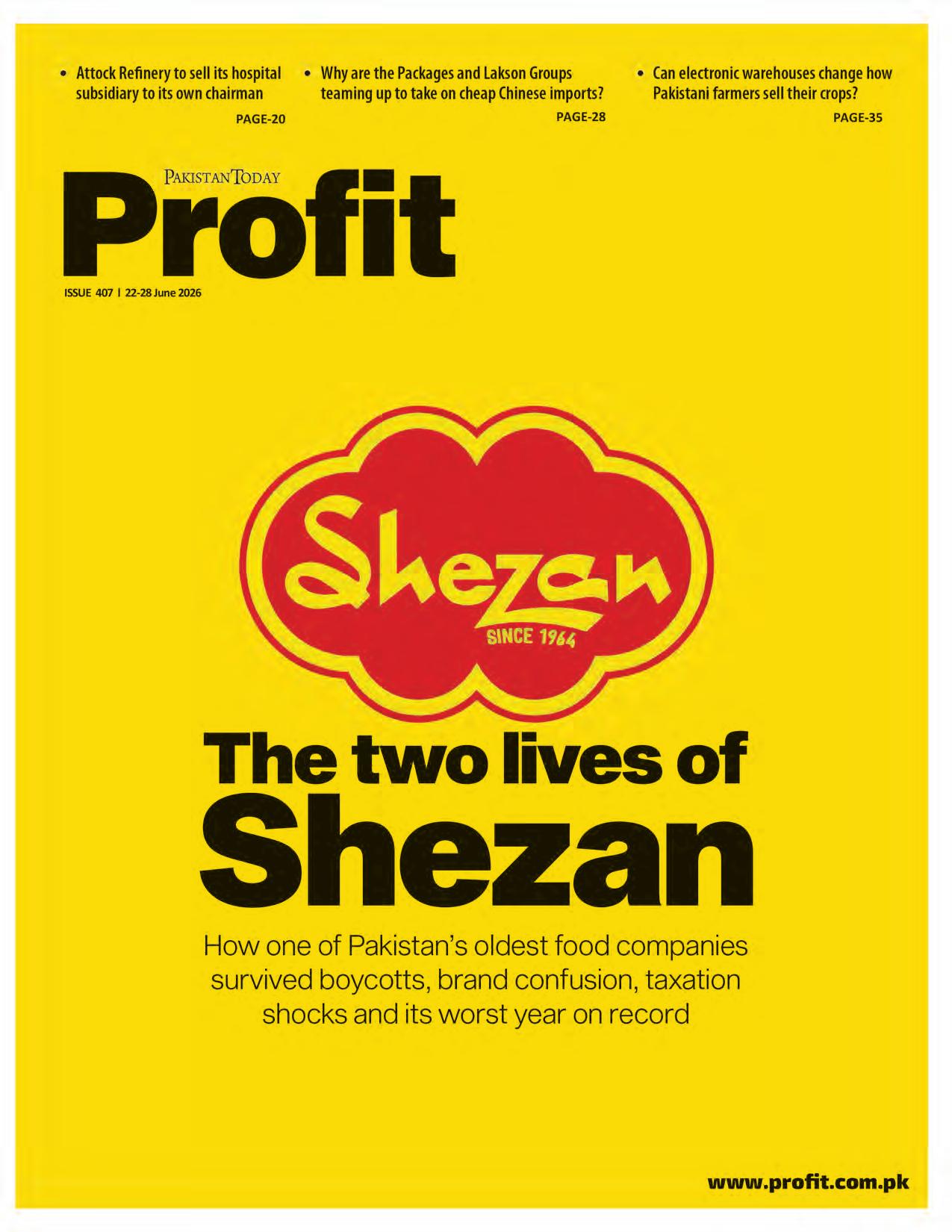
How one of Pakistan’s oldest food companies survived boycotts, brand confusion, taxation shocks and its worst year on record
By Zain Naeem
There are few Pakistani brands that carry the kind of memory Shezan does. For generations of consumers, the greenand-yellow juice pack, the thick mango drink, the glass bottles, the squashes and the jams have been part of the country’s everyday retail landscape. It is a brand that has lived in school canteens, wedding hampers, kitchen shelves, summer trips and neighbourhood stores for decades.
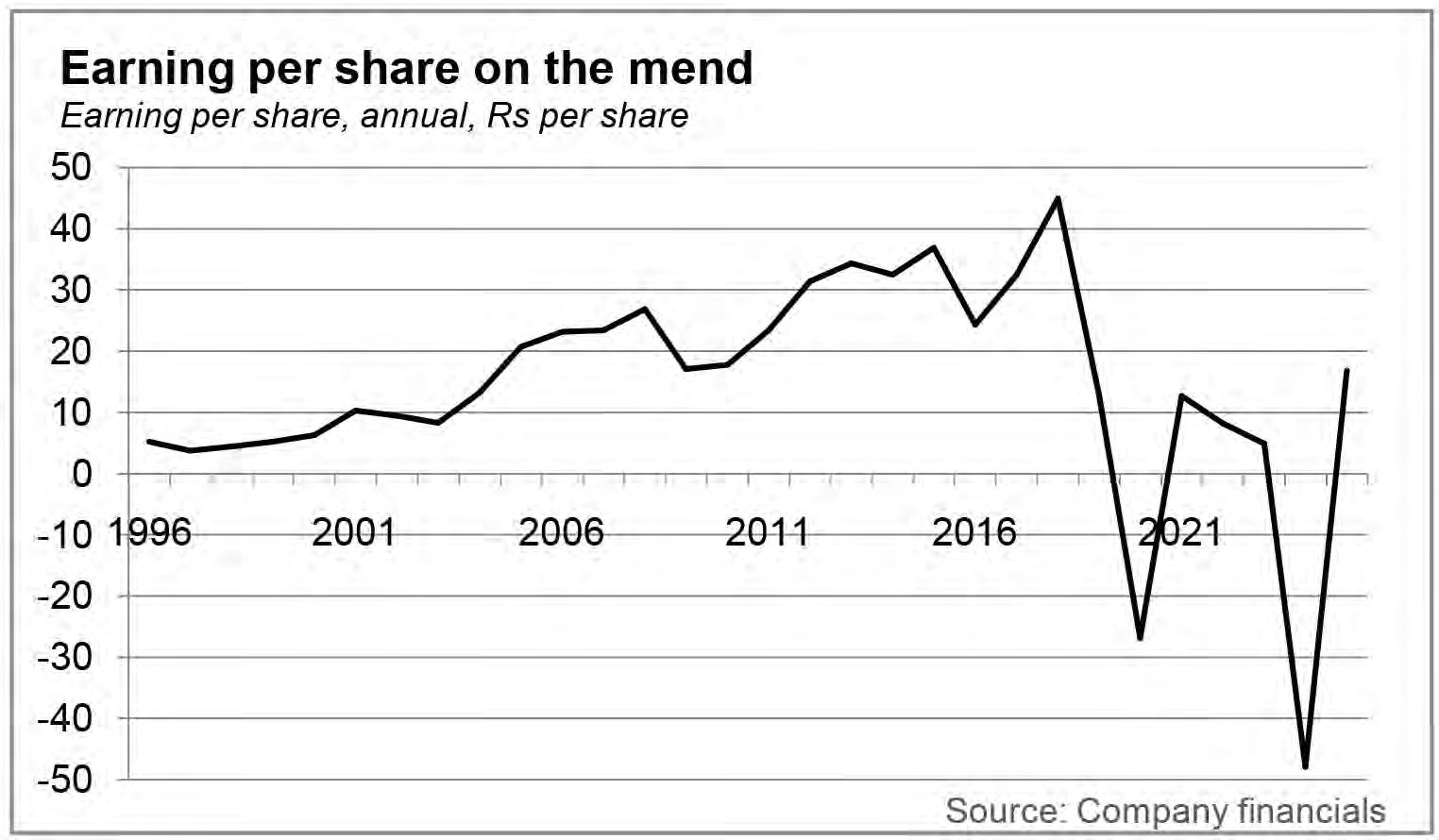
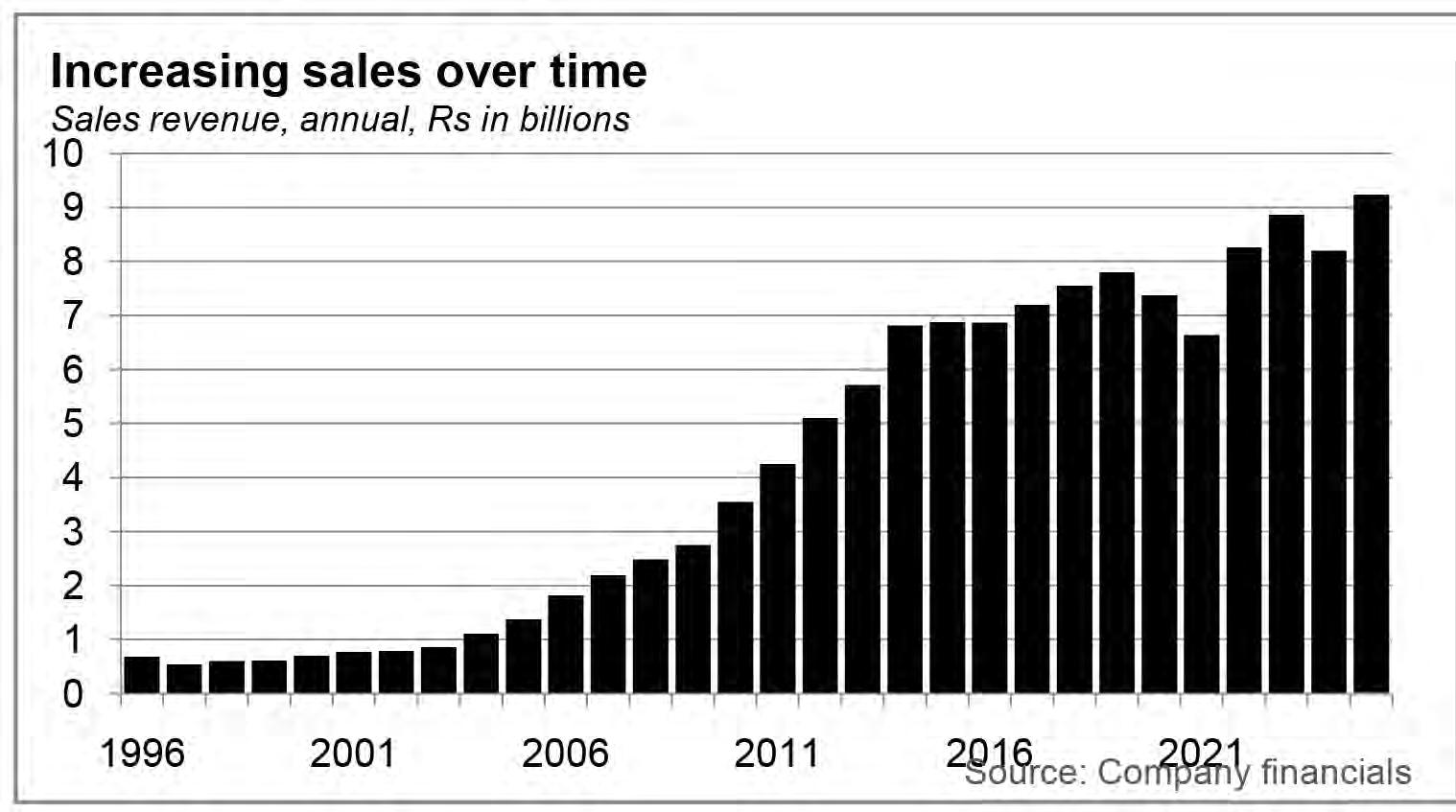
That nostalgia is now being tested against hard numbers. After suffering one of the worst years in its recent history, Shezan International appears to be turning a corner. Sales crossed Rs9 billion in 2025 for the first time. Earnings recovered from a loss per share of Rs47.89 in 2024 to earnings per share of Rs16.87 in 2025. The latest nine-month accounts for 2026 suggest the recovery is continuing, with net profit rising sharply over the same period last year.
On the surface, this looks like a familiar corporate turnaround story: a legacy consumer brand hit by inflation, taxes, weak demand and high costs begins to recover as margins stabilise. But Shezan is not a conventional Pakistani consumer company. Its story is also about religious persecution, a forced business split, decades of public confusion over ownership, a 33-year trademark fight and the economic logic of adding value to agricultural produce in a country that still exports too many commodities in raw form.
The company has had to compete not only with multinational beverage makers, carbonated drinks, changing consumer tastes and a punishing tax structure, but also with repeated boycott campaigns tied to the Ahmadi faith of its founding family. In Lahore, where the Shezan name also lives through a separate bakery business now owned by a Sunni Muslim family, the confusion has often worked both ways. Boycotts have targeted the bakery because of the name. At the same time, the existence of two Shezans has created enough ambiguity that ordinary consumers are often unclear about which Shezan is which.
This is what makes the company’s current recovery more interesting. Shezan’s
latest numbers are not merely the result of a better year. They are the product of a longer history in which one business decision after another — investing in food processing, selling off the public-facing restaurants, keeping the factory, building distribution, and protecting the trademark — shaped the company that exists today.
The industrial experiment
Shezan International was incorporated on May 13, 1964 by Chaudhry Shah Nawaz. It was set up as a joint venture between the Shahnawaz Group and the Alliance Industrial Development Corporation (AIDC) of the United States, with support from the United States Agency for International Development (USAID), which provided a $2.5 million loan for the purchase of equipment.
Before this, Chaudhry Shah Nawaz was the owner of two restaurants in Lahore, Shezan Continental and Shezan Clay Oven, both on the lower mall. This was very much a family affair and had been around since the late 1950s. They were pioneers of bringing desi and continental food together with fine dining. Some of Shezan’s products like their juices and pickles were very popular with the patrons, and the idea was to produce, market, and sell these well beyond the restaurant.
But Shezan was not born merely as a restaurant launching a line of juices and pickles. It was born as an industrial project. Pakistan in the 1960s was still trying to build a manufacturing base. Import substitution was a central idea in economic policy. Local entrepreneurs were encouraged to identify products that were being imported or sold in low-value form and manufacture them domestically. Agriculture was abundant, but the processing industry around it was thin. That is why an organisation like USAID was giving loans to a private juice company — this was part of building Pakistan’s manufacturing capacity. Once the company was up in running, AIDC sold all of its shares to the current majority owners Shahnawaz Group in 1971 and the Company became a publicly traded entity.
At the time, most fruit in Pakistan was still sold as fruit. Farmers grew it, traders moved it, middlemen handled it, and consum-
ers bought it fresh. Any juices and achaars consumed were either homemade or prepared in markets by shopkeepers. They were not available on retail shelves. What Shezan tried to do was different. It wanted to preserve, bottle, package and brand fruit at scale. In doing so, it was attempting to move agricultural produce up the value chain.
The company established its fruit processing and bottling plant, along with its headquarters, in Lahore. In 1965, it began marketing orange juice. Today, this might look like a simple product launch. In Pakistan at the time, it was anything but that.
The first obstacle was the climate. Lahore’s heat was good for fruit, but bad for bottled juice. The product was vulnerable to spoilage. Refrigeration was limited and the chilled transport infrastructure was even worse. There was no cold chain capable of supporting a modern packaged beverage business. A product that could not survive the journey from factory to retailer could not become a national brand, no matter how good it tasted.
Shezan therefore had to solve a basic industrial problem before it could solve a marketing problem. It had to work out preservation, bottling and shelf stability in local conditions. By the end of 1966, those early issues had been addressed. By 1967, the company had expanded beyond orange juice into mango, grape, apple and berry drinks.
This early period is important because it explains what Shezan became. The company’s advantage was never simply that it had a popular mango juice. Its advantage was that it had built a processing capability in a market where that capability was rare. Once it could preserve fruit and package it reliably, the same logic could be extended to squashes, jams, marmalades, ketchup, pickles, sauces and canned foods. In other words, Shezan’s core business was not juice. Its core business was food processing.
From the farm to the bottle
The logic of Shezan’s early expansion was straightforward. Demand for fruit and beverages was seasonal. Harvests fluctuated. Consumer preferences changed. A company that relied only on one product would remain exposed to
those cycles. A broader portfolio offered some protection.
By the early 1970s, Shezan had moved into squashes, jams, marmalades, ketchup, canned fruits, vegetables, pickles and sauces. These were not random extensions. They were all built around the same capabilities: procurement, preservation, processing, packaging and distribution.
That is where the company’s value-addition story becomes clear. Pakistan has long produced agricultural commodities without capturing enough value from them. A mango farmer may grow excellent fruit but remains exposed to weather, spoilage, transport costs, market gluts and middlemen. Once the fruit leaves the farm, much of the economic value is captured elsewhere.
A company like Shezan changes that equation. It can buy or grow fruit, convert it into pulp or juice, preserve it, package it, brand it and sell it across the country. At every stage, more value is retained inside the business. If the company controls some of the raw material as well, it reduces dependence on fragmented suppliers and gains greater control over quality.
This is the real economics of Shezan. It took produce that would otherwise have been sold at lower margins and turned it into consumer goods with longer shelf life, wider reach and stronger pricing power. The brand was the visible part of that process. The less
visible part was the industrial system behind it. What is unfortunate is that in the early years of Pakistan, brands like Shezan and Mitchell’s did understand the value of value addition. They made these processes possible. However, over time most Pakistani farmers remain beholden to the same middle men and informal markets that they were in the 1960s.
The 1980s then gave Shezan the environment it needed to expand. Urbanisation was accelerating. Retail networks were developing. Packaging technology was improving. Consumers were becoming more comfortable with packaged food and beverages. Shezan responded by investing in capacity and reach.
In 1981, the company established a dedicated unit in Karachi to serve southern Pakistan and support exports. In 1983, it added a bottling plant in Lahore. In 1987, it installed a Tetra Brik packaging plant. These were not routine upgrades. Better packaging meant longer shelf life, wider distribution and access to markets that would previously have been difficult to serve.
Two years later, in 1989, Shezan International was listed on the Karachi Stock Exchange, now part of the Pakistan Stock Exchange. The move marked its transition from a family-led industrial venture into a publicly listed company. It also brought the company under greater financial scrutiny.
The long-term numbers show the effect of that expansion. In 1996, Shezan recorded
sales of around Rs686 million and net profit of Rs26 million. By 2025, sales had reached Rs9.24 billion. That is a compound annual growth rate of roughly 9.4% over nearly three decades. The company did not become a giant by Pakistani corporate standards, but it did become a durable listed food business in a market where durability itself is not easy.
The business Shezan did not keep
During this time, not all was stable. The story of Shezan International cannot be separated from the story of the Shezan restaurants and bakeries.
Before Shezan International, the Shahnawaz family had established Shezan Restaurants and Bakeries in Lahore in the late 1950s. These included Shezan Continental and Shezan Clay Oven on Lower Mall, at a time when Lahore had few dining options for a rising upper middle class. The restaurants combined desi and continental food in a fashionable setting and became part of the city’s social life.
Then came 1974. The Bhutto administration declared the Ahmadiyya Muslim Community non-Muslims through a constitutional amendment. For many prominent Ahmadi business families, the decision deepened fears about personal safety, property and the future of their businesses in Pakistan. The
Shahnawaz family, which owned the Shezan businesses, was among those that considered selling assets.
In 1975, the family sold the restaurant and bakery business to Chaudhry Meher-udDin, a Lahore businessman who owned automobile showrooms. Meher-ud-Din recognised the value of the Shezan name. The restaurants had goodwill, the bakeries had potential, and the brand was already familiar to the city’s consumers.
But the factory was not sold. Shahnawaz Ltd kept Shezan International, the food processing business that produced mango juice, squashes, pickles, jams, marmalades, ketchup and other packaged products. They simply extricated themselves from a more public facing business and instead decided to focus on what they had actually built — their value added manufacturing business.
That decision created the two Shezans that still shape public perception today. One was Shezan International, the publicly listed food-processing company owned by the original family. The other was Shezan Bakeries, the Lahore bakery business owned by the Chaudhry family.
Commercially, the split made sense. The restaurant business was more public-facing. It involved storefronts, diners, employees interacting with customers and a visible presence in Lahore. For a family facing religious hostility, that kind of business carried risks beyond normal commercial risk. The factory business, by contrast, was more institutional. Its products could sit on shelves across the country without the owners themselves being visible in the same way.
Over time, selling the restaurants may have proved to be one of the smartest decisions the family made. Shezan Bakeries became a Lahore institution in its own right, known for lemon tarts, cheese puffs, biscuits, sandwiches and patties. The bakery’s owners, however, were not Ahmadi. They were from a Sunni Muslim family. Because of recurring confusion around the name, the bakeries have often displayed declarations of faith on their storefronts to distance themselves from allegations made by boycott campaigners.
This created an unusual ambiguity. In Lahore, many people associated the Shezan name with the bakery, while others associated it with the juice and packaged food company. Many consumers were not aware that the two were separately owned. The confusion has sometimes hurt the bakery, which has been targeted by zealots because of the Shezan name. But it has also created a degree of distance between Shezan International and the most visible public-facing version of the brand in Lahore.
Both businesses appear to have lived
with this ambiguity. Shezan Bakeries benefited from a name with deep recognition. Shezan International benefited from the fact that the most visible Shezan storefronts in Lahore were not actually owned by it. For consumers, the distinction remained blurred. For the businesses, the blur was commercially useful — until expansion made it legally impossible to ignore.
The name becomes the dispute
For the first few years after the 1975 sale, the arrangement worked. Shezan Bakeries operated under the name. It also stocked products from Shezan International, which reinforced public confusion but benefited both sides. Customers often assumed the bakery was selling its own branded juice and packaged goods.
The problem emerged when Shezan Bakeries tried to expand beyond its shops.
By the late 1980s, the bakery side had become more important than the old restaurant business. The restaurants had lost some of their earlier glamour as new dining options entered Lahore. The bakery, however, had a loyal customer base. The Chaudhry family wanted to package bakery items and sell them through utility stores, supermarkets and other retailers under the Shezan name.
That crossed into the territory Shezan International considered its own. The factory side had spent decades packaging products under the Shezan name and selling them through wider retail networks. If the bakery could do the same with confectionery and bakery items,
the Shezan trademark would no longer belong clearly to one commercial universe.
On December 29, 1988, Shezan Bakers filed an application with the Registrar of Trade Marks seeking registration of the Shezan trademark for bakery products, including patties, cheese straws, chicken sandwiches and spring rolls. Shahnawaz Ltd opposed the application under the Trade Marks Act, 1940.
What followed was a legal battle that lasted around 33 years. The dispute was not simply about whether Shezan Bakeries could keep operating under the name. It was about who could use the Shezan trademark to expand into packaged retail products.
From 1988 onwards, Shezan Bakeries in Lahore and Shezan International were embroiled in a trademark dispute. The bakery wanted to sell its products at a retail level under the Shezan name which would be in direct competition with Shezan’s own retail product portfolio.
The original owners argued that Shezan was their house mark and that the company had become nationally known through continuous and extensive use of the name for jams, jellies, juices and other processed food products. Shezan Bakers argued that they had bought the restaurant and bakery business in 1975 and had built their own goodwill over decades.
The Supreme Court eventually ruled in favour of the original owners in June 2022. The judgment, authored by a two-member bench comprising Justice Qazi Faez Isa and Justice Yahya Afridi (in hindsight, what a strange world we live in), effectively protected the broader trademark rights of Shezan Interna-
From 1988 onwards, Shezan Bakeries in Lahore and Shezan International were embroiled in a trademark dispute. The bakery wanted to sell its products at a retail level under the Shezan name which would be in direct competition with Shezan’s own retail product portfolio.
tional’s side.
The decision did not erase Shezan Bakeries. The bakery business could continue to operate. But it could not freely use the Shezan name to package products and sell them across wider retail channels in the way it wanted. The original agreement also carried territorial limitations tied to Lahore Division, which constrained the bakery’s expansion ambitions.
For Shezan International, this was an important legal victory. But it came very late. For more than three decades, the brand had lived under the shadow of uncertainty. The dispute did not stop the company from growing, but it did complicate the long-term management of the Shezan name.
In a normal consumer company, a strong brand is an asset. In Shezan’s case, the brand has been both an asset and a liability. It gave the company recognition that new entrants would struggle to replicate. It also attracted boycotts, public confusion and legal fights.
The cost of identity
The Shezan name carries a burden that few Pakistani brands have had to bear.
Because the founding family belongs to the Ahmadiyya Muslim Community, the company has faced repeated calls for boycott. These campaigns have surfaced through pamphlets, speeches, social media and pressure on retailers and institutions. At various points, activists have urged shops, schools, public venues and commercial establishments not to stock Shezan products.
The economic effect of such campaigns is difficult to isolate from competition, inflation and taxation. But it would be wrong to treat
them as merely symbolic. A consumer goods company depends heavily on shelf space. In Pakistan’s fragmented retail market, availability is often more important than advertising. If a product is not stocked at a neighbourhood store, kiosk or school canteen, it cannot be bought.
This is why Shezan’s distribution network matters so much. Over decades, the company built a route to market that could take juices, jams, ketchup, sauces and pickles into different retail formats across the country. That network became a barrier to entry for new competitors. It also gave the company resilience against pressure campaigns. A boycott can disrupt sales, but it is harder to erase a brand that already sits deep inside the retail system.
The company’s survival through this period is therefore not simply a testament to nostalgia. Nostalgia helps keep a brand alive in memory, but distribution keeps it alive in shops. Shezan has had both.
The more nuanced point is that the sale of the restaurant business may have reduced the company’s exposure to direct public confrontation. A food-processing company can be boycotted, but it is not as physically exposed as a restaurant chain. A bakery with visible storefronts is easier to target than a factory whose products are spread through thousands of shelves.
This does not mean Shezan International escaped the consequences of prejudice. It did not. The boycott movement against the company has been persistent. But the 1975 split altered the form of that exposure. The most visible Shezan in Lahore became a different business. The listed company retained the packaged-food brand, the factory, the processing capability and the national distribution
footprint. That distinction is central to understanding why Shezan survived. It protected the industrial core while letting go of the more vulnerable public-facing business.
The mango problem
If Shezan has one product that defines it, it is mango juice.
Pakistan’s attachment to mangoes is cultural as much as commercial. The fruit carries emotional weight in a way few agricultural products do. Shezan’s achievement was to bottle that sentiment and sell it beyond the mango season. For people who grew up in the 1980s, 1990s and early 2000s, Shezan Mango is less a product than a memory.
But the company’s reliance on fruitbased beverages also exposed it to policy risk. In 2022, the government imposed an additional 20% federal excise duty on fruit juices, taking the effective tax burden to around 42%. This was not a small adjustment. It changed the economics of the category.
The effect was felt across the juice industry. Demand collapsed. Procurement of fruit and pulp fell sharply. Mango pulp procurement, according to industry estimates, declined from around 100,000 tonnes a year to 61,000 tonnes. For a company built around fruit processing, that kind of demand shock does not remain confined to the income statement. It travels backwards into procurement, production planning, capacity utilisation and farmer linkages.
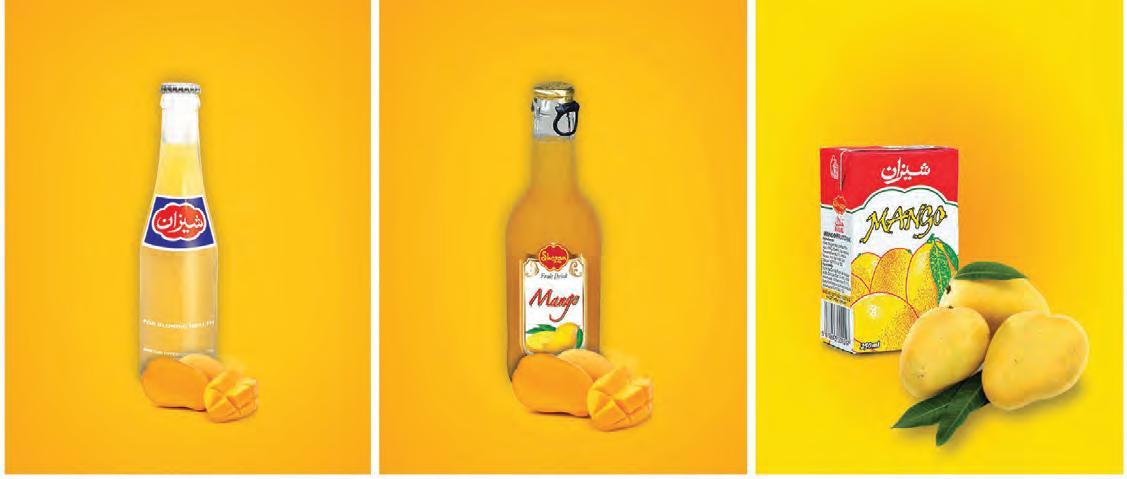
Shezan’s mango juice has seen many iterations and packaging, but perhaps none so iconic as the original glass bottles with Urdu script on them.
Shezan’s mango juice has seen many iterations and packaging, but perhaps none so iconic as the original glass bottles with Urdu script on them.
This is an important missing piece in the simpler explanation that Shezan’s recent struggles were only about inflation. Inflation certainly mattered. Input costs rose. Packaging became more expensive. Finance costs increased. Consumers traded down. But taxation also damaged the category itself. When a juice pack becomes significantly more expensive, a consumer can switch to carbonated drinks, powdered drinks, cheaper substitutes or no packaged beverage at all.
That is why Shezan’s financial decline after 2021 needs to be read carefully. Sales recovery in nominal terms was partly the result of inflation. Higher prices lifted revenue, but did not necessarily mean more volume. At the same time, higher taxes hurt demand and reduced the scale on which the company could operate. In a business where factories, distribution networks and administrative costs are significant, lower volumes can quickly squeeze margins.
This explains why Shezan could report higher sales in some years without enjoying stronger profitability. A company can grow its top line and still become weaker if the growth is driven by price increases rather than volume, while costs and taxes rise faster than its ability to pass them on.
What the numbers show
The long-term financial record shows three broad phases.
The first was the period of steady compounding. From 1996 to 2018, Shezan moved from being a mid-sized listed food company to a far larger consumer business. Sales rose from Rs 686 million in 1996 to Rs7.55 billion in 2018. Net profit increased from Rs26 million to Rs395 million. Earnings per share rose from Rs5.22 to Rs44.94. Book value per share increased from Rs29.71 to Rs289.19.
This was the period in which the value of Shezan’s earlier strategic choices became visible. Its processing base, product portfolio and distribution system allowed it to grow over time. It was not explosive growth. It was patient, manufacturing-led growth.
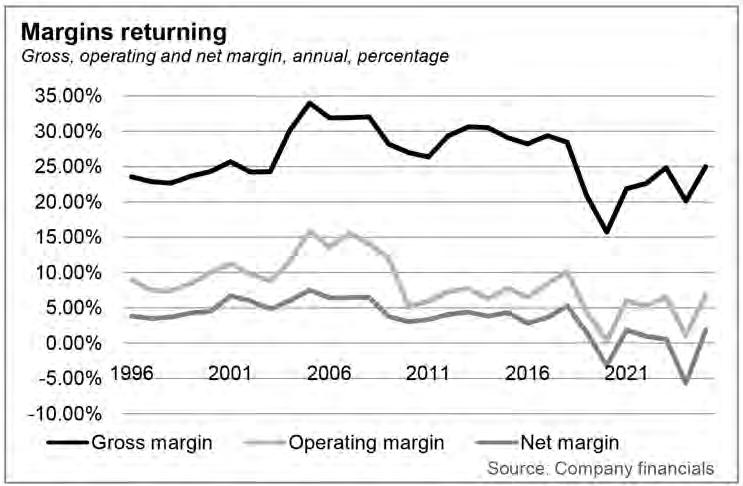
The second phase began around 2019 and was marked by shocks. The pandemic disrupted demand and operations. In 2020, Shezan’s gross margin fell to 15.7%, the lowest level in the available financial record. Operating margin almost disappeared, falling to 0.3%. The company posted a net loss of Rs236 million and a loss per share of Rs26.84.
The business recovered somewhat in 2021, returning to profit. But the recovery was fragile. In 2022, the federal excise duty shock changed the economics of juices.
Inflation then pushed up nominal sales but also raised costs. Finance costs became more painful as interest rates climbed. The company’s net margin, which had averaged around 3.5% over the long period, remained under pressure.
By 2023, Shezan reported sales of Rs8.86 billion but net profit of only Rs48 million. That translated into earnings per share of Rs4.95. The company was selling a lot more than it had in the past, but keeping very little of it as profit.
Then came 2024, the worst year on record. Sales fell to Rs8.19 billion from Rs8.86 billion a year earlier. Gross margin slipped to 20.1%. Operating margin fell to just 1.1%. After finance costs and taxes, Shezan recorded a net loss of Rs463 million and a loss per share of Rs47.89.
That year captures the company’s vulnerability. A business with a well-known brand and nearly Rs8.2 billion in sales still produced a large loss because margins were too thin to absorb weaker volumes, higher costs and finance charges. For all its brand strength, Shezan remained a low-margin manufacturing business.
The third phase is the current recovery. In 2025, sales reached Rs9.24 billion. Gross margin improved to almost 25%. Operating margin recovered to 6.8%. Net profit rose to Rs163 million, with earnings per share of Rs16.87. That does not take the company back to the 2018 peak, when EPS stood at Rs44.94, but it does show that the 2024 loss was not necessarily the beginning of a permanent decline.
The latest nine-month accounts for 2026 strengthen that view. For the same period last year, the company earned only around Rs2.9 million in net profit, or about
Rs0.3 per share. In the latest nine months, net profit rose to around Rs138 million, with earnings per share of about Rs14.3. If the final quarter follows the usual seasonal pattern, annual sales could cross Rs10 billion for the first time.
That seasonal pattern matters. In 2025, nine-month sales were around Rs6 billion, while full-year sales reached Rs9.24 billion. A significant part of annual sales therefore came in the April-June quarter, which coincides with the summer beverage season. If margins remain stable, the final quarter can have an outsized effect on profitability.
A turnaround, not a transformation
The temptation with Shezan’s recent recovery is to call it a comeback. That might be premature. The company has improved from a very weak base. Its 2025 numbers are better than 2024, and the latest nine-month performance is promising. But the business is still some distance from its strongest years. In 2018, Shezan earned Rs395 million in net profit on sales of Rs7.55 billion. In 2025, it earned Rs163 million on sales of Rs9.24 billion. In other words, the company is selling more but earning much less than it once did.
That is the central issue. Shezan’s problem is not brand recognition. It is conversion. How much of its sales can it convert into operating profit and net profit after absorbing raw material costs, packaging, distribution, administration, taxation and finance costs?
The company’s gross margin has historically averaged around 26%. Its operating margin has averaged around 8.3%. Its net
margin has averaged around 3.5%. These are not high margins, but they were enough when the company had stable volumes and manageable costs. When sales dip or costs rise sharply, the net margin can vanish quickly.
The recovery therefore depends on three things. First, Shezan must maintain gross margins close to the mid-20s. Second, it must keep operating expenses from eating up the recovery. Third, the juice category needs relief from the tax burden or enough consumer demand to absorb it. Without that, the company’s beverage business will remain constrained.
There is also a strategic question. Shezan’s broader food portfolio — jams, sauces, pickles, syrups and canned products — gives it some insulation from the juice tax shock. That diversification was built decades ago to manage seasonality and changing demand. It is now useful for managing policy risk. If juices remain overtaxed, the company may have to lean harder into non-beverage processed foods, where the Shezan name still carries trust and where the tax shock is less severe.
But the mango drink remains central to the brand’s emotional power. Moving away from it too sharply would weaken what makes Shezan distinctive. The challenge is to use the full portfolio to protect profitability without losing the product that anchors consumer memory.
Why Shezan still matters
Shezan’s story is larger than one company. Pakistan is an agricultural country that has repeatedly failed to capture enough value from agriculture. It grows fruit, rice, cotton, wheat and vegetables, but too often sells them in low-value form. The missing layer is processing, packaging, branding and distribution. Shezan is one of the older examples of what that missing layer can do.
Its history also shows how hard that layer is to build. It required foreign financing, imported equipment, technical problem-solving, product development, packaging investment, retail distribution and decades of brand building. It also required surviving political and social pressures that had nothing to do with business fundamentals.
The company’s endurance is therefore instructive. Shezan survived because it built capabilities that were difficult to replicate. It controlled parts of the supply chain, developed a wide product portfolio, invested in packaging, built distribution and created a brand with emotional resonance. It also made one crucial defensive move: keeping the industrial business while letting go of the more exposed restaurant business.
That did not free it from controversy. The Ahmadiyya identity of its founding
family continued to shadow the brand. The existence of Shezan Bakeries created confusion but also distance. The trademark case protected the company’s long-term rights but only after three decades. The tax shock reminded the company that even a legacy brand can be damaged by policy decisions that reshape consumer demand overnight.
The latest numbers suggest Shezan is recovering. They do not suggest the company is invincible. Its return to profitability is real, but fragile. The business has shown that it can still sell, still generate margins and still benefit from seasonal demand. It has not yet shown that it can return to the profitability of its best years.
Yet that may be the wrong benchmark. Very few Pakistani consumer brands from the 1960s have survived in recognisable form, remained listed, retained a national footprint and continued to matter to consumers. Shezan has done all of that.
Its nostalgia is useful. Its brand recognition is valuable. But the real story is harder-edged. Shezan is a case study in how industrial capability can turn fruit into a national brand — and how even that capability must keep fighting taxation, inflation, prejudice, litigation and changing consumer behaviour.
After its worst year, Shezan is once again making money. The more important question is whether it can turn this recovery into a steadier second life. n
Shifa to open up a second hospital in Faisalabad
This would be the fifth hospital owned by the company, which operates three hospitals in Islamabad, and another one in Faisalabad
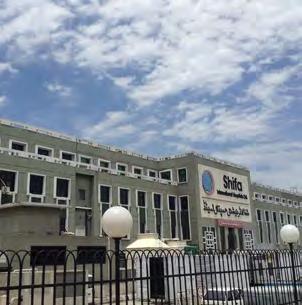
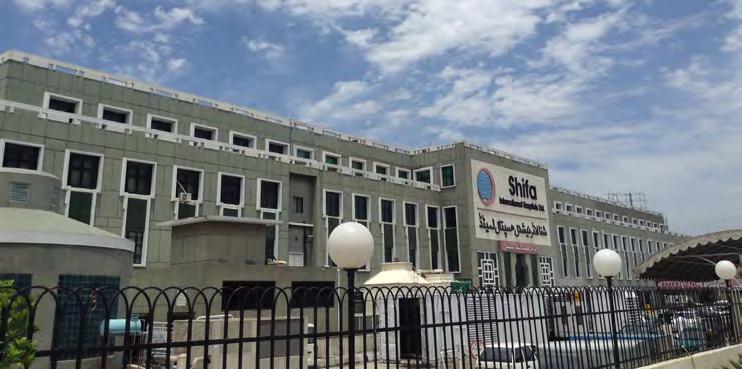
Shifa International Hospitals Ltd has begun full-fledged operations at its newest hospital in Faisalabad, expanding one of Pakistan’s few publicly listed healthcare services companies into a second major facility in the country’s third-largest city.
In a notice sent to the Pakistan Stock Exchange on June 15, Shifa said that Shifa National Hospital Faisalabad (Pvt) Ltd, a subsidiary of the listed company, had commenced fullfledged operations at its hospital on Sheikhupura Road, Faisalabad. The company said the facility had become operational under Phase I of the project, adding that it would keep the stock exchange informed of material developments, including the commissioning and commencement of future phases.
The announcement was brief, and did not disclose the bed capacity, investment size, medical specialities, or expected revenue contribution of the new hospital. Earlier brokerage commentary on the company had described the Faisalabad project as a sizeable expansion plan, with Phase I expected to add meaningful capacity to Shifa’s network. But the company’s own disclosure confines itself to the most important fact: the hospital is now open for business.
The new facility gives the company its second hospital in Faisalabad and its fifth hospital overall, after its three Islamabad hospitals and the older Faisalabad hospital on Main Jaranwala Road. It also marks another step in the transformation of Shifa from a single prestigious hospital in Islamabad into a multi-site healthcare system with hospitals, clinics, laboratories, pharmacies, outpatient centres and specialist facilities.
That makes Shifa something of an unusual company on the Pakistan Stock Exchange. The exchange has dozens of listed pharmaceutical manufacturers, and a handful of insurance companies and diagnostic or health-adjacent businesses. But it has very few sizeable, listed, pure-play hospital operators. In a country where most healthcare is delivered either by government hospitals, charitable institutions, physician-owned clinics, or privately held hospital groups, Shifa offers public market investors a rare way to invest directly in the growth of
organised healthcare services.
The Faisalabad expansion also says something about the changing geography of private healthcare in Pakistan. For decades, the most sophisticated private tertiary-care hospitals were concentrated in Karachi, Lahore and Islamabad. Faisalabad, despite being one of the country’s largest industrial and commercial centres, has historically been underserved by the kind of corporate hospital chains that appeal to middleand upper-middle-income households, employers, insurers and patients seeking specialist care outside the public system. Shifa’s decision to double down on the city suggests that the company believes there is room for a higher-end private hospital network outside the country’s three most obvious metropolitan markets.
Shifa’s roots, however, remain firmly in Islamabad.
The company was incorporated in September 1987 as a private limited company, converted into a public limited company in October 1989, and later listed on the stock exchange. Its principal business has remained the establishment and operation of medical centres and hospitals. The flagship Shifa International Hospital in Sector H-8/4, Islamabad, opened in 1993 and became one of the capital’s most recognised private hospitals, particularly for tertiary and quaternary care.
The H-8 hospital is the institution around which the Shifa brand was built. It is the
hospital most associated with the company’s reputation for specialist physicians, relatively advanced diagnostics, surgical care, intensive care and a more corporate style of hospital administration than is typical in Pakistan’s fragmented healthcare market. Over time, Shifa has positioned itself not simply as a general hospital, but as a provider of multi-speciality tertiary care, drawing patients not only from Islamabad and Rawalpindi but from Khyber Pakhtunkhwa, northern Punjab, Azad Jammu and Kashmir, Gilgit-Baltistan and, in some cases, Afghanistan. The company’s next major geographical move came in 2011, when it established a hospital in Faisalabad. That first Faisalabad facility, on Main Jaranwala Road, gave Shifa a foothold in central Punjab’s industrial belt. Faisalabad is a natural target market for private healthcare: it has textile and industrial wealth, a large professional class, a dense urban population, and a wider catchment area that includes smaller cities and rural districts whose patients often seek more advanced care in Lahore, Islamabad or Karachi. By entering Faisalabad, Shifa was attempting to capture some of that demand closer to home.
In 2014, Shifa added another hospital in Islamabad, in G-10 Markaz, extending its presence within the capital beyond the flagship H-8 campus. The group’s Islamabad footprint has also included the Shifa Neuro Sciences Institute, located near the main H-8 campus,
which became part of the broader company structure and was later amalgamated into the parent company. Together, the H-8 hospital, the G-10 hospital and the neuroscience facility form the basis for describing Shifa as having three hospitals in Islamabad.
Alongside these hospitals, Shifa has also built an outpatient and ambulatory-care platform. Shifa Medical Center Islamabad (Pvt) Ltd, one of the company’s subsidiaries, has been used for outpatient services, day-care surgeries, diagnostic centres, clinics, laboratories and other ambulatory healthcare facilities. The group’s listed business units have included Shifa Medical Center in Gulberg Greens and an SMCI facility in F-11, Islamabad. These centres serve a different purpose from full-service hospitals: they help expand the company’s reach in outpatient consultations, diagnostics and day procedures, while allowing it to capture patients before they require inpatient admission or specialist referral.
That outpatient layer is strategically important. Hospitals are expensive to build and operate. They require land, buildings, imported medical equipment, round-the-clock staffing, specialist doctors, nurses, technicians, pharmacies, laboratories, operating theatres, emergency departments and intensive-care units. Outpatient centres, by contrast, can often be rolled out more quickly and at lower capital cost. They can feed patients into the hospital network, strengthen the brand in neighbourhood markets, and provide recurring revenue from consultations, lab tests and diagnostic imaging.
Shifa’s corporate structure reflects that gradual evolution. The listed company owns or controls subsidiaries including Shifa National Hospital Faisalabad, Shifa Medical Center Islamabad and Shifa Development Services. The Faisalabad subsidiary is the vehicle through which the new Sheikhupura Road hospital has now commenced operations. Shifa Medical Center Islamabad represents the group’s outpatient and ambulatory-care ambitions. Shifa Development Services gives the group an entity for the operational and support functions that often accompany hospital expansion.
The financial numbers suggest that, so far, Shifa has been able to grow while improving profitability.
In the financial year ended June 30, 2025, Shifa reported net revenue of Rs27.97 billion, up from Rs23.56 billion the year before. Profit after tax rose to Rs2.33 billion from Rs1.36 billion in 2024, while earnings per share increased to Rs36.84 from Rs21.55. That made 2025 an especially strong year: revenue rose 18.7%, while profit after tax increased 71%.
The longer trend is more revealing. In 2020, Shifa’s revenue stood at Rs12.15 billion. By 2025, it had more than doubled to nearly Rs28 billion. That implies a compound annual
growth rate of roughly 18% over five years. Profit after tax grew much faster, rising from Rs505 million in 2020 to Rs2.33 billion in 2025, a more than fourfold increase and a compound annual growth rate of about 36%.
Margins have improved as well. Shifa’s net profit margin was 4.2% in 2020. It rose to 4.9% in 2021, 7.2% in 2022, then slipped to 6.0% in 2023 and 5.8% in 2024, before rising sharply to 8.2% in 2025. Operating profit margin also improved, from 10.5% in 2020 to 16.0% in 2025. Return on equity rose from 7.5% in 2020 to 17.8% in 2025.
That trajectory is important because hospitals are not supposed to be easy businesses. Their cost structures are heavy. Much of their equipment is imported and therefore exposed to the rupee’s depreciation. Skilled medical labour is scarce. Doctors often have strong bargaining power. Nurses and technicians require training and retention. Power costs are high. Patients are price-sensitive, yet the segment of patients who can afford high-end private care still expects international-style facilities. Managing all of that while expanding capacity is difficult.
Shifa’s improved profitability suggests that the company has benefited from scale, pricing power, operating leverage and perhaps a greater mix of higher-margin services. As revenue grows, some fixed costs can be spread across a larger patient base. Specialist services and diagnostics can support margins if volumes remain strong. A recognised brand can also command higher tariffs than smaller private hospitals, especially in complex care categories where patients are less willing to compromise. There is also evidence of a stronger balance sheet. Shifa’s debt-to-equity ratio improved from 34:66 in 2020 to 11:89 in 2025. That matters for an operator now adding another hospital. Hospital expansion is capital-intensive, and a company that has reduced leverage has more room to finance growth, absorb the early losses that often accompany new facilities, and withstand delays in ramp-up.
Still, the new Faisalabad hospital will need time to contribute materially. Shifa’s financial disclosures show that Islamabad overwhelmingly dominates the company’s revenue base. In both 2024 and 2025, Islamabad accounted for 97% of revenue, while Faisalabad accounted for only 3%. The Sheikhupura Road hospital is therefore less a continuation of an already-balanced geographical portfolio and more an attempt to create one. If the new facility succeeds, Faisalabad’s contribution should begin to rise over the next several years.
That will be the key test. Opening a hospital is one milestone. Filling it with patients at profitable tariffs is another. Shifa will need to attract consultants, maintain clinical standards, build referral networks, win corporate and insurance clients, and persuade Faisalabad
households that they do not need to travel to Lahore or Islamabad for certain categories of care. The existing Shifa brand helps. But healthcare is local. Patients and doctors often follow relationships rather than logos.
The broader market opportunity, however, is hard to ignore.
There are limits to how much Pakistani households can pay. Even middle-class families can be financially strained by a major admission, surgery or long stay in intensive care. The opportunity is that, despite the financial burden, many households still prefer private care when they can afford it, particularly for specialist consultations, maternity care, surgery, emergency treatment and diagnostics. Public hospitals are often overcrowded, underfunded and difficult to navigate. For families with the means to pay, private hospitals offer speed, perceived quality, cleanliness, access to named consultants and a greater sense of control.
Pakistan also has a shortage of organised healthcare capacity. Hospital beds per person remain low, and the country’s public system carries far more demand than it can comfortably handle. The result is a patchwork market. At the top end are major private hospitals, university hospitals and charitable institutions with strong brands. Below them are mid-sized hospitals, specialist clinics, maternity homes, laboratories and physician practices. Many are unlisted, family-run, trust-owned or institutionally controlled. Very few have the structure, transparency and scale associated with public companies.
That is why Shifa occupies an unusual place in the market. It is not the only important hospital operator in Pakistan, nor necessarily the largest healthcare institution by reputation or patient volumes. But as a listed hospital company, it is unusually visible. Investors can examine its revenue, margins, debt, related-party transactions, capital expenditure and expansion strategy in a way they cannot for most private hospital groups. That visibility makes Shifa a bellwether for a segment that is economically significant but poorly represented on the stock exchange.
For Shifa’s shareholders, the question is narrower: can the company turn another hospital into another durable earnings stream? The last five years show a company that has grown revenue, expanded profits, improved margins and strengthened its balance sheet. The next five will show whether that performance can survive a broader physical footprint.
The opening of the Sheikhupura Road hospital is a strategic statement. The company is betting that Faisalabad can support more than a token presence, and that its Islamabad-born brand can travel deeper into Punjab. In a country with too few organised healthcare providers and too many patients paying out of pocket for care, that bet is both commercially logical and socially consequential. n
Attock Refinery to sell its hospital subsidiary to its own chairman
The hospital is a wholly owned subsidiary and the company’s chairman has bid to acquire 70% of it
Attock Refinery Ltd, one of Pakistan’s oldest crude oil refineries, wants to sell control of its hospital business.
The proposed buyer is not a private equity fund, a healthcare group, or another hospital operator. It is Shuaib A. Malik, the company’s own chairman.
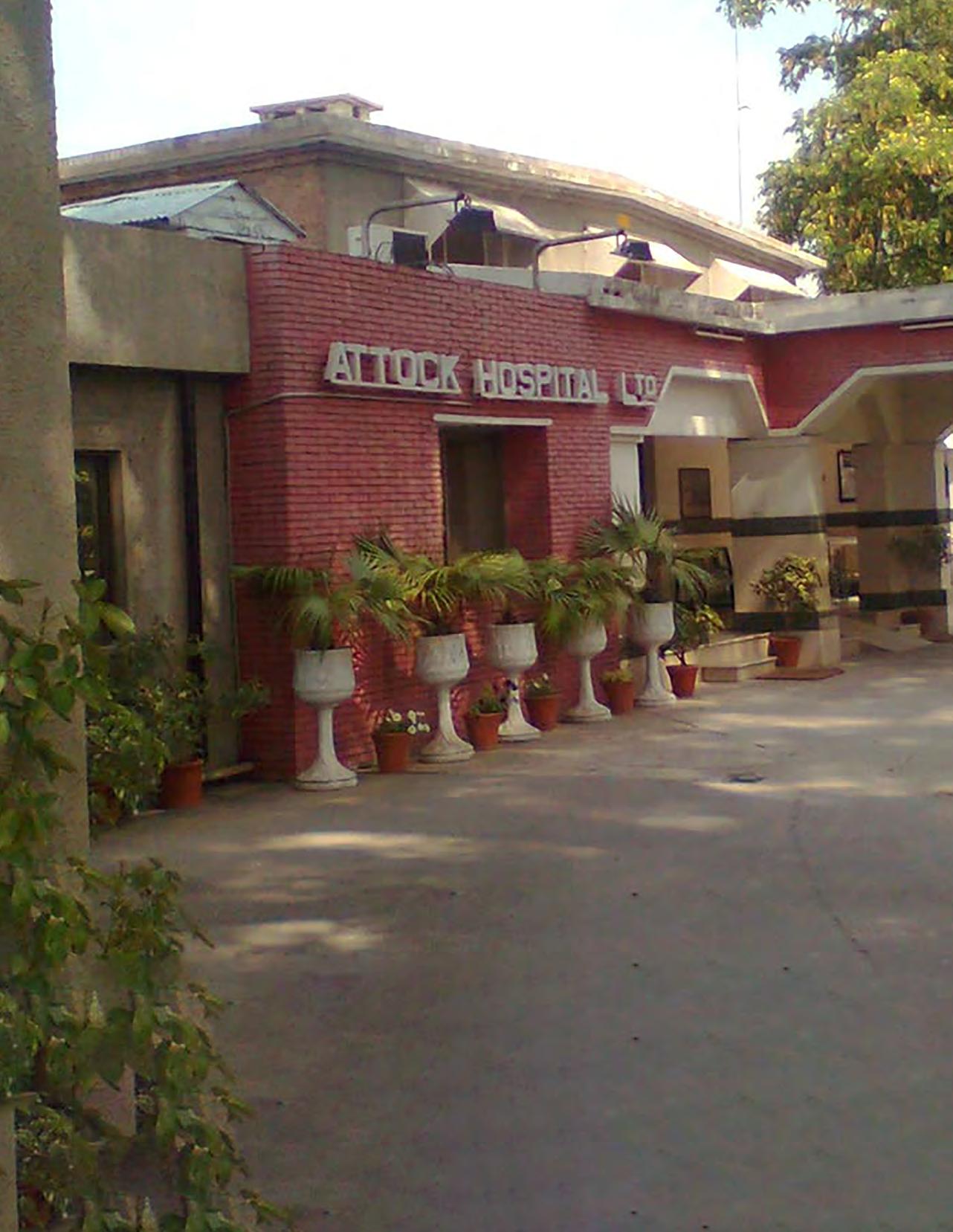
In a notice sent to the Pakistan Stock Exchange on June 19, Attock Refinery said its board had approved an offer submitted by Malik for the acquisition of 70% of the issued and paid-up share capital of Attock Hospital (Pvt) Ltd, a wholly owned subsidiary of the refinery. The consideration: Rs305 million.
The transaction is not yet complete. Attock Refinery said the proposed sale would remain subject to the execution of definitive transaction documents and the receipt of all required corporate, regulatory and statutory approvals and consents. But the board approval itself is enough to make the deal interesting.
On its face, the transaction is small. Attock Refinery reported consolidated profit after tax of nearly Rs8.95 billion in the year ended June 30, 2025. The hospital earned Rs71 million. At group level, Attock Hospital is not a major profit centre. It is not the asset on which Attock Refinery’s investment case rests. It is, however, a long-standing institution tied to the refinery’s history in Morgah, Rawalpindi, and to the broader Attock Group’s corporate ecosystem.
The sale also has an obvious related-party flavour. Malik is not merely a director who happens to be interested in buying an asset. He is chairman and non-executive director of Attock Refinery. He is also one of the most important executives in the Attock Group, serving as group chief executive and holding senior positions across several group companies. Attock Refinery’s annual report describes him as having been associated with the Attock Group for more than four decades, becoming chief executive of The Attock Oil Company in 1995 and group chief executive of the Attock Group in 2006. He is also chairman and chief executive of Pakistan Oilfields Ltd, chairman of National Refinery Ltd, and chief executive officer of The Attock Oil Company Ltd and Attock Petroleum Ltd.
That makes this a transaction that minority shareholders will want to read carefully, even if the rupee amount is immaterial in the wider Attock Refinery balance sheet. When a listed company sells a subsidiary to its chairman, the most important questions are not only what the asset is worth, but how that worth was determined, who approved the deal, and what safeguards were used to protect the company and its outside share-
holders.
The PSX notice discloses the buyer, percentage stake, consideration and broad conditions. It does not spell out the valuation methodology, whether an independent valuation was obtained, whether Malik recused himself from the board’s deliberations, whether independent directors led the approval process, or whether minority shareholder approval will be sought. Those details may emerge later if the transaction proceeds to formal documentation and regulatory approvals.
The valuation, however, can be estimated from the numbers already disclosed. A price of Rs305 million for 70% of Attock Hospital implies a 100% equity value of about Rs436 million. Compared with the hospital’s reported net assets of Rs307 million at June 30, 2025, that implies a price-to-book multiple of roughly 1.4 times. Compared with its 2025 profit after tax of Rs71 million, it implies a trailing earnings multiple of about 6.1 times. Compared with revenue of Rs317 million, it implies a revenue multiple of about 1.4 times.
Those are not obviously giveaway numbers. A hospital is not a commodity business, and a small profitable healthcare facility with a long operating history can reasonably trade above book value. But neither is the valuation extravagant. The implied price looks like a modest control valuation for a steady, small, profitable private hospital. Whether it is the right valuation depends on factors not visible in the notice: property ownership, future expansion prospects, cash balances, equipment condition, receivable quality, patient mix, related-party revenue and the extent to which the hospital’s profits depend on Attock Group employees and companies.
The hospital’s financials show a compact and profitable operation. Attock Hospital had current assets of Rs309 million and non-current assets of Rs52 million. It had current liabilities of Rs46 million and non-current liabilities of Rs8 million. Net assets stood at Rs307 million, up from Rs227 million a year earlier.
Revenue was Rs316.6 million in 2025, up from Rs264.5 million in 2024. Expenses and taxation were Rs245.6 million, leaving profit after tax of Rs71.0 million, compared with Rs52.7 million the previous year. Total comprehensive income was Rs80.3 million. Cash generation was also positive: the hospital reported cash flows from operating activities of Rs47.3 million, investing activities of Rs21.1 million, and financing activities of negative Rs1.6 million, leaving net cash movement of Rs66.9 million.
The directors’ report provides the operating colour behind those numbers. During the 2024-25 financial year, Attock Hospital’s
profit after tax rose by about 35%. The company attributed the increase to higher medical services, cost rationalisation, and earnings from bank deposits. Outpatient turnover was 171,366, down slightly from 176,459 the previous year. Inpatient occupied days increased to 6,240 from 6,008, with occupancy rising to 37% from 36%. Diagnostic tests increased to 65,379 from 59,947. Surgeries performed in the operating theatre rose to 2,384 from 2,169. Revenue increased by almost 20%.
That is a respectable performance. The hospital is not a growth rocket, but it is also not a drain on the refinery. It is profitable, cash-generative, and has grown earnings. Its profitability would appear to make it a perfectly viable stand-alone private company.
The question is why Attock Refinery should own it at all.
Attock Refinery’s answer is not stated directly in the notice, but the logic is easy to infer. The refinery’s core business is crude oil refining. Its earnings depend on crude availability, refining margins, regulated pricing formulas, product specifications, tax treatment, throughput, inventory, and the policy environment for Pakistan’s refining sector. Its major capital question is not whether it can upgrade a hospital laboratory, but whether it can finance refinery upgradation projects needed to produce cleaner fuels under Pakistan’s refining policy.
In that context, a hospital is non-core. It may have social value. It may be useful to employees. It may be historically important. But it does not belong naturally inside the balance sheet of a listed refinery.
Attock Refinery’s own history explains why the hospital is there. The refinery’s operations date back to 1922, when two small stills with a capacity of 2,500 barrels per day began operating at Morgah after the discovery of oil in the Potohar region. The listed company was incorporated in November 1978 to take over the refining business of The Attock Oil Company Ltd, and was converted into a public company in June 1979. Over the decades, the refinery expanded and modernised, adding distillation capacity, upgrading process units, installing a captive power plant, and completing a major expansion and upgradation project in 2016.
Today, Attock Refinery has nameplate capacity of 53,400 barrels per day and describes itself as having the capability to refine crude ranging from the lightest to the heaviest grades. Its main products include high-speed diesel, premier motor gasoline, furnace fuel oil, jet petroleum and other petroleum products. In 2025, the refinery operated at about 69% capacity, down from 75% the previous year, due in part to scheduled turnarounds at oilfields, local community strikes at some oil-
fields, and forced curtailment of gas production to manage high SNGPL system pressure, which in turn reduced crude oil production from certain fields.
The company’s 2025 earnings were much lower than the previous year. Attock Refinery reported standalone profit after tax of Rs11.97 billion, compared with Rs25.24 billion in 2024. Consolidated profit after tax fell to Rs8.95 billion from Rs25.05 billion. Management attributed the decline to lower refining margins and lower throughput, though bank deposit income helped cushion the impact. The company also continues to face the sector’s larger structural issues: declining northern crude production, smuggled or unauthorised high-speed diesel, weak furnace oil demand, and uncertainty around the implementation of Pakistan’s refining policy.
That is the business Attock Refinery is actually in. It is capital-intensive, politically sensitive, and exposed to the volatile economics of Pakistan’s energy system. A hospital subsidiary earning Rs71 million is not irrelevant, but it is not central either.
Attock Hospital’s history is different. The hospital traces its origins to 1930, when it began as a modest primary healthcare centre for Attock Refinery employees. Its purpose was simple: serve the health needs of workers and their families around the Morgah refinery complex. Over time, as the refinery and surrounding community grew, the facility expanded its services. In 1998, it was formally upgraded and restructured into Attock Hospital (Private) Ltd. The company was incorporated on August 24, 1998 and commenced operations on September 1, 1998.
Its principal place of business remains Morgah, Rawalpindi. It provides medical services to employees of Attock Group companies as well as private patients. It offers outpatient and inpatient care, emergency medicine, surgical procedures, maternity care, diagnostic services, occupational health services and other specialist treatments. It is licensed as a private healthcare establishment under the Punjab Healthcare Commission Act, 2010.
In other words, Attock Hospital is both a community healthcare institution and an employee-service facility. That dual role matters. The hospital is not simply a commercial asset sitting in a distant portfolio. It is embedded in the physical and social geography of the refinery. Morgah is not just a corporate address; it is the historic home of the Attock refining business. The hospital’s origins reflect an older corporate model in which large industrial employers provided schools, housing, health facilities and other services around company towns and industrial colonies.
Pakistan still has many such assets.
Mills, refineries, power companies, cement plants and old industrial groups often built social infrastructure because the state did not provide enough of it. Some of those assets remain inside operating companies long after their original logic has changed. The result is a balance sheet that mixes core business, employee welfare, community obligations and sometimes valuable property.
Selling Attock Hospital may therefore be financially rational, but it is not emotionally neutral. It separates a healthcare institution from the refinery that gave birth to it. But because the proposed buyer is Malik, the separation may be more corporate than cultural. The hospital would leave Attock Refinery’s majority ownership, but not necessarily the broader Attock orbit. If the transaction is completed as disclosed, Attock Refinery would sell 70% and presumably retain 30%, while Malik would control the hospital.
The governance question is whether that neat logic is accompanied by sufficient process. Related-party transactions are not inherently improper. In Pakistan’s familyand group-controlled corporate sector, they are common. But they require transparency because the risk is obvious: insiders know the asset better than outside shareholders do. They may also influence timing, process and price. The remedy is not to ban such transactions, but to ensure that independent directors, valuations, disclosures and approvals give outside investors confidence that the listed company is not being short-changed.
In this case, the first level of valuation comfort comes from the numbers. The implied value of Rs436 million is above book value and about six times last year’s earnings. The hospital’s profits are rising, but it is still a small facility with modest revenue and limited occupancy. The second level of comfort will need to come from future disclosures. Investors should expect to see more detail on the transaction structure, valuation report, approvals, etc.
There is also the question of strategic ambition. Attock Hospital’s latest annual report section says its future projects include upgrading the laboratory by introducing advanced diagnostic equipment, improving quality control systems, and ensuring compliance with standards to deliver accurate and reliable test results. It also implemented a new hospital management information system, allowing patients online access to medical reports through secure registration. These are sensible upgrades for a small hospital. But they also require capital and managerial attention. A refinery may not be the ideal owner for that next phase.
The deal can therefore be read two ways.
The generous reading is that Attock Refinery is tidying up its portfolio. It is selling majority control of a non-core healthcare subsidiary at a price above book value to a buyer who knows the institution and has a long association with the group. The hospital can then be managed as a healthcare business rather than as an appendage to an energy company.
The sceptical reading is that a profitable community hospital is being sold by a listed company to its chairman, with the first notice providing too little information about process and valuation. The price may be fair, but minority shareholders should not have to infer that. They should be shown why.
Both readings can be true at the same time. The sale may be commercially sensible and still require careful scrutiny. In fact, because it may be commercially sensible, the process matters even more. The best related-party transactions are the ones that can survive hostile questions.
For Attock Refinery, the transaction will not change the main investment case. The company’s future still depends on crude supply, refining margins, government policy, product specifications, taxation, smuggling control, and whether Pakistan’s refinery upgradation framework can actually attract capital. Selling 70% of Attock Hospital for Rs305 million is not going to finance a refinery transformation. It is a housekeeping transaction, not a balance-sheet revolution.
For Attock Hospital, however, the change is significant. Majority ownership would move from a listed refinery to the refinery’s chairman. A business that began as a primary healthcare centre for refinery employees in 1930, and became a private hospital company in 1998, would enter another phase of its institutional life. It would remain in Morgah. It would presumably continue treating group employees and local patients. But its controlling shareholder would change.
That is why the deal deserves attention. Not because Rs305 million is a large sum for Attock Refinery. It is not. Not because the hospital is central to the refinery’s profits. It is not. But because the transaction captures a familiar feature of Pakistani corporate life: valuable, idiosyncratic, socially rooted assets sitting inside listed industrial companies, and the delicate process of moving them into private hands.
If Attock Refinery can show that the price is fair, the approvals are clean, and the hospital’s obligations to employees and the community are protected, the sale will look like sensible portfolio discipline. If it cannot, the question will linger: when a chairman buys an asset from his own company, who is really getting the better deal? n
After nearly four years, Waves to resume air conditioner production in Pakistan
The company had stopped production after being prevented from importing parts during the 2022 foreign currency crisis, and has only just now been able to restart this business line.
For a company called Waves, the last few years have been less about riding them and more about surviving them.
Waves Home Appliances
Ltd, the publicly listed white goods manufacturer, has announced the resumption of air conditioner assembly in Pakistan, nearly four years after the country’s foreign currency crisis effectively forced the company to suspend that
business line. In a notice to the Pakistan Stock Exchange, the company said it had “successfully restarted assembly operations and nationwide commercial sales” of its air conditioner range, marking the revival of a product cate-
gory that had disappeared from its production tables since 2022.
The first step is modest, but symbolically important. Waves said the first consignment of 5,000 completely knocked down, or CKD, air conditioner kits had arrived in Pakistan, enabling the company to assemble both T3 and T1 models across key sizes aligned with market demand. Distribution to the company’s nationwide dealer network has already begun, the company said, adding that early market acceptance had been encouraging.
For consumers, the announcement means that the Waves brand is returning to the air conditioner aisle at a time when summer demand is near its seasonal peak. For investors, however, the more interesting fact is not that Waves is producing 5,000 air conditioners. It is that it is producing any at all.
The company’s financial statements show that Waves had a reported annual installed capacity of 60,000 air conditioners in 2025. Yet actual production was zero. The same was true in 2024. Earlier accounts show that the company also reported no air conditioner production in 2023 and 2022. In other words, the first consignment of 5,000 kits is not merely another batch of imported components. It is the restart of a factory line that had been idle through one of the most difficult periods Pakistan’s consumer durables industry has faced in recent memory.
Measured against nominal capacity, 5,000 units is still a small number: roughly 8% of the company’s stated annual air conditioner capacity. It would therefore be premature to describe this as a full-scale return to the market. It is better understood as the first visible sign of a re-entry strategy. Waves appears to be testing whether it can restore supplier relationships, finance imports, assemble commercially viable volumes, and persuade dealers to once again stock a product category that is more competitive, more seasonal, and more working-capital intensive than refrigerators or deep freezers.
The company itself is explicit about why the line was suspended. In its PSX notice, Waves said that following countrywide import restrictions in 2022, driven by macroeconomic pressures and monetary tightening measures, its working capital came under pressure. That forced a temporary suspension of the production and sale of air conditioners and several other product lines, except its flagship deep freezers and refrigerators. With its financial health improving and its resources realigned, the company says it has now arranged import and supply channels for larger volumes of imported material.
That phrase – “import and supply arrangements” – is doing a lot of work. Pakistan’s appliance industry is often described as man-
ufacturing, and in a legal or industrial sense that is true. But many products, especially air conditioners, depend heavily on imported kits and components: compressors, heat exchangers, electronic boards, motors, controls, gas systems and other parts that cannot always be sourced locally. When banks stop opening letters of credit, or when import approvals become slow and uncertain, the distinction between manufacturer and importer becomes blurry. A factory can have workers, assembly lines, moulds, warehouses and dealers, and still be unable to produce without imported inputs. That is exactly what appears to have happened to Waves.
The company’s product mix through the crisis tells the story. In 2025, Waves produced 13,175 refrigerators and 38,031 deep freezers, for total production of 51,206 units. It did not produce any microwave ovens, air conditioners, washing machines, gas appliances, televisions or water dispensers. In 2024, it produced 19,448 refrigerators and 23,705 deep freezers, for total production of 43,153 units, again with no output in those other categories. The company notes that it follows an order-based production model, making goods in line with customer orders, but even allowing for that, the absence of air conditioners over several years is striking.
The 2023 accounts show how sharp the contraction had already become. Total production fell to 52,469 units in 2023 from 139,412 units in 2022. Deep freezer production fell from 95,239 units to 28,750. Refrigerator production fell from 38,235 units to 23,213. Washing machine output dropped from 2,640 units to 474. Microwave oven production fell to just 32 units. Air conditioner production was zero in both years.
The result is a company that still has the bones of a broad white goods manufacturer, but has spent the past few years operating like a much narrower one. Waves lists deep freezers, visi coolers, refrigerators, air conditioners, washing machines, microwaves, water dispensers, water heaters, instant geysers and cooking ranges among its product categories. Its latest capacity disclosures suggest a plant designed for a portfolio far wider than its recent output: 130,000 refrigerators, 125,000 deep freezers, 60,000 microwave ovens, 60,000 air conditioners, 40,000 washing machines, 25,000 gas appliances, 22,500 televisions and 20,000 water dispensers. The issue has not been only whether it can sell more. It has been whether it can reliably get the parts to make more.
To understand why the air conditioner restart matters, one has to understand Waves’ corporate history.
The Waves brand itself is far older than the listed company in its current form. It traces
its origin to Cool Industries, established in Lahore in 1971 by a family of entrepreneurs. The brand began with refrigerators in 1976 and became one of the best-known local names in household appliances. By 2002, the company says Waves had become the sole producer of split air conditioners in Pakistan. It entered microwave ovens in 2003 through a collaboration with the Chinese appliance manufacturer Galanz, and added washing machines in 2004.
The listed entity now known as Waves Home Appliances Ltd, however, has a more complicated lineage. It was formerly Samin Textiles Ltd, a company that belonged to a very different industry. The home appliances business was carved out of Waves Corporation, formerly Waves Singer Pakistan Ltd, and transferred into the listed company through a scheme of arrangement sanctioned by the Lahore High Court. The restructuring took effect around the end of August 2021 and was completed through court orders in 2022. The company was subsequently renamed Waves Home Appliances Ltd.
The restructuring was meant to create a cleaner corporate structure. The manufacturing and sale of home appliances would sit in a dedicated listed company. The broader group’s real estate and retail assets would be housed elsewhere. Waves Corporation became the holding company, while Waves Home Appliances became the vehicle through which investors could own the manufacturing business. In theory, this gave the appliances business a clearer identity and made it easier for investors to understand its revenue, costs, capacity and capital needs.
But the timing could hardly have been worse.
The transfer of the business occurred just as Pakistan was moving into a severe foreign currency squeeze. The new listed manufacturer had barely emerged from restructuring before the economy around it began to freeze. Import approvals became more difficult. Interest rates rose. Inflation surged. Consumer purchasing power weakened. Working capital became expensive. For a company trying to produce imported-input-dependent durable goods, that was a miserable combination.
That is visible in the revenue line. Waves reported net revenue of Rs7.42 billion in 2022. That fell to Rs4.18 billion in 2023 and then to Rs3.17 billion in 2024, before recovering to Rs3.67 billion in 2025. Profit after tax moved in the opposite direction, rising from Rs13 million in 2022 to Rs116 million in 2023, Rs153 million in 2024 and Rs189 million in 2025. But the improving profit figure should not obscure the fact that the business had become smaller than it was before the crisis. The company became more profitable on a reduced revenue base, rather than simply growing its way out
of trouble.
Its 2025 performance showed some recovery. Gross revenue rose 23.4% to Rs5.03 billion, while net revenue rose 15.7% to Rs3.67 billion. Gross profit crossed Rs1 billion, and profit after tax reached Rs189 million, translating into earnings per share of Rs0.71. Operating profit remained healthy relative to sales, but finance costs and other pressures continued to weigh on the business. The company also sought support from its holding company, asking for a three-year deferral of principal repayment on a large payable created under the demerger scheme.
That request captures the lingering strain. Waves is no longer in the same crisis as 2022, but it is not free of the balance-sheet consequences of that crisis. The resumption of air conditioner production is therefore not simply a marketing event. It is a working-capital event. It suggests that the company now has enough financing flexibility, supplier confidence and import visibility to re-enter a category it had effectively abandoned for several years.
It also suggests that Waves wants to return to being a fuller white goods company rather than a refrigerator-and-freezer specialist.
For now, refrigerators and deep freezers remain the centre of gravity. The company’s legacy is strong in these categories, and they have been the product lines it could keep producing even during the worst of the import squeeze. Waves has historically been a recognised name in deep freezers, in particular. Its corporate business is also important: the company has supplied visi coolers and related products to large beverage companies, including multinational clients. According to its own disclosures, it has had a strong position in the corporate segment for such products.
The group also has a distribution network that many smaller manufacturers would envy. It has warehouses in major cities including Karachi, Lahore, Gujranwala, Peshawar and Multan, as well as a dealer network, service centres and workshops. Through an associated group company, WavesPlus operates a retail network of outlets across the country. That infrastructure matters because appliances are not sold only on brand recognition. They also require credit to dealers, after-sales support, spare parts, warranty handling and consumer trust. In white goods, a weak service network can kill a product as quickly as a weak compressor.
Air conditioners, however, are a different kind of business from deep freezers. They are more seasonal, more exposed to imported kits, more sensitive to electricity prices, and more crowded with foreign and local brands. Consumers often compare energy efficiency,
compressor technology, after-sales service, warranty terms and price. Dealers care about margins, availability and the reliability of supply. If a company disappears from the market for several seasons, winning back shelf space is not automatic.
That is why the 5,000-kit restart should be read cautiously. It is an opening move, not a victory lap. The company must still show that it can scale volumes, keep units available during peak summer demand, maintain quality, manage warranty claims, and avoid getting squeezed between imported premium brands and aggressive local assemblers. If it succeeds, air conditioners could add a higher-value seasonal revenue stream and help restore the breadth of the Waves product portfolio. If it falters, the restart may remain a small batch rather than a structural recovery.
The wider economic context makes the announcement more meaningful.
Pakistan’s 2022 foreign currency crisis was not caused by a single event. It was the result of an overheated external account, high global commodity prices, rising energy import costs, political instability, delays in external financing, tightening global monetary conditions and the aftershocks of the pandemic. The current account deficit widened sharply in the 2022 financial year, and the import bill surged. The floods of 2022 added another shock. By 2023, foreign exchange reserves had fallen to alarming levels, inflation had reached record highs, and the country was forced into an emergency stabilisation programme with the International Monetary Fund.
The practical response was import compression. The State Bank of Pakistan required banks to seek prior permission before initiating certain import transactions, particularly for machinery, electrical equipment and selected other categories. That bureaucratic phrasing masked a harsher reality for manufacturers. Banks became reluctant to open letters of credit. Importers faced delays. Parts arrived late, if they arrived at all. Companies had to choose between producing fewer goods, paying more for inputs, holding more inventory than they could afford, or suspending product lines altogether.
The industries most exposed were those that depended on imported CKD or semi-knocked down kits: automobiles, mobile phones, tractors, motorcycles, electronics and home appliances. These businesses had long been encouraged as local manufacturing or assembly industries, but the crisis revealed how vulnerable they remained to the availability of dollars. When foreign exchange becomes scarce, a factory that depends on imported kits can stop looking like a manufacturer and start looking like a stranded asset.
Waves’ experience is a case study in
that vulnerability. The company did not stop selling air conditioners because Pakistanis no longer needed cooling. If anything, hotter summers and rising urban incomes have made cooling more desirable. It stopped because the financial and import system made it difficult to bring in the parts needed to assemble them at scale. Demand was not the only constraint. Supply was.
That distinction matters for policymakers. Pakistan often speaks of industrialisation in terms of factories, tax incentives, localisation targets and import substitution. Yet many domestic manufacturers remain dependent on imported components, foreign technical partners, dollar financing and stable customs flows. The 2022 crisis showed that a sudden external adjustment can ripple through the economy in ways that are not captured by trade deficit numbers alone. It can shut down assembly lines, idle labour, weaken dealers, reduce consumer choice and damage brands built over decades.
The resumption of Waves’ air conditioner line therefore offers a small but useful indicator of normalisation. It does not mean Pakistan’s external account problems are solved. Nor does it mean the appliance industry has regained its pre-crisis strength. But it does suggest that at least some manufacturers are once again able to obtain enough parts, credit and supplier confidence to restart lines that had gone dormant.
For Waves, the next task is to turn resumption into recovery.
That will require more than importing 5,000 kits from China. The company will need to rebuild dealer confidence, finance inventories, market the product, manage warranties and ensure that production does not stall again if the currency weakens or import approvals tighten. It will also need to decide how broad a white goods company it wants to be. Its latest accounts show large installed capacities in several categories that remain unused. Air conditioners may be the first line to return, but the company has already indicated that the same process could enable the revival of washing machines, microwave ovens and water dispensers.
That is the more ambitious reading of the announcement. The restart of air conditioner assembly is not just about air conditioners. It may be the first visible sign that Waves wants to reverse the narrowing of its business caused by the crisis. The company that emerged from the Waves group restructuring was supposed to be a diversified home appliances manufacturer. For the past few years, it has looked more like a survival vehicle for the strongest product lines. The question now is whether it can again become the company it was meant to be. n
Citi Pharma to spin off real estate assets into a REIT
The transaction, worth Rs3.3 billion, would include prime commercial property in Gulberg, Lahore as well as what used to be industrial land in Model Town, but now is increasingly a
For decades, one of the great hidden assets on the balance sheets of Pakistani industrial companies has been land. Not machinery. Not inventory. Not even brands. Land.
Factories that were once built on the outskirts of cities have, over time, found themselves surrounded by housing societies, schools, hospitals, petrol pumps and restaurants. Roads improved. Populations grew. Lahore sprawled outward. And what had once been useful mainly as factory land became valuable as something else entirely: residential and commercial real estate.
Citi Pharma Ltd, the publicly listed pharmaceutical manufacturer, is now trying to turn that hidden value into a more visible financial asset. In a notice to the Pakistan Stock Exchange, Citi Pharma announced a proposed transaction under which real estate assets worth Rs3.3 billion would be transferred into a structure designed to hold them through a real estate investment trust. The assets include industrial property in Lahore, as well as commercial property in Gulberg, Lahore, one of the city’s most valuable commercial districts. The transaction involves Citi Core Holdings (Private) Ltd, a special purpose vehicle established for participation in a REIT.
The detail that makes the transaction interesting is not only the valuation. It is the location and character of the land. One of the key properties is classified as industrial land in the Model Town area of Lahore. On paper, that makes sense: Citi Pharma is a pharmaceutical manufacturer, and Lahore has historically had many pockets where industrial activity sat close to older residential settlements and transport routes. But the economics of the site have changed. Model Town and its surrounding areas are now increasingly residential, with housing demand pushing steadily into zones that once had more industrial uses.
That is the story inside the story. Citi Pharma owns factory land that may no longer be most valuable as factory land. As Lahore’s population expands, and as households seek housing in more central and accessible parts of the city, factories are gradually being pushed further outward. Industrial activity moves towards cheaper peripheral land, ring-road access points, special economic zones, or less congested edges of the metropolitan area. Land closer to established residential neighbourhoods becomes more valuable for housing, mixed-use development, clinics,
schools, offices, retail and apartment projects.
This is not unique to Citi Pharma. It is one of the central facts of Lahore’s urban growth. The city has grown around old industrial pockets. What was once on the edge is now inside the city. What was once practical for a factory can become impractical for trucks, emissions, labour movement and compliance, while becoming attractive for developers. The REIT proposal, therefore, is not merely a financial restructuring. It is a recognition that the highest and best use of some of Citi Pharma’s land may have changed.
The commercial property in Gulberg tells the same story in a more obvious way. Gulberg is not an incidental address. It is among Lahore’s most prized commercial districts, home to offices, restaurants, hotels, retail, clinics, apartments and mixed-use developments. A plot in Gulberg is not just land; it is an option on Lahore’s continuing densification. As the city expands outward, its central commercial districts become even more valuable because they remain connected, recognisable and relatively scarce.
Citi Pharma’s proposed REIT is therefore best understood as an attempt to separate two investment stories that have become awkwardly housed inside one company. One story is pharmaceuticals: factories, active pharmaceutical ingredients, formulations, working capital, regulatory compliance and product demand. The other is urban land: factory sites, commercial plots, development potential and the changing geography of Lahore.
Those two stories require different capital, different management skills and different investors. A pharmaceutical company is judged by its production efficiency, margins, product registrations, quality systems, distribution and regulatory execution. A real estate vehicle is judged by land value, approvals, development rights, construction cost, rental yield, tenant demand and exit value. Keeping both inside one operating company can obscure the value of each. A REIT structure can make the real estate legible.
Citi Pharma had already signalled that it was thinking in this direction.
Earlier this year, the company disclosed that the Securities and Exchange Commission of Pakistan had approved reservation of the name “CITI REIT Management Company Limited” for a wholly owned subsidiary. At the time, the company said it planned to incorporate the REIT management company and begin the regulatory
process for registration and launch of a REIT. It identified three proposed projects: Hali Road, Lahore; Khayaban-e-Zafar, Lahore; and land near Islamabad International Airport. The company said it expected to complete the required regulatory and launch process by the end of the first quarter of financial year 2026-27.
That earlier disclosure makes the latest announcement look like the first implementation of a land monetisation strategy. Citi Pharma had already told investors that it saw a potential REIT opportunity in its property holdings. The latest transaction gives that plan a number: Rs3.3 billion. The company’s latest annual report also shows why management may have felt compelled to act. In the year ended June 30, 2025, Citi Pharma revalued several properties, raising the value of its freehold land from a book value of about Rs1.86 billion to Rs6.94 billion. The resulting revaluation surplus was just over Rs5.07 billion. In other words, a major portion of shareholder value was sitting not in machinery, inventories or receivables, but in land.
Among the properties disclosed in the company’s annual report are land at 71-E Hali Road, Lahore, valued at Rs1.15 billion, and land at Hadbast Mouza Haloki near Khayaban-e-Zafar, Tehsil Model Town, Lahore, valued at Rs3.61 billion. The proposed transaction is worth Rs3.3 billion, suggesting that Citi Pharma is not transferring its entire land bank into the REIT structure at once, but is beginning with selected assets. The Model Town-area industrial property is especially revealing. Industrial classification tells investors what the land has been used for. It does not necessarily tell them what the land is becoming. A factory site in a part of Lahore that is increasingly residential is economically different from a factory site in a remote industrial estate. Its value is not determined only by how many machines can be installed there. It is also determined by how much housing demand surrounds it, whether conversion or redevelopment is possible, what approvals would be needed, and how developers and residents view the surrounding neighbourhood.
That is why the REIT structure is attractive. It allows Citi Pharma to say, in effect: this is no longer merely a pharmaceutical operating asset; it is a real estate asset with its own logic.
The broader market is moving in the same direction.
Pakistan’s REIT market was for years little
more than a promising idea. Dolmen City REIT, listed in 2015, remained the most prominent example: a Karachi-based income-generating REIT built around Dolmen Mall Clifton and The Harbour Front. It gave investors exposure to high-quality commercial real estate in a regulated, listed structure. But for several years, it remained more exception than rule.
That is now changing. Regulatory reforms, high land values, the need for documented real estate structures and the search for alternative development financing have encouraged more sponsors to explore REITs. By March 2026, Pakistan had 29 registered REIT schemes with an aggregate fund size of about Rs173 billion. That is still small relative to the scale of Pakistan’s informal property market, but it is no longer trivial.
Lahore is becoming central to that shift.
DHA Dolmen Lahore REIT involves a proposed commercial complex and shopping mall on 108 kanals in DHA Phase VI, with a reported fund size of Rs95.3 billion. Pakistan Corporate CBD REIT is linked to a mixed-use development in the Central Business District area on Main Boulevard, Gulberg III, Lahore, with a fund size of Rs8 billion. Sapphire Bay Islamic Development REIT is connected to a much larger development in Ravi Riverfront City near Lahore, with a fund size of Rs25 billion.
These projects are not identical. Some are income-generating. Some are development-led. Some are tied to central commercial districts. Others depend on entirely new urban schemes. But together they show that Lahore’s real estate market is slowly being institutionalised. Land that might once have been developed through opaque partnerships, advances from buyers, informal capital pools or conventional bank borrowing is increasingly being placed into regulated vehicles.
Citi Pharma’s proposed REIT belongs to that same movement, but with an industrial twist. Unlike a developer starting with a clean commercial plot, Citi Pharma is an operating company trying to extract real estate value from land originally tied to a manufacturing business. That makes the transaction especially relevant for other listed companies. Many old manufacturers in Pakistan own land that has appreciated far beyond its original industrial value. Some of that land remains essential to operations. Some does not. Some may be more valuable if monetised, redeveloped or separated into a dedicated vehicle.
The financial logic is not complicated.
First, a REIT can unlock value that public market investors may otherwise ignore. A shareholder buying Citi Pharma is primarily buying a pharmaceutical manufacturer. They may notice the land on the balance sheet, especially after a revaluation, but they may not assign full value to it unless there is a clear plan to monetise it. A REIT gives the property a structure, a valuation and a potential route to cash flows.
Second, it can improve capital allocation. Pharmaceutical manufacturing and real estate development are different businesses. The former depends on chemistry, regulation, plant utilisation, quality control, procurement and distribution. The latter depends on approvals, design, construction finance, leasing and property management. By separating the assets, Citi Pharma may be able to prevent real estate decisions from distorting the operating pharmaceutical business. Third, a REIT can provide a funding route. If Citi Pharma tried to develop valuable Lahore land entirely on its own balance sheet, it would have to absorb construction costs, delays, financing risk and market risk. A REIT allows the company to contribute land while potentially bringing in other investors to finance development. Citi Pharma can retain an economic interest without necessarily carrying the entire development burden.
Fourth, the structure may improve transparency. Pakistan’s property market is notoriously informal. Valuations can be opaque, transactions underdocumented, and development economics difficult to verify. A regulated REIT does not eliminate those risks, but it does impose trusteeship, disclosure, valuation and governance requirements that are more structured than ordinary private real estate development.
Fifth, it may clarify Citi Pharma’s investment case. The company’s story has become crowded: APIs, formulations, healthcare ambitions, land revaluations, and now real estate. A REIT can separate the property story from the pharmaceutical story. That should, in theory, make both easier to analyse.
The Model Town property raises several questions. If the investment logic depends on converting industrial land into residential or mixed-use real estate, investors need to know the regulatory path. Urban land can be extremely valuable, but its value depends heavily on permissions. A plot may be worth one amount as industrial land and a very different amount as residential or commercial land. The spread between those two values is precisely where opportunity lies – and where execution risk lives.
The company was incorporated in October 2012 and later converted into a public unlisted company in 2020 before being listed on the Pakistan Stock Exchange in July 2021. Its principal business is the manufacture and sale of pharmaceuticals, medical chemicals and botanical products. It is best known as a manufacturer of active pharmaceutical ingredients, or APIs – the raw chemical ingredients used to make medicines.
Pakistan’s pharmaceutical sector has long depended heavily on imported APIs, particularly from China and India. Local API manufacturing is strategically important because it can reduce import dependence, improve medicine availability and protect local manufacturers from some exchange-rate shocks. Citi Pharma has sought to
position itself as one of the companies capable of filling that gap.
The company manufactures APIs such as paracetamol, ciprofloxacin, cefixime and other ingredients, while also expanding into formulations, nutraceuticals and allied products. Unlike many pharmaceutical companies that are primarily known for consumer-facing branded medicines, Citi Pharma sits deeper in the supply chain. That gives it a different kind of investment case: less glamorous, perhaps, but potentially important in a country that wants more domestic pharmaceutical input production.
Financially, the company has continued to grow. In the year ended June 30, 2025, Citi Pharma reported net sales of Rs13.15 billion, up from Rs12.41 billion a year earlier. Profit after tax rose to Rs892 million from Rs833 million, while earnings per share increased to Rs3.90 from Rs3.65. In the nine months ended March 31, 2026, profit after tax rose to Rs883 million from Rs679 million in the same period a year earlier, with earnings per share increasing to Rs3.87 from Rs2.97. Those numbers suggest a profitable operating business. Citi Pharma is not obviously a distressed company trying to dispose of land to survive. Rather, it is a pharmaceutical manufacturer whose balance sheet contains land that has appreciated so significantly that it can no longer be treated as a footnote.
That is the essential point. The REIT proposal is not only about property. It is about the changing balance between operating value and asset value. When a company’s land revaluation surplus exceeds Rs5 billion, while annual profit is below Rs1 billion, investors are bound to ask whether the balance sheet is telling a more interesting story than the income statement.
Citi Pharma is trying to answer that question by separating the land story into a REIT.
Pakistan’s capital market has seen many companies talk about unlocking land value. Fewer have done so in a way that gives minority shareholders clean economics and clear governance. Citi Pharma’s REIT proposal will be watched for that reason. It is not merely another property transaction. It is a test of whether an operating company can convert urban land appreciation into shareholder value without losing sight of its core business.
For Lahore, the deal is also another sign of the city’s expansion. Industrial land is being reimagined as residential and commercial property because the city is growing around it. Factories that once belonged near the edge of town now increasingly belong farther out. Their old sites are becoming part of the housing and mixed-use economy of an expanding metropolis.
For Citi Pharma, that urban transformation has created an opportunity. The company’s challenge is to ensure that the opportunity belongs to its shareholders, not just to the city’s property cycle. n
WHY ARE THE PACKAGES AND LAKSON GROUPS TEAMING UP TO TAKE ON CHEAP CHINESE IMPORTS?
Bulleh Shah Packaging and Century Paper and Board Mills have effectively kept Chinese paperboard away from Pakistani shores through the National Tariff Commission. That might be changing
By Usama Liaqat
For the past decade, two of Pakistan’s leading industrial conglomerates have teamed up to fight back against cheap Chinese imports. Syed Babar Ali’s Packages Group and the Lakhani Family’s Lakson Group have, since 2017, gone to great lengths to try and ensure a simple product called One-side Coated Bleached Paperboard (CBP) is kept out of Pakistani markets. Their reason is simple. Bulleh Shah Packaging and Century Paper and Board Mills are the only two domestic manufacturers of this product in Pakistan. CBP is a product central to Pakistan’s packaging, publishing, pharmaceutical, and educational sectors. It is primarily used for high-end retail packaging, food and beverage containers, and pharmaceuticals where both flawless print quality and product
hygiene are strictly required.
For much of this period they have been successful. The National Tariff Commission (NTC) has maintained duties on imported CBP to allow domestic manufacturers to thrive. But in recent years importers have found workarounds and legal relief to once again bring in cheaper Chinese CBP into Pakistan. The only question is, can two of Pakistan’s most influential business groups maintain the status quo they have been enjoying for many years?
What is happening?
This is a story of overlapping petitions, bans, reviews, circumventions, and clamping down over these circumventions.
The short of the story is this. In 2015, Century Paper and Board Mills (CPBM) lodged a complaint with the National Tariff Commission (NTC), alleging that Chinese
exporters were dumping cheap one-side bleached paperboard in Pakistan, eroding the potential and margins of the local industry. The Commission decided in their favour and imposed antidumping duties on the import of these products for 5 years, with effect from February 28, 2017. The reasoning behind it was to protect the local industry from unfair competition.
Now when the stipulated period ended in 2022, CPBM and Bulleh Shah Packaging Private Limited (BSPPL) initiated a sunset review with the NTC, petitioning for an extension in the effective duration of these antidumping duties. In August 2022, the NTC extended the original duties for a period of 5 more years until February 2027. This obviously was an added smart imposed on the importers, who challenged this decision in front of the Anti-Dumping Appellate Tribunal, alleging that the extension of the original duties for a period of 5 more years was unwarranted.
In the meantime, the companies were fighting on another (related) issue too. In 2024, both CPBM and BSPPL initiated another application in the NTC alleging that the Chinese exporters of the paperboard in question were tweaking their products so as to bypass the protectionist duties imposed by the NTC. The NTC took notice, and in January 2026, decided that the exporters were indeed circumventing the tariffs through sneaky means, and that, therefore, it was extending the duties to cover these modified products too, until the expiry of the extended 5-year duration for the tariffs. Recently, however, there has been a real twist in the tale. The Anti-Dumping Appellate Tribunal upheld by a majority, on May 4, 2026, the importers’ appeal against the 2022 extension of the antidumping duties till 2027. The Tribunal held that the NTC in extending the duration of the duties had not established a positive and objective basis for its conclusion that if the duties were not extended, local industry would continue to be harmed, and therefore it was setting aside the extension order. Now, the two paper mills in question – one owned by the Lakson Group, the other by the Packages Group – have filed an appeal against the decision of the Tribunal in the Islamabad High Court, seeking the reinstatement of the antidumping duties. The hearing dates have been set, and the stage is up for another tussle between local manufacturers and local importers of the paperboard in question.
Let us look in detail on what exactly has happened in all this saga, and what is really at stake.
The Product and the Players
Let us briefly look at what the product in question – one-sided bleached paperboard – is. It is essentially a type of packaging board, made of bleached
virgin wood pulp, of which one side is glossy, while the other is uncoated and raw. The glossy side makes it ideal for printing, while the raw side within is not only cost-effective and safe for contact with food, but also quite suitable for gluing. The result is that this kind of paperboard is used for all kinds of packaging including for producing folding cartons for pharma products, soap boxes, dry food boxes, pastry cartons, and high-end retail packaging products. So, it’s quite a central component of the packaging industry’s offerings.
The exact product this whole tussle is being conducted upon is Coated Bleached Paperboard / One-Side Coated Folding Box Paperboard with White Back Manila pulp, or ISC Ivory Paperboard with White Back Manila Pulp. These paperboards are classified under the codes 4810.9200 and 4810.9900 under the Pakistan Customs Tariff codes.
Now, this type of paperboard is also produced within Pakistan and the two major players in this space are the two paper mills we mentioned above. The Century Paper and Board Mills (CPBM) are owned by the illustrious Lakson Group of Companies. While the Mills were established in 1984, they started commercial operations in 1990, and soon established a name as one of the premier suppliers of packaging and printing material within the country. The CPBM has a production capacity of 280,000 metric tonnes, while it also has captive energy which by 2024 had reached the capacity of 16 megawatts, enabling it to power its operations.
The other major player involved in this tussle over one-sided bleached paperboard is Bulleh Shah Packaging Private Limited (BSPPL). The company was incorporated as Bulleh Shah Paper Mills in 2005, and was owned by the Packages Group, which had been working for decades in the packaging scene. In 2012, a joint-venture between the Packages Group and Stora Enso was established and the company
became Bulleh Shah Packaging Private Limited. In 2017, Stora Enso took an exit, making Packages again the sole owner of the paper and packaging manufacturing enterprise. Currently, the BSPPL has the capacity to produce The current plant has the capacity to produce 240,000 tons of paper and board and 210 million corrugated boxes annually.
The Start of the Tussle and the decisions of the National Tariff Commission
In 2015, on behalf of the industry, CPBM filed a complaint with the National Tariff Commission (NTC), alleging that Chinese exporters were dumping cheaper bleached board in Pakistan, and that this was causing injury to the local paper and packaging manufacturing industry, who were unable to compete with these extraordinarily low prices. The NTC took this issue up and commenced its investigation into the effects of this dumping to determine whether indeed these cheap imports were harming the local industry.
The NTC concluded its investigation finally on February 28, 2017. Its pronouncement was clear: “the domestic industry [has] suffered material injury on account of increase in volume of dumped imports, price undercutting, price depression, decline in production, decline in sales, market share, negative effect on capacity utilization, profitability, productivity, salaries and wages per MT and return on investment.”
And in concluding this, the NTC averred that it had considered other factors also, and had determined that it was dumping alone which was causing local companies to suffer these ailments they had so thoroughly identified.
With this, the NTC applied provisional antidumping duties, which were then replaced in April 2018 with definitive duties which were to be effective from February 28, 2017. The antidumping duty rates were set at 28.74 percent for the four Chinese firms that cooperated in the Commission’s investigations, while for all the others the duty was set
Bulleh Shah Packaging and Century Paper and Board Mill are the only two domestic manufacturers of CBP in Pakistan — a critical product central to high-end retail packaging, food and beverage containers, and pharmaceuticals where both flawless print quality and product hygiene are strictly required.
at a rate of 29.02 percent. These duties – that were to apply on Chinese dumped imports of the paperboard in question – were to be in effect till February 27, 2022.
Things were decided, and things decided kept going on, until in November 2021, the NTC published a notice that the duration of the duties was about to end, and if someone wanted to initiate a sunset review – essentially a review for extension – they could apply for that. And in January 2022, the two companies – Century and Bulleh Shah – applied for the extension on antidumping duties.
The NTC approved their application. Its reasoning was that the share of local manufacturers in the market had increased only because of the antidumping duties, and if the duties were to be removed, there was a strong possibility of the dumping commencing again, which would harm the local industry. With this, the NTC extended the effective duration of the antidumping duties for 5 more years, due to end on February 27, 2027, unless extended again.
It seemed that the local manufacturers had gotten their way, after all. Yet, local importers of the one-sided bleached paperboard deigned not to bear this. Two companies – namely, Khairullah Paper & Board Works (Pvt.) Ltd. and Pakistan Packages (Pvt.) Ltd –initiated an appeal against this extension before the Anti-Dumping Appellate Tribunal (ADAT) in September 2022. The matter was not over.
The Circumvention Proceedings
While the matter was not over, and the investigation by the ADAT was raging on, Century Paper and Bulleh Shah Packaging initiated another application with the NTC. This was in 2024. The applicants alleged that Chinese exporters of coated bleached paperboard were bypassing the antidumping duties and that this was countering the intended effect of the antidumping duties and leading to injury to the local industry.
The Tribunal took this on and initiated its investigation. During the course of this investigation, the NTC found that Chinese exporters were bypassing the duties (which were applicable on one-sided coated bleached paperboard), but painting the other side of the paperboard and exporting it to Pakistan as two-sided coated bleached paperboard. This two-sided coated bleached paperboard had a clay coating of 20 gsm or above on the glossy side, while on the other side, it had any other coating of less than 20 gsm of any substance such as starch, clay or calcium carbonate etc., which were specified in the PCT codes for the products on which duties applied. The NTC also found that these modified paperboard products did not alter its essential charac-
teristics, and that these were being used to the same purposes as the one-sided coated bleached paperboard.
The NTC made its final determination in January 2026. It concluded that the antidumping duties were indeed being circumvented by the import of the modified products mentioned above, and that the import of these modified materials were undermining the effect that antidumping duties were hoped to assist in achieving. Therefore, the NTC extended the existing antidumping duty of 29 percent on the import of these modified products from China. These were to remain in effect until the extension on the antidumping duties, which are due to end in February 2027.
Review, Rejection, and Review
In May 2026, however, something happened that derailed all of what had been happening. The Anti-Dumping Appellate Tribunal finally returns with its decision on the local importers’ appeal against the continuation of antidumping duties.
The appellants had argued that the NTC in determining the extension of the antidumping duties had failed to properly substantiate its reasoning, which it was required to do by settled principles governing sunset review. Essentially, the extension of any such measures is an “exceptional measure” and requires an objective and evidence-based reasoning that the removal of such measures would likely lead to the continuation of dumping and consequent injury. The mere theoretical possibility of such an eventuality occurring is not enough to justify the extension.
In a majority decision, the Tribunal determined that the reasoning used by the NTC in extending the antidumping duties had failed to meet this standard. Instead, the NTC had merely relied on the possibility of harm occurring if the duties were removed, rather than fact-based probability of such an outcome. The Tribunal also reasoned that there was a substantial decrease in imports from 99.6 percent to 11 percent over the period under investigation, and the simple assumption that the removal of antidumping duties would make the resumption of antidumping duties likely was merely based on assumptions, and not on positive evidence.
Similarly, the Tribunal took issue with the NTC’s reasoning that although there is no price-cutting after the imposition of the duties, price cutting would recur in the future. According to the Tribunal, in order to determine that injury would occur requires a determination of “significant price cutting” by dumped exports. Yet, the difference between the ex-factory price of domestically produced products in question and the landed cost of
dumped exports is only 2.3 percent, even as domestic producers continued to raise their prices. In such a case, the NTC’s reasoning is “illogical and speculative,” argued the Tribunal.
At the same time, the Tribunal reasoned that the industry had sufficiently recovered on the back of the antidumping tribunals, and provided some figures for the local industry over the period under review from 2014 to 2021. The sales of the domestic production increased by 238 percent, whereas the return on investment rose from 2.06 percent to 23.92 percent. Cash flows too increased by 312 percent. These, and other indicators, according to the Tribunal demonstrate that the domestic industry is performing well and is in a “strengthened and profitable position”. In this situation, the Tribunal argued that NTC’s reasoning that such a strengthened industry would sustain injury merely on the assumption of possible import behaviour was without merit.
In so arguing, the Tribunal (by a 2 to 1 majority) set aside the 2022 extension of antidumping duties granted by the NTC. In doing so – since the NTC in its determination on the modified products said that the duties extended to them would be co-terminus with the duties imposed earlier on other paperboard products – it effectively also appeared to have nullified the antidumping duties on the products that the NTC had determined were being used to bypass the duties it had imposed.
Now, Century Paper and Bulleh Shah Packaging have challenged this finding of the Tribunal in Islamabad High Court. The arguments have already started and hearing dates are being set. What will happen, it is for time – and the Islamabad High Court – to tell. But what is clear is this much: this whole saga falls into the familiar quandary multiple industries are facing: the choice between developing local industry – which might be more expensive for the consumer in the short run – and encouraging imports to make the local landscape more competitive and the products cheaper for the consumer.
Yet here there is a key difference. The local industry has developed itself into a position of strength during the duration of the antidumping duties. Importers of such paperboard products certainly argue that; in fact, they allege that the two domestic entities hold over 70 percent of the market share and criticise the fact that such antidumping tariffs, especially at this stage, would be benefitting this monopoly. Whether the Islamabad High Court would agree with them, or with the local industry leaders – who would want protections for their businesses against what they perceive is ‘unfair’ competition from cheap imports for China – remains to be seen, but it would surely set a strong precedent for the nature of competition within industry in Pakistan. n
OPINION
Taimur Khan Jhagra
The Illusion of Stability: Why a Timid Budget Cannot Fix a Fractured Economy
As the dust settles on the initial reaction to the federal budget 2026–27, it is easier to call it what it is: insufficient, timid and incremental. Pakistan’s economic and governance models are broken, a reality both the IMF and the World Bank have acknowledged in recent reports. Four punishing years for Pakistanis, politically and economically, have made the case for change unmistakable. Yet this budget changes nothing and merely delays the reform process the country urgently needs. Here are six points of evidence with which I rest my case.
1. Where is the vision? Where is the plan?
The last four years have officially been the worst on record for Pakistan’s economy. I say officially because never before in the country’s 80-year history has Pakistan endured four consecutive years of sub-4 percent growth. Inflation touched 30 percent in 2023–24 and has again been pushed upward by the Middle East crisis. Poverty, even by the government’s own definition of less than Rs 8,400 per month, has risen from 18 percent to 29 percent of the population. That means 70 million Pakistanis now live below the official poverty line. By the international benchmark of $4 a day, or roughly Rs 33,600 a month, still below the minimum wage, the number rises to more than 130 million.
Unemployment is officially at a 21-year high, even before accounting for widespread underemployment. Investment has fallen to near-record lows of 14 percent of GDP. Foreign direct investment, which has averaged a modest $2 billion a year over the past 25 years, has dropped by nearly 30 percent this year. The tax net, stubbornly and persistently, resists half-hearted attempts at expansion. Ask any honest taxpayer, individual or corporate, who is already paying more
than a fair share and feels the unjustness of paying for tax thieves. Meanwhile, the rupee’s value and purchasing power have roughly halved over this period.
That is the context in which this budget must be judged, and where it fails. Pakistan has neither the time nor the luxury to tinker around the edges of a broken governance system. Timidity, especially when the root causes of our malaise are well known, will not fix a fractured economy. Yet nothing the government has said, starting with the prime minister and the finance minister, points to a serious plan. How will Rs 15.3 trillion be collected? No one knows. How will the tax net be broadened? No one knows. How will Pakistan attract foreign investment and move towards export-led growth? How will 130 million people escape poverty, or health and education outcomes improve? The government appears not even to care. None of these featured in the finance minister’s speech or the subsequent press conference. In its fifth year, if this government still lacks a blueprint for bold change reflected in the budget, it will never have one. Sustainable growth and a workable economic model will have to wait yet another year even to begin.
2. The Smokescreen of Relief and Tax Reversals
Tax policy should be judged against two tests. The first is whether it broadens the tax net, the only credible way to raise Pakistan’s abysmal tax-to-GDP ratio of just around 10 percent. The second is fairness. Despite token relief, this budget fails both tests, while tax rates on existing taxpayers remain punishingly high. Most concessions are nominal and amount to partial reversals of the government’s own earlier policy mistakes. The now-withdrawn CVT on foreign assets has already had four years to permanently erode the confidence of Pakistanis seeking to declare assets abroad. The rollback of the super tax on companies and the surcharge on individuals is long overdue; these measures should never have been imposed in the first place. Even now, many changes deepen inequity. Some salaried individuals receive minor, highly publicized adjustments, but the self-employed, or non-salaried individuals, continue to face an unchanged top income tax rate of 45 percent. Two individuals earning the same amount can therefore face a ten-percentage-point gap in tax liability. Despite the rupee’s sharp loss of value, there has been no attempt to adjust the income-tax threshold of Rs 600,000 a year. Likewise, lower-income taxpayers earning Rs 200,000 a month or less receive no relief at all. The contrast is particularly stark when duties and charges on international business-class travel are reversed and overseas credit-card spending at stores such as Harrods in London, Bloomingdale’s in New York or Bongénie in Geneva is made 4.5 percent cheaper.
The shift for exporters from an advance-tax regime to a non-adjustable minimum-tax regime may create a bigger problem than it solves. With high energy costs and an overvalued currency, it is difficult to see any meaningful export revival. And the budget’s sole attempt to
The writer is former Finance Minister KP
expand the tax net is to bring the Rs 20 trillion untaxed retail economy into a scheme under which retailers may simply pay a minimum tax of Rs 25,000 with no questions asked. The rest of us can only wish for similar treatment.
3. An Unattainable Revenue Target Without a Plan
Amid the government’s claims of tax relief, the fine print matters. The FBR’s new tax-collection target of Rs 15.3 trillion is 18 percent higher than this year’s estimated collection of around Rs 13 trillion. To give perspective, the FBR struggled to grow revenues by 10 percent this year, even as the government admits that even this increase has brought the pressure on honest taxpayers close to breaking point.
So where will the extra money come from? No one in government seems to know, beyond vague claims that tougher enforcement and some faceless AI drive will bridge the gap. What is more likely is familiar. When the FBR inevitably falls short, the state will return to its standard playbook: mini-budgets, regressive indirect taxes and a higher Petroleum Levy, already budgeted to rise by 14.23 percent to an extraordinary Rs 1.677 trillion. We saw the effects in the year just ended, when the government compensated for its inability, and unwillingness, to broaden the tax net by raising petroleum taxes while the Middle East crisis was already pushing fuel prices beyond the reach of ordinary Pakistanis, at previously unthinkable levels of more than Rs 400 per litre. Those enjoying the crumbs of tax relief may want to temper their excitement; they are likely to pay it back, with interest, all the way from the petrol pump to the grocery store.
4. The Elephant in the Room – Cost!
If there is one area in which this budget fails spectacularly, and in a way that exposes the government’s lack of appetite for reform, it is cost reduction. Pakistan’s fiscal deficit cannot be closed by squeezing more taxes from a stagnant economy. Real reform requires a meaningful contraction in the state’s administrative footprint, yet this budget shows no appetite for genuine austerity. Civil government costs have risen by Rs 100 billion, while federal pensions are up by Rs 114 billion. Once the provinces mirror these increases, the total rise in the cost of government across Pakistan will exceed Rs 1 trillion.
There could scarcely be a stronger case for trimming the fat within government than the economic pain of the past four years. Yet this government does not even want to utter
the word “cost”. More than 4 million permanent civilian employees work across the federal and provincial governments, at an annual cost approaching Rs 5 trillion. From secretaries, special secretaries, additional secretaries, joint secretaries, deputy secretaries and section officers; to clerks, drivers, lift operators, teaboys, orderlies and other 19th century support staff job descriptions, departments across the country are bloated with tens of thousands of employees, with perhaps less than a quarter working productively. Public employment has become a patronage system for politicians and bureaucrats by another name, but the 250 million Pakistanis who don’t have government employment seem to exist to finance the 5 million who do. The federal government still runs more than a dozen departments in areas already devolved to the provinces, yet after fifteen years there is no articulated plan to close them. The same is true, of course, at the provincial level.
Pakistan also remains among the few countries still relying heavily on an unfunded, taxpayer-subsidized defined-benefit pension model that every other country in the world has moved away from. The reform we introduced in KP in 2022, shifting all new employees to a contributory pension scheme, should by now have been extended across the country and to all serving employees as well. Even a country as resourceful as China has done this. Instead, the government has not even managed to extend such arrangements to new recruits in the defence forces, even though this is simply a matter of creating a contributory pension programme that benefits both the employee and the state – a win-win.
The government also sits on vast quantities of underutilized state land in prime urban areas without any serious effort to monetize it. If the cash-rich Indian Union government can cancel the lease of Delhi Gymkhana, why is there no similar appetite here, from Lahore Gymkhana to properties in GOR and Mayo Gardens, to residential quarters for senior civil servants in F-6 and G-6 in Islamabad, and comparable land holdings in every major city? These assets could yield trillions. The federal and provincial governments also maintain a fleet of more than 100,000 official vehicles. Rather than monetizing them in a way that also benefits civil servants, the state continues to tolerate abuse and misuse while billions are wasted each year on fuel and maintenance. It is only if we cut cost where it shouldn’t be incurred that we can spend more on schools and universities, on hospitals, on police and rescue services, on road maintenance and infrastructure that works, on upgrading the national grid. Clearly, as this budget shows for the fifth time running, there is no appetite to do so.
5. Bankrupting the Provinces to Hide Federal Failure
The most alarming cop-out in this budget is the unprecedented shifting of the federal deficit onto the provinces. The federal government plans to draw a staggering Rs 3 trillion from provincial balances: Rs 1.8 trillion through forced provincial surpluses and Rs 1.2 trillion by freezing the provincial divisible pool at this year’s collection level of Rs 13 trillion. This accounting trick is what keeps the federal deficit looking manageable.
But this artificial deficit reduction comes at a heavy price. It will force a cut of more than Rs 1 trillion in provincial development spending, shave up to 0.5 percentage points off national GDP growth, weaken frontline health and education delivery, and stall regional progress. Conflict-affected regions such as Khyber Pakhtunkhwa are already being denied their fair share, and this new financial stranglehold is one the country will come to regret. Ironically, even after such an extraordinary step, borrowing in the budget still rises from Rs 6.5 trillion to Rs 7 trillion.
6. The handbrake on development
At the same time, the Public Sector Development Programme (PSDP) has been left flat at Rs 1 trillion. Adjusted for inflation, that amounts to a sharp contraction. It freezes vital long-term infrastructure, undermines regional job creation, and makes any meaningful increase in education, health or poverty-reduction spending impossible. Combined with the resource squeeze on the provinces, nationwide development spending will fall by more than Rs 1 trillion.
Conclusion: The Cost of Timidity
Ultimately, this budget fails because it is far too timid. In trying to fulfil the IMF’s demands on fiscal discipline in the most unimaginative manner possible, the government has taken the easiest route, viewing the budget through an accountant’s lens and squeezing the provinces dry, rather than to drive the bold reforms needed to generate the resources the federation desperately requires.
This timidity, however, is not accidental. It reflects a deeper political reality: economic reform cannot be separated from the political landscape. Without political normalcy, the government will continue to lack the capital needed to dismantle elite privilege, tax powerful interest groups and carry out meaningful structural change. Until real power and democratic representation are aligned, Pakistan will remain trapped in this cycle, budgeting for poverty while calling it stability. n
What Pakistan can learn from Ethiopia? Muhammad Azfar Ahsan OPINION
During my recent visit to Africa, I found myself reflecting on the Ethiopia lesson: nations are not constrained by their history; they are constrained by their inability to build institutions that outlast it.
For many in my generation, Ethiopia was synonymous with famine and humanitarian crises. Images of hunger, aid dependency, and economic fragility dominated global perceptions of the country for decades. Yet Ethiopia’s trajectory demonstrates that nations are not prisoners of inherited narratives. Some accept them; others deliberately rewrite them. Ethiopia belongs firmly to the latter category.
During my conversations across Africa, I was repeatedly reminded that Ethiopia's transformation is visible not only in economic indicators, but also in the confidence with which its future is increasingly discussed. Perhaps the most remarkable shift is not merely in infrastructure or investment, but in the collective belief that the country is capable of shaping its own economic destiny.
There are countries that are defined by their present, and there are countries that remain trapped in their past. Ethiopia represents a rare third category, nations that have actively reshaped how the world perceives them. Today, it is increasingly associated with aviation strength, infrastructure expansion, and one of the most successful state-led enterprises in the developing world. This is not a cosmetic shift in image; it is a structural shift in capability.
The real question is not how Ethiopia changed its narrative, but how it changed its underlying systems. The answer lies in execution architecture: long-term institutional design, operational autonomy in key national assets, and a disciplined approach to sectoral prioritization. At its core, Ethiopia’s transformation is driven by a sequencing discipline: state-led infrastructure creation, followed by de-risked private participation, and finally export-led scaling. Transformation in Ethiopia has been driven less by rhetoric and more by institution-building, partic-
Writer is a public policy advocate, business strategist, and former Minister for Investment of Pakistan. He advises leading corporate entities on policy advocacy, strategic communications, investment strategy, and leadership positioning, and writes regularly on the economy, governance, and national development.
ularly in sectors where strategy and execution must align over decades rather than cycles.
At the center of this evolution stands Ethiopian Airlines, Africa’s largest carrier and a global example of how a stateowned enterprise can operate with commercial sophistication. Ethiopian Airlines generated approximately USD 7.6 billion in revenue in FY2024/25 and USD 4.4 billion in the first half of FY2025/26 alone. This is not merely an aviation milestone; it is evidence of scale, efficiency, and sustained execution. Addis Ababa has quietly evolved into a continental aviation hub, connecting Africa, Asia, Europe, and the Middle East through a national institution that competes successfully on the global stage.
The airline’s success, however, did not emerge in isolation. Ethiopia simultaneously invested in industrial parks, transport infrastructure, logistics corridors, and export-oriented manufacturing. Together, these interventions created a coordinated ecosystem of competitiveness. Aviation became both a symbol and a catalyst, an enabler of trade, connectivity, and economic integration. It is this integration of sectors, rather than isolated success, that explains Ethiopia’s transformation.
This integration was not accidental. Ethiopia deliberately pursued a model of export-led industrialization, where industrial parks were designed not as conventional SEZs but as export factories with policy design, fully integrated ecosystems combining infrastructure, logistics, utilities, and regulatory facilitation to enable manufacturing at scale.
This strategy has also been supported by Ethiopia’s large and youthful population of more than 130 million people, providing a substantial labor force capable of supporting export-oriented industrialization. Combined with targeted infrastructure investments and policy prioritization, demographic scale has increasingly become an asset converted into productive economic capacity.
The contrast with many developing economies is instructive. Pakistan has a GDP of approximately USD 411 billion and a population of over 250 million, yet its net FDI inflows remain around 0.45% of GDP, reflecting a persistent investment confidence deficit despite significant structural advantages. Where Ethiopian Airlines has expanded its fleet, routes, and profitability footprint, Pakistan’s aviation sector has struggled to achieve comparable connectivity and financial sustainability. Ethiopia has also leveraged industrial parks and logistics infrastructure to strengthen its export competitiveness, while Pakistan continues to underutilize its geographic position as a natural bridge between South Asia, Central Asia, the Middle East, and beyond.
Divergence is not about resources. It is about execution. Ethiopia has treated key national assets not merely as public entities, but as first-mover strategic instruments of the state, where government investment preceded private participation to create viability where none previously existed. One of the most critical enablers has been governance continuity within priority sectors, allowing institutions like
Ethiopian Airlines to operate with commercial discipline while remaining aligned with national strategy. In this context, the Ethiopian model reflects a form of state-led de-risking of private capital, where early-stage structural risks in infrastructure, logistics, and connectivity are absorbed by the public sector to unlock long-term private investment flows. Pakistan, despite possessing stronger entrepreneurial depth, a larger industrial base, and significant human capital, continues to experience policy discontinuity that weakens investor confidence and disrupts long-term capital formation.
It is important to recognize that Pakistan is not a country without reform efforts. Rather, it is a country where reform design exists, but institutional absorption capacity remains weak. Reforms are often well-conceived but insufficiently sustained, fragmented in execution, and inconsistent in translation into durable institutional outcomes.
The numbers further illustrate the divergence. Ethiopia, once viewed primarily through the lens of aid dependency, has attracted over USD 3 billion in net FDI inflows in recent years and developed globally competitive national champions. Pakistan, despite a significantly larger economy, attracted approximately USD 1.8 billion in net FDI last year. The gap is not in potential; it is in conversion of potential into performance.
This brings us to a critical but often overlooked concept: national champions. Successful nations deliberately identify, build, and protect national champions, not as instruments of patronage, but as platforms of global competitive-
ness. Ethiopian Airlines exemplifies this model. It demonstrates how a strategically positioned institution, when governed professionally and insulated from short-term disruption, can elevate an entire nation’s economic profile.
The lesson is not one of comparison for its own sake, but of clarity. Countries do not attract sustained investment because they are rich in opportunity; they attract investment because they are credible in execution. Credibility is built through institutions that outlast individuals, policies that outlast political cycles, and strategies that outlast administrative changes.
Countries do not become competitive when they discover opportunities. They become competitive when they build institutions capable of capturing them.
What makes the Ethiopian experience particularly relevant is its rejection of deterministic thinking. It challenges the assumption that early constraints permanently define national trajectories. Instead, it demonstrates that focused sectors, governed with discipline and continuity, can become national multipliers that reshape both perception and performance.
At a global level, Ethiopia’s trajectory aligns with a broader pattern observed in successful aviation and connectivity-led economies, from the Gulf carriers to Asian development models, where strategic national assets were transformed into globally competitive institutions through long-term governance discipline and consistent execution.
The real issue in Pakistan is not the absence of reform thinking. It is the absence of sustained reform architecture. Pakistan is not
without ideas; it is without continuity. Without continuity, even well-designed reforms remain fragmented, reversing before they can mature into institutions.
For Pakistan, the lesson is not to replicate Ethiopia’s model. Every country must define its own path. The real imperative is to identify a limited number of strategic sectors, logistics, technology, agriculture, tourism, mining, and exports, and pursue them with sustained policy continuity over decades, not years. Reform is not the challenge; continuity of reform is.
Ethiopia’s experience ultimately brings us back to a simple but powerful truth: development is not a function of aspiration alone. It is a function of discipline repeated over time.
The transformation of Ethiopia is not merely an African story. It is a reminder that economic identity is not inherited, it is built. Not through announcements or short-term initiatives, but through years of consistent execution.
The question for countries like Pakistan is not whether transformation is possible. The question is whether consistency can be sustained long enough for transformation to become irreversible.
The lesson from Ethiopia is not that transformation is easy. It is that transformation is possible. Nations are defined not by the crises they endure, but by the institutions they build, the continuity they maintain, and the discipline with which they pursue long-term vision.
In the end, economic destiny is not inherited; it is built through institutions, sustained by continuity, and realized through execution. n
Can electronic warehouses change how Pakistani farmers sell their crops?
The PMEX and the IFC have entered a partnership to strengthen agriculture commodities trading in Pakistan. The first step is formalising and digitising warehouses.
By Abdullah Niazi
The Pakistan Mercantile Exchange (PMEX) and the International Finance Corporation (IFC) have agreed to work together on strengthening agricultural commodity futures markets and expanding the country’s electronic warehouse receipt system.
That sounds technical, but the basic idea is fairly simple. Pakistan’s agricultural supply chain is antiquated from seed to table. Every stage of the supply chain is painfully out of date, and while much is made of the
deplorable state of seed research, farming techniques, and farm mechanisation in Pakistan, the post-harvest condition of agricultural products is as much of a problem.
Farmers rely on spot markets, selling their products to the closest warehouse or mill they can find before it starts to rot. The result is that the market gets overly saturated during harvest season and prices drop drastically. Only those with warehouses can afford to hold onto their crop until the prices improve. Even then, farmers often need immediate cash to get started on their next crop. As a result, farmers are easily exploited.
But this is not the only way to buy and
sell crops in Pakistan. The Pakistan Mercantile Exchange (PMEX) offers the ability to trade in the agricultural commodity futures. A futures market deals with an agreed transaction at a later date. Suppose wheat is selling for Rs3,000 per 40kg today. A farmer fears the price may fall before he is ready to sell. A flour mill, meanwhile, fears that wheat may become more expensive. Through a futures contract, they can agree on a price for wheat to be bought or sold at a future date. The farmer uses the contract to protect himself against falling prices. The flour mill uses it to protect itself against rising costs. PMEX comes in by providing an electronic platform
on which standardised contracts can be traded through brokers registered with the SECP. Structurally it is like the stock exchange, except for tangible commodities that exist in a warehouse somewhere and not shares in a listed company.
Even though this structure exists, the problem is scale. While PMEX recorded a massive overall trading volume of Rs 9.77 trillion, the vast majority of it consists of metals, energy, and financial contracts. Only a tiny fraction (less than 1%) of Pakistan’s total agricultural crop volume is sold through PMEX. The main hurdle is that for agricultural commodities to be traded on a futures market, they need to be stored somewhere safe and reliable. There also needs to be some sort of digital or electronic proof that the crop exists.
This is where the IFC and electronic warehouse receipts come in. The IFC is a World Bank organisation which focuses exclusively on the private sector in emerging markets. An electronic warehouse receipt (EWR) is a financial instrument that is issued by an accredited warehouse to a farmer in exchange for his crops. Say a farmer goes to an accredited warehouse and hands them 100 tonnes of maize. The farmer will get an EWR that certifies the quantity and quality of agricultural produce deposited by farmers or traders. Using this EWR Since the warehouse
is accredited buyers know they can trust the quality of not just the crop, but also how it is being stored. These EWRs then become the core component in trading agricultural commodities futures. Under the partnership agreement, the IFC will help strengthen existing regulatory frameworks and engage stakeholders to promote participation in commodity markets.
How this could work in Pakistan
To understand the potential of this agreement, it is important to understand how things work in Pakistan right now. We can illustrate this with the help of an example:
A farmer normally harvests a large quantity of crop at the same time as thousands of other farmers. This causes three connected problems. First, prices are often weakest during the harvest period because supply suddenly increases. Second, many farmers need cash immediately to repay input loans, meet household expenses or prepare for the next crop. They cannot afford to wait several months for prices to improve. Third, most farmers do not have proper storage. Keeping grain in an ordinary room or in gunny bags creates risks involving moisture, pests, contamination, theft and deterioration.
As a result, a farmer may be forced to sell immediately to a local trader or commission agent, even when the farmer believes the price is too low. These are the dreaded “arthis” that have long been a source of pain for farmers. The buyer has greater bargaining power because the buyer has cash, transport, storage and market connections.
Consider a maize farmer near Kasur. The farmer harvests 100 tonnes of maize. At harvest time, the local market is offering Rs2,400 per 40kg because large quantities of maize have arrived at once. The farmer believes the price could improve after three months, but needs money now for fertiliser, household expenses and the next crop. Under the traditional system the farmer may have little choice but to sell immediately for Rs2,400. The trader buys at the low harvest price, stores the maize and sells it later if the price rises. The trader receives most of the benefit from having storage and working capital.
But if the farmer had access to an accredited warehouse with the ability to issue an electronic warehouse receipt (EWR) the story would flip. The farmer delivers the maize to an accredited warehouse. After testing and grading it, the warehouse issues an electronic receipt for 100 tonnes of a specified grade
That receipt is effectively a verified digital ownership document stating that a specified quantity and quality of maize is stored at
a particular accredited facility. The farmer can then take that receipt to a participating bank. Because the bank can verify that the maize exists and is being professionally stored, it may lend the farmer a portion of its value. The farmer now has cash without selling the crop immediately. Three months later, the farmer can sell the receipt when prices are more favourable. The buyer receives ownership of the stored maize through the electronic transfer. The farmer must still pay storage, testing, insurance, financing and transaction costs. Therefore, waiting only makes sense when the expected price improvement is greater than these costs.
Meanwhile, the commodities market is also bolstered by the presence of these accredited warehouses. Suppose PMEX shows a price of Rs2,650 per 40kg for maize to be delivered after three months. The farmer may decide to lock in that price rather than gamble on where the market will be after three months. A poultry-feed producer worried about rising maize prices could take the opposite position and lock in its purchase cost. The farmer gains certainty over revenue. The feed producer gains certainty over raw material costs. An investor or commodity trader may provide liquidity by accepting some of the market risk. The final result will not always be exactly Rs2,650 because of quality differences, location, transport costs, exchange charges and differences between futures and physical market prices. But the basic purpose is to reduce uncertainty.
PMEX’s EWR-based maize contract, for example, provides for physical delivery through the transfer of the electronic warehouse receipt from the seller to the buyer. This means the stored commodity does not have to be unloaded, moved and inspected again every time ownership changes.
The scalability problem
It is nice to imagine something working in Pakistan. If PMEX can be strengthened and farmers are allowed to sell their products through either accredited warehouses or even through futures contracts it would give them more tools to deal with the complicated timelines and realities of the agriculture sector. The problem, however, is scale. Remember what we said in the beginning? Less than 1% of Pakistan’s domestic crops are sold through PMEX.
Pakistan currently has just 37 accredited warehouses under the electronic warehouse receipt system, with a combined listed capacity of 461,550 tonnes. All of them are in Punjab, and their space is shared between wheat, maize, rice and paddy.
To understand how small that network
is, compare it with Pakistan’s wheat crop alone. The country produced about 29.6 million tonnes of wheat in 2025-26. Even if every accredited warehouse were emptied and used exclusively for wheat, they could hold only around 1.6% of one year’s production. In practice, the proportion would be lower because those facilities also store other crops.
As things stand, this system can only serve selected agricultural districts and commercial participants, but not farmers across Pakistan.
Consider a small wheat farmer in interior Sindh. To obtain an electronic warehouse receipt, the farmer must first find an accredited warehouse, transport the wheat there, have it weighed and graded, and pay for handling, storage and insurance. With no accredited facilities currently listed in Sindh, the transport cost alone could make the exercise pointless.
Even in Punjab, distance matters. A trader moving several hundred tonnes can spread transport and handling costs across a large consignment. A farmer with five or ten tonnes cannot. If wheat prices are expected to rise by 6%, but storage, transport and bank financing cost 7%, waiting to sell leaves the farmer worse off.
Financing creates another obstacle. A warehouse receipt confirms that a crop exists and gives the bank collateral, but it does not guarantee a loan. Farmers may still need to provide identity documents, evidence of farming activity and a satisfactory credit record. Banks may also prefer larger borrowers because processing a small loan can involve almost as much work as approving a much larger facility.
What the agreement actually does
As far as the agreement between PMEX and IFC is concerned, it is not an immediate gamechanger but it is a start. We do not mean to deride what can only be seen as a positive move, but we simply wish to put it in context.
The agreement does not mean that a new national system will suddenly appear. Nor does it mean farmers will immediately start trading wheat contracts on their phones. What it does is bring PMEX and IFC together to review regulations, develop suitable futures contracts, involve banks, warehouses, traders and processors, and build awareness around a system that already exists in a limited form.
The people behind the agreement, at least, are very clear about what it can achieve. “A modern, efficient commodities market is essential for unlocking Pakistan’s agricultural potential. By strengthening price discovery, expanding private sector warehousing, and promoting electronic warehouse receipts, we
can help farmers secure better returns, reduce losses, and access finance,” says Mr.Simon Andrews, IFC Director for Pakistan. “This is a critical step towards building a more resilient and market-driven agri-food sector”, he added.
“This partnership with IFC marks an important step towards modernizing Pakistan’s agricultural markets. Efficient commodity futures markets and electronic warehouse receipts can improve price transparency, strengthen risk management, encourage investment in storage infrastructure, and provide farmers, traders, processors, and investors with better market access. Together, we aim to create a stronger and more resilient agricultural marketing ecosystem for Pakistan”, said Mr. Khurram Zafar, Chief Executive Officer of PMEX.
If it works, the system could give farmers more freedom over when they sell their crops, give banks greater confidence when lending against agricultural produce, provide processors with more predictable prices and create better information about how much grain is stored and where. The problem is that Pakistan is still a long way from making this accessible to most farmers.
For the system to reach ordinary farmers, it must be simpler than expecting each farmer to arrange transport, negotiate with a warehouse, deal with a bank and understand PMEX contracts independently. A scalable model would use village collection points, farmer groups, cooperatives or credible aggregators. Several farmers could combine their produce into a larger consignment. The aggregator could arrange transport, testing, storage and financing. Each farmer would receive a digital record showing his share of the stock and the money advanced against it. A big part of this would involve government support. The government, luckily, is on board.
“The government has launched the Agriculture Innovation and Growth Program (AIGP) for the capacity building of farmers. The federal government is also working on reforms to modernize the agriculture sector regulatory framework and is in the process of finalizing the national Wheat Policy, which will be a giant leap for the agriculture sector as a whole,” said Mr. Ahmed Umair, Coordinator to the Prime Minister on Agriculture and Food Security.
Banks would need to approve small loans quickly, ideally within a day or two. Farmers who wait a week for funds will continue selling to traders offering immediate cash. Warehouses would need to be located close to production centres. The government would also need predictable policies on wheat procurement, imports, exports and stock releases. Sudden policy changes can destroy the price assumptions on which futures markets depend. n
Education Disrupt
“Not your typical business school” doesn’t have traditional classes, evaluations, group projects or employed graduates
By Profit
Touted as “Pakistan’s most disruptive educational experience,” Lahore’s newly expanded Imperial School of Business Innovation (ISBI) has quickly become one of the country’s most sought-after MBA programs despite lacking nearly every feature traditionally associated with education.
The private institution, which charges upwards of Rs 2.8 million for its flagship two-year MBA, proudly advertises that it has “reimagined learning” by doing away with lectures, examinations, attendance requirements, and, according to alumni records, meaningful employment outcomes.
“This isn’t your father’s business school,” said ISBI Vice Chancellor Dr. Muneeb Farooqi while unveiling the university’s new glass-fronted campus in DHA. “In old-fashioned institutions, students waste time studying, being graded, and getting jobs. Here, we focus on confidence, networking, and invoice
generation.”
Admission into the university has also been described as “refreshingly inclusive,” with applicants only required to submit a bank statement and spell “entrepreneur” within three attempts.
Students say the ease of entry is part of the appeal.
“I applied at 11:30pm and got my acceptance letter by 11:42,” said first-semester MBA candidate Hammad Raza, who says he chose ISBI over tougher universities because “their merit was more aligned with my strengths.”
The institution’s curriculum mainly consists of PowerPoint presentations about “mindset,” mandatory LinkedIn profile photography, and weekly guest lectures by startup founders whose companies are “currently pivoting.”
Instead of exams, students are assessed through “vibe-based evaluations,” where faculty determine grades based on handshakes, eye contact, and the number of times a student
uses the word “scalable” in casual conversation. Group projects have also been abolished after university management concluded they were “too operational.”
“Our students are future CEOs,” explained one professor. “Delegation begins in the classroom.”
Despite its premium fees, ISBI boasts an impressive 94% placement rate, though most graduates clarify that “placement” refers to being seated at their father’s office after graduation. The remaining 6% have reportedly launched podcasts.
University officials insist critics are missing the bigger picture.
“People ask what exactly students are paying for,” said Dr. Farooqi. “And that’s the beauty of modern business education. Nobody really knows.”
At press time, ISBI had announced a new Executive MBA for Rs 4.5 million, specifically designed for people who are already calling themselves founders.