PAKISTAN’S FARMS NEED HORSEPOWER
For an Agrarian economy, it should be a point of grave embarrassment that 43% of our households are food insecure. The only way out is to give our agriculture the tools they need to keep feeding us
By Abdullah Niazi
In August 2024 I had the opportunity to travel through the midwestern United States, visiting large soybean and corn farms across Iowa, Illinois, Kansas, and Missouri. The first visit was to a farm in Illinois spread over nearly a thousand acres. The soybean crop was near completion and around three weeks from being harvested.
As the farm’s owner showed us around the property there was a lot to be learned. Agriculture might not be the first thing that comes to mind when a person thinks of the United States (it contributes anywhere between 0.8 to 5.5 percent to the GDP depending on who you ask), the country still has some of the largest and best managed farms in the world. Nearly all of the midwestern farms on our trip were organised and plotted in a near identical manner. They all used the same highyield, high-impact GMO seeds.
But perhaps nothing was more surprising than the amount of manpower needed to manage the thousand acre property. The farm’s owner told us that it was primarily a three person team: his wife, his brother, and himself. “We’re lucky because the kids get their break from college around the same time as harvest season. Having a few extra hands during that time helps out.”
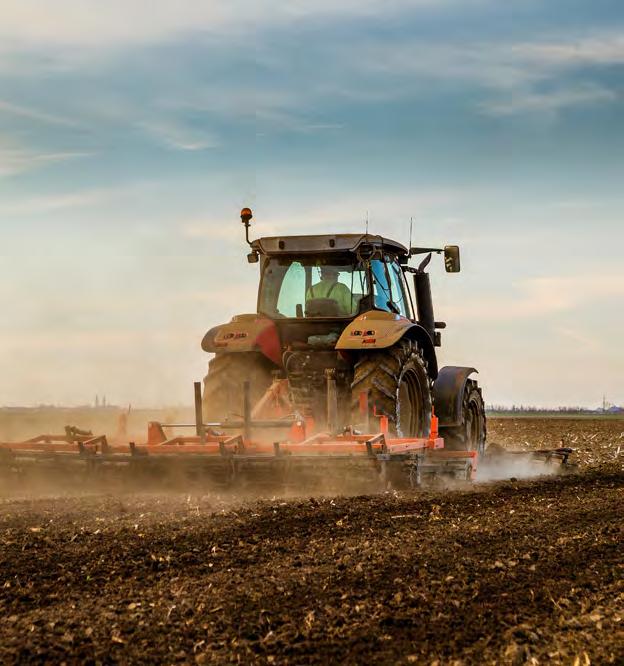
Compare that to Pakistan, where a 25 acre farm (considered a large “Murabba” land holding) requires at least 6 manual labourers per acre to cut and bundle wheat. In the American midwest, the big game changer is machinery. The Illinois farm in question was manned by a single family, yes, but one equipped with massive tractors, harvesters, seed drillers, and planters. Pakistan is a vastly different agrarian culture than the United States. Our crops are outdated, our farms are far smaller, and our fields are labour intensive. That makes our farming inefficient. And this is when compared to the United States. The US, along with countries like Australia, Canada, and Brazil, have the advantage of populations that are small relative to their land size, allowing for large scale farms that can be worked with large scale machinery. Yet Pakistan lags behind even compared to similar agrarian culture. India, China, and Japan all have smaller average farm sizes than Pakistan but are significantly more mechanised.
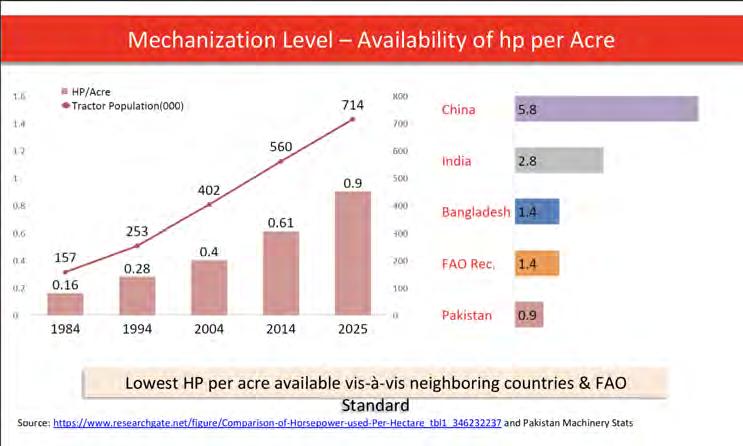
Currently the country’s mechanization ratio is below 1 horsepower per acre. The recommended rate as per the UN’s Food and Agriculture Organisation is at least 1.4 horsepower per acre, and preferably over. Compared to Pakistan, India is at 2.8 horsepower per acre, and China is at 6 horsepower per acre. Go back to the 1960s and you will see all of these countries had similar rates of mechanisation.
But why has Pakistan lagged so far be-
hind? It is a story none of us will be unfamiliar with. Inconsistent policies and a lack of political will have left our farmers relying on oxen and their own sweat and blood where they should be harnessing the power of machines. Yet over the course of this country’s history, there has never been, for example, a formal farm mechanisation policy. India and China have both benefitted from similar official direction. Even Bangladesh introduced a similar policy in 2020. In Pakistan it remains a pipedream.
The consequences from this abysmal lack of horsepower are not abstract. Pakistan, once a proud agrarian country, can no longer provide enough food for its citizens. We have been a net importer of food since 2021. The 2026 Global Report on Food Crises has placed Pakistan among the world’s major centres of acute hunger, with around 11 million people facing high levels of acute food insecurity in 2025, while the 2025 Global Hunger Index ranks the country 106th out of 123 countries and places it in the serious hunger category.
The crisis has already happened. Our agriculture is weak and uncompetitive. At best, nearly half of our population does not know where their next meal is coming from. At worst, the coming generations will be weaker and sicker because of a lack of nutrition. The only thing we can do now is push our agriculture and give the land what it needs to thrive. But can it be done?
The hunger crisis
The immediate reading of Pakistan’s ranking as one of the world’s major centres of acute hunger is grim enough. The deeper reading is worse. Pakistan is not facing a simple shortage of food. It is facing a system in which production, markets, imports, incomes, nutrition and climate risks are moving out of sync.
The latest IPC analysis for Pakistan shows the same pattern in sharper local detail. In 45 vulnerable rural districts of Balochistan, Sindh and Khyber Pakhtunkhwa, 7.5 million people were classified in Crisis or worse conditions between December 2025 and March 2026. Of these, around 1.25 million were in Emergency. The projection for April to September 2026 puts 6.7 million people in Crisis or worse, but the decline largely reflects reduced geographic coverage rather than a real improvement.
This is the starting point of Pakistan’s food problem in 2026. The country can still produce large harvests, and it still has the land, water, livestock base and farming knowledge to feed itself. Yet it remains exposed to food insecurity because it imports too much of some essential calories, invests too little in agricultural productivity, and wastes value between the farm and the consumer.
Our agriculture (and as a result food)
Farm power availability in Pakistan is estimated at approximately 0.9 horsepower per acre, significantly below both regional competitors and the level generally considered necessary for efficient modern agriculture. India has more than doubled its mechanization intensity over the past three decades, while China has undertaken one of the largest agricultural mechanization programs in history
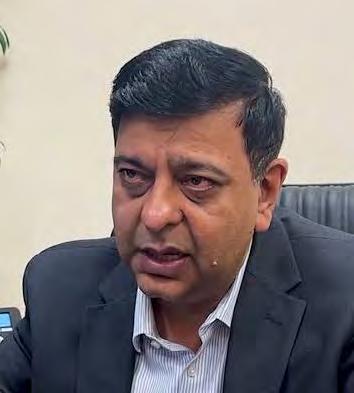
Raheel Asghar, CEO of Millat Tractors
crisis is rooted in a few key factors. We are dependent on imports and rely too heavily on foreign sources for essential food items, especially edible oil and oilseeds. More than 79% of edible oil demand is met through imports with a bill worth billions of dollars every year. Our markets are also broken. Pakistan often grows enough of a crop but fails to move, store, process or price it properly.
But perhaps the core of the issue is productivity. A combination of climate change and a lack of modern farming means we might be producing, but not efficiently enough. The problem is not only that farmers need more tractors or machines. Small farmers need access to equipment that helps them sow on time, harvest efficiently, reduce post-harvest losses, conserve water and shift into higher-value or import-substituting crops. Subsidised tractors or solar tubewells may help selected producers, but they do not fix the system.
The mechanisation gap
The lack of mechanisation is very real. In an interview with Profit, Mr Raheel Asghar, the CEO of Millat Tractors which is Pakistan’s largest
tractor manufacturer, claims that mechanisation has constantly been halted in Pakistan. “Our industry has managed to localize more than 90% of our production. We are even exporting our own brand of tractors abroad, yet Pakistani farms remain woefully underpowered,” he claims. “All you need to do is take a look at the countries around you to see how
large the gap has grown.
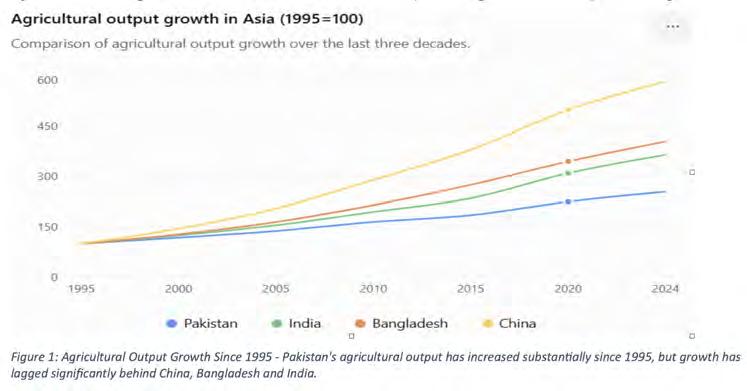
According to Mr Raheel Asghar, up until the 1960s Pakistan’s farm mechanisation was comparable with India and other countries in the region. Since 1995, Pakistan’s agricultural output has grown by approximately 155 percent. While this growth appears substantial, it compares unfavorably with the performance of neighboring countries.
Over the same period, agricultural output in India increased by approximately 265 percent, Bangladesh by over 300 percent, and China by nearly 500 percent. These figures demonstrate that while Pakistan’s agriculture has expanded, it has done so at a considerably slower pace than its regional competitors.
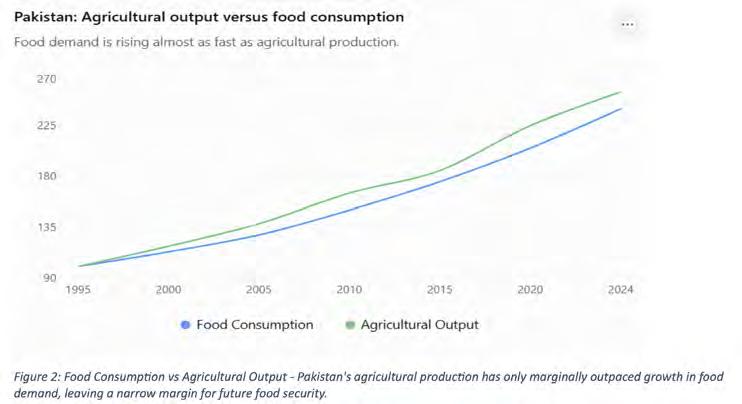
“This contrast becomes even more striking when agricultural growth is compared with food consumption growth. Food demand in Pakistan has increased rapidly due to population growth and gradual improvements in living standards. Estimates suggest that total food consumption has increased by around 140 percent since 1995, while agricultural output has increased by approximately 155 percent,” explains the Millat CEO. “In other words,
agricultural production has only marginally outpaced food demand.”
By contrast, Bangladesh, India and China have achieved significantly larger gaps between agricultural output growth and food consumption growth. These countries have created what may be described as a productivity surplus, where agricultural production has expanded much faster than domestic food demand. Such a surplus provides greater food security, enhances export potential and strengthens resilience against climate shocks.
A big cause for this has been the mechanization gap. “One of the most important explanations is the country’s relatively low level of agricultural mechanization. Farm power availability in Pakistan is estimated at approximately 0.9 horsepower per acre, significantly below both regional competitors and the level generally considered necessary for efficient modern agriculture. India has more than doubled its mechanization intensity over the past three decades, while China has undertaken one of the largest agricultural mechanization programs in history,” says Mr Raheel Asghar.
farmer, they are distant objects that arrive only when someone else agrees to rent them out.
This is where the problem begins. A farmer without his own tractor does not control his own farming calendar. At sowing time, he waits for a machine. At harvest time, he waits again. If the tractor owner is busy on a larger farm, the smaller farmer loses his turn. If rain is expected, or the temperature is rising, or the wheat is ready to be cut, waiting is not a minor inconvenience. It is a direct loss of yield, quality and income.
The same problem continues after harvest. A crop does not leave the field by itself. It has to be cut, bundled, loaded, transported, cleaned, dried, stored and then sold. Each stage requires labour, equipment or cash. In the absence of machinery, the farmer pays more for manual labour, takes longer to complete each operation, and loses more produce before it reaches the market. The cost is not
only on the farm. It travels through the supply chain.
This is one reason the arthi remains so powerful. The small farmer needs money before the crop is sold. He needs cash for seed, fertiliser, diesel, labour, pesticide, irrigation and transport. Formal credit is hard to access, especially for farmers without clean land titles, collateral or banking history. The arthi fills that gap. But the price of that convenience is dependence. The farmer often borrows from the same intermediary who later buys or arranges the sale of his crop. Mechanisation, in this setting, is not just about horsepower. It is about bargaining power.
Informal tractor rental adds another layer. In many villages, tractors are rented through local arrangements. A farmer may pay by the hour, by the acre or through a favour returned later. This keeps farming going, but it also makes the system inefficient. Rental
Table 1: Mechanization and Agricultural Growth - The countries that invested most heavily in mechanization achieved the strongest gains in agricultural productivity.
“The consequences are visible throughout the value chain. Pakistan has achieved substantial tractor penetration, but mechanization remains heavily concentrated in land preparation. Large gaps remain in planting, harvesting, spraying, precision application, post-harvest handling and fodder management.”
The problem at the field level
To understand what this means, step away from the national numbers and go to the field. Take the case of a small farmer in Punjab, Sindh or Khyber Pakhtunkhwa with three to five acres of land. On paper, he is part of Pakistan’s agricultural base. In practice, he is trying to run a food production unit without the basic tools of production.
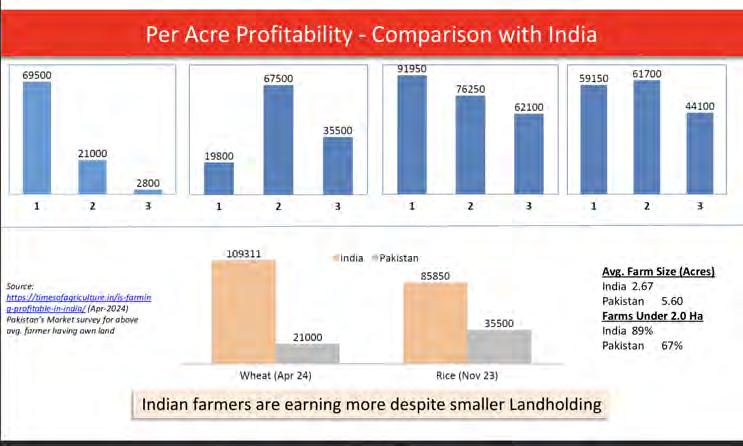
The average farm size in Pakistan has already fallen to around 5.1 acres, while a large number of farmers operate on even smaller holdings. That means most farmers cannot justify buying a tractor, even if they could afford one. A tractor is not a small investment. Nor is a seed drill, a planter, a reaper, a thresher, a sprayer, a loader or a trolley. For a large farmer, these machines are assets. For a small
costs rise during peak season. Machines may not be available when needed. The farmer may delay sowing because he cannot get a tractor in time, then harvest late because the same machine is tied up elsewhere. A small delay at the start of the season becomes a smaller crop at the end of it.
This is where Pakistan’s approach differs sharply from countries that have treated mechanisation as public policy. India has not solved all of its agricultural problems, but it has spent years building subsidy schemes, farm machinery banks and custom hiring centres aimed at small and marginal farmers. Under official mechanisation programmes, financial support has been provided for machinery purchases, custom hiring centres and village-level machinery banks, with higher assistance in some cases for collective models. The purpose is clear: if every small farmer cannot own every machine, he should still be able to use one when he needs it.
The Indian example is actually one that Mr Raheel Asghar believes Pakistan can learn from. “One of the most successful features of India’s mechanization strategy has been the development of Custom Hiring Centres (CHCs). These centres function as farm machinery rental hubs, allowing farmers to hire tractors, harvesters, planters, seed drills and other equipment on an hourly or acreage basis rather than purchasing them outright,” he says. According to Millat’s CEO, India’s national mechanization programs provide financial assistance for establishing such centres, while many states operate additional support schemes.
“Thousands of CHCs and Farm Machinery Banks now serve farming communities across India, particularly benefiting small and marginal farmers. The relevance of this model for Pakistan cannot be overstated. More than ownership, access is the key challenge facing small farmers. A network of professionally managed Custom Hiring Centres, operated through private entrepreneurs, cooperatives, farmer organizations and machinery dealers, would enable farmers to use modern equipment without assuming large debt burdens. Such a system would also improve machinery utilization rates and accelerate the diffusion of new technologies”
It is not hard to see the allure of something similar for Pakistan. The answer is not to hand out tractors every few years and call it reform. The answer is to build a machinery services market around small farmers. A properly designed hiring centre can keep tractors, planters, laser levellers, harvesters, sprayers, threshers, balers, loaders and transport equipment in one place. Farmers can book machinery by the hour or by the acre. Operators can be trained. Mechanics can be employed. Young people in rural areas can find work not only
as labourers, but as machine operators, repair technicians, logistics workers and service providers.
These centres can also become investment opportunities. Local entrepreneurs, farmer groups, cooperatives, manufacturers and banks can all have a role. A village-level machinery hub does not only serve one farmer. It serves an entire cluster. It reduces the cost of timely sowing, brings down harvesting losses, improves transport from field to market, and creates a reason to build repair workshops, spare parts networks and fuel or charging infrastructure around it.
The next step is to connect these hiring centres with storage. If accredited warehouses and electronic warehouse receipt facilities are located close to machinery hubs, the farmer’s relationship with the market changes. Instead of selling immediately after harvest, when prices are often weakest and cash pressure is highest, he can store the crop, receive a warehouse receipt, and use that receipt to obtain bank financing. Pakistan already has an electronic warehouse receipt framework under which eligible commodities can be stored in accredited facilities and used as collateral for financing.
This is how mechanisation begins to change the entire ecosystem. The farmer gets timely access to machines. The village gets jobs and services. Banks get a cleaner asset to finance. Traders get better quality produce. Processors get more reliable supply. The state gets lower post-harvest losses and a more documented agricultural economy.
At the field level, then, the problem is not simply that Pakistan has too few tractors. It is that the small farmer has too little control over time, cost, credit, transport, storage and sale. Mechanisation will matter only when it gives him that control back.
Finding a way out
The starting point has to be a national farm mechanisation policy. Pakistan has run tractor schemes, subsidy programmes and credit windows at different times, but it has not treated mechanisation as a long-term pillar of food security. That is the gap the tractor industry is now trying to fill.
During our interview, Mr Raheel Asghar told Profit about a recent proposal by Millat Tractors for a National Tractor and Farm Mechanization Policy 2026-31 sets out the case in direct terms. The proposal begins by shining light on the fact that agriculture contributes 23.9% to GDP and employs more than 37% of the workforce, yet Pakistan’s mechanisation level remains low at around 0.9 horsepower per acre. It also points out that Pakistan has never had a national tractor
and farm machinery policy to promote mechanisation.
The proposal’s targets are straightforward. It calls for annual tractor production and sales to reach 50,000 units in the short term and rise to 100,000 units by FY2031. It also aims to lift mechanisation from 0.9 to 1.2 horsepower per acre, while supporting employment, industrial growth, localisation and farm productivity.
Its policy instruments are also familiar but important. The proposal calls for a consistent sales tax rate, targeted federal subsidies, farm machinery financing schemes covering 35% to 50% of cost, and reduced financing markup at around one-third of KIBOR. For small farmers, it proposes farm machinery hiring centres and a Yellow Tractor Scheme for young entrepreneurs at reduced interest rates of 0% to 3%. For the local industry, it seeks duty-free import of farm machinery for local development, a 20% duty differential to discourage old imported machines, and preference for locally produced machinery.
There is a logic to this. Pakistan already has a domestic tractor industry with high localisation, vendors, workers and export potential. A national policy can use that base to expand mechanisation without turning the entire programme into an import bill. It can also create rural machinery services rather than simply adding more tractors to large farms.
But the policy will need to be wider than a tractor policy. Pakistan’s problem is not only land preparation. The real gaps are in precision sowing, harvesting, spraying, fodder management, post-harvest handling, storage and transport. Any national plan must therefore support the full chain of machinery that takes a crop from soil to market.
It must also be designed around the small farmer. Subsidies should not disappear into politically connected purchases. Hiring centres should be mapped by crop zones, monitored digitally and linked to trained operators, repair networks, warehouses and formal credit. The policy should also use consistent measurement, clear annual targets and climate criteria, so that machinery supports water saving, timely sowing and reduced losses.
This is where the food security question returns. Pakistan cannot keep importing its way out of weak productivity. Nor can it keep asking underpowered farms to feed a growing population. Mechanisation will not fix seed quality, water management or market distortions on its own. But without it, none of those reforms will travel far enough. If Pakistan wants more food, cheaper food and better rural incomes, its farms need horsepower. More importantly, they need a system that makes that horsepower available where it matters most. n
The Egypt Lesson
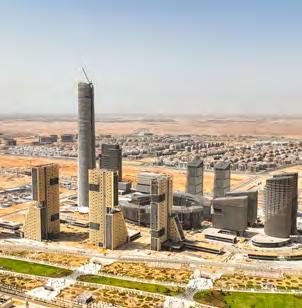
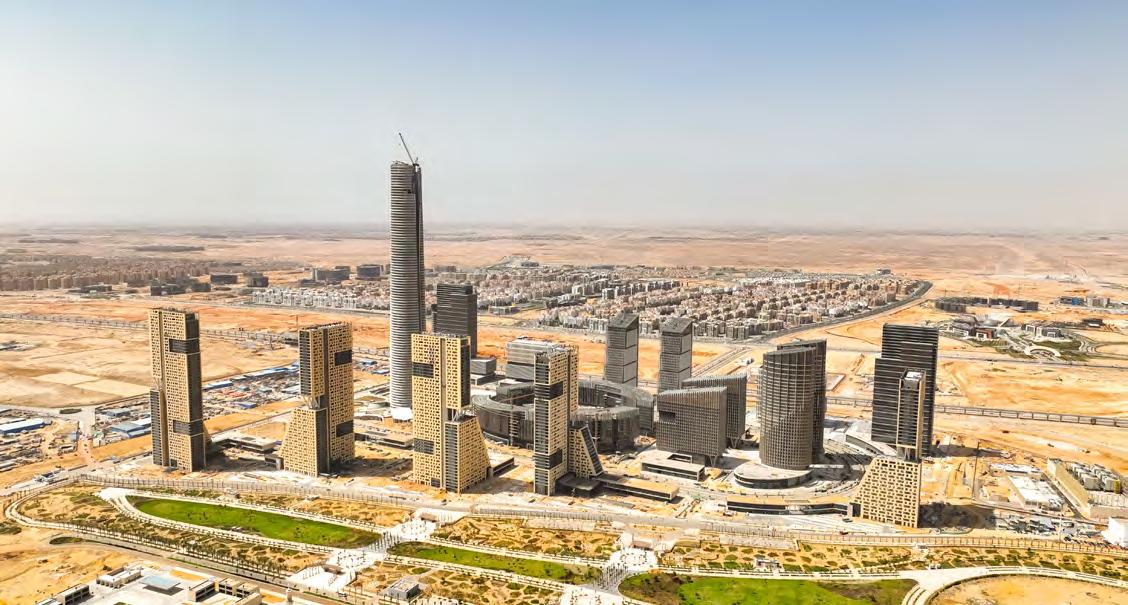
During my recent stay in Cairo, I found myself reflecting on what I would call The Egypt Lesson: nations are constrained not only by macroeconomic pressures or structural limitations, but by their ability to convert scale and ambition into sustained institutional outcomes. Cairo’s expanding urban footprint and the visible acceleration of infrastructure development reflect an ambition to re-engineer economic geography at a national scale, an ambition that is increasingly evident in the rhythm of daily life itself.
For many outside observers, Egypt is often reduced to a narrative of macroeconomic stress, currency adjustments, debt pressures, and recurring IMF engagement. Yet this perspective captures only one dimension of a far more complex reality. On the ground, Egypt represents one of the most ambitious state-led transformation experiments in the developing world.
There are countries that evolve through incremental institutional strengthening, and there are others that pursue transformation through scale and accelerated execution. Egypt belongs firmly to the latter category. Here, ambition is not abstract; it is embedded in infrastructure systems, urban expansion, logistics corridors, energy investments, and national megaprojects that are reshaping the country’s economic geography.
The real question is not whether Egypt is transforming, but how it is doing so under persistent macroeconomic constraints. The answer lies in a development model defined by state-led scale creation: large infrastructure systems, national megaprojects, and the strategic use of geographic advantage anchored around the Suez Canal corridor.
Writer is a public policy advocate, business strategist, and former Pakistan’s Minister for Investment and Chairman of the Board of Investment. He is a strategic advisor to leading corporate entities, focusing on business policy, investment facilitation, and leadership branding. He writes frequently on the economy, governance, and society.
Egypt is also making more deliberate use of stateowned assets, including government buildings and public land, to generate revenue while attracting both domestic and foreign investment. This reflects an important lesson for countries such as Pakistan: public assets should not remain idle or underutilized. They must be consolidated, rationalized, and repositioned toward productive economic uses that support investment, generate revenue, and contribute to long-term development.
A further visible feature of Egypt’s urban strategy is its emphasis on vertical construction. By building upward rather than allowing unchecked urban sprawl, Egyptian cities are better positioned to provide roads, utilities, public services, and transport connectivity more efficiently. This offers a useful contrast with Pakistan’s pattern of horizontal expansion, where urban sprawl often increases the cost and complexity of infrastructure delivery.
At the heart of this transformation is a deliberate effort by the state to reimagine economic geography itself. The New Administrative Capital, expanded transport networks, energy infrastructure, and logistics corridors reflect a model in which the state acts not only as regulator but also as the principal architect of scale. This is not incremental development; it is structural redesign at the national level. Yet what makes Egypt particularly instructive is not only the scale of its ambition, but also the tension under which that ambition is being pursued. Macroeconomic pressures, including foreign exchange constraints, debt-servicing obligations, and a population exceeding 120 million, create a continuous stress test for execution capacity.
Like Pakistan, Egypt possesses a large and youthful population. Yet demographic scale alone creates neither prosperity nor competitiveness. Human capital becomes an asset only when institutions, infrastructure, and economic opportunity are aligned to absorb it productively. Demography creates potential; execution converts it into performance.
Egypt’s approach to human capital also offers an important social and economic lesson. Its efforts to address gender-related issues and expand women’s participation in public and economic life are significant examples within the Muslim world. Pakistan can learn from this experience. Greater female labor-force participation would not only expand the country’s productive base but also generate broader social and developmental gains over time.
At its core, Egypt’s transformation follows a sequencing logic of state-led scale creation: infrastructure and productive capacity are built ahead of demand, with the expectation that institutional and economic absorption will follow over time. This re-
flects a structural belief that national capability must precede market equilibrium, even if shortterm macroeconomic pressures intensify.
The Suez Canal remains one of the most strategically important trade arteries in the global economy, and Egypt has increasingly sought to leverage it not merely as a transit route but as the backbone of an integrated logistics and industrial strategy. Industrial zones, maritime infrastructure, and trade-linked corridors reflect a deliberate effort to convert geography into durable economic advantage.
The Suez Canal also offers a broader lesson in development strategy. Egypt demonstrates how nations can transform geography into competitive advantage. The canal is not merely a waterway; it is a national asset deliberately integrated into logistics, industry, trade, and investment policy. Geography created the opportunity; strategy created the advantage.
Egypt’s strategic significance extends beyond the Suez Canal itself. Positioned at the intersection of Africa, the Middle East, and Europe, it has sought to leverage its location as a platform for trade, logistics, manufacturing, and investment. The lesson is clear: geography alone does not create competitiveness; competitiveness emerges when geographic advantage is reinforced by infrastructure, institutions, and effective execution.
Another important lesson from Egypt is the value of economic diversification. Egypt does not rely on a single engine of growth. Tourism remains a major contributor to the economy, but logistics, ports, manufacturing,
energy, and services provide parallel sources of economic activity. Alexandria’s role as a logistics hub, for example, became particularly important when Suez Canal-related trade flows came under pressure because of regional conflict. This reinforces a central development lesson: diversified economies are more resilient, create broader opportunities for investors, and are better positioned to sustain growth during external shocks.
Egypt’s transformation has also been reinforced by sustained efforts to strengthen energy security. Over the past decade, investments in power generation, natural gas, and energy infrastructure have helped address chronic supply constraints. Sustainable development, however, depends on more than capacity alone; it requires reliability, efficiency, and long-term system resilience.
Egypt has also taken concrete steps to address investor concerns in key sectors. In the energy sector, for example, the government has worked to resolve a substantial portion of outstanding payments owed to energy companies. Such measures help restore confidence, improve investor sentiment, and encourage fresh investment in critical infrastructure. Pakistan faces similar challenges across several sectors, where unresolved payment obligations, regulatory uncertainty, and accumulated liabilities continue to discourage investors. Addressing these sector-specific bottlenecks is therefore essential if Pakistan wishes to attract credible long-term investment.
Megaprojects create capacity; sustained
policy refinement converts that capacity into investor confidence.
Recent indicators suggest that Egypt’s transformation is not only structural but increasingly reflected in near-term economic momentum. The economy recorded approximately 5% GDP growth in Q3 FY2025/26, signaling resilience alongside reform continuity. More importantly, the composition of growth is broadening, with manufacturing leading expansion, supported by high-growth ICT and services sectors. At the same time, private investment now accounts for more than half of total investment, reinforcing a gradual shift towards deeper private-sector participation and capital formation. These indicators suggest that Egypt’s development model is evolving beyond scale creation towards measurable economic traction. However, scale alone does not guarantee transformation. Egypt’s experience highlights a central tension: ambition must ultimately be matched by productivity growth, export competitiveness, and greater private-sector depth if macroeconomic pressures are to be absorbed sustainably.
Ultimately, capital follows confidence. Infrastructure may create capacity, but investor confidence determines whether that capacity translates into productive economic activity. Beyond incentives, what Egypt projects is a visible sense of national direction. Investors are guided not only by expected returns but also by confidence that a country knows where it is heading and possesses the institutional capacity to get there.
Egypt’s commitment to strengthening its investment climate is also reflected in continuous policy refinement. Recent fiscal reforms have streamlined tax administration, accelerated refund mechanisms, extended incentives for industrial investment, strengthened support for manufacturing and healthcare, and enhanced Egypt’s competitiveness as a regional logistics hub. Individually, these measures may appear technical; collectively, they demonstrate a government willing to continuously refine the policy environment to strengthen investor confidence, remove barriers to productive investment, and reinforce long-term competitiveness.
In comparative perspective, Egypt and Ethiopia represent two distinct development archetypes. Ethiopia reflects execution discipline anchored in institutional continuity, while Egypt reflects ambition at scale under persistent macroeconomic constraints. This is not merely a difference of degree; it is a difference in development philosophy and sequencing.
More broadly, Egypt reflects a challenge confronting many emerging economies: how to reconcile scale with efficiency, ambition with sustainability, and infrastructure expansion with institutional depth. This is not a regional dilemma; it is a structural one.
The distinction between growth and transformation is therefore critical. Growth refers to visible expansion in infrastructure and economic activity. Transformation refers to deeper productivity gains, stronger institutions, and export competitiveness that make growth self-sustaining.
Egypt also reminds us that state capacity is itself a strategic development asset. Policies matter, but the ability to execute them consistently and at scale matters even more. In many developing countries, the binding constraint is not vision but implementation.
A further nuance lies in risk exposure. State-led scale creation can accelerate development, but it also increases sensitivity to fiscal pressures, external financing conditions, and currency volatility. Sequencing and institutional absorption capacity therefore become decisive variables in determining long-term outcomes.
Egypt’s population of approximately 120 million, compared with Pakistan’s 250 million, represents a different demographic scale, yet its economy, valued at over USD 400 billion, remains broadly comparable to Pakistan’s USD 411 billion GDP. Egypt consistently attracts USD 9-10 billion in annual net FDI inflows (approximately 2.8%-3% of GDP), while Pakistan attracts roughly USD 1.8-2.0 billion (around 0.45% of GDP). The divergence is not one of resources; it is one of execution architecture, policy continuity, investor confidence, and state capacity.
Recent performance indicators further reinforce this trajectory. Manufacturing, ICT, and services are contributing more meaningfully to output. Private investment now exceeds 50% of total investment, while trade activity through the Suez Canal has regained momentum. Together, these indicators point to an economy gradually transitioning from scale-led expansion towards productivity-supported growth.
The lesson for emerging economies is not to replicate Egypt’s model but to understand its underlying logic. Large-scale transformation requires capital investment, but it equally demands institutional coherence, policy continuity, and continuous productivity gains. Without these, scale alone cannot translate into durable competitiveness.
At the global level, Egypt’s trajectory aligns with other state-led transformation models in which infrastructure-first strategies have been deployed to accelerate development. International experience consistently demonstrates that such models become sustainable only when they evolve into productivity-led systems anchored in exports, innovation, and a vibrant private sector.
The deeper lesson is simple: development is not defined by how much a country builds, but by how effectively it converts those investments into economic capability and sustained productivity gains.
The real issue is not whether Egypt is building enough, it clearly is. The question is whether these investments will translate into durable productivity gains and long-term macroeconomic resilience.
The ultimate test of every megaproject is not its construction but its conversion, whether infrastructure becomes a sustained driver of competitiveness, exports, productivity, and economic efficiency.
For policymakers, the central takeaway is the importance of sequencing. Infrastructure creation must be accompanied early by institutional strengthening and productivity-enhancing reforms. Otherwise, scale expansion risks outpacing the economy’s absorption capacity.
Regardless of the development model adopted, one lesson remains universal: transformation requires continuity. Infrastructure, institutions, and competitiveness are built over decades, not electoral cycles. Sustained progress belongs to countries that preserve strategic direction long enough for reforms to mature into enduring institutions.
The Egypt lesson ultimately brings us back to a fundamental truth: scale is necessary for transformation, but never sufficient on its own.
Nations are not defined by the size of their projects, but by the systems that convert those projects into enduring economic capability. They are defined not by ambition alone, but
by execution sustained over time.
For Pakistan, the lesson is not imitation but introspection. No degree of geopolitical relevance can substitute for domestic competitiveness. Pakistan does not suffer from a shortage of ideas; it suffers from a shortage of execution. Nations ultimately succeed when they first put their own house in order.
The question for Egypt, and indeed for all emerging economies, is not whether transformation has begun. It is whether that transformation can be institutionally consolidated before macroeconomic constraints redefine its limits.
The lesson from Egypt is not that ambition is insufficient. It is that ambition must converge with productivity, institutional depth, macroeconomic stability, and policy continuity if it is to become enduring.
In the end, nations do not rise because they build bigger cities, wider highways, taller buildings, or larger megaprojects. They rise because they build institutions capable of sustaining those investments, policies capable of outliving governments, and societies capable of continuously improving productivity, competitiveness, and human capital.
History repeatedly demonstrates that physical infrastructure can be constructed within years; institutional infrastructure requires decades. Roads, ports, airports, and industrial zones may accelerate economic activity, but only capable institutions, credible governance, and consistent execution transform that activity into lasting national prosperity. Countries that endure are those that invest not only in concrete and steel, but equally in leadership, institutions, and people. Perhaps that is Egypt’s most important lesson!
The future will not belong to nations that merely build more; it will belong to those that govern better, execute consistently, and strengthen institutions patiently enough for ambition to mature into competitiveness. Infrastructure may announce a nation’s aspirations, but institutions determine whether those aspirations become reality.
For Pakistan, the message is both simple and profound. Our challenge is not the absence of opportunity, resources, or strategic location. Our challenge is to build an execution culture rooted in institutional continuity, policy credibility, and long-term national purpose. Only then can investment become sustainable, competitiveness become structural, and growth become transformational.
Ultimately, the defining measure of a nation is not what it constructs, but what it sustains. Projects create headlines; institutions create history. Ambition may initiate transformation, but only continuity, credibility, and execution ensure that transformation endures.
The above is the “Egypt Lesson”. n
MEET THREE STARTUPS OFFERING THREE DIFFERENT SOLUTIONS TO TACKLE THE BIGGEST ROADBLOCK TO THE ELECTRIC BIKE REVOLUTION IN PAKISTAN.
But do they have what it takes to win?
While their diverse models display a desire, creativity, and grit to find solutions to different facets of the same problem, the hurdles facing them indicate key pain points that need addressing if an EV transition is to take place
By Usama Liaqat
Many consider a shift to electric vehicles just a matter of time. However, in Pakistan, especially in the case of two-wheelers, it is not as easy a transition as they might have you believe. Certainly, the running costs of an electric bike are much lower than a comparable ICE-powered motorcycle, and we have seen a boost in the numbers of such motorcycles on the road because of the recent hike in petrol prices. But what really is the hurdle that stands in the way?
Put simply, electric bikes are more expensive. For an average user of motorbikes (and we know it is a generalization), money is a big issue. Most people in Pakistan who drive a motorbike are not exactly the group with deep pockets. An electric bike which could give them a range good enough to match the experience of an ICE-powered bike would generally be priced at over 3 lakh rupees, often exceeding 4 lakhs. Compare that to the workhorse of choice – the Honda CD70 – which is priced at around 1.6 lakhs, and the extent of additional investment required (in percentage terms) becomes clear.
But this is not a problem without solutions. The first solution would obviously be to provide prospective buyers with financing to cover the additional costs of buying an electric bike. This might come from banks, the informal sector, or through mobility financing initiatives such as the Wasl Mobility Modaraba. The way this would work is that the electric bike users would pay off the loan
in installments from the savings they would make by using electric bikes. This is essentially Wasl’s model.
The problem with this solution, so to say, is that for someone to pay off their loan through the savings they make by using electric bikes, their usage has to be high enough. After all, the more you use these bikes, the more your savings increase, and only in the case of high savings would one be able to pay off the loans financed at high rates. But for an ordinary user who does not cover as massive distances as delivery riders etc., what is to be done?
For one, they can buy a cheaper electric bike. But the lower price point of these bikes comes with its own issues, at least two of which are worth mentioning here. First, they have limited range, often around 60 km per charge which restricts the freedom available to them. And secondly, the battery – most commonly the graphene one in lower priced electric bikes but even the lithium iron phosphate one – will depreciate. This latter is a cause for concern since batteries can make up to 40 percent of the total cost of an electric bike, and once they have been depleted, they need to be replaced, adding to the overall expenditure.
Here again, as for many problems, there are solutions in the market. Businesses like ZYP Technologies and ESwap Technologies are leveraging the battery swap model as a way to
solve both the range and the battery depreciation problems. Another company called ZVolta is taking a different approach by promoting destination charging as a way to solve the range problem. All of these nascent companies have put their thumb on the problem, and are trying to strike while the iron is hot. Yet they face an uphill battle, each encountering hurdles that are specific to their models, but which taken together display the massive obstacles that still remain in the way of a large-scale transition to electric two-wheelers.
ZYP Technologies
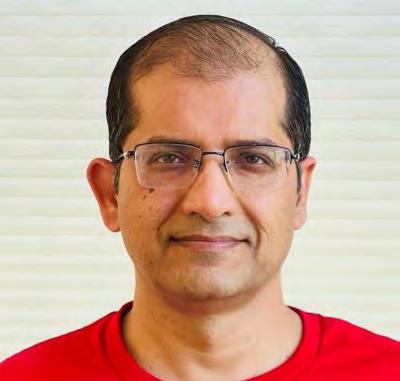
Founded in September 2022, ZYP Technologies aimed to do something different. It was founded by Hassan Iqbal Khan, a software engineer who spent
In Pakistan, we have been taking the easy route. We merely want to assemble kits and sell them quickly. But if you build a product for quick wins, you lose out on a lot. We want to change this
Hassan Iqbal Khan, CEO and Co-Founder of ZYP Technologies
years working in Silicon Valley. As he told Profit, ZYP did not just want to be another assembler. Rather, they saw that the time was ripe to reset Pakistan’s automobile industry, which for decades had lagged behind globally as the dominating ground of foreign brands. Given that electric mobility was globally a new space and that other emerging markets had already begun capitalizing on this moment (some even have started exports), Hassan and team felt that they needed to do something similar in Pakistan.
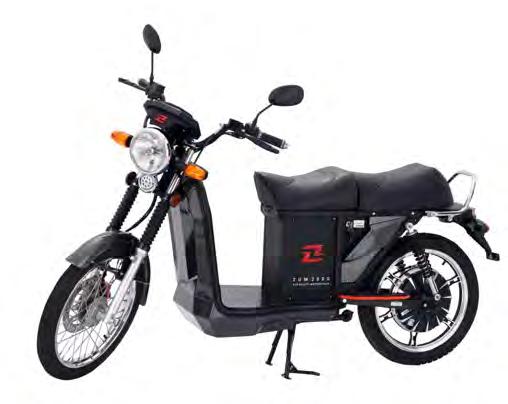
Unlike most of the electric motorcycle brands in Pakistan, ZYP is remarkable for two major reasons: they have actually developed an indigenous motorcycle model, which is manufactured locally in their facility in Lahore, and they have set an ambitious target to eventually begin exporting this Pakistani ‘brand’, and to become a global competitor. They want to put Pakistan on the map, and help contribute to orienting the local auto industry towards exports, to actually do the right thing. As he says, “In Pakistan, we have been taking the easy route. We merely want to assemble kits and sell them quickly. But if you build a product for quick wins, you lose out on a lot. We want to change this.”
The Model:
How ZYP’s model works is essentially this. You buy the bike, but not the battery. Rather, you pay a 2.5 rupees/km rent for using the battery. As far as the bike is concerned, currently they have only one model called ZUM 2000, with a 2kW motor, priced at 260,000 rupees. The rent you pay for the battery is supposed to be protection against battery depreciation. Now the battery within the bike can be charged either at home, or through a battery swap. And it is this battery swapping technology that is the main solution ZYP is claiming to offer.
Battery swaps need two things: a battery that can be removed and then plugged with no hassle, and a network of swapping stations where charged batteries are available at all times, and where you can go and swap your depleted battery for a fully charged one. Of course, this charge too comes at a charge, currently set at 195 rupees for a full 100 percent difference. Otherwise, you pay only for the difference between the charge of the battery that you are swapping and the fully charged battery you are receiving at the swap station. It takes around a minute to swap the batteries, comparable to what it takes to refill your fuel tank in an ICE-powered bike.
This is the appeal of the battery swap solution. Hassan believes that people will shift to electric motorcycles if the experience they offer is comparable to the experience offered by petrol bikes. As he says, “Battery swap is the way to go. Nobody wants to wait. People
whose incomes depend on the bike certainly will not switch to electric even if you provide them with a charging station. It takes a minimum of 2 hours for fast charging, whereas slow charging can take between 4 and 6 hours.” The battery swap model, then, unlocks the level of freedom of a petrol bike, while aiming to deliver at least part of the savings of an EV. At the same time, it allows riders to cover extensive distances which they would not have been able to cover with a normal electric motorcycle that comes with a fixed battery, increasing the earnings people (such as delivery riders) are able to generate through the motorcycle itself.
And that’s the reason, ZYP considers itself more than a bike manufacturer. Instead, it sees itself as a solutions provider. And part of this ‘solution’ includes setting up the battery swap infrastructure, with battery stations stationed at various points within the city. Currently, the number of swap stations is 16, but ZYP has plans to open more of these stations in Lahore, before moving on to other geographies.
But ZYP includes other offerings as part of its ‘solution’ too. These include the marriage, as Hassan puts it, between the hardware and the software. ZYP has an app which allows you to track your bike and offers smart features and insights. The software tells you where your nearest charging stations are, offers suggestions based on your driving usage, and offers anti-theft measures that allow you to disable the bike remotely. The app also allows you to make payments, eliminating the need for cash.
The Hurdles:
According to an analysis that we ran previously which compared the costs and calculations of using the ZYP model compared to a Honda CD70, the savings in the ZYP model make sense enough only at high usage (think 100+ km per day). Based on our analysis, for someone who drove 60 km every day, the ZUM2000 would only be offering 113,000 rupees in savings compared to a CD70, over five years. Such savings, we had reasoned, did not cover the risk of investing in a more expensive bike, which is based on a technology that’s not fully developed yet, whose resale value would fall by much more than a CD70’s, and whose aftersales support system is considerably less extensive than a petrol motorcycle’s, and so on.
The problem, in other words, is that the ZYP bike – ZUM 2000 – is a little too expensive to run. And that means unless your usage is very high, the model is unlikely to yield significant savings, which are the selling point of electric bikes consumers resonate the most with.
This, in fact, is one of the core issues with this model. The per kilometer battery rent, as well as the rate for battery swap are such that the savings are much lower than one would have expected. For instance, swapping the battery at the swap station could cost you 97.5 rupees per unit, almost double the rate available to domestic users. The per kilometer rent of 2.5 rupees would have made more sense if the bike had not been a whole lakh more expensive than a CD70. ZYP’s CEO admits that the prices are not as low as even they would have liked, but he believes that is because the company hasn’t hit enough volumes to have achieved economies of scale, at which they could feel comfortable reducing prices. But this fact points to a deeper malaise than simply the higher pricing. It points to an underlying condition that has more to do with - you guessed it - money.
See, models such as ZYP’s often face the chicken and egg problem. For volumes to reach high levels, you need the infrastructure in place. And to finance this infrastructure you need the money from these sales. What is to come first, then? The answer usually lies in throwing money at the problem. You raise enough money upfront to develop infrastructure, and once that is in place, you hope the sales will follow. People who can see what they are getting into can now trust your product.
Now, ZYP did start with 1.2 million USD as seed capital, with investors led by Indus Valley Capital and Shurooq Capital injecting money into the fledgling enterprise. ZYP has been making use of that money to invest in their product and capabilities. But, as Hassan pointed out to Profit, the volumes and visibility still aren’t there that would push prices low enough for the bike to be competitive enough. Neither have the sales – which Hassan describes as “peanuts” – reached a point where the return on investment has become attractive. The key bottleneck, however, is funding, which once obtained might start bringing in the volumes to breathe new life into the enterprise.
But luckily for ZYP, they do not require too extraordinary a sum of money to reach volumes where things start to make sense. According to Hassan, an upfront injection of 10 to 15 million dollars would suffice to turn the company cash-flow positive and even enable them to start exports. “The market is so hot that someone should be able to invest this amount in this space.” And the company has been in talks with local and foreign investors to raise more money.
At the same time, the company is exploring other business models which might enable it to achieve enough return on investment that the model becomes cheaper for the consumer.
For instance, ZYP has been considering a model of electric bikes, which is non-swappable, and they have also been considering a rental model like ESwap’s, which we will consider in more detail. They have also been aiming to get into a pure battery play business, whereby they plan to partner with OEMs as a battery provider, reducing upfront costs of their vehicles, especially three-wheelers, which are so much more expensive, relatively, to their two-wheeler counterparts. ZYP is also planning to soon launch a cheaper bike called ZYP GO 1500, more comparable to a CD70, which it hopes would fare better in the market.
One wonders whether with limited funds which they currently have, whether ZYP has taken too high an aim, with the set-up of manufacturing of their bikes, while also investing in the battery swap infrastructure. The latter, just for context, does not come cheap. And investing in manufacturing requires not only intensive capital input, but also requires investing in capabilities, which takes time to bear fruit. The fact that they are now exploring alternative models shows, to us at least, that they are trying to figure out a better way of utilizing precious funds to position themselves. Yet again, streamlining their energies into one particular stream might yield them more freedom to take their company to the next level.
There is another company, however, which until now has set a more streamlined sight on what they want to do, and which has been deploying its capital into that particular objective.
ESwap Technologies
There is a newer player in the arena, aiming (not avowedly, but you can sense it) to beat ZYP Technologies at their own game. And, here, the
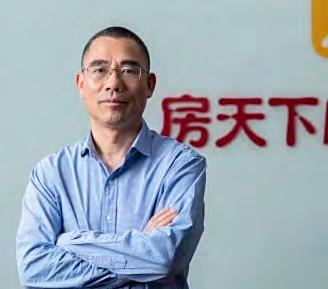
problem is not the availability of capital. One would reasonably agree with this last statement once one comes to know that the person behind the company is a Chinese billionaire named Vincent Tianquan Mo. Vincent, currently the chairman of Fang.com, is perhaps most famous for SouFun, which he cofounded and which rose to become China’s largest real estate commercial platform, in the manner of Zillow or Zameen.com, where users can list, transact over, and buy property, among other things. According to some reports, an influential political and business family of Lahore is also involved in the business, which prefers to keep its name unmentioned.
While this latter fact may partly explain why a Chinese billionaire would be interested in Pakistan’s electric mobility space, another perhaps more visible fact might also explain it. And that’s the massive two-wheeler space in Pakistan, which comprises over 25 crore motorcycles. That’s just so many petrol bikes that would have to move to electric. No denying, this is an opportunity so massive that, according to reports from people familiar with the matter, Vincent is closely overseeing the operations himself.The operation is based, like ZYP, in Lahore.
don’t need to do any of that. Instead, you pay a monthly rent and that covers everything, including major maintenance. Currently, the monthly rent is set at 17,000 rupees per month for the first 3,000 km. For distance driven above that, you pay a per kilometer charge of 4 rupees.
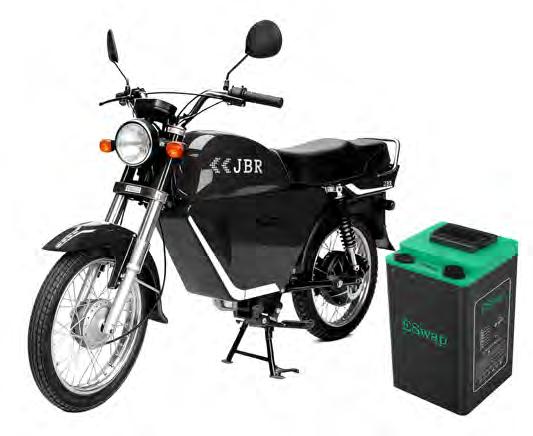
But you might ask: what are the bikes involved in the ESwap operation? ESwap does not make the bikes themselves; rather the bikes are manufactured under the brand name JBR (a company that Vincent also owns) by Plum Qingqi Motors in Pakistan. Effectively, this bifurcates the solutions providing company and the bike manufacturing segment, which is outsourced to an established player allowing the company to focus on scaling that solution rather than investing in technologies. Unlike ZYP, ESwap can afford to do this, given the heft of the billionaire behind the latter, a fact that makes them seem more well placed than ZYP to scale their solution.
Coming back to ESwap, the company has been aggressively expanding its swapping stations in Lahore. And this seems to be their answer to the ‘chicken and egg’ problem that we saw ZYP facing; the difference being that ESwap seems to have the resources to force a solution to the problem, and since the company was registered in 2025, the company has been able to set up more than 30 battery swap stations, more than double the amount ZYP has been able to establish. While we do not have their exact sales numbers, based on our conversations, we can confidently assert that they have been able to sell more bikes than ZYP despite having entered the market later. The removal of the initial capital investment – and with it the worry about any depreciation in the bike’s value – in buying the bike seems to be a key factor in the popularity of this model.
The Model:
As far as the ESwap model is concerned, they too offer the battery swap solution, but with a twist. Unlike with ZYP, where you had to buy the bike first and then pay rent for battery usage and also pay for any swaps that you do, with ESwap you
ZYP’s Hassan would of course say it is not fair to compare the two, considering ZYP is trying to do something different and more ambitious. But it is instructive to see how the different aims have resulted in current success. Of course, current success is not a foolproof determinant of future success, but it is one thing that future success might be built upon.
The Hurdles:
If ZYP’s model shows the problems facing a company yet to achieve substantial scale, ESwap’s fortunes show the problems facing a company that is well on its way to achieving scale and does not suffer from the tight financing that ZYP does. In fact, one of the major issues that ESwap is facing is that they have simply sold too many bikes for the batteries they had. The result is that
ESwap’s JBR Bike
Vincent Tianquan Mo: the billionaire Chinese founder of ESwap
charging stations sometimes do not have enough batteries to administer swaps for the (mainly) delivery riders who want to make a quick stop as they hurl themselves back into their oppressive routine. This problem is exacerbated by the fact that as things stand, these bikes cannot be charged at home, so the unavailability of batteries becomes a substantial issue.
The second major issue that ESwap is facing is the pricing factor. Initially, the monthly rent was set quite low, at around 5,000 rupees per month. Of course, the amount was too low to make any financial sense for the company, yet it was set that way to attract customers and put their product on the road. Once people started using their bikes, they started increasing the rates gradually, sometimes by a couple of thousand rupees per month, until they reached the current level of 17,000 rupees per month.
According to background conversations with people familiar with the matter, prices start to make sense for the company at around 20,000 rupees (at which level the company does intend to raise prices in the near future). The problem with this is that until now they have been increasing their prices without much compunction because the prices of petrol had risen by so much. Yet now that petrol prices have returned close to the pre-Iran war levels, the company might find itself hard-pressed to achieve that coveted 20,000 rupees mark.
At this point, one must consider whether the numbers make sense or not from a consumer’s standpoint. Let’s say if the company sets the rate at 20,000 rupees for 3,000 km, this would make the per kilometer cost of usage of the ESwap model 6.67 rupees. This figure is not that far off from the fuel cost of a CD70, which with the mileage of 50 kilometers per liter, comes at 6 rupees per liter. Of course, the CD70 also has added maintenance costs, but it has the advantages that come with a well developed support ecosystem as well, an attribute that ESwap for now lacks. This issue is exacerbated by the battery shortages ESwap is facing, and the reality that a lot of ESwap users already own a CD70. In this context, moving on to the ESwap model from a CD70 becomes a tough ask from them at the 20,000 rupee rate.
Moreover, the company finds itself in another fix: they are unable to reliably charge the batteries that they have at their charging stations. The problem here lies with the fluctuations in electricity discharge within Lahore, which interfere with the charging process of a lithium iron battery. This is not a small issue, since this has forced ESwap to rethink the way their batteries are charged.
In fact, they are now planning to shift to a hub and spoke model, whereby they plan to charge their batteries at a centralized location – ideally with large solar installations – and once the batteries have been charged to dispatch them physically to their battery swap stations across the city. This solution might make sense at scale, but it points to broader problems with the grid within Lahore, something that might need an overhaul if electric vehicles are to take over the roads. Last, but not least, the company has an issue which it shares with ZYP, and that is the fact that as things currently stand, their model makes the most sense for people with high to very high usage every day, a category in which most of the ridership in Pakistan does not fall. The company had recognized the suitability of its model for the delivery rider segment since it started, like ZYP, with targeting them. But now that the electric bikes industry recently saw a boom in the wake of high petrol prices, the massive retail demand for these bikes was made evident
to all in the industry. In fact, ESwap is also considering selling bikes through retail to supplement the current rental model, just to capitalize on this massive segment.
These are not problems that money cannot solve. And the situation until now shows a company that has been willing to experiment and course-correct. But, especially for the latter two issues, there is another new player in the industry that aims not to solve the battery depreciation problem –which partly is what ZYP and ESwap intended to do – but to solve the range problem through a different, more diffuse method: destination charging.
ZVolta
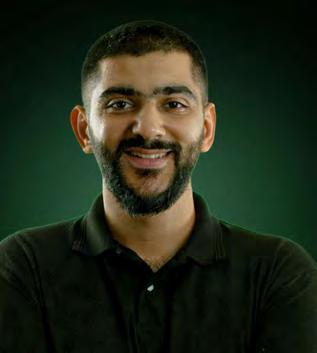
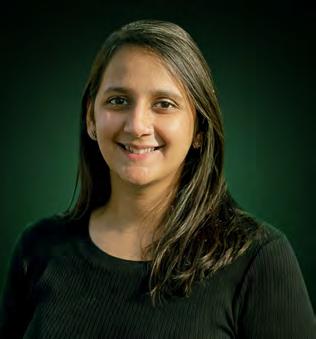
ZVolta was founded in 2025 by two LUMS alumni, Nashit Naviwala and Anusha Shahid who had already dabbled with starting their own ventures. Nashit had already worked in
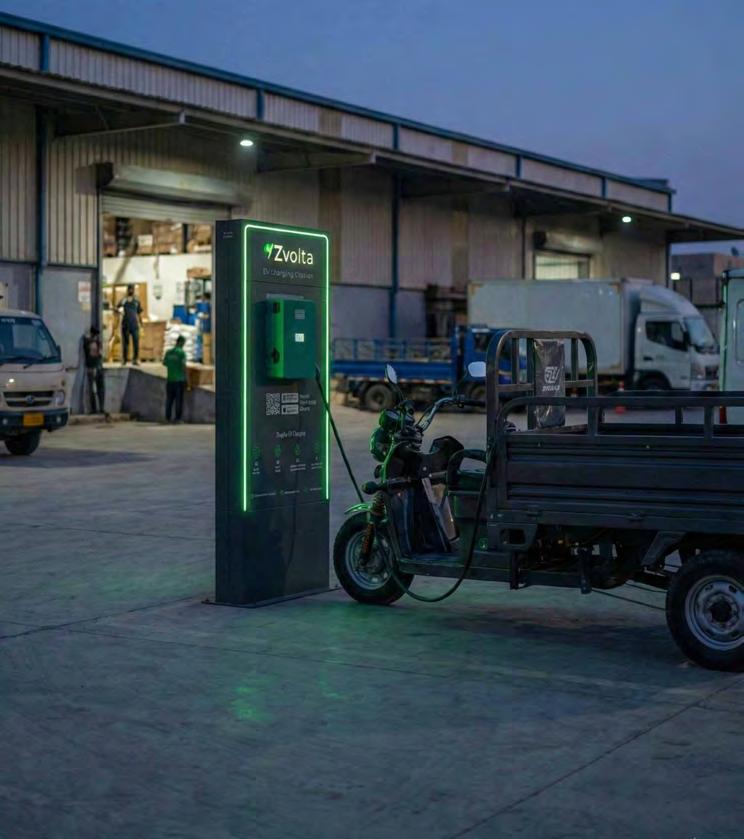
ZVolta Charger
mobility, having launched bike ride hailing operations for Careem in Pakistan, while Anusha had her background and interest in energy markets. Together, after they had experimented with small scale electric vehicle rental operations, they decided to launch ZVolta in Karachi as a way to solve the issue many face with electric vehicles: limited range.
The Solution:
The solution is simple. There is a system of decentralized chargers placed in destinations with higher dwell time across the city. These destinations include places such as offices, restaurants, shopping malls, universities, etc. – places where people spend some time. The idea is that while they are working their shifts or browsing the mall or taking their lectures, they could put their vehicle on charge. Bear in mind that in most cases, they would not need to fully charge their vehicles; rather, they would just need to top up their battery to the extent that they would need to go to their next destination. These diffused chargers would function as a support system to increase the effective range available to electric vehicle users to commute through their day.
This is effectively what ZVolta has been doing: they sell chargers, which are a one-time purchase, and they have created an app through which they take a cut on every prepaid payment made for a charge. Currently they have options for three types of chargers, 3kW, 7kW, and 22kW, the last one of which hasn’t yet been deployed.
The company is championing AC charging as the main charging of choice, since they say, almost 90 percent of the local electric market can be covered with that, it is much cheaper than DC charging, and it does not create the load pressures a DC charger might create. The chargers are made in-house, do not require manning, and ZVolta takes care of all maintenance. As Nashit put it in his conversation with Profit, “People are already placing a bet on EVs. We don’t want them to be stuck with the problems of chargers on top of that.”
This is essentially a more formalized and institutionalized version of the jugaad that many predicted would characterize the spread of electric mobility in Pakistan. People, especially Pakistanis, always seem to find a way to bypass nuisances of process and bureaucracy. What ZVolta has done is to try to make it a more thoughtout process, which includes an app and an aftermarket system for the maintenance of chargers.
No wonder then that the company has been positioning their charger as a
There is push from the government’s side, but there’s also resistance.
Nashit Naviwala, Co-founder of ZVolta
“business in a box”. It is not meant to be a massive, primary source of income; rather, it is supposed to be a stream of side income which, once the capex investment has been paid off, forms a recurring payback on each charging session. ZVolta has also positioned itself to cater to corporates and businesses which can install electric chargers in their premises to achieve their sustainability goals and create convenience for their employees, and so on. The result is that there are two types of chargers available through the ZVolta app: ones that are public and open to all, while others are private and whose accessibility is limited to a particular group determined by the host.
As far as the pricing of the charging session is concerned, ZVolta leaves it up to the host to determine the price. This means that people can set rates depending on what rates they are paying to their DISCO. Commercial enterprises might set a higher rate, while those who have access to NEECA’s reduced rates of 39 rupees per unit might choose a lower rate.
Of course, the charging rate would include their margins, but as Nashit and Anusha reasoned, this is not supposed to be a place to charge your battery from zero to hundred. It is intended, on the other hand, to meet the emergency needs of people on the road, and that’s why they think higher rates would make sense. Another relevant factor is the solar boom, through which hosts might be able to access cheaper electricity rates, and therefore offer more competitive rates to the consumers.
The Hurdles:
The main issue that’s facing ZVolta – indeed, the issue that’s holding them back – is the inadequate regulatory framework that’s governing the deployment of chargers. For context, NEECA has set a subsidized rate of 39 rupees per unit for charging sta -
tions, but the policy appears to be promoting DC charging.
According to ZVolta’s founders, the emphasis on DC charging is misplaced. They concede that the placement of DC chargers might make sense along motorways, but within a city, it is a different matter altogether. First of all, there are only a handful of car models that can actually bear the heavy voltage passing through the charger. Secondly, our electricity grid is not built to support high voltage DC chargers. And finally, an emphasis on DC charging does not take actual account of the fact that EV transition in Pakistan would have to start with two-wheelers, which do not use DC charging.They concede that regulations do and should make sense for DC charging, which is dangerous and requires infrastructural upgradation.
But the problem is that even AC charging is regulated, and in order to access the discounted electricity tariffs announced by NEECA, one must register with NEECA and coordinate with local utilities and DISCOs. Even public charging stations that do not intend to use the discounted tariffs are likely to invite regulatory scrutiny, in which case registration might also be required. This whole process would include paying a 50,000 rupee registration fee, in addition to level-dependent annual inspection and license renewal costs. Moreover, coordination and site-specific NOCs would also need to be obtained from local authorities, including applicable DISCOs. In any case, this process of obtaining approvals and jumping through bureaucratic hoops is so tiresome that with these in place, unit economics stop making sense.
Nashit and Anusha’s reasoning is simple. Why would the government need to regulate AC charging, especially level 1 charging? As they put it, “if AC charging is allowed at home, why are approvals required for such charging in public? If I
can charge my mobile phone at home, I can also charge it outside. Similarly, if I can charge my car at home, why can’t I charge it outside too?” They fail to see how regulating AC charging is going to help EV transition, especially since these regulations just make the process of setting them up cumbersome and erode the host’s ROI, eventually stifling the expansion of a decentralised charging network throughout the metropolis.
As of now, they have been targeting both public charging as well as private charging, but they have been facing some resistance from the former, where hosts often don’t see the point of paying for the charger up front. And there is some reasoning behind this.
Let’s do some math. Let us assume that a host wants to set up 6 3kW charging pods. It would cost them a total of 262,000 rupees to do so (75,000 for the first pod, 37,000 for the other 5). Let’s assume that it is an office space, and that each bike takes 4 hours to charge and consumes 2 units. Since the usage would normally be during the 8 hours of office time, total electricity used per working day would be 6x2x2 = 24 units. And let’s assume that there are 22 working days in a month and the host makes 40 rupees profit per unit sold. This would make his yearly earning to be 253,000 rupees, slightly enough to cover the cost of investment.
Note that this is the ideal, best case scenario with 100% utilisation. If the utilisation is half, which is much more likely to be the case, the earnings per year fall by 75 percent. In this case, it would take 4 years merely to recoup the cost of the chargers. Now ZVolta would argue that people can choose to deploy chargers incrementally depending on the demand, and that deploying such chargers would bring them associated benefits such as increased customer retention, employee satisfaction, and so on. And considering these ancillary benefits, the investment might make sense. But as a purely financial argument, it is a little hard to sustain as things currently stand, especially in public charging contexts.
Moreover, the fact remains that most of the places setting these charging pods would be paying the commercial electricity rate (which is around 80-90 rupees per unit) - so the rate someone using the ZVolta app would be paying would be that rate plus the host’s margin. In order for the rate to be attractive, then, the margins would have to be lower - unless the host has a substantial solar installation. Otherwise, the rates would be high enough to be discouraging, if not prohibitive, creating a downward pressure on the host’s earnings.
People are already placing a bet on EVs. We don’t want them to be stuck with the problems of chargers on top of that.
Anusha Shahid, Co-founder of ZVolta
Private enterprises, often corporates, are more amenable to setting these up, and even if they do require some convincing, ZVolta feels that the orders they place are big enough to justify the convincing they need to do.
The fact does remain, however, that public charging would be the way to go to promote large scale EV transition, but with current attitudes and the regulatory hoops, it is a slower work in progress. Of course, it is early in the tale for both ZVolta and Pakistan’s EV landscape, but for it to move into the next gear, a concerted effort needs to be made by the government. As Nashit and Anusha pointed out, this is still lacking: “There is push from the government’s side, but there’s also resistance.”
And it is the removal of this resistance – mainly in the form of regulatory hurdles –that holds the key for ZVolta to move to the next step in its career. Currently, they are a small operation, funded by angel investors, and are reliant on raising money through grants. Yet, according to the founders, if the regulations governing AC charging are changed, they will then move beyond fundraising through grants, and do actual fundraising. “We are ready for the regulations to change and when that happens, we will have enough market exposure that we’ll be able to scale as soon as possible,” as they optimistically declared.
What is the way out?
We have considered three companies that are aiming to create solutions to the hurdles that face a largescale shift towards electric mobility in Pakistan. Though we have focused more on the challenges these initiatives are facing, it is not to say that there are only challenges. There have been some successes too, but given the stage of EV adoption Paki -
stan is in, we felt it would be more worthwhile to see what actually is stopping us from allowing the shift to take hold sooner rather than later. The mere fact that these enterprises have begun gives us some room for hope that people will figure out a way. Even larger companies like ESwap are still figuring things out, while others like ZYP are aiming high and investing in long term capabilities. ZVolta is taking a different approach to the same problem.
It must be understood here that all of these three companies are currently in the very early stages of their lives. Of course they are figuring stuff out, and although each of them are facing issues that call into question the financial viability of both the customer and the company, some leeway must be granted to them. What should invite greater thought is the structural level of hurdles that they face, particularly in the form of poor electric infrastructure and availability of adequate funding. These are factors that the government can actually play a role in alleviating, and the measure of its willingness to address these problems would be the measure of their seriousness about achieving the EV targets they have set for themselves.
At the same time, larger automobile manufacturers, particularly in the two wheeler space, could actually partner with these companies and see how they can help each other in pushing this transition forward. In China, as Hassan of ZYP pointed out, a big part of the success of their electric vehicle industry is the fact that they were encouraged by the government to collaborate. This would not only unlock greater funding, but also allow companies to focus on what they do best, while integrating their solutions into the broader electric vehicle framework the country would like to operate in. And that might be the dawn of the electric era in Pakistan. n