What the AGP acquisition and restructuring means for Pakistani pharma
At Tahur Ltd’s long bet on Fresh Milk
20 For Systems, faster growth from foreign clients in first quarter of 2026
22 Abbott Pakistan’s profit surge masks a volume problem 24 Pakistan’s food crisis sits between imports, climate shocks, and broken markets
The Investment Confidence Deficit Muhammad Azfar Ahsan
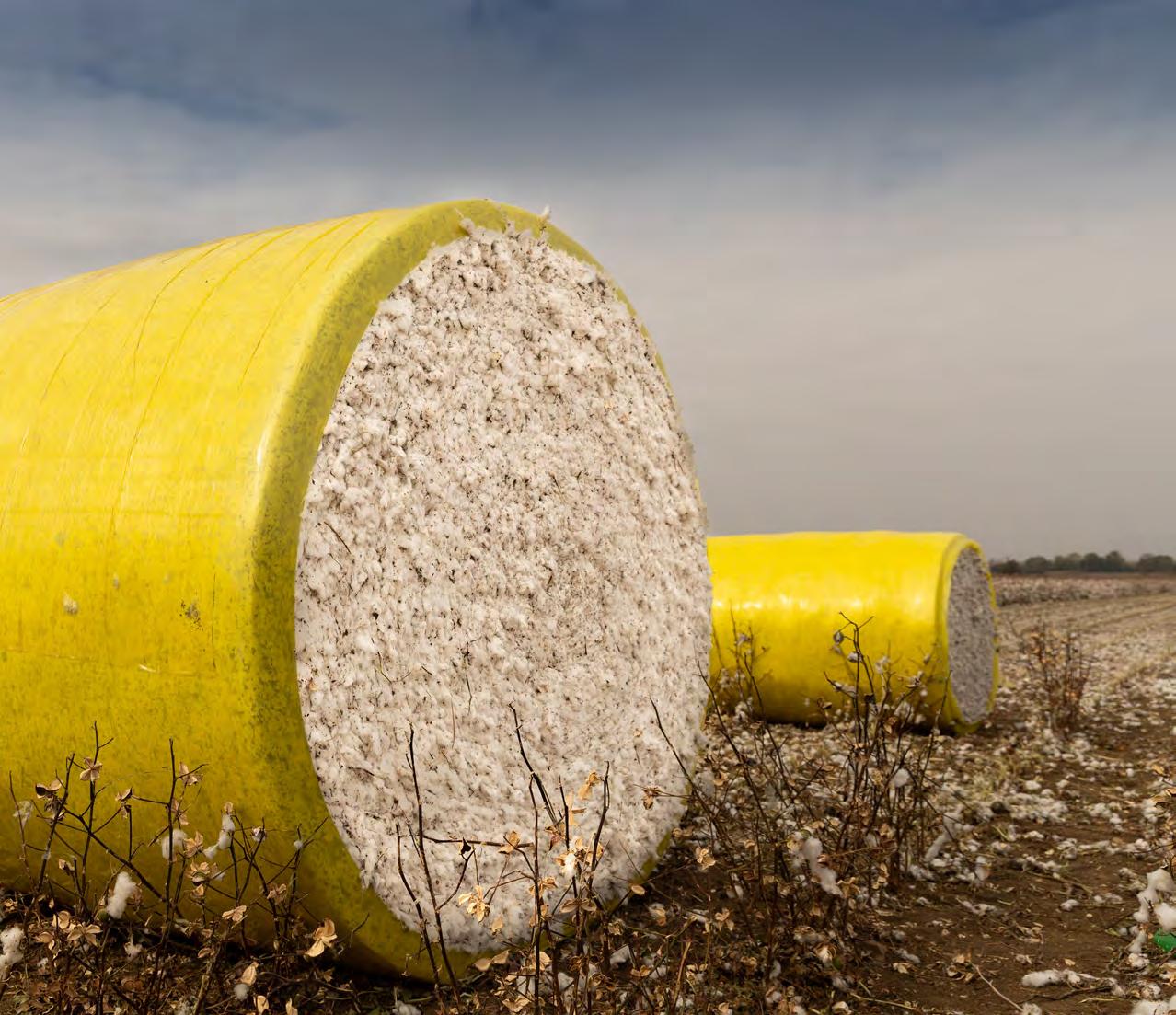
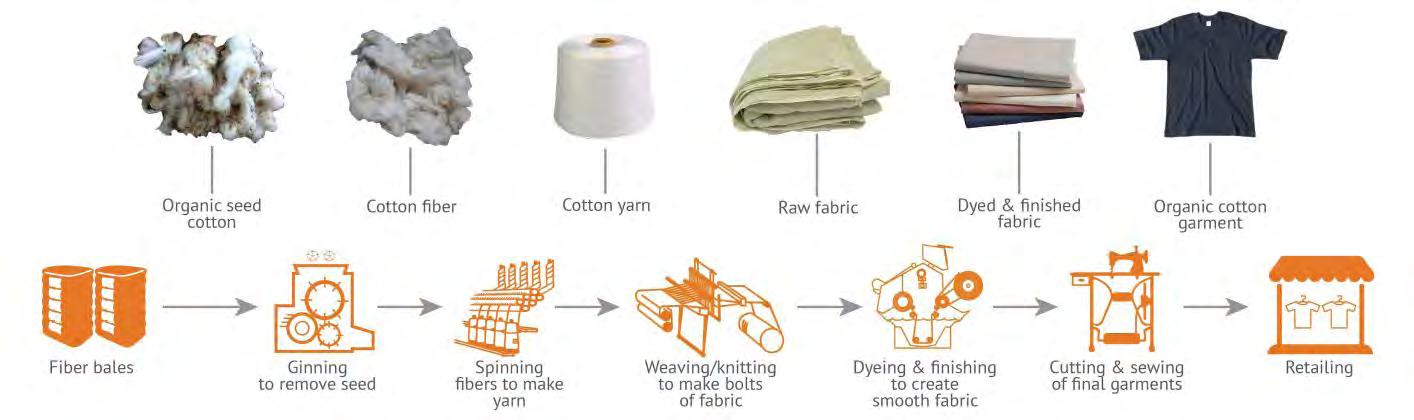
Pakistan’s cotton crisis comes home in imported bales
Publishing Editor: Babar Nizami - Senior Editor: Abdullah Niazi
Business Reporters: Taimoor Hassan | Usama Liaqat | Zain Naeem | Shahnawaz Ali | Ghulam Abbass
Ahmad Ahmadani | Aziz Buneri - Sub-Editors: Saddam Hussain | Abdul Hameed - Video Producer: Adnan Maqsood
Director Marketing: Muddasir Alam - Regional Heads of Marketing: Agha Anwer (Khi) Kamal Rizvi (Lhe) | Malik Israr (Isb) GM Special Projects Zulfiqar Butt - Manager Subscriptions: Irfan Farooq
Pakistan’s #1 business magazine - your go-to source for business, economic and financial news. Contact us: profit@pakistantoday.com.pk
What the AGP acquisition and restructuring means for Pakistani pharma
The combined entity has a more diversified product portfolio, more optimal tax structure, and a higher expected profitability that is being reinvested into product growth.
For some Pakistani pharmaceutical companies, the exit of foreign brands is an opportunity. AGP Ltd is one of those most actively trying to capitalize on the foreign players’ exits.
The Karachi-based pharmaceutical manufacturer, already one of the better-known names on the Pakistan Stock Exchange, is in the middle of a restructuring that would fold several businesses associated with the OBS Group into a single listed platform. The transaction brings together AGP, OBS AGP, OBS Pakistan and the substantive operations of OBS Pharma, the business that owns the
former Bayer portfolio in Pakistan. In one stroke, AGP is seeking to simplify a corporate structure that had become increasingly complicated as the group bought portfolios from Sandoz, Viatris and Bayer over the past few years.
The legal mechanics are still subject to approvals. The scheme requires creditors’ and regulatory approvals and sanction by the Sindh High Court. Management has indicated that the arrangement is expected to become effective retrospectively from January 1, 2026, with final legal effectiveness expected by the last quarter of calendar year 2026. But financially, investors are already being asked to
look at AGP as if the old structure has ended and a larger, more coherent pharmaceutical platform has taken its place.
The headline number is revenue. On a pro forma basis, assuming the restructuring had been in place in 2025, the combined company would have generated revenue of roughly Rs37.5 billion, compared with AGP’s consolidated revenue of Rs28.9 billion. Profit after tax would rise to around Rs5.6 billion, with OBS Pharma contributing close to Rs1.9 billion. Earnings per share, on a restated share count, would have been around Rs14.7 in 2025, compared with the actual Rs13.3. For 2026, management has guided investors
toward earnings of roughly Rs19-20 per share.
The restructuring matters because it addresses three of the most persistent weaknesses in Pakistan’s pharmaceutical industry: scale, tax leakage and portfolio concentration.
The old structure reflected the way the group had grown. AGP had its own operations. OBS AGP held the Sandoz portfolio. OBS Pakistan housed the Viatris portfolio, consisting largely of former Pfizer brands. OBS Pharma held the Bayer business, including a dedicated hormonal manufacturing facility in Lahore. These were not unrelated businesses, but they were not a single operating company either. Dividend flows moved through partially owned subsidiaries. Regulatory, audit and compliance costs were duplicated. Commercial teams had to sell overlapping portfolios while the group’s listed face, AGP, did not fully capture the earnings of all the businesses that investors associated with it.
The restructuring is designed to remove that friction. Management expects lower statutory and compliance costs, better commercial efficiencies, fewer internal dividend leakages, and a more transparent structure for shareholders. The tax impact alone is meaningful. OBS Pharma has a lower effective tax rate, around 34%, compared with AGP’s 38-39%. Once consolidated, the blended effective tax rate should come down, mechanically lifting earnings. In a sector where margins were crushed for years by currency depreciation, import costs and delayed pricing approvals, a few percentage points of tax efficiency are not a footnote. They are part of the investment case.
There is, however, leverage to digest. Around Rs15 billion of debt will be consolidated onto AGP’s balance sheet, including acquisition and special-purpose-vehicle debt. Management has tried to reassure investors that debt servicing remains comfortably covered by cash flows and that the restructuring will not affect AGP’s Shariah-compliant status. Topline Securities noted that part of the debt includes a Rs2.98 billion loan previously taken for the parent company, offset by receivables from OBS Pharma and a share swap. Management expects AGP to become debt-free from that particular loan by December 2030.
The more important point is that AGP is not buying a loss-making trophy asset. OBS Pharma has already become a sizeable and profitable business. It generated revenue of about Rs8.6-8.7 billion in 2025, with profit after tax of roughly Rs1.4 billion and gross margins above 52%. Management expects revenue to approach Rs12 billion in 2026, with profit potentially exceeding Rs2 billion. Gross margins, which were closer to 30% when the business was acquired, are now targeted in
the high-50s, with a longer-term ambition of around 60%.
That sort of margin profile is precisely why the acquisition matters. Pakistan’s pharmaceutical sector is changing from a low-margin manufacturing-and-distribution business into a more segmented market in which companies with strong brands, pricing flexibility and specialised manufacturing can earn materially better returns. The government’s 2024 decision to deregulate prices of medicines outside the National Essential Medicines List gave manufacturers more room to price non-essential medicines according to market conditions. Post-merger, AGP’s portfolio is expected to be around 65-70% non-essential medicines, meaning the company is unusually well positioned to benefit from the policy shift.
That is politically sensitive. Deregulation has made the industry more profitable, but it has also drawn public scrutiny over medicine prices. For AGP, the commercial opportunity is clear. The more uncomfortable question for policymakers is whether higher margins will translate into more investment, better supply reliability and more exports. AGP’s answer is that it is already doing precisely that.
The company’s growth plans have two broad pillars: more products at home and more markets abroad.
At home, the most immediate opportunity is the relaunch of Resochin, AGP’s anti-malarial brand. Management has said pricing approval has been secured or is imminent, and expects first-year revenue potential of Rs200-400 million, with an ambition for the brand to gradually reach the Rs1 billion mark. In Pakistan, where malaria remains a recurring public-health problem, a revived anti-malarial portfolio could become more than a niche contributor.
The company is also adding global brands to its commercial platform. The commercial and selling rights for Xanax and Viagra are expected to shift fully to AGP, while the group has also announced marketing and distribution rights for STADA. In the past five years, AGP says it has launched around 30 new products. That number matters because the company’s old portfolio was already broad, but much of its next phase depends on whether it can keep adding brands that either occupy under-served categories or carry enough name recognition to command physician and patient loyalty.
Exports are the second leg of the strategy. Afghanistan has historically been AGP’s most important foreign market, but the risks of relying on that corridor have been obvious. Management said it sustained Afghan exports despite border disruptions by using air
transport, with 2026 exports already reaching around Rs1.2 billion. That is an impressive workaround, but not a long-term export strategy. AGP says it has spent the past two to two-and-a-half years diversifying away from Afghanistan and entering commercialisation stages in 31 new international markets across Africa, Central and South America, Asia and the Middle East. These markets are expected to be fully commercialised by the end of 2026 or during 2027, reflecting the two-to-threeyear registration cycle that typically governs pharmaceutical exports.
This export push fits a larger industry shift. Pakistan’s drug regulator is moving toward higher compliance standards, including WHO Maturity Level 3. Management has made the point bluntly: companies will either need to invest in systems and facilities or exit the market. That may sound harsh, but it is how consolidation happens. In a market of hundreds of manufacturers, higher regulation tends to favour companies with capital, scale and audited systems. AGP wants to be on the right side of that divide.
To understand why, it is worth looking at where AGP came from.
AGP began commercial operations in 1989 in Karachi as an independent pharmaceutical manufacturing company. Its early identity was built around partnerships with multinational companies. In 1991, it entered into a joint venture with Eli Lilly Pakistan for cephalosporins. In 1995, it signed an agreement with UCB of Belgium to manufacture and market products in Pakistan. In 2003, it purchased Eli Lilly brand rights for Ceclor, Keflex, Kefzol and Nebcin. In 2007, it acquired UCB’s rights for Rigix in Pakistan. An OBSled consortium acquired AGP through an SPV in 2014, and the company was listed on the Pakistan Stock Exchange in 2018.
The result is a company whose history reflects the broader history of Pakistani pharma: multinationals built the brands, local groups bought or licensed them, and the domestic players then worked to expand distribution and protect market share.
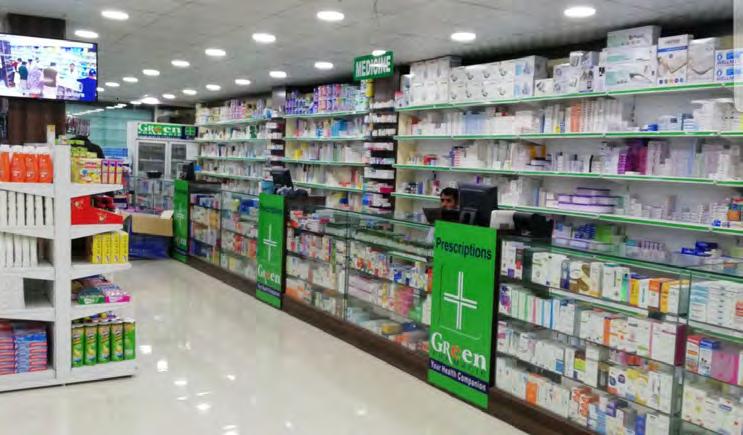
Today, AGP describes itself as a diversified healthcare group spanning branded pharmaceuticals, generics, nutraceuticals and specialty healthcare. It has 135 brands and more than 280 stock-keeping units. It operates three cGMP plants in Karachi: a general medicines facility at SITE, a cephalosporins facility at SITE, and a nutraceuticals facility at SITE II. Its product categories include internal medicine, paediatrics, cardiometabolic, gynaecology, orthopaedics, neuropsychiatry and nutraceuticals. Its recognised brands include Azomax, Rigix, Osnate-D, Norvasc and Ceclor, among others.
The company’s financial performance
shows why investors have been willing to give management some room to keep acquiring. Consolidated revenue rose from Rs6.9 billion in 2020 to Rs28.9 billion in 2025. Net profit reached Rs4.3 billion in 2025, with earnings per share of Rs13.34 and a dividend of Rs8 per share. AGP’s own presentation says recent acquisitions have helped push consolidated growth to a five-year compound annual growth rate of 33%, with inorganic growth contributing more than half of the increase.
That is the optimistic version of the story: AGP has become a consolidator in an industry that badly needs consolidation. The more sceptical version is that acquisitions have made the group harder to understand. The present restructuring is an answer to that criticism. By collapsing related businesses into the listed entity, AGP is trying to convert conglomerate complexity into pharmaceutical scale.
OBS Pharma is the most important piece of that conversion.
The company was incorporated in November 2022 as a special-purpose vehicle to acquire pharmaceutical brands and a manufacturing facility from Bayer AG and its associates. The transaction was concluded in 2023. It included a portfolio focused primarily on women’s healthcare and dermatology, as well as a specialised manufacturing plant in Lahore’s Quaid-e-Azam Industrial Estate. The facility spans roughly three acres and is described by management as Pakistan’s only dedicated hormonal manufacturing facility. It gives the group a strategic position in women’s health, hormonal therapies and related specialised products.
The portfolio includes Ciproxin, Gravibinan, Primolut N, Testoviron Depot, Resochin, Travocort, Skinoren, Travogen, Noctamid and Utrogestan. These are not obscure brands. Several have long-standing physician recognition, and many sit in therapeutic categories where trust and continuity matter. VIS Credit Rating noted that of the 12 acquired Bayer brands, 10 were market leaders in their respective molecular categories. In addition to the target products, the transaction included manufacturing rights for Femi-Ject and Nova-Ject, two Greenstar Social Marketing brands that had been manufactured by Bayer Pakistan.
This is why OBS Pharma is not merely an acquired revenue stream. It changes AGP’s product character. Before the Bayer portfolio, AGP was strong in several branded generics and chronic categories. With OBS Pharma, it deepens its presence in gynaecology, dermatology, hormones and women’s health. It also gains a manufacturing capability that is difficult to replicate quickly. In a market moving toward higher regulatory requirements,
specialised plants become strategic assets.
The Pfizer Pakistan portfolio adds another layer to the same strategy.
In 2023, AGP, through OBS Pakistan, acquired 17 brands from Viatris that had previously been commercialised in Pakistan under Pfizer-owned brands. The portfolio included anti-depressants, anti-hypertensive and ophthalmology products. Among the better-known names were Norvasc, Effexor, Xanax, Zoloft, Cardura, Lyrica and Lipitor. Norvasc alone had recorded turnover of about Rs1.3 billion in the 12 months before the deal, according to industry data cited at the time. The transaction followed the global restructuring that created Viatris in 2020 through the merger of Mylan and Upjohn, Pfizer’s off-patent medicines business.
For AGP, the Viatris/Pfizer portfolio was attractive for the same reason the Bayer assets were attractive: they were established brands in a market where brand memory is valuable. In Pakistan, medicines are not sold purely on molecule names. Doctors, pharmacists and patients often rely on decades-old brand familiarity. Acquiring such brands can therefore be faster and less risky than building new ones from scratch, provided the buyer has the sales force and working capital to support them.
The Pfizer portfolio also pushed AGP further into chronic and high-recognition categories. Norvasc strengthened cardiometabolic exposure. Zoloft and Effexor added neuropsychiatry depth. Lyrica brought a pain and neurology franchise. Lipitor added cholesterol management. Xanax, whose selling rights are now expected to shift fully to AGP, gives the company a globally recognised brand in anxiety treatment. Viagra, similarly, brings a brand whose commercial power lies as much in recognition as in the molecule itself.
Taken together, the Sandoz, Viatris/ Pfizer and Bayer transactions reveal the logic behind the restructuring. AGP has not merely bought scattered products. It has assembled a portfolio of multinational-origin brands and is now trying to house them inside one corporate and commercial engine. That engine should have lower tax leakage, cleaner reporting, broader therapeutic coverage, and better cash retention.
For Pakistani pharma, that matters beyond AGP. The sector appears to be entering a new phase. The first phase was import substitution and local manufacturing. The second was branded generics under a constrained pricing regime. The third, now emerging, is consolidation: local groups buying multinational portfolios, investing in regulatory upgrades, preparing for exports, and using improved pricing economics to fund growth.
Not every company will be able to
follow. Smaller manufacturers may struggle with DRAP’s tightening standards, energy costs, imported active pharmaceutical ingredients and the working-capital demands of larger portfolios. But companies like AGP can use those pressures to widen the gap. Scale becomes a competitive advantage. So does compliance. So does the ability to negotiate with foreign partners looking for reliable local platforms.
There are risks. Debt has increased. Regulatory approval is still pending. The politics of medicine prices can change quickly. Export registration timelines may slip. Integrating sales forces and manufacturing systems is rarely as tidy in practice as it appears in investor presentations. And although management has said API exposure and oil-price linkages are not materially significant for OBS Pharma, Pakistan’s pharmaceutical industry as a whole remains vulnerable to currency depreciation and imported input costs.
Yet the direction is clear. AGP is trying to become less like a traditional local manufacturer and more like a Pakistani pharmaceutical platform: a company with local plants, multinational-origin brands, chronic and acute-care products, women’s health exposure, dermatology, nutraceuticals, exports, and a balance sheet capable of supporting more launches.
That may be the real significance of the restructuring. It is not simply that AGP is getting bigger. It is that it is trying to make size usable. A fragmented group structure may have been acceptable when acquisitions were being parked in special-purpose vehicles. It is less useful when the goal is to build a top-tier listed pharmaceutical company with transparent earnings and reinvestable cash flows.
Pakistan’s pharma industry has spent years complaining that it could not invest because pricing rules made returns unattractive. The market is now testing the opposite proposition: if pricing, scale and margins improve, will companies invest enough to become more competitive? AGP’s restructuring is one of the clearest answers so far. It is taking the gains from acquisition, tax optimisation and higher expected profitability, and trying to turn them into products, markets and manufacturing depth.
For shareholders, the deal promises earnings accretion. For the industry, it signals consolidation. For regulators, it presents a bargain: tolerate higher returns, and demand higher standards in exchange. For AGP, the bargain is more personal. The company has spent years buying pieces of the multinational pharmaceutical retreat from Pakistan. It now has to prove that a local consolidator can do more than inherit old brands. It has to make them grow. n
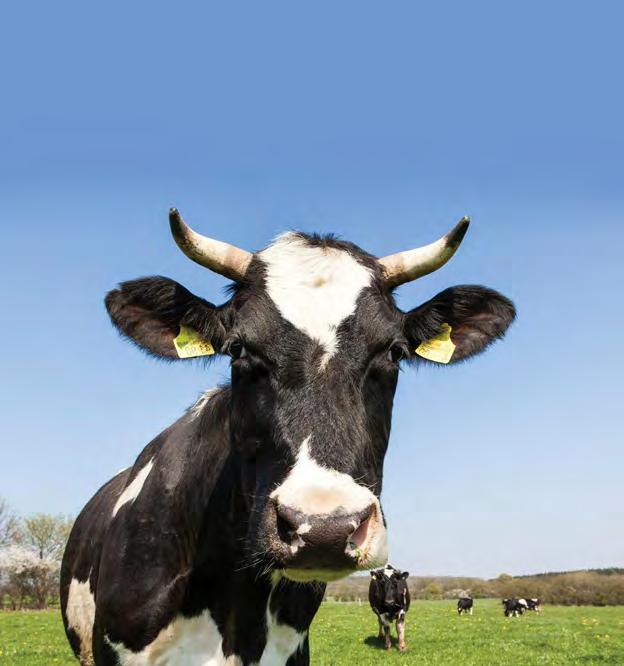
At Tahur Ltd’s long bet on Fresh Milk
The company behind Prema feels that the dairy industry can become a cash cow over time.
By Zain Naeem
The most important thing to understand about the market for milk in Pakistan is that the vast majority of Pakistanis are still only one or two generations removed from having personal memory of having seen a cow being milked for their daily supply of milk.
Fresh milk, to the Pakistani mind, involves as few steps as possible between the cow’s udders and the glass into which the milk is poured. Is this scientifically illiterate claptrap? Yes. Is this an undeniable prejudice that shapes how Pakistanis think about what they like in their milk? Also, yes.
Hence we get a supply chain that is still far more primitive than it should be. Pakistan is one of the largest milk producers in the world. The supply chain of milk is made up of millions of litres of milk that moves from the rural areas to the cities through a chain of middlemen. Every morning you can see gawalas or milkmen whizzing around on their bikes with steel containers strapped to each side knocking at each door and making their deliveries. The consumers get the milk and then boil it at home as they cannot trust where the milk came from and how much is actually milk.
Affordability trumps everything as the consumer feels that hygiene can be compromised with little refrigeration being part of the supply chain and the brand name is next to irrelevant. There is a slow revolution taking place within this ecosystem now as there is a niche in the market who is ready to pay a higher price in order to get a superior and more hygienic product. With an increase in knowledge and awareness in relation to loose milk being sold, a market is starting to emerge who is ready to pay a higher price for a better product. One such company who is looking to cater to this niche
is the Lahore based company called At-Tahur Ltd. The company is supplying a premium dairy product to the market where they are convincing the customer to pay more for milk.
But there can be a contention made here. Nestle and Haleeb have been doing the same thing in the market for years now so what is the unique selling proposition of a company like At-Tahur. The key is that it is not selling boxed milk or ultra high temperature (UHT) treated milk which can sit on shelves for months. At-Tahur and its brand name Prema is cornering the market for fresh pasteurized milk which is giving refrigerated, standardized and branded milk which is delivered with a guarantee that it is undiluted with water.
The whole brand is built around the fact that the quality, freshness and the purity of the product is being guaranteed. But once the fragility of the product is recognized, the move feels like one of a visionary or a naive one. Why would a company want to offer something more expensive than the local milkman which would see a decreased demand and not supply a product which has a long shelf life?
The two facts seem to be at odds with each other. The consumer will go for the fresher option at a decreased price and the company would want a longer shelf life to make sure that their product does not spoil before they are able to be sold. The performance of the company since its inception shows that the move is a long term bet which is still to pay off.
The bet is that the urban middle class of the cities will be willing to switch their preference from the traditional mode of milk delivery towards an option which is healthier. To its credit, it can be seen that Prema has been able to become a recognizable brand in the markets of Lahore, Karachi and Islamabad. The company is currently selling pasteurized milk, a variety of yogurts, flavoured milk, butter, cheese, raita, desi ghee, honey, eggs and laban
as well. Regardless of their portfolio of products, the focus of the company is on its core business. Selling trust in liquid form while it is expensive in Pakistan’s dairy sector. Now they are expanding into the spring water market to bring the same principles to drinking water.
On 19th of May, the company announced to the stock exchange that they are launching Prema Natural Spring water which would help the company diversify its product portfolio and deliver high quality water to contribute to their future growth.
The dairy landscape in the country
When At-Tahur Ltd was just a figment of the imagination, Pakistan’s milk industry was characterized by small sellers who would gather the milk at the stroke of dawn in the morning, load up their motorcycles and then deliver it to their designated areas in the city. The supply chain was fragmented and undocumented. From the collection of the milk from local vendors to the delivery being made in generic steel containers, there was a lack of formalization and standardization.
The reason for this? Quite simply, because nobody had the money to invest in setting up a large cold storage chain that would allow milk to be stored for anything but the shortest periods of time, meaning it had to be delivered fresh, or not at all.. Even when the milk was fresh, there was a high likelihood that this loose milk would be contaminated, mishandled, diluted and transported without adequate refrigeration. Tales of adulterated milk would surface every few years as chemicals, detergents and unsafe preservatives were being added.
There was always a likelihood that the milkman would add these adulterants to the milk in order to increase the quantity they could sell and maximise their margins. This led to a paradox in consumer psychology. They were willing to consume more quantities of this kind of milk while distrust in it was increasing as well.
This led to an opportunity existing in the industry. At one end were the milkmen who were selling cheap and “fresh” milk while at the other end were companies selling UHT treated milk like Nestle and Haleeb which were costly to produce. Pasteurized milk is clearly the healthier option, but packaging it in the manner that it is packaged to allow longer storage, paradoxically, makes the superstitious consumers who form the bulk of Pakistani buyers trust it less.
This left a gap for a brand which could infuse the two alternatives in the middle. Provide cheaper milk compared to the bigger brands existing in the market while providing
a standardized and high quality product compared to the milkman.
The company started by integrating the dairy farming operations it had near Lahore which would allow it to have a greater control over the livestock, its feed, its health and extracting of the milk. The usual model was for the bigger brands to buy the milk from external sources which had contracts with the company and they had little control over the livestock or the milk that was being sold to them.
Due to this, the product being offered by Prema was also different. Pasteurized and UHT treatments are fundamentally different from each other. UHT treatment milk is more convenient as it is treated to survive on the shelves of the supermarkets for months after it has been shipped to the stores. Another factor that sets it apart is that UHT treated milk can be transported without refrigeration which means that the supply chain does not need to have cold chain logistics integrated with it. What pasteurized loses in convenience, it gains in freshness and taste as the quality of the product is prioritized. The cost of this taste is that the supply chain needs to have cold chain logistics, refrigerated retailing, inventory discipline and high operational costs attached to them. In a country like Pakistan, electricity shortage and lack of refrigeration in rural areas means that expansion and growth opportunities are limited.
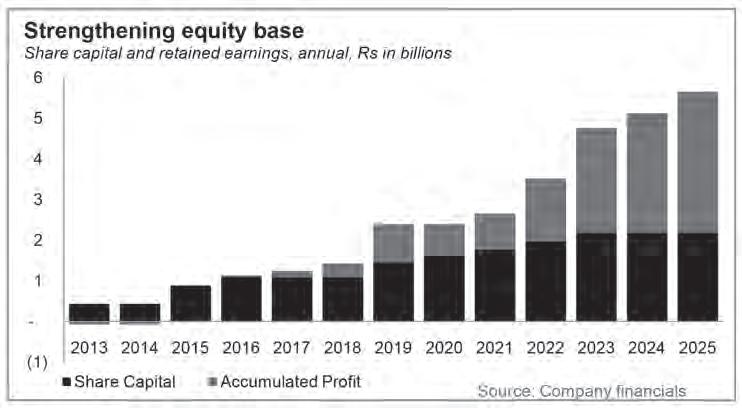
The company was incorporated in 2007 and became an unlisted public company in September 2015 before getting listed in July of 2018. The company has a factory and dairy farm in Kasur and holds in excess of 2000 milk producing animals.
The ownership model of At-Tahur is one that is seen in many of the listed companies in the stock exchange. The company is family owned and controlled with the management and senior leadership coming from a tight knit group. This becomes a strength and vulnerability at the same time. The company was found-
ed in 2007 by Rasikh Elahi who is the son of ex-Chief Minister Punjab, Pervaiz Elahi.
Considering the pattern of shareholding, around 65.7% of the shares are held by directors and senior management of the company with only 30% owned by the public.
Companies controlled by a family have operational clarity which is able to make decisions quickly with a coherent brand vision and strategy in mind. However, the downside is that there can be governance related issues due to which institutions look to avoid such investments as most of the trading is carried out by insiders of the company. Coupled with the historical treatment of minority shareholders means that investors are not confident when they are investing in such companies due to their related party transactions, opaque governance practices and little power of minority shareholders.
The aspiration of Prema
What sets Prema apart from other brands is not that it sells milk. Go online and there are dozens of companies selling milk at your doorstep currently. What sets Prema apart is that it has not positioned itself as a product for the mass market. Prema is premium and they understand that it caters to a premium lifestyle. Rather than showcasing itself as affordable, the sponsors of the company leaned hard into the direction of purity, farm freshness, healthy living and high quality product. It is able to guarantee this purity due to its complete control over the source and health of their animals. This is the reason why their tagline is bringing back purity to your life. Rather than complicating their consumers with technical jargons and complex machinery, the brand understood that their customers needed mental peace and they would be willing to pay for this ease of mind.
There is already a health conscious movement around the country which is prepared to pay for water delivery, better and more natural cereal and organic vegetables. Prema placed itself in the centre of this movement in order to take advantage of the shifting of consumer preferences.
The growth strategy of the company is not to occupy shelves in a store but to make a place in the hearts and minds of the urban retail sector which is increasing day by day. With the advent of grocery chains, online delivery platforms and premium food stores opening up, the need for such products is increasing. As consumers shifted their demand, At-Tahur was able to see an increase in their sales which crossed Rs5.6 billion in the latest financial year.
The divergence in the financial statements
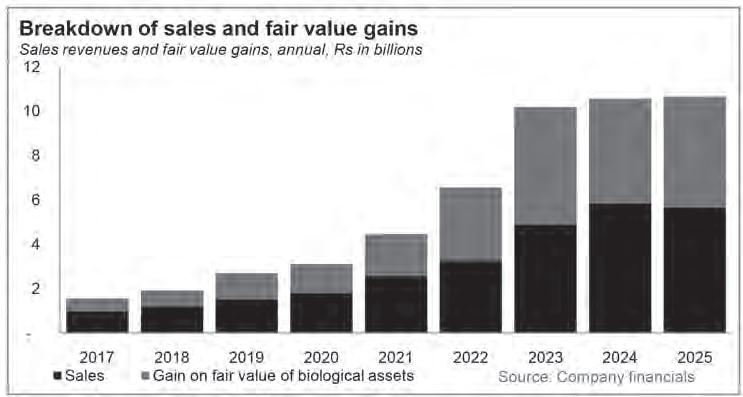
Alook at At-Tahur’s financials shows two different pictures. In terms of its revenues, the company has been able to show impressive performance for the latest year. Sales have reached Rs5.6 billion for the year and profit after tax was seen to be Rs53 crores which was an increase of almost 50% year on year. In addition to that, earnings per share climbed to Rs2.42 on the back of falling finance costs.
But hidden within these numbers is the manner in which agricultural accounting is carried out. A substantial portion of At-Tahur earnings are based on fair value gains it sees on its assets like livestock and inventory related assets. Just like any other business, any increase in fair value of assets needs to be reflected on the financial statements which leads to profits being booked. Accounting rules have to allow for biological assets to be valued in a similar manner which means that cattle, livestock growth and milk production value will add to the reported profits. Even in the most recent accounts, Rs1 billion was recognised due to livestock fair gains alone.
This muddies the real performance of the company. It is difficult to ascertain whether the business is performing efficiently leading to profits or is it solely related to valuation of cows improving. Due to this, the real performance of the company is difficult to gauge and pin down.
Investors on the stock exchange need to be able to understand how a business works and how they are able to generate their profits. This also means that they need to know when any change in macroeconomic conditions take place, how will the profitability be impacted. In an agriculture business, the earnings are distorted due to biological assets being revalued and can make this understanding difficult.
The economics of a niche
The guiding philosophy at Prema has been to target and cater to a niche of the market which is willing to pay a higher price for a higher quality product. This means that At-Tahur has already tied one arm behind its back when it comes to producing on a large scale. The company wants to operate like a flourishing FMCG while its business model is one that resembles a specialized premium operator.
In order to increase sales, the company needs to scale up its operations on a national level which requires distribution infrastructure to be strengthened with refrigeration and marketing to be carried out. All of these areas require commitment of investments and resources that the company does not have. Due to a lack of UHT treatment, one of the biggest issues that can take place is spoilage which can be caused by lack of demand, supply chain disruptions, electricity outages and the transport infrastructure of the country. If not accounted for, this can become a huge drag on the profitability of the company.
Another macroeconomic reality which has started to bite is the inflation prevailing. As inflation has started to rear its ugly head, food manufacturers have seen their demand plummet as consumers are looking to downgrade from premium products for cheaper substitutes. Prema is finding out the hard way that between purity and affordability, the latter will always win over.
This puts the company at an interesting crossroads. In a country where consumer habits are fluid and ever changing, a company like At-Tahur is promising standardization. WIth a lack of standardization in a wide range of products like pharmaceuticals, groceries, retail, education and healthcare, Prema is placing a long term bet that consumers will move
towards standardization and brands over time.
The upside of standardization is that the quality, reliability and performance of the product is guaranteed at the expense of a higher cost. At-Tahur feels that the need for standardization will win out and that Prema can be the first one to take advantage as that happens.
The asset heavy model of At-Tahur
When the financial analysis of At-Tahur has to be carried out, the analysis needs to take two key things into account. First of all, At-Tahur is a small dairy company which is selling pasteurized milk under the brand name of Prema. This makes the company unique compared to the other companies operating in this space. Due to its size, the company has thin margins, volatile profits and a revenue structure which is limited due to its scale.
The other element of the financial analysis has to consider the company as a structural bet where the brand will look to formalize and standardize the food economy of the country.
Let us consider the first element. Most dairy companies in Pakistan operate on asset light procurement systems. This means that the company does not own the livestock and source the milk from outside vendors who raise, rear and milk the animals. The involvement of these companies is only to the extent of buying the milk from the suppliers, treating it, packaging it and then selling it.
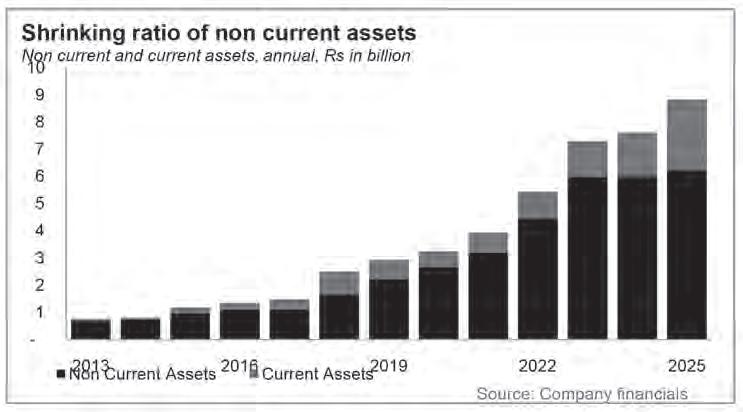
At-Tahur takes a more capital intensive route where they own the livestock by creating a supply chain from the dairy farming operations to the processing and distribution infrastructure. This means that they own and manage the livestock, feed systems, breeding and processing of the milk. The reason for this model is that the company has greater control
over the product. This follows their grass to glass principle as they control each node of this supply chain.
The positive aspect of this system is that the company can guarantee standardization, purity, hygiene and reliability rather than having to verify the quality of a plethora of external suppliers. The downside is that the company faces higher costs, depreciation, exposure to livestock and feed inflation, greater need for working capital and volatile results due to biological assets. This converts the financial analysis of the company from a simple FMCG to a chimera of an agricultural and industrial enterprise.
In line with this, the company can also be considered as an aspiration which is looking to convert consumers towards a more premium and standardized product. Once the company establishes itself, it expects more consumers to turn towards them once the urban consumer preferences completely shift away from their local gawala. Metrics do show that this is taking place to some extent.
Revenues for the company stood at Rs2.56 billion in 2021 which increased to Rs5.65 billion by the end of 2025. This shows sales doubling in a span of 4 years. Even if the margins are low and the company has not been able to show stellar profits, the growth in revenues show that consumers are moving towards a better product. The increase in revenues can be attributed to increasing urbanization, premium grocery adoption, growth in modern retail chains and rising concerns relating to food safety.
Recent results have been marred due to inflationary pressures existing in the economy and it can be expected that once these pressures are relieved, the sales growth will mimic the old trajectory of growth that was being seen.
The operating margin conundrum
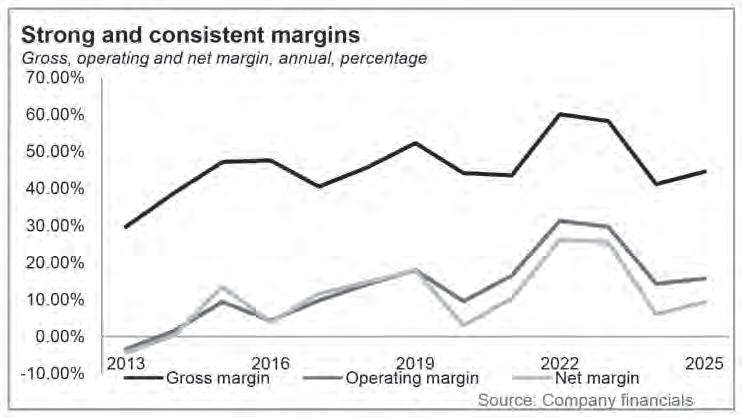
As revenues have been growing, At-Tahur has been able to enjoy a very high gross profit margin. From 2020 to 2025, the company saw gross margin of 44% in 2020 to a high of 60% in 2022 falling back to 44.5% in 2025. This fails to take into account that the company has looked to club the fair value gains into the gross profit as well. The fair value gains for 2025 were valued at Rs5 billion. Due to the treatment of fair value gains, the gross margin is coming out to be so high.
The issue with the company is that it has been facing high operational costs which have caused operating margins to be halved from gross margins. Operating margin was only 9.5% in 2020 increasing to 31% in 2022 before
falling back to 15.7% in 2025. A similar trend was seen in net margin which was 3% in 2020 increasing to 26% in 2022 and falling back to 9% in 2025. For a company which has built a strong brand name, these numbers are weak.
The whole point of building Prema as a premium brand is to allow for higher margins to be set and sustained by the company over time which leads to higher operating margins. This has not happened for At-Tahur which faced additional costs like refrigeration, transportation, packaging, energy price, livestock feed and spoilage related costs.
The constant reminder that Prema is not a FMCG company is important as Prema is exposed to fresh dairy distribution related costs which makes distribution essential and inventory does not have a long shelf life. Once refrigeration needs are added, the profits almost evaporate completely.
When a financial analysis of At-Tahur is being carried out, it is important to note that a large portion of the assets of the company are biological assets. Just like any other asset, accounting mandates that any increase in the value of the asset has to be added to the profits for the year. At-Tahur considers livestock valuation gains, milk recognition and herd expansion as part of its fair value asset gains.
In 2025, the milk recognition at fair value was Rs3.84 billion while livestock fair value gains clocked in at Rs1.16 billion. For a company of such a small size, these are huge gains that are being recorded. To put it in context, net profit for the company was only Rs53 crores.
In basic terms, this means that accounting profitability is greater than operating profitability which is the core purpose of the business in the first place. This does not mean that the earnings are not real, it actually means that the profitability is unsustainable and not related to the operations of the company directly. Due to their volatile nature, they cannot be equated to cash earnings of another company.
High profits and low operational profitability also means that the company is earning profits but has not been able to generate cashflow from these operations. This can be seen at At-Tahur as well where the company has consistently earned profits, however, its free cash flow has been negative for the last three years.
The negative cash flow shows that the company is looking to expand its size which needs cash investment and outlay currently while the internal generation of cash is low. Any form of capital expenditure that is required is being carried out while debtors are being given relaxed terms to pay back their loans. This means that the company is trapped in a capital intensive scaling cycle. The cash is used to expand the size and fund working capital. Rather than getting these funds back from the clients, additional borrowing is carried out to fund the working capital needs.
With all that being said, the case for At-Tahur is an interesting one. On one hand, the company has been able to show stable growth in sales and justify the performance it has shown from 2007 onwards. The share price of the company has seen volatility due to the volatility present at the company itself. The bigger bet of the company seems to be centred around the expectation that standardization and urbanization will keep taking place in the future.
The founders and owners feel that the demand for their product will see a tectonic shift in consumer preferences which will take time but will be sustained into the future. There is an expectation that the idea which was realized in 2007 still has time to turn into a reality and that the structural bet of the company will pay off in the coming years. The challenge for the company would be to survive and make sure that they can fund themselves through times of low demand and inflationary pressures to reach their promised Shangri-La. n
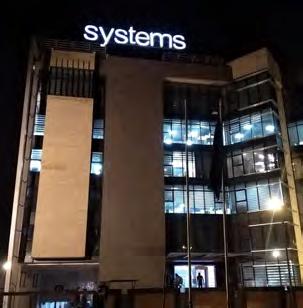
For Systems, faster growth from foreign clients in first quarter of 2026
The rupture in ties between Pakistan and the UAE does not appear to have shown up yet in its client bookings in the Middle East.
For Pakistan’s technology industry, the first quarter of 2026 contained two stories that should not have fitted comfortably together. One was geopolitical anxiety: tensions around the Gulf, questions about Pakistan’s relationship with the United Arab Emirates, and concern that Pakistani professionals and companies could find it harder to operate in one of their most important overseas markets. The other was Systems Ltd’s quarterly earnings report, which showed the Middle East continuing to do what it has done for years for Pakistan’s largest listed technology company: deliver growth.
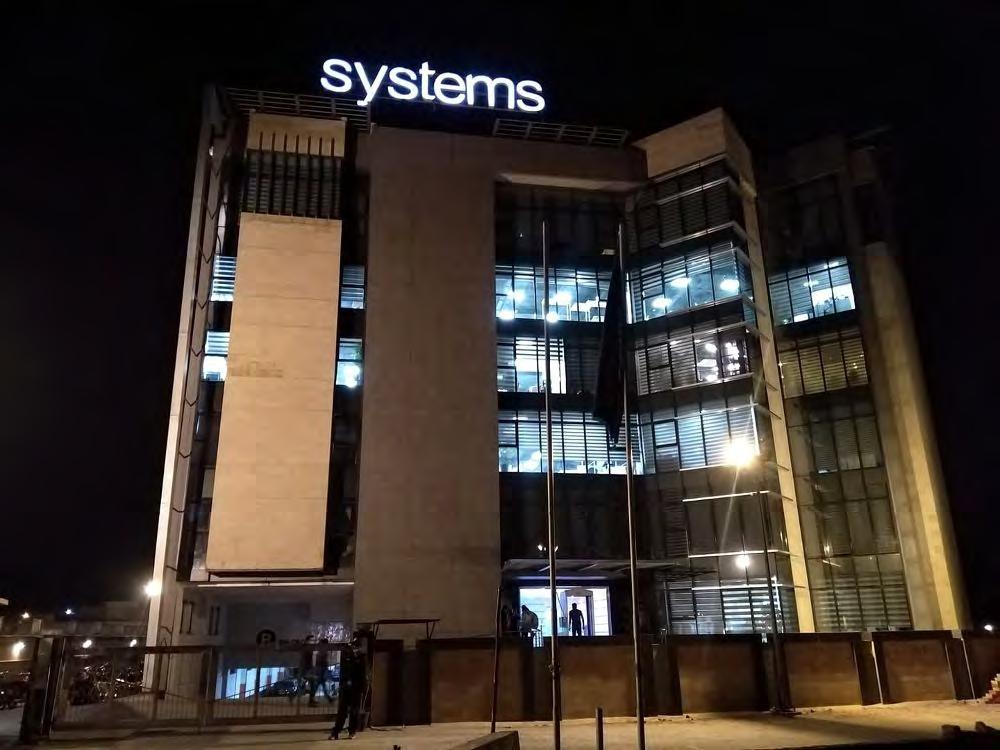
Systems, the Lahore-headquartered software, digital transformation and business-process services company, reported consolidated profit after tax of Rs3.03 billion for the quarter ended March 31, 2026, up 21% from Rs2.50 billion in the same period last year. Earnings per share rose to Rs2.05 from Rs1.71. Revenue grew faster than profit, rising 33% year-on-year to Rs23.98 billion from Rs18.08 billion.
The headline is not merely that Systems grew. It is where the growth came from. For a company whose domestic market remains small relative to its ambitions, the most important number is export-linked revenue. By geography, the Middle East and Africa remained the largest contributor, with revenue rising 37.5% to about Rs14 billion from Rs10.2 billion a year earlier. North America grew 33.5%, Europe 35.8%, Asia-Pacific 55.6%, and Pakistan 7.5%. The company’s home market was profitable and improving, but the real acceleration continued to come from abroad.
That matters because the Middle East, particularly the UAE, has long been central to Systems’ expansion. The company’s quarterly report described the UAE as a core market supported by a diversified base of large enterprise clients. It also acknowledged the obvious: the broader geopolitical environment is uncertain, clients have become cautious about large commitments, and deal closures in the Middle
East have become slower than the company had forecast. But it did not report churn in the current resources working in the region. Its backlog is still supporting growth, and management said the pipeline remains healthy.
In other words, the political rupture, or at least the perception of one, has not yet become a revenue rupture.
That conclusion should be treated carefully. Technology-services revenue is not like retail sales. Work booked in one quarter may have been contracted months earlier. A strong first-quarter number can therefore conceal a softening pipeline, and Systems itself has warned that some Middle East deal conversion has been delayed by a quarter. But the available evidence suggests that, at least through March, customers in the Gulf had not started walking away from the Pakistani firm. The Middle East remained the largest region and one of the
fastest-growing.
The vertical breakdown reinforces the same point. Banking and financial services remained the largest business line, followed by technology and telecommunications. Retail and consumer packaged goods became a major growth area after the consolidation of Confiz, the Pakistani-founded IT services company that Systems acquired in late 2025. The acquisition also helped North American growth, since Confiz brought with it enterprise relationships and delivery capabilities aimed particularly at retail, consumer goods, data, cloud and AI modernisation.
The Confiz acquisition is important because it changes the shape of Systems’ growth. For much of its history, the company grew by doing what Pakistani IT companies usually do well: providing competent technical delivery at a lower cost than Western consulting and soft-
ware firms, and gradually moving up the value chain. Confiz adds domain depth in North America and Europe, particularly with large retail and consumer brands. Systems expects the full benefit of the acquisition to materialise in the second half of 2026, when cross-selling, integration and scale synergies begin to show through more clearly.
For the moment, however, the first-quarter numbers show the cost of growth as well as the revenue upside. Gross margins stood at around 25%, broadly unchanged from the same quarter last year but lower than the roughly 30% level seen in recent quarters. Margins declined across regions, with North America at 28%, Europe at 33%, the Middle East at 24%, Asia-Pacific at 29%, and Pakistan at 19%. Selling and distribution expenses rose 39% year-on-year to Rs867 million, reflecting the company’s aggressive push into multiple markets. Administrative expenses also rose 39%. Finance costs increased 44% to Rs129 million, owing to higher short-term borrowings.
The company was also denied one of the old comforts of Pakistani exporters: currency gains. In the first quarter of 2025, Systems recorded an exchange gain. In the first quarter of 2026, it recorded an exchange loss, as the rupee moved unfavourably for exporters. Other income still rose sharply on a sequential basis, but the exchange swing meant profit grew more slowly than revenue. Management noted that the company absorbed annual wage adjustments and fuel-price inflation without the benefit of currency gains.
That is the less glamorous part of the Systems story. It is not a software company floating frictionlessly above Pakistan’s economy. It must hire, retain and pay skilled people. It must manage rising compensation costs in a global talent market. It must build offices and delivery centres. It must invest in sales teams before revenue arrives. And, because the rupee sometimes helps and sometimes hurts, it must operate with enough discipline to survive without relying on devaluation as an earnings strategy.
Still, the company’s ability to keep growing through these pressures explains why Systems occupies such an unusual place in Pakistan’s capital market. It is not merely a technology company. It is one of the few Pakistani listed firms whose business model is built around exporting professional services at scale. Systems was founded in 1977 by Aezaz Hussain, making it Pakistan’s first software house. That origin matters. The company predates most of the vocabulary now used to describe the industry: digital transformation, cloud migration, generative AI, data modernisation, managed services, enterprise architecture. Its earliest work was in turnkey computer projects, systems design, hardware selection
and large-scale industrial project management. Over time, it evolved from a local software house into a global systems integrator.
The transformation was not immediate. Pakistan’s technology industry spent decades with an oddly modest profile relative to the country’s talent base. India built Infosys, TCS and Wipro into global names; Pakistan produced competent engineers and freelancers but few listed companies of scale. Systems became the closest thing Pakistan had to a national technology champion, expanding first into overseas delivery and then into international subsidiaries and acquisitions.
Today, the company describes itself as a global systems integrator. It has operations, clients or subsidiaries across the Middle East, North America, Europe, Asia-Pacific and Africa. It employs thousands of people and serves hundreds of active clients. Its business spans software development, business-process outsourcing, enterprise resource planning, mobile applications, business-process management, turnkey projects and complex software solutions. The broader service portfolio now includes AI transformation, data and analytics, cloud migration, digital commerce, business applications, digital infrastructure, security, managed services and business-process services.
This breadth is both a strength and a risk. It gives Systems multiple routes to growth. A bank in Bahrain may need core-banking implementation. A retailer in North America may need cloud and data modernisation. A telecom operator may need digital customer platforms. A public-sector client may need process automation. A consumer company may need commerce and analytics. The company can sell into all of those needs.
But breadth can also dilute focus. Technology companies are often tempted to describe themselves as capable of doing everything, which is rarely true. Systems’ recent strategy appears to be an attempt to solve that problem by going deeper into selected verticals. Banking and financial services, telecom, retail and consumer goods, and technology partnerships with global systems integrators are now central to the company’s growth. The Confiz deal strengthens retail and consumer goods. The company’s Temenos capabilities strengthen banking. Its Middle East presence strengthens large-enterprise work in the Gulf. Its investments in Asia-Pacific give it exposure to Vietnam, Malaysia and Indonesia.
The question now hanging over every IT-services company is whether artificial intelligence will help or hurt. The fashionable answer is to say it will do both, which is true but not especially useful. For low-end outsourcing firms built on armies of junior coders, AI is plainly a threat. If software can be written
faster with fewer people, the old labour-arbitrage model comes under pressure. Clients will ask why they should pay for large teams when smaller AI-enabled teams can produce the same output.
Systems’ answer is that the AI boom does not eliminate the need for systems integration; it increases it. Enterprise AI is not just a chatbot sitting on top of a company’s website. It requires clean data, integrated systems, cloud infrastructure, secure workflows, industry context and change management. A bank cannot safely deploy AI without understanding its data architecture, compliance obligations and core systems. A retailer cannot build useful AI tools without inventory, pricing, customer and supply-chain data that actually speak to each other. A telecom operator cannot use AI effectively if its legacy systems are a maze.
That is why Systems’ portfolio may be more resilient than the word “outsourcing” suggests. Its work sits close to the plumbing of enterprise technology: data engineering, cloud migration, ERP, banking systems, managed services and business processes. AI may compress some coding tasks, but it also creates new demand for data foundations and integration. The company says it is embedding AI into internal processes and client-facing solutions, strengthening workforce capability, and focusing on industry-led AI integration in sectors where it already has a footprint.
There is also a subtler opportunity. AI levels the playing field in marketing language, because every consulting firm now claims to be an AI company. But clients will eventually ask who can make the technology work inside existing organisations. That tends to favour firms with long client relationships, domain expertise and delivery discipline. Systems is not Accenture or Infosys. But within Pakistan, it has the strongest claim to being the company that can translate the AI boom into export revenue rather than conference slogans.
The numbers from the first quarter suggest investors still believe that story. At a market capitalisation of roughly Rs221 billion, Systems is by far Pakistan’s largest publicly listed technology company. It is also one of the few names on the Pakistan Stock Exchange that trades on something resembling a growth multiple. Topline Securities estimates the stock trades at about 14 times 2026 earnings and 10.9 times 2027 earnings. Arif Habib’s estimates are similar, placing it at 13.6 times 2026 earnings and 10.7 times 2027 earnings. Either way, Systems trades at a clear premium to the broader Pakistani market, which remains dominated by banks, energy, fertiliser, cement and cyclical manufacturers trading at much lower earnings multiples.
The premium is deserved, but not guaranteed. Systems has to keep proving that
its international expansion can deliver profitable growth, not just revenue growth. The first-quarter margin decline is a reminder that scale alone does not solve everything. The company is spending heavily to grow, absorbing wage inflation, integrating Confiz, expanding into new geographies and dealing with geopolitical uncertainty in its most important region. If revenue growth slows before margins recover, the market’s patience may thin.
There are other risks. The Middle East is a concentrated opportunity. Systems has built a strong business there, but the region is now politically more complicated for Pakistani companies than it was even a year ago. The company says its UAE client base is diversified and that it has not seen resource churn, but it also says clients are cautious and deal conversion has slowed. That is precisely the kind of warning investors should remember in later quarters. The rupture may not have shown up yet in bookings, but delayed closures have a way of appearing later in revenue.
North America offers diversification, particularly after Confiz, but it is a brutally competitive market. Europe offers opportunity, but requires local leadership, client proximity and regulatory comfort. Asia-Pacific is growing quickly from a smaller base, but building a sustainable regional operation takes time. Pakistan has improved, but domestic technology spending remains constrained by public finances, corporate caution and macroeconomic volatility.
Yet Systems’ advantage is that it is no longer a one-market, one-service company. It has multiple regions, multiple verticals and multiple service lines. It can grow by selling more to existing Middle Eastern clients, cross-selling Confiz capabilities in North America, building a UK and continental European hub, expanding in Asia-Pacific, and improving domestic margins. Few Pakistani listed companies have that many levers.
The first quarter of 2026 therefore says something larger about Pakistan’s technology industry. The sector’s export numbers have been rising, with monthly technology receipts crossing $400 million in early 2026 and cumulative fiscal-year exports growing at a double-digit pace. But much of that industry remains fragmented among freelancers, small software shops and private companies. Systems provides a listed, audited, scalable version of the story. Its results allow investors to see what Pakistan’s IT-export ambition looks like when converted into revenue, margins, tax, finance costs and earnings per share.
The lesson from the quarter is not that Systems is immune to politics, AI disruption or margin pressure. It is that the company has so far found ways to keep growing through them. The Middle East is still expanding. North
America is being strengthened through acquisition. AI is being treated less as a threat to headcount and more as a reason for clients to modernise. Domestic operations are improving. And the market continues to reward Systems with a premium valuation because it offers something rare on the PSX: a Pakistani company whose growth depends more on enterprise technology budgets in Dubai, Riyadh, London, New York and Singapore than on the government’s next tax measure in Islamabad.
That does not make Systems invulnerable. It makes it important. In a market where many listed firms grow by raising prices in protected domestic industries, Systems must win business from foreign clients who have choices. Its first-quarter results suggest it is still doing so. The test for the rest of 2026 will be whether the company can turn a strong backlog and a healthy pipeline into revenue without letting geopolitics, integration costs or AI hype eat into the margins that justify its premium.
Abbott Pakistan’s profit surge masks a volume problem
The multinational’s local arm has benefited from pricing, cost control and productivity gains, but weaker purchasing power is beginning to show up in demand.
For Abbott Laboratories Pakistan, 2025 was the sort of year that pharmaceutical companies in Pakistan had spent much of the previous decade waiting for. Revenue rose, margins widened, profits surged, dividends increased and the company entered 2026 with earnings momentum still intact. Yet beneath the surface of the numbers lies a less comfortable reality: Pakistan’s pharma companies may finally have regained pricing power, but their customers have not regained purchasing power at the same pace.
Abbott Laboratories Pakistan reported earnings per share of Rs81.37 for calendar year 2025, up from Rs53.46 in the previous year, according to a Chase Securities corporate briefing note dated May 25, 2026. In the latest quarter covered by the briefing, EPS roughly doubled to Rs26.57 from Rs13.13 in the same period a year earlier. For a company that already sits among the more recognisable multinational names on the Pakistan Stock Exchange, the improvement was substantial.
The income statement explains why investors have paid attention. Net sales rose 11% in 2025 to Rs75.4 billion from Rs68.2 billion a year earlier. But the real story was
not the topline. Cost of sales increased by just 1%, allowing gross profit to rise 34% to Rs26.5 billion. Gross margins expanded to 35% from 29%, while operating profit jumped 51% to Rs14 billion. Profit after tax rose 52% to nearly Rs8 billion, and net margins improved to 11% from 8%. The dividend also increased sharply, with payout rising to Rs40 per share from Rs10.
That kind of margin expansion is not accidental. It reflects a combination of price adjustments, productivity gains, more careful cost management and a regulatory environment that has become more favourable to pharmaceutical manufacturers. The company’s management told investors that it is not relying solely on price increases to generate growth. Abbott is upgrading plant machinery to improve productivity and working with suppliers to optimise raw-material costs. In an industry where imported inputs, freight charges and currency weakness can quickly eat into margins, such operational discipline matters. Still, pricing is difficult to ignore. Pakistan’s pharmaceutical industry has been transformed by the deregulation of non-essential medicine prices, approved by the caretaker government in early 2024. For years, manufacturers complained
that regulated pricing made some products commercially unviable, especially when the rupee weakened and imported raw-material costs rose. Deregulation gave companies more room to adjust prices for medicines outside the essential list, improving product viability and availability. Abbott’s own portfolio is roughly evenly split between essential and non-essential products, giving it meaningful exposure to the new pricing regime without making it entirely dependent on deregulated medicines.
That balanced portfolio is one reason Abbott’s results are interesting. The company is not a narrow drug manufacturer riding one policy change. Its business spans pharmaceuticals, nutrition, diagnostics, diabetes care, hospital products and consumer health. The nutrition business includes household names such as Similac, PediaSure, Ensure and Glucerna. The pharmaceutical side benefits from established brands and the credibility that comes with the Abbott name. The diagnostics and diabetes-care businesses provide exposure to healthcare spending beyond prescription medicines.
Abbott Pakistan’s history also matters. Incorporated in 1948, the local company is one of the oldest multinational healthcare businesses in Pakistan. Its longevity gives it brand recognition that newer domestic manufacturers often lack. In a market where doctor confidence, patient familiarity and distribution reach can matter as much as molecule-level competition, that recognition is a commercial asset. Abbott has spent decades embedding itself in Pakistan’s healthcare system, not merely selling imported products but manufacturing, marketing and distributing across several categories.
The trouble is that even good brands have to deal with bad macroeconomics.
Management identified currency devaluation, inflationary pressures and weak consumer purchasing power as key risks. That is particularly visible in nutrition. Many nutrition products are imported or depend heavily on imported inputs, and elevated exchange rates have required price increases. Those increases have hurt volumes. In plain English: Abbott can charge more, but Pakistani households can only absorb so much.
The problem is not confined to Abbott. Management noted that industry-wide pharmaceutical volumes were negative in the first quarter of 2026. Chase Securities’ note says IQVIA data project industry growth of 0.9%, but Abbott’s management considers even that modest estimate somewhat optimistic given weak volumes and continued pressure on consumers. This is the central paradox of Pakistani pharma in 2026. Deregulation has improved margins and product viability, but the same price increases that rescued manufacturers can also suppress demand in a country where healthcare spending is heavily out-of-pocket.
Affordability is therefore the industry’s political risk as well as its commercial constraint. Pharmaceutical companies argue that predictable pricing is essential if Pakistan is to improve medicine availability, invest in capacity and reach ambitious export targets. Management referred to the industry’s goal of achieving $10 billion in exports by 2032, an aspiration that would require far more than price increases. It would demand better regulatory compliance, stronger quality systems, more locally sourced active pharmaceutical ingredients and the ability to compete in foreign markets.
On that front, Pakistan still has a long road ahead. Abbott’s management said only about 25% to 30% of active pharmaceutical ingredients are currently sourced locally. That is better than nothing, but it underscores the country’s dependence on imported raw materials. When the rupee falls, when shipping routes become more expensive, or when geopolitical tensions disrupt supply chains, the cost base moves quickly. The company said freight costs have risen because it has had to use alternative shipping routes, but also said maintaining product availability remains the priority and that its supply chain has remained intact, with no major product shortages reported.
Exports present another vulnerability. Abbott’s exports are currently suspended because of border closures linked to national security concerns, resulting in commercial losses. The note does not quantify those losses, but the broader point is clear. Pakistan’s pharma export ambitions often run into the country’s logistics and geopolitical realities. A company can have products, brands and manufacturing capacity, but if border routes close or regional trade becomes uncertain, export growth becomes much harder to sustain.
Institutional sales are another small but revealing pressure point. They account for only about 4% to 5% of Abbott Pakistan’s revenue,
but management attributed a recent decline in this segment to the withdrawal of a government tender because of WHO directives and funding-related issues. That is a reminder that public-sector healthcare demand in Pakistan can be lumpy, bureaucratic and vulnerable to donor and regulatory constraints.
Yet none of these caveats erase the strength of Abbott’s 2025 performance. A business that can grow revenue by 11%, lift gross profit by 34% and expand net profit by 52% in Pakistan’s operating environment has clearly done more than merely pass on costs. It has protected margins, improved productivity and leaned on a diversified portfolio. The market has recognised that strength: the Chase note placed Abbott Pakistan’s market capitalisation at about Rs86 billion, with the stock trading near Rs882, though still below its 52-week high of Rs1,304.
The more important question is what happens next. If volumes remain weak, the sector’s margin-led earnings boom may become harder to sustain. There is only so much profit growth that can be squeezed out of price increases and cost discipline before demand starts pushing back. Abbott’s advantage is that it has multiple levers: established pharmaceutical brands, nutrition, diagnostics, diabetes care, plant upgrades and supplier negotiations. Its weakness is that several of those levers still depend on consumers who are being asked to pay more for healthcare in an economy that remains fragile.
For now, Abbott Pakistan’s results capture the new shape of the pharmaceutical industry. The sector is more profitable, more confident and better able to defend product availability than it was during the worst years of price controls and currency shocks. But it is also operating in a market where affordability has become the limiting factor. The company’s 2025 performance shows what deregulation and discipline can do for margins. Its warnings on volumes show why that may not be enough. n
The 2026 Global Report on Food Crises has placed Pakistan among the world’s major centres of acute hunger, with around 11 million people facing high levels of acute food insecurity in 2025, while the 2025 Global Hunger Index ranks the country 106th out of 123 countries and places it in the serious hunger category.
The immediate reading is grim enough. The deeper reading is worse. Pakistan is not facing a simple shortage of food. It is facing a system in which production, markets, imports, incomes, nutrition and climate risks are moving out of sync.
The latest IPC analysis for Pakistan shows the same pattern in sharper local detail. In 45 vulnerable rural districts of Balochistan, Sindh and Khyber Pakhtunkhwa, 7.5 million people were classified in Crisis or worse conditions between December 2025 and March 2026. Of these, around 1.25 million were in Emergency. The projection for April to September 2026 puts 6.7 million people in
Pakistan’s food crisis sits between imports, climate shocks, and broken markets
Global food reports show hunger risk widening as wheat, oilseed dependency and weak crop planning expose structural gaps
Crisis or worse, but the decline largely reflects reduced geographic coverage rather than a real improvement.
This is the starting point of Pakistan’s food problem in 2026. The country can still produce large harvests, and it still has the land, water, livestock base and farming knowledge to feed itself. Yet it remains exposed to food insecurity because it imports too much of some essential calories, invests too little in agricultural productivity, and wastes value between the farm and the consumer. Climate shocks and population growth are no longer future risks. They are already pressing on a weak structure.
The alarm in the numbers
Food security is often confused with food production. Pakistan’s case shows why that reading fails. A country can produce wheat, rice, milk, sugarcane, maize and vegetables in large quantities and still leave millions of people without reliable
access to affordable and nutritious food.
The Global Report on Food Crises uses acute food insecurity to identify people whose lives or livelihoods require urgent action. The Global Hunger Index captures a broader picture through undernourishment, child stunting, child wasting and child mortality. Taken together, these measures show that Pakistan’s problem is not only about whether grain exists in the market. It is also about whether households can buy enough food, whether diets contain enough nutrition, and whether shocks push families into hunger.
Pakistan’s population growth makes this harder every year. The 2023 census counted 241.49 million people and put the annual growth rate at 2.55 per cent. That means food demand is rising even when farm output is volatile, incomes are squeezed and public finances are limited.
Agriculture remains large enough to matter to the whole economy. The Pakistan Economic Survey 2024-25 says the sector contributed 23.5 per cent to GDP and employed more than 37 per cent of the labour force. But
the same survey also shows how fragile that base has become. Agriculture grew by only 0.56 per cent in FY2025. The crop sub-sector contracted by 6.82 per cent, while important crops fell by 13.49 per cent.
Wheat, the country’s main staple, shows the risk clearly. Output declined to 28.98 million tonnes in FY2025 from 31.81 million tonnes a year earlier, an 8.9 per cent fall. The Economic Survey linked the drop to lower cultivated area, an extended dry spell, high temperatures and climate variability.
The Food and Agriculture Organisation later estimated Pakistan’s 2025 cereal production at 53 million tonnes, slightly above average, but still noted that wheat production was down year-on-year. That distinction matters. Aggregate cereal output can look adequate while wheat flour prices still rise sharply because stocks are uneven, markets are disrupted, and household purchasing power is weak.
Between July 2025 and January 2026, wheat flour prices surged by about 50 to 90 per cent in most Pakistani markets, according to FAO’s country brief. This is the gap between food sufficiency and food security. The crop may exist somewhere in the system, but the household still faces a price it cannot carry.
The import trap and productivity gap
Pakistan’s food security problem is also a balance-of-payments problem.
The country imports a large share of edible oil, oilseeds and, in weaker years, wheat. These imports fill real consumption needs, but they also transfer global price shocks directly into domestic kitchens.
Oilseeds remain the clearest example. The Economic Survey 2024-25 projects total edible oil availability at 3.07 million tonnes in FY2025. Of this, 2.58 million tonnes came through imports valued at Rs764.90 billion, or $2.75 billion. Local edible oil production was estimated at only 0.486 million tonnes. More than 79 per cent of demand was met by foreign sources.
This is not a marginal food item. Edible oil is a core part of household diets and food manufacturing. When vegetable oil prices rise globally, Pakistan cannot avoid the impact. The FAO Food Price Index rose in April 2026 to its highest level since February 2023, driven in large part by vegetable oils. The Iran war and disruption around the Strait of Hormuz pushed up energy and logistics costs, while higher energy costs also supported demand for biofuels made from oil-rich crops.
That is how a conflict far from Pakistan’s farms can raise the price of cooking oil in a Pakistani household. It also raises the cost of fertilizer, diesel, transport and irrigation. For farmers, this squeezes margins. For con-
sumers, it raises food prices. For the state, it increases the foreign exchange cost of basic food security.
The deeper weakness is productivity. Pakistan has long protected and promoted crops such as wheat and sugarcane through procurement, support prices or political attention. It has not built an equally serious system for oilseeds, pulses, seed quality, extension services, farm-level research or climate-resilient crop planning.
The result is a pattern of repetition. When international markets are calm, import dependence looks manageable. When the rupee weakens, freight costs rise, energy markets tighten or conflict disrupts trade routes, the same dependence becomes a national vulnerability.
Research and development should have reduced this vulnerability by now. It has not done so at the required scale. World Bank data cited by the Pakistan Institute of Development Economics put Pakistan’s total R&D expenditure at only 0.164 per cent of GDP in 2021. That figure covers all research, not only agriculture, which means the share available for farm productivity is even smaller.
The weakness appears in yields, seed systems and adaptation. The Economic Survey itself points to the need for high-yield seed technology, climate adaptation, better water use and stronger farmer knowledge. These are not abstract reforms. They determine whether a farmer can grow more wheat on the same acre, shift profitably into oilseeds, withstand heat stress, or reduce post-harvest loss.
Without this productivity push, Pakistan’s food debate remains trapped between two bad choices. It can import more and strain foreign exchange, or it can rely on domestic output that is increasingly exposed to weather, weak incentives and low yields.
Broken markets between farm and plate
The third fault line lies between production and consumption. Pakistan often grows the wrong crop in the wrong quantity at the wrong time, then fails to store, process, transport or price it properly. Farmers face gluts. Consumers face shortages. The loss sits in the middle.
Potatoes are a useful example because they show that abundance can also become a crisis. The Economic Survey 2024-25 estimates potato production at 9.4 million tonnes, up from 8.43 million tonnes a year earlier. Higher output should benefit consumers, processors and exporters. Instead, Pakistan repeatedly sees farmers complain of low farm-gate prices when supply rises faster than storage, process-
ing and export channels can absorb it.
This is not limited to potatoes. Similar failures appear in vegetables, melons and other perishables. In some seasons, farmers destroy mature crops or divert them to livestock feed because market prices do not cover harvesting and transport costs. In other seasons, consumers pay high prices for the same broad food group because supply has not moved efficiently across time and geography.
The livestock and nutrition side shows another market failure. Pakistan has a large livestock base, but poor households often sell milk and eggs to meet cash expenses rather than consume them. UNICEF says nearly 10 million Pakistani children suffer from stunting. The Global Nutrition Report estimates that 37.6 per cent of children under five remain stunted. This means food insecurity is not only about calories. It is also about the loss of protein, micronutrients and diet diversity.
Climate stress now runs through all of this. The IPC analysis identifies residual impacts of the 2025 monsoon floods, prolonged drought and dry spells, and localised insecurity as key drivers of acute food insecurity in vulnerable districts. The Economic Survey shows total surface water availability at 89.9 million acre feet in 2024-25, 13.1 per cent below average system usage.
Lower water availability, erratic rainfall and heat shocks reduce production. Floods and landslides damage stocks and roads. Border closures and insecurity restrict market access in vulnerable districts. High fuel and transport costs widen the gap between what farmers receive and what consumers pay.
This is why administrative price controls alone cannot secure food. Nor can the problem be solved by distributing subsidised machinery, tractors, solar tubewells or loans to selected farmers. These measures may reduce costs for some producers, but they do not create a food system.
A food system would start with crop planning based on demand, water availability and nutrition needs. It would expand oilseed and pulse production where agronomically feasible. It would invest in research, certified seeds and extension services. It would build storage, cold chains, processing capacity and export channels. It would use imports as a buffer, not as a permanent substitute for domestic capability. It would also treat nutrition as part of agricultural policy rather than a separate welfare issue.
Pakistan’s food security crisis is therefore not a single emergency. It is the result of several old weaknesses becoming more expensive at the same time. Global reports have now put numbers to the risk. The harder task is to recognise that the solution lies less in emergency food management and more in rebuilding the economics of agriculture from seed to shelf. n
Lucky Motors’ Rs 6.39m Aion UT was supposed to sell fast.
Here is why it isn’t—so far
Despite
record high petrol prices and an apparent aggressive price tag, the budget-friendly electric hatchback is
stalling at dealerships.
When GAC Aion vehicles rolled into Pakistani showrooms earlier this week, soaring local petrol prices led to strong market expectations that the entry-level Aion UT would be the undisputed volume driver. Priced at an aggressive Rs 6.399 million, the hatchback seemed perfectly positioned to disrupt the local auto sector and offer immediate relief at the pump. However, initial showroom realities are telling a different story. Dealerships report that during the first three days the UT struggled to convert foot traffic into sales. Instead, consumers walking through the gates showed significantly more interest in the higher-end Aion V and the premium Hyptec HT models. This is despite that Lucky Motors Aion has strategically priced the Aion UT to lure consumers away from premium combustion-engine hatchbacks and compact sedans, placing it squarely in the crosshairs of popular local options like the KIA Stonic, Suzuki Fronx, Toyota Yaris, Honda City, Hyundai Elantra (old shape) and Suzuki Swift.
But why isn’t an apparently competitively priced EV pulling buyers away from aging internal combustion engine (ICE) platforms?
The answer lies in a combination of consumer psychology, perceived brand equity, and most importantly feature deficits.
The “Pure EV” Leap
Feedback gathered from consumers visiting Lucky Motors’ showrooms, coupled with sentiment analysis of social media commentary, reveals a distinct hesitancy among the target demographic. For a buyer currently cross-shopping traditional ICE vehicles, the transition to a pure EV represents a significant psychological leap. Lingering concerns regarding charging infrastructure, range anxiety, and unfamiliar battery technology mean that many prospective buyers are ultimately not willing to take the risk on an entry-level electric hatchback. A visitor at one of the dealerships told Profit “I would have booked it, had this been a Plug-in hybrid or a REEV.”
BYD Atto 2 vs Aion UT
For the segment of the market that is ready to embrace electric mobility, the Aion UT is falling short on perceived value and brand image. Those willing to leap into the EV space are demonstrating that they do not want a bare-bones experience. Instead of settling for the UT, these buyers are overwhelmingly continuing to choose the BYD Atto 2. Brand image: Despite a retail price difference of Rs 900,000, and an ongoing open market premium (or “on”) of Rs 200,000 to Rs 400,000, the Atto 2 is dominating sales. A major qualitative factor driving this is brand image. BYD has firmly established itself globally as an EV and battery technology pioneer. This international recognition translates locally into high consumer confidence regarding safety, longevity, and resale value—a level of prestige the GAC Aion brand currently lacks in the eyes of the Pakistani consumer.
regarding long-term ownership. Lucky Motors is offering a robust 8-year or 200,000 km warranty on the UT’s battery, alongside an 8-year or 160,000 km vehicle warranty. This gives it an edge over BYD’s standard 8-year/160,000 km battery and 6-year/150,000 km vehicle warranties. Furthermore, the modular structural design of magazine batteries that Aion uses can potentially make them cheaper and easier to repair on a cellular level compared to the highly integrated structure of BYD’s Blade Battery system.
Why UT can still make it work
The Feature Disparity: This price and brand gap is further justified on the showroom floor. The Aion UT, despite its C-SUV level claims, presents a strictly utilitarian cabin. It features manual fabric seats, a basic manual day and night rear-view mirror, and lacks modern EV staples like a panoramic sunroof and wireless charging. In stark contrast, buyers spending nearly Rs 7.3 million on an Atto 2 are securing a more premium package. The extra capital buys vegan leather, ventilated electric seats, an auto-dimming mirror, and significantly punchier performance—delivering 290 Nm of torque compared to the UT’s 145 Nm. Furthermore, the Atto 2 offers a more commanding SUV-like physical presence, standing 1,675 mm tall compared to the UT’s 1,575 mm, and riding on larger 17-inch alloys.
The Silver Lining: While the Atto 2 wins on showroom appeal and performance, the Aion UT does hold a significant trump card
This is not the UT’s first stumble in the local market. Roughly six months ago, Gugo Motors introduced the exact same model with a superior specification sheet and a premium price, a strategy that quickly failed to gain traction. But this time it is vastly different. Not only is the pricing strategy very different, Lucky Motors brings a vastly superior dealership network and manufacturing pedigree to the table which was missing last time.
But for now, the GAC Aion UT finds itself caught in an awkward middle ground. It requires too much of a technological leap for the cautious ICE buyer, while feeling too stripped-down for the enthusiastic EV buyer. To offset the feature deficit against BYD Atto 2 and to convince ICE buyers to finally take the EV leap, Lucky Motors may need to price the vehicle even lower, making it an undeniable, purely economic value proposition. n
OPINION
Muhammad Azfar Ahsan
The Investment Confidence Deficit
Investment is ultimately a judgment about credibility. It reflects how capital interprets the stability, predictability, and continuity of a country’s governance and economic system over time. At its core, investment responds less to policy design and more to the consistency of system behavior. That consistency shapes expectations, and expectations determine capital allocation. Pakistan’s investment challenge, therefore, cannot be fully explained through conventional economic variables alone. Despite significant economic potential, strategic geography, and repeated policy attention, investment inflows remain uneven and investor sentiment remains cautious. The missing variable is not opportunity; it is sustained confidence in the durability of the system that converts opportunity into outcomes.
Confidence, in investment terms, behaves as a stock variable that accumulates or erodes over time. Policy interventions represent flows, but it is execution consistency that determines whether confidence is built or depleted. Systems do not fail in moments; they degrade through repeated inconsistencies that gradually reshape expectations. Investor expectations are formed through observed patterns, not announcements. Investors do not evaluate economies on isolated policy statements. They evaluate whether the system behaves predictably over time. When policy direction shifts frequently, institutional roles remain ambiguous, or execution diverges from stated intent, uncertainty becomes embedded in expectations.
Writer is a public policy advocate, business strategist, and former Minister for Investment of Pakistan. He advises leading corporate entities on policy advocacy, strategic communications, investment strategy, and leadership positioning, and writes regularly on the economy, governance, and national development.
This uncertainty does not translate into immediate withdrawal. It manifests first as behavioral adjustment. Capital shortens its horizon, increases its required risk premium, and gradually reallocates toward lower-exposure positions. In more advanced cases, capital enters a wait-and-see mode, remaining physically present but economically inactive, while selectively reallocating within safer segments of the same economy. Only when thresholds of inconsistency are crossed does partial or full exit occur. This progression is important: capital does not move in binary terms but through stages of reallocation, stagnation, and exit.
In such environments, even economically viable projects fail not due to lack of returns, but due to deteriorating confidence in execution continuity and system reliability.
This produces what can be defined as a confidence deficit, a cumulative erosion of trust in system behavior that persists even when economic opportunity remains intact. It is not a single shock but a compounding process of observed inconsistency.
The confidence deficit is reinforced when institutional behavior lacks coherence. Overlapping mandates, shifting regulatory interpretations, and fragmented coordination create a system that is experienced as unpredictable, even when individual institutions function adequately. Investors do not interact with institutions separately; they interpret the system as one integrated signal.
At a deeper level, investment is shaped by expectation formation and risk pricing. Capital is forward-looking and continuously recalibrates based on observed system behavior. When uncertainty increases, it is not merely reflected in sentiment; it is priced into financial decision-making. Higher governance uncertainty translates into higher discount rates for future cash flows. As discount rates rise, long-gestation and capital-intensive projects become progressively less viable. This is how governance instability directly reduces the investability of otherwise economically sound opportunities.
This introduces a non-linear dynamic in confidence formation. Early signs of inconsistency produce gradual erosion. However, beyond a certain threshold, confidence deterioration accelerates. Systems do not lose credibility in a straight line; they cross tipping points where accumulated inconsistency triggers disproportionate reassessment. This threshold effect explains why recovery in investor confidence is often slower than expected, even after reforms are introduced.
The signaling environment further amplifies these dynamics. Policy announcements and institutional reforms function as signals to the market. However, when signals are frequent but not consistently validated through execution, their informational value deteriorates. Over time, investors discount official signals and rely more heavily on observed system behavior. The gap between signaling and delivery becomes a central determinant of credibility loss.
Execution credibility is therefore the binding constraint in investment systems. The gap between announced intent and delivered outcome is more influential than policy design itself. Where execution is consistent, credibility accumulates incrementally. Where execution is inconsistent, credibility resets repeatedly, preventing trust formation.
Investor psychology in this context remains rational. The confidence deficit is not driven by sentiment error but by adaptive behavior. Capital continuously optimizes risk-adjusted returns under conditions of
uncertainty. When governance variability increases, capital reallocates accordingly. What appears as hesitation is, in reality, systematic risk adjustment.
Over time, this behavior reshapes capital structure within the economy. Three distinct responses emerge: active investment, selective reallocation, and capital stagnation. Active investment continues where confidence remains relatively intact. Selective reallocation shifts exposure toward lower-risk segments. Stagnation reflects capital that remains present but disengaged from expansion decisions. These distinctions are critical for understanding why headline investment figures often mask underlying behavioral divergence.
Risk pricing mechanisms reinforce these outcomes. As uncertainty increases, discount rates applied to future returns rise. This reduces the present value of long-term projects, making them less attractive even if their nominal returns remain unchanged. The result is a systematic bias away from long-term, productivity-enhancing investment toward
shorter-cycle, lower-commitment capital allocation.
The confidence deficit is therefore not only a behavioral phenomenon but also a structural pricing distortion embedded within investment decision-making.
Ultimately, investment flows toward systems that demonstrate coherence, predictability, and continuity. Where governance is fragmented, capital becomes cautious. Where execution is inconsistent, investment slows. Where policy direction shifts frequently without stable implementation, long-term commitments diminish.
Pakistan’s investment challenge is therefore not only to design better policies, but to rebuild confidence in the system that delivers them. Without this shift, even well-designed reforms will struggle to translate into sustained investment outcomes. The confidence deficit is, at its core, a reflection of system behavior, and it can only be resolved through consistent, credible, and continuously validated execution over time. n
Pakistan’s cotton crisis comes home in imported bales
Mills importing cotton in bulk even before the ginning season is the consequence of decades of neglect
Profit report
Pakistan’s new cotton season has begun with ships, contracts and foreign suppliers.
Before local ginning could gather force, textile mills had already moved to secure large quantities of cotton from the United States and Brazil. The reported purchase of more than
200,000 bales from the US crop, nearly the full weekly quantity sold, is a severe market signal. A country whose largest export industry was built around domestic cotton is now entering the season with mills looking overseas before the local crop can even prove itself.
The immediate reason is scarcity. Cotton prices have climbed to around Rs23,000 per maund. Phutti has touched Rs12,500 per 40kg. Cottonseed and oil cake have also reached
historic highs. These prices would once have suggested a strong year for growers. In the present market, they show how little cotton is available, how anxious mills have become, and how thin the domestic supply chain now looks.
The import order has arrived after years of warnings. Cotton acreage has fallen. Output has dropped from its peak. Farmers have moved to sugarcane, rice and other crops. Ginners have lost volume. Spinners have faced
higher raw material costs. Exporters have carried the weight of expensive energy, high taxes and an unreliable supply base. The field and the factory have both weakened, and each has made the other weaker.
Cotton was once the crop that joined Pakistan’s rural economy with its industrial economy. It gave farmers cash, ginners business, spinners fibre, exporters orders and the state foreign exchange. Its decline has damaged all five. The country still speaks of export-led growth, but one of the crops that made that ambition credible has been allowed to shrink in plain sight.
The crisis is visible in the ports. It is also visible in Rahim Yar Khan and Sanghar, two districts that once stood naturally inside any serious conversation about cotton. One shows what happens when sugarcane advances through cotton country. The other shows what happens when a crop faces drought, floods, weak seed and little protection. Together, they tell a story of retreat that can no longer be treated as seasonal fluctuation.
The import signal
Cotton imports are not new for Pakistan. The textile industry has long imported some fibre for quality, blending and staple requirements. The difference today lies in timing, volume and compulsion. Mills are importing before the local season has settled because they have little confidence that domestic cotton will arrive in the required quantity or quality.
This changes the meaning of imports. They are no longer filling a technical gap but filling a structural failure.
For mills, the decision is rational. Export orders cannot be built on uncertain domestic arrivals. A spinner that waits too long may lose production days, customers and working capital. Large mills with credit lines and foreign supplier relationships can move quickly into the US and Brazilian markets. And as any mill owner will tell you, delays are death. Customers expect reliability. Pakistan already has scarce little of this considering all the political upheaval, transporter strikes, and God knows what other crises that hit businesses all over. If raw materials also cannot be guaranteed no customer worth his salt will stick around - even at dirt cheap prices. Smaller mills have less room to manoeuvre. Ginners, meanwhile, depend on domestic arrivals. When farmers plant less cotton, their business contracts with the crop.
For the economy, the calculation is darker. Every imported bale carries a dollar cost. It keeps some industrial capacity running, which matters. But it also replaces income that would have moved through Pakistani farms, transport networks, ginning factories, oilseed processors and rural markets. The import bill records one
part of the loss. The rest sits in districts where cotton picking, loading, weighing, ginning and trading once supported local cash cycles.
The textile industry remains Pakistan’s largest export-oriented sector. In most years, it provides more than half of exports. Its chain begins with phutti and ends in dollars. Cotton is picked, ginned, spun into yarn, woven into cloth, dyed, processed, stitched and exported as towels, denim, knitwear, bedsheets, garments and other products. When the crop is strong, the chain has a base. When the crop weakens, every later stage carries more cost and more risk.
Pakistan once had a stronger position in this industry than many of its present competitors. In 2003, textile exports stood at $8.3 billion, compared with $5.5 billion for Bangladesh and $3.87 billion for Vietnam. By 2024, Bangladesh had reached $47.96 billion and Vietnam $46.88 billion, while Pakistan stood at $17.4 billion. Cotton alone does not explain this divergence, but it sits near the beginning of the chain of causes.
The industry also suffered from energy costs, policy changes, taxation and delayed refunds. Spinning and weaving are power-heavy stages. Around 40-45 per cent of inputs in spinning are linked to electricity, while stitching uses far less power. When energy becomes expensive, the part of the industry closest to cotton becomes the first to lose competitiveness. Once spinners and weavers come under stress, the farmer receives a weaker market signal. This relationship has become circular. Farmers grew cotton because mills needed it. Mills relied on cotton because farmers produced it. When energy shortages and policy shocks hurt mills after 2008, many units shut down or reduced operations. As mills turned more often to imports, farmers saw less reason to stay with a difficult crop. As farmers shifted away, mills lost more faith in local supply. A chain that once reinforced itself began to fray at both ends.
Production figures show the depth of the decline. Pakistan produced around 14 million bales in 2005. Recent production has hovered around 5 million bales. The area under cotton cultivation has also fallen. Output now moves within a lower range, with each season vulnerable to weather, seed quality and pest pressure. This is why the current import surge matters. It is a response to market need, but it also shows that the domestic crop has lost its old role as the textile industry’s anchor. Mills can buy cotton from abroad. Farmers cannot
easily rebuild trust after years of failed returns. Ginners cannot operate without volume. Exporters cannot compete when their raw material, energy and financing costs all move against them.
A cotton economy cannot be restored through imports. Imports can feed machines but they cannot rebuild the field.
Rahim Yar Khan and Sanghar
The decline of cotton can be understood through national output and trade data, but its meaning becomes clearer in the districts that once grew it at scale.
Rahim Yar Khan was once Pakistan’s leading cotton district. It cultivated cotton on roughly 800,000 acres and produced more than a million bales in strong years. Its cotton acreage has now fallen to around 300,000 acres. Nearly half a million acres have shifted largely to sugarcane and other crops.
The shift was not sudden. It followed the weakening of crop zoning, the spread of sugar mills and the failure to defend cotton as an export crop. Cotton zones were once meant to protect the crop from the expansion of sugarcane and rice. The logic was simple. Cotton used less water than sugarcane and rice, supported exports, and fed a domestic industrial chain. That logic lost force as sugar interests expanded through areas once identified with cotton.
Sugarcane offers farmers a structure that cotton often lacks. A mill creates a buyer. It organises procurement. It can support farmers through credit, advice and local influence. Payment delays may remain a problem, but the crop has an institutional presence in the district. Cotton depends on seed quality, pest control, weather, picking labour, ginner demand and price movement. For a farmer under pressure, the safer commercial crop will usually win.
Rahim Yar Khan now carries the physical cost of that decision. Sugarcane consumes far more water than cotton. Its spread has placed pressure on groundwater and soils. Reports from the district describe deeper tubewells, falling water levels and concerns over soil stress. Almost 40 per cent of Pakistan’s sugar-milling capacity is now concentrated near Rahim Yar Khan and its border belt. Six sugar mills operate within the district, with large crushing capacity, while additional mills near the Pun-
jab-Sindh border also draw cane from the area.
Once mills establish themselves, cropping patterns become harder to reverse. A sugar mill is not a seasonal buyer that leaves quietly. It builds a local political economy. Farmers, transporters, labourers, contractors and landowners become tied to it. Cotton then has to compete not only with another crop, but with an organised industrial system built around that crop.
Sanghar’s decline has followed a different route. The district was one of Sindh’s major cotton areas, linked closely to early sowing, ginning and cotton trading. In recent years, it has faced the harsher side of climate volatility. Farmers in Sindh went into 2022 with water shortages and drought-like stress in several areas. Then came floods that submerged large stretches of farmland. Cotton, already weakened by water stress, faced waterlogging, crop loss and lower quality.
Cotton can handle dry conditions better than sugarcane, but it still needs timely water, controlled pest pressure and dry conditions at the right stages. Flooding can destroy standing plants, delay picking, damage fibre quality and disrupt the next season. A farmer who faces drought and flood in the same year learns to avoid risk where he can.
Sanghar shows how climate risk now sits on top of old neglect. Earlier sowing in Sindh can help cotton avoid some heat stress, but that advantage fades when canal water becomes uncertain, rains arrive at the wrong time, and pests spread through weak crops. Cotton has become a crop that asks farmers to absorb too many shocks without enough support.
Rahim Yar Khan and Sanghar therefore represent two forms of retreat. In Rahim Yar Khan, cotton lost land to sugarcane and the politics of mills. In Sanghar, cotton lost confidence under climate stress, disease risk and poor resilience. The farmer’s decision in both places follows the same logic. He moves away from the crop that exposes him most.
Policy makers often discuss cotton revival as if farmers need to be persuaded through appeals to national interest. Farmers need stronger reasons than appeals. They need seeds that perform, water that arrives on time, prices that cover costs, buyers who pay fairly and extension workers who can help manage disease and pests. Without these, cotton remains a patriotic risk carried by households that cannot afford one.
A crop made unreliable
The deepest damage to cotton has been the loss of reliability.
Farmers once understood the crop. Cotton demanded skill, attention and labour, but it also offered cash
“When you export sugarcane and rice, you aren’t actually exporting a crop, you’re exporting water — and that is a resource you’re not going to get back any time soon”
Khalid Khokhar, President Kissan Ittehad
and status. It supported picking work, transport, commission agents, ginning factories and small-town markets. In many districts, the crop was not only an agricultural choice. It was the rhythm around which the local economy moved.
That rhythm has weakened because the crop has become harder to trust. Input costs have risen. Pest attacks have become harder to manage. Weather has become less predictable. Seed quality has failed to keep pace with disease and heat. Farmers have faced cotton leaf curl virus, bollworm pressure and other threats without the research support needed to keep yields stable.
Seed sits at the centre of the problem. A farmer can recover from a price shock in a good year. He can survive a moderate pest attack if the crop is strong. Poor seed weakens the season before it begins. Germination, plant strength, disease resistance and yield potential are determined early. If the seed fails, each later input becomes less productive. Fertiliser, pesticide, water and labour are then spent on a crop whose ceiling has already been lowered.
Pakistan needed a serious seed programme built around disease resistance, heat tolerance, high yield and local adaptation. It
FALLING EXPORTS
Textile Exports in 2003: Pakistan = $8.3 billion
Bangladesh = $5.5 billion
Vietnam = $3.87 billion
Textile Exports in 2024: Pakistan = $17.4 billion
Bangladesh = $47.96 billion
Vietnam = $46.88 billion
needs strict regulation of seed quality and quick removal of poor varieties. It needed research institutions with resources, field links and authority. Instead, farmers have often faced a crowded seed market, weak enforcement and limited confidence in official claims.
The decline of research institutions adds to the sense of abandonment. The Central Cotton Research Institute in Multan once represented scientific work on cotton. Its association with virus-free cotton varieties gave it a place in the history of the crop. Recent concern over the construction of a gymkhana club on CCRI land carries symbolic force because it suggests a country repurposing cotton research space while announcing cotton revival.
The Karachi Cotton Association offers another institutional warning. Its sealing over an ownership dispute has weakened a market body at a time when Pakistan needs better cotton representation, grading, contracts and data. A crop in decline needs stronger institutions because weak markets magnify every production problem. Pakistan has allowed even parts of the old cotton architecture to become uncertain.
This institutional weakness also feeds informality. Taxes and documentation requirements have pushed parts of the cotton trade into underreporting. Ginners and collectors face incentives to keep transactions outside formal channels. The state then works with incomplete data. Mills struggle to read supply. Farmers receive confusing signals. Policy becomes reactive because the system has lost sight of its own crop.
The retreat from cotton has therefore been rational at the farm level even as it has been costly for the country. Sugarcane, rice and maize may bring their own risks, but many farmers see clearer buyers and better support structures. Cotton offers a larger national benefit, but it places too much private risk on the grower. This imbalance explains why official speeches have failed to change planting decisions.
The country has treated cotton as a crop that will return if prices rise for a season. That view understates the damage. Farmers do not return easily to a crop after losing confidence in its seed, institutions and market. Land that shifts
to sugarcane does not automatically move back. Labour patterns change. Local gins weaken. Input dealers adjust. Water use shifts. A cropping system, once altered, creates its own inertia.
Revival will require more than a support price. It will require a credible promise that cotton can again be grown with manageable risk. That promise must be visible before sowing, not after prices spike.
What imports cannot rebuild
The imported cotton now entering Pakistan will help mills through a difficult period. It may protect export orders, keep spindles running and prevent further disruption in yarn and fabric supply. In the short run, imports are necessary because the industry cannot pause while the farm sector rebuilds itself.
The danger lies in treating this necessity as normal.
Pakistan is already structurally dependent on imported cotton, particularly for high value export products. But if we completely give up on cotton, our textile advantage will narrow further. We will no longer even have the potential of a cotton revival. The country will import more of the raw material for its largest export industry while also carrying expensive energy, high financing costs and tax friction. Exporters will earn dollars after spending more dollars at the start of the chain. Farmers will abandon the crop entirely and the secrets to growing it will be forgotten. That is a poor trade for an economy that repeatedly faces balance-of-payments pressure.
The rural cost is just as serious. A locally grown bale creates value before it reaches a mill. It supports the grower, picker, transporter, ginner, seed processor, oil extractor, trader and local labour market. An imported bale enters the chain much later. It has value for the mill, but it carries none of the earlier domestic income trail.
This lost income matters in cotton towns. Ginning factories operate for fewer days. Seasonal labour finds less work. Rural
AREA UNDER COTTON CULTIVATION IN PAKISTAN 1991
6.6 million acres
2005: 7.9 million acres
2025: 4.8 million acres
traders see lower turnover. Cottonseed oil and oil cake chains lose volume. A crop decline becomes an employment decline, then a town-level commercial decline.
The policy answer has to begin with the places where cotton still has a chance. Cotton zones need legal force and political protection. Sugar mill approvals in cotton belts should be treated as decisions about exports, water and industrial policy, not only as local investment. A mill changes crop incentives for years. It should not be allowed to quietly rewrite the agricultural map of an export crop.
Seed reform must become the centre of cotton policy. Pakistan needs tested, traceable, disease-resistant and heat-tolerant varieties. It needs fewer claims and better enforcement. Seed adulteration should be treated as an attack on farm income and export capacity. Public research must be funded and linked with private innovation, but farmers should not be left to absorb the cost of poor quality.
Water policy also has to become honest. Cotton cannot compete in a system where water-intensive crops expand through political protection while the country speaks of export revival. Farmers should be rewarded for crops that match Pakistan’s water limits and industrial needs. Canal management, groundwater regulation, zoning and crop incentives must begin to point in the same direction.
The textile industry also needs discipline. Pakistan was slow to move towards higher value addition and modern fibres. It cannot rebuild competitiveness only through demands for cheaper energy and lower taxes. Mills need efficiency, compliance, product upgrading, branding and diversification. Yet the industry’s demand for predictable energy pricing remains valid. No export chain can plan investment when electricity, gas, taxes and refunds change with each fiscal cycle.
A serious cotton compact would link the field and the factory. Farmers need seed, water, pest control and fair pricing. Ginners need formalisation that does not punish them into informality. Spinners need competitive energy and reliable domestic fibre. Exporters need quality and policy stability. The state needs to stop treating these as separate complaints from separate lobbies.
The present import surge should therefore be read as a warning with a narrow window. Pakistan can still grow cotton. It still has farmers who know the crop, districts that can support it, mills that need it and exporters who would benefit from a stronger local base. But the old confidence has gone. It will have to be earned again. Rahim Yar Khan will show whether the state can challenge the spread of sugarcane in cotton country. Sanghar will show whether cotton can survive climate stress with better water management, seed and support. The seed market will show whether reform has reached the farmer. The import bill will show the cost of delay.
Pakistan used to grow cotton as part of its economic instinct. It is one of the crops on our state emblem. Already, jute and tea are two crops on that emblem that are embarrassing relics that are the cause of many an uncomfortable conversation. If we continue to import cotton to keep our mills supplied, cotton will become another cautionary tale forever. Between those two facts lies a long record of policy drift, institutional weakness and farmer retreat.
White gold has not vanished from Pakistan. It has been made unreliable. That is enough to make farmers leave it, mills bypass it and the country pay for it in dollars. n
After ‘Beef Jihad’, India’s Muslims accused of launching ‘No-Beef Jihad’ to crash rural cattle economy
By Profit
India’s livestock traders and rural lenders have warned of an impending “economic catastrophe” after Muslim clerics in West Bengal urged worshippers to avoid cow slaughter this Eid-ul-Adha, triggering what analysts are calling a coordinated campaign of “No-Beef Jihad.”
“This is not harmony. This is market manipulation,” said local cattle trader Prakash Yadav, who reportedly took out three separate loans expecting strong Bakrid demand. “For years they bought cows. Suddenly they stop? Obviously there is a conspiracy.”
Across Bengal, distressed livestock breeders were seen uploading emotional Instagram reels next to unsold cows set to melancholy Bollywood music.
“We had inventory positions,” explained another trader, speaking beside
a buffalo he had renamed “Fixed Deposit.” “You can’t just destroy liquidity like this overnight.”
The controversy began after several Muslim clerics appealed for restraint this Eid in light of rising communal tensions around cow slaughter. While the move was initially welcomed by television panellists demanding “social responsibility,” enthusiasm reportedly faded once cattle prices collapsed across several rural districts.
“This is the hidden danger of excessive secularism,” warned one primetime anchor. “If Muslims completely stop buying cows, the entire cow-protection ecosystem could collapse.”
Economists say the development has exposed the uncomfortable reality that large sections of India’s seasonal cattle trade remain heavily dependent on the very Muslim communities routinely accused of threatening Hindu values.
“The Indian bovine economy has historically relied on a delicate balance between outrage and cash flow,” said one market observer. “Remove the cash flow, and suddenly the outrage becomes fiscally unsustainable.”
Several cow vigilante groups have reportedly softened their stance in recent days. In one widely circulated video, a local gau rakshak was seen pleading with Muslims to “at least buy symbolically.”
Meanwhile, opposition leaders have accused the government of failing to protect small traders from “demand-side communalism.”
The Reserve Bank of India has yet to comment, though sources say policymakers are monitoring the situation closely after rural lenders reported a rise in non-performing cows. At press time, traders confirmed they were willing to defend traditional values “up to a point.”