12 Does Pakistan’s biggest ever IPO make sense for you? 21 Consumer purchasing power recovery boosts profits at food and beverage companies
24 Pakistan might get upgraded to the MSCI Emerging Markets index. Who cares? 26 War dents PABC’s plans to invest in expanding production into Afghan market
28 The end of the affair? M A Niazi 30 What does SBP want with the Bakra Mandi? 32 Pakistan’s solar boom and the state that can’t keep up Yousuf Nazar 35 Options trading is coming to the PSX
Publishing Editor: Babar Nizami - Senior Editor: Abdullah Niazi
Business Reporters: Taimoor Hassan | Usama Liaqat | Zain Naeem | Shahnawaz Ali | Ghulam Abbass
Ahmad Ahmadani | Aziz Buneri - Sub-Editors: Saddam Hussain | Abdul Hameed - Video Producer: Adnan Maqsood
Director Marketing: Muddasir Alam - Regional Heads of Marketing: Agha Anwer (Khi) Kamal Rizvi (Lhe) | Malik Israr (Isb) GM Special Projects Zulfiqar Butt - Manager Subscriptions: Irfan Farooq Pakistan’s #1 business magazine - your go-to source for business, economic and financial news. Contact us: profit@pakistantoday.com.pk
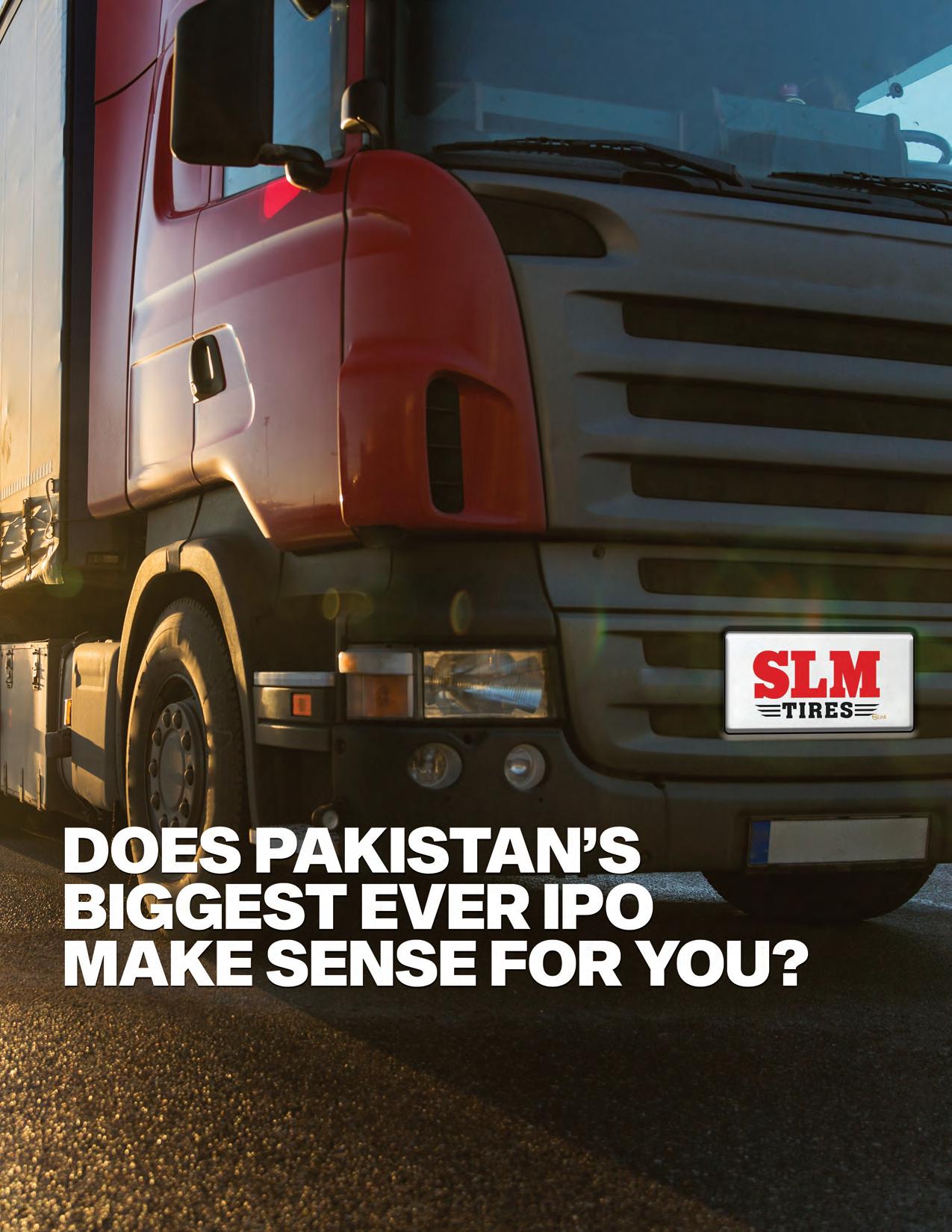
Service Long March Tyres entered the market in 2022 with a ten-year tax free holiday period, and have quickly established a monopoly in a sector that has consistent demand. This is the complete investors guide as it goes public
By Zain Naeem
If everything goes according to plan, Service Long March Tyres Limited will make the biggest Initial Public Offering (IPO) in the history of the PSX early next month. For a company that has only been around since 2022, the ascent has been fast.
The last time an IPO of this heft took place was in 2021, when smartphone assembler Airlink Limited raised Rs 6.43 billion. Which is why it might seem strange that the next big offering to investors is not another tech company, but one making tyres.
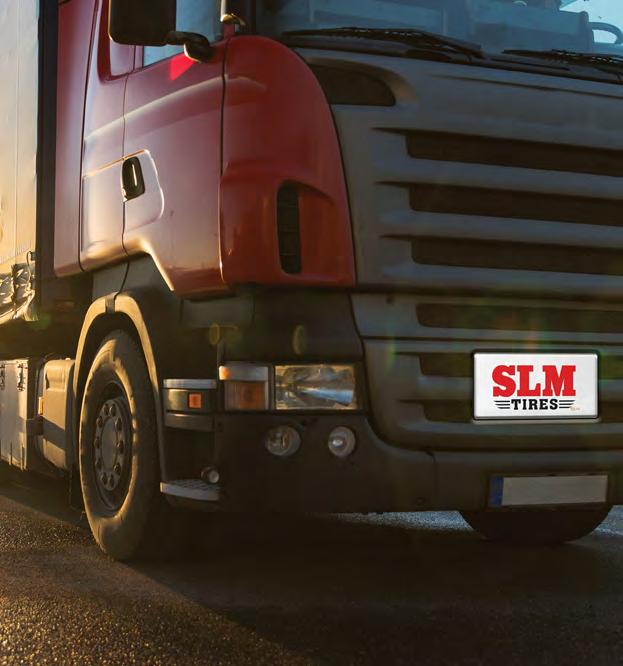
But look around you and things start making sense. Service Long March is the first (and only) Pakistani company to manufacture all-steel truck and bus radial (TBR) tyres. Pakistan is a country that is highly dependent on road transport both for goods and for travel. That means hundreds of thousands of trucks and buses crisscrossing the vast network of asphalt arteries that run throughout the country every day. All of those buses and trucks run to maximum utility on most days, and part and parcel of their operating cost is changing tyres.
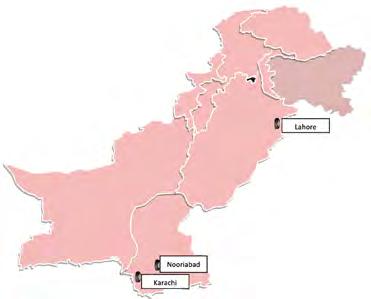
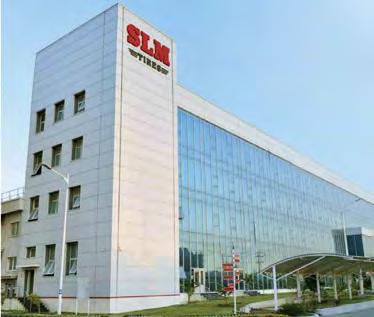
Up until SLM’s entry into the market, these tyres were all imported. Their 50 acre facility in Sindh’s Nooriabad has changed the game. With a production capacity of 1.6 million tyres a year, not only have they become the sole player in a market that has constant demand, they have also started exporting their tyres to markets like the US, Brazil, South Africa, Puerto Rico, Egypt and the UAE.
For investors hoping to get in on the business, these are only some of the highlights that might make it worth the gamble. But the IPO is not as simple as it seems. SLM is already producing at a level that is enough to meet domestic demand. The money they are raising through the IPO is meant to go into a new facility meant to produce tyres for passenger cars. If the facility hits its targets and goes live in 2028, it will start off as the largest tyre manufacturing unit in the country.
So is the IPO worth it? Profit analysed the company’s history, its financial data, and spoke to analysts involved in the deal to understand the full picture.
How it works
Stock market veterans will already know how IPOs work. For the uninitiated, it is a simple enough concept. When a company wants to expand and grow, it usually needs more money to do so. This money can be acquired through a few means. The first is simple: go to the bank and
get a loan. This way, the ownership composition of the company does not change, but the debt becomes a cost the company has to bear.
If you don’t want to feel the burden, the directors of the company themselves can either give loans to the company or invest more in it. But when you really want to go big (and also make a bit of a statement) you go for an IPO. You issue new shares in the company, and give investors and the public a chance to buy them and get equity in what will be a publicly listed company.
The first step is the book building stage. This is where “large” institutional investors bid for the shares that are up for grabs. Instead of a fixed price, a price band (floor and cap) is set, and investors submit bids for the quantity and price they are willing to pay.
In the case of SLM, the book building stage is pretty standard. Three quarters of the shares are up for grabs in the book building stage. Once a price is determined, the remaining 25% of shares will be open to the public on the 3rd of June. The floor price for the shares in the book building stage is Rs 14.25 and the ceiling price has been set at Rs 19.95. With nearly 390 million shares on offer, they are expecting/hoping to raise between Rs 5.6 billion to Rs 7.8 billion.
But the issue also gives us an idea of what the company investors are putting in might potentially be worth. The 390 million shares would make up around 5% of the size of SLM after the IPO. And if they manage to raise Rs 7.8 billion, the company will have a valuation of Rs 156 billion, or $557 million.
How does an IPO play out?
Service Long March declares their intentions for an Initial Public Offering and issues a prospectus for potential investors. The prospectus was published on the 7th of May 2026 by the PSX and details the company’s performance, clients, history, and other relevant information.
The Book Building stage begins on the 18th of May 2026 and ends on the 19th of May 2026. This is the stage where institutional investors (like asset management companies or mutual funds) place bids for a certain number of shares. The bids are placed between a floor price and a ceiling price which is given by the company. In this case the floor price is Rs 14.25 and the ceiling price is Rs 19.95. Exactly 75% of the shares being offered are up for grabs here. The final price of the share will be determined during this dynamic bidding process, and the public will have a chance to buy the remaining 25% at the rate set here. Individual investors can also participate at this stage, but their bid must be worth at least Rs 20 lakhs and they must lock their money upfront
Once the book building stage has taken place, there will be a material gap before the public subscription starts. This time is taken to sort out technical details like evaluating and tabulating the bids, determining the strike price, etc. The time is also there for investors to complete their payments, and in case your bid has been unsuccessful your money is returned to you in the same time frame.
After the logistical details are sorted out, public subscription begins. The remaining shares are now available to the public. Interested investors apply through the PSX, which now also offers e-IPO services. Investors place bids during a designated window, and if demand exceeds the available shares (oversubscription), shares are typically allotted via a randomized lottery system. In the case of Service Long March, the public subscription will take place on the 3rd of June 2026.
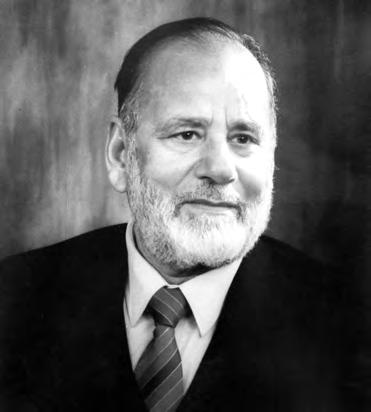
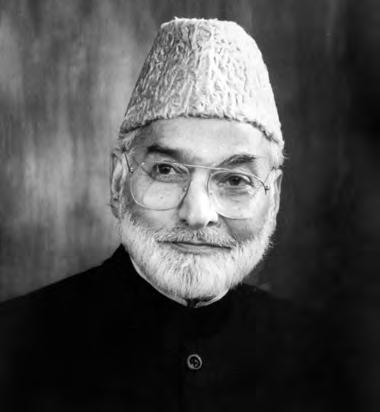
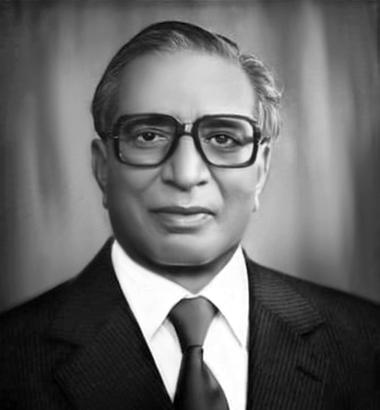
three young men had modest savings that they used to start selling mosquito nets, minor steel products, leather chappals and eventually travel bags, hand bags and holdalls, made of canvas and leather largely for supply to the army. After partition, they lost their contract with the army and had to start from scratch — establishing Service Industries. Today, the group they founded has one of the largest retail footwear presence in Pakistan and has fast expanded in the tyre business.
What you need to know about the company
Service Long March Tyres might be a relatively new company, but the Servis Group has been around for much longer. On a household name level, the group is perhaps best known for Servis Shoes because of its retail presence and branding — the “Mehndi Ke Function par Maham aur Anum” might ring a bell for many.
The roots of the group go back to March 1957 when it was incorporated as a private limited company subsequently becoming a public limited company in 1959 and then listed on the stock exchange in 1970. Over time, there was a drive to segregate each of the businesses as their own distinct entity which allowed for better operational focus, strengthened governance and improved capital allocation. Currently, the Services Industries holds subsidiaries spanning tyre and tube manufacturing, investment in new ventures, shares and securities and footwear retail operations.
The prowess of the Service Group can already be seen in the local market where it has a dominant position across two and three wheelers, passenger vehicles, commercial vehicles and off road tyre segment. The company’s product portfolio spans a broad range of tyres with an extensive dealer network and brand recognition.
Service Long March Tyres Limited was incorporated in Pakistan in January of 2020 and commenced its production in March of 2022. The company is a joint venture between
Service Industries Limited, a leading Pakistani industrial conglomerate with experience in manufacturing, branding and nationwide distribution, with Chaoyang Long March Tyre Company Limited, a globally recognized Chinese manufacturer in all steed radial tyres, and Shabir Ahmad of Myco Corporation Pakistan. In case you have ever gone through the painful (and expensive) process of finding reliable replacement tyres for your passenger car in Pakistan, you will know Chinese tyres are a big part of the market and cheaper than most imported brands available in Pakistan.
The establishment of the new company meant that it could now cater to the truck and bus radial segment which provides an area of large growth by offering locally manufactured, cost efficient alternatives to the tyres being imported previously.
The benefit of targeting this segment is that it is currently not being catered to by the local manufacturers and promotes localization of advanced tyre manufacturing capabilities by getting this technology from an established Chinese manufacturer. The company is also able to not only manufacture for the local market but also exports to the international market generating foreign currency for the group. Since its inception, Service Long March has targeted heavy duty transport which meets industrial requirements across logistics, public transportation, infrastructure development and allied sectors.
Currently, the manufacturing facility is based in the SITE area in Nooriabad Sindh and spans 50 acres of land encompassing an integrated production plant along with auxiliary complexes. The reason for locating here was
that it was designated under a Special Economic Zone and provided substantial logistical and operational efficiencies. Access to major highways, facilitating raw material procurement and distribution of finished goods has allowed the company to establish a robust supply chain.
The company is currently supplying tyres to Original Equipment Manufacturers (OEM) like Daewoo Pak Motors, Fuso Master Motors, Ghandhara DF, Ghandhara Industries, Hino Pak Motors, Master Motor Corporation and National Logistics Corporation. This allows the company to be able to supply to OEMs, institutional clients, dealers and export markets which is able to build its revenue base.
How has the company been doing?
The headline numbers from SLM show a company that did not take time to find its market and has only been ramping up in the few years that it has been around. The foundation for this has been simple. In Pakistan’s transport sector, commercial vehicles need regular tyre replacements. While there is no industry standard for how long a tyre lasts, depending on road conditions and the elevation they are climbing, Chaoyang Long March Tyres can last anywhere from 100,000 to 120,000 kilometers. The ranges also differ depending on the type of vehicle being talked about. Of course with larger vehicles, a single car can have anywhere from 4 to 18 tyres.
While the exact frequency is difficult to pin down, a representative from SLM told
(From left to right): Chaudhry Nazar Muhammad, Chaudhry Mohammad Husain, both hailing from villages in Gujrat and Chaudhry Muhammad Saeed from the neighboring district of Gujranwala. The
This will be the most exciting and biggest IPO in the history of the PSX. We are looking to raise between Rs 5.5 billion to Rs 7.7 billion. This is a dividend paying and shariah compliant stock for a company that is at complete utilisation
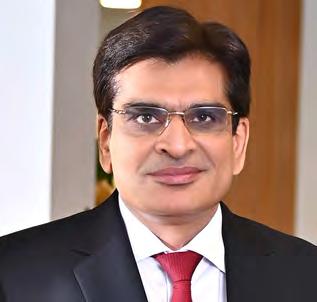
Shahid Ali Habib, CEO of Arif Habib Limited
Profit the demand for TBR tyre replacement in Pakistan was around 1.6 million tyres annually. With fleet expansion, increase in demand of trucks and buses, higher road utilization and accelerated wear cycles, there is a constant need for dependable domestic supply. That is why 73.2% of SLM’s sales come from tyre replacements rather than from selling tyres for new vehicles.
The client list is diverse. OEMs like Hino Pak, Dong Feng, Master Motors are included in the client base of the company. National Logistics Corporation and Government of Pakistan give out tenders while the corporate fleets of Daewoo, Faisal Movers, ZPTN, TCS and Autocom are catered to by the company as well.
One of the biggest strengths of the com-
pany is the fact that it has grown its international footprint in lockstep with its domestic markets. With the expertise of its sponsors and certifications, the company has been able to grow internationally by exporting to far flung areas like the US, Brazil, South Africa, Puerto Rico, Egypt and UAE. Not only has it been able to export to these countries, the exports have grown from Rs 5 billion in 2023 to Rs 15.2 billion in 2025 with the latest half year figures showing an expected exports in excess of Rs 19 billion. These make up around a quarter of sales being made.
The salient features of the company were perhaps best summed up by Shahid Ali Habib, the CEO of Arif Habib Limited which is carrying out the IPO, in a recent video message.
“This will be the most exciting and biggest IPO in the history of the PSX. We are looking to raise between Rs 5.5 billion to Rs 7.7 billion. SLM is a joint venture between the Chinese Long March Group and Pakistani Service Group. This is the largest TBR tyre manufacturer and exporter from Pakistan. Their total sales are Rs 67 billion out of which 39% of volumetric sales are exports. The total export is $67 million and they are aiming for $100 million. Profits next year are expected to be around Rs 17 billion. This is a dividend paying and shariah compliant stock for a company that is at complete utilisation.”
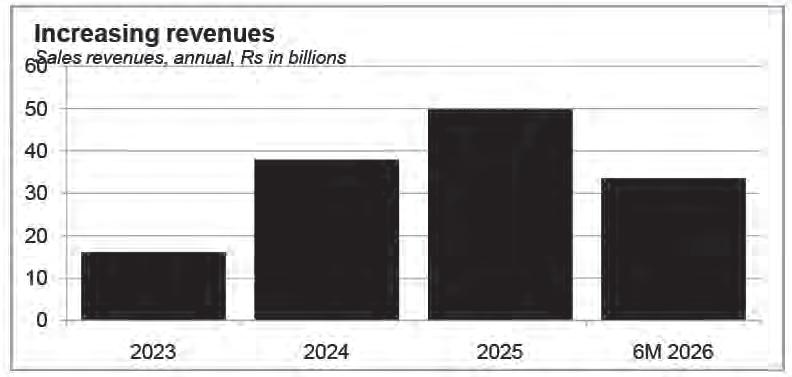
In terms of its granular financial performance, the company has been able to grow itself exponentially. In 2023, the revenues of the company were Rs 16 billion which increased to Rs 50 billion by the end of 2025. The opening 6 months of 2026 show that the company is on track to see revenues of more than Rs 65 billion for the year. This shows revenues tripling in a span of two years. The increase in sales show how well the company has been able to expand its sales volumes, use its capacity and increase penetration in local and international markets. These sales have been complimented by healthy operating cash flows, cost management and efficient working capital cycle.
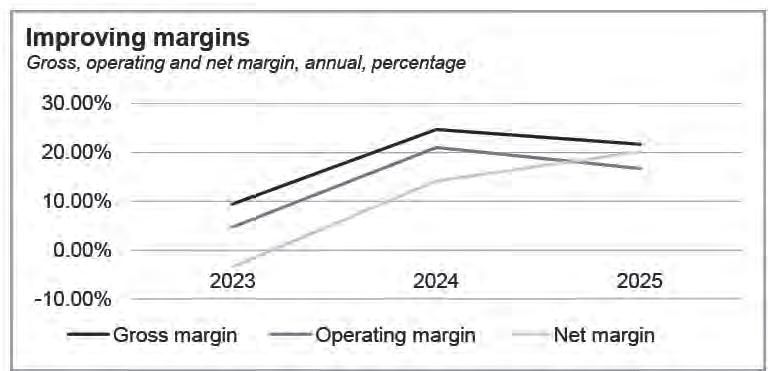
As sales have increased, the company has also improved its gross margin which stood at 9.4% in 2023 and has increased to 25% in the last half year. In the same manner, operating margin stood at 4.7% in 2023 which has increased to 20.5% in the latest results while net margin went from being -3.4% in 2023 to 19.4% in half year ended December 2025.
The IPO will allow the company to set up its passenger car radial manufacturing plant by the end of December 2027 allowing it to come online in January of 2028. The aim is to achieve an installed capacity of 2 million tyres per annum by FY 2028 which will increase to 3 million per annum by FY 2030. As the company expects the demand to grow, the capacity can be increased over time to meet market demand and serve export markets as well.
The IPO is being planned currently to
look to raise Rs 5.6 billion which will be used to partially finance the passenger car radial tyre manufacturing facility which is expected to cost Rs 22.5 billion. The remaining amount is expected to be covered with internally generated cash flows, long term financing and will be spread over the project’s implementation schedule. The IPO proceeds have been earmarked for building, plant and machinery that will be required for the production facility in addition to civil works that would be required.
The establishment of the new plant will diversify the revenue streams of the company and will broaden the market it caters to.
Where the valuation stands
For an investor looking at Service Long March Tyres, the headline valuation appears attractive. The company has already become profitable, earning more than Rs 6 billion in the most recent year, and its IPO valuation suggests significant upside from the offer price. The company’s own valuation assessment places fair value at around Rs 27.5 per share, while another calculation based on its future cash flows gives a value of Rs 25.63 per share. Compared with the floor price of Rs 14.25 and the cap price of Rs 19.95, this implies meaningful potential upside for investors entering through the IPO.
But valuation is not just about what a company has already earned. For an IPO investor, the more important question is what the company is expected to earn in the future. This is why the valuation of Service Long March has been built around future cash flows. Since the company does not currently pay dividends, analysts have not used dividends as the basis for valuing the investment. Instead, they have used free cash flow to the firm, which is the cash left with the company after meeting its operating
needs and essential investment requirements.
This matters because profit and cash flow are not always the same thing. A company may report accounting profit, but that profit can include non-cash items, adjustments, or accounting treatments that do not immediately translate into money available to the business. Cash flow is usually considered a cleaner way to judge how much value a company can generate for shareholders over time. In Service Long March’s case, profits have been forecast from 2026 to 2033, expenses have been accounted for, and future cash flows have been discounted back to today’s value.
The basic logic is simple. Money expected in the future is worth less than money received today. So when analysts estimate how much cash the company may generate in coming years, they reduce those future amounts to reflect the time value of money and business risk. For Service Long March, this discounting has been done using the weighted average cost of capital. In 2026, the model uses a cost of equity of 17.19%, a cost of debt of 6.63%, and a weighted average cost of capital of 13.56%. The model then changes this rate over time to reflect the company’s expected financial structure.
Once the forecast period ends in 2033, the model assumes that the business will continue growing at a more stable rate from 2034 onward. This is captured through terminal value, which is a standard part of valuation models. Instead of forecasting every year indefinitely, the model estimates what the business should be worth after the detailed forecast period. In Service Long March’s case, this is important because the terminal value makes up nearly half of the estimated enterprise value. That means small changes in long-term assumptions can have a large effect on the final valuation.
Based on the model, the enterprise value of the company comes to around Rs 214 billion.
From the prospectus: Service Long March is spread over 50 acres in a Special Economic Zone in Nooriabad, Sindh where they enjoy a 10-year tax holiday. During current negotiations, the International Monetary Fund (IMF) has asked Pakistan to amend its laws that govern these zones. On principle, the changes cannot apply retrospectively.
After adding cash and subtracting debt, the equity value comes to around Rs 200 billion. Dividing this by the number of shares gives a value of Rs 25.63 per share. This is the basis on which the IPO is presented as offering upside to investors. The company’s case is also supported by its operating profile: it has grown quickly, operates in a market with limited local competition, has healthy margins, and carries limited long-term debt.
The FBR boogeyman
However, investors need to pay close attention to one accounting issue because it feeds directly into the valuation: deferred tax. The company is located in a Special Economic Zone and enjoys a ten-year tax holiday that began in 2022 and is expected to run until 2032. This means the company does not expect to pay income tax on its revenue during this exempt period. From 2033 onward, it is expected to become taxable.
The issue is how the company has treated depreciation and tax during this exempt period. In normal accounting, companies record depreciation on assets such as their machinery. Tax rules can treat depreciation differently from accounting rules. Sometimes this creates a deferred tax liability, which means the company may have to pay more tax in the future. At other times, it creates a deferred tax asset, which means the company has effectively paid or recognised more tax now and may benefit later.
Service Long March had earlier recorded a deferred tax liability because of the difference between accounting treatment and tax treatment. In 2025, the company revised its view. Based on legal advice, it took the position that since its income during the exempt period is not chargeable to tax, its assets should not be treated as depreciable assets for tax purposes during that period. The company then sought approval to revise its tax returns from 2022 to 2024.
As a result, a deferred tax liability of Rs 1.5 billion was written off, and a charge of Rs 63 crores for the year was not recorded. Instead, the company created a deferred tax asset of Rs 1.5 billion. This had a direct impact on reported profitability because instead of recording a tax expense, the company recorded a reversal that increased profit after tax. A similar effect was visible in the half-year numbers to December 2025, where the company recorded a tax inflow of Rs 290 million compared with a tax expense of Rs 250 million in December 2024.
For an average investor, the concern is not simply that a deferred tax asset exists. Deferred tax assets and liabilities are common in financial statements, especially where account-
ing rules and tax rules do not match perfectly. Over the life of an asset, these differences often reverse. The real issue is that this specific tax treatment is still dependent on the final position of the tax authorities. The company has itself noted that the final outcome will depend on the completion of tax assessment by the authorities. That means the final decision regarding the final fate of SLM’s deferred tax assets will be determined by the FBR.
This becomes important because the 2025 profit number is the starting point for future forecasts. The valuation model uses current profitability to project future earnings from 2026 to 2033. If the tax authorities do not accept the company’s treatment, the deferred tax asset may have to be reversed and the earlier liability may need to be restored. That would reduce reported profit. If the base profit number changes, the forecast numbers built on top of it could also change.
The effect can be larger than it first appears. A one-year reduction in profit does not only affect that year. In a valuation model, it can affect the full chain of future forecasts. Since the terminal value is based on the later years of forecast earnings and cash flows, any change in those numbers can have a magnified impact on the final valuation. In Service Long March’s model, there appears to be no allowance for a possible reversal by the tax authorities. The forecast balance sheet instead shows deferred tax assets increasing from Rs 1.5 billion in 2025 to Rs 10.7 billion by 2033.
Tax experts consulted by Profit were not unanimous in accepting the company’s approach, with many of them taking the view that the deferred tax liability should have remained on the books. This does not automatically mean the company’s treatment will be rejected. In fact, there is definitely an argument to be made for their logic. But it still means they might have to plead their point as it is not free from interpretation. The company is relying on its legal position, while the final assessment remains with the tax authorities.
For investors, the point is straightforward. The business case for Service Long March is based on strong growth, a specialised market, local manufacturing, exports, and improving margins. Those factors support the investment story. But the valuation also depends on assumptions, and one of those assumptions is the current tax treatment. If the tax position is accepted, the valuation case remains stronger. If it is rejected, reported profits and future forecasts could weaken, reducing the upside implied by the IPO valuation.
That does not make the IPO unattractive on its own. It simply means investors should separate the operating story from the valuation story. The company may still be a strong business with a clear market opportunity, but
the price an investor should be willing to pay depends on how much confidence they place in the assumptions behind future profits. In this case, the deferred tax treatment is one of the most important assumptions to watch.
Questions you might have, and things you want to know
At this stage, SLM’s case seems clear cut. The company was established by a group with a storied place in Pakistan’s corporate history. It was catering to a clear gap in domestic supply. It took the market by storm, its finances are profitable, and it is now ready to go public and expand.
But with the company inviting investors to take a bite, there are questions that arise naturally. During the course of researching and investigating this story, Profit spoke to tax experts, a representative from Arif Habib, the firm managing the IPO, and reached out to the management of SLM. Below are some of the questions sent by Profit that might be relevant for investors interested in the IPO, and the responses from Arif Habib Limited.
CanSLMreduceimports andcurbthegreymarket?
The company’s main case is built around import substitution. Pakistan’s truck and bus radial tyre market has historically been supplied by imported products, including tyres coming through grey channels. SLM’s pitch is that local manufacturing can reduce that dependence.
“The total local TBR market is around 1.6 million to 1.7 million tyres. No other player is making TBR tyres in Pakistan. Service Long March is operating at a capacity of 1.6 million tyres. We sell around 1 million tyres locally and export the rest.”
On the grey market, the company argues that the current border situation has already reduced one route of informal supply.
“As far as smuggled tyres are concerned, there is no transit from Afghanistan right now because of the border closure. We sell our tyres at a competitive price point, so they cannot compete with us in TBR tyres. Ghandhara or any other player can compete in other tyre segments, such as for passenger cars, but not in this segment.”
Willglobalvolatilityaffect investor sentiment?
The IPO comes at a time when markets have had to absorb geopolitical tension and stock market swings. For retail investors, this matters because even strong companies can
struggle to attract demand if broader sentiment is weak.
“The biggest shock has already been observed in the past few weeks. People have gotten used to these things. Interest rates rising would be our only concern.”
From the company’s perspective, the main operational reassurance is that the supply chain is not heavily linked to the Middle East. This matters because recent regional tensions have created concerns for many businesses exposed to energy routes, shipping routes, or Middle Eastern suppliers.
“Fundamentally, our supply chain is based in Asia. We have no link to the Middle East in terms of supply. Yes, our end consumers are in those regions as well, but the supply chain risk is zero.”
How real is the valuation?
This is the most obvious question for any investor. SLM may be a strong business, but a strong business is not automatically a good investment if the entry price is too high. Based on the IPO size and percentage being offered, the company is being valued at a large number for a business that only began commercial production in 2022.
“The company valuation will be Rs 176 billion. Our prospectus has been disclosed on the PSX as well. The intrinsic value with the discounted cash flow model is around Rs 25.63 per share, based on very conservative assumptions.”
The company’s valuation case rests on comparison with other large listed companies, its margins, its return on equity, and its operating structure.
“On a price-to-earnings basis, the average return on equity for the big listed companies that are not banks is around 32% to 33%. SLM stands at 40%. The companies we mentioned have an average net margin of 10% to 12%, while SLM has around 20% to 21%. Our priceto-sales is also better. On all benchmarks, SLM outperforms the top publicly listed companies.”
There are also two specific factors that support the company’s profitability. The first is the joint venture structure, under which royalties are not being charged. The second is the tax holiday available to the company until 2032.
“Our operational efficiencies are there. The joint venture does not charge royalties, which is not the case anywhere else in Pakistan. We also have tax exemption up until 2032. It is an attractive valuation at a discount to peers. Even in terms of fundamentals, we are offering at an 80% discount from intrinsic value.”
For investors, the valuation case is therefore not based only on current earnings. It depends on whether high margins, high return on
equity, tax benefits, and operational efficiency can continue over the forecast period.
Willthesalesmixchange?
SLM’s existing business is heavily driven by replacement demand. This is important because replacement sales can be more stable than sales to original equipment manufacturers, which depend on new vehicle production. As the company enters the passenger car radial market, the mix between replacement and OEM sales may become more relevant.
“Currently, our distribution market is quite strong, and we have started off with the replacement market. Margins are better here as well. Over the last 30 years, the Service Group’s history gives us an edge.”
The passenger car radial segment will require a different approach. Unlike TBR tyres, where SLM is the sole local manufacturer, PCR tyres already have local players and a large imported supply base.
“In the PCR segment, we will have to make a new distribution network, and there will be room to cater to OEM sales. The total PCR market is expected to be around 8.6 million to 8.7 million tyres in 2028, when our capacity comes live.”
The company believes there is enough room for a new entrant because local capacity remains below total market demand.
“Currently, there are only three players. Armstrong has 1.8 million capacity, Ghandhara has barely 1 million capacity, and Service Long March will have 2 million capacity. That still leaves an import gap of around 4 million tyres, which is either catered through grey channels or Chinese tyres.”
For investors, this means the passenger car tyre project offers scale but also brings execution risk. SLM will be entering a larger market, but one with existing competitors, new distribution needs, and different customer dynamics.
Canexportskeepgrowing?
Exports are important because they expand the company’s addressable market beyond Pakistan and provide foreign-currency revenue. This is also useful for a business that imports key raw materials and is exposed to the rupee.
“South Africa is already our fourth-largest contributor to sales. We will also consider Puerto Rico and the UAE, and as markets become concentrated, we will look for new markets as well.”
The export story is therefore part of both the growth case and the risk management case. More exports can support higher volumes and partly offset foreign exchange pressure. However, they also expose the company to competition in overseas markets, shipping
costs, regulatory requirements and demand conditions outside Pakistan.
HowexposedisSLM torubberprices?
The biggest cost that the company is exposed to is natural rubber, which accounts for 40% of its total cost of goods sold. Other raw materials such as carbon black, steel cord, bead wire and chemicals together account for a similar percentage. Since most of this rubber is imported, the company is vulnerable to both global rubber prices and the exchange rate. Supply chain disruptions, geopolitical developments and trade restrictions can also add to production costs.
This is a direct margin risk. If rubber prices rise or the rupee weakens, the company either has to absorb the pressure or pass it on to customers.
“In the rubber market, you only do oneyear contracts. You source inventory based on demand.”
The company’s mitigation plan is based on increasing exports and passing on cost increases through pricing. “If there is any escalation in the Middle East, or any geopolitical tension that leads to rupee devaluation, we have two things. First, we want to go to 50% exports from where we are already at 40%. Second, we pass on incremental costs to the customer. We live by a very normal costplus-margin model. It will be passed on to the customers.”
For investors, this means SLM is not claiming to have removed raw material risk. It is relying on pricing power and export growth to manage it. That makes demand strength important. Passing on costs works best when customers have limited alternatives and the product is necessary.
What should investors understand about deferred tax?
The deferred tax issue is more technical, but it matters because it affects reported profit and valuation. SLM is located in a Special Economic Zone and has a tax holiday until 2032. The company has taken the view that, because tax is not applicable during this period, the related tax credit is being accumulated as a deferred tax asset.
“In our case, tax is not applicable. Thirty-nine percent of our tax credit is being shown positively, and it is being accumulated under deferred tax assets.”
The concern is what happens once the exemption period ends. If the deferred tax asset has built up over time, investors need to know whether it will reduce profits later. “Yes, after the holiday period, this shall be expensed out. But that Rs 10 billion will not come out at
once. It will be disposed of over time, so it will not be a one-time write-off.”
This answer is important because it addresses the fear of a sudden hit to profits after 2032. The company’s position is that the impact will be spread over a longer period.
“This will happen over the course of 10 to 20 years. By that measure, you are probably valuing this at a very conservative level. The value we have provided in the prospectus is fair and reflects the true position of the company.”
For investors, the main point is that the valuation depends partly on how this tax treatment plays out. If the tax position is accepted and the deferred tax asset is expensed gradually, the impact may be manageable. If the interpretation changes or the adjustment is sharper than expected, profitability and valuation could be affected.
So how does it play out?
Service Long March is not a difficult business to understand. It makes a product that transport companies need regularly, it operates in a segment with limited local competition, it has scaled quickly, and it has already built an export base. Its margins, revenue growth and return metrics make the IPO worth examining seriously, particularly in a market where few new listings arrive with this level of operating history.
But the investment case is not risk-free. The company is being valued on future performance, not just its current numbers. That future depends on continued pricing power in truck and bus tyres, successful execution in the passenger car radial segment, export growth, manageable rubber and currency volatility, and the tax treatment continuing broadly as assumed in the valuation model. The deferred tax question does not invalidate the business, but it does affect how much confidence an investor can place in the stated upside.
That is ultimately the point. A good company and a good investment are not always the same thing. For some investors, SLM may look like a rare chance to enter a profitable manufacturing business with a clear import-substitution story. For others, the valuation, tax assumptions, raw material exposure and execution risk may reduce the margin of safety.
Investment decisions are individual calls, based on risk appetite, time horizon, portfolio exposure and confidence in the assumptions behind the numbers. This article is not a recommendation to buy or avoid the IPO. It is an attempt to lay out the business, the valuation, the upside case, and the concerns clearly enough for investors to decide where they stand. n
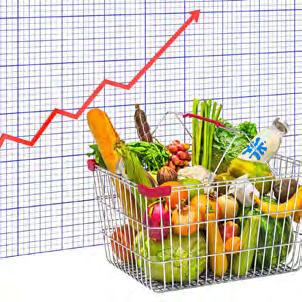
CONSUMER PURCHASING POWER RECOVERY BOOSTS PROFITS AT FOOD AND BEVERAGE COMPANIES
Revenues up 5%, but profits up 15% in the sector during the first quarter of 2026 as margins expand
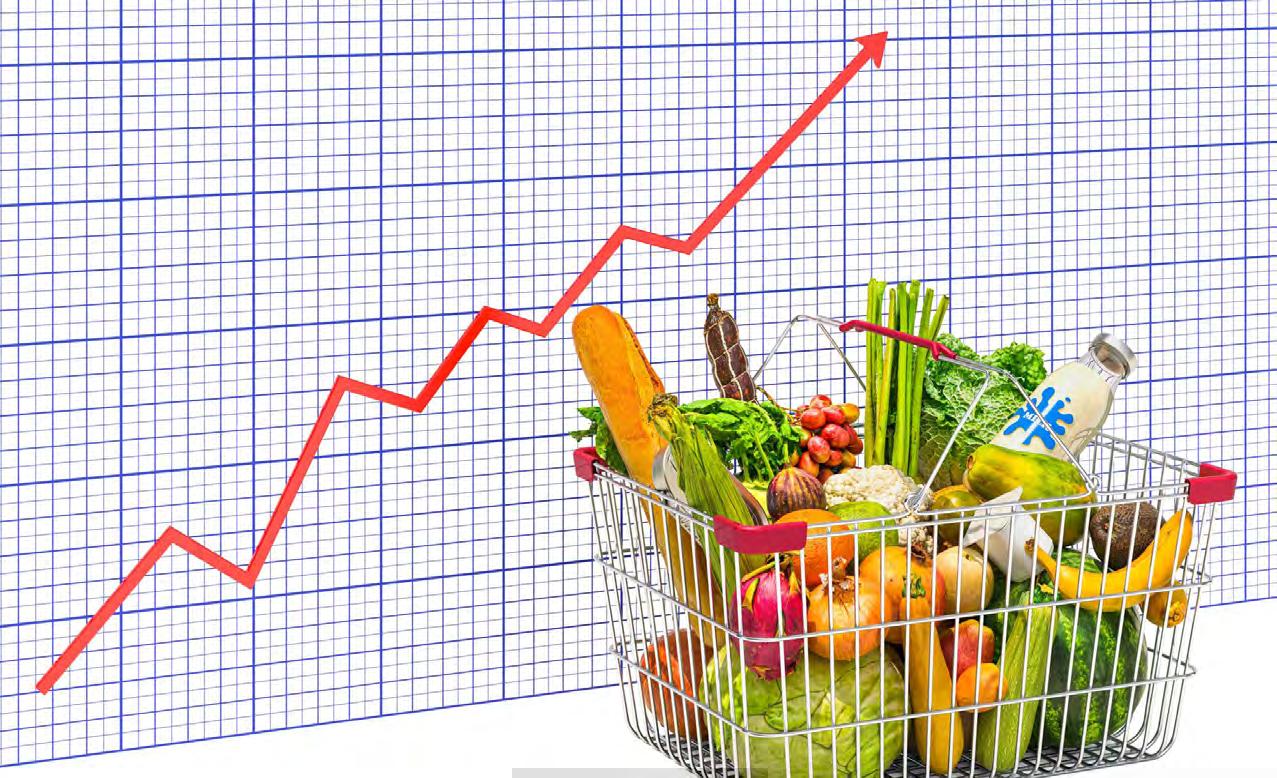
Pakistan’s listed food and beverage companies began 2026 with a recovery that says as much about household wallets as it does about corporate discipline. The sector’s revenues rose 5% year-on-year to Rs196.2 billion in the first quarter of calendar year 2026, but profit after tax increased at three times that pace, rising 15% to Rs17 billion from Rs14.8 billion a year earlier. The difference between the two numbers is the story: the consumer is buying a little more, companies are giving away less margin, and the fall in finance costs has finally reached the income statement.
The recovery was not evenly spread across supermarket shelves. Beverages led sector revenue growth with a 17% year-on-year increase, followed by condiments and culinary products at 16%. AKD Securities attributed the beverage recovery to improved macroeconomic conditions and a rebound after the impact of GST implementation, while the growth in condiments and culinary products was supported by a better product mix and improving purchasing power as inflation eased.
The sector’s largest pool of sales remained dairy, where Nestlé Pakistan and Friesland-
Campina Engro Pakistan anchor the listed universe. Nestlé alone reported Rs54 billion in quarterly sales, up 7%, while FrieslandCampina Engro Pakistan posted Rs28.7 billion, up 10%. Fauji Foods added another Rs8.5 billion in sales, up 8%, while smaller dairy players such as At-Tahur, Mitchell’s Fruit Farms and Ghani Dairies had more mixed outcomes.
The dairy recovery also needs to be read against the tax shock of the previous year. Nestlé Pakistan had said its first-quarter 2025 revenue fell 7.4% due to subdued demand following the sales tax introduced through the Finance Act 2024-25 and higher taxation on the salaried class, a key part of its consumer base. FrieslandCampina Engro Pakistan also flagged the 18% sales tax on packaged UHT milk as a challenge for the formal dairy sector, arguing that loose milk remained outside the tax net.
That makes the first-quarter 2026 numbers partly a recovery from a low base and partly a sign that consumers are adjusting to new price levels. Pakistan’s CPI inflation stood at 5.8% in January 2026, 7% in February and 7.3% in March, far below the inflationary stress that shaped household behaviour in the earlier phase of the crisis. At the start of 2026, the State Bank
of Pakistan also noted that economic activity was gaining momentum faster than expected, led mainly by domestic-oriented sectors.
Condiments and culinary products were the cleaner consumer recovery story. National Foods generated Rs16.1 billion in sales, up 9%, and Rs2.7 billion in profit after tax, up 23%.
Unilever Pakistan Foods, whose portfolio includes Rafhan, Knorr, Hellmann’s, Energile and Glaxose-D, recorded Rs13.2 billion in sales, up 26%, and Rs2.1 billion in profit, also up 26%. The two companies together show why the category is attractive: recipe mixes, sauces, mayonnaise, desserts and seasonings sit between necessity and indulgence, making them easier to defend in pricing terms than pure discretionary goods.
Beverages had the fastest top-line growth, but not the cleanest margin story. Murree Brewery reported Rs7.4 billion in sales, up 20%, while Shezan International’s sales rose 8% to Rs2.4 billion and Quice Food Industries’ sales rose 25% to Rs422 million. AKD attributed Murree Brewery’s revenue growth to stronger local demand and expansion in the liquor division, while Shezan’s profit recovery was linked to improving juice demand. Quice benefited from Ramadan and Eid-led demand and higher exports, but
its profit still fell due to higher distribution expenses.
Murree Brewery remains an unusual company in the listed food space. It is both a restricted alcohol producer and a broader beverages and packaging business, with divisions covering liquor, Tops Juices and glass. Its non-alcoholic products, juices, soft drinks, bottled water and glass bottles give it access to a wider consumer market, while its alcohol business gives it pricing power in a narrow and regulated segment. That makes its 20% sales growth in the quarter important, but the muted 3% profit increase shows that higher volumes or sales mix do not automatically translate into margin expansion.
The confectionery story was less cheerful. Ismail Industries, one of Pakistan’s largest food manufacturers with brands across confectionery, biscuits, snacks, nutrition, flour and packaging films, posted Rs26.9 billion in sales, down 7%, while profit after tax declined 8% to Rs1 billion. AKD linked the fall to lower export sales and high input costs. For a company with a portfolio spanning Candyland, Bisconni, Snackcity, Ismail Nutrition, Ghiza and Astro Films, the quarter shows that brand strength can soften a downturn but cannot fully offset export weakness and cost pressure.
Poultry and meat were split between domestic demand and export disruption. Big Bird Foods recorded Rs3.9 billion in sales, up 12%, and Rs356 million in profit, up 8%, helped by higher sales and other income. The Organic Meat Company, by contrast, saw sales fall 3% to Rs3.1 billion and profit collapse 86% to Rs17 million. AKD attributed the decline to the absence of exports to Afghanistan during border closure, lower exports to China and higher input costs. That decline is notable because the company had earlier secured $7.5 million in confirmed export orders for cooked and frozen boneless beef to China for FY2025-26, showing how timing, border conditions and shipment execution can matter as much as headline order wins.
Grain processing and related food companies were also uneven. Rafhan Maize Products held sales flat at Rs19 billion but increased profit 4% to Rs2 billion, helped by improved gross margins and lower finance costs despite Afghanistan trade closure and weaker export demand. Matco Foods, which sells basmati and non-basmati rice, rice syrup, rice protein, glucose, maltodextrin, pink salt, masala, kheer and corn-based animal nutrition products, saw sales fall 30% to Rs5.8 billion but profit rise 42% to Rs86 million because of a better product mix. Bunny’s posted 7% sales growth and 55% profit growth, though AKD noted that higher flour and raw-material costs and fuel expenses contracted margins, with a tax credit supporting the bottom line.
The more important story, however, sits below the revenue line. Sector gross profit rose 11% to Rs55.7 billion even though revenue
increased only 5%. Cost of revenue rose just 3%, allowing gross margin to expand to 28.4% from 26.8% a year earlier. Operating profit increased 10% to Rs28.9 billion, despite distribution expenses rising 16% to Rs21.5 billion.
That margin expansion has three explanations. First, companies appear to have retained pricing better than they could during the worst of the demand slowdown. Second, product mix improved in categories such as condiments, culinary and value-added dairy. Third, the interest-rate cycle gave companies a tailwind. Finance costs for the sector fell 8% to Rs2.6 billion even though total debt increased 9% to Rs 91 billion by March 2026.
The monetary backdrop matters here. The State Bank of Pakistan reduced the policy rate by 1,150 basis points from June 2024 to December 2025, bringing it to 10.5%. It also noted that weighted average lending rates declined from more than 20% in June 2024 to 12% in December 2025. For a sector that had accumulated working-capital debt during years of inflation, currency pressure and expensive credit, the decline in borrowing costs created a direct boost to earnings.
That benefit may not continue in a straight line. The policy rate was still 10.5% during the first quarter, but the State Bank raised it to 11.5% from April 28, 2026. The increase came after the quarter under review, but it matters for the next leg of earnings because food companies are sensitive to both borrowing costs and commodity prices.
Company-specific numbers show four broad themes. The first is scale. Nestlé Pakistan remained the largest profit contributor, with Rs5.6 billion in quarterly profit after tax, up 12%. Its revenue growth was not spectacular, but stable gross margins and lower finance costs were enough to produce earnings growth. That is the advantage of the sector’s largest platform: it does not need heroic revenue growth to move profits.
The second theme is recovery from tax disruption. FrieslandCampina Engro Pakistan’s profit rose 71% to Rs1.9 billion, the sharpest increase among the larger companies in the AKD sample. The company’s 2025 results had already shown the importance of cost discipline, with operating profit rising 16% despite a 2.4% decline in annual net sales. In the first quarter of 2026, the combination of higher sales and lower finance costs did the heavy lifting.
The third theme is that growth is not enough if the cost base is moving against the company. Fauji Foods grew sales 8% but profit fell 10% because higher distribution expenses and lower other income offset the top-line increase. At-Tahur grew sales 15%, but profit fell 15% as high input costs outweighed revenue growth. Quice grew sales 25%, but profit fell 60% because distribution expenses absorbed the benefit. Mitchell’s Fruit Farms grew sales 28%
but remained loss-making because gross margin contraction and higher operating expenses followed the post-management-transition phase.
The fourth theme is export exposure. Ismail Industries, Rafhan Maize and The Organic Meat Company all show different versions of the same problem: domestic purchasing power may be recovering, but trade routes, export demand and commodity input costs remain unstable. Rafhan managed the pressure through margins and lower finance costs. Ismail saw both sales and profit decline. The Organic Meat Company’s quarterly profit nearly disappeared.
This is why the sector’s first-quarter recovery should not be mistaken for a broad consumer boom. It is more precise than that. Pakistan’s food and beverage companies are benefiting from a partial restoration of purchasing power, lower interest costs, selective price retention and better product mix. But where exports weakened, input costs rose, or distribution spending accelerated, revenue growth did not protect earnings.
Investors, however, continue to treat listed food companies as premium assets. AKD’s sample trades at a trailing price-to-earnings multiple of 19 times and EV-to-sales of 1.4 times. Nestlé trades at 19.3 times earnings, Unilever Pakistan Foods at 26.2 times, Ismail Industries at 30.6 times, FrieslandCampina Engro Pakistan at 23 times and Fauji Foods at 40.4 times. Even National Foods, one of AKD’s preferred names, trades at 12 times earnings, above several cyclical and financial sectors on the exchange.
That premium looks even starker against the broader Pakistani market. Aggregated Pakistani market data as of May 15, 2026 showed a market price-to-earnings multiple of 9.6 times, roughly half the AKD food-sector multiple. The reason is simple: staples and branded foods offer investors visible cash flows, pricing power, household penetration and defensive demand. But defense does not always mean high return.
AKD’s report shows the food sector lagging the KSE-100 over the past year, despite the sector’s premium valuation. That is the central contradiction. Food companies are profitable, cash-generative and often well-branded, but shareholders have not been rewarded in line with the wider market rally. In a year when Pakistan equities were re-rated by falling interest rates and improving macro stability, the food sector’s already-rich valuations limited upside.
The first quarter of 2026 therefore marks a recovery, but not a reset. Consumers are returning, though cautiously. Companies are defending margins, though not uniformly. Finance costs have fallen, though rates have already ticked back up. For Pakistan’s listed food and beverage companies, the pantry looks fuller than it did a year ago. The question for shareholders is whether these companies can turn that recovery into sustained earnings growth strong enough to
Pakistan might get upgraded to the MSCI Emerging Markets index. Who cares?
Pakistan’s yo-yo relationship with the index increasingly does not matter in a world where US equity markets dominate global public equity investing
Pakistan is back in familiar territory: talking about a possible return to the MSCI Emerging Markets index. The immediate trigger is not a formal review for reclassification, nor even a consultation by MSCI. It is a routine index reshuffle that has given analysts just enough to work with, and the market just enough to hope for. In its May 2026 review, MSCI added Habib Metropolitan Bank to the MSCI Frontier Markets Index and removed The Searle Company, while Pakistan saw three additions and one deletion in the MSCI Frontier Markets Small Cap Index. AKD Securities estimates that Pakistan’s standard frontier index count has remained at 29 securities, with the country’s weight at about 7.5%, while its smallcap count stands at 78 securities with a weight of around 10.2%.
The interesting part is not the reshuffle itself. Index changes happen all the time. The more important point is what the reshuffle may be signalling about liquidity, investability and market capitalisation. AKD argues that Pakistan’s return to the MSCI Emerging Markets club remains possible if enough Pakistani stocks meet MSCI’s emerging market eligibility requirements. Its analysis suggests that at least three Pakistani companies could meet the relevant criteria by next year if market prices, free-float capitalisation and liquidity continue to improve.
That matters because MSCI’s classification framework is not based on vibes. It
uses three broad tests: economic development, size and liquidity, and market accessibility. For emerging markets, the size and liquidity test requires at least three companies to meet standard index criteria, including minimum full market capitalisation, minimum free-float market capitalisation and liquidity thresholds. MSCI also looks at market accessibility, which includes issues such as foreign ownership limits, capital flows, settlement systems and the institutional framework.
This is why AKD’s note has generated interest. Pakistan has not usually failed MSCI’s emerging market test because foreigners are formally barred from buying shares. It has failed because the market has often been too small, too thinly traded, or too fragile in dollar terms to keep enough stocks above MSCI’s thresholds. The last downgrade in 2021 was not about some sudden collapse in market infrastructure. MSCI made clear at the time that Pakistan continued to meet emerging market accessibility requirements, but no longer met the size and liquidity standards.
Still, the leap from a positive brokerage note to an actual upgrade is large. MSCI does not normally upgrade a market simply because a few stocks briefly cross a threshold. Its framework looks at whether changes are durable, and the classification process is generally annual. In other words, Pakistan may have improved its case, but an upgrade would need sustained evidence, not a good quarter, a strong rally, or a handful of liquid banking and energy names
doing well at the same time.
Pakistan has been here before, which is precisely why investors should be careful about over-reading the moment. The country was part of MSCI Emerging Markets from 1994 until 2008. It was removed after the Karachi Stock Exchange imposed a floor rule during the financial crisis, effectively freezing prices and damaging investability. MSCI’s own classification history records that Pakistan was removed from the emerging market index in December 2008, maintained as a standalone country index, and then moved to frontier markets in May 2009.
The next comeback came in 2016. MSCI announced that Pakistan would be reclassified from frontier to emerging market status, with implementation in 2017. When the change became effective, Pakistan entered the MSCI Emerging Markets Index with just six constituents and a pro forma weight of only 0.10%. Habib Bank, United Bank and Lucky Cement were the three largest constituents at the time.
That 2017 upgrade was treated domestically as a major milestone. It was supposed to validate the market’s reform story, increase passive foreign inflows, and put Pakistan back on the radar of mainstream emerging market investors. In practice, it did not change the market’s structural problem: Pakistan was too small to matter inside the emerging market universe, and too volatile to be treated as a core allocation. By the time MSCI downgraded Pakistan again in 2021, its weight in the MSCI Emerging Markets Index had reportedly fallen to just 0.02%.
The 2021 downgrade was blunt. MSCI said Pakistan met the market accessibility requirements for emerging market status, but no securities in the MSCI Pakistan equity universe had met the emerging market size and liquidity criteria since the November 2019 semi-annual index review. The downgrade moved Pakistan back to frontier market status, where it could be a bigger name in a smaller pool rather than a rounding error in a much larger one.
That is the real question behind the current debate. Would returning to the MSCI Emerging Markets Index actually matter this time? For local brokers, it certainly would. It would help market the Pakistan story to foreign funds, create event-driven interest, and potentially bring in some passive money. For listed companies, especially those that could enter the index, it would provide visibility with global investors. For policymakers, it would be an easy line to use as evidence that the market has recovered.
But for global equity allocators, Pakistan’s upgrade would be a footnote unless it came with a much larger improvement in market depth, currency stability, earnings visibility and liquidity. MSCI says more than $1.8 trillion in assets are benchmarked to its emerging market indexes, but the key question is Pakistan’s share of that pool. A country with a weight of 0.10%, or lower, is not automatically transformed by inclusion. Passive funds buy according to weights. Active managers need a reason to care.
The global backdrop makes the problem even clearer. Public equity investing is increasingly dominated by the United States. The MSCI ACWI, which captures large and mid-cap stocks across developed and emerging markets, had a market capitalisation of about $98.77 trillion at the end of April 2026. The United States alone accounted for 63.41% of the index, while emerging markets as a whole accounted for about 11% of MSCI ACWI.
That is the world Pakistan is trying to re-enter. Not a world where emerging markets are the centre of gravity, but one where emerging markets are a satellite allocation, and smaller emerging markets are satellites of a satellite. Inside the MSCI Emerging Markets Index itself, the major weights are not Pakistan-like markets. The index is heavily shaped by large technology, financial and consumer names from Taiwan, South Korea, China, India and other large economies. Taiwan Semiconductor Manufacturing Company alone had a weight of more than 14% in the MSCI Emerging Markets Index at the end of April 2026.
There has been renewed interest in emerging markets recently, but it has been uneven. BlackRock data show that emerging market equity exchange-traded products attracted $152.3 billion in inflows in 2025. That sounds large, and it is. But the same data show
that US equity exchange-traded products still attracted $740.8 billion, the largest share of global equity ETP inflows. The centre of gravity remains clear.
The pattern has also been choppy in 2026. Emerging market equity ETFs drew strong inflows at the start of the year as investors looked for cheaper valuations and better growth prospects outside the United States. By April, however, global emerging market portfolio flows were being driven largely by debt, while equity flows remained volatile. In the week to May 13, 2026, global equity funds received their eighth consecutive weekly inflow, but emerging market equity funds still saw outflows for a third straight week.
This matters for Pakistan because index inclusion only helps if investors are allocating to the category, and if Pakistan is large enough within that category to register. A reclassification can create mechanical flows, but it does not force active managers to build meaningful positions. If a global emerging market fund can deploy capital into India, Taiwan, South Korea, Brazil, Mexico or Saudi Arabia with far greater liquidity, Pakistan has to offer more than an index label.
The 2017 episode is the cautionary tale. Pakistan’s upgrade was expected to open the door to foreign inflows. Instead, foreign investors remained cautious. During the first nine months of 2017, foreigners were net sellers of Pakistani equities worth about $402 million, even though some inflows returned later in the year. By 2021, foreign investors had reportedly sold more than $1 billion of Pakistani shares since the 2017 upgrade.
The market performance around that period also undercut the upgrade story. Pakistan had been one of Asia’s strongest equity markets in 2016, helped by expectations of reclassification and domestic optimism. But after the upgrade became effective, the KSE-100 fell sharply from its May 2017 peak. The label changed, but the underlying risks did not disappear. Political uncertainty, currency pressure, external account concerns and policy instability continued to matter more than the MSCI badge.
The same point can be made from the opposite direction. Pakistan’s stock market has delivered strong local currency returns recently without being in MSCI Emerging Markets. The KSE-100 rose 51.2% in 2025, and SBP data showed that the index rose 38.8% between July and December of FY26. Yet foreign investors remained net sellers. In the first half of FY26, foreign investors withdrew $393 million from equities against inflows of $142 million, leaving a net outflow of $251 million.
That is perhaps the sharpest argument against obsessing over MSCI status. If a market can rally strongly while foreigners are selling, then domestic liquidity, mutual funds, insur-
ance companies, banks, high-net-worth investors and retail participation are doing much of the work. That does not make foreign money irrelevant. It does mean that Pakistan’s equity market cannot outsource its re-rating to MSCI.
For Pakistan, the more important question is not whether it is called frontier or emerging. It is whether its listed companies are investable at scale. That means more large free-float companies, better turnover, fewer governance surprises, credible earnings growth, currency convertibility that investors trust, and a macro framework that does not repeatedly destroy dollar returns. MSCI can recognise those changes, but it cannot create them.
There is also an uncomfortable irony in the emerging market dream. Pakistan may be more visible in frontier markets than it would be in emerging markets. In frontier indices, Pakistan can have a noticeable weight. In emerging market indices, it risks becoming tiny again. A large weight in a smaller benchmark may sometimes be more useful than a ceremonial return to a bigger benchmark where Pakistan barely moves the needle.
That does not mean an upgrade would be meaningless. It would be a positive signal. It would show that market capitalisation and liquidity have recovered enough for Pakistan to meet a global benchmark provider’s standards. It could bring one-off passive inflows, improve sell-side coverage, and give some companies access to a wider investor base. It would also give policymakers a rare market-based endorsement at a time when Pakistan is trying to rebuild external credibility.
But it would not be the main event. The main event is whether Pakistan can retain foreign interest after the index announcement has passed. The country has already shown that it can get upgraded. It has also shown that it can be downgraded when liquidity and size collapse in dollar terms. The lesson from the past two decades is not that MSCI does not matter at all. It is that MSCI status follows market quality more than it creates it.
So, who cares? Brokers care. Index desks care. Companies close to the threshold care. Policymakers care. Foreign investors may care briefly, especially if there is a trade to be made around inclusion. But the global equity market is not waiting for Pakistan. It is crowded with larger, deeper and more liquid alternatives, and overwhelmingly anchored in the United States. Pakistan’s possible return to the MSCI Emerging Markets Index would be a headline. It would not be a transformation. For that, the market needs something harder than reclassification: sustained macro stability, larger listed companies, deeper liquidity, credible governance and a reason for foreign investors to stay after the first passive inflow has already been booked. n
War dents PABC’s plans to invest in expanding production into Afghan market
The aluminum can manufacturer exports mainly to Afghanistan and wanted to set up a factory there. All that must now wait
Pakistan Aluminium Beverage Cans Limited has ended 2025 with higher sales but lower profits, a result that captures the company’s central problem: demand for cans remains intact, but the geography of that demand has become harder to serve.
The company reported earnings of Rs 5.2 billion for calendar year 2025, translating into earnings per share of Rs 14.4, compared with Rs 6.1 billion and earnings per share of Rs 16.9 a year earlier. That 14.5% decline came despite net sales rising 4% to Rs 24.0 billion from Rs 23.1 billion, according to AKD Securities, which summarised the company’s analyst briefing held on May 11. Gross margins fell to 32.7% from 36.6%, showing that the problem was not a collapse in topline, but pressure on profitability.
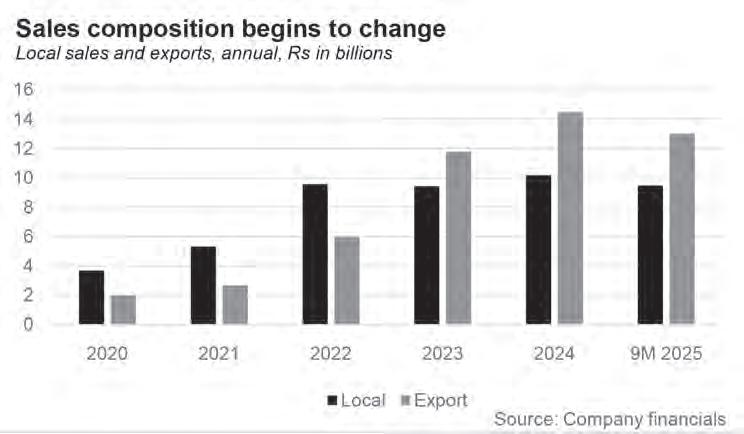
The split between local and export sales tells the bigger story. Domestic sales increased 16% to Rs 10.0 billion from Rs 8.6 billion, but export sales fell to Rs 14.0 billion from Rs 14.5 billion. AKD attributed the decline in exports mainly to the closure of the Afghan border since October 2025. Can volumes were almost flat at 940 million, while capacity utilisation dropped to 82% from 89%.
For most companies, a half-billion-rupee decline in exports would be a bad year-end inconvenience. For PABC, it cuts into the core of the business model. Management told investors that Afghanistan accounts for 80% of the company’s export sales. The earlier reported numbers give a sense of that dependency: in 2024, export sales were Rs 14.5 billion, of which roughly Rs 12 billion came from Afghanistan alone. That means Afghanistan was not a side market. It was the export market.
That is why the border closure matters beyond one year’s earnings. PABC had not only been selling into Afghanistan; it had also planned to deepen its exposure there. Its board has approved a proposed can plant project in Afghanistan with capacity of 1.3 billion cans and estimated cost of US$110 million, subject to regulatory approvals. AKD noted that the timeline for the project remains uncertain.
In ordinary circumstances, the plan would have made commercial sense. PABC already exports heavily to Afghanistan and Central Asia. A manufacturing base in Afghan-
istan would have placed the company closer to one of its main markets, reduced dependence on cross-border movement from Pakistan, and potentially allowed it to serve regional beverage producers with shorter supply lines. But those advantages depend on a minimum level of political and logistical stability. The current environment offers neither.
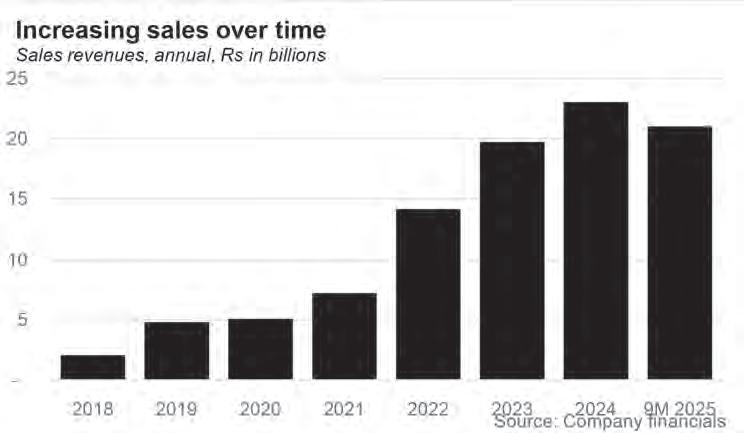
The timing is particularly awkward because PABC has spent the past few years proving that Pakistan can be a serious manufacturing base for beverage cans. Since starting commercial operations in 2017, the company has grown into the main local supplier of aluminium cans for beverage companies in Pakistan. It went public in 2021 and, over the years, expanded sales from around Rs 7 billion at the time of listing to nearly Rs 24 billion in 2025.
The company’s export push was central to that growth. In 2020, local sales were close to Rs 4 billion, while export sales were about Rs 2 billion. By 2024, local sales had reached Rs 10 billion and exports had climbed to Rs 14.5 billion. Even at the nine-month stage in 2025, exports appeared to be moving in the right direction, rising to Rs 13.01 billion from Rs 10.63 billion in the same period of 2024. The full-year number then came in at Rs 14.0 billion, showing how sharply the last quarter changed the picture.
The Afghan disruption has therefore
arrived just as PABC was moving from export success to export expansion. A US$110 million plant is not a marginal decision for a Pakistani listed manufacturer. It is a statement that the company sees long-term growth outside the domestic market. But with the Pakistan-Afghanistan border disrupted and regional tensions unresolved, capital expenditure of that scale is difficult to execute, finance, and justify on a clear timeline.
Management appears to have recognised that risk. AKD said the company is now focusing on alternative markets, particularly Bangladesh, to expand market share. It is also exploring trade routes through the Iran-Pakistan corridor to access Central Asian markets.
That strategy suggests PABC is trying to avoid becoming a one-corridor exporter. The company’s problem is not that it cannot sell cans. It is that too much of its export business depends on the same geography. If one border closes, a profitable export machine suddenly faces excess capacity, lower utilisation, and inventory issues. The earlier company commentary already pointed to slow-moving inventory linked to export market disruptions, along with higher input costs.
The Afghanistan problem is also not PABC’s first encounter with geopolitics. The company sells to major beverage companies, including Coke Pakistan, PepsiCo and Murree Brewery. Its business is therefore tied not
just to beverage demand, but to the fortunes of the brands that fill its cans. Over the past two years, global beverage brands have had to navigate consumer pressure in Pakistan linked to pro-Palestine sentiment. For PABC, the exposure is indirect: it does not sell cola to consumers, but it supplies packaging to companies whose products can be affected by shifts in consumer behaviour.
The financial impact of such boycotts is not separately disclosed in the available company material, and PABC’s 2025 numbers show domestic sales recovering rather than contracting. But the episode is still relevant because it shows the position PABC occupies in the value chain. It is a manufacturing company with industrial assets, imported raw materials, listed shareholders and export ambitions, yet its fortunes can be altered by events far from its factory floor.
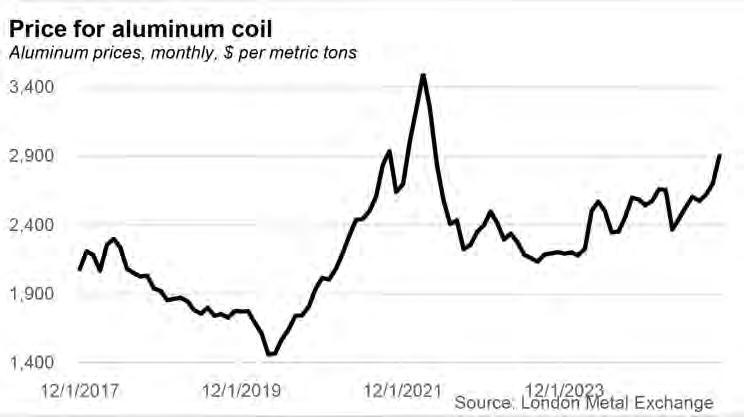
That has become clearer with aluminium itself. The company imports aluminium coils, historically from suppliers including South Korea and China. Its annual commentary has pointed to rising raw material costs, including the impact of China’s removal of processing rebates on aluminium coil exports, which contributed to higher global aluminium prices. For a can manufacturer, aluminium is not one input among many. It is the material around which the entire business is built.
The pressure from raw material costs explains why margins matter more than the topline. PABC sold more locally in 2025 and kept total revenue growing, but lower gross margins reduced earnings. Capacity utilisation also fell, leaving the company with more room in its system than it would like. That is a difficult combination: a business designed for scale facing both cost pressure and export disruption.
Even so, the company’s domestic position remains strong. Pakistan’s beverage
market still has low can penetration compared with comparable markets, according to management’s comments summarised by AKD. The company is therefore trying to increase its domestic share in the beverage market.
That domestic opportunity matters because cans are still not the default packaging format in Pakistan. Carbonated soft drinks, energy drinks, malt beverages and other ready-to-drink products are sold across plastic bottles, glass bottles, cartons and cans. Cans tend to matter more in modern retail, restaurants, events, convenience stores and premium consumption settings. If per capita consumption rises, PABC benefits without needing to rely only on exports.
But the domestic market alone may not absorb the full ambition of the company. PABC has a capacity of around 1.2 billion cans a year and produced 940 million cans in 2025. The proposed Afghan plant, at 1.3 billion cans, would be larger than the existing annual capacity referenced in the earlier company
profile. That proposed project shows how large the company thinks the regional opportunity could be, but also how much the strategy depends on cross-border stability.
The company’s history has been short but eventful. It began commercial operations in 2017, listed in 2021, scaled production, developed relationships with major beverage companies, and built Afghanistan and Central Asia into meaningful export destinations. It also benefited from being the local manufacturer in a market where beverage companies would otherwise be more exposed to imported packaging. That local manufacturing base gives Pakistan’s beverage industry some insulation from international supply disruptions, even when aluminium prices rise.
PABC’s current challenge is that the same export orientation that made it attractive is now the source of volatility. Afghanistan helped the company move beyond Pakistan’s limited can market. Now the Afghan border closure has reduced export sales, lowered utilisation and placed a question mark over the company’s most ambitious investment plan.
For investors, the 2025 results are therefore less about whether PABC can manufacture cans and more about whether it can diversify the markets into which it sells them. The company has a profitable core business, a strong customer list, domestic growth potential and a proven export record. It also has high exposure to one difficult border, imported raw materials, and customers whose brands can be pulled into political sentiment.
That is the paradox at the centre of PABC. It is one of Pakistan’s cleaner manufacturing success stories: a listed industrial company that makes a product used by global and local brands, earns foreign exchange through exports, and has plans to expand regionally. Yet its next phase now depends on factors outside its direct control. The factory can keep
M A Niazi OPINION
The end of the affair?
Pakistan’s IMF EFF approval of another tranche was expected, but with the programme ending in 18 months, what has it delivered and what reforms are still required.
Why keep on going to the IMF? AT PENPOINT
The approval of another tranche of the IMF’s Extended Fund Facility was only to be expected, but now that the end of the programme is only a year-and-a-half away, it might be the right time to contemplate how far the programme has delivered. When Pakistan began the programme in March 2024, it was after it had completed a nine-month Stand-By Arrangement. Though this SBA had been reached with Mian Shahbaz Sharif\s coalition, it carried the country through an extended caretaker period, and into the initial period after the 2024 election. Mian Shehbaz formed a government again, and among its first tasks was the negotiating of an agreement with the IMF for a longer commitment.
The writer is editor of Pakistan Today
It should be understood that the reason Pakistan keeps on having recourse to the IMF is because it keeps having foreign exchange difficulties. The IMF is the lender of last resort, and is meant to provide foreign exchange to countries which are having difficulties paying for their imports.
One reason for foreign exchange difficulties is having to service foreign debt. Pakistan’s foreign debt has reached $138 billion by the end of last year. Not only must it be repaid, but interest must be paid on it. The only way of retiring this debt is to earn foreign exchange by selling goods, services or obtaining remittances from abroad. Well, that is a permanent solution. There is also the expedient of borrowing money to service debt.
That is what borrowing from the IMF means. It is a loan taken because the country needs the foreign exchange to pay its loans.
The next step is government finances. Is the government raising the necessary revenue to pay the State Bank of Pakistan (which holds all foreign exchange) the money to buy the foreign exchange? The government is sorely tempted to print the rupees to buy the dollars, yen, and whatever currency it needs to service that debt. Therefore the IMF has to make sure that the government has the money to buy the requisite foreign exchange. Therefore, the SBP: must be made independent of the government, and the government’s budget has to be so structured that a primary surplus is generated, whereby the total revenue is more than interest payments. It seems to assume that repayments are to be made by borrowing.
There are three types of loans broadly: commercial loans (made by banks, basically because the banks want to make money), project loans (made by development finance institutions, so that projects can be set up, which will generate the income needed to repay the loans) and programme loans (which are made by international finance institutions like the IMF for balance of payments support). The first and second types (especially the second type) are meant to be embezzled, and are essentially political bribes so that senior officials, both permanent and elected, follow policies favorable to the USA, which is the architect of the post-World War II financial system, which revolved around the Bretton woods institutions, like the World Bank and the IMF. The World Bank and Asian Development Bank do programme lending too, but this too is designed to keep borrowers obedient to the USA.
In fact, that ability to embezzle is what keeps officials obedient. The problem is that borrowing countries like Pakistan face difficulties repaying development loans, so they turn to the banks to tide them over. At this point, both officials and bankers (both borrowers and lenders) profit. Left carrying the bag are the ultimate guarantors of the loan, the people of the country, who have to repay the taxes which will repay those loans.
One additional problem is that the projects for which the loans were made are rendered unviable because of the embezzlement, or were never viable in the first place, have been dreamed up merely to provide room for embezzlement. The theory is that the project should result in enhanced revenue, which should enable the repayment of those loans. It need not be direct revenue. A new canal will result in direct increase of revenue from increased abiana (water rate), but the real revenue is supposed to come from increased produce. If farmers do not pay tax on their income, arhtis (brokers) evade them, and so do shopkeepers, where does the government get the wherewithal to repay the loan?
This is not just a problem in Pakistan. It is a problem throughout the Global South. That is where IFIs like the IMF, the World Bank and the Asian Development Bank step in, with programme loans. These are loans meant for balance of payments support. In short, they provide balance of payments support. They lend, so that the country concerned can keep servicing its debt.
In return, they demand that the country be in shape to repay these loans. That’s where the IMF comes in. It works with the local govern-
ment and comes up with a programme designed to ensure that the country’s debt will be serviced. It should be noted that the debt now includes loans from the IFIs, which have replaced the commercial loans and development loans.
It must be remembered that the IFIs are basically banks that want their loans repaid. Therefore they expect a say in how their money is being spent.
However, the IMF is not a guarantee of economic stability. The example of Argentina has been held up, which suffered a disastrous partial default, where it welshed on $80 billion of its debt (though not on its debt to the IMF) in 2018, and which then entered on a $50 billion Stand-By Arrangement. The SBA did not achieve its objectives, it was allowed to expire. To replace it, there came a 30-month Extended Fund Facility IN 2022, of $44 billion. In 2025, there was another loan approved, of $20 billion over four years. Argentina owes more to the IMF than any nation, about $57 billion. Pakistan presently owes about $7.3 billion.
Argentina is frightening for Pakistanis because it has been conceded by the IMF (albeit grudgingly and with caveats) that the 2018 SBA was badly designed. What is to guarantee
that the previous SBA, and the EFF, were not badly designed for Pakistan. In short, what if the IMF gets its economics wrong?
It might seem heretical to say that the IMF doesn’t know its economics, what with the vast number of economists it employs, who have all been to the best institutions of the world? However, the alternative is that the economists know their stuff and get the desired result: dependence.
In Pakistan’s case, it is glaringly obvious. The IMF programme is singularly free of anything contributing to the only way out of Pakistan’s foreign exchange difficulties: more exports. This is either bad economics, or that will come in some future programme. That assumes that this programme does not leave Pakistan able to stay out of another one.
Though Pakistan has well over a year before the end of the current EFF, there is already talk of extending it. That is a way of getting another programme without actually saying so. However, while it will spare the Finance Ministry people from having to think (at present they do not have to come up with a policy), it will probably not solve Pakistan’s forex problems. What will stop Pakistan from going down Argentina’s path? n
What does SBP want with the Bakra Mandi?
SBP first brought cashless initiative to cattle markets during Eid in 2024. This is what banks get out of it
The State Bank of Pakistan wants this year’s Eid ul Adha cattle markets to do more than sell sacrificial animals. It wants them to become temporary digital-payment grounds where buyers, sellers, transporters, fodder suppliers, water vendors and parking operators are pushed, even if briefly, into the formal payment system.
For Eid ul Adha 2026, the central bank has expanded its Go Cashless campaign to 96 cattle markets across the country, up from 54 markets last year. Under the plan, 22 banks will set up camps and kiosks at assigned markets, onboard sellers and service providers, open accounts, deploy QR codes, and support payments through mobile banking apps, branchless banking wallets, Raast-enabled services and QR-based channels. SBP has also allowed temporary relaxations in transaction and account balance limits from May 14 to June 5, 2026, while mobile banking vans, ATMs and cash deposit machines will be deployed where feasible.
On paper, the initiative is about convenience and safety. Buyers do not have to carry large amounts of cash into crowded markets, and sellers can receive payments without having to hold bundles of notes at makeshift stalls. But the more interesting question is what the central bank and banks want from a market that appears, for most of the year, to sit far away from the formal financial system.
The answer lies in the scale of Bakra Mandi. Pakistan’s annual cattle markets remain largely informal, seasonal and only partially measured. There is no official transaction-level map of how much money changes hands in these markets each year, how much is paid in
cash, how much goes to transporters, how much to feed suppliers, or how much is retained by livestock farmers after costs.
The closest estimates come from attempts to work backwards from animals sacrificed and hides collected. The Pakistan Institute of Development Economics estimated the economic impact of Eid ul Adha 2024 at Rs839.2 billion, or around 1% of annual GDP, using Pakistan Tanners Association data on hides and estimates for animal prices, butcher fees, transport costs, hide values and decorative material. It estimated that around 6.8087 million animals were sacrificed in 2024, with animal sales alone accounting for Rs671.7 billion of the total footprint.
That estimate is useful, but it also proves the point. The largest annual livestock retail event in the country is still being measured through indirect proxies. For a financial regulator trying to reduce cash in circulation, cattle markets offer a rare opening. They are informal, high-value, time-bound and crowded with people who may not be regular users of banking channels.
That is why this initiative matters. A sacrificial animal is not a small retail purchase. Even ordinary buyers can spend tens or hundreds of thousands of rupees in one transaction, while traders and middlemen may handle far larger volumes during the Eid season. In a cash-based market, this creates security risks, settlement delays, disputes over payment, and limited visibility for the formal financial system. Digital payments do not eliminate all of those problems, but they create a trail, reduce the need to carry cash, and make it easier for banks to convert temporary market activity into lasting accounts.
For sellers, especially
Source: PIDE
those travelling from smaller cities and rural areas into Karachi, Lahore, Islamabad, Rawalpindi, Faisalabad, Peshawar, Quetta and other urban centres, the cattle market is often a brief window of contact with the banking system. Banks would normally need branches, field staff and sustained rural mobilisation to reach many of these customers. During Eid, the customers come to a concentrated location with a clear commercial need.
For banks, that changes the economics of customer acquisition. A kiosk inside a cattle market can reach sellers, transporters, fodder suppliers and allied service providers who may otherwise remain outside routine bank outreach. SBP’s FY25 review shows that banks were not only opening accounts for cattle sellers in the 2025 campaign, but also for associated service providers such as fodder suppliers, water vendors and transporters. QR codes were generated, laminated and displayed at market locations to enable digital payments.
This is more than a payment experiment. It is an onboarding drive disguised as a seasonal facilitation campaign. The customer who opens an Asaan Digital Account or branchless banking account at a cattle market may use it for one Eid transaction and then return to cash. But the bank has still acquired a customer, registered a phone number, linked a payment identity and created a potential future user of wallets, Raast, remittances, bill payments or merchant services.
SBP appears to understand that a normal banking product may not work in this environment. In 2025, banks used low-KYC options such as Asaan Digital Accounts and branchless banking accounts with simplified requirements.
Source: PIDE
SBP also temporarily relaxed transaction and account balance limits up to Rs5 million, subject to biometric verification and due diligence, to match the unusually high-ticket nature of Eid-related transactions.
That temporary relaxation is important. A cattle market is not the same as a grocery store, and a sacrificial animal payment cannot always fit into everyday wallet limits. If the limit is too low, buyers and sellers will return to cash. If onboarding is too complicated, traders will ignore the kiosk. SBP’s model therefore tries to adjust the digital channel to the market, rather than expecting the market to behave like a regular retail outlet.
The first meaningful test came in 2024, when SBP ran the pilot across 48 cattle markets with 16 participating banks. The initiative was then expanded in 2025 to 54 cattle markets, with 24 banks participating, according to SBP’s Annual Payment Systems Review for FY2024-25.
The increase in usage was sharp. SBP recorded 13,011 transactions worth Rs560 million during Eid ul Adha 2024. In 2025, transactions rose to 64,553, while value climbed to Rs4.656 billion. That meant a 396% increase in transaction count and a 731% increase in transaction value in one year. SBP also cautioned that these figures covered only transactions formally reported to banks, which means actual digital payments for sacrificial animals may have been higher.
The numbers remain small compared with the estimated size of the Eid livestock economy. If PIDE’s 2024 estimate of Rs671.7 billion in animal sales is used as a rough benchmark, even Rs4.656 billion in digitally reported 2025 cattle-market transactions represents only a fraction of total activity. But the direction of travel is what matters for SBP. The campaign is not yet replacing cash in Bakra Mandis. It is testing whether digital payments can survive in one of the most cash-heavy, informal and seasonal markets in the country.
The campaign also sits inside a wider shift in Pakistan’s payment system. SBP’s FY25 review shows that retail payments reached
9.1 billion transactions worth Rs612 trillion during the year, up 38% in volume and 12% in value from the previous year. Digital channels accounted for more than 88% of retail payment transactions, compared with 78% in FY23 and 85% in FY24.
Mobile banking apps, branchless banking apps and e-money wallet apps are driving much of that shift. SBP said these apps processed more than 6.2 billion transactions in FY25, showing 52% growth in volume, while internet banking portals processed 0.3 billion payments and grew 33% year-on-year. Raast had processed 1.9 billion transactions worth Rs44.3 trillion since launch through June 2025, while QR-enabled merchants more than doubled from 516,317 to 1.092 million during the year.
The cattle-market campaign is therefore not an isolated public-service activity. It is part of the same digital rails strategy. Raast gives banks and wallets a low-cost instant payment backbone. QR acceptance reduces reliance on point-of-sale machines. Branchless banking and Asaan accounts lower onboarding friction. Temporary limit relaxations make the system usable for high-value seasonal transactions. The cattle market becomes a stress test for all of this.
There is also a policy reason. SBP’s annual review describes the cattle-market initiative as aligned with its objective of reducing currency in circulation. That objective matters because high cash usage increases printing and handling costs, weakens transaction visibility, and keeps large parts of economic activity outside formal financial channels. Eid cattle markets are not the only source of cash intensity in Pakistan, but they are visible, concentrated and politically easier to target than many other informal markets.
Source: PIDE
For buyers, the appeal is straightforward. They can avoid carrying large cash amounts into crowded market spaces, use mobile apps or wallets, and settle payments through QR codes or Raast-enabled services. For sellers, the benefit is less automatic. Many sellers may still prefer cash because they need immediate liquidity for transport, feed, labour and onward payments. That is why cash deposit machines and mobile banking vans matter.
Source: SBP Annual Payment Systems Review 2024-25
They give banks a way to manage the transition rather than assuming that sellers will move entirely into account-based money overnight.
For banks, the upside is not just transaction fee income. In fact, the bigger opportunity is data and relationship-building. A livestock seller who receives digital payments generates account activity. A transporter who is onboarded can become a merchant. A fodder supplier using QR payments can be cross-sold to other financial services. A buyer using a bank app at a cattle market becomes more comfortable using that app for larger transactions. For a sector that often competes for the same salaried urban customers, Eid markets create access to a different pool.
The 2026 expansion shows SBP is now moving from pilot to scale. Coverage has jumped from 48 markets in 2024 to 54 in 2025 and now 96 in 2026. The current campaign also keeps the same operating logic: temporary bank presence, QR codes, account opening, mobile banking vans, ATMs, cash deposit machines and higher transaction limits during the Eid period.
There is one notable detail. SBP’s FY25 review recorded 24 participating banks in 2025, while the 2026 campaign involves 22 participating banks. That means market coverage has expanded even as the reported number of participating banks is slightly lower. The test this year will therefore be operational: whether fewer banks can cover more markets while sustaining account opening, payment facilitation and seller onboarding at peak trading hours.
The more difficult test will come after Eid. A campaign can generate transactions when SBP, banks and market administrations are actively pushing it. The real measure is whether sellers continue using the accounts once they return home, whether QR codes remain useful beyond Eid, and whether buyers continue to use digital channels for high-value informal purchases.
For now, SBP has found a clever target. The Bakra Mandi is messy, seasonal, cashheavy and difficult to measure. That is exactly why it is valuable. If digital payments can work there, even partially, they can work in other informal markets. And if banks can acquire customers in the chaos of Eid livestock trading, they may discover that the country’s most informal markets are also among its most attractive financial frontiers. n
OPINION
Yousuf Nazar
Pakistan’s solar boom and the state that can’t keep up
What makes Pakistan’s solar boom truly remarkable is not simply the sheer scale of the panels now blanketing rooftops and fields. It is that this revolution has unfolded almost entirely outside the state’s control — and almost no one has yet connected the deeper consequences.
While most coverage stops at the numbers or the spectacle, this transition reveals something far more profound: a massive, bottom-up energy shift that is simultaneously a story of technological leapfrogging and institutional erosion. It is quietly stabilising the economy beneath the surface, widening the gap between those who can escape the failing grid and those who cannot, and exposing how citizens have built a parallel energy system because the official one stopped making sense. These are the aspects that have gone largely unexamined — until now.
Pakistan’s solar boom has become impossible to ignore. Panels blanket factory rooftops in Faisalabad, gleam from homes across Karachi and Lahore, and power tube wells stretching deep into Punjab and Sindh. Increasingly, this revolution is unfolding beyond the state’s gaze altogether. Yet the deeper story is not
The writer is the former head of Citigroup’s emerging markets investments
simply about renewable energy. It is about what happens when millions of citizens and businesses quietly construct an alternative energy system because the official one no longer makes economic sense.
Pakistan is witnessing one of the fastest bottom-up energy transitions anywhere in the developing world. But this transformation is unfolding in a fragmented, largely ungoverned fashion—inside a power sector already crippled by circular debt, soaring tariffs, and institutional paralysis. Public debate ricochets between wild exaggeration and outright denial. One side declares Pakistan a solar-powered economy in the making. The other insists the boom is overstated. Both miss the central truth.
The transition is real. The numbers are enormous. But the implications are far more complex—and far more consequential— than either triumphalism or scepticism allows.
Even mainstream international reporting now converges on the same conclusion. Reuters, The Guardian, The Washington Post, PV Magazine, and specialist analysts alike describe a massive, consumer-driven solar surge fuelled by rooftop diffusion, cheap Chinese imports, and collapsing daytime grid demand. What remains uncertain is not whether the transition is happening, but exactly how large it has already become—and how little of it the state can reliably measure.
The data problem
Part of the confusion starts with the data itself. Pakistan’s 2023 census recorded roughly 241 million people and around 38.3 million households. By 2026, demographic estimates put the national total at 40–42 million households. That alone caps some of the more breathless claims now circulating.
Any assertion that a third or more of households are meaningfully solar-powered would require a wholesale shift in electricity consumption patterns that simply does not show up in grid load profiles, billing records, or utility sales trends.
The most credible household-level evidence comes from Pakistan’s Household Integrated Economic Survey (HIES 2024–25), conducted across more than 32,000 households nationwide. It indicates that roughly 15–18 percent of households now use some form of solar lighting or electricity. On a base of 40–42 million households, that translates to roughly 7–7.5 million households with partial solar use.
Significant? Absolutely. A systemic replacement of the grid? Not yet. The problem is definitional. A “solar household” is not a uniform category. It ranges from a rural
family with a modest 100-watt panel powering lights and phone chargers to affluent urban homes running sophisticated hybrid rooftop systems complete with batteries, air-conditioning, and sometimes net-metered exports back to the grid. Lumping them together creates the illusion of a uniform revolution where none exists.
Official data only captures the visible, formal layer of the market. By April 2025, formally registered net-metered solar capacity had crossed 5.3 GW, according to Renewables First. But even that figure is often misunderstood: it includes factories, commercial buildings, schools, hospitals, agricultural installations, and large affluent homes—not merely ordinary residential rooftops.
The far larger transition is happening entirely outside official registration systems. Independent estimates from TransitionZero, Renewables First, Ember, and PRIED suggest Pakistan’s actual installed solar capacity likely exceeded 27 GW by late 2025 and may plausibly have crossed 30 GW. Some place it even higher. In a country whose formal grid-connected generation capacity stands at only around 45–46 GW, this is already structurally transformative.
Yet another major statistical distortion clouds the picture: imports are routinely mistaken for installations. Pakistan imported around 54 GW worth of solar modules from China between 2021 and April 2026, making it one of the world’s largest buyers of Chinese panels relative to the size of its economy. Some commentators casually assume every imported panel is already humming on a rooftop somewhere. That is incorrect.
Amount of panels imported do not reflect utilised capacity
Imports are not installations. Some panels sit in warehouses. Some remain unsold. Some are deployed gradually. Some move through informal secondary markets. Some may have been damaged, delayed, or caught up in speculative trading.
And this is where the story grows more complicated.
Over the past two years, Pakistan’s Federal Board of Revenue, Customs Post Clearance Audit, and related agencies uncovered multiple alleged cases involving shell import companies, over-invoicing schemes, suspicious foreign transfers, and possible trade-based money laundering linked to solar imports. Authorities reportedly identified instances where declared import values far exceeded prevailing international prices.
At the same time, there is little credible evidence that tens of gigawatts of panels were physically smuggled out of Pakistan or systematically re-exported. Most serious analysts still conclude that the overwhelming majority of imported panels ultimately entered Pakistan’s domestic market.
The more plausible explanation for the import-installation gap is warehousing, phased deployment, undercounting, informal distribution, and financial distortion rather than physical diversion. And the evidence of a genuine domestic installation boom remains overwhelming.
Rooftop systems now dot urban Pakistan. Hybrid inverter sales have surged. Farmers are increasingly turning to solar-powered tube wells. Most tellingly, daytime electricity demand from the national grid has weakened sharply—even as total electricity availability appears to be rising.
That last point may be the most important—and least understood—part of the story. Official grid data paints a picture of a shrinking electricity economy. Electricity sold through the national grid fell from around 124.6 terawatt-hours in FY2021–22 to roughly 113 terawatt-hours in FY2022–23 and then further to around 110 terawatt-hours in FY2023–24. On the surface, this looks like declining consumption.
But that interpretation is now deeply misleading—because the grid no longer captures the full energy picture. The missing piece is distributed solar generation operating behind the meter: rooftop systems, industrial captive installations, agricultural tube wells, hybrid setups, and off-grid networks that increasingly bypass traditional utility accounting. Once those are factored in, total electricity consumption across Pakistan appears to have risen substantially rather than declined.
Independent estimates now suggest Pakistan’s total electricity consumption from all sources may have reached roughly 150–160 terawatt-hours in 2025, compared to roughly 120–125 terawatt-hours only a few years earlier. Solar generation alone is estimated to have surged from under 8 terawatt-hours in 2022 to well over 35 terawatt-hours by 2025.This is a remarkable and underappreciated shift.
Pakistan is not consuming less electricity. It is consuming electricity differently. The state sees falling grid demand and reads weakness. What is actually happening is mass decentralisation. Millions of units of generation are migrating outside the formal accounting architecture of the power sector. Electricity is increasingly being self-generated and self-consumed during daylight hours, displacing expensive grid purchases, imported fuels, and diesel generation without ever appearing in utility sales data.
That distinction matters enormously—because it fundamentally changes how Pakistan’s economic trajectory should be read.
The solar revolution has undeniably improved economic resilience. Factories facing some of Asia’s highest industrial electricity tariffs have turned to rooftop systems simply to survive. Commercial users have reduced dependence on unreliable and expensive grid supply. Farmers using solar-powered tube wells have dramatically lowered irrigation costs. Households battered by relentless tariff hikes have clawed back whatever energy independence they can afford.
In many sectors, solar has ceased to be an environmental choice. It has become an economic survival strategy. Yet despite this massive increase in available electricity, Pakistan has not seen a corresponding surge in exports or broad-based agricultural expansion. That apparent contradiction has puzzled observers who expect energy abundance to automatically ignite rapid growth.
But energy is an enabler of growth, not a substitute for the rest of the growth equation. Pakistan’s export sector makes the point sharply. Textile manufacturers and other industrial exporters have gained materially from solar adoption. Lower daytime electricity costs and fewer outages have improved margins and production stability.
Yet the solar dividend has not triggered an export boom—because Pakistan’s constraints reach far beyond electricity. Global demand remains weak and fiercely competitive. Financing costs are punitive. Logistics and trade frictions remain severe. Industrial upgrading is limited. Political instability continues to deter long-term investment.
Solar lowers operating costs. It does not create export orders.
The same pattern holds in agriculture. Solar-powered irrigation has transformed rural energy economics. Farmers who once depended on expensive diesel or erratic electricity now enjoy significantly cheaper daytime pumping, improving cash flow and shielding them from fuel price shocks.
But aggregate agricultural growth remains modest—because deeper structural constraints endure: water stress, climate volatility, poor seed quality, fragmented landholdings, weak credit systems, and inefficient markets. Cheap electricity can pump more water. It cannot, by itself, solve agricultural productivity. Indeed, the agricultural solar boom may be creating new vulnerabilities. Pakistan is
already among the world’s most water-stressed countries. Making groundwater extraction dramatically cheaper—without serious water governance—risks accelerating aquifer depletion across major farming regions.
This broader mismatch between rising electricity availability and modest economic expansion reveals something profound about Pakistan’s current condition. For decades, electricity shortages formed a hard ceiling on growth. Load shedding crippled factories. Diesel costs eroded competitiveness. Power outages disrupted commerce and agriculture. The economy repeatedly slammed into an energy wall.
Solar has begun to dismantle that ceiling. But removing a binding constraint does not automatically forge a high-growth economy. It simply halts deeper deterioration and opens the possibility of future expansion—if complementary reforms follow. That is why the most important effect of Pakistan’s solar boom may currently be invisible in headline statistics.
The additional electricity is not yet producing dramatic export surges or spectacular GDP acceleration. Instead, it is quietly stabilising the economy from below. It is reducing fuel imports and lowering exposure to oil and LNG price shocks.
The geopolitical significance of this became clearer during the Iran war and the resulting disruption across Middle Eastern energy markets. Pakistan remains deeply exposed to imported fuel shocks because most of its oil and LNG imports transit through the Strait of Hormuz. Yet analysts increasingly concluded the crisis would have been materially worse without the preceding solar boom.
Distributed solar had already reduced daytime demand for LNG-fired generation, weakened dependence on imported fuels, and lowered pressure on foreign-exchange reserves. Some estimates suggest Pakistan’s solar expansion may already have avoided roughly $12 billion in oil and gas imports over recent years. In a country repeatedly destabilised by external financing crises and fuel-import shocks, that is strategically significant.
Solar has therefore evolved beyond a simple electricity story. It has become a partial hedge against geopolitical risk. Pakistan remains vulnerable to oil and LNG disruptions, as the Iran crisis demonstrated. But the rapid spread of distributed solar helped cushion the blow, reducing emergency fuel requirements and softening what could otherwise have become a far deeper energy and balance-of-payments crisis.
It is helping firms stay operational despite tariff pressures. It is cushioning households against a failing grid. It is preventing economic contraction from becoming significantly worse. In effect, solar is acting as a distributed
economic shock absorber. This helps explain one of the great paradoxes now unfolding inside Pakistan’s power sector. The country is simultaneously experiencing a genuine energy expansion and a worsening utility-sector financial crisis.
The reason lies in the very structure
of Pakistan’s electricity
system.
The grid was designed around a centralised model in which large power plants generate electricity that consumers purchase through distribution companies. But the financial architecture depends heavily on fixed capacity payments owed to generators regardless of actual electricity consumption.
As affluent consumers and businesses partially defect from the grid through solar adoption, utility sales decline while fixed costs remain. Those costs are then spread across fewer paying consumers, driving tariffs even higher and encouraging further defections.
It is a classic utility death spiral unfolding at extraordinary speed. The burden falls disproportionately on those least able to escape. Wealthier households and corporations can invest in solar systems and batteries that reduce dependence on the grid. Poorer consumers cannot. They remain fully exposed to rising fixed charges, circular debt surcharges, and tariff increases embedded in electricity bills.
Pakistan is gradually evolving toward a two-tier energy system: one increasingly decentralised and partially self-sufficient for those with capital, and another increasingly expensive and fragile for those trapped inside the traditional grid.
This is not merely an energy story. It is becoming a social and fiscal story. Battery storage could intensify the transition further. Imports of lithium-ion battery packs, hybrid inverters, and energy-storage systems have risen sharply alongside rooftop solar adoption, reflecting growing demand for evening self-consumption rather than daytime exports back into the grid. Several Pakistani firms have already begun assembling lithium battery packs locally, while Chinese suppliers and domestic industrial groups are exploring assembly partnerships tied to the rapidly expanding solar market.
This matters because falling battery costs could fundamentally alter the economics of distributed energy. Today, many solar users still rely on the grid after sunset. But as storage becomes cheaper, households and businesses will increasingly be able to extend solar self-sufficiency deep into evening peak
hours. At that point, distributed solar stops being supplemental and begins evolving toward partial grid independence.
The shift is already influencing regulatory tensions. Lower proposed buyback rates for exported solar electricity increasingly strengthen the logic of storing electricity rather than selling it back to the grid. In effect, efforts to protect utility revenues may unintentionally accelerate the transition toward battery-backed self-consumption and deeper decentralisation of the energy system.
The policy environment has therefore become increasingly conflicted. The government and regulators argue that generous net-metering arrangements shift financial burdens onto non-solar consumers. Proposed moves toward lower buyback rates and net-billing structures triggered strong backlash because many consumers invested under earlier rules.
The politics are combustible because many Pakistanis increasingly view the state as penalising citizens for solving an energy crisis the government itself failed to manage. And underneath all of this lies perhaps the most important issue of all: Pakistan’s solar revolution is unfolding faster than the country’s institutions can understand it.
Pakistan’s institutions still lack a coherent national accounting framework for distributed energy. Imports, installations, generation, and consumption are tracked separately—if they are tracked at all. DISCOs monitor formal net-metered users. Customs track imports. Household surveys estimate adoption patterns. Independent analysts reconstruct capacity indirectly.
No institution integrates these into a coherent national energy picture. That informational vacuum is becoming a strategic risk because fuel imports, tariff design, transmission planning, grid balancing, and demand forecasting all depend on accurate electricity data. Pakistan’s solar revolution therefore tells two stories simultaneously.
One is a remarkable story of technological leapfrogging, entrepreneurial adaptation, and social resilience. Millions of ordinary Pakistanis executed a massive energy transition without waiting for the state. The other is a story of institutional erosion. Citizens increasingly build parallel energy infrastructure because confidence in the formal electricity system has weakened so profoundly.
Both stories are true.
And that is why Pakistan’s solar boom may ultimately become one of the defining economic stories of the decade—not because it demonstrates the success of the state, but because it reveals what societies do when the formal system stops providing reliable and affordable power, and people begin constructing an alternative energy order from below. n
Options trading is coming to the PSX
The derivatives market is growing and options can provide another investment opportunity. Just what are they and how do they work?
By Zain Naeem
Derivatives trading is not new to the stock exchange. In the past, the market has introduced standardized contracts for deliverable and cash settled futures which have seen interest from the investors as it provides a different risk profile and return compared to deliverable ready market investment. As the exchange looks to broaden the products being offered, single stock options seem to be the next investment avenue being considered.
Since June 2021, the Pakistan Stock Exchange has been in talks with the stakeholders of the market to introduce a regulatory framework governing the single stock options contracts market. The consultations are being conducted under Section 7 of the Securities Act 2015 which would allow single stock options to be introduced and traded on the market.
A week ago, the fifth session of the talks was carried out to design the mechanism ac-
cording to which trading would be conducted.
For decades, there has been an understanding that the stock market is primarily driven by traditional equity investment, speculative and risky trading where individuals and corporations carry out their investments. These investments are impacted by the financial health of the companies and the macroeconomic shifts experienced by the country. This traditional understanding of trading meant that investment was on deliverable basis as the investor would get to own the asset.
As the capital markets of the country mature, there is a realization that investors want different profiles or risks which allows them to hedge their exposure and only pay for the part of the product which they feel is providing them the proper hedge. This also means that they are only willing to pay for the risk that they want and are willing to forgo complete exposure to a financial instrument. This is where derivatives are used. Just like the futures market, the financial instruments being used in an option market has its value tied to an underlying asset. As the value of the
asset moves, so does the price of the derivative product.
A future contract is a promise or a commitment which is being made by the buyer that they will buy the stock at a future date for a negotiated price right now. As the date of maturity of the contract comes near, the price of the future contract will move in lock step to the underlying asset. The investor has not bought the share of the company but has made a promise that he will buy the share in the future.
This means that they have not paid the full amount of investment in the present and will only do so in the future. Before the time comes, the investor can decide to square up his position and sell the commitment to someone else which will remove him from the equation. If he chooses to fulfil the commitment, he can pay for the investment at the date of settlement and acquire the shares.
Options are also derivative contracts which have their value tied to an underlying asset. They differ from futures as they give an option or choice to the buyer to buy the shares
With the stock futures market doing well, there is no doubt single stock options will not work if designed carefully. We have seen the Options market developed and working fine in India. The main challenge remains overall share turnover which at times fall in Pakistan during economic slowdown
Mohammed Sohail, Chief Executive Officer at Topline Securities
at a later date at a predetermined price which is called the strike price. In order to allow them to do so, they pay an option premium to a seller who is selling the future in the market. For this premium, they gain access to exercise this option at a later date. Suppose that the investor buys an option for Rs 10 on the 1st of January where he can buy the share of PSO for Rs 500 by the end of the month. The buy does so expecting the price to rise. The seller of the option is considering the opposite side and expects the price to fall.
At the end of the month, the buyer has two options. Either the share price would be trading at Rs 525 or at Rs 475. In case it is above Rs 500, the buyer would exercise the call, buy the shares and then sell them for a profit. In case the price is lower, he would forgo his option premium and not exercise the option. In one case, he earns a profit while in the other he loses only the option premium.
This is where the risk and return profile has changed. Rather than buying the share for Rs 500 at the start of the month, the investor has only paid out Rs 10 for the option. Similarly, rather than earning Rs 25 in case of profit or losing Rs 25 in case of a loss, the investor can get an upside profit of Rs 15 in case of profit and lose only Rs 10 in the case of a loss. There is even a chance that the share price can cross Rs 525 leading to a greater profit. The buyer stands to earn an unlimited upside and has created a situation where their downside has been limited.
This is the plus point of a product like an option where investors can invest in the niche that appeals to them rather than go for the vanilla choice that everyone else is taking. There is a flexibility that is provided based on the properties of each financial product and having a wide array of these products only adds to the depth and breadth of the market.
Market seeking depth
One of the biggest advantages of introducing options trading into the market is that it can transform the financial markets that are operating
in the country. One of the biggest hurdles that is experienced by many of the investors is that there is a lack of liquidity depth in the market which means that there is little transparency and price discovery available. As the number of active investors is low, many of the stocks trading see low volumes and activity.
The lack of liquidity is attributed to the sponsors and owners of the company who want to hold a majority share in their beloved company as they do not want to lose control over what they have built. This is the reason why free float for many of the companies is so low. Adding a layer of derivatives on top of that means that trading can be carried out without impacting the volumes of the underlying shares.
Another aspect that will be added would be sophisticated and international investors who want to build a hedging strategy around these options which can work to limit their downside or upside risk. Options trading can be used in a manner which allows investors to create a trading position where they lock in a small profit based on their holdings and get a fixed return from the market by limiting their downside and upside risk. The tools used for valuation of options are complex and required assumptions to be carried out. This would mean that these instruments would appeal to specialized investors who would want to enter the market accordingly.
One of the biggest weaknesses that is seen in Pakistan’s equity market is that there are a few power brokers who are able to manipulate the market due to low participation rates and limited diversification. Due to the financial muscle of these giants, the market is at their mercy as they set the agenda for the market on a daily basis.
Options provide a democratization of sorts by bringing in more investors into the foray where they are able to stamp their own authority. If they feel that the underlying asset is being manipulated, they can trade the arbitrage opportunity available in the derivative market and bring equilibrium that was not there. Through the strategic use of the options, the investor can hedge his market risk and
protect his portfolio.
The popularity of this instrument can be gauged from the fact that New York Stock Exchange, Nasdaq and India’s National Stock Exchange have derivative trading volumes which exceed cash equity turnover.
Mohammed Sohail, Chief Executive Officer at Topline Securities states that “With the stock futures market doing well, there is no doubt single stock options will not work if designed carefully. We have seen the Options market developed and working fine in India. The main challenge remains overall share turnover which at times fall in Pakistan during economic slowdown.”
Yousuf Farooq, Director research at Chase Securities, feels that “(t)he introduction of options at the Pakistan Stock Exchange can be a very positive development, provided it is done gradually and with strong risk controls. Options add depth to a market because they allow investors to hedge portfolios, manage volatility, improve price discovery and create more sophisticated trading strategies. For institutional investors in particular, this can make PSX a more attractive and mature market.”
He gives caution to this sentiment by adding the caveat that “(h)owever, options are also leveraged instruments, so investor education, proper margin, position limits, market-maker participation and strong surveillance will be critical. Pakistan’s market is ready for options at an institutional and high-net-worth level, but retail participation should be introduced carefully and only after proper awareness. A phased launch, starting with highly liquid index options or a small basket of liquid blue-chip stocks, would be the right approach.
“If implemented properly, options can improve liquidity, attract new participants and bring PSX closer to global market standards. But if treated merely as another speculative product, they can increase risk for uninformed investors. The key is not just launching options, but launching them responsibly.” opines Farooq.
The introduction of options at the Pakistan Stock Exchange can be a very positive development, provided it is done gradually and with strong risk controls. Options add depth to a market because they allow investors to hedge portfolios, manage volatility, improve price discovery and create more sophisticated trading strategies. For institutional investors in particular, this can make PSX a more attractive and mature market
Yousuf Farooq, Director research at Chase Securities
The value of the derivatives
The stock market has always experienced a roller coaster ride when it comes to interest seen in it by investors. When the market is going through a rally, investors start to pour in investment before the inevitable crash that takes place. As their portfolios lose all their value, investors leave the market never to return until the next boom. The recent rally in the market has seen a similar pattern. What has changed this time round is that the market has been able to sustain the rally for a prolonged period of time and there is a social buzz around the rally. Finfluencers are also bringing more investors to the market which is why the market is seeing fresh investors registering in the market in droves. For options to be introduced now will only increase the inflow of these investors in the market. Coupled with the digital transformation, young retail investors want to earn their own profits in the financial markets. With the use of online brokerage accounts, mobile trading platforms and changing investor expectations, the market seems primed for new investment options. There is already an interest in the youth to go towards cryptocurrency, leveraged trading and international forex markets. The goal is to bring them to the formalized exchanges where they have higher protection against fraud and intrinsic volatility.
With that being said, there are still risks that are associated with derivatives trading which have to be accounted for as well. One of the biggest risks is that the derivatives market has to be kept in check and regulated properly. A poorly regulated options market can become a risk to the market by itself. Due to the leverage and complexity inherent in the market, a system of checks and balances has to be put into place in order to protect the market from itself. There is also a need
for the investors to understand the product completely about losses related to time decay, volatility risk, margin calls and complex price dynamics which can impact their capital and erase it all in a matter of minutes.
Mechanism devised for the Pakistani market
The use of options can be varied and expansive in nature. Due to the vastness of its application, there need to be certain guard rails that need to be put into place in relation to the market to make sure that an introductory framework has been put into place before the variety of options being offered can be expanded.
The options being introduced and discussed would be European in nature and will be for single stock only. In international markets, both European and American options are used and options can be for indexes, stocks and even commodities. In Pakistan, the initial market will only see European options for single stocks. This means that the option can only be exercised at the expiration of the contract whereas American options can be exercised at any time from the start of the contract to its expiration.
The mode of settlement for these contracts would be physical settlement, whereby the buyer or seller would have to settle the trade with an exchange of shares and funds.
The role of the Pakistan Stock Exchange would be to standardize the options which would allow them to be traded easily. This role is important as it allows investors to know all the terms and conditions attached to the contract rather than having bespoke contracts where the terms are tailored by the buyer or seller.
All contracts will have a contract maturity of 90 days and the first day of trading for any contract would be after the last Friday of a calendar month as the expiry of each contract
would be the last Friday of the expiry month. A standard contract would represent 500 shares or any other quantity set by the exchange. This provision has been set to make sure the lot sizes coincide with the prices so that no lot size becomes too large to discourage investment.
To encourage activity in a contract, the stock exchange would open 7 contracts simultaneously. 3 of the contracts would be in the money, 3 would be out of the money and one would be in the money. What this means is that if the strike price for a stock is determined to be Rs 10, 3 contracts would be opened which would be below Rs 10. A contract being in the money means that if the contract expired today, it would be earning a profit or would be in the money. Similarly, out of the money means any contract that would lead to a loss if it was expiring today. At the money is a contract which is in the middle of these two.
As the capital markets of the country mature, there is an increase in the number of investors and IPO issues coming to the market. These are good signs that need to be appreciated, however, this leads to the capital markets being used for a very narrow application. Financial products like derivatives allow investors to use the markets to pay for the risk they feel they are exposed to and earn a return on that. In this manner, capital markets become like supermarkets where investors can pick and choose what they want.
Bond investors are willing to invest in return of a fixed return. Equity investors are aware of the fact that they can earn an abnormal profit, however, they can lose out on their capital in the investment as well. Mutual fund investors give over the power of the financial decision making to fund managers who charge a fee for it. Similar to this, option investors only want a limited exposure to a stock for which they are willing to earn or lose a certain amount as well. Development of such markets and building depth into them will lead to more investors coming in and broadening the investor base. n
Darnomics not to be run by Dar, clarifies finance ministry
By Profit
The Ministry of Finance said on Thursday that a media report claiming Deputy Prime Minister and Foreign Minister Ishaq Dar had been handed the budget-making process was “misleading” and “factually incorrect”.
The clarification came after a report published by The Express Tribune said the government had “handed over the responsibility of making the new budget to Dar after it found the initial work below par”.
“There is absolutely no reason to assume that the policy of Darnomics is
being run directly by Dar,” said a ministry spokesperson at the Press Information Department in Islamabad.
“The honourable foreign minister, who is also the deputy prime minister, will have no role in policy making regarding a policy of his making,” said the spokesperson.
“Yes, the deputy PM did chair a meeting of the newly formed committee to deliberate on tax policy proposals for the upcoming budget, as per a statement from his own office, but that does not mean what it means,” she further clarified, while answering a question.
“Finance Minister Aurangzeb is firmly in the saddle and is taking instructions from no one except the IMF…., I mean the Prime Minister. Which, by extension, yes, also means his deputy,” she said.
Economist Dr Saleem Khan, when speaking to Profit, said that Darnomics, in its actual sense, is a thing of the past, whether or not Dar is doing it.
“But only because they don’t have enough dollars to throw at the market to buoy up the rupee,” he said. “The rest, like not being innovative about meaningful expansions of the tax base and more external borrowings, that all will remain as is.”