
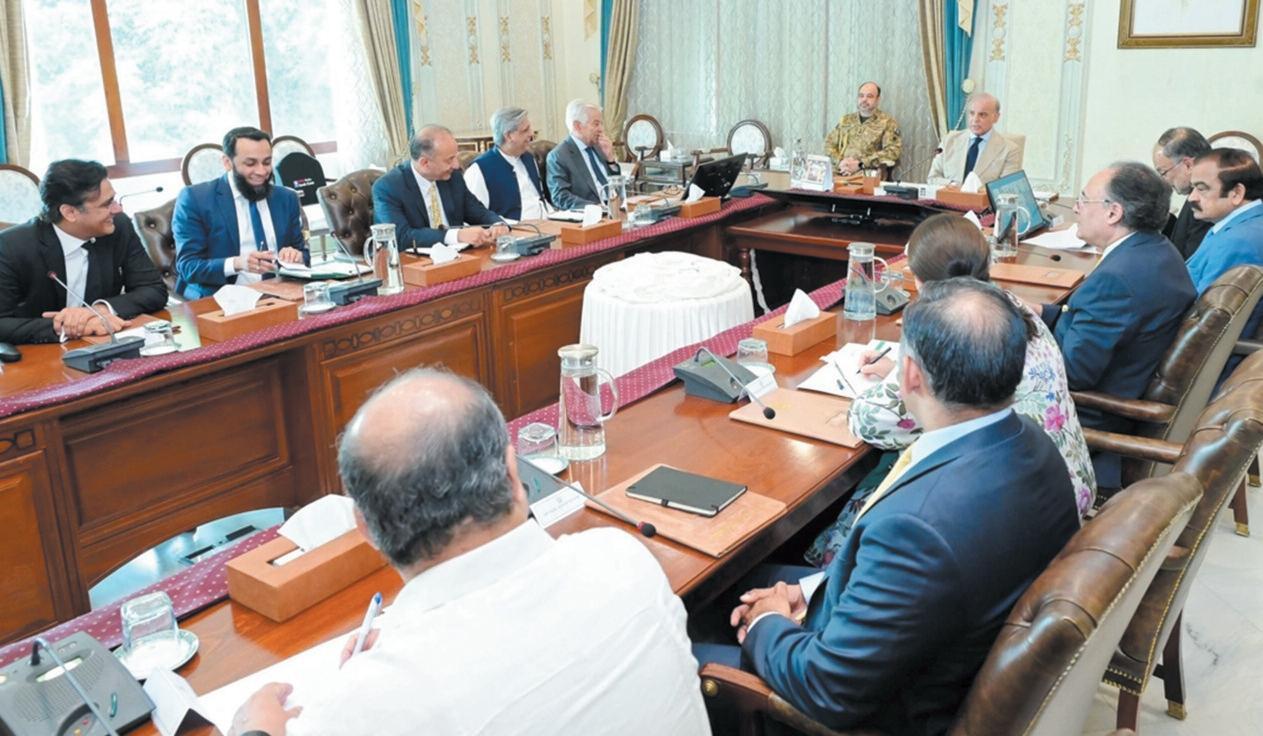
PM orders nationwide Monsoon eMergency Pl an as flood risks looM
g HIGHLIGHTS RS330B WATER INFRA STRUCTURE ALLOCATION TO STRENGTHEN CLIMATE RESILIENCE AND WATER SECURITY
g ORDERS CLIMATE, NDMA CHIEFS TO A SSESS READINESS THROUGH VISITS TO PROVINCES, AJK AND GB
g DIRECTS ADVANCE ARRANGEMENTS FOR EMERGENCY RELIEF FUND AHEAD OF MONSOON
g NDMA WARNS OF PROLONGED HEATWAVES, ABOVE-NORMAL JULY RAINFALL, HEIGHTENED FLOOD THREAT
PM fast-tracks nationwide danish schools, terMs education initiatives investMent in Pakistan’s future
and
cials of the relevant departments Emphasising transparency the prime minister said appointments of teaching faculty and other staff at both Danish Schools and Danish University must be made strictly on merit He also appreciated the Federal Ministry of Federal Education and Professional Training for the pace of construction
on the
Schools project During the meeting officials briefed the prime minister on the progress of 27 Danish Schools under construction in
Pakhtunkhwa Sindh Balochistan Gilgit-Baltistan Azad Jammu and Kashmir and Islamabad, as well as on the construction of Danish University in the federal capital
Pakistan, China enter new phase of CPEC cooperation: Dar
e n t Deputy Prime Minister and Foreign Minister Ishaq Dar on Wednesday said Pakistan and China were entering a new phase of strategic economic cooperation under the China-Pakistan Economic Corridor (CPEC) 2 0 with the next stage of the flagship initiative focusing on industrialisation agriculture information technology mining minerals and human resource development Addressing a reception hosted by the Chinese Embassy to mark the 105th anniversary of the founding of the Communist Party of China (CPC) Dar congratulated the Chinese leadership and people on the occasion and paid tribute to the CPC s role in transforming China into a global economic powerhouse He reaffirmed that the Pakistan-China AllWeather Strategic Cooperative Partnership remains the cornerstone of Pakistan s foreign policy and national development agenda, describing bilateral ties as a model of mutual trust, respect and win-win cooperation He said China's extraordinary economic achievements and its success in lifting hundreds of millions of people out of poverty stand among the greatest development accomplishments in modern history, benefiting not only the Chinese people but also contributing significantly to global prosperity through the principles of shared development and building a community with a shared future for mankind

Highlighting the enduring friendship between Islamabad and Beijing, Dar said Pakistan-China relations had grown stronger over successive generations and continued to enjoy broad political consensus in both countries He said the two countries have consistently supported each other s sovereignty, territorial integrity and core national interests, making their partnership
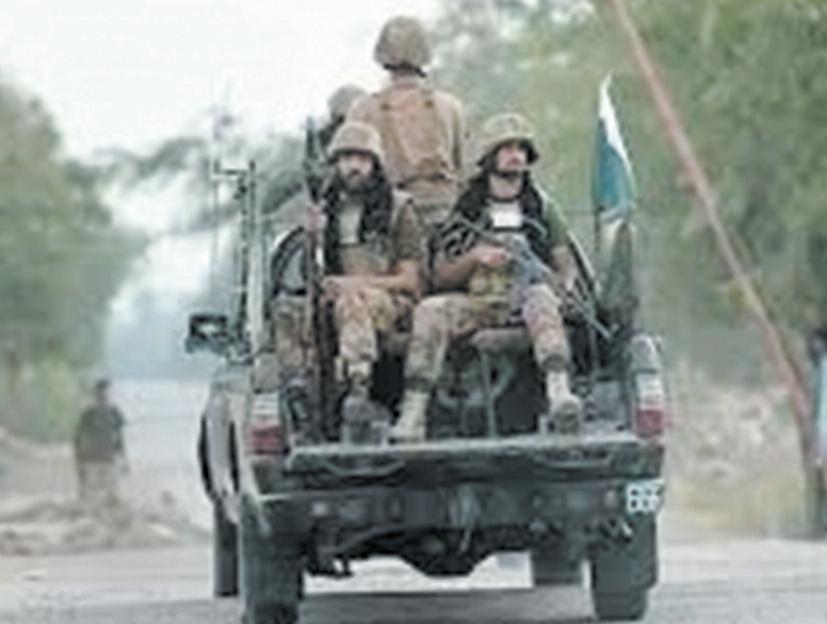
injuries among security personnel declined by 43 per cent, civilian injuries by 57 per cent, and militant injuries by 67 per cent over the previous month PICSS further reported a substantial reduction in kidnappings, with 27 abduction cases recorded in June compared with 54 in May, representing a 50 per cent decline Security agencies also arrested at least 27 suspected terrorists during various operations across the country The report noted that the number of terrorist attacks fell from 128 in May to 108 in June, marking an overall reduction of approximately 16 per cent Despite the downward trend, the think tank warned that militant organisations continue to demonstrate their ability to launch sophisticated attacks June
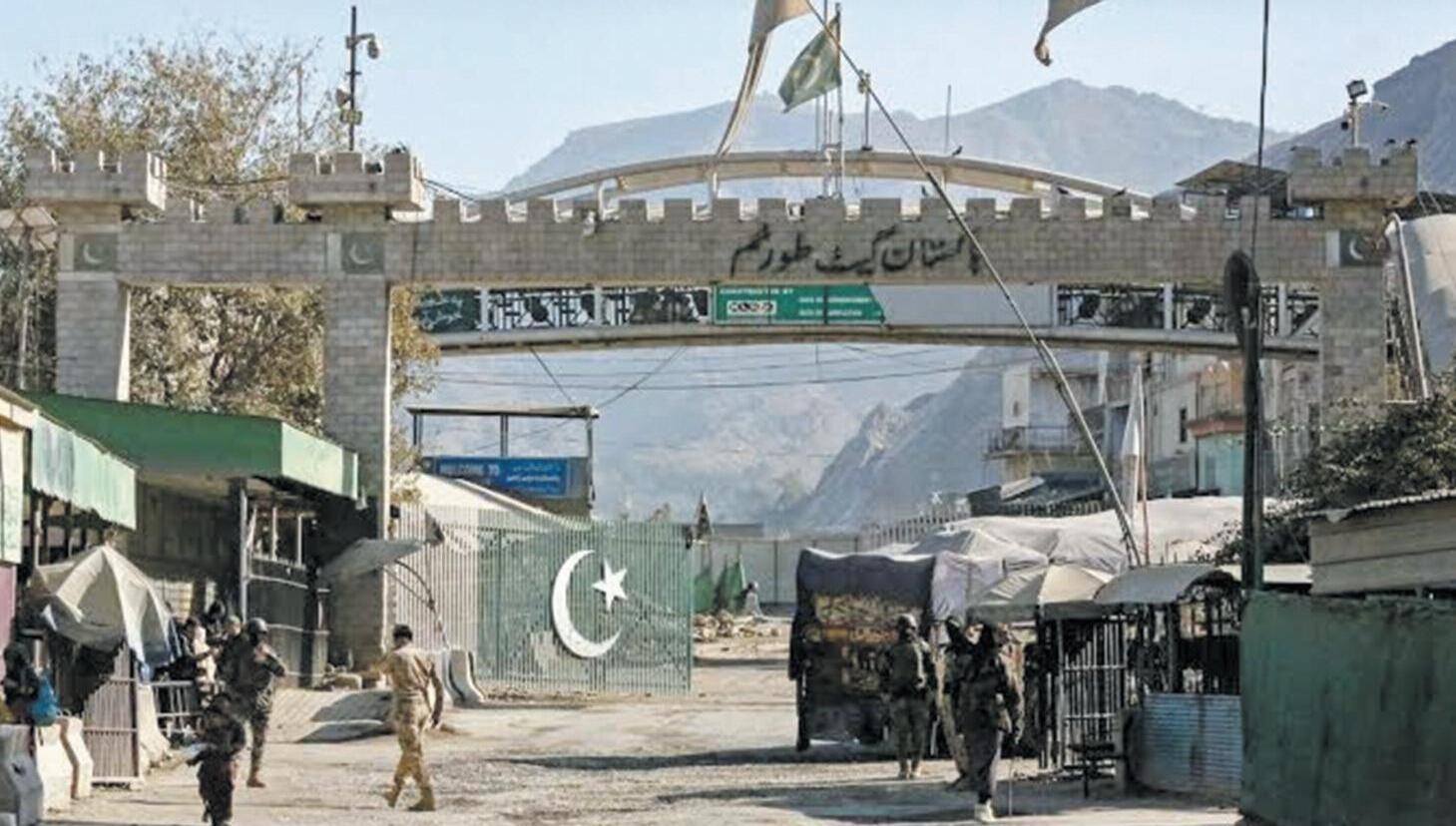
Pakistan on Wednesday strongly rejected India's criticism of its recent counterterrorism operations along the Pakistan-Afghanistan border, describing New Delhi s remarks as "preposterous", "baseless" and devoid of credibility Foreign Office spokesperson Tahir Andrabi said Pakistan's actions were legitimate, targeted and proportionate measures undertaken to eliminate terrorist infrastructure threatening the country s security In a statement posted on X, Andrabi dismissed India's allegations and accused New Delhi of attempting to divert attention from its own record of regional interference Pakistan categorically rejects the baseless statement made by India regarding Pakistan s legitimate targeted and proportionate actions against terrorist infrastructure in Afghanistan, the spokesperson said He said India s criticism was particularly ironic given what he described as New Delhi's longstanding record of violating the sovereignty and territorial integrity of neighbouring countries "This preposterous statement has been made by a country that has historically interfered in and undermined the sovereignty and territorial integrity of its

ISLAMABAD
ISLAMABAD


SBP unveils redesigned website with easier access to data, regulations


PM orders nationwide monsoon
viser to the Prime Minister on Political Affairs Rana Sanaullah, Minister of State for Finance Bilal Azhar Kayani, the WAPDA chairman, chief secretaries of all provinces and senior officials of the relevant government departments
As part of the preparedness measures the prime minister directed the federal minister for climate change and the NDMA chairman to undertake emergency visits to all provinces, Azad Jammu and Kashmir and Gilgit-Baltistan during the current week to assess and finalise monsoon preparedness
He further emphasised that projects financed by international development partners should also focus on strengthening the institutional and technical capacity of national and local institutions and departments
for Climate
Khawaja, Minister for Law Azam Nazeer Tarar, Ad-
Pakistan, China enter new phase of CPEC
cooperation: Dar
CONTINUED FROM PAGE 01 Looking ahead, Dar said CPEC Phase 2 0 would prioritise high-quality development through deeper collaboration in industrialisation agriculture information technology mines and minerals and skills development He noted that the next phase of the corridor aligns closely with Pakistan s 5Es Framework, which focuses on exports, e-Pakistan, energy and infrastructure, environment and climate resilience and equity and empowerment "This new phase of CPEC will inject fresh momentum into Pakistan s economic transformation while creating greater opportunities for innovation investment and sustainable growth for both countries, he said Dar expressed confidence that the enhanced partnership would accelerate efforts to build a stronger ChinaPakistan Economic Corridor and further deepen the China-Pakistan Community with a Shared Future in the New Era Emphasising the importance of political engagement the deputy prime minister said regular exchanges between the Communist Party of China and Pakistan's political parties had strengthened mutual understanding, facilitated the sharing of governance experiences and reinforced people-to-people ties He observed that successive governments in Pakistan irrespective of political affiliation had consistently accorded the highest priority to relations with China reflecting the enduring nature of the bilateral partnership Dar also underscored the longstanding relationship between the Communist Party of China and the Pakistan Muslim League (N), saying sustained party-to-party cooperation had played an important role in further strengthening bilateral relations Recalling his recent visit to Beijing on May 24 he said he had attended as the chief guest a cere-
Highlighting the government's commitment to water security, the prime minister referred to the allocation of an additional Rs330 billion in the current fiscal year's federal budget to accelerate the completion of major water infrastructure projects
Recalling the lessons learned from previous flood emergencies the prime minister directed all relevant in-
stitutions to implement a comprehensive flood mitigation roadmap He also instructed provincial governments to remove illegal encroachments and address other obstacles in river channels and flood pathways particularly in districts identified as highly vulnerable to flooding The prime minister further directed all federal and provincial institutions to deploy their full administrative and technical resources to facilitate the public throughout the monsoon season During the meeting, NDMA Chairman Lieutenant General Inam Haider Malik briefed participants on the country s preparedness measures expected weather patterns flood risks and evolving climate trends
According to the briefing extreme heatwaves and unusual climatic conditions are expected in many parts of the world this year Pakistan

CONTINUED FROM PAGE 01
The report also noted a slight increase in militant activity in Sindh, where four attacks were reported during June compared with only one in the previous month
Punjab witnessed only a single militant attack during the reporting period while Islamabad Azad Jammu and Kashmir and Gilgit-Baltistan remained free from militant attacks The report paints a sobering picture of the overall security landscape during the first half of 2026
Between January and June, Pakistan recorded 2,166 conflict-related fatalities, including 1,442 terrorists, 404 civilians 307 security personnel and 13 members of progovernment peace committees
During the same period 1 137 people were injured comprising 692 civilians 281 security personnel 136 militants and 28 peace committee members
PICSS observed that while the downward trend in June reflects the impact of sustained intelligence-based operations and improved security coordination the continued occurrence of suicide bombings and other complex attacks indicates that terrorist networks remain capable of mounting lethal operations
The report comes against the backdrop of Pakistan's deteriorating position in the Global Terrorism Index 2025, where the country ranked as the world's most terrorismaffected nation for the first time after recording a six per cent increase in terrorism-related deaths during the previous year
Security analysts believe the June figures highlight both the effectiveness of Pakistan s ongoing counterterrorism campaign and the continuing need for sustained intelligence-led operations to dismantle militant infrastructure and prevent high-impact attacks
Pakistan rejects India's 'baseless' criticism of counterterrorism
strikes along Afghan border
committed to building a community with a shared future for mankind by promoting multilateral cooperation, economic connectivity and inclusive development
The ambassador highlighted President Xi Jinping s four major global initiatives the Global Development Initiative (GDI) Global Security Initiative (GSI) Global Civilization Initiative (GCI) and
peaceful
development, dialogue and mutually beneficial partnerships while sharing the opportunities created by its own modernization with the international community The ambassador said the Belt and Road Initiative has become the world s largest platform for international economic cooperation, with participation from more than 150 countries He said the initiative has generated nearly one trillion US dollars in investment launched more than 3 000 cooperation projects created over 400 000 jobs and according to World Bank estimates, has the potential to lift millions of people out of poverty worldwide Continuing his address Ambassador Jiang described the China-Pakistan Economic Corridor (CPEC) as the flagship project of the Belt and Road Initiative and one of the most successful examples of international development cooperation He said that since its launch, CPEC has brought more than US$25 9 billion in direct Chinese investment to Pakistan created over 260 000 jobs added more than 8 000 megawatts to the national power grid constructed 510 kilometres of expressways and 886 kilometres of national core transmission lines, significantly contributing to Pakistan's energy security, infrastructure development and industrialisation According to the ambassador CPEC has become a vivid embodiment of the ChinaPakistan community with a shared future and an important benchmark for high-quality
Belt and Road cooperation Jiang said China remains committed to working with Pakistan to build an upgraded version of CPEC 2 0 with greater emphasis on industrial cooperation agricultural modernisation science and technology digital connectivity, green development and people's livelihoods Highlighting the CPC's governance philosophy the ambassador said the Party has consistently strengthened itself through ideological development and theoretical innovation Quoting President Xi Jinping s remarks on the CPC's anniversary, Jiang said the Party continues to uphold Marxism while adapting it to China's national conditions enabling it to respond effectively to changing domestic and international challenges He said Xi Jinping Thought on Socialism with Chinese Characteristics for a New Era has provided the scientific guidance behind China's remarkable achievements in economic development, technological innovation diplomacy and social governance over the past decade According
Turning

COMMENT
Population Council
Whatever happened to the demographic dividend?

ABridging the Digital Divide
index measuring
IN a world moving at lightning speed, humankind has witnessed a transformational change in its every sphere of life through AI It has become crucial to the extent that researchers position AI as a paramount tool in today s modern era in achieving numerous sustainable development goals We see its integration broadly evident across diverse sectors, spanning automotive to healthcare and from banking to education
In a similar manner, advancement in digital health is also on the steep rise as various estimates suggest that it was worth around $505 4 billion by the end of 2025 Thus, today, in global landscape, countthe ries like the USA, China, and the UK reign supreme in AI healthcare and have invested extensively by forming a substantial number of AI-based companies over the last decade However, World Bank–defined low-income countries (Gross National Income less than $1,145, (2024–2025) lag significantly behind in AI According to 2022 AI readiness rankings by Oxford insights, the majority of the state authorities in low-income settings are evaluated at bottom, which demonstratae their least preparedness for AI adoption While on the other hand over 60 countries, more than 70 percent among them developed, have published nationallevel AI policies in the last five years This notable imbalance is liable to exacerbate socio-economic disparities in various forms between high income and low-income countries
As a result, researchers from low-income countries have an inadequate representation in the global AI discourse that takes place in the developed landscape This indifference has a potential to cause disparity in labour productivity, declining digital literacy, undermining governance efficiency, eroding energy infrastructure and furthering economical constraints in resource constrained settings Pakistan is also one of the low-income countries, which is imperiled with a myriad of challenges to have robust infrastructure to thoroughly leverage AI
The challenge of accessing high-speed internet still looms large while two-thirds of its population is bereft of smartphones The nationwide last Pakistan Demographic and Health Survey 2017-2018 highlights that 22 9 percent of urban households had an internet connection compared to 4 9 percent in rural areas Further, it is imperative to note that the effectiveness of any digital health intervention is strongly associated with internet accessibility However, this stark digital divide poses a serious impediment and restricts the equitable reach in underserved communities of today’s Pakistan In addition, the adoption of AI in healthcare isn’t easy, as it is entangled with multifaceted challenges, from the absence of robust electronic health record systems to socio-cultural resistance These constraints are intensified by systemic gaps, as according to Lancet, the Healthcare Access and Quality (HAQ)

S t r a t e g i c a n x i e t y a n d t h e s e a r c h f o r s t a b i l i t y
Saqlain abid
Tis rapidly becoming one of the most significant geopolitical developments in South Asia What once appeared to be a moment of strategic alignment following the Taliban’s return to power has now transformed into a relationship marked by mistrust security concerns and diplomatic uncertainty Understanding the roots of this tension requires examining how expectations collapsed why both countries now view each other with suspicion and what the future might hold for this complex relationship
When the Taliban returned to power in Afghanistan in 2021 Pakistan was widely perceived as one of the few countries that welcomed the development with optimism Islamabad believed that a friendly government in Kabul would create strategic depth and bring stability to the long and troubled border between the two countries For many policymakers in Pakistan the assumption was simple: a Taliban-led Afghanistan would remain politically aligned with Pakistan and help address long-standing security concerns
Initially this expectation appeared reasonable The early months following the regime change did not produce major diplomatic conflicts However beneath the surface deeper structural issues remained unresolved Afghanistan’s internal instability the fragile state of its institutions and the absence of international recognition meant that the new government faced enormous challenges from the very beginning
As time passed the situation began to change Pakistan started experiencing an increase in militant attacks in its western regions Islamabad repeatedly claimed that these attacks were linked to groups operating from Afghan territory Kabul on the other hand denied these allegations and argued that it was still struggling to consolidate control over a country that had endured decades of war This cycle of accusations gradually eroded whatever trust existed between the two governments
Another factor that intensified Pakistan’s concerns was Afghanistan’s growing diplomatic engagement with India Historically Pakistan has viewed India’s presence in Afghanistan with suspicion fearing strategic encirclement When Afghan officials began engaging with New Delhi and receiving diplomatic attention there the development triggered anxiety within Pakistan’s strategic community For Islamabad this suggested that Kabul might be attempting to diversify its international partnerships rather than relying solely on Pakistan
From Afghanistan’s perspective however such diplomatic diversification may be both log-
ical and necessary A country struggling with economic isolation and humanitarian crises cannot afford to limit its international relationships Engaging with multiple regional partners including India can provide economic opportunities, infrastructure development, and political legitimacy In this sense, Afghanistan’s outreach could be interpreted not as hostility toward Pakistan but as an attempt to secure its own national interests The debate surrounding proxy politics has further complicated the narrative Some analysts argue that Afghanistan’s engagement with India may transform it into a platform for Indian influence in the region Conversely, critics of Pakistan claim that Islamabad itself has historically operated within broader strategic alignments shaped by global powers These competing narratives often simplify a far more complex geopolitical reality What is clear, however, is that the current tensions are producing more losses than gains for both countries Rising hostility threatens economic cooperation, disrupts cross-border trade, and fuels public resentment on both sides More importantly, it undermines the possibility of long-term regional stability Afghanistan and Pakistan share deep historical, cultural, and religious connections, and instability in one country inevitably affects the other Resolving this crisis will not be easy Diplomatic engagement remains the most realistic path forward, but trust between Kabul and Is-
lamabad has been severely damaged Regional powers such as China or Russia could potentially play a mediating role, yet both countries currently appear cautious, preferring to observe developments rather than intervene directly Without constructive diplomacy, the risk of prolonged tension will remain high
The future of Afghanistan–Pakistan relations will largely depend on whether both sides can move beyond short-term strategic anxieties and focus on long-term stability Border management, intelligence cooperation, and mutual respect for sovereignty could gradually rebuild confidence between the two governments However, this process will require patience, political maturity, and a willingness to recognize that confrontation benefits neither side Ultimately, peace between Afghanistan and Pakistan is not merely a bilateral issue; it is a regional necessity A stable Afghanistan contributes to regional connectivity, trade, and security Likewise, a cooperative Pakistan can play an essential role in supporting Afghanistan’s economic recovery and integration into the broader Asian landscape
If mistrust continues to dominate the relationship, both nations risk becoming trapped in a cycle of instability that benefits no one But if diplomacy prevails, the two neighbours may still find a path toward coexistence and regional peace
The writer is a freelance columnist

Deforestation: Sindh’s silent climate disaster

CL I M AT E change is no longer a warning about the future; it is the defining reality of Pakistan s present From the rapidly melting glaciers of Gilgit-Baltistan to recurring floods in Khyber Pakhtunkhwa, prolonged droughts in Balochistan, and intensifying heatwaves and water shortages across Punjab, every province is confronting a different face of the same crisis
The Pakistan Economic Survey 2025–26 acknowledges that climate change has become one of the country s gravest economic and environmental challenges, affecting agriculture, water security, public health and infrastructure The World Bank s Pakistan Country Climate and Development Report and recent IMF assessments say the same: despite contributing less than one per cent of global greenhouse gas emissions, Pakistan remains among the countries most vulnerable to climate change Among all the provinces, however, Sindh stands on the front line Few regions face such a dangerous combination of extreme heat, shrinking forests, sea intrusion, erratic monsoons, water scarcity and rapid desertification If the rest of Pakistan is feeling the effects of climate change, Sindh is living through its consequences every day Jacobabad has repeatedly been counted among the hottest places on Earth, with temperatures exceeding 50°C An exceptional weather event is gradually becoming the new normal Dadu, Larkana, Sukkur, Khairpur, Shaheed Benazirabad, Hyderabad and several other districts now experience longer summers, shorter winters and increasingly unpredictable rainfall These changes are no longer confined to meteorological records; they are reflected in declining crop yields, worsening water shortages, growing health emergencies and mounting economic losses Cotton, wheat, sugarcane and chilli, the backbone of Sindh s agriculture, are increasingly exposed to prolonged heat stress Wheat suffers when high temperatures arrive during grain formation, while cotton and chilli production decline under extreme heat and erratic rainfall
Livestock productivity falls as grazing
lands deteriorate and water becomes scarce Along the coast seawater intrusion and rising salinity threaten fisheries and fertile farmland that have sustained communities for generations Karachi Pakistan s economic engine now swings between acute water shortages during summer and destructive urban flooding whenever heavy monsoon rains overwhelm an already fragile drainage system Informal settlements bear the heaviest burden suffering repeated displacement disease outbreaks and economic hardship Climate change alone however does not explain why Sindh is becoming increasingly vulnerable Nature is under pressure but many of the forces weakening the province s resilience originate from human neglect poor governance and the relentless destruction of natural ecosystems No environmental loss illustrates this failure more clearly than the steady disappearance of Sindh s forests Often described as the lungs of the planet their role extends far beyond absorbing carbon dioxide They regulate local temperatures recharge groundwater stabilize riverbanks reduce soil erosion shelter wildlife improve rainfall patterns and protect communities from floods dust storms and extreme heat Riverine forests along the Indus and mangrove forests in the delta are among Sindh s most valuable natural assets Losing them means losing one of the province s strongest defences against climate change Pakistan already possesses one of the lowest forest covers in South Asia with forests occupying only a small proportion of its land area Within Sindh the riverine forests stretching from Guddu to Kotri once formed one of the region s richest ecological corridors Today many of these forests have been reduced to fragmented patches In Kachho, parts of Dadu, Jamshoro and neighbouring districts, the landscape continues to lose indigenous trees such as babul, kandi, neem, ber and tamarisk These species have evolved over centuries to withstand harsh climatic conditions while protecting soil, conserving moisture and supporting wildlife Once mature trees disappear, decades are required to replace the ecological services they provided free of cost Anyone travelling through parts of upper Sindh or the Kachho belt can witness timber depots operating openly and vehicles transporting large quantities of wood along public roads Such scenes inevitably raise uncomfortable questions Illegal logging on this scale cannot reasonably be viewed as the work of isolated individuals Its persistence points towards serious shortcomings in monitoring, enforcement and accountability When forests continue to shrink despite existing laws, specialised departments and repeated public commitments, people are entitled to ask whether environmental protection has truly become a governance priority The Sindh Forest Department carries the
primary responsibility for protecting reserved forests preventing illegal felling and prosecuting offenders Yet the continued depletion of forest resources suggests that enforcement does not match the threat Plantation campaigns undoubtedly have value but they cannot compensate for the daily loss of mature forests A sapling planted today may take 30-40 years to perform the ecological functions of a fully grown babul tree cut down within minutes by a chainsaw
The problem extends beyond Kachho Riverine forests along the Indus face pressure from illegal timber extraction encroachments and weak protection These forests moderate floods by slowing water flow strengthen riverbanks against erosion recharge groundwater and provide habitat for countless species of birds and wildlife Their disappearance increases environmental risks far beyond the districts in which the trees are felled
The Indus Delta presents another warning Mangrove forests protect coastal settlements from tidal surges and cyclones while sustaining fisheries that support thousands of livelihoods Reduced freshwater flows seawater intrusion pollution and human encroachment continue to threaten these ecosystems despite restoration efforts that have shown encouraging results in some locations
Protecting mangroves is essential for safeguarding coastal communities and preserving Pakistan s blue economy Tharparkar tells a different story of the same crisis Rising temperatures recurring droughts and the gradual loss of native vegetation are pushing an already fragile ecosystem closer to ecological distress Indigenous trees such as khejri and ber are indispensable for conserving soil moisture providing shade supporting livestock and maintaining biodiversity Their protection is inseparable from the survival of the communities dependent on them
The environmental consequences of deforestation extend well beyond the loss of trees Forests slow rainwater runoff, allowing water to seep underground and replenish aquifers As forest cover declines, groundwater falls, fertile soil erodes more rapidly and dust storms become more frequent Every heatwave grows harsher because fewer trees remain to moderate local temperatures Every drought becomes worse because the landscape loses its capacity to retain moisture Climate change intensifies these pressures, while deforestation removes one of nature s most effective defences against them The economic consequences are equally severe Agriculture, livestock, fisheries and forestry collectively support millions of livelihoods across Sindh Every failed harvest, every shrinking grazing area and every damaged ecosystem pushes more families towards poverty Rural households increasingly migrate to urban centres where employment opportunities, housing and public services are already under immense
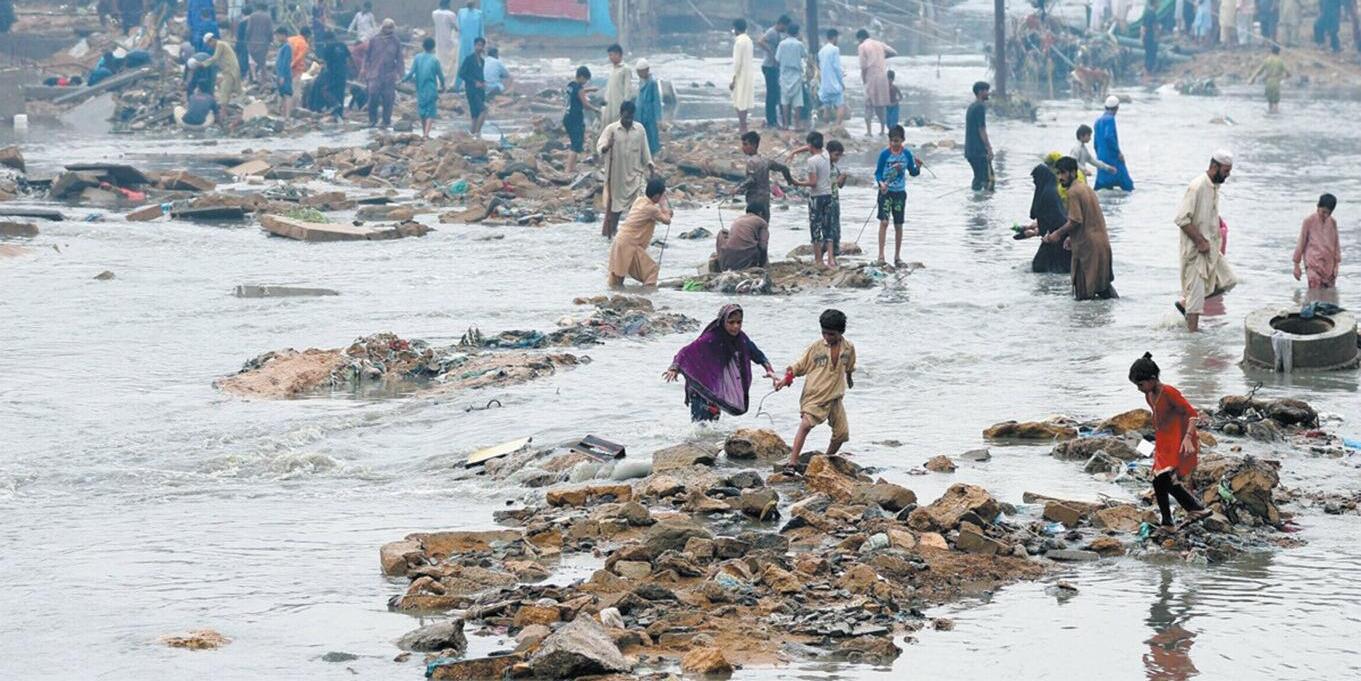
strain Climate-induced migration may temporarily relieve individual families but it transfers environmental distress into economic and social pressures for cities themselves struggling to cope Public health is also becoming a casualty Heatstroke dehydration and respiratory illnesses increase as temperatures rise and green spaces disappear Hospitals across Sindh experience mounting pressure during prolonged heatwaves while floods leave behind stagnant water that encourages dengue malaria and other vector-borne diseases
The disappearance of forests also weakens biodiversity Birds reptiles mammals and countless smaller species perform ecological functions that often go unnoticed until they disappear Many control agricultural pests naturally reducing the need for chemical pesticides Others contribute to pollination and seed dispersal Destroying forests means dismantling ecological systems that have evolved over centuries and cannot easily be recreated Pakistan has not ignored climate change at the policy level
The country has updated its Nationally Determined Contributions under the Paris Agreement introduced adaptation frameworks and launched initiatives such as Living Indus Sindh has announced programmes for forest restoration mangrove conservation and climate resilience Yet policies alone cannot cool rising temperatures or restore disappearing forests Their success depends entirely upon consistent implementation transparent governance and measurable outcomes Pakistan has also received substantial international climate support while repeatedly highlighting its vulnerability on global platforms At the same time international assessments estimate that the country s adaptation needs will continue to grow sharply over the coming years Climate finance must therefore produce visible improvements on the ground rather than remain confined to reports workshops and official announcements Protecting Sindh s forests demands far more than annual plantation ceremonies It requires continuous
How to tax a billionaire

America’s oligarchs guard their hoards jealously but there may be a way in

California’s roughly 200 billionaires account for only about 1 percent of state tax revenue
Nobody has managed to pass a federal tax on wealth, or on the unrealized gains that represent the majorit y of income for the ver y rich
David S acks, Mark Zuckerberg, and Peter Thiel, too, have made moves toward the door
“ The people who really hate, hate, hate taxes? Most of them have already left [California]”
either wealth or paper gains will require another constitutional amendment the likelihood of which Dale says “seems to be something slightly below zero ” Which helps explain why voters and lawmakers are exploring local options like New York City’s pied-à-terre tax (which passed) and San Francisco’s “Overpaid CEO” ballot measure (which didn’t) Every such move begets a
of op-eds warning that the “golden geese” will fly off to another
or
country as some of
clients have History suggests few actually will As an analysis from the Center on Budget and Policy Priorities notes California already has the nation’s highest marginal tax rate but boasts the second-lowest rate of out-migration among households earning more than $200 000 Then again we’re talking about billionaires Allen Prohofsky who spent 15 years as the chief economist at California’s Franchise Tax Board told me he suspects the fear of billionaire flight is overhyped when it comes to the tax initiative but he isn’t certain “If anybody tells you they’re sure they know what’s going to

Trump says US and Iran are getting along well as indirec t Doha talks begin


‘first , Only and At Top’: PACrA upgrades BoP to A A A
CDA chief, Bahrain envoy vow to further strengthen bilateral relations
Chairman Capital Development Authority (CDA) and Chief Commissioner Islamabad Sohail Ashraf met with the Ambassador of Bahrain The Ambassador of Bahrain to Pakistan is H E Mohamed Ebrahim Mohamed Abdulqader, at CDA Headquarters on Wednesday Chairman CDA welcomed the Bahraini Ambassador to CDA Headquarters During the meeting matters of mutual interest including the further strengthening of bilateral relations were discussed Chairman CDA Sohail Ashraf said that Pakistan views its relations with its brotherly Islamic country, Bahrain with great respect and high regard H E Bahraini Ambassador remarked that deep


Ali; and Sergeant at Arms Capt Sajid Mehmood accompanied by the District s Assistant Governors together representing the full breadth of the team that will steer District 3271 through the coming Rotary year The wreath ceremony was hosted by Rotary Club of Karachi Bay under leadership of Past District Governor,




BARRISTER GOHAR RULES OUT GOVT TALKS

ISLAMABAD
have yet to be held despite the constitutional requirement to do so within a stipulated timeframe A four-member ECP bench headed by Sindh Member Nisar Ahmed Durrani resumed hearing the matter on Wednesday During the proceedings Deputy Commissioner Memon informed the commission that the Islamabad district
administration had prepared and submitted the maps required for the delimitation of local government jurisdictions in the Islamabad Capital Territory (ICT) However in its written order the ECP observed that the electoral process had been delayed on multiple grounds "including the non-assistance of the federal government as mandated under the Constitution and the law " The commission also expressed "serious concern" over the continued failure to provide essential data and notifications required for the timely conduct of local government elections in the federal capital According to the ECP the deputy commissioner informed the bench that the matter was currently pending before the Prime Minister s Office where draft notifications regarding the number of union councils had been forwarded for federal cabinet approval In response the commission directed its secretary to approach the Prime Minister's adviser concerned to facilitate the early approval of notifications specifying the limits of the proposed town corporations and the number of union councils within each jurisdiction "The Commission observed that the local government election in ICT has been
Three tourists killed as boat capsizes in Swat
sufficiently delayed " the order stated The ECP reiterated that under Article 140-A(2) of the Constitution read with Article 219(d) and Section 219(4) of the Elections Act 2017 it is constitutionally obligated to conduct local government elections in Islamabad and all four provinces within 120 days of the expiry of the tenure of local governments The commission recalled that following its order issued on March 10 a committee had been constituted