Nuclear weapons do not respect borders The survival of humanity depends on the responsible control of such power Mikhail Gorbachev (Former Leader of the Soviet Union)
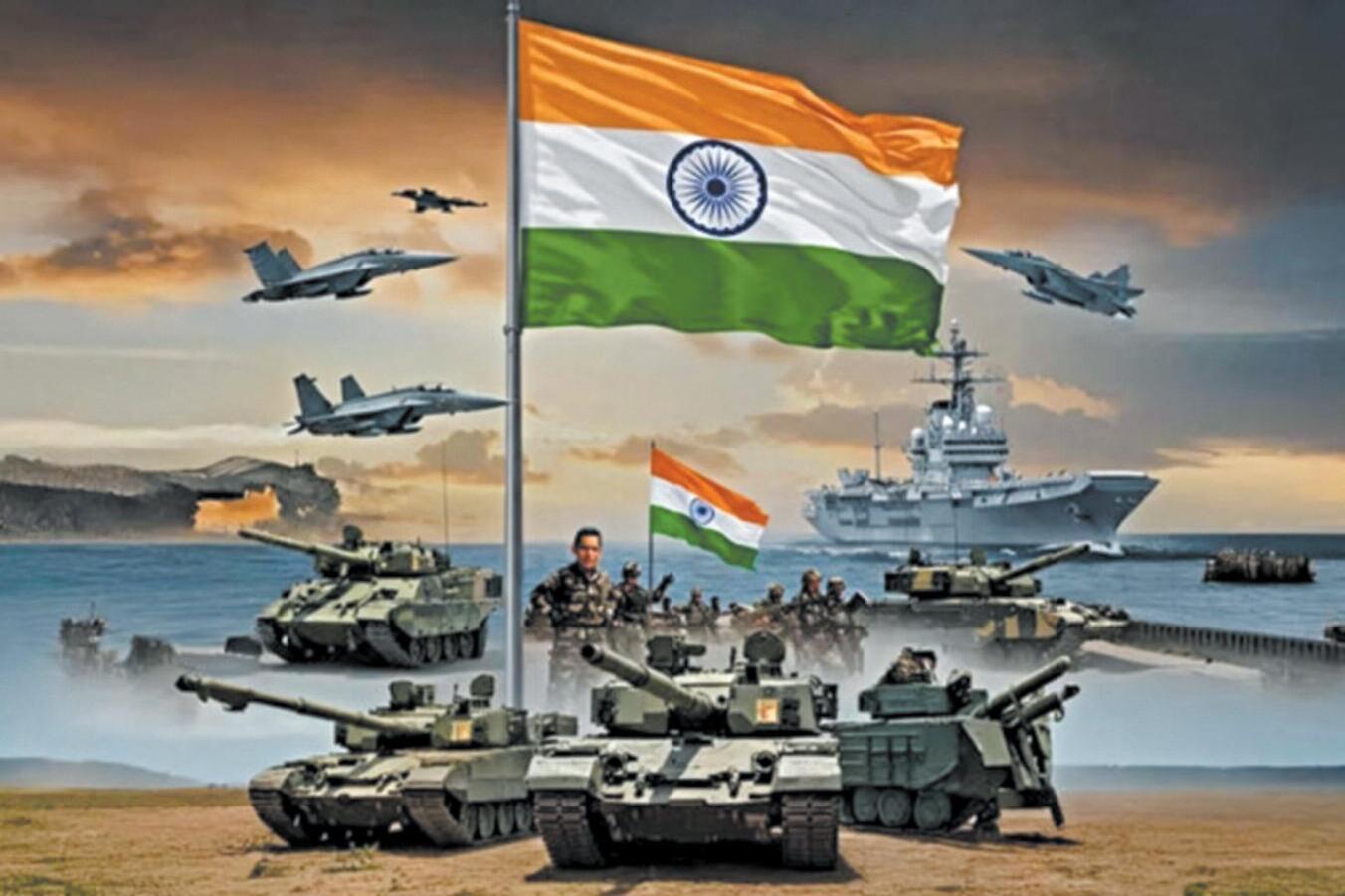
NU C L E A R security within a state remains a sovereign national responsibility A nation s credibility in this domain is measured not by statements or assurances, but by its ability to always maintain absolute control over its most hazardous materials
By this standard, India s performance over the past several decades raises serious concern Repeated incidents involving unauthorized possession of radioactive substances, failures in material accounting, and lapses in command-and-control discipline reveal systemic vulnerabilities that challenge India s carefully cultivated image as a reliable steward of nuclear technology
This troubling pattern stands in sharp contrast to the international indulgence India continues to enjoy Despite not being a signatory to the Nuclear Non-Proliferation Treaty (NPT), India was granted a special waiver by the Nuclear Suppliers Group (NSG), allowing it access to global nuclear commerce That exemption was premised on the assumption that India possessed the institutional maturity and technical safeguards necessary to manage sensitive nuclear materials responsibly The evidence, however, increasingly suggests otherwise
These concerns are not abstract or hypothetical They are borne out by a series of documented incidents over the past decade
Radioactive substances have repeatedly surfaced in public spaces, transit hubs, and illicit markets, locations where such materials should never appear The detection of radioactive material at Chaudhary Charan Singh International Airport in Lucknow in August 2024 was emblematic of this broader trend Rather than an isolated lapse, it reflected persistent failures in detection, inventory control, and regulatory enforcement, the very foundations of any credible
nuclear security regime The Lucknow episode was not an outlier Around the same period authorities intercepted an attempt to traffic californium in Bihar s Gopalganj district where three individuals were found in possession of approximately 50 grams of the highly radioactive substance valued on the black market at nearly Rs 8 5 billion More troubling than the arrest itself was the opacity surrounding the material s origin and composition as forensic verification of the specific isotopes proceeded slowly and without public clarity Whether Cf-249 Cf-251 or the far more dangerous Cf-252 the very presence of californium outside regulatory control points to profound failures in material accounting and custodial oversight Given Cf252 s exceptionally high rate of spontaneous fission and its potential misuse in radiological weapons such incidents cannot be dismissed as routine law-enforcement successes but are warning signs of deeper systemic breakdowns Taken together these incidents form part of a much larger and deeply troubling pattern Available records indicate that more than 153 cases involving the theft loss or illicit handling of nuclear and radioactive materials have been reported in India since the 1980s This long-running trend cuts across decades governments and regulatory reforms underscoring that the problem is neither episodic nor accidental Instead it reflects entrenched weaknesses in material protection accounting systems and enforcement mechanisms The sheer volume and persistence of these cases point to a chronic failure of nuclear governance one that cannot be explained away by isolated negligence or criminal opportunism and one that continues to place both regional and global security at risk Independent evaluations have further reinforced these concerns Nuclear Threat Initiative (NTI) a leading US-based non-proliferation organization has consis-
tently ranked India near the bottom of its Nuclear Security Index particularly in categories related to material protection insider threat mitigation and regulatory effectiveness Such assessments are significant not because they reflect adversarial criticism but because they are based on standardized globally applied benchmarks India s poor performance under these metrics highlights a persistent gap between its stated commitments and its actual capacity to secure nuclear and radiological materials especially as its nuclear programme continues to expand in scale and complexity Rather than consolidating control and addressing these vulnerabilities India is now expanding access to nuclear materials while simultaneously diluting oversight A striking example is the near $2 8 billion uranium supply deal between India and Canada under which Cameco one of the world s largest uranium producers is set to supply nuclear fuel to India While framed as a purely commercial energy arrangement the deal significantly expands India s access to imported nuclear material at a time when its nuclear security record remains deeply compromised This expansion coincides with a major domestic policy shift In late December 2025 India s parliament passed the Sustainable Harnessing and Advancement of Nuclear energy for Transforming India (SHANTI) Bill fundamentally altering the country s civil nuclear framework Passed by voice vote amid an opposition walkout the legislation opens segments of India s nuclear energy sector to private participation for the first time effectively ending exclusive state control over key components of the nuclear ecosystem
Privatization of the nuclear sector in a country already struggling to secure radioactive materials is not reform it is recklessness India has repeatedly failed to prevent theft and illicit trafficking even under a centralized, state-controlled system Introducing private actors, driven by profit motives and operating within a weak regulatory environment, risks fragmenting accountability, increasing insider threats, and further eroding
control over sensitive nuclear and radiological materials The convergence of expanded uranium access through international supply agreements and reduced state oversight under the SHANTI framework marks a dangerous trajectory It raises serious concerns regarding inventory management, regulatory enforcement, and institutional capture In an environment where radioactive substances have repeatedly appeared on the black market, privatization is far more likely to exacerbate vulnerabilities than to address them If these trends persist, the consequences could be catastrophic Continued leakage of radioactive materials creates conditions ripe for radiological terrorism, including the construction of so-called dirty bombs Given India’s history of externalizing blame, particularly toward Pakistan, the possibility of a false-flag narrative or manufactured attribution cannot be dismissed Past experience suggests that such claims would find receptive audiences in Western capitals, where strategic and economic considerations have often overridden objective assessment Nuclear theft incidents reveal more than episodic failures; they expose deep structural flaws
s
r e n g t h e n
rs i g h t , t r a n s p a r e n c y, a n d a c c o u n t a b i l i t y b e fo r e ex p a n d i n g a c c e s s o r p r i va t i z i n g c o n t ro l T h e i n t e r n a t i o n a l c o m mu n i t y, e s p e c i a l ly m a j o r p ow e rs , mu s t m ov e b eyo n d p o l i t i c a l c o nv e n i e n c e a n d c o n f ro n t t h e r e a l i t y o f I n d i a Ês n u cl e a r s e c u r i t y f a i l u r e s . T h e t i m e t o a c t i s n ow. A n o t h e r b r e a c h m ay n o t m e r e ly ex p o s e n e g l i g e n c e –i t c o u l d t r i g g e r a n i r r ev e rs i b l e d i s a s t e r w i t h c o n s e q u e n c e s f a r b eyo n d S o u t h A s i a
How the Iran war could change global trade
Across 10 major global chokepoints, including Hormuz, Gibraltar, Taiwan, D over and Malacca, potential annual passage revenues would be wor th more than $136 billion a year
WH AT started as a campaign to diminish Iran’s nuclear capabilities and weaken its global terror networks has morphed into a dispute over control of one of the world’s most important trade routes The Iran war has become a battle for the Strait of Hormuz, a global chokepoint for oil, natural gas, fertilizer and other commodities If the conflict leaves Hormuz under the permanent control of Iran – or the United States – it could spell the beginning of the end of free passage on the open seas, a concept that has underpinned global trade for centuries
“This could set a dangerous precedent and make international seaborne trade much more expensive, a cost that would ultimately be passed on to end-consumers,” Erik Grundt, a senior analyst at consultancy Rystad Energy, told CNN
IRAN’S NEW ENERGY WEAPON: Following the start of US- and Israeli-led attacks on February 28, Iran almost immediately declared the Strait of Hormuz closed, creating the largest oil supply shock in history Having gained a new source of leverage over the global economy, Tehran is fighting hard to keep it Vessels that wish to transit the strait must either coordinate with Iran’s newly established Persian Gulf Strait Authority, which can entail hefty payments, or risk being fired on by Iran’s armed forces, the Revolutionary Guard Corps
While the fees were temporarily paused when Iran signed a 60-day Memorandum of Understanding with the United States on June 18, Iran’s control of transits via the PGSA hasn’t stopped Quite the opposite Iran has seized on one particular clause in the MOU, calling on Tehran to “make arrangements for the safe passage of commercial vessels,” to legitimize and cement its control of the strait Iran on Tuesday claimed that more than 200 non-Iranian vessels coordinated with its Persian Gulf Strait Authority in the three weeks after the MOU was signed, but CNN could not independently verify that claim T
lieved the clause meant that ships would be free to transit the strait without restriction through the 60-day period Transits
the Balearics are pressing Madrid to join More than 20 countries in, and half a continent applauds itself I will say something that irritates almost everyone: A society that bans the hijab, the burqa, or the kippah is not defending liberal ideology or Western civilization It is signing a confession that it can no longer defend it And the kippah is not a rhetorical flourish In a French public school, a Jewish boy may not cover his head any more than a Muslim girl may cover hers The law that was sold as a shield against Islam turned out, as such laws always do, to be a blade that cuts everyone within reach Say the next part precisely, because this is where readers reach for the wrong shelf I am not asking Europe to tolerate the values sewn into the burqa Free people are supposed to drag those values into the light, examine them, and decide out
A societ y that bans the hijab, the burqa, or the kippah is not defending liberal ideology or Western civilization. It is signing a confession that it can no longer defend it
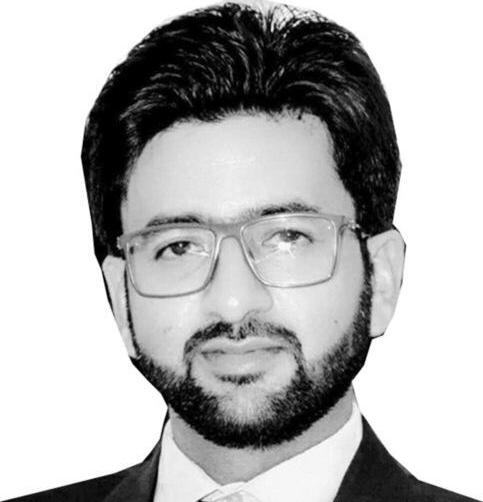
Sharjeel afzal
Ghalibaf adds “Our position of strength in the Strait of Hormuz is the result of the same field strength that the people have created for us In his statement, Iran s top negotiator Mohammad Bagher Ghalibaf stresses that the country’s national security lies in “preserving the ‘Iranian arrangements’ over the Strait of Hormuz and ensuring the maximum safe and harmless passage of commercial ships through this waterway
America which is legally emptyhanded wants to diminish the Iranian arrangements in the Strait of Hormuz by force, but we must stand firm so that the rights of the nation are realised,” he is quoted as saying by the Tasnim news agency ‘T
Iran s top negotiator Mohammad Baqer Ghalibaf says that if his country does not benefit from its memorandum of understanding with the US, “we have no reason to adhere to such an understanding” Iran’s national security depends on
China-Russia Cooperation a vital constant amid centur y- defining changes sweeping across the world
a broad variety of specialised mechanisms
On May 19-20 this year during President Vladimir Putin s state visit to China he and President Xi Jinping held substantive talks covering the full spectrum of cooperation and addressing major global issues International security and economic ties were in the spotlight of the discussions that culminated in signing a substantial package of 40 agreements – from transport trade customs and industry to nuclear energy innovation culture sport youth policy and education The two countries expressed their intention to align national development goals even more closely A particularly important milestone was the adoption of the joint statement on further strengthening comprehensive strategic coordination and deepening good neighborliness and friendly cooperation
tions Built upon the principles of equality mutual respect good faith and win-win cooperation it has stood the test of time What began as a commitment to strengthen neighbourly relations has evolved into a comprehensive strategic partnership of coordination for the new era, setting a prime example of a new type of major-country relationship and serving as a vital constant amid centurydefining changes sweeping across the world
This year is rich in symbolic dates We also commemorate the 30th anniversary of the 1996 Joint Declaration proclaiming the development of “relations of equal and trusting partnership aimed at strategic cooperation in the 21st century These foundational documents reflected our peoples conscious choice and continue to define the trajectory of bilateral relations
Political mutual trust remains the hallmark of China-Russia relations It is enshrined as the fundamental principle of the 2001 Treaty and continues to guide our cooperation across all domains
Head-of-state guidance is the greatest advantage of and fundamental guarantee for the high-level development of ChinaRussia relations Regular reciprocal visits by the heads of state are complemented by frequent meetings between the two governments close coordination between foreign ministries, and
Last year, commemorative activities in Beijing and Moscow marking the 80th anniversary of victory in World War II once again demonstrated our shared commitment to preserving historical truth and memory and reminded the community of nations of the immense value of peace and sovereignty Building on this common historical legacy, our strategic partnership plays an important stabilising role on the global stage It is based on shared interests and similar approaches to key international and regional issues rather than on bloc confrontation Synchronized Chinese and Russian approaches are especially relevant at a time when the global system is undergoing a profound transformation China and Russia consistently advocate for a harmonious process of shaping an equal and orderly multipolar world and international relations of a new type, including a more just and rational system of global governance It is heartening to note that Pakistan ascribes to a similar view At the UN China Russia and Pakistan can often be seen jointly upholding the principles of international law fairness and sovereign equality of states As members of the United Nations Security Council, our three countries share principled approaches to the most pressing issues on its agenda China and Russia often work in tandem at other multilateral fora including the BRICS, the Shanghai Cooperation Organization, G20 and APEC Established on the foundation of the spirit of trust and good-neighbourliness embod-
ied in the 2001 Treaty, the SCO has evolved into one of the most influential multilateral organisations across Eurasia China and Russia consistently work together within the SCO to bolster regional security combat terrorism separatism and extremism, deepen economic and humanitarian cooperation, and promote dialogue among diverse civilisations and political systems In an era of growing geopolitical fragmentation the SCO represents a model of equal partnership free from bloc mentality China and Russia act in concert to uphold solidarity and equal cooperation across our shared Eurasian continent, promote peaceful conflict resolution, and strengthen mechanisms of regional stability The two countries will step up coordination on Afghan affairs at both the bilateral level and under multilateral frameworks, and support Afghanistan in achieving long-term stability and security at an early date The two sides attach great importance to and endorse the positive and constructive role played by regional platforms in advancing a political settlement of the Afghan issue including the Moscow Format Consultations on Afghanistan, the Foreign Ministers Meeting of Afghanistan’s Neighbouring Countries, the China-Russia-PakistanIran Quadrilateral Mechanism and the SCO and stand ready to assist Pakistan and Afghanistan to resolve their current differences as soon as possible through political and diplomatic means China and Russia are actively advancing the alignment of the Belt and Road Initiative with the development of the Eurasian Economic Union while promoting its parallel and coordinated development with the Greater Eurasian Partnership The two countries support the development of transport, trade and energy corridors establishing strong linkages across the Eurasian space, including between South Asia and its neighboring sub-regions With its strategic location Pakistan has the potential to become an essential node in the Eurasian connectivity network Hence, it is natural that both China and Russia attach particular importance to this aspect of their relations with Pakistan Bilaterally the China-Russia partnership possesses a strong economic dimension that directly contributes to the prosperity of our peoples Mutual trade has exceeded $200 billion for three consecutive years and continues to grow steadily, with settlements conducted al-
CAPITALS A G E N C I E S
European countries are stepping up efforts to protect ageing transport and
most entirely in Chinese yuan and Russian rubles
Energy cooperation has taken on a truly strategic character and serves as one of the key drivers of our practical ties At the same time both countries are actively developing new growth factors in innovation, industry, and cutting-edge technologies The strength of China-Russia relations lies not only in interstate cooperation but also in the strong cultural and humanitarian bonds between our peoples The successful China-Russia Years of Culture (2024–2025) brought our societies even closer together More than 400 events, including exhibitions, concerts and theatre companies’ tours further enhanced our nations affinity In May 2026 the 10th China-Russia Summer Youth Games were held in Kaliningrad, with over 300 athletes competing in 12 sports nurtured the already robust people-to-people contacts 2026–2027 were declared the ChinaRussia Years of Education by Presidents Xi Jinping and Vladimir Putin The initiative is bound to accelerate dynamic development in this vital area Today, there are more than 72,000 Chinese students in Russia, while over 28,000 Russians are pursuing their studies in China New ambitious projects are underway including joint research platforms university campuses and innovation centres By combining scientific technological and intellectual potential, our countries are investing in the future, as research capabilities are instrumental to long-term strategic development Over the past quarter century China and Russia have come a long way and are now looking confidently to the future Guided by the principles enshrined in the Treaty of Good-Neighbourliness and Friendly Cooperation, we stand ready to deepen political trust, expand mutually beneficial cooperation strengthen coordination on international affairs and promote common development for the benefit of our peoples and the wider international community Our two countries regional and global initiatives are intended to create shared prosperity for all and Pakistan will undoubtedly continue to play an important role in relevant projects
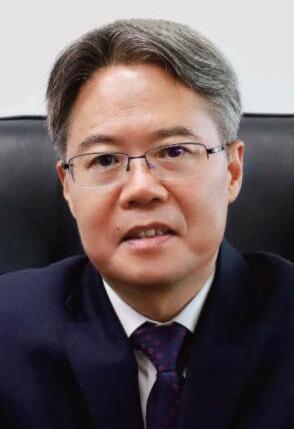
The two authors are the current ambassadors of the People's Republic of China and the Russian Federation to Pakistan respectively
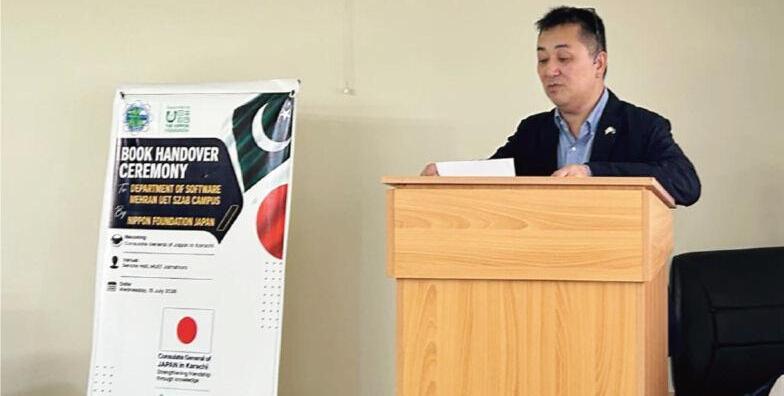
Acting Japan CG attends book handover ceremony at Mehran Universit y, Jamshoro
The Consul General of Japan in Karachi, in collaboration with the Tokyo Foundation, attended a book handover ceremony at Mehran University of Engineering and Technology, Jamshoro on Wednesday, July 15 2026 The event marked the donation of 164 books under the READ JAPAN PROJECT a cultural initiative by the Tokyo Foundation aimed at promoting global understanding of Japan through books The books were officially presented by Acting Consul General of Japan in Karachi, TAMURA Takahiro, on behalf of the Tokyo Foundation, to Mehran University The carefully selected titles span a wide range of themes from Japan Acting Consul General TAMURA in his address underlined the importance of academic and cultural exchange in strengthening the longstanding ties between Japan and Pakistan He expressed his hope that the donated books would not only become a valuable resource for researchers and students seeking to explore an accurate picture of Japan but also for opinion leaders and intellectuals interested in Japan Prof Dr Tauha Hussain Ali highlighted that how Mehran University
Illicit Tobacco
Manufacturers Push to Roll Back Key Documentation Measure
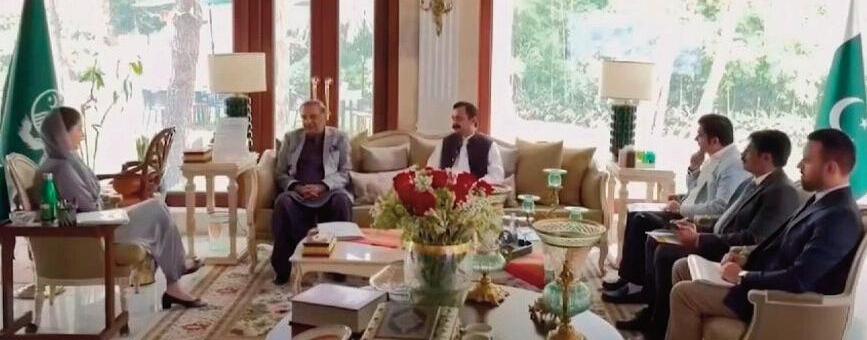
CM MARYAM DIRECTS SWIFT RESOLUTION OF PUBLIC ISSUES IN MEETING
U N J A B Chief Minister
Maryam Nawaz on Wednesday reaffirmed that the Pakistan Muslim League-Nawaz (PMLN) had consistently honoured the commitments made to the people with the blessings of Almighty Allah while directing the relevant authorities to ensure the prompt resolution of public issues highlighted by elected representatives and reiterating her government s commitment to accelerating development and youth empowerment across the province
The chief minister expressed these views during a meeting with Members of the Provincial Assembly (MPAs) Khalid Mehmood Ranjha and Chaudhry Akhtar Abbas Bosal from Mandi Bahauddin
The meeting reviewed public
Chairman CCP meets
NAB chairman
institutional
y LAHORE S A L E E M J A D O O N
to strengthen
cooperation for economic
ISLAMABAD: Mr Farid
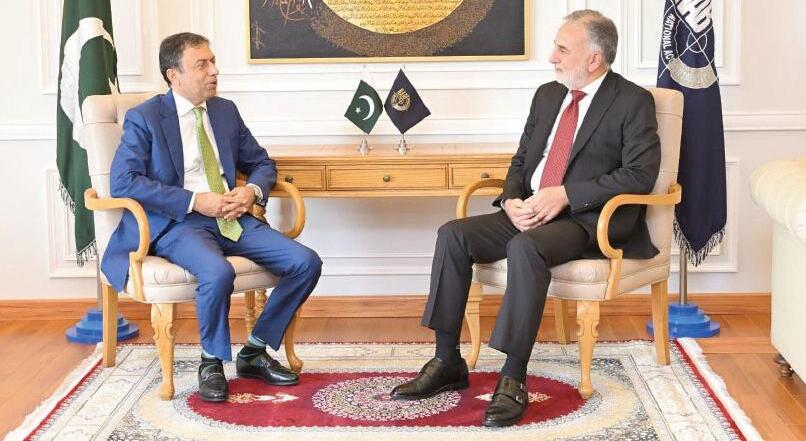
Ahmed Tarar, Chairman Competition Commission of Pakistan (CCP) held a meeting with Chairman National Accountability Bureau (NAB) Lt Gen (R) Nazir Ahmed at the NAB Headquarters in Islamabad today
The meeting focused on fostering synergy between the two institutions to uphold economic discipline ensure fair play in markets and safeguard the national exchequer from corrupt practices and anti-competitive behavior
During the meeting, Chairman CCP, Mr Farid Ahmed Tarar, apprised the NAB Chairman on the core mandate and ongoing efforts of the Commission
He highlighted that the CCP is dedicated to ensuring free competition in all spheres of commercial and economic activity to enhance economic efficiency and protect consumers from anti-competitive practices such as abuse of dominant position prohibited agree-
transparenc
ments and deceptive marketing The Chairman CCP underscored that the Commission remains committed to creating a level playing field for all market participants, which is essential for sustainable economic growth and building investor confidence Chairman NAB Lt Gen (R) Nazir Ahmed welcomed the CCP Chairman and acknowledged the critical nature of the CCP s regulatory functions and expressed the Bureau’s firm support for the Commission’s mandate The Chairman
of NAB highlighted that his organization recognizes the Competition Commission as a vital pillar in ensuring market transparency and emphasized that the Bureau is prepared to extend its support to the Commission in its mission to eliminate illicit market practices He further noted that both organizations share a common objective of safeguarding the economic interests of the state and its citizens by ensuring that public and commercial processes remain free from corruption and collusion
KARACHI
S TA F F R E P O R T
Supernet Technologies Limited
(PSX: STL) has announced that its Board of Directors has approved a rights issue of approximately Rs914 77 million to strengthen the company’s capital base support its expanding portfolio of technology projects and position it for the next phase of sustainable growth
The Board approved the issuance of 91,476,554 ordinary shares at Rs10 per share, in the proportion of approximately 85 rights shares for every 100 ordinary shares held by eligible shareholders
The issue represents around 85 percent of the company s existing paid-up capital and remains subject to completion of the applicable legal and regulatory processes
The decision follows a period of significant strategic and operational transformation for Supernet Technologies including the completion of its merger with Supernet Limited, expansion of its regional footprint through the Supernet Global platform and continued growth across digital infrastructure cybersecurity cloud connectivity managed services enterprise networking and technology integration The merger has created a larger and more diversified technology platform, bringing together complementary capabilities and enabling the company to offer integrated and secure solutions to governments enterprises and critical-infrastructure customers
Supernet is also leveraging its presence in the UAE to pursue business opportunities across the
Middle East Africa and Central Asia while continuing to consolidate its position in Pakistan
The company s strategic progress is increasingly being reflected in its commercial performance Supernet has secured a series of significant projects across cybersecurity enterprise technology and communications infrastructure alongside expanding its presence in regional markets Most recently, the company announced the award of a contract valued at approximately Rs1 billion for the enhancement and modernisation of critical communications infrastructure in Pakistan The project the largest single contract secured by the company to date, is expected to contribute to revenue and profitability during FY2026-27
accordance with departmental rules
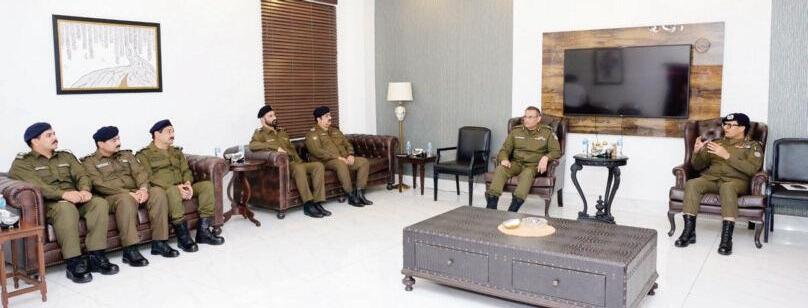
The Punjab Police said the accountability process would continue to ensure strict adherence to discipline integrity and professional standards across the force SEVEN SHEIKHUPURA OFFICERS
HONOURED FOR OUTSTANDING
PERFORMANCE
Meanwhile, at a ceremony held at the Central Police Office,
moves to tighten security around S aindak mine after route disruptions
safeguard all projects run by international companies in Pakistan,"
RT: Separately, Saindak Metals Limited Managing Director Raziq Sanjrani disputed a report carried by the Financial Times, which said he had warned the energy ministry that worsening security conditions were affecting supply routes and could make operations unsustainable within a month The operator denied that the project was on the verge of closure
Resources Development Company under a lease that was extended in 2022 China’s foreign ministry said it was not aware of the situation At the same time, Beijing would work with Pakistan, which it described as a close partner, to ensure the safety of Chinese citizens, projects and institutions in the country MRDL said in February that it had reached major milestones at the Saindak project in 2025 through scientific planning and organised execution The company said the project posted historic records in production and operations while also improving its safety systems MRDL president Tan Jin said the company’s operating results had reached new levels and that cooperation between Pakistan and China had grown stronger He also described 2026 as a year of new targets and responsibilities, saying the company would pursue further growth through innovation, higher standards and better performance, while maintaining its commitment to social responsibility
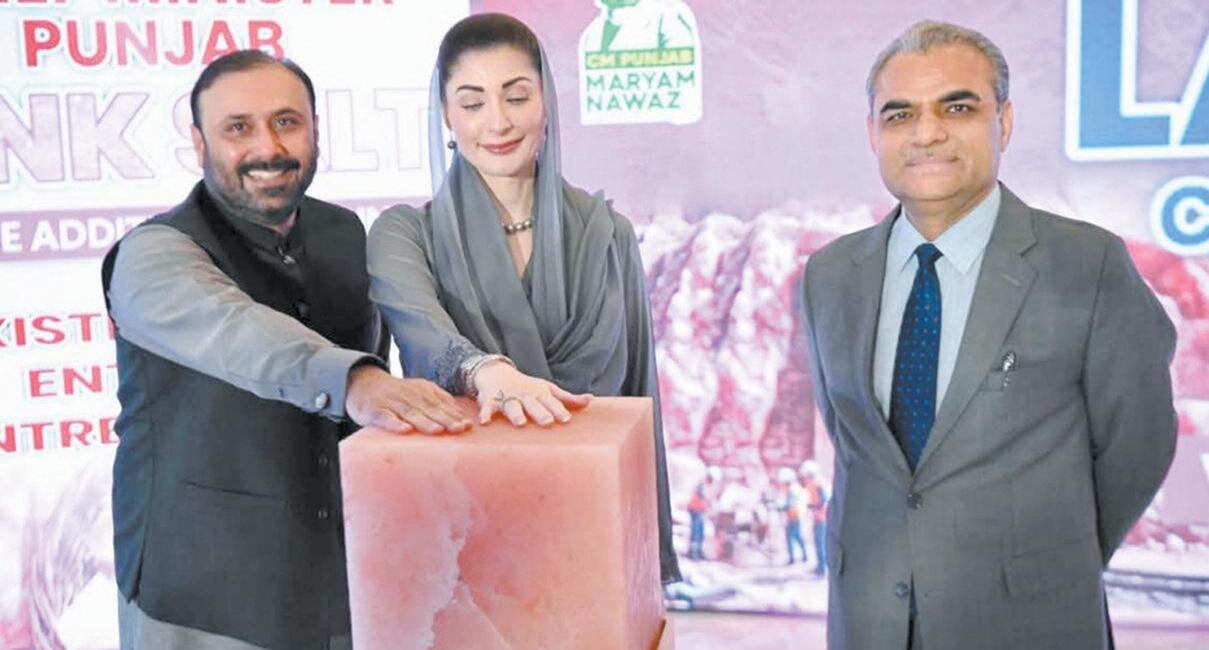
LAHORE S a l e e m J a d o o n Punjab Chief Minister Maryam Nawaz on Wednesday launched the Chief Minister Pink Salt Value Addition Financing Scheme, unveiling a major initiative to promote industrialisation, employment and exports by encouraging value addition to the province's vast pink salt reserves, while announcing the establishment of a 110-acre Pink Salt Mineral Processing Zone near Quaidabad The chief minister also performed the digital inauguration of the financing scheme, describing it as a significant step towards transforming Pakistan's globally renowned pink salt into a high-value export commodity through modern processing and manufacturing
During a comprehensive briefing at the launch ceremony, CM Maryam Nawaz was informed that more than 200 processing units would be established in the proposed processing zone, attracting an investment of Rs150 million and creating 10,000 direct employment opportunities
The chief minister was informed that value addition and enhanced exports of pink salt products could generate approximately $300 million in annual foreign exchange earnings significantly increasing the country s export revenues The briefing further revealed that bids worth Rs471 million had been received during the first phase of the initiative while offers amounting to Rs2 5 billion had already been submitted in the second phase
Officials also informed the chief minister that the digitalisation of lease and licence auctions by the Mines and Minerals Department had resulted in a substantial increase in government rev-
Officials further briefed the chief minister that a Business Facilitation Centre and a Model Retail Outlet would also be established within the zone to provide one-window support and marketing facilities for investors Under the financing scheme, new investors will be eligible for interest-free loans of up to Rs50 million for setting up facilities for salt processing, grinding, refining, cleaning and packaging Loans ranging from Rs5 million to Rs50 million will also be available for the purchase of machinery equipment and export-standard technology The financing will be repayable in easy instalments over a period of five years making it easier for entrepreneurs to invest in value-added production