g PREMIER SHEHBAZ SAYS STRONG PRIVATE SECTOR PARTNERSHIP KEY TO ECONOMIC RECOVERY
g HOLDS DETAILED EXCHANGES WITH BUSINESSMEN ON PACE OF ECONOMIC GROWTH, UPCOMING BUDGET
g GOVT BRIEFS BUSINESS LEADERS ON TAX, AI AND STRUCTURAL REFORMS A S BUDGET 2026–27 TO BE PRESENTED ON JUNE 10 AMID IMF PROGRAMME
g BUSINESS LEADERS SEEK LOWER TAXES, CHEAPER ENERGY, FA STER TAX REFUNDS
Finance Minister Muhammad Aurangzeb on Wednesday confirmed that the federal budget for the fiscal year 2026-27 will be presented on June 10, as the government continues consultations with coalition partners and finalises key fiscal measures
Speaking to the media the finance minister said discussions with allied political parties had been constructive and another round of consultations was expected later this week He emphasised that the government would proceed in close coordination with the International Monetary Fund (IMF) coalition partners and other stakeholders while focusing on enhancing tax collection through stronger enforcement measures and expansion of the tax base Aurangzeb also underlined the government s commitment to avoiding additional tax burdens on citizens stating that efforts were underway to ensure no
s
The United States Trade Representative (USTR) has proposed new tariffs on imports from 60 economies, including Pakistan and India, over their alleged failure to effectively curb the importation of goods made with forced labour as the Trump administration seeks to revive its trade agenda following a series of legal setbacks
The proposed duties, ranging from 10pc to 12 5pc, were outlined in a government filing and will be subject to a public comment period before a final decision is taken The move comes months after Washington launched investigations into several major trading partners including China the European Union (EU) and Japan to determine whether they had taken adequate measures against the import of goods produced through forced labour and whether such practices adversely affected US commerce
On Tuesday, the USTR said 54 economies had “failed to impose and effectively enforce a forced labour import prohibition The group includes China Vietnam Taiwan the United Kingdom and India
Six other economies Canada Ecuador the EU, Indonesia, Mexico and Pakistan were found not to have effectively enforced such prohibitions
“The failure of our most important trading partners to address the importation of goods made with forced labour is unacceptable USTR Jamieson Greer said in a statement This creates a dynamic where American workers
are forced to compete globally on an unlevel playing field ” he added
We will no longer tolerate this disparity Greer said adding that each of our trading partners must do more to ensure that trade does not perversely encourage and entrench forced labour globally
According to the USTR, imports from Canada, Ecuador, the EU, Indonesia, Mexico, Pakistan, Argentina Bangladesh Cambodia El Salvador Guatemala Malaysia Taiwan and Britain would be subject to a 10pc duty under the forced labour investigation The agency said an additional tariff of 12 5pc would be imposed on imports from the remaining 45 economies covered by the probe The proposed measures, however, include a number of exemptions covering products such as beef coffee and certain fruits and nuts Goods from Canada and Mexico that comply with the North American free trade agreement will also be exempt, along with selected textile and apparel products The USTR has invited written comments from the public until July 6 and will subsequently hold hearings before finalising its decision The announcement comes ahead of the July 24 expiry of a temporary 10pc tariff imposed by the Trump administration on February 20 the same day the US Supreme Court struck down President Donald Trump's tariffs enacted under the International Emergency Economic Powers Act
ISLAMABAD
ment capacity In a policy brief submitted to the government PIDE said the proposed ₨45 000 benchmark is based on a hybrid methodology that incorporates purchasing power protection worker and household adequacy, partial productivity sharing, labour-market affordability and implementation feasibility The institute noted that the existing minimum wage has yet to be fully implemented across many federal and private-sector jurisdictions The institute has recommended a national reference benchmark with provin-
Toyota said improvements were achieved using lessons learned from its hydrogen-powered GR Corolla racing programme in the Super Taikyu Series with particular attention given to increasing torque in the 3 600-4 800 rpm range to improve acceleration out of corners
cial calibration model under which the federal government would publish a transparent methodology and national wage benchmark, while provinces would retain the constitutional authority to notify wage rates at or above that level based on local economic conditions and enforcement capacity Under the proposed framework indicative provincial wage levels would be ₨45,000 for Punjab and Khyber Pakhtunkhwa, ₨46,000 for Sindh and ₨45,500 for Balochistan, subject to affordability assessments sectoral reviews and compliance considerations
PIDE said the proposal focuses not only on the wage figure itself but also on establishing a governance system that ensures transparent wage determination, evidence-based provincial adjustments, phased enforcement and annual monitoring of implementation outcomes
Speaking on the proposal PIDE Vice Chancellor and Planning Commission member Dr Nadeem Javaid said mini-
mum wage policy should not remain an annual administrative exercise disconnected from labour welfare and economic realities
“Pakistan now requires a credible wage governance system that balances worker protection productivity business sustainability and macroeconomic stability within a transparent institutional framework, he said
According to the study, the proposed framework rests on four pillars: transparent evidence-based wage setting, provincial calibration credible enforcement mechanisms and annual reporting on implementation Dr SM Naeem Nawaz Professor of Economics at PIDE and co-author of the study, said wage-setting should move
CHEMICAL SHAREHOLDERS APPROVE RS1.86B INVESTMENT IN ASSOCIATE COMPANY
PM reaffirms expor t-led growth, promises public relief in budget
He
growth , adding that it remained the core of the country s economic policy
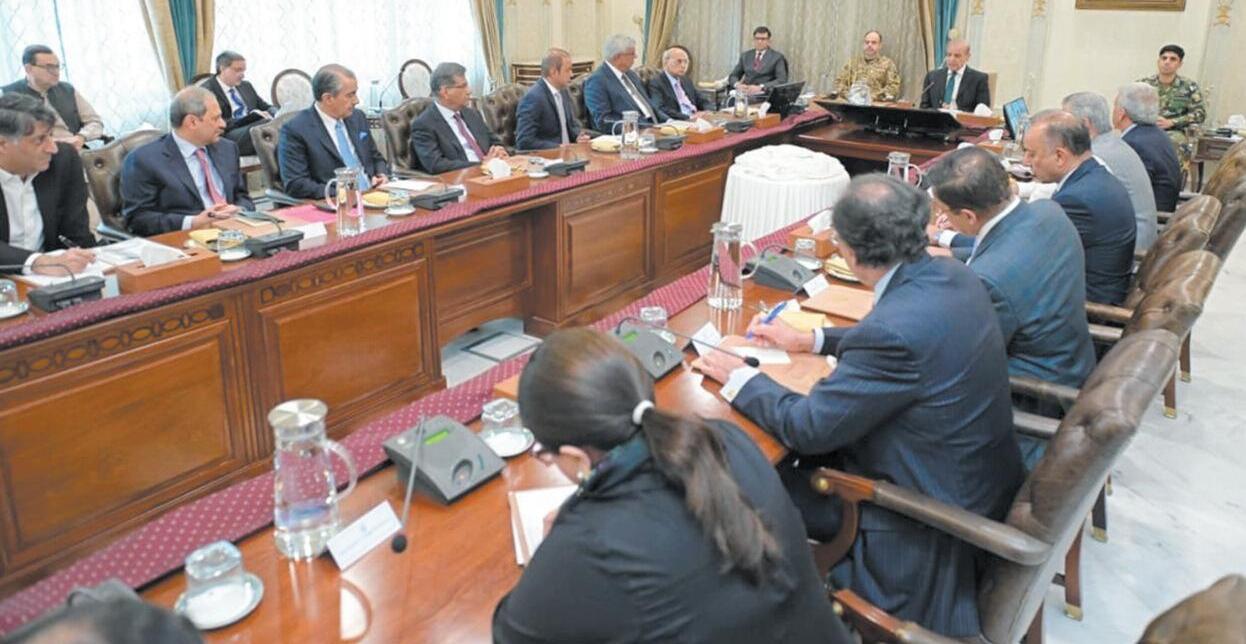
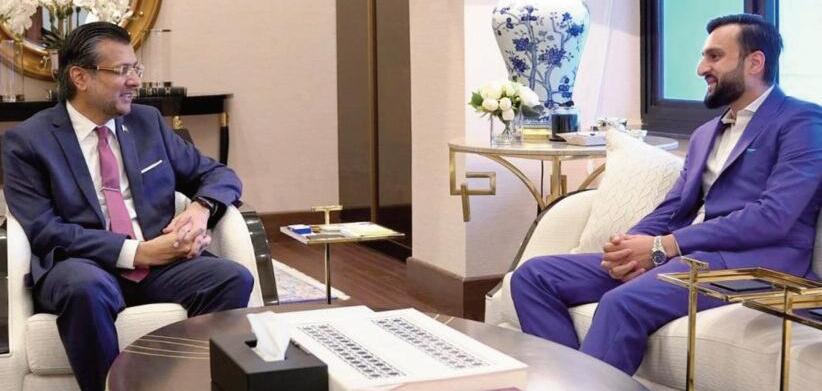
The federal budget for FY2026–27, scheduled to be presented on June 10 comes at a sensitive juncture for the economy While inflation has eased from record highs and foreign exchange reserves have stabilised following IMF support secured in 2024 businesses continue to raise concerns over high taxation, elevated energy costs and subdued investment activity The prime minister also held detailed exchanges with leading businessmen and industrialists on the pace of economic growth and the direction of upcoming budgetary measures You are the ambassadors of Pakistan he again told the delegation thanking them for their continued support during challenging economic conditions
According to the Prime Minister s Office, the government also briefed participants on a series of ongoing reforms, including steps to accelerate resolution of tax disputes through strengthened tax tribunals the establishment of special commercial courts and efforts to bring parts of the informal economy into the tax net
Officials further informed the meeting that a National AI Transformation Plan is being developed as part of broader efforts to modernise the economy, improve productivity and support emerging growth sectors
The briefing also highlighted infrastructure initiatives
aimed at strengthening trade and logistics, including upgrades to Karachi’s freight connectivity, progress on the M13 motorway linking Kharian and Rawalpindi, and plans to modernise Pakistan Railways’ ML-1 and ML-2 networks to enhance cargo transportation across the country
The visiting delegation included prominent industrialists and corporate leaders such as Nishat Group Chairman Mian Muhammad Mansha, Arif Habib Group Chairman Arif Habib, Lucky Cement CEO Muhammad Ali Tabba, Systems Limited CEO Asif Peer, Pakistan Business Council Chairperson Zeelaf Munir Interloop Chairman Musadaq Zulqarnain and Jazz CEO Aamir Ibrahim
According to the PMO the business leaders shared recommendations on the upcoming budget and broader economic policy, while expressing support for efforts to strengthen the economy and improve the investment climate Participants emphasised the need to translate recent macroeconomic stabilisation into sustained export-led growth through
Cotton crisis
WI T H the country falling about a fifth short of its cotton sowing target for 2026-7, with 2 7 million acres sown against 3 2 million acres targeted That is below the 2 964 million acres sown in 1966-7, which makes the present sowing the lowest in half a century The first question that comes to mind is what are the farmers sowing if not cotton It seems that they are sowing sugarcane and rice Both crops need much more water than cotton, and it is coming from solarpowered tubewells, which have proliferated in these areas That means the groundwater is being dangerously depleted, and the future of wheat in these areas is rendered uncertain
There are actually good reasons for the switch from the farmer ’s point of view The ending of the restriction on sugar mills has meant that sugarcane has become attractive If farmers are encouraged to switch back to cotton, sugar import would mean using foreign exchange the country can ill afford The rice grown is also for export To alleviate its own shortages, India banned the export of rice except Basmati Pakistani farmers have jumped into the gap growing the Kainat variety for export to former Indian markets mostly in Central Asia Again cotton farmers have switched to rice because they are able to extract the water from the soil with solarpowered tubewells The effect of low sowing will show up in low production, which will mean a bigger headache for the textile industry, the gap between supply and demand being filled by polyester fibre The fibre is either imported or if made in Pakistan its feedstock is imported Indeed because of the cotton shortfall some is being imported from the USA or Brazil Again, if the country gains on the swings, it loses on the roundabouts, for though rice exports bring in foreign exchange, cotton or polyester sends it out once again
A hidden factor has been the failure to develop disease-resistant seeds which is something the government must take the lead in Sugar mills and textile plants are now subject to
M A Niazi Editor Pakistan Today Babar
The lowest acreage of cotton sowed for 50 years means the tex tile industr y is in trouble W h e n t h e A l g o r i t h m b
Rewriting the development narrative
China is doing so by capacity building
thermore the integration of regional e-commerce platforms has allowed fresh local produce and recreational bookings to bypass traditional intermediaries, reaching urban consumers directly
TH E global conversation surrounding economic development has reached a critical inflection point For decades, the dominant consensus among international financial institutions and development agencies heavily favoured the demand side of poverty alleviation This standard approach prioritized interventions like direct cash transfers emergency food subsidies and basic social safety nets designed to fill immediate consumption gaps While these programmes are undeniably crucial for keeping vulnerable families afloat during crises, they rarely alter the underlying structural architecture of a marginalized region The true challenge of the contemporary era is much more complex: it requires moving beyond the baseline of keeping people from slipping back into destitution and actively transforming stagnant geographic margins into competitive, self-sustaining economic engines
This structural transition is playing out vividly on the physical and economic peripheries of major developing hubs Consider a village located less than a hundred kilometres from the dense urban center of Beijing Surrounded by vast peach orchards that historically yielded only seasonal low-margin agricultural returns this once-forgotten hamlet was characterized by abandoned properties and a steady exodus of its youth Recently, however, local organizers executed a remarkably simple yet profound shift by transforming a neglected drainage ditch into a highly profitable municipal asset In the summer months the site functions as a managed scenic waterway; in the winter it transitions into a venue for choreographed light shows This single micro-intervention now generates significant annual revenue for a community where, just three years ago, fewer than one-third of the homes were permanently occupied As urban white-collar workers increasingly look to escape the high-stress accelerated pace of modern city life the village has systematically converted its natural scenery into economic capital The introduction of themed homestays, glasshouse lounges, book bars, and curated cultural activities like mountain concerts and wellness seminars has completely altered the local livelihood structure Long-abandoned residential properties have been renovated and rented out turning liabilities into profitable real estate Fur-
This micro-level reinvention reflects a much larger deliberate macro strategy Since officially declaring an end to absolute poverty policy frameworks have pivoted away from emergency poverty eradication toward the long-term institutionalization of permanent support mechanisms This structural pivot is explicitly codified in the national policy directive released at the start of this year, which marks the commencement of a new five-year development plan
The strategy outlines a systematic shift toward regularized precise assistance ensuring that households recently lifted out of vulnerability do not experience relative deprivation The emphasis has decisively moved from short-term relief to a sophisticated integration of rural economies into high-value regional networks, backed by structural guarantees such as near-universal health insurance coverage and expanded modern infrastructure including rural tap-water systems
The core of this economic philosophy relies heavily on aggressive supply-side intervention Where rural markets lack the natural scale, density, or liquidity to attract private venture capital, public strategy must step in to build the necessary environment This involves creating the physical infrastructure digital connectivity and human capital required for remote communities to participate productively in the modern broader economy In another rural district, a vocational training center specializing in traditional wellness and medicinal therapies has helped catalyze a multi-billion-renminbi industry, completely reversing a history of community debt and dramatically elevating annual per capita incomes The programmatic focus is extensive: industrial assistance programs now
The transformation of a forgotten hamlet into a thriving economic par ticipant demonstrates that targ eted
information deserves their attention
Yet social media itself is not the enemy
In fact platforms such as TikTok and Instagram have also given healthcare professionals powerful tools to educate the public Doctors, pharmacists, nutritionists, and mental health experts increasingly use short-form videos to explain medical concepts, debunk myths, and answer common questions During health emergencies these platforms can spread life-saving information far more quickly than traditional methods
The issue therefore is not technology The issue is accountability
Unsung pillars
widespread the consequences can be significant A person who delays seeking treatment because they trust a viral video may unknowingly allow a manageable condition to worsen Someone influenced by misleading content may misuse medications, waste money on ineffective products, or develop unrealistic expectations about their health The danger is not always dramatic Often it is subtle A young person struggling with body image may begin following dangerous dietary advice A patient with diabetes may become convinced that medication is unnecessary Parents may hesitate to vaccinate their children after encountering misleading content online Each individual decision may seem small but together they create a growing public health challenge Perhaps the most concerning aspect of this trend is the way social media blurs the line between popularity and expertise In the digital world, follower counts often carry more weight than qualifications A charismatic influencer with a smartphone can sometimes reach a larger audience than a hospital a medical college or a public health institution The result is a troubling reality: many people now trust algorithms to decide which health
Social media companies must do more to identify and limit the spread of harmful health misinformation Healthcare institutions should establish a stronger presence online meeting people where they already consume information Schools and universities should place greater emphasis on digital literacy, teaching students how to evaluate online claims and distinguish evidence from opinion
Most importantly, users themselves must develop a healthy skepticism toward what appears on their screens A viral video may be persuasive but popularity is not proof A large following is not a medical degree An algorithm does not distinguish truth from falsehood; it simply promotes what captures attention
The reality is that short-form video platforms are here to stay They will continue to shape how Pakistanis learn about health illness fitness and medicine The challenge is ensuring that they become tools for education rather than vehicles for misinformation
As social media increasingly influences health decisions, one question becomes impossible to ignore: when millions of people turn to TikTok and Reels before turning to a doctor who is really guiding public health?
In today s digital age the answer may be neither doctors nor hospitals It may be the algorithm
The writer is a freelance columnist
Fines on broken roads
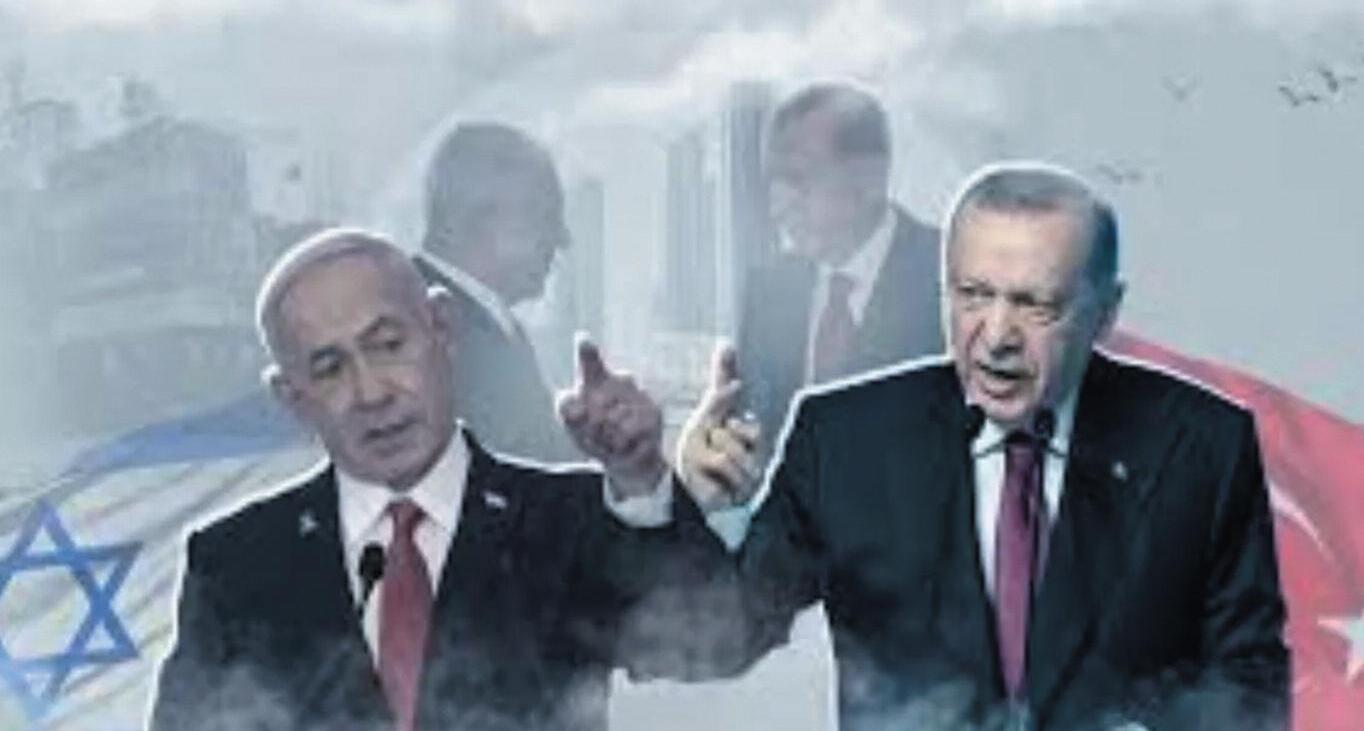
IAfter Iran, is Turkey Israel’s next target?
main the ultimate deterrent Countries that possess a credible nuclear capability are rarely subjected to the kind of existential military pressure faced by states that do not More importantly, when rival states both possess nuclear weapons, the risk of total war often declines because the consequences become catastrophic for both sides
The example of India and Pakistan is frequently cited in this context Before both states became overt nuclear powers, the possibility of large-scale conventional war remained
A similar
gional rival: you may hurt Israel, but you cannot safely push Israel to existential panic This is the dangerous “madness card” the belief that if Israel feels cornered it may escalate beyond normal rules This creates a frightening asymmetry Turkey may dominate a conventional confrontation, but Israel may believe that nuclear shadow power gives it the final word That is why the Turkey-Israel rivalry cannot be judged only by aircraft tanks or soldiers It must be judged by escalation control Turkey can defeat pressure but it must avoid giving Israel the pretext to internationalize, nuclearize, or Americanize the conflict Many argue that conventional military strength diplomacy missile defenses or asymmetric capabilities can compensate for a nuclear imbalance Yet the modern strategic record suggests that nuclear weapons re-
the Korean Peninsula North Korea’s strategic leverage does not come from economic strength or global influence Rather its nuclear capability has created a deterrent that makes direct military action against it far more difficult to contemplate Whatever one thinks of the regime, its nuclear arsenal has fundamentally altered how other powers approach it
Viewed through this lens the debate over Iran becomes even more significant
Histor y sugg ests that lasting peace is rarely preser ved by goodwill alone; it is preser ved when both sides recogniz e that conflict would be mutually damaging and strategically unwinnable . Only such a credible balance can prevent rivalr y from escalating into the next great catastrophe of the Middle East
Supporters of nuclear deterrence argue that if a state lacks a nuclear capability while facing a nuclear-armed adversary, it remains vulnerable to coercion and military pressure They contend that possession of nuclear weapons by both sides can create a balance that discourages war whereas a monopoly of nuclear power creates strategic inequality For this reason some analysts believe that the central issue in the Middle East is not simply conventional military superiority but the unequal distribution of nuclear deterrence As long as one state is widely believed to possess nuclear weapons while its rivals do not, the
Turkey is not Iran, Lebanon, Gaza, or Syria It is a major NATO power with a larg e population, deep militar y traditions, a growing defense industr y, advanced drones, naval reach, missile development, and strategic depth In any conventional comparison, Turkey is not an easy targ et Its manpower, g eography, industrial base , and NATO membership make a direct Israeli attempt to „destroy‰ or subjugate Turkey almost impossible Turkey has no shared border with Israel, and any major war would require complex operations through Syria, the Mediterranean, or proxy corridors This is not a battlefield where Israel can easily repeat its air campaigns against weaker or fragmented enemies.
Hegseth goes to Asia
America’s goal in the region is a favorable but durable balance of power in which no state, including China, can impose its hegemony
Not without reason Mr Hegseth projected optimism about the ability of the American alliance system to survive the Trump administration s emphasis on military burden-sharing In an era when even New Zealand is looking to increase defense spending, calling on Pacific partners to take on more of the defense burden is pushing on an open door Increasingly Pacific nations understand that defense spending is more than a necessary bulwark of national security The rapidly evolving military technology needed to create new weapon systems requires researchand-development projects that can bolster the domestic economy Given this background, the defense secretary’s vague but enticing assurance that allies that step up their spending can expect benefits including “expedited arms sales deep industrial base collaboration expanded intelligence sharing the list goes on will elicit significant interest So far, so good But many Asian allies were left wondering how far Washington will back Mr Hegseth’s soothing words with serious deeds How does the secretary reconcile the value of speaking softly with his boss s social-media presence? Does introducing uncertainty into American arms sales to Taiwan increase stability in the region? How does a mercurial trade policy contribute to the stable prosperity the Trump administration ostensibly seeks? Is America under Mr Trump’s leadership the farseeing custodian of the international balance of power or the bull in the china shop of a precarious world order? Mr Hegseth s speech was silent on the subject on most of his audience s minds: the U S -Iran war, which has closed the Strait of Hormuz to the sea traffic on which most of the region’s economies depend Fuel and fertilizer price hikes are creating political and economic stress across the region Remittances from Gulf-based workers in countries ranging from the Philippines to Pakistan provide vital support to families and economies Asian views of the Trump administration will be shaped far more by the outcome of the conflict in the Gulf
mate change scientists the benefit of the doubt Facts matter less than which side you re on For many years one of the most prolific commentators on climate change in the British press was a Spectator critic called James Delingpole He had an English degree from Oxford and a sub-Wodehouseian
QAMAR bAshiR
Nuclear power underpins a state’s power projec tion
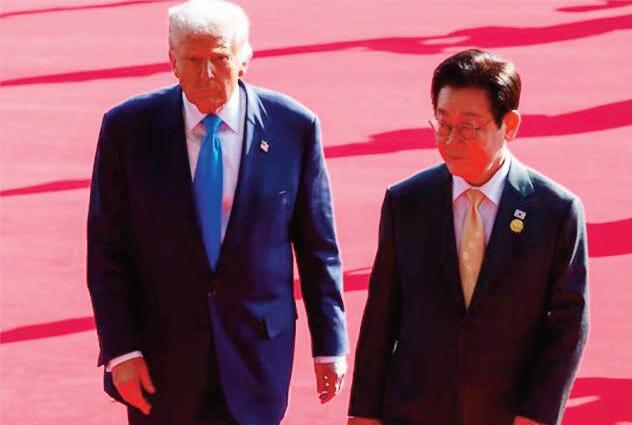
US, S outh Korea begin talks on nuclear cooperation and submarine plan
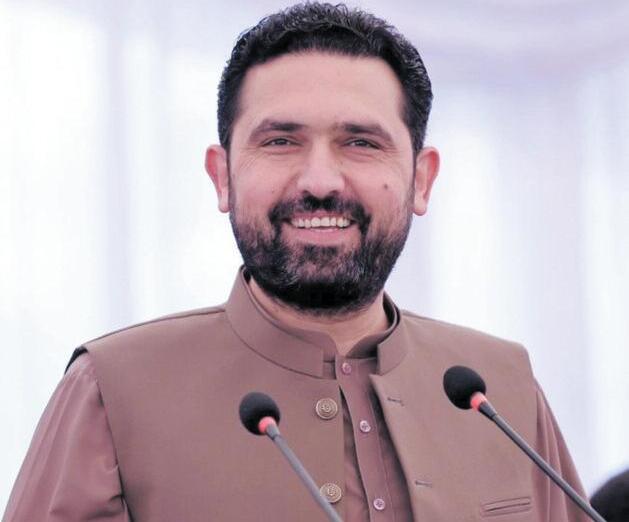
Ibrahim Hasan Murad holds key meeting with Punjab CM’s Advisor on Special Initiatives Ali Dar
LAHORE S TA F F R E P O R T
Chairman of the University of Management and Technology (UMT) and former Provincial Minister Ibrahim Hasan Murad held an important meeting with Ali Dar Advisor to the Chief Minister of Punjab on Special Initiatives at the Office of AI and Special Initiatives Punjab The meeting focused on a wide range of issues related to artificial intelligence (AI), emerging technologies, digital transformation, innovation and future economy in Punjab The discussion also covered strategies for enhancing the digital capabilities of young people promoting future-oriented education strengthening research activities, and accelerating technological advancement Both sides agreed on the importance of fostering effective collaboration among government institutions, universities, and industry stakeholders to advance AI initiatives and equip the younger generation with globally competitive skills During the meeting Ibrahim Hasan Murad emphasized that the effective use
She said the arrival of Pakistan Muslim League-Nawaz (PML-N) leader Nawaz Sharif in GilgitBaltistan had significantly transformed the
and energised party supporters Azma Bokhari stated that the immense love respect and
Sharif in Gilgit reflected the gen-
Gilgit-Baltistan continued to hold Nawaz Sharif in high regard and
development prosperity and public service
She further said the people of Gilgit-Baltistan were fully aware that major development projects and public welfare initiatives in the region were delivered during PMLN governments In contrast, she maintained that other political parties had failed to meet public expectations despite repeated promises
The
UoG unveils MY UoG app, Smar t Assist to enhance student ser vices
GUJRAT S TA F F R E P O R T
The University of Gujrat has launched the MY UoG app and UoG Smart Assist, designed to provide students with seamless access to academic and administrative services The initiative reflects the varsity’s commitment to leveraging technology for student convenience making admissions and campus services more accessible than ever before A meeting chaired by Vice Chancellor Prof Dr Zahoorul Haq, Tamgha-e-Imtiaz, was held at Hafiz Hayat Campus on Monday where heads of departments and chairpersons were briefed on the new platforms He described the app and SmartAssist as a milestone in delivering integrated facilities to students and parents alike Director IT Zahid Raza highlighted that the development of both platforms was entirely a student-led project Teams from Computer Science, Information Technology and Management Sciences collaborated to design and
KARACHI S TA F F R E P O R T
spanning enterprise software digital transformation, AI innovation, and regional business growth across Asia, Europe, and beyond He has built and led high-performing multinational teams, turned underperforming markets into growth stories and done so consistently across some of the most demanding commercial environments in the world Ahmed Al-Faifi SVP & MD MEA North says, We are delighted to welcome Saqib back His extensive regional leadership experience, deep understanding of growth markets, and strong track
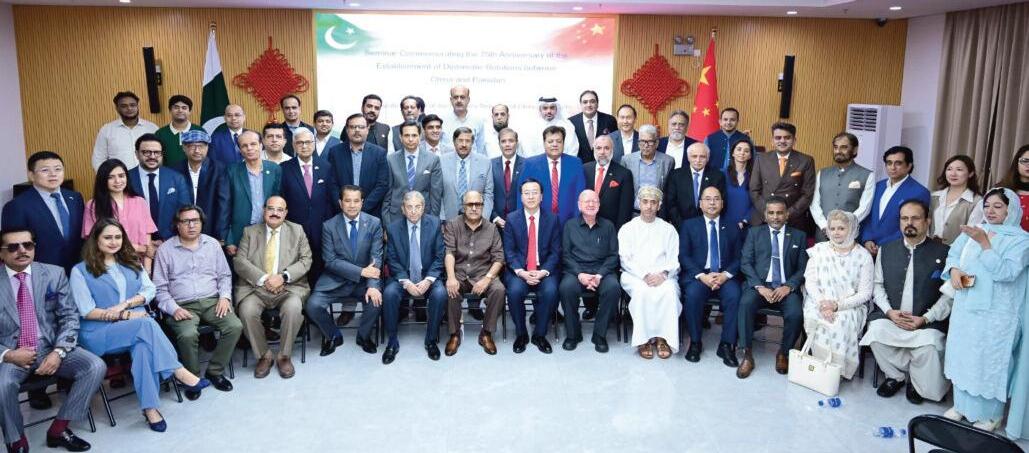
The Consulate General of the People s Republic of China in Karachi has organized a seminar to commemorate the 75th anniversary of the establishment of diplomatic relations between Pakistan and China highlighting the longstanding partnership and expanding cooperation between the two countries The event was attended by Chinese Consul General Yang Yundong, Director General of the Ministry of Foreign Affairs Liaison Office Karachi Irfan Soomro
Addressing the seminar Consul General Yang Yundong described China-Pakistan relations as a model of peaceful coexistence, strategic trust and mutually beneficial cooperation He said the friendship between the two countries had withstood the test of time and evolving international circumstances Reflecting on his more
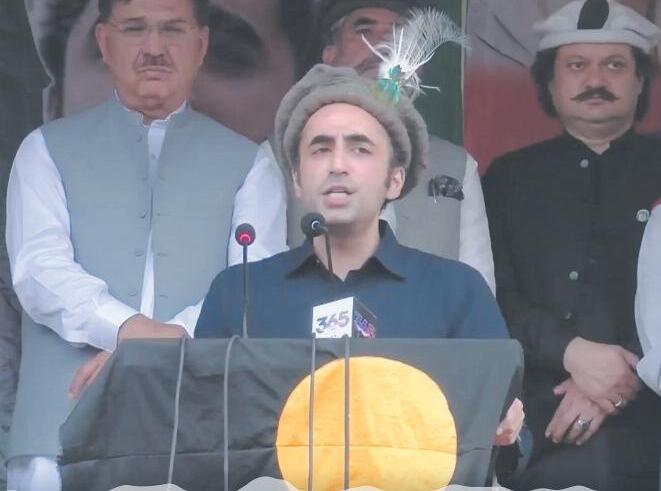
BIL AWAL CL AIMS PPP WILL FORM GOVT IN
AFTER JUNE 7 POLLS, CALLS FOR ‘JIYAL A
when PPP forms government in GB we will ensure that the work is com-
pleted and as far as resettlement is concerned we will address it on an immediate basis, Bilawal said He urged the federal government to prioritise the construction of the dam, terming it not only the right of the people of Diamer but also a national necessity No project is more important for Pakistan at the moment than the Diamer-Bhasha Dam, the PPP chairman said, calling on Prime Minister Shehbaz Sharif to expedite work on the project “We have heard of your ‘Shehbaz speed’ in Lahore please show your ‘Shehbaz speed to the people of Diamer as well and
ensure the project is completed he quipped In April the Diamer-Bhasha Dam landaffected committee,
the state prosecutor contended that the prosecution had presented overwhelming and irrefutable evidence linking the convicts to the crime He argued that the trial court had carefully examined all available evidence before reaching its conclusion and that there were no legal grounds to interfere with the judgment The prosecutor requested the court to uphold the convictions and sentences asserting that the trial court’s decision was fully supported by the record After hearing arguments from both sides the division bench dismissed the appeals and maintained the sentences awarded by the antiterrorism court The case relates to the shocking motorway gang rape incident that occurred in September 2020 and triggered widespread public outrage across Pakistan The convicts were found guilty of gang-raping a French woman of Pakistani origin in front of her three children after allegedly dragging her from her vehicle when it ran out of fuel during a latenight journey on the Sialkot-Lahore Motorway The incident sparked nationwide condemnation and renewed debate over women’s safety law enforcement performance and criminal justice reforms Public anger intensified after controversial remarks by the then Lahore police chief, which were widely criticised for appearing to place responsibility on the victim Following the incident, Gujjarpura police registered a first information report (FIR) on September 9 2020 under various provisions of the Pakistan Penal Code and the Anti-Terrorism Act 1997 The case was investigated on a priority basis leading to the arrest and subsequent conviction of the two accused by an anti-terrorism court in March 2021
ISLAMABAD:
Khyber Pakhtunkhwa (KP) Chief Minister Sohail Afridi on Wednesday approached the Islamabad High Court (IHC), seeking permission to meet Pakistan Tehreek-eInsaf (PTI) founder Imran Khan to discuss the province s budget for the fiscal year 2026-27
Speaking to reporters outside the court alongside KP Finance Adviser Muzammil Aslam, Afridi said the provincial budget had already been prepared and required final consultation with the PTI founder before being presented He stated that the people of KP had elected the PTI based on Imran Khan s vision and policies, making it essential for the provincial government to seek his guidance on key budgetary decisions
“We want to consult our leader Imran Khan before presenting the budget and ensure that it reflects his vision and the mandate given by the people Afridi said The chief minister also voiced concerns regarding Imran Khan s health,
claiming that his eyesight had deteriorated significantly He criticised restrictions on the former premier s access to medical treatment family members legal counsel and party leaders Afridi termed the denial of meetings and limited medical access as unjust, stressing that Imran Khan should be granted all rights available under the law
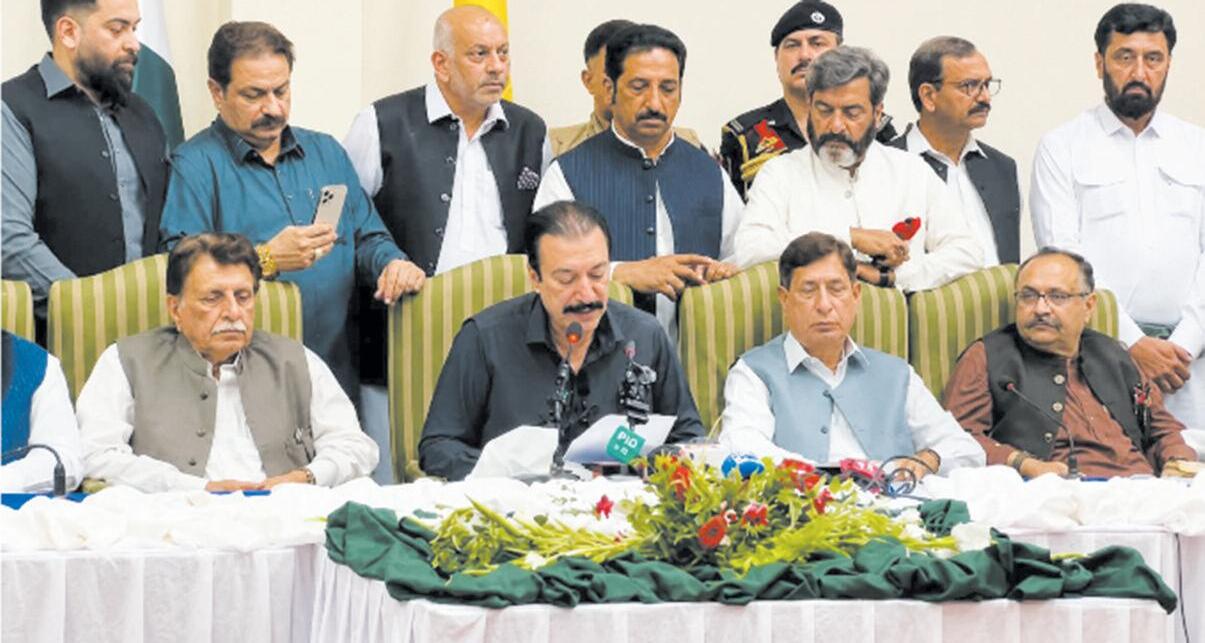
MUZAFFARABAD a p p An All parties Conference (APC) held here on Wednesday to formulate a joint strategy and opinion regarding demands of joint Awami Action Committee (JAAC) including abolishing the refugee seats in the AJK legislative Assembly has unanimously rejected the top-most demand saying the decision in this regard can only be taken through legislative representatives in the Assembly The conference attended by almost all political and religious parties of the region except Pakistan Tehreek- e – Insaaf (PTI ) and JAAC leadership who boycotted despite having invitation to attend lasted for more than six hours and a joint statement was red out by Prime Minister Faisal Mumtaz Rathore before the media persons Faisal said the moot deliberated the issue in detail and decided in the larger interest of public and Kashmir liberation movement to
Centre notifies revised business hours under austerity measures