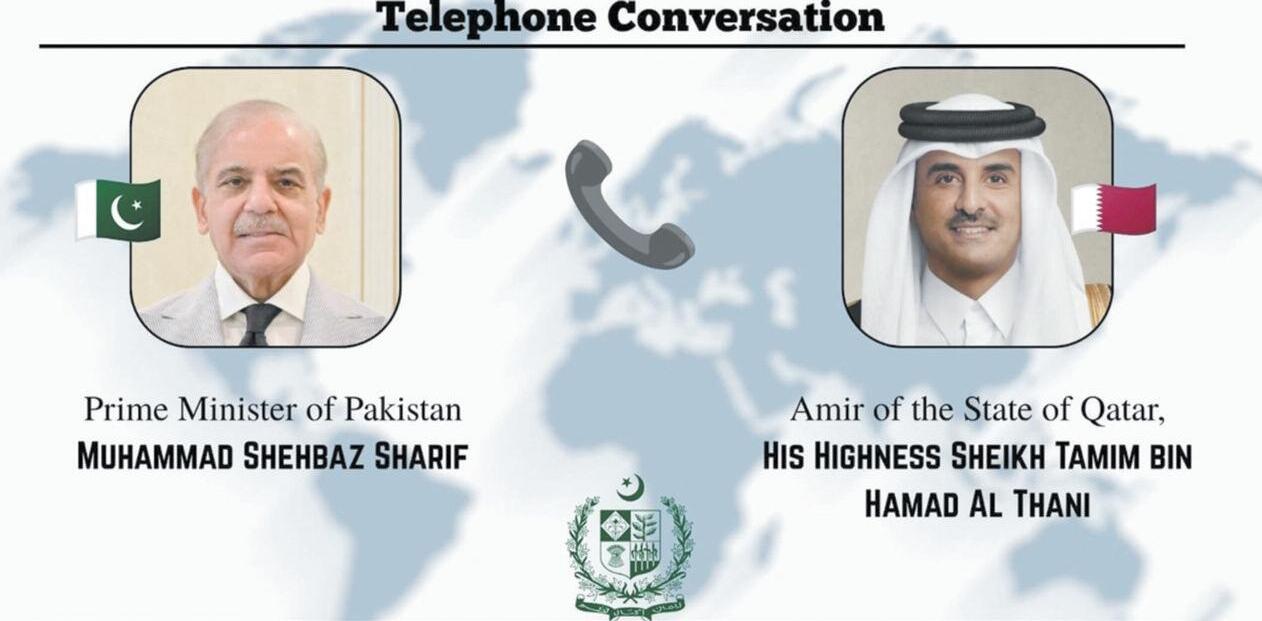
g PM SHEHBAZ, QATARI EMIR EXPRESS SATISFACTION AT 'POSITIVE PROGRESS' IN US -IRAN TALKS, AGREEING TO SUSTAIN MOMENTUM
g PM SHEHBAZ, QATARI EMIR EXPRESS SATISFACTION AT 'POSITIVE PROGRESS' IN US -IRAN TALKS, AGREEING TO SUSTAIN MOMENTUM
g SHEIKH TAMIM CONGRATULATES PAKISTAN ON DIPLOMACY LEADING TO ISLAMABAD MOU A S QATAR INTENSIFIES REGIONAL DIPLOMACY WITH FRESH TALKS ON STRAIT OF HORMUZ
g PM CREDITS FIELD MARSHAL A SIM MUNIR AND FRIENDLY NATIONS FOR ADVANCING PROCESS, SAYING LAKE LUCERNE SUMMIT PAVED WAY FOR FURTHER US-IRAN TECHNICAL NEGOTIATIONS
g LEADERS REAFFIRM COMMITMENT TO CONTINUED DIALOGUE AND REGIONAL PEACE EFFORTS
thanked the Qatari leadership for its continued support throughout the peace process and acknowledged the contributions of Field Marshal Syed Asim Munir and other friendly countries including Qatar in advancing diplomatic efforts
R t Prime Minister Muhammad Shehbaz Sharif on Wednesday hailed the international recognition earned by Pakistan’s Hajj 2026 arrangements, describing the honours conferred by Saudi Arabia as a matter of pride for the entire nation and a testament to the government’s sustained efforts to improve services for pilgrims Speaking during a meeting with officials of the Ministry of Religious Affairs and recipients of prestigious Saudi awards for Hajj services, the prime minister said the global acknowledgment of Pakistan’s Hajj management reflected the
RAWALPINDI S ta f f
S
n d
n t Chief of Defence Forces and Chief of Army Staff Field Marshal Syed Asim Munir on Wednesday held talks with Lieutenant General Saddam Haftar, Deputy Commander-in-Chief of the Libyan Arab Armed Forces, to review bilateral defence
professional exchanges and security cooperation The discussions reflected the growing strategic engagement between Pakistan and Libya and the shared desire to deepen institutional ties between their armed forces Field Marshal Asim Munir reaffirmed Pakistan s commitment to promoting peace stability and constructive engagement with friendly countries He highlighted the Pakistan Armed Forces
in supporting regional security and fostering
partnerships based on mutual respect and shared interests According to the ISPR the army
emphasised the importance of sustained cooperation in addressing evolving security challenges and enhancing defence capabilities through collaboration and dialogue




The Competition Commission of Pakistan (CCP) on Tuesday approved the proposed acquisition of the entire shareholding of BASF Pakistan (Private) Limited by UAE-based Kemyion Chemical Solutions Trading FZCO after a Phase-I review under the Competition Act 2010 Kemyion Chemical Solutions Trading FZCO submitted a premerger application to the Commission under Section 11 of the Competition Act, 2010, seeking approval to acquire 100% shareholding of BASF Pakistan (Private) Limited from BASF SE Germany The acquisition is being carried out under a Share Purchase Agreement dated November 18, 2025
Following its competition assessment the Commission authorised the transaction under Section 31(1)(d)(i)
of the Act, according to a CCP press release Kemyion Chemical Solutions Trading FZCO is a UAE-based company authorised to trade in acids alkalis, basic industrial chemicals, construction chemicals, insecticides, petrochemicals, and plastic and nylon raw materials BASF Pakistan (Private) Limited is engaged in the indenting and merchandising of chemical products including colourants catalysts solvents, oxo alcohols and process chemicals The seller, BASF SE, is a German multinational chemical company and the parent entity of the BASF Group During its review the Commission assessed the likely impact of the transaction on competition in the relevant market
The relevant product market was identified as the trade of chemicals, including specialty and industrial chemicals while the relevant geo-
graphic market was determined to be Pakistan
The Commission observed that the acquiring company is not currently operational in Pakistan and does not generate revenue or own assets in the country
It said the transaction would not result in any material change in market concentration
The assessment further found that the combined market share of the merger parties would remain unchanged and insignificant after completion of the transaction
The Commission concluded that the proposed acquisition would not create barriers to entry or significantly enhance the market power of the merger parties
It also found no basis to conclude that the transaction would substantially lessen competition or create or strengthen a dominant position in the relevant market
CONTINUED FROM PAGE 01
The meeting was attended by Minister for Religious Affairs and Interfaith Harmony Sardar Muhammad Yousaf Minister for Inter-Provincial Coordination and Adviser to the Prime Minister Rana Sanaullah Secretary Religious Affairs Abrar Ahmed Mirza DG Hajj Abdul Wahab Soomro, Chief Executive Officer of Al-Meraj Organizer Muhammad Affan Zeeshan, CEO of Ibrahim Organizer Muhammad Shahid Rafique, and CEO of Al-Fatah Organizer Zaeem Akhtar Siddiqui
The prime minister congratulated all three organizers and the DG Hajj on receiving the awards and commended their outstanding performance He also appreciated Minister for Religious Affairs and Interfaith Harmony Sardar Muhammad Yousaf, along with the officers and staff of the ministry for ensuring
2025 and Pakistan Vision 2030, recognise the importance of biotechnology Under NABP-2025 agricultural biotechnology has been divided into regulated and non-regulated areas
The regulated areas include the development and commercialisation of genetically modified organisms, gene editing, import and export of GM products and recombinant vaccines for animals
Further consultations were held with provincial secretaries on June 2 2025 Additional consultations on animal biotechnology and meetings with private sector stakeholders were held on June 27, 2025, to support implementation of the policy
The Cabinet was informed that the Prime Minister had approved submission of the summary under Rule 17(1)(a) of
in Qatar At least 13 people were killed and 66 others injured in the incident which Qatari authorities attributed to a technical malfunction Twelve of those who died were Indian nationals PM Shehbaz also appreciated the Qatari leadership for its generous hospitality towards the large Pakistani community residing in Qatar Reaffirming the importance Islamabad attaches to its close and brotherly relations with Doha the prime minister said Pakistan looked forward to welcoming the Qatari emir later this year Earlier during talks in Islamabad with Iranian President Masoud Pezeshkian, who visited Pakistan on Tuesday, PM Shehbaz had acknowledged the Qatari emir s pivotal role in supporting the peace efforts He had also expressed appreciation for the steadfast support and encouragement extended by Saudi Arabia Turkiye and Egypt throughout the diplomatic process Key direct negotiations between the United States and Iran dubbed the Lake Lucerne Summit, were held on June 20-21 in Switzerland s Bürgenstock, marking the launch of talks under the Islamabad MoU The negotiations in the Swiss resort town were jointly facilitated by Pakistan and Qatar with Prime Minister Shehbaz Sharif and Chief of Defence Forces Field Marshal Syed Asim Munir representing Pakistan Under the 14-point
a mechanism for continued technical talks between Washington and Tehran, which are scheduled to continue this week In addition, the summit created a dedicated communication channel to prevent incidents and miscalculations in the Strait of Hormuz and agreed on the establishment of a “de-confliction
of a biotechnology industry in Pakistan and provide a unified direction for work on genetically modified products, gene editing, plant tissue culture, genomic research and animal biotechnology
The Ministry of National Food Security and Research informed the Cabinet that agricultural biotechnology is changing farming practices globally and that Pakistan has the scientific base, regulatory structure and research institutions needed to benefit from the sector However the ministry said Pakistan had not fully utilised the potential of agricultural biotechnology due to the absence of a comprehensive national policy framework The Cabinet was told that key policy documents, including the Science and Technology Policies of 2011 and 2024 the National Food Security Policy 2018 the National Seed Policy
The non-regulated areas mainly include plant tissue culture and genomic research Both categories have been prioritised according to national requirements
The Cabinet was informed that the Special Investment Facilitation Council during its 6th Executive Committee meeting held on October 23-24, 2023, directed the ministry to prepare a comprehensive GMO policy A committee headed by the Chairman of the Pakistan Agricultural Research Council was constituted on November 20 2023 to draft the policy After the initial draft, another committee led by the Chairperson of the National Seed Development and Regulatory Authority and comprising technical experts was assigned to


R A N I A N President Massoud Pezeshkian s visit to Islamabad on Tuesday on a one-day visit was his first to a foreign country after his country s war with the USA and Israel this year, and saw him acknowledging Pakistan s role in the crisis It was an irresistible reminder of the visit to Iran by Pakistani Shehbaz Sharif last year on 26 May in his first visit ito a foreign country after the 2025 confrontation with India in which he thanked Iran for its support It is of some significance that Iran entertains such warm feelings for Pakistan even though it was also close enough to the USA to act as a mediator in the conflict a role which is by no means over as Iran and the USA engage in technical talks over its nuclear programme with Pakistan has one of the mediators Indeed Prime Minister Shehbaz Sharif and Chief of Defence Staff Field Marshal Asim Munir had landed in Islamabad in time to receive Pezeshkian after having been in Switzerland to attend the opening of the talks
One of the aspects that was discussed during the talks President Pezeshkian had with President Asif Ali Zardari, Mr Sharif and Field Marshal Munir was that of the need for a common Muslim front This should sound something of a warning bell, because there has been an increasingly vociferous Israeli attempt to drive a sectarian line of division between Shia and Sunni, with Iran representing the former and the Gulf monarchies the latter This does not take into account that Iran has been a steadfast supporter of Hamas, which is very much a Sunni group True, Hezbollah, with which Israel is so exercised, is a Shia group, and Iran did back the Assad regime, but when the opposition is Israel, unity becomes a necessity, especially when, as was noted during the talks, there were spoilers out to sabotage the peace talks
The search for security means that Sunni and Shia both have to rise above the sectarian division and work for unity The region is destabilized by the very presence of Israel It is more than obvious that it is only by working together that Muslims can ensure that they become masters of their own fate, rather than be subject to the whim of any outsider to the region

Dedicated to the legac y of late Hameed Nizami Arif Nizami (Late) Founding Editor
M A Niazi Editor Pakistan Today Babar Nizami Editor Profit
Syed TahiR RaShdi
ENJAMIN Franklin once said: When the well is dry we know the worth of water In Pakistan we see the worth of water before the wells even run dry We see it when the canals do not have water when farmers wait to plant their crops and when provinces argue about whether the water is being shared fairly This year the same old argument is back It is more intense than before Reports say that Sindh
and they will be more unsure about their future Agriculture is a part of Sindh s economy and it supports millions of people directly and indirectly When there is not enough water during the critical time for planting crops it affects a lot of people The problem is not just about water It is about trust
ing which means that they do not trust each other Water scarcity does not cause tension by itself It is the distrust that causes the tension When the provinces do not trust the people in charge of managing the water every decision becomes a problem Every time the canals are operated it becomes a controversy Every time there is
This change in the way people think deserves our attention
The Pakistan People s Party has governed Sindh continuously since 2008 During much of this period it has also exercised considerable influence within the federal political structure The party has held key constitutional offices maintained substantial parliamentary representation and remained an important stakeholder in national decision-making
This reality complicates the traditional narrative of perpetual victimhood
If Sindh s concerns regarding water allocations are as serious as provincial leaders repeatedly assert why do meaningful political interventions often emerge only after shortages have already disrupted agricultural activity? Why do protest letters frequently appear in June when concerns regarding water availability are evident months earlier? Why do annual expressions of outrage rarely translate into institutional reforms capable of preventing future crises? These questions are not partisan They are questions of governance These are not questions They are questions
lot of pressure For Sindh water is not an economic issue It is also a social and cultural issue The Indus River is a part of Sindh s history and identity People have been living along its banks for thousands of years The river helped create one of the first urban civilizations of the world and it still supports millions of people today It is no surprise that the arguments about water are emotional and go beyond technical discussions We need to look at this problem in an honest way The usual way of talking about Sindh s water problems is to blame the IRSA Punjab and the federal government More and more people in Sindh are asking their own leaders some tough questions
T h e e c o n o m i c t i m e b
o
m b
t
i c k i n g l o u d e r t h a n e v e r
largely misaligned with the demands of a modern economy Technical and vocational training is underdeveloped and poorly funded The formal private sector is not expanding fast enough to absorb the millions of graduates entering the job market each year Female labour force participation remains abysmally low at around 22 percent despite women making up nearly half the youth population Energy shortages, bureaucratic hurdles for startups, and political instability further compound the problem The federal budget offered a critical opportunity to confront this challenge head-on Allocating substantial resources to skill development, youth entrepreneurship funds, women s economic empowerment programmes, and labour-intensive industries could have sent a powerful message that the government recognizes the urgency Tax incentives for companies hiring fresh graduates, special economic zones focused on employment generation, and targeted support for small and medium enterprises could have begun to shift the needle However, the budget was not oriented in this direction Countries like South Korea, Vietnam, and
Bangladesh have shown that large youth populations can be transformed into engines of growth through deliberate, sustained policy choices Pakistan has the land, the labour, and the entrepreneurial spirit What it needs is the political will and strategic vision to turn its demographic reality into a genuine advantage
The youth of Pakistan are not asking for charity They are asking for opportunity They want an economy that values their talent, respects their aspirations, and rewards their hard work Giving them that opportunity is not just morally right, it is economically essential for the country s future
The budget this year will be judged not by how many trillions it allocates on paper, but by whether it begins to address the single most important question facing Pakistan today: will we invest in our young people and reap a demographic dividend, or will we continue with business as usual and face a demographic disaster?
The choice is ours The time to make it is now
The writer can be reached at rabiasundho19@gmail com
n c e o f t h o s e w h o s e l i v e s d e p e n d u p o n i t .



ON April 30, Pakistan marked a major milestone in its maritime history by inducting the advanced Hangor-class submarine into the Pakistan Navy during a high-profile ceremony held in Sanya, on China s Hainan Island
The choice of location highlighted the deep strategic partnership between Pakistan and China, reinforced by the presence of President Asif Ali Zardari as guest of honour alongside senior Chinese officials The unveiling of the first vessel symbolized both nations shared achievement and underscored the submarine s importance as a modern, highly capable addition to Pakistan s fleet
More than a routine acquisition, the Hangor class represents a transformative leap in naval capability, replacing aging assets with fourth-generation submarines designed for stealth, endurance, and high-threat environments These vessels strengthen Pakistan s ability to safeguard its sovereignty and maritime interests, particularly the security of critical economic assets like the ChinaPakistan Economic Corridor and Gwadar port, ensuring protection against threats such as blockades or maritime aggression
This development comes amid increasingly contested and strategically vital global sea lanes, especially in the Indian Ocean region, where trade, energy flows, and geopolitical tensions intersect The Hangor-class submarines enhance Pakistan s role in maintaining maritime stability by providing advanced capabilities such as long-duration submerged operations, intelligence gathering, mine-laying, and precision strikes Their stealth and deterrence value complicate adversaries strategies, forcing them to allocate significant resources to counter potential underwater threats
In a region marked by rivalry and naval competition, these submarines enable Pakistan
to protect key shipping routes and ports like Karachi, Port Qasim, and Gwadar, which are essential to its economy Equipped with air-independent propulsion systems, they can remain submerged for extended periods, offering persistent surveillance and defence, and forming a critical layer in a broader maritime security framework that deters aggression and ensures the continuity of trade and energy supplies
The name bestowed upon this new class of submarines, “Hangor” is not a random designation but a deliberate invocation of one of the most glorious and celebrated chapters in Pakistan’s naval history The name carries a weight of legend and valor that resonates deeply within the military and the broader national consciousness The first PNS Hangor (S-131), a Daphné-class submarine acquired from France, famously made history during the 1971 Indo-Pakistani War On the night of December 9, 1971, while patrolling in the Arabian Sea off the coast of Diu, the Hangor, under the command of Commander Ahmed Tasnim, detected the Indian frigate INS Khukri and its accompanying vessel, INS Kirpan In a textbook display of sub-surface warfare, the Hangor launched a spread of homing torpedoes, which struck the Khukri with devastating effect The frigate, a workhorse of the Indian Western Fleet, was torn apart and sank within minutes, taking with it 18 officers and 176 sailors, including its captain The Kirpan, realizing it was under submarine attack and lacking effective countermeasures, fled the area at full speed This singular action gave the Hangor the unique and enduring distinction of being the first submarine to sink a warship in combat since the end of World War II It was a feat of tactical brilliance, courage, and technological proficiency that shocked the Indian Navy and elevated the status of the Pakistan Navy on the world stage The sinking shattered the myth of Indian naval supremacy and demonstrated that a small, well-trained submarine force could inflict disproportionate damage on a much larger surface fleet
Now, the new submarine, officially designated PNS/M Hangor, is explicitly tasked with carrying forward this glorious tradition of silent service and decisive action This legacy is not merely symbolic; it is an operational doctrine in its own right The name serves as a constant reminder of the crew’s duty: to be stealthy, to be patient, to strike with lethal precision when the moment is right From a technical standpoint, the capabilities of the Hangor class are nothing short of revolutionary The vessel is approximately 75-80 meters long, displacing around 2,800 tons when submerged, making it significantly larger than the existing Agosta 90Bclass submarines Its most transformative feature is the integration of an Air-Independent Propulsion (AIP) system, likely based on Stirling-cycle or fuel-cell technology supplied or co-developed by China AIP allows a non-nuclear submarine to remain submerged for extended periods potentially up to two to three weeks without needing to surface to recharge its batteries
Traditional diesel-electric submarines must surface or use a snorkel to run their diesel generators, which makes them vulnerable to detection by radar, visual observation, or electronic surveillance With AIP, the Hangor class can operate almost like a nuclear submarine in terms of stealth and endurance, silently gliding at low speeds in deep waters, waiting for an opportune moment to strike, or carrying out long-range intelligence, surveillance, and reconnaissance (ISR) missions This capability is a game-changer in the Arabian Sea, where it reduces the effectiveness of aerial anti-submarine warfare patrols and surface ship sonar sweeps
The submarine is equipped with advanced sensors, including a highly sophisticated hull-mounted sonar array, a towed-array sonar for enhanced long-range detection, and optronic masts that replace traditional periscopes
These optronic masts, a key feature of
modern submarines, contain high-definition thermal imaging, low-light television, laser rangefinders, and electronic support measures, all of which provide a 360-degree panoramic view of the surface and air environment without requiring the mast to penetrate the surface for more than a few seconds
This drastically reduces the submarine’s radar cross-section and makes it nearly impossible to detect visually The integration of all these sensors into a network-centric combat management system, likely Chinese in origin but adapted to Pakistani link architecture, allows for rapid data fusion and decision-making, enabling the crew to manage multiple threats and targets simultaneously with phenomenal efficiency
The Hangor class features a bank of six or eight 533-millimeter heavyweight torpedo tubes, capable of firing a potent mix of munitions The primary anti-ship weapon is expected to be the Pakistani-Chinese Harba-class submarine-launched cruise missile, a derivative or parallel development to the land-attack cruise missiles already in Pakistan’s inventory These missiles can be configured with conventional high-explosive warheads and possess a range reported to be upwards of 450 to 700 kilometers This equips the Hangor class with a formidable land-attack capability, allowing it to strike strategic targets deep inside enemy territory from concealed offshore positions, acting as a sea-based second-strike option complicating an adversary’s targeting calculus For antiship warfare, the submarines will likely carry the advanced CM-708UNB submarinelaunched anti-ship missile, which features a turbojet engine for high subsonic cruise speed and a sea-skimming terminal flight profile, making it extremely difficult to intercept For close-range
The people of Pakistan feel, perhaps for the first time since 1971, that their navy is not just a coast guard or a defensive screen, but a true force in being, capable of projecting power, deterring aggression, and protecting the nationÊs economic future from the silent, unforgiving depths of the ocean The pride is not just in the steel and weaponr y, but in the strategic autonomy and national resolve it represents
Frutiger Aero, the last great visual language of tech optimism Karen Hao, author of Empire of AI, a scathing and influential chronicle of the industry’s early growth, recently helped launch the AI Resist List, an online directory that helps people push back Some organizations are teaching people how to poison their data so it can’t be used for AI training, others are helping workers organize labor coalitions Together, it’s a political and cultural response to a technology being deployed faster than the public can understand it or meaningfully consent to it The industry is starting to take notice In a blogpost this month, Microsoft President Brad Smith responded to graduates booing commencement addresses that mentioned AI, calling it “a powerful wake-up call for the tech sector ” Young people usually lead the adoption of new technologies, he added, so when they recoil, the industry should pay attention Smith is correct; Gen Z has lived with algorithmic life longer than anyone else They know what it feels like to have attention harvested and their social lives optimized for engagement They’ve also seen how quickly convenience becomes dependency Perhaps waiting as long as possible before using AI is a good thing It’s easy to outsource homework, essays and even thinking itself But the struggle is the point for developing brains Wrestling with a problem is how you learn judgment, taste, resilience and all the problem-solving skills required to thrive in this time of rapid change To his credit, Smith is doing what the industry badly needs to do more of He’s trying to have a human-sounding conversation about AI He pointed to real, even life-saving, applications, including firefighters in California turning to AI to spot wildfires and teams in Ukraine using it to remove landmines These examples matter: The ways the technology is being used to improve medicine, disaster response and accessibility is a much better selling point than pretending it’s conscious But do these useful applications justify their compulsory adoption everywhere else? Young consumers are saying no That distinction matters for the tech industry Silicon Valley’s favorite argument is that resisting its version of progress means rejecting progress itself The inevitability rhetoric sure is a convenient way to flatten debates about labor, copyright, creativity, deepfakes and environmental costs The new wave of AI resistance tech rejects that fatalism It says people should still get to choose the tech they use and the attention and data they give away Is the AI resistance doomed against the tens of billions of dollars being poured into the revolution? Probably Long live the AI resistance
Catherine Thorbecke is a Bloomberg Opinion columnist covering Asia tech
to position themselves as regional hubs for the next generation of economic activity This strategy is not accidental Data centres require three resources that Gulf states possess in abundance: energy capital and strategic location As demand for AI infrastructure accelerates these advantages may become increasingly valuable The region that once






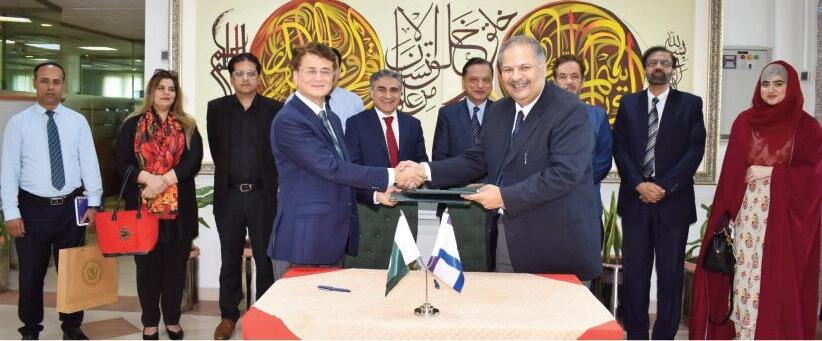
COMSATS Universit
ISLAMABAD S TA F F R E P O R T
COMSATS University Islamabad (CUI) and the Public Procurement Regulatory Authority (PPRA) have formalized a strategic partnership to strengthen professional capacity in Pakistan s public procurement sector through the development of specialized certificate and diploma programmes The Memorandum of Understanding (MoU) was signed at CUI s Islamabad Campus today, by Mr Hasnat Ahmad Qureshi, Managing Director, PPRA, and Dr Faheem A Qureshi
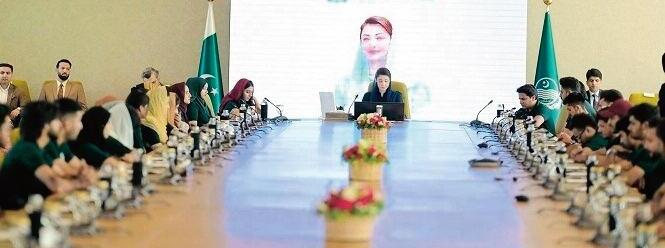
Maryam

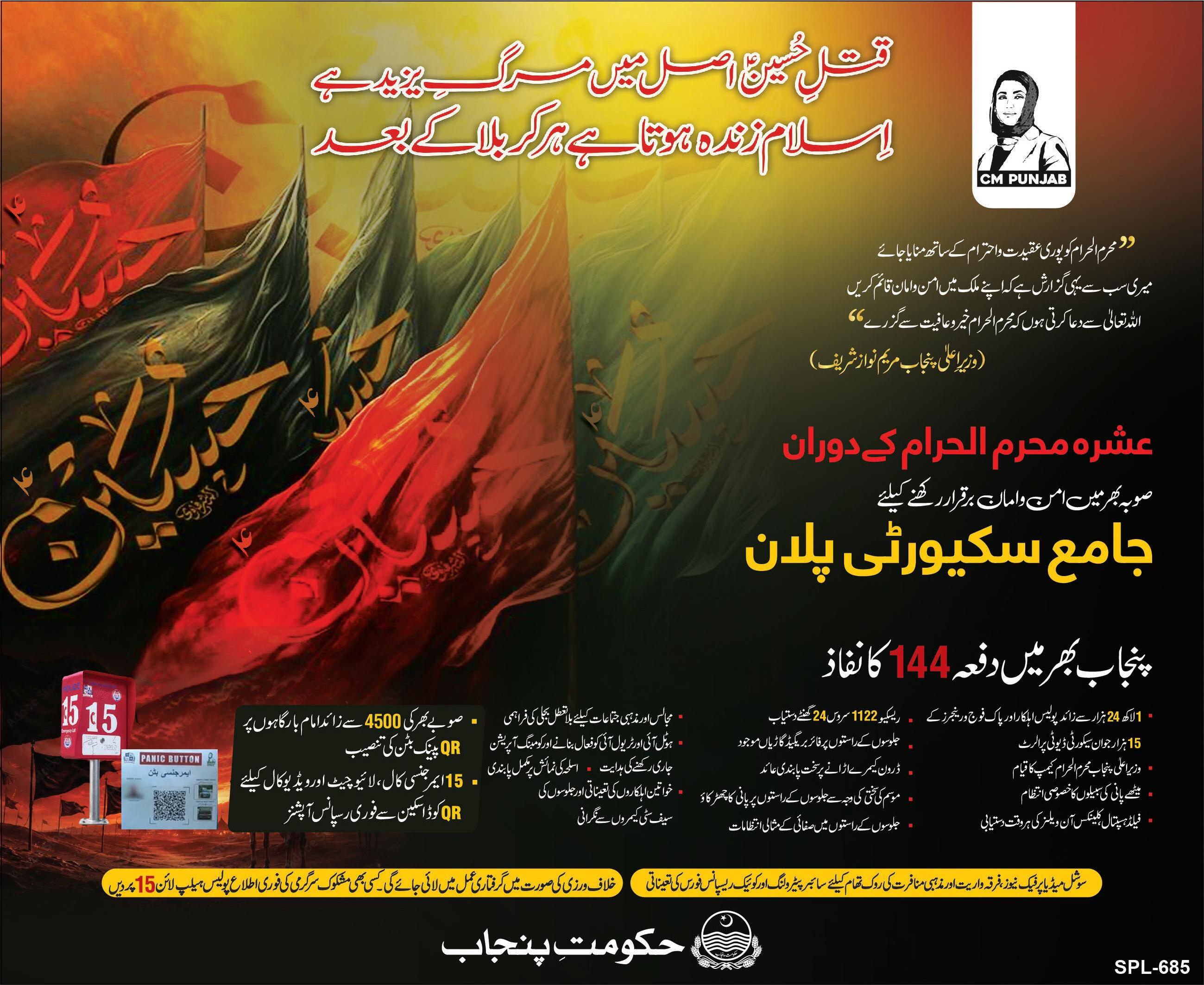
Punjab Minister for Information and Culture Azma Bokhari met with organizers of Majalis and Muharram processions in Faisalabad Provincial Minister Bilal Akbar Special Assistant Zeeshan Malik the Commissioner Faisalabad RPO Sohail Sukhera and other relevant officials were also present during the meeting Representatives of the Majalis and procession organizers included Jafar Naqvi Syed Iftikhar Naqvi Hasnain Shirazi Muhammad Qasim Tasadduq Hussain Abbas Haider Mumtaz Hussain Agha Mehndi, and Ammar Ali The organizers thanked Punjab Chief Minister Maryam Nawaz for ensuring the provision of facilities and effective arrangements during Muharram-ul-Haram
Speaking on the occasion Azma Bokhari stated that officers
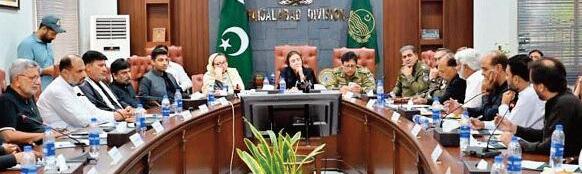
of the Punjab Police and district administration remain in continuous contact with organizers of Majalis and processions to ensure that mourners receive every possible facility and support She emphasized that the peaceful conduct of Ashura processions and religious gatherings remains the Punjab Government s foremost priority, and all necessary arrangements have been finalized in this regard She further stated that special arrangements are being made for mourners including the provision of cold drinking water and other essential facilities, while a substantial police force has been deployed to ensure the security of Majalis
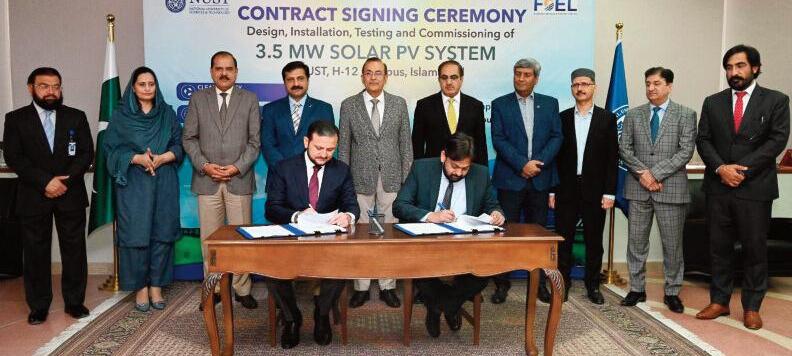
and processions
Azma Bokhari praised the exemplary harmony among scholars and religious leaders of all schools of thought noting that this spirit of unity and brotherhood is playing a vital role in maintaining peace and public order across the province
The Information Minister added that it is encouraging to see the organizers expressing satisfaction with the government's measures and arrangements She reaffirmed that the Punjab Government will continue to fulfill its responsibilities with dedication to protect the lives and property of citizens and to promote religious harmony throughout Muharram-ul-Haram
LAHORE
S TA F F R E P O R T
Punjab Inspector General of Po-
lice (IGP) Abdul Kareem on Wednesday ordered the strictest security measures across the province ahead of Ashura Muharramul Haram, directing law enforcement agencies to remain on high alert and take decisive action against any attempt to incite sectarianism religious hatred or disrupt public order
Chairing a high-level meeting at the Central Police Office to review security arrangements for Ashura, the Punjab Police chief stressed the need for strict enforcement of Section 144 the code of conduct and standard operating procedures (SOPs) to ensure peaceful observance of the occasion
The meeting reviewed in detail the security plan for majalis and mourning processions to be held during Ashura across the province Additional IG Operations Punjab Muhammad Ali Nekokara briefed participants on province-wide security arrange-
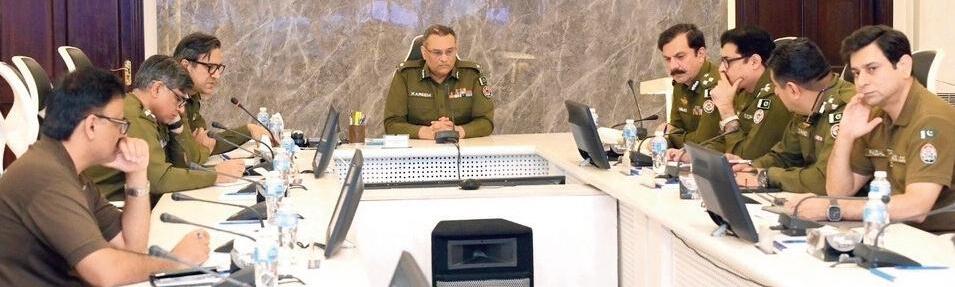
ments operational preparedness and field deployments
IGP Abdul Kareem directed that all security arrangements be finalized well before Ashura through close coordination with procession organizers administrators of majalis religious scholars and other stakeholders He ordered police officers to foil any attempt by antisocial and anti-peace elements to create sectarian divisions spread religious hatred or undermine law and order
The Punjab Police chief instructed senior officers to personally inspect procession routes, imambargahs, and security and traffic arrangements He also directed authorities to remove encroachments and ensure timely completion of road repairs street lighting, and other civic measures in coordination with district ad-
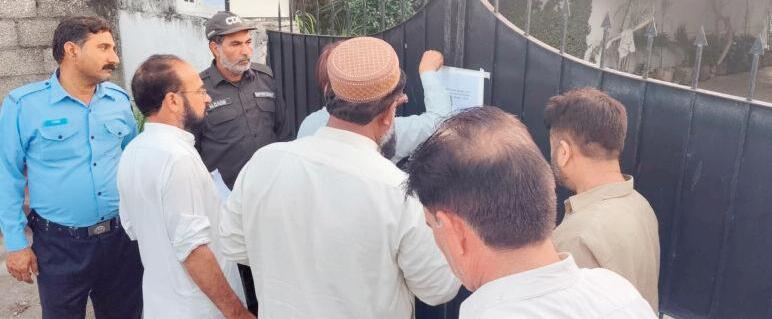
ministrations
He said Regional Police Officers (RPOs), City Police Officers (CPOs), and District Police Officers (DPOs) should remain in constant contact with peace committees religious scholars from all schools of thought and organizers of majalis and processions to promote inter-sect harmony and resolve issues proactively The IGP further directed that additional personnel be deployed at sensitive locations and that CCTV cameras metal detectors and walk-through gates be utilized effectively


Asif Fazlur Rehman said the defence minister s remarks were inappropriate and risked aggravating the situation further "You have handed fighting to Khawaja Asif and reconciliation to Ishaq Dar," he said referring to the government’s handling of the issue
Fazlur
met with force solely on the basis of demonstrators speeches
Chairman Federal Board of Revenue (FBR) and the entire economic team in preparing the budget according to a Prime Minister s Office news release Prime Minister Shehbaz Sharif said the government had fulfilled its pledge to provide meaningful relief to the salaried class, the business community, and ordinary citizens through the new budget He described the efforts of the economic team as commendable and appreciated their dedication in formulating a balanced financial plan under challenging economic conditions “The benefits of improving economic
He also welcomed the committee’s decision to defer its planned march towards Muzaffarabad adding that he had responded to its letter through a video message B
Bilawal Bhutto Zardari, whose party is part of the ruling coalition at the Centre, sharply criticised some federal ministers, saying they were creating problems for the prime minister instead of helping resolve them
He questioned why there were ministers making remarks that people from Rawalakot were not Kashmiris, and said the minister concerned had still not apologised He said one federal minister had worsened the matter instead of calming it down and urged Prime Minister Shehbaz Sharif to rein in his team Bilawal also said Maulana Fazlur Rehman should be given room to play a mediating role in resolving the dispute
During his speech, Bilawal also turned to Karachi’s local government system and asked whether the MQM-P valued Karachi more than its political seats He challenged
coalition partners to seek for Karachi the same municipal
had been made to maximize public relief in the budget They thanked the prime minister for his active involvement throughout the budget preparation process and acknowledged his consistent directives to prioritize public welfare, engage extensively with stakeholders, and personally oversee
they said triggered the fresh movement of families out of the area Separately, a jirga of Sturikhel
rity forces according to residents and local sources The displacement has affected families from the Sturikhel area near the boundary between Khyber and Orakzai districts Residents said people from Meero Darra Sal Gazai Sawi Kot and Parrwan villages were among those forced to move because of round-the-clock
instead of getting caught in the fighting between terrorists and security forces " esidents also told Dawn that militants tried to use civilians as human shields during the unrest Some said armed groups had arrived in Bara from Tirah valley in recent days
According to people in Bara most displaced Sturikhel families have moved in with relatives in the town while others have gone to Peshawar, where they either own homes or live in rented accommodation
Sources in the area said the latest clashes in Sturikhel began after security forces launched intelligencebased operations there The fighting