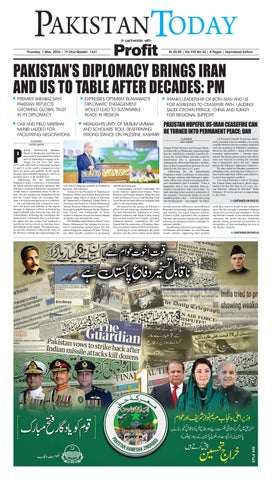
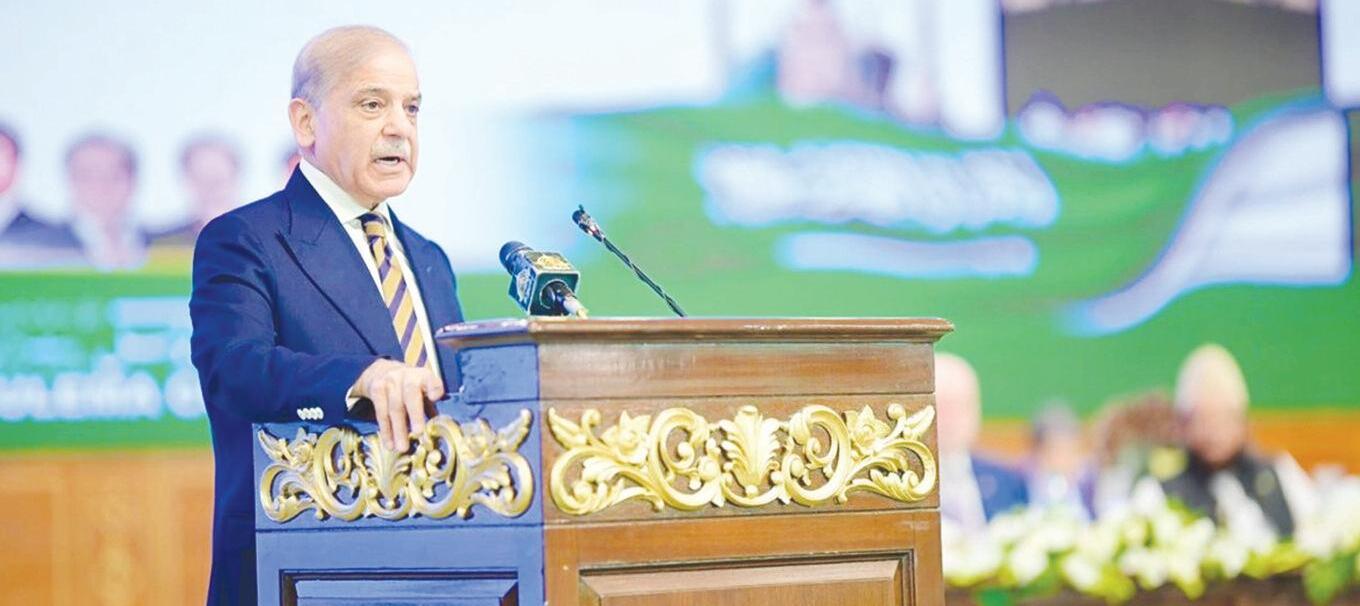
Pa k i s ta n ’ s d i P lo m a c y b r i n g s i r a n a n d U s t o ta b l e a f t e r d e c a d e s : P m
g PREMIER SHEHBAZ SAYS PAKISTAN REFLECTS GROWING GLOBAL TRUST IN ITS DIPLOMACY
g DAR AND FIELD MARSHAL MUNIR LAUDED FOR FACILITATING NEGOTIATIONS
g EXPRESSES OPTIMISM ISLAMABAD ’S DIPLOMATIC ENGAGEMENT WOULD LEAD TO SUSTAINABLE PEACE IN REGION
g HIGHLIGHTS UNITY OF MUSLIM UMMAH AND SCHOLARS ’ ROLE, REAFFIRMING STRONG STANCE ON PALESTINE KA SHMIR
g THANKS LEADERSHIP OF BOTH IRAN AND US FOR AGREEING TO CEA SEFIRE PATH, LAUDING SAUDI CROWN PRINCE, CHINA AND TURKEY FOR REGIONAL SUPPORT
to supporting Pakistan through financing technical expertise and sustained engagement
Dedicated
attention to interna-
Utional tax planning has disrupted the foundations of the most important players in global tax policy design Leaders of strongest economies require a revision of the rules of the international tax regime that would increase tax revenue for the challenging time to restore the public trust in the system The OECD Base erosion and profit shifting initiative is an important
In Pakistan, the digital economy has grown over time; many social media platforms earn money without paying tax in source income countries. The current tax treaty provision does not address this issue. Therefore, there is a need to update the tax treaties by revising the definition of PE (permanent establishment), which covers digital service taxation, to ensure fair tax revenue distribution. This reform could help Pakistan collect more tax revenue through multinational digital services.
U n i t y i n C o m b a t
MO D E R N war requires disciplined forces that operate to create synergies The subject has been extensively discussed and debated by academics and military strategists worldwide Dwight D Eisenhower, a former President of the USA, is one such strategist who asserted that, “Separate ground, sea, and air warfare is gone forever If ever again we should be involved in war we will fight it in all elements with
centrated effort It is against
backdrop that the
witnessed an
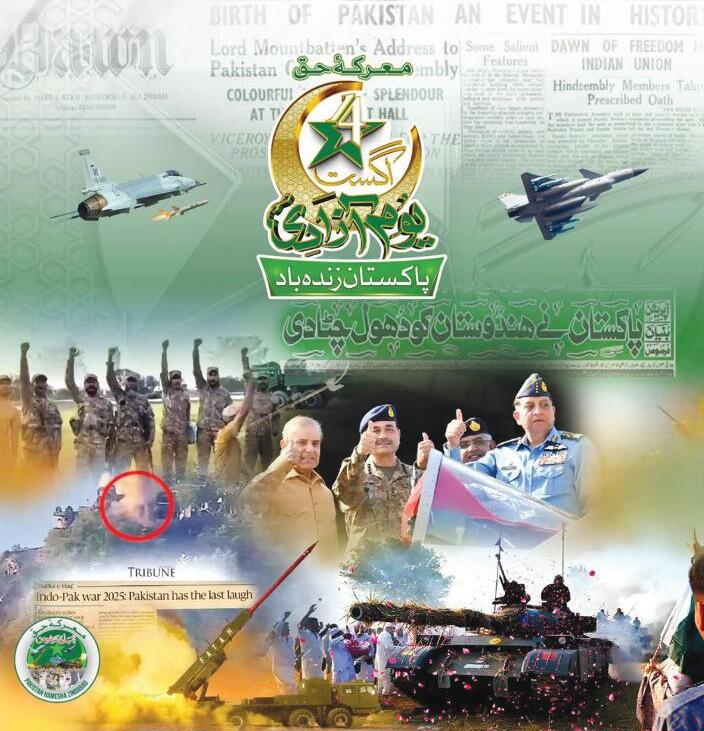
exhibition of interoperability between the Pakistan Air Force and the Pakistan Army during Marka-eHaq in May 2025 Interoperability among the Pakistan Armed Forces has existed for a long time The 1965 and 1971 Pakistan-India wars provided ample examples in which different services of Pakistan s Armed Forces, particularly the PAF and Pakistan Army, operated in synergy to achieve joint objectives However, this interoperability was not institutionalised until 1976 when Pakistan established the Joint Chiefs of Staff Committee It was essentially an administrative body of high-ranking uniformed military leaders, whose main role was to advise the government and to streamline interoperability among the sister services In addition to the JCSC interoperability w
down through joint efforts by the PAF and the Pakistan Army The PAF Air Defence Command worked in coordination with the Army Defence Units to engage and disable the Indian UAVs The former used its cyber command and space assets together to counter the
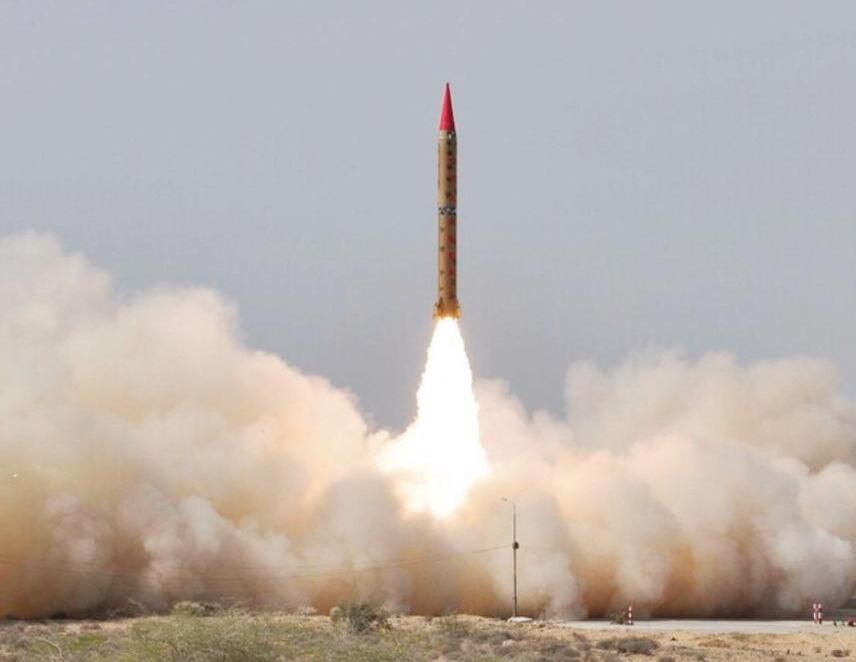
entering Pakistan’s airspace Having failed in drone warfare the Indians became increasingly frustrated which led them to commit a miscalculation of the decade: launching an attack on PAF airbases with Brahmos missiles during the night of 9 and 10 May In the wake of these attacks, India crossed the red line and evoked the full weight of Pakistan’s retaliation in the shape of Bunyan-ul-Marsoos when the PAF in close coordination with the Pakistan Army launched retaliatory strikes in a stunning display of interoperability This retaliation concurrently employed PAF air assets alongside Fatah-1 and Fatah-2 short-range ballistic missiles These coordinated strikes targeted at least 18 Indian air bases a command and control (C2) centre two BrahMos storage facilities and two S-400 air defence batteries, along with other military targets such as many field supply depots, brigade headquarters, intelligence centres, and so on The intensity of these coordinated retaliatory strikes was such that it forced India to seek a ceasefire via the USA which came on 10 May 2025 and brought an end to what is regarded now as the Four-Day War India, however, is unlikely to remain idle
after witnessing such interoperability from Pakistan They have already drawn lessons from the war as evidenced by the recently unveiled Defence Forces Vision 2047 under which India has ramped up its efforts to streamline joint operations through the establishment of integrated theatre commands and greater inter-service coordination
However to India’s dismay Pakistan has already taken proactive steps to further strengthen interoperability among its armed forces The establishment of the office of the Chief of Defence Forces in December 2025 was a key step in this regard, aimed at introducing a unified command structure across the armed services Moreover, there has been a strong willingness on the part of all three services to engage more deeply in joint exercises and command integration discussions after the war which will further strengthen Pakistan s interoperability framework
Marka-e-Haq not only showcased coordination between the PAF and the Pakistan Army but also reflected the maturation of Pakistan’s joint warfighting ethos under real combat scenarios More importantly the experience has not been treated as a one-off success; rather its lessons have been internalised, as a result of which Pakistan today seems better positioned to anticipate and pre-empt any potential misadventure by the adversary
The writer is a Research Assistant at the Centre for Aerospace and Security Studies (CASS) Lahore and can be reached at info@casslhr com
Munitions, markets and the politics of war


arithmetic does That constraint applies on both sides though differently The USA depends on exquisite systems expensive limited slow to replace Iran leans on volume and asymmetry Cheaper drones Simpler missiles Tools designed not necessarily to win outright, but to exhaust, to saturate, to impose cost It is a contest between precision and persistence Between quality and quantity History suggests neither side enjoys a monopoly on success in such contests The Germans learned that in 1944 when Allied industrial output overwhelmed tactical brilliance The USA learned something similar albeit more slowly in Vietnam and later in Iraq where technological superiority struggled against adversaries willing to stretch time and cost Time, in fact, is the hidden variable The side that manages it better usually prevails Or, more accurately, survives long enough to redefine victory Then there are markets They react faster than armies move and care little for strategic narratives Investors are not interested in who controls which piece of territory; they care about stability, predictability, and risk The moment those erode, capital begins to shift quietly at first, then all at once Energy is the obvious fault line Disruptions in the Persian Gulf ripple outward with unnerving speed Oil prices rise Shipping routes adjust Insurance premiums spike But the secondary effects are more consequential Fertilizer costs increase Food prices follow months later Inflation, once contained, begins to stir again Modern economies are tightly coupled systems Tug at one thread energy and the entire fabric shifts Aviation reroutes Supply chains lengthen Manufacturing slows And
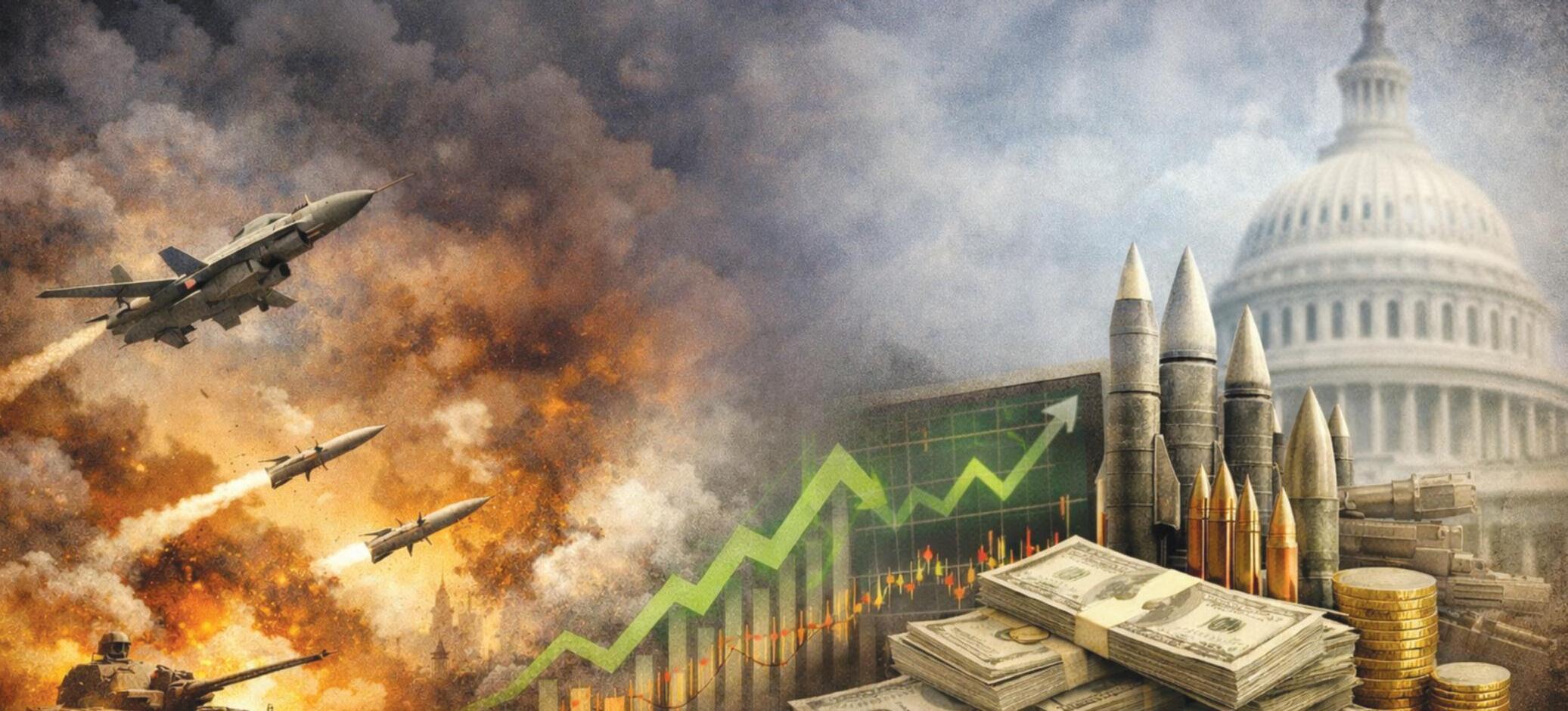
fire liberally because they can Interceptors meet incoming threats Targets are struck The tempo feels sustainable It isn’t One intense night of missile defense can erase months of production And once inventories dip below a certain threshold, strategy begins to shift not because doctrine changes, but because
In the end, the decisive battles will not be the ones most people watch They will unfold in production reports, market indices, and polling data. Less dramatic. More consequential. And when those three fault lines munitions, markets, and midterms begin to align, the outcome will not need to be declared It will already be decided
A r a g h c h i i n B e i j i n g
and the role Beijing could play in influencing the direction of the conflict We believe that a comprehensive ceasefire brooks no delay, a resumption of hostilities is inadvisable and persisting with negotiations is particularly important Wang told Araghchi at the start of their meeting according to footage released by Hong Kongbased Phoenix TV
The visit comes a week before Trump is due to meet Chinese President Xi Jinping in Beijing on May 14 and 15 Earlier US Secretary of State Marco Rubio urged China to press Iran to ease its blockade of the Strait of Hormuz through which roughly one-fifth of the world s oil and gas passes The meeting comes against a backdrop of mounting tensions between Tehran and Washington over the strategic waterway The disruption to shipping through the strait which has sent shockwaves through the global economy has at times also deepened tensions between Washington and Beijing with China particularly affected by the disruption of Gulf energy flows to East Asia
But with the US also feeling an economic downturn including rising domestic fuel prices ahead of the midterm elections analysts say the shared interest between the two global powers in reopening the Strait of Hormuz and securing a ceasefire creates space for Beijing to play a crucial diplomatic role in any peace deal
CHINA’S BALANCING ACT: Throughout the conflict China has tried to balance criticism of the US with calls for regional stability During Wednesday s meeting Wang again condemned US and Israeli military actions against Iran as illegitimate , according to Iran’s semiofficial Tasnim News Agency Beijing has repeatedly framed the conflict as a violation of international law while stopping short of fully endorsing every Iranian move China has also criticised the killing of Iran s Supreme Leader Ayatollah Ali Khamenei as a dangerous escalation that risked returning international politics to “the law of the jungle” Alongside Russia, Beijing has vetoed efforts at the United Nations Security Council to condemn Iran s actions in the Strait of Hormuz At the same time China has resisted growing US pressure over its economic ties with Tehran Washington has sanctioned Chinese firms accused of purchasing Iranian oil Beijing responded by instructing Chinese companies not to comply with the sanctions However US Treasury Secretary Scott
Bessent still publicly urged China to use its influence with Tehran to help de-escalate the crisis signs of the recent thaw in US-China relations following a preliminary trade agreement reached late last year Jodie Wen a researcher at the Center for International Security and Strategy (CISS) at Tsinghua University in Beijing, said China s messaging has largely focused on preventing further instability around the Strait of Hormuz a vital route for Chinese energy imports and trade I think China will try its best to persuade Iran back to the negotiating table and let the Strait of Hormuz become as open as before, Wen said WHAT DOES IRAN WANT FROM CHINA? China remains Tehran’s most important economic lifeline after years of US sanctions left Iran deeply dependent on Chinese trade and investment China buys the vast majority of Iran s oil exports, often at discounted prices, while Iranian revenues are largely channelled into purchasing Chinese goods and services That dependence has only deepened since the two countries signed a 25-year strategic partnership agreement in 2021 covering infrastructure trade and security cooperation Against that backdrop, analysts say Araghchi’s visit is also aimed at securing diplomatic backing from Beijing at a critical moment in the conflict
Chris Doyle director of the Council for Arab-British Understanding told Al Jazeera that Tehran is likely seeking clarity over how far China is willing to support Iran if it agrees to ease tensions in the Strait of Hormuz The Iranian foreign minister is possibly in Beijing to seek clarity from Beijing and reassurance that if they do choose to open the strait Beijing will perhaps continue to support it diplomatically and continue to support it at the United Nations Doyle said Tehran would likely need Chinese backing at the UN to block any additional sanctions linked to the Strait of Hormuz Iranian officials are also believed to be seeking reassurances over the position Beijing will take during Xi s talks with Trump next week and whether China could make concessions to Washington that might unsettle Tehran Doyle said the timing of the visit was significant, with Washington increasingly pressuring Beijing to use its influence over Iran
“We have Trump coming next week and the Trump administration has in recent days been putting more pressure on Beijing to use its influence with Iran to exert pressure, and really pressure Iran to come to the table to end the war, and certainly end its closure of the Strait of Hormuz,” he said US media reports have also suggested China has considered increasing military support for Iran CBS News reported that Pentagon intelligence analysts assessed Beijing was weighing whether to provide Tehran with advanced radar and air defence systems, although it remains unclear whether any transfers have taken place
Analysts say Iran’s immediate priority is likely securing assurances that China will continue supporting it diplomatically if
Tehran agrees to scale back its actions in the strait
WHAT DOES CHINA WANT FROM
IRAN? One of China s core interests is stability in the region and favourable conditions for an economy that continues to grow faster than many of its Western counterparts The free movement of goods through the Strait of Hormuz is central to that, as prolonged disruption threatens both China’s economy and wider global markets as well as energy security Beijing is therefore expected to push Tehran towards keeping shipping routes open and returning to negotiations, say analysts At the same time, China sees Iran as an important regional counterweight to US influence in the Middle East and does not want to see the Iranian government weakened significantly Iran also provides strategic benefits for China beyond energy Tehran has increasingly promoted the use of the Chinese yuan in oil transactions, supporting Beijing s broader efforts to expand the currency’s international role amid US dollar hegemony
Analysts say China may also view the crisis as an opportunity to strengthen its image as a global diplomatic power capable of brokering agreements beyond East Asia Pakistan has already called on Beijing to play a larger mediation role in regional tensions, with officials telling Al Jazeera that China is viewed as a credible actor capable of helping stabilise US-Iran talks
A successful diplomatic intervention would also give China greater influence among Gulf energy producers such as Saudi Arabia and the United Arab Emirates, while easing pressure on energy-importing countries across Asia
WHAT CAN CHINA DO NOW? Analysts say the coming days could prove critical The US and allied Gulf states have drafted a UN resolution aimed at guaranteeing safe passage through the Strait of Hormuz, according to Germany’s DPA news agency
The draft reportedly calls on Iran to halt attacks on shipping remove sea mines and stop charging transit fees The proposal has been revised in recent days in an effort to secure support from both Russia and China Doyle said the crisis presents a rare opportunity for Beijing to position itself as a major diplomatic broker “It would be a tremendous opportunity for China to be the broker in all of this Doyle said pointing to
and
and
s
and
in
back from the precipice ” But Doyle cautioned
A
mains
of things can go wrong – huge tensions in the region a lot of military hardware and precious little trust between all the parties, he said Still, with Trump preparing to travel to Beijing and both the US and China eager to avoid a deeper economic shock analysts remain hopeful there may now be a narrow opening for diplomacy – and a long-term peace agreement
P r e v e n t i n g o n l i n e ch i l d a bu s e
Arecent legal defeat for Meta should provide a new impetus for governments to crack down on the scourge of online child abuse A New Mexico jury determined not only that the company s platforms have exposed children to predators and sexually explicit material, but that it also misled the public about such risks Yet despite this landmark case the debate about children s safety online may continue to move from scandal to scandal without arriving at truly effective solutions Public outrage tends to peak after major court cases or in response to disturbing news stories like when Grok allowed users to flood social media with sexualized images of children this January Politicians duly speak out even promising meaningful regulation, only for public attention to fade without any action And all the while, the technology continues to evolve and bring fresh challenges But it does not have to be this way because we already understand how to prevent abuse online The problem is not a lack of knowledge It is that our response has not kept pace with the evidence A recent systematic review of the academic literature and real-world interventions to tackle abuse published by the International Panel on the Information Environment came to a stark conclusion: While we already have the tools we need the global response remains fragmented and incomplete For example, digital platforms and investigators rely heavily on systems that scan the web for known illegal images and identify grooming behavior Without these tools much of the abuse online would remain hidden Moreover AI is increasingly used to improve these tools and analyze huge volumes of platform data, enabling investigators to find previously unseen abuse material Yet these tools’ effectiveness depends on the data used to train the model and researchers often lack secure access to the data sets they need The IPIE review thus urges governments to facilitate safe, controlled environments where authorized researchers can study sensitive data while still protecting victims Without such cooperation progress will remain uneven and inconsistent Moreover these methods all deal with abuse after the fact As important as it is to improve the detection of perpetrators, preventing harm before it happens must be the goal Here, the IPIE identifies serious blind spots Digital payment systems advertising tools and other widely used platform features can help offenders organize and profit from abuse Yet policy interventions rarely target these mechanisms If the financial infrastructure that supports exploitation remains untouched, efforts to
combat abuse will always be reactive Then there is public awareness Education campaigns that warn minors about grooming risks and explain the harms of illegal content show promise in encouraging safer behavior and increasing reporting, but they remain underdeveloped But education cannot replace responsible platform design or effective enforcement Children should not
M A HossAIN
B ondi B each shooting accused faces
19 more charges
spirator, was shot dead by police during the attack P
The fresh charges were made public after a broad inquiry began public hearings into what has been described as Australia’s deadliest mass shooting in 30 years In opening remarks earlier this week inquiry chief Virginia Bell said the attack had unfolded amid a wider rise in anti-Semitism
The sharp spike of anti-Semitism that we have witnessed in Australia has been mirrored in other Western countries
and seems clearly linked to events in the Middle East inquiry chief Virginia Bell said It s important that people understand how quickly those events can prompt ugly displays of hostility towards Jewish Australians simply because they are Jews ” The shooting prompted a broader national debate in Australia over anti-Semitism and drew anger over what many saw as a failure to protect Jewish Australians from violence
Following the shootings Australia announced a package of gun law changes including a nationwide gun buyback programme However the scheme has since stalled as the federal government has struggled to secure the support of states and territories
According to the report Australia’s intelligence agency had flagged Naveed Akram in 2019 but he later fell off its radar after the agency concluded that he did not pose an imminent threat Police documents released after the attack said Akram and his father had undertaken “ firearms training ” in what investigators believed was the New South Wales countryside before the shooting Those documents said the two men had meticulously planned the attack over several months Police also released images that they said showed the pair firing shotguns and moving in what was described as a “tactical manner” Police further said the pair recorded a video in October in which they railed against Zionists while seated in front of an Islamic State flag and set out their motivations for the attack
Russia begins test launches of missiles with nuclear capabilities
BEIJING
E S P O N D
Amid continued tensions in the Strait of Hormuz and the absence of a final peace agreement between Iran and the United States Iranian Foreign Minister Seyyed Abbas Araghchi arrived in Beijing on Wednesday for high-level talks, as China reaffirmed its commitment to de-escalation and peace efforts in the region
During his meeting with Araghchi, Chinese Foreign Minister Wang Yi described the current situation as being at a “critical juncture ” where the trajectory could shift either toward sustained peace talks or renewed confrontation He emphasised that China supports Iran in safeguarding its sovereignty and security, while also encouraging a political resolution through dialogue Wang noted that the international community shares
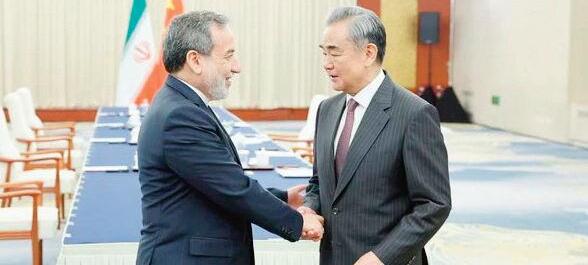
growing concern over disruptions in the Strait of Hormuz, a vital corridor for global energy supplies, and urged all parties to respond to calls for restoring safe and normal maritime passage as soon as possible On the nuclear issue China reiterated its position supporting Iran’s commitment not to develop nuclear weapons while recognising its legitimate right to the peaceful use of nuclear energy Chinese state media including Xinhua News Agency, have consistently underscored Beijing s stance that dialogue and multilateral engagement remain the only viable path to resolving disputes in the region Araghchi briefed the Chinese side on the latest developments in Iran-US negotiations stating that Tehran remains committed to defending its national sovereignty while pursuing a comprehensive and lasting solution through diplomacy He expressed confidence in China s role, noting that Iran expects Beijing to continue facilitating dialogue and helping bring an end to hostilities Chinese analysts, cited in outlets such as Global Times said the visit comes at a decisive moment with China positioned as a key mediator capable of preventing further escalation and encouraging a return to negotiations They highlighted that Beijing’s close economic and political ties with Tehran provide it with a unique capacity to influence outcomes and promote stability Since the outbreak of the conflict on February 28 Wang and Araghchi have maintained regular contact reflecting China s sustained diplomatic engagement
West Bengal
Maryam Nawaz on Tuesday met members of the Provincial Assembly who appreciated the pace of development and beautification
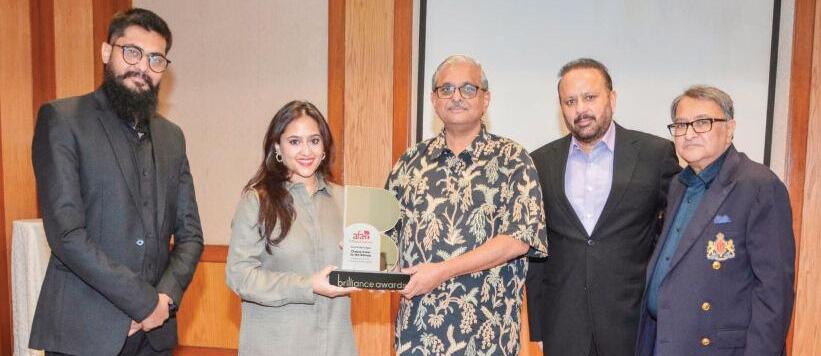
Synergy Adver tising becomes first in Pakistan to secure back-to-back AFA A Brilliance Awards
KARACHI
S TA F F R E
R T Synergy Advertising has achieved a landmark milestone for Pakistan’s advertising industry, becoming the first and only agency in the country to win the prestigious AFAA Brilliance Award for a second consecutive year The recognition secured in the Food & Beverages category for the local Pakistani pizza brand, Cheezious for their Cheezy Rider to the rescue campaign, cements the agency’s position as a leading creative force at the regional level Presented by the Asian Federation of Advertising Associations the Brilliance Awards are judged by an international panel and honour campaigns that demonstrate both creative excellence and measurable business impact Widely regarded as one of Asia s most competitive industry accolades, the awards recognise work that delivers

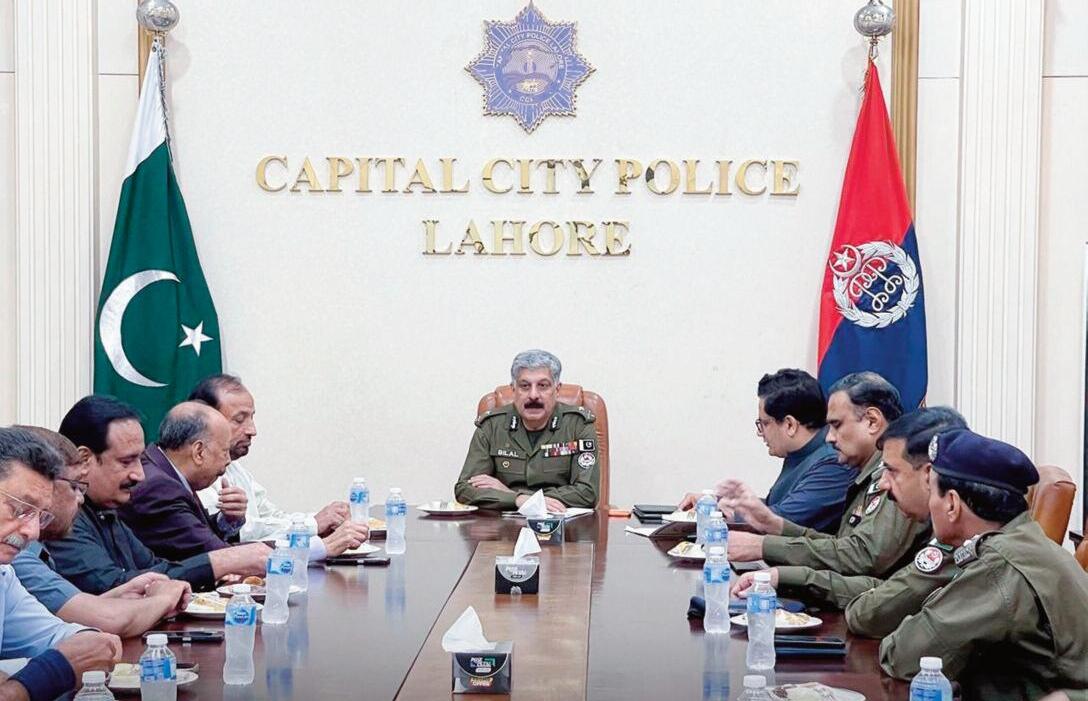
A ceremony was held at the Capital City Police Headquarters to honour retired police officers CCPO Lahore Bilal Siddique Kamyana addressing the gathering paid tribute to their services and extended his best wishes for their future He congratulated them on completing their careers with honour and distinction Among those in attendance were retired DSPs Mohammad Sarwar, Mirza Azeemullah, Mohammad Zafar Khurshid, Aamir Sadiq, Bilal Ahmad Khan, Zahid Hussain Mohammad Javed Maqsood Ali and Mohammad Sarwar Awan along with Sub-Inspector Arif Hussain and Constable Tariq
The CCPO directed that pensions, gratuity, GP Fund and all other emoluments of retirees be processed on a priority without delay He emphasised that the police
department holds its officers in high regard, adding that
a valuable asset of the police
Mr Kamyana noted that the department would continue to benefit from the professional expertise of its retired officers He assured them that his office would remain accessible at all times to address their issues
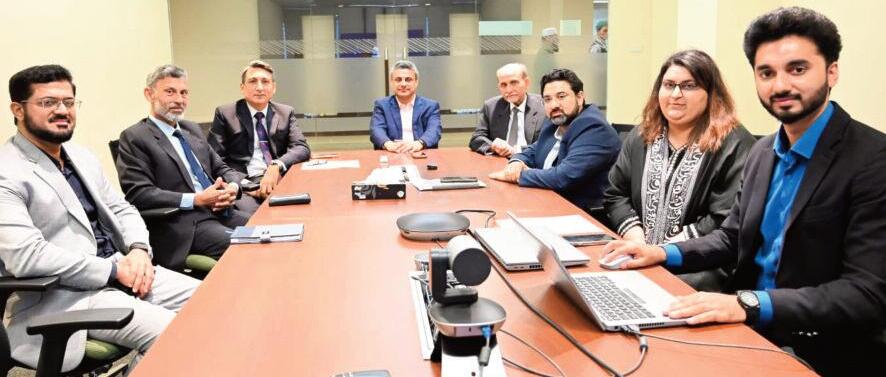
businesses can conveniently execute vendor payments process payroll pay utility bills and manage tax payments all through one unified platform This streamlined approach not only enhances operational efficiency but also reduces the complexity traditionally associated with financial management Sharing his thoughts Mr Rehmat Ali Hasnie President & CEO NBP said The launch of NBP SmartPay marks a significant milestone in our digital transformation journey At NBP, we are committed to enabling businesses across Pakistan with innovative financial solutions that drive efficiency foster growth and support the country s transition toward a digitally inclusive economy Commenting on the launch, Mr Adnan Nasir, Chief Digital Officer NBP stated “NBP SmartPay represents our continued commitment to innovation and customer-centric solutions By leveraging cutting-edge technology, we aim to empower businesses with greater control, transparency, and convenience in managing their financial operations ”
The retired officers expressed their gratitude for the recognition, stating that the police department had provided them with dignity and a strong sense of identity At the conclusion of the ceremony commemorative shields and bouquets were presented to them DIG (Admin) Imran Kishwar and others were also present
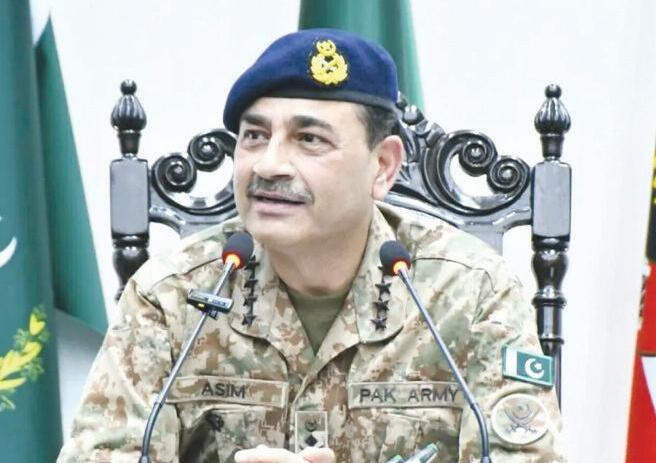
Paigham-i-isl am conference honours field marshal
tZaid, Grand Mufti of Palestine Sheikh Muhammad Ahmad Hussein and Chief Justice of Palestine Dr Mahmoud Al-Habbash along with senior Saudi and Palestinian representatives religious scholars and international delegates H O N O U R S A N D R E C O G N I T I O N S:
Besides Field Marshal Asim Munir the conference presented international honours to a number of national and foreign personalities for their contributions to peace stability and unity in the Muslim world
Prime Minister Shehbaz Sharif received a shield of appreciation for what the conference described as his clear and firm position on major international issues especially Palestine Saudi Crown Prince and Prime Minister Mohammed bin Salman, who was named Global Personality of 2025, was also given a special award in recognition of his role in defence cooperation with Pakistan, efforts to promote unity in the Muslim world and support for peace at regional and international levels
S TAT
Prime Minister s Coordinator for the National Paigham-i-Aman Committee and Pakistan Ulema Council Chairman Hafiz Muhammad Tahir Mehmood Ashrafi reiterated
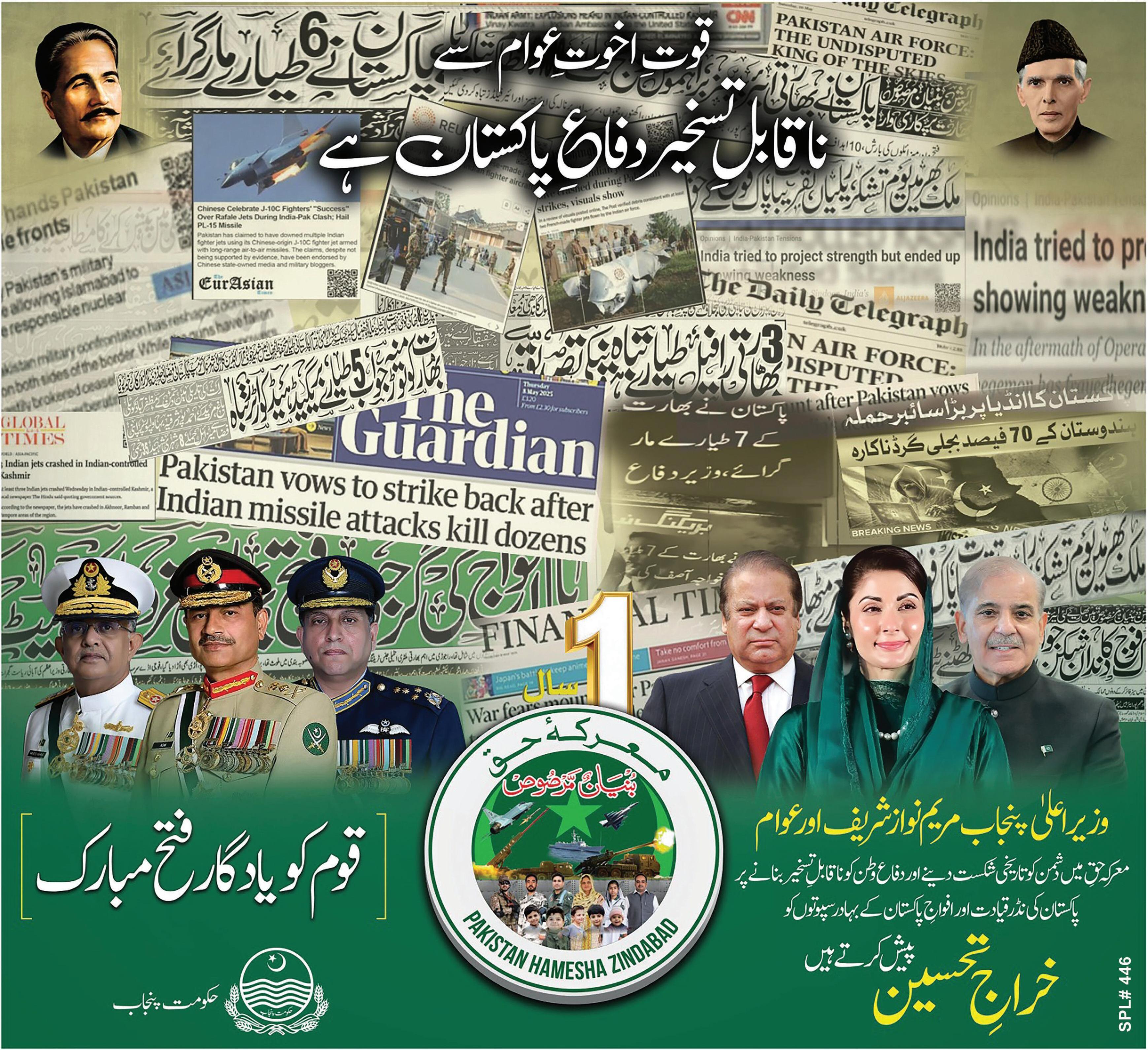
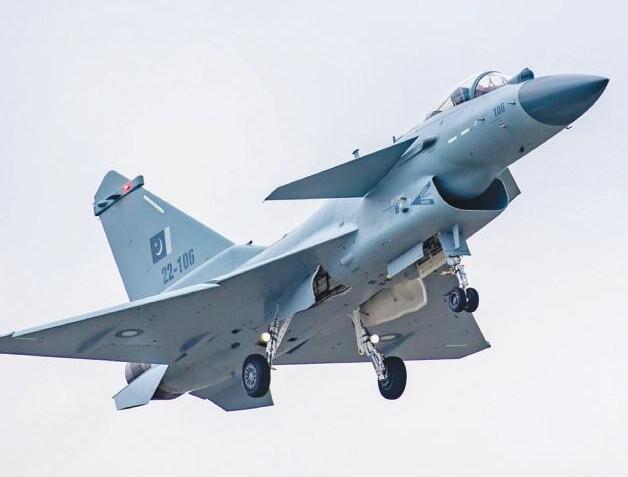
On the first anniversary of Marka-e-Haq, observed on the night of May 6/7, the Pakistan Armed Forces particularly the Pakistan Air Force (PAF) commemorated a defining moment in the country’s military history highlighting operational excellence technological advancement and unwavering commitment to national defence
The milestone, described as a symbol of strengthened national confidence and institutional resolve, reflects PAF’s continued transformation into a future-ready air power Officials emphasised that through the induction of cutting-edge systems and the rapid integration of emerging and disruptive technologies,
the force has significantly enhanced its operational capabilities Central to this evolution is the adoption of multi-domain operations enabling seamless coordination across air land sea cyber and space domains The successful execution of such operations
Naval chief c alls for constant combat readiness amid maritime security challenges
Chief of Naval Staff Admiral Naveed Ashraf has stressed the need for sustained combat readiness to deal with both traditional and non-traditional challenges in the maritime domain according to a Pakistan Navy statement issued on Wednesday
The remarks were made during the Pakistan Navy’s Command and Staff Conference held at Naval Headquarters in Islamabad The conference reviewed operational preparedness ongoing initiatives and upcoming events the statement said Referring to the ongoing situation in the Middle East, Admiral Ashraf said the maritime domain was facing emerging threats including issues related to freedom of navigation the possible disruption of vital Sea Lines of Communication (SLOCs) and an unstable security environment across
strategic choke-points
He said the acquisition of niche and advanced technologies had become an absolute strategic requirement for the Pakistan Navy
The naval chief also highlighted the Pakistan Navy’s role in maintaining peace stability and maritime security in the region He said the service was continuing to reassure the maritime community through its operational presence in the Gulf of Oman According to the statement, the forum also marked the first anniversary of Markae-Haq and paid tribute to the sacrifices made during the May 2025 conflict
Admiral Ashraf described that outcome as a historic triumph and said it reflected national unity and firm resolve in the face of external aggression
The statement said discussions at the conference remained centred on aligning naval priorities with changing regional maritime security requirements and setting a clear direction for
preparedness across different domains of naval warfare
The conference formed part of the navy s internal review process as it assessed the regional security environment and its own readiness posture in light of current developments
The Pakistan Navy statement said the forum carried out a comprehensive assessment of operational readiness while also examining current initiatives and future plans It added that the deliberations were aimed at ensuring that naval priorities remained in step with the changing security situation in the wider region
The emphasis placed by the naval chief on readiness, technology acquisition and maritime security came against the backdrop of heightened concern over regional sea routes and strategic maritime passages
added that the constitutional scheme does not make either court an appellate forum for the other but instead treats both as coordinate courts with clearly separated jurisdictions The constitutional scheme does not position either of the two apex courts as an appellate forum to each other; rather, it treats both as coordinate courts exercising clearly demarcated
RAWALPINDI