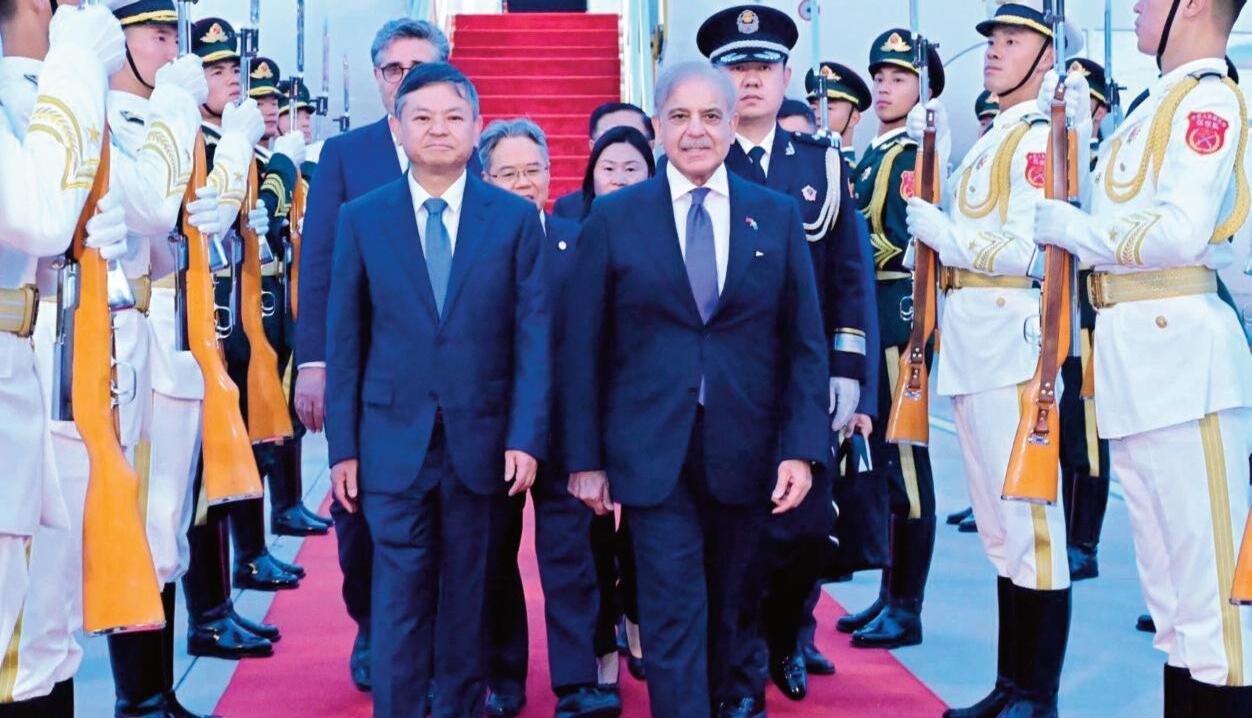
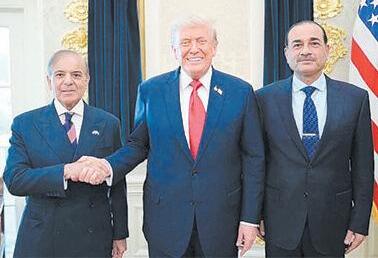
g PREMIER SHEHBAZ BEGINS SECOND LEG OF FOUR-DAY CHINA VISIT AFTER HIGH-PROFILE HANGZHOU ENGAGEMENTS
g SET TO HOLD KEY MEETINGS WITH PRESIDENT XI JINPING AND PREMIER LI QIANG WITH FOCUS ON STRENGTHENING CPEC PHA SE-II AND DEEPENING STRATEGIC COOPERATION
g INVITES CHINESE COMPANIES TO EXPAND INVESTMENT IN EV AND RENEWABLE ENERGY SECTORS
g PAKISTAN, CHINESE FIRMS SIGN MOUS AND AGREEMENTS WORTH $1.22B A S PM SAYS PAKISTAN AIMS TO BOOST AGRI-TRADE WITH CHINA BY $10B
HANGZHOU/ISLAMABAD
Deputy Prime Minister and Foreign Minister Senator Mohammad Ishaq Dar on Sunday said Pakistan and China’s “iron brotherhood” was growing stronger with each passing year as both countries marked the 75th anniversary of diplomatic relations Our friendship has stood the test of time,
technology, and people-to-people exchanges, the PMO said Earlier in Hangzhou PM Shehbaz chaired the opening ceremony of the third Pakistan-China Business-to-Business (B2B) Investment Conference which focused on charging infrastructure, battery energy storage, solar technologies and pharmaceuticals The premier also held meetings with provincial leadership and leading Chinese enterprises including StarCharge CATL and Xiuzheng Pharmaceutical to explore practical avenues of investment and industrial collaboration He also visited Alibaba Headquarters, where he was received by Alibaba Executive Chairman Joe Tsai
g BALOCHISTAN GOVT AND ISPR CONFIRM THREE FC PERSONNEL AMONG MARTYRS A S VEHICLE-BORNE BOMBING DERAILS TRAIN COACHES, TORCHES VEHICLES NEAR SITE
11 Indian-backed ter rorists neutralised in Nor th Waziristan’s Datta Khel IBOs:
ISLAMABAD S TA F F R E P O R T Security forces killed 11 terrorists during a series of intelligencebased operations carried out over the past 48 hours in Datta Khel area of Khyber Pakhtunkhwa s North Waziristan district, according to the military s media wing In a statement issued on Sunday the Inter-Services Public Relations (ISPR) said the security forces engaged multiple locations linked to Indian-sponsored Finta alKhawarij in the area, leading to heavy fire exchange In continuation of series of intelligence based operations in last 48 hours security forces engaged multiple Khwarijs’ locations in general area Datta Khel North Waziristan District Following intense and fierce exchanges of fire, security forces effectively neutralised 11 terrorists belonging to the India-proxy “Fitna
al-Khawarij the ISPR said The state has designated the use of the term Fitna al-Khawarij for the banned Tehreek-i-Taliban Pakistan (TTP) According to ISPR weapons and ammunition were recovered from the slain militants who remained actively involved in numerous terrorist activities in the area
“Sanitisation operations continue to eliminate holed up khawarij from these areas as a relentless counter-terrorism campaign under the vision Azm-i-Istehkam (as approved by the Federal Apex Committee on the National Action Plan) by security forces and law enforcement agencies of Pakistan will continue at full pace to wipe out the menace of foreign-sponsored and supported terrorism from the country, the military s media wing added
Dar hails ‘iron brotherhood’ with China
Pakistan and the Asian Development Bank (ADB) on Friday agreed to expedite documentation and procedural requirements for the ML-1 Karachi-Rohri section to accelerate implementation of the railway project The understanding was reached during a high-level meeting chaired by Economic Affairs Minister Ahad Cheema to review the implementation framework and progress on the project Secretary Economic
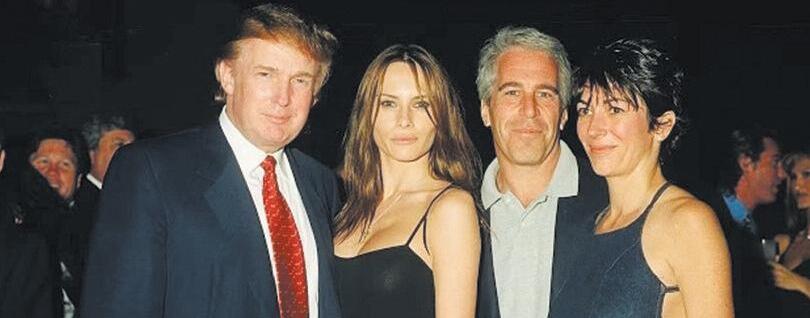
one thing to help stop a regional conflagration but another to help cover up for the US President s peccadilloes I wonder if that s an odder position than Maulana Abdus Sattar Edhi’s grandson Faisal found himself He was detained by the
curity guard were
and Punjab and witnessed the signing of an agreement between Hangzhou Normal University and the Embassy of Pakistan in Beijing for the China–Pakistan Joint Technology Research Centre The Foreign Office said the visit carried special significance as both countries marked 75 years of diplomatic relations adding that it would help reaffirm the all-weather strategic cooperative partnership and advance the vision of a closer Pakistan–China community with a shared future According to the FO, both sides will review cooperation in political, economic and strategic domains, with particular focus on CPEC Phase-II, trade, investment industrial cooperation agricultural modernisation IT science and technology and people-to-people exchanges It added that the visit was expected to further deepen political trust, strengthen strategic coordination and expand practical cooperation between the two countries R E G I O N A L S I T U AT I O N A L S O O N A G E N D A Foreign Office spokesperson Tahir Andrabi said during his weekly briefing that the US-Iran situation was also expected to come up during discussions between Prime Minister Shehbaz Sharif and the Chinese leadership He said Pakistan and China remained closely coordinated on regional developments and peace efforts recalling recent high-level engagements and a joint five-point understanding issued earlier Pakistan and China have maintained close coordination on the standoff in the Middle East, he said, adding that the issue would also be part of the premier ’s discussions during the visit
said Prime Minister Shehbaz witnessed the signing of several memoranda of understanding (MoUs) and cooperation agreements between Pakistani and Chinese companies worth $1 22 billion during the conference
Addressing the Pakistan-China B2B Investment Conference in Hangzhou Prime Minister Shehbaz Sharif said Pakistan aimed to increase its agricultural products trade with China by $10 billion over the next five to seven years
The conference brought together government officials and representatives of around 500 Pakistani and Chinese companies to explore investment and trade opportunities between the two countries
Highlighting China’s massive annual imports of agricultural products, the premier said Pakistan had the potential to secure a larger share of the Chinese market boost exports and create employment opportunities
In the next five to seven years, we expect to increase our agri-products trade to China by about $10 billion,”
PM Shehbaz said And this is not a big task it can be done It is possible But we need your support
The prime minister noted that Pakistan had sent 1,000 agricultural gradu-
ates to China last year for higher education and specialised training in agriculture and food security
Calling for accelerated bilateral cooperation, he said around 30 percent of Pakistan-China memorandums of understanding had already been converted into formal agreements
“This is Alhamdulillah by the grace of God a very satisfactory progress he said But I think we need to move with speed and achieve milestones which are the need of the hour
‘PA
Deputy Prime Minister and Foreign Minister Ishaq Dar speaking earlier at the conference said Pakistan had achieved economic stabilisation over the past four years and was now emerging as an attractive destination for global investors
“Pakistan is open for business Pakistan is reforming Pakistan is rising ” Dar said He noted that Pakistan and China had signed more than 300 MoUs and nearly three dozen joint ventures worth over $13 billion
“These are not merely statistics They are proof of trust confidence and shared ambition he said
Later PM Shehbaz visited the headquarters of Alibaba Group and met Executive Chairman Joe Tsai
According to the prime minister s spokesperson for international media, Mosharraf Zaidi Tsai remarked that the premier s presentation on Pakistan s digital transformation was the most
powerful case for digitalisation” he had heard The Pakistani premier also oversaw the signing of multiple cooperation documents, including a memorandum establishing a sister-province relationship between Punjab and Zhejiang, as well as an agreement paving the way for the establishment of a China-Pakistan Joint Technology Research Center at Hangzhou Normal University China remains Pakistan s key strategic ally and one of its largest investors, with Beijing pledging more than $60 billion under the China-Pakistan Economic Corridor (CPEC) a flagship infrastructure and energy initiative linking Gwadar Port with China s Xinjiang region
China launches threecrew space flight as
04
COMMENT
PM in China
AF T E R arriving in Hangzhou on Saturday, and spending the day there, Prime Minister Shehbaz Sharif and his entourage moved on to Beijing on Sunday, where he will engage in some weighty conversation about the Iran situation In Hangzhou it was entirely business But now in Beijing, while discussions are still expected to include a business component as Mr Sharif and President Xi Jinping talk about the China-Pakistan Economic Corridor, as well as review the initiatives taken in Hangzhou, but there will be a natural focus on the USA and Israel\s attack on Iran Apart from the usual dimensions of the results for both countries of the closure of the Strait of Hormuz, there will also be a discussion of the mediation efforts both countries are making
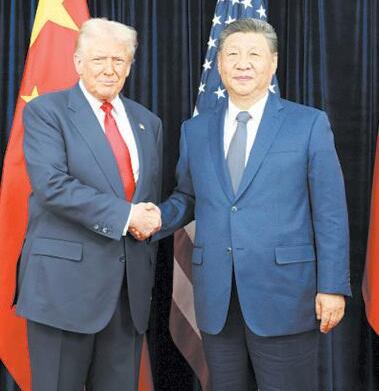
While Pakistan has a more direct role, being the principal go-between the USA and Iran, China has also been visited by all of the stakeholders except Israel Not only have the UAE and Iranian Foreign Ministers visited Beijing, but so has US President Donald Trump only recently, while followed virtually immediately after by Russian President Vladimir Putin Some have gone as far as to say that China is acting in the matter through Pakistan Though that is perhaps too great a leap, it does contain a kernel of truth that while no one’s catspaw, Pakistan has no intention of acting in a way that might harm China’s interests In this matter, they mainly centre around the reopening of the Strait of Hormuz and the restoration of the flow of oil to normal The two countries might gain a clearer perception after comparing notes of what is possible and what not If indeed China is acting through Pakistan, that is because Pakistan has developed the sort of profile that makes it acceptable, in its own right, as a mediator
The challenges of mediation aside, the two countries have also got a lot of shared economic profile that requires frequent consultation Another important aspect of the tour is the meeting at the party level of stakeholders in the CPEC This will insulate CPEC and China from the kind of policy paralysis that Pakistan has made the hallmark of its democracy The idea of an economic consensus among political parties comprising a pledge to certain policies and projects has long been around Now it seems China is seeking to build that consensus
Dedicated to the legac y of late Hameed Nizami Arif Nizami (Late)
Founding Editor
M A Niazi Editor Pakistan Today Babar Nizami Editor Profit
Tunlikely to reorganize itself under a single flag; it will more likely drift into a messier multiplex order in which power is shared, negotiated and contested across trade, technology security and climate rather than owned by one capital alone Meetings between Washington and Beijing rarely end rivalry; they civilize it for a time creating a brief pause when tariffs may soften military hotlines may reopen and both sides speak the language of stability while continuing the deeper contest for influence The encounter matters less as a peace treaty than as a weather report: the storm remains but its shape becomes clearer What passes for influence now is far less about the number of aircraft carriers than about chips supply chains data development loans shipping lanes and the authority to define what order means In those domains China is gaining room to shape outcomes Its tentative pre-eminence in development finance and trade gives it leverage in capitals that judge offers in project-sized instalments: a road a port a power plant In theory this is an attractive proposition Who rejects cheap power or faster rail? In practice, though, the calculus is complicated Infrastructure deals also create long-term economic linkages with Chinese firms, and questions are often raised in policy circles about financing structures and transparency Where Beijing s approach appears pragmatic and transactional some analysts argue that such arrangements may create uneven economic dependencies between partners The USA, by contrast, remains stronger in military reach, finance and the dense web of alliance networks built over decades US leadership is loud and visible: bases exercises sanctions and institutions that map power into rules That style creates predictability for friends and discomfort for rivals It insists that the world follow a vocabulary: of freedom, of open markets, of norms, that implicitly preserves US primacy That insistence can be persuasive, because it links power to principles, but it can also breed resentment especially when US influence is often accompanied by normative and strategic arguments that critics sometimes view as selective These are not tidy alternatives China s quiet
project-first diplomacy asks countries to choose projects; the USA often encourages countries to align more clearly within its strategic framework That difference matters Many governments, particularly in the Global South, will prefer a choice of projects Infrastructure and finance speak to immediate needs in a way high-minded claims do not And yet China’s emerging institutions operate alongside a global architecture historically shaped by the United States Beijing s diplomacy is selective; its governance and diplomatic norms are still evolving in terms of broader international acceptance; its model does not translate easily into soft power the way US culture and institutions once did As a result China increasingly appears as a significant rule-shaper in key domains of global governance
The result is a world that resists a single narrative Expect overlapping zones of influence rather than a single empire China may dominate trade links with parts of Africa, Asia and Latin America The USA will likely retain superiority in security and in the financial plumbing that lubricates global markets The European Union may set regulatory standards that other states copy to access its markets Meanwhile countries in the Global South will be more assertive in bargaining among these centres, extracting concessions without pledging full allegiance to any Leadership becomes less about occupying a throne and more about collecting enough trust to steer a room a different art from commanding a stage A US–China meeting can sharpen these distinctions It can lower the temperature on one crisis without removing the structural causes of competition; it can open a window
The consequence is pragmatic and messy: more
hedging, more bargaining. The emerging global order is likely to remain multiplex, shaped by multiple centres of influence and ongoing negotiation That is not necessarily worse, diverse leadership can check abuses and offer alternatives, but it is harder to manage
H o n o u r, S h a m e a n d t h e V o c a b u l a r y o f S e x u a l V i o l e n c e
to the perpetrator ’s actions
n Such a shift would have practical consequences
n It would weaken the obsession with virginity
Safe mobilit y matters
n It would reduce victim blaming
n It would discourage families from hiding crimes to protect honour
tant than the violence committed against her This is why rape survivors in Pakistan frequently fear reporting crimes They are not only afraid of the trauma of the assault itself; they are afraid of becoming symbols of shame for their families No man s honour is said to disappear after violence is committed against him No family
n And it would challenge the dangerous idea that women exist as vessels carrying male prestige Some may dismiss this debate as symbolic or unnecessary But history shows that language shapes social consciousness Oppressive systems survive because they normalize themselves through ordinary words
The same society that now rejects openly racist or colonial vocabulary once considered such language acceptable Change began when people recognized that words are not neutral; they carry assumptions about power and human
The same realization is necessary regarding gender violence
A society that constantly describes rape as stolen honour will continue producing shamefilled survivors and entitled perpetrators
We must also confront the unequal moral expectations placed upon women in patriarchal cultures Men are associated with authority mobility, and freedom, while women are associated with modesty, sacrifice, and sexual control This imbalance turns women into custodians of collective morality
not the carrier of family honour
n Her dignity does not depend on virginity
n And rape does not reduce her worth
or
n The shame belongs entirely to the perpetrator Changing laws alone will never be enough if language continues reproducing the same patriarchal assumptions Pakistan has introduced legal reforms regarding rape, DNA evidence, and victim protection Yet victim blaming remains widespread because institutions are shaped by the same social attitudes present in everyday language Police officers judges journalists teachers clerics and relatives are all influenced by the vocabulary society normalizes When rape is repeatedly described as dishonour, institutions begin treating survivors as morally compromised rather than as victims of violence
This is why language reform matters Media outlets courts textbooks and public discourse should stop using expressions like Asmat Dari izzat lootna asmat lootna and be-aabroo karna These phrases reinforce the idea that sexual violence damages female honour rather than exposing male
As a result women become responsible not only for their own conduct but for the social respectability of entire families Their clothing mobility friendships and choices are monitored because patriarchal societies have tied honour to female bodies
n This system harms everyone
n It harms women through fear and restriction
n It harms men by teaching them that masculinity is linked to controlling women
And it harms justice because crimes become filtered through ideas of shame and honour rather than human rights and bodily autonomy A rape survivor should never have to prove she remained “honourable ” Her humanity is enough
The real dishonour lies elsewhere: in the
that fail survivors, and in societies that continue measuring women through the language of purity Pakistan urgently needs a new moral vocabulary one which is centred not on chastity or shame but on consent dignity equality and justice Until that shift happens, we will continue condemning rape in law while silently reproducing the same violence through language itself
Doval and accountabilit y
Nooor Zafar
How the Urdu language reinforces rape culture
Encircled by Famine: Gaza in the shadow of siege
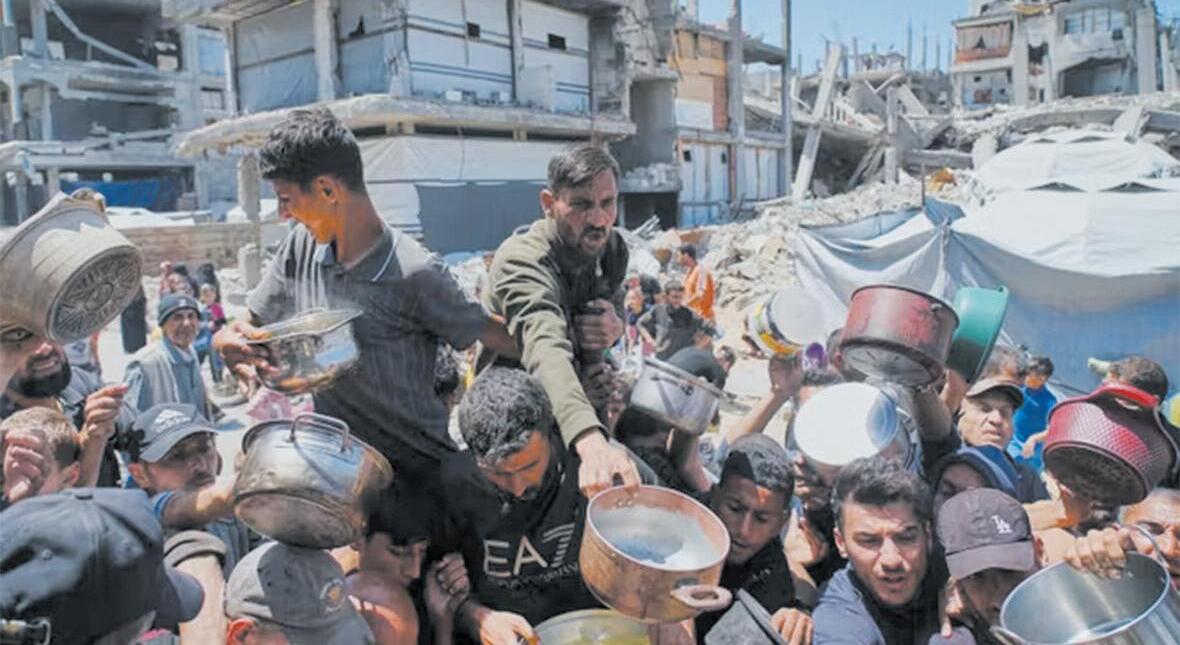
a z a at this grievous historical juncture no longer merely constitutes a geographically beleaguered enclave; rather it has assumed the form of one of those lamentable chapters in the annals of human civilisation wherein warfare is prosecuted not solely through the overt violence of artillery missiles and aerial devastation but through the far more insidious instrumentation of deprivation itself Bread potable water medicinal provisions, and fuel supplies have increasingly been transformed into silent yet devastating implements of coercion, rendering subsistence itself contingent upon the calculus of siege and restriction The prevailing scarcity of flour and fuel has consequently thrust the inhabitants of Gaza into an ordeal of almost unimaginable severity, wherein even the most elementary prerequisite of human existence bread has become an object of agonising rarity Lengthening queues before bakeries citizens returning emptyhanded after interminable hours of waiting curtailed flour deliveries and the relentless escalation of fuel costs collectively testify to the sombre reality that Gaza once again stands precariously upon the precipice of a profound humanitarian catastrophe according to various arab media reports Gaza requires approximately 450 tons of flour each day merely to sustain the rudimentary nutritional demands of its population; yet under present conditions scarcely 200 tons are reaching the territory Such a disparity is not merely a statistical incongruity within logistical calculations; it represents the harrowing chronicle of innumerable famished stomachs despairing mothers and children condemned to the insecurities of chronic malnourishment
The reduction in bakery production has paralysed the ordinary rhythms of daily life Entire families now endure exhaustive vigils from dawn until dusk in pursuit of a few loaves of bread only to depart in deprivation and disappointment One is compelled to confront the tragic impression that food within Gaza has ceased to function as an inalienable human entitlement and has instead become a vanishing privilege increasingly inaccessible to the majority of the population
The most distressing dimension of this crisis lies in the fact that the prevailing scarcity is not the consequence of a natural calamity or agricultural collapse, but rather the product of an extensive and deliberate system of restrictions that has severely undermined the essential infrastructure of civilian existence Israeli limitations have not only constricted the inflow of humanitarian aid and food supplies but have also gravely impaired fuel distribution Consequently, bakeries are progressively losing the capacity to operate their generators, without which production becomes virtually impossible The exorbitant rise in the prices of generator oil and fuel has amplified operational expenditures to intolerable levels imposing yet another burden upon an already shattered economy debilitated by prolonged warfare and destruction
The contemporary condition of Gaza compels the international conscience to confront a deeply disquieting question regarding the efficacy and sincerity of modern human rights discourse International organisations global powers, and self-proclaimed custodians of humanitarian values routinely issue declarations of concern and solidarity; yet the stark reality upon the ground reveals that millions of Palestinians continue to exist without reliable access to the most basic conditions of nutritional security Even the bakeries operated under the auspices of the World Food Programme are now receiving flour in drastically limited quantities, thereby
diminishing the operational capacity of humanitarian relief itself If even the mechanisms of international assistance can be rendered impotent before the forces of blockade and political obstruction then one must ask by what means the preservation of human life is ultimately to be guaranteed The economic ramifications of this calamity are equally severe and far-reaching Gaza had already been afflicted by catastrophic levels of unemployment long before the current intensification of scarcity Thousands of households remain deprived of stable income while the prices of essential commodities continue their relentless ascent Under such circumstances, the increasing cost of bread ceases to be merely an economic
inconvenience and instead emerges as a social tragedy of profound magnitude When a father loses the capacity to procure even a few loaves for his children the consequences extend far beyond hunger itself; they penetrate the psychological, moral, and social fabric of an entire community, corroding dignity, stability, and hope simultaneously History repeatedly demonstrates that famines do not arise solely from the absence of food; they are equally born from political indifference economic strangulation and the collapse of humane priorities The devel-
numerous international relief agencies have already issued repeated warnings that Gaza is approaching an extraordinarily perilous phase of nutritional devastation yet despite these alarms no meaningful structural transformation appears forthcoming It is further imperative to recognise that wars are not won exclusively upon conventional battlefields; they are equally prosecuted through the systematic breaking of human endurance and collective morale For years the people of Gaza have endured
T h e n o t o r i o u s B r i t i s h s p y r i n g
Wwould be working-class communists
and turned it down It was over a very nice dinner with my favourite uncle in the Garden House hotel in Cambridge I was studying modern languages at the university My uncle was a former colonial officer who had transferred to the UK Foreign Office as a “retread” after retirement
That night, over a good bottle
Brussels Moscow and Berlin the more sceptical I grew about the value of spies It struck me that all they did was spy on each other Espionage in the 21st century is clearly not what it used to be before the advent of smartphones and digital communications Gone is the weird world of invisible inks (they really did use them), furtive microfilming of stolen documents and surreptitious encounters on park benches The chances are that the most successful spooks these days are youthful computer hackers They are much less romantic than the spies of old Yet we are still fascinated by that world So the new books, fact not fiction, should have a ready audience But what lessons can they teach us about the use and abuse of intelligence? antonia Senior ’s book, Stalin’s apostles, is the most ambitious a former Times journalist she studied under Christopher andrew official historian of MI5 at Cam-
bridge She has a clear agenda to demolish the glamorous self-image of the Cambridge Five as idealistic rebels She focuses on the victims of their treachery: partisans who were both anti-Nazi and anti-Soviet, from Poland, Romania, albania, Ukraine and the Baltic republics The spies’ leaks caused thousands to be captured and executed by Stalin’s NKVD or exiled to the Gulag in Siberia
The Cambridge Five perpetrated their betrayals with eyes wide open to the nature of their paymaster and the murderous consequences of their actions, she says They were motivated by the conviction that the violent expansion of communism across the globe, in a manner that subjugated sovereign nations to Soviet control, was necessary in the cause of international revolution ” They were all members of a secretive leftwing club of intellectuals at Cambridge called the apostles John Maynard Keynes the economist was a member in the 1920s So was EM Forster, the novelist They saw themselves as the intellectual elite of the university In the aftermath of the Great Depression, and with the rise of Nazism in Germany they became increasingly attracted to Marxism The apostles proved fertile recruitment ground (hence the book s title) for the underground Soviet agent in Britain a Jewish communist from Vienna called arnold Deutsch His idea was to find bright young men from the bourgeois elite who might infiltrate the British establishment as Soviet spies He wasn’t looking for typical working-class members of the Communist Party
Philby was Deutsch’s ideal first recruit introduced by another fiercely committed Viennese communist photographer (and spy) who is the subject of the second book a Woman Named Edith a well-researched biography of a largely forgotten figure, by Daria Santini
The files show that MI5 was watching Edith TudorHart (she had married a young British communist) and her fellow austrian émigrés in Hampstead but they failed to spot Deutsch’s British recruits They could not imagine that nice young men from Cambridge however idealistic would betray their friends and families for a fashionable ideology They assumed that potential spies
MI5 tried and failed to catch the Cambridge spies interrogate them and find out what damage they had done They were not prosecuted for their treachery, apparently for fear of revealing more secrets, says Senior Or maybe it was just because they were “good chaps”
There was no secret of their Marxist views at Cambridge They became committed communists as a reaction to the Great Depression and the failure of capitalism
It was the rise of Hitler that persuaded Philby and then his friends to become Soviet agents, hoping to promote a world revolution as they were drawn into the excitement of treachery, their idealism turned into a cynical fanaticism blinkered to the reality of Stalin’s empire
Unlike many of their leftwing contemporaries the Cambridge Five refused to admit the glaring evidence of the brutality of Stalin s dictatorship: the mass starvation of millions caused by forced collectivisation, and mass murder during his paranoid reign of terror on supposed Trotskyites in the late 1930s
When Stalin signed the Molotov-Ribbentrop pact with Hitler carving up eastern Europe between them his Cambridge apostles refused to believe this was a betrayal of their anti-Nazi cause It was merely a delaying tactic
These spies had sold their souls They could not admit they were wrong They continued to pour secrets into the hands of their minders at the Soviet embassy, leaking evidence before the Yalta conference of how Winston Churchill was ready to accept postwar Soviet occupation of eastern Poland and the Baltic republics in spite of his public rhetoric to the contrary after the war they betrayed the halfbaked efforts of UK and US intelligence to infiltrate anti-Soviet exiles into the borderlands, condemning the would-be underground partisans to capture and execution
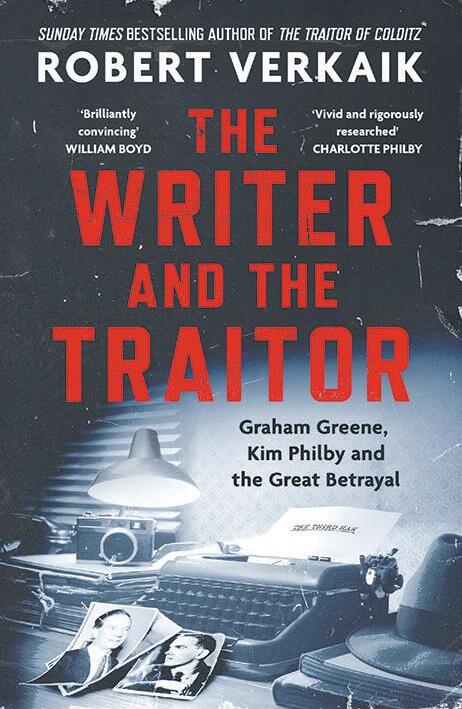
For those who seek to understand the psychology of the Cambridge spies The Writer and the Traitor
MuhaMMad Mohsin iqbal
The massacre continues
NEW DELHI
A G E N C I E S India voiced concern on Sunday over a US visa crackdown striking a rare critical note even as it expressed broad alignment with Secretary of State Marco Rubio on other fractious issues
Paying his first visit to India, Rubio said the two democracies were on the same page on all major issues brushing aside recent unease in New Delhi over trade China and the Iran war India s foreign minister Subrahmanyam Jaishankar agreed that the two countries had a "convergence of national interests in many areas" but publicly took
fears
Rubio to task over President Donald Trump's assault on visas Jaishankar said he "apprised Secretary Rubio of challenges that legitimate travellers face in respect of visa issuance While we cooperate to deal with illegal and irregular mobility, our expectation is that legal mobility should not be adversely impacted as a consequence," he said noting that visas were key for US-India tech cooperation Tr
non-Western immigration a key political priority, has ramped up restrictions
y by Indian tech workers, sending appli-
cations tumbling The Trump adminis-
dency even when in the United States
Israeli strike kills five police officers, child in Gaza
Substance abuse major cause of mental health disorders: SMHA
m m
Zong expands access to education in Tharparkar through communit y school initiative
ISLAMABAD S TA F F R E P O R T
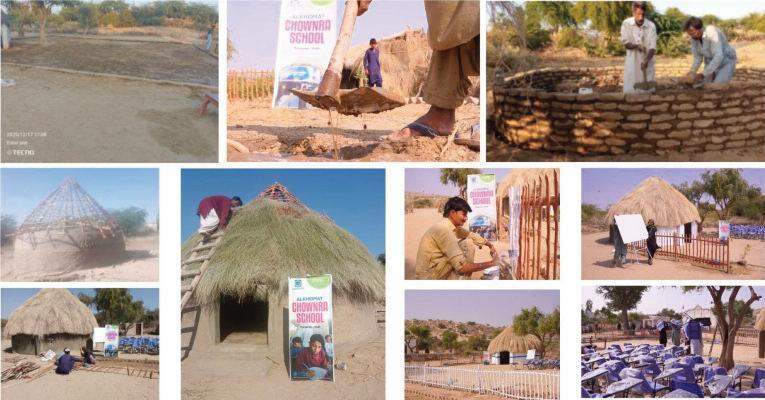
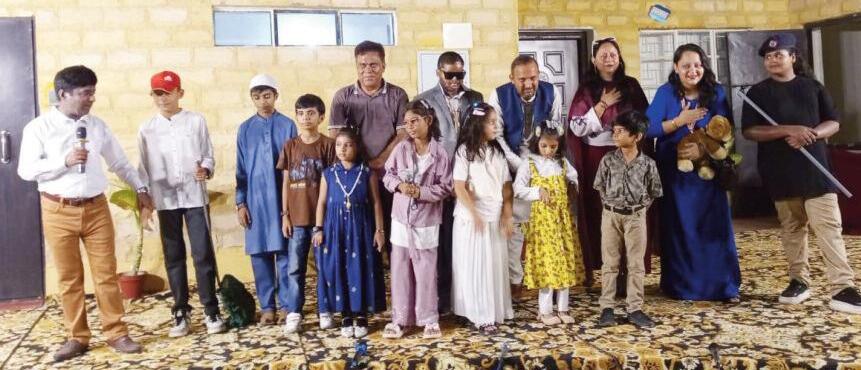
Zong has partnered with Alkhidmat Foundation (AKF) to strengthen access to primary education in underserved communities of Tharparkar Sindh through the establishment of climate-resilient community schools This initiative is focused on creating safe inclusive sustainable and accessible learning environments that support uninterrupted education for children living in remote areas Access to education remains one of Pakistan’s most pressing development challenges An estimated 25 1 million children aged 5 to 16 remain out of school representing nearly 35% of the country s school-age population In remote districts such as Tharparkar, poverty, dispersed settlements, limited infrastructure, and socio-cultural barriers continue to restrict access to quality learning opportunities especially for girls To help address these challenges Zong and Alkhidmat Foundation established Chownra Schools in remote villages of Tharparkar including Chopni Wasai Pota in Mithi and Sono Ki Dhani in Islamkot, where access to formal education was previously limited The partnership reflects a shared commitment to advancing inclusive growth by expanding access to quality education and strengthening opportunities for underserved communities
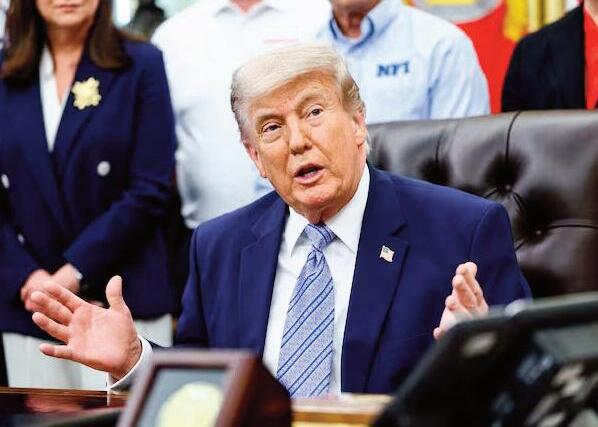
Pakistan eyes hosting next Us-iran talks as trUmP says deal ‘l argely negotiated’