
Naqvi holds high-stakes tehraN talks as PakistaN Pushes us-iraN Peace
g INTERIOR MINISTER
MEETS IRANIAN PRESIDENT
PEZESHKIAN DURING SECOND TEHRAN VISIT IN FIVE DAYS
g ALSO HOLDS TALKS WITH IRGC CHIEF AHMAD VAHIDI AND INTERIOR MINISTER MOMENI AMID FEARS OF RENEWED US-IRAN TENSIONS
g PAKISTAN-LED DIPLOMACY ENTERS CRITICAL PHASE AS FRESH US PROPOSAL REACHES TEHRAN
g IRAN CONFIRMS NEGOTIATIONS WITH WA SHINGTON CONTINUING THROUGH PAKISTANI MEDIATORS


POWER TARIFF LIKELY TO RISE BY RS1.72/UNIT UNDER APRIL FCA
ET Y prices are likely to increase
Abdul Aleem Khan says Karachi-Sukkur corridor remains the countr y ’s most impor tant infrastructure project and is targeted for completion within t wo years
The Asian Infrastructure Investment Bank has expressed interest in supporting Pakistan s major road infrastructure programme with discussions on Wednesday focusing on the Karachi-Hyderabad and Hyderabad-Sukkur motorway project, which the government has identified as its top transport priority The interest was conveyed during a meeting between AIIB Vice President Konstantin Limitovskiy Director General Xiaohong Wang and Federal Minister for Communications Abdul Aleem Khan, according to an official statement Abdul Aleem Khan said the government planned to complete several key transport and communications projects within the next two years and described AIIB investment as critically important for Pakistan s infrastructure development He said the Karachi-Hyderabad and Hyderabad-Sukkur motorway was the country s most important ongoing project and would play a major role in strengthening economic growth and trade connectivity The minister said the link connecting the motorway to Karachi Port would be constructed as an eightlane road while the Hyderabad-Sukkur section would be developed with six lanes He said the Lahore-Sialkot and Kharian-Rawalpindi motorway projects were also scheduled to be completed within two years According to the minister, the expanded motorway network will reduce the distance between Lahore and Islamabad by around 100 kilometres cutting travel time by approximately one hour and saving billions of rupees annually in fuel costs
PM reaffirms unwavering suppor t for China, eyes stronger CPEC push ahead of Beijing visit
CONTINUED FROM PAGE 01
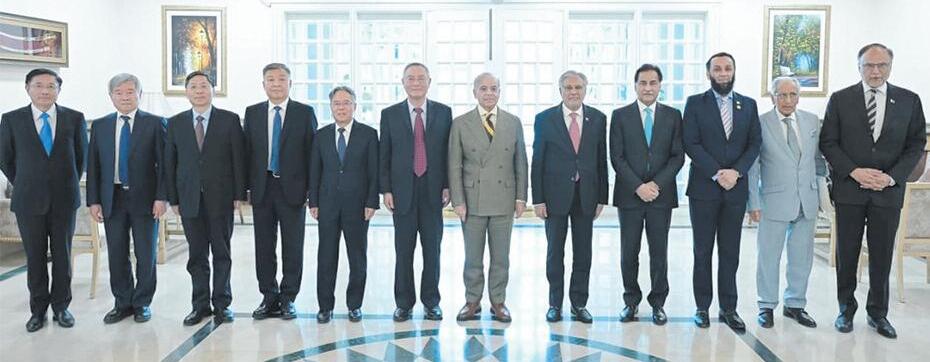
The prime minister also expressed strong anticipation for his upcoming visit to China reiterating that it would further deepen strategic economic and institutional cooperation between the two countries On regional developments, the statement said the prime minister appreciated China s constructive role in promoting peace and stability in South Asia and the Middle East and reiterated Pakistan’s
Refineries warn OGRA over petroleum smuggling impac t on refiner y operations
g REFINERIES URGE CRACKDOWN ON FUEL SMUGGLING AS ILLEGAL DIESEL FLOOD THREATENS OPERATIONS AND REVENUE
Pakistan’s refineries have warned the Oil and Gas Regulatory Authority (OGRA) that rising cross-border inflows of petroleum products are undermining local refinery operations reducing demand for domestic fuel and threatening the stability of the country s petroleum supply chain
The concerns were formally raised in a letter dated 19 May 2026 addressed to the Chairman of the Oil and Gas Regulatory Authority titled “Serious Threat of Petroleum
Smuggling to Refinery Operations
Refineries referring to a meeting convened by OGRA over the weekend to discuss low upliftment from local refineries, said in the letter, We refer to the meeting convened by OGRA over the weekend to deliberate upon the issue of low upliftment from local refineries ”
They added “During the discussion the refineries collectively highlighted that rather than curtailing refinery production all possible measures may be considered to address the increasing cross-border inflow of petroleum products, which appears to be impacting the demand for locally refined products
The refineries further warned, “There are growing concerns that if left unaddressed such inflows may increase further and potentially reach levels observed in previous years thereby adversely affecting refinery throughput operational sustainability and the overall domestic supply chain
In the letter, the refineries requested regulatory action, stating, “In view of the above, we request OGRA to kindly highlight the potential adverse implications of such unregulated cross-border product inflows on refinery operations and to consider recommending appropriate enforcement and monitoring measures to safeguard the integrity of the domestic petroleum supply chain Refineries stressed that stronger enforcement and monitoring is needed to prevent further disruption to domestic supply chains and protect refinery viability in the long term A refinery CEO told Profit that it is estimated that around 5 000 tons per day of High-Speed Diesel (HSD) is being smuggled into Pakistan against a total national demand of approximately 22 000 tons per day accounting for nearly 23 percent of the country s HSD consumption
He said, It is estimated that around 5,000 tons per day
of High-Speed Diesel (HSD) is being smuggled into Pakistan against the total national demand of approximately 22,000 tons per day This constitutes nearly 23% of the country’s HSD demand ” The government is reportedly losing about Rs80 per litre in petroleum levy and customs duties translating into an estimated revenue loss of around Rs475 million per day
He stated, The Government is reportedly losing approximately Rs 80 per litre in terms of petroleum levy and customs duties, translating into an estimated revenue loss of around Rs 475 million per day ”
Referring to developments in Balochistan he said In this regard most surprising was a statement of Baluchistan government published in the national media during the first week of April 2026 to allow sale of smuggled Iranian diesel at Rs 280 per litre within Balochistan
He added, “I had then pointed out that once such sales are permitted officially in Balochistan it would be practically impossible to confine the product to the province alone Rejecting arguments that smuggling should be tolerated for foreign exchange savings he said Another argument being advanced by certain quarters that smuggling should be tolerated in order to save foreign exchange is entirely irrational ”
He further noted, “Smuggling transactions are conducted in hard currency through unofficial channels and it is difficult to understand how any illegal activity can be justified on such grounds
Warning about policy implications he said What is even more alarming is the consideration being given to asking refineries to reduce diesel production instead of taking effective anti-smuggling measures Such an approach would send extremely negative signals to the refining sector He concluded One fails to understand how refineries can be expected to invest billions of dollars in refinery upgradation and capacity enhancement under these circumstances, particularly when their existing production cannot be sold due to the unchecked inflow of smuggled products ” It is pertinent to mention here that country’s refineries have urged the Oil and Gas Regulatory Authority (OGRA) to take immediate steps to curb the smuggling of petroleum products and warned that the illegal inflow is significantly undermining their performance and threatening the domestic supply chain
Pakistan, UK review bilateral cooperation in security, trade and economic reform
PR OFIT S TA F F R E P O R T
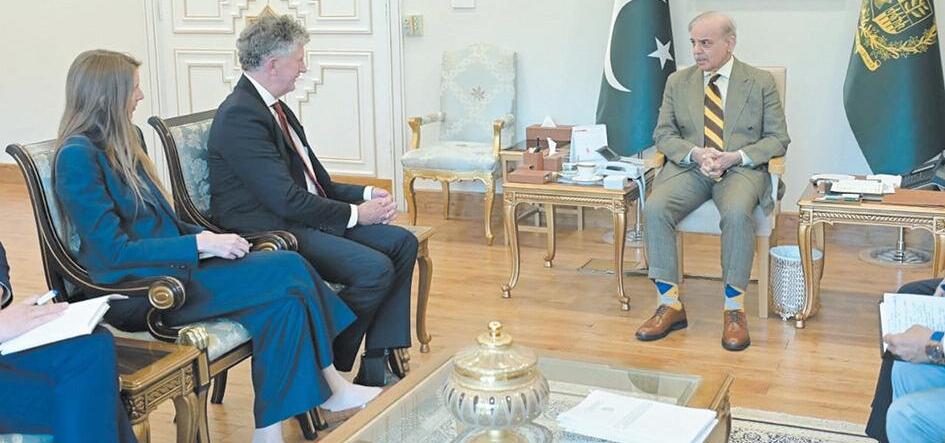
Prime Minister Shehbaz Sharif on Wednesday held talks with UK National Security Adviser Jonathan Powell at the Prime Minister House where both sides discussed bilateral relations and cooperation in security, trade, investment and development According to a statement issued by the Prime Minister ’s Office the meeting was attended by Deputy Prime Minister and Foreign Minister Ishaq Dar, Special Assistant to the Prime Minister Tariq Fatemi, Foreign
Secretary Amna Baloch and Secretary National Security Division Sajid Baloch The UK National Security Adviser was briefed on Pakistan’s regional and international engagements where he appreciated Islamabad s constructive role in promoting dialogue and de-escalation in regional affairs He also welcomed Pakistan’s economic reform efforts and expressed London’s interest in expanding cooperation across multiple sectors including security trade investment and development Prime Minister Shehbaz Sharif
described the United Kingdom as a key longstanding strategic partner and reiterated Pakistan’s commitment to maintaining robust and forwardlooking engagement with London He also extended good wishes to British Prime Minister Keir Starmer and recalled their recent telephone conversation, during which both leaders had expressed the desire to further deepen bilateral relations The statement said Pakistan and the United Kingdom continue to share long-standing ties rooted in cooperation across trade, education, security and people-to-people linkages
Meanwhile, Iranian Foreign Ministry spokesperson Esmaeil Baqaei confirmed that Tehran had received a fresh US proposal and was currently reviewing it
“We received the points of view of the American side and we are currently examining them Baqaei told Iranian state media adding that the presence of Pakistan s interior minister was aimed at facilitating the exchange of messages between the two sides
He reiterated Tehran’s key demands in the talks including the release of frozen Iranian assets abroad and the lifting of US restrictions on Iranian ports
In separate remarks to Brazilian newspaper Folha de Sao Paulo, Baqaei said negotiations between Tehran and Washington were continuing “through Pakistani mediators,” according to IRNA
“Basically
informed Washington that prospects for a comprehensive agreement to end the conflict were improving Speaking about ongoing diplomatic efforts Trump said leaders from Saudi Arabia Qatar the United Arab Emirates and other regional states had urged him to postpone military action because they believed negotiations were moving closer towards a breakthrough
“They think they are getting very close to making a deal ” Trump said while explaining the decision to delay further strikes
According to diplomatic sources familiar with the negotiations the latest US proposal offers slightly better incentives to Iran compared to previous proposals, although key disagreements remain unresolved
The sources said the new proposal includes discussions related to Iran s frozen overseas assets and international sanctions imposed on Tehran but noted that Washington had offered no new concession regarding Iran s nuclear programme the principal stumbling block in efforts to reach a permanent agreement Under a previously reported 14-point Iranian proposal Tehran has sought separate negotiations on its nuclear programme including issues related to enriched uranium, within 30 days after the implementation of a
permanent ceasefire Washington, however, maintains that the nuclear issue must be “discussed and resolved” before any final ceasefire arrangement can be concluded Diplomatic sources added that the proposal for third-party monitoring of any future agreement also remains under discussion, particularly on the Iranian side Regional tensions have remained high since the United States and Israel launched strikes against Iran in February triggering retaliatory attacks by Tehran targeting Israel and US allies in the Gulf region alongside disruptions in the strategically critical Strait of Hormuz
A ceasefire brokered through Pakistani mediation came into effect on April 8, temporarily halting hostilities, although subsequent talks in Islamabad failed to produce a lasting settlement Trump later announced an indefinite extension of the truce
Since then both Washington and Tehran have continued exchanging proposals and counter-proposals in an attempt to revive direct negotiations and prevent the conflict from escalating into a wider regional war
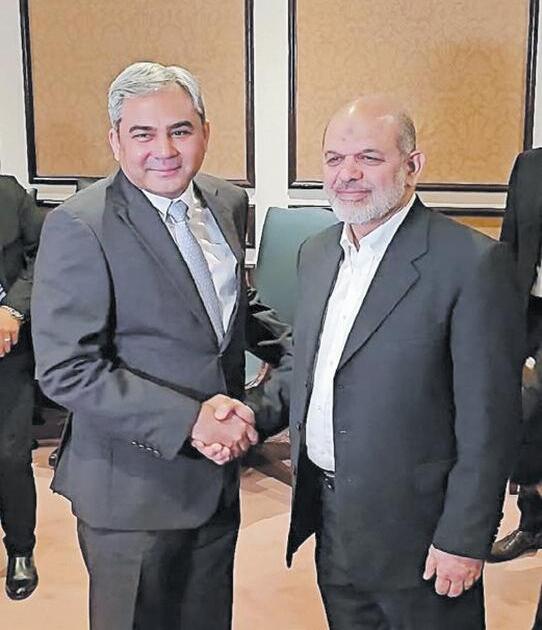
During his recent visit to Tehran Pakistan s Interior Minister Mohsin Naqvi held meetings with Iranian President Masoud Pezeshkian, Foreign Minister Abbas Araghchi, Parliament Speaker Mohammad
Bagher Ghalibaf and Iranian Interior Minister Eskandar Momeni as part of Islamabad s diplomatic outreach Naqvi spent nearly 90 minutes in a private meeting with President Pezeshkian at the Presidential Administration while his overall visit to the complex lasted around three hours During the talks, President Pezeshkian praised what he described as the responsible cooperation of Pakistan, Afghanistan and Iraq in

TH E privatization of three electricity distribution companies will carry on the process that was started by the privatization of K-Electric the country’s only DISCO with its own generation stations which made the process somewhat different The process of privatizing K-Electric turned out to be messy, first because the original buyer, the Shanghai Electric Power Company sold out to the Abraaj Group of Arif Naqvi, which went down in flames after Mr Naqvi was indicted for fraud Only recently did Shehryar Chishti manage to get control of K-Electric after disentangling it from the train wreck Abraaj Group had become The innovative approach to generation that K-Electric is taking is reflected in the Keenjhar Lake project, whereby a solar plant would supply nearby industries 500 MW of electricity, which K-Electric has agreed to take
While it is worth noting that the Privatisation Commission is not putting up loss-making DISCOs for sale Indeed the three DISCOs put on the block are makers of the highest profits One approach would be for the government to quietly encourage business consortia which already have industries in the area, to buy their local DISCO, much as the Sialkot Chamber of Commerce first built the Sialkot Airport, and then established an airline These consortia could at a later stage bid for generation companies It might have made sense for the government to have bundled together generation with distributions to create entities like K-Electric but in future those who have gained experience from running privatized DISCOs may bid for generation companies Of course, that is sometime in the future In the meanwhile, the government has to overcome the PIA privatization fiasco of 2024, While it successfully privatized PIA last year the dust has not settled Privatisation of some but not all DISCOs opens at least the theoretical probability of differentiated tariffs something which the government has so far avoided If a privatized DISCO brings its line losses significantly below other

ON March 27 a coordinated Iranian strike on Prince Sultan Air Base in Saudi Arabia six ballistic missiles and 29 one-way attack drones, destroyed E-3G Sentry serial number 81-0005, a US Air Force airborne warning and control system aircraft Its rear fuselage was burned through Its rotating radar dome the distinctive disc that defines the aircraft s function was on the ground The USAF has yet to formally declare it a total loss but air battle managers who reviewed the images have described the destruction as effectively irreparable The aircraft, based on the Boeing 707 airframe first launched in the 1950s, entered USAF service in 1978 Its production line closed in 1992 There is no replacement aircraft available and no production capacity to build one One destroyed aircraft should not constitute a strategic crisis That it does reveals something important
shelter Compressing it increases interceptor consumption rates reduces intercept probabilities, and creates the accumulating coverage gaps that Grieco described as “operationally significant even if no additional aircraft are destroyed ” The loss of one E-3 does not disable US airpower It degrades the connective tissue through which airpower coordinates and degraded coordination at operational scale produces exactly the kind of coverage gaps that allowed Iranian missiles to reach the flight line at Prince Sultan despite the presence of Patriot and THAAD batteries at the base The replacement problem is structural not
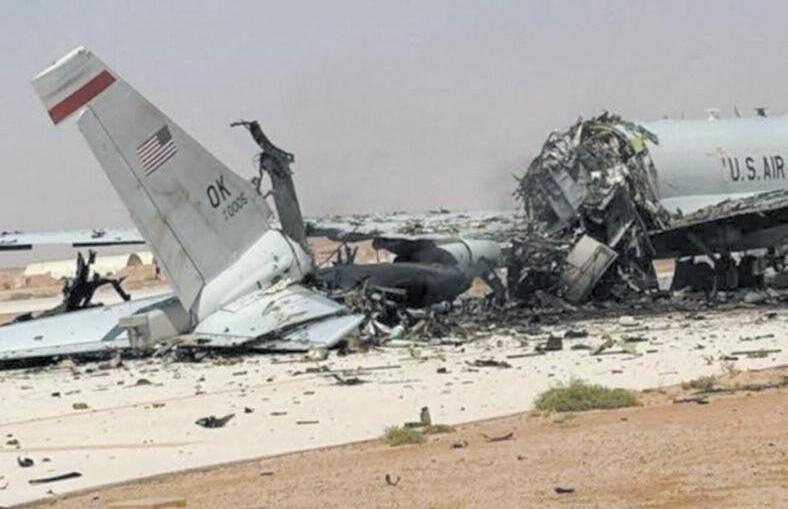
The E-3 destroyed at Prince Sultan is not primarily a stor y about one aircraft. It is a stor y about what single points of failure cost when they cannot be replaced, and about what happens when the production lines that would allow replacement were closed a g eneration before the conflict that made them necessar y.

Tmains uneven, particularly in densely concentrated industrial zones where effluent discharge is often only partially filtered Rivers such as the Ravi and Chenab receive a complex mixture of chemical and fibre-based pollutants while the absence of a national microplastic monitoring system means the scale of contamination remains largely unquantified Against this backdrop, protein-based recyclable textiles introduce a fundamentally different industrial logic Instead of relying on non-degradable petrochemical polymers these fibres are engineered from biological building blocks that can be chemically reversed and reassembled
The result is a closed-loop system in which textiles can be repeatedly recycled without degradation in quality Even when released into the environment, these materials are designed to break down far more easily than conventional plastics significantly reducing long-term ecological persistence The underlying innovation is not simply material substitution but systems redesign By using synthetic biology to program protein sequences, researchers are effectively turning textiles into renewable molecular architectures This represents a departure from the linear take-make-dispose model toward a circular manufacturing framework where waste is treated as a recoverable resource rather than an endpoint For Pakistan, this shift carries clear strategic consequences Global textile markets are increasingly shaped by sustainability-linked trade rules especially in Europe and North America where environmental compliance is becoming central to market access Indicators such as microplastic emissions water usage and circular production are likely to define future export competitiveness
At the same time, Pakistan’s textile sector is under mounting internal pressure Climate stress is reducing cotton yields water scarcity is raising production costs and rising dependence on synthetic fibres is increasing exposure to environmental regulation Together, these
factors create a structural risk of relying on a production model that global markets are steadily moving away from This reality demands more than incremental adjustment Pakistan must embed sustainability into industrial policy, starting with a national system to monitor microplastic pollution across industrial zones, cities, and river networks Without reliable data, regulation and planning remain ineffective
Equally investment in textile innovation is essential Stronger links between universities and industry can accelerate development of biobased fibres, recycling technologies, and lowshedding materials tailored to local conditions Alongside this, upgrading wastewater treatment and microfiber filtration in textile hubs through targeted public–private partnerships is critical to maintaining long-term export viability
Beyond industry the issue extends into public health and environmental stability Microplastics have already been detected globally in drinking water, food chains, and human tissues, raising concerns about long-term exposure effects In densely populated regions of Pakistan where synthetic textile use is expanding and filtration systems are limited prevention becomes far more cost-effective than future remediation Ultimately, the emergence of recyclable protein textiles signals more than a technological milestone it marks a turning point in how societies define material progress Textiles are no longer just commodities; they are becoming engineered ecological systems with direct environmental consequences
Pakistan now stands at a critical juncture It can continue along a path defined by conventional production models that are increasingly misaligned with global sustainability standards or it can reposition itself within the next generation of textile innovation The direction chosen will determine not only export competitiveness but also environmental resilience The future of textiles will not be measured only in metres produced but in the pollution no longer created
The writer is Director Institute of Physics Khwaja Fareed University of Engineering and
Pakistan
Food makers star ving
Dr MUhAMMAD BilAl TAhir
Climate Inequality

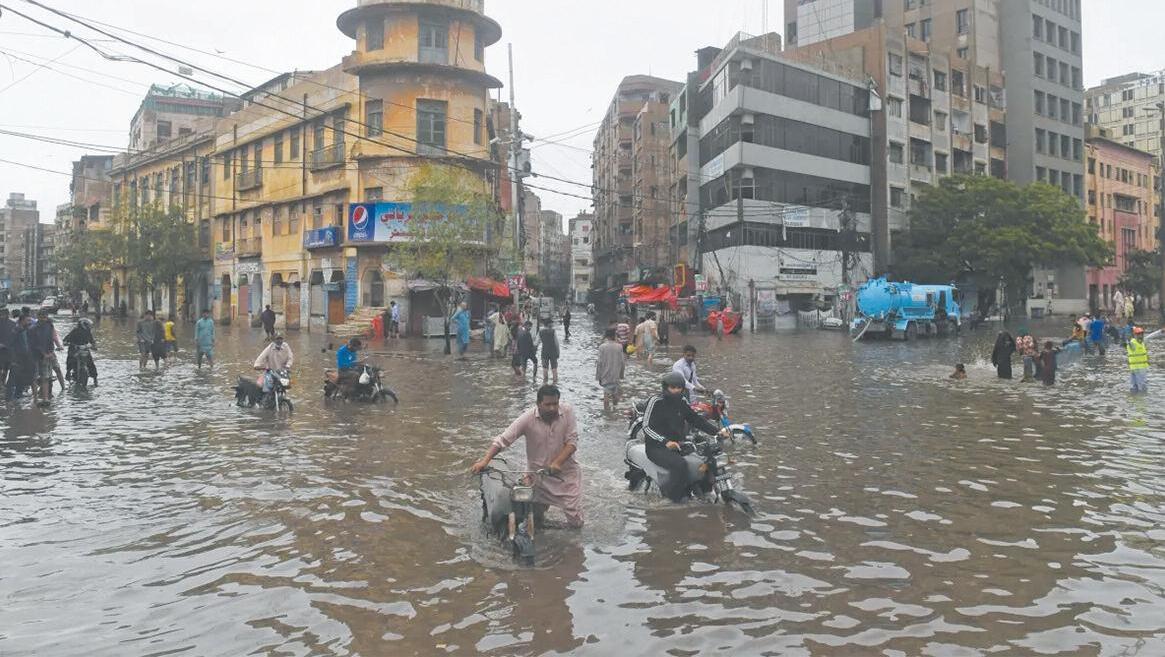
TThe rain just would not stop and neither did the losses In 2022, when floods swallowed up a lot of Pakistan it wasnÊt the water that rose It was also a memorial of how unstable the world really is 33 million people were affected and the damag es were over $30 billion
Beyond policies and promises this is about something more basic, fairness The current way of growing the economy has made some people rich and others vulnerable This imbalance can no longer be ignored In the end climate change is not about the weather getting hotter or more extreme. It is about who gets protected and who gets left behind. The real question is no longer whether we can stop climate change The real question is whether we will stop it in a way Because if we do not then the gap between the people who caused the problem and the people who suffer from it will only get wider. That is a cost that the world cannot afford Climate Change and the Global South are closely linked We need to make sure that the Global South is protected from the effects of Climate Change.
Foreign investors have pulled £17bn from the Indian stock market this year India impor ts 87pc of its crude oil and gas, of which about half usually passes through Hormuz

the winners from Trump’s second term The White House was expected to focus on curtailing China s rise which would have the side effect of fuelling India s own quest for superpower status But the mercurial US president was soon at loggerheads with Modi about trade India faced some of the world’s highest US tariffs and it took 12 months to strike a deal Then came the war in Iran This has not only derailed India economically but also geopolitically Since the conflict began Trump has drawn closer to India s two biggest strategic rivals – China and Pakistan Pakistan manoeuvred itself into a role as Trump’s trusted intermediary in peace negotiations with Tehran and Beijing has adroitly shifted the US president s attitude from belligerence to begrudging esteem Dr Walter Ladwig a political scientist at King s College London, says these developments have set back India s 20-year effort to cultivate a tight relationship with Washington “The relationship is not going away India and the US need each other for various reasons But there are now some really significant limits on where the relationship can go Trust has really taken a hit, he says More broadly, Ladwig says, the Indians are discovering that “they are still at a stage where they are affected more by events in the international system than they are yet shaping that system If Modi is to wield greater influence on the world he has to ensure that India s economy becomes a powerhouse that can rival China But that still looks a long way off Modi s Made in India campaign is supposed to turn the country into a factory for the world But manufacturing as a share of GDP has stalled in the past decade and its contribution to global industrial output is just a tenth of China s We ve seen a lack of investment in deep-tech funding, an insufficient investment in human capital, Bajpaee says India is a sprawling, decentralised democracy Despite Modi’s BJP party dominating at both the national and state levels Delhi cannot pull on the economic levers the way Beijing can It s often a two-step-forward one-step-back process of decision making Bajpaee says There are a lot of structural issues For the foreseeable future, India is nowhere near being



M I A N A B R A R
I Jinping and Vladimir Putin on Wednesday pledged to elevate China-Russia ties to unprecedented heights, presenting their expanding partnership as a stabilising force against what they described as rising unilateralism and global turbulence
During high-level talks at Beijing s Great Hall of the People, Xi said China and Russia must deepen comprehensive
strategic coordination of “even higher quality to drive national revitalisation and reshape global governance into a more just and multipolar order The Chinese president described the relationship as one forged through “unyielding tenacity” and strengthened by deep political trust strategic coordination and expanding cooperation across trade energy technology and cultural exchanges The international situation is fluid and turbulent, and unilateralism and hegemonism are resurging, Xi warned, while asserting that peace, development and cooperation remained the dominant aspiration of the world s people Marking the 30th anniversary of the ChinaRussia strategic partnership and the 25th anniversary of the Treaty of Good-Neighborliness and Friendly Cooperation Xi said the bilateral relationship had entered a new stage of greater achievements and faster development” He called for intensified collaboration in
trade investment energy transportation and scientific innovation while also urging both countries to explore frontier technologies and new growth sectors driven by advanced productive forces Xi further stressed the importance of strengthening people-to-people ties through education culture tourism film and sports exchanges saying long-term friendship between the Chinese and
United Nations Shanghai Cooperation Organization BRICS and Asia-Pacific Economic Cooperation He also underscored the need to defend the post-war international order,
Donald Trump on Wednesday said the United States would give Iran one shot to reach an agreement, while warning that Washington could resume attacks within days if negotiations failed as tensions in the Gulf continued to rattle global energy markets
Speaking to reporters before departing Joint Base Andrews, Trump said he was not rushing toward a deal and was more focused on achieving strategic objectives than adhering to any timeline
Just a limited deal just for a longer ceasefire We d have to open the strait, which would open immediately So we're going to give this one shot I'm in no hurry,” Trump said, referring to the strategically vital Strait of Hormuz
The remarks came amid mounting fears of a wider regional conflict and reports of possible mines in the Strait of Hormuz, a critical route for global oil supplies France said it had no confirmation that mines had been deployed but acknowledged preparations for a potential demining mission
French Defence Minister Catherine Vautrin said Paris and London were preparing naval measures in the region adding that France already had demining capabilities stationed in Djibouti
Meanwhile, Iran s Revolutionary Guards issued a stark warning that any renewed US-Israeli military action would trigger a conflict extending far beyond the region
In a strongly worded statement, the Guards said Iran had yet to unleash the full strength of the Islamic

revolution despite facing attacks from what it described as “the world s two most expensive armies
If the aggression against Iran is repeated the promised regional war will this time spread far beyond the region, and our devastating blows will crush you,” the statement declared
The war which erupted on February 28 and has remained under a fragile ceasefire since April 8
edly killed several top Iranian figures, including Supreme Leader
Khamenei, triggering retaliatory missile and drone attacks by Tehran across the region I r a n i a n Foreign Minister Abbas Araghchi also warned on X that any “return to war will feature many more surprises At the same time, signals from

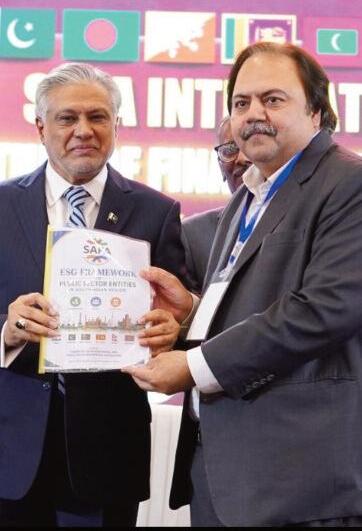
ESG Framework for Public Sector Entities


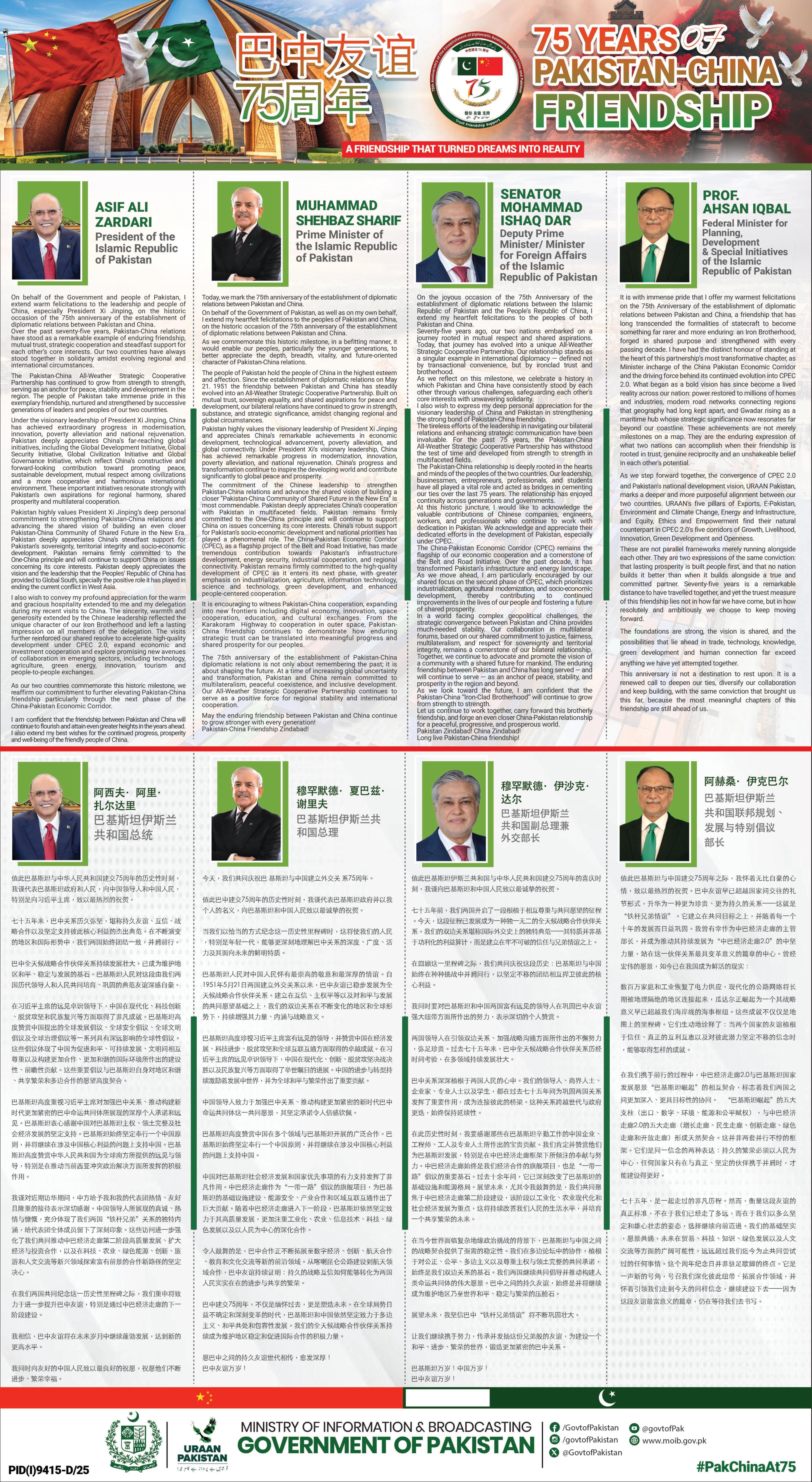
Pakistan, China reaffirm 'iron-Cl ad' allianCe as dar hails deeP strategiC PartnershiP
Recalling
e m J a d o o n
The United Kingdom s National Security Adviser (NSA) Jonathan Powell on Wednesday conveyed Britain s appreciation for Pakistan’s “constructive role in regional diplomacy ” particularly its efforts aimed at de-escalation and dialogue in the broader regional context during a meeting with Prime Minister Shehbaz Sharif in Islamabad According to a statement issued by the Prime Minister ’s Office, Powell called on the prime minister at the Prime
Minister s House and lauded Pakistan s ongoing diplomatic engagement amid efforts to help facilitate a potential pathway towards easing tensions between the United States and Iran The British NSA conveyed that His Majesty s Government valued Pakistan s constructive role in regional diplomacy, including its continued efforts to promote dialogue, restraint and de-escalation in a volatile regional environment
During the
PTI signals readiness for dialogue with govt, links talks to Imran Khan's release
in which Imran Khan is released from jail and Mian Sahib (Nawaz Sharif) also comes forward for dialogue he said Ali Muhammad Khan revealed that Opposition Leader Mehmood Khan Achakzai had informed PTI leaders about receiving an invitation from Prime Minister Shehbaz Sharif for talks I asked Achakzai to go for dialogue The entire PTI will support him so that the process of talks can pave the way for political stability and the resolution of our issues,” he added
The PTI lawmaker expressed hope that negotiations could eventually lead to the release of Imran Khan and his wife Bushra Bibi both currently incarcerated in the Al-Qadir Trust case
Speaking on the floor of the National Assembly, PTI leader and MNA Ali Muhammad Khan said the opposition was prepared to sit with the government to resolve national issues if an atmosphere conducive to dialogue was created Let us sit together to jointly resolve our problems in an atmosphere
Ali Muhammad Khan also highlighted instances where the opposition had extended support to the government on matters of national importance particularly during last year ’s military confrontation with India
We stood with the government
during the conflict with India and today we also stand united in welcoming the Chinese delegation visiting Parliament to mark 75 years of Pakistan-China diplomatic relations, he said The remarks came during a special National Assembly session attended by a high-level Chinese delegation led by Cai Dafeng Vice Chairman of the Standing Committee of China s National People s Congress, along with Chinese Ambassador Jiang Zaidong The treasury and opposition benches jointly welcomed the delegation, reflecting rare political unity in the House despite heightened tensions between the government and PTI Interestingly PTI lawmakers had earlier announced a boycott of National Assembly proceedings to protest Imran Khan s continued imprisonment However, opposition members led by Mehmood Achakzai participated in Wednesday’s session during the Chinese delegation s visit before later walking out

ISLAMABAD