

hbaz Sharif backs the idea of a wheat support price, pointing to differing provincial approaches Sindh has been procuring wheat directly, he said, while Punjab has used a public-private partnership model buying at Rs3 200 per maund


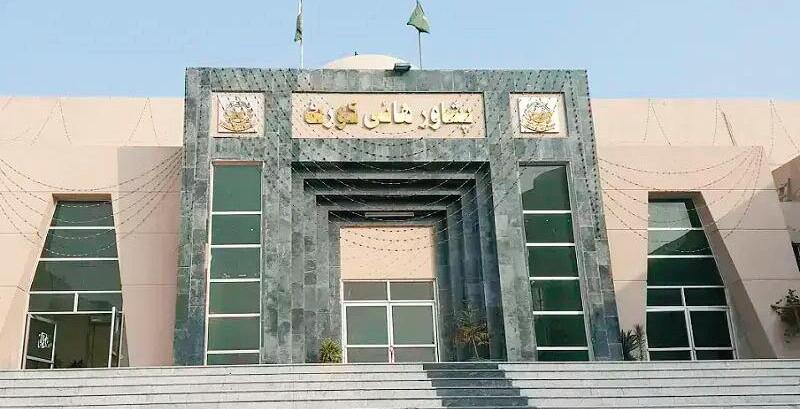
The Peshawar High Court (PHC) on Monday upheld the federal government's decision to abolish the longstanding facility of free electricity units for employees of the Peshawar Electric Supply Company (Pesco) Tribal Electric Supply Company (Tesco) and other electricity distribution companies (DISCOs), dismissing a series of writ petitions
As
were represented by Barrister Asad-ul-Mulk
The dispute arose after the federal government decided to discontinue the decades-old concession as part of broader reforms aimed at addressing Pakistan's worsening circular debt
CONTINUED FROM PAGE 01
The policy was finalised in December 2023 by the caretaker government and had remained
NAB seeks land records of all KP distric ts in expanded Auqaf proper ties probe
Pakhtunkhwa Waqf Properties Ordinance, 1979, NAB stated that Waqf properties include all assets dedicated for religious charitable or welfare purposes irrespective of whether documentary evidence of their endowment is available NAB has also sought identification of all land records where the Auqaf Department is mentioned in the Column of Cultivation in the revenue record
Iranian officials told The Times that no tolls would be charged but said the agreement includes a service fee to cover environmental effects security for cargo ships and tankers, and staffing costs They added that the revenue would be shared equally between Iran and Oman RUBIO SAYS US-IRAN STRAIT TALKS PROGRESS, DEAL COULD COME 'VERY SHORTLY'
Earlier US Secretary of State Marco Rubio said that Washington and Tehran had yet to finalise talks on passage through crucial international waterways but he hopes an agreement will come very shortly Following reports and senior US officials remarks that both sides are close to reaching a deal to reopen the Strait of Hormuz Rubio told reporters at the State Department that “there's been progress made in those
Rubio said that nonethe-
there s a conversation and a negotiation that we are involved in between Oman and Iran on how more
“There's oil moving right now through the straits So the straits are open he said
The letter further warns that any false statement, concealment of facts or submission of misleading information may invite legal action under the National Accountability Ordinance 1999 However NAB clarified that the purpose of seeking the information is solely to obtain records for the investigation, and that the request should not be construed as imposing any restriction on, or initiating proceedings against, the properties or related accounts concerned
The Board of Revenue has been instructed to provide certified information extracted from computerised and digital land records of all districts to the NAB Peshawar office by August 7 to help advance the investigation


The govt is operationalizing a major change in its relationship with its employees
shouting Allahu Akbar

OES criticizing actions of the Israeli government or the behaviour of its prime minister fuel antisemitism? Despite the stretch of logic required to make this argument and the danger its bizarre conflation presents to American Jews, some US pro-Israel organizations are working overtime to establish the case that criticizing Israel puts American Jews at risk Their view on this matter has now been echoed by Benjamin Netanyahu who before leaving Israel for his meeting with President Trump used an interview with a US TV network to level this very charge against New York City mayor Zohran Mamdani While tensions between Mamdani and pro-Israel groups have been brewing since his 2025 election campaign, it was recently reignited in the lead up to Netanyahu’s announced visit to the US Mayor Mamdani was asked by a reporter whether he would fulfill a campaign pledge to arrest the Israeli prime minister as a war criminal as per the indictment issued by the International Criminal Court In response, the mayor convened a group of legal experts who concluded that the city, on its own, did not have the authority to make an arrest only the federal government could do that In an effort to put the matter to rest Mamdani released a short video in which he acknowledged that he lacked the power to order an arrest but nevertheless called out Netanyahu as a war criminal responsible for the deaths of more than 73,000 people and stated that he would not welcome him in New York City In his video Mamdani did not mention Israel nor did he mention the Jewish people or the citizens of Israel This was he observed simply about Netanyahu s crimes cited in the ICC arrest warrant Some pro-Israel groups immediately denounced Mamdani s video and charges against the Israeli prime minister They accused him of “repeatedly singling out the world’s only Jewish state leaving many Jewish New Yorkers feeling targeted and unwelcome One group characterized the video as blood libel and outrageous lies While still another charged Mamdani with fomenting antisemitism A few days later, a Hispanic man, whom police said had mental health issues, allegedly stabbed two people, one was Asian and another Jewish In both instances observers said they heard the attacker
The same pro-Israel groups that have been conflating Israel with American Jews and relentlessly condemning Mamdani leapt into the fray blaming the mayor for making New York unsafe for Jews by using his platform to viciously attack Israel One prominent Jewish leader called on the mayor to resign, charging him with dereliction of duty Mamdani immediately responded to these charges condemning the stabbings as “hateful and despicable attacks that have no place in our city” and noted that his administration had already dramatically increased investment in hate crime prevention so that we can start to address the root causes of this bigotry and hatred as we look to root out the scourge of antisemitism The mayor added: When it comes to my comments about Prime

W i n n i n g b a t t l e s , l o s i n g t h e w a r
needed

Trecorded there, the highest among all regions in the country Although nationwide fatalities declined by five percent from the previous quarter attempted suicide attacks doubled with six vehicle-borne bombings killing 40 people and six more foiled An insurgency that sustains high levels of violence while adapting its tactics is not in retreat It is evolving The geographical pattern of this violence tells a story that military operations alone cannot resolve The great majority of terrorism-related fatalities are concentrated in Khyber Pakhtunkhwa and Balochistan, especially near the border with Afghanistan This concentration is not coincidental It is the operational signature of groups that plan across borders sustain themselves through cross-border sanctuary and exploit a diplomatic impasse that has persisted through multiple Pakistani governments and multiple international frameworks without producing meaningful
change in Afghan Taliban behaviour Pakistan has consistently maintained that terrorist groups are using Afghan territory to plan, facilitate, and recover from attacks inside Pakistan The year 2025 was the deadliest year on record for Pakistan with 2 115 militants and insurgents killed alongside 664 security personnel and 580 civilians The militants can absorb those losses because the infrastructure enabling their recruitment, training, financing, and command sits across a border that Pakistan s security forces cannot cross and that Afghanistan’s Taliban government has no intention of policing on Pakistan’s behalf The financial dimension of this sanctuary is the least discussed and most actionable aspect of the problem Militant ecosystems do not sustain themselves through ideology alone They require money for recruitment, operations, and logistical infrastructure that moves people and material across difficult terrain
The Afghan Taliban’s ability to host a range of terrorist organisations operating against Pakistan is not purely ideological solidarity It is an arrangement with economic dimensions that the international community has the tools to disrupt and has chosen not to prioritise The Financial Action Task Force removed Afghanistan from its grey list in 2022 despite documented evidence of terrorist financing flowing through Afghan financial channels Western governments that have designated TTP and BLA as terrorist organisations domestically have been slower to apply the financial pressure on networks sustaining them regionally than such designations logically imply Pakistan has raised this inconsistency at every available forum It has been heard politely and acted upon inadequately The domestic governance dimension is the one that official Pakistani discourse handles most delicately, because acknowledging it fully requires acknowledging that military operations, however effective tactically, are operating against a recruitment environment that governance failures have created and sustained
The failure of successive politicians tribal sardars and provincial elites to pursue inclusive development has left Balochistan burdened by Pakistan s highest poverty, severe child deprivation, and growing insecurity In Khyber Pakhtunkhwa the provincial government’s persistent ambiguity over counterterrorism has been the principal source of policy incoherence
A government that refuses to adopt a clear and
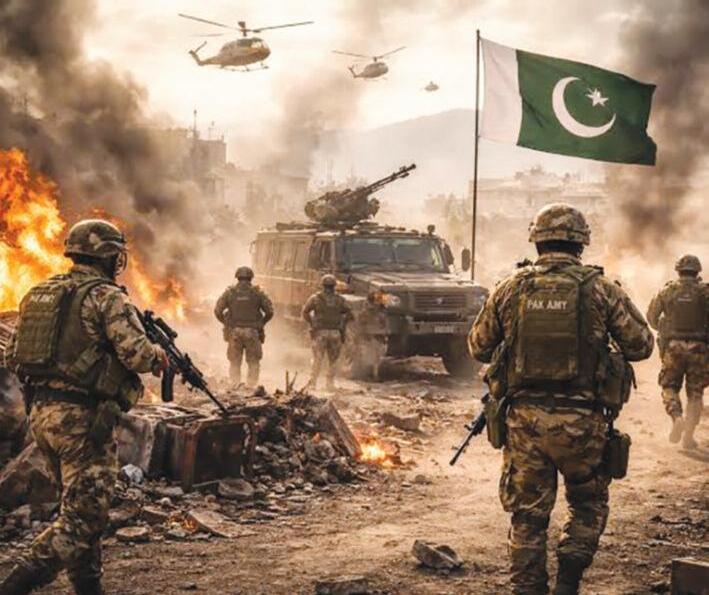
consistent approach inevitably weakens the state’s response to militancy Yet the federal government is hardly blameless Instead of confronting this divergence through sustained political engagement and a coherent national strategy, Islamabad has too often relied on ad hoc coordination and shortterm security measures The consequence has been clear as operations deliver temporary gains but the absence of sustained governance allows militancy to rebound Pakistan has never lacked brave soldiers or capable commanders Time and again its armed forces have demonstrated professionalism and resolve to defeat terrorist networks and restore security in contested areas Yet military victories however decisive cannot by themselves secure a lasting peace History is unambiguous on this point Wars end not when the last militant is killed but when the political economic and social conditions that sustain conflict are transformed That responsibility does not belong to military but to political leadership Unless elected governments can build credible institutions deliver justice expand economic opportunity strengthen provincial governance and forge a genuine national consensus every tactical success will remain vulnerable to strategic reversal Pakistan has proved that it can win battles It
The
@zafarkhansafdar
Marriage as crime
to her brother can be heard clearly; “Just shoot me do not do anything else” Tears roll down one’s eyes hearing these words of a brave girl who knew her fate in a tribal society One of the main reasons why women’s marriage by choice is seen as a threat in such a culture is the fear of losing out on inheritance While male ego and tribal pride are generally condemned for such heinous acts, like killing, the element of property often gets ignored It is critical to acknowledge the significance of the main element behind the so-called honour killings Daughters and sisters also have a legal and rightful share in the family s property, but men in most tribal families fear having to share the inheritance, and as such do not allow women to marry of their own choice
This is not culture, this is plain cruelty There was a time girls were buried alive Now they are shot for marrying by choice We share messages We post hashtags But where is justice? Why are these killers never hanged in public? Until action replaces silence women will continue to die HANI WAHID
Securit y unraveling fast
THE Lakki Marwat district in southern Khyber Pakhtunkhwa

GOVERNMENTS have always understood that political authority rests on more than the ability to enforce laws It also depends on the ability to shape how events are understood For much of the 20h century, that power was concentrated in the hands of the state and the institutions around it Governments controlled broadcasting licences influenced the press and issued the official account of events that citizens had limited means to contest Dissent existed, but it moved slowly Before it could reach scale, it usually had to pass through a gatekeeper
through social media and messaging networks People in different parts of the country could see the same images and encounter the same accounts of events without waiting for a single traditional media organisation to establish the dominant narrative When authorities imposed a nationwide internet shutdown during the unrest, the attempt to restrict information became part of the crisis itself
The lesson is not that social media caused Bangladesh s political upheaval It did something more subtle and in some ways more important It compressed the distance between individual grievance and collective recognition People who might otherwise have experienced their frustrations separately could suddenly see them as part of the same national story Nepal in September 2025 revealed a different side of the same phenomenon
The government blocked 26 major social media platforms after they failed to comply with registration requirements The official justification was regulatory But for many young Nepalis the ban became something larger: evidence of a government increasingly willing to restrict the space in which citizens communicated organised and expressed dissatisfaction The resulting protests quickly moved beyond the ban itself Long-standing anger over corruption nepotism and political instability merged with opposition to the restrictions The government had attempted to close a digital space Instead the closure became the issue around which wider political grievances gathered That is the paradox governments often underestimate A restriction intended to reduce the circulation of dissent can sometimes provide dissent with a clearer target
The ban did not create Nepal s underlying frustrations It gave them a common symbol India s recent crisis surrounding the NEET UG examination offers the most revealing example of what happens when a grievance acquires not only visibility but a

political identity
The examination is a high-stakes
to influence the system
What digital networks changed was the speed at which those frustrations could become collective Videos of demonstrations, clashes and the experiences of students circulated
The internet turns against a state not because it becomes a government itself, but because it weakens the state’s traditional monopoly over information. And once citizens discover that the official version of events is no longer the only version available, controlling the narrative becomes far more difficult. A government may be able to shut down the network. It cannot so easily shut down the political reality the network has already revealed.
Modi banked on an India-Mediterranean corridor to rival China’s B elt and Road, but politics is getting in the way

Prince Mohammed and the UAE’s leader Sheikh Mohamed bin Zayed al-Nahyan has pushed the Gulf powers apart Their split has led to the formation of two competing power blocs: a Saudi-led Israelsceptic bloc with Egypt, Qatar, Turkey and Pakistan, and the other comprising the UAE which normalised ties with Israel in 2020 This camp believes commercial benefits can pave the path towards peace India s foreign policy is centred on its rivalry with Pakistan and halting China s territorial and economic expansion Deepening defence ties with Israel at a time when the US was actively seeking to further the Abraham Accords and as India tried to project itself as a suitable alternative to China-dominated supply chains made IMEC a perfect fit But New Delhi did not anticipate widespread war or a rift between Saudis and Emiratis and it won’t join a bloc that includes Islamabad Riyadh meanwhile is pursuing alternative routes that bypass Israel One is the long-discussed Moses Bridge a proposed 32km causeway linking the Red Sea coast with Egypt s Sinai Peninsula Some analysts have referred to it as an alternative to IMEC Riyadh is also pursuing a fibre-optic cable project through Syria rather than Israel to connect the kingdom with Greece Indian officials seem to believe that the EU still wants IMEC to run through Israel Italy, France, Germany and the European Commission are all foundational partners of the project “Europe is very, very keen on IMEC ” an Indian diplomat said An EU official was less enthusiastic but seemed committed saying: The full achievement of IMEC requires a number of conditions that are not yet fully present in the region in terms of peace, stability and predictability ” Any decisive intervention to make IMEC a reality and preserve the Israeli connection will probably have to come from the US President Donald Trump has called IMEC one of the greatest trade routes in history, but given recent spats with the Saudis, the endorsement seems shaky If the US doesn’t sway the Saudis to come back on board IMEC risks becoming a patchwork of bilateral digital transport and energy links not the grand rival to China s BRI that Modi once imagined
The writer is a Brussels-based international affairs analyst

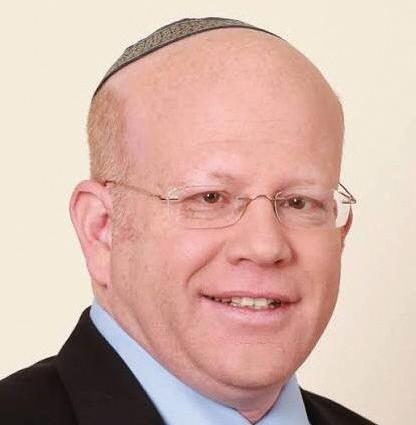
s Central Command Chief Maj Gen Avi Bluth The IDF Central Command is one of the IDF s four regional command centers, overseeing brigades that operate in the West Bank (Judea and Samaria) and other parts of the country’s geographic center The reason Katz provided on-air for Maj Gen Bluth s replacement was that Bluth was acting against Katz s orders in a matter relating to a suspected attack by a violent settler Although Katz later denied that he was calling for the commander’s imminent dismissal calling that interpretation of his words a complete lie a dispute erupted with senior IDF officials including Chief of Staff Eyal Zamir over the authority and process for such a move The question of process, however, misses the bigger picture What is alarming about the minister ’s announcement is the effect that both his rhetoric and the platform he chose to use will have on the IDF At the heart of every military in a democracy, and especially one with mandatory conscription, such as the Israel Defense Forces, is the principle that it must be a national, nonpartisan institution: one that serves the state and acts in accordance with the law and professional considerations This character underpins both public trust in the IDF and the demand that
all sectors of society enlist The IDF of course operates under the directives of the elected political leadership, but if those directives are driven by political rather than professional considerations, the political leadership itself jeopardizes the IDF’s ability to function as a professional nonpartisan military This would be catastrophic to the institution In the Israel Democracy Institute s annual Democracy Index survey, the IDF is consistently the institution most trusted by Jewish Israelis In the 2025 index, 81 percent of Jewish Israelis proclaimed trust in the IDF – almost double the percentage of the other institutions If the IDF loses its nonpartisan character it will endanger both its own standing and the security of the State of Israel If the military acts according to the political whims of one camp alone, how can we expect those who disagree to be required to enlist? Why should the public as a whole continue to support and trust the IDF? If the IDF acts on political considerations soldiers who do not share certain political views may come to regard themselves as exempt from carrying out politically motivated orders In announcing the end of Maj Gen Bluth’s