
PM TO HEAD NATIONAL POPUL ATION COUNCIL AS GOVT MOVES TO TACKLE POPUL ATION GROWTH
g PM CALLS FOR URGENT POPULATION REFORMS TO SAFEGUARD SUSTAINABLE GROWTH
g P
TO
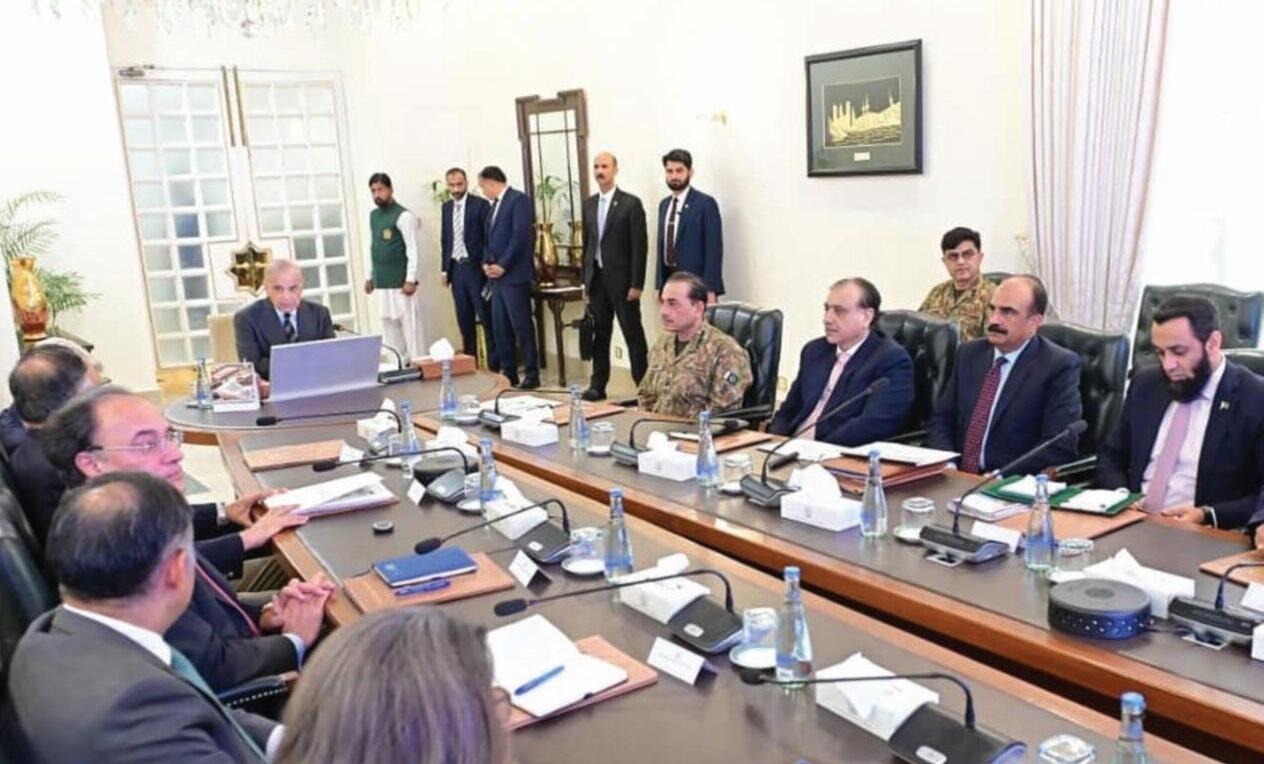
g SHEHBAZ ORDERS EARLY MEETING OF NATIONAL POPULATION COUNCIL
g FAMILY PLANNING, WOMEN'S EMPOWERMENT TO ANCHOR NEW STRATEGY
ISLAMABAD
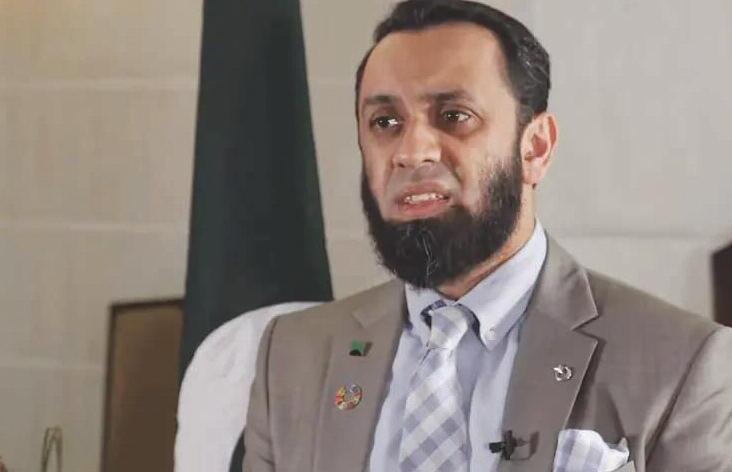
Planning Minister Ahsan Iqbal said on Monday that rapid population growth continued to pose Pakistan s most serious structural challenge, warning that it was weakening the country’s economic gains and slowing progress in human development He made the remarks at the launch of a book titled Impact of Population Growth on Human Security in Pakistan, which is based on a study by the Islamabad Policy Research Institute (IPRI) According to
He
analysts on
unilateral decision to place
(IWT) in abeyance, warning
Indus
international law, threatens regional
in South
Aurangzeb Information Minister Attaullah Tarar Minister of State for Finance and Railways Bilal Azhar Kayani and senior government officials
The prime minister announced that he would personally chair the National Population Council which will comprise the chief ministers of all four provinces the prime minister of Azad Jammu and Kashmir the chief minister of GilgitBaltistan and other key stakeholders
istan's demographic trends and ongo-
initiatives Officials informed the meeting that the government planned to integrate family planning initiatives with social protection programmes while placing women s education and economic empowerment at the centre of the
and
escalating
Speaking at an international seminar titled "Indus Waters Treaty: An Instrument of Peace and Regional Stability participants described the 1960 treaty as a legally binding international agreement that cannot be suspended or revoked unilaterally The seminar, jointly organised by the Institute of Regional Studies (IRS) and the Ministry of Information and Broadcasting brought together federal ministers diplomats and international experts who argued that India s suspension of hydrological data sharing and treaty-mandated inspections amounted to the weaponisation of water and posed a serious threat to the livelihoods of more than 240 million Pakistanis The speakers noted that more than 80 per cent of Pakistan s cultivated land depends on the Indus river system making uninterrupted data sharing predictability and treaty compliance essential for food security disaster
recalling that Pakistan accepted significant concessions while signing the treaty in the interest of long-term regional stability
Deputy Prime Minister and Foreign Minister Ishaq Dar on Tuesday declared that Pakistan would defend its rights under the Indus Waters Treaty (IWT) through all available legal and diplomatic means, warning that any attempt to deprive the country of its allocated share of water would have farreaching consequences for regional peace and security
Addressing the International Seminar on the Indus Waters Treaty 2026 at the Jinnah Convention Centre, Dar described water as the foundation of human dignity, food security economic prosperity and environmental sustainability saying the Indus River system had sustained civilizations for thousands of years and must remain a source of cooperation rather than conflict
He said transboundary rivers should unite nations through collaboration a principle firmly rooted in international law and recalled that the 1960 Indus Waters Treaty, brokered by the World Bank, established a durable legal framework for sharing the waters of the Indus Basin
Dar noted that while India received unrestricted use of the three eastern rivers Pakistan was allocated the three western rivers, with India permitted only limited use under
clearly defined treaty provisions
He said Pakistan had undertaken extensive restructuring of its irrigation and water management systems in reliance on the permanence of the treaty despite making significant sacrifices after losing access to the eastern rivers
For more than six decades, including periods of war and political tensions, Pakistan honoured the Treaty in both letter and spirit because it believed international agreements would be respected in good faith he said
The deputy prime minister termed India's decision to place the treaty in abeyance "illegal, unilateral and without any basis" in either the treaty or international law reiterating that the agreement remained valid binding and fully operational
No party can unilaterally suspend or terminate obligations under a treaty that contains no such provision," he said, adding that the principle reflected the fundamental rule of international law requiring treaties to be implemented in good faith
Referring to proceedings before the Court of Arbitration constituted under the treaty, Dar said the tribunal had reaffirmed that the IWT established a permanent legal regime governing the rights and obligations of both countries over the Indus Basin and could not be suspended or terminated unilaterally
He warned that disregarding binding international agreements whenever they became politically inconvenient would erode confidence in the international legal order and undermine peaceful relations between states
Expressing concern over developments since April 2025, Dar alleged that Pakistan had witnessed abrupt fluctuations in the flows of the Chenab and Jhelum rivers, alongside continued efforts to expand infrastructure capable of regulating waters allocated to Pakistan
He stressed that all disputes should be resolved strictly through the mechanisms provided under the treaty rather than through unilateral actions
Describing water as the lifeline of more than 250 million Pakistanis Dar said Pakistan s agriculture, energy production, food security and economic development depended on the uninterrupted flow of the western rivers
We sincerely advise India against sowing the seeds of war and jeopardising peace and security in the region," he said, reaffirming Pakistan s commitment to resolving all outstanding issues through dialogue diplomacy and treaty-based mechanisms
At the same time Dar cautioned that Pakistan s resolve to protect its water rights should not be underestimated
Ahsan flags unsustainable population growth

GOVT SEEKS FEEDBACK ON DRAFT DATA GOVERNANCE POLICY 2026
Twhile taking into account legal and financial requirements The detailed mechanism will be submitted separately for required approvals before the fund becomes operational Sources said that the PPSF mechanism had been under discussion for some time, but the current crisis prompted the government to move ahead with its establishment They said similar mechanisms exist in several countries, where funds are built when oil prices are low and used to protect consumers when prices rise The chief secretaries of Punjab, Sindh, Khyber Pakhtunkhwa, Balochistan, Azad Jammu and Kashmir and Gilgit-Baltistan have been asked to make arrangements for receiving donations to the PPSF This indicates that the fund may accept voluntary contributions in addition to government receipts The notification does not mention the initial size of the fund, its sources of financing beyond donations, or the conditions under which its resources will be used to stabilise petroleum prices

The federal government will start scrutinising bank account holders from July 1 whose deposits or withdrawals exceed Rs100 million during any six-month reporting period of a financial year, under a new mechanism introduced through the Finance Act 2026 Business Recorder reported that the measure is aimed at cross-matching banking and tax data to identify underreporting of sales, overstatement of expenses and non-reporting of information The Finance Act 2026 has inserted a new Section 165AB, titled Reporting of financial transaction data by banking companies and financial institutions,
r t The federal government has defended the appointment of serving bureaucrats to the board of PakArab Refinery Limited (PARCO), even as the Auditor General of Pakistan (AGP) has flagged the company for not providing records for audit scrutiny, The Express Tribune reported In a statement, the Petroleum Division said senior officials serving in areas such as petroleum, finance, revenue, economic affairs, and related sectors bring experience in energy policy, public financial management, fiscal oversight, corporate governance, infrastructure, and public-sector accountability The division, however, did not publicly release the profiles of the nominees to support its claim that all appointments met the experience criteria cited in the statement The federal cabinet recently reconstituted the PARCO board and retained all existing directors except one Jahanzeb Khan was replaced by Rabab Sikandar, a grade-22 officer of the Pakistan Customs Service Rabab Sikandar ’s husband, Sikandar Sultan Raja, the incumbent Chief Election Commissioner of Pakistan, has also previously served on the PARCO board, according to the Election Commission of Pak-
Gold
istan s website Of the five directors appointed by Pakistan four are serving bureaucrats including two ex officio members while one is a federal minister Secretary Petroleum Hamed Yaqoob Sheikh who is chairman of the board and Secretary Finance Imdadullah Bosal are ex officio directors Rashid Langrial Chairman of the FBR and Ahad Khan Cheema Federal Minister for Economic Affairs have also been reappointed as directors for a three-year term The issue has come at a time when the AGP in its audit report on the accounts of the Petroleum Division laid before the National Assembly last week listed PARCO among entities that did not provide records for the financial year 2024-25 The state of Pakistan holds a 60 per cent stake in PARCO and has the right to appoint six directors The remaining seats are filled by the United Arab Emirates
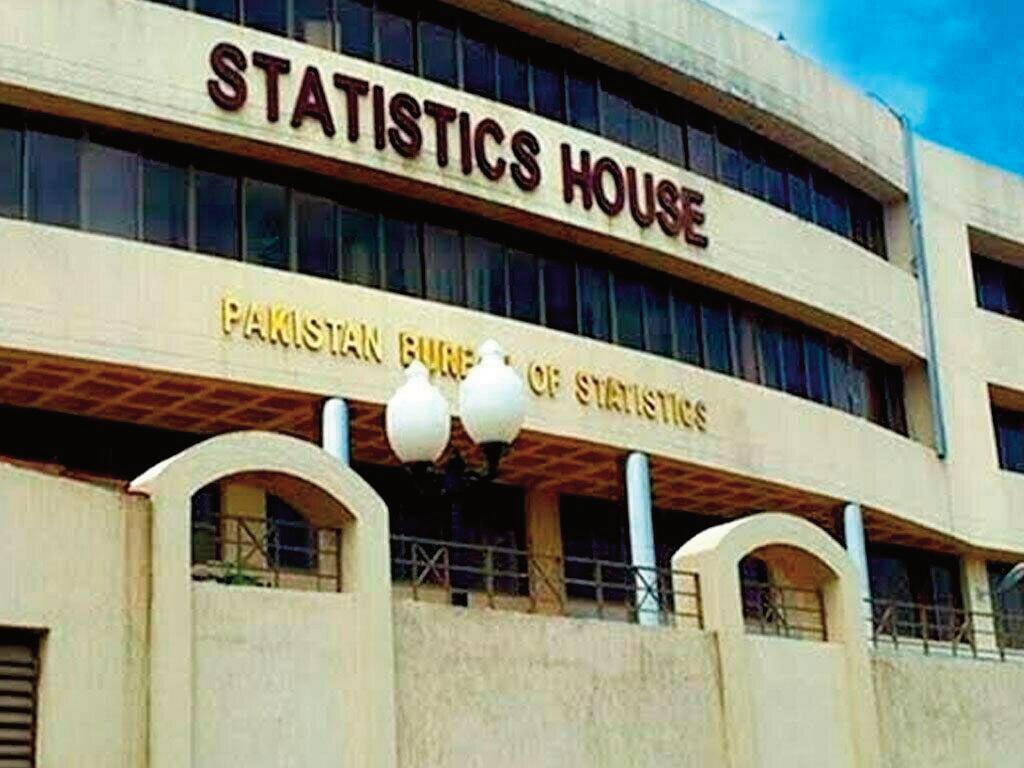
Finance Ministry makes asset registers mandatory for federal departments



COMMENT
IWT seminar
It will highlight the rights of all lower riparian states, not just Pakistan
TH E proposal for a seminar on the Indus Water Treaty was important enough for two ministers, Climate Change Minister Musaddik Masood and Information Minister Ataullah Tarar to announce it, and though it should be clear that it will uphold Pakistan s position on the Indus Waters Treaty, Senator Masood brought out the reality that the seminar will serve to uphold the rights of all lower riparian states
After all, it should not be forgotten that the IWT is essentially a codification of the existing international customary law on water rights of upper and lower riparians, and its only real innovation is the provision of a dispute resolution mechanism The law itself was derived from the customary law derived from the sharing of the Rhine by six countries and the sharing of the Danube by ten It may be noticed that several countries are both upper and lower riparians at the exit and entry of these rivers into their territories India itself is a lower riparian with respect to the Brahmaputra, which flows to it from China
The suspension of the IWT over the 2025 Pehelgam incident shows India’s resentment at the failure of the IWT to allow India to treat the Indus as a river wholly within its own territory, like the Godavari Though India has not yet developed the technical means of stealing Pakistan s water (and thus destroying its agriculture), it has shown last monsoon that it can, and would operate its dams like weapons worsening the effects of floods by sudden releases, one of the useful things about the IWT was its robust communication mechanism which allowed Pakistan to receive timely information about Indian hydrology
That mechanism is now also suspended, and last year ’s experience with embassy-Foreign Office communication was hardly a success Pakistan must make other countries realize through this seminar that for its own narrow reasons India is creating precedents for upper riparians, and that this must be stopped The most dangerous precedent is that it has suspended a treaty without any exit clause and is in practice being allowed to get away with it It is being allowed to rip up settled law on upper and lower riparian relations and is not even facing the anger of lower riparians Indeed, it has recently been given special status by the European Union even though it has a high concentration of lower riparians

Dedicated to the legac y of late Hameed Nizami Arif Nizami (Late)
Founding Editor
M A Niazi
Editor Pakistan Today Babar Nizami Editor Profit
N e w Yo r k d e m o c r a t s s h o w A I PA C t h e d o o r
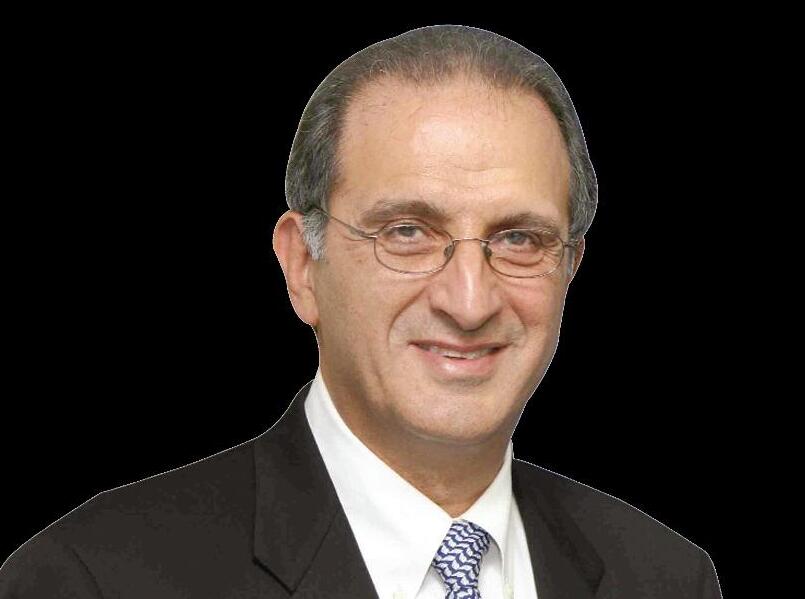
FO R the past half century the American Israel Public Affairs Committee (AIPAC) largely held sway over both political parties They intimidated those who opposed them and and boasted of victory when a critic of Israel was defeated as a lesson for others Last week s Democratic primary in New York City in which three insurgent critics of Israeli policies defeated AIPAC-endorsed candidates point to what may be the end of an era AIPAC s approach to politics and

Growing concerns about India’s nuclear stockpile
The Indian weapons programme is a threat for the whole world

Iarsenal has grown alarmingly recently facilitated and supported by its Western partners with wilful oversight According to the Federation of American Scientists India possessed 190 nuclear warheads as of January 2026 up from 180 the previous year The SIPRI Yearbook 2026 revealed that India had zero deployed nuclear warheads in 2025
terrent with the addition of nuclear-powered ballistic missile submarines (SSBNs) such as INS Aridhaman signalling qualitative growth alongside quantitative expansion According to a 2025 FAS report India s nuclear stockpile had increased by 20 percent over the past five years This upward trajectory affects South Asia as well as the already fragile global arms control architecture
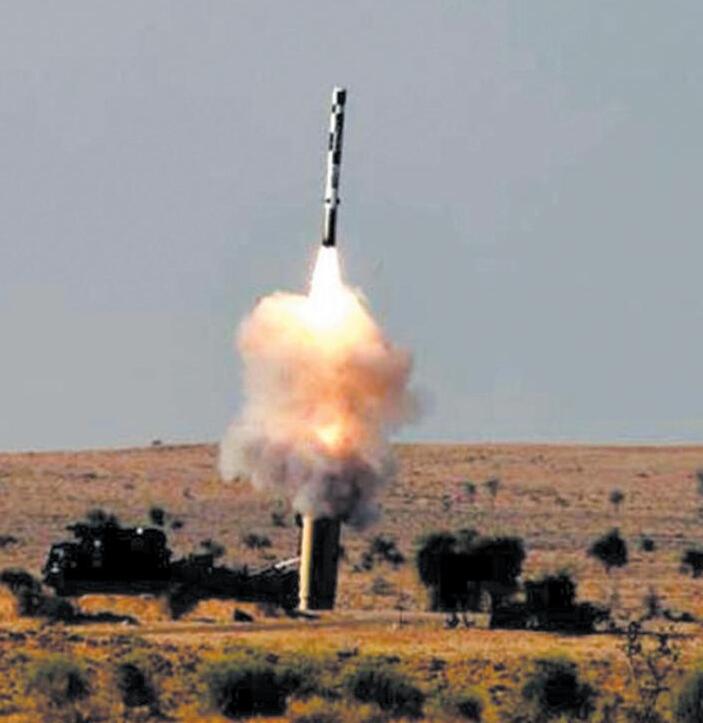
For decades the international community has relied on non-proliferation mechanisms especially on the Nuclear Non-Proliferation Treaty to restrict the horizontal spread of nuclear weapons However India remains outside the NPT framework has the fastest-growing weapons programmw in South Asia and has developed the dual-capable BrahMos missiles in collaboration with Russia
This growth has been boosted by the 2008 Nuclear Suppliers Group (NSG) waiver Consequently India is free to import nuclear fuel and technologies for its civil programme from any country enabling New Delhi to use its domestic nuclear materials for weapons India s safeguards agreement with the International Atomic Energy Agency excluded eight reactors besides the two Fast Breeder Reactors While granting the waiver commercial considerations had influenced a number of important members who sidestepped proliferation concerns of NSG
which was established in response to India s first nuclear test in 1974 The selective application of its rules eroded the non-proliferation regime and impacted its credibility While India continues to describe its nuclear posture as based on Credible Minimum Deterrence backed by a declared No-First-Use policy the past decade s developments suggest a gradual shift in posture: the increase in fissile material stockpile advancements in dual-capable delivery systems and the operationalisation of the nuclear triad indicate ambitions threatening regional and international peace and security According to the 2024 assessment by the Nuclear Threat Initiative India possessed an estimated 700 kg of weapons-grade Plutonium and approximately 5 3 tons of weapons-grade Highly Enriched Uranium India s 8 unsafeguarded nuclear reactors can produce up to 200 kg of weapons-grade Plutonium yearly The International Panel on Fissile Materials (IPFM) has estimated that 4 kg is enough for one nuclear weapon Considering this in 2024 India could add approximately 50 Plutonium-based warheads annually to its existing stockpile making it one of the world s fastest-growing weapons programmes
Coinciding with India s fast-growing production is its advancing missile programme India s land-based nuclear missile capability has expanded in range and sophistication The AgniV Intercontinental Ballistic Missile capable of ranges exceeding 5 000 km with some assessments suggesting up to 8 000 km places Europe Africa and the Far East within range India is poised to test the Agni-VI ICBM expected to have a 12 000-km range and MIRV capability These developments are creating strategic uncertainties not just at the regional but also at the global level India s sea-based nuclear capabilities have also evolved with the induction of Arihant-class SSBNs armed with K-series Submarine-Launched Ballistic Missiles The K-4 and K-5 with reported ranges of around 3 500 km and 5 000-6 000 km respectively and the projected K-6 with a planned range of 8 000 km represent India s expanding sea-based coercive nuclear posture India s expanding nuclear arsenal prevents it from supporting international non-proliferation efforts On 31 October 2025 India was among the four states abstaining on the UN resolution on reaffirming the urgency of bringing the Comprehensive Test Ban Treaty into force and strengthening the global norms against nuclear testing India s abstention raises questions about its commitment to responsible nuclear stewardship While advancing its weapons programme, it continues to avoid binding test prohibitions India s approach weakens the credibility of its normative claims In recent years, Western policy circles have attempted to construct a misplaced threat per-
ception regarding Pakistan s hypothetical ICBM capability During the hearing of the US Senate Intelligence Committee on 18 March 2026, former Director of National Intelligence Tulsi Gabbard made an unsubstantiated claim about the threat to the USA by Pakistan s non-existent ICBM programme That India actually possesses ICBMs and SLBMs capable of targeting the USA was not mentioned Pakistan s nuclear weapons programme is India-specific and the maximum range of its delivery systems is 2,750 km, designed to cover all India, including its islands in the Bay of Bengal In contrast, India has been actively developing long-range delivery systems with ranges of up to 16,000 km Coupled with MIRV technology, ongoing advancements in hypersonic systems and rapid development of the SSBN fleet with SLBMs of 3,500-8,000 km, These allow India to project nuclear force well beyond its immediate neighbourhood
The amplification of a non-existent threat posed by Pakistan, while overlooking tangible developments in India s long-range strike capabilities with potential to bring Europe and mainland US within striking range of its nuclear missiles, reflects troubling inconsistencies, double standards, biased threat assessment, discrimination and exceptionalism for geopolitical considerations The expansion of India s nuclear arsenal and long-range dual-capable delivery systems has serious implications for the stability of deterrence beyond the region and international peace and security The rapid growth in India s warhead inventory, combined with advancements in missile technology, reflects an evolving posture enhancing strategic reach to become a global military power
In a nuclearised region marked by recurring crises due to repeated military aggression by nuclear-armed India against nuclear-armed Pakistan, such unbridled expansion of nuclear and missile arsenal heightens instability and increases the risk of strategic miscalculations India s irresponsible nuclear behaviour, evidenced by military attacks on Pakistan in February 2019 and May 2025, should serve as a reminder to NSG members of the grave mistake of the 2008 waiver None of them would remain safe once India s nuclear arsenal grows further and its delivery systems are able to hit every world capital The writer is a Research Assistant at the Center for International Strategic Studies Sindh (CISSS)
Sweet danger
(DEG) at 500 times the permissible limit Many pharmacies operate without proper oversight and raw materials for medicines are often imported and less rigorously checked In fact, the Drug Regulatory Authority of Pakistan (DRAP) confirmed that while the harmful syrups in India were not exported to Pakistan it is actively making glycerine propylene glycol and sorbitol tests mandatory and stepping up inspections Health authorities must enforce stricter quality control; ensure every cough syrup meets safety standards and crack down on unregistered or poorly manufactured medicines Parents and caregivers must also avoid the assumption that a syrup is harmless and must seek professional advice before giving it to children HAFSA SHAHID MEMON SUKKUR
Thar’s lost sons
I T is horrifying that on 8 November 2025, three teenage boys, Dhanji Kohli (16), Jeeram Kohli (15) and Gotam Kohli (16) from the Hindu community in Dano Dhandal Tharparkar District Sindh were found hanging from a tree These young lives were abruptly ended, leaving families shattered and an entire community in grief The bodies were shifted to Taluka Hospital Nangarparkar where post-mortem reports showed no signs of external assault; minor bleeding was attributed to insects DSP Lutaf Ali Laghari appointed by SSP Tharparkar is investigating yet transparency and accountability remain severely lacking This is not just a personal tragedy; it is a damning indictment of systemic failure Minority Hindu youth in Tharparkar face extreme poverty drought chronic debt social marginalization and a complete absence of mental-health support The Hindu community, historically landless and vulnerable, is left to survive under conditions that rob young people of hope How many more lives must be lost before authorities acknowledge the crisis? How long will the government allow minority youth to drown in neglect deprivation and despair while claiming
ZAmZAm CHANNA


TH E MoU signed between the USA and Iran has been described by Trump’s critics as humiliating It has been resisted by many politicians in Washington including voices from both Democratic and Republican circles It reportedly angered supporters of Israel and those who believed the USA should have pressed forward rather than entered into negotiation Yet despite opposition from political allies media commentators and regional partners President Trump moved toward the MoU Why? The conventional answer is that the USA feared the closure of the Strait of Hormuz But that may not have been the
tank-for-tank, or ship-for-ship It could not build a navy equal to the US Navy It could not build an air force equal to Israel’s or the USA’s It could not protect every city, base, oil installation, port, and military site with a perfect defensive shield So Iran chose a different path It built missiles, drones, decoys, tunnels, mobile launchers, coastal batteries, mines, fast boats, small submarines, and asymmetric naval systems This was the central strategic miscalculation
tried to build an Israeli-style or American-style interceptor shield over the entire country, it would likely have been financially suicidal and militarily insufficient Iran is too large, its territory too dispersed, and its targets too numerous To defend all of Iran would require enormous
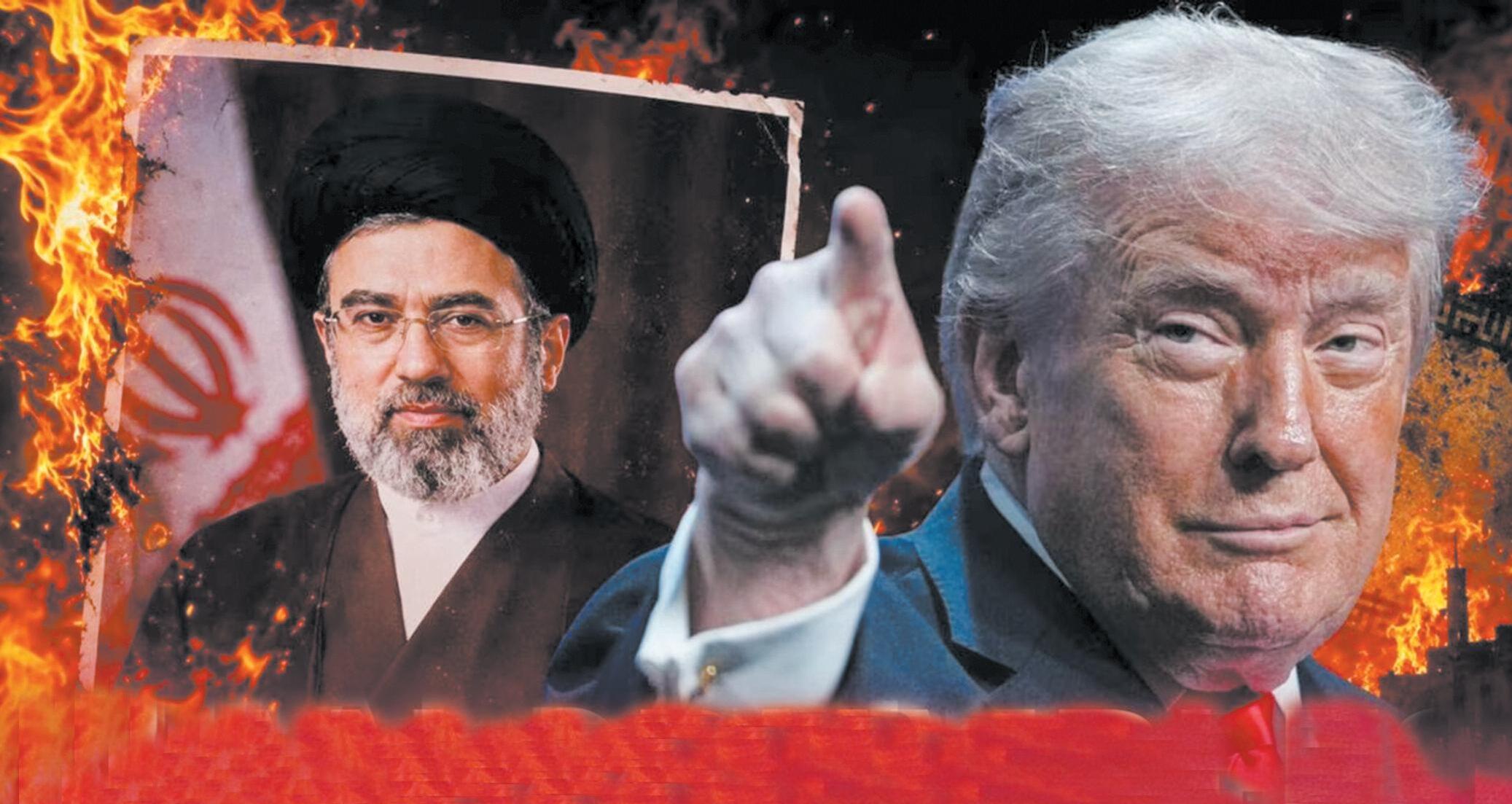
The MOU was not born from generosity. It was born from necessity The USA did not simply choose to stop It was forced to pause, replenish, reassess, and negotiate from a position far weaker than it wanted the world to know
The MOU was not born from generosity. It was born from necessity. The USA did not simply choose to stop It was forced to pause, replenish, reassess, and negotiate from a position far weaker than it wanted the world to know

Also, unlike the dotcom peak, when tech-fuelled returns were spilling across industries and markets, today they are sucking money away from non-AI industries and nations Even in the US, investment outside of the tech sector is declining in real terms Meanwhile, foreigners keep pulling money out of countries seen as peripheral to the AI boom, from the UK to Indonesia Global investors may be focused almost exclusively on AI, but they are not choosing winners at random The leading AI nations are long-established tech powers with a deep commitment to R&D, spending more than 3 per cent of GDP on average over three times the level of lagging countries They also invest heavily in technology, with tech spending averaging 3 7 per cent of GDP among AI winners, compared with 2 7 per cent for partial winners and 1 6 per cent for losers To be sure, no leader ’s position is secure In the US, the performance of the dominant Mag 7 tech stocks is increasingly diverging, with three up, three down and one flat for the year, while all face some form of foreign competition, often from China In China, giants such as Alibaba and Tencent are still trying to determine how to profit from AI and are down around 30 per cent this year
segments of the market, while the old-economy sectors struggle Meanwhile, the likes of India and the Philippines, which are perceived to be at the wrong end of the AI-wrecking ball, are well in the red this year While the internet frenzy of the late 1990s was also an overpowering global phenomenon, it was not so narrowly focused The leading tech subsectors back then were communications equipment, semiconductors
The real AI momentum in China is with newer tech companies, often listed on secondary boards that are much better known to local than to foreign investors, such as ChiNext; it is up 35 per cent for the year In Japan, market leadership has shifted sharply towards tech over the past year, with semiconductors up 200 per cent and computer memory pioneer Kioxia rising by 3,500 per cent to become the nation’s single largest stock The AI booster effect continues to help power many economies through one crisis after another, from the tariff war to the Iran oil shock Expectations for GDP growth have risen by nearly a full percentage point for the AI winners since the start of the year, while falling significantly for the losers In countries like the US, Taiwan and Korea, the large gains in advanced manufacturing, the associated surge in profits and the wealth effect from the AI-led stock market gains keep lifting economic growth In countries like China, Thailand and Mexico, tech exports are rising rapidly enough to offset weakness in other parts of their economies, including domestic demand In short, it’s an AI-driven world Of course, this monomania will not last for ever The speculative enthusiasm will fade even as the technological revolution endures and expands in scope As was the case following the railroad boom of the 19th century and the internet craze at the turn of this century, a more balanced global market will eventually re-emerge But so long as investors continue to see AI as the sole foundation of the next world order, they will keep ranking nations based on their tech prowess
The writer is chair of Rockefeller International His latest book is What Went Wrong With Capitalism
QamaR BashiR

Xi chairs CPC leadership meeting on Flood Control, calls for all-out effort to protec t lives
works, while strengthening the resilience of agricultural infrastructure to minimise disruptions to food production and rural livelihoods The Political Bureau directed emergency management authorities to ensure rapid and efficient rescue and relief operations wherever disasters occur It called for enhanced preparedness through the deployment of emergency response teams, stockpiling of rescue equipment and supplies, and continuous improvement of grassroots disaster prevention and response capabilities
Officials at all levels were urged to uphold a people-centred approach to governance and faithfully fulfil their responsibilities during the flood season The meeting called on Party organizations cadres and members to take the lead in protecting people's lives and property while maintaining overall social stability
Nato pushes to turn rising defence budgets into weapons output



CORPORATE CORNER
N J A B Chief Minister Maryam Nawaz has launched what she described as the province s biggest environmentally friendly transport revolution by unveiling an ambitious plan to expand electric public transport, e-bikes, e-taxis and electric three-wheelers across Punjab
Chairing a meeting of the Transport Department and the Punjab Masstransit Authority the chief minister was briefed on progress regarding electric buses the Gujranwala and Faisalabad mass transit projects, e-taxis, the Lahore Super Autonomous Rapid Transit (SRT)
LAHORE
Punjab Chief Minister Maryam Nawaz Sharif has called for collective efforts to uphold the Constitution strengthen the rule of law and promote public welfare marking the World Day of Parliamentarism
In her message issued on the occasion, the chief minister extended greetings to all democratic forces and said the day aimed to reaffirm commitment to protecting people s rights and preserving parliamentary traditions
She said the parliamentary system was the guarantor of a stable, prosperous and progressive Pakistan adding that the supremacy of parliament adherence to the Constitution and the promotion of dem-
–(Karachi) Senior Vice President- Arshad Saeed –(Sukkur) Vice President- Raja Sheeraz –(Hyderabad) TreasurerSahir Hussain –Larkana) Executive MemberShabbir Chandio –(Benazirabad) Executive MemberSpeaking on the occasion, President Ali Hasan Brohi said that the Association s priority would be the promotion of basketball among youth and girls with special focus on the interior districts of Sindh Secretary Dleep Singh expressed his gratitude for the confidence reposed in him and stated that the Association's future development programme would be announced soon after consultation with the newly elected Executive Committee The newly elected office-bearers reaffirmed their commitment to the development and promotion of basketball throughout Sindh
CM Punjab said the Pakistan Muslim League-N believed in constitutional supremacy strengthening democracy and ensuring transparent governance She added that under the leadership of Muhammad Nawaz Sharif, efforts for good governance, effective legislation and public welfare in Punjab would continue Punjab launches biggest green transport revolution with expansion of electric mobility Punjab Chief Minister Maryam Nawaz has launched what she described as the province's biggest environmentally friendly transport revolution by unveiling an ambitious plan to expand electric public transport e-bikes e-taxis and electric three-wheelers across Punjab LAHORE S

strengthened the democratic system
ocratic values were indispensable for the country s development
CM Punjab said the parliamentary system remained the most effective mechanism for addressing public issues and ensuring that people s voices were reflected in the decision-making process
She observed that safeguarding human rights and ensuring the protection of citizens’ rights through legislation constituted the fundamental objective of democracy
She maintained that representation of all segments of society particularly women and youth further