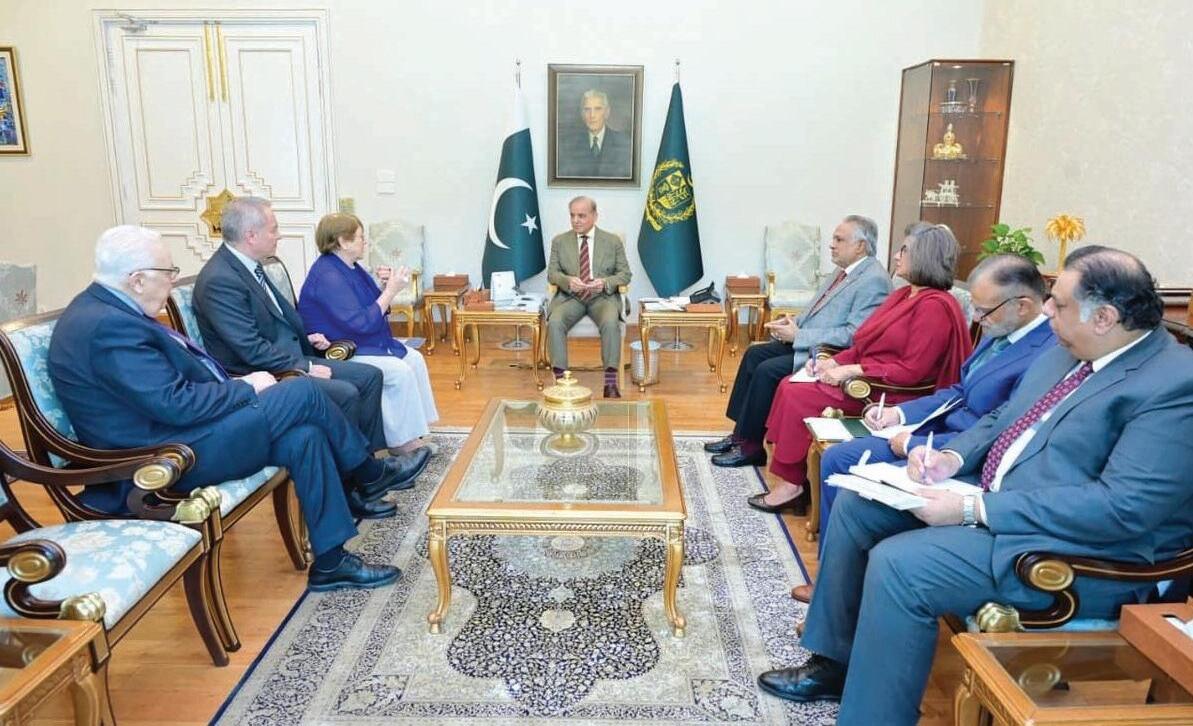
PM condemns Houthi missile attacks, reaffirms Pakistan's unwavering suppor t for S audi Arabia
Jadoon said Pakistan also urged all parties to exercise restraint and pursue diplomatic solutions to prevent further escalation in the conflict L AT E S T F L A R E-U P I N Y E M E N Yemen has remained engulfed in conflict since the Houthis seized the capital, Sanaa, in 2014, prompting a Saudi-led military intervention in support of the internationally recognised government the following year In the latest escalation the Yemeni government on Monday targeted the international airport in Sanaa
The Saudi-backed Yemeni government said it sought to prevent an Iranian aircraft from landing in Sanaa after a Houthi delegation, which had travelled to Tehran to attend the funeral of assassinated Iranian Supreme Leader Ayatollah Ali Khamenei, declined to return aboard Yemen s national carrier despite government efforts
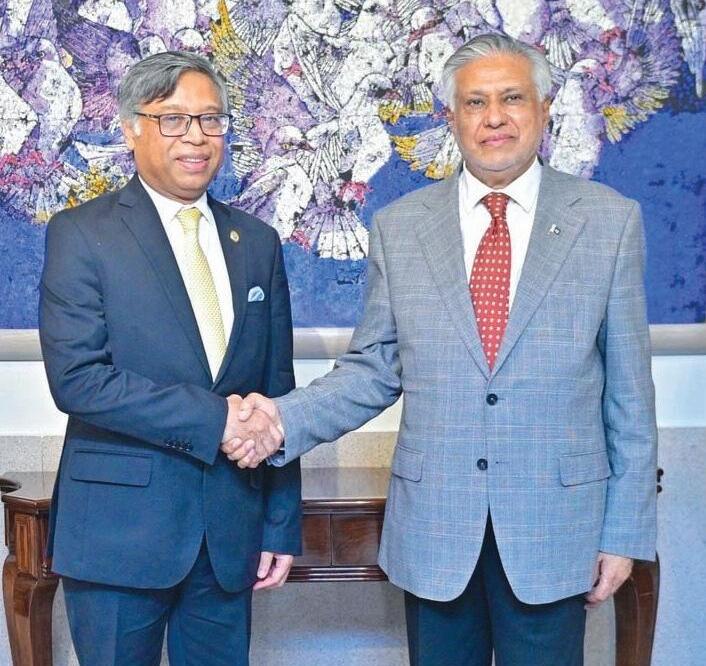
We express our full solidarity with the brotherly kingdom and reaffirm our steadfast support for its security, sovereignty, and territorial integrity," Ambassador
Hours after the airport attack Saudi Arabia announced that it had intercepted ballistic missiles launched by the Houthis towards the kingdom s southern region The latest confrontation marked the biggest escalation between the Yemeni government and the Houthis in years with the rebel group accusing Saudi Arabia of jeopardising the UN-mediated truce that has largely held since 2022
mutual trust shared values and close cooperation
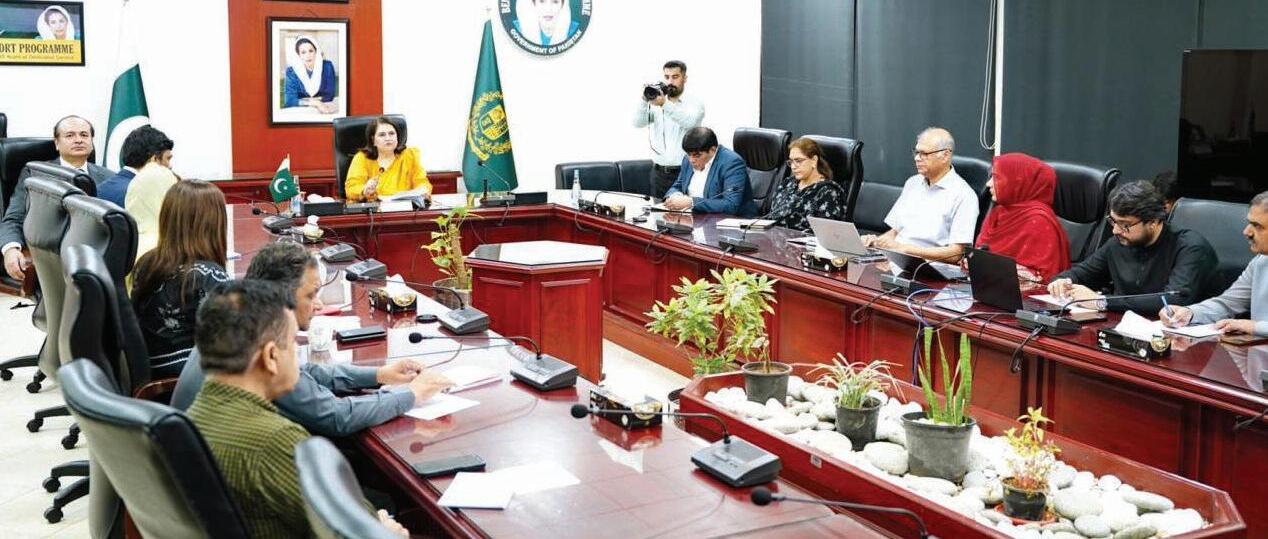
During the meeting the federal minister briefed the Turkish delegation on Pakistan s social protection architecture and highlighted the role of the ministry s flagship institutions, including the Benazir Income Support Programme (BISP) Pakistan Bait-ul-Mal (PBM) Pakistan Poverty Alleviation Fund (PPAF) and the Trust for Voluntary Organizations (TVO), in expanding social safety nets, supporting vulnerable communities and promoting inclusive development
of the 9th Ministerial Conference on the Role of Women in the Development of OIC Member States being held in Islamabad Welcoming the Turkish minister, Syed Imran Ahmad Shah expressed appreciation for her visit to Pakistan and reaffirmed the deeprooted and historic brotherly ties between Pakistan and Türkiye He said the two countries had always stood by each other and continued to enjoy a relationship founded on
The minister appreciated Türkiye s integrated and digitally enabled social protection system and acknowledged the valuable experience of the Ministry of Family and Social Services in delivering comprehensive family welfare and social assistance programmes He noted that Pakistan was keen to benefit from Türkiye s best practices in digital service delivery, family-centred social protection, disability inclusion and institutional coordination
Highlighting the existing collaboration between Pakistan Bait-ulMal (PBM) and the Turkish Cooperation and Coordination Agency (TİKA), the federal minister appreciated the successful imple-
mentation of initiatives such as the Ramazan Food Programme and the Centralized Kitchen Project He expressed the desire to further strengthen institutional collaboration through joint initiatives, technical exchanges and capacity-building programmes in the fields of social welfare and poverty alleviation
H E Ms Mahinur Özdemir Göktaş appreciated Pakistan s social protection initiatives particularly the internationally recognised Benazir Income Support Programme (BISP), and commended its contribution to supporting vulnerable households and promoting women s financial inclusion
Both ministers agreed to initiate a Memorandum of Understanding (MoU) between the Ministry of Poverty Alleviation and Social Safety of Pakistan and the Ministry of Family and Social Services of the Republic of Türkiye to facilitate the exchange of best practices strengthen institutional cooperation and enhance collaboration in the fields of social safety,
I n e q u a l i t y o u t o f c o n t r o l ?
Areport appearing in this week’s issue of this newspaper ’s Profit magazine indicates that there are increasing signs of income inequality
However, while they might indicate the entrenchment of inequality they do not necessarily mean that inequality has breached the limits of tolerance that might lead to social upheaval It should be acknowledged that the type of indicators which are visible are the automatic result of a capitalist economy One indicator is the arrival of luxury brands in dedicated stores, a development indicating that there is a market for such goods, composed of consumers who have the disposable income to allocate to those goods Another is the proliferation of cafes, and with them the entry of coffee into the beverage market of the country Additional signs are the increasing number of luxury vehicles that are becoming available to buyers, and the preponderance of investment rather than need in the housing market
Are these and other appeals to high-end consumers a sign of an uptick in the economy? If there was indeed an increase in prosperity, this would be probable
However, there are no other strong signs, and the rise in poverty showing up in various surveys indicates that one of the first signs of economic growth, a labour shortage, does not seem to be taking place On the other hand not only is the taxation regime skewed in favour of income inequality but the state has not set up the welfare structure that accompanies a culture of income levelization In any case, it would not be possible to provide the features of a welfare state without a high level of direct taxation, which is not being done Indeed, the opposite is being done, with the government reducing tax rates in the budget for the higher income brackets Just because income inequality is a necessary concomitant of laissez-faire capitalism does not mean the government can ignore it True attempts to achieve equality have generally failed but the impulse remains even if only because of the potential for social unrest that it carries This income inequality is said to be a factor in the spread of militancy as well as nationalism in Balochistan Even capitalist economies have a cure, or at least a way of containing the problem by the prosperity of economic growth as well as creation of a welfare state The inequality is there but the solutions are not

Dedicated to the legac y of late Hameed Nizami Arif Nizami (Late) Founding Editor
M A Niazi Editor Pakistan Today Babar Nizami Editor Profit
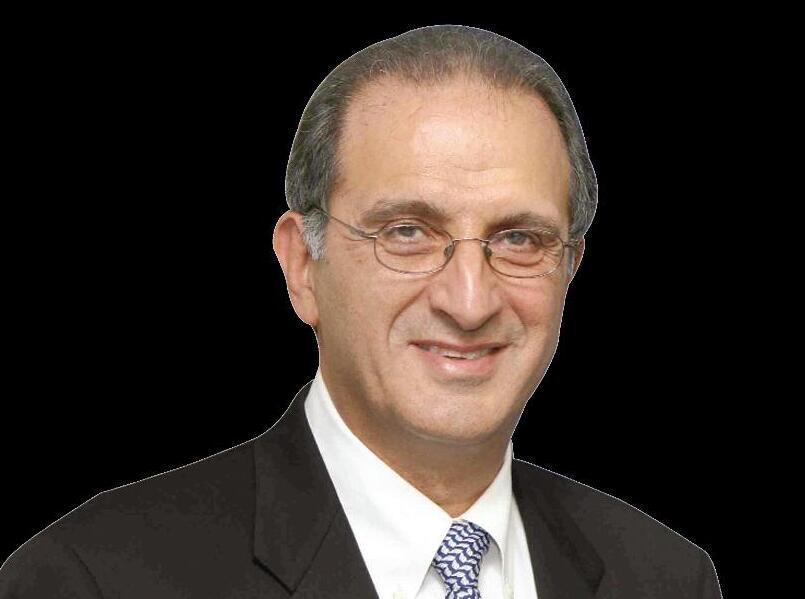
E V E R A L observations can be made regarding Rahm Emanuel s recent speech at Tel Aviv University: what he said and didn t say and what impact (if any) his words might have For the past 35 years Emanuel has been a fixture in US politics After a short stint as a volunteer with the Israeli Defense Forces in 1991 he returned to the USA to
D i s m a n t l i n g t h e W a t e r W a t c h d o g
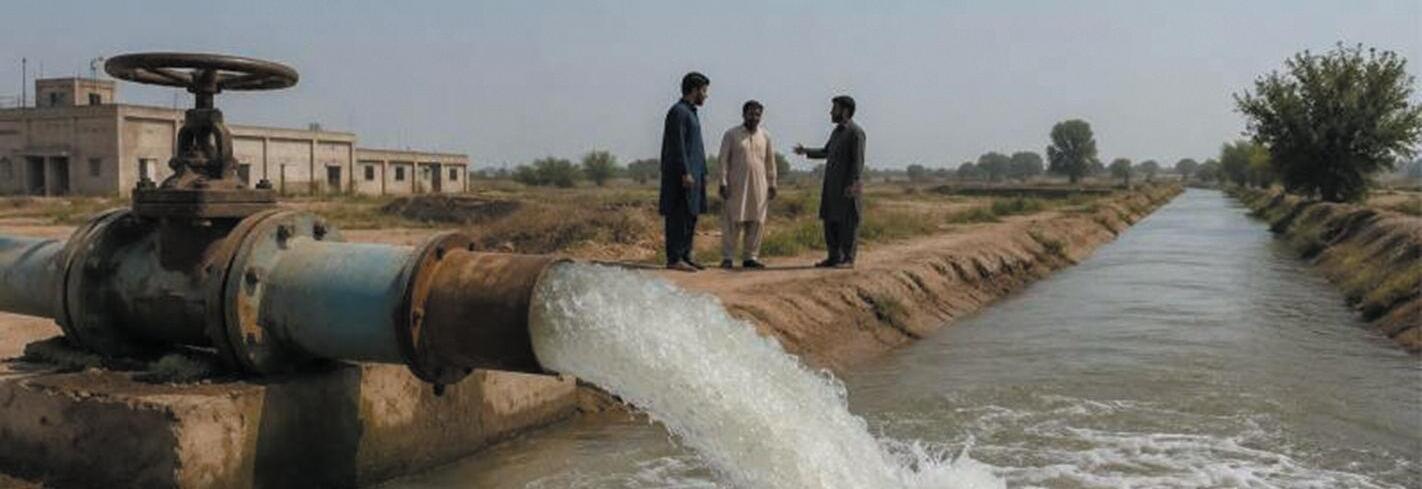
TH E R E comes a point in the life of every institution when the hammer of so-called reform strikes not at inefficiency but at capacity, not at waste but at wisdom The Punjab Irrigation Department stands at precisely such a juncture Its Water Resources Zone established in 2021, operationalised in 2022, and responsible for the only comprehensive groundwater monitoring regime in the province now faces dissolution at the hands of a provincial administration bending to the IMF s structural adjustment diktats The pretext is rightsizing The reality is a self-
from the depths is fit for irrigation or poison for the soil
In 2025, the zone completed a landmark geo-referenced database project, enumerating and geo-tagging every tube well across Punjab using state-of-the-art mobile-based software One cannot manage what one cannot measure and the zone,
departments like pieces of estate They are two sides of the same coin, inextricably linked through the hydrological cycle that governs
power When canal flows diminish farmers turn to tube wells When groundwater is over-extracted the recharge relationship with surface water is disrupted The cultivators of Pakistan already draw 73 percent of their irrigation needs from groundwater and only 27 percent from canals Sever the institutional nexus between the two and you sever the province s ability to manage its water holistically It is akin to separating the respiratory system from the circulatory and expecting the body to survive What makes this proposed dismantling even more indefensible is the disingenuousness of its premise The zone is being judged as though it were a fully staffed fully operational white elephant It is nothing of the sort Of its five mandated wings survey salinity chemist planning and development only three are presently functional manned by staff transferred from the erstwhile Directorate of Land Reclamation The planning and development wing which would provide the data analytics and policy framework essential for evidencebased water governance remains unstaffed and un-operational The top-to-bottom posts across all wings remain vacant with stop-gap arrangements filling the breach The zone has produced extraordinary results the geo-tagging project the piezometer readings revealing alarming declines throughout the Punjab the salinity assessments warning of secondary soil degradation despite functioning at partial capacity To assess its performance in this crippled state and declare it surplus is to condemn a runner for finishing late when his legs were tied at the start The timing and context of this manoeuvre betray its true provenance Under relentless pressure from the IMF to reduce the public sector wage bill Punjab s government has embarked on a frenzied campaign of departmental closures without the slightest discrimination between essential institutions and genuine white elephants The Fund s programme design already criticised for imposing the entire burden of fiscal adjustment on ordinary Pakistanis while giving extravagant government spending a free pass has created a perverse incentive structure in which provincial administrators slash visible capacity to demonstrate compliance regardless of the public cost Since 2023 Pakistan has recorded the largest fiscal adjustment in its history with 73 percent coming from revenue measures that have pushed 114 million citizens below the poverty line
Yet the IMF has looked the other way as political patronage spending ballooned by 64 percent Into this lopsided squeeze falls the Water Resources Zone not because it is expendable but because its destruction is administratively easy and politically costless The brown sahibs of the secretariat ever eager to please their external creditors are offering up the province s water security on the altar of conditional compliance Let there be no ambiguity about who bears the cost of this folly It is not the staff of the Water Resources Zone though their livelihoods matter and their institutional memory is irreplaceable It is the 20 million smallholder farmers of Punjab who depend upon groundwater for three-quarters of their irrigation It is the rural communities watching their water tables fall by half a metre every year while saline intrusion renders their lands barren It is the next generation that will inherit an aquifer system depleted beyond recovery because the one institution tasked with monitoring and managing it was dismantled before it could even reach full strength When the groundwater finally runs out and at current extraction rates 142 percent above natural recharge that day is not distant the farmers of Shujabad and Multan will not find solace in the knowledge that the IMF s targets were met
A government that cannot distinguish between a dispensable appendage and a vital organ has no business wielding the scalpel of reform The Water Resources Zone is not a burden on the exchequer; it is an investment in survival To uproot it from the Irrigation Department and cast its staff as surplus to the Agriculture Department as though water and irrigation were separate enterprises rather than a single continuum is to demonstrate a profound ignorance of both hydrology and governance Punjab s administrators would do well to remember that democracies are measured not by their compliance with external conditionalities but by their capacity to protect the public interest against the transient pressures of the moment The IMF may demand rightsizing Punjab s citizens deserve right-thinking And right-thinking begins with keeping the water watchdog alive in Punjab Irrigation Department
The writer a PhD is an officer in the Government of Punjab Tweets at https://x com/MehboobKanjoo and can be reached at dr mehboobhassan@aol com
Marriage as crime
S H A I TA L and Zrak had married for love about a year-and-a-half
In the video of the cold-blooded killing that went viral on social media recently, Shaital’s last words to her brother can be heard clearly; Just shoot me, do not do anything else Tears roll down one’s eyes hearing these words of a brave girl who knew her fate in a tribal society One of the main reasons why women’s marriage by choice is seen as a threat in such a culture is the fear of losing out on inheritance While male ego and tribal pride are generally condemned for such heinous acts like killing the element of property often gets ignored
It is critical to acknowledge the significance of the main element behind the so-called honour killings Daughters and sisters also have a legal and rightful share in the family s property, but men in most tribal families fear having to share the inheritance and, as such, do not allow women to marry of their own choice
This is not culture this is plain cruelty There was a time girls were buried alive Now they are shot for marrying by choice We share messages We post hashtags But where is justice? Why are these killers never hanged in public? Until action replaces silence women will continue to die HANI WAHID BALOCH KARACHI
Securit y unraveling fast
Since the return of the Taliban
Dr meHbOOb HASSAN
Letting salinit y eat up the land
Challenges for Pakistan
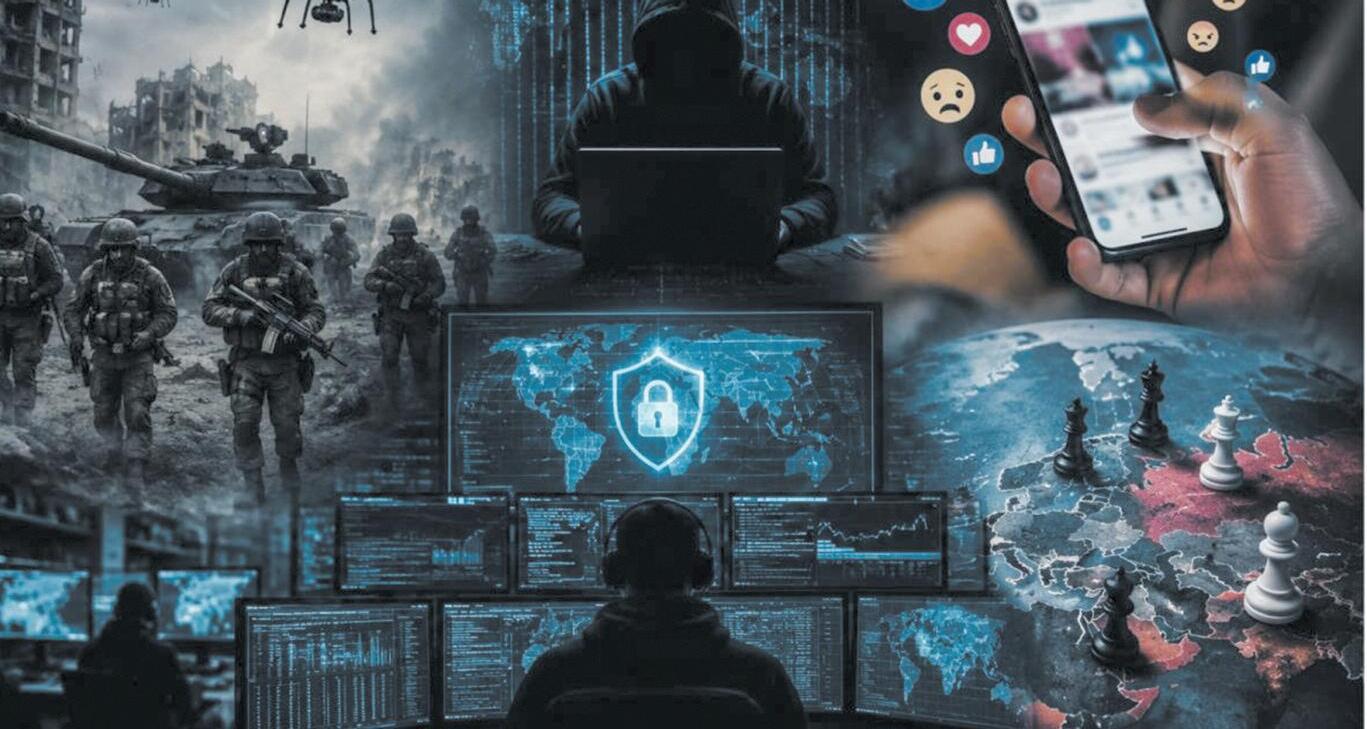
CA R L von Clausewitz the early 19th-century Prussian general and military theorist defined war as a “continuation of policy by other means ” In the contemporary era however conflict is no longer limited to direct military confrontation States increasingly pursue political and strategic objectives through hybrid methods that operate below the threshold of total war combining military economic information cyber and covert means to weaken adversaries without engaging in full-scale conventional conflict
Although the term hybrid warfare had appeared earlier in strategic discussions it was Frank Hoffman a former US Marine Corps officer and distinguished research fellow who popularized the concept in 2006 He described it as the coordinated use of different forms of warfare by adversaries to achieve political objectives While there is no single universally accepted definition of hybrid warfare it is generally understood as the combination of conventional military force with irregular political informational economic and cyber tools to exploit an adversary’s weaknesses It often includes disinformation campaigns cyberattacks lawfare economic coercion terrorism diplomacy and foreign electoral interference While hybrid warfare has received greater attention in recent years the associated strategies are not entirely new Throughout history states and military thinkers have relied on indirect and non-conventional methods to weaken adversaries alongside direct military force Ancient strategists emphasized deception psychological manipulation espionage economic pressure and political subversion as important instruments of conflict Chinese military strategist Sun Tzu highlighted this idea in his famous military treatise the Art of War arguing that the supreme art of war is to subdue the enemy without fighting This underpins the core logic of modern hybrid warfare where states increasingly seek to achieve strategic objectives without relying solely on conventional military confrontation
While the logic of indirect competition is centuries old the character of warfare has evolved significantly with industrialization and advances in military technology The two World Wars demonstrated how states relied on conventional military power and industrial capacity to secure victory However the emergence of nuclear weapons fundamentally altered international conflict mak-
ing full-scale war between nuclear-armed states increasingly costly and risky due to fear of Mutual Assured Destruction (MAD) As a result, states gradually shifted toward indirect and non-conventional methods of dominance, including proxy warfare, cyber operations, disinformation campaigns, economic coercion and covert activities Contemporary conflicts are therefore no longer fought through conventional weapons, but increasingly across political, economic, informational and technological domains Traditional warfare primarily follows a state-centric approach, whereas hybrid warfare operates across multiple levels and dimensions It extends far beyond the battlefield, influencing the political, economic, informational, and social foundations of a state, thereby posing serious challenges to national security These characteristics make hybrid warfare particularly relevant in regions marked by enduring geopolitical rivalries, such as South Asia, where Pakistan has long confronted hybrid threats originating from India Since independence, India has regarded Pakistan as its primary adversary and has often pursued a policy marked by overt hostility rather than peaceful coexistence The security landscape of South Asia changed dramatically following the region’s nuclearization While conventional confrontation became costlier owing to the risk of nuclear escalation, India increasingly turned to hybrid methods to pursue its rivalry with Pakistan According to Mushahid Hussain Syed, a senior politician and former Senator, India’s hybrid warfare posture is based on the “triple Ds: Demise, Damage, and Destabilize ” Over the past two decades, Pakistan has remained exposed to such hybrid challenges, which target diplomatic, economic, water, informational, cyber and security domains This approach reflects ideas traced to Chanakya Kautilya’s Arthashastra, which advocated psychological operations, espionage, subversion and economic pressure to weaken adversaries from within India
employs similar tactics through economic coercion, cyber operations, disinformation campaigns, diplomatic pressure and support for proxies
The doctrine of Indian National Security Advisor Ajit Doval (2014), also known as ‘Doval Doctrine’, illustrates this approach of India’s ambitions for hybrid warfare against Pakistan While categorizing Pakistan as an enemy, Doval advocated a deep portfolio of covert operations against Pakistan, including promoting instability in the country by sponsoring terrorism and targeting ethno-religious, political and socio-economic domains to create internal security instability the
For decades, India has not only been conducting terrorism as its state policy directly against Pakistan through its intelligence agency, the Research and Analysis Wing (RAW) and its proxies to destabilize the country, it has used and continues to use Afghanistan’s soil for perpetuating terrorist activities in Pakistan
Former US Secretary of Defense Chuck Hegel stated in a talk on Afghanistan at Cameron University in Oklahoma in 2011 that India had been using Afghanistan as a “second front” against Pakistan Today, India is not only a threat to the stability of South Asian region but also a destabilising force for international security It has been involved in terrorist activities in other countries as well, in particular Canada and the US In 2024, Canadian government expelled six Indian diplomats including Ambassador following an investigation linking them to criminal activities and the murder of Sikh national of Canada, Hardeep Singh Nijjar Similarly, Nikhil Gupta, an Indian national, was convicted on 29 May 2026 in the US for plotting to assassinate a Sikh political activist, Gurpatwant Singh Pannun at the direction of the Indian government This constitutes irrefutable evidence that Indian state-sponsored terrorism poses a grave threat to regional and global peace and security Indian RAW also operates directly and through proxies to target Pakistan’s eco-
nomic infrastructure particularly the ChinaPakistan Economic Corridor (CPEC)
In the present era, hybrid warfare has become an unavoidable reality, reshaping modern conflict and posing significant challenges to states worldwide. Wars are no longer fought solely through conventional military means, but increasingly through disinformation campaigns, cyber operations, economic pressure, covert activities and influence operations Moving forward, strengthening institutional resilience, economic stability, technological advancement and national unity will remain essential for effectively countering the evolving challenges of hybrid warfare posed by India.
Users now tr y to engage less, avoiding comments, reposts, and even likes Many have learned that algorithms track their ever y click for ad targeting or worse, for policing and repor ting S ome have resor ted to self- censorship


S“O C I A L media is increasingly anti-social argues New York University psychology professor Jay Van Bavel Only 7 percent of Instagram time and 17 percent of Facebook time is spent interacting with content from friends or followed accounts The rest is algorithmic video from strangers he says In Van Bavel s opinion this shift results from algorithms optimizing for watch time rather than real social engagement TikTok set the template; everyone copied it he said AI only made things worse with over half of the long posts on Meta now written by AI People are not engaging or even creating the content on those platforms anymore the professor concludes Van Bavel draws his argument from a newly published paper Towards a Post-Social Media Studies by University of Amsterdam researchers Petter Törnberg and Richard Rogers The authors maintain that the era of user-generated content, networked publics, and participatory culture is drawing to a close and outline three interrelated factors transforming the social-media paradigm: 1) an algorithmic shift from social graphs to interest-based recommendation, which is remaking the active user into a passive viewer ; 2) the generative AI revolution, which is replacing user-generated content with synthetic media ; and 3) an exodus from public platforms toward private, closed spaces, like chats or messengers
This seems accurate Anyone active on social media can acknowledge that his or her feed shows fewer posts from friends or followers and more general interest content, which is increasingly AI-generated Why is it happening? The first explanation is, of course, AI But AI is just part of the problem The entire social-media ecosystem has reached its limits and is now bouncing to the opposite of what it was designed to be Late in the first decade of the 2000s, when social media were just beginning to reshape mass communication, the platforms were supposed to put users personal interests front and center According to legend, Mark Zuckerberg said of this new medium: A squirrel dying in front of your house may be more relevant to your interests right
now than people dying in Africa ” The idea sounds callous, but the intention was to shift people’s focus from distant news delivered by mass media to personal news shared by friends and family It mostly succeeded Totally meaningless in terms of public interest, personal news was empowered by platform design, making users aware of the private lives of friends, acquaintances, and strangers as never before But these changes in how people curated their news intake had unintended consequences Social media certainly boosted personal news sharing, but they also amplified users’ personal attitudes, however biased or uninformed, toward any news especially politics As a result, an even deeper side effect flipped the original intent of Zuckerberg and other social-media pioneers Instead of merely prioritizing the personal over the distant, social media made the distant personal, delivering it in agitated form through networks of attitudes According to the media theorist Marshall McLuhan, when a medium or technology reaches its limits or extremes, it reverses its effects into the opposite A simple example is the car Its primary effect is to increase mobility, but when too many cars get on the road, mobility reverses into traffic jams
The same thing happened with social media User engagement through expressing personal beliefs reached its most extreme forms by the end of the 2010s It led to rage, animosity, censorship, and the split of the most dynamic political network, Twitter, into X and Bluesky two highly polarized social-media environments
People grew tired of partisan anger and were afraid of cancellation, bullying, and trolling behavior Many became reluctant to expose themselves too much Social media no longer brought moral or psychological benefits, except to the narrow circle of public figures, influencers, and trolls Users now try to engage less, avoiding comments, reposts, and even likes Many have learned that algorithms track their every click for ad targeting or worse, for policing and reporting Some have resorted to self-censorship Against the backdrop of political instability and psychological hazards, more people now choose to do little beyond scrolling People still spend enormous amounts of time on social media, but mostly browsing feeds with interesting “features,” much as they once skimmed features in magazines, or watching short videos, much as they once watched TV It’s a true McLuhanian reversal: from engagement back to broadcasting
The researchers from Amsterdam foresee new “post-social” conditions They argue that social media are turning into algorithm-driven broadcasting platforms They expect mass communication to dissolve into “semi-private groups and micro-communities ” And, of course, AI-mediated communication will evolve into “a new media form in its own right ”
Andrey Mir is a media researcher and the author of The Digital Reversal
Ipsos in partnership with Epoch AI found that half of American adults used AI in the past week, either for personal or work use, with 20% of fulltime workers saying that AI has taken over parts of their job
Thus, it should surprise exactly nobody that the introduction of AI technology into all sectors of the economy is the leading cause of employee apprehension Workers from Singapore to Spokane are fighting to understand what the technological upheaval means for their future – and they re not comforted by what they are witnessing The corporate world has failed to convince their workforce to welcome artificial intelligence with open arms Despite three years of historically low global unemployment and steady economic growth, our data reveals widespread job insecurity expressed by workers worldwide, Nela Richardson, chief economist, told reporters in a briefing on the survey results in New York City
The ADP Research Today at Work 2026 report, based on survey responses collected in late summer 2025, “paints a portrait of a global workforce caught in the crosscurrents of technological disruption, demographic upheaval, and deep uncertainty,” writes Nick Lichtenberg in Fortune magazine “The anxiety cuts across borders and industries, but
Businesses are racing to automate, but many staff are being left without the retraining, clarit y, or safeguards needed to adapt
Ali HAmzA

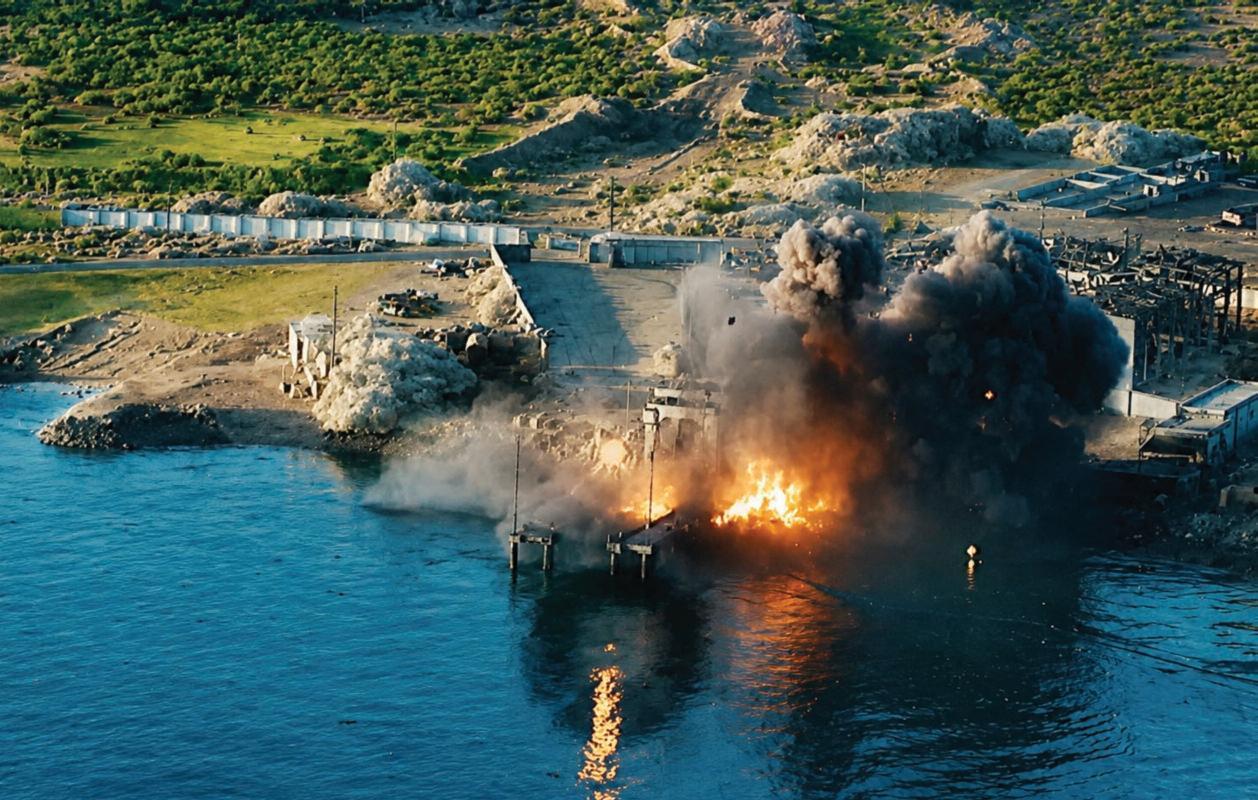
deals with the Gulf states The change of plan comes a day after Trump proposed charging a 20% fee to guard the waterway Based on highly productive conversations with Middle East leadership I have decided to replace the 20% United States reimbursement fee with trade and investment deals that the various Gulf states will be making into the United States," he said in a post on Truth Social Trump did not mention any commitments by Gulf states saying Investments will be massive but at the same time extraordinarily good for them, and their future " Shortly after Trump made the 20% fee proposal on Monday the UN's shipping agency said it opposed fees on ships passing through maritime waterways but added it would await more details of what Trump had in mind In his post on Tuesday, Trump declared the Strait of Hormuz was open to all ship traffic except for Iran "We will therefore have a full blockade but only on ships coming to and from Iranian ports or carrying anything have to do with Iranian cargo he said
An Iranian lawmaker said on Tuesday that a new bill was submitted to parliament on the regulation of transit through the Strait of Hormuz amid military escalation with the US over the waterway The bill was submitted "last night, coinciding with the downing of US drones" Ebrahim Azizi head of the parliament s National Security and Foreign Policy Committee wrote on X "We remain steadfast in defending our red lines, particularly regarding the management of the Strait of Hormuz,” he said "This is the first step; subsequent measures are forthcoming Aziz warned Oman says it continues transparent neutral cooperation with all parties over Hormuz Oman said on Tuesday that it continues "transparent and neutral cooperation with all parties to restore freedom of navigation in the Strait of Hormuz amid escalating tensions between Iran and the US over the waterway Oman continues its transparent and neutral cooperation with all parties to restore freedom of navigation in the Strait, in full compliance with international law, the Foreign Ministry said in a statement "The Sultanate of Oman remains fully committed to its obligations as a State Party to the United Nations Convention on the Law of the Sea and calls on all parties to respect and abide by international law, it added
through United States
and
BEIJING A G E N C I E S China on Tuesday urged the US and Iran to avoid returning to war after Washington announced that it would reimpose a blockade on Iranian ports in the Strait of Hormuz “China is deeply concerned over resumed military conflict in the Gulf region Foreign Ministry spokesman Lin Jian told reporters in Beijing Lin urged the relevant parties to heed strong call for peace and stability in the region,
the rights of the Iranian people is the
Burnham wins backing from Britain’s largest union in L abour leadership race
day after meeting King Charles III and being invited to form a government He would become Britain’s seventh prime minister in a decade Burnham said he was grateful for the backing he had received from Labour MPs That is the circuit breaker I am offering: power out of Westminster, an economy rewired for ordinary people, and good growth in every postcode”, he stated
Nominations from MPs are due to close on Wednesday evening That will be followed by a 24-hour ballot among other affiliated groups, including unions, ending at 6pm on Thursday, or 10pm Pakistan time A special leadership conference is scheduled for Friday to formally declare Labour s new leader although details of the event had not been made public If confirmed, Burnham would replace Starmer and is expected to take over at 10 Downing Street on Mon-
Burnham told Labour MPs during an online party hustings late on Monday that his priorities included shifting power to local communities and improving economic growth across the country On the economy Bank of England Governor Andrew Bailey told parliament s Treasury committee on Tuesday that growth should be the main focus for the next prime minister We ve had low growth in the economy now for the best part of 16 to 17
and intelligence agencies, to
and
commonly used by the party in
The Central Commission for Discipline Inspection said investigators found that he sought benefits for others in the selection and appointment of officials and improperly arranged jobs for others The watchdog also said he connived at failed to detect and failed to rein in serious violations of discipline and law, and suspected criminal conduct, by staff members around him A L L E G AT I
L E D B
Y WAT C H D O G The CCDI said Ma illegally accepted gifts helped relatives buy property below market prices and engaged in exchanges involving power and money for sex It also accused him of allowing family members to use his official influence to secure major gains describing the case as large-scale family corruption The watchdog did not disclose the amount of money or property allegedly in-


volved Jean Christopher Mittelstaedt, professor of modern Chinese studies at the University of Zurich, said the case reflected a decision taken at the highest level He said a move against an official of Ma’s standing would have required Xi s backing and noted that the wording used by investigators was unusually severe "A decision to purge someone of Ma Xingrui s rank is taken at the very top, with Xi Jinping's backing" Mittelstaedt also said the charges were framed in especially harsh terms What is uncommon is that all of it is framed as extremely serious in nature a top-severity tag that occurs in well under 1% of cases" He added that while some senior officials have previously been given a soft landing Ma’s case appeared to have moved toward prosecution rather than a quiet exit with the family-related allegations likely weighing heavily Ma could not be reached for comment
The investigation has
alongside scrutiny of officials who worked with Ma In March authorities announced a probe into Guo Yonghang who had served as Ma s chief of staff when Ma was the top official in Shenzhen from 2015 to 2016 Guo later advanced through the ranks in Guangdong while Ma was governor of the province In recent months several officials in Xinjiang who were promoted after Ma became party chief there in late 2021 have also come under investigation Ma, a former rocket scientist who later became an administrator, rose rapidly after serving as an executive at China Aerospace Science and Technology Corporation in the 2000s He spent more than a decade in China s stateowned aerospace industry and oversaw major space programmes His downfall comes as China increases scrutiny of the defence and aerospace sectors In February prosecutors accused Zhang Jianhua a former deputy director of the State Administration of Science Technology and Industry for National Defence, of bribery and abuse of influence Zhang had served under Ma when Ma headed the defence industry regulator in 2013 In the same month, three Chinese lawmakers linked to the defence aerospace and nuclear sectors were removed from their posts




CORPORATE CORNER