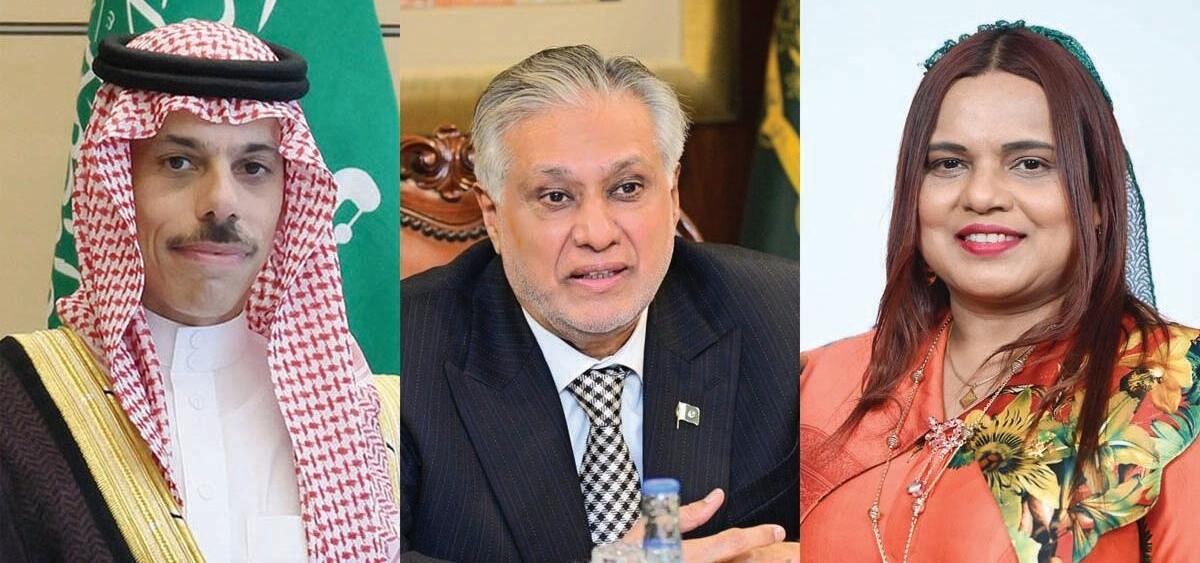
E P U T Y Prime Minister and Foreign Minister Ishaq Dar and Saudi Foreign Minister Prince Faisal bin Farhan Al Saud on Saturday voiced concern over the escalating tensions between Iran and the United States following the signing of the Islamabad Memorandum of Understanding reaffirming that renewed conflict would undermine regional peace and stability and stressing the urgent need for restraint dialogue and continued diplomatic engagement
According to the Foreign Office (FO), the two leaders exchanged views on the evolving regional situation during a telephone conversation
The concern was expressed as DPM and FM Ishaq Dar held a telephonic conversation with Prince Faisal bin Farhan Al Saud, Foreign Minister of Saudi Arabia and exchanged views on the recent developments in the region ” the FO said in a post on X
During the conversation both leaders agreed that the renewed conflict served no one s interest and would weaken ongoing efforts aimed at ensur-
ing regional peace and stability
The Saudi foreign minister shared the kingdom’s perspective on ongoing diplomatic efforts and emphasised the importance of de-escalation and continued dialogue the statement said Dar reaffirmed Pakistan s call on all parties to exercise maximum restraint and allow mediation efforts the necessary time and space to achieve a peaceful and meaningful outcome Maldives appreciates Pakistan’s mediation role
In a separate development Deputy Prime Minister and Foreign Minister Ishaq Dar held a telephone conversation with Maldivian Foreign Minister Dr Iruthisham Adam during which the two leaders reviewed regional and international developments and reaffirmed their commitment to strengthening bilateral cooperation According to the Foreign Office, the Maldivian foreign minister appreciated Pakistan’s role in mediating the Iran-US conflict “The two foreign ministers also exchanged views on regional and international developments Foreign Minister Adam appreciated Pakistan s role in mediating the Iran-US conflict, the FO said in another post on X While reaffirming their shared commitment to further strengthening the longstanding bonds of friendship and cooperation between Pakistan and the Maldives the two leaders agreed to remain in close contact Dar stresses importance of PakistanUK ties In a related development Deputy Prime Minister and Foreign Minister Senator Mohammad Ishaq Dar underscored the importance of PakistanUnited Kingdom bilateral relations and directed Pakistan’s High Commissionerdesignate to the UK to further deepen and broaden cooperation across political economic and people-to-people spheres The directive came during a meeting with Tipu Usman Chaudhry, Pakistan s High Commissioner-designate to the United Kingdom who called on the deputy prime minister according to a Foreign Office spokesperson
QUETTA/RAWALPINDI
S TA F F R E P O R T
S
triggering protests by wheat growers
Security forces on Saturday killed 23 more terrorists during the ongoing “Operation Shaban” launched in the aftermath of the deadly terrorist attack on the Mangi Dam police post in Balochistan, raising the overall number of terrorists neutralised to 102 since July 5, according to the military’s media wing State media quoting security sources reported that 12 terrorists belonging to Fitna al-Khawarij were killed during the latest round of operations
Providing an update on Operation Shaban the Inter-Services Public Relations (ISPR) said in a statement: A large-scale air and ground offensive against Fitna alKhawarij terrorists by Pakistan Army, FC Balochistan and Police, codenamed Operation Shaban, continued with full vigour ”
“Seven more foreign terrorists sent to hell during fresh operations the military s media wing said, adding that a total of 102 foreign terrorists had been killed in
Operation Shaban and other intelligence-based operations in Balochistan since July 5
“Operation Shaban will continue in Balochistan until the elimination of the last terrorist ” the ISPR said
State-run Radio Pakistan also reported that security forces killed two terrorists linked to Fitna alHindustan during an intelligencebased operation (IBO) near the N-25 crossing in the province
Fitna al-Khawarij is the term used by the state for terrorists belonging to the banned Tehreek-iTaliban Pakistan (TTP), while Fitna al-Hindustan is the designation used by the state for terrorist organisations operating in Balochistan
According to security sources weapons hand grenades a motorcycle, mobile phones, flags of a banned outfit and other equipment were recovered from the two slain terrorists
The ongoing kinetic actions are being conducted under Oper-
counterterrorism and counterinsurgency campaign launched by
and high-profile terrorist attacks in Balochistan
Earlier in the day, state-run Pakistan Television (PTV) reported on X that Operation Shaban was continuing across Balochistan as the Pakistan Army Frontier Corps and police intensified coordinated air and ground operations against terrorist hideouts
“According to security sources nine terrorists were killed in the latest action taking the total eliminated under Operation Shaban to 52 and the overall tally since July 5, including intelligence-based operations, to 88,” PTV said
“Security sources say the operation will continue until the last terrorist is eliminated it added Security sources had said on Friday that the Pakistan Army, Frontier Corps and police had been conducting a joint operation in Quetta district’s Shaban area since July 5 against terrorists involved in the killing of 27 police personnel during the attack on the police post at the Mangi Dam pumping station
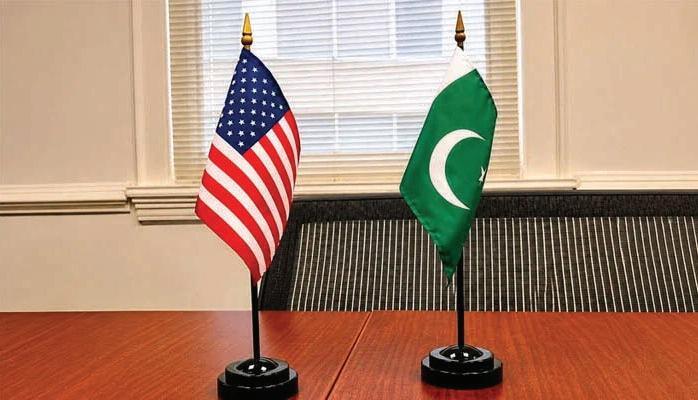
PAKISTAN, US HOLD TALKS ON RECIPROCAL TRADE AGREEMENT IN WASHINGTON
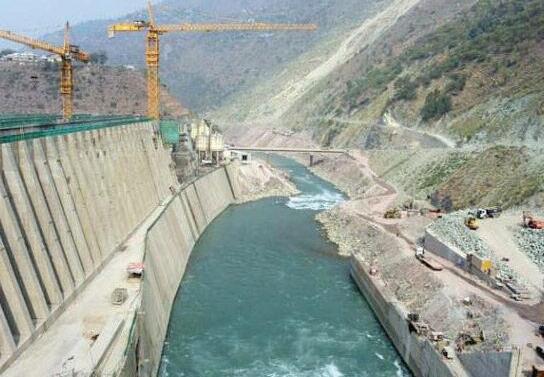
2024 forcing the national grid to rely more heavily on expensive thermal power generation despite consumers continuing to pay the Neelum-Jhelum (NJ) surcharge through electricity bills Muhammad Saeed told the committee that geological studies conducted before construction had identified the area as a seismic zone, while investigations into the tunnel failure are still underway Lawmakers however demanded a transparent inquiry to determine whether the damage resulted solely from geological con-
ditions or from design, construction or operational shortcomings They said any negligence should be investigated and those responsible held accountable Awarded in July 2007 and commissioned in August 2018, the project cost around Rs500 billion (approximately $4 7 billion at the then exchange rate) During the meeting lawmakers also raised concerns over Pakistan s growing water insecurity The Wapda chairman stressed the need to expand water storage infrastructure, while committee members noted that Pakistan has not constructed a major dam since Tarbela and Mangla compared with around 5 000 dams built by India
The committee was informed that a Dam Safety Council Bill, prepared with assistance from the Asian Development Bank has been finalised to establish a legal frame-
BP Singapore wins Pakistan’s
those settlers Twenty-one and twenty-two-year-olds with guns laughing that they had detained us, Khanna said in an interview with Reuters He also criticised what he described as the “arrogance” of Israeli soldiers who later arrived and “continued our detention ” “The arrogance of those young [Israeli military] soldiers that my tax dollars are funding Khanna said Having no respect for the fact that they were detaining Americans No respect for the fact that there was an American Congressperson in that bus
The
TH E granting of 47 district-level licences for internet service providers by the Pakistan Telecommunication Authority shows that the internet is becoming part and parcel of people's lives even outside the large urban centres With an initial fee of Rs 300,000 and an annual fee of Rs 100 000 over the 10-year duration of the licence, there will be Rs 1 3 million in cost, while other costs will remain The main cost will be obtaining bandwidth in bulk and then distributing it in bulk to consumers When coupled with the recent roll-out of the 5G spectrum, this constitutes a new effort to achieve internet penetration in areas that lack it One of the most interesting consequences will be the improvement of last-mile connectivity for consumers This has been one of the most persistent complaints of consumers in the mofussil and to give the outlying areas access to the internet is essential
It is perhaps not understood that the internet is not simple a tool for entertainment, or to obtain information, but a means of doing so many things One of the main functions of the \internet has become to provide cable television Then there is the internet of things, in which devices communicate with each other Then there is the satellite data expected in rural areas to provide real-time monitoring of crops There is so much that is being done over the internet that even these ISPs will probably find themselves overwhelmed Then there is the prospect of absolutely new uses which no one has even thought of Improved internet access will mean an expansion in the concept of remote working So far it only extends to someone working at home in the same town or city where his or her office is What is to prevent some from working in one town while living in another, if the internet connectivity is good enough?
Side by side with providing internet access, the government must also upgrade its electricity grid The internet is completely dependent on uninterrupted and uniform power The sort of electricity supply provided in smaller twins and rural
The Real Revolution is Institutional Reform
PO L I T I C A L ideas often outlive the soci-
eties in which they were first developed
They survive because they address recurring questions about power institutions and change Few 20th-century thinkers illustrate this better than Leon Trotsky Although his theories emerged from revolutionary Russia the debates he initiated continue to resonate wherever states struggle with institutional weakness, political fragmentation and the challenge of reform For Pakistan Trotsky’s writings are not a political blueprint to be followed but they offer a useful lens through which to examine the country s own institutional evolution
Trotsky remains one of the most influential yet controversial figures in modern political thought A leading figure in the 1917 Russian Revolution, Trotsky developed the theory of Permanent Revolution, arguing that societies experiencing incomplete political and economic transformation could not rely on gradual or isolated reforms Instead he believed political and social change was an ongoing process requiring continuous institutional development While many aspects of his revolutionary programme remain subjects of historical debate, his broader concern with political stagnation bureaucratic concentration of power and institutional decay continues to attract scholarly attention Perhaps even more significant than his theory of Permanent Revolution was Trotsky s criticism of bureaucratic authoritarianism Following the consolidation of power under Joseph Stalin, Trotsky argued that revolutionary ideals had been overshadowed by an expanding bureaucracy that increasingly concentrated authority in a narrow political elite In his view institutions become less effective when they cease to encourage accountability, open debate and public participation Whether or not one agrees with his conclusions, his warning about excessive bureaucratic centralisation remains relevant to discussions of governance across the world
Pakistan s political experience differs fundamentally from the circumstances of early Soviet Russia Pakistan is a constitutional parliamentary republic with its own legal traditions, democratic institutions and social complexities Nevertheless, like many developing states, it has experienced recurring
tensions between political continuity and institutional reform Governments have changed, policies have shifted and economic priorities have evolved, yet structural governance challenges have often persisted One of Pakistan s enduring difficulties is not the absence of constitutional institutions but the uneven performance of those institutions Frequent political polarisation has diverted attention from long-term policy planning Successive governments have launched ambitious programmes in education, health taxation and economic management yet implementation has frequently been inconsistent Administrative continuity has often been interrupted by political transitions reducing the effectiveness of otherwise promising initiatives Trotsky s criticism of bureaucracy invites a broader question that extends beyond ideology: how can state institutions remain efficient responsive and accountable? The answer lies not in revolutionary upheaval but in strengthening the rule of law improving public administration and ensuring that institutions operate according to constitutional principles rather than political expediency
Pakistan’s civil service remains one of the country’s most important state institutions It possesses considerable professional expertise yet concerns about administrative delays overlapping jurisdictions and procedural complexity continue to affect governance Modern states increasingly rely on efficient public administration, digital governance and evidence-based policymaking Administrative reform therefore becomes not merely a managerial objective but an essential requirement for democratic stability and economic growth
Another area where Trotsky s analysis retains indirect relevance concerns political participation Healthy democracies require political competition that remains within constitutional boundaries They also require opposition parties capable of contributing constructively to national policymaking rather than viewing politics exclusively as a zero-sum contest Pakistan s democratic future depends upon strengthening parliamentary processes encouraging issue-based politics and developing greater consensus on national priorities such as education, energy security, fiscal reform and climate resilience
Tthe Council of Foreign Ministers Pakistan is all set to open a new chapter of its continued cooperation and participation in the OIC activities as it is hosting the 9th OIC Ministerial Conference on Women is being held in the Convention Centre Islamabad on July 12 and 13 for which all possible arrangements have been made by the Federal Ministry of Human Rights in a quite befitting manner
The important OIC moot will be deliberating through delegates from the member countries and possibly also from some concerned international organizations on SocioEconomic and Political Empowerment of Women in the OIC countries; Challenges and Way Forward" while three sub-themes include "Enhancing Political and Profession Participation of Women", “Advancing Women's Access to Economic Resources and Financial Systems" and "Bridging Gender Gaps in Technology and Digital Participation
According to the information available from the organizers of this apparently quite
meaningful and forward looking moot viz-aviz women s empowerment in modern times relevant important fields, the 9th OIC Ministerial Conference aims to call for developing a synthesis for developing an enabling environment for women in the member countries in which they could fully participate exploit and realise their potential for contributing to socio-economic development of their respective motherlands Advancement of women was not merely a social objective but also a strategic necessity for the collective progress of the Muslim Ummah There were around 940 million females living in the OIC member states constituting 49 3 percent of the OIC member countries total population However, their role in and contribution to the socio-economic development of their societies were often suboptimal This was largely due to various social , cultural, and political norms and practices that resultantly limit their participation in the society and render their needs invisible Ensuring fair participation of women in the society was of the utmost importance for the OIC member countries for eliminating not so appreciable gender disparities and maximizing women's positive, desirable and meaningful contributions to the socio-economic development of their countries
According to the World Economic Forum s Global Gender Report 2025 although there has been moderate progress in narrowing gender disparities, full parity was still projected to be more than a century away at current rates of progress Global parity in 2025 showed significant gaps persisting in women's political empowerment and economic participation
of Women in the OIC Countries; Challenges and Way Forward as a matter of fact acknowledges that human development can only reach its optimum level through the full participation of all gender identities This realisation was duly anchored in the OIC charter and the constitutional principles of the member states As far as the host country Pakistan was concerned its Constitution also adheres to egalitarianism, equality, socio-economic wellbeing, and full participation of women in national life The Father of the Nation, Quaid-i-Azam Muhammad Ali Jinnah had articulated a democratic state based on Islamic principles of social justice Further, the OIC -2025 Programme of Action also has identified the empowerment of women as a key priority, thereby recognizing that they constituted one of the most affected groups due to wide gender disparities in several member countries
political empowerment of women,three subthemes namely Enhancing political and professional participation, Advancing women's
systems and Bridging gender gaps in technology and digital participation have been prioritized since these themes recognized that
organizers and
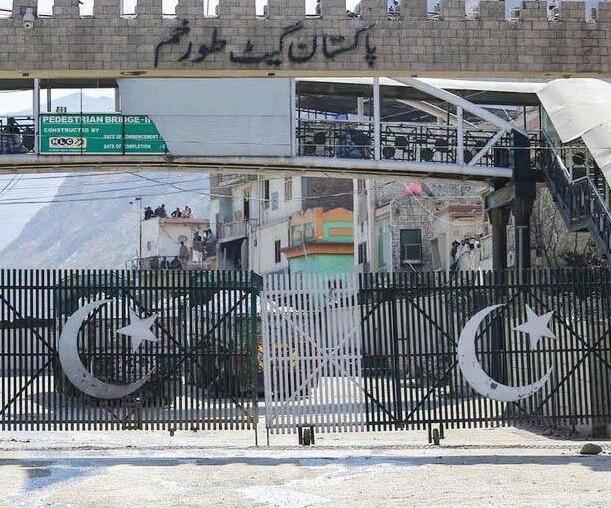
Border infrastructure lacking
Turbat
MUHAMMAD ZAHID RIFAT
DR MUHAMMAD AKRAM ZAHEER
e a c e u n d e r d u r e s s
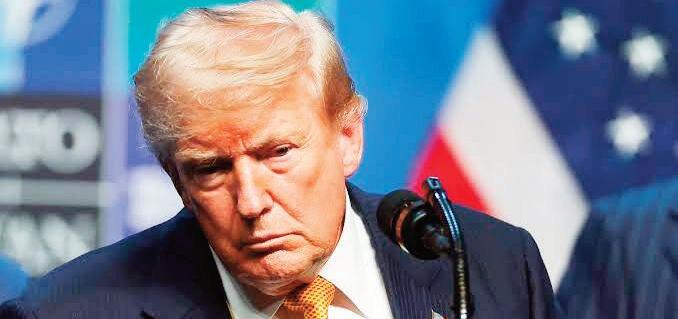
Athe aura of a deal being finalized between the USA and Iran; that too on the US terms The rule of deal under pressure ; seems to have returned with a vengeance with the selection of targets showing signs of deliberate snub to the other party Sensing that the deal was going to collapse soon the Pakistani political leadership rushed in a frantic show of helplessness to save what could have been the only diplomatic trophy they worked on very hard, making somewhat divergent political trends and ideologies sit on one table and hammer out details for a peaceful coexistence It has
been an uphill task which seems to be going down the drain as the US leadership gets restless on the single count that four months forward the Trump Administration is going to have the first taste of what the electorate thinks of it; any impression that the war effort, which must have already caused a ‘budgetary deficit’ was not worth must be on Trump’s head The escalation wfich looks like a frantic effort to get to in practical terms as what has been reported in the press as Trump s frequent slips of tongue where he just stops short of saying that the system in place in Iran needs to be packed up with one final push Leaving the grievances of the peacemakers aside the ground situation is exactly what was the trajectory of the events; the role of the major players and the real intent of each one of the players in the field The Americans under an overwhelming shadow of Israeli influence have been trained and taught not to allow the existence of the Iranian nuclear programme The reformists never having had the courage to say that have quietly agreed to that stance though through the decades have been mumbling, whether the audience has been the supreme leader on one side and the Americans on the other side of the fence
The result of that mumbling has been the two strikes which took place on 13 June 2025 and again on February 28 which resulted carefully in the destruction of the key regime targets In June the IRGC was specifically targeted and its upper tiers of leadership as well as the technical elite were done away with The target scheme clearly indicated that the
operation was a regime change one with
hardcore of the regime likely to be slaughtered while the mainstream army and air force were generally left intact Here it is important to note that Trump has been outrageously frank in his discourse that there are two sets of the Iranian leadership, one whom he can talk to the other which he calls ‘unreasonable’ His admission in a way also confirms that the Iranian corridors of power too are a divided house for all practical purposes
The February 2026 strikes, then, had the Supreme Leader targeted in the opening salvo followed by strikes which both targeted the top leadership minus the reformist president speaker of the Majlis as well as the reformist politicians To what extent the CENTCOM and IDF were talking to the Iranians asking for submission can be gauged from the last tweet by the national security adviser Ali Larijani, who quoted Imam Husain as saying ‘death with honour was better than a dishonourable existence with the oppressors ; suggesting strongly that the various regime figures were being approached for surrender in one way or another
A few days later, the house where he was staying was tracked with the help of IDF moles on the ground and he was killed in a massive air strike The coordination between the moles and the aggressing party can be gauged from the fact that a local assassination squad was not employed; rather the air force from the USA or IDF was engaged to do the needful
The basic point not to be missed was that the current surviving Iranian political cream was not agreeing with resisting pressure from USA as advocated by the slain supreme leader rather they wanted to talk to the USA even if it meant quick results The politicians were clever to carry on the theatrics like most of the passengers in the flight to Islamabad contained the school bags recovered
Now it seems that the street pressure built up during the last one week of public participation can be an asset in the hands of the opponents of the new JCPOA under the incumbent reformist administration The parliament already wary of its own speaker joining the reformist camp. and the street power can be the two nodes which can help the IRGC, the elusive leadership and the radicals to make a comeback, not through any extraconstitutional path, but with the mechanics of the system in place The coming days might not see as much fireworks between the USA and Iran; as within Iran; over what path the theocratic state takes way forward; for the peacemakers for now; Âit was a tea well servedÊ
from the Minab massacre by the CENTCOM forces However they were not ready to frame queries about the targeted assassinations of the government figures by the combined US and IDF onslaught The reporting of the on ground political situation in Iran might look misleading; however what has been observed is that the society seems to be divided along the proand anti-negotiation lines The governmentallied politicians are taking swipes as what were the statements of the late Supreme Leader about talks with the USA and these politicians are arguing ‘the leader was enough what was the use of parliament and cabinet’ meant and they spilled the beans that the reformists were not happy with the slain leader and did not entirely mind when he was dead That simmering impression has been the buzzword of the opponents of negotiations with the Americans A civilization or culture embedded in traditions of Hafez Saadi Rumi and Shams Tabraiz avoiding abuse and displaying displeasure poetically they have employed the hardest word Khayn or the dishonest or watan farosh , the seller of the homeland, not degenerating to a volley of abuse which is the part and parcel of the south Asian political discourse However the evolving gestation period of 30 to 60 days for the maturity of the deal seems to be fast slipping away The IRGC for all practical purposes has not escalated, in fact restrained itself to the tit-for-tat strikes Rather the onslaught has been generally directed towards the regional allies of CENTCOM and the bases in the Gulf The escalatory rounds are minimized in principle by the already compliant reformist administration as well as the IRGC However, the game plan is taling shape where even the supporters of the dialogue with the USA have no other option but to join the street The reason for joining the street is not the change of heart rather it is a political adjustment suggesting that they are adjusting to the street sentiment as the emotions and the tensions run high The real test for the reformist administration practically starts now With the indefinite mourning period almost
over with the burial of the supreme leader's mortal remains in the holy shrine in Mashad the real business and real politics starts now Uptil now there has been a semblance of unity despite the fact that there have been many instances of mismatch between the IRGC and the reform camp; like the one-sided apology of the President in the opening hours of IRGC retaliation
The
TH E debate over stablecoins and central bank digital currencies (CBDCs) may seem to be about technology but it is actually about the architecture of money It is thus not a new debate, but rather the reopening of an issue that most economists thought had been settled long ago How this renewed debate plays out will have far-reaching implications not least for determining whose money Europeans end up using Central to the debate is the question of whether the primary issuer of digital money should be the state (CBDCs) or private firms (stablecoins) The United States under President Donald Trump has perhaps not surprisingly embraced the latter: its 2025 Guiding and Establishing National Innovation for US Stablecoins (GENIUS) Act welcomes dollar stablecoins, lets non-banks issue them, and rules out a retail digital dollar By contrast, the European Union’s Markets in Crypto-Assets Regulation (MiCA) marginalizes private euro stablecoins obliging issuers to park their reserves largely in bank deposits and limiting the use of foreign-currency coins for payments This would make the privately issued euro stablecoins on offer less attractive than the bank deposits Europeans already hold And yet the same will be true of the public retail digital euro that the eurozone is planning owing to strict limits on how much one may hold and a prohibition on interest payments Although the GENIUS Act also bars issuers from paying interest, the ex-
changes that distribute the coins partly circumvent this rule by handing out rewards such as cashback options and loyalty points But why shouldn t digital money pay interest? After all, you earn interest on your deposits As Milton Friedman observed, preventing money from bearing interest amounts to imposing a tax on holding it In a forthcoming paper Bruegel s Ulrich Bindseil a former director general of market operations at the European Central Bank, shows that, across every modern form of money, the rules suppressing remuneration exist mainly to protect banks’ “deposit franchise” (the cheap funding lenders enjoy) which is not necessary for stability When such rules bind they usually backfire America s ban on interest created the Eurodollar market in the 1950s and money-market funds in the 1970s A MONEY-CREDIT BREAKUP If interest is allowed to accumulate on digital money the question becomes: Who pays it? To answer that question we must consider the system s design In the two-tier system we have, banks are credit institutions: they create money by lending, they pay interest on the resulting deposits and they alone hold reserves at the central bank Money and credit are fused in a single institution which enjoys exclusive privileges: deposit insurance and the backing of the central bank Together, these privileges guarantee the singleness of money : in any circumstance, a euro of bank deposits is worth a euro Stablecoins disrupt this arrangement because they pull the two functions apart A stablecoin issuer creates a means of payment but extends no credit This is money unbundled from lending, issued by an institution that is neither a commercial bank nor a central bank What stablecoin issuers lack in lending power they make up for in efficiency: because a stablecoin is a bearer token that settles on a programmable network it can move instantly around the clock and across borders at a fraction of the cost of the banks correspondent chains Coin issuers do not lend, but they may pay better than the banks do and that is what worries regulators The issue comes down to credit To the extent that stablecoins channel deposits
away from commercial banks (disintermediating them) they reduce the funding on which bank lending depends, and thus potentially reduce the supply of credit itself A retail digital euro raises the same concern: money that migrates from a bank deposit into central-bank money is money that is no longer financing loans This explains the restrictions on both the digital euro and euro stablecoins: neither may pay interest and stablecoin issuers are also kept away from the central bank s reserves Regulators are attempting to contain the erosion of credit But the principle that ought to govern here is neutrality: the same rules and risks should apply whatever the issuer s legal form By that standard withholding reserve access gets matters backwards, because reserve access is precisely what would make a stablecoin safe A stablecoin is only as sound as what backs it Today’s dollar coins are backed by Treasury bills and other short-term paper which are safe enough in calm times but liable to lose value in a crisis exactly when holders rush to redeem Only central-bank money holds its value with certainty in a crisis So, if the EU wants a safe euro stablecoin it should let the issuer hold its
and Dirk Niepelt of the University of Bern made this point in 2019 noting that swapping private money for public money can leave credit and the wider economy undisturbed, so long as the central bank passes the absorbed funds back to intermediaries on equivalent terms In principle, they argue, public and private money are interchangeable In practice though the swap is not perfectly clean Banks are still losing a particular kind of funding the cheap granular and dependable balances households leave in their current accounts to be replaced by a potentially pricier alternative, which must be collateralized While the quantity of credit is preserved its cost and the character of the funding behind it is not Nor is the power to decide where credit goes: the central bank can impose conditions relating to borrowers, collateral, and pricing
That is not necessarily a bad thing Cheap credit today is effectively paid for by savers who earn nothing on the money in their current accounts Ending the bank s deposit franchise simply means aligning the price of credit with its actual cost while removing the burden on savers Moreover, central banks already influence credit allocation through the collateral they accept, the assets they purchase and the financing they issue to reward banks for lending The proposed system merely enhances this influence and the interest cap limits how much money migrates
NAQI AKBAR
US Democratic Representative Ro Khanna said he was detained by armed Israeli settlers during a visit to the occupied West Bank this week describing the episode as part of a trip meant to give him what he called an unfiltered view of the impact of Israeli occupation as he considers a 2028 presidential campaign Speaking to Reuters on Thursday from a Palestinian village Khanna said the incident happened a day earlier when his group was travelling through an area of the southern West Bank where, residents frequently face settler attacks
He said their van was encircled by settlers carrying M4 rifles made in the United States Khanna a progressive Democratic congressman from California said the group had been visiting a village he said had been wrecked by settlers He said, "We were at a village that Israeli settlers had destroyed they had destroyed the school they had destroyed that village and we were just looking at it
He added: And these hoodlums come in with machine guns M4, an American-made machine gun and they detain us They block off the road And then they call the IDF and the IDF is on their side not on the side of the Americans referring to the Israeli military Cameron Kasky, an aide travel-
ling with Khanna said the group was held for more than an hour and sought assistance from the US Embassy in Jerusalem Kasky said officers who appeared to be police later stepped in after which the group was allowed to leave
The Israeli military said troops and police moved in after receiving a report that settlers were blocking vehicles near Khirbet Zanuta It described Khirbet Zanuta as a small Palestinian hamlet whose residents were forcibly displaced in violent settler raids after the 2023 Hamas attacks on Israel In a statement the military said Upon their arrival the troops dispersed the Israeli civilians and allowed the vehicles to continue on their way " Israel's police did not immediately
C hina evac uates more than 600,000 as Typhoon Bavi nears Wenzhou
into its rain bands, which stretch about the size of France from end to end In Wenzhou residents made last-minute preparations before markets shut ahead of the typhoon Speaking while buying groceries 50-year-old resident Huang Xinghuan said he was concerned but not alarmed "I’m a little worried, but I think it’ll be ok We’ve been through typhoons before We ll get through it Huang said his family had stored enough water for about two to three days and added: "I think supplies are well guaranteed now There s no need to panic or stockpile a lot of food or other supplies " Another resident Chen Qiuqin who is in her 60s said she was heading to her parents home in steady rain to help them get ready for the storm She said she was mainly concerned about items left on a balcony and about her elderly parents being alone I was worried about the flowerpots on my mother s balcony so I m going to help move them inside My parents are both elderly and they re home alone so I wasn t at ease," In Taiwan, the government evacuated more than 14,000 people mostly from mountainous areas as the island shut down in anticipation of Bavi s approach to the north The typhoon did not make landfall there, but authorities acted on forecasts warning that some areas could receive nearly one metre of rain Most evacuations took place in the north and east of the island The storm also led to widespread travel disruption with
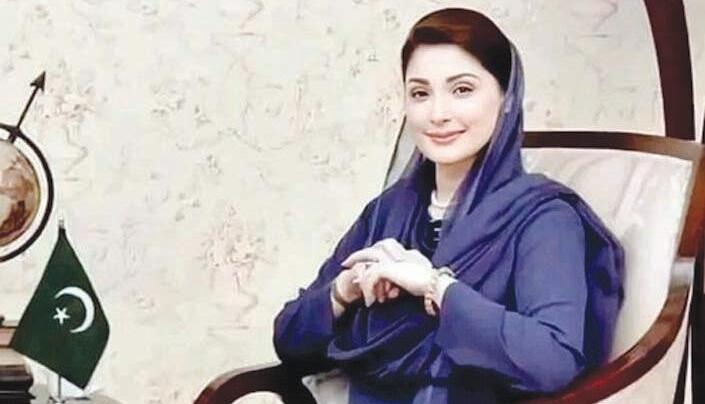
Punjab Minister for Information and Culture Azma Bokhari said that development, prosperity, and beautification are progressing simultaneously across Punjab under the leadership of Chief Minister Maryam Nawaz with the pace of development projects now significantly faster than in previous years She stated that development schemes are being executed at an accelerated pace in 52 cities under the Punjab Development Plan Special priority is being given to the timely completion of water supply and sewerage projects before the onset of the monsoon season to ensure that citizens do not face inconvenience during heavy rains Azma Bokhari said Chief Minister Maryam Nawaz has directed that no excavated roads or open trenches should remain before the monsoon begins and that all ongoing development projects must be completed within the stipulated timeframe She added that strict implementation of safety measures is being ensured throughout the execution of these projects to safeguard the public The Information Minister further said that, under the Punjab Beautification Plan, cities across the province are being transformed into modern and aesthetically appealing urban centers Public markets in all cities are also being upgraded without discrimination to meet contemporary standards and provide citizens with improved civic amenities She noted that Chief Minister Maryam Nawaz
FBR PROJECTS RS4.7TR SALES TA X COLLECTION IN F Y27 ON EXPECTED RECOVERY IN
MANUFACTURING, TRADE
President,
PM urge ‘unified national response’ to population growth for sustainable development
ISLAMABAD
President Asif Ali Zardari and Prime Minister Muhammad Shehbaz Sharif on Saturday called for a “united national effort” to address Pakistan s rapidly growing population urging all stakeholders to treat population planning as a shared national responsibility essential for sustainable development, economic prosperity and the well-being of future generations
In their separate messages on World Population Day observed this year under the theme Realizing the Hopes and Aspirations of Young People, Today and for the Future, the two leaders stressed the need for informed decisionmaking responsible parenthood gender equality and coordinated policies to harness Pakistan s demographic potential while addressing the challenges posed by rapid population growth
The prime minister urged the federal and provincial governments members of parliament development partners civil society academia the private sector religious scholars the media and local communities to recognise the urgency of population growth as a national issue and fulfil their shared responsibility by promoting informed decision-making responsible parenthood gender equality and sustainable development
In his message, Prime Minister Shehbaz Sharif said World Population Day provided an important opportunity to highlight the significance of population issues at the global level
He said this year s theme underscored the pivotal role of young
people in shaping a prosperous future adding that creating an enabling environment for the younger generation was a collective responsibility “Today, Pakistan joins the international community in observing World Population Day and reaffirms its commitment to responsible population planning as a cornerstone of sustainable development and national prosperity, the prime minister said He said responsible and prudent population planning and management formed the foundation of a welfare-oriented society adding that a population commensurate with available resources ensured equitable access to public services and contributed to the well-being and prosperity of all citizens
“Pakistan is the fifth most populous country in the world and ranks among the countries with a significant youth population More than 65 per cent of our population is under the age of 30 This no doubt represents a tremendous national asset and a powerful driver of economic and social progress the prime minister said At the same time he noted that the country s annual population growth rate of 2 55 per cent presented significant challenges in economic planning employment generation education healthcare housing food security infrastructure development and environmental sustainability
To fully harness the demographic potential of Pakistan s youth and realise the benefits of the demographic dividend the prime minister said sustained investment in national resources and a comprehensive strategy were indispensable Human development and
nurturing people s capabilities he added must remain at the heart of the national development agenda
Highlighting recent government initiatives, the prime minister said the federal government had established the National Population Council to formulate a comprehensive and effective national strategy on population and development
He said the high-level forum would ensure policy coordination between the federal and provincial governments strengthen institutional collaboration and provide strategic guidance for implementing the National Population Programme, while facilitating timely and effective decision-making in line with national priorities
“Furthermore the Council will duly accord priority to integrating population-related issues into the national development agenda, promoting women s empowerment, advancing human resource development, and formulating evidence-based policies that support long-term social and economic prosperity he said
He emphasised that every citizen irrespective of race ethnicity or background particularly the most vulnerable segments of society deserved equal access to essential services and due consideration in future planning
Education healthcare economic inclusion and equal opportunities for women and girls remained among the government s foremost priorities, he added “Insha’Allah! Through collective resolve and coordinated action we can create an environment in which every citizen enjoys equal opportunities to lead a healthy dignified and productive life
PM&DC credits reforms as O ver 1,400 Pak istani graduates secure US residenc y placements
The Pakistan Medical and Dental Council (PM&DC) on Saturday hailed the growing international success of Pakistani medical graduates, saying that more than 1 400 doctors had secured placements in the United States residency programme this year attributing the milestone to sustained improvements in medical education standards curriculum reforms and regulatory measures introduced by the council
In a statement, the PM&DC said the increasing number of Pakistani doctors successfully advancing to medical residency opportunities in the United States reflected the positive impact of strengthened academic standards updated curricula and forward-looking policies aimed at aligning Pakistan s medical education system with international benchmarks
professionals
According to the PM&DC more than 1 400 Pakistani medical graduates achieved success in the US residency programme this year, marking a significant milestone for Pakistan’s medical education system on the international stage
The council said the notable increase compared with previous years reflected the growing preparedness confidence and global competitiveness of Pakistani doctors
It noted that the rising number of graduates successfully progressing towards US residency opportunities demonstrated the impact of strengthened medical education standards, updated curricula and improved regulatory policies
biological safety and related technical fields rather than the general public
Describing the achievement as a testament to the dedication of Pakistani medical graduates and the ongoing transformation of medical education in the country the council said the success underscored the growing global recognition of Pakistan’s healthcare
The PM&DC further observed that Pakistani medical graduates were increasingly achieving results that placed them among the leading groups of international medical graduates While larger applicant pools from countries such as India had traditionally dominated the field, the council said the landscape was witnessing a significant rise in the representation and success of Pakistani doctors highlighting their growing competitiveness and recognition within the global medical community