
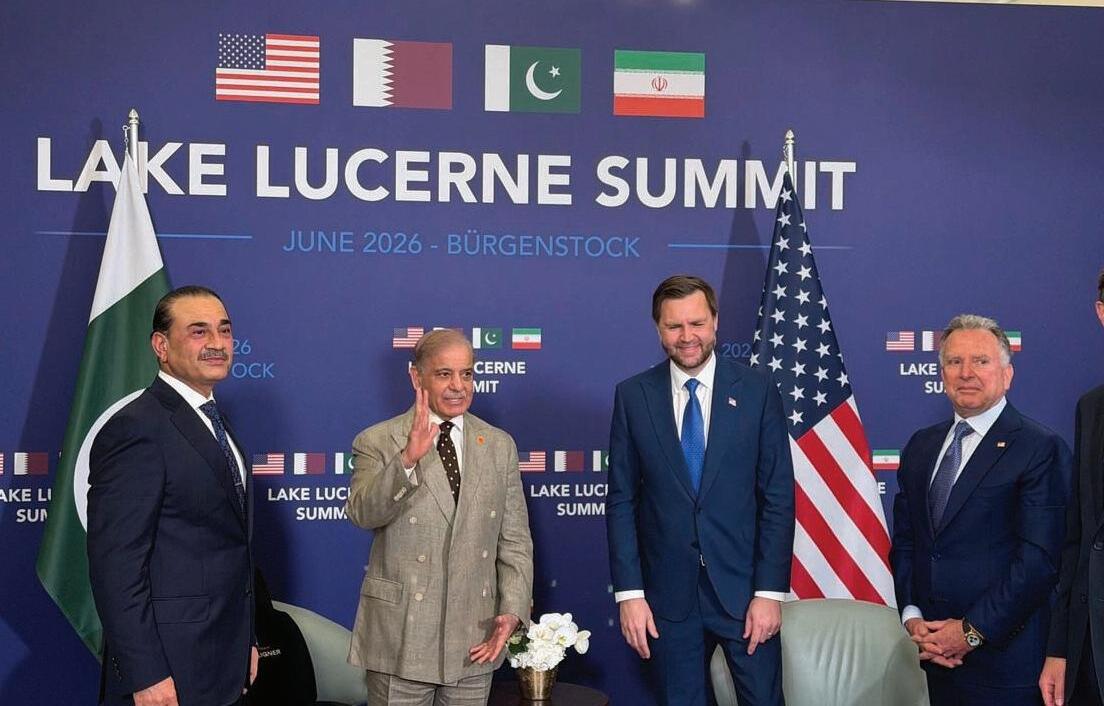
PM Shehba z welcoMeS breakthrough in uS-iran talkS, SeeS Path to final deal
ur Rehman of the Pakistan Muslim League-Nawaz (PML-N) as Deputy Speaker Both candidates were returned unopposed after no rival nominations were filed for the respective offices The smooth election process reflected the political understanding reached among the major parties following the Gilgit-Baltistan polls Members
Chinese envoy conveys Beijing's appreciation for islamabad's
China on Monday commended Pakistan s successful diplomatic efforts in promoting regional deescalation and reaffirmed its steadfast support for Islamabad’s role in facilitating dialogue and lasting peace in the region
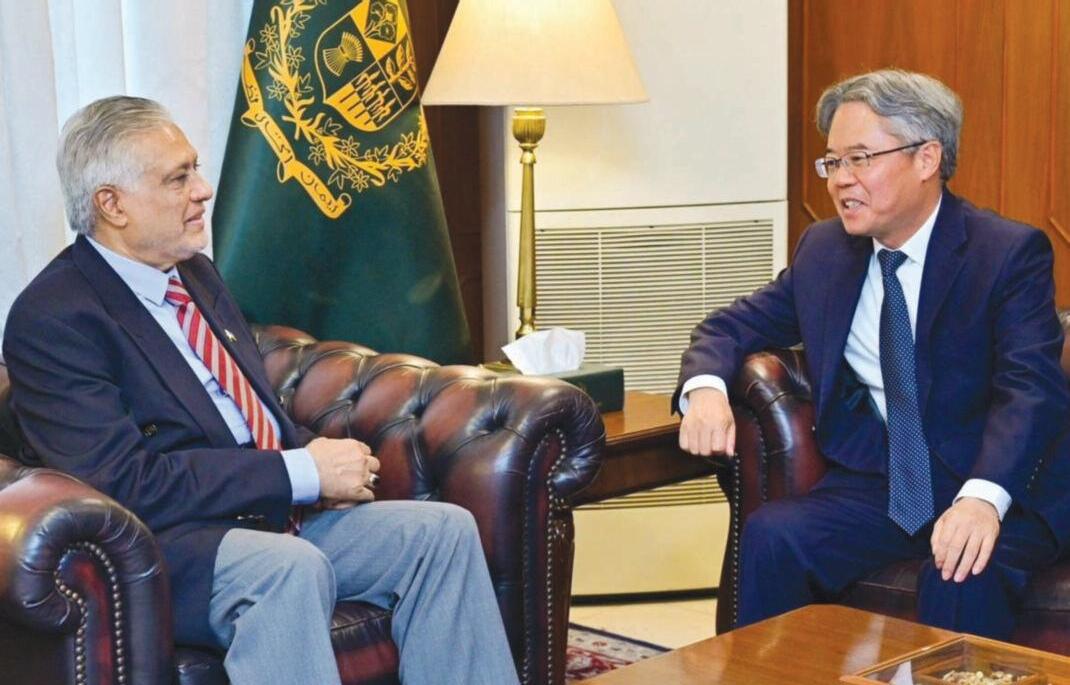
The message was conveyed by Chinese Ambassador Jiang Zaidong during a meeting with Deputy Prime Minister and Foreign Minister Senator Mohammad Ishaq Dar in Islamabad
According to an official statement Ambassador Jiang conveyed Beijing s appreciation for Pakistan s constructive contribution to easing regional tensions and reiterated China’s support for Pakistan’s mediation initiatives aimed at fostering durable peace and stability
During the meeting Deputy Prime Minister Dar shared details of the recent high-level talks held in Bürgenstock, Switzerland, under the framework of the Islamabad Memorandum of Understanding (MoU)
He briefed the Chinese envoy on progress made during the negotiations and Pakistan s ongoing diplomatic engagement to facilitate dialogue and promote a peaceful resolution of regional disputes Dar also referred to his recent
visit to Cairo, where he participated in the R-4 Regional Foreign Ministers’ Meeting alongside the foreign ministers of Egypt Saudi Arabia and Türkiye
The meeting focused on strengthening regional cooperation and advancing collective diplomatic efforts to encourage dialogue, de-escalation and peaceful conflict resolution
The deputy prime minister expressed gratitude for China s consistent support for Pakistan s peace initiatives and acknowledged Beijing s significant contributions to regional stability efforts
He particularly praised Chinese President Xi Jinping s Four-Point Proposal and the China-Pakistan Five-Point

TDivision, Rs14 91 billion for the Controller General of Accounts, Rs1,162 billion for superannuation allowances and pensions, and Rs2,504 billion for grants, subsidies and miscellaneous expenditure The House also approved Rs85 60 billion for the Federal Board of Revenue, Rs0 106 billion for the Revenue Division, Rs94 71 billion for federal miscellaneous investments, Rs231 08 billion for other development expenditure, Rs2 35 billion for capital outlay on federal investments, Rs169 21 billion for development loans and advances, and Rs2 30 billion for external development loans and advances For the energy and power sector, six demands for grants worth Rs661 27 billion were approved These included Rs578 837 billion for the Power Division, Rs1 112 billion for the Petroleum Division and Rs1 201 billion for the Geological Survey of Pakistan Development allocations in the energy sector included Rs3 197 billion for the Power Division, Rs0 312 billion for capital outlay on the Petroleum Division and Rs76 608 billion for external development loans and advances of the Power Division Power Division Minister Sardar Awais Ahmad Khan Leghari rejected opposition criticism in the cut motions and said the
indigenous sources The minister said economic load-shedding was being carried out on around 3,500 of 14,500 feeders, while a Rs50 billion programme had been launched to eliminate it by June next year For the Cabinet and related departments, the House approved Rs0 709 billion for the Cabinet, Rs5 941 billion for the Cabinet Division, Rs1 796 billion for emergency relief and repatriation, Rs0 895 billion for the Prime Minister ’s Office (Internal) and Rs0 921 billion for the Prime Minister ’s Office (Public) It also approved Rs1 048 billion for the National Disaster Management Authority, Rs0 858 billion for the Board of Investment, Rs0 2 billion for the Prime Minister ’s Inspection Commission, Rs0 952 billion for the Special Technology Zone Authority, Rs0 205 billion for the National Anti-Money Laundering and Counter Financing Terrorism Authority and Rs0 25 billion for the Cannabis Control and Regulatory Authority The House also cleared Rs63 516 billion for the development expenditure of the Cabinet Division Among administrative allocations, Rs10 177 billion were approved for the Establishment Division, Rs1 474 billion for the Federal Public Service Commission, Rs3 515 billion for the National School of Public Policy, Rs2 088 billion for the Civil Services Academy, Rs0 118 billion for the Council of Common Interests Secretariat and Rs0 354 billion for the Special Invest-
ment Facilitation Council Division
For education and training, the House approved Rs42 75 billion for the Federal Education Division, Rs66 43 billion for the Higher Education Commission, Rs8 99 billion for NAVTTC and Rs28 41 billion for education development
For health and social services, the House approved Rs37 22 billion In housing, planning and development, the House approved Rs142 694 million for Naya Pakistan Housing Authority, Rs5 93 billion for the Housing and Works Division, Rs9 58 billion for Planning, Development and Special Initiatives, Rs27 63 billion for development planning and Rs16 39 billion for civil works capital expenditure For information, media and technology, the House approved Rs11 01 billion for Information and Broadcasting, Rs15 9 billion for miscellaneous Information and Broadcasting, Rs22 5 billion for the Information Technology and Telecommunication Division and Rs19 58 billion for development expenditure of the Information Technology Division For transport and communication, the National Assembly cleared Rs354 958 million for the Communications Division, Rs36 14 billion for other communications expenditure, Rs25 54 billion for Pakistan Post Office, Rs70 48 billion for the Railways Division, Rs59 26 billion

LUCKY MOTORS CUTS THE SPORTAGE ALPHA AND PEUGEOT 2008 BY
1.3M AND UNDERCUTS ITS OWN STONIC IN THE PROCESS
PM S hehbaz welcomes breakthrough in US -Iran talks, sees path to final deal
Separately, Deputy Prime Minister and Foreign Minister Ishaq Dar described the outcome of the Bürgenstock talks as a major milestone in the implementation of the Islamabad MoU In a statement, Dar welcomed the “substantial progress” achieved during the negotiations and congratulated Prime Minister Shehbaz Sharif and Field Marshal Asim Munir for their leadership in advancing the peace initiative He also praised the constructive approach demonstrated by both Washington and Tehran and thanked Qatar for its close cooperation with Pakistan throughout the mediation process The foreign minister confirmed that Pakistani diplomats would remain actively engaged in the negotiations with a Foreign Office team continuing technical-level discussions with the concerned parties throughout the week in Switzerland
statement issued by Pakistan and Qatar announced that the parties had agreed on a roadmap to reach a final agreement within 60 days
Among the key outcomes was the establishment of direct communication channels aimed at preventing misunderstandings and reducing the risk of incidents particularly in the strategically vital Strait of Hormuz
The mechanism is expected to help ensure the uninterrupted flow of international commercial shipping through one of the world s most important energy corridors The mediators also announced the creation of a Pakistan- and Qatar-facilitated de-confliction cell involving Lebanese authorities and relevant stakeholders to oversee commitments related to the cessation of military operations in Lebanon and prevent renewed hostilities
build on the diplomatic breakthrough achieved on June 18 when Prime Minister Shehbaz Sharif signed the Islamabad Memorandum of Understanding as mediator formalising an agreement between the United States and Iran aimed at ending months of regional conflict
The accord established a framework for dialogue on security maritime stability, economic cooperation and broader regional peace Diplomatic observers view the progress achieved in Switzerland as an important step toward transforming the initial agreement into a comprehensive and lasting settlement, while reinforcing Pakistan s growing profile as a facilitator of regional diplomacy and conflict resolution
Reaffirming Islamabad s commitment to the process, both Prime Minister Shehbaz and Foreign Minister Dar pledged that Pakistan would continue to play a sincere and constructive role in advancing dialogue, promoting stability and supporting efforts aimed at securing lasting peace in the region and beyond



GL O B A L markets are celebrating the breakthrough in Islamabad, but the Middle East may have just purchased a far more explosive war on credit Last week’s dramatic signing of the Islamabad Memorandum of Understanding (MOU) has been breathlessly hailed as a triumph of modern statecraft Spearheaded by Pakistan’s pivotal role as the official mediator, the electronic signatures of the US and Iranian presidents successfully averted a catastrophic regional conflagration The immediate relief was undeniable: the United States moved swiftly to lift its aggressive naval blockade of Iranian ports, and Tehran immediately initiated the reopening of the strategically
60-day timeline The core systemic pathologies that triggered the war remain entirely untouched, swept under a diplomatic rug in Switzerland where technical teams are now desperately trying to sequence impossible verification protocols The most analytical and heavily debated engine of this stabilization effort is the R4 framework, an intricate risk-management model imported from global crisis economics to stabilize a fractured state Built upon four rigid pillars Risk Reduction, Risk Transfer, Risk Retention, and Prudent Risk-Taking R4 is being deployed as an economic shock absorber to keep Iran’s domestic infrastructure from collapsing under the weight of recent hostilities The first two pillars, Risk Reduction and Risk Transfer, are manifested in the immediate waivers on Iranian oil export sanctions and the temporary 60-day toll-free passage through the Strait of Hormuz This transfers the catastrophic financial risks of the conflict away from commercial


ACCORDING to popular belief, humanitar-
ian concerns often do not align with legal boundaries However, the occurrence of such a severe humanitarian crisis at the hands of the world’s largest democracy is deeply regrettable and may be regarded as a blatant violation of international law, isn’t it? Speaking of India, which pushed back at least 2,369 people between May 2025 and January 2026, among them 126 Indian nationals and 38 from Myanmar They counted it as a legal procedure to push back those people’s naming Bangladeshi immigrants which is ridiculous Bangladesh has a long-lasting friendship with India which has broken after the mass uprising in Bangladesh last August, 2024 From then, this new phenomenon pushed back the theory of India which is mainly used in American and European borders clearly to get attention between the Bangladesh and India border The “push back theory” (often referred to as “push-ins” by Bangladesh) describes India’s practice of informally and forcibly repatriating undocumented migrants, suspected illegal immigrants, and refugees across the border into Bangladesh, bypassing formal, time-consuming legal deportation procedures The origins of India’s push-back policy can be traced to long-standing concerns over undocumented migration from Bangladesh, but it gained significant momentum in the mid-2020s amid heightened political and security debates In May 2025, Assam Chief Minister Himanta Biswa Sarma publicly stated that India had adopted a new “pushback” strategy against alleged illegal immigrants, saying, “We have pushed them back” while describing the policy as an alternative to lengthy deportation procedures The push-back approach was intended to deter future illegal migration and address what New Delhi views as administrative obstacles in the deportation process India applied the push-back policy primarily in relation to Bangladesh because Indian authorities have long viewed undocumented migration from Bangladesh as a major border management and security challenge But, they change their motives overnight and now the scenario is to-
Retention and Prudent Risk-Taking rely on a staggering $300 billion economic reconstruction fund financed by Washington and affluent Gulf partners like the UAE aimed at injecting liquid capital to incentivize peaceful commerce over state-backed militancy However the fatal flaw of this approach lies in the naive assumption that economic riskmanagement frameworks can seamlessly overwrite deep-seated military doctrines Western negotiators view the R4 framework as a tool for behavioral engineering hoping that access to global markets will naturally dilute Iran s aggressive regional posture Tehran conversely operates under entirely different strategic compulsions For the Iranian state the R4 framework is strictly a transactional tool for economic survival a temporary mechanism to ease hyperinflation secure basic commodities and access frozen assets The regime has absolutely no intention of allowing these economic concessions to dictate or dismantle its sovereign security architecture This divergence explains why Iran s sophisticated forward-defense dynamics its expansive network of regional proxy forces and asymmetric regional militias were left entirely outside the bounds of the Islamabad text To believe that long-term stability can be achieved while leaving this forward-defense apparatus completely intact is a delusion of historic proportions Tehran has spent decades cultivating these non-state alliances as an existential buffer against foreign invasion; it is an ideological and military reality woven into the very fabric of the Islamic Revolutionary
tally wrong either forcefully deporting or counting its own citizens bound to push back at night Now the question is why can India not Escape Responsibility for the Humanitarian Consequences of Push-Ins? If India carries out push-ins without properly verifying nationality ensuring due process or coordinating with Bangladesh it cannot avoid responsibility for the resulting humanitarian suffering International law and basic humanitarian principles require that individuals be treated with dignity and protected from arbitrary expulsion When people are forcibly pushed across borders without adequate legal procedures they often face displacement family separation insecurity and denial of essential services Over the past two months a series of alleged push-in incidents along the Bangladesh-India border have left scores of people stranded in the zero line and noman s-land areas under inhumane conditions Reports indicate that at least 88 people including women and children were left stranded near border points in Lalmonirhat Panchagarh Naogaon and Chapainawabganj while separate incidents were reported in Thakurgaon Jashore (Benapole) and other frontier districts on the last month Many of these individuals spent between 48 and 72 hours in the exposed border zone without adequate shelter food medical assistance or legal certainty regarding their status Human rights groups have expressed concern that forcing people to remain in the zero line regardless of their nationality creates a humanitarian crisis and undermines established repatriation procedures between the two neighbouring countries The growing number of such incidents has further strained bilateral relations and intensified concerns over the protection of vulnerable civilians caught between competing border policies Among the incidents reported so far the push-in that took place on 14 June through the Goykata border in Roumari Upazila of Kurigram district stands out as particularly heartbreaking The
ro s s t h e b o rd e r i n t o B a n g l a d e s h , by p a s s i n g fo r m a l , t i m e - c o n s u m i n g l e g a l d e p o r t a t i o n p ro c e d u r e s T h e o r i g i n s o f I n d i a Ês p u s h - b a ck p o l i cy c a n b e t r a c e
Guard Corps Both sides are actively pursuing entirely distinct agendas through the same document Washington is trying to buy a fundamental transformation in Iranian foreign policy with a checkbook while Tehran is successfully separating the maritime and economic files from its regional behavior ensuring its military leverage remains fully uncompromised Ultimately the Islamabad MOU is a brilliant exercise in immediate crisis management but a profound failure of long-term statecraft It mistakes the temporary absence of active violence for the presence of a durable peace While Pakistan deserves immense credit for leveraging its diplomatic weight to halt a hot war columnists and media analysts must resist the temptation to mistake a brief intermission for the final curtain call The behavior-based sanctions relief and asset releases envisioned under the R4 framework are highly reversible and the political appetite within the U S Congress for sustained concessions remains dangerously low If the ongoing technical talks in Geneva stumble over uranium downgrading minutiae or if an uncoordinated proxy action disrupts the truce the entire architecture will evaporate We have not entered a new era of Middle Eastern harmony; we have simply hit the pause button on a global catastrophe and the countdown to the next explosion has already begun Majid Burfat is a member of the Civil Service of Pakistan (CSP) and a geopolitical analyst Through his brand The CSP Perspective he provides grounded analysis on Pakistan s strategic role in global affairs
Lessons in smoke
A perilous presidency
MA JID NABI BURFAT

Treflecting the deep mistrust that continues to define relations between the two countries negotiations nevertheless continued, highlighting both the fragility and importance of the diplomatic track
The strongest resistance to the agreement has emerged from hawkish political circles in Washington Several influential Republican figures have criticized the framework, arguing that it grants Iran economic relief without permanently eliminating what they regard as the core security threats posed by Tehran Senator Bill Cassidy described the arrangement as a major strategic mistake Senator Roger Wicker expressed concern that hard-won leverage was being surrendered too quickly Senator Lindsey Graham questioned both the substance of the agreement and the broader diplomatic strategy surrounding it Collectively, these critics argue that sanctions relief, asset unfreezing, and economic normalization provide benefits to Iran before sufficient security guarantees have been secured Supporters of the framework offer a different perspective They argue that diplomacy succeeds not through the humiliation of one side but through the creation of incentives that encourage compliance and reduce incentives for conflict They contend that years of sanctions, pressure campaigns, military operations, and threats have failed to produce a durable solution If military force could permanently solve the dispute, they argue, the issue would have been resolved long ago The most dramatic opposition, however, has emerged from Israel Prime Minister Benjamin netanyahu has repeatedly emphasized that Israel s strategic objectives differ from those of Washington Israeli officials
continue to insist that any lasting arrangement must permanently eliminate Iran s enrichment capabilities, constrain its missile programs, and weaken its regional network of allied groups netanyahu has publicly stated that Israel will continue pursuing its security objectives and will not permit Iran to acquire nuclear weapons Israeli leaders have also signaled that they intend to maintain military pressure against Hezbollah in Lebanon regardless of broader diplomatic developments This disagreement reveals a profound strategic divergence between Washington and Jerusalem The Trump administration increasingly appears focused on preventing a wider regional war, stabilizing energy markets, reopening maritime trade routes, and reducing the economic burdens associated with prolonged military engagement Israel, by contrast, remains focused on achieving what it views as decisive security outcomes against Iran and its regional allies The resulting tension has produced one of the most visible policy disagreements between the two allies in recent years The Lebanon issue has become the most immediate manifestation of this divide Reports from the negotiations suggest that Tehran has made developments in Lebanon a central issue during the Swiss discussions Iran argues that regional stability cannot be achieved while military operations continue on multiple fronts Israel, meanwhile, insists that its campaign against Hezbollah remains essential to its national security The dispute threatens to complicate implementation of the broader framework and demon-
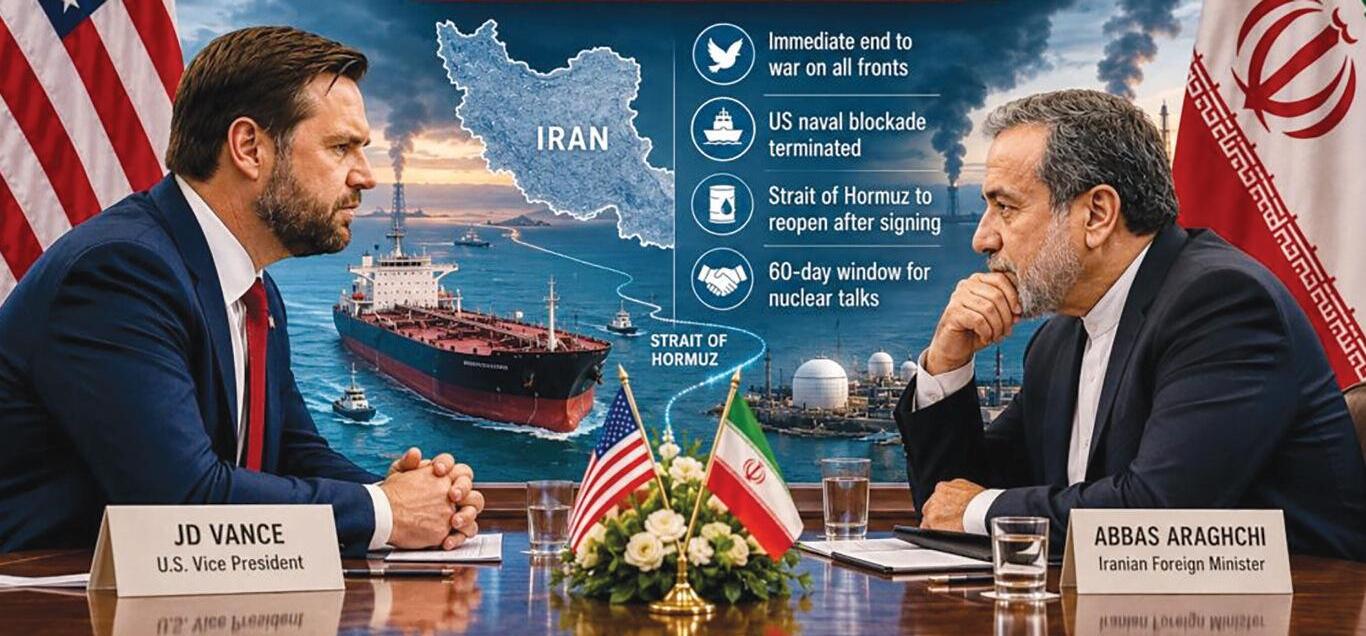
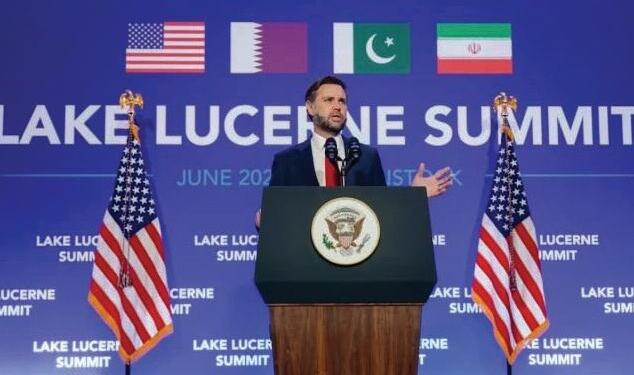
The technical negotiations now underway in Switzerland are intended to transform the recently signed Islamabad Memorandum of Understanding into a permanent settlement The framework, reached after months of indirect and direct diplomacy and supported by Pakistan and Qatar, established a 60-day roadmap for resolving some of the most dangerous disputes in the region, including nuclear issues, sanctions, frozen assets, regional security, and freedom of navigation through the Strait of Hormuz. Reports from Switzerland indicate that Vice President JD Vance is leading the American delegation, while Foreign Minister Abbas Araghchi and Parliamentary Speaker Mohammad Bagher Ghalibaf represent Iran
W h y I s r a e l ’ s T u r k e y a n xi e t y i s be

did not prevent the agreement from being treated as a landmark For OpenAI, signing up the largest public university system in the United States was proof of concept that AI could be embedded across higher education at scale For CSU, it was a “huge branding opportunity”, since no other university in the world had adopted AI at this scale The financial logic is harder to follow Despite facing roughly $144m in budget cuts, CSU last month renewed the deal on costlier terms, committing to $13m a year over three years, about $39m in total, deepening its bet on AI at the very moment it was cutting elsewhere What happens when universities begin to treat more of their work as something to be automated, outsourced or made cheaper through AI? We saw a small but telling example at the graduation ceremony at Glendale Community College (GCC) in Arizona
The college’s leadership used an AI system to read the names of graduating students as they received their diplomas The system was unable to match the correct names to the students walking across the stage, and the name on the jumbotron did not match the student receiving the diploma GCC President Tiffany Hernandez was booed by graduating students and their families when she explained what was happening “Yep, yep So that is a lesson learned for us,” she said One graduating student told media outlets that Hernandez’s apology “didn’t feel sincere and it kinda felt like they didn’t care”, adding: “I would have liked a little more thought to have gone into it rather than pushing something as simple as reading some names off to an AI device ” The problem becomes more serious still when AI moves from administration into teaching and assessment Supporters argue that AI can ease administrative burdens, cut costs and, in time, get better at designing classes, marking work and summarising difficult texts But those promises sit alongside concerns about privacy, bias and accountability, as well as a harder question: if so much of university life is to be streamlined and automated, what remains of the ecosystem of learning and mentorship on which these institutions depend?
The evidence on assessment is sobering A University of Cambridge-led team tested three “frontier” systems and found that AI
routinely undervalues “work awarded top marks by humans, or [overvalues] essays ranked among the lowest” Unlike human examiners, all the systems were “oversensitive to linguistic features”: handing out higher marks for essay length, vocabulary range and sentence complexity, which are often unrelated to academic standards Deborah Talmi, who led the study, warned, “Assessment is not just a system for distributing marks It is part of how educational meaning is made, so students feel seen, standards are upheld, and trust is maintained Use of AI in assessment poses a risk to these values ” This is the heart of the matter Students attend university not just to receive a diploma or master a syllabus When they enter campus, they want to be seen, their interests nurtured, and to be helped in making sense of the world and their place in it If universities hand more of this work over to AI, they risk weakening the very relationships and forms of judgement that make higher education meaningful Studies have shown that AI usage can hamper critical thinking and weaken the very cognitive skills students need to make their way in the world beyond university
This is why universities should be wary of the narrative of the imminent AI revolution The loudest voices pushing it are part of an ecosystem of corporations and tech figures that have invested heavily in the technology and its infrastructure
On 17th February, addressing the Conference of Presidents of Major American Jewish Organizations in Jerusalem, former prime minister naftali Bennett delivered a line that has since become shorthand for a shift in Israeli strategic thinking: Turkey is the new Iran He accused Recep Tayyip Erdoğan of seeking to “encircle Israel ” He charged Ankara and Doha with nourishing a Muslim Brotherhood axis modeled on Iran’s proxy network, this time anchored by a “hostile Sunni axis with nuclear Pakistan ” Coming from a man positioning himself for an electoral comeback this fall, the remarks could be dismissed as campaign theatre They are not isolated Bennett’s framing echoes a document few outside Israel’s defense establishment have read closely In January 2025, the nagel Committee a government-commissioned panel on long-term defense strategy concluded that a Turkish-aligned Syria could pose a threat that “could evolve into something even more dangerous than the Iranian threat ” That assessment has since filtered out of classified planning and into open political discourse, lending institutional weight to what might otherwise read as a politician’s bluster Former defence minister Yoav Gallant added his own escalation on 27th February, urging Western states to reconsider arms sales to Ankara despite Turkey’s standing as nATO’s second-largest army Prime Minister Benjamin netanyahu has not stayed above the fray Facing slipping approval at home after the U Sbrokered ceasefire with Iran, he announced a “hexagon” of regional partnerships including Greece and Cyprus explicitly framed to counter what he called an “emerging radical Sunni axis ” Both Greece and Cyprus carry long-running grievances against Ankara over maritime boundaries and Cyprus’s division an alignment of convenience that lends the new doctrine institutional scaffolding without settling whether Turkey poses a threat genuinely comparable to Iran’s Turkey’s own posture has, so far, been a study in calculated restraint Foreign Minister Hakan Fidan, asked about Ankara’s role in toppling Bashar al-
Assad, called it
That
QAMAR BASHIR

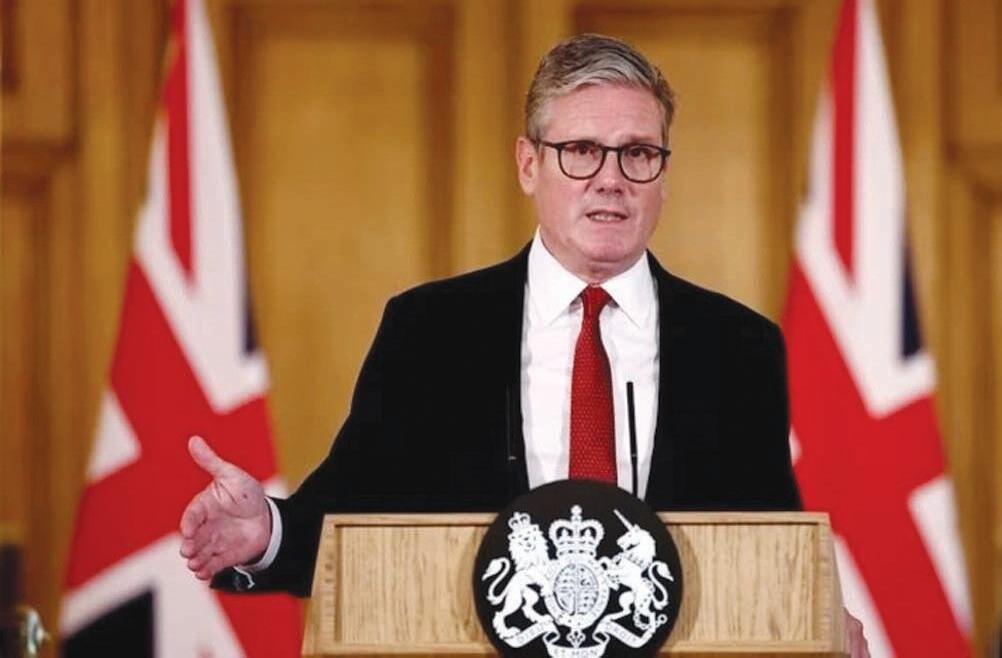
STARMER RESIGNATION PAVES WAY FOR BRITAIN'S SEVENTH LEADER IN 10 YEARS
13 dead, dozens injured, af ter blast during restar t at giant Q atar LNG site
be brought back in sequence
In the liquefaction process which turns gas into a liquid state by cooling it down to approximately minus 162℃ (minus 260 degrees Fahrenheit) the cooldown is the most critical step
tion had started into the incident The blast rattled windows and was felt across central Doha panicking residents more than 70 kilometres from Ras Laffan Ramp up challenges The incident highlights the challenges Gulf producers face in ramping up oil and gas production from facilities shut in during the Iran war Qatar has


The facility is located in Ras Laffan Industrial City QatarEnergy's site for LNG production and export with an annual production capacity of 77 million metric tons
An Iranian missile attack in March struck two of its key gasprocessing units slashing about 17% of Qatar s LNG export capacity which QatarEnergy s CEO told Reuters would take three to five years to repair
The war also forced the company to evacuate about 10 000 workers from offshore rigs and onshore processing plants The company reported no injuries during the March missile attack
Taliban regime detained Afghan aid workers over beards, say sources
KABUL A F P
The Taliban regime s morality police detained about 20 aid workers near the Iran-Afghanistan border because their beards were not long enough three sources from aid organisations told AFP on Monday The staff detained were working on Saturday near the Islam Qala border crossing for organisations that cooperate with the United Nations according to internal statements shared by two aid workers on condition of anonymity because of security rea-
sons The morality police arrested national male staff members from UN implementing partner organisations at the Islam Qala Reception Center due to trimmed or shaved beards" said one of the internal statements from the International Organisation for Migration (IOM) Some of the aid workers were released the same day, while the rest were freed the following day the statement said
Taib told AFP He said PVPV officials had however arrested five government employees from various departments over their short beards A third aid worker told AFP the morality police entered a facility at the Islam Qala border arrested 20 people who were employees of various

CORPORATE CORNER
uMT
LAHORE S TA F F R E P O R T
U N J A B Chief Minister Maryam Nawaz Sharif has launched the Skill Enhancement Through Home Reach Programme (SEHAR)” to enable women across Punjab to acquire vocational skills from their homes Under the initiative women residing in remote semi-urban and urban areas will receive training in beautification services, hospitality and digital technology The provincial government has allocated Rs970 million for the programme, which aims to provide vocational training to 5 365 women across the province According to the details the programme will also provide trainees with
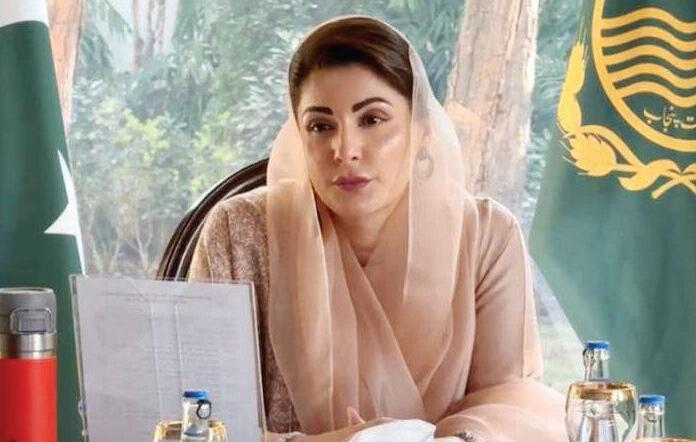
PM Shehbaz Sharif and Field Marshal Asim Munir Achieved What Many Thought Impossible: Azma Bokhari
Punjab Minister for Information and Culture Azma Bokhari said that the Pakistan Tehreek-e-Insaf has no performance to present before the public, which is why its speeches begin and end with its leader She said the Khyber Pakhtunkhwa government had allocated only Rs100 000 per project for 189 development schemes and merely Rs10 000 per project for another 177 schemes raising serious questions about its commitment to development
Azma Bokhari said that despite PTI’s claims of bringing change people in Khyber Pakhtunkhwa still lack basic facilities and in some areas residents are forced to cross rivers using makeshift cable cradles
She further stated that Prime Minister Muhammad Shehbaz Sharif and Field Marshal Syed Asim Munir had achieved what many believed was
impossible, and that today their leadership and role are being acknowledged by the international community and global media
She expressed these views while speaking to the media outside the Punjab Assembly alongside Punjab Minister for Agriculture and Livestock Syed Ashiq Hussain Kirmani She said the recent global tensions had developed into a situation resembling a worldwide crisis; however Pakistan s leadership played a significant role in preventing greater instability through wisdom, effective diplomacy and strategic engagement
The Information Minister expressed hope that recent agreements would prove durable and contribute to peace and stability both in the region and across the world
Referring to the ongoing Punjab Assembly budget session, she said it was an important stage for public service and development
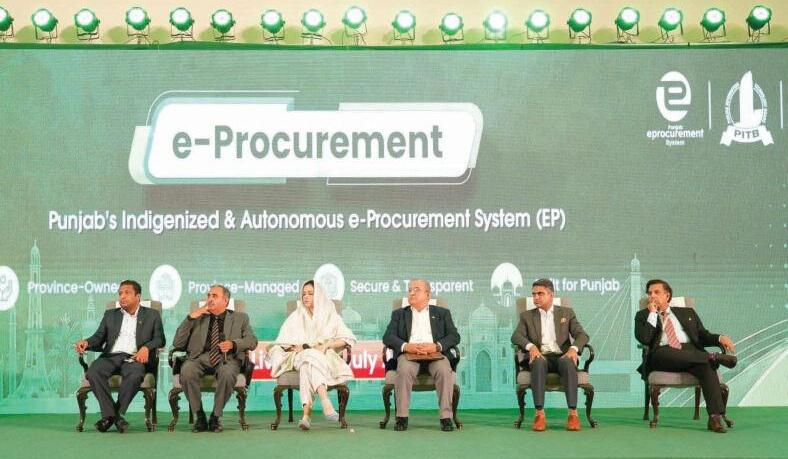
Punjab Information Technology Board (PITB) and The Bank of Punjab (BOP) jointly hosted an awareness seminar in Lahore to prepare stakeholders for the province s digitized procurement transition launch on July 1, 2026 During the session, the Managing Director of Punjab PPRA delivered the keynote address outlining the overall scheme of things Representatives from PITB and BOP then provided detailed walkthroughs respectively explaining how the e-procurement portal operates and how secure real-time financial transactions will take place across the platform As the financial partner, BOP has backed the system with a banking-grade security framework to eliminate paperwork and fraud The platform features digital bid securities via single-touch online transfers
planning She regretted that instead of engaging in meaningful debate on the budget the opposition remained focused on social media propaganda and political rhetoric
Azma Bokhari said opposition speeches were largely based on political point-scoring and emotional narratives, while serious discussion on public issues was often limited to only a few minutes She added that if previous governments had launched significant public welfare initiatives, they would certainly be highlighting them today
She said the current Punjab government had introduced major initiatives in agriculture health education livestock and other sectors delivering tangible benefits to the people She added that programs such as the Suthra Punjab Programme,” educational scholarships and the laptop scheme were benefiting citizens across the province without discrimination
Chairman FBR and Secretary Finance Host Luncheon to Honor Budget Team for Successful Preparation of Federal Budget 2026-27
ISLAMABAD S TA F F R E P O R T
Chairman FBR, Mr Rashid Mahmood Langrial, and Secretary Finance, Mr Imdad Ullah Bosal, hosted a luncheon today to honor the core budget team responsible for the preparation of the Federal Budget 2026-27 The event was attended by FBR Board Members and senior officials from the Ministry of Finance and FBR Speaking on the occasion, the Chairman FBR commended the team for their professionalism, commitment, and tireless efforts in formulating a budget aimed at fostering economic growth while providing relief to the common citizen He noted that given the breadth of stakeholders engaged spanning revenue administration the Tax Policy Office inter-ministerial coordination, the Senate and National Assembly Standing Committees, and the provincial governments, the Federal Budget 2026-27 had been a particularly complex exercise to bring together

PRIME MINISTER FORMS COMMITTEE TO REVIEW TELECOM BILL AMID PROPERT Y RIGHTS CONCERNS


are fundamentally death traps Beyond the physical trauma families are stripped of their lifespans of savings Human smuggling agents charge astronomical sums ranging between PKR 3 million to PKR 6 million per person Desperate families finance these sums by selling ancestral lands taking high-interest loans or emptying household assets When a Dunki attempt fails or is intercepted the immediate financial consequence is total bankruptcy Trafficking mafias often call families from abroad inflicting psychological torture through video clips of abuse to extract hundreds of thousands more in ransom Survivors do not return to a blank slate; they return to a life buried under crippling generational debt Recognizing the gravity of transnational organized crime the Government of Pakistan primarily through the Federal Investigation Agency (FIA) has launched extensive institutional reforms Backed by the National Action Plan to Counter the Smuggling of Migrants (2026–2030), the state has fortified its borders and exit points The FIA has introduced Second Line Control and AIbacked biometric profiling systems at major national airports which successfully resulted in offloading nearly 40 000 suspicious travelers in 2025 alone To date ten official western border crossing points have been notified, alongside six overseas Link Offices to coordinate operations across borders These stringent measures yielded a major breakthrough: a 47% decline in illegal
Lawmakers, exper ts call for greater focus on human development and climate resilience
ISLAMABAD
Lawmakers and policy experts on Sunday called for Pakistan to give greater priority to human development, social protection and climate resilience in order to secure durable economic stability and sustainable growth
The call came during a discussion on the federal budget for 2026-27, convened by MNA
Shaista Pervaiz to allow parliamentarians and financial experts to examine the budget through the lens of the Sustainable Development Goals (SDGs) Participants included members from both the treasury and opposition benches
Those attending the consultation said fiscal consolidation and macroeconomic stabilisation remained important policy goals but argued that long-term economic progress would not be possible without sufficient spending on education healthcare and climate adaptation Budget priorities and popula-
tion pressures Participants said Pakistan which they described as the world s fifth most populous country, was projected to have a population of nearly 400 million by 2050 They warned that without matching investment in human capital public services and economic opportunities this growth could place exceptional strain on schools, health systems, housing, jobs and natural resources
The lawmakers said Pakistan’s obligations under the SDGs should be reflected in budget priorities and resource allocation They specifically referred to SDG 3 on health and wellbeing SDG 4 on quality education SDG 10 on reduced inequalities and SDG 13 on climate action, saying each required sustained public financing for meaningful progress
The forum observed that the link between rapid population growth and pressure on public service delivery was already evident across the country Participants pointed to overcrowded
classrooms overstretched healthcare facilities inadequate housing water insecurity and limited employment opportunities as continuing barriers to development, and said these issues required strategic and targeted investment rather than short-term spending approaches
Focus on education, health and climate adaptation
Speakers also emphasised the importance of girls education, maternal and reproductive health, and community-level service delivery
They said such measures were among the most effective and internationally recognised tools for improving development outcomes expanding workforce participation, reducing poverty and supporting demographic stabilisation
Climate resilience was highlighted as another area needing stronger policy attention Participants said Pakistan remained among the countries most exposed to climate-related shocks despite contributing little to global emissions
on Monday as progress in US-Iran peace talks eased oil prices and improved investor sentiment though the market later pared its first-half gains during intraday trade According to the PSX website, the benchmark KSE-100 Index climbed more than 1,500 points to 180 507 82 in the early minutes of trading However the market later pared its early gains and briefly slipped into negative territory By 2:00 pm the KSE-100 was trading at 178,578 26, up 344 49 points, or 0 19%, from the previous close The first round of talks between high-ranking U S and Iranian officials in Switzerland ended Monday mediators said after a tense opening marked by Tehran s announcement it had again closed the Strait of Hormuz and U S President Donald Trump repeating his threats to resume attacks on Iran A joint statement from mediating nations Qatar and Pakistan said the U S and Iran agreed to a roadmap toward a final deal within 60 days Technical talks will con-
tinue for the rest of the week in the Qatari-owned Swiss mountain resort of Buergenstock according to the statement, which was released by the Qatari foreign ministry
The PSX had also recorded a strong rally in the previous week supported by easing geopolitical tensions in the Middle East and investor-friendly fiscal measures announced in the FY27 budget
The benchmark KSE-100 Index gained 6,522 84 points, or 3 8%, week-on-week to close at 178 922 75 points compared with 172 399 91 points a week earlier
Separate notes by AKD Research and Arif Habib Limited said the KSE-100 was expected to remain supported in the near term by compliance with the USIran peace deal progress in technical talks and favourable June 2026 corporate results
However the brokerage houses said geopolitical developments between the US and Iran were likely to keep trading cautious Globally, Asian share markets swung higher on Monday as Iranian negotiators said progress had been made in peace talks with the United States helping calm fears that the process was breaking down Officials from Qatar and
Pakistan also released a statement saying the first session of talks had concluded and progress was made on a roadmap to reach a final deal in 60 days Japan's Nikkei rose 1 8%, having climbed almost 8% last week to all-time highs South Korea s red-hot market added