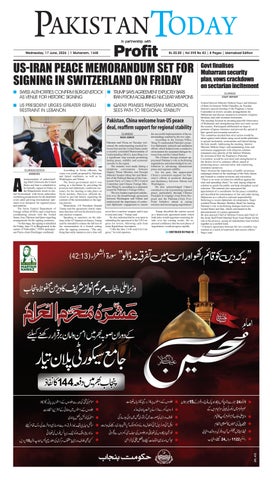

US-Iran peace MeMorandUM Set for SIGnInG In SwItzerl and on frIday

A G E N C I E S
memorandum of understanding (MoU) between the United States and Iran is scheduled to be formally signed on Friday at the Bürgenstock resort in central Switzerland, with Swiss authorities confirming preparations for the landmark event amid growing international optimism over prospects for regional peace and stability
The Swiss Federal Department of Foreign Affairs (FDFA) said it had been coordinating closely with the United States Iran Pakistan and Qatar regarding arrangements for the signing ceremony At this stage the signing is scheduled for Friday June 19 at Bürgenstock in the canton of Nidwalden, FDFA spokesperson Pierre-Alain Eltschinger confirmed
According to Swiss officials, the venue was jointly proposed by Pakistani and Qatari mediators as well as by Washington and Tehran
The Swiss government said it was acting as a facilitator by providing the practical and diplomatic conditions necessary for the meeting to take place on Swiss territory However
the US Congress for review following calls from some Republican lawmakers I like the idea I will send it to Congress, he told reporters
Trump described the current accord as a framework agreement under which both sides would negotiate remaining details over the coming weeks He expressed confidence that the next phase of negotiations would progress rapidly


Pakistan’s
V E G R O W T H: Automobile production recorded the largest increase among the main manufacturing categories rising by 64 33% during July-April FY26 compared with the same period last year Automobile output also increased by 83 88% in April compared with April 2025
The sector contributed 1 61 percent-
age
and
S
metal production increased by 8 89% during the 10 months and by 23 95% in April Rubber products rose by 15% during July-April and by 21 48% in April, while paper and board production increased by 1 47% and 14 73%, respectively
public procurement rules and could hinder competition in the petrochemical sector, The Express Tribune reported In a letter addressed to ECC Chairman and Finance Minister Muhammad Aurangzeb Sheikh objected to the extension and protested that his reservations were not recorded in the minutes of the ECC meeting held on June 5, where the proposal was approved The Investment Minister said he had formally written to the ECC and that the matter was expected to come up for discussion again He added that the federal cabinet had referred the issue back to the ECC following his objections The development comes days before the expiry of EVTL s existing 30year build-operate-transfer agreement
with Port Qasim Authority (PQA) which was signed in 1996 and is due to end this week
According to Sheikh, the company s unsolicited proposal for an extension does not meet the criteria of being “unique and innovative” under Rules 2(1)(ka) and 37-A of the Public Procurement Regulatory Authority (PPRA) Rules 2004
He maintained that granting another 30-year term without competitive bidding would provide an undue advantage to the incumbent operator create a monopoly and undermine the development of Pakistan s petrochemical industry
The minister also stated that both the PPRA framework and a PQA inhouse assessment committee had concluded that the proposal did not qualify for exemption from competitive bidding requirements
Official records show that PQA began discussions on a possible extension, as required under the original agreement, but failed to reach a consensus In 2021, the PQA Board declared negotiations closed and directed that a
recorded the largest cumulative decline among the major sectors falling by 6 98% during July-April FY26 Iron and steel output also declined by 12 88% in April subtracting 0 30 percentage points from cumulative growth
Pharmaceutical production fell by 6 55% during the first 10 months and by 19 02% in April
The sector reduced overall manufacturing growth by 0 40 percentage points making it the largest negative contributor
Chemical production declined by 2 30% during July-April and by 10 32% in April, subtracting 0 18 percentage points from cumulative growth
Within chemicals chemical products declined by 2 88% during the 10-month period while fertiliser production fell by 1 98% Fertiliser output declined by 10 55% in April compared with the same month last year Machinery and equipment production fell by 4 18% during July-April, despite increasing by 61 22% in April
Leather products declined by 2 36% during the 10 months and by 3 41% in April Wood products fell by 1 05% during July-April, although output increased by 2 95% in April
Overall, production increased across 16 broad sectors during July-April, including food beverages tobacco textiles wearing apparel petroleum products automobiles electrical equipment and furniture
Declines were recorded in leather, wood, chemicals, pharmaceuticals, iron and steel, and machinery and equipment
competitive bidding process be initiated through the appointment of a consultant In 2022, EVTL submitted an unsolicited proposal seeking an extension However, a PQA committee concluded that the proposal was neither unique nor innovative and therefore did not qualify under PPRA rules
Subsequently the government reopened negotiations with the company while continuing work on a competitive process Amendments were made to the implementation agreements and both sides later agreed on terms for a further 30-year extension which was approved by the PQA Board and subsequently endorsed by the ECC Government officials said there is now a possibility that the ECC may revisit its earlier decision in light of the objections raised by the investment minister EVTL handles more than 60% of Pakistan s bulk chemical imports and around



FBR targets 100,000 retailers for new fixed tax scheme from July 1

04
COMMENT
Punjab Budget 2026-2027
TH O U G H operating under a new series of constraints, in which the provinces are surrendering part of their share from the Divisible pool to the federal government, Punjab presented its budget for the coming fiscal year of 2026-2027 without imposing any new taxes and not even revising the rates for the existing taxes which is often enough the thrust of provincial taxation measures One direction the Punjab government did not take was to increase the rates, or reorganise the basis of the agricultural income tax It continues as a sort of land revenue tax a straightforward levy on the basis of land owned, and the assessed productivity of the land The declarations of income and expenditure, with the income being taxed, are absent This means that farmers continue to avoid the toils of income tax officials and the provincial government avoids the embarrassment of admitting that it simply does not have the capacity of levying such a tax Instead, the Punjab Revenue Authority has seen its target go up by 55 percent, to Rs 528 5 billion Punjab has also allocated Rs 546 billion as a contribution to the central government, which represents its share of the money to be transferred back to the federal government from the Rs 4 39 trillion it expects to receive from the federal divisible pool This is the first of what is expected to be a three-year agreement under which the provinces will give back to the federal government a chunk of their receipts from their shares of the federal divisible pool The money is supposed to be used on defence, though this will allow the federal government more leeway in meeting debt servicing obligations This is mainly the result of trying to operate an Award made in 2009, meaning that constant extensions have made an


U N E is National Immigration Heritage
Month a time to celebrate the diverse peoples and cultures that have made America great This year– when not only immigration and cultural diversity are being challenged but also the complex history of our country is being erased– it is more important than ever that we stop and examine the record of who we are and how we got to where we are as a country and an American people First we should never forget that this country was born with two original sins : slavery and genocide The current administration in Washington wants to rewrite our history by eliminating mention of negative events and practices that defined our past, focusing instead on the “greatness and industriousness” of our founders and their “glorious victories ” In reality there would be no USA if not for the surplus wealth created by the labor of enslaved people across the South and the riches accrued by those who benefited from the theft of indigenous peoples lands Nor should it be forgotten (although it is) that the Declaration of Independence names one reason for the War of Independence against the British Empire as the American settlers’ grievance that King George would not defend them against merciless Indian Savages who were resisting having their lands taken from them And of course we fought a civil war not so much to end the deplorable practice of human slavery, but to rein in the power and independence of the southern states
As the country grew and with the industrial age upon us the need to build infrastructure to transport people and goods mine coal for power; and operate factories opened the doors to new immigrants from countries far afield Chinese built railroads; Irish dug canals; Irish and Eastern and Central Europeans worked in the mines, and they were joined in the mines and factories by Italians Greeks and Arabs As needed as these new immigrants were for America to grow and prosper their very presence growing numbers and unique cultures provoked a backlash among the earlier northwest European settlers who had come to see themselves as the original and “real Americans ” The “new immigrants” were demeaned, discriminated against, and subjected

h e s t o r y o f a b u r n i n g e a r t h
rising heat storm spreading from Sindh to the World
Tclimate normal This condition is not confined to Sindh or Pakistan alone; it is part of a much larger global environmental crisis According to reports by the World Meteorological Organization (WMO) and the Intergovernmental Panel on Climate Change (IPCC) the Earth has been steadily warming over recent decades The period
meet its energy needs Transportation systems, factories, power plants, and rapid urbanization have released enormous quantities of carbon dioxide methane and other greenhouse gases into the atmosphere These gases form a blanket around the Earth trapping heat that would otherwise escape into space, a process known as the greenhouse effect It is important to understand that the greenhouse effect itself is not a negative phenomenon; in fact it is a natural and essential process that keeps the Earth warm enough to sustain life Without greenhouse gases the planet would be frozen and uninhabitable However, over recent decades, human activities, particularly industrial expansion, deforestation, fossil fuel consumption, and unplanned urban growth have severely disrupted this natural balance As a result the greenhouse effect has intensified beyond its natural limits and has now turned into a serious environmental challenge This imbalance is manifesting in the form of rising temperatures, melting glaciers, sea level rise, and increasingly severe weather events In essence, what once served as a blessing for life has now due to human negligence and unsustainable practices transformed into one of the greatest environmental challenges of our time requiring urgent attention and decisive action
The oceans also play a critical role in this system According to international scientific research, oceans absorb nearly 90 percent of the excess heat trapped on Earth Without this buffering effect global temperatures would rise at an even faster rate However this has led to a steady increase in ocean temperatures severely affecting marine ecosystems, coral reefs, and aquatic biodiversity It has also contributed to stronger storms and increasingly unpredictable rainfall patterns Asia is currently among the fastest warming regions of the world experiencing a rate of temperature increase higher than the global average South Asia particularly Pakistan India and Bangladesh is at the frontline of this crisis Within Pakistan, Sindh has emerged as one of the most vulnerable and heat-exposed regions Cities such as Jacobabad, Nawabshah, and Dadu are frequently listed among the hottest habitable places on Earth On certain days temperatures approach or exceed 50 C creating extremely dangerous conditions for human survival, especially when combined with high humidity that pushes the heat index beyond physiological limits Other cities in Sindh including Hyderabad Sukkur Mirpurkhas Khairpur and Mithi are also experiencing a noticeable shift from moderate summer conditions to prolonged and intense heatwaves In regions such as Tharparkar where water scarcity is already severe, rising temperatures further intensify hardship and threaten livelihoods
Heat is no longer just a seasonal inconvenience; it has become an all-encompassing challenge affecting every aspect of life In the health sector there is a rising incidence of heatstroke dehydration and cardiovascular and respiratory complications In agriculture, crop yields are declining and soil fertility is being adversely affected Water resources are under immense pressure, while increased electricity demand is straining energy systems leading to frequent load shedding and economic disruption
A particularly important dimension of this crisis is climate inequality Countries such as Pakistan contribute very little to global carbon emissions, yet they are among the most severely affected by climate change This imbalance is widely referred to as climate injustice Developing nations bear the heaviest consequences of a crisis they did not primarily create while industrialized countries continue to account for the majority of emissions
At the individual level, the question arises regarding what role ordinary people can play in addressing such a vast crisis The reality is that responsibility does not lie solely with governments; every individual can contribute to slowing the pace of environmental degradation Responsible energy use reduction of unnecessary electricity consumption, prevention of water wastage, and tree plantation can collectively make a meaningful difference
Urban populations can also help by shifting from private vehicles to public transport thereby reducing emissions and urban heat buildup Small changes at home workplaces and educational institutions, such as energy efficiency, adoption of solar power, and promotion of recycling, can collectively produce a significant positive impact Equally important is the cultivation of public environmental awareness because without civic engagement and behavioural change even the strongest policies will remain insufficient
Governments on their part must prioritize renewable energy sources such as solar and wind power, expand large scale afforestation programs, modernize urban planning, and improve water management systems Developed countries must also take responsibility by reducing emissions and supporting developing nations financially and technologically International institutions continue to warn that if global temperatures continue to rise at the current pace, the coming decades will witness more severe heatwaves, prolonged droughts, devastating floods and worsening food insecurity This is therefore not a localized issue but a shared global challenge facing all of humanity The temperature of the Earth is no longer an abstract scientific concept but a lived reality affecting human survival every day The burning lands of Sindh, the scorching afternoons of Nawabshah and the dangerous
Drowning in denial
Learning in fear
IrfAN HArOON

Looking beyond sur vival
TaHir rasHdi
Einterrupted by political instability weak institutions and a reliance on
short-term fixes
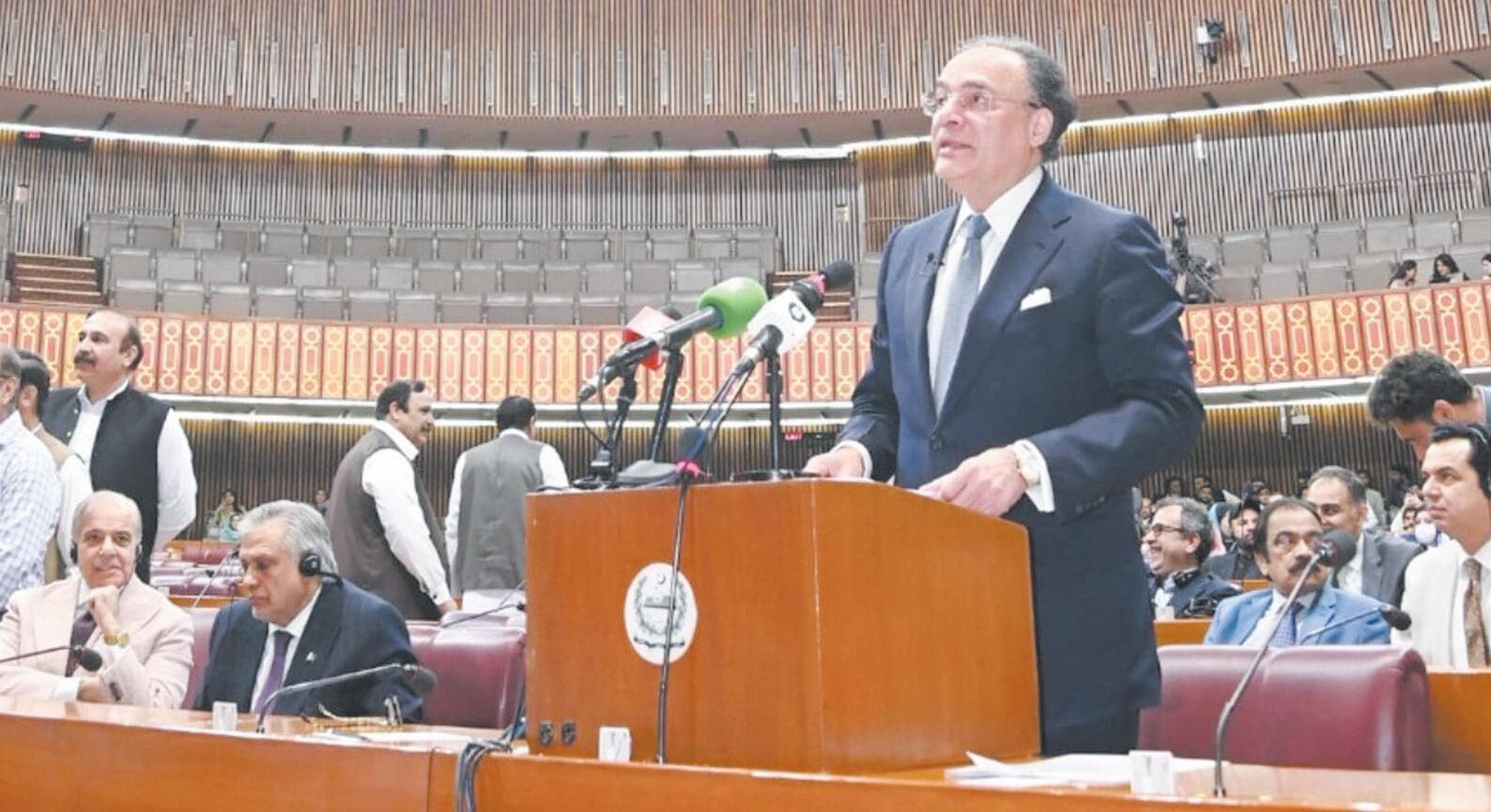
The big question is whether Pakistan can turn stability into change What is the budget s answer?
The budget is a statement of what the government wants to do What the government wants to do is very clear It wants to focus on infrastructure like roads and water systems and on completing projects already underway The government has allocated a lot of money for these things including Rs 224 billion for the National Highway Authority and over Rs103 billion for water-related projects
This makes sense Economies grow when markets are connected and it is easy to move goods and people Thus roads are not just roads but the veins of the economy carrying trade investment and productivity
The question is not whether infrastructure is important, but whether it is enough
The budget shows us what the government’s priorities are The Higher Education Commission gets Rs 46 billion and the Ministry of Federal Education and Professional Training Rs 36 billion Pakistan s challenge is not just about connecting cities, but preparing its people for a changing world
A country can import machines It cannot import a skilled workforce Development is often presented as a choice between building things and educating people Successful countries know that you need both Roads carry goods Educated people create them Ports facilitate exports Skilled workers make those exports competitive Infrastructure enables growth Human capital sustains it The contrast is striking because Pakistan’s greatest resource is its people Twothirds of the population is under 30 Whether this becomes good or bad depends on the quality of schools, universities and training programmes
The budget contains some signs of forward thinking There is money allocated for programnes like the Prime Minister ’s Youth Programme and the IT Youth Programme and for initiatives like Quantum Valley Pakistan The challenge is one of scale In an age of intelligence and technological disruption small projects will not be enough Pakistan needs a commitment to human capital like that which transformed countries like South Korea Singapore and Vietnam
Perhaps the encouraging thing about the budget is its philosophy The government says it wants to focus on completing existing projects rather than starting new ones This
is a big change from the past when governments would often announce new projects just to get attention
The outcome is not predetermined It depends on the choices the government makes today Economists often warn about the “middle-income trap,” where countries grow initially but then struggle to make the transition to innovation-driven prosperity While Pakistan has not yet fully entered this category the warning remains relevant Growth unaccompanied by productivity gains technological advancement and institutional improvement will eventually reach its limits The economy shows some signs of growth in IT exports and entrepreneurial activity This progress also highlights the need to invest in digital skills scientific research technological innovation and institutional capacity India s technological progress is an example to learn from Bengaluru became a technology hub because of decades of investment in engineering education and research Pakistan\s technology sector has a lot of potential but to really make the most of it the country needs to focus on building a strong system that supports innovation rather than just looking at export numbers Climate change is no longer in the future the 2022 floods showed how quickly environmental disasters can undo years of progress Issues like not having water extreme weather and problems with farming are not
just environmental issues they are also economic and security issues However the money set aside for climate change is still relatively small The Climate Change Division will get about Rs 2 47 billion and the Green Pakistan Programme about Rs 2 33 billion Considering how vul-
Pakistan has manag ed to avoid some problems Now the question is not whether it can sur vive but whether it can really chang e The answer will not come from economists or investors, but from the people It will come from the graduate looking for a job, the entrepreneur tr ying to star t a business, the farmer dealing with climate chang e and the family hoping for a better future Economic Sur veys look at the past Budg ets plan for the future Histor y will judg e the results

FMidnight Hammer operation to destroy what’s left of Iran’s nuclear capacity and know-how ” As we say in Persian: the camel dreams of cotton seeds gobbling them up now in great fistfuls and then one by one

O L L O W I N G the announcement of a memorandum of understanding between Iran and the United States, it is time to revisit some criminal documents Back in early March, as Israel mobilised all its American cards to launch a war on Iran Zionist writer Bret Stephens who has a regular column in The New York Times where he fervently defends an Israel that trains dogs to rape human beings - published his bucket list of what he wished Israel and the US should achieve against what he thought would soon be a defeated Iran With the immediate cessation of hostilities between Iran and the US, it is time to revisit that gaudy delusional and unhinged column Stephens envisaged four scenarios of Israeli victory against Iran The first was regime change which he thought nobody should discount especially if Iran continues to be battered militarily and politically, perhaps with the loss of additional echelons of leadership
The second was regime modification - “a regime that stays in place but complies with US and Israeli demands” That isolation he wrote “will be especially pronounced if US forces seize Kharg Island which serves as the terminal for roughly 90 percent of Iran s oil exports The third was a prolonged war ultimately crushing Iran through economic sanctions - What this third scenario suggests is that the regime will only survive in a zombified state ” The fourth was “not regime change but state collapse The most worrisome form it could take would resemble Syria during its 13-year civil war in which the regime would survive in some areas of Iran fall in others invite foreign intervention and lead to killing on an epic scale Along with that killing would come waves of refugees throughout the Middle East and into Europe and Australia
The Israelis may not entirely mind that scenario, on the theory that a fractured Iran is someone else’s problem ” What is Stephens s own recommendation? What then should the Trump administration do? My prescription: Seize
ISRAEL LOST IRAN ENDURED: That disgusting column is a historic document of the mass-murdering mindset of hallucinating Zionists given a full column every damned week in this city to spew hatred of other nations in what they think is the best interest of the genocidal Israel they are paid to defend Back to reality - the day after Donald Trump s 80th birthday 106 days after Israelis triggered the US president to join them bombing a sovereign nation state In nearly 80 years of mass murder, genocide, war crimes, crimes against humanity and land theft in Palestine, Lebanon, Syria, Jordan and Egypt, Israel has been dealt a crushing defeat of historic proportions They dragged the gullible bully Trump into this war against the will and judgement of the overwhelming majority of Americans - and still Israel lost the war in every single aspect of their delusional objectives and more Still they and those who waved their racist flag suffered a historic defeat Their Mossad and Hasbara their Aipac and AntiDefamation League (ADL) their bought and paid for American politicians their Iranian monarchist stooges and their comprador think tankers at the Hoover Institution and elsewhere - all put together - still suffered a major defeat With this memorandum of understanding, Iran is stronger than it was before Its regime is intact, its sovereign right to nuclear knowledge and technology remains in place and its territorial integrity - all the way to the precious Strait of Hormuz - is stronger than ever Yes Israelis fooled Trump to help them destroy Iran s civic infrastructure, cultural monument sites, university campuses, public health facilities and mass-murder the innocent children of Minab school and much more But to what end? There are videos of monkeys with machine guns on the internet shooting at people indiscriminately too Iranian scholars and world heritage authorities are busy addressing the savageries genocidal Zionists have perpetrated in Iran University campuses and scientific institutions are rebuilding Parents are mourning the children this Israeli-instigated war murdered Ordinary people are resuming their daily lives Iran will recover and Iranians will soon resume their historic struggles for their civil liberties having siphoned the treasonous monarchists their comprador think tankers and their ugly Israeli effigies into the sewer system of history Fresh on the heels of a still-unfolding genocide in Gaza and land theft in Palestine Israel opened two new fronts for murderous mayhem in Lebanon and Iran hoodwinking the gullible bully Trump to join them in the act
As the world watched this criminality unfold, two proIsrael New York Times columnists, Thomas Friedman and Bret Stephens were busy hoping in despair to change the whole discourse making the diabolical settler colony look like the victim on a righteous crusade By systematically demonising Iran as the nefarious regime the entire New York Times enterprise was trying to fool a whole nation into believing Iran was evil, Israel was righteous and Trump’s egomaniacal follies were all for a good cause
A VICTORY FOR AMERICANS: On the American side: if you were to heed the dominant American media you would think Trump began this war all on his own and then arrogantly left Israel out of his decision-making process when negotiating a peace It is in fact entirely the other way around Israel - represented by its prime minister and Mossad chief - fooled Trump into joining this war and has remained a singular source of menace pushing for continued bombing of Iran and Lebanon
President Trump finally had to yield to the unstillable will of the American people, cut Israel loose and reach an agreement with Iranians for the best interest of Americans This is the humiliation the genocidal Zionists like Texas Senator Ted Cruz South Carolina Senator Lindsey Graham and US Ambassador to Israel Mike Huckabee ad nauseam have to face in the United States
The world must adjust its lenses when looking at the US Americans overwhelmingly opposed this war This was an illegal war that the US Congress had not authorised, and masses of millions of Americans actively opposed it This victory is therefore an Iranian and American victory
In the US this victory belongs to anti-war activists and the broader population In Iran this victory belongs to the Iranian people and their steadfast determination to resist murderous aggression by Israel that is consumed by a genocidal ideology The sovereignty of a defiant nation (the exact opposite of a European settler colony in Palestine) belongs to that nation not to the state that is temporarily entrusted with serving them
What did Iranians achieve in this war? Their precious homeland did not fall to the murderous Zionists It did not disintegrate The Israeli scarecrow Reza Pahlavi did not return and is forever lost in ignominy
The inalienable right of Iranians to nuclear knowledge and technology did not fold Their governmentwhatever legitimate criticism they still rightly level against it - did not collapse They suffered the blows of the murderous Israeli bombers standing firm And they hit back hard They hit Israel to the delight of

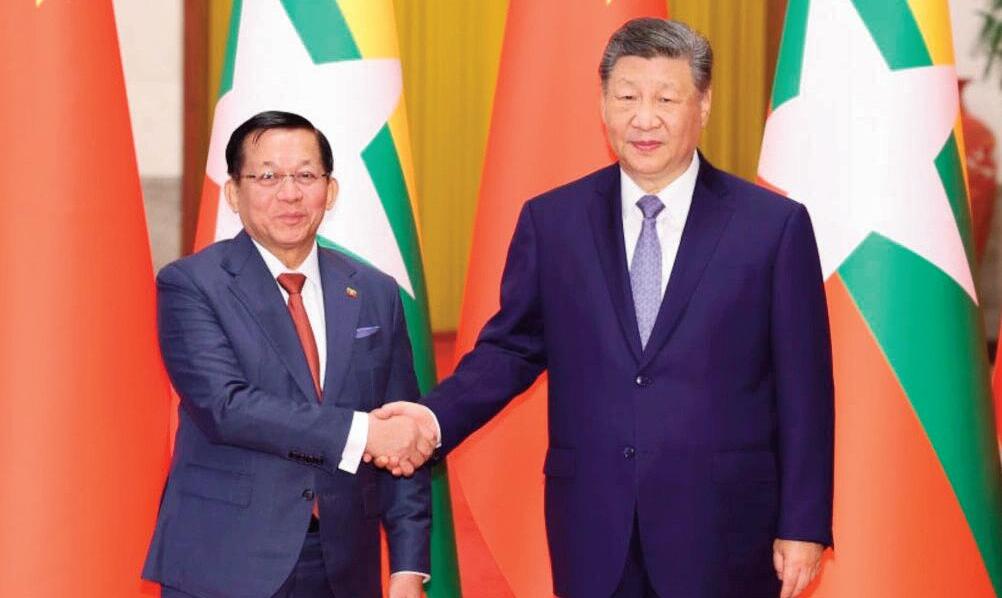
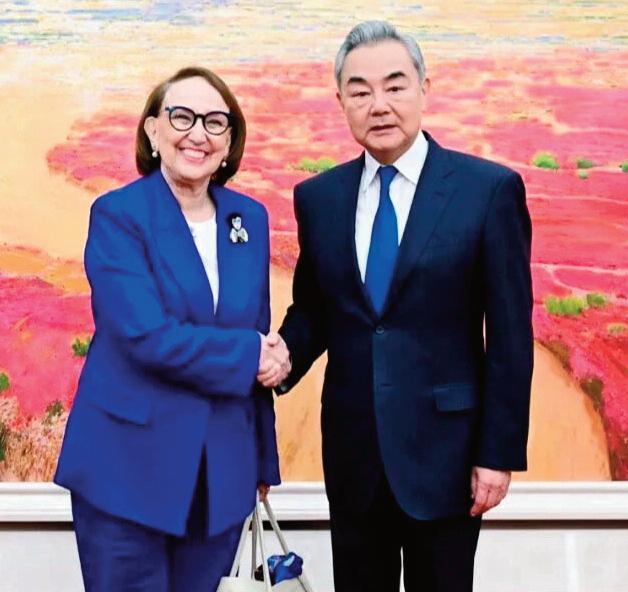
The United Nations is a century-defining undertaking built through the tremendous efforts of the international community Wang pointed out
Since the restoration of the lawful seat of the People's Republic of China in the United Nations 55 years ago, China has consistently been a
and shoulder responsibil-


CORPORATE CORNER
CM PunjAB MARyAM nAwA z CHAIRS 35TH CABInET
Chief Minister Maryam Nawaz Sharif chaired the 35th meeting of the provincial cabinet on
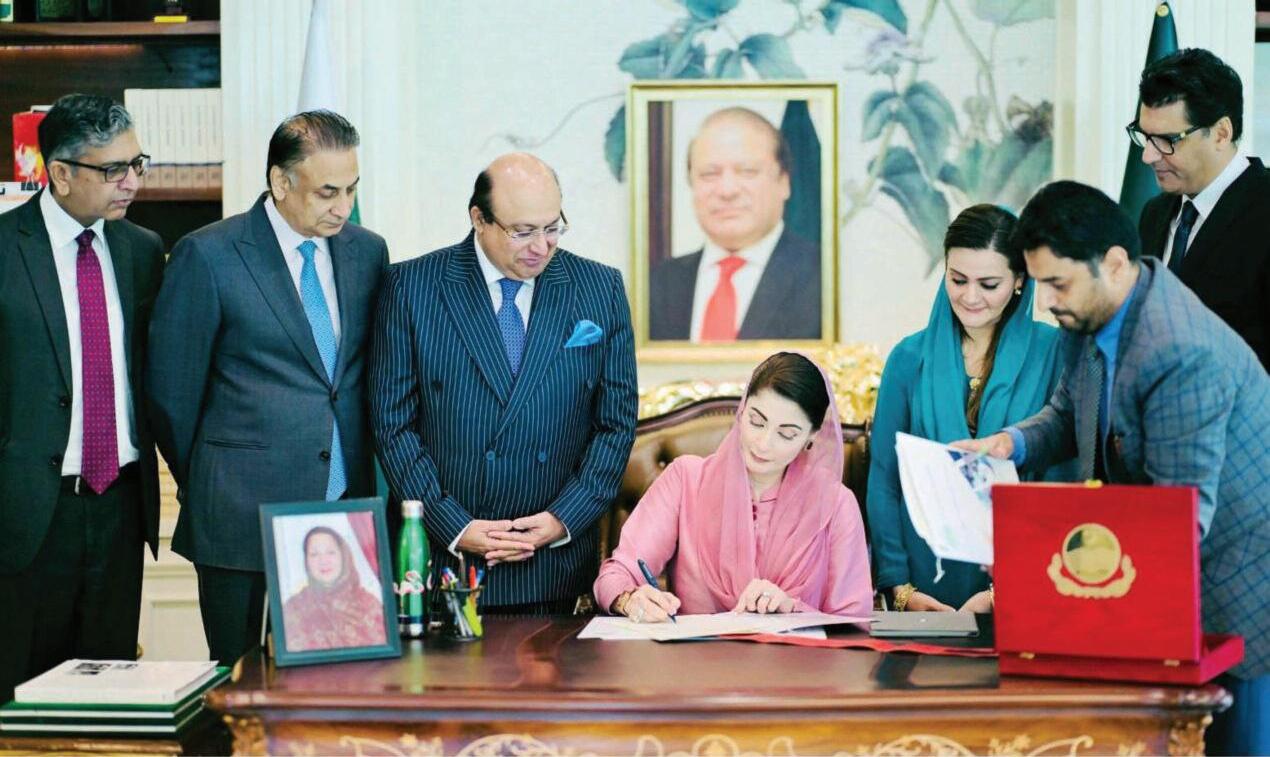
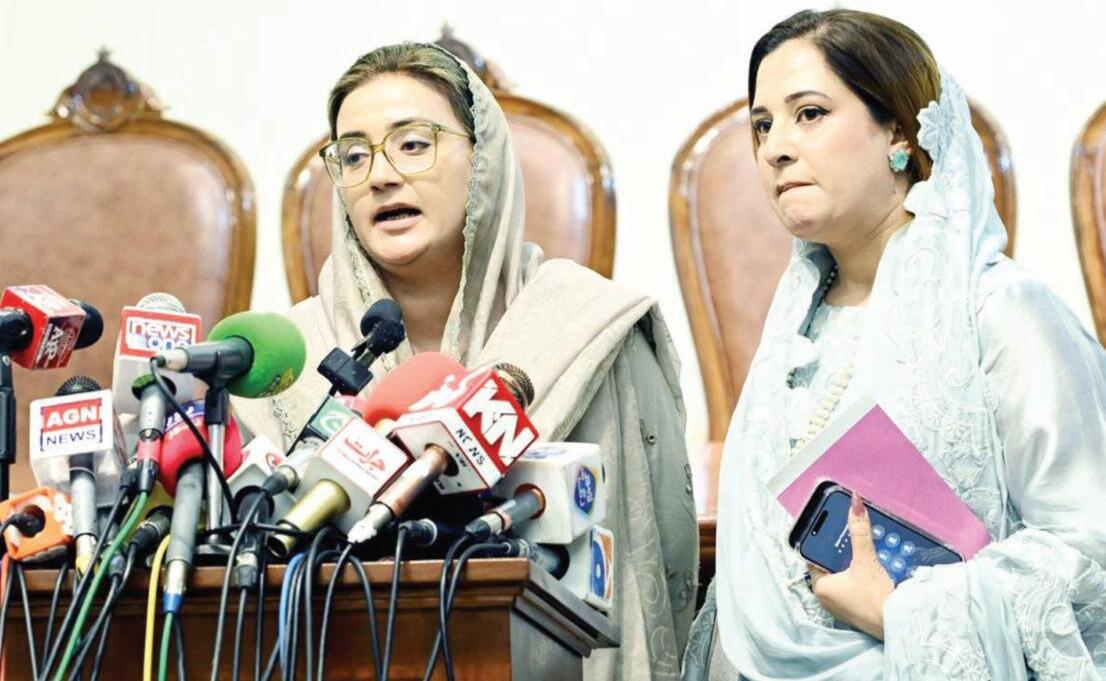
Maryam Nawaz, has presented its third historic surplus budget She stated that the budget was formulated and presented under exceptionally difficult economic circumstances On one hand Pakistan s economy was affected by global tensions between the United States and Iran while on the other, the devastating floods of recent years created significant economic challenges Speaking to the media outside the Punjab Assembly Azma Bokhari said that a peace agreement is now moving towards formalization which is expected to mark a historic milestone for Pakistan s economic stability, sovereignty, and future growth Referring to the past, she remarked that there was a time when even calls from Pakistan s Prime Minister were ignored internationally Today however owing to the successful policies of Maryam Nawaz and the current government, the world is looking toward Pakistan with renewed confidence and optimism Highlighting key budgetary measures the Provincial Information Minister stated that Punjab made a significant financial sacrifice during the budget process by transferring a substantial amount of resources to the federal government This naturally created challenges in maintaining a balanced provincial budget Despite these constraints the Punjab Revenue Authority achieved record tax collection, setting a new benchmark for revenue generation She added that PRA’s tax target has now been increased further so that Punjab can finance more of its development projects and public initiatives through its own resources
The budget places special emphasis on the social sector including social welfare farmers and underprivileged segments of society Azma Bokhari noted that petroleum prices are witnessing a noticeable decline which is expected to help eliminate artificial inflation in the country She emphasized that during the last two years the Punjab Government, under Chief Minister Maryam Nawaz, successfully prevented excessive price hikes and profiteering She further stated that efforts are underway to broaden the tax net enabling the province to move steadily toward greater economic self-reliance

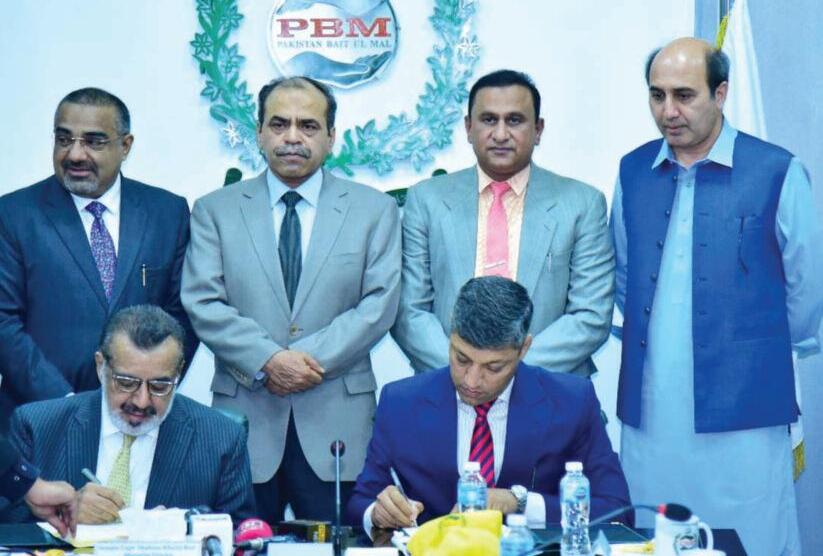


Tfirms in various segments of the project although no official decision has been announced Despite repeated attempts no official confirmation was available from the Petroleum Minister or the Petroleum Division secretary Petroleum Division sources said the project's financial close has been delayed due to technical and financial issues However development work continues and commercial production is still expected to begin by the end of 2028
Located in Balochistan s Chagai district Reko Diq is considered one of the largest mining investments in Pakistan's history The latest feasibility study estimates the project will generate more than $74 billion in free cash flow over its expected 37-year life contributing significantly to exports, foreign exchange earnings and economic activity
The study also shows that the cost of the first phase has increased to $6 8 billion approximately 58% higher than earlier estimates due to global inflation expanded production capacity and additional infrastructure requirements
Galletti, coordinator of the European and International Law Commission at the National Bar Council The statement said Hadi Chattha has over the course of his career represented people facing blasphemy allegations victims of sexual violence and enforced disappearances and prisoners on death row It said Imaan Mazari has provided legal assistance to victims of violence and persecution and has supported vulnerable religious and ethnic communities Referring to both lawyers’ work, the statement said they have shared a long professional commitment to defending fundamental freedoms and have represented journalists activists victims of enforced disappearances and people prosecuted on blasphemy charges ISLAMABAD S TA F F R E

Prime Minister Shehbaz Sharif on Tuesday reaffirmed Pakistan’s commitment to combating land degradation desertification and drought stressing the need for collective efforts to safeguard the country s natural resources and strengthen resilience against climate change
In a message issued on the occasion of the World Day to Combat Desertification and Drought, observed this year under the theme “Rangelands: Recognize, Respect, Restore," the prime minister said Pakistan stood alongside the international community in renewing its commitment to addressing environmental degradation and promoting sustainable land management He noted that rangelands play a vital role in ensuring food security, conserving biodiversity, strengthening climate resilience, managing water resources and supporting sustainable agricultural livelihoods The prime minister described Pakistan’s extensive rangelands as valuable natural assets that sustain livestockbased livelihoods support the rural economy and contribute significantly to biodiversity conservation and ecological balance
Highlighting Pakistan s vulnerability to climate change, Shehbaz Sharif said rising temperatures, prolonged dry spells, water scarcity and land degradation posed serious threats to agricultural productivity and national food security The Government of Pakistan is fully committed to addressing these challenges through a comprehensive strategy focused on land restoration, sustainable rangeland management, afforestation, ecosystem restoration initiatives, drought mitigation and the active participation of local communities,” he said The prime minister also highlighted the federal government s Zarkhaiz Scheme launched to strengthen and modernise the agricultural sector and improve land productivity
Under the initiative, farmers are being provided interest-free loans to help enhance and protect agricultural land, while subsidies on agricultural machinery are being offered to boost