Govt mulls third tax tier on cigarettes in bid to curb illicit trade
According to sources, the documented sector has faced challenges following substantial increases in cigarette taxation in recent years including a sharp rise in FED rates At present locally produced cigarettes with an on-pack retail price exceeding Rs12 500 per 1 000 cigarettes are subject to FED of Rs16,500 per 1,000 sticks For cigarettes with an on-pack retail price of up to Rs12,500 per 1,000 sticks, the applicable FED rate is Rs5 050 per 1 000 cigarettes Industry seeks stronger enforcement eparately Federal Minister for Commerce Jam Kamal Khan assured representatives of the tobacco industry that the government would examine proposals related to taxation, enforcement against illicit trade and measures to strengthen the documented economy
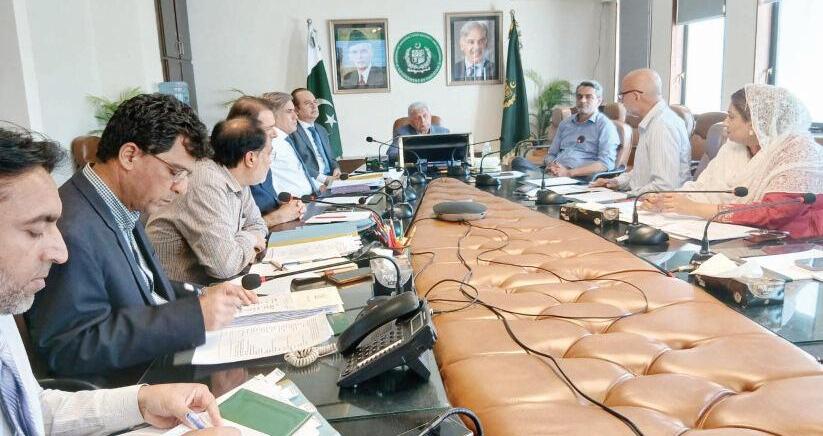
The assurance came during a meeting with a delegation of Pakistan Tobacco Company (PTC), which discussed budget proposals, tax policy and challenges facing the tobacco sector
contributing to higher government revenues and growth in the documented sector It argued that continued action against non-duty-paid and smuggled cigarettes could further improve tax collection and support legitimate businesses PTC also highlighted concerns over the increasing inflow of smuggled tobacco products through border regions, stating that cigarettes had become one of the most profitable smuggled commodities resulting in revenue losses and undermining tax-compliant manufacturers
The company called for the restoration of a simplified Final Tax Regime (FTR) for imports and urged the government to rationalise tax policies in a way that discourages illicit trade while encouraging investment and documentation It also proposed expanding the tax base by bringing undocumented businesses into the formal economy instead of imposing additional burdens on existing taxpayers
over the migration of skilled workers and difficulties in retaining experienced staff
Speaking at the meeting, Jam Kamal Khan said sustainable revenue growth would come from broadening the tax base and formalising undocumented economic activity The formal sector should be encouraged and facilitated, as it remains the backbone of economic activity, investment and employment generation," the minister said He added that Pakistan must maintain a business-friendly environment capable of attracting both domestic and foreign investment and invited PTC to formally submit its proposals for consideration by the relevant authorities
The minister also stressed the need for stronger coordination between federal and provincial institutions to reduce business costs streamline regulations and support exports, investment and industrial growth
impact on the formal industry
The delegation informed the minister that enforcement measures introduced over the past year had helped reduce the share of illicit cigarettes in the market
The delegation further cited high taxation, elevated financing costs, growing compliance requirements and provincial levies as factors affecting business competitiveness Concerns were also raised
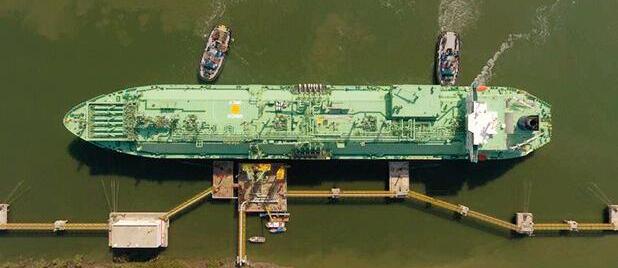
Customs says 65 mostly iron and steel consignments were sent back to Iran after traders failed to complete clearance formalities; revenue collection rises to Rs12 1 billion during April-June Pakistan Customs has said clearance operations at the GabdRimdan border crossing remain fully operational, with 17,353 metric tonnes of liquefied petroleum gas (LPG) cleared during the first eight days of June
According to official data the Collectorate of Customs Appraisement Gwadar processed and cleared 748 Goods Declarations (GDs) covering LPG imports between June 1 and June 8, 2026 Pakistan Customs said essential commodities including LPG and bitumen are being cleared through an expedited Green Channel mechanism to
ensure uninterrupted supplies to domestic markets
This clarification comes following media reports citing Gwadar Chamber of Commerce and Industry (GCCI), which said that trade between Pakistan and Iran has been halted through the Gabd-Rimdan border crossing leaving hundreds of LPG vehicles stranded and placing shipments of rice mangoes and other perishable goods at risk
The customs authority said it has introduced measures to streamline import procedures, improve transparency, strengthen compliance and curb misdeclaration concealment pilferage and unauthorised removal of goods
Under the Customs Rules 2001 importers are required to complete formalities, including filing import manifests, gate-in procedures, weighment, scanning and submission of Goods Declarations before consignments can be moved to private warehouses
The meeting concluded with both sides agreeing that continued engagement between the government and industry would help develop policies aimed at increasing revenue collection promoting investment and curbing illicit trade
According to Customs the revised clearance regime was introduced after consultations with the Quetta Chamber of Commerce and Industry and the Gwadar Chamber of Commerce and Industry Traders were also provided a one-month transition period before implementation
The authority reported that customs revenue collection rose to Rs12 07 billion against 8 245 Goods Declarations during April-June 2026, compared with Rs7 86 billion collected against 6,909 Goods Declarations dur-
economic development Research conducted under these themes will seek to address existing knowledge gaps and support evidence-based macroeconomic policymaking over the next three years SBP said collaboration and knowledge-sharing would form an important part of the programme as economic and financial-sector challenges continued to evolve
PTBA raises
COMMENT
WE are by now becoming inured to being told that the future is Information Technology, that it is Artificial Intelligence that it is robotics, and that the future belongs to those who have been educated and trained in this field All of us, with our backgrounds in humanities more often than not, have gone on to make policy decisions which (we hope) will lead in this direction It was therefore worrying to learn that 33,038 students of 190 higher education institutions had taken part in a national skills competency test conducted by the Higher Education Commission to assess the capabilities of IT graduates and assess whether the university curricula were producing industry-relevant skills The result, to put it mildly, was not good Only 0 4 percent of the students scored above 80 marks, and only 3 6 percent more crossed 68 percent No less than 61 percent obtained less than 50 percent marks
Prime Minister Shehbaz Sharif was informed of this, and ordered a very preliminary step: third-party evaluation That means that the problem-fixing mechanism of the federal government cannot tackle this This is no quick-fix problem, but shows that Academia has become an ivory tower That might be all very well for such disciplines as comparative literature or art history but fatal for computer sciences and emerging technologies One problem with them, worldwide is that of becoming outdated Teaching students now to code in FORTRAN or COBOL is a little like teaching English Literature students Chaucer E Lit students are not taught any discernible skills, but then, no one expects them to be employed in industry Then there is the problem that our computer whizzes are imitative, skilled at best reproducing what is done by foreigners Some of the most successful hi-tech entrepreneurs were college dropouts We have no equivalent
The dissonance between industry and Academia has always been there Now, though, it cannot be afforded Input from industry must be taken, while keeping in mind that industry may not know what the future will be like The real challenge though has been identified: equipping the coming generation with the skills that enable people to function effectively in the workplace of tomorrow The government s role cannot be more than that of an enabler: making sure its own curricula are not as hopelessly outdated as they seem to be, making sure that computers get electricity and that digital connectivity is not impaired
Dedicated to the legac y of late Hameed Nizami Arif Nizami (Late) Founding Editor
M A Niazi Editor Pakistan Today Babar Nizami Editor Profit
PE R H A P S the 2026-2027 Budget will be best remembered in future as the one in which the federal government finally accepted the fixed-tax regime for small businesses The scheme not only flies in the face of the principles of tax collection, but also reflects the visceral fear-based dislike of the business community for the tax administration The scheme itself was announced before the Budget as members of the government scrambled for the political credit However if one person deserved the credit, it was Prime Minister Shehbaz Sharif, who became involved with the issue about 40 years ago, when Lahore Chamber of Commerce and Industry President in 1985 The fixed-tax regime is a traderoriginated solution and has a certain specious logic It is based on the assumption that taxes are paid by businesses not as part of any social contract but because the state has coercive machinery The state has got a monopoly of force, so it can administer a rulesbased order One important component is that it maintains law and order, so that businesses can continue unmolested Peace ease of communication (good roads) and a robust settlement dispute mechanism are desired by businessmen and the state is supposed to give that In response it is supposed to raise taxes In other words, taxes are a sort of blackmail If you don t pay, society could descend into chaos As they say, ‘death and taxes are inescapable ’ Or at least they should be But what if you slip a little something to the tax collector He gets something more than his salary The businessman incurs an expense lower than his assessed share The state suffers and has less money than it should That means it pays the judges who settle disputes less than enough to ensure honesty Businessmen don’t mind, because a judge who accepts bribes will always decide in their favour An honest judge would decide in their favour only if they deserved to win Taxmen were also corrupt and introduced businessmen to methods of corruption according to businessmen Taxmen on the other hand claim that businessmen were the fertile minds behind most of the methods of corruption Whatever the case may be the businessman’s fear of the taxman is reflected in what seems almost vindictiveness in the fixed-rate s scheme of excluding the taxman from even entry into the premises if the requisite QR code is affixed outside the establishment The prohibition from the conduct of an audit is specifically provided The total audit is akin to having a tooth extracted without any anaesthetic Bribes have been extracted on the threat of a total audit without the carrying out of one Not only is it almost certain to reveal some concealed income which will be duly penalized but it is also found by businessmen to be very cumbersome, involving the use of records of every transaction It is rightly the most feared tool in the taxman’s
Let’s not blame the state
Tthe state is a means to an end In simple words the ultimate purpose of the state is to invest in citizens so that they can contribute effectively to community life Aristotle’s take on the state became a point of debate when a student posed a question about whether the state is really there for citizens His concern over the state s not performing its role reflected a general perception which we normally find in everyone s view around us, and perhaps rightly, because when it comes to the provision of fundamental rights to citizens, the overall picture is not that much encouraging To some extent I agree with the popular perception of the state and that is that the state is sleeping on its role However this is I think
repertoire and under the fixed-rate scheme it has been excluded Being allied to file a one-page return under the fixed-rate scheme requires paying a fee of Rs 25 000 apart from the one percent of the turnover mandated This is the point at which the scheme begins to resemble blackmail Of course, it could be said that all taxes are blackmail anyway Since they are all backed by the coercive apparatus of the state collectors have force to back them up
There is punishment for not paying taxes mostly fines or imprisonment Income tax has been particularly pleasant for businessmen, because they have to pay it out of their profits, which they have already received By contrast, salaried individuals find it easier, because the tax is deducted at source which means they never receive it This is the principle behind withholding taxes for which credit can be claimed in a return This is the essential demand for businessmen: they should not be asked about where they get their money They want to evade tax, and the best way is not to get caught up in the tax net That is why they have long insisted on a fixed-tax regime and have only partially responded to amnesties One problem with obtaining an amnesty is that one was then in the net One still ends up in the net with the fixed-rate regime, but at least one is protected from awkward questions from sleek and well-fed-looking taxmen
Of course , that means a fundamental question is unanswered What is the purpose of taxation? Why should anyone , including businessmen, have to shoulder the burden of the interest of loans that have been embezzled? Will the fixed-rate regime encourag e businessmen to enter the tax net they have avoided so carefully all these years?
a partial view of the picture A state going into sleep over its assigned role does not happen independently; rather this happens when people collectively sleep over their assigned role In a healthy political setup, people and state are bound in a contract that we call the constitution Just like in any contract parties in the contract keep a check over their interests in the contract the contract between the state and citizens works in the same way In a healthy political setup, citizens have political consciousness and constantly interact with the state for the protection of their interests which they have been promised in the constitution and in this way they make sure that the state catches up to its assigned role The interaction between the state and citizens can happen through media platforms, and in any political setup where there is a constant interaction going on between the state and citizens, the chances of the state getting along with things in sleeping mode are slim However when people stop interacting with the state the state gets a chance to sleep over its assigned role I personally think that the popular perception we find all around, that the state is
sleeping in its assigned role is because the majority of us don t believe in interacting with the state I believe that the day the majority of us reclaim our space in the political setup we are in by raising our voice, the chances of the state continuing with things in sleeping mode will become minimal In a politically conscious society the state can t sleep In Pakistan when it comes to interaction between the state and citizens there are still a lot of gaps While it s everyone s duty to consciously play a proactive role in this domain, it s the primary duty of students of social sciences to not only own this interaction not only as an academic exercise but also as moral obligation; as in social sciences our primary job is not only to theoretically understand political setups but to contextualize those theoretical insights in our settings and provide solutions to the social and political problems we are facing in our contexts
At the department of Political Science and International Relations in the University of Management and Technology I personally have initiated a short certificate course in which students are trained on how to write op-eds for newspapers The purpose of the course is to train students to be reflective over their theoretical insights and bring issues of their contexts in public discourse thus spearheading the interaction between state and citizens
We need to invest in the reflective skills of all students in general and students of social sciences in particular because this is one of the best ways to expand the scope of political consciousness in any society which will certainly play a role in making the state accountable for catching up to its assigned role The course is oncampus and is open for all the students
The writer is a lecturer at the Department of Political Science and International Relations in the University of Management and Technology, Lahore He can be reached at Inamullah marwat@umt edu pk
Turbat cash crisis
TH E reported downing of a U S Apache attack helicopter over the Persian Gulf has emerged as one of the most consequential developments since the ceasefire and diplomatic process began following Pakistan s mediation efforts earlier this year More than the loss of a sophisticated military platform, the incident has exposed the increasingly complex realities confronting all parties involved in the conflict It has highlighted Iran’s continuing ability to resist militarily demonstrated the vulnerability of even the most advanced weapons systems and intensified the pressure on policymakers in Washington to decide whether the future lies in diplomacy or escalation
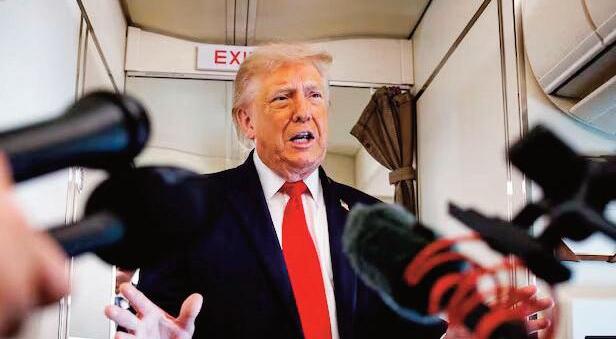
President Trump responded by stating that the USA would have to respond to the attack Yet the challenge confronting Washington extends far beyond retaliation The USA now finds itself caught between competing strategic realities On one hand, it seeks to maintain deterrence and demonstrate military credibility On the other hand, it is increasingly aware that further escalation could jeopardize broader diplomatic objectives and drag the region into an even more dangerous confrontation
What makes the current moment particularly significant is that it comes while Washington is actively attempting to pursue a negotiated settlement with Iran At the same time Israel continues to pursue mili-
tary operations that increasingly appear to diverge from US priorities This divergence has become especially visible in Lebanon President Trump has reportedly expressed frustration over continued military operations that risk undermining the fragile diplomatic process Iran has repeatedly insisted that any lasting agreement must include an end to hostilities in Lebanon and the withdrawal of Israeli forces from disputed areas From Tehran’s perspective regional peace cannot be divided into separate compartments The future of Lebanon, Gaza, and broader Middle Eastern security are interconnected components of the same strategic equation The result is that President Trump faces growing pressure from every direction
Within the USA ordinary citizens are increasingly concerned about rising fuel prices inflation supply chain disruptions and economic uncertainty What was originally presented as a campaign designed to pressure Iran is increasingly imposing costs on US households Higher energy prices transportation expenses and business uncertainty have transformed a distant conflict into a domestic political challenge Members of Congress, political commentators, and policy experts are also questioning the long-term objectives of the conflict Many argue that the war lacks a clearly defined strategic end state and risks becoming another open-ended military engagement in the Middle East The growing skepticism reflects a broader public mood that increasingly favors diplomacy over military escalation Compounding these pressures is the 2026 FIFA World Cup The tournament will be unprecedented in scale and significance For the first time in history three countries
the USA Canada and Mexico will jointly host the world s largest sporting event Organizers hope the tournament will showcase not only football but also the technological, cultural, and organizational capabilities of North America For President Trump therefore securing a diplomatic breakthrough before the World Cup begins carries substantial political and strategic value Such an achievement would allow him to claim that his administration prevented a wider regional war, restored stability to energy markets, and removed a significant geopolitical risk before one of the most watched sporting events in human history
Against this backdrop the reported loss of the Apache helicopter creates several possible paths forward The first possibility is restraint Washington could avoid a major military response and instead accelerate diplomatic engagement Such a strategy would prioritize negotiations and attempt to transform the incident into an opportunity for renewed diplomacy
The second possibility is escalation The USA could conclude that failure to respond decisively would weaken deterrence and encourage further attacks Under this scenario, Washington could expand military operations potentially triggering a broader regional confrontation involving multiple actors
The third possibility is a calibrated response The USA could conduct limited military actions intended to restore deterrence while avoiding a full-scale escalation Such an approach would seek to balance military credibility with diplomatic flexibility
Of these options the third appears the most practical It would allow Washington to respond to the incident without completely abandoning the possibility of a negotiated settlement Yet even this approach carries risks particularly if miscalculations trigger unintended consequences
e n t t h a t
c o m p e l s p o l i cy m a k e rs t o r e c o n s i d e r o l d a s s u m p t i o n s ,
r e d e f i n e n a t i o n a l i n t e r e s t s , a n d p u rs u e n ew d i p l o m a t i c
p o s s i b i l i t i e s I f w i s d o m p r eva i l s , i t c o u l d m a r k t h e
b e g i n n i n g o f a n ew ch a p t e r i n U S - I r a n r e l a t i o n s a n d
c r e a t e t h e c o n d i t i o n s fo r a b ro a d e r r e g i o n a l p e a c e
The most effective path forward may be for Washington to clearly and publicly define its interests independently from Israel s broader regional agenda The USA could state unambiguously that its objectives are limited to regional stability freedom of navigation economic security and the protection of American interests By dissociating itself from any broader regional ambitions pursued by Israel, Washington could fundamentally transform the diplomatic landscape Such a move would immediately create space for direct negotiations between the USA and Iran For decades efforts at reconciliation have repeatedly collapsed under the weight of regional crises and competing agendas A clear declaration that Washington seeks neither regime change nor participation in wider regional rivalries could remove one of the principal barriers preventing a durable settlement
Under such circumstances a peace agreement between Washington and Tehran could move forward on a fast-track basis
Both countries possess strong incentives to avoid a prolonged confrontation The USA seeks economic stability secure energy supplies and freedom from another expensive military commitment Iran seeks sanctions relief, economic normalization, security assurances, and international reintegration
These objectives are not inherently incompatible and could form the basis of a comprehensive agreement
Twith Iran and restraining an unruly Netanyahu WHY THE STANDOFF HAS GONE ON SO LONG At this point in the war, what would constitute a “victory” for Trump? He wants an outcome that can vindicate his decision to start the war – a decision that has proved to be very costly generating a worldwide energy crisis and a great deal of economic pain The war could cause Trump political problems in the US midterm elections later this year He also wants an agreement on Iran s nuclear program that he can claim is better than the 2015 deal Tehran struck with the Obama administration and its international partners called the Joint Comprehensive Plan of Action Trump withdrew the US from the deal in 2018 But Iran s Islamic
government so far has not been willing to bend to Trump’s demands Relying on a mix of ideological devotion to Shia Islam a strong sense of historical nationalism and an effective military capability the regime has not only survived but made strategic gains It has destroyed or damaged many US bases in the Persian Gulf, hit Israel hard with missile and drone strikes and above all gained control of the Strait of Hormuz The strait – a critical oil and fertilizer chokepoint – has now become Iran s most potent lever of resistance and punishment The conflict has also given renewed life to the Islamic government and its instruments of power Many citizens who were opposed to the regime have rallied around the flag in the face of the external threats and for the love of their country Further the war has propelled the government s Islamic Revolutionary Guard Corps, which is designated by the US and many of its allies as a terrorist organisation, to new heights It has been able to prove its worth as the key actor defending Iran and its Islamic system Meanwhile Tehran is not as isolated as the Trump administration believes It has the support of both Russia and China And Iran s
The rape of Venezuela
geographical location has worked to its advantage, enabling it to access markets by road through its neighbors and via the Caspian Sea to the north The US and Israel still have the advantage when it comes to military power and they can inflict heavy damage on Iran But Tehran s strategic gains have placed it in a stronger bargaining position in the peacemaking process No matter the level of US military and economic pressure Tehran is unlikely to succumb to US and Israeli demands to dismantle its nuclear program or relinquish control over the Strait of Hormuz
The regime was designed to be resilient It has built a system based on defiance, resistance and pragmatic decision making when faced with serious threats from both inside and outside Iran As such it has the patience and endurance to outlast Trump –and for that matter Netanyahu ECHOES OF 1979
The regime also has a history of outlasting the United States For instance, there are some parallels that can be drawn between the way the Islamic Republic founder Ayatollah Ruhollah Khomeini dealt with the hostage crisis of 1979-81 when a militant group of his supporters ransacked the US embassy
and took 66 Americans hostage, and the manner in which his successors are now managing negotiations with the US Khomeini let that episode drag on for 444 days both to consolidate his power and to humiliate the US for having backed the pro-Western monarchy of his predecessor, Mohammad Reza Shah Pahlavi His approach played a key role
QAMAR BASHIR
US, IRAN HIT EACH OTHER AGAIN AS HOPES FOR QUICK PEACE DEAL FADE
Amnest y acc uses Israel of ethnic cleansing of West B ank B edouin
aligned with the settler movement s religious nationalist agenda The government had stepped up settlement growth and land seizures, expanded financial and logistical backing for settlements, and armed settlers, which Amnesty said had enabled a state-backed campaign of settler violence It also pointed to what it called explicit calls by Israeli officials for more settlement expansion and to measures aimed at reducing the Palestinian presence in Area C TEHRAN A G E N C I E S Iran s Foreign Ministry said Thursday that overnight US attacks had effectively nullified the April 8 ceasefire and warned Wash-
CORPORATE CORNER
unilever, WWF-Pakistan call for urgent action on water securit y LAHORE
PPP, PML-n discuss possible formulas for government formation in Gilgit-Baltistan
GILGIT STAFF REPORT
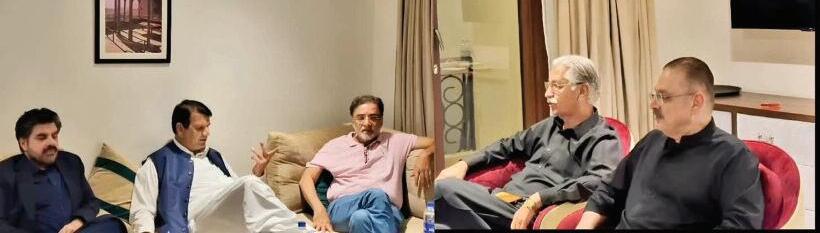
A major breakthrough has emerged in the political situation of Gilgit-Baltistan as an important consultative meeting was held in Gilgit between high-level delegations of the Pakistan Peoples Party (PPP) and the Pakistan Muslim League (N) [PMLN] During the meeting, detailed discussions were held on possible formulas for government formation in Gilgit-Baltistan political cooperation mutual consultation and other important matters The Pakistan Peoples Party delegation comprised Nayyar Hussain Bukhari Qamar Zaman Kaira Senior Minister of Sindh Sharjeel Inam Memon, Syed Nasir Hussain Shah, and President of Pakistan Peoples Party Gilgit-Baltistan Amjad Hussain Advocate The Pakistan Muslim League (N) delegation included Federal Minister for Kashmir Affairs GilgitBaltistan and SAFRON Ameer Muqam and President of PML-N Gilgit-Baltistan Hafiz Hafeezur-Rehman The meeting considered various proposals related to government formation and the possibilities of possible political cooperation, while domestic and national affairs were also discussed Both delegations agreed that their respective proposals concerning government formation would be presented to their central leaderships for consideration The Pakistan Peoples Party delegation stated that the people of Gilgit-Baltistan had given the party a clear mandate by making it the largest political party in the Gilgit-Baltistan no leniency for illegal wheat trade and bogus seed companies: rana Tanveer Hussain
STAFF REPORT
The Punjab Horticulture Authority (PHA) will roll out a centralised digital portal to track the performance of horticultural agencies across the province Director General Raja Mansoor Ahmad said on Thursday Mr Ahmad said the portal would consolidate all major administrative functions onto a single platform These include human resource management park and green belt mapping and real-time monitoring of field vehicle operations
The system will also maintain a digital inventory of district agency equipment tractors, water bowsers and other horticultural machinery to improve asset tracking and maintenance planning
One of the key features of the portal is a dedicated public helpline Through this helpline, members of
the public will be able to register complaints and share observations about parks, green spaces, and related services in their areas These concerns will then be routed automatically to the relevant department or agency for timely action
The portal will also incorporate key PHA services, including Adopta-Park, nursery management, plant inventories, and a digital attendance system to ensure more effective management and monitoring PHA has expanded its Adopt-aPark scheme previously limited to Lahore, to cities recently added to its jurisdiction, including Jhang, Rahim Yar Khan, Khushab, Nankana Sahib Sheikhupura Okara Gujrat Jhelum Murree Khanewal and Muzaffargarh
Latest data will be entered into the portal regularly by field teams to ensure the information remains up to date, the director general said
Wafi Energy Pakistan announces Board Directors following Extraordinar y General Meeting
KARACHI STAFF REPORT
Mr Ahmad said the primary goal of the dashboard is to bring the PHA s operations fully into the digital age, in line with the Punjab government’s broader vision of transparent and technology-driven governance By centralising data and streamlining communication between field agencies and the provincial authority, the initiative will improve accountability, reduce delays and raise the overall standard of horticulture management across Punjab he added
On the horticultural front
PHA has stepped up beautification work across districts, undertaking extensive flower plantation and maintenance drives New parks are being developed in cities including Sargodha Multan Faisalabad and Rawalpindi alongside the rehabilitation and upgrading of existing recreational facilities, Mr Ahmad said
Wafi Energy Pakistan Limited announced that shareholders elected continuing members of the Board and two new Directors at the Extraordinary General Meeting held in Karachi The new Board comprises Ghassan Al-Amoudi Javaid Akhtar Kai-Uwe Witterstein Hans-Christoph Bausch and Badaruddin Vellani as Non-Executive Directors; Zaffar Khan, Amir Paracha, Dr Ayesha Khan and Waheed Shaikh as Independent Directors; and Zubair Shaikh and Habib Haider as Executive Directors The Board term takes effect from 13 June 2026 Ghassan Al-Amoudi Chairperson of the Board said I would like to thank our shareholders for their continued confidence in the Board As we begin this term, our focus is on building the company and creating long-term value for our shareholders and for Pakistan " He further stated "On behalf of the Board I welcome Waheed Shaikh and Habib Haider Waheed s experience across the energy industry in Pakistan and Saudi Arabia will add real depth to the Board s work as we continue to drive growth - it is fitting that he returns to a company where he began inDrive appoints Abhey Lamba as Global CFO
PM ORDERS FASTER LOANS, WIDER ACCESS AND SIMPLER PROCEDURES UNDER APNA GHAR SCHEME
Pakistan leads diplomatic push as Middle East crisis escalates
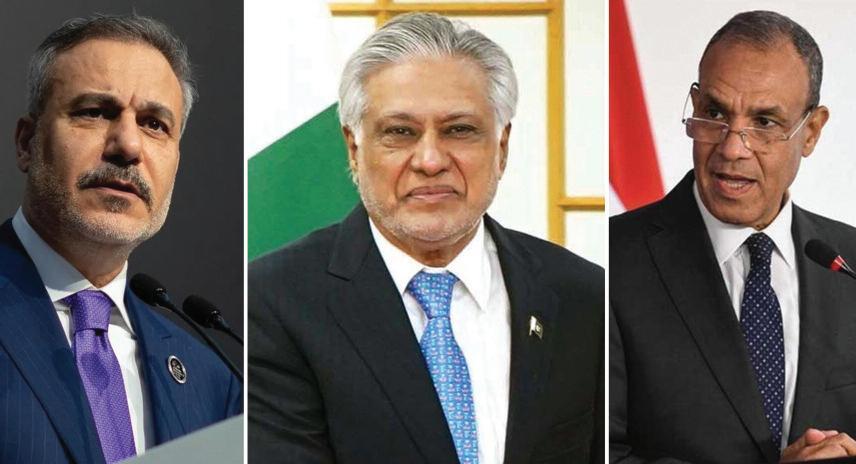
Deputy Prime Minister and Foreign Minister Senator Ishaq Dar on Thursday underscored the urgent need for sustained dialogue, diplomatic engagement and restraint amid escalating US strikes on Iran and retaliatory attacks, as he held separate telephonic conversations with his Turkish and Egyptian counterparts, according to the Foreign Office (FO) The development comes as Saudi Arabia called for renewed negotiations under Pakistani and Qatari mediation to help end the widening Middle East conflict
According to the FO, Deputy Prime Minister Ishaq Dar and Turkish Foreign Minister Hakan Fidan discussed the evolving regional situation and recent exchanges of attacks in the Middle East during a telephone call Both sides stressed the importance of dialogue restraint and de-escalation Both Pakistan and Turkiye expressed the hope for an early understanding among all parties which would contribute to lasting peace and stability in the region, the FO said They also agreed to maintain close coordination on regional and international issues of mutual interest and continue high-level engagements to strengthen the multifaceted Pakistan-Türkiye partnership Egypt praises Pakistan s mediation efforts Meanwhile Egyptian Foreign Minister Badr Abdelatty appreciated Pakistan s continued mediation efforts, noting that dialogue and diplomatic engagement remain the only viable path to ending the war in the Middle East The appreciation came during a separate telephone conversation between Deputy Prime Minister and Foreign Minister Senator Ishaq Dar and his Egyptian counterpart the FO said in a post on X During the call both sides reviewed regional developments and stressed the need for continued diplomatic engagement
They expressed hope that ongoing efforts would help achieve an early understanding between the parties contributing to lasting regional peace and stability
The Egyptian foreign minister also extended an invitation to Deputy Prime Minister Ishaq Dar to attend the upcoming meeting of the Regional Four (R-4) Foreign Ministers in Egypt later this month, which he accepted Both sides agreed to remain in close contact Saudi Arabia calls for renewed mediation-led talks
Meanwhile Saudi Arabia on Thursday condemned overnight Iranian attacks on Bahrain Jordan and Kuwait and called for renewed negotiations under Pakistani and Qatari mediation to end the Middle East conflict
Pakistan set to unveil Rs17.1tr budget focused on revenue growth, fisc al discipline
The government s hands are tied as it will once again prioritise fiscal consolidation over economic growth," said Mustafa Pasha, chief investment officer at Lakson Investments who argued that stronger enforcement would be needed to broaden tax collection
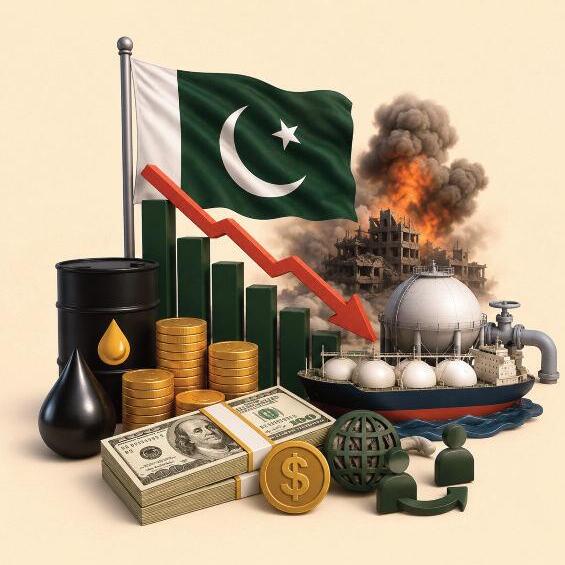
The budget is being prepared amid fresh economic risks stemming from rising global oil prices following the conflict involving Iran Economists warn that Pakistan remains particularly vulnerable to prolonged instability in the Middle East because of its dependence on Gulf energy imports,
is likely to fall on salaried individuals and formally registered businesses as authorities continue to struggle to bring agriculture retail and real estate more effectively into the tax net The Federal Board of Revenue (FBR) is under pressure to sharply increase tax receipts next year, with authorities aiming to raise collections by roughly 37% above this year's target which is expected to be missed Analysts say the government s options remain constrained by Pakistan s narrow tax base Official figures show only 1 3% of the population filed tax returns showing taxable income last year, while just 7 7% of adults held a debit or credit card underscoring the scale of the undocumented economy
ISLAMABAD
S TA F F C O R R E S P O N D E N T
Defence Minister Khawaja Asif on Thursday strongly defended the 12 seats reserved in the Azad Jammu and Kashmir (AJK) Legislative Assembly for refugees from Indianoccupied Jammu and Kashmir urging the now-proscribed Joint Awami Action Committee (JAAC) to take the issue to the people through the democratic process instead of pursuing agitation
Speaking in the National Assembly, Asif said the question of abolishing the refugee seats should be decided by the people in the upcoming AJK elections scheduled for July 27 He questioned why the group was seeking to settle the issue outside the electoral process, suggesting that such efforts appeared aimed at shaping the assembly ac-
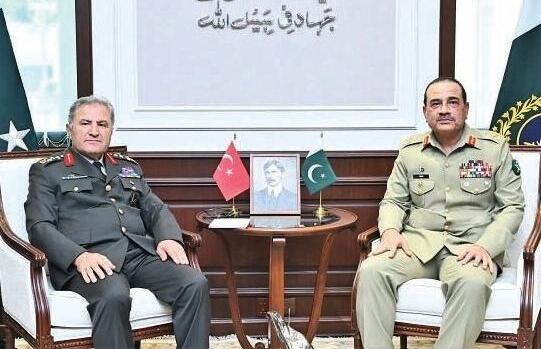
appreciated the robust defence partnership between the armed forces of the two countries As part of his engagements General Tokel also visited Naval Headquarters (NHQ) in Islamabad, where he called on Chief of Naval Staff Admiral Naveed Ashraf, NI, NI (M), T Bt The meeting focused on matters of professional interest and the prevailing regional
cording to its own preferences
The defence minister said Kashmiri refugees who migrated to Pakistan after 1947 had made immense sacrifices and had every right to political representation
“Kashmiri refugees paid a heavy price when they migrated to Pakistan No one has the right to deprive them of their vote or representation he said
Asif stressed that the cause of Kashmir was not limited to the people of the region alone, noting that millions of Pakistanis had contributed to and sacrificed for the Kashmir issue over the decades
The Azad Kashmir we see today exists because of the sacrifices of Pakistan s armed forces and people from across the country, he remarked, adding that every Pakistani family had a connection to the Kashmir cause The minister cau-
remittances and financial support Business activity indicators have also weakened in recent months Manufacturing sector surveys showed confidence fell to its lowest level since data collection began last year while input costs climbed to a 21-month high and employment declined for a second consecutive month On the spending side, development allocations are expected to remain under pressure Planning Minister Ahsan Iqbal has indicated that no new development schemes are planned for the next fiscal year apart from projects related to defence and interior ministries
Officials say social protection programmes will continue to shield lower-income households even as broader austerity measures remain in place
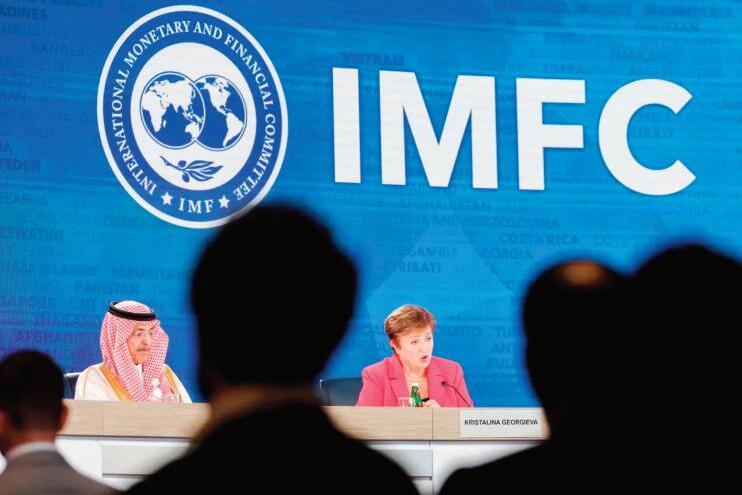
The delay in the budget presentation has been linked to ongoing discussions with the IMF, including issues related to provincial resources and federal financing requirements The IMF said last month that Pakistan had agreed to target a primary budget surplus of 2% in the coming fiscal year excluding debt servicing costs
tioned against taking the law into one s own hands warning that the state could not remain silent in the face of disorder and unrest
He said issues related to refugee representation should be debated and resolved within the Legislative Assembly rather than through protests and confrontation
Recalling the challenges faced by Kashmiri refugees in Pakistan
Asif said many had long struggled to secure basic services due to unresolved legal status issues, which were later addressed through government efforts “How can anyone exclude these refugees from the democratic process and deny them their identity? he asked
Meanwhile, tensions remained high across AJK as supporters and activists of the proscribed JAAC continued their protest movement towards Muzaffarabad
ing brotherly relations between Pakistan and Turkiye Meanwhile General Tokel also met Defence Minister Khawaja Muhammad Asif in Islamabad, where both sides reaffirmed the longstanding brotherly relations between Pakistan and Türkiye, founded on shared history mutual trust strong people-to-people contacts