

revised plan also includes 3,109 megawatts of renewable energy projects under market-based induction resulting in changes to transmission and evacuation in-
frastructure timelines Nepra questioned the justification for further capacity additions despite existing surplus electricity generation and declining power demand The regulator also asked why future demand projections appeared unrealistic and on what basis they were being used to support additional expansion of generation capacity Among other concerns Nepra questioned why committed projects of provincial governments and K-Electric had not been fully incorporated into the planning process and why detailed consultations with distribution companies had not been conducted regarding planning data and transparency The authority further questioned inconsistencies between the submitted IGCEP and Transmission System Expansion Plan and asked why the impact of additional capacity on end-consumer tariffs had not been assessed Nepra also sought clarification on plant factors of generation units operating
on low British thermal unit gas, installed capacity discrepancies commercial operation date assumptions and lack of independent third-party review of the plan According to the government distribution companies have reported a sharp decline in grid-connected electricity consumption despite consistency in countrylevel and spatial load forecasts between Transmission System Expansion Plan 2024-34 and IGCEP 2025-35 National Grid Company attributed the decline to economic slowdown and rapid growth in rooftop solar and net-metering installations However, long-term planners maintained that the trend was temporary and not sufficient to alter transmission expansion plans at this stage The revised analysis also projected a substantial increase in electricity exports from the national grid to K-Electric, which are expected to rise to 3,456 megawatts by 2035 compared to earlier estimates of 2 050 megawatts
However, officials stated that the increased exports had not yet been incorporated into the addendum pending cost comparison studies and system reinforcement assessments by K-Electric and National Grid Company For the June 2027 peak demand scenario, the revised plan now assumes only one 360-megawatt unit of Dasu Hydropower Project instead of three
previously projected while no contribution from Mohmand Hydropower Project has been included Similarly, for the June 2029 scenario, no contribution from Diamer Bhasha Hydropower Project has been incorporated due to project delays although earlier assumptions included five units of 375 megawatts each For the July-August 2034 peak demand scenario all 12 units of Diamer Bhasha Hydropower Project have been included along with around 1,400 megawatts of wind power projects optimised under IGCEP
nancial benefit The U S Commodity Futures Trading Commission (CFTC) is investigating a person familiar with the matter told Reuters in April, although the CFTC has yet to officially confirm a probe is underway Reuters could not establish who placed the bets and whether they originated in the U S or elsewhere They included short positions or bets that prices would fall, for derivatives including ICE, CME crude, diesel and gasoline futures The bets took place on two major exchanges that host benchmark global oil and fuel futures trade: the Intercontinental Exchange (ICE) and the Chicago Mercantile Exchange (CME) Both exchanges declined to comment The CME is investigating the trades, a source familiar with the matter told Reuters The well-timed trades have triggered calls from legal experts and lawmakers for regulators to investigate whether they were based on inside information or leaks Traders first spotted unusual trades on March 23 The trades were executed minutes before Trump
announced a delay to threatened attacks on Iranian power infrastructure, triggering an oil price fall The same pattern repeated on April 7 before Trump announced a ceasefire with Iran that triggered a fall of as much as 15% in benchmark ICE Brent futures It happened again on April 17, when Iranian officials and Trump spoke about reopening the Strait of Hormuz, and then again on April 21 when Trump extended the ceasefire Reuters and other media reported those trades on the most actively traded front-month contracts for the two global crude benchmarks, Brent and West Texas Intermediate The value of those bets on those four days in March and April stood at around $2 6 billion according to Reuters initial calculations The U S Justice Department and CFTC did not immediately respond to requests for comment A White House spokesperson said: All federal employees are subject to government ethics guidelines that prohibit the use of non-public information for financial benefit However a further analysis of trading data across exchanges and contracts showed traders executed similar bets at exactly the same dates and times for European diesel and U S gasoline futures as well as longer-dated contracts for Brent and WTI bringing the total to around $7 billion based on Reuters calculations A sell bet – or short selling – means the person executing the trade borrows the derivative from a counterparty, sells it and later buys it back more cheaply when the price falls keeping the remaining
Kh Asif optimistic on US-Iran deal, says peace will secure Pakistan's borders CONTINUED FROM PAGE 01
The defence minister linked Pakistan s rising international stature to what he described as the country s historic victory against India during last year s Operation Bunyanum Marsoos and Marka-e-Haq Pakistan is now recognised internationally as a country capable of standing up to a much larger adversary,” he said adding that the outcome had strengthened global confidence in Pakistan as an honest negotiator He further claimed that the world was increasingly treating Pakistan and India on equal footing diplomatically and militarily, with Pakistan in some cases receiving greater international recognition “Pakistan is now accepted as a power to reckon with ” he remarked Commenting on regional tensions Asif alleged that India was pursuing proxy warfare against Pakistan through Afghanistan accusing extremist

on the scale of undocumented cigarette sales in Pakistan, stating that the illicit market was causing an estimated annual revenue loss of around ₨350 billion According to the delegation nearly 45 billion to 47 billion cigarettes are being sold without payment of taxes creating difficulties for documented manufacturers operating under regulatory requirements
The meeting discussed issues related to tobacco procurement, under-reporting of production and weaknesses in traceability systems across the supply chain
Participants said registered companies were operating under strict regulations while undocumented pro-
ducers continued to access raw materials through misuse of contracts and weak oversight mechanisms
The delegation also raised concerns regarding undocumented income, money laundering and wider economic distortions linked to the informal cigarette market Officials informed the minister that existing laws tax stamp systems and regulations were already in place but enforcement remained inconsistent
The meeting highlighted the need for coordinated action between federal and provincial authorities including agencies such as the Federal Board of Revenue and the Federal Investigation Agency
Participants also discussed the role of the Pakistan Tobacco Board, noting that while the board was responsible for crop estimation and price-setting its enforcement and monitoring capacity remained limited
The delegation stressed the need to strengthen and restructure the Pakistan Tobacco Board to improve documentation and oversight of the sector
The meeting further reviewed policy challenges arising from Pakistan’s commitments under the International Monetary Fund programme particularly reforms linked to easing import restrictions and equal treatment of commercial and industrial importers Illicit cigarette trade c ausing ₨350
ART I F I C I A L intelligence may be be the new rage as it has an impact on more things than we can imagine but even before the question can be answered whether it will mean the destruction of jobs, the spectre of its being used for bank fraud has been raised in a report by the International Monetary Fund Another report, from Microsoft this time, also points out another way in which AI is likely to be used as a means of perpetuating the divide between haves and havenots While AI is making the world’s banking systems vulnerable to criminals from all over the world, according to the IMF, which means we should chalk one up for globalization Microsoft reports that the divide between developed and developing countries in AI usage is increasing
Whereas 27 5 percent of working people used AI in developing countries in the first quarter of 2026, only 15 4 percent of working people in developing countries did a gap of 12 1 percent which is up 1 5 percent from the gap found at the end of the last quarter of 2025 This is based on users of Microsoft operating systems which carry Chat GPT and Gemini embedded This does not account for the use of coder ’s tools, which Microsoft expects to increase AI use However, according to Layoffs [dot] fyi, there have been 99,000 layoffs in the tech sector, which could be the result of the adoption of AI There are many predictions by enthusiasts that AI will mean the creation of more jobs, but that does not seem to be happening yet At the present stage of the transition, jobs, it seems, are being lost If job creation occurs, it will probably be later
The gap between the developing and developed world should be worrisome for countries like Pakistan, who have vowed to increase IT software exports and to exploit their demographic bulge by equipping their youth with the right skills There has been unreliable electricity and unreliable internet identified not to mention the automatic bias of the AI tools being trained in developed countries’ languages Let the natural innovativeness of the people unfold, by giving them access to AI, to computers and to power Let everything else be subordinated to this goal Then watch them

Dedicated to the legac y of late Hameed Nizami Arif Nizami (Late)
Founding Editor
M A Niazi
Editor Pakistan Today Babar Nizami Editor Profit

IN Pakistan governance is often viewed through a deficit lens The conversation tends to dwell on what is missing what is delayed and what has failed to deliver These concerns are neither misplaced nor exaggerated
Yet they do not tell the whole story Alongside these visible shortcomings exists another, quieter reality: policies that do work, systems that do function, and improvements that are already taking shape even if unevenly The problem therefore is not an absence of policy thinking If anything Pakistan produces no shortage of frameworks, strategies, and reform agendas The deeper issue lies in what happens after these policies are announced Success remains inconsistent and effective practices are rarely sustained scaled or institutionalised Promising initiatives emerge only to lose momentum while new ones take their place This cycle creates the impression of fragility, even where capacity exists At its core, governance is not defined by how many initiatives are introduced but by how reliably they are implemented over time The distance between policy intent and actual outcomes is where most challenges arise Bridging this gap is not a technical exercise alone; it is the central task of governance itself One of the most critical shifts required is from p
changes in direction, often driven by political transitions or shifting administrative priorities disrupt p
reset carries a cost: systems are abandoned before they mature lessons are lost and momentum dis-
would allow policies the time to evolve, adapt, and deliver results Continuity does not mean rigidity; it means building on what works rather than discarding it prematurely Closely linked to this is the need to rebalance priorities from announcement to execution In many cases the intent behind policies is sound The challenge lies in translating that intent into consistent delivery Strengthening implementation requires attention to the less visible aspects of governance:
$300 million market, marking Pakistan’s entry into a new trading corridor With total seafood exports currently around $500 million this single market could increase export potential by more than 50 percent if fully utilized More importantly, it offers a gateway to Central Asian markets, reducing dependence on traditional buyers such as China and Gulf countries However these opportunities come with conditions Expanding into high-value and new markets requires consistent quality traceability and compliance with international standards areas where Pakistan has historically struggled Post-harvest losses alone are estimated at 15 to 20 percent largely due to poor handling, inadequate cold storage and outdated processing systems Without addressing these inefficiencies increased production will not necessarily translate into higher earnings Recognizing these challenges, the Planning Commission of Pakistan has proposed a shift to-
clear allocation of responsibility effective coordination across departments and mechanisms that ensure follow-through These are rarely headline-grabbing reforms yet they are often the most consequential Governance improves not when more policies are announced, but when existing ones are executed well A related reform lies in how accountability is understood Too often systems reward compliance with procedure rather than achievement of outcomes Shifting towards outcome-based accountability would reorient institutions towards results that can be observed and measured This does not imply abandoning process altogether, but it does require recognising that process is a means not an end When success is defined in terms of delivery incentives begin to align with effectiveness rather than mere activity
Structural complexity further complicates implementation Overlapping mandates, unclear lines of authority, and fragmented decision-making frequently slow progress Addressing these issues does not necessarily require sweeping institutional redesign In many cases incremental steps to clarify roles improve coordination and reduce duplication can yield significant gains Governance often falters not because of a lack of structure, but because of too much of it The role of technology in governance has expanded rapidly offering new possibilities for efficiency and transparency Yet digitisation by itself is not a solution Its value depends on how thoughtfully it is integrated into existing systems When applied well digital tools can reduce delays limit discretionary decision-making, and make processes more transparent However, when underlying procedures remain unchanged, technology risks merely replicating inefficiencies in a different format The focus therefore must remain on reforming processes with technology serving as an enabler rather than a substitute
Decentralisation presents another important dimension of reform Governance tends to become more responsive when decision-making authority is closer to the point of service delivery Local institutions are often better positioned to understand context-specific challenges and respond with appropriate solutions Strengthening these structures can reduce bottlenecks and improve efficiency However, decentralisation cannot succeed in isolation It must be accompanied by investments in capacity, ensuring that local bodies possess not only authority but also the skills and resources required to exercise it effectively Equally important is the role of public engagement Citizens today are more informed and more aware of administrative processes than in the past This creates an opportunity to make governance more participatory When feedback mechanisms are accessible and responsive, they enhance accountability while also serving as an early warning system for emerging problems Engagement in this sense is not merely a democratic ideal; it is a practical tool for
ward cluster-based aquaculture targeting 100 000 hectares of development, requiring around $1 3 billion in investment and projecting $1 5 billion in annual exports If implemented effectively, this could triple Pakistan s current seafood export earnings while reducing pressure on overexploited marine resources
Still the success of this transition will depend on more than infrastructure and investment It will require a fundamental shift toward scientific management Modern aquaculture operates on data monitoring water quality, managing disease outbreaks and optimizing feed efficiency through technology Pakistan currently lacks a centralized fisheries data system leaving policymakers without the tools needed for evidence-based decisions In contrast successful aquaculture economies rely on integrated data platforms and real-time monitoring systems, enabling both efficiency and sustainability What emerges from this evolving landscape is not just a list of challenges, but a moment of opportunity The shrimp farming initiative in Punjab and the opening of the Russian market are not isolated developments; they are indicators of a sector beginning to reorient itself The question is whether these efforts can be scaled, coordinated, and sustained For too long, Pakistan’s fisheries sector has operated below its potential constrained by outdated practices and limited vision The numbers tell a story of stagnation but they also point toward what is possible With the right combination of policy, investment and scientific management, aquaculture could transform the sector into a major driver of economic growth The resources are there, the markets are emerging and the initial steps have been taken What remains is the will to follow through
The writer is a Research Associate at the National Institute of Maritime Affairs The views expressed are her own She can be reached at rassosoiate2 nima k@bahria edu pk



TH E temporary suspension of Pro-
ject Freedom by President Donald Trump on May 5–6 may ultimately be remembered not merely as a tactical military pause, but as an admission that diplomacy had succeeded where overwhelming force had failed After months of escalating confrontation in and around the Strait of Hormuz the sudden halt of the U Sled naval escort operation reflected a changing geopolitical reality: the battlefield had reached its limits, the global economy was bleeding, and quiet diplomacy much of it facilitated through Pakistan had become the only viable path forward Within hours of the announcement Brent crude fell sharply to nearly $108 a barrel while US crude dropped toward $100 Global stock markets surged in relief The S&P 500 and Nasdaq reached new highs, Asian markets rallied, and the immediate fear of catastrophic maritime losses eased The world economy which had been standing at the edge of another massive inflationary shock suddenly regained a measure of stability According to the emerging narrative from regional diplomacy, Pakistan worked continuously behind the scenes to maintain communication channels between Washington and Tehran after the fragile ceasefire that began on April 7 Islamabad reportedly urged restraint on all sides and advocated a formula that combined de-escalation in Hormuz with renewed negotiations on sanctions, maritime access, and regional security guarantees Whether acknowledged publicly or not, Pakistan’s role appears to have been crucial in preventing the conflict from crossing the point of no return The irony of the entire episode is impossible to ignore The war itself began with immense confidence from the USA and Israel Epic Fury, the military campaign launched with promises of crushing Iran’s strategic capabilities, was presented as a short and decisive operation that would allegedly force Tehran into submis-
sion within weeks Regime change, rollback of nuclear ambitions, destruction of military infrastructure, and strategic surrender were all openly discussed as attainable goals
None of those objectives materialized Instead Iran absorbed the pressure maintained internal cohesion preserved much of its command structure and demonstrated a capacity for resilience that surprised even many seasoned observers What was expected to become a demonstration of overwhelming Western military supremacy gradually evolved into a prolonged strategic stalemate
The same pattern repeated itself with Project Freedom The initiative was introduced with great fanfare as a bold US-led naval effort to escort commercial vessels safely through Hormuz and break Iran’s effective control over maritime movement Yet the operation quickly encountered practical realities Shipping companies hesitated Insurance providers warned of extreme wartime risk exposure Several commercial vessels reportedly complied with Iranian maritime instructions rather than rely entirely on foreign military escorts What was intended to project dominance instead exposed the limitations of power in a multipolar world Ultimately Project Freedom itself was paused without fully achieving its declared objectives
That decision alone speaks volumes For decades, Washington operated under the assumption that military superiority automatically translated into geopolitical compliance The Iran conflict has challenged that assumption A country under sanctions facing combined pressure from the USA and Israel managed not only to survive but to negotiate from a position far stronger than many anticipated Now the balance of leverage has visibly shifted Even President Trump’s own remarks about energy exports inadvertently revealed another dimension of the conflict
During recent comments about upcoming discussions with Xi Jinping, Trump openly spoke about encouraging China and Asian economies to purchase greater quantities of
US oil and gas from Alaska, Texas, and Louisiana He described satellite images showing lines of ships moving toward US energy terminals like “highways at sea ”
Reading between the lines many analysts see a broader economic motive behind the prolonged instability in Hormuz As Middle Eastern exports became constrained by war, insecurity, and naval restrictions, US energy producers gained unprecedented opportunities to capture global market share Asian consumers who traditionally relied heavily on Gulf oil increasingly turned toward US supplies
In effect the disruption of Gulf energy routes redirected enormous revenue streams toward the USA Meanwhile, Gulf economies paid a heavy price Infrastructure damage, declining investor confidence, soaring insurance premiums interrupted exports and prolonged regional insecurity weakened economies that had once depended on stable maritime commerce Even when some production capacity remained intact, the uncertainty surrounding Hormuz severely constrained the movement of energy resources Yet another remarkable transformation emerged during this crisis: Washington s rediscovery of international institutions Only months earlier senior US officials had openly dismissed the relevance of the United Nations, criticizing multilateral systems as ineffective and outdated The USA had reduced participation in several international bodies and increasingly emphasized unilateral power
But as the Hormuz crisis intensified the rhetoric changed dramatically Secretary of State Marco Rubio recently emphasized the importance of the United Nations and suggested that maritime disputes surrounding Hormuz should be addressed through international mechanisms and peaceful diplomacy The same system previously dismissed as ineffective suddenly became essential once military escalation failed to deliver decisive outcomes
This reversal illustrates a deeper truth about the emerging global order: even su-
perpowers
And in that diplomatic success, PakistanÊs role has emerg ed as one of the most consequential and least acknowledg ed developments of the entire crisis The world may eventually recogniz e that while great powers fought for dominance , it was careful diplomacy from an unexpected mediator that helped prevent economic disaster and pulled humanity one step back from the edg e of a far wider war


of 1951-52 the burden of proving voting eligibility was effectively shifted to citizens themselves This represented a dangerous rupture in the democratic compact The process hit migrant workers particularly hard Bihar and Bengal are among India’s largest sources of migrant labour with millions working in distant states Many were unable to return home within the narrow verification windows
Others struggled with inconsistencies in spelling, missing legacy documents, changes of surname after marriage or discrepancies between official records These problems were especially acute among Muslims and poorer women The ECI insisted the exercise was administrative and necessary to remove duplicate or fraudulent entries The BJP framed it as an attempt to eliminate “illegal infiltrators”, especially alleged undocumented Muslim migrants from Bangladesh But in Bengal the exercise quickly acquired the character of a political operation
Districts with large Muslim populations witnessed some of the highest voter deletions The process lacked transparency, while AI-assisted “logical discrepancy” software disproportionately flagged Muslim names because of transliteration inconsistencies between Urdu Bengali and English spellings The TMC repeatedly alleged that the ECI was functioning less as an independent constitutional body and more as an extension of the ruling party’s political machinery
The Supreme Court of India intervened several times but ultimately allowed the process to continue Millions filed appeals after discovering their names had disappeared from the rolls Yet more than 3 4 million appeals remained pending before polling, with fewer than 2,000 cleared in time The court ruled that voters whose appeals had not been decided would still be barred from voting in the election although their names could theoretically be restored later
derly people migrants women with inconsistent documents and poorer citizens faced a bureaucratic labyrinth that many simply could not overcome Several officials privately admitted that Hindu voters had less reason to fear deletion than Muslims Eventually roughly 2 7 million voters in Bengal were officially struck off the rolls Millions more remained trapped in unresolved appeals and verification disputes before polling day The BJP polled 29,224,804 votes, 3,211,427 more than the TMC’s 26 013 377 Analysts examining constituency-level data argue that in many seats won by the BJP the number of deleted or disputed voters exceeded the margin of victory It is thereby appropriate to contend that there are grounds to suspect the verdict was “stolen” with the assistance of the state machinery, including the ECI although it is constitutionally mandated to function as an impartial body The BJP s victory was also aided by a Hindu majoritarian campaign that grossly exaggerated the TMC s supposedly proMuslim stance and heightened Hindu insecurity After the BJP’s setback in the 2024 parliamentary election when Modi lost his outright majority and became dependent on coalition partners the party began recalibrating its electoral strategy
BBooth Level Officers local election officials tasked with maintaining voter rolls conducted house-to-house verification of voters Citizens were required to re-establish their eligibility through documentary proof within extremely tight deadlines
That judgement effectively legitimised disenfranchisement on a massive scale On a personal level, I experienced the process myself My family had to reestablish its eligibility to remain on the voter rolls in Uttar Pradesh where elections are due next year Compared with Bengal, deadlines there were longer and the scrutiny somewhat less severe Yet even navigating the process revealed its harrowing and exclusionary character El-
One strand of this effort was the proposed delimitation exercise, under which parliamentary and assembly constituencies would be redrawn in ways likely to favour northern and Hindu-majority regions In Assam where the BJP also returned to power comfortably this year earlier delimitation exercises had already weakened Muslim electoral influence in several constituencies The second initiative was the expansion of the SIR process across India, whose political consequences became most dramatically visible in Bengal The third is the push for One Nation One Election a project intended to synchronise all state and national elections Presented as administrative reform, the proposal would further centralise political power around Modi and weaken the ability of regional parties to resist the BJP’s national machinery
Nilanjan Mukhopadhyay is a Delhi based writer and journalist with a special interest in Hindu nationalistic politics He is the author of Narendra Modi: The Man, The Times
infrastruc-
enters public debate Submarine cables slender fibre-optic systems laid across the seabed carry over 95 per cent of global internet traffic transmitting the data that underpins financial markets diplomatic exchanges and everyday communication What appears to be neutral infrastructure is, in fact, a deeply political system – one that exposes a structural blind spot in the United Nations Convention on the Law of the Sea Unclos was negotiated in a pre-digital era when the ocean was primarily understood through the lenses of territory, navigation and resource extraction It enshrines the freedom to lay submarine cables across the seabed, including areas beyond national jurisdiction It did not anticipate a world in which these cables would evolve into dense privately owned digital arteries
Today they are increasingly controlled not by states, but by powerful corporations whose infrastructural reach rivals sovereign authority The result is a paradox: the seabed, legally open as a global commons is functionally governed by those with the capital and technological capacity to build and maintain cable systems Submarine cables are often described as the backbone of the internet but this understates their geopolitical weight Beyond conduits of information, they are strategic infrastructure that structures global power itself Financial systems military operations and diplomatic communications rely on their uninterrupted function In an era of real-time data dependency even temporary disruptions can produce cascading systemic risks across markets and governments
Recent incidents in the Asia-Pacific highlight the growing vulnerability of submarine cable infrastructure Unexplained disruptions have resulted in widespread connectivity outages affecting multiple economies at once While official accounts often attribute these incidents to accidental damage or natural causes, their frequency and timing have prompted policymakers to consider the possibility of more complex risks including hybrid threats to critical infrastructure
The transformation however lies not only in the vulnerability of cables but their ownership The expansion


Kelly posted on Facebook repeating his position and pledging to continue the legal fight Reactions in the comments section reflected both growing enthusiasm among Democrats and concern among Republicans Legal observers expect the dispute to eventually reach the US Supreme Court, where it could become a major constitutional test involving free speech, military authority and the limits of political expression by former service members in the United States
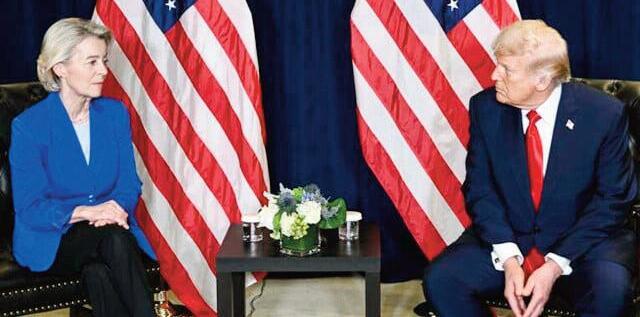
Qatar has asked the United States to relocate Afghan evacuees currently living in Doha by September 29, 2026, under a temporary hosting arrangement that has now been extended according to diplomatic documents released by the US State Department The documents show that Qatar and the United States have agreed to continue the arrangement until 2026 However, Qatar has underlined that the deal is temporary and has asked Washington to resolve the status of all Afghan evacuees already housed at the camp The agreement applies to
Afghan nationals evacuated after the Taliban returned to power in Afghanistan in 2021 They are being accommodated at Camp As Sayliyah near Doha while awaiting resettlement in the United States or other countries
The diplomatic papers indicate that Qatar has also requested that no additional Afghan evacuees be transferred to its territory under the arrangement The latest extension means the hosting deal will remain

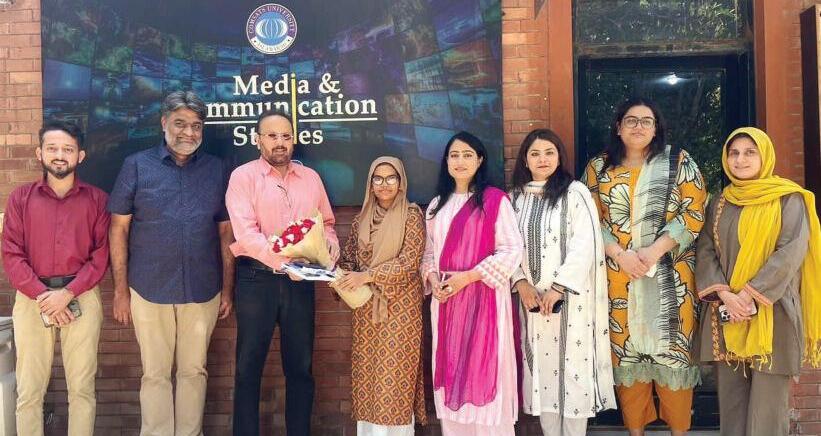
COMSATS Lahore hosts seminar on Entrepreneurship, Adver tising, and Leadership
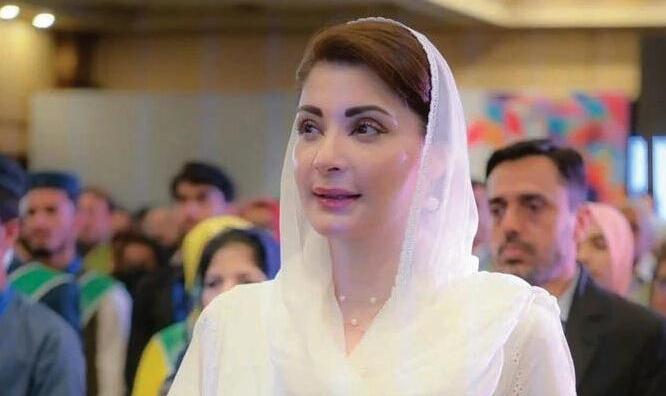
Federal Minister for Science and Technology condoles passing of mother of PEC chairman
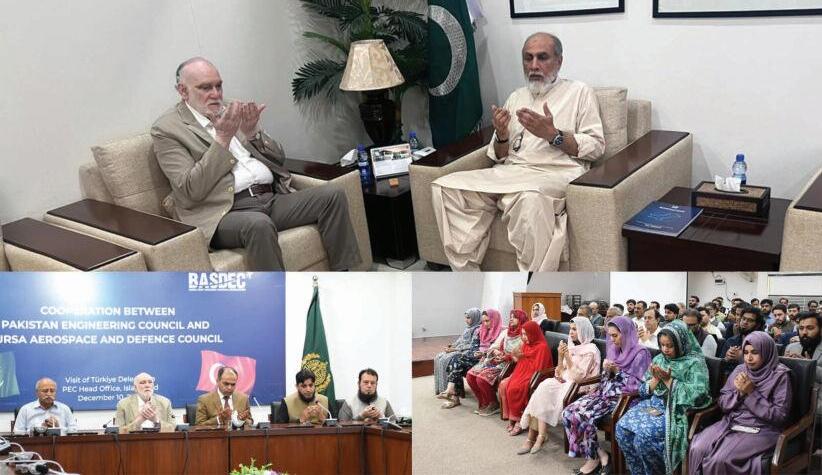
ISLAMABAD S ta f f r e p o r t Federal Minister for Science and Technology, Khalid Hussain Magsi visited the headquarters of the Pakistan Engineering Council (PEC) and expressed his deep condolences on the passing of the mother of the Chairman Pakistan Engineering Council, Engr Waseem Nazir A prayer ceremony was held at the Pakistan Engineering Council headquarters, where the Rector of NUTECH, Lieutenant General (R) Moazzam Ijaz, Registrar of PEC Engr Khadim Hussain Bhatti along with the representatives of the Constructors Association of Pakistan (CAP) Engineering Community Representatives Heads of Different Departments of PEC, and staff members, participated Heartfelt condolences and sympathy were extended to the Chairman PEC and his grieving family Prayers were offered for the soul of the deceased and all attendees expressed their unwavering support and solidarity with Engr Waseem Nazir and his family during this challenging time
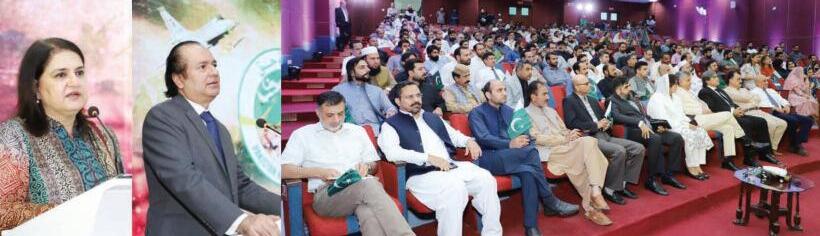
a symbol of extraordinary bravery and professionalism demonstrated by Pakistan s armed forces achievements that will be remembered for generations to come Paying rich tribute to the falcons of the Pakistan Air Force, she said their exceptional skills and operational excellence have now become a model “case study” for leading military
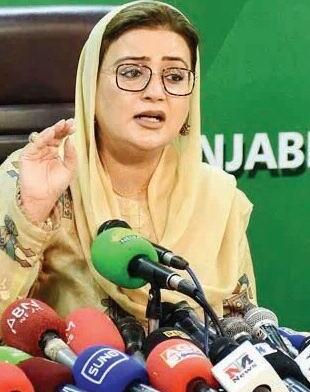
ister Ishaq Dar acknowledging their leadership and contributions to this remarkable success She emphasized that every Pakistani takes immense pride in the military leadership of Field Marshal Syed Asim Munir, adding that Pakistan remains a peaceful and responsible state whose foremost priority has always been peace Delivering a clear and firm message Azma Bokhari warned that any attempt to mistake Pakistan s commitment to peace as weakness would lead to consequences similar to those faced by India She urged India to immediately cease all forms of interference and proxy activities including what she referred to as Fitna alKhawarij and Fitna al-Hindustan, reiterating that Pakistan will make no compromise on its national security
ISLAMABAD S ta f f r e p o r t
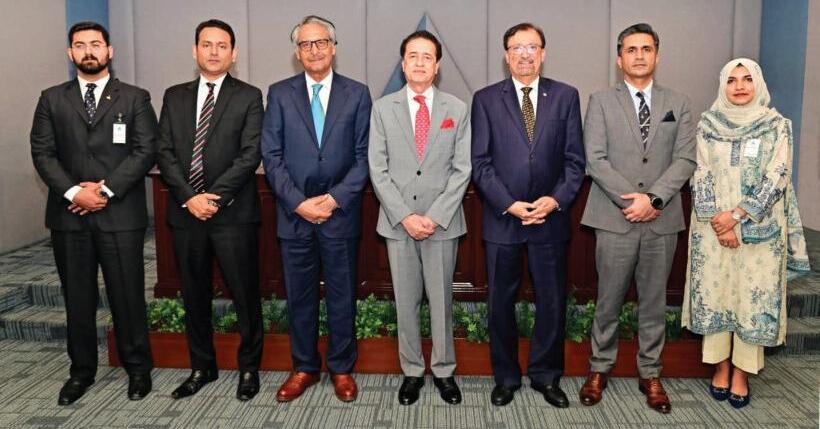
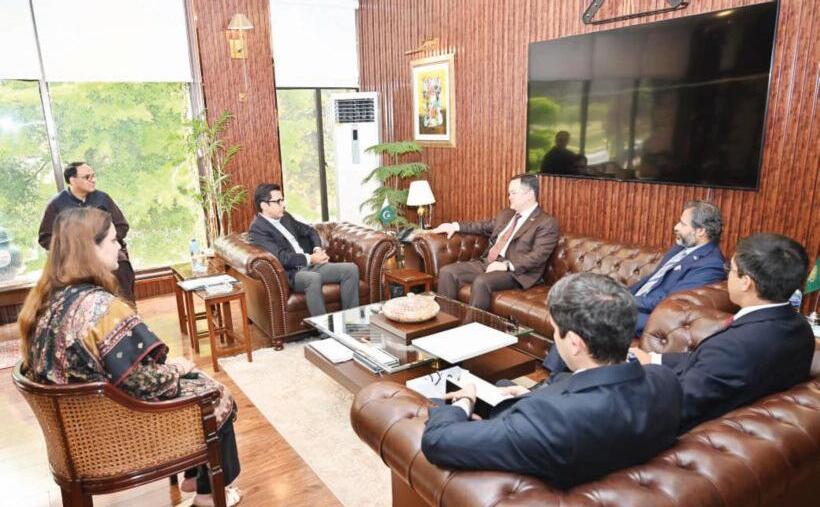
Chairman Capital Development Authority (CDA) and Chief Commissioner of Islamabad Sohail Ashraf and the Ambassador of Uzbekistan H E
Alisher Tukhtayev, met on Friday at the CDA
Pakistan crushed India’s arrogance in ‘Battle of Truth’: Saadia Javed
One Year Of ‘Marka-e Haq’: Ceremony held at BISP to pay tribute to Pakistan Armed Forces ISLAMABAD S ta f f r e p o r t A ceremony was organized at the BISP Headquarters under the auspices of the Benazir Income Support Programme (BISP) to commemorate the successful achievements of the Pakistan Armed
Headquarters During the meeting, matters of mutual interest including the further strengthening of bilateral relations were discussed
Chairman CDA Sohail Ashraf said that Pakistan views its relations with its brotherly country Uzbekistan with great value and respect Uzbek Ambassador said that Pakistan and Uzbekistan have longstanding common cultural and heritage brotherly relations He appreciated the beauty and greenery of Islamabad H E Uzbek Ambassador informed regarding the establishment of Babar Park on Faisal Avenue said that formal work on the construction of Babar Park has begun He said that the Babar Park is a gift for the people of Pakistan from the Government of Uzbekistan He further added that Babar Park would be among the best parks in Islamabad Chairman CDA appreciated the design concept of the Babar Park project and said that he would soon visit the Babar Park project site along with the H E Ambassador of Uzbekistan H E Uzbek Ambassador said that an MoU signing ceremony to grant Islamabad and Tashkent the status of sister cities is expected soon
KARACHI S ta f f r e p o r t Sindh government spokesperson and MPA Saadia Javed on Friday said the Pakistan Armed Forces under the leadership of Syed Asim Munir had demonstrated their strength and professional capability to the world asserting that Pakistan s defense posture had grown stronger and more assertive In a statement, Saadia Javed said that during “Marke-Haq” (Battle of Truth) Pakistan effectively responded to India and shattered what she described as its arrogance and pride as a regional power She said that while previous military engagements including the Indo-Pakistani War of 1965 and the Kargil War, had shaped regional military dynamics, the latest conflict had, in her view, exposed India’s vulnerabilities despite its claims of superiority in information technology and other sectors She said Pakistan which came into existence in Partition of India had entered what she described as a new phase of national confidence adding that May 9, 2025, symbolized a renewed national spirit Reiterating her remarks, she said that under the leadership of Field Marshal Syed Asim Munir, the Pakistan Army had proved its strength and professionalism on the global stage Today no one can look at Pakistan with hostile intent she said adding that with national security reinforced economic development had now become the country s foremost priority

KARACHI S ta f f r e p o r t
The Foreign Affairs Liaison Office (FALO) Karachi of the Ministry of Foreign Affairs hosted a