g CDF/COA S ARRIVES IN IRAN FOR HIGH-LEVEL TALKS ON REGIONAL PEACE A S PAKISTAN INTENSIFIES DIPLOMACY ON US -IRAN TENSIONS
g VISIT COINCIDES WITH QATARI DELEGATION ’S ARRIVAL FOR USCOORDINATED NEGOTIATIONS IN TEHRAN
g MUNIR JOINED BY INTERIOR MINISTER MOHSIN NAQVI WHO IS ALREADY IN IRANIAN CAPITAL
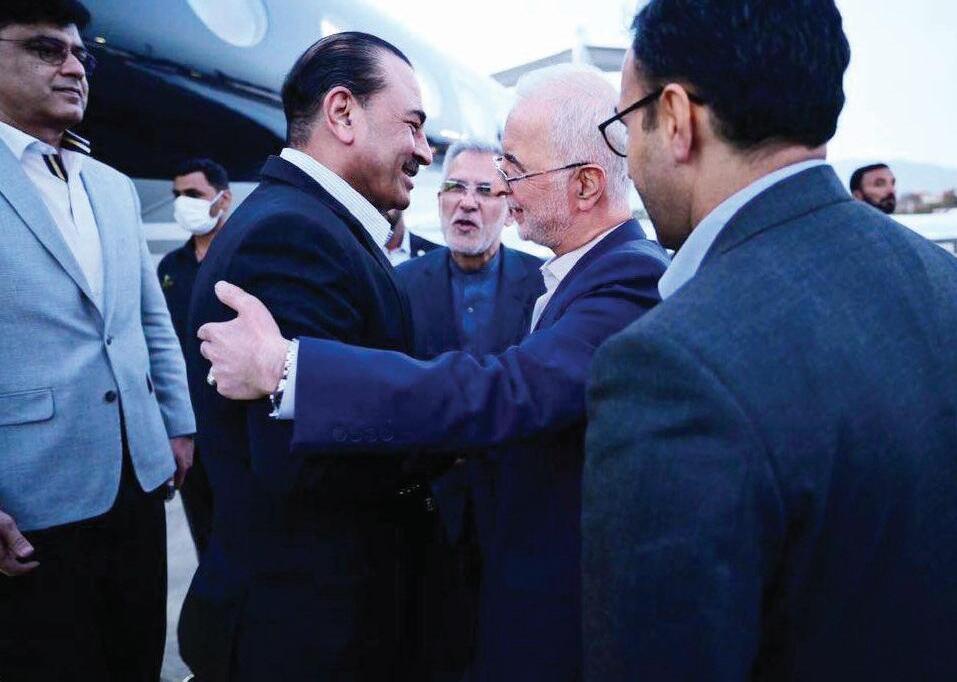
g ISPR SAYS IRANIAN INTERIOR MINISTER ESKANDAR MOMENI RECEIVES FIELD MARSHAL MUNIR ON ARRIVAL
g RUBIO CLAIMS PAKISTAN PLAYING KEY ROLE IN FACILITATING DIALOGUE BETWEEN WA SHINGTON AND TEHRAN
Pakistan s military leadership has been playing an increasingly prominent role in regional diplomatic outreach in recent months CDF/COAS Munir is accompanied in his broader diplomatic engagements by Interior Minister Mohsin Naqvi who has already met Iranian leadership twice this week US says it remains in ‘constant communication’ with Field Marshal Munir
Earlier US Secretary of State Marco Rubio said Washington remained in constant communication with Field Marshal Asim Munir adding that senior levels of the US government were regularly engaged with him
He also praised Pakistan’s role in facilitating dialogue between Washington and Tehran
The visit comes as Pakistan has taken a more active diplomatic role in recent months engaging with both Tehran and Washington to help prevent wider regional escalation following renewed tensions in the Middle East Iran s state news agency IRNA earlier cited a diplomatic source in Islamabad as saying that Field Marshal Munir had departed for Tehran and would meet senior Iranian officials during the visit
The primary interlocutor on this has been Pakistan and continues to be and they ve done an admirable job trying to mediate a peace deal, Rubio was quoted as saying by Fox News
“The field marshal is going to Iran ” a security source told Pakistan Today on condition of anonymity when asked about the visit
“Obviously, other countries may have their own situation going on We talk to all of them But I would just say the primary country we ve been working with on all of this is Pakistan, and that remains the case, he told reporters in Sweden
PM Shehbaz invites Qatari investment in Pakistan's tourism, real estate and hospitality sec tors
ISLAMABAD A S A D N I Z A M I
Shehbaz Sharif on Friday held talks with a high-level delegation from Qatar-based Taameer Group to explore investment opportunities in Pakistan s tourism hospitality real estate and construction sectors The delegation was led by the group s founder, Muhammad Hussein Al Ali, according to a statement issued by the Prime Minister’s Office During the meeting the prime minister described Qatar as a longstanding and trusted friend of Pakistan that had consistently supported the country during challenging periods He said the government was
taking concrete measures to attract foreign investment and had removed major bureaucratic hurdles through the Special Investment Facilitation Council (SIFC) PM Shehbaz said Pakistan possessed significant investment potential in the tourism, hospitality, real estate and construction sectors and directed the relevant authorities to fully facilitate the visiting delegation in exploring business opportunities across the country Muhammad Hussein Al Ali briefed the prime minister on Taameer Group’s ongoing and planned projects in Pakistan and expressed strong interest in expanding the company s footprint in the hotel hospitality construc-
tion and real estate sectors The Qatari investor also appreciated the government’s efforts under PM Shehbaz s leadership to improve Pakistan s business environment and attract foreign investment He said the SIFC framework had helped streamline investor facilitation and strengthen economic cooperation, reaffirming the group’s commitment to expanding its investment activities in Pakistan in the coming years
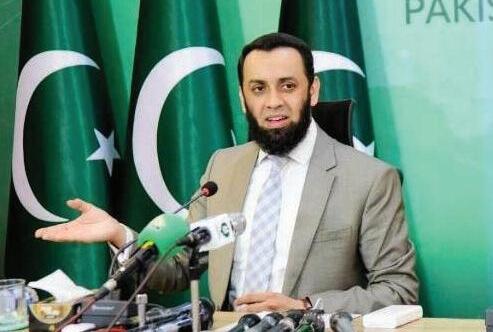
The meeting was attended by Deputy Prime Minister and Foreign Minister Ishaq Dar, Planning Minister Ahsan Iqbal, Information Minister Attaullah Tarar Minister of State Bilal Azhar Kayani and other senior government officials
BEIJING/ISLAMABAD
M I A N A B R A R
Shehbaz Sharif will depart for China today on a three-day official visit at the invitation of Chinese Premier Li Qiang, as Islamabad and Beijing prepare to celebrate 75 years of diplomatic relations with renewed commitments to strategic cooperation and economic integration The visit from May 23 to 26 is expected to open a new chapter in the longstanding Pakistan-China partnership, widely regarded as one of the most enduring and trusted bilateral relationships in the region Speaking at a ceremony in Islamabad marking the anniversary of diplomatic ties Prime Minister Shehbaz
SITARA PETROLEUM LISTS ON PSX AFTER RS4.8B
DEMAND SURGES ACROSS TRANCHES
g importers sAy 26-28% tAx differentiAl on rAw mAteriAl imports is encourAging informAl trAde, revenue leAkAges And misuse of industriAl import chAnnels
ferential between commercial and industrial imports or reducing the gap to a maximum of 2-3% They said rationalising tax rates on commercial imports could increase documented imports, discourage informal practices and improve tax revenue collection Industry representatives further claimed that the commercial import bill could potentially double if the market was brought into the documented economy through tax reforms
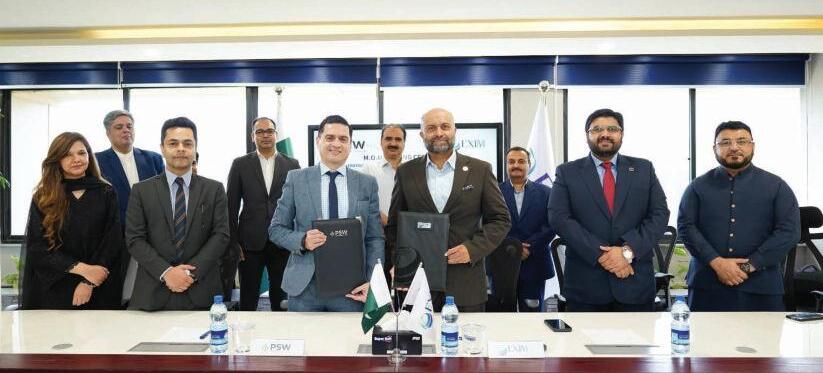
M o n i to r i n g D e s k Pakistan and Germany on Thursday signed a technical cooperation agreement worth €40 5 million to implement nine development projects across Pakistan, according to the Economic Affairs Division The agreement is aimed at strengthening bilateral development cooperation in key sectors including climate resilience social protection and renewable energy Under the arrangement, the German development bank KfW Development Bank will provide financial and technical assistance for the execution of the nine projects The signing ceremony was held be-
tween Secretary Economic Affairs Muhammad Humair Karim Kidwai and German Ambassador to Pakistan Ina Lepel, in the presence of senior officials from the Ministry of Economic Affairs and the German Embassy Pakistan and Germany have maintained development cooperation since 1961, with the current active bilateral portfolio estimated at around €550 million Officials said Germany remains one of Pakistan’s key development partners with the new agreement reinforcing ongoing collaboration in sustainable development initiatives
Secretary Economic Affairs Muhammad Humair Karim Kidwai acknowledged Germany s continued support for Pakistan’s socio-economic
development and said the partnership has been built on long-standing trust and cooperation German Ambassador Ina Lepel said Germany values its partnership with Pakistan and remains committed to supporting projects focused on sustainable and inclusive development She added that the agreement reflects shared priorities in addressing climate change, advancing energy transition goals and reducing social vulnerability through joint initiatives
The ambassador expressed confidence that the nine projects under the agreement would deliver tangible benefits at the community level and further strengthen bilateral relations between the two countries
Authority (Amendment) Bill, 2026 Minister of
Bilal Azhar Kayani, Federal
Azam Nazeer Tarar and Parliamentary Affairs Minister Tariq Fazal Chaudhry presented the bills in the House According to the statement of objects and reasons attached to the Fiscal Responsibility and Debt Limitation (Amendment) Bill, 2026, the existing Fiscal Responsibility and Debt Limitation Act, 2005 seeks to reduce the federal fiscal deficit and public debt-to-GDP ratio through effective debt management The statement noted that the Debt Management Office established under the Act has historically functioned with limited institutional capacity despite providing critical support to stakeholders The amendment seeks to expand the scope of the DMO, strengthen its institutional framework and provide resources required for effective planning and execution of the government’s debt management functions
PM Shehbaz invites Qatari investment in Pakistan's tourism, real estate and hospitalit y sectors
Pakistan plans strategic oil reser ves at Gwadar Energy City, seeks Gulf investment
CONTINUED FROM PAGE 01
According to the Chinese Foreign Ministry, Prime Minister Shehbaz Sharif will hold meetings with Chinese leadership during the visit, attend celebrations marking the 75th anniversary of diplomatic relations and visit Zhejiang province one of China s leading economic and technological hubs
Chinese Foreign Ministry spokesperson Guo Jiakun described the trip as an important high-level exchange aimed at strengthening political mutual trust and deepening cooperation across multiple sectors
“China hopes both sides will take the visit as an opportunity to carry forward traditional friendship deepen cooperation across the board and write a new chapter in building an even closer China-Pakistan community with a shared future Guo said
Analysts view the Zhejiang leg of the visit as particularly significant, signaling Pakistan s interest in attracting greater Chinese private-sector investment in manufacturing, technology and industrial cooperation Qian Feng said the visit indicated Islamabad’s desire to inject fresh momentum into bilateral economic collaboration by encouraging Chinese enterprises to expand operations in Pakistan
At the center of bilateral economic ties remains the China-Pakistan Economic Corridor, launched in 2013 under
China’s Belt and Road Initiative Chinese Ambassador Jiang Zaidong recently said CPEC had attracted over $25 9 billion in direct investment and created more than 260 000 jobs in Pakistan
The project has also added over 8,000 megawatts of electricity to Pakistan s national grid, developed hundreds of kilometers of roads and transmission infrastructure, and transformed Gwadar Port into a key regional trade hub Major projects under CPEC include the Suki Kinari Hydropower Project in Khyber Pakhtunkhwa which generates 884 megawatts of clean energy while helping reduce dependence on coal-based power generation Pakistan s Planning Minister Ahsan Iqbal has said CPEC significantly strengthened Pakistan’s energy security, connectivity and infrastructure while laying the foundation for a modern economic framework
Both countries are now focused on advancing CPEC 2 0 the next phase of the corridor project which aims to shift cooperation from infrastructure construction toward industrialization, innovation and sustainable economic growth During the seventh round of the China-Pakistan Foreign Ministers’ Strategic Dialogue earlier this year, both sides agreed to prioritize industry agriculture and mining while improving Gwadar Port operations and strengthening the strategic Karakoram Highway corridor
CONTINUED FROM PAGE 01
Q ATA R I D E L E G AT I O N A R R I V E S I N T E H R A N F O R TA L K S Separately, a Qatari negotiating team also arrived in Tehran on Friday in coordination with the united States to help secure a possible agreement aimed at ending the conflict and resolving outstanding issues, a source familiar with the matter told Reuters Doha, which has previously played a mediating role in regional conflicts had until now
distanced itself from an official mediation role in the Iran crisis following attacks involving Iranian missiles and drones during the latest escalation RUBIO SAYS SLIGHT PROGRESS’ IN IRAN TALKS uS Secretary of State Marco Rubio said there had been slight progress” in talks with Iran, while cautioning that uncertainty remains over whether a deal will ultimately be reached or whether hostilities could resume He said discussions were ongoing but warned against over-
stating progress, noting that while there had been a little bit of movement,” a comprehensive agreement remained elusive INTERIOR MINISTER NAQVI, IRANIAN FM ARAGHCHI REVIEW PROPOSALS
Interior Minister Mohsin Naqvi held a meeting with Iran s Foreign Minister Abbas Araghchi in Tehran to review proposals aimed at resolving ongoing disputes according to Tasnim News Agency as Pakistan continues its diplomatic efforts to facilitate dialogue between the united States
and Iran The meeting comes amid sustained Pakistani attempts to mediate between Washington and Tehran following earlier rounds of engagement including reported discussions hosted in Islamabad earlier this year The first round of direct uS-Iran talks was held on April 11 and 12 after a Pakistan-brokered ceasefire on April 8 While the talks ended without a breakthrough agreement they also did not collapse uS President Donald Trump later called off a planned visit of uS Special Envoy Steve Witkoff and adviser Jared Kushner to Islamabad for a second round of negotiations with Iran He also extended the ceasefire indefinitely citing requests from Field Marshal Asim Munir and PM Shehbaz Sharif Pakistan has since stepped up its diplomatic outreach with Interior Minister Mohsin Naqvi visiting Tehran for the second time in less than a week to help revive negotiations During his earlier engagements, he met Iran’s president, parliament speaker and foreign minister The Chief of Defence Forces and Chief of Army Staff Field Marshal Asim Munir had also visited Iran for three days last month
Creating oil reser ves
OI L reserves are a good idea, and just because Pakistan escaped oil shortages during the current crisis, does not mean that a buffer stock of fuel would have been unwelcome The problem with a national oil reserve is that it represents tied up money for whoever has paid for it and a lot of money for it will have to cover several days of national use if it is to be of any use Then there is the problem of storage, for huge storage will either have to be built or found (The US National Reserve of 274 million barrels is stored in underground caverns created by salt mining in Texas and Louisiana states, which have a capacity for 714 million barrels ) Pakistan is weaving the national reserve into the Energy City proposal which in turn is part of a proposal which calls for three or four more new ports to be built across the Makran Coast of Balochistan apart from Gwadar
The Energy City is supposed to be a specialized port dealing with petrochemicals, and is supposed to be centred around a refinery that was to have been built by Saudi Arabia That refinery has something of a chequered history, for it was originally targeted for Ratnagiri Maharashtra India but had to be cancelled because of land acquisition problems The project was moved to Pakistan but has not moved forward much Placing it at the centre of an Energy City is meant to provide a sort of jump start to what was to have been a $44 billion project The cost of storing the crude oil would be shifted to the refinery, for while the storage would be the refinery s, Pakistan would have first call on those reserves in the event of some disaster such as a war Otherwise presumably they would operate as normal storages
The problem with this is that the national petroleum reserve is downgraded from a top priority to something that is tagged along with the Energy City idea The national reserve is too important to be treated so casually, as something merely desirable rather than a necessity For the foreseeable future, Pakistan is going to be an oil economy The switch to renewables for its power needs will take time and the changeover to EVs for all transport needs will take longer So long as oil continues to be used, an national reserve will be necessary
Dedicated to the legac y of late Hameed Nizami Arif Nizami (Late) Founding Editor
M A Niazi Editor Pakistan Today Babar Nizami Editor Profit
Nile civilization, and in Pakistan the Indus Valley civilization, Mohenjo-Daro, Harappa and other civilizations are the signs of historic agricultural period and transformation Sociologists and archeologists claim this socio-cultural change happened around 5000 to 8000 years back in history
Social development kept on changing the social, economic and technological fabrics of society The gigantic shift of agricultural development steadily switched societies later on to small industries and dragged people to an industrial phase called industrial revolution The work which used to be done earlier by human beings in farms, shifted to steam and coal engines, and
FO R decades developing economies have been told a comforting story: reduce tariffs open markets and prosperity will naturally follow The argument appears elegant in economic textbooks Economical imports reduce production costs, industries become more competitive, exports rise, and growth accelerates In theory, it sounds rational In practice however nations do not compete in laboratories of theory They compete in the harsh realities of unequal power unequal infrastructure and unequal state capacity Pakistan today stands trapped between economic doctrine and economic reality The central crisis of Pakistan’s economy is not simply taxation, tariffs, or trade policy It is the absence of a coherent industrial vision Policymakers continue searching for shortcuts toward export growth while ignoring the structural weaknesses that prevent domestic industry from surviving global competition in the first place No country can become an export powerhouse merely by opening its markets if its industries remain technologically weak, financially burdened and institutionally unsupported In theory liberalization appears simple Lower tariffs make imports cheaper Cheap imports reduce production costs Lower costs improve competitiveness Competitiveness increases exports Exports create growth But economies do not function in theoretical isolation The success of open markets depends heavily upon institutional readiness Countries with strong infrastructure advanced technology stable governance affordable financing and efficient industrial ecosystems may indeed benefit from rapid liberalization Countries lacking these foundations often experience the opposite
Pakistan s manufacturers do not operate under globally competitive conditions They face high electricity prices unstable taxation policy uncertainty expensive borrowing weak logistics and recurring currency instability Under such circumstances unrestricted competition with industrial powers does not create efficiency It accelerates industrial decline The global economy is not a level playing field Industrial powers possess decades of accumulated technological expertise, large scale manufacturing networks state-backed financing advanced logistics and research capabilities Developing economies entering direct competition without equivalent support are not participating in fair competition; they are entering structural disadvantage This imbalance explains why many domestic industries struggle to survive despite entrepreneurial potential Industrial capability is not built overnight It
administration police and so on which was because the manual efforts bore no value at the time when computer and internet performed such tasks for far less energy than the energy consumed by human beings The tremendous change not only turned the society’s socio-economic milieu but also increased the scope of social sciences; resultantly a huge bulk of folk turned to these disciplines for degrees and consequently natural sciences and life sciences lost their worth so that fewer people got admissions in applied sciences The access to information approach or information-based society produced a great number of jobs for the university graduates However this move could not remain till long and a new and the latest change
requires long-term investment, patient policy support, technological learning, workforce development, and economic stability Simply exposing weak industries to stronger competitors does not automatically strengthen them In many cases it destroys them before they mature One of the most overlooked distinctions in Pakistan s economic discourse is the difference between trade-based activity and production-based growth Trading imported goods can generate rapid profits with relatively low risk Manufacturing, however, operates on an entirely different logic Factories require years of investment before returns emerge Industrial development depends upon machinery technical expertise quality control workforce training supply chains infrastructure and research Manufacturers survive on thin margins while carrying enormous long term risk Yet despite its difficulty, manufacturing remains essential because it creates national capability It produces skilled employment technological knowledge export sophistication and economic resilience Countries that abandon manufacturing eventually become dependent upon the productive strength of others A nation that only imports may appear commercially vibrant, but consumption without production creates a fragile economic foundation Pakistan’s recurring economic crises reflect this structural imbalance Rising imports increase trade deficits Foreign reserves weaken Currency depreciation fuels inflation External borrowing expands Eventually, the country returns to international lenders for stabilization This pattern has repeated so frequently that crisis management itself has become normalized Yet the deeper issue remains unresolved: Pakistan consumes more than it competitively produces Economic growth driven primarily through imports and borrowing creates the illusion of modernization without genuine industrial strength Markets become filled with foreign products while domestic production weakens quietly in the background Over time, this transforms economic dependency into strategic vulnerability History offers an important lesson often ignored in contemporary debates No major industrial power emerged solely through blind market openness during its developmental stage Successful economies invested heavily in infrastructure, protected strategic sectors when necessary, encouraged technology transfer, developed domestic capability and pursued long term industrial planning Industrialization has always required strategic patience This does not justify permanent protectionism or economic isolation Excessive protection without accountability can create inefficiency and corruption However, there is equal danger in premature liberalization
came forth to modify the nature of jobs from services to communication and managerial skills
The era is termed as the AI or Algorithmic era
The shift posed a serious threat to the countries facing high and unchecked population growth like Pakistan The modern systemic change of AI demands extraordinary computer, communication and technical skills but the ground realities are completely negating this fact which could ultimately lead to grave consequences Every new transformation makes old job patterns irrelevant but creates new opportunities simultaneously As the algorithmic revolution has progressed through the plentiful communication sources like computers and the internet, those people could certainly survive perfectly who could align their skills with the latest tools otherwise it may lead to disappointment
It is thus extraordinarily important that the people should harmonize their capabilities with the modern trends and equip the new generation with AI-related technical jobs, like AI content writing, graphics, AI-engineering, e-business, freelancing and so on However the choice for social services is still intact in this era; if the young generation is trained to be critical creative communicative and collaborative otherwise the devastating flood of AI would carry them away helplessly
Muhammad Rahim Nasar Lecturer in the Department of Sociology University of Balochistan Quetta Email rahimnasar83@gmail com
It is thus extraordinarily impor tant that the people should harmonize their capabilities with the modern trends and equip the new generation with AI-related technical jobs, like AI content writing, graphics, AI-engineering, e-business, freelancing and so on However, the choice for social services is still intact in this era; if the young generation is trained to be critical, creative, communicative and collaborative, otherwise the devastating flood of AI would carry them away helplessly
System fails, AI helps
dR m Rahim nasaR
Rizwan ahmad
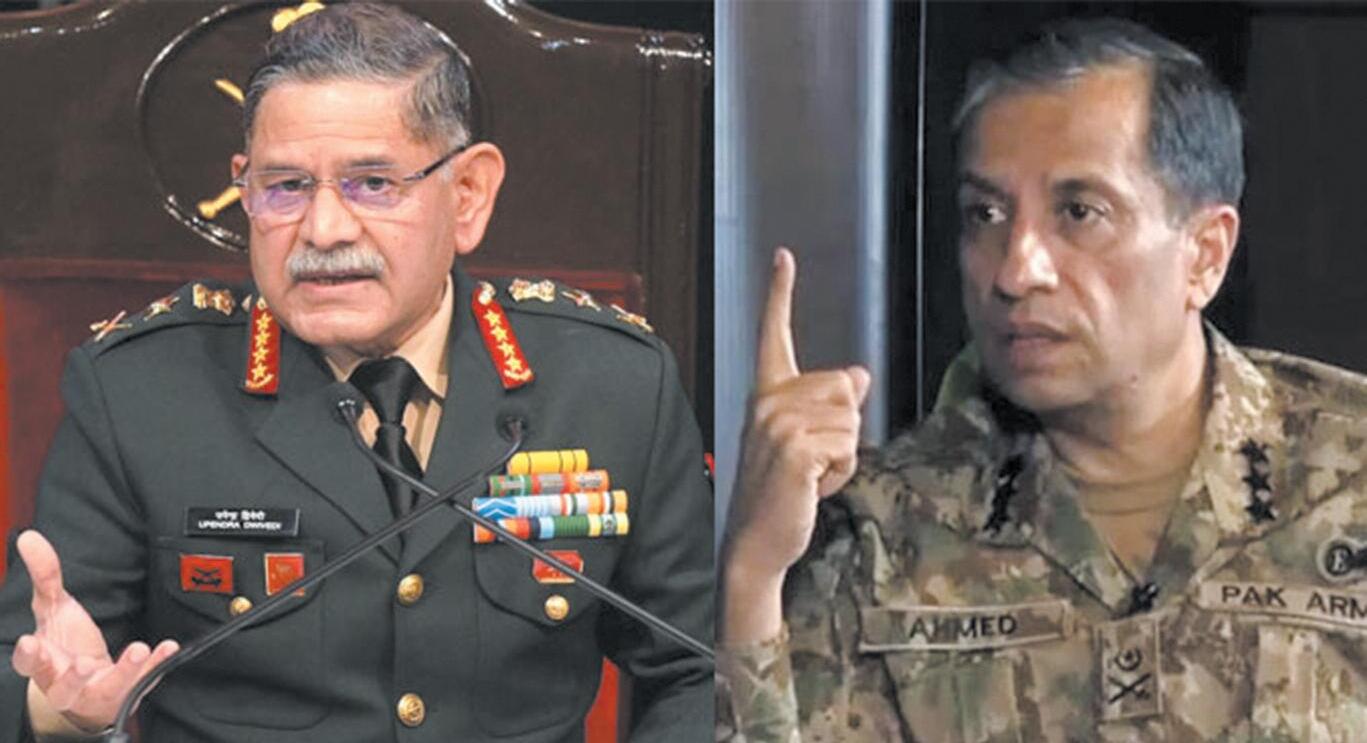
TH E exchange between Indian Army Chief Gen Upendra Dwivedi and Pakistan s military media wing, Inter-Services Public Relations, highlighted the deep historical, ideological, and psychological tensions between India and Pakistan
General Dwivedi’s statement questioning whether Pakistan wanted to remain part of geography and history was taken in Pakistan as a challenge to the country s ideological foundation rooted in the two-nation theory and the creation of Pakistan in 1947 It revived fears that India has never fully accepted partition and still aspires to an “Akhand Bharat ”
The ISPR responded by reaffirming Pakistan s identity sovereignty and permanence as a nation of more than 240 million people with nuclear capability and a secure place in South Asian history Pakistan’s status as a recognized nuclear power was emphasized as the core guarantee of sovereignty that fundamentally changes the nature of any conflict and makes attempts to erase Pakistan politically unrealistic and militarily catastrophic
The response also criticized Hindutva thinking, identifying it as an ideology that defines India as a Hindu nation at the expense of minorities and seeks regional dominance while Pakistan positioned itself as supporting mutual respect and peaceful coexistence Pakistan s geographical and historical importance was underscored through its borders with India, China, Afghanistan, and Iran, the strategic role of Gwadar Port and the China-Pakistan Economic Corridor, the Indus River system and its place in regional geopolitics involving the United States China and Russia
References to the Indus Valley Civilization, the Gandhara, Maurya, Ghaznavid, Mughal, and British Raj empires, and Pakistan’s 76 years of independent statehood, wars democratic transitions and struggle for recognition reinforced the claim that Pakistan s existence is rooted in both geography and history The ISPR also stated that India had failed to learn the lessons of eight decades since partition, including four wars, repeated border clashes, and diplomatic crises, main-
taining that military threats and aggressive rhetoric only deepen mistrust, fuel arms races, push South Asia toward catastrophe and divert resources away from development healthcare education and poverty reduction in one of the world s poorest regions
The ISPR characterized India s attitude as arrogant, narrow-minded, and belligerent, saying that questioning Pakistan’s right to exist reflected “mental bankruptcy India’s rhetoric was contrasted with the restraint expected of responsible nuclear powers such as the USA and Russia during the Cold War where rivalries were managed through communication and mutual recognition of survival rather than threats of erasure
The ISPR also accused India of statesponsored terrorism alleging involvement in Balochistan and Karachi and claiming India spreads misleading information internationally to isolate Pakistan diplomatically and financially while diverting attention from human rights concerns in Kashmir It further stated that India’s aggressive rhetoric stems from frustration over failing to weaken Pakistan despite diplomatic isolation campaigns economic pressure and alleged false surgical strike claims while Pakistan continues to strengthen its military capabilities maintain relations with countries such as China and Turkey, and remain active in regional and international affairs
The ISPR then issued a warning against pushing South Asia toward another war stressing that any conflict would not remain confined to geographical boundaries and could extend into asymmetric warfare, attacks on major cities and economic centres, and potentially nuclear escalation It warned that the political and strategic costs for India would become unacceptable regardless of military objectives and that a full-scale conflict could draw in outside powers such as China force involvement or mediation by the USA and European countries, disrupt
global trade routes, raise oil prices, and create worldwide fear of nuclear war, making India’s aggressive rhetoric dangerous not only for South Asia but for the broader international community
Therefore the ISPR concluded India must recognize the importance of Pakistan and pursue the path of peaceful co-existence
The word “importance” here is carefully chosen It is not just about respect or friendship It is about recognizing that Pakistan is a major regional power with legitimate interests that cannot be ignored or suppressed Peaceful co-existence in this context means accepting that the two countries will have disagreements but those disagreements must be managed through dialogue, not through threats of erasure or war It means respecting each other s sovereignty and territorial integrity refraining from cross-border terrorism and propaganda and working together on common challenges such as poverty, climate change, and regional connectivity
Turning to the domestic reaction within Pakistan, it is important to elaborate on how the nation has rallied behind the Pakistan Army in response to this incident The ISPR s statement was immediately welcomed by political leaders from across the spectrum In a rare display of unity, the ruling coalition and the opposition parties issued separate but similarly worded statements condemning the Indian Army Chief s remarks and praising the Pakistan Army for its firm response
The public reaction has been overwhelmingly supportive of the military Ordinary Pakistanis expressed their anger and disappointment at the Indian Army Chief ’s words but they also expressed pride in how their army responded People from all four provinces from Karachi to Khyber from Lahore to Quetta voiced their full support for any action the military might take to protect the country s honour and security
The statement that the whole nation is ready to teach India a strict lesson once more in response to any dirty intentions in the future is not merely rhetorical It reflects a deep and genuine readiness among the Pakistani public to support their military in any future conflict This readiness is rooted in decades of lived experience Therefore, when the ISPR says that the whole nation is ready to teach India a lesson, it is not an exaggeration It is an accurate
The languag e of civilizational superiority and existential threats has no place in a nucleariz ed South Asia The only responsible way forward is through dialogue , restraint, and a g enuine acceptance of each otherÊs right to exist. Until India is ready to take that path, the Pakistan Army and the people of Pakistan remain vigilant, united, and prepared to respond to any challeng e with the utmost firmness and resolve
the third fact – perhaps the most important of all: Iran feels emboldened To understand why one has to look not only at Iran but at the broader regional set of proxies that it leads What is being felt today in Tehran is also being felt in Gaza, in Lebanon, and in Yemen Hamas, Hezbollah, and the Houthis all believe that while they have suffered devastating blows, they have nevertheless survived confrontations with some of the most powerful militaries in the world and that this is the main story
In Gaza Hamas leaders have repeatedly told international mediators that they see no reason to disarm Their argument is that they endured two years of nonstop Israeli military operations and remain standing They continue to recruit fighters, they continue to manufacture weapons, and despite Israel’s tactical successes – like the elimination on Friday of Hamas military commander Izz ad-Din al-Haddad – the organization is still in control of 50% of Gaza Iran feels the same For 40 days it endured unprecedented attacks from two of the world s most powerful militaries and survived The regime is still there, its command structure still functions, and reconstruction is already underway at missile bases and nuclear sites As a result Tehran believes that it can do to Trump what he is trying to do to them – pressure him into a compromise
This alone is possibly the strongest argument why Trump should strike Iran and its proxies need to understand that survival is not victory They need to understand there are consequences If that lesson is not made clear, the consequences will extend beyond this current conflict and tragically lead soon to another one
Under the current circumstances an attack would send a message that there is a price to ignoring America there is a cost for escalation and policies of terror and uranium enrichment will not be tolerated So what will Trump do?
The honest answer is that nobody knows, including possibly the president himself Which means that, for now, the region waits – hoping that whatever decision is made ultimately leads to the best possible outcome for the people of Iran for the Gulf states for Israel and for the entire world PRO-ISRAEL BOOKS ARE DISAPPEARING FROM BOOKSTORE SHELVES: I was in London this week for a few meetings, and as I often try to do, I stopped in a bookstore This time it was Daunt Books, one of London’s oldest and finest As expected, and perhaps unsurprisingly given the current climate the Middle East section was front and center Prominently displayed were books accusing Israel of genocide (Omer Bartov s Israel – What Went Wrong and Genocide in Gaza by Avi Shlaim), books about alleged Israeli war crimes in Gaza (Ungrounding: The Architecture of Genocide by Eyal Weizman), books about the so-called occupation (I Saw Ramallah by Mourid Barghouti), and of course Peter Beinart’s latest book (Being Jewish After the Destruction of Gaza) about his problem being
bAsiT AlVi
FREED GA Z A FLOTILL A ACTIVISTS ALLEGE ISRAELI
ABUSE INCLUDING RAPE
Trump announces 5,000 more US troops for Poland before NATO talks
A G E N C I E S
A political settlement between the United States and Iran has a 50-50 chance of materialising according to Anwar Gargash, diplomatic adviser to the UAE president, who also cautioned that a fresh round of fighting would deepen regional instability Speaking at the Globsec conference in Prague on Friday Gargash said any agreement must go beyond a simple ceasefire and address the underlying causes of tension in the region He said a settlement focused only on halting hostilities could leave the door open to another conflict later Pakistan has been mediating a US-Iran ceasefire aimed at ending a war that has rattled
the global economy and disrupted shipping through the Strait of Hormuz, a vital route for roughly a fifth of global oil and liquefied natural gas shipments Gargash said the chances of a peace agreement were evenly balanced and expressed concern over Tehran s negotiating approach He added that Iran had missed opportunities in the past because in his view it had overestimated its leverage This is not something new They have missed many opportunities over the years because of a tendency to overestimate their cards I hope they don’t do that this time C
N Gargash said the region needed a political solution and warned that another military
confrontation would make the situation more difficult He stressed that the objective should not be a ceasefire alone if the deeper drivers of instability remain unresolved
According to the report Gargash said that was not the outcome being sought, underlining the need for a more durable arrangement C
The report said Iran has repeatedly targeted the UAE during the conflict, including attacks on civilian infrastructure and areas near US military facilities hosted by the Gulf state Emirati officials said Iranian drone and missile strikes hit desalination plants, energy facilities, and areas around Dubai
and Abu Dhabi Gargash also warned against any move that would place the Strait of Hormuz under Iranian leverage,
additional 5 000 Troops to Poland The announcement marked a sharp shift after weeks in which Trump had strongly criticised
APEC trade ministers' meeting opens in
governance as well as practical cooperation in emerging and frontier areas of common concern to all parties As an important institutional meeting customarily held midway through the APEC host year the trade ministers' meeting is tasked with contributing outcomes to the APEC Economic Leaders Meeting and serves as a barometer of economic and trade policy trends in the Asia-Pacific region and beyond China s Minister of Commerce Wang Wentao said Wang noted that the meeting is taking place against the backdrop of a complex international landscape marked by escalating geopolitical tensions and the rise of unilateralism and protectionism, which have posed severe challenges to the global economic and trade order and weighed on growth in both the Asia-Pacific region and the wider world Under such circumstances, all parties are placing greater expectations on the meeting to build consensus and deliver tangible outcomes
CORPORATE CORNER
CEO
Punjab reviews progress at Pakistan’s largest IT hub,
NSIT Cit y
police officers across the province to remain actively present in the field during Eidul Azha instead of staying confined to their offices, as the provincial government finalized extensive arrangements aimed at ensuring security, cleanliness and public facilitation throughout the holidays Chairing a high-level video-link meet-
Meanwhile 163 illegally residing individuals are currently present at different holding points, officials said on Friday Providing details, the Punjab Police spokesperson said the deported individuals include 13 728 men 7 048 women and 14 366 children Of those deported 10 898 were residence proof holders 11 131 were Afghan Citizen Card holders, while 13,113 were illegally residing for-
legally residing individuals is being carried out in line with the government policy and applicable international legal frameworks He said Punjab Police is implementing the deportation policy of illegally residing persons in a structured and lawful manner Security heightened at mosques, imambargahs and key locations Meanwhile security remained on high alert across Punjab, including Lahore, on the occasion of jummatul Mubarak The Punjab Inspector General of Police issued directives to further enhance security at mosques imambargahs shrines
markets business centers and other sensitive locations
In line with the instructions, effective patrolling was ensured around mosques, imambargahs, commercial hubs and major highways across the province Punjab IGP Abdul Kareem said maintaining law and order and protecting the lives, property and belongings of citizens remains the top priority of the Punjab Police He said all District Police Officers and senior officials remained present in the field and personally supervised security arrangements
He further said that in accordance with the IG s directives, police officers also interacted with citizens after Friday prayers at mosques, listened to their concerns and took immediate on-the-spot measures for resolution where required
DAr l AuDs PAKIstAn mIssIons As government Pushes results-orIenteD DIPlomACY
The meeting reviewed progress under the programme and expressed satisfaction over its implementation status It also directed that any savings generated from previous years be reallocated within the same sector and respective provinces to ensure continued development impact Dar emphasized the importance of engaging local communities in identifying development schemes to ensure that SAP funds are utilized effectively and in the best interest of the public
Bilawal c alls for K arachi ’s inclusion in Pakistan’s defence produc tion push
Pakistan Peoples Party Chairman
Bilawal Bhutto-Zardari on Friday called for a greater role for Karachi in Pakistan s locally made defence production sector, saying international interest in the country’s military hardware had risen after the May 2025 conflict with India
Speaking at a ceremony held after the inauguration of Karachi s Shahrah-e-Bhutto, the former foreign minister said Pakistan was seeing growing demand for defence products manufactured in the country He said this trend had strengthened following what he described as Pakistan s victory over India in the four-day war in May 2025 Bilawal said several countries had shown interest in buying defence equipment from Pakistan adding that battle-tested systems were preferred internationally Referring to Karachi s industrial importance, he said the city should also become part of the country s defence manufacturing effort According to the report, the
four-day conflict between the two nuclear-armed neighbours began on May 7 last year after India launched what was described as an unprovoked attack on Pakistan following an attack on tourists in Indian Illegally Occupied Jammu and Kashmir In response Pakistan downed eight Indian fighter aircraft, including French-made Rafale jets, as well as dozens of drones, the report said It added that after Islamabad’s military success countries including Iran Bangladesh and Libya reportedly expressed interest in acquiring Pakistani military equipment
The report also said that in January, Minister for Defence Production Raza Hayat Haraj confirmed the country was in talks with several states over possible agreements for the sale of JF-17 Thunder fighter jets The report cited The News, which in turn quoted the BBC It further said the outcome of the May 2025 war strengthened Pakistan’s standing internationally with Islamabad emerging as an important mediator between the
United States and Iran in efforts aimed at resolving their disputes Comments on regional conflict and economy Bilawal also spoke about the impact of the Middle East conflict saying its burden was falling on ordinary people who were already facing high electricity and gas bills
He said peace in the region would help ease economic pressures and warned that a prolonged conflict would worsen the situation
According to the report the war in the Middle East began on February 28 after the United States and Israel launched coordinated strikes on Iran
The report said Tehran responded by targeting Israel and US bases across the region while also effectively closing the Strait of Hormuz which led to a sharp rise in global oil prices Bilawal s remarks linked the regional security situation with domestic economic strain, as he urged an end to the conflict and called for Karachi to be included in Pakistan s expanding defence production landscape
50°C during the forecast period It added that severe heatwave conditions are also expected in Shaheed Benazirabad Khairpur Ghotki and Naushahro Feroze In Hyderabad Badin Tharparkar Umerkot and Mirpurkhas, temperatures are likely to remain between 44°C and 47°C The department said Matiari, Tando Muhammad Khan, Jamshoro and Sanghar could also see temperatures rising up to 47°C
Precautionary advice issued
The PMD advised children women and elderly people to take precautionary measures during the heatwave spell It also urged farmers and growers to ensure proper care of crops and livestock in view of the expected weather conditions Karachi to remain hot and humid
While Karachi is not expected to face the same level of extreme heat as interior Sindh the city is forecast to experience hot and humid weather over the next three days The maximum temperature in Karachi may reach 36 C on Friday while temperatures on May 23 and May 24 are expected to stay between 35°C and 37°C Countrywide heatwave alert already in place
The latest Sindh-specific advisory follows a broader warning issued by the PMD on Thursday, when it said moderate to severe heatwave conditions were likely to affect most parts of the country from May 25 to May 31 According to the Met Office the same high-pressure system is expected to develop on May 25 and intensify further from May 26, leading to a significant increase in temperatures across parts of Punjab, Sindh, Khyber Pakhtunkhwa,
ISLAMABAD S TA F F R E P O R T
The National Cyber Crime Investigation Agency (NCCIA) said on Friday it had dismantled a group accused of obtaining and selling sensitive personal information of government officers to foreign entities and arrested four suspects in South Punjab
Speaking at a press conference, NCCIA Director General Syed Khurram Ali said the group had been collecting and selling call records CNIC details and passport information of key officials The arrested suspects were identified as Arshad Tariq, Arham Bari, Anam Sabir and Mohammad Rizwan
According to the NCCIA chief forensic analysis of the suspects’ mobile phones has already been carried out as part of the investigation He said the accused had been sharing the data with foreign intelligence agencies and described the case as organised
espionage and cybercrime
Cases registered, inquiry widened
Ali said the agency had registered cases over the unlawful transfer of data outside Pakistan He added that investigators were also examining the email accounts of institutional staff to determine how the information had been accessed
The NCCIA has also instructed government institutions to improve their data protection systems and ensure that sensitive information is not available to unauthorised persons Ali said responsibility for protecting such data lies with those who are given access to it
He said the investigation was continuing to identify any government officials who may have facilitated the breach Separate action over online campaign
During the same press conference the NCCIA director general also disclosed that a number of in-
dividuals had been arrested over an online campaign calling for Swat to be made part of Afghanistan He warned that action would be taken against those who speak against the state Referring to the agency’s role, Ali said:
If the NCCIA does not take action against those who do not trust the state of Pakistan then what should it do?”
He also said the NCCIA currently has 480 personnel deployed across the country and that efforts were under way to build the agency’s capacity further
The developments were shared by the NCCIA chief as the agency outlined its ongoing cybercrime and data security operations The case involving the alleged sale of officials personal data remains under investigation, with authorities focusing on both the suspects already in custody and possible facilitators linked to the breach