

Welcome to the 158th issue of the Aussie Painting Contractor Magazine.
This month we look at some of the real pressures and opportunities facing painting businesses, from quoting, cash flow and getting paid, through to insurance, bookkeeping, customer service and using AI and automation to take back control of your time.
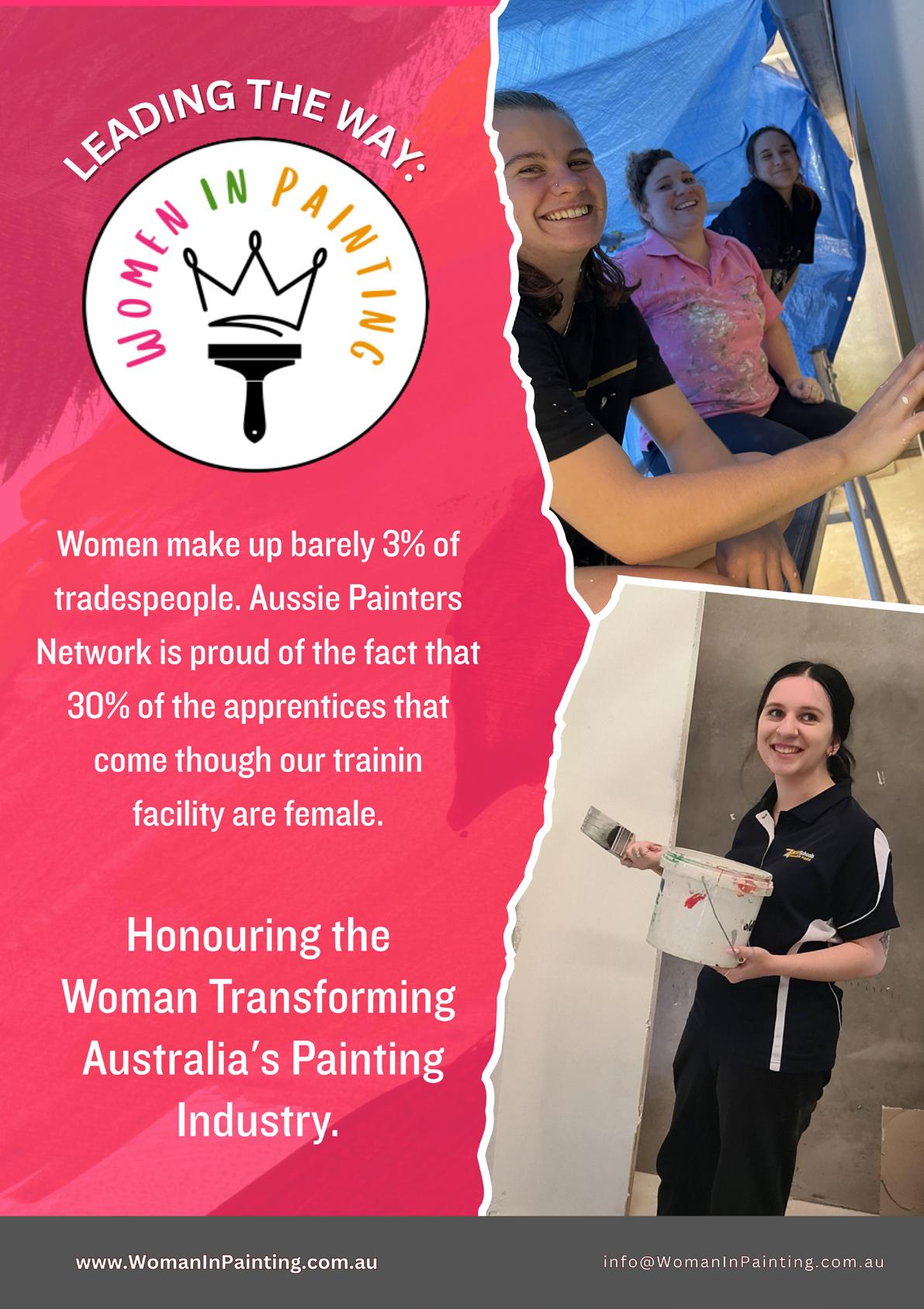
We also celebrate the continued momentum of Women in Painting, with more female applicants, apprentices and employers recognising the value women bring to our trade. It is great to see the industry changing, not just through talk, but through real placements, stronger support and better workplace education.
With our continued growth we have employed one of my old apprentices as a trainee trainer. I would like to welcome Jared to the team with him bringing knowledge from new housing, repaints and commercial work.
There is also plenty in this edition to help business owners think smarter, whether that means understanding your break-even point, protecting your tools, improving your systems or simply delivering better customer service.
As always, thank you to our contributors, advertisers and readers for continuing to support the magazine and the painting industry.
CONTRIBUTORS
• Caroline Miall
• Helen Kay
• Leo Babauta
• Nigel Gorman
• Robert Bauman
• Sandra Price
• Sharon Horwood
• Tegan Cohen EDITOR
Nigel Gorman GRAPHIC DESIGNER
J. Anne Delgado


Nigel Gorman











Opinions and viewpoints expressed in the Aussie Painting Contractor Magazine do not necessarily represent those of the editor, staff or publisher or any Aussie Painters Network’s staff or related parties. The publisher, Aussie Painters Network and Aussie

It happens: sometimes a comment from someone else can just ruin your day, or a message that feels hurtful can send you spiraling.
The sting feels personal, and you might replay this offense in your mind over and over. It’s such a human reaction.
Today I’m going to share wisdom from three ancient philosophies — Buddhism, Stoicism, and the Toltecs — that can help to not take things so personally. As we practice this, our day becomes a bit more peaceful, and we become less shut down.
What makes these teachings so powerful — and not so easy to implement — is that they demand we let go of something important: the idea that how others talk about us or treat us has some reflection on our worth as a person. This idea is not a fact, but a concept we assume. And letting it go can be liberating.
The Second Agreement
Don Miguel Ruiz, trained in the spiritual tradition of the Toltecs, wrote a book called, “The Four Agreements,” in which the second agreement is “Don’t take anything personally.”
He teaches that nothing other people do is because of you, but because of themselves — and the reality they’re living in, in their own heads.
Taking things personally, then, is rooted in what he calls “personal importance” — the assumption that everything is about you. What a strange assumption we make!
He adds that when we take something personally, we’re basically taking someone else’s “emotional garbage” and making it our own.
If we practice not taking things personally, we don’t have to place our trust in what others do or say — but rather trust ourselves to make responsible choices.
We’re only responsible for our own actions, not those of others. This gives us the freedom to move through the world without being wounded by the opinions or judgments of other people.
How to practice:
• Write this agreement down, stick it somewhere visible. Build awareness of when you’re taking something personally, by noticing when you’re feeling offended.
• Journal about it, even for just 5 minutes a day, and note how it made you feel. Don’t focus on what the other person said or did.
• Use a mantra to remind you, like “This isn’t about me” or “They’re doing their best.”
• When you notice yourself getting triggered, pause. Breathe. Remind yourself of the mantra. Bring some curiosity to what they’re saying.
The practice takes time, dropping this old habit isn’t easy at all, because when we’re caught up in it, it feels really true. Over time, it feels less true.

In Buddhism, one of the main teachings is that the way we see ourselves (as separate and unchanging) is an illusion of the mind. This is a deep topic that can take a lifetime to study.
But the practical application can be simpler: If someone is criticizing you, they’re not really criticizing you … they’re criticizing their mistaken idea of you. And there’s not really a “you” to defend!
When we understand that a person’s words and actions are a reflection of all of their life’s history and conditioning, and the stress they’re under right now, we might also have some compassion for them when they behave less-than-ideally. We might shift from, “Why are you doing this to me?” to “What pain are you going through?”
And once we realize that this self-importance we usually have is an illusion created in our own minds … we can also see that it’s our own decision whether we take something personally or not. That gives us a sense of empowerment, in the face of someone else’s words and actions.
The Stoics had lots of useful things to say on this topic, but for today I’ll just focus on one of my favorites, Epictetus.
He advised asking: “Is this something that is, or is not, in my control?” Other people’s thoughts, feelings, words and actions are not in our control. And so he advised the reaction, “Then it’s none of my concern.”
Taking things out of your control as your concern will only create misery.
Epictetus also wrote that whether or not we’re harmed by what others say is up to us — if we choose to be harmed, then we are.
“It is not he who reviles or strikes you who insults you, but your opinion that these things are insulting”.
How to practice:
Pause before reacting — don’t respond impulsively to the impression you get from someone else. This allows reason to come back online before emotions take over.

If someone speaks ill of you, instead of defending yourself, you can answer, “You must be ignorant of my other faults, or you wouldn’t speak of that one fault alone.” This allows humor to take the sting out of criticism.
Take in feedback: if there’s someone giving you feedback whose opinion you value, don’t ignore that feedback, but see what you can learn from it.
Epictetus, like Don Miguel Ruiz and the Buddhists, helps you to place control squarely back in your own hands.
Leo Babauta ZEN HABITS


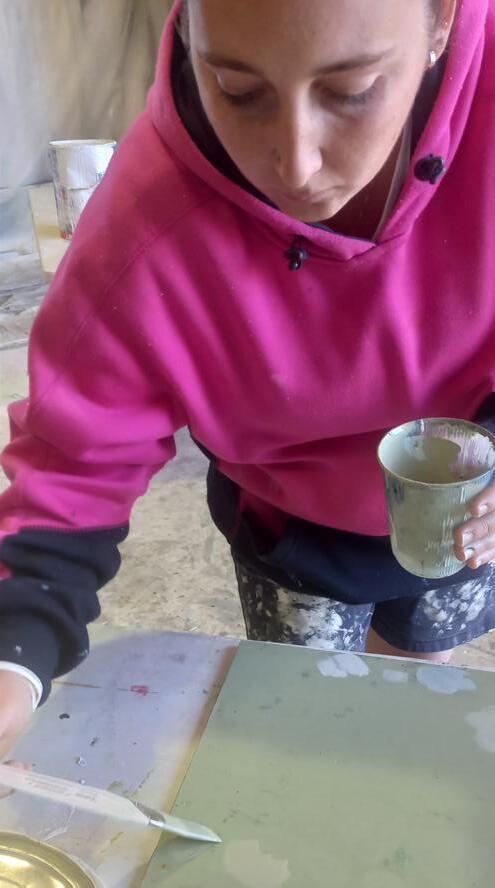
The painting and decorating industry is continuing to see a positive shift, with more women stepping into the trade than ever before—and the results are speaking for themselves.
At Aussie Painters Network, our recruitment and apprenticeship programs have seen a significant rise in female applicants, successful placements, and even employers specifically requesting female apprentices and tradespeople for their teams. What was once considered a heavily male-dominated trade is steadily becoming a more balanced and inclusive industry.
Employers are recognising the many advantages women bring to their businesses. Attention to detail, strong communication skills, professionalism, and a high level of pride in workmanship are frequently highlighted. Many business owners also report improved team morale, stronger workplace culture, and a more unified staff dynamic when women are part of the crew.
There is also strong feedback from clients—particularly homeowners—who often feel more comfortable and confident having women working within their homes. This creates a positive customer experience and strengthens business reputation.
Importantly, the industry is also becoming better at supporting women to succeed. Through stronger mentoring, better workplace education, and initiatives like Women in Painting, NAWIC & BUSY Sisters, employers are gaining a better understanding of how to create inclusive, respectful workplaces where everyone can thrive.
Women in Painting continues to provide an important platform for connection, support, and growth—giving women in the trade opportunities to share experiences, build networks, and support one another through every stage of their careers.
The future is bright. As more women enter the industry, more employers embrace the benefits, and more support systems continue to grow, painting and decorating is becoming a stronger, smarter, and more diverse trade for everyone.

The QBCC’s Industry Snapshot provides valuable insights into Queensland’s building and construction industry, including licensing trends, demographic shifts and defect reporting— providing an understanding of industry dynamics, planning workforce development, and improving compliance and quality standards.
SOME NOTABLE CHANGES OVER THE PAST TWO YEARS INCLUDE:
GROWTH IN LICENSEES
• Total licensees under the QBCC Act increased by 6.3% from 96,908 in 2023 to 103,011 in 2025 (total licensees are more than 120,000 under all Acts regulated by the QBCC).
• The most notable increases were in the Brisbane region (+7.5%) and the Sunshine Coast region (+11.7%).
DEMOGRAPHIC SHIFTS
• The proportion of licensees aged under 30 years has slightly increased, indicating a modest rejuvenation of the workforce.
• A large portion of licensees remain over 60 years old, especially in key trades like plumbing, painting and carpentry, highlighting ongoing succession challenges.
DEFECT TRENDS
• Painting continues to top the list of reported defects.
• Driveways and paths defects have increased in frequency.
• The incidence of footing and slab defects has increased.
If you need a refresher on any of these defective work items, the QBCC’s standards and tolerances guide is a quick and easy reference for industry, licensees and home owners, based on recognised industry standards in Queensland.
The QBCC will publish the Industry Snapshot annually to ensure the building and construction industry is armed with current and reliable industry data.
Licensee feedback and suggestions are welcomed, so the QBCC can continue to evolve and provide the most accurate picture of the industry possible.
To read the full and latest version of the Industry Snapshot or find out more on the state of the industry please visit www.qbcc.qld.gov.au


One of the most noticeable gaps in today’s business landscape isn’t pricing, products, or even marketing—it’s customer service. More specifically, it’s the lack of genuine acknowledgement and care shown to clients. In a world where customers have more choices than ever, this absence stands out—and not in a good way.
So the real question is: how can you elevate your business this year in a way that gets people talking— for the right reasons—without significantly increasing your costs?
It begins with a shift in mindset. Ask yourself: how can I create a better experience for my customers? Not through expensive overhauls or complicated systems, but through thoughtful, intentional improvements that make people feel seen, heard, and valued.
We’re operating in a time where businesses need to be more aware, more responsive, and more proactive than ever before. Customers are not just buying products or services—they’re buying experiences. And often, it’s the smallest details that leave the biggest impression.
Creativity plays a major role here. Standing out doesn’t always require doing more—it often comes
down to doing things differently, and doing them consistently well. A warm greeting, a willingness to help, remembering a returning customer, or simply being present and attentive can set you apart in ways that no marketing campaign can replicate.
Take a moment to reflect on your current customers. Are you truly acknowledging their importance to your business? Are you going beyond the basics to create a positive, memorable experience? What are you doing that makes your business distinct from others in your space? And perhaps most importantly, do your customers leave feeling appreciated—or just processed?
Word-of-mouth remains one of the most powerful drivers of business growth—especially when budgets are tight. People naturally share their experiences, whether good or bad. A great interaction can turn a customer into a loyal advocate. A poor one can quietly push them—and others—away.
I was reminded of this while shopping for birthday gifts. I visited a newly opened discount store that, at first glance, seemed to have everything going for it— wide aisles, a clean layout, and shelves fully stocked with products. It looked like a place designed for convenience and efficiency.
But despite its appearance, something was missing. There were very few staff members around, and no one available to assist customers. I found myself wandering through aisles, unsure where to find what I needed. What should have been a quick and easy shopping trip became frustrating and time-consuming. In the end, I left with only one item, despite intending to buy several.
Later, I visited another well-known store in the same complex. The difference was immediate and striking.
Staff were visible, approachable, and engaged. They weren’t just present—they were actively helping customers, answering questions, and guiding people to the right products.
It created a completely different atmosphere. The experience felt easier, more efficient, and even enjoyable. I quickly found what I needed—and more.
Unsurprisingly, I left that store having completed my entire shopping list.
As someone who values connection and conversation, I found myself chatting with other shoppers and even offering help where I could. And like most people, I shared my experiences afterward—both the positive and the negative. That’s how word-of-mouth works. It spreads naturally, and it carries weight.
The reality is this: every interaction a customer has with your business becomes part of the story they tell others. You may not hear it directly, but those conversations are happening—online, in person, and within networks you may never see.
So, where will your point of difference come from— now and in the future?
Will it be convenience? Personalization? Responsiveness? Or simply the way you make people feel when they engage with your business?
Because in the end, it’s rarely just about the product or the price. Customers remember how easy you made things for them.
They remember whether someone took the time to help. They remember whether they felt valued.
And those are the experiences they talk about—and come back for.




It’s called the infinite scroll – a design feature on social media, shopping, video and many other apps that continuously loads content as you reach the bottom of the page. Handy? Yes. Clever? Also yes. Devious? Very much so. The infinite scroll is likely the main reason you find it so hard to stop scrolling once you begin.
To understand why this design feature is so devious, we need to understand the psychology and behaviours it taps into.
First, the infinite scroll takes away a natural stopping point – where you might decide that’s enough social media for today. For example, Instagram feeds once stopped after all chronologically new posts from followed accounts had been viewed, and even told us we were “all caught up” for the day. Now, algorithmic feeds combined with the infinite scroll mean there’s no way to ever be caught up with it all.
The second reason you find it so hard to stop scrolling is the promise of something good that might be just about to pop up in your feed. The algorithm “knows” what you like. So, hand-in-hand with the infinite scroll, it keeps feeding you all those tasty tid-bits.
Putting it bluntly, these features help create an addiction of sorts. The promise of a little hit of dopamine when we see content we love. And addictions are hard to beat – but not impossible.
Here are some quick wins and longer-term solutions if you want to break free from the grip of the scroll.
Create a break
Your device might be the problem, but it can also be part of the solution. Start by using your phone’s screen time features – such as Android’s Digital Wellbeing or Apple’s Screen Time.
You can also install a more sophisticated third-party app that forces you to break the patterns of mindless scrolling behaviour.
Apps such as One Sec, ScreenZen, Opal and Freedom can short-circuit the automatic habits associated with scrolling in various ways. These include putting mandatory pauses before social media apps open, or applying colour filters (like grayscale) to make apps less appealing. They can even hard-block apps for specific periods of time if you really need a tough love approach.
Remove social media apps
This one’s usually met with an audible gasp when I suggest it, but you might find you adapt to not having social media at your fingertips faster than you’d imagine. You’re not deleting your accounts – just making it harder to open them and scroll.
Schedule some scrolling time
If you can’t imagine life without scrolling, schedule time each day for just that activity. It could be in your lunch break or when you get home from work: give yourself the freedom to scroll for the amount of time you set (say, 15 minutes) and don’t feel guilty about it.

Just remember you still have to close the apps and get on with your life as soon as the time is up.
hard work
The above might limit your scrolling in the short term, but long-term benefits (and emotional freedom) will likely take a bit more work.
The “easy” tips often work for a little while, when you’re motivated to change and feeling optimistic. But time and the pressures of life can start to erode your convictions.
So, to gain true freedom from scrolling, think about social media and whether it’s a relationship that serves you well. If you feel like it’s controlling you far more than you are controlling it, here are some things to consider. Be warned, they might not be easy.
What’s the deeper reason?
Think deeply about why you’re scrolling so much in the first place. Is it a lack of willpower? Are you avoiding something or someone? Are you suppressing feelings that you would prefer not to acknowledge?
All of these things can be reasons why we seek distraction. You might be avoiding a big thing (the state of a relationship) or a small thing (cooking dinner), but either way, scrolling is the symptom, not the disease. So, consider if scrolling might be part of a bigger problem you need to deal with instead.
Who’s benefiting whom?
Consider how much you really “need” social media. Do you actively use it in a way that benefits you (for example, as a business platform) or did you sign up out of curiosity years ago and have never really questioned why you’re still using it?
If it’s the latter, apply a critical lens to the platforms you use and how they serve you. On average, Australians use six to seven different social media platforms regularly.
Think about what you might gain from spending less time scrolling, but also think about whether your life would be worse without some of them.
If you can’t think of a really compelling reason as to why it would be worse, it might be time to say goodbye to a few.
These “hard” options will take time and effort, and require you to reflect on your habits. But, like with most things, the reward for effort is likely to be greater, and last longer.
Sharon Horwood Senior Lecturer in Psychology, Deakin University


Money is one of the main reasons why relationships end, and it can also be wasted, spent on expensive things with low ticket prices, or lost.
It is also one of the most useful tools in life. You can buy things that make your life better with it, like freedom, fun experiences, and memorable events.
Why put in so much effort if you don't use your money to make yourself stronger and reach your goals?
You will want to get your finances in order when you think about the big picture and set goals for yourself.
The next tips will help you save and keep track of your money.
1. Before you can save, you need to figure out how much money you have and how you spend it. You must set a realistic budget. Budgeting tools can be found on all bank websites.
2. Run a credit card check. See if there are any better deals. Organizing a balance transfer can save you
thousands of dollars in interest, which can then be used to pay down the principal.
3. Don't be misled by marketing that claims "90 days interest-free". This is only applicable if you pay off your card in full each month. Setting up a direct debit to your card will help you avoid fines if you forget to pay on time.
4. If you can restrict your credit card use, don't stop it, but use it wisely. A good loyalty program might provide you with nice benefits.
5. Use a redraw facility for everyday costs only if you are making extra repayments. It makes no sense to pay off quarterly municipal rate bills with a 30-year debt.
6. Examine your mortgage choices with a mortgage broker. There are some loans available that your typical bank will not inform you about.
7. To save money on fees, combine all of your personal finance accounts under one roof.


1. Check your credit history. Banks, shops, and credit providers use the data to decide whether to lend you money, and inaccuracies on the file can be costly. Every time you approach a bank directly, they immediately run a credit check before speaking with you.
2. With home insurance, you can typically increase your excess to lower your cost. Just be aware that if you file a claim, you must pay the large excess.
3. Read the policy to find out what is and isn't covered. Most insurers will only supply replacements up to the agreed-upon amount.
4. Consider combining policies with a single insurance provider, which may allow you to qualify for a multipolicy discount.
5. Don't treat your insurance renewal as just another bill. Compare and perhaps save with a different insurer. Update your policy. According to ASIC, 80 percent of people are underinsured.
6. Having income protection insurance is essential. Your super fund may be able to provide you with more affordable life and income protection.
7. Beware of online life insurance premiums. The less questions they ask up front, the more likely they are to reject a claim. Your knowledgeable
Financial Planner understands which companies are more likely to pay at claim time.
1. Review your call usage and shop around for a better deal with both your carrier and an independent dealer. Take into account a mobile cap plan, but watch out for increased call costs.
2. The high interest rates on store charge cards are worse than those on most credit cards. Pay off the loan with the highest interest rate first, every time.
3. Instead of using credit, use cash or debit cards. If you have cash on hand, you might reconsider smashing a $50 bill.
4. Cut down on the quantity of credit cards you own. This could maximize the benefits of rewards programs and reduce expenses.
5. Try to choose the "credit" option whenever you can when using your card to make purchases since this can help you avoid paying transaction fees
6. Stay informed and stay disciplined. Small financial decisions made consistently over time can have a powerful impact on your overall financial health. By reviewing your habits, asking questions, and making conscious choices about spending, saving, and protecting what you have,
Ultimately, protecting yourself isn’t about cutting out everything you enjoy—it’s about being aware, prepared, and intentional. The more proactive you are today, the fewer financial surprises you’ll face tomorrow.



A bank recently surveyed over 500 small business owners about what they love and hate most about owning their own business.
Unsurprisingly, flexibility and feeling in control ranked first in the “love” category. Meanwhile, almost 60% said bookkeeping was hands-down their most hated task.
Most business owners understand that effective financial management is key to their success. But lack of knowledge, frustration, and even avoidance can add up to accounting mistakes that derail future growth.
Protect your business and reduce your stress by avoiding these five costly accounting errors.
From day one, business owners should have a separate bank account in which to deposit their income and pay their business expenses.
It’s also crucial to designate a business-only credit card. Come tax time, separate statements will make submitting claimable expenses quick and easy, while reducing the risk of a painful audit.

It’s frightening easy to lose track of which customers have paid you and which clients are late. Implement a strict policy and schedule for tracking accounts receivable and pursuing unpaid invoices.
• ask customers to pay at the point of purchase or no more than 30 days later;
• contact clients to confirm they have received your invoice and to agree on a
• payment date;
• follow up immediately when payment dates are missed; and
• keep accurate, up-to-date records of each client’s payment history.
Investing in a cloud-based accounting solution can make AR a breeze by automating your monthly invoicing – and contacting late payers with a reminder email.
Tired of chasing down missing receipts and struggling to justify claims come tax time?
There’s an app for that! Choose from numerous options, such as Receipt Bank, Shoeboxed or Expensify.
Many of these apps generate expense reports that are easy to share, or sync automatically with accounting software.
Effective accounting means managing day-to-day finances while making provisions for future growth.
Software and cloud-based solutions offer easy ways to track your financials, but they also generate reports and provide analytic tools SMB owners can use for future forecasting.
Familiarize yourself with the reports your software can generate to track long-term trends, identify and mitigate risk, and discover new ways to increase profitability. Talk to your accountant about which reports and metrics are most important for your particular business and how to utilize them.
Small business owners are rarely trained accountants. Don’t try to manage your company’s finances all by yourself.
Collaborate with a trusted professional, invest in quality IT solutions, and spend some time familiarizing yourself with relevant tools and trends.
You’ll feel empowered, which is step one to forging a more love-filled relationship with small business accounting!
Sandra Price www.tradiebookkeepingsolutions.com.au







If you’re a tradie, chances are your days are packed— quotes, jobs, invoices, chasing payments, and trying to keep everything organised in between. The problem? Most of that work doesn’t actually make you money. It just keeps the wheels turning.
That’s where automations and AI come in. Used properly, they don’t replace you—they remove the repetitive admin that slows you down, so you can focus on the work that actually pays. Let’s break down how to use them in a practical, no-nonsense way.
Start With This Rule: Automate the Repetitive, Not the Critical Before jumping into tools, get clear on what should (and shouldn’t) be automated. Best things to automate:
• Quoting follow-ups
• Appointment reminders
• Invoice sending and reminders
• Job scheduling updates
• Basic customer communication
• Data entry and admin
Keep human control over:
• Final pricing decisions
• Complex customer conversations
• Quality control on jobs
• Hiring and team management
Automation works best when it supports your judgment—not replaces it.

Every missed call or delayed reply is a lost job.
Set up simple automations so that:
• Every enquiry gets an instant reply (SMS or email)
• Leads are captured into a system automatically
• Follow-ups are sent if they don’t respond
Example:
A customer fills out a website form → They instantly receive a message → You get notified →
If you don’t respond within a set time, a reminder is triggered.
AI can also help draft quick responses so you’re not typing the same messages over and over.

2. Make Quoting Faster (and More Consistent)
Quoting is one of the biggest time drains—and one of the biggest profit risks. AI and automation can help you:
• Create quote templates based on common jobs
• Pre-fill materials, labour, and margins
• Generate professional descriptions quickly
• Send quotes instantly from your phone
Even better, you can automate follow-ups:
• “Just checking if you had any questions about the quote”
• “We’ve got availability this week if you’d like to lock it in”
This alone can increase your quote acceptance rate without doing more work.
3. Automate Your Scheduling
Double bookings, missed jobs, and last-minute chaos kill productivity.
Use scheduling systems that:
• Sync your calendar automatically
• Send reminders to customers
• Allow customers to confirm or reschedule
• Update your team in real time
AI can even help optimise your schedule by grouping jobs by location or priority, saving you time on the road.
4. Get Paid Faster With Smart Invoicing
If you’re still manually creating and chasing invoices,
you’re slowing down your cash flow. Set up automations to:
• Send invoices immediately after job completion
• Include payment links
• Send automatic reminders before and after due dates
• Notify you when payments are late
You can also use AI to:
• Flag slow-paying customers
• Predict cash flow gaps
• Suggest when to follow up
Faster invoicing = faster cash in the bank.
5. Use AI for Admin (Without Getting Overwhelmed)
AI isn’t just for big businesses—it’s a practical tool for everyday tasks. Use it to:
• Write emails to clients
• Draft job descriptions or scopes of work
• Summarise notes from site visits
• Create social media posts
• Build simple systems and checklists
Think of AI as your “office assistant” that never gets tired.
6. Build Simple Systems First
Here’s where most tradies get it wrong—they jump into tools without fixing their process.
Before adding automation:
1. Map out how your business currently runs
2. Identify bottlenecks and repeat tasks
3. Standardise how things should be done
4. Then automate the process
Automation of a messy system just creates faster chaos.
7. Don’t Overcomplicate It
You don’t need 15 apps and a tech degree.
Start with:
• One quoting system
• One scheduling system
• One invoicing system
• Basic AI tools for communication
Get those working well, then build from there.

When used properly, automations and AI don’t just save time—they change how your business runs. You’ll notice:
• Less admin at night
• Faster response times
• More professional customer experience
• Improved cash flow
• More consistent profits
And most importantly—you get back control of your business instead of it controlling you.
If you’re flat out but your profits don’t reflect it, the issue usually isn’t how hard you’re working—it’s how your business is set up.
Automations and AI aren’t just “nice to have” anymore. They’re quickly becoming the difference between tradies who stay stuck… and those who build scalable, profitable businesses.
Start small. Fix one area. Automate it. Then move to the next.
That’s how you turn a busy trade into a smart business.
Download our FREE 21-Step Tradie Success Checklist or book a free intro session to get started.







Quoting is one of the most important parts of running a successful painting business. In this video, we break down the process of creating accurate, professional quotes that win jobs and keep your business profitable.

Finding and keeping the right people is one of the biggest challenges for painting and decorating businesses.

Smoko isn’t just a break – it’s a tradition in the trades. In this video, we take a look at what smoko means on site, why it’s important, and the stories that come with it.

How many tabs do you think are open in your browser right now? Most people have more than 10 open at once, and probably just as common is to have 20+ tabs open. It can be overwhelming!
I’m no stranger to this myself — I will often open a bunch of tabs while researching, taking action on things, reading casually, working on a project. And they become a big mix of tabs, often across multiple browser windows.
But I find I work best when I put things in their place, and simplify my open tabs.
The biggest obstacle to simplifying tabs is that we need the information in the tabs, so we can’t just close them … but we’re also not clear on where to store that info.
So simplifying comes down to 2 things:
• Get clear on what you need to do with the info — is it an article to read later, a video to watch later, some references you need for a project, a task you need to do (like pay a bill)?
• Have a place for each of those categories of info.
Most people don’t do the first step, and are just as unclear about where to store things.
Here are some examples of places to store things:
Read later: If it’s an article to read later, save it to a read-later service. There are a handful of good ones: I use Instapaper, but Readwise Reader is also a good choice. I open Instapaper on my phone when I have some time to read articles.

For books I want to read later, I just keep a reading list in my note-taking app (currently Obsidian).
Watch later: I’ve been using Raindrop to save tabs for later — including videos that I want to watch later (I tag the videos “towatch”). Then when I have time, I just open that list and watch away.

Action items: Often tabs will represent actions you need to take, so you can’t just close the tabs … so I add them to my task manager (currently Todoist) with a link to the tab in the task notes.
Notes to save: Sometimes, I just want to keep a couple bits of info from a tab for later reference. For example, maybe there’s a good health tip, or a bit of ancient wisdom that I find valuable … so I copy that paragraph and save it to my note-taking app (again, Obsidian). I have notes for saving tips on health, wisdom, finances, etc.
Reference items for projects: Sometimes, tabs are meant for a project I’m working on, but I don’t need them at this moment. So I will either bookmark them in Raindrop with a tag for that project … or copy the links into a task in Todoist.
That probably covers most kinds of tabs we have open, but you might have different needs. Categorize them, and find a place for them!

All business owners need to be aware of their breakeven point — that is, the number of units they need to sell in order to cover their operating costs.
Once you’ve reached your break-even point, it’s time to celebrate: your business is no longer in the red, and you are officially earning a profit.
This article will show you how to calculate your breakeven point so you can make wise business decisions that support greater growth.
Why your break-even point matters
Entrepreneurs who attempt to run a business without knowing whether or when they’ll be profitable probably won’t be in business long.
Knowing your break-even point comes in handy whenever you’re making plans to invest in your company’s growth, or making a decision that will have an impact on profits (i.e. a costbenefit analysis).
Another key advantage of knowing exactly how much you have to earn to start generating profits is improved accuracy of your budgets and forecasts.
are your fixed
The first step to calculating your break-even point is to list the predictable, ongoing monthly expenses required to run your business.
Examples of fixed costs include:
• Rented or leased office space
• Rented or leased retail space
• Employee salaries
• Office expenses
• Insurance
• Utilities (e.g. electricity, phone service, internet)
Do the best you can to include the most accurate numbers on your break-even spreadsheet – and be sure to add an additional 10% to cover unforeseen miscellaneous expenses.
List your variable costs
In order to be as precise as possible, calculate an average monthly cost by tracking your variable expenses over a 2-3 month period.

Examples of items you’ll want to include monthly estimates for are:
• Inventory
• Labor
• Commissions
• Shipping costs
• Delivery fees
• Interest fees
Based on your fixed and variable monthly costs, you can now determine how much you need to sell in order to reach your break-even point.
Try this simple break-even formula
To find the break-even point for any product or service you offer, enter the following numbers in the formula:
1. your company’s fixed overhead costs
2. the price of each item for sale
3. each unit’s variable costs
Fixed costs ÷ (unit sales price - variable costs)
As an example, let’s calculate the break-even point for a web designer offering fixed rate website packages priced at $5,000/each.
Fixed operating expenses: $10,000
Variable expenses/package: $1,000
Current sales price: $5,000/package
$10,000/($5,000 - $1,000)
$10,000/($4,000) = 2.5
According to this calculation, the web designer would need to sell 2.5 website packages to break even and start earning a profit.
In order to improve profitability, the designer may decide to cut expenses, switch to lowerpriced business service providers, raise her rates, or try to sell her customers new “add on” services.
To ensure you’re always making business decisions based on the most accurate, up to date info, make it a habit to update your break-even analysis each quarter.
Now that you know your company’s break-even point, what will you do to increase your small business’s profitability today?

Most tradies are well aware of how bad tool theft is in Australia, and how damaging it can be for any trade business.
But based on our data from thousands of tradies, most don’t have tool insurance.
Why?
The cost shouldn’t be much of a barrier, as a basic policy can be had from around $30 a month. Considering how it can protect thousands of dollars’ worth of gear, it’s a pretty good deal.
Another element is the “it won’t happen to me” attitude. But given that it does happen, a lot, there is a fair chance that it could happen to you.
One of the reasons that we do see from time to time, especially on social media, is that tool insurance never actually pays out. That there is always some loophole for the insurers to use.
We can’t speak for other insurers or brokers, but when it comes to our clients, we can kill this theory very easily!
So in this guide we’re going to look at some of the issues that may have caused the misconception that tool insurance doesn’t pay out, and we’ll show how it absolutely does pay out.
Why do tradies think it doesn’t pay?
Now that we know tool insurance can and does pay claims, why is it that some tradies think it doesn’t pay?
Some of it is probably the healthy scepticism that some people have for insurance companies.
But for every one declined claim that makes it onto the news, there are thousands of claims that are successfully paid without any fuss every day across Australia.
So what causes a tool insurance claim to be declined?
Not having the right cover
Most of the time it is a misunderstanding of what is covered.
Recently there was a discussion in the Tradie Boss Facebook group and one member commented that tool insurance was a waste of time, as it doesn’t pay out.
Upon further investigation, it turned out the tradie was trying to claim on his home contents insurance, but as with most contents insurance policies, whilst they do cover personal use tools, they won’t cover tools of trade used in your business.
It’s a shame that the guy’s tools were stolen and not covered by insurance, but at the end of the day, he simply didn’t have a tool insurance policy.
That’s why one of the catchphrases we use at Trade Risk is “If you take your business seriously, you should take your business insurance seriously.”
If you run a business, you need proper business insurance. Don’t just hope that your personal insurance is going to cover you.
Not knowing how your tools are covered
Even if you take the step of properly insuring your tools, it’s still vital that you know how your tools are covered.
Whilst your tools are covered for theft, not all policies will cover all types of theft.
Most policies will only cover your tools for theft provided that forced or violent entry was required to access the tools.
This can include a wide range of claim types. Looking through our own claims data, some of the common forms of forced entry included the following:
• Toolbox padlocks cut
• Toolbox lid forced open
• Broken locks on garage door
• Vehicle windows smashed
• Shipping container broken into
• Trailer broken into with a grinder
• Ute canopy smashed
• Vehicle containing tools stolen
• Trailer containing tools stolen
• Vehicle keys stolen after breaking into house
• Trailer chain cut
• Site office broken into
• Vehicle locks drilled out
As you can see, there are plenty of different ways that your tools can be stolen that involve forced entry, which meets the requirements of most tool insurance policies.
What is not covered by most policies however is the theft of tools where there is no evidence of forced entry.
For example if you keep your power tools unsecured in the back of your ute, and someone steals them, they’re not going to be covered.
You might be pretty annoyed that you had tool insurance and weren’t covered, but any good broker would have explained the limitations of the cover.
You can choose to upgrade your cover so that they are covered in “open air”, however the price is higher and we find that most tradies don’t go with the more expensive option.
Another important point is when it comes to understanding the policy is knowing which items have to be specified on your policy.
For a typical tradie most of their tools can be covered under a blanket cover commonly referred to as ‘unspecified items’.
You’ll still need to list each item separately in the event of a claim, but when taking out the policy you can list them under the unspecified amount.
For more expensive items however, many policies will require that the item is specified. The dollar figure is typically around $2,500. So for any item with a replacement value higher than that, you’d need to have the items specifically listed on your policy.
If you make a claim for an item valued at $5k, but haven’t listed it on your policy, you will likely find that the insurer won’t pay the full claim amount for that item.
So understand your policy, know which items have to be specified, and ensure you keep the list updated whenever you add new tools or equipment to your business.
Not being able to prove ownership
If you do have tool insurance, and you have suffered a loss that is covered by the policy, there is one last hurdle to jump.
You need to be able to show the insurance company that you did actually own the tools you are claiming.
In theory this is very easy. You should be keeping all of your invoices and receipts for tax purposes, and this is all the insurance company needs to prove ownership.
But sometimes you don’t have this. You might have bought the tools second hand, you might have been gifted them, or you might just be really bad with your paperwork!
The insurers aren’t going to use this as a get-out card though. They’ll work with you. If you still have the original cases or user manuals, this may be enough to establish a link to the stolen items.
If you’re unable or unwilling to provide evidence however, the insurer isn’t going to pay you thousands of dollars for nothing.
How to ensure you will be able to claim
If we’ve convinced you that tool insurance is worth considering, here’s what you need to do to ensure things go smoothly at claim time:
Understand what your policy actually covers Don’t assume anything – ask your broker! Keep detailed records of all your tools and equipment
If you suffer a loss, report it to the police as soon as possible
Provide as much information as possible when lodging your claim
It’s as simple as that really. We have some tool insurance claims that are paid to the tradie within days, and others that can take weeks.
The difference is all in the information provided. If the tradie can give us the police report details, a breakdown of all items being stolen and evidence of ownership, and quotes for the replacement items, the claim can progress extremely quickly.
The insurer isn’t going to change their process. Just play by the rules and let us take care of it. If we think the insurer is being unfair in any way, we’ll fight them on it.
Remember that we’re on your side. You are our client and we want the best outcome for you.
We’ve put together a detailed article on preparing for a stolen tools claim that you might find useful. Follow the link to check it out.
Tool insurance – it does pay
To wrap things up, the facts are clear that tool insurance absolutely does pay claims.
But you need to do your part as well. Make sure you have the right cover (your broker can help you here) and make sure you’re prepared for a claim and follow the right process.
If you have any questions about tool insurance please contact us for a chat and we’ll be happy to put some quotes together for you.
Keep in mind that we only look after tool insurance when you have other forms of business insurance with us, such as public liability insurance.
The reason for this is that as a broker we make very little money from a tool insurance policy, yet they require a lot of work when it comes to claims.
If you have the rest of your business insurance with Trade Risk we’d absolutely love to help with your tool insurance, but if you only need tool insurance, you’d be better of going direct to an insurer.
But if you send through vague details, such as writing

ing evidence or replacement quotes, your claim could take a lot longer as we keep having to go back and forward chasing information.
It’s also important not to fight the process. As your broker, the claim money doesn’t come out of our pocket, so we have absolutely no motivation to hurt your claim. We just want to get you paid as quickly as possible!
We do get the occasional client who will argue that they shouldn’t have to provide so much information, or that the process is too hard, but all they’re doing is wasting time and energy.
This is common amongst most insurance brokerages, not just Trade Risk. But if you’re a serious business, you should be insuring a lot more than just your tools anyway!
Get in touch with us and we’d love to help you out.
PS. Check out our guide on protecting your tools for more ways to keep your gear safe.


Unwanted, unsolicited marketing emails, texts and instant messages feel like an unavoidable fact of modern life. But there are actually legal restrictions on spamming that apply to every business selling to Australian shoppers.
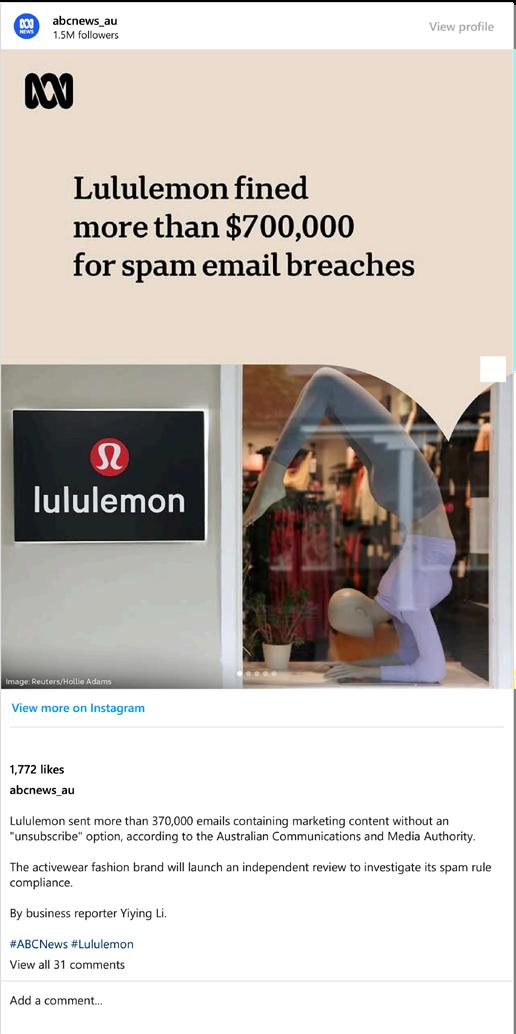
Clothing company Lululemon Athletica Australia just paid a A$702,900 penalty for infringing those rules when it sent more than 370,000 emails without an unsubscribe option.
This is how you can stop or report persistent marketing spam – and why we need to tighten those rules even further.
What do Australia’s anti-spam rules say?
The rules of the Spam Act are fairly straightforward.
First, the law prohibits a person or business from sending unsolicited commercial “electronic messages”: emails, texts or instant messages. That means a business must have a person’s consent before sending them marketing messages.
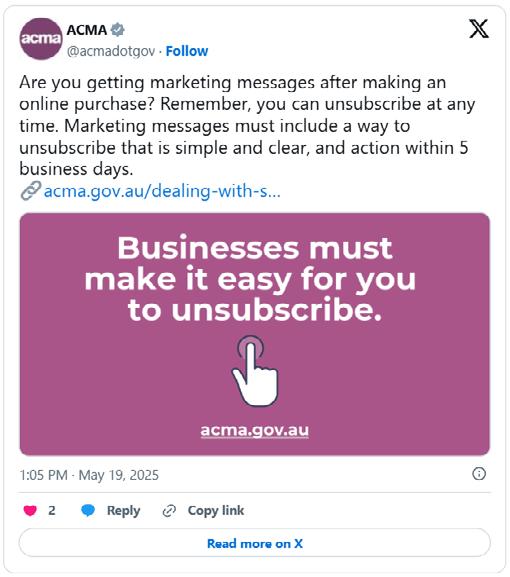
Second, the Spam Act makes it a rule for any person or business sending a commercial message to include an option to unsubscribe from future messages.
The unsubscribe function has to be clear and work for at least 30 days. And it mustn’t require a person to provide additional personal information, or login or sign up for a user account, to opt out.
The rules apply when the sender or recipient of the message is located in Australia.
However, there are some exceptions. The rules don’t apply to messages from certain kinds of entities: registered charities, educational institutions, government bodies and, most controversially, registered political parties.
Read more: Why are political parties allowed to send spam texts? And how can we make them stop?
How can you report marketing spam?
Anyone who thinks they’ve received a message that doesn’t meet the rules can complain to the regulator, the Australian Communications and Media Authority (ACMA).
Even if you don’t want to make a complaint, you can still report it by:
forwarding email spam to report@submit.spam. acma.gov.au (do not change the subject line or add any text)
forwarding SMS or MMS spam to 0429 999 888 (standard message charges apply). If ACMA finds a business has violated the rules, they can face hefty fines.
Last year, Tabcorp was fined $4 million for non-compliant SMS and WhatsApp messages to its VIP customers.
Telstra also paid a $626,000 penalty for sending more than 10 million text messages that did not comply with Australia’s spam laws.
The year before, the Commonwealth Bank landed a $7.5 million fine for sending millions of marketing messages without people’s consent or a working unsubscribe option. It was the bank’s second major breach of the spam rules, after it was fined $3.55 million in 2023.
Why Lululemon was fined
In its latest case, announced this week, ACMA found Lululemon Athletica Australia failed to provide an unsubscribe option in thousands of messages sent between 1 December 2024 and 5 January 2025. (The company is a local subsidiary of global “athleisure” brand Lululemon, based in Canada.)
As a result, Lululemon here in Australia was fined $702,900. It also agreed to take steps to ensure future compliance, including appointing an independent consultant to review its procedures, training personnel, and reporting on compliance to ACMA.
Which messages are covered by the Spam Act? Interestingly, Lululemon initially argued its messages were not subject to the anti-spam rules.
The rules only apply to commercial messages: when one of the purposes of the message is to advertise, promote or offer to supply goods or services. This won’t include purely factual communications about a good or service you’ve purchased, such as delivery updates, payment reminders, notices of product faults.
Lululemon pointed out that its messages contained factual information, sent for transactional purposes.
Importantly, however, they also contained links back to Lululemon’s website and social media pages. The links had titles like “shop accessories”. That was enough to trigger the Spam Act rules.
ACMA noted its enforcement action against Lululemon was the fifth in 18 months against a business that “incorrectly treated messages as non-commercial”.
Tighter rules are overdue
The line between factual, marketing and entertainment content is increasingly hard to discern online.
However, as ACMA’s recent actions make clear, the Spam Act is clear on this point. A message may have multiple purposes – but if one is to advertise, promote or offer goods or services, the rules will apply.
Still, the kinds of messages captured by the spam legislation are a mere drop in the ocean of digital advertising we encounter everyday elsewhere online including our social media feeds. Ads are tailored and targeted to each of us in real-time, using vast amounts of data.
Back in 2022, the federal Attorney-General’s department recommended updating Australia’s privacy laws to adapt to modern digital advertising.
If implemented, those changes would give consumers more choices to opt out of the broader range of targeted advertising we see. It would also improve transparency about the use of profiling in advertising, and add restrictions on using sensitive information.
The current Spam Act has been in place since 2003. The online advertising ecosystem has shifted dramatically over the past 20 years.
While ACMA’s recent enforcement actions demonstrate the continued relevance and need for education about anti-spamming laws, updating those laws is now long overdue.
Tegan Cohen
Postdoctoral Research Fellow and Lecturer, Faculty of Business & Law, Queensland University of Technology
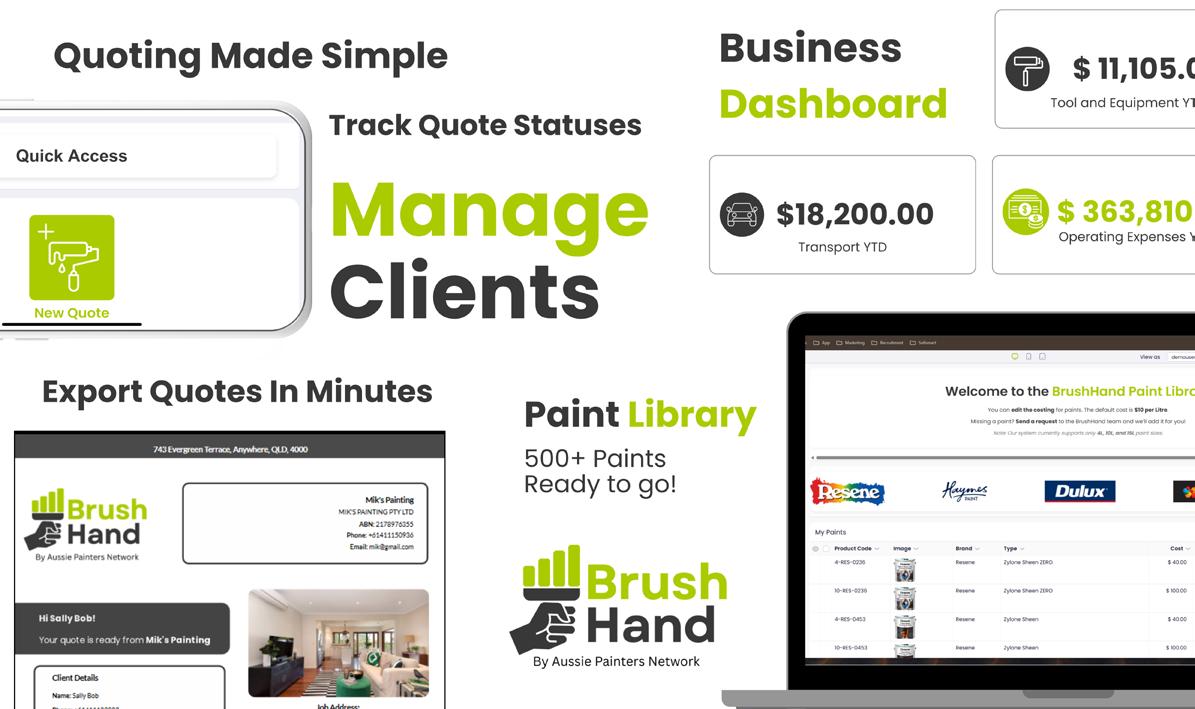


Aussie Painters Network aussiepaintersnetwork.com.au

National Institute for Painting and Decorating painters.edu.au
Australian Tax Office ato.gov.au
Award Rates fairwork.gov.au
Australian Building & Construction Commission www.abcc.gov.au
Mates In Construction www.mates.org.au

Comcare
WorkSafe ACT
Workplace Health and Safety QLD
WorkSafe Victoria
SafeWork NSW
SafeWork SA
WorkSafe WA
NT WorkSafe
WorkSafe Tasmania
comcare.gov.au worksafe.act.gov.au worksafe.qld.gov.au www.worksafe.vic.gov.au www.safework.nsw.gov.au www.safework.sa.gov.au commerce.wa.gov.au/WorkSafe/ worksafe.nt.gov.au worksafe.tas.gov.au
actcancer.org cancercouncil.com.au cancercouncilnt.com.au cancerqld.org.au
cancersa.org.au cancervic.org.au
cancerwa.asn.au (02) 6257 9999 (02) 9334