

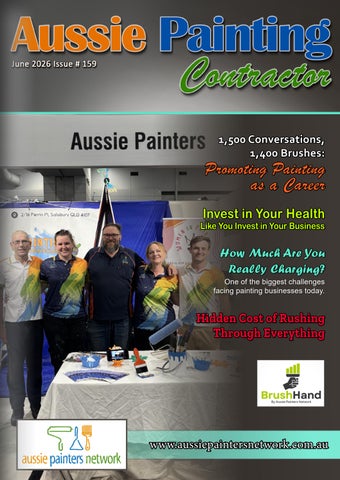
Welcome to the 159th issue of the Aussie Painting Contractor Magazine.
May was another busy month for the Aussie Painters Network team.
This month I travelled to Mt Isa to work with apprentices and employers, continuing our commitment to supporting painters and apprentices no matter where they are located across Queensland. It's always great to see the enthusiasm and dedication of regional apprentices who are building their future in our industry.
The month finished with three days at Brisbane Careers Expo where our team had more than 1,500 conversations about careers in painting and decorating. We also had over 1,400 painting activities completed at our stand, giving students a hands-on experience and introducing many to the opportunities available within our trade.
One thing that stood out throughout the month was the ongoing demand from employers looking for apprentices and skilled painters. While the industry continues to face workforce shortages, it's encouraging to see more businesses getting involved in training, mentoring and providing opportunities for the next generation. The future of our industry depends on the people we attract and support today.
What continues to stand out is the growing interest from young people, particularly women, looking at painting as a career. Combined with our apprenticeship recruitment activities and Painting Your Career program, it's encouraging to see more people entering the industry at a time when skilled painters are needed more than ever.
I hope you enjoy this month's articles and find something that helps you improve your business, your career, or your future.
'Til next month, Happy Painting!!


Nigel Gorman nigel@aussiepaintersnetwork.com.au
• Anthony Igra
• Caroline Miall
• Fei Gao
• George Mihaylov
• Leo Babauta
• Nigel Gorman
• Oliver Kay
• Robert Bauman
• Sandra Price
EDITOR
Nigel Gorman
GRAPHIC DESIGNER
J. Anne Delgado







Opinions and viewpoints expressed in the Aussie Painting Contractor Magazine do not necessarily represent those of the editor, staff or publisher or any Aussie Painters Network’s staff or related parties. The publisher, Aussie Painters Network and Aussie Painting Contractor Magazine personnel are not liable for any mistake, misprint or omission. Information contained in the Aussie Painting Contractor Magazine is intended to inform and illustrate and should not be taken as financial, legal or accounting advice. You should seek professional advice before making business related decisions. We are not liable for any losses you June incur directly or indirectly as a result of
Contractor Magazine.
or
of the


Being in business is not just about your customers, it’s also about making money to enjoy and build your life, and ultimately getting prepared financially for retirement. I haven’t heard anyone go into business who did it to end up going on the Government pension, which doesn’t leave much room to play with.
However far away retirement is for you, making financial decisions today will impact your retirement decades later. Even small steps to help you take control of your financial future will be beneficial. Not sure where to start? Follow these 5 steps and you’ll be well on your way.
Step 1 - Establish and define your life goals
Goal setting is important, but what’s even more important is that you write them down. A case study was undertaken on achieving goals. The study divided 100 people into two groups who were asked to consider what they wished to achieve in the next five years. The first group wrote down their goals and referred
to them regularly. The second group discussed their goals, but didn’t write them down.
Five years later both groups came back together to discuss what they had achieved. Of the first group who were told to write down their goals and refer to them regularly, 96% of the people achieved all their goals. Of the second group, which only discussed their goals, 16% of the people achieved all their goals. So as you can see, this is a clear example of how writing down your goals and referring to them regularly is incredibly powerful. It keeps us focused. It’s the corner stone to any success you can achieve in life.
Step 2 – Organise your personal and financial documents
All you need to do is set up of two folders. The first folder will contain all your important personal documents like birth certificate, mortgage papers, bank statements and the second folder will contain all your financial documents.


Go through all your personal and financial documents and put them into the folders. You can find a list of the most important documents you’ll want to include in these folders, if they’re relevant to your life situation, in our workbook 5 Steps To Financial Independence.
Don’t worry if you don’t have all the documents stated. You will acquire some of these documents as a result of working through these 5 Steps. The documents you obtain should be placed in the respective folders.
When you’re going on a road trip it’s all a matter of stopping and knowing what to check to ensure you’re driving a safe vehicle. Learning to assess your current financial position is just as important. It allows you to list what assets you have, what debts (liabilities) you have, the level of income you are receiving and how much of your income you are spending.
In assessing your present position you need to understand your current circumstances, achieved in part by establishing your goals and organizing all your personal and financial documents in a logical and effective manner.
Itemize and list all assets and liabilities using the information collated in the Financials folder. Once completed this will show at a glance, what your current Net Worth is.
Now you need to create a new budget plan by using the financial data gathered in Step 3. Determine how much you intend to spend on living and optional expenses. We have developed a Budget & Expenditure Planner in Excel spreadsheet format specifically for this purpose and are happy to share this tool with you.
You can adjust the Expense and Income Items in your worksheets Expense Summary and Income Summary to determine your new budget plan, but keep a record of the current plan, so you know where you started.

The importance of rectifying possible problems and addressing opportunities is fairly obvious. You may think you don’t have any problems or any real opportunities to improve your financial position, however, we know you do. No matter what situation you may currently find yourself in, you can make a difference. Keeping Track is key. Keep a daily record of all spending in a diary. That way you know where your money goes and you know where to cut down, if necessary. Review your budget and bank accounts every month to ensure you are moving in the right direction.
After three months of record keeping, you should now have the information to identify the 10 highest expenses from your budget.

As a small business owner, you're likely always looking for ways to achieve more. Maybe you made a New Year's resolution about it. You might have resolved to make more money, find more clients, or grow your business. It's fantastic to have an idea of what you want to do, but how will you know whether or not you're successful?
That's where SMART goals come in. SMART goals help you identify what you want to do, when you want to do it by, and how you'll get it done. They give you a systematic way of deciding what goals are important—and realistic—and evaluating whether or not you've attained them.
SMART goals help you plan for success. They turn your resolution into action. What are SMART goals?
SMART goals stand for goals that are Specific, Measurable, Achievable, Realistic, and Timely.
Here's an example of a goal that is not SMART: "I want to grow my business."
Why isn't it SMART? It says nothing about how the business will grow, how long growth will take, how it will be attained, or how success will be measured. It's vague, so you have no idea if you've been successful.
Growing your business is a great starting point for a SMART goal because you know there is something you want to achieve. Now you need to use SMART goal setting to lay out your plan.
To use SMART goal setting you need to ask yourself important questions. Let's take the above example of growing a business.
Specific: Ask yourself how you want your business to grow. Do you want more clients?
More revenue? More employees? What does "growth" mean?
Measurable: How many more clients do you want? How much more money do you want to earn? How many more employees do you want? Numbers work best here.
Achievable: How do you plan to reach your goal? Do you have the resources to make it happen?
Realistic: Do you currently have one client but want 100 within a week? It's great to have goals that challenge you but asking yourself to do the impossible sets you up for failure.


The QBCC’s Industry Snapshot provides valuable insights into Queensland’s building and construction industry, including licensing trends, demographic shifts and defect reporting— providing an understanding of industry dynamics, planning workforce development, and improving compliance and quality standards.
SOME NOTABLE CHANGES OVER THE PAST TWO YEARS INCLUDE:
GROWTH IN LICENSEES
• Total licensees under the QBCC Act increased by 6.3% from 96,908 in 2023 to 103,011 in 2025 (total licensees are more than 120,000 under all Acts regulated by the QBCC).
• The most notable increases were in the Brisbane region (+7.5%) and the Sunshine Coast region (+11.7%).
DEMOGRAPHIC SHIFTS
• The proportion of licensees aged under 30 years has slightly increased, indicating a modest rejuvenation of the workforce.
• A large portion of licensees remain over 60 years old, especially in key trades like plumbing, painting and carpentry, highlighting ongoing succession challenges.
DEFECT TRENDS
• Painting continues to top the list of reported defects.
• Driveways and paths defects have increased in frequency.
• The incidence of footing and slab defects has increased.
If you need a refresher on any of these defective work items, the QBCC’s standards and tolerances guide is a quick and easy reference for industry, licensees and home owners, based on recognised industry standards in Queensland.
The QBCC will publish the Industry Snapshot annually to ensure the building and construction industry is armed with current and reliable industry data.
Licensee feedback and suggestions are welcomed, so the QBCC can continue to evolve and provide the most accurate picture of the industry possible.
To read the full and latest version of the Industry Snapshot or find out more on the state of the industry please visit www.qbcc.qld.gov.au


Timely: How long will you give yourself to find new clients or employees? Be specific with deadlines. Don't just say you want something done ASAP or within the year. Set a reasonable, firm deadline that gives you a chance to review your goals and determine how successful you've been.

Here's the same thought above, but written from a SMART perspective:
By March 31, I will have signed three new clients for my services by purchasing advertising in the local newspaper, attending networking events, and posting on my blog once a week.
As your deadline approaches, you'll know to review your client list and see if you've signed three new
clients. If you have, great! If not, review your action plan and see where changes could be made.
Final thoughts It's great to have an idea of what you want to do, but without SMART goals all you have is an idea.
The great thing about SMART goals is you're not limited to one goal at a time. Let's say you want to grow your business both in terms of clients and employee size. You can set SMART goals for both those areas and work toward both at the same time.
Once you've achieved your goals, you can look forward to setting additional successful goals for yourself in the future.
Get in touch with us to find out how we can help you reach your business, financial and lifestyle goals.
Price www.tradiebookkeepingsolutions.com.au



•

Over the past three days, the Aussie Painters Network team had the privilege of speaking with more than 1,500 people about careers in painting and decorating.
From students and job seekers to parents, teachers and career advisors, the level of interest in our industry was both encouraging and inspiring. We also facilitated more than 1,400 hands-on painting activities, giving participants the opportunity to pick up a brush and experience some of the practical skills involved in our trade.
While the numbers are impressive, the real value came from the conversations.
Every discussion provided an opportunity to challenge outdated perceptions of painting and decorating and showcase the diverse career opportunities available within our industry. Many people were surprised to learn that painting is not simply about applying paint. Today's painters utilise advanced coatings, specialised equipment, colour technology, digital estimating systems and business management tools. The industry offers pathways into project management, training, business ownership, sales, specification work and specialist coatings.
One of the most encouraging observations was the growing interest from young women considering a career in painting and decorating. This reflects a trend we have been witnessing across our recruitment and training activities, with increasing numbers of female applicants entering the industry and employers recognising the benefits they bring to their teams.
The event also highlighted an important reality facing our industry. While skills shortages continue to be discussed at every level, there is no shortage of potential talent. What often exists is a shortage of awareness. Young people simply don't know what opportunities are available or how to take the first step.




This is why industry engagement remains so important. Every apprentice, business owner and industry leader started somewhere. Often, it begins with a single conversation, a practical demonstration, or someone taking the time to explain what a career in the trades can offer.
For Aussie Painters Network, these events reinforce the importance of continuing to create pathways into the industry. Through initiatives such as Painting Your Career, school engagement programs, recruitment services, apprenticeships and Women in Painting, we are committed to helping connect the next generation with meaningful career opportunities.
A huge thank you must go to the team members who spent three days enthusiastically promoting our trade and engaging with attendees. Their passion, knowledge and willingness to share their experiences helped create a positive impression of our industry and may well influence the career choices of future painters and decorators.
The future of painting and decorating depends on attracting, developing and retaining talented people. Based on the conversations we had over these three days, there is every reason to be optimistic about what lies ahead.
Now comes the important part—turning those conversations into careers.

Nigel Gorman nigel@aussiepaintersnetwork.com.au



When we have clarity, we can be incredibly motivated and purposeful. When we don’t have clarity, we get stuck, demotivated, overwhelmed.
For example: if you knew the most important thing to work on right now, with absolute certainty, and you were clear how crucial it is to what you care about — you’d probably give it your all!
Clarity is powerful — but it’s not always easy.
There are three things I’ve found that get in the way of clarity:
1. Overcommitment: If you have too many commitments (that’s most of us), it can be hard to get clarity on what to work on.
2. Unprocessed emotion: If you feel anxiety, fear, resentment, grief about something, and pushed it to the background … it can cloud your judgment, drain you, make you pick things to avoid those feelings. This leads to cloudiness and confusion.
3. Decision fatigue: Most of us are making decisions all the livelong day. By the time we get to decisions that actually matter … we are running on fumes. That’s why we often make bad choices or feel too overwhelmed, later in the day.
Any of these feel familiar? Let’s figure out what we can do about them, to bring clarity and calm to our days.
We say yes to more than we can actually follow through with — our calendars and tasks lists feel so full that everything feels urgent.
This is usually from FOMO (fear of missing out), fear of disappointing people, or just being too optimistic.
So what can we do?
One priority practice: Every morning, choose one most important thing to give your focus to.
Monthly commitment audit: Go through everything you’ve said yes to, and ask if it belongs in your life. You’ll see when you’re overcommitted when you look at this level.
Strategic choosing: Catch yourself when you’re about to say yes to something … and ask, “What would I say no to, so that I can say yes to this?” If it’s important enough, you’ll trade.
If you practice these, you’ll overcome the old habit of overcommitting. Life will start to become right-sized, and you’ll have more clarity.
We often feel too busy, or lacking in capacity, to process emotions like anger, resentment, frustration, grief, fear. So it just gets pushed into the background, where it clouds our clarity.
If you often feel confused, cloudly, frozen, or indecisive, this might be what’s going on for you.
Some ways to process all of this:
Therapy: we all need it!
Journaling: Don’t just write about what happened, but process the emotions of what happened as you’re writing. What are you avoiding, what are you afraid of, what do you not want to feel? Just to feel it, not to solve anything.
Check in before starting: Before you get start with work, or a major meeting or project, pause to check in with yourself — what am I feeling? Just name it, no judgment — just start to clear the noise from the signal.

Sometimes, the feeling itself is a signal — it’s telling you something. It can be hard to distinguish between a valuable signal like this, and just the usual noise of unprocessed emotion … if you get into this processing as a regular thing, it gets easier.
But most often, the emotions just need to be released!
We’re making so many decisions every day, all day long — our brains get tired. This makes it hard to get clarity with the things that actually matter, because we just shut down.

Some ways to deal with this:
Keep decision-making time sacred: Make your most important choices early in the day, before you’re depleted. This is a good time to take on your harder focus tasks as well.
Reduce trivial decisions: Get some routines going, like what you wear, what you do when you wake up, what you eat, how you take care of your life. The more of these that are decided, and you don’t have to think about, the more you’ll have mental energy for the things that matter.
Don’t overthink the little things: If something can be easily recovered from, just make a simple, easy decision and move on. Don’t waste a bunch of brain cycles stuck in indecision about these things. Save that for things that have bigger consequences. Batch these little decisions together as well, so you’re not constantly switching between things.
Despite me calling these “enemies”, these three things don’t really need to be vilified. They’re just a part of living in this modern world.
But they do have something in common: they take up the space of clarity in our minds.
Overcommitment fills up our time, unprocessed emotions crowd our inner space, and decision fatigue crowds our mental bandwidth.
Clarity is something we do when we make room for it.
Leo Babauta ZEN HABITS


How much a new $1,000 tax offset would really be worth – and who’s better off avoiding it
When Australian workers lodge a tax return from mid next year, around 6 million taxpayers look set to be able to claim up to A$1,000 with an “instant” work-related tax deduction, without receipts. The Albanese government has just released draft legislation on the change.
That deduction is higher than the little-known $300 limit on receipt-free work deductions available today.
But if you’re among the majority of people who claim more than $1,000 in work expenses, you’ll be better off keeping your receipts and claiming the way you do now.
And if you have buy equipment to do your job – such as a computer, phone or tools of the trade – there’s a separate change proposed to start from July 1 this year worth knowing about too.
Does this mean a $1,000 discount on your tax bill?
No. This proposal to let Australian workers claim up to $1,000 in work deductions is not the same as getting $1,000 more back in your bank account after you submit your tax return.
The federal government estimates 6.2 million workers (42% of taxpayers) could expect to benefit from introducing a standard $1,000 work-related tax deduction in the 2026–27 financial year, without receipts to back that up. The government estimates those taxpayers would save an average of $205 in 2026–27.
How much you might get back would depend on how much you earn and how much you’re taxed.
For example, if you earn less than $18,200, you do not pay income tax. So this change would not benefit you.
For higher-income earners, the benefit is potentially larger. At the top tax rate of 45 cents for each $1 over $190,000, a $1,000 deduction could reduce tax by up to $450 (or $470 including the Medicare levy).
However, while higher-income earners receive larger tax savings per dollar deducted, they’re more likely to already claim more than $1,000 in work-related expenses.
Who stands to benefit most?
Almost half (44%) of Australian workers lodge their own tax returns, far more than a few years ago.
If you’re one of them – and you’re an Australian tax resident, earning a salary here, or paying yourself a salary if you have a business – this proposed standard deduction could prove useful.
If your total work-related expenses are less than $1,000, you could simply claim the $1,000 deduction, without receipts.
The simplicity of the new rule is likely to benefit workers with less experience lodging their own tax returns, particularly those unfamiliar with keeping receipts.
For example, around 1.7 million taxpayers under the age of 30 are expected to benefit, with an average saving of about $200 in 2026–27.

What’s not covered by this new offset?
It’s worth noting some other work-related deductions could still be claimed from 2026–27 on top of the instant tax deduction, including: charitable donations investment expenses union and professional association membership fees income protection insurance premiums. Who should stick to keeping receipts? If your expenses are more than $1,000, you should continue to claim work-related deductions with receipts.
The majority of Australia’s 14.7 million workers –around 8.5 million people – aren’t expected to be affected by this change.
As of the 2022–23 tax year, the average Australian’s work-related expense claimed was $2,739.
The median amount was $1,338. This means most Australian taxpayers were already claiming more than this new proposed $1,000 instant deduction threshold. They’re better off continuing to claim their actual expenses.
One change that could catch people out Putting aside the new $1,000 instant work-related deduction, this new legislation could still affect you.
Under this proposal, from 2026–27 the rules would change on “depreciation” (loss in value over time) on work items such as tools or computers.
Under the current rules, if you buy an asset mainly for work use, you may be able to claim an immediate deduction if it costs $300 or less.
But if you have work-related items costing between $300 and $1,000, you can choose to group them together into what’s known as a “low-value pool” and deduct the loss in value from your taxable income. This pool can include multiple assets valued under $1,000, purchased at different times.
For example, a laptop bought several years ago and a printer bought more recently can be grouped together, and “depreciated” as a single pool.
Under these proposed changes, from the 2026–27 financial year on, new work assets could no longer be added to a low-value pool.
Taxpayers could continue to claim depreciation on their existing pools – but any new purchases will need to be depreciated individually.
In particular, assets with longer effective life, such as musical instruments for work, would be written off more slowly – reducing the tax benefit you receive in the earlier years.
Overall, it’s unlikely to have a big impact on many people’s tax return, other than changing how they make future claims.
But if you do currently use the “low-value pool” for work deductions, it’s worth being aware of this proposed change now to look into it yourself, or to check with your accountant.
What does this mean for my 2025–26 tax return? Nothing. These proposed changes are still in the consultation stage. They still have to pass through parliament to become law.
Assuming they do, these changes wouldn’t come into force until the 2026–27 tax year.
If you want to have your say on proposed instant offset or on the depreciation change, now’s your chance: public consultation on the draft legislation closes on May 1.
Fei Gao
Lecturer in Taxation, Discipline of Accounting, Governance & Regulation, The University of Sydney, University of Sydney


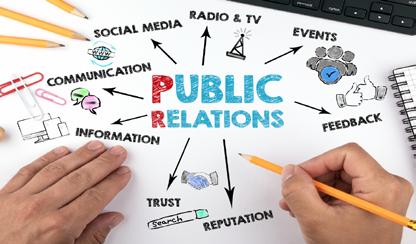
With social media algorithms constantly shifting, search engines prioritizing AI-generated answers, and platforms like Facebook, TikTok, LinkedIn, Instagram, Threads, and YouTube competing for attention, business owners are under more pressure than ever to stay visible.
Add the rise of AI-powered marketing tools, influencer partnerships, and the demand for authentic brand storytelling, and it’s no surprise many entrepreneurs wonder when they’re supposed to sleep — let alone run a business.
Since the economic uncertainty of recent years, many businesses have tightened spending, particularly around marketing and communications. Yet one of the biggest mistakes companies continue to make is reducing or eliminating their PR (public relations) efforts altogether.
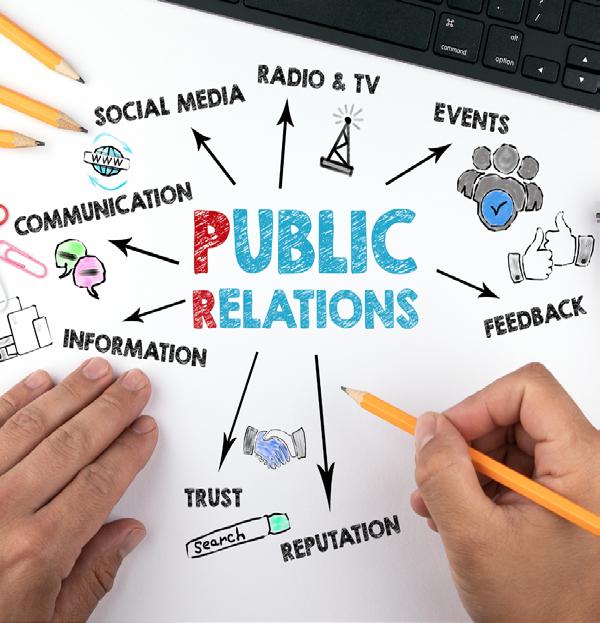
In today’s crowded digital landscape, PR is no longer just about getting a newspaper mention or appearing on radio. Modern PR is about building trust, authority,
visibility, and reputation across multiple channels. While advertising you can buy attention, PR earns credibility — and credibility drives long-term business growth.
Even a modest investment in PR can deliver strong returns. Whether you work with a boutique PR agency, a freelance publicist, or implement a DIY strategy, the benefits often outweigh the cost.
Effective PR helps more people discover your business, positions you as an expert in your field, strengthens your online reputation, and ultimately helps generate more sales and opportunities.
What makes PR even more powerful today is the sheer number of ways businesses can share their message. Beyond traditional media, there are podcasts, online publications, LinkedIn newsletters, industry blogs, YouTube channels, influencers, webinars, Facebook groups, networking communities, and niche digital platforms all looking for valuable content and expert insights.

The rise of AI has changed how PR works. Journalists and consumers are increasingly relying on AI-assisted search tools to find trusted sources and credible businesses. Companies with strong media coverage, thought leadership content, quality backlinks, and consistent online visibility are more likely to be discovered and recommended — not only by people, but by AI-driven search engines as well.
Businesses now have two choices: learn how to manage their own PR or partner with someone who understands both modern media and your business goals.
There are countless courses, workshops, and online tools available to help business owners learn the basics of media outreach, storytelling, and personal branding. Alternatively, working with a PR professional who genuinely understands your vision can fast-track your visibility and help you avoid common mistakes.
The best PR partners don’t just get you media coverage. They help shape your messaging, identify newsworthy angles, teach you how to communicate effectively, and build long-term strategies that support your business growth.
A good small agency or PR consultant can empower you with the skills and confidence to eventually manage parts of your PR yourself.
The old saying still applies: “Give a person a fish and you feed them for a day. Teach a person to fish and you feed them for a lifetime.” While most business owners already have overflowing schedules, learning even basic PR skills can create enormous long-term value.
Spending a few focused hours each month on relationship-building, content creation, and media outreach can result in valuable publicity without massive advertising costs. Most importantly, PR should never exist in isolation. It needs to form part of a broader marketing and brand strategy. The real power of public relations comes from consistency — consistent messaging, consistent visibility, and consistent relationship-building.
One media mention will not transform your business overnight. Strong PR is cumulative. Building trust with journalists, podcast hosts, creators, and audiences takes time. It may take three to six months before businesses begin seeing meaningful media traction and reputation growth.
But businesses that remain visible, relevant, and engaged are the ones most likely to stand out in an increasingly noisy marketplace.
In 2026, PR is no longer optional for growth-focused businesses. It is one of the most effective ways to build authority, humanise your brand, strengthen digital visibility, and create lasting customer trust in an era where attention is harder — and more valuable — than ever.
Turning a successful business into a franchise is an exciting step. But before rolling out your brand across multiple locations, it’s crucial to ensure your intellectual property (IP) — particularly your trademarks — is properly protected. Without a robust trademark strategy, you risk losing control of your brand, facing costly disputes, and undermining the very foundation of your franchise network. In my work with franchisors, I often see businesses focus on operations and growth while overlooking trademark protection. Learn from their mistakes and see how to get it right.
Your website is often the first touchpoint for potential franchisees and customers. Yet many franchisors don’t think about trademarking their name to secure their domain name. Registering a domain name doesn’t give you exclusive rights to use it. If someone trademarks your brand or a similar name, you could be forced to surrender your domain. To avoid this, it’s best practice to align your domain name, business name, and trademark — and secure your trademark early — so your brand is consistently protected across all platforms. A properly registered trademark can help you enforce your rights and stop competitors or rogue operators from misusing your name online.
Practical tip: Make sure your domain name is consistent with your trademarked brand. If you’re expand-
ing overseas, consider securing international domain names early to protect your global presence.
The well-known “UGG” brand story is a cautionary tale for all businesses. An Australian business popularised the use of “ugg” boots, but failed to secure international trademarks for the name. An overseas company trademarked “UGG” in key markets, taking control of the brand outside Australia.
The lesson for franchisors? If you don’t secure your trademarks - especially in markets you plan to expand into - someone else can. This can leave you locked out of your brand or facing costly legal battles to reclaim it.
Key takeaway: Trademark registration isn’t just about protecting your current territory. If you have plans to grow nationally or internationally, act early to protect your brand in those jurisdictions. “Don’t let your brand become someone else’s asset — trademark it before you scale.”
Your trademark is the cornerstone of your franchise. It allows franchisees to trade under your brand, gives you the power to enforce consistent standards, and protects your goodwill. Without one, your entire system is vulnerable.
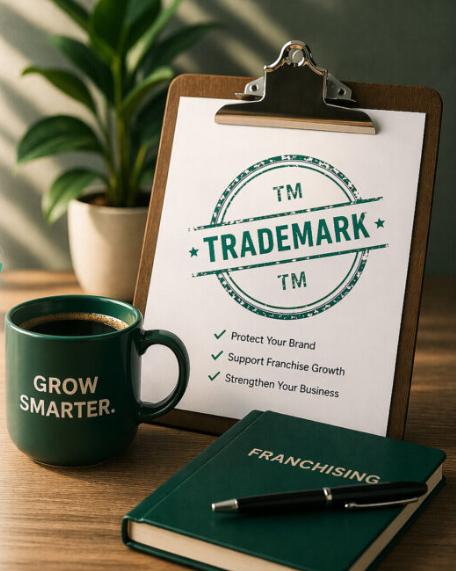
When we work with franchisors, the first step is to address their trademarks. The trademarks are disclosed to all franchisees in the mandatory disclosure document, and they expect you to have your brand locked away with a suitable trademark to protect their investment. Your trademark doesn’t just protect your name —it safeguards the goodwill you’ve worked hard to build. It also creates a tangible business asset that can increase the value of your franchise network, making your business more attractive to buyers or investors.
If you don’t have a trademark, you risk:
• Losing control of your brand to competitors or franchisees.
• Infringement disputes that cost time, money, and reputation.
• Difficulty expanding your franchise nationally or internationally.
• Losing franchisees you have spent ages recruiting.
Practical tip: Register your trademarks in all relevant classes. This ensures your protection covers not just your core product or service but also related areas you may expand into.
Many business owners assume that registering a business name with ASIC gives them ownership. It doesn’t. ASIC registration only allows you to trade under that name — it doesn’t prevent others from using it.
A trademark, on the other hand, gives you the exclusive right to use that name for your goods or services. When assessing trademarkability, avoid generic or descriptive names. Avoid names that simply describe your location or service (like “Sydney Car Wash”) as they are difficult to protect. Also remember that trademark protection is limited to the classes you register in — owning the trademark in one class doesn’t stop someone using the same name in another industry.
Practical tip: Conduct a trademark search before committing to your brand. It’s cheaper to tweak a name now than to rebrand after a legal challenge.
Your logo is more than just a design — it’s a valuable asset. But not all logos can be trademarked. If your logo uses common shapes or generic imagery, it may be difficult to protect.

When creating a franchise-ready logo, aim for something unique and memorable. Before settling on a design, conduct searches to ensure your logo isn’t too similar to existing ones otherwise, your application could be rejected, or worse, you could unknowingly infringe on someone else’s rights. This not only increases your chances of securing trademark protection but also strengthens brand identity in a competitive market.
Practical tip: Avoid using stock images or overused symbols in your logo. Instead, work with a designer who understands trademark requirements.



After years of owning and operating businesses, and witnessing both the triumphs and challenges experienced by fellow business owners and their families, I have come to appreciate more than ever the critical importance of protecting our health and wellbeing.
Every day demands that we show up in multiple roles — as business owners, leaders, partners, parents, and dependable individuals. If we neglect our emotional and physical health, we leave ourselves vulnerable to unexpected setbacks that can carry enormous personal, financial, and professional costs. Too often, people wait for a serious wake-up call before prioritising selfcare. Yet many of these challenges can be reduced, or even prevented, through regular awareness and healthy daily habits. Imagine if we dedicated even a fraction of the energy and commitment we give to our businesses toward looking after ourselves — we would operate with greater clarity, energy, and resilience. Make a commitment today to prioritise your health.
Schedule regular health checks just as you would any important business meeting. Be mindful of nourishing your body with wholesome food, staying hydrated with plenty of water, and engaging in physical activity that you genuinely enjoy.
While these habits may not always feel convenient, the long-term rewards far outweigh the short-term compromises.
Relationships, both personal and professional, can be complex and fragile under pressure. Strong communication is essential when working with staff, colleagues, business partners, friends, or family members — particularly in small business environments where personal and professional lives often overlap. Stress is an unavoidable part of life and business, but not all stress is the same.
Positive stress can motivate and energise us, helping us perform at our best. Negative stress, however, can damage our health, cloud our judgement, and strain our relationships.
Learning to recognise and manage unhealthy stress during difficult times is one of the most valuable investments we can make for ourselves and those around us.
As we enter the festive season, take the opportunity to celebrate with the energy and vitality that come from a healthy, balanced lifestyle. Put a plan in place that actively supports your wellbeing. Without good health, it becomes increasingly difficult to meet the demands and responsibilities of running a business — let alone managing everything else life requires of us.
In today’s fast-paced world, maintaining a natural and balanced diet is not always easy. Our habits, schedules, convenience, and circumstances can all influence the choices we make.
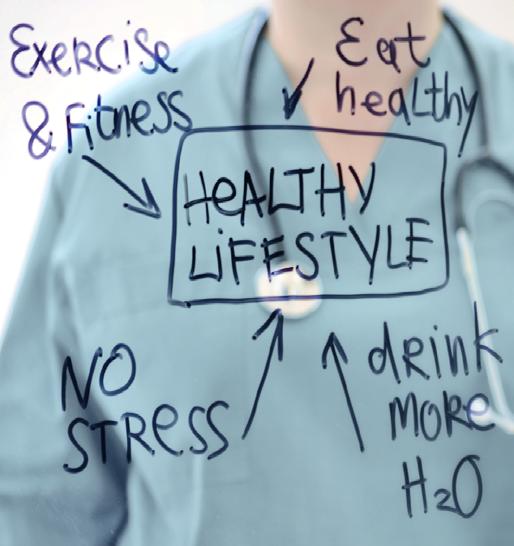
However, becoming more mindful of what we eat can have significant benefits for both our emotional and physical wellbeing. Poor dietary choices can often affect our mood, focus, and overall outlook, while making healthier choices consistently can improve our energy, resilience, and quality of life.
If healthy living is not currently part of your routine, start small. Challenge yourself to make one positive change at a time. Add an extra serving of fruit or vegetables to your meals, drink more water, or set aside time for an enjoyable activity that gets you moving outside of work. Small, consistent steps can lead to lasting change.
Be happy. Eat consciously. Make time for activities that bring you joy. Stay proactive about your health. Your body will thank you for it, your loved ones will benefit from it, and ultimately, your business will thrive because of it.


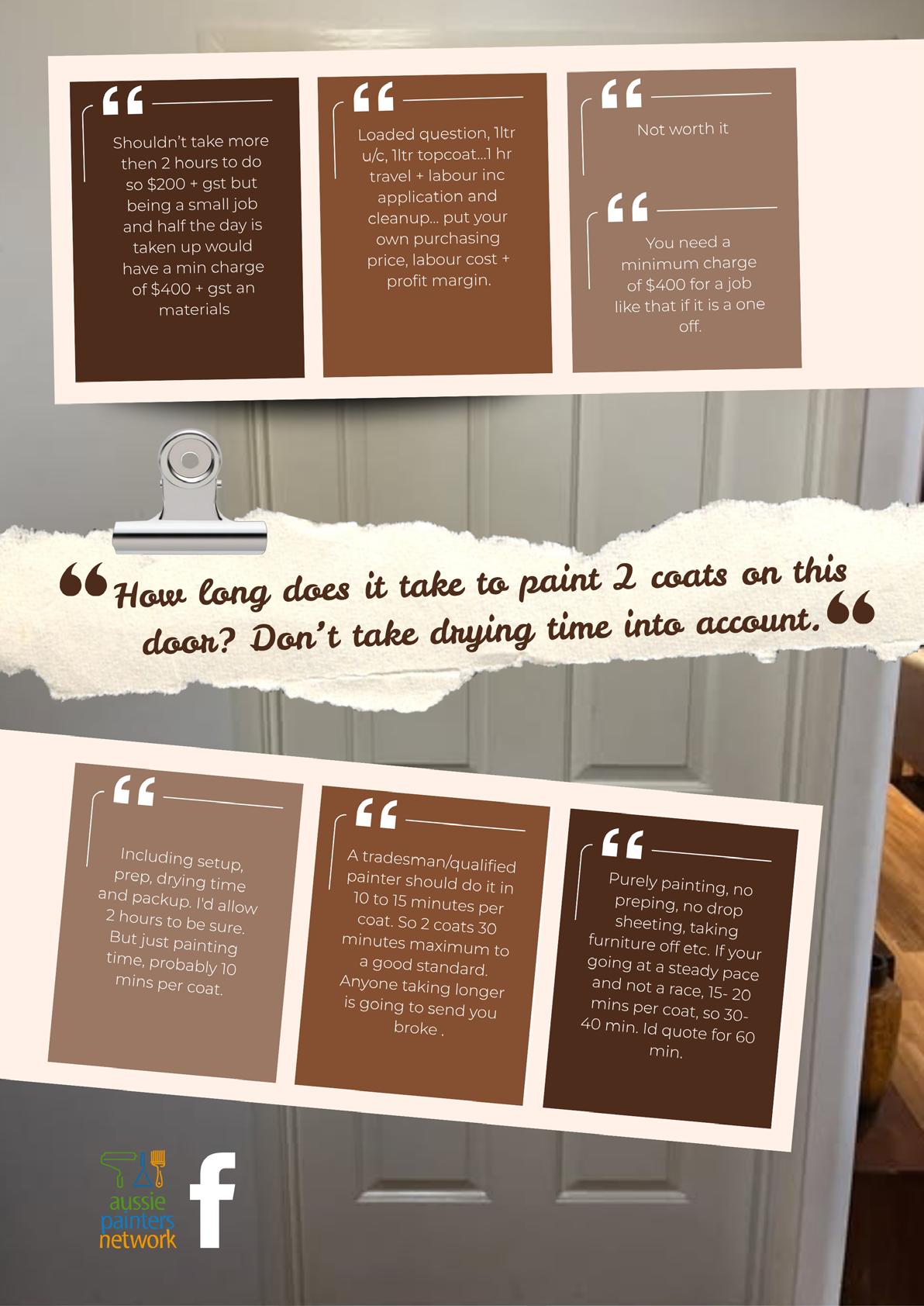
Over the past few days, I posed a couple of simple questions to members of the Aussie Painters Network Facebook group:
• How much do you charge to repaint a four-panel door?
• And how long does it take you to paint two coats on that door?
The response was incredible, with more than 100 painters contributing their thoughts and over 10,000 people viewing the discussion.
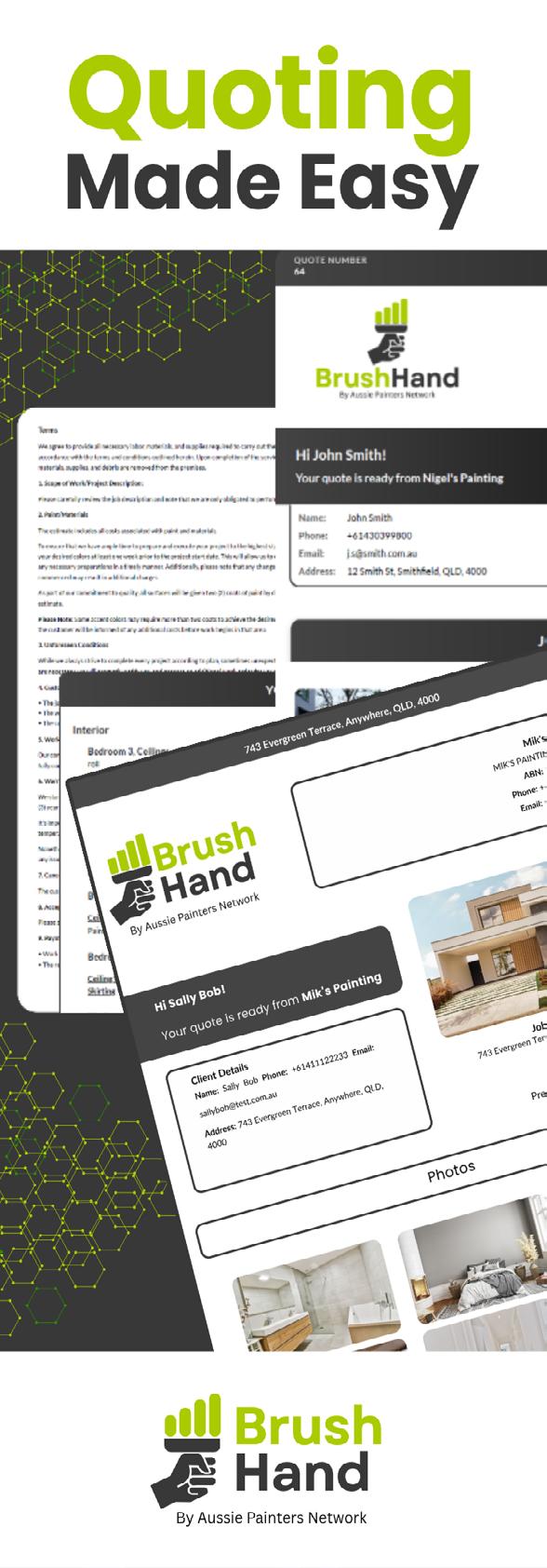
As someone who regularly mentors painting business owners, I often see a common issue when reviewing their quoting systems. Many painters know what they charge for a project, but very few truly understand what they are charging per hour for the individual tasks that make up that project.
After averaging the responses, a couple of interesting observations emerged.
The average price to repaint a standard four-panel door came in at a little over $200 per door.
The average time reported to apply two coats was approximately 40 minutes.
When you do the maths, that means painters are effectively charging more than $300 per hour for that particular task.
Now compare that to the hourly charge-out rates many painters tell me they use when pricing complete projects. In many cases, that figure is less than $100 per hour.
So it raises an important question: If you're charging the equivalent of $300 per hour to paint a door, what are you really charging for the rest of the project?
This example highlights one of the biggest challenges facing painting businesses today. Many contractors are still pricing jobs based on rough estimates, habits, or what they think the market will accept, rather than understanding the true value and profitability of each task.
The result is often inconsistent pricing, reduced margins, and uncertainty about whether a project is actually making money.
Understanding your production rates, labour costs, overheads, and profit targets isn't just about creating accurate quotes—it's about building a sustainable business.
The door example is only one small part of the puzzle, but it demonstrates an important point: if you don't know what you're really charging for each component of a job, there's a good chance you're either leaving money on the table or pricing yourself out of the market without even realising it.
The question every painting contractor should be asking is not simply, "What do I charge?" but rather, "What am I really charging?" Nigel Gorman nigel@aussiepaintersnetwork.com.au






A lot of us rush through our day, our tasks, our emails and messages … because of a sense of being behind on everything. This is fine, but there’s a hidden cost that I call “Life Debt.”
In programming, there’s a concept called “tech debt” … basically, it’s the idea that when you take the shortcuts now, you owe some work later to make things the way they actually should be done. Every programmer does it — no one does things exactly as they should be as they go, but instead do things the short way now and come back later to complete the job.
This is what we’re doing in our lives as well. We’re accumulating Life Debt when we rush through the day, leaving little things unfinished, not put away, or in a mess because of our hurry.
That’s OK! No one is going to slowly do every single piece of maintenance or clean up needed, every minute of the day. It would take too long. But we should acknowledge the debt.
Let’s get into it.
There’s an infinite variety … but here are some examples of Life Debt:
Getting ready: You shower, get dressed, do all the things to get ready … but leave things on the bathroom counter or floor in your rush to get out the door. The debt is the mess to be cleaned up later.
Cooking: You’re rushing to cook a meal, leaving measuring spoons, measuring cups, a cutting board and knife, pots and pans … all dirty and all over the kitchen. Along with a mess of spilled food in different places. Instead of cleaning as you go, the mess piles up … and needs to be cleaned up later.
Eating: You eat your meal, and put the dishes in the sink. You don’t have time to clean up now, so you need to clean it up later.
Checking email: You read an email, don’t want to deal with it now, so you leave it for later. You do that with a dozen emails, leaving them to deal with later.
Meetings and calls: When you’re done with a meeting, you rush to the next thing to do … but you don’t have time to type out a few notes or add tasks to your task list. You’ll do it later.
Leaving little things around: As you rush through your office or home, you leave things here and there. You might not even notice. But they’ll be sitting there, waiting to be put where they belong at some point in the future — later that day, or even months later!
Papers to deal with: You open some mail, and it’s something you need to deal with but don’t have time. You leave it lying on a pile of other papers that need to be dealt with.
Open browser tabs: Your browser has a couple dozen tabs open, all things to be dealt with at some point, but you don’t have time to go through and deal with each one.
You get the point — this is everywhere. Files on your desktop, things piling up in your garage, a kitchen counter or table piled with things to be dealt with.
This is Life Debt. It’s a part of living, but it’s worth thinking about.
How to Deal with Life Debt
So what can we do about all of this? It’s important to note that this isn’t something to feel guilt or shame about, or to use to judge ourselves — it’s a part of life.
The question is: what’s a good amount of Life Debt that allows you to move through life at a reasonable pace … and what’s so much that it causes problems or too much stress?
There’s not a right answer for everyone.
For me, here’s what I try to do to deal with this:
Go slower, and put more space betwen things. OK, I’m far from perfect at this. But I realize that my life feels much less stressful and messy when I put a little more space between meetings and activities, and have more time for a little maintenance. I try not to rush between things (though I often do rush).
Pause before I move on, and complete things. I have a phrase “Complete the moment” that’s been helping me to pause and notice what needs to be done before I move on. For example, do I need to put away my clothes instead of leaving them lying around? Do I need to wash a dish or wipe the counter clean?
When I have some time, I’ll go around and clean up. Things that are out of place … I pick them up and put them away. If I find a mess and have a minute, I’ll clean it up.
If I don’t have time, I try to note it to be done later. Sometimes, I’d like to take care of something but don’t have time … I try to note it somewhere so I don’t forget. Ideally, I block it off on my calendar or put it on my todo list, even if it’s something like “Return the robot vacuum for a refund” or “change air filter.”
I have “catch-all” systems. Some things need to be cleared out regularly, so I try to find ways to make sure things are cleared out. For me, that’s usually weekly — I have days to clear out my read-later list in Instapaper, clear out my browser tabs, reorganize my todo list.
I will say that I’m not perfect with any of this — that’s not what this is about. It’s worth exploring the ways that work for each of us, so that we don’t get weighted down too much by the messy debt we’re accumulating.
Leo Babauta ZEN HABITS



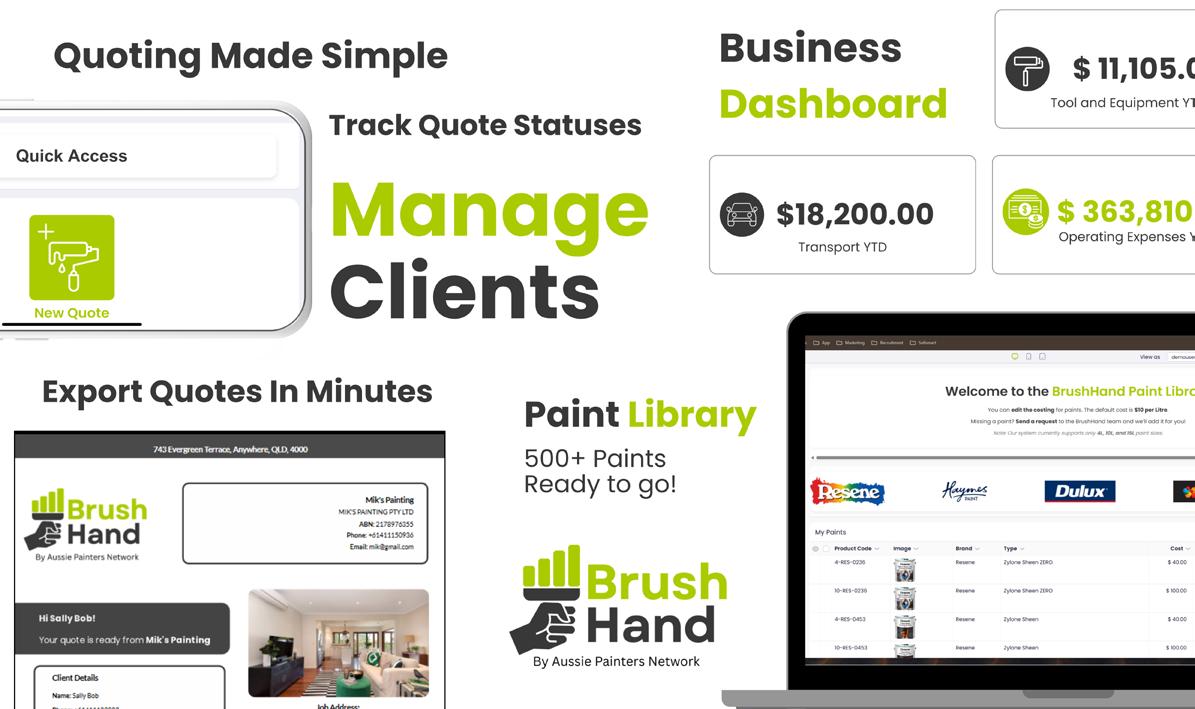
Quoting is one of the most important parts of running a successful painting business. In this video, we break down the process of creating accurate, professional quotes that win jobs and keep your business profitable.

Finding and keeping the right people is one of the biggest challenges for painting and decorating businesses.
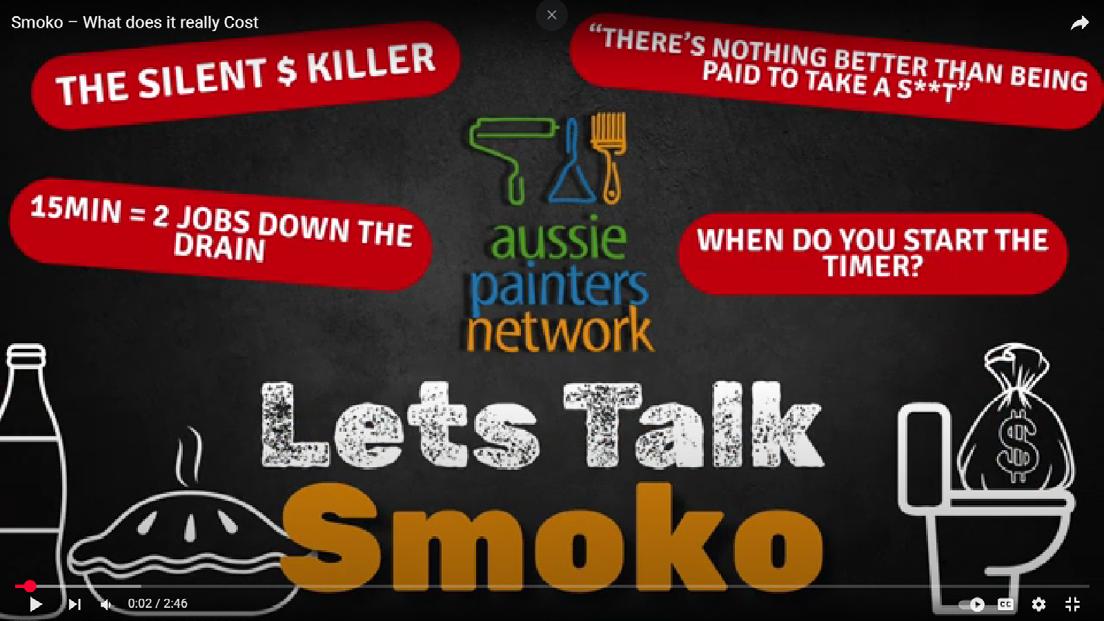
Smoko isn’t just a break – it’s a tradition in the trades. In this video, we take a look at what smoko means on site, why it’s important, and the stories that come with it.

Dealing with risk is an inherent aspect of business management. The way you prepare for risk is the most important factor in determining the longevity of your enterprise. Businesses of all sizes have to contest with the possibility of unexpected events occurring, but it's how you plan for and react to such scenarios that influence your handling of them.
These five methods of controlling risk will provide you with the options needed to better control the fallout from unplanned events or scenarios.
Avoidance of risk is a naturally occurring precaution taken by most businesses when they're aware of the possibility of a perilous or unpredictable event unfolding. The key to avoiding risk is forward thinking and comprehensive planning. If you can gain access to information that identifies risk in a timely manner, you can often avoid the situation altogether.
Plan ahead and conduct extensive research to ensure you have access to all the relevant information that could inform you of impending risk. When it comes to avoiding risk, knowledge really is power. By identifying risk early, you can alter your plans and pursue a course of action that steers well clear of unnecessary exposure to volatile situations.
The acceptance of risk is also built on a base of knowledge and information. If your research suggests the risk involved in a given scenario is relatively minuscule when compared to the possible benefits, then accepting the risk may be the best course of action. Accepting risk should only be advised when you've conducting sufficient research and identified the relative potential of problems occurring.
Commit resources to calculating the pros and cons of accepting risk in every individual scenario and make a decision based on objective data. Once you've ascertained the potential negative effects of a decision, don't proceed unless your business can definitively handle the situation if it goes wrong.
To mitigate risk is to take steps to minimise the impact of a negative event occurring through careful planning. If you can't avoid the risk altogether, or you can't afford to accept it entirely, then mitigation is the next logical step. Precautions like insurance are common methods of risk mitigation. If the negative event does transpire, you have provisions in place to reduce the severity of the impact.
Other ways of mitigating risk include additional staff training and the formulation of contingency plans. By teaching your staff to work more safely and efficiently, they will be better prepared to handle the fallout of a negative situation. Fire safety drills are a common and often mandatory form of risk mitigation.
Risk transferal involves shifting the risk to an entity that you perceive to be more resilient or better
equipped to handle the situation. If you identify an impending risk, delegating the task of dealing with it can help to transfer the risk to a department or staff member that is better qualified or more experienced.
Transferring financial risk among several separate entities reduces the chance of a company being irrevocably damaged by unforeseen losses. The key to effective risk transferral is knowing which entity would be the best equipped to deal with the situation. Diversify your revenue streams and ring fence your most lucrative departments in order to more effectively transfer risk.

Risk and opportunity often go hand-in-hand. One of the best methods of controlling risk is to look for ways to exploit the situation. Assess each example of risk for any opportunity of which you can take advantage. Every financially volatile situation brings with it the chance to make money. The best way to exploit risk is to find a way to leverage the situation to your own ends. Obviously, each scenario is different but if you assess each example with a critical eye, you may be able to improve your financial performance.
Controlling risk is a difficult task but it is immensely profitable if done correctly. The money a business could lose from uncontrolled risk could put the longterm health of the enterprise in jeopardy, so it makes sense to attempt to control it at every opportunity.


It is unfortunately all too common for a contractor to produce a detailed quote for the work they will do for the client that contains pages of description regarding the scope of works, but no mention at all of payment terms! One of the most important things in the quote needs to be the agreed due dates for payment.
It is interesting to note that despite having numerous options, contractors will stick to either ’30 days’ or ‘7 days nett’ regardless of whether it suits them or if it is realistic. This article will encourage you to explore other terms that may better match the client and the work.
Before considering other terms you need to note some important concepts:
Terms must be agreed beforehand: You cannot stick payment terms on your invoice and then hold your client to them. Terms MUST be agreed beforehand in your contract, quote, or agreement. You will find that you cannot enforce terms in any formal process unless your client has had the opportunity to agree to them before the work. This makes it very important that you have a written agreement upfront (that’s a whole other article!).
Nail it down: You need to nail your terms down in time. For example, too often I see a term like ’30 days’. That is meaningless. Thirty days is simply a period of time: ’30 days from what’? The same goes for ‘7 days nett’; it means nothing. You need to state when that period runs from. So ’30 days from receipt of the invoice’ is a good term. Take a look at your terms and you may find they are simply periods of time rather than a payment term.
Use ‘Business Days’: If your terms are only described as ‘days’, then it is possible that the due date for payment will land on a weekend or public holiday. These are sometimes called ‘calendar days’. However if you make your payment terms in ‘business days’ then the due date will always be on a day that your client will be open and in a position to pay. Consider changing to ‘business days. For example instead of ’14 days from invoice date’ why not ’10 business days from invoice date’. It is about the same period and the due date will not be a weekend.
Invoice on time: As payment terms need to run from the date the claim was received or dated, then make sure you are invoicing at the time agreed, or regularly.
COD: or Cash on Delivery: Under this term you get paid before you leave the site. This is a good term if you do low value quick work. It is very important to inform your client before you attend site that payment will be required before you leave. If you want to use this term often, it is helpful to have many avenues for payment such as credit card and eftpos facilities.
7 (business) days from the date of the invoice: This is usually too short in construction unless it is home building work. In my view it is realistic only for claims up to $20 000. If you are going to use this term then it is vital to follow up after the 7 days. You need to make the term meaningful so your client knows that 7 days means 7 days.
14 (business) days from the date of the invoice: This is a pretty useful term period. Fourteen business days is in fact 3 weeks and so gives your client plenty of time to pay without being too long for your cashflow needs. If you are going only with ’14 calendar days’ then get this agreed upfront. On large commercial work you can sometimes get a deal where the client pays you fortnightly.
21 (calendar / business) days from the date of the invoice: This is a very underused term. 21 calendar days is not a full month, and business days make it about a month. This can be used for high dollar work,
especially if you client is the principal / developer. In that scenario they are not waiting for a payment from their client; they are the sole client. It improves cashflow, and is not too short or too long. Take it out for a run on your next commercial project.
30 (calendar) days from the date of the invoice: This is what is commonly called ’30 days’. This is an industry standard. I think it can still be widely used but you must a) ensure that it is expressed as ’30 days from invoice date’, and b) that you enforce it. Once it is overdue, chase your money.
30 (calendar) days from the end of the month in which the invoice claim is received: This is also very common and in unavoidable on big jobs. They key here is to make sure you invoice at the end of each month. That way you are waiting 30 days or so for you money. For example if you invoice on the 3rd of the month, then payment is only due on the 30th of the next month; you are waiting nearly 60 days for your money.


Do you ever feel like everything is getting more expensive, everywhere, all at once? You’re not alone.
Australians have been grappling with a cost-of-living crisis since the pandemic. Last year, it briefly began to look like inflation might finally be coming under control. A few months ago, however, it began to pick up again, even before the war in the Middle East sent fuel prices soaring.
The Reserve Bank has now lifted interest rates three times this year, completely reversing last year’s cuts. Many Australians will be feeling the pinch.
For those who are looking to cut back on their spending, there are some simple strategies for managing the household budget. And no, this won’t just be another lecture on quitting takeaway coffee or cancelling your subscriptions. While that might help, some of the biggest savings can be found in other places.
Before we get into cutting back on individual costs, it’s important to understand the difference between discretionary and non-discretionary spending. While there are no universal definitions, the Australian Bureau of Statistics has attempted to separate these categories in the past.
It defines discretionary spending as “optional”, for things like recreation, alcohol and holidays. Nondiscretionary spending, on the other hand, relates to items that are considered “essential”, such as food, housing and healthcare.
While it comes as no surprise that the majority of household spending is non-discretionary, it’s worth highlighting the fact that prices are rising at a faster rate for the essentials. Some of the largest savings you can make are on the things you can’t go without.
Let’s start with paying for a roof over your head and keeping the lights on. Do an audit of your essential bills. Among others, these could include your bills for:
• housing (rent or mortgage)
• utilities (gas and electricity)
• insurance (automotive, home and contents)
In all of these areas, households often face what’s called a “loyalty tax”. In simple terms, this is the extra money you pay by staying with the same service provider for a long time, missing out on cheaper rates or better offers.
In Australia, there is strong evidence to suggest that low-income households – who would benefit most from switching essential service providers – are also the ones least likely to do it.
At any income level, it’s a good financial habit to review your non-discretionary spending regularly. There are various government resources available to help people find and switch to better offers.
And in cases where the switching costs associated with housing, utilities or insurance are just too high, households can look at strategies for saving on other essentials, such as food and groceries.
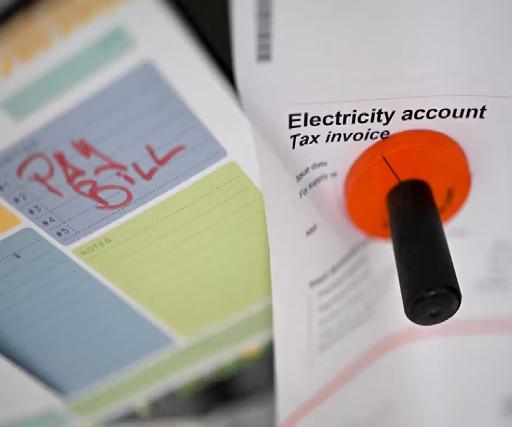
providers can lead to savings on many household bills.
Secondhand shopping and the fight against inflation
What about the non-essentials? Cutting your takeaway coffee or ending your subscriptions can certainly save you money. However, there are potentially even bigger savings to be found in secondhand marketplaces.
If you’re managing a strained household budget, secondhand goods offer a great way to cut your spending by getting what you want at heavily discounted prices. More than that, secondhand marketplaces cut both ways – you can be a buyer, but you can also be a seller. Most households are full of old things that aren’t used or wanted, and selling them can help generate additional income.
The sustainability benefits stemming from the circular economy of recycling and reusing old items are obvious.
But the practice might also be anti-inflationary in some small way. It shifts demand away from stores, reducing some of the competitive pressures that underpin rising prices, while at the same time helping households grow their savings.
Just remember to be wary of scams when dealing with online commerce.
Remember the “loyalty tax”? It isn’t really about being loyal, it’s about the inertia of not getting around to switching. Service providers don’t keep your business because you keep choosing them – they keep it because you stop choosing.
Automatic bill payments work the same way – once people consent to a direct debit, they rarely cancel the payment. The good news is that you can flip this around on the savings side of the equation to work in your favour.
Once you’ve audited your essentials and substituted secondhand marketplaces for the stores, you can think about the future. Why rely on willpower alone to build your savings? Instead, automate your savings on payday in the same way that you already automate paying your bills.
Banks generally allow you to have multiple accounts at no extra charge. So, consider setting up a small automatic transfer from your main account to a highinterest “rainy day” fund. A precautionary savings buffer is among the best tools households have to ensure financial resilience through difficult times.
George Mihaylov Senior Lecturer in Finance, Adelaide University

Aussie Painters Network aussiepaintersnetwork.com.au

National Institute for Painting and Decorating painters.edu.au
Australian Tax Office ato.gov.au
Award Rates fairwork.gov.au
Australian Building & Construction Commission www.abcc.gov.au
Mates In Construction www.mates.org.au

Comcare
WorkSafe ACT
Workplace Health and Safety QLD
WorkSafe Victoria
SafeWork NSW
SafeWork SA
WorkSafe WA
NT WorkSafe
WorkSafe Tasmania
comcare.gov.au worksafe.act.gov.au worksafe.qld.gov.au www.worksafe.vic.gov.au www.safework.nsw.gov.au www.safework.sa.gov.au commerce.wa.gov.au/WorkSafe/ worksafe.nt.gov.au worksafe.tas.gov.au
actcancer.org cancercouncil.com.au cancercouncilnt.com.au cancerqld.org.au
cancersa.org.au cancervic.org.au
cancerwa.asn.au (02) 6257 9999 (02) 9334