
Start the New Financial Year on the Front Foot
Take the time now to review your cashflow, and assess your spending.
Why Most Startups Fail Skills That Can Make the Difference


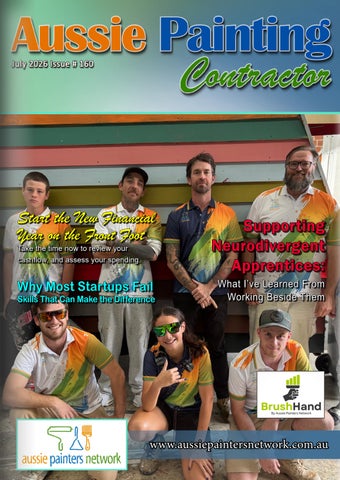
Start the New Financial Year on the Front Foot
Take the time now to review your cashflow, and assess your spending.
Why Most Startups Fail Skills That Can Make the Difference
Welcome to the 160th issue of the Aussie Painting Contractor Magazine.
As another financial year begins, it's the perfect opportunity to stop for a moment and ask yourself a simple question...
Is my business where I want it to be?
Most painters are flat out. We move from one job to the next, answer phone calls after hours, chase payments, quote on weekends and somehow fit family life in around everything else. Before we know it, another year has disappeared.
This month we've focused on helping you work on your business, not just in it.
You'll find articles on improving cashflow, budgeting for the year ahead, reducing debtor days and making smarter business decisions. These aren't glamorous topics, but they're often the difference between running a business that controls you and one that gives you the lifestyle you started it for.
I'm also incredibly proud of Caroline's article on supporting neurodivergent apprentices. Over the past few years we've worked with hundreds of young people through our Painting Your Career program, and one thing has become very clear—when we stop focusing on what young people can't do and start recognising what they can do, amazing things happen.
Our industry needs good tradespeople. Sometimes they just need someone willing to teach them in a way that works for them.
This month also marks the beginning of another exciting chapter for the Painting Your Career program as we continue working with schools across Queensland, introducing students to painting and decorating as a genuine career path. The response from schools, students and employers has been incredible, and I'm excited to see what the next 12 months brings.
As always, thank you to everyone who contributes to this magazine each month. To our writers, advertisers, members and readers—your support allows us to continue sharing knowledge that helps strengthen our industry.
If there's a topic you'd like us to cover or a story worth telling, I'd love to hear from you.
Til next month, Happy Painting!!


Nigel Gorman
• Caroline Miall
• Elizabeth Morton
• Leo Babauta
• Lisa Greig
• Nigel Gorman
• Oliver Kay
• Rebecca Ellis
• Robert Bauman
• Sandra Price
EDITOR
Nigel Gorman
GRAPHIC DESIGNER
J. Anne Delgado









Neurodivergent
From Working Beside
THIS TAX TIME, Here’s what to watch out for – and when it’s better to lodge early or later 4 Tips for Getting Your Business Through Tough Times How Do I Choose the Right Business Structure in Australia


Your Business Flowing — or Are You Stuck in a Swamp?

TO LEARN TO Love Healthy Food 10 tips to reduce debtor days for small business owners Do you lose your whole day to one appointment? ‘Waiting mode’ may be why
Opinions and viewpoints expressed in the Aussie Painting Contractor Magazine do not necessarily represent those of the editor, staff or publisher or any Aussie Painters Network’s staff or related parties. The publisher, Aussie Painters Network and Aussie Painting Contractor Magazine personnel are not liable for any mistake, misprint or omission. Information contained in the Aussie Painting Contractor Magazine is intended to inform and illustrate and should not be taken as financial, legal or accounting advice. You should seek professional advice before making business related decisions. We are not liable for any losses you July incur directly or indirectly as a result of reading Aussie Painting Contractor Magazine. Reproduction of any material or contents of the magazine without

For many tradies, the start of a new financial year feels like a fresh set of tools— an opportunity to tidy things up, make improvements, and set the business up for a stronger year ahead.
The problem is that too many business owners simply roll into the new financial year without a plan. They stay busy, jobs keep coming in, money flows through the account, and before they know it another twelve months have passed with little change.
The beginning of the financial year is the perfect time to focus on three areas that have the biggest impact on your business success: cashflow, budgeting, and expenditure.
Cashflow Is King
You can be profitable on paper and still run into trouble
if cash isn't available when you need it.
Late-paying customers, large supplier bills, GST obligations, superannuation payments, and tax commitments can all put pressure on your bank balance. That's why managing cashflow should be one of your top priorities.
Start by asking yourself:
• Do I know how much cash my business needs each month?
• Am I getting paid quickly enough?
• Are there upcoming tax or BAS payments I need to prepare for?
• Do I have enough buffer for quieter periods?
Understanding where your money comes from and where it goes gives you more control and far less stress.
Many tradies operate without a budget because they think budgeting is only for big businesses. In reality, a budget is simply a plan for your money.
A good budget helps you:
• Set realistic sales targets.
• Plan for wages and subcontractor costs.
• Prepare for equipment purchases.
• Allow for tax and super obligations.
• Identify potential cash shortages before they happen.
Without a budget, you're relying on hope. With a budget, you're making informed decisions.
Remember, your budget doesn't need to be complicated. Even a simple forecast can provide valuable insight and help you stay on track throughout the year.
The new financial year is also an ideal time to look closely at your expenses.
Over time, businesses often accumulate subscriptions, software, memberships, and regular costs that no longer provide value.
Ask yourself:
• Are we still using everything we're paying for?
• Have supplier prices increased?
• Could technology save time and money?
• Are there expenses that can be reduced without affecting quality?
Small savings across multiple areas can make a significant difference to your overall profitability.
The best time to improve cashflow isn't when money is tight—it's before issues occur. Businesses that regularly review their numbers are better equipped to: •
Handle unexpected expenses.
• Invest in growth opportunities.
• Reduce financial stress.
• Build long-term wealth from their business profits.
When you know your numbers, you make better decisions.
Running a trade business already demands enough of your time. Trying to manage everything without sup-
port often leads to frustration and missed opportunities. That's why Straight Talk Accounting & Tax created the Tradies QuickStart Advantage Program.
The program is designed specifically for tradies who want more than just annual tax returns. It provides practical guidance and accountability to help business owners:
• Improve cashflow management.
• Develop realistic budgets and forecasts.
• Understand their numbers with confidence.
• Create better systems and processes.
• Increase profitability and reduce financial stress.
• Build a business that supports their lifestyle and long-term goals.
Rather than simply reacting to problems, the program helps tradies take a proactive approach to running their business.
A new financial year is more than just a change of date—it's a chance to reset, refocus, and put better habits in place.
Take the time now to review your cashflow, establish a budget, and assess your spending. The effort you put in today can make the next twelve months far more profitable and far less stressful.
And if you'd like support along the way, the Tradies QuickStart Advantage Program from Straight Talk Accounting & Tax can help you turn good intentions into real results.
Because successful tradies don't just work hard— they understand their numbers and make them work harder too.
If you need any support with getting your cashflow forecast and budget sorted, visit our website at www. straighttalkat.com.au and book a chat or download the 21-Point Tradie Success Checklist.


Two of my favorite authors on the topic of marriage, Harville Hendrix and Helen Lakelly Hunt, wrote something called The Zero Negativity Guide for Couples.
I haven’t tried this method in my marriage, but I’ve found that the approach is very powerful as a general approach to our lives.
I think of myself as a positive person — and compared to many people, I am very positive. But as I started to practice with zero negativity, what I noticed is that I judge other people more than I realized.
And I have a negative view towards some people — much more than I realized.
I’ll talk about that below, and how I practice with it. And share how it can change your life.
In brief, here’s what the zero negativity approach can shift if you practice:
1. You can soften in your judgments towards others (less resentment & frustration).
2. You can shift to a more positive view of others, leading to better relationships, less complaining, more appreciation.
3. You can start to have a more positive view of yourself, with less self-judgment, shame, anxiety.
These are huge changes, life-changing. Let’s dive in.


The QBCC’s Industry Snapshot provides valuable insights into Queensland’s building and construction industry, including licensing trends, demographic shifts and defect reporting— providing an understanding of industry dynamics, planning workforce development, and improving compliance and quality standards.
SOME NOTABLE CHANGES OVER THE PAST TWO YEARS INCLUDE:
GROWTH IN LICENSEES
• Total licensees under the QBCC Act increased by 6.3% from 96,908 in 2023 to 103,011 in 2025 (total licensees are more than 120,000 under all Acts regulated by the QBCC).
• The most notable increases were in the Brisbane region (+7.5%) and the Sunshine Coast region (+11.7%).
DEMOGRAPHIC SHIFTS
• The proportion of licensees aged under 30 years has slightly increased, indicating a modest rejuvenation of the workforce.
• A large portion of licensees remain over 60 years old, especially in key trades like plumbing, painting and carpentry, highlighting ongoing succession challenges.
DEFECT TRENDS
• Painting continues to top the list of reported defects.
• Driveways and paths defects have increased in frequency.
• The incidence of footing and slab defects has increased.
If you need a refresher on any of these defective work items, the QBCC’s standards and tolerances guide is a quick and easy reference for industry, licensees and home owners, based on recognised industry standards in Queensland.
The QBCC will publish the Industry Snapshot annually to ensure the building and construction industry is armed with current and reliable industry data.
Licensee feedback and suggestions are welcomed, so the QBCC can continue to evolve and provide the most accurate picture of the industry possible.
To read the full and latest version of the Industry Snapshot or find out more on the state of the industry please visit www.qbcc.qld.gov.au




It really shocked me how often I have a negative view of other people — sometimes people in my life, sometimes strangers in public, definitely people behaving badly in the public sphere.
When we have these negative views … it just feels like we’re right. They shouldn’t behave that way. They should know better. They should act differently.
I started to notice how often people’s behavior irritated or frustrated me. How I see them in a negative light. Yikes!
So I’ve been practicing:
• Noticing when I have frustration, irritation, resentment — and then looking at the negative view I have of the person.
• Letting myself feel the feelings, without feeding them with more negative thoughts.
• Try to soften my view towards the person, give them more grace and compassion, see that they’re trying their best.
• Try to see the positive qualities of this person.
What this creates is a whole new way to relate to this person.
As we create these shifts, one little moment at a time, we’re creating a new view and relationship to everyone in our lives, and strangers as well.
What occurred to me, as I was doing this zero negativity approach towards other people … is that the same thing can apply to ourselves. We have a negative view of ourselves that causes shame and anxiety, discouragement and disappointment when we don’t live up to frustration, and an inner critic that hurts everything we do.
What if we created a new relationship to ourselves?
Same practice:
• Noticing when I have frustration or disappointment with myself — and then looking at the negative view I have of myself.
• Letting myself feel the feelings, without feeding them with more negative thoughts.
• Try to soften my view towards myself, give myself more grace and compassion, see that I’m trying my best.
• Try to see the positive qualities in myself.
What shifts, if we do this, is profound. Everything in our lives become easier. You might resist this practice, but I hope you’ll try it.
Leo Babauta ZEN HABITS

Before a startup becomes a success story, it goes through countless decisions, adjustments, and challenges. Many aspiring entrepreneurs believe that having an innovative idea is enough, but reality often proves otherwise. A brilliant concept without proper execution rarely produces lasting results. In business, execution transforms vision into value.
To execute effectively, entrepreneurs must develop a set of essential skills that help them navigate uncertainty and build sustainable companies. Below are seven key skills every entrepreneur should cultivate.

Clear communication is one of the foundations of entrepreneurship. Business owners constantly communicate with customers, employees, investors, and partners through emails, presentations, meetings, and social media. The ability to explain ideas clearly, listen actively, and persuade others can determine whether opportunities are gained or lost. Effective communication also strengthens teamwork and helps resolve problems before they escalate.
Success in business is rarely achieved alone. Building meaningful relationships opens doors to partnerships,
mentorships, customers, and potential investors. Strong networking skills allow entrepreneurs to create valuable connections and learn from the experiences of others. Confidence, professionalism, and genuine interest in people can turn simple introductions into long-term business relationships.

Even the most promising startups can fail because of poor financial decisions. Entrepreneurs must understand how to manage cash flow, control expenses, and allocate resources wisely. Since many startups operate with limited capital, careful budgeting becomes essential. In addition, understanding investments, pricing strategies, and fund raising options enables business owners to make informed decisions that support long-term growth.

A company is only as strong as the people behind it. Hiring individuals with the right skills, values, and work ethic is a critical responsibility for entrepreneurs. Beyond recruitment, leaders must inspire, motivate, and guide their teams toward common goals. Creating a positive work environment and fostering collaboration can significantly improve productivity and employee retention.

The business environment changes rapidly. Market trends evolve, customer preferences shift, and unexpected challenges arise. Entrepreneurs who can adapt quickly and take on multiple responsibilities have a greater chance of overcoming obstacles. During the early stages of a startup, owners often handle marketing, operations, customer support, and strategic planning simultaneously. Flexibility and the ability to prioritize tasks are invaluable qualities.

Every business encounters setbacks, from operational issues to competitive pressures. Successful entrepreneurs view problems as opportunities for improvement rather than reasons to give up. Strong analytical skills help identify the root causes of challenges and develop practical solutions. Making timely and informed decisions allows businesses to maintain momentum and remain competitive.

The most successful entrepreneurs never stop learning. Industries evolve, technologies advance, and customer expectations change over time. Entrepreneurs who embrace continuous learning can identify emerging opportunities and stay ahead of competitors.
Reading, attending seminars, seeking mentorship, and remaining open to new ideas encourage innovation and long-term business growth.
Running a startup or small business is both demanding and rewarding. While a great idea may serve as the starting point, it is the ability to execute effectively that ultimately determines success.
Communication, networking, financial management, leadership, adaptability, problem-solving, and continuous learning equip entrepreneurs with the tools needed to transform ideas into thriving businesses. In the end, success belongs not only to those with great ideas, but to those who consistently take action and turn those ideas into reality.






Over the years, working closely with young people stepping into the trades, I’ve learned that the biggest changes don’t come from grand programs or complicated interventions. They come from small moments — the kind you only notice when you’re standing beside a teenager holding a roller for the first time, or watching them take a breath before asking a question they’re not sure they should ask.
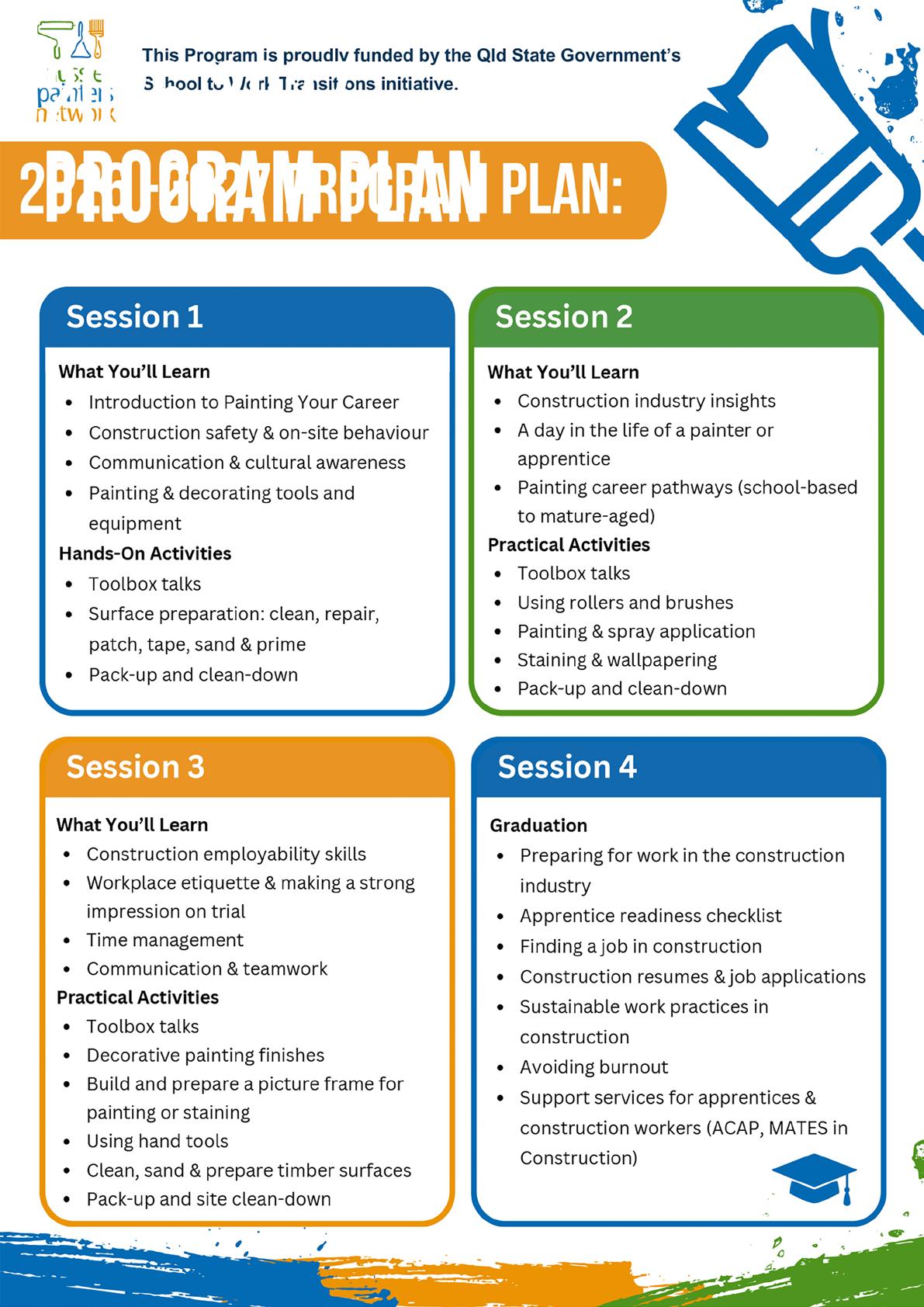
Through the Painting Your Career School-to-Work Transitions Program, funded by the Queensland State Government, I’ve worked with all kinds of students curious about trades, and if I’m honest, a large proportion of them are neurodivergent in one way or another. Not in a negative sense either - just wired differently. Often more sensitive, more observant, more creative, more intense, more literal, more pensive. And when you stop seeing those traits as “problems” and start seeing them as potential, everything shifts. When you can leverage cognitive diversity as an asset rather than a deficit, you can unlock all kinds of hidden value in someone, especially if they’ve frequently been undervalued in their past.
Many of the teens who join us come from specialist schools or alternative education settings. Some have disengaged from mainstream schooling. Some have been told all their lives, directly or indirectly, that they’re “difficult”, “distracted”, or “not trying hard enough”. But when they walk into our workshop, something different happens.
They slow down. They look around. They test the waters. And then — often quietly — they start to participate. I’ve watched students who barely spoke in the first hour end up explaining techniques to their peers by the end of the week. I’ve seen kids who were convinced they were “bad at everything” light up when they realise they can cut in a straight line or prep a wall better than most adults.
It’s not because we’re doing anything extraordinary. It’s because we’re giving them a space where they can actually succeed. A space that’s calm, predictable and respectful.
The employer match is where everything either works — or falls apart
I’ve learned that neurodivergent apprentices don’t struggle because they lack ability. They struggle when the environment doesn’t match how they learn. And I think we’ve all seen the difference the right employer can make.
When a young person lands with someone who explains things clearly, who gives them a moment to process, who checks in for understanding & corrects without humiliation -the transformation is remarkable. Their confidence grows, their work improves, their loyalty deepens.
It’s not about lowering standards. It’s about giving them a fair chance to meet them. And when that happens, retention improves - not because the apprentice has “toughened up”, but because they’ve been given the conditions to make progress.
What investment really looks like.
It isn’t always money. Most of the time, it’s patience. It’s clarity. It’s a steady tone of voice. It’s a moment taken to check in rather than check-up.
I’ve seen employers who do this naturally, without even realising they’re doing something special. They just treat young people the way they wish someone
had treated them when they started out. And those employers rarely struggle with retention.
The truth is, neurodivergent young people bring enormous strengths to the trades — focus, creativity, problem-solving, pattern recognition, persistence.
But they need the right environment to bring those strengths forward. When they get it, they don’t just cope. They thrive. They stay. They run jobs! They grow into exactly the kind of tradespeople our industry needs.
If you’ve had experiences, challenges, & wins supporting someone who learns differently, we’d genuinely love to hear what’s worked for you. This conversation is only just beginning, and it matters every bit as much to strong business outcomes and healthy workplaces as any other difference we already strive to accommodate. Small, thoughtful adjustments can create huge rewards - lifting confidence, improving training experiences, and strengthening apprentice retention across the board.
Caroline Miall caroline@aussiepaintersnetwork.com.au



Tax time is coming – and with it, the unfortunate reality of needing to do something to get ready.
Don’t put your head in the sand and ignore it. That’s how you can end up missing the October 31 deadline and potentially end up with fines and penalties.
And don’t risk taking tax advice from unofficial sources.
This year, the Australian Taxation Office (ATO) has warned against relying on online tips or “tax hacks” from “finfluencers”: financial influencers on social media. It’s also warned artificial intelligence platforms can draw from outdated, inaccurate or foreign sources – so using them for your tax can be risky.
If you’re seeking advice, always ensure you are dealing with a registered tax agent.
Luckily, the ATO has been improving its online tax tools, so lodging your tax yourself is not as daunting as it once was.
More than 6.1 million Australians (around 43%) did their own tax online with MyTax in 2025.
More than 8.1 million (around 57%) still choose to use a tax agent.
But doing your own tax has been a steadily growing trend for more than a decade, as more people realise the ease of using MyTax.
The tax office knows a lot
As a taxpayer, you have the obligation to tell the ATO what you have earned – even if you think you don’t have to pay any tax.
While the ATO know a lot more about you than you might realise, they are not mind readers.
The tax office collects more than 600 million transactions annually from various third parties. Sometimes they share the information with you – such as when they pre-fill sections of your MyTax form – but sometimes they don’t.
While articles like this about tax time often focus on claiming deductions, being transparent about your income is non-negotiable.
Whatever you claim on your tax return, the onus is on you to get it right.
If you have deposits in your bank account, can you explain where those came from? If not, the ATO may deem that those deposits were income. Then it is up to you as the taxpayer to prove otherwise.

When you get to your deductions, there are three “golden rules” to remember:
• you have to have spent the money and not been reimbursed (such as if your employer paid for your phone or petrol expenses)
• your spending must be directly related to earning your income
• you must have proof (usually a receipt).
If you are claiming working from home, there are two options to reduce your tax bill: the fixed rate or actual cost approaches.
The $0.70 per hour fixed-rate method is much simpler. For most people doing their own tax, it’s the one you’re more likely to use.
But watch out for traps. To claim this deduction, you need to keep records the entire year.
And the fixed-rate method includes common expenses such as phones and stationery, so don’t double dip by claiming those separately.
You cannot claim rent or interest for working from home, unless your home is an actual place of business, such as a doctor’s surgery or hair salon.
Similarly, you cannot claim everyday clothing. To claim a deduction on clothing, it needs to be occupation specific, protective (such as steel-capped boots), a compulsory uniform (likely to be written into your employment contract) or a registered noncompulsory work uniform.
You cannot claim private travel. This includes driving to and from work, or commuting on public transport. There are very limited exceptions.
Don’t just rollover your claims from last year, either. What have you actually spent this year – and have you got the receipts to back it up?
Why you can’t claim a $1,000 ‘instant’ deduction just yet
There’s been a lot of coverage about the $1,000 “instant” tax deduction and the “working Australians tax offset” of $250, announced in last month’s federal budget.

These are not relevant for this tax season. Those are due to start from next financial year and beyond, assuming they’re passed by parliament.
Read more: How much a new $1,000 tax offset would really be worth – and who’s better off avoiding it
When it’s better to lodge early or later Taxpayers should lodge when required. Think Goldilocks here: not too soon – and not too late.
If you try to do it too early, ATO data matching may not be complete. Generally that’s done by around end of July.
You’re better off waiting until all the information is there, otherwise the ATO is likely to amend your return. You can either lodge yourself or use a registered tax agent.
Expecting a tax refund? You’re better off lodging earlier, from late July on. For simple, self-lodged tax returns, you can generally expect to get a refund within about two weeks. So that means you’ll have more money in your bank account sooner.
Expecting a tax bill? That’s when you’re better off lodging just in time: by October 31 if you’re submitting yourself, or making sure you have a tax agent locked in by then.


The ATO provides a variety of guidance and advice to support taxpayers, while tax agents can help you to pay the right amount of tax.
Be careful of unregistered tax agents, particularly those tax “influencers” offering huge refunds. If you’re unsure, check this official register.
Never give out your login details to myGov or myTax.
Registered tax agents will never ask for your passwords. If you’re facing financial, social or personal challenges and need help, free tax clinics can provide targeted assistance.
And if you’re having difficulties meeting your tax obligations, or are unable to lodge on time, contact the tax office or a registered tax agent as soon as possible.
Disclaimer: This is not tax advice, it is for educational purposes only. Taxpayers should seek advice from a registered tax agent or suitably qualified professional.
Elizabeth Morton Senior Lecturer, Curtin University
Lisa Greig
Lecturer
in Taxation Law for accountants, The University of Melbourne





If you're a small business owner whose company hasn't gone through hard times, that's great but it's likely to happen at some point. As much as we dream about being brilliant enough at business that we'll never face slow times, there are many things beyond our control that can negatively affect our organization.
Here are four tips for getting your business through difficult periods so you can look forward to many more years of business ownership.
When companies go through tough times, many owners turn their focus to bringing in new business. The downside is that existing customers are often forgotten, but those are the most efficient people to make sales to. You don't need to stop marketing yourself to
new customers, but make sure you give extra focus to the customers you already have, to ensure they remain loyal. Find out what their current needs are, how successful you are at meeting them, and what you can do to maintain an ongoing relationship. Communicate with them, and always provide exceptional customer service.
Chances are, you aren't the first person in your industry to experience tough times. Talk to other people who have been in similar situations to learn how they navigated those challenges. Ask them what did and didn't work for them, and what they learned from the experience. Some—if not all—of their answers could be applicable to your business, or could at least inspire a solution.
Your marketing plan brings in new customers. Now is the time to consider fresh marketing ideas to bring in new revenue. Is there an area of your business you haven't promoted before but could bring in clients? Is there a new way to market yourself you haven't tried?
Examine previous marketing efforts to determine how successful they were. If they weren't successful, stop wasting your valuable time and money on them. Use your efforts on something new.
Analyze your company's financial health to see if there are ways to improve cash flow. Can you charge clients a deposit or encourage payment up front to increase cash flow? Are there products you sell or services you provide that bring in revenue more quickly than others? Are there ways to save money that won't hurt your business in the long run?
It can be tempting to eliminate staff, but when things are good you'll just need to hire employees again. Doing so costs time and money. See if you can find small ways to save money that won't negatively affect your business when it starts booming. Cutting overtime, for example, can save you money without losing staff.
Make sure you can account for every dollar your business spends. Don't hide from creditors, communicate with them to find out if you can restructure your debt or extend your terms. Free up as much money as you can without setting yourself up for failure when things turn around.
Chances are your business will go through tough times at least once. It's important you take action to help get you through it, rather than crossing your fingers and hoping the difficulties pass.
The steps you take during these challenging periods will help you, but they can also help set you up for increased success in later years.
Sandra Price


Easily
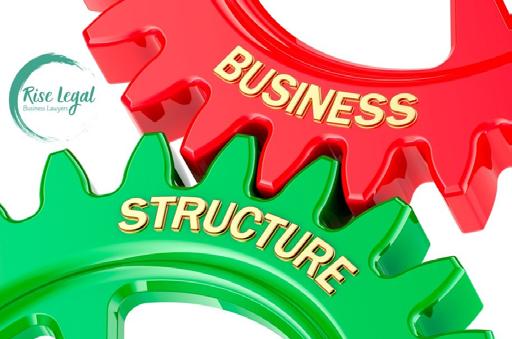
Choosing the right business structure in Australia is one of the most important decisions you’ll make when starting or growing a business. It’s not just about ticking a legal box—the structure you choose impacts your taxes, liability, funding options, and even how you run your business day-to-day. Let’s break it down so you can make an informed choice that aligns with your goals.
In Australia, there are four primary types of business structures to consider:
1.
What is it? A sole trader is the simplest and most affordable business structure. You operate the business as an individual, and you’re personally responsible for its debts and obligations. This structure is quick to set up and gives you complete control over your business operations.
Pros:
• Easy and inexpensive to set up—you can often get started with minimal paperwork.
• Full control over decisions, allowing you to pivot quickly as needed.
• Fewer reporting requirements compared to other structures, making it simpler to manage day-to-day operations.
Cons:
• Unlimited personal liability for business debts— your personal assets (like your home or car) could
be at risk if the business incurs significant debt.
• Limited growth potential as funding options, like taking on investors, are more restricted.
• Harder to raise capital, as lenders and investors may view sole traders as higher-risk ventures.
Best for: Individuals starting out as freelancers, consultants, or running small businesses with low initial risks and costs. It’s also great for those who want to test their business idea before committing to a more complex structure.
2. Partnership
What is it? A partnership involves two or more people running a business together. Profits and losses are shared between partners based on a pre-agreed ratio or equally by default.
Pros:
• Shared financial and operational responsibilities, which can ease the workload and reduce stress.
• Relatively simple and affordable to establish, especially compared to more complex structures.
• Combined skills and resources mean each partner can bring unique strengths to the business.
• Flexibility to split profits and losses in a way that reflects contributions to the business.
Cons:
• Joint liability for debts and legal obligations, meaning all partners are responsible for the business’s obligations.
• Potential for disputes if roles, responsibilities, and financial arrangements aren’t clearly defined in a partnership agreement.
• Limited life span if one partner leaves, as this can trigger the dissolution of the partnership unless addressed in an agreement.
• Difficulty raising capital compared to a company structure, as there are no shares to sell.
Best for: Businesses with shared ownership or complementary skillsets, like professional services (e.g., accounting firms or law practices) or small retail ventures, where partners trust each other and share a common vision.
What is it? A company is a separate legal entity, which means it can own assets, incur debts, and be sued independently of its owners (shareholders). This structure separates personal and business liabilities, offering a higher level of protection for your personal assets.
Pros:
• Limited liability for shareholders, meaning your personal assets are generally safe if the company incurs debts or faces legal action.
• Easier to raise capital through the issuance of shares, making it an attractive option for investors.
• Professional image and credibility, as companies are often viewed as more stable and reliable by clients and partners.
• Perpetual existence—the company continues to operate even if ownership changes.
Cons:
• Higher setup and ongoing costs, including registration fees, annual reporting, and compliance costs.
• Strict regulatory and reporting obligations, such as lodging annual financial reports with ASIC and maintaining detailed records.
• Taxation at the company rate, which may not always be advantageous depending on your income and business profits.
• Complex structure, requiring a board of directors and adherence to corporate governance standards.
Best for: Businesses with high growth potential, significant risks, or plans to scale nationally or internationally. This structure is ideal for startups seeking investment or established businesses looking to expand operations.
What is it? A trust is a legal structure where a trustee (an individual or a company) holds and manages business assets on behalf of beneficiaries. The trustee is legally responsible for managing the trust according to its terms, which are outlined in a trust deed.
Pros:
• Flexible income distribution among beneficiaries, allowing tax-efficient allocation of profits.
• Strong asset protection, as trust assets are generally protected from personal creditors of the beneficiaries.
• Potential tax advantages, especially for family businesses, as income can be distributed to beneficiaries in lower tax brackets.
• A level of continuity, as trusts are not tied to an individual and can outlive their founders.
Cons:
• Expensive and complex to set up and maintain due to legal and accounting requirements.
• Requires a formal trust deed, which must be carefully drafted to avoid disputes or limitations in the future.
• Trustees have significant legal responsibilities and can be held personally liable for their actions unless they are a corporate trustee.
• Restrictions on using trust income for reinvestment back into the business, which can limit growth potential.
Best for: Family businesses, property investment portfolios, or those looking to protect significant assets while efficiently distributing income among beneficiaries. Trusts are ideal for situations where safeguarding wealth and managing long-term generational benefits are priorities.
When deciding on your business structure, it’s essential to look beyond just the surface-level pros and cons. Here’s a deeper dive into the key factors:
Liability: Are you prepared to risk your personal assets if something goes wrong? Structures like companies and trusts provide a layer of protection by separating personal and business liabilities. Sole traders and partnerships, however, hold you personally responsible for business debts, which means your home or savings could be at stake.
Taxation: Tax obligations vary widely between structures in Australia. For example, sole traders are taxed at personal income rates, which can range from 0% to 47% depending on your earnings, while companies pay a flat tax rate of 25% for small businesses. Companies, on the other hand, pay a flat tax rate, which might reduce your tax burden if profits are substantial. Trusts offer flexibility in distributing income to beneficiaries, potentially lowering overall tax liabilities.
Control: How much control do you want over your business? Sole traders and single-member companies offer complete autonomy, while partnerships and some trusts require shared decision-making, which could slow things down but also bring diverse perspectives.

Growth Plans: If you envision expanding your business, consider a structure that supports scalability. Companies, for instance, allow you to raise capital by issuing shares, while sole traders and partnerships might struggle to attract large investments or grow beyond a certain point.
Complexity: How much administrative work are you ready to handle? Simpler structures like sole traders involve fewer reports and less paperwork, making them ideal for small operations. Companies and trusts, however, require more detailed record-keeping, reporting to ASIC, and adhering to strict governance standards.
Ultimately, your business structure should align with your goals, risk tolerance, and resources. It’s worth seeking expert advice to ensure you make the right choice for your unique situation.
Getting Legal Advice is Crucial
Choosing the wrong structure can lead to unnecessary taxes, disputes, or even putting your personal assets at risk. Without the right guidance, you might overlook key factors like liability exposure, tax efficiency, or legal compliance, which can have long-term consequences for your business.
That’s why getting professional advice tailored to your business’s unique needs and goals is crucial. A commercial lawyer can:
Clarify Legal and Financial Implications: Understand how each structure impacts your tax obligations, liability, and growth potential, so you can make an informed choice.
Draft Customised Legal Documents: From partnership agreements to trust deeds, a lawyer ensures your documents are watertight, clearly outlining roles, responsibilities, and terms to avoid future disputes.
Navigate Compliance: Ensure your business complies with all relevant Australian laws and regulations, including ASIC registration, ABN application, and ongoing reporting obligations.
Offer Strategic Guidance: Tailor advice to your business goals, whether you’re a sole trader testing the waters or planning a company for national expansion. Taking the time to consult a legal professional can save you from costly mistakes and set you up for longterm success.
Bottom Line
There’s no one-size-fits-all answer when it comes to choosing the right business structure. It’s about finding what works best for your business’s current needs and future plans. At Rise Legal, we specialise in helping businesses like yours make confident, informed decisions about their structure and legal obligations.
�� Need help choosing the right business structure for your Australian business? Let’s chat! Contact Rise Legal today for expert, tailored advice to support your unique journey.
Remember, while this information provides a general overview, legal advice tailored to your specific circumstances is invaluable. Don’t hesitate to contact Rise Legal for personalised guidance or book in a free Discovery Call.
Disclaimer: This blog post is intended for informational purposes only and should not be considered legal advice. Consult with a qualified commercial lawyer for personalised advice related to your specific circumstances.







What does that question mean to you?
In life, we often experience one of two states: we are moving forward with clarity and momentum, or we feel bogged down by uncertainty and overwhelm. Business is no different.
When your business is flowing, decisions become easier, opportunities appear more frequently, and progress feels purposeful. But when you're stuck in a swamp, every step feels heavy. You work hard, yet it seems like you're getting nowhere.
One of the biggest reasons businesses lose momentum is a lack of clarity. If your goals are not clearly defined and written down, how can you measure progress or know where you're heading?
During my years in the corporate world, I attended countless strategic planning sessions. Some organisations focused heavily on analysing past results, searching for ways to improve performance. Others recognised that future growth required stretching beyond their comfort zones. While large corporations often moved cautiously because of their size and
complexity, successful leaders always aligned their decisions with a clear end goal.
So, what is different for small business owners? Unlike large corporations, small businesses have the advantage of agility. You can pivot faster, innovate quicker, and make decisions without layers of bureaucracy. But that flexibility only works when you know exactly what you're aiming for.
Ask yourself:
• What keeps you motivated every day?
• What actions are you taking consistently toward your vision?
• Have you clearly defined what success looks like?
• Do you have measurable goals and realistic timelines?
Modern business thinking shows that success isn't just about setting annual goals. Today's most successful businesses combine long-term vision with shorter 90-day priorities, regular reviews, and the ability to adapt when market conditions change. Clarity creates focus, and focus creates momentum.
When things are working, you'll often feel "in flow." You're moving with purpose. Challenges still arise— every business encounters obstacles—but instead of becoming stuck, you adjust course while staying aligned with your ultimate destination.
Recently, I spoke with a business owner who had struggled for years to gain clarity about where they wanted their business to go. When I asked, "What is your end goal?" the response was uncertain. Then I asked, "By what date do you want to achieve it?" Silence followed.
That conversation reminded me of the principles shared by Napoleon Hill in Think and Grow Rich—the importance of defining a clear objective and attaching a timeframe to it. Once those questions were answered and confirmed with their business coach, everything changed. Decisions became easier. Priorities became clearer. Momentum returned.
Today, we know that clarity alone isn't enough. Accountability, regular review, and the willingness to adapt are equally important. A goal written down and revisited consistently becomes far more powerful than a dream left in your head.

☑ So where are you in your business journey?
☑ Do you have a clear vision?
☑ Do you know your desired outcome?
☑ Have you attached a time frame to your goals?
☑ Are your daily actions aligned with where you want to go?
If so, you are creating flow.
If not, perhaps it's time to step out of the swamp and rediscover the river.
Because businesses that thrive are not necessarily those with the most resources—they are the ones with the clearest direction and the courage to keep moving forward.
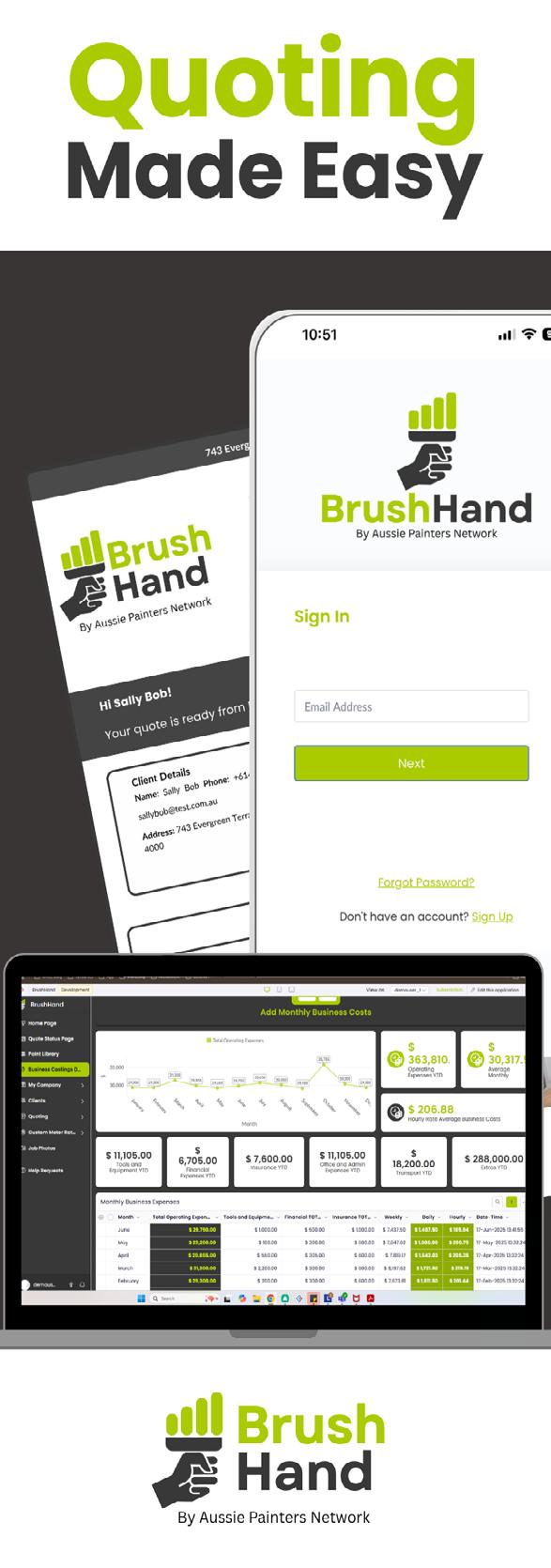



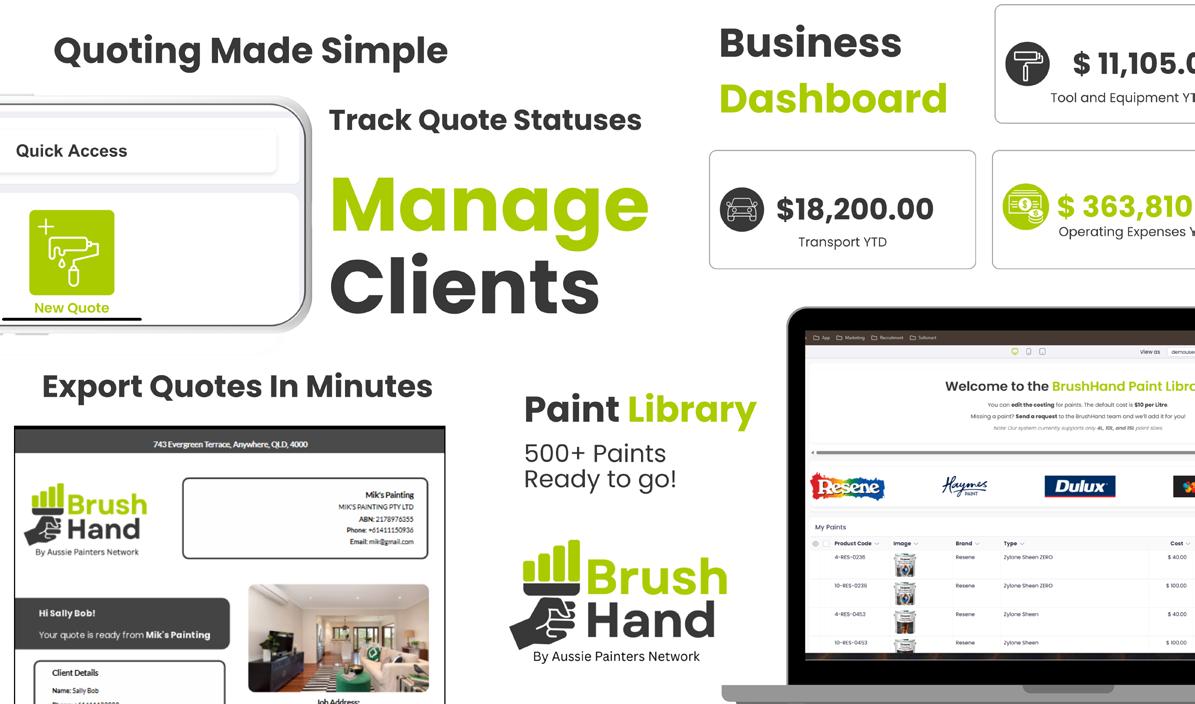
Quoting is one of the most important parts of running a successful painting business. In this video, we break down the process of creating accurate, professional quotes that win jobs and keep your business profitable.

Finding and keeping the right people is one of the biggest challenges for painting and decorating businesses.

Smoko isn’t just a break – it’s a tradition in the trades. In this video, we take a look at what smoko means on site, why it’s important, and the stories that come with it.

There was a time in my life when I was addicted to junk food, fast food, comfort foods. These days, I still enjoy the taste of those foods, but nothing tastes as good as healthy, whole foods.
The switch for me was gradual, not instant. It was also intentional. And I’m so glad I made the change.
These days, I eat mostly whole plant foods (I’m vegan): beans, nuts, seeds, lentils, tofu and tempeh, whole grains, lots of veggies, lots of fruit. And it’s delicious.
I also mostly cut out sugar and fried foods, and completely cut out meats and other animal products including dairy, and am currently not drinking alcohol (for the last 5 months). These changes don’t feel like sacrifices to me.



If you’d like to make the switch to loving healthy food, let’s look at how to make it painless, delicious, and very much not a sacrifice.
It can be really helpful to start by envisioning what you’d like to move toward — what would a healthy diet look like for you? What kinds of healthy foods would you like to include? (Don’t limit yourself to what you already like.)
You don’t have to envision a vegan diet (although maybe consider it!) … just think about what would be healthy for you. I encourage you to think about whole foods over processed.
For me, I love to include healthy bowls: grains with proteins (tofu, tempeh, beans, lentils) and veggies and a simple sauce or hummus. Maybe some nuts or seeds to go with it. I also love huge salads with all of these things included, or soups or chili full of beans and veggies. But you could think of healthy tacos, stirfries, or wraps.
Envision the healthy meals, and try to think of them in a positive light — not only will these help make you healthier, they are delicious and lovely!
Now that we have the vision, I encourage a slow transition. You might be tempted to go for the whole enchilada (so to speak) right away … and if that feels super doable to you, go for it. But sometimes it can help to go slower.
For example, maybe there are some healthy foods that you don’t really like — green vegetables, tomatoes, beans, for example. Maybe you’re interested in tofu or tempeh but aren’t used to them. Maybe you are used to lots of sugar and fried foods and eating foods that don’t have added sugar and aren’t fried seems terrible to you.
In that case, here’s what I suggest:
• Start with the healthy changes that would be easy for you. If you already like apples, feel free to just add apples for now. Maybe you also like carrots. Add those too! Get some easy wins.
• Gradually add the other things that don’t feel so intimidating. No need to buy everything you hate and try to thug it out. Go with the ones you can tolerate reasonably well, and start to acclimatize yourself in them.
• Focus on savoring and enjoyment. As you pay close attention, and try to find the elements of the textures and tastes that you enjoy, you’ll start to appreciate the food more.
• Harder foods: there will be foods you don’t love — but you can grow to love them, if you slowly acclimatize yourself and start to appreciate the more subtle qualities of the food. I have grown to love so many healthy foods that I didn’t before. Sometimes it helps to season them in a way that’s more palatable, or try different ways to prepare. Give yourself time.
There’s no rush. You have a lifetime to learn to enjoy these foods.

This kind of shift requires a shift in identity. You might think of yoursef as someone who doesn’t like these kinds of foods, or someone who “has to have” their sugar drinks or snacks, for example. This is your old identity.
A new identity could be someone who love all kinds of healthy, delicious foods, and someone who doesn’t need junk food to be happy or to deal with stress. It’s a new identity that’s resilient in the face of stress.
So my encouragement is to start to shift how you see yourself. Let go of the old, limiting way you think about yourself in relation to food. And start to craft a new version, that is empowered and ready to enjoy a new kind of life.
Leo Babauta ZEN HABITS


Steady, reliable cash flow is crucial for the survival of any small business – so taking steps to ensure your customers pay promptly should be a key priority.
When your clients consistently pay on time, you’ll avoid the dreaded “feast or famine” cycle.
You’ll be able to pay your vendors, suppliers, and employees on time – and not least of all, yourself.
Implement these ten tips now to start getting paid without delay.
Before you start working with any new client, always provide your terms in writing. Clearly state your rates, payment due dates, and policies for late payment –including any fees incurred on balances owing.
If you’re currently preparing your invoices manually, switch over to an accounting system with automated billing. You’ll never forget to invoice a client, and you’ll eliminate errors as you save time. The first time a
client is billed make sure the contact information on your invoice is complete to avoid delays with processing.
Call your customer immediately when a payment is past due. Ask for the status of the invoice and if there’s anything you can do to speed up payment. Sometimes a simple change, like including a purchase order number on the invoice, can speed up processing.
Net 30 payment terms are fairly standard in business, but there’s nothing stopping you from asking for payment sooner. Some business owners make payment due at Net 7 or 10; others stipulate payment is due upon receipt of invoice.
Consider offering customers a 2% discount when they pay their invoice within ten days. In this scenario, a $1000 invoice would be reduced to $980 – not a huge loss for you, but an attractive cash-saving incentive for your customers.

As part of your terms, specify that if a client’s payment is past due, a weekly fee of 2% will be added onto the total until funds are received in full.
Collect a partial deposit – or the entire amount in full – before you provide a product or service to your customers.
Forego invoicing altogether by having your customers pay on the spot with mobile debit and/or credit payments.
Stop your supply of products or services until you receive payment. With this tactic you’ll avoid the
accumulation of an even greater loss with a consistently late or non-paying client.
Monitor your accounts receivable on a weekly basis so you can act fast if a customer hasn’t paid on time. An AR aging report can help you easily track outstanding invoices right in your accounting software - or create an Excel report you can track manually, if you prefer.
Perhaps the most important tip for encouraging prompt payment is excellent communication.
When you follow up on a late invoice, explain why it’s important to receive timely payment in order to run your business effectively. Ask when you can expect payment, and agree on a date.
If the money still isn’t forthcoming, offer to negotiate a payment schedule as a next-to-last option - before you have no choice but contact a collection agency.


Do you lose your whole day to one appointment ? ‘ Waiting mode ’ may be why
You have a 3pm appointment. It’s now 10am and somehow your entire day already feels out of reach. Maybe you find yourself unable to start anything properly. You feel on edge, waiting for something to begin, or end. You check the time again and again. Even a positive, planned event, like a friend visiting later, can leave you feeling stuck.
For many neurodivergent people, this experience has a name: “waiting mode”.
Waiting mode describes a state of mental standby before an upcoming event, where focusing on anything else becomes difficult, sometimes even impossible. The event itself does not have to be negative. In fact, it can be something anticipated, neutral or even enjoyable. What matters is that it exists in the near future – later that day, or sometimes days ahead –shaping everything that comes before it.
It is not only triggered by fixed appointments either. In fact, vague time-frames can make it worse: “this afternoon”, “sometime today”, or a delivery due “between 8am and 1pm” can cause anxiety and feelings of being overwhelmed. Without a clear boundary, the waiting expands to fill the entire day.
Waiting mode can be experienced differently person to person. For some, it is cognitive, described as a kind of fog, mental disorientation or even “torment” that makes it hard to concentrate. For others, it is physical – a slowing down, a heaviness, an inability to get started. Many report a sense of paralysis, as though they are suspended in time.
The feeling of not being able to do anything until it’s over is a commonly discussed phenomenon in online discussions. Tasks that would normally be manageable suddenly feel impossible to begin. Time is watched closely, but not used particularly effectively. There is often an underlying anxiety too: a fear of forgetting, of being late, of getting the timing wrong.
That anxiety can turn inward. People speak about replaying the upcoming event in their minds, running through possibilities, planning for what might go wrong in an attempt to feel more prepared. But this rumination can deepen the sense of being stuck. With no clear sense of what can comfortably be achieved before the event, even small decisions, like what task to start or what to prioritise, can become overwhelming.
Delays and uncertainty tend to intensify the experience. When a plan shifts or remains undefined, it can feel as though control over the day has been lost entirely.
Despite how widely recognised this phenomenon is within neurodivergent communities, waiting mode is not a formal clinical term. Instead, it overlaps with several well-documented traits, particularly in attention deficit hyperactivity disorder (ADHD). For example, researchers have explored differences in time perception, sometimes referred to as “time blindness”, “time dilation” or “time agnosia”. This affects how people estimate time, judge duration and track its passing.

Within this context, waiting mode may be understood as a response to uncertainty. If time is difficult to measure or predict, staying in a kind of mental holding pattern can feel safer than misjudging it altogether. It also connects to executive functioning differences, which can make it harder to start or switch between tasks, particularly under pressure.
Differences in time perception have also been noted in dyslexic and autistic people. It may suggest that this experience is not limited to one group, but part of a broader neurodivergent relationship with time.
For those who experience waiting mode, small adjustments can help. One of the most effective is scheduling important events earlier in the day, which reduces the amount of time spent in anticipation. Where that is not possible, adding structure can make a difference. This may include breaking the day into smaller, defined blocks, or choosing specific, low-pressure tasks to complete beforehand.
External supports are often helpful too. Timers, alarms and digital reminders can reduce the mental load of having to hold the event in mind. Setting multiple reminders, rather than relying on one, can also help interrupt periods of hyperfocus and provide gentle prompts to shift attention.
Preparation can ease the pressure further. Laying out what is needed the day before, or planning the steps required to get ready, can create a sense of control and free up mental space. Over time, tracking how long tasks actually take can also make it easier to judge what is realistically achievable before an event begins. This is often accompanied by the creation of a schedule to follow.
But alongside these strategies, there is a quieter, more important element, which is recognising the experience for what it is. Naming waiting mode allows people to understand that this is not simply procrastination or poor time management, but a genuine way of experiencing time and anticipation.
For many, that recognition alone brings a degree of relief. The day may still feel fragmented, the hours still shaped by what is to come. But it is no longer a personal failing – just another way the mind tried to make sense of time.
Rebecca Ellis Assistant Researcher in Public Health, Swansea University

Aussie Painters Network aussiepaintersnetwork.com.au

National Institute for Painting and Decorating painters.edu.au
Australian Tax Office ato.gov.au
Award Rates fairwork.gov.au
Australian Building & Construction Commission www.abcc.gov.au
Mates In Construction www.mates.org.au

Comcare
WorkSafe ACT
Workplace Health and Safety QLD
WorkSafe Victoria
SafeWork NSW
SafeWork SA
WorkSafe WA
NT WorkSafe
WorkSafe Tasmania
comcare.gov.au worksafe.act.gov.au worksafe.qld.gov.au www.worksafe.vic.gov.au www.safework.nsw.gov.au www.safework.sa.gov.au commerce.wa.gov.au/WorkSafe/ worksafe.nt.gov.au worksafe.tas.gov.au
actcancer.org cancercouncil.com.au cancercouncilnt.com.au cancerqld.org.au
cancersa.org.au cancervic.org.au
cancerwa.asn.au (02) 6257 9999 (02) 9334