


50 th ANNIVERSARY EDITION
BY CARLA EMERY


Copyright © 1994, 2003, 2008, 2012, 2019 by Carla Emery
50th anniversary edition
Illustrations on pages 10, 17, 31, 67, 76, 85, 86, 90, 91, 101, 108, 118, 120, 121, 122, 124, 145, 153, 154, 155, 166, 172, 176, 179, 183, 203, 265, 266, 444, 445, 454, 457, 459, 476, 482, 581, 587, 588, 593, 613, 619, 634, 649, 651, 653, 660, 661, 662, 664, 667, 673, 675, 679, 681, 683, 716, 718, 725, 726, 733, 737, 738, 770, 817, 833, 834, 839, 841, 850, 852, 855, 862, 867, 874 copyright © 1994 by David Berger
Illustrations on title page and chapter opening pages copyright © 1994 by Dave Albers
All other illustrations copyright © 1994 by Cindy Davis
Interior photographs courtesy of Carla Emery Family Archives
All rights reserved. No portion of this book may be reproduced in any form, or by any electronic, mechanical, or other means, without the prior written permission of the publisher.
Printed in China
SASQUATCH BOOKS with colophon is a registered trademark of Blue Star Press, LLC
29 28 27 26 25 9 8 7 6 5 4 3 2 1
The authorized representative in the EU for product safety and compliance is Authorised Rep Compliance Ltd., Ground Floor, 71 Lower Baggot Street, Dublin D02 P593, Ireland. www.arccompliance.com
The following authors and publishers have generously given permission to use extended quotations from copyrighted works: From Gardening Under Cover by William Head. Copyright 1984, 1989 by Amity Foundation. Published by Sasquatch Books. Reprinted by permission of the publisher. From Winter Harvest Cookbook by Lane Morgan. Copyright 1990 by Lane Morgan. Published by Sasquatch Books. Reprinted by permission of the publisher. From Growing Vegetables West of the Cascades by Steve Solomon. Copyright 1989, 2007 by Steve Solomon. Published by Sasquatch Books. Reprinted by permission of the publisher. From The Complete Guide to Landscape Design, Renovation and Maintenance: A Practical Handbook for the Home Landscape Gardener. Copyright by Cass Turnbull. Reprinted by permission of the author. From “Remove the Toxic Waste Dump from Your Home . . . ” by Rodney L. Merrill as published in Backwoods Home Magazine (January/February 1991). Copyright by Rodney L. Merrill. Reprinted by permission of the author. From “Bury Your Own Dead” by Carl Watner as published in Backwoods Home Magazine (May/June 1992). Copyright by Carl Watner. Reprinted by permission of the author.
Cover design: Bryce de Flamand and Tony Ong
Cover illustration: © 2008 by Nikki McClure
Cover background texture: iStock.com/Zocha_K
Interior design: Lynne Faulk Design
Composition: Valerie Brewster, Lynne Faulk, Magrit Baurecht, pdbd, Elizabeth Cromwell/Books in Flight.
Library of Congress Cataloging-in-Publication Data is available.
ISBN 978-1-63217-583-0
Sasquatch Books
1325 Fourth Avenue, Suite 1025 Seattle, WA 98101
SasquatchBooks.com
So many people have helped me during the years I’ve been working on this book, I can’t begin to list everyone here. Please forgive me if you should be named and you aren’t.
Thank you, God.
Thank you, all of my original subscribers. You bought into a dream, not knowing it was then just a dream and not yet a book. Thank you, everyone who worked so hard in those early days to help me make that dream a reality. All of you—and everyone who ever bought a book from me—made it possible for me to keep writing new, improved editions.
Thank you, everyone who ever bought a book from me or by me. You supported a good cause and made it possible for me to continue a life of researching and writing.
Thank you to everyone who contributed a recipe, a piece of advice, an anecdote, picture, paragraphs, criticism, or suggestions (whether I was able to include them or not). You each taught me something.
Thank you to all those unsung heroes who, over the 30 years of this book’s production, have helped to prepare, print, or market various editions.
Thank you to Mark Boseck of Sunset Graphics for making me learn to use PageMaker 6.5.
Thanks to Mark and Stephanie for months of painstakingly erasing dots and strengthening weak lines in pictures by Cindy Davis, imported from the old mimeographed versions of this book.
Thanks to Valerie Touchstone for patiently bringing revised indexes.
Thank you to my husband, Don DeLong, for keeping my computer and printer going, my morale up, and for loving this unrepentant workaholic.
—Carla Emery
Here are some poems readers have shared with me. A dear lady named Maude Dougharty sent the first one to me back when I was first publishing this book, and it’s appeared in every edition since. The second poem was sent to me in January 1994 by Julie Ryan of Connecticut. I love it!
Mama’s Mama, on a winter’s day, Milked the cows and fed them hay, Slopped the hogs, saddled the mule, And got the children off to school. Did a washing, mopped the floors, Washed the windows and did some chores. Cooked a dish of home-dried fruit, Pressed her husband’s Sunday suit, Swept the parlor, made the bed, Baked a dozen loaves of bread. Split some wood and lugged it in, Enough to fill the kitchen bin, Cleaned the lamps and put in oil, Stewed some apples she thought might spoil, Churned the butter, baked a cake, Then exclaimed: “For Mercy’s sake, The calves have got out of the pen!” Went out and chased them in again, Gathered the eggs and locked the stable, Returned to the house and set the table, Cooked a supper that was delicious, And afterwards washed all the dishes, Fed the cat, sprinkled the clothes, Mended a basket full of hose, Then opened the organ and began to play, “When You Come to the End of a Perfect Day.”
—Anna Rees Henton, Age 85, 1953
The little cares that fretted me, I lost them yesterday, Among the fields, above the sea, Among the winds at play; Among the lowing of the herds, The rustling of the trees, Among the singing of the birds, The humming of the bees. The foolish fears of what may happen, I cast them all away Among the clover-scented grass, Among the new-mown hay. Among the rustling of the corn, Where drowsy poppies nod, Where ill thoughts die and good are born— Out in the fields with God.
—Author Unknown
Attributed to Elizabeth Barrett Browning and Imogen Guiney
This book has been written—and rewritten—over a span of 32 years. Like a geological deposit, it has layers. The first layer was the ambitious 12-page table of contents I started compiling back in 1969. That’s when I first got to thinking about this book. I wanted to put into one work everything someone would want or need to know about family food production. I wanted it to be a complete reference, an encyclopedia of information and skills, a practical resource anyone could use.
The “back to the land” movement had started happening then—a tremendous out-migration from cities to country. I was living in a tiny town in northern Idaho, and the newcomers were everywhere, full of urgent questions about growing plants and raising animals. So the next layer of the book got written as I tried to answer their questions, encourage them in the hard moments, and help them adapt to the harsh realities of country living. I was struggling to create for them an affordable, single-volume reference work on raising and preparing food—every kind of food, every step of the way—from planting a seed in the garden or mating animals to preparing a meal.
I was also trying to preserve the precious knowledge of an older generation of homesteaders—knowledge that was rapidly disappearing as that generation passed on. It seemed that traditional, “old-time” technologies were being cast aside as people flocked to petroleum-based technologies and centralized supply systems. I wanted to help record and preserve the traditional methods. They offer a workable alternative to petroleum-dependent technologies, and as we continue to deplete the earth’s oil deposits, the old, self-sufficient methods will become more and more important to know.
Mrs. Harless and Imogene Kepford were among the first old-timers I talked to. I visited their homes—where they always made me feel welcome—and listened to them, enjoying their blunt, charming, pioneer language. Their amazing knowledge about every aspect of home food production humbled me. I began trying out what they told me—and writing it down. Then I’d return to their homes to ask more questions, and I’d write those answers down too. When Mrs. Harless died unexpectedly about a year after I met her, I felt as though I’d lost a mother. And I realized how much harder and faster I needed to work on my project.
Today, a general ignorance about food production— as well as the lack of land on which to grow plants or raise animals—makes most people captive consumers. Unlike their great-grandparents, the urbanized members of today’s society are almost totally dependent on other people to produce their food, clothing, and shelter—and they’re
subject to the market prices for those essential commodities. Many people spend their lives a paycheck away from hunger or homelessness—because they must pay other people to supply their most basic needs.
I love education and books because they empower people. That’s what this book is all about: providing you with the information you need to do things on your own, instead of paying someone else to do them for you.
Another layer of this book comes from the many people who have contributed to it. I’ve been helped by an army of persons who have shared recipes, advice, and information gained from years of experience. And every time I finished another edition of this book, people wrote to me with corrections, or with more information, or with important questions I hadn’t answered. The book grew and improved edition after edition, prodded by those interactions with readers. So this isn’t only “Carla’s Book.” Often I just had the humble task of stitching together information from other people, guided by the knowledge and experience I do have.
It took me four years to complete the first edition of this book. During that time, I was a lonely rural housewife, grateful for my pen pals from all over the country— wonderful people who read early parts of the book and shared with me recipes, advice, and encouragement. As I continued writing the book, I kept thinking about those faraway but precious friends, and I began including personal thoughts and memories in my book, sharing with my readers stories about myself, my past, my life. Thus, another layer emerged.
I added several more layers. I described mushroom cultivation and aquaculture, and updated the book to give advice on problems such as killer bees, global warming, and pesticide contamination in food. Because the international swapping of seeds has made a multitude of non-native, exotic plants available, I added extensive instructions for growing and cooking those plants. This information is useful to city folks as well, now that so many “new” fruits, vegetables, and herbs are appearing in supermarkets. I also added websites and e-mail addresses for over 1,500 mailorder sources.
In fact, as this book has evolved, I’ve thought of more and more ways it could be useful to city- as well as countrydwelling people. I’ve begun to think of it as—and have strived to build it into—a basic kitchen reference work, so packed with reliable, practical information that any family, urban or rural, would want to own it.
Is that the final layer? If the last 32 years are any indication, probably not!
This book is written for everyone. I kid you not. It’s interesting reading, a valuable reference, and a useful source of recipes and how-to-do-it information. If you’re in the suburbs with space enough for a little garden, you’ll find it even more useful. If you dream of someday living on enough land for a garden and maybe a few animals, it’s a great wish book and guide to that transition. If you live out of town where you can have a big garden and livestock, you’ll get even more use out of this book. Even if you already know a lot about growing food, I’ve tried to make the book a resource that will help you learn even more, or point you to other places where you can network and get more information. But I want city-dwelling readers to know they’re just as important to me as the country folks, and I’ve tried hard with this latest edition to address urban needs too.
I think there can be a satisfaction in doing your own thing, in learning new skills, in producing from scratch. I also think the ability to act independently is personally empowering and can be a survival factor in crisis. I’d like to make clear, however, that I don’t expect you to do everything in this book. It would take 200 hours a day—or more—to do it all! I did most of it at one time or another and wrote about whatever I was doing while it was fresh in my mind. It may sound as if I was doing it all at the same time, but that’s not true.
I also don’t want you to think I’m preaching about “from-scratch” procedures as though they’re the only righteous way. You can cut down a tree using a cross-cut saw or a chain saw. Some people get great satisfaction from working with a cross-cut saw, sharing the task with a neighbor on the other end of the saw. Other people, with family to keep warm and little time for other things, need the expediency of a chain saw. Modern methods can save you time. I’ve learned to use a computer. It sure beats having to retype a whole page just to change a few sentences. Every person has to strike a balance between doing for themselves and letting themselves be done for. It’s not weak to compromise; it’s absolutely necessary.
A spunky lady, Barb Lasley of Ramah, NM, wrote me, “Having been reared on a farm in southwest Wisconsin, I now exist as a parody to your book, because my microwave heats the lard to proper soap temperature and my Kenmore dishwasher cleans up after. My Oster Kitchen Center grinds my meat and turns out great pasta and bread dough while my washer and dryer are busy doing the laundry. I can’t imagine living better than we do, with fresh food, homemade soap, clean air, non-chlorinated water, and all the TLC that’s necessary to make a house a home. If modern conveniences infringe upon those qualities, I fail to see where.”
Although I’ve written this collection of food-growing information and along the way lived, loved, and extolled—and also probably idealized—the rural life, I don’t want you to feel pushed in that direction unless it is truly right for you. Going back to the land is not, for me, a religion. It’s not the only right or happy way to live. And there are lots of country-type skills and food self-sufficiency ideas in this book that you can make use of even in town!
There have always been lots of Canadians, Australians, and New Zealanders in my family of readers and backto-the-landers. I used to get happy letters from Americans who had moved to Mexico to make new homes there. I also hear from missionaries all over the world who have moved from “modern” living to the bush and are having to learn from-scratch cooking. I’ve tried hard to make this book something that could be of use to ever more people in ever more places. I’ve added new grains, vegetables, and fruits—many of which are grown more frequently in other countries than in the United States.
So there are as many styles of “country living” as there are people and places. Whatever and wherever yours is, thank you for being my reader. You give meaning and joy to my life by being out there on the receiving end of this book, which has been, more or less, my life’s work.
This is sometimes a very personal book, a letter to a friend.
The contents have gradually accumulated over 32 years (to date), expanding from all points like an accordion— or a universe. I added new things as I learned them, rewrote sections I wasn’t satisfied with, and confided new personal events. So it enlarged—less regularly than the growth rings on a tree, but more systematically than a scrapbook just gradually gaining pages and mementos.
That’s why you may encounter perhaps jarringly different styles, tones, and contexts. I can’t change that; you’ll just have to bear with me. This book is different from most because of its time-jumping. You may encounter
me as a recently married young mother living on 3 acres, or on a larger farm, or even in the city. I may be running a School of Country Living, doing media appearances to get out the news about my book for sale—or living very quietly. On some pages I’m having babies, surrounded by toddlers; elsewhere I’m middle-aged, divorced, a grandmother.
I started writing this book around 1969. I’m writing this section in 1994. A few entries are dated, but mostly you’ll have to guess when I wrote each passage. So buckle your time-traveler’s quick-switch seat belt, and away we go!


LETTERS TO CARLA
CHOOSING AND BUYING LAND
AN AGENT’S REBUTTAL
RESOURCES FOR BACK-TO-THE-LANDERS
LOOKING FOR LOVE
LIVING SIMPLY
SCHOOLS OF COUNTRY LIVING
MOTHERING WHEN IT GETS VERY COLD
GIVING BIRTH BY YOURSELF
CARING FOR YOUR DEAD
BACKWOODS HOUSEKEEPING
DUTCH-OVEN BAKING, QUILTING, AND CANDLESTICK MAKING
THREE STEPS TO PROFIT
HEALTH MATTERS
METRIC EQUIVALENTS
If you’ve considered moving to the country—yes! But don’t move to the country in search of a notion of freedom that pictures you lying on the grass all of a fine summer’s day, chewing on a succession of hay straws. True freedom doesn’t mean a vacuum. In the kind of freedom I’m talking about, you work 12-hour days in the summer. Finding freedom is a strange kind of paradox, anyway like the spiritual truths that you can actually get by giving, and that you can conquer by simply loving and having faith.
But first, a definition. What really is “country”?






To me, “urban” means a place where you can’t grow any of your own food. “Suburban” means you can have a garden but not food animals like chickens, pigs, or goats. Real “country living” means really having the right and opportunity to grow both food plants and animals. A block of apartments plopped into the middle of a cow pasture 10 miles from the supermarket isn’t real “country.” It’s guaranteed commuter clog and developer’s profit (buying cheap agricultural land and turning it into urban-density, perpetual-rent housing). If you can’t have even a garden, you’re in phony country. This book is about real country living—growing your family’s food, both plant and animal.
happens to me constantly. I’ve never yet grown a three-pound tomato. I have a friend who grows big ones, but I’m happy to get them store size. Furthermore, the goats never give as much milk as the references say they will, nor do the hens lay as faithfully. My garden doesn’t produce like anybody’s magazine article, and it doesn’t look like any of the photographs. I will add, however, that it does feed us.


So moving to a more rural area means being able to grow more or most of your own food. Homegrown food will taste better and be healthier and more affordable. And to grow your own food is to be in a very special and personal relationship with those species that feed you. When you plant seeds, you make a promise that you will be there to care for the plants as they grow. You will spread manure and till the ground before you plant those seeds. When they start to grow, you’ll pull the weeds that threaten to stifle the plants and give them precious water to drink. For the animals, you promise to love them, feed them, doctor them, and forgive them the
aggravations they cause you. In return, by their flesh they will help sustain you and your family. The animals and plants you are possessed by give you freedom from food shortage and freedom from unwanted chemicals in your food.
There are people who can freeze or dry all the family’s meat, grow their own grain, bake their own bread, and make all their own soap products. All they buy at the grocery store are spices, salt, and toilet paper. I admire such people, but please don’t think I’m one of them. At one time or another I’ve tried to do a lot of those things, but never all at the same time. Such a person doesn’t have time for much else, and I’ve got this book to write!
I love this life and I recommend it, but now let me do a little debunking. The rewards are largely the spiritual cultivation that work and austerity bestow. The easy way to do things is to do one thing and do it well. But if you commit yourself to this kind of life, you’re committing yourself to trying to do a hundred incompatible and competitive things, and like as not, in your first year 75 of them will fizzle. It
At least some of the orchard crop usually gets attacked by some combination of animals and disease. This year [1971] the robins took most of the cherries, the fungus got into the pears, and an early frost prevented the apricots and peaches from bearing fruit. The bees don’t make as much honey as they are supposed to. Everything that eats requires more feed than you expect, and by fall you can toboggan from the house to the barn across all that manure. Nobody dares step onto the front porch barefoot, and I wouldn’t even suggest having a picnic in the yard.
But if I don’t let the chickens roam around the side of my organic garden, armies of insects come. Thousands of grasshoppers and potato bugs and tomato worms long green monsters with horns and big mouths. All kinds of hungry, creeping, crawling, leaping things. And nothing that is supposed to stay confined does. We are constantly having to put some animal back in its appointed place. They go over, under, through, or—failing that —the children leave gates and cage doors wide open. In the mechanical realm, any machine that we want urgently and can manage to get started will break down later, usually after half a day. Cars and trucks are regularly subject to gas shortages, flat tires, ruined spark plugs, expired batteries, burnt-out generators, or worse.
We often have sick animals that require first aid. In the spring especially, the kitchen doubles as a veterinary hospital. Nevertheless, we
invariably lose some of our crop of baby animals. The milk goats get horrible gashes on their teats from trying to jump barbed-wire fences. Cows occasionally eat nails or wire and would die of lingering indigestion if we didn’t feed them a magnet. Some baby chicks always smother or drown or get trampled by a galloping old hen, run over by the car, or squeezed by the baby. Baby pigs catch cold, and goslings are the most vulnerable of all to fatal chills. Baby calves and goats are sometimes taken by diarrhea or more serious diseases. I will add that this does not apply to kittens and puppies. They all live to grow up




and reproduce themselves in cheerful abundance—providing they have no market value. And last but not least, this ideal of rural living turns out to be pathetically dependent on city money. My husband, Mike, has to drive 28 miles each way and be away in town all day to make it. The land was so expensive. Even with a town job, it’s hard to earn enough to pay for it. And everything else costs money too: the constant mechan- ical repairs, the gas to commute to work, a spring supply of garden seed. And all the animals and plants require store props buckets, medicine, machinery, housing . . . Fencing is very expensive too.
We’d like to pay ourselves back by selling farm products, but it’s hard
People who make the brave move from urban to rural are very dear to my heart, the ones I talk to in my mind when I’m writing. And they talk back. Over the years I’ve gotten letter after letter from readers who have done country living all their lives or for many years or who are just beginning or just thinking about it. My readers have taught me a lot. I get a lot of “Hooray, Carla, we’re on the land at last” letters, and the letter writers’ routes back to the land were as individual as the people taking them.
Edith Brown, Vaughn, WA, wrote me, “Chauncey and I moved from Seattle last Valentine’s Day to retire on our 40 acres that we bought for taxes 40 years ago. I had always vowed I would never live on a farm as I felt four years of homestead living in my early years were more than enough. When we came to look at our property a year and a half ago, the apple trees in the old, old orchard were in full bloom and a sight to behold. We observed that folks were preparing to move to the property across the road from our place so our dead-end road would begin to have some life. I changed my mind. Last summer, Chauncey raised a tremendous garden and we can hardly believe all the improvements made in the past year. We bought a used mobile home, an old truck, new tractor, rototiller, and other equipment from sale of stock in our machine shop so we have enjoyed a very busy, but happy year.”
Barbara Ingram and her husband made the move to the northern Idaho forestland in midlife: “If you are moving to an undeveloped piece of ground, there are three things you must have: 1) Groceries, six months’ to a year’s supply to keep you until you can get started. 2) Hand tools, all you can accumulate. 3) And all the junk you can haul. Too many people give all their stuff away, get out here, and find
to make a profit. Seems like farmers are the only people who buy retail and sell wholesale. And the job that pays for the farm also means that Mike is away every day and works long days because of commuting and overtime.
With all these things that require so much time and effort (and where you save money is by doing it yourself), the woman is the Johnny-onthe-spot when the bull goes through the fence, the pigs suddenly appear in the garden, the pickup gets a flat tire, or the house catches on fire. The homestead can be hard on a woman and a marriage. So be reminded of all these realities, and then relax. Admit you can’t do everything. The most important thing is to survive! That means keeping your spiritual, mental, and physical health and keeping your family happy and together.
they could have used it or traded it for something they could use. We came to our 5 undeveloped acres 21⁄2 years ago. We brought with us an 8-foot by 35-foot trailer ready to fall apart and loaded to capacity with stuff and groceries. And $20 and high hopes. The first year, bang! I got pregnant, which was impossible. We had been married for 9 years. [Several other women besides Barbara have told me that, after despairing of being able to conceive, their first year in the country or even wilderness also brought their first baby.]
“Two months ago we bought a generator. So now we have electricity for such things as a washing machine. But for two years we lived with no plumbing, no electricity, and no gas. We have a spring 300 feet from the house. We hauled water in buckets until Bob started hauling it in barrels with the jeep. With a band saw we built a large room on the trailer, a chicken house, a goat shed, rabbit hutches, and fences. Our added room on the trailer cost only $120 and it’s 12 × 35 feet. (We tore down an old barn for materials.) Bob has a job now at a shake mill but the first year there was no job to be had. Thank goodness for the groceries. Now we have a pair of peacocks, 25 hens laying 60 dozen eggs a month, a nanny and billy goat, rabbits everywhere (what we don’t eat, we sell), and a Jersey cow named Julie. It takes guts, hard work, and a big faith that the Lord will help you over the humps. But it can be done by middle-aged people with no money. We are stronger, healthier, and feel younger, even if we do go to bed after a 16-hour day, year-round, dead tired. It’s a good tired!”
Marion Earnhart and her husband left the details of their move in God’s hands: “God led us to sell or give away everything we had and take only what would fit in our VW Bug. After traveling through Oregon, Idaho, Wyoming, Colorado, back through Wyoming and Montana, we were on our way to Canada when we ran out of food, money
People are always asking me how I manage to get so much done. My husband asks me how I manage to keep track of it all. The honest truth is that I don’t: I don’t really get that much done, and Lord knows I don’t keep track of it all. But for what it’s worth, here are some habits I have that help me accomplish what I do.
1. Don’t discuss the obvious.
2. Don’t own a television.
3. Quit a job when you’re losing efficiency.
4. Go to bed when you’re tired.
5. Eat less salt and sugar, and use less heat.
6. Keep lists of things to do and things to buy.
and things to sell. We spent the night in a little city park praying every minute. The next day my husband got a job that kept us going until we found a ranch job that included a place to live. I am now in the middle of nowhere, on a ranch, trying to figure out how they get those great big cows into those little tiny packages I’m used to buying. Amazing!!! Actually I spend most of my time chasing down the flies in my kitchen and trying to keep my husband’s stomach halfway full.”
Working on somebody else’s farm is a good education, but Linda Lanigan and her husband wanted their own place. They told me about the long, serious road of apprenticeship they took to get there: “We are both from large cities. We left 7 years ago and first went to Oklahoma, where a buddy of my husband’s from Vietnam had a job for us on a large dry-land wheat farm, where they also fed out a couple hundred steers a year. We learned a lot, mainly that we didn’t want to stay there, but that we definitely wanted to farm and live in the country! Next was Colorado, more experience but Colorado is more of a resort state (and was too expensive). So we came to Idaho where we worked for a large rancher. My husband learned a lot about flood irrigation and all about cows and calves, caring for 3,000 head.
“After 5 years of hard-earned experience and belowpoverty wages we felt we were ready to work our own place. We spent a year looking for just the right one. It had to be perfect, including an owner who would help us find financing. Working all those years for farmers and ranchers, averaging about 50 cents an hour, there wasn’t any chance to save a down payment, though we did manage to collect most of the things necessary to a small homestead: a couple of milk cows and goats, chickens, rabbits, horses, a good tiller for my garden (I paid for it by custom tilling), a large pressure canner, butter churn, etc.
“Well, we found our place, got a really good deal. We went to FHA and they were willing to finance us because of our experience. But still, we will be doing everything we can in order to make payments. My husband has a full-time job working for the county. He operates the grader, plowing snow in winter and fixing roads during the summer. I drive the school bus. So we have two salaries, plus the sale of steers, plus my husband’s shoeing and breaking and training a few horses each summer.”
Patricia Twait, Cylinder, IA, wrote me, “I remember my mother rendering lard and making soap. She was so glad to quit doing those things and here you are telling how to do them. I loaned her the book to read and she laughed. Everything does go in cycles, doesn’t it? My husband and our two sons and I moved to the country 8 years ago. It has
7. Then get somebody else to do as many of those as possible.
8. Don’t drink coffee, tea, cola, or alcohol; smoke cigarettes; chew snooze; or use illegal drugs.
9. Sing a lot.
10. Pray a lot.
been a very hard way to make a living. We farm 314 acres of corn and soybeans and farrow to finish about 1,000 hogs a year. I work as a school media specialist so we do have a monthly paycheck coming in.”
Margie Becker of Cottonwood, CA: “Two years ago my family and I lived in a duplex in San Diego. My husband and I worked around the clock, 7 days a week, running a doughnut shop. This is no exaggeration 24- and 36-hour shifts were common. Then in February 1990, my husband’s father died of cancer. My daughter, who is [mentally ill], was really getting out of control and headed back into the hospital. Visiting my mother-in-law, I saw your book on her bookshelf and, for lack of anything better to do, I started to read it. I ended up having to share it with my husband who became as absorbed by your book as I was.
“We traded our little Toyota for a Ford van, sold all our stuff, and loaded up ourselves, 3 kids, and 2 dogs to look for our little piece of ground. We lived and traveled like that for almost 6 months until we finally found our home: 47.9 acres in Northern California’s Shasta County. We view Mt. Shasta and Mt. Lassen from our front yard and not a neighbor for two miles in any direction, but the neighbors we do have are the greatest. We never would have made it without their help.
“We now have a herd of 26 goats (and it’s growing), 5 hogs, and almost 100 chickens. We have been hauling our water for the last two years but this summer we finally have enough money to put in our own well. I cannot believe the change in my daughter since her diet was changed to natural foods without all of the sugars, dyes, and preservatives. That, combined with all of the fresh air and exercise she gets shepherding the goats, is really having an effect on her attitude and weight. We still work long, hard days and we still work 7 days a week, but it’s different when I am not doing it to make some fat cat that I don’t even know a little bit richer. This is for me!”
I also get letters from old-timers on the land like Cathy Peterson, Catawba, WI: “Many years ago I bought a copy of your ‘cookbook’ at a rummage sale a young couple of the ‘back to the land’ era had decided to return to a more ‘civilized’ area! We are dairy farmers. We have 8 children, 4 of them still at home. Both my husband and I have to work off the farm to pay the bills! There is a lot of work to do but we also are active in church, 4-H, and a community food program.”
Some of my readers are the children of parents like the Petersons, struggling to bring their precious memories to life again: “My name is Missy Kolb. I am 24 years old. I live in Mt. Airy, MD. I am originally from a small valley burg in the mountains of West Virginia called Burlington. We 5
always had a big garden, canned our own peaches, tomatoes, pickles, applesauce, peas, beans, etc. We put up our own hogs, steers, deer, and turkey. I met my husband, married him, and we moved here in 1988. Then I realized that there was so much that I had been used to but never thoroughly learned how to do. I’d stirred apple butter kettles since I could hold a paddle, but never bothered to find out how much sugar, which apples are best, etc. I could clean and pack produce in jars from dawn to dusk. I could check seals and mix syrups and brines, but had no idea how to operate the pressure cooker!”
Some ex-urbanites adapt easily and happily, but for some the transition period brings real hardships of body and soul. Mike (from Idaho) and I (from Montana) both went to graduate school in New York (that’s where we met) and felt very out of place there. I’m sure it can be the same agony in reverse when a city native emigrates to a rural area.
The problem I hear about most often from isolated wives newly moved from city to country is desperate loneliness. Ricki Witz, Armstrong, IL, wrote me, “. . . 41⁄2 months and I still didn’t know even a single neighbor the closest one lives over 1 mile away. But finally, through a series of coincidences, and as a result of prayer, I met a neighbor down the road about 11⁄2 miles!” So I urge you, plead with you: Join something! Join two or three somethings! Whatever there is around. Because they won’t join you. You’ve got to make that first step of accepting and integrating with them. Trust me, it will turn out far better than your worst fears, though maybe not as good as your highest hopes.
The problem husbands most dread and most often encounter is joblessness and a shortage of money. If you give up, it will probably be because of one of those two problems or both. A reader named Darlene wrote me, “Two and a half years ago, my husband and I decided to give up a comfortable suburban life (home and job) and move to an island in the Strait of Juan de Fuca, Washington. Island living had a lot of pros and cons. Our four
children (aged 12, 13, 14, 15) loved and feared the place. We were terribly lonely. Meaningful work escaped us. We decided to leave after only 6 months.”
That’s how it is. Some never move to the country at all. Some go but leave after a time. Some go and like it; they put down roots and stay.
BOOKS AND PERIODICALS FOR EDEN SEEKERS:
The best recent entry in this field is How to Find Your Ideal Country Home: A Comprehensive Guide, by Gene GeRue (www.ruralize.com). My favorite feature in this monumental and well-researched book for prospective buyers of rural property is its many maps: weather maps, sociology maps, pollution maps, etc. How to Buy Land Cheap by Edward Preston is about buying land from county, federal, state, and city governments. Interesting but results not guaranteed (as Heinlein says, “TANSTAAFL”). How to Quit the Rat Race Successfully by John F. Edwards is a basic master guide to the decision making and process involved in relocating to rural land. Moving to the Country by Robert McGill is a collection of what-happened-then stories of those who made the big move. It follows them from the 1960s to the 1980s and was written by an extension service agent in Missouri. Good insights. Life After the City: A Harrowsmith Guide to Rural Living, by Charles Long, also covers making the big move. The Eden Seekers Guide by William L. Seavey surveys “best” states, Western counties, small towns, Costa Rica, islands, etc. Interesting. Finding and Buying Your Place in the Country by Les Scher is a top-notch, thorough, and up-todate book for real-world buyers. Surveying Your Land by Charles E. Lawson covers surveys, deeds, and title searches and includes a buyer’s checklist.
Don Mitchell has written a series of country-living books: Moving UpCountry about making the move, Living UpCountry about being there, and Growing UpCountry about raising children there.
There are also periodicals for prospective land buyers, but be cautious of the sales pitch. Rural Property Bulletin is a monthly catalog “packed with bargains of farms, ranches, acreages, rural homes, survival retreats, hunting/fishing land, waterfront, small town, nationwide listings by owners and agents.” It’s $16/yr for bulk mail; $18, first-class (12 issues); $3/sample; 888-FARM-BUY; 402-376-2985; PO Box 369, Bassett, NE 68714; info@ruralproperty.net; www.landandfarm.com. Montana Land Magazine lists Montana real estate; $10/yr (4 issues); PO Box 1897, Billings, MT 59103; 800-347-0898; bigsky@montanaland magazine.com; www.montanalandmagazine.com Farmandranch.com is a national online hub for farms, ranches, and rural land for sale, and you can refine your search to items such as “grazing land,” “dairy farms,” etc.; 28615 Interstate 10 W., Boerne, TX 78006; information@ farmandranch.com; www.farmandranch.com
“Homesteading” has more than one meaning. It used to mean qualifying for free government land because you lived on it, built a house on it, and so on. Now it means living on the land and trying for at least some degree of home production of your needs, especially food. When people who were raised in cities try to accomplish that, I believe it can be every bit as much of a challenge for them as crossing the plains was for our pioneer ancestors. People go to all kinds of places to do their homesteading: the suburbs of their city,

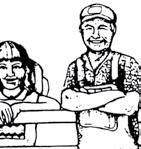


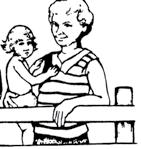

the mountains of Appalachia or the western United States, the northeastern United States, the Midwest, northern California, Alaska, Canada, Mexico. No matter where you are or go if you can grow a garden and raise some animals, you’re a homesteader. And a fortunate human being!
THE HOMESTEADER TYPE: Who are these people? I’ve been getting to know them for nearly 25 years now by reading their wonderful letters. They are young, just graduated, just married, just beginning. They are in the middle years, making the massive change, starting all over. They are elderly, just retiring, free for the first time and determined to finish their years living their country dream. Are they “hippies”? “Squares”? Hippies, yes, living in communes, in all sorts of extended families. Or living alone. Or in traditional families. And conservatives, yes, folks prepared to survive a collapse of the economy or society Latter-Day Saints preparing for a time of trials, Christians getting ready for the Last Days. Or environmentalists trying to preserve some chunk of Mother Earth, eager to practice what they preach and discover an agriculture and technology that can maintain human society on a flourishing bluegreen planet for a million years rather than degrade and destroy it in a hundred. Alternative Families and Economics. Helpful readers have made me understand that there are other ways to live on the land besides the husband-works-wife-keeps-house style of my own experience. Some are weekend farmers who can get away to their piece of earth only two days a week but still find satisfaction and a family food supply there. Some people “buy” a share in a farm and visit and work there during weekends and vacations, although the real responsibility resides with a full-time manager. I’ve talked to “househusbands” such as John Herrington of Greely, CO, who manages the farm and cares for his 17-month-old baby while his wife works. “Sometimes it gets pretty hectic,” he told me. “Sometimes I wish she’d come home and let me go out.” Often both spouses work; often it’s the only way they can hang on to their beloved land. I’ve also met people who buy and hold their land in common but own their homes, plants, and animals individually.
One brave lady, Martha Wells of Normangee, TX, told me about her version of country living: “Howdy, from Texas! In 1984, I finally moved to the family farm. My husband did not know anything about farm life before moving here. And, with his working off the farm, a lot of ‘manthings’ are left to me. I want to let your readers know, a woman can do a lot more than she suspects! I knew how to string the hay baler and run the tractor, so guess who gets to do the hay baling each year! (After getting tired of having
to fix the baler after the men used it, I took over that job.) I run commercial Brahma × Hereford-type cows. When they get penned and wormed, branded, or whatever, I do the penning and separating. Actually crawling in to castrate or give shots, yes, I occasionally lose my nerve and require help! I always assist in the delivery of my brood sows and castrate my own boar pigs also.”
Meredith Richard wrote from London, UK, “There’s a sack of wheat in my kitchen. In this first-floor flat in London I grind it into flour. I bake the flour into wonderful wholemeal bread which is a fraction of the cost of shop bread. We have a growing library of smallholding books, visit agricultural shows on holiday, and peruse lists of smallholdings for sale.”
Meredith and her husband haven’t yet been able to buy land, but they have a homestead diet and lifestyle that works in a London apartment: “We buy staples in bulk once a year, mostly grain, dried beans, nuts, seeds and dried fruit. I buy wheat in 25 kg sacks and grind it to flour in an Amish-made handmill, which is possibly the most wonderful piece of hardware in my kitchen. It also grinds beans into beanflour, peas into instant split pea soup, and nuts into nut butters. We buy fresh food in quantity when it is on sale and preserve it ourselves by bottling, freezing, or drying. We try to eat foods that are locally produced and native to Britain, to follow seasonal eating patterns, and to eat plainly, saving feasts for feast days. We make most foods from scratch such as breads, biscuits, soups, sausages, etc. When we can, we gather wild food in the countryside. We do ‘square-inch gardening,’ growing herbs and salad vegetables on our windowsills, plus bean sprouts and a mushroom tray. Our experience shows that many of the pleasures and benefits of smallholding are available to anyone no matter where they are.”
Commercial Farmers. Farmers who earn their living producing agricultural products typically have college degrees in agriculture and highly mechanized and incorporated farms. That’s not a sin. Most farms are incorporated, not so much to be tax write-offs as to try to keep the farm in the family at inheritance-tax time. The dream is equally meaningful for these people, who have long-established roots in their land and a proud family tradition of farming. They are always living on the brink, always struggling to do more work than there is time for, to pay more bills than there is money for, to find ways to improve their production and their land, and they are ever conscious that a year or even just an incident of poor management could cause them to lose the farm forever.
I am concerned that chemical fertilizer, herbicides, and pesticides upset the local ecology and poison groundwater supplies that all area residents, rural or urban, depend on. I’d like to see farms progress as rapidly as possible toward nonpolluting technologies, but I understand the risk and agony of economically hard-pressed farmers wrestling with the monetary side of those choices.
This book is mainly about how to grow food. To do that, you need access to land your own or yours to work with.
You need at least enough for a garden and maybe also some animals space for a hen house and rabbit pens, pasture, and a barn for goats or a cow. You have to think way ahead to get your piece of land. You have to make sacrifices and maybe work two jobs to boot. But you can do it if you really want to.
I’ve seen too many people sink all their money into a piece of land, only to discover they can’t find jobs in the area, the land isn’t fertile, they don’t like the area after all, etc. I strongly recommend that you first rent and try to find work in the area you’re interested in. Once you have commenced earning a living there, you can gradually, and more knowledgeably, shop for land while you rent.
Here are some factors to consider when choosing where to look for land.
CAN YOU GET A JOB NEAR THERE? Would some kind of special training make it more possible for you to earn a living there? Jobs in really rural areas are scarce, and openings go first to local people (and they should). Rural jobs are often highly specialized, such as logging or operating farm equipment (you have to be a skilled mechanic too). If you are city-raised, you don’t know anything about these things, and potential employers understand that even better than you. You’ll have to learn your way around learn where to ask and whom to ask for. You may want to pick a spot near a university or medium-sized town if that is a place where you’d have a marketable skill. Unless you have a large and dependable private income, stay near a place where you are sure you can find work, probably a city of some size.
CAN YOU AFFORD LAND THERE? On the other hand, land prices near the cities are high because of the heavy competition for properties, and property taxes are high too. You have to go hundreds of miles from any major metropolitan area to find land at its true agricultural value. An area receiving a flood of immigrants can change its nature very quickly. Certain very scenic and well-publicized areas are attracting so many new residents that the influx is creating problems with sewage disposal and pressure on the school system, not to mention that whole valley bottoms of fertile land are getting covered with homes. (Better to put the house on your untillable hillside and reserve the flat for garden, cropland, or pasture.) Land in that sort of tooquickly growing area is already expensive and getting more so. So if there are frequent “land for sale” signs and you see new homes left and right, consider looking elsewhere. And if you take a creek, timber, and a view of a snow-capped mountain range off your list of necessities, you’ll get a better price and fewer neighbors.
CAN YOU DO WHAT YOU CARE ABOUT THERE?
Do you just want a cottage for vacation getaways? Or a full-time place where you’ll live year-round, grow food in a good garden, and have a pasture for animals and a woodlot for firewood? Or do you plan to vacation there now but live there full-time after it’s paid for? Do you love fishing and want access to clean trout water? Or to a good deer hunting area? Do you want an existing home on the place or the adventure of building your own? Do you want neighbors close or scarce and far away? Do you want store, school, and church close for convenience and economy? Or far away for privacy?
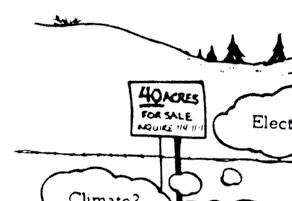


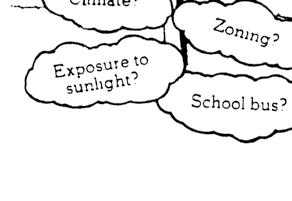


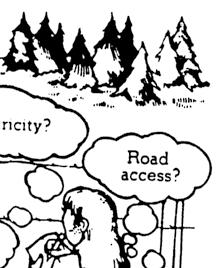

HOW MUCH LAND? A reader named Tom wrote and asked me, “How much land do you need for a few cows, hogs, chickens, ducks, etc.” Good question. First of all, figure out the space you need for buildings, driveways, and lawns. Then add the space you want for a garden and animals.
A Half Acre. This would allow you to keep a couple hives of bees, plant a fruit orchard, and keep a few grazing animals, such as 2 milk goats, 2 weaner pigs, 3–12 hens, and some rabbits. If you have water, you could add a few ducks or geese. Put your orchard around the perimeter of your land, so you can have a permanent grass pasture in the center of it. If you divide up the pasture with electric fence and rotate at intervals of 3 weeks or less, you can get more out of it. You’ll need housing and yarding for all your animals, so they can be confined when the grass shows signs of failing under the onslaught. On just a half acre, you’ll have to compromise with livestock between a confined lifestyle and some opportunities to get out on pasture. But a half acre is really very small.
An Acre. Remember, we’re not counting the house, lawn, etc. An acre is twice as good, of course, as a half. You could consider keeping a breed sow in place of the two weaner pigs and profiting by her piglets. If you hate goat milk, you might keep a small breed of cow instead, although this is still rather small for a cow. You could raise a half-dozen goslings as well as chickens and rabbits. Your animals will be able to get a greater part of their diet from grazing.
Two Acres. This would be enough to comfortably pasture a cow and grow a sizable garden and orchard, if all the soil is good and there’s plenty of water to irrigate it. Three, four, or five acres would be better.
Ten Acres. This is a mini-farm. You can install one or more ponds for raising fish and have numerous waterfowl too. You have enough land to have a nice grain patch or other field crop in rotation, in addition to your pasture and pond. Twenty Acres. With twenty acres of good garden land, you could probably make your family’s living by growing something.
Here we are talking about acres of fertile, irrigable ground. But they’re hard to find, and costly. You’re more likely to be offered wooded areas, steep hillsides, swamps, or shallow soils. But much depends on the skill of the gardener: the one before you, and the one you are. There are people who have made lush garden spots in the arctic and in the tropics, on salt soil and on bare rock, and in abandoned gravel pits.
HOW DO YOU KNOW IF THE LAND IS FERTILE? My friend Frank Ryset is a real estate agent. He’s an honest and sincere man. I asked him that and he asked me, “How high is the sagebrush? If the sagebrush was only up to his boot tops, my dad didn’t think it was worth plowing, but if it reached up to the horse’s belly he judged we could make that land produce. So how deep is the grass? How tall and lush are the trees? Have the berry bushes borne fruit? Consider also that you may be able to increase the production by building up the soil. A soil testing service can be located through your Yellow Pages or county agent, or you can do it yourself using a purchased kit. Soil chemistry tests tell you in precise, technical terminology that land’s potential productivity.” (More on this in Chapter 2.)
Land is expensive if it’s good for gardening or pasture. Turnover is slow, so you may have to wait for a piece that’s in your desired location. If the demand is high, you may have to be ready to leap when your chance does come along. Prices may be high already and higher as time passes. Required down payments may be large. Or sometimes prices and down payments get into a lowering trend for a while; that’s a good time to buy. Cash really talks in land deals; so does property you already own and can trade. But sometimes you can swing a deal with less money down than you might think, if you keep trying. Interest will be a heavy additional financial load on any contract you are paying off over time.
Stay within commuting distance, or bring all the city money with you that you can. Jobs are easier to find in the city, and wages are much higher. Of course, the problem with city money is that land on the edge of a town costs more than it does in a very remote or agriculturally poor area. Try to spend that money so that you get the best value for it. In general, the sooner you buy the better now rather than twenty years from now, because land prices tend to rise over the long haul. Investing in land is a pretty safe place to put your money, because land seems to be inflation-proof (its value increases proportionate to inflation). Land does not depreciate (decrease in value with time) as do cars, mobile homes, and boats. Instead, land becomes worth more with time, because while things can be manufactured in greater numbers all the time, there is only one earth (and ever more people wanting a piece). Land is generally cheaper per acre in big hunks (by the hundred acres) than in little ones (1–5 acres), but most people can’t afford a hundred acres. If you want a place to grow food, I’d suggest you get started with your house/ lawn plus 3–5 acres of good, tillable, rainy-climate or irrigable land.
DEALING FOR LAND: Don’t wait for a land promoter to shove a deal under your nose. Be prepared to personally work at finding and dealing for your piece of land. Watch the local newspaper’s legal notices section for announcements of places being sold because of unpaid taxes, estate auctions, and mortgage foreclosures. Studying the paper will also inform you about local prices. If you want to work with a real estate agent, start by calling several of them and compare what happens. You could then choose one agent and work exclusively through that person, or you could look at properties with several of them. There is never a charge for you to be shown property by an agent.
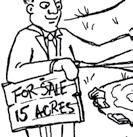
Sale “by Owner.” You could also deal directly with an owner. Some owners prefer to deal directly with you, so that they get all of your down payment, rather than work through a real estate agent. They’ll advertise “by owner.” Without a real estate agent in the picture, you might be able to make the purchase for somewhat less cash down. To find an owner who wants to sell, drive around and look for “sale by owner” signs, and watch the advertisements. Or put in your own ad describing how many acres you want, whether with or without buildings, what type of land, and how much money you can put down. Here’s an example: WANTED TO BUY: 15+ acres suitable for garden or pasture in Scrumptious School District. Buildings not necessary . . . [your telephone number]
Give the ad lots of time. Let it run all year if need be. It worked for us!
When You Visit Property That’s for Sale. You’ll probably be with an owner or agent, ask a lot of questions, take your time, and look at as nearly everything as you can. It’s important, sooner or later, to walk every step of the property line with the owner so you’ll know exactly where it is. (Then double-check that information with another source.) The more information you have, the better you can judge the property; also, if you buy the land, you’ll need to know all that info.
Don’t Talk Final Prices in a Hurry. If possible, get 3 good prospects before you make a deal. This will give you perspective on what’s available and how much it costs. On the other hand, if you’ve studied the market and know what you want and what a good price is, and a bargain comes along be prepared to move fast!
Finding a Loan. Dee Ann Guzman sent advice for buyers with little cash and past credit problems who want to buy now rather than later. “It is better to find an owner who is willing to finance your purchase himself. If you have the cash, it is better to buy the land and have no debt. If you must be in debt, it is better to be in debt for your own land than for any other reason. Rent is thousands of dollars poured down the toilet each year.”
Dee Ann also recommends finding your loan source first, then looking for a land purchase that would be approved by that lender. She suggests going to a loan broker. “A loan broker works with many different lenders and finds a loan to fit your circumstance. If you have past credit problems, a loan broker will often find a loan program that will work for you, and also will help you clean your credit up. This service often costs some money, but is usually added into the loan. The loan broker may ask you to pay for a credit report. Ask for a copy of it so you can see what you need to repair. Look for mistakes on your report. The loan broker can call and have these fixed. Once the broker finds a loan that fits your situation, sit down and closely review its terms. Points and fees are costs in addition to the interest you will be charged for the loan. Ask about them. They are usually charged to the escrow account for the property you are buying. A loan origination fee is the charge to let you apply for their loan.”
Preparing Your Offer. Don’t make it for everything you have in cash, or the most you think you could pay, unless the owner is taking sealed bids. Make it for the smallest amount down and the smallest total price you think has a
chance. You’ll need the rest of your cash to get started on the place and to use as a cushion.
The Counteroffer. The owner may say no. He may revise his terms downward a little, though, and give them to you as his counteroffer. You may accept them or come back with your own counteroffer somewhat better terms than you first offered, maybe a higher monthly payment. Avoid offering a higher rate of interest. Keep those interest costs as low as possible, because they will really cost you. Interest. Calculate how much each interest point will cost you in cash. If possible, choose the deal with the lowest rate of interest. There’s an old saying that you pay for a place twice: once in principal (the original price) and once in interest. But that was in the old days, when interest rates were lower. Now you might pay for it more than once over in interest.
Payments. Your contract will most likely call for a regular monthly payment for a stated number of years, such as $500 a month for 25 years. Or your payment plus all the interest due might be payable on a certain date annually or semiannually, such as $5,000 a year plus interest, payable November 1. (That’s called “amortization.”) Large farm-type parcels are often handled on a payment-plus-interest, or amortized, basis. A November payment date assumes you have just sold your crop and have your year’s cash in the bank.
Real Estate Agents. These folks get sizable fees, usually the day after the contract is signed, because their fee is paid out of the down payment. On a $30,000 deal, for example, the real estate company typically may get $3,000 cash. The agent who has been personally helping you may get $1,000 of that. So the down payment has to be $5,000 if the owner requires at least $2,000 down for himself. In most of the real estate deals I’ve been involved in, if an agent was also involved, the majority of the down payment asked went to pay the real estate company’s fee.
HOUSE BUYING AND FIXING INFO: You’ll find what you need to know about asbestos, formaldehyde, healthy lighting, lead, noise, radon, security, and water in The Healthy Home by Linda Mason Hunter. (Radon is a naturally occurring but carcinogenic gas that seeps out of certain soils into basements. You can find a radon testing kit or a radon testing service on the Internet. Or look in your Yellow Pages under “Radon” for somebody local.) Buyer brokering and agents’ obligations are covered in Sloan Bashinsky’s 115-page book, Home Buyers: Lambs to the Slaughter. The Complete Book of Home Inspection by Norman Becker covers inspecting and estimating. For real estate language and law, read All America’s Real Estate Book by Carolyn Janik and Ruth Rejnis; it covers building and remodeling as well as buying. Housewise by Suzanne Brangham guides those planning on buying and improving an old “fixer” of a house. Another guide to fixers is The Old House Journal Compendium, edited by Clem Labine and Carolyn Flaherty. Your Low-Tax Dream House by Steve Carlson, a tax assessor, focuses on property tax issues.
AN AGENT’S REBUTTAL: Ninth edition, August 1992. Mary Ashby Purington, Clinton, MT, wrote me, “Having been a real estate agent, then an independent broker, for 20 years, I’d like to offer some insights.”
Agent Services for the Seller. “The agent earns his or her money from the seller by screening potential buyers for
credit-worthiness and ability to pay. (How many ownersellers know how to obtain credit reports on would-be buyers?) Sellers also pay agents for explaining zoning, water rights, and covenants, etc. Informing the buyer of these things is the responsibility of the agent, legally and morally. Agents also handle important details like setting up an escrow properly. I’ve seen escrows set up without an agent in which a quitclaim deed from a previous buyer who had defaulted was not included, thus clouding the title. This sort of problem comes to light when a title search is made, an automatic step for a good agent.”
Agent Services for the Buyer. Legally an agent works for the seller, but he or she helps the buyer by providing information on the availability of suitable property, taking the buyer to visit that property, explaining details about it, and then helping to negotiate a deal. Agents usually have access to listings of all local properties for sale by all brokerages, through what is called a multiple-listing service. Mary added, “A real estate agent or broker knows the market

value of property in his/her area, thus saving you lots of time. But try to find out before you talk to agents in person what local prices are, by making lots of phone calls on ads and trying to determine for yourself the range of prices.”
Split Commissions. “If a property that sounds especially attractive to you is represented by your ultimate nightmare agent, don’t despair: an agent you like may be able to get it for you. Acreages are less likely to be sold by brokers belonging to a multiple-listing service, but it’s common practice for them to cooperate with one another and split commissions.”
Agent as Matchmaker. “An otherwise improbable deal is more likely to occur when there’s a go-between to take the heat. Emotions can safely be vented on the agent without damaging the chances for an eventual deal. Think of agents as marriage brokers who’ll match-make you and the land you want.”
Choosing Your Agent. “You’ll find many different personalities among real estate agents. Visit with as many as it takes, preferably face-to-face, until you find a person with whom you feel comfortable. But be aware that some of them will ‘grab on’ like bulldogs if they decide you’re a serious buyer, and it may take very firm rejection before you convince that person you are not going to be his/her prospect! If you’re inclined to trust the ‘soft-sell,’ easygoing type