
ENVIRONMENTAL SOCIAL AND GOVERNANCE
REPORT 2025


Pagunette A/S was founded in 1960 in Slagelse, Denmark, and has since grown into one of Scandinavia’s leading suppliers of curtains and interior textiles for professional retailers. Today, we have dedicated employees in Denmark, Norway and Germany, while our network of retailers covers Denmark, Norway, Sweden, Finland, Germany, Iceland, Greenland and the Faroe Islands.
Our core business is built on specialised advice, design and the supply of textile solutions that combine Nordic aesthetics with functionality. Our products reflect both local market preferences and international design traditions, and we work closely with customers and business partners to develop solutions that not only meet – but exceed – expectations.
With more than six decades of experience, Pagunette has built a strong professional culture founded on quality, integrity and personal service. We are proud of our position in the market and of the high level of service that characterises our relationships with both customers and suppliers.
Pagunette has long worked with product quality, responsible sourcing and supplier relationships. This is our second ESG Report, in which we continue to strengthen our existing initiatives by improving governance structures and building the data needed to measure and manage our performance over time. We continuously monitor developments in environmental and ethical requirements relevant to the textile industry and aim to ensure that both our own operations and our suppliers meet these expectations. Our approach is supported by our Code of Conduct, certification requirements and ongoing supplier dialogue.
Our current initiatives include the gradual electrification of our vehicle fleet, prioritising textile products certified to OEKO-TEX® STANDARD 100, the resale of surplus textiles through warehouse sales, and applying social and environmental requirements in our supplier relationships.
Pagunette A/S was founded in 1960 in Slagelse, Denmark, and has grown into one of Scandinavia’s leading suppliers of curtains and interior textiles for homes, public institutions and commercial environments.
In 2015, Michael Mosegaard and Morten Hübner acquired the company. Since then, we have remained focused on being the preferred partner for professional customers throughout Scandinavia. Today, Pagunette serves professional retailers in Denmark, Norway, Sweden, Finland, Germany, Iceland, Greenland and the Faroe Islands.
Creating beautiful curtain solutions with a focus on quality, functionality and responsibility.
3913 24,4 0 420 88 22,5%
tonnes CO 2e Total emissions FTE Employees Workplace accidents in 2025 MWh Energy consumption m3 Water consumption Recycled fibres in our textiles

Our markets: Denmark, Norway, Sweden, Finland, Germany, Iceland, Greenland and the Faroe Islands.
SCOPE 1
Direct emissions
RESPONSIBLE BUSINESS ESG - CONTACT 2,11% 0,18% 97,7%
Purchased goods 93,8 %
4,6 %
& operations 1,6 %
0,0 %
Our Code of Conduct applies to all suppliers.
SCOPE 2
Indirect emissions from purchased energy
SCOPE 3
Other indirect emissions
Textile products certified to OEKO-TEX® STANDARD 100 are prioritised in our sourcing.
Recycled fibres accounted for 22.5% of the material mix in 2025.
The ESG Report has been prepared by Pagunette A/S.
For questions regarding this report or the company’s sustainability work, please contact:
Morten Hübner
Director - CSO
Phone: + 45 58 57 04 00
Email: mh@pagunette.dk
At Pagunette A/S, we are experiencing growing expectations for transparency and sustainability—not only from regulators and business partners, but also from customers and financial stakeholders.
With this in mind, we are pleased to present our second ESG Report for the 2025 financial year. The report represents another step towards a more structured and systematic approach to sustainability and responsible business practices.
The purpose of this report is to provide a clear overview of our current work within environmental, social and governance (ESG) topics, while setting the direction for our future development. We aim to strengthen transparency and document the principles, standards and priorities that guide our business.
This report serves as a strategic tool for both internal and external stakeholders. Internally, it supports alignment, target-setting and follow-up. Externally, it demonstrates who we are, what we stand for and how responsibility is integrated into the way we do business.
We do not consider ourselves first movers, but we have a clear ambition to be among the leading companies of our size and within our sector when it comes to responsible business development and the green transition. For Pagunette, ESG is closely linked to our business strategy. Many of our key customers require sustainability documentation, making ESG an integral part of both our sales activities and supplier relationships.
We view ESG as an ongoing process that must be embedded throughout the organisation. We will continue to set ambitious yet realistic objectives and work systematically to strengthen our performance across all three ESG pillars. Our current focus is on preparing the business for future requirements relating to sustainability documentation, the Ecodesign Regulation and Extended Producer Responsibility (EPR).

This report covers Pagunette A/S for the period 1 January – 31 December 2025 and has been prepared in accordance with the VSME Basic Module. As the company has no subsidiaries, the report covers Pagunette A/S only.
Pagunette A/S is a Danish textile wholesaler founded in 1960 and headquartered in Slagelse, Denmark. The company supplies curtains and interior textiles to professional retailers in Denmark, Norway, Sweden, Finland, Germany, Iceland, Greenland and the Faroe Islands.
At the end of 2025, the company employed 24.4 full-time equivalents (FTEs), including five employees based outside Denmark.
Pagunette A/S does not hold any company-level environmental or sustainability certifications. All products comply with applicable legislation, including REACH. When sourcing textiles, we prioritise products certified to OEKO-TEX® STANDARD 100.
Further information on reporting principles, data sources and reporting boundaries is provided in Appendix A.
This report has been prepared in accordance with EFRAG’s Voluntary Sustainability Reporting Standard for SMEs (VSME), Basic Module.
The greenhouse gas inventory has been prepared in accordance with the Greenhouse Gas Protocol, using the Klimakompasset methodology developed by the Danish Business Authority.
Scope 1 covers direct emissions from the company’s own operations.
Scope 2 covers emissions from purchased electricity.
Scope 3 covers the company’s most significant indirect value chain emissions, including purchased goods, transport, waste and employee commuting.
In 2025, Pagunette conducted a materiality assessment based on management dialogue, customer requirements, supplier data and industry guidance.
The most material topics identified were:
• Climate and greenhouse gas emissions
• Supplier responsibility and labour conditions
• Materials, chemicals and product standards
• Occupational health, safety and employee well-being
• Corporate governance, risk management and data quality
2024
Legal name
CVR No.
Legal form
NACE-code(s)
2025
Pagunette A/S -
DK27508219
Private limited company (A/S)
G4641 - Wholesale of textiles
Revenue Not disclosed Not disclosed
Number of employees
At Pagunette, we integrate sustainability into the areas of our business where we believe it can have the greatest impact—our own operations, procurement, and collaboration with suppliers and customers. We report annually in accordance with the VSME Standard, prepare our greenhouse gas inventory in line with the Greenhouse Gas Protocol, and use our Code of Conduct as the foundation of our supplier requirements and responsible business practices throughout the value chain.
Our focus is on recognised certification schemes and initiatives with measurable impact, including the gradual electrification of our company vehicle fleet, waste sorting into the ten legally required fractions, the reuse and resale of surplus textiles, and a governance framework supporting ethical business conduct and supplier requirements.
Looking ahead, we will continue to improve data quality, particularly for Scope 3 emissionsestablish emissions targets, and further formalise our policies to strengthen our ability to measure, manage and continuously improve our ESG performance.


Our environmental efforts focus on four key areas: procurement and material selection, the operation of our office and warehouse, transportation of goods, and product documentation and chemical compliance. Rather than investing in new buildings and equipment, we make use of existing facilities and refurbished office furniture wherever possible. We are also gradually replacing company vehicles with electric vehicles as lease agreements expire. Our products are distributed through external logistics partners who consolidate deliveries from multiple companies. This improves transport efficiency and makes better use of available transport capacity.
In our procurement activities, we prioritise responsibly sourced materials with recognised documentation, including GRS-certified recycled yarns, where quality and functionality allow. Environmental and chemical requirements are communicated to suppliers through our Code of Conduct.
The most significant environmental aspects of our business relate to energy consumption and greenhouse gas emissions from operations and transport, material selection and chemical safety in textiles, as well as resource efficiency and circularity, including waste, surplus materials and packaging. Water consumption and emissions primarily occur within our supply chain and are addressed through certification schemes and supplier requirements.
We have already implemented several practical improvements. We go beyond the minimum requirements of the REACH Regulation by prioritising textile products certified to OEKO-TEX® STANDARD 100. We also seek to extend the useful life of surplus textiles by making them available for schools and DIY projects where possible, helping to reduce unnecessary waste. In addition, we prioritise repairing equipment before replacement and reusing office furniture.
Looking ahead, our environmental efforts will focus on two priorities: Reducing emissions from our own operations (Scope 1 and Scope 2) while improving the quality of Scope 3 data across our value chain. Preparing for upcoming EU requirements relating to product responsibility and the Digital Product Passport (DPP).
Further information and supporting data are provided in the following sections covering energy and greenhouse gas emissions, pollution, biodiversity and water, as well as resources, circular economy and waste management.

Pagunette’s total energy consumption in 2025 was 420.31 MWh, compared with 490.90 MWh in 2024, representing a 14.4% reduction. The share of renewable energy increased from 20.6% to 24.9%. The overall reduction was primarily driven by lower fuel consumption. Heating oil consumption at our head office decreased from 225.56 MWh to 175.40 MWh (22.2%). This development can be explained by two factors. First, in 2025 we changed both our heating oil supplier and our purchasing practice, moving from scheduled deliveries to purchasing based on actual demand. As a result, the volume invoiced during 2025 does not necessarily reflect the actual consumption in that year, as part of the demand was likely covered by inventory purchased in 2024. Second, the winter of 2025 was milder than that of 2024, reducing heating demand and, consequently, actual consumption. Based on the available data, the relative contribution of these two factors cannot be determined. We therefore expect both purchases and consumption to stabilise over the next two to three years.
Petrol and diesel consumption for passenger vehicles decreased by 13–19%, while diesel consumption for the company van fell from 6.63 MWh to 4.85 MWh (27%). Overall fuel consumption decreased from 391.10 MWh to 315.24 MWh, corresponding to a 19.4% reduction. At the same time, electricity consumption increased slightly from 99.80 MWh to 105.06 MWh (+5.3%). The increase was primarily attributable to the growing number of electric vehicles (+6.3 MWh), while electricity consumption for office operations decreased marginally from 70.14 MWh to 69.07 MWh (–1.5%). Electric vehicles accounted for 36.00 MWh of total electricity consumption in 2025. Heating oil for the head office remained the single largest source of energy consumption during the year.
The 2025 greenhouse gas inventory shows total emissions of 3,913.38 tonnes CO₂e, compared with 3,908.15 tonnes CO₂e in 2024, representing an increase of 0.13% in absolute terms. At the same time, CO₂e intensity (tonnes CO₂e per unit of revenue) decreased by 1.9%, while revenue increased by 1.7% over the same period. The difference is small and too early to conclude that there is a structural decoupling between business growth and emissions. It primarily reflects that revenue increased more than the climate footprint in 2025, and is therefore an indicator we will continue to monitor.
The small increase in absolute emissions reflects several opposing developments, each resulting from improvements in data quality during the reporting period. This is to be expected during the first years of greenhouse gas reporting, as the inventory matures, and it is important that this is explained transparently.
The most significant changes between 2024 and 2025 are summarised below:
SCOPE 1 decreased from 102.30 to 82.38 tonnes CO₂e (–19.5%), primarily due to lower heating oil consumption and reduced fuel consumption from company vehicles. The reduction in heating oil consumption reflects both a change in purchasing practice (from scheduled deliveries in 2024 to demand-based purchasing in 2025) and a milder winter in 2025. Consequently, part of the reduction in Scope 1 is attributable to external factors, such as weather conditions and purchasing patterns, rather than structural improvements. The documented structural reduction primarily relates to the gradual replacement of company vehicles with electric vehicles.
SCOPE 2 decreased from 8.07 to 7.02 tonnes CO₂e (–13.0%), mainly due to lower electricity consumption for office operations. The increase in electricity consumption from electric vehicles had only a marginal impact on total Scope 2 emissions.
SCOPE 3.1 (Purchased Goods and Services) increased from 3,313.00 to 3,669.19 tonnes CO₂e (+10.8%). The increase was primarily driven by a 15.9% increase in the total material flow. Although the share of recycled fibres increased from 0% to 22.5% of the material flow, the isolated CO₂e reduction associated with procurement is smaller than might be expected. This is because spinning, weaving, dyeing and finishing typically account for 50–90% of the climate impact of finished textiles, while fibre production represents only the remaining share. The reduction is greatest for wool (mechanically recycled wool reduces fibre production emissions by approximately 99%, but only around 40% for finished textiles) and smallest for cotton (2–9% for finished textiles).
SCOPE 3.4 (Upstream Transportation and Distribution) decreased from 432.57 to 108.62 tonnes CO₂e (–74.9%). This reduction reflects both the introduction of a more accurate weight-based calculation method in 2025 (all transport is now calculated using tonne-kilometres) and a degree of overestimation that remains in the 2024 figures for transport without weight data. This is the single most important reason why total emissions increased by only 0.13%, despite higher emissions from purchased goods.
SCOPE 3.9 (Downstream Transportation and Distribution) was included in the inventory for the first time in 2025 and contributed 6.78 tonnes CO₂e. This reflects an expanded reporting boundary rather than an increase in emissions.
Further information on emission factors, data quality and methodological assumptions is provided in Appendix B.
The emissions profile remains typical for a textile wholesaler. Scope 3 accounts for 97.71% of total emissions and is dominated by purchased goods (polyester, cotton, wool, etc.). Scope 1 accounts for 2.11%, while Scope 2 represents 0.18% of total emissions.
EMISSIONS BY SCOPE
SCOPE 1 Direct emissions
2,11%
SCOPE 2 Indirect emissions from purchased electricity
0,18%
SCOPE 3 Other indirect emissions
97,7%
Purchased goods accounted for 93.76% of the total climate footprint in 2025, compared with 84.77% in 2024. The increase reflects both the higher material flow and the parallel reductions in transport and Scope 1 emissions. The conclusion is clear: the greatest potential for reducing greenhouse gas emissions lies in procurement and material selection.
Avoided emissions—such as emissions avoided by recycling waste instead of producing new materials—must not, in accordance with the Greenhouse Gas Protocol, be included in Scope 1, 2 or 3 emissions. Our outside-the-scope emissions amounted to 15.25 tonnes CO₂e in 2025, compared with 31.90 tonnes CO₂e in 2024. The reduction is primarily attributable to transport.
The greenhouse gas calculations have been prepared using the available data and emission factors from the Klimakompasset. The calculations have been structured and completed with the assistance of an external advisor who, like Pagunette A/S, cannot be held liable for errors in the underlying data, including any inaccuracies or omissions in information provided by suppliers. While every effort has been made to prepare a fair and accurate greenhouse gas inventory, we recognise that it should be continuously improved as more precise and detailed data become available.


At Pagunette A/S, we work to minimise our environmental impact through responsible chemical management, proper waste sorting, and the ongoing maintenance of our equipment and vehicles.
We set high standards for the materials we source and continuously work to increase the share of textile products certified to OEKO-TEX® STANDARD 100. This certification goes beyond the requirements of the REACH Regulation, as it tests for a broader range of substances and applies stricter limit values than those required by legislation. As a result, the risk of harmful chemicals being present in our textiles is lower than the minimum level permitted under applicable legislation.
Our Code of Conduct sets out requirements for suppliers regarding chemical management, waste handling and product responsibility. For higher-risk suppliers (typically located outside the EU), we require BSCI, SMETA or SA8000 certification.
The implementation of the Extended Producer Responsibility (EPR) scheme for packaging is underway, and further harmonisation of the legislation across EU Member States came into effect on 1 August 2025. For Pagunette, this means that all standard packaging is reported by the packaging supplier from whom it is purchased. However, we remain responsible for reporting our branded adhesive tape.
Pagunette A/S has no known direct impact on protected natural areas through its operations. However, we recognise that our business activities form part of a wider ecosystem, where consideration for nature and the surrounding environment is an integral part of our overall environmental responsibility. Our offices and warehouse facilities are located on Skælskør Landevej in Slagelse and are not situated within or adjacent to Natura 2000 sites or protected natural areas designated under Section 3 of the Danish Nature Protection Act³. A protected wetland designated under Section 3 is located near the company’s property; however, all surface water and drainage from the site is discharged through the public sewer system.
Pagunette’s potential impact on biodiversity is primarily linked to material selection and supplier requirements. We continuously monitor developments in national and international legislation to ensure that we can adapt our approach should future requirements for biodiversity documentation or protection be introduced.
Pagunette A/S uses water solely for normal office operations. In 2025, water consumption amounted to 88 m³, compared with 133 m³ in 2024, representing a 34% reduction. Water-saving toilets were installed at the end of 2024, and we consider this to be the primary reason for the reduction. Based on a screening using the WRI Aqueduct Water Risk Atlas⁴, the company’s location is classified as an area of low to medium water stress (10–20%).
No water is used in the company’s own operations for manufacturing or production. However, significant water consumption occurs upstream in our value chain through our textile suppliers. We therefore require suppliers to comply with relevant environmental legislation and to operate under certification schemes that include controls relating to water consumption, wastewater management and chemical discharges, as well as the requirements set out in our Code of Conduct.

"Textile offcuts from our production are used for DIY projects and educational purposes, helping to extend the useful life of the materials.”

At Pagunette A/S, we focus on using resources efficiently and responsibly—both in our own operations and through collaboration with our suppliers. We take a practical approach to resource management. We repair equipment and office furniture whenever it is economically viable, and we resell or donate surplus textiles instead of discarding them.
Our offices and warehouse facilities are furnished with reused furniture and equipment, and we actively seek local opportunities to give materials a second life—for example, single-use pallets that are either reused or donated for fire service training exercises. Textile offcuts, samples and discontinued collection items are sold at our warehouse sales, held once or twice a year, and are also donated for educational and community purposes. This helps extend the useful life of the materials and reduces waste.
Our Code of Conduct also sets requirements for suppliers regarding waste management, chemical handling and product responsibility, helping to ensure a common standard throughout the value chain. At the same time, we are preparing for upcoming EU requirements relating to the Ecodesign Regulation and the Digital Product Passport (Regulation (EU) 2024/1781), which will improve transparency regarding product origin, materials and environmental impacts.
Waste generated by Pagunette’s operations consists primarily of cardboard and residual waste. In 2025, total waste amounted to 10.53 tonnes, compared with 10.68 tonnes in 2024. The composition of the waste changed during the year. Cardboard increased from 3.76 to 4.60 tonnes (+22%), while residual waste decreased from 6.92 to 5.93 tonnes (–14%). As a result, the recycling rate increased to 44% in 2025, compared with 35% in 2024.
The following waste quantities were recorded in 2025:
The increase in the volume of cardboard and the corresponding reduction in residual waste most likely reflect improved waste sorting in daily operations, with cardboard that may previously have been disposed of as residual waste now being collected separately. We did not carry out a specific waste sorting campaign during the reporting period but increased our focus on waste sorting as part of the ESG reporting process.
Waste is sorted into the ten legally required waste fractions. Cardboard and residual waste are collected by a contracted waste management provider, while other waste fractions are taken to the local recycling centre as required.
Textile offcuts from samples and collections are managed separately. They are sold once or twice a year at warehouse sales to private individuals and local DIY enthusiasts and are also donated for educational and community purposes. The quantity of textile offcuts is not measured by weight; however, our objective is to minimise disposal as long as there are recipients for the materials.
Our supplier requirements and Code of Conduct also include requirements for proper waste management by suppliers. Going forward, we will assess the possibility of measuring textile offcuts by weight so they can be included in our waste reporting.
“Once or twice a year, Pagunette holds its popular warehouse sale, where customers can purchase textile remnants and second-quality textiles.”


Pagunette’s material consumption reflects the company’s role as a textile wholesaler. The total material flow amounted to 142,925 kg in 2025, compared with 123,279 kg in 2024, representing an increase of 15.9%. The increase reflects higher sales and a broader product range. The material mix changed significantly between 2024 and 2025 in two respects. First, we obtained more detailed data on material composition, enabling us to report the material breakdown in greater detail and quantify the amount of recycled fibres. Based on this improved data, recycled fibres accounted for 22.5% of the total material flow in 2025.
Second, the composition of natural fibres changed. Linen increased from 2,674 kg to 4,340 kg (+62%), while jute was introduced as a new material, accounting for 349 kg. Polyester remained the dominant material, representing 90.8% of the total material flow (virgin and recycled polyester combined). The shift from virgin polyester to recycled polyester represents the single greatest opportunity to reduce the climate impact of purchased materials, as recycled polyester has an emission factor equivalent to 80–90% lower than virgin polyester in our calculations.
At Pagunette A/S, our work on social matters includes occupational health and safety, collaboration, and responsible practices throughout the value chain. As a textile wholesaler, that the most significant social risks are typically found within the supply chain and our greatest opportunity to influence these conditions lies in our Code of Conduct for social and ethical certification among higher-risk suppliers. We believe this is where greatest potential to improve conditions throughout the value chain.
Internally, our Working Environment Committee is responsible for occupational health workplace risk assessments and evacuation planning.
Throughout the value chain, our Code of Conduct is contractually embedded and based recognised standards, including ILO Conventions and the Universal Declaration of Human prohibits child labour and forced labour, requires non-discrimination and freedom requirements for fair wages, working hours and a safe working environment, including protective equipment and emergency preparedness.
The Code also covers environmental protection, proper waste management, chemical product responsibility, traceability and the right to conduct audits. For higher-risk simple due diligence process, and suppliers must provide access to an anonymous blower mechanism. Non-compliance may result in corrective actions, including termination relationship.
During the coming reporting period, we will continue to strengthen our due diligence requirements throughout the supply chain, and update our requirements in line with including the Ecodesign Regulation and the Digital Product Passport. For suppliers EU (for example in East Asia), we also require BSCI⁷, SMETA⁸ or SA8000⁹ certification appropriate social standards. Where suppliers are already GRS-certified, we do not requirements relating to social sustainability. We also contribute to the local community purchasing and support for relevant community initiatives. Many of our supplier relationships long-standing. This provides better opportunities to set expectations and follow up short-term transactional relationships.
Within the textile industry, the most significant social topics relate to workers’ rights and safety, while employee well-being, mental health and skills development are the This section describes our current approach and future direction: providing a safe fair pay and employment conditions, and opportunities for learning and development. Conduct and governance framework are described in more detail in the section on

At the end of 2025, Pagunette A/S employed 25 people, equivalent to 24.1 full-time equivalents (FTEs) plus 0.34 temporary FTEs, giving a total of 24.44 FTEs. Twenty employees were based in Denmark, three in Germany and two in Norway. In addition, the company works with four sales agents, who operate as independent consultants and are therefore not included in the employee figures.
The workforce remains predominantly female, with 67.5% women and 32.5% men. According to Statistics Denmark, women account for 60.7% of employment in the industry. We believe our gender distribution reflects the availability of qualified candidates in the region rather than an active recruitment policy, and we monitor this indicator without setting formal targets.
The staff association organises social events throughout the year with support from the company.
Our workforce includes employees from diverse ethnic backgrounds and a broad age range. Although Pagunette does not have a formal diversity policy, recruitment is based on professional qualifications and personal suitability. At the end of 2025, the average employee tenure was 14.5 years. This long average tenure contributes to continuity, experience and in-depth knowledge of our customers, products and business processes.
14,5 years AVERAGE TENURE
The Working Environment Committee is responsible for the ongoing management of occupational health and safety. All employees are familiar with procedures for evacuation, emergency preparedness and accident prevention. Workplace Risk Assessments are carried out at regular intervals to identify risks and opportunities for improvement in both office and warehouse facilities.
No occupational accidents or work-related fatalities were recorded in 2025. This is the second consecutive reporting year without any recorded workplace accidents. The company’s most recent occupational injury occurred in 2019 (finger injury).
All employees are covered by private health insurance as part of their employment terms.
Health and safety is also a requirement we place on our suppliers. Pagunette’s Code of Conduct is contractually embedded and sets requirements for occupational health and safety, the use of personal protective equipment, safety training and emergency preparedness. For suppliers located outside the EU, we require BSCI, SMETA or SA8000 certification, where health and safety forms part of the audit criteria.
Going forward, Pagunette will maintain its preventive approach and continue strengthening its internal safety culture through dialogue, regular evaluation and employee involvement.
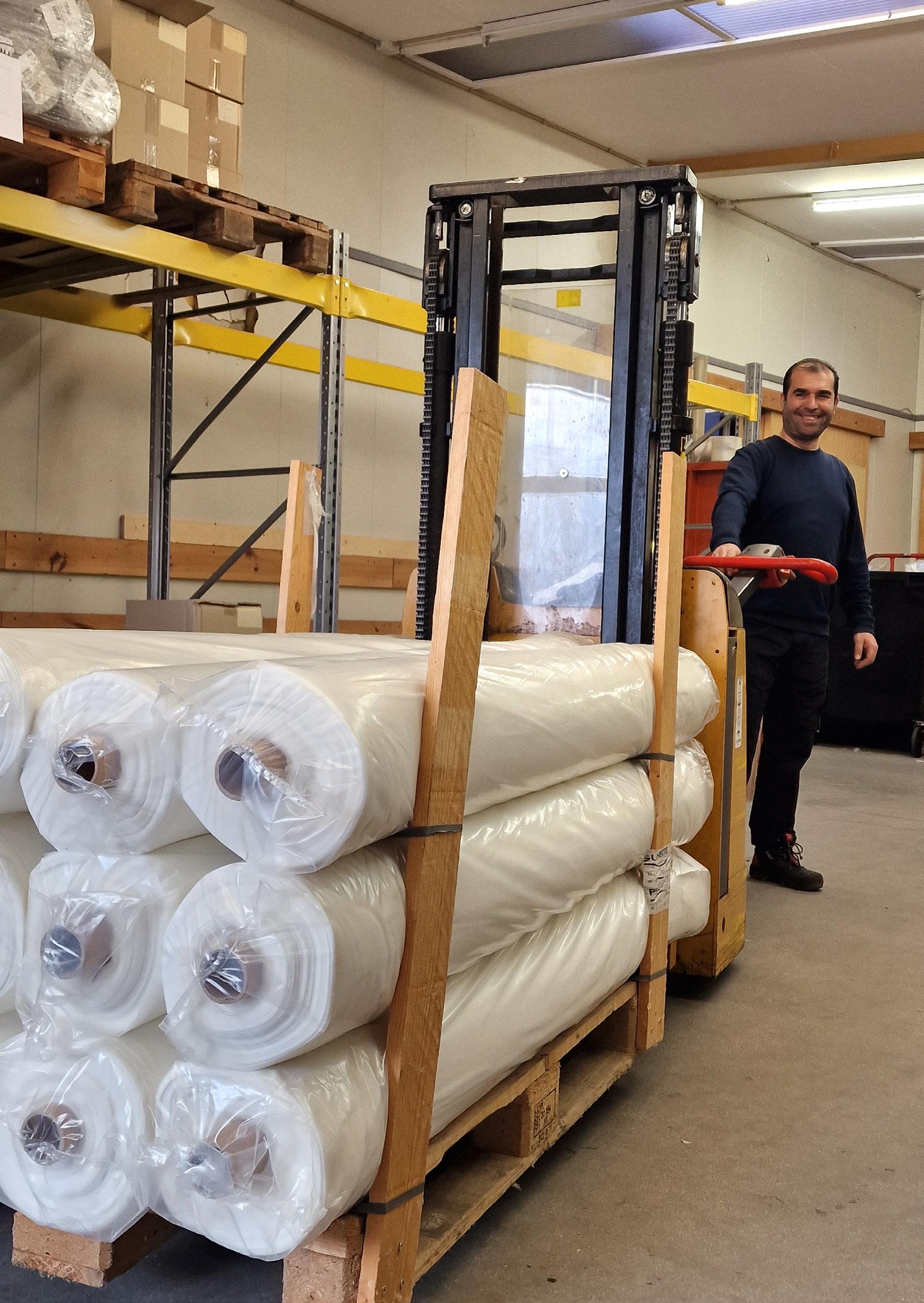
Pagunette A/S is not covered by a collective bargaining agreement but follows salary and employment conditions in line with the collective agreements negotiated by the Confederation of Danish Industry and Commerce (Dansk Erhverv) for the sector. All employees are salaried staff and receive pay and benefits at or above market level. Employment terms include private health insurance, a flexible benefits scheme and a pension plan, contributing to both financial security and employee well-being. Pagunette A/S is a member of Dansk Erhverv.
A total of 266 training hours were completed in 2025, comprising 101 hours of professional training and 165 hours of ESG-related training undertaken by management and selected employees as part of the work on the 2024 ESG report and the development of the company’s overall ESG framework. This corresponds to 10.9 hours per employee, compared with 85.5 hours (3.4 hours per employee) in 2024.
In 2024, training covered design, trends, social media, accounting and occupational health and safety. The same topics were covered in 2025, supplemented by a seminar on the upcoming Digital Product Passport organised by Danish Standards.
Of the 266 training hours, 185.5 hours were completed by female employees and 80.5 hours by male employees, corresponding to an average of 11.2 hours per woman and 10.1 hours per man. Including ESG training, access to training was therefore distributed almost equally across genders, with a difference of only 1.1 hours per employee. The overall distribution of training hours also reflected the workforce composition, with men accounting for 30.3% of training hours compared with 32.5% of total FTEs. This represents a significant change compared with 2024, when all professional training was completed by female employees.
Pagunette’s Code of Conduct also sets requirements for fair pay and working hours throughout the value chain. Suppliers are expected to provide wages that comply with national standards, respect working time regulations and ensure employees have access to fundamental labour rights. The majority of our suppliers are located within the EU and are therefore subject to EU legislation. For suppliers outside the EU, we require BSCI, SMETA or SA8000 certification.
Corporate governance at Pagunette covers governance structure, quality management, supplier ethics, compliance and industry engagement.
Pagunette A/S has an active Board of Directors consisting of five members, two of whom are external members with extensive business experience. The Board holds six in-person meetings each year, supplemented by monthly status meetings, and oversees strategy, risk management, ESG activities and upcoming regulatory developments. One Board member is female. Responsibility for ESG reporting rests with Managing Director Morten Hübner and the company’s external ESG adviser.
Our quality management is based on three core principles:
• Product compliance
• Delivery reliability
• Customer satisfaction
Product compliance means that products meet the agreed specifications. Customer complaints are handled with the aim of achieving a satisfactory outcome for the customer. In 2026, we will implement a systematic process for recording, categorising and following up on customer complaints, enabling us to document complaint volumes and response times and use the data for continuous improvement and reporting.
All products comply, as a minimum, with EU chemicals legislation (REACH). When sourcing products, we prioritise those certified to OEKO-TEX® STANDARD 100 as additional documentation of product safety.
Pagunette’s CoC forms an integral part of our supplier management and applies to all suppliers. It is based on internationally recognised standards, including ILO Conventions and the Universal Declaration of Human Rights, and sets requirements relating to the prohibition of child labour and forced labour, non-discrimination, freedom of association, fair wages and working hours, safe working conditions and access to an anonymous grievance mechanism. For suppliers outside the EU, primarily in East Asia, we require BSCI, SMETA or SA8000 certification. For suppliers within the EU, we rely on EU legislation governing labour conditions and product responsibility, supplemented by our Code of Conduct.
Pagunette A/S has never received fines or legal sanctions relating to corruption or bribery, in accordance with the disclosure requirements of the VSME Standard.
Personal data is processed in compliance with the GDPR. The company has an internal data protection policy, and responsibility for GDPR compliance rests with Managing Director Morten Hübner, supported by Lexoforms.
We actively participate in industry organisations and professional networks to contribute to the development of our sector and strengthen collaboration on sustainability.
Pagunette A/S is a member of Dansk Erhverv and MERK, supporting our work on responsible business practices, governance and ethics. Through these networks, we also contribute feedback on new legislation and regulatory initiatives, helping us stay prepared for future requirements.
Prohibition of child labour
Prohibition of forced labour
Non-discrimination
Freedom of association
Fair pay & working hours
Safe working conditions
Grievance mechanism
Total climate footprint: 3,913 tonnes CO₂e
CO₂e intensity reduced by 1.9%
22.5% recycled fibres in selected textiles
Purchased materials account for 93.7% of the climate footprint
The climate accounts clearly show that the greatest potential for reducing emissions lies in purchased textiles, which represent the largest share of the company’s total climate footprint. We will therefore continue increasing the use of recycled materials and improving supplier data and product-specific climate information as key focus areas in the coming years.
Code of Conduct applied by the vast majority of suppliers
ESG integrated into Board activities
No recorded cases of corruption or bribery
Our experience confirms that strong governance is about more than compliance. It is a commercial discipline that supports customer satisfaction, profitability and long-term relationships. This year’s report therefore expands the governance section with concrete focus areas covering governance structure, quality management, project management and responsible supplier management.
0 occupational accidents in 2025
Average employee tenure: 14.5 years
266 training hours
Stable gender distribution
Our social performance remained stable in 2025, with no occupational accidents, long employee tenure and increased competence development. Training activities increased significantly compared with 2024, while the gender distribution remained stable with a predominantly female workforce.
Increase the share of recycled materials
Improve climate data quality
Implement systematic complaint registration
Prepare for upcoming EU requirements
The quality of our climate data continues to improve. The 2024 figures have therefore been updated using the same methodology as 2025 to ensure comparability. From 2026 onwards, we expect a more stable data foundation and an increased focus on achieving measurable reductions in our climate footprint.

We will continue the gradual electrification of our vehicle fleet as existing lease agreements expire. This is an ongoing initiative that will reduce both fuel consumption and Scope 1 emissions over the coming years.
At the same time, we are optimising our warehouse structure. Over time, this will reduce the need for van deliveries, which contributed to upstream transportation emissions in 2025. This is a structural operational improvement, where the climate benefits will result naturally from more efficient operations.
The share of recycled fibres increased from 0% to 22.5% of the total material flow in 2025. From 2026 onwards, we will maintain and further increase this share wherever quality and cost allow. We expect the implementation of the Digital Product Passport (DPP)¹⁸ under the EU Ecodesign for Sustainable Products Regulation (ESPR) to improve the accuracy of climate data for purchased materials. The delegated act for textiles is expected to be adopted in January 2026, with the DPP becoming mandatory for textiles from around mid-2027. Over time, the DPP is expected to improve supply chain transparency and the quality of product data. We are closely monitoring developments and working with our key suppliers to prepare for the new requirements, ensuring that we are ready when they come into force.
Our governance framework will continue to build on the existing structures for management, quality management and supplier responsibility. In 2026, we will implement a systematic process for recording and following up on customer complaints. This will strengthen documentation, support continuous improvement and provide a stronger data foundation for reporting and tender processes.
At the same time, we will continue updating our Code of Conduct and preparing for upcoming requirements, including the Digital Product Passport.
We will continue to report annually on our progress in accordance with the VSME Basic Module. Our primary performance indicator is the year-on-year percentage change in CO₂e intensity (tonnes of CO₂e per unit of revenue).
For a growing company, this is the most meaningful indicator, as it shows whether climate emissions per unit of revenue are increasing or decreasing. In 2025, our CO₂e intensity decreased by 1.9%. The absolute intensity value is not disclosed for reasons of commercial confidentiality regarding revenue.

Pagunette A/S is a Danish textile wholesaler with its headquarters and warehouse located at Skælskør Landevej 39, DK-4200 Slagelse, Denmark.
At the end of 2025, the company employed 24.9 full-time equivalents (FTEs), including five employees based outside Denmark (two in Norway and three in Germany). Sales in Sweden, Finland, Iceland, Greenland and the Faroe Islands are managed through external sales agents and distributor networks.
In addition, the company works with five independent sales agents (three in Sweden and two in Finland). These operate as external consultants and are therefore not included in the employee figures.
Pagunette A/S does not operate its own manufacturing facilities and had no other permanent operating sites during the reporting period. A small number of employees in Norway and Germany work partly from home offices or shared office facilities. These locations are not included in the reporting boundary.
The geographical coordinates of the company’s headquarters are 55.3513° N, 11.3279° E.
Revenue has not been disclosed in this report for reasons of commercial confidentiality. CO₂e intensity (tonnes of CO₂e per unit of revenue) is monitored internally but is not disclosed for the same reason.
All other information in this report is based on internal records, publicly available information, or documentation provided by suppliers and business partners.
Pagunette A/S does not hold any company-level environmental or sustainability certifications. All products comply with applicable legislation, including the REACH Regulation. When sourcing products, we prioritise products certified to OEKO-TEX® STANDARD 100, as the certification provides additional assurance regarding product safety and chemical management.
Energy data is based on meter readings and utility invoices. Transport data is based on information provided by transport partners and internal vehicle records. Data relating to purchased goods is based on supplier information and relevant industry datasets. Waste data is based on internal records and invoices from waste management providers.
Pagunette A/S continuously works to improve data quality and increase the share of supplier-specific data used in the greenhouse gas inventory.
This report has been prepared in accordance with the EFRAG Voluntary Sustainability Reporting Standard for SMEs (VSME), Basic Module, December 2024 edition.
The greenhouse gas inventory has been prepared in accordance with the Greenhouse Gas Protocol – Corporate Accounting and Reporting Standard (2004) using the Danish Climate Compass (Klimakompasset) published by the Danish Business Authority.
Scope 1 includes direct emissions from sources owned or controlled by the company, including heating oil and fuel used in company vehicles.
Scope 2 includes indirect emissions from purchased electricity and has been calculated using the location-based method.
Scope 3 includes the following categories:
• Purchased goods and services
• Fuel- and energy-related activities
• Upstream transportation and distribution
• Waste generated in operations
• Employee commuting
• Downstream transportation and distribution
• Materiality Assessment
In 2025, Pagunette A/S carried out a materiality assessment based on dialogue with management, customer requirements, supplier data and industry guidance.
The following topics were identified as the most material:
• Climate and greenhouse gas emissions
• Supplier responsibility and working conditions throughout the value chain
• Materials, chemicals and product standards
• Occupational health, safety and employee well-being
• Corporate governance, risk management and data quality
The greenhouse gas inventory has been prepared in accordance with the Greenhouse Gas Protocol – Corporate Accounting and Reporting Standard (2004). Emission factors are based on the Danish Climate Compass (Klimakompasset), and the inventory has been prepared with the assistance of an external ESG adviser.
SCOPE 1 includes direct emissions from sources owned or controlled by the company, including heating oil and fuel used in company vehicles.
SCOPE 2 includes indirect emissions from purchased electricity and has been calculated using the location-based method.
SCOPE 3 is limited to the six categories considered material to the company’s operations:
• Purchased goods and services (3.1)
• Fuel- and energy-related activities (3.3)
• Upstream transportation and distribution (3.4)
• Waste generated in operations (3.5)
• Employee commuting (3.7)
• Downstream transportation and distribution (3.9)
SCOPE 3.9 was added in 2025, expanding the reporting boundary compared with the 2024 report.
Operational energy consumption: Meter readings and utility invoices (high data quality). Company-owned and leased vehicles: Mileage records including fuel type and distance travelled (high data quality). Upstream and downstream transportation: Data provided by external transport partners (weight and distance), supplemented by internal mileage records for company van deliveries (medium to high data quality).
Purchased goods and services (Scope 3.1): Supplier data on material quantities combined with emission factors from the Danish Climate Compass industry datasets (medium data quality, as the emission factors are generic for each material type). Employee commuting: Employee survey and distance calculations (medium data quality). Waste generated in operations: Weight data provided by the waste contractor and supporting invoices (high data quality).
Water consumption: Meter readings (high data quality). Recycled materials (emission factors): Research studies and estimated values (low to medium data quality).
The renewable share of the electricity we purchase reflects the average electricity mix used in the emission factors published by the Danish Climate Compass for the relevant reporting year.
We did not purchase separate Guarantees of Origin (GoOs) in either 2024 or 2025.
Heating oil used to heat the company’s headquarters is reported on the basis of invoiced deliveries. Two factors affect the comparison between 2024 and 2025:
In 2025, we changed both supplier and purchasing practice, moving from scheduled deliveries to purchasing on demand. As a result, the invoiced quantity for 2025 does not necessarily reflect the actual consumption during the year, as part of the demand may have been met from inventory purchased in 2024.
Winter 2025 was milder than winter 2024, reducing the actual heating demand.
These two factors cannot be fully separated based on the available data, but both contribute to the reduction reported. We expect heating oil purchases to stabilise over time.
Transport emissions are calculated using a data hierarchy in which tonne-kilometres (tonnekm) (weight × distance × emission factor per tonne-km) are the preferred method. Tonne-km is the recommended approach under the GHG Protocol Scope 3 Standard, Category 4, and is based on the freight transport emission factors provided by the Danish Climate Compass. This method reflects the proportion of a vehicle’s transport capacity that is actually used.
For transport activities where weight data were unavailable, the 2024 inventory was based on distance travelled (km) without weight information. This approach assumes 100% vehicle capacity utilisation and therefore overestimates emissions.
For 2025, weight data were obtained for all transport modes (truck, van, ferry and air freight), enabling the entire transport inventory to be calculated using the tonne-km method. At the same time, the 2024 inventory was revised by applying the tonne-km method wherever weight data could be obtained, and air freight was added to the inventory.
As a result, part of the observed reduction in transport emissions between 2024 and 2025 is attributable to the more accurate weight-based methodology applied in 2025 and to a remaining overestimation in the 2024 figures. The remainder represents an actual reduction in emissions.
Assuming otherwise unchanged operating conditions, we expect transport emissions in 2026 to remain broadly in line with 2025, as the methodology is now consistent and fully based on tonne-kilometres.
Virgin materials have been calculated using the Danish Climate Compass emission factors for “Textiles, Finished Fabric” (Danish Business Authority, dataset 2026v6, source: IMPRO Textiles, EC-JRC, 2014):
Polyester: 27,2 kg CO2e/kg | Wool: 19,5245 kg CO2e/kg Cotton: 22,4895 kg CO2e/kg | Acrylic: 35,7 kg CO2e/kg
The Danish Climate Compass does not provide emission factors for recycled finished fabrics made from these four materials. Therefore, emission factors have been derived by subtracting the fibre production component from the Danish Climate Compass virgin material factors and replacing it with peer-reviewed Life Cycle Assessment (LCA) data for mechanically recycled fibres.
Spinning, weaving/knitting, dyeing and finishing have been assumed to be unchanged between virgin and recycled fibres, consistent with the methodology applied by the Higg Materials Sustainability Index (Higg MSI) and the Product Environmental Footprint Category Rules (PEFCR).
Recycled polyester: 22.20 kg CO₂e/kg. Rationale: The virgin fibre component is estimated at 5–7 kg CO₂e/kg and has been replaced by 1 kg CO₂e/kg for mechanically recycled fibre.
Source: Shen, Worrell & Patel (2010); Ecoinvent v3.11 (2024).¹³
Recycled wool: 11.0 kg CO₂e/kg. Rationale: Virgin fibre accounts for approximately 75% of the climate impact due to methane and nitrous oxide emissions from sheep farming. Mechanical recycling removes almost all of this contribution. Source: Bianco et al. (2022), MWool LCA.¹⁴ The study documents a 99.2% reduction at the fibre level.
Recycled cotton: 20.0 kg CO₂e/kg. Rationale: Peer-reviewed LCAs show only a 2–9% reduction for finished fabric because spinning, weaving and dyeing account for the majority of cradle-to-gate emissions. Source: Wendin (2016)¹⁵; Esteve-Turrillas & de la Guardia (2017).¹⁶
Recycled acrylic: 21.42 kg CO₂e/kg. Rationale: A provisional reduction of approximately 40% has been applied based on the limited publicly available LCA data. Source: Yacout et al. (2016).¹⁷ The uncertainty is significantly higher than for the other three materials.
The Recycled Content method has been applied in accordance with the GHG Protocol Scope 3 Guidance (Chapters 4 and 9), following the same approach used by the Danish Climate Compass for other recycled materials.
Cut-off allocation: Only the recycling process itself is allocated to the recycled fibre.
The emission factors are estimated to have an uncertainty of approximately ±25%. They should be verified against supplier-specific Environmental Product Declarations (EPDs) in future reporting. Where supplier-specific data are available, these will be used instead.
The greenhouse gas calculations have been prepared using the available data and emission factors from “Klimakompasset”. The calculations were prepared with the assistance of an external adviser who, like Pagunette A/S, cannot be held responsible for errors in the underlying data, including inaccuracies or omissions in information provided by suppliers. We aim to present a fair and reliable greenhouse gas inventory and will continue to improve the calculations as more accurate and
available.
This report has been prepared in accordance with the EFRAG Voluntary Sustainability Reporting Standard for SMEs (VSME), Basic Module. The table below shows where each disclosure requirement is addressed in this report.
1. DKK converted to EUR using the exchange rate of 7.4578 as of 31 December 2024.
https://www.ecb.europa.eu/stats/policy_and_exchange_rates/euro_reference_exchange_rates/html/eurofxref-graph-dkk.da.html
2. DKK converted to EUR using the exchange rate of 7.4689 as of 31 December 2025.
https://www.ecb.europa.eu/stats/policy_and_exchange_rates/euro_reference_exchange_rates/html/eurofxref-graph-dkk.da.html
3. https://sgavmst.dk/natur-og-jagt/naturindsatser/natura-2000
Danish Environmental Protection Agency – Natura 2000 Method: Geocoding of company addresses and overlay with all map layers under “Protected Areas” and “Natura 2000”.
4. https://www.wri.org/aqueduct (WRI Aqueduct Water Risk Atlas Method: Geocoding of company addresses and overlay with the Aqueduct “Water Stress” layer.)
5. https://www.ds.dk/da/i-fokus/lovgivning/ecodesign-forordningen-espr
6. Polyester, polyamide and nylon combined.
7. Amfori BSCI, Business Social Compliance Initiative. https://www.eurofins.com/assurance/amfori-bsci/
8. SMETA, SEDEX Members Ethical Trade Audit. https://www.sedex.com/solutions/smeta-audit/
9. Social Accountability International, SA8000. https://sa-intl.org/programs/sa8000/
10. Statistics Denmark (DST), Table RAS309, 2024, NACE 464100 – Wholesale of textiles.
11. Calculation:10 occupational accidents ÷ 2,012 employees in the sector (Statistics Denmark, RAS309) × 100 = 0.50 accidents per 100 employees in the industry (2023). (https://at.dk/arbejdsmiljoe-i-tal/anmeldte-arbejdsulykker-i-tal/)
12.Calculation:10 occupational accidents ÷ 1,934 employees in the sector (Statistics Denmark, RAS309) × 100 = 0.52 accidents per 100 employees in the industry (2024). (https://at.dk/arbejdsmiljoe-i-tal/anmeldte-arbejdsulykker-i-tal/)
13. Shen, L., Worrell, E., & Patel, M.K. (2010). Open-loop recycling: A LCA case study of PET bottle-to-fibre recycling. Resources, Conservation and Recycling, 55(1), 34-52.
14. Bianco, I., Gerboni, R., Picerno, G., & Pasolini, P. (2022). Life Cycle Assessment (LCA) of MWool® Recycled Wool Fibers. Resources, 11(5), 41.
15. Wendin, M. (2016). LCA on Recycling Cotton. Miljögiraff Report 75, ESU-Services for H&M.
16. Esteve-Turrillas, F.A., & de la Guardia, M. (2017). Environmental impact of recycle textile fibers. Resources, Conservation and Recycling, 116, 107-115.
17. Yacout, D.M., Abd El-Kawi, M.A., & Hassouna, M.S. (2016). Cradle to gate environmental impact assessment of acrylic fiber manufacturing. International Journal of Life Cycle Assessment, 21(3), 326-336.
18. The Digital Product Passport (DPP) will provide information for each product on material composition, origin, supply chain, chemical content, durability and carbon footprint. Over time, the increased transparency across the value chain will provide access to more accurate product data, particularly for recycled materials, where publicly available information is currently limited. This is expected to reduce the uncertainty associated with recycled materials in the greenhouse gas inventory, Scope 3, Category 1.