SCHOOLS
DEVELOPING
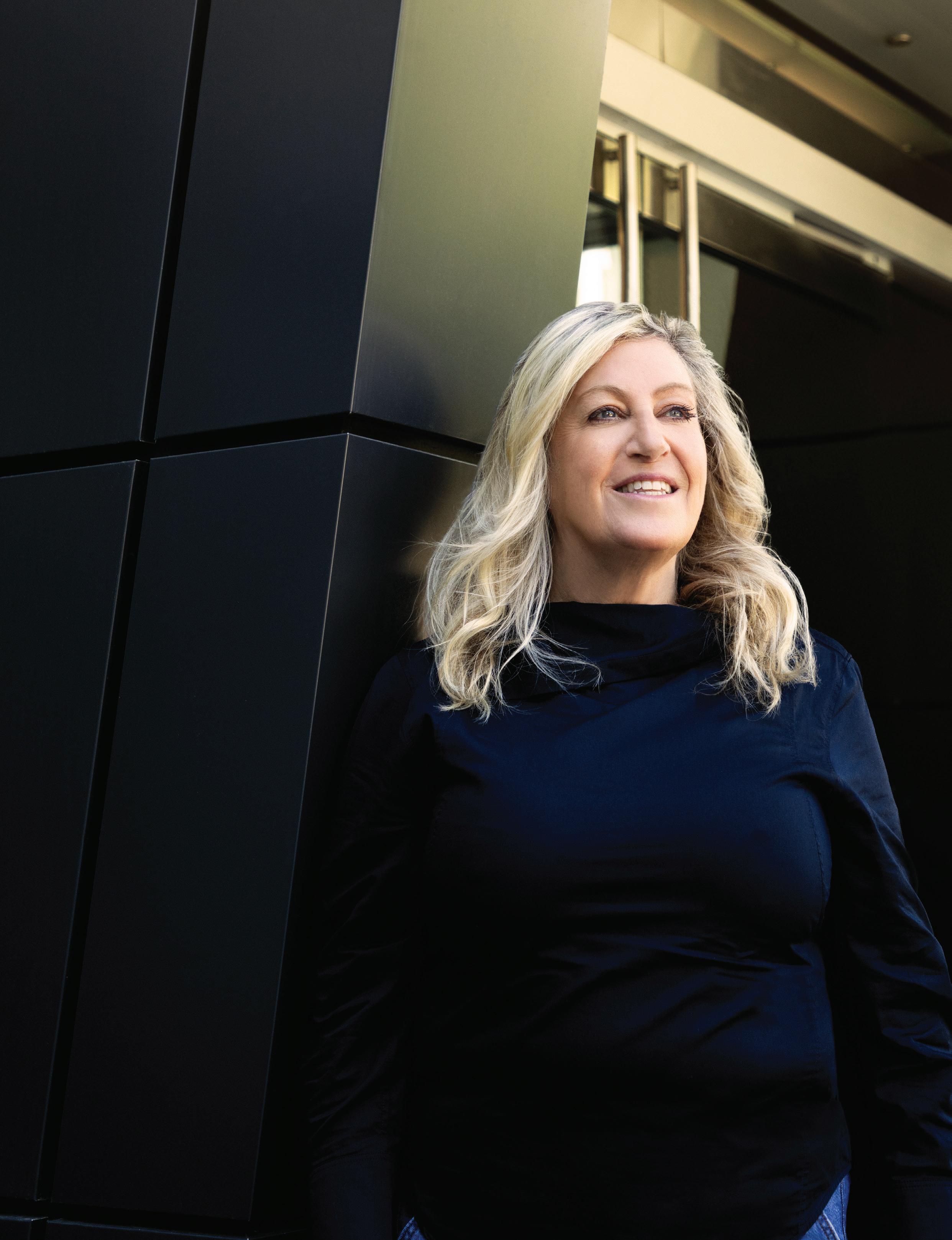
Dionne Laslo-Baker, founder/CEO of Deebee’s Organics.
Partnering with businesses across BC to navigate risk with confidence while protecting their people, operations, and future. Protecting what matters most. Building what's next.


SCHOOLS
DEVELOPING
Partnering with businesses across BC to navigate risk with confidence while protecting their people, operations, and future. Protecting what matters most. Building what's next.
Douglas magazine has tracked the evolution of the Greater Victoria economy for the last two decades.
BY DOUGLAS STAFF
20
Today’s local business leaders advise on what guides their decisions.
BY TAMMY SCHUSTER
24
The local post-secondary institutions that bring real-world learning to young entrepreneurs.
BY JULIEN JOHNSTON-BREW
40
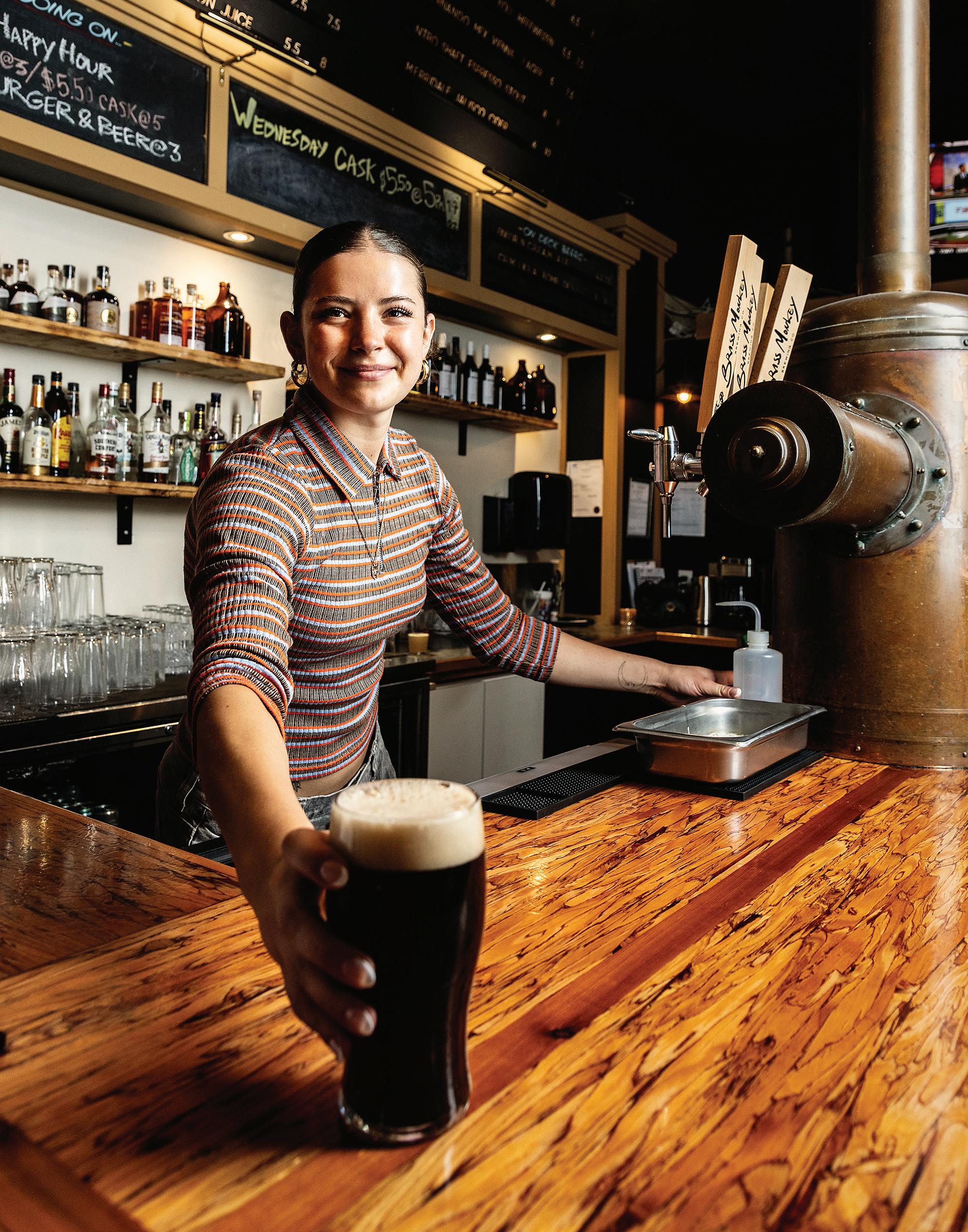
Plenty of change in Victoria’s evolving craft beer industry.
BY JOE WIEBE

5
9 IN THE KNOW
Malahat SkyWalk “steps out” with The Overhang to celebrate its fifth anniversary; a Victoria startup finds a new niche in the home services marketplace; the B.C. construction industry bets on AI to help bridge the labour gap; the chamber of commerce hands out 13 honours at its annual awards; downtown on the rebound, according to business association’s new report; “Seatoria” takes flight; hospitality community celebrates at YAM: Best Restaurant Awards. Plus: Corporate Calendar; Douglas Reads.
46 INTEL
46 BUILDING A WEBSITE THAT WILL LAST
It’s important to view your web portal as a living, breathing asset that can grow with your business
BY TEDI BEZNA
48 DON’T DRIFT: FOSTERING A CULTURE AND WORKPLACE EVOLUTION
Culture is not a “soft” topic, but rather a strategic asset when it’s fully understood and utilized. BY
JAMES MOLLER
50 CHANGE IS INEVITABLE. CONFUSION OVER THAT CHANGE? OPTIONAL
A breakdown of trust in communicating change can take months to repair.

BY DANIELLE SMELTZER
52 LIFE + STYLE
“What SUP?” Stand-up paddleboarding can be the ultimate team-building summer activity. Follow the downtown flavour trail with Off the Eaten Track tours. Note-taking apps that will help save you time on summarizing your meetings.
54 DID YOU KNOW
Getting around Greater Victoria by road, sea and air has changed significantly in the last 20 years.



THERE’S SOMETHING ABOUT flipping through past issues of a magazine that makes you realize how much a city can change without you even noticing.
With Douglas magazine celebrating 20 years this year, we have more than 120 issues to revisit (see pages 14-15 for a stunning layout of all our covers). Looking back is fascinating and it’s a reminder that time moves a lot faster than we want to admit.
When our first issue hit the streets in 2006, we were entering a major period of change. The modern era of social media had only just begun. Facebook was still mostly for university students, Twitter had just come online and YouTube was a mere one year old. LinkedIn was basically a digital contact list and “jumping on a call” wasn’t part of our vernacular. We were one year away from the first smartphones and having a website served as your entire digital strategy — and it was a pretty solid one.
One thing that hasn’t changed is that business is built on people.
Victoria’s business community was evolving, too. Tourism remained a driving force, the tech sector was gaining momentum, sustainability was becoming a bigger priority and downtown revitalization was a hot topic as the city imagined its future.
Over the past two decades, we’ve watched new industries emerge, businesses reinvent themselves, neighbourhoods transform and some things that felt like they were part of Victoria’s DNA disappear.
One thing that hasn’t changed is that business is built on people. The risk takers, problem solvers, community builders and changemakers that take a chance on a bold idea.
Douglas magazine was born out of curiosity and excitement. There were so many inspiring businesses, entrepreneurs and community leaders doing and creating remarkable things, and these stories deserved to be shared.
Twenty years later, that mission hasn’t changed. If history has taught us anything, it’s that the next great story is already unfolding, even as you turn the pages of this anniversary issue.
While we’re proud of the stories we’ve told over the past two decades, we are even more excited about the ones still waiting to be written. Thank you for reading and thank you for being a part of our story.
Happy 20th anniversary, Douglas magazine!

— Tammy Schuster Douglas Editor editor@douglasmagazine.com
strategy that addresses the entirety of your life.
C.P. (Chuck) McNaughton, PFP Senior Wealth Advisor
250.654.3342
charles.mcnaughton@scotiawealth.com themcnaughtongroup.ca
VOLUME 20 NUMBER 4
PUBLISHERS Lise Gyorkos, Georgina Camilleri
EDITOR IN CHIEF Joanne Sasvari
DOUGLAS EDITOR Tammy Schuster
ASSISTANT EDITOR Lionel Wild
DIRECTOR OF PHOTOGRAPHY Jeffrey Bosdet
LEAD GRAPHIC DESIGNER Kelly Hamilton
ASSOCIATE GRAPHIC DESIGNER Janice Hildybrant
ADVERTISING CONSULTANTS Deana Brown, Jennifer Dean Van Tol, Cynthia Hanischuk, Brenda Knapik
ADVERTISING CO-ORDINATOR Rebecca Juetten
DIGITAL MEDIA SPECIALIST Lauren Ingle
EDITORIAL ASSISTANT Julien Johnston-Brew
FINANCIAL ANALYST Allison Villacis
CONTRIBUTING WRITERS Tedi Bezna, Julien Johnston-Brew, James Moller, Tammy Schuster, Danielle Smeltzer, Joe Wiebe, Lionel Wild
CONTRIBUTING AGENCIES Getty Images p. 11, 40, 42, 44, 52-54
GENERAL INQUIRIES info@douglasmagazine.com
SEND PRESS RELEASES TO editor@douglasmagazine.com
LETTERS TO THE EDITOR letters@douglasmagazine.com TO SUBSCRIBE TO DOUGLAS subscriptions@ douglasmagazine.com
ADVERTISING INQUIRIES marketinginfo@douglasmagazine.com
ONLINE douglasmagazine.com
FACEBOOK DouglasMagazineVictoria
LINKEDIN Douglas Magazine Victoria INSTAGRAM @douglas_magazine
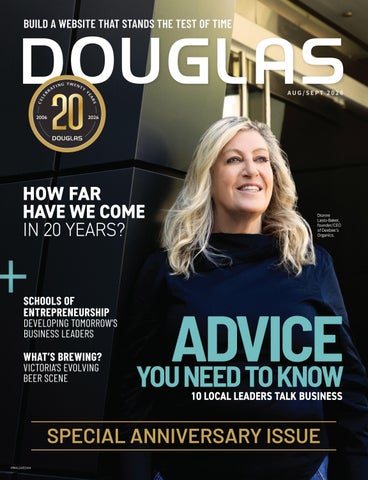
COVER Dionne Laslo-Baker, founder and CEO of Deebee’s Organics. Photo by Jeffrey Bosdet
Published by PAGE ONE PUBLISHING
580 Ardersier Road, Victoria, B.C. V8Z 1C7 T: 250.595.7243 E: info@pageonepublishing.ca pageonepublishing.ca
Printed in British Columbia by Mitchell Press
Ideas and opinions expressed within this publication do not necessarily reflect the views of Page One Publishing Inc. or its affiliates; no official endorsement should be inferred. The publisher does not assume any responsibility for the contents of any advertisement and any and all representations or warranties made in such advertising are those of the advertiser and not the publisher. No part of this magazine may be reproduced, in all or part, in any form printed or electronic without the express written permission of the publisher. The publisher cannot be held responsible for unsolicited manuscripts and photographs.
Canadian Publications Mail Product Sales Agreement #41295544
Undeliverable mail should be directed to Page One Publishing Inc. 580 Ardersier Road, Victoria, B.C. V8Z 1C7
Douglas magazine is a registered trademark of Page One Publishing Inc.
ADVERTISE IN DOUGLAS!
Douglas is a premium magazine dedicated to innovation, leadership and business lifestyle. Established in 2006, Douglas is the first choice for business leaders and achievers. Align your business with Douglas For more information or to request a media kit, please call us at 250.595.7243 or email us at marketinginfo@douglasmagazine.com.
Because of the incredible support of the business community, a fantastic evening took shape. Thank you for joining the University of Victoria’s Gustavson School of Business in celebrating Darren Entwistle at the 22nd annual Distinguished Entrepreneur of the Year Award (DEYA) Gala.
We couldn’t have done it without you.
Berwick Retirement Communities
Centre for Regenerative Futures, Gustavson School of Business
Doane Grant Thornton LLP
Executive Programs, Gustavson School of Business
Friends of the Gustavson School of Business
Greater Victoria Chamber of Commerce
Heart Pharmacy Group
Helijet
Island Savings
Jones Emery LLP
KPMG
League of Extraordinary Women
National Bank Financial
RBC Dominion Securities
TELUS MBA, Gustavson School of Business
Tiny
UVic Business Co-op & Career Services
UVic External Relations
UVic Innovation Centre
Vancity
Victoria Executive Management Club


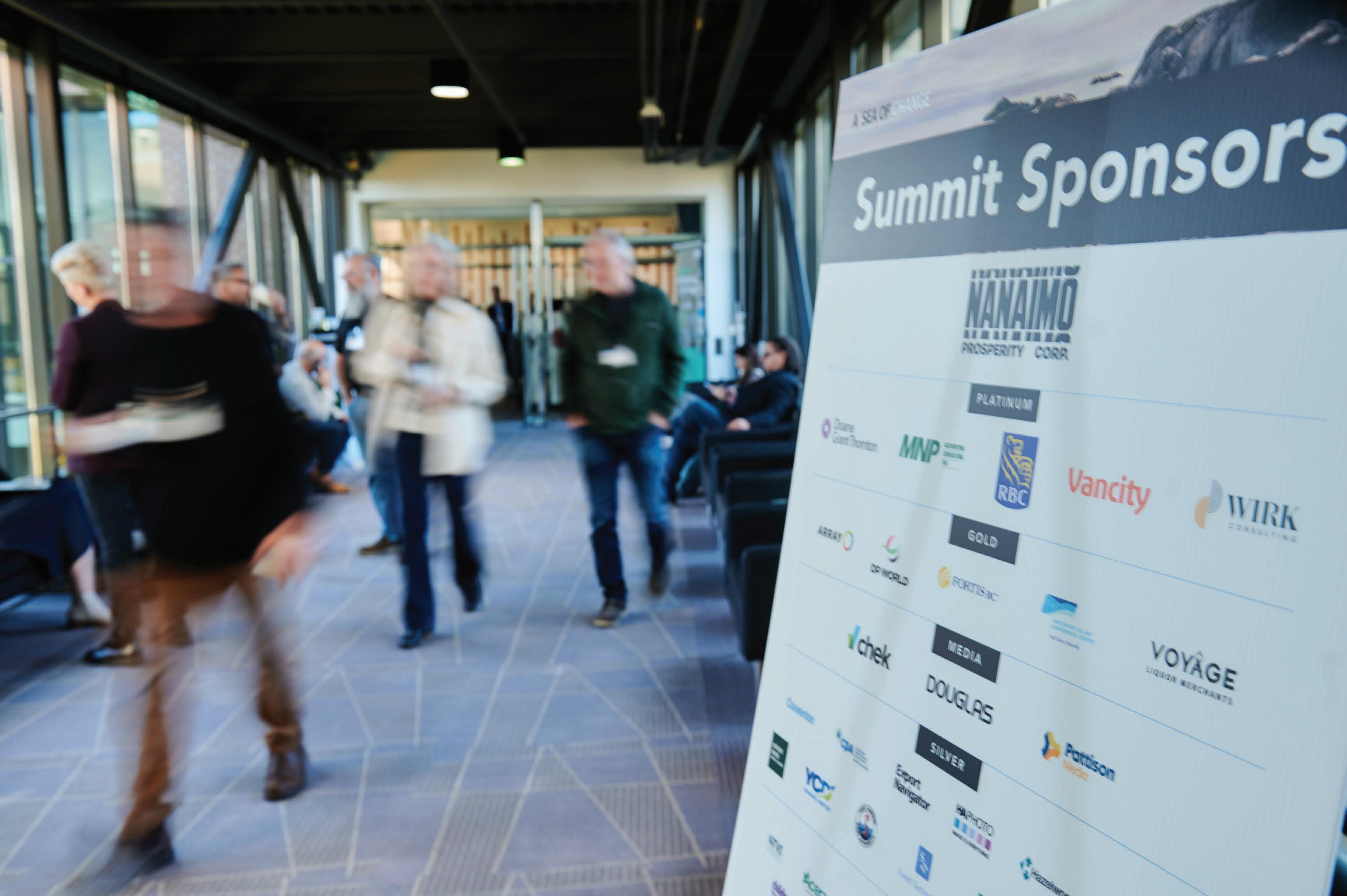

... at Summit 2025. The conversation continues October 20-22, 2026.
Join us for the 20th Anniversary Summit, Vancouver Island’s premier gathering for leaders focused on economic development, community prosperity, and the future of the Island.
Register now at vieasummit.ca . Early bird ends Monday August 31st.

Presenting Sponsor

Look down. Wayyyy down, if you’re looking for a little thrill.
BY LIONEL WILD

BOSDET
That’s what’s been happening at the Malahat SkyWalk, marking its fifth anniversary this summer by introducing The Overhang, a 2.13-metres-high, 2.13-metres-wide enclosed glass cube that extends 2.13 metres out beyond the SkyWalk’s 10-storey spiral tower and looks out over the coastal forest floor below and a panoramic view of the Saanich Inlet — 250 metres above sea level.
“You could probably fit, like depending on their size, between seven and 10 people in it. But it’s way overengineered for that,” says Nathan Bird, the SkyWalk’s general manager. “We say it’ll hold the weight of two-and-ahalf elephants. You could fit as many people as humanly possible in there, and you still would not even hit the weight limit.”
Oh, and that glass floor you’re standing on? It’s five panes of glass fused together, 60 millimetres (2.36 inches) thick.
As for the inspiration behind what’s been coined the first enclosed glass cube lookout ever to be attached to the summit of an outdoor spiral tower, Bird says one of the SkyWalk’s owners saw something similar in Chamonix, France. “He said there was like an 80-minute lineup to get into it and people were really enjoying it. And he thought, we’ve got this attraction with a great view, and we’re looking to attract some more people looking for some more adventure, and thought why not try this?”
Malahat SkyWalk again tapped the expertise of Vancouver-based Aspect Structural Engineers, which also designed the spiral tower in winning the Canadian Wood Council Innovation Award in the 2021-22 World Design Awards. Other Lower Mainland and Island companies pitching in on the $700,000-$800,000 project were Phoenix Glass, Duncan Ironworks and Endwise Construction.
As for the future, the Malahat SkyWalk sits on a 170acre property, so the attraction is looking at building “more adventure elements” into the experience, says Bird.
“We’ll see how this year goes, how we do on returning our investment back to our investors, and then we’ll look into doing something probably big for 2028 or into 2029.”

BY LIONEL WILD
Getting a small business going is nothing new for Nolan Hupp. The 21-year-old Victorian, a partner in an Okanagan storage facility who also started up and sold a pool maintenance business, was looking for a new venture that would address a gap in the market.
That something “hit home” — literally — with the advent of Jacks, Victoria’s new, online home services marketplace.
“It was formed from this problem that we kept finding for homeowners, in particular, but also property managers, real estate agents,” says Hupp, one half of the jacksvictoria.ca braintrust with business partner Adam Vincent, a 23-year-old UVic student. “People have a hard time finding reliable help for small jobs. And at the same time, there’s a lot of people with great skills in Victoria who want more side work. They want to work independently. They just don’t know where to find it. We thought if we could start local and build a platform that makes that connection between a supply that we know is there and a demand that we know is there, we could bridge that gap.”
The Small Job Connection
Jacks’ service is currently free of charge while it builds its user base. Homeowners register and post a job online, then an approved “Jack” — about 30 such tradespeople have been screened and approved by the site — go on the job board and apply to do that task.
About 230 people have already set up accounts on Jacks, half of whom have posted a job that needs doing.
“With Jacks … we had someone post a
toilet replacement and she goes, ‘Do I need a plumber for this, or is this a handyman job? What do I do?’
“And she posts it, and she gets applications from both handymen and from professional plumbers, and she picked the plumber,” says Hupp.
“The idea is to take the search out of it so that as a homeowner, you don’t have to go scouring the internet, trying to find someone to do the job. You post what you need done, and they come to you.”
Hupp says the company eventually plans to introduce a subscription fee for the service, with a longer-term goal of charging a small transaction fee to the homeowners allowing the tradespeople to keep 100 per cent of their earnings.
“From my talking with users [the ‘Jacks’] … they’d rather pay a low, flat subscription and then have full access to the job board, and be able to apply to as many jobs as they want.”
Hupp and Vincent have big plans for Jacks, taking it beyond home services into running errands and other everyday tasks — effectively making a customer’s first thought be “let’s hire a Jack to deal with that.”
But first, it’s go slow and steady in the Victoria market with this business model.
“I like the analogy of ‘boil a pot of water, don’t try and boil the ocean,’ says Hupp. “Start small and get something going really, really well, and that’s what we’re trying to do in Victoria, because it’s our community.”
Annual event highlights the region’s thriving business community.

Greater Victoria’s business community gathered in celebration at the 2026 Victoria Chamber of Commerce Awards at the Victoria Convention Centre, where 13 winners and finalists reflected a region powered by health care, hospitality, retail, construction and other key sectors. From mobile physiotherapy and boutique clinics to beloved local ice cream, hotels and grocery retailers, the night showcased a diverse cross section of the local economy.
Harbour Air opens faster link between Victoria and Seattle.
Cross-border travel from Victoria has received an upgrade. Since June, Harbour Air’s latest route connecting Victoria’s Inner Harbour to Seattle’s Lake Union has given Islanders a faster way to travel to the Emerald City, with flights taking less than 40 minutes.
The daily seasonal service runs until September 30,
Community Builder Award
Pacifica Housing Advisory Association
Finalist: Blenkinsop Community Agricultural Centre
Business of the Year (1-10 Employees)
Hazel’s Ice Cream
Finalist: Core Connection Mobile Physiotherapy
Business of the Year (11 - 39 Employees)
Gwaii Engineering
Finalist: HAVN Saunas Inc
Business of the Year (40+ Employees)
The Parkside Hotel & Spa
Finalist: Red Barn Market
New Business of the Year
Solve Energy Inc.
Finalist: DermaLight Clinic
Outstanding Workplace of the Year
Kinetic Construction
Finalist: Island Savings
Innovation Award
Canadian Tire Hillside
Finalist: Mushroom Envy
Outstanding Customer Service Award
Ooh La La Cupcakes
Finalist: Delta Hotels by Marriott Victoria Ocean Pointe Resort
Non-Profit/Association of the Year
Victoria Rainbow Kitchen Society
Finalist: Cool Aid Society
Emerging Businessperson of the Year
Rebecca Knezacek, Eyefinery Optical Studio
Finalist: Kathryn Pascuzzo, Swank Creative
Businessperson of the Year
Trina White, The Parkside Hotel & Spa
Finalist: Julia Huggett, Beehive Wool Shop
Chamber Member of the Year
Tony Joe, The PRIME Real Estate Team
Chamber Award of Distinction
Sandra Richardson, Victoria Foundation
offering a convenient option for business travellers and day trippers looking to move between the two cities without the long drive, ferry lineups or border wait times.
Harbour Air also expanded its seasonal network with new flights from Campbell River and Ucluelet to Vancouver, providing more connections
for communities across Vancouver Island. These added routes will also operate until September 30.
Easier access to nearby markets can help strengthen regional tourism, make face-to-face meetings more accessible or turn an earlyseason Seahawks game into an easy day trip.
AI-powered hiring tools aim to help building labour shortage.
With B.C.’s construction industry continuing to face a skilled labour shortage, the British Columbia Construction Association (BCCA) is betting artificial intelligence can help bridge the labour gap.
The association has launched a revamped version of its Builder Life TalentCentral platform introducing AIpowered tools designed to better connect construction employers with job seekers.
The online career hub includes AI-assisted job matching, resumé and jobposting optimization as well as expended career development resources. The platform is intended to streamline recruitmentment while helping workers identify opportunities that align with their skills and career goals.
“TalentCentral has always been about bringing people and employers together,” says BCCA president Chris Atchison. “But today’s workforce and hiring practice challenges demand more. We’ve reimagined the platform to be as intuitive as possible for users, providing an accessible experience that reflects where the industry is headed.”
With demand for skilled tradespeople expected to remain strong, BCCA says the upgraded platform will help employers recruit qualified candidates while making it easier for workers at all career levels to connect with opportunities across the province.
Builders Life TalentCentral is now live and available at talentcentral.ca
New report suggests signs of recovery for Victoria’s core.
After several challenging years, downtown Victoria is showing signs of renewed momentum, according to the Downtown Victoria Business Association’s 2026 Annual Report.
The report offers a look at the state of downtown Victoria today, tracking everything from business confidence and public perception to visitor activity and economic performance.
More than 44.3 million visits were recorded in the downtown core in 2025 as tourism, business activity and consumer confidence continued to increase.
Hotel occupancy rose to 78 per cent, up from 75 per cent the previous year, while nearly 990,000 cruise passengers and almost two million travellers passing through Victoria International Airport helped support activity for restaurants, retailers and other local businesses.
Retail vacancy fell to 9.6 per cent from 11 per cent a year earlier, while the City of Victoria issued 2,632 business licences. Another 36,660 square feet of retail space
HOTEL
rose to 78 per cent, up from 75 per cent from the previous year
44.3 Million VISITORS WERE RECORDED IN THE DOWNTOWN CORE IN 2025
The City of Victoria issued 2,632 business licences 2,632
Retail vacancy fell to 9.6 per cent from 11 per cent a year earlier of businesses that said they would renew their lease if it came up within the next year
are expected to come online in 2026, reflecting continued investment in the downtown core.
Signs of optimism are beginning to return among business owners as well. When asked whether they would renew their lease if it came up within the next year, 41.5 per cent said yes, up from 39.4 per cent in 2025. At the same time, fewer businesses reported that their economic performance had declined over the past year.
The report is also clear about the
Chobap Sushi Bar wins big at YAM Best Restaurant Awards.
More than 300 food lovers gathered at the Inn at Laurel Point on a sunny, late June evening for the 2026 YAM Best Restaurant Awards. Presented by Douglas magazine’s sister publication, the annual awards recognize excellence across 21 categories celebrating the region’s chefs, restaurants and hospitality professionals.
Hosted by CBC Radio’s Rohit Joseph, the evening’s top honours went to Chobap Sushi Bar, which was awarded Restaurant of the Year and Best East Asian Restaurant, while chef-owner Clark Park was named Chef of the Year, making the intimate omakase restaurant one of the evening’s bigger winners.
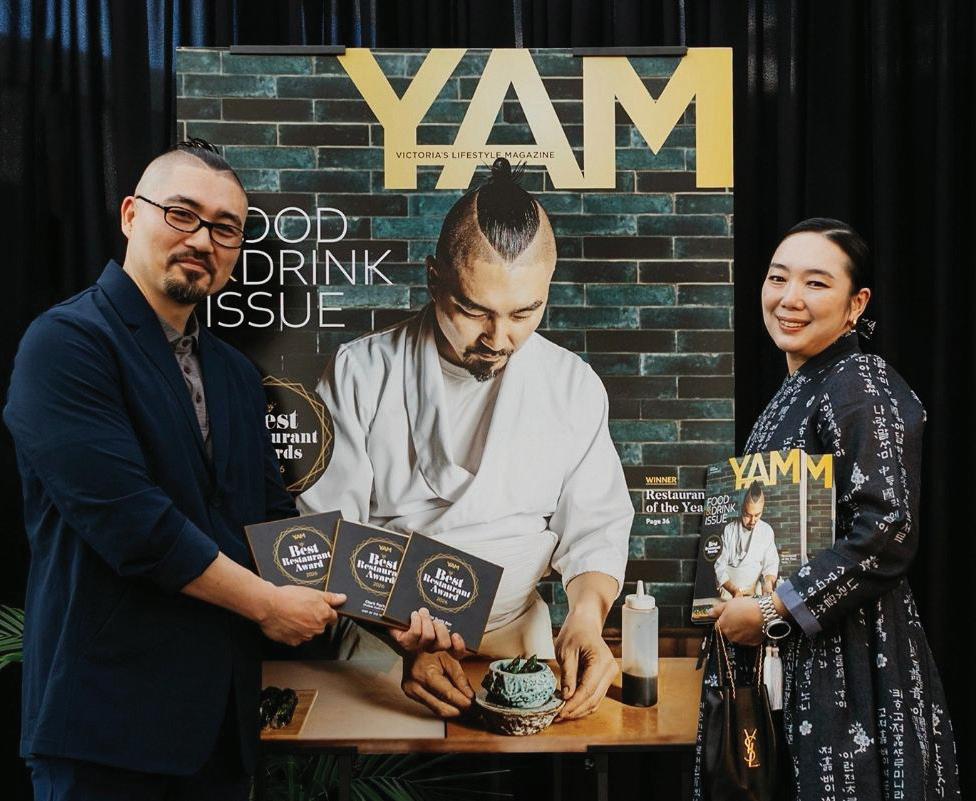
Other major winners included Lumache as Best New Restaurant, and Marilena Cafe & Raw Bar, which earned Best Big Night Out, Best Wine Program and Best Service. Wild Mountain Food + Drink won for Best West Coast Contemporary, House of Boateng for Best Brunch, and Part and Parcel for Best Casual. Looking for your next great meal? Visit yammagazine.com to see the complete list of 2026 winners.
990,000
significant challenges that remain. Safety, public disorder, parking and traffic continue to top the list of concerns for both businesses and visitors. Business owners identified addressing public drug use as the single most important step toward making downtown a better place to operate and invest.
While recovery is far from complete, more visitors, fewer empty storefronts and growing confidence among business owners suggest downtown Victoria may be on the rebound.
Residents can weigh in, but it won’t mean a merger.
The province has decided that the Victoria-Saanich amalgamation question, featured in Douglas’s June/July edition and expected to appear on the 2026 municipal election ballot in the fall, will be non-binding, meaning the results will not directly lead to a merger. The decision comes after the Victoria-Saanich Citizens’ Assembly recommended supporting amalgamation. Supporters believe joining the two municipalities could improve regional planning and services, while opponents question potential costs and lack of a clear transition plan.
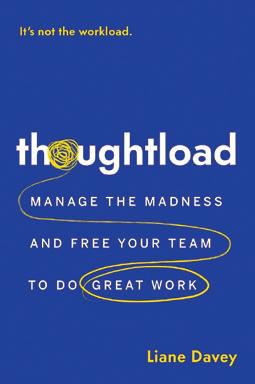
While many people blame their workload for burnout, leadership expert Liane Davey argues the real issue comes from “thoughtload.” In her latest book, Thoughtload: Manage the Madness and Free Your Team to Do Great Work (Page Two Books, Inc.), Davey challenges the idea that burnout is caused by workload alone, instead pointing to cognitive and emotional demands (overthinking) that drain focus and productivity. She offers research-backed strategies to reduce mental overload, improve focus and help leaders build healthier, more effective teams.
Conference season is in full swing, and Victoria is a popular spot for industry gatherings.
August 7 + 8 David Foster Foundation
40th Anniversary
Victoria Conference Centre
To celebrate decades of supporting families tackling challenges associated with organ transplants, the David Foster Foundation is holding a gala event on the Friday night followed on Saturday by a free multi-celebrity concert and fireworks in the Inner Harbour. davidfosterfoundation.com
August 23 - 26 Corporate Governance Conference
Fairmont Empress
This 28th annual conference will provide governance boards and professionals with insights, practical tools and real-world perspectives to strengthen decision-making, adapt governance systems and lead effectively in volatile times. gpcanada.org
September 15 Vancouver Island
Meet the Generals & Owners
Victoria Conference Centre
A networking opportunity for construction industry professionals from across the Island to develop trades-supplier relationships over beer, wine and appetizers in a relaxed professional setting. events.icba.ca
September 16 - 19 Paramedics Across Canada Expo
Victoria Conference Centre
A gathering of paramedics, educators, advisers, administrators and public safety leaders from across Canada. Paramedicine topics in patient care and system development are explored via sessions, guest speakers and a trade show. pac-expo.ca
September 26 Victoria Foundation
90th Anniversary
Victoria Conference Centre
To celebrate 90 years of community impact, the Victoria Foundation offers an afternoon of entertainment and speeches from the foundation’s former and new CEOs, as well as Victoria’s own No. 1 New York Times bestselling author and motivational speaker Ben Nemtin. victoriafoundation.bc.ca
September 29 Startup Canada Tour
Victoria Conference Centre
An opportunity for entrepreneurs to access a community of support partners, expand relevant skills and knowledge as well as gain exclusive insights, impactful connections and practical strategies to accelerate startup growth and confidently drive business. startupcan.ca








HOW FAR HAVE WE COME IN 20 YEARS?
In some ways, little has changed. In other ways, the transformation has been remarkable. It’s about the evolution of a city, the magazine that has documented its growth and how the two are intertwined.

a story of ambition, risk, perseverance and people who turn an idea into impact.
BY DOUGLAS STAFF
For 20 years, Douglas magazine has been sharing those stories while documenting Victoria’s evolving business scene, from early-stage startups to established regional employers, and has positioned itself as a key observer in our region.
Its goal has always been to represent business in Victoria, to help businesses work smarter and be informed, a read that looks good, feels good and celebrates a sense of the community.
“We really felt like someone would look at it and think, ‘Wow, that’s where we live,’ ” says cofounder and president Lise Gyorkos. “Which is why we called it Douglas,” adds cofounder and publisher Georgina Camilleri, noting that it’s a name everyone recognizes, whether it’s the street, the tree or the city’s one-time governor.
The biggest role the magazine plays is highlighting local business and profiling both emerging and established sectors. Through insightful editorial features and award-winning photography, the publication aims to bring wider recognition to organizations and people contributing to the region’s growth.
John Wilson, CEO of the Greater Victoria Chamber of Commerce and president and chair of The Wilson’s Group, admires the way Douglas trumpets the achievements of local businesses and their leaders while showcasing ideas that help shape the region — one with a unique business makeup.
“We’re not a corporate city, we’re made up of very small businesses, but the ones that are successful are ones that
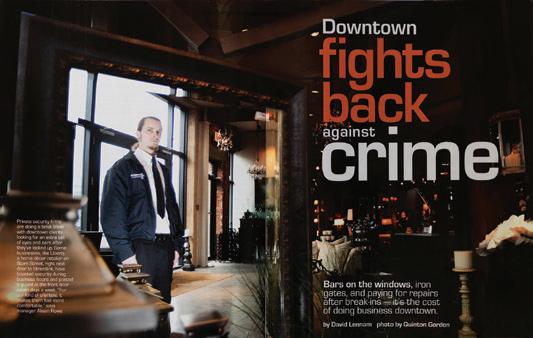
2008
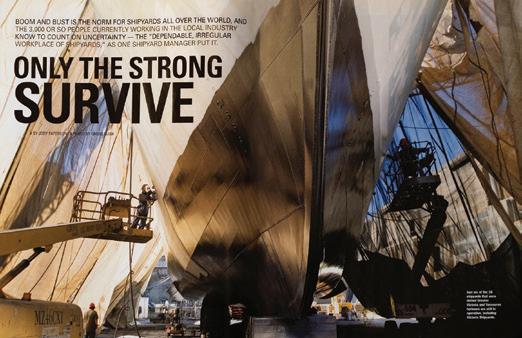
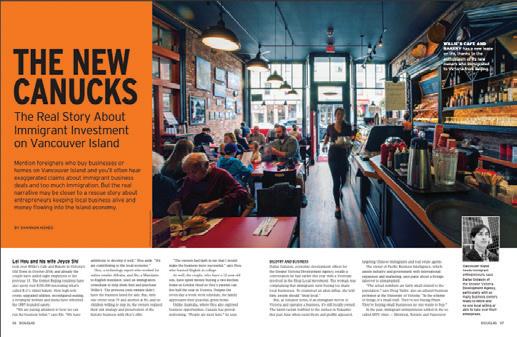
Only the Strong Survive: The “dependable, irregular” workplace of shipyards.
understand this community, give back to this community as much or more as they take out of it and they are led by examples like Lise and Georgina and people that understand you have to be part of the community to have success here,” says Wilson.
Building connections
On top of telling the stories of business, the publication also serves as a connector in the local business community. By bringing together

entrepreneurs, leaders and organizations through stories and events, it helps create and strengthen relationships while keeping people informed on what’s going on around town.
Jim Hayhurst, managing director at Cole & Associates, admits to thinking about Douglas as almost a public service. “I often say that when people come to Victoria to visit and they ask me about this town, I just give them a copy of Douglas magazine.”
Peter van Dongen, senior manager,
in
Entrepreneurialism is cool with agility being a cornerstone to success
Douglas inaugural Small Business Issue
business development at MNP, noticed how relevant Douglas has been for his business and respects how wide a focus it captures, up and down the Island.
“Aligning our brand with the brand of Douglas has been a really good fit,” he says. “The value of the publication in a world where we’re used to these little bite-sized pieces of content, is the depth of analysis that goes into researching some of these articles and understanding what’s happening — not just in Greater Victoria, but across the whole Island. I don’t know where else you go to get that these days.”
Gyorkos and Camilleri established Page One Publishing in 1998, concentrating on tourism industry content, but identified changing trends that encouraged them to diversify. With a yen to own a brand that would reflect their own experience in the local business scene, they decided to launch Douglas, Victoria and the Island’s only business magazine.
“We thought it would be fulfilling to produce something that we created, that was our own vision and execution,” says Gyorkos, looking back on two decades of a sometimes challenging, always valuable venture.
The co-owners and publishers of
Tattoo shops and breweries make their mark on the business community Urban farming, 3D printing and wearable technology enter the chat Gaming industry makes a big play in
Douglas (along with the later titles YAM and Spruce) had seen a few business magazines flounder and realized there was a niche to be filled with stories defining business on the Island, celebrating achievements and connecting peers.
The first edition of Douglas rolled out in 2006, at a time when Victoria presented a very different business landscape.
Camilleri recalls there wasn’t another magazine in town devoted to business writing and there wasn’t the same heady rush of entrepreneurism that has since flourished in the region. “We thought business was exciting and just wasn’t being written about,” she says.
Gyorkos notes the vast changes since Douglas was introduced. There were far fewer women running businesses, and startups of any sort were slow to emerge. “We secretly feel that we were a little bit of help to boost that entrepreneurial spirit in Victoria, that we made it OK to be an entrepreneur and be in business and see how exciting it is.”
Though the publishing world was filled with enterprising women, it was still a novelty for two women to pioneer a magazine dedicated solely to business. And even the thought of a product as niche as Douglas was fodder for the doubters, recollects Gyorkos.

The Amazon effect and leadership redefined.
by
COVID Lessons learned for business and leadership, equity and diversity in the spotlight. Douglas writes and produces Road to Recovery in partnership with CHEK to help businesses cope
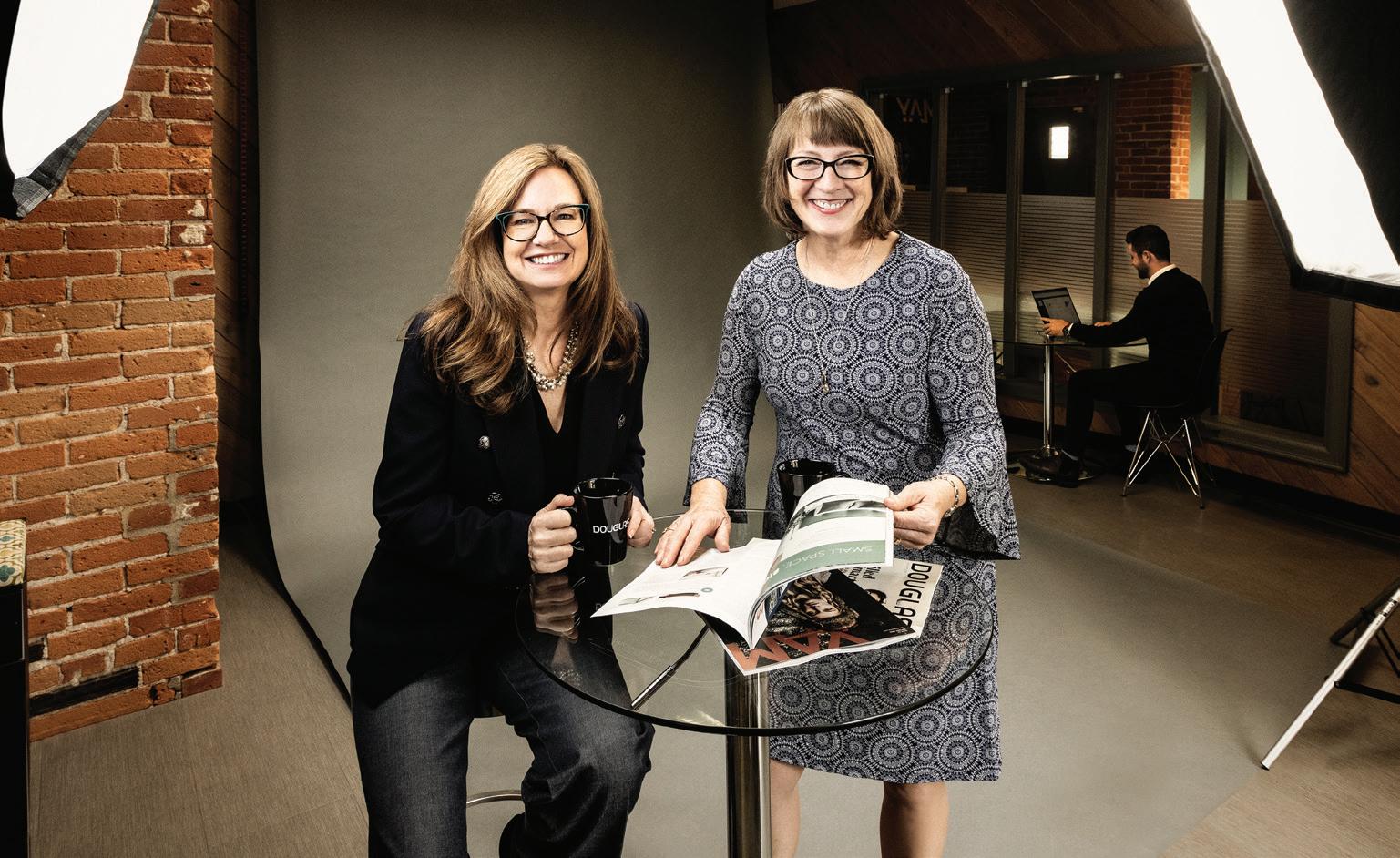
They were told it wasn’t going to last, that there isn’t enough going on in Victoria to fill the pages. But years of industry savvy and deep consultation with those in business eased any fear of failure.
As readers, they wanted to learn the ins and outs of starting a business, says Gyorkos. “We’d meet entrepreneurs all the time and think it’s so cool that you’re doing that. Where could we read about that?”
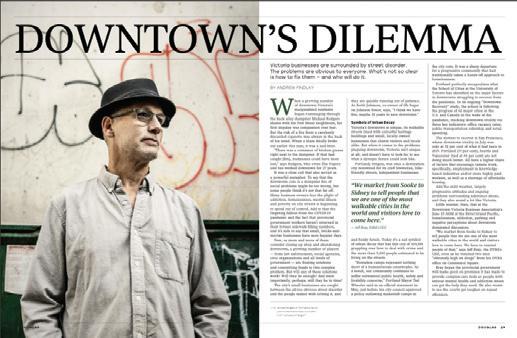
One of the magazine’s most recognizable initiatives, the 10 to Watch awards, was created to identify and elevate earlystage entrepreneurs across the region, providing visibility at a critical stage in their business development.
The annual awards celebrate new businesses, and their oft visionary innovators, through a rigorous application and judging process proving that the winning businesses are worthy of interest.
The awards ceremony has become the magazine’s signature can’t-miss event, giving recipients a sudden uptick in credibility and exposure.
“The 10 to Watch process came at the perfect time for us. The application made us check our vision, mission and values against reality one year into operations,” says Christopher Bjerrisgaard, cofounder of Small Gods Brewing Co., one of the 2024 10 to Watch award winners. “Being chosen confirmed we were headed in the right direction, opened doors across the South Island and helped set us up for the steady, healthy growth we’ve had ever since.”
“Emotionally, [the 10 to Watch award] was a blast of confidence and rocket fuel in the tank that we were on the right track.”
— Nicole Smith, CEO and founder of Flytographer
After 17 events honouring 170 new businesses, 10 to Watch has evolved from a magazine initiative into one of the region’s premier business awards.
Over the years, the awards have recognized companies that have gone on to achieve remarkable success on the
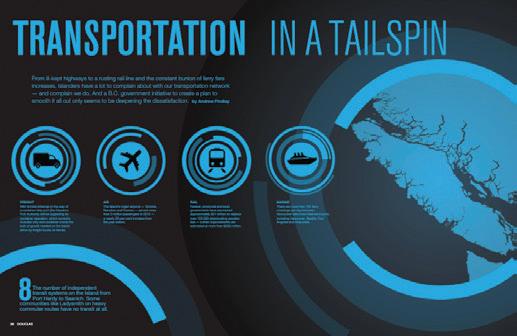
Connections: Highway closures, cancelled ferries, construction and distribution headaches.

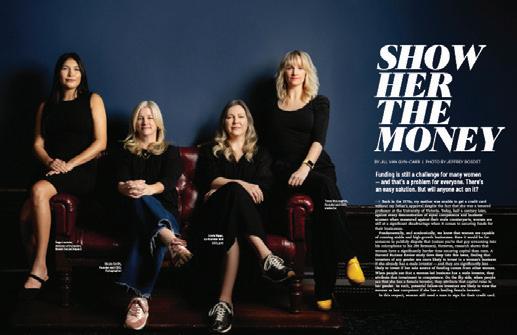
Indigenous economic growth surges upward
Building back the workforce, retailers urged to “think like a customer”

Collaborative business models, telehealth takes off amid lack of healthcare providers, saving downtown
The Greening of the Construction Industry: Taking steps to build sustainability.
People power — how to hire and keep employees, gaming industry powers up, construction faces challenges, careers in trades promoted, restaurants struggle

Deep Dive: Vancouver Island’s $3-trillion blue economy.
Economic and public safety, futureproofing the workforce, AI friend or foe, manufacturing momentum
local, national and global stage.
Douglas’s 10 to Watch alumni include FreshWorks Studio, which was acquired by Ernst & Young; STN Video, which sold for $150 million in 2024; Certn, which grew revenue by 14,500 per cent while raising over $100 million; Rootd, now the world’s No. 1 panic and anxiety app with more than four million downloads across 150plus countries; Cascadia Seaweed, backed by the World Wildlife Fund, is now one of the biggest seaweed cultivators in North America; Flytographer, which operates in 350 cities across six continents; and VoxCell BioInnovations, a biotech company advancing drug development through innovative 3D bioprinted, humanlike tissue models.

“The 10 to Watch was the first real award Flytographer received, and as a young startup that public recognition was really meaningful,” says Nicole Smith, CEO and founder of Flytographer, winner of a 10 the Watch award in 2015. “Emotionally, it was a blast of confidence and rocket fuel in the tank that we were on the right track. It also helped raise our profile, credibility in Victoria and attract great local talent as we grew our team.”
For many new entrepreneurs, the awards also created a connection to a new network of fellow business owners who understand the challenges of building a business.
“The 10 to Watch award gave us more than visibility; it validated Holocene Distilling both publicly and internally, and that confidence shaped how we built the business,” says Aisling Goodman, cofounder of Holocene Distilling Project, a 2025 award winner.
“The community of small business owners we met through the award was truly inspiring, and those connections became a networking foundation we still draw on today. We look forward to watching that foundation continue to grow with each new group of winners.”
Much of the success of Douglas is attributed to something beyond sheer perseverance, with a deep sense of pride in the work itself, and a great team that makes it happen. This standard has guided the publication since day one. Gyorkos says it has always been their mandate to do things at the highest level, while Camilleri adds that it comes from a belief that local business stories deserve to be told with care and enthusiasm.
“We do have a lot of pride in our work and we do think business is really exciting,” says Camilleri. “We want to let people know what’s going on in town because we think businesses are working really hard and the people are great.

There is pride in that.”
Two decades after its first issue was released, Douglas continues to evolve. From glossy pages to curated events, digital storytelling and now the launch of the Douglas Insider newsletter, the platforms have changed, but the mission hasn’t.
Douglas has done more than document Victoria’s business community. It has introduced entrepreneurs to one another, celebrated companies before they became household names and helped tell the stories of a region whose entire economy
has changed dramatically over the past 20 years. In many ways, it reflects the vision Gyorkos and Camilleri had when they launched the magazine: to create something that would make readers look at the place they call home and think wow, that’s where we live.
The region’s business leaders share the insights that guide their decisions today.
BY TAMMY SCHUSTER
T he best advice, given at the right moment, can change everything. Two decades of business stories have shown us that while industries evolve and markets change, great advice never goes out of style. We asked some of the region’s top business and community leaders to share the advice that has guided their success and the lessons they hope to pass on to others.
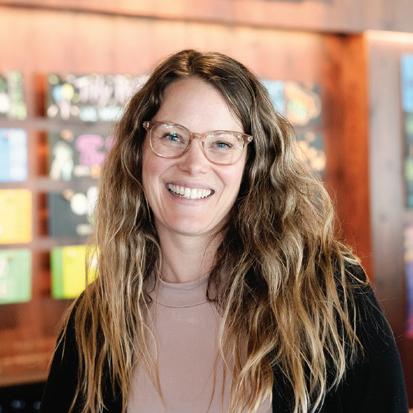
Dionne Laslo-Baker on ... what is actually needed when starting a new business and lessons you can avoid.

What advice would you give someone starting a business today?
Stay curious and don’t feel like you need all the answers on day one. Start with a clear purpose, listen closely to your customers and be willing to learn as you go. Surround yourself with people who have strengths in key areas where you are still learning.
What’s one business mistake every entrepreneur should make only once?
Thinking you have to do everything yourself. I spent too long trying to be the expert in every area, which slowed us down. The real shift came when I brought in experienced leaders I trust and realized building a business is truly a team sport.
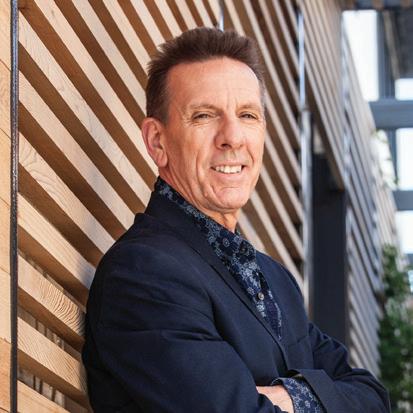
Richard Fisher on ... where the strongest ideas come from and the power of a good idea.
What’s one principle that has never failed you?
Know your audience. The strongest ideas come from listening, observing and understanding people. Their issues, concerns, motivations, dreams. When you take the time to truly know your audience, a better strategy and more compelling creative will almost always follow.
Looking back over the past 20 years, what lesson has stood the test of time?
Everything begins with an idea that is worth believing in. Technology can amplify a message and the media can extend its reach, but neither can compensate for a weak idea. Businesses that succeed over the long haul are usually the ones that build their brand and marketing around a clear, compelling idea that people can connect with and relate to.
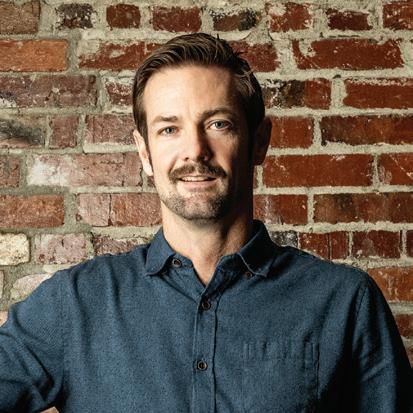
Scott Beatty on ... learning leadership lessons and what practice the next generation of leaders should incorporate.
What leadership lesson took you the longest to learn?
Have the awkward conversations early. If something is wrong, recognize it and deal with it right away.
What skill will matter most for the next generation of business leaders?
Cybersecurity practice. Leaders need to be clear about where they use AI, and where they don’t. AI deepfakes are going to inundate your business.
What has been the biggest driver of your success?
The alignment of passion, mission and people. I want to measure everything about the ocean, and nothing is going to stop me.
Andrew McLeod on ... the type of businesses people should pay attention to and common advice to ignore.

What opportunity do you think people are overlooking right now?
Buying boring businesses. Everyone wants to build the next unicorn. Meanwhile, there are thousands of profitable, founderowned companies quietly generating cash with owners ready to retire. It’s less glamorous than launching an AI startup, but it’s often a far better business. Sometimes the best opportunities don’t need inventing. They just need a new owner.
What’s one piece of conventional business advice you disagree with?
“Stay in your lane.” That’s great advice if your goal is to become exceptionally average. Most interesting companies are built by people wandering into industries they weren’t “qualified” to fix. Fresh eyes beat industry baggage more often than people admit.
About the interviewee:
Dionne Laslo-Baker is founder and CEO of Deebee’s Organics. Dionne has taken the Deebees brand from market startup to an international brand.
About the interviewee: Richard Fisher is the owner and managing director of Trapeze Communications. Richard has over 29 years’ experience in brand, design, web and digital marketing.
About the interviewee: Scott Beatty is the founder and CEO of MarineLabs. Scott is internationally recognized and has over 18 year’s experience in marine industrial and R&D sectors.
About the interviewee: Andrew McLeod is the CEO of Certn, a leading data company that specializes in background checks. Andrew is an angel investor and leadership advisor.
Jocelin Caldwell on ... the difference between being needed and being effective and what future business leaders need in their skill set.

What leadership lesson took you the longest to learn?
The leadership lesson that took me the longest to learn was that being needed is not the same as being effective. Early in my career, I built much of my identity around being the person who could solve problems. Over time, I learned that great leadership isn’t about having all the answers. It’s about creating the conditions for other people to have their own answers. The strongest leaders build trust, capability and ownership in others.
What skill will matter most for the next generation of business leaders?
Looking ahead, I think the most important skill for the next generation of business leaders will be the ability to have honest conversations. Technology will continue to change how work gets done, but it won’t replace the human ability to navigate conflict, build relationships and create trust. Leaders who can address difficult issues directly and respectfully will have a significant advantage.
About the interviewee:
Jocelin Caldwell is the CEO and owner of Reimagine Work. Jocelin has over 20 years of HR experience specializing in strategic HR and people operations.
John Wilson on ... what is needed to help support the business community.

Is the city doing enough to support the business community, and what is one thing local businesses can do to help themselves during this slower period?
There is always more that can be done to support business, especially around affordability, safety, permitting and access. Local businesses can help themselves by staying visible, telling their story and leaning into partnerships. This is a relationship-driven region, and businesses that stay connected tend to find new opportunities.
What opportunity do you think people are overlooking right now?
I think people are overlooking the opportunity to work together for real change. Businesses care deeply about their communities, and when business, government and community organizations align around practical solutions, we can make meaningful progress. We all want a vibrant, safe and successful region, and we get there by working together.
About the interviewee:
John Wilson is the CEO of the Greater Victoria Chamber of Commerce and is the president, board chair and owner of the Wilson’s Group of Companies.
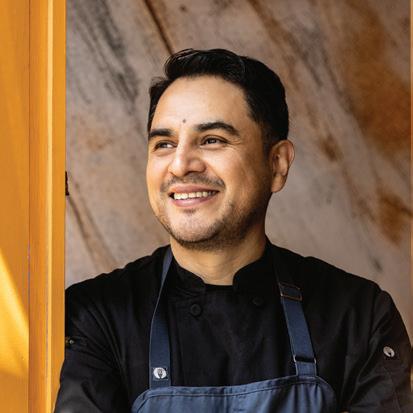
Israel Alvarez on ... what to protect in your business and what to stay committed to.
What’s the best business advice you’ve ever received?
Protect your identity before you protect your growth. Growth can be rebuilt; a strong identity creates lasting value, especially when pioneering something new.
What’s one principle that has never failed you?
Stay committed to the craft. Markets evolve, but authenticity, continuous improvement and respect for the process have never failed me.
What’s one piece of conventional business advice you disagree with?
“Always give the market what it asks for.” We saw an opportunity to redefine authenticity through Canadian-grown corn, trusting that quality and craftsmanship would create their own demand. We believed authentic flavours and craftsmanship could create their own audience, even when the market wasn’t yet asking for them.
Inderber Singh on ... the foundation of any business and what businesses should focus on most.

What is one decision you should have made sooner?
I would have invested earlier in combining people with technology. Strong personnel will always be the foundation, but technology allows us to support our teams better, giving them real-time information, better situational awareness and the ability to make faster, data-driven decisions. It creates a more coordinated, efficient operation for both our clients and our staff.
What has been the biggest driver of your success?
Our biggest driver has been staying focused on outcomes that matter, reducing risk, saving money and giving clients better visibility into their operations. Whether it’s a single storefront or a multi-location organization, we focus on delivering practical, intelligent solutions that actually work day to day. That means using what the client already has, simplifying where possible and improving where it counts, instead of overcomplicating things.
About the interviewee:
Israel Alvarez is the chef and owner of MAiiZ Nixtamal Gastroteca & Premium Tortilleria. Israel has made his brand part of the city’s culture by distributing his tortillas to top restaurants and grocery stores.
About the interviewee: Inderber Singh is the president and founder at Western Canada Security, a company that builds proactive security ecosystems to align with how businesses operate.
Robyn Skinner on ... the importance of personto-person engagement and supporting your core brand.
What opportunity do you think people are overlooking right now?
Great brands are not just built on Meta and TikTok using AIgenerated content. As digital tools take over the marketing world, we need to remember that in-person engagement, human-led creative and traditional media channels still matter. Brands need to engage with their community both online and offline around a strong purpose that consumers can rally behind.
What’s one piece of conventional business advice you disagree with?
Innovation is important, but shouldn’t be used exclusively as your annual growth strategy. It is key to first build and support your core brands before throwing more innovation into the mix. We often get caught up in needing to stay on trend with flavours, formats and new product styles, but ensuring your brands are being activated with purpose and proper reasons to believe will always lead to better growth than just throwing more “new” at the problem.
Tom Benson learning the difficult lessons and realistic advice for new entrepreneurs.
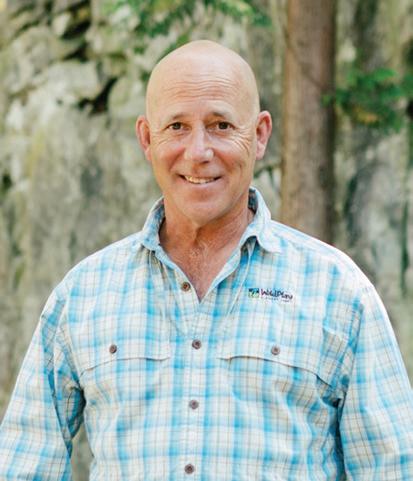
What’s one lesson you learned the hard way?
It’s important to trust, but you have to keep verifying. Trust in yourself. Trust in your team. Verify your assumptions or the ones that are presented to you. Be OK with changing course as a result. Get everyone OK with the fact that this is all just a sequence of experiments.
What advice would you give someone starting a business today?
Be very realistic about what you expect it to do. Understand that even with your realism, it is going to be considerably different than what you thought.
What is one decision you wish you had made sooner
There were so many times where something wasn’t working and I should have changed course decisively as soon as I suspected it versus waiting for the full confirmation.
Learn how to manage logistics and execution for a project of your own design. Camosun’s online certification program allows professionals with busy lives and full schedules to learn at their own pace — and it counts towards your PMP training requirement. Funding available for eligible learners. Learn more at camosun.ca/apm
About the interviewee:
Robyn Skinner is the marketing director at Phillips Brewing and a CPG product and brand strategist.


About the interviewee:
Tom Benson is the co-founder and chief experience officer of Wildplay Element Parks, renowned for using aerial courses, zip lines and bungee jumping to push people beyond their comfort zone in a controlled environment.
a career, a business or both, a new perspective, along with strategy and logic, can help shape the decisions that matter the most.
Upcoming Info Sessions Aug 20, 2026 Nov 19, 2026 Feb 25, 2027
Greater Victoria’s postsecondary institutions link classroom theory to real-world success in nurturing young entrepreneurs.
BY JULIEN JOHNSTON-BREW


All business owners begin their journey with much to learn about starting and running a successful enterprise, but moving beyond initial research into actually implementing effective practices is rarely a straightforward path. Many organizations throughout Greater Victoria provide support for local businesses, including the Downtown Business Association, the South Island Prosperity Partnership, the Greater Victoria Chamber of Commerce, Destination Greater Victoria, Think Local First and the City of Victoria’s Business Hub, to name a few.
While community organizations provide networking and advocacy support, many entrepreneurs first encounter structured business education through post-secondary institutions.
These institutions provide an abundance of resources for emerging entrepreneurs, especially those still in the development phase of their journey. Throughout the years, these institutions have proven to be valuable launching points for business leaders in a variety of industries across the Island.
Building a Solid Foundation
Camosun College is one example of how post-secondary institutions in Victoria support first-time entrepreneurs through practical, skills-based learning. It offers resources to support those looking to enhance their professional tool kit, many of which are found in the School of Trades, Industry and Professional Studies (TIPS). “We have industry-led or professional development training that is needed by the public, so shortterm training, which is often evenings and weekends so it can fit around a flexible schedule,” says Sarah-Jayne McAndrew, TIPS’s trades development and special projects development co-ordinator. One of these training opportunities is the college’s Become a Small Business Owner MicroCredential.
As an entrepreneur you touch every aspect of the





Once you finish this [program], you’ve got to be very selfmotivated.”

The credential, which ran for the first time from February to May of this year, was taught by Jerry Garcia, a managing partner for business management consultant Accenture for 20 years. “By the end of the three months, it’s amazing the change [students] went through,” says Garcia. “From people that were, ‘I have no confidence in how to start a business, I don’t know my way around any of this,’ to now, ‘we have the confidence to actually go and start a business,’ which was awesome.”
The credential covers how to start and operate a business, manage financials and human resources as well as communicate effectively in a professional setting, which culminates in a final project where students pitch their business plan to the rest of the class as though applying for funding. “It took me four months to write the course, pretty much working every day,” says Garcia, who drew upon 40 years of his own entrepreneurial experience, including starting several businesses that have been both sold and are ongoing. He also made sure to include material that specifically applied to B.C. enterprises so students were best prepared to establish themselves locally.
“To do that yourself, not knowing business, would probably take a year or years, and you’re never going to be, probably, as comprehensive as if you lay out a curriculum,” he says.
One of Garcia’s students, Sara LloydWalters, had taken the British Columbia Institute of Technology’s interior design program and begun her interior design business, Nutkana Interiors, prior to enrolling in the Become a Small Business Owner Micro-Credential. However, LloydWalters wondered how she would continue to find jobs going forward. “If you’re going to take dental hygiene, you complete it and you kind of have a job there waiting for you, you know what I mean? Once you finish this [program], you’ve got to be very self-motivated,” she says.
“Right from the beginning of class, I’m like, OK, this is the best decision,’ ” adds Lloyd-Walters, noting that Garcia came across more as a mentor than a lecturer. “He was able to give lots of stories of his own experience, which is really nice because we can relate a little bit better, or he’s not just sort of telling us, ‘Do this, do that.’ It’s like, ‘No, I’ve tried this before, I’ve tried that before,’ so he’s able to give practical knowledge.”
While programs such as Camosun’s microcredential focus on building foundational business skills, other institutions offer longer-term pathways for aspiring entrepreneurs.
Royal Roads University predominantly offers post-graduate accreditation, giving the campus a more “mature” feel according to alumni, but there are a few undergraduate choices for those with limited prior academic experience. The university also has a flexible admission policy, so working professionals can enrol by having lived experiences, such as volunteer work, training, military service and travel, evaluated for program qualification. One of RRU’s three undergraduate business programs is the singular bachelor of commerce, which hones in on entrepreneurial management.
“I became a professor of entrepreneurship so that I could help students follow their dreams and manifest whatever vision they had for a new organization that they were going to build,” says Geoff Archer, the bachelor of commerce’s program head. “I had been teaching at U.S. universities with hundreds of students in each class where I’m up on stage and I’m speaking out to a great auditorium of 300, and I can’t possibly know their names, know their
stories.” Archer was especially keen about the prospect of RRU’s smaller class sizes since they allowed him to get to know his students, name and all, and connect each with prominent business people, alumni and others with experiences that could benefit the students.
One such former student is from the latest batch of Douglas 10 to Watch Award winners — Jeff Wright, cofounder of Fizz Non-Alc Bottle Shop. “I knew I wanted to go back to school. I already had a marketing diploma from Kwantlen [Polytechnic University], and knew I wanted to extend and get a full degree,” says Wright. “I saw the Royal Roads program and I was like, ‘This is perfect.’ It’s all entrepreneurial, which is more of my interest.”
At the time, Wright wasn’t yet an entrepreneur, but had been dreaming about starting a business since high school. “It was always something that I thought I would really enjoy … the idea of bringing something to life and managing all aspects, and the idea of being able to create my own destiny in a way,” he says. “As an entrepreneur you touch every aspect of the business, especially in the early stages, and that’s something that excites me.”
To complete his degree, Wright had to create a business plan as a capstone project, which was its own dedicated course. “They did a good job of bringing in many of the different learnings that we had, whether that was from accounting through to venture feasibility through to marketing, and applying all of those different aspects,” he says.
Now, more than 10 years after graduating with his bachelor of commerce degree, Wright visits RRU classrooms to provide feedback on students’ work as a local professional who has worked in senior management positions and cofounded his own business. “It’s cool when people are working on projects when their goal is to actually implement those projects, because you can see the passion, right?” he says. “Early feedback on some of these plans is important, and there’s varying levels of detail and business plan development in these presentations. For the people that really care and that want to do it, that feedback is vital.”
Many entrepreneurship programs build toward business plans and presentations,

CALL THE WILDMAN GROUP


TheWildmanGroupguidedus throughboththesellingand purchaseofourhomewitha knowledgeable,attentiveandfriendly team.We felt confident we were in theverybestofhandsthroughout theentireprocess.”
– S. Taylor




but some students have the opportunity to take their ideas even further.
The University of Victoria’s Peter B. Gustavson School of Business (named after the Canadian entrepreneur who donated to the business faculty) has more than 8,800 alumni from its various undergraduate and graduate programs, as well as an entrepreneurship minor to add alongside other studies. UVic also offers a hands-on education program known as a co-op, which places students across various fields with employers to develop first-hand work experience while enrolled in university. One such field of focus is entrepreneurship itself.
“It’s one thing to be in a classroom learning about things and going, ‘Well, I think this could be a thing and I think this is my customer and I think it would make money this way,’ ” says Mia Maki, an associate teaching professor for the Gustavson School of Business, who notes that the program allows students to implement their business plans and develop novel prototypes. “You can see that people actually aren’t just telling you it’s a good thing, they actually would pay for what it is that you’re developing. You can actually deliver what you say you’re developing as well to a point where they are satisfied with it and are willing to pay.”
As part of his software engineering studies, UVic alumnus Toby Murray was required to complete a co-op, which he saw as an opportunity to work on a sci-fi action video game he’d been developing with a fellow student from UVic’s game club. “I found out that I could actually do an entrepreneurial co-op so I could get school credit for doing work full-time on my project.”
As part of the co-op, Murray and his colleague cofounded Xylem Studios to launch a demo of the game, RAM: Random Access Mayhem, which went on to win the audience choice award at the 2024 Independent Games Festival. Murray had also won the PitchIt and PlanIt competitions from the Coast Capital Innovation Centre (now known as the UVic Innovation Centre), the Coast Capital Entrepreneur Award and the Engineering and Computer Science Co-op Student of the Year award, all in 2023. RAM officially launched in September 2025 and currently has an all-time rating of 98 per cent positive reviews.
Murray has since graduated from UVic and cofounded another game studio,
I found out that I could actually do an entrepreneurial co-op so I could get school credit for doing work full-time on my project.”

Friend Shaped Games (formerly Secret Plan Games), which released its first game in April 2026: a co-operative bird-watching simulator called Flock Around, which has been downloaded over 10 times more than RAM’s final release. “So far we’ve found a lot of success with [Flock Around], and it’s been taking a lot of the learnings from RAM,” he says.
Murray’s experience echoes that of other entrepreneurs — no one business person has a linear path of establishing themself perfectly from the start. But postsecondary institutions have the benefit of combining foundational skills, mentorship and real-world application with an inherent cluster of like-minded peers also hoping to succeed, both in a given course and beyond.
“We’ve got these budding entrepreneurs,” says Camosun’s Garcia. “How do we continue to expand that network of advisers to help them succeed, because then we all succeed, right? We bring in money to the community, we deal with business closures because we won’t have empty storefronts. All the things that we complain about in Victoria, the business community can help to address by making sure that new businesses are better equipped to succeed.”

Discover the people and principles behind some of the Island’s most respected and reliable businesses.
Behind every enduring business is a story of persistence, adaptation and a clear commitment to doing things well. The following pages highlight local companies that have reached meaningful milestones not just in years, but in the trust they’ve built and the standards they’ve set along the way.
From newer ventures gaining impressive momentum to long-established names woven into the fabric of the community, each profile here offers a closer look at what makes these businesses stand out. Their insights, experiences and continued evolution reflect a shared dedication to quality and service that resonates with customers year after year.
Nobody calls a mover because life is standing still.
People call when something is changing. A family has sold the house where the pencil marks are still on the door frame. A senior is leaving a home that knows every holiday and every goodbye. Adult children are helping parents make a decision no one feels ready for. A business owner is trying to move without losing momentum. An institution protects objects that belong not just to a building but to a community.
These are the brave ones. Stocker’s exists for them.
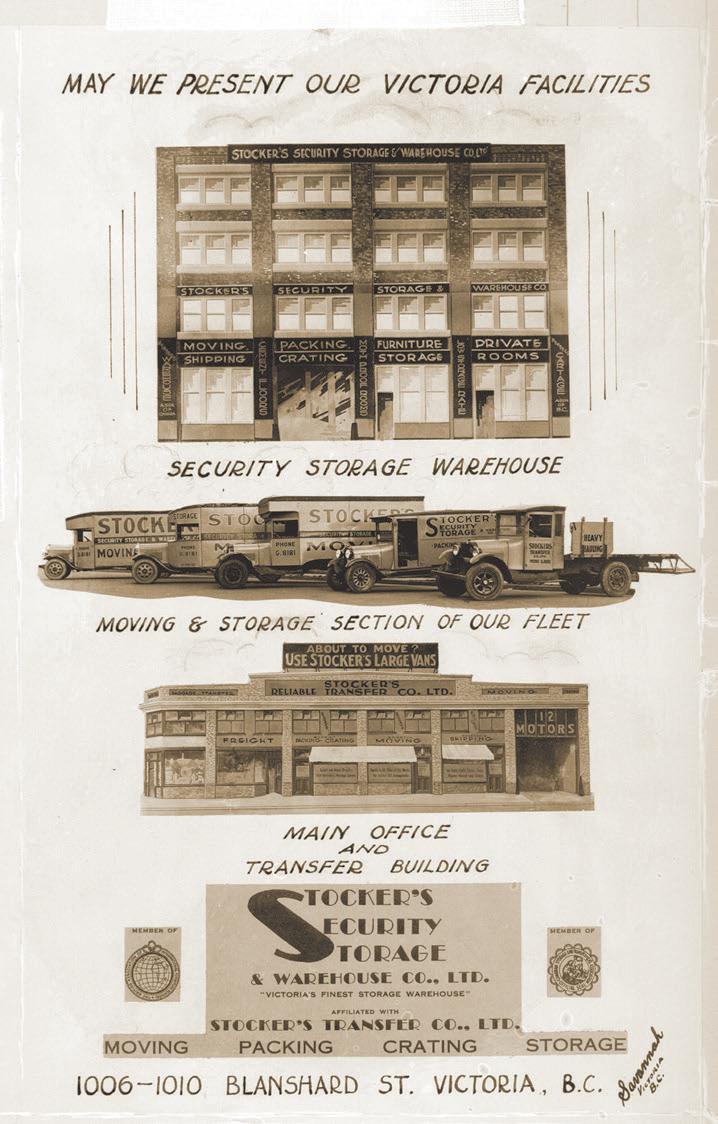
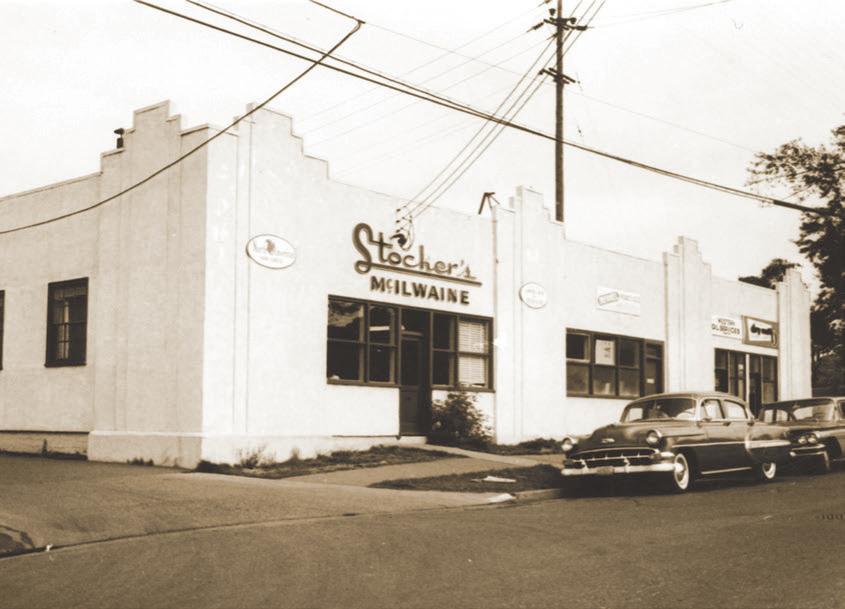
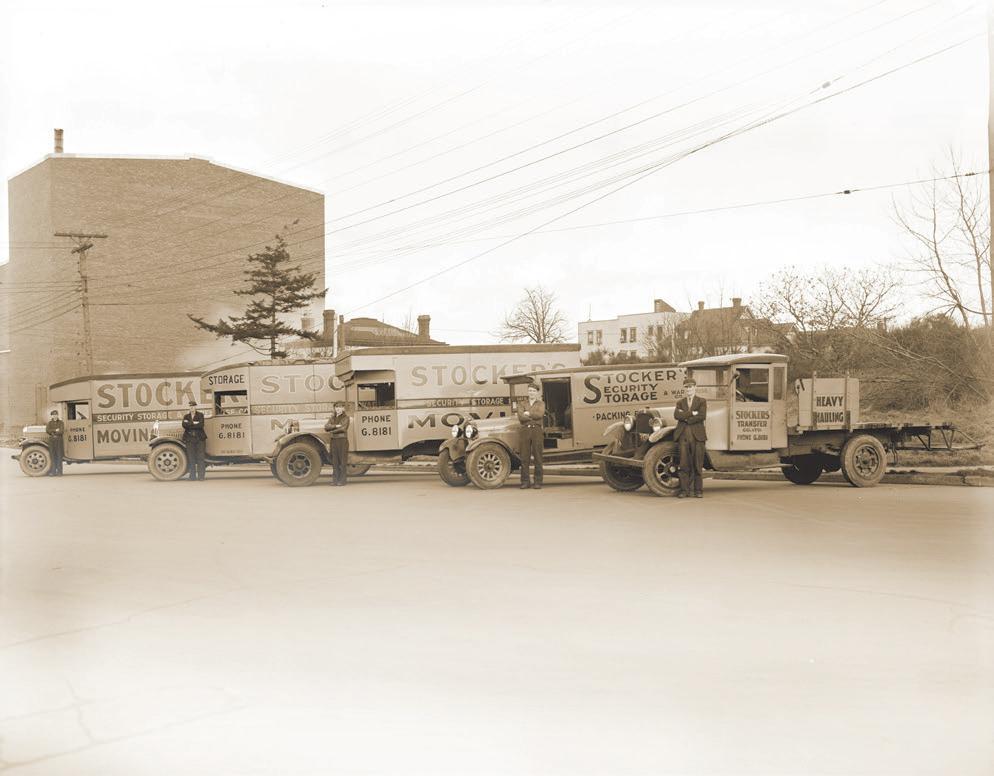
That is the real story behind a Victoria company whose service history reaches back to 1911. Stocker’s began close to the Inner Harbour, when the city moved by ship, rail, horse and early truck more than by highway. Moving required planning, packing, strong crates, careful storage and people who knew how to get goods safely
from one place to another.
Stocker’s built its name doing that work for a growing city: goods for merchants, belongings for Navy families posted away from Esquimalt and supplies for offices, courts, government departments, institutions and households. Whether it was a business shipment, a military posting or a family’s belongings, the responsibility was the same: protect what mattered and get it there properly.
That was Stocker’s early contribution to Victoria: not just transportation, but trust in motion.
As Victoria changed, so did the work. Rail and harbour-based movement gave way to trucking. Swartz Bay ferry access and expanding roads changed how goods and households moved. Stocker’s adapted because clients still needed reliability when timing, belongings and peace of mind were at stake.
The company’s history shows its values in
“Every brave move deserves the insight to understand, the care to do it right and the calm confidence to carry it forward safely.”
— Peter van den Berg, owner
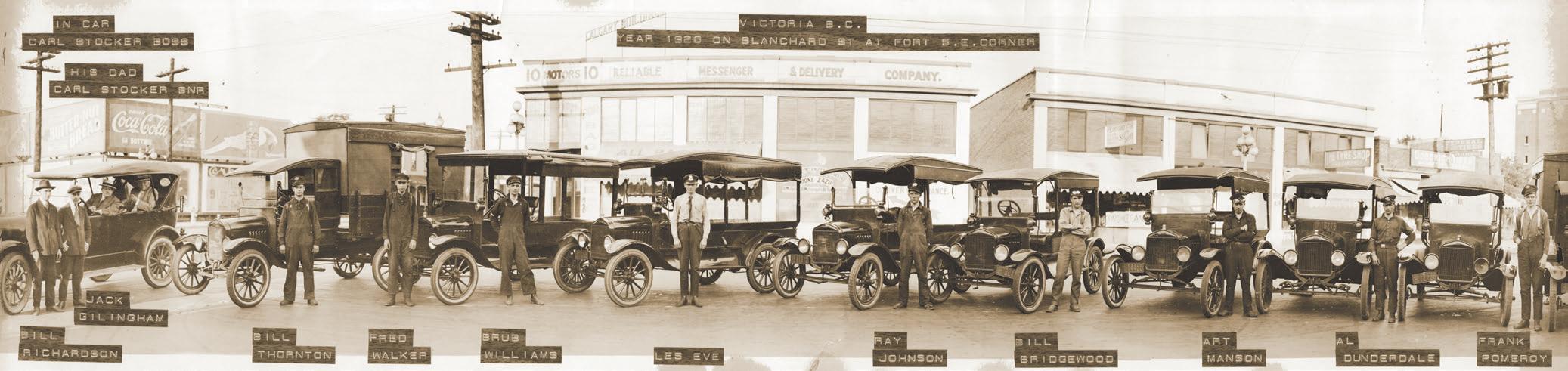
action. Stocker’s handled Navy and government moves when families were posted across the country. It carried mail, parcels, documents and freight for organizations that could not simply hope things arrived. It was warehoused and delivered to retailers and businesses whose customers depended on them. Later, it supported household moves, deliveries, commercial projects and institutional work where careful handling mattered more than speed alone.
Those same values connect Stocker’s past to its present leadership. In 2018, ownership changed, and Peter van den Berg brought with him the perspective of a fourth-generation mover from the Netherlands. He grew up understanding that moving is not a commodity when done properly.
A mover enters private homes, sees people under pressure and handles belongings that often carry more meaning than market value. Strength matters, but trust matters more. That
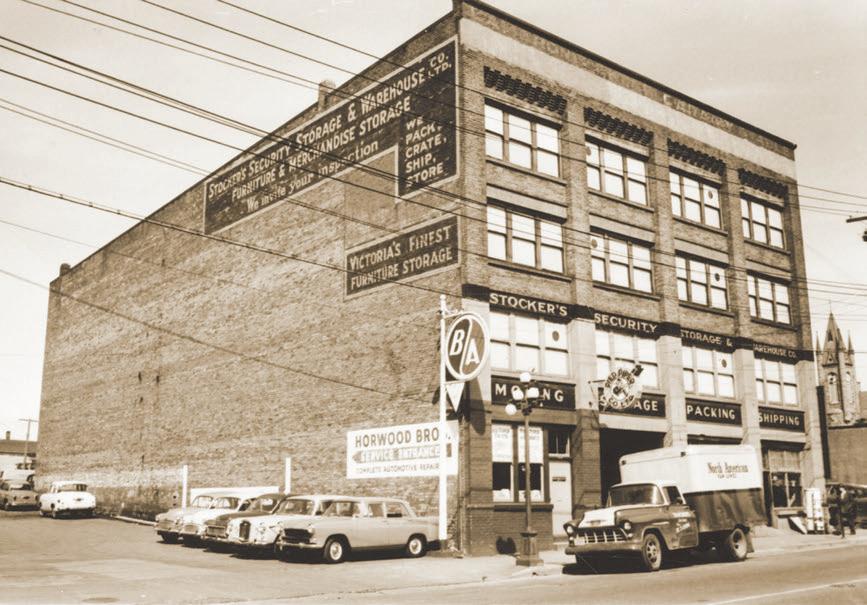
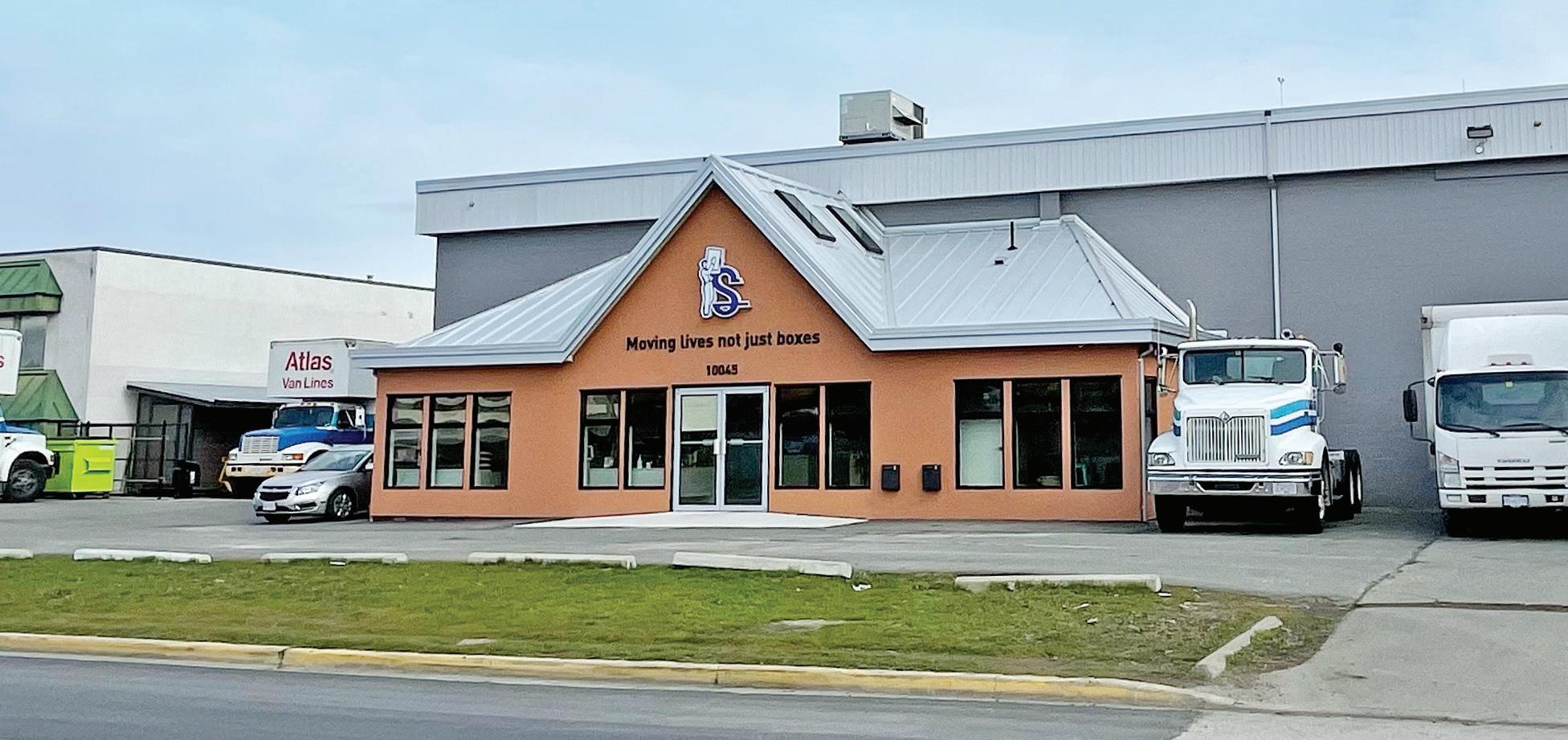
5.
7.
Co., 1920.
belief aligns naturally with Stocker’s because the company was never really about boxes. Boxes are only the container, but the real work is understanding the life inside them.
Today, Stocker’s says it simply: Moving lives, not just boxes. How does that belief become service? It starts by asking better questions. Not only: What is the address? How many rooms? What is the date? The better question is: Why does this move matter? Is this an exciting beginning, a difficult ending, a business risk, a family responsibility, a posting, a loss or a fresh start? When Stocker’s understands the real reason behind the move, the estimate becomes more than a number, the plan becomes more than a schedule and the crew becomes more than labour.
Care is preparation: a protected doorway, a labelled carton, a calm dispatcher, a careful packer, a crew that communicates and leadership that knows the cheapest move is rarely the best value when a life is in transition. One recent example is packing, storing and returning the contents of Government House during renovation, reflecting the same promise Stocker’s has carried since its earliest days: when something matters, it deserves care.
Stocker’s still exists because Victoria continues to move. Families change homes. Seniors make brave transitions. Businesses take risks. Government and military members relocate. Institutions protect shared history. People step into unknown chapters and need someone steady beside them.
From Sidney, near the Swartz Bay transportation hub connecting the Island to the mainland, Stocker’s Premiere Van Lines provides local, national, cross-border and international moving, packing and crating, storage, warehousing, commercial and institutional relocation, custom in-home delivery and specialized logistics.
A company can survive 115 years only if each generation finds a reason to trust it again. For Stocker’s, that reason has never been low price or loud promises. It has been care, clarity, calm and the willingness to treat each move as personal to the person living it.
So the question for the reader is not “Who has the biggest truck?” The question is closer to home:
When your next move carries more than just boxes, who’s earned the trust to carry what matters to you?
1911–1948 Stocker’s begins near Victoria’s Inner Harbour, serving a growing port city through packing, crating, storage and shipping. From its early locations on Johnson and Wharf streets, the company supports merchants such as The Hudson’s Bay Company and Navy families relocating to and from Esquimalt.
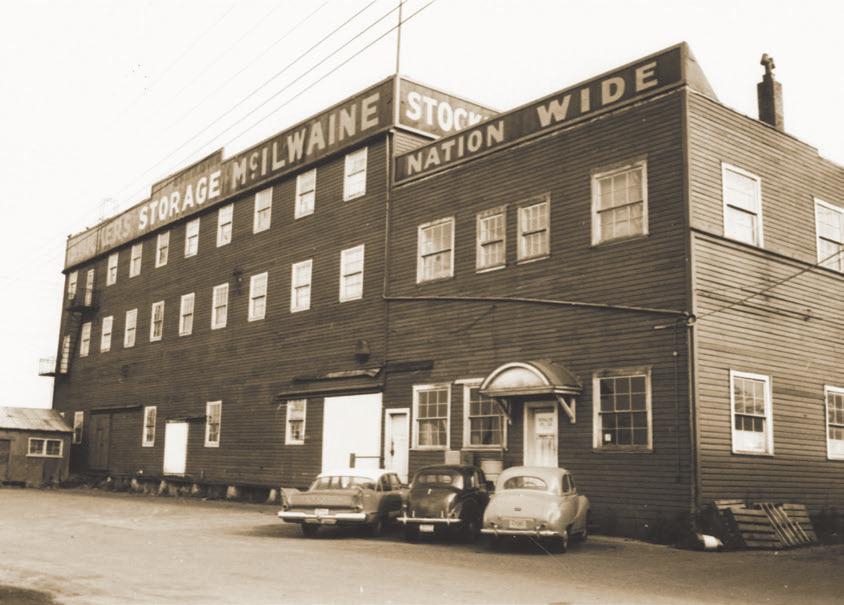
1948 Founder Carl Stocker dies shortly after the foundation of the new warehouse on Government Street was completed. The business is sold to William S. Richardson, beginning a major period of growth.
1950s Under Richardson, Stocker’s expands into Royal Mail delivery up Island by rail, courier services, government freight and household moving. Stocker’s becomes Victoria’s most trusted government-approved mover.
1960s Transportation shifts as Highway 17 and Swartz Bay ferry access make trucking faster and more practical. Stocker’s adapts from railand-harbour logistics into modern truck-based transportation.
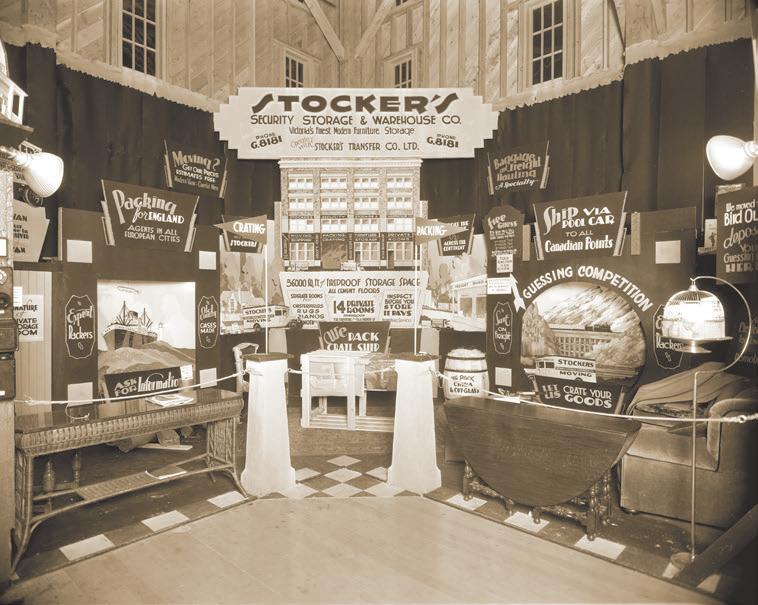
1970s–1990s Stocker’s diversifies into warehousing, retail delivery, such as Woodward’s and Core-Mark, and in-home delivery contracts with Sears, Standard Furniture and other major brands, while continuing government and private relocations, local, national and international.
1998–2006 Stocker’s enters a new ownership era, changes Van Lines affiliation, and acquires the Premiere Van Lines Victoria franchise, connecting its Victoria legacy to a coast-tocoast-to-coast moving network.
2013–2018 As retail warehousing and delivery change, Stocker’s rightsizes and refocuses on core strengths: government and private relocations — local, national and international; storage; high-end custom home delivery; and special products logistics.
2018–Present Peter becomes the owner and reintroduces the Stocker’s name more clearly as Stocker’s Premiere Van Lines. The company returns to its roots — packing, crating, storage, moving and specialized logistics — with the modern promise: Moving lives, not just boxes.
10045 MCDONALD PARK ROAD, SIDNEY 250-544-1420 | victoria@pvlmoving.com
Today From Sidney, the Swartz Bay transportation hub, Stocker’s serves families, seniors, businesses, the provincial and federal governments through moving, storage, custom home delivery and specialized projects, including Government House and provincial historical collection work.
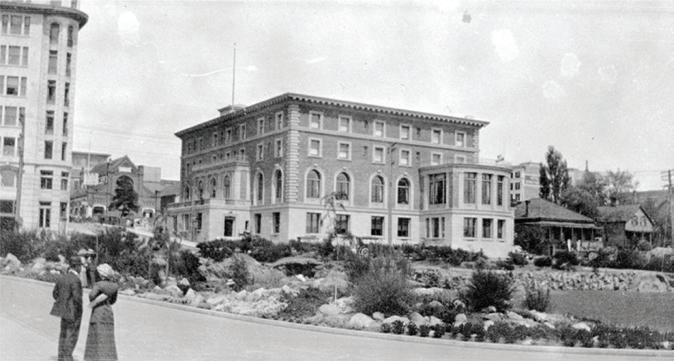
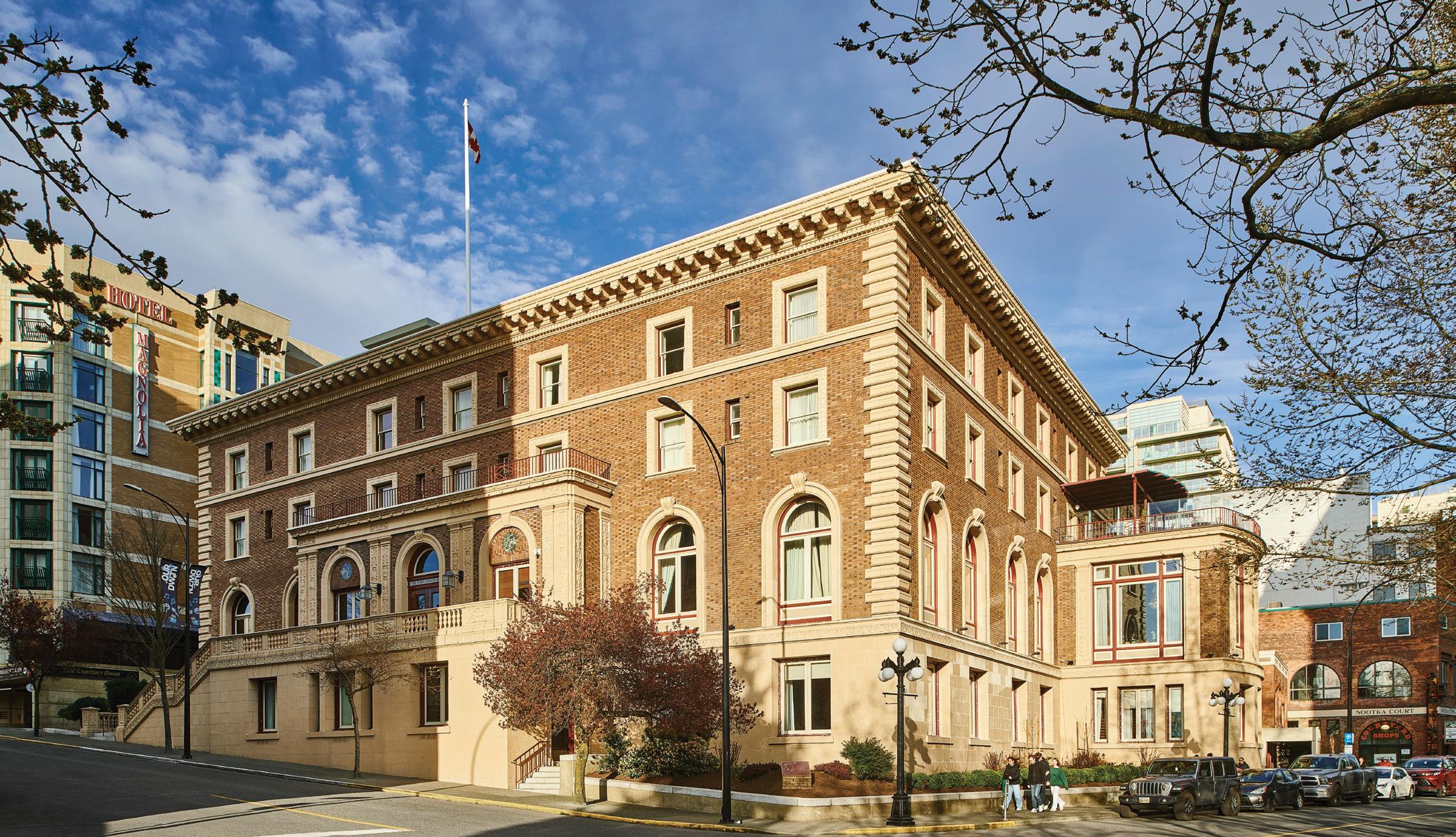
“The 28th day of February, 1908, is a marked day in the calendar of the Union Club of British Columbia. Nothing short of superlatives can adequately describe the event – the first ball given by that exclusive Club.”
— Victoria Daily Times, Saturday, February 29, 1908
More than a century later, superlatives are still being used to describe the Club’s inclusive, welcoming community that embraces its traditional roots while staying relevant in an ever-evolving city.
The Union Club’s legacy in Victoria dates back to 1879, when its founders first met in a little room above a butcher shop on the corner of Yates and Douglas streets. Five years later, they’d moved into a new building downtown, which served them well until the current clubhouse was
built. The building we know today on Gordon Street opened its doors in 1913, celebrating with a Grand Ball.
Today, the Club’s members come from around the world, though most are local to the South Island. What draws them? The building itself, for starters. Where else can you make yourself at home inside a Beaux-Arts landmark recognized as a National Historic Site?
There’s also gourmet dining, a lively events calendar (including the annual ball), a rooftop dining terrace, a private library and gym plus rare amenities like the Billiard Room.
But mostly, it’s the people. “The culture and community here have brought us immense richness and value,” says longtime member Jessica, who has been coming to the Club since childhood. Here, she has blossomed in ways that extend far beyond the Club. “My boyfriend and I often spend our Saturdays here in the most
“The culture and community here have brought us immense richness and value ... We consider this an extension of our home and an important part of our story.”
— Jessica, Club member
147 YEARS IN BUSINESS
beautiful library in the city,” Jessica says. “We attend events, book Friday dinners, and visit for tea. We use reciprocal clubs all over the world. We consider this an extension of our home and an important part of our story.”
Which is exactly how the Union Club has and always will evolve and grow over time: through the personalities, ideas and values of its diverse members and the community they build together.
If you have ever been curious about what membership could mean for you, why not visit the Club and see for yourself?
As Jessica says, “Membership here could change your life, as it did mine.”
How is that for legacy?
To book a tour or inquire about membership, contact Sales and Engagement Manager Victoria Zsombor at sales@unionclub.com or call (250) 384-1151 ext. 320.


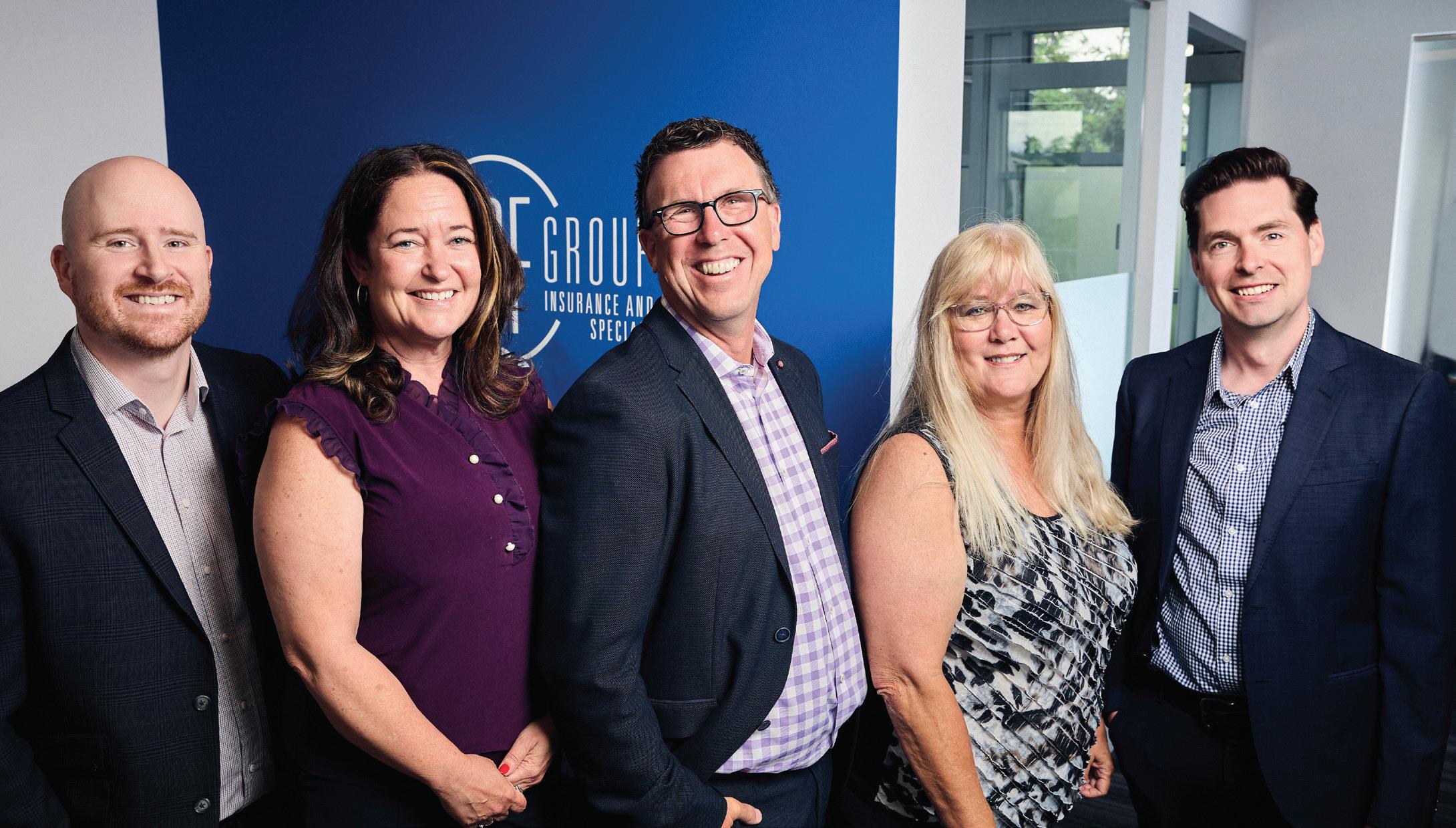
RDF Group Insurance and Benefits Specialists’ roots trace back to two respected industry leaders. Ryan Davies, president, began his career in financial services in 1995 with one of Canada’s “Big Three” insurance companies, spending 24 years in sales leadership roles before founding RDF Group. Rob Jack has been in financial services since 1981 and had established Jack Insurance in Victoria in 1993. In 2019 they partnered to create RDF Group because they knew how much business owners on Vancouver Island value working with people who understand their community and they wanted to build a business around genuine, local relationships with a focus on the company’s own areas of expertise.
Since then, RDF Group has grown into one of the largest insurance and benefits brokerage firms on the Island, offering group
benefits and pensions along with individual and corporate insurance solutions to clients ranging from sole proprietors to organizations with hundreds of employees. As the exclusive advisor for Chambers Plan employee benefits, and with partnerships across all major benefit plan providers, RDF Group takes a personalized approach to every client relationship, taking the time to listen and understand each business’s unique needs before designing a package that is efficient, effective and built to last. As Ryan puts it, “Quality looks like a business owner shaking our hand and saying ‘thanks for all the help’.”
That simple measure of success has guided the firm’s growth, with business expected to triple by the end of this year compared to 2019.
Above all, RDF Group is built on people who care. Says Ryan, “We make sure our quality of service remains consistent by ensuring that each member of the team has the right fit, talent, and
“The strongest relationships are built by understanding what matters most, listening carefully, and showing up consistently. Trust isn’t earned through promises, but through actions over time.”
— Ryan Davies, president
7 YEARS IN BUSINESS
skill-set. If it takes us a few extra months to find the right person, it’s worth it. Clients have also commented on how nice it is to call in and have an actual person answer the phone or email back, instead of a chat-bot! People appreciate the little things, and having a real person answer the phone and genuinely try to help is huge.”
If you’re a business owner on Vancouver Island looking for insurance and benefits advice from a team that treats your priorities as their own, RDF Group welcomes the chance to connect and show you what personal service really means.

35 YEARS IN BUSINESS
VIATEC has been part of Victoria’s story since 1991, when a community of technologists and entrepreneurs who had been gathering informally for a couple of years registered as a society to give the region’s young tech sector a place to meet, learn and grow. Thirty-five years later, that founding idea still holds. VIATEC exists to serve its community, and that community decides where it goes.
That community has never been one kind of company. The region’s tech sector spans ocean and marine technology, life sciences and health, cleantech, video games, software, hardware and advanced manufacturing, alongside the firms that support all of them. VIATEC was built for the whole of it, and it shows up the same way for a marine robotics startup as it does for a games studio or a medical device company. Across every category the work is the same: connect the right people, open the right doors and help good
companies find their footing close to home.
The industry has reinvented itself many times over these decades and so have the companies inside it. Through every shift, VIATEC stayed steady by staying close to its members. Rather than chase trends, it listened to the people building companies in Victoria and asked what they actually needed. The answer changed often, and it was never the same for any two firms. The commitment to ask did not change.
That community-driven mandate has produced something durable. Today the region’s technology sector earns $5.9 billion in annual revenue, much of it from customers outside the region, dollars that flow back home and fuel the local economy. Its total economic impact reaches $7.9 billion, spread across 20,007 people and 1,172 companies. Behind those figures are founders, engineers, designers and operators who found their footing here and chose to stay.
VIATEC’s role has always been to connect
“Across every category the work is the same: connect the right people, open the right doors and help good companies find their footing close to home.”
— Dan Gunn, CEO, VIATEC
people rather than to take the spotlight. It runs programs and initiatives like BOOST to help growing companies scale, hosts the annual VIATEC Awards celebration that brings the whole ecosystem together and operates Fort Tectoria as a home base where the community can meet across every sub-sector the region has to offer. What endures is the network itself – thousands of people who know they can reach someone who will help. After 35 years, that network is VIATEC’s real legacy.


Visitors in A View From Here: Reimagining the AGGV Collections at the AGGV.

75 YEARS IN BUSINESS
For more than three-quarters of a century, the Art Gallery of Greater Victoria has been more than a place to view art. It has been a gathering place, a classroom, a catalyst for conversation and creativity, and a welcoming space where people of all ages can connect through shared experiences.
In the past year alone, more than 51,000 visitors walked through the Gallery’s doors, while thousands more participated in public programs, school tours, studio classes, Family Sundays and the beloved Art Gallery Paint-In, which draws more than 50,000 people to Moss Street every July. Together, these experiences demonstrate the Gallery’s unique role in bringing people together through art.
Through exhibitions that explore history, identity and culture, the AGGV creates
opportunities for reflection and dialogue. At the same time, the Gallery continues to nurture creativity in future generations. New school programs, youth initiatives such as the BIPOC Teen Art Residency, and hands-on learning opportunities through the AGGV Studio ensure that art remains accessible, relevant and inspiring. The Gallery’s free admission for visitors 25 and under and free Thursday evenings for the public are helping to remove barriers and welcome new audiences to discover the transformative power of art.The AGGV also has one of B.C.’s most significant public collections. With more than 22,000 works spanning cultures, histories and artistic traditions.
Looking ahead, the Gallery continues to advance plans for a new downtown Victoria home that would expand its ability to serve the
“Sustaining a Gallery requires a team dedicated to its vision. True leadership means listening to the community, embracing creative risk, and ensuring the Gallery remains a welcoming, accessible and evolving space where everyone can experience the power of art.”
— Nancy Noble, AGGV Director & CEO
community for generations to come. Yet even as it imagines its future, the AGGV remains grounded in what has always mattered most: creating meaningful experiences that connect people through art.
Today, visitors can experience the Gallery’s permanent exhibition, A View From Here: Reimagining the AGGV Collections, alongside a dynamic lineup of temporary exhibitions and public programs that continue to make the AGGV one of Victoria’s most vibrant cultural destinations.
The Art Gallery of Greater Victoria sits on the unceded and traditional territories of the Ləkwəŋən peoples, today known as the Xwsepsəm and Songhees Nations. We extend our appreciation for the opportunity to live and learn on this territory.

Every day, people in Greater Victoria criss-cross municipal boundaries. They may live in Sidney, work in Victoria, shop in Saanich, meet clients in Esquimalt and hike in Sooke. Investors see the region the same way, long before they see individual municipalities.
Greater Victoria’s economy may have always worked that way, but its economic development did not. A decade ago, no single organization championed and co-ordinated economic development on a regional level; instead, each municipality pursued its own path. But when our economy lagged behind the rest of Canada after the 2008/09 financial crisis, business and community leaders took action, forming an alliance to advance regional prosperity.
South Island Prosperity Partnership launched in 2016 with 29 founding partners: local governments, First Nations, major employers, post-secondaries and nonprofits.
Today, SIPP brings together more than
“Regions
70 partners to sustainably grow the region’s economy, attract investment and create jobs. That collaborative model repeatedly proves its value.
When the pandemic hit, SIPP led Canada’s most comprehensive non-government economic coalition, transforming crisis into a regional recovery plan. This gave rise to COAST, SIPP’s ocean innovation and commercialization cluster, making Greater Victoria’s ocean economy a national leader. In the last year alone, COAST programs have generated $3.7 million in new sales and revenue, catalyzed by a $5-million seed investment from federal and provincial programs, helping create 526 jobs.
COAST also launched Canada’s first dedicated ocean tech accelerator and partnered with UVic to launch the BC Marine Energy and Decarbonization Hub in North Saanich to test and commercialize marine energy technologies.
This impact extends to SIPP’s award-winning Victoria Rising digital platform, which markets the region to attract investors and talent,
that thrive in the future won’t be the biggest. They’ll be the most co-ordinated, collaborative, agile and determined. While there are challenges ahead for Greater Victoria, those challenges are manageable when we lean in together. The best is still to come.”
— Aaron Stone, CEO, South Island Prosperity Partnership
including doctors. SIPP is helping build an inclusive economy through the Indigenous Prosperity Centre, which hosts the Indigenous Youth Conference and Blue Economy Daycamp. In 2025, SIPP’s model proved itself again as U.S. trade threats rattled markets. SIPP convened the Rising Economy Taskforce, creating an actionable blueprint for all levels of government and the region’s business and nonprofit sectors. This informed the creation of Rising Economy 2030, the new five-year economic plan to guide our region through turbulent times.
Every dollar municipalities invest in SIPP has been leveraged by an additional $1.63 in provincial, federal and private funding to benefit the region. This year, the International Economic Development Council ranked SIPP among the world’s top three leading economic development organizations. It’s proof that Greater Victoria’s biggest wins happen when we all work together.

The Class of 2026 Prefects, pictured with CEO and Head of School Sara Blair, cap off a record-breaking year of scholarships and awards.
If there was ever a moment when girls needed schools built for them, it’s now.
And for nearly 120 years, St. Margaret’s School (SMS) has been doing exactly that — empowering girls with the confidence, courage and global perspective they need to lead in a world that is changing faster than ever.
grace in a world finally recognizing the strength of female leadership.”
118
YEARS IN EDUCATION

From a handful of students in a small house on Cook Street in 1908 to more than 320 girls learning and leading in Saanich today, SMS has remained anchored in one purpose: empowering girls through exceptional education. Today, girls aren’t just asking for a seat at the table - they’re rebuilding it entirely, with more room, more courage and more possibility.
Sara Blair, CEO and head of school says, “For generations, we prepared girls to lead within traditional structures. Today, we are developing girls who take bold risks with grit and lead with
At SMS, academic excellence means more than high achievement - it means cultivating thinkers who ask better questions, analyze deeply and approach complex problems with curiosity and confidence. Research is clear: girls take more healthy risks in an all-girl environment. Those risks — intellectual, social, emotional — are exactly what propel them to the top of their chosen fields.
And in a world that feels increasingly divided, global citizenship is essential. SMS is where girls learn to collaborate across differences, engage in courageous conversations and develop compassion and empathy for a complex world. These aren’t just skills — they’re leadership imperatives.
“We’re building real confidence — the kind that holds firm when the world feels
“Investing in girls is investing in communities; the way girls lead shapes families, strengthens communities and inspires progress, creating a ripple effect of courage and impact felt for generations.”
— Sara Blair, CEO and Head of School
unpredictable,” Blair says. “We’re strengthening voices that don’t wait for permission, and we’re developing the leaders this world is going to need a lot more of. And we’re doing it right here on Vancouver Island.”
With a legacy of educating girls from around the world, SMS is expanding opportunities even further. The philanthropic Global Scholars Program, launched in 2022, has already brought 14 girls to campus from countries including Afghanistan, Palestine and Nigeria. And in 2027, SMS will host a Global Girls Leadership Summit, welcoming girls from public and independent schools across B.C. and Canada - a national stage for the next generation of female leaders.
“We know that investing in girls is investing in communities,” Blair concludes.“ Our vision is that every girl has access to an education that prepares her to lead on the global stage — because the impact will be felt for generations.”


70 YEARS IN BUSINESS
For 70 years, CHEK has been more than a television station. It has been a trusted companion to Vancouver Island families through seven generations, documenting the moments that have shaped our communities while earning a place in them. From breaking news and election nights to celebrations, tragedies and everyday stories that matter, CHEK has remained committed to one simple purpose: serving local people with journalism they can trust.
That commitment was put to its greatest test in 2009. During the global recession, CHEK’s former owner announced plans to close the station, ending a legacy that had informed Islanders for decades. Instead, something extraordinary happened. Employees refused
to let local television disappear. Backed by community investors, supported by the union and embraced by viewers who believed Vancouver Island deserved its own independent voice, CHEK became North America’s only employee-owned television station.
That defining moment continues to shape who we are today. Employee ownership means the people producing the news, telling local stories and serving our audiences have a direct stake in the station’s future. Every broadcast reflects the same belief that saved CHEK: local journalism matters because local communities matter.
Over seven decades, technology, viewing habits and the media landscape have changed dramatically. Our mission has not. We continue to deliver trusted local news and community
“Employee ownership isn’t just our business model — it’s our daily commitment to the community we serve.”
programming across television, digital, streaming and social platforms, ensuring Islanders stay connected wherever they are.
CHEK’s greatest achievement isn’t simply longevity — it’s the trust built over 70 years of showing up, day after day, for the communities we serve. That trust is earned through accountability, independence and a deep understanding that every story has the power to inform, unite and strengthen our region.
As Douglas magazine celebrates its 20th anniversary, CHEK proudly celebrates 70 years of serving Vancouver Island. Our story is one of resilience, community and purpose. It is proof that when people come together to protect something they value, they don’t just preserve the past — they build a stronger future.

22 YEARS IN BUSINESS
For more than 20 years, Maximum Express Courier, Freight and Logistics has built its reputation on fast deliveries, reliable service and deep community connections across Greater Victoria. As the company enters its next chapter, original founders Al Hasham, president and CEO, Harmesh Chumber, director of operations Vancouver Island, and Al Verjee, director of operations Vancouver/Lower Mainland, remain actively involved while incoming CEO Rahim Khudabux and incoming COO Aymeel Verjee prepare to lead the next generation of the family business.
That continuity extends beyond leadership. Since its earliest days, Maximum Express has treated community involvement as a core part of its business. Supporting charities, non-profit organizations, local teams and community events through complimentary deliveries, sponsorships and hands-on involvement has become part of the company’s DNA, helping organizations stretch
limited resources and focus on their missions. Partnerships with the Greater Victoria Chamber of Commerce, Destination Greater Victoria, Think Local First and many local charities have grown into lasting relationships and friendships.
Hasham says one of the company’s greatest rewards has been seeing customers deliberately choose Maximum Express because of those values. More clients want to work with businesses that make a meaningful contribution to the communities they serve, and he believes those shared values have created trust that extends far beyond a typical business transaction. Many charities and community organizations have also become enthusiastic ambassadors, recommending the company’s services and strengthening the relationships that have helped sustain the business over the years.
The same philosophy shapes the workplace. With an average employee tenure of 12 to 14 years, Maximum Express has built a culture based on
trust, patience and empowerment. Staff are encouraged to make decisions, solve problems and go above and beyond for customers, creating a level of service that comes from people who genuinely enjoy where they work.
As the logistics industry evolves through changing regulations, environmental initiatives and new technology, the company’s focus remains unchanged. The next generation is committed to embracing innovation while preserving the relationships, experience and community values that have defined Maximum Express from the beginning.
When asked about legacy, Khudabux says, “A successful business is one that’s also community minded; one that looks after everyone involved, from staff to clients, partners and charities. If Maximum Express is remembered as a healthy business like that, where everyone who’s been part of it can look back with pride and think highly of the company, that would be the lasting legacy we want.”
“Our clients aren’t just using our services, they’re supporting the community because they’re dealing with a company that cares. It’s not just a transaction, it’s giving back and building a relationship and a partnership.”
— Al Hasham, president and CEO
The
cofounder
of Victoria Beer Week explains how tasting rooms, taprooms and legacy brands are redefining survival in a new market.
BY JOE WIEBE
Back in September 2019, thousands of beer lovers gathered at Royal Athletic Park to celebrate the end of summer at one of Victoria’s longest running events: the Great Canadian Beer Festival. It felt like the peak of Victoria’s craft beer boom. Looking back now, it may have also marked the end of an era.
“BeerFest,” as attendees and volunteers often referred to it, had been held annually since 1993, but this was the first year that the Victoria Beer Society managed the event after its founders decided to retire and hand us the keys. It was a classic West Coast Labour Day weekend with sunny, warm weather and gorgeous sunsets. The breweries in attendance were ecstatic with the long lineups and happy customers sampling their wares.
A few months later, we were midway through Victoria Beer Week in March 2020 when the arrival of COVID-19 forced the cancellation of our remaining events. And while we managed to bring back
beer week and the Canadian beer festival for a few years after the pandemic subsided, ticket sales drooped, costs rose significantly and — ultimately — the Victoria Beer Society was forced to put all its events on pause for the foreseeable future.
The same factors that plagued our beer festivals have also affected Victoria’s brewing community, resulting in closures and structural/ownership changes. Not all the news has been negative, but that is difficult to say to fans of Lighthouse Brewing, which closed in January, or Swans, which stopped brewing its own beer in 2024.
Victoria has been coined the “cradle of the craft beer revolution” because this is where Canada’s microbrewing movement kicked off when Spinnakers opened on the shores of the Inner Harbour in 1984, introducing North America to the brewpub concept. Ever since then, the

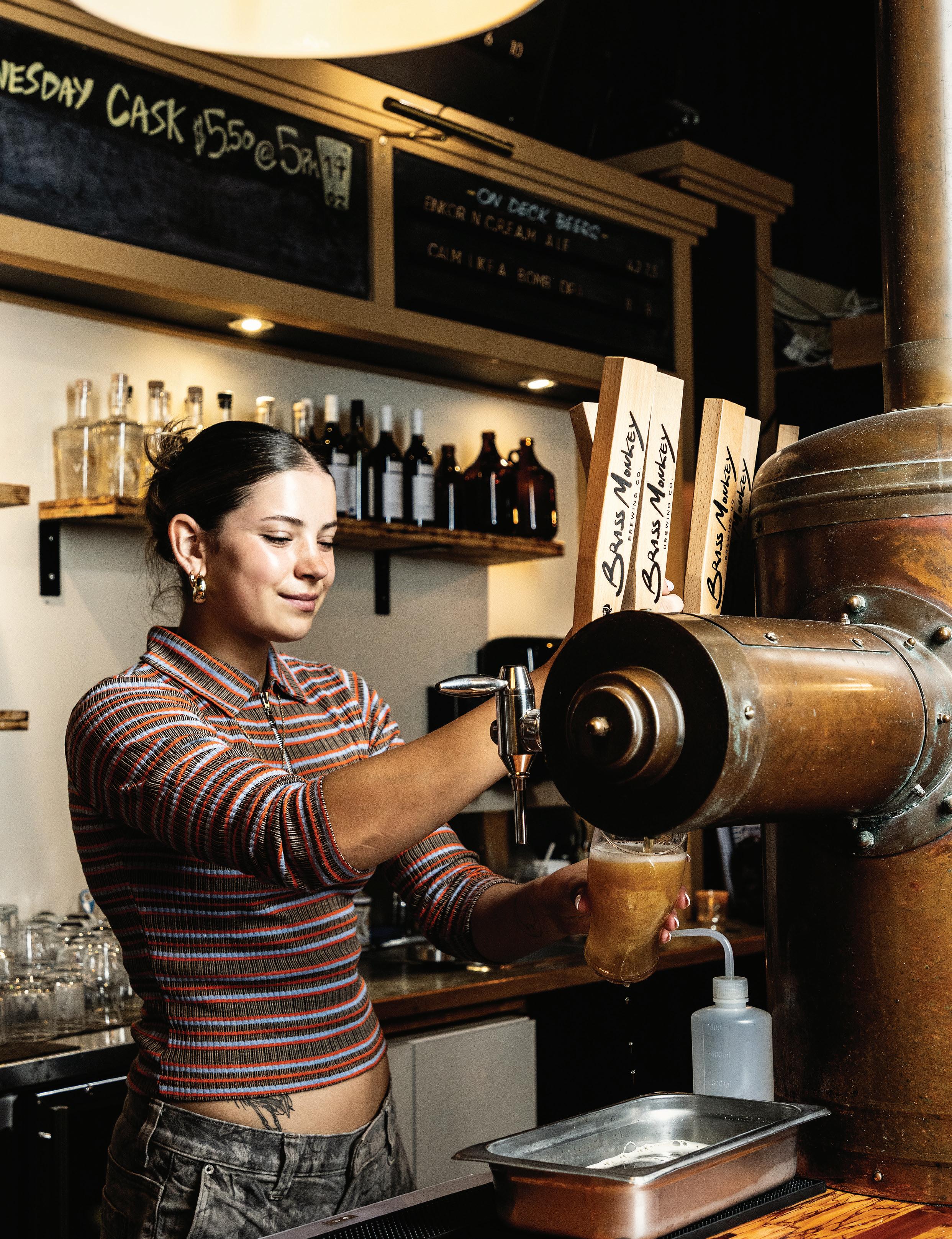

A complex equation lies behind every pint poured. Taxes, labour, distribution hurdles and other rising costs continue to affect the brewery business.
RISING COSTS: Ingredients, packaging, labour and fuel have increased over 30 per cent over the past three years.
TAX BURDEN: Beer tax in Canada accounts for 46 per cent of the retail price.
NEW EXPENSES: B.C.’s minimum wage increased in June. And, beginning in October, the provincial government is adding seven per cent PST on bookkeeping services, engineering, architecture and security services, all of which are used by breweries throughout the year.
LIMITED PRICING POWER: With consumers already feeling the effects of the affordability crisis, many breweries cannot fully offset rising costs with increased prices. Instead spending is often reduced in areas such as marketing, sales and labour.
DISTRIBUTION CHALLENGES: Beer is bulky and expensive to transport. Breweries have three options to distribute: through the Liquor Distribution Branch warehouse system, where access and space are limited; third-party delivery, which can cost six to 10 times more than the LDB or self delivery, and breweries may not add a fuel surcharge even as gas prices soar.
Source: BC Craft Brewers Guild
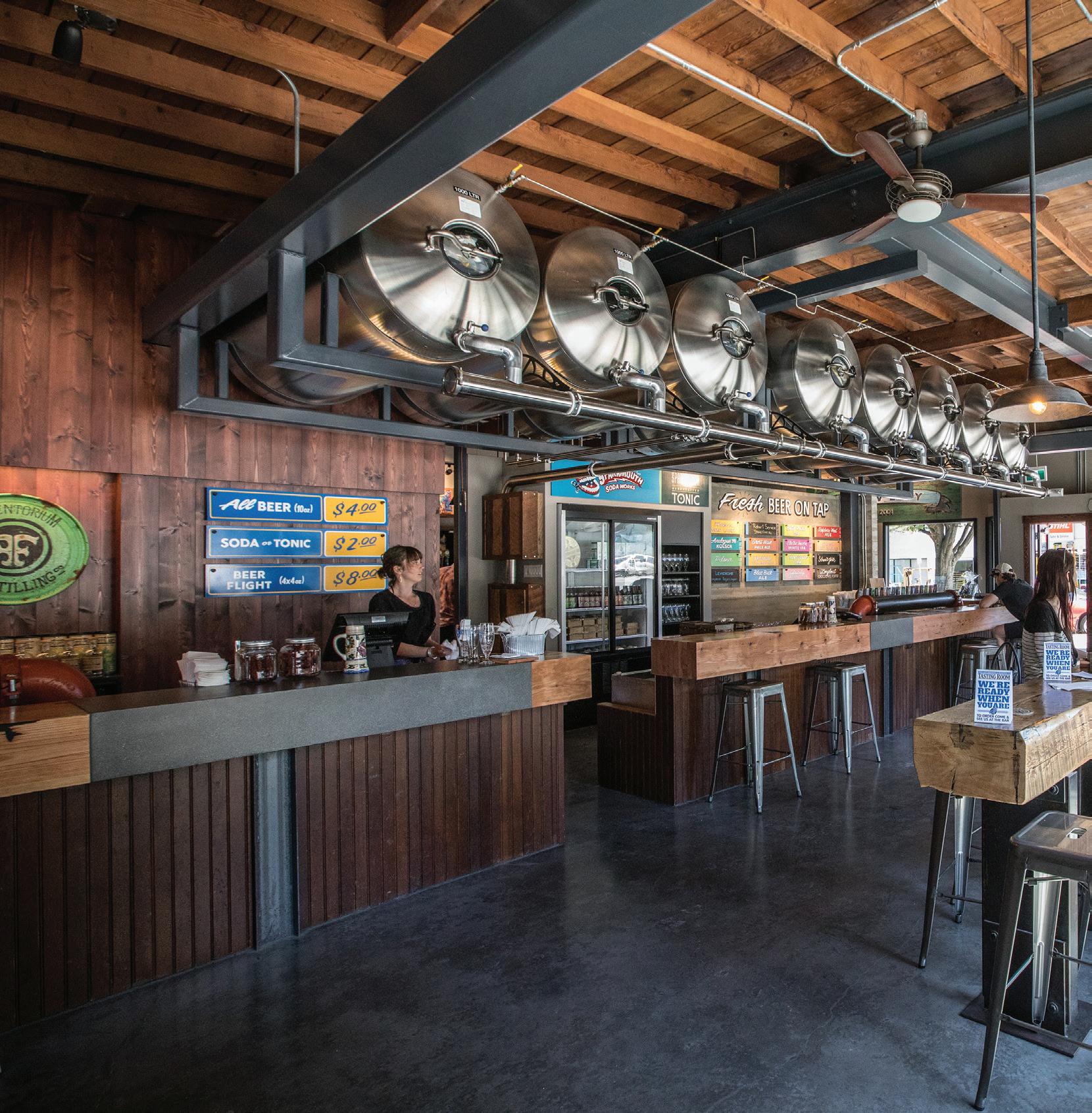
local beer scene has continually grown, first with a series of other brewpubs like Swans and Canoe, and then with production breweries Lighthouse, Phillips, Driftwood and Hoyne.
There are about 240 breweries across B.C., an industry that supported approximately 4,200 jobs in craft breweries and brewpubs in 2023 while generating $1.032 billion in beer sales through liquor stores. Microbrews make up about 13.3 per cent of beer sales through liquor stores and 20.5 per cent of bar and restaurant sales.
In 2013, the provincial government reformed liquor laws to allow breweries to open tasting rooms, but Victoria was a little slow to adapt. While the new style of breweries swept across the Lower Mainland and elsewhere in B.C., it was a few years before smaller tasting-roomfocused places like Île Sauvage, Whistle Buoy and Category 12 opened. Eventually, Driftwood, Phillips and Lighthouse opened their own tasting rooms, recognizing they could connect with their customers more
directly than ever before.
There was a huge surge of new breweries in the province between 2013 and 2020. In 2012 there were about 50 breweries in B.C. and by the end of 2019 there were nearly 200!
The pandemic and economic downturn that followed have slowed that growth dramatically. While new breweries have opened since then — B.C. peaked at nearly 250 breweries in the 2021-to-2024 period — that steep growth curve has flattened out, and several breweries have either closed or amalgamated with others to streamline operations.
In Victoria, most notably, we have seen Lighthouse Brewing close while Swans Pub and Vancouver Island Brewing have ceased brewing operations. Swans operates only as a pub now and Vancouver Island Brewing’s beers are brewed on contract by Phillips, which also purchased the Lighthouse Brewing name when it closed and now brews some of its classic brands, including Race Rocks Amber Ale and Shipwreck IPA, as a value line.
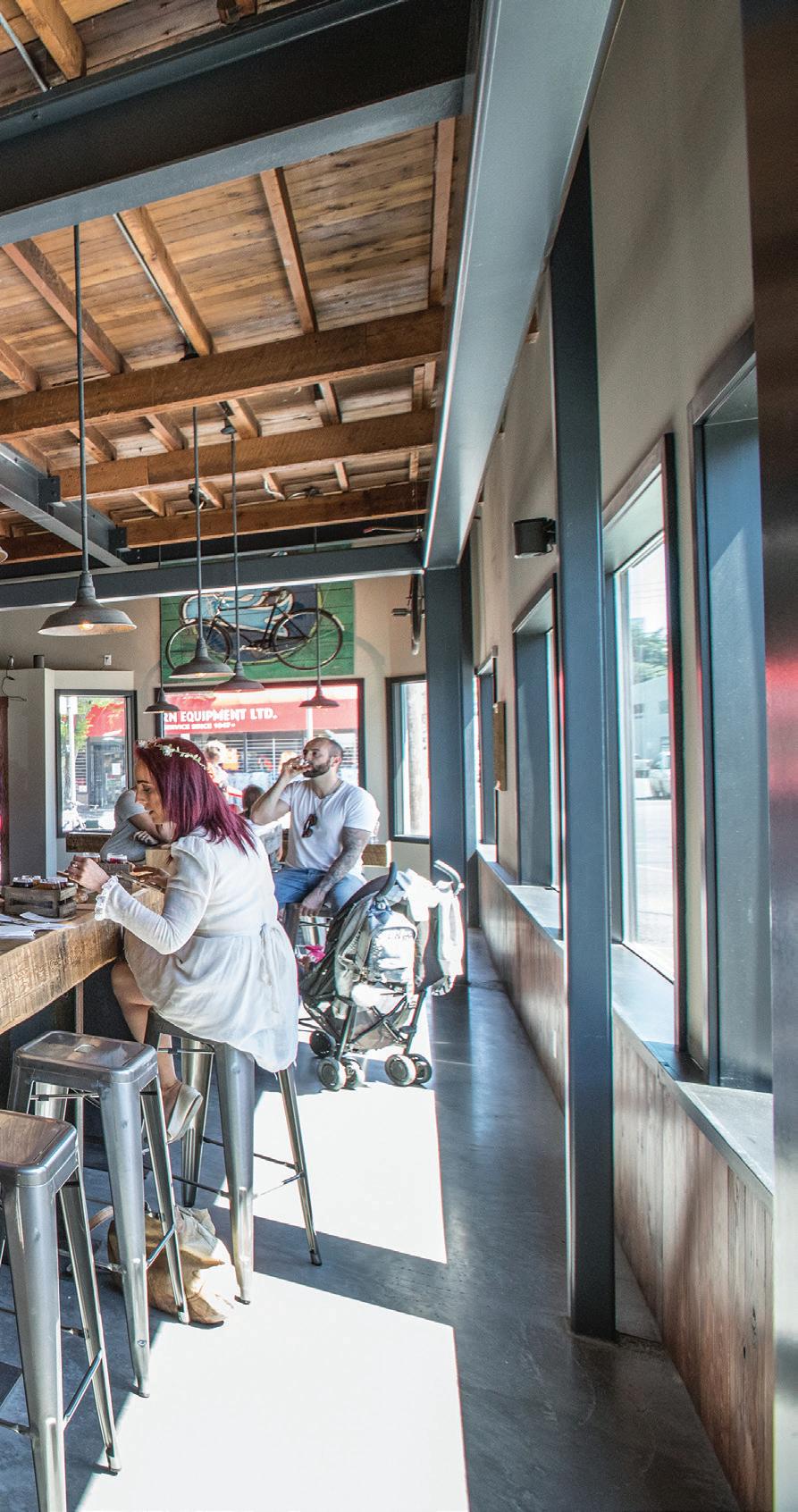
Beer sales have steadily declined in Canada over the last several years, reflecting shifting consumer preferences, growing health consciousness around alcohol consumption and the simple fact that most people have less money to spend on luxuries. By volume, beer sales fell 3.8 per cent to 1,876 million litres in 2024/2025, marking the ninth consecutive year of decline.
But all is not gloom and doom here in Victoria. Popular brands like Fat Tug, Blue Buck and Dark Matter continue to sell well throughout Western Canada.
Hoyne Brewing pivoted effectively into canning in the early days of the pandemic and also recognized shifting consumer preferences towards lagers early. One of its core products is a mixed eight-pack called In Good Time that features four different lagers, including the longtime standard bearer Hoyne Pilsener and Che Bello Italian Pilsner.
Hoyne is aiming for an early fall opening of a new tasting room at its Rock
240 BREWERIES ACROSS B.C. APPROX.
4,200
JOBS IN CRAFT BREWERIES & BREWPUBS ACROSS B.C.
$1.032B
LIQUOR STORE BEER SALES ACROSS B.C.



GREATER VICTORIA
Brass Monkey Taproom
Driftwood Brewery
Four Mile Brewpub
Herald Street Brew Works
Howl Brewing
Hoyne Brewing
Île Sauvage Brewing
Phillips Brewing & Malting
Spinnakers Brewpub
Swift Brewing
(CRAFT Victoria Harbour)
Twa Dogs Brewery at Macaloney’s Island Distillery
Whistle Buoy Brewing
SAANICH PENINSULA
Beacon Brewing
Category 12 Brewing
Small Gods Brewing
SOOKE & METCHOSIN
Bad Dog Brewing
Checkerhead Brewing
Mile Zero Brewing
Sooke Brewing
Sooke Oceanside Brewery
SOUTHERN GULF ISLANDS
Mayne Island Brewing
Salt Spring Island Brewing
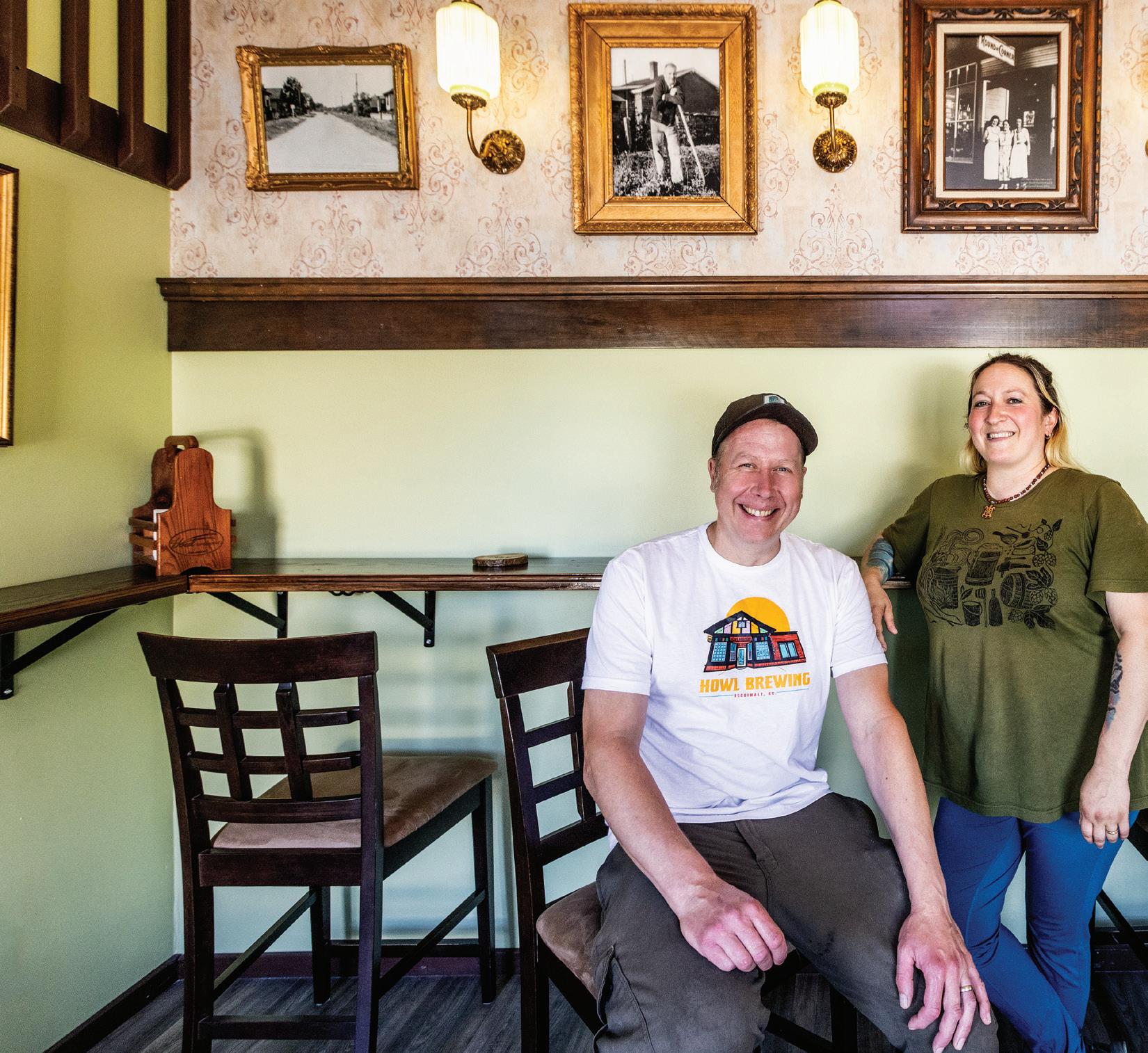
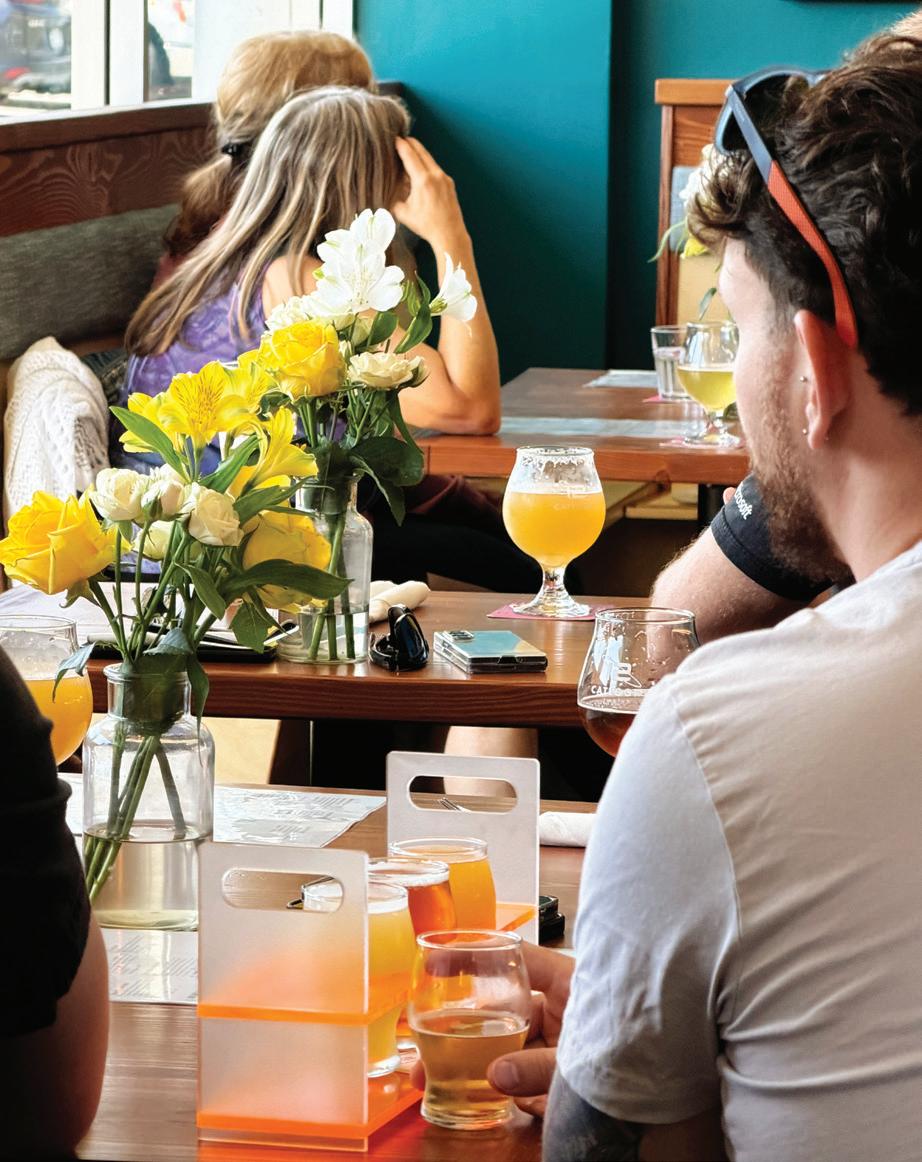
Bay location. When Sean Hoyne left his job as brewmaster at Canoe Brewpub — now CRAFT Victoria Harbour, which has its own on-site brewery called Swift Brewing — to open his own brewery in 2011, it began as a small operation in a Rock Bay industrial complex. It shared a parking lot with Driftwood Brewery, which had been there since 2008. When Driftwood moved to Esquimalt in 2021, Hoyne took over its old space, expanding into it with lagering tanks, a new brewhouse and a canning line. The new House of Hoyne tasting room will have seating for 120 people including a patio and mezzanine. The tasting room will have a total of 20 taps, nine of which will come directly from temperaturecontrolled serving tanks that are in the room. Food will also be served from a new kitchen. Phillips has been making similar investments in its tasting room model with upgrades. The layout of the growler station and store has been adjusted to allow for more seating at the windows facing Government Street, and there is a new, full-service kitchen in partnership with Roast, which was forced to leave the Victoria Public Market last year.

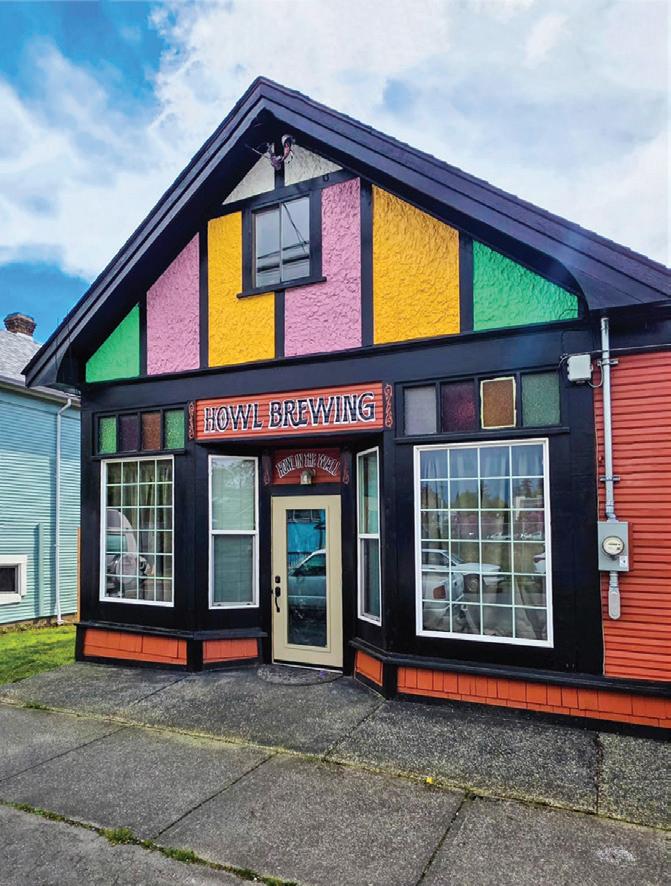
Co-owners Daniel van Netten (left) and Alayna Briemon in Howl Brewing’s new tasting room in Esquimalt, in what was an early- and mid-century storefront. This building, which doubles as their home, has a maximum capacity of 10 customers. They relocated their nano brewery business from North Saanich, next to the Fickle Fig Market.
Along with the expansion of established breweries, comes a new wave of smaller, more experimental taprooms. Howl Brewing’s new tasting room in Esquimalt builds on its beginnings as a tiny nanobrewery originally located next to the Fickle Fig Market just north of the Victoria International Airport. While this was a destination for cyclists touring the peninsula, owners Daniel van Netten and Alayna Briemon eventually relocated the brewery to their house on Lyall Street in Esquimalt, a unique building that featured
a corner store from the 1930s to 1970s. They successfully lobbied the municipal government to allow them to set up their brewery there and recently opened a 10-seat tasting room in the original store space that is decorated with antique fixtures and historic photos of the store. Recently, the Moon Under Water Brewpub was transformed into the Brass Monkey Taproom. The new name and brand update was the result of an ownership change, but the original brewer, Clay Potter, is still in charge, just with new partners after his mother
and stepfather decided to retire from the business. The menu and beer list are as good as ever, but now the beers have rock music-related names like High Dough Hazy IPA and Hello Dunkel My Old Friend.
The Victoria beer scene looks very different than it did a decade ago. Some breweries are gone, others have reinvented themselves and the growth from the 2010s has slowed. The names may have changed and the business models may have evolved, but the brewing culture remains.
We
create brands, campaigns, websites, and experiences people remember.

Tedi Bezna is the founder of Searchlight Digital, an all-women, all-Canadian search marketing agency that takes the scary out of SEO and helps businesses connect with their ideal clients.
How to ensure your web portal outlasts the algorithm and serves your business for the long term.
Every few years, a familiar wave of panic hits many business owners. Maybe you cringe when someone looks at your site, filled with old and irrelevant information; a relic of old team members, offers and positioning. Perhaps it’s been years since you showed off your best work and projects that reflect your commitment to quality. Or a new algorithm update rocks your site’s performance, a competitor launches a flashy new site and you start asking yourself that dreaded question: “Is it time for a total website redesign?”
Given how rapidly business, search and website functionality changes, it is important to view your website as a living, breathing asset that can grow with your business, versus something that needs to be burnt to the ground and rebuilt every few years.
I like to use the analogy of a home when talking about websites. The rooms are your pages, the interior design is your visual branding and SEO is the network of clear roads and visible signage leading people to your front door.
The difference between a property that becomes a teardown and a legacy home that is enjoyed for generations comes down to three things: a solid foundation, strategic planning and consistent upkeep.
If you want a digital home that serves your business for decades to come, here are four steps to building for longevity.
1. Build and protect your foundation
You wouldn’t put a beautiful, expensive roof on a house with a cracked and crumbling foundation. In the digital world, your foundation is your technical SEO and website performance. No matter how stunning your website looks, if it loads slowly, is broken on mobile devices or has messy, confusing code, search engines and users alike will abandon it. A strong technical foundation ensures that when search engines evolve, your site doesn’t collapse under the weight of new updates.
Action: Schedule a quarterly “home inspection” for your site. Use free tools to check your site speed and mobile usability, and fix broken links before they become structural issues. Make sure plug-ins and third-party tools are kept up to date and spot-check your key functionality, like contact forms, phone links or quote generators.
2. Choose consistent upkeep over a “total teardown”
Many businesses let their websites go unattended for years and then spend tens of thousands of dollars on a panicked emergency rebuild. Longevity is about consistent, compounded care and attention. If you spend a little time updating one per cent of your site every month, you never have to replace 100 per cent of it all at once. By keeping your content, software and links up to date, you avoid the massive expense and stress of a total demolition.
Action: Audit your top five most-visited pages. Ensure all the information, pricing and contact details are still accurate for where your business is today.
3. Furnish your rooms with undeniable expertise
In my last article (December/January 2026), I talked about how the rise of AI is making human experience more valuable than ever. To make your website a long-term asset, fill your “rooms” (pages) with the one thing a competitor cannot buy or copy: your lived expertise. When a potential client walks into your digital home, they should immediately see proof that you know exactly how to solve their specific problem.
Action: Take a look at your core service pages. Are they just listing what you do, or are they proving it with a fresh testimonial, a mini case study or a direct answer to a client’s most common questions and concerns? Do your blogs and resources provide specific, valuable information that reinforces your authority and knowledge of your client’s needs?
Success isn’t about chasing the latest algorithm or jumping on every passing design trend. It’s about building a digital home with integrity.








James Moller is a published author and leadership adviser with deep HR and labour relations experience, known for exposing the hidden dynamics that determine whether organizations drift or endure.
Dealing with the hidden balance sheet every business is carrying.
Every business on Vancouver Island talks about workplace culture, but few understand what it actually measures. Culture isn’t a set of values or a branding exercise. It is a form of invisible operational data that reveals how much strain an organization can absorb before something breaks. Leaders don’t see it on financial statements, but they see its effects in hesitation, silence, workarounds and the way people choose what is safe to say.
This is why culture is not a “soft” topic. When ignored, it becomes a financial liability. When understood, it becomes a strategic asset.
The greatest risks in any organization rarely arrive without warning. They accumulate quietly. By the time consequences appear through a lawsuit, failed audit, customer loss or wave of resignations, the underlying failure has often been developing for months or years.
The Quiet Collapse Sequence
Known as the “quiet collapse,” the emotional supply chain of organizational failure, this drift is mapped as a predictable sequence:
Signal → Tolerance → Silence → Delay → Normalization → Event
The sequence begins when someone notices something that does not feel right. It may be a concern, a hesitation or a gap between what leaders say and what the organization actually does. Healthy organizations treat these signals as valuable information. Drifting organizations dismiss them as inconvenience.
When concerns are repeatedly minimized, people adapt. They become more cautious. Questions become less frequent. Problems remain unresolved. Over time, workarounds become routine and risk becomes normalized. What was once recognized as a warning sign eventually becomes accepted as “the way we do things.”
This dynamic is particularly relevant for Island businesses operating with lean staffing, seasonal pressures and high customer expectations. Whether it is a tourism operator relying on temporary workarounds during peak season or a technology company normalizing late-night fixes to meet deadlines, the pattern is the same. Success masks strain. Performance hides risk.
Stability is mistaken for strength.
Consider a small software company that secures a major contract. During development, an employee raises concerns about a recurring security issue and is told, “We’ll deal with that after launch.” It appears insignificant, but the message is clear: speed matters more than caution.
Months later, a security breach occurs. The breach becomes the visible event, but the conditions that made it possible were established much earlier. The real failure was not the breach itself. It was the decision to ignore the signal.
This is why traditional conversations about efficiency are often incomplete. Efficiency without structural integrity creates fragility. Organizations that depend on extraordinary effort, constant vigilance and employee sacrifice are not necessarily high performing. They may simply be compensating for problems that have not yet become visible.
Throughout my experience as a city manager and chief human resources officer, the most vulnerable organizations were often those that appeared stable. Performance was maintained because people worked harder, absorbed more pressure and quietly compensated for weaknesses in the system. Leaders saw the results. They rarely saw the cost.
The solution is not more programs or initiatives — it is early intervention. Leaders must learn to respond to signals before they become evidence. Evidence arrives as investigations, resignations, accidents, complaints or public failures. Signals arrive as hesitation, frustration, workarounds and concerns that seem too small to matter.
But by the time evidence appears, the collapse is already in motion.
This is where the “responsibility of ordinary positions” becomes important. Leadership is not defined by title. It is defined by a person’s willingness to follow a concern one step further than required. The earliest warnings almost always come from people closest to the work. When those people feel responsible for speaking up — and when organizations reward rather than
Culture is not a “soft” topic. When ignored, it becomes a financial liability. When understood, it becomes a strategic asset. punish that behaviour — the sequence is interrupted before failure occurs.
Five-Minute Leadership Tool Kit
To make this real for busy leaders, here is a simple leadership habit tool kit, a fiveminute weekly practice that strengthens the emotional architecture of any team:
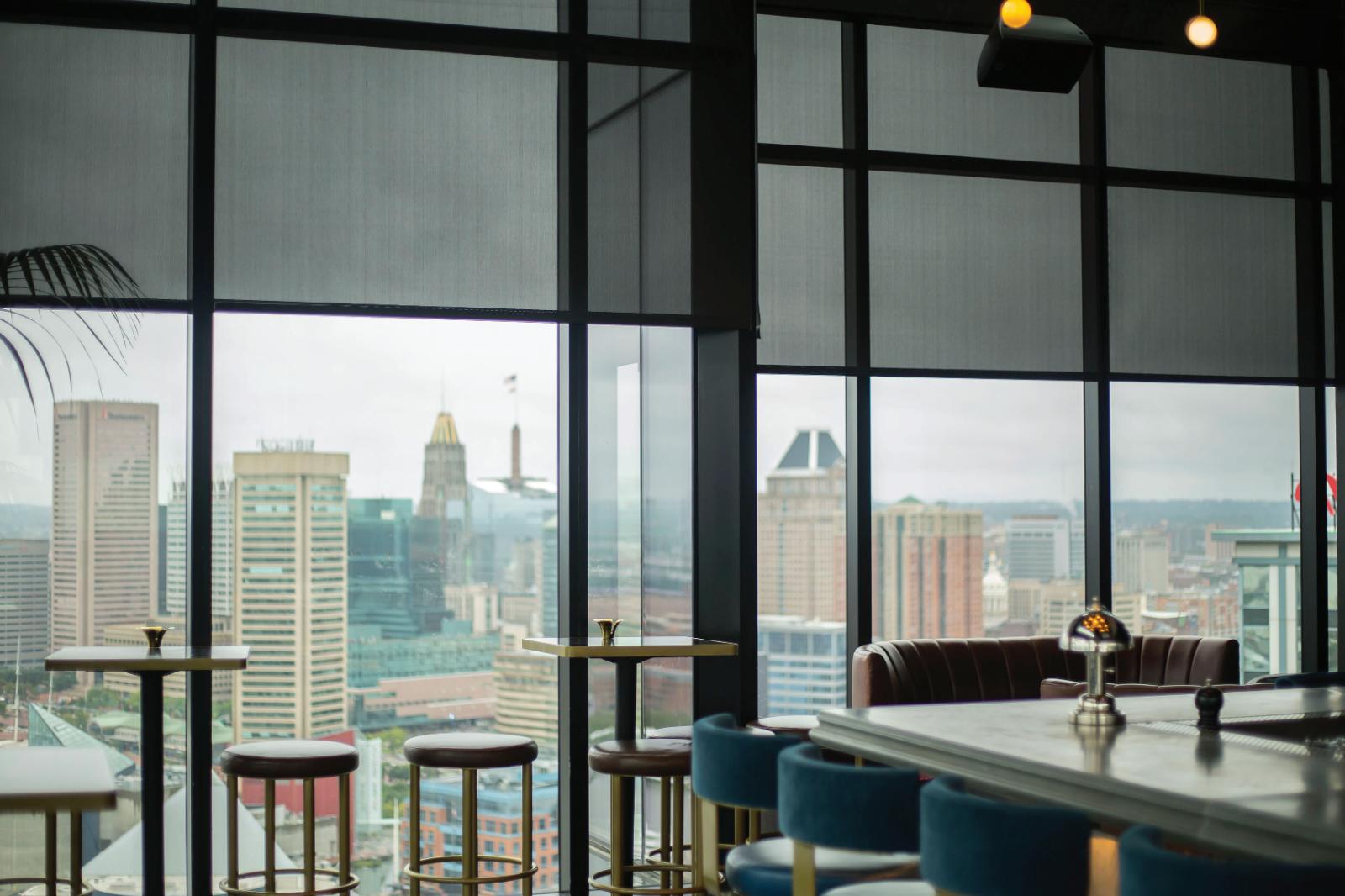
1. What are we fixing informally that we never discuss?
2. What feels normal but probably shouldn’t?
3. What workaround has become part of our routine?
4. What concern was raised this week, and how did we respond?
5. What signal did we notice but chose not to follow?
These are not engagement tactics. They are structural interventions. They help reveal the hidden balance sheet that determines whether your organization bends or breaks under pressure. Vancouver Island’s business community has long been built on stewardship. Entrepreneurs here do more than build companies; they shape the character and resilience of the region itself. Preventing quiet collapses is part of that responsibility. Leaving organizations better than we found them is not simply a leadership philosophy. It’s a business strategy. And it begins with understanding that culture is not a program. It is the invisible architecture that determines whether an organization can withstand the pressures ahead.


Danielle Smeltzer is the founder of Awarely Embodied Leadership, helping high-performing women reclaim their well-being as they rise. She’s a passionate advocate for trauma-informed leadership, gender equity and progressive workplace wellbeing.
People don’t fear change as much as they fear silence, mixed messages and moving goalposts. Without clear communication during times of change, people fill the gap themselves and it’s rarely optimistic.
You might recognize this one. Heck, you might have even lived it.
The board makes a big promotion call without consulting the people most impacted, including the person being groomed for the role. The email lands with less than 20 minutes notice before the holidays, mid-relocation for one key person and an upcoming maternity leave for another. And everything that had already been promised or discussed? Not a word of acknowledgment.
What inevitably follows is a breakdown of trust that takes months to repair and some relationships that never fully recover. Some people leave loudly with conflict, questions and hard conversations. Others leave quietly, going through the motions long before they ever hand in their notice. Both are costly in terms of money and morale. Both were entirely preventable.
The intent is good — at least most of the time.
The gap is understanding what change actually does to people before a single word of communication goes out. Because, well, we’re human. And change, even good change, can register as a threat.
Polyvagal Theory tells us our nervous systems constantly scan for cues of safety or danger below the level of conscious thought. When change arrives, especially suddenly or without clarity, the brain stem responds before the thinking brain catches up. People shift into defensiveness, anxiety, withdrawal or shutdown. Not because they’re being difficult, but because that’s what nervous systems do.
The best rollout plan in the world can’t outrun biology.
And yet we keep asking leaders to choose: be decisive or be human, move fast or communicate thoughtfully, drive results or protect your people. That false binary has cost organizations far more than they realize. The leaders who navigate change most effectively aren’t choosing between compassion and clarity. They’re using both, very intentionally.
Clarity: the most compassionate (and strategic) thing you can offer
The anxiety people feel during change is rarely about the change itself. It’s about the story they’re telling themselves in the absence of information. Without clear communication, people fill the gap. And they rarely fill it with optimism.
Clarity, delivered consistently and with care, is one of the most regulated things a leader can provide. It doesn’t require having all the answers. It requires being honest about what you know, what you don’t and what comes next while leaving space for the human experience.
And before any of this lands well you have to land first. A dysregulated leader delivering change just adds noise to an already noisy system. I can’t say it enough — do your own work first.
A people-first lens for organizational change
When I work with leadership teams on change, I ask them (OK, I force them) to slow down before they communicate. Not to delay the change but to think through the human side before execution. That means working through a set of questions I’ve developed through trial and a lot of error (see accompanying checklist).
These aren’t soft questions, they’re strategic ones. Organizations that skip them consistently spend more time managing fallout than they would have spent getting it right the first time.
When things get messy anyway
Even the most thoughtful process will surface conflict, confusion or even grief. That’s not failure, that’s human. When it happens, Brené Brown’s Story Rumble process is one of my go-to tools that gives teams a structured way to move through it: Naming what’s happening emotionally, getting curious about the stories underneath and finding a shared understanding of how to move forward together.
The goal isn’t to avoid discomfort. It’s to create enough safety and space so that people can move through it without shutting down.
What 20 years of Douglas magazine actually teaches you
I spent time early in my career at this very publication, back when Douglas magazine was becoming the business voice and lens this region so desperately needed. I’ve watched a lot change since then in how we define good leadership.
Twenty years ago, change management was largely a project-management discipline — timelines, stakeholder maps, communication cascades — and sometimes it still is. This is all useful but arguably incomplete.
What we know now is that even the most detailed rollout plan can lose your people if you don’t account for the physiological reality of change. Stress responses in your team aren’t a sign of weak culture, but a sign of a human one.
The organizations that will lead in the next decade aren’t just operationally excellent from the boost of AI automations and an ever-growing tech stack. They’re creating conditions where people can stay regulated, stay connected and keep showing up, especially when the path forward isn’t entirely clear yet.
That’s not a nice-to-have. That’s your competitive advantage.
Before you communicate any organizational change, pause to ask:
1. What exactly is changing? (Be crystal clear. If you can’t say it simply, you’re not ready to announce it.)
2. Who needs to be consulted before the decision is made?
3. Who and what else is impacted? (Consider dependencies, other projects and promises already in motion.)
4. When and where is the change happening?
5. Who is communicating the change? (Aligned ownership of messaging matters.)
6. Who owns the questions and what is the mechanism for feedback?
7. What does success look like and how will it be monitored?





Stand-up paddleboarding is Victoria’s ultimate office outing.
We all know and love the usual teambuilding staples like escape rooms, trivia nights and the occasional round of golf where half the group is just trying to remember how scoring works. But if you’re looking for a fresh summer activity for your team, stand-up paddleboarding might be the answer.
Stand-up paddleboarding, often called SUP, is exactly what it sounds like: You stand on a big, stable board and use a paddle to move across the water. It incorporates bits of surfing, kayaking, standing (obviously) and some balance-management skills. But the best part is that you don’t need any experience to get started and most people are upright (from seated or kneeling) within minutes.
Once you get your sea legs and find your paddle-stroke sweet spot that will move you through the water and not paddle you off your board, you are basically expert level.
Most local operators offer a quick lesson before embarking on adventure, covering the basics: how to balance, how to paddle and how to avoid circling in place. From there, groups head onto the water at an easy pace, often splitting between those confidently gliding ahead and those navigating their sciatica.
Part of the appeal of SUP is there’s no scoreboard, no pressure and no team elimination round. Instead, people can chat as they move, pause to regroup and share laughs when someone takes an unplanned dip.

Not only is it light exercise that engages the entire body, but it also forces you to unplug, mainly due to the fact that balancing on water makes checking your inbox a bit risky.
Victoria is one of the best places to SUP. Calm, sheltered waters like the Inner Harbour, Gorge Waterway and nearby lakes make it an ideal place for beginners, while offering enough scenery to make even a gentle float feel like an outing as SUPpers take in views of the city skyline, floating homes, marinas and local wildlife. Chances are high that you’ll encounter a curious seal or a noble heron.
Not only is it light exercise that engages the entire body, but it also forces you to unplug, mainly due to the fact that balancing on water makes checking your inbox a bit risky. By the end of a paddle, most groups return a little sun-soaked, slightly wobbly and more refreshed. In a place like Victoria where the water is never far away, SUP can turn an office outing into something more like a team adventure.
Check out some of our favourite SUP operators offering lessons, equipment and adventure:
BLUE JELLYFISH SUP ADVENTURES bluejellyfishsup.ca
FAIRWAY GORGE PADDLING CLUB fgpaddle.com
PADDLE & GO VICTORIA SUP CO. paddlengo.ca
SOUTH ISLAND SUP southislandsup.com
PRISTINE PADDLEBOARD ADVENTURES pristinepaddleboard.com
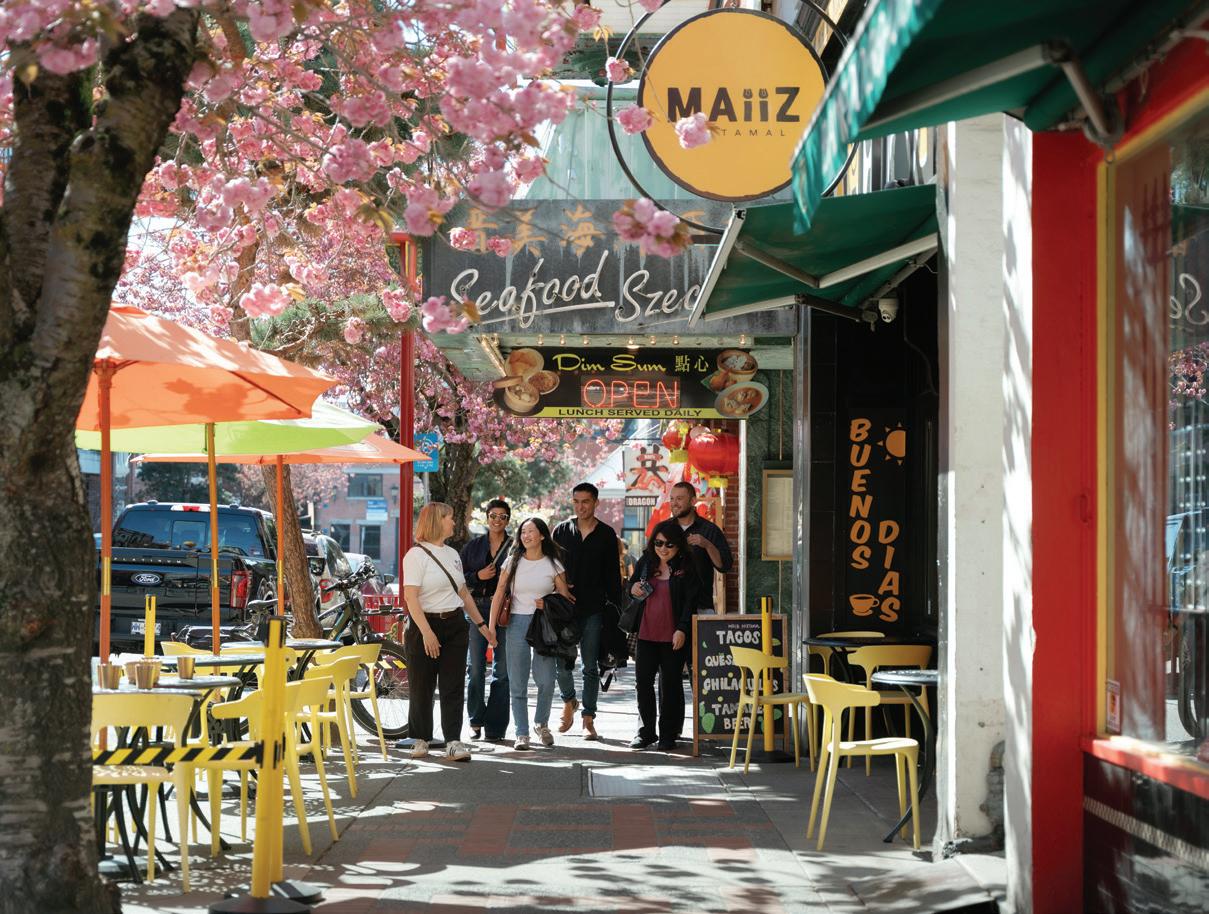
Off the Eaten Track offers walking food tours year round for groups, private bookings and corporate events. offtheeatentracktours.ca
Walk, eat and connect through Victoria’s local eateries.
Downtown Victoria’s vibrant food scene may best be discovered on foot, and it’s the perfect excuse to get out of the office and connect over great bites you might otherwise walk right past.
Off the Eaten Track’s guided walking food tours combine local flavours, history and leisurely strolls into a fun, relaxed social setting ideal for team events. Whether you’re tasting your way through Chinatown, sampling downtown Victoria’s culinary hotspots or exploring one of the seasonal specialty tours, each experience shows a different side of the city through its food.
Depending on the tour you choose, you’ll visit locally owned restaurants, cafés, bakeries, chocolatiers and ice creameries, enjoying generous tastings while learning the stories behind the people and neighbourhoods that make Victoria so great.
From handmade dumplings and artisan chocolates to locally roasted coffee, craft beverages and chef-inspired creations, there’s something different to devour with each tour. Plus, there’s no need to co-ordinate reservations or plan an itinerary. Just throw on a pair of comfortable shoes and show up hungry.
Note-taking apps that capture and summarize meetings so you can stay in the conversation.
When you’re in the middle of a meeting or brainstorming session, ideas, decisions and action items can come at you fast. You know you should be taking notes, but you also don’t want to miss what is being discussed. This is where an AI note-taking app can step in and assist. AI note-taking apps listen in real time, transcribe what’s being discussed, pull out key points, create searchable summaries and suggest action items. Everything is saved and searchable, so instead of flipping through pages of illegible scribbles or rewinding and forwarding through recordings, you can find what you need in seconds. They are designed to understand the context of conversations, separating important details from background noise and chitchat. It’s a bit like having an intern keep track of all the details while you focus on the discussion.
They’re basically notes that take themselves, saving you time, improving accuracy and making it easier to find information when you need it.
Top consumer-rated AI note-taking apps that are available for download on iOS and Android:




BY JULIEN JOHNSTON-BREW
In the past 20 years, we’ve witnessed some significant changes in how we get around. Here’s a look at this relatively recent evolution of the biggest movers in Greater Victoria’s infrastructure.
Since its designation as Highway 17 in the 1960s, the Pat Bay Highway has been a four-lane transportation staple that runs through the Saanich Peninsula connecting the BC Ferries terminal at Swartz Bay and the Victoria International Airport with Greater Victoria. In 2023, work began to make accessing Keating Cross Road from the highway safer and easier, and so the Highway 17 Keating Cross Overpass was born. The overpass has been usable since 2025, but finishing touches are still in progress.
In 2006, the Johnson Street Bridge, also known as the “blue bridge,” had been standing since the 1920s. After being deemed “seismically vulnerable,” the bridge was rebuilt by 2018 with 50 per cent of its deck surface dedicated to pedestrian and cyclist use. It is now Canada’s largest single-leaf bascule bridge (a bridge that hinges upwards from one side).
*Latest year with available statistics.
Since its establishment in 2002, the Greater Victoria Harbour Authority has welcomed millions of cruise passengers from around the world onto Vancouver Island. By the end of the 2025 cruise season, 989,950 visitors landed at Ogden Point.
In September of 2006, BC Ferries introduced automated ticketing kiosks at Swartz Bay and Tsawwassen ferry terminals, and their success led to expanded implementation. Throughout 2025, the Swartz Bay ferry terminal facilitated travel for 7,722,568 passengers, 84 per cent of whom sailed to and from Tsawwassen.
The Victoria International Airport is the Island’s largest air travel hub, and is Canada’s 11th busiest airport. According to the Victoria Airport Authority, domestic passengers have made up more than 90 per cent of the airport’s patronage throughout the past few years, with September having the most traffic.




From rugged coastlines to downtown destinations, the Volvo XC40 is built for the way Vancouver Island moves. Available as a mild hybrid or plug-in hybrid, it blends Scandinavian design, advanced safety technology and everyday practicality in a compact SUV that’s ready for whatever comes next. It doesn’t just handle your day, it keeps it moving. Whether you’re in stop-and-go traffic, plans suddenly change, or you’re on open highway stretches, the XC40 responds with ease and control. Add flexible cargo space, thoughtful versatility and refined comfort, and it transforms every ordinary drive into the best part of your day. Book your test drive today.
Available from $52,543*