Exploring the Effectiveness of Online Counseling for Addiction Recovery
In recent years, the landscape of addiction treatment has undergone a significant transformation, with the rise of telehealth solutions and online counseling. Traditional face-to-face therapy sessions have given way to more accessible and convenient options, allowing individuals struggling with addiction to receive help from the comfort of their homes. This blog post delves into the effectiveness of online counseling, specifically telehealth addiction treatment, and its impact on addressing opioid addiction and other substance abuse disorders.
The Rise of Online Addiction Counseling
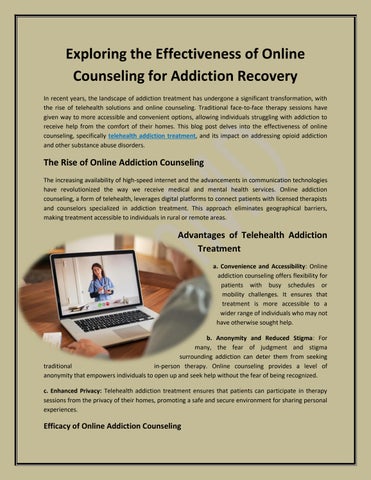
The increasing availability of high-speed internet and the advancements in communication technologies have revolutionized the way we receive medical and mental health services. Online addiction counseling, a form of telehealth, leverages digital platforms to connect patients with licensed therapists and counselors specialized in addiction treatment. This approach eliminates geographical barriers, making treatment accessible to individuals in rural or remote areas.
Advantages of Telehealth Addiction Treatment
a. Convenience and Accessibility: Online addiction counseling offers flexibility for patients with busy schedules or mobility challenges. It ensures that treatment is more accessible to a wider range of individuals who may not have otherwise sought help.
b. Anonymity and Reduced Stigma: For many, the fear of judgment and stigma surrounding addiction can deter them from seeking traditional in-person therapy. Online counseling provides a level of anonymity that empowers individuals to open up and seek help without the fear of being recognized.
c. Enhanced Privacy: Telehealth addiction treatment ensures that patients can participate in therapy sessions from the privacy of their homes, promoting a safe and secure environment for sharing personal experiences.
Efficacy of Online Addiction Counseling

Numerous studies have investigated the effectiveness of telehealth addiction treatment, and the results have been promising. Online counseling has been found to be equally effective as in-person therapy in addressing addiction and substance abuse disorders.
a. Maintaining Therapeutic Relationships: Contrary to concerns about potential challenges in establishing strong therapeutic relationships, online counseling has demonstrated the ability to maintain a connection between patients and therapists, fostering trust and rapport over virtual sessions.
b. Consistent Support: Online addiction counseling provides continuous support, allowing patients to stay engaged in treatment and receive the help they need throughout their recovery journey.
c. Access to Evidence-Based Treatments: Telehealth platforms are equipped to deliver evidence-based treatments for addiction, ensuring that patients receive quality care from experienced professionals.
Addressing Opioid Addiction through Telehealth
Opioid addiction has become a national crisis, affecting millions of individuals worldwide. Online addiction counseling plays a crucial role in addressing this issue by providing a viable alternative to inperson treatment. With telehealth solutions, patients can access medication-assisted treatment, counseling, and support groups tailored to their specific needs.
Conclusion
The effectiveness of online counseling for addiction recovery, particularly in the context of opioid addiction treatment, cannot be overlooked. Telehealth has broken down barriers to access and provided a lifeline to those battling substance abuse disorders. While in-person therapy remains valuable, the evolution of online addiction counseling demonstrates a powerful tool in the fight against addiction, ultimately paving the way for a more inclusive and effective approach to recovery.