




Our Vision
Inspire today’s learners to be tomorrow’s thinkers.
Our Mission
Empower all students and families to become active participants in their own learning and equip them with skills for the future. We achieve this through engaging content, delivered by innovative teaching in a culture of caring.
Serving students in kindergarten through 12th grade, the Pennsylvania Cyber Charter School (PA Cyber) is the most experienced online public school in the state. PA Cyber’s online learning environments, personalized instructional methods, and choices of curricula connect Pennsylvania students and their families with state-certified and highly-qualified teachers and rich academic content that is aligned to state standards. Founded in 2000, PA Cyber is headquartered in Midland (Beaver County) and maintains a network of support offices throughout the state. As a public school, PA Cyber is open for enrollment by any school-age child residing in the Commonwealth of Pennsylvania.
Non-Discrimination Statement – Students; The Pennsylvania Cyber Charter School (“PA Cyber” or “the School”) does not discriminate against protected students as defined by applicable federal, Pennsylvania state, or local laws, including but not limited to the Pennsylvania Human Relations Act, Title VI of the Civil Rights Act of 1964, Title IX of the Educational Amendments Act of 1972, and Section 504 of the Rehabilitation Act of 1973. PA Cyber is an equal opportunity educational institution and does not discriminate unlawfully in its educational programs, policies, activities, or admissions practices on the basis of sex, race, color, national origin, religion, age, disability, genetic information, or any other classification protected by applicable federal, state, or local laws.
The Great Seal OF THE PENNSYLVANIA CYBER CHARTER SCHOOL Founded 2000
With its torch Illuminated, the flames represent enlightenment, tolerance, and hope imparted by the institution’s drive to spark coherent and ongoing enrichment. The unwavering flame starts small but grows as the learning never stops. The grasping hand shows that within reach are vast resources and connectivity provided by our core foundation in cyber education. The shield represents strength and longevity, and the symmetrical line upon it draws equal balance to tradition and endless possibilities. The Latin phrase “libertas aditum” means access to freedom. Since 2000, the school’s students have been free to choose how they learn best. Olive branches flank the shield to signify our school born of necessity, now embraces diverse students from every county and every school district within the Commonwealth of Pennsylvania. Deep navy blue stands as the seal’s primary color, characterizing the school’s strength and reliability. Gold, black, platinum, and bronze represent the precious elements of wisdom, tradition, truth, and determination.

In the fall of 2011, the Pennsylvania Cyber Charter School (PA Cyber) earned accreditation from the Middle States Association of Colleges and Schools (MSA), joining a global network of accredited educational institutions across the United States and more than 85 countries This distinction reflects PA Cyber’s commitment to high academic standards and operational excellence
PA Cyber was reaccredited during the 2018–2019 school year following a comprehensive review process The school is currently engaged in renewing its accreditation under MSA’s updated standards, which emphasize academic rigor, student support, ethical practices, effective resource management, and strong leadership As part of this process, PA Cyber completed a thorough self-study and hosted a reaccreditation site visit Final approval of reaccreditation is anticipated in May 2026
By aligning with MSA’s revised criteria, PA Cyber reaffirms its dedication to continuous improvement, accountability, and student success MSA accreditation is a critical indicator of educational quality and plays an important role in high school graduation and college admissions The Pennsylvania Cyber Charter School remains focused on delivering an excellent educational experience that meets these rigorous standards and prepares students for future academic and personal success
AdvancED is a trusted partner to more than 32,000 institutions in more than 70 countries, serving over 20 million students
They are the world’s leader in providing improvement and accreditation services to education providers of all types in their pursuit of excellence in serving students Accreditation is awarded to institutions that go through a rigorous internal and external review process, demonstrating a willingness to be held accountable to the educational community for their commitment to high-quality standards and student achievement
Accelerate Education and Lincoln Learning Solutions, two of PA Cyber’s curriculum providers, have achieved accreditation from AdvancED AdvancED Accreditation is an internationally recognized sign of quality and accountability
Accelerate Education, one of PA Cyber’s curriculum providers, has earned accreditation from the Accrediting Commission for Schools, Western Association of Schools and Colleges (ACS WASC), a world-renowned accrediting association and one of the six regional accrediting agencies in the United States The Accrediting Commission for Schools, WASC, extends its services to over 5,000 educational entities worldwide Accreditation is integral to an organization’s perpetual cycle of assessment, planning, implementation, monitoring, and reassessment based upon student achievement It fosters excellence in elementary, secondary, adult, and postsecondary education by encouraging school improvement through continuing evaluation, and it recognizes, by accreditation, organizations that meet an acceptable level of quality in accordance with established criteria
The majority of PA Cyber’s core high school courses have been approved by the NCAA Eligibility Center This organization establishes academic standards that student athletes must meet in order to compete in intercollegiate athletics NCAA-approved courses are designated in individual course descriptions
Accelerate Education is a leading provider of digital curriculum for students in Kindergarten through 12th grade Accelerate Education’s suite of products increases educational opportunities available for today’s learners and promotes student achievement through a flexible, individualized learning experience
Accelerate Education’s online curriculum has been carefully designed to meet state and national standards This curriculum challenges students academically through rigorous content, while also inspiring students to be active participants in the learning process This is achieved by engaging students in a variety of activities and assessments appropriate to the field of study, such as labs, journals, written assignments, discussion activities, group and individual projects, formative assessments, authentic assessments, objective tests, and written exams Students are required to apply skills in increasingly complex ways as they progress through their courses
With a robust catalog of more than 300 course titles and 30,000 discrete learning objects, Accelerate Education is able to support K-12 online learning needs for core subject areas, electives, and world languages at all levels – from Credit Recovery to Advanced Placement
Bright Thinker is a mission-driven education company specializing in K–12 digital and print curriculum designed to support meaningful, measurable learning outcomes The organization partners with schools and districts to deliver high-quality instructional materials that are rigorous, engaging, and aligned to standards Bright Thinker offers a comprehensive suite of solutions, including core curriculum programs, supplemental resources, intervention and enrichment materials, and both digital and print instructional tools that meet the diverse needs of students and educators By combining research-based pedagogy with innovative technology, the company provides flexible implementation models, actionable data insights, and ongoing support to help teachers teach effectively and students achieve academic success Through collaboration, creativity, and a commitment to continuous improvement, Bright Thinker positions itself as a trusted partner in advancing K–12 education
Lincoln Learning Solutions provides students with an innovative and effective educational experience while utilizing state-of-the-art technology, an interactive and engaging curriculum, and the guidance of highly qualified, licensed educators Employing a unique and consistent design model, each Lincoln Learning Solutions course offers students a variety of content supplemented with various activities that include web investigations, audio recordings, interactive labs, simulations, videos, songs, and games in support of the direct instructional material Built from state and national standards, lessons exhibit differentiated instruction through distinctly designed activities geared toward specific learning modalities Varied and frequent assessments measure students’ knowledge, providing them with opportunities to show what they know through both traditional and authentic assessments All assessment experiences harness teachable moments with qualitative feedback
The Lincoln Learning Solutions catalog of courses includes offerings beginning with Kindergarten and progressing through high school The core courses cover mathematics, English, science, and social studies, along with various elective courses, including art, music, world languages, business, health and wellness, and technology
As one of the nation’s premier online curriculum providers, Lincoln Learning Solutions delivers student-friendly courses that offer a wide range of opportunities for academic mastery, investigation, and interaction
Lincoln Park Performing Arts Center creates and develops numerous courses under the name ARTiFact: Content for Learning The curriculum for grades K-8, called ArtsAlive!, helps students explore the creative and performing arts and appreciate how the arts can expand their understanding of the world The comprehensive high school curriculum, called ArtsAnywhere, provides older students with courses in the arts and humanities, including music, visual and media arts, theater, dance, career readiness, STEAM, and the classics
At Savvas, learning should inspire By combining new ideas, new ways of thinking, and new ways of interacting, Savvas designs engaging, next-generation, print and digital K-12 learning solutions that give all students the best opportunity to succeed Savvas’ award-winning, high-quality instructional materials span every grade level and discipline, from evidence-based standards-aligned core curriculum and supplemental and intervention programs to state-of-the-art assessment tools and the industry’s most innovative portfolio of college and career readiness solutions—all designed to meet the needs of every learner Savvas products are used by public school districts across all 50 states, the District of Columbia and Puerto Rico, as well as globally in more than 125 countries
The Pennsylvania Cyber Charter School utilizes course pacing guidelines and asynchronous benchmarks to help students reach their educational goals In addition to providing accountability, pacing and benchmarking ensure that our students are attaining various Pennsylvania educational standards PA Cyber is dedicated to providing an innovative, individualized education to our students, and we will continue to offer the highest level of service, support, and flexibility
* All GIEP, IEP, and 504 Plans will be honored *
To help high school students meet Pennsylvania’s graduation requirements, The Pennsylvania Cyber Charter School implemented a credit recovery program for qualifying students Our credit recovery courses provide students with engaging content and supplemental activities The credit recovery curriculum uses a consistent design model that incorporates differentiated instruction Reinforcement and enrichment activities, along with practice assignments and problems, are included throughout each course to help ensure students grasp the concepts needed to succeed
Please contact your Academic Advisor for a complete list of available Credit Recovery courses and to see if you qualify for this service
Imagine earning college credits while still in high school – getting a head start on your future, saving time, exploring interests, and reducing college costs With dual enrollment, that dream can become a reality PA Cyber’s dual enrollment program offers students in grades 9-12 the opportunity to take college-level courses while still completing their K-12 education Through dual enrollment, students can simultaneously earn credit toward their high school graduation requirements and a post-secondary degree, helping them graduate with a competitive edge and a clearer path toward their career goals
Why Choose Dual Enrollment?
• Jump-Start Your College Journey: Earn credits that may transfer to colleges and universities, reducing the time and cost needed to complete a degree
• Flexible Learning: With unique options, dual enrollment can easily fit your schedule and learning style
• Explore Your Interests: Gain an opportunity to explore subjects that excite you and get an early start on discovering a possible future career
• Build Confidence: Build critical thinking skills and academic confidence as you gain an understanding of college expectations
With several flexible dual enrollment options, PA Cyber will work with students and families to understand the enrollment process and associated requirements in place for each institution If you are ready to challenge yourself and are interested in this unique opportunity, please reach out to your Academic Advisor to discuss options and take the first step toward shaping your future
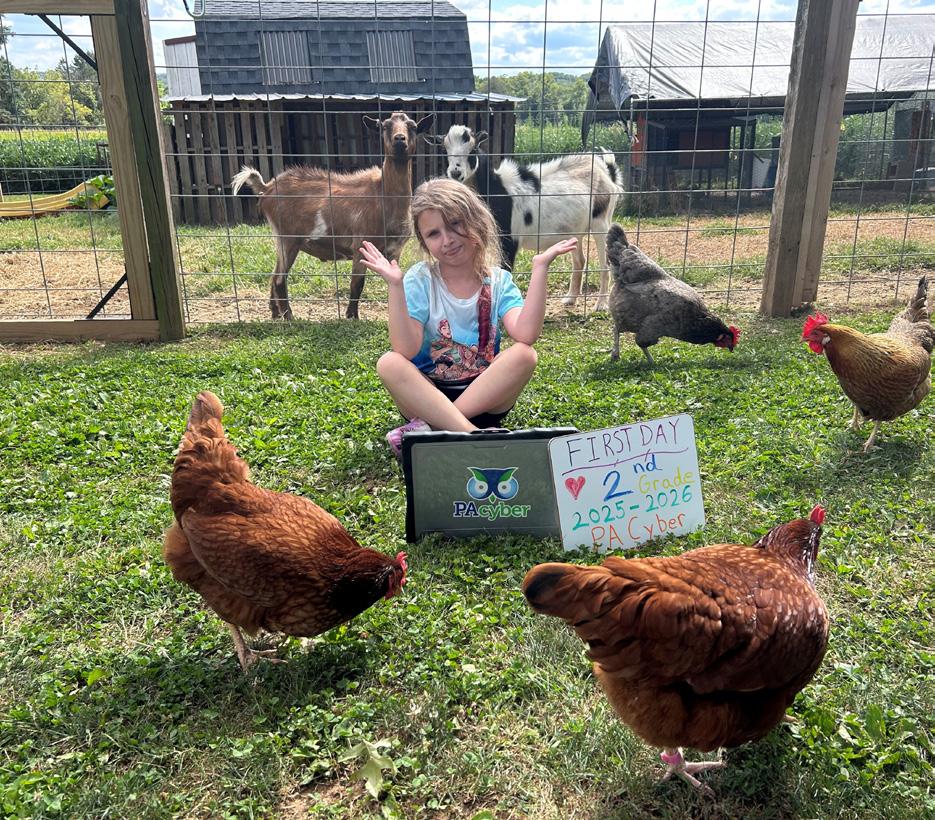
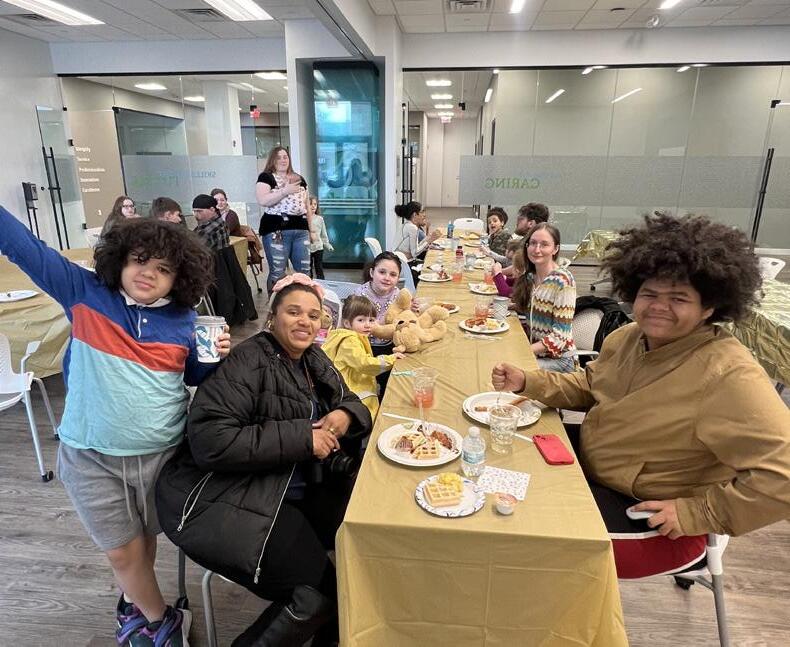
The Pennsylvania Cyber Charter School offers students a unique instructional setting by conducting real-time classes with Pennsylvania-certified teachers through our Virtual Classroom (VC) Virtual classes are available to students in grades 1-12 The Virtual Classroom follows a traditional school year calendar Daily lessons include discussions, videos, and other activities Homework will be assigned to reinforce the concepts presented in class All Virtual Classroom courses are recorded so students can review sessions as needed
Virtual Classroom students have the opportunity to interact with their teachers and classmates each day All core subject area courses meet five days per week, while elective courses meeting days will vary The scheduling of VC courses is flexible; however, student attendance is required Together with your Academic Advisor, families can choose from a variety of class times in order to meet each student’s needs Please check with your Academic Advisor for class meeting days and times for individual classes
The Virtual Classroom offers students variety, innovative technology, teacher support and guidance, and the opportunity to succeed
The Blended Classroom (BC) combines the best of the asynchronous setting with the addition of a live classroom experience Blended Classroom courses are taught by Pennsylvania-certified teachers
The Blended Classroom is an option for students in grades K-12 In grades K-4, students are self-contained and will meet with one teacher for all subject areas In grades 5-12, all core content area courses, including English language arts, mathematics, science, and social studies, will be offered individually Blended Classroom live sessions will include direct instruction, practice, discussion, videos, and other activities to help reinforce the content presented in the asynchronous material Students will be required to maintain a steady pace in their coursework and meet weekly benchmarks
The Blended Classroom offers the flexibility of a self-paced course with live teacher support that will help all students be successful
The Asynchronous Classroom (AC) is available for certain elective courses Asynchronous classes do not require a live component, providing students with flexibility to complete coursework Course components may include readings, videos, games, and a variety of assessments A Pennsylvania-certified teacher is available to assist students and to provide feedback as they work through the course Students will be required to maintain a steady pace in their coursework and meet weekly benchmarks
The Pennsylvania System of School Assessment, or PSSA, is a measure of student proficiency in English Language Arts, Mathematics, and Science, according to the Pennsylvania Core and Academic Standards PSSA results allow PA Cyber teachers and administrators to assess student learning and achievement each year, while providing a snapshot of each student’s abilities Students in grades 3-8 are required to take the English Language Arts and Mathematics PSSA exams In grades 5 and 8, students will also be required to take the Science PSSA exam Your child’s assigned testing location will be listed on their Academic Snapshot on their MySchool Dashboard Tests are given in the spring For any additional information or questions, please contact pssa@pacyber org
The Keystone exams are end-of-course assessments designed to assess student proficiency in Algebra I, Biology, and English Literature These exams are a component of Pennsylvania’s system of high school graduation requirements As students complete courses associated with Keystone Exams, testing arrangements will be made, and your child’s assigned testing location will be listed on their Academic Snapshot on their MySchool Dashboard Tests are given in the spring For any additional information or questions, please contact keystones@pacyber org

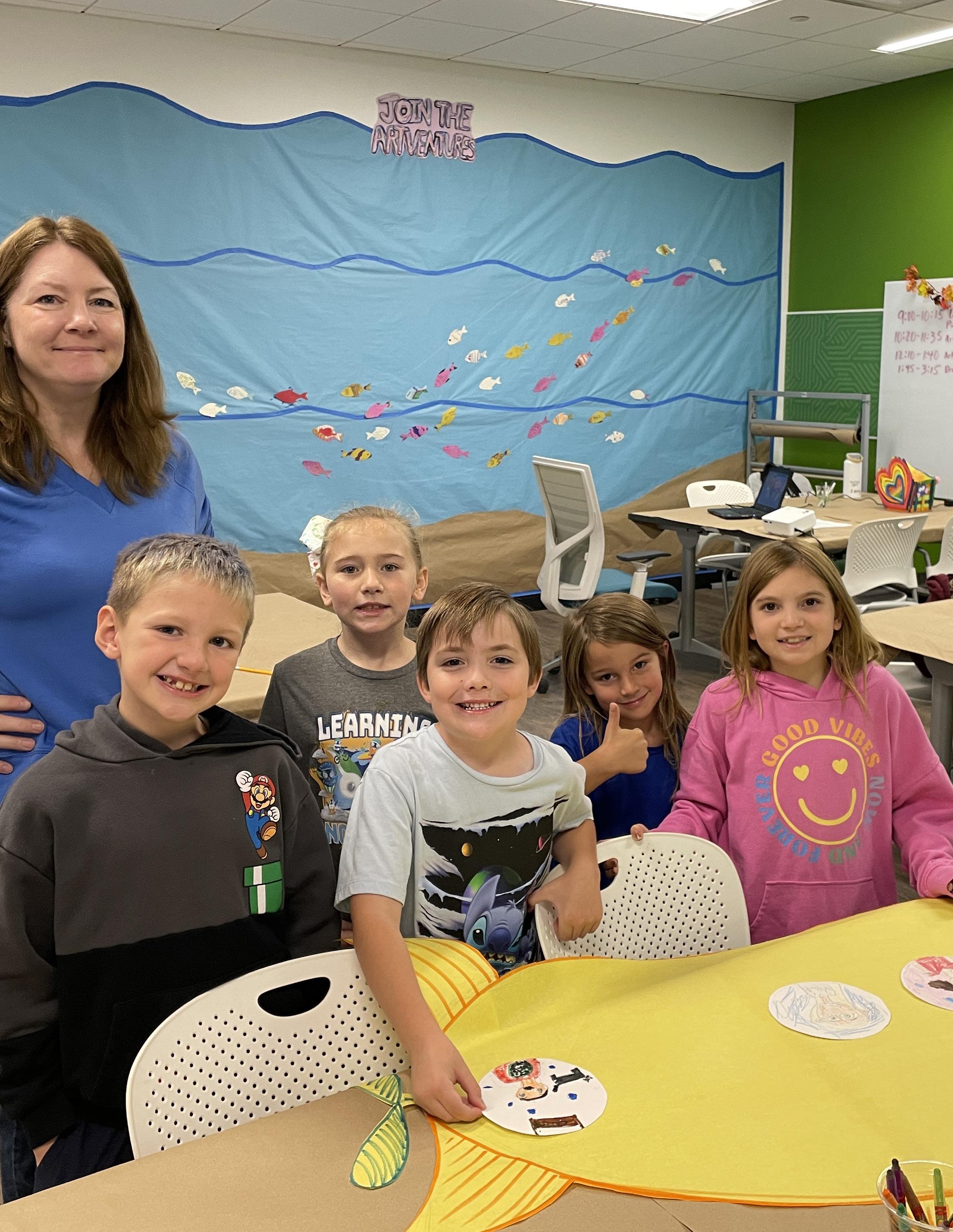
The Pennsylvania Cyber Charter School is committed to providing our students and families with multiple opportunities to engage deeply in their learning and to access the programs and services they need to be successful In addition to our robust online offerings, PA Cyber has established regional office locations throughout Pennsylvania that offer resources and support for students and families Our regional offices provide family and student-centered activities and services designed to enrich, enhance, and extend your learning experience
For a complete list of activities and services offered, please contact the Regional Representative of the nearest regional office location or visit the Family Link and Regional Office tile in Buzz
Allentown Regional Office 974 Marcon Boulevard, Suite 200 Allentown, PA 18109
Greensburg Regional Office 1040 Towne Square Drive Greensburg, PA 15601
Philadelphia Regional Office 825 Baltimore Pike Springfield, PA 19064
Pittsburgh - Warrendale Regional Office 200 Pinewood Lane, Suite 100 Warrendale, PA 15086
Wilkes-Barre Regional Office 40 East Northampton Street Wilkes-Barre, PA 18701
Erie Regional Office 1980 Edinboro Road Suite B Erie, PA 16509
Harrisburg Regional Office 3721 Tecport Drive Suite 102 Harrisburg, PA 17111
Pittsburgh - South Side Regional Office The Brix at 26 2600 East Carson Street Pittsburgh, PA 15203
State College Regional Office Creekside Plaza 1700 South Atherton Street State College, PA 16801
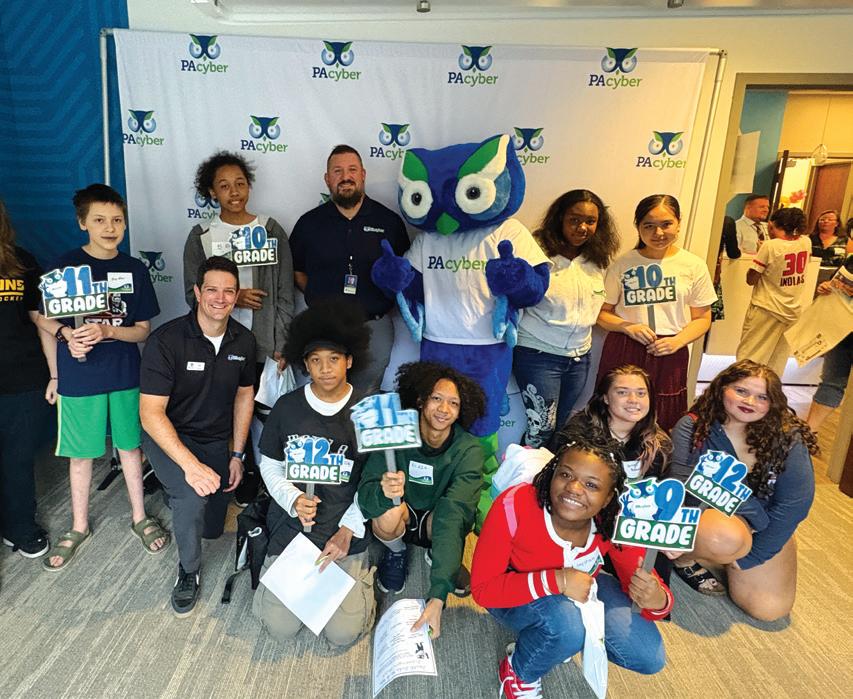
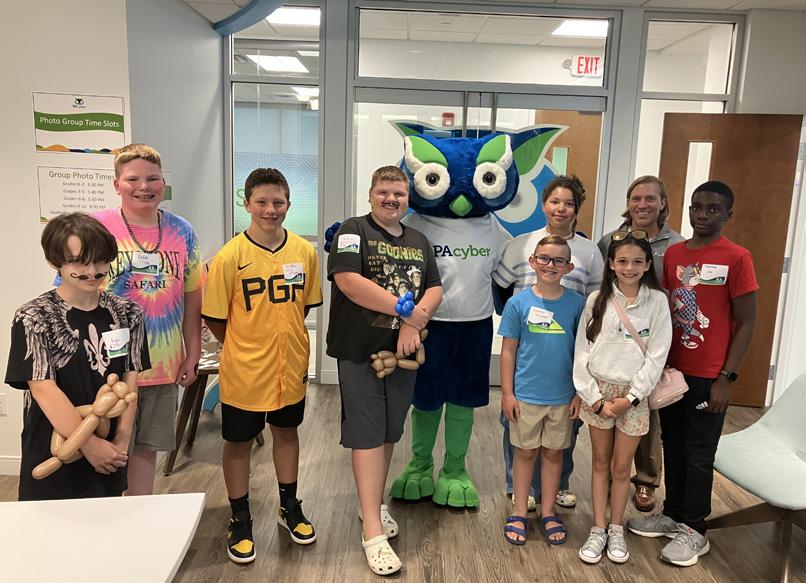
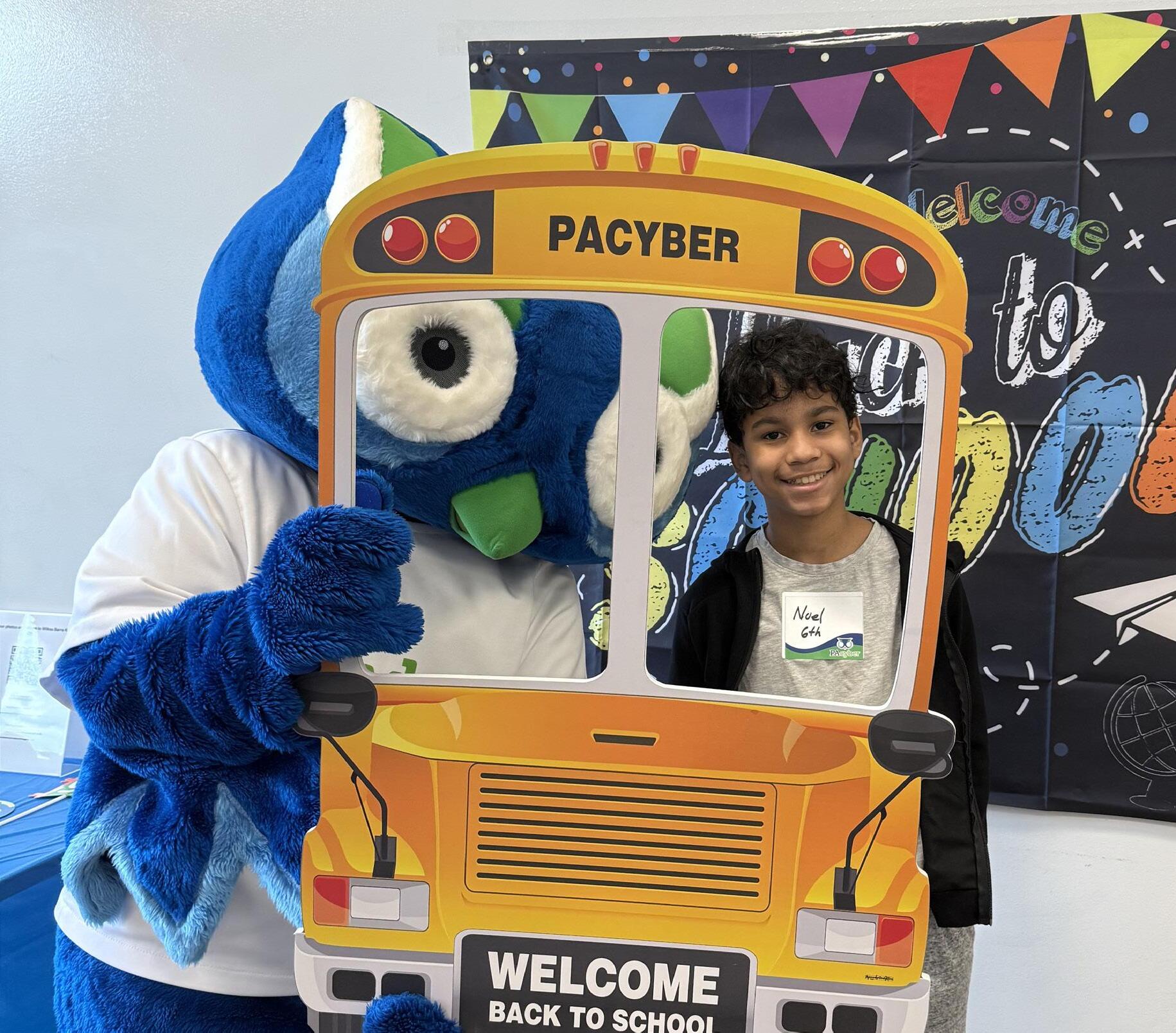
Archie, the official mascot of The Pennsylvania Cyber Charter School, is a symbol of our school’s commitment to the pursuit of knowledge and nonstop learning Archie is named after Archimedes, the ancient Greek mathematician, scientist, and innovator Throughout the year, he soars across Pennsylvania, hoping to meet as many PA Cyber students and families as possible You can meet up with Archie at one of our Family Link or other PA Cyber community events When you do, make sure to take a photo with him, and share it with us on social media!
PA Cyber’s English Language Development (ELD) program is designed in alignment with Title 22, Chapter 4 of the Pennsylvania School Code and guidance from the Pennsylvania Department of Education (PDE) to support a comprehensive and responsive Language Instruction Educational Program (LIEP) for each student identified as an English Learner (EL) Placement in an LIEP is guaranteed to all students who qualify and is provided at no cost to families
PA Cyber’s ELD program supports students who are learning English by helping them build skills in listening, speaking, reading, and writing so they can fully participate in their academic coursework Instruction is aligned to the PA English Language Development and WIDA English Language Development Standards and is designed to support both social communication and academic language development
The goal of the program is to help multilingual learners succeed in their classes and develop continued social and academic English proficiency, while strengthening communication and partnership with families The ELD Department identifies eligible students, provides direct English language instruction, supports language development within content-area classes, monitors student progress, administers required state assessments, and oversees services in alignment with state requirements
Families of students enrolled in PA Cyber’s ELD program can expect:
• Clear and consistent communication in the family’s preferred language, including instructional updates, assessment information, and schoolwide communication
• Regular, live instruction with a Pennsylvania-certified ESL Program Specialist, in addition to students’ core academic classes
• Language support within content-area classes, ensuring students can access grade-level instruction while developing English proficiency
• Access to virtual tutoring sessions across all content areas in English or the student’s primary language, as needed
• Opportunities for two-way communication with ELD teachers and staff, allowing students and families to ask questions, share concerns, and be active participants in their own education
• Ongoing monitoring of English language development, with instructional supports adjusted as students grow
• Participation in the state-required WIDA ACCESS assessment, with results used to guide instruction and program decisions
• Continued support and monitoring after exit from the ELD program, in alignment with PDE requirements
Following the Pennsylvania Department of Education’s Chapter 16 regulations, the PA Cyber Gifted and Talented team identifies, evaluates, and provides qualified students with individualized educational programs for gifted students The team works closely with PA Cyber families to maximize each student’s educational potential through the use of appropriate course and grade acceleration, delivery of optional online enrichment courses, and the provision of educational events and other supplemental programs Gifted evaluation is not recommended for students in K-2 unless sufficient evidence for testing is available
The PA Cyber Gifted and Talented program affords the following for students who have been identified as gifted:
• Personalized approaches to understand and best accommodate each gifted student’s educational needs
• Engaging educational opportunities and programs designed for advanced learners
• Live online enrichment courses
• Online discussion forums and interactive student competitions
Exclusive to PA Cyber, the STAR program is an academic incentive program that allows students not identified as gifted learners access to similar opportunities through online enrichment courses and other supplemental programs STAR students must meet specific academic and attendance criteria and should be in at least third grade
The School Counseling Department at PA Cyber works with all students to ensure their potential is fully realized in regard to academic, personal, social, and career development in order to achieve success in and out of the classroom Counselors offer support in a variety of ways, including individual, group, and classroom guidance Counselors prepare students for life after high school by advising and assisting in college, career, and post-secondary initiatives School counselors collaborate with community agencies, staff members, parents, teachers and administrators to ensure that all students are empowered to create a quality life as they acquire knowledge, learn responsible behaviors, and prepare to become lifelong learners
The primary goal of the Commonwealth of Pennsylvania’s Student Assistance Program (SAP) is to help students overcome barriers so they may achieve, remain in school, and advance School personnel will help identify barriers including but not limited to alcohol, tobacco, other drugs, social problems, family issues, teen parenting, mental health, and transitional housing Each referral is reviewed by members of the SAP team Intervention and recommendations are put into action, and support and follow-up are offered to students While SAP is a mandatory statewide program in public schools, the structure and operation of the program at PA Cyber is a unique expression of an integrated model utilizing a tailored approach to case management SAP also sponsors Youth and Teen Leadership events for all PA Cyber students throughout the school year
SAP is a larger part of the PA Network for Student Assistance and is administered by the Pennsylvania Department of Education through the PA Department of Education’s Office for Safe Schools, the PA Department of Drug and Alcohol Programs - Division of Prevention and Intervention, and the PA Department of Human Services - Office of Mental Health and Substance Abuse Services/ Children’s Bureau
In accordance with the McKinney-Vento Act, SAP works with unaccompanied youth and families experiencing barriers to fixed and adequate housing For more information on McKinneyVento, visit Department of Education, Basic Education Circular (https://www education pa gov/Policy-Funding/BECS/uscode/Pages/ EducationforHomelessYouth aspx); the SAP Course Card in Buzz; or email sap@pacyber org to reach the PA Cyber Homeless Liaison
The Pennsylvania Classroom Diagnostic Tools (CDT) are a series of online assessments, organized by content area, designed to provide valuable diagnostic insights to inform instruction and support remediation These assessments help educators identify students’ academic strengths as well as areas for improvement, enabling them to set targeted academic goals and plan focused instruction to help students meet these goals effectively


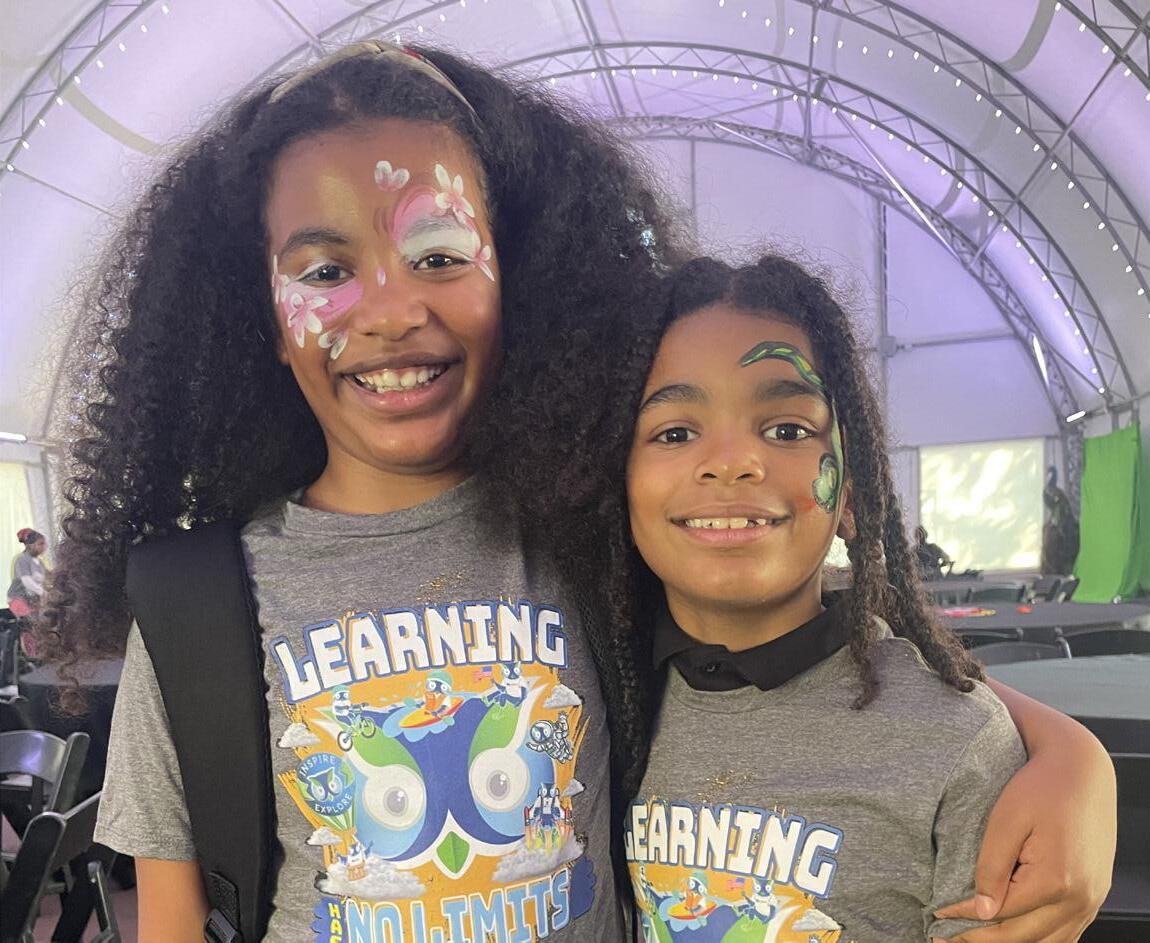
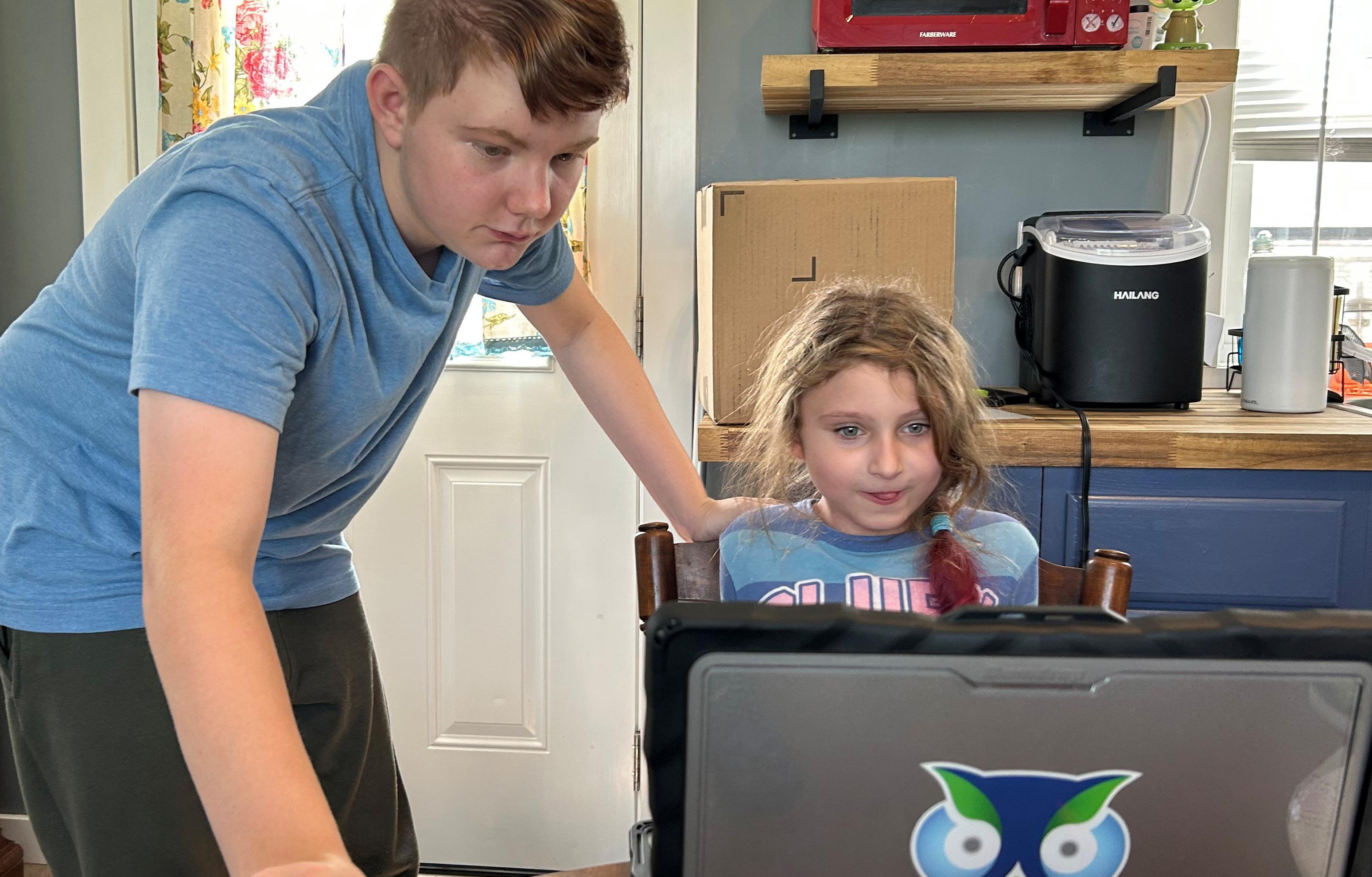
The easyCBM Universal Fluency Screener is an online assessment designed to measure students’ fluency in key reading skills It provides valuable data to help educators identify students who may need additional support and monitor their progress over time This screener helps guide instructional decisions and ensures that all students are developing the foundational skills needed for academic success
Edmentum’s Exact Path adaptive diagnostic assessments are designed to build a comprehensive profile of each student’s strengths and areas for growth By offering accurate, actionable insights, these assessments support personalized learning and allow teachers and families to track progress over time For select students in grades 9-12, the assessments cover language arts, reading, and math, providing a clear measure of growth after each administration In addition to the diagnostics, students engage in a personalized learning path both during and outside of classroom instruction, dedicating a recommended 30 minutes per week to work toward their individual growth goals
The IXL Flex Diagnostic is an adaptive assessment for K-12 math and language arts that pinpoints students’ knowledge levels, provides personalized skill recommendations, and offers real-time progress tracking for teachers The assessment uses engaging questions to build a detailed picture of individual understanding to guide tailored learning paths and close gaps
Renaissance Learning’s STAR360 adaptive assessments provide a comprehensive evaluation of reading and math skills for a select group of students in grades K-8 These assessments measure key areas such as word recognition, vocabulary, comprehension, and fluency, and are designed to be age-appropriate and aligned with state and national reading standards After each assessment, teachers use the data to identify students’ current strengths and areas for growth, enabling them to monitor progress effectively In addition to assessments, students follow a personalized learning path that supports ongoing development and academic success
PA Cyber incorporates Study Island’s ELA, Math, and Science libraries for students in grades 3 through 5 These resources are fully aligned with the Pennsylvania Core and Academic Standards, offering engaging, interactive learning experiences Study Island features a variety of activities such as games, flashcards, and videos that reinforce essential skills and support academic achievement
PA Cyber offers students virtual tutoring opportunities that include weekly teacher office hours held in our live instructional platform Students may also attend on-demand and scheduled help sessions provided by a virtual tutoring service located in the student’s Clever dashboard
IMPACT is a peer tutoring program in which a high-achieving high school student in grades 10, 11, or 12 tutors an elementary or middle school student to prepare them for the yearly PSSA exams Each high school tutor works independently with a student in a private online classroom to increase academic and critical thinking skills Each IMPACT tutoring session is supervised by a certified teacher in that subject area Throughout the program, student progress is tracked, and student strengths or areas of concern are shared with each student’s family IMPACT meets once a week online for ten weeks before the PSSA testing window Peer tutoring not only increases academic performance and test scores but also helps increase student self-esteem and social interaction
IMPACT tutoring sessions are available for students in grades 3-8 in English language arts and mathematics, while tutoring sessions for science are available to students in grades 5 and 8
Title I coaches provide a bridge for K-12 students who experience gaps in their reading and math development Students in the program will be assessed by the Title I team, which includes certified specialists in the fields of reading and math The coach and Title I team will develop an individualized intervention plan that will meet the needs of each student while helping them to realize success Student progress is measured to ensure the effectiveness of the instruction they receive
The PA Cyber Library provides students and teachers with access to Sora, a versatile online reading platform offering a wide range of digital materials, including graphic novels, magazines, ACT/SAT prep content, e-books, read-aloud books, and audiobooks Additionally, the PA Cyber Online Resource Library provides resources for parents, access to physical books, and the PA Power Library, a comprehensive database curated by the Pennsylvania Department of Education All library resources are accessible through your child’s Clever dashboard For more information, visit the PA Cyber Library
Fostering a love of reading is key to your child’s success Establishing a routine of reading each day impacts your child’s language, literacy, and overall brain development PA Cyber’s Reading Rewards Program encourages reading for enjoyment for students in grades K-6 Families can read a set number of pages, read several books each month, or set a personal goal, such as reading twenty minutes each day Parents who submit a reading log monthly will receive incentives for their child’s effort Learn more at Reading Rewards
Family Link
Connect. Share. Support.
PA Cyber’s Family Link is an outreach program that offers families the chance to connect through field trips and local parent-planned activities These events broaden and enrich the cyber school experience by creating an important social network for PA Cyber students and their families Students enjoy opportunities to spend time with classmates who share their interests, and parents can talk and share ideas with other parents who respect and understand their educational choice Family Link members are also given opt-in access to a secure, online directory of other members’ names, PA Cyber email addresses, grade levels, and geographic regions This unique directory helps families connect and communicate with others to foster support, enhance learning, and create lasting friendships
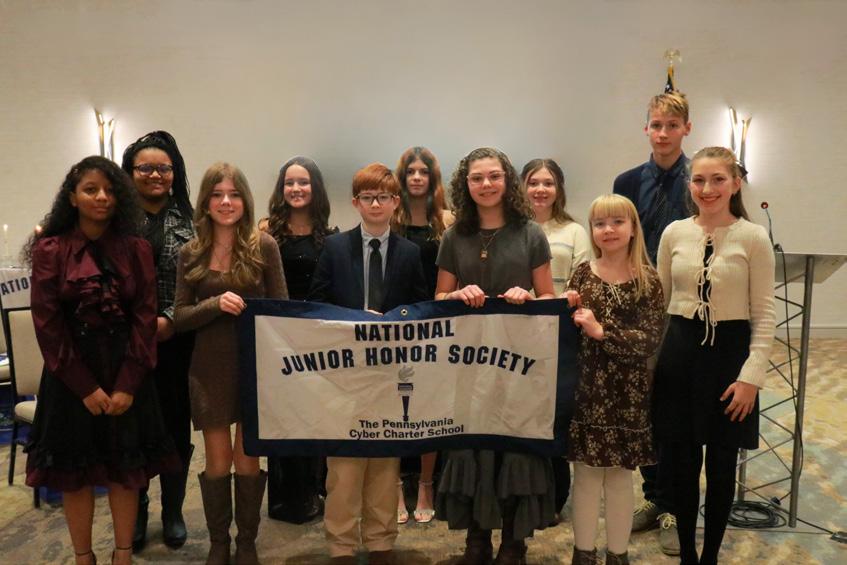
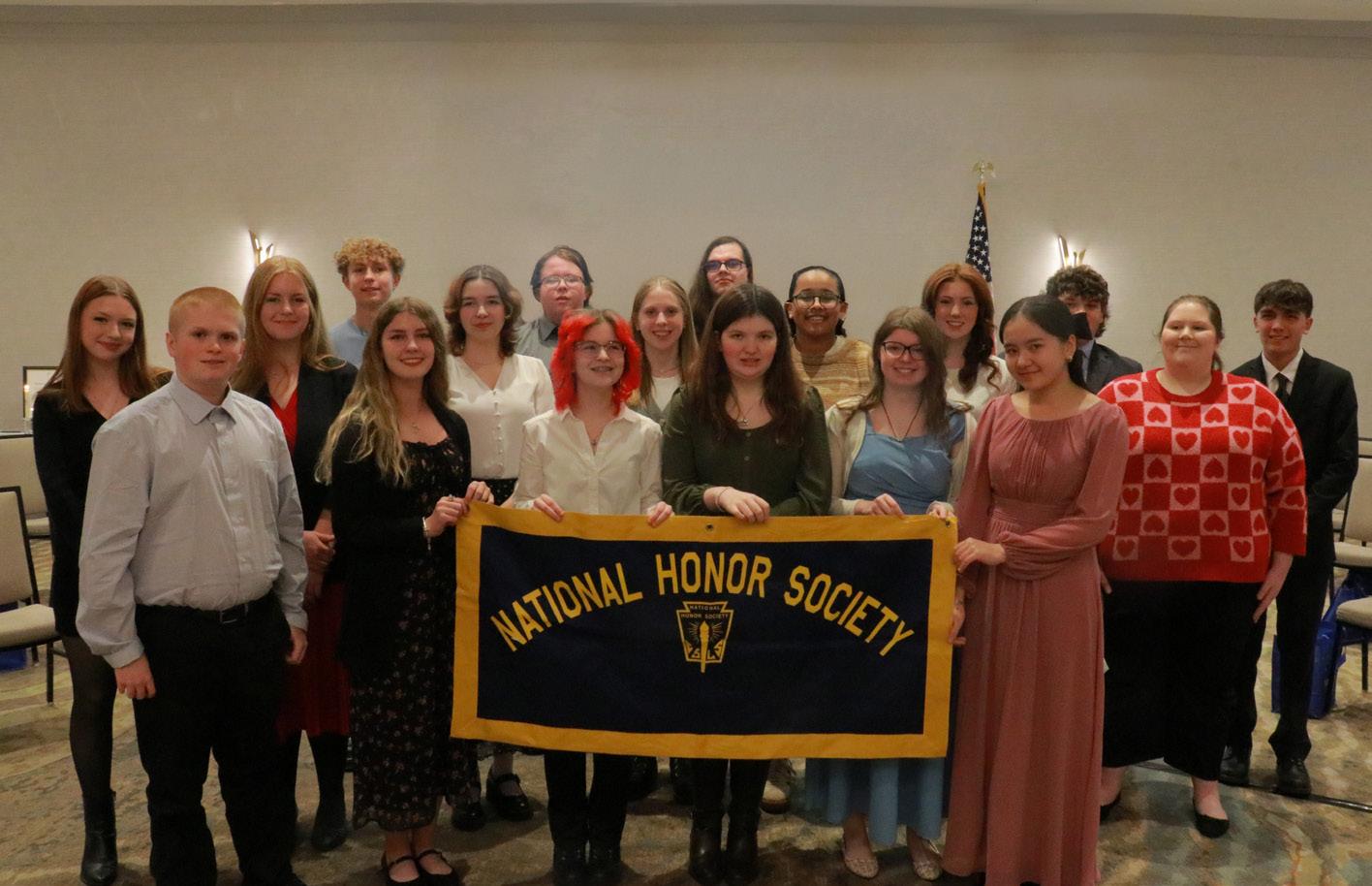
“More than just an honor roll” is the motto of the National Junior Honor Society NJHS was established in 1929 to recognize outstanding middle school students for their character, merit, leadership, service, and citizenship With over one million students participating in national honor societies across the nation, the PA Cyber chapter of the National Junior Honor Society joined the national organization in 2014 The PA Cyber chapter invites students in grades 6-9 who demonstrate the five core principles Eligible students must maintain As and Bs in all classes, demonstrate leadership and citizenship within their school, community, and other extracurricular activities, as well as complete a set number of hours of community service Members of the PA Cyber chapter are also required to attend monthly online meetings, submit monthly assignments, and complete a predetermined end-of-year service project New candidates will attend a mandatory formal induction ceremony as required by NJHS guidelines Ceremonies are held each year at locations in the western, central, and eastern regions of the Commonwealth The PA Cyber chapter of the National Junior Honor Society welcomes you to become part of a once-in-a-lifetime experience
The National Honor Society (NHS) is a national organization that consists of many chapters across the United States The National Honor Society was founded in 1921 by the National Association of Secondary School Principals by Principal Edward S Rynearson of Fifth Avenue High School in Pittsburgh, Pennsylvania National Honor Society chapters are commonly active in community service activities both in the community and at the school The PA Cyber NHS Chapter is open to students in grades 10-12 with a minimum grade point average of 3 5 or higher Selection is based on four criteria: scholarship, leadership, service, and character NHS requires service to the community, school, or other organizations Members of the PA Cyber chapter are also required to attend monthly online meetings, submit monthly assignments, and complete a predetermined end-of-year service project These projects meet the required monthly service projects New candidates will attend a mandatory formal induction ceremony, as required by NHS guidelines Ceremonies are held each year at locations in the western, central, and eastern regions of the Commonwealth
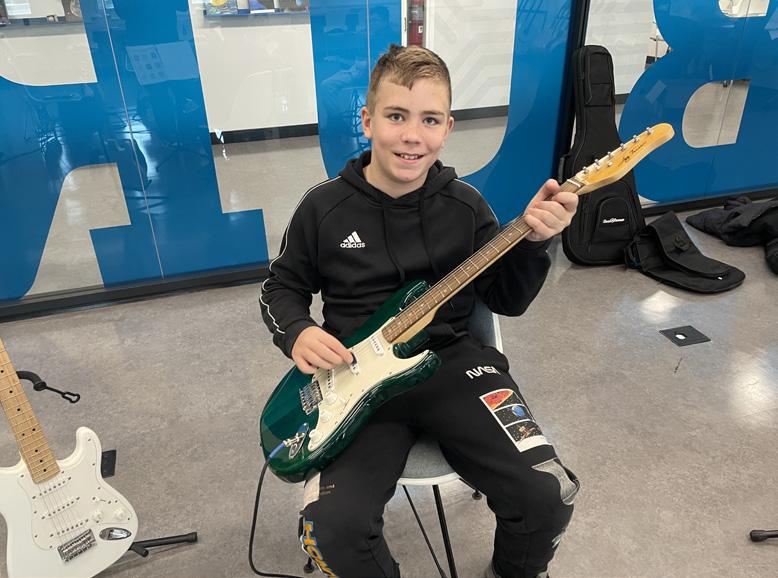
One of the easiest and quickest ways to meet other PA Cyber students is to join a club or student activity At PA Cyber, these programs meet online through our online classroom Clubs may include student officers, student-led discussions, and in-person activities No matter your interest, there is a club or workshop for you! Get involved, meet others, expand your horizons, and have fun!
ELEMENTARY SCHOOL (K-5)
• All Aboard Gamers (3-5)
• Amazing Animal Adventures (K-2)
• American Sign Language (K-2)
• American Sign Language (3-5)
• Archie’s Explorers (K-5)
• Around the World with Foreign Languages (K-2)
• Around the World with Foreign Languages (3-5)
• Art Club (K-2)
• Art Club (3-5)
• Bible Adventurers (3-5)
• Chess Club (3-5)
• Coding (K-2)
• Coding (3-5)
• Creation Station (3-5)
• Cursive Crew (3-5)
• Hands-on Science (K-2)
• Hands-on Science (3-5)
• Jr Bible Adventurers (K-2)
• Kids Kitchen Creations (K-2)
• Little Yogis (K-5)
• Ready, Set, Go (K-2)
• Ready, Set, Go (3-5)
• Show and Tell Club (K-2)
• The Munch Bunch Cooking Club (3-5)
MIDDLE SCHOOL (6-8)
• Adventures in Reading Club
• American Sign Language Club
• Art Club
• Bible Club
• Chess Club
• Creation Station
• Creative Writing Club
• Crochet Crazy
• Equestrian Club
• Esports Club
• French Club
• Game Creation and Design
• German Club
• Global Education Club (7-8)
• Good Eats Club
• Here We Grow
• Introduction to 3D Printing (AC)
• Italian Club
• Leaders of Tomorrow
• Level Up Video Game Stories
• Origami
• Outdoors Club
• Science Investigators
• Spanish Club
• Stitch Crew
• Unsolved History Club
• Vinyl Creations

HIGH SCHOOL (9-12)
• American Sign Language Club
• Anime Fan Club
• Archie’s ROTC
• Art Club
• Beyond the Mat Yoga Club
• Bible Club
• Chess Club
• Club Hope
• Coding Club
• Crochet Crazy
• Debate Club
• DECA
• Digital Fabrication: 3D Printing
• Digital Fabrication: Laser Cutting
• Dungeons & Dragons Club
• Ear Buds Podcast Club
• Electronics Builders
• Environmental Club
• Equestrian Club
• Esports Club
• Express Your Voice
• Fashion Club
• French Club
• German Club
• Global Education Club
• GSA
• History Club
• Italian Club
• Let’s Go Labs
• Math Club
• Model United Nations Club
• Monsters U
• Music Club
• Musical Theater Club
• National Parks Club
• Newspaper Club
• Outdoors Club
• Page Turners Book Club
• Photography Club
• Pittsburgh History Club
• Science Club
• Spanish Club
• Sports Talk Club
• Stitch Crew
• Student Council
• The Grub Hub Cooking Club
• Trading Card Gamers Club
• Video Production
• Vinyl Design and Beyond
• Youth Ambassador Club

Language Arts K
Language Arts K sets the stage for future success in reading and writing Students will develop an understanding of the basic concepts of print, story elements, and plot sequences through engaging texts Students will explore how to use informational texts for learning They will learn parts of a book and how to use text features They will demonstrate their ability to describe stories, make connections, and use language in a variety of ways This course features engaging videos, stories, songs, interactive games, and activities
Delivery Mode: BC
Phonics K
Phonics K invites students into the world of reading, writing, and spelling Students will learn how to read and write letters and words, focusing on mechanics This course provides explicit and systematic instruction of letter sounds in the English language, spelling, and the reading of individual words Students will build confidence and fluency with phonograms in regular practice with letter sounds through listening, speaking, reading, and writing Decodable readers, phonogram flashcards, and everyday high-frequency words are woven into lessons to help students build routines that give them the confidence they need to become successful readers and writers
Delivery Mode: BC
Mathematics K
Mathematics K encourages students to have fun with numbers and to find early success with mathematical concepts For numbers 1-20, students will learn to recognize word forms, identify and write numerical values, and compare numbers using symbols Students will also master counting to 100 and skip counting by tens The course teaches addition and subtraction to 10 using models, pictures, number bonds, and number lines Other concepts covered in this course include shapes, measurement, data collection and sorting, picture graphs, and financial literacy Students will have many opportunities to practice these mathematical concepts by engaging in interactive online games and activities and by completing hands-on offline activities
Delivery Mode: BC
Science K
In Science K, students will use their senses to explore the world The course is centered around the three domains of life, Earth and space, and physical science through the use of everyday phenomena to guide students through investigation Students will build the skills they need to explore the world by conducting simple experiments and making observations with all five senses They will learn about animals and their characteristics, plants and their life cycles, and the basic needs of all living things Through hands-on exploration of the natural world, students will notice patterns in the sky, seasons, and weather, and begin to discover exciting ideas about matter and energy
Delivery Mode: BC
Social Studies K
Social Studies K invites students to explore the world around them and how people live and work together Students will learn how different jobs help people meet their needs and wants and how tradition, family connections, and more make each family special This course engages students in map skills and a study of basic landforms and bodies of water Students will also learn about leaders, rules, and how communities work together They will explore the meaning of national symbols, special holidays, and how technology helps them every day Students will learn more about themselves, their community, and the world around them
Delivery Mode: BC
Language Arts 1 emphasizes learning for students to explore the patterns of literary and informational texts Students will read a variety of literature and engage with the structure of a story They will practice reading strategies, understand the literal meaning and purpose of texts, and receive explicit instruction in academic vocabulary Interactive close reading and comprehension strategies will teach and encourage students to grow as readers and writers They will also investigate the text, learning how to use evidence to make predictions and make inferences The course features a variety of composition practices, engaging videos, songs, and online activities
Delivery Mode: VC, BC
Phonics 1 continues building on the foundational skills learned in Phonics K through reading and writing in a supportive and engaging way Through systematic and explicit instruction, students will learn letter sounds and the formation of words through a variety of activities in reading, writing, listening, and speaking As students grow, they will use familiar spelling rules learned in kindergarten while adding to their knowledge with new rules to help them read and write a variety of words As reading individual words becomes more automatic, students will learn to read and write their own sentences This course supports students as they build independence and a love of language
Delivery Mode: BC
Mathematics 1 is an engaging course where students will build fluency with basic math facts They will extend their learning by counting to 120 and practice basic addition and subtraction facts using multiple methods up to 20, including composing and decomposing numbers Students will also use a variety of methods to engage with story problems and missing values Other concepts in this course include shapes and solids, fractions, measurements of length and time, data collection, pictographs and bar graphs, and financial literacy and U S currency Mathematics 1 is an engaging, hands-on course with online videos, activities, and physical manipulatives used to practice new skills and concepts
Delivery Mode: VC, BC
Students are encouraged to explore and discover their world in Science 1 Students will observe their surroundings through observations of the natural world and learn the concept of scientific inquiry They will develop the skills needed to ask questions and seek out answers, make predictions and observations, and collect and organize data This course furthers students’ understanding of living versus nonliving things, cycles and systems of the natural world, and more Students will investigate and classify matter by its properties, predict changes to materials, and describe the importance of light, heat, and sound
Delivery Mode: VC, BC
In Social Studies 1, students begin to explore fundamentals of social studies including map skills, cardinal directions, and oral histories and narratives Students practice these skills by reading maps of the U S and the globe, understanding the geography of their community, and ocean exploration Students will also learn about what it means to be an American, the structure of government, and review national symbols They will also investigate basic economic concepts, understand communities past and present, and examine work in the community Social Studies 1 is an engaging class that includes videos, projects, and a variety of reading and writing activities
Delivery Mode: VC, BC
In second grade, students become strong readers and writers by building on the foundations of first grade Students will continue to spell and develop their vocabulary, apply new grammar concepts, and participate in handwriting and writing activities through thematic units Students will engage in a variety of texts including a combination of both literary and informational text, poetry, short stories, and more Students will examine genre, make predictions and inferences, and learn about the author’s purpose The course encourages critical thinking, written expression, and a love of literacy
Delivery Mode: VC, BC
Phonics 2 invites students to continue their journey in reading and writing as they discover how letters and sounds work together to create meaning Through engaging practice, students will strengthen their understanding of letter sounds and build fluency with phonograms Students will explore new spelling patterns and more complex words and will continue to move from sounding out words to reading and writing their own sentences with clarity and confidence
Delivery Mode: BC
Mathematics 2
Mathematics 2 expands on the concepts introduced in first grade Students will build fluency with basic math facts and add and subtract within 20 to solve one- and two-step world problems using strategic methods and spiraling They will use place value to add and subtract within 1,200 and demonstrate skills in manipulating numbers in hundreds, tens, and ones Students will also measure and compare length, and dive into concepts such as fractions, multiplication and division, and geometric shapes They will continue their study of money, time, and financial literacy as they collect data and graph their findings Mathematics 2 is a course designed to engage students with physical manipulatives as well as online videos, lessons, and interactive activities
Delivery Mode: VC, BC
Science 2
In Science 2, students will learn and practice science concepts through engaging reading, phenomena-based learning, and handson investigations They will explore properties of matter, energy, interactions in ecosystems, modeling, and the surface of the Earth Science 2 also includes a study of the solar system, weather, and how they interact with plants and animals Students will also examine patterns, engage in critical thinking and questioning, and learn how to use tools to represent their learning
Delivery Mode: VC, BC
Social Studies 2
Social Studies 2 introduces the concept of basic government through an understanding of citizenship, history, economic development, and geography Students will be given the chance to learn about their own communities, monuments, continents and oceans, and more They will examine different kinds of communities and the people who reside in them They will also compare and contrast the role of both global, national, and local environments Social Studies 2 is designed for students to engage with real-world content in a variety of online activities, projects, and interactive activities
Delivery Mode: VC, BC

Language Arts 3 combines reading, writing, grammar, and spelling into a comprehensive course Students will explore diverse fiction and nonfiction by reading novels, poems, informational texts, plays, and shorter pieces of fiction Students will use comprehension skills to analyze and respond to these pieces of literature Using the steps of the writing process, a variety of writing pieces will be produced, including narratives, opinions, informative essays, letters, and poems Proper grammar and spelling are also taught, including elements such as the parts of speech, proper capitalization and punctuation, figurative language, verb agreement, and types of sentences The reading selections for this course include Ramona Quimby, Age 8; Owen and Mzee; Who Was Roberto Clemente?; and Charlotte’s Web.
Delivery Mode: VC, BC
Mathematics 3
Students in Mathematics 3 will refine their addition and subtraction skills, by working with three- and four-digit numbers with and without regrouping The concepts of multiplication and division are introduced, and students are expected to understand and master basic multiplication and division facts Fractions are reviewed, and students will understand the relationship between fractions and decimals Mathematics 3 also includes studies of time, money, geometry, measurement and data, and graphing Solving real-word scenarios through word problems is emphasized
Delivery Mode: VC, BC
Students in Science 3 will be introduced to experimentation as they journey through the Earth They will begin by learning about the basic needs of all life on Earth By participating in simple experiments, students will explore the water cycle, the weather and its patterns, energy, and the role of plants in the production of oxygen and their importance to human survival Students will expand their knowledge through videos, pictures, short readings, projects, and hands-on experiments Students will understand that experiments require the use of instruments, observation, recording, and drawing evidence-based conclusions In the second semester, students begin diving deeper into habitats, biomes, and seasonal adaptations They will continue with types of terrain, inherited characteristics, matter, gravity, and even magnetism Finally, students will look a bit deeper into things they encounter such as biodiversity and natural resources
Delivery Mode: VC, BC
Social Studies 3 introduces students to the geography of the regions of the United States They will access maps, interpret map elements, and summarize physical and human characteristics of a region They will also analyze the impact that humans have on their environment Students will then learn how state and federal governments operate Students will also be able to connect the rights of a citizen to the responsibilities of citizenship In the second semester, students will focus on the principles of economics Students will learn how the economy works through earning, spending, and saving money Students will move into identifying heroic figures both past and present and interpreting timelines Students will then assess American culture during the colonial times They will also analyze immigration and the contributions made to the United States Finally, they will relate landmarks to their historical significance
Delivery Mode: VC, BC
Language Arts 4 integrates reading, writing, speaking, listening, and the study of vocabulary and grammar in a way that engages today’s learners and supports them in building a broad set of literacy skills Students will read novels, short stories, plays, poems, and story books to emphasize language arts content and skills In addition, students will learn how informational text differs from literary text and how different forms of informational text differ from each other Writing assignments focus on narrative, persuasive, expository, and research modes that emphasize the use of reasoning and details to support opinions and emphasizing both prewriting and standard English conventions Students will also learn how to present information orally while using multimedia In the Blended Classroom, students will self-select two novels to read from the following titles: Bud, Not Buddy; Tales of a Fourth Grade Nothing; The Tale of Despereaux; and Frindle In the Virtual Classroom, students will read Tales of a Fourth Grade Nothing; Where the Mountain Meets the Moon; Animal Camouflage; and Geology.
Delivery Mode: VC, BC
In Mathematics 4, students build upon their knowledge of multiplication and division in developing fluency with multi-digit multiplication and dividing to find quotients involving multi-digit dividends Through real-world examples and instruction centered on both conceptual understanding and procedural fluency, students will also learn about number sense and operations, fractions and decimals, and geometric figures The course also incorporates algebraic thinking and concepts, using rules to generate patterns, data analysis, and problem solving Students will engage with online activities, projects, and more in Mathematics 4
Delivery Mode: VC, BC
Science 4
In Science 4, students will develop into scientists as they continue to explore biological, physical, Earth, and environmental sciences Students will engage in phenomena-based lessons that drive critical thinking and inquiry skills Students will study energy and motion, structure and functions, patterns of weather, renewable and nonrenewable resources, and more Students will have the opportunity to conduct numerous hands-on and online scientific experiments and will learn about career paths in various scientific fields
Delivery Mode: VC, BC
Social Studies 4 leads students through a journey exploring geology, history, civics, and economics, primarily in the early development of the United States Along the way, students will discover the cultural and historical impacts of Native Americans and early European Settlers They will also learn relevant history involved in the establishment of early American colonies and government, including important founding documents of the United States and an introduction to primary sources They will understand the establishment of rules and laws, how they led to the formation of federal and state governments, and how that reflects government and regulations in their communities Students will conduct research and examine the ideas of innovation, invention, and different cultural perspectives that shaped the United States
Delivery Mode: VC, BC
Language Arts 5 integrates reading, writing, speaking, listening, and the study of vocabulary and grammar in a way that engages today’s learners and supports them in building a broad and diverse set of literacy skills Students will read a variety of texts including novels, short stories, plays, poems, and story books to emphasize language arts content and skills Students will study classic literature as well as more contemporary forms This course also focuses on skills for reading and analyzing informational text Writing assignments focus on narrative, persuasive, and expository modes and emphasize the use of reasoning and details to support opinions The writing process and standard conventions of grammar and spelling are integrated into writing instruction In the Blended Classroom, students will self-select two novels to read from the following titles: Because of Winn-Dixie, Number the Stars, and The Watsons Go to Birmingham - 1963 In the Virtual Classroom, students will read Number the Stars, The Island of the Blue Dolphins, The Tarantula Scientist, and Into the Volcano
Delivery Mode: VC, BC
Mathematics 5 focuses on several critical areas including but not limited to developing fluency with addition, subtraction, multiplication, and division of fractions Students will learn to extend division to 2-digit divisors, integrate decimal fractions into the place value system, and increase an understanding of operations with decimals to hundredths They will develop a fluency with whole numbers and decimal operations Students will also be introduced to coordinate geometry and a focus on volume, preparing students for middle school math concepts Students will continue to strengthen their math skills through mathematical reasoning and communication, real-world applications and modeling, and problem-based learning
Delivery Mode: VC, BC
Science 5 continues to build on elementary science skills and content in preparation for middle school science Students will participate in hands-on and interactive learning that emphasizes the concepts of both Earth and space science Students will look at systems and planets, patterns in space, measurements of force and time, matter and energy in ecosystems, and human impact in these spaces In addition, students will engage in discovery of physical and chemical changes, the interconnection of organisms, and the scientific process This course provides students with engaging labs, online activities, videos, games, and more to help our students prepare for the next step in science
Delivery Mode: VC, BC
Social Studies 5 asks students to use their understanding of social studies skills and concepts as they study the development of the United States, making connections between the areas of geography, history, government, and economics Students will learn about European exploration and the colonization of North America, thinking about early American societies, colonial life and government, the Revolutionary War, and the formation of the United States through causes and key events Exploration of technology, how communities change over time, and civic and global issues will continue throughout the course
Delivery Mode: VC, BC
In Language Arts 6, students will learn the deeper truths of storytelling and the elements that bring these ideas to life Considering the modes of both fiction and nonfiction, students will engage with lessons in plot, character, dialogue, theme, setting, and more Utilizing and developing critical thinking skills and analysis will occur throughout the course Students will also be exposed to elements of writing including analytical, persuasive, informative, and narrative pieces They will also be engaged in the writing and analysis of poetry and drama The course focuses on grammar and mechanics with a strong development of sentence structure and paragraph formation Students in the Blended Classroom will read one required text and one self-selected text independently throughout the course selected by students from a list of options These selections include The City of Ember, Walk Two Moons, and Freak the Mighty Students in the Virtual Classroom will read two required texts: The Magician’s Elephant and A Wrinkle in Time
Delivery Mode: VC, BC
Mathematics 6
Mathematics 6 provides a solid foundation focused on conceptual changes, understanding and active problem-solving Students will learn how to express, work with, and solve problems using percentages They also learn similarities and differences between ratios, rates, and proportions, applying these ideas to solving problems involving measurement Students will also be introduced to integers and how to perform operations on this number set Students will also learn about expressions, equations, and inequalities, as well as linear equations and the coordinate plane These skills will also be applied to geometric concepts and an exploration of statistics
Delivery Mode: VC, BC
Science 6
Science 6 engages students in physical, life, and Earth sciences through hands-on investigations, phenomena-based learning, and real-world problem solving Students will have the opportunity to learn the basics of conducting and designing experiments, investigating the world around them, and understanding what it takes to be a scientist They will identify the effects of weather and climate on our world Additionally, they will study cells and systems, growth and development, and do a deep dive into energy This course includes a variety of labs, online activities, and inquiry-focused content
Delivery Mode: VC, BC
Social Studies 6 introduces students to the beginnings of the world In the Blended Classroom, students will focus on ancient civilizations Students will trace the path of human origins and follow human migration around the Earth This course will help students understand why we study history and the process in which we form conclusions about events in the past and how they think about the future In the Virtual Classroom, students will focus on the study of World Geography They will study the past and present of unique places in our world ranging from The United States and Canada to the South Pacific Students will study maps, engage in the five themes of geography, and consider real-world geographical, cultural, and environmental issues In each course, emphasis will be placed on critical thinking and connecting themes in history and geography to our modern world
Delivery Mode: VC, BC
Through analysis of written, spoken, and multimedia texts, students will become more critical consumers of information and of various forms of media They will also synthesize and organize ideas to prepare structured essays in several different modes, including narrative, persuasive, and expository Each lesson will guide students in learning and applying specific strategies for reading and writing different types of texts A review of basic English mechanics is included in many of the writing lessons, along with a discussion of levels of formality required for different purposes and audiences This course provides instruction in many modalities, including audiovisual presentations and videos, interactive activities, projects, and discussions Opportunities for teacher feedback are frequent, detailed, and varied In this course, students study the English language closely—both its history and evolution, and the less obvious ways it can be used to convey meaning The reading assignments and novels are selected to guide students in understanding how language can be used to convey broader themes in poetry, drama, and humorous or satirical texts Students in the Blended Classroom will read extended texts independently throughout the course: one text is pre-selected, and one text is selected by students from a list of options The selections include The Crossover, The Outsiders, The Cay, A Christmas Carol, and Measuring Up Students in the Virtual Classroom will read a series of extended texts throughout each quarter The selections include The Outsiders, It’s Trevor Noah: Born a Crime: Stories from a South African Childhood (Adapted for Young Readers), Measuring Up, and Everywhere Blue Delivery Mode: VC, BC
Students in Mathematics 7 will extend their understanding of basic operations and increase their knowledge of ratios, rates, and proportional reasoning Learners will also work with equations, factoring, and problem solving In order to strengthen their understanding of coordinates, students in Mathematics 7 continue their study of the coordinate plane by working with ordered pairs, linear and nonlinear functions, and patterns This course offers a solid foundation in mathematics by exploring topics that include geometric concepts and probability The work in geometry includes lines, rays, segments, angles, triangles, quadrilaterals, circles, irregular figures, prisms, and cylinders Other topics in the course include polynomials, probability, multi-step equations, word problems, fractions, decimals, and absolute value Mathematics 7 will prepare students for the study of Algebra
Delivery Mode: VC, BC
Science 7 explores the Earth, space, energy, and more! Students will continue to hone their experimentation skills and scientific understanding in this course Students will ponder the wonders of space and the Earth, learn the mathematical and scientific advancements that lead to the modern system of taking and sharing measurements, and reflect about the conservation of energy Experiments, projects, and activities allow students to work as scientists and gain an important understanding of a variety of scientific concepts that are encountered every day
Delivery Mode: VC, BC
Social Studies 7 focuses on the history of the United States This survey course emphasizes how ideas, events, and philosophies have shaped the nation In this course, students will learn about America’s past while mastering the skills of historical interpretation Major topics in the first half of the course include Colonial America, the American Revolution, Manifest Destiny, the Civil War, and Reconstruction The second half of the course focuses on the growth of industry, World War I, World War II, the Civil Rights Era, and the Vietnam War Social Studies 7 uses a skill-development approach to guide students from early U S history to the present Delivery Mode: VC, BC
English 8
In English 8, students will read and analyze various kinds of written texts, including novels and short fiction, informational texts representing a wide range of topics and forms, and several one-act plays They will explore the nature of creativity, the processes that tend to produce good literature, and the features of experimental and multi-genre forms of fiction Students will write their own narratives and essays, using the readings and class discussion as sources of ideas for reflection, analysis, and argument They will learn better ways to discuss their thoughts and perceptions with others by practicing their skills in collaborative discussions, journals, and presentations Special emphasis is placed on reading in certain content areas, such as science and history, as well as understanding and thinking critically about news and media sources In the process, they will study the impact of point of view on nonfiction texts Students will also study the relationship between poetic expression and several conventions of language Students in the Blended Classroom will read extended texts independently throughout the course: one text is pre-selected, and one text is selected by students from a list of options The selections include Stargirl, Anne Frank: Diary of a Young Girl, The Pearl, That Was Then - This Is Now, and Hidden Figures: Young Readers Edition Students in the Virtual Classroom will read a series of extended text throughout each quarter The selections include Stargirl, Anne Frank: Diary of a Young Girl, Brown Girl Dreaming, and Manga Classics: The Stories of Edgar Allan Poe
Delivery Mode: VC, BC
In Mathematics 8, students explore a variety of concepts and learn to implement real-world applications to the more abstract algebraic concepts found throughout the course Multi-step equations, graphing lines, and interpreting slopes are just a few of the concepts students will work with to gain a solid understanding of algebraic equations and problem solving Additional topics students explore include number systems, square roots, sequences, rational and irrational numbers, linear and algebraic expressions, probability and data representation, surface area, and the Pythagorean theorem After completing this course, students will be prepared for Algebra I
Delivery Mode: VC, BC
Science 8 expands upon students’ understanding of the structures of the Earth, interactions within the environment, life connections, and the systems of the human body Students will work on developing critical scientific skills that allow them to effectively ask questions, design experiments, collect and analyze data, and communicate results They will consider how humans can both positively and negatively affect the population, environment, and self at the local, national, and global scale Additionally, students will dive into how the main organ systems of the human body work together to keep us alive and healthy Connections to scientific content are made through projects, activities, and experiments that deepen student scientific understanding
Delivery Mode: VC, BC
Social Studies 8 focuses on the significance of government, law, and politics Students will examine the purposes and functions of federal and state government, law, and political systems In the first half of the course, students will evaluate the role of civic responsibility to their families, communities, and country including voting and being a productive member of society The second half of the course takes a more individualistic approach as students closely examine topics such as the justice system, local government, the environment, and the economy Learners will understand the role that they play in each of these topics and the differences they can make Students will get to know leaders and influential people who have championed many causes including civil rights and the environment Students will also learn proper ways to interact in society including interpersonal skills and respecting differences in others, including those with disabilities By the end of this course, students will have a deeper understanding of their civic responsibilities as well as the difference one individual can make in society
Delivery Mode: VC, BC
Pennsylvania Public School Law requires all students to complete an annual course in physical education In compliance with the law, students in grades K through 6 are required to complete 36 hours of organized, supervised physical activity each school year Students will receive a physical education kit which includes a workbook and items to complete different physical activities Students are required to complete at least half of their physical education hours using the items they receive in the physical education kit Students are also required to record their physical education hours in the PA Cyber Physical Education Log Looking to have a little more fun in Physical Education? Students in grades 3-6 have the option to take Physical Education with a live instructor one day a week Students can record this hour on their Physical Education log towards the completion of the 36-hour requirement
Delivery Mode: AC
Pennsylvania Public School Law requires all students to complete an annual course in physical education In compliance with the law, students in grades 7 and 8 are required to complete 72 hours of organized, supervised physical activity each school year Students will receive a physical education kit which includes a workbook and items to complete different physical activities Students are required to complete at least half of their physical education hours using the items they receive in the physical education kit Students are also required to record their physical education hours in the PA Cyber Physical Education Log Looking to have a little more fun in Physical Education? Students in grades 7 and 8 have the option to take Physical Education with a live instructor one day a week Students can record this hour on their Physical Education log towards the completion of the 72-hour requirement
Delivery Mode: AC
By taking Middle School Health, students begin to learn about and adopt healthier lifestyles, diets, exercise routines, and family dynamics This course covers topics from improving lifestyles to nurturing familial relationships to lessening stress and promoting longer, healthier lives Students study mental health and how it impacts the overall health of any individual directly Finally, students learn more about decision-making and the execution of decisions that lead to improved overall health Topics in this course include nutrition, fitness, family, peers, the health triangle, communication, conflict, emotions, disease and disease prevention, alcohol, drugs, tobacco, sexually transmitted diseases, abstinence, and health services This course is appropriate for grades 7-8
Delivery Mode: AC
Middle School Nutrition and Personal Fitness encompasses a variety of topics with a focus on nutrition, dietary needs, and physical fitness In this course, students develop a foundation within the basics of nutrition principles and practices, learn to read food labels, and understand food safety concerns In regard to physical fitness, students are exposed to exercise guidelines that promote healthy lifestyles This course is appropriate for grades 7-8
Delivery Mode: AC
Students in grades Kindergarten through eighth grade are required to take an ArtsAlive! course each school year in order to meet the Pennsylvania Department of Education’s Fine Arts requirement
ArtsAlive! is an engaging, video-based arts series It is designed to raise awareness and improve understanding of the creative and performing arts, including music, visual and media arts, dance, theater, and the literary arts ArtsAlive! will focus on the role of the arts and artists in society, and it will identify the impact of art in the lives of students Each course includes videos that bring the arts to life Grade-appropriate activities and response questions will inspire students to become involved in the arts and will assess understanding of the material and concepts presented Every ArtsAlive! video, activity, and assessment are aligned with state and national standards
ArtsAlive! Kindergarten is an engaging exploration of the arts through visually striking lessons in music, theater, dance, and the visual arts Students are exposed to various forms, styles, and genres within each discipline by exploring each arts’ elements, brief history, and key creators Through hands-on projects, students are encouraged to think creatively and have fun! Accompanying ArtsAlive! Kindergarten is a series of storybooks that follow two young students, Kate, a squirrel, and Oliver, a beaver, as they, too, learn about art in their forest classroom from their eccentric teacher, Dr Albert, an owl
Delivery Mode: AC
ArtsAlive!
ArtsAlive! First Grade guides students through a captivating exploration of the arts through a series of media-rich lessons in music, acting, creative movement, the visual arts, and creative storytelling Students are exposed to many forms, styles, and genres of art from around the world The lessons in ArtsAlive! First Grade connect students to the overall theme of character, which is explored throughout each discipline Through hands-on projects, students are encouraged to think creatively and have fun while deepening their appreciation for the arts Accompanying this course is a series of storybooks that continue to follow two young students, Kate and Oliver, and their friends as they move into the fascinating world of the first grade
Delivery Mode: AC
ArtsAlive! Second Grade
Through a series of engaging, media-rich lessons, ArtsAlive! Second Grade takes students through lessons in music, acting, creative movement, the visual arts, and creative writing Using a wide range of artistic genres, styles, and forms, students will explore the theme of setting through hands-on projects and creative exercises Each lesson is created to encourage original thought while also fostering a deeper artistic appreciation in each student Accompanying this course is a series of storybooks that continue to follow two second-grade students, Kate and Oliver, and their friends as they learn and grow in the second grade
Delivery Mode: AC
ArtsAlive! Third Grade
ArtsAlive! Third Grade fosters students’ creativity and self-expression through a series of fun, engaging, and thought-provoking lessons in creative writing, music, acting, dance, and the visual arts Using hands-on projects throughout the course, students explore the theme of artistic form and structure as they relate to all the arts While learning artistic structure, students will explore their creativity and continue to grow a deeper appreciation for their own self-expression Accompanying this course is a chapter book that takes students on a journey along with two other third-grade students, Kate and Oliver, and their friends as they learn and create throughout their third-grade experience
Delivery Mode: AC
ArtsAlive! Fourth Grade
In ArtsAlive! Fourth Grade, students will explore creativity and self-expression through media-rich lessons in creative writing, music, acting, dance, and the visual arts Through these lessons and hands-on projects—like playing the recorder and creating awesome visual arts pieces—students will explore the theme of point of view as it relates to the arts as a whole While exploring the concept of point of view, students will use their creativity to grow a deeper understanding and appreciation of the arts and their own self-expression Accompanying this course is a chapter book that encourages students to relate the ArtsAlive! lessons to their own experiences through a series of fun and engaging stories told by Kate, Oliver, and their friends
Delivery Mode: AC
In this course, the arts come alive through a series of engaging, media-rich lessons! ArtsAlive! Fifth Grade takes students through topics in music, acting, dance, the visual arts, and creative writing by diving into their elements and fundamentals Students will explore a wide range of artistic genres, styles, and forms—both modern and historic—through hands-on projects, like playing the recorder and other creative exercises As students experience these lessons and exercises, they are encouraged to foster their own creativity by engaging in unique, original thought Students will also gain a deeper, life-long appreciation for artists, musicians, actors, dancers, and writers Accompanying this course is a chapter book that continues to follow two fifth-grade students, Kate and Oliver, and their friends through their education, both in school and out, as they continue to learn and grow
Delivery Mode: AC
The arts come alive in ArtsAlive! Sixth Grade as students explore and experience the power of creativity and ingenuity through media-rich lessons in music, acting, creative writing, and the visual arts Organized into four Experiences, students will explore the step-by-step creative process as they learn how to tell stories with originality and imagination Students will start by learning how to play the ukulele while writing their own songs They will explore storytelling through acting, film, and theater as they try their hand at writing their own scenes As they explore the art of comic strips, animation, and graphic novels, they will learn how powerful images can be as a storytelling tool And lastly, students will uncover the mystery of myths and legends as they create their own through words, images, and music Each online lesson is connected to a printed notebook designed to help students reinforce topics and skills through hands-on activities
Delivery Mode: AC
Explore and experience the arts through ArtsAlive! Seventh Grade’s engaging, media-rich lessons in music, acting, creative writing, digital media, and the visual arts Organized into four hands-on Experiences, students will spark their creative imagination as they explore why and how the arts can create personal and global change In their first Experience, students will learn the ukulele to express themselves through music and song Next, they learn about character development and mind mapping through sculpture and scenic design Through the next Experience, students will explore the power of spoken word, its journey from activism to art, and its place in today’s society And finally, students will explore the magic and wonder of comedy as they create their own laughable moments Each online lesson is connected to a printed notebook designed to help students reinforce topics and skills through hands-on activities
Delivery Mode: AC
The arts, creativity, and imagination are all important aspects of our lives In ArtsAlive! Eighth Grade, students will explore and experience how these creative elements can enhance and enrich their own lives Through a series of four Experiences, students’ creativity will bloom as they explore media-rich lessons in music, acting, media arts, entrepreneurship, and creative writing As they embark on their first Experience, students will use an instrument called a melodica to continue their exploration of music and storytelling through song Students will become entrepreneurs as they create their own brand through marketing, graphic design, and creative storytelling As they continue through their exploration of creativity and imagination, students will focus on the importance of clear and effective communication skills while also being clever and unique And students will wrap up their ArtsAlive! Experiences by using all of their skills to craft their own life story into a scene for the screen or stage Each online lesson is connected to a printed notebook designed to help students reinforce topics and skills through hands-on activities
Delivery Mode: AC
The landscape of career and college readiness is rapidly changing The Pennsylvania Department of Education requires all public schools to provide career and college readiness programming to all students in grades Kindergarten through 12
Students in grades 2, 5, and 8 are required to complete one of the career classes listed below to meet the requirement set forth by the Commonwealth These courses are asynchronous and are developed around Xello’s online software By the end of each course, students will create a portfolio of work that follows them through their educational journey
Second-grade students will be introduced to the world of careers and work through Xello’s online career exploration software to help the residents of Career Town solve a mystery Students will learn about different types of jobs that people do to earn a living They will also examine their own interests and abilities to think about what they might like to do when they grow up By the end of this course, students will reflect on their interests and talents to develop multiple pieces of work to begin a career portfolio
Delivery Mode: AC
Fifth-grade students will learn about careers, work, and entrepreneurship in this course Students will utilize Xello’s online career exploration software to learn more about themselves and the world of work and careers Through this course, students will understand how their interests, skills, and talents can help them determine potential career paths for their future By the end of this course, students will use what they have learned to add multiple pieces of work to their career portfolio
Delivery Mode: AC
Eighth-grade students will expand their knowledge of career awareness and begin developing a plan for their lives after school Students will complete personal interest inventories and explore potential careers by participating in a range of activities using Xello’s online career-based program In Career Forward 8, students will learn what types of careers they may be interested in and how to use those interests to create an initial career plan This course will allow students to practice effective speaking and listening skills and give them the opportunity to learn more about personal finance and entrepreneurship Career Forward 8 will help students plan a path for high school success and beyond
Delivery Mode: AC
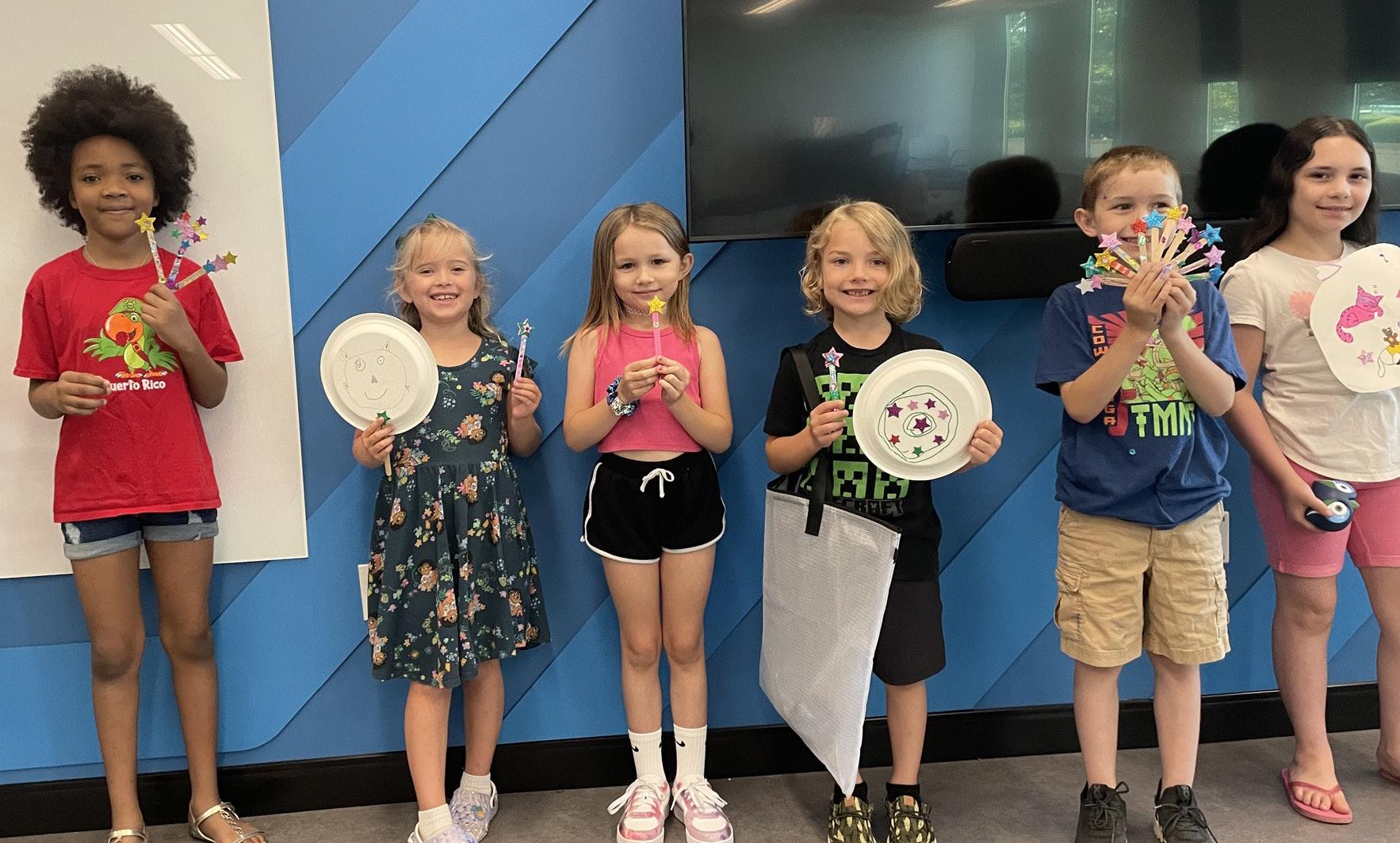
Art K
In Art K, students are introduced to the ways in which they can express ideas and demonstrate their creativity through art Throughout this course, students are encouraged to use their imagination to create art, use a wide variety of materials to make their artwork, and learn safe methods for using those materials Students use multiple techniques while working with the same artistic medium, and they create various scenes In addition, Art K encourages students to begin thinking about the artwork of others Finally, students create works of art that are of a more personal nature, including art depicting their own community, a self-portrait, and an illustration of their favorite book Throughout Art K, students learn art terminology so that they can connect ideas and demonstrate the beginnings of a strong artistic foundation
Delivery Mode: AC
Art 1
In Art 1, students learn how daily life can be used as inspiration and how it can be depicted through artwork They categorize artworks according to the subject matter each portrays Additionally, students learn to recognize the elements of art and the principles of design, and they rate artwork Students explore the ways in which artwork is created outside of the school setting, and they discover that art is made for different reasons As practicing artists, students will develop their art vocabulary, art understanding, and artistic skills as they work through prompts supplied in the course
Delivery Mode: AC
In Art 2, students explore artistic expression They also learn to organize art into categories and to identify the various methods and materials used to create art Throughout this course, students expand their artistic vocabulary, using it to describe the works they are studying They explore the ways in which color can represent mood in artworks and create their own works to express their mood While learning safe procedures for working with artistic materials, students experiment with mixing colors In addition to creating artwork that depicts family, school, and community life, students also gain familiarity with works from European and Asian cultures
Delivery Mode: AC
Art 3
In Art 3, students create, experiment, revise, present, analyze, and respond to artwork Students learn the importance of presenting their art and the necessary components to consider when doing so, such as the display space, artwork preparation, and display limitations Students revise and enhance their art in order to tell a better visual story They also learn how to ask important questions regarding the imagery and materials an artist uses to better understand the message of the work Art 3 gives students the observation tools they need to perceive their world and create art based on what they see and how they feel
Delivery Mode: AC
Art 4
In Art 4, students begin thinking about the meaning behind works of art They work both independently and collaboratively to brainstorm ideas for visual art, set artistic goals, and create meaningful artistic pieces Students experiment with oil pastels and nontraditional art-making approaches and materials They explore how regional influences can inspire an artist and create their own art based on regional inspirations Students observe the various ways in which art can be displayed, where it can be displayed, and how its placement can impact the artist’s message Students compare and contrast works from different cultures and create art to reflect their own cultural traditions They also learn to use context to interpret artwork and infer information about the time, place, and culture in which works were created
Delivery Mode: AC
Art 5 gives students opportunities to work with a wide range of materials, from metal to watercolors, all while further developing their techniques and skills as artists through repeated practice Students learn to analyze, interpret, and talk about art with their peers as well as other admirers of art They are introduced to the idea of cultural associations and perceptions and are asked to look at imagery critically In doing so, students learn to decide how the details of their own work could be interpreted by others Throughout this course, students create artwork that will bring attention to topics they find important Their work will illustrate their awareness of their surroundings and will show their developing artistic abilities
Delivery Mode: AC
Art 6 encourages students to collaborate to create art Students investigate how art can be personally significant while learning to be open to new artistic ideas, materials, methods, and creative approaches In this course, students also explore the ways in which art equipment and materials can affect the environment They study why and how artistic design can influence people, and they design art for a diverse population Students also determine whether works of art successfully communicate their intended message Students compare two-dimensional and three-dimensional pieces before creating their own 3-D artwork They will view art from around the world and determine what the works reveal about the values and lifestyles of the people depicted Finally, students learn the importance of preserving art and the ways in which to critique art
Delivery Mode: AC
In Art 7, students transition from exploratory art discovery to a more discipline-based approach This new approach focuses on developing students’ skills and techniques as well as content knowledge, while still allowing for exploration and individuality Students have the opportunity to act as real artists through repeated sketching, concept development, and continued research and observation activities while they work with a variety of media Art 7 includes a strong focus on independent, creative thinking and problem-solving through project-based learning This course is designed to cover a half year of instruction, but it can be completed at each student’s own pace The project-based activities have dedicated multi-day lessons to allow students time to sufficiently and successfully develop their ideas and artwork
Delivery Mode: AC
Art 8
In Art 8, students will be introduced to design elements and principles, as well as contemporary art-making processes The course begins with an exploration of the basics of art Students will then explore art journaling, artistic investigation and evaluation, and how to design a graphic novel cover The course also includes making a photographic collage, a grid portrait, and a masking tape mural Students will enjoy completing projects while they explore the art of conceptual thinking
Delivery Mode: AC
Music K
In Music K, students are introduced to the expression of ideas and creativity in music through active involvement Students will respond, connect, perform, and create music to enhance gross and fine motor skills, vocal development, self-expression, personal connection, originality, visual recognition, and audiation while developing music terminology Some of the topics explored within this course include rhythm, tempo, pitches, melodic direction, dynamics, and AB forms
Delivery Mode: AC
Music 1
In Music 1, students are introduced to music fundamentals such as solfège, rhythms, dynamics, meter, instrument families, and dance forms Each topic is presented through the use of music and movement activities that include reading, singing, dancing, and writing Students improvise original rhythmic compositions They sing using various forms of musical expression and dance They learn and practice proper stage and performance etiquette techniques, and they explore the ways in which music and dance work together to create specific dance forms Students also learn about American composers whose music has influenced American society
Delivery Mode: AC
Music 2
In Music 2, students explore musical expression They investigate how musical concepts such as tempo are used to achieve the musician’s expressive intent Students identify the role and responsibility of a music composer and seek out the connections between music, other arts, daily life, and history Throughout the course, they perform songs with movements and improvise rhythmic patterns and melodies They create and record musical ideas through a recording device or on paper Students learn to identify how personal interests and experiences influence music selection and instrument choice Through these studies, they evaluate music from the Irish, African, and Japanese cultures Additionally, they work with standard and iconic notation Finally, students use the musical skills learned in this course to evaluate recorded music and make suggestions for improvement
Delivery Mode: AC
In Music 3, students explore musical basics such as melody, harmony, dynamics, tempo, timbre, texture, and context They also reflect upon how these elements affect a listener’s response to the music Students use standard notation to read and write notes and rhythm in the treble clef and then practice playing those notes on instruments, including the hand drum, rhythm sticks, and the soprano recorder They learn about new musical ideas such as the pentatonic sound, major and minor scales, and singing in solfège Finally, students identify key classical composers and explore new musical genres such as blues, bluegrass, country, jazz, and pop music
Delivery Mode: AC
In Music 4, students identify how the elements of music (melody, harmony, timbre, dynamics, and tempo) affect what a piece of music communicates to a listener Students label or perform three different examples of rhythm in addition to musical notes, such as the eighth note and the sixteenth note They identify notes on the bass and treble clef Students learn the difference between sharps and flats and major and minor scales They create simple melodies with chords and mark tempo, time signature, and signature key Students explore different musical characteristics and instruments from Africa in addition to Latin American and Celtic music and dance Finally, students explain how social and cultural contexts influence a musical performance
Delivery Mode: AC
Music 5
In Music 5, students demonstrate their ability to create, perform, analyze, and respond to music while making connections to personal, social, cultural, and historical perspectives By the end of the course, students will be able to read music notation, compose music, and improvise original melodies Students will also apply what they learn through interactive learning activities and performances on a variety of instruments, including, but not limited to, the tambourine, rhythm sticks, maracas, and the soprano recorder
Delivery Mode: AC
Music 6
In Music 6, students express ideas and creativity through music Students apply music terminology to different instrument groups and learn to read music Additionally, students discuss different forms of music and popular songs within Western and worldwide music Additional topics include music genres, the history of recorded music, improvisation, beginning composition, piano, and its famous composers
Delivery Mode: AC
In Music 7, students explore the history, development, and attributes of American music They will learn music theory and music reading skills, which are presented and reinforced within the context of historical musical works Students interpret sheet music that represents various genres of American music Additionally, students practice performing music vocally and with a pitched instrument Additional topics include foundations of music, musicalities, musical architecture, westward bound, turn of the century, taking the stage, pop music, and music of the future
Delivery Mode: AC
In Music 8, students are introduced to a variety of music genres and instruments Students explore the concepts of rhythm, melody, timbre, texture, dynamics, form, and rhythm, and they learn how to sight read music Students listen to various examples of songs to interpret performances, and they compose and perform their own songs Additional topics include music theory, elements of music, families of instruments, music genres, world music, talent competitions, sight reading, writing music, and composing
Delivery Mode: AC
Learn new digital skills in this class about computer programming and 3D design Students learn to write code by creating programs for the Circuit Playground, an electronic device that includes lights, sounds, and even motion detection! Essential coding skills will be covered, including topics such as input/output, loops, conditionals, and functions Additionally, this course includes 3D design projects with a focus on making designs for 3D printing Students will learn design thinking skills through 3D projects that emphasize measurement, tolerances, material properties, and manufacturing processes This course is appropriate for students in grades 6-8
Delivery Mode: BC
In this course, students will have the opportunity to learn the art of cursive handwriting This course uses videos and written lessons to demonstrate and explain how each letter is formed and written Students will practice their cursive writing using engaging worksheets This course is appropriate for students in grades 2-8
Delivery Mode: AC
This course allows students to gain insight into the world of computer programming, data processing, scripting, and coding Through Introduction to Computer Programming, students are frequently challenged with problems that require different programs and scripts to resolve Students look into careers in technology, creative software, animation software, and programming In this course, students also cover the basics of computer programming, ensuring they are well-rounded, computer-minded students Some topics students will explore include technology quality assurance, programming languages, encoding and decoding, scripting and coding, databases and data processing, file management, ergonomics, and adaptive technology This course is appropriate for students in grades 6-8
Delivery Mode: AC
Introduction to Foreign Language is geared toward students who are interested in taking a foreign language but are not sure in which language they would like to begin their studies This course provides the perfect introduction to the German, Spanish, and French languages, while exploring culture and other important dynamics Basic vocabulary and structures of each language are introduced in a fun and educational way Introduction to Foreign Language is appropriate for grades 6-8
Delivery Mode: AC
Students who are interested in learning proper typing techniques and increasing their typing speed or WPM (words per minute) are a perfect fit for this introductory course Introduction to Typing is an exciting beginner’s course that teaches proper techniques through interactive and engaging lessons and activities In this course, students have the opportunity to learn proper posture, finger positioning, and typing strategies Some topics explored in this course include internet safety and netiquette, rapid typing lessons, formatting documents, punctuation and spacing rules, and QWERTY and numeric keyboards This course is appropriate for grades 6-8
Delivery Mode: AC
The journey through middle school starts here! In this course, students will become familiar with the moving parts of PA Cyber and learn how to be successful during their middle school years This course will help students understand all the important parts of what it means to be a middle school student, from making the most of their courses to building a community of learning In this course, students will become familiar with PA Cyber’s digital programs, school and faculty structure, academic support, the basics of learning, and how to stay safe online In finishing this course, students will have a clear idea of how to stay on track, get involved, and plan for a successful future Students will be scheduled for this course in Grade 6 The course will also be available to any other middle school student who would like to take the course in grades 7 or 8
Delivery Mode: AC
Scratch is a programming language developed by MIT that teaches students the basics of writing code This program will introduce students to real coding programs and allow them to drag and drop coding blocks, creating a fully functional program The simple user interface and tutorials allow students to quickly create and run their code to see its results This course assumes no prior computer coding knowledge and includes self-graded multiple-choice tests and quizzes Scratch coding is appropriate for students in grades 6-8
Delivery Mode: AC

0
or
22.0 Credits Total Required for Graduation
* All students in grade 9 will be enrolled in High School Essentials
* The Pennsylvania Cyber Charter School requires all students to complete Career Forward 11 in order to be eligible for graduation
* Beginning with the graduating class of 2023, statewide graduation requirements provide pathways for high school students to demonstrate readiness for postsecondary success as outlined in Act 6 and Act 158
* Beginning with the graduating class of 2028, all students will need to complete the Financial Literacy course to be eligible for graduation Students graduating in 2027 will not need to complete the Financial Literacy course for graduation
The Pennsylvania Cyber Charter School encourages parents to monitor their child’s progress toward meeting graduation requirements Parents play a vital role in ensuring that their child has earned the required number of credits by their senior year Typically, a student begins to accumulate credits as a freshman
• Attend each virtual, blended, or asynchronous class every day
• Participate in class activities and discussions
• Complete all required reading, assignments, and homework each day
• Share the work that you complete each day with your parent or guardian
• Keep close contact with your teachers and Academic Advisor
• Follow the proper pacing for each of your courses
• Attend all Keystone testing as required
• Get involved with PA Cyber clubs and other activities
In accordance with Pennsylvania’s Act 158 of 2018, effective with the graduating class of 2023, students must meet statewide graduation requirements through the designated graduation pathways
Score Proficient or Advanced (minimum scaled score of 1500 or better) on each Keystone Exam, including Algebra I, Literature, and Biology
3 - Score Composite:
• At least one numeric score must be Proficient or Advanced
• No numeric score can be Below Basic
• Numeric composite score of 4452 or higher
2 - Score Composite:
• At least one numeric score must be Proficient or Advanced
• No numeric score can be Below Basic
• Numeric composite score of 2939 or higher
A student who earned a non-numeric Proficient per Act 136 and later participated in the associated Keystone Exam may not use the numeric score to calculate the 2-Score Keystone Composite
Successful completion of PA Cyber’s courses associated with the Keystone Exams, including Algebra I, English 10, and Biology, and meet one of the following:
• Attainment of an Industry-Based Competency Certification related to the CTE Concentrator’s program of study OR
• Demonstration of high likelihood of success on approved industry-based competency assessment OR
• Demonstration of readiness of continued meaningful engagement in a CTE Concentrator Program of Study
*PA Cyber does not offer this option for students but will accept demonstrated completion from a previous school district with necessary and appropriate records.
Successful completion of PA Cyber’s courses associated with the Keystone Exams, including Algebra I, English 10, and Biology, and meet one of the following:
• Attainment of established score on an approved alternative assessment:
• ACT: Score of 21 or higher
• ACT WorkKeys NCRC: Gold Level
• ASVAB AFQT: Composite Score of 31 or higher
• PSAT/NMSQT: Score of 970 or higher
• SAT: Score of 1010 or higher
• Attainment of established score of 3 or higher on an approved Advanced Placement (AP) Exam for each Keystone Exam content area in which the student achieved less than Proficient
• Attainment of established score of 4 or higher on an approved International Baccalaureate (IB) Program Exam for each Keystone Exam content area in which the student achieved less than Proficient
• Successful completion of a concurrent enrollment course for each Keystone Exam content area in which the student achieved less than Proficient
• Demonstrate acceptance in an accredited 4-year nonprofit institution of higher education and evidence of ability to enroll in college-level coursework
• Successful completion of an approved Pre-Apprenticeship Program
*PA Cyber does not offer all the above options for students but will accept demonstrated completion from a previous school district with necessary and appropriate records. Additional information about which options PA Cyber offers under Pathway 4 can be discussed with your Academic Advisor.
Successful completion of PA Cyber’s courses associated with the Keystone Exams, including Algebra I, English 10, and Biology, and provide three pieces of evidence:
Section 1 Evidence:
• Attainment of established score on an approved alternative assessment:
• SAT: Score of 630 or higher on any Subject Test
• ACT WorkKeys NCRC: Silver Level
• Attainment of established score of 3 or higher on any Advanced Placement (AP) Exam
• Attainment of established score of 3 or higher on any International Baccalaureate (IB) Program Exam
• Successful completion of any concurrent enrollment course
• Demonstrate acceptance in an other-than 4-year nonprofit institution of higher education and evidence of ability to enroll in college-level coursework
• Attainment of an Industry-Recognized Credential from an approved provider
Section 2 Evidence:
• Score Proficient or Advanced on any Keystone Exam
• Successful completion of an approved service-learning project
• Successful completion of an approved internship, externship, or cooperative program
• Meet NCAA Division II academic requirements for college-bound athletes
• Letter guaranteeing full-time employment or military enlistment
* At least one piece of evidence must come from Section 1.
* Total of three pieces of evidence must be provided in Section 1 and Section 2 combined.
* PA Cyber does not offer all the above options for students but will accept demonstrated completion from a previous school district with necessary and appropriate records. Additional information about which options PA Cyber offers under Pathway 5 can be discussed with your Academic Advisor.
Four credits in English Language Arts are required for graduation.
English 9 is an integrated curriculum Each unit contains thematically related lessons in five domains: reading and the study of literature, reading informational text, writing, speaking and listening, and language study, including word knowledge and grammar skills Topics are presented in ways that help young adolescents relate literacy skills to other aspects of their lives Writing assignments include narrative, expository, and persuasive/argumentative modes and emphasize the use of details and reasoning to support ideas Course lessons guide students through the stages of research and demonstrate how to evaluate, integrate, and share the information gathered Vocabulary development instruction is integrated into literature and informational text lessons Students in the Blended Classroom will read two extended texts independently throughout the course; both will be self-selected by the student These selections include Romeo and Juliet, To Kill a Mockingbird, Fahrenheit 451, Speak, Monster, and Of Mice and Men Students in the Virtual Classroom will read three required texts: Fahrenheit 451, Romeo and Juliet, and To Kill a Mockingbird
Prerequisite(s): None
Delivery Mode: VC, BC
VC: 1 0 credit
BC: 1 0 credit
NCAA Approved
English 10 is an integrated curriculum, with each unit consisting of thematically related lessons in five domains: analyzing literature, analyzing informational text, writing, speaking and listening, and language study, including word knowledge and grammar skills Literature study in this course focuses on the analysis of different forms of literature as well as the evaluation of various modes and forms of writing Writing assignments required in this course include fiction, expository, persuasive, and analytical modes, emphasizing the use of details, evidence, and reasoning to support ideas Course lessons guide students through the stages of a rigorous research process and demonstrate how to evaluate, integrate, and share the information gathered during research Students are required to share their ideas and analysis using several different modes, including oral and multimedia presentations, and informative speeches Vocabulary development instruction is integrated into literature and informational text lessons Students in the Blended Classroom will read two extended texts independently throughout the course; both will be self-selected by the student These selections include Animal Farm, Night, The Catcher in the Rye, The Bean Trees, Lord of the Flies, and Farewell to Manzanar Students in the Virtual Classroom will read three required texts: Twelfth Night, Night, and Animal Farm
Prerequisite(s): English 9
Delivery Mode: VC, BC
VC: 1 0 credit
BC: 1 0 credit
NCAA Approved
English 11 is an American literature course Course units are organized through periods in literary history, with a focus on historical eras and literary movements As students read foundational works of literature and other historical documents, they will review and extend skills in five domains: analyzing literature, analyzing informational text, writing, speaking and listening, and language study, including word knowledge and grammar skills Each literature lesson provides students with an opportunity to review basic analysis skills before applying those skills to works of literature or key historical documents Writing assignments in this course include narrative, reflective, persuasive, analytical, and research-based modes Students in the Blended Classroom will read two extended texts independently throughout the course; both will be self-selected by the student These selections include The Great Gatsby, The Scarlet Letter, A Lesson Before Dying, and The Crucible Students in the Virtual Classroom will read three required texts: The Scarlet Letter, The Great Gatsby, and The Crucible
Prerequisite(s): English 9, English 10
Delivery Mode: VC, BC
VC: 1 0 credit
BC: 1 0 credit
NCAA Approved
Being able to communicate effectively is one of the most important skills any student can learn It is essential to every profession and in every field of study The focus of this course is on the most common form of communication in today’s world: writing While other English classes focus on reading and analyzing texts to determine what the author is trying to say, AP English Language and Composition looks at how the author is conveying their message Students will analyze various texts and the choices authors make as well as studying various strategies of effective writing Students will also practice these skills in their own writing, mirroring the experience of a first-year college writing course While this course is specifically aligned to prepare students to pass the AP Language and Composition test, the larger emphasis is on improving student writing through rigorous analysis, reflection, revision, criticism, and feedback This is a College Board-approved Advanced Placement Course, and students may receive college credit by earning a sufficient score on the AP Exam
Prerequisite(s): English 9, English 10, Letter grade of B or higher in previous English courses
Delivery Mode: VC
VC: 1 0 credit
NCAA Approved
Maturity of Thought - Devotedness to Learning - Willingness to Transcend: these are the core tenets of Advanced Placement English Literature Adherence to these will allow one to become a distinguished student of literature, composition, and everything in between This course follows all of the curricular guidelines set forth by the College Board’s AP Course Description, and will allow students to study key authors, ideologies, and contexts while responding in writing Students may receive college credit based upon completion of the course and a sufficient score on the AP Exam This course is designed to teach students college-level writing coupled with a distinct understanding of various literary genres The introduction into these genres will take the class near and far, studying authors, poets, and dramatists of varied cultures and eras Writing, discussion, and personal analysis will be the main modes of response In order to study a piece of literature through critical analysis, a student must be able to understand, explain, and evaluate a text through a variety of narrative techniques Featured texts include The Great Gatsby, The Namesake, Crime and Punishment, Brave New World, Wuthering Heights, and Much Ado About Nothing These things and more will all be an important part of the collaborative study of literature This course is a College Board-approved Advanced Placement course
Prerequisite(s): English 9, English 10, Letter grade of B or higher in previous English courses
Delivery Mode: VC
VC: 1 0 credit
NCAA Approved
English Composition is a College In High School course that is offered in partnership with the Community College of Beaver County In this course, students will read sample texts, practice expository writing, and learn the academic form of essays and research papers Students will focus on the development of an academically sound and challenging thesis and resulting essay The mechanics of writing will be reviewed as needed English Composition is a three college credit course
Prerequisite(s): 11th Grade or higher, 3 0 GPA, and recommendation of Academic Advisor
Delivery Mode: VC
VC: 1 0 credit
NCAA Approved
Technical Writing focuses on written communication skills and documentation in the business environment This course enables students to understand a variety of documents and allows them to perfect their technical writing abilities From journal writing, email, and directional writing to memos and letter drafting, students encounter numerous types of technical writing and build upon their technical skills and knowledge
Prerequisite(s): None
Delivery Mode: VC (Fall Only), BC
VC: 0 5 credit
BC: 0 5 credit
Creative Writing is designed to help students build a compelling and creative writing style Students will focus on word nuances and precisions, while they write in a variety of short modes, including poems, song lyrics, prose poetry, short stories, and creative nonfiction Creative Writing will allow students to expand their facility with language through the writing process, while giving them an opportunity to express themselves through different genres
Prerequisite(s): None
Delivery Mode: VC (Spring Only), BC
VC: 0 5 credit
BC: 0 5 credit
NCAA Approved
English Grammar covers sentence skills, parts of speech, modifiers and parallelism, punctuation and mechanics, and word usage Students will have the opportunity to engage in the writing and revision process as part of English Grammar In addition, students will master standard English so they can succeed in the classroom, the workplace, college, or a technical area Students will also build a working vocabulary throughout the course
Prerequisite(s): None
Delivery Mode: VC (Fall Only), BC
VC: 0 5 credit
BC: 0 5 credit
Short Stories exposes students to the basic characteristics, writing style, and literary elements of a story From characters, point of view, and setting to techniques such as suspense and irony, students learn how short stories provide readers with the opportunity to experience different storylines in a precise and defined format Students become acquainted with the compact nature of the short story literary form and each author’s ability to weave exciting, interesting narratives in such short, tight spaces In this course, students learn the importance of being concise, recognizing that good literature does not necessarily have to be lengthy in order to be captivating
Prerequisite(s): None
Delivery Mode: VC (Spring Only), BC
VC: 0 5 credit
BC: 0 5 credit
NCAA Approved
This discussion and text-based course analyzes works written by African American authors from enslavement to the contemporary era The course will examine a variety of influential Black and African American authors who helped to shape Black culture throughout history Both contemporary and historical texts will allow students to explore race and challenging social topics while also analyzing how history impacts our modern era Students will study major works from African American Enslavement, Abolition, Reconstruction, the Progressive Age, the Harlem Renaissance, the Civil Rights Movement, the Black Arts Movement, the Black Women’s Literary Renaissance, Modernism, Hip-Hop, and Contemporary Literature Students will complete a presentation each semester on major Black figures, including artists, poets, scientists, and activists, to highlight Black voices throughout history In addition to short stories, poems, novel excerpts, and other works selected from The Norton Anthology of African American Literature and An Anthology of Rap, students will read the novels Kindred, The Hate U Give, and Long Way Down, as well as the play A Raisin in the Sun Students and parents considering this course are encouraged to contact the school for additional information regarding the assigned texts and their subject matter
Prerequisite(s): English 9, English 10
Delivery Mode: VC
VC: 1 0 credit
NCAA Approved
Studying myths, folktales, legends, and other stories is a great way for students to explore literature At the same time, these world stories allow students to celebrate art, music, psychology, science, and the history of the human condition The first semester of this course, World Stories, looks at how humans in all parts of the ancient and early world shared stories Students will read myths from six continents and learn how these stories were told through speech, art, and the written word The second semester is Classical Mythology, and it focuses on the stories from ancient Greece and Rome Students will learn about how classic myths have impacted Western literature and how we still use mythological allusions every day Throughout the year-long course, students will build a strong foundation of cultural literacy, come to appreciate and respect the contributions of different world cultures, and have a choice in how they complete projects and writing assignments
Prerequisite(s): None
Delivery Mode: VC, BC
BC: 1 0 credit
VC: 1 0 credit
NCAA Approved
This upper-level course will give students the opportunity to become lifelong readers by being exposed to quality young adult literature (YAL) and by being able to connect to teenage protagonists Today, 21st century students face different issues than 20th century teenagers, and there is a plethora of YAL that can help the teens of today cope and resolve conflict in their own lives Various themes and coming-of-age issues will be addressed throughout this course, making the literature relatable and interesting The course will explore themes of alienation, family issues, self-discovery, relationships, death, suicide, and survival In Exploring Young Adult Literature, students will read eight novels, and the heavy reading load will require students to read outside of class Students are expected to complete pre-class work prior to live sessions Exploring Young Adult Literature will include the following texts: The Outsiders, Speak, We Were Liars, All the Bright Places, The Fault in Our Stars, Aristotle and Dante Discover the Secrets of the Universe, Long Way Down, and Every Last Word Students and parents considering this course are encouraged to contact the school for additional information regarding the assigned texts and their subject matter
Prerequisite(s): English 9, English 10
Delivery Mode: VC
VC: 1 0 credit
The literature of the world is connected one way or another From the philosophical writings of the ancient world to the contemporary novels of today, literature is linked in a global, timeless communication that will continue on into the future Literary Explorations attempts to pinpoint and analyze some of these connections Whether it is the wisdom of Plato, the predictions of Orwell, or the imagination of Tolkien, avid readers can find similar themes, ideas, and truths that help to define the world around us By identifying linkages in literature, readers may find themselves making their own connections by observing the world around them, watching films or television, reading the newspaper, and conversing with others Readings in the course include The Giver, Gathering Blue, Messenger, Anthem, Fahrenheit 451, 1984, The Road, Walden Two, Beowulf, The Hobbit, The Silmarillion, and The Lord of the Rings trilogy
Prerequisite(s): English 9, English 10, English 11
Delivery Mode: VC
VC: 1 0 credit
NCAA Approved
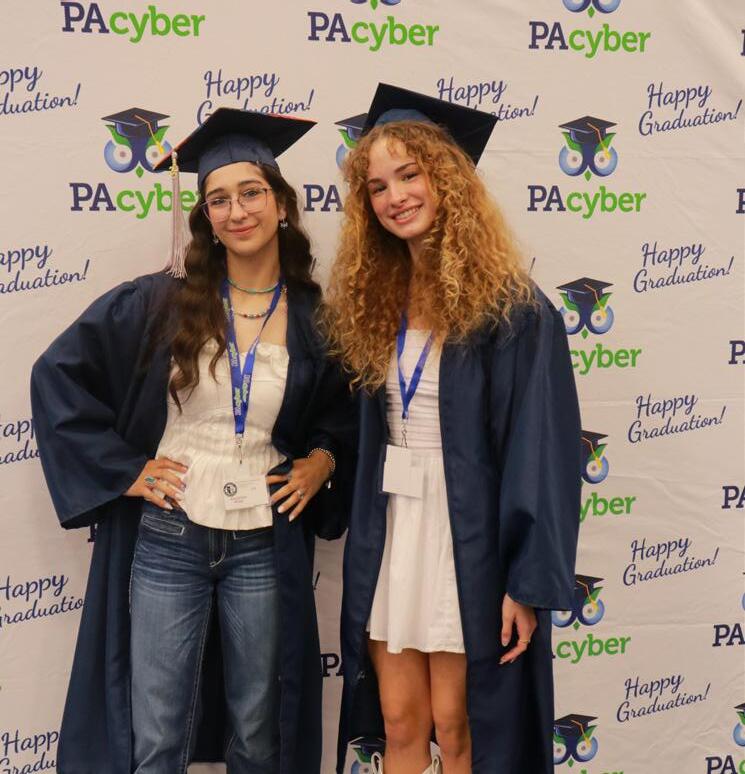

Four credits in mathematics, including Algebra I, are required for graduation. Financial literacy is a required course for graduation and may be used for mathematics or elective credit.
Algebra I is an exploration of variables, function patterns, graphs, and equations Students are expected to describe and translate graphic, algebraic, numeric, and verbal representations of relations and use those representations to solve problems Students are introduced to rational numbers, systems of equations and inequalities, data analysis and probability, the properties of exponents, factoring, and quadratic equations and functions Algebra I provides a solid foundation for further study in mathematics by helping students develop computational, procedural, and problem-solving skills Upon completion of this course, students will be required to take the Keystone Algebra I Exam
Prerequisite(s): Mathematics 7 or Mathematics 8
Delivery Mode: VC, BC
VC: 1 0 credit
BC: 1 0 credit
NCAA Approved
Algebra IA introduces students to the world of Algebra through expressions and equations Students will evaluate algebraic expressions, learn to solve and graph linear equations and inequalities, while also being introduced to functions, linear functions, and slope Towards the end of Algebra IA, students will be introduced to systems of equations and inequalities Algebra IA is designed for students who need additional time to master the concepts of the Algebra I course Students will have the opportunity to take Algebra I over a two-year time period by completing Algebra IA and then completing Algebra IB Students will take the Keystone Exam at the completion of the Algebra IB course
Prerequisite(s): Mathematics 8
Delivery Mode: VC, BC
VC: 1 0 credit
BC: 1 0 credit
NCAA Approved for 0.5 credit only
Algebra IB is a continuation of the Algebra IA course Students will continue working with systems of equations and inequalities, explore data analysis, and work with problems and applications that involve exponents, radical expressions, polynomials, factoring, and rational expressions Students will interact with course materials through online lessons, videos, interactive questions, and real-world applications Students will take the Keystone Exam at the completion of the Algebra IB course Students must successfully complete Algebra IA prior to taking Algebra IB
Prerequisite(s): Algebra IA
Delivery Mode: VC, BC
VC: 1 0 credit
BC: 1 0 credit
NCAA Approved for 0.5 credit only
In Geometry, students create a solid foundation in mathematics by studying and exploring a wide range of geometric concepts Students study the basics of geometric equations and how these equations are present in daily life They calculate perimeter and work directly with angles and arcs to evaluate the importance of geometric mathematics in construction Course topics include angle relationships, parallel and perpendicular lines, congruence, bisectors, trigonometry, and transformations
Prerequisite(s): Algebra I
Delivery Mode: VC, BC
VC: 1 0 credit
BC: 1 0 credit
NCAA Approved
In Algebra II, students analyze situations verbally, numerically, graphically, and symbolically Students will become proficient at solving equations and inequalities Students extend their knowledge of algebraic expressions, absolute value, functions, and graphs The course covers multiple types of functions, including quadratic and trigonometric functions, along with function interpretation, complex numbers, and binomial expansion Algebra II prepares students for more advanced mathematical concepts and content
Prerequisite(s): Algebra I
Delivery Mode: VC, BC
VC: 1 0 credit
BC: 1 0 credit
NCAA Approved
Advanced Statistics teaches methods and terminologies of descriptive and inferential statistics Students who complete this course will be able to conduct their own analyses of standard one-sample or two-sample data sets, follow statistical reasoning, and read statistical reports with understanding Additional topics include association and regression, causation and evidence, and probability Introductory topics in linear regression and analysis of variance will also be discussed This course uses college-level materials, and students are encouraged to take the course concurrently with Pre-Calculus or Calculus when possible
Prerequisite(s): Algebra I, Algebra II, Letter grade of B or higher in Algebra II or strong recommendation of teacher
Delivery Mode: VC
VC: 1 0 credit
NCAA Approved
Statistics (CIHS)
Statistics is a College In High School course offered in partnership with Robert Morris University This course is designed to give the student a general understanding of statistical tools as they are used in making decisions The examples and exercises emphasize interpretation and are drawn from a wide range of actual situations Excel computer software is used to simplify complex computations The first section covers analysis decision-making through the use of summarized descriptive data, both ungrouped and grouped This includes the study of frequency distributions, measures of central tendency, and measures of dispersion The second section deals with more complex situations in decision-making with presentation of analysis of variance and chi-square testing with one and two variables and multiple outcomes of each variable The third section introduces the concepts and theories of correlation and linear regression and how these are used in statistical inference Statistics is offered in the Fall and Spring semesters and is a three college credit course
Prerequisite(s): Algebra I, Algebra II, 11th Grade or higher, 3 0 GPA, and recommendation of Academic Advisor
Delivery Mode: VC
VC: 1 0 credit
NCAA Approved
In Pre-Calculus, students will understand and apply concepts, graphs, and applications of a variety of families of functions, including polynomial, exponential, logarithmic, logistic, and trigonometric� An emphasis will be placed on the use of appropriate functions to model real-world situations and solve problems that arise from those situations� Graphing functions by hand and understanding and identifying the parts of a graph is also a major focus of Pre-Calculus� The second half of the course focuses on introductory trigonometry and graphs, trigonometric equations and identities, analytical trigonometry, sequences and series, conic sections, and an introduction to calculus�
Prerequisite(s): Algebra I, Geometry, Algebra II, Letter grade of C or higher recommended in all previous mathematics courses
Delivery Mode: VC, BC
VC: 1�0 credit
BC: 1�0 credit
NCAA Approved
Students in this course will study the calculus of a single variable It is a rigorous mathematics course that builds on the student’s understanding of polynomial, trigonometric, exponential, and logarithmic functions These functions are studied intensely through an investigation of limits, derivatives, and integration Emphasis is placed on real-world applications that utilize a numerical, graphical, and analytical approach
Prerequisite(s): Algebra I, Geometry, Algebra II, Pre-Calculus
Delivery Mode: VC
VC: 1 0 credit
NCAA Approved
AP Calculus AB
AP Calculus AB is an accelerated course meant to prepare students who plan to take the Advanced Placement Calculus AP exam Emphasis is placed upon the multi-representational approach to calculus where problems and their solutions are explored and interpreted graphically, numerically, analytically, and verbally Students will be required to explain their answers in written form and will be asked to compare their written responses to the AP grading rubric Students will develop a deeper understanding of very small and very large numbers, use representations to model and interpret mathematical phenomena, use integrals to solve differential equations, solve real-world exponential growth and decay problems, and compute volumes of irregular shapes In addition, students will judge the meaning, utility, and reasonableness of the results of symbol manipulation, including those carried out by technology This course is a College Board-approved Advanced Placement course and AP Calculus AB covers all required College Board topics
Prerequisite(s): Algebra I, Geometry, Algebra II, Pre-Calculus, Letter grade of A recommended in all previous mathematics courses
Delivery Mode: BC
BC: 1 0 credit
NCAA Approved
Consumer Mathematics
Consumer Mathematics shows students how math is used in everyday life Students will review addition, subtraction, multiplication, and division of whole numbers, as well as fractions and decimals The course instructs students on how to perform practical tasks such as calculating earnings from a job, shopping for and working with food, buying clothing, managing a household, purchasing and maintaining a car, and understanding interest rates Consumer Mathematics teaches problem-solving strategies and alternate methods of computation to solve a wide range of consumer problems
Prerequisite(s): None
Delivery Mode: VC, BC
VC: 1 0 credit
BC: 1 0 credit
Math Essentials
Math Essentials helps students strengthen key math skills while connecting those concepts to everyday life Students will practice core arithmetic operations, explore the properties of addition and multiplication, and learn strategies for solving equations Students will also learn about ratios, rates, and proportions, and discover practical applications for each Students will review their geometry knowledge through the study of triangles, quadrilaterals, area, surface area, and volume
Prerequisite(s): None
Delivery Mode: BC
BC: 0 5 credit
In Business Mathematics, students discover a variety of basic mathematical concepts and tools for real-word mathematical application including algebraic equations, formulas, operations using fractions, decimals, and percentages This course shows students how to work with percentages to solve application problems and how to research investment and insurance options Students learn to graph a function from an equation and work with ratios and proportions Additionally, students explore the proper methods of preparing and analyzing income statements and balance sheets They also study the ways in which to calculate real estate loan payments and learn to read and interpret graphs to represent data in the business world This course also discusses mean, median, and mode as it relates to the distribution of data
Prerequisite(s): Algebra I
Delivery Mode: VC
VC: 1 0 credit
Financial Literacy explores aspects of personal finance and prepares students for their financial future This course focuses on earning income, spending, saving, investing, managing credit, and managing risk using real-world applications Financial Literacy is a required course for graduation and may be used for mathematics or elective credit
Prerequisite(s): None
Delivery Mode: BC
BC: 0 5 credit
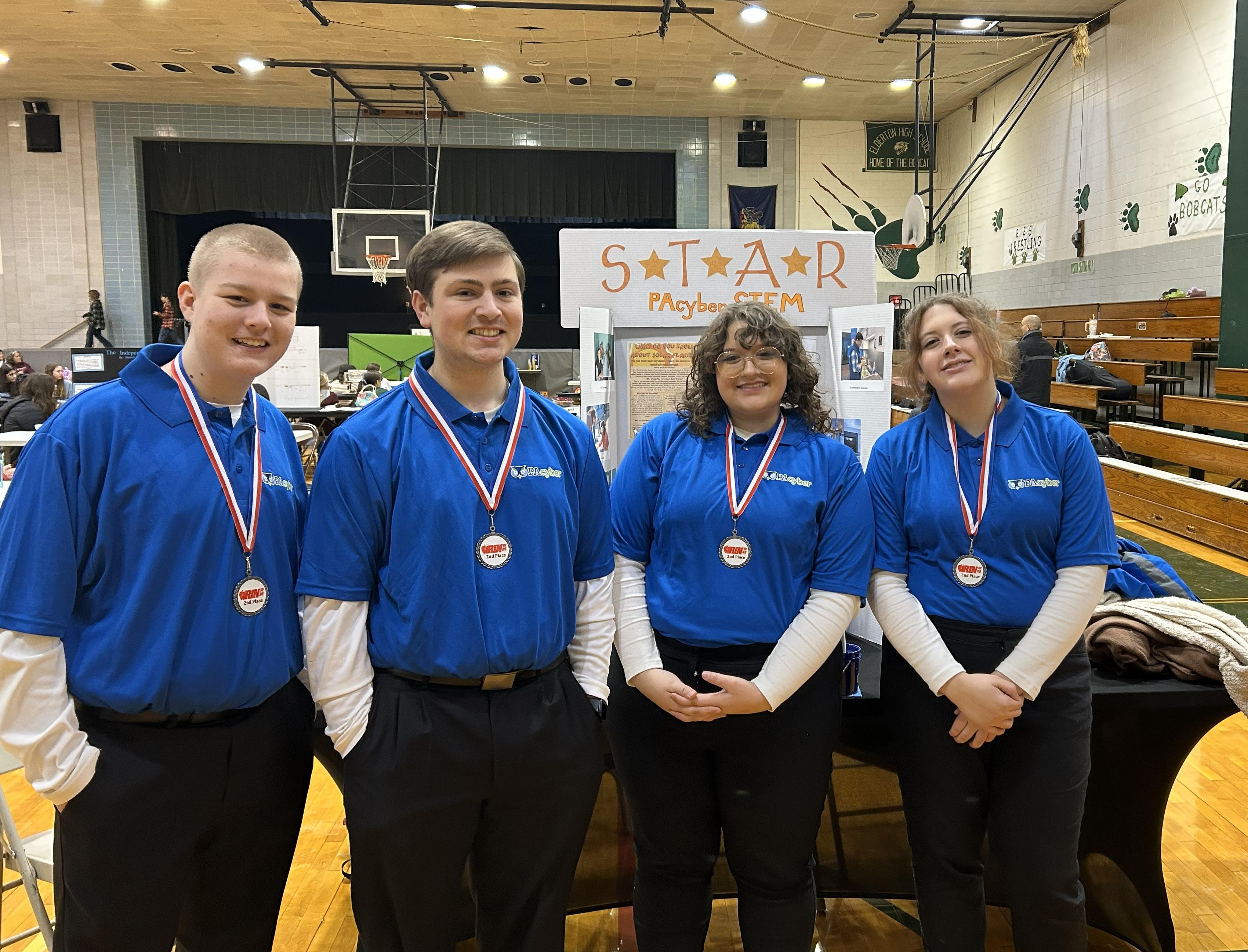
Three credits in science, including biology, are required for graduation.
Biology invites students to explore the essence of life, from the cellular to the ecological level, using real-world phenomena, modeling, and scientific investigations Students will examine how life is organized and functions, including mechanisms of homeostasis and the transfer of energy and matter within organisms and their environments Through modeling, students will compare cellular reproduction with the reproduction of multicellular organisms Biology also explores the complexities of genetics and gene expression, highlighting their role in the theory of evolution Additionally, students discuss the concept of ecology, learning about its principles, the interactions that occur within ecosystems, the biosphere, and how humans have impacted ecosystems thus far Upon completion of this course, students will be required to take the Keystone Biology exam
Prerequisite(s): None
Delivery Mode: VC, BC
VC: 1 0 credit
BC: 1 0 credit
NCAA Approved
AP Biology serves as an equivalent to a two-semester introductory college Biology course Students enrolling in this course must have taken Biology in a previous school year; it is not a first-year Biology course Students taking this course may be eligible for college credit upon successful completion of the course and a sufficient score on the AP Biology exam administered by the College Board This course differs from a traditional high school biology course by the resources used, the range and depth of topics covered, laboratory work, and the time and effort required by students AP Biology covers the four big ideas in biology, evolution and cellular processes, energy and communication, genetics and information transfer, and interactions Students will understand how the process of evolution drives the diversity and unity of life Biological systems that utilize free energy and molecular building blocks to grow, to reproduce, and to maintain dynamic homeostasis will be examined Students will develop an understanding of how living systems store, retrieve, transmit, and respond to information essential to life processes Finally, students will be able to describe how biological systems interact, and these systems and their interactions possess complex properties This course is a College Board-approved Advanced Placement course
Prerequisite(s): Biology, Chemistry, Letter grade of B or higher in all previous science courses
Delivery Mode: VC
VC: 1 0 credit
NCAA Approved
Principles of Biology (CIHS)
Principles of Biology is a College In High School course offered in partnership with the Community College of Beaver County This course provides lecture and laboratory experience through a survey of the biological sciences with an emphasis on reproduction, environmental biology, evolution, human genetics, and anatomical systems Principles of Biology is a four college credit course It is offered in the fall semester only
Prerequisite(s): 11th Grade or higher, 3 0 GPA, and recommendation of Academic Advisor
Delivery Mode: VC (Fall Only)
VC: 1 0 credit
NCAA Approved
Environmental Science is a College In High School course offered in partnership with Robert Morris University The course is a study of interrelationships that equips students with the necessary information to understand the complex arena of environmental concerns, problems, and alternative courses of action Questions of human populations and their interaction with the environment, as well as basic ecological principles, environmental ethics, resource use, and conservation are addressed This course concludes with alternatives we might use to build a society capable of living on Earth with less harmful impacts Principles of scientific inquiry are integrated throughout the course Environmental Science is a three college credit course that is offered in the spring semester only
Prerequisite(s): Biology, 11th Grade or higher, 3 0 GPA, and recommendation of Academic Advisor
Delivery Mode: VC (Spring Only)
VC: 1 0 credit
NCAA Approved
In Earth Science, students learn the importance of scientific inquiry and how to communicate the results of scientific investigations This engaging course takes students on a journey through Earth using real-world phenomena, modeling, and interactive projects Students will explore the structure and theoretical origins of the universe, the sun, and the solar system Earth Science also includes the study of weather, the water cycle, the atmosphere, and pollution In addition, the course covers the physical structure of the Earth and Earth’s tectonic system, including the rock cycle, tectonic activity, mountain building, weathering, and erosion Students will study geologic history, including the evolution of Earth’s atmosphere, the geologic time scale, and the fossil record Earth Science explores natural resources and the effects of human population on those natural resources
Prerequisite(s): None
Delivery Mode: VC, BC
VC: 1 0 credit
BC: 1 0 credit
NCAA Approved
Environmental Science builds a strong foundation in core ecological concepts while examining real-world issues related to sustainability, energy and pollution, and environmental policy Through inquiry investigations, students will learn about human impact on the environment, earth systems, and more This course encourages critical thinking and problem-solving, giving students the opportunity to learn how science connects to their lives
Prerequisite(s): None
Delivery Mode: VC
VC: 1 0 credit
NCAA Approved
Students enrolled in Physical Science are introduced to the principles of chemistry and physics so that they may develop a better understanding of atoms and chemical and nuclear interactions Students explore properties and states of matter They will investigate chemical bonds and reactions as well as the development of the periodic table An outline of modern atomic theory and organic and nuclear chemistry are also discussed Additionally, students study Newton’s laws of motion while considering the interactions between motion, forces, energy, and thermodynamics
Prerequisite(s): Algebra I
Delivery Mode: VC, BC
VC: 1 0 credit
BC: 1 0 credit
NCAA Approved
Physics students begin their studies by exploring measurement and motion Students will explore scientific notation, significant digits, gravity, Newton’s laws of motion, circular motion, and the International System of Units Mathematical concepts such as graphing and trigonometry will be applied in order to solve physical problems during these units of study During the second half of the course, students will further their exploration of mechanics while exploring harmonic motion, wave properties, and optics Students will learn the basics of thermodynamics and fluids and explore the principles of electricity and magnetism The area known as Modern Physics, which includes topics such as the photoelectric effect, nuclear science, and relativity, concludes the course
Prerequisite(s): Algebra I, Algebra II
Delivery Mode: VC, BC
VC: 1 0 credit
BC: 1 0 credit
NCAA Approved
Chemistry gives students a deeper understanding of the world around them as they investigate how chemistry is involved in everyday life Students explore fundamental chemistry content and concepts, including the metric system, the periodic table, atomic structures, bonding, chemical reactions, and nuclear reactions They apply their knowledge and science process skills through labs that use common household objects in order to explore the practicality of chemistry This course requires students to use fundamental algebra skills to solve problems Course topics include the atom, defining matter, acids and bases, polar bonds and molecules, solutions, ionic bonding, thermochemistry, and nuclear reactions
Prerequisite(s): Biology, Algebra I
Delivery Mode: VC, BC
VC: 1 0 credit
BC: 1 0 credit
NCAA Approved
In Astronomy, students begin by discussing basic astronomical concepts and discoveries throughout history They take an in-depth look at the first moments of the universe by studying the Big Bang From there, they investigate the evolution of the universe, beginning with the first atoms and moving on to explore elements, stars, solar systems, and galaxies Students gather information to determine if there is a possibility of life on other planets and in other solar systems In this course, students analyze the major space missions that have led to the modern study of cosmology, and they explore the possibilities of where this field may take scientists in the future
Prerequisite(s): None
Delivery Mode: BC
BC: 1 0 credit
NCAA Approved
Bioinformatics
Bioinformatics was developed by Better Educators of Science for Tomorrow (B E S T ) of the Pittsburgh Supercomputing Center at Carnegie Mellon University Students will discover how concepts from math, biology, and chemistry are applied to the functions of DNA, RNA, and protein production and function In addition, students will learn how to make use of the data generated by the Human Genome Project Students will learn how to search and compare genetic data from different organisms utilizing several DNA and protein identification programs currently being used in medical, forensic, agricultural, and other life science research The goal of this class is to introduce students interested in pursuing a degree in life sciences to possible career fields that are just beginning to evolve
Prerequisite(s): Algebra I, Biology
Delivery Mode: VC
VC: 1 0 credit
NCAA Approved
Cutting Edge Science explores popular topics in the biological sciences and will offer students the opportunity to utilize analytical science, biology, and anatomy Cutting Edge Science is a course that requires scientific research and will involve in-class discussions and presentations Students will learn about new trends in research and technology and how each of these fields impacts their everyday life Students will discuss topics such as health and disease within a population with students learning how to utilize data to solve real-world issues Additional topics include sports medicine and forensics New cutting-edge sciences and technology will also be explored as they appear in current events
Prerequisite(s): Biology
Delivery Mode: VC
VC: 1 0 credit
NCAA Approved
The Introduction to Engineering course provides students with an overview of the field of engineering and the primary processes and procedures used by engineers Students will explore engineering careers and their impacts on society, and they will learn how mathematics and science are used in the field of engineering They will examine different engineering disciplines, the engineering design process, and different engineering styles and methods used in the field Students will take part in hands-on learning as they work through a real-life design problem and solve it through the steps of the engineering design process They will then create a presentation to demonstrate their solution to the design problem
Prerequisite(s): Algebra I, Geometry
Delivery Mode: BC (Fall Only)
BC: 0 5 credit
In Marine Science, students will discover the vast network of life that exists beneath the ocean’s surface and study the impact that humans have on the oceans Major course concepts include animals of the sea; habitats and ecology; plankton, plants, and algae; and life at extremes This course will also explore intelligence in the seas and futures in Marine Science About 70% of the Earth is covered by water and even today, much of the world’s oceans remain unexplored This course will help students begin to understand the importance of our oceans and the life and systems they contain
Prerequisite(s): None
Delivery Mode: BC
BC: 0 5 credit
NCAA Approved
Medicine provides students with an introduction to healthcare with an emphasis on modern, clinical medicine Students review basic human anatomy and physiology by studying the various body systems and then study major health concerns affecting people in the U S and the world This comprehensive course examines such topics as nutrition, infectious diseases, cancer, traumatic injuries, and healthcare career opportunities Additional topics in this course include medical ethics, reproductive rights, and mental illness This course is intended for students in grades 11 and 12 and is recommended for students interested in pursuing a career in the medical field
Prerequisite(s): Biology
Delivery Mode: BC
BC: 0 5 credit
The earth’s population is growing rapidly, and we need to find new, innovative ways to ensure that we are able to provide for our global energy needs Students will look at the reasons why sustainability is important, take a balanced and evidence-based look at climate change, and learn new ways that we can harness renewable resources In this course, students will look at a variety of topics surrounding renewable energy sources including wind, solar, hydro, and bio energies Additionally, students will investigate the effect of different energy processes on the environment and ecological cycles The course will wrap up with a look into practices to promote conservation of biodiversity
Prerequisite(s): None
Delivery Mode: BC
BC: 0 5 credit
NCAA Approved

Four credits in Social Studies are required for graduation.
Civics offers students an introduction to the foundation of the democratic government of the United States and the basic principles of the judicial system In this course, students explore what it means to be a citizen, as well as the structure of the legislative, executive, and judicial branches of the United States government Students also look at the characteristics of state and local governments throughout the country to examine the organization and responsibilities of these branches In this course, students explore the components of the American economy, including its foundations and how it interacts with other economies worldwide Additional topics addressed in this course include the party system, international relations, citizen rights and responsibilities, local governments, the function of government, the free market, and the United States Constitution
Prerequisite(s): None
Delivery Mode: VC, BC
VC: 1 0 credit
BC: 1 0 credit
NCAA Approved
American History covers the discovery, development, and growth of the United States The first half of the course is a survey of the struggle to build the United States of America from the colonial period to the beginning of the twentieth century By means of reading, analyzing, and applying historical data, students come to appreciate the forces that shaped our history and character as an American people Students also explore research methods and determine accurate sources of data from the past The second half of American History begins with a study of American life before the 1929 Stock Market crash and how the Roaring Twenties influenced society in the late 19th through early 20th centuries Students will examine the causes and consequences of the Great Depression and move into a detailed study of World War II with an emphasis on America’s role in the conflict The course continues with an analysis of the Cold War struggle and America’s rise as a superpower The Civil Rights and Women’s Rights movements, pollution and the environment, and American domestic and foreign policy will be examined This course concludes with a summary of current events and issues
Prerequisite(s): None
Delivery Mode: VC, BC
VC: 1 0 credit
BC: 1 0 credit
NCAA Approved
World History allows students to investigate significant events, people, and places from prehistoric to modern times and consider their historical relevance In this wide-ranging course, students learn how the world and its inhabitants were shaped over time, and, in the process, gain a better understanding of the role that geography plays in world history Topics will include the ancient world, medieval Europe, the age of exploration, the age of revolution, Imperialism, the emergence of new nations, and the modern world
Prerequisite(s): None
Delivery Mode: VC, BC
VC: 1 0 credit
BC: 1 0 credit
NCAA Approved
Advanced Placement United States History will provide students with a complete and thorough understanding of the ‘full circle’ nature of American History By design, American History is inherently a story of cause and effect Students are expected to be involved in the learning process and committed to putting forth their best effort This entails reading and writing on a daily basis, in class as well as independently American history will be approached in a multifaceted method Students will explore concepts in an analytical manner and emphasis will be placed on achieving a ‘true transfer of knowledge’ There will be extensive use of technology throughout the class when it assists in the development and understanding of the concepts of American history A student may place out of an introductory college history course based upon completion of the course and a satisfactory score on the AP United States History exam This is a College Board-approved Advanced Placement course
Prerequisite(s): Letter grade of B or higher in all previous social studies courses
Delivery Mode: VC
VC: 1 0 credit
NCAA Approved
American National Government (CIHS)
American National Government is a College In High School Course that is offered in partnership with the Community College of Beaver County This course considers the evolution of the principles, form, and operation of our governmental systems with special emphasis on constitutional issues and the various means for resolving conflicts American National Government is offered in the fall and spring semesters and is a three college credit course
Prerequisite(s): 11th Grade or higher, 3 0 GPA, and recommendation of Academic Advisor
Delivery Mode: VC
VC: 1 0 credit
NCAA Approved
Western Civilization I (CIHS)
Western Civilization I is a College In High School Course that is offered in partnership with the Community College of Beaver County This is a survey course of the civilization of the West, focusing on the development of the Paleolithic man to 1500 Political and cultural changes are emphasized Western Civilization is offered in the fall semester only and is a three college credit course
Prerequisite(s): 11th Grade or higher, 3 0 GPA, and recommendation of Academic Advisor
Delivery Mode: VC
VC: 1 0 credit (Fall Only)
NCAA Approved
Western Civilization II (CIHS)
Western Civilization II is a College In High School Course that is offered in partnership with the Community College of Beaver County This is a survey course of the civilization of the West, focusing on the development of 1500 to the present Political and cultural changes are emphasized Western Civilization II is offered in the spring semester only and is a three college credit course
Prerequisite(s): 11th Grade or higher, 3 0 GPA, and recommendation of Academic Advisor
Delivery Mode: VC
VC: 1 0 credit (Spring Only)
NCAA Approved
Principles of Sociology (CIHS)
Principles of Sociology is a College In High School Course that is offered in partnership with Robert Morris University This course is a basic introduction to the field of sociology, which enables students to see and understand the social world and their place in it in new ways Students will become familiar with basic sociological concepts and social institutions, explore different explanations for social phenomena, and learn about the methods sociologists use to answer questions about society This course is offered in the fall and spring semesters and is a three college credit course
Prerequisite(s): 11th Grade or higher, 3 0 GPA, and recommendation of Academic Advisor
Delivery Mode: VC
VC: 1 0 credit
NCAA Approved
Cultural Explorations will examine culturally significant time periods in world history Each class topic will be covered in depth for a nine-week period Students will study Ancient Greece, Ancient Rome, the Ancient Americas (Maya, Aztec, and Inca), and the Middle Ages In addition to reading historical fiction, students will be introduced to the time periods by reading biographies, classic literature, and primary source documents to highlight important people and events Students will participate in class discussions, design projects, and present their work to peers
Prerequisite(s): None
Delivery Mode: VC
VC: 1 0 credit
NCAA Approved
Basic economic theory and its impact on everyday life are the foundation of this course Students will learn about basic economic features such as scarcity, opportunity cost, efficiency, and trade-offs, as well the factors of production Major topics in this course include wealth distribution, financial markets, multinational corporations, money and banking, supply and demand, and economics and democratic development Economics is an upper-level course suggested for 12th-grade students
Prerequisite(s): None
Delivery Mode: VC, BC
VC: 1 0 credit
BC: 1 0 credit
NCAA Approved
Ancient History explores political, cultural, and economic themes that occurred from the beginnings of known history in ancient civilizations throughout Africa, the Americas, Asia, and Europe to the 1500s Other topics discussed in the framework of Ancient History will be war, art, science and technology, religion and philosophy, and daily life through both individual narratives and collective experiences These themes and topics will be considered to develop knowledge about the past and to relate ancient history to the development of the world today
Prerequisite(s): None
Delivery Mode: VC
VC: 1 0 credit
NCAA Approved
World Cultures explains global geography, history, and culture to students In this course, students study the major political powers of each era and discover how the world’s earliest civilizations developed through the Age of Exploration to the Industrial Revolution In the second half of the course, students examine a world at war, navigating the Great War, nationalist movements in Russia and Asia, World War II, the Cold War, Third World independence, and struggles for democracy The course closes with discussions of current global issues, such as terrorism, technology, economy, pollution, and renewable energy
Prerequisite(s): None
Delivery Mode: VC, BC
BC: 1 0 credit
VC: 1 0 credit
NCAA Approved
In World Geography, students will learn the basic skills of map reading and development, geographic technology, and the recognition of geographic themes to make sense of the world The course examines world regions including the nations, people, and cultures of each region This course explores the Americas, Europe, Eurasia, Central and Southwest Asia, South Asia, Africa, East Asia, and the Pacific
Prerequisite(s): None
Delivery Mode: VC, BC
VC: 1 0 credit
BC: 1 0 credit
NCAA Approved
African American History introduces students to the study of African American life, culture, and history This course covers enslavement, life as a slave, and emancipation It also discusses African American involvement in major wars, the civil rights movement, major societal contributions, and life in modern society Students will examine the Nat Turner Rebellion, Jim Crow laws, civil rights amendments to the Constitution, the Harlem Renaissance, the growth of civil rights organizations, and the election of Barack Obama to the Presidency This course describes the influential role of African Americans in U S History
Prerequisite(s): None
Delivery Mode: BC
BC: 0 5 credit
NCAA Approved
Psychology
In Psychology, students explore the science of explaining and controlling human behavior Psychology plays an integral part in everyday life because all decisions, relations, and emotions are closely tied to behavior and genetics Within this course, students look at behavior and consider prominent psychologists who have made impressive and monumental discoveries through testing, research projects, and proving theories Students study everything from the anatomy of the brain to psychological disorders This course includes units on thinking and intelligence, sensation and perception, identity and personality, psychological methods, therapy, and social psychology
Prerequisite(s): None
Delivery Mode: VC (Fall Only), BC
VC: 0 5 credit
BC: 0 5 credit
NCAA Approved
In Sociology, students explore the various topics and sociological terminology necessary for understanding and exploring the field Students investigate major sociological perspectives and the famous sociologists who invented and contributed to them Additionally, students determine how researchers perform valid and reliable sociological studies This course is ideal for students who are interested in pursuing post-secondary careers in sociology, psychology, law, or other social sciences
Prerequisite(s): None
Delivery Mode: VC (Spring Only), BC
VC: 0 5 credit
BC: 0 5 credit
NCAA Approved
Pennsylvania History
In Pennsylvania History, students explore the geography, history, culture, and government of Pennsylvania This course examines Pennsylvania’s role in the founding of the United States, the Civil War, and the Industrial Revolution Students will also study the state’s significance in modern times
Prerequisite(s): None
Delivery Mode: BC
BC: 0 5 credit
NCAA Approved
1960s America
Have you ever wondered what life was like in the 1960s? This course allows students to experience what life was like during this exciting and monumental decade 1960s America will cover the social, political, and cultural movements and changes that occurred during the decade Some of the topics explored within this course include the transition from the 1950s Post-War boom to the 1960s Radical Movement, the Vietnam War, and civil rights This course also focuses on many significant headlines of the 1960s, which include the assassinations of Robert Kennedy, President John F Kennedy, and Dr Martin Luther King, Jr , as well as the Space Race, music of the 1960s, and the effects of pop culture Through this course, students look at different historical events and determine how these events impacted American citizens during this decade and afterwards This course delivers in-depth content on the 1960s and gives each student a realistic perspective of this decade
Prerequisite(s): None
Delivery Mode: BC
BC: 0 5 credit
NCAA Approved
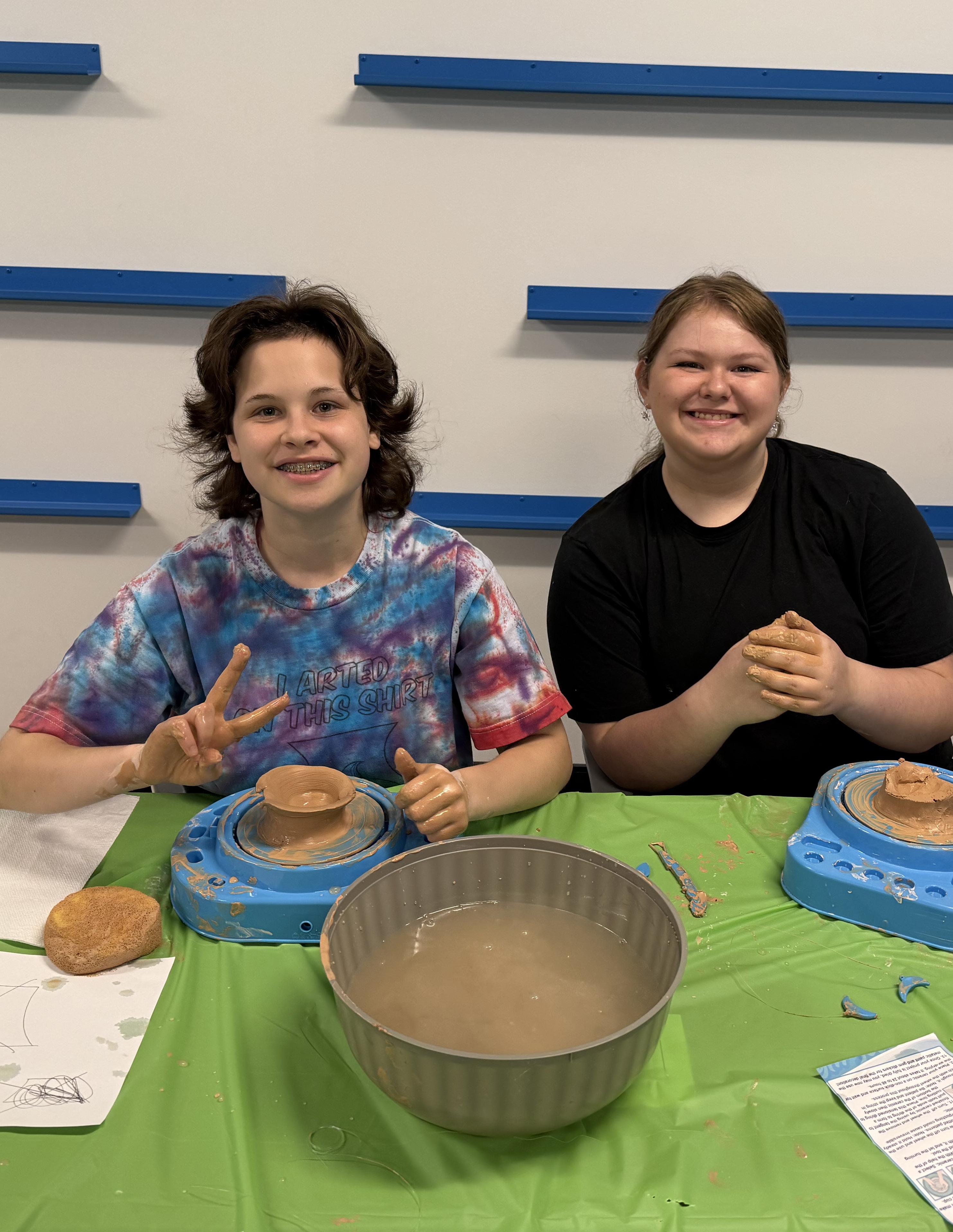
Two credits in Fine Arts are required for graduation.
Music in America has a rich history In American Music Appreciation, students will navigate this unique combination of culture and creativity that spawned jazz, rock and roll, and hip hop From early church music to 21st century pop, students will gain a new understanding of the key developments, people and genres in American music Some lessons in this course may contain mature themes and subject matter
Prerequisite(s): None
Delivery Mode: AC
AC: 0 5 credit
In order to provide a comprehensive study of art, students in Art and Visual Culture analyze and interpret artwork created by others, examine the concepts of aesthetics and art criticism, and explore the practical application of art in a variety of careers Art and Visual Culture spotlights drawing as a form of communication and introduces students to the elements of art and principles of design through hands-on activities Students sharpen their observation skills using a variety of art media Through practice and experimentation, students become adept at using basic techniques and processes to depict the world around them and express their thoughts and feelings
Prerequisite(s): None
Delivery Mode: AC
AC: 1 0 credit
Art History is an introductory art course that focuses on the art and architecture of the ancient Near East and Europe The course begins with a brief overview of the fundamental methods of art including the meaning, purposes, and styles of art; the art elements and principles of design; and the various media used to create artwork It then follows a chronological timeline The timeline shows how art and world events have influenced each other from the prehistoric period to the early medieval era There is a large focus on the art and architecture of Europe and North America Particular emphasis centers on viewing works of art within their historical and cultural context so that students learn to understand how these key achievements relate to the past and present world
Prerequisite(s): None
Delivery Mode: VC
VC: 1 0 credit
Interpreting the origins of art from the earliest cave paintings gives a student a unique perspective on their own work In Art History I, students will analyze various art forms including painting, sculpture, and architecture over changing periods of time Students will build their own cultural inventory studying the social, political, and religious movements that affect art Art History I is intended for students who are interested in learning more about western world history, the history of visual arts, or both This course gives students a very thorough yet comprehensible introduction to art history through the study of visual arts from prehistoric times through 1900 Information is learned through various means including hands-on creation of original art inspired by application of information from the course This course covers many works of fine art over the centuries Some artists and their works could not be represented without showing partial nudity or suggestive content
Prerequisite(s): None
Delivery Mode: AC
AC: 0 5 credit
Appreciating the cultural context of art in the modern era relies on analyzing artistic principles, abstract symbolism, and design techniques Students in Art History II will explore the social, political, and religious trends from Post-Impressionism to street art and understand the formal and conceptual issues that foster changes in art throughout history This course covers many works of fine art over the centuries Some artists and their works could not be represented without showing partial nudity or suggestive content
Prerequisite(s): Art History I: 30,000 BCE - 1900 CE
Delivery Mode: AC
AC: 0 5 credit
and Society I: 4000 BCE - 1750 CE
Arts are not created in a vacuum They are the result of the people and cultures that create them Arts and Society I takes the student on a chronological walk through history, stopping along the way at a variety of historical, political, cultural, and artistic key moments From 4000 BCE to 1750 CE, the student analyzes the relationship between societal culture and the arts being produced This course covers time periods during world history that are controversial and full of change Many sensitive subjects are covered, including politics and religion
Prerequisite(s): None
Delivery Mode: AC
AC: 0 5 credit
How do the people and the cultures of society affect the art around them? Students in Arts and Society II step into history and explore key moments from 1751 to the present in politics, culture, and art Arts and Society enhances students’ global awareness as they learn to interpret these significant events and their impact on the arts This course covers time periods during world history that are controversial and full of change Many sensitive subjects are covered, including politics and religion
Prerequisite(s): Arts and Society I: 4000 BCE - 1750 CE
Delivery Mode: AC
AC: 0 5 credit
Beginning Piano is a hands-on class that introduces high school students to the piano Students will learn about basic music theory, the parts of the piano, and the placement of notes on the keyboard During this course, students will learn and perform a varied repertoire of music Students must have regular access to a piano or keyboard to take this course
Prerequisite(s): None, however, students must provide their own instrument
Delivery Mode: AC
AC: 0 5 credit
Choreography is a statement about society, culture, and history Students in Choreography and Choreographers will gain insight into the creative processes involved in choreography and will trace the work of influential choreographers from the 16th century to the present Some lessons in this course may contain mature themes and subject matter
Prerequisite(s): None
Delivery Mode: AC
AC: 0 5 credit
Throughout human history, some form of dance has evolved in every world population Students in Dance Around the World will explore dance as a ritual, a religion, and a performed art from the primitive ages through the 19th century Historic and cultural perspectives will be examined to study those influences on the work of today’s choreographers and dancers
Prerequisite(s): None
Delivery Mode: AC
AC: 0 5 credit
The history of American dance is complex and rich with innovation Dance in America takes the student on a journey through the social and political climates that fostered its development From early ballet companies to Broadway and music videos, numerous choreographers, artists, and dancers have contributed to the evolution of American dance
Prerequisite(s): None
Delivery Mode: AC
AC: 0 5 credit
Capturing a special moment in a photograph is powerful In Introduction to Digital Photography, students will study the history of photography as well as the basic operations of a digital camera As they are introduced to different styles of photography and photographers, students will begin to develop their skills as well as their own voice in photography This course is for anyone who wants a comprehensive overview of photography, beginning with photography standards and equipment In this course, students will explore the history of photography, photographers who influenced the field, and technological advancements and their impact on the art Students will also learn how to use a digital camera and explore the elements of lighting, composition, printing, resizing, and compiling a portfolio of work
Prerequisite(s): Some previous knowledge and understanding of photography
Delivery Mode: AC
AC: 0 5 credit
Grace, beauty, and the pursuit of excellence are hallmarks of ballet and modern dance companies In Explorations in Dance I, students will study the foundations of the ballet style, from clothing and training to rehearsal and performance Students will meet the artists on stage and behind the scenes who create the magic of ballet and modern dance This course is for those interested in exploring the world of dance as it covers basic knowledge needed to understand how dance started and how it has evolved over time Students will gain a foundation for study in dance, choreography, or theatrical productions
Prerequisite(s): None
Delivery Mode: AC
AC: 0 5 credit
The bright lights of Broadway have showcased many dancers’ talents Students in Explorations in Dance II will be introduced to the audition process, learn about the roles of agents and unions, as well as explore some of the most exciting Broadway shows This content is intended for students who want to expand upon what they learned in Explorations in Dance I Explorations in Dance II expands and moves on to new dance techniques, along with the dance philosophies and innovations of notable choreographers, as well as the influence of specific Broadway shows and performances The basics of jazz and tap dance are introduced, and the impact that dance has on musical theatre will be discussed
Prerequisite(s): Explorations in Dance I
Delivery Mode: AC
AC: 0 5 credit
The culture of cinema and broadcast television tells a unique story of American history and innovation Students in Explorations in Film and Television will be introduced to the technology, industry icons, and stars of the big and small screens By studying and writing about film and television, students will analyze technological and cultural trends and understand how to be an informed viewer in the future
Prerequisite(s): None
Delivery Mode: AC
AC: 0 5 credit
From television to video games, media is everywhere In Explorations in Media Arts, students will study the art behind the media, how it is created, the history of media, and the legal and ethical issues that arise while creating media arts Students will apply critical thinking skills to creating web, video, animation, and graphic media projects
Prerequisite(s): None
Delivery Mode: AC
AC: 0 5 credit
Music can be simple, yet so complex Students in Explorations in Music I study the basics of music, instrument families, music notation, and organization By analyzing the ways music is connected to other disciplines and industries as well as training on basic terminology, students will progress in their understanding of music
Prerequisite(s): Ability to read music
Delivery Mode: AC
AC: 0 5 credit
How do you understand the music of a symphony or recognize a song from Japan? In Explorations in Music II, students will study the different forms of music and their instrumentations Students are introduced to music from around the world and given a comprehensive overview of Western music from ancient times to the present, including art, folk, and popular genres Students will be able to identify instruments and music from different cultures and different genres This course is intended to help students become well-rounded musicians and listeners
Prerequisite(s): Ability to read music, Explorations in Music I
Delivery Mode: AC
AC: 0 5 credit
In Explorations in Music, students will discuss what music is, why we listen to music, and how music affects us Students will study the basic elements of music, instrument families, active and passive listening, and how to read notes and rhythms The forms and textures of different musical ensembles will also be examined Students will learn about the development of different musical styles over the course of music history through exploration of different time periods and composers of music The connections between music and other fields, such as math, politics, dance, theatre, science, will also be discussed By analyzing the ways music is connected to other disciplines and industries as well as learning basic terminology, students will progress in their understanding of music Lastly, we will take a look at the different careers in music
Prerequisite(s): None
Delivery Mode: VC
VC: 1 0 credit
It’s enjoyable to watch a well-done performance Explorations in Theatre I helps the student understand the effort that goes into that performance Through the perspective of the performer, the playwright, and the director, students will gain an appreciation of the artists who have contributed to both musical and non-musical performances and an understanding of the world of the actor Major topics of study in the course include the lives and works of great playwrights such as William Shakespeare and Arthur Miller, major theatrical works and their ties to culture and humanity, the process of scriptwriting and revision, and the roles and duties of individuals in a theatrical production Students will also have the opportunity to write, revise, and analyze a script This course is intended to be introductory
Prerequisite(s): None
Delivery Mode: AC
AC: 0 5 credit
Behind the actor are dozens of artists enhancing that performance Students in Explorations in Theatre II will build a vocabulary of the people and the equipment that work behind the scenes in the theatre This is a course for those who are interested in gaining further knowledge of all the technical aspects of theatre Understanding the business aspects of producing a performance as well as the artistic considerations in technical production enhances future audience members’ appreciation for the theatre Major topics of study in the course include sound and light editing; the roles of production and stage managers; the dramaturge; costume, hair, and makeup design; set design; and prop construction The course concludes with the student writing a script that incorporates all technical components of theatre
Prerequisite(s): Explorations in Theatre I
Delivery Mode: AC
AC: 0 5 credit
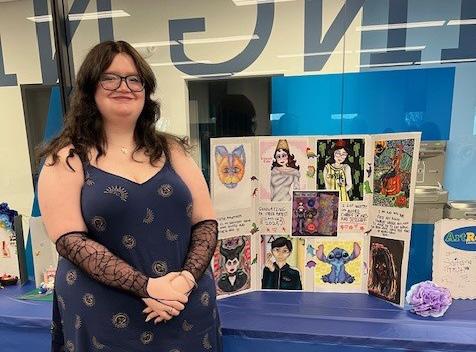
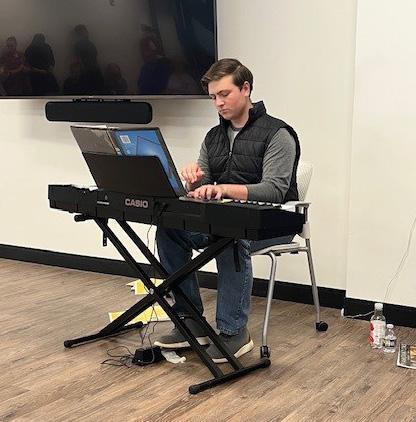

Exploring Cinema introduces students to filmmaking and cinematic productions The course explores the technology used to create a film and begins to build an aesthetic appreciation of films for the student Students also are exposed to media art and the ethics of media creation to give a wider perspective on the different ways material is presented
Prerequisite(s): None
Delivery Mode: AC
AC: 0 5 credit
Fashion Design is an advanced course for students interested in learning the intricate process of how the fashion system works Students will study the fashion business in sequential order from concept to consumer They will examine all of the processes involved in the industry, from producing raw materials, apparel, and accessories to the retail stores that sell fashion merchandise to the public Students learn that the decision-making process is complex and not just about the latest designers, styles, or trends of an era In this course, students will explore the history of fashion, including the looks and creations of every era They will discover the equipment, tools, and fabrics used to create fashion, and they will learn how technology is used in fashion Students have an opportunity to express themselves and their style through the creation of their own fashion design sketches and mood boards In this course, students will learn fashion terminology and how to forecast new and upcoming fashion trends
Prerequisite(s): None
Delivery Mode: AC
AC: 0 5 credit
What inspires choreographers and dancers? Students in Introduction to Dance will study the main elements of dance: space, time, and energy They will discover how a choreographer uses these elements to create a dance piece and explore how dancers respond with their own creativity This course is intended for students who are interested in dance but may also be wondering if it’s the art form “for them ” Introduction to Dance looks over many topics relating to dance, including several famous choreographers, common and popular dance forms historically and in modern times, as well as different kinds of dance techniques and stage effects This course will teach students many of the basic steps of dance and give them opportunities to try it out for themselves
Prerequisite(s): None
Delivery Mode: AC
AC: 0 5 credit
Music Appreciation exposes students to a large variety of music Students will be able to explain personal music preferences and identify how music is impacted by technology, social values, and daily life of the composers Students develop an understanding of the composer’s intent and the ability to rationalize personal interpretation of music works Similarities and contrasts in music throughout the eras are identified as well as how previous compositions impact future compositions In this intermediate-level course, students will study music from the Medieval, Renaissance, Baroque, Classical, and Romantic Eras They will also explore 20th century and contemporary music and its impact
Prerequisite(s): None
Delivery Mode: AC
AC: 1 0 credit
Music Appreciation introduces students to the theory and history of music The course begins by studying musical form, texture, rhythm, and expression Students will then explore musical genres from classic to contemporary Students will learn to identify instruments, musical pieces, musical periods, and musical styles Popular forms of American and world music, including folk, jazz, blues, modern, and forms of rock and roll will be examined Students will grow in their understanding of music as they examine stylistic eras, important composers, and global musical perspectives
Prerequisite(s): None
Delivery Mode: VC
VC: 1 0 credit
There is a vibrant chord of music that runs through every culture in the world Students in Music Around the World will explore the music of Africa, Asia, Europe, and the Americas From Finland to Mongolia to Zimbabwe, students will study the impact a country’s history and societal values have on the music of that nation This course studies various music throughout the world and its impact on other cultures, all while touching on the geography of the regions and the instruments used
Prerequisite(s): None
Delivery Mode: AC
AC: 0 5 credit
Music in a global society, with the technological advances that have been made in such a short time period, has changed the way we share and experience music Until recently, most people did not experience different styles of music from all over the world, unless they traveled to a specific area and learned about that culture, including the native music Now that there are many ways to watch and listen to music, music from cultures all over the world can be more easily consumed In this introductory-level course, students will experience music from all different areas of the world There is a vibrant chord of music that runs through every culture in the world Students in this course will explore the music of Africa, Asia, Europe, and the Americas From Finland to Mongolia to Zimbabwe, students will study the impact a country’s history and societal values have on the music of that nation Students will also learn about what music is, how it affects us, why we listen to it, the basic elements of it, and how it is shared Music can influence our lives as well as the world around us
Prerequisite(s): None
Delivery Mode: VC
VC: 1 0 credit
Learn to understand the beautiful language of music! In Music Theory I, students will learn the “alphabet” that makes up music, including music notation How to read music and to follow the structure, including pitch, rhythm, harmony, scales, keys, and chords, empowers any avid music listener or future musician and is the cornerstone of this course The study of music theory will help any musician improve as a player, a thinker, and a listener The ability to understand and reflect upon what one is playing and listening to is invaluable This course also begins to develop the students’ musical ear This advanced-level course covers higher-level concepts and would be appropriate for students who are more serious about their music study
Prerequisite(s): Explorations in Music I
Delivery Mode: AC
AC: 0 5 credit
In Music Theory II, students will elevate music comprehension by understanding the concepts and rules of creating music Music Theory II is both theoretical and practical, and encompasses advanced harmonic and rhythmic structures, instrumentations, and key changes Through sight and sound, students will deepen their appreciation of music with a grasp of music theory The study of music theory will help any musician improve as a player, as a thinking and understanding musician and listener The ability to understand and reflect upon what one is playing and listening to is invaluable This course also begins to develop students’ musical ear This advanced-level class particularly focuses on harmonic function and analysis
Prerequisite(s): Music Theory I
Delivery Mode: AC
AC: 0 5 credit
Manipulating and altering an image to create a new work allows for a new interpretation By using advanced software tools, including Photoshop, students in Photo Manipulation will learn strategies for creating complex imagery Students will acknowledge the principles of design, editing, and repairing still images or creating unique new concepts in their art Photo manipulation skills are a basic requirement for many careers in art, advertising, media, advocacy, education, and design—just to name a few This course not only prepares the students to be competitive in the technological skills required for contemporary art, photography and design; it also gives them basic frameworks for design, editing, and composition Students will become familiar with the field and with the options available to them
Prerequisite(s): None
Delivery Mode: AC
AC: 0 5 credit
A powerful image can tell an eloquent story without any words Students in Photojournalism will meet some of the pioneers who set the standards for this unique way of storytelling As they study the principal types of photojournalism and the ethical responsibilities a photojournalist has behind the lens, students will develop their own storytelling skills through their writing and their photographs This course is designed for students interested in photography and photojournalism, including those who intend to pursue a career in photojournalism
Prerequisite(s): None
Delivery Mode: AC
AC: 0 5 credit
Creativity flourishes with the right foundation In Studio Arts I, the student artist will lay the groundwork for their art by practicing unique exercises to develop drawing, painting, and mixed media skills Incorporating their knowledge of composition, design, colors, and forms, students will use the appropriate materials and tools to work from realism to abstract This course is for students beginning a serious study of studio art techniques A foundation of knowledge and skills will help students grow as artists while building a foundation for further study
Prerequisite(s): None
Delivery Mode: AC
AC: 0 5 credit
Developing a unique personal style and creating complex imagery is possible for any artist Students in Studio Arts II will engage in techniques that take their work to a more sophisticated level Analyzing other artists and their works will help the student artist find deeper meaning and new interpretations to create a cohesive result
Prerequisite(s): Studio Arts I: Techniques and Tools
Delivery Mode: AC
AC: 0 5 credit
The Study of Contemporary Music introduces and explores the roots of contemporary American music This course will focus on the social, technological, and artistic trends that helped create and shape music of the 1920s through present time Learners will explore various genres and periods of music, including the early development of rock and roll in the 1950s, the evolution of popular music, the British invasion of the 1960s, and the many “mutations” of rock music in the 1970s The second half of the course continues to explore the roots of contemporary American music After completing this course, students will have gained a deeper understanding and appreciation for various forms of contemporary music, ranging from rock to jazz to country Students will explore the history of each form and the role of music in the modern world
Prerequisite(s): None
Delivery Mode: VC
VC: 1 0 credit
Each aspect of the arts relies on science and technology The arts, science, and technology are intertwined, now more than ever In The World of STEAM, students will learn why the eye sees color, how a dancer uses gravity, and what makes a sound wave travel Understanding the science behind the arts will elevate students to a new level of creativity
Prerequisite(s): None
Delivery Mode: AC
AC: 0 5 credit
Theatre invites students to explore the history of theatre and the basic elements of stage production This course highlights the technology used to create early and modern stage productions and the basic fundamentals of acting Theatre provides students with a look at production elements such as stage lighting, sound, costume, and makeup Students learn to apply voice and gesture skills in pantomimed and improvised scenarios, and they receive an overview of the responsibilities of the producer, director, and technical crew of a theatre production Students develop insight into the motivations of a playwright in the development of a story, and they explore the careers and works of famous playwrights Theatre provides a balanced educational experience for all students so that they can gain the inquiry and critical skills involved in clarifying theatrical perceptions and knowledge
Prerequisite(s): None
Delivery Mode: AC
AC: 1 0 credit
3.5 Credits in electives are required for graduation. World languages can count toward elective and/or fine arts credit.
*Please note that many colleges and universities require students to take a minimum of two years of the same foreign language for admittance.
In American Sign Language (ASL) I, students will gain a foundation of ASL and of deaf culture The ASL alphabet, numbers, basic vocabulary, and grammar will be covered over the course of the year Lesson topics include greetings, introducing yourself, identifying people, exchanging personal information, discussing living situations, talking about families, and talking about activities Students will have a fundamental understanding of ASL reception and production skills Lessons will also include how to use non-manual markers to indicate different types of sentences and questions
Prerequisite(s): None
Delivery Mode: VC
VC: 1 0 credit
In American Sign Language (ASL) II, students will build on what they have learned in American Sign Language I Students will expand their language skills to communicate in a wider array of situations, to further develop their language fluency and to advance their level of comprehension of ASL Vocabulary and key grammar structures will be introduced using dialogues and narratives that are culturally appropriate Various number types, expanded fingerspelling practice, space and semantic use of agreement or spatial verbs, and use of negation signs will be covered Culture lessons will focus on behaviors and knowledge that enable students to act in appropriate linguistic and social ways and to gain more cultural insight into the deaf community
Prerequisite(s): American Sign Language I
Delivery Mode: VC
VC: 1 0 credit
French I is an introductory course designed for students who have little or no previous knowledge of the French language and culture This course will allow students to acquire the tools necessary for communication and comprehension of the French language Students explore the global francophone community, and they compare these different cultures to each other and to their own This course primes students’ fluency through various types of communications
Prerequisite(s): None
Delivery Mode: VC, AC
VC: 1 0 credit
AC: 1 0 credit
NCAA Approved
In French II, students have the opportunity to review some of the structures from French I, but they also build their knowledge of the basic and intermediate French concepts Students review the present tense of regular and irregular verbs, the passé composé with avoir and être, and adjective agreement and placement Students examine grammatical forms and are challenged to progress in their basic knowledge and speaking capabilities
Prerequisite(s): French I
Delivery Mode: VC, AC
VC: 1 0 credit
AC: 1 0 credit
NCAA Approved
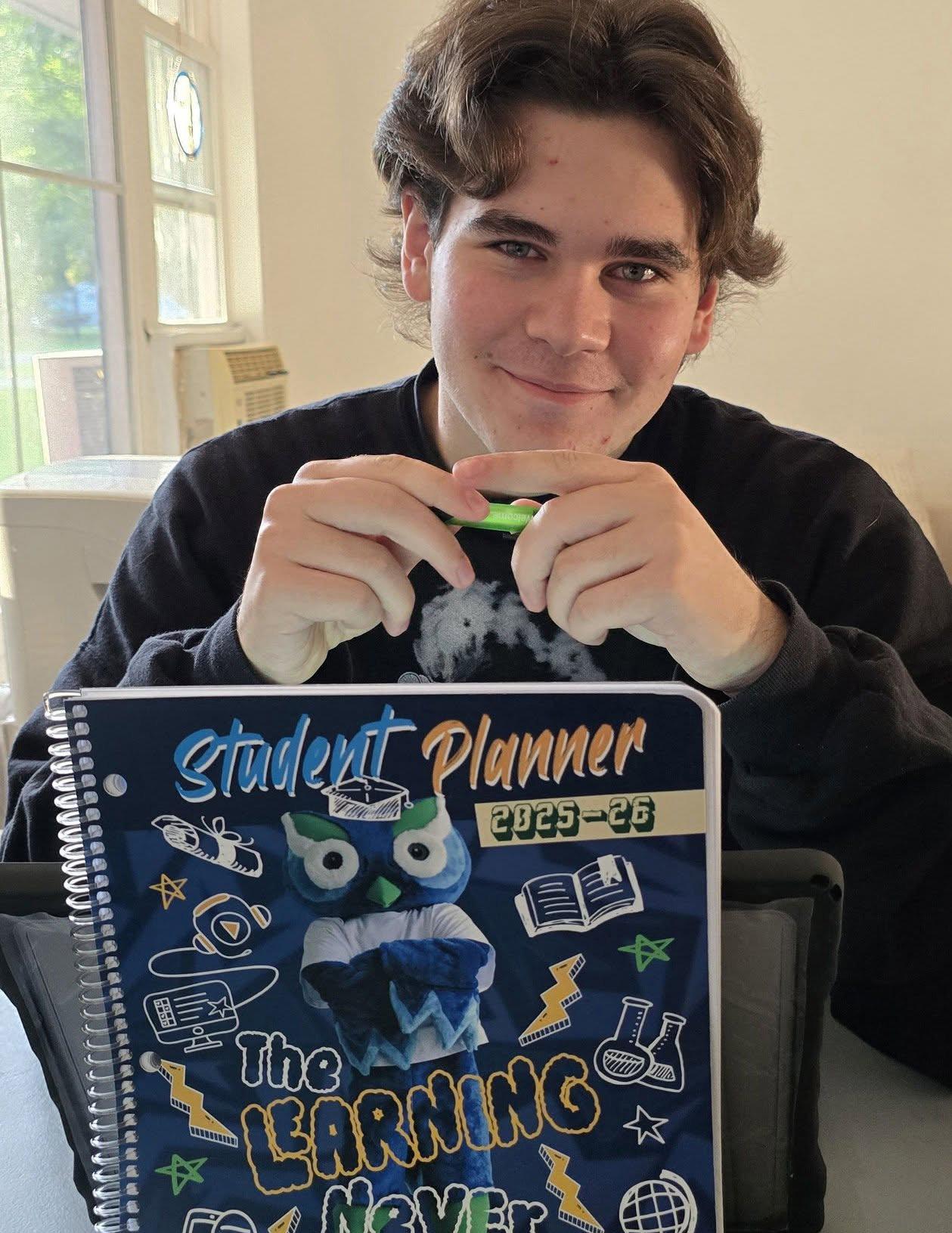
In French III, students continue their study of the French language and popular French culture They use larger vocabulary terms and explore a variety of literary texts that include the structures and vocabulary that they are learning In this course, students study vocabulary, grammar, and culture in context through authentic literary and journalistic texts, putting these items into practice through written and spoken tasks
Prerequisite(s): French I, French II
Delivery Mode: VC, AC
VC: 1 0 credit
AC: 1 0 credit
NCAA Approved
This intermediate-advanced course is geared toward developing a higher level of fluency in French Students will continue to explore the Francophone world, making stops in France, and French-speaking and Francophone regions in Europe and in the Americas They will use new vocabulary to talk about the news, natural phenomena, environmental issues, politics, government services, fine arts, and traveling Students will review the present, past, and future tenses along with the subjunctive mood The student will also be able to use prepositions with infinitives, the passive voice, the comparative and superlative, as well as the past subjunctive French literature will play an important role in this course Students will be exposed to a variety of literary texts that utilize the structures and vocabulary that they will be learning An opportunity to apply these structures to various written and recorded projects will be applied throughout the course Vocabulary, grammar, and culture in context through authentic literary and journalistic texts will be examined over the course of the year
Prerequisite(s): French I, French II, French III
Delivery Mode: VC
VC: 1 0 credit
NCAA Approved
In German I, students are introduced to the basic and fundamental skills necessary for expressing common ideas in the German language They learn to state daily activities and how to have an introductory conversation These concepts build in theme and scope, allowing students to explore topics including daily activities, travel, needs, desires, and preferences in typical and increasingly complex situations The course provides a realistic context in which students can practice their newly acquired skills German I also provides a considerably thorough study of grammatical skills, ranging from the most basic sentences to engaging and creative structures dealing with more interesting situations
Prerequisite(s): None
Delivery Mode: VC, AC
VC: 1 0 credit
AC: 1 0 credit
NCAA Approved
German II provides students with a comprehensive introduction to nouns and verbs and previously learned concepts Students examine the case systems extensively and focus on verbs throughout this course They learn different types of verbs and their conjugations in different grammatical tenses such as present, future, past simple, and present perfect Students practice one of the most challenging aspects of German grammar—verbs with accusative, dative, and genitive prepositions—thoroughly Students learn a large number of new vocabulary words and idioms to assist in their continual development of language
Prerequisite(s): German I
Delivery Mode: VC, AC
VC: 1 0 credit
AC: 1 0 credit
NCAA Approved
In German III, students continue their study of the German language and popular German culture Students use larger vocabulary terms and explore a variety of literary texts that include the structures and vocabulary that they are learning In this course, students study vocabulary, grammar, and culture in context through authentic literary and journalistic texts, putting these items into practice through written and spoken tasks
Prerequisite(s): German I, German II
Delivery Mode: AC
AC: 1 0 credit
NCAA Approved
Mandarin Chinese I
Mandarin Chinese is an introductory course to modern Standard Chinese, which includes the spoken language Mandarin and the written language of simplified characters In addition to learning about Chinese culture, students learn the basics of Chinese pronunciation through a beginner’s vocabulary of Chinese characters using scenario-based examples In this course, students get a glimpse of Chinese tradition and society through cultural tips As the course progresses, students will explore rhetoric, reading and writing, personal applications, and phonetics Students have the opportunity to learn about Chinese traditions, sports, employment, and shopping Other topics include places in China, cultural comparisons, and cultural influence
Prerequisite(s): None
Delivery Mode: AC
AC: 1 0 credit
Mandarin Chinese II
Mandarin Chinese II is an intermediate-level course in which learners will continue to develop communication skills through listening, reading, speaking, and writing in the target language The course presents modern Standard Chinese, Mandarin, as the spoken language and simplified characters as the written language Students will recognize and apply vocabulary in Pinyin and Chinese characters in the context of common scenarios Students will practice handwriting Chinese characters in complete sentences Students will continue learning about Chinese tradition, language, and society to become more familiar with Chinese language and culture In this course, students will learn about careers and work, nature, environment, travel, activities, and movies
Prerequisite(s): Mandarin Chinese I
Delivery Mode: AC
AC: 1 0 credit
Spanish I provides students with a strong foundation of the Spanish language and its cultural influences From pronunciation to basic grammar and practical vocabulary, students gain a fundamental understanding of written and conversational Spanish Students practice pronunciation sounds, greetings and introductions, questions, and present-tense verb conjugation Students learn how to describe people, school, and pastime activities in addition to likes and dislikes Spanish I presents information in a fun, interesting format that promotes learning and draws a link between the classroom and real-world situations
Prerequisite(s): None
Delivery Mode: VC, AC
VC: 1 0 credit
AC: 1 0 credit
NCAA Approved
Spanish II introduces complex grammatical components, such as reflexive verbs and the present progressive, preterite, and imperfect tenses, along with idiomatic expressions unique to the Spanish language Building on an ever-growing lexicon, students incorporate concepts to form questions, express preferences and possession, discuss the past, and describe and compare people, places, and locations Spanish II continues to build a foundation for students in their pursuit to learn and master the Spanish language
Prerequisite(s): Spanish I
Delivery Mode: VC, AC
VC: 1 0 credit
AC: 1 0 credit
NCAA Approved
In Spanish III, students acquire a more extensive topical vocabulary while gaining a higher understanding of complex grammatical structures, verb applications, and idiomatic expressions This course allows students to increase their reading and listening comprehension as well as their fluency in speaking and writing in Spanish Students describe, analyze, summarize, and explain ideas verbally and in writing using the Spanish language
Prerequisite(s): Spanish I, Spanish II
Delivery Mode: VC, AC
VC: 1 0 credit
AC: 1 0 credit
NCAA Approved
This course will refine students’ speaking, listening, and writing skills, as well as extend their understanding of Hispanic culture Students will interact with various resources to continue to build knowledge and apply advanced grammar, syntax, and precise vocabulary to express themselves more accurately in a variety of contexts Cross-cultural understanding is fostered and real-life applications are emphasized
Prerequisite(s): Spanish I, Spanish II, Spanish III
Delivery Mode: VC
VC: 1 0 credit
NCAA Approved
In AP Spanish Language and Culture, students will use the three modes of communication—interpretive, interpersonal, and presentational—as defined by the World Readiness Standards for Learning Languages Using the ACTFL Performance Descriptors for Language Learners, students will be provided opportunities to demonstrate their proficiency in each of the three modes Each module is theme-based, providing ample opportunities to interpret multimodal texts, speak with and write to others, and present by speaking and writing for an audience Themes in the first half of the course include families and communities, education and careers, entertainment and travel, global citizenship and human geography, lifestyle and traditions, social awareness, historical figures and ethnic identity In order to demonstrate all three modes of communication, students will engage in discussions, personal opinion and persuasive essays, interpretation activities, and oral and audiovisual presentations In the first half of the year, students will encounter similar tasks as found on the AP exam, but by the second half of the course the difficulty and complexity will have increased to match the exam’s expectations Themes in the second half of the year include technology, healthcare and medicine, architecture, beauty and creativity, personal beliefs and interests, fashion, design, literature and the arts, science and ethics, economics, and philosophy and religion
Prerequisite(s): Spanish I, Spanish I, Spanish III
Delivery Mode: AC
AC: 1 0 credit
NCAA Approved

One credit in physical education and 0.5 Credits in health are required for graduation.
In Health, students discover how to make conscientious decisions when attempting to improve their overall health and wellness From healthy lifestyles, diets, and exercise to responsibilities within individual families and larger communities, topics within the discipline of health are pertinent and applicable to all students Throughout the course, students review concepts that promote safe, healthy, and active lifestyles Major topics of study in this course include noncommunicable diseases, decision making, nutrition, communication, peer and family relationships, health services, and emotions Students are required to complete this Health course for graduation
Prerequisite(s): None
Delivery Mode: AC
AC: 0 5 credit
In Health: Living Your Best Life, students will explore the dimensions of good health by learning about the building blocks of nutrition and elements of physical fitness Students will also engage in the study of personal safety, infectious and noninfectious diseases, substance use and abuse, and environmental health This health elective does not count as the required health course for graduation
Prerequisite(s): None
Delivery Mode: AC
AC: 0 5 credit
In this course, students will explore how mental health and well-being impact our overall health Students will learn how to develop and maintain healthy relationships and how to manage stress Topics include neurodiversity, mental illness, the impacts of violence on mental health, and death and dying This health elective does not count as the required health course for graduation
Prerequisite(s): None
Delivery Mode: AC
AC: 0 5 credit
Pennsylvania Public School Law requires all students to complete an annual course in physical education In compliance with the law, students in grades 9-12 are required to complete 72 hours of organized, supervised physical activity each school year Students will receive a physical education kit that includes a workbook and items to complete different physical activities Students are required to complete at least half of their physical education hours using the items they receive in the physical education kit Students are also required to record their physical education hours in the PA Cyber Physical Education Log Looking to have a little more fun in Physical Education? Students in grades 9-12 have the option to take Physical Education with a live instructor one day a week Students can record this hour on their Physical Education log towards the completion of the 72-hour requirement
Prerequisite(s): None
Delivery Mode: AC
AC: 0 25 credit
3.5 Credits in electives are required for graduation. Business, career, multimedia, technology, and general electives can count toward these credits.
In this semester course, students will explore accounting, including investigating accounting careers They will learn basic accounting skills and procedures both with and without a computer for general journals, general ledgers, cash payments journals, cash receipts journals, sales journals, accounts payable ledgers, and accounts receivable ledgers In this course, students will also learn how to reconcile a bank statement and to prepare payroll records This course covers the basic principles of financial accounting for individuals and for companies with attention to both the mathematical formulas and to the ethical side of accounting Each unit has practical exercises including a project at the end of the unit
Prerequisite(s): None
Delivery Mode: AC
AC: 0 5 credit
Advertising
Throughout Advertising, students discover various ways that advertising touches their lives Students learn to identify what customers need and want so that various companies are able to advertise and sell a variety of products and services Students will learn to identify customers’ desires and discover what is needed to create, advertise, and sell products to fit these needs This course guides students to develop the skills they need as consumers and advertisers Some of the course topics include building client relationships, advertising strategies, types of media, purchasing media, and creating a complete advertising plan Advertising provides a solid foundation for those students contemplating careers in marketing, advertising, or other business-related fields
Prerequisite(s): None
Delivery Mode: AC
AC: 0 5 credit
In Business Applications, students focus on business software and the corresponding skills required in the business world The course begins with an overview of computers, including hardware, software, and operating systems Students explore spreadsheet, word processing, presentation, and database software and discover how to fulfill a customer request using these skills They also study web-based applications and additional software packages and learn about Internet technology Students investigate common security concerns and discover how to prevent security issues Finally, students experience the software development cycle where they learn how various professionals utilize business applications They discover the importance of moral and ethical responsibility in an online community Students must possess basic spreadsheet, word processing, and presentation software skills before entering this course Additionally, students must be independent learners, and they must be comfortable learning new technology and researching software features and functions
Prerequisite(s): Basic spreadsheet, word processing, and presentation software skills (i e , Microsoft Office Suite)
Delivery Mode: AC
AC: 0 5 credit
Business Management guides students through examples of their roles as wage earners, consumers, and citizens as they explore the wide, exciting world of business Students examine topics ranging from extensive credit use to the role of government in the U S economy Students are encouraged to take Introduction to Business as a prerequisite to Business Management, as Business Management dives deeper into the different aspects of managing a business successfully
Prerequisite(s): Introduction to Business
Delivery Mode: AC
AC: 0 5 credit
Students enrolled in this course will learn about the fundamentals of planning and operating a business Students will identify the personal attributes needed to be a successful entrepreneur and will have the opportunity to research various business models The planning, organizing, directing, and controlling functions of operating a business will also be studied Students will understand the responsibilities and risks involved in being in charge of an organization Students will also use their creativity to create and develop a hypothetical business plan using the fundamental information they learned throughout the course
Prerequisite(s): None
Delivery Mode: VC (Spring Only)
VC: 0 5 credit
In this course, students will learn their roles as wage earners, consumers, and citizens as they explore the wide, exciting world of business Course topics range from the extensive use of credit to the role of government in the United States economy Students will be introduced to insurance, investments, communication, transportation, labor, world trade, and other issues vital to succeeding in today’s economy Tips on career planning and job seeking promise to be especially helpful
Prerequisite(s): None
Delivery Mode: VC (Fall Only), AC
VC: 0 5 credit
AC: 0 5 credit
In this course, students discover the various ways marketing, and consequently, advertising impact their lives Marketing is geared toward introducing students to the study and implementation of market analysis, which focuses on the identification and fulfillment of customer needs This course provides a solid foundation for students contemplating careers in marketing, advertising, or other business-related and commercial fields
Prerequisite(s): None
Delivery Mode: AC
AC: 0 5 credit
Money Management
Money Management offers guidance in responsible money management skills Topics covered in this course include various methods and approaches to saving and investing money for retirement, developing a sound budget, and eliminating debt Students will also learn about several types of insurance, career planning, and the ins-and-outs of real estate and mortgages This course is intended to provide a sound foundation for a lifetime of wise financial decision-making
Prerequisite(s): None
Delivery Mode: VC (Spring Only)
VC: 0 5 credit
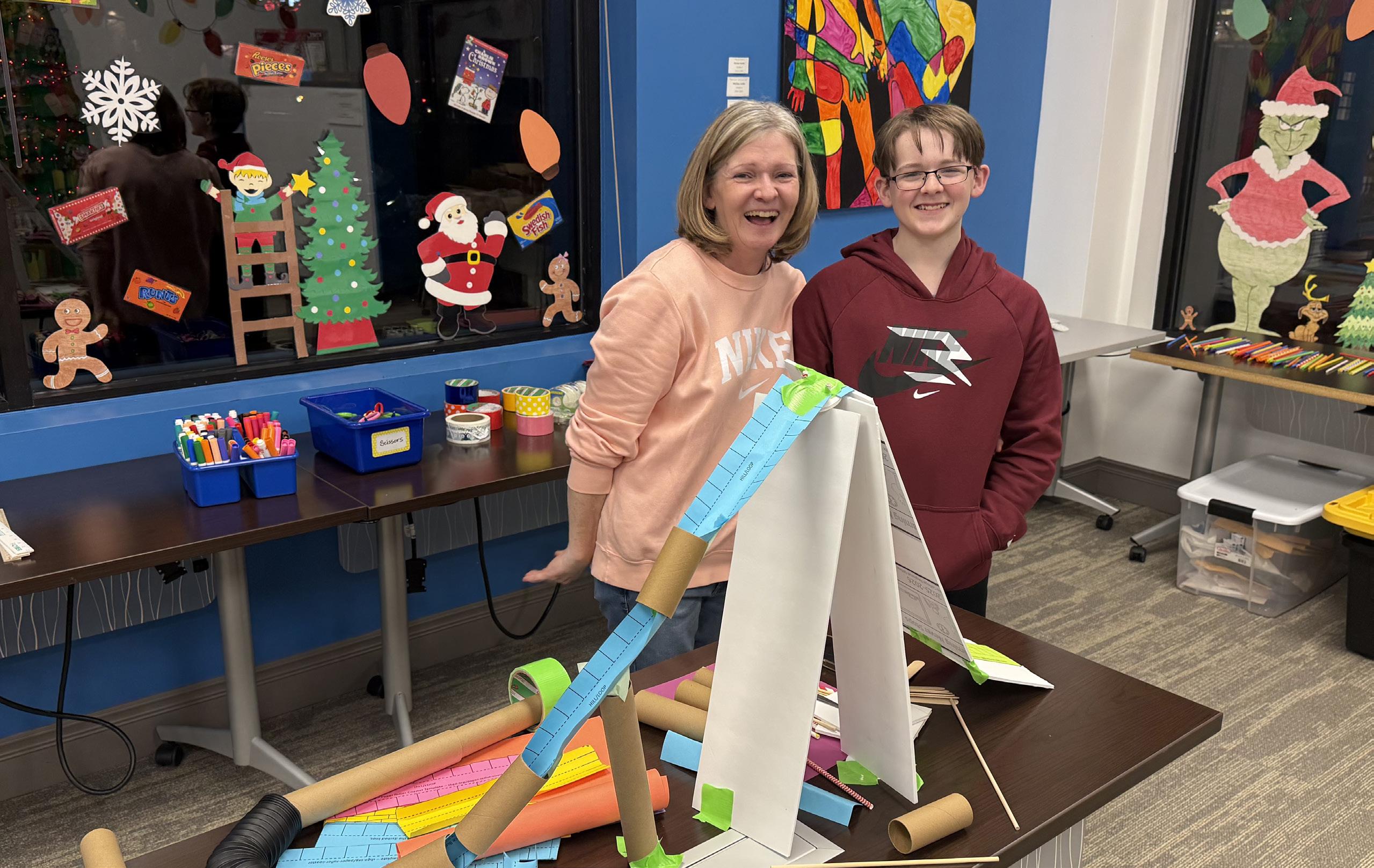
Career Forward 11 provides students with a solid foundation for a successful post-secondary future The course will focus on career awareness and exploration, employability skills, growth and advancement, and personal interests and career planning, as well as elements of financial literacy Students will begin the course by exploring their abilities, aptitudes, and interests Career Forward 11 uses the Xello online program to provide students with a variety of activities and the ability to learn more about the careers that interest them This knowledge will assist students in creating a career path and a career plan that will be aligned to their personal interests and skills Practical items such as resumes, cover letters, and interviewing skills will be addressed Students will also learn how to increase skills in practical areas such as teamwork, media literacy, internet literacy, and decision-making Whether students plan to seek a two-year degree, four-year degree, a military career, or employment, Career Forward 11 will provide all students information and practical advice for achieving those goals Career Forward 11 is a required course for graduation
Prerequisite(s): None
Delivery Mode: AC
AC: 0 5 credit
This course introduces students to the exciting and varied career opportunities in the dentistry profession, from dental assistant all the way up through oral surgeon Students will review the history of dentistry globally and in the United States and will learn key dental terminology The course will introduce the roles and tasks of the profession as well as the skills and education required of nearly every member of the dental staff Students will gain an understanding of what it takes to perform each position and how they work together This course involves interactive online lessons, projects, short-answer assignments, and personal reflection activities
Prerequisite(s): None
Delivery Mode: AC
AC: 0 5 credit
This course introduces students to the challenging world of finance and provides information about finance careers Students will review key financial terms and examine various groups, positions, and roles within financial institutions Resumes, interviews, and networking will also be introduced Students will also discuss ethics on Wall Street and the role of finance within society This course involves interactive online lessons, projects, short-answer assignments, and personal reflection activities
Prerequisite(s): None
Delivery Mode: AC
AC: 0 5 credit
This course explores the idea of pursuing passions in employment, emphasizing the value of an entrepreneurial mindset for a lasting career It shows how skills in finding opportunities, creating value, and solving problems are essential in any setting, from startups to nonprofits
Prerequisite(s): None
Delivery Mode: AC
AC: 0 5 credit
This course introduces students to the exciting and varied future career opportunities in the healthcare industry that will be in demand The course will introduce the roles and tasks, identify education and skills needed, identify responsibilities of roles that support or supervise their role, analyze legal and ethical responsibilities, limitations, and implications for each of these professions Healthcare roles explored in this course include physicians, physician assistants, pharmacists, physical therapists, healthcare information technology managers, occupational therapists, technicians, dentists, paramedics, and nurses This course involves interactive online lessons, projects, short-answer assignments, and personal reflection activities
Prerequisite(s): None
Delivery Mode: AC
AC: 0 5 credit
This course introduces students to some of the foundational elements of home construction and does a deep dive into careers, technology, and the future of construction It also addresses some of the academic proficiencies that different careers in the field of construction will need to have Later in the course, specific careers, career outlooks, and specialized education and training requirements will be covered Students will discover the varied roles within the field as well as what it takes to own a construction company Finally, the course delves into green construction and where the future of construction is headed This course involves interactive online lessons, projects, short-answer assignments, and personal reflection activities
Prerequisite(s): None
Delivery Mode: AC
AC: 0 5 credit
This course introduces students to the LEED process LEED, or Leadership in Energy and Environmental Design, is the global standard for green building certification Throughout the course, students will gain an understanding of the various components of green building They will work through modules focused on integrative strategies, water efficiency, indoor environmental quality, and more The theme of sustainability and sustainable construction is woven throughout each module, both in terms of physical environment and as it pertains to LEED certification
Prerequisite(s): None
Delivery Mode: AC
AC: 0 5 credit
For every Broadway dancer, every television star, and every pop singer, there are countless people behind the scenes helping to make it happen Explorations in Arts Careers introduces students to the skills that are part of the many fascinating careers in the arts This course focuses on all types of art forms, such as music, dance, visual arts, film, and theater Studying the arts creates independent and innovative thinkers, and many doors are open to an artist with the proper training This course should be taken for those considering a career in the arts and is intended for students who may want to pursue an arts major in college or an artistic career path
Prerequisite(s): None
Delivery Mode: AC
AC: 0 5 credit
This course teaches students what a robot is and how it relates to other key technologies such as artificial intelligence and machine learning The course then examines ten applications of robots and how they will change and impact various aspects of our lives and the economy Will robots simply steal our jobs, or will they be a tool that will create new opportunities and even free humans to use our creativity and curiosity to their full potential? Students will grapple with this and many other questions as they explore this vital, future-focused subject This course involves interactive online lessons, projects, short-answer assignments, and personal reflection activities
Prerequisite(s): None
Delivery Mode: AC
AC: 0 5 credit
The Early Childhood Education course is designed to provide an overview of the expectations and roles of the early childhood educator This course provides details about childhood development, health, nutrition, and guidance strategies to help students understand the exciting and unique opportunities that a career in early childhood education can offer The course is intended to prepare students for challenges they may face, while emphasizing the rewards of being able to influence the life of a young child The ability to offer support to children as they learn and grow is a point that is highlighted throughout each lesson
Prerequisite(s): None
Delivery Mode: AC
AC: 0 5 credit
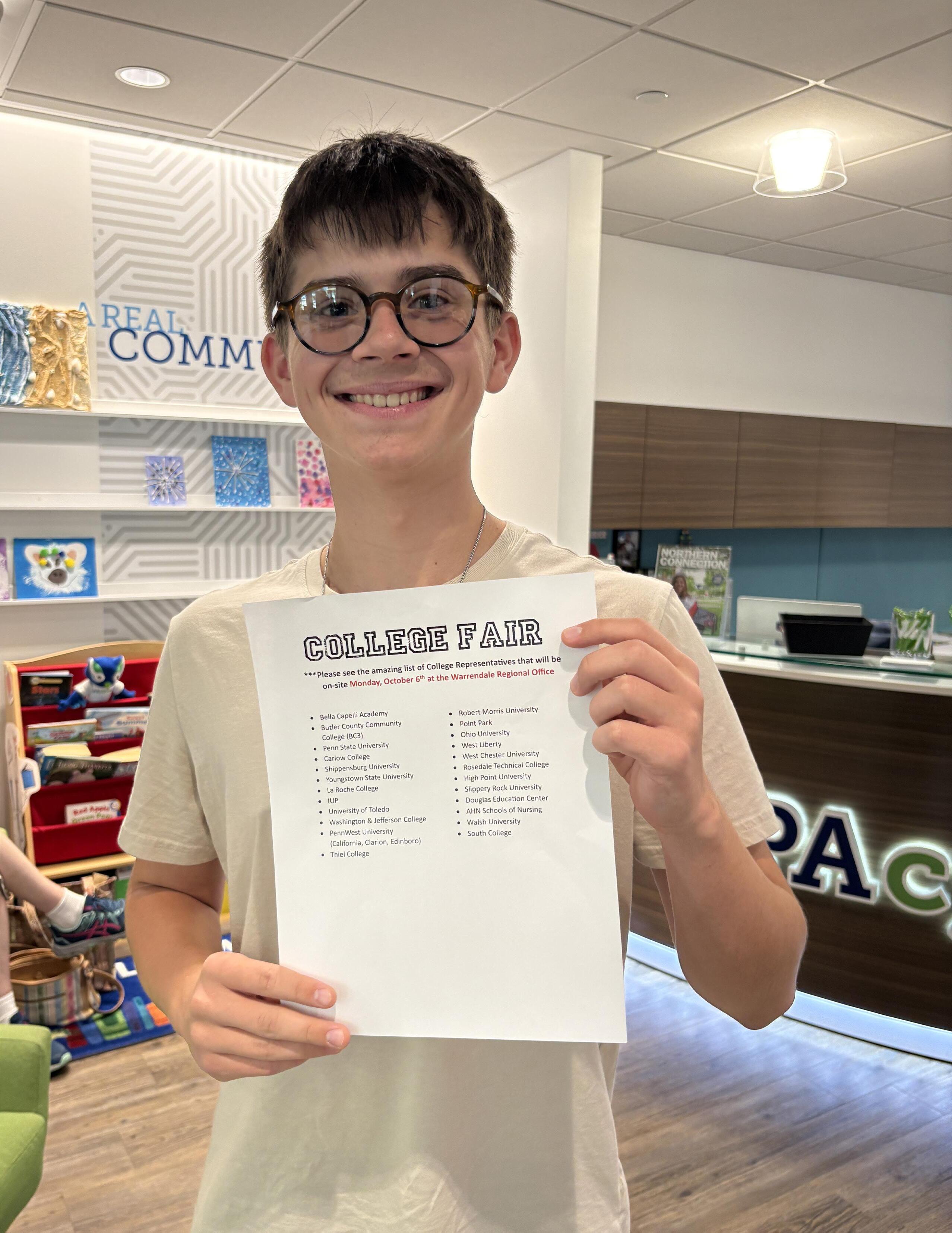
This course is designed to prepare future educators for the classroom they may inherit! The course starts with a history of education and the blended, adaptive, and personalized learning opportunities that are coming to the forefront in teaching and learning It then explores new and emerging technologies, along with their current and future impact on education Throughout the course, students will explore a wide range of career possibilities in the education field and evaluate both the promises and pitfalls of technology in education This course involves interactive online lessons, projects, short-answer assignments, and personal reflection activities
Prerequisite(s): None
Delivery Mode: AC
AC: 0 5 credit
This competency-based course provides the students with a solid foundation in biotechnology Students will engage in interactive videos designed to teach students about career paths, research, data analysis, laboratory safety, and the use of laboratory equipment in the field of biotechnology Additionally, students will examine topics that include Polymerase Chain Reaction (PCR), analysis of DNA structure, DNA replication, and the DNA purification process Students will demonstrate their knowledge of laboratory equipment by exploring the use of micropipettes, serological pipettes, and spectrophotometers Students will also discover how to make a molar solution Upon completion of this course, the students will be equipped with work-related knowledge and the skills necessary for careers in biotechnology
Prerequisite(s): Biology
Delivery Mode: AC
AC: 0 5 credit
This course is designed to prepare students with the knowledge and skills to assess, plan, provide, and evaluate care for patients in a variety of healthcare settings Students will engage with interactive videos to learn first aid principles, diagnostic testing, and laboratory procedures Emphasis will be placed on safety, medical law, and medical interventions This course is designed to provide students with a competitive edge for entry into the healthcare marketplace
Prerequisite(s): None
Delivery Mode: AC
AC: 0 5 credit
This course is designed to prepare students with knowledge of basic nursing assistant skills, which are necessary to assess, plan, provide, and evaluate the care of patients in various healthcare settings Students will engage with interactive videos while learning about infection control, personal care skills, mental health needs, and legal responsibilities Additional information on standard vital signs, identifying body parts, wheelchair assistance and ambulation, and the care of patients is also provided This course is designed to provide students with a competitive edge for entry into the healthcare global marketplace This course is best suited for students in grades 11 and 12
Prerequisite(s): None
Delivery Mode: AC
AC: 0 5 credit
Emergency Medical Response is a comprehensive course that provides essential skills in CPR, basic wound care, patient stabilization, and the use of Automated External Defibrillators (AEDs) Students will learn to operate safely and effectively within their scope of practice, focusing on emergency medical procedures and musculoskeletal system knowledge Students will master patient assessment and emergency response strategies
Prerequisite(s): None
Delivery Mode: AC
AC: 0 5 credit
This competency-based course is designed as the foundational course for agricultural studies The course introduces the major areas of scientific agricultural production, research, and introductory skills and knowledge in agricultural science and agricultural technologies Students will practice crop leaf identification, determine genotypes and phenotypes, determine medication dosages, practice vehicle maintenance, and use financial applications in agriculture Upon completion of the course, they will be equipped with the knowledge and skills necessary for careers in agriculture
Prerequisite(s): None
Delivery Mode: AC
AC: 0 5 credit
This competency-based course introduces students to the scientific principles in animal behavior, the growth and development of animals, and basic animal body systems The scientific principles are applied in animal management, proper nutrition, and disease prevention Using interactive videos, students will practice basic livestock surgical procedures and injection techniques and understand the digestive system and basic animal terminology Upon completion of this course, students will be equipped with knowledge and skills that will help prepare them for a career in Animal Science
Prerequisite(s): None
Delivery Mode: AC
AC: 0 5 credit
The agricultural education course in veterinary science covers the basics of animal care This competency-based course covers animal behavior, anatomical structures, animal body systems, safety, disease, parasites, feeding, animal control and restraint, and general animal care Students will practice equipment identification, standard veterinary procedures, filling prescriptions, and more Upon completion of this course, students will be equipped with knowledge and skills that are valuable in pursuing a career in Veterinary Science
Prerequisite(s): None
Delivery Mode: AC
AC: 0 5 credit
This course provides students with an overview of the criminal justice system In the Criminal Justice course, students engage in interactive videos designed to test their visual memory and the ability to apply their skills to effectively manage a crime scene Students will become immersed in topics that include criminal and constitutional law, security, and communications Students will review basic law enforcement skills, which include tactics, methods, and other skills utilized by law enforcement
Prerequisite(s): None
Delivery Mode: AC
AC: 0 5 credit
This course provides students with an overview of basic fundamentals and standard practices of the culinary arts In this course, students will learn culinary techniques and the recognition, selection, and proper use of tools and equipment Students will learn how to identify and prepare a variety of foods and recipes, as well as master conversions through the use of proper scaling and measurement techniques Using video-based simulations, students will prepare standard recipes while effectively managing time, accurately measuring ingredients, and appropriately using kitchen equipment Food safety and sanitation techniques will also be an important part of this course
Prerequisite(s): None
Delivery Mode: AC
AC: 0 5 credit
This competency-based course builds on the basic culinary fundamentals and standard practices that lead to a career in culinary arts Students will expand their culinary knowledge by learning how to make desserts, appetizers, salads, seafood, soups, and sauces They will also learn how to recognize, select, and properly use tools and equipment An emphasis will be placed on identifying and preparing a variety of foods and recipes from different regional cuisines Using virtual reality, students will prepare a variety of recipes while effectively managing time, accurately measuring ingredients, and appropriately using kitchen equipment Food safety and sanitation techniques will align with industry-recognized certifications
Prerequisite(s): Culinary Arts I
Delivery Mode: AC
AC: 0 5 credit
Baking and Pastry is an immersive exploration into the art and science of baking, designed to introduce students to the rich world of baking and pastry arts The themes of the lessons include an overview of baking fundamentals, kitchen safety and sanitation, food handling, baking mathematics, ingredient roles, various mixing methods, leavening agents, and dough types Students will also explore advanced skills such as pâte à choux preparation, cake decorating, custard-making, sourdough fermentation, and tempering chocolate Additionally, lessons cover dietary alternatives, international pastries, business skills, and the creative aspects of plating and presenting desserts The course aims to cultivate technical proficiency, creativity, and a solid understanding of food safety, allowing students to develop practical skills and theoretical knowledge necessary for success in the baking and pastry industry
Prerequisite(s): None
Delivery Mode: AC
AC: 0 5 credit
Hospitality Management is an introduction to the areas of the service industry that are dedicated to people’s basic and leisure needs, such as travel, lodging, tourism, food and drink service, event planning, and theme parks The themes of the lessons include an industry overview, transportation, accommodations, guest relations, marketing and sales, safety and security, legal and ethical responsibilities, housekeeping, finance, back office functions, and front office procedures The goal is to develop technical skills at the occupational level and include materials that build factual and theoretical knowledge
Prerequisite(s): None
Delivery Mode: AC
AC: 0 5 credit
This competency-based course equips students with the foundational knowledge and practical skills essential for success in the beauty industry, covering hair cutting and styling, chemical services, nail technology, makeup application, and salon management Through engaging video lessons and practical activities, students gain proficiency in key techniques, such as shampooing, disinfection, advanced styling, manicuring, and makeup Emphasizing salon safety, client communication, professional ethics, and personal branding, the course prepares students for various career opportunities while covering business concepts like financial management, marketing, and salon ownership
Prerequisite(s): None
Delivery Mode: AC
AC: 0 5 credit
This course provides students with an understanding of carpentry Students will engage in interactive videos designed to teach how to use basic measuring tools, hand tools, and machines commonly used in the field of carpentry Additionally, students will examine various wood construction materials and their properties Throughout the course, students will learn components of site and personal safety, and how to interpret detailed drawings used for construction
Prerequisite(s): None
Delivery Mode: AC
AC: 0 5 credit
This competency-based course is designed to teach students the concepts of basic electricity and safety and provides knowledge, fundamental skills, and systems used by an electrician Students will apply the knowledge and skills necessary to install switches, receptacles, dimmers, switch boxes, and more! Through interactive videos, the students will learn about electrical circuits, transformers, conductors, resistors, and the tools used in the industry Upon completion of this course, students will be equipped with the knowledge and skills to help determine if an electrical career is right for them
Prerequisite(s): None
Delivery Mode: AC
AC: 0 5 credit
This competency-based course provides students with a solid foundation in HVAC Students will engage in interactive videos designed to teach the primary duties of an HVAC technician, including part identification, sequence of operations, troubleshooting, finances, and air conditioning Additionally, students will examine basic electricity, heating, cooling, and fundamental copper and plastic piping practices Students will learn worksite and personal safety components and basic mathematical operations throughout the course
Prerequisite(s): None
Delivery Mode: AC
AC: 0 5 credit
This competency-based course is preceded by HVAC I This course builds on the students’ knowledge of electricity, heating, cooling, air distribution, equipment, and air quality Using interactive videos, students will practice testing heating, ventilation, and air conditioning systems, enabling the students to perform routine maintenance on these systems Upon completion of this course, the students will be equipped with work-related knowledge and the skills necessary for careers in HVAC
Prerequisite(s): HVAC I
Delivery Mode: AC
AC: 0 5 credit
This competency-based course introduces students to the foundational skills of the plumbing trade Topics covered include general plumbing practices, drainage, traps, water systems, estimating, and storing materials used in plumbing Using interactive videos, students will practice interpreting construction drawings related to plumbing installation, joining pipes and fittings, installing fixtures, and plumbing service and repair Upon completion of this course, students will be equipped with the knowledge and skills to help determine if a career in plumbing is right for them
Prerequisite(s): None
Delivery Mode: AC
AC: 0 5 credit
In this course, students will engage with interactive videos designed to teach students the skills and qualities of a drone pilot Students will learn how weather affects the drone and will develop an understanding of the physics involved with flying Students will be immersed in topics that include emergency procedures, preflight inspection, radio communication, VLOS operations, sectional charts, aerial photography, and search and rescue operations
Prerequisite(s): None
Delivery Mode: AC
AC: 0 5 credit
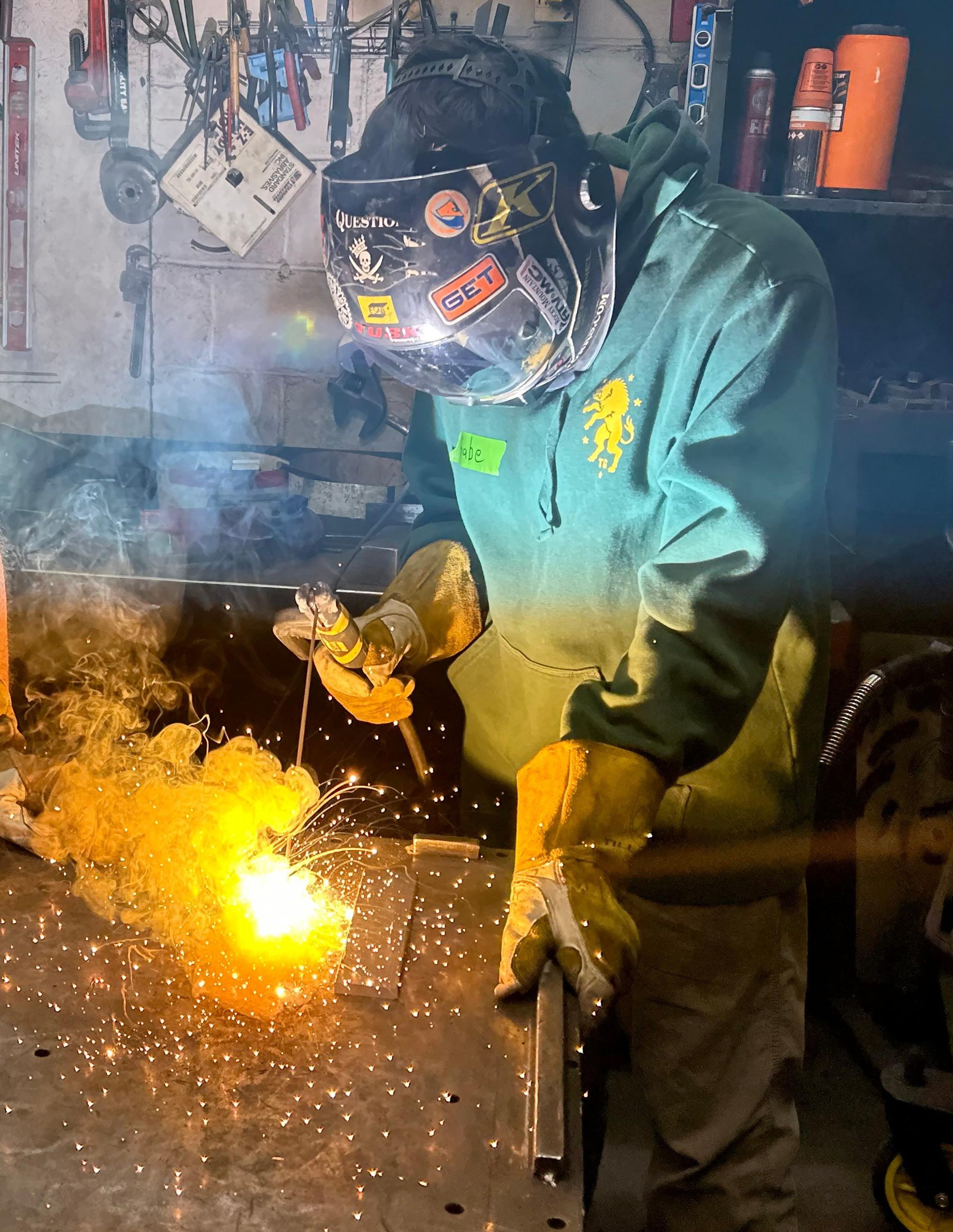
Adobe Illustrator
This course provides an introduction to Adobe Illustrator Students will learn everything from basics like navigating Illustrator to performing complex tasks such as managing colors, drawing, creating illustrations, and much more Students will gain insight into what it is like working in the graphic design industry in this course The course contains guided video tutorials, hands-on projects, and step-by-step resources that help students learn how to work in Illustrator
Prerequisite(s): None
Delivery Mode: AC
AC: 0 5 credit
This course introduces students to the world of Adobe InDesign Through the course, students will learn everything from basics like navigating InDesign to performing complex tasks such as creating page layouts, applying interesting effects, and making documents interactive Students will gain insight into what it is like working in the digital media and print design industry in this course This course contains guided tutorials, do-it-yourself projects, and other resources that will help students practice and learn how to work in InDesign
Prerequisite(s): None
Delivery Mode: AC
AC: 0 5 credit
This course introduces students to the world of Adobe Photoshop Through the course, students will learn everything from basics like navigating Photoshop to performing complex tasks such as editing and retouching photos, applying filters and effects, and creating original artwork Students will gain insight into what it is like working in the visual and graphic design industry The course contains guided tutorials, do-it-yourself projects, and other resources to help students practice and learn how to work in Photoshop
Prerequisite(s): None
Delivery Mode: AC
AC: 0 5 credit
This course introduces students to the world of Adobe Premiere Pro Students will get an insight into the video design and production industry Throughout the course, students will progress from learning the basics of navigation to performing complex tasks like editing videos, applying filters and effects, and even creating original artwork This course contains guided tutorials, engaging projects, and great resources that will help students practice and learn how to work in Premiere Pro
Prerequisite(s): None
Delivery Mode: AC
AC: 0 5 credit
In this course, students will learn how to design a beautiful and functional website Students will learn how to take their design and translate it into a live website using Hypertext Markup Language (HTML) and Cascading Style Sheets (CSS) programming languages HTML5 and CSS3 will be the standard versions used in the class Students will understand the design components of websites, including the use of color, layout and when to use different techniques, typography rules, and the importance of imagery Upon completion of this course, each student will have hands-on experience creating a fully functioning website Students do not need to have a previous technical background with HTML or CSS prior to taking this course
Prerequisite(s): Ability to navigate the internet, use email, and use word processing software (i e , Microsoft Word)
Delivery Mode: AC
AC: 0 5 credit
The Building Maintenance Technology course will focus on all aspects of the construction industry, from health and safety to the tools that every construction professional needs in their collection They will learn about the various roles in the industry as well as job outlooks, educational and experiential requirements, and salary information Some activities will focus on career exploration to discover career options that best align with interests and talents Students will learn basic construction math and how it is applied during design and building phases of projects They will learn specifics about carpentry, construction drawings, framing floor systems, framing walls, and framing roofs Throughout, they will establish a foundation for what opportunities exist for them in the industry
Prerequisite(s): Algebra I, English 9
Delivery Mode: AC
AC: 0 5 credit
First, we had the internet of computers Then, with the advent of email and social media, along with mobile technology, it became the internet of people Today’s world is increasingly becoming the internet of things This course will examine the trends and opportunities surrounding the Internet of Things Students will learn about the technologies, hardware, and software that underpin these advancements A variety of end-market applications in our homes, businesses, and cities will be explored Finally, students will learn about the many career opportunities that the Internet of Things will enable This course involves interactive online lessons, projects, short-answer assignments, and personal reflection activities
Prerequisite(s): None
Delivery Mode: AC
AC: 0 5 credit
In this course, students will learn how to use productivity and collaboration tools, such as G Suite by Google Cloud to create word processing documents, spreadsheets, surveys, and forms such as personal budgets and invitations
Prerequisite(s): None
Delivery Mode: AC
AC: 0 5 credit
In the Cybersecurity course, students will learn about the practice of protecting networks, systems, and programs from digital attacks They will better understand the aim of these attacks, such as destroying information, extorting money and resources, or disrupting business operations They will learn about the challenges and opportunities that implementing cybersecurity measures can present Students will learn about countermeasures and role recovery and their integral function in the cybersecurity realm Additionally, students will learn what makes certain networks and systems more vulnerable to attacks They will become adept at identifying potential viruses, worms, threats, and malware The Cybersecurity course acts as a foundation on which to build extensive knowledge about threats to digital security
Prerequisite(s): None
Delivery Mode: AC
AC: 0 5 credit
In this course, students will learn about the technologies and design principles that have been the foundation of the development of video game technology over the last 50 years Students will examine and discuss the impact of video games on culture and the economy Students will learn about the current gaming and esports landscape, including strategies and techniques of top teams and individuals This course will also discuss the risks and dangers of video games and help students understand how to set appropriate time and content parameters Finally, the course will identify career paths and opportunities for those who are passionate about gaming
Prerequisite(s): None
Delivery Mode: AC
AC: 0 5 credit
This course teaches what every student should know about Artificial Intelligence AI is a fast-moving technology with impacts and implications for both our individual lives and society as a whole In this course, students will gain a basic introduction to the building blocks and components of artificial intelligence, learning about concepts like algorithms, machine learning, and neural networks Students will also explore how AI is already being used, and evaluate problem areas of AI, such as bias The course also contains a balanced look at the impact of Artificial Intelligence on existing jobs, as well as its potential to create new and exciting career fields in the future Students will leave the course with a solid understanding of what AI is, how it works, areas of caution, and what they can do with technology This course involves interactive online lessons, projects, short-answer assignments, and personal reflection activities
Prerequisite(s): None
Delivery Mode: AC
AC: 0 5 credit
Introduction to Computer Science is a starting point for any student interested in computer-related skills and careers This course will introduce students to an overview of computers, operating systems, networks, cybersecurity, and the Internet Students will also have the opportunity to explore careers in computer-related fields and how computers affect everyday life
Prerequisite(s): None
Delivery Mode: VC
VC: 1 0 credit
Java is one of the most widely used computer languages in the world This course will teach students Java by having them complete multiple projects, both in the console and user interface, including mad libs, player vs computer games, battleship, tic tac toe, picture shuffler, and many more This course is meant to give students ample experience in Java by creating multiple stand-alone programs
Prerequisite(s): Previous coding experience in any computer language including: JavaScript, Python, C#, C++, Ruby, or any other object-oriented computer language is strongly recommended
Delivery Mode: AC
AC: 0 5 credit
JavaScript is one of the best computing languages to learn because it makes web browsers come alive! This course will teach students JavaScript through coding multiple computer games, including pong, fish, a platformer, and tower defense! They will then code or customize their own game Students will write all the code themselves by working through individual lessons and by watching video reviews They will learn about variables, functions, listening events, loops, arrays, and objects This course assumes no coding experience and includes self-graded quizzes and tests Students will also upload their work at the conclusion of each project to create an online portfolio
Prerequisite(s): Ability to navigate the internet, use email, and use word processing software (i e , Microsoft Word)
Delivery Mode: AC
AC: 0 5 credit
This course introduces students to Microsoft Excel Knowledge of this fundamental spreadsheet software has proven to boost career and employment prospects Excel skills can boost productivity as a student and are useful in daily life, such as managing personal finances Through an engaging and scaffolded approach, students advance from learning the basics of formatting and navigation to performing complex tasks like data manipulation, macros, and PivotTables
Prerequisite(s): None
Delivery Mode: AC
AC: 0 5 credit
This course introduces students to Microsoft PowerPoint Students will gain critical skills in this essential presentation software, which will benefit them in their education and professional futures! Students start by learning fundamentals like slide creation and navigation, and progress to more complex tasks like 3D models, animations, and transitions
Prerequisite(s): None
Delivery Mode: AC
AC: 0 5 credit
This course introduces students to Microsoft Word Students will gain insights into the features and capabilities of this essential software within personal, educational, and business settings Throughout the course, students progress from learning the basics of navigation to performing complex tasks like graphic elements and collaboration
Prerequisite(s): None
Delivery Mode: AC
AC: 0 5 credit
Python is a powerful language designed to do just about anything! This course allows students to learn Python by first completing a text-based console game and then turning it into a multiplayer adventure! Students will not only learn Python from going through the individual lessons and video reviews but also understand a client-server relationship They will get to code in their own Python web server that allows connections through a browser Students will gain experience using variables, classes, functions, lists, dictionaries, generators, and proper Python formatting This is a great course for anyone interested in preparing themselves for future coding classes This course assumes no coding experience
Prerequisite(s): None
Delivery Mode: AC
AC: 0 5 credit
Learn the Python programming language and develop your problem-solving skills! This course covers the fundamentals of programming and algorithmic thinking, including topics such as variables, loops, conditionals, methods, and functions Students build numerous projects throughout the year, including text-based games and drawings made with code Coding can be a fun and rewarding experience that helps students discover if computer programming is the career path for them
Prerequisite(s): None
Delivery Mode: VC
VC: 1 0 credit
From hearing aids to pedometers to smart watches, humans have made and worn devices to count their steps and communicate With the continued miniaturization of chips and sensors, combined with increasing sophistication of artificial intelligence, wearable technology has proliferated into countless end-markets This course will introduce students to wearable technologies and the components and software that make these technologies possible The course will also evaluate several applications of wearable technologies in various industries Finally, the course will examine and discuss the implications of wearable technology, including its pros and cons, and potential implications to our health, privacy, and society This course involves interactive online lessons, projects, short-answer assignments, and personal reflection activities
Prerequisite(s): None
Delivery Mode: AC
AC: 0 5 credit
Web design allows students to learn how websites are designed and created, from planning to publishing Course content will include basic web programming languages, such as HTML and CSS Students will also learn web file management
Prerequisite(s): None
Delivery Mode: VC
VC: 1 0 credit
This course teaches students practical skills for understanding and managing their emotions, setting goals and getting organized, understanding and getting along with others in our diverse world, and making good decisions Research shows that people who practice these skills have greater academic achievement as students and experience more success and satisfaction as adults
Prerequisite(s): None
Delivery Mode: AC
AC: 0 5 credit
This course is designed to help prepare students for their responsibilities as parents and caregivers of children Topics include prenatal care, growth and development through age six, teen pregnancy, maternal health, parenting skills, and child guidance
Prerequisite(s): None
Delivery Mode: AC
AC: 0 5 credit
In Communications, students explore various aspects of communication They will investigate the foundations of communication by analyzing, applying, and designing creative works essential to the professional communications industry This course establishes a comprehensive foundation for students interested in a post-secondary career in communications
Prerequisite(s): None
Delivery Mode: AC
AC: 0 5 credit
The journey through high school starts here! In this course, students will become familiar with the moving parts of PA Cyber and will learn how to be successful from their first few years of high school to graduation As students begin to build the foundation for their high school career, this course will help to identify the who, what, when, and where of PA Cyber and the important resources available to them Students will become familiar with PA Cyber’s digital programs, school and faculty structure, academic supports, the basics of learning, and how to stay safe online In finishing this course, students will have a clear idea of how to stay on track, get involved, and plan for a successful future Students will be scheduled for this course in Grade 9 The course will also be available to any high school students who did not complete the course in Grade 9
Prerequisite(s): None
Delivery Mode: AC
AC: 0 5 credit
Students in the Human Development and Family Studies course explore the basic information about human development, parenting roles and strategies, and functioning effectively within the family in today’s changing and complex society This course helps students to develop competencies related to genetics, family types, and effective communication Students investigate the ways in which humans develop over their lifespan, human relationships, childcare, and child abuse Students also learn the importance of creating a nurturing and caring home environment
Prerequisite(s): None
Delivery Mode: AC
AC: 0 5 credit
As students grow and become adult citizens, they are expected to understand basic life skills to live independent and successful lives Life Skills is designed to provide students with the information that they need as they begin the adulthood phase of their lives From personal finance to nutrition to personal development, students have the opportunity to learn useful skills, helping them to become responsible and proactive young adults
Prerequisite(s): None
Delivery Mode: AC
AC: 0 5 credit
For students who are interested in majoring in broadcast journalism, communications, or any other form of media in college, Media Writing is the ideal course This course explores the basics of media writing and reporting Students are exposed to numerous styles of writing, including social media reviewing, analysis, public service announcements, and writing for publication In addition, students become familiar with researching and locating sources that are reliable and valid In addition, students will explore persuasive media and media rhetoric They will also participate in the review of movies, social media, news stories, and magazine articles
Prerequisite(s): None
Delivery Mode: AC
AC: 0 5 credit
The Personal Leadership course will help students to develop the important tools needed to hone both relationship and communication skills Students will engage in topics such as responsible decision-making, different perspectives, social skills for healthy and supportive relationships, and empathizing with others The course will also explore how emotions, thoughts, and values influence our behavior
Prerequisite(s): None
Delivery Mode: AC
AC: 0 5 credit
The Study Skills and Strategies course equips students with the skills and understanding critical to effective learning Using a unique approach to the traditional topic of study skills, this course weaves understanding regarding the role of the brain in learning into the instruction of discrete learning skills and strategies Moving beyond a list of good tips and ideas, the Study Skills and Strategies course will challenge students to develop intentional approaches to learning They will be required to make connections between the strategies and skills they learn in this course and the implementation of those strategies and skills in their other coursework
Prerequisite(s): None
Delivery Mode: VC, AC
AC: 0 5 credit
VC: 0 5 credit (Fall Only)
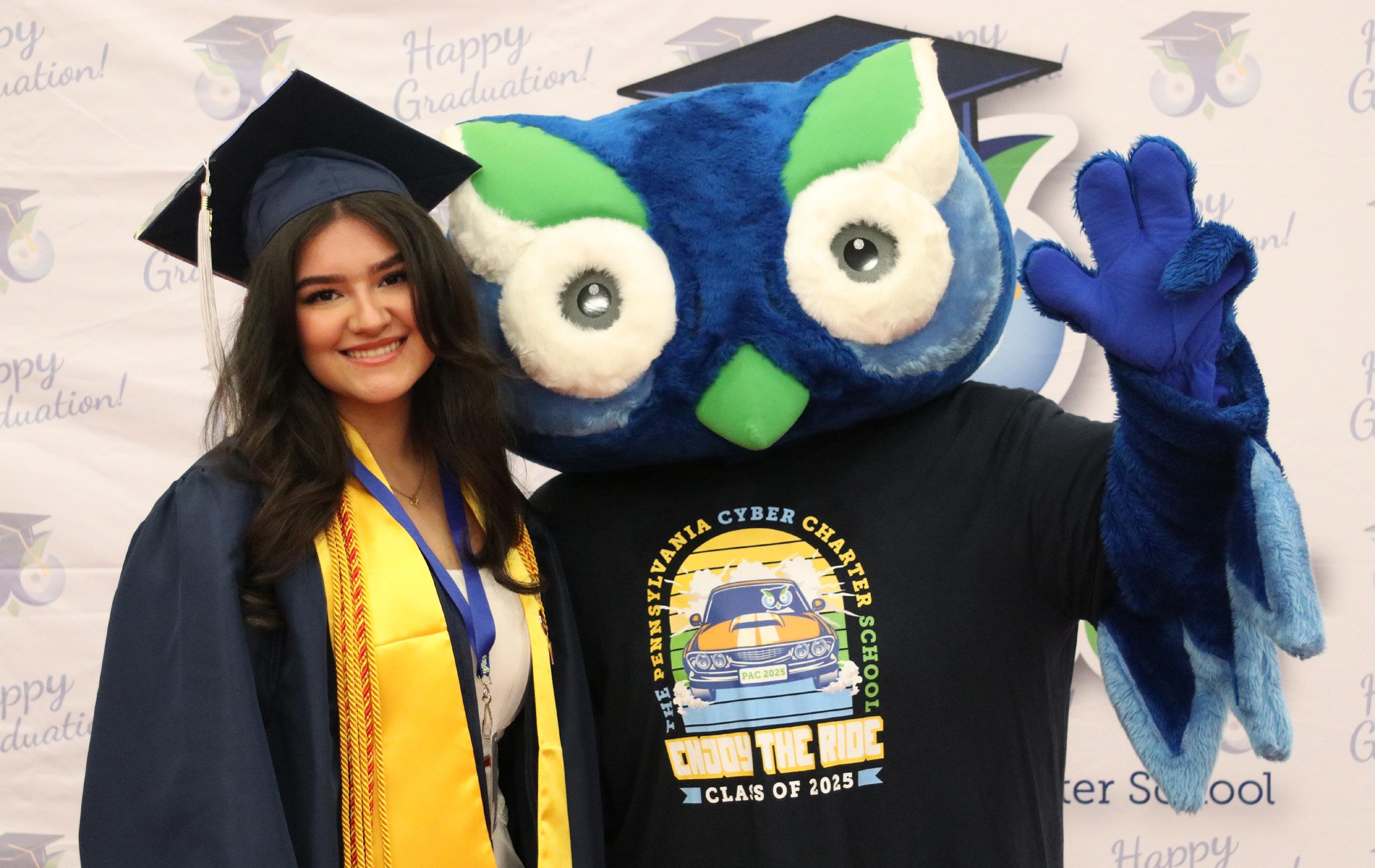
This asynchronous course is designed to provide focused content remediation for students who have not yet met proficiency on the Algebra I Keystone Exam Prior to the start of the course, students will take a pre-test After completing the pre-test, students may test out of content that they have mastered Course content will adapt to the individual student and will focus specifically on the topics in which they need further practice In Keystone Algebra I, students will develop computational, procedural, and problem-solving skills through the course, building a solid foundation for further study in mathematics
Prerequisite(s): Algebra I
Delivery Mode: AC
AC: 1 0 credit
This asynchronous course is designed to provide focused content remediation for students who have not yet met proficiency on the Biology Keystone Exam Prior to the start of the course, students will take a pre-test After completing the pre-test, students may test out of content that they have mastered Course content will adapt to the individual student and will focus specifically on the topics in which they need further practice In Keystone Biology, students will focus on scientific inquiry to investigate real-world phenomena This course outlines the chemical basis of life, the concept of cell structure and function, and the basics of Mendelian genetics Students also analyze the structure of DNA and the role of biotechnology today Students examine the theory of evolution, ecology, interactions that occur within ecosystems, and the ways in which humans have impacted ecosystems
Prerequisite(s): Biology
Delivery Mode: AC
AC: 1 0 credit
This asynchronous course is designed to provide focused content remediation for students who have not yet met proficiency on the English Literature Keystone Exam Prior to the start of the course, students will take a pre-test After completing the pre-test, students may test out of content that they have mastered Course content will adapt to the individual student and will focus specifically on the topics in which they need further practice In Keystone English Literature, students will focus on a variety of skills needed to achieve mastery of grade-level literature, grammar, and composition Students will study various parts of speech and a variety of literature, including poetry and nonfiction
Prerequisite(s): English 9, English 10
Delivery Mode: AC
AC: 1 0 credit