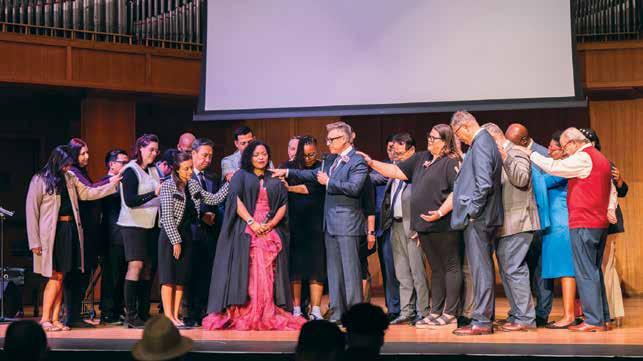
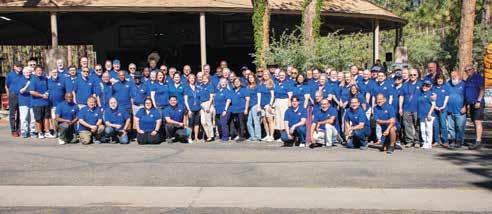
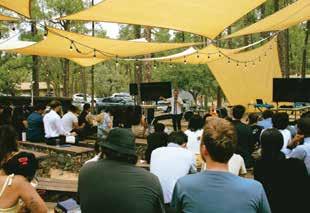
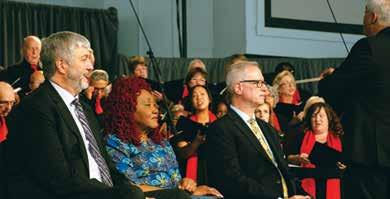
Pacific Union Conference 32nd Constituency Session
It is our privilege to gain precious victories day by day. Let us go forward in faith and hope and courage. Let us regard patience and kindness as sacred things which we must bring into every line of our work. Let us vindicate the greatness of the work by building up amiable, hopeful characters. This we can do through the grace of Christ.
Ellen G. White, “Be of Good Courage,” Review and Herald, July 29, 1909, p. 9
Recorder
The Recorder is a monthly publication reaching approximately 76,000 Seventhday Adventist homes in Arizona, California, Hawaii, Nevada, and Utah. Our mission is to inform, educate, and inspire our readers to action in all areas of ministry.
Publisher Ray Tetz
Editor Alberto Valenzuela
Design/Layout Stephanie Leal • Alberto Valenzuela
Printing Pacific Press Publishing Association www.pacificpress.com
Postal Regs: The Pacific Union Recorder (ISSN 0744-6381), Volume 126, Number 8, is the official journal of the Pacific Union Conference of Seventh-day Adventists and is published monthly. Subscription rate: No charge to Pacific Union Adventist church members; $16 per year in U.S.; $20 foreign (U.S. funds); single copy, $2.
POSTMASTER: Send address changes to: Circulation Department, Pacific Union Recorder, Box 5005, Westlake Village, CA 91359. Info@adventistfaith.com.
Editorial Correspondents
Adventist Health 916-742-0429
Kim Strobel strobeka@ah.org
Arizona 480-991-6777
Alexis Camacho ACamacho@azconference.org
Central California 559-347-3128
Bryan Bong bbong@cccsda.org
Hawaii 808-595-7591
Miguel Manzo communicationsdept @hawaiisda.com
Holbrook Indian School 928-524-6845 x109
Jacqui Reed jreed@hissda.org
La Sierra University 951-785-2000
Darla Tucker dmartint@lasierra.edu
Loma Linda 909-651-5925
Ansel Oliver anoliver@llu.edu
Nevada-Utah 775-322-6929
Michael Jenkins Jr. mjenkins@nevadautah.org
Northern California 916-886-5600
Laurie Trujillo Laurie.Trujillo@nccsda.com
Pacific Union College 951-809-6777
Gene Edelbach gedelbach@puc.edu
Southeastern California 951-509-2258
Taji Saleem taji.saleem@seccsda.org
Southern California 818-546-8400
Lauren Lacson Llacson@sccsda.org
What’s inside
4 President’s Report
6 Executive Secretary’s Report
9 Treasurer’s Report
15 Executive Vice President’s Report
17 Asian-Pacific Ministries
Vice President’s Report
19 Black Ministries
Vice President’s Report
21 Education Vice President’s Report
25 Hispanic Ministries
Vice President’s Report
27 Youth, Young Adult, and Children’s Ministries Vice President’s Report
29
Adventist Community Services Report
30 Adventist Health Report
32 Church State Council Report
33 Communication & Community Engagement Report 34 Elmshaven Report 36 Growing Young Leaders Report 38 Holbrook Indian School Report 41 La Sierra University Report 43 Literature Ministries Report
Loma Linda University Health Report
Ministerial Department Report
Native Ministries Report
Pacific Union College Report
Planned Giving & Trust Services Report
Volunteer Ministries Report
Western Adventist Foundation Report
Arizona Conference
Central California Conference
Hawaii Conference
Holbrook Indian School
Adventist Health
La Sierra University
Linda University Health
Conference
& Marketplace
Calendars
President’s Report
BY BRADFORD C. NEWTON
To the Adventist family of believers in the Pacific Union Conference—families, elders and lay leaders, young adults and college students, children and youth, pastors and teachers, healthcare professionals and chaplains, administrators and ministry leaders, volunteers and church members in every corner of this union—grace to you and peace from God our Father and the Lord Jesus Christ.
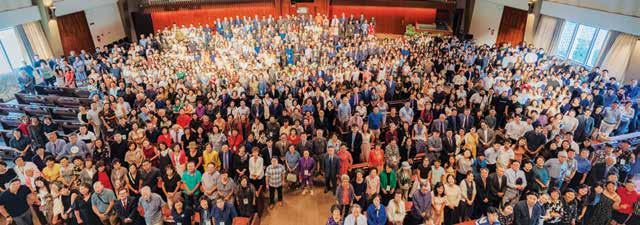
Adventists in the Pacific Southwest first gathered to organize the Pacific Union on August 1, 1901—125 years ago! The delegates to the 32nd Quinquennial Constituency Session will gather this month in Palm Desert, California. In keeping with our timehonored practice, whenever the church gathers for a constituency session, it is not only to hear reports, elect officers, and take up new business. In the constituency session we affirm that we are the body of Christ, recipients of His love and grace, and sent into the world to share His love.
It has been my privilege and honor to serve as the president of the Pacific Union for the past five years, the capstone of some 43 years in the gospel ministry! My heart is filled with gratitude—for you, for your faithfulness, and above all for the faithfulness of God.
Like the apostle who wrote, “I thank my God upon every remembrance of you” (Philippians 1:3), as I look back over the quinquennium just past, my prayers are those of a thankful heart.
When this term began in 2021, we were still living in the shadow of a global pandemic. We did not know what the coming years would bring. But we did know the promise of Jesus: “I will pray the Father, and he shall give you another Comforter, that he may abide with you forever” (John 14:16, KJV). We
moved forward together in faith—not trusting in our own certainty but in the certainty of God’s abundant grace and love. And our God has been faithful! It is easy to observe in our churches the joyous diversity of God’s people. Each week across the Pacific Union our churches gather to minister and worship—and you will hear the gospel preached in more than 30 languages! Our membership represents many cultures and multiple generations. While we have some of the largest congregations to be found anywhere in Adventism, we also have
many, many small churches— and rigorous discussion in our Sabbath Schools, regardless of the class size! Our congregations are at home in urban neighborhoods, rural communities, island congregations, suburban campuses, and very often online as well.
In describing our core mission, we have taken to using the simple phrase, “Sharing Jesus.” Can anything be closer to our hearts? We are persuaded of the significance of the prophetic message that gave rise to our faith so long ago—and which with every passing day is more timely and relevant. In a time when the veracity of the things we hear and see in the public media are constantly questioned, we speak the words of Jesus who said, “He who sent Me is true; and I speak to the world those things which I heard from Him” (John 8:26, NKJV).
and that we are called to empower them, listen to them, and walk beside them as they take up the responsibilities of being the disciples who lead the way in helping to shape the future.
While methods have changed, and technology and communication have helped extend and expand our outreach, our calling has remained constant: to share with our families, friends, neighbors, and communities the good news of the love, forgiveness, hope, and salvation found in Jesus Christ.
Every generation of believers has received the gospel because someone before them was faithful— faithful enough to teach and mentor, to trust and to give responsibility, to invest time and resources so that the next generation could stand firm in Christ.
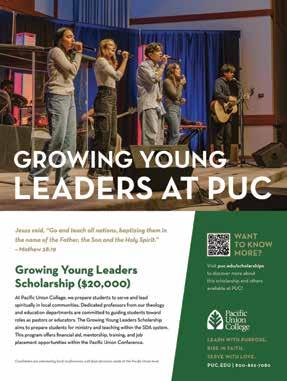
This is why, during the last five years, we have sought to be intentional about that investment. The work of Adventist education—our elementary schools, our early childhood programs, and our academies and colleges—has continued with strength and vision, even amid the disruptions of the pandemic years and natural disasters. From this commitment to education and discipleship emerged Growing Young Leaders, a ministry that began within the Office of Education and grew into a full-time department. These activities are evidence of our shared conviction that the future of the church is already present among us in our young people—
We have prayed that within our churches and communities there might be a spirit of openness and welcome—congregations engaging with their neighbors, schools creating safe spaces for students, healthcare institutions providing compassionate care, and ministries reaching out in distinctive ways, particularly to those who may be marginalized or forgotten.
This report comes at a unique moment, as I complete this season of ministry and prepare for retirement later this year. My late wife, Jennifer, and I prayerfully reached this decision together, trusting that the same God who has guided us across more than four decades of ministry will continue to lead in the years ahead.
My confidence in the future of the Pacific Union has been strengthened each day because of what I have seen of God’s faithfulness and of the generous love and fellowship of our community of believers. Ellen White once wrote, “Hearts that are filled with the love of Christ can never get very far apart” ( Testimonies for the Church , vol. 5, p. 335). This is our hope and our calling—to be united in the love of Christ across cultures, across languages, across generations, and across every field of ministry—until the day all God’s people see Christ face to face.
Executive Secretary’s Report
BY SANDRA E. ROBERTS
Throughout of Pacific Union Conference of Seventh-day Adventists, women and men have been faithfully carrying out our mission over the past five years.
We as a church have been called to a special task in these times: to reveal the character of God through adherence to the command to love God and love our neighbors, both in belief and in tangible responses to the gospel of Jesus Christ. It is our honor and privilege.
Our mission is clear. We are to go. We are to make disciples of all nations. We are to baptize them in the name of the Father and of the Son and of the Holy Spirit. We are to teach them to observe all things that God commanded us. And we are to do these things remembering, “I am with you always, even to the end of the age” (Matthew 28:18-20, NKJV).
This has not always been easy; five years ago, we were just emerging from the devastating covid pandemic. Faithful, creative, passionate, and prayerful members, pastors, chaplains, educators, and administrators in our conferences found new ways to accomplish effective ministry in their communities in spite of the lingering concerns that surrounded our globe.
Stories abound of how quickly they were able to shift, refocus, and carry on with a deep trust that God’s promise of I am with you always was indeed true.
Resilient and with their eyes on Jesus, ministry has indeed continued to expand and thrive.
Membership
Membership statistics are an important window through which to see the ministry that takes place. They tell the story of lives transformed by the Spirit of God, decisions for baptism, families grieving due to the loss of loved ones now awaiting the resurrection, changes in demographics that reflect the growing diversity of
our territory, and so much more.
The graphs that follow contain the collective data from the seven conferences in the Pacific Union.
The year 2021 opened with a membership of 220,791. We closed 2025 with a membership of 224,178. This reflects continued growth in spite of the fact that more members moved out of the Pacific Union than transferred into our territory and continued membership audits that result in removing members who have not been seen for many years. (See graphs on p. 8.)
We rejoice over the 19,328 people who were baptized during the past five years, each with their own story of how the Spirit of God worked in their lives. This figure does not include the several thousand who joined by profession of faith. (See graph on p. 7.)
The Pacific Union reflects a beautiful picture of the kingdom of God as we work together in all of our diversity for the sake of the mission we are charged with.
Church clerks
The Pacific Union works with the conference clerks to provide support, training, networking, and encouragement as they serve the local church clerks. These past five years, we have been focusing on reshaping the role of the clerk.
The role of the church clerk is essential to thriving church ministry. In partnership with the North American Division Secretariat, our conference clerks are working toward elevating the role of the local church clerk. It is clear they hold a key part in member retention as they partner with the pastors and other church leaders by keeping eAdventist data up to date. Church clerks are able to assist in implementing member care initiatives such as birthdays to be celebrated and new babies that are welcomed into families. They can observe when
attendance at church drops off, attempt to find members who have been missing for quite some time, and be a part of the church teams that work toward integrating members back into active church membership and service.
It is true that eAdventist is an important tool, but it is most helpful when all the various tools embedded in the system are used to support the members and the interests of those who have visited the church as the Spirit of God works in their lives.
Keeper of the records/Telling God’s story
Scripture gives us many accounts of people, often referred to as scribes, who did the sacred work of keeping God’s story documented.
We can go back in our archives and locate writings of our early pioneers in the Pacific Union Conference and be inspired by the vision God gave them for ministry in our territory.
Today, we also keep records of God’s activity in our midst through the retention of documents and records.
Minutes of Union Executive Committee meetings, Constituency Sessions, and officer meetings, which reflect important decisions that were made after prayerfully seeking God’s direction, are now kept in electronic form. Financial statements are retained and reflect the faithful generosity of church members who help provide “fuel” for mission and kingdom work.
We continue to develop document retention
protocols so that we may keep telling the stories of faith and remembering that God continues to lead in our journey
God’s church is first and foremost about people— not programs or initiatives or strategies, but people. There are over 100 metaphors and images of the church throughout Scripture that help emphasize how cherished the body of Christ is as God’s people work together to fulfill the gospel commission. Ellen White wrote:
The church is God’s appointed agency for the salvation of men. It was organized for service, and its mission is to carry the gospel to the world. From the beginning it has been God’s plan that through His church shall be reflected to the world His fullness and His sufficiency. The members of the church, those whom He has called out of darkness into His marvelous light, are to show for His glory. The church is the repository of the riches of the grace of Christ; and through the church will eventually be made manifest, even to “the principalities and powers in heavenly places,” the final and full display of the love of God (The Acts of the Apostles, p. 9).
Thank you for participating in reflecting God’s fullness and sufficiency as the body of Christ. May we continue to allow God’s heart-shaping work in our lives in the midst of all that is swirling in this world.
Pacific Union Conference Baptisms 2021-2025
Pacific Union Conference Membership 2021-2025
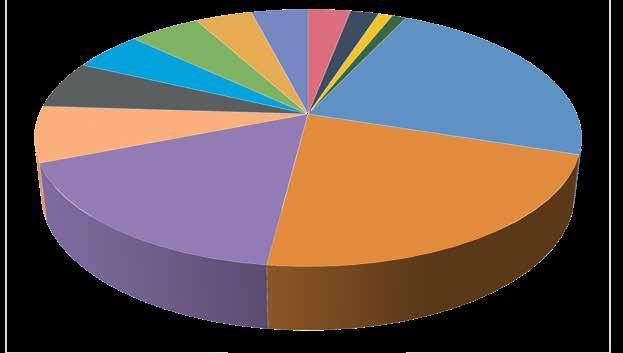
Membership by Ethnicity
Baptisms by Conference
Northern
Southern
Treasurer’s Report
BY STEPHEN MAYER
Five years ago, covid gave the Pacific Union significant concern about the finances of the Lord’s Church. We knew He would provide, but we were not sure as to how the Lord would help us navigate unprecedented financial times. Tithe for 2020 was tracking well below budget, and provisions were being made for scaling back programs and expenses to adjust for this uncertainty. The Pacific Union and the North American Division (NAD) tapped into our reserve funds and provided $2.75M combined for conferences and schools. $500,000 was sent directly to schools in the form of $3,500 checks, and our seven conferences received $2.25M in two rounds of funding assistance. We give praise to the Lord for the NAD and the union’s reserve funds that allowed for this assistance. Since 2000, tithe has rebounded, and the amount for the past five years has greatly surpassed any previous five-year period.
Total Tithe Returned for the Past Four Quinquenniums
1,500,000,000
1,000,000,000 500,000,000
Tithe returned Tithe continues to be the main source of income that funds the ministries of the Pacific Union and the worldwide church. Total tithe during the past five years increased from $924M to $1.072B, which is an increase of $148M. Tithe growth for this period was 16%, which averages 3.2% annually over the last five years. During 2023 the Pacific Union experienced the highest giving ever recorded, with over $220M given in a single year. 2023 also happens to be the year when the Sabbath School quarterly focused on stewardship.
I am so grateful for this reminder of the blessings the Lord provides to each one of us as we acknowledge the gifts He has given us and we return a portion back to the Lord’s work of sharing His message and soon return.
Tithe
Tithe retained at the local conference continues to increase Tithe parity has been a topic of focus of the past several years. The amount of tithe passed up to the General Conference (GC) and North American Division has steadily been decreasing. Over the past five years the amount has decreased from 15% in 2020 to 13% in 2024 and moving forward. Combined with legacy Retirement Defined Benefit (DB) Plan funding of 11.4%, in 2020 26.4% of tithe was sent to the NAD for NAD/GC/Retirement. Beginning in January 2026, 3% is being reduced from the amount being sent to fund our DB retirement program. Since the plan was frozen in 2000, the need for such a high level of funding has reduced and 100% of this reduction is being retained at the local conference. Combined with the 2% reduction in tithe sent to the NAD/GC, in 2026 a full 5% will be retained locally to fund ministry. The union has been very involved in working to see more tithe retained locally, and we are pleased that the Lord has made this possible!
Conference Tithe Remitted to GC/NAD and Defined Benefit Retirement Reductions
Mission giving
Mission offerings have stabilized around $2.8M but remain well below historical highs. In 2011, mission offering was approximately $4M; 2016, $3.4M; 2021, $2.6M; and in 2025, $2.8M. Tithe has trended higher in the United States and internationally, which seems to have contributed to the ability of the General Conference to reduce the amount of tithe needed from the NAD. That has reduced dependence on the mission offering as greater tithe funding is available, but there are still many unreached areas in need of assistance. That does include areas of the NAD. Mission giving historically was exclusively for oversees mission work; some funding is returning to the NAD to fund mission work domestically.
Mission Giving
Significant financial accomplishments
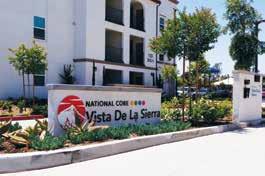
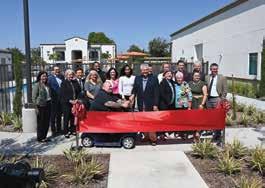
• We witnessed the completion of the Vista de La Sierra low-income supportive housing project featuring 79 units of affordable housing on idle Pacific Union Conferenceowned land. This project will provide housing security for vulnerable populations within the Riverside community for years to come.
• Two new departments were incorporated into the budget. Youth Ministries and Growing Young Leaders focus on the union’s priority to advance Youth Ministries and lean into assisting young people in hearing the call to ministry in pastoral and educational service.
• There are expanded scholarship opportunities for elementary, secondary, and higher education, along with specific scholarships expressly for growing the field of pastors and teachers for the future.
• Church State Council is being advanced as a stronger resource to allow for expansion as a leader and resource for those with religious liberty needs.
• We are partnering with Adventist Health in growing opportunities in the “Energy as a Service” space.
Tithe utilization
Tithe monies, along with restricted income from various entities, are utilized to fulfill the mission and are generally broken down into two main areas: Program Services and Support Services. The following is a breakdown of how the funds were spent in the last five years by category;
Pacific Union Expenses by Category
Special-Use Funds
The Pacific Union has five main special-use funds to support the work within our territory outside of the Tithe (Operating) Fund, Current Fund, and Plant Fund.
Evangelism Grants
Evangelism Endowment Fund – This fund, started in the 1990s with the proceeds of a matured trust and an allocation of $800,000 from other funds, has been the engine that has driven the Creative Evangelism Fund. As of December 2025, the fund has grown to $17.2M; while releasing 6% of the net asset annually, $1M is available for local church/ conference-based projects. Additionally, in 2021 $750,000 was made available as an extra resource due to covid, and in 2025 $1.25M was made available as part of Pentecost 2025 under the name “Sharing Jesus.”
Education Endowment Fund – This fund holds the internally allocated assets and the endowed assets provided by donors for education scholarships. With the Lord’s blessing, the funds have grown the Education Endowment Fund from $2.3M in 1998 to $18.4M as of December 2025. This fund also releases assets for various educational scholarships, with a record $1.6M provided in 2025.
Education Scholarships
1,800,000 1,600,000 1,400,000 1,200,000 1,000,000
Church and School Loan Fund and Income Fund – The loan funds of the Pacific Union are critical to keeping capital available for new church purchases, renovations, expansions, and emergency repairs. Additionally, the Income Fund provides a safe deposit option for our entities that want additional income while still helping other Adventist entities that need loans. These two funds provide loans to roughly 180 Adventist entities, with a combined loan balance outstanding of $89M.
Loans to Churches and Schools
Economic Recovery and Emergency Fund (Contingency Fund) – This fund was established to provide a safety net and access to capital and liquidity for Pacific Union entities. Lines of credit have been established with most Pacific Union entities to provide cashflow security so that operations can proceed when liquidity is tight. Nine entities have lines of credit and $64.2M has been drawn.
4 5
Contingency Fund
California Workers Compensation Self-Insured Fund – This is the self-insurance fund of the Pacific Union for workers compensation. This fund has been able to reduce costs and improve processes benefiting the California conferences and employees covered by the fund. The fund provides funding for claims within the California conferences, Pacific Union College, and La Sierra University. By working together, we were able to cut costs, and in 2015 the fund began a reinvestment campaign to proactively invest in preventative safety enhancements. As of 2025, $11M has been allocated back to California entities as Employee Safety Grants, $5M between 2021 and 2025. The Lord will reveal to us one day how many injuries have been prevented thanks to His program!
Employee Safety Fund Grants
n Safety Funds Provided
n Lines of Credit Drawn
Executive Vice President’s Report
BY LEON B. BROWN SR.
There is a passage in the book of Jeremiah that has anchored my heart throughout these five years: “‘For I know the plans I have for you,’ declares the Lord, ‘plans to prosper you and not to harm you, plans to give you hope and a future’” (Jeremiah 29:11, NIV).
When I accepted the call to serve as executive vice president of the Pacific Union Conference, I could not have fully anticipated the breadth of what lay ahead. But God knew. And looking back across five years of ministry, I can say with conviction that God is faithful to every word of that promise.
This report is not simply an accounting of responsibilities fulfilled. It is an Inspiration Tour—a deliberate reflection on the ministries, moments, and people that have shaped, challenged, and deepened my faith during this season of service. I offer it with gratitude to God and with deep appreciation to the leadership, staff, and members of this great union.
The scope of the work
The role of the executive vice president is vast and multifaceted. It spans numerous ministries, boards, and committees and includes oversight of 15 volunteer ministries. To describe it fully in a single report would be impossible. What I can offer is a window into the work and into what it has meant to serve in this capacity at this moment in the Pacific Union’s history.
Community services and disaster response
As the hands and feet of Jesus, we are called to stand alongside those affected by disasters and loss. The devastating fires in Maui and throughout our Southern California territory were sobering moments that tested our readiness and revealed our resilience and resolve. Those disasters galvanized our conferences in the best possible way. Real strategies are being developed. Local conferences have begun
preparing to serve in future disasters and are actively engaging with local Voluntary Organizations Active in Disaster (VOAD). We are not yet where we need to be, but we have begun. And that progress is genuinely encouraging.
Multilingual ministries
The Pacific Union is one of the most diverse mission fields in the world. When the NAD provided direction on supporting multilingual ministries, we were among the first in the division to establish a template. The process was vetted and voted on by our union officers, the President’s Council, and the Pacific Union Conference Executive Committee. A multilingual committee was established, regular meetings were convened, and an equitable process was created to distribute funds with careful oversight and accountability. New immigrant congregations and diverse language communities require support to meet their unique spiritual and physical needs. Partnering with the NAD, the Pacific Union has now laid the groundwork to address some of the basic financial needs of these underserved groups.
Volunteer ministries
I’ve had the privilege of supporting 15 volunteer ministries. Volunteer ministries are not peripheral; they are central to the vitality of the church in the Pacific Union Conference. They are expressions of love, mission, and fellowship. The Pacific Union volunteer ministries are ASI, Family, Health, Jewish, Ministerial Spouses, Muslim, Native, Prayer, Prison, Sabbath School, Singles, and Women’s Ministries.
We have three newly established volunteer ministries: Disability Ministries, Men’s Ministries, and Senior Ministries. When the Pacific Union hired a VP for Children, Youth, and Young Adult Ministries during this quinquennium, three ministries were transitioned to the new VP: Children’s, Public Campus, August
and Youth and Young Adult Ministries.
The dedicated women and men who serve as volunteer ministry leaders deserve far more recognition than a report can provide. They are truly unsung heroes. They are quietly doing extraordinary work for the finishing of the work of God on the earth.
Boards, institutions, and leadership
My service on the boards of La Sierra University and Pacific Union College has been among the most eye-opening dimensions of this role. Educational institutions face real challenges: financial, academic, and cultural. Yet the leaders at PUC and La Sierra continue to innovate, plan, and invest in the future with remarkable vision and courage. Serving on the Finance and Educational Quality committees at La Sierra and chairing the Student Life Committee at PUC has given me an intimate view of the work being done to shape their students spiritually, intellectually, and emotionally. Each board meeting strengthens my commitment to their goal of training men and women for service on earth and preparation for eternity.
As board chair of the Church State Council, a ministry that has championed religious freedom since 1964, I have had the honor of helping formulate a structure to support the legal work of the Pacific Union Conference. Our team of attorneys works on some of the most consequential religious liberty cases in the country today. Their work protects not only Adventists but people of all faiths.
Serving as vice chair of the Holbrook Indian School Board was a defining experience. A few days on the campus—sitting in classrooms, listening to students, and ministering to the faculty and staff—changed something in me. Holbrook is doing real, meaningful work, and they deserve our sustained investment, not just financially but our time and personal investment as well.
Evangelism, the Co-Mission Conference, and church planting
When my colleague Sandra Roberts and I first met with the ministerial leadership team five years ago, they shared a conviction that the ministerial and evangelism functions needed to be separated. Thus Dr. Roberts took on the ministerial director role, and I
became the evangelism director. What followed were months of prayerful planning aimed at equipping pastors and members to do the work of evangelism while strengthening discipleship and member retention.
“Sharing Jesus” emerged as our evangelism theme. The Pacific Union officers, the President’s Council, and the Pacific Union Executive Committee voted to memorialize “Sharing Jesus” as the theme for the quinquennium.
As we continued to pray and plan, the Co-Mission Conference was born. Last year’s inaugural event, held in conjunction with the NAD, added a bootcamp component and was called the 2025 Co-Mission Conference and Bootcamp.
Two hundred registered participants gathered. The energy surrounding Co-Mission, particularly the Fuel Tank Competition, is something that must be experienced to be fully appreciated. It is a movement, and it is growing.
During the quinquennium, we also saw the power of God transforming the lives of many who were baptized during the NAD Pentecost 2025 efforts. God allowed me to preach an evangelistic campaign in the San Francisco, South San Francisco, and San Mateo Spanish churches. Night after night, we observed as God moved miraculously in the lives of men, women, and young people. As the sermons were preached and the appeals were made, many gave their hearts and lives to Jesus.
Closing reflection
These have been five years of wonderful and meaningful ministry, with countless lives impacted across the breadth of our union territory. The Apostle Paul wrote: “I can do all things through Christ who strengthens me” (Philippians 4:13, NKJV).
I did not know, when we began, just how profoundly this work would shape me. Every disaster response, every sermon preached, every boardroom conversation, every campus visit has deepened my faith and strengthened my sense of calling. I am grateful, and I am deeply optimistic about what God is doing and will continue to do throughout the Pacific Union Conference.
To God be the glory.
Asian-Pacific Ministries Vice President’s Report
BY VICLOUIS ARREOLA III
Asian-Pacific Ministries (APM) serves the culturally and linguistically diverse populations of the Pacific Union Conference by reaching Asian-Pacific immigrants with God’s message through culturally relevant ministry. By ministering in heart languages and honoring cultural identity, APM creates spaces where people feel understood, connected, and spiritually nurtured. This approach has led to innovative ministry strategies while retaining and strengthening what has proven effective, resulting in greater unity, belonging, and mission impact across diverse communities.
Advancing mission across the Pacific Union
From 2021 to 2025, APM supported 135 churches, companies, and groups, and 143 pastors served across seven conferences. Currently, 15 language groups are building relationships and working to organize new congregations within the union and beyond.
Over the past five years, APM has seen steady growth in membership, tithe, the number of congregations, and pastoral leadership. From mid2021 through 2025, 1,776 individuals were baptized into the faith, reflecting the continued impact of culturally relevant ministry. Membership grew from 20,601 to 21,845. In 2022, tithe contributions were
$24M. In 2025, total tithe contributions were $30.1M.
(See infographic on p. 18.)
Highlights of the quinquennium
Key milestones include:
• The 2023 APM Workers’ Meeting in Ontario, California, themed “One Power, One Purpose, One Movement,” convened pastors and their families, with total attendance of 186, including pastors, spouses, and children.
• An Asian-Pacific Advisory Family Retreat was held in San Diego on May 17-19, 2024.
• Approved in 2025, the North American Division (NAD) Asian Church Building and Scholarship Fund supports major church infrastructure projects and graduate education for pastors. In 2026, 31 churches received assistance from the fund. Combined with the Pacific Union’s Capital Reversion Fund, this has expanded funding opportunities for church repair, maintenance, and facility improvement projects.
• The recognition of Filipino Ministries in NAD in 2025, initiated by Pacific Union APM, marks a significant milestone.
• In the past five years, Dr. Arreola conducted more than 20 of his trademarked evangelistic
Asian-Pacific Ministries
Tithe Faithfulness and Growth
Language Group Advisories
Diverse languages and cultures sharing Christ’s message Cambodian, Chinese, Fijian, Filipino, Hmong, Indonesian, Japanese, Korean, Mongolian, Samoan, South Asian, Thai, Lao, Tongan, Vietnamese
8,450,164*
series, “Our Great Hope Today,” gospel revivals, and 16 Growing Healthy Churches Summits and evangelistic trainings combined.
• Over 50 convocations, camp meetings, and retreats took place in the past five years.
• Eight new churches, groups, or companies were established across Arizona Conference, Central California Conference, Northern California Conference, Nevada-Utah Conference, and Southern California Conference.
• Sabbath School Quarterly lessons were translated into Fijian, Samoan, Tongan, and Vietnamese.
Innovative outreach and evangelism
APM continues to engage communities through creative and relevant outreach initiatives:
• Zoom worship was integrated with digital platforms for services, training, and discipleship.
• Digital evangelism efforts included AICON22: Arise and Shine, a virtual training event hosted by the Japanese Ministerial Association in 2022.
• Health-focused outreach, particularly in mental health and counseling, created opportunities for connection, prayer, and ministry. The Thai Health Screening on April 29, 2025, was featured on CBS News.
• Recurring youth programs, such as Empower Youth and AIYMCON (Adventist Indonesian Youth Ministries Convention), inspire deeper spiritual commitment among younger generations.
• And It Was Good: Art Extravaganza, on October 25, 2025, was a collaborative public event that celebrated Adventist creativity across multiple art forms.
• A historic 2024 visit by the Tongan king and queen culminated in a united interdenominational worship gathering at White Memorial church.
• “Evangelistic Eating,” an outreach program started in 2025 by the Thai Ministry, led to Bible studies.
Jesus at the center: From community to Christ
Many Cultures. One Message. One Savior. Asians and Native Hawaiian and Other Pacific Islanders residing in the Pacific Southwest (Arizona, California, Hawaii, Nevada, and Utah)
*From the estimated U.S. population in July 2025 according to census.gov
At the heart of every APM initiative is the goal of leading people to Jesus. Many first encounter Christ through relationships formed in culturally meaningful spaces. As social and cultural needs are met, hearts open to spiritual transformation. Whether through health ministries, prayer, leadership development, or family-centered worship, APM consistently points individuals to Christ as Savior and Friend.
Black Ministries Vice President’s Report
BY VIRGIL S. CHILDS
God directed Jonah in the 8th century B.C.E. to go to the incredibly powerful city of Nineveh to preach a brief, direct, and unconditional message of doom. Today, the message Adventist Christians are called to preach in cities not unlike Nineveh is that of God’s love, forgiveness, healing, and soon return. No doubt today’s enlightened, tech-savvy, and consumerdriven environment is even more intimidating for preachers and laity, but God’s plan for the cities has not changed. Black congregations, pastors, and leaders recognize that working alongside God in the city is even more urgent and exciting today. There are gardens and evangelistic meetings, trainings and team building, and celebrations of heritage and legacy building that show that no one’s overboard— just planning the work and working the plan to bring about salvation for all who choose to come.
Arizona Conference
In 2025, Arizona Conference Black Ministries emphasized Total Membership Involvement, highlighted by the Breath of Life Rally on Sept. 20, where 480 members gathered at Phoenix
Beacon Light church. Later, the AZ Black Ministries Convocation on Nov. 8-9 drew over 520 attendees for inspiring messages and fellowship.
Central California Conference
Westside church in Fresno launched a community garden during the covid pandemic, collaborating with the Migrant Farmers Association and other community non-profits. There was even support from the pastor and farm manager of the Templeton church, which was just getting their community farm up and running. Fresno’s community garden project has harvested organic fruits and vegetables. The health ministry conducts cooking classes and health talks to address food insecurity. The gardens have flourished since 2021, fostering community engagement and healthy living.
Nevada-Utah Conference
Nevada-Utah Regional Ministries are making a significant difference through Vacation Bible Schools, youth outreach, Tahoe retreats, Family, Faith and Film programs, tutorial services, baptisms, feeding the homeless, nursing home visits, prayer walks, evangelism, health fairs, and local partnerships in Las Vegas, Reno, and Salt Lake City. These efforts are transforming lives, strengthening families, empowering youth, and deepening faith across the region.
Northern California Conference
Since November 2025, the Northern California Conference’s mobile shower and laundry program has provided unhoused individuals in cities like Stockton, Vallejo, Richmond, Oakland, Sacramento, Concord, and Chico with clean showers and laundry services, restoring dignity and hope. Over 120 people have been assisted so far, and more churches are training teams to operate the unit.
Southeastern California Conference
The Southeastern California Conference Black Ministries Department hosted a four-day training camp for its pastors at Pine Springs Ranch. Centered on the theme “The Pastor’s Playbook: Playing at Your Peak,” the experience combined team-building challenges, powerful prayer sessions, worship, and leadership development. After a time of prayer and anointing, a pastor testified that his back was healed. Freddie Russell coached pastors on courageous leadership and personal development, challenging pastors to lead with both conviction and clarity. They trained like champions, strengthened one another, and left with renewed fire, focus, and purpose.
Southern California Conference
University church in Los Angeles welcomed Dr. Gina Spivey-Brown, Oakwood University’s first female president, celebrating the enduring partnership between this historic Black church and a leading HBCU. The event honored their shared legacy and ongoing commitment to Christian education and the growth of Black Adventists, highlighting the deep, longstanding ties between Oakwood, the church, and the Southern California Conference. This occasion reaffirmed the powerful heritage and collaborative longevity of both institutions as they continue to shape Christian education and foster Black Adventist leadership.
West Coast Black Administrators Caucus (WCBAC)
The West Coast Black Administrators Caucus (WCBAC) represents a longstanding partnership between the North Pacific and Pacific Union conferences. For over 40 years, this cooperative network has brought together leaders and resources to serve Black Adventist communities on the West Coast. WCBAC plays a vital role in sharing resources, providing guidance to leadership, and working to enhance the quality of the lived Christian experience throughout the region. One such collaboration is the West Coast Youth Conference, which happens every five years. The 2023 Influencers Conference, hosted at the Arizona Grand Resort and Spa in Phoenix, attracted nearly 1,000 youth, young adults, and pastoral families for a spiritually enriched five days that not only challenged our young people to live boldly for Christ but also empowered them, through training and practical application, to influence their peers to embrace Him.
The Department of Black Ministries appreciates the support of our constituents, workers, and the Executive Committee. This work of kingdom building in our cities has both challenges and rewards. When we share the gospel in our unique context, we not only look to make disciples of men, we also look to Christ reflected in ourselves and others as we are all made in His image to do His good will.
Education Vice President’s Report
BY JAMES P. WILLIS II
Over the past five years, the Pacific Union has experienced challenges that could have impeded our ability to carry out ministry. The Office of Education has shared in those challenges, particularly during the covid pandemic (2020–2023), which required significant adjustments in the delivery of education. We also faced wildfires throughout California and the devastating Maui fire, which threatened life, property, and air quality.
Several schools in our union were impacted by serious injuries and the tragic loss of student life, including Holbrook Indian School, San Gabriel Academy, Feather River Adventist School, and Rio Lindo Adventist Academy. Despite these heartbreaking circumstances, our teachers, administrators, and supportive communities relied on God’s guidance and strength as they remained committed to providing the highest quality Adventist Christian education to the students entrusted to our care.
Through it all, the ministry has remained strong. Our office continues to embrace and advance the vision expressed by Ellen G. White when she wrote, “‘Something better’ is the watchword of education, the law of all true living” (Education, p. 296). This principle continues to inspire and guide our work.
Helping students, teachers, and administrators identify, experience, and achieve “something better” remains the central goal of the Pacific Union Conference Office of Education. It serves as the foundation of our ministry as we provide leadership and support for the early childhood education centers and TK–12 schools operated by conferences throughout our union.
Enhancing teacher effectiveness
Growing Young Leaders
What began as an initiative within the Office
of Education has expanded into a full-time department—Growing Young Leaders—under the direction of Pastor Aren Rennacker. Scholarships of up to $20,000 per year are awarded to graduating high school students preparing for careers in Adventist education. The program is also available to students pursuing pastoral ministry.
We celebrate the dozens of scholarship recipients who are now serving as teachers within our school system, and we look forward to welcoming the more than 20 current recipients who are still completing their teacher education programs.
Standards-based learning
We believe that every student in a Seventh-day Adventist school deserves the opportunity to learn and succeed. Because students learn differently and at varying rates, the Pacific Union Conference Office of Education continues to provide training that helps teachers personalize the educational experience.
We seek to honor our students by clearly communicating what they have learned, where they are growing, and how we can best support their continued development. Through transparent communication and strong partnerships with families, we promote a clear understanding of student progress. By focusing on mastery and
growth, we pursue academic excellence with integrity while preparing students to use their knowledge and gifts for God’s glory.
Measures of Academic Progress (MAP)
After decades of utilizing the same standardized testing program, the North American Division transitioned to a computer-based assessment system that provides immediate feedback to both students and teachers. In addition, administering assessments three times during the school year rather than once allows teachers and students to work together in developing the most effective learning plan for each individual student.
The Pacific Union Conference Office of Education has provided leadership and training to teachers in both the administration of MAP assessments and the effective use of the resulting data and reports.
Ongoing professional learning for teachers
The Pacific Union Conference Office of Education provides several professional learning opportunities for teachers. Each fall, a workshop is held specifically for teachers in small schools (one, two, or three teachers). Secondary teachers meet by subject area on a six-year rotation. In the past five years, an additional secondary teacher rotation connects teachers in academies with the teachers at Pacific Union College and La Sierra University. Also, each year at Fall Education Council, early childhood program directors attend a workshop that includes best practices in early childhood education.
Strengthening the expertise of educational leaders
La Sierra University & Pacific Union Office of Education cohort program
Training our school leaders and potential school leaders is a continued commitment from our office. During the past five years, we have seen many principals complete either a master’s degree or Specialist in Education from La Sierra University (LSU). In the most recent graduation from La Sierra University, we had 18 graduates (M.A., 9; Ed.S., 8; Ph.D., 1) supported by us to receive higher education degrees through this cohort program. The Pacific Union Conference Office of Education continues to participate financially with individuals seeking graduate degrees in leadership and curriculum.
Believing in the value and potential of every student in Seventh-day Adventist schools, we exist to inspire the continual improvement of students and educators as they strive to become “something better” (Education, p. 296).
We inspire a climate of improvement by:
• enhancing the effectiveness of teachers,
• strengthening the expertise of educational leaders,
• coordinating a cohesive school system. And we cooperate in preparing citizens for this world and the world to come.
Education Councils
Twice each year, the Pacific Union Conference Office of Education facilitates an Education Council for all principals and conference education personnel, as well as representatives from Pacific Union College and La Sierra University. The primary purpose of these meetings is to provide professional development and training for our school leaders. Professional speakers are engaged to make presentations of general interest, and breakout sessions are provided. Topics have included serving students with special learning needs, addressing mental health issues for students and teachers, and marketing Seventh-day Adventist education.
There are also intentional opportunities provided for principals to share with their colleagues about successful ideas. In addition, professional books are provided to principals, and they are encouraged to continue learning (seeking “something better”).
Coordinating a cohesive school system
Early childhood education
The Pacific Union Conference, in partnership with the North American Division and Adventist Learning Community, has developed training for early childhood education teachers on curriculum and assessment.
Early childhood programs are now beginning to implement an accreditation process. The Adventist Accrediting Association (AAA) provides the centers with the opportunity to complete a self-study and participate in a peer-review process that analyzes
whether the program meets and maintains defined standards. It is anticipated that all early childhood programs throughout the Pacific Union will pursue accreditation.
Collaborating with other organizations
California Association of Private School Organization (CAPSO)
The Pacific Union is a member of CAPSO, which serves as the voice of private K-12 institutions in California. Its primary mission is to preserve the independence of private schools in California. The vice president of education participates as a voting member of this body, which convenes up to five times each year either in-person or virtually. Although CAPSO addresses issues specific to California schools, the Pacific Union maintains a prominent presence within the organization because of the size and scope of its educational network and organization.
The Adventist network of schools in the Pacific Union is made up of more than 9,911 students in nearly 113 elementary and secondary schools, as well as 22 early childhood programs with 875 students. Included are one college and one university. The Pacific Union Conference serves the territories of Arizona, California, Hawaii, Nevada, and Utah.
Preparing citizens Robotics
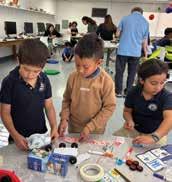
As students prepare to be citizens of this world, it is essential to provide them with the necessary skills. In the 21st century, students must understand STEM (Science, Technology, Engineering, and Math).
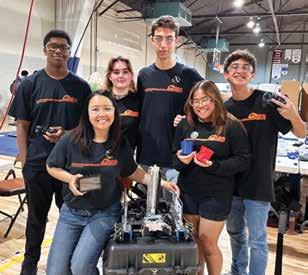
One of the ways many schools choose to provide this experience is through robotics. Schools participate in robotics challenge activities along with other schools. The Pacific Union Conference Office of Education has provided matching grants to more than 40 schools to help establish robotics programs.
Student leadership conferences
Student leaders from junior and senior academies in the Pacific Union participate in a leadership conference held each fall at Leoni Meadows Camp. The weekend includes spiritual messages, leadership training, and the opportunity to network with students from other schools. Approximately 200 student leaders attend each year, exchanging ideas for school activities and building relationships with peers from across the Pacific Union.
Baptisms
Nothing brings greater joy than seeing a young person choose to follow Jesus. Teachers work closely with parents and pastors to provide opportunities for students to accept Jesus as their Savior and commit their lives to Him through baptism and membership in the Seventh-day Adventist Church.
One major evangelistic initiative during this quinquennium was Pentecost 2025. The North American Division championed this effort, which engaged both churches and schools. Campuses were encouraged to conduct Holy Spirit-filled meetings that strengthened the faith of church members while introducing Jesus to their local communities.
Approximately 35 schools either led evangelistic meetings or made their facilities available to host them.
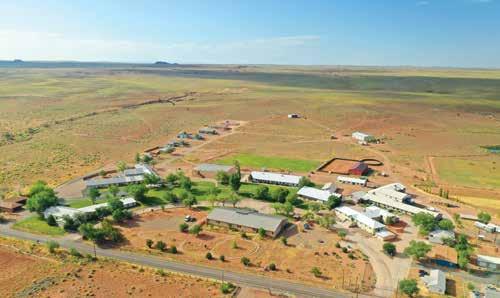
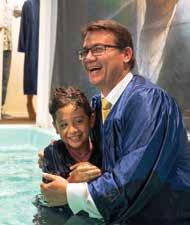
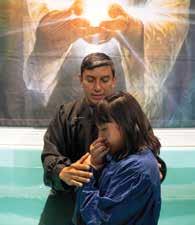
Of special note is the ministry that took place this school year at Holbrook Indian School (HIS), the union’s K-12 boarding academy. Under the leadership of pastor and Bible teacher Ludy Mahinay, 20 individuals were baptized on Sabbath, Dec. 13, 2025—16 students and four family members affiliated with those students.
Pastor Mahinay also reported that 11 additional students were baptized on Sabbath, Jan. 31, 2026. We praise God for the work being done at HIS to draw young people to Jesus.
As we prepare students to be citizens of the world to come, we rejoice with the angels in heaven over every life transformed by His grace.
Hispanic Ministries Vice President’s Report
BY ALBERTO INGLETON
The years 2021 and 2022 were very challenging for the world, for our country, and for our brothers and sisters throughout our territory of the Pacific Union. The covid pandemic created chaos, suffering, and death. It closed our churches and imposed quarantines, which quickly changed what we deemed “normal church life.”
Our pastors and churches faced these challenges and initiated virtual worship services and programs, allowing churches to remain alive and open even while their buildings were closed. Our churches, with several restrictions, slowly but surely began to open their doors in late 2021 and early 2022.
However, the mission of the church—to share with nearly 21 million Hispanics in the Pacific Union Conference the message of Jesus Christ as our only and sufficient Savior—did not stop during the pandemic, much less after it. New leaders within the Pacific Union continued working for Christ. Our Hispanic pastors remained steadfast, and through persistence, creativity, and innovation, they kept their churches moving forward.
2021
Our churches held a variety of events to strengthen our fellowship and to carry out missionary outreach in our Hispanic communities. Activities such as women’s seminars, men’s seminars, couples’ retreats, and public evangelism events were conducted. All these events were held virtually. In addition, a new company was organized in San Francisco.
Baptisms: 1,082
Tithe: $32,398,803.62
Membership: 49,184
2022
The Southeastern California Conference (SECC) held a virtual evangelistic campaign involving all Hispanic churches in the conference, with Pastor Ricardo Bentancur as the speaker. The Lord blessed with a beautiful harvest of 304 precious souls.
Baptisms: 2,608
Tithe: $33,559,907.72
Membership: 49,003
2023
In 2023, all church activities returned to being held in person, including camp meetings, retreats, and evangelistic campaigns. Pastor Pedro Rascón, SECC Hispanic evangelist, reported 232 baptisms. In addition, the Northern California Conference organized a successful women’s retreat, with an attendance of 500 women.
Baptisms: 3,085
Tithe: $36,220,600.99
Membership: 49,556
2024
This year, we held our couples’ retreat in Honolulu, with an attendance of 300 people. In addition, in Fresno we celebrated a youth event (FEJA) that was attended by nearly 1,200 young people from across the Pacific Union Conference. The Central California Conference organized the El Shaddai Hispanic Company in Fresno.
Baptisms: 3,413
Tithe: $34,090,093.35
Membership: 51,098
2025
The Arizona Conference organized an evangelistic caravan with all of its Hispanic churches, featuring Pastor Alejandro Bullón as the speaker and resulting in a beautiful harvest of 166 souls. In addition, the Pacific Union Conference organized its first Hispanic women’s retreat in Henderson, Nevada, with an attendance of 1,000 women. The event was a great blessing.
Baptisms: 2,780
Tithe: $34,561,301.40
Membership: 52,981
Grand totals for the quinquennium
Baptisms: 12,868
Tithe: $170,868,767
Membership: 52,981
Our focus for the next five years
We want to unite with God’s missionary heart by growing, retaining, and rescuing the souls for whom Christ died in the Hispanic communities of the Pacific Union Conference.
Our motto is “Calling them is our mission, retaining them is our priority, and rescuing them is our duty.”
We are grateful to God for all that has been achieved, and we look forward to even more of His blessings and miracles in the next five years.
Youth, Young Adult, and Children’s Ministries Vice President’s Report
BY RANDY HILL
Over the last three years, the newly created Youth, Young Adult, and Children’s Ministries Department (YYC Ministries) has sought to fulfill its mission to support and strengthen ministry to children, youth, young adults, and families across the Pacific Union. The department collaborates with conference leadership teams to create opportunities for spiritual growth, leadership development, service, and authentic connection.
One of the department’s greatest strengths has been its collaborative approach to leadership interaction. When new directors enter ministry roles, the YYC Ministries Department works closely with them to provide mentorship, training, encouragement, and practical support. Annual gatherings have given conference directors opportunities to learn together, share ideas, plan events, build friendships, and support one another in ministry. Experienced leaders across the Pacific Union and the North American Division have also played an invaluable role in mentoring newer team members.
Building on this collaborative foundation, several
initiatives have highlighted the strength and unity of YYC Ministries throughout the Pacific Union: Children’s Ministries has prioritized equipping local leaders during the rollout of the new Sabbath School curriculum, Alive in Jesus, which emphasizes an interactive, family-integrated approach, including daily Bible readings, Scripture songs, and audio recordings to support continued spiritual growth at home.
To support this priority, training events across the Pacific Union have helped ministry leaders feel prepared and supported as they guide churches through the transition.
Youth Ministries works with directors across the Pacific Union to facilitate engaging, Christcentered interactions with high school students in their territories. The department provides encouragement, planning strategies, and funding for these ministry events. Additionally, the department encourages and mentors leaders seeking to engage their high school students in mission trips and local mission opportunities.
YYC Ministries also partners with the Education
Department and provides help with the annual Student Leadership Conference at Leoni Meadows Camp.
Young Adult Ministries has seen strong momentum through the Young Adult Life Tour, a discipleship initiative that aims to engage young adults and bridge generational gaps within congregations. The tour features interactive, networking opportunities in churches and provides practical training, keynote addresses, and generational studies.
To further localize engagement, what had traditionally been a single union-wide event was redesigned to take place within local conferences, enabling greater connection and accessibility.
Pathfinder Ministries played a major role in the 2024 International Pathfinder Camporee in Gillette, Wyoming. More than 5,000 Pathfinders from the Pacific Union attended, where they participated in cross-union events, earned honors, and contributed to service projects, strengthening
both skills and unity with Pathfinders worldwide.
Each year, Pacific Union YYC Ministries, in cooperation with conference Pathfinder leadership, hosts the Pathfinder Bible Experience. This “Bible Bowl” event is the fastest-growing activity in Pathfinder ministry. It is exciting to watch young people so invested in the Word of God!
Camp Ministries across the Pacific Union are thriving with renewed energy, as several new summer camp leaders have been appointed and conferences are actively investing in leadership development and future growth. Some summer camps are completing renovation efforts, and there is excitement for a vibrant future of continued growth and impact.
The Pacific Union YYC Ministries Department aids in the search process for camp staff and directors, mentors new directors, and provides input to conference administrations as they set priorities for Camp Ministry.
Adventist Christian Fellowship (ACF) is the official presence of the Adventist church on college and university campuses not owned by the Seventhday Adventist Church. There are approximately 12,000 Adventist students among the 3.5 millionstudent population across 1,000 campuses in the Pacific Union territory. This challenging ministry is gaining momentum as the number of students interested in training and service opportunities grows, showing us once again the heart of this generation.
ACF is facilitated by Ron Pickell and administered through the YYC Ministries Department.
Across every ministry area, relationships remain central, and this principle frames all department efforts. The Pacific Union YYC Ministries Department remains dedicated to fostering authentic connection and practical faith in action. These ministries are not simply about programs or presentations; they are about “doing life” with young people and helping them discover how to live out the gospel in practical ways.
Recognizing that today’s generation deeply values opportunities to make a positive difference in the world, conferences throughout the Pacific Union continue to facilitate local service projects, mission opportunities, and ministry experiences that connect faith with action.
Adventist Community Services
The Community Services outreach ministry of the Seventh-day Adventist Church is a wholistic ministry of caring. It is the physical arms, legs, and feet of the church, providing for the physical, mental, social, and spiritual needs of people. Community services centers throughout the Pacific Union have been established to assist men, women, and children in and around their local communities in their time of need. Like Jesus, the Pacific Union’s community services ministry shares God’s love in a practical and tangible way.
Preparing for the next disaster
Disaster Response Ministries is designed to prepare our members to serve when disaster strikes. One of the hard lessons of recent years is that our region is prone to massive, catastrophic wildfires and other disasters. In the past five years alone, fires have destroyed major communities in both California and Hawaii.
The major fires in Maui and across Southern California were sobering moments—but those disasters awakened something important. Conferences have begun developing real strategies, training their members, and preparing for the next event. Partnerships with local Voluntary Organizations Active in Disaster (VOAD) are forming. We are not yet where we need to be, but the work
has begun, and that is a real step forward. Our teams have also begun earning certifications in Emotional and Spiritual Care and in Warehouse Management. The North American Division, along with our own Charlene Sargent, is helping our teams prepare for the next major disaster event. Experience has taught us that if you wait until the disaster hits to get ready, you are already too late— you must get ready now. Our preparation is not yet complete, but the planning and preparation are well underway.
Moving forward
Throughout our five states and seven conferences, we are actively focused on community services and disaster preparedness. In all this work, we follow Christ’s example of reaching out to those who are so often overlooked or marginalized.
Adventist Health
We live in an unknown world. Healthcare is being reshaped by forces no hospital controls: policy reform, rising costs, communities in crisis. Yet the mission of Adventist Health has not moved: living God’s love by inspiring health, wholeness, and hope. Its vision remains just as steady: loving, faith-based, essential care close to home.
When delegates last gathered in 2021, Adventist Health teams were on the front lines of a pandemic, in survival mode. The five years since have traced a deliberate journey: from survival, to stability, to building one aligned system on a single electronic health record. Under President and CEO Kerry L. Heinrich, who took the helm in 2022 following Scott Reiner’s years of dedicated service, the organization now looks toward 2030 and a decade that moves from survival to scale. “This is not survival anymore. This is disciplined rebuilding,” Heinrich said. Beneath it lies an unchanging conviction: “We are a mission
that requires a business, not a business that happens to have a mission.”
Today, Adventist Health serves more than 90 communities across California, Oregon, Washington, and Hawaii through 26 hospitals and more than 400 sites of care, with a team of about 38,000.
While rural hospitals nationwide closed, Adventist Health moved in the other direction. It reopened Adventist Health Tulare; welcomed Bakersfield Heart Hospital, Delano Regional Medical Center, and Mid-Columbia Medical Center in Oregon; and in 2024 expanded to California’s Central Coast, where Sierra Vista Regional Medical Center and Twin Cities Community Hospital joined to anchor the new Central Coast Network. Heinrich defines the aim simply: not the biggest, essential. “It means a small town that would lose its hospital does not lose it.”
Through it all, the system has returned more than $1 billion in community benefit each year, while many of its hospitals earned five-star ratings, Magnet
recognition, and, at Adventist Health Castle, the first Malcolm Baldrige National Quality Award ever given in Hawaii.
For us, the deepest story is spiritual. Every fulltime chaplain at Adventist Health is a credentialed Seventh-day Adventist minister. Chaplains made 137,553 patient visits in 2025, up by a third in just two years. Four Clinical Pastoral Education centers, including a bilingual center at Adventist Health White Memorial, are training the next generation of spiritual caregivers. Newly appointed Chief Mission Officer Sam Leonor is guiding executives to a deeper missional foundation for leadership.
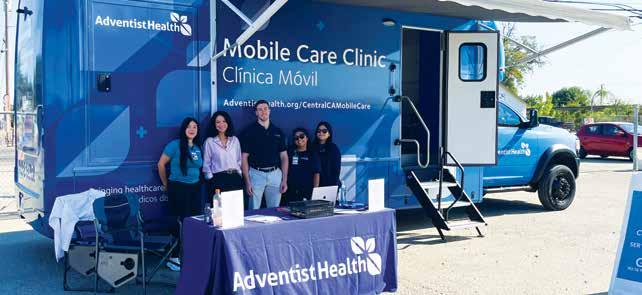
God’s love has traveled far beyond hospital walls. Each year of this quinquennium, Adventist Health employees volunteered around the world: Argentina, Belize, Fiji, Kenya, Mexico, Micronesia, Nigeria, the Philippines, Uganda, and Zambia. Global Mission served nearly 4,000 patients in 2025 alone and has donated tens of millions of dollars in medical supplies and equipment since 2022, including shipments to hospitals in Ukraine and Ethiopia. This February, 27 volunteers treated 2,366 patients in the Philippines in a single week. Closer to home, a free wellness clinic in partnership with Templeton Hills church brought 105 volunteers and more than $270,000 in care to over 1,000 Central Coast neighbors.
The partnership with Adventist education is growing too: Adventist Health now teaches five courses at Pacific Union College, La Sierra University, and Walla Walla University, including “Jesus as
Healer” for PUC nursing students, building a pipeline of mission-driven healthcare leaders.
The road to 2030 is named Stronger Together, and the strategy is Essentialism: essential in every community served, close to home, faith-based, and mission-true, practicing the disciplined stewardship that funds the mission. When a decision is hard, mission breaks the tie. Every time. Heinrich, a pilot, reminds his teams: “You take off into the wind. Resistance is not the enemy of the climb. It is what makes the climb possible.”
The world ahead is unknown, but the God who called this ministry is not. God’s love, expressed through human hands, still heals. “The hour is ours. The work is ours. We rise or fall together. So let us rise.” With hope, we do it together.
Church State Council
On June 29, 2023, the U.S. Supreme Court handed the Church State Council’s client, Gerald Groff, a 9-0 decision. The Court’s ruling restored robust protection for workers of all faiths, including Sabbath-keepers, needing religious accommodation. The Council’s president, Alan Reinach, had been part of a 30year effort to secure this very change in the law. Groff was a rural route mail carrier in Pennsylvania Amish country when the postal service entered a contract with Amazon for Sunday package delivery. A devout evangelical Christian, Groff refused to work on Sundays.
How did the Council come to represent Groff on the other side of the country? This question is part of a much larger story about the Seventh-day Adventist Church’s enviable reputation for religious freedom advocacy. Since he began as director of Public Affairs & Religious Liberty in the 1990s, Reinach has been actively involved in both local and national legal circles advocating for religious freedom. Groff was referred to the Council by a prominent Christian organization.
The win in Groff’s case has brought considerable attention to the Council’s advocacy for workers who suffer religious discrimination. The Council has become the nationally recognized leader in handling such cases. This has led to necessary restructuring and expansion. The Council has added two new attorneys, Patrick Dillon and Naomi Eshoo, to help handle the increased case load.
Meanwhile, the Council bid farewell to Dennis Seaton, who served faithfully as government relations director in Sacramento since 2012, and who was instrumental at that time in lobbying for Workplace Religious Freedom in California. Seaton’s post was taken up by Stephen Allred, an attorney and ordained minister, who has hit the ground running, starting up the Church State Council Fellowship program for college and grad school students, publishing
the Church + State Dispatch, a monthly religious liberty newsletter, as well as hosting podcasts and local church religious liberty seminars on behalf of the Council. Allred is also focused on his role of developing relationships with government officials and interfaith leaders within the Pacific Union territory. Natalie Eva, legislative assistant, continues to ably assist our Northern California office with her experience and expertise.
Among the many facets of the Council’s education efforts have been the publication and widespread distribution of brochures, such as Do I Have to Work on Sabbath?, Written in the Heart, and a timely and critically important article, Christian Nationalism: A Return to Christendom? Christian Nationalism in relation to Bible prophecy has also been a central focus of sermons and seminars.
Finally, we bid a fond farewell to Loritha McDuffie, who served as Reinach’s assistant for more than 25 years, since 1999. Looking to the future, the Council is able to serve Spanish-speaking clients through our associate, Pastor William Davis, and has even added Portuguese with Simone Buttler, who took on the important task McDuffie left behind.
The Council’s focus remains on ministry to those suffering religious discrimination, on education about the increasingly critical and divisive issues of religious freedom, on monitoring legislative challenges, and on our preaching ministry in the churches, helping Adventists understand the prophetic significance of these many developments as we look for and hasten the return of Christ.
Communication & Community Engagement
The story of Adventism in the Pacific Southwest is the story of God’s providence and leading. It is a privilege for the Communication and Community Engagement Department to share that story—clearly, faithfully, and creatively—with our members and the communities we serve here in the Pacific Southwest.
The publication date on the first Pacific Union Recorder is August 1, 1901, and we are celebrating 125 years of publication. Through the guidance of editor Alberto Valenzuela, the Recorder has continued to grow as a trusted voice for inspiration and news. We publish 12 English issues each year, which are translated into Spanish and available to be read online. In addition, we are now in the ninth year of publishing four unique Spanish issues of the Recorder annually, which are distributed to Hispanic churches. In print and online, the Recorder shares devotional and theological perspectives, as well as the stories of ministry, mission, and blessing that connect our members across our sprawling territory.
During this quinquennium, we also marked the conclusion of a remarkable chapter in Pacific Union media ministry. All God’s People completed its eight-year run after 375 episodes. With Connie Vandeman Jeffery as producer and onscreen host, this episodic online video program faithfully told the stories of individuals and ministries across the union, leaving a legacy of inspiration and connection. Connie retired earlier this year, and we are grateful for the uniquely personal approach she brought to creating video media and helping establish the video production functions of our media portfolio. Building on this work, our department is developing a new video version of the Pacific Union Recorder that will serve as the follow-up production to All God’s People, continuing the tradition of visual storytelling for our members.
Becky St. Clair has recently joined our team
as associate director for digital engagement, and she is leading in the work of maximizing our communication efforts online and in social media. Online, our corporate website can be found at adventistfaith.com. The Pacific Union website is continuing to be imagined and developed as a true digital portal and communications hub. A significant innovation that will continue to be expanded is PUC+, a content distribution system that delivers as many as three stories per day, five days per week, to more than 600 church and school websites.
Oak & Acorn Publishing has continued to flourish as a vital extension of our communication mission. With more than 60 titles now published in English and Spanish, this initiative provides thoughtful, practical, and spiritually grounded resources for pastors, leaders, and members. This initiative began as a project of our ministerial and communication teams in 2016, and during this quinquennium we have been developing a partnership with AdventSource to manage and market the books developed under this initiative.
One of the most creative developments in the last five years has been The Festival of Sabbath. Through several pilot projects, this initiative explored new ways of engaging our communities around the life-giving truth that “the Sabbath was made for me.” We are continuing to develop this project as an innovative tool for community engagement, and we envision a curricular kit that will enable churches and schools to integrate it into local ministries.
In a region marked by immense diversity and complexity, effective communication is not simply about information—it is about connection, trust, and mission. The Communication and Community Engagement Department remains committed to developing tools, platforms, and strategies that empower our churches and members to share the story of Jesus with clarity, relevance, and hope.
Elmshaven
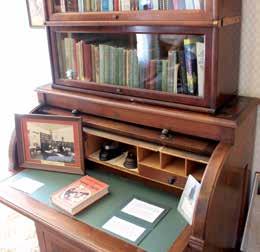
For more than a century, Elmshaven has stood as one of the most significant historic properties in the Seventh-day Adventist Church. More than simply the final residence of Ellen White, it represents the place where many of her most influential writings were completed, where church leaders sought counsel, and where an enduring literary and spiritual legacy took shape. Today, under the stewardship of the Pacific Union Conference, Elmshaven continues to fulfill its mission of preserving this remarkable heritage while providing thousands of visitors with a meaningful educational experience.
Established as Ellen White’s home in October 1900 following her return from nine years of service
in Australia, Elmshaven quickly became much more than a private residence. The property served as her writing center, administrative headquarters, and working farm. During the final 15 years of her life, she completed major literary projects, supervised extensive correspondence, and continued providing counsel to the growing worldwide church. The home itself reflected her practical lifestyle, with modest furnishings, productive orchards, gardens, and office facilities that supported an active publishing ministry.
The property also illustrates Ellen White’s commitment to health, education, and institutional development. From Elmshaven she maintained close relationships with nearby medical institutions,
including the St. Helena Sanitarium, while continuing to encourage the growth of educational and healthcare ministries throughout California and North America. The environment she created balanced productivity, hospitality, simplicity, and efficient stewardship—principles that continue to characterize the site’s mission today.
Since assuming responsibility for Elmshaven, the Pacific Union Conference, working in cooperation with the General Conference, has invested significantly in preserving both the physical property and its historical integrity. A major restoration completed between 1978 and 1981 returned the residence to its original appearance, allowing visitors to experience the home much as Ellen White herself knew it.
Today, Elmshaven functions as an active educational ministry rather than simply a historic museum. Each year thousands of guests—including church members, students, researchers, tourists, and individuals with little previous knowledge of Ellen White—tour the property. Trained guides interpret both the historical significance of the residence and Ellen White’s contribution to Seventhday Adventist history, while providing literature that introduces visitors to her life and writings.
Like many heritage sites, Elmshaven experienced significant operational challenges during the past quinquennium. The covid pandemic substantially reduced tourism, while the devastating Glass Fire of 2020 caused widespread damage throughout the surrounding community. Despite these unprecedented circumstances, Elmshaven welcomed an impressive 29,829 visitors during
the five-year reporting period, demonstrating the continuing interest in this important landmark and the resilience of its ministry.
Equally important has been the continued investment in the property’s long-term preservation. Recent improvements include extensive landscaping, the trimming of mature trees and shrubs, new flower plantings, freshly painted buildings, restored walkways, and the resurfacing of the entrance roadway. These projects have enhanced both the visitor experience and the long-term protection of the historic site.
The ministry is supported by a dedicated team consisting of four resident docents, four parttime off-site docents, two volunteer docents, and several additional volunteers currently in training. Leadership during the past quinquennium transitioned from longtime manager Abner Castañón to Jack DuBosque, who assumed management responsibilities in August 2022. Under both managers, numerous preservation and operational improvements have strengthened Elmshaven’s ability to serve future generations.
As Elmshaven looks ahead, its mission remains unchanged: to preserve one of the most important historical sites in Adventist history while providing a welcoming environment where visitors can better understand the life, work, and lasting influence of Ellen White. Through careful stewardship, ongoing restoration, and a commitment to educational excellence, Elmshaven continues to connect the church’s heritage with its future, ensuring that this unique landmark remains both historically authentic and spiritually meaningful for generations to come.
Growing Young Leaders
It has been an exciting and defining season for Growing Young Leaders, marked by meaningful growth, expanded impact, and strengthened leadership. From new program initiatives to increased support for students and schools, this quinquennium has reflected a clear trajectory of momentum and purpose.
In May 2025, the program welcomed its first full-time director, Pastor Aren Rennacker, who previously served as Youth Ministries director for the Southeastern California Conference. In February 2026, Kimberly Stubbert became Growing Young Leaders’ first executive assistant after years of supporting and developing the program through her work with the Education Department.
This quinquennium has included five significant developments, each representing a key step forward for Growing Young Leaders.
1. Scholarship expansion - In 2023, the Pacific Union Conference deepened its commitment to Growing Young Leaders in two significant ways. First, scholarship awards were increased to a maximum of $20,000 per year for students attending La Sierra University and Pacific Union College, strengthening both the program’s investment in students and its long-term impact.
Second, the program expanded beyond education majors to include theology students as well. Each of the Pacific Union’s seven conferences can now award two scholarships annually—one for education and one for theology. Through this expansion, the Pacific Union is helping grow leaders for both classrooms and congregations.
2. Growth in scholars - As of June 2026, Growing Young Leaders supports 56 active scholars, the highest number in the program’s history. To date, 16 graduates have begun teaching careers in Adventist schools, and this year marked the celebration of
the program’s first theology graduate, who is now serving as a pastor in a local church.
Growing Young Leaders is also grateful for a significant increase in scholar retention, made possible through a renewed emphasis on mentorship and relational support. Perhaps most encouraging of all, every conference in the Pacific Union has now sponsored at least one Growing Young Leaders scholar.
3. Campus presence - Growing Young Leaders places a high priority on maintaining a visible presence across church, academy, and college campuses in order to increase awareness of the program. Over the past year, Pastor Rennacker has visited classrooms, hosted exhibit booths, and
connected with students throughout the Pacific Union.
He has spoken at numerous youth events, including Bible camps, chapel services, football tournaments, and summer camps. Pastor Rennacker was also honored to serve as the keynote speaker for Pacific Union College’s opening convocation and La Sierra University’s fall week of prayer.
Growing Young Leaders is well on its way toward the goal of visiting every academy in the Pacific Union within the next two years, helping ensure that the program becomes widely known and accessible across all five states.
4. Engaging media - In addition to providing scholarships, an essential mission of Growing Young Leaders is to communicate a new message of what choosing church work means. Communicating this vision effectively requires strong social media engagement and compelling content creation.
To support this mission, active Instagram and TikTok channels have been developed to highlight academy campuses, college programs, and “Day in the Life” features showcasing teachers and pastors in ministry. These platforms help young people see church work as meaningful, dynamic, and impactful.
The storytelling podcast Adventist Stories was also launched to share significant moments from a wide range of voices across the church through creative and engaging narrative nonfiction. As one listener wrote, “This show will push Adventist podcasting miles ahead.”
5. Career counseling program - This newest endeavor was born from listening to the needs of schools and students. While many academies face challenges in providing the level of vocational preparation families desire, Growing Young Leaders is grateful for the opportunity to help meet that need through a new career counseling program.
The program includes the nationally recognized Strong Interest Inventory assessment by Myers-Briggs for all junior and senior students. Academies will also receive training to administer the assessment and guide students through understanding their results. To ensure accessibility for every academy and student, all expenses will be fully covered by Growing Young Leaders.
The Pacific Union Conference remains deeply committed to the mission and long-term vision of Growing Young Leaders. This ministry continues to be strengthened through the faithful partnership of our local conferences, La Sierra University, and Pacific Union College, all working together to invest in the next generation of Adventist educators and pastors.
As the program grows, so does its impact on shaping leaders for classrooms and congregations across the Pacific Union. For more information about Growing Young Leaders, visit www. adventistfaith.com/ministries/growing-youngleaders or contact GYL@adventistfaith.com.
Holbrook Indian School
For nearly 80 years, Holbrook Indian School (HIS) has provided a safe place for Native youth to learn, grow, and thrive through Christ-centered education. Serving students in grades one through twelve, the school ministers primarily to Native American youth from the Navajo Nation and neighboring tribal communities, many of whom have experienced significant challenges, including extreme poverty, trauma, family disruption, grief, and limited access to educational opportunities. Our ministry nurtures the whole person—mind, body, and spirit—while honoring each student’s Native identity and culture. Every aspect of campus life is designed to help students discover their God-given value, develop their gifts, and prepare for lives of service.
This ministry is important because it meets needs that extend far beyond the classroom. HIS provides students with a safe, stable, and caring environment where they can experience consistent support from trusted Christian adults. As a boarding school, our campus becomes home—a place of learning, healing, nourishment, and Christ-centered relationships. Our commitment to whole-person development recognizes that lasting educational success is closely connected to healing, belonging, and faith. By integrating rigorous academics with mental health support,
vocational education, Indigenous arts and language, agriculture, equine-assisted learning, and spiritual formation, the school equips students not only for graduation but for purposeful lives of service to their families, communities, and God.
People become involved in this ministry in many ways. Students are referred by families, tribal communities, alums, and friends who recognize the unique opportunities Holbrook Indian School provides. Dedicated teachers, staff, volunteers, church members, donors, and constituency partners join together to support the ministry through service, prayer, financial gifts, mentorship, and advocacy. Alums also return as staff, to mentor students, and to share the school’s lasting impact. Because the school depends largely on the generosity of donors and denominational partners, every contribution directly impacts the lives of Native youth by sustaining programs that foster academic achievement, emotional wellness, and spiritual growth. We are grateful for the donors who support the ministry through their generous
financial gifts, and we welcome mission groups who are willing to come to HIS for service projects.
Perhaps the most significant aspect of this ministry during the past quinquennium has been the intentional integration of trauma-informed care, mental health services, and Christ-centered education. Recognizing the unique experiences many students bring to campus, HIS has expanded its ability to care for students emotionally as well as academically by providing licensed clinical social workers and strengthening systems of support throughout campus life. Instructional improvements have also produced measurable academic growth while students continue to celebrate Native culture and prepare for college, careers, and service. Most importantly, students have continued to make personal decisions to follow Christ, with 68 publicly expressing their faith through baptism in just the last three years.
Jesus is reflected in this ministry every day through compassionate relationships, servant leadership, and an unwavering commitment to seeing the image of God in every student.
Christ’s example shapes the way staff teach, mentor, encourage, and care for young people who often arrive carrying heavy burdens. The ministry seeks to demonstrate Christ’s love by creating a community where students are known, valued, forgiven, challenged, and encouraged to grow. In classrooms, worship, counseling, work, dormitory life, and everyday conversations, Holbrook Indian School reflects Jesus by offering hope, healing, belonging, and a brighter future. We believe every student is deeply loved by God, and our greatest joy is helping them experience that love personally while preparing them to become faithful leaders in their homes, churches, and communities.
Next Step
Assisting families as they make educational decisions at key progression points in their student’s life
Kindergarten Scholarships
$750 $250 to
Ninth-Grade Scholarships
$2,500 $1,000 to
• Not limited to members of the Adventist Church
• For full-time enrolled Kindergarten or ninth-grade students
• Nominated by the local conference education department
• Regardless of other scholarship funds or tuition assistance
• Based on submission of online essay-based application
Application deadline: Varies by conference
To apply, scan the QR code.
La Sierra University
The past five years have marked significant growth and change at La Sierra University, from its successful navigation through a pandemic to administrative transitions, enrollment increases after years of decline, and most recently a new slate of trustees to guide the institution through 2030.
In Fall 2021, the university, along with institutions around the state, emerged from the covid pandemic, re-opening the campus under health protocol following 18 months of online operations. In June, the Class of 2021 received their degrees
in a unique drive-through graduation. In spite of the challenges, the university celebrated its achievements—the women’s soccer team won the conference championship, Art+Design students and faculty received a record 23 Addy Awards, and the university was selected for the fourth time by the Wall Street Journal/Times Higher Education as the most diverse campus in the nation.
In 2022 the university commemorated its centennial with the publication of a book detailing the university’s history, a new campus sculpture, and an Oct. 3 centennial gala at the Riverside Convention
Center, while its celebrated Enactus student team placed third in the nation. And in 2023, La Sierra’s second university president, Larry Geraty, and his wife, Gillian, were honored in a Broadway-style event at the convention center with a Lifetime Achievement Award from the Zapara School of Business.
President Joy Fehr shepherded the university through the immense challenges of the pandemic, while Interim President Richard Osborn guided the institution for eight months prior to the selection of Christon Arthur as president in May 2024. Arthur serves as La Sierra’s sixth president since La Sierra’s inception as a university in 1990 and as its first Black president in the history of the school.
On May 13, 2026, the university’s quadrennial constituency session resulted in a voted slate of 14 trustees effective July 1. They include eight new members and six incumbents who will govern La Sierra University’s operations through 2030 in support of the institution’s pursuit of its vision and objectives. Its goals include an enrollment target of 3,000 students by 2035.
In his state-of-the-university report titled “A Place Worth Becoming,” Arthur outlined the institution’s upward transition out of a decade of enrollment declines, an approximate $20 million structural deficit, and a struggling internal culture,
to a place of hope and a focused mission encapsulated in the university’s new threeyear strategic plan.
In his report, Arthur noted Osborn’s stabilizing expertise, which helped lay a foundation for growth, and cited the many opportunities despite a challenging national higher education environment. These include current initiatives in hybrid online learning models, explorations of new degree programs, and the university’s location within one of the fastest growing regions in the United States.
In fall of 2025, the university moved the needle with a 26% increase in new freshmen, a 38% increase in new graduate students, a 24% total increase in new students, and an overall enrollment jump of 5%.
In January, the Zapara School of Business launched its online MBA in healthcare management program in California, while the School of Education offers a fully online graduate program. In June, the H.M.S. Richards Divinity School launched its first doctoral program in a hybrid model with a first cohort of 22 students.
Arthur noted new initiatives that directly support students’ educational goals, such as the Office of Philanthropy’s $1,000 for 1,000 campaign to bolster the emergency student aid fund and the new Home@LaSierra Endowment, a $2 million campaign that will provide a college education and housing to youth transitioning out of foster care, beginning in Fall 2026.
“Looking ahead we will be academically relevant, financially resilient, grounded in mission,” Arthur said. “La Sierra University is a Seventh-day Adventist university. We believe in the beauty of our dreams, our strategy, and plans for this place, and we know that at La Sierra University we are doing God’s work.”
Literature Ministries
The mission of Literature Ministries in the Pacific Union Conference is about partnering with other church ministries and our local congregations to connect with their communities. Together, we bring hope into people’s lives through personal connections and the printed page.
Over the past five years, our primary focus has been equipping our entire church family with the practical tools to reach their communities. Our flagship ministry initiatives—GLOW, Youth Rush, SOULS West, and local church evangelism hubs—did not operate in isolation. Instead, they worked hand in hand to strengthen local congregations, a united effort that has resulted in hundreds of baptisms over the past quinquennium.
Giving Light to Our World (GLOW)
What started as a simple youth initiative right here in the Pacific Union has grown into a global tract ministry, with millions of pages printed in over 70 languages. On a local level, GLOW has been an effective tool for total member involvement.
We continued to see entire church families get involved in sharing literature. Members handed out tracts during their normal daily routines, churches integrated them into their regular outreach projects, and groups organized dedicated mission trips to distribute them on a larger scale. These small tracts scatter seeds of truth across our neighborhoods, opening doors and sparking initial spiritual interest.
Youth Rush
Youth Rush is a 10-week summer discipleship program where young leaders train, mentor, and guide their peers in hands-on ministry. Summer after summer, it brought together youth and young adults from our local churches, academies, and universities.
These young people spent their summers visiting communities, placing thousands of Adventist health, children’s, and spiritual books directly into homes. They took time to pray with people and systematically invited interested individuals to study the Bible with the local church, learning along the way how to approach people in a courteous, caring, and authentic manner. Through this experience, their own faith in God was strengthened, lasting connections with other young people were made, and funds have been raised for their education.
SOULS West
SOULS West is a two-year evangelism training school that offers integrated classroom instruction
with mentored field experience. The curriculum focuses on personal and public evangelism, combined with literature leadership training that prepares students to return to lead and mentor in the summer Youth Rush programs and serve as ministry leaders in our local congregations. The ultimate focus of SOULS West was ensuring that everything the students learn directly enhances the mission work of our local churches.
Local church evangelism hubs
Through targeted programs like Full Circle, Cross Trainers, and Thrive, SOULS West graduates entered local churches as ministry coordinators. Their job was to train and motivate local leaders and church members, fostering a complete cycle of evangelism that guides interested people all the way through baptism and active discipleship.
In The Desire of Ages, Ellen White wrote, “It is His plan that every part of His work shall depend on every other part, as a wheel within a wheel, all acting in harmony” (p. 822).
This concept has been our driving motivation to promote united efforts within our churches. By rallying with our pastors and membership into community engagement, this collaborative work has been a true success, yielding hundreds of baptisms this past quinquennium.
Conclusion
The past five years have proven that when our ministries work together, the results are life changing. By uniting the energy of our youth, the dedication of our laypeople, and the support of our pastors, we have seen a powerful local impact that resulted in hundreds of baptisms.
Loma Linda University Health
Loma Linda University Health is the Seventhday Adventist Church’s flagship academic health sciences center. It has sent out many medical missionaries since its founding in 1905. These alumni have helped to establish the denomination’s clinics, hospitals, schools, and health systems in many parts of the world. Many influential Adventist hospitals were first established by Loma Linda University graduates.
Loma Linda University Health is one of the leading faith-based academic medical centers in the United States. It operates a university with eight professional schools, a network of six hospitals, and a 1,200-member physician practice group. Close working relationships between academic and clinical programs result in outstanding education and patient care.
Its researchers uncover groundbreaking
approaches to nutrition, cancer, heart disease, neonatal development, stroke, and brain trauma, among other areas. The Medical Center and Children’s Hospital are the only major trauma centers serving one-fourth of California’s land mass. Over the past few years, Loma Linda University Health has been recognized with multiple awards for hospital safety, employee satisfaction, innovation, and the top hospital of choice in its region.
Focus on health
Loma Linda University Health has also been instrumental in sending the Adventist Church’s message of healthful living to the world. While church members were once viewed as peculiar people for not smoking, eating meat, or drinking alcohol, modern science has validated these benefits of healthful living.
Loma Linda was recognized as one of the five original Blue Zones known for longevity and the only one in North America. The study of 96,000 church members at the School of Public Health received major funding from the U.S. National Institutes of Health and is regularly cited in journal articles and top-tier news outlets around the world.
The Seventh-day Adventist Church also operates more than 100 nursing schools worldwide, and Loma Linda University School of Nursing—the university’s oldest school—has a legacy in many of those countries through nursing education and improved nursing practices.
In 2016 Loma Linda University Health opened its San Bernardino campus, which includes a community clinic for those who are medically underserved, together with San Manuel Gateway College. The college offers certificate training programs for high school graduates, providing them career opportunities in health care and future opportunities for professional growth. The entire San Bernardino campus is a unique educational model, with physicians, medical residents, health professional students, and San Manuel Gateway College students all serving patients together.
Stronger together
Loma Linda University Health is building on our recent capital campaign that included the construction and opening of the Troesh Medical Campus, our 16-story flagship medical center. Our next goal for campus transformation includes achieving federal recognition as the first faith-based Comprehensive Cancer Center. Through research and discovery, our doctors are excited that new therapies will soon exist to treat cancer at the cellular level—innovations that are now just on the
frontier of medicine but will become standard in the future.
The School of Nursing is undergoing an expansion to help meet the critical need for more nurses. This will double our number of graduates. Construction of a three-story addition will include more and larger classrooms, student collaboration and study space, and faculty development space needed to expand our teaching capacity.
Our Children’s Hospital outpatient services will soon see a new, state-of-the-art outpatient pavilion, a central spot for many of our Children’s Health specialists and more convenient for patients and their families.
And plans are in place for a new University Village with increased residence halls, marketplace options, and social facilities.
Loma Linda, Spanish for “beautiful hill,” was founded by the Seventh-day Adventist Church in 1905 after leaders purchased a hotel and turned it into a sanitarium. Early church leaders took a great risk, founded on faith, to make the purchase with private funds.
In her dedicatory address of the Loma Linda Sanitarium in 1906, Adventist Church co-founder Ellen White said the institution was to make a major contribution to the work of the church by becoming a training center “of the highest order.” More than a century later, the organization’s legacy and involvement around the world validate her challenge in remarkable ways.
Within our global church, we will continue the teaching and healing ministry of Jesus Christ, just as we have for more than a century. Our 19,000 employees and 4,400 students share this commitment to physical, intellectual, emotional, and spiritual wellness.
Ministerial Department
Ministry is thriving throughout the territory of the Pacific Union Conference, in part because of the prayerful, faithful, and visionary service of our pastors, Bible teachers, chaplains, and conference ministerial directors, who are seeking after the heart of Jesus.
The Ministerial Department exists as a support for these men and women whom God has called into ministry. It is our aim to serve in an educational, inspirational, and consultive capacity to local conference ministerial directors and their gifted teams.
There are currently seven ministerial directors and two associate ministerial directors serving throughout the conferences. Leadership has prioritized the need to pour into the hearts and lives of those who are caring for, leading, and living life with our members and communities of faith.
The Pastoral Reset
Five years ago, we were just beginning to emerge from the covid crisis during which pastors and churches were required to rapidly pivot into virtual church services and various other creative methods of worship as they ministered to their communities.
As churches reopened, many already weary pastors became discouraged. Members had developed new rhythms in their Sabbath routine, and some continued to stay home to watch services remotely. Several pastors reported standing up to preach and teach in front of dwindling numbers of people in the pews. Plans, programs, and ideas that had brought success prior to the pandemic did not seem as effective in growing the churches and expanding the impact they had for the kingdom of God.
After the ministerial directors shared many of
the stories they were hearing, we worked together to plan a virtual meeting for pastors, “The Pastoral Reset.” It was an entire afternoon livestreamed from the Loma Linda University church with the purpose of worship and praise. Speakers encouraged pastors to tend to their souls, and there were active chat groups where they could connect, share stories, laugh, cry, and engage in much prayer.
The ministerial directors conducted small breakout groups, lead prayer times, and actively kept the chat function robust.
This resulted in the building of community and networking of relationships across conferences, which God continues to use. God was indeed at work!
The future is bright
Annual senior theology interviews are held in the fall with the graduating theology majors at the School of Divinity on the campus of La Sierra University and at the School of Religion on the campus of Pacific Union College. These events are organized by the dedicated faculty on those campuses, who host conference presidents and various other officers. Students have an opportunity to speak with leaders from each conference and
share their stories and their heart for ministry.
A new practice began a few years ago in which we began to meet collectively with all the theology majors in an “Ask Us Anything” session prior to lunch. Candid questions are indeed asked, and we have been open and honest about the incredible privilege as well as the many challenges that pastors encounter.
The future of our church in the Pacific Union is bright as the Spirit of God uses these students.
Come apart for a while
The ministerial directors and associates spend their days (and often their evenings) counseling, praying with, equipping, and encouraging the pastors in their territory. They also grow weary. We have found rest by coming apart on retreats together for a few days each year. We have gone to the beautiful Pacific Union Conference campus and walked the paths of Pine Springs Ranch as we talk and pray together.
These times of sharing and allowing God to fill our hearts and souls have been deeply meaningful as we walk this journey of supporting pastors together. He has led us beside still waters and we are refreshed. We re-commit to being the people of God before we do the work of God in these sacred moments.
In this work we are called to do, we are reminded: “Be shepherds of God’s flock that is under your care, watching over them—not because you must, but because you are willing, as God wants you to be” (1 Peter 5:2, NIV).
Native Ministries
The focus of the Pacific Union Conference
Native Ministries Department is to share the gospel while serving the spiritual, physical, and cultural needs of Native American communities. The ministry works to build relationships, provide Christian education, support local churches, and offer outreach programs. Through community service, health programs, youth activities, gardening, and evangelism, Native Ministries seeks to demonstrate God’s love in practical ways.
This ministry is important because many Native communities face unique social, economic, and spiritual challenges. Native Ministries helps address these needs by providing support, encouragement, and opportunities for spiritual growth. By fostering trust and understanding, the ministry creates meaningful connections between the church and the communities it serves.
Native Ministries contributes to the mission of the Seventh-day Adventist Church by fulfilling Christ’s call to make disciples and serve others. The ministry shares the message of salvation while meeting practical needs, reflecting the church’s commitment to wholistic ministry. It helps ensure that the gospel is communicated in ways that are culturally relevant and accessible to Native peoples.
One of the most significant aspects of the ministry during the past quinquennium has
been our continued emphasis on community engagement, health outreach, and strengthening local Native leadership. These efforts are helping to build sustainable ministries.
Jesus’ love was reflected in our ministry through acts of compassion, service, and respect for others. Just as Christ ministered to people’s physical and spiritual needs, Native Ministries demonstrates His love by serving communities, building relationships, and sharing hope through the gospel.
People can learn about and become involved in Native Ministries through contacting Nancy Crosby, Native Ministries director at nancy. crosby@adventistfaith.com. Mission trip opportunities are available.
Pacific Union College
The early 2020s marked a pivotal turnaround for Pacific Union College (PUC). The board, Pacific Union Conference, administration, and many PUC employees took on the challenge of revitalizing the college’s financial health and enrollment, refocusing its priorities, and restoring it as a sustainable contributor in the Seventh-day Adventist ecosystem. The refocus began with a renewed commitment to God, His faithful work through the Adventist Church, and PUC’s role in this mission. In early 2021, we developed a four-pillar plan to make PUC a healthy institution, and today, as we look to the college’s future with God‘s guidance and focused effort, PUC
is a much stronger institution than it was before.
The first of our pillars focused on the Angwin campus. After enrollment declines, mounting financial deficits, and years of deferred maintenance began to take their toll, we investigated all possibilities and determined that Angwin needed to be the base for PUC’s revitalization.
Over the past five years, our efforts have produced numerous improvements, including the remodeling of Davidian Hall, Ricciuti Hall, Paulin Hall, Fisher Hall, and the Hanson Pool, as well as improvements in dorm quality. We have also developed a more balanced student population by increasing the number of Maxwell scholarships for
students with high GPAs and the Pioneer Promise for high-achieving Adventist students with significant financial need. Restructuring and recommitting to student and spiritual life have changed our students’ atmosphere, attitudes, and positivity.
The second pillar underscores our academic offerings and innovation: a few underperforming programs were cut; the college expanded into early college and dual-enrollment programs to support incoming academy students; and the college restructured into a more efficient threeschool model that emphasizes experiential learning across all programs. We also revived our associate degree in engineering, and our aviation program went from being under consideration for closure to thriving with a mission focus and a waiting list for enrollment.
Because we recognized that not everyone could come to Angwin for their education, we created our third pillar, prioritizing educational centers. Our site in Napa has expanded, and approved sites in Sonora and Ukiah have added opportunities to work with Adventist Health and help rural healthcare develop professionals in their areas. Changes in the nursing department increased NCLEX pass rates and led to the development of an online AS-to-BSN program considered one of the top in the nation. We now have over 300 students enrolled in programs that did not exist five years ago.
The fourth pillar honors the importance and accessibility of online education, which we have
established over the last few years in college early, general education, AS to BSN, and several graduate programs, such as the MBA, MSN, and Master of Communication. Several prerequisite courses have also been added online.
Over the past six years, PUC has grown its enrollment by 50 to 70 students each year, now expecting an increase to about 1,150 this fall. Our visits to campus have doubled, event attendance has tripled, and retention has grown tremendously, with the freshman rate approaching 90%, demonstrating a positive, spiritual student body excited to be part of the PUC experience.
Although we still have more steps to take, we no longer run a significant annual deficit. Our relationships with the Department of Education, regional accreditor, and other external accrediting bodies that measure our success have improved. Over the past year, we have revisited our vision and strategic objectives and doubled down on who we want to become.
We are convinced beyond a doubt that God has a significant future in His plans for Pacific Union College, and we are ready to do His work. We humbly thank the Pacific Union officers, the leadership of the conferences, and all constituency members for the continued support they have given our college in so many ways. We take the support seriously and will continue to grow PUC into a thriving key contributor to God’s work in the Pacific Union and throughout the world.
Planned Giving & Trust Services
Planned Giving is often a misunderstood ministry of the Church. Yes, we assist individuals and families with information to share with an attorney to create their estate plans, such as wills, trusts, and power of attorney documents. This process focuses on stewardship and education. However, the ministry also includes providing comfort to the surviving family members. Additionally, we provide opportunities for lifetime income and options to reduce capital gains taxation. Often these strategies provide more income to family members and the opportunity to leave a legacy gift.
The Pacific Union Planned Giving and Trust Services Department provides education opportunities and resources to the conferences and ministries of our union. In 2024 and 2026 the regional continuation meetings provided the required hours of education for the Planned Giving and Trust Services associates to maintain their certification. We keep current on the changing variables of legal and tax issues and share that with the different organizations in our territory.
Our greatest joy is to provide assurance of setting up an estate plan to help care for the family.
Volunteer Ministries
Dictionary.com defines the verb “minister” as giving “service, care, or aid…as to wants or necessities.”1 A “ministry,” therefore, is “an act or instance of ministering,” or, put simply: “service.”2
While within the church we often assign the task of ministering to our pastors, rendering “service, care, or aid” is not limited to church leaders. In fact, much of the work the Adventist church does rests on the shoulders of thousands of volunteers around the globe who are serving in various capacities to improve the lives of others within their communities.
“We have some very committed volunteer leaders doing the absolute best they can, and it is incredible to see,” commented Leon B. Brown Sr., executive vice president for the Pacific Union. “They’re constantly trying to find new ways to reach people and help them live their best lives in Christ.”
The Pacific Union Conference is home to around a dozen official church ministries, serving women, individuals with disabilities, Native Americans, youth, and others. Each of these ministries is led by volunteer directors using their God-given gifts and passions to make a difference—their efforts focused both internally and externally.
“Over the past few years, we have added several new ministries because we recognized there were groups within our churches and communities we weren’t ministering to,” Brown said. Recent additions to the list include Disabilities Ministries, Men’s Ministries, and Senior Ministries.
“All of these ministries are just so vital,” Brown stressed. “We need a long-term strategy to keep them going and be intentional about them.”
Below are summaries of each of these ministries; for more information about the work they are doing and how you can get involved, or to access their resources for your local church ministry, visit adventistfaith.com/ministries.
A Sure Harvest
Since 2009, A Sure Harvest has served the Muslim community in the union through cross-literature studies of the Bible and the Quran and relationshipbuilding. They also provide sermons in both English and Armenian. A Sure Harvest workers have enjoyed enhancing their understanding and appreciation of the Old Testament, archaeology, and history through their connections with local Muslims.
ASI (Adventist-laymen’s Services and Industries)
As a chapter of the national ministry, this supportive network of businesses furthers the work of the Adventist Church within the union, providing organizational and financial training for new and seasoned ministry leaders, professional development opportunities, and support for churches and leaders developing ministries in their communities.
Beth Ohr
This organization focuses on community-building with the Jewish population in the greater Los Angeles area through connection and service. Beth Ohr provides these opportunities through friendship trips, summer camps, and more, typically providing around 10 events per year.
Disabilities Ministries
With a firm belief that every person is created in the image of God and deserves full inclusion in the life of the church, this ministry focuses on ministering alongside individuals with disabilities, rather than merely ministering to them. Events such as the first-ever Disabilities Ministries Convention, which took place in May 2026, have brought together leaders, families, and advocates to share resources, experiences, and inspiration. This work has helped normalize conversations
about accessibility and inclusion within the church, removing barriers and creating opportunities for belonging, participation, and spiritual growth for everyone.
Family Life Ministries
This ministry utilizes every resource available to equip husbands, wives, children, and even extended family members with tools they need to tackle daily challenges from a solid biblical perspective. They do this by providing training—such as the North American Division Family Life Ministry certification program—and supporting conference-level family camps, retreats, and seminars on a regular basis.
Health Ministries
Capitalizing on their purpose to support churches as they bring impactful, effective health ministry to their communities, the union’s Health Ministries provides resources, training, program plans, advice, and speakers to churches. Over the past several years, they have encouraged and supported churches in maintaining health ministry efforts throughout the year, rather than single events. Some locally hosted programs have included regular nutritious, plant-based potlucks, mid-week exercise classes, health clubs, walking clubs, and more.
Native American Ministries
This ministry group focuses their efforts on skills development, resource sharing, and relationshipbuilding with the native population, specifically with the Navajo Nation—the largest native people group in the U.S., located in the Nevada-Utah Conference. They do this through teaching sustainable gardening; produce and seedling distribution; providing diapers, newborn clothing, and hygiene products; hosting gardening days for children and cooking programs utilizing self-grown food; and church services with a focus on programs for children.
Prison Ministries
Through training and education, resources, support, and connections, the union’s Prison
Ministries seeks to inform, encourage, and support churches and church members as they share the love of Jesus with the approximately 255,000 incarcerated individuals across the union and their families.
Sabbath School and Personal Ministries
This resource is here to consult and provide effective tools for local churches and Sabbath School leaders to deepen the spiritual growth and missional influence of their members. These tools include structured Bible study guides, teacher training materials, age-appropriate curricula, and global mission awareness.
Senior Ministries
This newly established ministry is focused on bringing comfort, joy, and the love of Christ to older adults—especially the lonely, those in care facilities, and individuals with dementia— through music and personal connection. Plans are in the works to create training videos and materials showing simple ways to connect with older church members, coordinate with local conferences and churches, produce and share personalized videos of encouraging messages and hymns via texts or email for seniors and their families, and help mobilize local volunteers to minister to their own senior members.
Women’s Ministries
Nearly 60% of the global Adventist church membership is female. Women’s Ministries encourages, educates, and supports these women in the church so they can use their experience and influence across marriages, parenting partnerships, employment, social connections, and more to spread the gospel message. This includes not only leadership training and resources but also recent collaborations with Family Life Ministries, Pathfinders, Health Ministries, and other church departments.
1Dictionary.com, s.v. “minister,” www.dictionary.com/browse/minister (accessed June 24, 2026).
2Dictionary.com, s.v. “ministry,” www.dictionary.com/browse/ ministry?q=MINISTRY (accessed June 24, 2026).
Western Adventist Foundation
Western Adventist Foundation (WAF), a ministry of the Pacific Union Conference, has served Adventist churches, conferences, unions, academies, colleges, universities, and ministries across the North American Division for nearly 30 years in Planned Giving and Trust Services (PGTS). This important ministry of our union helps WAF’s client ministries offer their donors gift vehicles— such as gift annuities, charitable remainder trusts, and revocable living trusts—that can provide income to the donors during their lifetimes while ultimately benefiting the ministries they love.
In 2025, WAF sent more than $18.4 million to Adventist ministries, surpassing the previous year’s total of just over $16 million. Assets under management grew from just over $250 million in 2021 to nearly $345 million by the close of 2025, averaging approximately $17 million in growth each year. “When we also consider that more than $20 million was distributed through gift plans to donors
and beneficiaries in 2025,” said Adam Straub, WAF chief financial officer, “we gain a clearer picture of the scope of this work.” That same discipline has guided WAF’s internal operations, with the foundation consistently operating within or under budget through careful stewardship of its resources.
The work of a lifetime
Many of the donors served through WAF’s client ministries have spent a lifetime building assets through careful stewardship, including rental properties, stock market investments, and other holdings. As they enter a later season of life, many face a common challenge: converting those assets into income while managing significant capital gains taxes. WAF has helped our client ministries and their donors through those decisions using a range of charitable gift planning instruments. Some seek lifetime income, while others establish endowments or legacy gifts that will support their chosen ministries in perpetuity. Through well-structured
gift plans, trusts, and estates, donors have provided for heirs while creating lasting support for the ministries they value most.
“A donor who has spent a lifetime building assets has usually also spent a lifetime thinking about what those assets should accomplish,” said Monica Edwards, WAF associate legal counsel. “It is a privilege to help them accomplish their charitable goals in a way that honors God and their family.”
Our partners in ministry
Each ministry partner engages with WAF differently, reflecting the diverse needs of the church. Some seek assistance with a specific gift plan, others have complex trust and estate issues or unique assets. For many, WAF serves as an extension of their team, providing ongoing support that helps client ministries and their donors turn charitable intentions into lasting ministry impact. Personnel from client ministries are the ones who sit with donors in their homes, listen to their stories, and take time to understand their families, their priorities, and their love for the gospel. That unhurried, attentive work connects donors to WAF’s team of attorneys, accountants, trust professionals,
and tax specialists, who together carry the gift plan through to completion.
Recent growth reflects the importance of our partnership model. WAF has recently welcomed the Oregon Conference, both New England conferences, and the Oklahoma Conference as new client ministries, each with its own vision for faithful stewardship. Together, these partnerships continue to extend WAF’s reach beyond the Pacific Union, allowing WAF to better fulfill our mission of empowering clients and their donors to make a lasting impact through planned giving.
“The most effective planned giving ministry is the work of multiple professionals working toward a common goal,” said Robert Bauman, WAF president. “It is the partnership of the donor, the client charity, and WAF that brings the donor’s charitable intentions to fruition.”
For more information, contact Jeremy Cruz, Jeremy@wafsda.org, 602-220-0042.
“One of the most important books on Adventist identity to appear in a generation—courageous, deeply biblical, and impossible to ignore.”
— Advance Review
Beyond the Remnant: Meditations on Identity invites readers to rethink what it means to be God’s people today. In this thoughtful and deeply personal work, Sigve Tonstad explores the Sabbath, sanctuary, prophecy, and the three angels’ messages with fresh insight, calling believers beyond labels, fear, and exclusion toward a faith centered on the faithfulness of Jesus. Honest, courageous, and hope-filled, this is a book for anyone seeking a deeper understanding of identity, grace, and belonging.
STEPS TO CHRIST
This annotated edition of Steps to Christ is the result of many years of reflection on the content of this deeply spiritual little book, first published more than a century ago. This edition will benefit all those who wish to learn how to personally experience the salvation that Jesus Christ has provided for all humankind, as well as those who want to reflect on the meaning of that salvation.
A DAY FOR HEALING
John Brunt examines Christ’s Sabbath miracles with the intent of helping Sabbath keepers understand what Jesus was trying to teach us and demonstrating what the Sabbath is and what it is not. Jesus, by word and action, demonstrates that salvation lies at the very core of the Sabbath. It is not a day for rules. Sabbath is a day when we receive God’s healing. But it’s even more than that. As we receive healing, we are called to carry on the work of Jesus by offering the healing leaves of the tree of life to a hurting, desperate world.
IN GRANDPA’S SHOES
Raewyn Orlich shares how the example and encouragement of her grandfather influenced her life and calling. Weaving their stories together, each chapter looks honestly at topics like health, human suffering, race, gender, and faith. A Bible passage and reflection questions that can be used in intergenerational study groups are included at the end of each chapter. Previous small group participants, ages 13-96, describe the 13-week experience as “profoundly moving.”
These and other Oak & Acorn books are available on Amazon and AdventSource. Oak & Acorn Publishing is a ministry of the Pacific Union Conference.
Arizona Conference Camp Meetings: Anchored in Christ and His Word
From Friday, June 5, to Sunday, June 20, Arizona Conference campers rushed to Camp Yavapines not only to escape the Arizona heat but also to find solace in the fellowship and spiritual atmosphere of both the Arizona Conference Camp Meeting and the Hispanic Ministries Camp Meeting. For many, camp meeting is more than an annual event. It is a time to reconnect with friends, worship together, and step away from the demands of everyday life to focus on spiritual renewal.
Dozens of conference employees, summer camp staff, pastors, and volunteers worked behind the scenes throughout both camp meetings to prepare facilities, coordinate programs, and welcome hundreds of campers.
Titled “Anchored in Christ and His Word,” the Arizona Conference Camp Meeting was held June 5 through 13, encouraging attendees to truly be guided and “anchored” in the word of God. Speakers from around the North American Division pointed listeners, through testimonies and the Bible, to God, our only anchor in such uncertain and changing times. Throughout the week, morning and evening meetings reminded attendees that being "anchored" in Christ requires a daily relationship with Him through prayer and Bible
study. Messages encouraged members to remain faithful through life's uncertainties and to place their confidence in God's promises rather than changing circumstances. While adults attended worship services and seminars that recharged their spiritual batteries, children, teens, youth, and young adults also enjoyed programs designed especially for them—and took advantage of everything Camp Yavapines has to offer. Campers enjoyed the zipline, pool, paintball course, gym, and other recreational activities, creating opportunities to build friendships, spend time with family, and make memories they won’t forget.
A special moment was the recognition and gratitude for Sandra Leski, who, for many years, helped with the logistics of the camp meeting. Coordinating registration and cabin assignment and much more, Sandy played an important role each year in making camp meeting possible. Conference President Ed Keyes and Executive Treasurer Reggie Leach presented Sandy with a
plaque, recognizing her years of service to the Arizona Conference.
On Sunday, June 14, staff and pastors worked hard to prepare the camp, bathrooms, and cabins to ensure a smooth and quick transition for the Hispanic Ministries Camp Meeting. Later that day, Hispanic Ministries pastors, staff, and families began to arrive.
Although campers began arriving on Sunday afternoon, the Hispanic Ministries Camp Meeting officially kicked off on Monday, June 15.
Under the same theme, titled “Anclados en Cristo: Guiados por Su Palabra,” the Hispanic Camp Meeting stressed the need to be securely anchored in Christ and to be diligent students of His Word. The Hispanic Ministries Department prepared a variety of activities for families to enjoy throughout the week. From spinning top toys and yo-yos to learning to make balloon figures, the soccer and volleyball tournament, and more, young and old alike enjoyed camp activities with friends and family. On Thursday night, the pastors prepared a special event for the campers, the “elotiza,” where everyone was able to enjoy corn prepared Mexican style, bringing people together to enjoy a time of fellowship. Another special highlight of this week was the fourth annual 2k and 5k race, bringing together young and old alike, and encouraging healthy habits and lifestyles. The Hispanic ministries Camp Meeting ended with a celebration as 26 souls gave their lives to Jesus through baptism on Sabbath afternoon. Their decisions served as a reminder that the greatest success of camp meeting is not attendance or programming but transformed lives.
As campers left the campgrounds to return to their daily lives and routines, they had fond memories of the past weeks and the blessings received, assured that God camped with His people at Camp Yavapines.
By Alexis Camacho
NOTICE OF ARIZONA CONFERENCE CORPORATION
32nd REGULAR CONSTITUENCY MEETING
3rd QUINQUENNIAL CONSTITUENCY MEETING
The 32nd Regular Constituency Meeting of the Arizona Conference Corporation of Seventh-day Adventists is called to convene as follows:
Sunday, October 25, 2026 | 9:00 a.m.
The Madison Center for the Arts 5601 N. 16th Street, Phoenix, AZ 85016
The purpose of this meeting is to receive departmental reports; to elect Conference Officers, Departmental Directors, the Executive Committee, Bylaws Committee, and Adventist Scholarship Committee; and to transact any other business that may properly come before the delegates during this meeting.
Ed Keyes, President Ray Navarro, Executive Secretary
NOTICE OF ARIZONA CONFERENCE CORPORATION NOMINATING COMMITTEE
32nd REGULAR CONSTITUENCY MEETING
3rd QUINQUENNIAL CONSTITUENCY MEETING
The Nominating Committee for the 32nd Regular Constituency Meeting of the Arizona Conference Corporation of Seventh-day Adventists is called to convene as follows:
Sunday, October 11, 2026 | 10:00 a.m. Camelback SDA Church 5902 E. Camelback Road, Phoenix, AZ 85018
The purpose of this meeting is to submit the following recommendations for approval to the delegates during the Constituency Meeting:
1. Officers of the Conference
2. Directors of Departments and/or Services
3. Ethnic Coordinators
4. Arizona Conference Executive Committee
5. Standing Bylaws Committee
6. Arizona Adventist Scholarship Committee
Ed Keyes, President Ray Navarro, Executive Secretary
Students Represent MBA Well at Annual Rotary Youth Speech Contest
“I want to make a difference because I see things in the world that just aren’t right, and it’s my generation’s turn to do something about it.”
Symeona Resnick
Each year Rotary International sponsors a youth speech contest in which high school students, following a set of specific criteria, compete for scholarship money. The contest begins at the local club level, and this year four MBA Speech & Debate class students prepared speeches to be given at a meeting of the Rotary Club of Capitola/ Aptos. Winners advance to the area level and then on to the regional and district levels as the competition continues.
This year’s theme was “Service Above Self,” and students were required to apply the Rotary Four-Way Test as they prepared their speech: 1) it must be true, 2) it must be fair to all concerned, 3) it must build goodwill and better friendships, and 4) it must be beneficial to all concerned. Notes, props, displays, and prompters were not allowed and, to ensure an unbiased environment, students were prohibited from introducing themselves or telling what school they came from until after the presentations and judging had concluded.
The MBA students who participated were Symeona Resnick, Riley Brucato, Ivette Leyva-Chan, and Lara Weberling. We are excited to report that Symeona and Riley took first and second place respectively at the club level. Symeona’s passionate and heartfelt presentation focused on service through advocacy. “My main point,” said Symeona, “is that neutrality and silence only help the people doing the oppressing and not the ones being oppressed.” She stood up tall, spoke with confidence, stated her case clearly, and left the audience thoroughly mesmerized by her presentation. When it was all over, there was a moment of quiet—almost a reverence—before the crowd erupted in thunderous applause.
As the competition moved beyond the club level, Symeona continued to prove to others what we already knew about her: she is an amazingly talented and articulate young lady. Her next two presentations were at the area level (covering the greater Bay Area) and regional level (covering all of Northern California). Symeona won at each level and received over $1,000 in prize money.
Symeona came to MBA at the beginning of her sophomore year needing a change of scenery from her previous school—no disciplinary issues, no particular crises, just a change of scenery. At that time, Symeona’s dad, Josh, was working for a company that leases space on the campus at Monterey Bay Academy, and Josh liked what he saw of MBA’s students and program from his position on the sidelines.
The Resnicks come from a fairly conservative Orthodox Christian faith tradition, and during our first appointment together, it became quickly apparent that many of our values and beliefs aligned. What they needed as a family from MBA was a school that didn’t contradict their conservative Christian values, and what Symeona needed was a school whose core philosophy was grounded in the love and acceptance of Jesus. They found both, and Symeona was enrolled.
Today Symeona is a recently graduated senior who found in MBA the Christ-centered school community she was looking for. Furthermore, she became a key contributor toward creating that community for other students looking for something different from a school.
Before this experience with the Rotary speech competition, Symeona could be somewhat shy and tentative, but she says that taking MBA’s Speech & Debate class unlocked something within her that she will continue to pursue. “Because of this experience, I’m going to keep speaking about issues of importance,” Symeona asserted, “because people came up to me afterward and told me what an impact my speech had on them. I want to make a difference because I see things in the world that just aren’t right, and it’s my generation’s turn to do something about it.”
How did it all end? Symeona advanced to the district finals (covering the whole state of California), where she competed along with one other northern region winner and two contest winners from the southern region. MBA is proud to say that Symeona was the state-level runnerup in this year’s Rotary Youth Speech Contest, winning a total of nearly $3,000 in scholarship money. Symeona represented MBA well and clearly demonstrated how a student from an Adventist school can develop her faith-based, Christ-centered values and principles into a desire to make the world around her a little bit better.
By MBA Communications Dept.
A Report from the Hawaii Conference Office Reaching Hawai‘i with the Everlasting Gospel
Aloha from the Hawaii Conference office. On Oct. 5, 2025, our church family gathered for our 12th Constituency Session, and we wanted to share with you, our friends and neighbors across the islands and beyond, a little of what the past three years have looked like for us. We are a fellowship of more than 6,300 members spread across 32 congregations, eight elementary schools, a high school, four preschools, and a camp—all of us united by one simple calling: “Reaching Hawai‘i with the Everlasting Gospel.”
A Look Back, and a Big Look Ahead
From the Desk of Our President, Erik Vandenburgh
If you had asked us three years ago what this term would hold, we probably couldn’t have guessed the half of it. As our president shared with the delegates, we have plenty of stories to tell, and most of them come back to one theme: God showing up.
The early days of the term weren’t easy. Tithe had dipped, salaries had to go up, and the math left us with a gap of around $842,000. Not exactly a fun way to start. But rather than panic, we rolled up our sleeves, tightened the belt, and made some hard but prayerful decisions, including reshuffling our church districts and trimming a few pastoral positions. The remarkable part? Even with inflation pushing our costs higher year after year, we balanced our budget every single year and stayed completely debt-free. That’s not just good bookkeeping; we believe it’s a small miracle.
Then came August 2023, and the Lahaina wildfire, the deadliest in the U.S. in over a century. It’s hard to write about lightly, and we won’t try to. What we can celebrate is how our church family responded: nearly 100 evacuees housed the very first night; then weeks of food, shelter, pastoral care, and patient help wading through FEMA paperwork. Together with so many of you, we’ve raised more than $2.3 million for relief so far, and help is still flowing, right down to storage containers so families have somewhere to keep their belongings while they rebuild.
There has been good news everywhere we look, too. Our schools are thriving with 351 students. A revived youth literature program has handed out over 33,000 books and raised more than half a million dollars, much of it for tuition. Camp Waianae has soaked up 30,000 volunteer hours and a fresh new look, along with a tagline
that says it all: “Inspired by Nature. Changed by Faith.” And over on Molokai, an evangelistic series nearly doubled that congregation. Not bad at all.
So what’s next? We aren’t thinking small. Our vision is 1,500 baptisms and growth to 7,000 members in five years, a goal we cheerfully admit is bigger than any of us can pull off on our own, which is rather the point. The invitation to every one of us is refreshingly doable: just start praying. Ask God for one person this year. One conversation, one Bible study, one life. Do that across the islands, and we believe the miracles will take care of themselves.
A Word from Our Executive Secretary
Pastor Meshach Soli
On June 1, 2025, Pastor Meshach Soli stepped into the role of executive secretary, and while the title is new, the islands certainly aren’t. “Although I am new to this specific role, I am not a stranger to the mission field here in the Hawaii Conference,” he shared. Since 2007 he has been knee-deep in ministry across our islands, leading youth retreats, young adult getaways, leadership trainings, evangelistic series, and Bible camps. In other words, he didn’t exactly need a map to find the building.
So what does an executive secretary actually do? It’s not the most self-explanatory title, we admit. In plain terms, he is one of our key officers, working “closely with the president and treasurer to ensure smooth organizational operations.” That means keeping our records straight (minutes, bylaws, official correspondence, the works), preparing for big meetings like the Constituency Session, looking after our membership numbers and credentials,
and keeping our many committees on track. If there’s a form to be filed, a notice to be published, or a document to be signed, chances are it crosses his desk.
But he wears a second hat too, as our ministerial director, and this is where his heart for people shines through. In this role he is something of a pastor to our pastors, “supporting, mentoring, and equipping the pastoral workforce across the territory.” That looks like organizing retreats and training, walking alongside new workers as they settle in, and lending a steady hand when challenges arise. The goal, in his words, is to make sure “pastors are cared for, challenged, and spiritually nourished, so they can more effectively lead their congregations in fulfilling the mission of the church.”
He also walked us through the numbers from the past three years, and a few things stood out. One was “redistricting,” a slightly technical word for a fairly practical idea. As he explained, “districting refers to the grouping of churches within a specific area that a pastor serves,” a move we made “to ensure a sustainable and balanced budget.” Three of our churches on the Big Island, for instance, now share a single pastor between them. Across the conference we have 17 pastors in all, caring for congregations spread over O‘ahu, Hawai‘i, Kaua‘i, Maui, and Moloka‘i.
Looking ahead, Soli is excited about more than just keeping the books tidy. He pointed to “the development of a five-year strategic evangelism plan in collaboration with our local pastors, churches, and schools.” And there’s a thoughtful emphasis on what happens after someone is baptized, with plans to dedicate “more resources to areas such as discipleship, lay member training, community engagement, member care, prayer campaigns, and leadership development.” Welcoming someone into the family, after all, is really just the beginning.
He closed the way he seems to do most things, with gratitude and a blessing: Ke Akua Pū, may God be with you.
Strong and Steady
From Our Treasurer, Benjamin Supit
Ask most people what makes an organization “financially strong,” and they’ll probably point to the size of the bank account. We see it differently. “We are financially strong,” our treasurer told the delegates, “not because of the amount of cash in the bank but because of our financial structure and processes and the commitment of each person—all for one and one for all.” After three years of careful stewardship, that all-for-one spirit has paid off.
He was quick to share the credit. We are strong, he said, “because of the faithfulness of church members in
committing their resources to God’s mission in Hawaii,” along with steady support from our sister organizations and the tireless work of our Executive Committee. He had warm words for our president, too, whose leadership has “continue[d] to provide inspiration along the way.” As he put it, “We all have journeyed together through good times and challenging times,” building a lean operation ready to meet whatever comes next.
The numbers tell their own story. Over the past decade, our tithe and mission offerings have hovered close to a plateau, which (once you factor in inflation) meant we had to get creative just to keep operations viable. But 2025 brought encouraging news: tithe was running ahead of the previous year nearly every month, climbing as much as 12 percent in the spring. Ours is a sizable operation—six islands, 6,300-plus members, more than 30 congregations, an academy, eight K-8 schools, four early childhood centers, a camp, and over 60 residential units—all kept running by 170-plus workers and 17 pastors.
One point we’re especially proud of is our audit record. The General Conference Auditing Service reviews our books every single year, and for three years running the verdict has been “Unmodified,” which, as our treasurer noted, “is the highest level for any entity it audits.” In plain language, the auditors looked closely and found everything in good order.
Behind the scenes, there were practical wins too. We moved our church bookkeeping from the old LUCIS system to the newer JEWEL system, easing the load on our local church treasurers. We brought on a full-time staffer dedicated to answering churches’ bookkeeping questions and helping with training, and we made sure our congregations had the hardware they needed to upload their financial data without headaches.
Housing came up as well, no small thing given Hawaii’s famously steep cost of living. We own 62 housing units across the islands and are able to house more than 93 percent of our employees. Even after losing a home to the Lahaina fire, we were able to acquire another to keep serving that district, plus an additional home for a school principal on Kauai.
Our treasurer closed with characteristic gratitude, tipping his hat to the “skeleton team” that keeps the treasury humming day to day. “This department wouldn’t run without you,” he said.
Thank you for letting us share our story with you. If you’d ever like to know more about who we are or visit one of our congregations, we would love to welcome you.
By Communication Department
A Sacred Calling:
Eighty Years of Joy and Purpose in the
Desert
It takes a special kind of heart to answer the call to serve in the high desert of the Southwest. For those who step onto our school grounds, it quickly becomes clear that the work being done here goes beyond a standard daily educational routine. At Holbrook Indian School (HIS), our work has never been just a job; it is a sacred ministry, a shared calling, and a labor of love. There is a profound joy that comes from answering God’s lead, and that spirit of service is woven into every corner of our school. When our labor is anchored in a divine purpose, even the most mundane daily tasks are transformed into acts of joy.
Looking ahead to the upcoming school year, we are filled with excitement and gratitude as we begin our 80th year of serving Native American students next to the Navajo Nation, the largest Native American reservation in the United States. For eight decades, God has faithfully sustained this ministry through every season of change. Reaching this incredible milestone reminds us of the beautiful promise found in Galatians 6:9: "And let us not grow weary while doing good, for in due season we shall reap if we do not lose heart" (NKJV).
While the world has transformed significantly since our doors first opened, our core purpose remains unchanged. Our goal is to provide a steady foundation of stability, opportunity, and a true sense of belonging to every student who walks onto our campus, ensuring they know they are valued members of our HIS family.
A Seventh-day Adventist Boarding Academy Serving Native American Youth Since 1946
To achieve this, HIS operates on a unique educational framework called MAPS, which nurtures the whole child by emphasizing the Mental, Academic/Artistic, Physical, and Spiritual growth of our youth. This wholistic approach means that learning extends far beyond the four walls of a traditional classroom. A cornerstone of this mission is our dedicated campus counseling program, which provides students with a safe, confidential space to process challenges, build emotional resilience, and find genuine healing from various difficulties they have already experienced in their young lives.
Whether a student is analyzing literature, expressing their heritage through pottery, learning the value of hard work in the agricultural greenhouses, or discovering emotional connections through our horsemanship program, they are being equipped for a bright future. Our dedicated staff finds joy in helping these young people uncover their God-given potential, celebrate cultural preservation, and navigate their individual journeys toward lifelong wellness.
Our ministry cannot walk alone. It thrives because of a large, dedicated family of individual supporters, mission groups, and volunteers who regularly pour their time, energy, and financial donations into our campus. From painting dormitories to mentoring students to sponsoring programs, every contribution leaves a lasting legacy. Now, as our grounds buzz with preparation for another incredible school year, we invite you to experience this fulfilling mission firsthand. Come and see the direct impact of volunteer service and experience the joy of ministry!
By Kirsten Knuppel
Holbrook Indian School (HIS) is a first- through 12th-grade boarding academy operated by the Pacific Union Conference of the Seventh-day Adventist Church. HIS also manages a first- through eighth-grade day school on the Navajo reservation in Chinle, Arizona. Eighty-seven percent of funding comes from individuals who have a desire to support Native American ministries and Christian education. Your generosity makes a difference in the lives of our students, their families, and the communities they serve. Thank you for your support.
Our Healing Ministry
Adventist Health serves more than 100 communities on the West Coast and Hawaii with over 440 sites of care, including 27 acute care facilities. We provide care in hospitals, clinics, home care, and hospice agencies in both rural and urban communities.
Our compassionate and talented team of more than 38,000 individuals includes employees, physicians, medical staff, and volunteers driven in pursuit of our mission: Living God’s love by inspiring health, wholeness, and hope. Together we are transforming the healthcare experience with innovative, whole-person care focused on physical, mental, social, and spiritual healing.
Newsweek names Adventist Health as one of America’s Greatest Workplaces in Health Care
Adventist Health has been recognized by Newsweek as one of America’s Greatest Workplaces in Health Care for 2026, highlighting our commitment to fostering a supportive workplace culture amid industry challenges.
Connected, patient-centered care
A significant milestone for Adventist Health in 2026 is the launch of Epic, our integrated electronic health record system. “Epic is a foundational step toward building a more connected, efficient, and patient-centered system of care,” said Kerry L. Heinrich, Adventist Health president and CEO. “As the largest rural healthcare provider on the West Coast, Adventist Health has a unique responsibility. Rural and underserved urban communities face growing financial and policy pressures, and we are developing strategies to navigate these complexities while advocating for the people who depend on us.”
Creating community connections
Adventist Health is working to transform the health experience of our communities by improving physical, mental, and spiritual health and making care more accessible and affordable. Our hospitals serve their communities by providing healthcare services, bolstering the local economy by hiring local workers, developing community partnerships, addressing social determinants of health, and building new clinical facilities to meet people where they live and work.
The ranking recognizes the best health care employers based on their success across 10 dimensions of workplace satisfaction. The comprehensive study combined a national survey, extensive research, and third-party data to evaluate healthcare organizations with more than 1,000 employees.
Every day at Adventist Health
9,000 I People served in a clinic setting
2,650 I Patients treated in emergency rooms
1,300 I People cared for in an inpatient setting
38,000 I Physicians, associates, and volunteers living God’s love
Adventist Health is focused on reimagining access to care, expanding career pathways into healthcare, and creating community connections to drive meaningful change. Together we can create a future where health is not a privilege but a pathway to more joy, more opportunity, and more of what makes life meaningful.
Thank you!
Thank you to the many individuals, employees, organizations, businesses, and nonprofit organizations who have partnered with Adventist Health to improve health outcomes and support thriving communities. Together we are shaping the future of Jesus-inspired healthcare.
Learn more at AdventistHealth.org/blog, AdventistHealth.org/news, and AdventistHealth.org.
By Kim Strobel
La Sierra’s 378 Grads Encouraged to Open Doors, Do Justice
On Sunday, June 14, in its annual outdoor ceremony on Founders’ Green, La Sierra University conferred degrees on 378 graduates and sent them into the next phases of their lives with words of faith and inspiration, encouraging them to empower others.
In remarks to the graduates, La Sierra University President Christon Arthur called on them to leave their marks and live with distinction.
“As you leave us after graduation today, the road ahead may not be easy,” he said. “You will be criticized because you stand with the vulnerable. Stand with the vulnerable anyway. You will be criticized because you do the work of justice. Do the work of justice anyway. You will be criticized because you try to lift people up. Lift people up anyway.
“Criticism is not an indication that you are wrong. It simply means you are different. Be different anyway,” Arthur said.
The university’s 378 graduates earned a total of 381 degrees collectively from the School of Education, the H.M.S. Richards Divinity School, the Zapara School of Business, and the College of Arts & Sciences. The Class of 2026 received 270 bachelor’s, 79 master’s and 16 doctoral degrees. They represented 20 countries and 16 faith traditions and ranged in age from 21 to 68. Approximately 4,000 family members and friends attended the annual event to cheer the graduates.
California State Senator Sabrina Cervantes, who served as commencement speaker, called upon La Sierra University’s graduates to use their achievements and opportunities as doorways through which they can help others succeed.
In her address titled “Education: The Foundation of Opportunity,” Cervantes spoke of the empowering effect of education and used her own life as an illustration.
She also specifically addressed first-generation graduates and former foster youth, noting the significance of their achievements.
“Your accomplishments carry extraordinary
Graduates smile as they wait for the conferring of their degrees on June 14 at La Sierra University.
significance,” Cervantes said. “You entered spaces that previous generations in your family may never have had the opportunity to enter.... Because of your courage and determination, you are becoming the example. That is a legacy that will outlive this ceremony. That is the power of education.”
Arthur presented annual graduation awards to five students, faculty, and staff members. He presented the Presidential Medallion Award for Distinguished Service to Cervantes, in recognition of her public service, noting its alignment with the university’s mission to serve others.
Barbara Asare, originally from Ghana, West Africa, earned a Ph.D. in instructional leadership from the School of Education. Nearly 50 people attended graduation to celebrate her achievement.
“This graduation ceremony, it’s also a reflection on the journey,” she said. “It’s been full of challenges and, by God’s grace, today reflects the goodness and the greatness and the faithfulness of God, and I am so excited to celebrate.”
By Darla Martin Tucker
PHOTO: JON HWANG
LLUH Pipeline Programs for High School Students Have a Legacy of Success
High school students in San Bernardino and Riverside counties continue to gain healthcare career knowledge with Loma Linda University Health's immersion programs, which offer them exposure to careers in healthcare and areas of the industry they may not have known about.
LLUH’s summer Discovery Program draws more than 70 participants from under-represented and first-generation groups every year. For many of these students, college was not necessarily the expected next step in their lives—or if it was, there was little guidance or mentorship available on navigating access to college. The program involves visits and presentations by Discovery Program alumni and staff, faculty, and administrators from LLUH.
The program was launched in 2005 and has inspired over a thousand students to consider higher education or help narrow down their area of interest to
the health professions. Many of the participants have gone on to become first-generation college students.
“We know the Discovery program works,” said Siquem Bustillos, the Discovery Program manager. “The students really resonate seeing someone who was in their position and are inspired to hear from faculty and staff who come from similar backgrounds.”
The summer Discovery Program is one of several health pathway programs offered by Community Academic Partners in Service (CAPS) under LLUH’s Institute for Community Partnerships.
The program has opened doors for people such as Jonah Damian, who was one of the many high schoolers who sat in a Discovery Program classroom and learned about medical research. Today Jonah is about to graduate from UC Riverside with a bachelor’s degree in biochemistry. He has also returned to the Discovery Program as a mentor, teaching 3D modeling to program participants.
Jonah is now interested in regenerating heart tissue, a goal made deeply personal since he lost a family member and a high school teacher to cardiacrelated deaths.
“The purpose isn’t to come out of the program knowing exactly what you want to do,” Jonah said. “It’s to show you more areas of healthcare sciences that exist that you might not have known about beforehand.”
Jonah has recently been awarded three years of graduate school funding from the National Science Foundation. He has accepted a graduate school offer from UCLA, and he recently thanked LLUH for the support over the years.
“Thank you for all of the immense support that [the team has] provided me over the many years. I cannot imagine the lengths that your letter of recommendation traveled. But I genuinely don’t think this would have been possible without the team’s support.”
To participate in next year’s Discovery program or learn more about how to support health pathway programs, please email Taylor Pope at tpope@llu.edu or Siquem Bustillos at obustillos@llu.edu.
By LLUH Staff
Pipeline programs have opened doors for people such as Jonah Damian.
PUC Launches Adventist Aviation Museum in New Facility
Pacific Union College recently introduced the Adventist Aviation Museum, showcasing Adventist missionary and aviation history to the campus and community.
This modern-day exhibition located across from Fisher Hall honors Adventist missionaries and aviation pioneers while offering ample space for students in the fast-growing program.
During the 2026 Homecoming Weekend, approximately 150 people attended the opening program, titled “Carrying on the Legacy: Conversations with Adventist Aviation Pioneers.” Attendees heard from Adventist mission pilots who had served in places such as Papua New Guinea, Tanzania, Kenya, and the Solomon Islands and were exposed to a broader picture of past work and a passion for keeping the mission moving forward.
“Seventh-day Adventists have always been a people of hope,” said PUC Flight Center Director Nathan Tasker in the museum’s promotional video. For Tasker, a key goal was to highlight the Adventist mission service that reached remote places—first by foot, then by air. The museum is in the early stages of development, with the purpose of sharing these accounts and honoring missionaries who served remote communities accessible only by air.
An important part of PUC’s focus on Adventist aviation history is the acquisition of Charlie, added to the fleet in January. This Cessna 206 had a large cargo capacity and supported the Flying Doctor program, which provided healthcare and education in addition to carrying church workers, Bibles, and building materials in Papua New Guinea, Australia, and Vanuatu. Thousands of lives were
saved through Charlie’s service, and many more were touched by the work of the Holy Spirit.
Also to be featured in the museum is a Piper Aztec known as the J.L. Tucker. Named after the founder of The Quiet Hour, which donated more than 50 aircraft to serve the Adventist church worldwide, the J.L. Tucker was the first twin-engine aircraft to serve the Seventh-day Adventist Church. It provided safe, reliable transportation throughout the South Pacific. It will be displayed in the museum after its refurbishment.
Each artifact in the new museum is an important piece of history that represents incredible sacrifice. Janelle Alder, a missionary flight nurse in the Philippines, went missing in 2023. Her shoes are now housed in the museum, a silent witness to the personal cost of service. Other artifacts include items from Bob Roberts, Gary Roberts, and Jim Arrabito—missionaries who lost their lives, but whose influence remains with those they served.
“Our pilots have been the hands and feet of Jesus, serving as a lifeline to those whom the rest of the world has forgotten,” said Tasker. “As we celebrate these millions of miles, we must look at the tail numbers and flight logs and realize that it came with a cost. Every miracle flight has been underwritten by a legacy of sacrifice. To fly for the gospel is to step into a realm where the risks are as real as the rewards.”
Today, air service is often one of the only ways to reach people in more remote areas of the world. PUC’s Adventist Aviation Museum reminds the next generation of the sacrifices of the past and inspires them to follow God’s call to service, no matter the cost.
By Marina Maher
Growing Loving Followers of Jesus: A Story of Mission and Momentum
Spanning nearly 200,000 square miles across Nevada, Utah, portions of Arizona, and Eastern California, the Nevada-Utah Conference continues to witness God's hand at work in extraordinary ways.
Since 2021, conference membership has grown from 10,581 to 11,506 members—a net increase of 925 believers. More importantly, these numbers represent lives transformed by the gospel. During this period, 1,168 individuals chose to follow Jesus through baptism, while another 262 joined through profession of faith, each one a testimony to God's
saving grace and the faithful witness of local churches throughout our territory.
Behind every statistic is a story: a young person surrendering their life to Christ, a family finding a church home, a neighbor accepting an invitation to a Bible study, or a congregation embracing its mission to reach the community. From our largest urban centers to our most remote rural churches, members have remained committed to sharing the hope of Jesus.
Recent evangelistic initiatives such as Pentecost 2025 and Sharing Jesus have further strengthened this culture of mission, reminding us that growth happens when God's people intentionally engage their communities with compassion, service, and the message of salvation.
As we celebrate what God has done, we recognize that the work is far from finished. The NevadaUtah Conference moves forward with gratitude, faith, and renewed commitment to our mission of growing loving followers of Jesus. The numbers tell a story—but the greatest story is what God is still doing among His people.
By Chanda M. Nunes-Henry
Staying Faithful in a Shifting World
The 2026 Nevada-Utah Conference Regional Convocation brought together members and guests from across Nevada, Utah, and beyond for a powerful weekend of worship, fellowship, and spiritual renewal in Las Vegas, Nevada. Held June 5-6 at the Abundant Life church, the convocation centered on the theme “Staying Faithful in a Shifting World.”
The weekend began Friday evening with Pastor Debleaire K. Snell, speaker/director of Breath of Life Ministries and senior pastor of the Oakwood University church. His opening message, “The Power Is in Doing,” challenged attendees to put their faith into action. On Sabbath afternoon, his message, “No Matter What, He’s Still Worthy,” encouraged believers to trust God through every circumstance. He concluded the convocation Sabbath evening with a powerful charge entitled “It Should Be Obvious,” calling Christians to live lives that clearly reflect the transforming power of Jesus Christ.
The convocation also provided opportunities for fellowship across all generations. Sabbath evening featured a youth and young adult gathering at Vegas Valley Adventist Academy led by Kenny Dupree II and supported by youth leaders from the regional churches. Through worship, devotion, games, sports, and fellowship, young people strengthened friendships and their connection with Christ. The weekend concluded with activities for children coordinated by the Abundant Life Adventurer Ministry, including skating and fellowship.
Immediately following the convocation, regional churches throughout Las Vegas united for a week of revival meetings led by Jerrold Thompson, the newly appointed pastor of the Abundant Life church. The meetings served as an introduction to his ministry and brought together members and guests from across the city for worship, prayer, preaching, and spiritual renewal. While four precious souls publicly entered the waters
of baptism, many others continue to study God’s Word and prepare for baptism in the months ahead.
Special appreciation is extended to the convocation committee, whose members worked tirelessly for many months to make the event a success, and to the revival committee and regional churches of Las Vegas for their united efforts. Particular thanks are extended to Pastor Donald McLeod, chair of the revival committee, for his leadership and dedication throughout the planning process.
We also express our sincere gratitude to the Abundant Life church for hosting both the convocation and revival, and we congratulate the congregation on its beautifully renovated facility. Special recognition is due to Michael Jenkins, former pastor of Abundant Life, whose leadership helped guide much of the renovation process.
Plans are already underway for the 2027 NevadaUtah Conference Regional Convocation, which will be held June 4-6, 2027, in Salt Lake City, Utah. The keynote speaker will be Carlton P. Byrd, president of the Southwest Region Conference and former speaker/ director of Breath of Life Ministries.
By Oniel Madden
Students Perform on a World Stage
Recently, the Rio Lindo Adventist Academy Chorale joined participating choruses, soloists, and orchestra members in New York City for the world premiere of Psalmos, a newly commissioned Christian choral work by renowned composer and conductor Mark Hayes. The performance took place in Carnegie Hall’s Stern Auditorium, where students helped give voice to a new setting of seven psalms.
For Sophomore Uila Satui, the experience began with gratitude and school pride. “Going to Carnegie Hall was an experience I will never forget,” she said. “What an honor and privilege to represent our school on one of the most famous stages in the world.”
For Junior Maddy Gibson, the meaning of the performance was tied closely to the music itself.
“Performing at Carnegie Hall was such an amazing once-in-a-lifetime opportunity,” she said, “but getting to perform brand-new Christian music with
the actual composer there conducting us made it even more special.”
Senior Carlyle Bernales remembered the artistic impact of the moment with clarity. Although he had performed with several choirs before, he said, “nothing compares to singing at Carnegie Hall.” Walking onto the stage and seeing the orchestra and Maestro Hayes nearby was “truly indescribable.”
For the Rio Lindo Chorale, the trip became a living picture of Adventist education at work: faith shaped through discipline, gifts strengthened through practice, and young people sent into the world with purpose. They discovered that ministry is not limited to a pulpit, classroom, chapel, or mission trip. It can be formed in the ordinary labor of rehearsal and carried into unexpected places through beauty, Scripture, and song.
By Whitney Weems
Serving Generations
The 2026 Northern California Conference Advantage Awards, held in April, recognized employees whose service reflects the mission and core values of the conference. The awards celebrate individuals marked by contagious kindness, a servant’s heart, passionate hard work, and mission-focused leadership.
Among those honored were two Lifetime Achievement recipients, recognized for decades of faithful ministry and lasting influence: Teacher Susan Alexander and Pastor Dave Osborne.
Dave Osborne was deeply respected for building trust while guiding congregations through both growth and challenge.
Susan Alexander: Shaping generations through education
For more than five decades, Susan Alexander devoted her life to Adventist education, impacting students, families, and colleagues. Beginning her denominational service in 1968, she served as a teacher, school nurse, church secretary, and mentor.
Affectionately known as “Mrs. A,” she taught in Yreka and later at Napa Christian Campus of Education from 1998 until her retirement in 2012. Even after retiring, she returned for a year of teaching and continued volunteering at Feather River Adventist School and Napa Christian Campus of Education, tutoring students and supporting teachers.
Susan Alexander devoted her life to Adventist education, impacting students, families, and colleagues.
After 53 years of service, her legacy is seen in the many lives shaped through her care, faithfulness, and commitment to Christian education.
Dave Osborne: A pastor who led with truth and joy
Pastor Dave Osborne served in ministry for more than six decades, joining the Northern California Conference in 1993 after 30 years of pastoral, teaching, and chaplaincy service. He later served as North American Division ministry director and concluded his career as pastor of the Chico church, retiring in 2020.
Known for his ability to speak truth with warmth and humor, Osborne was deeply respected for building trust while guiding congregations through both growth and challenge. His leadership helped strengthen and unify churches throughout his ministry.
A close friend reflected, “He was always positive and energetic, rooted in a deep faith in God and infectious in his love of life.”
By Ken Miller
The mission team from the San Diego Clairemont church and other participants.
From San Diego to Bariloche: A Church Helps Launch an Adventist School
Amission trip led by the San Diego Clairemont church took a team more than 8,000 miles to Bariloche, Argentina, with a clear purpose: support local churches, serve the community, and help establish the first Adventist school in the region.
The mission trip brought together 15 church members, along with two students from Southern Adventist University and one participant from Andrews University. Over nearly two weeks, the group worked alongside local congregations through an evangelistic week, community outreach, and direct support for a school project that is now operating and serving families in the area.
For years, Bariloche had no Adventist school. The nearest one was several hours away, creating a major barrier for families seeking faith-based education. Through this mission trip and years of coordinated effort, that need was addressed.
“Together with my friend Marcelo, we developed this project, and it took us a great deal of effort,” said Henry Navarro, associate professor of physics at Andrews University, who helped coordinate the initiative. “With the support of Pastor London Lee, who led the mission team, and many others in Argentina, it became a reality.”
RIGHT: Members of the school in Bariloche.
FAR RIGHT:
More than 40 new contacts respond to an appeal to study the Bible.
During the mission trip, the team worked from early morning until late at night. They led evangelistic meetings; distributed food, clothes, and essential supplies from a community tent; and supported local churches across multiple neighborhoods. Team members formed small groups to focus on specific communities during their time in the area.
The long-term results of the mission trip are already visible. The Adventist school in Bariloche is now open and functioning, providing faith-based education to children who previously did not have access to it.
“It was not just a one-time effort,” Lee said. “It was consistent service. That is how lives are transformed.”
For the Clairemont church, this mission trip represented more than a short-term project. By providing time, people, and resources to help those in need, the church invested in developing something that will continue to grow for years to come.
As leaders look ahead, they hope other regions of the world will use the model established by this mission. Participants also learned an important principle: when faith is put into action, it can build something that lasts far beyond a single mission trip.
By Henry Navarro
SSan Antonio Christian School Opens Innovation and Design Thinking Lab
an Antonio Christian School (SACS) held the grand opening of its Innovation and Design Thinking Lab on May 13, 2026. Around 50 students were in attendance, as well as teachers, volunteers, family members, friends, and neighbors.
During the grand opening, guests were separated into groups to enter the lab, where students could build with Lego blocks, experiment with balloonpowered foam cars, and explore solar-powered drawing equipment. Outside on the courtyard and grass were more STEM-aligned activities in which students could participate, such as Tetris and bucket ball—a game involving muscle memory.
“It was a good turnout. I think the kids were really excited, and I was glad that they had that excitement,” said Megan Walker, the first- and second-grade teacher.
The lab was built using funds received from the EXSEED Design Thinking Grant from Loma Linda University. After a devastating fire in the school’s chapel in October 2025, the funds from the grant helped to rebuild and create a space where students are able to further their learning with hands-on projects. The opening of the lab also served as a celebration of the restoration, as teachers had not been able to do as many activities due to damages caused by the fire.
Karen Dunbar, principal and TK-K teacher at SACS, led the process of applying for the grant. “Even though bad things happen, look at all the positive things that can happen on campus,” she said. The outcome has paid dividends already with multiple points of learning objectives. She acknowledges that many STEM programs focus only on robotics, but SACS would like to take this
further and help those who are in need.
Items inside the lab include a 3D printer, computers, a Lego table, an engraver, robotics materials, and more craft items, which will allow the students to make prototypes of whatever project they are working on.
Students and teachers work on an activity.
“A lot of times we are teaching in a classroom where we are up front. We are just talking to them, and they need something that’s more tangible,” said Walker. Activities and projects that will be done in the lab will help students at SACS engage in hands-on learning and apply the information that they learned from textbooks to real projects.
By Ysa Dennis
We invite you to come join the conversations as we prayerfully listen, vision, and reflect.
Imperial County Oct. 6 I 6:30 pm Calexico Mission School Gym
San Diego County Oct. 7 I 6:30 pm
San Diego Tierrasanta Church Fellowship Room
Orange/Riverside Counties Oct. 13 I 6:30 pm
Corona Church Fellowship Room
San Bernardino County Oct. 14 I 6:30 pm
Crosswalk Church + Virtual
Megan Walker, first- and second-grade teacher, with students in the Innovation and Design Thinking Lab.
In addition to experiencing community—one of the themes of the discipleship journey—the topical focus of the studies has been on spiritual practices like Scripture, prayer, and following Jesus. Pictured here: Angel Smith (left), North Hills associate pastor, leads a young adult small group discussion.
North Hills Church Creates a Path for Intentional Discipleship
What does it mean to develop intentional disciples in our modern context? North Hills church set out to explore this through creating a discipleship journey framework based on Jesus’s call in Matthew 28:19-20 to go make disciples.
“This has been something that has percolated a long time for me,” said Tim Cress, North Hills church pastor. “I remember years ago talking to Zane [a North Hills church elder], and I remember the phone conversation just being like, ‘What does it mean to make disciples?’”
Zane Yi, associate dean and associate professor at Loma Linda University School of Religion and North Hills church elder, has seen a shift in how people get involved in church and come to know God.
“We now live in a culture where people are all over the place spiritually and religiously,” Yi observed. “They don’t come knowing much about the Bible. I think what we haven’t figured out as a church—as a tradition—is how do you take somebody from that place and then take them into a vibrant spiritual life where they’re connected to God? I think part of this is trying to figure that out.”
North Hills church’s mission is to “introduce people into the community of Jesus and to develop passionate disciples.” The North Hills discipleship journey map was created to present a clearer path one can follow in pursuit of a relationship with Jesus. The map consists of four trailheads, or topics. Two
introduce people to Jesus (Explore and Establish), and two develop passionate disciples (Equip and Engage). Each topic is discussed in a group setting with studies that range in length from four to eight weeks.
This discipleship journey is based on the idea that we’re never done learning and growing. You can enter the trail at any place—at the “beginning” or the “end.” Just as you may see new things when you explore a trail multiple times—solo or with others—our faith is a lifelong journey that provides new insights and isn’t always linear.
“There is a next step for your journey of faith, regardless of where you came from,” Cress said. “If you showed up for the first time, if you showed up with a history of faith, or if you showed up with no faith at all, there is a next step for your journey. And we’re here. We exist to help you take that next step.”
Intentional discipleship is just one avenue that exemplifies SCC’s mission to cultivate healthy churches and schools. If you’d like to learn more about this journey at North Hills, visit https:// nhillschurch.org/faith-journey.
By Araya Moss
PHOTO:
Essential Characteristics for Cultivating Our Mission
Every organization needs direction and purpose.
As part of the Seventhday Adventist Church, the Southern California Conference (SCC) joins in the church’s mission of proclaiming the gospel to all people with a Christ-centered message of hope and wholeness. But how we do that is unique to our context and territory.
Learn more, watch the Cultivate podcast, and subscribe at scc.adventist.org/ cultivate.
In August 2024, “Exalting Christ by cultivating healthy churches and schools” was established as the SCC mission statement. But it’s important that we go beyond just writing a mission statement on paper. At SCC, our mission is strengthened with a framework that outlines essential—but not exhaustive—characteristics that define healthy churches and schools.
“A healthy church doesn’t happen by accident; it is cultivated through biblical principles and Spirit-led leadership,” said SCC President John H. Cress. “It is hard to target health in a congregation if we don’t know how to identify a healthy church.”
This concept was the foundation for outlining a list of characteristics that define a healthy church. And the schools weren’t far behind. After defining eight characteristics of a healthy church, Cress enlisted Wayne Dunbar, SCC’s vice president for education, to carry the process forward for schools.
Dunbar researched the defining features of thriving schools—what traits do they all have in common? He took the data he compiled to the principals, and together
they compiled a list of 10 characteristics that define a healthy school in SCC.
“The important thing about this is that it’s intentional and it’s purposeful,” Dunbar said. “It’s not aimless. I think maybe, sometimes in the past, we’ve had a little bit of aimlessness in where we’ve headed, and I’m excited about what this is going to do for our schools.”
Along the lines of exploring the practical outworking of our mission, our Cultivate podcast was launched this February, featuring as hosts Cress and Dunbar. The premiere episodes explored each of the characteristics for churches and schools, and subsequent episodes will cover projects and initiatives that exemplify our mission.
“May our churches be marked by these eight characteristics—not as boxes to check, but as a vision to pursue,” Cress said. “Let’s plant, water, and cultivate healthy churches so we may realize our vision of spiritually thriving churches with flourishing faith, caring for their communities, and inspiring individuals to grow in and share Christ’s love.”
“It can change everything,” Dunbar said of the impact these characteristics can have on a church and school. “Because, if you can change one life, if you can change one heart, if you can change a student’s mindset, then who’s to say what that student can then change for our world?”
By Lauren Lacson
Cress and Dunbar (right) discuss the characteristics on the podcast.
Cress speaks with David Zaid (right), pastor of the Philadelphian church, on episode five of the podcast about creating empowered leaders.
Advertising
Advertising is accepted as a service to Seventh-day Adventist church members in the Pacific Union. The Recorder management reserves the right to refuse any advertisement, especially ads not related to the needs and practices of the church membership. Acceptance of any advertising shall be considered a matter of accommodation and not a matter of right, nor shall it be construed to constitute approval of the product or service advertised.
Payment in advance must accompany all classified advertisements or they will not be published. Display ads for known advertisers will be billed.
How to Submit Advertising
Classified ads must be sent with payment to the Recorder office. Display ads should be arranged with the editor (recorder@adventistfaith.com).
Classified Rates
$70 for 50 words; 75 cents each additional word. Display rates (full color only): back cover, $4,200; full page, $3,800; 1/2-pg., $2,200; 1/4-pg., $1,200; 1/8pg., $700; $160 per column inch.
Information
The Pacific Union Recorder is published 12 times per year with a circulation of approximately 75,000. For more information about advertising, please email to recorder@adventistfaith.com.
Upcoming Deadlines
These are the advertising deadlines for the Recorder Your local conference news deadlines will be earlier. September: August 3 • October: September 3
Contributions
The Recorder pages are assigned to the local conferences, colleges, and healthcare institutions, and all content comes through the communication departments in those organizations. If you have a news story/idea, calendar announcement, etc., please contact your local communication department. See the masthead for contact information. Want tips for writing for us? See www. dailywritingtips.com/the-art-of-writing-news.
August 2026 Sunset Calendar
(Shasta)
Recorder Membership
The Pacific Union Recorder is provided as a free service to members of the conferences that are part of the Pacific Union Conference (Arizona, Hawaii, Northern California, Central California, Southern California, Southeastern California, and Nevada-Utah). Each conference maintains the list of members, based on the reports from their churches. If you would like to make a change to your subscription (name, address, cancellation), please contact your local conference. The staff of the Recorder does not have access to the circulation lists, other than the paid subscriptions.
Graduate Program
EARN YOUR MBA ONLINE*
COMPLETE YOUR MBA IN AS LITTLE AS ONE YEAR!
The Master of Business Administration program at Pacific Union College is 100 percent online and offers a flexible schedule with multiple start dates. This program concentrates your studies into an abbreviated time frame while you work and earn your degree anywhere at any time. Small class sizes offer personalized attention, and you can expect to learn and grow under the guidance of Christian faculty with rich, real-world experience.
*Online programs available in CA and HI
DEGREE EMPHASES: Healthcare Administration Management Strategic Communication
• 100% online coursework
• Tailored for working professionals
• Three starts per year: fall, winter, & spring
• Most classes are asynchronous
• $420 per unit
TO LEARN MORE VISIT: puc.edu/mba OR CONTACT: Vivian Geow | vgeow@puc.edu