the A FRO ECOLOGY zine

EXPLORING THE SACRED RELATIONSHIP BETWEEN PEOPLE OF AFRICAN DESCENT AND LAND
Imagine Black Futures

EXPLORING THE SACRED RELATIONSHIP BETWEEN PEOPLE OF AFRICAN DESCENT AND LAND
CONTRIBUTORS:
Joy Alise Davis
Miniya Ali
Hafsa Aden
DESIGN: Amen, Amen. Studio
COPY EDITING: Early PR
© Imagine Black Futures. All rights reserved. This publication was inspired by the Afro-Ecology Framework Report 2020, Desiree Williams-Rajee, Imagine Black Futures, Africa House.
Printed in Portland, Oregon June 30, 2025
https://www.imagineblack.org/ecj
Typefaces: BDO Grotesk, Manifont Grotesk, Adobe Caslon, Milford Light, Cooper*
You are holding the first edition of the AfroEcology Zine, a love letter to the land, and a step forward in healing our deep, ancestral connection to the earth. This zine is an introduction to a vision born from collaboration with longtime sustainability advocate Desiree Williams-Rajee, who has been a guiding force in our journey.
In 2016, Imagine Black Futures, formerly known as the Portland African American Leadership Forum (PAALF), partnered with IRCO’s Africa House, supported by a grant from Meyer Memorial Trust, to develop a shared climate and environmental justice agenda. What began as a simple exploration into environmental justice quickly became a revelation. We recognized that before we could advance the cause of climate justice, we had to pause, reflect, and reclaim our rightful place within it. This journey led us to the AfroEcology framework, a space where ancestral wisdom meets future-forward action.
Our work is centered on the belief that we must heal our connection to the land to heal ourselves. What we do to the earth, we do to the people. When we restore the earth’s vitality, we restore the vitality of our communities. Healing is an ongoing journey, one that may extend beyond our lifetimes. In this zine, you’ll find the beginning of that healing process, an invitation to reconnect, to advocate, and to forge a just, regenerative future.
At Imagine Black Futures, we see AfroEcology as a powerful tool to guide us from an extractive, militarized, and exploitative economy into one rooted in care, protection, and stewardship. It’s a framework that isn’t only about saving the land, it’s about reclaiming our place in its care. We are embarking on a collective journey to heal not only the land but our souls, our communities, and our futures.
We are Black. We are resilient. And together, we will build a future where the earth thrives, and so do we.
In solidarity,
Joy Alise Davis President and Executive Director Imagine Black Futures
THE TERM AFROECOLOGY has two important parts. “Afro” refers to people of African descent. Ecology describes how the organisms that populate the planet interact with each other and their physical environment. These environments differ based on our location, ranging from oceans and forests to deserts and mountains. Ecology observes how living things interact and rely on one another. The survival of any species is dependent on other living organisms and nonliving components.
AfroEcology invites us to reflect on the deep, ancestral connection to the land that was severed through exploitation and displacement, both in Africa and within the diaspora. This framework doesn’t merely acknowledge the pain of our past; it challenges us to heal our relationship with the earth to reclaim our collective power fully. By reconnecting with the land, we begin to restore the sacred bond that was lost to systems built on extraction and harm. AfroEcology encourages people of African descent to envision themselves not as disconnected from nature but as vital parts of a living and thriving ecosystem. As we nurture this bond, the roots of advocacy, curiosity, and collective action will grow, encouraging us to recognize ourselves as kin—a united, critical mass fighting behind, for, and with one another.
THERE’S A UNIQUE JOY in anticipating berry season or the arrival of the first fall squash. It transforms grocery shopping or visits to the farmers’ market into a cherished ritual or celebration.
One small but impactful way you can help the planet is by buying seasonally. Seasonal produce is often grown locally, which means that there are fewer miles your food has to travel before it reaches a grocery store near you. Fewer miles equals a lower carbon footprint.
Producing in season also requires less need for artificial heating, lighting, or chemicals to force growth. When you choose seasonal, you’re not just picking up fresh produce; you’re supporting local farmers, strengthening regional food systems, and fueling your local economy.
In other words, buying seasonally is good for your health, your community, and the planet. Now that’s something to feel good about.
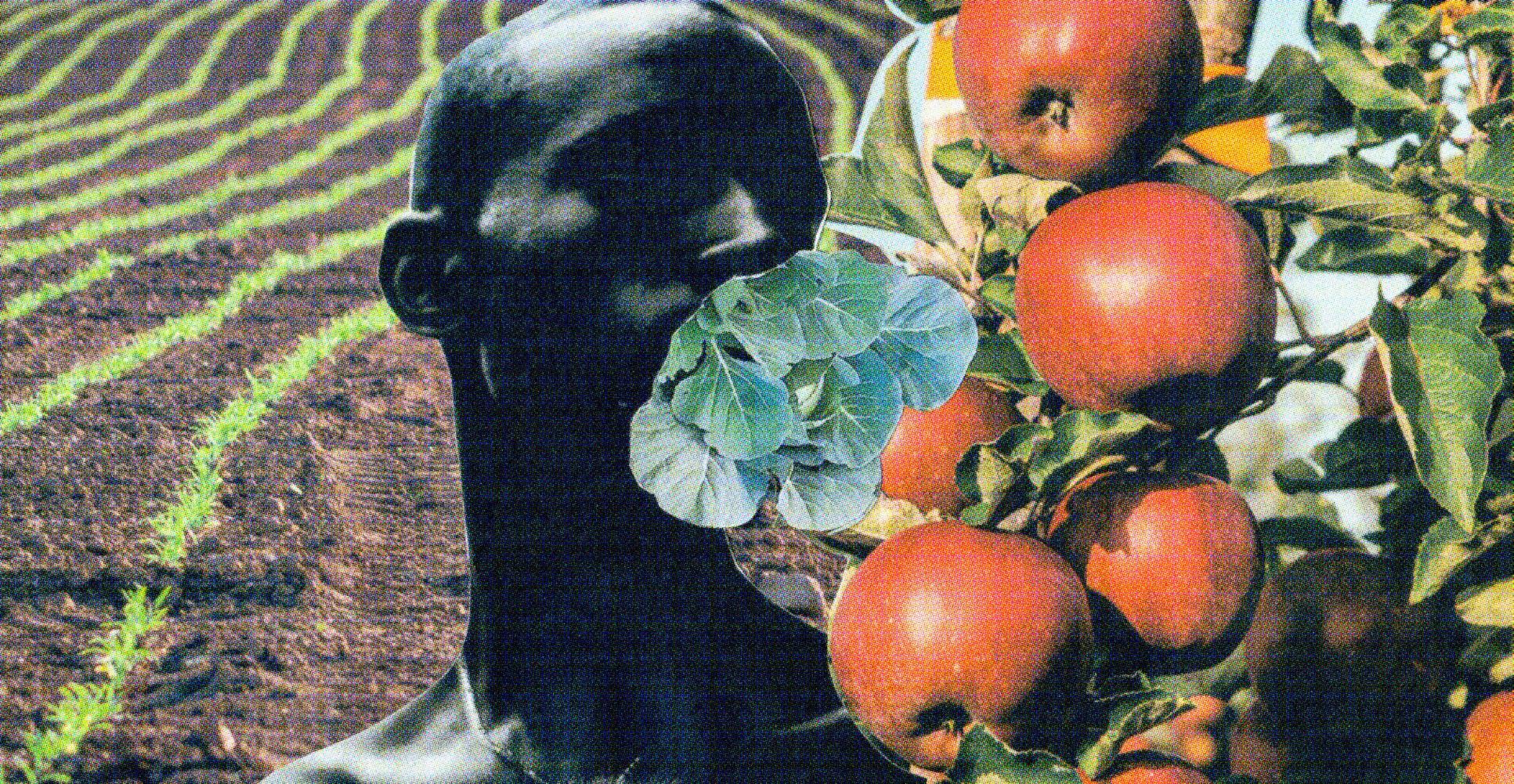
Here are some of the delicious fruits, vegetables, and herbs the Pacific Northwest has to offer this summer. Special thank you to Molly Watson from The Spruce Eats for publishing the article “Fruit and Vegetable Seasons of the Pacific Northwest.” Keep an eye out for these seasonal treats during your next trip to the grocery store or farmers’ market!
Apples
Apricots
Blackberries
Blueberries
Boysenberries
Cantaloupes
Cherries
Figs
Grapes
Huckleberries
Marionberries
Melons
Nectarines
Pears
Plums, Pluots
Raspberries
Strawberries
Watermelon
F R
U I T S
August–November
June & July
July–September
June–September
June–August
August–October
June & July
July & August
August–October
August & September
July
August–October
Summer
August & November
August & September
June–August
June & July
August & September
Arugula
Asparagus
Beets
Broccoli
Cabbage
Carrots
Cauliflower
Celery, Celeriac
Chard
Chilies
Collard Greens
Corn
Cucumber
Eggplant
Fava Beans
Onions
Spinach
Squash
Tomatoes
Turnips
Watercress
Zucchini, Zucchini Blossoms
V E G G I E S
May–December
April–June
June–January
June–September
June–February
June–January
July–September
August–November
May–February
August–October
May–February
August–October
July–October
August–November
April–June
June–October
May–December
June–October
July–October
June–January
May–December
June–October
Basil
Edible Flowers
Mint
Oregano
Parsley
Rosemary
Sage Thyme
H E R B S
June–November
April–September
May–December
May–December
May–December
May–December
May–December
May–December
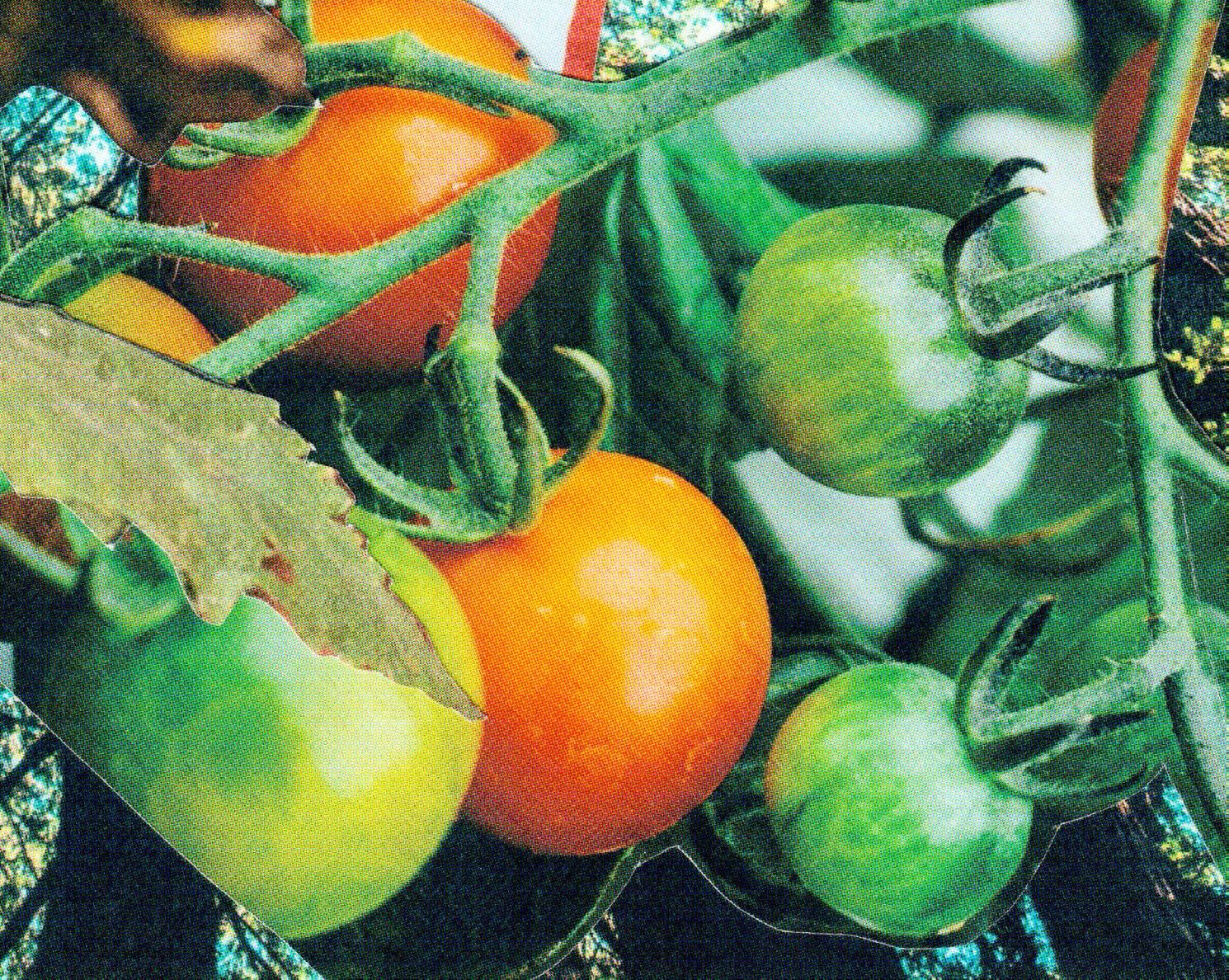
LONG BEFORE we started calling it “sustainability,” our African ancestors carried a profound understanding of the Earth, a wisdom passed down through generations, woven into the very fabric of our being. They knew that the land was not just something to be used, but something to be revered, nurtured, and cared for. It was a sacred relationship where the soil, the sky, and the people worked together in harmony.
Their approach to land stewardship was a dance of respect and reciprocity. They didn’t just extract from the Earth; they gave back, understanding that the health of the land was inseparable from the health of the people. This wisdom guided their farming practices,
creating a legacy that speaks to the power of living in balance with nature.
When we take a glimpse back in time, we can see that our ancestors had an understanding of this mutually beneficial relationship. This understanding permeated precolonial African societies in both the physical and spiritual sense. They developed incredibly innovative ways to harness the land’s full potential without being destructive to the habitat, a concept that was ahead of its time.
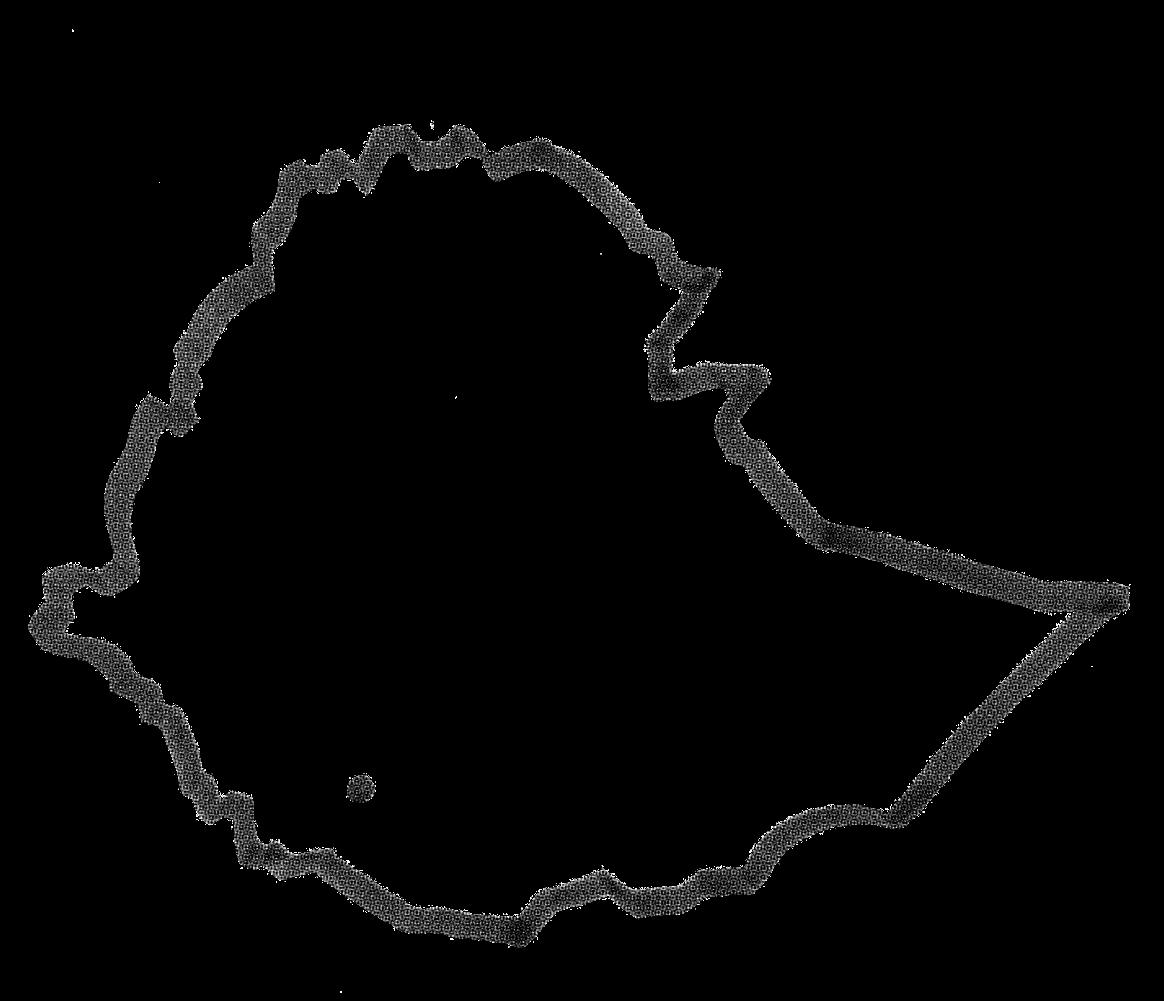
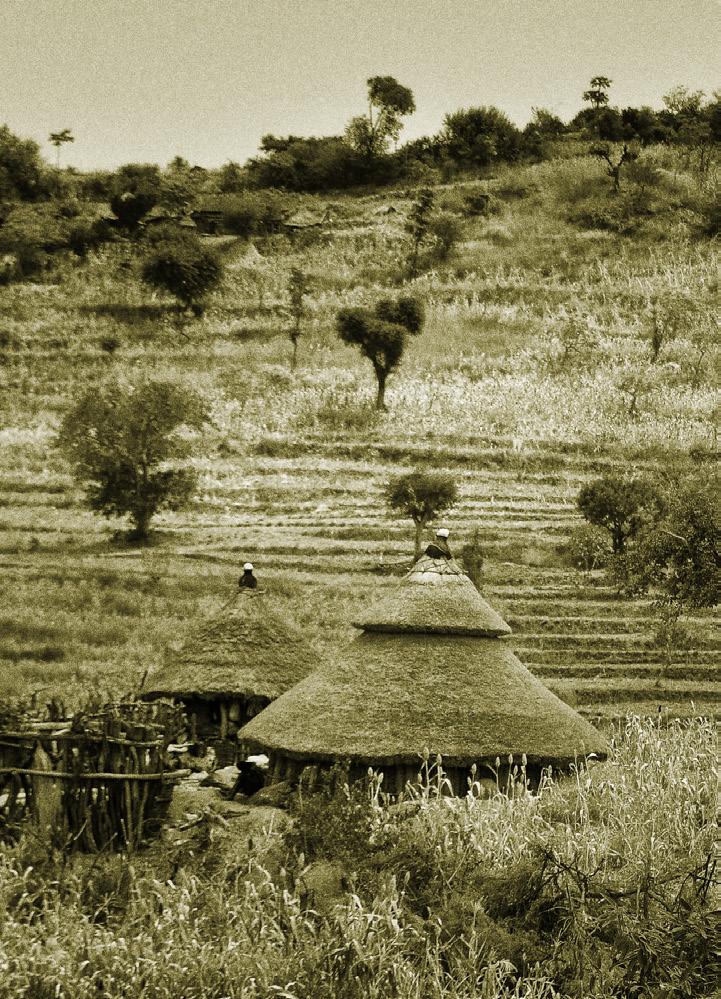
Konso Agricultural Landscape
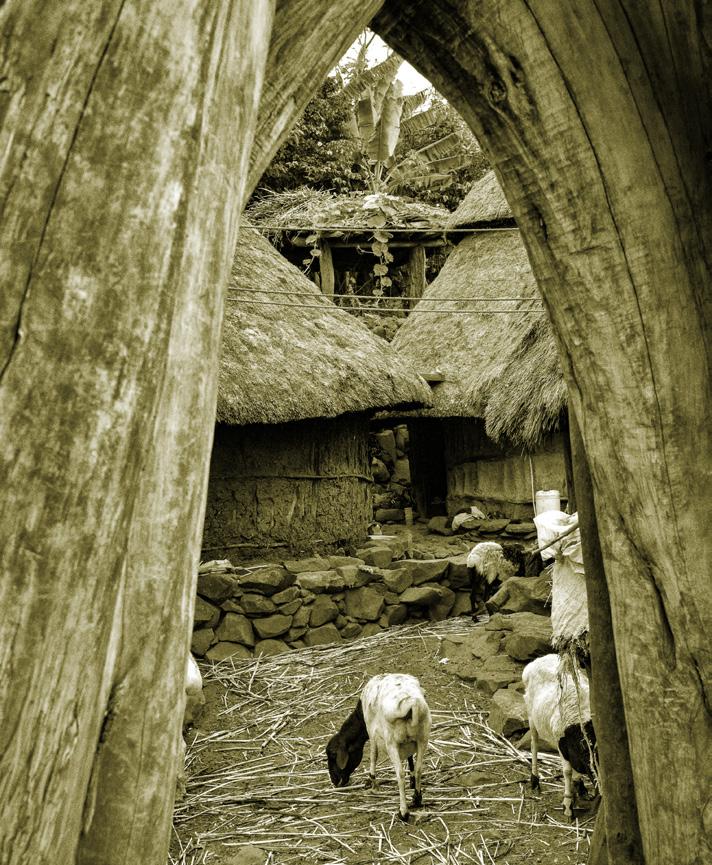
THE KONSO PEOPLE of Southern Ethiopia have maintained a 400-year-old stone terracing system, which was adapted for farming in the region’s semiarid climate, as highlighted by the independent media organization Mongabay. These terraces are more than just a method of agriculture, and they represent the very essence of the communities and the vital connection to land and cultural identity. Terraces are passed down from one generation to the next and are crucial for maintaining soil fertility, preventing soil erosion, and conserving water.
Konso stonework exemplified in the stone walls surrounding homes
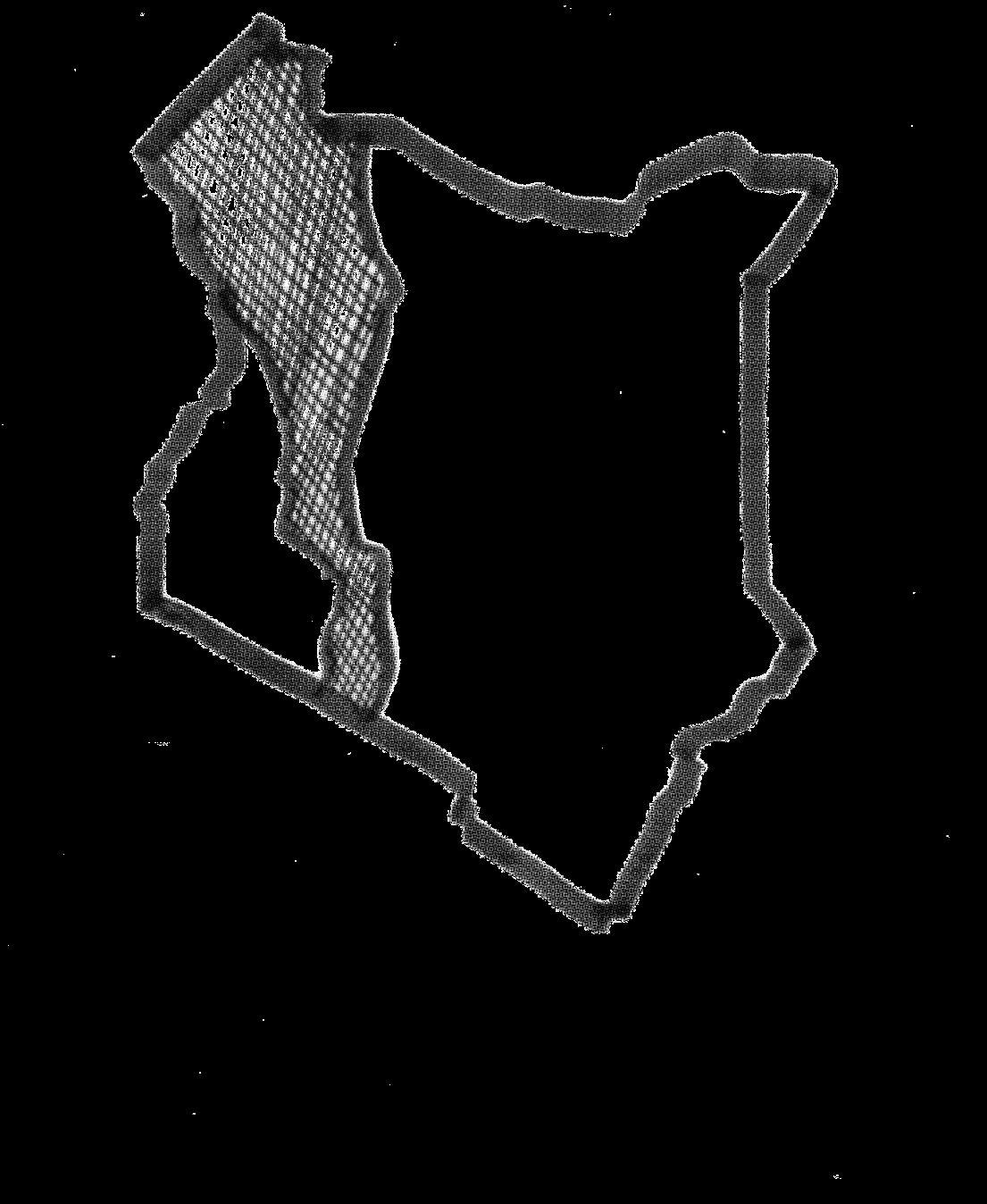
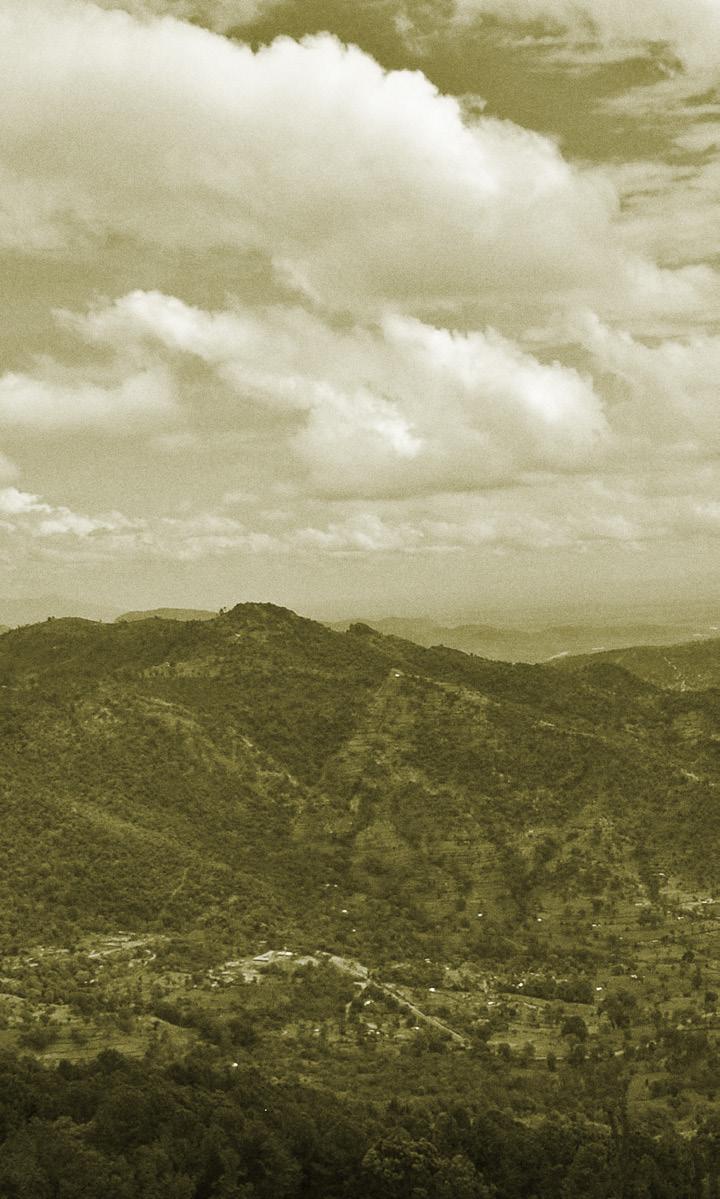
NESTLED WITHIN KENYA’S RIFT VALLEY, the Cherangani communities who reside at the edge of the forest are returning to their pre-colonial agroforestry practices, as documented by the independent media organization Mongabay. According to Sophie Mbugua’s article titled “Agroforestry Gives Kenyan Indigenous Community a Lifeline,” the Cheranagni were reliant on the forest for hunting and gathering, and used various agroforestry methods as a way to promote a healthy forest ecology. This way of life was disrupted by destructive colonial campaigns that forced them out of the forest, leaving them with only limited access to medicinal herbs.
Abraham Mworor Maina, a 94-year-old former assistant chief, recalled how his community used shovels curved with stones to minimize soil disturbance and intercropped grains with trees in an agroforestry system. They also used decayed tree leaves as a way to cycle nutrients back into the soil, improving the overall soil health.
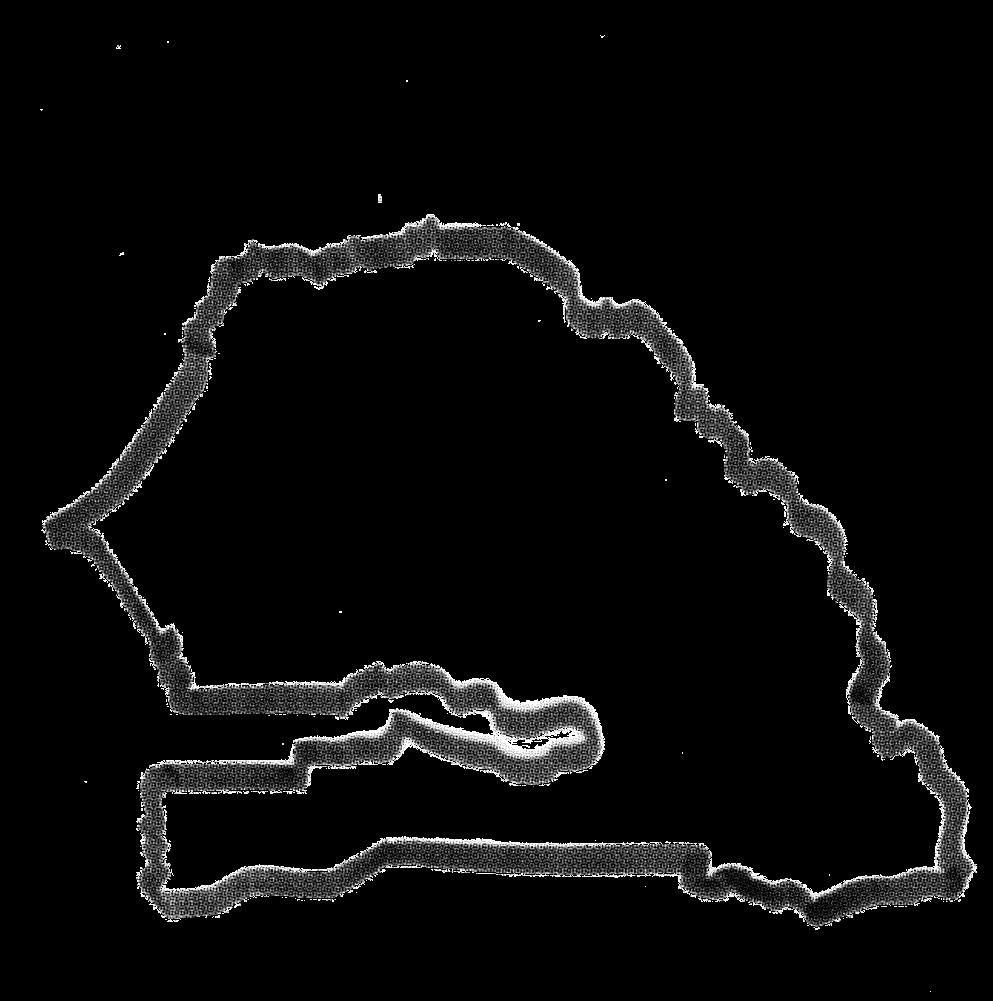
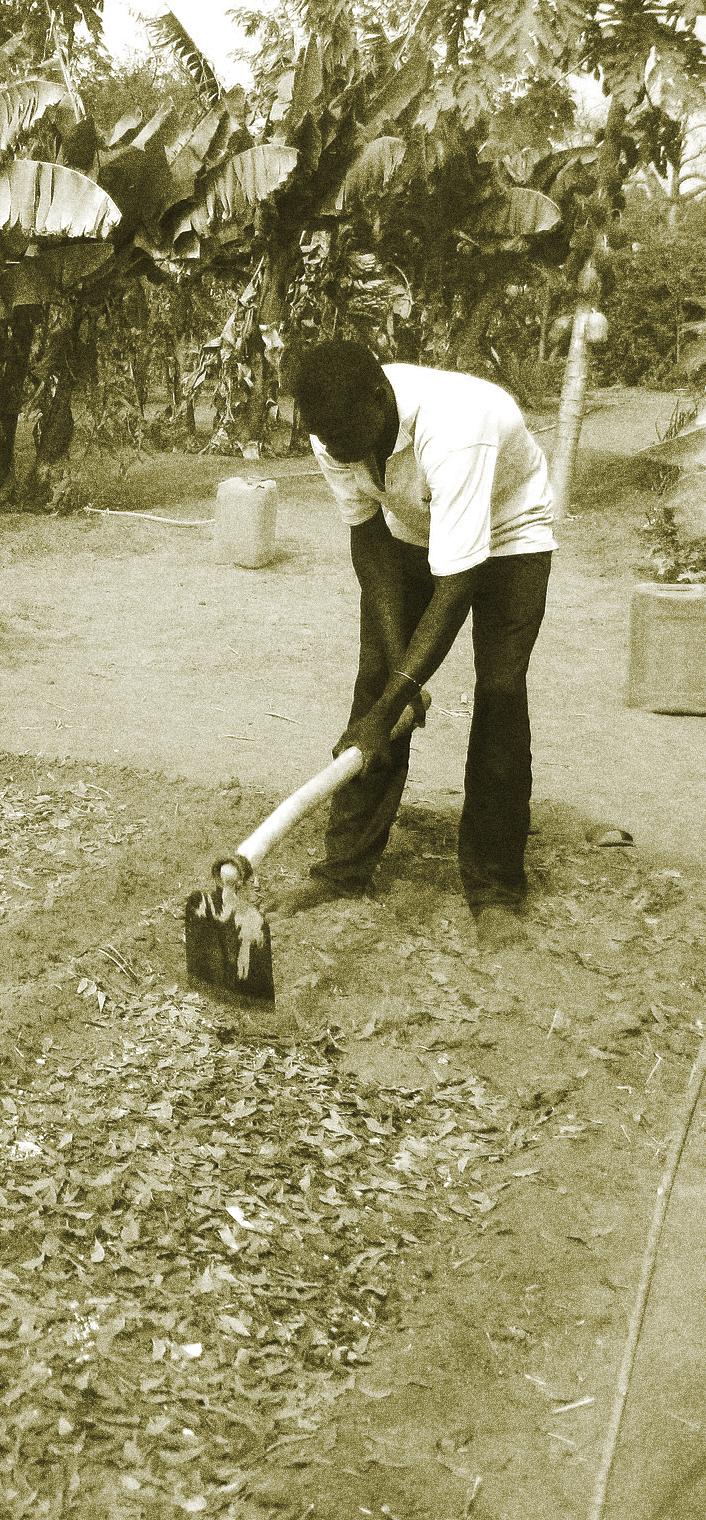
PESTICIDES HAVE BECOME INTEGRAL to modern agriculture for increasing crop yields; however, their widespread use has raised concerns about their long-term impacts on the environment and human health. As highlighted by Barza Wire, a service of Farm Radio International, farmers in Senegal are achieving success through using the neem plant as an organic pesticide. This alternative solution to harsh chemicals is not only better for the environment but also more accessible and affordable for farmers.
There are countless examples of Africans across the continent reclaiming and maintaining techniques for harvest that holistically consider the well-being of the environment. One major motivation for this approach is the belief that the land was an element that held great spiritual significance.
Senegalese farmer throws neem leaves and ash onto plant beds to help with pest control
EMERGES CLEARLY THAT FOR
PEOPLES, THIS IS A [SPIRITUAL] UNIVERSE. Nature in the broadest sense of the word is not an empty impersonal object or phenomena; it is filled with [spiritual] significance. [Hu]mans give life even where natural objects and phenomena have no biological life. God is seen in and behind these objects and phenomena: they are the presence of [god]. The invisible world is symbolized or manifested by these visible and concrete phenomena and objects of nature. The invisible world presses hard upon the visible: one speaks of the other, and African peoples “see” the universe when they look at, hear or feel the visible and tangible world. This is one of the most fundamental religious heritages of African peoples…The physical and spiritual are but two dimensions of one and the same universe.
– Portland African American Leadership Forum and Africa House. AfroEcology Movement: An Environmental Movement for the PanAfrican Communities of Portland. March 30, 2018. AfroEcology Final Report 2020
Before we can make any progress towards improving our relationship with the land, we must first acknowledge the collective trauma that makes it difficult to truly connect with nature. We must also acknowledge that, as people of African descent, we have adopted an attitude towards the land that mirrors the dominant culture’s disposition about the earth.
During the transatlantic slave trade, African people were torn from the ecosystems that they were familiar with and thrust into a foreign terrain. The unique brand of American Chattel Slavery demanded that African people interact with the land under duress and exploitation, casting aside the spiritual and ecological perspectives of old. Those who endured this brutal treatment equated freedom with doing work that was far removed from the trauma associated with rice and cotton fields. To them, the land represented toil, pain, and hard labor with little to no benefit.
The legacy of colonization, imperialism, and capitalism has deeply severed African immigrants’ and refugees’ connection to the land. Colonial powers imposed foreign systems of governance, land ownership, and resource extraction that disrupted African Indigenous ecological practices and
relationships to the environment. Over time, external interests, driven by imperialism and capitalism, have created widespread ecological degradation across the African
continent. These foreign powers have long been responsible for environmental destruction, only to turn around and sell “solutions” back to African countries, often under the guise of development or conservation projects that perpetuate neocolonial control. For many Africans, this history has left them with a fractured relationship to
the land, compounded by the global anti-Black forces that continue to exploit the continent’s natural resources for profit.
Due to anti-Black racism, Black communities have been systematically excluded from both natural resources and the green spaces surrounding them. This exclusion has deprived Black communities of the benefits that the land and its resources have to offer. Over time, this separation has fostered a sense of distance and indifference among Black Communities toward the lack of access to lush green spaces.
According to an article published in USA Today by Joycelyn Weston, referencing reports by The Outdoor Foundation in 2017 and the Center for American Progress in 2020, just 9% of the 144.4 million Americans who participated in outdoor recreation over the previous year were Black. The Center for American Progress demonstrated that nearly 75% of people of color live in areas where natural spaces aren’t accessible, a disparity resulting in part from decades of racist housing policies, and environmental and health inequities. Without a presence in these natural spaces, Black communities miss out on the mental, physical, and emotional benefits of spending time outdoors.
SPENDING TIME IN THE
Forest Environments enhanced white blood cell activity and cell number! Clinical trials demonstrated that increased white blood cell activity persisted for 7 days after participants visited the forest.
Nature has restorative and stressrelieving effects. Walking outdoors is a great way to engage your cardiovascular system and muscles, especially on uneven outdoor surfaces.
As Black People living in the Pacific Northwest, we must become intentional about taking up space outdoors.
The stress of navigating through an oppressive system can overwhelm both the mind and body.
GOOD FOR YOU!
Mycobacterium vaccae, a bacterium found in soil, is shown to activate neurons that produce serotonin, a neurotransmitter associated with the happiness hormone.
Exposure to Sunlight can also increase serotonin levels and regulate your mood. Simply step outside in the morning to sip your morning tea or coffee while you bask in the rays.
Those factors, along with the lack of sunshine leading to vitamin D deficiencies in individuals with darker skin, creates an uncomfortable combination.
Let’s become more familiar with nature as a liminal resource for healing so that we may begin to repair and redefine our relationship to it.
While reducing our carbon footprint is an important step, it alone will not save our planet. Greenwashing, plastic straws, and token efforts won’t bring us the world we deserve. We need to hold corporations and governments accountable for a just transition. Without accountability and fundamental transformation, we will not have a future.
This economy relies on taking resources from the earth through extraction, removing them from their natural place in living systems. When we exploit resources, we turn what could be renewable into something that can no longer regenerate. For example, forests are renewable, but when they are clear-cut, they become non-renewable, unable to bounce back.
Our work must be organized through democratic and voluntary cooperation, rather than coercion and exploitation. When we freely apply our labor together to solve our problems and meet our needs, we will both liberate the soil from the physical concrete that paves over life and liberate our spirits from the cognitive concrete that has paved over our imaginations.
Just Transition is a framework for a fair shift to an economy that is ecologically sustainable, equitable, and just for all its members. After centuries of global plunder, the profit-driven, growth-dependent industrial economy is severely undermining the planet’s life support systems. An economy based on extracting from a finite system faster than the capacity of the system to regenerate will
eventually come to an end, either through collapse or through our intentional reorganization. Transition is inevitable. Justice is not.
The concept of Just Transition was initially developed by labor unions and environmental justice groups, who recognized the need to phase out industries that are harmful to workers, community health, and the planet, while also creating fair opportunities for workers to transition into new livelihoods. The original idea of Just Transition focused on building alliances between workers in polluting industries and frontline communities. Expanding on that foundation, Just Transition, as we see it, represents a set of coordinated strategies aimed at shifting entire communities toward thriving economies that
offer dignified, productive, and ecologically sustainable livelihoods, all governed directly by workers and local communities.
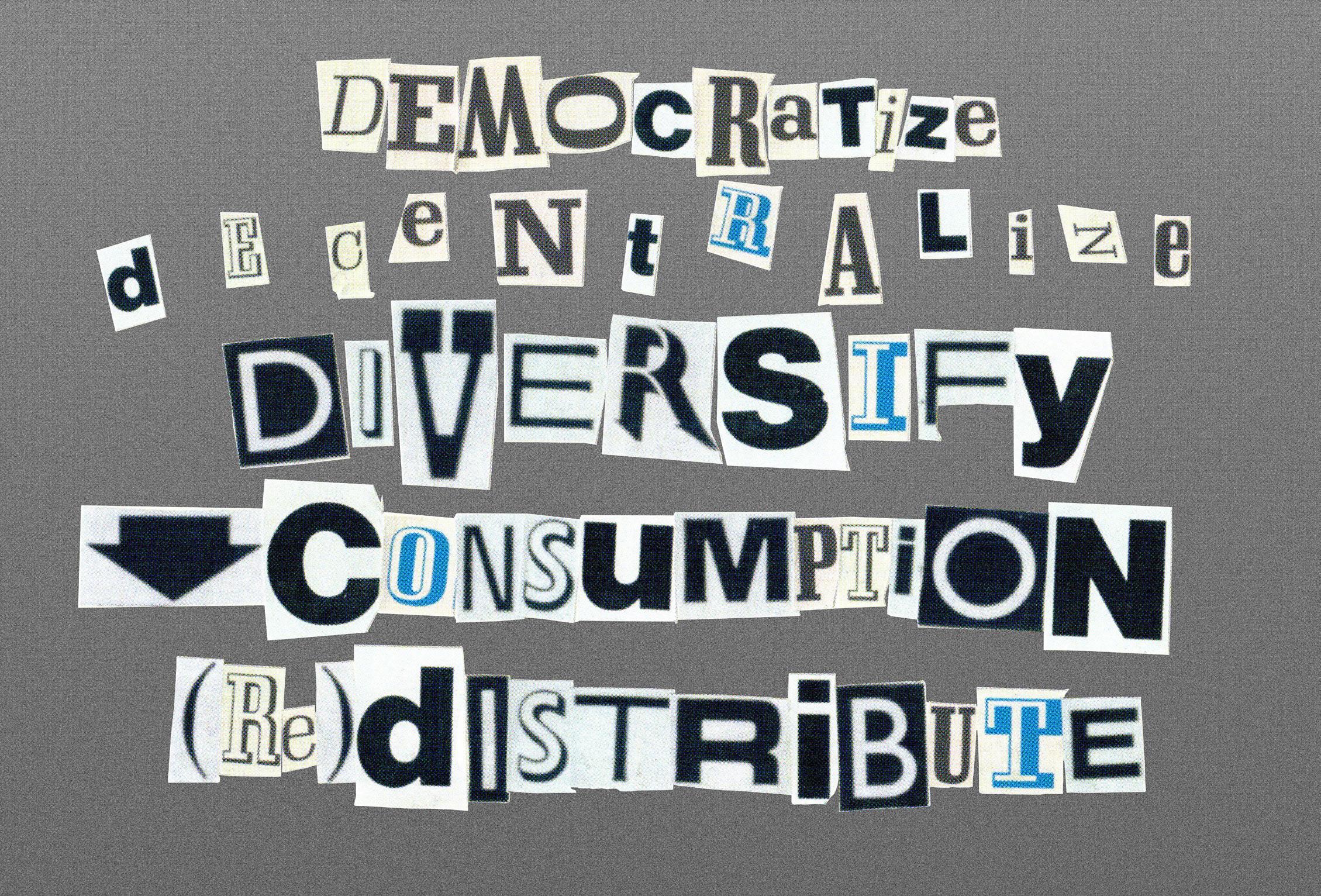
A Just Transition requires us to build a visionary economy for life in a way that is distinctly different from the current economy. Constructing a visionary economy for life calls for strategies that democratize, decentralize, and diversify economic activity while we dampen down consumption, and (re)distribute resources
and power. Transition initiatives shift the economy from dirty energy to energy democracy, from funding highways to expanding public transit, from incinerators and landfills to zero waste, from industrial food systems to food sovereignty, from gentrification to community land rights, and from rampant destructive development to ecosystem restoration. At the core of a Just Transition is deep democracy, in which workers and communities have control over the decisions that affect their daily lives.
The work of Just Transition is not easy. Transition is the process of navigating contradiction. So, for transition to be just, we must have a clear vision of where we are heading and a well-tuned moral compass to help us get there. We will make mistakes. We will have setbacks. We will struggle. But we will advance. We will advocate. We must accompany each other with fierce love through this process.
ECOLOGY =
HOME + KNOWLEDGE
1
RECLAMATION of ancestral ecological concepts of self that serve to give us direction, esteem and confidence.
An ecological lens is the assessment of environmental factors creating benefits, opportunities, or risks that impact our success and wellbeing as a community.
HOME + PEOPLE + PLACE + SPIRIT = COMMUNITY
3
ADVANCE OPPORTUNITY with an ecological lens that improves our wellbeing.
2
DECONSTRUCTION OF OPPRESSIVE SYSTEMS that serve to isolate, divide, and disconnect us from each other and the environment, or perpetuate oppression using the environment as a tool.
“Wellbeing”, meaning:
• Essential needs are provided for
• Community tightness
• Safety and health
• Self-determination
AfroEcology Framework
Imagine Black Futures invites you to explore the outdoors through our AfroEcology Quest!
The rules are simple: take a photo of all eight (8) items and upload them to the AfroEcology Space on the Black Possibilities app using the hashtag #AfroEcologyQuest by December 30th, 2025.
Don’t have the Black possibilities app? Scan the QR Code to download it!
The top two (2) winners will be randomly selected and will receive a few mystery gifts! Good luck!
QUE ST ITEMS ON THE FOLLOWING PAGES
Stroll across a bridge or a nearby sidewalk, and snap a picture to capture the view.

Take a picture of a native plant that you find inspiring or interesting.

Attend a virtual event on the Black Possibilities app OR swing by one of our in-person events.

Join and interact with a post on the Buy Nothing space within the Black Possibilities app. Feel free to post or engage with others in the community.

Find the closest farmers’ market near you. For a list of options, check out the Oregon Farmers Market Association for regular-season markets.
Find a beautiful tree near you and appreciate its presence.

Visit a Black farm near you. For reference, check out the farms listed by the Black Oregon Land Trust
Look for a flower that inspires you or is in your favorite color, and capture its beauty with a picture. 3.

WE’VE CURATED SOME YUMMY FOODS from across the diaspora that we love and think you should try!
Trying the foods from cultures across the diaspora is a great way to begin bridging the gaps that separate us. Take a picture of your cultural dish and post it on the Black Possibilities app with the #whatscooking
If you haven’t tried this savory street food, you’re seriously missing out! It contains a delicious curried chickpea filling on two baras (fried flat bread). The taste of cumin, turmeric and scotch bonnet pepper hot sauce mingle together perfectly. Common toppings include hot habanero, garlic, mustard or salt.
Tangy, crispy, and juicy. If that’s up your alley, then you’ll be a massive fan of fried green tomatoes. This side dish is popular among Black folks in the south and is cooked by slicing up unripe tomatoes, dipping them in batter and frying or baking in the oven. The green tomatoes lend a tangy, juicy flavor that pairs well with the crispy and salty crust.
This classic Senegalese dish takes fish and rice to a whole other level. Traditionally, the dish is made with rice, fish, and tomato sauce and flavored with spiced onions, carrots, cabbage, cassava, and peanut oil. To top it off, it is typically served with lime to drizzle over your plate before you mix it.



O O K I N G ?
We want a self-determining community living in stewardship with the natural environment.
– Paalf People’s Plan Environmental And Just Sustainability Visioning Session. 23 June 2015.
1. Ecology
2. Soil
3. Community
4. A ncestors 5. L and
H ome
R eclamation
C reate
P rotection
I magine 7. R egenerative 8. R esources 9. M ovement
E lders 15. H ealing
G ratitude
T ransition 18. R esiliency 19. R oots 20. A tmosphere
E cosystems
22. B ody
23. O regon
24. E xplore
25. C ulture
IMAGINE BLACK FUTURES
helps our Black community imagine the alternatives we deserve and build our civic participation and leadership to achieve those alternatives. We envision a world where people of African descent enjoy the rights, resources, and recognition to be a thriving, resilient, and connected community. We focus on multiple interconnected systems, including but not limited to workers’ rights, abolition, environmental justice, childcare, public safety, democracy and civic engagement.
Based in Oregon, Imagine Black Futures serves Black Oregonians in urban, suburban, and rural areas across the state. We understand that liberation for all Black people can only be realized by lifting the voices, experiences and prioritizing the issues of historically silenced and vulnerable groups within Black communities – specifically,
queer, trans and GNC, femme, poor, disabled, working, undocumented people youth, parents, caregivers, elders, renters, refugees, immigrants, transit-dependent folks, people living with disabilities, formerly incarcerated folks, and Black people across a diverse and intersectional range of backgrounds and identities.
We envision a Black community where barriers to opportunity are dismantled and where everyone has the support they need to thrive and succeed. We envision a future where all Black people, particularly those who are vulnerable, can live in a society that values their contributions, recognizes their potential, and provides them with the resources to pursue their dreams. We aim for an Oregon where Black leaders emerge, Black workers find fulfilling careers, Black artists flourish creatively, Black families secure homes, and Black farmers steward the land.
Accomplishing this future is only possible by ensuring that Black Oregonians are actively engaged in civic life, with their interests represented across all levels of government. It requires fostering a community that advocates for and uplifts them through meaningful civic action. This means creating affordable options, establishing spaces where we can authentically express ourselves, and cultivating an environment that recognizes and values our contributions.
We seek to assemble a crew that moves on the demands and actions that we as a community identified as most meaningful. As a crew, we can identify and create the spaces to come together, fight together, and thrive together.
By becoming a member of the Imagine Black crew, you will join a movement grounded in empowering the voices of the diverse Oregon Black community.
Many Indigenous, and people of color and white folks want to work towards a state in which Black lives matter. It can be challenging to identify starting points for countering white supremacy and anti-black racism in yourself, your communities, and institutions that may serve you well. It can also be challenging to identify places of solidarity in your struggles for justice.
As you learn more about Imagine Black, you will find a clear opportunity to become more than just an ally; rather, to be active accomplices with the Black community in the shared struggle for liberation for all.
By becoming an accomplice of Imagine Black, you will join a movement that is grounded in empowering the diverse voices of the Black community in Oregon.
Scan to take our AfroEcology Temperature Check Survey.
Donate to Imagine Black and Imagine Black Futures
Alvin. “Woman Wearing White Sleeveless Shirt.” Unsplash, 28 Oct. 2019, unsplash.com/photos/woman-wearing-white-sleeveless-shirt-MYfq3tf34p8.
“Betsi-Fang Artist | Nlô Byeri (Reliquary Guardian Head) | Fang-Betsi | the Metropolitan Museum of Art.” The Metropolitan Museum of Art, www. metmuseum.org/art/collection/search/312429
Eye for Ebony. “Women’s White Top.” Unsplash, 25 Aug. 2018, unsplash.com/ photos/womens-white-top-UscH_Hz6GUw
Gold, Dan. “Tomatoes Hanging on Tomato Plant.” Unsplash, 14 Aug. 2016, unsplash.com/photos/tomatoes-hanging-on-tomato-plant-4LiUI-Y2mI8.
Horner, Casey. “Low Angle Photography of Trees at Daytime.” Unsplash, 21 Dec. 2017, unsplash.com/photos/low-angle-photography-of-trees-at-daytime4rDCa5hBlCs
Narayanan, Arun. “Greyscale Photo of Hand.” Unsplash, 16 July 2019, unsplash. com/photos/greyscale-photo-of-hand-UVn5s8o9bds
WHAT IS AFROECOLOGY?
WHAT’S GROWING ON?
Portland African American Leadership Forum and Africa House. AfroEcology Movement: An Environmental Movement for the Pan-African Communities of Portland. March 30, 2018.
Cooper, Craig. “Green Grass Field During Daytime.” Unsplash, 19 May 2020, unsplash.com/photos/green-grass-field-during-daytime-mADanQnJ_oU
Gold, Dan. “Tomatoes Hanging on Tomato Plant.” Unsplash, 14 Aug. 2016, unsplash.com/photos/tomatoes-hanging-on-tomato-plant-4LiUI-Y2mI8
Nath, Anik Deb. “A Large Group of Green Plants in a Field.” Unsplash, 27 June 2024, unsplash.com/photos/a-large-group-of-green-plants-in-a-field-ThSgIfnOAI.
Odunsi, Oladimeji. “Man Face Close-up Photography.” Unsplash, 16 July 2019, unsplash.com/photos/man-face-close-up-photography-NI4SwD0SO2M.
ROOTED IN ANCESTRY
Studzinski, Marek. “Red Apple Fruit Photograph.” Unsplash, 12 Dec. 2019, unsplash.com/photos/red-apple-fruit-photograph-3D6yReT06p0.
Watson, Molly. “Fruit and Vegetable Seasons of the Pacific Northwest.” The Spruce Eats, 27 Jan. 2019, https://www.thespruceeats.com/pacific-northwestseasonal-fruits-and-vegetables-2217163
Environmental Literacy Council “ Why Are Pesticides Bad for the Environment?” Environmental Literacy Council, https://enviroliteracy.org/why-are-pesticidesbad-for-the-environment/.
Mbugua, Sophie. “Agroforestry Gives Kenyan Indigenous Community a Lifeline.” Mongabay, 24 May 2018, https://news.mongabay.com/2018/05/ agroforestry-gives-kenyan-indigenous-community-a-lifeline/.
Murphy, Chris. “MarichPass-13.” Flickr, 8 May 2010, www.flickr.com/photos/ chris-murphy/4591314318/in/photolist-5VZnTn-5W4GCj-5W4GCJ7ZEsPv-7ZHFMG-7ZEuwK-2jdhJnW
Traoré, Yaye Moussou. “Senegal: Farmers Make Natural Pesticides from Local Plants.” Barza Wire, 23 Nov. 2020, wire.farmradio.fm/farmer-stories/senegalfarmers-make-natural-pesticides-from-local-plants/.
Trees for the Future. “Senegal-Katakél, Pepinaire Tournee-March, 2012.” Flickr, 27 Apr. 2012, https://www.flickr.com/photos/68632374@N00/7118886855
Tualatin Soil and Water Conservation District. “Leave the Leaves: Improve Soil Health & Habitat by Leaving Leaf Litter.” Tualatin Soil and Water Conservation District, https://tualatinswcd.org/leave-the-leaves-improve-soil-health-habitatby-leaving-leaf-litter/
Waddington, Rod. “Corral, Konso Tribe, Ethiopia.” Flickr, 10 May 2016, www. flickr.com/photos/64607715@N05/26835414562
Waddington, Rod. “Konso Tribal Land, Ethiopia.” Flickr, 22 Oct. 2015, www. flickr.com/photos/64607715@N05/10420388254
Yimer, Solomon. “Sustaining a 400-Year-Old Ethiopian Farming Tradition: Interview with Elder Gehano Guchoir.” Mongabay, 17 Jan. 2025, https://news. mongabay.com/2025/01/the-elder-sustaining-a-400-year-old-ethiopianfarming-tradition-interview-with-gehano-nekayto/.
THE JUST TRANSITION FRAMEWORK
Weston, Joycelyn. “Black People Don’t Have Access to the Outdoors the Way White People Do.” USA Today, 29 Oct. 2020, https://www.usatoday.com/story/ opinion/voices/2020/10/29/nature-environment-race-black-recreation-reportfor-america/6054520002/.
Corliss, Julie. “Health Benefits of Hiking: Raise Your Heart Rate and Your Mood.” Harvard Health Blog, 28 Sept. 2016, https://www.health.harvard.edu/blog/healthbenefits-of-hiking-raise-your-heart-rate-and-your-mood-2016092810414
Foxx, Christine L et al. “Effects of Immunization With the Soil-Derived Bacterium Mycobacterium Vaccae on Stress Coping Behaviors and Cognitive Performance in a “ Two Hit ” Stressor Model.” Frontiers in Physiology Vol. 11 524833. 5 Jan. 2021, doi:10.3389/fphys.2020.524833.
Johnson, Benjamin S., et al. “Exposure to Neighborhood Green Space and Sleep: Evidence from the Survey of the Health of Wisconsin.” Sleep Health, Vol. 4, No. 5, 2018, pp. 413–419. Elsevier, https://doi.org/10.1016/j.sleh.2018.08.001.
Li, Q et al. “Effect of phytoncide from trees on human natural killer cell function.” International Journal of Immunopathology and Pharmacology Vol. 22, 4 (2009): 951-9. doi:10.1177/039463200902200410 https://pubmed.ncbi.nlm. nih.gov/20074458/.
Lim, Jae-Hyuk, et al. “Immunological Activity of Phytoncides: A Systematic Review and Meta-Analysis.” Pharmacological Research – Natural Products, Vol. 4, 2024, Article No. 100049. Elsevier, https://doi.org/10.1016/j.phrsnp.2024.100049.
Nwana, Nwabunie et al. “Green Streets, Healthy Hearts: Exploring the Roles of Urban Nature and Walkability in Cardiovascular Health.” Methodist DeBakey Cardiovascular Journal Vol. 20, 5 37-46. 5 Nov. 2024, doi:10.14797/mdcvj.1455.
University of Bristol. “Getting Dirty May Lift Your Mood.” ScienceDaily, 10 Apr. 2007, https://www.sciencedaily.com/releases/2007/04/070402102001.htm
“From Banks and Tanks to Cooperation and Caring: A Strategic Framework for a Just Transition.” Movement Generation, Nov. 2016, https://movementgeneration. org/wp-content/uploads/2016/11/JT_booklet_English_SPREADs_web.pdf
“(Helvetica Bold Type Specimen) : Free Borrow and Streaming: Internet Archive.” Internet Archive, 1 Oct. 2018, archive.org/details/LFAVenezky0103
THE JUST TRANSITION FRAMEWORK AFROECOLOGY QUEST
“Just Transition.” Movement Generation, https://movementgeneration.org/ justtransition/.
“Linotype Diethelm Type Specimen (Color Scans) : Linotype: Free Download, Borrow, and Streaming : Internet Archive.” Internet Archive, 26 Feb. 2015, archive. org/details/LinoDiethelmColor/LinoDiethelm-color-1600dpi-with-jpegsattached.
“Microgramma Type Specimen Portfolio: Società Nebiolo: Free Download, Borrow, and Streaming : Internet Archive.” Internet Archive, 1952, archive.org/ details/microgramma-specimen-nebiolo-1952/page/n9/mode/2up.
“Type [Specimen Book]: Los Angeles Type Founders, Inc.: Free Download, Borrow, and Streaming : Internet Archive.” Internet Archive, 2 Apr. 2011, archive. org/details/LATFSpecimenEarly1970s/page/n75/mode/2up
Kuprikov, Aleksey. “Photography of Suspension Bridge During Daytime.” Unsplash, 2 Jan. 2020, unsplash.com/photos/photography-of-suspension-bridgeduring-daytime-j3XgAoHUfnw.
“Photo 384932, No Rights Reserved · iNaturalist.” iNaturalist, www.inaturalist. org/photos/384932?size=original.
WHAT’S COOKING?
Afn Snr Chef. “How to Make Thieboudienne/Ceebu Jen (Senegalese Fish and Rice).” African Food Network, 6 Mar. 2024, afrifoodnetwork.com/recipes/ricerecipes/thieboudienne.
Ria. “How to Make Trinidad Doubles – Detailed Recipe & Instructions.” Cooking with Ria, 20 Dec. 2018, https://cookingwithria.com/2018/12/how-tomake-trinidad-doubles-detailed-recipe-instructions/.
stock.adobe.com/images/delicious-fried-green-tomatoes-with-fresh-saladmacro-on-a-plate-vertical-top-view/198593731?prev_url=detail.
stock.adobe.com/images/jamaican-or-trinidadian-or-indian-doubles-a-snackof-curry-chick-peas-in-bara-fried-dough/781431084?prev_url=detail.
stock.adobe.com/images/senegalese-thieboudienne-it-is-a-preparationof-fresh-fish-and-rice-cooked-with-vegetables-such-as-cassava-pumpkincabbage-carrot-eggplant-closeup-on-the-table-horizontal-top-view-fromabove/426293090?prev_url=detail
This magazine was made possible through the generous support of our funder, Oregon Health Authority.
Thank you for believing in our vision.