

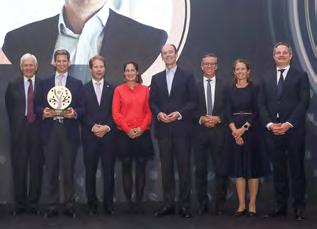
At a gala in Vienna, Miba is honored as “Austria’s Best Family-Owned Company.” In particular, our company’s longterm vision, its strong responsibility for its employees, and its social engagement are highlighted.
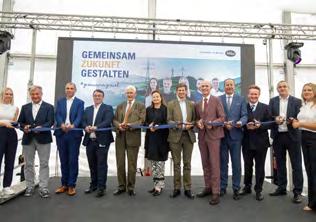
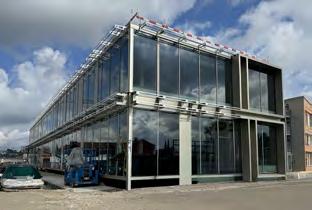
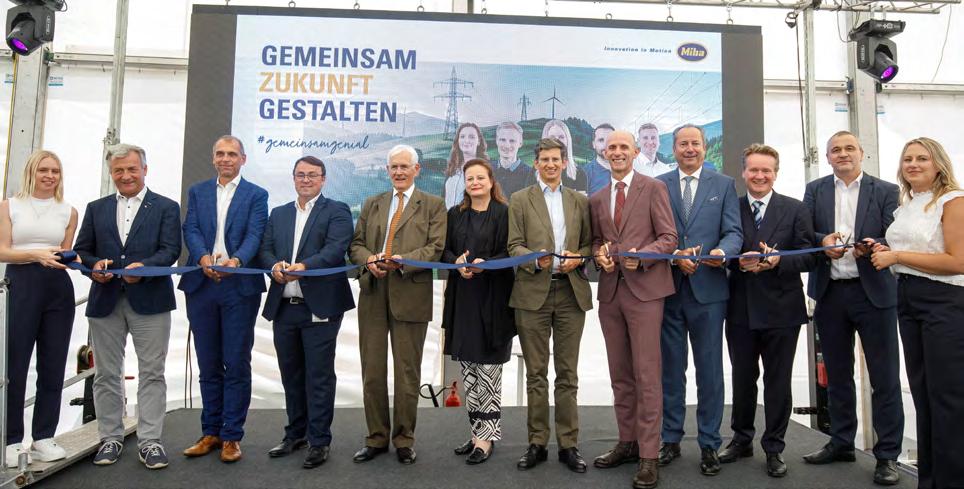
In Kirchbach, in southeastern Styria, Miba Resistors Austria opens its new production site for high-tech resistors. EUR 15 million were invested, more than doubling the production space at the site.
March 25 May 25 June 25 August 25 July 25
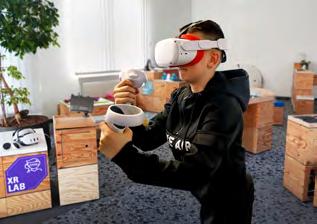
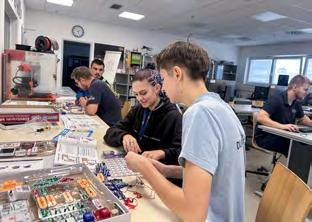
With the FutureLabs, Miba opens an interactive workshop in Laakirchen where digital technologies are brought to life for children. Seven hands-on stations spark enthusiasm for artificial intelligence, robots, drones, and more.
BEST RECRUITERS 2025 in Bronze Miba AG
LEADING EMPLOYERS 2025
Top 1% of employers in Austria Miba AG
AUSTRIA'S BEST FAMILY-OWNED BUSINESS from the daily newspaper „Die Presse“ Miba AG
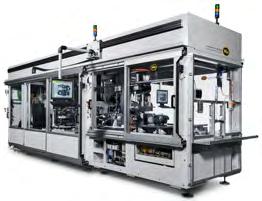
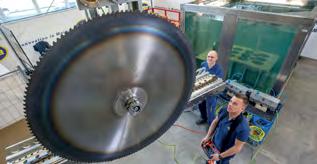
After more than two years of intensive collaboration with a customer, Miba Automation Systems delivers the first specialized saw designed for the decommissioning of nuclear reactors. It is capable of precisely cutting through internal components in reactor basins up to 35 meters deep.
JAGGAER VALUE ACHIEVEMENT AWARD from Jaggaer Miba AG
„HRBert“ AWARD for innovative and sustainable human resources management Miba Bearings Materials
STARS OF STYRIA from WKO Steiermark
Miba Cooling Austria
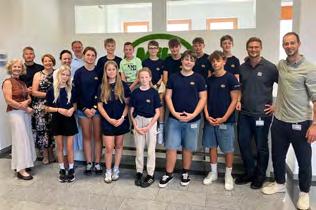
For the eleventh time, Miba organizes a summer program for children in Laakirchen to help working parents with childcare during the holidays. For the first time, a Youth Entrepreneurship Week offers insights into thinking and acting as an entrepreneur.

GREAT PLACE TO WORK AWARD
Category <100 Employees
Miba Drivetec India

MOST ADMIRED CV SUPPLIER from Commercial Vehicle Forum
Miba Drivetec India
BEST IN CLASS
Quality & Delivery Performance, from John Deere
Miba Drivetec India
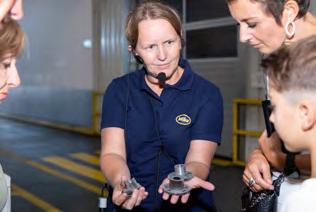
Miba Sinter Austria in Vorchdorf welcomes more than 350 visitors to the “Long Night of Industrial Culture” and offers exclusive insights into how metal powders are transformed into high-precision, durable components for international customers.
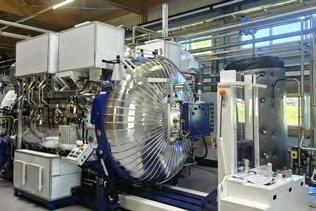
With the commissioning of Europe’s largest vacuum brazing furnace, Miba Cooling Austria in Ligist is investing in production capacity for technologies supporting the energy transition. The furnace enables the manufacture of large vacuum-brazed heat sinks.
September 25
Miba Steeltec in Vráble, Slovakia, has set up a new apprentice workshop and a training room covering approximately 200 square meters. They are located directly above the production halls.
PLATINUM SUPPLIER AWARD
from Pratt & Whitney
Miba Gleitlager Austria
REGIONAL QUALITY AWARD
from Nissan
Miba Sinter Brasil

„LITTLE GIANT“ FIRM
from the Chinese Ministry of Industry and Information Technology
Miba Precision Components (China)
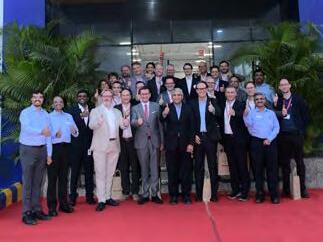
High-ranking representatives from Upper Austria’s business and political communities visit Miba in Pune, India. They discuss opportunities in the Indian market with our local management.
November 25 October 25
Construction of Base 27 in Laakirchen is progressing quickly. The traditional topping-out ceremony marks the completion of the shell and roof of the new training center for apprentices and skilled workers. The opening is scheduled for fall 2026.

GOLD SUPPLIER AWARD
from Weichai
Miba Precision Components (China)
R&D COMMUNITY AWARD
20th Anniversary Outstanding Contribution
from Weichai
Miba Precision Components (China)

TECH LEADERSHIP AWARD
from FAW
Miba Precision Components (China)
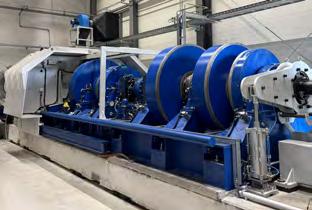
The installation of a new test bench for railway braking systems represents a significant investment by Miba Frictec in Roitham in the future-oriented railway market. At 11 meters long and weighing over 70 tons, it is the largest test bench in the entire Miba group.
RECOGNITION OF EXCELLENCE from WEG Industries
Miba Industrial Bearings Brasil

EXCELLENT POWERTRAIN SUPPLIER from FAW-VW
Miba Precision Components (China)

BEST FRICTION SUPPLIER AWARD
from Brakes India
Miba Drivetec India
GREW TO A RECORD LEVEL OF MORE THAN EUR 1.2 BILLION DESPITE A CHALLENGING ECONOMIC ENVIRONMENT
830 PATENTS WORLDWIDE
HIGH EQUITY RATIO IS THE FOUNDATION FOR FUTURE INVESTMENTS as of January 31, 2026
4,5 % R&D RATIO
60,9 % EQUITY RATIO
Fiscal Year 2025/26
Fiscal Year 2025/26
2,5
7.354
Page: 4–63
P. 6 | Our Mission: Technologies for a Cleaner Planet
P. 8 | Innovation: The Core of Miba's DNA
P. 10 | Miba Technologies for Energy Generation
P. 26 | Miba Technologies for Energy Transmission
P. 36 | Miba Technologies for Energy Storage
P. 42 | Miba Technologies for Energy Use
02
Page: 64–73
S. 66 | Training and Development at Miba
P. 68 | Miba Apprenticeship Worldwide
P. 70 | Base 27 – Your Future Workshop
P. 72 | Customized Develpoment Programs for our Skilled Workers
P. 73 | Miba Leadership Academy
Page: 74–81
P. 76 | High-Performance Culture: We want to Play and Win in the Champions League
P. 78 | Puzzle Pieces for a Successful Future
P. 79 | Positive Leadership – our Leadership Culture
P. 79 | Miba Forum – a Place for exchange and collaboration
P. 80 | Global Collaboration – the Foundation for Innovation and Product Quality
Page: 82–99
P. 84 | Fit for our 2nd Century: Employees are Developing Strategies for Miba’s Path into the Future
P. 85 | Creating Together: At Miba, Team Spirit meets Innovative Spirit
P. 86 | Entrepreneurship means taking Responsibility for our Employees, Society and the Environment
PUBLISHER
Miba Aktiengesellschaft, Dr.-Mitterbauer-Straße 3 4663 Laakirchen, Österreich, www.miba.com
EDITORIAL TEAM
Michael Breneis, Wolfgang Chmelir, Ulrike Reisenberger, Ortrun Schandl
CONCEPT & DESIGN
P8 Marketing GmbH, www.p8.eu
PRINTING
Samson Druck
TRANSLATION
DeepL, additional native speaker check by Schweickhardt - Das Übersetzungsbüro
IMAGE SOURCES
Miba Aktiengesellschaft, Laakirchen
Hermann Wakolbinger – Photographer
Matthias Witzany – Photographer
P8 Marketing GmbH iStockphoto.com, Shutterstock.com, Freepik.com
NOTES
To optimize visual presentation, some images in this report were generated or enhanced using artificial intelligence. Such images are marked with the content credentials symbol.
“
IN CLOSE PARTNERSHIP WITH OUR CUSTOMERS, WE WANT TO SHAPE THE ENERGY TRANSITION AND BUILD THE MARKETS OF TOMORROW.
F. Peter Mitterbauer
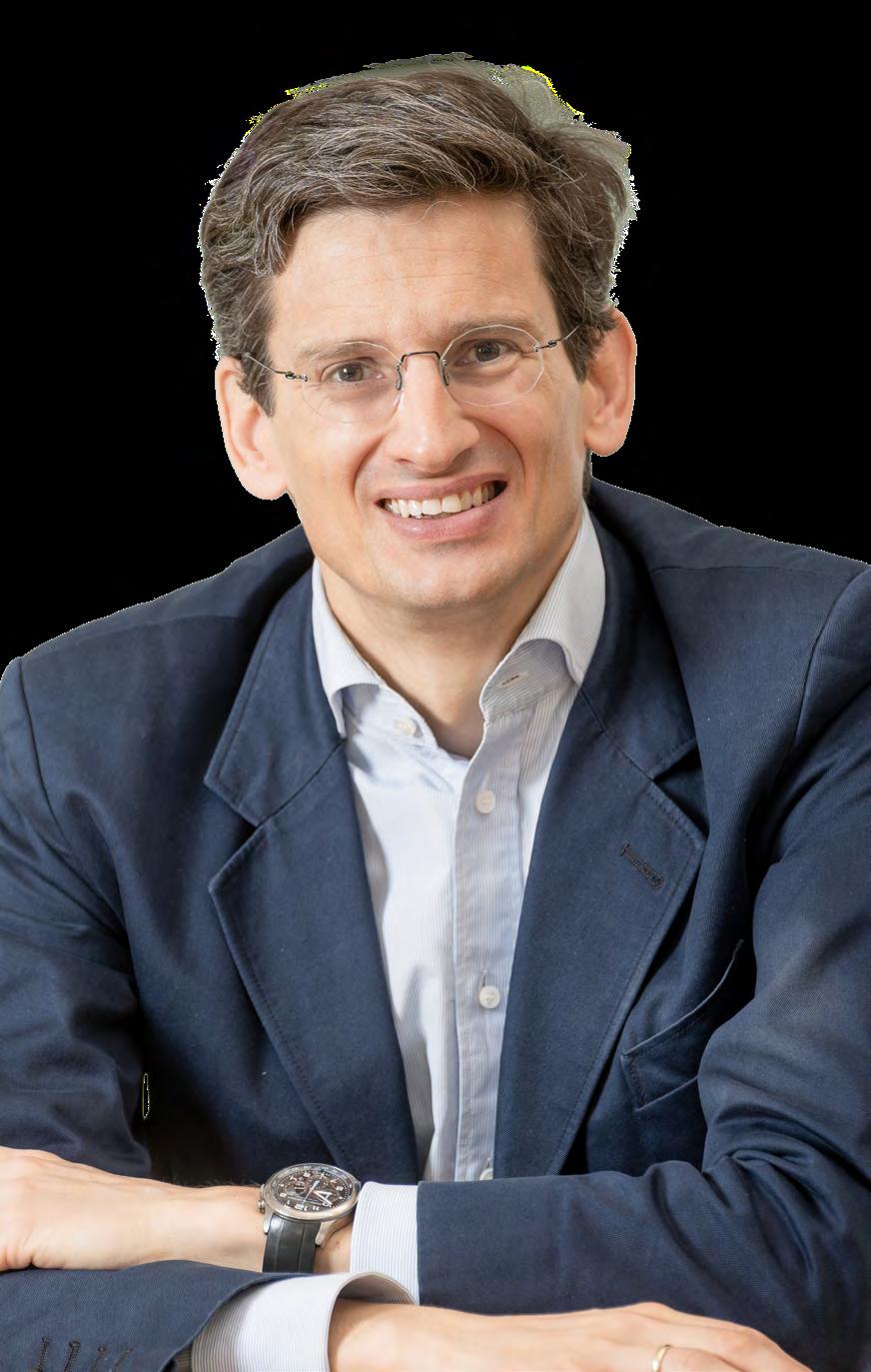

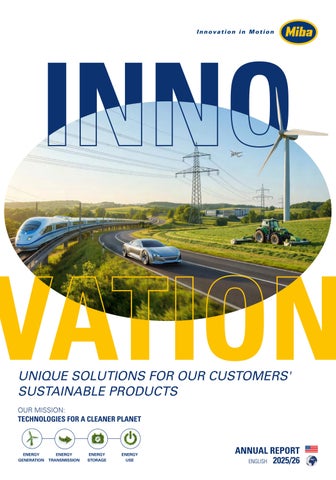
INNOVATION – that is Miba’s DNA. Our primary goal has always been to develop and produce unique solutions for our customers’ technological challenges. Today, in times of major change across many of our customers’ markets, this goal is more important than ever. That is why we have deliberately chosen “Innovation” as the theme for this year’s Miba Annual Report. We want to show how, in close partnership with our customers, we are shaping the energy transition and building the markets of tomorrow. We do this with solutions for the sustainable generation, transmission, storage, and use of energy – fully in line with our corporate mission, “Technologies for a cleaner planet.”
Our four strong company values are the basis of our innovative strength: TECHNOLOGY LEADERSHIP, LIFELONG LEARNING, PASSION FOR SUCCESS, and ENTREPRENEURSHIP. On the following pages, we want to give you an insight into what we mean by these values and how we bring them to life every day.
INNOVATION DRIVES GROWTH: REVENUE AT RECORD LEVEL
Miba’s revenue grew to a record level of more than EUR 1.2 billion in the past fiscal year. We achieved this despite a challenging geopolitical and economic environment.
Our clear focus on innovation is certainly a key reason for this success. With investments of EUR 54 million in research and development – corresponding to an R&D ratio of 4.5 percent – we further strengthened our innovative power in the past fiscal year. In addition, we invested EUR 63 million in plants, machinery and equipment.
Financial independence is essential to have the necessary flexibility for such investments in the future. We were able to further increase our traditionally high equity ratio to 60.9 percent in the past fiscal year.
THE PASSION AND EXPERTISE OF OUR TEAM ARE THE BASIS OF OUR SUCCESS
This summer, we will complete a particularly important investment: the construction of “Base 27” in Laakirchen. This new center for training apprentices and skilled workers underscores how important the training and development of our employees is to us. Their expertise is the basis for innovation and product quality. We invest heavily in their professional and personal development. With our "a place with freedom to perform" approach, we offer them a work environment characterized by a culture of “Positive Leadership,” flat hierarchies, strong team spirit, and many opportunities to balance family and career.
Through all of this, we want to create the conditions necessary to shape the markets and technologies of tomorrow together with our customers – with unique, innovative solutions from Miba. Thank you for your interest in our company and for your trust in us.
Yours,

F. Peter Mitterbauer CEO, Miba AG
“ WE COMBINE IN-DEPTH CUSTOMER AND MARKET INSIGHTS WITH TECHNOLOGICAL EXPERTISE TO SUCCESSFULLY INDUSTRIALIZE UNIQUE SOLUTIONS.
Herbert Steiner Board Member Miba AG and General Manager Miba Sinter Group
OUR MISSION:
OUR VISION:
NO POWER WITHOUT MIBA TECHNOLOGY

ENERGY GENERATION
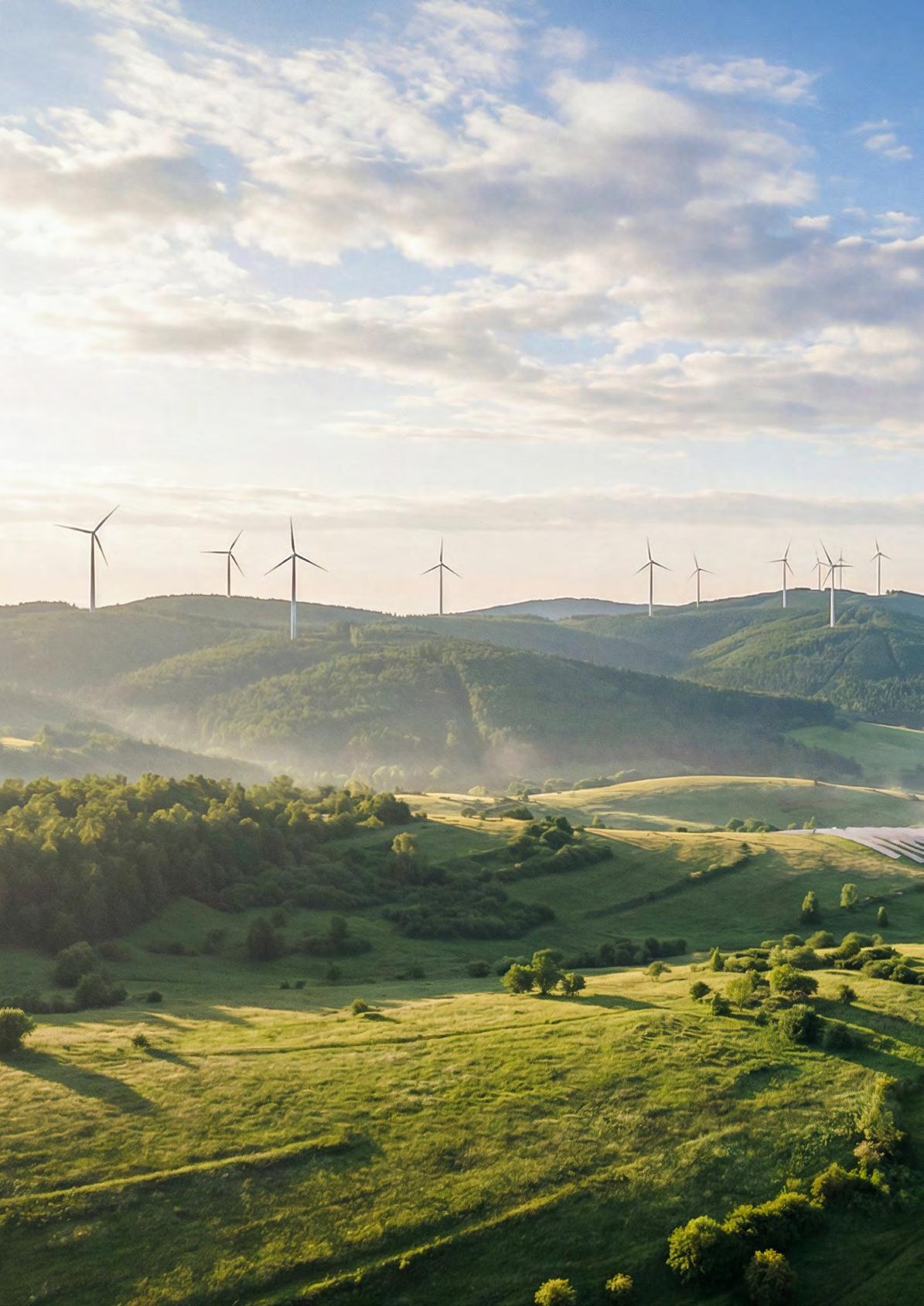
Wind power
Solar power
Hydropower
Gas and diesel gensets, turbines
Fuel cells

ENERGY TRANSMISSION
Efficient power transmission
(e.g. high-voltage direct current (HVDC) transmission / medium voltage direct current (MVDC) transmission)
Smart Grids
Control and stability of power grids
Compressors and pumps
Miba technologies help our customers reduce the carbon footprint of their products. In our customers’ applications, they contribute to making the generation, transmission, storage, and use of energy even more efficient and thus more sustainable and environmentally friendly.
Through innovative solutions, we strive for product and technology leadership in technologically demanding niches along the entire energy value chain.
The illustration shows the areas in which Miba technologies are already making this contribution today and which product areas we want to increasingly develop in the future.


Components for the charging infrastructure of electric vehicles
Cooling solutions for traction batteries
Coating solutions for batteries
Highly efficient drive technology:
Conventional drives
Hybrid drives
Fully electric drives
Industrial applications
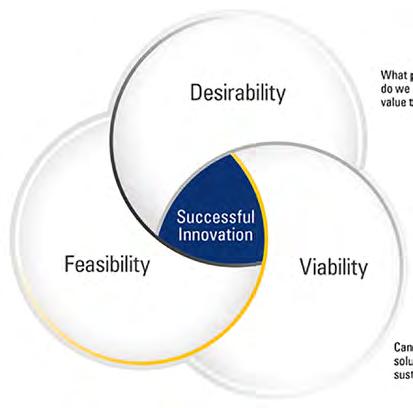
“Nothing is impossible” was already the motto of our company’s founder, Franz Mitterbauer. This motto embodies an attitude that has always been deeply rooted in Miba’s DNA: We want to develop unique solutions to our customers’ technological challenges. To do this, it is particularly important to us to work closely with them and gain a deep understanding of their products and markets – we want to be right in the thick of our customers’ “technological kitchens”!
When developing innovations, we ask ourselves three questions:
Desirability: Does the customer want to buy our product in series, and will we create real added value for them?
Viability: Is there a sustainable market for our innovation in which we can earn money?
Feasibility: Can we find a technological solution to our customer’s challenge?
INVESTMENTS IN RESEARCH AND DEVELOPMENT HAVE RISEN ONCE AGAIN
As one of Austria’s leading innovators, we invest heavily in research and development. In the past two fiscal years alone, our R&D expenditures have increased by 25 percent.
4,5 %
“
Rudolf Morawetz Vice President Innovation & Technology, Miba AG



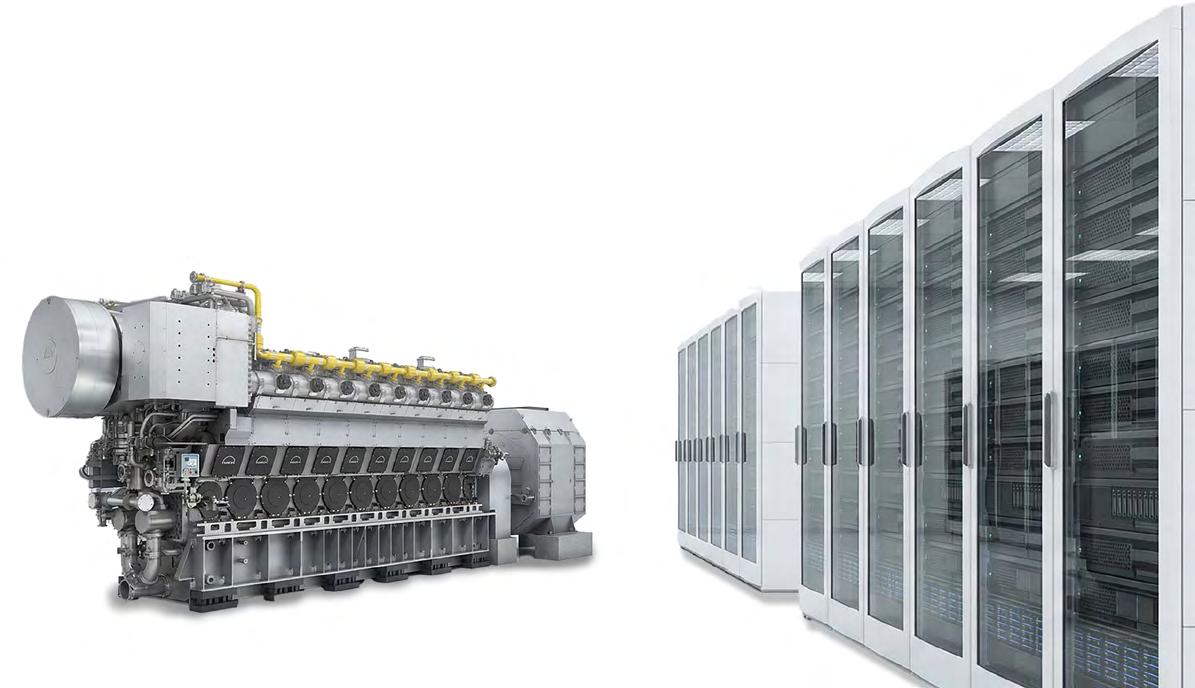
The energy demand from data centers for artificial intelligence is rising rapidly. According to forecasts by the International Energy Agency (IEA), the electricity demand of these data centers will more than double by 2030 and nearly triple by 2035. Especially in the U.S., the country with the most data centers for artificial intelligence, this poses major challenges for public power grids: the available energy supplies and grid stability are more and more frequently reaching their limits.
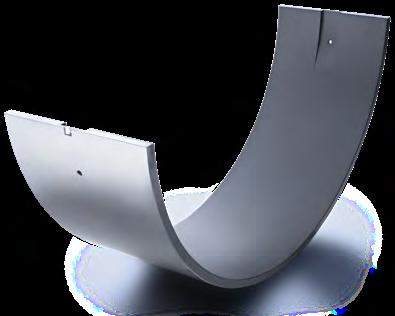
To overcome these challenges, operators are increasingly generating the required electricity directly on-site, that is, at the data center itself. This involves the use of highefficiency gas engines equipped with Miba bearings. As prime power solutions, they ensure a continuous, stable energy supply. These large gas engines operate at consistently high speeds and under continuous load. Miba bearings are the key to long-lasting performance. All our bearings utilize hydrodynamic technology: thanks to the active oil supply, they float on a stable oil film as the components rotate. This offers decisive advantages: high load capacity up to 160 MPa, vibration damping, compact design, low heat generation, and shock resistance. In this
way, they maximize efficiency and minimize downtime in 24/7 operation.
Diesel generators complement these systems as a robust emergency power solution (backup power) during power outages. Up to 40 diesel generators are used for this purpose: In an emergency, they ensure full load within 10 seconds and guarantee the required 99.999% availability.
SPUTTER TECHNOLOGY FOR MAXIMUM WEAR RESISTANCE AND FAST STARTS
Our bearings with Synthec running-in layer manufactured by using Miba sputter technology are the ideal solution for both applications, i.e. for both gas and diesel engines. They offer minimal mixed friction and maximum wear resistance for reliable continuous operation and fast starts. Sputtering (also known as cathode sputtering) is a PVD process in which atoms from a solid material are dislodged by high-energy argon ions and deposited under vacuum onto the bearing surface as an ultra-thin, compact layer. Firstly the surface is cleaned with ions to achieve high adhesion; then magnetron sputtering creates a uniform layer with an extremely fine-grained composition. The result is self-lubricating surfaces that minimize friction and wear, withstand temperatures up to 200 degrees Celsius, and remain durable even under vibrations and high loads.
Forecast of annual energy demand Source: International Energy Agency For comparison:
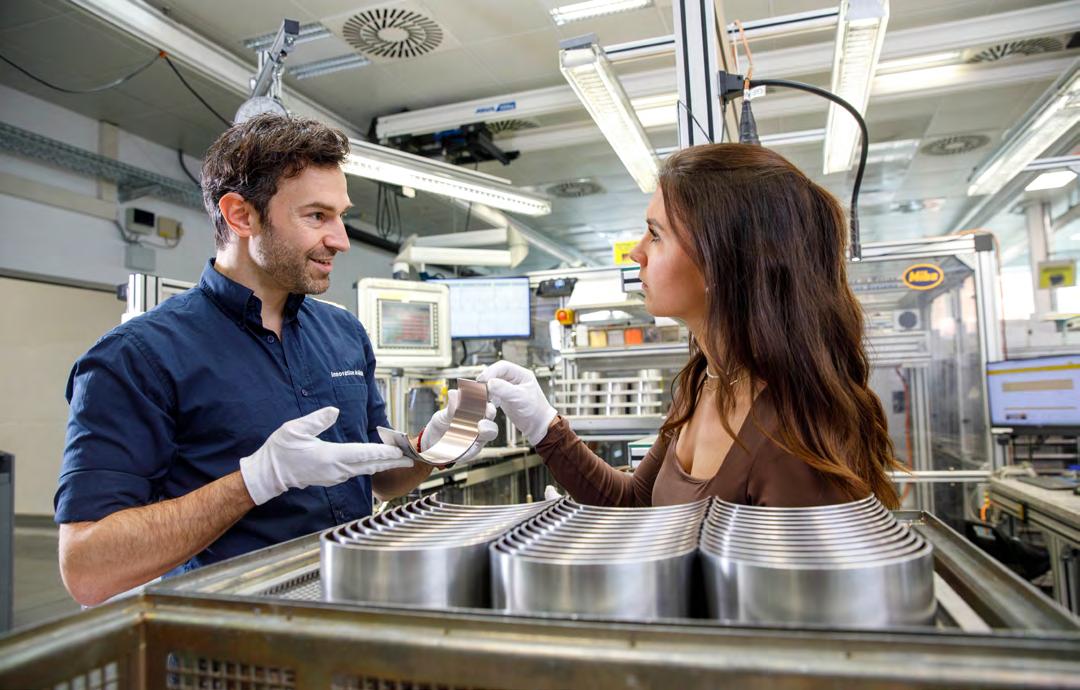


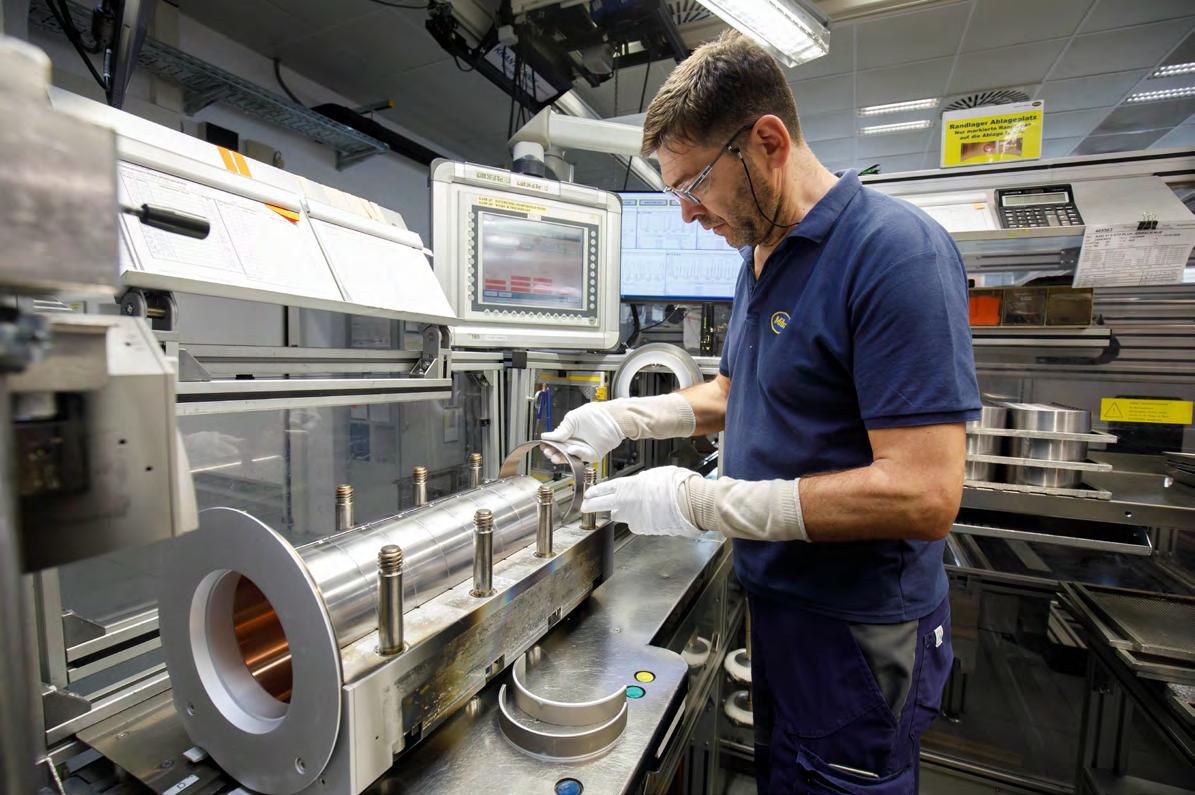
Even in the concept phase, we work closely with customers to develop customized solutions: from material selection and bearing design to simulations of individual bearing locations and the complete motor, utilizing numerical calculations. Targeted adjustments to geometry, layer structure, and coating ensure flawless function even under extreme conditions. Our experts from R&D, application engineering, and sales work closely together
WITH
Max Manner Vice President Marketing & Sales, Miba Bearing Group
to ensure optimal functional reliability of the components through comprehensive testing and application expertise. Together we test factors such as design, temperature, and mechanical and chemical stresses on state-of-the-art test benches; the results are directly incorporated into precise simulations and into our consulting services. This broad, cross-team spectrum of expertise from R&D, application engineering and sales creates a truly “hasslefree” service for our customers.
Friction materials for brakes
Gearbox bearings
Power electronics
Machines for weld seam preparation for the construction of tubular elements
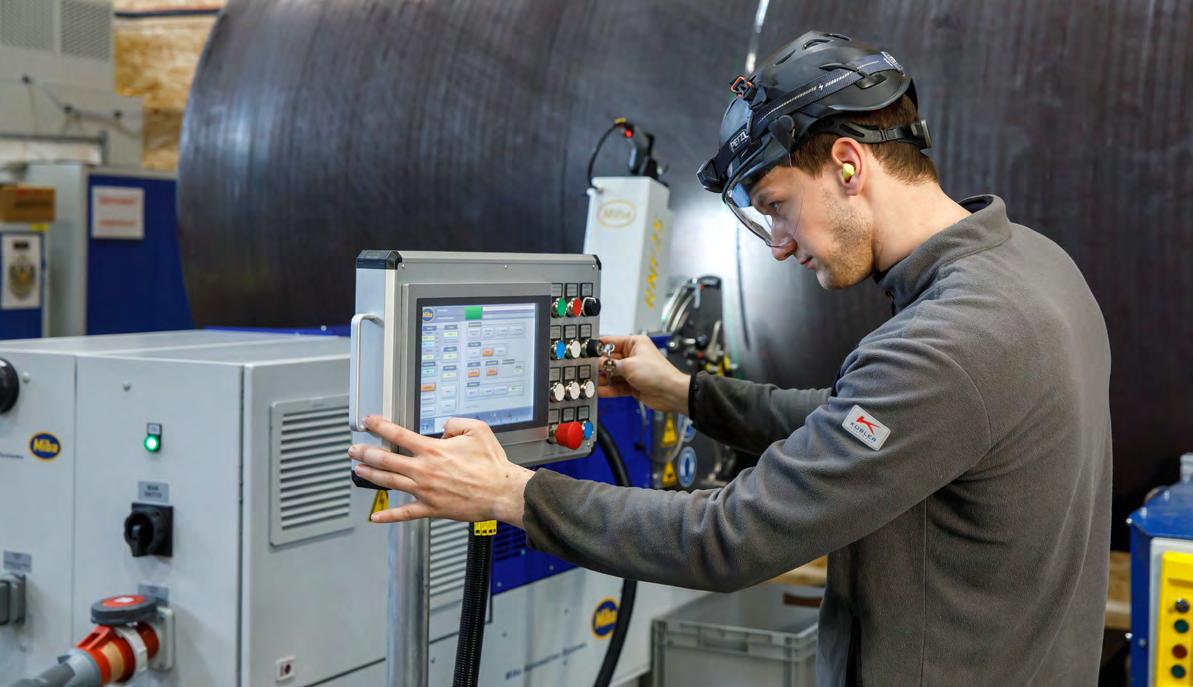
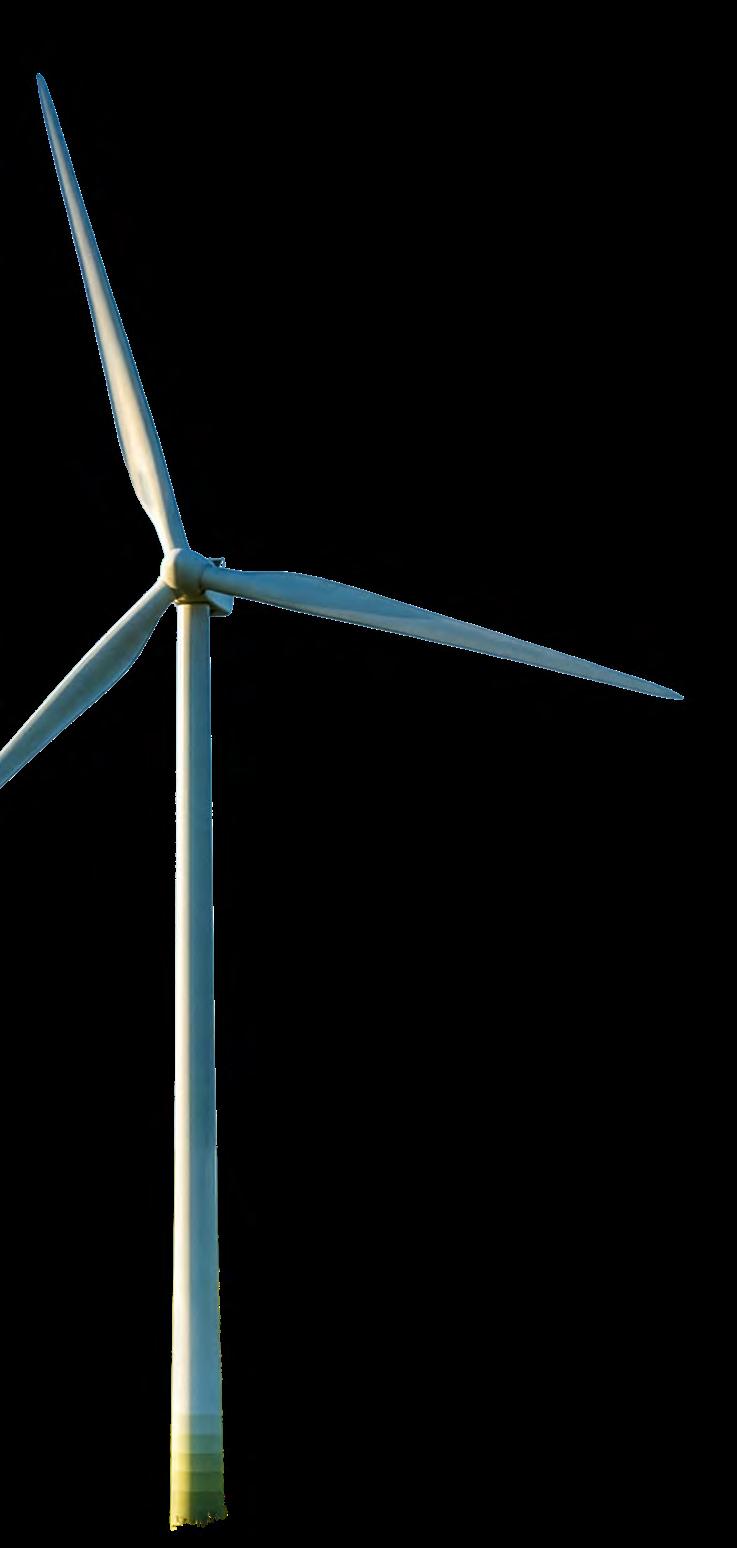
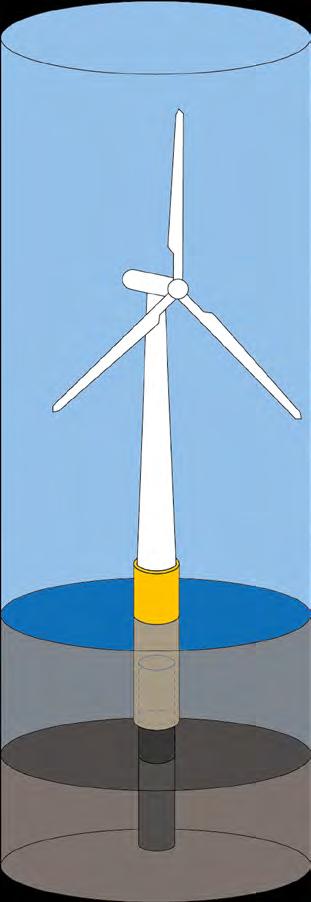
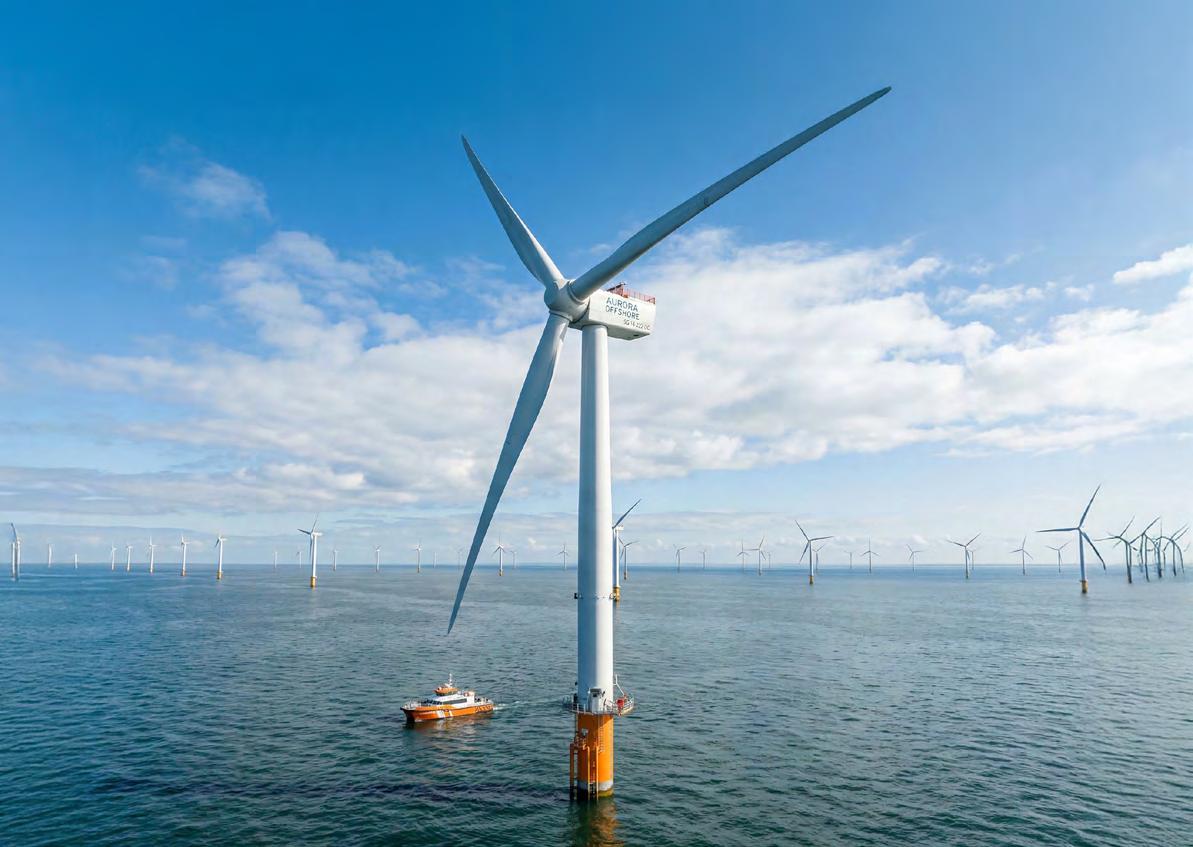
Wind power plays a particularly significant role in the transition to renewable energy. Since 2015, its share of global electricity generation has more than doubled, reaching nearly 10 percent. As this growth is set to continue and global energy consumption continues to rise sharply, more and more wind turbines are being installed. Wind turbines are mounted on tubular elements, which are particularly critical components due to the everincreasing height of the turbines and the high mechanical loads they endure. These tubular elements are welded together from individual pipe segments. For offshore wind farms along coastlines, this results in so-called monopiles up to 120 meters long, which anchor the wind turbines to the seabed. In addition, the tower structures of wind turbines are also welded together from individual pipe segments.
What matters here is the quality of the weld seam, because the individual pipe elements as well as the overall structure must withstand enormous loads. And this is where Miba Automation Systems – the mechanical engineering specialist of Miba Group – comes into play. Using its specialized machines, a weld preparation groove is milled into the metal. This creates the foundation for
the individual pipe elements to be welded together with exceptional reliability and fracture resistance.
NEW RNF25 MACHINE CAN BE EASILY MOVED BY FORKLIFT
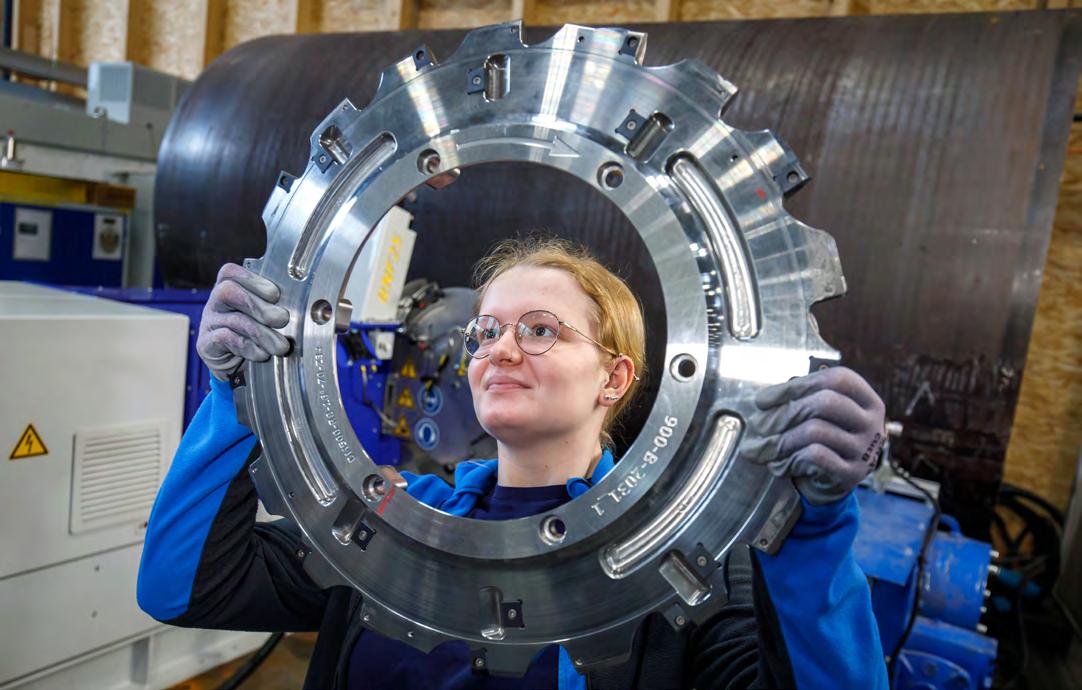
For several years now, Miba Automation Systems’ RNF65 circumferential seam milling machines have been in use worldwide, particularly in the construction of monopiles. These machines, with a spindle power of 65 kilowatts, have proven themselves in the construction of offshore wind farms. In addition, the team at Miba Automation Systems has now developed a new circular seam milling machine with a spindle power of 25 kilowatts. Weighing just 2.5 tons and featuring a compact design, the new machine is ideally suited for easy transport directly to the job site using a forklift, for example. The milling tool of the new machine is also very lightweight. It can therefore be mounted or replaced quickly and with little effort without the need for lifting equipment (such as a crane). Like its sister model, the RNF65, the new RNF25 machine can be used for pipe sections with diameters ranging from one to 16 meters. The maximum wall thickness is 100 millimeters; for the RNF65, it is 200 millimeters.
“MIBA MACHINES MILL THE WELD SEAM PREPARATION OF PIPE ELEMENTS FOR MONOPILES (OFFSHORE) AND TOWERS (OFFSHORE AND ONSHORE) OF WIND TURBINES.
WEIGHING JUST 2.5 TONS, THE NEW RNF25 CIRCULAR MILLING MACHINE IS PARTICULARLY SIMPLE TO POSITION NEAR THE WORKPIECE. THIS PROVIDES OUR CUSTOMERS WITH REAL ADDED VALUE.
Mario Mittermair Managing Director, Miba Automation Systems
Furthermore, Miba Automation Systems is the only supplier worldwide whose machines allow milling and welding to be performed simultaneously on a single component. This is normally not possible because the welding current can arc over and thus destroy the milling machine’s electronic control system. Miba has now developed a special solution that eliminates this effect. This offers a major advantage: By integrating milling into the welding process, a significant amount of time is saved, as milling is no longer a separate process step.
In addition to weld seam preparation for the construction of tubular components for wind turbines, there are a wide range of other applications for the new, compact and lightweight RNF25 machine from Miba Automation Systems. For example, it can be used in the construction of tank trucks, pressure vessels, or piping systems such as pipelines. The application areas of the new machine thus extend far beyond its use in wind power generation; they also encompass many areas of energy transmission.
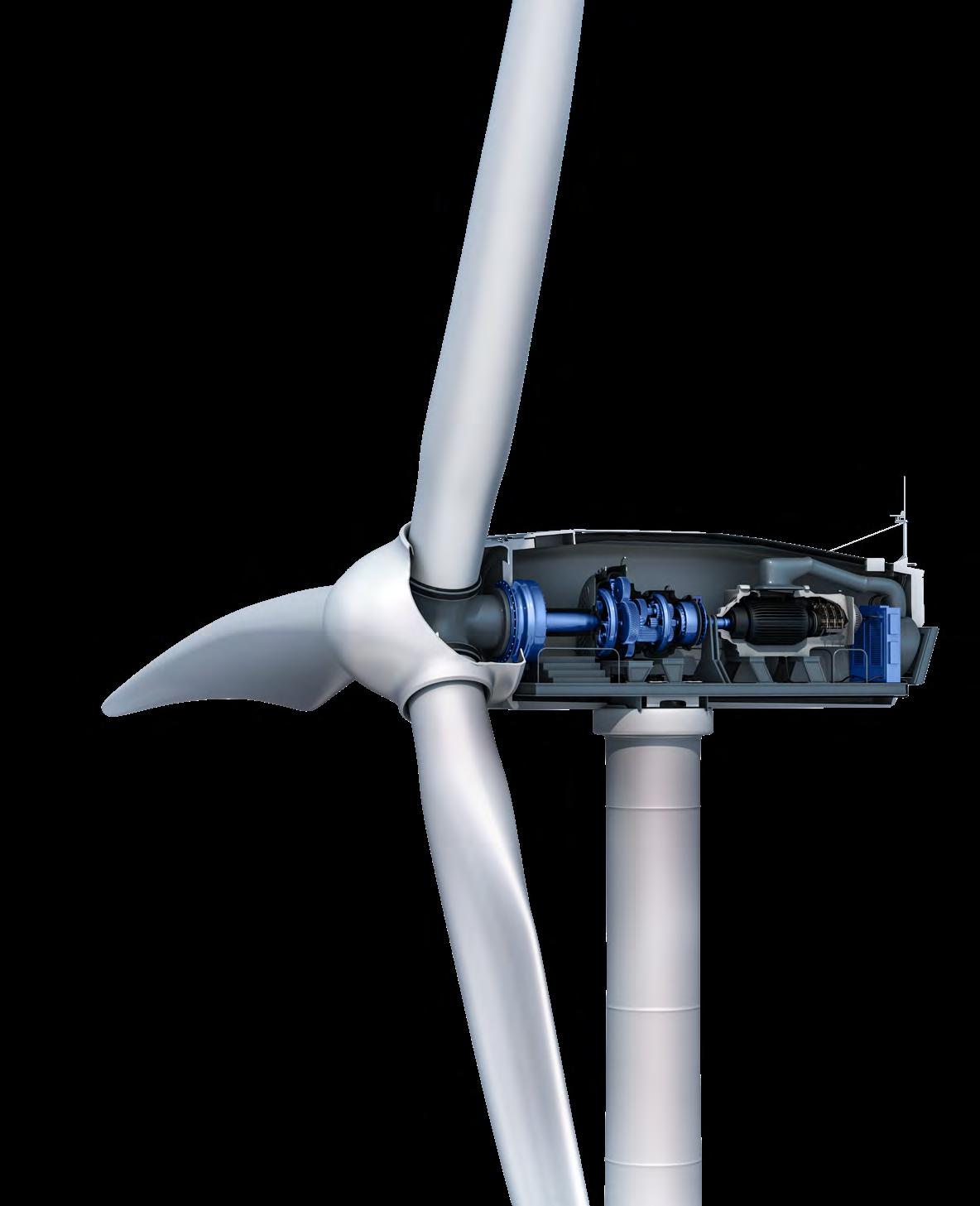
Global energy requirements are rising year after year, and the demand for renewable energy sources is also growing rapidly. One consequence of this trend is increasingly powerful wind turbines, some of which reach rated outputs exceeding 20 megawatts and total heights of more than 300 meters. To ensure that the components of these turbines can withstand the enormous loads, manufacturers are increasingly turning to hydrodynamic bearing technology. Compared to the rolling bearings used previously, this technology enables higher power densities while maintaining the same installation space.
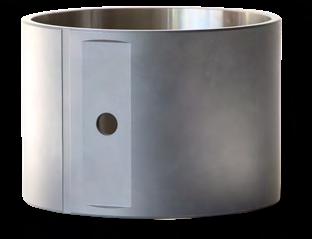
A functionally critical component of wind turbines are gearboxes, which convert the slow rotational movement of the rotor blades to a higher speed so that the generator can efficiently convert the kinetic energy into electrical energy. For these heavy-duty gearboxes, the Miba Bearing Group has developed an innovative bearing bushing. It not only extends the service life of the gearboxes but also makes the wind turbines quieter, thereby opening up previously untapped geographical opportunities for the construction of new wind farms.
The component is manufactured at Miba Precision Components (China), right in the heart of one of the most important wind energy markets. Meanwhile, the research and development team is already working intensively on the next generation of this technology. Laser cladding, a process for the additive coating of tribological surfaces, plays a central role in this effort.
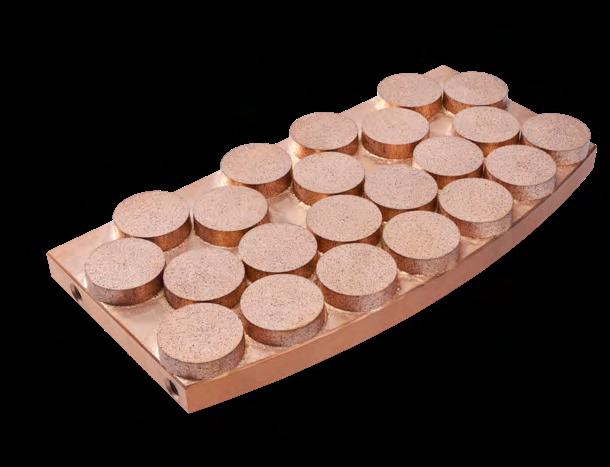
To enhance the safety of wind turbines in high winds and prevent overspeed – which can damage the turbine –wind turbines must be slowed down. The safest method for this is to use brakes with friction materials, such as those offered by Miba. Miba’s sintered friction linings are characterized by stable friction coefficients and improved wear resistance, which is attributable to the use of high-quality materials and state-of-the-art production processes.
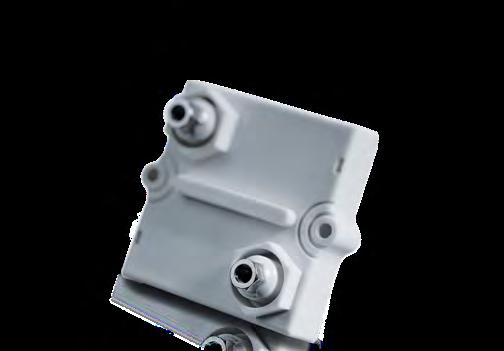
Miba’s resistors are used in wind turbines for limiting the current and voltage, limiting the harmonics, or as measuring resistors to improve the grid quality. This makes the turbines more efficient and durable. That is also why around 90 percent of wind turbine manufacturers rely on our technology.
Miba cooling technology ensures that the functionally critical electronic components in wind turbines are always maintained at the correct temperature, and thus protected. To enable precise planning of maintenance cycles, our cooling technology is also being digitized. This not only saves users money, but also prevents damage and unnecessary maintenance work.
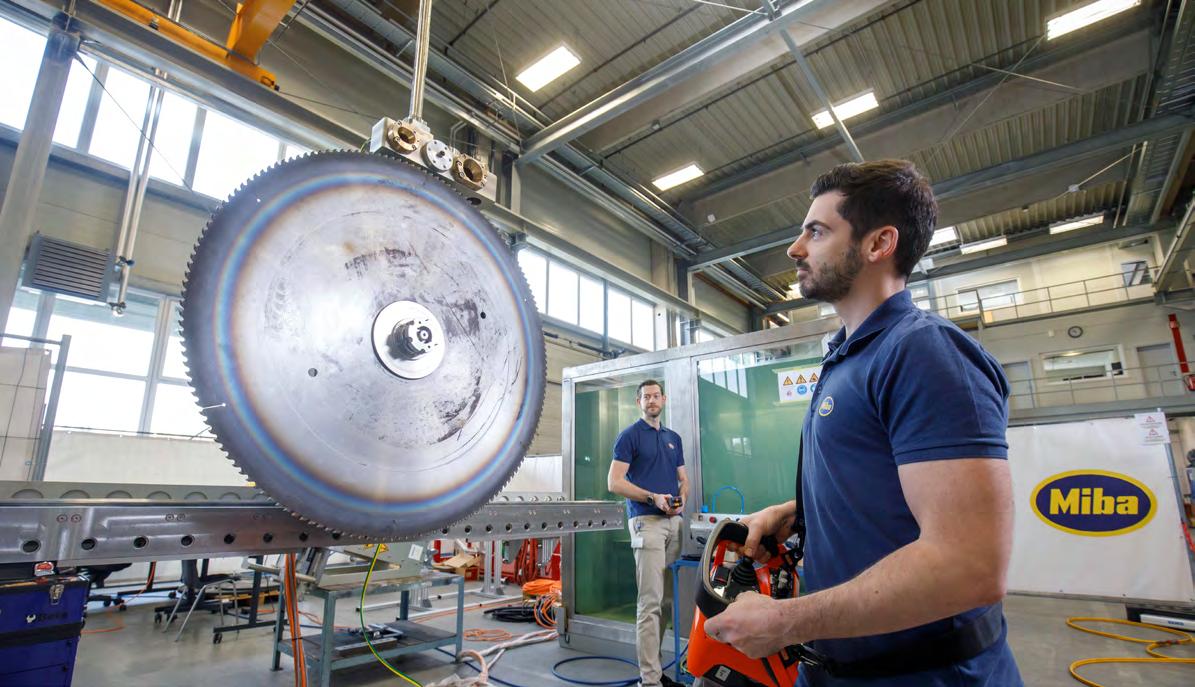
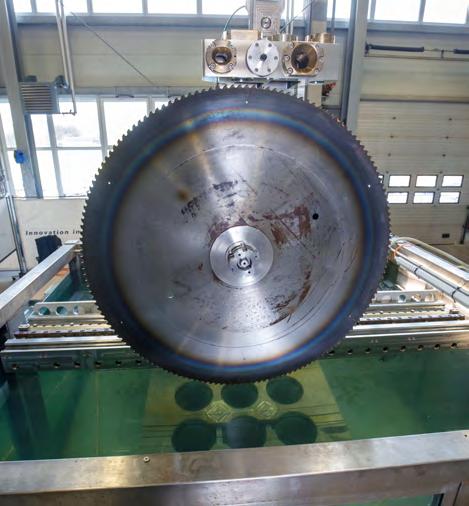
Many European nuclear power plants have reached the end of their service life. However, their dismantling is extremely challenging due to high radiation levels, particularly around the reactor components. To protect people and the environment, special remote-controlled solutions are required for their dismantling.
Miba Automation Systems (MAS) has developed a special mobile saw for this purpose. It can be lowered up to 35 meters deep into a reactor pool. Underwater, in months of precision work it cuts through stainless steel reactor internals with wall thicknesses of up to 120 millimeters. Despite a low maximum weight of 900 kilograms, the machine meets the highest standards: The saw blade can be replaced fully remotely below the water’s surface –without additional equipment, making its use particularly cost-effective.
The saw was developed in close, two-year collaboration with a leading European provider of nuclear decommissioning services. The first unit was delivered last year.
Miba’s industrial bearing plant in Cataguases, Brazil, is one of the world’s three largest suppliers of bearings for hydroelectric turbine generators. Miba hydro-bearings are suitable for various types of machinery and are used worldwide in hydroelectric power plants of all sizes (from under 30 to over 80 megawatts). Since requirements can change over time, Miba also offers its customers solutions for repairs and redesigns that make existing bearings more modern and more efficient.
The expertise of Miba Automation Systems is also utilized in power plant construction. For example, it develops and manufactures CNC machines that enable turbine components to be produced with greater precision and efficiency. Miba power resistors in the inverters also help ensure that the energy generated from hydropower can be fed into the power grid efficiently and safely.
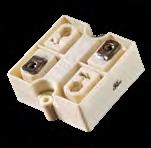
Solar energy has the largest installed capacity of any renewable energy source worldwide. Miba resistors help ensure that the sun’s energy can be harnessed efficiently. They deliver high performance in an exceptionally compact design, making them ideal for state-of-the-art photovoltaic applications. As high-precision measuring resistors, they assist for example in regulating and optimizing energy output, while simultaneously providing critical functions such as overload protection to ensure smooth system operation. From controlling current flow to ensuring safe operation, the resistors are designed to function reliably even under the most demanding conditions.
In addition, Miba heat sinks protect the electronic components in modern solar inverters from overheating. Through modern manufacturing technologies such as vacuum brazing, maximum efficiency and high power densities can be achieved. For our customers, this means exceptional thermal performance and reliability, ensuring high performance and longevity of the systems.
Thermal stress on bearings is one of the key technical challenges in the development of modern turbomachinery, such as compressors, gas and steam turbines: if temperatures exceed critical thresholds, this not only jeopardizes bearing life but also, in the long term, the operational safety of the entire machine. To provide customers with a decisive technological advantage in this critical area, Miba has developed its patented eddy grooves technology.
In conventional bearings for turbomachinery, the lubricating oil typically flows in layers under standard conditions, forming an ordered, laminar flow. However, since there is no significant mixing during this process, pronounced temperature gradients can develop between individual components. To prevent this, the laminar flow of the lubricant must be intentionally converted into turbulent motion. This leads to more efficient oil mixing and thus to a more homogeneous temperature distribution. It is precisely this principle that underlies the unique eddy grooves.
Eddy grooves are structures that are incorporated into a precisely defined area of the bearing surface in a specific pattern. Their shape and arrangement are optimized
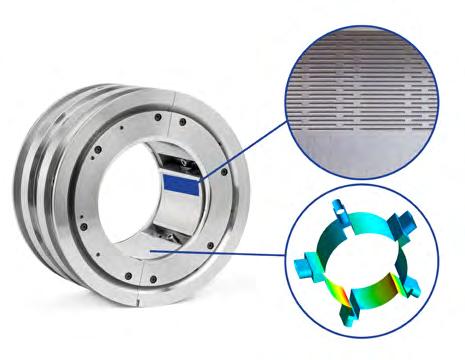
Eddy grooves are milled into the tilting segments and have a positive effect on bearing temperatures.
for each bearing so that the laminar lubricant flow is disrupted, and specifically induced vortices improve the heat exchange between cooler oil near the shaft and warmer oil near the bearing surface. This optimized flow guidance results in significantly lower maximum temperatures of the oil film and bearing metal in the slide bearings of turbomachinery. Tests on specially equipped test benches confirm a reduction in maximum surface temperatures of up to 17 °K compared to the standard design. The eddy grooves have their greatest effect precisely when they are most needed: under heavy loads and high sliding speeds. Thus, the technology creates reserves exactly where conventional bearings reach their thermal limits.
For machine operators, the integration of eddy grooves technology offers economic and technical benefits throughout the entire lifecycle. The reduction in operating temperature slows the aging of the lubricating oil, which extends the maintenance intervals and thus lowers overall operating costs. Operational reliability is also sustainably increased due to a lower risk of material fatigue and bearing damage. Furthermore, the technology enables increased power density and opens up new design options for the entire machine. This is because, due to the thermal relief, bearings can withstand higher specific loads at the same temperature or be designed more compactly without compromising safety and reliability.
“
Another key feature of the technology is its flexibility: it can be used with various bearing materials and dimensions and, compared to a conventional bearing, requires no significant changes to operating parameters such as oil consumption, friction, and dynamic properties. Eddy grooves are thus an ideal solution for demanding applications in steam and gas turbines as well as compressors, where maximum reliability under extreme conditions is essential.
Listen to our new podcast
WITH OUR EDDY GROOVES TECHNOLOGY, WE HAVE DEVELOPED A SPECIAL SOLUTION FOR BEARINGS EXPOSED TO HIGH THERMAL STRESS. ITS EFFECT IS FELT EXACTLY WHERE
Clemens Honeder Managing Director, Miba Industrial Bearing Branch
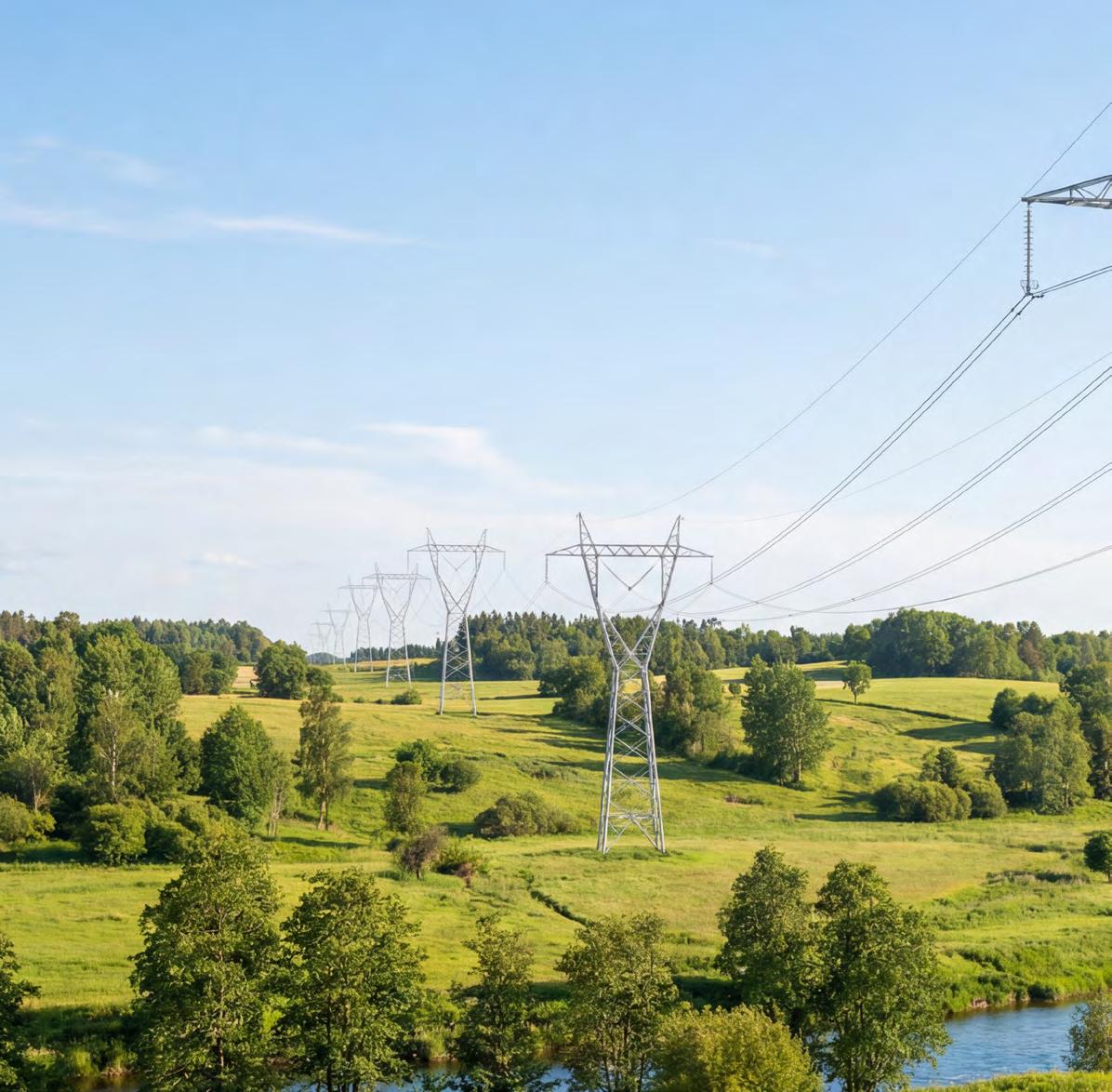


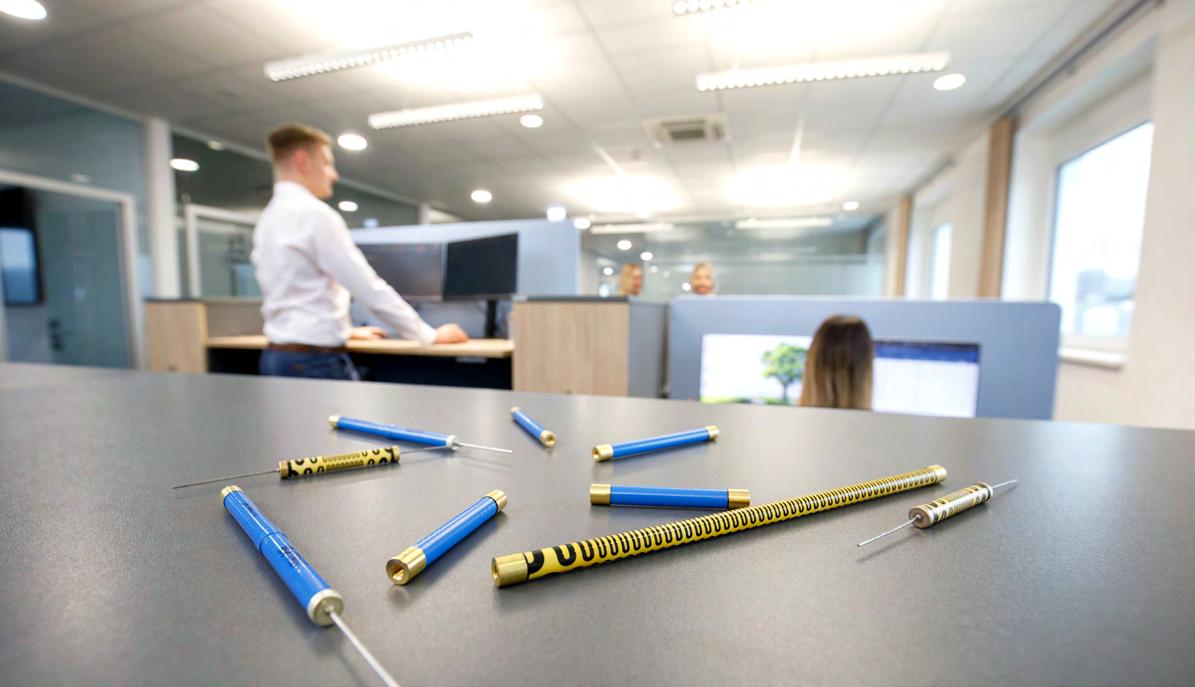
When not only the way we generate energy changes, but also how we temporarily store it and how we consume it, this places new demands on energy transmission. Modern power grids must be designed for an energy landscape that is becoming not only more volatile due to the growing share of renewable sources, but also more decentralized with the use of solar panels, electric vehicles, and heat pumps. Instead of power grids that lead like a one-way street from large power plants to consumers, a digital and multidirectional network is needed that connects generators, storage facilities and consumers with one another. The key to this: smart grids.
For these smart grids to live up to their name, a large amount of data and information is essential. At critical points such as substations, where power grids increasingly branch out toward end consumers, parameters such as voltage, current, and frequency must be continuously monitored and transmitted to central control systems. Miba technologies also play a key role in these measurements. HIGH-PRECISION MIBA RESISTORS CONTRIBUTE
Alois Klein Site Manager, Miba Resistors Austria
The high-tech resistors developed and produced by Miba Resistors Austria in its new facility in Kirchbach, southeastern Styria, enable highly precise and phasespecific measurement of grid voltage. Fluctuations exceeding the specified standard range can thus be detected and localized within a very short time. The grid can then be supported by selectively connecting generation or storage capacities, or work can begin to resolve faults before more far-reaching consequences occur. This precise monitoring capability makes the energy supply more stable and fail-safe overall.
What makes Miba’s resistor solutions so special is their precision – the most important foundation for reliable measurement values. We can offer our customers resistors with an accuracy class of up to two ppm (parts per million) or 0.0002% (using lead-free pastes). This is even below the tolerance of many measuring devices. In addition, the resistors manufactured via the screenprinting process for the smart grid sector can be produced by Miba using direct printing. This enables nearly all resistors to be developed as custom solutions in close collaboration with the customer. They are offered both individually and as voltage dividers or modules consisting of multiple resistors. These technologies are particularly relevant in regions subject to high volatility due to a focus on renewable energy sources, as well as in vast
areas where power transmission over exceptionally long distances must be monitored. To ensure that transmission is not only intelligent but also as efficient as possible and with minimal losses, the high-voltage direct current (HVDC) transmission used relies on another technology to which Miba’s power electronics components make a decisive contribution.
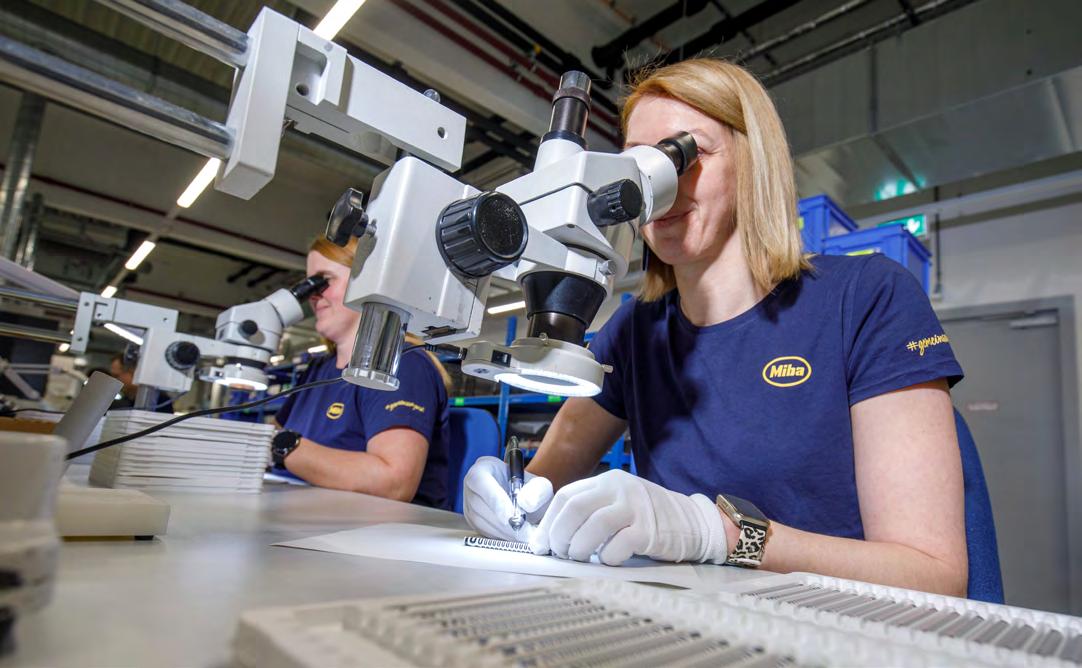
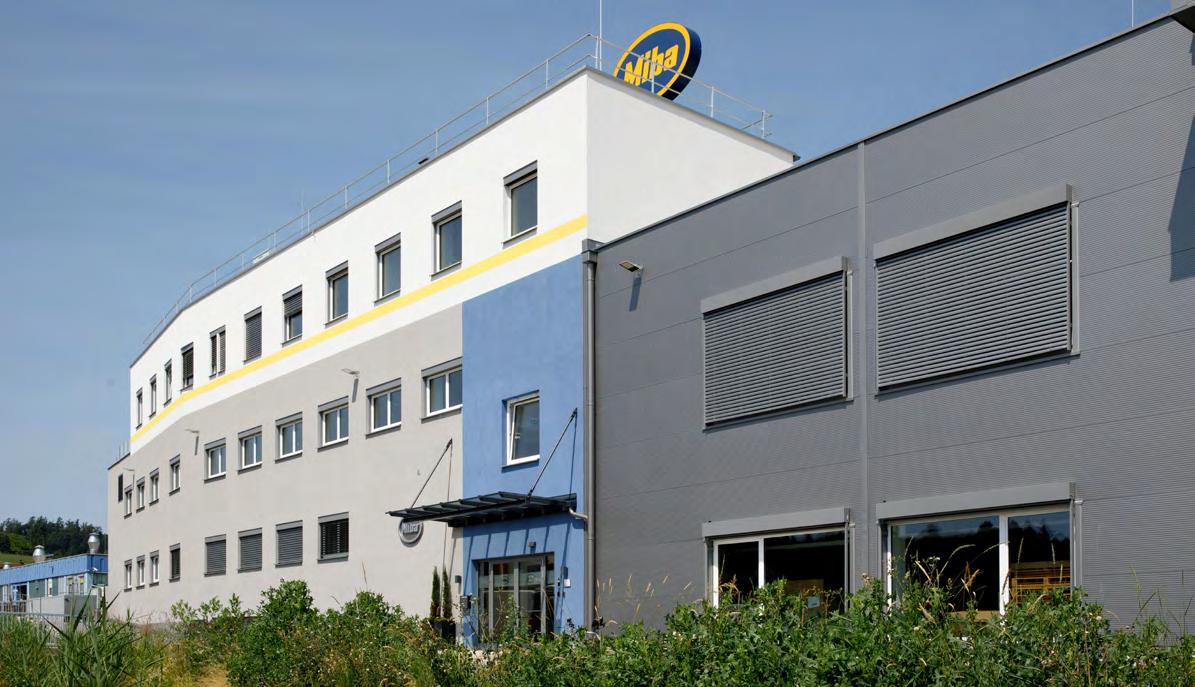
MIBA RESISTORS AUSTRIA HAS MORE THAN DOUBLED ITS PRODUCTION SPACE IN STYRIA
In the summer of 2025, we completed a EUR 15 million investment in the new Miba Resistors Austria production plant. The existing site in Kirchbach was expanded to include a large, four-story building. The space for production and offices has more than doubled, from 4,000 to 9,100 square meters.
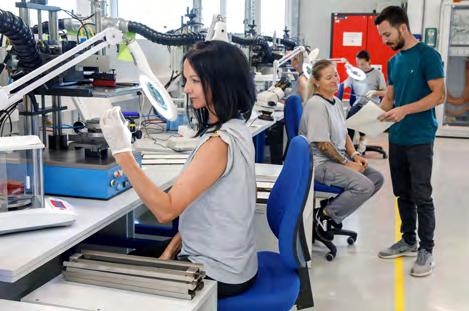
The production areas are located not only on the ground floor but also on the first floor. This unique building design kept the land sealing as low as possible. The bright, spacious production halls are equipped with a ventilation system and are air-conditioned. The building’s top floor now accommodates 300 square meters of office space, and employees also have access to a large cafeteria and a rooftop terrace.
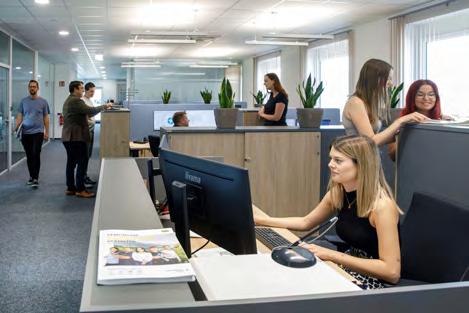
When constructing the new production facility, we placed particular emphasis on minimizing the carbon footprint. Through recovering heat from the production furnaces, heating both the new building and the existing structure via the Kirchbach district heating plant, and using a rooftop PV system, 280 tons of CO2 can be avoided annually. In
ABOUT THE NEW PLANT:
addition, we were able to integrate our previous off-site production in St. Stefan im Rosental into the plant site. This not only saves time and organizational effort, but also reduces transportation, thereby helping the environment.
15 MILLION TOTAL INVESTMENT
9.100 SQUARE METERS SPACE FOR PRODUCTION AND OFFICES
280 TONS OF CO2 AVOIDED ANNUALY
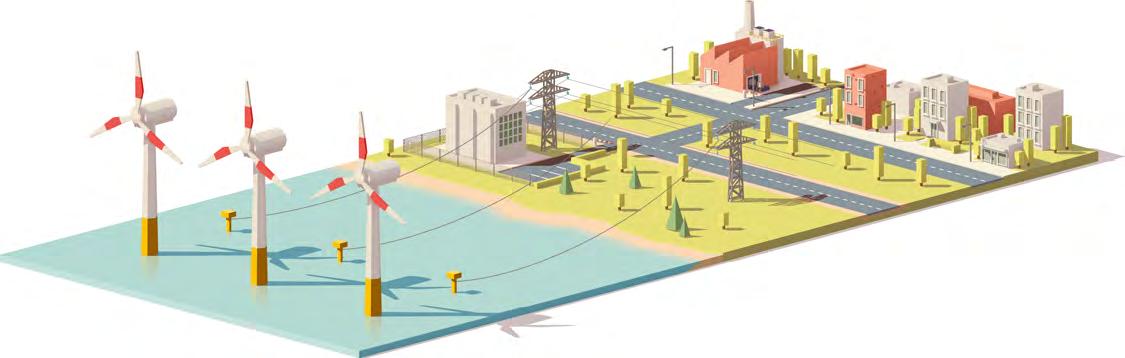
Consumption: AC (Alternating Current)
Conversion: AC (Alternating Current)
High-voltage direct current transmission (HVDC, schematic diagram)
Electricity Generation: AC (Alternating Current)
Transmission: HVDC (High-Voltage Direct Current)
The demand for electrical energy is rising rapidly worldwide. The electrification of transportation and industry, the increasingly widespread use of artificial intelligence, and population growth are driving evergreater demand for electricity. This demand is increasingly being met from sustainable sources, which poses major challenges for grid infrastructure and grid stability: Not only must more and more energy be generated – but this energy also increasingly comes from wind, hydro or solar power, and therefore cannot be fed into the grids at a steady rate.
Against this backdrop, HVDC technology – also known as high-voltage direct current transmission – is a key element in ensuring the supply of power to the population and industry. It enables electrical energy to be transported over long distances with low losses and high efficiency – for example, from offshore wind farms off the coast to metropolitan areas inland.
ONLY 3 PERCENT ENERGY LOSS PER 1,000 KILOMETERS OF LINE LENGTH
To achieve this, the generated alternating current is first converted to direct current, and then back to alternating current in the consumption region. The effect is enormous: in the best-case scenario, energy loss with
HVDC technology is only three percent per 1,000 kilometers. By contrast, if conventional transmission technology is used, energy loss on a 320-kV line alone amounts to one percent per 100 kilometers.
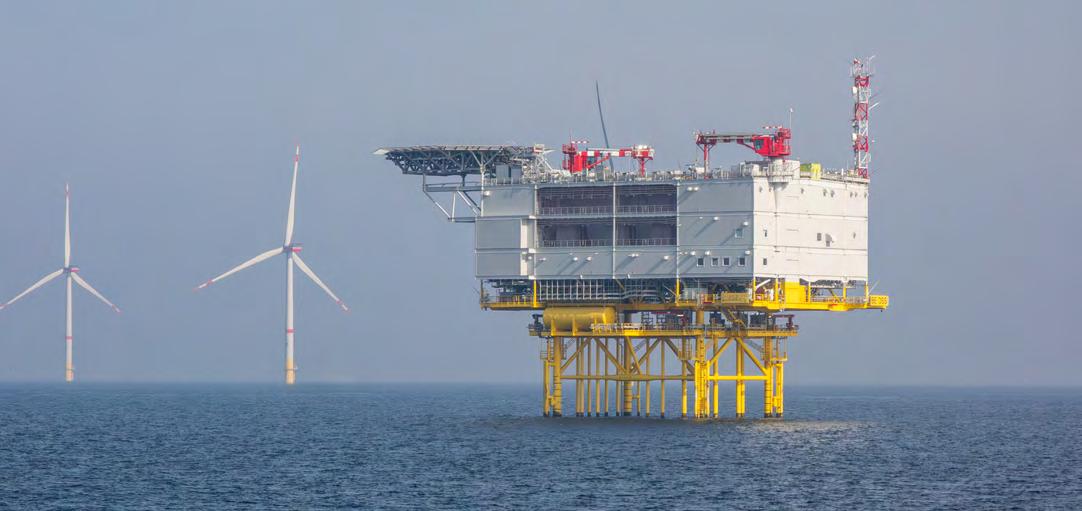
Converters are needed to convert alternating current into direct current and back into alternating current. At offshore wind farms, for example, these are installed in massive systems which are erected directly in the sea. There, Miba’s cooling technologies and high-tech resistors ensure the safe operation of mission-critical electronic
components. For example, the heat generated while operating the converters can be limited through optimal cooling, which ensures their technical functionality and extends their service life. Miba resistors regulate very high voltages and also make them easy to measure. In this way, they also make an important contribution to protecting our customers’ products.
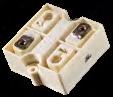
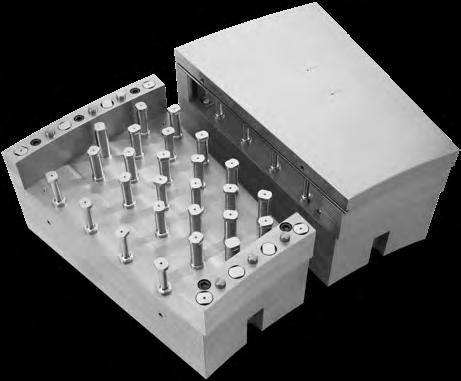
To use modern HVDC systems to transmit energy over long distances not only efficiently but also reliably and safely, Miba’s innovative bypass switches are just as crucial as resistors and heat sinks. They ensure that the reliability of the power supply is maintained even in the event of local outages.
Large HVDC systems are typically composed of multiple power sections. If one of these elements unexpectedly fails due to a technical defect, the pyrotechnic bypass switch can be used to bypass it within fractions of a second. This ensures that in the event of a fault, only the affected power section fails, while the rest of the system remains operational. As a result, costly and repair-intensive total outages can be avoided despite local defects. The lightning-fast activation of the switch
is particularly crucial from a technological standpoint. Only a brief signal is required to close the switch within a millisecond. Afterward, the bypass switches remain active even without ignition voltage, consume no energy, and withstand several thousand amperes – permanently and completely maintenance-free.
The technology also offers another potential application in the central inverters of large photovoltaic systems, as well as in large battery storage systems. In the event of a fault, as an ultra-fast short-circuit switch the component protects the sensitive power electronics there from critical overvoltages and reverse currents. In this way, these switches make an important contribution to the longevity of sustainable solar energy infrastructure.
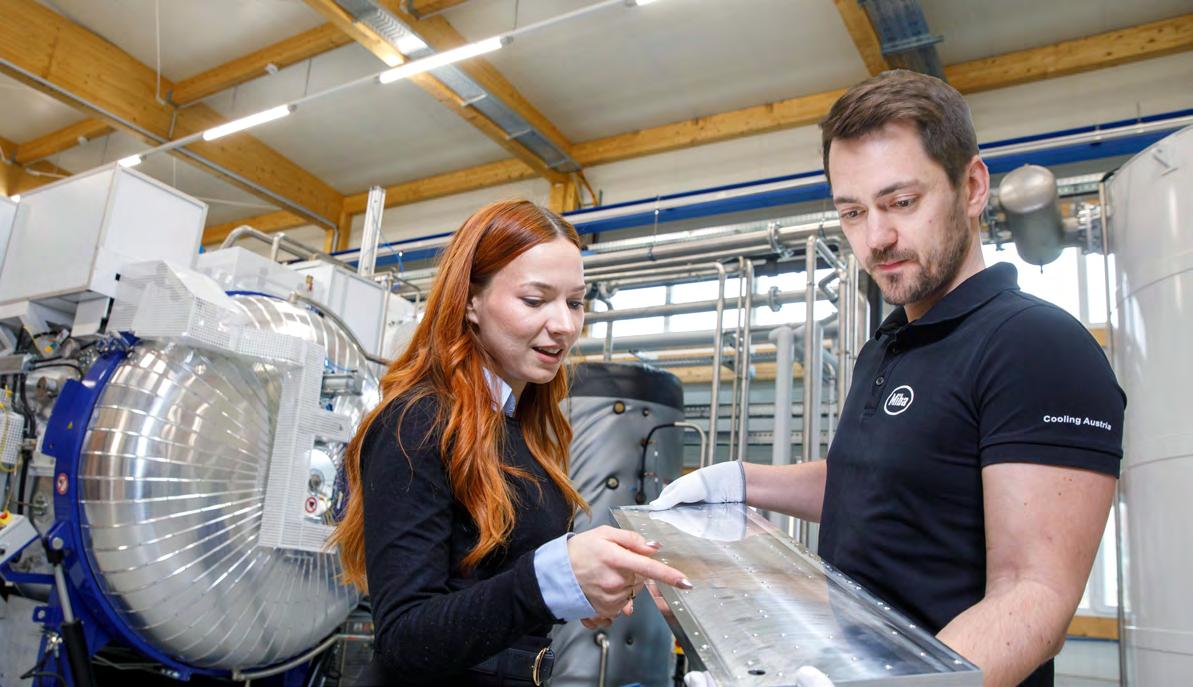
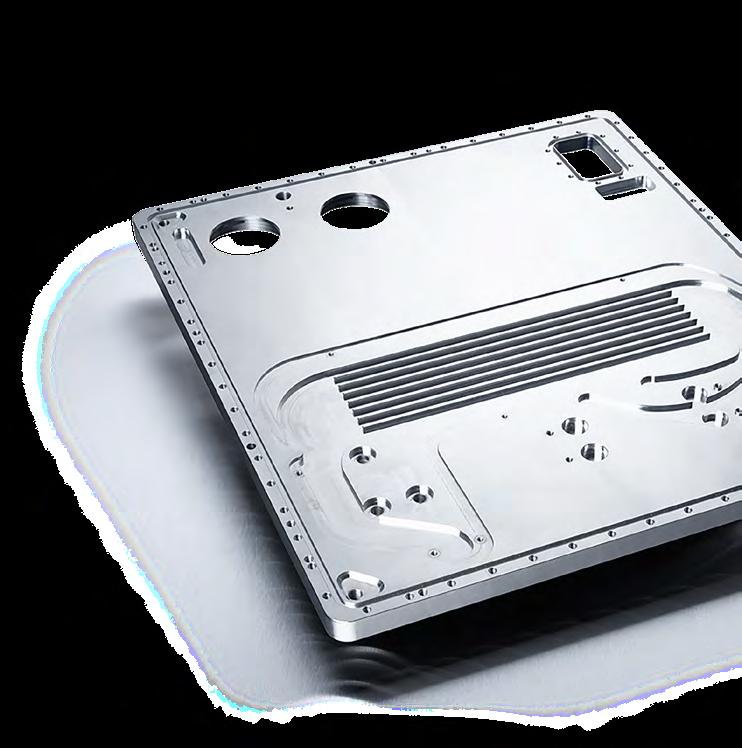
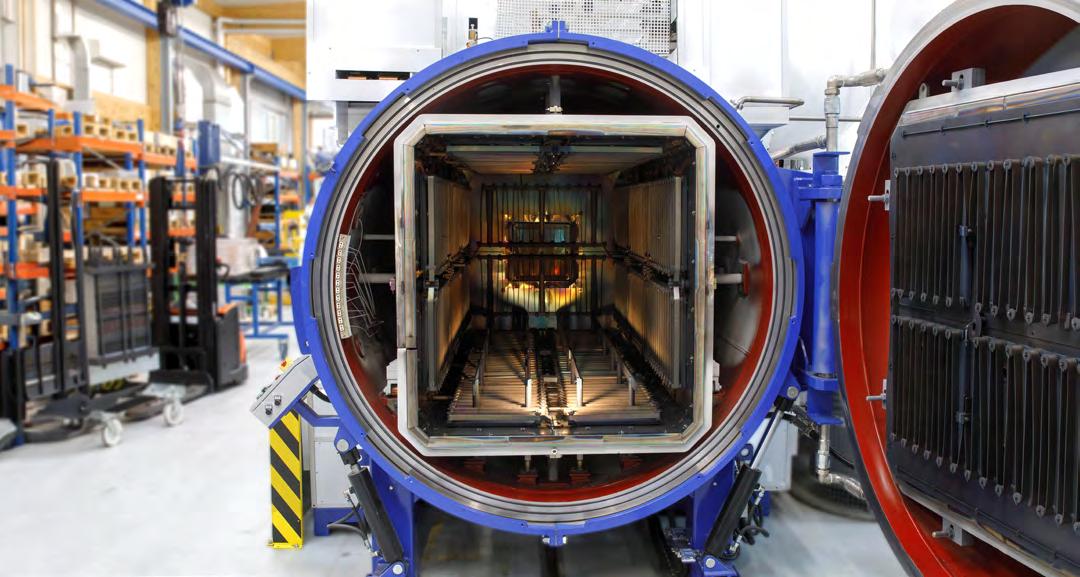
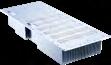
In the summer of 2025, Miba Cooling Austria put Europe’s largest vacuum brazing furnace into operation. It is now the fourth vacuum brazing furnace at our plant in Ligist, Styria. The furnace has a gross capacity of 3.5 tons and enables the brazing of components up to 2,600 millimeters in length and 800 millimeters in width. This not only offers our customers the advantage of being able to manufacture heat sinks in particularly large dimensions; it also allows large quantities of smaller products to be manufactured in a single vacuum brazing cycle, thereby saving valuable time.
The new vacuum brazing furnace was custom-built to meet our customers’ requirements. When developing the specifications, the team in Ligist was able to draw on unique expertise: Miba Cooling Austria not only understands the brazing process in detail, but is also considered an expert in the technology and operation of vacuum brazing furnaces. Miba Cooling Austria was not only able to contribute this knowledge during the construction of the new furnace; it also actively offers its knowledge to its customers during the development and manufacture of their products, creating unique added value for them.
IN-DEPTH KNOWLEDGE OF FURNACE TECHNOLOGY
But how does the Miba Cooling Austria team know so precisely how vacuum brazing furnaces are constructed? In 2020, the company received an offer to purchase a used vacuum brazing furnace in Malta, dismantle it, and reassemble it in Styria. Employees from maintenance, research and development, and process engineering were extensively involved in the project. The furnace was dismantled in Malta and transported to Styria, where it was refurbished and reassembled with a completely new control system. This enabled the team to develop in-depth knowledge of vacuum brazing furnaces.
ARTIFICIAL INTELLIGENCE ENSURES OPTIMAL BRAZING QUALITY
This comprehensive knowledge held by Miba Cooling Austria about vacuum brazing itself, as well as the technology, also forms the basis for improving brazing quality even further. During brazing, data are continuously read digitally and analyzed using artificial intelligence to subsequently optimize the process. This allows
scrap rates to be reduced to near zero. In addition, all vacuum-brazed products from Miba Cooling Austria are fully traceable, as a “digital twin” containing the data is created for every part produced.
Vacuum brazing enables precise control of the brazing process, resulting in uniform and highly reliable joints. The heat sinks manufactured in this way themselves enable improved heat transfer, as their individual components bond over the whole of every contact surface. This ensures ideal thermal conductivity throughout the entire component and results in more efficient cooling as well as higher performance than would be possible with other joining technologies.
LEARN MORE:
“
WE DON'T JUST UNDERSTAND THE VACUUM BRAZING PROCESS. WE ALSO HAVE A DETAILED UNDERSTANDING OF
Martin Reisner Site Manager, Miba Cooling Austria


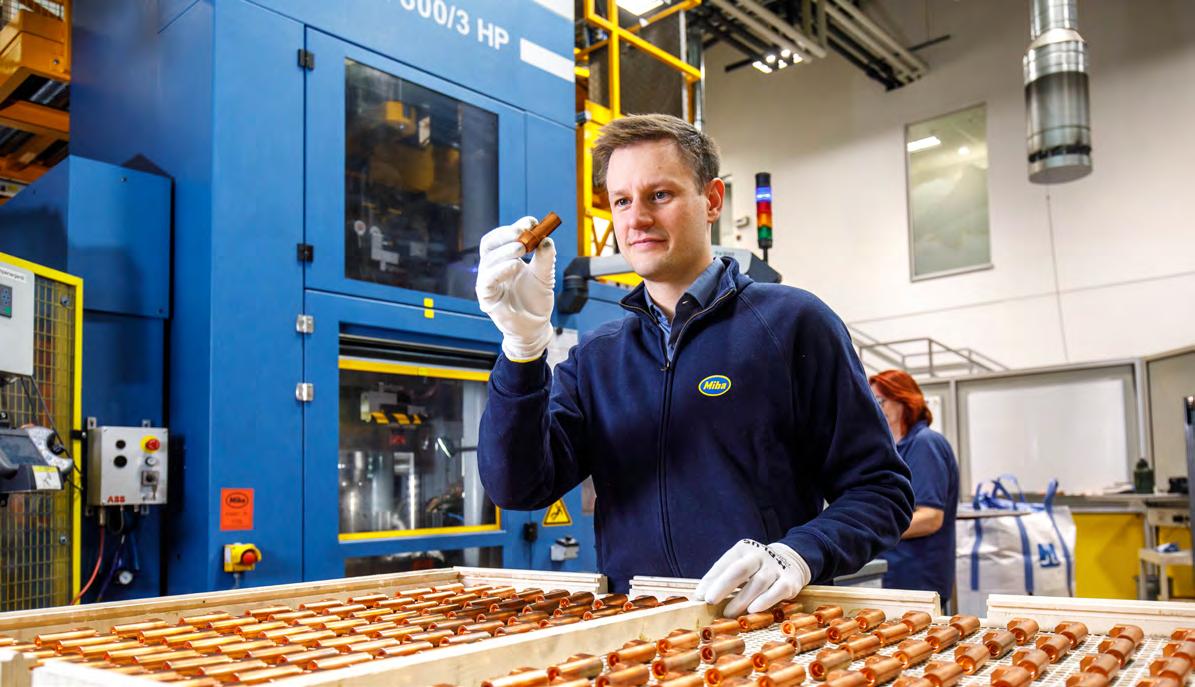
Innovation has many dimensions. Rarely, however, does a project combine innovations on so many levels as is the case with a current development by the Miba Sinter Group. A team from Vorchdorf is bringing together a new product, a new field of application and, above all, a process centered on a previously unused raw material: for the first time, copper powder is being used in a series production project.
Copper’s unique physical properties are particularly in demand where good electrical conductivity is essential. Combining these with the ability to produce complex shapes – a hallmark of powder metallurgy – results in an innovative component that opens up new possibilities for modern charging infrastructure solutions.
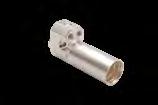
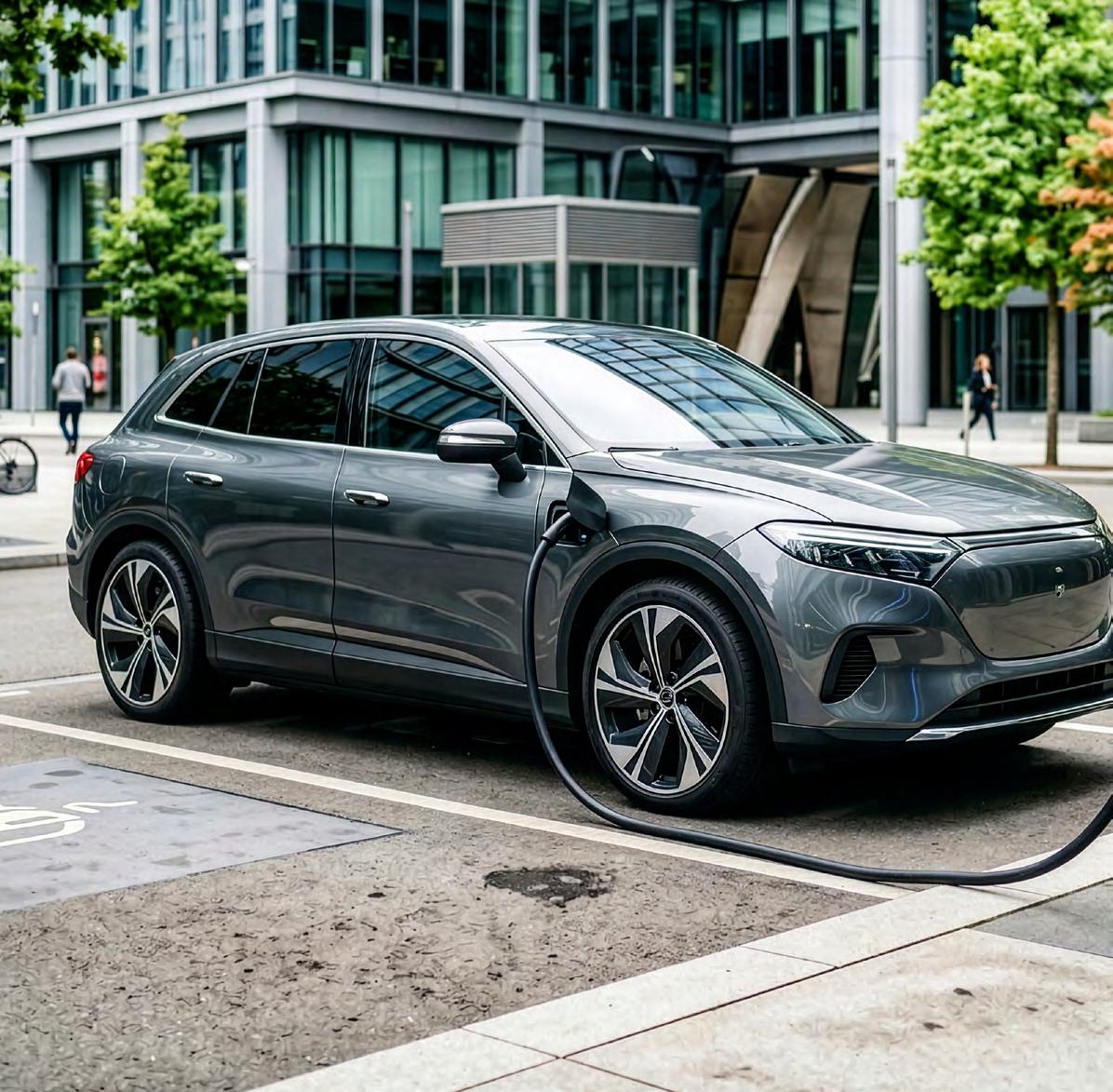
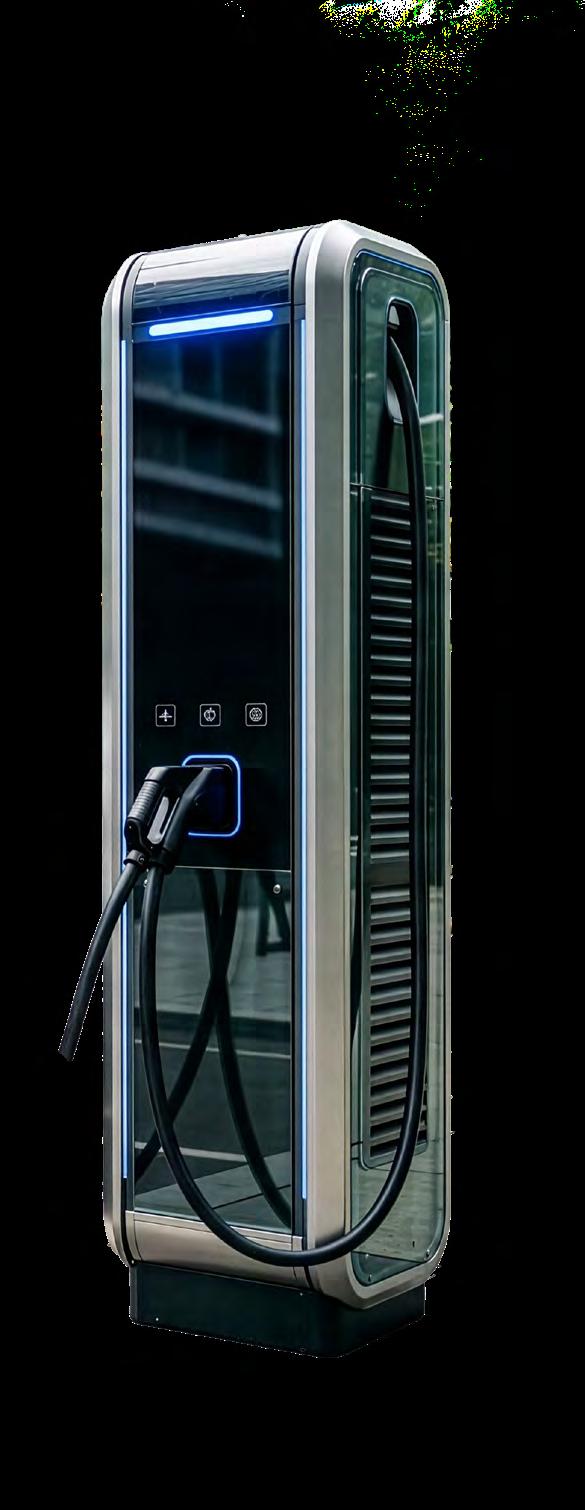
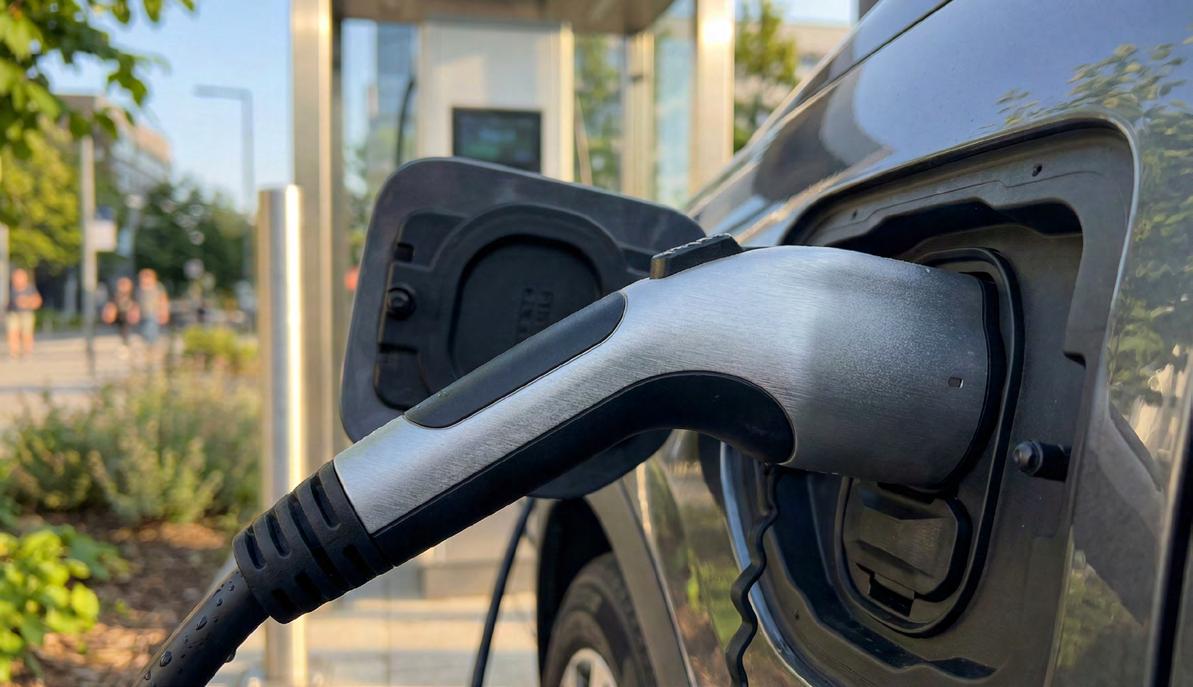
The copper component, developed in close collaboration with the customer, is installed in the CCS2 connectors of fast-charging systems for electric vehicles. There, it helps enable fast-charging processes in well under ten minutes with charging capacities of up to 850 kilowatts – a decisive factor for the success of the further ex-
pansion of electric mobility. What makes the component special is its dual function: it transmits electrical current and is simultaneously cooled by water flowing through it. This requires a highly complex geometry that can be implemented with particular material efficiency by using powder metallurgy.
Equally important for series production: The proven sintering process route – in which the powder is first pressed into a green part, sintered at high temperatures, and then calibrated, hardened, and machined as needed – remains virtually unchanged except for the specific raw material. Work is therefore already underway on further future applications.
Crucial to the technological advantages of powder metal copper components are, above all, the specific material parameters that come into play both in the production process and in the finished product. With a relative density of 99 percent, the components achieve the same electrical and thermal conductivity properties as conventional solid copper – while offering better
machinability. The formation of long chips, which normally complicates the machining of solid copper, can be avoided in powder metallurgy parts due to the residual porosity typical of the process. This enables easier and faster machining of the workpiece and also contributes to extended tool life.
At the Miba Sinter Group, the project – on which the research and development team at Miba Sinter Austria in Vorchdorf has worked intensively for several years –not only represents technological pioneering work but also builds on one of the most promising approaches for leveraging the potential of powder metallurgy even more broadly in the future.
ESSENTIAL
E-MOBILITY. OUR INNOVATIVE COPPER COMPONENT MAKES A SIGNIFICANT CONTRIBUTION TO THIS AND DEMONSTRATES THE VERSATILITY OF POWDER METALLURGY.
Wolfgang Promberger Site Manager, Miba Sinter Austria
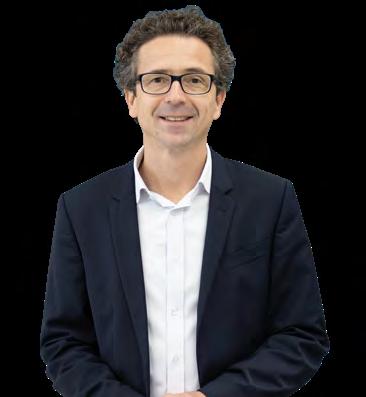
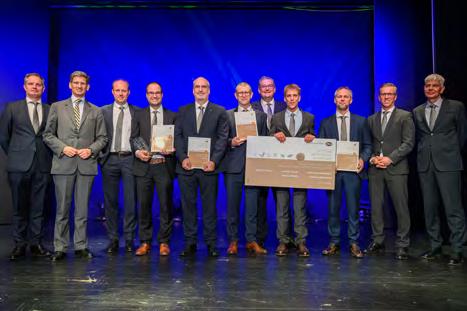
Each year, we award the “Franz Mitterbauer Award”–named after our company’s founder – to particularly innovative and promising Miba projects. Last year marked the twelfth time we presented the award.
The winning team from the Miba Sinter Group, which developed the sintered copper parts for the fast-charging infrastructure, was delighted to receive the award. The project impressed the judges with its technologically outstanding and creative solutions.
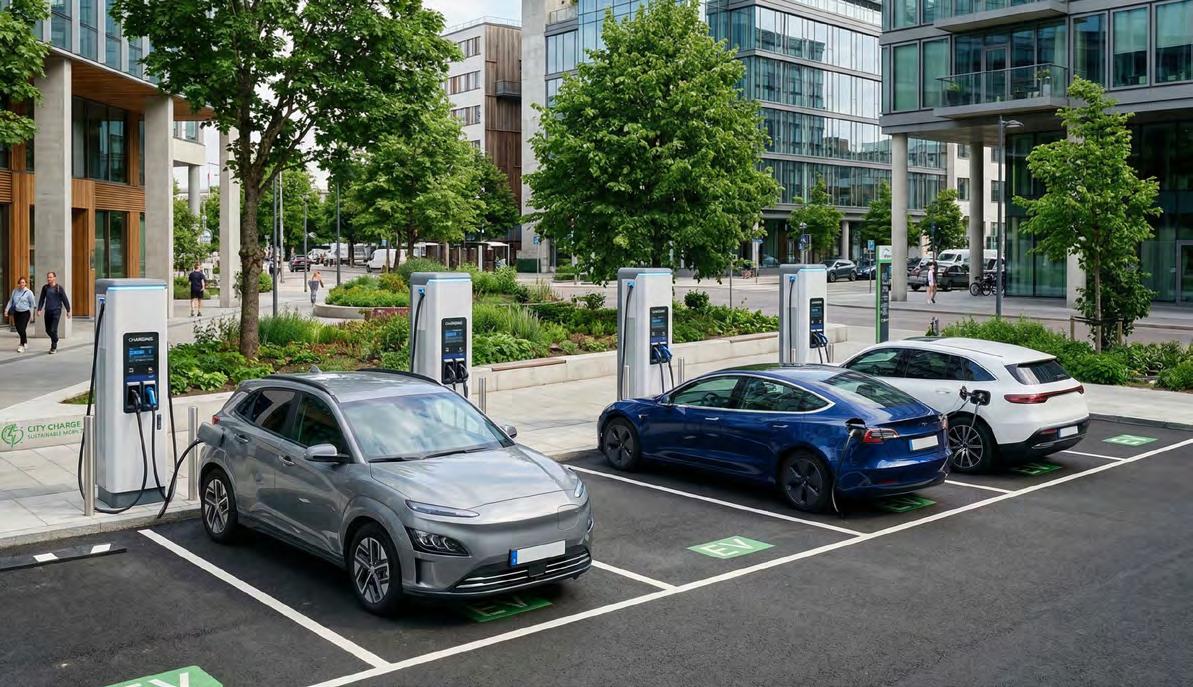
The number of electric vehicles on our roads is constantly growing, and with it the demands on a charging infrastructure that can reliably deliver high power over the long term. In ultra-fast charging in particular, the currents and the switching capacities are increasing dramatically. In this context, controlling power spikes and ensuring reliable thermal management are essential. Resistors and heat sinks from Miba make an important contribution here: They increase the safety, efficiency and service life of the power electronics in charging stations and wall boxes – thereby ensuring the availability of modern charging hubs in 24/7 operation.
At the start of the charging process a high inrush current can occur. This can damage critical components such as the DC link, which acts as a buffer and connecting element between the power grid and the vehicle’s charging point on the output side. Miba precharge resistors perform a central protective role here: They specifically limit this current and enable safe startup of the power electronics – typically within about one second. At the end of the charging process, Miba discharge resistors play an important role: They enable fast and safe discharge of the DC link capacitor.
WATER-COOLED HEAT SINK: KEY TECHNOLOGY FOR HIGH-POWER CHARGING
High-power charging is the key to making electric vehicles suitable for everyday use: charging capacities ranging from approximately 350 kW up to several megawatts reduce downtime and make electric mobility economically viable, particularly for buses, logistics fleets, and heavyduty commercial vehicles. The first systems with over 800 kW are already under development. However, the higher the power, the greater the thermal stress on the power electronics. Inadequate cooling leads to power loss, accelerated wear, safety risks, or a reduction in charging power. Conventional air cooling reaches its limits here: it is often too weak for compact designs, generates noise, and increases maintenance requirements.
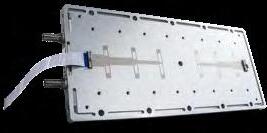
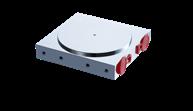
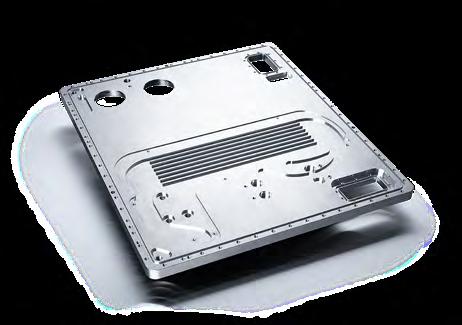
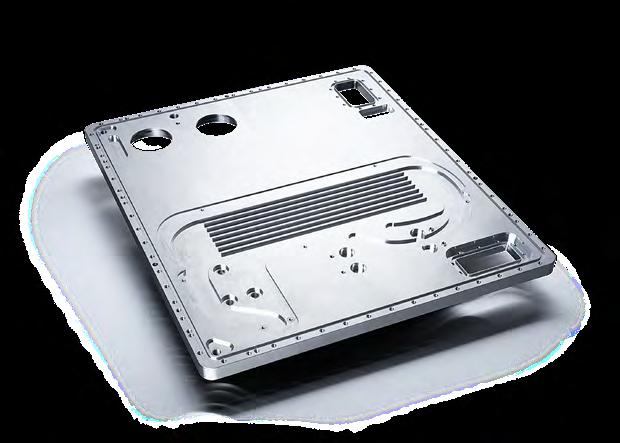
Miba therefore relies on vacuum-brazed water-cooled heat sinks which are specifically developed for high-power charging environments. This offers decisive advantages: significantly higher heat dissipation than air coolers, stable thermal performance even at high external temperatures, reduced noise levels due to the elimination of powerful fans, and a more compact design for the chargers. The vacuum-brazed heat sinks consist of a base plate with a milled cooling structure and a cover plate, which are joined under vacuum permanently and free of tension. The result is robust, high-performance cooling structures with optimized heat transfer. At the same time, uniform cooling prevents hotspots – a key factor in efficiency, component protection, and service life. With all these features, Miba resistors and heat sinks help make charging infrastructure faster, safer, and more durable – by controlling current spikes, safely dissipating residual energy, and removing heat where it is generated.
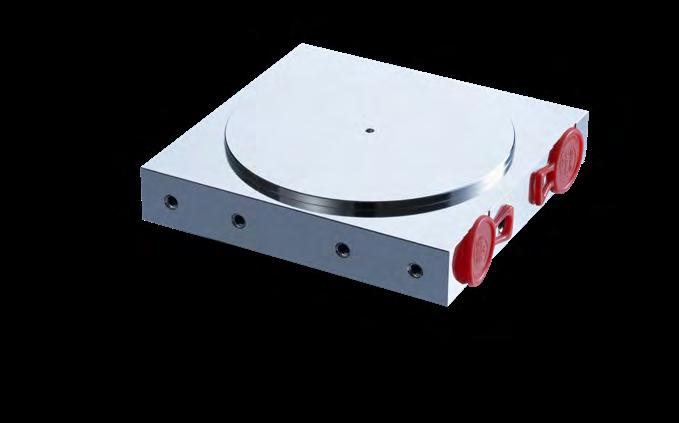
With the increasing electrification of mobility and industry, traction batteries are becoming more and more important. These rechargeable high-energy batteries are specifically designed to power electric drives – that is, motors that power trains, buses, trucks, or machinery. Efficient cooling is a key requirement for long-lasting and high-performance battery systems. Our cooling technology specialist, Miba Cooling Austria in Ligist, Styria, offers tailor-made solutions for this purpose. These guarantee the highest levels of performance, reliability, and sustainability.
Miba’s vacuum-brazed heat sinks ensure uniform cooling and prevent hotspots. This ensures maximum efficiency in battery cooling. In vacuum brazing, a cover plate is placed on a precision-machined or deep-drawn base plate and heated in a vacuum brazing furnace at 580–600 °C. During this process, a thin, rolled aluminum layer with a slightly lower melting point fuses, creating an extremely reliable, strong bond between the two components (see also article on page 34).
In addition, thanks to their integrated structural strength Miba’s cooling solutions reduce system weight and extend the service life of the battery cells. And they are manufactured using a high proportion of recycled material. In this way, our cooling technologies make an important contribution to sustainable mobility and energy storage.
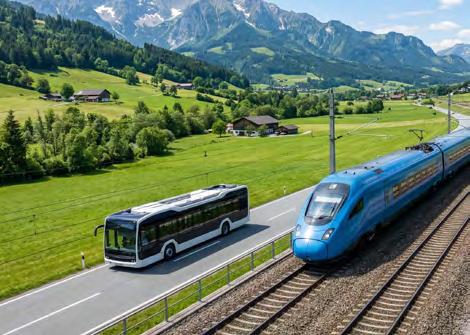
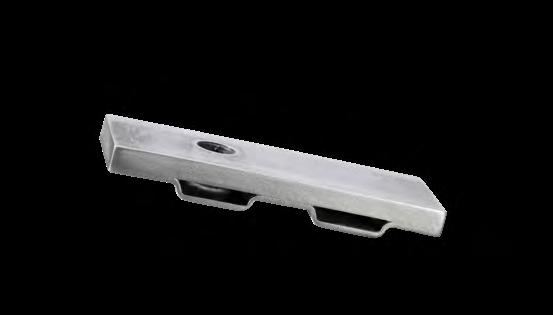

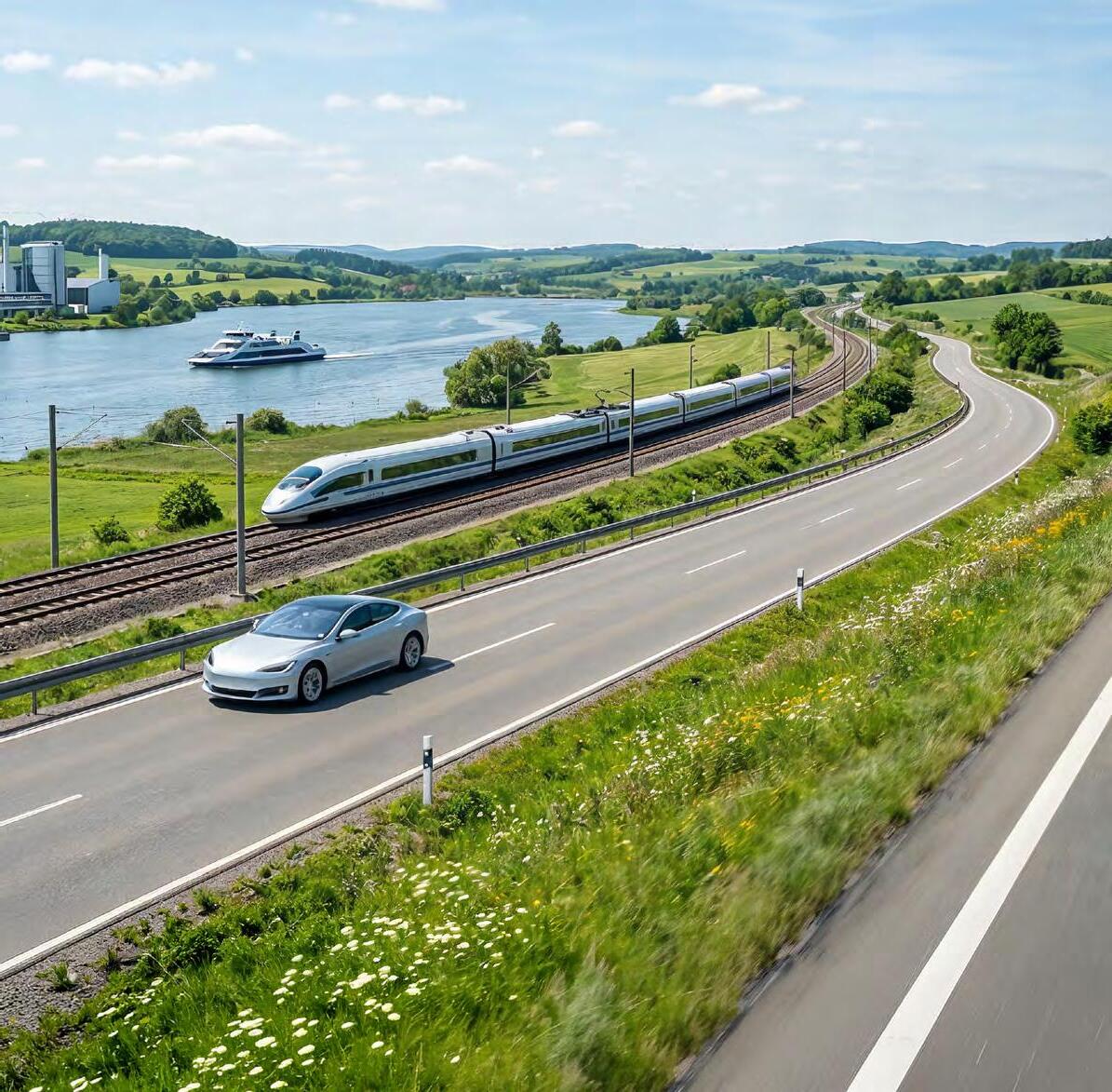
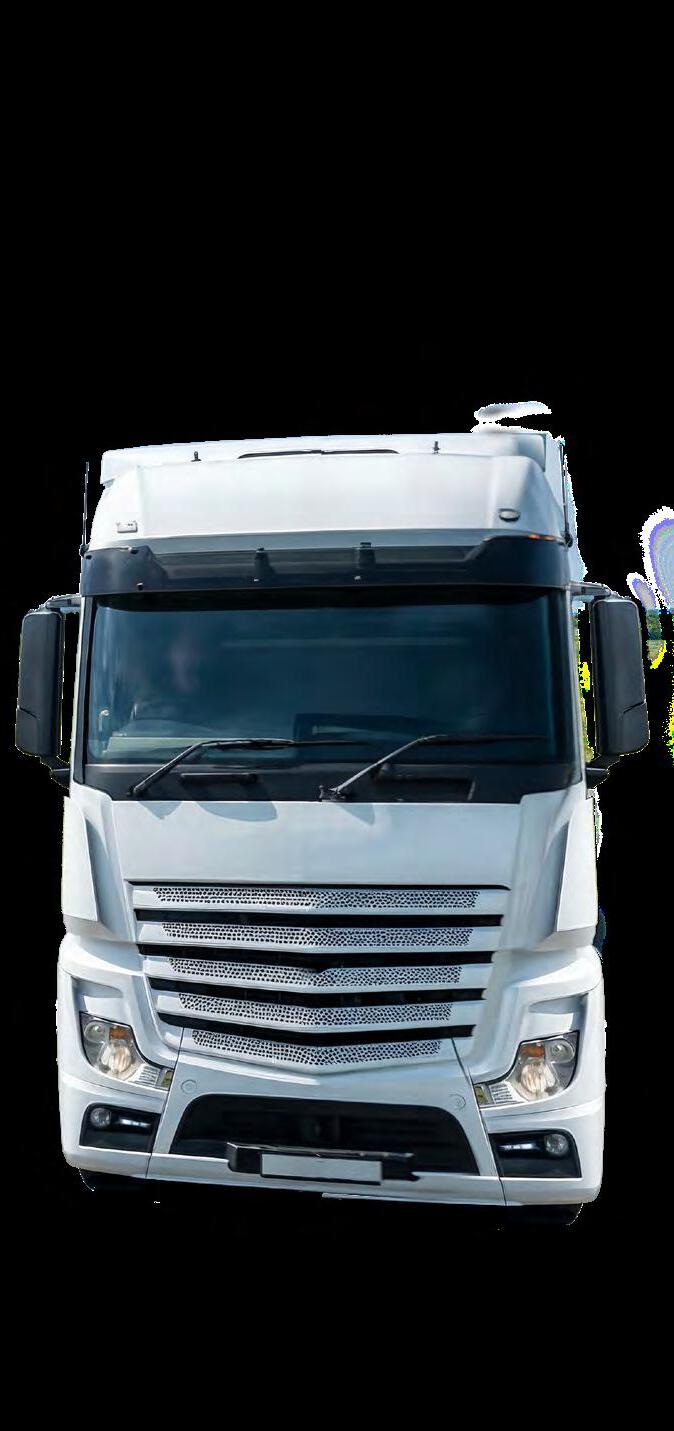
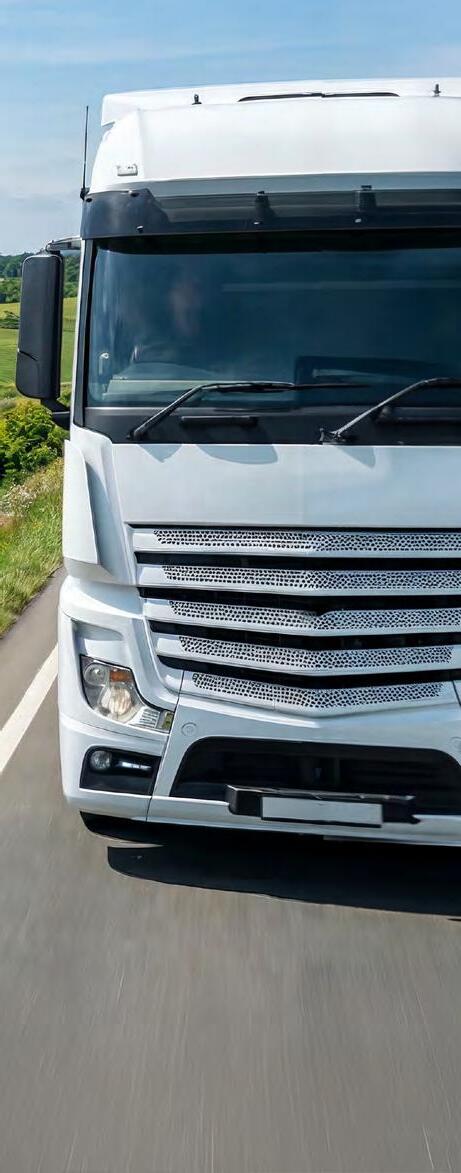
MIBA TECHNOLOGIES MAKE A SIGNIFICANT CONTRIBUTION TO REDUCING THE CARBON FOOTPRINT OF OUR CUSTOMERS' PRODUCTS.











Off-highway vehicles

Industrial applications


LEARN MORE ABOUT OUR SOLUTIONS
WHEN DEVELOPING SOLUTIONS FOR MOBILITY, WE FOCUS ON TECHNOLOGY OPENNESS
Whether pure electric driving, hybrid drives, or combustion engines: we develop and produce components for all types of drives. For us, technology openness means finding the most suitable solution for our customers. Always with one goal: to make drivetrains even more energy efficient, environmentally friendly and quiet.




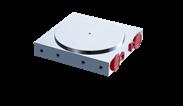
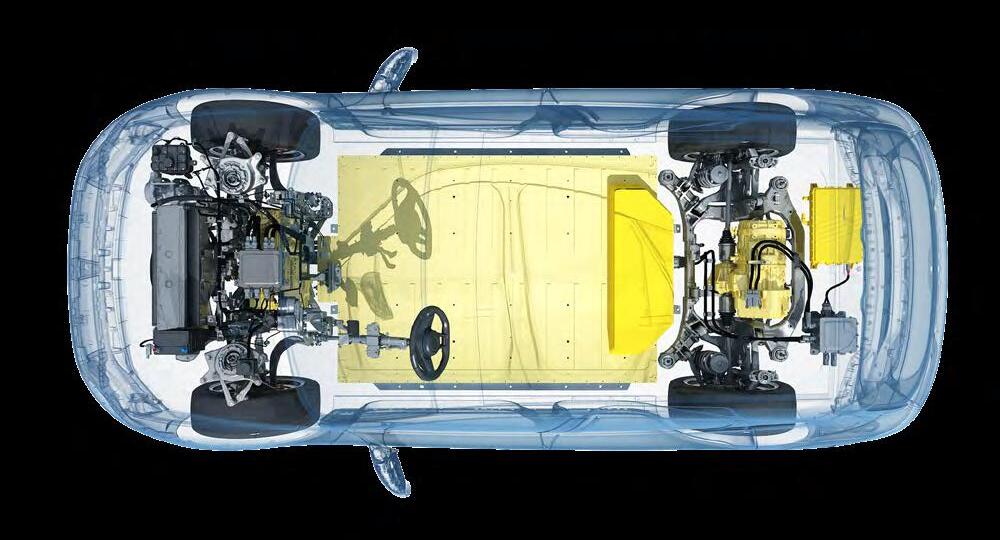
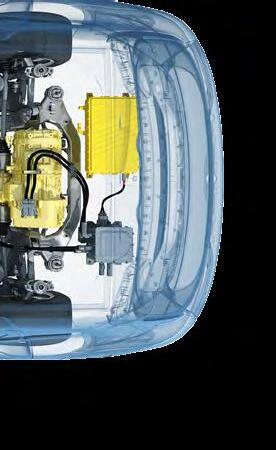
For the Miba Sinter Group, electromobility is a promising segment. Electric vehicles open up entirely new fields of application for powder metallurgy, but their high speeds and torques also place enormous demands on the precision and strength of the components used.
A prime example of this is the special synchronization modules for the e-axles of high-performance electric vehicles which Miba developed in close collaboration with a customer in the premium segment. As part of the decoupling unit, they make a decisive contribution to efficiency. With this system, the transmission shaft is automatically decoupled from the wheels whenever no drive from the electric motor is required while driving. As soon as drive power is needed again, the connection is reestablished in a flash. This enables improved efficiency in the drivetrain, thereby also contributing to longer ranges. Because the requirements for transmissible torques and shift times cannot be met with existing synchronization modules, a customer-specific solution was developed using extensive expertise. This solution fulfills the required function through a unique component design and material selection, within the smallest possible installation space.
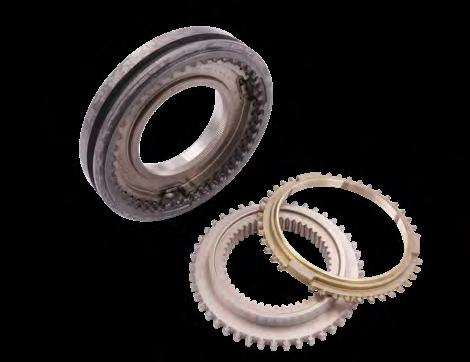
In addition new, innovative production processes are being used in the project. Instead of the lubricant that is normally added directly to the metal powder before pressing, an oil film is applied directly to the press die. This allows for a higher component density to be achieved already during powder pressing. Consequently, this enables the highest possible component strength, which provides greater design flexibility, particularly for highly stressed parts in e-mobility applications.
In addition to electric axles, the braking systems of electric vehicles are also an attractive application area for Miba’s sintering technology. Unlike in combustion-engine vehicles, manufacturers often rely on electromechanical systems here. These feature an electric motor that is mounted directly on the disc brake on the wheel and moves the brake shoes. High-ratio control gearboxes with gears from the Miba Sinter Group ensure that this motor can be kept small, while withstanding high loads. These successful series projects demonstrate that powder metallurgy, with its adaptability, the ability to produce complex component geometries, and efficient material utilization, offers optimal conditions for high-performance electric vehicles.
For electric mobility to continue on its successful path, many factors are crucial: the expansion of fast-charging infrastructure, efficient battery systems, and long ranges. And: a constantly guaranteed high vehicle safety. Miba’s resistor technologies also make an important contribution to this. As discharge resistors, they ensure that the residual energy remaining in the DC link capacitor after the vehicle is parked is safely dissipated in a controlled manner within a few seconds. This protects the electrical system from potential damage and enhances safety for the occupants. In the event of an accident, the technology also provides additional protection for emergency responders approaching the vehicle.
UNIQUE PRESS-FIT CONNECTION SIMPLIFIES ASSEMBLY PROCESS
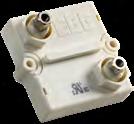
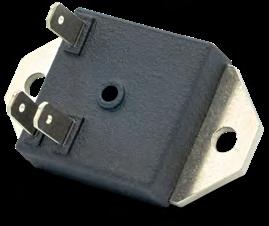
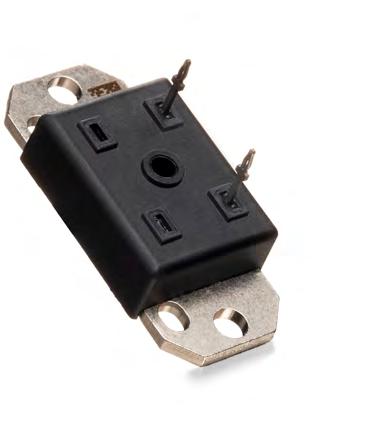
Here, too, the focus in development is always on technologically leading solutions that are precisely tailored to customer requirements. A good example is the EVR150 discharge resistor from Miba Resistors Austria. As part of a current series production project, it was equipped for the first time with special press-fit contacts – an absolute innovation in the field of power resistors. This eliminates the need for soldering onto the circuit board; instead, the resistor is simply plugged in. This reduces assembly complexity and thus saves the customer time and money. Additionally, the plug-in connection ensures maximum
“durability and vibration resistance. The requirements are typical for the automotive industry: Despite minimal installation space and low weight, the resistor must withstand high thermal loads and function reliably throughout the vehicle’s entire service life. Production takes place in the modern automotive manufacturing area of Miba Resistors Austria’s new plant in Kirchbach, which opened last year.
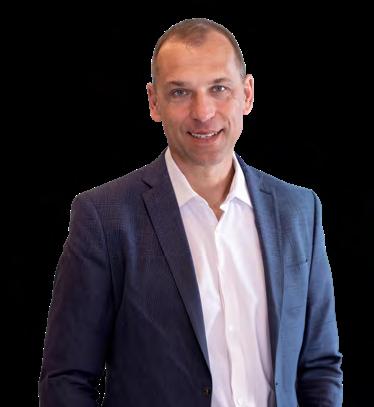
OUR PRODUCTS PROTECT THE ELECTRICAL SYSTEM FROM DAMAGE, EXTEND ITS LIFESPAN, AND IMPROVE ITS RELIABILITY. THAT IS WHY MORE AND MORE CUSTOMERS IN THE AUTOMOTIVE INDUSTRY WORLDWIDE ARE RELYING ON MIBA RESISTORS IN THEIR SERIES PRODUCTION.
Jens Kuschel General Manager, Miba Power Electronics Group
EXTENSIVE EXPERTISE TO MEET THE DEMANDS OF E-MOBILITY
Because e-mobility will continue to evolve rapidly in the future too, we are constantly advancing our products and technologies in close collaboration with our customers. In addition to applications for passenger cars, the electrified
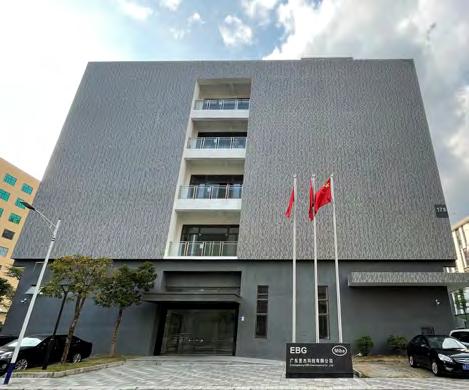
In addition to our existing facility in China for power resistors, last year we moved into an additional production site in the country’s Shenzhen region. The reason for this expansion is the significant growth of our business, particularly in resistors for electric vehicles. Even before this, our production area in China already totaled 12,000 square meters. The new plant, located about one kilometer away, now provides an additional 7,000 square meters of space. China is the world’s largest market for electric vehicles. More than half of the vehicles newly registered there in 2025 were partially or fully electric.
buses and trucks segment is also gaining importance, as here economic factors are particularly decisive for operators. Regardless of the application: Miba supports its customers with extensive expertise and flexible manufacturing capabilities, from development through to implementation.
In the long term, the number of drive solutions will decrease compared to internal combustion engines and hybrids, with the electric axle playing a special role in terms of function integration. Friction systems for torque management – for the purpose of stabilizing, enhancing agility, and adding emotional appeal to vehicles – play a key role in this context. To meet the requirements for comfort (NVH), power density, and efficiency in the electric axle, new technologies and innovative approaches
are needed. Together with industry partners, the Miba Friction Group develops friction systems that meet the highest customer demands and enable rapid, applicationspecific adaptation to significantly reduce time-to-market. The necessary development work is primarily carried out at the R&D Center in Roitham. In the test facility and laboratories, decades of experience are leveraged to ensure the essential correlation with the in-vehicle environment.

The automotive industry is undergoing a major transformation. Increasing electrification is not the only megatrend. Following the ever-wider adoption of driver-assistance systems and semi-autonomous driving, in the coming years fully autonomous driving will also become increasingly feasible. However, demand for internal combustion engines remains very high and, from a global perspective, will continue to do so for a long time to come. Therefore, there remains a need to optimize the efficiency, fuel consumption, and noise emissions of conventionally powered vehicles.
The Miba Sinter Group develops solutions in collaboration with its customers to meet all these mobility requirements for today and tomorrow, for internal combustion engines, hybrid vehicles, and fully electric driving. Their powder metallurgy parts offer decisive advantages: They are lighter and require less installation space than conventional solid-metal components.
Additionally, metal powder can be pressed into a wide variety of shapes – a decisive advantage for complex geometries. Sintered components are also resourceefficient, as they produce no cutting waste.
Powder metal technology is a process for manufacturing high-precision molded parts. Pressing the powdered raw material creates a green compact, which has just enough strength to be safely transferred to the next step in the process. During the subsequent heat treatment, the individual powder particles bond together, and the sintered part achieves its final strength. At the start of the powder metallurgy process, mixtures of metal powders are pressed using precision tools. The resulting pressed part is sintered at a temperature of up to 1250 °C. To achieve the highest possible precision and density, in some applications the component is calibrated after sintering and – if necessary – heat-treated, surfacecoated, mechanically finished, or assembled.
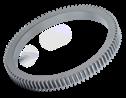
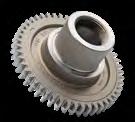
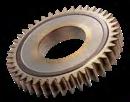
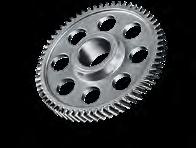
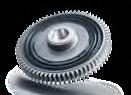
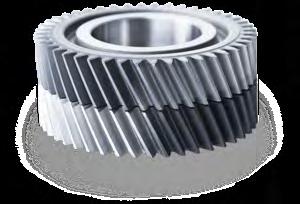
Powder metal gears possess impressively high strength and enable complex geometries. They are the cost-optimized alternative to mechanically manufactured components and are used in reduction gears, decoupling gears, mass balancing gears, camshafts, crankshafts, planetary gears, and ring gears.
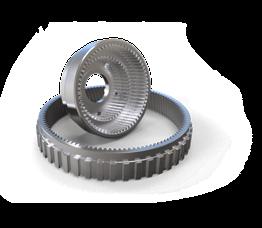
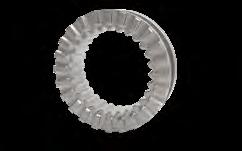
Highly complex powder metal parts are integrated into manual, dual-clutch and automatic transmissions, as well as all-wheel and hybrid drives. The highstrength components with steel-like properties have established themselves as a cost-effective alternative to conventional forged parts. Miba manufactures powder metal transmission parts with high precision and quality.
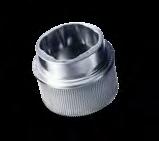
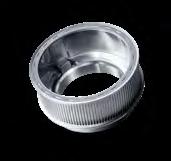
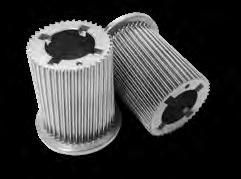
Powder metal technology is an established process in the production of steering parts. High quality requirements and cost efficiency are the most important parameters for helical gears in electric steering systems. Other areas of application can include tooth guides, clutches, and gear wheels.
There are also numerous fields of application for our powder metal technology outside the automotive industry. Whether in robotics, conveyor technology, compressors or eBikes, the high-precision and high-strength components also make sense for industrial applications thanks to their cost efficiency and lower weight. Their use also enables a reduced CO2 footprint.
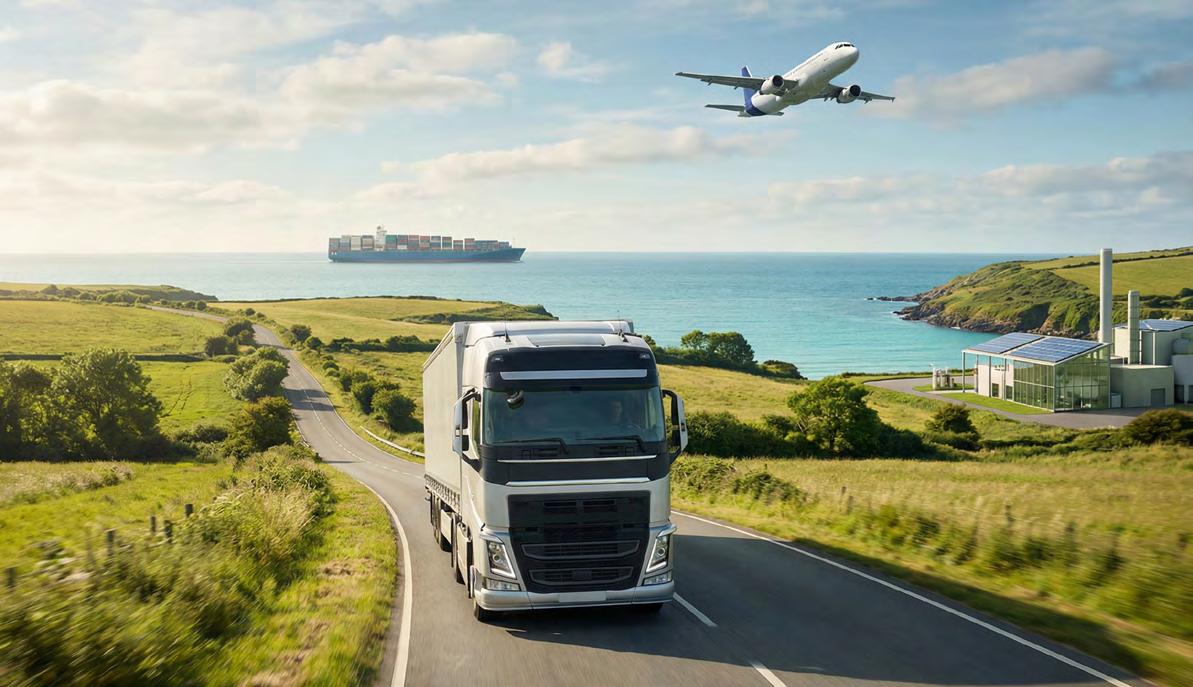
Miba bearings are among the components that determine the functionality and service life of engines in a wide range of applications. They are used to support the crankshaft and camshaft and, by minimizing friction, wear and corrosion, offer a longer service life and reduced maintenance requirements. Their compact design and high power density enable significant fuel savings and a higher payload. Our focus here is always on our
customers’ needs, so as a development partner, we support engine manufacturers as early as the engine development phase and work together to design solutions that are precisely tailored to specific requirements. By continuously developing new bearing designs, we ensure that modern engines deliver efficient and environmentally friendly peak performance even under extreme conditions.
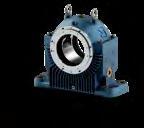
The Industrial Bearing Branch of Miba Bearing Group manufactures hydrodynamic bearings and labyrinth seals for machines with rotating shafts, such as turbines, compressors, expanders and pumps, as well
as generators, gearboxes, and refiners in the pulp and paper industry. These applications are required for power generation, as well as in the oil and gas industry and the chemical industry.
A key development focus at Miba is on new digital products with added value for our customers. For example, bearings equipped with sensors can continuously measure and evaluate data on their condition. This is made possible by specially developed
With our Bearing Calculator, we offer our customers an online tool that within a few minutes and without expert knowledge provides an initial assessment of whether their application falls within the broad field of application of hydrodynamic bearings. With the online product configurator “Tilting Pad Journal and Thrust Calculator”, we can also offer our customers further added value. The configurator supports the design of radial and axial tilting pad bearings, and helps to find the perfect bearing for the individual requirements of our customers. This helps our customers save time and money, and improve the performance of their applications.
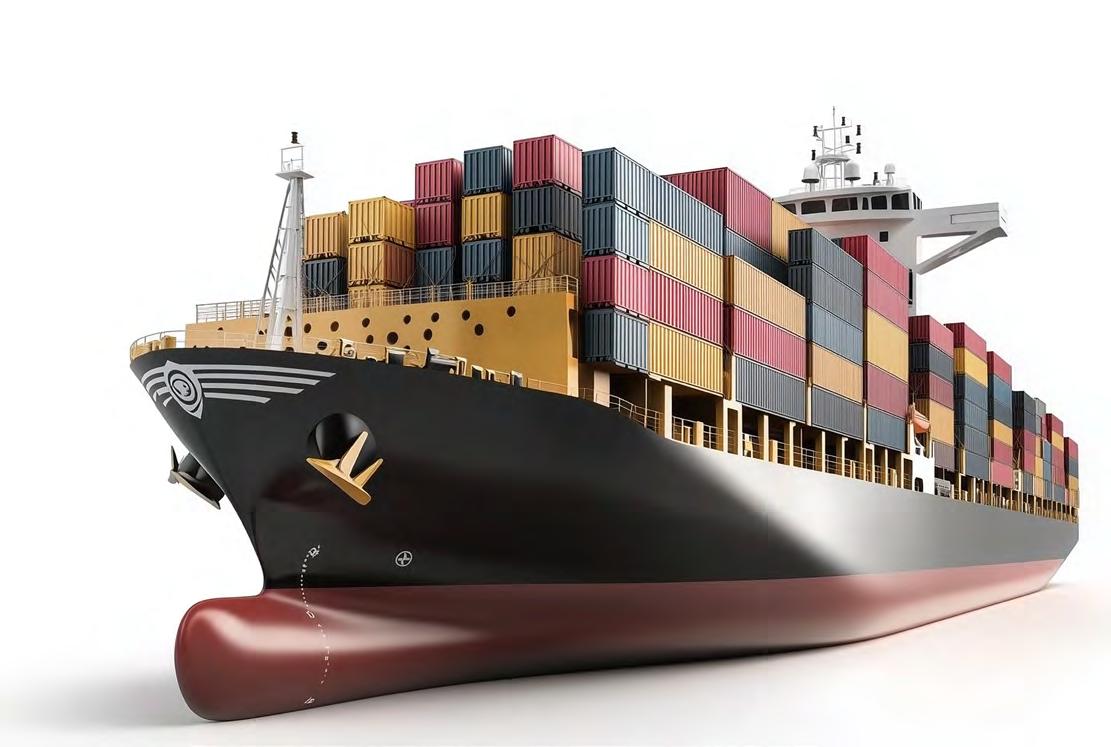
telemetry in combination with a data analysis system. The goals of this development are early detection of impending engine damage and the optimization of maintenance cycles. This can, for example, save unnecessary maintenance or replacement work on ships.
You can test our Bearing Calculator here
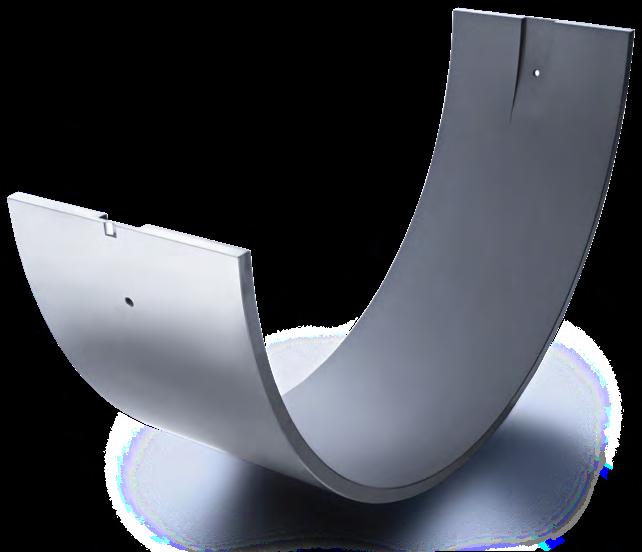
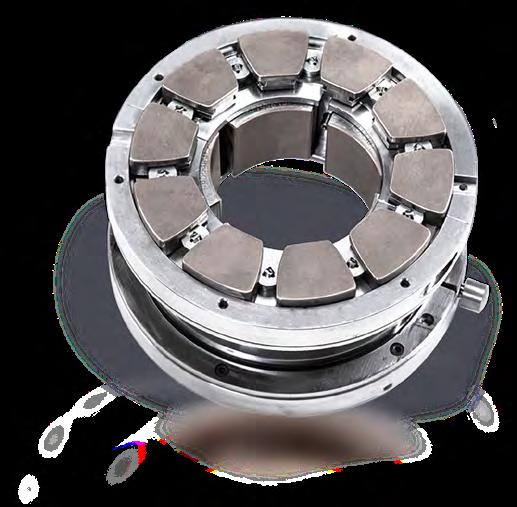
Strict environmental regulations, a high demand for sustainable materials, and the protection of employee health: all of these factors make lead-free materials one of the most important areas of innovation in the bearing industry. With a new, lead-free bearing material, Miba has developed an alternative to conventional bearing bronzes that requires no compromises in terms of performance, castability, and machinability.
A chemical composition that is precisely tailored to the manufacturing processes used at Miba not only enables excellent castability and reliable processing, but also minimizes susceptibility to casting defects and increases the reproducibility of the raw material. The new materials also excel during further processing thanks to improved machinability. The technology is also widely applicable: potential application areas span the entire product spectrum, from trucks to large engines.
In practice, the lead-free solutions display impressive tribological properties, high wear resistance, and stable performance – even under the most demanding operating conditions. This makes them particularly suitable for
applications in the high-performance and medium-speed segments, where high load-bearing capacity and long service life are critical. The fact that lead-free bearings are becoming a technologically viable alternative to conventional materials represents an important milestone for the industry. Test-bench tests by customers who intend to use the lead-free technology in upcoming engine generations confirm Miba’s leading technological role.
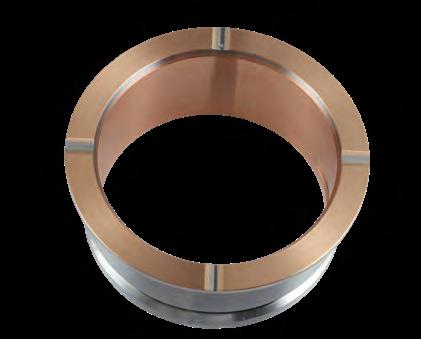
Lead-free materials are already being used in several types of bearings and bushings
The environmental compatibility of propulsion systems is a global focus due to sustainability concerns and legal requirements. Because battery electrification does not make sense from a technological standpoint in all application areas, propulsion system manufacturers in sectors such as shipping and rail are increasingly switching to alternative fuels. To support our customers through this technological transition, a team at Miba Gleitlager Austria is intensively exploring innovative fuel concepts. Since the requirements of end-use applications for fuel energy density vary greatly, several approaches are being pursued – including methanol, ammonia, and hydrogen. While hydrogen is particularly suitable for sectors such as rail transport, the potential applications for ammonia include shipping, among others.
As components that determine function and service life, Miba bearings help ensure that engines operate reliably and efficiently across a wide range of industries, even under extreme conditions. The Miba team works
in close collaboration with its customers and external research institutions to ensure this remains the case even when operating with alternative fuels, because changes in the combustion process also result in new requirements for the materials used in bearings. During the combustion process, gases can travel past the piston rings into the engine oil and affect its properties. This oil degradation subsequently also affects all the parts that come into contact with the oil. So it is crucial to adapt components to these new chemical properties and thus ensure the long-term functionality and reliability of the powertrains. To conduct the necessary simulations and material compatibility tests, an oil analysis laboratory was established in Laakirchen, where the condition of oils and their effects on plain bearing materials can be analyzed. The procedures include examining the additives, determining the acidity, and analyzing the metal contaminants in the oil. In addition to preventing corrosion, the goal is also to preserve the desired tribological layers, which contribute to reduced wear and an extended service life of the bearings.
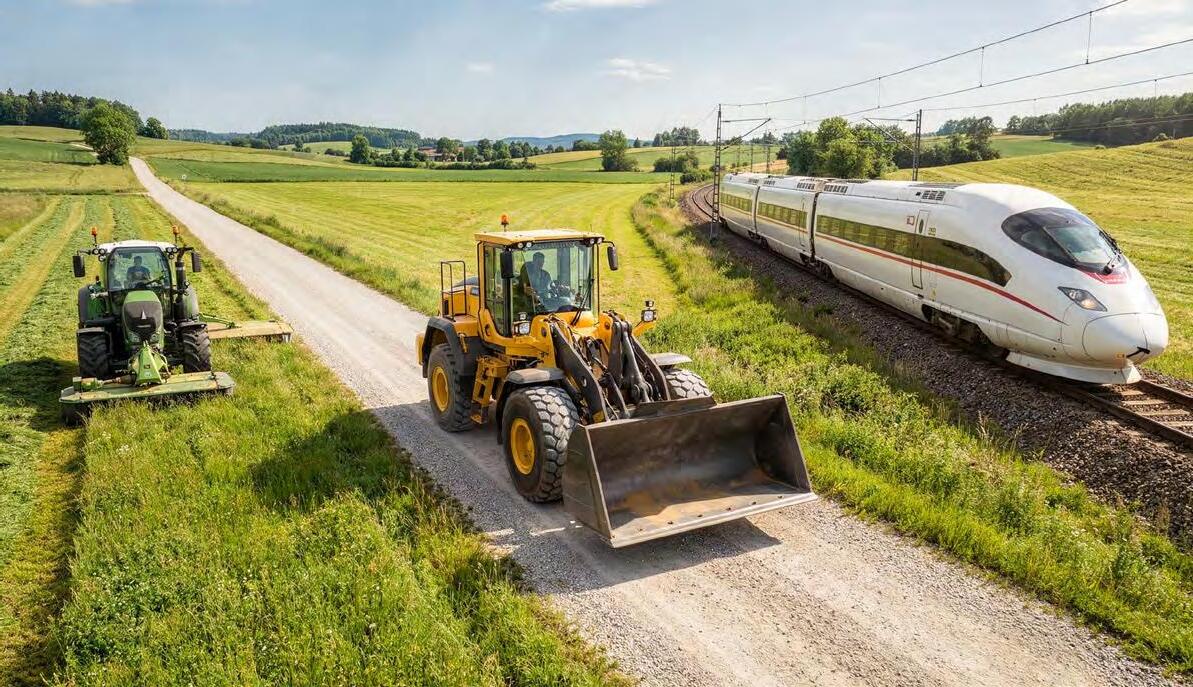
Miba friction materials are used as wet and dry-running components in clutches and brakes for on- and off-highway vehicles, machinery, railways, and aircraft. They are also used in industrial applications such as cranes and conveyor systems. In addition to our own steel plate production, we develop and produce friction materials
made of fiber composite, sinter, carbon, or molybdenum. Our aim is to ensure greater performance and operational reliability through optimized friction coefficients and the best wear properties with smaller and lighter components.
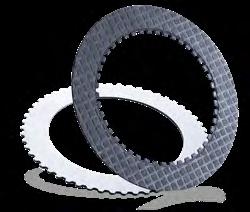
The crystal-shaped structure on the Miba friction materials is called multi-pad design. The design is used on friction materials for hybrid and dual-clutch transmissions. In contrast to the standard design, the multi-pad design ensures a reduction in drag losses and therefore lower fuel consumption. The design also allows the oil quantity in the clutches to be distributed more precisely. The benefits: improved performance, reduced oil volume, and savings in raw materials.
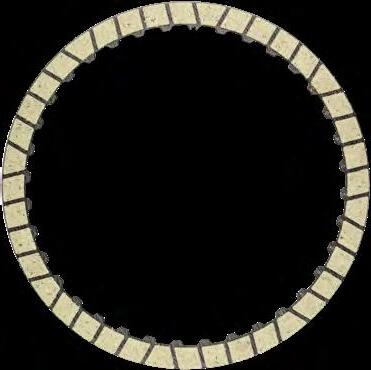
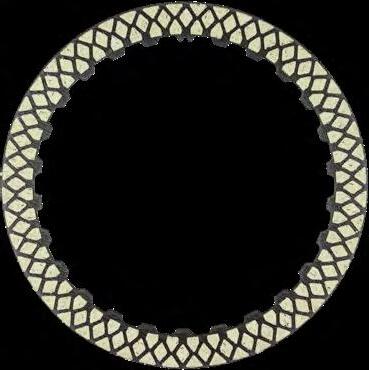
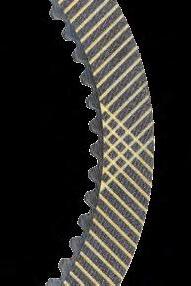
A multilayer design structure is a friction lining made up of several layers. Each layer contributes specific properties such as high wear resistance, fast response, improved shifting comfort, and reliable fail-safe properties. Customer requirements for multilayer applications include high energy density and NVH (noise, vibration, harshness) benefits.
The multilayer friction lining can be optimized for these advantages depending on the application, which makes it suitable for use in many areas. Innovative, holistic development approaches are required
to strengthen our technological leadership with our customers.
Miba Friction Group’s high level of vertical integration ranges from the selection of fibers to the validation of friction systems in application-related tests. Interdisciplinary cooperation between material development, process development, and application technology is crucial here. This enables the Miba Friction Group to offer far-reaching innovations for its customer portfolio while minimizing the CO2 footprint in order to maximize production efficiency.
Material abrasion caused by braking is a burden on the environment and people. To counteract this, we at Miba are developing sintered brake pads with optimized wear behavior. Furthermore, intensive research is being carried out into non-ferrous metal-free brake pads in order to replace copper with more environmentally friendly alternatives. One area of application is the circular economy. Specifically, brake pad systems are used that can be fitted with friction material on a modular basis. When the pad is worn to its limits, it is dismantled and replaced. With this approach, the production-intensive pad carrier can be reused.
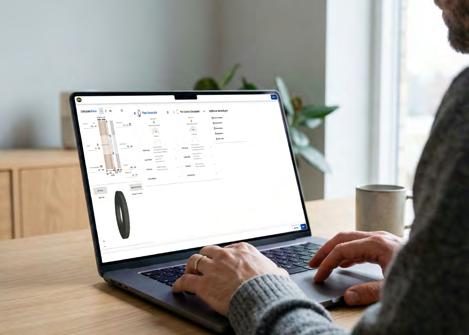
To achieve the optimal design for a multi-disk clutch, power density, noise-vibration-harshness (NVH) specifications, efficiency, and total cost of ownership must be coordinated in the best possible way. Our web application “Friction Engineering Designer”, FRED for short, helps with this. It enables online design directly by our customers. Within just a few minutes, FRED provides key figures that make the technology decision easier and more transparent.
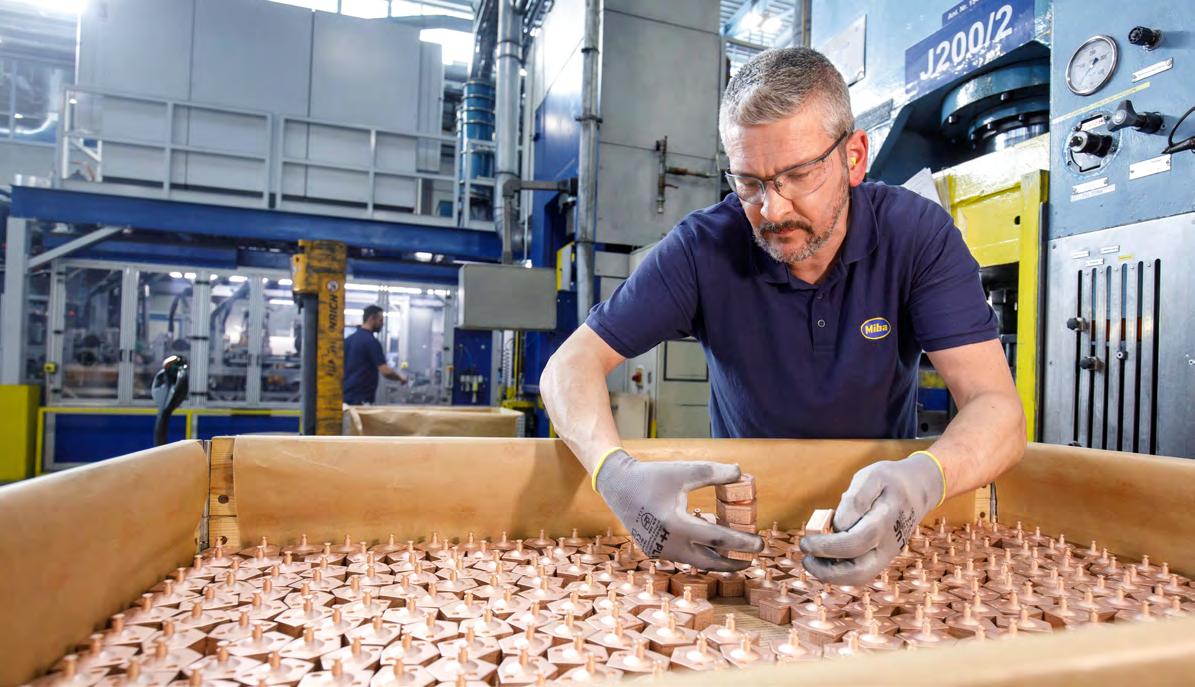
Rail transport is an essential part of a modern, sustainable mobility system. Trains efficiently connect cities and regions, enable high transport capacities, and make a significant contribution to reducing CO2 emissions in the transportation sector. To meet growing market demands, operators worldwide are increasingly turning to highspeed trains that reach top speeds of 400 kilometers per hour and beyond. This shortens travel times between major metropolitan areas but poses enormous thermal and mechanical challenges for the installed braking systems. Miba’s expertise plays a central role in ensuring that these systems can withstand extreme forces, are durable, and meet the highest safety standards.
Braking from 400 kilometers per hour requires stopping distances of up to six kilometers. The kinetic energy released during this process leads to massive thermal stress, heating the brake pads to temperatures of up to 700 degrees Celsius. With the Miba FlexStar railway brake pad, Miba has developed a flexible solution that delivers outstanding braking performance even under these extreme stresses. Manufactured from copper-based, sintered friction material, the pad is specifically designed for high-speed applications. Thanks to an improved design
and an innovative material composition featuring solid lubricants and friction coefficient stabilizers, it helps reduce hot spots and provides high wear resistance. This reduces maintenance costs and ensures a longer service life for the braking systems. For operators, this offers not only safety-related advantages, but also economic benefits – after all, trains often remain in service for many decades. The optimized friction compound also enables a quiet and low-vibration braking process, which significantly increases ride comfort. Miba brake pads thus ensure maximum safety, efficiency and sustainability in railway applications.
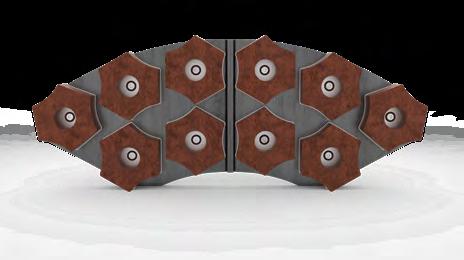
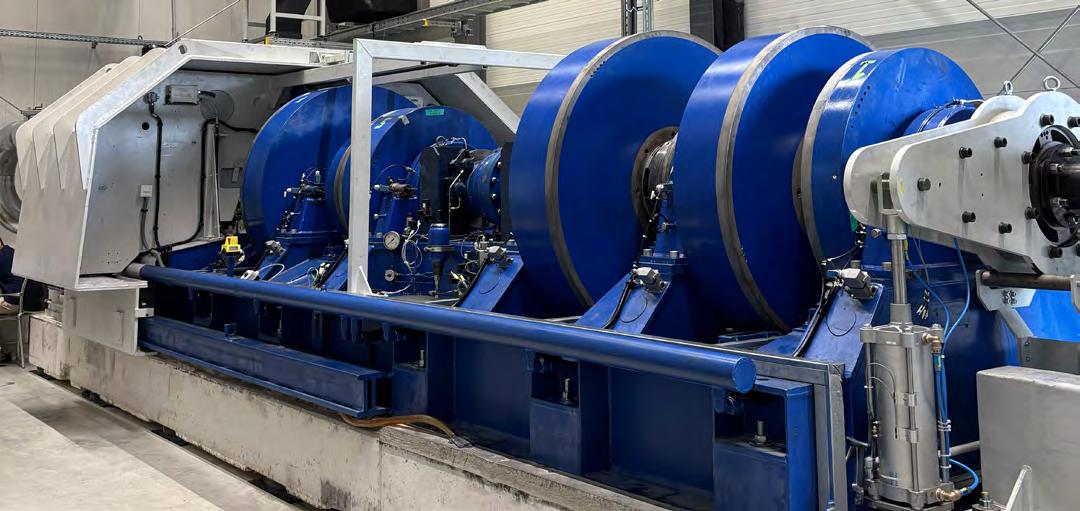
In recent years, the Miba Friction Group has invested heavily in this future-oriented market and has evolved from a pure component supplier to a provider of complete brake pads. Just recently, at Miba Frictec in Roitham a new railway test bench was commissioned, where extreme loads can be realistically simulated. Measuring 11 meters in length and 2.5 meters in both width and height, it is the largest test bench of the entire Miba Group. The rotating mass, weighing approximately 18 tons, can be accelerated to speeds of up to 400 kilometers per hour. The test bench thus complies with international UIC guidelines and covers the highest performance class for trains.
“Gerald Schachinger Vice President Sales & R&D, Miba Friction Group

Limited slip differentials play a crucial role in the drivetrain and the vehicle dynamics, particularly for off-road vehicles. For example, during off-road driving on slippery surfaces, they ensure that drive power is directed specifically to the correct wheel to transfer it to the ground or road. Miba friction materials ensure controlled torque transmission in multi-plate limited slip differentials in particular. Traditionally, friction materials made of fiber-composite materials have been used for this purpose. However, the Miba Friction Group has developed an advanced solution based on carbon friction materials, specifically designed for high-stress applications.
3 TO 4 TIMES LONGER SERVICE LIFE COMPARED TO STANDARD SOLUTIONS
These Miba carbon friction materials stand out technically from standard solutions. They not only offer a service life three to four times longer, but their noise levels are also equivalent to or significantly better than those of other series solutions. This is made possible by a special production process that Miba has developed for manufacturing the carbon friction materials. Particularly
customers seeking solutions for heavily loaded limited slip differentials – such as those in large pickup trucks and offroad vehicles – rely on Miba carbon friction materials. This technology offers them significant added value.

Painting or coating surfaces is a key step in many industrial processes. To make this process as efficient, precise, and sustainable as possible, the principle of electrostatic surface coating has become a widely adopted standard. The process uses electrostatic charging to precisely apply paint particles to grounded surfaces, such as vehicle bodies. The attractive force between the object and the paint particles not only ensures a more even distribution, even in hard-to-reach areas, but also reduces paint mist and the associated material consumption. Miba’s expertise now also plays a decisive role in this application area, in the form of a unique customer solution from Miba Resistors Austria. The high-precision cylindrical resistors which it develops and manufactures in Kirchbach, Styria, contribute to safety and reliability in the paint shops – for example, by preventing the risk of fire caused by sparking at high voltages near fine paint particles.
Miba Resistors Austria developed its solution in close consultation with the customer, which had originally opted for a different technology, but found that this could not meet the high requirements regarding stability and ease of installation. This close collaboration ultimately resulted not only in the cylindrical resistor itself but also
in an entire module that includes, among other things, a special wire with unique material properties. To precisely align this wire and solder it directly to the module – rather than gluing it – for a durable connection, the development team at Miba Resistors Austria specifically developed a special soldering material and process. Ultimately, Miba’s expertise has resulted not only in a technologically leading product but also in a significant efficiency gain for the customer, who is now receiving a reliable module solution that combines multiple manufacturing steps.
Meeting tight manufacturing tolerances, ensuring the module’s resistance to external influences, and achieving a long service life were just a few of the requirements for Miba Resistors Austria, which is opening up a new application area for its resistor solutions with this project. Above all, it was the extremely compact design combined with the highest precision requirements that posed a challenge for the Solution Team in Kirchbach, which had never before manufactured resistors of such short length and small circumference using the screen-printing process. Thus, in addition to product development, significant expertise was invested in adapting the equipment and manufacturing processes, from which MRA is set to benefit in future projects as well.
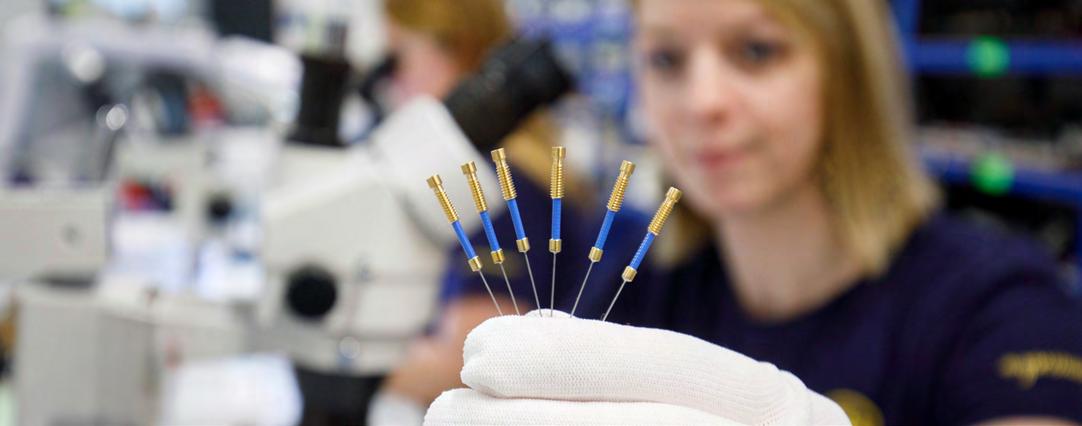
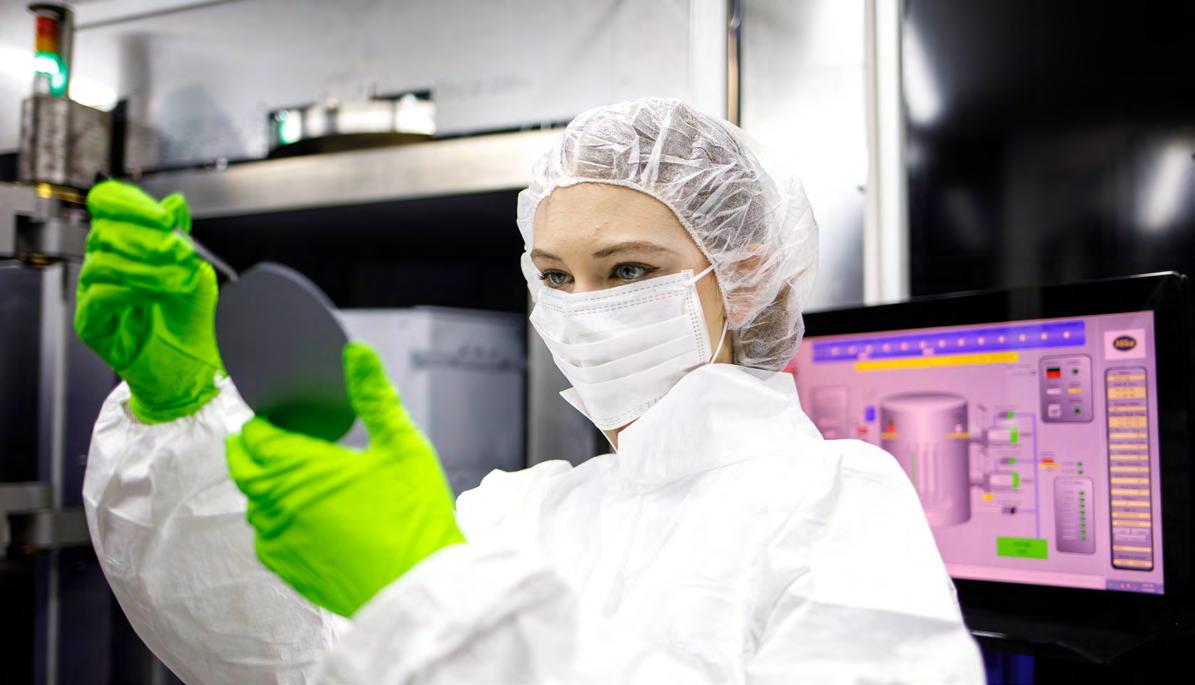
Whether for high-performance smartphones, self-driving cars, or groundbreaking AI applications – microchips are the driving force behind technological progress in a digital and connected world. The manufacturing processes and the optical systems used in them are pushing the limits of what is physically possible. Right at the heart of it all: technology from Miba.
In a specialized production area at High Tech Coatings in Vorchdorf, a team is working on special amorphous silicon coating solutions. These are used, for example, in highly complex EUV lithography machines for the production of modern microchips. There, extremely short-wavelength UV light is guided and shaped so precisely through a system of coated precision mirrors that the pattern of the photomask is ultimately projected onto the silicon wafer in microscopic form. The requirements for the surface quality of these mirrors are enormous: to function efficiently and reflect the light with sufficient precision, the irregularities on their surface must be no more than fractions of a nanometer. A comparison illustrates just how small that is: even if the coated mirror were as large as Germany, the maximum height difference of the coating would be less than one millimeter. Otherwise, the light would scatter uncontrollably and the image would become unusable.
AMORPHOUS SILICON PVD COATING
A key factor in achieving this level of precision is Miba’s SUPERFLAT Si polishing layer. It is applied using the physical vapor deposition (PVD) process: In this process, individual atoms are dislodged from the solid starting material, vaporized, and deposited onto the mirror under vacuum conditions. The result is a highly precise amorphous silicon layer. Its disordered atomic structure is essential for ensuring that the coated surface can be polished so precisely and uniformly that it achieves the required smoothness and reflectivity. The Miba coating can be applied to various metals, ceramics, and alloys without compromising the properties of the base material. The extensive expertise gained from developing coatings for the semiconductor industry also opens up market potential for other optical applications, which the Miba team is actively working on. The focus is always on customer requirements. To meet high precision demands with consistently high quality even in series production and to be a reliable partner, Miba relies on the unique combination of comprehensive process expertise and the flexible manufacturing capabilities and experience gained in the automotive sector.
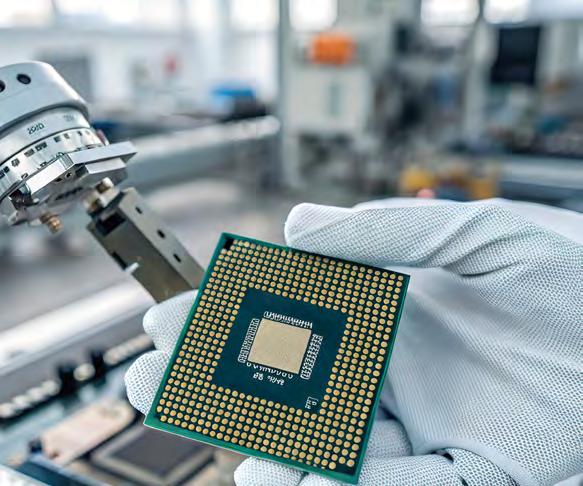
Whether it‘s classic wear and corrosion protection, acoustic improvement, friction increase or reduction, visual flawlessness, or easier assembly of components:
Miba coatings are indispensable. We offer our customers various polymer, electroplating, APS, and PVD coatings.
COATING SOLUTIONS TO PREVENT FRICTION, WEAR, AND CORROSION
Our products for improving friction and wear properties are used in a wide range of applications. The coatings are applied to components, which, depending on the application, leads to better performance, weight savings, or even the elimination of entire components. Often, this is also accompanied by an anti-corrosion effect, or it is the main requirement.
PVD COATING SOLUTIONS FOR INDIVIDUAL APPLICATIONS
Our development team works with our customers on solutions for improved tribological properties of components. Coatings for bipolar plates, which protect against chemical environments and increase electrical conductivity, and silicon coatings for the semiconductor industry are also possible.
COATING SOLUTIONS FOR INCREASING THE COEFFICIENT OF FRICTION
With our special coating process, we increase the coefficient of friction of component surfaces – and thus the performance of our customers’ products. Innovative coating solutions allow components to be directly and partially coated with a friction-enhancing coating for the first time. This saves on additional components, increases performance, and reduces overall costs.
COATING SOLUTIONS FOR NOISE AND VIBRATION REDUCTION
Our coatings for noise and vibration reduction have been specially developed for gears. They ensure precisely adjusted backlash, optimized NVH behavior, and protect gears from wear.
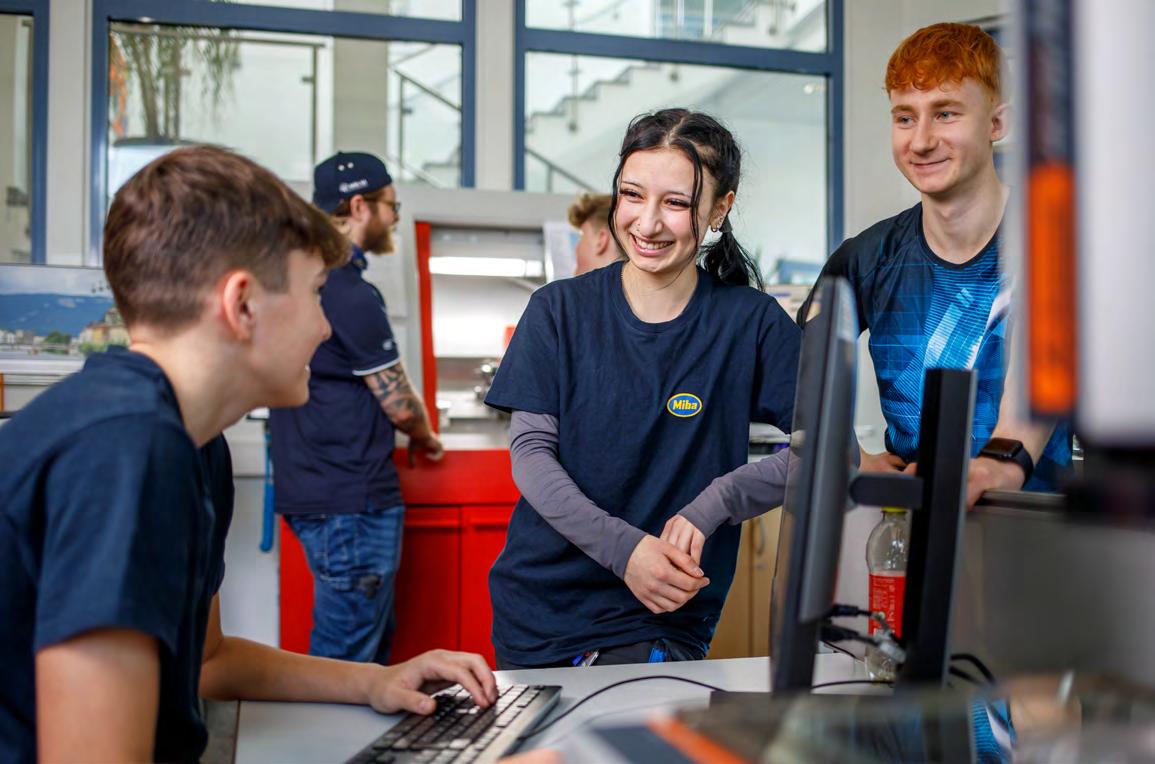
“THE KNOWLEDGE, EXPERIENCES, AND IDEAS OF OUR EMPLOYEES ARE WHAT MAKE OUR SUCCESS POSSIBLE IN THE FIRST PLACE. WE WANT TO SUPPORT THEM IN CONTINUOUSLY LEARNING AND DEVELOPING THEMSELVES.
Michael Hummelbrunner CFO, Miba AG
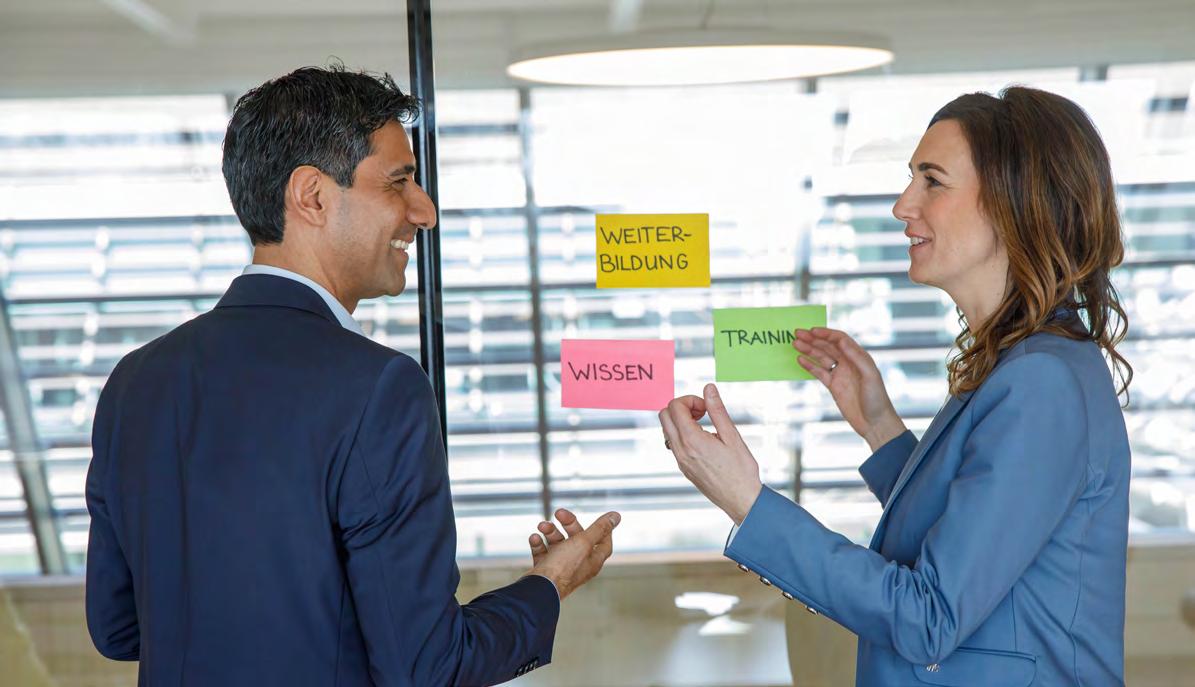
It is one of the four core values rooted in the Miba Lighthouse: lifelong learning (see page 103). The knowledge and Lifelong Learning of our employees form the foundation of Miba’s innovative strength. Only by continuously developing ourselves can we build the
“technical and personal expertise needed to meet the demands of future markets and products. That is why we invest heavily in training and development every year – in the 2025/26 fiscal year alone, this amounted to EUR 2.5 million.
TECHNOLOGY LEADERSHIP STARTS WITH THE EXPERTISE OF OUR EMPLOYEES. THROUGH THE MIBA EMPLOYEE DEVELOPMENT CYCLE, WE AIM TO INVEST IN THEIR OVERALL DEVELOPMENT AND FOSTER POTENTIAL.
Uta Stockbauer Vice President People & Culture, Miba AG

Our goal is to foster individual development potential through tailored activities and thus jointly shape exciting and successful career paths. And this applies at all levels: from training for apprentices and skilled workers, through project work and job rotation, to the Miba Leadership Academy, our global development program for managers. The Miba Employee Development Cycle brings all of this together in a systematic, transparent, and structured way. It combines elements of performance and talent management with a 360-degree feedback process based on the principles of positive leadership. This involves both clear and precise feedback on individual performance and the creation of personalized development plans.
2.5 EURO MILLION
Investment in Training and development (Fiscal Year 2025/26)
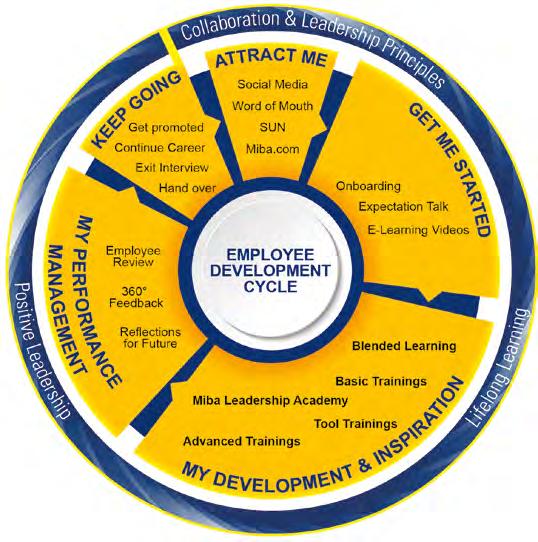
TRAINING AND DEVELOPMENT OPPORTUNITIES AT MIBA
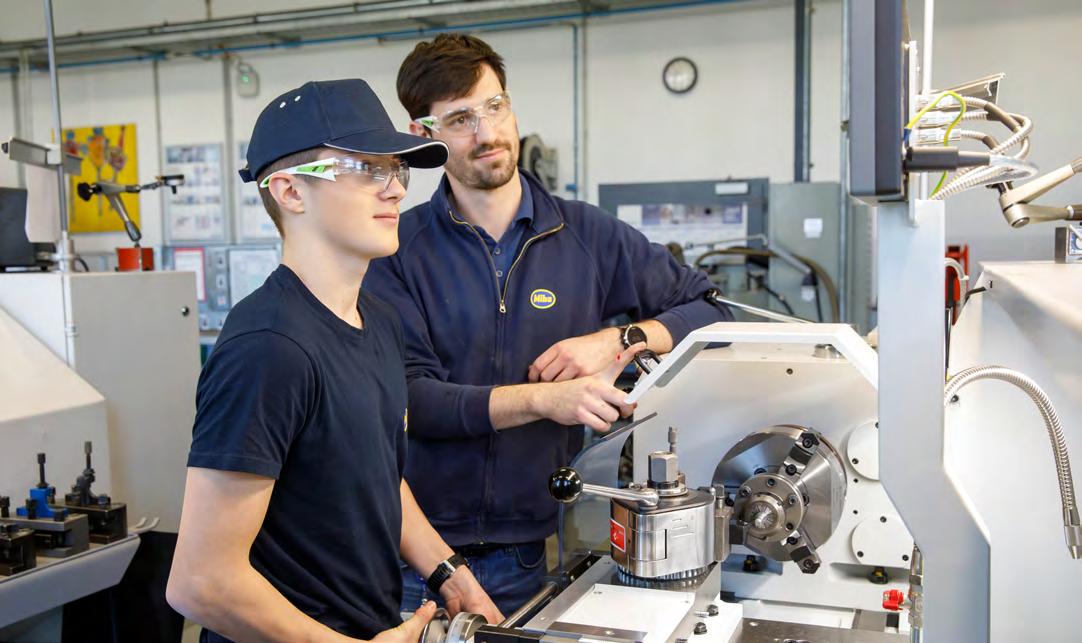
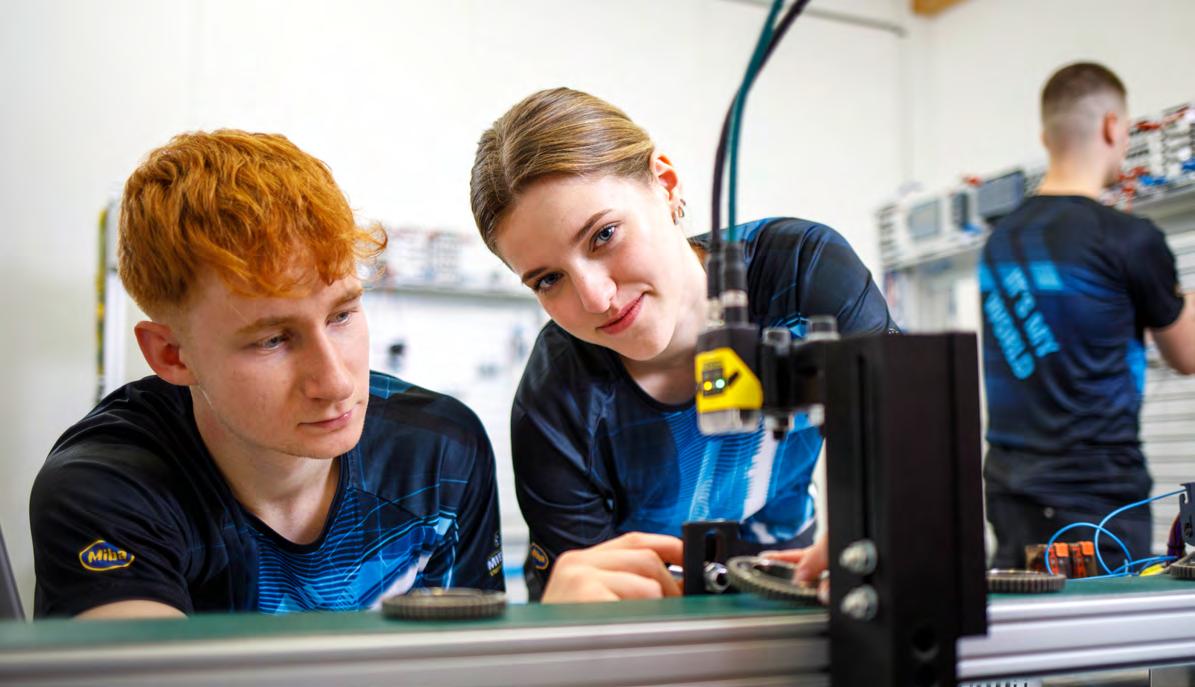
Finding the right answers to the technological questions of the future depends on specialists with diverse expertise. An apprenticeship at Miba comprehensively prepares young people for the challenges of tomorrow. Guided by an experienced training team and with content tailored precisely to their needs, they learn from the ground up how Miba manufactures products for highperformance wind turbines, smart power grids, efficient drives, and many other applications.
They do all this as part of a strong team where collaboration and cohesion are particularly important. In addition to sophisticated technical training, the personal development of apprentices is an integral part of the Miba apprenticeship – for example, through internships abroad at other Miba locations, language courses, or group outdoor training sessions.
APPRENTICE SHUTTLE FOR A SAFE
To ensure that our apprentices in rural areas with limited public transportation can get to their training sites safely and quickly, the Miba Apprentice Shuttle operates in the Salzkammergut region, transporting apprentices to Miba and back home every day. The buses can also be used for apprentice outings and team events.
APPRENTICESHIP WITH HIGH SCHOOL DIPLOMA
Miba offers a special program for apprentices in cooperation with the Kremstal Technical Academy (KTLA). As part of this training model – unique in Austria –particularly committed apprentices can combine their apprenticeship with a full higher technical college degree (HTL Matura) in mechanical engineering and automation technology. Several Miba apprentices successfully completed this training model in the past fiscal year too, thereby positioning themselves particularly well for their
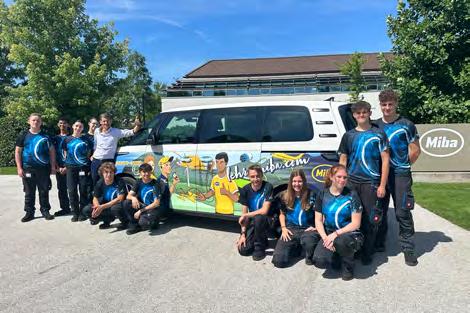
professional future. In addition, the "Dual Academy" offers a form of training program that allows for a shortened apprenticeship after the high school has already been completed.
“It’s never too late to learn something new.” This is the motto behind second-chance apprenticeships. Through this successful training model, employees in production or production-related areas have the opportunity to gain a higher qualification as certified metalworkers. More than
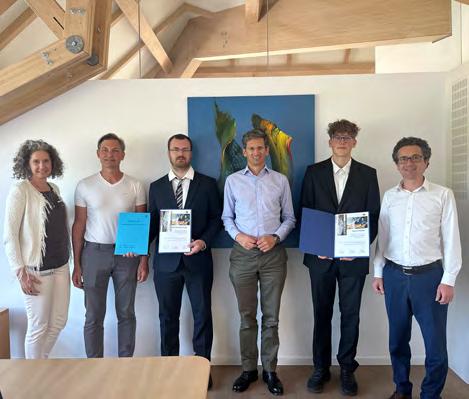
50 employees in Upper Austria have already completed the program and thus earned an apprenticeship certificate. Completing the second-chance apprenticeship is also a special achievement because the training takes place alongside regular work. It is fully funded by Miba. The sixth round of the program is currently underway, with seven men and two women participating.
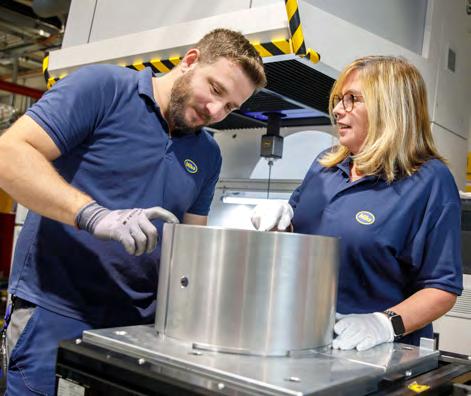
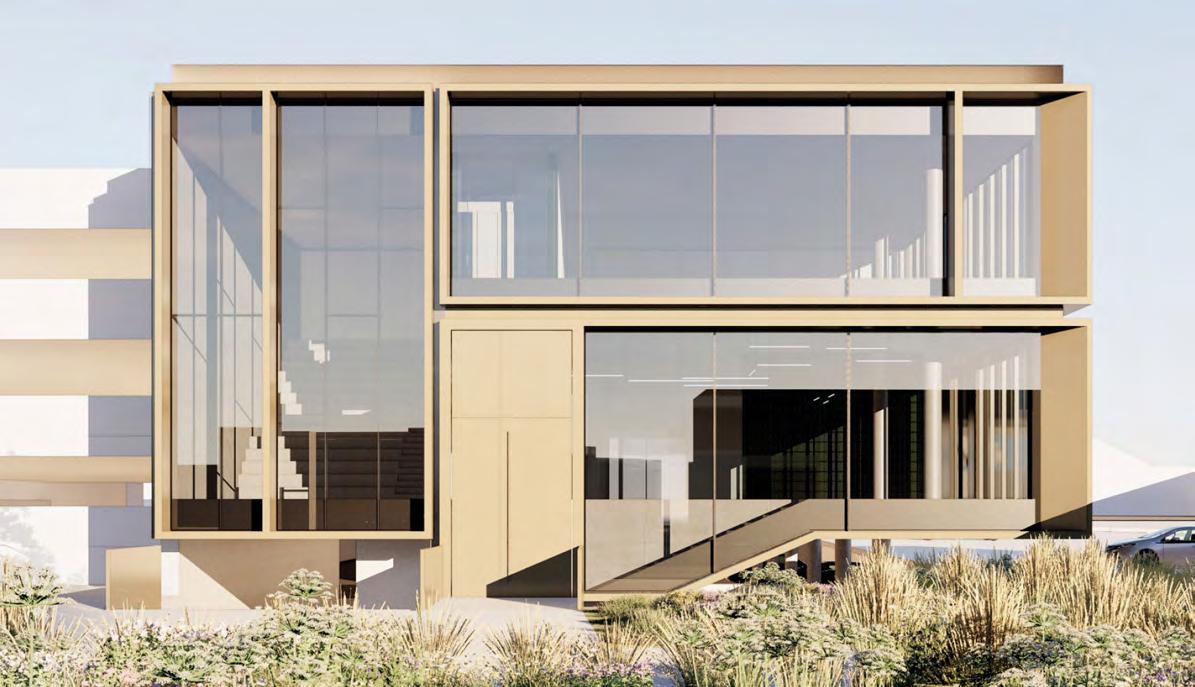
In 1927, Franz Mitterbauer laid the foundation for Miba’s success in Laakirchen. Today, not far from there, Base 27 is taking shape as a modern training and development center designed to lay the foundation for a successful professional future for our apprentices and skilled workers. Miba is investing EUR 12 million in the building, which is scheduled to open in the fall of 2026.
The skills of our apprentices and skilled workers have always been a key component of Miba’s success, and they will continue to be so in the future. Base 27 is therefore designed in such a way that the training and development programs for our skilled workers can flexibly address constant technological change, advancing automation and digitalization, and new forms of collaboration and learning. Spread across three floors, the facility will feature not only rooms for basic mechanical and machine technology training but also CNC, CAM/CAD, and welding workshops, as well as a mechatronics lab. Together with state-of-the-art machinery, this will constitute a training environment that effectively prepares employees for their daily work in our production facilities. Additionally, there will be a spacious auditorium for events, areas for small-group work, lectures, or workshops, and a hands-
on lab equipped with 3D printers and laser welding machines, which can also be visited by school classes as part of career orientation days. The spatial concept has been optimized to provide nearly 3,000 square meters of usable space for learning, exchanging ideas, and hands-on experience.
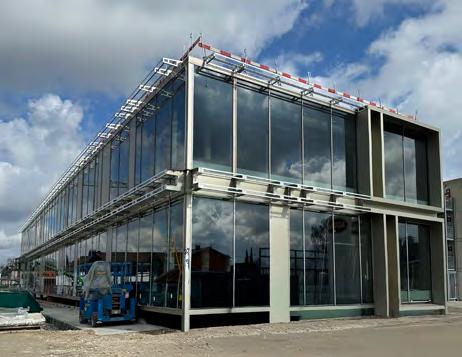
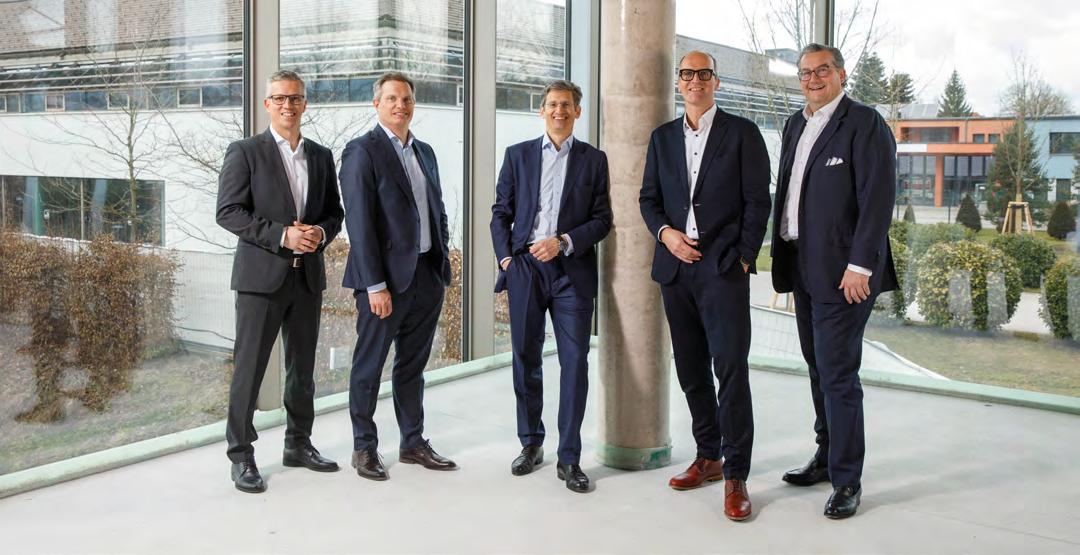
The concept behind the architecture and design of Base 27 was developed by internal and external experts and also incorporates requirements that emerged from a broad discussion process with the future users. The building’s architecture features large glass areas, deliberately offering glimpses into Miba’s daily training and work routines. The structural work phase was already completed in the fall of 2025 – once the interior work currently underway is finished, the next class of apprentices will be able to begin their training at the new Base 27.
TAKE A VIRTUAL TOUR THROUGH BASE 27
“F. Peter Mitterbauer CEO, Miba AG
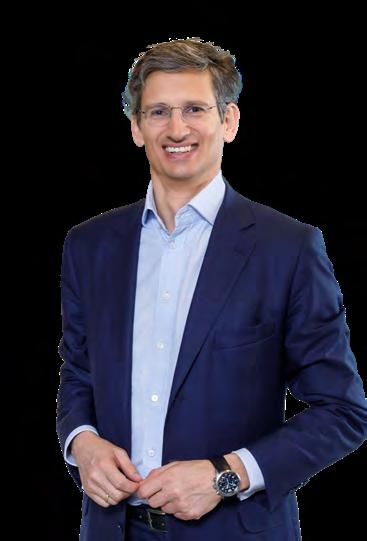
Apprenticeship training also plays a particularly important role at our production sites in Slovakia, where it is always combined with a high school diploma as part of a dual training model. By closely integrating practical and theoretical content, the goal is to prepare apprentices as thoroughly as possible for their future roles. For example, our apprentices at Miba Steeltec in Vráble alternate between spending one week on-site at the company and one week at one of two technical vocational schools in the region, with which the training team works in close coordination.
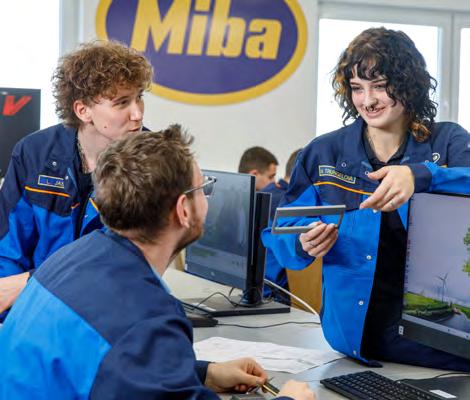
To provide its future specialists with even more modern training, Miba Steeltec has also invested in a new training facility, which opened last fall. A training workshop and a classroom of approximately 200 square meters have been created, and are already being used intensively by the current class of apprentices. Previously, their training area was accommodated in an external building – now it is located in a central location directly above the production halls. The new facilities are primarily used for apprentice training but are also available for other training courses.
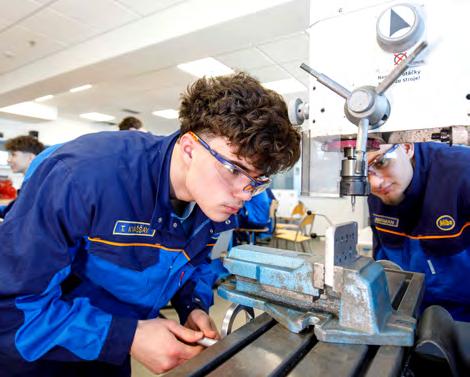
Our skilled workers have always been a cornerstone of Miba’s success. They manufacture our customers’ products to the highest standards, contributing their expertise, experience and ideas every day. We offer them
a comprehensive, customized training program, ranging from technical courses and on-the-job training to courses for team leaders and shift supervisors.
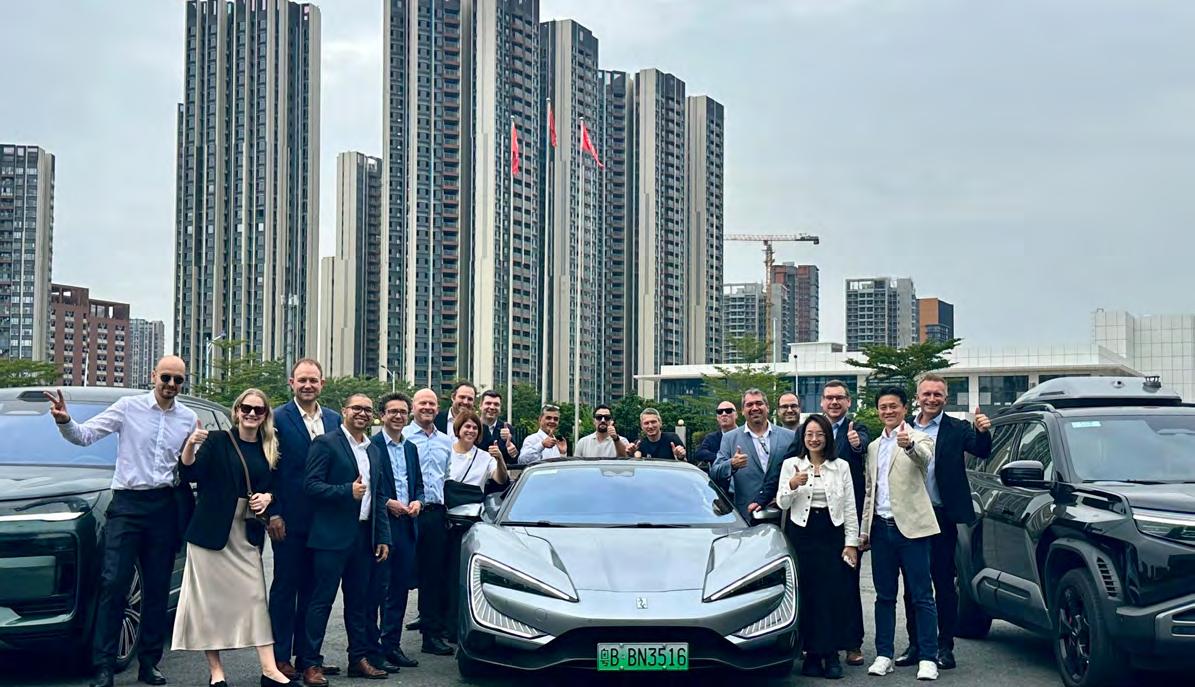
The Miba Leadership Academy (MLA) is at the heart of our development offerings for potential, aspiring, and current managers. Since 2003, our goal has been to support managers in their development and assist them in acquiring new leadership, technical and interpersonal skills. The MLA consists of three programs, the content of which is adapted to the participants’ experience and professional background:
The Business Lab focuses on communication and self-management, as well as a deep understanding of economic contexts and Miba’s business areas. Participants work with professional trainers, visit Miba sites, and engage with top management. In 2025, over 60 employees from various sites, divisions and continents completed the Business Lab.
Last year, a new program was developed and introduced: the Next Level Lab. It is specifically designed for managers who wish to further develop their skills in human resources and business management. Across three modules, they gain the tools needed to implement strategic goals operationally, even under challenging circumstances.
The Leadership Lab supports individuals in leadership roles with their leadership responsibilities. The program focuses on developing and implementing innovative, sustainable business strategies. Other key areas include supporting transformation and change, as well as building customer-focused high-performance organizations. The modules take place in Miba regions worldwide.
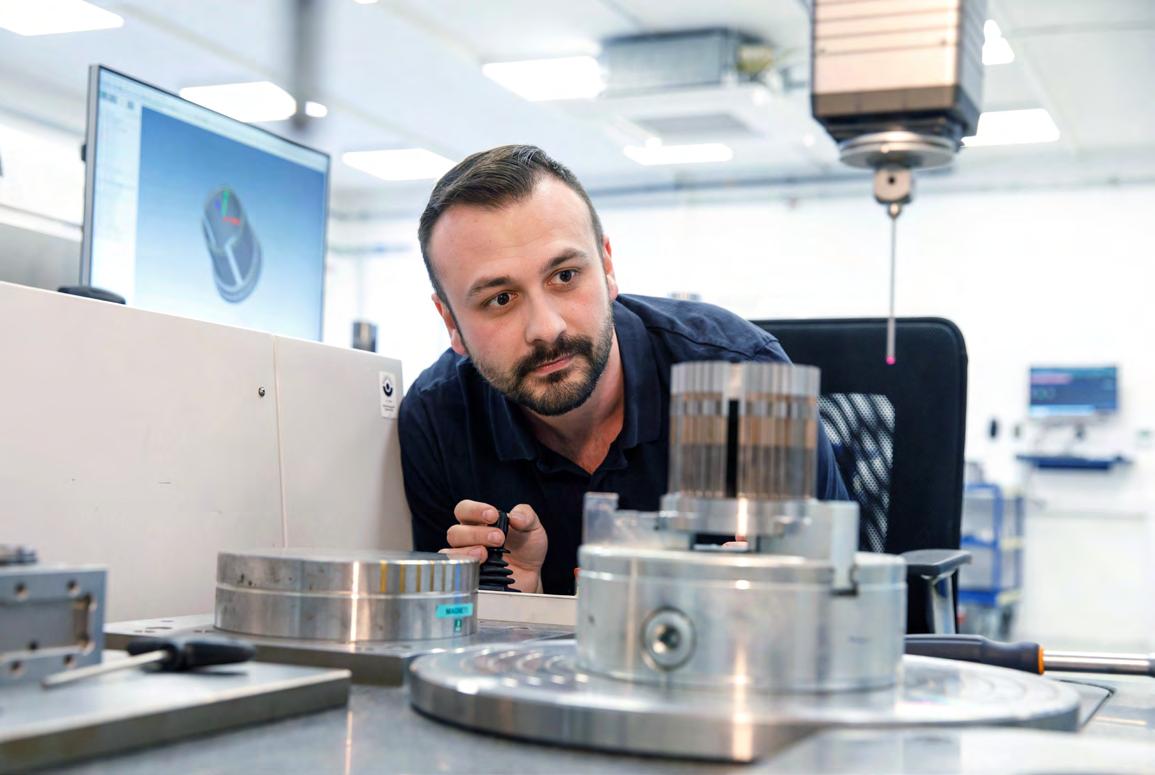
“WE ALL SHARE A POWERFUL WINNING ASPIRATION. TOGETHER, WE GO THE “EXTRA MILE” AND SUPPORT EACH OTHER TO ACHIEVE ABOVE-AVERAGE RESULTS. WE WANT TO PLAY AND WIN IN THE CHAMPIONS LEAGUE.
Martin Liebl Board Member Miba AG and General Manager Miba Friction Group
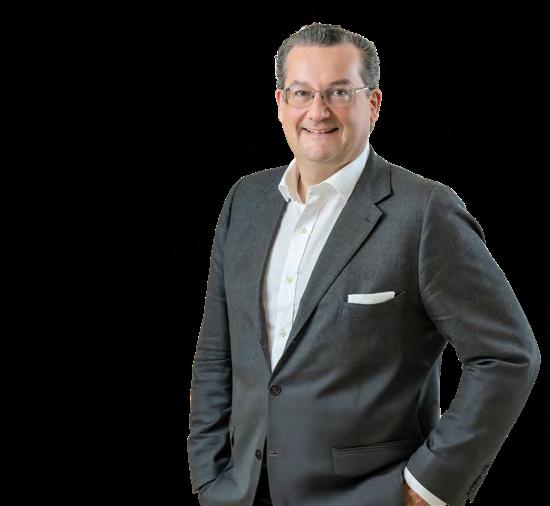
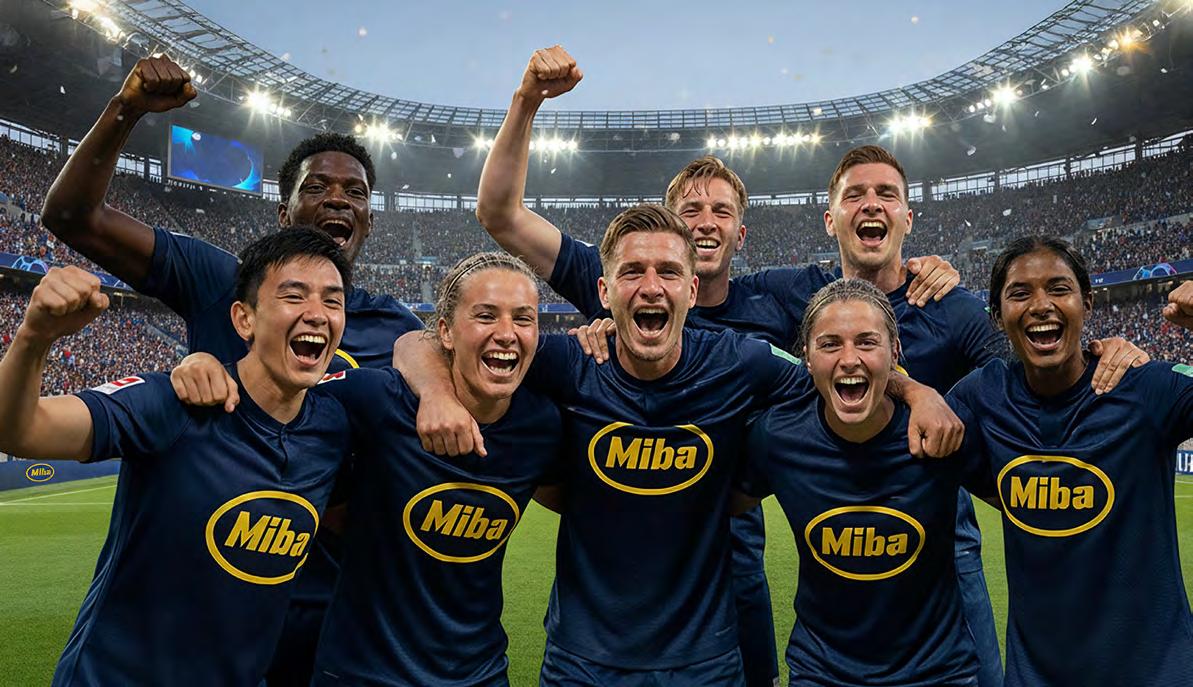
Our understanding of high performance is inclusive and accessible to all Miba employees with the honest conviction that everyone can embody this high level of performance with the right diligence and willpower, contributing together to a successful and fulfilling work environment.
Our Miba High Performance Culture has enabled us to deliver excellent and above-market results throughout the 1st century of our successful history. It also serves as the foundation for making us fit for our 2nd century and ensuring a sustainably successful future for Miba. Our aim is: Creating our 2nd century together.
We all share a powerful winning aspiration, that enables us to go the extra mile for world class results together, performing consistently above average. We are highly self-motivated and support each other in overcoming challenges in a human and efficient way guided by our positive leadership principles while pursuing a healthy way of life and managing our energy mindfully.
This strong Miba High Performance Culture enables us to own our future and share the joy of achieving great results together in order to play and win in the Champions League.
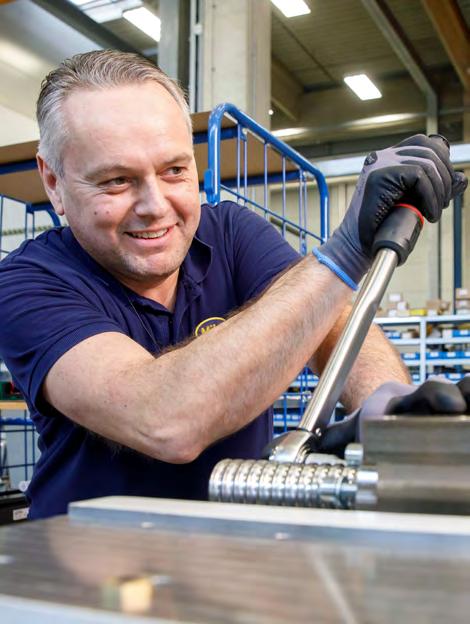
CUSTOMER FOCUS
… constantly focusing on customer’s needs, seeking to enhance their experience and exceeding their expectations.
CONSISTENT EXCELLENCE
… delivering high-quality results consistently with an attention to detail and efforts to minimize errors over time.
ACHIEVEMENT OF AMBITIOUS TARGETS
… setting, achieving and even overachieving ambitious targets.
SKILL MASTERY
… disposing and constantly developing in-depth knowledge in the areas of expertise while acting as an entrepreneur and understanding financial, operational and business concepts.
EFFICIENCY
… working faster by using fewer resources while continuously optimizing the performance.
INNOVATION
… being highly able to innovate and implement new ideas.
SELF-DRIVENNESS AND RESILIENCE
… being self-driven and resilient in headwinds to perform at one’s best.
ADAPTABILITY
… adapting quickly to change and focusing on constant self-improvement.
WORK ETHICS
… having strong work ethics including a can-do attitude, managing time effectively, being willing to walk the extra mile and responding and reacting quickly.
PROACTIVE PROBLEM-SOLVING & DECISION-MAKING
… identifying and solving problems before they escalate and making the right decisions in a human way.
SELF-REFLECTION
… being self-reflective and proactively seeking feedback.
EXCESSIVELY LONG WORKING HOURS
… may occur to be necessary but are never the only proof of high performance.
MICROMANAGEMENT
… is not expected while being familiar with details, being well prepared and knowing your numbers is.
PEOPLE PLEASING
… and unconditional obedience usually do more harm than good. “Clarity is kindness” and “courage over comfort” - based on these two principles an open and honest feedback in a respectful manner and telling the (maybe) uncomfortable truth are key.
WORKING DURING WEEKEND, VACATION AND WHILE BEING SICK
… may occur to be necessary in specific situations. Still, also high performers know about the benefits of breaks and a healthy lifestyle and master the skills of energy management.
FORMAL ATTIRE
… is not required on an everyday basis while knowing how to dress for the occasion is important.
2. KEEP IT SIMPLE!
• We clarify roles
• Sharpen responsibility and accountability
• Reduce complexity
• Focus on value-added activities
3. 100 % CUSTOMER FOCUS
• The needs of our markets and our customers are our top priority
• Service departments are there to support our business success
• We know that the less time we spend on internal meetings, the more time we have for our markets and customers
1. HIGH-PERFORMANCE AND LEARN-IT-ALL CULTURE
• Commitment to being above average, excellence and hands-on mindset. We want to play and win in the “Champions league”
• Execution – just do it
• Emphasis on collaboration and continuous learning
• Driven by curiosity (“Learn-It-All” culture)
5. GET THE RIGHT THINGS DONE IN A HUMAN WAY
• Execution and empathy are not contradictions, they complement each other
• We focus on Positive Leadership to foster trust and high performance
• We focus on the task and situation we tackle now
• We do not shy away from difficult conversations
• We address issues immediately
• We are always honest about what is happening
4. THINKING AND ACTING LIKE AN ENTREPRENEUR
• We always ask ourselves: What would I do if Miba was my own company?
• We are success seekers, not failure avoiders
• Don’t ask for permission, ask for forgiveness
• We encourage an ownership mentality
• We promote success orientation and empowerment
Our leaders play a particularly important role in the development of our employees. They are the carriers of our coaching-oriented management style, which we have already practiced in the past and continue to develop with elements of positive leadership for the future. In this way, we want to meet the requirements of new ways of working in a fast-moving and complex environment. The Positive Leadership approach is based on positive emotions and focuses on activating the positive energy of our employees, thus promoting their intrinsic motivation. By making feedback an integral part of our work and focusing on the strengths of each and every individual, we are developing our corporate culture further. This enables us to grow as individuals, as teams, and as a company.

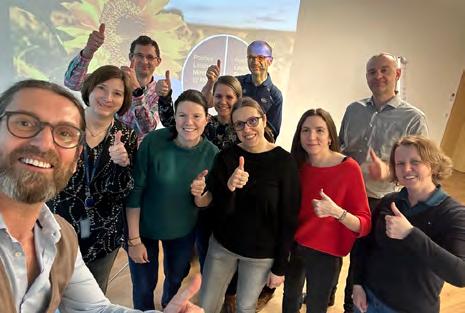
The Miba Forum in Laakirchen is our company’s headquarters and center for meeting customers, learning, and innovating. It is a place to come together, exchange ideas, and work together. With its open architecture, the building is designed to promote creativity and innovation and offer a suitable environment for every work situation with more than 4,000 square meters of office areas, meeting and training rooms, areas for intensive teamwork, retreats for individual work, and generously designed café areas. Architecturally, the Miba Forum is a modern interpretation of the square farmhouse that is widespread in Upper

Austria. It, thus, combines our regional roots with the spirit of innovation that is deeply rooted in our corporate culture.
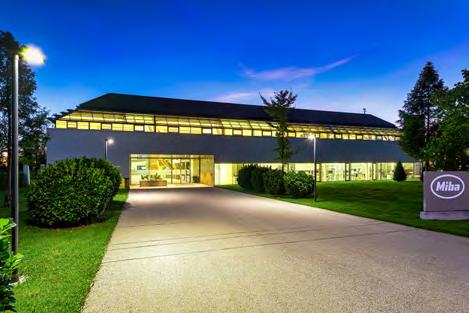
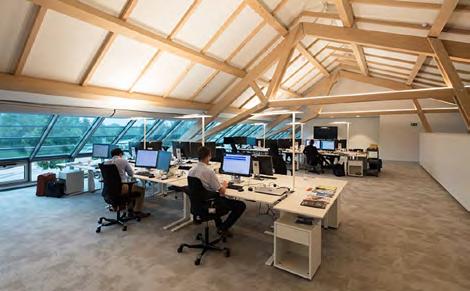

People simply achieve their goals better together. That’s why at Miba we collaborate globally, across national borders, departments and business units. We are confident that our broad spectrum of diverse expertise, experiences, backgrounds and perspectives is one thing above all: a driver of innovation and the highest product quality.
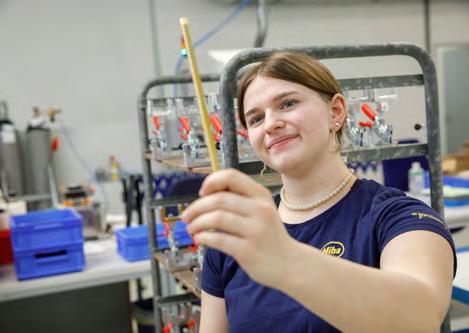
We are committed to flat hierarchies, a culture of open dialogue, rapid decision-making processes, and a management culture characterized by positive leadership. In this way, we aim to inspire our employees to strike out in new directions, and act as pioneers to develop new solutions for our customers.
27 PERCENT
Percentage of women at Miba worldwide (Fiscal Year 2025/26)
YEARS
as of January 31, 2026
YEARS
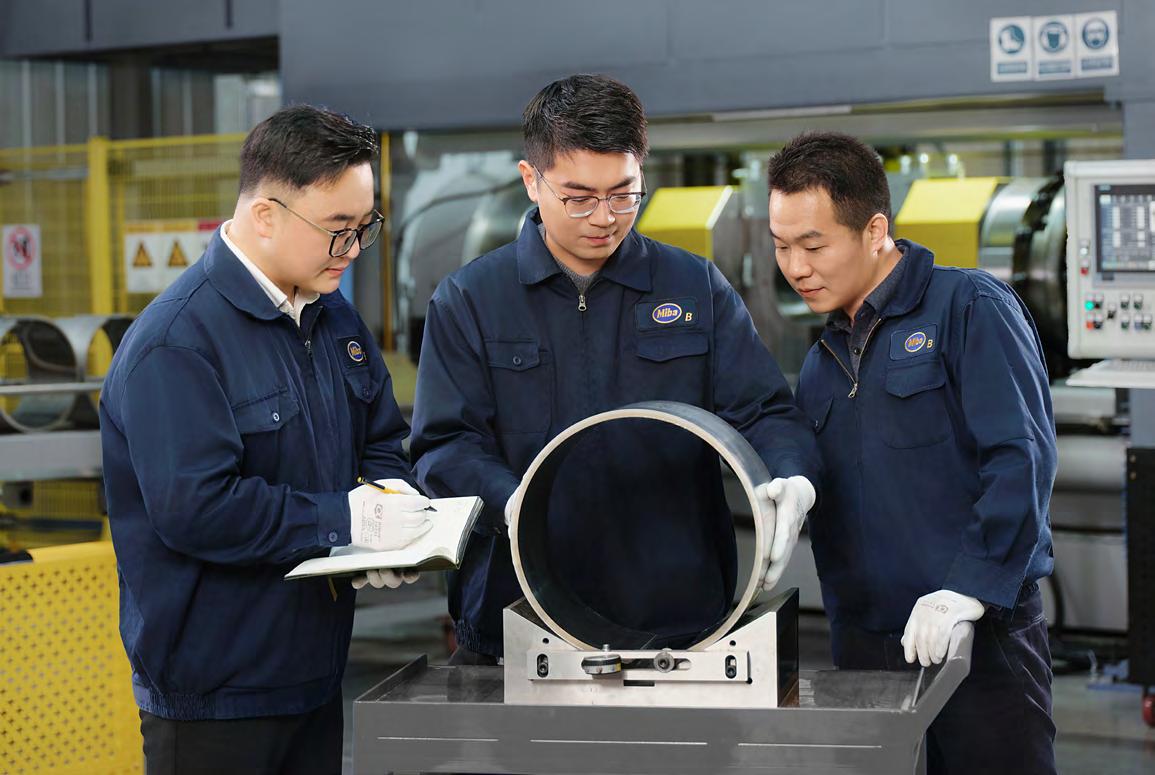
“WE’VE ALREADY WON IF EVERYONE AT MIBA ACTS LIKE IT’S THEIR OWN COMPANY. TOGETHER, AS A GLOBAL TEAM, WE WANT TO SHAPE THE FUTURE AND TAKE RESPONSIBILITY.
Christoph Ederer Board Member Miba AG and General Manager Miba Bearing Group
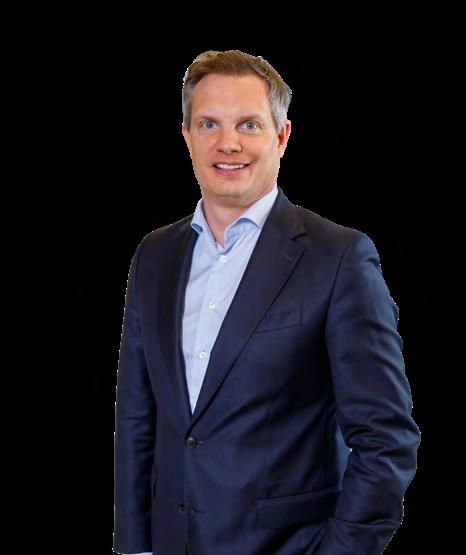
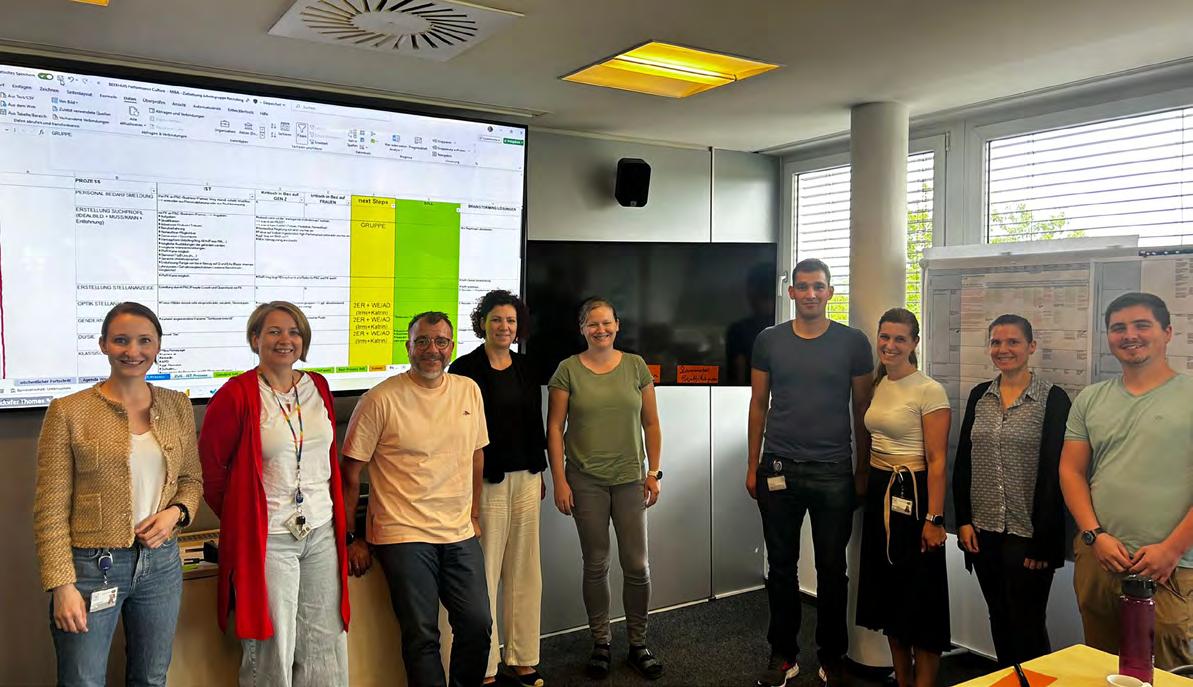
In 2027, Miba will celebrate its 100th anniversary. To shape our company’s successful path into the second century of its history, we must make the best possible use of the potential in a labor market characterized by changing values, expectations and success factors. The “Fit for our 2nd Century” initiative, launched last year for Miba’s Austrian locations, aims to show how we can succeed.
BOTTOM-UP APPROACH: 28-PERSON TEAM WILL GENERATE IMPETUS
The initiative deliberately follows a bottom-up approach, with the impetus coming directly from a 28-person team drawn from various Austrian Miba locations. In three working groups, the team is addressing the most important core topics:
Recruitment: What do job postings and recruitment processes look like when they take into account the diversity of the labor market, appeal to women and younger generations, and do not systematically exclude any groups?
Talent and potential: How can we foster talent individually and remain attractive as an employer while
taking into account different patterns in career development among women and men? Ultimately, it is also about offering employees long-term prospects and retaining them within the company.
Generations: How can we meet the needs arising from the life stages, development, and career patterns of different generations?
In the first phase of the initiative, which was completed in the fall, there were numerous discussions with employees focusing on gaining a clear picture of the status quo: What motivates women and younger generations at Miba, where are the areas for action, and where can we become more open and attractive? This led to the development of a concrete plan with responsibilities and measures which is now being implemented at Miba’s locations in Austria, while plans are underway to extend it to the remaining Miba regions around the world.
CREATING TOGETHER describes what cooperation means for Miba – within our company as well as with our customers and partners. At Miba, team spirit meets innovative spirit.
For us, the spirit of innovation means CREATING with ideas. We want our work to contribute to greater sustainability. And we want to take responsibility for our employees, society, and the environment. This requires one thing above all: people who want to make a difference. Our high-performance culture and our strong values create the conditions for this.
Our team spirit is the driving force that inspires us and drives us forward. We all have a wealth of expertise, experience and ideas. But we know that TOGETHER we are always stronger than as individuals. By exchanging ideas with others, we can learn from their experiences and take on board their suggestions. Every idea and every talent counts in driving Miba forward together.
CREATING TOGETHER also describes the close cooperation with our customers and partners. Together with our customers, we develop and produce “Technologies for a cleaner planet” – solutions for the efficient and clean generation, transmission, storage, and use of energy. Together with our partners, we are committed to projects in education, social issues, and culture. We see this as an important contribution to taking responsibility for society.


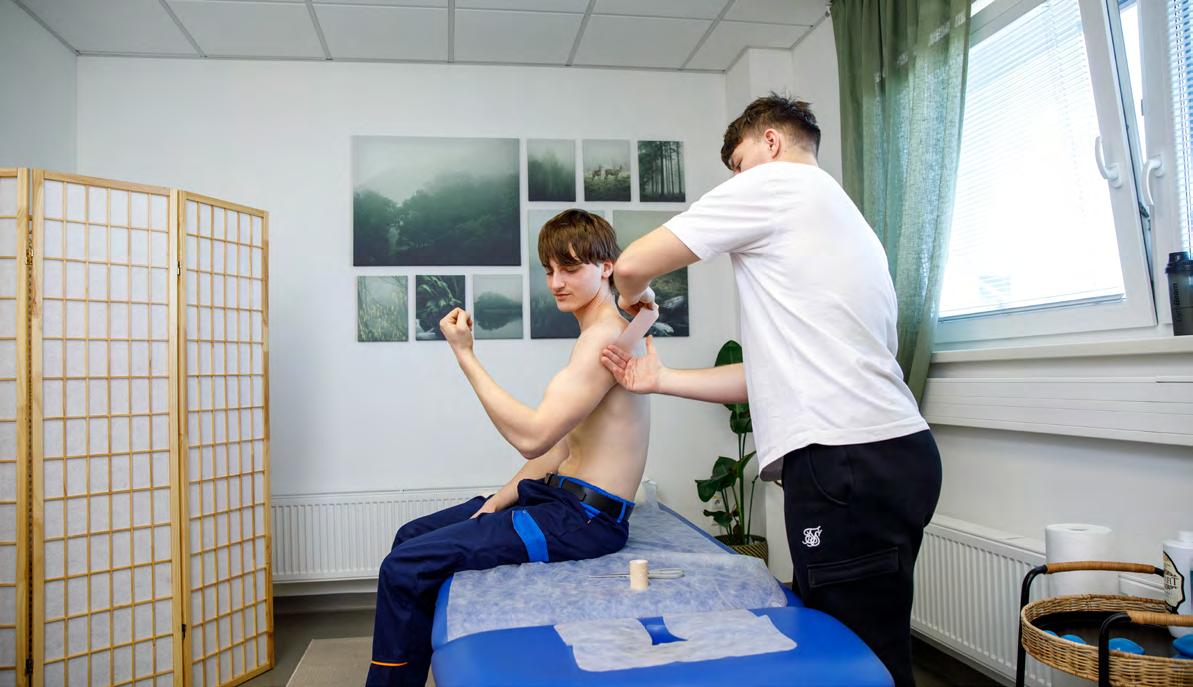
At all Miba locations worldwide, we place a special focus on the health of our employees. This goes beyond occupational safety. Through a wide range of initiatives, we also aim to promote the overall health and fitness of everyone who works with us.
One example of this is the new physiotherapy center and the new health center through which Miba Steeltec in Vráble, Slovakia, provides its employees with a comprehensive range of services. A physical therapist and a doctor offer appointments several days a week, which can be easily booked via an online app. This has a huge advantage: Employees at the site can undergo preventive checkups or therapy sessions right at their workplace – saving them time and reducing absences from work. Additionally, the new offering is an important measure for reducing long-term sick leave. It has been shown that around 80 percent of these absences are attributable to musculoskeletal issues – problems that can be effectively addressed through physical therapy.
Miba’s other locations worldwide also offer their employees a wide range of fitness and health programs. These include training programs on how to work in

production in a way that is gentle on the body or on the correct sitting posture at a desk. In addition, initiatives such as first-aid courses, blood donation sessions, and special event days featuring health checks and preventive screenings were offered repeatedly at our locations last year as well. Our locations in India marked International Yoga Day with sessions on stress reduction, mindfulness, and increased flexibility – as a contribution to physical and mental health. In addition, there are many recreational sports activities, such as the “Miba in Motion” program in Upper Austria. Our Miba teams are also driving sports initiatives internationally: We have participated in various races in Austria, Germany, the U.S. and Brazil. Other outdoor activities, such as ski days, mountain hikes, team walks, and cycling groups and challenges in Slovenia, Austria, and Slovakia, further highlight our broad commitment to sports. And in India, we organized badminton, cricket, and chess tournaments as well as a Sports Week last year.
Our Environment, Health and Safety (EHS) teams at all locations worldwide are constantly developing measures to make the work environment even safer, particularly in production areas. With success, as current results show: With an accident rate (number of accidents resulting in more than three days of absence per 1,000 employees per year) of 7.6 in the past fiscal year, Miba is well below the industry average of 17.5. We view strengthening knowledge and safety awareness among our employees as one of the key factors in accident and injury prevention. That is why we rely on comprehensive training measures and regular exchange of experiences – including cross-site – to learn proactively. In addition to wearing the correct personal protective equipment (PPE), infrastructural measures are equally crucial. For example, the installation of sensors in forklifts and special LEDs in hazardous areas helps protect employees in the production halls.
7.6
17.5
average 2025
Work-related accidents (resulting in more than 3 days of absence) per year per 1,000 employees
Last year, across the entire Miba Group – at both international and Austrian locations – we once again demonstrated the importance of celebrating together, cultural diversity, and camaraderie. Celebrating together and participating in shared leisure activities foster our team spirit and cohesion. Last year, these activities ranged from traditional country-specific celebrations to company-wide events that strengthen team spirit and community. In Upper Austria, for example, these include joint visits to movie theaters, concerts, and basketball games. Miba Sinter Austria and Miba Gleitlager Austria hosted a summer party, while Miba Resistors Austria organized the traditional card game tournament, a creative exhibition, and a darts tournament.
In India, traditional festivals such as Holi (the Festival of Colors), Diwali (the Festival of Lights), and Christmas were celebrated with great enthusiasm. In Brazil, the traditional Carnival and the national Children’s Day provided opportunities for celebration.
The teams in the U.S. celebrated Thanksgiving, Halloween, and Christmas with local customs and great enthusiasm. Large Christmas parties were also organized at many locations, often accompanied by a raffle to benefit social projects. And at the traditional intergenerational Christmas party in Laakirchen, our apprentices, employees celebrating anniversaries and retirees came together again in 2025 to kick off the quietest time of the year together.
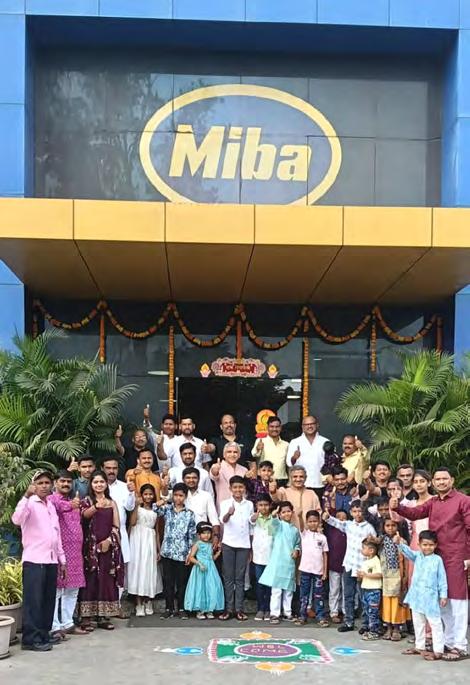

As a family-owned company, Miba places particular importance on balancing family and career. Since 2014, we have been operating the Miba Krabbelstube daycare center for children between the ages of one and three, located right next to our plant in Laakirchen. The center can be used by all employees at our Upper Austrian locations. It can accommodate 20 children.
In addition, last summer we organized a four-week summer vacation program for the eleventh time. A total of 160 children between the ages of four and 12 participated. The Miba Forum and its park in Laakirchen were transformed into a place for fun and games. The children also visited the Miba apprentice workshop, the Miba FutureLabs, where they could try out digital technology, and the Swans Gmunden professional basketball team.

Last year, we also organized the first “Miba Youth Entrepreneurship Week,” a special program for 13- to 15-yearolds. For a week, they worked with coaches from the startup segment and mentors from Miba to develop business ideas, build prototypes, and present their ideas to a jury.

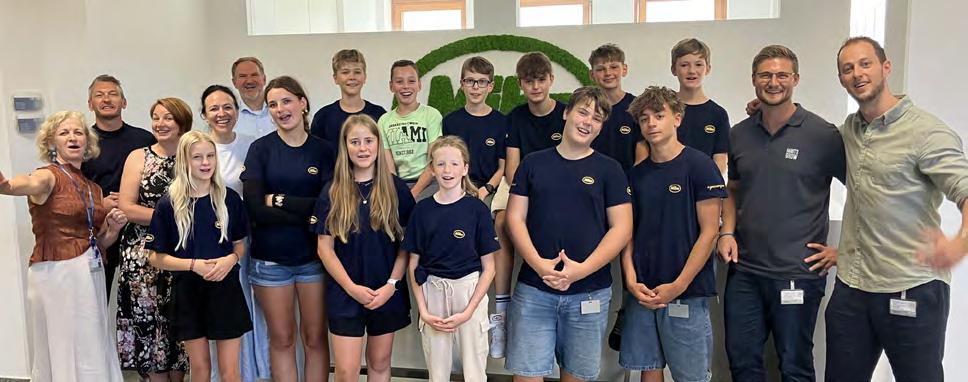
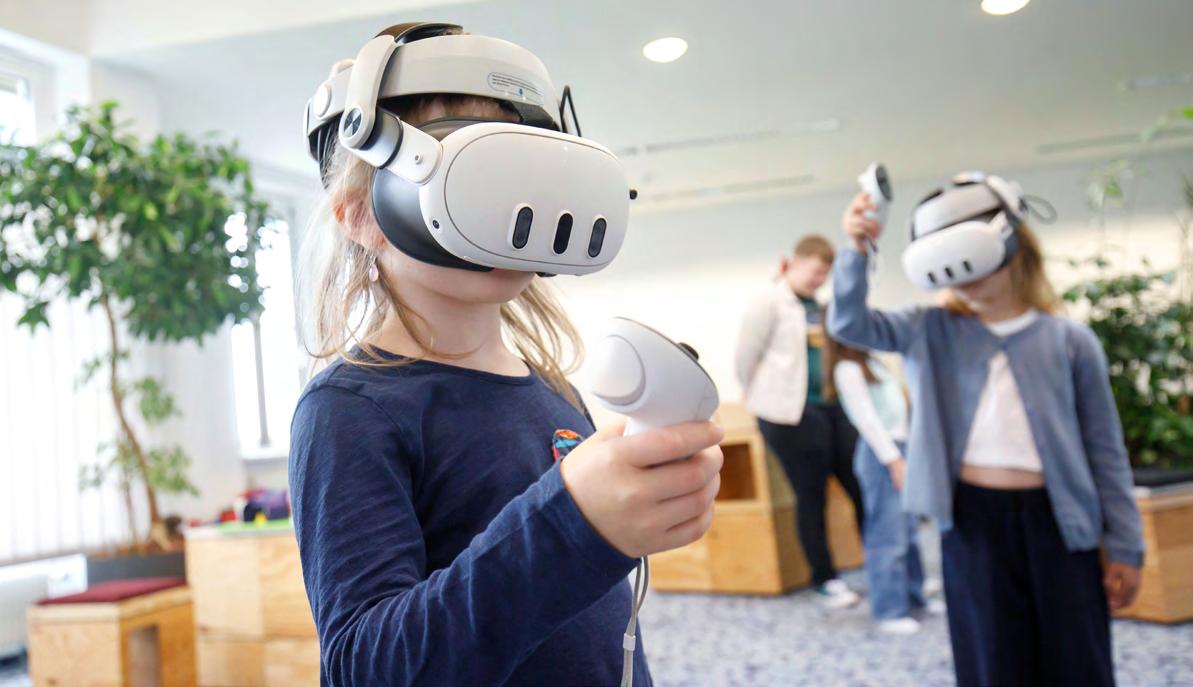
Programming robots and using them to solve various tasks, trying out drones and virtual reality headsets, experimenting with artificial intelligence and learning about its practical applications at home, creating selfdesigned objects using 3D printing with plastic, wood, or even chocolate: all this and much more can be experienced at the Miba FutureLabs. They are a hands-on workshop for exploring and experimenting with digital technologies, which demonstrates how widely these technologies are used today and will be used in the future in both personal and professional life. With the Miba FutureLabs, we aim above all to spark enthusiasm for technology among young people. We want to give them the opportunity to engage intensively and practically with its opportunities and challenges, and gain experience and knowledge to actively help shape the future. The Miba FutureLabs are fully funded by Miba and operated in collaboration with “OTELO – Open Technology Lab.”
MORE THAN 1,000 STUDENTS CAN PARTICIPATE EACH YEAR
The program is therefore primarily aimed at children and teenagers. A three-hour program is offered for school classes, with Miba covering the costs and tailoring the content to the age and prior knowledge of the
participants. Interest from schools is high, with more than 1,000 students able to take advantage of the program each year. The Miba FutureLabs will also be open during summer break for selected groups and will offer workshops, for example as part of the KinderUni (Children’s University). The Miba FutureLabs are located in the center of Laakirchen. They currently comprise seven labs, in the form of interactive stations. But that’s not all: the program is set to expand soon with new labs that will demonstrate how technology can contribute to sustainable, clean energy.
MORE INFORMATION AND REGISTRATION FOR SCHOOLS: (in German language)
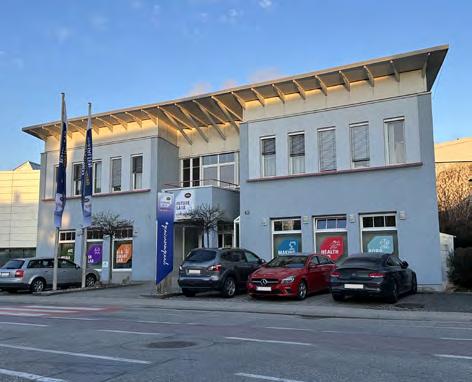
In the Robo Lab, programming and controlling robots requires coordination, logical thinking, and spatial awareness.
The Media Lab focuses on creativity and imagination when producing images, videos, and music.
In the Health Lab, tools are explored with full physical effort, with which health and fitness can be viewed from new angles.
The Mixed Reality Lab merges the real and digital worlds and shows where virtual and augmented reality can be used.
The Mobility Lab demonstrates the impact that drones and other technologies could have on the world of mobility and transportation in the future.
The AI & Smart Lab invites you to experiment with chatbots and other AI-based technologies and shows their fields of application.
In the Making Lab, ideas transform into finished parts–whether made of chocolate, plastic, or wood, whether 3Dprinted or laser-cut.
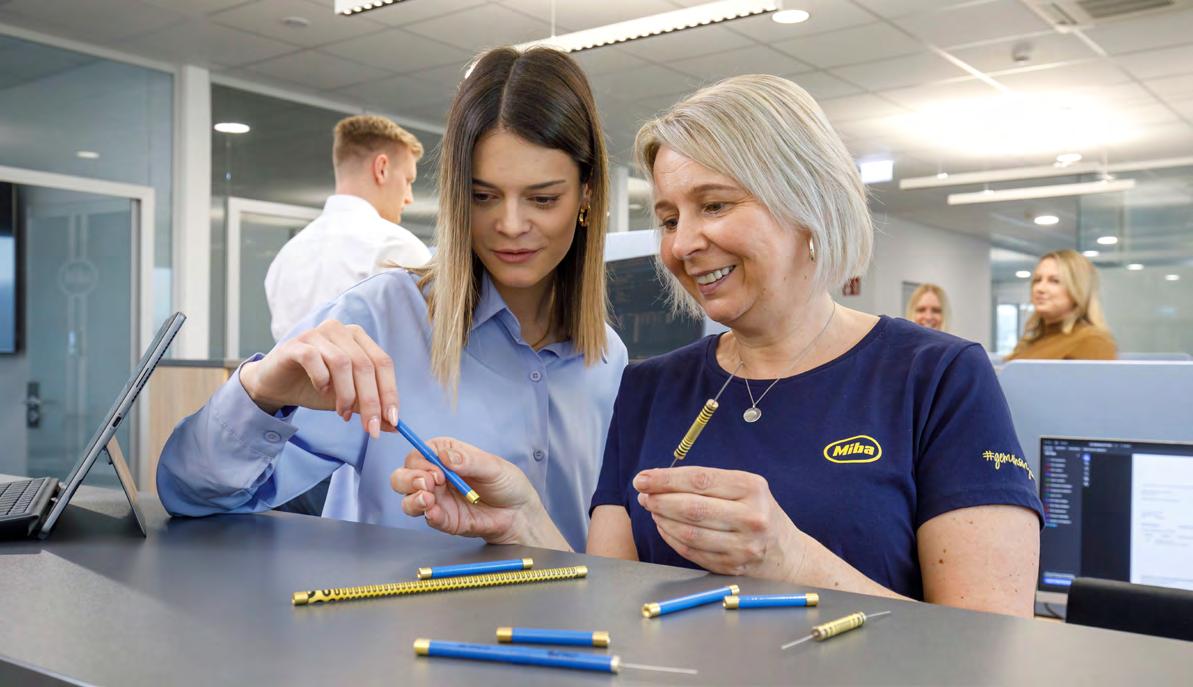
Careers in technology and the natural sciences offer many career prospects and above-average income opportunities. Nevertheless, far too few women still work in the so-called STEM fields. Changing this is the goal of the MINTality Foundation. Miba and other Austrian companies and interest groups have joined forces in the Foundation at the initiative of Therese Niss, Managing Director of Mitterbauer Beteiligungs-GmbH. The goal is to inspire girls and young women to pursue careers in technology and the natural sciences, and to support their entry into STEM professions. As part of our partnership, in 2025 we supported the “Unternehmensschuljahr” (company school year) project, among other initiatives. In this project, sixth-grade students from Scharnstein Middle School worked together with mentors from Miba on STEM-related projects, gaining valuable hands-on experience in the process. The mentors from Miba serve above all as important role models, whose career paths are intended to encourage girls to pursue a career in the STEM field. Reciprocal visits to Miba and the school have provided many insights and opportunities for exchange. As part of
In the 2025/26 school year, we will be mentoring a group from the Franziskanerinnen Middle School in Vöcklabruck.
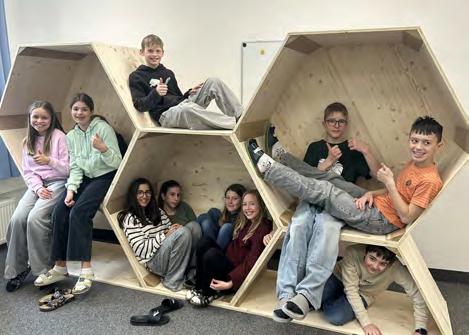
“WE NEED TO IGNITE GIRLS’
MORE INFORMATION ABOUT WHAT MINTALITY OFFERS: (in German language)
INTEREST IN TECHNOLOGY EARLY ON AND KEEP IT ALIVE OVER TIME. THAT’S WHY IT’S ESSENTIAL TO GIVE THEM REGULAR EXPOSURE TO TECH. THIS MATTERS BECAUSE STEM CAREERS OPEN DOORS TO EXCITING OPPORTUNITIES AND OFFER EARNING POTENTIAL WELL ABOVE AVERAGE.
Therese Niss, Founder of the MINTality Foundation and Managing Director of Mitterbauer Beteiligungs-GmbH
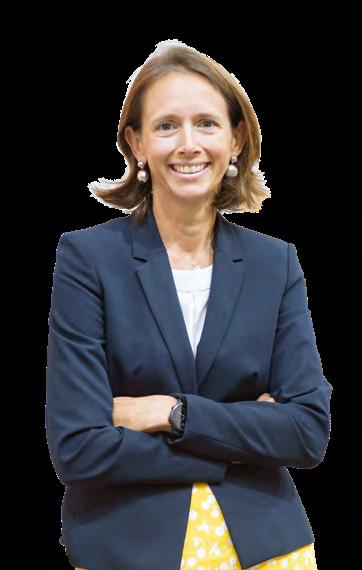
FOR GREATER EQUALITY OF OPPORTUNITY
Equal opportunity in the education system – that is the goal of “Teach for Austria.” The initiative focuses on schools located in disadvantaged areas. College graduates work there as temporary teachers, providing additional support to the students. Schülerinnen und Schüler.
EDUCATION PROMOTES INTEGRATION
With START, we are supporting an initiative that awards scholarships to committed students with a migration background. A comprehensive educational program and individual advice are designed to support these young people in their personal and professional development.

SCIENCE FOR CHILDREN
The KinderUni Upper Austria offers exciting workshops and excursions for five to 15-year-olds during the summer vacations. The children gain new insights into science, technology, and culture. We support the program as a general sponsor and regularly welcome groups.
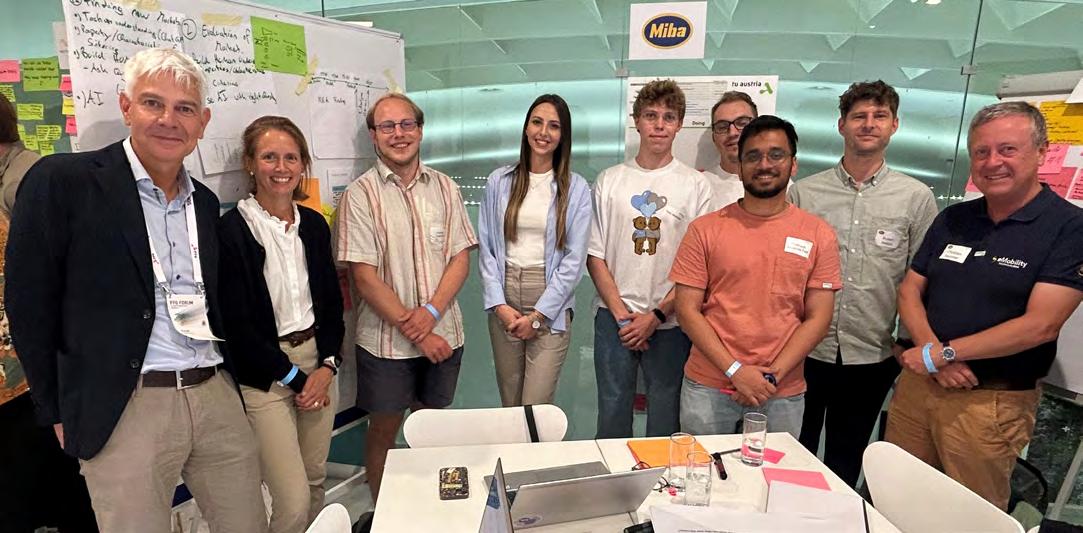
Student teams working for 24 hours on a real-world challenge from industry and then pitching their ideas: This is the TU Austria Innovation Marathon, which Austria’s three technical universities once again organized jointly this fall. Miba also participated by providing a challenge for one of the teams, engaging in intensive discussions about the innovative solutions and offering practical feedback. In addition, “our” team visited Miba Sinter Austria in Vorchdorf a few weeks later.

In this program, young adults mentor students aged 13 to 19 who are looking for an apprenticeship or a high school. Miba employees volunteer as mentors for this valuable initiative. The company itself provides financial support.
The CAP educational initiative enables pupils to complete a fully-fledged apprenticeship as a mechatronics technician alongside upper secondary school, which ends with an apprenticeship certificate shortly after graduating from high school. A vacation internship and management courses are also included.
The Delta Academy at the University of Leoben is a support program for selected students during their studies. The guiding principle is to support them in their career prospects and to develop the potential of responsible junior managers for companies.
In a Red Cross initiative, volunteer reading coaches accompany and support children with reading deficits as a supplement to school lessons. We support the project in the Gmunden district and welcome the reading coaches to the Miba Forum once a year.
Miba is a partner of the KAKIHE association founded by two employees. Every year, the association organizes the Five Bridges Run along the Traun River. The proceeds from the event benefit projects for a better drinking water supply in Cambodia.
We have been supporting the projects of Father Georg Sporschill SJ for many years, including the ELIJAH association. This supports Roma families and their children in Romania.
Art and culture not only enrich our everyday lives. They also inspire and promote creativity and new ideas. These are all important foundations for our innovative strength,
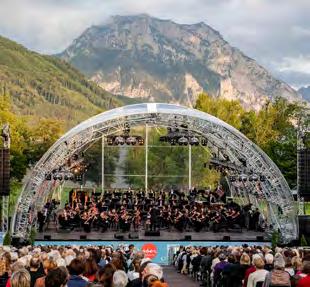
which we use to develop and produce new technological solutions for a cleaner planet.
Miba was founded in the Salzkammergut almost 100 years ago, and our company has close ties to the region and the people who live there. We employ around 2,600 people here. Especially as a family-owned company with such strong regional roots, it is important to us to support and promote special cultural initiatives such as the “Salzkammergut Festwochen Gmunden” festival. As part of the partnership, our employees also have the opportunity to attend events as part of the festival at a reduced price.
Miba supports the Salzburg Festival, which can look back on a history of more than 100 years and is now considered one of the world‘s most important festivals of classical music and performing arts. With opera, drama, and concerts, it offers a broad artistic program for which renowned artists from all over the world are invited to Salzburg.
In addition to its classical program, the traditional Vienna Concert Hall is also a venue for festivals and contemporary music as well as a stage for international jazz. It, therefore, offers an extensive program for all tastes. The promotion of young musicians is also a top priority.
The Cleveland Orchestra is one of the five largest and most important symphony orchestras in the United States – a nation in which Miba is represented by seven production sites and employs more than 900 people – the best prerequisite for actively supporting this traditional orchestra.
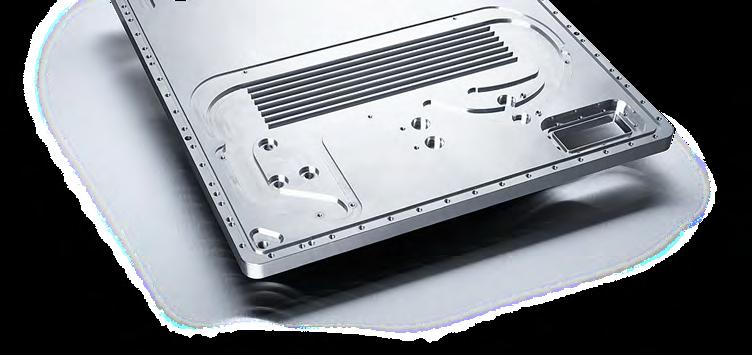
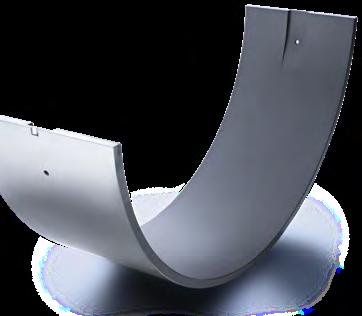
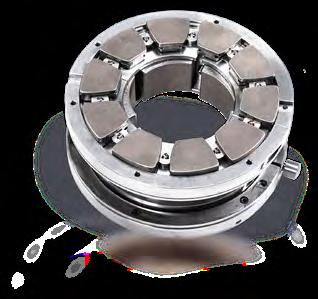
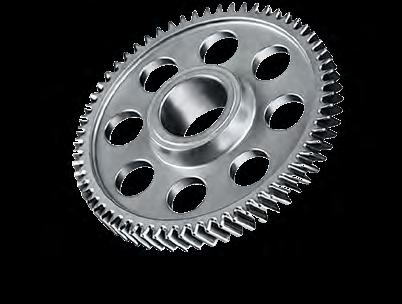
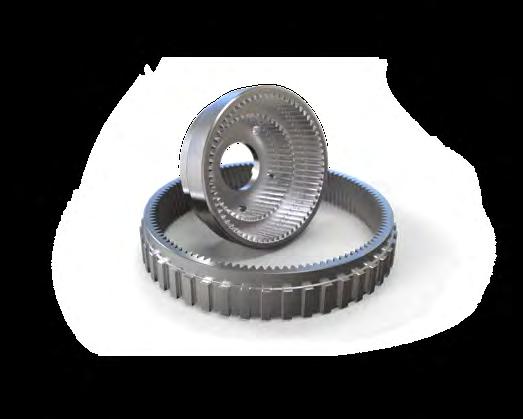
• 90 percent of manufacturers worldwide use our resistors for the power electronics in wind turbines.
• Miba bearing technology in gearboxes enables the construction of increasingly powerful wind turbines.
• Miba heat sinks keep the electronic components of wind and solar power plants at an optimal operating temperature, thereby increasing energy density and efficiency.
• The Miba industrial bearing plant in Brazil is one of the world’s three largest suppliers of bearing technology for hydroelectric power plants.
• Our resistors and heat sinks are key technologies for reducing transmission losses in high-voltage power grids.
• Our technologies optimize speed and force in clutches and brakes.
• Miba products ensure greater energy efficiency and thus lower fuel consumption in the drivetrains of cars, trucks, buses, ships, aircraft, and construction and agricultural machinery.
• Our products help reduce the installation space required and the weight of our customers’ products.
• Compared to conventional manufacturing, through the use of powder Miba’s powder metal parts reduce raw material consumption and waste.
• Miba products withstand even the most extreme loads – meaning they need to be replaced less often. This saves users money and protects the environment.
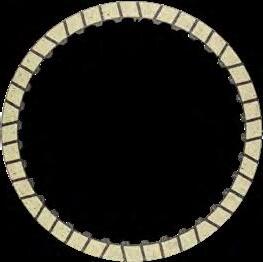
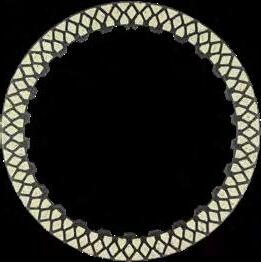
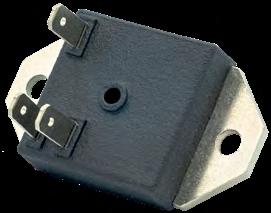
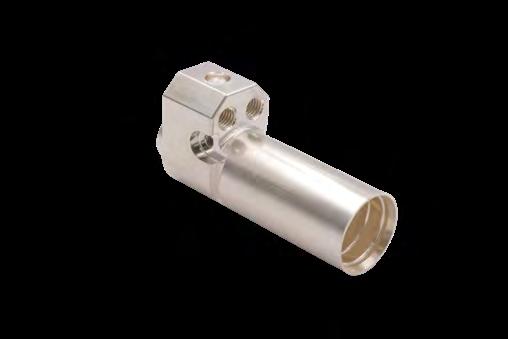
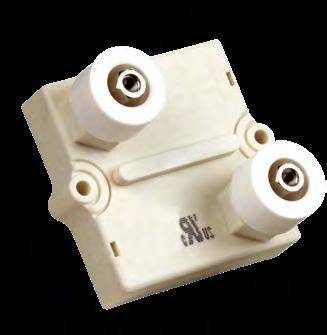




Since 2013, with its corporate mission – “Technologies for a cleaner planet” – Miba has focused on sustainability, a cleaner planet, and, as a result, a world that is even more livable. We aim to contribute to this goal primarily through our products. In addition, our company has set a target to achieve climate-neutral production by 2040.

33,000 BATHTUBS
could be filled with the water we saved.
Within a year, we were able to increase our water savings more than sixfold. In fiscal year 2025/26, we saved more than 6 million liters of water. That would be enough to fill 33,000 bathtubs with a capacity of 180 liters each. In fiscal year 2024/25, the figure was around 900,000 liters.
127,000 ELECTRIC
could be charged using the energy we saved in the past fiscal year alone.
Efficient and economical energy use is one of our most important goals. In the past fiscal year, we saved 8,935 megawatt-hours of energy. That would be enough to charge over 127,000 electric cars with a capacity of 70 kilowatt-hours.


12 LARGE SEMI-TRUCKS
would be needed to transport the amount of waste we prevented last year.
Preventing waste is a significant contribution to environmental protection. In the past fiscal year, we were able to reduce waste by 287 tons. This amount would be enough to fill 12 large semi-trucks, each with a payload capacity of 24 tons.

• Miba Sinter Austria: Reduced natural gas consumption by converting 6 sintering furnaces to glow plugs in the flame curtain.
• Miba Gleitlager Austria: Optimization of compressed air consumption.
• High Tech Coatings: Lowering the temperature to reduce heating and cooling times.
• Miba Resistors Austria: Installation of a photovoltaic system.
• Miba Cooling Austria: Installation of a photovoltaic system.
• Miba Bearings Materials: New compressor saves 20 percent energy.
• Miba Frictec: Optimization of glow plugs for lower natural gas consumption.
• Miba Sinter Slovakia: Reduced use of ceramic sintered rings saves material and energy.
• Miba Sinter Slovakia: Automatic standby mode for all presses reduces idle power consumption.
• Miba Steeltec: Utilization of waste heat from the air compressor to heat hot water.
• Miba Industrial Bearings Germany: Purchase of a particularly efficient replacement milling machine.
• Miba Fibertec: Retrofit of the steam-condensate system on the paper machine.
• MPCC Sinter: Ceramic ring reduced in size, resulting in lower energy consumption during sintering.
• Miba Drivetec India: Solar system for selfconsumption.
• Miba Engineering Center: Increased virtualization leads to reduced server hardware, power, and cooling requirements.
• Advanced Bearing Materials: Replaced HID lighting with LED lighting.
• Bearings US: Localization of purchasing.
• Miba Sinter USA: New filtration system.
• MIB Columbus: Switch to energy-saving light bulbs.
• MIB Grafton: Optimization of HVAC and hot water systems to reduce energy consumption and emissions.
• MIB Houston: Maintenance of compressed air compressors, including leak testing.
• Miba HydraMechanica: Reduction in vehicle trips.
• Miba Sinter Brasil: Conversion of curtain burners from natural gas to electric.
• MIB Brazil: Reduction in refrigerant (machines/air conditioning) and forklift gas (LPG).
• Miba Electronics Slovenia: Purchase of an electric vehicle to halve annual diesel consumption.
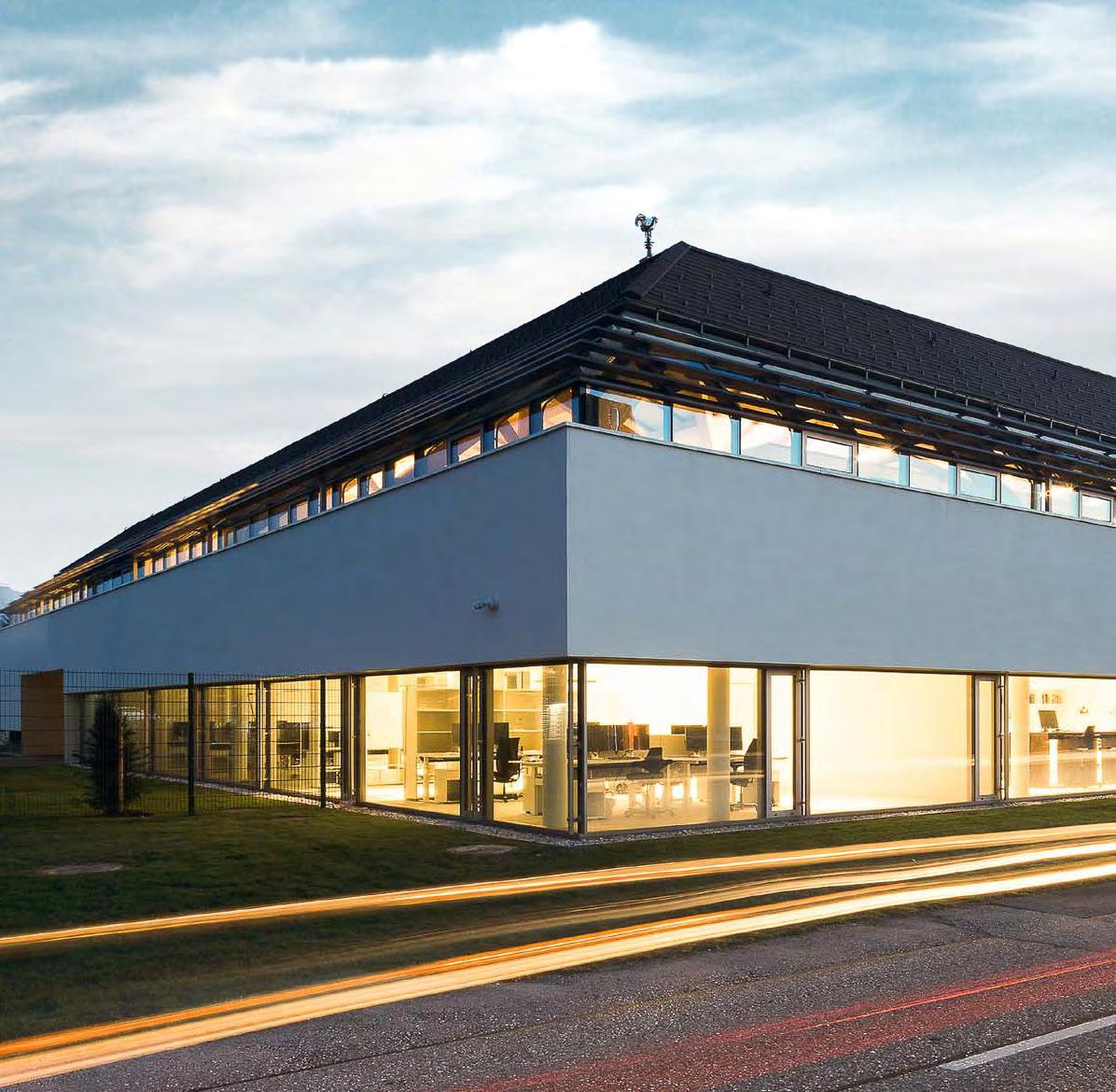
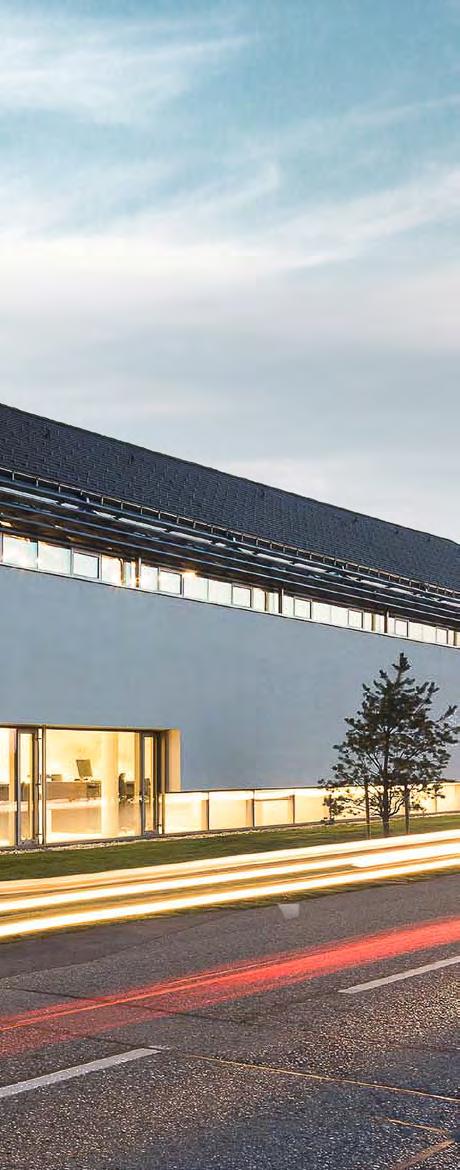
• MIBA 100 STRATEGY
• MIBA LIGHTHOUSE
• MANAGEMENT BOARD
• GLOBAL PRESENCE
• PRODUCT PORTFOLIO
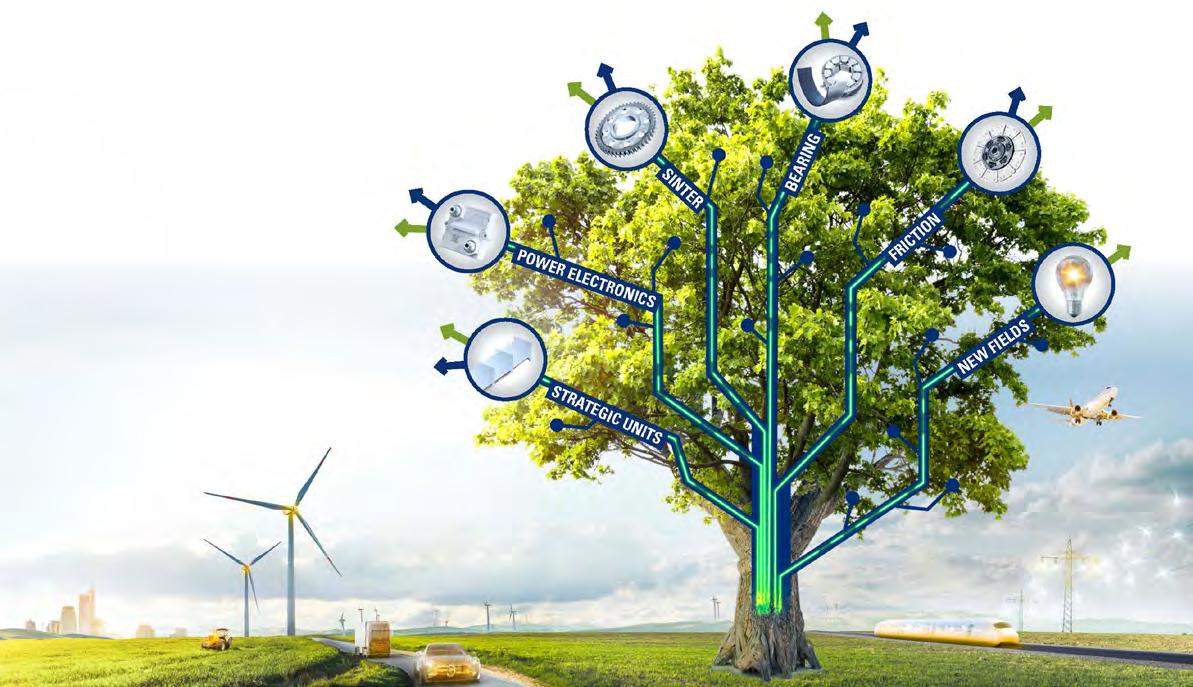
Our “Miba 100” strategy outlines our path through 2027, the 100th anniversary of Miba’s founding. It also sets the course for the second century of our company’s history. “Miba 100” is built on a strong foundation: our corporate mission, “Technologies for a cleaner planet.” We want to use our technologies to contribute to a cleaner planet. We are doing this in the interest of an even more livable world and future generations. Our mission also creates significant growth opportunities – through 2027 and beyond.
We aim to capitalize on these growth opportunities by focusing on technologically demanding, economically attractive and growing market segments across the entire energy value chain. In these segments, we strive for technology and product leadership. With Miba technologies in our customers’ applications, we want to help make the generation, transmission, storage, and use of energy even more efficient – and thus more sustainable and environmentally friendly. It is in our DNA to be a solution provider for our customers. We want to continue to proactively develop and produce solutions for their challenging tasks in close collaboration with them.
On the one hand, our growth is to come organically from our existing business segments, primarily through new products in new markets. On the other hand, Miba also intends to grow significantly through acquisitions. We are looking for companies in promising, technologically demanding niches along the energy value chain that are well established in the market, share our values and corporate culture, and want to continue growing together under our leadership.


We aim to grow by offering products for applications in technologically advanced niche markets across the entire energy value chain. This is reflected in our vision: “No power without Miba technology.”
The “Miba 100” strategy is embedded in the system of values and guiding principles that steer us in our daily work. All of these are summarized in the Miba
Lighthouse. The Miba Lighthouse provides us with direction, offers a clear focus for strategic decisions and defines the framework within which Miba operates.
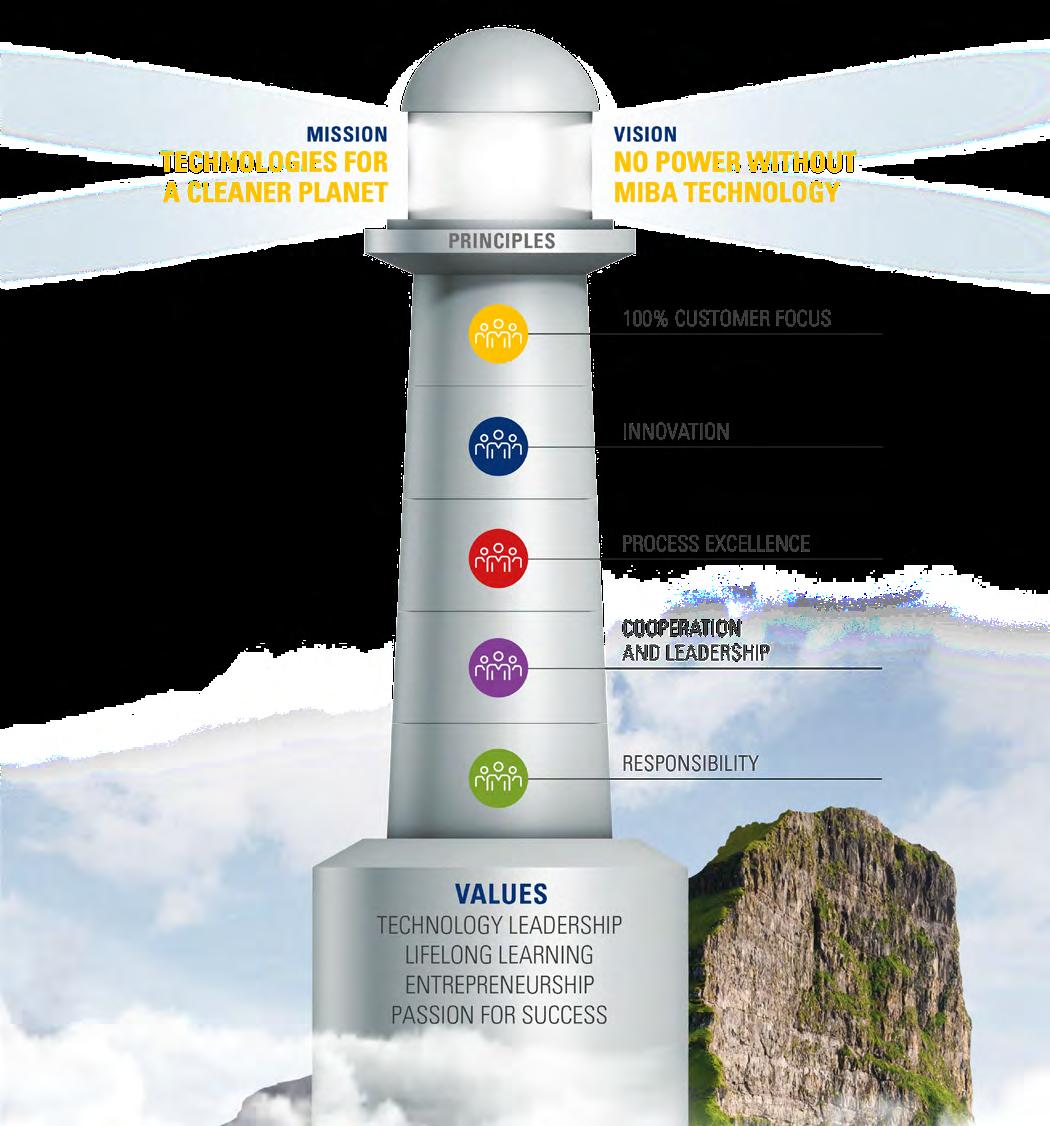
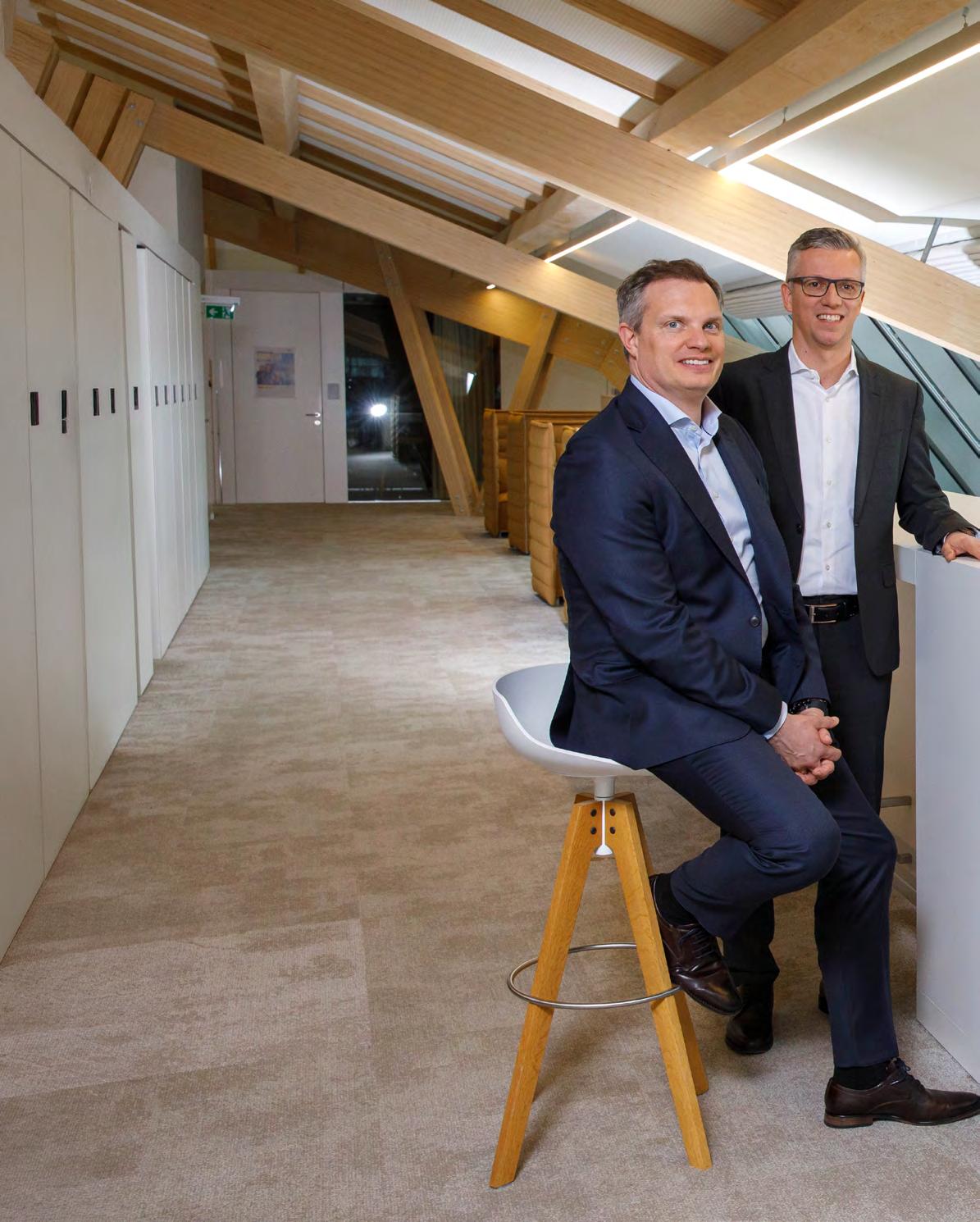
Michael Hummelbrunner CFO of Miba AG (since February 1, 2024)
Responsible for:
Finance & Controlling, IT/Digitalization, Legal & Compliance, Procurement & Supplier Management
Dkfm. Dr. Wolfgang C. Berndt
Chairman of the Supervisory Board
Independent, Member of the Supervisory Board of Miba AG since June 27, 2008
Dr. Therese Niss
Deputy Chair
Independent, Member of the Supervisory Board of Miba AG since June 17, 2018
Prof. KR Ing. Siegfried Wolf
Independent, Member of the Supervisory Board of Miba AG since June 25, 2015
Dr. Martin Brodey
Independent, Member of the Supervisory Board of Miba AG since July 14, 2022
Mag. Georg Kapsch
Independent, Member of the Supervisory Board of Miba AG since August 27, 2024
Johann Forstner
Delegated member
Member of the Supervisory Board of Miba AG since 2009
Helga Gottenhumer
Delegated member
Member of the Supervisory Board of Miba AG since 2023
DI Dr. h.c. mult. Peter Mitterbauer
Honorary Chairman
*Since February 1, 2026
Management Board for the 2025/26 fiscal year: F. Peter Mitterbauer, Christoph Ederer, Michael Hummelbrunner, Martin Liebl
Christoph Ederer Management Board Member of Miba AG (since July 1, 2023)
Responsible for:
Miba Bearing Group, Mergers & Acquisitions, Supply Chain Management
Martin Liebl Management Board Member of Miba AG (since February 1, 2020)
Responsible for: Miba Friction Group, Miba Automation Systems, Quality
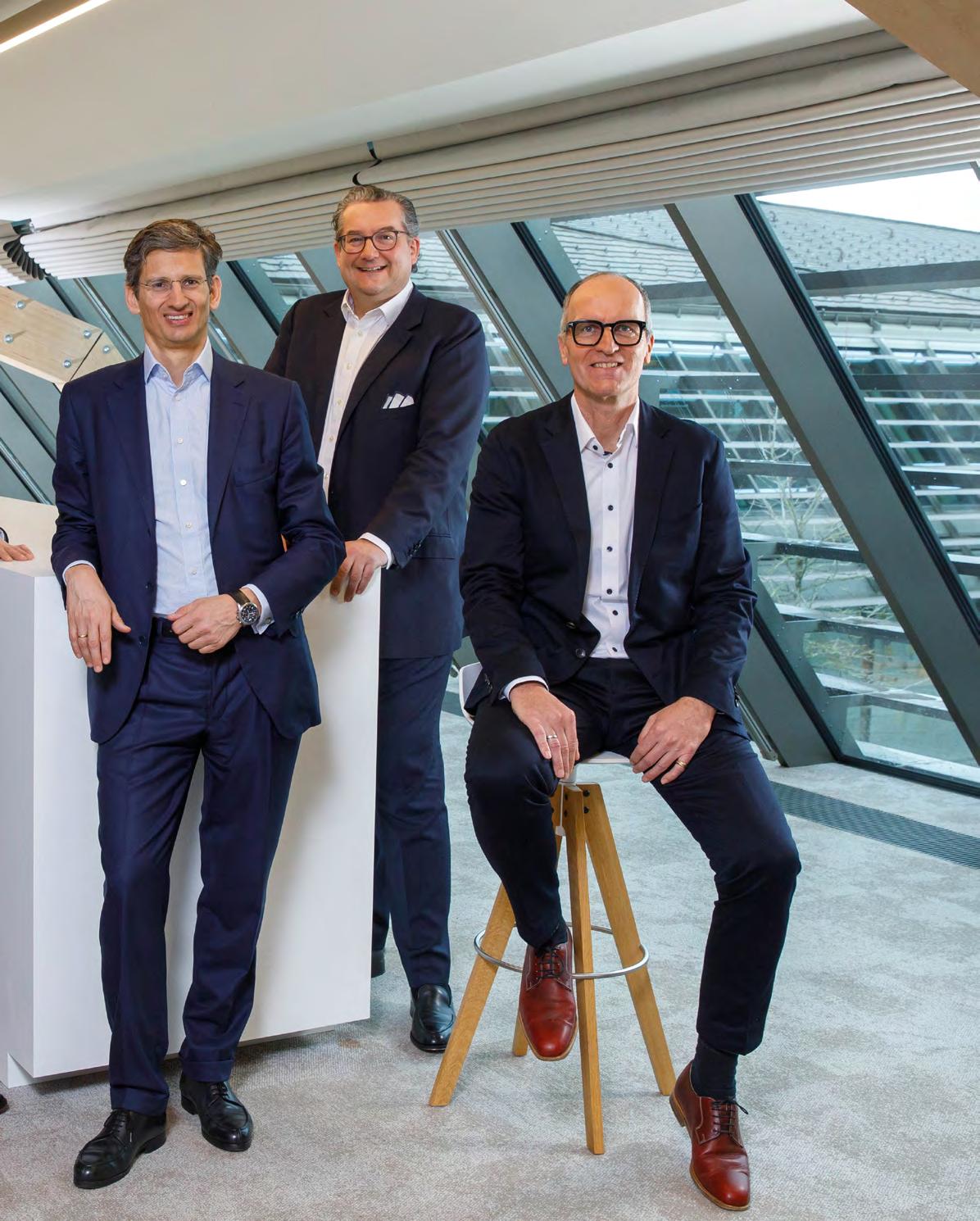
F. Peter Mitterbauer CEO of Miba AG (since July 1, 2013)
Responsible for:
Miba Power Electronics Group, Communications, People & Culture, Strategy, Innovation & Technology, Internal Audit
Steiner Management Board Member of Miba AG (since February 1, 2026)
Responsible for: Miba Sinter Group
As of April 1, 2026
Miba Sinter Group
Miba Sinter Austria
Vorchdorf, Austria
Miba Sinter Slovakia
Dolný Kubín, Slovakia
Miba Sinter USA
McConnelsville, OH, USA
Miba Sinter Brasil
Indaiatuba, Brasil
Miba Precision Components (China) – Sinter Branch
Suzhou, China
Sintercom India*
Pune, India
AMERICAS
10 production sites
Miba Bearing Group Miba Friction Group
ENGINE BEARING BRANCH
Miba Gleitlager Austria Laakirchen, Austria
Miba Bearings Materials
Aurachkirchen, Austria
Miba Bearings US McConnelsville, OH, USA
ABM Advanced Bearing Materials Greensburg, IN, USA
Miba Precision Components (China) – Bearing Branch
Suzhou, China
High Tech Coatings
Vorchdorf, Austria
INDUSTRIAL BEARING BRANCH
Miba Industrial Bearings US Grafton, WI, USA
Miba Industrial Bearings US Columbus, NE, USA
Miba Industrial Bearings US (Houston)
Deer Park, TX, USA
Miba Industrial Bearings Germany
Osterode, Germany
Miba Industrial Bearings Brasil
Cataguases, Brasil
ADMOS Gleitlager
Berlin, Germany
Miba Frictec
Roitham, Austria
Miba Steeltec
Vráble, Slovakia
Miba Fibertec
Štetí, Czech Republic
Miba HydraMechanica
Sterling Heights, MI, USA
Miba Precision Components (China) – Friction Branch
Suzhou, China
Miba Drivetec India
Pune, India
Miba Precision Technologies Mexico
Ramos Arizpe, Mexico
EUROPE 14 production sites
ASIA 6 production sites
Miba Resistors Austria Kirchbach, Austria
Miba Cooling Austria
Ligist, Austria
Miba Electronics Slovenia
Šentjernej, Slovenia
EBG China*
Qingxi/Shenzhen Area, China
Miba Power Electronics Group *Miba holds a 30.57% share **Miba holds a 55% share
Miba Automation Systems Aurachkirchen, Austria



















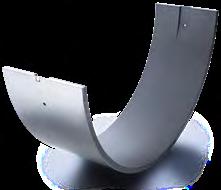
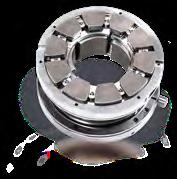


Miba’s powder metal parts are characterized by complex design that integrates several functions in one component, high precision, strength, and low weight. Our components are used in engines, transmissions and the electric steering systems of cars, where they make an important contribution to increasing efficiency and saving fuel. In addition, there are many uses for Miba powder metal parts in electric drivetrains, industrial applications such as household appliances or air-conditioning equipment, leisure equipment (fitness equipment, eBikes), conveyor technology, and trucks.
Engine bearings are components in internal combustion engines in trucks, ships or locomotives that play a role in determining the function and service life of the engine. They are used to support crankshafts and camshafts, minimize the friction that develops during operation, and protect the engine from damage or failure. They increase the efficiency by withstanding higher ignition pressure and thus bring about energy gains. Our bearing technology is increasingly being used in wind power, where in the wind turbine gearboxes it provides a solution for ever higher demands on performance.
Industrial bearings are a crucial part for the performance of rotating equipment, and support both radial and axial loads. Industrial bearings are used in turbomachinery such as compressors, gas and steam turbines, generators or pumps, and are designed for the most demanding applications with high sliding speeds.
Friction materials are crucial to the performance of clutches and brakes, in which they are used to optimize speed and power. Components from the Miba Friction Group reduce both the weight and size of transmissions and axles. Miba friction materials are fitted in tractors, construction machinery, trucks, cars, high-speed trains, motorcycles, aircraft, and also in wind turbines.
The Miba Power Electronics Group continuously works on solutions for power electronics that are tailored directly to the respective customer. Our resistors and heat sinks contribute to the efficient generation, transmission and use of electrical energy. Miba power electronics can also be found in series application in electric vehicles.
Miba develops customized coating solutions to enhance functional surfaces. The core technologies are polymer and anti-friction coatings, electroplated coatings and PVD coatings. Our coatings are distinguished by optimum functionality and maximum service life. They are used in components for engines and transmissions, as well as for industrial applications.
Special machinery from Miba is used for high-precision and high-speed machining of small to very large components. Miba Automation Systems is a leader in robotics and automation, as well as in mobile and stationary special machinery. In addition, the wind power industry is one of the company’s most important markets. The extensive product range also includes the design and development of prototypes, as well as the construction of production facilities for electric motor stators.