
OYINDAMOLA AKINYEBO PORTFOLIO
Artful Healing: An Art Therapy School
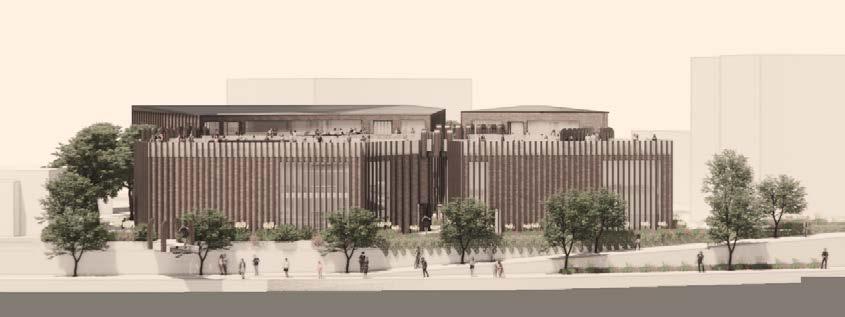
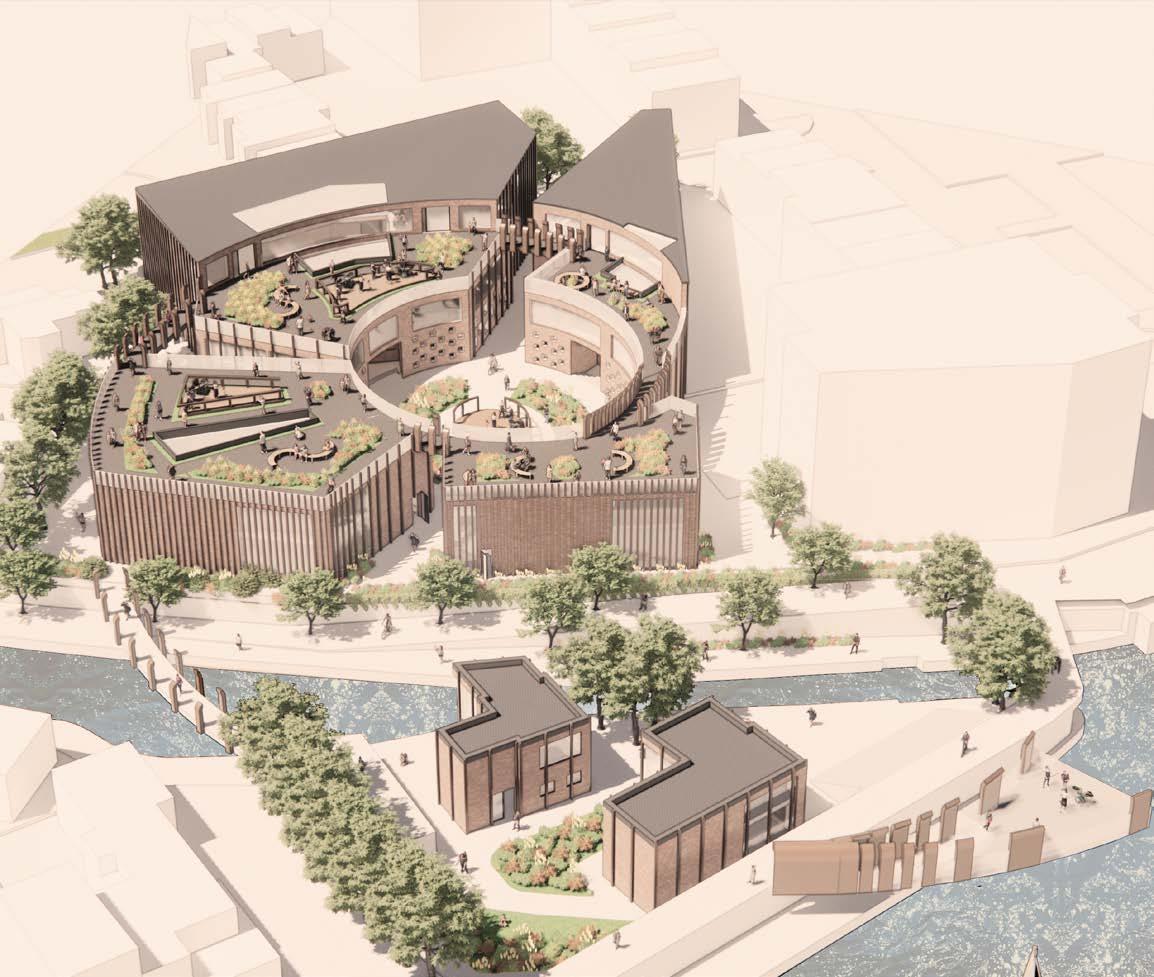
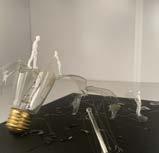
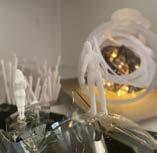
The Art Therapy School explores the human journey through life, translating personal and societal limitations into architectural form. Rooted in the expressive potential of the arts – visual art, dance, drama, and music – the school provides a space for healing and self-discovery.
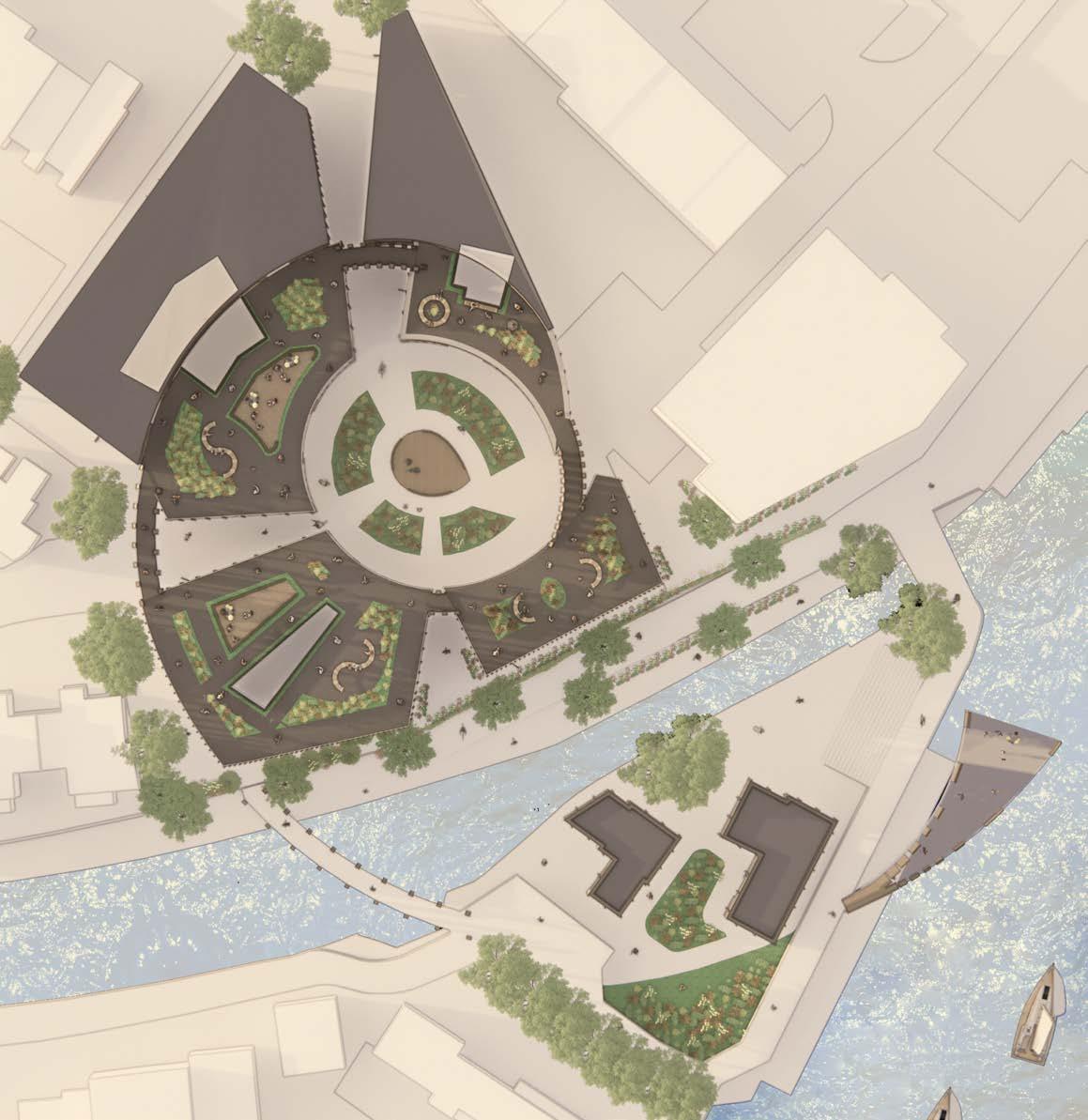
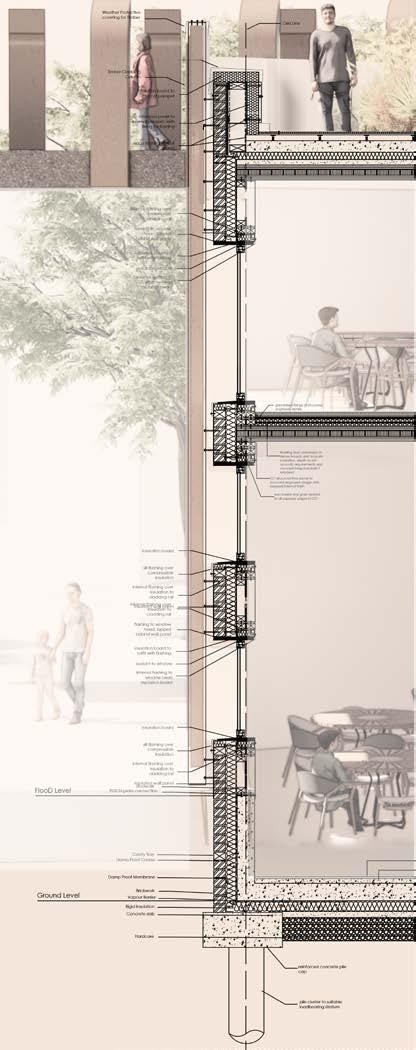
Situated at Waterside Meadow Lane Lock, between the River Trent and a canal, the design is inspired by the Fibonacci sequence, reflecting ideas of continuous personal growth. The school’s form moves from restriction to openness, with narrow corridors unfolding into expansive, light-filled spaces, gently suggesting a transition from constraint to creative freedom. The play of light, movement, and spatial flow is used to begin exploring how architecture can support emotional and artistic expression.
This project is a first step in my interest in architecture as a narrative and sensory experience – a space that can embody transformation and engage the senses through materiality, movement, and atmosphere. While I’m at the beginning of this journey, I’m excited to keep learning how design can evoke feeling and foster connection.
02
pullborough pier
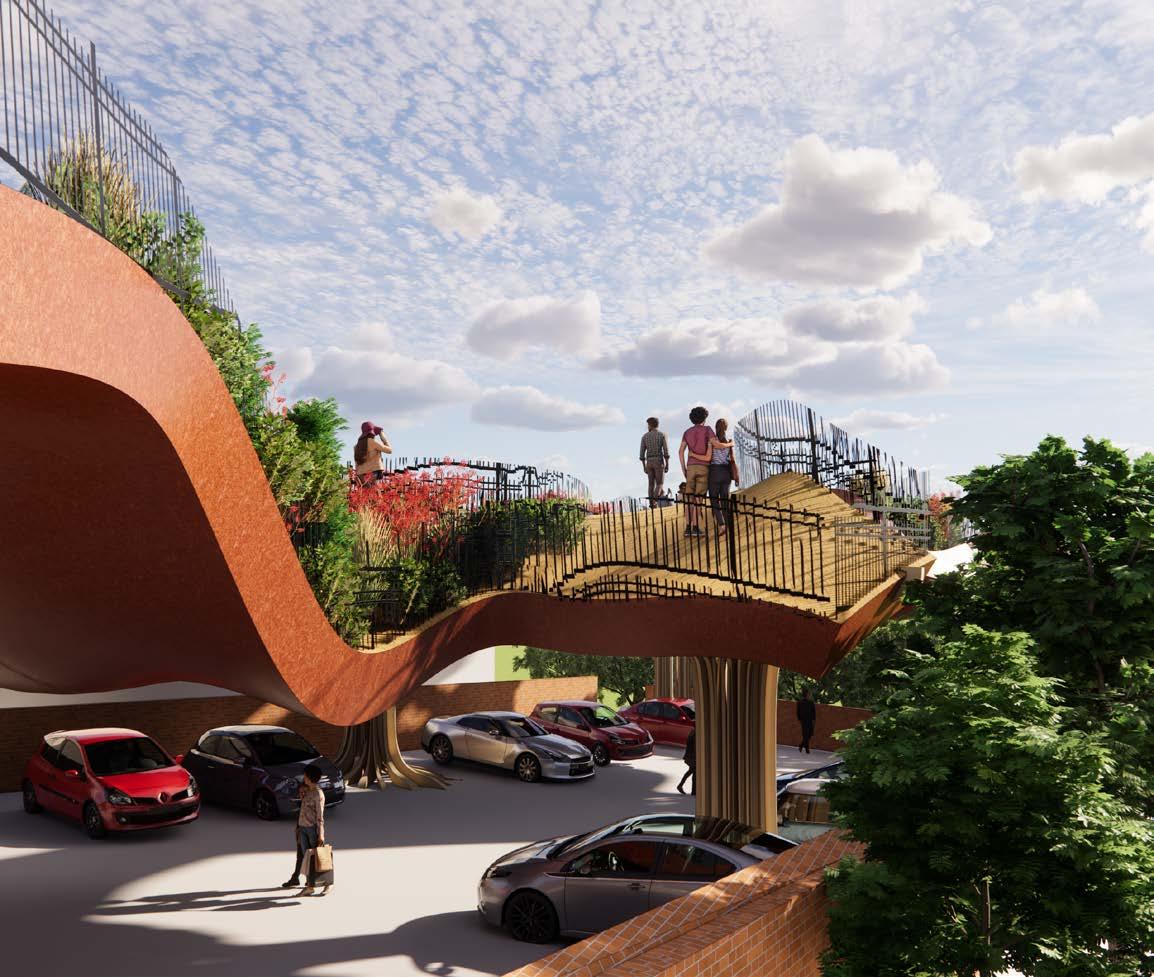
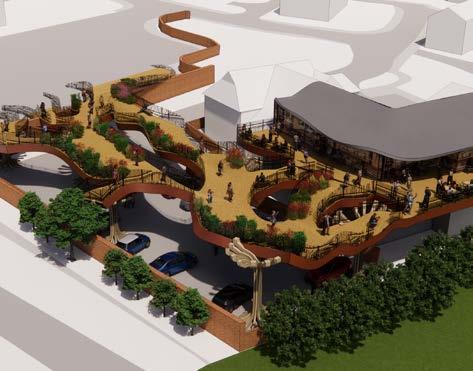
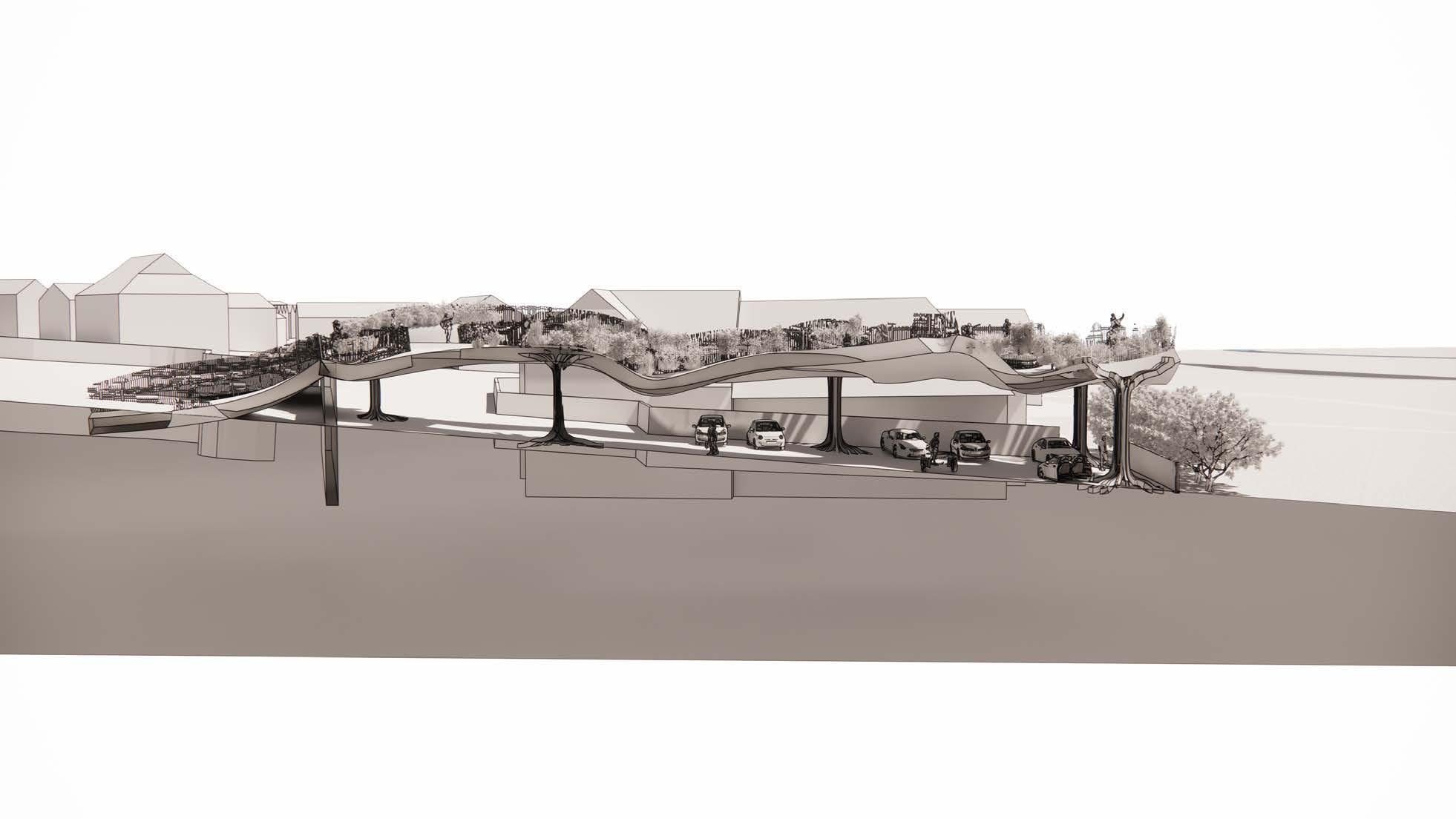
Inspired by the organic forms of South Downs signage and Pulborough’s undulating meadows, this elevated viewing platform is designed to blend into the landscape while preserving the space below for parking. Constructed from corten steel and timber – materials that reflect the character of the area – the structure rises on tree-like columns, drawing on the natural surroundings for form and atmosphere.
Lightwells bring daylight down to the lower level, casting shifting patterns across the space and contributing to a layered spatial experience. The use of native planting supports biodiversity and connects the project to its context, while the platform’s end point offers an open view across the landscape – a place for stillness and reflection.
This project continues a developing interest in how architectural elements like form, material, and light can shape atmosphere. Rather than making bold gestures, it looks at how small, considered interventions might encourage a quiet connection to place.




03
on shared ground: the human corrior
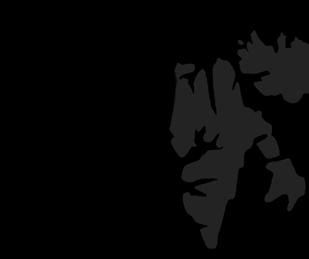
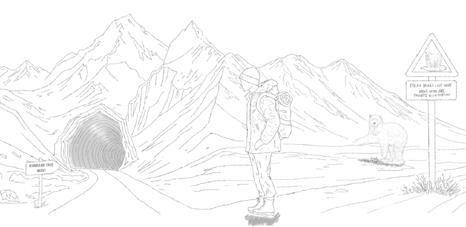
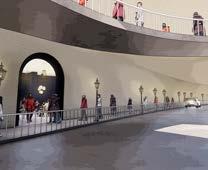
This project reimagines human movement through polar bear habitats, proposing a human corridor - a tunnel designed to ensure safe passage for both humans and wildlife in Svalbard.
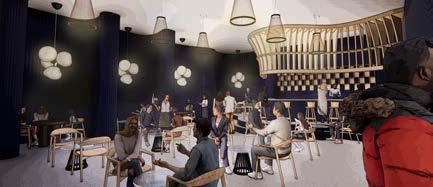
The corridor responds to the Arctic’s extreme light conditions - both the perpetual darkness of Polar Night and the endless daylight of Midnight Sun - by integrating light therapy street lamps. These mimic natural daylight to support mental wellbeing, particularly during the darker months. As well as functioning as a transport route, the corridor includes a small bar, imagined as a social space to help foster community and ease Arctic isolation.
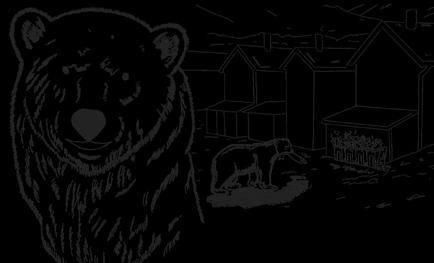
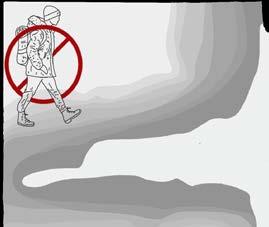
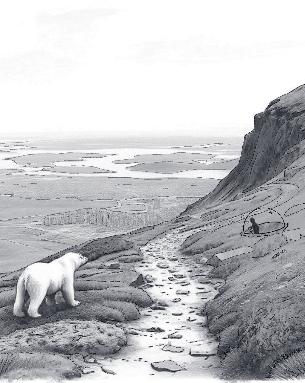
The project also begins to question human-centered narratives in environmental design. In Svalbard, signage often frames polar bears as threats. By redesigning these signs from the imagined perspective of the polar bear, the proposal experiments with shifting the narrative from human dominance to one of coexistence - inviting a more empathetic and ecologically aware way of sharing space with other species.
Animation as a Storytelling Tool:
To communicate these ideas, I created a short educational animation that speculates on how human infrastructure might evolve to acknowledge non-human perspectives. The animation reflects on perception and signage as tools of control, asking: What if polar bears had a say in how we navigate their home?
Using a minimalist hand-drawn aesthetic, the animation offers a playful and reflective way to engage viewers in rethinking how we design for more-than-human landscapes.
Welcome to Svalbard, one of the northernmost inhabited places on Earth. Here survival is a shared endeavour, shaped by the entangled lives of humans, animals, and the environment itself. In this fragile Arctic ecosystem, every choice and adaptation binds its inhabitants in an intricate web of coexistence.
“Polar Threads: Stories from the edge of ice” explores the resilience of Svalbard’s people and wildlife against the backdrop of environmental shifts and climate change. By exploring interviews and conversations with the human and non human, this mini documentary gives voice to the diverse lives navigating the unforgiving landscape of Svalbard. From human residents who wrestle with isolation and the polar night, to polar bears whose very existence depends on the disappearing ice and is profoundly affected by human settlement, these narratives uncover a shared truth: survival here is a constant giveand-take between light and shadow, hunger and abundance, fear and wonder.
Beyond being a place of icy beauty, the Arctic is like a mirror reflecting the fragility of all ecosystems under pressure. Through personal reflections, interviews, and dialogues, this mini documentary invites you to step into the lives of those at the edge - to see through their eyes, and to consider the ways we are all connected to this distant, frozen world.
Turn the page and journey into Svalbard, a place where every breath feels like a quiet act of defiance against the cold.
polar threads: stories from the edge of ice
How do we make sense of a place we have never been?
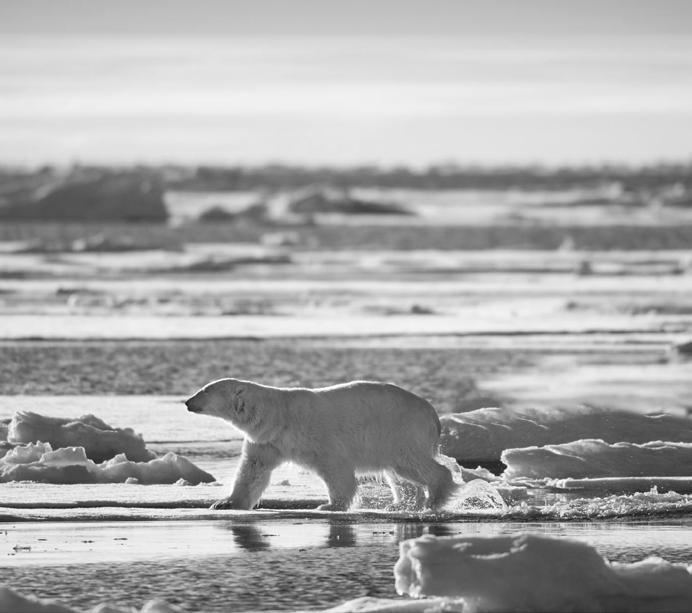
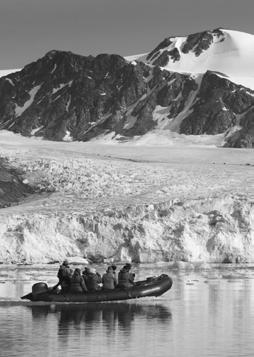
“For humans, the Arctic is a harshly inhospitable place, but the conditions there are precisely what polar bears require to survive - and thrive.
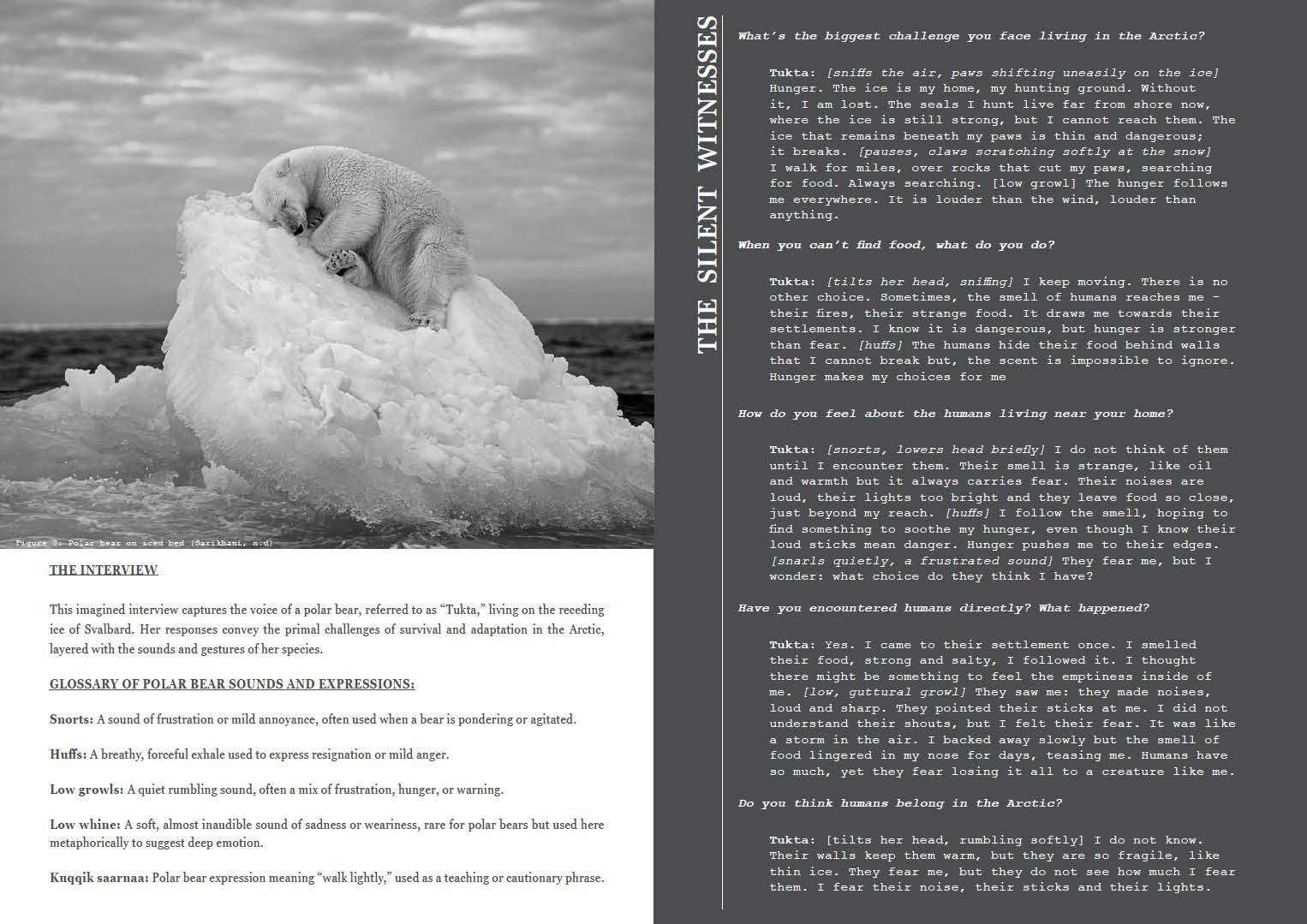
Polar Threads is a multimedia mini-print documentary that blends fictional interviews, imagined narratives, and sourced imagery to explore the fragile relationship between humans and non-humans in the Arctic. Through speculative storytelling, it begins to give voice to a perspective rarely considered - that of the polar bear.
Set in Svalbard, the project reflects on dominant narratives that portray polar bears as threats, even as they face increasing displacement due to melting ice and expanding human presence. It also touches on the psychological complexities of Arctic life, including isolation, Seasonal Affective Disorder (SAD), and the extreme rhythms of the Polar Night and Midnight Sun.
A two-tone visual palette responds to Svalbard’s shifting light conditions, evoking the contrast between survival and vulnerability. By weaving together research, fiction, and visual storytelling, Polar Threads experiments with print media as a space for architectural speculation - one that offers a more open-ended, imaginative way of engaging with the Arctic beyond conventional representations.
‘Harsh’ to us is ‘home’ for them. Take away the ice and snow, increase the temperature by even a little, and the realm that makes their lives possible literally melts away.”
-
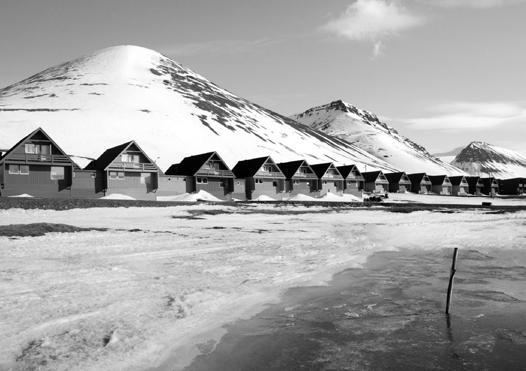
“The Arctic does not readily yield to human demands.”
- Christiane Ritter
final thoughts
Architecture, to me, is not only about the built environment, but about how spaces make us feel. I’m increasingly drawn to the sensory and emotional dimensions of design, and how architecture can shape perception, memory, and experience in subtle, often unexpected ways.
Through speculative storytelling, spatial exploration, and multidisciplinary experimentation, I’ve begun to investigate themes of coexistence, climate, and human–non-human relationships. From printed narratives to animation and built proposals, I’m interested in how different mediums can open up new ways of engaging with space and imagining futures.
As I move forward, I’m looking to deepen this approach - continuing to explore how architecture might evoke emotion, foster connection, and create more immersive and reflective experiences. I see this as an ongoing process of learning, and I’m excited to grow in practice alongside others who share these values.