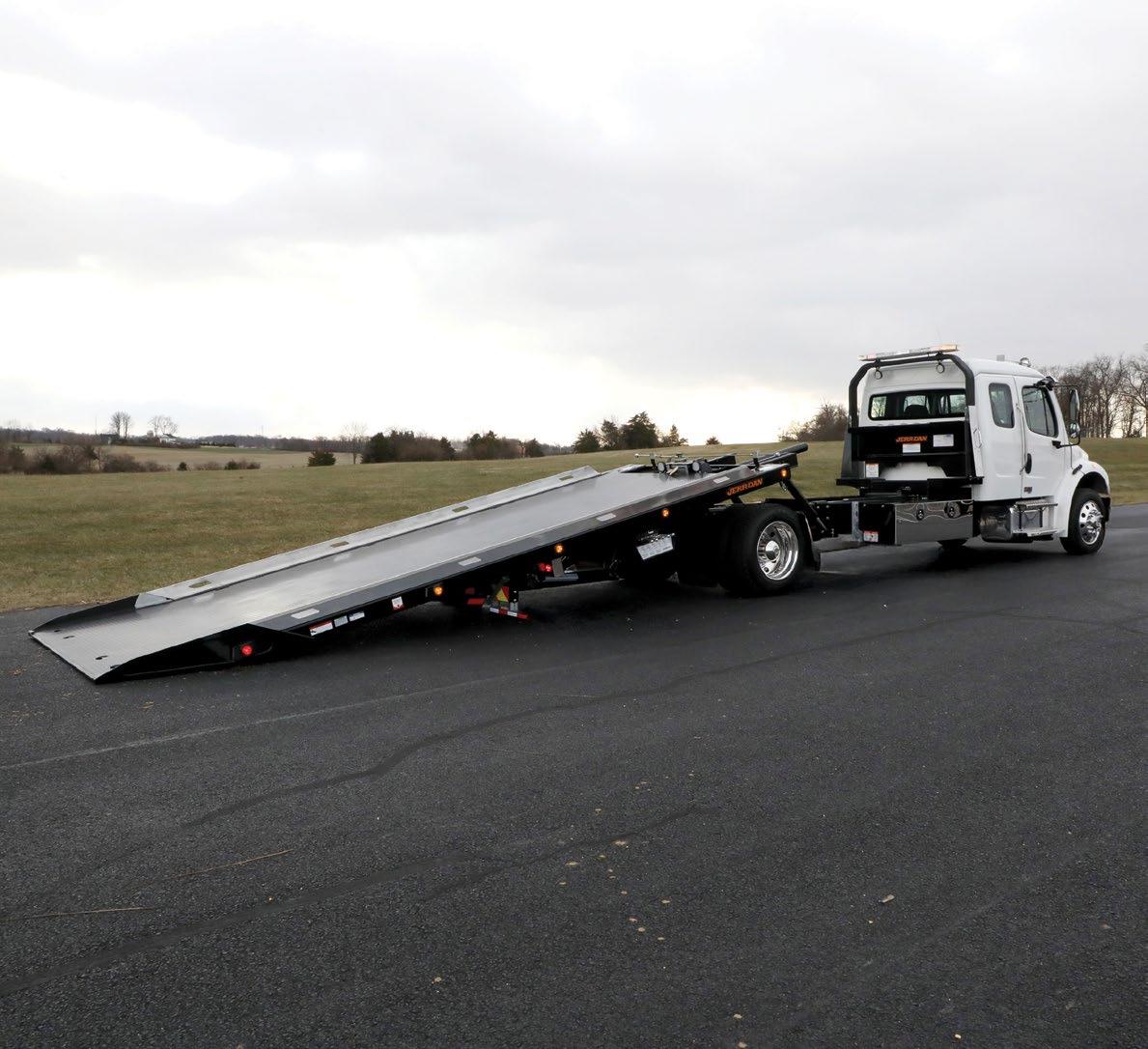
CAPACITY. DURABILITY. ADAPTABILITY.



POWERFUL PAYLOAD CAPACITY, IMPRESSIVE LOAD ANGLES AND YEARS OF RELIABLE USE BUILT FOR MAXIMUM PRODUCTIVITY NO MATTER THE CONDITION. BECAUSE THE WORK DEMANDS IT.









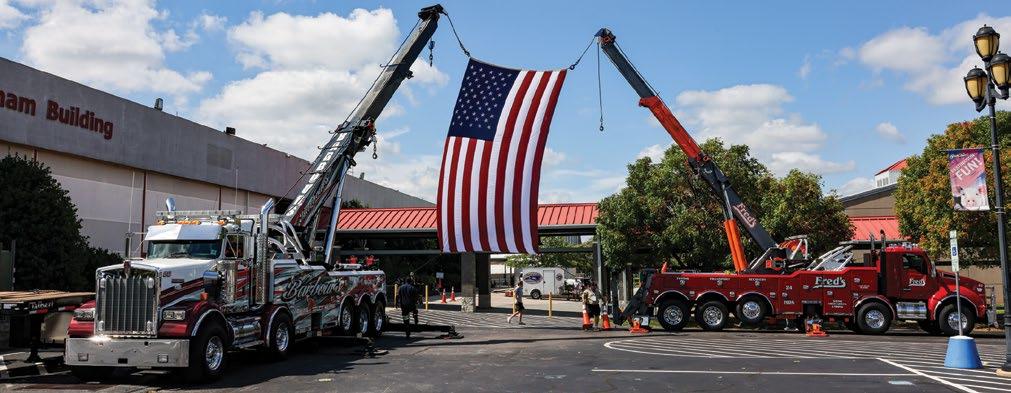
Show Season is upon Us

Who would have thought we would already be through the 1st quarter as this issue hits the scene. However, here we are! The PWOF Florida Tow Show is behind us, the show that seems to kick off the year. We enjoyed seeing our friends and owners in the industry that receive the magazine. We also attended the NARS show that same week and had an opportunity to see the format of the repossession shows and the amount of business and education that can be gleamed from attending. NARS was a great show that is worth the look next year, for anyone dealing with repossession and looking to find the tools and education to take the next step in growing your business!
DJ Harrington, in “Fuel for Thought,” always brings us information to process that will lead us to being the best steward of our business and employees. John Borowski’s “Under the Hood,” is all about the future of our industry, and keys to your success in your business. Michelle Sukow has another wonderful story, featuring Hannah Roane, a spotlight on another wonderful “Woman of Towing.” You will enjoy reading this story about Hannah Roane!
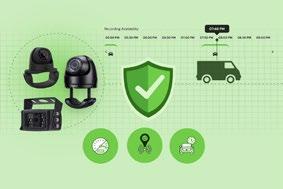
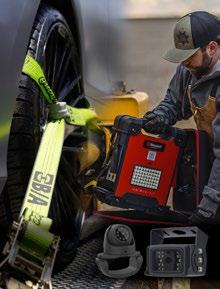
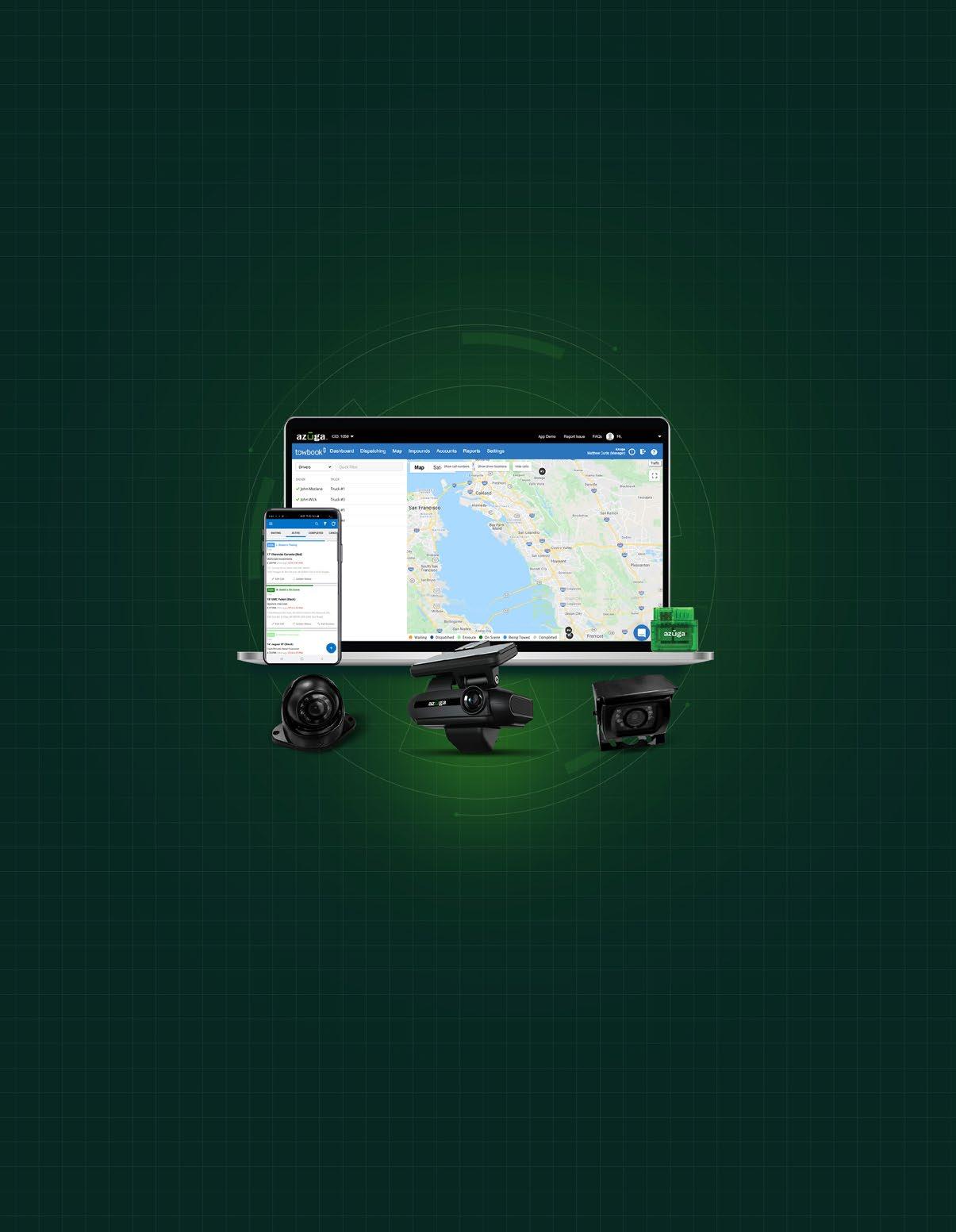
Also in this issue, we look at the importance of using cameras for every Tow Professional. We have included information from Azuga so you can be wellinformed when this equipment is added to your business. Zips and Clore brings us solutions and the key products you need in your toolbox when it comes to performing jump-starts successfully every time.
Don’t forget to make sure you add Mid Atlantic Tow Expo Sept. 11-12th in Raleigh, NC and the greatest family show Midwest Regional Tow Show Sept. 24th-26th. Make sure you add these to your calendar. The top products, service providers, and training can be had at both shows and will be events that you don’t want to miss!
As always, we thank every one of our readers and vendors, but most of all pray your business continues to grow and flourish for you and your families!


Darian Weaver President & Publisher darian@towprofessional.com PRODUCTION
Sheila Maynard Editor
Derek Gaylard Creative Director derek@ryecroftcreative.com
Cody Webb BLP Media & Design Digital Director cody@blpmedia.com
CONTRIBUTING WRITERS
Jim O’Hara
Michelle Sukow
DJ Harrington
John Borowski
Jason Giddens
Tami Strand
Dawn Psaromatis
Executive and Advertising Offices 1005 Mountain Trace Birmingham, AL 35242 Toll free: 888-802-8544 Fax: 205-978-1550
www.towprofessional.com
Tow Professional is published nine times a year by Over The Mountain Media, Inc., 1005 Mountain Trace, Birmingham, Alabama, 35242, USA. Tow Professional is distributed free to qualified subscribers. Non-qualified subscription rates are $57.00 per year in the U.S. and Canada and $84.00 per year for foreign subscribers (surface mail). U.S. Postage paid at Birmingham, Alabama and additional mailing offices. Tow Professional is distributed to qualified Towing & Recovery’s Top Decision Makers. Publisher is not liable for all content (including editorial and illustrations provided by advertisers) of advertisements published and does not accept responsibility for any claims made against the publisher. It is the advertiser’s or agency’s responsibility to obtain appropriate releases on any item or individuals pictured in an advertisement. Reproduction of this magazine in whole or in part is prohibited without prior written permission from the publisher.
For a new free subscription, address changes or corrections, please visit www.towprofessional.com and click on the “subscribe” tab.
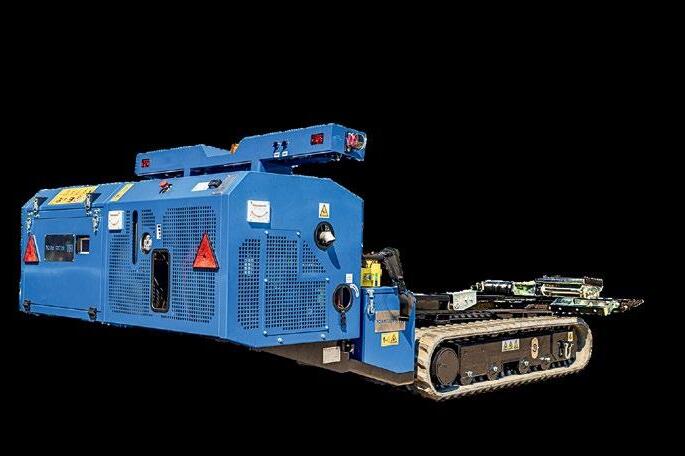
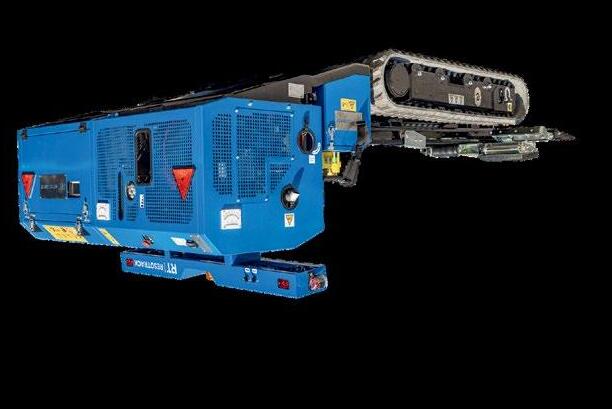
ResQTrack: The Future of Vehicle Recovery and Transport
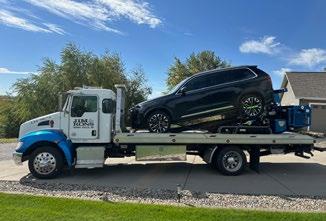

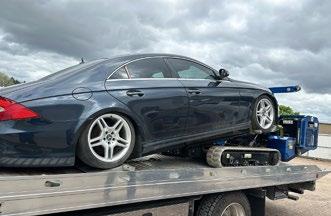
ResQTrack represents a paradigm shift in the towing and recovery industry. By utilizing advanced lift technology that interfaces exclusively with a vehicle’s tire surfaces, ResQTrack eliminates the traditional risks associated with moving modern, complex, or high-value vehicles.
1. Zero-Damage Technology
The primary engineering philosophy of ResQTrack is the total elimination of vehicle damage during transport.
• Tire-Only Contact: Unlike traditional methods, ResQTrack does not touch the vehicle’s body, chassis, or undercarriage.
• No Auxiliary Equipment: Eliminates the need for dollies, gojacks, or skates, which are frequent sources of accidental damage.
• Zero Kinetic Friction: The design prevents dragging, sliding, or skidding, ensuring the vehicle’s mechanical components remain stressed-free.
• Liability Reduction: By avoiding contact with control arms and bumpers, companies can virtually
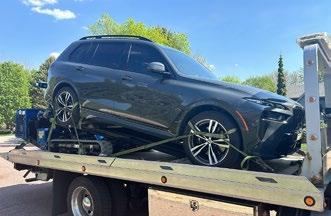
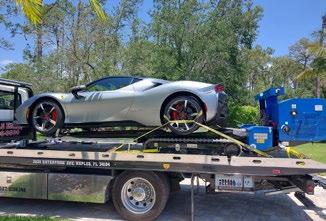
eliminate common damage claims and the risks involved in “shaking” vehicles off flatbed trucks.
2. Solving the Modern Vehicle Crisis
As automotive technology evolves toward electrification and digital controls, traditional towing methods are becoming more difficult or dangerous. ResQTrack is specifically designed for:
• Electric & Hybrid Platforms: Ideal for BEV (Battery Electric), HEV (Hybrid), PHEV (Plug-in Hybrid), and FCEV (Fuel Cell) vehicles.
• Electronic Transmissions & Brakes: Many modern vehicles no longer feature mechanical shift-lock releases or allow the parking brake to be disengaged when the battery is dead or the vehicle is inoperable.
• Zero-Access Recovery: ResQTrack requires no access to the vehicle interior. It functions perfectly regardless of:
• Missing keys or fobs.
• Dead batteries.
• Locked transmissions (no shift release needed).
• Engaged emergency brakes.
3. Unmatched Accessibility
ResQTrack thrives in environments where conventional tow trucks and flatbeds cannot operate:
• Low-Clearance Structures: Easily maneuvers through underground parking garages and low-ceiling structures.
• Tight Spaces: Navigates narrow driveways and cramped urban environments.
• Sensitive Surfaces: The weight distribution and lift mechanism allow for operation on custom driveways, cobblestones, or dealership tile floors that would be crushed or damaged by heavy wreckers.
4. Operational Efficiency & Business Growth
ResQTrack isn’t just a tool; it’s a competitive advantage that streamlines your entire business model.
• Labor Efficiency: Single-operator capability means you no longer need to dispatch multiple drivers or secondary “chase” trucks to one location.
• Enhanced Dealership Partnerships:
• Direct-to-Bay Delivery: Bring vehicles directly into the shop and place them exactly where the technician needs them.
• Reduced Dealer Liability: Moving vehicles safely within a showroom or service center environment protects the dealer’s property and assets.
• Exclusive Service Tier: Offer a level of specialized care that conventional towing companies simply cannot match, securing longterm contracts with high-end dealers.
Streamline your business with the newest technology to hit the towing market. Let ResQTrack lead the way.
Advanced Track Solutions 605-799-3977
sales@advancedtracksolutions.com advancedtracksolutions.com

International Towing Hall of Fame Announces 2026 Class, Marking 40th Year of Honors
Nine inductees from across the U.S. and Mexico recognized for decades of leadership, innovation and service to the towing and recovery industry
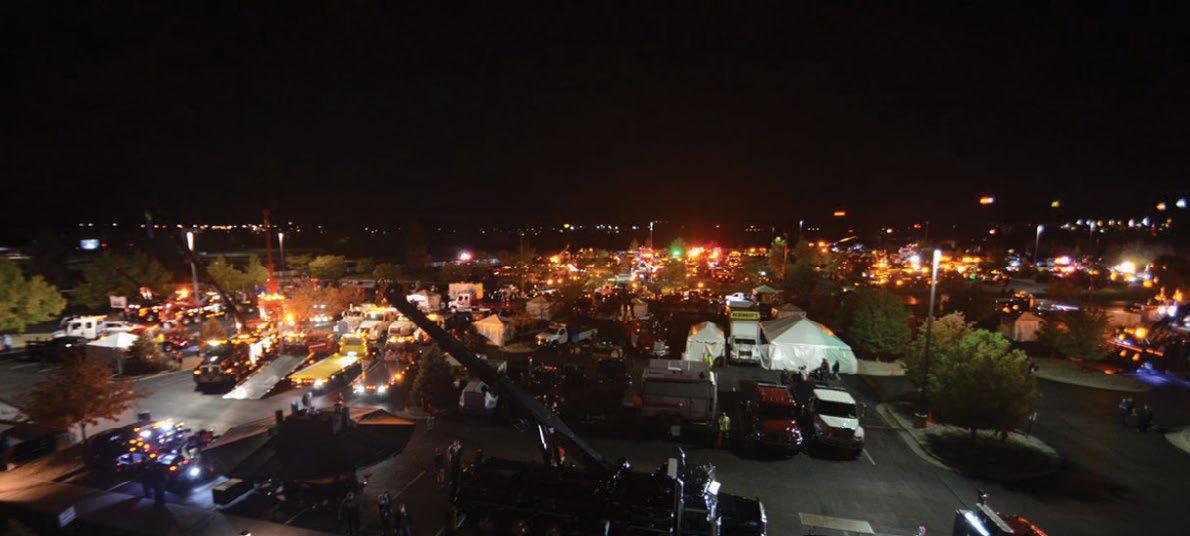
The International Towing and Recovery Hall of Fame and Museum (ITRHFM) is honored to announce the nine inductees for its Hall of Fame Class of 2026, marking the 40th class to be recognized. Representing five U.S. states and Mexico, the inductees will be honored during a special ceremony on Saturday, October 17, in Chattanooga, Tennessee.
“The towing industry is truly blessed with outstanding individuals who have invested years donating their time and resources to better the industry for all,” said Bill Gratzianna, president of the Towing Museum. “This year’s class exemplifies the spirit of sharing—of knowledge, resources and experience— to help raise the bar.”
The Hall of Fame Class of 2026 inductees are:
Enrique Dueñas Rodríguez, Mexico City, Mexico — A third-generation towing professional, Dueñas Rodríguez has spent more than 50 years building and professionalizing the towing and recovery industry across Mexico and Latin America. Operating Grúas y Servicios Dueñas in Mexico City, he continued the legacy of his father, a 1988 Hall of Fame inductee. He became one of the most active association leaders in the international towing community, helping establish professional standards across an entire continent through cross-border relationship building and sustained organizational leadership.
John H. Gardner, Gilbert, SC — A 53-year veteran of the towing and recovery industry, Gardner is a South Carolina Air National Guard veteran who began his career as a dispatcher
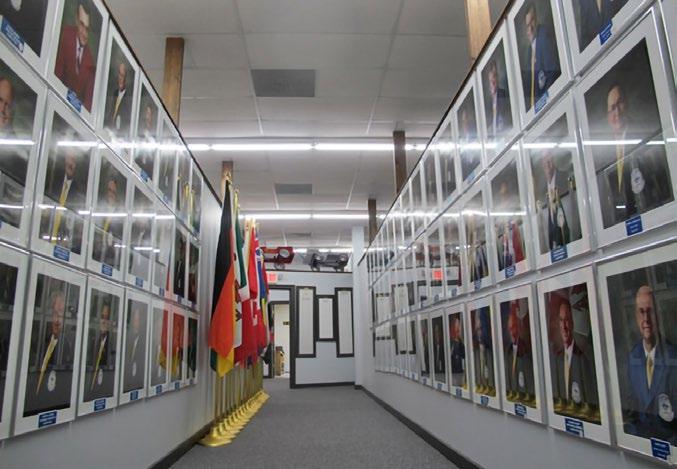
for the South Carolina Highway Patrol. He founded American Wrecker Sales in 1983 after acquiring the Century Wrecker distributorship. Gardner is credited with developing the first Towed Vehicle Inspection Report for local police departments—a form still in use today.
He is also known for his longstanding generosity, including more than 20 years
of youth baseball sponsorship and quietly supporting employees and community members in need.
Bob Huffman, Sanford, FL — Huffman dedicated 35 years at AAA to strengthening relationships between the nation’s largest roadside assistance organization and towing professionals. As Director of Roadside Programs and
“This year’s class exemplifies the spirit of sharing — of knowledge, resources and experience — to help raise the bar.”
—Bill Gratzianna, ITRHFM President
Benefits, he served as AAA’s ambassador for Slow Down, Move Over awareness, raising hundreds of thousands of dollars for the ITRHFM Survivor Fund. He also serves on committees evaluating Survivor Fund requests and Wall of the Fallen nominations, while personally assisting families after the loss of a loved one. Huffman has greatly increased the organization’s advocacy for industrywide safety reforms.
James “Jim” Jennings Jr., Coral Springs, FL — A second-generation towing professional with 59 years of continuous family involvement in the industry, Jennings served as president of Emerald Transportation Corp. prior to the company being acquired by Guardian Fleet Services. Emerald Transportation Corp. has supported the Florida Highway Patrol since 1964. He founded Towers with a Heart, a 501(c)(3) nonprofit that funds Move Over safety campaigns across Florida. Jennings co-founded the Sunshine State Towing Association, currently serves as TRAA vice president, and has served for approximately 10 years on the ITRHFM Board of Directors. He was named Tow Times Industry Champion in 2019.
Irvin Johns (posthumous), Louisville, KY — Johns, who passed away in 2024, founded Suburban Wrecker Service in 1969 with a single used truck and grew it into Kentucky’s largest towing company, with more than 100 trucks and 80-plus employees. He led the 2nd Street Bridge recovery in 2024, which garnered national news coverage. Johns was also an accomplished NHRA drag racer, becoming the oldest national event winner in NHRA history and earning induction into the NHRA North Central Division Hall of Fame in 2025.
Martin D. Peacock, Americus, GA — Representing the third generation of a family towing business established in 1928, Peacock continues one of the longest-running towing legacies in the United States. He played a key role in founding the Georgia Towing Association and later helped merge organizations to form the Towing & Recovery Association of Georgia (TRAG). He also assisted in forming a towing association in South Carolina and served through the full leadership arc in the Capital City Towing Association,
ultimately becoming Chair Emeritus.
Jeff Poquette, Union City, GA — With more than 30 years as an industry consultant and advocate, Poquette has helped shape training standards, safety practices and professional development across the towing industry. He launched one of the industry’s first podcasts in 2018, sharing insights with thousands of towing professionals. He remains active in multiple state associations and continues to advocate for training and education.
Lee Roberts, Paris, KY — Roberts built Roberts Heavy Duty Towing from one truck into a major operation with 66 trucks and 82 employees, bringing international experience from his early career in the United Kingdom. He has served on the ITRHFM Board of Directors, chaired TowCap, and held leadership roles in the Towing and Recovery Association of Kentucky. In 2016, after a competitor lost his business in a fire, Roberts donated a truck and provided office space to help him rebuild—an act widely recognized
in local media. Roberts was the first towing company recognized by The Kentucky Office of Highway Safety for outstanding highway safety efforts.
Shannon Douglas Yates, Chattanooga, TN — A third-generation Hall of Fame inductee, Yates has operated Yates Towing & Recovery in Chattanooga for 38 years. He has held leadership roles in the Tennessee Tow Truck Association and maintained active TRAA membership. Yates has also supported the museum for many years, often donating his time and resources. His community engagement reflects the same values that earned his grandfather and father their places in the Hall of Fame: that the towing profession is about more than moving vehicles — it is about serving people.
The International Towing and Recovery Hall of Fame and Museum was founded in 1986 to recognize outstanding individuals in the towing and recovery industry and to record and preserve its history. Learn more at towingmuseum.com.
The first Hall of Fame class, inducted in 1986, consisted of 27 distinguished members representing six countries: Australia, Canada, Mexico, South Africa, the United Kingdom, and the United States.
Located in Chattanooga, Tennessee — the birthplace of the U.S. tow truck — the Museum preserves and celebrates the rich history of towing and recovery worldwide.

Telemetry Shackles and Load Links for the Towing Industry
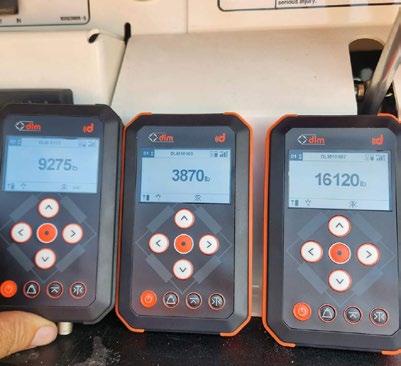
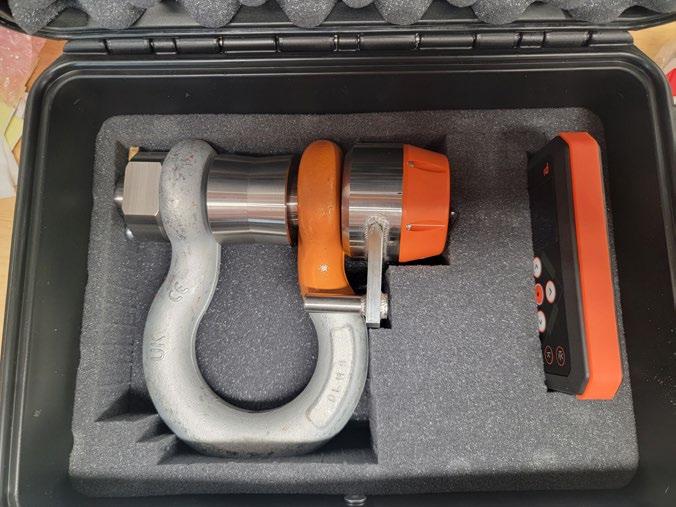
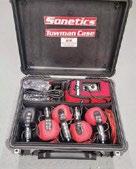
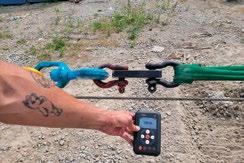
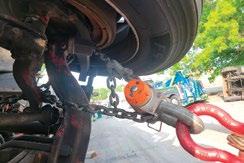
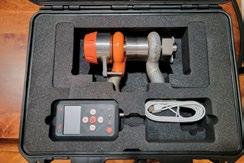
DLM has a long-running partnership with Chant, which delivers a variety of its load cells, load monitoring, and cable working equipment to the point of use, including telemetry shackles, a highstrength, marine-grade wireless load cell that incorporates a high-tensile stainless steel load pin. The shackles present an ability to transmit to multiple handheld displays; boast a line-of-sight range of 800 m (2,625 ft.); and are made from stainless steel.
DLM is a specialist in the design, manufacture, repair, and calibration of load cells, load monitoring, and cable working equipment for the offshore, marine, subsea, and lifting and rigging industries. Chant, meanwhile, also of British heritage, is a diversified engineering company that designs, manufactures, services, and calibrates testing machines, systems, and related accessories for industrial and military customers.
Chant has distributed DLM’s standard tensile load links, and shackle cells from 1 ton up to 50 ton capacity and wireless handheld displays to the U.S. since 2015, and further penetrates the market via a distribution network. One major difference between industries is the type of equipment used. Tow trucks typically
use hydraulic systems to lift and recover vehicles and equipment.
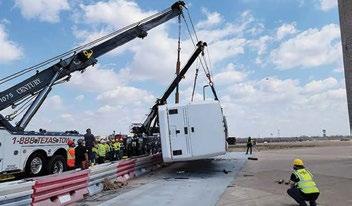
Shackle load cells and load links play a crucial role in the tow truck industry. Tow truck operators often find themselves in emergency situations where they need to secure a vehicle quickly and safely for recovery. These tools provide a secure connection between the tow truck and the vehicle being recovered, making them essential to fully understand the forces being applied to all of the rigging.
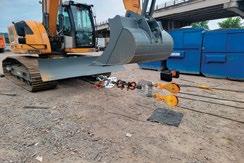
When it comes to towing and winching applications, using shackles to connect equipment is common practice; shackles are commonly used in the tow truck industry to secure vehicles during recovery application. Specifically, shackles are used to connect the tow truck’s winch line to the vehicle being recovered. Shackles are necessary for recovery of different types of vehicles, such as cars, trucks,equipment and Tractor Trailers. The size and weight of the vehicle being recovered determines the size and strength of the shackle
required. When installing a shackle it can be substituted with a Shackle Load Cell to measure the forces being applied to all of the rigging based on where it is located in the lay up. Load Cell Link Bars can also be installed in your rigging lay up where ever you choose to install. They can be at the load to determine the total load forces you’re trying to recover. Once you determine the total load force you can safely understand if your rigging lay up is sufficient.
However, it is crucial to approach the rigging process with caution and expertise to prevent damage to the equipment and ensure safety. Before rigging a shackle, it is essential to carefully select the appropriate size and weight capacity for the application. Additionally, the shackle must be checked for any defects or damage prior to use.
Get in contact with RP Recovery for all your Load Cell needs by emailing rprecoveryconsulting@gmail.com or calling 315-730-6566.
It was great to see many of you in Orlando last week during the Florida Tow Show. I am looking forward to seeing many of you in two weeks in Las Vegas!
During the meeting at the Florida Tow Show, we revealed two exciting legislative updates, both of which are the direct result of TRAA’s Congressional efforts, including our 2026 Hill Day.
Introduction of the Safe Roads for Those Who Serve Act
Senators Dave McCormick (R-PA) and Catherine Cortez Masto (D-NV) introduced the Safe Roads for Those Who Serve Act this month. The bill aims to increase safety for roadside workers, including tow truck operators, across the country. Among the provisions created in the bill, we are especially excited about the creation of a Public Awareness Campaign. This effort will play an essential role in educating the public about the hazards roadside workers face and how to increase the safety of these essential workers. In these provisions, tow truck operators are explicitly identified in the list of roadside workers alongside law enforcement, fire and rescue, and emergency responders.
A press release has been issued by the bill’s sponsors on this legislation. In addition to TRAA leading the list of organizations that support the legislation, the press release includes a quote from TRAA Executive Director Bruce Bender.
The inclusion of TRAA and tow truck drivers in the bill and press rollout is in large part due to the Slow Down, Move Over advocacy work TRAA has been doing in Washington, DC. over the past few years.
Please find the press release here, which includes a complete summary of the bill.
Responder and Recovery Safety in EV Fires Act
The Responder and Recovery Safety in EV Fires Act was introduced late last month by Senators Tim Sheehy (R-MT) and Ron Wyden (D-OR). As many of you know, this was also a Hill Day priority for us, and we worked closely with the Zero Emission Transportation Association (ZETA), the trade association for electric vehicles (EVs) to ensure bipartisan and broad industry support of the initiative. The legislation creates a working group, of which at least two TRAA members will be a part of, to establish guidance and best practices for responding to EV fires.
Given its bipartisan nature and the standing of its sponsors, this bill is well-positioned to gain a lot of momentum in the coming months, including potential inclusion in the Surface Transportation Reauthorization. Senator Sheehy sits on the Senate Commerce Committee, which oversees these issues, and Senator Wyden is widely respected by and maintains relevant seniority in his caucus.
We anticipate a House companion to be filed in the coming weeks.
Senate bill text here.
Looking Forward
We are pushing very hard for these bills to be included in the Surface Transportation Reauthorization on which Congress is currently working. We are tracking developments closely and will be sure to keep everyone updated. Neither of these achievements would have been possible without all of your support and efforts. While our work is not yet done, these are huge steps in the right direction. We look forward to continuing to work with each of you to get these priorities over the finish line.
Please don’t hesitate to reach out to federal@tremontstrategies.com with any questions.
Sincerely,
Liesl Sheehan Partner, Tremont Strategies Group

NARS 2026 Draws Record Attendance, Raises Over $41,000 for Industry Charity, and Sets the Stage for an Exciting 2027
The North American Repossessors Summit (NARS) 2026 brought together more than 900 professionals from across the recovery industry for three days of education, collaboration, and connection. Centered around this year’s theme, “Stronger Together: Bridging Gaps, Elevating Standards,” the event delivered a dynamic agenda designed to foster transparency, innovation, and leadership within the industry.
Attendees participated in general sessions, breakout discussions, and hands-on training covering key topics such as invoicing transparency, compliance, leadership development, marketing and credit union partnerships, and legal considerations in video evidence.
Some highlights included an engaging panel discussion, “Let’s Talk Dollars,” which encouraged open dialogue between forwarders, agents, and lenders, as well as in-depth training sessions like “Unlock More Than Cars” and “Repossession Accounting Made Easy.” The live repossession demonstration, industry panels, and educational sessions provided practical, real-world insights, while networking events throughout the week strengthened relationships across all sectors of the industry.
Off-site and social events were equally impactful. The annual golf tournament, hosted at the Waldorf Astoria Golf Course, brought participants together for friendly competition and fundraising. The Opening Cocktail Party, Casino Night Masquerade, and the Universal CityWalk Bash provided memorable opportunities for connection and celebration—including many standout karaoke moments.
Watch a recap of the excitement and fun: www.youtube.com/ watch?v=LvlCqjNMQ1M
One of the most meaningful outcomes of NARS 2026 was its charitable impact. Through fundraising efforts and attendee generosity, a total of $41,276 was raised for the Recovery Agents Benefit Fund (RABF), a 501(c) (3) organization that supports recovery agents and their families facing financial
hardship due to injury, illness, or loss. These funds play a critical role in assisting families with essential expenses, including burial costs during times of unexpected tragedy.
The event also recognized excellence across the industry during the annual Awards Ceremony and Live Auction. Congratulations to the 2026 award winners:
• Field Agent of the Year: Barry Gibrick – Nationwide Recovery Inc
• Service Representative of the Year: Dawn Psaromatis – Truly-Wow!
• Vendor Representative of the Year: Elena Carroll – PAR North America
• Agency Owner of the Year (East): Nathan Gottshalk – Northwest Repossession LLC
• Agency Owner of the Year (West): Jason Reed – Nations Recovery Services, Inc.
• Female in Leadership: Alexandra Sunseri – South Bay Remarketing Services
• Lender in Leadership: Dion Gage –Exeter Finance
• Agent in Leadership: Luke McArthur –Northwest Repossession
• MVP (East): Wendy Sousa –International Recovery Systems
• MVP (West): Rudy Sandoval – Speedy Recovery Inc.
• Art Christensen Award: Vaughn Clemmons – Automobile Recovery Bureau
• Industry Contribution Award: Kevin Armstrong – CURepossession; Brennen Hamilton – Insightt.io
NARS 2026 also featured the presentation of the ARA Medal of Fortitude, honoring Jamie King (International Recovery Systems) and
Alfredo Martin (Nationwide Recovery). This distinguished recognition is awarded to recovery professionals who, while lawfully performing their duties, have sustained life-threatening injuries as the result of a violent criminal act. It honors extraordinary courage under attack, the will to survive against grave danger, and the strength to continue forward after profound adversity— recognizing not just survival, but the character and resilience that define this profession.
View photos from NARS 2026: https://krphotography52.pixieset.com/ americanrecoveryassociation-1/ https://krphotography52.pixieset.com/ americanrecoveryassociation-2/ https://krphotography52.pixieset.com/ americanrecoveryassociation-3/
Looking ahead, organizers announced that NARS 2027 will take place April 14–16, 2027, at Loews Portofino Bay Hotel in Orlando, Florida, located near Universal Studios and Universal CityWalk. In an exciting addition, the ARA 63rd Annual Convention will be held in the same location on April 13, creating a full week of industry engagement and collaboration.
Enjoy a quick video of what to expect at Loews Portofino Bay Hotel: https://www.youtube.com/ watch?v=AifTytGhmWk
With strong attendance, impactful education, meaningful fundraising, and a renewed focus on collaboration, NARS 2026 reinforced its role as a leading event for the repossession industry—and set an exciting tone for the future.
For updates on room block information, agenda announcements, and more, please visit reposummit.com in the coming months.
About the American Recovery Association (ARA):
The American Recovery Association is the world’s largest association dedicated to the advancement and professional development of the recovery and remarketing industry. ARA provides compliance support, education, and advocacy for hundreds of recovery professionals nationwide. ARA is the founder and host of the annual three-day North American Repossessors Summit (NARS) — the largest repossession conference in the industry. For more information, go to www.repo.org or call (972) 755-4755.
ROADSIDER’S Software Innovation on Display
The towing and recovery industry is evolving rapidly, and companies that embrace technology are gaining a clear competitive edge. That momentum was on full display last week at the American Towman ShowPlace in Las Vegas, where Roadsider completed a highly successful week of demonstrations, meetings, and product launches that drew significant attention from operators, owners, and industry decision-makers from across the country.
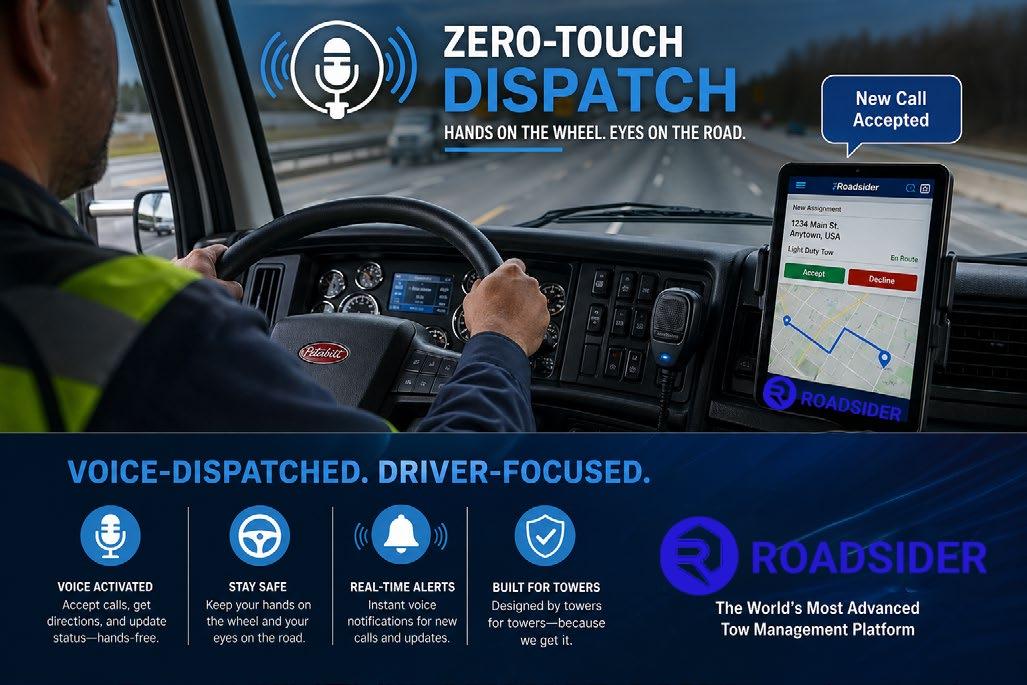
At the center of Roadsider’s presentation was the public debut of what many attendees called one of the most important safety innovations introduced to towing in years: Zero-Touch Dispatch.
For decades, digital dispatch systems have required drivers to manually interact with phones or tablets while handling calls. Even with the best intentions, that means hands leaving the wheel, eyes shifting from the road, and unnecessary distraction during some of the most dangerous driving conditions in America. Roadsider’s new Zero-Touch Dispatch changes that entirely.
With voice-driven functionality, operators can now receive, manage, and work dispatch calls without removing their hands from the steering wheel. The system allows drivers to stay focused on the road while remaining fully connected to incoming assignments and operational updates.
In an industry where roadside fatalities and struck-by incidents remain a constant concern, Zero-Touch Dispatch is more than a convenience, it is a long-overdue safety advancement.
“This is something the towing industry has needed since digital dispatch first began,” said company representatives during the show. “Technology should make drivers safer, not more distracted.”
Beyond safety innovation, Roadsider also announced another major milestone: near-complete integration with the nation’s leading motor clubs and roadside assistance networks. The company confirmed it recently finalized integration
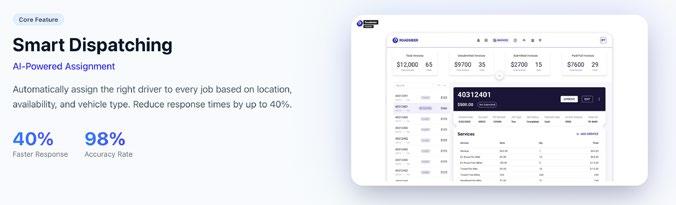
with Urgently, adding to an already strong portfolio of connected dispatch channels.
With one remaining integration expected to be completed before yearend, Roadsider is positioned to offer tow companies one of the most connected dispatch ecosystems available today.
For towing businesses, this means a single platform capable of managing private calls, police rotation work, municipal towing, roadside assistance club calls, and contracted commercial work—all from one modern system.
That “all-in-one” capability is becoming increasingly valuable as operators look to eliminate multiple software subscriptions, reduce inefficiencies, and simplify training for office staff and drivers alike.
Roadsider also showcased a fully integrated vehicle disposition solution through its connection with TowLot.com.
When a stored vehicle reaches the end of the lien process, users can now move directly from storage management into sale status with the click of a button. The whole process, from dispatch to impound, storage, lien handling, and auction, is managed in a single workflow, eliminating the need for multiple systems or external vendors.
For many tow companies, especially those managing impound lots and abandoned vehicles, this creates substantial time savings and administrative relief.
Historically, solutions this comprehensive were limited to a handful of exclusive municipal vendors serving select cities and towns. Roadsider’s model is different: it brings enterprise-
level technology to the broader towing marketplace.
Whether a company handles five trucks or fifty, private property towing or police towing, roadside assistance or municipal contracts, Roadsider’s platform is designed to scale.
The response in Las Vegas reflected an industry ready for that next step.
Attendees consistently cited three priorities: safety, consolidation, and automation. Roadsider’s newest releases directly address all three.
As the towing business becomes more data-driven, compliance-focused, and competitive, operators need systems built for where the industry is going, not where it has been.
Roadsider’s successful week at American Towman ShowPlace made one point clear: the future of tow management software has arrived, and it is hands-free, fully integrated, and built to handle everything.
John Borowski, President of Roadsider, noted that the company’s recent launches are only the beginning. “In the very immediate future, Roadsider will be introducing several more industry-first innovations designed specifically for tow operators and business owners,” Borowski said. “Our platform is being directed by towers and created by towers, which means it reflects real-world towing operations— not theory. If there is a process owners are looking for, there is a strong chance Roadsider already has it or soon will. We believe no other dispatch software delivers the performance, complete functionality, and value that Roadsider brings to the marketplace today.”
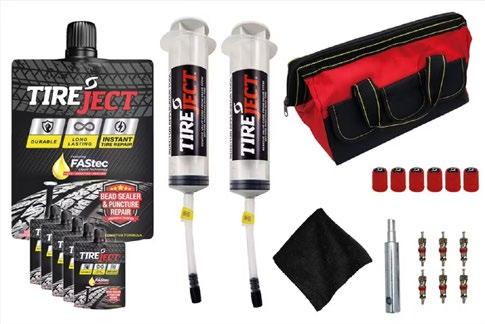
TireJect keeps your trucks and customers rolling
Maximize efficiency with TireJect. Instead of towing vehicles, offer an on-site service that gets customers moving instantly. TireJect’s liquid rubber formula creates a permanent internal seal that lasts for the life of the tire, tackling punctures and bead leaks in seconds. Generate immediate ROI, improve customer satisfaction, and increase road safety with the TireJect Roadside Tech Kit. Keep your fleet available for the next high-value call while providing a premium solution.
Order Part # TJ-ROAD-TK-5-6-1 at www.Zips.com
Rear picks made possible with the AW Direct U-bolt HD kit
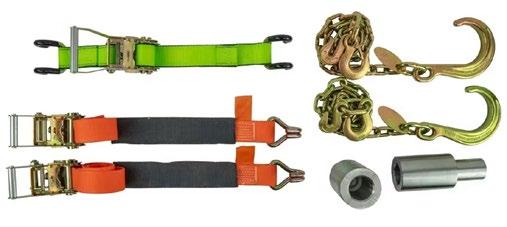
Find everything you need to complete a rear pick on a heavy-duty truck with the AW Direct HD Rear Tow Kit. Designed primarily for trucks with air bag suspensions, this package includes a pair of u-bolt lifting attachments to fit around the truck’s spring saddles. Also included are a pair of Ultimate Axle Chains to secure the drive axles and a pair of tie-down straps to fasten the chassis to the underlift. Lastly, a cam-style steering wheel lock prevents the front wheels from turning while under tow. See below for kit components and individual part numbers.
Order Part # AW-HDTK-UB at www.Zips.com
Safely remove stubborn driveshaft bolts with the Driveline Breaker Tool
Tired of busted knuckles from slipped wrenches? Check out the ingenuity of the Driveline Breaker Tool from SafeAll. This patentpending bar is designed to reduce the frustration of removing rusted and hard-to-reach driveshaft bolts on commercial trucks. Available from Zip’s AW Direct, this purpose-built tool features a contoured shaft with two precision-formed bends to provide the right angle and enough leverage to remove those stubborn bolts. At the working end, the tool incorporates dual proprietary shallow sockets, sized at 1/2” and 12mm, and machined specifically for driveline bolt profiles.
Order your bar at www.Zips.com.
Item #: SA-UDLBT
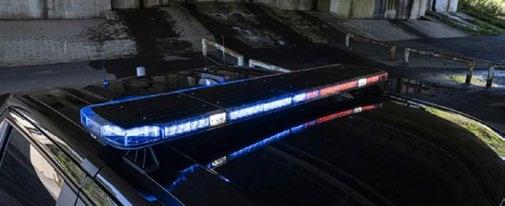
Add the Whelen Edge 9X light bar to your wrecker or carrier
The Whelen Edge 9X Towman’s Series light bar is a professional, USAmade warning and scene lighting system designed for towing and recovery operations. Built on the Edge platform with WeCanX technology, the light bar offers customizable, synchronized patterns using high-output DUO Linear LEDs for maximum visibility and safety. Features include integrated brake/tail/turn lights and high-intensity scene lighting. Its heavy-duty construction with hard-coated polycarbonate lenses and an advanced thermal management system resists road damage and ensures consistent output. Available in 59” and 70” lengths with versatile color combinations (e.g., Amber/White), its low-profile design reduces wind drag. This light bar is backed by a 5-year LED and 10-year I/O board warranty, making it a durable, all-in-one solution.
Order yours at www.Zips.com. Item # EDGE9X
BY MICHELLE SUKOW ///
Building Growth with Intention: Hannah Roane and the Strategic Evolution of Valor Fleet Services
The towing industry is changing. Growth, consolidation, and modernization are reshaping how companies operate, and women are increasingly stepping into leadership roles that influence not just culture, but strategy, systems, and sustainability.
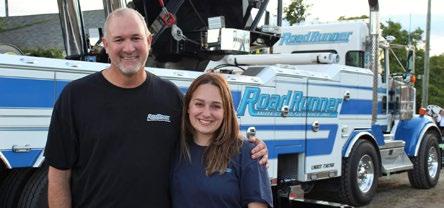
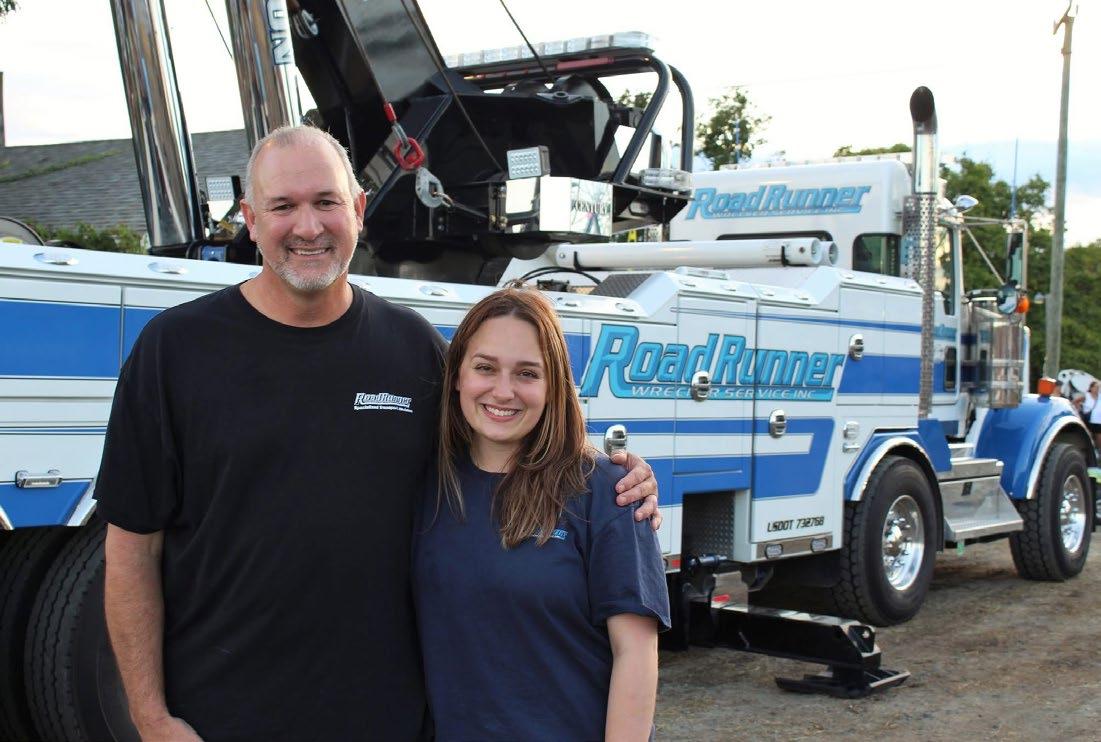
Hannah Roane is one of those leaders. As Director of Strategic Operations at Valor Fleet Services, Roane oversees Marketing, Sales, and Human Resources across a growing portfolio of towing companies. Her role is deeply rooted in integration, ensuring that growth happens intentionally, with people and processes aligned at every level.
Raised in the Industry
Roane’s connection to towing began early. Her father founded Road Runner Wrecker Service in 1992, and by the time she was 13, she was already helping in the office and yard. “I didn’t want to at first,” she says. “But my dad instilled work ethic and discipline very early on.” What started as answering
phones and cleaning the yard became dispatch work during school breaks and a steady immersion into the realities of the business. That early exposure shaped not only her understanding of operations, but her respect for the people who keep towing companies running every day.
After earning a business degree from Virginia Tech, Roane returned to Road Runner full-time, determined to learn the business from the inside out.
Building Knowledge, One Role at a Time
Roane began as an Administrative Coordinator, gaining hands-on experience in billing, back-office operations, and organizational structure. As the company expanded, she identified a growing need for Human Resources support and stepped in to build the department.
For roughly a year, she handled recruiting, onboarding, and employee relations. From there, she moved into Marketing and Sales, working on government contracts, commercial accounts, and long-term client relationships. She later spent time in business analytics, strengthening her ability to support decision-making with data.
Each role added depth to her leadership, reinforcing the idea that no department operates in isolation.

Today, she brings that perspective to a much broader stage.
Growth Through Integration
In 2023, Road Runner partnered with Henry’s Wrecker Service, a milestone that helped shape what would become Valor Fleet Services. Roane played a key role in integrating the companies, from vendor consolidation to dispatch system alignment and leadership collaboration.
“That’s when I realized how much I enjoyed working at a high level and helping companies grow together,” she explains.
Since then, Valor Fleet Services has expanded to include Road Runner Wrecker Service, Henry’s Wrecker Service, Windsor Towing, Al’s Towing & Storage, and Aaron’s Towing. What began with roughly 50 employees has grown into a network of approximately 300 team members.
Much of Roane’s day is spent working with new company owners and leadership teams, streamlining processes, reducing administrative burden, and elevating operations to Valor’s standards while respecting what makes each company unique.
Navigating a Male-Dominated Industry
When asked about challenges as a woman in towing, Roane offers a perspective rooted in realism rather than labels.
“You have to work hard in this industry,” she says. “I don’t let the fact that it’s male-dominated change how I work.”
She believes focusing on differences can sometimes create unnecessary barriers. Instead, she emphasizes professionalism, consistency, and results.
“Most people are good people who want to do a good job,” she adds.
Balance, Grace, and Reality
Roane is candid about the difficulty of balancing leadership with personal life.
“It will never be perfect,” she says. “You stay late and miss time at home. You leave early and miss something at work.”
Her approach is grounded in

Do you know a towing lady who deserves recognition?
Please send Michelle Sukow or Tow Professional a message. We would love to share her story! (michellesukow@gmail.com)
organization and self-awareness, paired with the willingness to give herself grace. She credits her husband and family as a strong support system and values the pro-family culture fostered across Valor Fleet Services.
Leadership Through Strengths
One of Roane’s defining leadership traits is knowing where she adds the most value and where others are better equipped.
“There are things my team does that I cannot do,” she says. “That’s why I surround myself with the best.”
That philosophy has helped Valor move away from single points of failure and toward stronger redundancies and collaboration, allowing teams to operate with greater confidence and stability.
Looking Forward
Roane sees the towing industry at a critical point of opportunity.
“This is the perfect time to join the industry,” she says. “We’re at an inflection point of growth.”
Having already met many of her personal five-year goals, she is now focused on continued growth, both for herself and for Valor Fleet Services.
Her definition of success remains simple and grounded: enjoying the work and maintaining a happy, healthy family.
And when challenges arise, she lives by two rules that continue to guide her leadership:
Don’t sweat the small stuff.
It’s all small stuff.
For women entering or advancing in the towing industry, Hannah Roane’s journey is a reminder that leadership is not about fitting a mold, but about showing up consistently, building strong teams, and growing with intention.
Hannah Roane

FUEL4THOUGHT
BY D.J. HARRINGTON CSP ///
Continuous Training
HOW OFTEN DO
YOU TRAIN
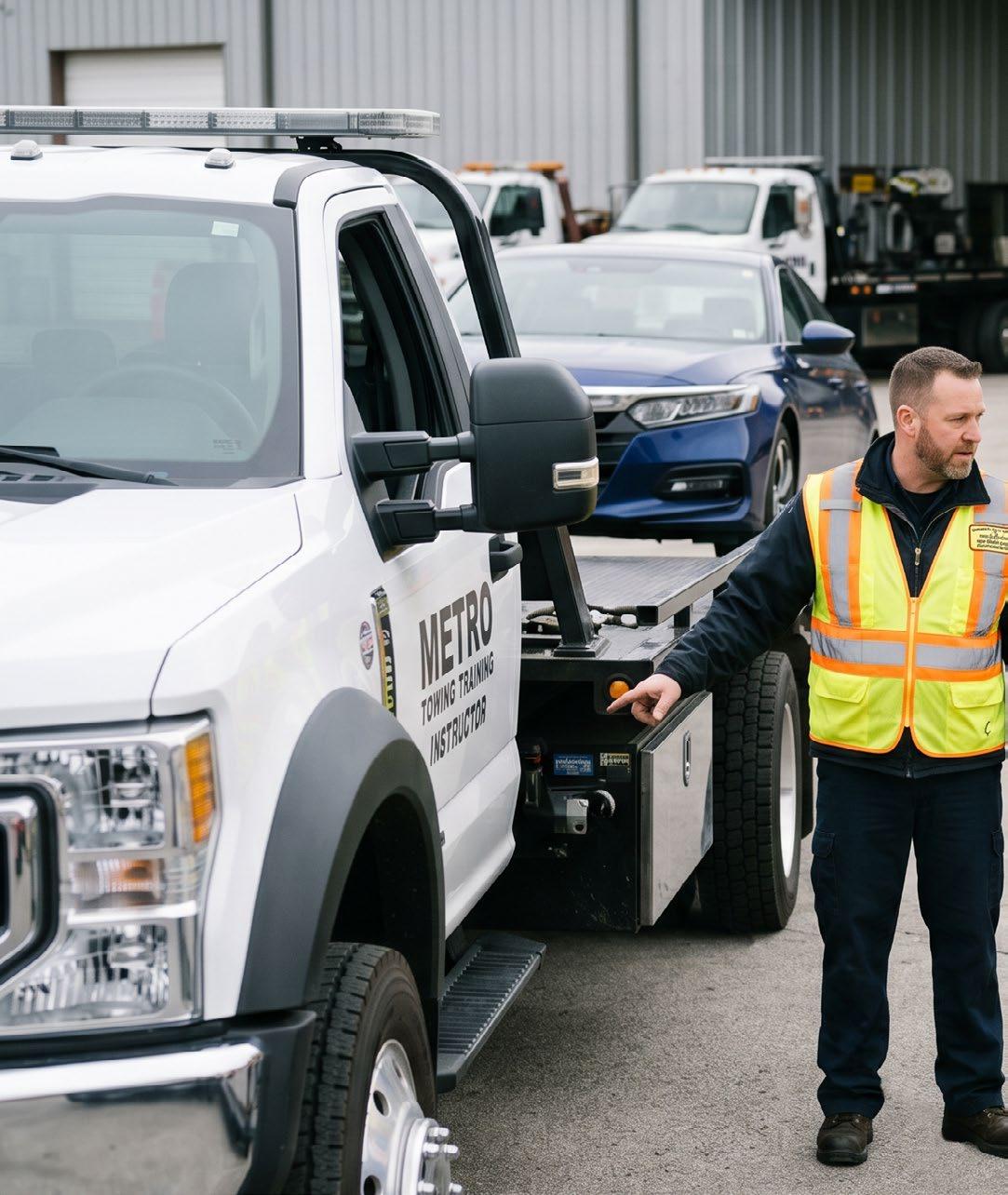
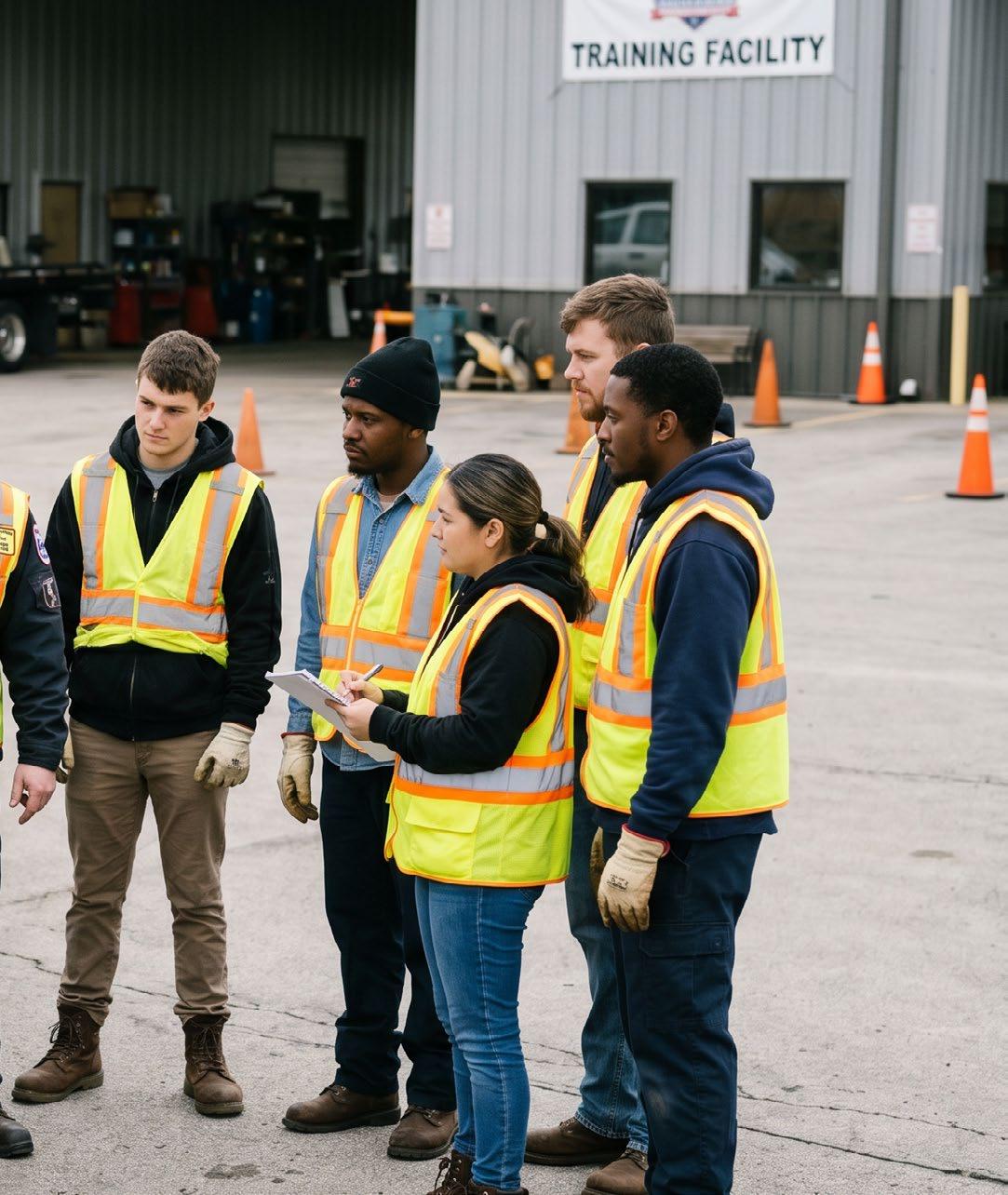
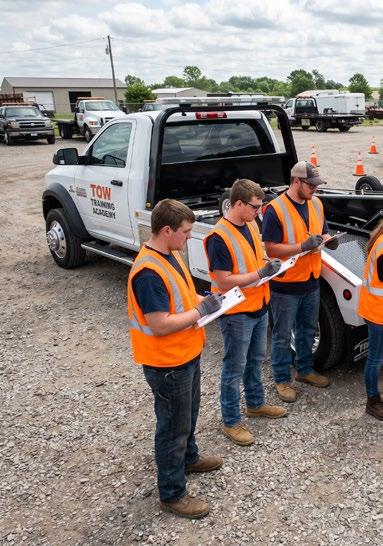
YOUR TEAM isn’t an “I gotcha” question. How you answer my question will usually show how successful your business really is. If you’re training because something happens at your place, then it is too late to help that situation, but being trained today can certainly help your staff go forward, particularly if a mistake happens again. As an industry, we really don’t want mistakes happening again because all of us are in this business together. The more we train, the better we can do this business. In turn, our industry is healthier because we’re trained.
FUEL4THOUGHT
BY D.J. HARRINGTON CSP ///
“Be on the lookout for any training within the industry because those that make the money are those that get trained, especially those that get trained on something that’s new.”
Here’s why training is important. Training is essential for enhancing employee productivity, boosting morale and fostering company loyalty by equipping staff members with the appropriate skills needed to perform any tasks efficiently.
Proper training also reduces errors, improves safety, and allows every business organization to adapt to something new, whether it’s new technology or an added revenue stream. More importantly, training boosts
profitability. Better yet, well-trained staff are more productive than untrained staff.
My Dad was probably glad he had been trained by that day in 1956 because his job depended on him being trained and knowing repair costs. Dad was always good with figures, and he surely knew what repairs needed to be made. Here’s what happened in July of 1956.
The Swedish liner, MS Stockholm collided with the Italian luxury liner, SS Andrea Doria due to dense fog off the coast of Nantucket. 51 people lost
their lives that day - 46 from Andrea Doria and 5 from Stockholm. The severely damaged, Andrea Doria sank the following day, and it was my dad’s job at Bethlehem Steel to come as close as he could for repair costs on Stockholm.
As a Marine Estimator with a mathematics degree, Dad patiently and diligently worked until he came up with the cost of repairs for Stockholm, as he could see it. I am proud to say that my dad came within $1,000 of the actual cost of repairs. Dad was always great with numbers and figures, but it was his training that helped him do it correctly. Diligently and patiently, Dad always had a goal of doing a good job for an employer or his employees. He had been to school and was also trained by management at Bethlehem Steel, which gave him a solid working career.
After Dad finally retired from Bethlehem Steel, he was able to get another master’s degree. The idea here is that Dad never quit learning and trying other things because he always wanted to better himself. Most assuredly, not everything went his way with damaged ships, but he always kept trying.
How about you? Have you ever felt that you were unprepared for what happened next because you didn’t stop to become appropriately trained on every aspect of your job? Maybe at some point, you had the wrong equipment or wish you had been trained on what was happening. At some point, it happens to all of us. Good news is we are part of an industry that wants us to invest our time on training within this industry so we can be prepared for whatever happens next. Furthermore, it’s usually free training. So why not send your people to be trained by those within the industry? Being trained and getting your people trained
can help your bottom line.
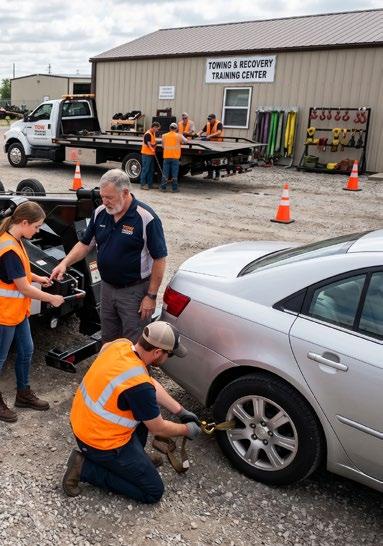
Do what my dad did. Take time out of your schedule to bring your team for training. Be on the lookout for any training within the industry because those that make the money are those that get trained, especially those that get trained on something that’s new. Since changes are being made quickly in the towing
industry, we need to be continuously trained.
Look at what’s coming up and then reserve your spot to train from the best in the industry by attending as many industry trade shows as you can. All it takes is time to get the training you need. Don’t forget to bring your team with you. See you on the next podcast.


BY JOHN BOROWSKI ///
The Near Future Towing
Future of the Industry
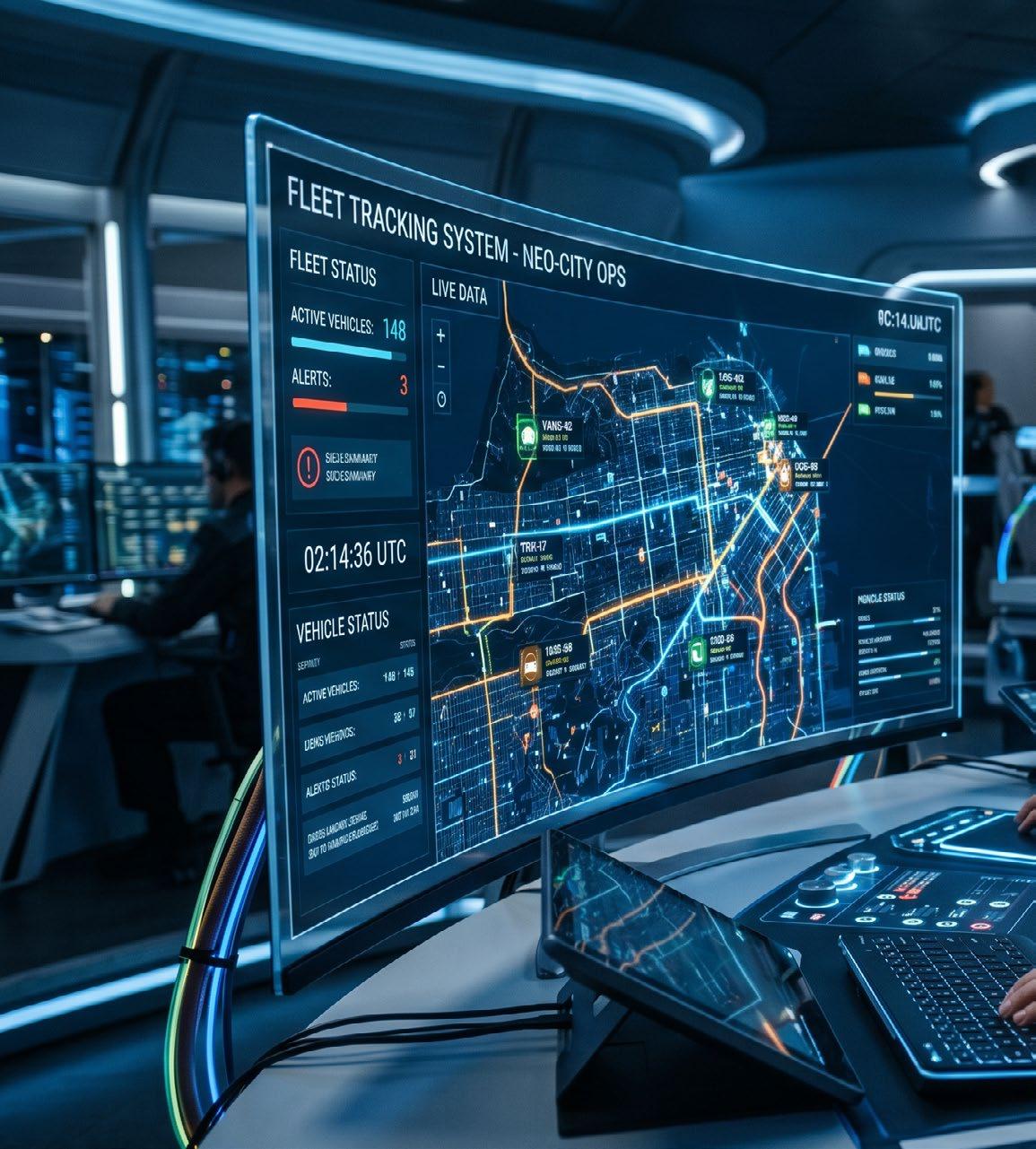
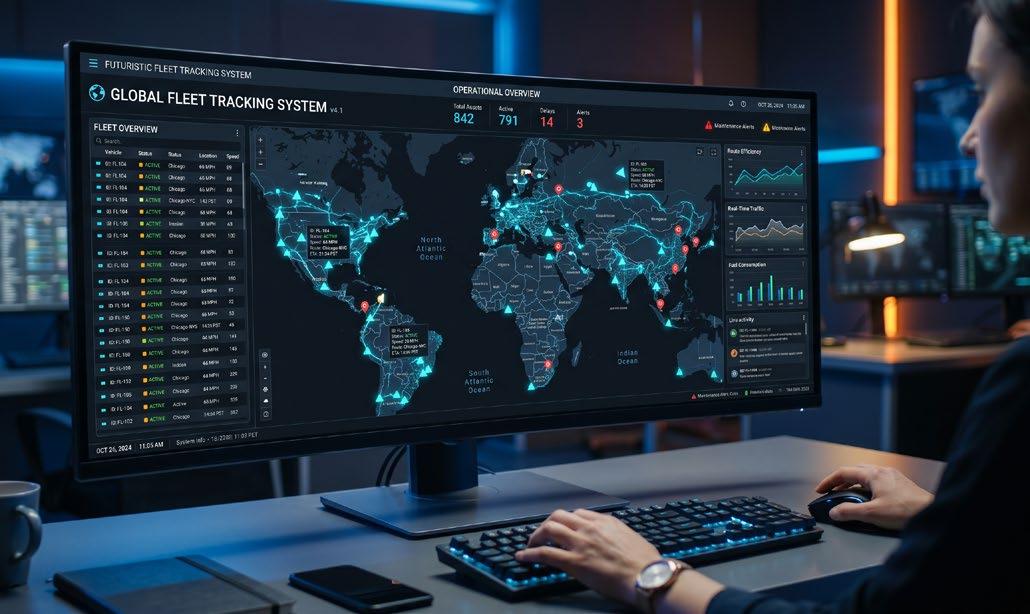
THE BIGGEST TRANSFORMATION already underway is the digitization of dispatch and operations. Historically, towing companies relied on phones, radios, and human memory to manage fleets. That model is rapidly being replaced by cloud dispatch platforms, GPS fleet tracking, and automated call routing.
UNDERTHEHOOD
BY JOHN BOROWSKI ///
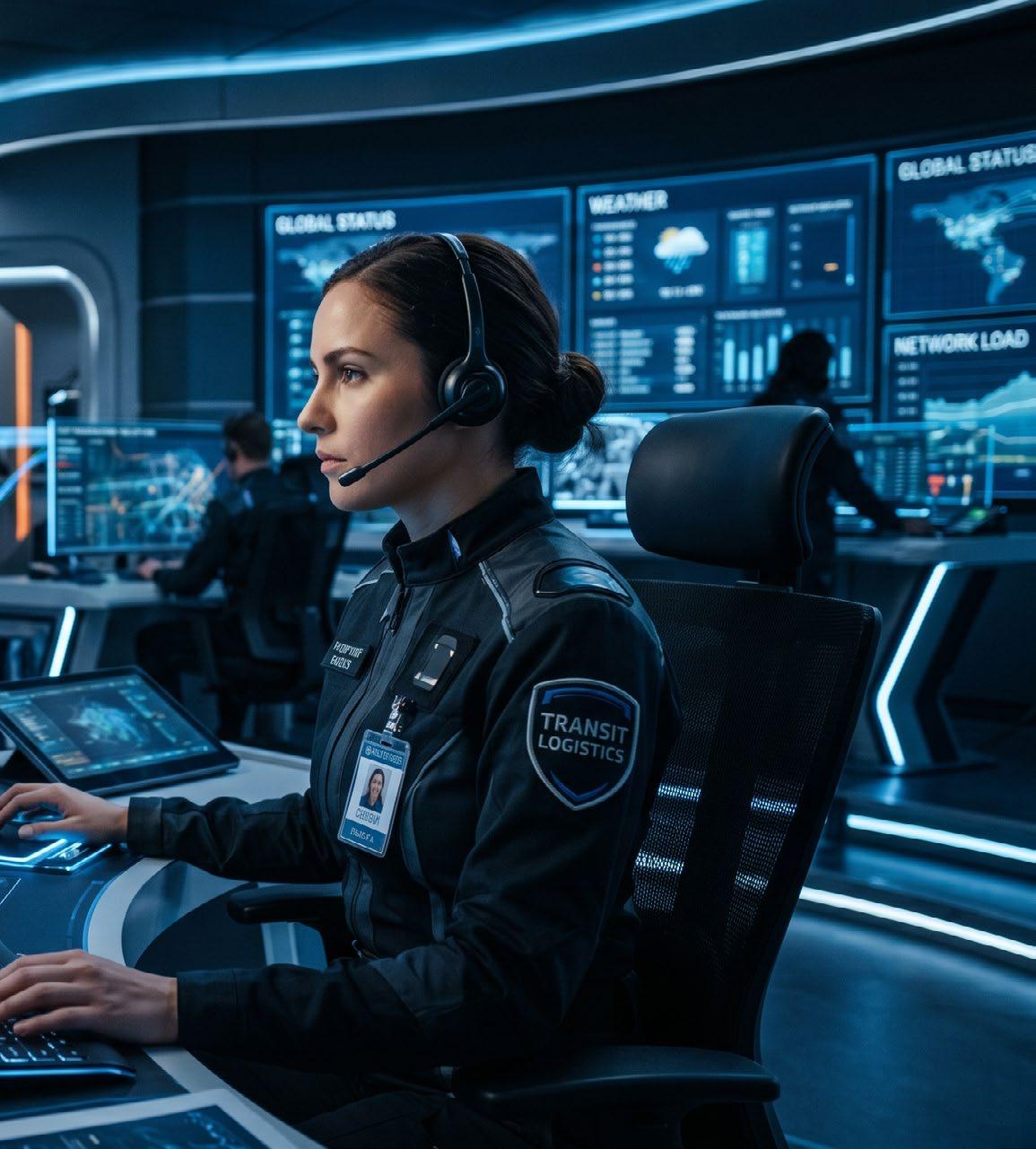
The towing company of 2035 will operate in a far more connected, automated, and professional environment than most fleets operate today.
Modern systems allow dispatchers to instantly see:
• Truck location and availability
• Estimated arrival times
• Equipment capabilities
• Traffic conditions
Instead of guessing who is closest to a scene, software can automatically dispatch the nearest qualified truck and provide real-time updates. GPSbased Automatic Vehicle Location (AVL) systems already allow dispatch centers to track and deploy trucks more efficiently. Machine learning systems are also beginning to analyze past incidents and traffic patterns to pre-position tow trucks in high-probability crash zones, reducing response times and congestion. In the extremely near future, the industry
will increase on data instead of instinct. Companies that still rely on manual dispatch systems will find themselves at a competitive disadvantage when competing for contracts with police agencies, insurance companies, and highway authorities. The towing business is expanding beyond towing. Motorists increasingly want immediate roadside solutions, not just transport to a repair shop. This has created a surge in mobile services such as:
• Mobile battery replacement
• Tire changes
• Lockout services
• Fuel delivery
• Minor mechanical repairs
These services solve problems
without requiring a tow, which is often faster and cheaper for consumers. This shift is changing how roadside fleets are built. Many companies now operate:
• Tow trucks
• Service vans
• Mobile repair units
The future towing company will look more like a mobile automotive service provider than just a transport operator. Electric vehicles are already forcing significant operational changes. EVs introduced new challenges that traditional towing companies did not have to consider:
• High-voltage battery systems
• Specialized lifting points
• Regenerative braking systems
• Manufacturer towing restrictions
Many EVs must be transported on flatbeds to prevent drivetrain damage, and operators require specialized training and procedures to handle them safely. As EV adoption accelerates, towing companies will need:
• EV-specific recovery training
• Specialized equipment
• Flatbed and low-angle loading systems
Companies that invest early in EV capability will have a major advantage, because demand for EVcapable tow providers is expected to increase significantly. At the same time, the towing fleets themselves are beginning to electrify. Electric tow trucks are emerging as a loweremission alternative to diesel units. One of the most powerful forces shaping the future of towing is roadway safety policy. Tow operators work in one of the most dangerous environments in transportation. Increasingly, government agencies are recognizing towing as a critical component of traffic incident management. The next decade will see:
• More standardized training programs
• Stronger “Move Over” enforcement
• Greater coordination between police, DOT, and towing companies
• Increased emphasis on rapid incident clearance
Quick clearance programs aim to remove disabled vehicles and wrecks as quickly as possible to prevent secondary crashes and congestion. As traffic volumes increase and cities become more crowded, towing companies will play an even more significant role in maintaining traffic flow and public safety. Another major shift is the corporate evolution of the towing industry. For decades, the industry consisted primarily of small familyrun businesses. While many of those businesses remain strong, the industry is now seeing:
• Private equity investment
• Regional towing networks
• Multi-location towing companies
• Enterprise-level fleet management
Insurance companies and motor clubs are also pushing providers toward higher levels of accountability and reporting. New contracts increasingly require:
• Digital dispatch integration
• GPS verification
• Performance reporting
• Response time metrics
This is pushing the industry toward professional management structures like logistics companies.
Vehicle size and complexity are
increasing across the transportation sector. More delivery trucks, commercial fleets, and heavy vehicles on the road means growing demand for heavy-duty recovery capability. Industry forecasts expect increasing investment in:
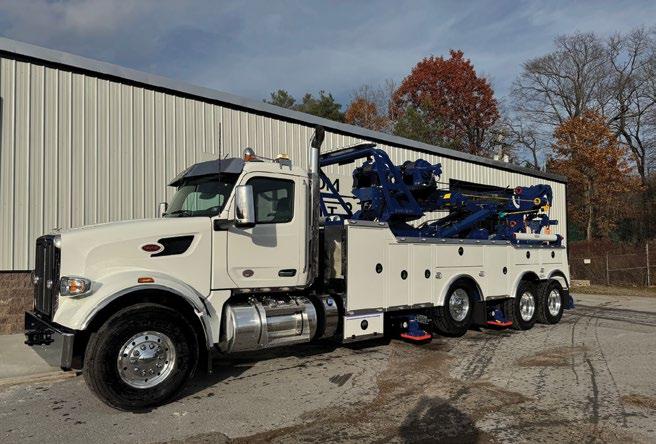
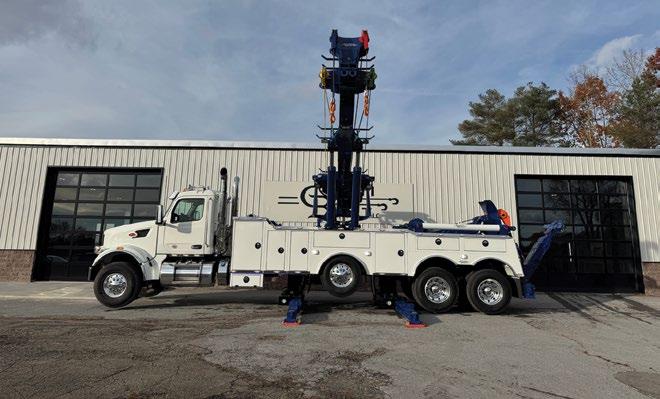
• Rotator wreckers
• Advanced winching systems
• High-capacity recovery equipment
• Specialized heavy-duty towing units
Market projections show the global tow truck sector continuing to expand through 2030 as vehicle fleets grow and urban congestion increases. Companies that can handle complex recoveries will command higher revenue and contract
UNDERTHEHOOD
BY JOHN BOROWSKI ///
opportunities. The towing industry is no longer just about trucks and chains. It is becoming a technology-enabled transportation service that combines:
• digital dispatch
• mobile roadside services
• advanced recovery equipment
• EV expertise
• data-driven operations
At the same time, the market itself continues to grow as vehicle ownership, traffic congestion, and roadside service demand increase worldwide. The companies that embrace these changes will lead the next generation of the towing industry. Those that resist them may find themselves struggling to compete in a business that is quickly becoming faster, smarter, and far more technologically advanced. If you want, I can also help you add one powerful “future prediction” section to your article, something like “What the towing industry will look like in 2035.”
Looking forward to another decade, the towing industry is likely to look quite different from the one many operators entered years ago. While
the core mission will remain the same, helping motorists and clearing disabled vehicles from roadways, the tools, technology, and expectations surrounding that mission will evolve dramatically. The towing company of 2035 will operate in a far more connected, automated, and professional environment than most fleets operate today. One of the most significant changes will come from connected vehicles. Many modern cars already have built-in telematics systems that automatically notify manufacturers or roadside assistance services when a crash occurs. By 2035, this capability will become universal.
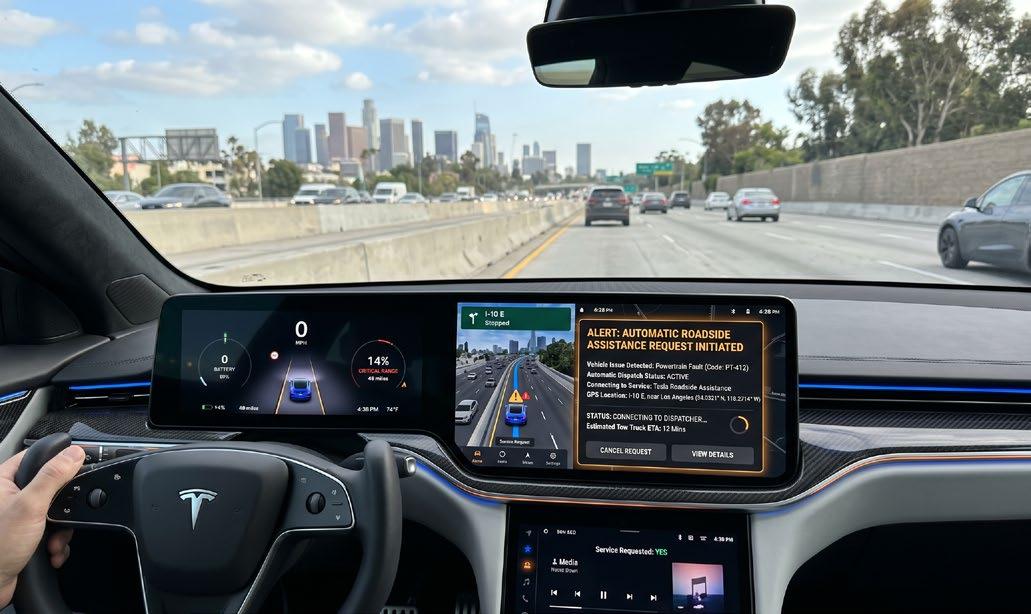
When a vehicle breaks down or is involved in a collision, the car itself may automatically send its location, diagnostic information, and severity data to a dispatch center. Artificial intelligence systems will instantly determine what type of assistance is needed and assign the nearest qualified tow provider. Instead of a motorist calling a dispatcher and explaining the situation, the process will happen automatically in seconds. Tow operators may receive assignments
that already include detailed vehicle diagnostics, allowing them to arrive with the proper equipment before even seeing the vehicle.
This level of integration will dramatically reduce response times and eliminate much of the confusion that currently occurs during roadside calls. Artificial intelligence will also begin to play a larger role in managing towing fleets. Dispatch systems will increasingly use predictive analytics to determine where trucks should be positioned before incidents even occur. Traffic data, weather conditions, historical crash patterns, and realtime congestion monitoring will allow systems to predict where incidents are most likely to happen. Tow trucks may be strategically staged throughout a city or highway system to shorten response times. Instead of reacting to calls, towing operations may begin to operate more like emergency response networks—always positioned and ready for the next incident. This shift will significantly improve traffic clearance and could dramatically reduce secondary crashes caused by
congestion around accident scenes.
The rise of electric vehicles will continue reshaping towing operations. By 2035, a sizable portion of the vehicles on the road will be electric or hybrid. Electric vehicles bring new challenges for recovery operators. High-voltage battery systems require careful handling, and some vehicles cannot be towed using traditional methods without damaging their drivetrains. As EV adoption grows, towing companies will need specialized training and equipment designed specifically for these vehicles. At the same time, autonomous vehicle technology is expected to mature. Self-driving cars may become more common in commercial fleets, delivery vehicles, and ride-share services. Even autonomous vehicles will still break down or be involved in crashes. But when they do, the recovery process may be different. The vehicle itself may transmit precise instructions for safe towing, including lifting points, battery isolation procedures, and drivetrain protection requirements. Tow operators will increasingly need to understand advanced vehicle electronics, not just mechanical systems.
Safety will remain one of the most critical issues facing the towing industry, and future equipment will reflect that priority.
Tow trucks are already becoming more sophisticated, but the next generation of recovery vehicles may include features such as:
• Remote-controlled recovery systems
• Advanced stabilization technology
• Integrated camera and drone support for scene assessment
• Automated winching systems
• Smart lighting systems that improve roadside visibility
These technologies will allow operators to perform recoveries from safer positions and reduce the time they spend exposing to passing traffic. The goal will be simple: clear incidents faster while keeping operators farther away from danger. Another major shift will be the continued professionalization of the towing business. The industry is already moving toward larger regional companies and integrated service
networks. By 2035, this trend may accelerate significantly.
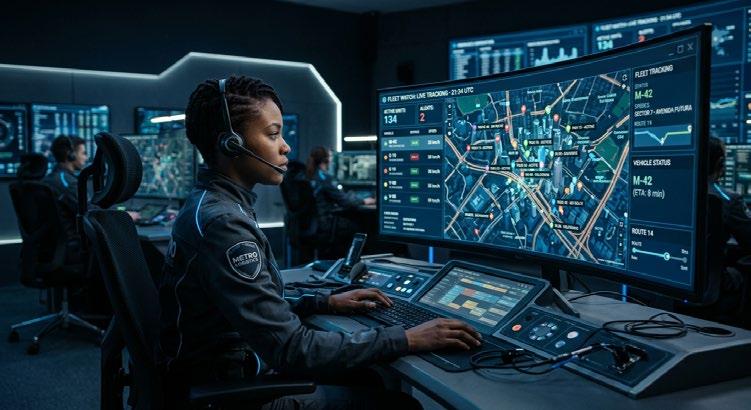
Fleet management platforms will allow companies to monitor every truck, every driver, and every call in real time. Response times, driver performance, fuel efficiency, and recovery metrics will all be tracked and analyzed.
Insurance companies, motor clubs, and transportation agencies will require this level of reporting. Contracts will be awarded not just on price, but on performance data. Many towing companies will operate more like logistics providers—using technology to manage fleets, analyze operations, and optimize performance.
The future towing company may spend less time towing and more time solving problems on the roadside. Mobile service units capable of performing quick mechanical repairs, battery replacements, and diagnostic services will become more common. With modern vehicles capable of transmitting diagnostic codes remotely, operators may arrive already knowing what the problem is. In many cases, the vehicle may be repaired on the roadside rather than towed to a repair facility. This shift will change how fleets are structured. Many companies may operate a combination of tow trucks, service vans, and specialized response vehicles designed for specific types of assistance.
Despite all these technological advances, one thing will not change: the importance of the tow operators.
Technology can help dispatch a truck faster or provide better information, but it cannot replace the judgment, skill, and experience required to manage a chaotic crash scene or safely recover a damaged vehicle. Tow operators will still be the professionals standing on the roadside in difficult conditions, helping people in stressful situations, and restoring order to traffic incidents. The difference is that future operators will be supported by better tools, better information, and safer equipment. The towing industry has always been built on resilience. Operators have adapted to changing vehicles, changing highways, and changing demands from motorists and public agencies.
The coming decade will bring some of the most significant changes the industry has ever seen. Digital dispatch systems, connected vehicles, electric drivetrains, and advanced recovery technology will reshape how towing services are delivered. For companies willing to invest in new tools, training, and systems, the future holds tremendous opportunity. For those unwilling to adapt, the pace of change may prove difficult to keep up with. By 2035, the towing industry will look more technologically advanced, more coordinated with transportation agencies, and more professionally managed than ever before. But at its core, it will still be about the same thing it has always been about: showing up when people need help and getting the road moving again.
Fleet Camera Solutions:
How Compact Auxiliary Cameras Improve Visibility and Safety
Introduction
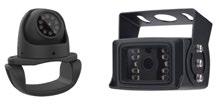
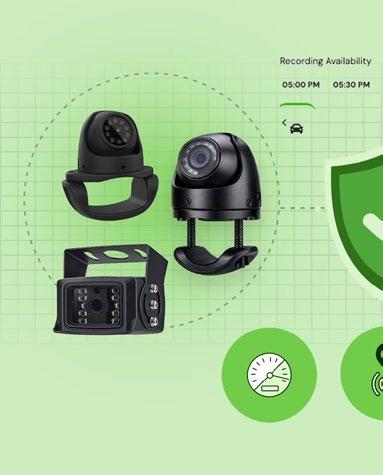
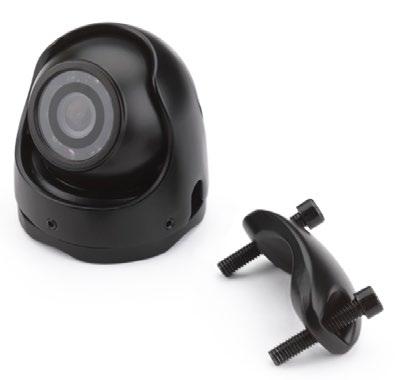
For many fleets, improving side and rear visibility is not just a technology decision, it is a hardware challenge. Trucks often lack the space needed to install standard auxiliary cameras, especially on narrow mirror arms or limited exterior mounting surfaces.
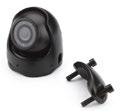
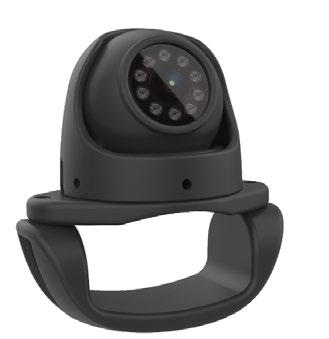
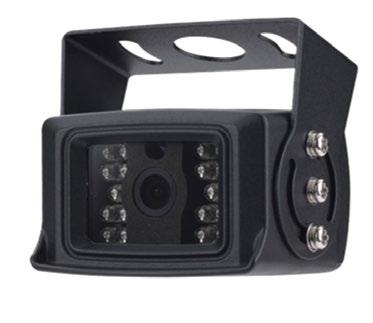
A new category of compact auxiliary cameras for fleet vehicles is designed to address this constraint. By fitting into tighter spaces, these cameras
make it possible to expand video coverage without modifying vehicles or compromising placement.
The Challenge: Limited Mounting Space in Fleet Vehicles
In industries like construction, waste management, and delivery, vehicle design often restricts where cameras can be installed.
Common issues include:
• Mirror arms that cannot support larger camera housings
• Limited flat surfaces for mounting

Wichert Insurance is one of the largest tow agencies in the Midwest with over 30 years of experience working with towing, recovery, and garage operations. Our knowledgeable staff are current on industry issues and are experts in the coverages your operation requires. Our relationships with multiple AM Best “A - Excellent” rated carriers allow us to offer competitive rates and interest-free monthly pay plans. As active members of state associations, we are industry advocates and a reliable resource.
Our team’s experience allows us to create custom programs to meet your needs. From service trucks to extra heavy equipment, single location to multi-state operations, we will craft a program to meet your risk appetite at the most competitive rates. In addition, we act as your advocate when a claim occurs to ensure timely and fair outcomes.
We offer in-house loss control specialists at no additional cost to identify ways to control and reduce risks. Clients who engage in our loss control and safety programs benefit from lower insurance premiums, increased profitability, and reduced accidents, injuries, and claims.
See more at www.wichert.com or contact us today at 740-654-0532

• Standardize camera placement across more vehicles
• Improve coverage in previously inaccessible areas
• Avoid custom modifications during installation
• By removing physical limitations, fleets can better align camera placement with safety needs.
Built for Harsh Fleet Environments
Durability remains a critical requirement for exterior fleet cameras. Compact designs can still meet these standards when built with rugged materials and protective ratings.
Key durability considerations include:
• IP69K rating for resistance to water,
• Inconsistent installations across different vehicle types
These constraints can lead to:






• Blind spots around the vehicle
• Gaps in video coverage

• Reduced effectiveness of video telematics systems

A More Practical Approach: Compact Auxiliary Camera Design

Smaller, low-profile cameras are designed specifically for real-world fleet conditions. Their compact form factor allows installation in areas where traditional cameras may not fit. This enables fleets to:











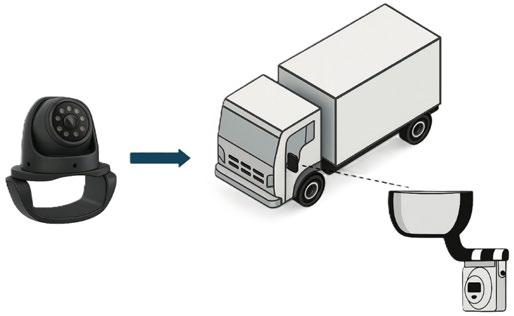
dust, and high-pressure washdowns
• Shock resistance (≥10G) for rough road conditions
• Wide operating temperature range (-30°C to +85°C) for different climates These features help ensure consistent performance in demanding environments.
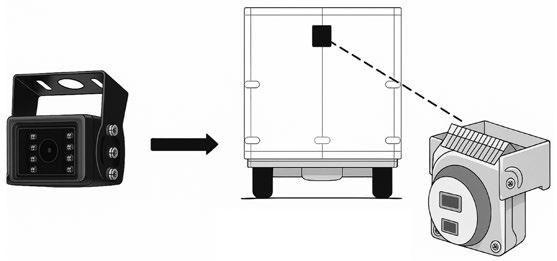
Maintaining Video Quality in All Conditions
Camera size does not eliminate the need for clear, reliable footage. Effective auxiliary cameras still need to deliver consistent video quality. Important capabilities include:
• 720p resolution at 30 fps (frames
per second) for clear playback
• Wide field of view (around 120°+) to reduce blind spots
• Low-light performance for nighttime visibility
• Infrared support for near-dark conditions
These features help fleets capture
usable footage across a range of driving conditions.
Scaling Fleet Camera Coverage
Modern video telematics systems support multiple auxiliary cameras per vehicle, making it easier to expand coverage.
This allows fleets to:
• Add cameras based on vehicle type or risk areas
• Capture multiple angles for better incident context
• Maintain a consistent setup across the fleet
Flexible configurations are especially useful for mixed fleets with varying operational needs.
Why This Matters for Fleet Safety
Solving mounting limitations can have a direct impact on safety and operations.
When fleets can install cameras where they are actually needed, they can:
• Reduce blind spots and improve driver awareness
• Capture more complete incident footage
• Support more effective driver coaching
• Strengthen documentation for claims and disputes
Improved camera placement leads to more reliable data and better decisionmaking.
Key Takeaways
• Limited mounting space is a common
barrier to fleet camera adoption
• Compact auxiliary cameras make installation possible in tighter areas
• Rugged designs ensure durability in harsh environments
• Strong video performance supports day and night visibility
• Flexible setups allow fleets to scale coverage across vehicles


Green Mamba: B/A Products Strikes Again with
a Next-Level
8-Point Tie-Down Kit
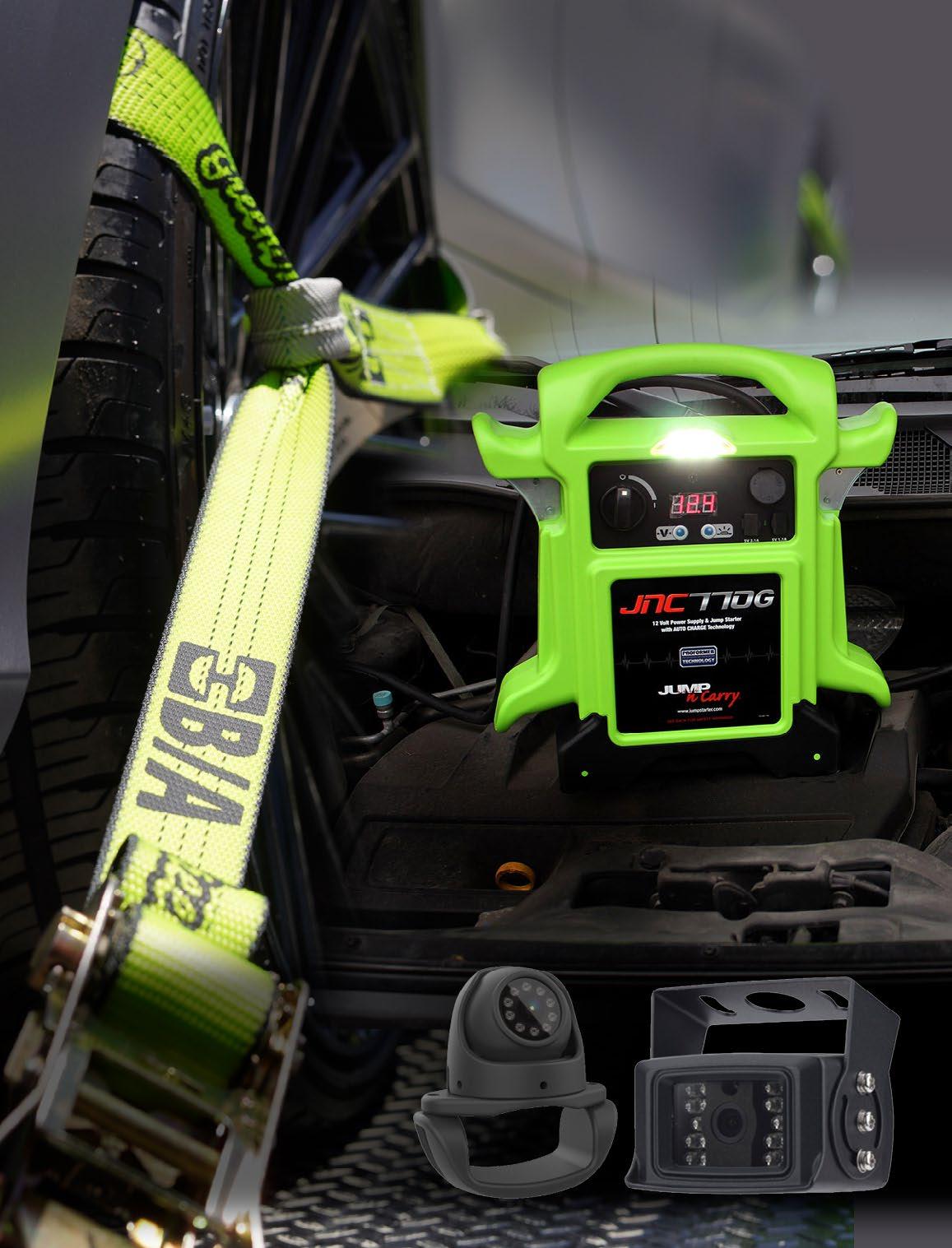
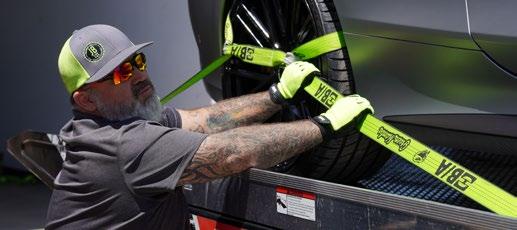
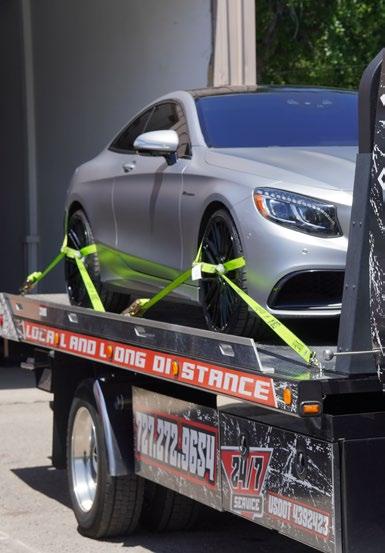
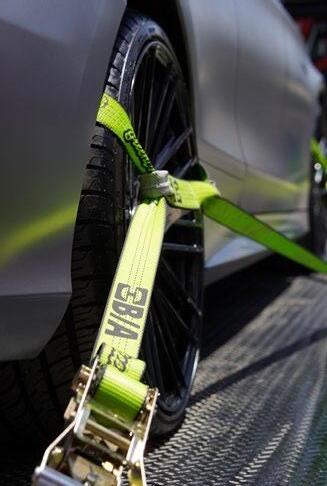
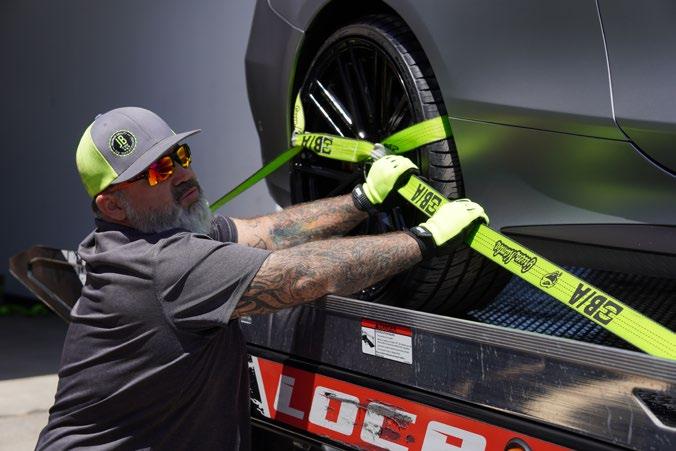
A Products’ new Green Mamba webbing brings superior abrasion resistance, highcapacity strength, and high-visibility color to the workhorse of cargo control — the 8-point tie-down system.
In the towing industry, cargo control is not a suggestion — it is the law, and more importantly, it is what stands between a safe transport and a catastrophe on the highway. Whether
you are running a light-duty rollback or a heavy-duty recovery rig, the straps and tie-down systems you trust every day need to be tougher than the job itself. B/A Products, one of the most trusted
names in towing equipment for over four decades, understands that better than anyone. Their newest innovation, the Green Mamba 8-Point Tie-Down Kit, is proof that they continue to raise the bar.
it all — fast, strong, and impossible to miss. Built with a higher resin content than standard polyester webbing, the Green Mamba delivers dramatically improved abrasion resistance, meaning it stands up to the daily punishment that tow straps take from asphalt, gravel, and weather. For towers who run high-volume operations, that translates
directly into longer strap life and lower replacement costs.
The webbing is built for heavy-duty performance, capable of handling everything from compact cars to full-size trucks and SUVs with confidence. That strength, combined with the added weather resistance built
Fine incline.
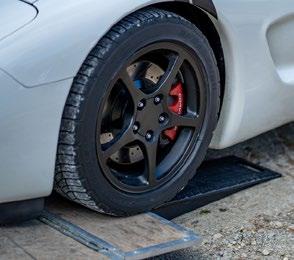
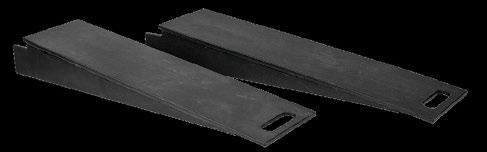
The GUNI Automotive Ramp can bridge the gap between the ground and the tail of your carrier bed or trailer deck.
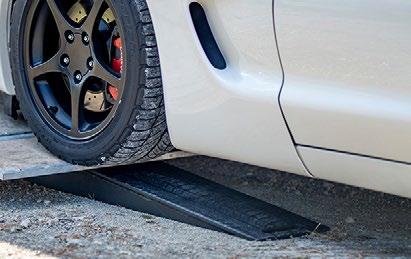
Constructed from welded high-density poly material
Supports up to 3,000 lbs. individually

Meet the Green Mamba
The Green Mamba is B/A Products’ latest webbing line, and the name says
Ideal for lowclearance vehicles
Built for commercial use
Notched recess
604-26-02

42"L x 10"W x 5"H | Load Angle: 5.2°
CARGO CONTROL
into the material, ensures the Green Mamba performs reliably in rain, sun, road grime, and every condition in between.
The bright green color is not just for show. Visibility matters on a busy roadside or in a dimly lit loading bay. The distinctive color makes it easy to
spot your straps at a glance, confirm they are properly seated, and identify them in a pile of gear — a small detail that adds up to real efficiency and safety gains over the course of a work day.
The Gold Standard: 8-Point Tie-Down
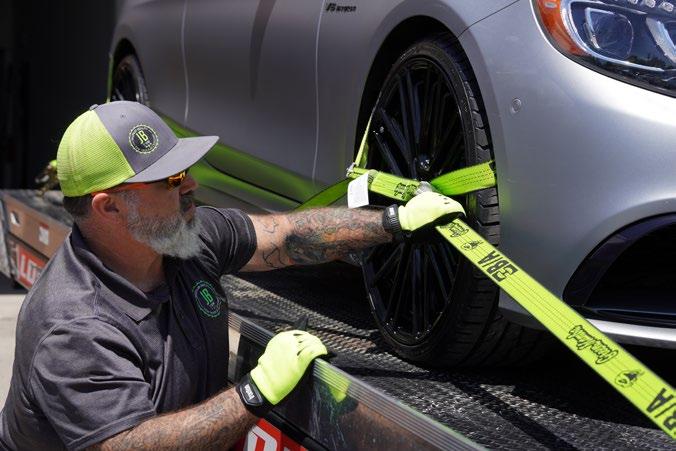
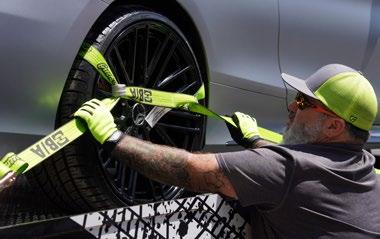
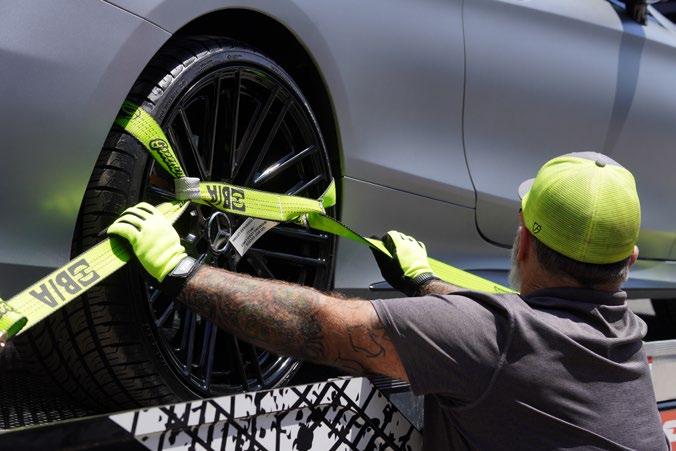
B/A Products has long been the pioneer of the rollback and flatbed tie-down system, and the 8-point configuration remains the industry standard for a reason. Rather than relying on chains or straps hooked to the frame or axle — methods that can damage modern vehicles with lowclearance body panels and complex undercarriages — the 8-point system secures the vehicle by its wheels. This approach lets the vehicle ride on its own suspension, absorbing road shock naturally while keeping it firmly locked in place.
The Green Mamba 8-Point TieDown Kit follows B/A’s proven
design: four long straps and four short straps working in concert to prevent the vehicle from moving forward, backward, or side to side. It’s completely adjustable to accommodate a wide range of tire sizes, from compact sedans to full-size pickups. The system is quick to deploy, and any experienced tower can have a vehicle locked down in a matter of minutes — a critical advantage when time is money and safety is non-negotiable.
Built on a Legacy of Innovation
B/A Products has been engineering towing and cargo control solutions since 1978, growing from a small Florida storefront into one of the most recognized manufacturers in the industry. They were among the first to introduce V-straps with J-hooks for towing, upgraded chain assemblies from Grade 30 all the way to Grade 120, and developed the best-selling patented rollback tie-down system
on the market. Today, operating out of nearly 70,000 square feet of manufacturing space, B/A continues to push the envelope on product design
— and the Green Mamba is the latest chapter in that story. Every assembly sewn by B/A Products carries a tag identifying
CARGO CONTROL
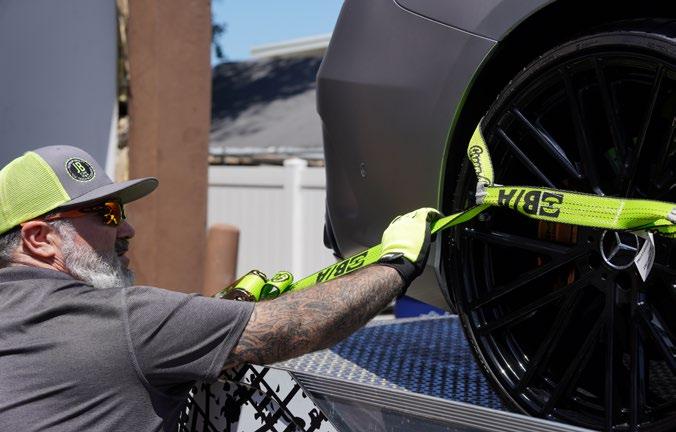
both the material and the Working Load Limit. The tie-down assemblies are engineered with a 3:1 design factor, providing a meaningful safety margin above the working load. B/A
recommends storing straps in a cool, dark, dry environment and cleaning them with plain water only — simple care that extends the life of any webbing product significantly.
Cargo Control: The Compliance Angle
Federal and state regulations governing cargo securement are clear and unforgiving. FMCSA regulations require that vehicles in transit be secured in a manner that prevents movement in all directions — forward, rearward, and lateral. Failure to comply can result in violations, fines, and, in the worst case, catastrophic accidents. Beyond the legal obligation, a vehicle that comes loose in transit can injure or kill other drivers, expose your company to massive liability, and end careers.
The Green Mamba 8-Point Tie-Down Kit is engineered to meet those demands head-on. Its high-capacity webbing provides ample margin for the heaviest passenger vehicles and light trucks, and the enhanced abrasion resistance means the working load limit stays dependable across the full life of the strap — not just on day one. When you combine high-strength webbing with a proven
LIVE FROM THE TOW PROFESSIONAL STUDIO






8-point attachment strategy, you are not just meeting the minimum standard. You are exceeding it.
The Bottom Line
For tow operators who demand the best from their equipment, the Green Mamba 8-Point Tie-Down Kit from B/A Products is a serious upgrade worth considering. The combination of resinenhanced abrasion resistance, improved weather performance, and highvisibility green webbing makes this kit a standout in a crowded field. It is a
product built for the real world — the road, the weather, and the daily grind of professional towing.
For the Green Mamba 8-Point Tie-
Down Kit, other B/A Products cargo control solutions, and a full range of professional towing equipment, visit www.jbtow.com.

Peak Amps Don’t Tell the Story
It was great to see so many of our technician, shop management and roadside assistance friends at the recent Vision Show in Kansas City (of course, we love it when a show is right in our backyard, which almost never happens). We had many great conversations at the show around starting, charging and maintaining batteries. One of the most common topics we got into was Peak Amps. Those conversations were so common and so in depth that we thought it was worthwhile to address this topic in a more formal and detailed way.
Peak Amps – One Power Value, But Not The Whole Story
Peak Amps are a great starting point when it comes to assessing if a jump starter is capable of meeting your needs. After all, each user’s needs are different when it comes to a jump starter – are you purchasing one to help you avoid a potential hassle of an occasional dead battery as vehicle owner or are you purchasing one because you run a roadside recovery business where you could perform 8-12 jump starts per day for your customers?
Peak Amps is loosely defined as the
POWER YOU CAN DEPEND ON.
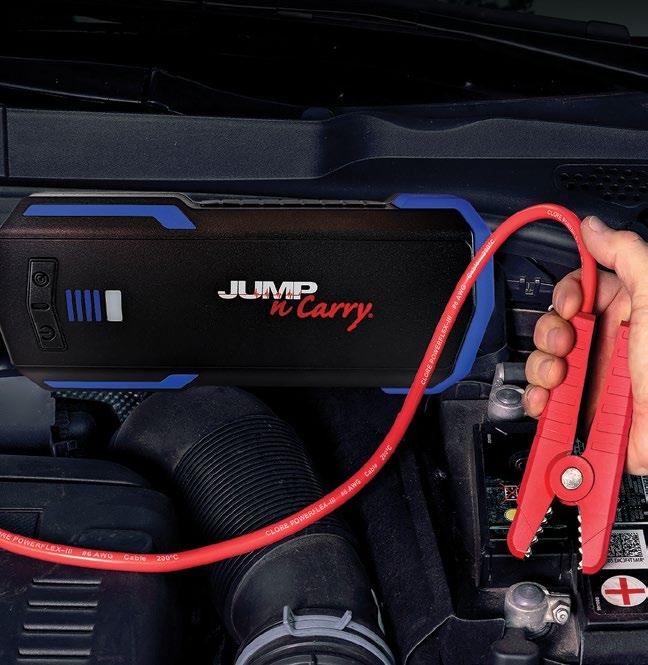
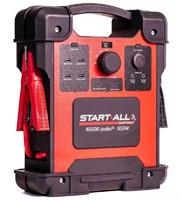
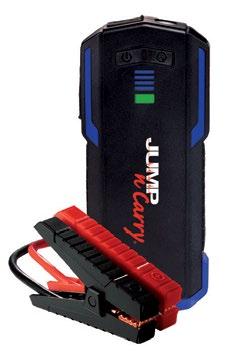
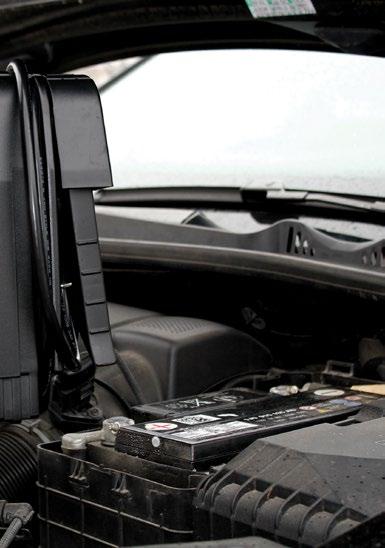
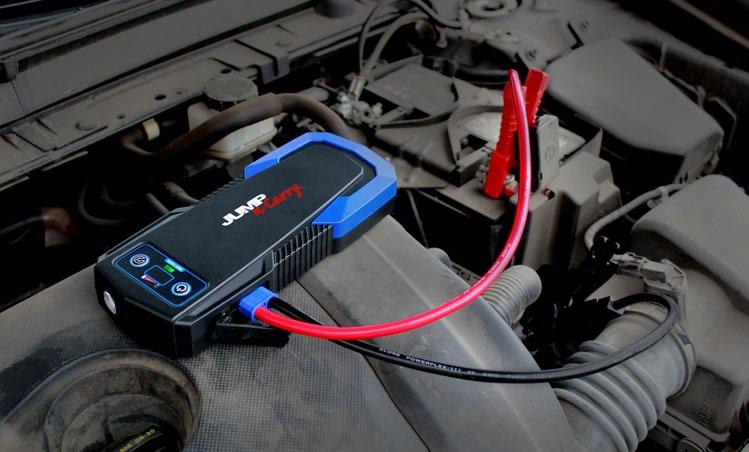
Towing operations that employ Jump-N-Carry jump starters know that no starting task is too daunting. They know from experience that every aspect of a Jump-N-Carry is designed to deliver extreme jump starting power, from the battery to the heavy-duty cables. Jump-N-Carry is all about power delivery.
total potential current available from a specific jump starter, i.e. if you shorted the clamps, etc. (which we do not recommend doing). But, as we like to say, Peak Amps don’t start vehicles. It is a transitory value that is fleeting (as in micro seconds) and, therefore, has no relation to or any significant influence over the starting application other than as an indicator as to whether the unit is powerful enough to get the starting process initiated (1/4 turn of the starter, for instance).
There’s also a big catch: Peak Amps has no industry-agreed definition, so one company’s Peak Amp value may or may not be equivalent to another company’s Peak Amp value. So, from our point of view, Peak Amps are like pixie dust. One minute they’re here, the next minute they’re there. We rate our products with a Peak Amp value because the market demands that we do. But, we also provide a more substantive power value in addition to Peak Amps to help our
customers truly understand how powerful each of our units are in the real world.
Cranking Amps / Start Assist Amps
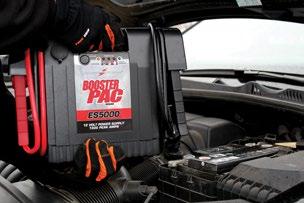
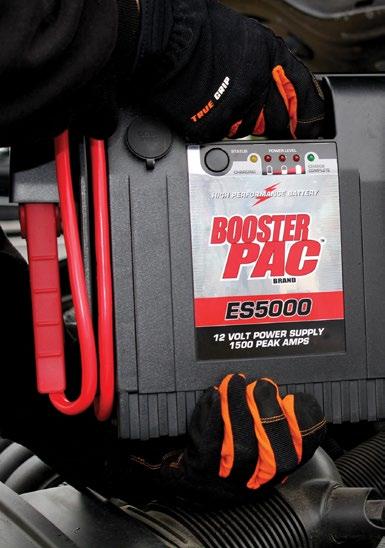
We rate all of our Sealed Lead Acid AGM (SLA AGM) battery containing units in Cranking Amps (CA). This rating has a very specific definition as established by Battery Council International (BCI): how much current can a battery at 32˚F deliver for 30 seconds and have a terminal (end of the test) voltage above 7.2V? Simple, agreed upon, testable and the same for everyone (assuming they are following the rules). So, a potential customer can better decide whether an ES2500, rated at 300 Cranking Amps, meets their needs, or if it is better to step up to the ES5000, which is rated at 400 Cranking Amps. Similarly, we rate our lithium battery containing jump starters in Start Assist Amps (SAA). This rating has the same parameters except the duration, which

changes from 30s to 3s. The reality of lithium batteries is that, because they are so energy dense, they cannot safely supply high jump starting current
continuously for 30 seconds. We feel that Start Assist Amps is an appropriate measure of starting capability, given that a typical gasoline engine starting
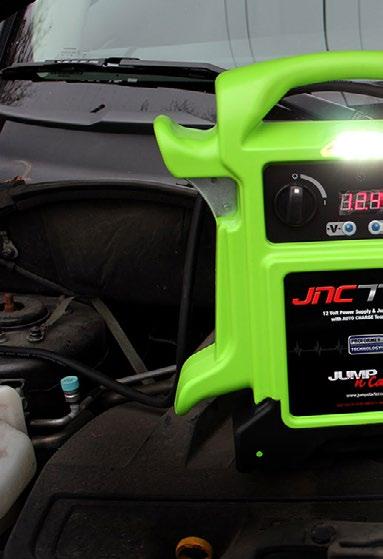
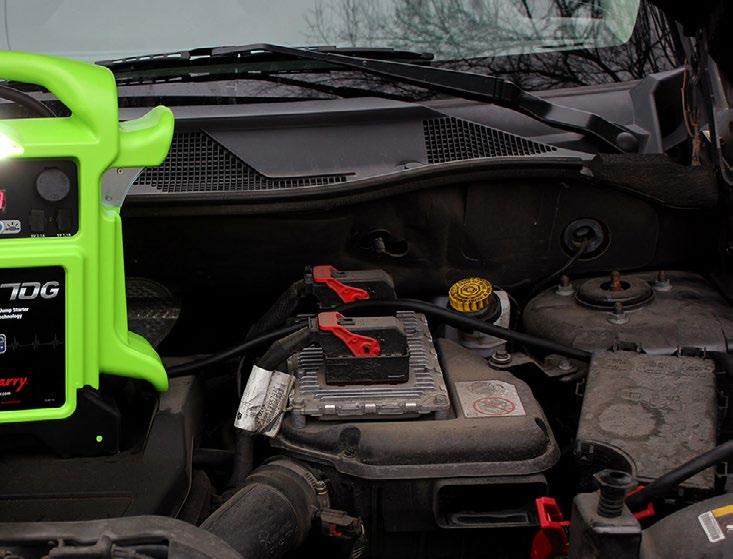
cycle is 0.6-0.8s and a typical diesel engine starting cycle is 1.2-1.4s. As with our SLA units, this allows the potential customer to evaluate whether a JNC325 (450 SAA) is the right model for them or if they need to move up to the JNC345 (550 SAA).
Cold Temperature Performance
In many parts of the U.S., there’s one more variable that should be accounted for: cold temperature performance. Cranking Amps or Start Assist Amps provide tremendous value when it comes to determining if a specific jump starter might be the one for you. It is great for ruing out many units that simply aren’t going to cut it. But, unless you live in Phoenix, South Florida or somewhere else that never see temps below 30˚F, you’re going to want to take cold weather performance into consideration.
This is often harder information to
come by, with many manufacturers not sharing these details, for any number of reasons. But, if you can get a rating, it is helpful, especially for lithium units, which are more sensitive to cold temperatures than lead acid units. For reference, here’s how we rate our units:
• Jump-N-Carry and Booster PAC Sealed Lead Acid AGM jump starters: -30˚F
• Jump-N-Carry Model JNC345 lithium jump starter: -23˚F
• Jump-N-Carry Model JNC325 lithium jump starter: -10˚F
• Jump-N-Carry Model JNC305 lithium jump starter: -23˚F
When choosing a jump starter to meet your needs, it is important to look past the headline numbers to get a sense of the true capability of any unit under consideration. Peak Amps is a perfect example of this. Yes, it may tell you something, but there’s much more to the equation that should be considered.
Cranking Amps or Start Assist Amps provide tremendous value when it comes to determining if a specific jump starter might be the one for you.

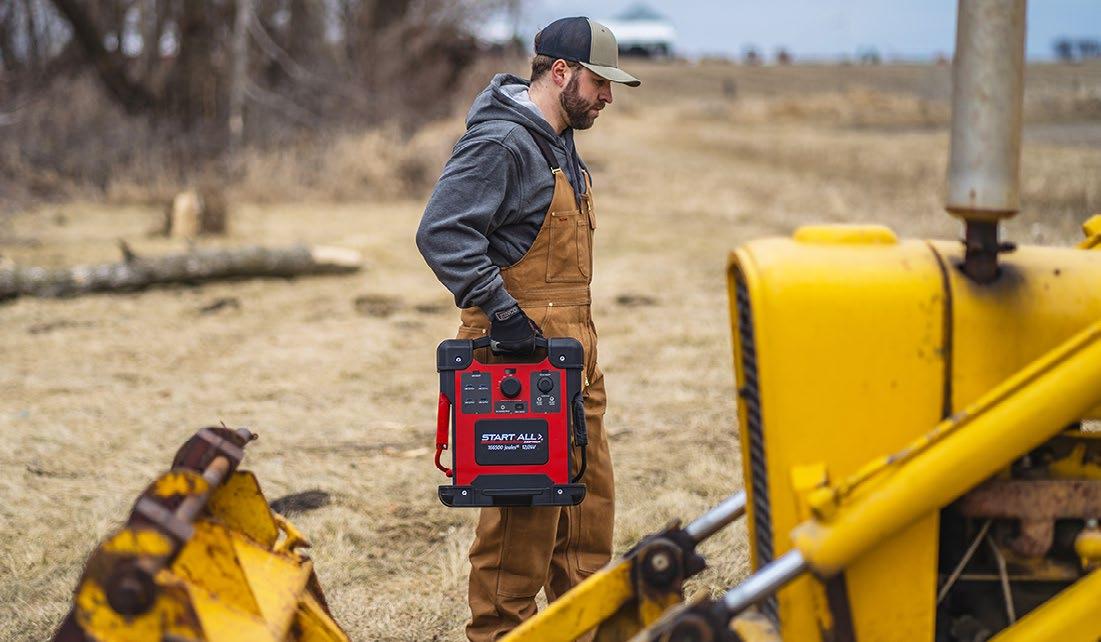
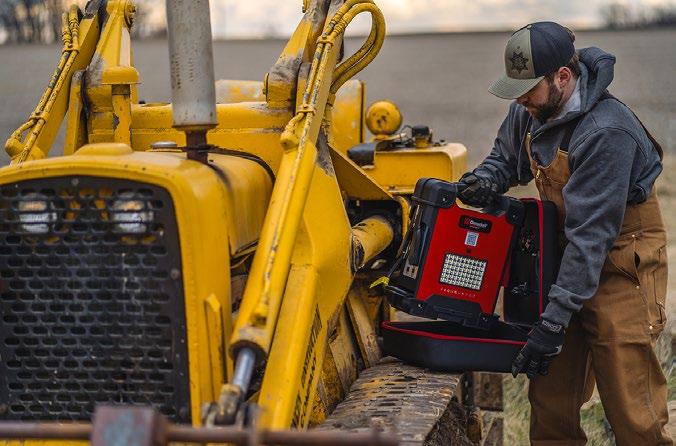
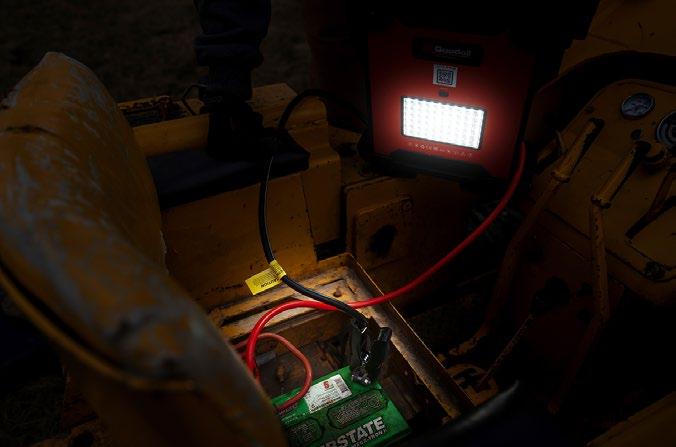
Restart all types of customer vehicles with one jump pack from Zip’s AW Direct
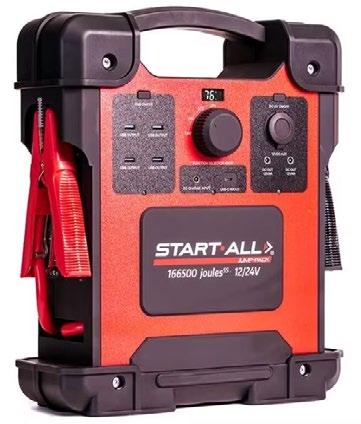
Dual voltage jump packs do more than get your customers back on the road or back to work. In addition to customer satisfaction and company reputation, they preserve profits, performance and safety.
The tools tow companies rely on every day directly impact response time, safety, customer service and profitability. Few pieces of equipment illustrate this better than the shift toward 12/24-volt jump packs. What was once considered a specialty tool has quickly become a standard for busy operators on the go.
Versatility is everything. On any given workday, you can be faced with a
variety of situations that can be handled with a single jump pack like the Goodall Jump Pack 12/24V Jump Starter or the Jump-N-Carry 3400 12/24 Jump Starter. These multi-purpose packs can breathe new life into stranded cars in an airport parking lot, a truck which left its lights on all night or a delivery van that won’t start in the morning.
Owning separate jump starters for each scenario slows operators down and wastes valuable truck space. Instead of second-guessing which unit to grab, technicians can rely on one piece of equipment to handle nearly every jump-start situation. That speed and efficiency matters—not just
for customer satisfaction and your company’s reputation, but for safety and profitability. Get that wrecker or roadside service vehicle moving onto the next call quickly, earning a dollar.
Training is another area where any towing operation can see immediate benefits from a dual-voltage unit. High turnover, seasonal hiring and expanding teams all create a constant need to onboard new personnel. The more complicated your equipment lineup, the longer it takes to get new operators up to speed and, with it, the greater the chance for mistakes.
Standardizing a 12/24-volt jump pack simplifies that process. Instead of training employees on multiple devices with different procedures, teams can focus on one consistent workflow: proper connection, correct voltage selection and safe operation. Along with built-in safeguards, this consistency reduces errors, builds confidence among newer operators and ensures that even
A single dual-voltage unit also frees up space on a truck or shop
less experienced staff can perform jump starts safely and effectively.
vehicle by combining functionality in one convenient unit. Over time, that consolidation translates into lower costs and fewer logistical headaches. It also
JUMP PACKS
helps unify equipment across the fleet, making it easier to manage inventory and ensure every vehicle is properly equipped.
Ultimately, responding to unpredictable roadside calls needs to have the right tool for the job. Don’t leave the shop without a 12/24-volt jump pack from Zip’s AW Direct. Be ready for any battery call with the new standard in remote jump starts.
Visit Zips.com and click on the ‘Battery Service’ department for a
complete list of 12/24-volt options. No matter which one you choose, these all-in-one units deliver flexibility to handle anything from a passenger car
to a Class 8 truck. This upgrade will simplify training across your workforce and streamline how equipment is stored and maintained.
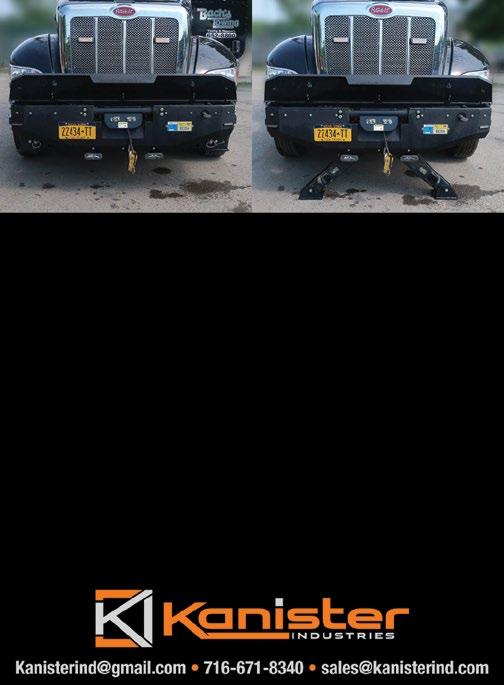
Front Recovery Unit Advantages
• Provides a recovery range exceeding 180 degrees
• Ensures even spooling of the winch cable, regardless of the pull direction
• The patented trunnion sheave head & front winch release enable fast and efficient operation
• Recover vehicles the same way they entered, eliminating the need to create a new path out
• Enhanced operator safety, by eliminating the need to work behind or alongside the recovery vehicle, and recovery operations can be performed remotely, from inside the cab of the recovery vehicle, or even from within the disabled vehicle itself
• Enables the operator to bring the recovered vehicle fully onto the roadway, not just to the shoulder of the road
• Allows the operator to approach the recovery point head-on, rather than at a side angle
• Reduces amount of time operators need to spend in active traffic lanes
• Allows recovery, without turning recovery vehicle around
• Minimizes the necessity of calling in a wrecker for the first stage of recovery
• Compatible with any vehicle, regardless of cab-to-bed clearance


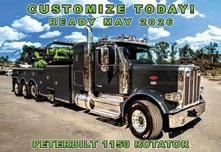





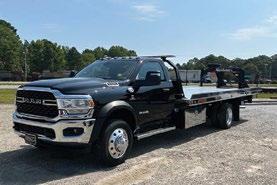
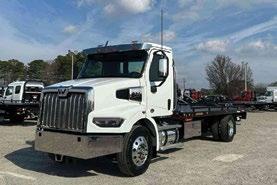
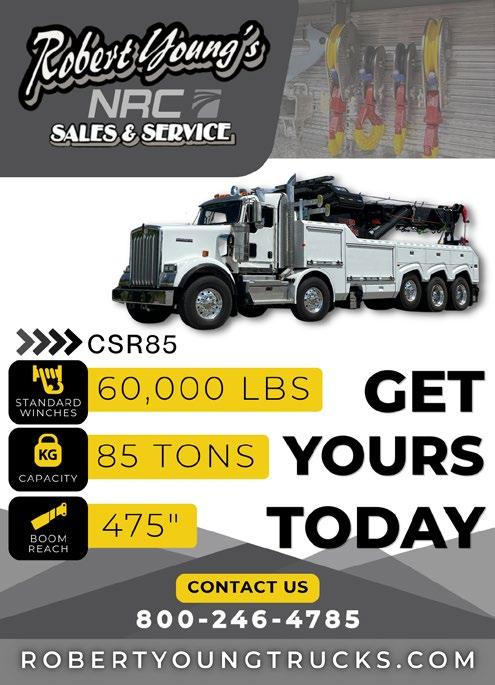
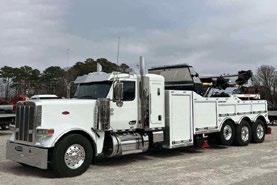
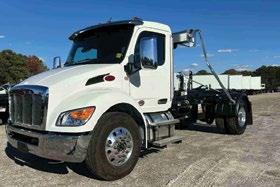
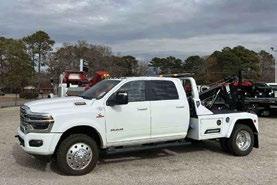
Eastern Wrecker Sales Inc
Eastern Wrecker Sales Inc
Eastern Wrecker Sales Inc
Eastern Wrecker Sales Inc
Eastern Wrecker Sales Inc
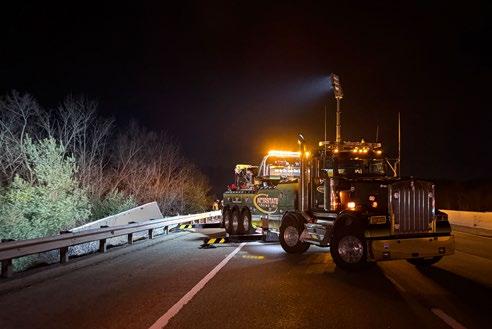
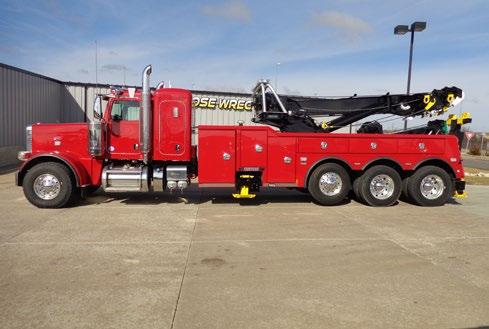



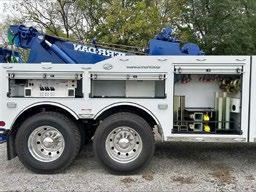
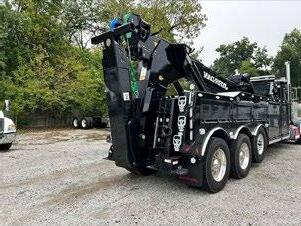
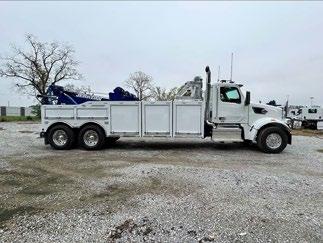
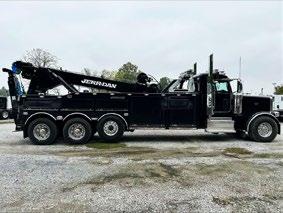
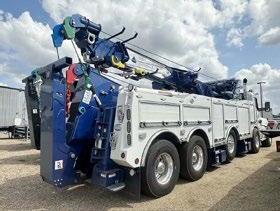
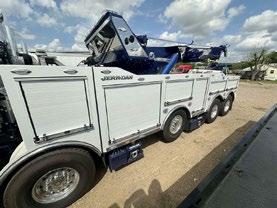
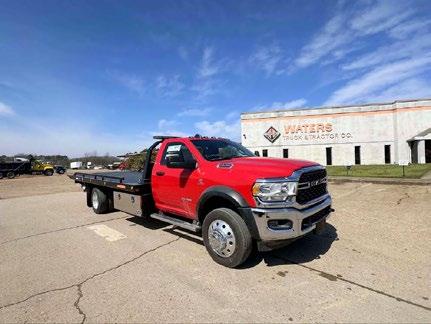


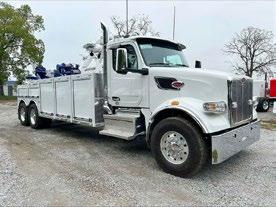
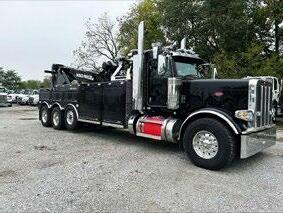
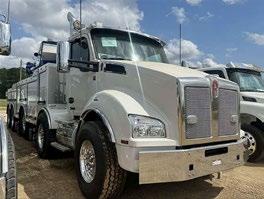
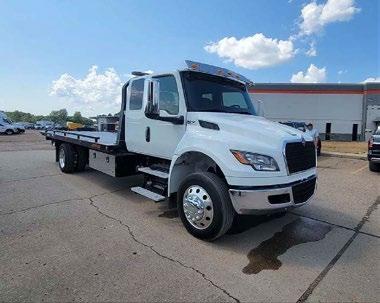


YOUR PARTNER ON EVERY CALL.

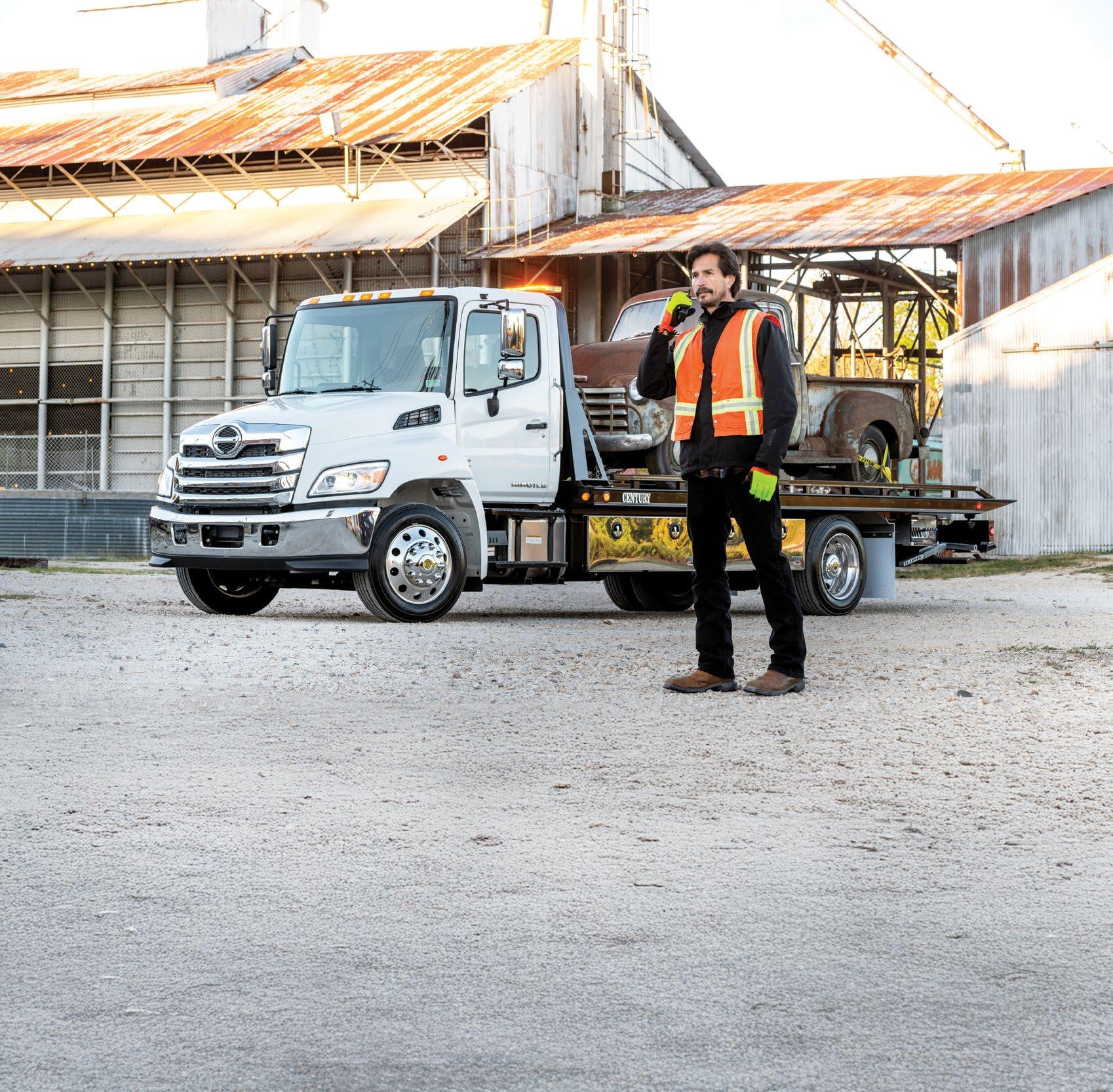
Every call is your chance to shine, and Hino tow trucks are built to perform when it counts—strong, reliable, and trusted by operators nationwide. With Hino Edge connectivity, an exclusive standard 5-year Allison Transmission warranty, and 24/7 HinoWatch roadside assistance. At Hino, our commitment doesn't end when the truck is sold - it's where The Ultimate Ownership Experience begins, because for you, it's always MORE THAN A TRUCK.
