
Forever in My Heart:
Coping with the Loss of a Pet
The human-animal bond is a unique relationship; it is defined by an unspoken and unconditional love. For many of us, pets are valued members of the family, accompanying us through our daily routines, meaningful moments and life’s major milestones. It is natural then that when they die, our grief mirrors the intense bond we had with them in life. Suddenly, our world looks and feels different. It may feel like a piece of us has gone with them. It may feel like the bond that existed between us and our pet is forever broken... but it is not gone, it is just forever changed.
This Support Guide, developed by the Ontario Veterinary College (OVC) at the University of Guelph, offers information and ideas to help with the journey of healing following the loss of your pet. While this guide can be a helpful starting point, it is not a substitute for speaking with a trained health professional. If you need additional support, please see the Resources section at the end of this guide.
Navigating Grief after Loss
Grief is a normal and healthy response to loss. Everyone experiences it differently, and there’s no one-size-fits-all way to cope with it or heal. The process can’t be rushed, and there’s no quick fix for the pain it brings. Early in your grief, it is common to feel drained physically, emotionally and even spiritually.
Below are some common questions people have as they navigate the journey of grief and loss:
What should I expect to feel?
Many feelings can be experienced in grief. Grief is not always a linear process; it may be messy and unpredictable. You might feel a sense of calm one day, only to be overwhelmed by sadness or anger the next. You can even have moments of joy. You may experience emotions like shock, denial or even guilt and then circle back to them again later. You might feel all of these, none of them or something entirely different.
How will I know if my grief is normal?
There is no “right” or “wrong” way to grieve. Although it may be challenging, it is important to give yourself permission to feel whatever comes up, without judgment or pressure to move on quickly.
Will it ever end?
Grief doesn’t end because our love doesn’t end. We would always rather have our loved ones with us, and in that way, the grief remains. But over time, it changes. It doesn’t disappear; it integrates into our lives. We learn to live with it, to carry it and eventually, to function alongside it. Healing doesn’t mean forgetting, it means finding a way to carry your love and memories forward; even as you navigate life without your pet.

“Grief is like the ocean; it comes in waves, ebbing and flowing. Sometimes the water is calm, and sometimes it is overwhelming. All we can do is learn to swim.”
— Vicki Harrison
The idea of feeling better scares me. I don’t want to forget them.
Remember, you’re not moving on from your grief, you’re moving with your grief. Feeling better doesn’t mean you loved them any less. It means your life has grown around the loss, allowing you to hold both the sadness and the joy their memory brings. Our pets leave lasting marks on our hearts. Their memory lives on in countless ways.
Why does this feel so intense? I’ve experienced loss before, but nothing like this.
Many people find the loss of a pet surprisingly intense, even more so than some human losses. This doesn’t mean you loved others less. Rather, the relationship you had with your pet was likely different: they may have been part of your daily routine, offered constant companionship and provided unconditional love. You may have cared for them like a guardian, shared your thoughts and feelings with them and found comfort in their presence. Losing a companion so deeply woven into your everyday life can be an overwhelming adjustment.
Why don’t some people get it? They weren’t “just a pet” to me.
Pet loss is sometimes considered a disenfranchised grief.
Disenfranchised grief happens when a loss isn’t fully understood or accepted by others. People might say things like, “Why are you so upset?”, “It’s time to move on,” or “It was just a dog/cat/horse/bird.”
Grief is often an isolating and lonely experience, but disenfranchised grief makes it even more so. This is why it is important to find people who validate your loss, and spaces where it is safe to express your feelings of grief. You cannot control others’ responses, but you can choose who you surround yourself with while you are going through it. Seek out those who understand the important bond you shared with your pet.

Coping with Guilt, Regret and Anger
With grief comes a wide range of emotions, and it’s not always easy to make sense of them. Feelings like guilt, regret and anger are especially common and can be difficult to work through.
Guilt and Regret After Loss
We often see ourselves as our pets’ guardians, doing everything we can to care for them. Even so, it’s very common to feel guilt or regret after a loss even when you did your very best. Remember, these feelings usually come from love, not from failure.
Why do we feel guilty at all? Part of what makes our bond with animals so special is also what makes it so hard: we are the ones who make all their care decisions, because they can’t speak for themselves. This responsibility can feel enormous. When we lose them, we often carry the weight of those decisions with us, which can turn into feelings of guilt or self-blame. The examples below reflect some of the most common sources of guilt and offer perspective to help you understand and work through them.
“I keep wondering if I made the right decision about euthanasia.”
Questioning euthanasia decisions is a common source of guilt. Even when a decision is made with compassion and veterinary guidance, it can feel impossible to be certain afterward. Grief often causes us to doubt choices that were made thoughtfully and with our pet’s best interests at heart.
“I should have noticed that something was wrong sooner.” Many people look back and see signs they missed at the time. This is hindsight, not failure. We can only act on the information we have in the moment. Recognizing this can help ease the pressure of expecting ourselves to have known or done more than was realistic at the time.
“I feel relieved that my pet has died, and that makes me feel guilty.”
Relief and grief often coexist, especially after a long illness or period of caregiving. Feeling relief does not mean you loved your pet any less, it reflects the depth of your empathy and your desire for their comfort.
“I can’t stop thinking about all the things I could have done differently.”
The “could have, should have, would have” thoughts are a normal part of grief. Over time, it can help to shift from focusing on what you think you could have done differently to remembering the many ways you showed love and care.
“My actions directly led to my pet’s death. I don’t know how to forgive myself.”
When an accident or mistake contributes to a pet’s death, the guilt can feel overwhelming. It’s important to remember that being human means being imperfect. A mistake or accident does not erase the love, commitment and connection you shared.
“I had to make the decision for behavioural euthanasia. I feel judged and ashamed.”
Behavioural euthanasia is one of the most emotionally complex and misunderstood losses. These decisions are often made after every possible option has been explored and with your pet’s and others’ safety, welfare and quality of life in mind. It is not a reflection of a lack of love, but of the difficult realities some guardians must face.
“I couldn’t afford the medical care my pet needed. I feel like I let them down.”
Financial limitations can create deep feelings of guilt and conflict. Modern veterinary medicine does have incredible options for treatment; however, the cost can be significant, and not all options are accessible to everyone. The love and comfort you provided throughout your pet’s life is what matters most.
Regardless of why you feel guilty, what matters most is your intention. Your love and care are evident in your grief. In any case, self-forgiveness is key.
“Please forgive me.”
“I forgive you.”
“Thank you.”
“I love you.”
-Ira Byock from The Four Things That Matter Most: A Book About Living.
How can I forgive myself?
Face your guilt.
Acknowledge it, but don’t let it consume you.
Ask why.
What exactly are you feeling guilty about?
Write your reflections down here:
Remember your intent.
Before the loss, what were your intentions? Did you mean to cause them harm? Guilt can sometimes turn into shame, which can quickly morph into thoughts like, “I am a bad person.”
Understand self-forgiveness. It doesn’t mean denying what happened or pretending it didn’t matter. It means recognizing your humanity, learning and allowing yourself to heal.
Reflecting on Your Love and Care
Take a moment to write down all the things you did for your pet out of love, both in their healthy days and during times of illness. List as many as you can think of. Big or small, they all mattered. What are the ways you showed up for them? How did you comfort them, care for them, protect them or simply enjoy life together?
Write your reflections down here:
Now, look at what you wrote
Compare these acts of love and care to the things you may feel guilty about. Often, the love we gave far outweighs the guilt we carry. And sometimes, guilt is based more on what-ifs or things we couldn’t have known, rather than on facts.
This reflection can help you begin to separate assumptions from reality and gently remind yourself of the deep love and effort you gave.

Anger After Loss
Anger is not bad or wrong – it is normal. Anger is often called a secondary emotion because it tends to mask deeper, more vulnerable feelings like sadness, fear or hurt.
You might be angry about how your pet died, especially if it was sudden or unexpected. Accidents, acute illness or difficult euthanasia decisions can leave people feeling shocked, unprepared and full of unanswered questions. This can be incredibly hard to cope with.
Sometimes, anger turns inward, and you might blame yourself, thinking you missed something or could have done more. Or you might feel angry at someone else, like a veterinarian or loved one. That’s okay. Anger can be a way our minds try to cope when the pain feels too big to hold.
“There are three needs of the griever: To find the words for the loss, to say the words aloud and to know that the words have been heard.”
– Victoria Alexander

How can I cope with this anger?
Name it. Give yourself permission to say, “I feel angry.” It’s okay to feel this way, even if it’s uncomfortable.
Explore what’s beneath it. Are you really angry? Or is there guilt, fear or sadness underneath?
Ask yourself where the anger is directed. Is it toward yourself, someone else or the situation?
Reflect on your expectations. Were you hoping for more time? A different outcome? A more peaceful goodbye?
Give it a safe place to go. Talk to someone you trust. Write it out. Take a walk. You don’t have to hold it all inside.
Take a moment to reflect
• What might your anger be trying to protect you from feeling?
• Are you being fair to yourself in your expectations?
• If your anger could speak, what would it say it needs right now?
• What would it feel like to meet that need with compassion instead of blame?


Adjusting to Painful Reminders and New Routines
Losing a pet brings many layers of grief. One of the hardest parts can be adjusting to the noticeable absence in your daily routine. Pets become woven into our days: they shape our habits, our plans and the rhythm of our lives.
When they’re gone, it’s often the small, everyday moments that trigger deep pain:
• Coming home and expecting to see them waiting at the door.
• Looking over, expecting to see them in their usual spots at home.
• Hearing the alarm go off to give medication that’s no longer needed.
• Realizing it’s the first summer they’re not with you at the lake or the park.
• Swearing you heard their paws tip-tapping on the floor.
• Walking in the neighbourhood for the first time without them and running into neighbours.
These reminders can feel like big heartbreaks throughout the day. When we lose a pet, we don’t just lose their presence, we lose our routines, our sense of familiarity, our plans and sometimes what may feel like our purpose.
It’s normal to feel disoriented, unmotivated or disconnected. You might get frustrated with yourself for not being able to “get back to normal.” Please know: it’s okay to not be okay right now.
Take a breath. Take things one day at a time. There is no timeline for healing.
Ideas to begin the healing process:
• Feeling your grief safely: Let yourself cry. Let yourself feel. Suppressing pain doesn’t make it go away; it just hides it for later.
• Distraction: Grief is exhausting. Give yourself permission to take breaks – watch a show, play a game or do something that gives your mind a moment of rest.
• Connection: Talk to people you trust. Share your feelings with friends, family, groups or professionals who will meet you with compassion. For a list of recommended resources, visit pettrust.ca/petlossresources.
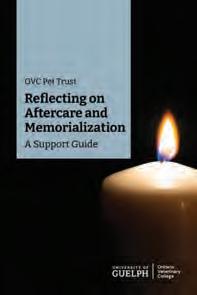
• Honour their memory: Find meaningful ways to honour them during the moments when you really notice their absence. You might write them a letter, plant a flower in their favourite spot in the yard or create a small ritual that helps you feel connected. For more ideas, see OVC Pet Trust: Reflecting on Aftercare and Memorialization – A Support Guide.
“Their things are still all over the house… I see them every day, and it hurts – but I can’t bring myself to let them go.”
This is such a tender part of grieving. There’s no rush to make decisions about what to do with your pet’s belongings like their collar, leash, toys, scratching post or bowls. Take baby steps if you need to.
If seeing their items feels overwhelming or makes it hard to function, try moving them out of sight for now. You don’t have to get rid of anything, just place their things in a closet, a box or under the bed where they’re safe but not in daily view. If that feels too painful, it’s okay to put them back and try again later. If you’re open to parting with some items but find it too emotional to do yourself, ask someone you trust to help. They can assist you or hold onto the items for a while until you’re ready.
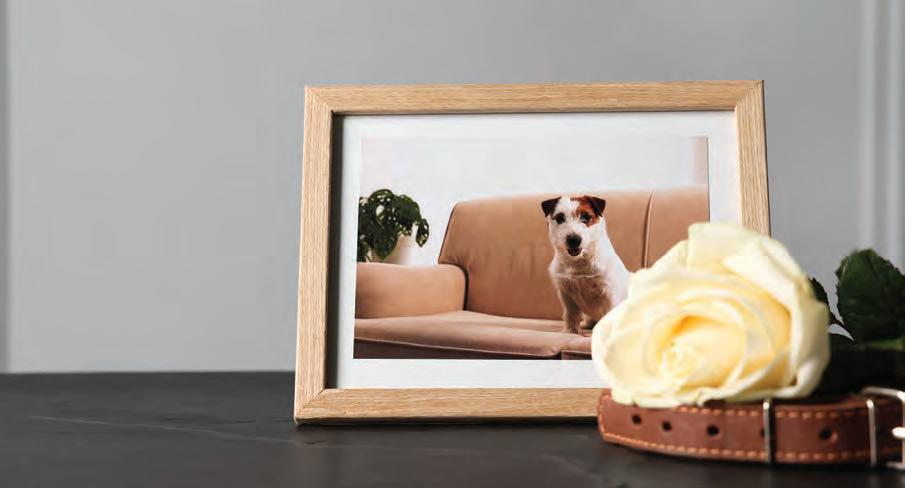
“My mind still talks to you, and my heart still looks for you, but my soul knows you are at peace.”
— Unknown Author
Welcoming Another Pet:
When is the Right Time?
After a loss, the idea of welcoming a new animal into your life can bring up a lot of questions and second-guessing:
“What if it’s too soon?”
“Am I just trying to replace them?”
“What if I can’t love this new pet the same way?”
“What will people think?”
Deciding whether or when to bring a new pet into your life is deeply personal; there is no right or wrong timeline. Remember: you are not replacing your pet. You can’t! Each animal has their own unique personality, needs and special bond with you. The love you had for the pet you lost doesn’t disappear; it can live alongside new love. Grieving and loving can happen at the same time.

Take time to reflect:
• Reflect on the bond with your late pet. Did you feel balanced in your care for them and yourself, or is there something you’d like to do differently next time?
• Are you feeling a sense of readiness, or pressure from others?
• If you are sharing space or living with others, are they comfortable and ready to have another pet? It is important to be mindful of the needs and the grieving process of others involved as well.
The important thing to remember is that bringing another pet into the home is not a betrayal of the one that is gone. This decision should be rooted in care – for yourself and for any animal you welcome into your home. It’s okay to wait. It’s also okay to open your heart again when it feels right.
When you feel ready to welcome a new pet into your life, remember that your veterinarian can be a wonderful resource to consult with, even before you bring your new pet home. It may also be helpful to reflect on how factors such as breed, size and disposition could fit with your lifestyle, as well as how they might complement the temperament of any surviving companion animals.

Supporting Surviving
Pets After a Loss
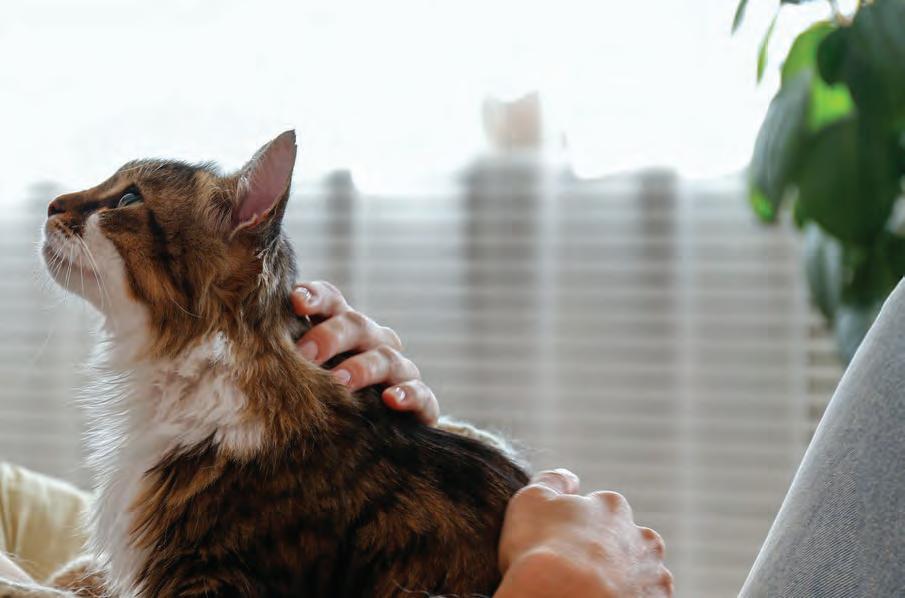
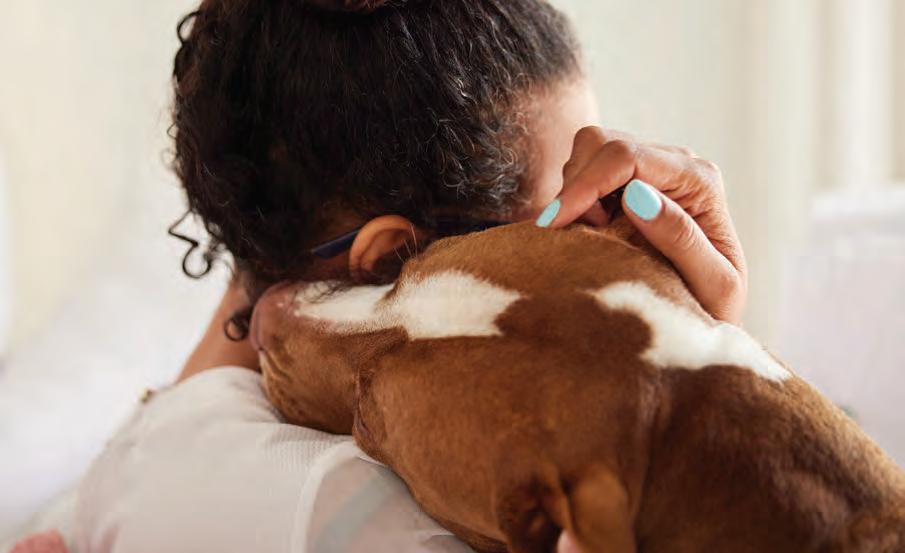
When a pet dies, it’s not only the humans who grieve; surviving animals in the home often feel the loss too. Pets may show signs of distress after their friend is gone. Providing as much routine as possible, with positive things like walks or play time happening at predictable times can help surviving animals adjust after a loss.
Some common changes in behaviour may include:
• Clinging more to their human family.
• Acting more anxious or withdrawn.
• Loss of appetite or interest in play.
• Trouble sleeping or unusual restlessness like panting and pacing.
• Increased vocalizations (whining, growling, barking, yowling, crying).
• Becoming more reactive to sounds or changes.
• Changes in social dynamics among surviving pets, such as shifts in hierarchy, behaviour or interactions with other household members.
These shifts may be:
• A temporary reaction to loss.
• A response to your own grief or sadness.
• Due to disrupted routines.
• Related to an underlying medical condition.
If your pet stops eating, drinking or you’re concerned about their behaviour, contact your veterinarian. They can help rule out any medical issues and offer suggestions to support your pet.
Changes in Pet Relationships
Pay close attention to how remaining animals interact, especially if one relied on the other for social cues or companionship. Some species, or certain individual animals, have strong social needs and may struggle more than others after a loss.
If you’re unsure how your pet is coping when you are not at home with them, consider setting up a video camera or baby monitor to observe their behaviour. This is a good way to capture their stress levels and is something tangible you could consider sharing with your veterinarian.
Helping Your Pets Cope
• Avoid punishment. It can increase anxiety or fear.
• Encourage positive behaviour through praise and redirection.
• Let animals adjust to new roles or relationships in their own time.
• Show them love and comfort, even as you navigate your own grief.
Remember, pets may mirror your emotions. It’s okay if you’re not at your best right now; don’t feel like you must hide your grief from them. Find a balance between caring for them and giving yourself space to feel your emotions too.


Accessing Supports for Your Grief
Grieving the loss of a pet can be an overwhelming and isolating experience. You don’t have to go through it alone. There are many forms of support available whether you need someone to talk to, a space to share your story or tools to help you cope.
Some examples include:
Therapists & Counsellors
Licensed and registered mental health professionals (e.g., social workers, psychotherapists, psychologists) can help you process grief, whether short-term or ongoing, by exploring thoughts, emotions and coping strategies.
Veterinary Social Workers (VSWs)
Veterinary social workers specialize in the human-animal bond. They often work in veterinary hospitals or shelters, offering emotional support, end-of-life guidance and grief support.
Pet Loss Support Groups
These groups connect you with others who are also grieving. Sharing your story in a supportive space can ease feelings of isolation and offer comfort through shared experience.
Hotlines
Look into confidential phone services in your area that may offer immediate emotional support and referrals.
These may include:
• Pet loss grief lines
• Mental health or distress lines
• Local or national support services
OVC Pet Trust’s
Pet Loss Support
Digital Resource Centre
at pettrust.ca/petlossresources to access support, including:
Always Near Me: Navigating Pet Loss, a six-part video documentary series of individuals and families who share their experiences with pet loss and healing through memorialization.
An online video library of expert interviews on the topics of pet loss and grief.
Information about the Ontario Veterinary College (OVC) Veterinary Social Work Service.
Additional resources (not affiliated with OVC): support groups, books, podcasts and mental health supports.
This resource is a collaborative effort between OVC Pet Trust and the Ontario Veterinary College (OVC), University of Guelph.
Special thanks to:
Dr. Faith Banks, Dr. Shane Bateman, Sarah Bernardi RSW MSW, Dr. Shannon Gowland, Ashleigh Martyn and Teagan Miller.
OVC Pet Trust was founded in 1986 at the University of Guelph’s Ontario Veterinary College (OVC) and is Canada’s first charitable fund dedicated to the health and well-being of companion animals.
OVC Pet Trust supports innovative discoveries, health care and education that improve the prevention, diagnosis and treatments of diseases of pets.
OVC Pet Trust’s Pet Memorial Program provides an opportunity for people to honour the special relationship they have with their companion animals.
Learn more about how OVC Pet Trust improves life for pets and the people who love them at pettrust.ca.
Ontario Veterinary College | University of Guelph
50 Stone Road East | Guelph, Ontario N1G 2W1 519-824-4120 Ext. 54695 | ovcpet@uoguelph.ca
Charitable Registration Number: 10816 1829 RR 0001