To ensure everyone within our school family achieves their full potential, to encourage learning and development through faith, and to strive for excellence.
“With God all things are possible” Matthew 19:26
As our students come to the end of Key Stage Three and begin to consider their curriculum choices for Year 10 and 11, we work together in the pursuit of excellence.
The information contained in this document is designed to be helpful and informative, for both students and parents. I would recommend that you take the time to go through all of the information carefully with your child, to understand what needs to be completed and by when. Please also note the date and time of Options Evening, where you will have the opportunity to further discuss the curriculum and option choices with staff in school.
A list of the Key Stage Four curriculum choices at St James’ Catholic High School is provided for information. All students, however, will be given bespoke detailed advice and guidance in school through lessons, the options evening and their recommended pathway as they prepare to select their choices which will shape their future.
Making these decisions can be difficult for students and parents.
As Headteacher of our great school, I want to reassure you that every effort will be made to ensure each individual student, within our St James’ family, receives comprehensive personalised information to allow them to make an informed decision.
It is important to note that it may not be possible for all subjects listed to be delivered. This is dependent on several factors including uptake of courses. Students must ensure they include a reserve choice where indicated. Rest assured as a school we shall endeavour to successfully match students to their preferred courses and subjects.
In order to shape well rounded global Catholic citizens, we want to keep the curriculum as broad as possible right until the end of Key Stage Four.
As such, please be aware of the following key information:
Return the options form no later than Friday 13th March 2026 to options@stjamescheadle.co.uk There can be no options changes made after that date
In Year 10 and Year 11, students will not be permitted to change or drop a subject
• Before you make your choices - read all of the information, ask questions of subject teachers, and be clear about the subjects that you are choosing
Your child will receive support, encouragement and guidance from all of the staff that help to make St James’ the great school it is. I wish your child every success during Key Stage 4.
Anthony Pontifex Headteacher
Important Dates
Thursday 8th
January Year 9 Parents’ Evening (virtual via SchoolCloud)
Thursday 12th February Curriculum brochure emailed out and available on school website
Wednesday 25th February Options presentation available and options forms sent to parents
Thursday 26th February
Curriculum and Options Evening (in school)
Friday 13th
March
Deadline for options forms to be returned
Core Subjects
The following subjects make up the core curriculum at St James’ Catholic High School and all students will study all of the following subjects:
• English Literature (GCSE)
English Language (GCSE)
Mathematics (GCSE)
Religious Studies (GCSE)
• Science (GCSE)
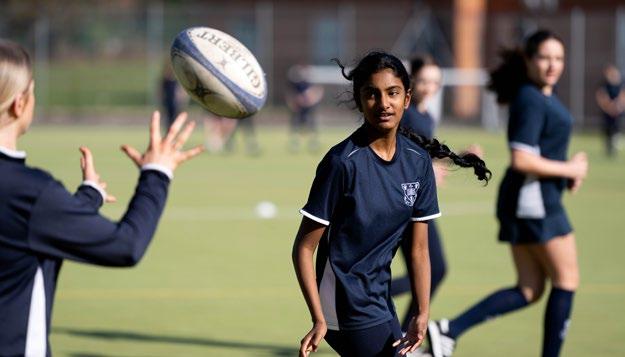
PE
Schools also have an obligation to provide Careers Education, Citizenship Studies, Computing Studies, and Relationships, Sex and Health Education; and these these will be delivered through the weekly modular PSHCE programme and the s upport of other agencies.
Mathematics (GCSE)
What does the subject offer?
The GCSE Mathematics course offers great levels of challenge and engagement for students. There is an emphasis on problem solving, mathematical reasoning and the requirement to memorise formulae. The course is designed to help students emerge from GCSE Maths with a level of confidence and fluency that will provide a genuine foundation for the rest of their learning and working lives.
Course details:
Students will follow the OCR specification. They will be entered at Higher or Foundation level. Higher tier will cover grades 9 to 4 and foundation tier will cover grades 5 to 1.
Course Content:
Students will study a range of topics within the 5 main areas of Mathematics including number, algebra, ratio proportion and rates of change, geometry and measures, statistics and probability.
Assessment :
There are three written examinations at the end of Year 11.
Career Opportunities:
These include: accountancy, engineering, finance and teaching, however, maths is essential to all jobs and career pathways.
Who can you contact to find out more?
Mrs J Healey – Director of Faculty j.healey@stjamescheadle.co.uk
Religious Education (GCSE)
What does the subject offer?
Religious Education at St James’ has two main aims, the first is to create the time, space and conditions for each pupil to reflect personally on his or her own faith and to develop an understanding of the faith of others. The second is to bring the pupil to additional or deeper knowledge and understanding of religion and in particular, Catholic Christianity and Judaism.
Course details:
Students will study Edexcel Specification A- Catholic Christianity and Judaism. There is only one tier of entry ranging from grade 9 – 1. Students will sit 3 external exams for this qualification.
Course Content:
The course is divided into two components: A study of Catholic Christianity that includes modules such as Beliefs and Teachings, Forms of expression and Ways of Life. The second component is a Study of Judaism. Students study a comprehensive overview of Jewish beliefs and practices.
Assessment by examination board:
The course is linear so all three examinations will be at the end of Year 11.
Career Opportunities:
These include: law, social work, teaching, journalism, public services and charity work.
Who can you contact to find out more?
Miss H Purkiss - Director of Faculty h.purkiss@stjamescheadle.co.uk
Combined Science (GCSE)
What does the subject offer?
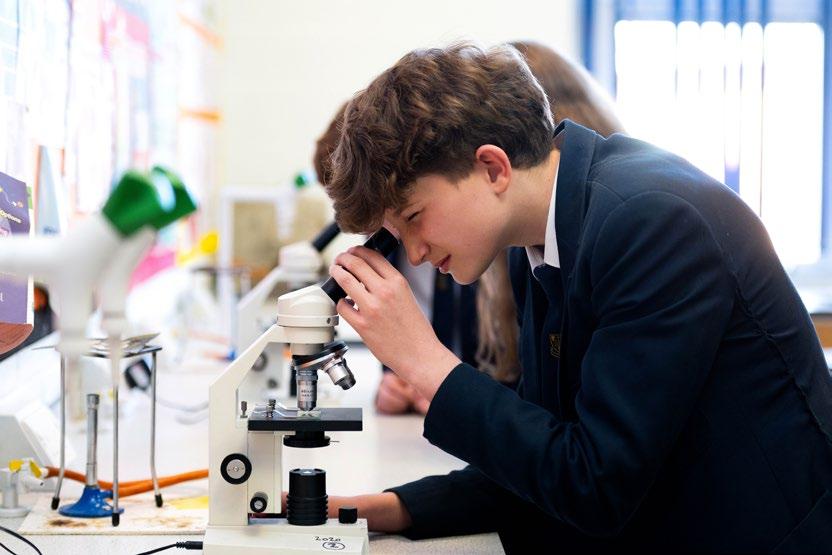
The majority of students will study Combined Science over the course of Year 10 and 11, however, a number of students may opt to study Triple Science. Students will cover elements of Biology, Physics and Chemistry in lessons and this will lead to the award of two GCSEs in Combined Science at the end of Year 11.
Course details:
Students will follow the AQA specification. They will be entered at Higher or Foundation level. Higher tier will cover grades 9 to 4 and foundation tier will cover grades 5 to 1.
Course Content
Biology
The following topics are studied: cell biology, organisation, infection and response, bioenergetics, homeostasis and response, inheritance, variation and evolution and ecology
Chemistry
The following topics are studied: atomic structure and the periodic table, bonding, structure, and the properties of matter, quantitative chemistry, chemical changes, energy changes, the rate and extent of chemical change, organic chemistry, chemical analysis, chemistry of the atmosphere and using resources.
Physics
The following topics are studied: forces, energy, waves, electricity, magnetism and electromagnetism, particle model of matter, atomic structure.
Assessment by examination board
Throughout Year 10 and 11 students will complete a number of required experiments during lesson time which they may be tested on in their examination papers.
Students will take six examinations these are: two Biology papers, two Chemistry paper and two Physics papers at the end of Year 11 The types of questions are multiple choice, structured, closed short answer, and open response.
Career Opportunities:
These include pathology, medical research, nursing, conservation and biochemistry.
Who can you contact to find out more?
Mrs C Brown – Director of Faculty c.brown@stjamescheadle.co.uk
English Literature (GCSE)
What does the subject offer?
Students will study English Literature/English Language from the beginning of Year 10 and take the GCSE examinations in Year 11. They will study a variety of literary texts which allows students to delve into contextual understanding and so enable them to apply this knowledge to their interpretation of plot, character, theme, language and structure.
Course details:
Students will follow the AQA specification. There is only one tier of entry ranging from grade 9 –1.
Course content:
‘Macbeth’ is the Shakespeare text studied along with the 19th century novel ‘Dr Jekyll and Mr Hyde’. The modern drama is ‘An Inspector Calls’. There is also an AQA anthology of poems titled ‘Power and Conflict’. Students are also prepared for the Unseen Poetry section of the examination.
Assessment by examination board:
There are two written examinations taken at the end of Year 11.
Career Opportunities:
These include: theatre work, journalism, teaching, banking, marketing and librarianship. However, English is essential to all jobs and career pathways.
Who can you contact to find out more?
Ms D Brett – Director of Faculty d.brett@stjamescheadle.co.uk
English Language (GCSE)
What does the subject offer?
Students will study English Literature/English Language from the beginning of Year 10 and take the GCSE examinations in Year 11. They will study ‘Explorations in Creative Reading and Writing’, and ‘Writers’ Viewpoints and Perspectives’. In these areas students will analyse and explore fiction and non-fiction texts from nineteenth, twentieth and twenty first centuries.
Course details:
Students will follow the AQA specification. There is only one tier of entry ranging from grade 9 –1.
Course content:
Students study extracts from literary fiction texts and analyse language and structural devices. Literary non-fiction texts from two different centuries are analysed and compared in relation to: language structure, implicit detail and writers’ viewpoints.
Assessment by examination board
There are two written examinations taken at the end of Year 11.
Internal Assessment (assessed in school and moderated by examination board):
The Spoken Language Assessment is marked by the teacher and reported separately on the GCSE results certificate.
Career Opportunities:
These include: theatre work, journalism, teaching, banking, marketing and librarianship. However, English is essential to all jobs and career pathways.
Who can you contact to find out more?
Ms D Brett – Director of Faculty d.brett@stjamescheadle.co.uk
Option Subjects
The following subjects make up the optional curriculum at St James’ Catholic High School. Students may choose a combination of the following subjects:
Fine Art (GCSE)
• Drama (GCSE)
Music (GCSE)
Geography (GCSE)
History (GCSE)
• Health and Social Care (BTEC)
Design and Technology Textiles (GCSE)
Design and Technology Resistant Materials (GCSE)
Physical Education (GCSE)
• Sport Studies (Cambridge National Certificate)
Triple Science (GCSE)
French (GCSE)
German (GCSE)
• Spanish (GCSE)
ICT Digital Information Technology (BTEC)
Travel and Tourism (BTEC)
Art and Design (Fine Art) GCSE
What does the subject offer?
This is an exciting, creative pathway that has a large practical element. It will equip you with a vast range of practical skills, whilst developing your confidence and experience of working in a wide variety of materials, processes and techniques. For example: drawing, painting, sculpture, printmaking, photography, textile design and mixed media.
Course details:
Students will follow the AQA specification. There is only one tier of entry ranging from grade 9 – 1.
Course Content:
The coursework produced in class and for homework over the two year course, amounts to a minimum of 2 projects and comprises the ‘Portfolio’ element of the GCSE. Students are required to: draw and collect information, research an artist or movement, explore and develop ideas and produce a final outcome for each project.
The external assignment is set in January of Year 11 and completed in March. Students are given a choice of seven inspiring starting points, which they choose from a test paper set by the examination board. They will choose one theme to explore fully on a topic which inspires them.
By the end of this course you will have a portfolio of work to take to interview at college as well as material to show as part of an exhibition.
Internal Assessment (assessed in school and moderated by examination board):
The Portfolio is set and marked by the school and moderated by AQA.
Assessment by examination board:
The externally set assignment is issued in January of Year 11. It is marked by the school and then moderated by AQA. 60% Portfolio (classwork) and 40% external assignment.
Career Opportunities:
Art & Design provides you with transferable skills you will need in the world of work. Careers include any design and creative profession: architecture, photography, stage production, fine artist, illustrator, animation, art therapy, games design, graphic design, book illustration, interior design, jeweller and make-up artist (television or theatre).
Who can you contact to find out more?
Mr A Nokes – Director of Faculty a.nokes@stjamescheadle.co.uk
Drama (GCSE) Music (GCSE)
What does the subject offer?
This Drama course offers a wide forum to illustrate the candidates’ acting ability. Students learn through workshops that are based on improvisation and scripted text. There is also a significant written element in the GCSE.
Course details:
Students will follow the Edexcel specification. There is only one tier of entry ranging from grade 9 – 1.
Course Content:
Students are expected to explore drama techniques, such as hot-seating, cross-cutting and marking the moment and will develop the ability to write up their findings. They will have the opportunity to attend the theatre and enjoy many different genres of dramatic performance. This is completed in three sections: Devising, Performance from Text and Theatre Makers in Practice. Devising includes the creation and development of a piece from a stimulus, performing the piece and finally analysing and evaluating the performance. For the scripted piece students will perform two key extracts from a text. Finally for Theatre Makers in Practice students have a practical exploration and study of one complete performance text.
Assessment by examination board:
There is one externally examined paper.
Internal assessment
A portfolio covering the developing process, together with an evaluation of this process and a practical devised performance.
Career Opportunites:
These include: arts administrator, recording engineer, playwright, costume designer and stage manager.
Who can you contact to find out more?
Mrs P O’Shea
Teacher of Drama and Deputy Director of Faculty p.oshea@stjamescheadle.co.uk
What does the subject offer?
The course provides the opportunity for students to explore their enjoyment of music and to develop their skills within the subject. GCSE Music is available to all students who enjoy performing, composing, appraising, and listening to music.
Course Details
Students will follow the OCR specification, where there is only one tier of entry ranging from grade 9 – 1.
Course Content:
There are three main strands of study: performing music, composing music, and listening to and appraising music. The performance portfolio consists of 2 recordings- one solo, one in an ensemble, and the practice for this will mostly be completed in their own time as homework. The composition portfolio also requires two pieces- one completely original in a style of the candidate’s choosing, once based upon a brief and a stimulus given by OCR at the start of year 11, which will be worked on in class and in candidates’ own time. Together, these 4 submissions create the coursework portfolio. The listening and appraising strand covers a wide variety of Western classical, world, and popular music, which is studied in the classroom ready for the final listening paper at the end of Year 11.
Assessment by examination board:
The OCR GCSE (9–1) in Music consists of two coursework components (the Integrated Portfolio and Practical Component) that are assessed internally and then externally moderated by OCR, and one component (Listening and appraising papr) that is externally assessed.
Career Opportunities:
These include: composer, musician, recording engineer, music producer, songwriter, music therapist, orchestral musician, events management, or music publisher.
Who can you contact to find out more?
Mrs R Wear – Teacher of Music r.wear@stjamescheadle.co.uk
Geography (GCSE) History (GCSE)
What does the subject offer?
Studying Geography allows students to have a unique insight into the world. It helps us to explore and understand space and place, differences in cultures and environments across the world and exploring the links between them. During the course, students will develop many transferable skills, including analysing data, interpreting graphs and reaching substantiated judgements.
Course details:
Students will follow the AQA specification. There is only one tier of entry ranging from grade 9 – 1.
Course Content:
This course is split into three papers. The first paper assesses the physical environment and focuses on earthquakes, tropical storms, climate change, deserts, rainforests, rivers and coasts. The second paper is on challenges in the human environment and covers modules on urban issues, changing economic world and resource management. The final paper deals with Geographical Skills and examines their fieldwork, which will feature compulsory residential trips to the River Bollin and Salford Quays.
Assessment by examination board:
There are three examinations at the end of Year 11
Career Opportunities:
These include: Sustainability, Politics, Journalism, Analysis, Photography, Planning, Travel and teaching.
Who can you contact to find out more?
Mr J Cawley – Director of Faculty j.cawley@stjamescheadle.co.uk
What does the subject offer?
Learning about past events and the people who have influenced history will allow students to understand how the world got to the point it is at now and how it will continue to develop in the future. Apart from studying a wide range of exciting historic periods, students will also develop a range of skills including excellent communication and writing skills, how to construct an argument, research and problem solving.
Course details:
Students will follow the AQA specification. There is only one tier of entry ranging from grade 9 – 1.
Course Content:
The GCSE specification combines the most popular topics from existing specifications as well as some new exciting ones. Students will follow one thematic study; one period study and two in-depth studies. In Understanding the Modern World, the following topics are studied: Germany, 1890 – 1945: Democracy and dictatorship, and Conflict and Tension, 1919–1939. The second component is Shaping the Nation which is a thematic study of Britain: Health and People c1000 to the present day. The British depth study is Elizabethan England c1568 – 1603, which includes a focus on a historic environment.
Assessment by examination board:
There are two examinations at the end of Year 11.
Career Opportunities:
These include: journalism, law, business, teaching, marketing, archaeology, politics, museum archivist, librarianship and archival work.
Who can you contact to find out more?
Mr J Cawley – Director of Faculty j.cawley@stjamescheadle.co.uk
Health and Social Care (BTEC)
What does the subject offer?
This qualification is for learners interested in taking a handson course alongside their GCSEs that will offer them an insight into what it is like to work in one of the fastest growing sectors in the UK: Health & Social Care. The course covers some of the fundamental aspects of health and social care, including growth and development, health and social care services and values, and health and wellbeing.
Course details:
Qualification title: BTEC Level 1/Level 2 Tech Award in Health and Social Care 603/7047/6 . Students receive Distinction*, Distinction, Merit or Pass qualification at the end of Year 11.
Course Content:
Using realistic vocational contexts, learners will acquire sectorspecific knowledge and technical skills, exploring a range of healthcare conditions and social care needs and considering how the different healthcare and social services available can help meet individuals’ needs as well as the common barriers to access and obstacles to care. They will learn about physical, lifestyle, social, cultural, economic and environmental factors affecting health and wellbeing and how to make recommendations for improvement using a person-centred approach.
Assessment by examination board: There is a written examination in Year 11.
Internal Assessment (assessed in school and moderated by examination board)
Two units are internally assessed within school. To complete these two modules students will produce assignments (portfolios) that will be based on assignment briefs that are relevant and engaging.
Career Opportunities:
Learners are given a broad introduction to a sector that transects a wide range of careers from social care and social work to many different branches of healthcare.
Who can you contact to find out more?
Mrs M Cooper – Teacher of Health and Social Care m.cooper@stjamescheadle.co.uk
Mrs C Linford – Teacher of Health and Social Care c.linford@stjamescheadle.co.uk
Design and Technology Textiles (GCSE) Design and Technology Resistant Materials (GCSE)
What does the subject offer?
It provides opportunities to understand the working properties of materials and commercial and industrial practices within the fashion industry.
GCSE Design and Technology will prepare students to participate confidently and successfully in an increasingly technological world. Students will gain awareness and learn from wider influences on Design and Technology including historical, social, cultural, environmental and economic factors. Students will get the opportunity to work creatively when designing and making and apply technical and practical expertise.
Course details:
Students will follow the AQA specification. There is only one tier of entry ranging from grade 9 – 1.
Course Content:
Students will develop both technical and freehand drawing/shading techniques and practical skills, using specifically fabrics and wood. During this time, students will be set a mini design projects and they will be expected to demonstrate the level of practical knowledge and competence that they have acquired. By the start of Y ear 11 students will have approximately a third of their non-examination assessment design folder completed and will have started their practical element.
Assessment by examination board: Examination paper at end of Year 11.
Internal assessment (assessed in school and moderated by examination board): Students have to design and produce a finished product taking between 30-35 hours.
Career Opportunities:
These include; fashion design, retail, interior design, graphic design, product design, printmaking and teaching.
Who can you contact to find out more?
Mrs C Williams – Teacher of Textiles and Deputy Director of Faculty c.williams@stjamescheadle.co.uk
What does the subject offer?
GCSE Design and Technology will prepare students to participate confidently and successfully in an increasingly technological world. Students will gain awareness and learn from wider influences on Design and Technology including historical, social, cultural, environmental and economic factors. Students will get the opportunity to work creatively when designing and making and apply technical and practical expertise.
Course details:
Students will follow the AQA specification. There is only one tier of entry ranging from grade 9 – 1.
Course Content:
Students will develop both technical and freehand drawing/ shading techniques and practical skills, using specifically woods, metals, plastics and composite materials. During this time, students will be set a mini design projects and they will be expected to demonstrate the level of practical knowledge and competence that they have acquired. By the start of Year 11 students will have approximately a third of their nonexamination assessment design folder completed and will have started their practical element.
Assessment by examination board:
Examination paper at end of Year 11.
Internal assessment (assessed in school and moderated by examination board):
Students have to design and produce a finished product taking between 30-35 hours.
Career Opportunities:
These include a career in architecture, product design, graphic design, computer aided design, engineering and the construction trade.
Who can you contact to find out more?
Mrs M Cooper – Teacher of Resistant Materials m.cooper@stjamescheadle.co.uk
Physical Education (GCSE) Sport Studies (Cambridge National Certificate)
What does the subject offer?
The specification for GCSE PE has an emphasis on a high level of knowledge and understanding of all theoretical aspects of Physical Education. The syllabus demands not only high levels of practical ability over a range of activities but also a high level of scientific understanding.
Course details:
GCSE PE EDEXCEL 1PE0
There is only one tier of entry ranging from grade 9 – 1.
Course Content:
Out of the six timetabled lessons, four will be classroom based where students will undertake the theoretical aspects of the course, the remaining two lessons will be used to improve sporting ability and to give students the chance to apply their knowledge to their practical performance. Students will receive a well-rounded and full introduction to the world of PE, sport and sport science by developing an understanding of how the mind and body works in relation to performance in physical activity.
Assessment by examination board: There are two examination papers at the end of Year 11.
Internal Assessment (assessed in school and moderated by examination board)
The Practical Performance is assessed via practical participation in 3 sporting activities regulated by external moderation. Candidates must complete both team and individual activities. Students also have to complete a detailed piece of coursework based around the designing, implementation and evaluation of a Personal Exercise Programme (PEP).
Career Opportunities:
These include physical training, physiotherapy, sports psychology, sports development, teaching and sports nutrition.
Who can you contact to find out more?
Mr I Walker – Director of Faculty ian.walker@stjamescheadle.co.uk
Mrs K Booth k.booth@stjamescheadle.co.uk
Mrs V Floyd v.floyd@stjamescheadle.co.uk
What does the subject offer?
Cambridge Nationals are vocationally related qualifications that take a practical approach to learning and assessment. They suit a broad range of learning styles and abilities. This qualification requires, not only, an interest in sport and physical ability but also a high level of practical ability and understanding.
Course details:
Cambridge Nationals level 1 / 2 in Sport Studies - J 829
There are two levels which can be achieved; Level 1 (entry Award) and Level 2 (GCSE Certificate).
Course content:
The Mandatory Units of the course are: Current Issues in Sport (examination based), Performance and Leadership in Sports Activities, Sport and the Media (Internally assessed). There is one examination paper taken in January of Year 11 (one hour).
Assessment by examination board:
There is one examination paper at the end of Year 11.
Internal Assessment (assessed in school and moderated by examination board): Three units are assessed internally including a practical assessment.
Career Opportunities:
These include physical training, physiotherapy, sports psychology, sports development, teaching and sports nutrition.
Who can you contact to find out more?
Mr M Reid m.reid@stjamescheadle.co.uk
Mrs T Sloan t.sloan@stjamescheadle.co.uk
Triple Science (GCSE)
What does the subject offer?
Students who select this option will study science during core science lessons and as one of their option subjects. The selection of this option leads to the award of three GCSEs in the separate science subjects of Chemistry, Physics and Biology. This route is beneficial, but not essential for students wanting to study science at A-level.
Course details:
Students will follow the AQA specification. Students will be entered at Higher or Foundation level. Higher tier will cover grades 9 to 4 and foundation tier will cover grades 5 to 1.
Course Content:
The topics studied in the course are identical in name to those in Combined Science. However, the topics will be covered in more detail.
Biology
The following topics are studied: cell biology, organisation, infection and response, bioenergetics, homeostasis and response, inheritance, variation and evolution and ecology.
Chemistry
The following topics are studied: atomic structure and the periodic table, bonding, structure, and the properties of matter, quantitative chemistry, chemical changes, energy changes, the rate and extent of chemical change, organic chemistry, chemical analysis, chemistry of the atmosphere and using resources.
Physics
The following topics are studied: forces, energy, waves, electricity, magnetism and electromagnetism, particle model of matter, atomic structure and space physics.
Assessment by examination board:
Each of the three Sciences is treated as a separate GCSE, with separate written examinations. For each GCSE in each Science, there are two final papers. All of these examinations will take place in the summer of Year 11 and there will be a foundation and higher tier. Throughout Year 10 and 11 students will complete a number of required experiments during lesson time, which they may be tested on in their examination papers.
Career Opportunities:
These include medicine, engineering, forensic science, environmental science and pharmaceuticals.
Who can you contact to find out more?
Mrs C Brown –Director of Faculty c.brown@stjamescheadle.co.uk
German (GCSE)
What does the subject offer?
Studying a language not only allows students to develop their linguistic ability but it also helps their memory, creativity, listening skills and self-confidence. GCSE German builds upon language skills from Years 7, 8 and 9, as well as learning more about the German people, German speaking countries and culture.
Course details:
Students will follow the AQA specification. Students will be entered at Higher or Foundation level. Higher tier will cover grades 9 to 4 and Foundation tier will cover grades 5 to 1. Students must take all four question papers at the same tier.
Course Content:
Within the German GCSE course students will cover a variety of topics which are categorised under three themes: identity and culture, local, national, international and global areas of interest and current and future study and employment. These topics are all set within a context relevant to young people today.
Assessment by examination board:
Students are tested in all four language skills with all four papers being terminal examination sat in the external examination period in Year 11. The skills are listening, reading, speaking and writing.
Career Opportunities:
These include interpreting, translation, international law, the travel industry and journalism.
Who can you contact to find out more?
Mrs D Bennett – Director of Faculty d.bennett@stjamescheadle.co.uk
French (GCSE)
What does the subject offer?
Studying a language not only allows students to develop their linguistic ability but it also helps their memory, creativity, listening skills and self-confidence. GCSE French builds upon language skills from Years 7, 8 and 9, as well as learning more about the French people, French speaking countries and culture.
Course details:
Students will follow the AQA specification. Students will be entered at Higher or Foundation level. Higher tier will cover grades 9 to 4 and Foundation tier will cover grades 5 to 1. Students must take all four question papers at the same tier.
Course Content:
Within the French GCSE course students will cover a variety of topics which are categorised under three themes: identity and culture, local, national, international and global areas of interest and current and future study and employment. These topics are all set within a context relevant to young people today.
Assessment by examination board:
Students are tested in all four language skills with all four papers being terminal examination sat in the external examination period in Year 11. The skills are listening, reading, speaking and writing.
Career Opportunities:
These include interpreting, translation, international law, the travel industry and journalism.
Who can you contact to find out more?
Mrs D Bennett – Director of Faculty d.bennett@stjamescheadle.co.uk
Spanish (GCSE)
What does the subject offer?
Studying a language not only allows students to develop their linguistic ability but it also helps their memory, creativity, listening skills and self-confidence. GCSE Spanish builds upon language skills from Years 7, 8 and 9, as well as learning more about the Spanish people, Spanish speaking countries and culture.
Course details:
Students will follow the AQA specification. Students will be entered at Higher or Foundation level. Higher tier will cover grades 9 to 4 and Foundation tier will cover grades 5 to 1. Students must take all four question papers at the same tier.
Course Content:
Within the Spanish GCSE course students will cover a variety of topics which are categorised under three themes: identity and culture, local, national, international and global areas of interest and current and future study and employment. These topics are all set within a context relevant to young people today.
Assessment by examination board:
Students are tested in all four language skills with all four papers being terminal examination sat in the external examination period in Year 11. The skills are listening, reading, speaking and writing.
Career Opportunities:
These include interpreting, translation, international law, the travel industry and journalism.
Who can you contact to find out more?
Mrs D Bennett – Director of Faculty d.bennett@stjamescheadle.co.uk
Digital Information Technology (BTEC)
What does the subject offer?
The IT/Computing/Digital Sector is a major source of employment in the UK. Around 1.9 million people work in digital companies and there are around 45,000 digital jobs advertised at any one time. Digital skills span all industries, and almost all jobs in the UK today require employees to have a good level of digital literacy. The UK has positioned itself to be the ‘Digital capital of Europe’ as it continues to invest billions every year in digital skills and commerce. The modern world expects digital skills to be as important as English and Maths. Having both technical skills and business understanding is the key to success.
Course details:
Qualification title: BTEC Level 1/Level 2 Tech Award in Digital Information Technology 603/7050/6 . Students receive Distinction*, Distinction, Merit or Pass qualification at the end of Year 11.
Course Content:
In this qualification, you will develop important technical skills in data interpretation, data presentation and data protection. You will learn about cybercrime, understanding the different types of threats and how to protect against them.
This qualification will enable you to use project-planning tools, models and techniques within an IT, computing and digital context.
Digital projects today often involve working with diverse teams across different locations. You will develop an understanding of what a virtual work environment is and how cloud technologies allow remote teams to work together more effectively.
Assessment by examination board: There is a written examination at the end of Year 11.
Internal Assessment (assessed in school and moderated by examination board):
Two units are internally assessed within school. To complete these two modules students will produce assignments (portfolios) that will be based on assignment briefs that are relevant and engaging. Students will receive feedback as they progress through their assignments which will allow them to achieve as highly as possible.
Career Opportunities:
These include IT support and administration, IT architect, software development and ethical hacking.
Who can you contact to find out more?
Mrs D Rarity – Director of Faculty d.rarity@stjamescheadle.co.uk
Travel and Tourism (BTEC)
What does the subject offer?
This course will give pupils the opportunity to develop sectorspecific applied knowledge and technical skills in a practical learning environment. They will develop key transferable skills through vocational contexts, by exploring products and services offered by different travel and tourism organisations, the features of popular tourist destinations, how organisations use market research and trends to identify and meet customer needs requirements, and the factors that influence global travel and tourism. The qualification enables pupils to develop their transferable skills, such as researching, planning, and making decisions and judgements.
Course details:
Qualification title: BTEC Level 1/Level 2 Tech Award in Travel and Tourism 603/7048/8
Students receive Distinction*, Distinction, Merit or Pass qualification at the end of Year 11
Course Content:
Component 1: Travel and Tourism Organisations and Destinations
Pupils will investigate travel and tourism organisations in the UK, their ownership, aims, key products and services, and how they work together. They will explore the role of different consumer technologies within the travel and tourism industry. Learners will understand the different types of tourism and different types of visitor and will investigate the features of and routes to popular tourist destinations.
Component 2: Customer Needs in Travel and Tourism
Pupils will investigate how organisations use market research to identify travel and tourism trends and identify customer needs and preferences. They will apply their understanding by exploring how specific needs are met by organisations and how travel planning meets customer needs and preferences.
Component 3: Influences on Global Travel and Tourism
Pupils will explore the different factors that may influence global travel and tourism, and how travel and tourism organisations and destinations respond to these factors. Learners will examine the potential impacts of tourism at global destinations and how destinations can manage the impacts of tourism and control tourism development to achieve sustainable tourism.
Assessment by examination board:
There is a written examination at the end of Year 11 (Component 3)
Internal Assessment (assessed in school and moderated by examination board) Two units are internally assessed within school. To complete these two modules students will produce assignments (portfolios) that will be based on assignment briefs that are relevant and engaging. Students will receive feedback as they progress through their assignments which will allow them to achieve as highly as possible
Internal Assessment (assessed in school and moderated by examination board):
Two units are internally assessed within school. To complete these two modules students will produce assignments (portfolios) that will be based on assignment briefs that are relevant and engaging.
Career Opportunities:
These include careers in the hospitality industry, travel agent, reception manager, concierge, airline attendant and tour guide.
Who can you contact to find out more?
Mrs D Rarity - Director of Faculty d.rarity@stjamescheadle.co.uk