SILKY NUTMEG GANACHE SILKY NUTMEG GANACHE SILKY NUTMEG GANACHE







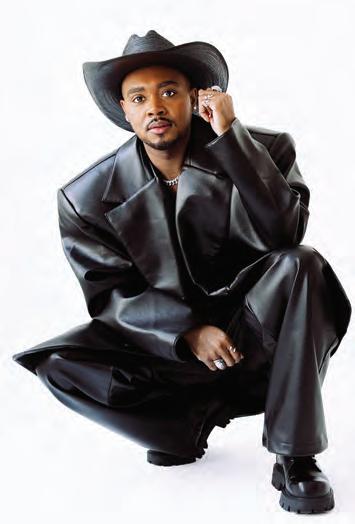
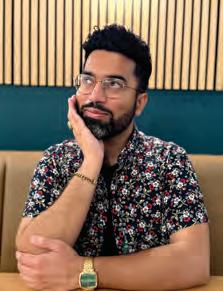
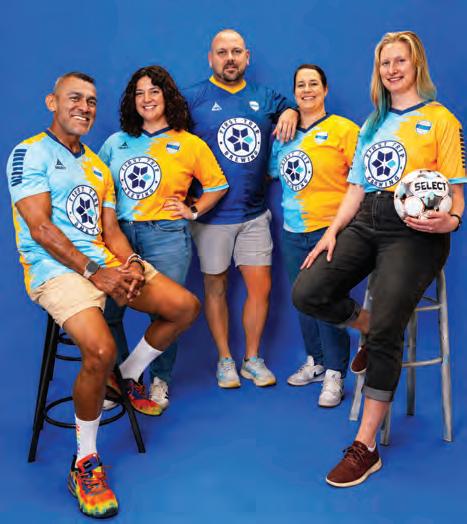
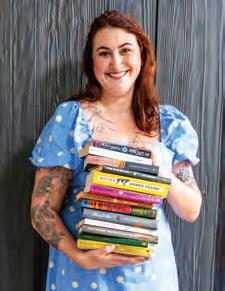
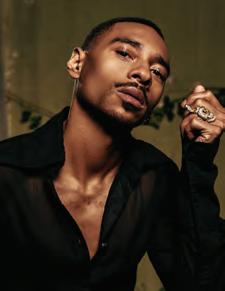
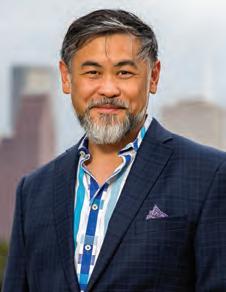

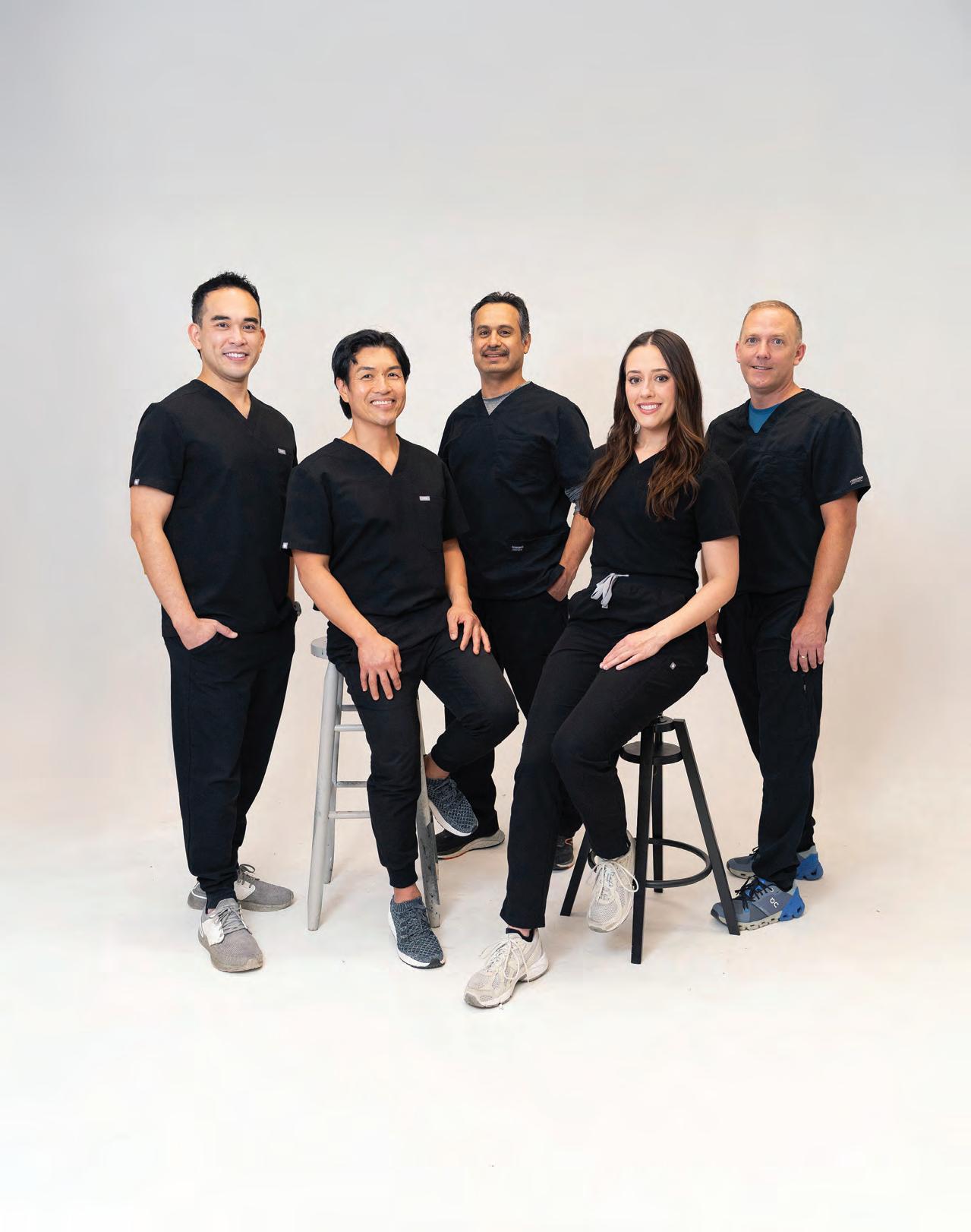



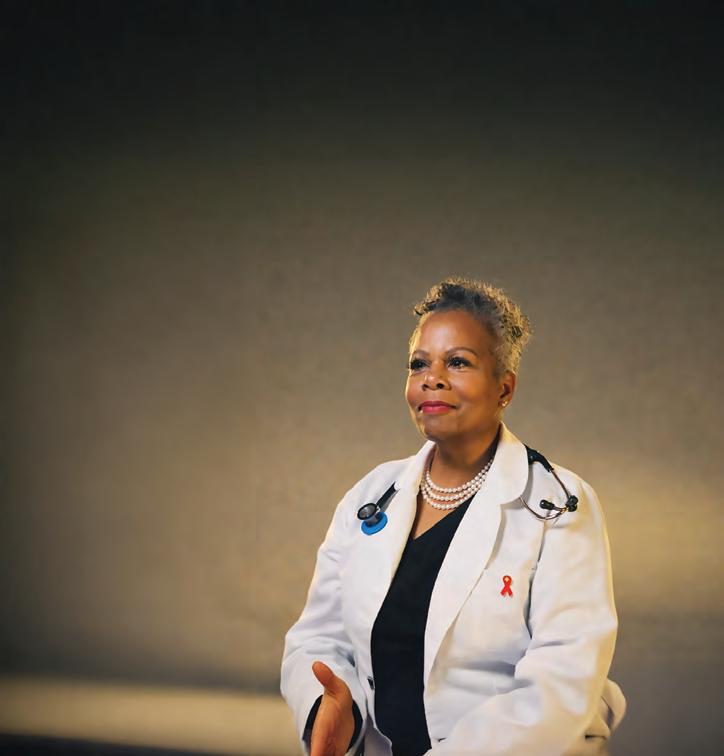
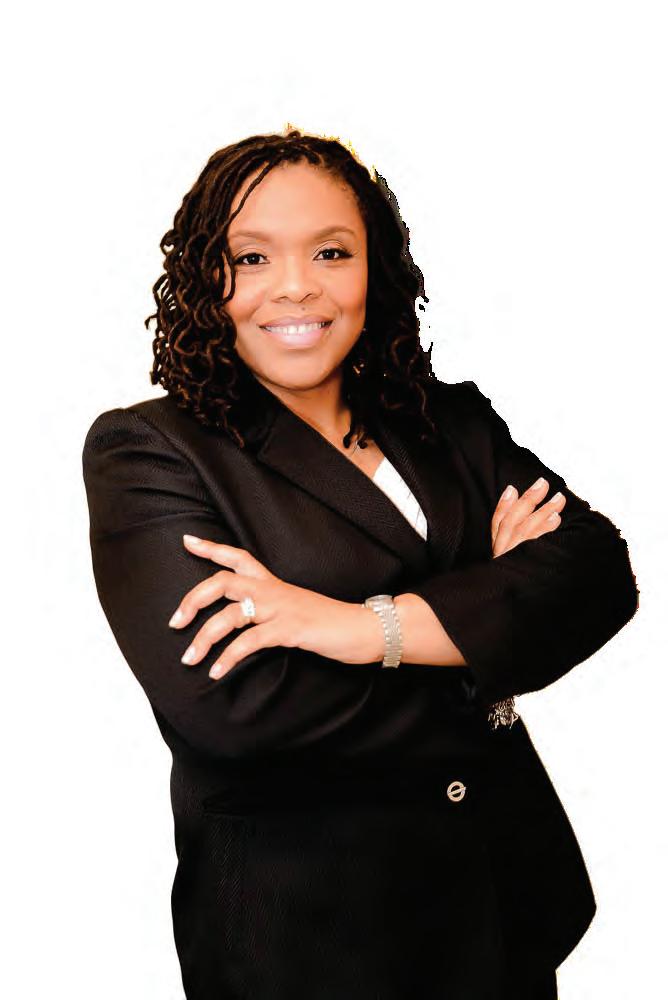
Dr. Robert Hines
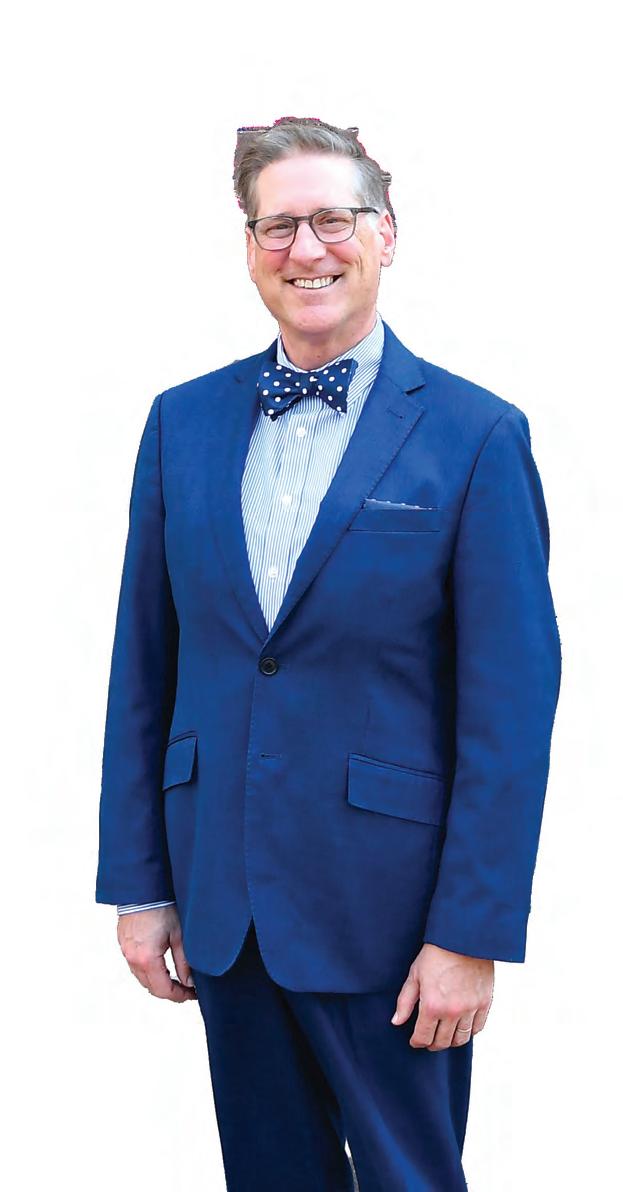
Dr. Adrian Reyes
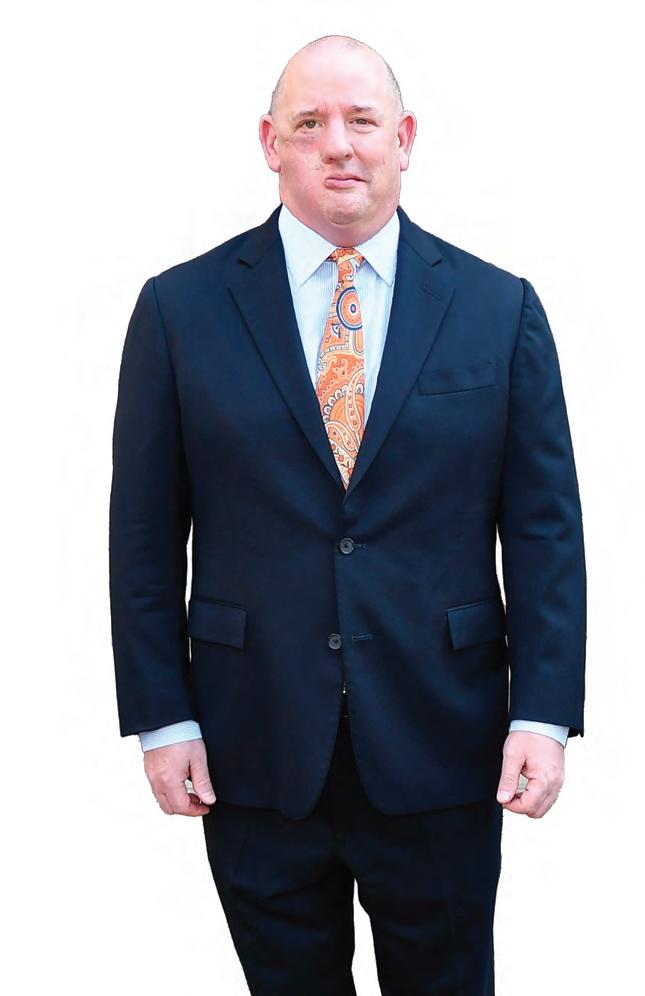
Dr. Wendell Dela Cruz
Dr. Marcus de Guzman Dr. Brooke Rebenschied

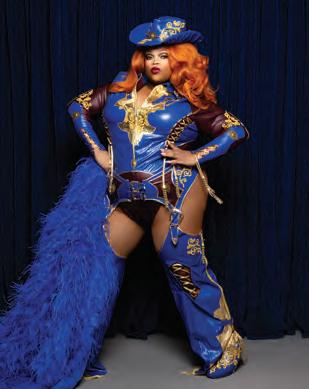
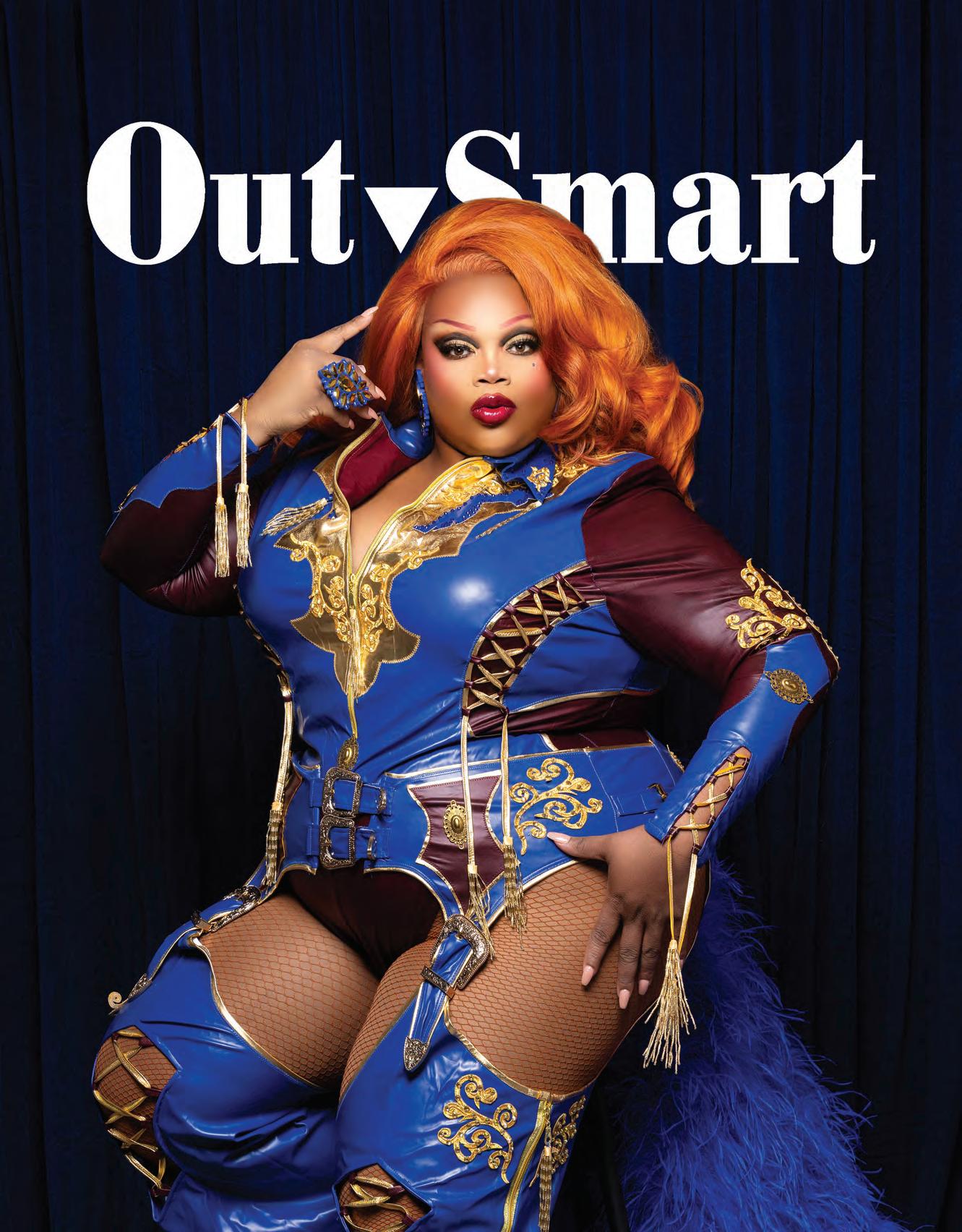
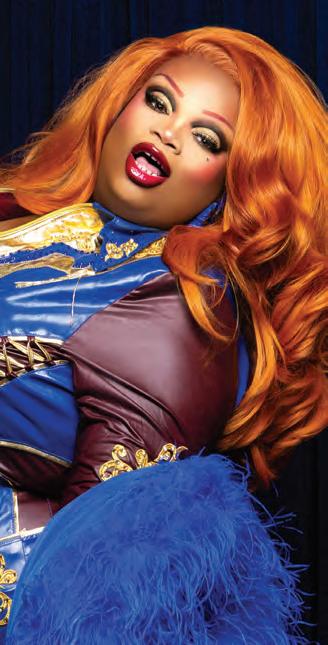
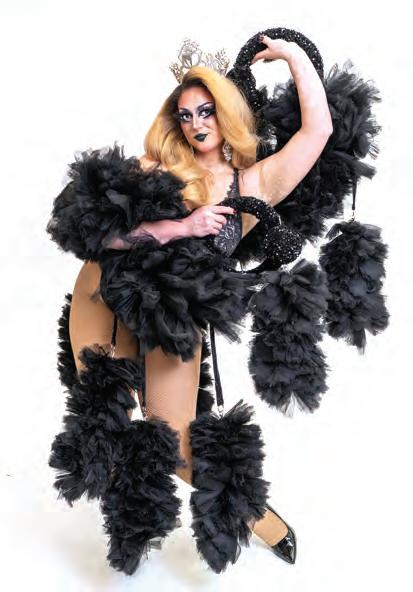
Silky Nutmeg Ganache
Photo by Victor Contreras

•Sexual and Reproductive Health
•Mental Health
•General
•HIV Treatment and Prevention
•Gerontology





Publisher/Editor-in-Chief Greg Jeu
Creative Director Alex Rosa
Copy Editors Howard Maple, Janice Stensrude
Contributing Writers
Olivia Flores Alvarez, Rich Arenschieldt, Connor Behrens, Jenny Block, Sam Byrd, vin Casey, David Clarke, Brett Cullum, Blase DiStefano, D. Woodja Flanigan, Ste7en Foster, Martin Giron, Marene Gustin, James Hurst, Benjamin Leger, Lisa Keen, Ryan M. Leach, Zachary McKenzie, John Nechman, David Odyssey, Gregg Shapiro, Janice Stensrude, rrance Turner, Grace S. Yung, Brandon Wolf
Photographers/Illustrators
ardo Aguilar, Yvonne Feece, Victor Contreras, Dalton DeHart, Kayla Griffith, Frank Hernandez, Alex Rosa
Sales and Marketing Department
Tom Fricke, Greg Jeu, Alex Niall, hris Lew, Karren Lovelady, Aaron Rublein
National Advertising Representative Rivendell Media 212.242.6863
Local Advertising Representative OS Media 713.520.7237
Publishers of OutSmart Magazine 3406 Audubon Place • Houston, TX 77006 713.520.7237
Subscriptions: $72/12 Issues, $130/24 Issues
E-mail: editor@outsmartmagazine.com Website: OutSmartMagazine.com
mart is published monthly. Visit our website at OutSmartMagazine.com for daily news updates and additional featured stories. OutSmart Media Company is not responsible for claims and practices of advertisers. The opinions and views expressed herein do not necessarily reflect those of the staff or management of O ut S mart Inclusion in O ut S mart does not imply sexual orientation. ©2026 by OutSmart Media Company. All rights reserved. Reproduction in whole or part without permission of the publisher is strictly prohibited. Unsolicited material is accepted. No manuscript returned without SASE.


Voted Best Place to Buy Eyewear
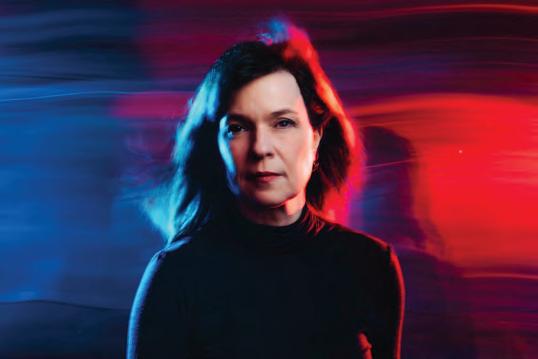
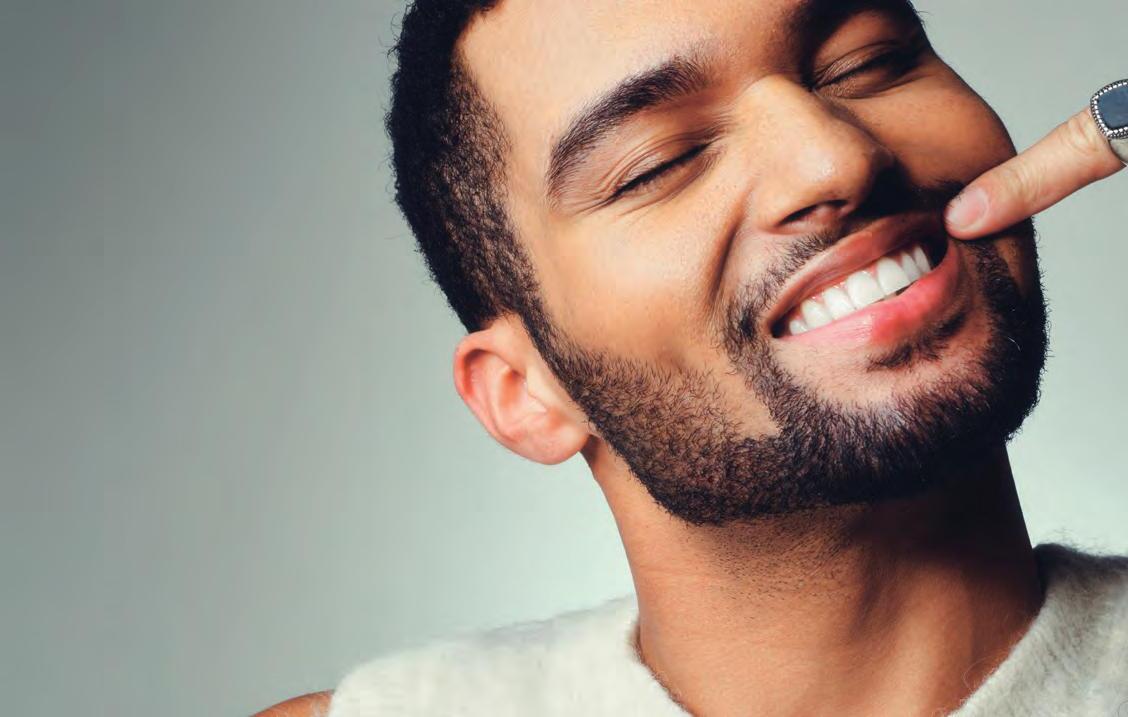
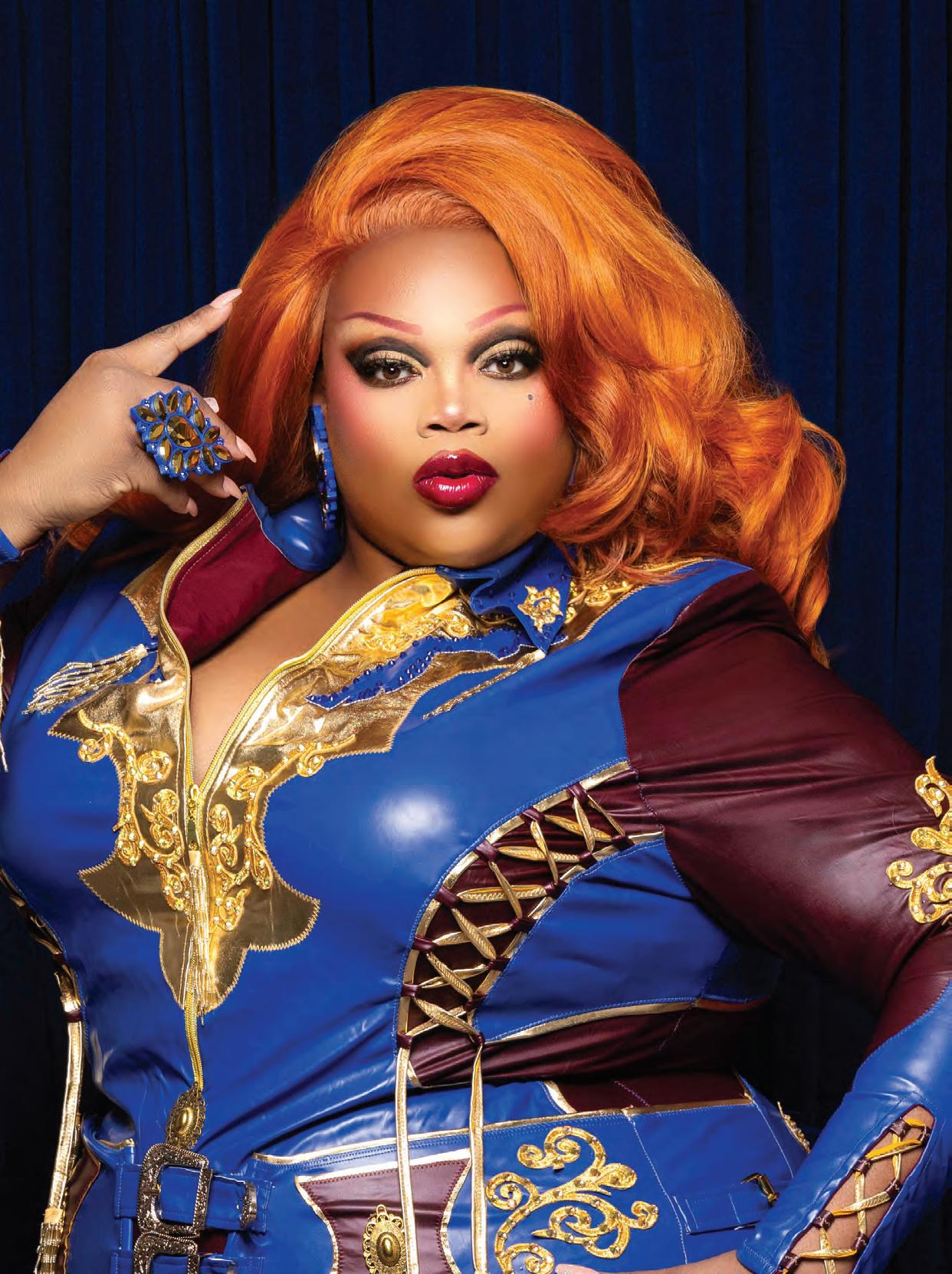
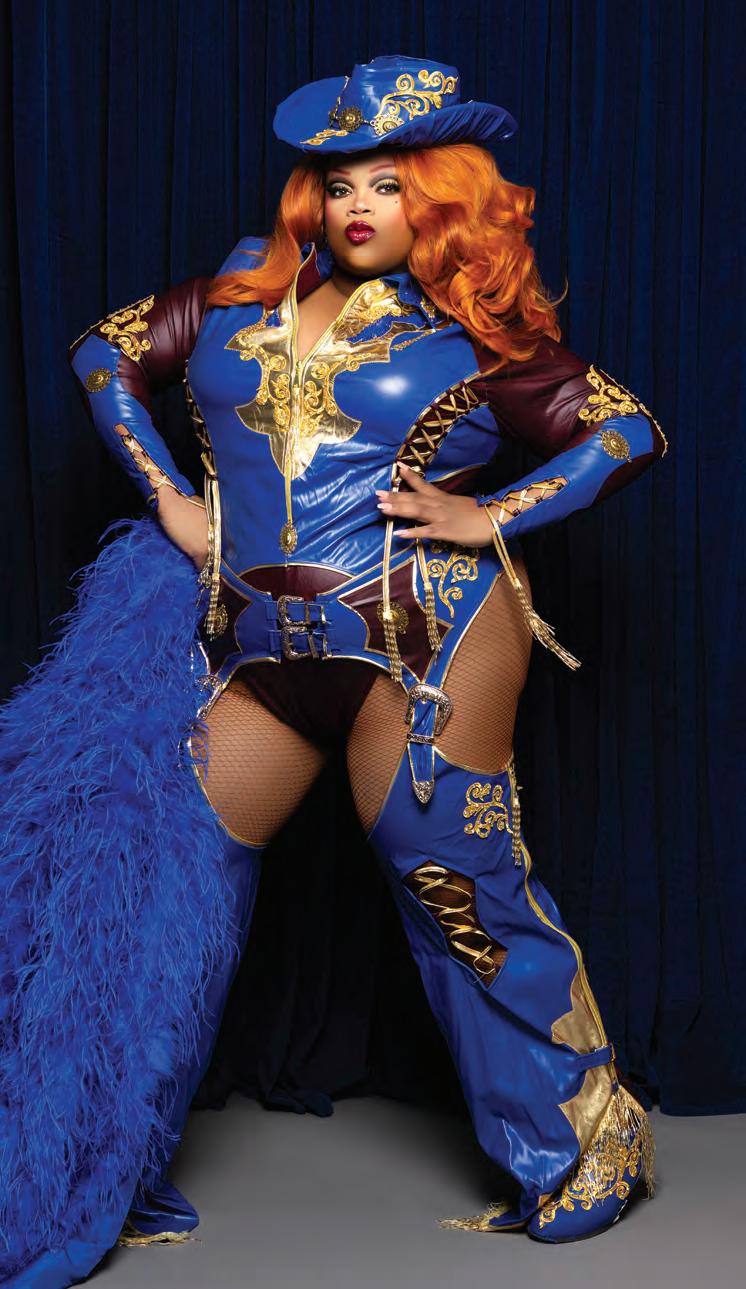
Our annual Pride issue arrives at a moment when celebration and exhaustion sit side by side. This month’s cover features Silky Nutmeg Ganache, who was photographed by Victor Contreras and interviewed by writer David Clarke. After years of advocacy work, fundraising, and the stress that often comes with being a queer Black public figure, Silky is making space for herself while still showing up for the community. Ahead of hosting the Montrose Center’s 2026 Pride Brunch, she talks about her support for the local drag community and creating spaces where people feel loved, safe, and seen.
That focus on community runs throughout this June issue, beginning with Denis “Woodja” Flanigan’s reflection on how our definition of “queer community” has evolved over six decades. Then we spotlight the Black Like That Community Festival, now in its fifth year, which centers Black queer Houstonians and takes place on June 27 at The Hall at Ironworks. The event brings together artists, drag performers, healthcare organizations, cultural leaders, and community partners for a Pride Month gathering rooted in visibility, HIV awareness, and unapologetic self-definition.
We also profile Sixto Wagan, executive director of the BIPOC Arts Network and Fund (BANF), which is celebrating five years of support for artists of color through grants, advocacy, and dialogue. Wagan’s leadership, shaped by his experience as a co-founder of the Queer Artist Collective, looks beyond crisis response toward long-term cultural investment that prioritizes meaningful engagement with local communities.
Houston’s Queer Book Club, led by Abigail “Abby” Yesso, offers a unique gathering space for book lovers. What began as a small online group has grown into a nearly 400-member community centered on queer literature, conversation, and belonging. Out in Tech Houston is another organization dedicated to building community while it challenges the industry’s stereotyped “tech bro” image. LGBTQ tech professionals will benefit from the networking opportunities at the group’s informal mixers in Midtown at The Ion, Houston’s tech incubator hub.
In arts news, Michael Robinson steps into his role as lead programmer for the Houston Cinema Arts Festival, bringing his belief in the enduring value of the movie-theater experience to spark conversation and connection.
OutSmart Foundation for LGBTQ News and Media
As Houston prepares to host seven FIFA World Cup matches, Space City Pride FC is helping to co-host an official Pride House, making LGBTQ visibility a part of the city’s global soccer moment. We also chat with Houston Ballet’s Augustin Lehner about his role in Giselle, and Houston native Cody Renard Richard about his work on Broadway that is opening doors for the next generation of actors and theater technicians.
As always, we want to thank our contributing writers and photographers whose work is essential in telling Houston’s LGBTQ stories. Our readers, advertisers, and donors who sustain the work of this magazine and the OutSmart Foundation also deserve special recognition. If you believe community-driven journalism matters, please consider donating to the OutSmart Foundation for LGBTQ News and Media.
You r Suppor t Tran sf o rm s L GBT Q Stori es into Cha ng e
Why are we asking you to donate to the OutSmart Foundation?
Your support empowers the LGBTQ community through essential journalism, helping OutSmart Media thrive in a rapidly evolving media landscape. Your tax-deductible contribution expands our newsroom, compensates dedicated journalists, and invests in the latest media technology. It also funds internships for future writers committed to social justice.
By supporting the OutSmart Foundation, you invest in a platform that amplifies underrepresented voices and promotes equality through storytelling. You help produce journalism that confronts prejudice and embraces diversity.
Thank you for supporting independent LGBTQ media in Houston. Your contribution helps our platform thrive, amplifying diverse voices and stories.
Donate by texting OUTSMART to 53-555 or use your phone’s camera to scan the QR code here.

Greg Jeu Publisher

DR.
Winner
AUSTIN
Finalist Best Dentist
JACQUELINE
Winner
MELISSA BAEZ
Finalist Dental Hygienist



QUEER THINGS to DO
STAGE Wednesday, June 3
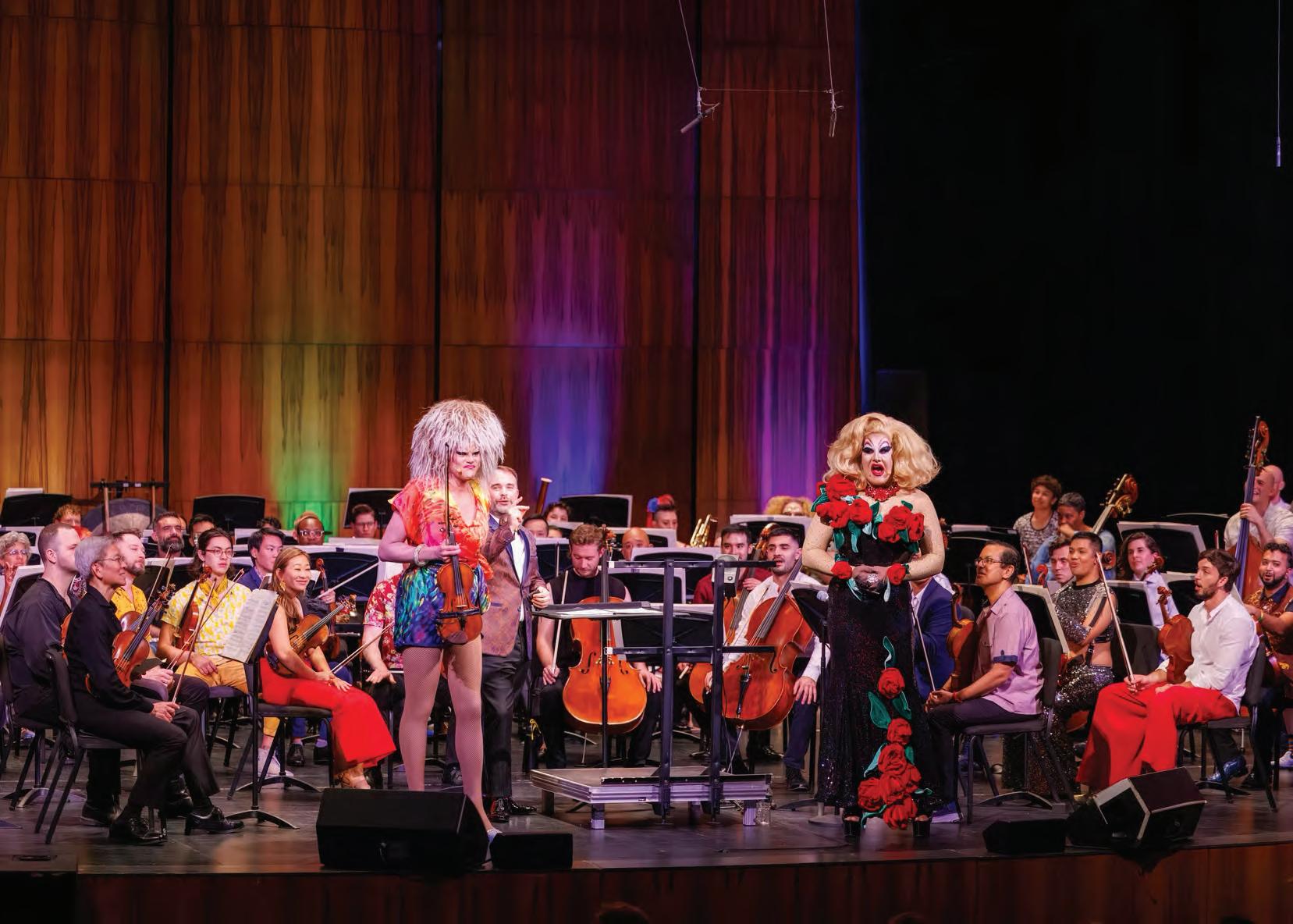
International Pride Orchestra Benefit Concert
The orchestra’s Texas debut concert benefits the Montrose Center. Enjoy music that speaks to perseverance and joy from composers including Leonard Bernstein, Carlos Simon, and Gabriella Lena Frank. tinyurl.com/bdd266p8
STAGE
Friday, June 5
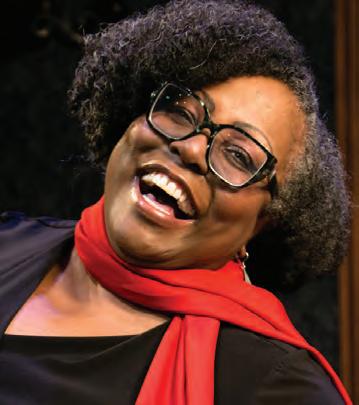
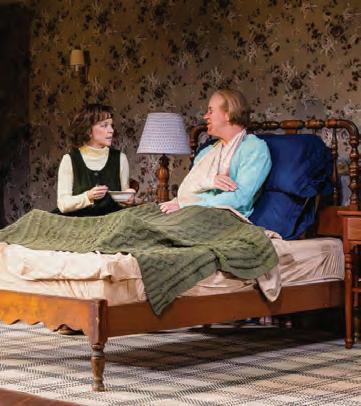
Main Street Theater Pride Night for Sinners and Saints
Main Street Theater hosts a Pride Night happy hour and SingOUT Cabaret before each of two performances of Sinners and Saints, starring Tamara Siler. tinyurl.com/34y4w6ak
STAGE
Thursday, June 11
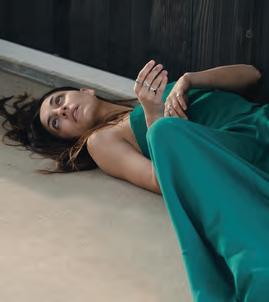
Alley Theatre ActOUT for Misery
Ticket holders for the June 11 performance of Misery can enjoy a pre-performance mixer with music, socializing, light bites, and drinks. tinyurl.com/4rzajj7d
STAGE
Thursday, June 11
ISHIDA Dance Company – waiting/REX
The world premiere of waiting/REX, a double bill reimagining Waiting for Godot and Oedipus Tyrannus through a striking physical lens. tinyurl.com/y852e5bs
PHOTO BY JONATHAN PELLOW
STAGE
Thursday, June 18
Stages Pride Night for Spamilton: An American Parody
Stages and OutSmart host a reception for LGBTQ patrons and friends before the performance of Spamilton: An American Parody, a side-splitting new musical comedy.
tinyurl.com/2ymd2pye
STAGE
Tuesday, June 23
Ilana Glazer at 713 Music Hall
The queer comedian’s distinct brand of stand-up comedy is known for its unfiltered humor and sharp observations. tinyurl.com/3apdfc7b
STAGE
Friday, June 19
Out at the Ballet for Giselle
Houston Ballet and OutSmart host a special reception for LGBTQ ballet lovers and friends. Get 25% off select seats, a complimentary drink voucher, and access to the reception area before the show and during intermission.
tinyurl.com/2w3jnnt5
STAGE
Wednesday, June 24
Thursday, June 25
HTX Contemporary Dance Festival
Designed to bring Houston’s arts community together in an engaging way, with curated master classes and community chats during the day and unique contemporary concerts in the evening. tinyurl.com/y2usfe2h
STAGE
Saturday, June 20
Pride Chorus Houston: Make Your Own Kind of Music
Pride Chorus Houston presents Make Your Own Kind of Music, celebrating Pride with an evening of both classic and new gay anthems. tinyurl.com/mr3m8pk8
COMMUNITY
Saturday, June 27
Sapphfit: Pink Pilates Join LesbianLand for SapphFit: Pink Pilates, a refreshing outdoor yoga experience designed for sapphics who want to move their bodies in a relaxed, welcoming space. tinyurl.com/3euhvjbw
STAGE
Sunday, June 21
Houston Pride Band: Pride and Passion
Houston Pride Band closes out its season with an evening of music exploring the world of fantasy and imagination. tinyurl.com/c88tzzu4
COMMUNITY
Saturday, June 27
Black Like That Community Festival
The Normal Anomaly Initiative’s annual festival showcases the best of Black LGBTQ and ally communities through arts and culture. Co-headliners are Durand Bernarr, Erica Banks, and Amari Noelle. tinyurl.com/2pat666m
Spamilton :


COMMUNITY
Thursday, July 23–Sunday, July 26
Heavy Hitters Pride 2026

QUEER THINGS to DO
Houston’s largest annual summer event explicitly celebrating bodypositive queer spaces, plus-size men, and allies. The four-day lineup features national DJs, a flagship Sunday Brunch & Fashion Show, pool parties, and community networking. tinyurl.com/26d6dvfp
COMMUNITY
Friday, July 24
H-Town Puppy Mosh
Join the Bayou City Pups at the Montrose Center for a wagging good time. Enjoy a safe space while exploring the pup side you’ve always wanted to experience. tinyurl.com/yvsh78uh
STAGE
Thursday, August 6
Alley Theatre ActOUT for The Girl on the Train
Ticket holders for the August 6 performance of The Girl on the Train can enjoy a pre-performance mixer with music, socializing, light bites, and drinks. tinyurl.com/yfjd85rh
COMMUNITY
Saturday, October 3
Katy Pride Celebration 2026
Katy Pride’s 2026 celebrates the strength, resilience, and vibrant diversity of the LGBTQ community in Katy and West Houston. The celebration features 70+ vendor booths, live entertainment, community resources, family-friendly activities, and opportunities to connect with local LGBTQ organizations and allies. tinyurl.com/2s3hva7m
COMMUNITY
Saturday, October 31
The Woodlands Pride Festival 2026
The Woodlands Pride Festival is a free all-ages celebration bringing together thousands of community members for live entertainment, local vendors, food trucks, and family-friendly fun. tinyurl.com/45sn254m













































SCENE OUT
Photos by DALTON DEHART AND CREW
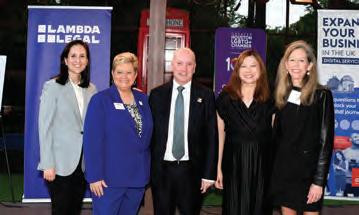
The Greater Houston LGBTQ+ Chamber hosted an event with the British Consulate on April 29, 2026. Pictured are Council Member Alejandra Salinas, Tammi Wallace, His Britannic Majesty’s Consul General Richard Shackleton, Pamela Brantley, and Shelly Skeen
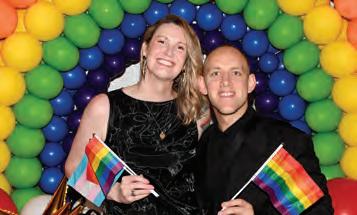
On April 30, 2026, Houston Grand Opera hosted Pride Night for The Barber of Seville at the Wortham
and Nathan Cook.
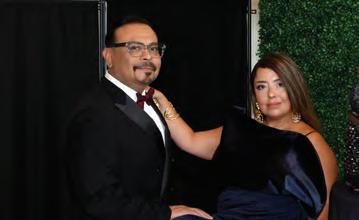
The
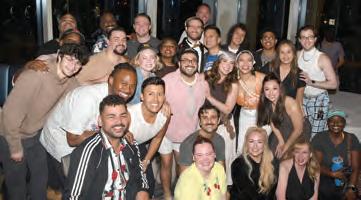
the performance of Beautiful: The Carole King Musical on May 28, 2026. Pictured are members of the
On
3,
May
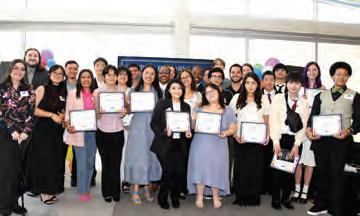
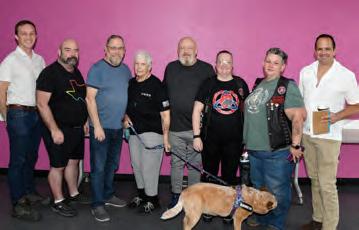
2026, OUT for Education presented its 2026 scholarship awards at Big Brothers Big Sisters. Pictured are the recipients.
On May 4, 2026, the Mahogany Project honored the legacy of Monica Roberts at Sesh Coworking. Pictured are Antonio Maldonado, Verniss McFarland, Bradon Mack , Dylan Forbis, Brad Pritchett, Synthia Walton, and Oni Blair
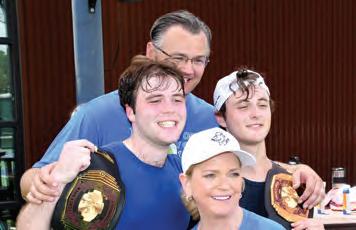
Legacy Community Health presented the inaugural Legacy Open Pickleball Tournament on May 9, 2026. Pictured are Drew Adler, Robert Palussek , Chree Boydstun, and Nathan Adler.
On May 9, 2026, Loyd Powell led a discussion on queer collaboration. Pictured are Timothy O’Leary, Christopher Daniel, Robert Conn, Judy Reeves, Loyd Powell, Buttons, Cherry, and Jake Margolin.
OUT at TUTS, sponsored by OutSmart and Theatre Under the Stars, was held after
cast.
Theater. Pictured are Avery Belyeu
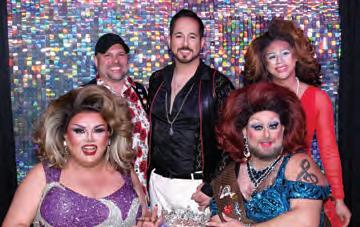
Mother of Montrose 2026 contest was held at Michael’s Outpost on May 10, 2026. Pictured are, back row, Geary Whitney, Daddy of Montrose 2025; Landon J. Fatale, Boy of Montrose 2025; and Thela Nova Moon, Girl of Montrose 2025; front row, Laisha LaRue and Jacklyn Dior, Mother of Montrose 2026
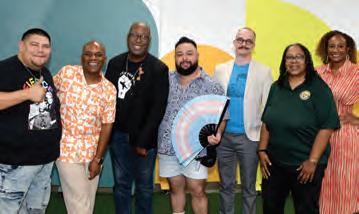
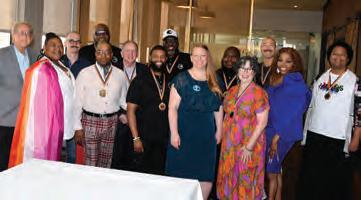
Pride Houston 365 presented its 2026 Grand Marshal and Opening Awards Reception at the Houston Club on May 30, 2026. Pictured are the 2026 Grand Marshals.
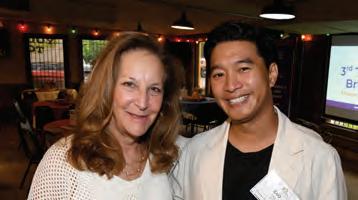
The Greater Houston LGBTQ+ Chamber of Commerce held its 3rd Thursday Breakfast with Bao Ong on May 21, 2026. Pictured are Lori Farris and Bao Ong.
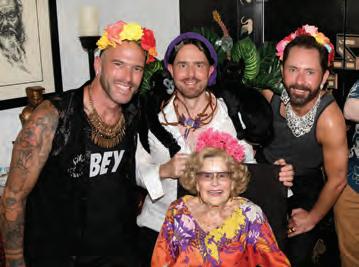
On May 17, 2026, the Diana Foundation held its Fiesta de Frida Kahlo at the home of Tony Castro and Tom Raguse. Pictured are Brian Hull, Michael Broderick , Sharon Lord, and Shane Alderman.
On May 9, 2026, HRC Houston hosted its annual dinner, Community Equals Power, at the Marriott Marquis. Pictured are Ben Rubio and Gia Montalto.
Pride This Way
The Global Queer Passport
You Didn’t Know You Needed
Pride isn’t just a month on the calendar.
It’s a GPS pin that keeps moving—from Houston to Madrid, from Boise to Bangkok, from the dance floor to the front line of protest.
Pride This Way is your first-class boarding pass.
This new globetrotting podcast–vodcast series takes you inside Pride celebrations around the world, guided by a bold lineup of storytellers who live at the intersection of cultures. Together, they’re here to do more than chase glitter—they’re here to connect the dots between joy, struggle, and what it really means to be out and proud in at Pride.
A front-row seat to global Pride
Every episode of Pride This Way drops you into a different city’s heartbeat—its streets, its music, its hidden queer corners. You’ll hear the chants from the march, the bass from the afterparty, and the quiet, honest conversations that happen in hotel lobbies, kitchen tables, and back rooms once the cameras usually turn off. Our international co hosts aren’t parachuting in; they’re plugged in. They bring their languages, their passports, and their lived experience to each story, so you’re not just visiting another Pride—you’re being welcomed into it.
Global influencers who translate more than just language
The Pride This Way co hosts are global LGBTQ+ influencers, artists, and activists who know how to move between worlds.
• They speak TikTok and town hall, red carpet and refugee camp.
• Learn why a Pride crosswalk matters in one city while queer nightlife is being raided in another.
• They bridge the gap between local traditions and global conversations— between what you see on the ground and what’s at stake in the headlines.
When a host in Atlanta sits down with a trans activist from Manchester, or a host from Berlin takes you behind the barricades, they’re not just sharing stories—they’re building a shared vocabulary of resistance, celebration, and joy.
Why Pride This Way podcast matters now. Around the world, Pride is under pressure. Some cities are expanding protections and visibility; others are banning marches, arresting organizers, or trying to erase queer and trans people from public life altogether.
That’s exactly why Pride This Way is launching now:
• Document what’s really happening on the ground—beyond corporate floats and one day campaigns.
• Amplify the voices of organizers, artists, and everyday community members who are keeping Pride alive.
• Show how cultures collide, blend, and transform when global queer communities meet each other halfway.
Download your Pride passport stamp, as an archive and a lifeline.
Pride This Way is built on a simple idea: when we see each other clearly, we fight for each other differently. You’ll laugh. You’ll learn. You might get angry. But you won’t feel alone.
Where to watch, listen, and join the fun.
Pride This Way is dropping across major podcast platforms and video channels, with social first cuts and bonus behind the scenes moments that keep the conversation going long after each episode ends. Stream full episodes on your favorite podcast and vodcast platforms and follow our co-hosts on social for live check-ins from Pride events.
Pride is happening everywhere. Now you can be there, too.
PrideThisWay.com
Subscribe. Download. Pay it Forward.
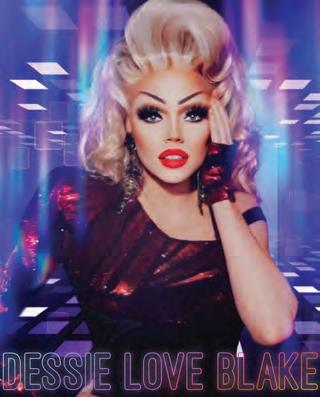
MEET OUR GLOBAL CITY AMBASSADORS
Dessie Love-Blake - Houston, Texas
Soraya Vivian — International Tour Guide
David Sexton — Miami Beach, FL
Tara McDonald — Amsterdam, UK
Jono Kitchens — Madrid, Spain
Muffy Vanderbilt, III - New Orleans, LA
Jason Ess — East Coast, US
Conleth Kane — United Kingdom
Do you have what it takes to be one of our Global City Ambassadors? Contact us at pillarsofchange.com
Our Houston Pride Episode’s Pay-It-Forward Program recipients are the OutSmart Foundation and The Montrose Center.











A Window on Local LGBTQ History
We the People highlights decades of Houston community building and activism.
by BRANDON WOLF
The University of Houston (UH) Libraries Special Collections is now hosting an exhibit that chronicles Houston’s LGBTQ community from the 1940s to the present day. Titled We the People: Examining the American Experience through the UH LGBT History Research Collection, the exhibit is on the first floor of the school’s M.D. Anderson Library and includes photos, handwritten letters, artwork, newspaper clippings, clothing, and ephemera. It will run through December of this year.
The exhibit has been curated by Joyce Gabiola, a UH alum and professional archivist who oversees the LGBT History Research Collection. Over the past ten years, the collection has expanded significantly as other local archives with limited staffing and funding have entrusted their materials to UH. The Special Collections team has also acquired notable items to further enrich the collection.
Gabiola explains that the exhibit’s theme was inspired by a quote from activist Larry Bagneris Jr. in The Pride Guide 1981, when he served as the Gay Pride Week planning committee chairperson: “In times like these, it is necessary to examine the American Experience, see what it means to each of us, work to [ensure] that it continues, and live that experience to the fullest.”
The exhibit includes eight panels, each highlighting a unique perspective on Houston’s LGBTQ history, often using one-ofa-kind items. A cozy reading nook is also provided, where visitors can browse through books from the LGBT collection.
Initially, Gabiola intended the exhibit’s theme to be about finding joy in the LGBT archives, but soon recognized that the collection also reflects other realities. “There is lightness, but there is also darkness. There is joy, laughter, and triumph, but there is also violence and vulnerability. The exhibit is going to affect you in some way.”
The exhibit begins by presenting LGBTQ
history at UH. Pat Gustafson and Mignon Weisinger, both UH students, met on campus in the 1940s and shared a 54-year romantic relationship. Gustafson became a notable doctor and medical researcher, while Weisinger was a celebrated artist. The couple spent their lives in Houston and Galveston.
The next panel delves into the 1978 Town Meeting 1 and the issue of privacy. After the historic local event, Upfront, a publication of the era, printed photos of the crowd that packed the Astroarena. Concerned about being outed and potentially losing custody of their children, a group of lesbians organized to surreptitiously obtain the negatives and then stored them in a safe deposit box. A community town hall was held, but Upfront never regained access to the negatives.
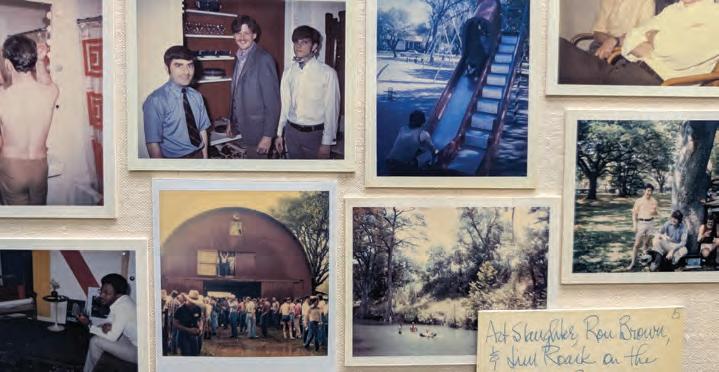
The exhibit includes selections from a collection of 9,700 Polaroids and slides documenting nearly 30 years in the lives of a Montrose throuple, who lived together from the late 1960s to the early 1990s. The photos capture their social circles, gatherings, vacations—and their dog, Max. The trio lived near Cherryhurst Park and meticulously labeled their photos with dates and names. “It’s an archivist’s
dream,” Gabiola says.
Another panel highlights the papers of mental-health activist C. Patrick McIlvain. His mother, Annella Harrison, established the first support group for parents of LGBTQ individuals in the late 1970s, which eventually became PFLAG Houston. Photographs show both McIlvain and Harrison in military uniforms, reflecting their service to the nation.
One display features a letter written by a PFLAG mom to the governor of Alabama, protesting his cancellation of an LGBTQ conference at the University of Alabama. A copy of the governor’s response shows that, although he respected her love for her gay son, his mind would not be changed.
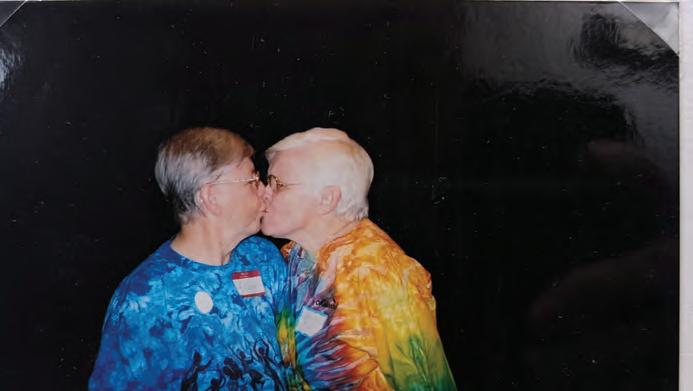
Arden Eversmeyer, renowned for her years of activism with LOAF (Lesbians Over Age Fifty) and her efforts to compile an oral history collection of lesbian lives, is shown with her longtime partner Charlotte Avery. The exhibit also displays letters Avery sent to her family, coming out to them. Her nephew and sister responded with supportive letters, although it took time for them to process the news.
Another section is devoted to lesser-known publications, including women’s and lesbianfocused works, some of which are quite rare. Gabiola points out a publication about drag and a community newsletter by Black lesbians.
The exhibit also covers a range of organizations, from obscure groups to well-known ones. One panel highlights the Astro Radio Alliance of the Deaf, the International Gay Rodeo Association, Asians and Friends Houston, and the Diana Foundation, the oldest continuously operating gay organization in the United States, founded in 1953.
An email from a member of the local Log Cabin Republicans is presented, revealing that the writer intends to vote for Democrat Sheila Jackson Lee. Gabiola emphasizes that this is an example of the nuances and diversity of opinions within the community.
Among the other items visitors will encounter is a denim jacket adorned with numerous enameled pins and buttons. The jacket
Joyce Gabiola, curator of the UH Libraries exhibit
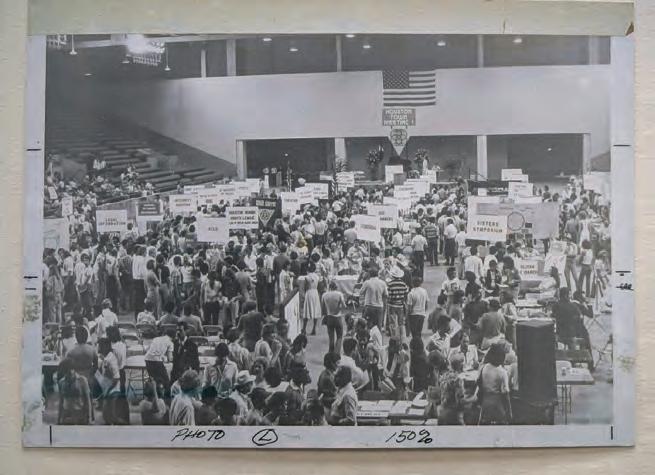
The landmark moment in the city’s LGBTQ liberation movement sparked new organizing, political action, and community support services.
belonged to a Queer, Asian, biracial, nonbinary writer who was raised in Houston and graduated from UH. The exhibit also features a playful Gay Monopoly board game, which includes a card representing the Diana Foundation.
The tragic 1991 murder of 27-year-old banker Paul Broussard by young gay bashers from The Woodlands is examined. An OutSmart cover story titled “Anatomy of Hate” discusses the incident. News clippings mention Queer Nation and Q Patrol, two organizations that organized in response to the murder.
The final panel features a poem written by a graduate student who researched the Fundación Latinoamericana de Acción Social, an organization for Hispanic communities that promotes AIDS education. The student also reviewed various transgender and queer zines, and their research culminated in the poem.
A student intern reviewed a book from the archives titled God Made Us: Even If We’re Gay. He then wrote a blog post about the book, and the exhibit displays an emotional excerpt from that post.
Gabiola notes that student response to the exhibit has been meaningful. Those who helped assemble it gained not only new knowledge about the community, but also insights about themselves. A graduate student, a curatorial assistant, and an intern each interacted with the archives in their own unique ways.
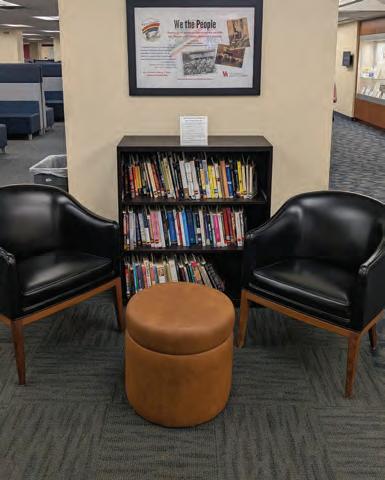
The Community Libraries Reading Nook offers two seats, ottomans, and a bookcase filled with books from the LGBT collection, which visitors are welcome to peruse.
A large video screen in the library promotes the exhibit and features clips from the 1990s TV Montrose show and the Cougar Rainbow History Collection of video oral histories.
Christian Kelleher, the director of exhibitions and external relations for UH Libraries, reflects on the exhibit: “True to its name, the We the People exhibit really centers the personal experience—of the exceptional and the mundane, the singular and the collective—represented in the archives of UH Libraries’ LGBT History Research Collection.
The exhibit challenges visitors to think about how these unique primary sources and the stories and histories they represent impact the research and learning that happens at the university.
“It offers a small window and a view into why preserving archives like these matters to understanding our society, and to how that understanding can be created and recreated by working with historical archives. Exhibit curator Joyce Gabiola has presented a complex story that sparks reflection on not only the history depicted, but the processes through which that history is studied and documented. It is both scholarly and personal, like the archival collections it represents.”
WHAT: We the People: Examining the American Experience through the UH LGBT History Research Collection
WHEN: Now through December 31, 2026
WHERE: M.D. Anderson Library, 4333 University Drive
INFO: tinyurl.com/librariesuh
Arden Eversmeyer, founder of The Old Lesbian Oral Herstory Project, with her longtime partner Charlotte Avery. Photos courtesy of University of Houston Libraries
(Upper left ) Selections from the Jay Hollenburger, Arthur Slaughter, and Gary Grether (JAG) Photographic Collection; (upper right ) reading nook open to exhibit visitors; (lower right ) Town Meeting I, held on June 25, 1978, at Houston’s Astroarena, brought more than 4,000 people together.




Wednesday, June 3
Houston Astros Pride Night
The Houston Astros celebrate Pride Night as they face off against the Pittsburgh Pirates. Come early to celebrate the Houston LGBTQ community with a pregame Happy Hour in the Michelob Ultra Club and special pre-game ceremonies. tinyurl.com/2eyyaudn
Wednesday, June 3
Pride Houston 365 Rock the Runway
This fashion show brings together style, creativity, and community, highlighting selfexpression through fashion and giving space for people to show up as they are. The night features runway presentations, bold looks, and a high-energy atmosphere. tinyurl.com/jte4cuu8
Friday, June 5
Houston Trans Pride 2026
The Monica Roberts Resource Center celebrates the beauty, resilience, and power of the trans community at this event hosted by Kenia Gallardo with music by DJ 7VEN & GNDRBNDR. tinyurl.com/mcdwwcz4
Friday, June 5
Super Soak-Her Pool Party
A CITYWIDE PRIDE SEASON
Houston’s celebrations stretch across communities.
by OUTSMART STAFF
June in Houston brings a full slate of Pride events that reflect the people, places, and communities shaping the city’s LGBTQ life. From Astros Pride Night and runway fashion to trans-centered celebrations, drag brunches, business luncheons, and family-friendly gatherings, this year’s lineup offers many ways to show up, connect, and celebrate. Pride Houston 365’s 48th annual Festival and Parade anchors the month, but Pride is not limited to one day or one part of town. It is happening in Montrose, Midtown, the Heights, Katy, Brazoria County, and in libraries, restaurants, breweries, bars, and community spaces across Greater Houston. The calendar also highlights Houston Trans Pride, LesbianLand’s Sapphic Hour, Eden, Katy Pride’s 5K, and Brazoria County Pride Festival. Local businesses including Frost Town Brewing, Axelrad, The Original Ninfa’s, and Pizaro’s Pizza are also joining the celebration with Pride-themed drinks, beers, and bites. Wherever you are, this guide offers a place to start.
Hosted by Queen Persephone, this Pride celebration brings together fierce drag, poolside energy, and nonstop entertainment. Performances by Laisha LaRue, Reign LaRue, Mari Jane, and Rene B*tchface. tinyurl.com/yd8mpxec
Friday, June 5
LesbianLand Sapphic Hour at Avant Garden
This pre-Eden Pride mix and mingle is for women who love women, featuring vibes by Jiggee and Missy. tinyurl.com/bdcdm88c
Friday, June 5
Eden: Pride Houston 365
Official Girl+ Party
Pride Houston 365 presents Eden, a night centered on women and femmes—bold, confident, and fully in their element. tinyurl.com/mr6apyr4
Saturday, June 6
48th Annual Houston Pride 365 Festival and Parade
Celebrate Houston’s vibrant LGBTQ community with live entertainment, local and national talent, immersive activations, community vendors, and unforgettable Pride experiences, followed by the nation’s largest nighttime Pride parade. tinyurl.com/mp9zu3p8
Saturday, June 6
Brazoria County Pride Festival
Celebrate the experiences and stories within
Proudly serving Houston’s LGBTQ+ community with affirming care for over 40 years.
Learn more at LCH.org
Brazoria County’s growing LGBTQ community. The day includes live entertainment, community resources, and activities for all ages. tinyurl.com/3kx4sux3
Sunday, June 7
Pride Drag Brunch at Improv Houston Jorgeous, a RuPaul’s Drag Race star, headlines a Pride-soaked brunch with high-energy moves and bold glam. Hosted by Chevelle Brooks, it’s a feel-good, love-out-loud celebration full of fierce fun. tinyurl.com/3kdch738
Sunday, June 7
The Montrose Center 8th Annual Pride Brunch
Now in its eighth year, Pride Brunch directly supports the Montrose Center’s life-changing programs, including mental-health care, housing, HIV services, youth programming, and support for seniors. tinyurl.com/pridebrunch2026
Thursday, June 11
Pride Happy Hour with Ben Chavez Rice’s Moody Center is hosting a free Pride Happy Hour. Ben Chavez toasts the community with a lively piano-and-song performance, following opener DJ Rosez. tinyurl.com/5bpkapsh
Friday, June 12
Pride in Business Celebration Luncheon
The Greater Houston LGBTQ+ Chamber of Commerce hosts the region’s premier and only business-focused Pride Month event. tinyurl.com/3b5z8suz
Saturday, June 13
Houston Public Library Pride-A-Palooza
The third annual Pride-A-Palooza will be a fun-filled day that includes a family story time followed by Pride-themed arts-and-crafts activities. tinyurl.com/j2cezw2b
Saturday, June 13
Chase the Rainbow: Stride with Pride 5K Katy Pride is celebrating community, inclusion, and Pride at this 5K run while helping raise funds and awareness for their mission. tinyurl.com/3fmcaa9r
Thursday, June 18
Katy Pride: Bases Loaded with Pride Join Katy Pride for an evening of fun as they celebrate three years with food, drinks, music, raffles, and more. tinyurl.com/3med4ftj
Friday, June 19
Meow Wolf Houston: Adulti-Verse Step through the rainbow portal into the multiverse while enjoying stellar drag performances with Queen Persephone and an incredible lineup featuring Sauvignon Blanca,
Sinema Larue, and DJ Chopped Liver. tinyurl.com/3hwxbpkd
Saturday, June 20
El Tiempo Cantina Pride Drag Brunch
Tara Dion presents a Pride Drag Brunch at El Tiempo Cantina in the heart of Montrose. Enjoy a delicious brunch with an all-star drag show and tunes by DJ Stupid Bi**h. tinyurl.com/p5s24k32
Saturday, June 27 – 6pm & 8pm Pride Comedy Show at The Den Comedy Club
Each show features at least five queer performers, with headliners including Roxy Castillo, recently named Best Comedian in Austin; Arielle Isaac Norman, co-host of Gender Fluids; and Janan Araujo-Siam, whose credits include Netflix Is a Joke Fest 2026 and OutSmart ’s Gayest & Greatest 2025. tinyurl.com/y6xdsh48
Saturday, June 27
Sober & Proud: A Houston
Zero Proof Pride Crawl
T his event will take over Montrose with a high-vibe, non-alcoholic Pride bar crawl featuring handcrafted mocktails, cali-sober drinks, and pop-ups. tinyurl.com/z86ybkef
ALL MONTH LONG
Frost Town Brewing
In their fourth annual Pride Series, the brewery offers custom beers on tap to raise funds for local LGBTQ charities. Available in the tap

room, the beers were created in collaboration with each queer employee, who also chooses an LGBTQ charity to receive $1 from every pint sold.
Axelrad
Axelrad is celebrating Pride and giving back all month long. The Midtown bar and beer garden will partner with local nonprofit Grace Place as the beneficiary of their “Rad Drink” throughout June, where $1 from each drink sold is donated to the organization.
The Original Ninfa’s
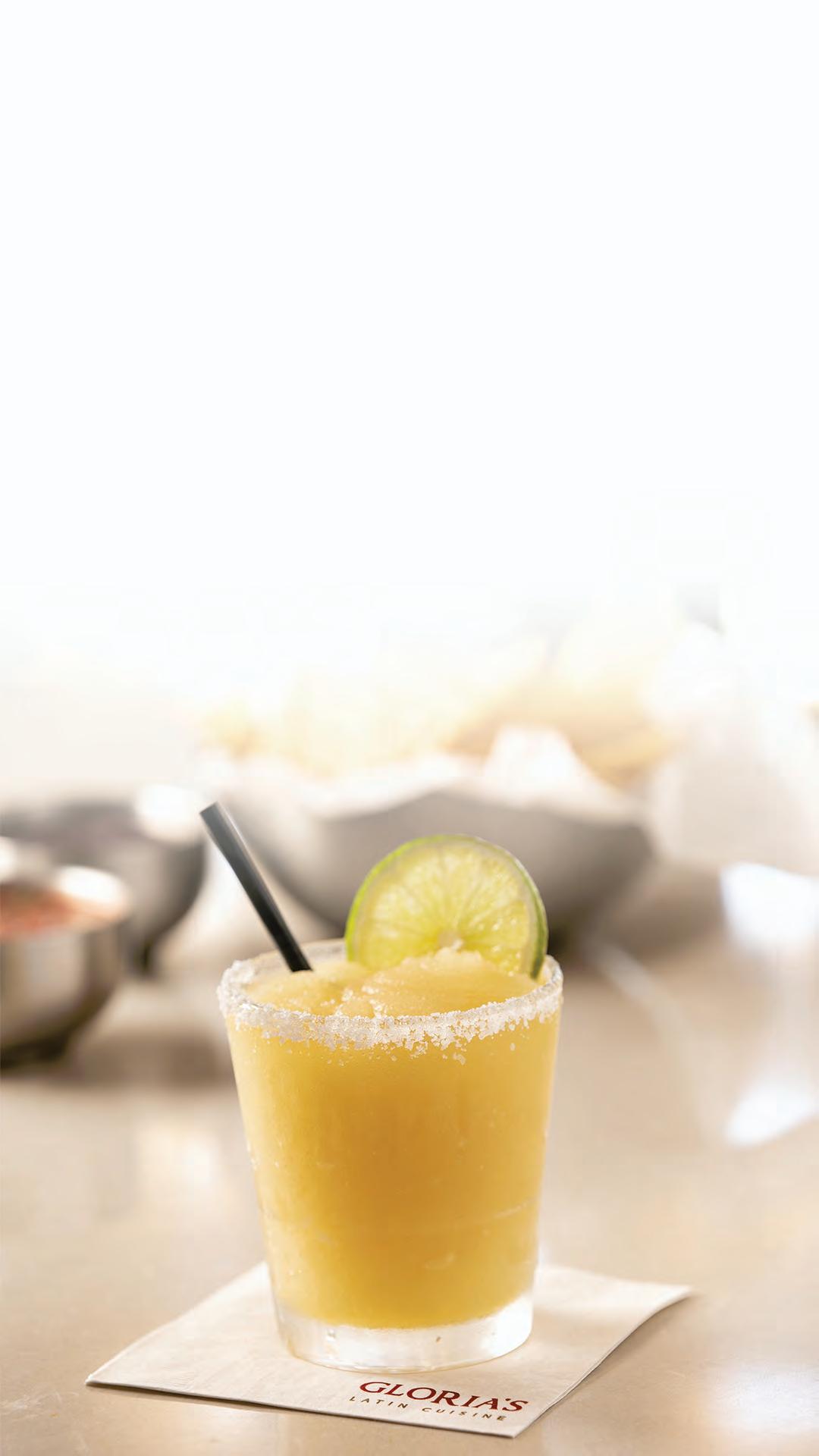
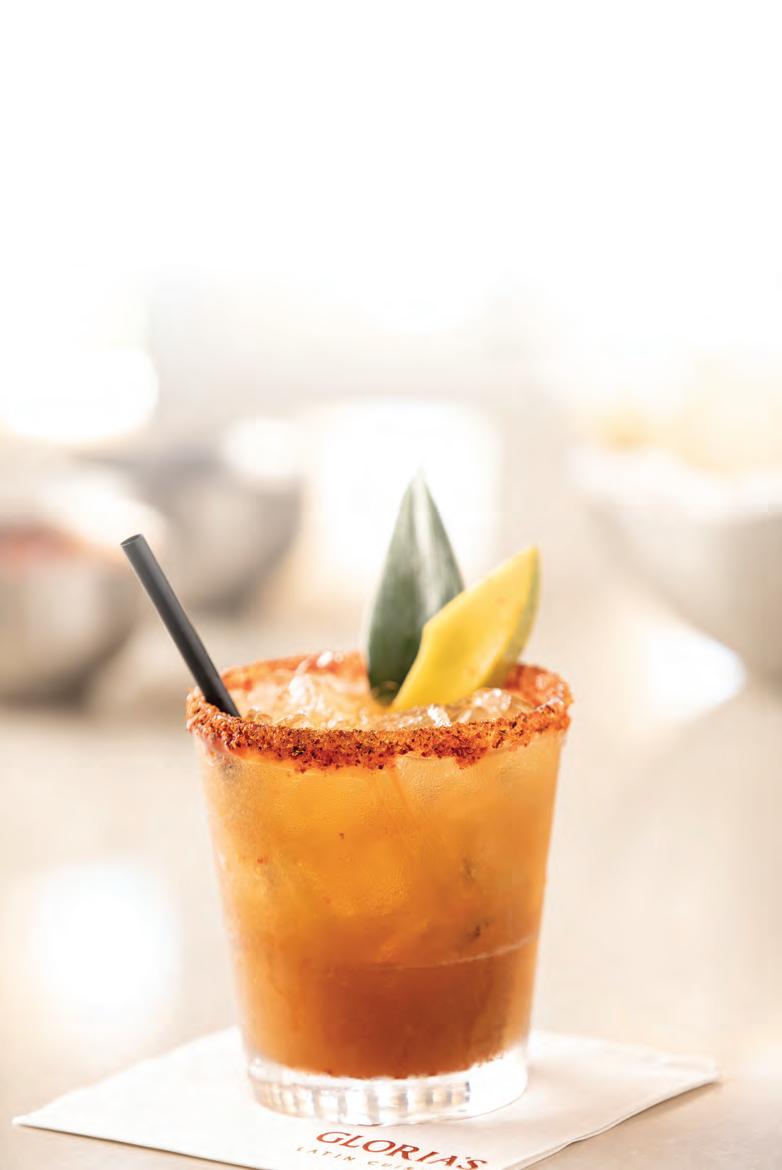
Ninfa’s invites everyone to celebrate Pride Month at both locations of the iconic TexMex restaurant with their Roasted Pineapple Mojito.
Pizaro’s Pizza
In celebration of Pride Month and Houston’s 48th annual parade, Pizaro’s Pizza Napoletana will offer a limited-time “Pride-full” Cannoli— a crispy, tube-shaped fried pastry shell stuffed with a sweet, creamy ricotta filling and topped with rainbow sprinkles.
SAVE THE DATES
Saturday, October 3
Katy Pride Celebration 2026
Katy Pride’s 2026 celebrates the strength, resilience, and vibrant diversity of the LGBTQ community in Katy and West Houston. The celebration features 70+ vendor booths, live entertainment, community resources, family-friendly activities, and opportunities to connect with local LGBTQ organizations and allies. tinyurl.com/2s3hva7m
Saturday, October 31
The Woodlands Pride Festival 2026
Join your neighbors to the north for a free allages celebration bringing together thousands of community members for live entertainment, local vendors, food trucks, and familyfriendly fun. tinyurl.com/45sn254m
with future priorities like retirement, financial independence, or legacy planning—not about chasing short-term market moves.
Consider Adjusting Your Withholding
One of the biggest advantages of investing a lump sum like a tax refund is time. Money invested earlier has more opportunity to benefit from compounding over the years or decades ahead. Even a few thousand dollars invested consistently over time can make a meaningful difference in long-term outcomes—especially when combined with regular monthly contributions.
Investing may be the right choice when you have a solid emergency fund, high-interest debt is under control, you’re already covering your monthly obligations comfortably, and you’re behind on long-term goals like retirement or education funding. In these cases, directing a refund toward investments can help close gaps and reinforce good financial habits.
Splitting a Tax Refund

If you consistently receive large refunds, it may be worth reviewing your tax withholding. A very large refund could mean you’re overpaying taxes throughout the year and living on less cash flow than necessary. Adjusting withholding doesn’t change your total tax bill, but it can increase your monthly take-home pay, reduce reliance on credit cards or short-term borrowing, and help you save or invest gradually instead of in one lump sum.

One of the most overlooked options is simply splitting the refund. For example, you might decide to put 40% into savings, use 40% to pay down a credit card, and invest 20% for long-term goals. This kind of blended approach acknowledges that most real financial lives have multiple priorities at the same time. It can also make the decision feel less all-or-nothing and more sustainable.
This is a planning conversation worth having with your tax professional or financial planner, especially if cash flow feels tight during the year.
If you’re unsure where your refund should go, try this order of operations:
1. Cover immediate cash needs and build basic emergency savings
2. Pay down high-interest debt
3. Invest for long-term goals
Your personal mix will depend on your balance sheet, your goals, and your comfort level, but this framework helps ensure you’re not skipping important foundations.
The Bigger Picture
Your tax refund decisions shouldn’t live in isolation, but instead be part of a broader financial plan that considers cash flow, debt structure, savings needs, investment strategy,

tax planning, and long-term goals. A financial planning professional can help you step back, look at all of these pieces together, and decide how a refund—or any other financial opportunity—fits into your overall strategy. There’s no single “right” answer to the question of saving, investing, or paying down debt with your tax refund. The right choice is the one that improves your financial position, reduces stress, and moves you closer to your long-term goals. What matters most is being intentional. A thoughtful plan for your refund can turn a once-a-year event into a meaningful step forward in your financial life.
The opinions voiced here are for general information only and are not intended to provide specific advice or recommendations for any individual. Grace S. Yung, CFP®, is a Certified Financial Planner™ practitioner and the CEO & Founder of Midtown Financial Group, LLC, in Houston. Since 1994, she has helped LGBTQ individuals, domestic partners, and families plan and manage their finances with care and expertise. She is a Wealth Advisor offering securities and advisory services through LPL Financial, a Registered Investment Advisor. Member FINRA/SIPC. Grace can be reached at grace.yung@lpl.com.For more information, visit www.midtownfg.com or www.midtownfg. com/lgbtqplus.10.htm.



Thank
YOUR SUPPORT MATTERS
you for helping us tell the stories of our LGBTQ community!
We are deeply grateful to all our donors for supporting the OutSmart Foundation. Your contributions empower local LGBTQ media by expanding our newsroom, investing in media, and funding internships for emerging social justice journalists.
The OutSmart Foundation was formed to ensure the continuation of 32 years of LGBTQ community media in Houston, and your partnership is more vital than ever. Thank you for investing in local LGBTQ news and ensuring that our stories continue to be documented, inspire, and connect our community.
Thank you to our Corporate Sponsors and Donors
Bayou City Smiles
Ekletik Interiors
Legacy Community Health
Microsoft
New Media Ventures
Premier Wireless
Rich’s Nightclub
Texas Senior Medicare Patrol
Silver Eagle/Bud Light
South Beach Houston
Thank you to our Sustaining Members and Donors
Joshua Allen
Wood Anthony
Gail Barnett
Lea Bogle
James Boone
Martha Bowman
Monica Branch
Carol Carter
Paula Chambers & Lara Raney
Ken Council
Gordon Crofoot
Dalton DeHart
George Detiveaux
Lena Dziechowski

Chris Ehlinger
Laura Emmert
Sara Fernandez
Tom Fricke
Tonya Gaitz
Andrea Gerber
Michele & Don Gibbons
Donald Gill
Sarah Gish
Cecilia Gonzales
Jordan Habibi
Jamie Hardin
Doris Hemsworth
Jorge Hernandez
Linda Hunte
Greg Jeu & James T. Hurst
Randall Lee Ingalls
Bernadette Jimenez
Poonam Kapoor
Ethan Kleine
Kimberly Kyle
Stanley Leshner
Lynette Lew
Nicole Lew
Christyna Lewis
Katherine Ligon
Anne Loo
Karren Lovelady
Chriszelda Luna
Alex Ly
Lisa Madry
Cyndi Melton Manriquez
Antonio Martinez
Anthony May
Kelly McCann
Melissa McKinney
Maureen McNamara
Patrick McNamara
Megan Medina
Pamela Medina Esq.
A.J. Mistretta
Randy Mitchmore
David Monroe
Dante Moreno
Alex Niall
Sandra Nicholas
Cynthia Nguyen
Kevin Nguyen
Annise Parker
Shannon Pena
Queen Persephone
Angela Pisecco
Darryl Raven
Glynda Robbins
Alex Rosa
Aaron Rublein
Gabriel Sanchez
Michelle Sanchez
Support LGBTQ media. Can we add your name today?
Donate today by texting OUTSMART to 53-555 or scan the QR code here. This is more than a tax-deductible donation—it’s an investment in the voice and visibility of our community.
Nicole Sarkar
Jereme Scott
Tom Seymour
Jeff Shell
Nicolas Shumway
Caleb Smith
William Smith
Reinel Solano
Christopher Sosa
Laura Spanjian
Brian Stephens
Grey Stephens
John Suarez
Gabriel Swift
Bob Tallent
Heather J. Taylor & Lori Hood
Jack Toups
Yvonne Tran
Patricia Tucker
Jessica Tymczak
Bob Valentine & Steve Bolton
Gina L Wagner
Tammi Wallace
Mike Williams
Ryan C. Wilson
Grace Yung
Kyle Young & Michael Gierl
Janet Zuniga
THE GOSPEL ACCORDING TO
SILKY 2026
Drag star Silky Nutmeg Ganache talks Pride, legacy, and finding joy in challenging times.
by DAVID CLARKE
photos by VICTOR CONTRERAS
For Silky Nutmeg Ganache, Pride looks different this year. Not because the stakes are any lower. Not because the political climate has suddenly become less hostile for LGBTQ people, drag artists, or trans communities. And certainly not because the need for advocacy has disappeared.
In fact, it’s quite the opposite. After years of showing up, speaking out, fundraising, entertaining, and carrying the emotional weight that often comes with being a visible queer Black public figure, Silky is choosing something else this season: joy.
“As a queer Black person, this year Pride is gonna look different for me,” she bluntly states. “I am tired of being the advocate. I’m tired of being the activist. I need a break.”
That declaration may surprise some fans
who have long seen Silky as an outspoken entertainer who is unafraid to take up space. But her reframing of Pride does not come from feelings of apathy. It comes from self-awareness and a deeply considered understanding of what survival sometimes requires. “Do I want to be a person that is seen as hope? Yes,” she says. “But this Pride season, I also want to be the person that reminds people what self-care looks like.”
That perspective will undoubtedly shape her appearance as host of the Montrose Center’s 2026 Pride Brunch on June 7, which is one of Houston’s signature annual Pride celebrations. “It’s less partnering and more of the honor of being invited,” she says of hosting the event. “I’ve lived in Houston going on three years now, and it’s sad to say, but this is just my third time being invited to perform in Houston.”
The invitation carries extra meaning because Houston has become more than
just a city on a map for Silky. “When I bought my house, I wanted to be close enough to my Mississippi home but far enough away where people would let me know they were coming before they came,” she says with a laugh, referencing her Mississippi roots. But proximity to family was only part of the equation.
On the day her RuPaul’s Drag Race All Stars 11 bracket premiered, while other contestants hosted splashy viewing parties, Silky’s Houston community came to her. “My community and my friends said, ‘You know what? We’re gonna come over to your house and have a pool party. We’re gonna barbecue, and we’re gonna watch the episode together. And we’re going to give you love.’”
“That has been my experience with Houston since I’ve lived here,” she reveals. And it’s that sense of chosen family that has made the city feel like home to her. “It makes me feel a part of the community. It makes me feel seen in this community.”
➝
“I JUST WANT EVERYBODY TO FEEL GOOD, TO FEEL LOVED, AND FEEL LIKE THEY’RE IN A SAFE SPACE.”
—Silky Nutmeg Ganache
Silky may be living in Kingwood these days, but she is quick to defend her Houston credentials. “People be like, ‘You not even in Houston,’” she says with a laugh. “I’m like, ‘Baby, it’s Harris County, honey.’”
Though she admits she still needs to explore more of the city’s restaurant scene, one nightlife institution already has her heart. “One of my favorite places to go out is JR’s because I love karaoke,” she says. “I’ve tried to become the host of that. I would love to host the karaoke because I love to sing and I want to be on Broadway one day. So it’ll be great practice, and I can collect a little check from it at the same time.” Houston venues, consider this to be your sign. Silky is ready to be booked! She also speaks enthusiastically about the local drag ecosystem, naming legends and
contemporary stars alike: Kofi, Roxanne Collins, Eternity Collins, Porsche Paris, Christina Ross, Mistress Isabelle Brooks, Teanna Nicole McIntosh, Tamika X, Blackberri, and the iconic Dina Jacobs among them. “There are some true legends here,” she emphasizes. “I’ve worked with so many queens, and I feel like there’s a million more that I should work with.”
She also hopes to bring one of her own concepts to town: Silky Smackdown, a March Madness-style drag competition designed to showcase every kind of drag performer while also ensuring all 16 performers get paid for their time in the competition. “It had male leads, drag kings, AFAB queens. I had a variety of queens—older queens, younger queens—because I want people to feel like drag is more than a split and a death drop.”
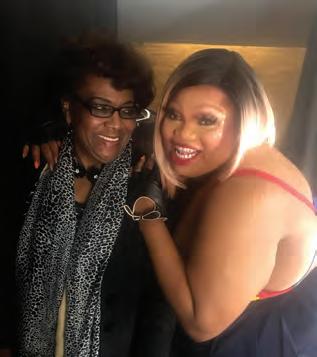
Silky and her grandmother, the late Miss Tearessa Cooper, at G-A-Y in London. Her grandmother inspired her to pursue higher education.
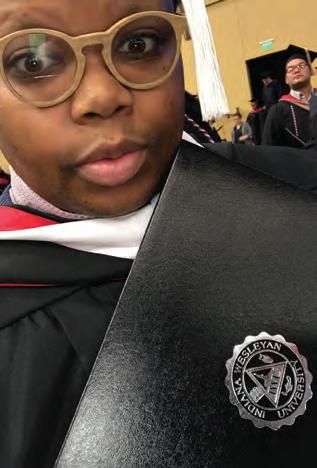
Silky at the commencement ceremony where she received her Master of Arts degree in organizational leadership.
That philosophy comes from experience. “I come from the days where you had to pay your dues within the community to get a booking,” she recalls about her early drag years in Indianapolis. Those benefit performances, open stages, and HIV/AIDS fundraisers shaped both her artistry and her worldview. “I’ve raised thousands and thousands and thousands of dollars in my early drag days. In reality, it shaped who Silky really was.”
That same investment mindset continues today. “We have to find a way to pour into the girls financially as well as uplift their spirits,” she points out. This is something she did in Indianapolis that she wants to bring to Houston’s drag scene.
If Silky sounds especially reflective these days, that may also be because audiences are
4.
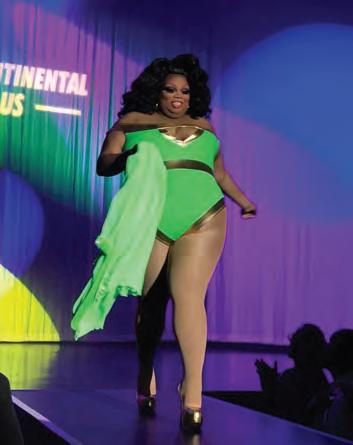
Silky placing second runner-up in the swimsuit competition finals at Miss Continental Plus.
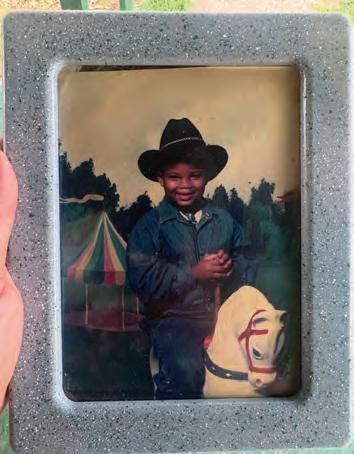
One of Silky’s only surviving childhood photos after her family’s home was destroyed during Hurricane Katrina.
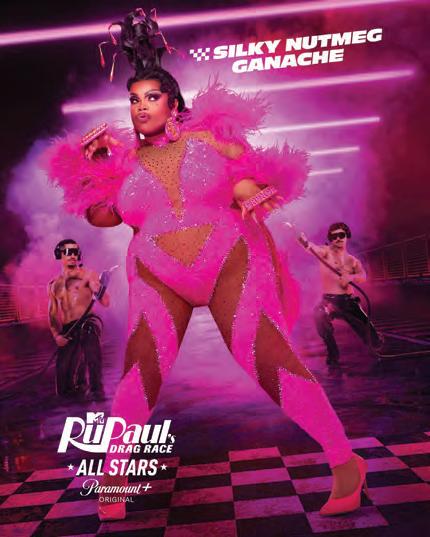
Silky Nutmeg Ganache’s “RuBirth” look from All Stars 11 .
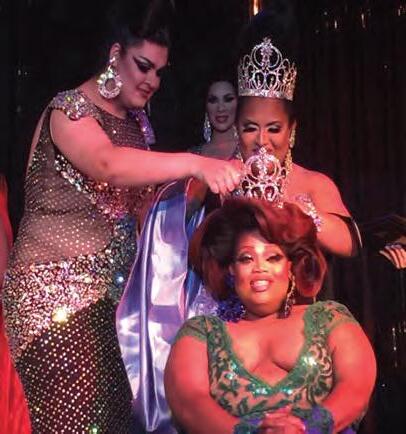
Being crowned Miss Latina Continental Plus prior to her first appearance at Miss Continental Plus.
seeing a different version of her on All Stars 11. “When I went on to my original Season 11, I was a baby drag queen,” she remembers. “I was a little girl just fighting to be seen and heard.” This time around is different, though. “I’m just happy that now you can see the fully realized Silky.”
That evolution extends beyond reality television. Her viral appearance at Kamala Harris’ Houston rally remains one of her most memorable public moments. “I just wanted them to see representation, and what that meant,” she says. “And I’m glad that it happened here in Houston.”
Still, when asked where activism fits into Pride this year, Silky does not mince words. “My question is to white cisgender men: ‘When are y’all going to start actually speaking up and using your privilege to benefit this community?’”
The statement lands with force because it comes not from cynicism, but lived reality. “Every year, I have been doing it,” she explains. “I have been fighting. I’m tired.”
Her focus this year is all about creating spaces where joy itself becomes resistance.
“THIS PRIDE SEASON, I WANT TO BE THE PERSON THAT REMINDS PEOPLE WHAT SELF-CARE LOOKS LIKE.”
—Silky Nutmeg Ganache
“I’m going to make sure that we have joy,” she declares. “And if people ain’t bringing joy, I’m going to invite them out of a space of joy.”
That approach also informs how she thinks about drag’s broader cultural role. “Old-school drag shows were a time where you just came in and you forgot about all your problems you had in the world,” she points out. “I just want everybody to feel good, to feel loved, and feel like they’re in a safe space.”
In an era when drag performances remain political flashpoints, that mission feels especially urgent. “I feel like drag is the glue to peace in families,” she says. “We are beyond just entertainers. We are your nurses, we are your doctors, we are your scientists, we are your everyday teachers, and we are your parents.”
And since Silky’s career hasn’t peaked and is still on an uphill climb, she’s already thinking about what she wants to be remembered for. “I hope the legacy that I leave is my spirit of hard work—that spirit of fighting for yourself.”
“Nobody in this world owes you a damn
thing,” she advises younger artists. And she hopes that they will carry that message with them. It is classic Silky. Funny, blunt, deeply human, and rooted in hard-earned truth.
Still, perhaps her most lasting legacy will be simpler than all of that. Asked what she hopes audiences take away after seeing her
perform, her answer is immediate. “I just hope they walk away with joy.” For Pride 2026, that may be exactly the gospel Houston needs to hear.
Keep up with Silky Nutmeg Ganache on Instagram @silkyganache.


Serving Up Camp Comedy Gold
In theaters June 12, RuPaul leads a cast of drag performers that deliver big laughs and surprising emotion.
by DAVID CLARKE
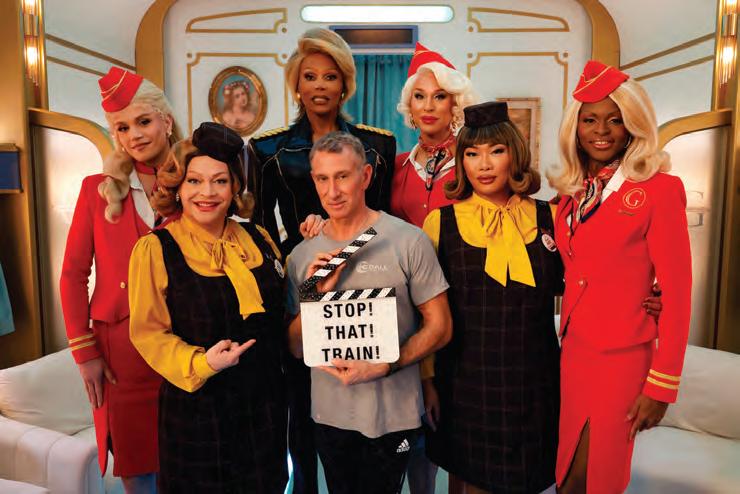
For decades, mainstream film has borrowed liberally from drag, queer culture, ballroom aesthetics, and camp sensibilities, often without meaningfully centering the artists who built those worlds. STOP! THAT! TRAIN! feels like a welcome shift.
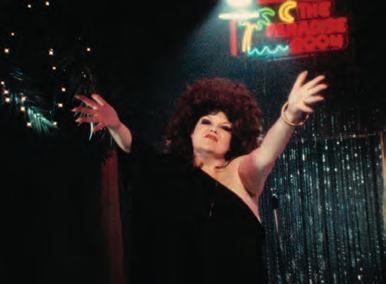
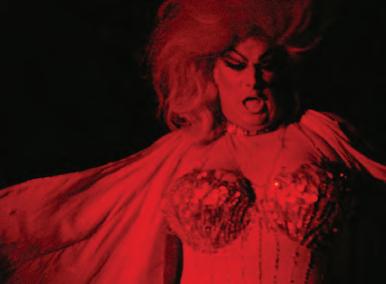
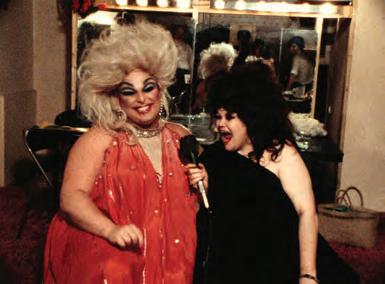
While drag performers have long lit up indie films and queer cult classics like Girls Will Be Girls, Cherry Pop, Hurricane Bianca, Die Mommie Die!, and, of course, the legendary collaborations between John Waters and Divine, mainstream Hollywood has been far slower to hand drag artists the keys to a wide theatrical comedy.
That distinction matters to cast member Symone. “I think STOP! THAT! TRAIN! is important because it’s another way of humanizing us,” she reflects. “We’re the stars of the film. We’re not the butt of the joke. We’re making the jokes. We’re setting up the humor. We’re leading the story.”
That message lands with even greater urgency as drag performers and LGBTQ communities continue facing political attacks across the country. “They’re trying to take drag away and trying to silence us and our art,” Symone says. “So I just think it’s important that people see us as artists and as humans.”
The film makes that point while being absolutely ridiculous. It is genuinely a laugha-minute comedy that gleefully commits to its own absurdity. The buddy-comedy dynamic between Jujubee and Ginger Minj gives the film its emotional engine, grounding the escalating chaos with genuine chemistry and warmth. If A View from the Top and Barb and Star Go to Vista Del Mar had a gloriously queer lovechild barreling toward disaster, this would most definitely be it.
There are musical numbers. There are outrageous cameos. There is a loose scorpion creating the kind of escalating mayhem that evokes Snakes on a Plane. Missi Pyle absolutely understands the assignment as a hilariously horny divorcée, while Latrice Royale repeatedly popping up in entirely different jobs becomes one of the film’s most delight-
ful running gags. Even the visual comedy hits hard, with a fried brakes gag that practically demands a spit take.
For all its outrageous camp, however, STOP! THAT! TRAIN! does have heart. Symone points to friendship as one of the film’s emotional throughlines, particularly in the central dynamic between Jujubee’s and Ginger Minj’s characters. “There’s friendship on the line here,” she notes. “They come into this as best buddies, really, and they have to navigate this situation together.”
Symone also sees a message about resilience and collective survival. “You may not get along with them, you may not like them, but you have to work together to get through a situation,” she says of the adversarial dynamic among the trio Ayshleiygh (her character), Jujubee, and Ginger Minj.
That emotional grounding helps explain why the comedy lands so effectively. “With drag, we get to have a little bit more fun,” Symone explains. “It’s kind of a way to disarm the audience.”
Her sharp observation is that while we all know that comedy lowers defenses, drag lowers them even further. “We get to sit down and say, ‘Hey, this is what we’re actually saying
underneath the jokes and the absurdity of this film,’” she explains.
For Symone, the experience of making the film alongside RuPaul Charles was transformative. “I’ve loved Ru since I was a kid, so this opportunity meant the world to me to be in a film with her and acting alongside her and across from her.”
It also expanded Symone’s sense of possibility. “It made me realize that the sky’s the limit.” She quickly ups the ante, adding, “We can go past that, we can go to space now.”
More importantly, she hopes that STOP! THAT! TRAIN! will open doors for the next generation of queer creatives. “I hope there are more films led by us—both in and out of drag. Why can’t we have more of these films?”
And if mainstream audiences are somehow still not ready for a drag-led mainstream film after 20 years of RuPaul’s Drag Race? “If they’re not ready, then they’re going to get ready,” Symone quips bluntly and honestly.
STOP! THAT! TRAIN! arrives in theaters nationwide on June 12, making it the perfect Pride Month movie outing for the gays, girls, theys, thems, and yes, even your straight friends. As Symone puts it, “This is a movie for everyone.”
Director Adam Shankman and the cast of STOP! THAT! TRAIN!





Houston’s Queer Tech Network
Out in Tech Houston connects LGBTQ professionals and challenges tech-industry stereotypes.
by BENJAMIN LEGER | photos by OIT HTX MARKETING HEAD
The tech industry has an image problem. It’s the image of the stereotypical tech bro— the affluent white guy with a startup who makes news headlines and is caricatured in TV shows and movies. Out in Tech Houston aims to change that.
The local chapter of this international LGBTQ organization has been active since 2022. It hosts gatherings to help queer Texans network and navigate within the industry—or to help newcomers learn about career opportunities in tech.
“Why this organization exists is to help
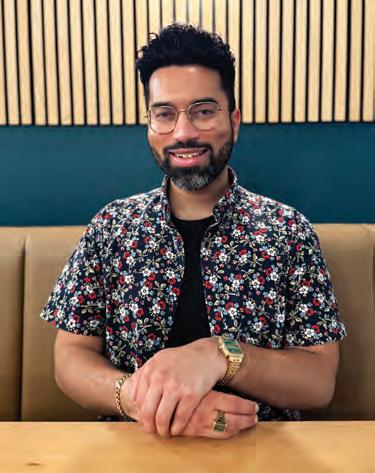
fight against the idea that only one type of person is meant to work in the tech industry,” says Omar Qureshi, who co-leads the organization with Deitrick Franklin. “In reality, it’s open to such a wide variety of people.”
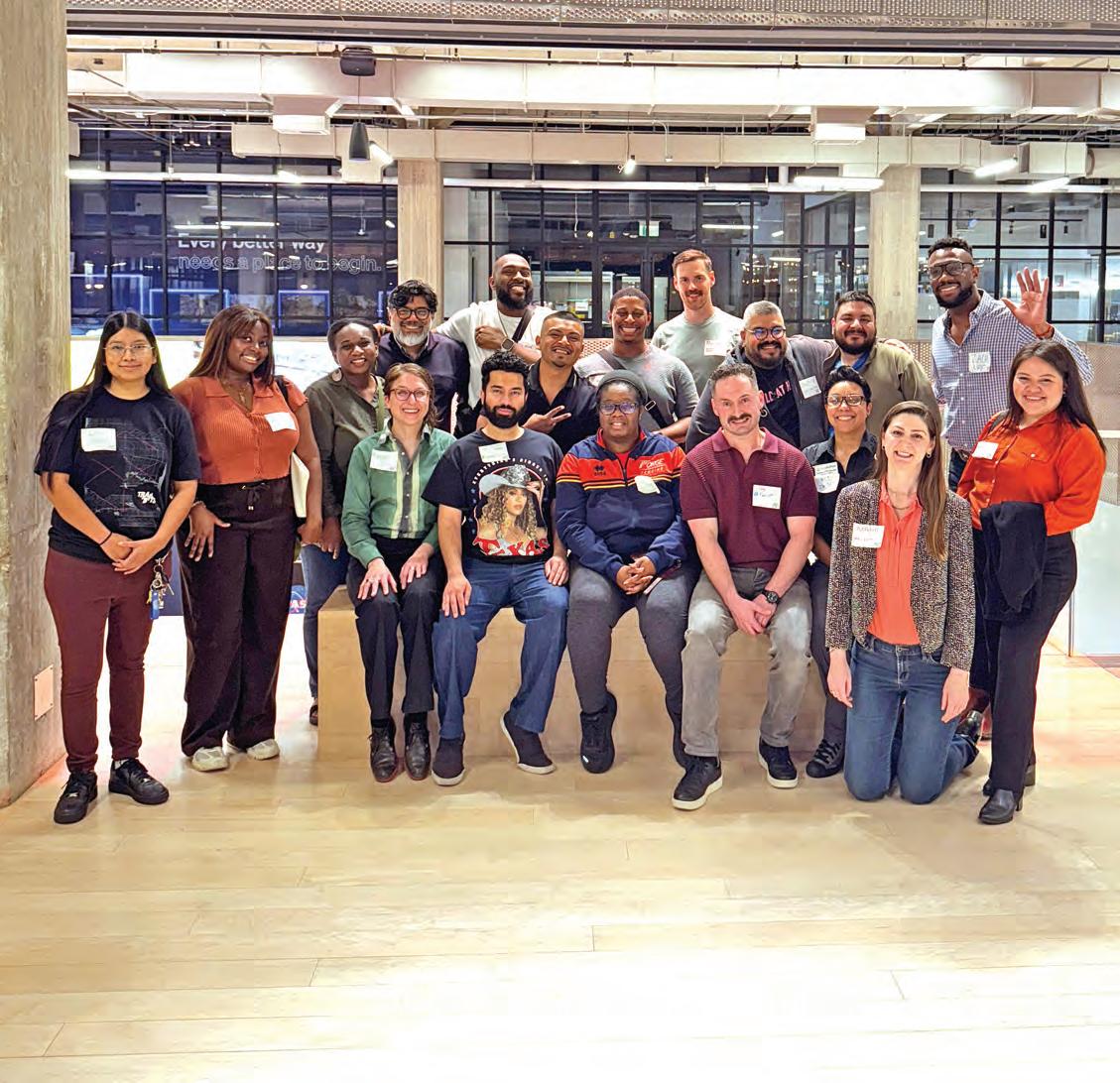
The group’s informal mixers take place at the Ion in Midtown, the growing incubator hub for all things tech in Houston, usually on a theme like Women’s History Month this past March or Pride Month for June. Attendees come from a variety of industries you wouldn’t immediately connect with the tech sector, Qureshi and Franklin say. They might work in health care, energy, or banking, but they’re still in tech jobs. And that’s kind of the point.
Because Houston isn’t as recognized for embracing the tech boom as places like Austin, you have to “expand your horizons” and build your own community, they say.
“How do you break into those industries if you don’t have those prior relationships that would navigate you to the field? And as a queer person in any industry, there’s the challenge of representing yourself authentically,” Franklin says.
While there isn’t much hard data on LGBTQ representation in tech, most advocacy groups argue that queer tech employees have fewer mentors or examples of success in the industry.
Out in Tech Houston’s March Mixer event
Queer people trying to enter the tech world are more likely to follow an unconventional path, Franklin says.
Franklin started his career as a recruiter in Houston’s oil and gas industry. “When I tried to break into tech,” he says, “I thought the only way to do that was to leave the city.”
He moved to the Bay Area to work at Lyft’s corporate headquarters. During the pandemic, he switched to remote work and eventually returned home to Houston. He now works remotely as a lead program manager for Reddit.
“When I got back to Houston,” Franklin explains, “the tech industry had just started to infiltrate. You saw the Ion District, you saw Microsoft move in, then HPE. Houston was starting to invest in this industry.”
Indeed, the Greater Houston Partnership estimates that today, about 230,000 residents work in the local tech sector.
Qureshi, a University of Houston grad, got his start in IT before pivoting into project management for an education tech startup. On a work trip to New York, he met people involved in the Out in Tech chapter there, which led him to inquire about a Houston outpost.
“Having this Houston chapter helps show people that tech is so much more than they think it can be,” he says. “It helps us discover each other and build those connections.”
Now that they’ve gotten their feet wet in managing Out in Tech Houston’s monthly networking events, the co-leads are strategizing how to continue growing membership through a regular newsletter, connect queer people with career services and professional development programs, and engage more with other LGBTQ organizations in the community.
In the near future, those informal mixers might include panel discussions with major
tech companies that have established a presence in the area. Events in partnership with the Greater Houston LGBTQ+ Chamber of Commerce are also on the horizon.
“Our visibility is our resistance to that stereotype of the tech bro,” Franklin says. “When people come to our chapter, they see that tech is much more diverse than they thought.”
For more info, visit outintech.com.

Omar Qureshi
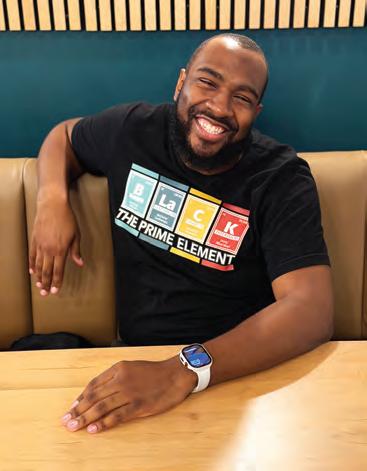
Deitrick Franklin
Scan to find HIV testing & care near you.


Diversifying Houston’s Arts Future
Sixto Wagan reflects on the importance of investing in today’s BIPOC artists.
by ALEX MENDOZA | photo by TRISH BADGER
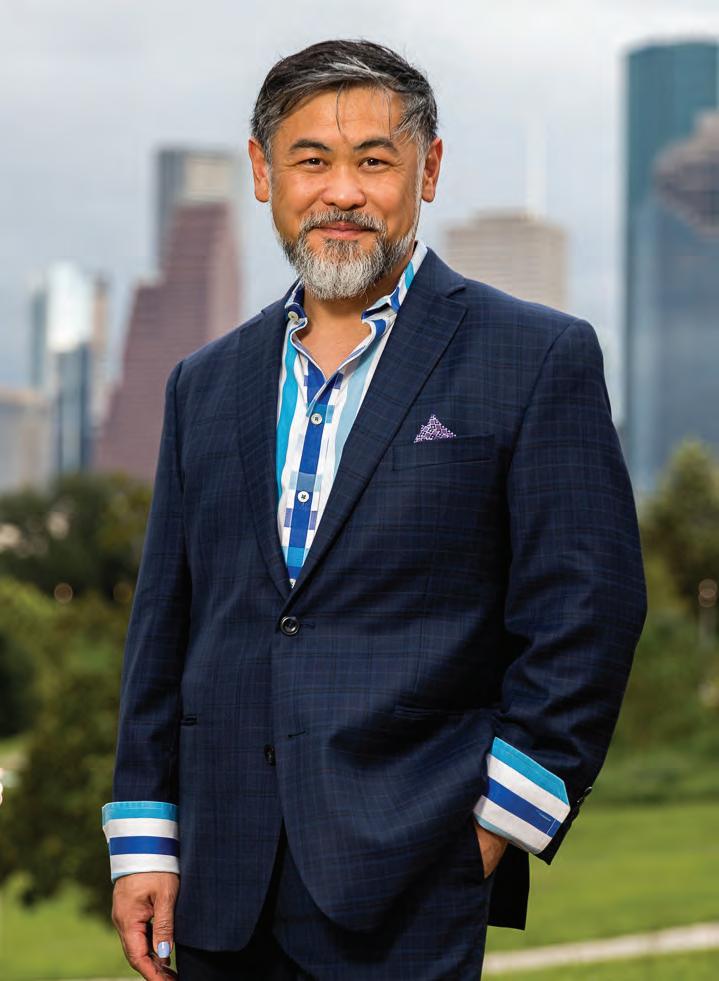
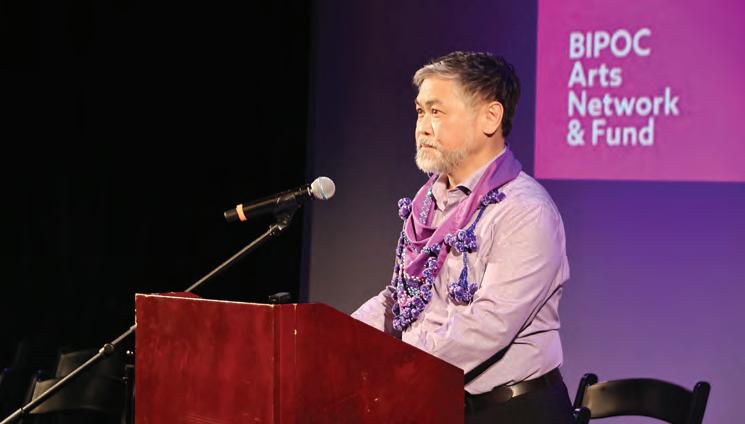
Sixto Wagan (he/him) is the executive director of the BIPOC Arts Network and Fund (BANF), an initiative supporting the creative expression of Black, Latinx, Indigenous, Asian American, Pacific Islander, Middle Eastern and other communities of color in Greater Houston. Through grants, networking, and advocacy, BANF helps secure opportunities for BIPOC artists.
Before his current role at BANF, Wagan was the inaugural director of the University of Houston’s Center for Art and Social Engagement (CASE), which examines the impact of art on a societal scale. He also led DiverseWorks, a nonprofit organization dedicated to producing and presenting contemporary interdisciplinary art through collaborative work with artists and communities. His time at DiverseWorks was also spent as a teacher at Westbury High School after earning his master’s degree in teaching at Rice University. Wagan’s passion for the arts can be traced back to 1996 and his role as co-founder of the Queer Artist Collective (QuAC), an initiative that facilitated spaces for queer artists to fully express themselves.
2026 marks five years since the inception of BANF, which the organization plans on celebrating on June 11 at the Culture Bearer Awards Luncheon. Having been involved with BANF since the beginning, Wagan reflects on what it means to evolve from an urgency-motivated initiative to one focusing on long-lasting impacts. BANF was initiated as a response to COVID-19 and the immense emotion following the murder of George Floyd. While initiatives such as America’s Cultural Treasures aggregated over $165 million to support artistic diversity throughout the country in response to the pandemic, Wagan’s goal with BANF, as explored through his other endeavors, is to go beyond momentary solutions.
For three years, BANF has awarded 25 onetime investments of $20,000 to artists with a history of dedication to Houston’s BIPOC communities. After the awards process, Wagan asks the awardees about their goals with the resources they now have, focusing on how the work of individuals can create a broader impact, which is BANF’s goal. Wagan ensures that the resources provided to artists on an individual scale are then translated into work involving the community.
“The initial work was about crisis relief. After that crisis relief, it was then a question of what does it look like beyond that moment,” Wagan explains. Likewise with QuAC, which came about as a response to the AIDS crisis, the emphasis was on making queer voices heard. “It’s bleak to ask how we turn a crisis
into opportunity, but it’s one of those things where, as queers, as people of color, everything is a crisis.”
Wagan reflects on the importance of leading this effort as a queer Filipino. “All of my mentors at DiverseWorks pushed me to be in the national conversation. All these spaces—the National Performance Network and the National Dance Project—helped me understand that the work we were doing in Houston was groundbreaking, innovative, and essential, and showed the power of being a
“ALL OF MY MENTORS AT DIVERSEWORKS PUSHED ME TO BE IN THE NATIONAL CONVERSATION.”
—Sixto Wagan
queer person of color on a national stage,” Wagan says. “It was an important reinforcement of what leadership could look like.”
“It is very interesting to be a Filipino queer leading the BIPOC initiative with the recognition of long-term Latino, Latinx, Mexicana, all of the Indigenous folks, as well as Black communities,” he adds. “It’s been one of those places I can be a part of, but also I’m not a part of. The navigation of me being queer and not being in a lot of these other spaces also created this space of listening and dialogue that has been part of why we’re able to do what we do.”
Listening and dialogue is a pivotal part of community-building. Wagan also remarks on how his presence as executive director has brought opportunities for individuals to speak to him on queer issues in ways in which his beliefs on these issues are not questioned, opening a space for conversation and understanding. “That is an important part of helping to shift other people’s perspectives of what safe spaces actually look like, and how to push people into places beyond discomfort into a place of okay,” he says. It is an important part of creating dialogue and a community.
For more info, visit houstonbanf.org.

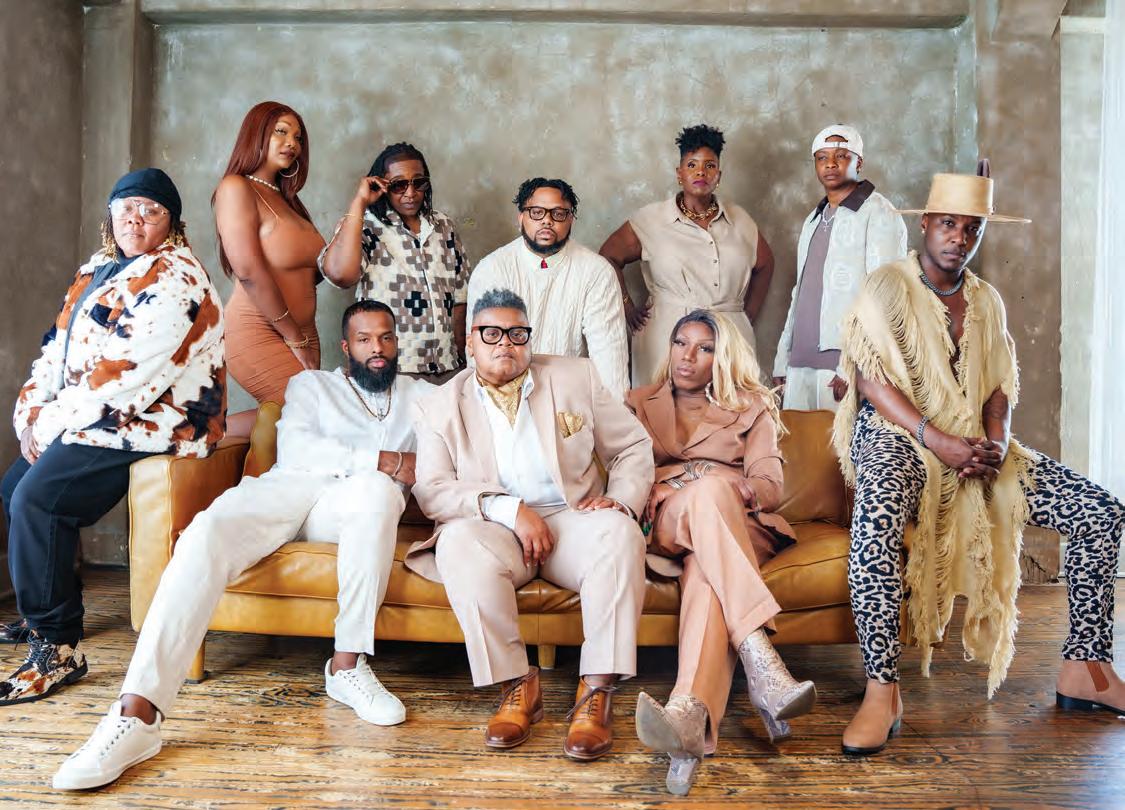
It was 2004 when I first felt the sting of not being Black “like that.” Outed at school the day before, I walked into my high school carrying the weight of quiet conversations and awkward glances. Something had shifted. In that moment, it became clear: being a queer kid in a small Texas town meant I might never meet the expectations of my Black community as a man.
Two decades later, after founding an organization dedicated to addressing the issues of those who are most marginalized, I was asked a question that felt both familiar and revealing: “Why center Black queer people instead of all LGBTQ+ people?”
The question itself underscored the need. LGBTQ+ communities face real challenges—but when you look specifically at Black LGBTQ+ lives, those challenges intensify at the intersection of race, sexuality, and gender. The data tells a stark story: according to the National LGBTQ Task Force, 34% of Black trans women earn less than $10,000 annu-
Black Like That, and Then Some
Houston’s June 27 festival celebrates Black queer life, culture, and self-definition.
by IAN L. HADDOCK | photo by MICHAEL MUHAMMAD
ally, the Williams Institute says 56% of Black LGBTQ+ households are low-income, and 1 in 2 Black men who have sex with men are projected to contract HIV in their lifetime. These aren’t just statistics—they reflect compounded disparities that neither Black nor LGBTQ+ frameworks alone fully address.
That’s why we exist. And that’s why we created the Black Like That Community Festival.
“Black like that ” is one of those phrases
that lives in the margins—rarely defined, yet widely understood. It shows up in side-eyes, in jokes, in subtle judgments about who belongs and who doesn’t.
It’s in how you speak: too proper, too polished, or too “ghetto.” It’s in how you present: too intentional, too different, too much. It’s in who you love: too soft, too visible, too outside the lines.
If you’re Black and queer, you learn early
(top) Sasha “Barbie” Moore, Tee Estes, Ian L. Haddock, Latreva Washington, Nike Segrest, (bottom) Kody Osborne, Jordan J. Edwards, Shelley Washington, Joelle Espeut, and Smiley Ross
that you’re navigating more than identity— you’re navigating expectations. You’re not just asked to be Black; you’re asked to be Black correctly. You’re not just asked to be queer; you’re asked to do so without disrupting too much.
Somewhere in that balancing act, authenticity becomes negotiation.
There’s a particular exhaustion in being both hypervisible and unseen. In some Black spaces, queerness is treated as a disruption— something to be quieted or softened. In some LGBTQ+ spaces, Blackness is tokenized—celebrated in theory but sidelined in practice.
The Black Like That festival was created not to alienate either space, but to reimagine both—to create an environment where Blackness and queerness are not afterthoughts, but centered realities.
Now in its fifth year, the festival represents more than a gathering—it signals a shift, and a move toward intentionally centering those who face the greatest barriers and building community from the margins outward.
What if “Black like that” isn’t a limitation, but an expansion? What if it holds space for softness, fluidity, contradiction? What if it includes the choir kid and the one who found liberation on a dance floor at 2 a.m.?
Blackness and queerness have never been singular. They are layered, adaptive, and constantly evolving. Black queerness doesn’t dilute identity—it deepens it.
Taking place at the end of Pride Month in Houston, the festival is intentionally rooted in history and culture. Held on June 27, it aligns with key moments: the eve of the Stonewall Riots, the anniversary of National HIV Testing
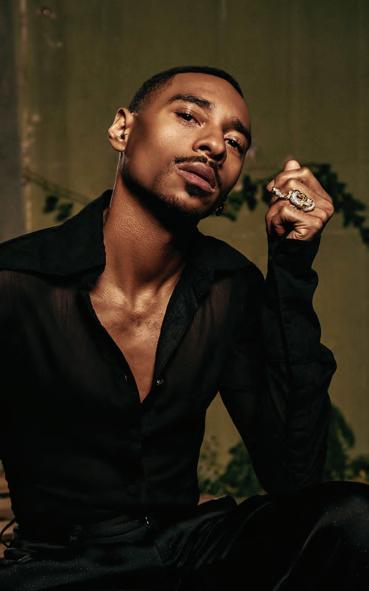
“IF YOU’RE BLACK AND QUEER, YOU LEARN EARLY THAT YOU’RE NAVIGATING MORE THAN IDENTITY— YOU’RE NAVIGATING EXPECTATIONS.”
—Ian L. Haddock
Day, and a date deeply embedded in Houston’s musical legacy, with “June 27th Freestyle” released in 1996 by Sucka Free Records.
That cultural lineage matters.
“Sharing my screwed and chopped music with my grandma was our bridge across generations,” says Jordan J. Edwards, deputy director of The Normal Anomaly Initiative. “It showed me how Black culture moves—across time, across people, across identities.”
That same spirit shapes the festival experience. From drag performances honoring the legacy of Stonewall to the “June 27th Cypher” and a lineup of Black LGBTQ+ artists—including Tré Ward, S.O.U.L.A.S.P.H.E.R.E, and Tanya Nolan—the stage is intentionally curated to reflect the community it serves.
The event also brings together partners like Pride Houston, Avenue 360 Health and
Wellness, and Legacy Community Health, alongside cultural curator Harrison Guy, who serves as our creative and producing director.
“Houston has always had a rhythm that belongs to us,” Guy says. “Whether you are Black like Barbara Jordan or Black like Billy Preston, this is an invitation to express your Black— your way.”
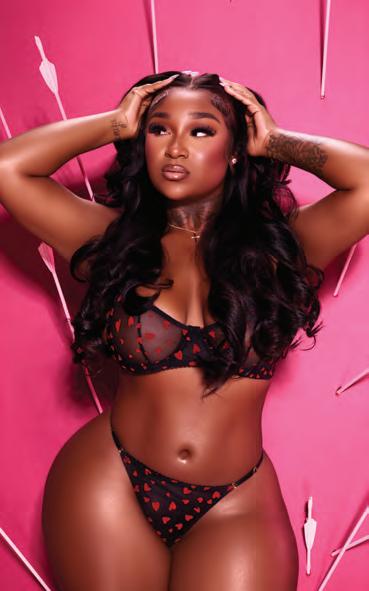
Held at The Hall at Ironworks, a site listed on the National Register of Historic Places, the festival is designed as an immersive experience. Co-headlined by Grammy Awardwinning artist Durand Bernarr, Erica Banks, and Amari Noelle, it reflects the breadth and brilliance of Black LGBTQ+ culture.
As I reflect on my own journey—from that moment in high school to building this space— I no longer feel anchored in shame or anger. What once felt personal, I now understand as structural. What once felt fixed, I now know can move.
And we’ve moved it.
Every time we show up fully—without shrinking, without apology—we shift the boundaries a little further.
“Black like that” no longer feels like a judgment. It feels like a question—one we all get to answer together by showing up in community. And the answer isn’t fixed. It’s evolving. It’s expansive.
It’s ours.
WHAT: Black Like That Community Festival WHEN: Saturday, June 27, 2026, 2–9 p.m. Where: The Hall at Ironworks, 711 Milby Street, Suite 200, Houston INFO: tinyurl.com/blacklikethat
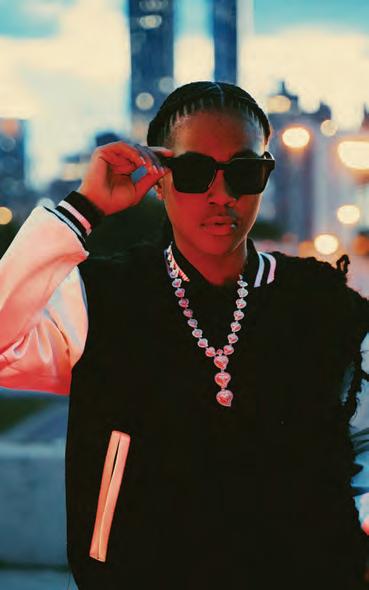
Durand Bernarr
Erica Banks
Amari Noelle
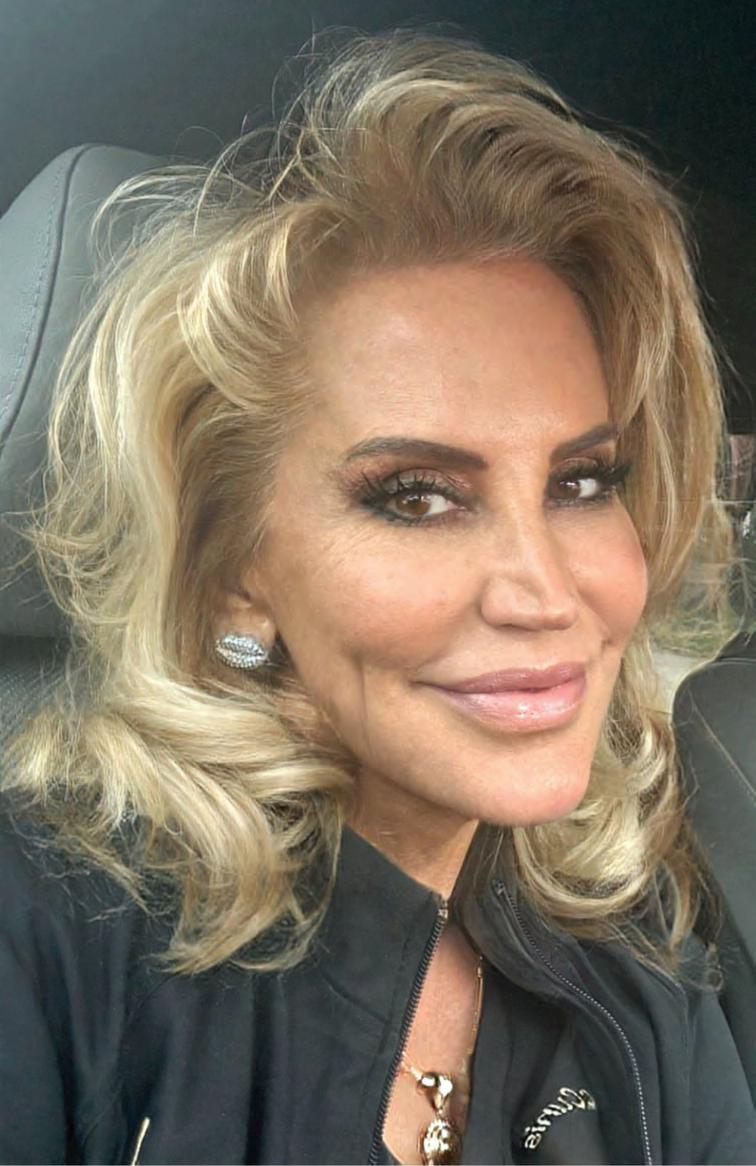
Master Injection Artist & Cann la Speicialist
Xeomin · Daxxify
VERSA · Juvaderm
Radiesse · Bellafill
RHA
PMU Brows/Microblading
Hydrofacial Microderm
Chemical Peel
Microneedling
Collagen Pen
PRF/PRP
RF Skin Tightening
PlasmaPen
PRX
PDO THREADS
Non Surgical Face Lift
Hormone Replacement
Low
/ Weight Loss

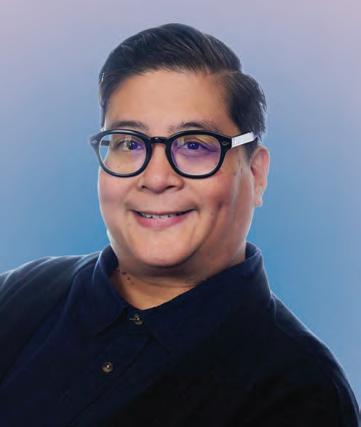
Kay McCunis
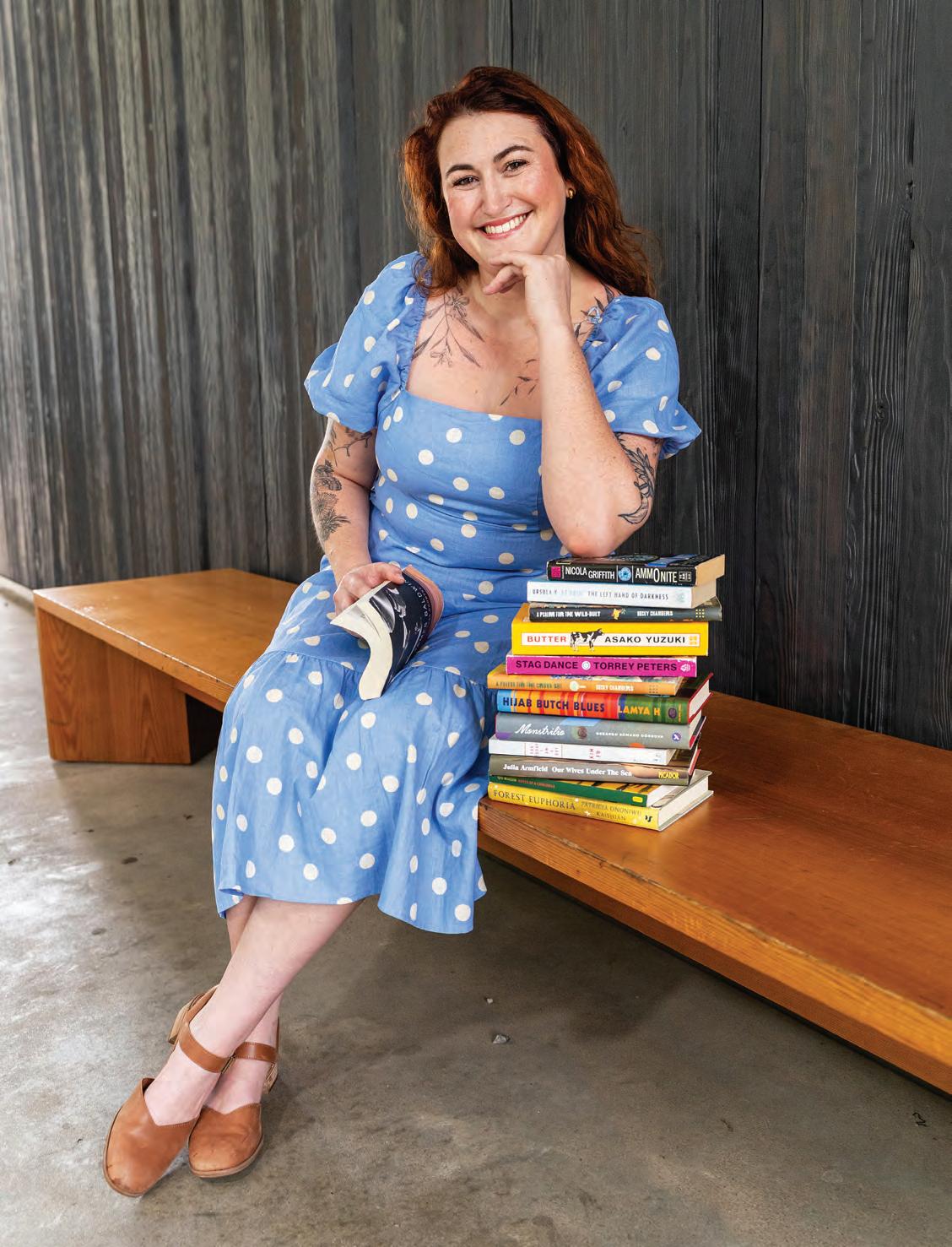
Abby Yesso discusses representation and queer belonging built through Houston’s Queer Book Club.
by ALEX MENDOZA
Houston’s Queer Book Club (QBC) highlights representation in literature with each meeting. Currently led by Abigail “Abby” Yesso (she/ her), QBC offers opportunities for members to explore queer themes through reading several written works by various authors. Previously discussed works include Someone You Can Build a Nest In by John Wiswell, Orlando by Virginia Woolf, A Sharp Endless Need by Mac Crane, and others.
With the growth of QBC, affiliated subgroups have been formed, such as a Queer Movie Club and Queer Writing Groups, attesting to their members’ desire to explore multiple interests within QBC. The club has also hosted discussions with authors of multiple books and has recently wrapped up its second annual beach trip.
For Yesso, QBC is an important part of her life, owing to the insights she gains from it. “What this club has really opened my eyes to is that there is a book for everyone, and there is a person for every book. Even if it’s something that you or I wouldn’t necessarily gravitate towards, it’s ultimately the representation that matters more,” Yesso explained.
QBC has become an integral part of Yesso’s life, as the club was the gateway for her discovering her queer identity. Amidst social disconnection and isolation at the peak of the COVID-19 pandemic, she sought out places to find community online. There, she stumbled upon QBC on Meetup and was further convinced to join the club after finding out they were reading On Earth We’re Briefly Gorgeous by Ocean Vuong.
At the time, Yesso identified as straight, which led to conflicting feelings regarding the role of allyship within queer spaces. “I didn’t know if they were gonna want me here,” she added. Luckily, QBC turned out to be a fulfilling experience, and Yesso was immediately met with a welcoming atmosphere and the community she craved, further amplified by in-depth discussions. Later, she would discover that the reason for her comfort and sense of safety within QBC is that she is queer.
In 2021, Yesso discovered that the club’s president at the time, Andres, had to withdraw from the role due to relocation. After Andres asked a number of club members to assume the role but found no takers, Yesso stepped in, even with the uncertainty of whether she was going to stay in Houston. She’s originally from South Louisiana and, while furthering her career, had to move multiple times to pursue opportunities. With the offer to be in charge of QBC in mind, Yesso has warmed up to the idea
“THERE IS A BOOK FOR EVERYONE, AND THERE IS A PERSON FOR EVERY BOOK.”
—Abigail “Abby” Yesso
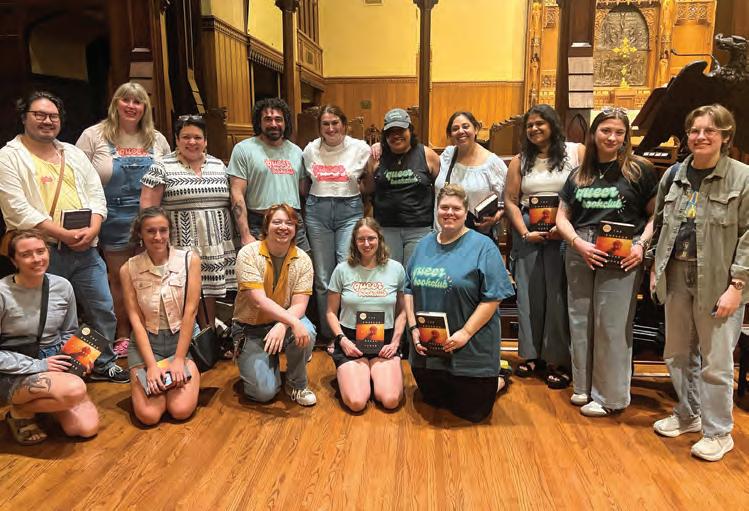
2025.
of finally settling down. Her decision to commit to the leadership role with QBC has helped the club flourish, with membership going from fewer than ten people when she joined to nearly 400 in the five years she’s been leading the organization. The increase in membership can be attributed to QBC’s shift to digital social media platforms such as Instagram and Discord, and its collaboration with Brazos Bookstore in 2024. Brazos Bookstore provides the space in which QBC and other book clubs meet, and offers a discount to club members who purchase their reading material there. At the center of QBC’s growth is the search for queer spaces that are welcoming to all age demographics, unlike nightclubs and bars. QBC’s ability to use literature as a stimulus for vulnerability, empathy, and compassion can be best exemplified by its experience reading Woodworking by Emily St. James, a novel relating the experience of a 35-year-old transgender woman and the bond she has with her student, who is the only other trans person she knows.
The exploration of an unconventional bond brings forth conversations around other ways in which we can foster queer relationships within our lives. While there is an aversion to fostering relationships with older folks outside of family due to broad Westernized perspectives, Yesso believes inter-generational friendships are valuable and rewarding. In spaces where it is common for queer people to fear ostracization from older relatives, QBC is a place where one can share their own experiences and connect with others with various perspectives. Cultivating these dynamics is part of Yesso’s goal within QBC: to reflect the same acceptance and kindness she grew up with.
“I told my mom I was going on a date with a woman,” she recalls, “and I said, ‘I’m pretty sure I’m not straight’ and my mom went ‘Okay,’ and I asked, ‘Well, how do you feel about that?’ and she said, ‘Abby, you’ve always loved everyone.” The story of how Yesso came out to her mother would influence the warmth she brings to QBC. “Everyone deserves a mom who says you’ve always loved everyone,” she adds.
“QBC is not just important for me. It’s important for all our members to feel like they have a space to be safe, to share their own feelings about what is going on around them, and have something to look forward to every month. If I can give them that, then I’m going to do it,” Yesso explains.
QBC will be exploring Another Country by James Baldwin on June 7 at 6 p.m. at Brazos Bookstore.
For more info, visit linktr.ee/qbchouston.
Members of Houston’s Queer Book Club attend an Ocean Vuong event in
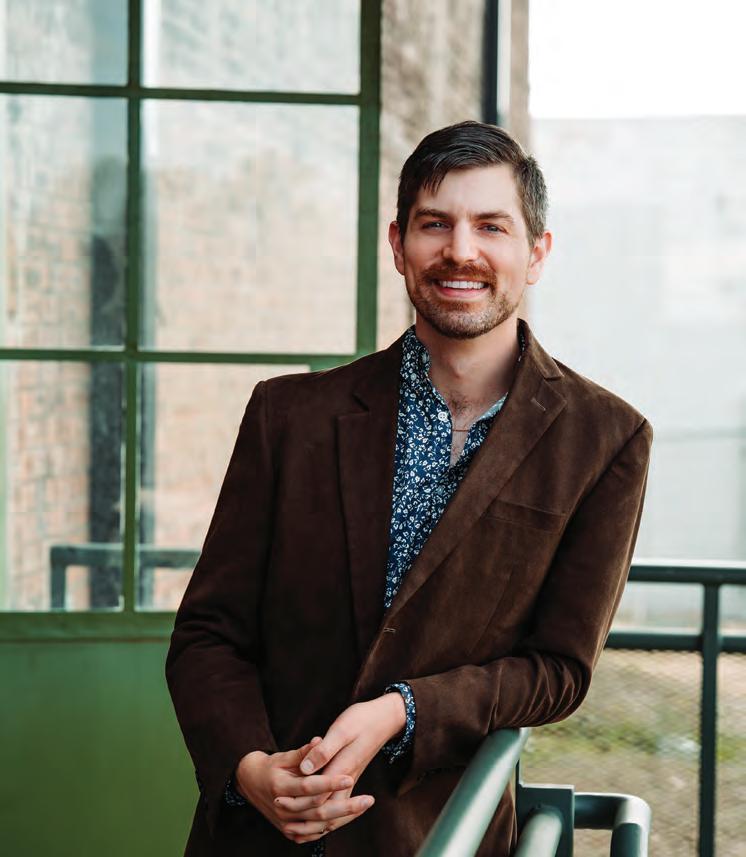
Houston Cinema Arts Festival’s
Next Chapter
Michael
Robinson discusses his vision for integrating the festival
into Houston’s wider arts community.
by DAVID BRASHER | photo by TASHA GOREL!
When you think about some of the greatest movies you’ve ever seen, chances are you remember more than just the story. Maybe it was the magical Disney film you watched over and over as a child, the comedy that made an entire theater burst into laughter, or the timeless love story that stayed with
you long after the credits rolled. Movies have a unique power: they make us laugh, cry, reflect, and escape. But more than anything, they bring people together.
That spirit of connection is at the heart of the Houston Cinema Arts Festival (HCAF). More than just a film festival, it is a celebration of storytelling in all its forms. Through
cinema, live performances, music, art, and conversations with filmmakers and creatives, the festival transforms Houston into a space where audiences can experience stories together. In a world that often feels divided and disconnected, HCAF reminds us that great films do more than entertain us; they help us see ourselves, and each other, a little more clearly.
Earlier this year, the Houston Cinema Arts Society announced that Michael Robinson would become the festival’s new lead festival programmer, guiding the curatorial vision for the 2026 festival that runs October 1–11. For Robinson, though, the appointment feels less like a new beginning and more like the culmination of years spent immersed in Houston’s film scene.
“I’ve been with them through a lot of different iterations of the festival,” says Robinson. “So I’ve seen not only how the festival grew, but how audiences were changing. I was able to envision so much of Houston through that lens.”
Robinson first came to Houston to attend Rice University, initially studying engineering before pivoting toward anthropology and film. Some of his earliest experiences in the city involved screenings at the Museum of Fine Arts, Houston—experiences that ultimately reshaped his career trajectory.
“I kind of made my decision last-minute,” he says. “And I was like, ‘If I’m going to make this choice, I need to go full tilt.’”
After graduating, Robinson worked as a projectionist for festivals and events before volunteering with QFest, Houston’s LGBTQ film festival. What began as volunteer work soon evolved into programming responsibilities and eventually led him to the Houston Cinema Arts Festival, where he served as the marketing and communications manager for four years. That experience gave Robinson a front-row seat to the festival’s evolution.
Now, as lead programmer, Robinson will oversee virtually every aspect of the festival’s artistic direction, from selecting films and shaping the annual theme to coordinating conversations, performances, workshops, and guest appearances.
“My role as lead festival programmer, first off, really is watching a lot of movies,” Robinson joked. “I’ve already watched over 200 since the beginning of the year.”
By the start of the festival, he estimates he’ll have screened nearly 500 films that he will narrow down to roughly 100 selections, including both features and short films.
But Robinson sees the role as about far more than curation alone. For him, film festivals remain one of the few spaces where movies become communal experiences rather than isolated acts of consumption.
“With streaming making films constantly available, why should people go at all?” he questions. “To me, it is all about that collective experience.”
“If there’s a performance, if there’s a DJ, if there’s something that’s going to actually help complement a film,” he continues, “you really want to invigorate that. So much of the experience of going to a festival is that there will be artists, directors, producers, and actors all kind of swirling, and it allows you to see these films in a different light.”
Founded nearly two decades ago, the Houston Cinema Arts Festival was built around the idea of “connecting the arts through cinema,” positioning film alongside Houston’s broader visual and performing-arts communities. Unlike traditional film festivals focused exclusively on premieres or awards campaigns, HCAF has become known for multidisciplinary programming and conversations that place filmmakers alongside scholars, musicians, and artists.
“It’s a way to really image Houston back to itself,” Robinson explains, “whether that be stories about Houston, stories from Houstonians, or people behind the scenes.”
The festival has previously screened films such as Carol, Call Me by Your Name, and Red
“WITH STREAMING MAKING FILMS CONSTANTLY AVAILABLE, WHY SHOULD PEOPLE GO AT ALL?”
—Michael Robinson
Rocket, the latter premiering before director Sean Baker would go on to win widespread acclaim.
“You see them here first,” Robinson says. “It might not be the film they win the Academy Award for, but you find out about them here.”
This year’s festival will also arrive slightly earlier than usual. Traditionally held in November, the 2026 edition has been shifted to October as organizers experiment with a potentially more accessible calendar window.
“That November slot can be really busy for everyone,” Robinson said. “Maybe October is a little friendlier moviegoing experience.”
At the center of Robinson’s programming philosophy is the belief that festivals should reflect a programmer’s personal vision rather
than chase universal approval.
“There’s an infinite possibility of festivals and viewing,” he says. “There’s no right or wrong. You are seeing someone’s taste.”
For Robinson, the films that linger are often the ones marked by a distinct directorial voice.
“The vision of a filmmaker—that director’s stamp—is what I always think about,” he says. “There are certain movies where I’m like, ‘This scene is the whole thesis of the film,’ and I’ll be thinking about it for days.”
As he prepares for his first year leading HCAF’s programming, Robinson hopes audiences embrace not only the films themselves, but also the conversations, curiosity, and sense of discovery that surround them.
“There’s nothing worse than people being like, ‘I would have loved that if you had told me what it was,’” he says. “I want to make sure people understand what they’re going to see.”
To learn more about the Houston Cinema Arts Festival, including upcoming programming announcements, ticket information, and the full 2026 lineup when it is released in September, visit the festival’s website at cinemahtx.org and follow @cinemahtx on Instagram.
A Look at Courageous Fathers Fighting for Their Trans Children
Luchina Fisher’s The Dads exposes the crisis facing families trying to access gender-affirming care.
The Dads Foundation began in 2023, offering a place for fathers of trans children to commune, share resources, and foster a sense of solidarity around parenting youth on the gender spectrum. For them, it’s about both accepting and supporting their children as they navigate the healthcare system.
Luchina Fisher’s new documentary The Dads captures members of the organization as they deal with the rising vitriol and restrictive policies facing trans people in the US today. The film had its world premiere at South by Southwest earlier this year. What begins as a weekend fathers’ retreat becomes the chronicle of a crisis, tracing the fracturing lives of families having to decide how to maintain care for their kids among healthcare restrictions and threats of criminalizing medical professionals who offer gender-affirming care.
The Dads started off as a short documentary following a group of dads going on a trip to the woods, bonding over their shared experience parenting queer and trans kids. “It was five dads of trans kids with Dennis Shepard going fishing,” says Fisher.
Dennis Shepard is the father of Matthew Shepard, the young gay victim of a hate crime in 1998 whose murder reverberated throughout the nation. “I had no idea that it was Dennis’ first time fishing since Matthew had been slain. It was unbelievable. And it was the 25th anniversary of Matthew’s death when the film was released, so it had this poignancy. Dennis was an exemplar of fatherhood and of a father showing up for his queer child. These dads learned so much from him, and they learned so much from each other. It was this conversation among dads about their internal fears, sense of isolation, and need for community. Out of that film, the dads felt strongly that they needed to keep going, so they started a movement. They started The Dads Foundation.”
What began as a handful of fathers grew into a collective of men across the nation. It gave them a space not only to disseminate critical resources to ensure their children can receive care, but also an accepting space to express complicated emotions and concerns for the future. While they only meet in person
by MICHAEL D. ROBINSON
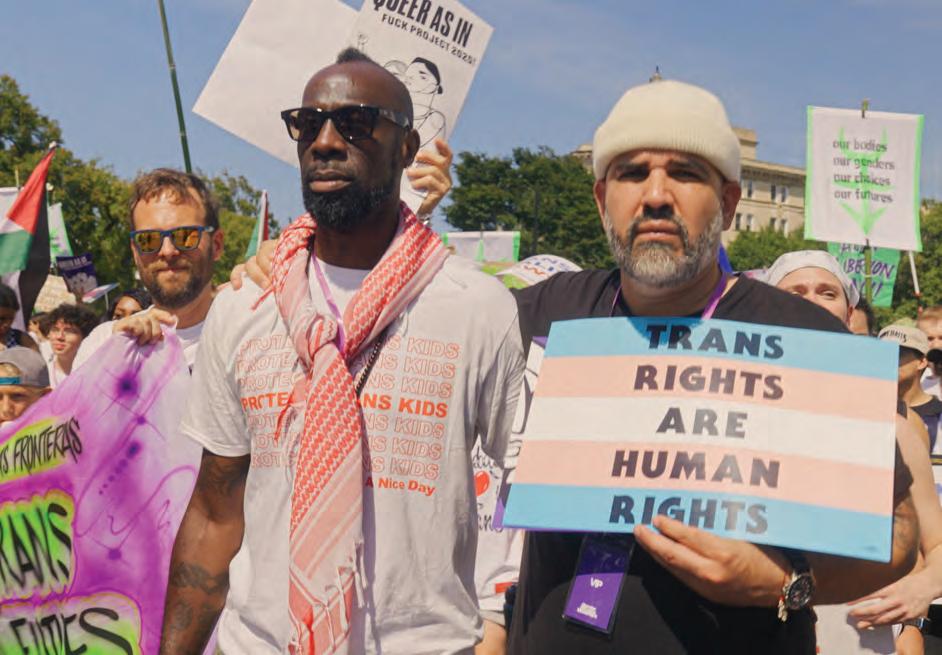
once a year for a retreat, they have ongoing group chats to stay connected. As the group continued to grow, so did the drive to continue the film’s story.
“The initial plan was just going deeper with the fathers beyond the fishing trip, says Stephen Chukumba, one of the original members of the group and one of the film’s producers. “ Let’s go home and see what their ordinary lives were like, because I thought that’s what was missing. People think that parents of gender-expansive kids are these super-leftist people. They don’t think they’re just regular Joe Schmoes.”
But things shifted pretty quickly with the changing political tides as the 2024 election drew closer. As a documentary, the film had to adapt and focus on the response that these dads had to continue to provide for their kids while dealing with forces that they couldn’t entirely control.
“Already there was the feeling of anticipation of the worst possibility happening,” says
Fisher, “especially because you had dads who lived in states like Texas, where they had been battling for some years, and they could see where things were going. But the federal government had always been a backstop. We were getting some of those indications before the presidential election, but certainly that night everything changed.”
It was more than just a narrative shift as the paradigms for these families were completely altered. Each new governmental decree meant deciding if it was even possible to continue to receive medical treatment in the US as a trans person. The film chronicles each of these moments, choosing to mark the passing time with title cards that eventually span a year. This framing collapses a larger moment into something more digestible, illustrating the rapid rate at which this crisis was set into motion.
“We were also seeing what has now become the collapse of gender-affirming care in our country. I was not struck by that until we got
Dads Foundation members at a Gender Liberation March
into the edit. These dads were really on the front lines. This film was capturing a moment in time, and as a former journalist, I believe you have to capture truth and reality as it’s happening, because someone will come years later and say, ‘No, that didn’t happen.’ It’s always important that we have a record of that.”
While many families wanted to continue to film, others had to take matters into their own hands, whether that by was leaving their cities or even leaving the country. “I understand those parents who have to make the decision based on their kids’ health care as they learn that they are being targeted,” says Fisher.
Much of the film, and each of the dads’ journeys, is figuring out their relationship to fear. In a climate where not only trans rights but also trans bodies are under attack, questions around safety continue to proliferate. And as parents, they have to make informed decisions that can have drastic consequences.
“That inherent fear dads have in sharing their children’s identity beyond the family is the first level of fear,” says Chukumba “That’s the ground-level fear, because we have to confront all of our internal prejudices as well as external prejudices. And then in your state, you’re going year after year to the State Capitol to argue for your child to be able to use the bathroom, to play on sports teams, to have health care. And that’s now step two. Then the
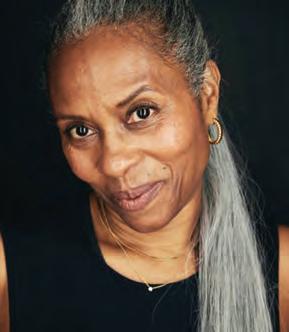
federal government steps in, and now you’re looking at potential regulations that strip everyone of their rights the way these executive orders did. And now, I’m standing ten toes deep with my kid.
“I can’t fight the federal government when they close down hospitals, when doctors are shutting down their clinics. We’re getting letters saying we will no longer serve transgender children below a certain age. Then the calculus starts to change. It’s not even necessarily fear, but you’ve got to be practical.”
This focus on practicality is core to what both The Dads Foundation and the larger documentary illustrates. Each family has to
make that choice for themselves. And just as it’s important for certain individuals to stay and fight, others need to ensure they can receive access to the care they need to live the life they should be able to have.
“I’m not necessarily afraid,” says Chukumba . “I’ve been fighting this fight for over a decade. But I have to be practical because my child needs that next shot. My child needs that implant; my child needs to see their endocrinologist. The fear response isn’t necessarily just ‘I’m scared,’ but ‘What’s going to happen if I don’t get my child what they need sooner rather than later?’”
While these are daunting questions, it fuels the reason for The Dads Foundation to exist: providing a space to ask those questions, and for others to share their everyday experiences. “That’s part of what the beauty of this movie is, that you’ve got a whole bunch of different dads talking about how they came to accept, appreciate, and support their child,” says Chukumba. “The hardest thing to do is to break that cycle of fear that’s often perpetuated by other men. We have to support our children and model what it is to be supportive fathers for all the rest of the dads who are also grappling with this information.”
Watch now: The Dads short film is available on Netflix.
5200 Willowbend
The Dads director Luchina Fisher

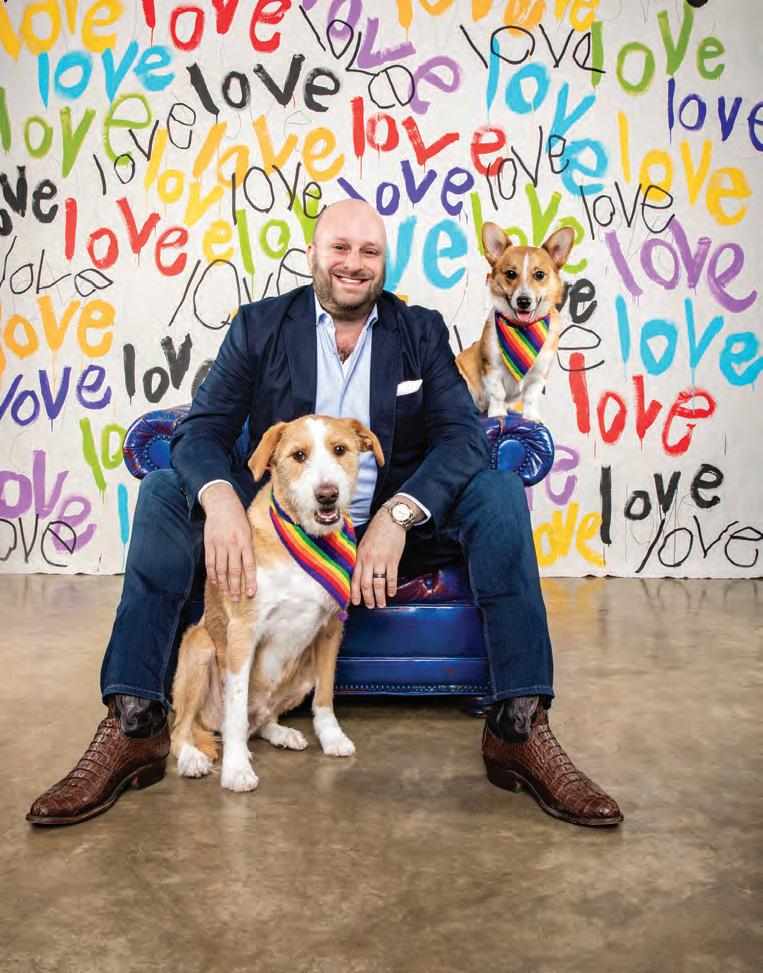





The Beautiful Game, for Everyone
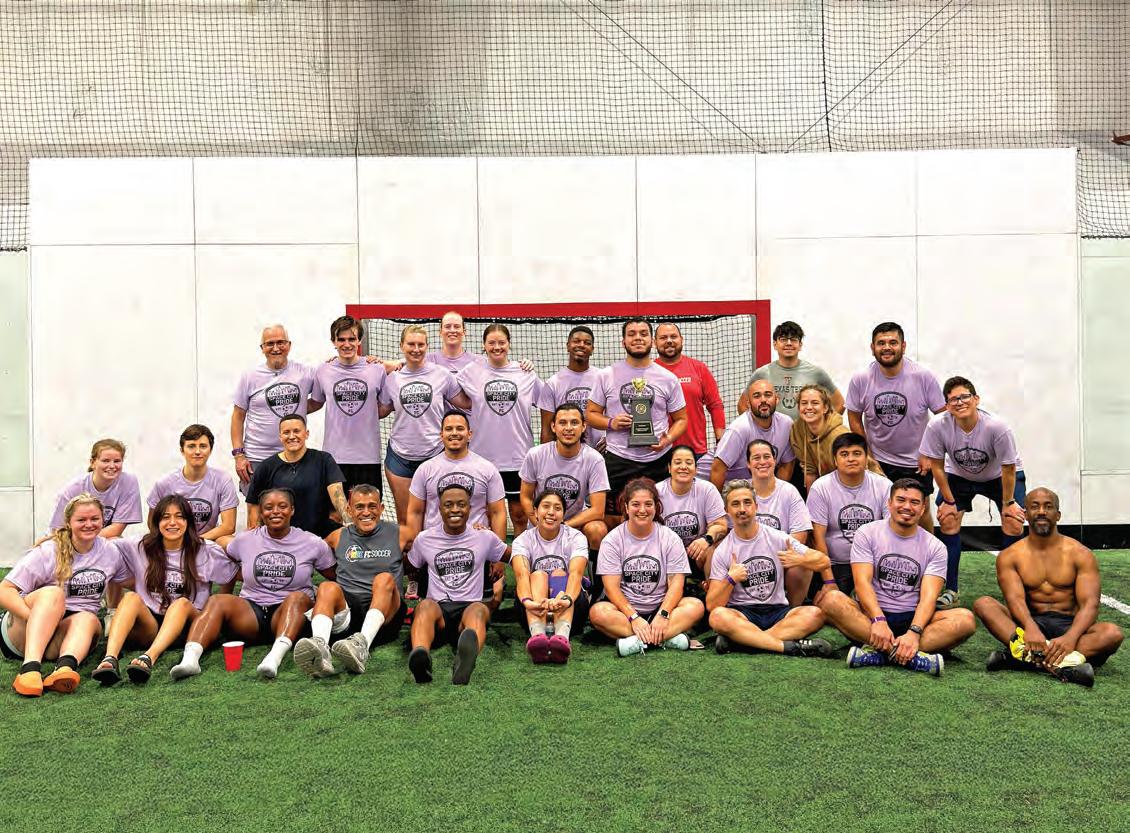
Space City Pride FC is making Houston’s World Cup celebration more inclusive.
by CONNOR BEHRENS
The fourth-largest city in the United States is preparing for one of the biggest events in modern sports history. Beginning this month, Houston will serve as a central hub for the 2026 FIFA World Cup, welcoming thousands of visitors from across the globe.
Starting June 14, NRG Stadium will host seven of the tournament’s matches, transforming the city into an international destination for culture, tourism, and celebration. Hotels are already preparing for thousands of out-of-state visitors, while downtown streets are expected to fill with fan festivals and events. For Houston, the World Cup represents far more than soccer—it is an opportunity to showcase itself on a global stage. But alongside that excitement comes significant changes for Houston’s longstanding Pride Month celebrations.
For decades, Houston’s Pride festivities have coincided with Pride Month celebrations nationwide. This year, however, local organizers made an adjustment. Houston’s Pride parade and related events were moved to June 6 in anticipation of the overwhelming World Cup crowds, road closures, heightened
security operations, and venue conflicts later in the month. The shift was made to ensure the queer community could still celebrate and have its moment to shine without being overshadowed by one of the world’s largest sporting spectacles.
Despite the changes, LGBTQ representation will continue to remain visible later this month and throughout the World Cup, thanks in part to Space City Pride FC, Houston’s LGBTQ-inclusive soccer club, which is helping support and co-host Pride House programming connected to the tournament.
Founded to create a welcoming environment for queer athletes and allies, the group has grown into both a competitive and community-driven organization. Space City Pride FC will help co-host Houston’s official Pride House—an internationally recognized concept that creates dedicated safe spaces for LGBTQ fans, athletes, and visitors during major sporting events.
The LGBTQ community represents a vital part of the international soccer fan base, and they deserve a safe space to enjoy the magic of the World Cup, says Space City Pride FC president Stephen Olson.
“Sports are for everyone, and they bring
so many people together to become more than just a team,” he says. “Whether as a player, spectator, supporter, donor, or sponsor, everyone around us has helped create a true club community full of love and support, and I couldn’t be more proud of all of them.”
For members of Space City Pride FC, the moment feels especially significant. Houston is quite literally preparing to welcome the world, and they want queer Houstonians to feel just as visible. Pride House will serve as both a celebration and a statement: that soccer, and the city hosting it, belongs to everyone, not just a select few, says Space City Pride FC vice president Jordan Gauthier.
“Soccer has always been more than just a sport,” Gauthier says. “It is a way to connect people from different backgrounds, experiences, and walks of life. Being able to help create an environment where every individual feels welcomed, valued, and supported is incredibly meaningful to me. What makes this experience so rewarding is seeing people gain confidence, build friendships, and feel empowered to be themselves, both on and off the field.”
For more information, visit, spacecitypridefc.org




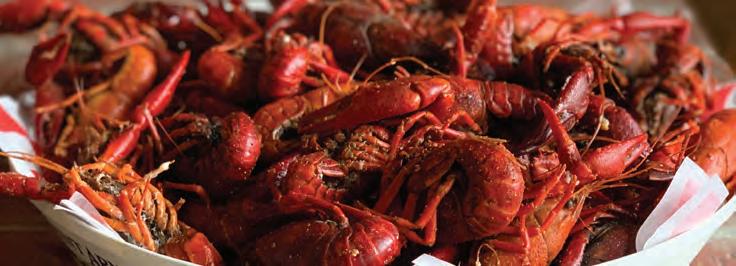



Favorite Cajun
MEET THE MEMBERS of Space City Pride FC
Gina de la Garza
Treasurer of Space City Pride FC
Growing up in the Rio Grande Valley along the US-Mexico border, Gina de la Garza developed a love for soccer at an early age in a region where the sport is deeply woven into the culture.
She played competitively throughout her youth and college years, and her passion for the game has since taken her around the world, including trips to the 2014 Men’s World Cup in Brazil and the 2023 Women’s World Cup in Australia and New Zealand. After earning her master’s degree, she moved to Houston to work in international taxes, drawn by the city’s ties to global business.
De la Garza became involved with Space City Pride FC after joining one of the club’s teams as a free agent several years ago. Discovering that an LGBTQ soccer community was a meaningful experience, she soon took on a leadership role as the club’s treasurer.
Which World Cup teams are you most looking forward to watching?
I’m excited to watch Mexico’s Francisco Guillermo “Memo” Ochoa Magaña and Argentina’s Lionel Messi.
Using her background in accounting, she helped guide the organization through the process of becoming a nonprofit organization and establishing its financial infrastructure.
For de la Garza, LGBTQ visibility in sports is deeply personal. She recalls not always feeling safe being open about her identity while playing sports, and believes representation remains vital at a time when LGBTQ athletes—especially transgender athletes—continue to face scrutiny and discrimination worldwide. Through Space City Pride FC and its affiliation with the International Gay and Lesbian Football Association, she has traveled to queer soccer tournaments across the country and says the experience of finding community through sport has been cathartic.
“It’s such a special feeling to arrive in another city and see soccer fields covered in players and know you are safe and part of a community,” she says.
Do you plan to attend matches in Houston or watch elsewhere?
Space City Pride will be hosting watch parties with Pride House International.
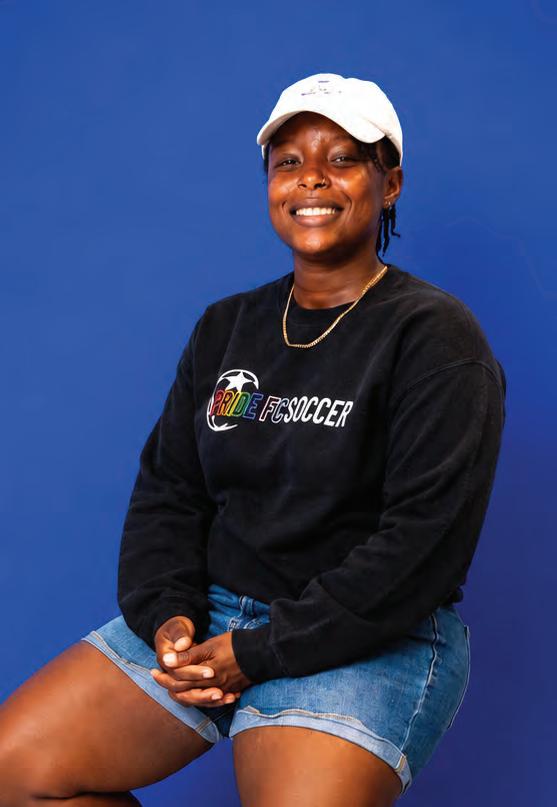
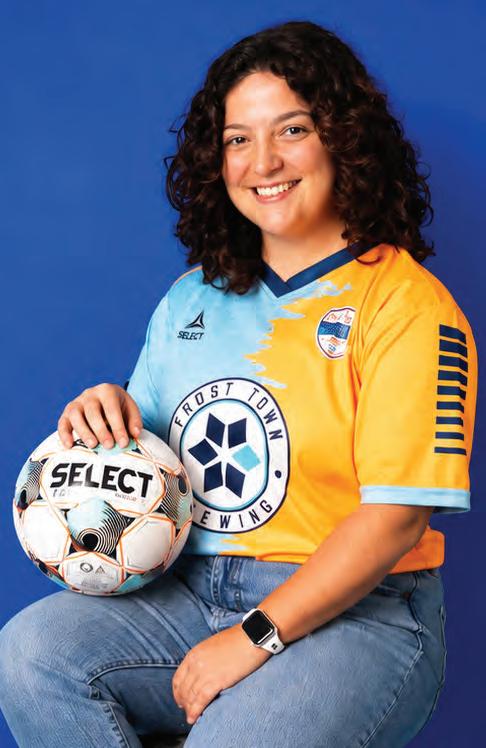
Any soccer player idols?
I have a lot of soccer idols—though mostly on the women’s side. Aitana Bonmatí, Sam Kerr, and Christen Press, to name a few.
Brandi Neeley
Member of Space City Pride FC
Brandi Neeley, a member of Space City Pride FC, moved to Houston from Alabama in 2016 to pursue a career in sports medicine. A lifelong athlete, Neeley began playing soccer at age 9 and quickly fell in love with the sport. While she now plays recreationally, she says soccer continues to bring her joy and has helped her build meaningful connections within Houston’s LGBTQ community.
Neeley became involved with Space City Pride FC through a mutual friend, and was immediately drawn to the organization’s inclusive environment. As a Black queer woman, she says finding a safe and welcoming space to share her passion for soccer has been especially meaningful. She credits the club’s members with creat-
Which World Cup teams are you most looking forward to watching?
ing a supportive community that feels both empowering and uplifting.
For Neeley, LGBTQ representation in soccer is essential at every level of the sport. She says organizations like Space City Pride FC play an important role in fostering that sense of belonging locally while also connecting players to a broader global queer soccer community through tournaments and events affiliated with the International Gay and Lesbian Football Association.
“Soccer is for everyone, period,” she says. “There’s no place for hatred in this beautiful game. Everyone has a place in soccer, and representation on all levels only helps the game grow more and be more inclusive, no matter your sexual orientation or gender identity.”
I’m always going to root for the USMNT, but honestly, I’m excited to watch any match I can. The World Cup always delivers exciting games, palpable passion, and incredible upsets. I plan on watching as many as I can. Any soccer player idols? How much time do you have? Just to name a few: Mia Hamm, Ronaldinho Gaúcho, Briana Scurry, Kelly O’Hara, Griffin Dorsey, Marcelo, and Chris Richards.
MEET THE MEMBERS of Space City Pride FC
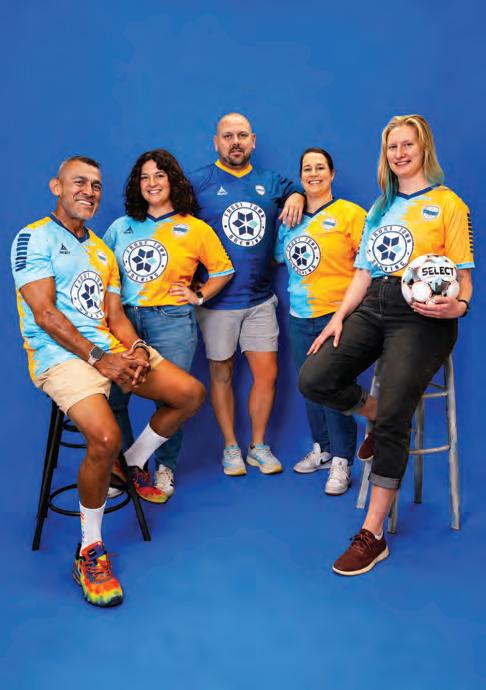
Robert Lopez
Secretary of Space City Pride FC
Robert Lopez, secretary of Space City Pride FC, has spent decades building community through both education and soccer.
Originally from the Dallas area, Lopez began playing soccer at around 10 years old and carried his passion for the sport throughout his life. After graduating from the University of Texas at Austin in 1992, he taught and coached at San Marcos High School, serving as head boys soccer coach before relocating to Houston in 1995 for a teaching and coaching opportunity at Alief Hastings High School. In May 2025, Lopez retired after a 33-year career in education, including 30 years at Hastings.
Lopez has long been involved in LGBTQ soccer organizations, compet-
Do you plan to attend matches in Houston or watch elsewhere? I will attend watch parties to watch the games. It is definitely much less hassle, and it’s cheaper.
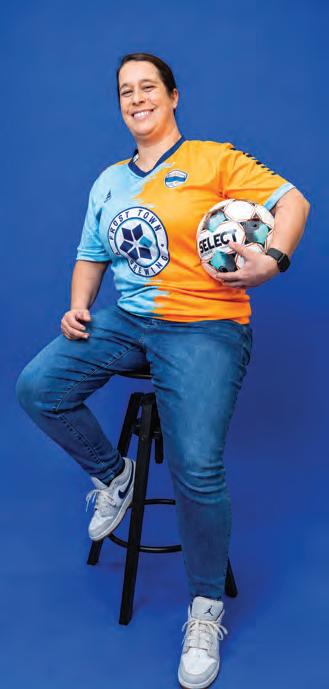
ing in queer tournaments dating back to the 1998 Gay Games in Amsterdam while playing with the Oak Lawn Soccer Club in Dallas. Over the years, he witnessed several attempts to establish LGBTQ soccer organizations in Houston before Space City Pride FC ultimately took shape and found lasting success.
As one of the club’s more senior members, Lopez says his involvement is rooted in a belief that each generation has a responsibility to continue the work of those who came before them while breaking down barriers for the future.
“Ultimately, along with my fellow Space City Pride FC members, our leadership is about making others better as a result of our presence while making sure that impact lasts in our absence,” he says.
Any soccer player idols?
I do admire and respect Robbie Rogers. He was the first openly gay man to compete in a top North American professional sports league. However, he has been retired for quite a while. Do you have any World Cup predictions? I predict France will be the World Cup champion.
Stephen Olsen President
Faith Jackobs Membership Officer
Jordan Gauthier Vice President
PRIDE is in every person we serve.
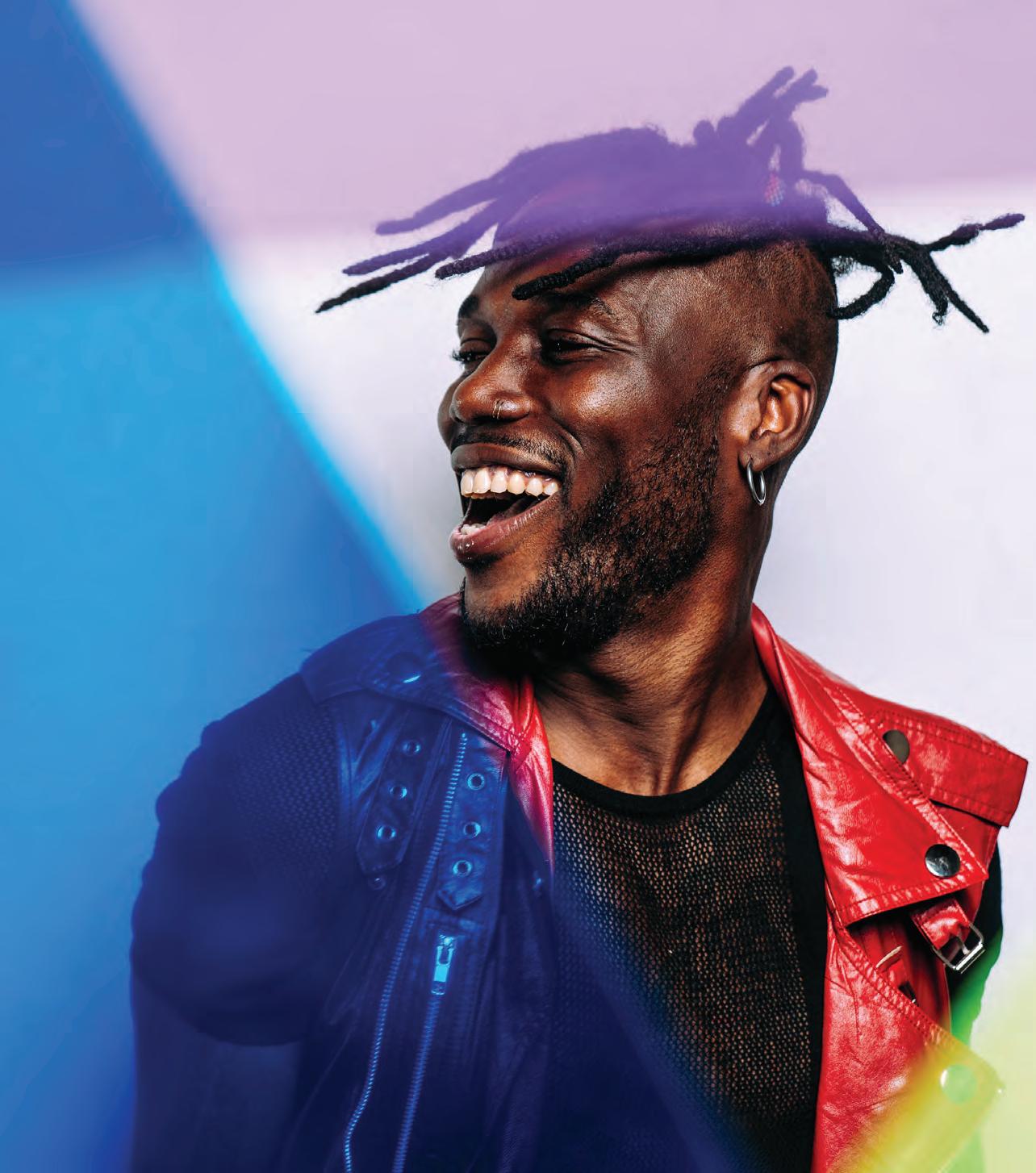
Allies in Hope celebrates the strength, resilience, and the authenticity of Houston’s LGBTQ+ community. We remove barriers to care through free and confidential HIV/STI testing, housing solutions, food access, and onsite clinical services— because everyone deserves to live openly, healthy, and proudly.

Passionate to the Corps
Augustin Lehner previews Giselle, the final production of the Houston Ballet’s season.
by ZACHARY M c KENZIE
photos
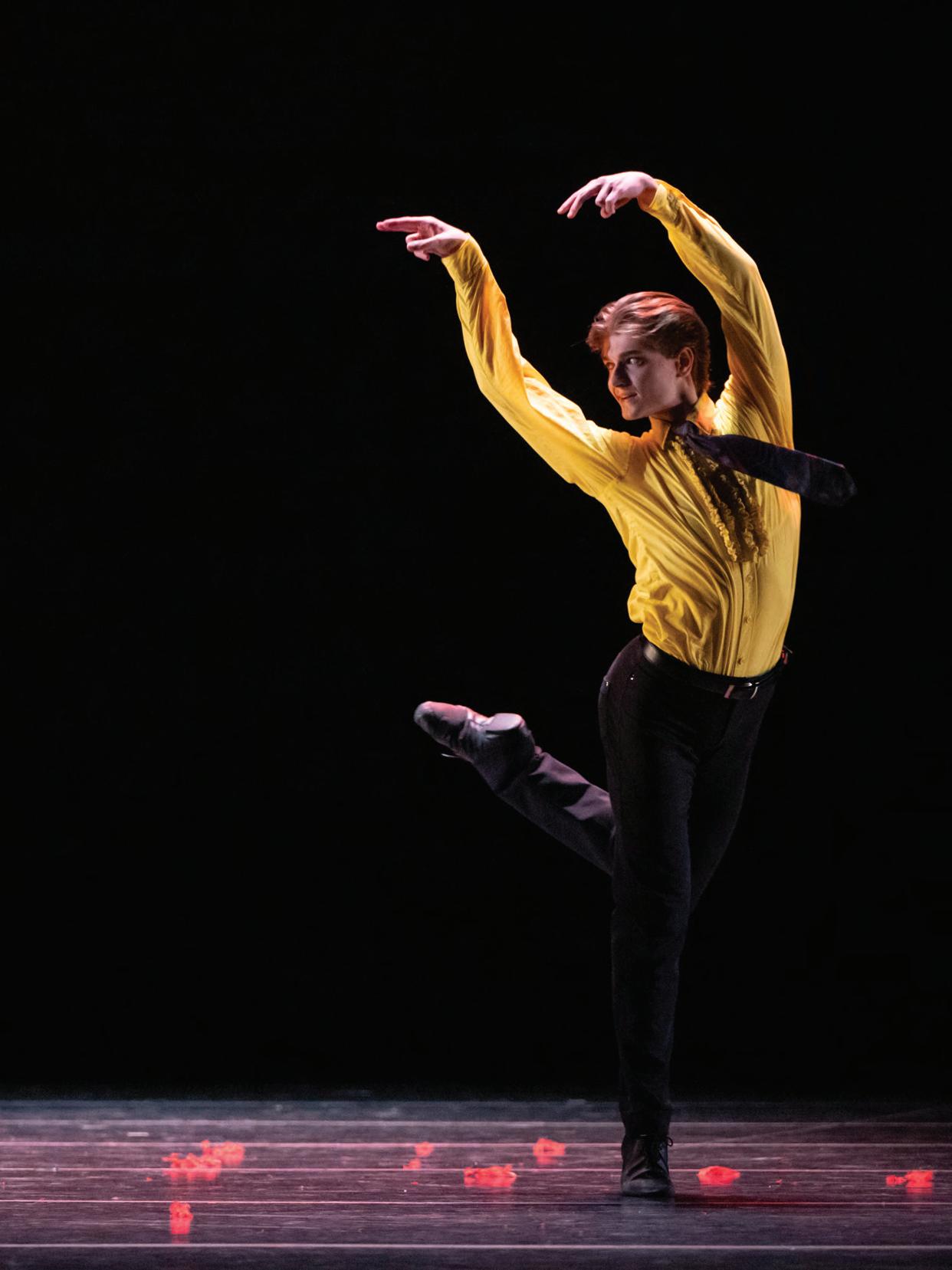
ALANA CAMPBELL
After a long day of rehearsals, Slovakian-born Augustin Lehner, a corps de ballet dancer for the Houston Ballet, grabs his bag and returns home to Montrose. He’s been immersed in the world of Giselle, a ballet known for its psychological depth. At home, he finds a mirror where he continues to practice—not the ballet movements he will execute with precision on the Wortham Theater Center stage, but the facial expressions inspired by various emotional moments throughout the performance. The meticulous and passionate work the dancer puts in behind the scenes all comes togetherthis month when he and his fellow company members close their invigorating 2025–2026 season.
A cornerstone of 19th-century Romanticism, Giselle tells the heart-wrenching story of a peasant girl tragically betrayed by an aristocrat posing as a commoner. Lehner shares his excitement to perform in Stanton Welch AM’s reimagined version of one of ballet’s most revered works. “Giselle is one of those classic ballets that I knew about even before I got into the dance world,” the 25-year-old says. “It’s been really fun for our company to get to put our own imprint onto such a legacy work.”
➝
Houston Ballet’s corps de ballet dancer Augustin Lehner performing in Christopher Bruce’s Rooster.
by

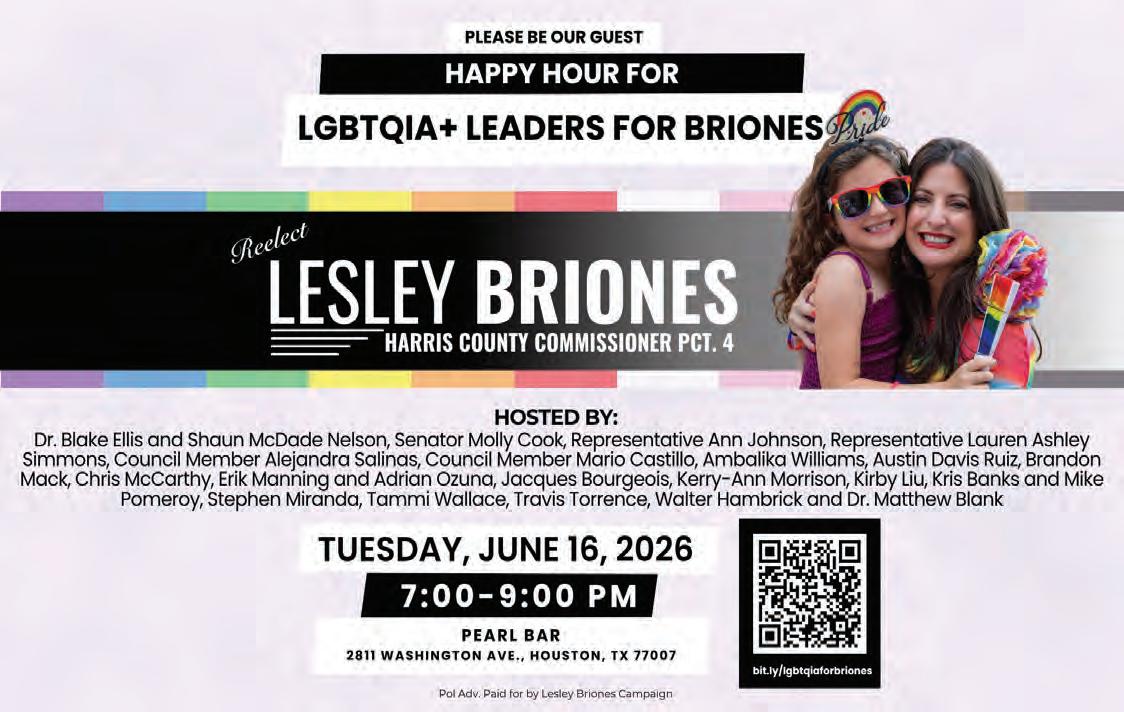
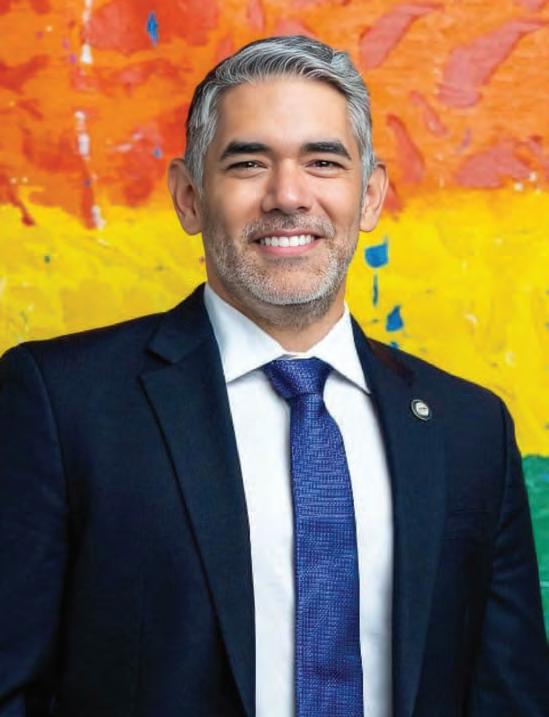





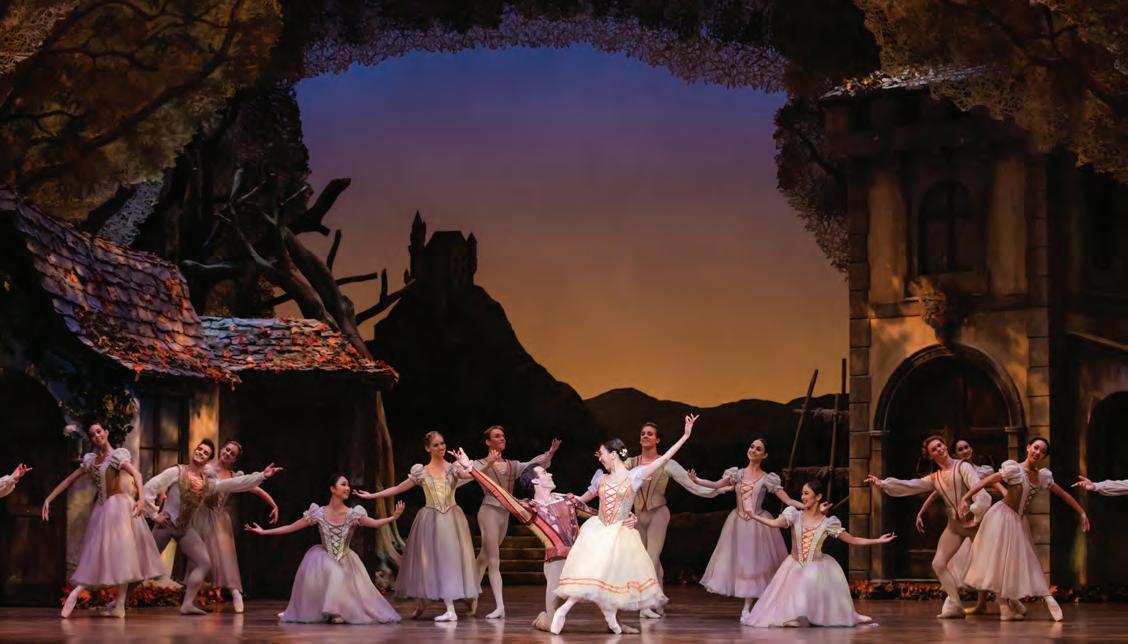
Despite beloved memories of dancing around the house with his grandma as a child, Lehner, who has also lived in Washington state and South Carolina, didn’t begin his professional ballet journey until he was in his teens. “There was definitely a bit of catch-up I had to play,” he recalls. “I’ve always known that I wanted to do something within the arts, and I naturally gravitated toward this world. At 15, I decided to give ballet a try and ended up falling in love with it. The passion was there, and where there’s a will, there really is a way.”
Lehner would eventually take part in Houston Ballet’s summer intensive at age 17, and the rest is history. He encourages others to pursue a later-in-life hobby or career—but with realistic expectations. “There’s going to be a learning curve and little bumps along the way, especially within the arts. If you find yourself feeling behind, not good enough, or comparing yourself to others who are more advanced, it’s at those times you need to take your ego out of it and remind yourself why you’re pushing so hard, day in and day out.”
Keeping his eyes on the prize is what kept Lehner pushing himself forward. “Sometimes you have to put in that little extra effort, or stay in the studio a little later, and do your own homework,” he emphasizes.
In addition to his work as a dancer, Lehner is personally passionate about advocating for the LGBTQ community, specifically regarding body image. “We constantly see online or in the
media the ‘ideal image’ of what you’re supposed to look like, or what you’re supposed to strive for. I feel like the pressure gets even more intense working within an aesthetic art like ballet, where your body is your instrument,” he shares. “I often spend all day looking at myself in the mirror, and I nitpick everything. In ballet, you need to see yourself and make corrections. Sometimes it’s hard for me to remember that this is just how my body is naturally built.” Lehner finds peace in knowing that no matter how many fitness classes he takes or methods of healthy living he embraces, his body is uniquely his. “It’s more important to keep yourself accountable and healthy based on what is right for you and your body type,
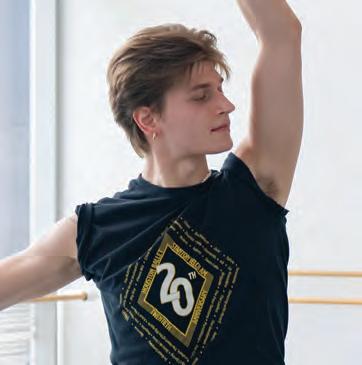
versus constantly setting goals to become the impossible version of what is expected of you.”
This month, Lehner steps into his final ballet of the season, which feels almost fateful for the dancer’s professional trajectory. “As an admirer of the artform, I really find myself emotionally connected and wrapped up within the story of Giselle,” he says. “It feels like it has a special aura around it, and it exists in its own world. It is the epitome of a big classical ballet.”
The production is also an opportunity to share his all-time favorite ballet with Houston audiences. “The most compelling thing, in my opinion, is the emotional range that the show explores. In the beginning, we’re in a very happy state. Then we transition to the extremes of betrayal, heartbreak, and death,” he says. “Finally, we end at a place of solace and acceptance.”
To those unfamiliar with the ballet, Lehner is adamant that Giselle is not to be missed. “It’s one of those shows that will take you on a journey and move you, if you allow yourself to be transported into that world. That’s one of the most magical aspects of live art—being transported into this world that’s being created right in front of you.”
WHAT: Houston Ballet’s production of Giselle
WHEN: June 11–21, 2026
WHERE: Wortham Theater Center
INFO: houstonballet.org/seasontickets/20252026-season/giselle
A scene from the Houston Ballet’s production of Giselle
BROADWAY BOUND
Broadway stage manager and producer Cody Renard Richard uses his platform to encourage young theater students.
by DAVID CLARKE | photos by ANGELA MARIE ORELLANA
For Houston native Cody Renard Richard, a life in the theater was never part of the plan. “None of my family saw this coming. I don’t even think I saw this coming,” he reveals. “My entire family are cowboys and cowgirls. I was sort of birthed into the rodeo culture.”
Indeed, Richard imagined a future that looked much like the one around him. But that changed when a high school counselor encouraged him to channel his energy into something new. “I was sort of like the class clown,” he recalls. “My counselor told me I need to pick up an extracurricular activity, and they led me to the theater club.”
His initial reaction to that club was profound. “I just felt at home there. It gave me a sense of purpose that I didn’t really know I was looking for.” That led Richard to pursue theater more seriously, eventually landing him at the Alley Theatre for an internship just before college.
Although he was nervous about taking that internship because of his “very humble beginnings,” the experience grounded him in the realities of professional theater and gave him a critical early boost. “They really took me under their wings and showed me what it’s like to work in a professional theater,” he says.
Years later, Sara Mills, his first connection to the Alley Theatre, would open the door to his first major opportunity in New York. “She remembered my work from The Alley,” he says about her offering him a stage manager job with Cirque du Soleil. “You have the perfect disposition for this show. I think your energy would fit this team. I know you’re a good communicator. The rest we can figure out,” she told him.
Today, Richard has worked on more than 20 Broadway productions as both a stage manager and a producer, including Tony Award-winning shows like A
“I WANTED TO GIVE STUDENTS THE RESOURCES THAT I DIDN’T HAVE, AND REMIND BLACK AND BROWN STUDENTS THAT THEY HAVE A PLACE IN THIS INDUSTRY.”
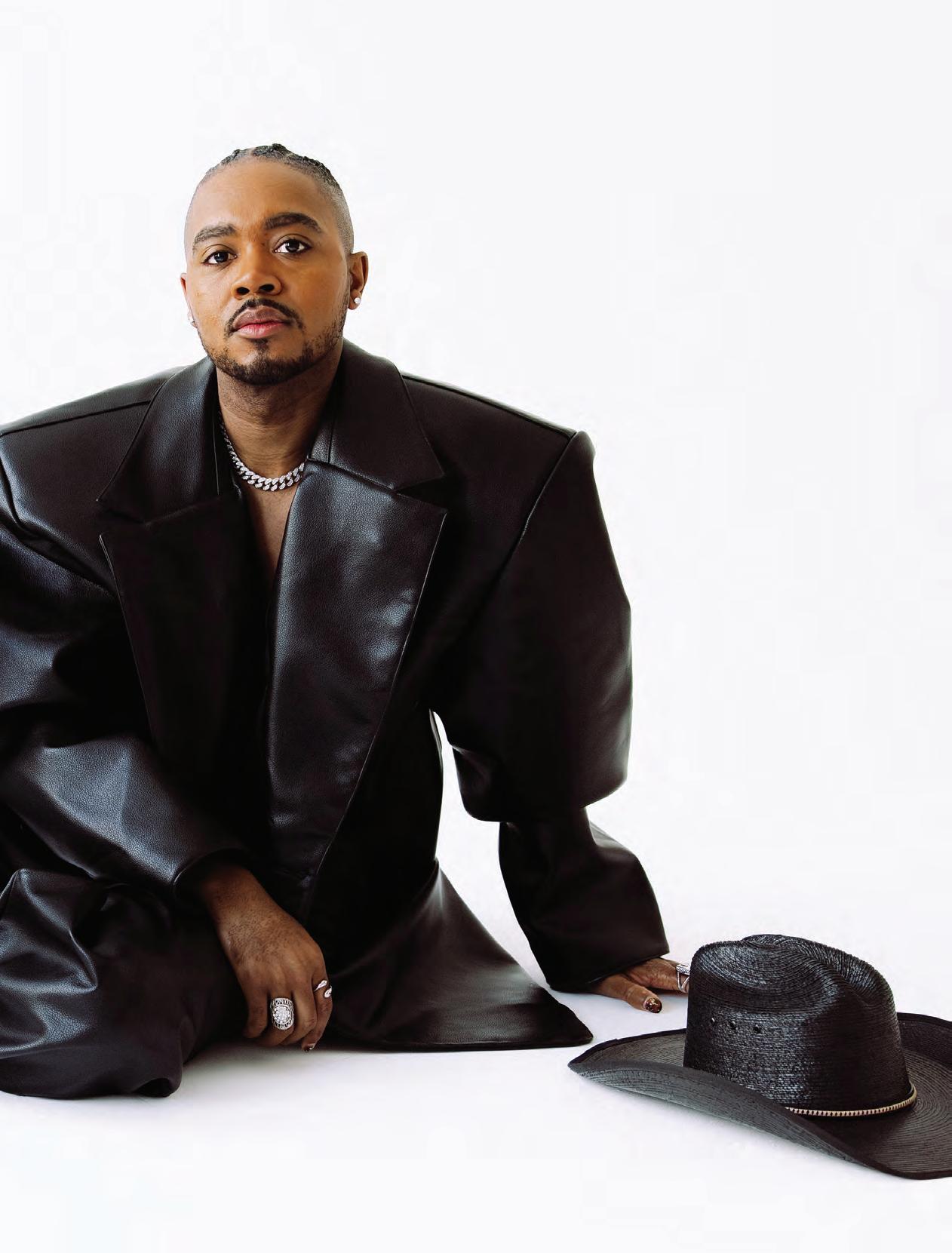
Strange Loop and Parade. “To be able to realize my dreams, but then to do it 25 times over, it’s really kind of remarkable,” he says.
For Richard, the work has never been just about the show itself. It is about the people behind it. “I want to work with humans who care about humans and who have similar morals and goals as me,” he explains. That perspective is especially evident in his work this season, where he has stage-managed both the Lincoln Center Theater revival of Ragtime and the Broadway transfer of CATS: The Jellicle Ball
“It’s tiring. It’s exhausting. It’s rewarding. It’s amazing. It’s epic,” he says of balancing both productions. Yet, at the center of that work is a philosophy that guides everything he does. “I would say my job is really just to care for the individuals.”
That care manifests differently depending on the production. In Ragtime, it means supporting artists through material that is historically and emotionally resonant. In CATS: The Jellicle Ball, it means creating space for performers to fully embody themselves.
“This is the first time that a production has featured a prominent number of trans women,” he explains about CATS. “Offering the care and the space for them to be free to do the thing that they do is my main job.”
More broadly, Richard sees stage management as the connective force that keeps a production moving forward. “Putting on a Broadway show is a team effort. It’s a team sport,” he points out. “One of the main jobs as a stage manager is to bring all of these different worlds within the production together and to make sure that we’re all talking.” ➝




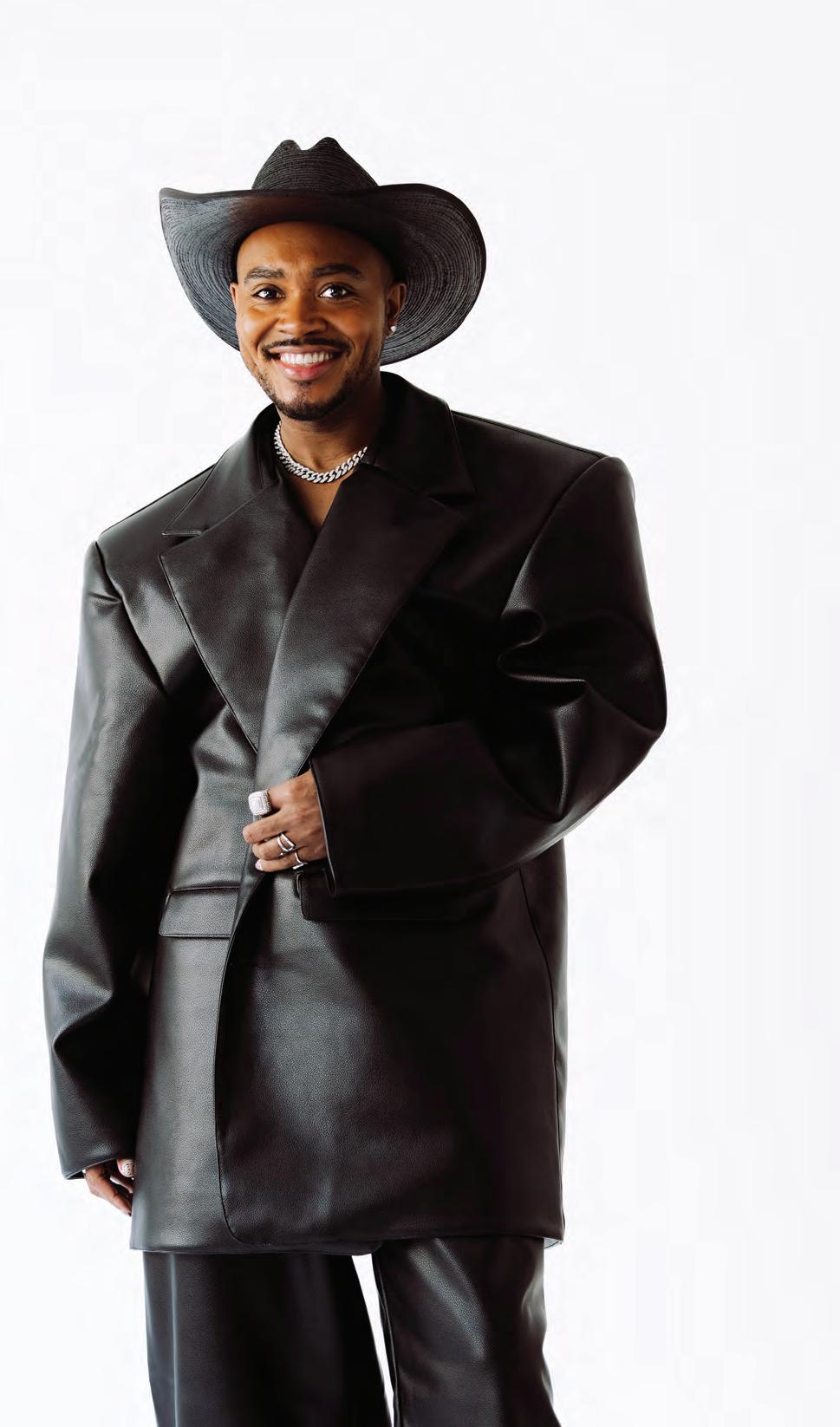
“I JUST FELT AT HOME IN THEATER. IT GAVE ME A SENSE OF PURPOSE THAT I DIDN’T REALLY KNOW I WAS LOOKING FOR.”
—Cody Renard Richard
As a Black queer creative in a role that traditionally exists behind the scenes, Richard has also made a conscious decision to be visible. “There’s no other way to live,” he says, “I have no interest in not being myself all the time.” That decision is rooted in his own experience growing up without seeing himself reflected in the industry.
“I never saw someone like me doing the thing that I wanted to do, so I really didn’t know it was possible,” he explains. Now, he understands the importance of representation not just as an idea, but as a responsibility. “I think it’s important for me to show up, open the door, and bring somebody else in,” he adds.
That commitment extends beyond Broadway. In 2020, Richard and the Broadway Advocacy Coalition launched the Cody Renard Richard Scholarship Program to provide opportunities for young leaders of color. Now the initiative operates in partnership with the Black Theatre Coalition and has supported more than 60 students and awarded over $500,000. “I wanted to give students the resources that I didn’t have, and remind Black and brown students that they have a place in this industry,” he says.
The program also allows him to stay connected to Houston, where several recipients have come from. “Any time I see a 713, 281, or 832 area code,” he says, “I think, ‘Ah, home!”
With Tony season approaching, Richard finds himself in a moment of reflection and momentum. Both Ragtime and CATS: The Jellicle Ball have become two of the most talked-about revivals of the season, and he is deeply connected to both. “These are both my babies,” he emphasizes. “I’ve given so much to both of these productions.” Still, he is clear about what matters most. “No one makes art to win a Tony Award, but it is amazing to be a part of a season that is uplifting really beautiful work.”
For Richard, the journey from Houston to Broadway is not just a story of success. It is a story of purpose, visibility, and making sure the path forward is wider for those who are coming next.
Keep up with Cody Renard Richard on Instagram @codyrenard.
Out ▼ There
Photos by DALTON DEHART and CREW
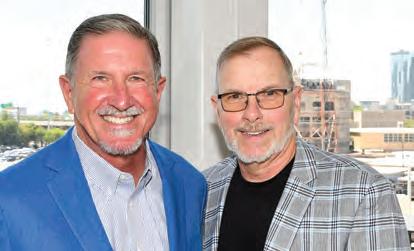
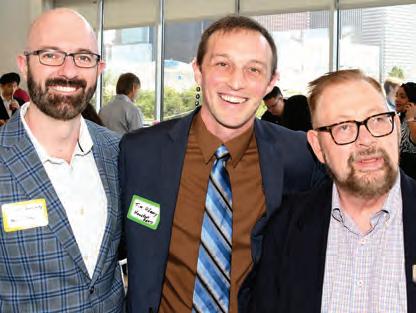



For more photo galleries, please
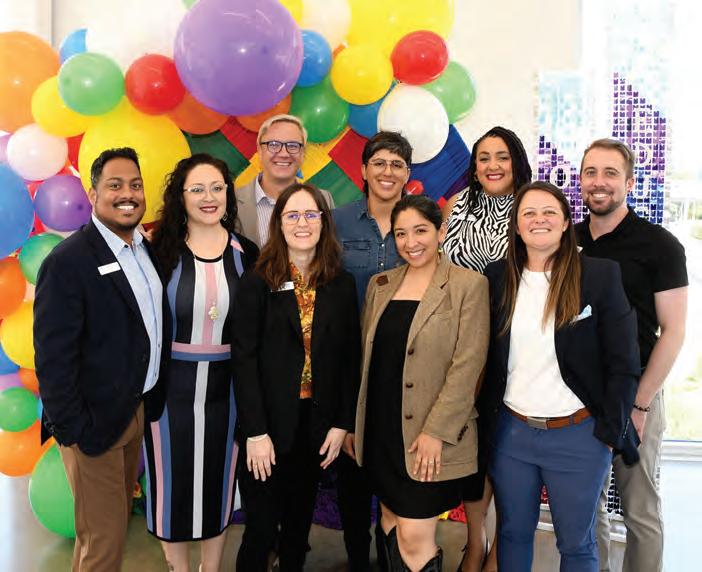
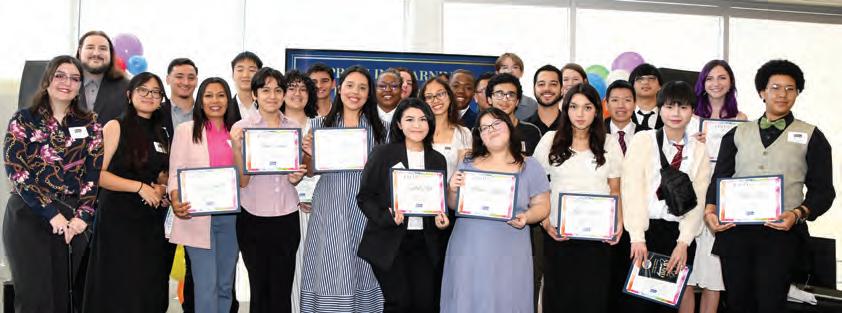
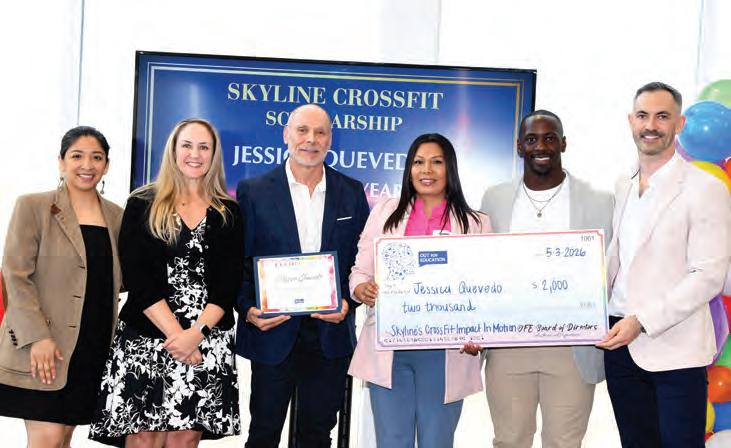
MAY 3, 2026
OUT FOR EDUCATION’S ANNUAL SCHOLARSHIP AWARD CEREMONY
Out for Education celebrated Houston’s next generation of LGBTQ scholars at its annual Scholarship Award Ceremony on May 3 at Big Brothers Big Sisters of Greater Houston. The organization awarded a record-breaking $177,500 in scholarships to students pursuing higher education and career goals.
The event brought together recipients, donors, volunteers, and community partners for an afternoon honoring academic achievement, leadership, and the power of continued investment in LGBTQ youth. Sponsors and supporters helped create a welcoming atmosphere, while volunteers reflected the hands-on spirit behind Out for Education’s mission.




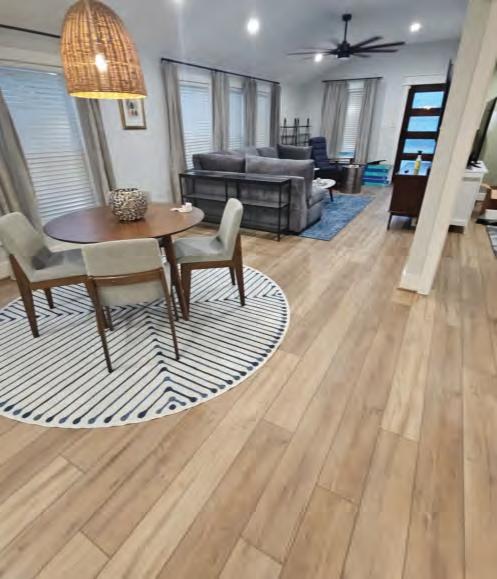
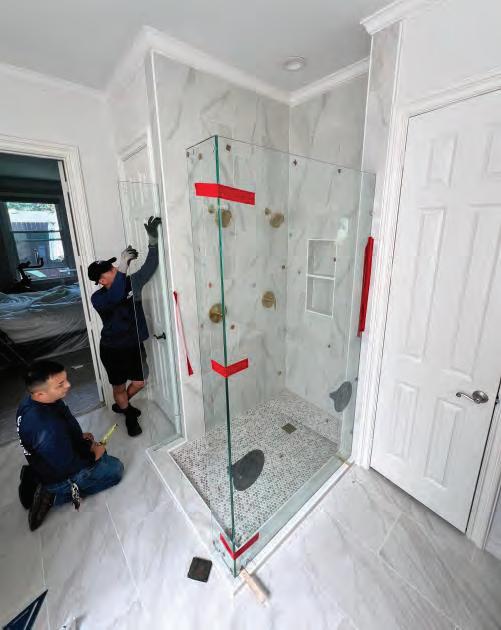

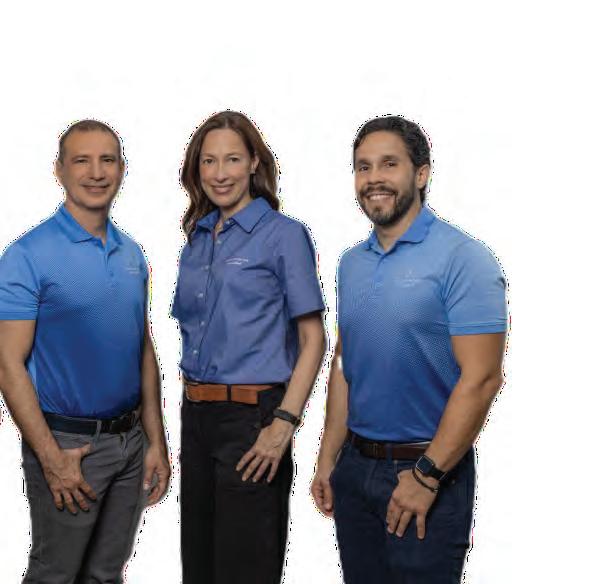







Reinel Cyndi Oscar
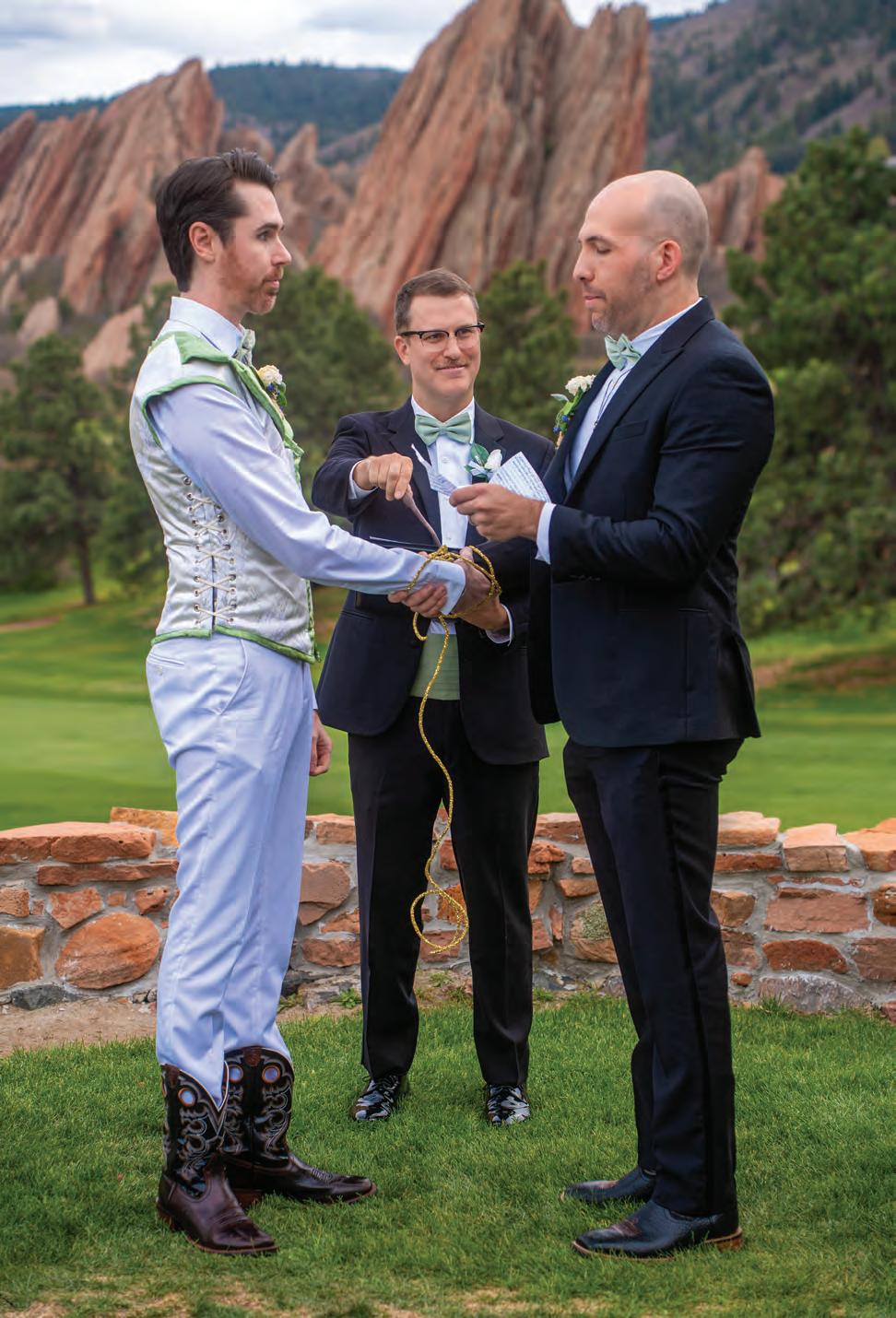
A LOVE BUILT TO WEATHER ANY STORM
Nick Mostaccero and Brian Tighe ’s relationship survived pandemic-era dating and many other challenges.
by DAVID CLARKE
photos by ANDREA GIBBS AND
Brian Tighe (l) and Nick Mostaccero
When Nick Mostaccero and Brian Tighe first met through Lone Star Volleyball Association in August 2019, neither could have predicted just how much life they would weather together. There would be a global pandemic. A Texas deep freeze. A derecho. A hurricane. Career changes. Major life transitions. Wedding planning. And somewhere in between, countless moments of laughter, surprises, and steady partnership. If anything, their story proves that some relationships are built to last, even when the forecast says otherwise.
The couple, both 36, first crossed paths on the volleyball court, though romance did not immediately follow. “It was right before the pandemic,” Brian says, recalling their first meeting. “We signed up for the same league and then we met on the first day.”
“The first thing I noticed about him was definitely his arms,” Brian adds with a laugh.
Nick’s first impression was a little less physical. “I think your goofy nature was the thing I first saw about you. And your kindness,” he says.
It was later, during the isolating uncertainty of the COVID pandemic, that their relationship began to take shape. “He was dating somebody else, and a mutual friend told me that they had broken up,” Brian says, “so I just immediately started texting him just to see how he was doing, checking on him, making sure everything was okay.”
Nick remembers receiving those messages out of the blue. “This was during the pandemic, so, of course, I was isolated. And I just got this random text from him,” Nick recalls. “I responded, ‘Oh, hey. How’s it going?’”
Their first official date took place at Cedar Creek, during those strange early months when restaurants were cautiously reopening with socially distanced tables. “This was a few months after the lockdown happened, and everyone was just like, ‘You know, maybe we should test the waters and see if we can go out,’” Nick says.
More than five years later, that leap of faith has turned into a marriage filled with balance, mutual admiration, and a healthy appreciation for surprising one another. For Brian, the relationship’s ease became one of its strongest indicators. “It’s just kind of always been a feeling of ‘Okay, I really like this person,’ and then just constant positive reinforcement throughout our entire relationship,” he says. “Everything was just so simple for the two of us.”
Nick points to Brian’s thoughtfulness and knack for unexpected romantic gestures. “There were always these genuine surprises that he always did,” Nick says, recalling a Valentine’s getaway to Fredericksburg.
While Nick was attempting to orchestrate
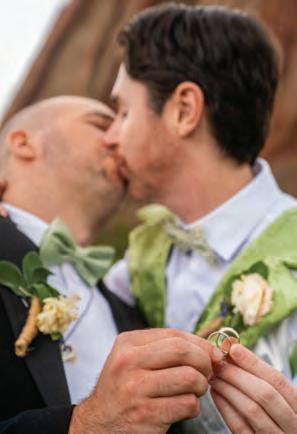
his own surprise on that trip, Brian managed to outmaneuver him entirely. “He brought out this old recorder and started playing ‘Stairway to Heaven,’ which is one of the songs I like to play on guitar,” Nick explains. “It’s these little small things that he just swoops in on to wreck and one-up me.”
Naturally, both men eventually began considering how to propose. Brian thought he was getting ahead of the game by quietly researching rings. Instead, Nick beat him to it and the proposal took place during a trip to Crater Lake in Oregon—though not exactly according to plan.
Nick had intended to propose on an island in the middle of the lake, only to discover the ferry dock had been damaged by a storm and tours were canceled. “Of course I was internally freaking out,” Nick recalls.
Forced to improvise, Nick chose a scenic overlook instead, nervously lingering until
Brian began wondering why they had not left yet. “And I finally just went and proposed,” Nick says.
Brian’s reaction was immediate, if not especially composed. “I think I started yelling at one point,” he remembers. “Because I was planning on doing it first.” But eventually, he gave the answer Nick was waiting for by offering up a resounding “Yes!”
The couple married on May 3, 2026, at Arrowhead Golf Club in Littleton, Colorado, in a ceremony that reflected not just their love story, but the wonderfully nerdy, deeply sentimental life they have built together. “It was perfect,” Brian says simply.
“Everything just went right,” Nick agrees. That perfection did not happen by accident. Self-described Virgos and planners, the couple infused the day with thoughtful personal touches. Traditional guest books gave way to something far more on-brand. Their






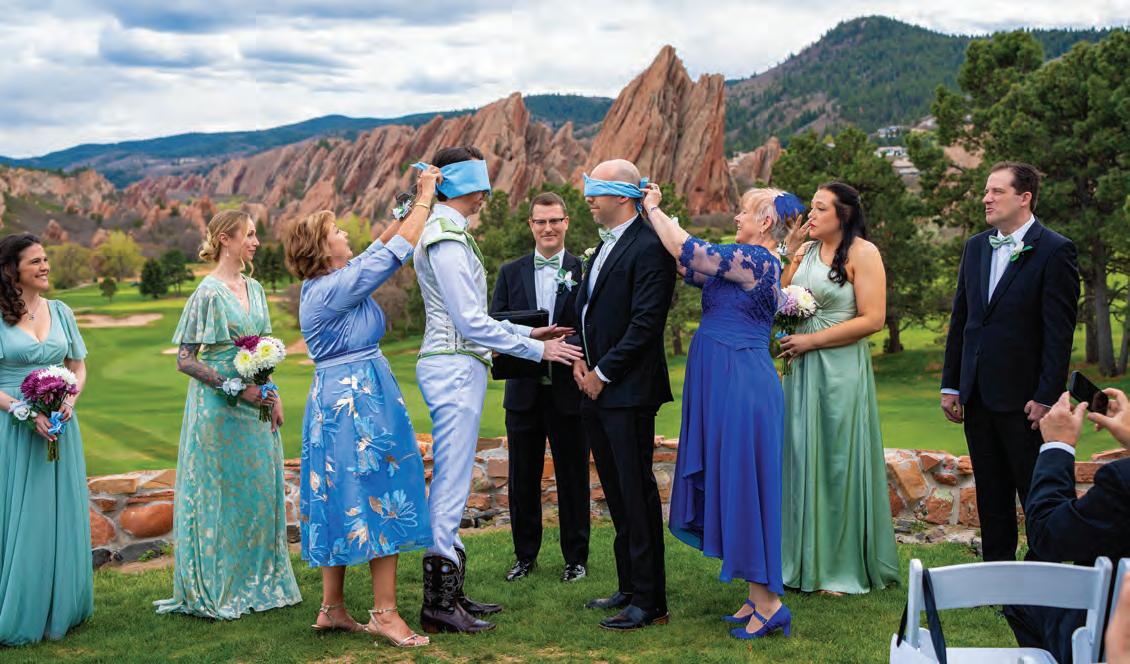
reception was themed around Dungeons & Dragons classes, complete with detailed décor elements reflecting each archetype. Instead of a bouquet toss, they created a custom volleyball toss in honor of where their story began.
Their officiant, Nick’s best friend Jonathan Harrelson, conducted a Wizarding Worldinspired handclasping ceremony. “We’ve seen a lot of friends do a Scottish Gaelic binding ceremony with clasped arms,” Brian notes. “So we basically did that, but then we also had the wand cords going around too.”
One especially emotional tribute honored Brian’s late dog, Clover, who had originally been meant to walk down the aisle. “Originally she was supposed to be walked down the aisle. Instead we had one of Nick’s nephews carry her ashes down the aisle.”
The ceremony also featured one unforgettable reveal. Rather than doing a traditional first look, Nick and Brian avoided seeing one another all day. Their mothers escorted them down the aisle blindfolded, allowing the moment at the altar to become their first glimpse of each other. “That’s probably my favorite moment for sure,” Nick says with a smile.
For Brian, another memory stands out. “When we were slow dancing on the dance floor, I just felt like everything kind of slowed down and paused for a moment.”
Yet, one of the day’s most emotional surprises came just before the ceremony. Years earlier, Brian had purchased a necklace while in college, quietly holding onto it for what he hoped would one day be the right person. “I’d been saving it for 15 years,” Brian reveals.
He sent the necklace and a handwritten note to Nick while they were getting ready separately. Nick’s response was immediate. “I read it maybe 10 minutes before we were supposed to go out, and just broke down bawling.”
Wedding planning brought its own memorable adventures, as well. Determined to include Brian’s favorite flower, forget-menots, the couple discovered every florist they contacted refused to use them because of their fragility, so they handled it themselves.
“We did the flowers ourselves,” Brian says. “We went down to a nursery, we bought all the
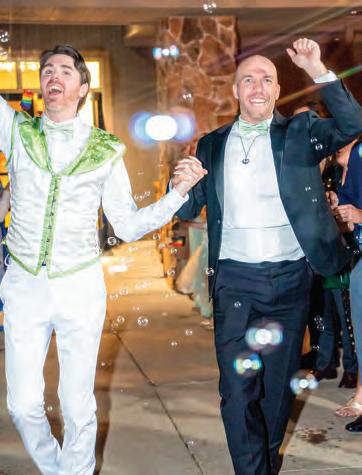
ones that we wanted to use, and we wove them into the wreaths.”
The florists, as it turns out, had a point. “The boutonnieres died before the ceremony even started,” Brian adds.
“Hey, it’s a talking point,” Nick adds, taking it in stride. “A memory, for sure.”
The couple also embraced fashion choices that reflected their personalities, including Brian’s custom doublet created by Raven of Casta Diva Apparel, a nod to the Texas Renaissance Faire that the couple enjoys.
Though they planned much of the wedding themselves, they credit wedding-day coordinator Quincy (from Right as Rayne Events), the Arrowhead Golf Club team, photographer Smaly’s Snapshots, and a long list of supportive vendors and loved ones for helping bring the day to life.
Still, for all the thoughtful details, elaborate planning, and magical touches, what makes Nick and Brian’s story especially resonant is its foundation. Brian admires Nick’s steadiness. “I like his calmness, his ability to just defuse a situation and bring everything back to center.”
“He’s very outgoing,” Nick says of Brian’s energy. “He very much knows what he wants, and I think that’s why we pair so well.”
The couple also celebrated their wedding in Houston on May 30 at Neon Boots, giving local friends and chosen family a chance to join the festivities.




Mediation over meltdowns. Umbrellas over dumpster fires.
For more photo galleries, please visit our website.
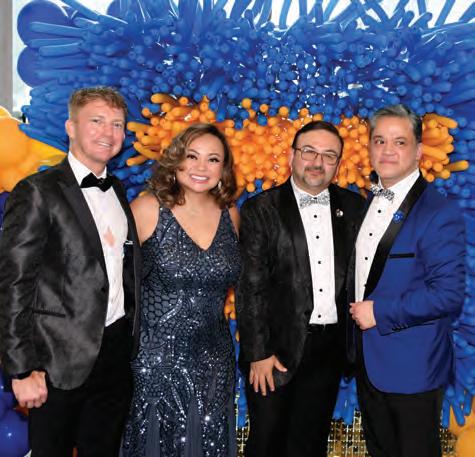
Photos by DALTON DEHART and CREW
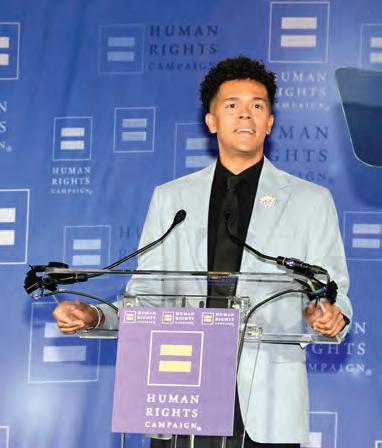
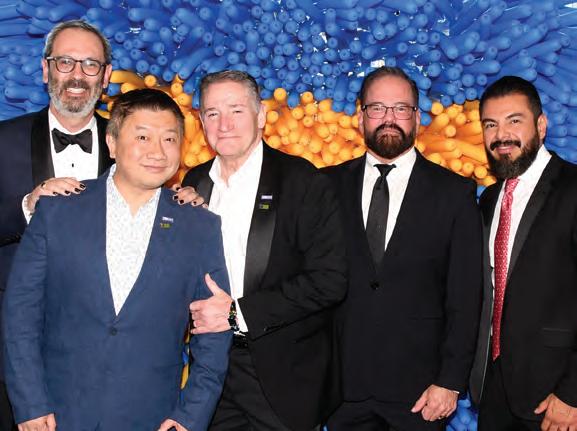
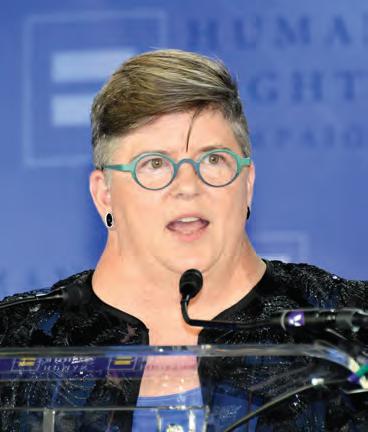
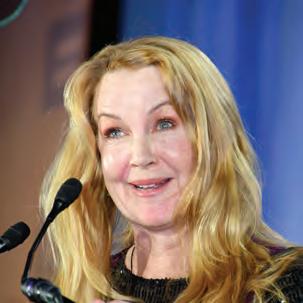
Out ▼ There
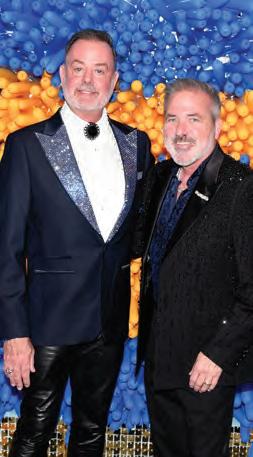
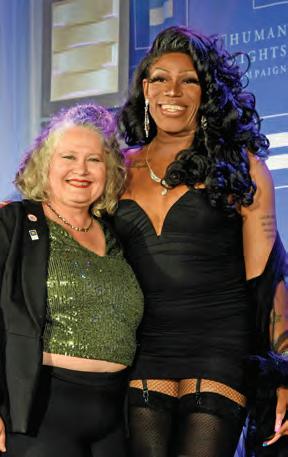
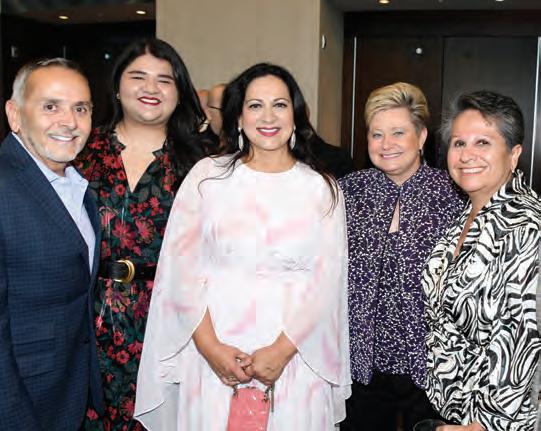
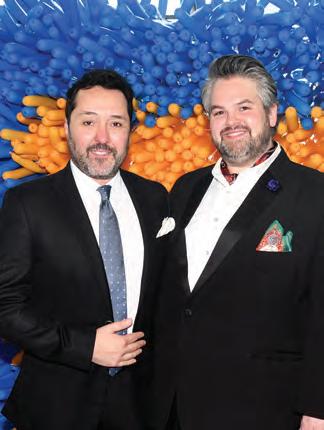
MAY 9, 2026
HRC HOUSTON DINNER –COMMUNITY = POWER
The 2026 HRC Houston Dinner brought supporters, advocates, and community leaders to the Marriott Marquis Houston for an evening centered on “Community = Power.” Co-chaired by Ben J. Rubio, Gia Montalto, and Josh Beasley, the May 9 event focused on visibility, advocacy, and civic engagement. HRC National Press Secretary Brandon Wolf delivered the keynote, speaking to the urgency of organizing and protecting LGBTQ rights. The evening also honored actress and activist Renee O’Connor with the Ally for Equality Award, the Houston LGBTQ+ Political Caucus with the Partner Award, and community leader Lisa Madry with the Community Award for her contributions to Houston’s LGBTQ community.
Celebrating the LGBTQ Artists Who Changed Music
Barry Walters ’ new book traces the queer roots of disco, punk, pop, country, hip-hop, and more.
by GREGG SHAPIRO
Mighty Real: A History of LGBTQ Music, 1969–2000 (Viking, 2026), by gay music journalist Barry Walters, is a practically comprehensive overview of the music made by and for LGBTQ folks, and its enduring presence and impact. Part reference book, part memoir, the rainbow musical spectrum covered is particularly notable. Beginning with groundbreaking artists including Laura Nyro and Lou Reed (along with the Velvet Underground), Walters invites us on this revealing musical odyssey that touches on a vast array of talent including Sylvester, Elton John, The B-52s, Wendy Carlos, k.d. lang, Bob Mould, Indigo Girls, Bronski Beat, and Dusty Springfield, to mention just a few. Additionally, Walters makes a point to include allies such as Cyndi Lauper, Grace Jones, Bette Midler, Patti Smith, Cher, Dolly Parton, and Madonna, as well as influential record labels (Motown and Olivia) and genres (disco, punk, post-punk, and hip-hop). The author deserves praise not only for his vast knowledge of the subject, but also for the way he connects the dots with several artists. Walters spoke to OutSmart ahead of the book’s publication last month.
Gregg Shapiro: Did the concept for this book begin with one of the essays you’ve included, or was the idea for the book already fully formed from the onset?
Barry Walters: The book’s inspiration is a departed friend of mine, Vito Russo, and his extraordinary, pioneering 1981 book The Celluloid Closet: Homosexuality in the Movies I fell in love with it when I was a graduateschool cinema-studies student at NYU and starting my professional career at the Village Voice. I met Vito through a mutual friend, Steven Harvey—a film critic who wrote in the Voice what might have been the earliest firstperson article written about what it’s like to have AIDS. I sensed that Vito wanted to share with me what he knew and loved while he still could. He’d show me Bette Midler at the Continental Baths, or Babs and Judy dueting on The
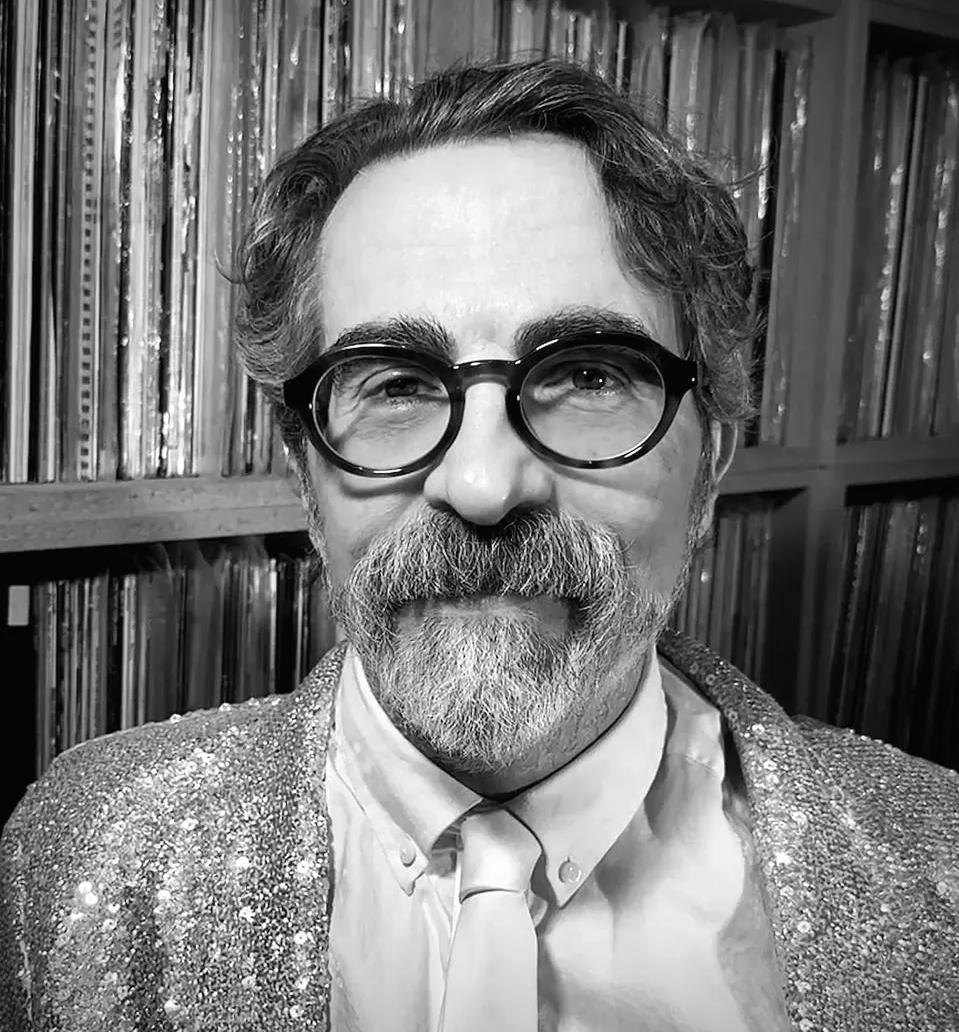
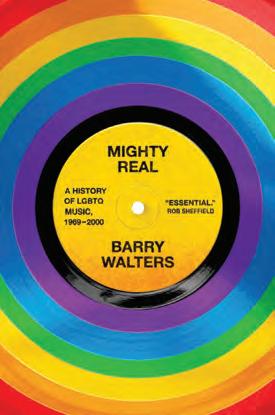
Judy Garland Show, back when footage like that was a coveted, rare treasure. Seen through his eyes, what I had considered old-hat was fresh and vital. In 1987, he revised The Celluloid Closet and included something I’d written in the Voice about Pee-wee Herman that put him in an LGBTQ context. Vito’s blessing made me feel as though I’d become a serious, legit writer. When he and Steve both died, I felt I had to bear witness because I had been spared. After I left the San Francisco Examiner in
1997, I tracked down Vito’s agent. He loved my idea about doing a popular-music answer to The Celluloid Closet, but I didn’t know the first thing about writing a book proposal. I ran out of money and had to plunge myself back into freelance journalism. But when it became feasible to finally write a book, that’s what I returned to.
Did the book grow out of your interviews with Patrick Haggerty (Lavender Country), Judy Dlugacz (Olivia), and countless others as a music journalist?
Mighty Real was indeed facilitated by several decades of interviewing queer and queer-relevant musicians. I dug up old interview tapes I’d recorded, like with Liza Minnelli when she worked with the Pet Shop Boys for her 1989 Results album. That was for The Advocate and I remember my editor liking the piece, even though it was never published.
Mighty Real reads like a memoir interwoven with history—especially the Bowie, Queen, RHPS, and Bronski Beat chapters. Was that how you envisioned the book?
Mighty Real is a history book interwoven with memoir. This book has 60 chapters, and in most of those I discuss several acts, so I cover hundreds of queer and queer-adjacent bands, singers, producers, label owners—you name it. I wrote nearly everything for years without using the “I” word at all. But in one chapter I did write about what it was like reading, as an 11-year-old, about David Bowie for the first time, and how I learned the word “bisexual” through him. So I bought Space Oddity, and what followed from Bowie helped me learn about myself. All of us have variations on that kind of story. I realized that if I wrote about mine, the reader might think about theirs. I also decided to share what it was like, for example, to interview Whitney Houston and hear her lie about herself, but reveal the truth through her actions. Those chapters gave me the confidence to revisit earlier chapters and sometimes be more autobiographical.
Is one of your goals with Mighty Real to inspire readers to explore artists they are unfamiliar with? For example, Parachute Club, Lavender Country, and Phranc. Yes. I tried to select singers and songs that transcend their genre, especially for LGBTQ readers interested in elements of our culture beyond their experience. You might not ordinarily like folk music, or you might think you don’t like women who call themselves dykes, but if you at least look at Phranc’s I Enjoy Being a Girl album cover, I practically guarantee that you’ll want to hear what’s inside and that you’ll find something you enjoy.
“I WROTE IT FOR US.”
—Barry Walters
Do you anticipate hearing from some of the artists you cover in the book?
I hope Mighty Real finds its way into the hands of those people, but I didn’t write it for them. I wrote it for us. Before I started Mighty Real in earnest, I wrote about Grace Jones just before her memoir was announced. One thing led to another: Grace read the article and wanted me to condense it for her Hollywood Bowl program. I agreed to do it if she’d say hello to me after playing the Fox, because I had to meet her before I died. As we approached Grace’s dressing room, my husband and I overheard her manager say that Barry Walters was waiting outside. She thought I was someone else wanting to do an interview, and she responded exactly like you’d expect Grace Jones to react. Then her manager said, “No, no, Barry wrote the article I showed you.” Then we hear, “Oh, I love that article!” She then came out of her dressing room completely naked and holding a towel in front of herself, looking for the assistant who had her clothes. My husband found that person, and then she greeted me. I don’t think my family and friends have ever been more enthusiastic over something I’ve written.
Musical theater is an essential component of queer culture for so many. How important was it for you to work musicals such as Kinky Boots into the book?
An early draft of the book had a line that said something like, “There’s no point in writing about LGBTQ participation and themes in theater because, to some degree, it’s all gay.” That’s an exaggeration, but there aren’t multibillion-dollar corporations keeping theater actors in the closet and making playwrights avoid gay content or forcing them to write about it only covertly, the way there is in rock, pop, R&B, country, hip-hop, and so on. That opposition, combined with queer kids’ hunger to hear themselves represented, is what creates phenomena like Bowie, and why disco had to be invented. So, I decided only to write about theater if it intersects with popular music in a profound way. Is it genuine rock ’n roll or pop, or R&B? Was it played on the radio? Did we dance to it? That’s the kind of music theater I include in Mighty Real. I have a theater degree, so I believe the rest of it is a world unto itself and deserves its own book, not mine.
In Chapter 22, you mention that the B-52s still haven’t been inducted into the Rock and Roll Hall of Fame. Do you think that might change now that an outspoken ally
such as Cyndi Lauper has been inducted? The day after this interview, I received my Rock and Roll Hall of Fame ballot. Melissa Etheridge and Luther Vandross, about whom I write extensively in Mighty Real, have been nominated, as they should be. But once again, not the B-52s. They never have. That goes to show how much antigay sentiment still exists in the music industry. I don’t think our ally Cyndi Lauper, as much as I love and appreciate her, can alone change that. We, as a community, must come together to hold those people accountable.
Would you agree that, despite the deep queer roots of the B-52s and the Village People, it’s surprising that their biggest hits, “Love Shack” and “Y.M.C.A.,” continue to be played at straight functions, including weddings and political rallies? No, I don’t. So much of what our artists created is so strong and universal that I don’t begrudge anyone for enjoying it their own way, even if it was created by and initially for us. I do, however, find it vile that our culture is co-opted and corrupted by those who repress us. I tried to write about every one of my book’s subjects in such a way that it’s all enticing, no matter if you’re L, G, B, T, Q, or even straight. I want metal fans to read the women’s-music chapter and go “Wow!” I hope women’s-music fans read about Judas Priest and go “Wow,” because both subjects are awe-inspiring. All great art, even if it springs out of pop culture, transcends. Dolly Parton and Queen are perfect examples.
You write about the homophobic and racist 1979 Disco Demolition that took place in Chicago. Is it fair to say that it’s karma that shock jock Steve Dahl has been relegated to the dustbin of history, while Chicago became the birthplace of house music, one of the queerest and most enduring styles of dance music?
The only reason we’re still talking about Steve Dahl is because he put a face onto musical racism, sexism, and homophobia. Chicago has one of North America’s densest LGBTQ populations, so it makes perfect sense that it would inspire both death-to-disco and disco-lives movements. House music, as you know, was created by overlapping communities of gay and Black people, just as disco was. The only white straights initially attracted to it were those eager to attend Black or gay—or, particularly, Black gay—clubs, because that was where they knew they could really let loose and shake it.
Mighty Real is available now at your local independent bookseller, at Barnes & Noble, or on Amazon.
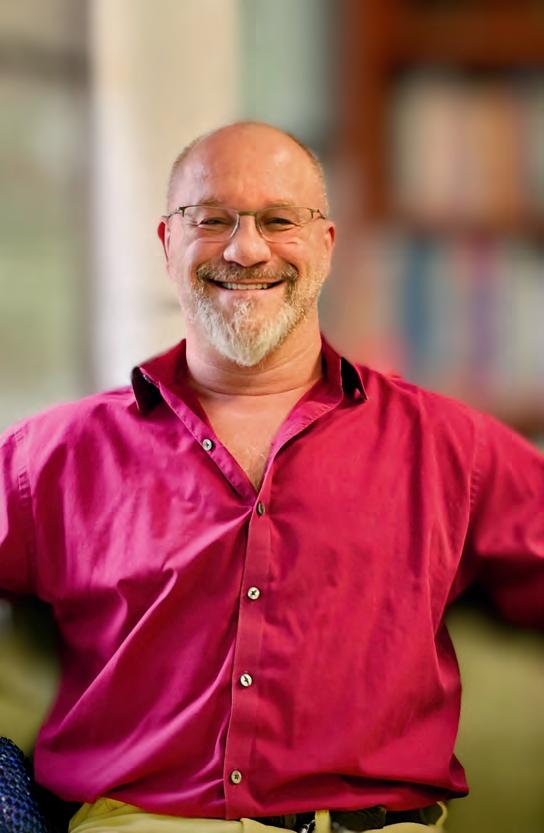












For more photo galleries, please visit our website.
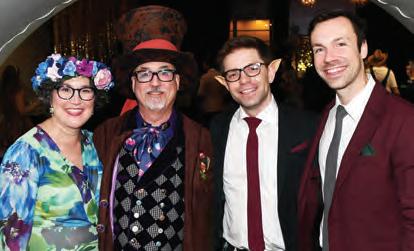
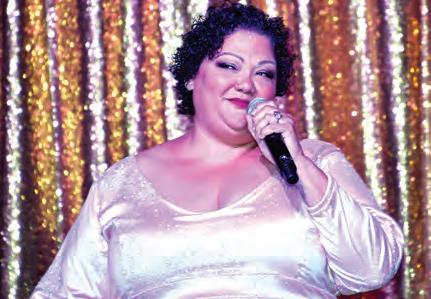
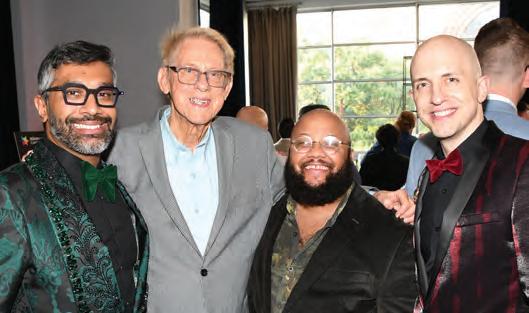
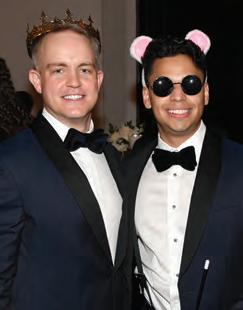
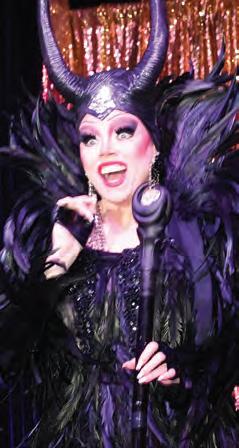
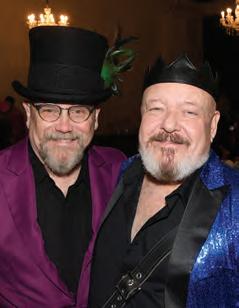
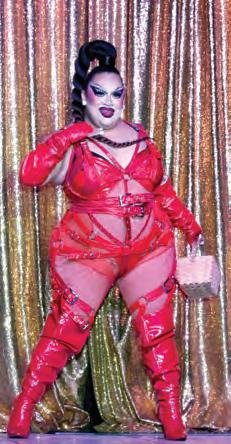
Out ▼ There
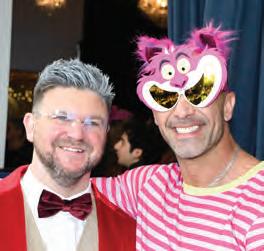
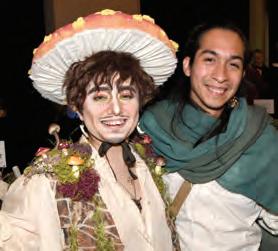
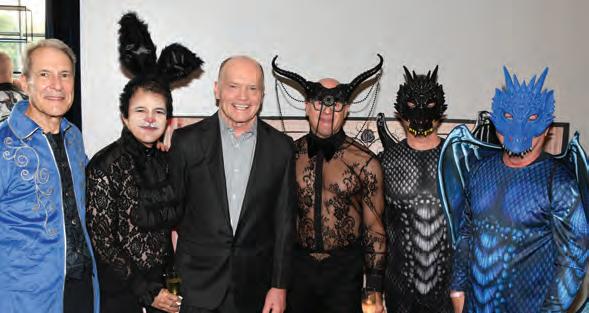
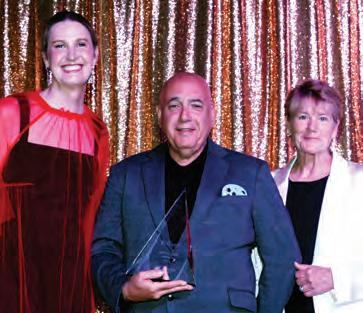
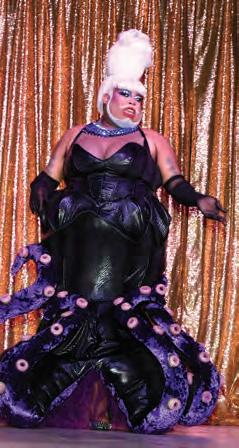
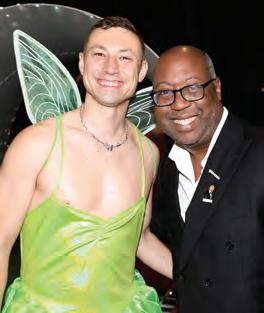
APRIL 25, 2026
THE MONTROSE CENTER EMPOWERING OUR FUTURE GALA
The Montrose Center’s annual Empowering Our Future Gala brought storybook magic to The Ballroom at Bayou Place, where more than 400 guests gathered for an evening themed “Once Upon a Time.”
Co-chaired by Mandy and Neil Giles and BJ Gill and Robby Guthart, the gala paired fairy-tale flair with a clear purpose: raising support for the Center’s housing, counseling, community programs, and essential services for LGBTQ youth.
Dessie Love-Blake hosted the program, with performances by Reign LaRue, Blackberri, Amy Armstrong, Rachel B Face, and Christina Wells adding energy and joy. DJ Easton kept the celebration going at the afterparty.
Photos by DALTON DEHART and CREW
OutSmart’s Bar Guide is now on your phone! Scan here to check out our directory of LGBTQ bars and clubs in and around Houston, including your favorites in Galveston, Huntsville, Spring, and College Station. Whether you’re a local or a visitor, we’ve got you covered with this updated guide to the best LGBTQ-friendly spaces.
OutSmart’s Bar Guide is now on your phone! Scan here to check out our directory of LGBTQ bars and clubs in and around Houston, including your favorites in Galveston, Huntsville, Spring, and College Station. Whether you’re a local or a visitor, we’ve got you covered with this updated guide to the best LGBTQ-friendly spaces.
OutSmart’s Bar Guide is now on your phone!
OutSmart’s Bar Guide is now on your phone! Scan here to check out our directory of LGBTQ bars and clubs in and around Houston, including your favorites in Galveston, Huntsville, Spring, and College Station. Whether you’re a local or a visitor, we’ve got you covered with this updated guide to the best LGBTQ-friendly spaces.
OutSmart’s Bar Guide is now on your phone! Scan here to check out our directory of LGBTQ bars and clubs in and around Houston, including your favorites in Galveston, Huntsville, Spring, and College Station. Whether you’re a local or a visitor, we’ve got you covered with this updated guide to the best LGBTQ-friendly spaces.
OutSmart’s Bar Guide is now on your phone! Scan here to check out our directory of LGBTQ bars and clubs in and around Houston, including your favorites in Galveston, Huntsville, Spring, and College Station. Whether you’re a local or a visitor, we’ve got you covered with this updated guide to the best LGBTQ-friendly spaces.
OutSmart’s Bar Guide is now on your phone! Scan here to check out our directory of LGBTQ bars and clubs in and around Houston, including your favorites in Galveston, Huntsville, Spring, and College Station. Whether you’re a local or a visitor, we’ve got you covered with this updated guide to the best LGBTQ-friendly spaces.
OutSmart’s Bar Guide is now on your phone! Scan here to check out our directory of LGBTQ bars and clubs in and around Houston, including your favorites in Galveston, Huntsville, Spring, and College Station. Whether you’re a local or a visitor, we’ve got you covered with this updated guide to the best LGBTQ-friendly spaces.
Guide is now on your phone! out our directory of and around Houston, Galveston, Huntsville, Whether you’re a you covered with this LGBTQ-friendly spaces.

Guide is now on your phone! out our directory of and around Houston, in Galveston, Huntsville, Station. Whether you’re a got you covered with this LGBTQ-friendly spaces.
now on your phone! our directory of around Houston, Galveston, Huntsville, Whether you’re a covered with this LGBTQ-friendly spaces.
now on your phone! directory of around Houston, Galveston, Huntsville, Whether you’re a covered with this LGBTQ-friendly spaces.
now on your phone! directory of around Houston, Galveston, Huntsville, Whether you’re a covered with this LGBTQ-friendly spaces.
now on your phone! directory of around Houston, Galveston, Huntsville, Whether you’re a covered with this LGBTQ-friendly spaces.
now on your phone! directory of around Houston, Galveston, Huntsville, Whether you’re a covered with this LGBTQ-friendly spaces.
is now on your phone! our directory of and around Houston, Galveston, Huntsville, Whether you’re a you covered with this LGBTQ-friendly spaces.
now on your phone! our directory of around Houston, Galveston, Huntsville, Whether you’re a covered with this LGBTQ-friendly spaces.
Scan here to check out our directory of LGBTQ bars and clubs in and around Houston, including your favorites in Galveston, Huntsville, Spring, and College Station. Whether you’re a local or a visitor, we’ve got you covered with this updated guide to the best LGBTQ-friendly spaces.
Charles Garibay
LGBTQ bars and clubs in and around Houston, including your favorites in Galveston, Huntsville, Spring, and College Station. Whether you’re a local or a visitor, we’ve got you covered with this updated guide to the best LGBTQ-friendly spaces.

What is your favorite shot to make? To drink?
always something going on at
I like to make Lemondrops and Starf--kers—a tasty Crown Royal and Red Bull shot!
Where is your favorite place to drink when not on duty?
I’m a non-drinker, so you can usually find me out riding my bike. What is a current bar drink trend you’d like to see end? Please end the Mexican Candy Shots (tequila, watermelon liqueur, and hot sauce).


What are you best known for?
evolved into Rich’s
I’ve been with Mark DeLange, the owner of the Eagle, for 10 years since he opened. Most people know me for my Blue Balls Shot, which is a blueberry vodka mix. What is the best and worst holiday to work?
a
restaurant, lounge & boutique day / night life experience.
Best holiday: I’m going to count Pride as a holiday, so Pride and Halloween are the

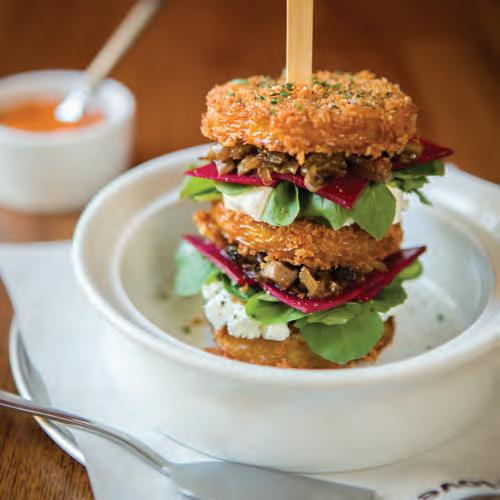










ReBar evolved into Rich’s Houston, a vibe restaurant,
Place to Watch Male Dancers Tues. and Thurs, – Sunday Nights
ReBar evolved into Rich’s Houston, a vibe restaurant, lounge & boutique day / night life experience.
Place to Watch Male Dancers Tues. and Thurs, – Sunday There’s
ReBar evolved into Rich’s Houston, a vibe restaurant, lounge & boutique day / night life experience.
Place to Watch Male Dancers Tues. and Thurs, – Sunday Nights
There’s
ReBar
Houston,
vibe
Cold Beverages & Hot Guys!
Male Amateur Strip Contest
TONY’S CORNER POCKET
ReBar evolved into Rich’s Houston, a vibe restaurant, lounge & boutique day / night life experience.
Place to Watch Male Dancers Nights
ReBar evolved into Rich’s Houston, a vibe restaurant, lounge & boutique day / night life experience.
TONY’S CORNER POCKET
ReBar evolved into Rich’s Houston, a vibe restaurant, lounge & boutique day / night life experience.
TONY’S CORNER POCKET!
Nightly Specials – Call for Details Cold Beverages & Hot Guys!
Houston’s Hottest Male Amateur Strip Contest
ReBar evolved into Rich’s Houston, a vibe restaurant, Male Amateur
Place to Watch Male Dancers Nights
ReBar evolved into Rich’s Houston, a vibe restaurant,
boutique day / night life experience.
Place to Watch Male Dancers

ARIES (Mar. 21–Apr. 19)
As the action heroes of the Zodiac, Aries know how to get things done, and this month your superpowers will be tested. On June 14, the New Moon joins highly charged Uranus in the sign of Gemini, revving up your to-do lists, errands, and communications. Emails, texts, DMs, and social invitations are coming in faster than you can reply to them. Venus moves into Leo on the exact same day, supercharging your natural magnetism and persuasive edge. Think before you spend t his month. I know that’s a big ask of an Aries, but with Mars in Taurus for most of the month, your chances of contracting buyer’s remorse are higher than usual.
TAURUS (Apr. 20–May 20)
Chiron may not get much press coverage, but this little planetoid is front-page news for Taurus. After an eightyear stint in Aries, Chiron moves into Taurus on June 19. In mythology, Chiron is known as the wounded healer, and astrologically it’s here to help you heal issues around self-worth, self-assertion, and vulnerability. Chiron is a healing process that unfolds over time, so you don’t have to try and figure it all out now. Gemini season is money season for you Bulls, and the New Moon in Gemini on June 14 lands right in your money spot, giving you an opportunity to make more money. Mars remains in Taurus for most of the month, giving you the confidence to take risks you wouldn’t have dreamed of a year ago.
GEMINI (May 21–June 21)
Back on April 26, the cosmic disruptor Uranus moved
by KEVIN CASEY
COSMIC RECEIPTS
A Gemini New Moon and Chiron’s move into Taurus ask us what we value, and why.
Little planetoid/centaur Chiron was discovered on November 1, 1977, at the height of the disco craze when the legendary Studio 54, ESP, mood rings, and astrology were also all the rage. Astronomically, it was classified as an asteroid, then a planetoid, and now it’s being grouped with certain other celestial bodies that are all labeled centaurs. In mythology, Chiron was known as the wounded healer; in astrology, this cosmic centaur is about healing our deepest wounds.
On June 19, Chiron leaves Aries and begins an eight-year journey through Taurus. Collectively, we’re healing our wounds and insecurities around money, wealth, our possessions, greed, the economy, and what we value and hold dear. The last time Chiron was in Taurus was 1976–1984 during the oil crisis, and the time before that was 1926–1934 when the Great Depression occurred. The protests we’ve seen against corporate greed will only get stronger over the coming years.
into Gemini, igniting a seven-year process of self-reinvention. Gemini season began on May 20 and reaches i t s peak on June 14 with the New Moon in Gemini. The Moon is linked to feelings and moods, so you won’t be able to hide how you really feel. Authenticity is key this month. Instead of asking yourself what you want, ask yourself what you really need. Money is also a hot topic this month as Mercury continues its extended trek through Cancer. Impulsive spending has always been a menace for you Geminis. Getting a grip on your spending, even if it’s just for the next couple of months, will do wonders for your anxiety.
CANCER (June 22–July 22)
The cosmos has put you Cancerians in the time-out chair this month, not as a way to punish you but to get you ready for your close-up on June 21 when Cancer season officially begins. Closure is your keyword this month. Tying up loose ends and getting rid of excess emotional baggage is at the top of this month’s to-do list. The Gemini New Moon on June 14 puts a spotlight on any lingering resentments and feelings of self-doubt you need to release. You become the star of the show on June 21 when the Sun moves into Cancer. This is your personal new year—your moment of new beginnings, new adventures, and new connections.
L EO (July 23–Aug. 22)
While Gemini season continues for most of the month, Venus moves into Leo on June 14, putting you Lions in the mood to socialize. Join a group, network, and say yes to those social invitations. Mingling this month
opens the door to new connections and new opportunities. The New Moon in Gemini on June 14 is connected t o your future. What would you like to see happen in your life? Writing down your long-term term hopes and dreams for the future is extra-powerful this month. Mars in Taurus continues to heat things up at work. Use this warrior energy to complete projects and avoid clashes with management.
VIRGO (Aug. 23–Sept.22)
You’re the original worker bee, and you strive for perfection on any task you’re given—and the times your work i s n’t perfect, it’s damn near close. If something goes wrong, you’ll right the ship. Your productivity, work ethic, attention to detail, and efficiency are your super powers when it comes to work. The New Moon in Gemini on June 14 says it’s time to stop coasting along and start being a conscious creator when it comes to your career path. Stop selling yourself short. You’ve been feeling it for a while now. It’s time for a change. Pay attention as the sun transits through the sign of Cancer June 21–July 21 and the cosmos begins illuminating the fears that have kept you stuck and trapped in a work situation.
LIBRA (Sept. 23–Oct. 23)
This is your free-spirit, bohemian moment. You need a break big-time, and the New Moon in Gemini on June 14 says it’s time to let loose and have some fun. Plan a trip, and plan big. We aren’t talking about a little weekend getaway here, we’re talking about foreign lands and foreign cultures. I know an exotic vacation might be out of the question for some of you Librans, but the bottom-
line message this month is finding ways to inject more fun into your life. A heavy dose of positivity and mind expansion comes with the New Moon-in-Gemini package. Take a class, learn something new, and stop placating those who insist on being in a foul mood.
SCORPIO (Oct. 24–Nov. 21)
If you’ve been losing sleep about money, the New Moon in Gemini on June 14 is your light at the end of the tunnel. New Moons are symbolic of new beginnings, and this is your financial reset. On June 19, the p lanetoid Chiron enters Taurus and opposes all you Scorpios. You’re about to learn a ton about yourself, and your relationships are the classroom. Begin looking at the people you’re attracted to, then think about the people who are attracted to you. What does this tell you about yourself? Chiron is known as the wounded healer in mythology and is here to help us heal some of our deepest wounds. And for you Scorpios, it all comes down to those trust issues.
SAGITTARIUS (Nov.22–Dec.21)
You love the thrill of new romance, but this month you need to take a moment and think about what you really want in a relationship. Coupled, Sagittarians need to have some deep and uncomfortable conversations to save the relationship or take it to the next level. Jupiter
concludes its transit through Cancer this month, so you’ll need to put the finishing touches on big financial matters like mortgages, loans, investments, and creditcard debt. You always give it to us straight with no B.S., Sag, but this month you’ll need to watch your tongue at work. Resist co-workers who try to bait you into power struggles and a bunch of B-grade office drama.
CAPRICORN (Dec. 22–Jan. 19)
The New Moon in Gemini on June 14 puts you in the mood to declutter and get organized. Your body is giving you signals that you need a break, and it won’t tolerate overworking or burning the candle at both ends. Mars in pleasure-seeking Taurus highlights love affairs, and relationships become the main focus when Cancer season begins on June 21. Relationships are serious business to you, and you have no time for partners who dilly-dally around when it comes to commitment. While situationships may work for some of the other signs, they only lead to pain and heartbreak for you, Capricorn. You’ll never be able to settle for a part-time love.
AQUARIUS (Jan. 20–Feb. 18)
Gemini season continues for most of the month, meaning love affairs, fun, parties, and creativity are the main attractions. Connecting with others at social
events is old hat for you, but when it comes to love and romance, you need your space. You get a cagey feeling under extended periods of intimacy. Possessive, clingy types need to look elsewhere. Your best match is the partner that reminds you it’s safe to go deep and bond. Your mind is wildly imaginative and brilliant, but you need a break from it every now and again. When Cancer season begins on June 21, the cosmos forces you to pay attention to your body. It needs a little TLC this month.
PISCES (Feb. 19–Mar. 20)
This month is a mixed bag for you. June begins with Mercury, Venus, Jupiter, and the North Node in water signs. So far, so good, Pisceans. You can totally vibe with fellow water signs, but the New Moon in Gemini on June 14, not so much. You’re being pushed out of your comfort zone. For the sake of self-esteem and emotional stability, you’ll need to confront problems head-on instead of creating fantasy worlds you can escape to. Family members are the most likely source of conflict this month. The same can be said about financial matters. When it comes to money, you’ll need to ditch the f antasy and be willing to see people and situations as they are and not as you would like them to be.
Connect with Kevin at popastrologyreadings.com or on @p0pastrology.

THE VOICE OF MONTROSE
Phoebe Seymour uses her musical theater training onstage.
by SAM BYRD | photo by ALEX ROSA
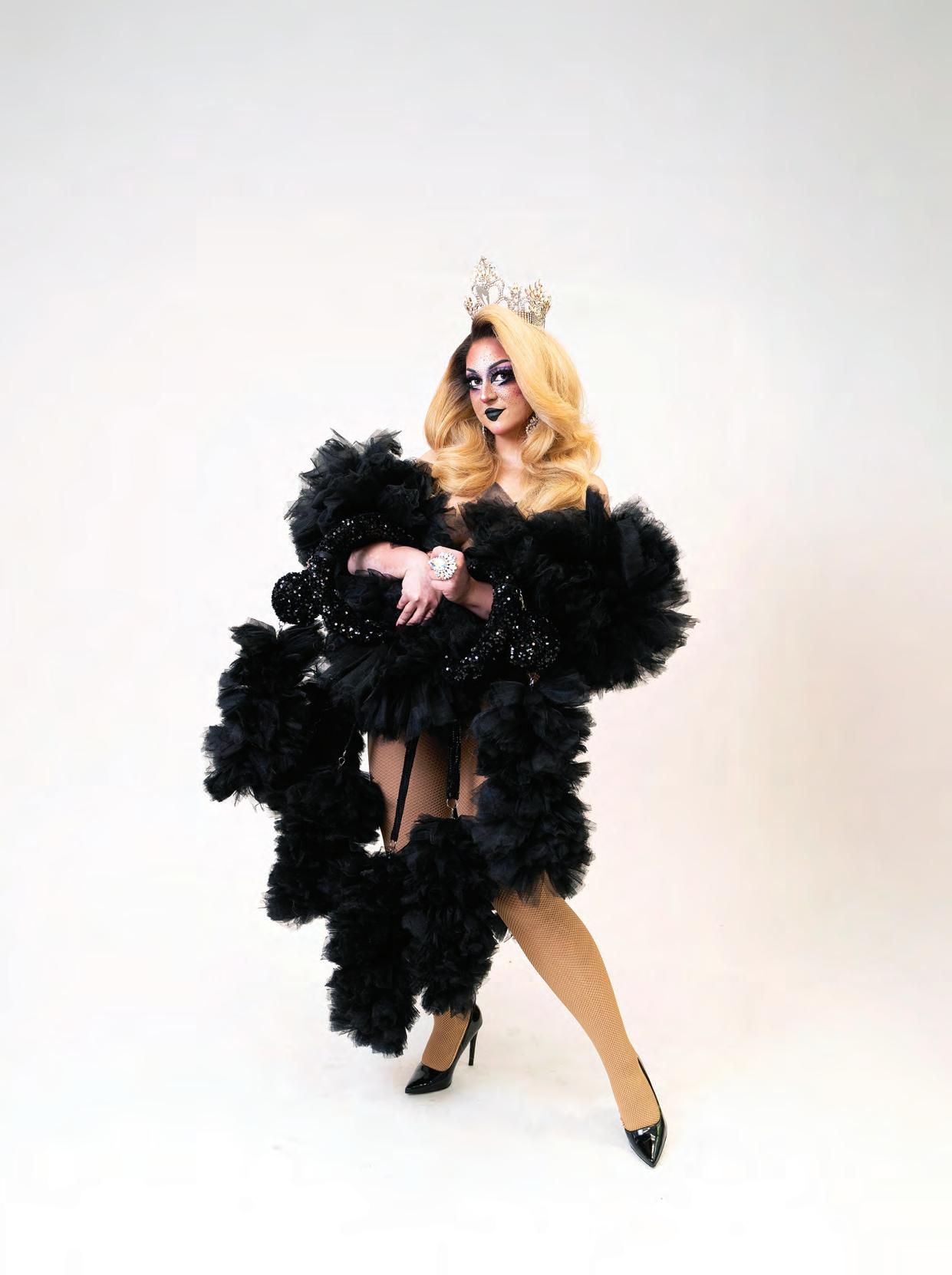
What do Little Shop of Horrors, black lipstick, and a powerhouse live vocal have in common? They all define Phoebe Seymour, the Deer Park-born performer bringing musical-theater polish and offbeat charm to Houston drag. A member of the Seymour drag family and the first-ever Miss Gay Texas America Femme, Phoebe blends Broadway dreams, pageant presence, vintage flair, and a little weird-girl edge into a persona that is all her own. You can find her hosting karaoke every weekend at JR’s Bar & Grill, where her signature freckles, vocal runs, and livesinging songbird energy have made her a familiar voice in Montrose.
Pronouns? She/her, in and out of drag!
Inner Avatar? Cher, for sure.
Hometown? Deer Park, Texas
Drag birthday? June 27, 2021
Is there a story behind your stage name?
I grew up doing musical theater. It was my first love, and my college degree! So if you say my name fast, you might be able to hear “Feed me Seymour” from one of my all-time favorite musicals, Little Shop of Horrors!
Tell us about your drag family. My incredible mother, Iris Seymour, runs her own company, Seymour Butts. She makes pads for drag queens all over the world! My sisters are immaculate dancers and artists, as well. Andy Seymour is a beautiful Juilliardtrained dancer and choreographer. Catalina Seymour-Alexander is a phenomenal competition dance teacher and choreographer. And Dazy Seymour is an up-and-coming clown of the town. But our family lineage goes back a little further than that, as my hilarious meemaw is none other than Houston favorite Estella Blow!
Tell us about your musical-theater background and how it relates to drag.
I have been performing ever since I could remember. My very first role was actually baby Jesus at 3

months old, and I’ve never stopped. I grew up performing and singing all over Texas, but ultimately decided to go to school for musical theater at Sam Houston State University. In college, I also fell in love with special effects, makeup, and vintage clothing. Phoebe was born due to me realizing that I could hone all of my skills into one place for a perfect form of self-expression.
What got you interested in drag?
One of my favorite characters that I’ve played is Tracy in Hairspray. Traditionally, Tracy’s mother is played by a drag queen. Then when COVID shut the world down, I rediscovered drag with some of my best friends! It lit a fire under me that I thought I had lost.
Describe your performing persona. She’s spunky and weird, and always has a little bit of an edge with her black lipstick.
Any titles or pageants under your belt?
I am incredibly blessed to say that I am the first ever Miss Gay Texas America femme! I just came back from nationals (Miss Gay America), where I placed fourth alternate and Miss Congeniality! I was the only person from Texas to make it into the top ten in both divisions. I’m also the only afab performer to have won Dessie’s Drag Race, our local drag race here in Houston.
Most embarrassing moment onstage?
As a live-singing drag queen, I get a little nervous every single time I’m about to perform, because my ultimate fear is singing the wrong words—and trust me, it’s happened before. And every time it does, it is the most embarrassing thing!
What does Pride mean to you?
Pride, to me, is not just a big party, it’s about being visible and remembering everyone who came before us! The people who fought to be able to have these beautiful parties of love and acceptance! All the efforts it took so we are able to be open and proud! Those fights took a long time, and if we forget that, we might just have to fight again!
Visit our site to read the full conversation with Phoebe Seymour.