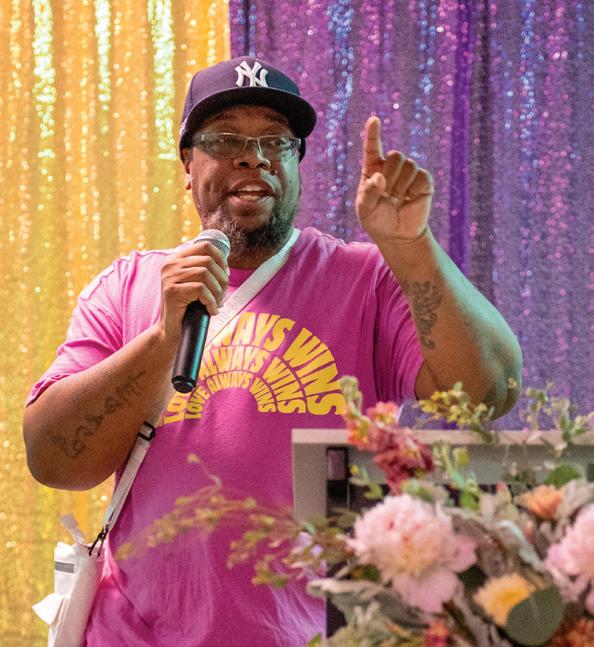
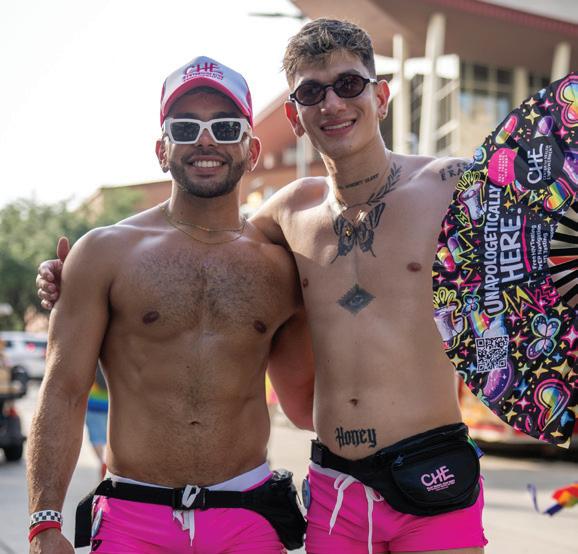
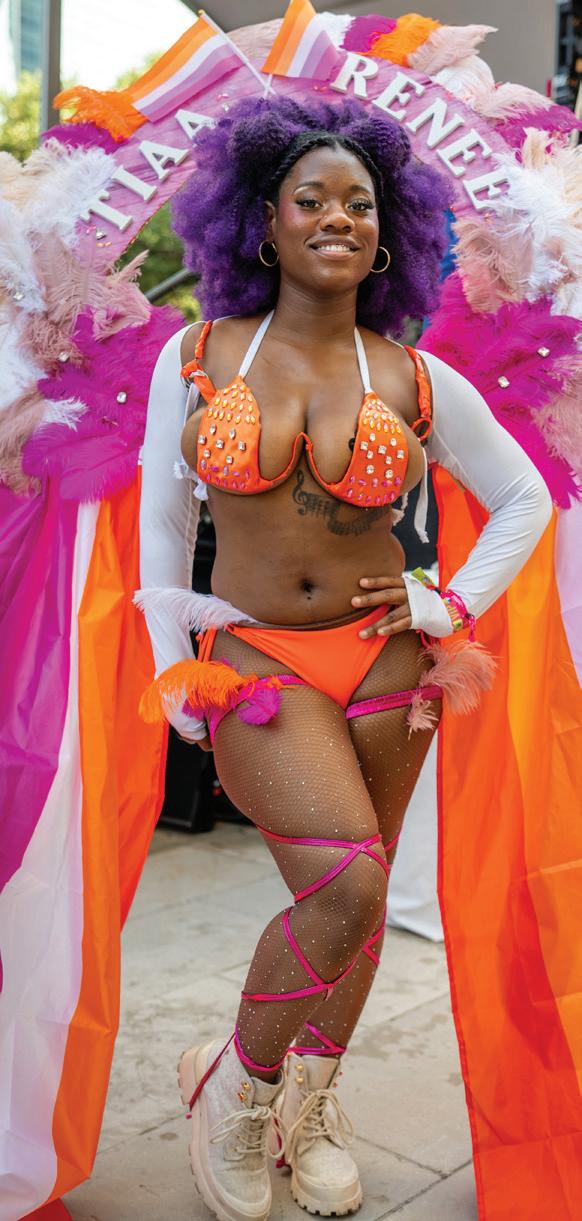
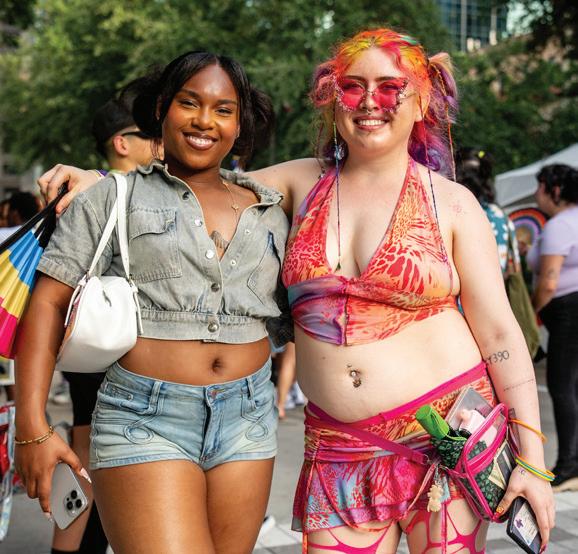
Galveston advocates sustain LGBTQ life year-round Pg. 26
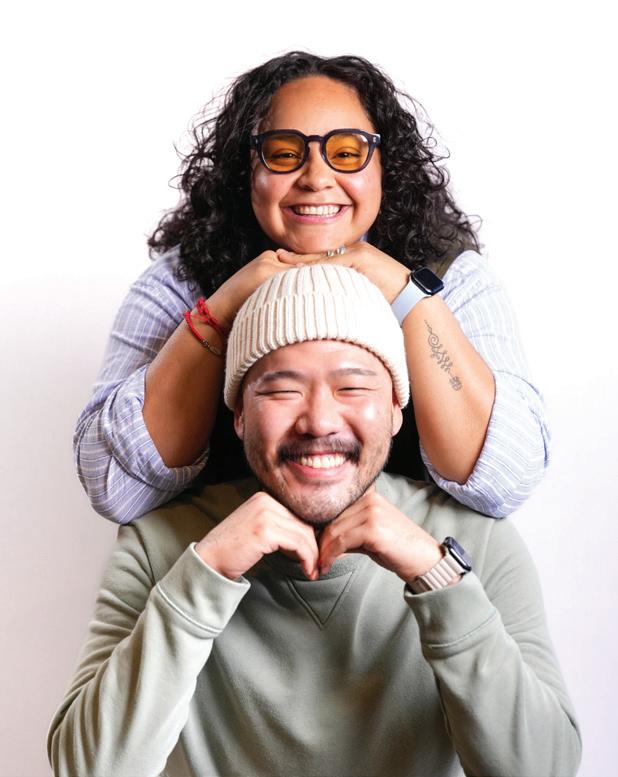
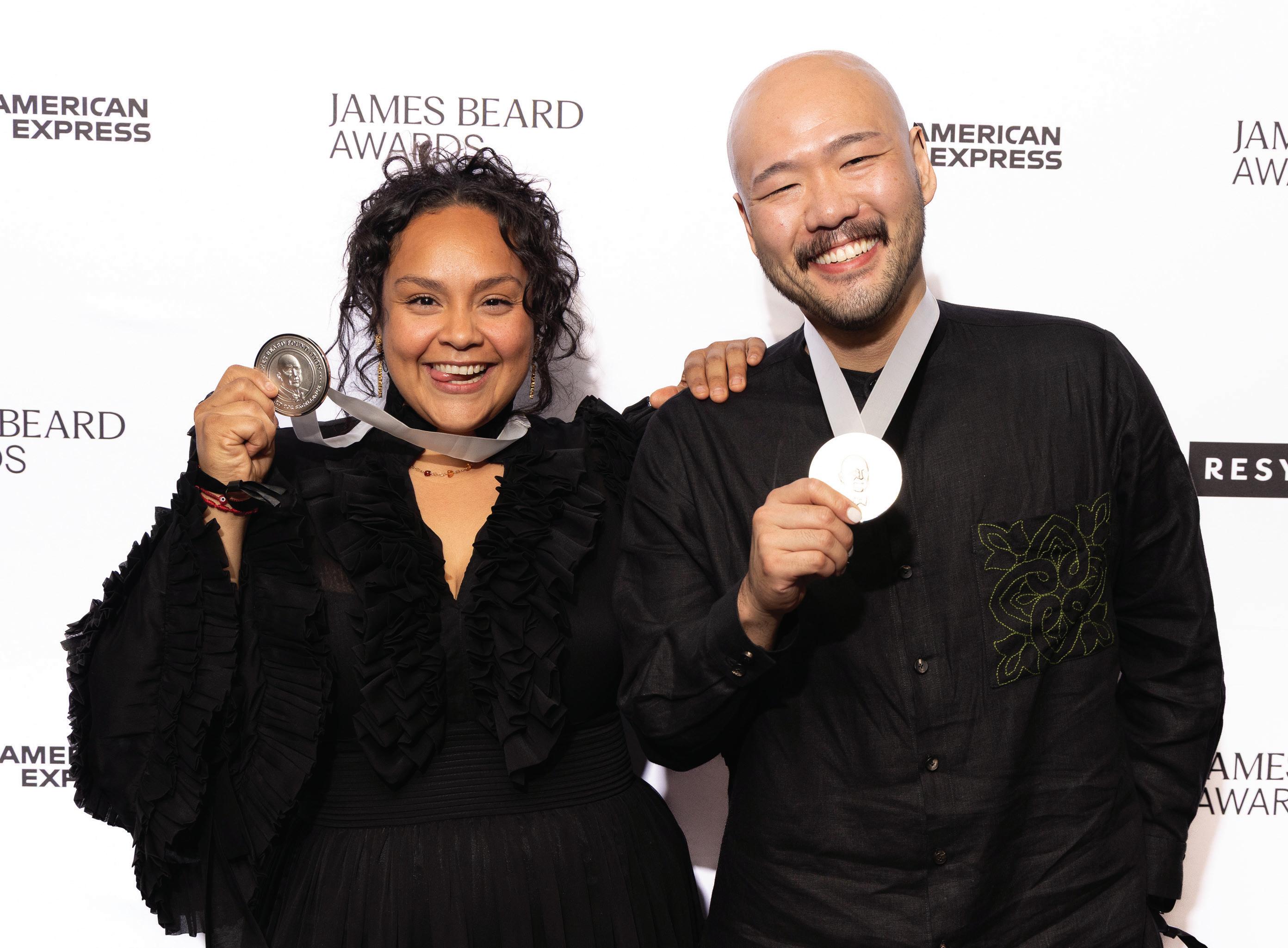
For Evelyn Garcia and Henry Lu, JŪN’s James Beard win is rooted in heritage and friendship Pg. 18
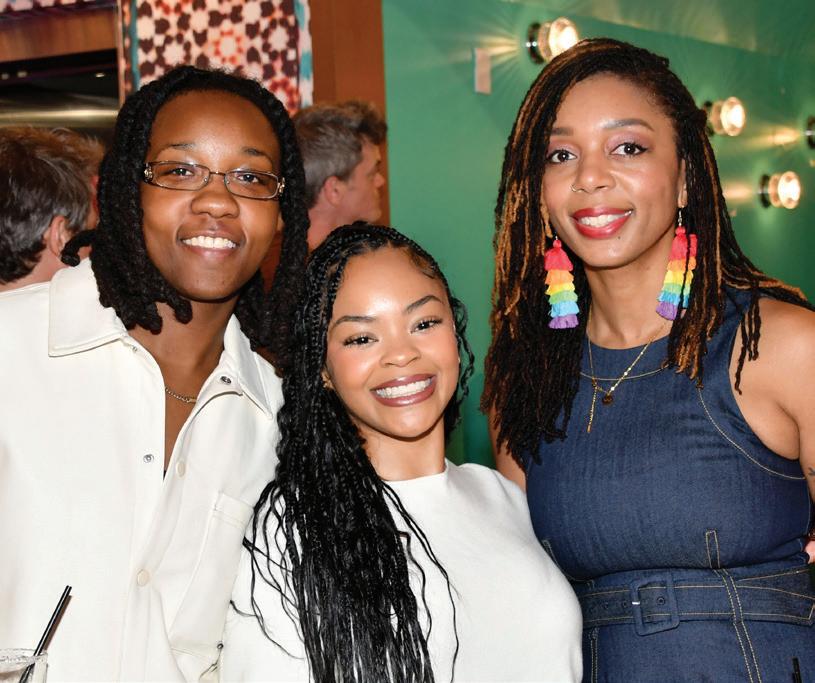
BEYOND the BINARY
Three nonbinary locals share stories of visibility Pg. 32
PEARL 2.0
Julie Mabry’s larger, bolder lesbian bar Pg. 16
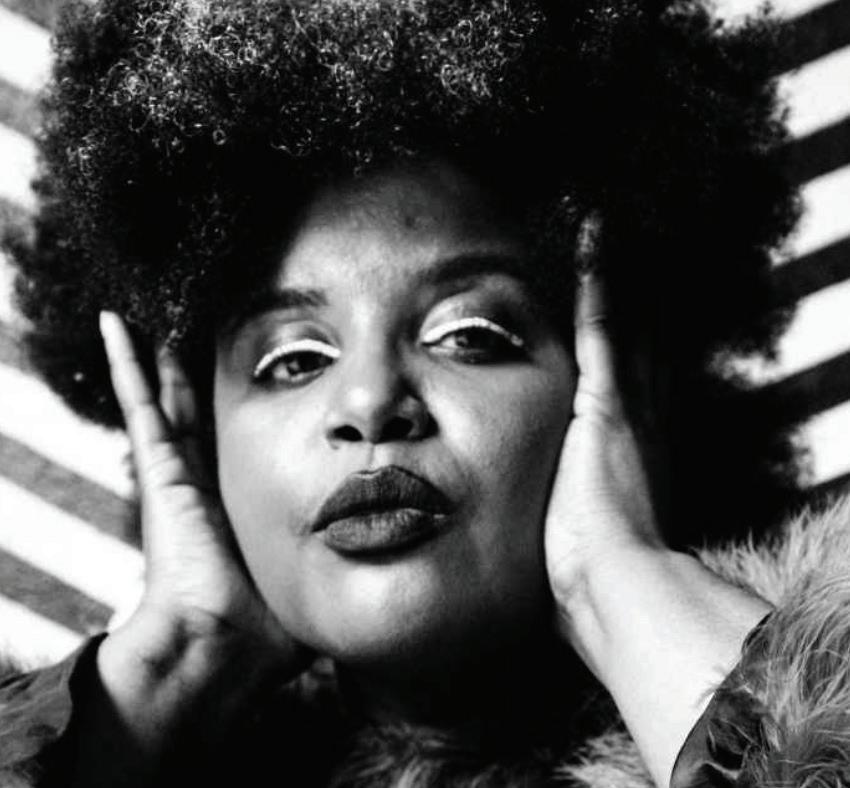
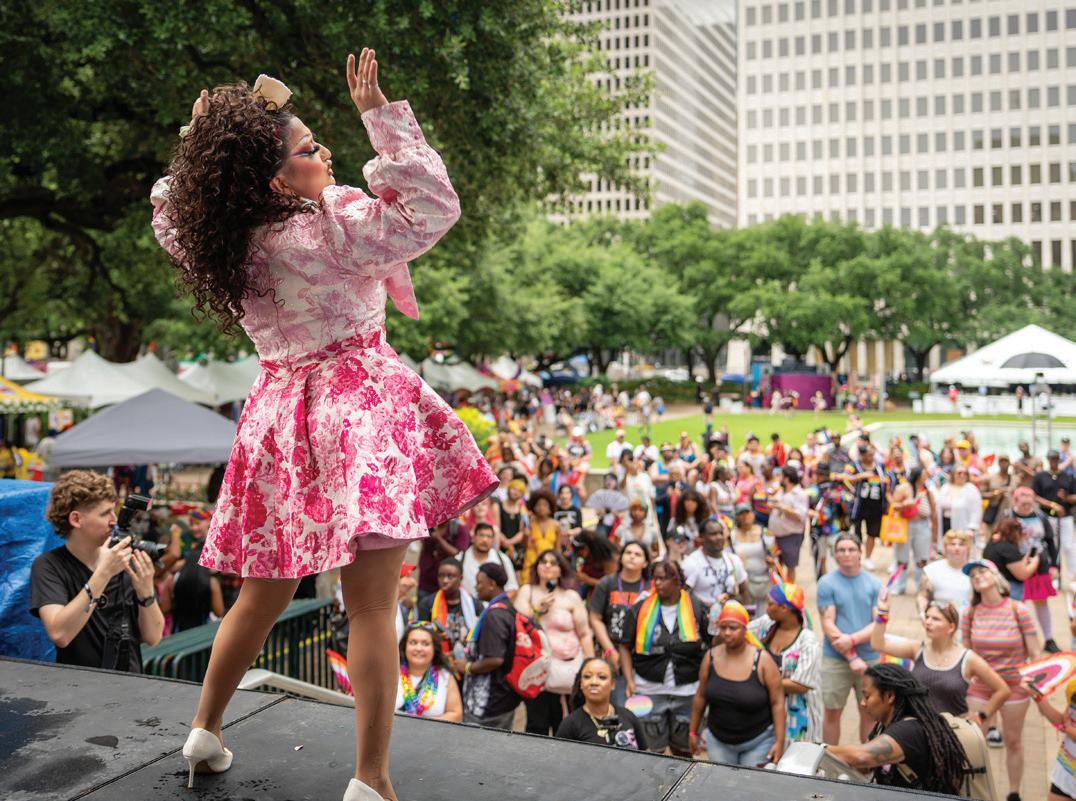
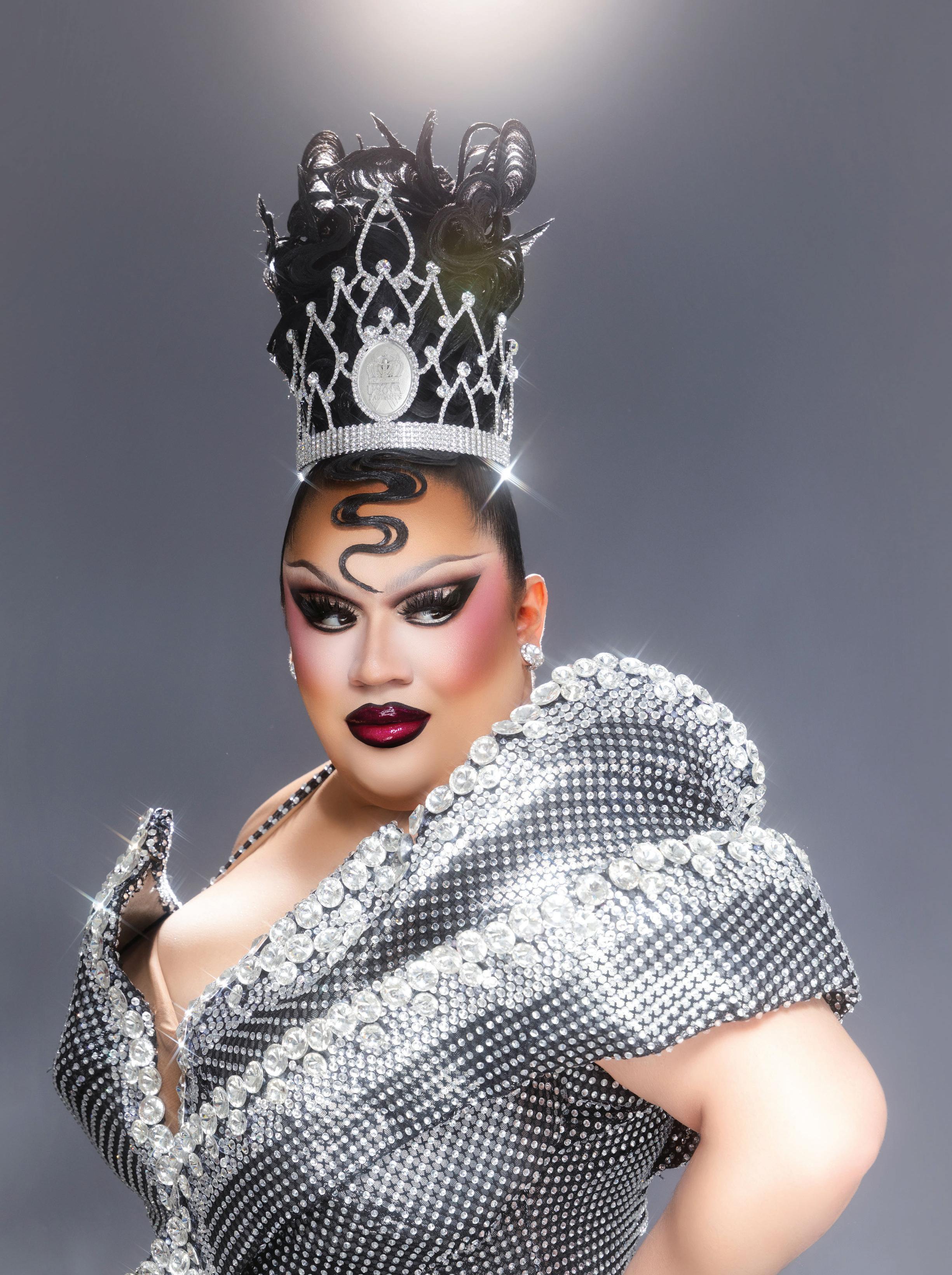
QUEEN in MOTION
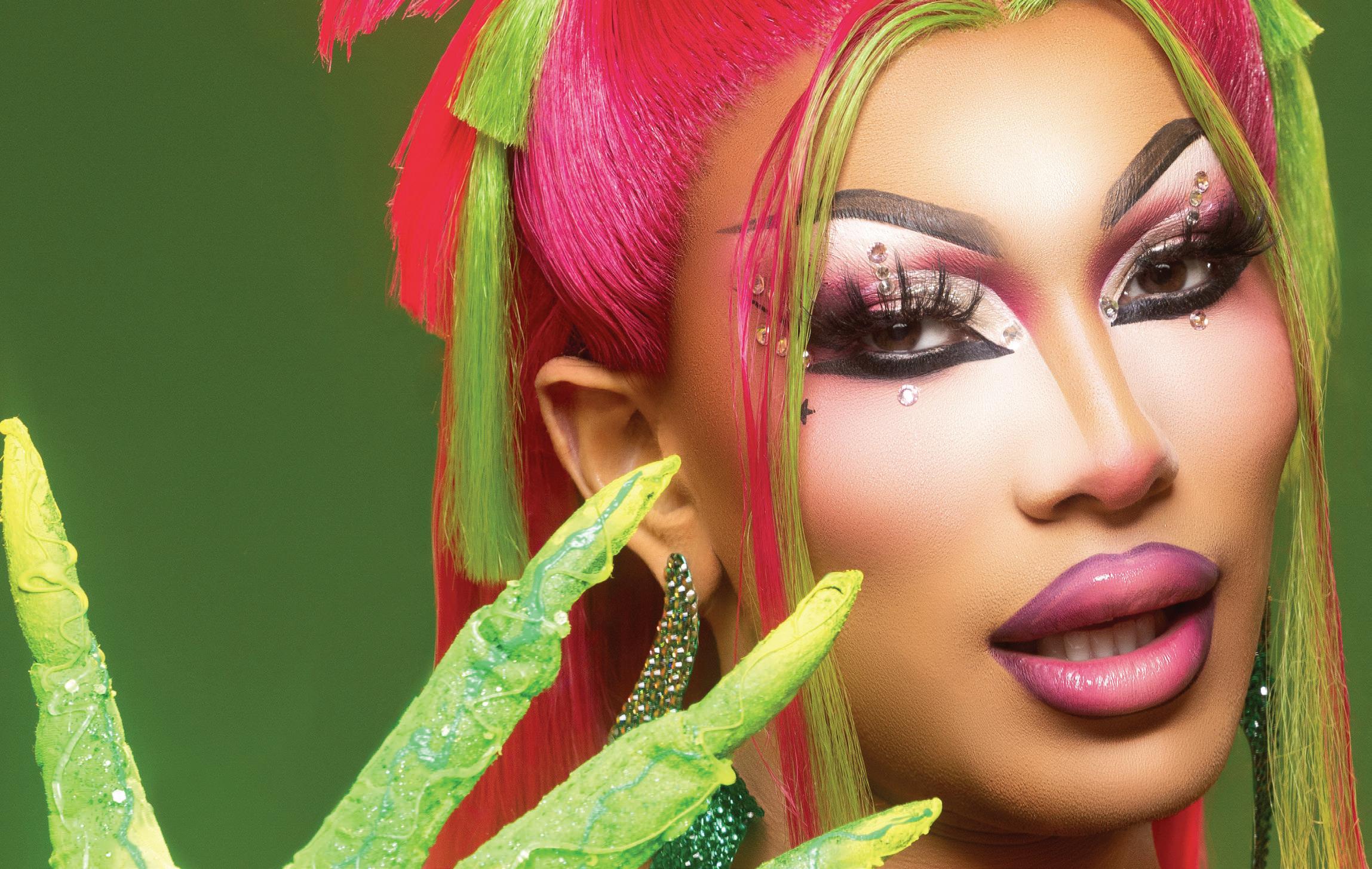
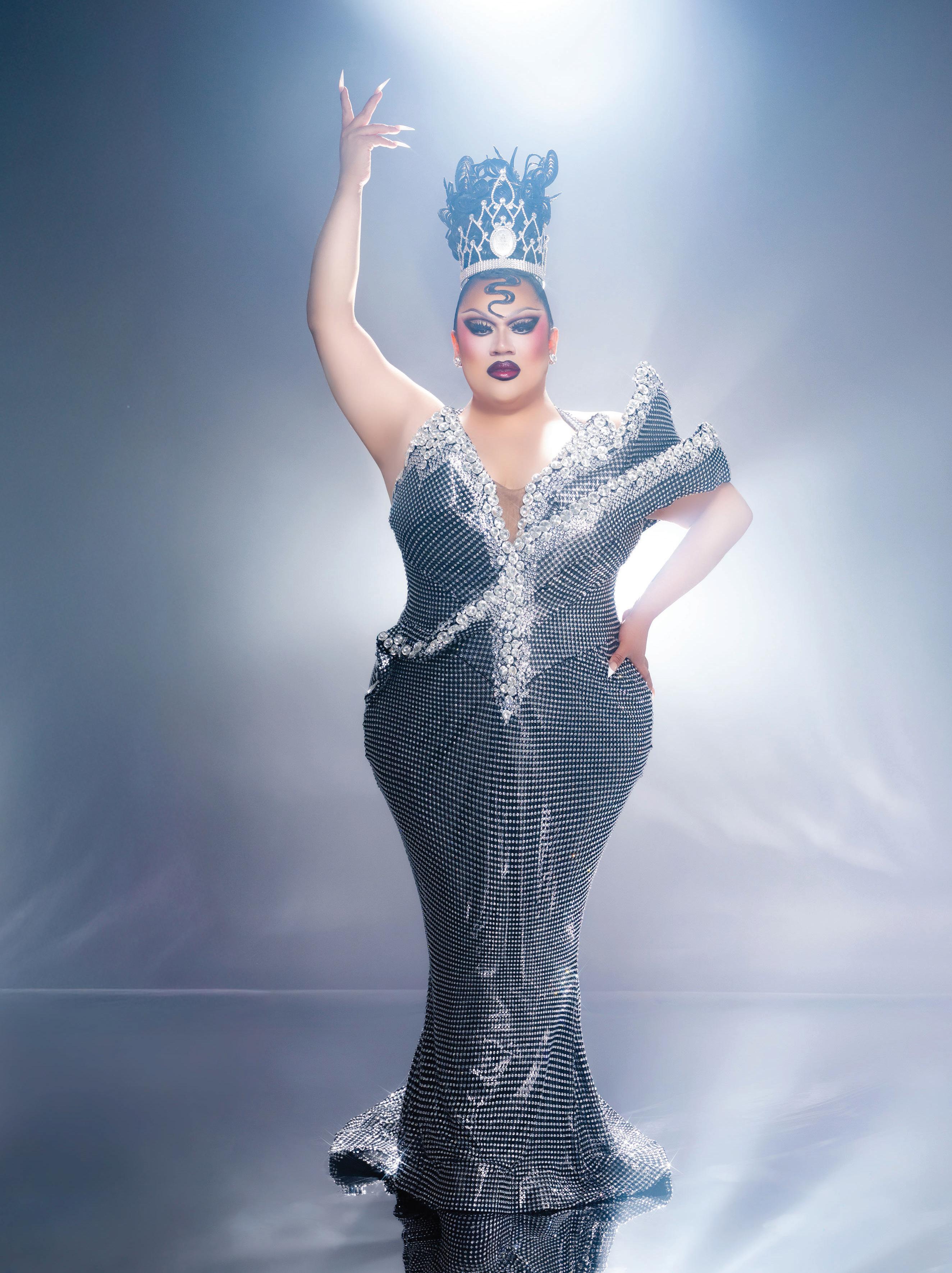
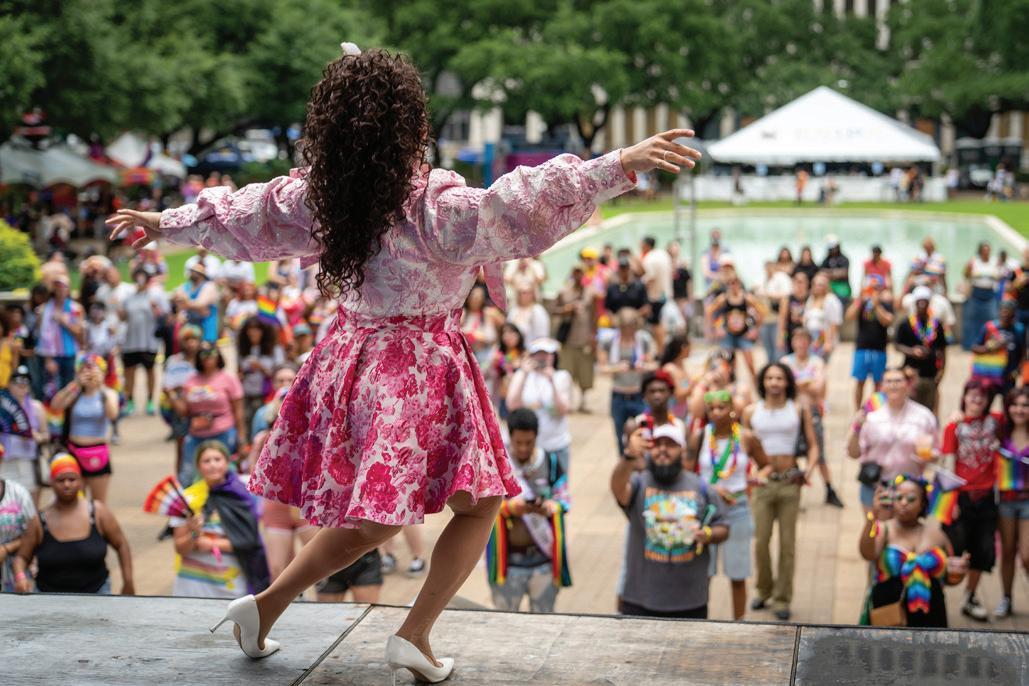
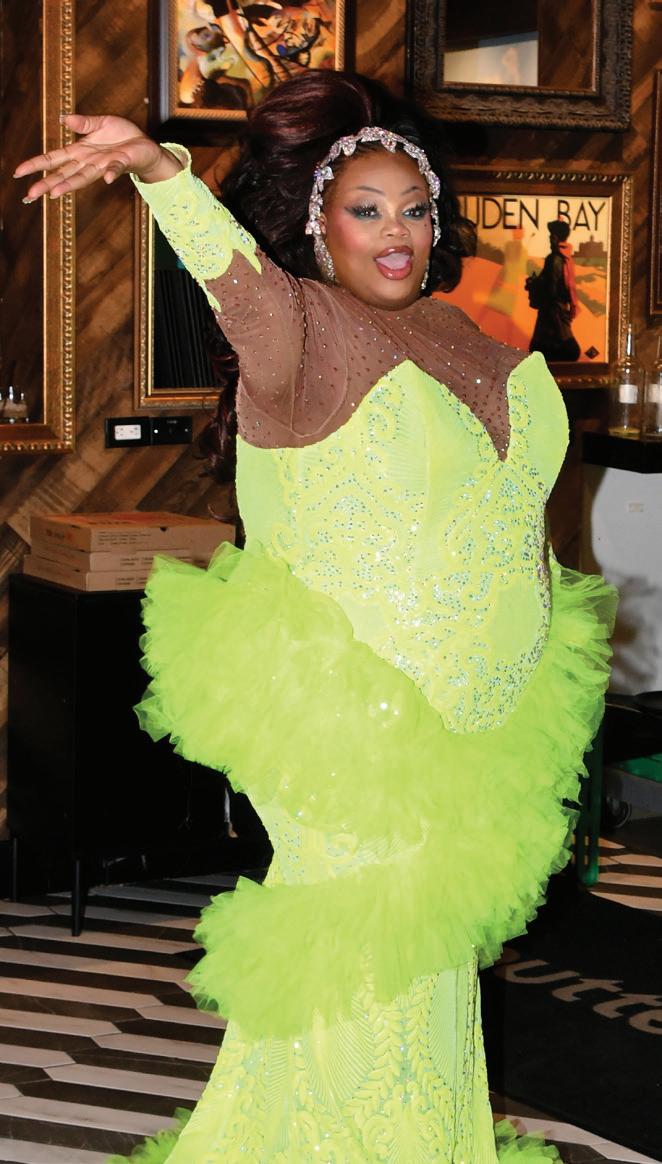
Reign LaRue takes on pageantry Pg. 44
Julie
ACCT’s
Christina
Dr. Robert Hines
Dr. Adrian Reyes
Dr. Wendell Dela Cruz
Dr. Marcus de Guzman
20
WORLD CUP
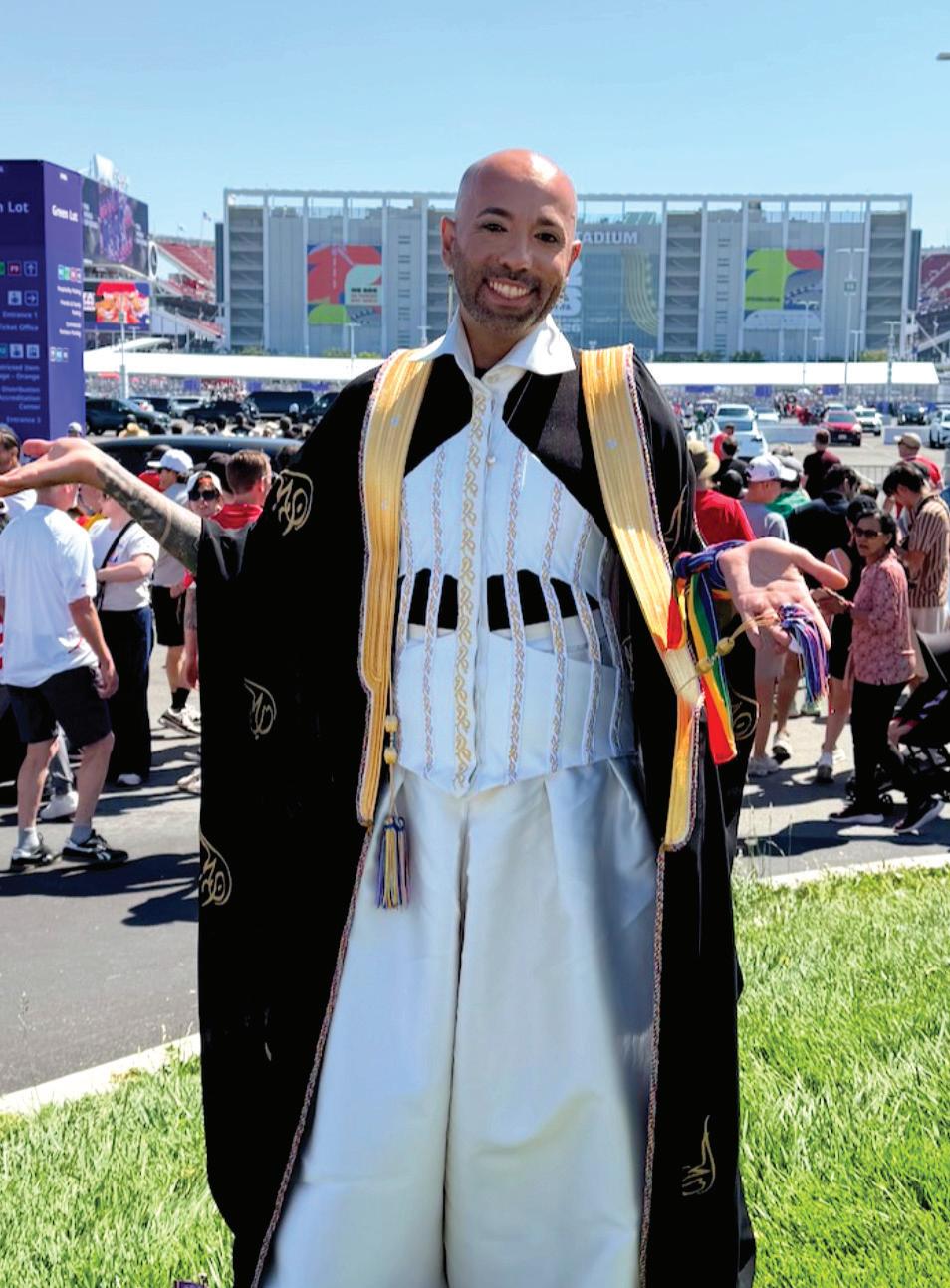
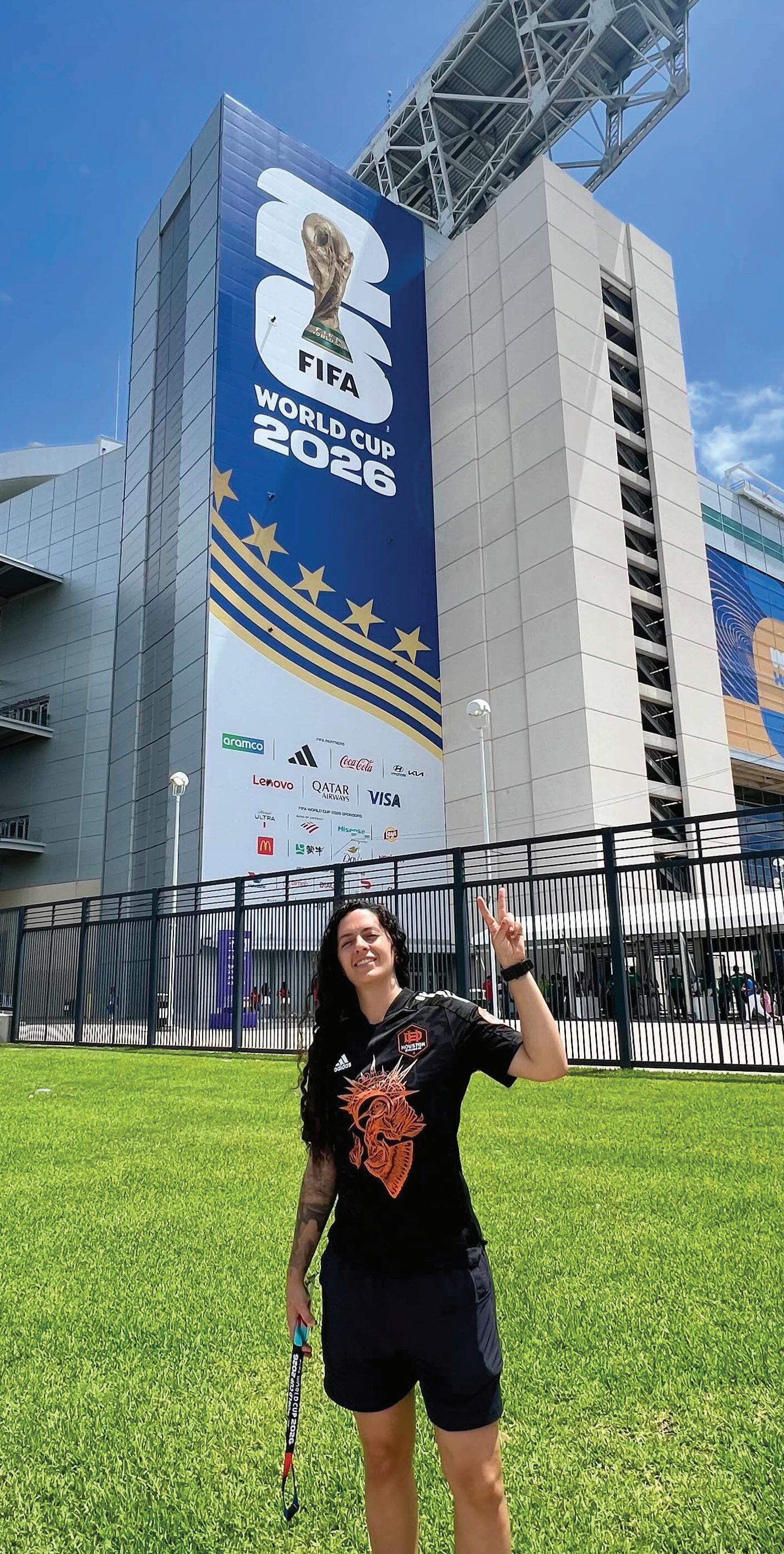
Dr. Nasser “Nas” Mohamed brings queer Arab visibility to the World Cup stage
2026 FIFA WORLD CUP
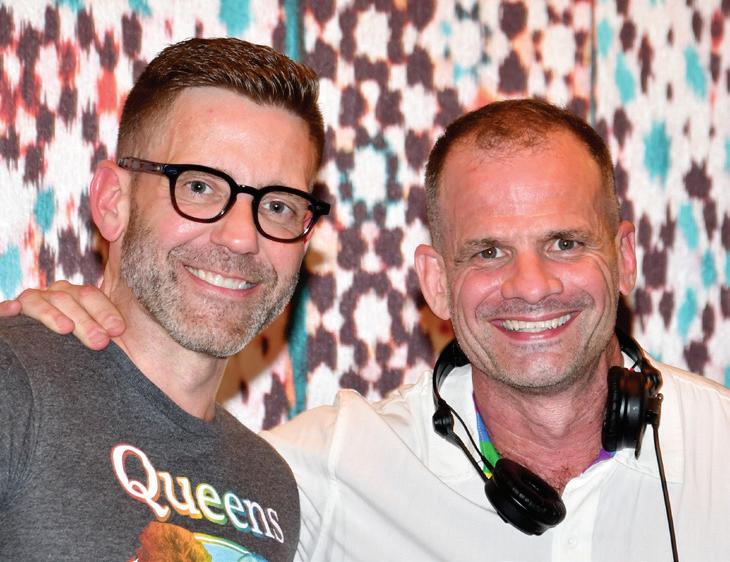
DJ Athenz is Houston’s soundtrack to the FIFA World Cup 2026
For International Non-Binary People’s Day, three Houstonians reflect on visibility
THE BINARY
Abbie Madden challenges diet culture with queer-affirming, weight-neutral care
41 READ OUT
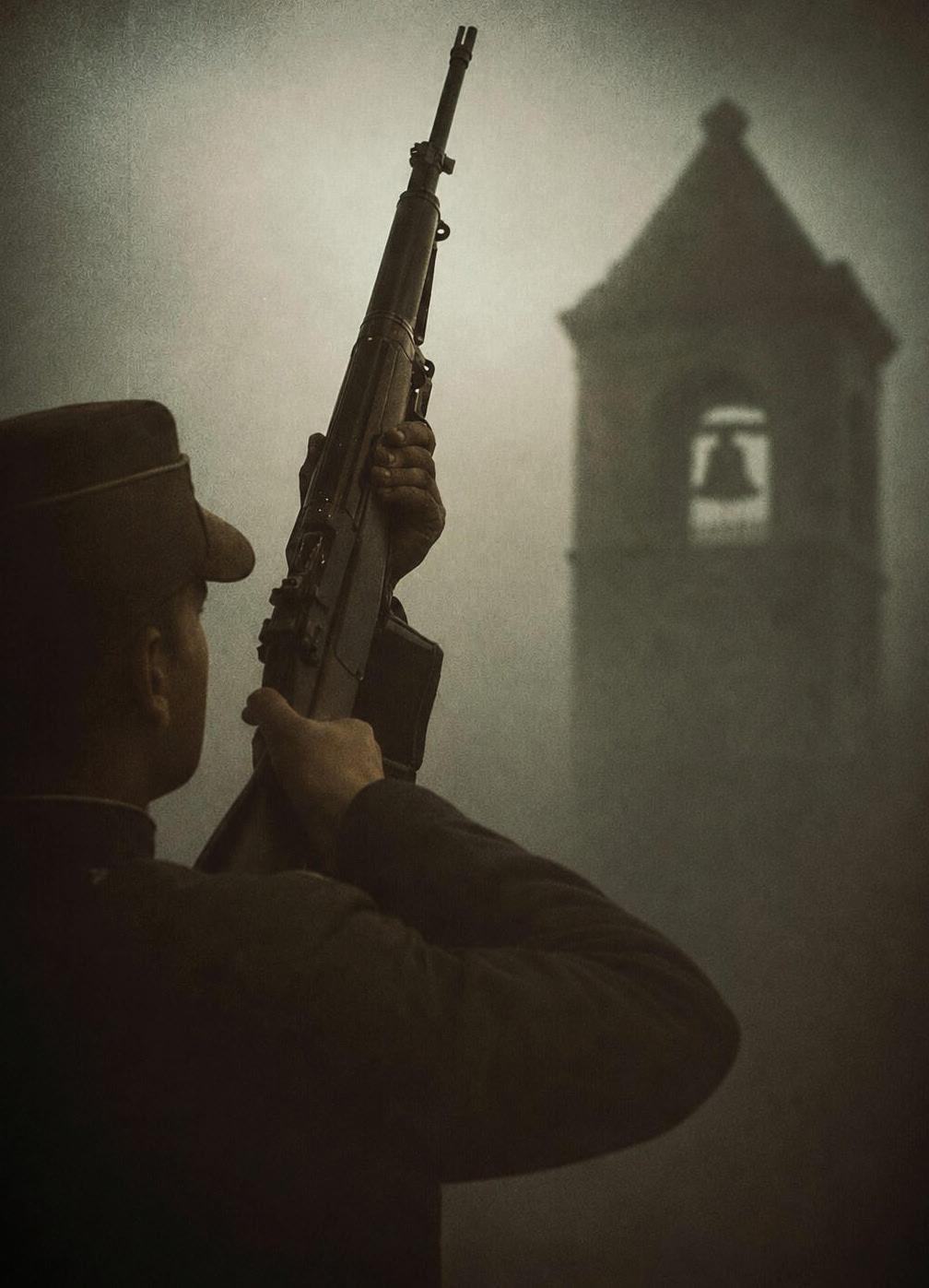
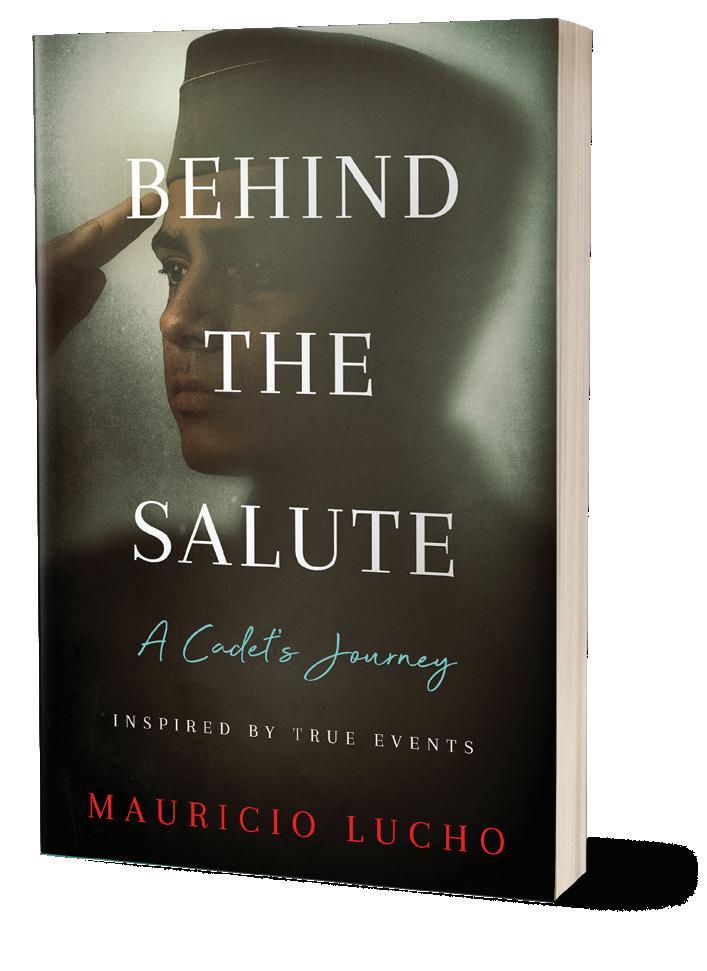
Author Mauricio Lucho depicts life under “Don’t Ask, Don’t Tell” in Behind the Salute: A Cadet’s Journey
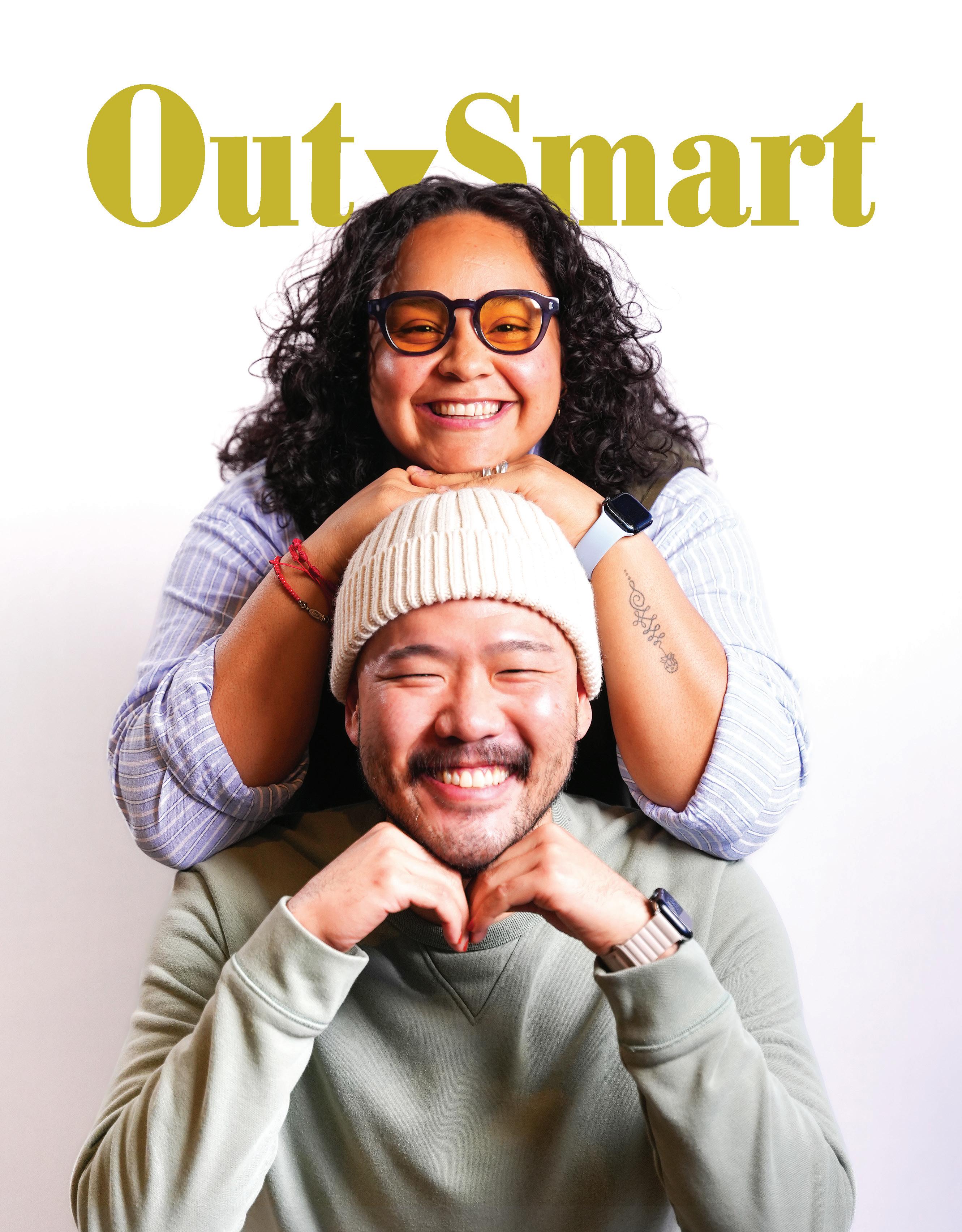
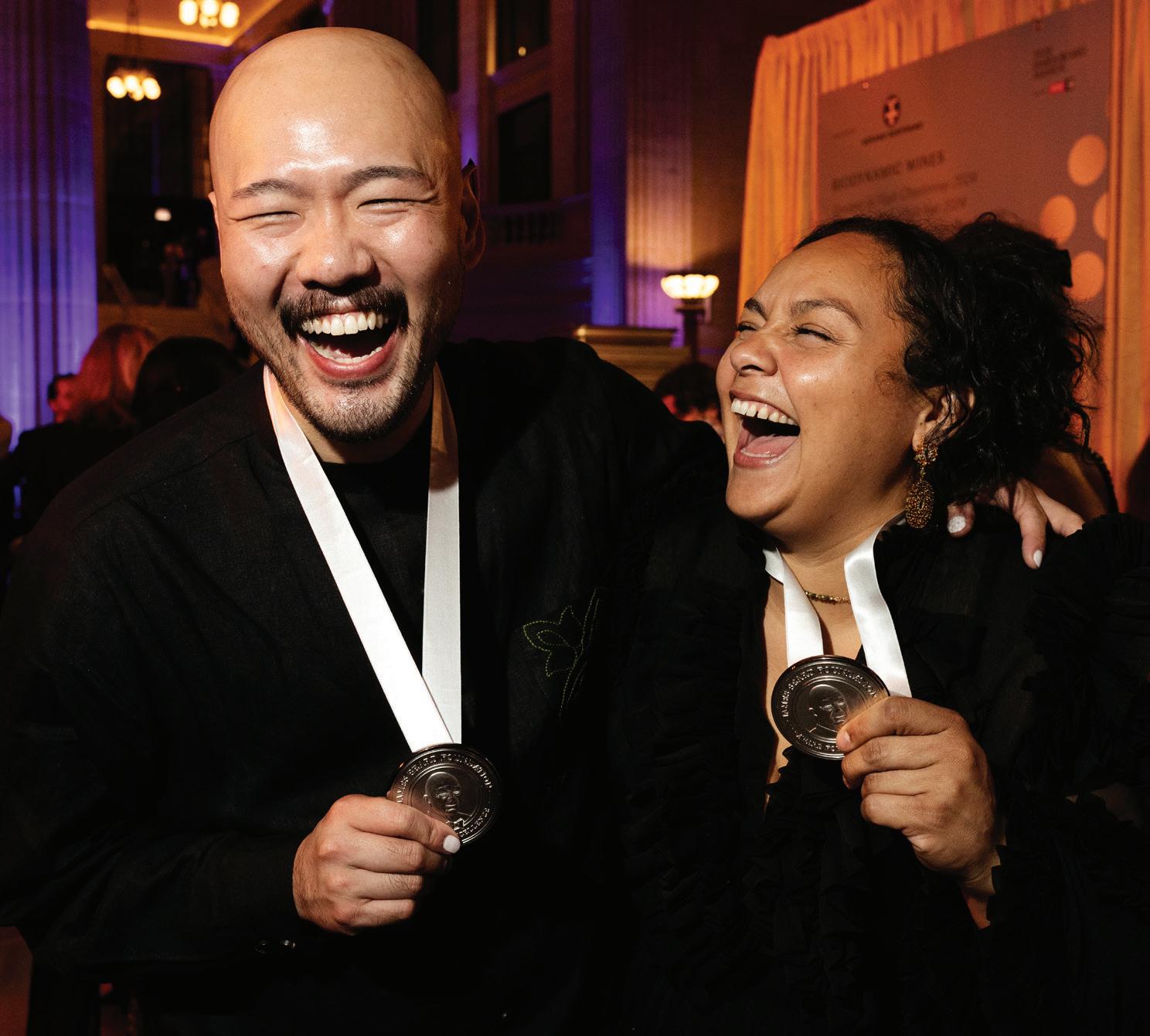
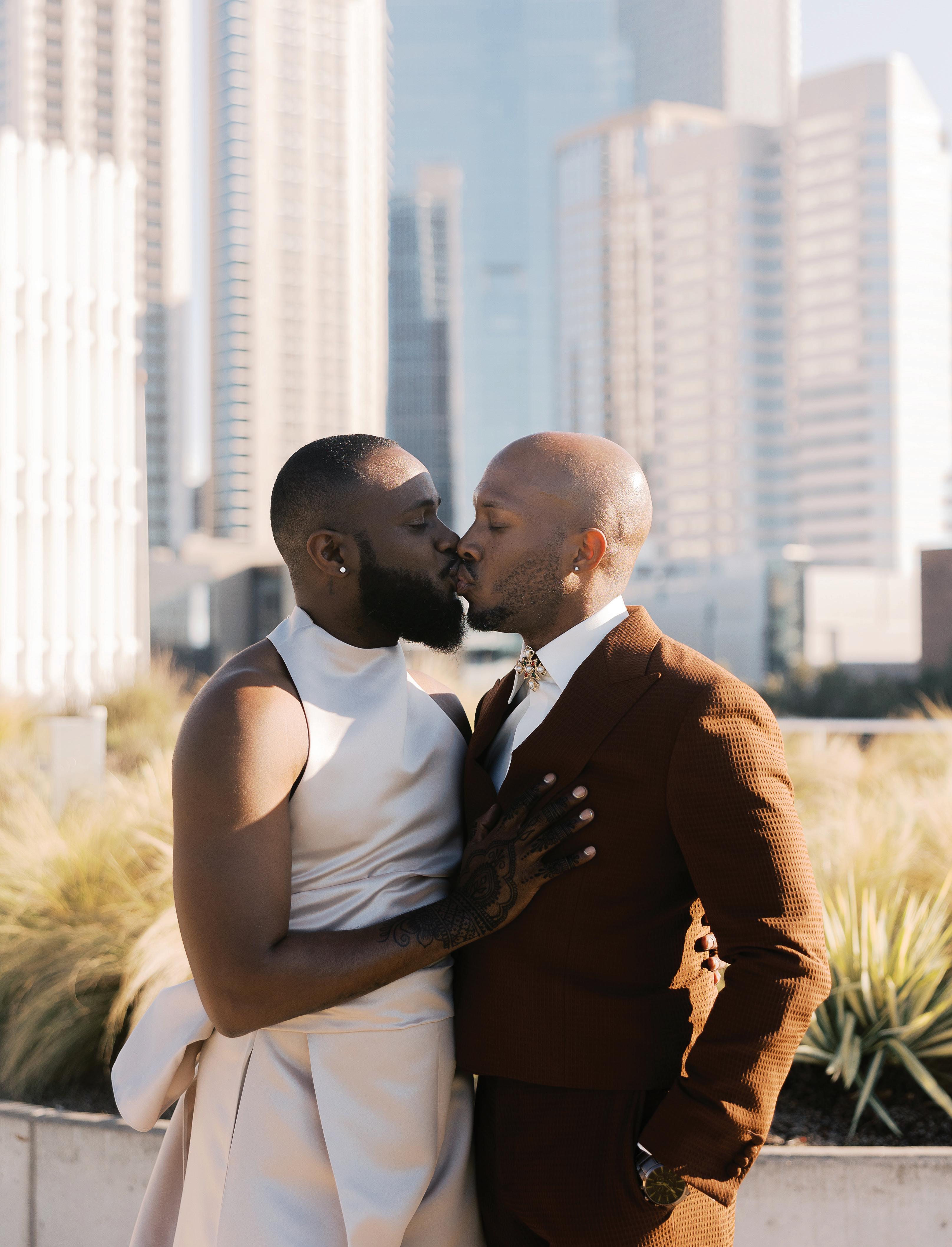
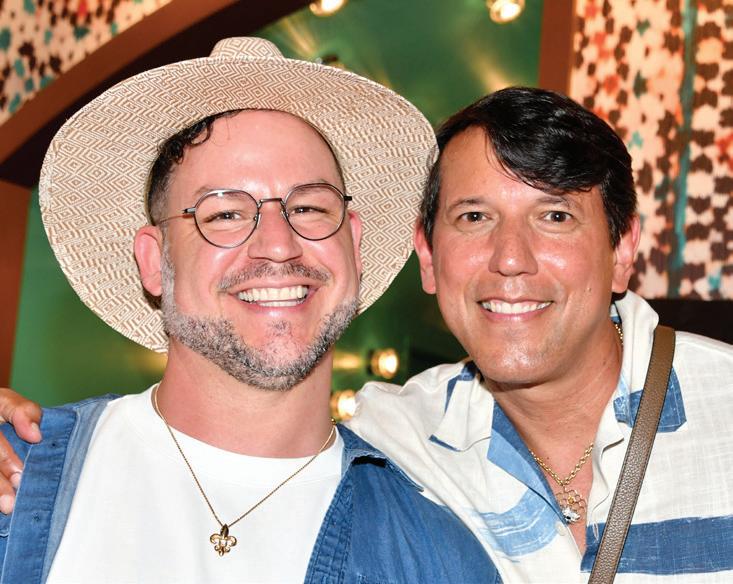
Evelyn Garcia and Henry Lu, JŪN’s James Beard win is rooted in heritage and friendship. Story by Benjamin Leger Photo by Michael Ma of Makin Media Studios
DR.
Winner
AUSTIN
Finalist Best Dentist
JACQUELINE
Winner
MELISSA BAEZ
Finalist Dental Hygienist
Publisher/Editor-in-Chief Greg Jeu
Creative Director Alex Rosa
Copy Editors Janice Stensrude
Contributing Writers
Olivia Flores Alvarez, Rich Arenschieldt, Connor Behrens, Sam Byrd, Kevin Casey, David Clarke, Brett Cullum, Blase DiStefano, D. Woodja Flanigan, Ste7en Foster, Martin Giron, Marene Gustin, James Hurst, Benjamin Leger, Lisa Keen, Zachary McKenzie, John Nechman, David Odyssey, Gregg Shapiro, Janice Stensrude, Terrance Turner, Grace S. Yung, Brandon Wolf
Photographers/Illustrators
Edgardo Aguilar, Victor Contreras, Nora Dayton, Dalton DeHart, Kayla Griffith, Lucio Nieto, Alex Rosa
Sales and Marketing Department
Tom Fricke, Greg Jeu, Karren Lovelady, Melvin Mendoza, Alex Nial, Aaron Rublein, Kennedy Shepherd
National Advertising Representative Rivendell Media 212.242.6863
Local Advertising Representative OS Media 713.520.7237
Up&Out Communications OutSmart Media Company
Publishers of OutSmart Magazine 3406 Audubon Place • Houston, TX 77006 713.520.7237
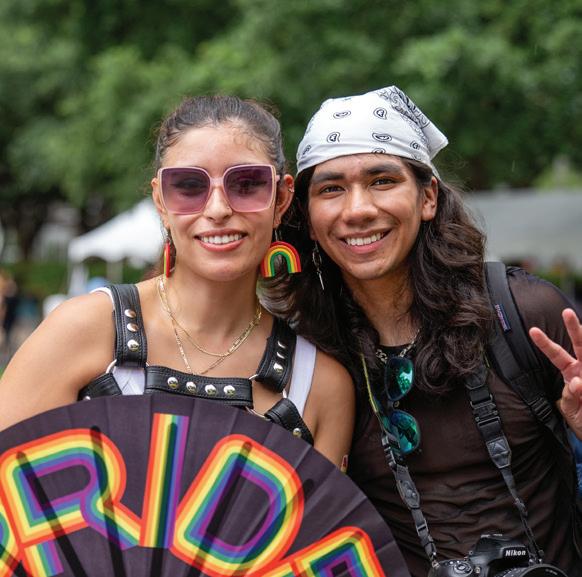
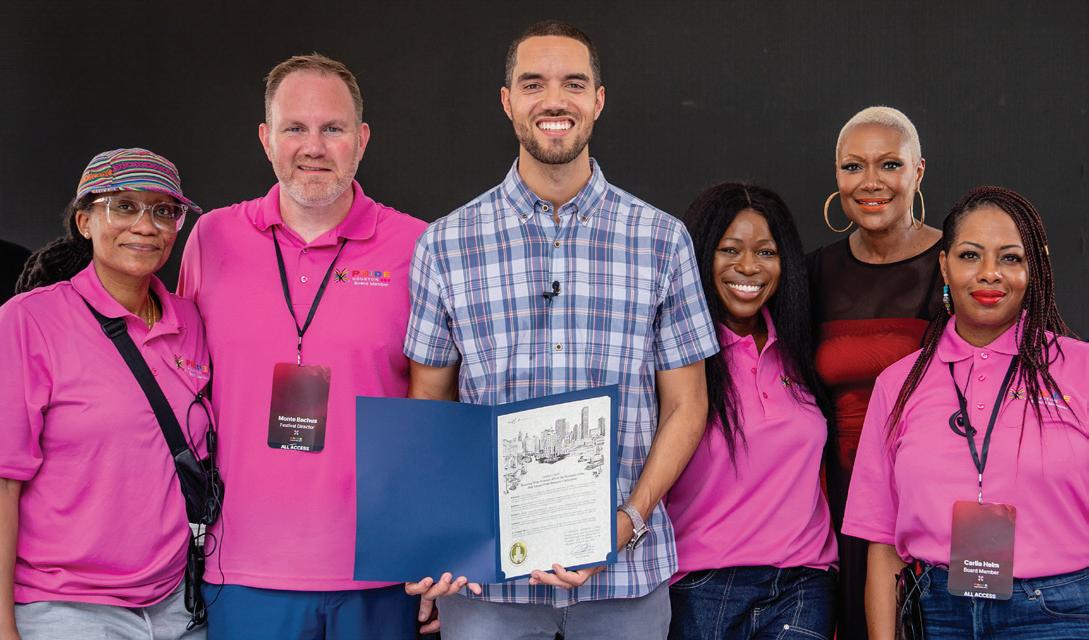
On our cover, Chef Henry Lu and Chef Evelyn Garcia reflect on the James Beard Award win that marked a defining moment for their Heights restaurant JŪN. Written by Benjamin Leger, the story looks beyond national recognition to the friendship, family histories, and shared vision that shaped one of Houston’s most celebrated restaurants. Garcia’s Salvadoran and Mexican heritage, Lu’s Southeast Asian roots, and Houston’s food culture all inform JŪN’s point of view. Their success extends through Third Place, the lunchtime pop-up platform inside the restaurant that supports local organizations and chefs.
That idea of creating space continues with Julie Mabry and Pearl, Houston’s only lesbian bar. Mabry has moved Pearl into a larger home on Washington Avenue, giving the community more room for dancing, dining, events, and connection. At a time when lesbian bars remain rare, Mabry is clear that Pearl remains lesbian-owned and centered while welcoming broader community and allies.
Houston’s global moment comes into focus as the city welcomes seven FIFA World Cup matches. DJ Athenz brings her sound to an EDITOR’S
international audience as the official DJ for the Michelob Ultra Activation Zone at Houston Stadium. Dr. Nasser “Nas” Mohamed’s Love Is the Goal campaign uses soccer’s biggest stage to center LGBTQIA+ visibility, queer Arab representation, and dignity through Pride House partnerships, music, merchandise, and symbolic fashion.
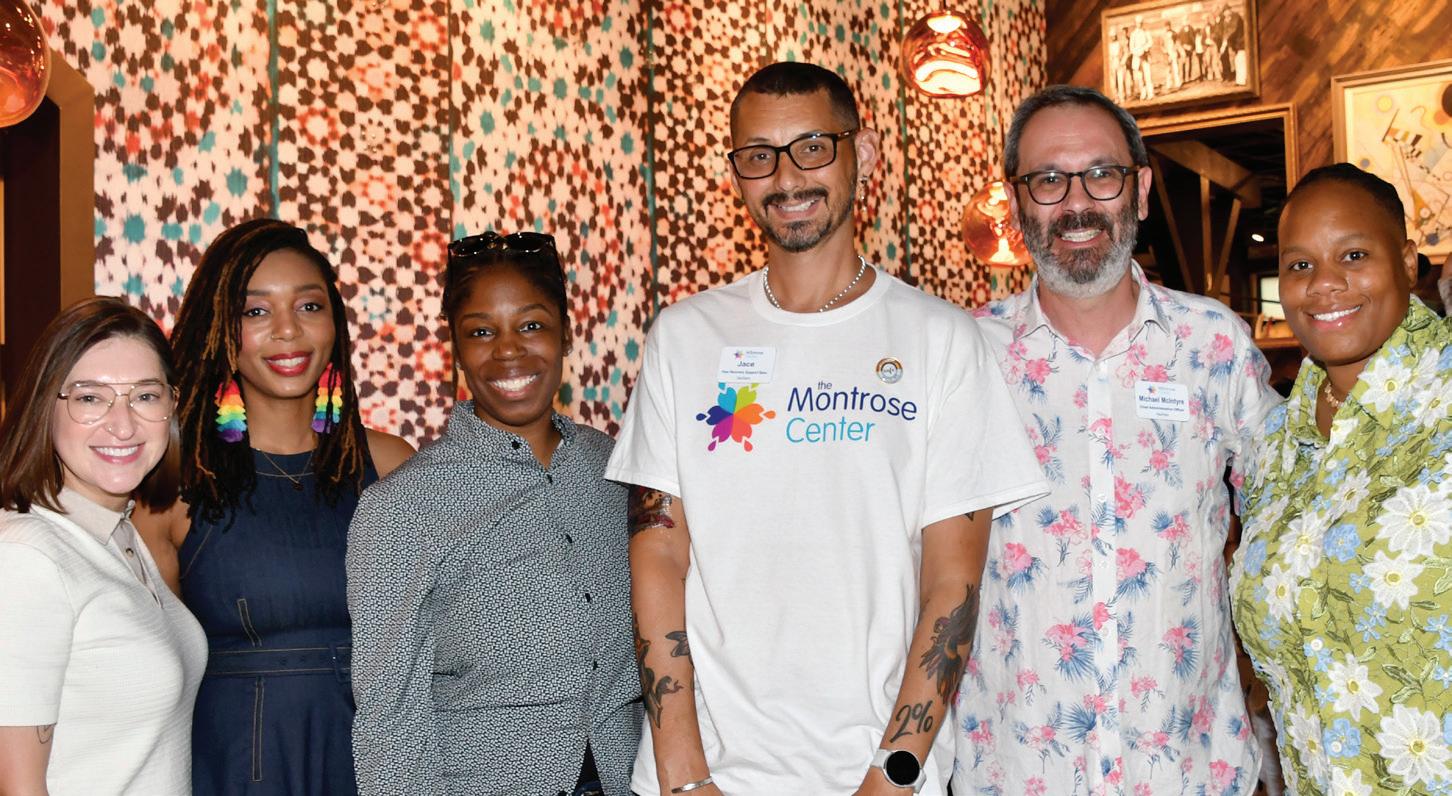
Our annual Queer in Galveston feature looks beyond beach weekends to the yearround work sustaining its LGBTQ community. Christina Weaver of Galveston Island Fundraising of Texas, Tom Griffiths of Access Care of Coastal Texas, and Tammy Fountain of the Texas Gay Rodeo Association’s Galveston chapter reflect a coastal community shaped by fundraising, HIV prevention, recovery, mental health care, advocacy, and support.
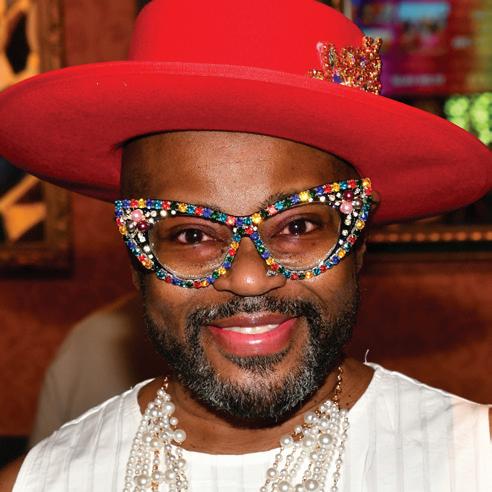
For International Non-Binary People’s Day, we speak with Riot Stanley, Nore Gonzalez, and Ethan Michelle Ganz about identity, language, authenticity, and being seen beyond the binary. We also profile Abbie Madden of Space City Nutrition, whose queer, weight-neutral practice brings affirming care to conversations about food, body autonomy, and health.
In recognition of Disability Pride Month, Nathaniel De La Fuente shares a story of per-
OutSmart Foundation for LGBTQ News and Media
Why are we asking you to donate to the OutSmar t Foundation?
Your suppor t empowers the LGBTQ communit y through essential journalism, helping OutSmar t Media thrive in a rapidly evolving media landscape. Your tax- deductible contribution expands our newsroom, compensates dedicated journalists , and invests in the latest media technology. It also funds internships for future writers commit ted to social justice.
severance as a longtime HIV-positive survivor living with disability. Wigging Out features Reign LaRue, whose career reflects preparation and representation for plus-size entertainers. We also spotlight Mauricio Lucho’s Behind the Salute, a semi-fictionalized memoir preserving LGBTQ military history.
As always, we want to thank our contributing writers and photographers whose work is essential in telling Houston’s LGBTQ stories. Our readers, advertisers, and donors who sustain the work of this magazine and the OutSmart Foundation also deserve special recognition. If you believe community-driven journalism matters, please consider donating to the OutSmart Foundation for LGBTQ News and Media.
By suppor ting the OutSmar t Foundation, you invest in a plat form that amplifies underrepresented voices and promotes equalit y through stor y telling . You help produce journalism that confronts prejudice and embraces diversit y.
Thank you for suppor ting independent LGBTQ media in Houston. Your contribution helps our plat form thrive, amplif ying diverse voices and stories .
Donate by tex ting OU TSMART to 53-555 or use your phone’s camera to scan the QR code here.
Greg Jeu Publisher
Proudly serving Houston’s LGBTQ+ community with affirming care for over 40 years. Learn more at LCH.org
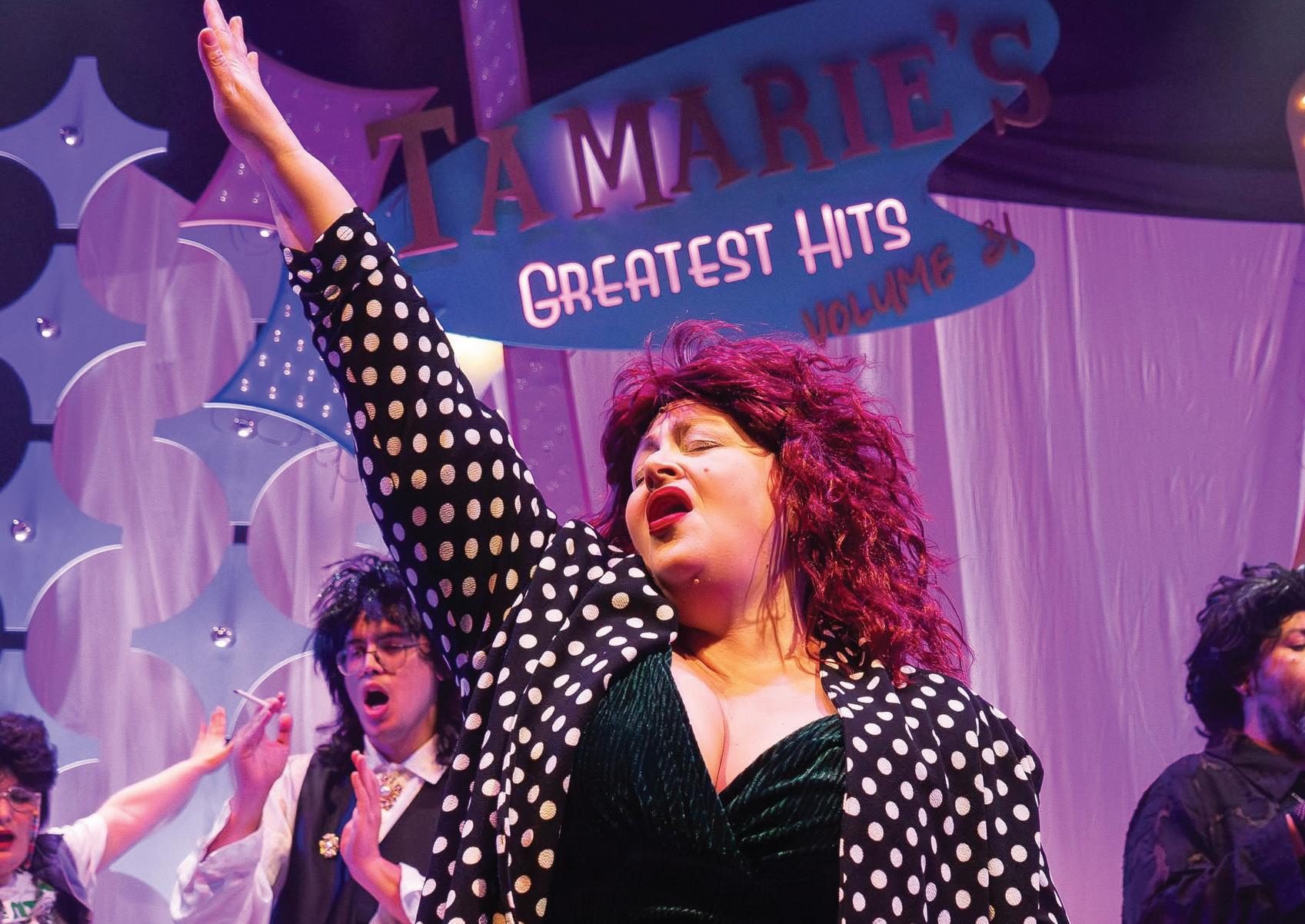
Tamalalia Forever! marks 30 years of Tamarie Cooper’s original summer musicals, a beloved Houston theater tradition known for irreverent humor, wild songs, large casts, and full-scale spectacle. The world premiere revisits a decade of greatest hits, with new material tying it all together. tinyurl.com/5ffa4muj
STAGE Through August 16
Houston Broadway Theatre: Falsettos
Falsettos follows Marvin as he leaves his wife for his boyfriend while trying to remain close to his son. Set in early-1980s New York, the musical blends humor and heartbreak as love, family, and crisis collide. tinyurl.com/mryh6hu2
STAGE July 22
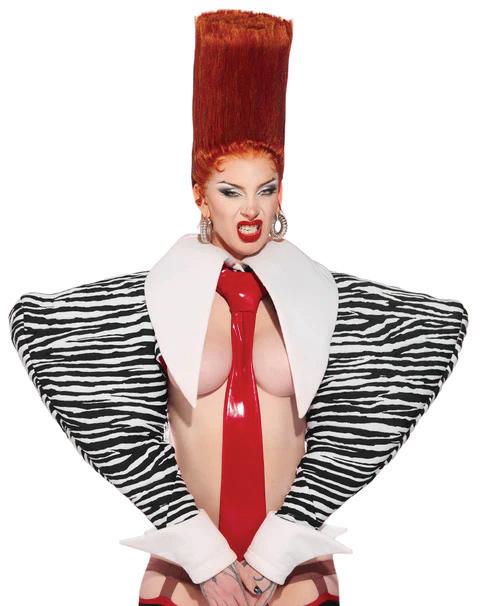
The Marvelous Miss Gender Starring Bosco Bosco, from RuPaul’s Drag Race Season 14 and All Stars 10, headlines her first solo tour, The Marvelous Miss Gender. Presented by Murray & Peter, the 18+ show includes an optional meet-and-greet add-on and a 20-minute intermission. tinyurl.com/3rn99tj7
COMMUNITY
July 12
House of Sound
House of Sound Volume 3 returns to Hotel Saint Augustine with Sara Van Buskirk, Sorry, Sarah, and Kam Franklin for intimate music, storytelling, and cinematic connection in Montrose Ballroom. tinyurl.com/46s2dk8c
COMMUNITY
July 24–26
Thick Boy Pride Weekend
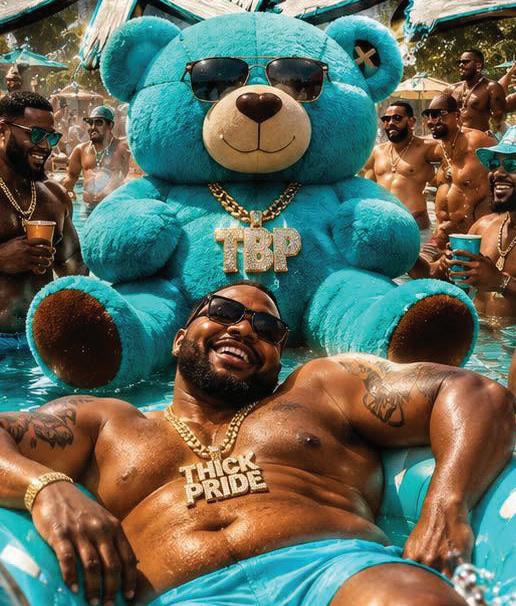
The Gentlemen Summit and Thick House present Thick Boy Pride Weekend, a three-night North Houston celebration with themed parties, music, drinks, hookah, entertainment, and fellowship. tinyurl.com/cserkm86
COMMUNITY
July 18
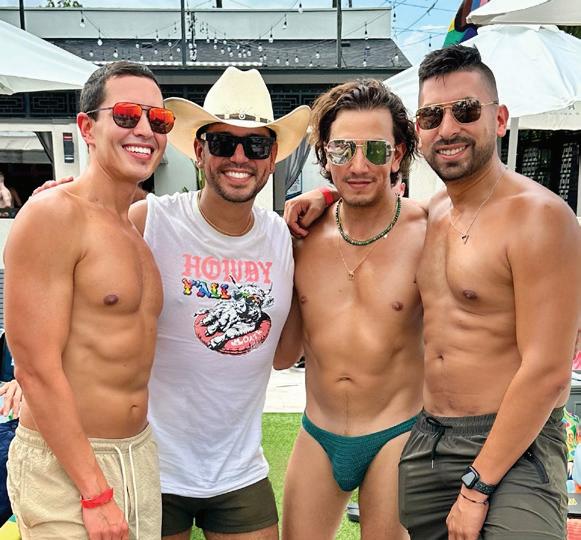
Out at the Rodeo presents Wild Wild Wet Pool Party Wild Wild Wet returns to Montrose Country Club with DJ Stephen Jusko, countrydisco mixes, poolside drinks, queer community, and a summer celebration supporting Out at the Rodeo. tinyurl.com/h7a9vd9z
STAGE
July 31–August 9
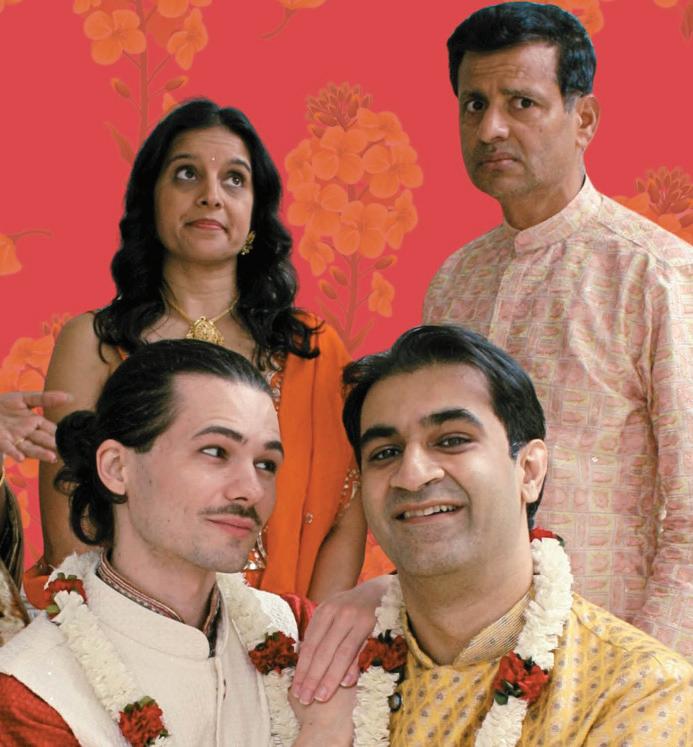
A Nice Indian Boy Asia Society Texas and Aerial Roots Theatre Company bring Madhuri Shekar’s A Nice Indian Boy to Houston with a warm, witty story of love, family, and tradition as Naveen introduces his white, Bollywood-loving boyfriend to his Indian American family. tinyurl.com/3ft5chmp
LEAGUE ASSOCIATION
End of Season Party & Awards Ceremony
FESTIVAL
August 15
48th Annual Houston Pride 365
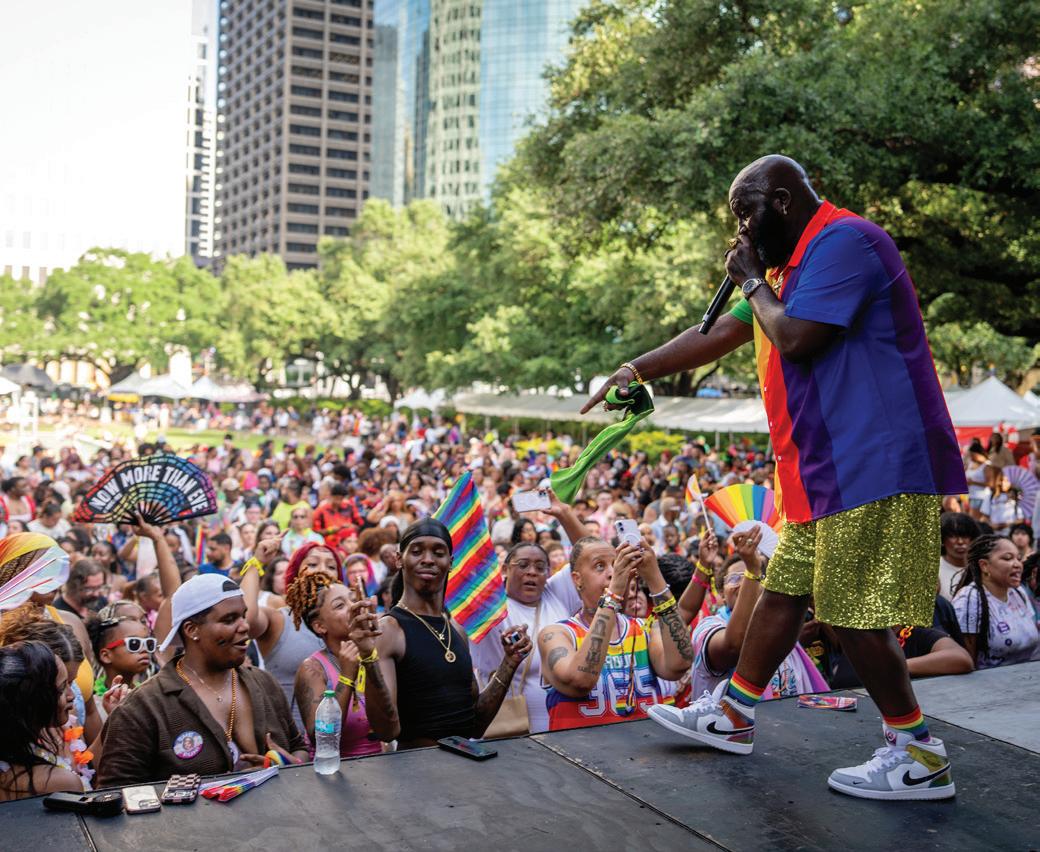
Houston Pride 365’s rescheduled celebration returns with live entertainment, local and national talent, immersive activations, community vendors, and Pride experiences, followed by the nation’s largest nighttime Pride parade. tinyurl.com/mp9zu3p8
STAGE
Thursday, August 6
Alley Theatre ActOUT for The Girl on the Train
Ticket holders for the August 6 performance of The Girl on the Train can enjoy a pre-performance mixer with music, socializing, light bites, and drinks. tinyurl.com/yfjd85rh
COMMUNITY
Saturday, October 3
Katy Pride Celebration 2026
Katy Pride’s 2026 celebrates the strength, resilience, and vibrant diversity of the LGBTQ community in Katy and West Houston. The celebration features 70+ vendor booths, live entertainment, community resources, family-friendly activities, and opportunities to connect with local LGBTQ organizations and allies. tinyurl.com/2s3hva7m
COMMUNITY
Saturday, October 31
The Woodlands Pride Festival 2026
The Woodlands Pride Festival is a free all-ages celebration bringing together thousands of community members for live entertainment, local vendors, food trucks, and family-friendly fun. tinyurl.com/45sn254m
PEARL GETS A BIGGER HOME
Julie Mabry reimagines Pearl as a larger Washington Avenue destination.
by OLIVIA FLORES ALVAREZ
by DALTON DEHART
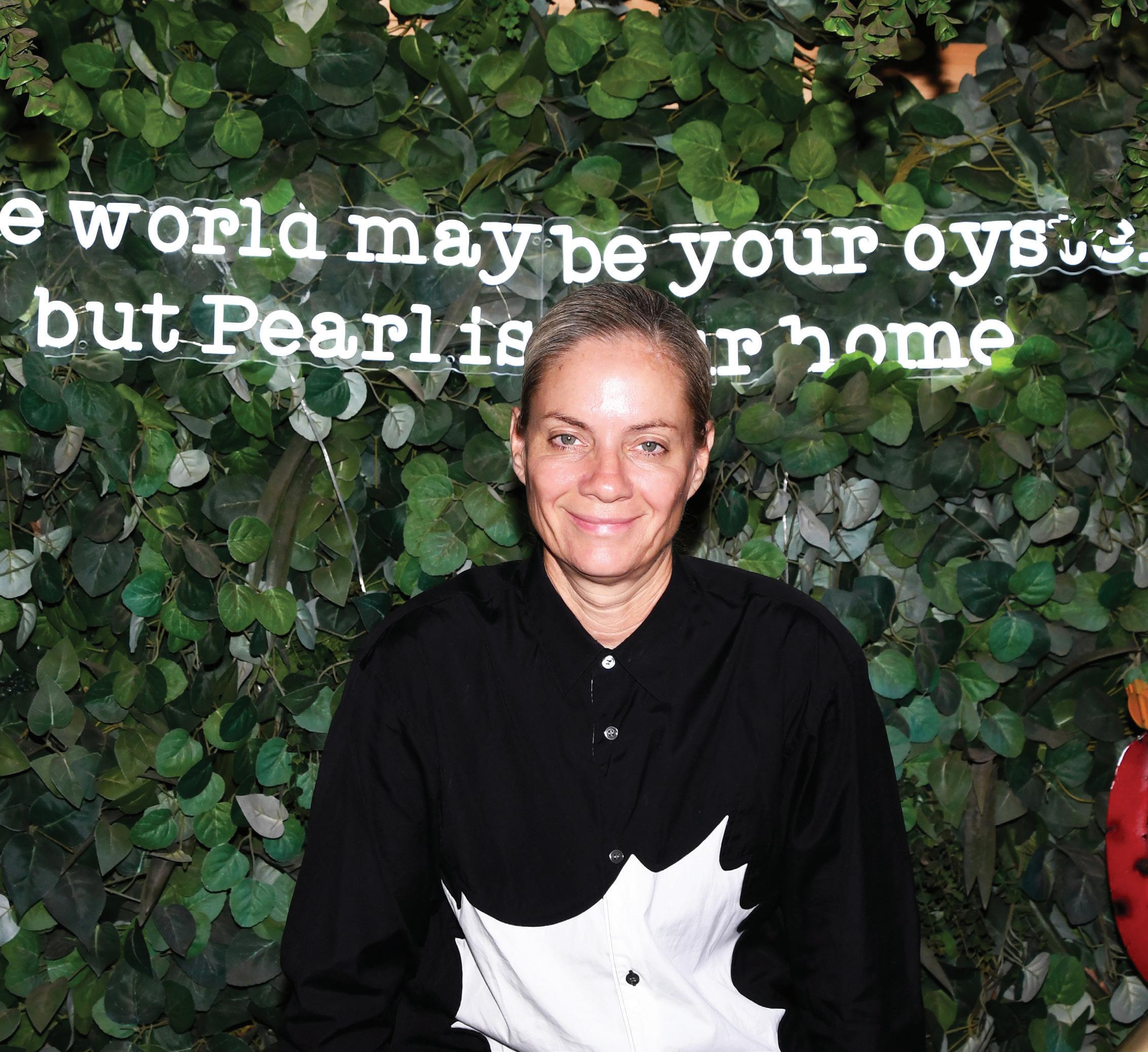
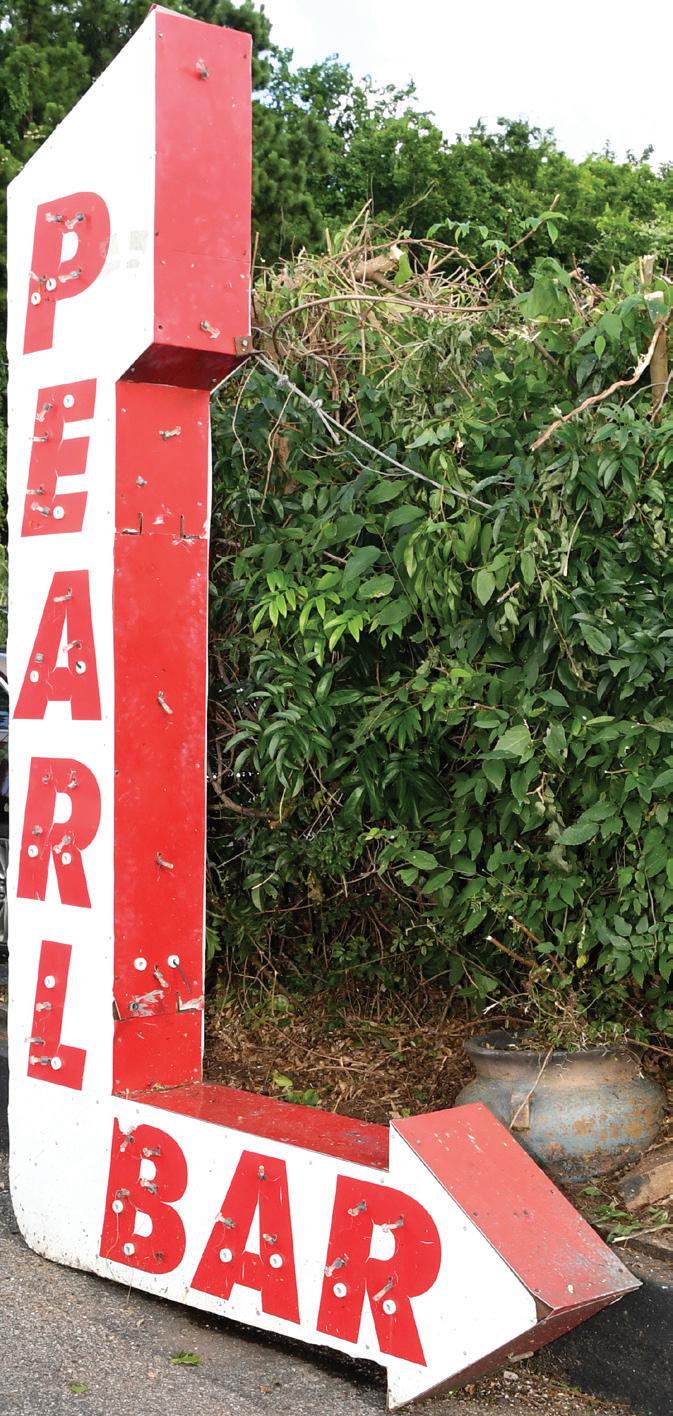
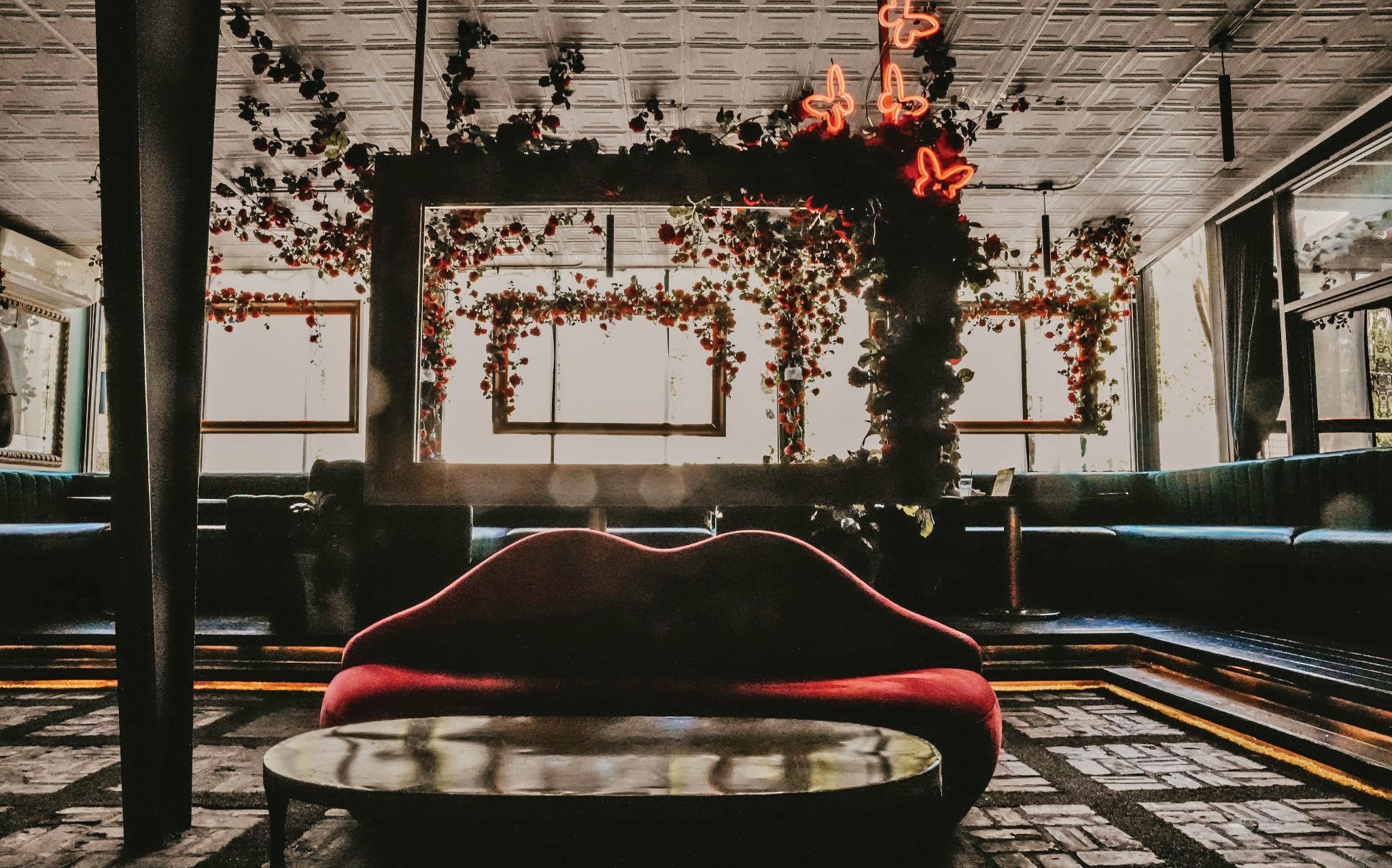
Julie Mabry has worked in bars and promotions for years. That experience prepared her well for her current endeavor as the owner of Pearl, Houston’s only lesbian bar. It’s also, unofficially, mind you, the largest lesbian bar in the world.
Recently relocated from its original location at 4216 Washington Avenue to a new spot just blocks away at 2811 Washington, the new Pearl is huge.
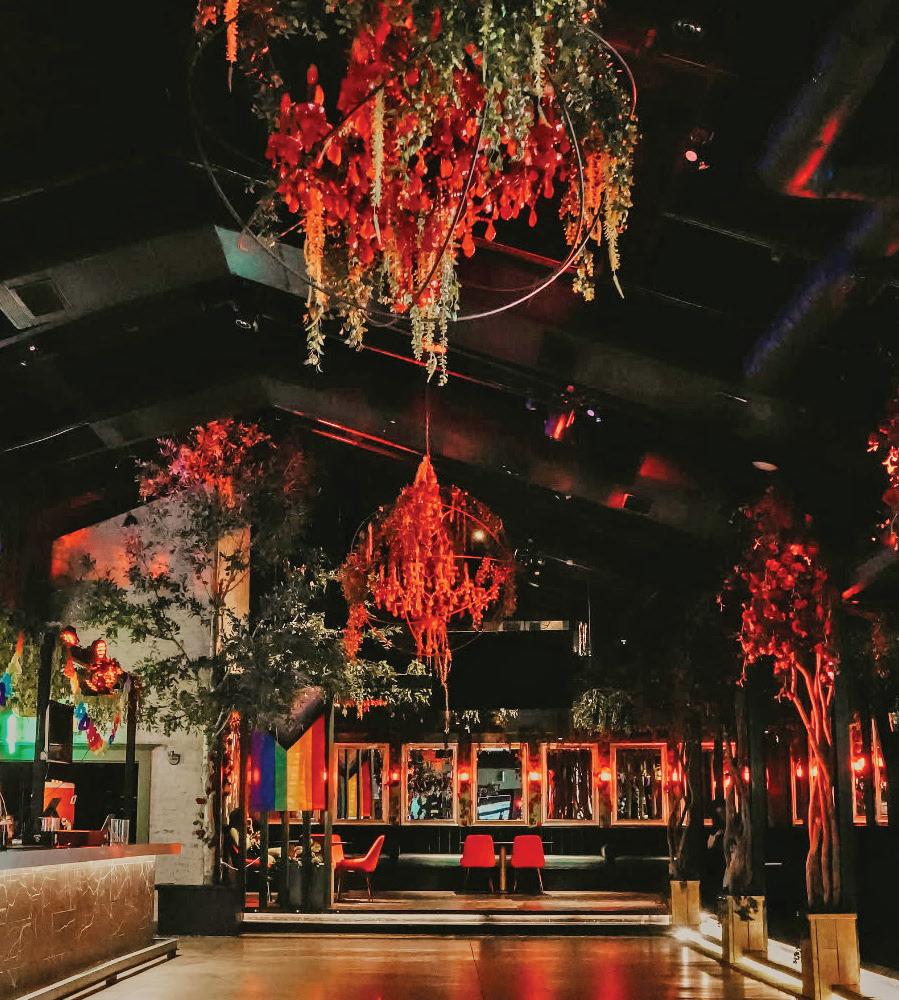
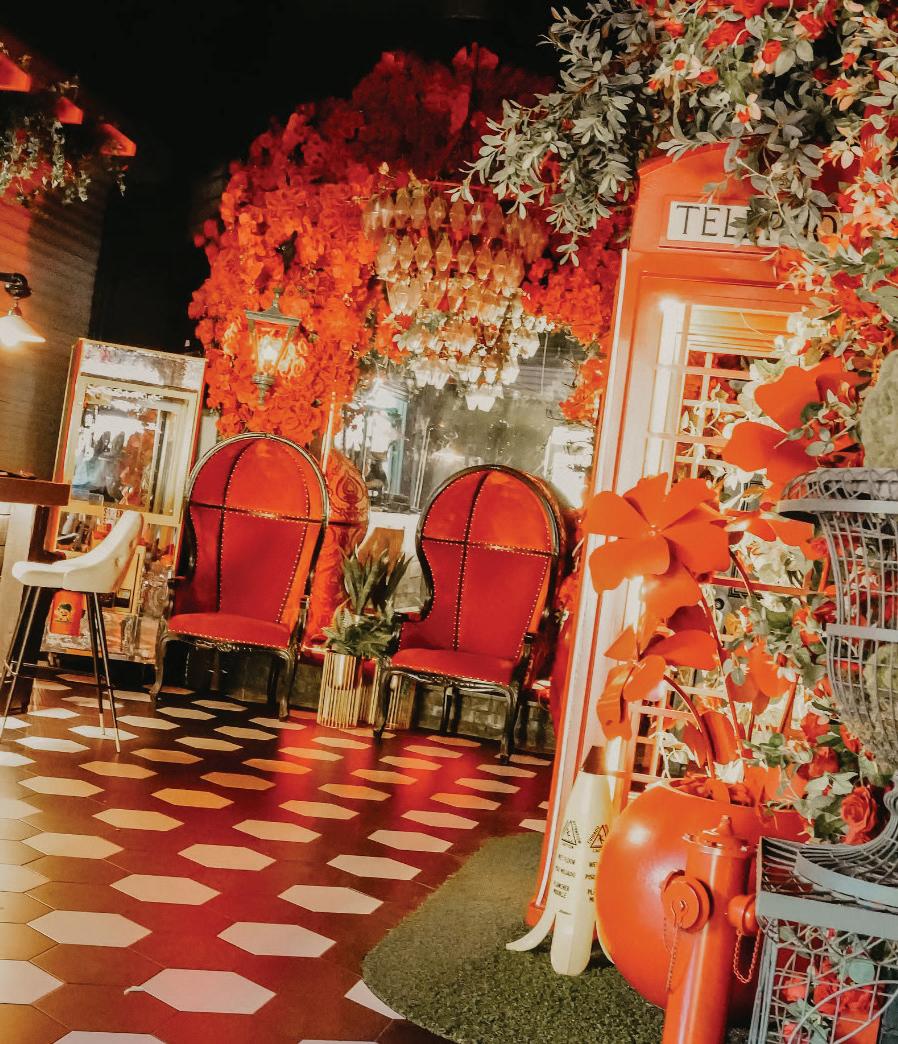
Actually, Pearl 2.0, as Mabry calls it, is gigantic. Enormous. And elegant.
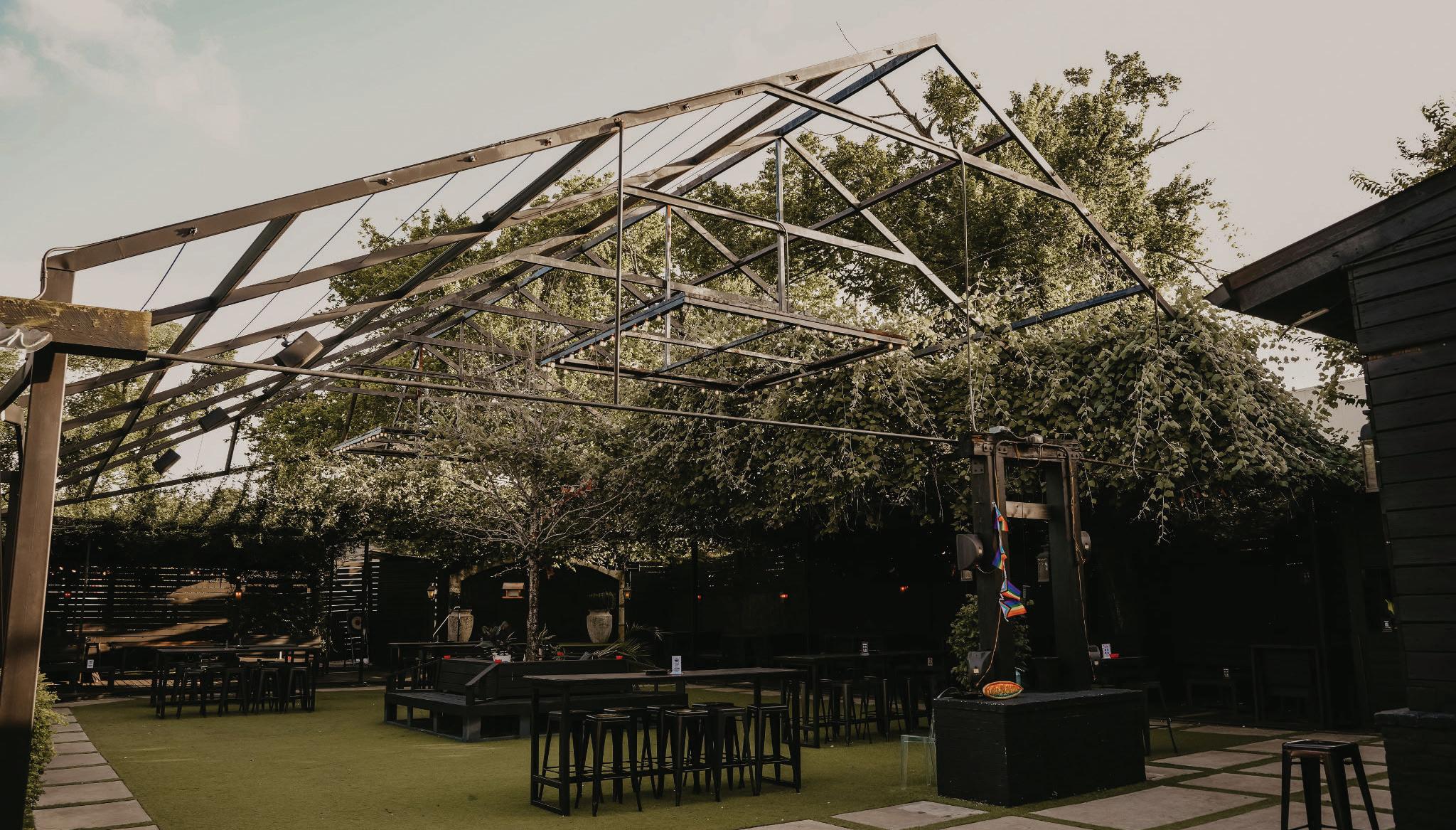
Clients can enjoy several upscale seating areas, a large dance floor, a pool table, a swank private club room (nicknamed the Cougar Den), a lush garden area, and a full-service kitchen.
There’s also a festival-size lawn with a concert stage, an outdoor pickleball court and a food truck on site. And there’s plenty of parking. (The original location lacked any parking, a major deterrent for clients.)
Photo
Side Peace, Pearl’s smaller sister bar dedicated to watching women’s sports, is just steps away from Pearl’s main entrance. The same sophisticated vibe is present at Side Peace.
Mabry is in talks with local professional women’s sports teams for special promotions and celebrations. The Dash soccer team, among others, is a faithful partner. And basketball fans are giddy with excitement at the thought of soon-to-call-Houston-home Comets team partying at Side Peace.
After game broadcasts are done for the day, Side Peace becomes a dance bar.
A full schedule of events for both spaces is in place, including live concerts, drag king shows, pickleball games, line dancing parties, and open-air markets. A Pokémon convention is among the possible events, along with family days and drag brunches.
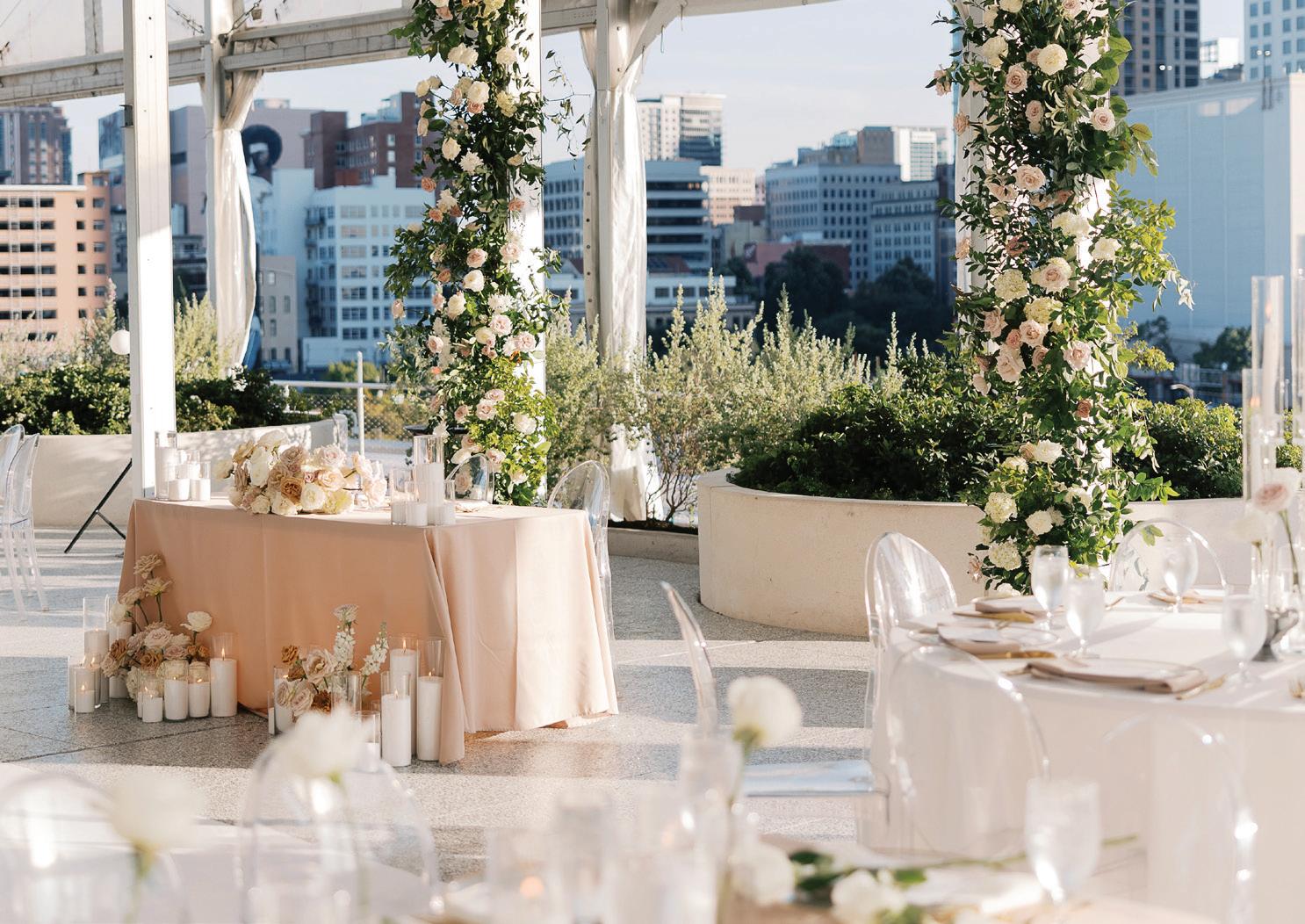
Mabry expects that the site will become a popular wedding destination. A couple asked about holding a ceremony there before the doors were even officially open.
The current economy, sluggish and skittish, might have discouraged other owners from expanding. Especially from expanding so dramatically. Not so with Mabry.
“I do think it was a big risk in this type of economy, but I also feel like this is a space that can survive through that, as long as we can accommodate our clients.
“I’m giving this place my all,” she says. “I believe that, especially with a queer community, [bars are] kind of their safe place, their home. There’s a necessity for a lot of people. We just want to make sure that we are an open and safe space for the community.”
There was one slight hitch during the move. Social media rumors spread that Pearl was moving not only from its former location but also from its lesbian focus to an all-inclusive LGBTQI+/everyone everywhere format. The news sparked negative backlash from local clients protective of one of only two lesbian bars in Texas.
“Pearl is a lesbian bar, now and forever,” says Mabry. “We don’t want to alienate the lesbians because this is a lesbian bar owned by a lesbian.”
It’s a lesbian bar that welcomes all members of the LGBTQI+ community and their allies, she makes clear.
According to her, it’s the community that’s changing, not the bar. Younger women, she notes, call themselves more than just lesbian. As Sapphic women expand their labels, so does Pearl, but labels aside, the focus remains the same.
“Lesbians come first at Pearl,” Mabry says, laughing.
Visit Pearl at 2811 Washington Avenue or visit pearlhouston.com
“I’M GIVING THIS PLACE MY ALL. I BELIEVE THAT, ESPECIALLY WITH A QUEER COMMUNITY, [BARS ARE] KIND OF THEIR SAFE PLACE, THEIR HOME.”
—Julie Mabry
Evelyn Garcia and Henry Lu Bring Houston a James Beard Win
The chefs behind JŪN turn personal history, partnership, and a sense of place into national recognition.
by BENJAMIN LEGER
The James Beard Awards are like the Oscars for restaurants and chefs. And just like watching the Oscars, you get to see the shock and excitement when a winner is announced and they deliver one of those heartfelt acceptance speeches.
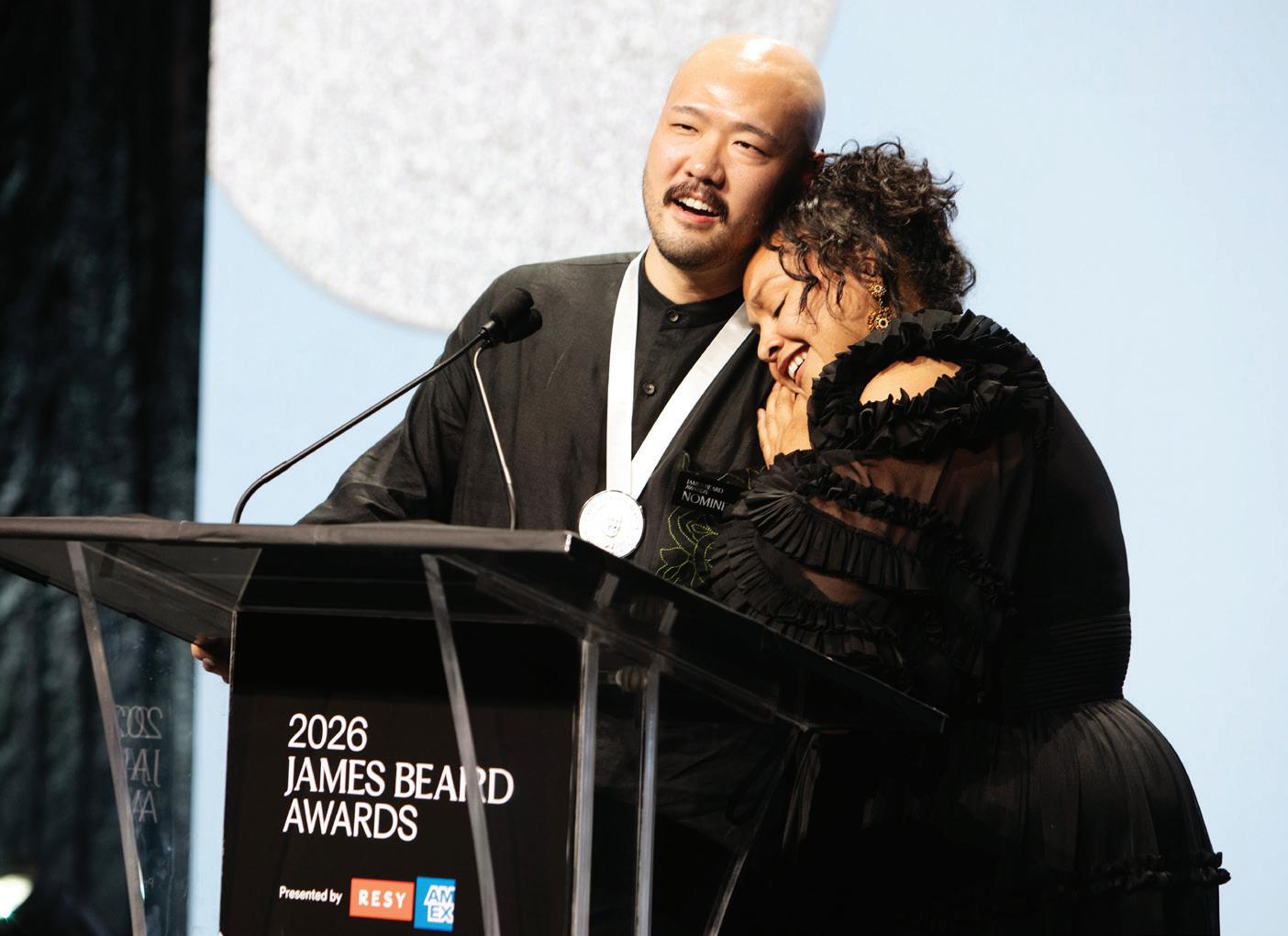
For Chef Henry Lu, it was “an out-of-body experience” when he and Chef Evelyn Garcia won the “Best Chef: Texas” category for their Heights restaurant JŪN last month.
Opened in 2023, the restaurant was a James Beard finalist just a year later for “Best New Restaurant” for its inventive nods to Garcia’s Salvadoran and Mexican heritage and Lu’s Southeast Asian culinary roots.
This time, though, the duo was gunning for a win, arriving in Chicago and getting red-carpet ready for the 2026 awards ceremony.
“We were manifesting so hard before the show,” Lu says. “We were like, ‘We’re gonna win.’ We had put so much work into it. Once we were in the theater, I think that’s when it really hit me: this is real.”
Reality quickly became a blur once their category was announced. In the recording of the ceremony (which you can watch on the James Beard website), it seems like every emotion washes across Lu’s face as their names are read: shock, confusion, overwhelmed and on the verge of tears.
“I had a whole speech planned out,” Lu recalls. But he was at a loss for words once on stage.
Garcia, for her part, talked passionately about Houston, about telling the story of two first-generation chefs through food. Then
Chef Evelyn Garcia and Chef Henry Lu, the James Beard Award-winning team behind JŪN.
HUGE GALDONES
she leaned over to Lu, and through tears, she said, “And honestly, I want to thank you, Henry, for believing in me and us and knowing that we can do this.”
Lu was still processing the experience and Garcia’s words when he talked to OutSmart a week later.
“We’ve known each other for over 15 years now, and our relationship as friends, she’s my ride or die,” Lu says. “I’m only able to do this because of her.”
Indeed, it was Garcia who brought Lu to Houston in the first place. They met in New York in the 2010s, working in restaurant kitchens and hospitality groups. Lu had grown up in the Bronx and Garcia had relocated from Houston. When the pandemic hit, Garcia returned home and was dreaming up her own restaurant concept. Lu wasn’t sure what his next step might be, but he knew he wanted to be his own boss.
Garcia encouraged him to visit her in Houston and scope out a project together. As a gay Asian man from New York, he was somewhat hesitant about relocating to Texas.
“But I came down and saw this beautiful shift Houston was going through with the food and culture and people,” Lu says. “I wanted to be part of that dialogue and help shape it. Here, we could make a stand and actually open up a place that is for everyone.”
When JŪN launched in 2023, it immediately became a hit for its inventive and flavorful dishes with a distinct throughline of their respective roots. A mainstay charred carrot dish features cheese from a farm owned by Garcia’s aunt in El Salvador. A Gulf shrimp aguachile gets an added punch from Asian fish sauce and thinly sliced taro.
Garcia says their partnership is “effortless” because they genuinely share the same goals for the restaurant and their team. “Our friendship has always been based on mutual respect and real love and passion for what we do,” she says. “I always say Henry is the best chef I know, and his opinion has always really mattered to me.”
And while their successful restaurant is still relatively young, Lu and Garcia are already focusing their mission on building community. Besides supporting local organizations like Montrose Grace Place and No Kid Hungry Houston, they also want to give new and aspiring chefs a hand.
In 2025, they launched Third Place, a popup concept within the 20th Street restaurant that showcases artists and creatives through workshops as well as guest menus from upand-coming local chefs.
While JŪN is only open for dinner, the lunchtime pop-up has featured the food stand Subo with its Filipino breakfast sandwiches, That One Noodle Shop with bowls of shoyu
ramen, and plenty of other promising food masterminds.
Lu says at first, they were encouraging JŪN’s kitchen staff and friends in the restaurant industry to host lunches. “Now, it’s gotten bigger than we ever imagined,” he says. “People are reaching out to us to participate. Talk about how strong the Houston community is—we’re seeing that in practice at Third Place. We see the masses of people who come out and support. Houston has really opened their arms to it.”
Lu sees the recent accolades and success as another chapter in the novel they are writing about JŪN.
“The first year, we explored the ideas of our upbringing and our roots and what really hit home for us,” he says. “The second and third years were about how Texas has played a role in this new life we have. And now we’re seeing
“HERE, WE COULD MAKE A STAND AND ACTUALLY OPEN UP A PLACE THAT IS FOR EVERYONE.”
—Chef Henry Lu, co-owner of JŪN.
this melting pot happening here with second and third generations. That is Texas culture. That is American culture, and that is the story that JŪN is evolving into where we share those stories—where it’s not so much about us anymore.”
Back at the James Beard awards ceremony in June, despite all the overwhelming emotions, Lu did, in fact, get a moment to gather his thoughts on stage.
“We want to thank our immigrant parents that lived the American dream and really put us where we are today,” he says. “They invested so much in us and what we believed in, and everything we are today is because of them.”
Even in the moments where it is about them, like on a national stage being recognized as the best in Texas, Lu still credits who came before with an eye on whose story they can help tell next.
At the beginning of the year, Chef Henry Lu and Chef Evelyn Garcia launched their own podcast, “Loaded Potatoes,” leveraging their respective Top Chef stints and talking all things food with special guests. “It’s really unfiltered, unedited, and that’s the way we talk to each other normally,” Lu says. “We call it our therapy session.”
Keep up with Chef Henry Lu on Instagram @_henrylu_.
Chef Evelyn Garcia and Chef Henry Lu onstage at the 2026 James Beard Awards in Chicago, moments after JŪN was named winner of Best Chef: Texas.
ELIESA JOHNSON
LOVE IS THE GOAL
Dr.
Nasser “Nas” Mohamed
brings queer Arab visibility to the World Cup stage.
by DAVID CLARKE
As the 2026 FIFA World Cup unfolds across North America, Dr. Nasser “Nas” Mohamed is using one of the world’s largest sporting events to tell a story that extends far beyond soccer.
Mohamed, who became the first openly LGBTQIA+ Qatari when he came out publicly in 2022, has launched Love Is the Goal, a global campaign focused on visibility, human dignity, and what it means to be fully seen in a world where LGBTQIA+ people are still routinely dehumanized. Timed to coincide with both Pride Month and the World Cup, the campaign includes public events, community activities, merchandise, and an original song, all centered around a simple idea: LGBTQIA+ people exist everywhere and deserve to be seen.
For Mohamed, centering queer Arab voices during the World Cup is not simply about representation. It is about reminding people that queer people are human beings before they are political talking points.
“When I come out from Qatar and tell my story,” Mohamed says, “how I found queerness as an adolescent in Qatar, that didn’t speak any language besides Arabic, that had extreme censorship in media, zero visibility of LGBT individuals, no access to the internet, that had this content filtered from everything that I am, and I came from the most conservative Muslim background, and I still touched the truth that I hold, and described it in a poem in Arabic that I wrote in my own words. When people hear that, they would know that this is a story of a human.”
That humanity sits at the center of Love Is the Goal. “People start talking about an idea and not a person,” he explains. “And after a little while, the discourse becomes so dehumanized that you’re just talking about concepts. They’re no longer people in your mind. And that is not a good path.”
The campaign arrives at a moment when LGBTQIA+ communities around the world are
confronting renewed attacks on their rights and safety. Mohamed sees those struggles as part of a broader conversation about freedom itself. “My story is a story of somebody that got crushed by authoritarian oppression,” he reveals. “Anybody that had their freedom to believe, their freedom to choose for their own bodies, and their freedom to choose who they have sex with knows what I’m talking about.”
For Mohamed, the World Cup provides a rare opportunity to bring that conversation directly to a global audience. “A lot of people are going to be advocating for human rights on the largest global platform,” he points out. “It would be a missed opportunity for queer people to not be where the people are.”
That visibility became deeply personal when Mohamed attended Qatar’s June 13 World Cup match in San Francisco. He wasn’t simply showing up as a soccer fan. He was
showing up as a queer Arab determined to reclaim a symbol that many people in his home region have been taught to fear.
One of the most meaningful elements of his appearance was an Arabian bisht that he designed himself, woven with threads inspired by the rainbow flag. “The story of the rainbow hasn’t reached us,” Mohamed reveals. “It’s like a shadow. Is it reassuring or is it scary? It depends on the story of the shadow.”
Around the world, the rainbow flag has become a widely recognized symbol of queer identity. But Mohamed says that for many people in Arab countries, the symbol often arrives stripped of context. “When they see the rainbow, it’s foreign,” he explains. “The words associated with it are foreign. The bodies that carry it are foreign.”
His goal is to change that narrative. “I have woven threads of that rainbow into my
➝
Arabian bisht, the garment that I put on,” Mohamed recounts. “I told them that a stranger, where I stand, put my Arabian bisht back on my shoulders after many years and took me to the stadium to watch my team play. And that is the story of the rainbow.”
The symbolism extends beyond sexuality. “When a beam of light hits a drop of rain, fractures, and turns into all the different colors you see, you need to not panic when you see them and remember that each shade is light,” he adds.
Long before Mohamed became a globally recognized advocate, however, he was a child in Qatar trying to make sense of feelings he had never seen reflected in the world around him.
At 17, he says, he found himself confronting a truth he could neither explain nor ignore. “I witnessed my innocence and my soul, and I witnessed all the narrative around me that told me, ‘You cannot exist,’” Mohamed recalls. Unable to openly express what he was experiencing, he turned to writing. “I just wrote that poem as a promise to myself to protect this innocence and not let it go away.” That poem would remain with him for years. Eventually, he had it tattooed on his body. Today, it serves as the foundation for “Let Your Love Shine,” a song released as part of the Love
Is the Goal campaign.
The poem’s central line remains as powerful now as it was when he first wrote it. “I pleased others with a life that led to my demise. Now it’s time for others to see me reborn victorious,” he recites, translating the lines into English.
For Mohamed, transforming those words into music felt like a way of reconnecting with the younger version of himself who first wrote them. “I wanted to go back to the moment where my own brain as a kid stopped me,” he admits.
The song’s spiritual dimensions are equally important. “I hummed it the way I used to hum holy text in Arabic when I memorized the Quran as a kid,” he remembers. “I hummed it in a way that is, to me, very spiritual.”
“What this is about, at the end of the day, is really not about sex and not about what you do with your body,” he says. “It’s about your soul.”
As Houston hosts World Cup matches throughout June and early July, Mohamed hopes LGBTQIA+ people and allies recognize that movements for visibility do not belong only to activists. They belong to everyone. “Nobody has to be an activist to say ‘I choose love,’” Mohamed emphasizes. “You can just be human.”
That philosophy has guided his partner-
ship with Pride House International and LGBTQIA+ organizations. “They’ve been working so, so hard to hold space and do the logistics in the 16 host cities,” he says of Pride House International, which is the parent organization of Pride House Houston. “I was really incredibly excited to collaborate with them.”
The campaign has included events, merchandise, music, and community activities designed to invite participation from people who may never have considered themselves advocates. “When you’re visible that way, people around you will know you’re a person that’s holding space for love,” Mohamed says.
To him, the overlap between Pride Month and the World Cup created a unique opportunity. “Isn’t this the end goal, to just be?” Mohamed asks. “Go be where people are and be visible.”
As the tournament continues, Mohamed remains focused on what he believes visibility can accomplish for people who may be watching from places where being LGBTQIA+ remains dangerous. “What helps people the most is their own selves, truly,” he says. “And what drives somebody to get out of bed is just believing it’s possible. Just the thought of hope.”
For Mohamed, hope begins when people are seen. And sometimes, it begins when someone simply chooses love.
THE WORLD IS HER DANCEFLOOR
DJ Athenz is Houston’s soundtrack to the FIFA World Cup 2026.
by OLIVIA FLORES ALVAREZ
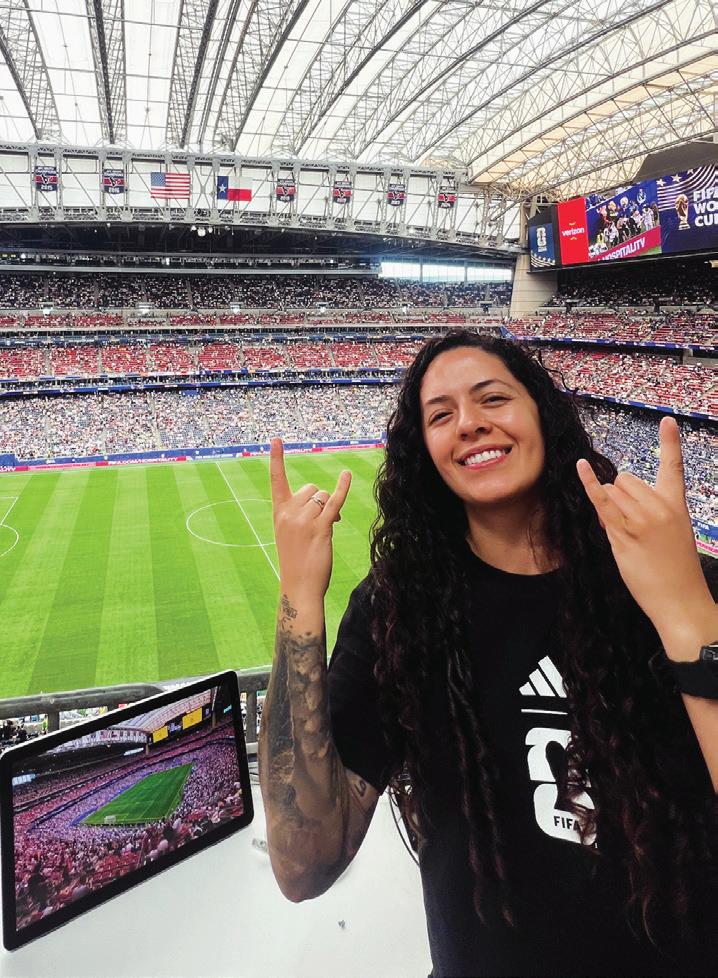
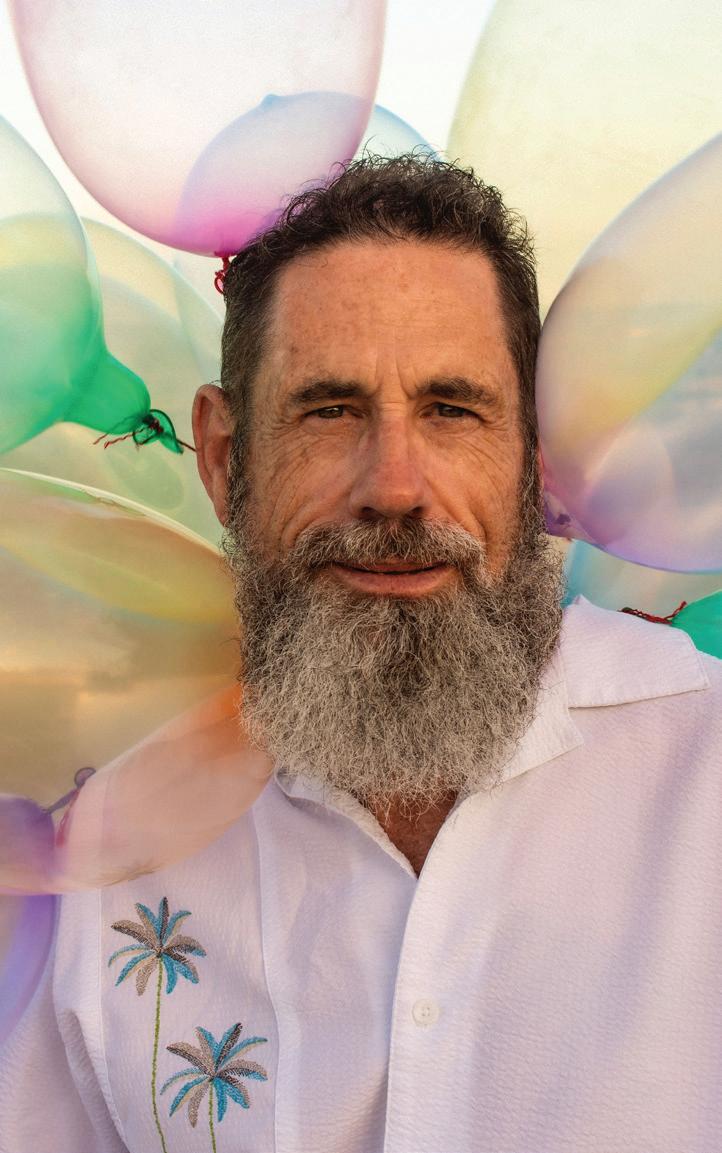
DJ Athenz is familiar to Houston crowds. She was the Gayest & Greatest Favorite Female DJ winner in 2021 and took home Favorite Music Producer honors in 2025. Working as a DJ for more than 15 years, she’s worked for large stadium audiences, but her current audience, the FIFA World Cup 2026 in Houston, might be the largest she’s ever worked. She’s the official DJ for the Michelob Ultra Activation Zone for seven 2026 FIFA World Cup matches at the newly branded Houston Stadium.
OutSmart Magazine: First of all, congratulations. Oh my god, what a gig! You must have been so excited when you got this news.
DJ Athenz: Yeah, it almost felt like it just wasn’t real. I was like, I can’t believe this is happening. It still doesn’t feel real. Even when I’m in it, it doesn’t feel real.
What has it been like so far?
So far, I’ve done two games. And so two down and five more to go. It has been an incredible experience. I’ve done a lot of cool things in my career, but for something that’s on the level of the FIFA World Cup, it’s just completely out of this world.
So for this, for the first game, it was about 68,000 people. You know, I’m not quite sure if I would honestly say that’s the most people I ever played for. I did two seasons with the [NFL’s] Houston Texans, and I was the official DJ wired into the stadium, controlling every sound. Then I did the same with USA soccer, with the USA National Men’s and Women’s soccer teams.
I’m working with the biggest sponsor, Michelob Ultra, in partnership with FIFA. And so it’s basically just one big party where I’m playing, as the gates open, so three hours before kickoff, and then I’m playing post-game.
I mean, as soon as the gate opened, you could feel the excitement of the people. Everyone’s just rushing in. They’re excited. They want to grab a drink. The music’s going, and we’re getting the party started, building the vibe.
Post-game, everyone’s already just hyped up off the energy of the game. They come, and they just want to celebrate.
Tell me how you programmed your setlist. I can guess that you’re going to do some music from the countries playing that day. Definitely. For every game, a few days before, I’m doing my research. What are the hottest artists from that country that I can incorporate into my set? And I want to make sure it fits my style. So I’m looking for the most upbeat, maybe top 40 or house-music artists within that world that I can curate and play into my set. It’s been an experience because I’m learning so much about all these different countries.
How exhausted are you?
Well, on game days, there’s just so much of a rush, the exhilaration is so high that I don’t even know what’s going on. Everything moves so quickly. I mean, the energy, the people, and yeah, it’s just, it’s very fast paced. And I have to say, there’s nothing like soccer fans. There is nothing like soccer fans. After the game, I’m
still running off the high, and I can’t believe this is happening. And then once I have that come down, holy crap. Then that’s when it’s like, okay, I’m tired.
People are coming from literally all over the world. You have to see that in the crowd.
I think that the most beautiful part is that Houston is already a melting pot of culture. We
already have so many different cultures here. And so it’s like the World Cup is just magnifying that. And so, my favorite part so far has really just been connecting with and meeting all of these people who are traveling all over the world because of their love of the sport and their country. It’s just so beautiful to me that, you know, all these different, uh, cultures can come together, and it’s whether their team wins or loses . . . no one is upset, or just the vibes are just so high, and everyone’s happy no matter the result. It’s just one big party, and that’s what it feels like—a big celebration.
What’s next for you?
So the next game is this Saturday. It is the Netherlands versus Sweden, and that’s going to be a big one in the city because of all the Dutch. They’re all coming in here. They’re coming to Texas, nice and strong. It’s gonna be a lot of fun.
Also, aside from being on site for all the live games in Houston, I will be at the watch parties at Levy Park afterward. They’re having a big watch party for literally every game. So I’m gonna be playing all of the watch party games at Levy Park up until July 19th. So all through the whole experience.
For more info, visit Houston FIFA or AthenzMedia.com
REASON #1 TO BOOK A PORTRAIT WITH US: YOUR ART DESERVES TO BE REMEMBERED
“WE ARE HERE TO MAKE EVERYBODY FEEL AT HOME, FEEL LOVED, FEEL SEEN.”
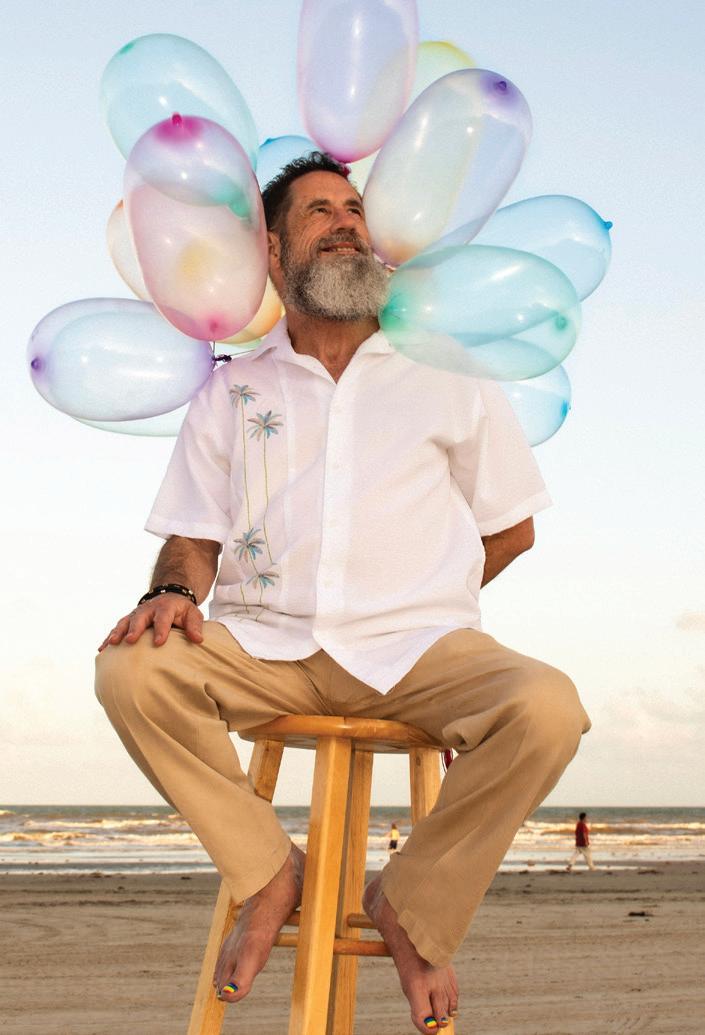
— Tom Griffiths
QUEER in GALVESTON
THE CONNECTOR
ACCT’s Tom Griffiths on sobriety, HIV, and the power of connection.
by DAVID CLARKE
photo by LUCIO NIETO, GRANDSON STUDIOS
When Tom Griffiths talks about HIV prevention, he rarely starts with statistics. Instead, he talks about connection.
“Everybody needs to be seen. Everybody needs to be heard somehow,” says Griffiths, Outreach & Prevention Coordinator at Access Care of Coastal Texas (ACCT). “And I think that’s what ties in the LGBTQ community because we’re always trying to connect.”
That philosophy shapes both his work and his life. A longtime resident of the Gulf Coast region, Griffiths moved back to League City in 2014 after nearly three decades in Austin. The move came during a pivotal chapter in his life. “August 11, 2014 was the last day I used crystal meth. And then August 12th of 2014 is my sobriety date,” he states.
After returning home to care for his mother and focus on recovery, Griffiths found work at a drug rehabilitation center. There, representatives from Gulf Coast Center regularly visited to provide HIV education and testing. Eventually, they encouraged him to apply for an opening in HIV prevention. “They trained me from the ground up,” he recalls.
The opportunity also brought him to Galveston, a community he quickly embraced. “I can live, work, and play on the island all the way around,” he points out.
Griffiths credits much of his commitment to service to his father, a military veteran who later volunteered with the Knights of Columbus. “I just remember him saying, ‘If you think of me, help somebody in need,’” Griffiths recalls as a lump forms in his throat. That advice has stayed with him. “At that point, I had made my decision that I was going to go into some type of service work of some nature of helping other people.”
Today, Griffiths brings both professional expertise and lived experience to his role. He has lived with HIV for decades and spent years keeping that diagnosis private. “I’ll say that I didn’t choose HIV,” he says. “Gulf Coast Center and the HIV department chose me to work in that field.”
His openness has become one of his greatest strengths as an outreach worker. “I got this job also because I’ve lived a lot of this,” he explains. “I’m pretty much an open book.”
Much of Griffiths’ time is spent outside the office. He visits drug rehabilitation centers, homeless shelters, health fairs, and community events throughout the region. “No two days are ever the same,” he emphasizes. “A big part of my job is to normalize the conversation around sexual health, HIV, and talking to people without judgment.”
That approach often helps him reach people who may be struggling with stigma, addiction, homelessness, mental health challenges, or a new diagnosis. “It’s a matter of not judging them and not putting them into a box because none of us fit in one box,” he shares.
For Griffiths, ACCT’s mission extends far beyond HIV services. The organization
provides testing, education, transportation, housing assistance, insurance support, and other resources that help people stay healthy and connected to care. “We are here to make everybody feel at home, feel loved, feel seen,” he says.
That emphasis on connection mirrors what Griffiths loves most about LGBTQ+ life in Galveston. While the island’s queer population may be smaller than Houston’s, he says it offers something unique. “We have a strong sense of almost family down here because we all know each other,” he claims.
That community comes together through venues such as Robert’s Lafitte, Island Time, and Lucky Lounge, as well as organizations like the Galveston Pride Center and annual events including Pride Galveston. “We start showing up for one another when they have fundraisers,” he says. “Small community, colorful community, lots of personalities.” The island’s resilience also shapes its culture. “We’re a strong family community down here and very resilient because of all the hurricanes that hit here as well,” he adds.
Whether discussing LGBTQ+ life, recovery, or HIV advocacy, Griffiths continually returns to the same idea. “We humans all thrive on connection,” he emphasizes. It’s a lesson he sees reflected every Thursday when dozens of ACCT clients gather for lunch. “It’s not for the food, to be honest,” he says. “It’s about the camaraderie and being in a room with other people.”
As ACCT approaches its 40th anniversary, Griffiths remains optimistic about the future. “My biggest hope is that we will always have that connection for people to be heard and be felt,” he says.
For someone who once wondered what to do with the next chapter of his life, the answer seems clear today. “I try to look at the whole person rather than just HIV,” Griffiths explains. “There’s more to somebody than a job title or whatever other hats they’re wearing.”
For more info, visit accttexas.org.
QUEER in GALVESTON
BEYOND THE BEACH
Christina Weaver helps GIFT support Galveston’s LGBTQ community year-round.
For much of the Houston area, Galveston is synonymous with sunny beach days, Mardi Gras celebrations, hurricane updates, or a stroll through Dickens on The Strand each December. But beyond the island’s seasonal attractions is a year-round LGBTQ+ community that has quietly built a culture of resilience, connection, and mutual support.
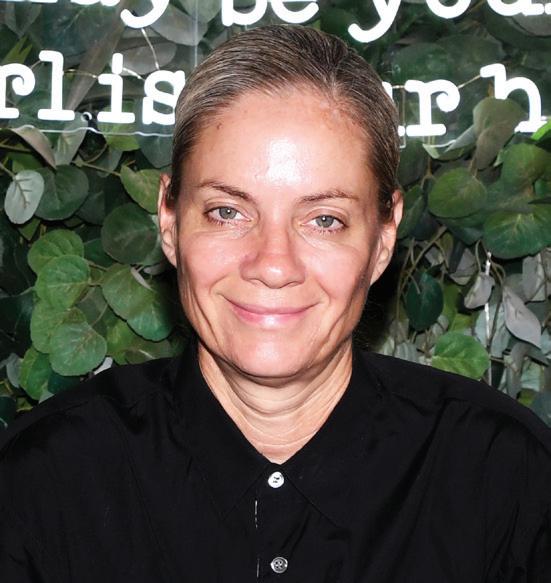
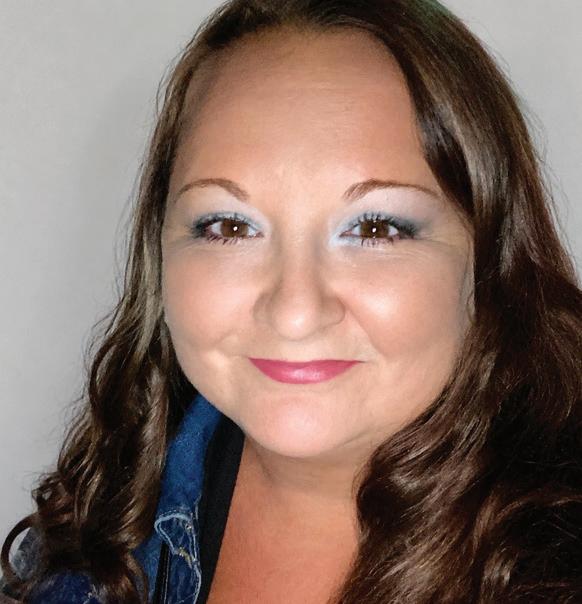
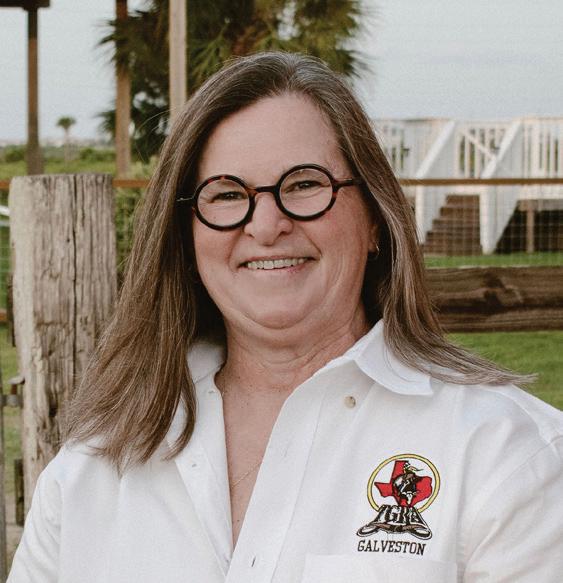
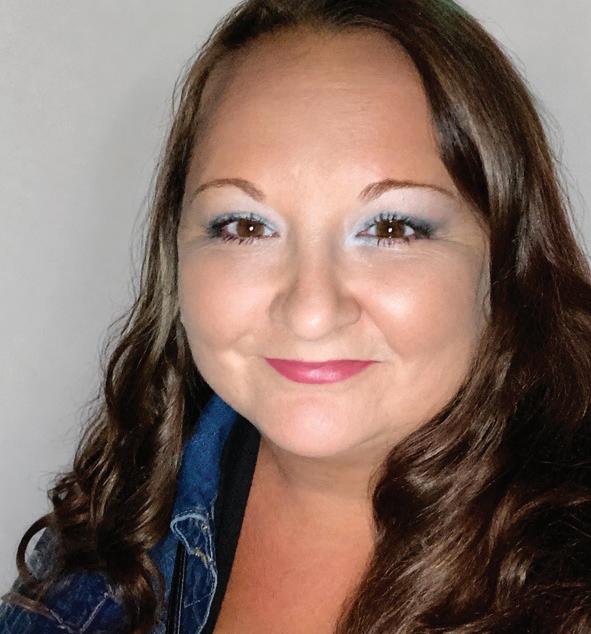
Helping lead that effort is Christina Weaver, president of Galveston Island Fundraising of Texas (GIFT), a nonprofit dedicated to raising funds, promoting equality, and providing
by DAVID CLARKE
resources for LGBTQ+ people throughout Galveston County. “I would say that our mission is pretty simple,” Weaver states. “We want to just support the lives of the local LGBTQ+ community. We just want the people in our local LGBTQ+ community to feel like they’re valued, they’re supported, and they’re seen.”
A lifelong Galveston County resident, Weaver has watched the island’s LGBTQ+ landscape evolve over the years. “When I was in my 20s, there were a lot of businesses identifying exclusively as gay bars,” she recalls. “Over the years, those dedicated venues have sort of disappeared. But, it’s making other bars
and businesses more inclusive.” Today, she says, “Most of the spaces in Galveston are considered safe spaces for our community now.”
That spirit of inclusion extends well beyond nightlife and restaurants. Businesses across the island now host Pride celebrations, drag performances, and community fundraisers, reflecting what Weaver sees as a growing culture of acceptance. “They’re hosting Pride events, drag shows, and hosting fundraisers for us,” she explains, “and I love that.”
Weaver first supported GIFT as a donor and attendee before becoming more involved after receiving a membership as a birthday gift from her best friend. After finding a healthier worklife balance in a new job, she joined GIFT’s board as secretary before being nominated to succeed longtime president Sheila Morton. “Shockingly, she nominated me to step in as president,” Weaver says. “I accepted, and here we are.”
Today, GIFT funds community events while also serving as a critical safety net through the Jerry Eubank Angel Fund, an anonymous, application-based emergency grant program. “So far this year, we’ve granted out about $9,000,” Weaver says of the fund’s impact on the lives of LGBTQ+ Galvestonians. “In a lot of those instances we’re helping to make sure people aren’t unhoused, and we’re giving them back a little peace of mind so they can get back on their feet.”
Financial hardship remains one of the greatest challenges facing LGBTQ residents, she says, alongside barriers to gender-affirming healthcare, HIV services, discrimination, and family rejection. “A little bit of help makes a lot of difference to a lot of people,” Weaver imparts. “There’s always the need for spaces for LGBTQ+ people to connect and be part of a community—to basically let them know that they’re not alone.”
That sense of community continues to grow. One of Weaver’s proudest accomplishments has been welcoming Third Coast Pride Fest under GIFT’s nonprofit umbrella, helping expand Galveston’s annual Pride parade and family festival. “Every year it gets bigger,” she says with a smile. “There’s hundreds of people watching Galveston have a Pride parade. And that’s pretty impressive to me.”
Christina Weaver, president of Galveston Island Fundraising of Texas
“GALVESTON IS A SMALL TOWN. BUT WE HAVE THE ACCEPTANCE, I THINK, OF A MUCH LARGER CITY.”
—Christina Weaver
Check our reviews!
Although Galveston may be smaller than Houston, Weaver believes its LGBTQ+ community punches well above its weight. “Galveston is a small town,” she admits. “But we have the acceptance, I think, of a much larger city.” She credits local businesses, fellow nonprofits, artists, and residents for creating an environment where LGBTQ+ people can openly be
themselves. “There’s just a lot of community love in Galveston, and I love it.”
Looking ahead, Weaver hopes GIFT can grow both its membership and its capacity to serve more people through larger fundraisers and expanded support for the Jerry Eubank Angel Fund. “I’d like to never have to tell people no,” she notes about having to sometimes decline requests for assistance.
Her vision also includes inspiring the next generation of LGBTQ leaders to become more involved beyond online activism via channels like social media. She acknowledges that spreading the word online is important and valuable, but “We need boots on the ground in a lot of these situations,” Weaver points out.
For Houstonians who love visiting Galveston, supporting GIFT is one way to give back to a community that welcomes thousands of visitors each year. Memberships start at just $10 per month, which directly helps fund community events and emergency assistance programs. As Weaver puts it, GIFT is “a small but mighty little organization.” Its impact, however, reaches well beyond the island’s shores.
For more info, visit gifttx.org.
QUEER in GALVESTON
RIDING FOR COMMUNITY
TGRA Galveston president Tammy Fountain looks to expand the chapter’s role in local service and LGBTQ advocacy.
by CONNOR BEHRENS
photo by LUCIO NIETO, GRANDSON STUDIOS
Licensed therapist and longtime LGBTQIA+ advocate Tammy Fountain is bringing decades of mental health experience and community service to her new role as president of the Texas Gay Rodeo Association’s Galveston chapter. Fountain says her commitment to helping marginalized communities began long before her involvement with TGRA.
“My grandparents, uncle, and greatgrandmother were strong community leaders,” Fountain says. “They valued education, being kind and caring for one another. They did what was necessary and provided support to others in need.”
Originally from Michigan’s Upper Peninsula, Fountain moved to Galveston with her family as a child and has spent most of her life on the island. Professionally, she has worked in mental health and therapeutic art services across the Galveston-Houston area since the early 1990s.
Her career has included positions at the Menninger Clinic and the former Mental Health and Mental Retardation Authority of Harris County, now known as The Harris Center for Mental Health and IDD. She later established a private practice focused on serving marginalized populations and individuals experiencing mental health challenges.
Fountain’s educational background includes studies in visual art, feminist studies, Latin American studies, clinical psychology, and art therapy. Throughout her career, she has also held leadership positions with organizations focused on human rights, women’s rights, anti-racism efforts, and LGBTQIA+ advocacy.
Fountain says she identified as a lesbian at age 13 during the height of the AIDS epidemic, a time she describes as marked by fear, misinformation, and a lack of visible LGBTQ role models.
“We lacked out LGBTQ mentors and sensible information regarding AIDS and what it meant to be a human who belonged under the LGBTQ umbrella,” she explains.
Today, Fountain describes herself as a
“fierce, hands-on advocate” for the queer community, supporting causes ranging from political advocacy and religious trauma recovery to programs for transgender youth and LGBTQ families. Her advocacy work has taken on additional significance as the parent of a gay son.
“As the parent of a queer child, the stakes seem to have risen higher,” Fountain confides. “It is important that we grow Galveston into a healthier, more inclusive and respectful community.”
That commitment to inclusion ultimately led Fountain to the Texas Gay Rodeo Association (TGRA), one of the founding member associations of the International Gay Rodeo Association. Established in the early 1980s, TGRA promotes Western heritage, inclusive rodeo competition and charitable fundraising, and has raised millions of dollars for HIV/ AIDS organizations, LGBTQ nonprofits, and other community causes over the past four decades.
Fountain joined TGRA earlier this year after encouragement from friends, including former Galveston chapter president Craig Sanford. When Sanford stepped down due to health concerns, several community members encouraged Fountain to consider taking on the leadership role. Before accepting the nomination, she researched the organization’s history and mission.
“The origins of TGRA’s fundraising for HIV/AIDS care in the 1980s caught my at-
“THE IMPORTANCE OF CONNECTION, COHESION AND CARE IN THE LGBTQ COMMUNITY SIMPLY SAVES LIVES.”
—Tammy Fountain
tention,” she says. “I was ultimately sold on how it has expanded to raise funds for LGBTQ youth to attend a safe, affirming summer camp, an unwavering commitment to inclusivity, and a solid, professional history as a state organization.”
While TGRA’s annual rodeo remains its signature event, members also participate in social gatherings, volunteer projects and fundraisers throughout the year. The Galveston chapter supports organizations including Access Care of Coastal Texas and Galveston Central Church while partnering with other nonprofits on community service and charitable initiatives.
“The importance of connection, cohesion and care in the LGBTQ community simply saves lives,” Fountain says. “TGRA started to do this in the ‘80s, and it is more important than ever.”
Going forward, Fountain hopes to expand the Galveston chapter’s membership and create additional opportunities for community involvement. Among her goals are increasing volunteer engagement, strengthening partnerships with local organizations, and developing programs that serve LGBTQ youth, families and allies.
The chapter also plans to continue community service projects, including efforts to support unsheltered residents and fundraising initiatives benefiting organizations such as ACCT.
“We will dream big,” Fountain says. “There is quite a bit of good work to do with good people here in Galveston.”
For Fountain, TGRA represents another opportunity to continue the work that has defined much of her life: creating safe, welcoming spaces where people feel supported and valued.
“As far back as I can remember, I picked up on differences, inequalities, and people treating one another in ways that just did not make sense,” Fountain says. “The idea of making this planet a kinder place with less suffering motivates me.”
Learn more about TGRA on Facebook at facebook.com/groups/tgra.org
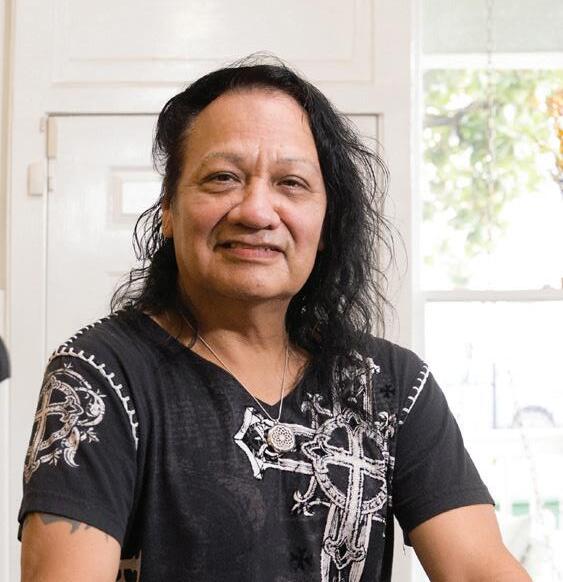
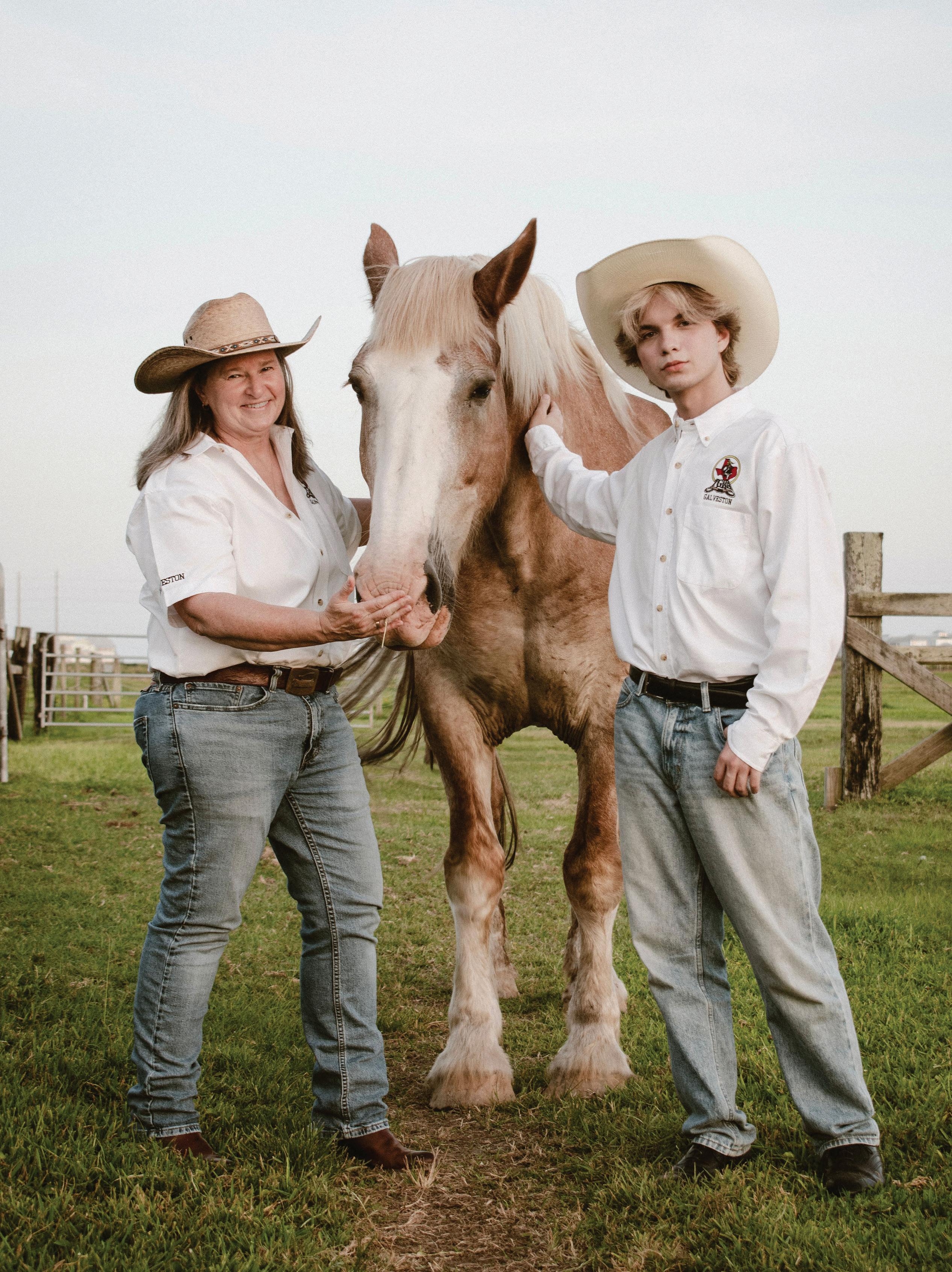
Tammy Fountain, president of the Texas Gay Rodeo Association’s Galveston chapter, with her son, Sam Fountain, and horse Sampson.
THE LANGUAGE OF BEING SEEN
For International Non-Binary People’s Day, three Houstonians reflect on visibility.
by BRANDON WOLF
SEEN AND AFFIRMED
Riot Stanley, 43, identifies as a queer transgender non-binary person. “I always knew there was something different about how I experienced my gender,” they remember, “but growing up in South Texas, I lacked the language, resources, and representation to understand it.”
That sense of difference became more visible during the pandemic, when Stanley, like most of us, were coping with the reality of shuttered barber and beauty shops that had previously provided grooming services. “I never truly felt like a boy or a girl,” they say. “That became much clearer during the pandemic in 2020. With my hair growing longer and masks covering my facial hair, I was often gendered as either “ma’am” or “sir.” What stood out to me was that neither felt right.”
Discovering their nonbinary identity gave Stanley language for something they had felt all along. For the first time, they could say: “This is me.”
For Stanley, celebrating an annual day of recognition matters because “visibility and validation still cannot be taken for granted. Many non-binary people regularly encounter individuals who dismiss, question, or outright deny our identities,” they say. They also believe this special day reminds non-binary people that they are seen, that their experiences are real, and that they belong within broader society.
Stanley says the most common misconceptions about non-binary people are that “our identities are not real, that we are confused, seeking attention, mentally ill, or have somehow been influenced into identifying this way. I’ve also encountered the belief that being non-binary is simply a steppingstone and that we will eventually transition into a binary identity as a man or a woman.”
International Non-Binary People’s Day, first celebrated in 2012, is observed each year on July 14. The day raises awareness, increases visibility, and honors the diversity of people whose gender identities exist beyond the traditional categories of male and female.
The date was chosen because it falls midway between International Women’s Day on March 8 and International Men’s Day on November 19. That placement reflects the broad spectrum of gender identities that extend beyond the binary.
To mark the occasion, OutSmart spoke with three nonbinary members of Houston’s LGBTQ+ community about what non-binary identity means to them and why recognizing this day matters.
Riot Stanley
Through their personal journey, Stanley says they have learned to give themselves permission to “stop trying to fit into someone else’s definition of who I should be and instead honor who I truly am. Embracing my nonbinary identity has been an act of selfacceptance and authenticity.”
Stanley also emphasizes the importance of inclusive language. “Gender-neutral language is important for the same reason gendered language is important,“ they observe. “It shows respect for individuals and acknowledges their existence.”
Looking ahead, Stanley envisions a future where people can express themselves authentically without feeling scrutinized or put on display— a world in which there is greater understanding that sexual orientation, gender identity, and gender expression are each distinct aspects of a person and do not have to align in a linear or predictable way.
“EMBRACING MY NON-BINARY IDENTITY HAS BEEN AN ACT OF SELF-ACCEPTANCE AND AUTHENTICITY.”
—Riot Stanley, MA, LPC-Associate
Stanley holds a Master of Arts degree and is a licensed professional counselorassociate (supervised by Felicia Stone, MA, LPC-S). They are the founder of Riot & Refuge Counseling, a professional limited liability company that provides accessible, authentic, and compassionate mental health care rooted in human connection.
”The name reflects the balance between struggle and healing, resistance and rest, chaos and calm,” Stanley explains. “I partner with clients to support their growth, advocate for their needs, and empower them on their path toward healing, by allowing them to access affirming and culturally responsive mental health care.”
In 2025, they were recognized with the OutSmart Gayest & Greatest award for Best Non-Binary Mental Health Therapist and are also a recipient of the 2025 Victoria D. Austin Emerging Humanitarian & Counselor Award.
THE FREEDOM TO DEFINE YOURSELF
Nore Gonzalez
Nore Gonzalez, 30, identifies as a non-binary pansexual. “I knew I was non-binary long before I had a word for it,” they say. “Probably as early as fifth grade. Growing up, I never felt comfortable with the expectations attached to being a girl, but I also didn’t feel like becoming a man was the answer. It wasn’t until much later that I learned there were identities outside that binary.”
They say a dedicated day of recognition can help build visibility and understanding. “Many people have never knowingly met a non-binary person, so the day helps people learn from real experiences instead of assumptions. It reminds people that non-binary individuals are part of every community, workplace, family, and movement.”
“One of the biggest misconceptions is that non-binary people have to look androgynous or present as neither masculine nor feminine,” they note. “Gender identity and gender expression are not the same thing. There is no single way to look non-binary.”
Gonzalez says they have come to understand that authenticity and autonomy matter more than meeting someone else’s expectations. “Realizing I was non-binary taught me that I don’t have to earn my identity by looking a certain way, acting a certain way, or following rules that don’t fit me.”
“Language shapes how people feel seen and respected,” Gonzalez observes. “Genderneutral language gives people room to define themselves and participate without feeling
excluded. It is a simple way to acknowledge that not everyone’s experience fits into traditional categories.”
Looking forward, Gonzalez hopes future generations will experience more freedom and autonomy than they did. “Even today, women are often treated as though they need permission, guidance, or validation from someone else. People ask where your husband is, who is going to take care of something for you, or when you’re going to have children. In professional settings, a man with the same education and experience is often taken more seriously than a woman.”
They envision a world in which a person’s opportunities, credibility, safety, and worth are shaped by who they are, not by their gender.
Gonzalez works as a citizenship navigator with Woori Juntos and now serves as a Latine community navigator. Their Citizenship Navigation Program is designed to assist individuals in navigating the U.S. naturalization process. The goal is to ensure that all eligible applicants, regardless of language barriers or financial constraints, receive the support they need to apply for U.S. citizenship. Navigators guide them through the process, ensuring that they have the necessary knowledge and resources to achieve U.S. citizenship.
Woori Juntos provides interpretation services and transportation assistance for United States Citizenship and Immigration Services interviews. They also teach citizenship and English classes, organize outreach efforts, and connect community members with resources that support their goals. “What I love most about this work is helping people live as freely as possible in this country—informed, empowered, and without fear.”
HouseMargarita
THE POWER OF STANDING OUT
Ethan Michelle Ganz
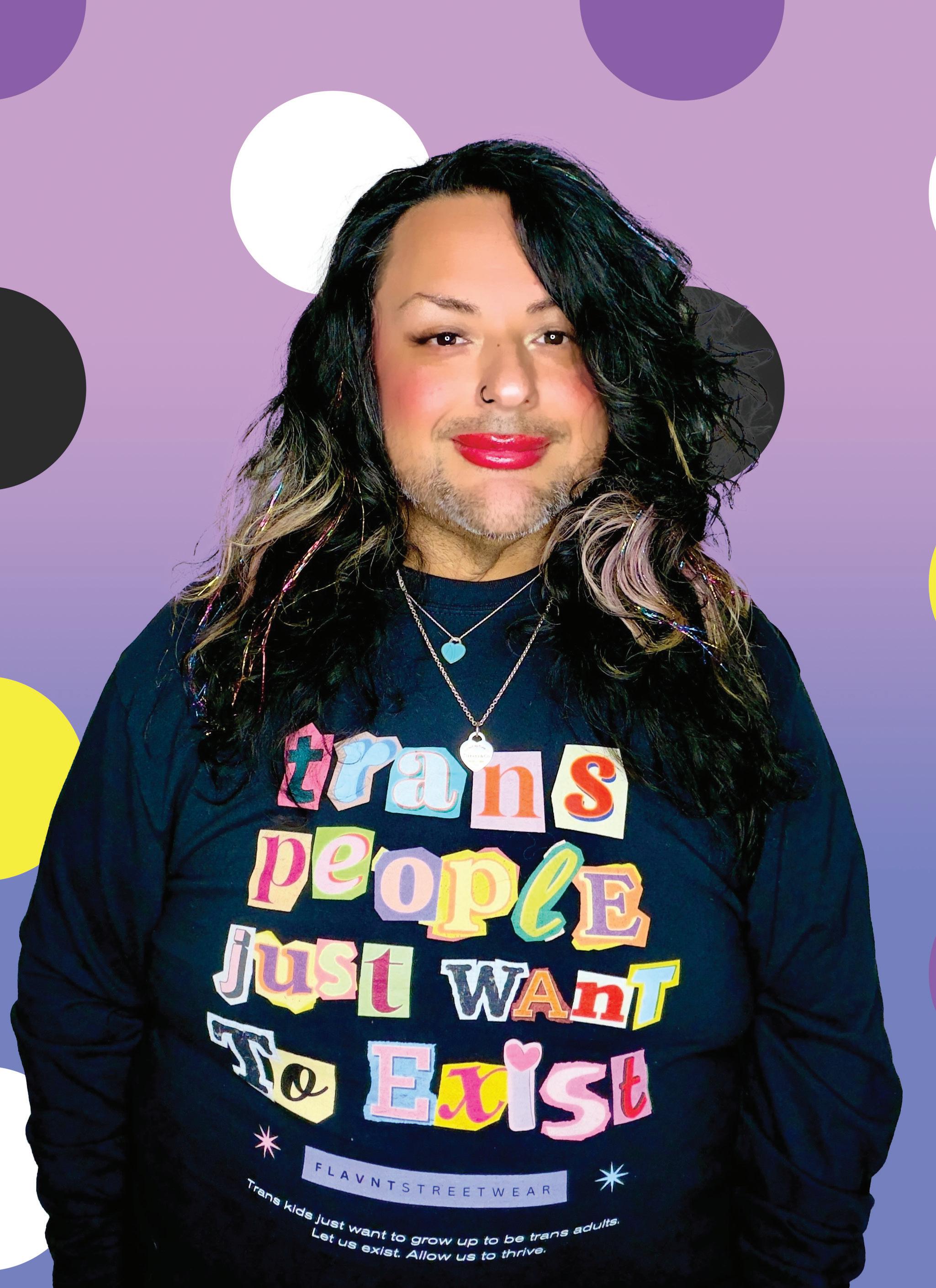
Ethan Michelle Ganz, 50, is a sapphic-romantic queer pansexual who identifies as gender non-binary, pangender and gender queer. “Before testosterone, I was a lesbian,” they reveal.
Ganz says their sense of self began early. “I always knew that I wasn’t a girl and I wasn’t a boy, but a little of both. I was six when I picked out my name Ethan. I didn’t have language for what I was, and I felt like I was the only one like me,” they remember. “It was the 1990s before I heard the term two-spirit, and that concept was exactly how I felt. It made me realize that people like me have always existed.”
Non-Binary Persons Day matters to Ganz because visibility is still hard won. “People who exist outside of the binary gender idea are mostly erased. Even with supportive folks, it can be difficult to really be seen.”
They say a common misconception is “that we are all alike. We are all individual. We are unique occurrences of energy frequencies. I think gender expansive folks are just more in tune with that unique setting than the general public. We are a minority within a minority. Our lived experiences are rare. I feel honored to be who I am and walk a path few get to walk.”
The greatest lesson Ganz has learned is “to love and accept myself. Instead of fitting in, my superpower is standing out. No matter what, people remember me once meeting me. As a kid I just wanted to be like everyone else, but at fifty I am happy that I am not like everyone else. I never fit into the boxes. I learned early in my life that I don’t have the energy to be something that I am not. So, authenticity has been a place of peace for me and has been an inspiration to others.”
Gender-neutral language matters to Ganz “because it is inclusive. I am a Southerner from birth, so my favorite gender-neutral word is y’all. Men and women can both feel included with gender-neutral language. Also, non-binary doesn’t have a look. Some of us are feminine presenting, some are masculine presenting, and some are very androgynous. You can’t tell a person’s gender just by looking at their presentation. It is safer to start with gender neutral language until you find out how each person prefers to be addressed.”
Ganz hopes gender expression continues to become more queer and individualized. “I hate
“I NEVER FIT INTO THE BOXES. I LEARNED EARLY IN MY LIFE THAT I DON’T HAVE THE ENERGY TO BE SOMETHING THAT I AM NOT.”
—Ethan Michelle Ganz
cookie-cutter looks. It’s like people lose some individuality to group think. I wish for people to be more in tune with themselves and share that authenticity.”
In 2023, after reports of anti-LGBTQIA hate increased in the gayborhood, Ganz founded Q-Patrol to monitor streets outside bars and be visible. The group has also provided safety support for Rice University Lavender
Graduation and other local queer events. “The majority of my folks are non-binary or binary trans folks,“ they note.
That same year, Ganz was elected Pride Houston’s Gender Non-Binary Grand Marshal and ran for Houston City Council as an openly trans person. They have also won multiple OutSmart Gayest and Greatest awards.
Last year, Ganz curated a trans art festival at the Rothko Chapel, featuring poetry, music, and fashion design, which was such a success that it is now an annual event.
In 2025, Ganz joined the popular podcast Queer Voices, explaining that because “the powers that be want to shut us up, it is time to get louder. I want the world to see our beautiful community the way I do, with love and admiration. In a time when everywhere you turn, we are being dehumanized with the rhetoric being used, it is important to show our humanity to the world.“
A DIFFERENT MEASURE OF HEALTH
Abbie Madden ’s Space City Nutrition challenges diet culture with queer-affirming, weight-neutral care.
by ALEX MENDOZA
Abbie Madden (they/them) is a leading voice of queer representation within conversations surrounding nutrition, dieting, and weight loss. They received their bachelor’s and master’s degrees from Oklahoma State University and completed their dietetic internship at the University of Houston. Abbie is the founder of Space City Nutrition, a group practice of dietitians who specialize in nutrition counseling.
What makes Space City Nutrition stand out is its inclusive and welcoming environment, as the practice is LGBTQIA+ affirming, anti-racist, and neurodiversity-affirming. It is also very accessible, as it is among the few group practices that accept insurance and offer reduced rates based on need. Abbie’s journey in discovering their own identity intersected with dismantling their own rigid perceptions of food and body image, as Abbie grew up in a very conservative and religious environment. “I feel that healing my relationship with food was one of the first steps in changing the rest of my life and coming to terms with my queer identity,” Abbie explains.
Space City Nutrition practices from a weight-neutral philosophy, meaning that it does not emphasize weight loss as an overarching goal for its patients. Instead, Space City Nutrition focuses on improving the relationship between patients and food as well as encouraging patients to familiarize themselves with bodily cues. For Abbie, it is pivotal to stray away from the idea that thinness is a determinant of good health. “The diet industry is a multibillion-dollar industry, and there are so many dollars invested in making us believe that our bodies aren’t good enough as they currently are,” Abbie says. “Weight is not a behavior. Weight is more like the side effect of a lot of different things, most of all being genetics.” By practicing self-compassion, dietitians at Space City Nutrition work with patients to look at their bodies from a neutral perspective rather than strictly “good” or “bad.” Acknowledging the multiple factors that contribute to one’s weight, such as geographic location, socioeconomic status, and access to healthcare, can help prevent patients from leaning into the misconception of body weight being a reflection of one’s worth.
The Health at Every Size framework, a framework Space City Nutrition references on their website as the baseline of their practice, aims to incorporate its principles into the practice of healthcare providers to become Health at Every Size aligned. Being Health at Every Size aligned consists of acknowledging the ways in which systemic oppression contributes to the exacerbation of negative sentiments toward one’s body. Keeping this reality in mind also encourages medical professionals to acknowledge the role they play as healthcare providers, making it more crucial to apply the Health at Every Size framework within their care and provide support that aligns with the many social movements currently working to achieve health justice for marginalized groups. “[Health at Every Size] recognizes that weight stigma contributes to a lot of harm. We talk a lot about stigma in the doctor’s office, medical weight stigma, and people not getting hired for jobs because of their weight,” Abbie explains. “It’s not just an individual issue. It’s also a social justice issue.”
According to the National Eating Disorders Association, queer people experience higher rates of eating disorders compared to their heterosexual and cisgender peers, as well as more severe eating disorder symptoms upon enter-
“I FEEL THAT HEALING MY RELATIONSHIP WITH FOOD WAS ONE OF THE FIRST STEPS IN CHANGING THE REST OF MY LIFE AND COMING TO TERMS WITH MY QUEER IDENTITY.”
ing treatment. It is also reported that those who identify as transgender or nonbinary may be at greater risk for developing an eating disorder. In the case of those who are transgender, the desire to present as their gender identity can also place significant focus on physical appearance, which inevitably means being aware of how weight can impact presentation. When it comes to discussions with patients who have eating disorders and are working toward aligning themselves with their gender identity,
We’re here for LGBTQ+ survivors of domestic violence, sexual assault, hate crimes, and human trafficking, with people who understand what it takes to rebuild.
We offer counseling, advocacy, and hands-on support to help you find safety, navigate the legal and medical systems, and rebuild your life.
No one should face this alone. We’re ready to stand with you in a space where you can talk without fear of judgment and find your way forward.
Space City Nutrition implements two of the Health at Every Size principles: informed consent and compassionate care. “We believe in bodily autonomy at Space City Nutrition,” Abbie says. “People can make the choices that they feel are best for their own bodies…we just want to inform them of the potential risks that could happen. I totally understand why someone would do that.”
Being an openly gender-queer dietitian provides Abbie with a unique perspective that helps them connect with many queer folks who struggle with their body image. “I feel those pressures, too, so I just have a lot of empathy for everybody in the queer community,” Abbie says.
Space City Nutrition, with its emphasis on creating a safe space for queer individuals, helps raise awareness about how unhealthy relationships with food and body image especially affect the queer community. So far, they’ve collaborated with multiple queer organizations, have given educational presentations on the services Space City Nutrition provides, and look forward to becoming more involved within the queer community.
For more information, visit spacecitynutrition.com.
THE ABILITY TO ENDURE
Nathaniel
De La
Fuente reflects on disability, HIV survival, and daily resilience.
by BRANDON WOLF
Nathaniel De La Fuente, 62, is a Houston gay man whose life has been shaped by resilience, faith, and a determination to keep moving forward. A longtime HIV-positive survivor who is now undetectable, De La Fuente has lived through medical and personal challenges while continuing to define himself by strength rather than limitation.
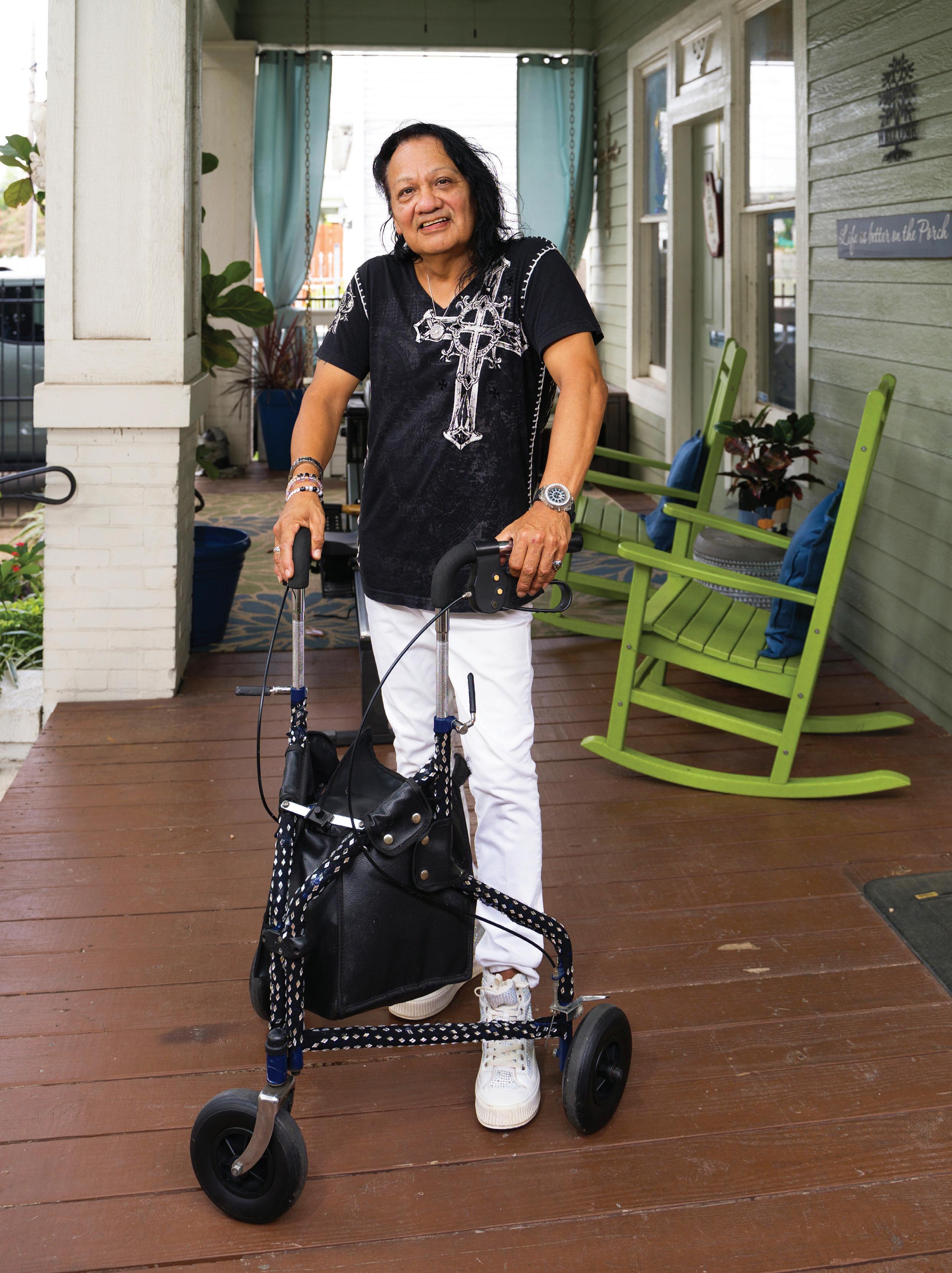
His health journey has included neurological issues, chronic pain syndrome, bilateral leg disorder, and post-traumatic stress disorder. He has also survived a transient ischemic stroke, which continues to affect his balance and limit his ability to walk—he now must use a three-wheeled rollator. If he goes somewhere that requires too much walking, he requires a wheelchair. He continues to face bouts of depression.
Through it all, De La Fuente says he has learned to approach disability with intention and self-direction. Rather than surrendering control to fear, pain or uncertainty, he grounds himself in the belief that he can still choose how to respond to what life places in front of him. He says he has learned to deal with his disabilities by realizing that “I am the driver of my own life vehicle, that I physically and mentally am in control of the path and direction I need to steer towards.”
He works out regularly at Lazarus House, a wellness center that offers a comprehensive program of exercise, nutrition, and support to the chronically ill to help fight muscle loss. Music and positive affirmations have become part of his daily practice. De La Fuente turns to songs that remind him of his worth, his endurance and the person he has become.
“I listen to songs that not only
make
me feel good
but also
make me feel that I have value. Some songs have a strong meaning as to who I’ve become and who I am.” Among his favorites are Whitney Houston’s “I Didn’t Know My Own Strength,” Teddy Swims’ “Lord I’m Tired of Being Strong,” and “This is Me” from The Greatest Showman
For De La Fuente, the word disability can suggest absence or deficiency, but he chooses to focus instead on what remains possible. He sees ability not only in physical strength, but in perseverance, gratitude, joy and love. “I simply think of the positive side and that is ability—the ability to work through any and all challenges on any given day and the ability to be thankful, happy, positive, and loving no matter the obstacles life may bring.”
“WE SHOULDN’T BE TREATED WITH SYMPATHY BUT RATHER WITH THE SAME RESPECT AND INCLUSION AS ALL OTHER PEOPLE.”
—Nathaniel De La Fuente
That perspective has helped him redefine strength. Living with disabilities has taught De La Fuente that resilience is not always visible to others and that people who are perceived as vulnerable often carry a depth of courage others may never fully recognize. The greatest lesson that he has learned from living with disabilities is “positivity in a negative world that looks down or even frowns upon the lesser or the weak. I know that my inner strength can outmatch most people who deem themselves as normal.”
De La Fuente also believes that inclusion matters because it changes how people understand disability. To him, inclusion is not about pity; it is about recognizing the full humanity, dignity, and contributions of people living with disabilities. “We shouldn’t be treated with sympathy but rather with the same respect and inclusion as all other people.”
That sense of dignity is also why Disability Pride Month carries meaning for him. The month is an opportunity to recognize that people living with disabilities are not defined by old stereotypes or by what others assume they cannot do. Celebrating Disability Pride Month is important because “we are no longer people who live in the past. We have grown into professionals, influencers, and teachers in all different ways. We’ve understood that we are just like the evening sky, in which not all the stars shine bright but they all sparkle.”
De La Fuente hopes for a world where people living with disabilities are seen not as burdens or exceptions, but as whole people worthy of love, recognition and belonging. A world where “people realize the courage and faith it often takes to simply show up.”
Rocky Hollub Victor Lopez
SOLDIERING ON
Author Mauricio Lucho depicts life under “Don’t Ask, Don’t Tell”
in
Behind the Salute: A Cadet’s Journey
by ZACHARY M c KENZIE
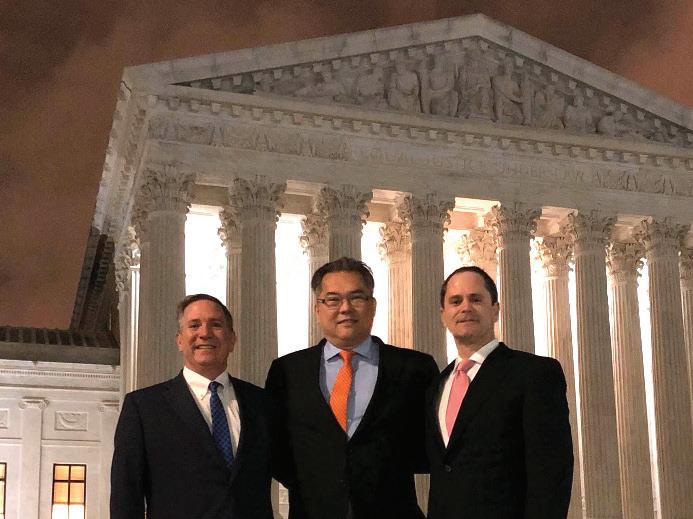
When “Don’t Ask, Don’t Tell” (DADT) was repealed in 2010, gay, lesbian, and bisexual Americans were able to serve openly in the U.S. Armed Forces. What proved to be a positive step forward for the LGBTQ+ community, and the country at large, left behind generations of soldiers unable to reap the benefits of this hard-fought freedom. The discriminatory policy, while in effect, made immeasurable negative impacts on individuals, many of whom ultimately left the Armed Forces behind. One such individual was Mauricio Lucho, author of Behind the Salute: A Cadet’s Journey. In his debut novel, a semi-fictionalized memoir inspired by true events, Lucho depicts the horrors of being a closeted member in his university’s Corps of Cadets, the power of friendship, and the ultimate sacrifices that allowed him to survive.
Lucho, who writes under a pseudonym to maintain his anonymity, ventured back to a painful time in his life when writing the semiautobiographical coming-of-age novel. The Houstonian writes of his time at an esteemed college in Texas, sharing a peek behind the curtain of the life of a cadet, including hazing rituals, abuse, life-saving friendships, and the internal strife of a closeted cadet. The book depicts graphic scenes of sexual and physical violence at the hands of higher ranking officials, along with other painfully vivid stories of pain and loss. Despite the heavy nature of the book’s content, Lucho finds balance for these scenes with heartfelt anecdotes of family, friendship, and love.
“Several things inspired me to write this book, including the love and support of my family and friends, as well as my experiences navigating the ‘Don’t Ask, Don’t Tell’ era and extreme collegiate hazing,” he says. “It was important for me to write about my loving family and friends while sharing glimpses of my Hispanic culture and faith. Without them, I wouldn’t have persevered.”
While the author may not have studied
“LOOKING BACK, I REALIZED THAT I, AND COUNTLESS OTHERS, LIVED THROUGH A CHAPTER OF AMERICAN LGBTQ+ HISTORY MARKED BY SYSTEMIC OPPRESSION.”
— Mauricio Lucho
writing as a profession, his storytelling abilities paint a portrait of a very specific time in our country’s history. “The writing process evolved over more than two decades,” he says. “Life forced me to stop and start repeatedly, and the journey required humility and a willingness to ask for help along the way. I wasn’t a writer per se, but I knew I had a story to tell.”
While the novel takes place predominantly in the 1990s, Lucho asserts that his book is a recollection of a specific moment in time and that the march toward equality continues. “Looking back, I realized that I, and countless others, lived through a chapter of American LGBTQ+ history marked by systemic oppression. I wanted to memorialize the ‘Don’t Ask, Don’t Tell’ era through my own journey,” the writer shares. “Unfortunately, the LGBTQ+ community continues to face ongoing discrimination, which I hope will one day also be written about in the past tense.”
The book is an amalgamation of real life experiences Lucho endured while in college, as well as re-envisioned moments to serve the overall plot. Writing under his pen name, Lucho finds safety under a veil of protection. “When I first began writing over two decades ago, it was simply my story—a memoir. The
chapters were interesting and shocking, but as my friend once told me, it wasn’t yet a story in the literary sense,” Lucho recalls. “Over time, I merged characters, deleted scenes, and reshaped events. The refined story no longer belonged entirely to me. I also didn’t want family and friends to assume every detail or character represented reality exactly as it happened. So, I created Mauricio, which opened the door to greater literary freedom.”
Since the book’s release, Lucho has
received feedback from readers who have discovered the book through festivals and word of mouth. “The story has made readers uncomfortable, emotional, reflective, and deeply connected to Mauricio,” he says. “I try to warn people that the book is heavy and complex, though there are still glimmers of light and hope throughout. The tears I cried and the pain I felt while sitting in front of a monitor over the years have been mirrored by many readers.”
With the United States’ 250th Anniversary taking place this year, Americans are invited to reflect on the history of our country—the good and the bad. Just as Lucho navigated the positives and negatives of his story, he shares that it was worth it if it means others feel compelled to share their own. “If more stories by people I care about [are told], then I’ll be unexpectedly and pleasantly surprised,” he says.
Having survived the “Don’t Ask, Don’t Tell” era, Lucho’s story is one of survival and, ultimately, hope. “Many readers have asked, ‘What happens to Mauricio [after the book’s ending]?’ I’ve lived a rich and adventurous life, so don’t be surprised if ‘Mauricio’ continues to write.”
Available now at your local independent bookseller, at Barnes & Noble, or on Amazon.
BECOMING A QUEEN
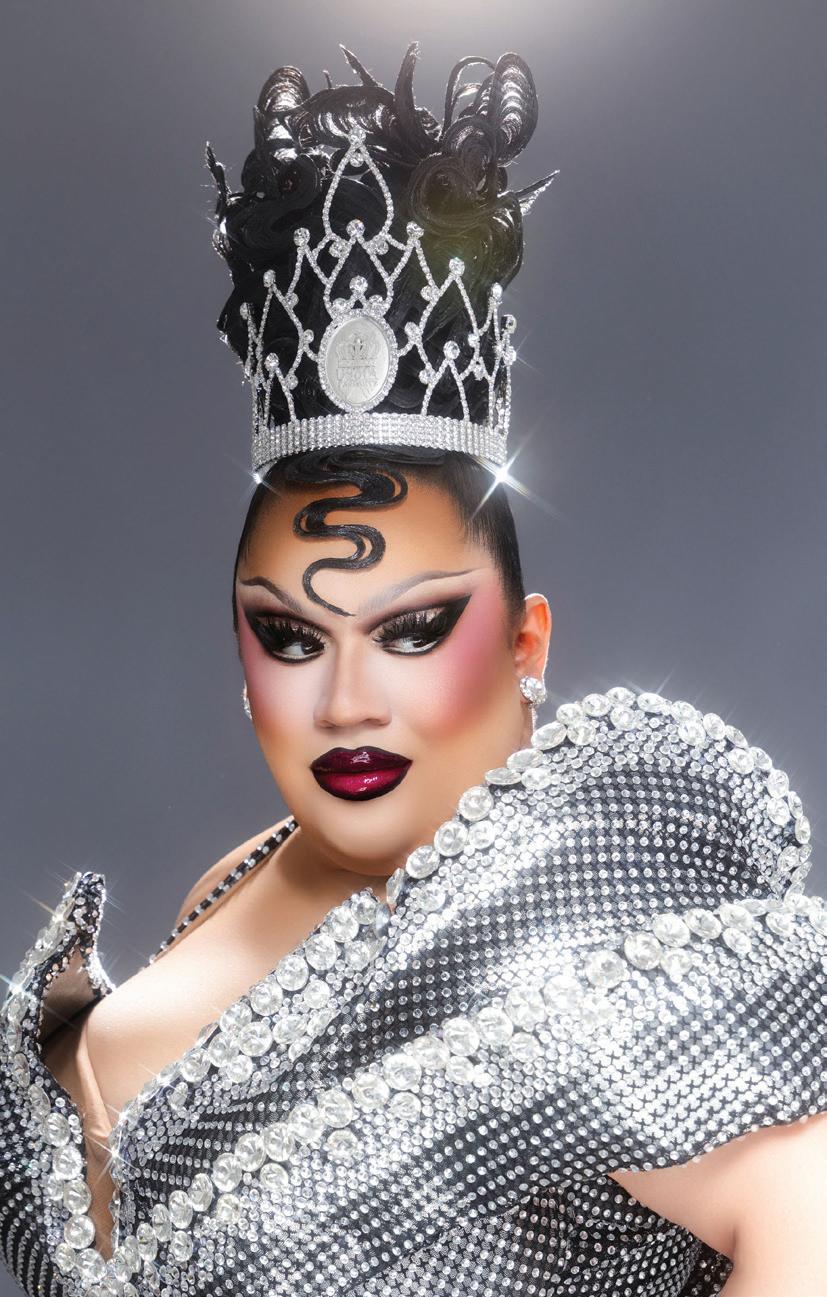
Reign LaRue brings craft, intention, and plus-size representation to Houston drag and pageantry.
by SAM BYRD photos by VICTOR CONTRERAS
Long before the wigs, the pageants, and the packed Houston crowds chanting her name, Reign LaRue was just a child playing make-believe drag.
“I would put T-shirts on my head and pretend they were wigs in front of the TV,” Reign says. “I would have preferred to do that over playing with cars or coloring books.”
Growing up, performing was a constant. She danced competitively in elementary school, competed in theater through high school, and eventually became president of her drama club. But after graduation, adulthood and work pulled her away from that creative side of herself.
That changed unexpectedly — and because of someone else’s passion. Reign credits her partner, Lupe Salas, with opening the door.
At 21 years old, the couple visited a gay club for the first time after seeing that drag icon Bianca Del Rio was performing at South Beach. While there, Reign spotted a flyer advertising a local amateur drag competition. At the time, she thought drag queens only existed on television.
“We went to watch and immediately fell in love with everybody — the energy, the love they received,” she says. “My gears started turning. I thought this might be a great way to start performing again.”
She went home and taught herself, building her way up from no makeup knowledge, no hair experience and no formal training. Her first performance came in August 2017 at So You Think You Can Drag. She won. That momentum continued. She later entered Desi’s Drag Race and captured the season 12 title in 2018, a turning point that launched what would become one of Houston drag’s most recognizable careers.
Since then, Reign has built an impressive résumé: directing Millennial Dolls beginning in 2019, becoming show director at JR’s, and establishing herself as both a performer and creative leader in Houston’s drag scene.
But for Reign, success was never about moving fast; she wanted to earn each next step. “I wanted to make sure I was ready in all aspects before I took another step,” she said. “Hair, makeup, performance — I wanted those boxes checked to the best of my abilities.”
“AS A PLUS-SIZED PERSON, I GET TO BE THAT CONFIDENCE FOR PEOPLE. I GET TO BE THAT ESCAPE FOR THEM.”
Texas USofA at Large, earning the opportunity to compete at the state level for Miss Gay Texas USofA at Large later this season. The win wasn’t just another crown. It represents years of preparation and inspiration.
She points to performers she admired within the system and says seeing fellow Houston titleholders succeed made her believe there was room for her, too. More recently, building a relationship with Jazell Barbie Royale helped push her into competition.
“Seeing her win made me throw my hat in the ring,” Reign says. “I’d love to do the same thing and win it for the big girls.”
That journey hasn’t happened alone. If Reign is the face audiences see, Salas has been there from the beginning helping create the world around her.
As a plus-size entertainer, finding costumes wasn’t easy. Salas suggested they try making them, and just like that, a sewing machine became part of the act. Over time, their partnership evolved into something bigger: Salas’ love of drag merged with Reign’s love of performance to empower a creative collaboration that now fuels the entire operation.
That same intentionality shaped another major part of her journey: pageantry. This year marked her formal entry into the pageant world, a world she describes as entirely different from nightlife performance.
“The pageant world is like studying for a test,” she says. As she describes it, the show world is for the audience, and pageants are a different challenge. Now, she has the title to prove she belongs.
Reign recently won Miss Gay Houston
— Reign LaRue ➝
“He gets to put his creative mind to work, and I get to put my performance skills together,” Reign says. “The drag supports both of us.”
Eventually, another layer of support arrived when Reign joined the LaRue drag family under her drag mother, Leisha LaRue. At first, she resisted the idea. Joining a drag family meant legacy, responsibility, and expectations. But after building a genuine relationship beyond shows and performances, she officially became Reign LaRue in late 2019.
Today, she sees drag not simply as entertainment but as representation. “As a plussized person, I get to be that confidence for people,” she says. “I get to be that escape for them.”
“IT TAKES A VILLAGE TO MAKE A QUEEN HAPPEN.”
— Reign LaRue
And while audiences often see only sequins and spotlights, Reign says there’s something important happening behind the curtain. “It takes a village to make a queen happen,” she declares.
Looking back at the child performing in front of the TV, Reign says she carries that younger version of herself into every performance. “Whatever you do in life,” she says, “make sure you do it with heart and intention for that kid inside of you that dreamt of where you are now.”
For any readers who want to channel their inner alter ego by embracing drag, July 16 marks International Drag Day. Hailed as a day (and possibly extending into the weekend, because why not?) to celebrate and recognize drag art all around the world. Don a wig, beat the mug and sport some overtly gender-stylized clothing with accessories, attitude and a desire for the crowd’s adoring attention. After all, we’re all born naked; the rest is just drag.
Follow Reign LaRue on Instagram @reignlarue
FROM TINDER TO ‘LOVE ON TOP’
Darnell and Jamar Williamson-Fennell turned ten years of partnership into a celebration that was entirely, unapologetically theirs.
by DAVID CLARKE
photos by SHAIMMA PHOTOGRAPHY
Jamar Williamson-Fennell (l) and Darnell Fennell
When Darnell Fennell texted Jamar Williamson-Fennell in the early hours of Valentine’s Day weekend in 2015, he didn’t know he was reaching out to the man who would become his husband. The couple first connected on Tinder while Jamar was preparing to move from New York to Houston. Darnell admits he was intrigued by Jamar’s profile, but not entirely convinced.
“His profile seemed cool,” Darnell recalls. “His pictures were not really consistent in some way, so I was a little skeptical.”
Jamar laughs at the memory. For him, it was one particular photo that stood out. “My favorite photo of him was a picture of him laughing,” he says. “It came off to me as very nerdy. Something about it just made me feel like he was approachable and down to earth. And, I do like a nerdy, intelligent man.”
After weeks of sporadic communication, Darnell reached out while Jamar was in Houston for a job interview. The two met for lunch at a restaurant that once stood near Montrose and Westheimer. The date was simple, but memorable.
One moment in particular convinced Darnell that Jamar was exactly who he claimed to be. “We were at a burger joint,” Jamar remembers. “I had chicken tenders or boneless chicken wings, and I was just eating them things up! He said, ‘Wow, you weren’t even trying to be cute with it.’ I said, ‘No, I’m hungry. I’m gonna eat.’” That authenticity would become one of the foundations of their relationship.
Now celebrating 10 years together, both men describe their connection as something that grew naturally, rather than according to any predetermined checklist. “As a very logical and very analytical person, typically when I choose to be with somebody, that’s more intuitive in some way,” Darnell explains. “So I just knew that we were probably gonna go somewhere with this, but that wasn’t based upon a checklist of things per se. It was just more of a connection.”
Jamar felt something similar. “What I did know was that I was encountering a man of value, a man who means what he says,” he reveals. “Within that short time that I was there visiting, I could really tell that he means what he says.”
The qualities they admire most in one another remain largely unchanged a decade later. Jamar describes Darnell as “very intelligent,” adding that he loves how grounded and down to earth his husband is despite that intellect.
Darnell, meanwhile, credits Jamar with bringing warmth and connection into their shared life. “He is the outgoing, caring expression of our relationship,” Darnell states. “People just gravitate toward him, so that is great to
have in my life and to be able to witness that.”
When it came time to get engaged, the proposal reflected both their personalities. Darnell, who proposed, spent years reflecting on what marriage meant to him as a gay man. “For me, marriage was tied to straightness and being straight,” he admits. “Once I overcame that I don’t have to be there and I don’t have to live in that paradigm, I wasn’t wedded to that story as much as I once was.”
came a carefully planned surprise proposal.
Under the guise of a brownie-making demonstration, Darnell secretly flew in members of Jamar’s family from Florida. After baking together, the couple was asked to pose with the finished treats. On the serving plate were the words: “Will you marry me?” When family members emerged from hiding moments later, the answer was already clear.
“He did good,” Jamar says with a smile. “He did very good.”
Eventually, and with the help of a therapist, he realized marriage could be defined on his own terms. “You can define what this means for you in a new way that’s different from how it may have meant for you in previous chapters of your life,” he explains. With that realization ➝
The couple officially married on July 25, 2025, in Berkeley, California, a place deeply connected to Darnell’s personal journey. The intimate ceremony took place in a rose garden he frequently visited while living there.
The wedding itself was intentionally small, attended only by the couple, their officiant, photographer, and videographer.
Their larger celebration came three months later. On October 26, family and friends gathered atop POST Houston in the venue’s Skylawn. There, Jamar and Darnell decided to put their “love on top,” with a reception that transformed into a joyful expression of community, culture, and love. The event featured a neutral palette inspired by the browns and earth tones the couple wore during their California ceremony. Guests were invited—but not required—to wear similar shades.
To the couple’s surprise, nearly everyone embraced the request. “Pretty much 99% of everybody has these colors on,” Darnell says. “Aesthetically, that just represented the continuity and that we are all together, we’re all invested.”
Music became another defining feature of the evening. A choir, DJ, saxophonist, and live vocalist helped create what Jamar describes as “a whole thing.” The celebration also honored the couple’s individual backgrounds. Catering incorporated Jamaican flavors as a tribute to Jamar’s heritage, creating a menu that resonated with family members from both sides. Yet perhaps the most meaningful moment involved remembering Darnell’s grandmother. Diagnosed with cancer shortly before the
Berkeley ceremony, she passed away roughly a week before the Houston reception. Rather than allowing grief to overshadow the celebration, the couple chose to honor her life. During a musical performance, videos of her dancing played on screen. “It was an emotional moment,” Darnell says, “but it was a way to bring her in.”
The evening’s emotional centerpiece came during the couple’s grand entrance. Guests first watched a video of the California ceremony and listened to the couple’s vows. Then, surrounded by loved ones, Darnell and Jamar made their entrance into the reception.
“It was the entry, period,” Darnell says of his favorite moment of the reception. Jamar agrees. “Literally the best day of our lives,” he adds.
For both men, the celebration carried additional significance as two Black gay men navigating the complexities of family, faith, identity, and acceptance. “There was a little bit of heartache during the process,” Jamar explains. “But being there in that moment and feeling the rush of love and support and celebration—it was nothing but love in there.”
One particularly meaningful moment came during a toast from Darnell’s brother, Robert, who reflected on his own journey toward fully embracing and celebrating his brother. “It was honestly about how he wasn’t always where he should have been with me,” Darnell says, “but he is celebrating me now.”
For a couple whose relationship began with curiosity, authenticity, and a leap of faith, that spirit of growth and affirmation felt like the perfect way to celebrate the next chapter. “We deserve this for our journey,” Darnell says of their wedding and reception, “both as individuals and as the collective. To be able to say, ‘We’re here, we made it, we love each other.’”
For more photo galleries, please
Out ▼ There
JUNE 2, 2026
PERSIA AMARRA CONWAY CANDLELIGHT VIGIL
Community members gathered at the Montrose Center to remember Persia Amarra Conway, a 33-year-old transgender woman whose life was taken far too soon. “Persia Amarra Conway was loved. Persia Amarra Conway mattered. Persia Amarra Conway deserved to grow old, to chase her dreams, and to live the beautiful life she envisioned for herself,” her mother, Michelle, shared. Kind-hearted, funny, and fearless, Persia was a light in every room. The vigil offered space for grief, remembrance, and solidarity as Houston’s LGBTQ community mourned another life lost to violence against transgender women of color.
Photos by NORA DAYTON
Out ▼ There
Photos by NORA DAYTON
For more photo galleries, please
JUNE 6, 2026
PRIDE HOUSTON 365: 48TH ANNUAL FESTIVAL + PARADE
Pride Houston 365’s 48th Annual Festival brought its “Limitless” celebration to downtown Houston, drawing crowds for a day of music, advocacy, and community connection, even as severe weather forced organizers to cancel the evening parade.
Performances by Big Freedia, Dawn Richard, and others were joined by speeches from elected officials and a meaningful moment when trans leaders Avery Belyeu, Joelle Espeut, Daron Perez, Rose Daphne, and Jevon Martin addressed the crowd amid grief over the death of Persia Amarra Conway, a 33-year-old transgender woman.
Organizers are working to reschedule the parade through the fall.
is
now on your phone! directory
Whether
Whether you’re a covered with this
now on your phone! directory of around Houston, Galveston, Huntsville, Whether you’re a covered with this
Whether you’re a covered with this
OutSmart’s Bar Guide is now on your phone! Scan here to check out our directory of LGBTQ bars and clubs in and around Houston, including your favorites in Galveston, Huntsville, Spring, and College Station. Whether you’re a local or a visitor, we’ve got you covered with this updated guide to the best LGBTQ-friendly spaces.
OutSmart’s Bar Guide is now on your phone! Scan here to check out our directory of LGBTQ bars and clubs in and around Houston, including your favorites in Galveston, Huntsville, Spring, and College Station. Whether you’re a local or a visitor, we’ve got you covered with this updated guide to the best LGBTQ-friendly spaces.
OutSmart’s Bar Guide is now on your phone! Scan here to check out our directory of LGBTQ bars and clubs in and around Houston, including your favorites in Galveston, Huntsville, Spring, and College Station. Whether you’re a local or a visitor, we’ve got you covered with this updated guide to the best LGBTQ-friendly spaces.
OutSmart’s Bar Guide is now on your phone! Scan here to check out our directory of LGBTQ bars and clubs in and around Houston, including your favorites in Galveston, Huntsville, Spring, and College Station. Whether you’re a local or a visitor, we’ve got you covered with this updated guide to the best LGBTQ-friendly spaces.
OutSmart’s Bar Guide is now on your phone! Scan here to check out our directory of LGBTQ bars and clubs in and around Houston, including your favorites in Galveston, Huntsville, Spring, and College Station. Whether you’re a local or a visitor, we’ve got you covered with this updated guide to the best LGBTQ-friendly spaces.
OutSmart’s Bar Guide is now on your phone! Scan here to check out our directory of LGBTQ bars and clubs in and around Houston, including your favorites in Galveston, Huntsville, Spring, and College Station. Whether you’re a local or a visitor, we’ve got you covered with this updated guide to the best LGBTQ-friendly spaces.
OutSmart’s Bar Guide is now on your phone! Scan here to check out our directory of LGBTQ bars and clubs in and around Houston, including your favorites in Galveston, Huntsville, Spring, and College Station. Whether you’re a local or a visitor, we’ve got you covered with this updated guide to the best LGBTQ-friendly spaces.
OutSmart’s Bar Guide is now on your phone! Scan here to check out our directory of LGBTQ bars and clubs in and around Houston, including your favorites in Galveston, Huntsville, Spring, and College Station. Whether you’re a local or a visitor, we’ve got you covered with this updated guide to the best LGBTQ-friendly spaces.
Huntsville, Whether you’re a you covered with this
Guide is now on your phone! out our directory of and around Houston, in Galveston, Huntsville, Station. Whether you’re a got you covered with this LGBTQ-friendly spaces.
now on your phone! directory of around Houston, Galveston, Huntsville, Whether you’re a covered with this LGBTQ-friendly spaces.
now on your phone! our directory of around Houston, Galveston, Huntsville, Whether you’re a covered with this LGBTQ-friendly spaces.
spaces.
Charles Garibay
LGBTQ bars and clubs in and around Houston, including your favorites in Galveston, Huntsville, Spring, and College Station. Whether you’re a local or a visitor, we’ve got you covered with this updated guide to the best LGBTQ-friendly spaces.
spaces.
spaces.
Guide is now on your phone! out our directory of and around Houston, Galveston, Huntsville, Station. Whether you’re a you covered with this LGBTQ-friendly spaces.
I like to make Lemondrops and Starf--kers—a tasty Crown Royal and Red Bull shot!
Where is your favorite place to drink when not on duty?
I’m a non-drinker, so you can usually find me out riding my bike. What is a current bar drink trend you’d like to see end? Please end the Mexican Candy Shots (tequila, watermelon liqueur, and hot sauce).
What are you best known for?
I’ve been with Mark DeLange, the owner of the Eagle, for 10 years since he opened. Most people know me for my Blue Balls Shot, which is a blueberry vodka mix. What is the best and worst holiday to work?
Best holiday: I’m going to count Pride as a holiday, so Pride and Halloween are the best because people are in great spirits. Worst holiday: New Year’s Eve and St. Patrick’s Day, when all of the amateurs are out!
Biggest tip from one customer?
$500 during a big party when a major
Remember that everyone is welcome! Desired super-power?
Gotta be the power of flight dreams, I fly! Theme song? The “Peanuts” theme song
ReBar
Houston,
Cold Beverages & Hot Guys!
Amateur Strip Contest
TONY’S CORNER POCKET
TONY’S CORNER POCKET
TONY’S CORNER POCKET!
Nightly Specials – Call for Details Cold Beverages & Hot Guys!
Houston’s Hottest Male Amateur Strip Contest
ReBar evolved into Rich’s Houston, a vibe restaurant, Male Amateur
For more photo galleries, please visit our website.
Photos by DALTON DEHART and CREW
Out ▼ There
JUNE
7, 2026
THE MONTROSE CENTER 8TH ANNUAL PRIDE BRUNCH
The Montrose Center’s annual Pride Brunch lived up to its reputation as the biggest in Texas, selling out Puttery on Washington Avenue for a packed, highenergy celebration. The undisputed highlight was RuPaul’s Drag Race star and OutSmart Magazine’s Pride 2026 cover, Silky Nutmeg Ganache, who commanded the room with magnetic, floor-shaking presence. DJ Chad Guidry kept bodies moving from the first drop. Equal parts party and community gathering, the brunch remains one of Houston’s most anticipated Pride weekend traditions, and OutSmart Magazine was there as a proud media sponsor to celebrate every moment.
by KEVIN CASEY
ARIES (Mar. 21–Apr. 19)
Cancer Season isn’t your favorite time of the year, Aries. Your typical fiery and bold nature is dampened by the watery, soft, and feeling tone of Cancer. Taking risks is second nature to you Rams, but this month there’s an equal pull toward safety and security, particularly around anything to do with home, your current living situation, or family. The New Moon in Cancer on July 14 places your heart squarely on your sleeve, making any criticism this month quite hurtful, especially if it’s coming from a family member. Not to worry, Aries, your bad-ass status is restored when Leo Season begins on July 22.
TAURUS (Apr. 20–May 20)
“There will be no plastic in the living room,” I was once told by a Taurus friend. Beauty is a necessity for you Bulls, and a beautiful environment is essential to your soul. The New Moon in Cancer on July 14 is the perfect time for home decorating, buying new furniture, and decluttering—basically, anything that brings more beauty to your environment. This focus on home continues right through Leo Season July 22–August 21. Mercury remains retrograde until July 23. Mercury is a zippy little planet that rules all types of communication. It’s a notorious troublemaker when retrograde, so think twice before you hit the send button.
GEMINI (May 21–June 21)
You’re a talker and a thinker, Gemini. You can find a way to connect with almost anyone, and you’re funny to boot. Others count on you to lighten the mood of any stale or heavy environment. Cancer Season comes
THE COSMOS IS SHIFTING Cancer
Season, Mercury retrograde, and what’s ahead for every sign
The outer planets Uranus, Neptune, and Pluto are major players in astrology and typically have a major effect on culture and world events. Last year Pluto moved into Aquarius, and this year Uranus moved into Gemini, while Neptune made its move into Aries. This is very rare for all three of these planets to change signs so close together. This month all three planets make harmonious aspects to one another. This is also highly unusual but it’s a good thing. July 18 and 19 are the peak days of these aspects. Let us hope this brings some much needed harmony to our crazy planet. Leo Season begins on July 22 and Mercury goes direct on July 23, ending its three-week reign of miscommunication, delays, and obstacles.
along and jams the system. You can’t just think your way out of your feelings this month, and you’re not in the mood to play the part of comic relief. You’re in need of a little down time to sort your feelings and recharge your battery. Those closest to you would love to support you if you let them. During this retreat it would be a good idea to take a realistic look at your finances. The New Moon in Cancer on July 14 is perfect for a financial reset and be especially careful about loaning money until Mercury goes direct on July 23.
CANCER (June 22–July 22)
It’s Cancer Season! I’d say come out of your shell and take center stage, but you may think better of it with Mercury retrograde in your sign until July 23. There’s really no need to fear this retrograde; you’re just hitting the pause button to do some deep self-reflection. If people from the past come back around, it means it’s time to bring closure to that situation. Certain people, circumstances, and goals from the past have served their purpose, and it’s time to let them go. Your moment of new beginnings is official on July 14 with the New Moon in Cancer. This cosmic reset is also physical. A change in your appearance acts as an exclamation point, letting the world know you’re standing on business when it comes to change.
LEO (July 23–Aug. 22)
Oh, Leo! Your moment is coming on July 22 when Leo Season officially begins, but first you must contend with Cancer Season and that means you need to take a step back. When planets are in Cancer, it stirs up the part of your chart that deals with confinement, retreat,
karma, and completion. Slowing down and being introspective is key right now. You’re being asked to clear your emotional slate of any lingering resentments, anger, and jealousies. If you try to force a situation or make something happen, you’ll be met with delays and frustration. When the Sun enters Leo on July 22 and Mercury goes direct on July 23, you’ll be restored to your natural position, the throne. It’s where all royalty belongs.
VIRGO (Aug. 23–Sept.22)
This month’s Cancer vibe is just fine by you Virgos. The Mercury retrograde not so much. For you Virgos this month’s Mercury retrograde can include miscommunication with friends, being left on read, or being ghosted. Overanalyzing the details of a situation gone wrong will get you nowhere this time; it will only result in more frustration. Instead of trying to “fix” a situation—and you are a world class fixer—let the Universe do its magic. Things can turn out way better than you ever expected when Mercury goes direct on July 23. The New Moon in Cancer on July 14 can usher in new friends and new connections. If you’ve been considering joining a group or getting involved in community activities, this is your time to do just that.
LIBRA (Sept. 23–Oct. 23)
The Sun’s transit this month through the sign of Cancer highlights work and career. Mercury retrograde stirs the pot at work with miscommunications, delays, and misunderstandings. You’re great with people and you’re a master at navigating your way through conflict without getting your hands dirty, but that may be a tall order
this month. Your feelings could get the best of you, and that isn’t necessarily a bad thing. It may be time to speak up and set boundaries. New Moons are about new beginnings and the New Moon on July 14 could result in a promotion or a new job offer, while the Full Moon in Aquarius on July 29 says it’s time to prioritize fun, pleasure and romance.
SCORPIO
(Oct. 24–Nov. 21)
Surprises have never been your thing, Scorpio. Control is your middle name. It may not look like it, but July is a turning point for you Scorps. It’s time to broaden your horizons, but first there will be a few detours. This month’s delays, obstacles, and miscommunications are actually opportunities to pause and rethink your plans, especially around finances. Changing and fluctuating financial situations require you to be flexible and look for new solutions. Any confusion about what to do next gets cleared up when Mercury goes direct on July 23. Career moves to center stage when Leo Season begins on July 22 and the Full Moon in Aquarius on July 29 puts you in the mood to declutter and organize your living space.
SAGITTARIUS
(Nov.22–Dec.21)
You rarely get caught up in all the status games of the material world. For you Sagittarians, money affords you freedom, the freedom to do what you want when you want, but July comes with a word of caution. The role of karma will be played by Mercury retrograde this
month, and any impulsive spending could result in some painful consequences. If at all possible, hold off on making any major financial decisions or big purchases until Mercury goes direct on July 23. Start thinking about travel plans when the Sun enters Leo on July 22, and be especially careful about spilling any tea. The Full Moon in Aquarius on July 29 lands right in your gossip box.
CAPRICORN (Dec. 22–Jan. 19)
Cancer Season means it’s relationship season for you Capricorns. Mercury, the planet of communication, has taken up residence in your relationship house for an extended period of time. Your clear and direct communication style will serve you well at this time. Sure, a few of the more sensitive and emotional types may get their feelings bruised, but it will prevent the usual miscommunication snafus the retrograde is known for. New Moons are about new beginnings, and on July 14 the New Moon in Cancer encourages you to open your heart and give love another shot. Be forewarned, this would be about giving someone new a chance. Exes from the past have a habit of reaching out during Mercury retrograde. It’s time to leave the past in the past, Capricorn.
AQUARIUS (Jan. 20–Feb. 18)
Jupiter, the cosmic sugar daddy, began his year-long stint in Leo on July 1. This is headline news for you Aquarians. In astrology this massive planet is linked
to good luck, gifts, and expansion. When Jupiter transits Leo, it means you Aquarians experience good luck through others. They come bearing gifts and blessings instead of pain and drama. Being the planet of abundance, Jupiter can bestow you with several options when it comes to love and romance. Even if you’ve become a bit cynical or fearful about love, the cosmos is asking you to just be open to the possibility. You’re so accepting and open to others including their shortcomings and faults. Jupiter would like the chance to return the favor.
PISCES (Feb. 19–Mar. 20)
You’re the sensitive dreamers and romantics of the zodiac. This month’s Mercury retrograde and New Moon in Cancer on July 14 hits you right in the heart chakra. Exes reaching out or reappearing is a Mercury retrograde specialty, and the New Moon on July 14 could spark a new romantic interest. If you did something creative in the past and put it down, pick it back up this month. Creativity and self-expression has a therapeutic and healing effect on you. Leo Season begins on July 22 and wraps up on August 21. During this time it’s best to stick to everyday routines and obligations and hold off on making any major decisions. The Full Moon on July 29 encourages you to confront what you’ve been avoiding.
Connect with Kevin at popastrologyreadings.com or on @p0pastrology.
by
The Heart of Leather Foundation presented its Out of the Archives event, hosted by Daddy Gil and Kevin Hamby, at Heights Art Studios & Gallery on May 31, 2026. Pictured are Kevin Hamby, Daddy Gil, Loyd Powell, and Robert Conn
On June 12, 2026, the Greater Houston LGBTQ+ Chamber hosted its 10th annual Pride in Business Celebration Luncheon in the Hilton AmericasHouston Grand Ballroom. Pictured are Dan Cato, Kerry-Ann Morrison, and Michael McIntyre.
On June 17, 2026, the Diana Foundation presented $10,000 donations to Out for Education and Tony’s Place. Pictured are Greg Brown, Ryan Fountain, Lane Lewis, Carrie Rai, KM Cooper, Tanner Williams, and Ashton Chandra
On June 23, 2026, U.S. Rep. Lizzie Fletcher and the Greater Houston LGBTQ+ Chamber hosted a tour of the new SalonTrose. Pictured are Meagan Kuharski, owner of SalonTrose; U.S. Rep. Lizzie Fletcher; members of her staff; and chamber staff.
On June 10, 2026, the Caucus presented proclamations to Harris County Clerk Teneshia Hudspeth and the Harris County Clerk’s Office during its Donor Luncheon. Pictured are Brandon Mack, Thasia Madison, Jacques Bourgeois, Teneshia Hudspeth, and Joëlle Espeut.
The Montrose Softball League Association hosted its All-Star Game at Constellation Field on June 13, 2026. Pictured are the MSLA All-Stars and umpires.
On June 18, 2026, Stages Houston hosted Out at Stages for Spamilton with 21 Chump Street. Pictured are Glenn Dickson, Mike Freeman, Glenn Laible, Keifer Rowlands, and Jim Bartley
The Houston HIV Prevention Community Planning Group presented the Healthy Happy Hour Pride Mixer at Play Nightlife on June 25, 2026.
are attendees.
On June 3, 2026, the Houston Astros hosted Pride Night at Daikin Park, with Council Member Alejandra Salinas throwing the first pitch and Tammi Wallace giving the “Play Ball!” announcement. Pictured are attendees.
The Montrose Center hosted the Bridging the Gap Juneteenth Vendor Fair and Community Conversations at the Montrose Center on June 19, 2026. Pictured are the organizers and vendors.
Pictured
Pride Houston 365 presented the Eden Girl+ Party at NOTO on June 5, 2026. Pictured are Eden Girl+ Party attendees.
Photos
DALTON DEHART AND CREW
Aggie Pride Network, Rice Alumni Pride, and the University of Houston LGBTQ Alumni Network co-hosted the HTX Intercollegiate Mixer at JR’s on June 25, 2026. Pictured are Kay Maeland, Jose Perez, Aaron Bullock, and Carl Slaughter