RETIREE: SEVEN MONEY MYTHS THAT QUIETLY STEAL THE GOLDEN YEARS
The biggest obstacles to a good retirement are not mathematical. They are mythological. After twenty years as a Benedictine monk and many more as an investment advisor, I have watched how rarely money problems are actually about money. They are about the stories we tell ourselves. The stories about what money is for, what it means, and what we believe it will do for us. Here are seven of the most common money myths, and why they fail us.
MYTH 1: “MONEY IS JUST A PRACTICAL ISSUE.”
continued on page 6
HEALTH MATTERS:
OCTOBER 2022 - 2
LETTER FROM THE EDITOR
Well, it’s official: fall is here. I had my first pumpkin-spiced latte just ture dipped low enough to merit a fleece.
Greetings ONC readers, from my perch here in Southern Pines, where the pollen has nearly washed away, and the air leans closer to summer. I keep hearing, all around me, “I can’t believe it’s almost summer!” With that is the realization that half of 2026 is behind us, which seems all but impossible. Weren’t we just ringing in the new year and finalizing resolutions?
This month, we’ve got a special feature for readers. Wealth manager and former Benedictine monk Doug Lynam writes about money, retirement and aging. He identifies and dispels seven money myths many of us believe, affecting the lives we’ve worked so hard to build. Lynam writes about money, anxiety, belief systems, meaning and purpose in “The Anxious Retiree: 7 Money Myths that Quietly Steal the Golden Years.” You, like I did, might find yourself thinking: does he know me personally?
In this month’s Ask the Expert, Amy Natt answers a reader’s question about sleep and aging, diving into the actual number of hours we need as we age, how
Amy Phariss, Editor-in-Chief , OutreachNC
Don’t worry. It was decaf.
insomnia shows up (turns out there is more than one kind) and what we can do for better, deeper and more restful slumber.
October is a gentle month. There are constant reminders of change. we are lucky, toward each other. We have lingering conversations the flames flicker. Smoke dances around us in a circle. We zip our
In this month’s feature, we’re starting an important conversation: care community for ourselves or a loved one? Fox Hollow Senior Robin Hutchings offers inside perspective for making this decision.
In Ask the Expert, Amy Natt answers a reader’s question regarding away without any estate planning. Without a will or access to important
In Mental Health Matters, Amy Phariss, LCMHC explores the question: does our mental health get better – or worse – as we age? It’s a complicated question, and understanding the nuance and context around the answers is helpful as we navigate mental health and aging.
Even with nearly half of 2026 behind us, May Sarton’s words on aging remind us that there is much more ahead:
Physical therapist Dr. Sara Morrison of Total Body Therapy and potential diagnostic tools used in physical therapy to help diagnose these tools differ from what other doctor’s offices may offer.
“I
I’m going to agree with Nathaniel Hawthorne this month, who wrote:
I cannot endure to waste anything so precious as autumnal sunshine spent almost all the daylight hours in the open air.
Here’s to enjoying the October sunshine, falling leaves and daylight
suppose real old age begins when one looks backward rather than forward.” ~ May Sarton Onward and upward,
Formerly Fox Hollow Senior Living, our name has changed, but our commitment to area families has not. The same caring team, intimate setting and trusted Assisted Living and Memory Care you know is now backed by the strength and experience of Charter Senior Living.
ASK THE EXPERT: INSOMNIA TROUBLES KEEPING YOU UP AT NIGHT?
Q: I turned 73 this year and I am increasingly noticing that I am having difficulty sleeping. I often find myself lying awake at 3 am and then I am groggy and have low energy the next day. I used to be a great sleeper, what can I do to deal with this insomnia?
A: Insomnia is something that impacts many older adults and should not be ignored or dismissed as a normal part of the aging process. As a person ages, they require the same 8 hours of sleep as younger adults, sometimes more.
APPROXIMATELY 50% OF OLDER ADULTS REPORT HAVING SLEEP ISSUES AND THIS AGE GROUP IS MORE LIKELY TO REPORT INSOMNIA THAN YOUNGER ADULTS.
Sleeping patterns may change over time, but quality sleep is of equal importance.
Some of the reasons an older adult might experience sleep difficulties include but are not limited to: Chronic pain, stress, medications, chronic obstructive pulmonary disease, sleep apnea, depression, anxiety, onset or progression of medical issues, mobility loss and inactivity, limited social interactions, grief, and caregiving.
A lack of sleep can have a much bigger impact on your day-to-day functioning, beyond feeling tired. Many people see a decrease in functioning, weight loss (or gain), memory loss, poor judgment, medication errors, missed appointments, increased falls, increased anxiety, irritability and even depression.
A starting point is to understand the different types of insomnia. This can help you in describing what you are experiencing. According to the Sleep Foundation, insomnia can be short-term (brief period of time) or chronic (long-term pattern). Each can have different and specific causes. Some people experience difficulty falling asleep. This is sleep onset insomnia. Others have an inability to stay asleep through the night. This is sleep maintenance insomnia Late insomnia is when a person wakes up too early and is unable to fall back to sleep. There is also mixed insomnia, which can be a combination of the above.
There are many different causes and treatments for insomnia. In extreme cases, it may be diagnosed as a sleep disorder.
IT IS IMPORTANT TO REPORT AND DISCUSS THIS WITH YOUR PRIMARY CARE PHYSICIAN.
In preparation, you can keep a sleep diary to help identify patterns. Here are some things you might include in your daily notes:
What time did you get into bed?
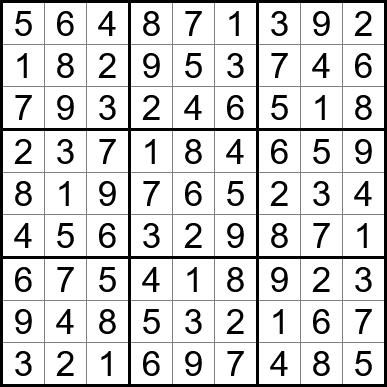
Gray Matter Games Solutions
How long did it take you to fall asleep?
How many times did you wake up?
How long did you stay awake each time?
What time did you wake up for good?
Did you feel tired the next day?
How many times did you nap during the day? How long was each nap?
How many alcoholic or caffeinated drinks did you have?
Which over the counter and prescription medications do you take?
Did you exercise? At what time?
What time did you last use an electronic device/ TV prior to going to bed?
Describe your sleep environment.
This information will help your medical team determine what diagnostic tools would be appropriate to fully evaluate your specific concerns. For example, they may order a full sleep study, make medication changes, suggest a wearable sleep tracker, or refer you for insomnia-specific cognitive behavioral therapy.
The good news is that there are several recommended and effective treatments for a variety of insomnia and other sleep disorders that can help you increase the quality of sleep you are getting. This will help improve your overall health and wellbeing. We all deserve a good nights sleep, so addressing the issue now is a great step in the right direction.
Conference Captioning
Relay Conference Captioning (RCC) service is available for individuals who have a hearing loss or a speech disability to actively participate in teleconference calls or webinars by reading live captions on their laptop, mobile device or tablet. To inquire, contact kim.m.calabretta@t-mobile.com or visit relaync.com/rcc
The Anxious Retiree:
SEVEN MONEY MYTHS THAT QUIETLY STEAL THE GOLDEN YEARS
By Doug Lynam
continued from page 1
Money looks like a practical problem. It has numbers, accounts, spreadsheets. It obeys the rules of arithmetic. But the people I work with rarely have arithmetic problems. They have something else, and they have almost always had it for a long time.
Money is where we keep our fear. It is where we store our sense of worth, our anger at our parents, our ambition, our guilt, our longing, and our unfinished business with the family we grew up in. It is the material our identity is built out of, and the material we use to negotiate with mortality. Two people with identical net worths can feel radically different about their situations, not because one of them is doing the math wrong, but because they are carrying different stories.
In the monastery, we took a vow of poverty, which did not mean we were free of money. It meant we did not own it. The community still had budgets, donations,
bills to pay, and plenty of worry about whether there would be enough. The families I serve today have resources the monastery never dreamed of, and they carry the same worry. The math is the easy part. The hard part is the meaning we attach to it. The fear we have around it. The patterns we repeat without knowing why.
Everything that follows rests on this. Each of the myths to come is a specific version of the same mistake: treating money as if it were only a technical problem. It is not. It never was.
MYTH 2: “IF I’VE SAVED ENOUGH, I’LL FEEL SECURE.”
This is the promise the whole retirement industry runs on. Save enough, and the fear will stop. Hit the number, and you will finally exhale.
It is not true. I know, because I have met the people who hit the number.
A client sat in my office, 72 years old, net worth just under four million dollars, and asked me if she could afford to replace her dishwasher. She wasn’t joking. She had been a saver her whole life, and now that she had finally retired, the thought of spending any of it paralyzed her. She wasn’t irrational. She was afraid. And no spreadsheet was ever going to fix that.
Security is not a number. It is a feeling. And the feeling and the number are not connected in the way we think they are.
I have clients worth several million dollars who sleep worse now than they did when they were making $80,000 a year and had $12,000 in savings. The numbers are better. The feeling is worse. During the accumulation years, the fear had somewhere to go. Every paycheck was evidence that you were doing it right. Even the bad years had a logic, because you had time to fix mistakes and a next paycheck coming.
In retirement, that inverts. You are no longer accumulating. You are preserving. Every withdrawal is a small act of faith that the money will last longer than you will and a reminder of your mortality. Every market drop is no longer a buying opportunity but a threat. The same person who rode out 2008 without blinking now checks their account three times a week and feels their stomach drop when the Dow does.
This is not a character flaw. It is the nervous system doing what nervous systems do. Scarcity registers as
danger, and the brain does not distinguish between a tiger in the bushes and a six percent pullback in the stock market.
Feeling secure is a separate project from accumulating assets. One is financial. The other is psychological. You can do excellent work on the first and still have every symptom of the second.
The fear does not go away. But it does not have to be in charge.
MYTH 3: “I’LL BE HAPPY WHEN I FINALLY RETIRE.”
Everybody looks forward to it. The countdown starts five years out. The farewell party gets planned. The first trip gets booked. Retirement is framed, in our culture, as the reward at the end of the working years, the thing you have earned.
And then people retire, and a lot of them are surprised.
The first three months often feel like the promise. Sleeping in. Travel. Finally finishing the stack of books. Then something shifts. The quiet starts to feel different from the way it did on a Saturday. The days lose their shape. Old friends are still at work. The spouse who was excited about having you home is now annoyed at having you in their space all day. The reward has arrived, and it turns out not to be quite what anyone described.
Work, for most people, is not just a paycheck. It is a structure, an identity, a reason to put on pants and leave the house. When you retire, you lose the scaffolding that told you who you were and what your days were for. If you have not built something to replace that scaffolding, the absence of it feels like falling, even if the bank account is full.
I have watched clients go through this and blame themselves. They wonder why they are not happier. They wonder what is wrong with them. They tell themselves they should be grateful, and they are, but gratitude is not the same thing as meaning. A life of leisure is not, for most of us, a life of purpose. The people I know who have thrived in retirement did not stumble into it. They built something. A project. A practice. A volunteer role. A routine that gave their week a rhythm. Not because they had to, but because they learned that freedom without form is its own kind of disorientation.
The rule I give every client is this: never retire from something, always retire to something.
Happiness is not hiding at the other end of your career. You will not find it in the absence of work. You will find it, if you find it at all, in the life you build after the paycheck stops. That life is not a default setting. It is something you have to make. At best, it is not endless vacation but new vocation, on your own terms.
MYTH 4: “MEDICARE
WILL COVER MY HEALTHCARE COSTS.”
Medicare is the plan most people use to avoid thinking about the cost of getting old. It is a good program. It is also a limited one. And the gap between what it covers and what aging actually costs is the gap most families refuse to look at until they have to.
The denial has a specific shape. People assume Medicare handles more than it does, and they stop asking questions. They do not read the fine print. They do not price a nursing home in their county. The myth is not really about Medicare. It is about the relief we feel when we believe there is a plan already in place and we do not have to think about it.
Here is what Medicare does not cover: most dental, vision, hearing aids, and almost all long-term care. Those are the costs that bankrupt retirements.
Fidelity estimates total healthcare costs for a couple retiring today at $345,000, after tax, and that figure excludes long-term care entirely. Roughly seven out of ten people over 65 will need some form of long-term care before they die. In North Carolina, a semi-private nursing home room now runs just under $106,000 a year. A private room runs closer to $119,000. Assisted living averages $76,000. A home health aide runs about $69,000. These are not edge cases. These are the statistical middle of what aging actually looks like.
The numbers are uncomfortable. That discomfort is the point. They are uncomfortable because they name a future most of us would rather not plan for, and because the silence we have kept around them is starting to cost something. The families who navigate this well are not the ones with perfect coverage. They are the ones who stopped pretending the numbers did not apply to them.
You do not have to solve the healthcare problem today. But you do have to stop using Medicare as an excuse not to think about it.
MYTH 5: “BEING FRUGAL IS ALWAYS WISE.”
Saving and investing is how most people build wealth. Holding it too tightly is how many of them lose meaning. The virtue that got you here is not always the virtue that will carry you through.
Frugality has a shadow, and in retirement, the shadow often takes over.
I worked with a couple, both in their mid-seventies, who had talked about going to Italy for forty years. They had the photos on the refrigerator. They had the guidebooks on the shelf. They had, by any measure, more than enough money to go. Every time I brought it up, one of them would nod and the other would say, “maybe next year, when the market settles down.” The market never settled down, because the market is not the point. The fear is the point.
The husband died last spring. They never went. His widow now has even more money than before, and still cannot bring herself to book the trip.
Money at rest is not neutral. It is a vocation waiting to be claimed. It can pay for the trip that makes the grandchildren remember you. It can fund the scholarship at the school that changed your life. It can buy the time of someone who cares for your aging mother. It can feed people you will never meet. Every dollar still in the fortress is a dollar not doing any of that. The question is not just whether you have enough. The question is whether what you have is serving the life you actually want to live.
Frugality is a practice. Miserliness is a prison. The difference is whether the choice is coming from clarity or from dread.
MYTH 6: “MY FAMILY IS BETTER OFF NOT KNOWING.”
Most of the people I work with carry financial fears they have never told another soul. Not their spouse. Not their kids. They are afraid the money will run out. They are afraid the market will crash at the wrong moment. They are afraid of getting sick, of needing care, of forgetting where they are. They are afraid of dying, and of the paperwork that will follow. These fears live quietly, in the middle of the night, behind a closed bedroom door.
And they stay there, because we have inherited a cultural rule that says money trouble is private. That talking about fear is burdening others. That protecting the people we love means carrying the hard stuff alone.
This is the myth. And it is almost always wrong.
I have watched it play out a thousand ways. A couple in their seventies who lay awake separately every night, each one afraid to tell the other that they were scared. They had been married for 51 years. A mother who knew her memory was slipping and hid it from her
QUESTIONS FOR THE KITCHEN TABLE
You don’t need an advisor to start this work. You need a quiet hour and the willingness to be honest with yourself. If you are reading this with a spouse or an adult child, even better. Pick one or two of the questions below and take them to the kitchen table. The answers are less important than the conversation they start.
1. If your money is not just math, what is it holding for you? Fear? Worth? An old family story? Something you have not examined in years?
2. If you hit your ideal retirement number tomorrow, do you honestly think the anxiety would stop? Or would the next version of it be waiting?
3. What are you retiring to, not just from? If the honest answer is “I don’t know yet,” what is one thing worth building that would give your life more meaning?
4. What is one thing about your future care, your future decline, or your eventual death that you have not said out loud to anyone who would have to handle it?
5. What is your money actually for at this stage of your life? If the honest answer is “I don’t know anymore,” what would it take to find out?
6. What is a financial fear you have been carrying alone? Who in your life could you tell first, this week, not someday?
7. What money identity have you worn for decades? (“I’m the responsible one.” “I’m not good with money.” “I just follow my spouse’s lead.”) What would change if you stopped assuming that story was true?
You do not have to answer all of these. You do not have to answer any of them out loud. But if even one of them stops you for a moment, that is the question worth taking to someone you love.
children for two years, until the day she got lost driving home from the grocery store she had shopped at for thirty years.
What gets protected by this silence is not the family. What gets protected is the image the parents have of themselves. Competent. In charge. Never the ones who need help. The silence is about preserving a role, not shielding the children.
And the cost is enormous. When the fall happens or the diagnosis comes, the family is making the largest decisions of their lives. They do not know whether Mom wanted to die at home or in the hospital. They do not know whether Dad wanted to be resuscitated. The people we love often know something is wrong anyway. Kids sense fear in their parents. Spouses sense it in each other. What the silence actually produces is not peace. It is the particular loneliness of being worried about someone who will not let you close enough to help.
There is also a practical cost that runs underneath the emotional one. The silence does not just leave the family wondering what Mom wanted. It leaves them searching for documents nobody can find. A will that was never updated, or was updated and never mentioned. Passwords that live only in one head. Life insurance policies nobody knew existed. A safe deposit box with a key that went missing in 2012. I have watched grown children spend six months after a parent’s death doing the detective work their parent could have done with them in an afternoon. Estate planning is not just paperwork. It is a letter to the people you love, written while you still can write it.
The most generous thing you can do for your family is not to carry your fears alone. It is to say them out loud. Not all at once. Not as a crisis dump. But in a Saturday afternoon conversation, or a drive to the airport, or a quiet moment after dinner, when you tell the people you love what you are actually thinking about.
Tell your spouse the thing that keeps you awake. Tell your adult children where you are afraid the money might not stretch. Tell them what you want if you cannot speak for yourself. Tell them you love them. Have a piece of cake afterward.
That is not a burden. That is intimacy. And it is the thing most families mean when they say they want to be close.
MYTH
7: “I’VE ALWAYS BEEN THIS WAY WITH MONEY, AND THAT WON’T CHANGE.”
This myth is quieter than the others. It is also the one most likely to outlast us.
We tell ourselves these stories early, and we carry them for decades. I was the responsible one. My sister was the spender. I am just not a numbers person. I am a saver. I am a worrier.
None of these are facts. They are identities. And identities, unlike facts, can change.
I can say this because I lived it. When I joined the monastery, I would have told you with complete sincerity that I was not a money person, that wealth had nothing to do with me. Three years later our community went bankrupt, because avoidance is not a financial strategy. I spent the next seventeen years as the monk who dealt with the money, because someone had to. The identity I had carried into that life turned out to be a story, not a destiny.
Most of us are walking around with money stories handed to us before we were old enough to question them. A comment from a parent. A lesson from a hard year. A trauma we never named. These stories hardened into rules, and the rules hardened into identity, and the identity became a wall we stopped being able to see
But the second half of life has a way of dismantling those walls, whether we cooperate with it or not. And the dismantling cuts in both directions.
If you have spent your life avoiding money, afraid of numbers, letting someone else handle the decisions, the years ahead are going to ask you to grow into competence you did not think you had. Maybe your spouse has always been the one who paid the bills, and now they are gone, or ill, or no longer capable. I have watched people in their seventies learn to read a balance sheet for the first time and discover they are better at it than they ever imagined. The patterns can change. It takes longer than it would have at thirty, but it is worth every hour.
And if you have spent your life being the competent one, the planner, the person with the spreadsheet and the plan, the second half of life will ask something harder of you. At some point, probably not on a schedule of your choosing, you will have to hand the reins to someone else. A spouse. An adult child. A trusted advisor. Not because you have failed, but because the brain that built this careful life will
eventually start to thin out in places, and the judgment you relied on will become less reliable. This is the hardest transition I watch clients face. The ones who have run their financial lives with the most discipline are often the ones who find letting go the most excruciating. The skill that made them successful over a lifetime becomes the thing they have to give up.
The golden years are not, in the end, about gold. They are about whether we arrive at them as the person we actually are, or the person our stories told us to be.
If you recognize yourself in even one of these myths, you are in good company. Almost every retiree I have ever worked with has believed at least one, usually without knowing it. The myths are not a sign that you have done something wrong. They are a sign that you are human, that you grew up absorbing the stories your culture and your family told you about money, and that nobody ever sat you down and invited you to question them. Consider this your invitation. The second half of life is long enough, and rich enough, to be lived on your own terms rather than on the terms of a story you inherited.
Data cited: Fidelity Investments 2025 Retiree Health Care Cost Estimate (released July 2025); Genworth and CareScout 2024 Cost of Care Survey (released March 2025).
ABOUT THE AUTHOR
Doug Lynam is a wealth manager at Course Management Investment Advisors in Pinehurst, NC, where he works with individuals and families navigating retirement, legacy, and the emotional side of money. A former Benedictine monk of twenty years, he is the author of Taming Your Money Monster: Nine Paths To Money Mastery With The Enneagram and From Monk To Money Manager: A Former Monk’s Financial Guide To Becoming A Little Bit Wealthy -- And Why That’s Okay. His TEDx talk on financial psychology has been viewed more than 370,000 times, and his work has been featured in The New York Times, CNBC, and Kiplinger. Learn more at douglynam.com or cmiallc.com (Course Management Investment Advisors).
This month is Mental Health Awareness Month and Older Americans Month, making it a perfect time to explore an important question: Does our mental health get worse—or better—as we get older?
The answer is, like most big questions, it depends.
In some ways, our mental health improves with age. In fact, many older adults are emotionally stronger and more resilient than in their younger years. A study published in The British Journal of Psychiatry (2025) found that seniors often dealt with major life changes (retirement, bereavement, health issues) with little to no negative impact on mental health, and depression rates often decreased after a stressful period. Lead author of the study, Dr. Brian Beach of UCL’s Department of Epidemiology and Public Health, says, “Our results show that, on average, older adults manage to adapt emotionally after major life events, reflecting a degree of resilience.”
Despite common stereotypes, research consistently shows that older adults often report higher emotional well-being than younger people.
Why?
• Greater perspective and life experience
• Improved emotional regulation
• A clearer sense of what truly matters
Many older adults experience less daily stress, fewer emotional highs and lows, and a deeper appreciation for relationships and simple pleasures. So, while aging brings challenges, it also brings emotional steadiness and wisdom.
On the flip side (there’s always a flip side), there are real mental health risks associated with aging that we can’t ignore, and nobody is resilient all the time.
Depression, for example, can happen to seniors, and it’s often overlooked or misdiagnosed.
Depression can show up in many ways, such as:
• Low energy or fatigue
• Sleep problems
• Loss of interest in activities
• Increased physical complaints
Because these symptoms can be mistaken for “just getting older,” many people don’t receive the support they need and suffer in silence.
A surprising statistic many people are unaware of is the fact that suicide risk increases with age. In fact, older adults, particularly men over 75, have one of the highest suicide rates of any age group.
Some of the reasons for this statistic include:
• Social isolation
• Loss of a spouse or close friends
• Chronic illness or pain
• Feeling like a burden
Unlike younger groups, older adults are less likely to seek mental health support. This means older adults are often alone or isolated in grief, loneliness or loss. They face uncertainty in health, finances and many other important aspects of life.
This makes awareness and connection especially important.
What helps protect mental health as we age?
There are clear, research-backed protective factors:
• Strong relationships – even a few meaningful connections make a difference
• Purpose and routine – volunteering, hobbies, caregiving, or part-time work
• Physical movement – supports both mood and cognitive health
• Open conversations – talking about mental health reduces stigma and isolation
What many people don’t realize:
• Feeling lonely impacts health as much as some chronic conditions
• Mental health can improve with age
• It’s never too late to seek support or make meaningful changes
As a mental health counselor, I’ve worked with clients as young as 5 and as old as 85. We all struggle with the same issues. At the same time, we’re all unique, and the ways we struggle are individual to us. We also thrive and grow wise after these same struggles, facing challenges the best ways we know how.
Perhaps the one thing that unites us all is that mental health matters—at every age.
It has always been universally understood that listening to favorites is enjoyable and can lift one’s mood. However, during the past few years we’ve come to better understand that therapeutic value music can have on those with dementia.
For qualified individuals, AOS & Friends Care o ers a program
provides a music player loaded with personalized songs.